Search results
1000 results found for “cea”
Name
Description
Product #
Price
Quantity
Shipping Method
- View Data Sheet
Name :
AFP AntibodyDescription:
Mouse Anti Human Alpha Fetoprotein
Alpha-fetoprotein, Alpha-fetoglobulin, Alpha-1-fetoprotein, AFP, FETA, HPAFP.
Product # :
ANT-718Price :
Quantity :
Shipping Method :
Shipped with Ice Packs
More Info
- formulation
- More Info
- Citations
Formulation
1mg/ml containing PBS, pH-7.4, 10% Glycerol and 0.02% Sodium Azide.
Citations
More Info
-
Introduction
AFP is normally synthesized in the liver, intestinal tract, and yolk sac of the fetus. Antibody to AFP has been shown to be useful in detecting hepatocellular carcinomas (HCC) and germ cell neoplasms, especially yolk sac tumors.
-
Synonyms
Alpha-fetoprotein, Alpha-fetoglobulin, Alpha-1-fetoprotein, AFP, FETA, HPAFP.
-
Physical Appearance
Sterile filtered colorless solution.
-
Immunogen
Anti-human AFP mAb, is derived from hybridization of mouse F0 myeloma cells with spleen cells from BALB/c mice immunized with a recombinant human AFP protein 19-609 amino acids purified from insect cell.
-
Ig Subclass
Mouse IgG1 heavy chain and k light chain.
-
Clone
PAT73E10AT.
-
Applications
AFP antibody has been tested by ELISA and Western blot analysis to assure specificity and reactivity. Since application varies, however, each investigation should be titrated by the reagent to obtain optimal results.
-
Type
Mouse Anti Human Monoclonal.
-
Storage Procedures
For periods up to 1 month store at 4°C, for longer periods of time, store at -20°C. Prevent freeze thaw cycles.
-
Purification Method
AFP antibody was purified from mouse ascitic fluids by protein-A affinity chromatography.
ProSpec's products are furnished for LABORATORY RESEARCH USE ONLY. The product may not be used as drugs, agricultural or pesticidal products, food additives or household chemicals.
- View Data Sheet
Name :
EPHA2 PAT66G9AT AntibodyDescription:
EPH receptor A2 PAT66G9AT, Mouse Anti Human
EPHA2, EPH Receptor A2, ECK, Tyrosine-Protein Kinase Receptor ECK, EC 2.7.10.1, CTRCT6, ARCC2, CTPP1, CTPA, Epithelial Cell Receptor Protein Tyrosine Kinase, Ephrin Type-A Receptor 2, Soluble EPHA2 Variant 1, Epithelial Cell Kinase, EC 2.7.10, EphA2.
Product # :
ANT-672Price :
Quantity :
Shipping Method :
Shipped with Ice Packs
More Info
- formulation
- More Info
- Citations
Formulation
1mg/ml containing PBS, pH-7.4, 10% Glycerol and 0.02% Sodium Azide.
Citations
More Info
-
Introduction
EPH Receptor A2 (EPHA2) is a member of the ephrin receptor subfamily of the protein-tyrosine kinase family. EPHA2 is a protein which binds ephrin-A ligands. EPH and EPH-related receptors are associated with mediating developmental events, particularly in the nervous system. Receptors in the EPH subfamily normally have a single kinase domain and an extracellular region containing a Cys-rich domain and 2 fibronectin type III repeats. The ephrin receptors are divided into two groups based on the similarity of their extracellular domain sequences and their affinities for binding ephrin-A and ephrin-B ligands. EPHA2 gene mutations are the cause of certain genetically-related cataract disorders.
-
Synonyms
EPHA2, EPH Receptor A2, ECK, Tyrosine-Protein Kinase Receptor ECK, EC 2.7.10.1, CTRCT6, ARCC2, CTPP1, CTPA, Epithelial Cell Receptor Protein Tyrosine Kinase, Ephrin Type-A Receptor 2, Soluble EPHA2 Variant 1, Epithelial Cell Kinase, EC 2.7.10, EphA2.
-
Physical Appearance
Sterile filtered colorless solution.
-
Immunogen
Anti-human EPHA2 mAb, is derived from hybridization of mouse F0 myeloma cells with spleen cells from BALB/c mice immunized with a recombinant human EPHA2 protein 27-537 amino acids purified from E. coli.
-
Ig Subclass
Mouse IgG2b heavy chain and k light chain.
-
Clone
PAT66G9AT.
-
Applications
The antibody has been tested by ELISA, Western blot analysis, Flow cytometry and ICC/IF to assure specificity and reactivity. Since application varies, however, each investigation should be titrated by the reagent to obtain optimal results.
-
Type
Mouse Anti Human Monoclonal.
-
Storage Procedures
For periods up to 1 month store at 4°C, for longer periods of time, store at -20°C. Prevent freeze thaw cycles.
-
Purification Method
EPHA2 antibody was purified from mouse ascitic fluids by protein-A affinity chromatography.
ProSpec's products are furnished for LABORATORY RESEARCH USE ONLY. The product may not be used as drugs, agricultural or pesticidal products, food additives or household chemicals.
- View Data Sheet
Name :
EPO, Clone PAT1C12ATDescription:
Erythropoietin clone PAT1C12AT, Mouse Anti Human
EPO-a, EPO-alpha, Epoetin, EP, MGC138142.
Product # :
ANT-744Price :
Quantity :
Shipping Method :
Shipped with Ice Packs
More Info
- formulation
- More Info
- Citations
Formulation
1mg/ml containing PBS, pH-7.4, 10% Glycerol and 0.02% Sodium Azide.
Citations
More Info
-
Introduction
EPO is a member of the EPO/TPO family and encodes a secreted, glycosylated cytokine composed of 4 alpha helical bundles. EPO is found in the plasma and regulates red cell production by promoting erythroid differentiation and initiating hemoglobin synthesis. EPO also has neuroprotective activity against a variety of potential brain injuries and antiapoptotic functions in several tissue types.
-
Synonyms
EPO-a, EPO-alpha, Epoetin, EP, MGC138142.
-
Physical Appearance
Sterile filtered colorless solution.
-
Stability
For periods up to 1 month store at 4°C, for longer periods of time, store at -20°C. Prevent freeze thaw cycles
-
Ig Subclass
Mouse IgG1 heavy chain and k light chain.
-
Clone
PAT1C12AT.
-
Type
Mouse Anti Human Monoclonal.
-
Purification Method
EPO antibody was purified from mouse ascitic fluids by protein-A affinity chromatography.
ProSpec's products are furnished for LABORATORY RESEARCH USE ONLY. The product may not be used as drugs, agricultural or pesticidal products, food additives or household chemicals.
- View Data Sheet
Name :
PCNA AntibodyDescription:
Proliferating Cell Nuclear Antigen, Mouse Anti Human
Proliferating cell nuclear antigen, PCNA, Cyclin, MGC8367.
Product # :
ANT-341Price :
Quantity :
Shipping Method :
Shipped with Ice Packs
More Info
- formulation
- More Info
- Citations
Formulation
1mg/ml containing PBS, pH-7.4, & 0.1% Sodium Azide.
Citations
More Info
-
Introduction
PCNA is located in the nucleus and is a cofactor of DNA polymerase delta. PCNA acts as a homotrimer and helps elevate the processivity of leading strand synthesis during DNA replication. In reaction to DNA damage, PCNA is ubiquitinated and takes part in the RAD6-dependent DNA repair pathway. 2 transcript variants encoding the same protein have been found for PCNA gene. Pseudogenes of this PCNA gene have been described on chromosome 4 and on the X chromosome. PCNA is expressed during late G1- phase, S-phase of mitosis and persists until the end of the M-phase because of its long biological half-life. PCNA is induced by UV irradiation.
-
Synonyms
Proliferating cell nuclear antigen, PCNA, Cyclin, MGC8367.
-
Immunogen
Anti-human PCNA mAb is derived from hybridization of mouse F0 myeloma cells with spleen cells from BALB/c mice immunized with recombinant human PCNA amino acids 1-261 purified from E. coli.
-
Ig Subclass
Mouse IgG3 heavy chain and κ light chain.
-
Clone
Pk1A3AT.
-
Applications
The antibody has been tested by ELISA and Western blot analysis to assure specificity and reactivity. Since application varies, however, each investigation should be titrated by the reagent to obtain optimal results.
-
Type
Mouse Anti Human Monoclonal.
-
Storage Procedures
For periods up to 1 month store at 4°C, for longer periods of time, store at -20°C. Prevent freeze thaw cycles.
-
Purification Method
PCNA antibody was purified from mouse ascitic fluids by protein-G affinity chromatography.
ProSpec's products are furnished for LABORATORY RESEARCH USE ONLY. The product may not be used as drugs, agricultural or pesticidal products, food additives or household chemicals.
- View Data Sheet
Name :
CTF1 RatDescription:
Cardiotrophin-1 Rat Recombinant
Cardiotrophin-1, CT-1, Ctf1.
Product # :
CYT-199Price :
Quantity :
Shipping Method :
Shipped at Room temp
More Info
- description
- source
- formulation
- purity
- biological activity
- More Info
- Citations
Description
Cardiotrophin-1 Rat Recombinant produced in E.Coli is a single, non-glycosylated, polypeptide chain containing 203 amino acids and having a molecular mass of 21.4kDa.The CTF1 Rat is purified by proprietary chromatographic techniques.
Source
Escherichia Coli.
Formulation
Lyophilized from a 0.2µm filtered concentrated solution in PBS, pH 7.4.
Purity
Greater than 95.0% as determined by SDS-PAGE and HPLC analyses.
Biological Activity
The ED50 as determined by the dose-dependent proliferation of TF-1 cells was found to be < 0.5ng/ml, corresponding to a specific activity of > 2.0×10⁶ units/mg.Citations
More Info
-
Introduction
Cardiotrophin 1 (CT-1) is a 201 amino acid member of the interleukin-6 superfamily. It was identified by its ability to induce hypertrophic response in cardiac myocytes. CT-1 mRNA levels were found both in cardiac myocytes and in cardiac nonmyocytes. CT 1 was also detected in abundance in normal adult human lung and was expressed in both fetal and adult airway smooth muscle cells. CT 1 activates gp130 dependent signaling and stimulates the Janus kinase/signal transducers and activators of transcription (JAK/STAT) pathway to transduce hypertrophic and cytoprotective signals in cardiac myocytes.
CT 1 has also a neurotrophic function. CTF1 deficiency causes increased motoneuron cell death in spinal cord and brainstem nuclei of mice during a period between embryonic day 14 and the first postnatal week. Moreover, CT-1 is a hepatocyte survival factor that efficiently reduces hepatocellular damage in animal models of acute liver injury. Cardiotrophin 1 expression is augmented after hypoxic stimulation and it can protect cardiac cells when added either prior to simulated ischaemia or at the time of reoxygenation following simulated ischaemia. Cardiotrophin 1 can induce expression of the protective heat shock proteins (hsps) in cardiac cells.
Cardiotrophin-1 increased ventricular expression of ANP, brain natriuretic peptide (BNP) and angiotensinogen mRNA.
Cardiophin 1 levels were significantly elevated in patients with heart failure, patients with dilatative cardiomyopathy, moderate/severe mitral regurgitation, stable and unstable angina and after acute myocardial infarction. -
Synonyms
Cardiotrophin-1, CT-1, Ctf1.
-
Physical Appearance
Sterile Filtered White lyophilized (freeze-dried) powder.
-
Stability
Lyophilized Cardiotrophin-1 Rat although stable at room temperature for 3 weeks, should be stored desiccated below -18°C. Upon reconstitution CTF1 Rat should be stored at 4°C between 2-7 days and for future use below -18°C.Please prevent freeze-thaw cycles.
-
Solubility
It is recommended to reconstitute the lyophilized CTF1 in sterile 4mM HCl not less than 100µg/ml, which can then be further diluted to other aqueous solutions.
-
Amino Acid Sequence
MSQREGSLED HQTDSSFSFL PHLEAKIRQT HNLARLLTKY ADQLLEEYVQ QQGEPFGLPG FSPPRLPLAG LSGPAPSHAG LPVSERLRQD AAALSALPAL LDAVRRRQAE LNPRAPRLLR SLEDAARQVR ALGAAVETVL AALGAAARGP VPEPVATSAL FTSNSAAGVF SAKVLGLHVC GLYGEWVSRT EGDLGQLVPG GVA.
-
Background
What is the molecular weight/Mw of CTF1 Protein?
CTF1 Protein has a total Mw of 21.4kDa.
What is the source or expression system of CTF1 Protein?
Escherichia Coli.
What is the Purity of CTF1 Protein?
CTF1 Protein is >95% pure as determined by SDS-PAGE.
What is the Biological Activity of CTF1 Protein?
The ED50 as determined by the dose-dependent proliferation of TF-1 cells was found to be < 0.5ng/ml, corresponding to a specific activity of > 2.0×10⁶ units/mg.
What is the amino acid sequence of CTF1 Protein?
MSQREGSLED HQTDSSFSFL PHLEAKIRQT HNLARLLTKY ADQLLEEYVQ QQGEPFGLPG FSPPRLPLAG LSGPAPSHAG LPVSERLRQD AAALSALPAL LDAVRRRQAE LNPRAPRLLR SLEDAARQVR ALGAAVETVL AALGAAARGP VPEPVATSAL FTSNSAAGVF SAKVLGLHVC GLYGEWVSRT EGDLGQLVPG GVA.
What applications can CTF1 Protein be used in?
CTF1 Protein can probably be used in western blot, ELISA and Lateral Flow.
What is the endotoxin level for CTF1 Protein?
The endotoxin level is minimal, CTF1 Protein was purified using conventional chromatography techniques.
ProSpec's products are furnished for LABORATORY RESEARCH USE ONLY. The product may not be used as drugs, agricultural or pesticidal products, food additives or household chemicals.
- View Data Sheet
Name :
ACY3 HumanDescription:
AminoAcylase-3 Human Recombinant
Aspartoacylase-2, Acylase III, Aminoacylase-3, ACY-3, Hepatitis C virus core-binding protein 1, HCBP1, ACY3, ASPA2.
Product # :
ENZ-153Price :
Quantity :
Shipping Method :
Shipped with Ice Packs
More Info
- description
- source
- formulation
- purity
- More Info
- Citations
Description
ACY3 Human Recombinant produced in E.Coli is a single, non-glycosylated polypeptide chain containing 342 amino acids (1-319 a.a.) and having a molecular mass of 37.6kDa.ACY3 is fused to a 23 amino acid His-tag at N-terminus & purified by proprietary chromatographic techniques.
Source
Escherichia Coli.
Formulation
ACY3 protein solution (0.5mg/ml) containing 20mM Tris-HCl buffer (pH 8.0), 1mM DTT, 10% glycerol and 0.1M NaCl.
Purity
Greater than 90% as determined by SDS-PAGE.
Citations
More Info
-
Introduction
Aspartoacylase 3 (ACY3) belongs to the Aspartoacylase subfamily. ACY3 has a vital role in deacetylating mercapturic acids in kidney proximal tubules. Aspartoacylase 3 localizes to the cytoplasm of S2 and S3 proximal tubules and also to the apical domain of S1 proximal tubules. In addition, ACY3 protein is expressed at low levels in the stomach, testis, heart, brain, lung and liver, and can function as an HCV (Hepatitis C virus) core binding protein.
-
Synonyms
Aspartoacylase-2, Acylase III, Aminoacylase-3, ACY-3, Hepatitis C virus core-binding protein 1, HCBP1, ACY3, ASPA2.
-
Physical Appearance
Sterile Filtered clear solution.
-
Stability
Store at 4°C if entire vial will be used within 2-4 weeks. Store, frozen at -20°C for longer periods of time. For long term storage it is recommended to add a carrier protein (0.1% HSA or BSA).Avoid multiple freeze-thaw cycles.
-
Amino Acid Sequence
MGSSHHHHHH SSGLVPRGSH MGSMCSLPVP REPLRRVAVT GGTHGNEMSG VYLARHWLHA PAELQRASFS AVPVLANPAA TSGCRRYVDHDLNRTFTSSF LNSRPTPDDP YEVTRARELN QLLGPKASGQ AFDFVLDLHN TTANMGTCLI AKSSHEVFAM HLCRHLQLQY PELSCQVFLY QRSGEESYNL DSVAKNGLGL ELGPQPQGVL RADIFSRMRT LVATVLDFIE LFNQGTAFPA FEMEAYRPVG VVDFPRTEAG HLAGTVHPQL QDRDFQPLQP GAPIFQMFSG EDLLYEGEST VYPVFINEAA YYEKGVAFVQ TEKFTFTVPA MPALTPAPSP AS.
ProSpec's products are furnished for LABORATORY RESEARCH USE ONLY. The product may not be used as drugs, agricultural or pesticidal products, food additives or household chemicals.
- View Data Sheet
Name :
ECHS1 Human, ActiveDescription:
Enoyl CoA Hydratase, Short chain, 1, Mitochondrial, Human Recombinant, Active
Enoyl-CoA Hydratase, Short Chain1, Enoyl Coenzyme A Hydratase, Short Chain, 1, Mitochondrial, Enoyl-CoA Hydratase, Short Chain, 1, Mitochondrial, Short Chain Enoyl-CoA Hydratase, EC 4.2.1.17, SCEH, Enoyl-CoA Hydratase, Mitochondrial, Short-Chain Enoyl-CoA Hydratase, Enoyl-CoA Hydratase 1, EC 4.2.1, ECHS1D, ECHS1 .
Product # :
ENZ-1046Price :
Quantity :
Shipping Method :
Shipped with Ice Packs
More Info
- description
- source
- formulation
- purity
- biological activity
- More Info
- Citations
Description
ECHS1 Human Recombinant produced in E.Coli is a single, non-glycosylated polypeptide chain containing 284 amino acids (28-290 a.a) and having a molecular mass of 30.6kDa. ECHS1 is fused to a 21 amino acid His-tag at N-terminus & purified by proprietary chromatographic techniques.
Source
Escherichia Coli.
Formulation
ECHS1 protein solution (1mg/ml) containing 20mM Tris-HCl buffer (pH 8.0), 1mM DTT, 20% Glycerol and 100mM NaCl.
Purity
Greater than 95.0% as determined by SDS-PAGE.
Biological Activity
Specific activity is > 150 units/mg, and is defined as the amount of enzyme that hydrolyzes 1.0 umole of crotonoyl-CoA to hydroxybutyryl-CoA per minute per minute at pH 7.5 at 25°C.
Citations
More Info
-
Introduction
ECHS1 is part of the hydratase/isomerase superfamily. ECHS1 is localized in the mitochondrial matrix and Expressed in muscle, liver and fibroblasts, with low expression in kidney and spleen, ECHS1 exists as a homohexamer that takes part in the second phase of the mitochondrial fatty acid β-oxidation pathway.
-
Synonyms
Enoyl-CoA Hydratase, Short Chain1, Enoyl Coenzyme A Hydratase, Short Chain, 1, Mitochondrial, Enoyl-CoA Hydratase, Short Chain, 1, Mitochondrial, Short Chain Enoyl-CoA Hydratase, EC 4.2.1.17, SCEH, Enoyl-CoA Hydratase, Mitochondrial, Short-Chain Enoyl-CoA Hydratase, Enoyl-CoA Hydratase 1, EC 4.2.1, ECHS1D, ECHS1 .
-
Physical Appearance
Sterile Filtered clear solution.
-
Stability
Store at 4°C if entire vial will be used within 2-4 weeks. Store, frozen at -20°C for longer periods of time. For long term storage it is recommended to add a carrier protein (0.1% HSA or BSA).Avoid multiple freeze-thaw cycles.
-
Amino Acid Sequence
MGSSHHHHHH SSGLVPRGSH MASGANFEYI IAEKRGKNNT VGLIQLNRPK ALNALCDGLI DELNQALKIF EEDPAVGAIV LTGGDKAFAA GADIKEMQNL SFQDCYSSKF LKHWDHLTQV KKPVIAAVNG YAFGGGCELA MMCDIIYAGE KAQFAQPEIL IGTIPGAGGT QRLTRAVGKS LAMEMVLTGD RISAQDAKQA GLVSKICPVE TLVEEAIQCA EKIASNSKIV VAMAKESVNA AFEMTLTEGS KLEKKLFYST FATDDRKEGM TAFVEKRKAN FKDQ.
ProSpec's products are furnished for LABORATORY RESEARCH USE ONLY. The product may not be used as drugs, agricultural or pesticidal products, food additives or household chemicals.
- View Data Sheet
Name :
CD38 HumanDescription:
CD38 Human Recombinant
P28907, ADP-Ribosyl Cyclase 1, 2-Phospho-Cyclic-ADP-Ribose Transferase, Cyclic ADP-Ribose Hydrolase, 2-Phospho-ADP-Ribosyl Cyclase, NAD(+) Nucleosidase, CD38 Antigen (P45), ADPRC 1, 2-Phospho-ADP-Ribosyl Cyclase/2-Phospho-Cyclic-ADP-Ribose Transferase, Ecto-Nicotinamide Adenine Dinucleotide Glycohydrolase , Cluster Of Differentiation 38, CADPr Hydrolase 1,CD38 Antigen, EC 2.4.99.20, EC 3.2.2.6, ADPRC1, T10.
Product # :
PRO-2320Price :
Quantity :
Shipping Method :
Shipped with Ice Packs
More Info
- description
- source
- formulation
- purity
- More Info
- Citations
Description
CD38 produced in Sf9 Baculovirus cells is a single, glycosylated polypeptide chain containing 269 amino acids (43-300 a.a.) and having a molecular mass of 31.2kDa (Migrates at 28-40kDa on SDS-PAGE under reducing conditions). CD38 is expressed with a 6 amino acid His tag at C-Terminus and purified by proprietary chromatographic techniques.
Source
Sf9, Baculovirus cells.
Formulation
CD38 protein solution (1mg/ml) contains 50mM MES buffer (PH 5.0), 100mM NaCl and 10% glycerol.
Purity
Greater than 90.0% as determined by SDS-PAGE.
Citations
More Info
-
Introduction
CD38 is a surface molecule which acts as a plasma membrane signaling receptor in leukocytes. Furthermore, CD38 functions as signaling channel which leads to to cellular activation and proliferation. CD38 also plays a role as an ectoenzyme with various functions as well as an inducer of Ca2+ mobilization from cytoplasmic stores. CD38 signals acts as a coreceptor on B cells and modulates B cell receptor.
-
Synonyms
P28907, ADP-Ribosyl Cyclase 1, 2-Phospho-Cyclic-ADP-Ribose Transferase, Cyclic ADP-Ribose Hydrolase, 2-Phospho-ADP-Ribosyl Cyclase, NAD(+) Nucleosidase, CD38 Antigen (P45), ADPRC 1, 2-Phospho-ADP-Ribosyl Cyclase/2-Phospho-Cyclic-ADP-Ribose Transferase, Ecto-Nicotinamide Adenine Dinucleotide Glycohydrolase , Cluster Of Differentiation 38, CADPr Hydrolase 1,CD38 Antigen, EC 2.4.99.20, EC 3.2.2.6, ADPRC1, T10.
-
Physical Appearance
Sterile Filtered colorless solution.
-
Stability
Store at 4°C if entire vial will be used within 2-4 weeks. Store, frozen at -20°C for longer periods of time. For long term storage it is recommended to add a carrier protein (0.1% HSA or BSA). Avoid multiple freeze-thaw cycles.
-
Amino Acid Sequence
ADPEFVPRWR QQWSGPGTTK RFPETVLARC VKYTEIHPEM RHVDCQSVWD AFKGAFISKH PCNITEEDYQ PLMKLGTQTV PCNKILLWSR IKDLAHQFTQ VQRDMFTLED TLLGYLADDL TWCGEFNTSK INYQSCPDWR KDCSNNPVSV FWKTVSRRFA EAACDVVHVM LNGSRSKIFD KNSTFGSVEV HNLQPEKVQT LEAWVIHGGR EDSRDLCQDP TIKELESIIS KRNIQFSCKN IYRPDKFLQC VKNPEDSSCT SEIHHHHHH.
ProSpec's products are furnished for LABORATORY RESEARCH USE ONLY. The product may not be used as drugs, agricultural or pesticidal products, food additives or household chemicals.
- View Data Sheet
Name :
CHST5 HumanDescription:
Carbohydrate Sulfotransferase 5 Human Recombinant
Carbohydrate sulfotransferase 5, Galactose/N-acetylglucosamine/N-acetylglucosamine 6-O-sulfotransferase 4, GST4, Intestinal N-acetylglucosamine-6-O-sulfotransferase, I-GlcNAc6ST, Intestinal GlcNAc-6-sulfotransferase, mIGn6ST, N-acetylglucosamine 6-O-sulfotransferase 3, GlcNAc6ST-3, Gn6st-3, Chst5, Gst4.
Product # :
ENZ-1165Price :
Quantity :
Shipping Method :
Shipped with Ice Packs
More Info
- description
- source
- formulation
- purity
- biological activity
- More Info
- Citations
Description
CHST5 Human produced in Sf9 Baculovirus cells is a single, glycosylated polypeptide chain containing 380 amino acids (27-395 a.a.) and having a molecular mass of 42.9kDa.CHST5 is expressed with a 6 amino acid His tag at C-Terminus and purified by proprietary chromatographic techniques.
Source
Sf9, Baculovirus cells.
Formulation
CHST5 protein solution (0.25mg/ml) containing 20% glycerol and Phosphate-Buffered Saline (pH 7.4).
Purity
Greater than 90.0% as determined by SDS-PAGE.
Biological Activity
Specific activity is greater than 10,000 pmol/min/ug, and is defined as the amount of enzyme that sulfate from PAPS to Nacetyl-D-glucosamine per minute at pH 7.5, at 37˚C.
Citations
More Info
-
Introduction
Carbohydrate Sulfotransferase 5 (CHST5) is a Golgi-embedded enzyme that is found in B cells, T cells and intestinal epithelium and is also mediates sulfation of keratan in cornea. CHST5 is a sulfotransferase that utilizes 3'-phospho-5'-adenylyl sulfate (PAPS) as sulfonate donor to catalyze the transfer of sulfate to position 6 of non-reducing N-acetylglucosamine residues of keratan. CHST5 works on the non-reducing terminal GlcNAc of short andlong carbohydrate substrates that have poly-N-acetyllactosamine structures.
-
Synonyms
Carbohydrate sulfotransferase 5, Galactose/N-acetylglucosamine/N-acetylglucosamine 6-O-sulfotransferase 4, GST4, Intestinal N-acetylglucosamine-6-O-sulfotransferase, I-GlcNAc6ST, Intestinal GlcNAc-6-sulfotransferase, mIGn6ST, N-acetylglucosamine 6-O-sulfotransferase 3, GlcNAc6ST-3, Gn6st-3, Chst5, Gst4.
-
Physical Appearance
Sterile filtered colorless solution.
-
Stability
Store at 4°C if entire vial will be used within 2-4 weeks.Store, frozen at -20°C for longer periods of time.For long term storage it is recommended to add a carrier protein (0.1% HSA or BSA).Avoid multiple freeze-thaw cycles.
-
Amino Acid Sequence
ADPEFSRQVP SSPAGLGERV HVLVLSSWRS GSSFVGQLFS QHPDVFYLME PAWHVWDTLS QGSAPALHMA VRDLIRSVFL CDMDVFDAYL PWRRNISDLF QWAVSRALCS PPVCEAFARG NISSEEVCKP LCATRPFGLA QEACSSYSHV VLKEVRFFNL QVLYPLLSDP ALNLRIVHLV RDPRAVLRSR EQTAKALARD NGIVLGTNGT WVEADPRLRV VNEVCRSHVR IAEAALHKPP PFLQDRYRLV RYEDLARDPL TVIRELYAFT GLGLTPQLQT WIHNITHGSG PGARREAFKT TSRDALSVSQ AWRHTLPFAK IRRVQELCGG ALQLLGYRSV HSELEQRDLS LDLLLPRGMD SFKWASSTEK QPESHHHHHH
ProSpec's products are furnished for LABORATORY RESEARCH USE ONLY. The product may not be used as drugs, agricultural or pesticidal products, food additives or household chemicals.
- View Data Sheet
Name :
LYVE1 Mouse Sf9Description:
Lymphatic Vessel Endothelial Hyaluronic Acid Receptor 1 Mouse Recombinant, Sf9
Lymphatic vessel endothelial hyaluronic acid receptor 1 precursor, LYVE-1, Cell surface retention sequence-binding protein 1, CRSBP-1, Hyaluronic acid receptor, Extracellular link domain-containing protein.
Product # :
PKA-251Price :
Quantity :
Shipping Method :
Shipped at Room temp
More Info
- description
- source
- formulation
- purity
- More Info
- Citations
Description
Soluble LYVE1 Mouse Recombinant fused to a C-terminal His-tag (6xHis) produced in baculovirus is a monomeric, glycosylated, polypeptide containing 228 amino acids (Met-1 to Gly 228) and having a molecular mass of 25 kDa but as a result of glycosilation the Mw is 40 kDa. The LYVE-1 is purified by proprietary chromatographic techniques.
Source
Insect Cells.
Formulation
LYVE1 was lyophilized from a concentrated (1mg/ml) sterile solution containing no additives.
Purity
Greater than 95.0% as determined by:
(a)Analysis by RP-HPLC.
(b)Analysis by SDS-PAGE.Citations
More Info
-
Introduction
LYVE-1 has been identified as a major receptor for HA (extracellular matrix glycosaminoglycan hyaluronan) on the lymph vessel wall. The deduced amino acid sequence of LYVE-1 predicts a 322-residue type I integral membrane polypeptide 41% similar to the CD44 HA receptor with a 212-residue extracellular domain containing a single Link module the prototypic HA binding domain of the Link protein superfamily. Like CD44, the LYVE-1 molecule binds both soluble and immobilized HA. However, unlike CD44, the LYVE-1 molecule colocalizes with HA on the luminal face of the lymph vessel wall and is completely absent from blood vessels. Hence, LYVE-1 is the first lymph-specific HA receptor to be characterized and is a uniquely powerful marker for lymph vessels themselves.
-
Synonyms
Lymphatic vessel endothelial hyaluronic acid receptor 1 precursor, LYVE-1, Cell surface retention sequence-binding protein 1, CRSBP-1, Hyaluronic acid receptor, Extracellular link domain-containing protein.
-
Physical Appearance
Sterile Filtered White lyophilized (freeze-dried) powder.
-
Stability
Lyophilized sLYVE-1 although stable at room temperature for 3 weeks, should be stored desiccated below -18°C. Upon reconstitution sLYVE-1 should be stored at 4°C between 2-7 days and for future use below -18°C.For long term storage it is recommended to add a carrier protein (0.1% HSA or BSA).Please prevent freeze-thaw cycles.
-
Solubility
It is recommended to reconstitute the lyophilized LYVE1 in sterile water not less than 100µg/ml, which can then be further diluted to other aqueous solutions.
ProSpec's products are furnished for LABORATORY RESEARCH USE ONLY. The product may not be used as drugs, agricultural or pesticidal products, food additives or household chemicals.
- View Data Sheet
Name :
CCL9 MouseDescription:
Macrophage Inflammatory Protein-1 Gamma Mouse Recombinant (CCL9)
CCL9/10, MRP2, CCF18.
Product # :
CHM-257Price :
Quantity :
Shipping Method :
Shipped at Room temp
More Info
- description
- source
- formulation
- purity
- biological activity
- More Info
- Citations
Description
MIP-1 gamma Mouse Recombinant produced in E.Coli is a single, non-glycosylated, polypeptide chain containing 101 amino acids and having a molecular mass of 11.6 kDa. The MIP-1 gamma is purified by proprietary chromatographic techniques.
Source
Escherichia Coli.
Formulation
The MIP-1 gamma was lyophilized from 1xPBS solution pH-7.4.
Purity
Greater than 97.0% as determined by:
(a) Analysis by RP-HPLC.
(b) Analysis by SDS-PAGE.Biological Activity
Defined by its ability to chemoattract human neutrophils using a concentration range of 0.1-10 ng/ml, corresponding to a Specific Activity of 10,000-100,000IU/mg.Citations
More Info
-
Introduction
Mouse MIP-1 gamma is 75% identical in its amino acid compostion as compared to the rat specie. MIP-1 gamma is a CC chemokine localized in murine blood and a widespread range of murine tissues, without having an identified human homolog. MIP-1 gamma signals through the CCR1 receptor. MIP-1 gamma chemoattracts neutrophils and also inhibits colony formation of bone marrow myeloid immature progenitors. MIP-1 gamma has six cysteines including the four highly conserved cysteine residues present in CC chemokines.
-
Synonyms
CCL9/10, MRP2, CCF18.
-
Physical Appearance
Sterile Filtered White lyophilized (freeze-dried) powder.
-
Stability
Lyophilized MIP-1 gamma although stable at room temperature for 3 weeks, should be stored desiccated below -18°C. Upon reconstitution CCL9/10 should be stored at 4°C between 2-7 days and for future use below -18°C. For long term storage it is recommended to add a carrier protein (0.1% HSA or BSA). Please prevent freeze-thaw cycles.
-
Solubility
It is recommended to reconstitute the lyophilized MIP-1 gamma in sterile 18M-cm H2O not less than 100µg/ml, which can then be further diluted to other aqueous solutions.
-
Amino Acid Sequence
QITHATETKE VQSSLKAQQG LEIEMFHMGF QDSSDCCLSY NSRIQCSRFI GYFPTSGGCT RPGIIFISKR GFQVCANPSD RRVQRCIERL EQNSQPRTYK Q.
-
Background
What is the molecular weight/Mw of CCL9 MOUSE Protein?
CCL9 MOUSE Protein has a total Mw of 11.6kDa.
What is the source or expression system of CCL9 MOUSE Protein?
Escherichia Coli.
What is the Purity of CCL9 MOUSE Protein?
CCL9 MOUSE Protein is > 97% pure as determined by SDS-PAGE.
What is the Biological Activity of CCL9 MOUSE Protein?
Defined by its ability to chemoattract human neutrophils using a concentration range of 0.1-10 ng/ml, corresponding to a Specific Activity of 10,000-100,000IU/mg.
What is the amino acid sequence of CCL9 MOUSE Protein?
QITHATETKE VQSSLKAQQG LEIEMFHMGF QDSSDCCLSY NSRIQCSRFI GYFPTSGGCT RPGIIFISKR GFQVCANPSD RRVQRCIERL EQNSQPRTYK Q.
What applications can CCL9 MOUSE Protein be used in?
CCL9 MOUSE Protein can probably be used in western blot, ELISA and Lateral Flow.
What is the endotoxin level for CCL9 MOUSE Protein?
The endotoxin level is minimal, CCL9 MOUSE Protein was purified using conventional chromatography techniques.
ProSpec's products are furnished for LABORATORY RESEARCH USE ONLY. The product may not be used as drugs, agricultural or pesticidal products, food additives or household chemicals.
- View Data Sheet
Name :
EBI3 MacaqueDescription:
Epstein Barr Virus Induced 3 Macaque Recombinant
IL-27B, IL27B, IL 27-B, EBI-3, Interleukin-27 beta, IL-27 subunit beta, Epstein-Barr virus-induced gene 3 protein homolog, EBI3.
Product # :
CYT-1036Price :
Quantity :
Shipping Method :
Shipped at Room temp
More Info
- description
- source
- formulation
- purity
- More Info
- Citations
Description
EBI3 Macaque Recombinant produced in E.Coli is a single, non-glycosylated polypeptide chain containing 210 amino acids and having a molecular mass of 23.4kDa. The EBI3 is purified by proprietary chromatographic techniques.
Source
Escherichia Coli.
Formulation
Lyophilized from a sterile filtered solution containing 0.1 % trifluoroacetic acid (TFA).
Purity
Greater than 95.0% as determined by SDS-PAGE.
Citations
More Info
-
Introduction
EBI3 has an induced expression in B lymphocytes in reaction to Epstein-Barr virus infection. EBI3 encodes a secreted glycoprotein belonging to the hematopoietin receptor family, and heterodimerizes with a 28 kDa protein to form iIL-27. EBI3 drives rapid clonal expansion of naive cd4(+) t-cells. EBI3 strongly synergizes with IL-12 to activate IFN-gamma production of naive cd4(+) t-cells. EBI3 mediates its biologic effects through the cytokine receptor wsx-1/tccr.
-
Synonyms
IL-27B, IL27B, IL 27-B, EBI-3, Interleukin-27 beta, IL-27 subunit beta, Epstein-Barr virus-induced gene 3 protein homolog, EBI3.
-
Physical Appearance
Sterile Filtered White lyophilized (freeze-dried) powder.
-
Stability
Lyophilized EBI3 although stable at room temperature for 3 weeks, should be stored desiccated below -18°C. Upon reconstitution EBI3 Macaque should be stored at 4°C between 2-7 days and for future use below -18°C. For long term storage it is recommended to add a carrier protein (0.1% HSA or BSA). Please prevent freeze-thaw cycles.
-
Solubility
It is recommended to reconstitute the lyophilized EBI3 in sterile 18MΩ-cm H2O at a concentration of 100µg/ml, which can then be further diluted to other aqueous solutions.
-
Amino Acid Sequence
MRKGPPAALT LPRVQCRAPR YPIAVDCSWT LPPAPNSTSP VSFIATYRFG MAARGHSWPC LQQTPASTSC TIADVRLFSM APYVLNVTAV HPWGSSSSFV PFIAEHIIKP DPPEGVRLSP LAERQLQVQW EPPRSWPFPE IFSLKYWIRY KRQGAARFHQ VGPIEATSFI LRAVRPRARY CVQVAAQDLT DYGELSDWSL PATTPMSPGK.
-
Background
What is the molecular weight/Mw of EBI3 Protein?
EBI3 Protein has a total Mw of 23.4kDa.
What is the source or expression system of EBI3 Protein?
Escherichia Coli.
What is the Purity of EBI3 Protein?
EBI3 Protein is >90% pure as determined by SDS-PAGE.
What is the Biological Activity of EBI3 Protein?
The biological functionality of EBI3 Protein will be determined in the future.
What is the amino acid sequence of EBI3 Protein?
MRKGPPAALT LPRVQCRAPR YPIAVDCSWT LPPAPNSTSP VSFIATYRFG MAARGHSWPC LQQTPASTSC TIADVRLFSM APYVLNVTAV HPWGSSSSFV PFIAEHIIKP DPPEGVRLSP LAERQLQVQW EPPRSWPFPE IFSLKYWIRY KRQGAARFHQ VGPIEATSFI LRAVRPRARY CVQVAAQDLT DYGELSDWSL PATTPMSPGK.
What applications can EBI3 Protein be used in?
EBI3 Protein can probably be used in western blot, ELISA and Lateral Flow.
What is the endotoxin level for EBI3 Protein?
The endotoxin level is minimal, EBI3 Protein was purified using conventional chromatography techniques.
ProSpec's products are furnished for LABORATORY RESEARCH USE ONLY. The product may not be used as drugs, agricultural or pesticidal products, food additives or household chemicals.
- View Data Sheet
Name :
CD163 PorcineDescription:
CD163 Porcine Recombinant
CD-163, Hemoglobin scavenger receptor, macrophage-associated antigen, M130, sCD163, CD163, MM130.
Product # :
PRO-856Price :
Quantity :
Shipping Method :
Shipped at Room temp
More Info
- description
- source
- formulation
- purity
- More Info
- Citations
Description
CD163 Porcine Recombinant produced in E.Coli is a single, non-glycosylated, polypeptide chain containing 805 amino acids and having a molecular mass of 87kDa.The CD163 is fused to an 8 amino acid His Tag at C-terminus and purified by proprietary chromatographic techniques.
Source
Escherichia Coli.
Formulation
The protein was lyophilized from a 0.2µm filtered concentrated solution in 1×PBS, pH 7.4, containing 4M Urea.
Purity
Greater than 95.0% as determined by: (a) Analysis by HPLC. (b) Analysis by SDS-PAGE.
Citations
More Info
-
Introduction
CD163 is an acute phase-regulated receptor which participates in the removal and endocytosis of hemoglobin/haptoglobin complexes by macrophages and thus keeps tissues from free hemoglobin-mediated oxidative damage. Furthermore, CD163 partakes in the uptake and recycling of iron, through endocytosis of hemoglobin/haptoglobin and ensuing breakdown of heme. In addition, CD163 binds hemoglobin/haptoglobin complexes in a calcium-dependent and pH-dependent way. CD163 demonstrates greater affinity for complexes of hemoglobin and multimeric haptoglobin of HP-1F phenotype than for complexes of hemoglobin and dimeric haptoglobin of HP-1S phenotype. Moreover, CD163 stimulates a cascade of intracellular signals which involves tyrosine kinase-dependent calcium recruitment, inositol triphosphate formation and secretion of IL-6 & CSF-1.
-
Synonyms
CD-163, Hemoglobin scavenger receptor, macrophage-associated antigen, M130, sCD163, CD163, MM130.
-
Physical Appearance
Sterile Filtered White lyophilized (freeze-dried) powder.
-
Stability
Lyophilized CD163 although stable at room temperature for 3 weeks, should be stored desiccated below -18°C. Upon reconstitution CD163 should be stored at 4°C between 2-7 days and for future use below -18°C. For long term storage it is recommended to add a carrier protein (0.1% HSA or BSA). Please prevent freeze-thaw cycles.
-
Solubility
It is recommended to reconstitute the lyophilized CD163 in sterile 18MΩ-cm H2O not less than 100µg/ml, which can then be further diluted to other aqueous solutions.
-
Amino Acid Sequence
MDKLRMVLHE NSGSADLKLR VVDGVTECSG RLEVKFQGEW GTICDDGWDS DDAAVACKQL GCPTAVTAIG RVNASEGTGH IWLDSVSCHG HESALWQCRH HEWGKHYCNH NEDAGVTCSD GSDLELRLKG GGSHCAGTVE VEIQKLVGKV CDRSWGLKEA DVVCRQLGCG SALKTSYQVY SKTKATNTWL FVSSCNGNET SLWDCKNWQW GGLSCDHYDE AKITCSAHRK PRLVGGDIPC SGRVEVQHGD TWGTVCDSDF SLEAASVLCR ELQCGTVVSL LGGAHFGEGS GQIWAEEFQC EGHESHLSLC PVAPRPDGTC SHSRDVGVVC SRYTQIRLVN GKTPCEGRVE LNILGSWGSL CNSHWDMEDA HVLCQQLKCG VALSIPGGAP FGKGSEQVWR HMFHCTGTEK HMGDCSVTAL GASLCSSGQV ASVICSGNQS QTLSPCNSSS SDPSSSIISE ENGVACIGSG QLRLVDGGGR CAGRVEVYHE GSWGTICDDS WDLNDAHVVC KQLSCGWAIN ATGSAHFGEG TGPIWLDEIN CNGKESHIWQ CHSHGWGRHN CRHKEDAGVI CSEFMSLRLI SENSRETCAG RLEVFYNGAW GSVGKNSMSP ATVGVVCRQL GCADRGDISP ASSDKTVSRH MWVDNVQCPK GPDTLWQCPS SPWKKRLASP SEETWITCAN KIRLQEGNTN CSGRVEIWYG GSWGTVCDDS WDLEDAQVVC RQLGCGSALE AGKEAAFGQG TGPIWLNEVK CKGNETSLWD CPARSWGHSD CGHKEDAAVT CSEIAKSRES LHATGRSHHH HHHHH.
ProSpec's products are furnished for LABORATORY RESEARCH USE ONLY. The product may not be used as drugs, agricultural or pesticidal products, food additives or household chemicals.
- View Data Sheet
Name :
TNF a MouseDescription:
Tumor Necrosis Factor-Alpha Mouse Recombinant
TNF-alpha, Tumor necrosis factor ligand superfamily member 2, TNF-a, Cachectin, DIF, TNFA, TNFSF2.
Product # :
CYT-252Price :
Quantity :
Shipping Method :
Shipped at Room temp
More Info
- description
- source
- formulation
- purity
- biological activity
- More Info
- Citations
Description
Tumor Necrosis Factor-a Mouse Recombinant produced in E. coli is a single, non glycosylated, polypeptide chain containing 157 amino acids and having a molecular mass of 17301.32 Dalton. The TNF-alpha is purified by standard chromatographic techniques.
Source
Escherichia Coli.
Formulation
Lyophilized from a 0.2µm filtered concentrated solution in PBS, pH 7.2.
Purity
Greater than 97.0% as determined by:
(a) Analysis by RP-HPLC.
(c) Analysis by SDS-PAGE.Biological Activity
The ED50 as determined by the cytolysis of murine L929 cells in the presence of Actinomycin D is < 0.1ng/ml, corresponding to a Specific Activity of 10,000,000 Units/mg.Citations
More Info
-
Introduction
Tumor necrosis factor is a cytokine involved in systemic inflammation and is a member of a group of cytokines that all stimulate the acute phase reaction. TNF is mainly secreted by macrophages.
TNF causes apoptotic cell death, cellular proliferation, differentiation, inflammation, tumorigenesis and viral replication, TNF is also involved in lipid metabolism, and coagulation. TNF's primary role is in the regulation of immune cells.
Dysregulation and, in particular, overproduction of TNF have been implicated in a variety of human diseases- autoimmune diseases, insulin resistance, and cancer. -
Synonyms
TNF-alpha, Tumor necrosis factor ligand superfamily member 2, TNF-a, Cachectin, DIF, TNFA, TNFSF2.
-
Physical Appearance
Sterile Filtered White lyophilized (freeze-dried) powder.
-
Stability
Lyophilized Tumor Necrosis Factor-a although stable at room temperature for 3 weeks, should be stored desiccated below -18°C. Upon reconstitution TNF-a should be stored at 4°C between 2-7 days and for future use below -18°C.For long term storage it is recommended to add a carrier protein (0.1% HSA or BSA).Please prevent freeze-thaw cycles.
-
Solubility
It is recommended to reconstitute the lyophilized Tumor Necrosis Factor-alpha in sterile 18M-cm H2O not less than 100µg/ml, which can then be further diluted to other aqueous solutions.
-
Amino Acid Sequence
MLRSSSQNSS DKPVAHVVAN HQVEEQLEWL SQRANALLAN GMDLKDNQLV VPADGLYLVY SQVLFKGQGC PDYVLLTHTV SRFAISYQEK VNLLSAVKSP CPKDTPEGAE LKPWYEPIYL GGVFQLEKGD QLSAEVNLPK YLDFAESGQV YFGVIAL
-
Background
Tumor Necrosis Factor-alpha (TNF-α) is a pro-inflammatory cytokine that plays a critical role in the regulation of immune responses, inflammation, and cell survival. It is primarily produced by activated macrophages, but can also be secreted by other immune cells, such as T cells, natural killer cells, and mast cells. TNF-α is involved in a wide range of physiological and pathological processes, including the defense against infections, the development of autoimmune diseases, and the progression of cancer.
TNF-α exerts its effects by binding to two distinct cell surface receptors, TNF receptor 1 (TNFR1) and TNF receptor 2 (TNFR2). Upon binding to its receptors, TNF-α activates multiple signaling pathways, including the nuclear factor-kappa B (NF-κB) pathway, the mitogen-activated protein kinase (MAPK) pathway, and the apoptotic pathway. These signaling pathways regulate various cellular processes, such as inflammation, cell proliferation, differentiation, and apoptosis.
In the context of infections, TNF-α plays a crucial role in the body's defense against pathogens. It promotes the recruitment and activation of immune cells, enhances the production of other pro-inflammatory cytokines, and stimulates the expression of adhesion molecules on endothelial cells, facilitating the migration of immune cells to the site of infection. TNF-α also helps to induce fever, which is an important component of the body's immune response to infections.
However, excessive or prolonged production of TNF-α can contribute to the development of chronic inflammatory diseases, such as rheumatoid arthritis, inflammatory bowel disease, and psoriasis. In these conditions, elevated levels of TNF-α promote the infiltration of immune cells into the affected tissues, leading to tissue damage and the perpetuation of inflammation. The central role of TNF-α in the pathogenesis of these diseases has led to the development of anti-TNF-α therapies, which have revolutionized the treatment of chronic inflammatory diseases. These therapies include monoclonal antibodies, such as infliximab and adalimumab, and soluble TNF receptor fusion proteins, such as etanercept. Anti-TNF-α therapies have been shown to be effective in reducing inflammation, improving symptoms, and slowing disease progression in patients with chronic inflammatory diseases.
In the context of cancer, TNF-α has complex and context-dependent effects on tumor development and progression. On one hand, TNF-α can promote anti-tumor immunity by activating immune cells and stimulating the production of other pro-inflammatory cytokines. On the other hand, chronic inflammation driven by TNF-α can promote tumor growth, angiogenesis, and metastasis. Therefore, the role of TNF-α in cancer is still an area of active research, and the development of TNF-α-targeted therapies for cancer remains a challenge.
In conclusion, TNF-α is a pro-inflammatory cytokine that plays a critical role in the regulation of immune responses, inflammation, and cell survival. Its involvement in various physiological and pathological processes has made it an important target for the development of therapies for chronic inflammatory diseases and cancer. Anti-TNF-α therapies have revolutionized the treatment of chronic inflammatory diseases, but the complex role of TNF-α in cancer remains an area of ongoing research. Understanding the precise mechanisms by which TNF-α contributes to disease pathogenesis will be crucial for the development of more effective and targeted therapies.
-
Protein content
Protein quantitation was carried out by two independent methods1. UV spectroscopy at 280 nm using the absorbency value of 1.24 as the extinction coefficient for a 0.1% (1mg/ml) solution. This value is calculated by the PC GENE computer analysis program of protein sequences (IntelliGenetics). 2. Analysis by RP-HPLC, using a calibrated solution of TNF-a as a Reference Standard.
ProSpec's products are furnished for LABORATORY RESEARCH USE ONLY. The product may not be used as drugs, agricultural or pesticidal products, food additives or household chemicals.
- View Data Sheet
Name :
TNF a RabbitDescription:
Tumor Necrosis Factor-Alpha Rabbit Recombinant
Tumor necrosis factor, Cachectin, TNF-alpha, Tumor necrosis factor ligand superfamily member 2, TNF-a, TNF, TNFA, TNFSF2.
Product # :
CYT-008Price :
Quantity :
Shipping Method :
Shipped at Room temp
More Info
- description
- source
- formulation
- purity
- biological activity
- More Info
- Citations
Description
Tumor Necrosis Factor-a Rabbit Recombinant consists of three identical polypeptide chains of 158 amino acids combined to form a compact, bell-shaped homotrimer. TNF-alpha was produced in E.Coli is a non-glycosylated, polypeptide chain having a molecular mass of 17.4 kDa for the individual subunit. The TNF-alpha is purified by standard chromatographic techniques.
Source
Escherichia Coli.
Formulation
TNF-alpha Rabbit was lyophilized after extensive dialysis against 20mM PB, pH7.4, 300mM NaCl.
Purity
Greater than 95% as determined by:
(a) Analysis by RP-HPLC.
(b) Analysis by SDS-PAGE.Biological Activity
The ED50 as determined by the cytolysis of murine L929 cells in the presence of Actinomycin D is less than 0.03ng/ml, corresponding to a Specific Activity of 30,000,000 IU/mg.
Citations
More Info
-
Introduction
Tumor necrosis factor is a cytokine involved in systemic inflammation and is a member of a group of cytokines that all stimulate the acute phase reaction. TNF is mainly secreted by macrophages.
TNF causes apoptotic cell death, cellular proliferation, differentiation, inflammation, tumorigenesis and viral replication, TNF is also involved in lipid metabolism, and coagulation. TNF's primary role is in the regulation of immune cells.
Dysregulation and, in particular, overproduction of TNF have been implicated in a variety of human diseases- autoimmune diseases, insulin resistance, and cancer. -
Synonyms
Tumor necrosis factor, Cachectin, TNF-alpha, Tumor necrosis factor ligand superfamily member 2, TNF-a, TNF, TNFA, TNFSF2.
-
Physical Appearance
Sterile Filtered White lyophilized (freeze-dried) powder.
-
Stability
Lyophilized Tumor Necrosis Factor-a although stable at room temperature for 3 weeks, should be stored desiccated below -18°C. Upon reconstitution TNF-a should be stored at 4°C between 2-7 days and for future use below -18°C.For long term storage it is recommended to add a carrier protein (0.1% HSA or BSA).Please prevent freeze-thaw cycles.
-
Solubility
It is recommended to reconstitute the lyophilized Tumor Necrosis Factor-alpha in sterile 18MΩ-cm H2O not less than 100µg/ml, which can then be further diluted to other aqueous solutions.
-
Amino Acid Sequence
The sequence of the first five N-terminal amino acids was determined and was found to be Met-Ser-Ala-Ser-Arg.
ProSpec's products are furnished for LABORATORY RESEARCH USE ONLY. The product may not be used as drugs, agricultural or pesticidal products, food additives or household chemicals.
- View Data Sheet
Name :
CD3G HumanDescription:
CD3G Human Recombinant
T-cell surface glycoprotein CD3 gamma chain, CD3-GAMMA, T3G, CD3G.
Product # :
PRO-1392Price :
Quantity :
Shipping Method :
Shipped with Ice Packs
More Info
- description
- source
- formulation
- purity
- More Info
- Citations
Description
CD3G Human Recombinant produced in E.Coli is a single, non-glycosylated polypeptide chain containing 117 amino acids (23-116a.a.) and having a molecular mass of 13.1kDa. CD3G is fused to a 23 amino acid His-tag at N-terminus & purified by proprietary chromatographic techniques.
Source
E.coli.
Formulation
CD3G protein solution (1mg/ml) containing 20mM Tris-HCl buffer (pH 8.0), 0.4M urea and 10% glycerol.
Purity
Greater than 90% as determined by SDS-PAGE.
Citations
More Info
-
Introduction
CD3-gamma polypeptide is encoded by CD3 Gamma (CD3G) which together with CD3-epsilon, -delta and -zeta, and the T-cell receptor alpha/beta and gamma/delta heterodimers, configures the T-cell receptor-CD3 complex. The T-cell receptor-CD3 complex takes part in coupling antigen recognition to numerous intracellular signal-transduction pathways. The genes encoding the epsilon, gamma and delta polypeptides are located in the same cluster on chromosome 11. Deficiencies in this gene are associated with T cell immunodeficiency.
-
Synonyms
T-cell surface glycoprotein CD3 gamma chain, CD3-GAMMA, T3G, CD3G.
-
Physical Appearance
Sterile Filtered colorless solution.
-
Stability
Store at 4°C if entire vial will be used within 2-4 weeks. Store, frozen at -20°C for longer periods of time. For long term storage it is recommended to add a carrier protein (0.1% HSA or BSA).Avoid multiple freeze-thaw cycles.
-
Amino Acid Sequence
MGSSHHHHHH SSGLVPRGSH MGSQSIKGNH LVKVYDYQED GSVLLTCDAE AKNITWFKDG KMIGFLTEDK KKWNLGSNAK DPRGMYQCKG SQNKSKPLQV YYRMCQNCIE LNAATIS.
ProSpec's products are furnished for LABORATORY RESEARCH USE ONLY. The product may not be used as drugs, agricultural or pesticidal products, food additives or household chemicals.
- View Data Sheet
Name :
glpE E.ColiDescription:
Thiosulfate sulfurtransferase E.Coli Recombinant
ECK3411, JW3388, b3425, Thiosulfate sulfurtransferase GlpE.
Product # :
ENZ-714Price :
Quantity :
Shipping Method :
Shipped with Ice Packs
More Info
- description
- source
- formulation
- purity
- More Info
- Citations
Description
glpE Recombinant produced in E. coli is a single polypeptide chain containing 131 amino acids (1-108) and having a molecular mass of 14.5kDa. glpE is fused to a 23 amino acid His-tag at N-terminus & purified by proprietary chromatographic techniques.
Source
Escherichia Coli.
Formulation
The glpE solution (0.5mg/ml) contains 20mM Tris-HCl buffer (pH 8.0) and 10% glycerol.
Purity
Greater than 95.0% as determined by SDS-PAGE.
Citations
More Info
-
Introduction
Thiosulfate sulfurtransferase (glpE) is a mitochondrial matrix enzyme which is encoded by the nucleus. Escherichia coli glpE is a prototype for the single-domain rhodanese superfamily. glpE catalyzes the sulfur-transfer reaction in which a sulfur atom is transferred from thiosulfate to cyanide by a double-displacement mechanism.
-
Synonyms
ECK3411, JW3388, b3425, Thiosulfate sulfurtransferase GlpE.
-
Physical Appearance
Sterile Filtered colorless solution.
-
Stability
Store at 4°C if entire vial will be used within 2-4 weeks. Store, frozen at -20°C for longer periods of time. For long term storage it is recommended to add a carrier protein (0.1% HSA or BSA).Avoid multiple freeze-thaw cycles.
-
Amino Acid Sequence
MGSSHHHHHH SSGLVPRGSH MGSMDQFECI NVADAHQKLQ EKEAVLVDIR DPQSFAMGHA VQAFHLTNDT LGAFMRDNDF DTPVMVMCYH GNSSKGAAQY LLQQGYDVVY SIDGGFEAWQ RQFPAEVAYG A.
ProSpec's products are furnished for LABORATORY RESEARCH USE ONLY. The product may not be used as drugs, agricultural or pesticidal products, food additives or household chemicals.
- View Data Sheet
Name :
Leptin tA RatDescription:
Leptin Antagonist Triple Mutant Rat Recombinant
Product # :
CYT-355Price :
Quantity :
Shipping Method :
Shipped at Room temp
More Info
- description
- source
- formulation
- purity
- biological activity
- More Info
- Citations
Description
Leptin Antagonist Triple Mutant Rat Recombinant is a singly non-glycosilated polypeptide chain containing 146 amino and additional Ala at N-terminus acids and having a molecular mass of ~ 16 kDa, Leptin was mutated, resulting in L39A/D40A/F41A mutant. Leptin Antagonist Triple Mutant Rat Recombinant was purified by proprietary chromatographic techniques.
Source
Escherichia coli.
Formulation
The protein was lyophilized from a concentrated (0.85mg/ml) solution with 0.003mM NaHCO3.
Purity
Greater than 99.0% as determined by:
(a) Gel filtration analysis.
(b) Analysis by SDS-PAGE.Biological Activity
ProSpec’s Leptin Antagonist Triple Mutant Rat Recombinant is capable of inhibiting leptin-induced proliferation of BAF/3 cells stably transfected with the long form of human leptin receptor. It also inhibits various leptin effects in several in vitro bioassays.Citations
More Info
-
Physical Appearance
White lyophilized (freeze-dried) powder.
-
Stability
Lyophilized Leptin-Antagonist Triple Mutant Rat Recombinant although stable at room temperature for several weeks, should be stored desiccated below -18°C. Upon reconstitution at > 0.1 Leptin mutant mg/ml and up to 2 mM and filter sterilization LEP-tA mutant can be stored at 4°C or even room temperature for several weeks making it suitable for long term infusion studies using osmotic pumps. At lower concentration addition of a carrier protein (0.1% HSA or BSA) is suggested. Please prevent freeze-thaw cycles.
-
Solubility
It is recommended to reconstitute the lyophilized Leptin Antagonist Triple Mutant Rat Recombinant in sterile water or sterile 0.4% NaHCO3 adjusted to pH 8-9, not less than 100µg/ml, which can then be further diluted with other aqueous solutions.
-
Amino Acid Sequence
The sequence of the first five N-terminal amino acids was determined and was found to be Ala-Val-Pro-Ile-Gln.
-
Protein content
Protein quantization was carried out by UV spectroscopy at 280 nm using the absorbency value of 0.21 as the extinction coefficient for a 0.1% (1mg/ml) solution at pH 8.0. This value is calculated by the PC GENE computer analysis program of protein sequences (IntelliGenetics).
ProSpec's products are furnished for LABORATORY RESEARCH USE ONLY. The product may not be used as drugs, agricultural or pesticidal products, food additives or household chemicals.
- View Data Sheet
Name :
CCL2 MouseDescription:
Monocyte Chemotactic Protein-1 Mouse Recombinant (CCL2)
Small inducible cytokine A2, CCL2, Monocyte chemotactic protein 1, MCP-1, Monocyte chemoattractant protein 1, Monocyte chemotactic and activating factor, MCAF, Monocyte secretory protein JE, HC11, chemokine (C-C motif) ligand 2, MCP1, SCYA2, GDCF-2, SMC-CF, HSMCR30, MGC9434, GDCF-2 HC11, Platelet-derived growth factor-inducible protein JE.
Product # :
CHM-313Price :
Quantity :
Shipping Method :
Shipped at Room temp
More Info
- description
- source
- formulation
- purity
- biological activity
- More Info
- Citations
Description
Monocyte Chemotactic Protein-1 Mouse Recombinant produced in E.Coli is a single,non-glycosylated, polypeptide chain containing 125 amino acids and having a molecular mass of 14 kDa. The MCP-1 is purified by proprietary chromatographic techniques.
Source
Escherichia Coli.
Formulation
The protein was lyophilized with no additives.
Purity
Greater than 90.0% as determined by:
(a) Analysis by RP-HPLC.
(b) Analysis by SDS-PAGE.Biological Activity
The biological activity was determined by calculating its ability to chemoattract Balb/C mouse spleen MNCs at 1.0-20.0 ng/ml.
Citations
More Info
-
Introduction
Chemokine (C-C motif) ligand 2 (CCL2) is a small cytokine belonging to the CC chemokine family that is also known as monocyte chemotactic protein-1 (MCP-1). It is found at the site of tooth eruption and bone degradation. In the bone, CCL2 is expressed by mature osteoclasts and osteoblasts and is under the control of nuclear factor ?B (NF?B). CCL2 recruits immune cells, such as monocytes, to sites of tissue injury and infection. This chemokine is produced as a protein precursor containing signal peptide of 23 amino acidsand a mature peptide of 76 amino acids. It is a monomeric polypeptide, with a molecular weight of approximately 13kDa. As with many other CC chemokines, CCL2 is located on chromosome 17 in humans. The cell surface receptors that bind CCL2 are CCR2 and CCR5.
-
Synonyms
Small inducible cytokine A2, CCL2, Monocyte chemotactic protein 1, MCP-1, Monocyte chemoattractant protein 1, Monocyte chemotactic and activating factor, MCAF, Monocyte secretory protein JE, HC11, chemokine (C-C motif) ligand 2, MCP1, SCYA2, GDCF-2, SMC-CF, HSMCR30, MGC9434, GDCF-2 HC11, Platelet-derived growth factor-inducible protein JE.
-
Physical Appearance
Sterile Filtered White lyophilized (freeze-dried) powder.
-
Stability
Lyophilized MCP-1 although stable at room temperature for 3 weeks, should be stored desiccated below -18°C. Upon reconstitution CCL2 should be stored at 4°C between 2-7 days and for future use below -18°C. For long term storage it is recommended to add a carrier protein (0.1% HSA or BSA).Please prevent freeze-thaw cycles.
-
Solubility
It is recommended to reconstitute the lyophilized Monocyte Chemotactic Protein-1 in sterile 18MΩ-cm H2O not less than 100µg/ml, which can then be further diluted to other aqueous solutions.
-
Amino Acid Sequence
The sequence of the first five N-terminal amino acids was determined and was found to be Gln-Pro-Asp-Ala-Val.
-
Background
What is the molecular weight/Mw of CCL2 MOUSE Protein?
CCL2 MOUSE Protein has a total Mw of 14kDa.
What is the source or expression system of CCL2 MOUSE Protein?
Escherichia Coli.
What is the Purity of CCL2 MOUSE Protein?
CCL2 MOUSE Protein is >90% pure as determined by SDS-PAGE.
What is the Biological Activity of CCL2 MOUSE Protein?
The biological activity was determined by calculating its ability to chemoattract Balb/C mouse spleen MNCs at 1.0-20.0 ng/ml.
What is the amino acid sequence of CCL2 MOUSE Protein?
The sequence of the first five N-terminal amino acids was determined and was found to be Gln-Pro-Asp-Ala-Val.
What applications can CCL2 MOUSE Protein be used in?
CCL2 MOUSE Protein can probably be used in western blot, ELISA and Lateral Flow.
What is the endotoxin level for CCL2 MOUSE Protein?
The endotoxin level is minimal, CCL2 MOUSE Protein was purified using conventional chromatography techniques.
Who supplies recombinant CCL2 MOUSE that is in stock and available to order?
ProSpec has the protein in stock and available for immediate delivery.
Where can I order bulk mg quantities of CCL2 MOUSE?
ProSpec supplies bulk mg quantities at affordable prices that meets research and academic budgets.
ProSpec's products are furnished for LABORATORY RESEARCH USE ONLY. The product may not be used as drugs, agricultural or pesticidal products, food additives or household chemicals.
- View Data Sheet
Name :
CG Beta HumanDescription:
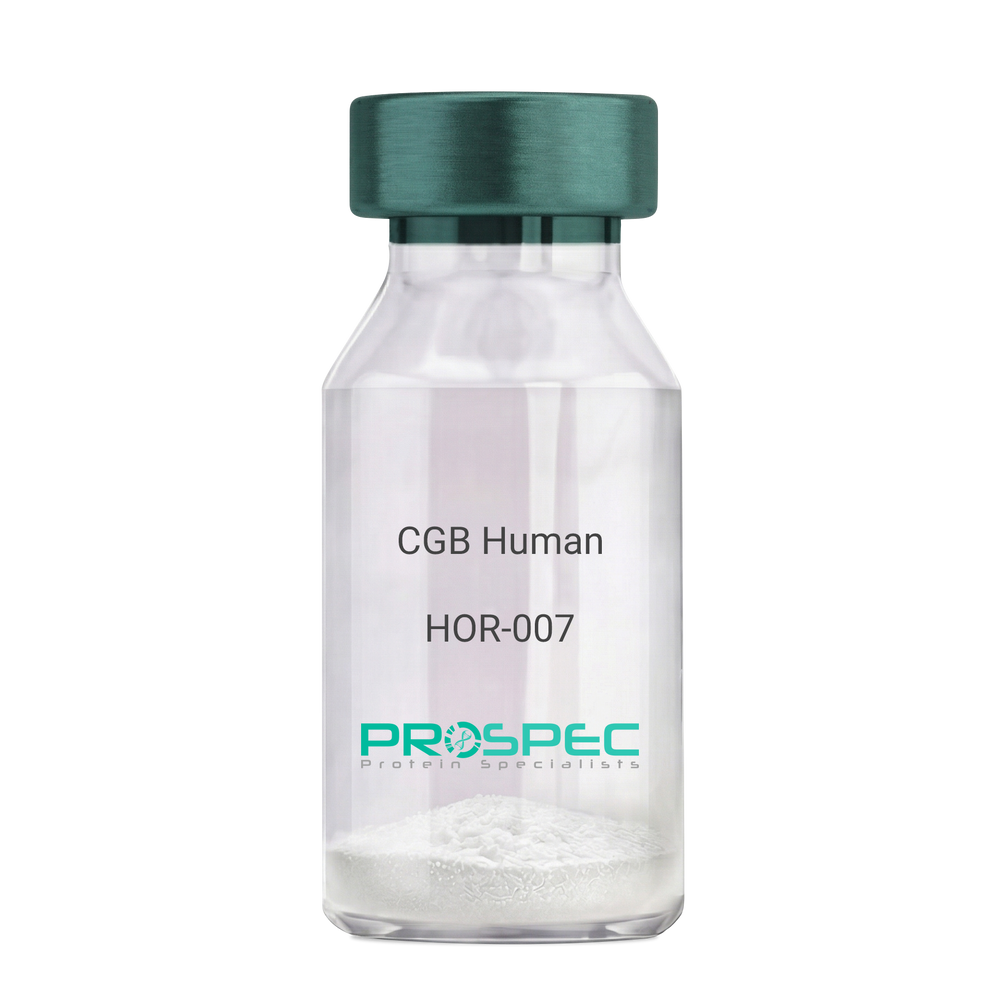
CGB Human Recombinant
CGB3, CGB5, CGB7, CGB8, hCGB, CG-beta, CGB.
Product # :
HOR-007Price :
Quantity :
Shipping Method :
Shipped with Ice Packs
More Info
- description
- source
- formulation
- purity
- More Info
- Citations
Description
CGB Human Recombinant produced in E.Coli is a single, non-glycosylated polypeptide chain containing 168 amino acids (21-165 a.a.) and having a molecular mass of 17.9kDa. CGB is fused to a 23 amino acid His-tag at N-terminus & purified by proprietary chromatographic techniques.
Source
Escherichia Coli.
Formulation
CGB protein solution (0.5mg/ml) containing 20mM Tris-HCl buffer (pH 8.0), 0.4M Urea and 10% glycerol.
Purity
Greater than 85.0% as determined by SDS-PAGE.
Citations
More Info
-
Introduction
Glycoprotein hormones are heterodimers consisting of a common alpha subunit and a unique beta subunit which confers biological specificity. CGB is a member of the glycoprotein hormone beta chain family and is the beta 3 subunit of (CG). CG is produced by the trophoblastic cells of the placenta and stimulates the ovaries. The beta subunit of CG is encoded by 6 genes which are arranged in tandem and inverted pairs on chromosome 19q13.3 and contiguous with the luteinizing hormone beta subunit gene.
-
Synonyms
CGB3, CGB5, CGB7, CGB8, hCGB, CG-beta, CGB.
-
Physical Appearance
Sterile filtered colorless solution.
-
Stability
Store at 4°C if entire vial will be used within 2-4 weeks. Store, frozen at -20°C for longer periods of time. For long term storage it is recommended to add a carrier protein (0.1% HSA or BSA).Avoid multiple freeze-thaw cycles.
-
Amino Acid Sequence
MGSSHHHHHH SSGLVPRGSH MGSSKEPLRP RCRPINATLA VEKEGCPVCI TVNTTICAGY CPTMTRVLQG VLPALPQVVC NYRDVRFESI RLPGCPRGVN PVVSYAVALS CQCALCRRST TDCGGPKDHP LTCDDPRFQD SSSSKAPPPS LPSPSRLPGP SDTPILPQ.
-
Background
What is the molecular weight/Mw of CG BETA HUMAN Protein?
CG BETA HUMAN Protein has a total Mw of 17.9kDa.
What is the source or expression system of CG BETA HUMAN Protein?
Escherichia Coli.
What is the Purity of CG BETA HUMAN Protein?
CG BETA HUMAN Protein is > 85% pure as determined by SDS-PAGE.
What is the Biological Activity of CG BETA HUMAN Protein?
The biological functionality of CG BETA HUMAN Protein will be determined in the future.
What is the amino acid sequence of CG BETA HUMAN Protein?
MGSSHHHHHH SSGLVPRGSH MGSSKEPLRP RCRPINATLA VEKEGCPVCI TVNTTICAGY CPTMTRVLQG VLPALPQVVC NYRDVRFESI RLPGCPRGVN PVVSYAVALS CQCALCRRST TDCGGPKDHP LTCDDPRFQD SSSSKAPPPS LPSPSRLPGP SDTPILPQ.
What applications can CG BETA HUMAN Protein be used in?
CG BETA HUMAN Protein can probably be used in western blot, ELISA and Lateral Flow.
What is the endotoxin level for CG BETA HUMAN Protein?
The endotoxin level is minimal, CG BETA HUMAN Protein was purified using conventional chromatography techniques.
Who supplies recombinant CG BETA HUMAN that is in stock and available to order?
ProSpec has the protein in stock and available for immediate delivery.
Where can I order bulk mg quantities of CG BETA HUMAN?
ProSpec supplies bulk mg quantities at affordable prices that meets research and academic budgets.
ProSpec's products are furnished for LABORATORY RESEARCH USE ONLY. The product may not be used as drugs, agricultural or pesticidal products, food additives or household chemicals.
- View Data Sheet
Name :
HHEX HumanDescription:
Hematopoietically Expressed Homeobox Human Recombinant
Hematopoietically Expressed Homeobox, Hematopoietically-Expressed Homeobox Protein HHEX, Homeobox Hematopoietically Expressed, Proline-Rich Homeodomain-Containing Transcription Factor, Homeobox Protein PRH, Homeobox Protein HEX, HOX11L-PEN, PRHX, HMPH, PRH, HEX.
Product # :
PRO-1624Price :
Quantity :
Shipping Method :
Shipped with Ice Packs
More Info
- description
- source
- formulation
- purity
- More Info
- Citations
Description
HHEX Human Recombinant produced in E.coli is a single, non-glycosylated polypeptide chain containing 293 amino acids (1-270) and having a molecular mass of 32.4kDa. HHEX is fused to a 23 amino acid His-tag at N-terminus & purified by proprietary chromatographic techniques.
Source
Escherichia Coli.
Formulation
The HHEX solution contains 20mM Tris-HCl buffer (pH 8.0), 0.15M NaCl, 1mM DTT and 40% glycerol.
Purity
Greater than 85% as determined by SDS-PAGE.
Citations
More Info
-
Introduction
The homeobox protein family of transcription factors has many members that take part in developmental processes such as HHEX. HHEX is known to interact with Promyelocytic leukemia protein and expression in specific hematopoietic lines indicates that this protein is involved in hematopoietic differentiation.
-
Synonyms
Hematopoietically Expressed Homeobox, Hematopoietically-Expressed Homeobox Protein HHEX, Homeobox Hematopoietically Expressed, Proline-Rich Homeodomain-Containing Transcription Factor, Homeobox Protein PRH, Homeobox Protein HEX, HOX11L-PEN, PRHX, HMPH, PRH, HEX.
-
Physical Appearance
Sterile filtered colorless solution.
-
Stability
Store at 4°C if entire vial will be used within 2-4 weeks. Store, frozen at -20°C for longer periods of time. For long term storage it is recommended to add a carrier protein (0.1% HSA or BSA).Avoid multiple freeze-thaw cycles.
-
Amino Acid Sequence
MGSSHHHHHH SSGLVPRGSH MGSMQYPHPG PAAGAVGVPL YAPTPLLQPA HPTPFYIEDI LGRGPAAPTP APTLPSPNSS FTSLVSPYRT PVYEPTPIHP AFSHHSAAAL AAAYGPGGFG GPLYPFPRTV NDYTHALLRH DPLGKPLLWS PFLQRPLHKR KGGQVRFSND QTIELEKKFE TQKYLSPPER KRLAKMLQLS ERQVKTWFQN RRAKWRRLKQ ENPQSNKKEE LESLDSSCDQ RQDLPSEQNK GASLDSSQCS PSPASQEDLE SEISEDSDQE VDIEGDKSYF NAG
ProSpec's products are furnished for LABORATORY RESEARCH USE ONLY. The product may not be used as drugs, agricultural or pesticidal products, food additives or household chemicals.
- View Data Sheet
Name :
AHCY Human, Sf9Description:
Adenosylhomocysteinase Human Recombinant, Sf9
EC 3.3.1.1, SAHH, AdoHcyase, S-adenosyl-L-homocysteine hydrolase, AHCY, Adenosylhomocysteinase.
Product # :
ENZ-1034Price :
Quantity :
Shipping Method :
Shipped with Ice Packs
More Info
- description
- source
- formulation
- purity
- More Info
- Citations
Description
AHCY Human Recombinant produced in Sf9 Baculovirus cells is a single, glycosylated polypeptide chain containing 441 amino acids (1-432 a.a.) and having a molecular mass of 48.8kDa (Migrates at 40-57kDa on SDS-PAGE under reducing conditions). AHCY is fused to a 6 amino acids His-Tag at C-terminus and purified by proprietary chromatographic techniques.
Source
Sf9, Baculovirus cells.
Formulation
AHCY protein solution (0.25mg/ml) contains Phosphate Buffered Saline (pH 7.4) and 10% glycerol.
Purity
Greater than 90% as determined by SDS-PAGE.
Citations
More Info
-
Introduction
AHCY is an enzyme that catalyzes the reversible hydrolysis of S-adenosylhomocysteine (AdoHcy) to adenosine (Ado) and L-homocysteine (Hcy). AHCY controls the intracellular S-adenosylhomocysteine (SAH) concentration that is crucial for transmethylation reactions. AHCY deficiency causes hypermethioninemia.
-
Synonyms
EC 3.3.1.1, SAHH, AdoHcyase, S-adenosyl-L-homocysteine hydrolase, AHCY, Adenosylhomocysteinase.
-
Physical Appearance
Sterile Filtered colorless solution.
-
Stability
Store at 4°C if entire vial will be used within 2-4 weeks. Store, frozen at -20°C for longer periods of time. For long term storage it is recommended to add a carrier protein (0.1% HSA or BSA).Avoid multiple freeze-thaw cycles.
-
Amino Acid Sequence
ADLMSDKLPY KVADIGLAAW GRKALDIAEN EMPGLMRMRE RYSASKPLKG ARIAGCLHMT VETAVLIETL VTLGAEVQWS SCNIFSTQDH AAAAIAKAGI PVYAWKGETD EEYLWCIEQT LYFKDGPLNM ILDDGGDLTN LIHTKYPQLL PGIRGISEET TTGVHNLYKM MANGILKVPA INVNDSVTKS KFDNLYGCRE SLIDGIKRAT DVMIAGKVAV VAGYGDVGKG CAQALRGFGA RVIITEIDPI NALQAAMEGY EVTTMDEACQ EGNIFVTTTG CIDIILGRHF EQMKDDAIVC NIGHFDVEID VKWLNENAVE KVNIKPQVDR YRLKNGRRII LLAEGRLVNL GCAMGHPSFV MSNSFTNQVM AQIELWTHPD KYPVGVHFLP KKLDEAVAEA HLGKLNVKLT KLTEKQAQYL GMSCDGPFKP DHYRYHHHHH H.
ProSpec's products are furnished for LABORATORY RESEARCH USE ONLY. The product may not be used as drugs, agricultural or pesticidal products, food additives or household chemicals.
- View Data Sheet
Name :
SCGB1A1 MouseDescription:
Uteroglobin Mouse Recombinant
Uteroglobin, Clara cell 17 kDa protein, Clara cell phospholipid-binding protein, CCPBP, Clara cells 10 kDa secretory protein, CC10, PCB-binding protein, Secretoglobin family 1A member 1, Scgb1a1, Ugb, Utg, UG, CC16, CCSP, PCB-BP.
Product # :
CYT-746Price :
Quantity :
Shipping Method :
Shipped at Room temp
More Info
- description
- source
- formulation
- purity
- biological activity
- More Info
- Citations
Description
Uteroglobin Mouse Recombinant produced in E.coli is a non-glycosylated disulfide-linked homodimeric protein containing 2x75 amino acids chains and having a molecular mass of 16.7kDa.The SCGB1A1 is purified by proprietary chromatographic techniques.
Source
Escherichia Coli.
Formulation
The Uteroglobin protein was lyophilized from a 0.2µm filtered concentrated solution in PBS, pH 7.4.
Purity
Greater than 98.0% as determined by:
(a) Analysis by RP-HPLC.
(b) Analysis by SDS-PAGE.Biological Activity
The ED50 as determined by the ability of the immobilized protein to support the adhesion of the A549 human lung carcinoma cells is less than 5.0µg/ml, corresponding to a specific activity of > 200 IU/mg.Citations
More Info
-
Introduction
Uteroglobin (SCGB1A1) which belongs to the Secretoglobin (SCGBs) superfamily, is a multifunctional protein that exerts anti-inflammatory and anti-tumorigenic effects by binding small hydrophobic molecules such as phospholipids and prostaglandins. Uteroglobin is involved in numerous functions including anti-inflammation, inhibition of phospholipase A2 and the sequestering of hydrophobic ligands. SCGB1A1 is expressed by Clara cells, the non-ciliated, non-mucous secretory cells predominant in lung bronchioles, and by other epithelia which communicate with the external environment. On top of sequestering pro-inflammatory mediators and carcinogens, Uteroglobin is implicated in the inhibition of cell migration and invasion, platelet aggregation, and T cell differentiation. SCGB1A1 gene defects are associated with a susceptibility to asthma.
-
Synonyms
Uteroglobin, Clara cell 17 kDa protein, Clara cell phospholipid-binding protein, CCPBP, Clara cells 10 kDa secretory protein, CC10, PCB-binding protein, Secretoglobin family 1A member 1, Scgb1a1, Ugb, Utg, UG, CC16, CCSP, PCB-BP.
-
Physical Appearance
Sterile Filtered White lyophilized (freeze-dried) powder.
-
Stability
Lyophilized Uteroglobin although stable at room temperature for 3 weeks, should be stored desiccated below -18°C. Upon reconstitution SCGB1A1 should be stored at 4°C between 2-7 days and for future use below -18°C. For long term storage it is recommended to add a carrier protein (0.1% HSA or BSA). Please prevent freeze-thaw cycles.
-
Solubility
It is recommended to reconstitute the lyophilized SCGB1A1 in sterile 18M-cm H2O not less than 100µg/ml, which can then be further diluted to other aqueous solutions.
-
Amino Acid Sequence
DICPGFLQVL EALLMESESG YVASLKPFNP GSDLQNAGTQ LKRLVDTLPQ ETRINIMKLT EKILTSPLCK QDLRF.
ProSpec's products are furnished for LABORATORY RESEARCH USE ONLY. The product may not be used as drugs, agricultural or pesticidal products, food additives or household chemicals.
- View Data Sheet
Name :
scIC2Description:
Single Chain Cardiac Troponin I-C 2nd generation Recombinant
Troponin I cardiac muscle, Cardiac troponin I, TNNI3, TNNC1, CMH7, RCM1, cTnI, CMD2A, MGC116817, Troponin C slow skeletal and cardiac muscles, TN-C, TNNC1, TNNC, TNC, CMD1Z.
Product # :
PRO-346Price :
Quantity :
Shipping Method :
Shipped with Ice Packs
More Info
- description
- source
- formulation
- purity
- More Info
- Citations
Description
Recombinant Single Chain Cardiac Troponin I-C 2nd generation produced in E.Coli is a single, non-glycosylated, polypeptide chain (aa28-110-Linker-cTnC), having a molecular weight of 30kDa.1mg of scIC2 is equivalent to 0.82mg of full length human cardiac TNI on a molar basis.The scIC2 is purified by proprietary chromatographic techniques.
Source
Escherichia Coli.
Formulation
The protein solution contains 20mM Tris-HCl, 250mM NaCl and 50% glycerol, pH 7.5.
Purity
Greater than 91.0% as determined by SDS-PAGE.
Citations
More Info
-
Introduction
Troponin Complex is a heteromeric protein playing an important role in the regulation of skeletal and cardiac muscle contraction. It consists of three subunits, Troponin I, Troponin T and TroponinC. Each subunit is responsible for part of Troponin Complex function. E.g. Troponin I inhibits ATP-ase activity of acto-myosin.Troponin T and Troponin Iare presented in cardiac muscles in different forms than in skeletal muscles. Purified subunits of rcTnI, rcTnC and rcTnT are recomplexed in vitro under appropriate conditions.
-
Synonyms
Troponin I cardiac muscle, Cardiac troponin I, TNNI3, TNNC1, CMH7, RCM1, cTnI, CMD2A, MGC116817, Troponin C slow skeletal and cardiac muscles, TN-C, TNNC1, TNNC, TNC, CMD1Z.
-
Physical Appearance
Sterile Filtered colourless liquid formualtion.
-
Stability
scIC2 although stable at 10°C for 7 days, should be stored below -18°C. Please prevent freeze-thaw cycles.
ProSpec's products are furnished for LABORATORY RESEARCH USE ONLY. The product may not be used as drugs, agricultural or pesticidal products, food additives or household chemicals.