Search results
1000 results found for “calreticulin”
Name
Description
Product #
Price
Quantity
Shipping Method
- View Data Sheet
Name :
CRP Human RecombinantDescription:
c-Reactive Protein Human Recombinant
C-reactive protein, CRP, PTX1, MGC88244, MGC149895.
Product # :
PRO-335Price :
Quantity :
Shipping Method :
Shipped with Ice Packs
More Info
- description
- source
- formulation
- purity
- More Info
- sds-page
Description
Recombinant Human CRP produced in E.Coli is a non-glycosylated polypeptide chain having a total molecular mass of 115 kDa that corresponds to the pentamer structure of 23 kDa monomer determined by amino acid sequence. The CRP is purified by proprietary chromatographic techniques.
Source
Escherichia Coli.
Formulation
The sterile protein solution contains 20mM Tris (pH 7.5), 2mM CaCl2, 0.14M NaCl and 0.05% NaN3.
Purity
Greater than 95.0% as determined by Analysis by SDS-PAGE.
sds-page
More Info
-
Introduction
CRP is an acute phase protein that correlates with inflammatory disease and is synthesized by hepatocytes during the acute phase response by certain cytokines (IL-1 and TNF Alpha and Beta). CRP levels increase dramatically (up to 1,000 fold) and serve as a useful marker of inflammation in such conditions as bacterial infection, rheumatoid arthritis, viral infections, transplantation rejection, meningitis, myocardial infarction, septicemia, osteomyelitis and others. CRP is also highly correlated to Serum Amyloid A levels.
-
Synonyms
C-reactive protein, CRP, PTX1, MGC88244, MGC149895.
-
Physical Appearance
Sterile Filtered clear solution.
-
Stability
CRP should be stored at all times at 4°C.
ProSpec's products are furnished for LABORATORY RESEARCH USE ONLY. The product may not be used as drugs, agricultural or pesticidal products, food additives or household chemicals.
- View Data Sheet
Name :
EGFPDescription:
Enhanced Green Fluorescent Protein Recombinant
Green fluorescent protein, GFP.
Product # :
PRO-1606Price :
Quantity :
Shipping Method :
Shipped at Room temp
More Info
- description
- source
- formulation
- purity
- More Info
Description
Recombinant EGFP produced in E.coli cells is a single non-glycosylated protein containing 239 amino acid chain and having a molecular mass of 26.9kDa. EGFP is purified by proprietary chromatographic techniques.
Source
Escherichia Coli.
Formulation
The EGFP was lyophilized from a 0.2µm filtered concentrated solution in PBS pH 7.4.
Purity
Greater than 95.0% as determined by:
(a) Analysis by RP-HPLC.
(b) Analysis by SDS-PAGE.More Info
-
Introduction
GFP, also known as Green Fluorescent Protein, is a protein produced by the jellyfish (Aequorea Victoria) that produces bioluminescence in the green zone of the noticeable spectrum. Green Fluorescent Protein is a useful and ubiquitous instrument for producing chimeric proteins, where it functions as a fluorescent protein tag. GFP is expressed in most known cell types and is used as a noninvasive fluorescent marker in living cells and organisms. Green Fluorescent Protein permits a broad range of applications where it has functioned as a cell lineage tracer, reporter of gene expression, or as a measure of protein-protein interactions. Enhanced GFP (eGFP) has F64L and S65T mutations, which make GFP show increased fluorescence and fold more efficiently under 370.
-
Synonyms
Green fluorescent protein, GFP.
-
Physical Appearance
Sterile Filtered White lyophilized (freeze-dried) powder.
-
Stability
Lyophilized EGFP although stable at room temperature for 3 weeks, should be stored desiccated below -180C. Upon reconstitution EGFP should be stored at 40C between 2-7 days and for future use below -180C.For long term storage it is recommended to add a carrier protein (0.1% HSA or BSA).Please prevent freeze-thaw cycles.
-
Solubility
It is recommended to reconstitute the lyophilized EGFP in sterile distilled H2O not less than 100µg/ml, which can then be further diluted to other aqueous solutions.
-
Amino Acid Sequence
MVSKGEELFT GVVPILVELD GDVNGHKFSV SGEGEGDATY GKLTLKFICT TGKLPVPWPT LVTTLTYGVQ CFSRYPDHMK QHDFFKSAMP EGYVQERTIF FKDDGNYKTR AEVKFEGDTL VNRIELKGID FKEDGNILGH KLEYNYNSHN VYIMADKQKN GIKVNFKIRH NIEDGSVQLA DHYQQNTPIG DGPVLLPDNH YLSTQSALSK DPNEKRDHMV LLEFVTAAGI TLGMDELYK
ProSpec's products are furnished for LABORATORY RESEARCH USE ONLY. The product may not be used as drugs, agricultural or pesticidal products, food additives or household chemicals.
- View Data Sheet
Name :
Tamm HorsfallDescription:
Recombinant Human Tamm Horsfall Glycoprotein
Tamm-Horsfall urinary glycoprotein, THP, FJHN, HNFJ, THGP, MCKD2, ADMCKD2, UMOD, Uromodulin.
Product # :
ENZ-1206Price :
Quantity :
Shipping Method :
Shipped at Room temp
More Info
- description
- source
- formulation
- purity
- More Info
- SDS-PAGE
Description
Uromodulin Human Recombinant protein produced from HEK Cells, is a polypeptide chain containing 595 amino acids ( 25-613 a.a. ) and having a total Mw of 65 kDa.
Source
HEK293
Formulation
The UMOD protein was lyophilized from 0.4μm filtered solution containing 50mM NaCl, 0.02M TRIS, pH 7.5.
Purity
Greater than 90.0% as determined by SDS-PAGE analysis.
SDS-PAGE
More Info
-
Introduction
Uromodulin (Tamm–Horsfall protein) is produced mainly by cells in the kidney’s thick ascending limb and is the most abundant protein in normal urine.
Uromodulin takes part in salt and water regulation, helps prevent urinary tract infections and kidney stones, and influences inflammation and immune activity in the kidney.
Reduced Uromodulin levels is associated with chronic kidney disease.
UMOD mutations causes unproper protein folding and thus transported incorrectly, resulting in its accumulation inside kidney tubular cells that damages the tubules and cause kidney disease (ADTKD-UMOD), associated with high uric acid, gout, and progressive kidney failure.
-
Synonyms
Tamm-Horsfall urinary glycoprotein, THP, FJHN, HNFJ, THGP, MCKD2, ADMCKD2, UMOD, Uromodulin.
-
Physical Appearance
Filtered White lyophilized (freeze-dried) powder.
-
Stability
Lyophilized UMOD although stable at room temperature for 3 weeks, should be stored at -18C. Upon reconstitution UMOD should be stored at 4C between 2-7 days and for future use below -18C.
For long term storage it is recommended to add a carrier protein (0.1% HSA or BSA).
Please prevent freeze-thaw cycles.
-
Solubility
Add deionized water to prepare a working stock solution of approximately 0.5mg/ml and let the lyophilized pellet dissolve completely. Product is not sterile! Please filter the product by an appropriate sterile filter before using it in the cell culture.
-
Amino Acid Sequence
DTSEARWCSE CHSNATCTED EAVTTCTCQE GFTGDGLTCV DLDECAIPGA HNCSANSSCV NTPGSFSCVC PEGFRLSPGL GCTDVDECAE PGLSHCHALA TCVNVVGSYL CVCPAGYRGD GWHCECSPGS CGPGLDCVPE GDALVCADPC QAHRTLDEYW RSTEYGEGYA CDTDLRGWYR FVGQGGARMA ETCVPVLRCN TAAPMWLNGT HPSSDEGIVS RKACAHWSGH CCLWDASVQV KACAGGYYVY NLTAPPECHL AYCTDPSSVE GTCEECSIDE DCKSNNGRWH CQCKQDFNIT DISLLEHRLE CGANDMKVSL GKCQLKSLGF DKVFMYLSDS RCSGFNDRDN RDWVSVVTPA RDGPCGTVLT RNETHATYSN TLYLADEIII RDLNIKINFA CSYPLDMKVS LKTALQPMVS ALNIRVGGTG MFTVRMALFQ TPSYTQPYQG SSVTLSTEAF LYVGTMLDGG DLSRFALLMT NCYATPSSNA TDPLKYFIIQ DRCPHTRDST IQVVENGESS QGRFSVQMFR FAGNYDLVYL HCEVYLCDTM NEKCKPTCSG TRFRSGSVID QSRVLNLGPI TRKGVQATVH HHHHH
-
Background
Uromodulin is the most abundant protein in normal urine. Its secretion in urine follows proteolytic cleavage of the ectodomain of its glycosyl phosphatidylinosital-anchored counterpart that is situated on the luminal cell surface of the loop of Henle. Uromodulin plays a role as a constitutive inhibitor of calcium crystallization in renal fluids. Secretion of uromodulin in urine provides protection against urinary tract infections caused by uropathogenic bacteria. Defects in Uromodulin expression are associated with the autosomal dominant renal disorders medullary cystic kidney disease-2 (MCKD2) and familial juvenile hyperuricemic nephropathy (FJHN). These disorders are characterized by juvenile onset of hyperuricemia, gout, and progressive renal failure. While several transcript variants may exist for this gene, the full-length natures of only two have been described to date. UMOD is involved in regulating the circulating activity of cytokines as it binds to il-1, il-2 and tnf with high affinity.
What is the molecular weight/Mw of UMOD Protein?
UMOD Protein has a total Mw of 65kDa.
What is the source or expression system of UMOD Protein?
HEK293.
What is the Purity of UMOD Protein?
UMOD Protein is >90% pure as determined by SDS-PAGE.
What is the Biological Activity of UMOD Protein?
The biological functionality of UMOD Protein will be determined in the future.
What is the amino acid sequence of UMOD Protein?
UMOD Protein is composed from 595 amino acids.
What applications can UMOD Protein be used in?
UMOD Protein can probably be used in western blot, ELISA and Lateral Flow.
What is the endotoxin level for UMOD Protein?
The endotoxin level is minimal, UMOD Protein was purified using conventional chromatography techniques.
ProSpec's products are furnished for LABORATORY RESEARCH USE ONLY. The product may not be used as drugs, agricultural or pesticidal products, food additives or household chemicals.
- View Data Sheet
Name :
SNX5 HumanDescription:
Sorting Nexin 5 Human Recombinant
Sorting nexin-5 isoform a, Sorting nexin-5, SNX5.
Product # :
PRO-786Price :
Quantity :
Shipping Method :
Shipped with Ice Packs
More Info
- description
- source
- formulation
- purity
- More Info
Description
SNX5 Human Recombinant produced in E.Coli is a single, non-glycosylated polypeptide chain containing 427 amino acids (1-404 a.a) and having a molecular mass of 49.2kDa.SNX5 is fused to a 23 amino acid His-tag at N-terminus & purified by proprietary chromatographic techniques.
Source
Escherichia Coli.
Formulation
SNX5 protein solution (0.25mg/ml) in phosphate buffered saline (pH7.4), 20% glycerol and 1mM DTT.
Purity
Greater than 85.0% as determined by SDS-PAGE.
More Info
-
Introduction
Sorting nexin-5 (SNX5) belongs to the sorting nexin family, whose members contains a phox (PX) domain, (which is a phosphoinositide binding domain) and are involved in intracellular trafficking. SNX5 protein is a component of the mammalian retromer complex, which facilitates cargo recovery from endosomes to the trans-Golgi network. SNX5 binds to the Fanconi anemia, complementation group A protein.
-
Synonyms
Sorting nexin-5 isoform a, Sorting nexin-5, SNX5.
-
Physical Appearance
Sterile Filtered clear solution.
-
Stability
Store at 4°C if entire vial will be used within 2-4 weeks. Store, frozen at -20°C for longer periods of time. For long term storage it is recommended to add a carrier protein (0.1% HSA or BSA).Avoid multiple freeze-thaw cycles.
-
Amino Acid Sequence
MGSSHHHHHH SSGLVPRGSH MGSMAAVPEL LQQQEEDRSK LRSVSVDLNV DPSLQIDIPD ALSERDKVKF TVHTKTTLPT FQSPEFSVTR QHEDFVWLHD TLIETTDYAG LIIPPAPTKP DFDGPREKMQ KLGEGEGSMT KEEFAKMKQE LEAEYLAVFK KTVSSHEVFL QRLSSHPVLS KDRNFHVFLE YDQDLSVRRK NTKEMFGGFF KSVVKSADEV LFTGVKEVDD FFEQEKNFLI NYYNRIKDSC VKADKMTRSH KNVADDYIHT AACLHSLALE EPTVIKKYLL KVAELFEKLR KVEGRVSSDE DLKLTELLRY YMLNIEAAKD LLYRRTKALI DYENSNKALD KARLKSKDVK LAEAHQQECC QKFEQLSESA KEELINFKRK RVAAFRKNLI EMSELEIKHA RNNVSLLQSC IDLFKNN.
ProSpec's products are furnished for LABORATORY RESEARCH USE ONLY. The product may not be used as drugs, agricultural or pesticidal products, food additives or household chemicals.
- View Data Sheet
Name :
GABARAPL2 HumanDescription:
GABA(A) Receptor-Associated Protein Like 2 Human Recombinant
GABA(A) receptor-associated protein-like 2, GATE-16, GEF2, ATG8, ATG8C, Ganglioside expression factor 2, General protein transport factor p16, Golgi-associated ATPase enhancer of 16 kDa, MAP1 light chain 3-related protein, gamma-aminobutyric acid receptor-associated protein-like 2, MAP1 light chain 3 related protein, FLC3A.
Product # :
PRO-079Price :
Quantity :
Shipping Method :
Shipped with Ice Packs
More Info
- description
- source
- formulation
- purity
- More Info
Description
GABARAPL2 produced in E.Coli is a single, non-glycosylated polypeptide chain containing 137 amino acids (1-117a.a.) and having a molecular mass of 15.8kDa. GABARAPL2 is fused to a 20 amino acid His-tag at N-terminus & purified by proprietary chromatographic techniques.
Source
Escherichia Coli.
Formulation
The GABARAPL2 protein solution (0.5mg/1ml) is formulated in 20mM Tris-HCl buffer (pH8.0), 0.2M NaCl, 5mM DTT and 20% glycerol.
Purity
Greater than 90% as determined by SDS-PAGE.
More Info
-
Introduction
GABARAPL2 takes part in intra Golgi traffic and modulates intra Golgi transport by coupling between NSF activity and SNAREs activation. GABARAPL2 first stimulates the ATPase activity of NSF which in turn stimulates the association with GOSR1.
-
Synonyms
GABA(A) receptor-associated protein-like 2, GATE-16, GEF2, ATG8, ATG8C, Ganglioside expression factor 2, General protein transport factor p16, Golgi-associated ATPase enhancer of 16 kDa, MAP1 light chain 3-related protein, gamma-aminobutyric acid receptor-associated protein-like 2, MAP1 light chain 3 related protein, FLC3A.
-
Physical Appearance
Sterile Filtered clear solution.
-
Stability
Store at 4°C if entire vial will be used within 2-4 weeks. Store, frozen at -20°C for longer periods of time.Please avoid freeze thaw cycles.
-
Amino Acid Sequence
MGSSHHHHHH SSGLVPRGSH MKWMFKEDHS LEHRCVESAK IRAKYPDRVP VIVEKVSGSQ IVDIDKRKYL VPSDITVAQF MWIIRKRIQL PSEKAIFLFV DKTVPQSSLT MGQLYEKEKD EDGFLYVAYS GENTFGF
ProSpec's products are furnished for LABORATORY RESEARCH USE ONLY. The product may not be used as drugs, agricultural or pesticidal products, food additives or household chemicals.
- View Data Sheet
Name :
LTF Human S.PlasmaDescription:
Lactoferrin Human (Seminal Plasma)
Lactotransferrin, Lactoferrin, Growth-inhibiting protein 12, Talalactoferrin, LTF, GIG12, LF, HLF2, Neutrophil Lactoferrin.
Product # :
PRO-1591Price :
Quantity :
Shipping Method :
Shipped at Room temp
More Info
- description
- source
- formulation
- purity
- More Info
Description
The Human Lactoferrin produced from pooled Human seminal plasma has a molecular mass of 76.165kDa (calculated without glycosylation) containing 691 amino acid residues.
Source
Human seminal plasma.
Formulation
LTF protein filtered (0.4µm) and lyophilized in 0.5 mg/ml in 0.05M phosphate buffer and 0.075M NaCl, pH 7.4.
Purity
Purity greater than 90% as determined by SDS-PAGE.
More Info
-
Introduction
Lactoferrin is a glycoprotein that belongs to the transferrin family of iron binding proteins. It is found in human breast milk as well as most epithelial surface secretions including tears, nasogastric, saliva, and bronchial. Lactoferrin binds 2 molecules of iron with very high affinity. Lactoferrin inhibits bacterial growth by withholding iron, its N-terminal region is an antimicrobial peptide. Lactotransferrin acts synergistically with lysozyme to potentiate the activity of both proteins. The multifunctional protein lactoferrin has many physiological possible roles. It is often referred to as an innate defense protein and frequently serves as the first line of defense in protection against pathogens. It has been shown to have the ability to bind iron, it is a natural anti-bacterial, anti-fungal and anti-viral, it is an antioxidant and it also has immunomodulatory properties. It has many beneficial properties, which make it a good candidate for a number of product applications. Considerable research is currently going on to explain the various suggested biological functions of lactoferrin.
-
Synonyms
Lactotransferrin, Lactoferrin, Growth-inhibiting protein 12, Talalactoferrin, LTF, GIG12, LF, HLF2, Neutrophil Lactoferrin.
-
Physical Appearance
Filtered White lyophilized (freeze-dried) powder.
-
Stability
Store lyophilized protein at -20°C. Aliquot the product after reconstitution to avoid repeated freezing/thawing cycles. Reconstituted protein can be stored at 4°C for a limited period of time; it does not show any change after two weeks at 4°C.
-
Solubility
It is recommended to add deionized water to prepare a working stock solution of approximately 0.5 mg/ml and let the lyophilized pellet dissolve completely. Product is not sterile! Please filter the product by an appropriate sterile filter before using it in the cell culture.
-
Amino Acid Sequence
GRRRSVQWCA VSQPEATKCF QWQRNMRKVR GPPVSCIKRD SPIQCIQAIA ENRADAVTLD GGFIYEAGLA PYKLRPVAAE VYGTERQPRT HYYAVAVVKK GGSFQLNELQ GLKSCHTGLR RTAGWNVPIG TLRPFLNWTG PPEPIEAAVA RFFSASCVPG ADKGQFPNLC RLCAGTGENK CAFSSQEPYF SYSGAFKCLR DGAGDVAFIR ESTVFEDLSD EAERDEYELL CPDNTRKPVD KFKDCHLARV PSHAVVARSV NGKEDAIWNL LRQAQEKFGK DKSPKFQLFG SPSGQKDLLF KDSAIGFSRV PPRIDSGLYL GSGYFTAIQN LRKSEEEVAA RRARVVWCAV GEQELRKCNQ WSGLSEGSVT CSSASTTEDC IALVLKGEAD AMSLDGGYVY TAGKCGLVPV LAENYKSQQS SDPDPNCVDR PVEGYLAVAV VRRSDTSLTW NSVKGKKSCH TAVDRTAGWN IPMGLLFNQT GSCKFDEYFS QSCAPGSDPR SNLCALCIGD EQGENKCVPN SNERYYGYTG AFRCLAENAG DVAFVKDVTV LQNTDGNNNE AWAKDLKLAD FALLCLDGKR KPVTEARSCH LAMAPNHAVV SRMDKVERLK QVLLHQQAKF GRNGSDCPDK FCLFQSETKN LLFNDNTECL ARLHGKTTYE KYLGPQYVAG ITNLKKCSTS PLLEACEFLR K.
-
Human Virus Test
Samples from each donor have been tested and found negative for HBsAg, HIV-1+2, HCV, syphilis, aHBc, RRR.
ProSpec's products are furnished for LABORATORY RESEARCH USE ONLY. The product may not be used as drugs, agricultural or pesticidal products, food additives or household chemicals.
- View Data Sheet
Name :
CNTFR RatDescription:
Ciliary Neurotrophic Factor Receptor Rat Recombinant
Ciliary neurotrophic factor receptor subunit alpha, CNTF receptor subunit alpha, CNTFR-alpha.
Product # :
CYT-959Price :
Quantity :
Shipping Method :
Shipped with Ice Packs
More Info
- description
- source
- formulation
- purity
- More Info
Description
CNTFR Rat Recombinant produced in Sf9 Baculovirus cells is a single, glycosylated polypeptide chain containing 328 amino acids (23-342a.a) and having a molecular mass of 36.9kDa (Molecular size on SDS-PAGE will appear at approximately 40-57kDa). CNTFR is fused to an 8 amino acid His-tag at C-terminus & purified by proprietary chromatographic techniques.
Source
Sf9, Baculovirus cells.
Formulation
CNTFR protein solution (0.5mg/ml) containing Phosphate Buffered Saline (pH 7.4) and 10% glycerol.
Purity
Greater than 90.0% as determined by SDS-PAGE.
More Info
-
Introduction
Ciliary Neurotrophic Factor Receptor, also known as CNTFR is a member of the type I cytokine receptor family. CNTFR binds to CNTF.The alpha subunit provides the receptor specificity.Sole nucleotide polymorphisms in CNTFR has been associated with variations in muscle strength, in addition to early onset of eating disorders.
-
Synonyms
Ciliary neurotrophic factor receptor subunit alpha, CNTF receptor subunit alpha, CNTFR-alpha.
-
Physical Appearance
Sterile Filtered colorless clear solution.
-
Stability
Store at 4°C if entire vial will be used within 2-4 weeks. Store, frozen at -20°C for longer periods of time. For long term storage it is recommended to add a carrier protein (0.1% HSA or BSA).Avoid multiple freeze-thaw cycles.
-
Amino Acid Sequence
QKHSPQEAPH VQYERLGTDV TLPCGTASWD AAVTWRVNGT DLAPDLLNGS QLILRSLELG HSGLYACFHR DSWHLRHQVL LHVGLPPREP VLSCRSNTYP KGFYCSWHLS APTYIPNTFN VTVLHGSKMM VCEKDPALKN RCHIRYMHLF STIKYKVSIS VSNALGHNTT AITFDEFTIV KPDPPENVVA RPVPSNPRRL EVTWQTPSTW PDPESFPLKF FLRYRPLILD QWQHVELSNG TAHTITDAYA GKEYIIQVAA KDNEIGTWSD WSVAAHATPW TEEPRHLTTE AQAPETTTST TSSLAPPPTT KICDPGELSS LEHHHHHH.
-
Background
What is the molecular weight/Mw of CNTFR Protein?
CNTFR Protein has a total Mw of 36.9kDa.
What is the source or expression system of CNTFR Protein?
Sf9, Baculovirus cells.
What is the Purity of CNTFR Protein?
CNTFR Protein is >90% pure as determined by SDS-PAGE.
What is the Biological Activity of CNTFR Protein?
The biological functionality of CNTFR Protein will be determined in the future.
What is the amino acid sequence of CNTFR Protein?
QKHSPQEAPH VQYERLGTDV TLPCGTASWD AAVTWRVNGT DLAPDLLNGS QLILRSLELG HSGLYACFHR DSWHLRHQVL LHVGLPPREP VLSCRSNTYP KGFYCSWHLS APTYIPNTFN VTVLHGSKMM VCEKDPALKN RCHIRYMHLF STIKYKVSIS VSNALGHNTT AITFDEFTIV KPDPPENVVA RPVPSNPRRL EVTWQTPSTW PDPESFPLKF FLRYRPLILD QWQHVELSNG TAHTITDAYA GKEYIIQVAA KDNEIGTWSD WSVAAHATPW TEEPRHLTTE AQAPETTTST TSSLAPPPTT KICDPGELSS LEHHHHHH.
What applications can CNTFR Protein be used in?
CNTFR Protein can probably be used in western blot, ELISA and Lateral Flow.
What is the endotoxin level for CNTFR Protein?
The endotoxin level is minimal, CNTFR Protein was purified using conventional chromatography techniques.
ProSpec's products are furnished for LABORATORY RESEARCH USE ONLY. The product may not be used as drugs, agricultural or pesticidal products, food additives or household chemicals.
- View Data Sheet
Name :
MCAM HumanDescription:
Melanoma Cell Adhesion Molecule Human Recombinant
Cell surface glycoprotein MUC18, Cell surface glycoprotein P1H12, Melanoma cell adhesion molecule, Melanoma-associated antigen A32, Melanoma-associated antigen MUC18, S-endo 1 endothelial-associated antigen, CD146, MCAM, MUC18, Cell Surface Glycoprotein MUC18, Melanoma Adhesion Molecule, CD146 Antigen, CD146, Melanoma Cell Adhesion Molecule, S-Endo 1 Endothelial-Associated Antigen, Melanoma-Associated Antigen MUC18, Cell Surface Glycoprotein P1H12, Melanoma-Associated Antigen A32, Gicerin.
Product # :
PRO-2503Price :
Quantity :
Shipping Method :
Shipped with Ice Packs
More Info
- description
- source
- formulation
- purity
- More Info
Description
MCAM produced in Sf9 Insect cells is a single, glycosylated polypeptide chain containing 547 amino acids (24-559 a.a.) and having a molecular mass of 61.0kDa (Molecular size on SDS-PAGE will appear at approximately 70-100kDa).MCAM is expressed with a 6 amino acid His tag at C-Terminus and purified by proprietary chromatographic techniques.
Source
Sf9, Insect cells.
Formulation
MCAM protein solution (0.5mg/ml) contains Phosphate Buffered Saline (pH 7.4) and 10% glycerol.
Purity
Greater than 95.0% as determined by SDS-PAGE.
More Info
-
Introduction
Cell surface glycoprotein MUC18 (MCAM), is an integral membrane glycoprotein which is part of the immunoglobulin superfamily. MCAM is related with a variety of carcinomas such as tumor progression, metastasis and is also implicated in embryonic neural development. In Addition, MCAM takes part in cell adhesion, as well as in cohesion of the endothelial monolayer at the intercellular junctions in vascular tissue.
-
Synonyms
Cell surface glycoprotein MUC18, Cell surface glycoprotein P1H12, Melanoma cell adhesion molecule, Melanoma-associated antigen A32, Melanoma-associated antigen MUC18, S-endo 1 endothelial-associated antigen, CD146, MCAM, MUC18, Cell Surface Glycoprotein MUC18, Melanoma Adhesion Molecule, CD146 Antigen, CD146, Melanoma Cell Adhesion Molecule, S-Endo 1 Endothelial-Associated Antigen, Melanoma-Associated Antigen MUC18, Cell Surface Glycoprotein P1H12, Melanoma-Associated Antigen A32, Gicerin.
-
Physical Appearance
Sterile filtered colorless solution.
-
Stability
Store at 4°C if entire vial will be used within 2-4 weeks. Store, frozen at -20°C for longer periods of time. For long term storage it is recommended to add a carrier protein (0.1% HSA or BSA).Avoid multiple freeze-thaw cycles.
-
Amino Acid Sequence
VPGEAEQPAP ELVEVEVGST ALLKCGLSQS QGNLSHVDWF SVHKEKRTLI FRVRQGQGQS EPGEYEQRLS LQDRGATLAL TQVTPQDERI FLCQGKRPRS QEYRIQLRVY KAPEEPNIQV NPLGIPVNSK EPEEVATCVG RNGYPIPQVI WYKNGRPLKE EKNRVHIQSS QTVESSGLYT LQSILKAQLV KEDKDAQFYC ELNYRLPSGN HMKESREVTV PVFYPTEKVW LEVEPVGMLK EGDRVEIRCL ADGNPPPHFS ISKQNPSTRE AEEETTNDNG VLVLEPARKE HSGRYECQGL DLDTMISLLS EPQELLVNYV SDVRVSPAAP ERQEGSSLTL TCEAESSQDL EFQWLREETG QVLERGPVLQ LHDLKREAGG GYRCVASVPS IPGLNRTQLV NVAIFGPPWM AFKERKVWVK ENMVLNLSCE ASGHPRPTIS WNVNGTASEQ DQDPQRVLST LNVLVTPELL ETGVECTASN DLGKNTSILF LELVNLTTLT PDSNTTTGLS TSTASPHTRA NSTSTERKLP EPESRGAAAL EHHHHHH.
ProSpec's products are furnished for LABORATORY RESEARCH USE ONLY. The product may not be used as drugs, agricultural or pesticidal products, food additives or household chemicals.
- View Data Sheet
Name :
SSX1 HumanDescription:
Synovial Sarcoma, X Breakpoint 1 Human Recombinant
Synovial Sarcoma X Breakpoint 1, Cancer/Testis Antigen 5.1, CT5.1, SSRC Sarcoma Synovial X-Chromosome-Related 1, Cancer/Testis Antigen Family 5 Member 1, Cancer/Testis Antigen Family 5, Protein SSX1, Member 1, SSX1.
Product # :
PRO-1379Price :
Quantity :
Shipping Method :
Shipped with Ice Packs
More Info
- description
- source
- formulation
- purity
- More Info
Description
SSX1 Human Recombinant produced in E.Coli is a single, non-glycosylated polypeptide chain containing 211 amino acids (1-188 a.a) and having a molecular mass of 24.3kDa.SSX1 is fused to a 23 amino acid His-tag at N-terminus & purified by proprietary chromatographic techniques.
Source
Escherichia Coli.
Formulation
SSX1 protein solution (1mg/ml) containing 20mM Tris-HCl buffer (pH 8.0), 0.4M Urea and 10% glycerol.
Purity
Greater than 85.0% as determined by SDS-PAGE.
More Info
-
Introduction
Synovial Sarcoma, X Breakpoint 1 (SSX1) is a member of a family of highly homologous synovial sarcoma X (SSX) breakpoint proteins. SSX proteins are localized to the nucleus and expressed in testis and some types of cancers and, hence, they are classified as C/T (cancer/testis) antigens. These proteins may serve as transcriptional repressors. SSX1 genes are involved in the t (X;18) translocation typically found in all synovial sarcomas. This translocation leads to the fusion of the synovial sarcoma translocation gene on chromosome 18 to one of the SSX genes on chromosome X. These hybrid proteins are most likely responsible for transforming activity.
-
Synonyms
Synovial Sarcoma X Breakpoint 1, Cancer/Testis Antigen 5.1, CT5.1, SSRC Sarcoma Synovial X-Chromosome-Related 1, Cancer/Testis Antigen Family 5 Member 1, Cancer/Testis Antigen Family 5, Protein SSX1, Member 1, SSX1.
-
Physical Appearance
Sterile Filtered colorless solution.
-
Stability
Store at 4°C if entire vial will be used within 2-4 weeks. Store, frozen at -20°C for longer periods of time. For long term storage it is recommended to add a carrier protein (0.1% HSA or BSA).Avoid multiple freeze-thaw cycles.
-
Amino Acid Sequence
MGSSHHHHHH SSGLVPRGSH MGSMNGDDTF AKRPRDDAKA SEKRSKAFDD IATYFSKKEW KKMKYSEKIS YVYMKRNYKA MTKLGFKVTL PPFMCNKQAT DFQGNDFDND HNRRIQVEHP QMTFGRLHRI IPKIMPKKPA EDENDSKGVS EASGPQNDGK QLHPPGKANI SEKINKRSGP KRGKHAWTHR LRERKQLVIY EEISDPEEDD E.
ProSpec's products are furnished for LABORATORY RESEARCH USE ONLY. The product may not be used as drugs, agricultural or pesticidal products, food additives or household chemicals.
- View Data Sheet
Name :
GDF7 HumanDescription:
Growth and Differentiation factor 7 Human Recombinant
Growth Differentiation Factor 7, GDF-7, Growth/Differentiation Factor 7, BMP12, GDF7.
Product # :
CYT-870Price :
Quantity :
Shipping Method :
Shipped at Room temp
More Info
- description
- source
- formulation
- purity
- biological activity
- More Info
Description
GDF7 Human Recombinant (322-450) produced in E.Coli is a disulfide-linked homodimeric, non-glycosylated, polypeptide chain containing 129 amino acids and having a molecular mass of 28kDa.The GDF-7 is purified by proprietary chromatographic techniques.
Source
Escherichia Coli.
Formulation
Lyophilized from a 0.2µm filtered solution in HCl.
Purity
Greater than 95.0% as determined by SDS-PAGE.
Biological Activity
The ED50, as determined by inducing alkaline phosphatase production by mouse ATDC5 cells, is less than 1.25µg/ml.More Info
-
Introduction
Growth Differentiation Factor-7 (GDF-7) belongs to the BMP family of TGF-b superfamily proteins. GDF7 elicits its bioactivity via a heterodimeric receptor complex comprised of a type 1 (BMPR-IB) and a type II (BMPR-II or Activin RII) serine/threonine kinase receptor. GDF7 signaling results in the phosphorylation and activation of Smad proteins. GDF-7 is also involved in tendon and ligament formation and repair. In addition, GDF7 regulates bone formation, mesenchymal stem cell differentiation, neuronal differentiation, and axon guidance.
-
Synonyms
Growth Differentiation Factor 7, GDF-7, Growth/Differentiation Factor 7, BMP12, GDF7.
-
Physical Appearance
Sterile Filtered White lyophilized (freeze-dried) powder.
-
Stability
Lyophilized GDF7 although stable at room temperature for 3 weeks, should be stored desiccated below -18°C. Upon reconstitution GDF-7 should be stored at 4°C between 2-7 days and for future use below -18°C.For long term storage it is recommended to add a carrier protein (0.1% HSA or BSA).Please prevent freeze-thaw cycles.
-
Solubility
It is recommended to reconstitute the lyophilized GDF-7 in sterile 18M-cm H2O not less than 100µg/ml, which can then be further diluted to other aqueous solutions.
-
Amino Acid Sequence
TALAGTRTAQ GSGGGAGRGH GRRGRSRCSR KPLHVDFKEL GWDDWIIAPL DYEAYHCEGL CDFPLRSHLE PTNHAIIQTL LNSMAPDAAP ASCCVPARLS PISILYIDAA NNVVYKQYED MVVEACGCR.
-
Background
What is the molecular weight/Mw of GDF7 Protein?
GDF7 Protein has a total Mw of 28kDa.
What is the source or expression system of GDF7 Protein?
Escherichia Coli.
What is the Purity of GDF7 Protein?
GDF7 Protein is >95% pure as determined by SDS-PAGE.
What is the Biological Activity of GDF7 Protein?
The ED50, as determined by inducing alkaline phosphatase production by mouse ATDC5 cells, is less than 1.25µg/ml.
What is the amino acid sequence of GDF7 Protein?
TALAGTRTAQ GSGGGAGRGH GRRGRSRCSR KPLHVDFKEL GWDDWIIAPL DYEAYHCEGL CDFPLRSHLE PTNHAIIQTL LNSMAPDAAP ASCCVPARLS PISILYIDAA NNVVYKQYED MVVEACGCR.
What applications can GDF7 Protein be used in?
GDF7 Protein can probably be used in western blot, ELISA and Lateral Flow.
What is the endotoxin level for GDF7 Protein?
The endotoxin level is minimal, GDF7 Protein was purified using conventional chromatography techniques.
ProSpec's products are furnished for LABORATORY RESEARCH USE ONLY. The product may not be used as drugs, agricultural or pesticidal products, food additives or household chemicals.
- View Data Sheet
Name :
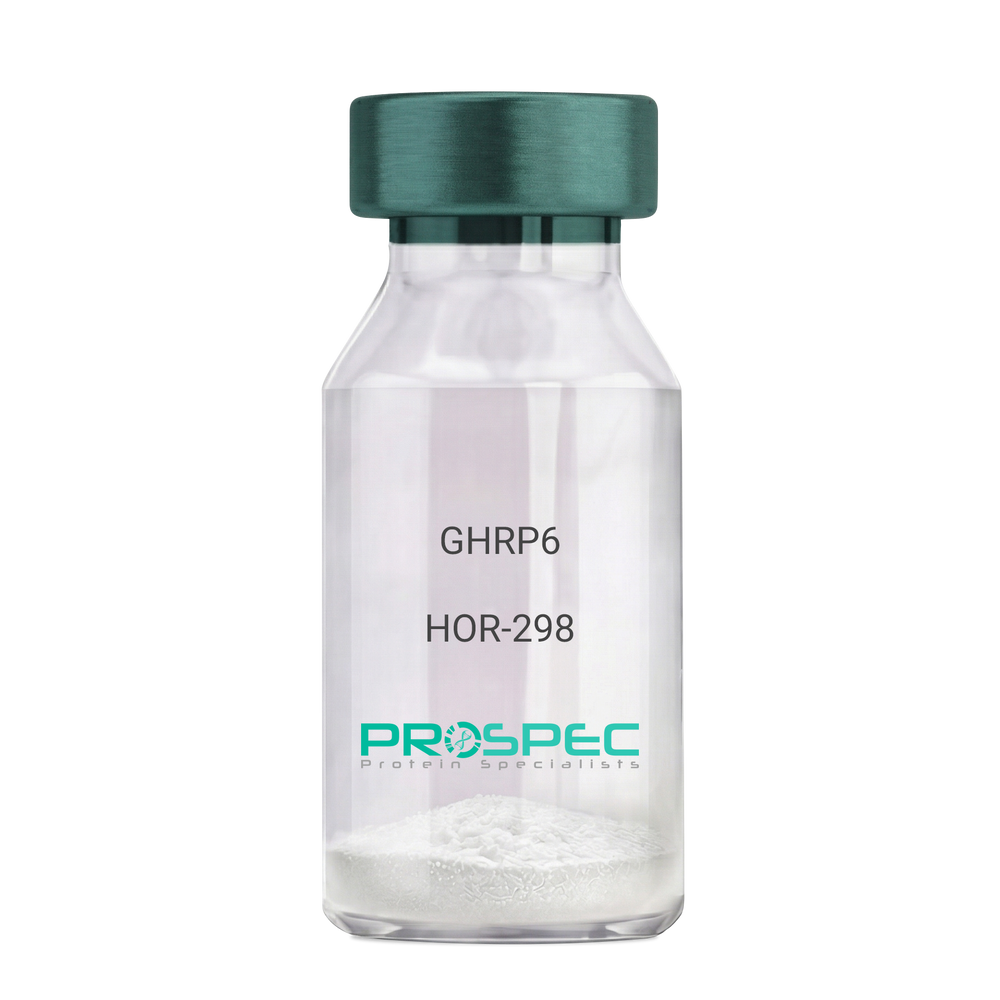
GHRP6Description:
Growth Hormone Releasing Peptide-6
GHRP-6, GHRP6
Product # :
HOR-298Price :
Quantity :
Shipping Method :
Shipped at Room temp
More Info
- description
- formulation
- purity
- More Info
Description
Growth Hormone Releasing Peptide-6 Synthetic is a single, non-glycosylated polypeptide chain containing 6 amino acids, having a molecular mass of 873 Dalton and a Molecular formula of C46H56N12O6.
Formulation
The GHRP-6 peptide was lyophilized with no additives.
Purity
Greater than 98.0% as determined by analysis by RP-HPLC.
More Info
-
Introduction
GH-releasing peptides (GHRPs) are synthetic peptides that like GHRH act directly on pituitary somatotrophs to stimulate GH release. Growth hormone (GH) release is stimulated by a variety of synthetic secretagogues, of which growth hormone-releasing hexapeptide (GHRP-6) has been most thoroughly studied; it is thought to have actions at both pituitary and hypothalamic site.
-
Synonyms
GHRP-6, GHRP6
-
Physical Appearance
Sterile Filtered White lyophilized (freeze-dried) powder.
-
Stability
Lyophilized Growth Hormone Releasing Peptide-6 although stable at room temperature for 3 weeks, should be stored desiccated below -18°C. Upon reconstitution GHRP-6 should be stored at 4°C between 2-7 days and for future use below -18°C. For long term storage it is recommended to add a carrier protein (0.1% HSA or BSA).Please prevent freeze-thaw cycles.
-
Solubility
It is recommended to reconstitute the lyophilized GHRP-6 in sterile 18MΩ-cm H2O not less than 100 µg/ml, which can then be further diluted to other aqueous solutions.
-
Amino Acid Sequence
His-D-Trp-Ala-Trp-D-Phe-Lys-NH2.
ProSpec's products are furnished for LABORATORY RESEARCH USE ONLY. The product may not be used as drugs, agricultural or pesticidal products, food additives or household chemicals.
- View Data Sheet
Name :
CRNN HumanDescription:
Cornulin Human Recombinant
SEP53, DRC1, PDRC1, Cornulin, Tumor-related protein, Squamous epithelial heat shock protein 53, 53 kDa squamous epithelial-induced stress protein, 58 kDa heat shock protein, 53 kDa putative calcium-binding protein, CRNN, C1orf10.
Product # :
PRO-797Price :
Quantity :
Shipping Method :
Shipped with Ice Packs
More Info
- description
- source
- formulation
- purity
- More Info
Description
CRNN Human Recombinant fused to 20 amino acid His Tag at N-terminal produced in E.Coli is a single, non-glycosylated, polypeptide chain containing 515 amino acids (1-495 a.a.) and having a molecular mass of 55.7 kDa. The CRNN is purified by proprietary chromatographic techniques.
Source
Escherichia Coli.
Formulation
The CRNN solution contains 20mM Tris-HCl pH-8 and 10% glycerol.
Purity
Greater than 85% as determined by SDS-PAGE.
More Info
-
Introduction
CRNN is part of the "fused gene" family of proteins, which enclose N-terminus EF-hand domains and multiple tandem peptide repeats. CRNN contains two EF-hand Ca2+ binding domains in its N-terminus and two glutamine- and threonine-rich 60 amino acid repeats in its C-terminus. CRNN, also known as SEP53, which participates in the mucosal/epithelial immune response and epidermal differentiation. CRNN is a survival factor that participates in the clonogenicity of squamous esophageal epithelium cell lines, attenuates deoxycholic acid (DCA)-induced apoptotic cell death and discharge of calcium. When CRNN is over expressed in oral squamous carcinoma cell lines, it regulates negatively cell proliferation by the induction of G1 arrest.
-
Synonyms
SEP53, DRC1, PDRC1, Cornulin, Tumor-related protein, Squamous epithelial heat shock protein 53, 53 kDa squamous epithelial-induced stress protein, 58 kDa heat shock protein, 53 kDa putative calcium-binding protein, CRNN, C1orf10.
-
Physical Appearance
Sterile Filtered clear colorless solution.
-
Stability
Store at 4°C if entire vial will be used within 2-4 weeks. Store, frozen at -20°C for longer periods of time. For long term storage it is recommended to add a carrier protein (0.1% HSA or BSA). Please avoid freeze-thaw cycles.
-
Amino Acid Sequence
MGSSHHHHHH SSGLVPRGSH MPQLLQNING IIEAFRRYAR TEGNCTALTR GELKRLLEQE FADVIVKPHD PATVDEVLRL LDEDHTGTVE FKEFLVLVFK VAQACFKTLS ESAEGACGSQ ESGSLHSGAS QELGEGQRSG TEVGRAGKGQ HYEGSSHRQS QQGSRGQNRP GVQTQGQATG SAWVSSYDRQ AESQSQERIS PQIQLSGQTE QTQKAGEGKR NQTTEMRPER QPQTREQDRA HQTGETVTGS GTQTQAGATQ TVEQDSSHQT GRTSKQTQEA TNDQNRGTET HGQGRSQTSQ AVTGGHAQIQ AGTHTQTPTQ TVEQDSSHQT GSTSTQTQES TNGQNRGTEI HGQGRSQTSQ AVTGGHTQIQ AGSHTETVEQ DRSQTVSHGG AREQGQTQTQ PGSGQRWMQV SNPEAGETVP GGQAQTGAST EPGRQEWSST HPRRCVTEGQ GDRQPTVVGE EWVDDHSRET VILRLDQGNL HTSVSSAQGQ DAAQSEEKRG ITARELYSYL RSTKP.
ProSpec's products are furnished for LABORATORY RESEARCH USE ONLY. The product may not be used as drugs, agricultural or pesticidal products, food additives or household chemicals.
- View Data Sheet
Name :
CRYGD HumanDescription:
Crystallin, Gamma D Human Recombinant
Gamma-crystallin D, Gamma-D-crystallin, Gamma-crystallin 4, CRYGD, CRYG4, CCP; CACA, CCA3, cry-g-D.
Product # :
PRO-913Price :
Quantity :
Shipping Method :
Shipped with Ice Packs
More Info
- description
- source
- formulation
- purity
- More Info
Description
CRYGD Human Recombinant produced in E.Coli is a single, non-glycosylated polypeptide chain containing 194 amino acids (1-174 a.a.) and having a molecular mass of 22.9kDa.CRYGD is fused to a 20 amino acid His-tag at N-terminus & purified by proprietary chromatographic techniques.
Source
Escherichia Coli.
Formulation
CRYGD protein solution (1mg/ml) containing 20mM Tris-HCl buffer (pH 8.0), 5mM DTT, 10% glycerol and 200mM NaCl.
Purity
Greater than 95.0% as determined by SDS-PAGE.
More Info
-
Introduction
CRYGD is a member of the beta/gamma-crystallin family. Crystallins are the principal structural components of the vertebrate eye lens. The mammalian lens crystallins are divided into alpha, beta, and gamma families. Gamma-crystallins are involved in cataract formation. Defects in the CRYGD gene are responsible for cataract autosomal dominant (ADC), cataract congenital non-nuclear polymorphic autosomal dominant (CCP), cataract congenital cerulean type 3 (CCA3) and cataract crystalline aculeiform (CACA).
-
Synonyms
Gamma-crystallin D, Gamma-D-crystallin, Gamma-crystallin 4, CRYGD, CRYG4, CCP; CACA, CCA3, cry-g-D.
-
Physical Appearance
Sterile filtered colorless solution.
-
Stability
Store at 4°C if entire vial will be used within 2-4 weeks. Store, frozen at -20°C for longer periods of time. For long term storage it is recommended to add a carrier protein (0.1% HSA or BSA).Avoid multiple freeze-thaw cycles.
-
Amino Acid Sequence
MGSSHHHHHH SSGLVPRGSH MGKITLYEDR GFQGRHYECS SDHPNLQPYL SRCNSARVDS GCWMLYEQPN YSGLQYFLRR GDYADHQQWM GLSDSVRSCR LIPHSGSHRI RLYEREDYRG QMIEFTEDCS CLQDRFRFNE IHSLNVLEGS WVLYELSNYR GRQYLLMPGD YRRYQDWGAT NARVGSLRRV IDFS.
ProSpec's products are furnished for LABORATORY RESEARCH USE ONLY. The product may not be used as drugs, agricultural or pesticidal products, food additives or household chemicals.
- View Data Sheet
Name :
CTBP1 HumanDescription:
C-Terminal Binding Protein 1 Human Recombinant
EC 1.1.1, BARS, MGC104684, CTBP1, C-terminal-binding protein 1, CTBP.
Product # :
PRO-796Price :
Quantity :
Shipping Method :
Shipped with Ice Packs
More Info
- description
- source
- formulation
- purity
- More Info
Description
CTBP1 produced in E.Coli is a single, non-glycosylated polypeptide chain containing 440 amino acids (1-440 a.a.) and having a molecular mass of 47.5kDa.CTBP1 is purified by proprietary chromatographic techniques.
Source
Escherichia Coli.
Formulation
The CTBP1 protein solution contains 20mM Tris-HCl, pH-8, 100mM NaCl and 10% glycerol.
Purity
Greater than 90.0% as determined by SDS-PAGE.
More Info
-
Introduction
CTBP1 participates in controlling the equilibrium between tubular and stacked structures in the Golgi complex. CTBP1 functions in brown adipose tissue differentiation. CTBP1 has dehydrogenase activity. CTBP1 binds to the C-terminus of adenovirus E1A proteins. CTBP1 phosphoprotein is a transcriptional repressor and that takes part during cellular proliferation. CTBP1 & CTBP2 can dimerize and interact with a polycomb group protein complex which is involved in regulation of gene expression during development.
-
Synonyms
EC 1.1.1, BARS, MGC104684, CTBP1, C-terminal-binding protein 1, CTBP.
-
Physical Appearance
Sterile filtered colorless solution.
-
Stability
Store at 4°C if entire vial will be used within 2-4 weeks. Store, frozen at -20°C for longer periods of time. For long term storage it is recommended to add a carrier protein (0.1% HSA or BSA). Avoid multiple freeze-thaw cycles.
-
Amino Acid Sequence
MGSSHLLNKG LPLGVRPPIM NGPLHPRPLV ALLDGRDCTV EMPILKDVAT VAFCDAQSTQ EIHEKVLNEA VGALMYHTIT LTREDLEKFK ALRIIVRIGS GFDNIDIKSA GDLGIAVCNV PAASVEETAD STLCHILNLY RRATWLHQAL REGTRVQSVE QIREVASGAA RIRGETLGII GLGRVGQAVA LRAKAFGFNV LFYDPYLSDG VERALGLQRV STLQDLLFHS DCVTLHCGLN EHNHHLINDF TVKQMRQGAF LVNTARGGLV DEKALAQALK EGRIRGAALD VHESEPFSFS QGPLKDAPNL ICTPHAAWYS EQASIEMREE AAREIRRAIT GRIPDSLKNC VNKDHLTAAT HWASMDPAVV HPELNGAAYR YPPGVVGVAP TGIPAAVEGI VPSAMSLSHG LPPVAHPPHA PSPGQTVKPE ADRDHASDQL.
ProSpec's products are furnished for LABORATORY RESEARCH USE ONLY. The product may not be used as drugs, agricultural or pesticidal products, food additives or household chemicals.
- View Data Sheet
Name :
CTDSPL HumanDescription:
CTD Small Phosphatase-Like Human Recombinant
CTD small phosphatase-like protein, CTDSP-like, Carboxy-terminal domain RNA polymerase II polypeptide A small phosphatase 3, NIF-like protein, Nuclear LIM interactor-interacting factor 1, NLI-interacting factor 1, Protein YA22, hYA22, RBSP3, Small C-terminal domain phosphatase 3, SCP3, Small CTD phosphatase 3, CTDSPL, C3orf8, NIF1, NIFL, SCP3, YA22, PSR1.
Product # :
ENZ-569Price :
Quantity :
Shipping Method :
Shipped with Ice Packs
More Info
- description
- source
- formulation
- purity
- More Info
Description
CTDSPL Human Recombinant produced in E.coli is a single, non-glycosylated polypeptide chain containing 209 amino acids (82-265) and having a molecular mass of 23.9kDa.CTDSPL is fused to a 24 amino acid His-tag at N-terminus & purified by proprietary chromatographic techniques.
Source
Escherichia Coli.
Formulation
The CTDSPL solution (0.5mg/ml) contains 20mM Tris-HCl buffer (pH8.0), 40% glycerol, 0.15M NaCl and 1mM DTT.
Purity
Greater than 90.0% as determined by SDS-PAGE.
More Info
-
Introduction
CTD small phosphatase-like protein (CTDSPL) specially catalyzes the dephosphorylation of 'Ser-5' within the tandem 7 residues repeats in the C-terminal domain (CTD) of the biggest RNA polymerase II subunit POLR2A. CTDSPL negatively regulates RNA polymerase II transcription, probably by directing the transition from initiation/capping to processive transcript elongation. CTDSPL is employed by REST to neuronal genes which contain RE-1 elements, directing to neuronal gene silencing in non-neuronal cells.
-
Synonyms
CTD small phosphatase-like protein, CTDSP-like, Carboxy-terminal domain RNA polymerase II polypeptide A small phosphatase 3, NIF-like protein, Nuclear LIM interactor-interacting factor 1, NLI-interacting factor 1, Protein YA22, hYA22, RBSP3, Small C-terminal domain phosphatase 3, SCP3, Small CTD phosphatase 3, CTDSPL, C3orf8, NIF1, NIFL, SCP3, YA22, PSR1.
-
Physical Appearance
Sterile filtered colorless solution.
-
Stability
Store at 4°C if entire vial will be used within 2-4 weeks. Store, frozen at -20°C for longer periods of time. For long term storage it is recommended to add a carrier protein (0.1% HSA or BSA).Avoid multiple freeze-thaw cycles.
-
Amino Acid Sequence
MGSSHHHHHH SSGLVPRGSH MGSHMKYLLP EVTVLDYGKK CVVIDLDETL VHSSFKPISN ADFIVPVEID GTIHQVYVLK RPHVDEFLQR MGQLFECVLF TASLAKYADP VADLLDRWGV FRARLFRESC VFHRGNYVKD LSRLGRELSK VIIVDNSPAS YIFHPENAVP VQSWFDDMTD TELLDLIPFF EGLSREDDVY SMLHRLCNR.
ProSpec's products are furnished for LABORATORY RESEARCH USE ONLY. The product may not be used as drugs, agricultural or pesticidal products, food additives or household chemicals.
- View Data Sheet
Name :
DCUN1D2 HumanDescription:
DCN1 Defective in Cullin Neddylation 1 Domain Containing 2 Human Recombinant
DCN1-like protein 2, DCUN1 domain-containing protein 2, Defective in cullin neddylation protein 1-like protein 2, DCUN1D2, C13orf17, DCUN1L2.
Product # :
PRO-899Price :
Quantity :
Shipping Method :
Shipped with Ice Packs
More Info
- description
- source
- formulation
- purity
- More Info
Description
DCUN1D2 Human Recombinant produced in E.Coli is a single, non-glycosylated polypeptide chain containing 279 amino acids (1-259 a.a.) and having a molecular mass of 32.3kDa.DCUN1D2 is fused to a 20 amino acid His-tag at N-terminus & purified by proprietary chromatographic techniques.
Source
Escherichia Coli.
Formulation
DCUN1D2 protein solution (1mg/ml) containing 20mM Tris-HCl buffer (pH 8.0), 1mM DTT, 30% glycerol and 0.1M NaCl.
Purity
Greater than 95.0% as determined by SDS-PAGE.
More Info
-
Introduction
DCN1-like protein 2 (DCUN1D2) which contains one DCUN1 domain and 1 UBA-like domain, may have a role in the neddylation of cullins which regulate SCF-type ubiquitin ligase complexes. The gene encoding Dcun1D2 is located on human chromosome 13. Chromosome 13 contains major tumor suppressor genes, including BRCA2 and RB1, which are linked with breast cancer susceptibility and retinoblastoma, respectively.
-
Synonyms
DCN1-like protein 2, DCUN1 domain-containing protein 2, Defective in cullin neddylation protein 1-like protein 2, DCUN1D2, C13orf17, DCUN1L2.
-
Physical Appearance
Sterile Filtered clear solution.
-
Stability
Store at 4°C if entire vial will be used within 2-4 weeks. Store, frozen at -20°C for longer periods of time. For long term storage it is recommended to add a carrier protein (0.1% HSA or BSA).Avoid multiple freeze-thaw cycles.
-
Amino Acid Sequence
MGSSHHHHHH SSGLVPRGSH MHKLKSSQKD KVRQFMACTQ AGERTAIYCL TQNEWRLDEA TDSFFQNPDS LHRESMRNAV DKKKLERLYG RYKDPQDENK IGVDGIQQFC DDLSLDPASI SVLVIAWKFR AATQCEFSRK EFLDGMTELG CDSMEKLKAL LPRLEQELKD TAKFKDFYQF
TFTFAKNPGQ KGLDLEMAVA YWKLVLSGRF KFLDLWNTFL MEHHKRSIPR DTWNLLLDFG NMIADDMSNY DEEGAWPVLI DDFVEYARPV VTGGKRSLF.
ProSpec's products are furnished for LABORATORY RESEARCH USE ONLY. The product may not be used as drugs, agricultural or pesticidal products, food additives or household chemicals.
- View Data Sheet
Name :
SERPIND1 HumanDescription:
Serpin Peptidase Inhibitor, Clade D Member 1 Human Recombinant
Serpin Family D Member 1, Cysteine Proteinase Inhibitor Clade D Member 1, Serpin Peptidase Inhibitor Clade D Member 1, Protease Inhibitor Leuserpin-2, Serpin D1, HCF2, HLS2, Leuserpin 2, D22S673, THPH10, HC-II, HCII, HC2, LS2.
Product # :
PRO-2050Price :
Quantity :
Shipping Method :
Shipped with Ice Packs
More Info
- description
- source
- formulation
- purity
- More Info
Description
SERPIND1 Human Recombinant produced in E.coli is a single, non-glycosylated polypeptide chain containing 465 amino acids (58-499) and having a molecular mass of 53.3kDa.SERPIND1 is fused to a 23 amino acid His-Tag at N-terminus and purified by proprietary chromatographic techniques.
Source
Escherichia Coli.
Formulation
The SERPIND1 solution (1mg/ml) contains 20mM Tris-HCl buffer (pH 8.0), 10% glycerol and 0.4M Urea.
Purity
Greater than 85% as determined by SDS-PAGE.
More Info
-
Introduction
Serpin Peptidase Inhibitor, Clade D Member 1 (SERPIND1) is a serine proteinase inhibitor which rapidly inhibits thrombin in the presence of dermatan sulfate. SERPIND1 gene is a member of the serpin gene superfamily. SERPIND1 protein contains 5 exons and 4 introns. SERPIND1 shares homology with antithrombin III and other members of the alpha 1-antitrypsin superfamily. SERPIND1 gene mutations are linked with cofactor II deficiency. SERPIND1 protein is activated by dermatan sulfate, and glycosaminoglycans. Allelic variations in the SERPIND1 gene are linked with cofactor II deficiency.
-
Synonyms
Serpin Family D Member 1, Cysteine Proteinase Inhibitor Clade D Member 1, Serpin Peptidase Inhibitor Clade D Member 1, Protease Inhibitor Leuserpin-2, Serpin D1, HCF2, HLS2, Leuserpin 2, D22S673, THPH10, HC-II, HCII, HC2, LS2.
-
Physical Appearance
Sterile Filtered colorless solution.
-
Stability
Store at 4°C if entire vial will be used within 2-4 weeks. Store, frozen at -20°C for longer periods of time. For long term storage it is recommended to add a carrier protein (0.1% HSA or BSA).Avoid multiple freeze-thaw cycles.
-
Amino Acid Sequence
MGSSHHHHHH SSGLVPRGSH MGSDFHKENT VTNDWIPEGE EDDDYLDLEK IFSEDDDYID IVDSLSVSPT DSDVSAGNIL QLFHGKSRIQ RLNILNAKFA FNLYRVLKDQ VNTFDNIFIA PVGISTAMGM ISLGLKGETH EQVHSILHFK DFVNASSKYE ITTIHNLFRK LTHRLFRRNF GYTLRSVNDL YIQKQFPILL DFKTKVREYY FAEAQIADFS DPAFISKTNN HIMKLTKGLI KDALENIDPA TQMMILNCIY FKGSWVNKFP VEMTHNHNFR LNEREVVKVS MMQTKGNFLA ANDQELDCDI LQLEYVGGIS MLIVVPHKMS GMKTLEAQLT PRVVERWQKS MTNRTREVLL PKFKLEKNYN LVESLKLMGI RMLFDKNGNM AGISDQRIAI DLFKHQGTIT VNEEGTQATT VTTVGFMPLS TQVRFTVDRP FLFLIYEHRT SCLLFMGRVA NPSRS.
ProSpec's products are furnished for LABORATORY RESEARCH USE ONLY. The product may not be used as drugs, agricultural or pesticidal products, food additives or household chemicals.
- View Data Sheet
Name :
DGCR6 HumanDescription:
DiGeorge Syndrome Critical Region Gene 6 Human Recombinant
DiGeorge syndrome critical region gene 6, Protein DGCR6, DGCR6.
Product # :
PRO-1372Price :
Quantity :
Shipping Method :
Shipped with Ice Packs
More Info
- description
- source
- formulation
- purity
- More Info
Description
DGCR6 Human Recombinant produced in E.Coli is a single, non-glycosylated polypeptide chain containing 243 amino acids (1-220 a.a) and having a molecular mass of 27kDa. DGCR6 is fused to a 23 amino acid His-tag at N-terminus & purified by proprietary chromatographic techniques.
Source
E.coli.
Formulation
DGCR6 protein solution (0.5mg/ml) containing 20mM Tris-HCl buffer (pH 8.0), 0.2M NaCl and 20% glycerol.
Purity
Greater than 95% as determined by SDS-PAGE.
More Info
-
Introduction
DiGeorge syndrome critical region gene 6 (DGCR6) shares homology with the Drosophila melanogaster gonadal protein, that participates in gonadal and germ cell development, and also with the gamma-1 subunit of human laminin. DGCR6 is involved in DiGeorge syndrome pathology and in schizophrenia.
-
Synonyms
DiGeorge syndrome critical region gene 6, Protein DGCR6, DGCR6.
-
Physical Appearance
Sterile Filtered colorless solution.
-
Stability
Store at 4°C if entire vial will be used within 2-4 weeks. Store, frozen at -20°C for longer periods of time. For long term storage it is recommended to add a carrier protein (0.1% HSA or BSA).Avoid multiple freeze-thaw cycles.
-
Amino Acid Sequence
MGSSHHHHHH SSGLVPRGSH MGSMERYAGA LEEVADGARQ QERHYQLLSA LQSLVKELPS SFQQRLSYTT LSDLALALLD GTVFEIVQGL LEIQHLTEKS LYNQRLRLQN EHRVLRQALR QKHQEAQQAC RPHNLPVLQA AQQRELEAVE HRIREEQRAM DQKIVLELDR KVADQQSTLE KAGVAGFYVT TNPQELMLQM NLLELIRKLQ QRGCWAGKAA LGLGGPWQLP AAQCDQKGSP VPP.
ProSpec's products are furnished for LABORATORY RESEARCH USE ONLY. The product may not be used as drugs, agricultural or pesticidal products, food additives or household chemicals.
- View Data Sheet
Name :
SIRT5 HumanDescription:
Sirtuin-5 Human Recombinant
Sirtuin 5, NAD-Dependent Lysine Demalonylase And Desuccinylase Sirtuin-5,Mitochondria, NAD-Dependent Protein Deacylase Sirtuin-5 Mitochondrial, Silent Mating Type Information Regulation 2 (S.Cerevisiae) Homolog 5, NAD-Dependent Deacetylase Sirtuin-5, Regulatory Protein SIR2 Homolog 5, SIR2-Like Protein 5, SIR2L5, Sirtuin Type 5, Sir2-Like 5, EC 3.5.1.-.
Product # :
PRO-1774Price :
Quantity :
Shipping Method :
Shipped with Ice Packs
More Info
- description
- source
- formulation
- purity
- More Info
Description
SIRT5 Human Recombinant produced in E.Coli is a single, non-glycosylated polypeptide chain topological domain containing 300 amino acids (34-310 a.a) and having a molecular mass of 32.5kDa. SIRT5 is fused to a 23 amino acid His-tag at N-terminus & purified by proprietary chromatographic techniques.
Source
Escherichia Coli.
Formulation
SIRT5 protein solution (0.5mg/ml) containing 20mM Tris-HCl buffer (pH8.0), 0.15M NaCl, 1mM DTT and 30% glycerol.
Purity
Greater than 90.0% as determined by SDS-PAGE.
More Info
-
Introduction
SIRT5 belongs to the Sirtuin family of proteins, homologs to the yeast Sir2 protein. Sirtuin family members hold a sirtuin core domain and grouped into four classes. The protein encoded by this gene is included in class III of the sirtuin family. Human sirtuins functions were not yet determined; still, yeast sirtuin proteins are known to regulate epigenetic gene silencing and suppress recombination of rDNA. Studies propose that human sirtuin could operate as intracellular regulatory protein with mono-ADP-ribosyltransferase activity.
-
Synonyms
Sirtuin 5, NAD-Dependent Lysine Demalonylase And Desuccinylase Sirtuin-5,Mitochondria, NAD-Dependent Protein Deacylase Sirtuin-5 Mitochondrial, Silent Mating Type Information Regulation 2 (S.Cerevisiae) Homolog 5, NAD-Dependent Deacetylase Sirtuin-5, Regulatory Protein SIR2 Homolog 5, SIR2-Like Protein 5, SIR2L5, Sirtuin Type 5, Sir2-Like 5, EC 3.5.1.-.
-
Physical Appearance
Sterile Filtered clear solution.
-
Stability
Store at 4°C if entire vial will be used within 2-4 weeks. Store, frozen at -20°C for longer periods of time.For long term storage it is recommended to add a carrier protein (0.1% HSA or BSA).Please avoid freeze thaw cycles.
-
Amino Acid Sequence
MGSSHHHHHH SSGLVPRGSH MGSARPSSSM ADFRKFFAKA KHIVIISGAG VSAESGVPTF RGAGGYWRKW QAQDLATPLA FAHNPSRVWE FYHYRREVMG SKEPNAGHRA IAECETRLGK QGRRVVVITQ NIDELHRKAG TKNLLEIHGS LFKTRCTSCG VVAENYKSPI CPALSGKGAP EPGTQDASIP VEKLPRCEEA GCGGLLRPHV VWFGENLDPA ILEEVDRELA HCDLCLVVGT SSVVYPAAMF APQVAARGVP VAEFNTETTP ATNRFRFHFQ GPCGTTLPEA LACHENETVS
ProSpec's products are furnished for LABORATORY RESEARCH USE ONLY. The product may not be used as drugs, agricultural or pesticidal products, food additives or household chemicals.
- View Data Sheet
Name :
ARL15 HumanDescription:
ADP-Ribosylation Factor-Like 15 Human Recombinant
ADP-ribosylation factor-like 15, ADP-ribosylation factor related protein 2, ARFRP2, ARF-related protein 2, FLJ20051.
Product # :
PRO-956Price :
Quantity :
Shipping Method :
Shipped with Ice Packs
More Info
- description
- source
- formulation
- purity
- More Info
Description
ARL15 Human Recombinant produced in E.coli is a single, non-glycosylated polypeptide chain containing 224 amino acids (1-204) and having a molecular mass of 25.0 kDa.ARL15 is fused to a 20 amino acid His-tag at N-terminus & purified by proprietary chromatographic techniques.
Source
E.coli.
Formulation
The ARL15 solution (1mg/ml) contains 20mM Tris-HCl buffer (pH 8.0), 1mM DTT, 0.1M NaCl and 10% glycerol.
Purity
Greater than 85% as determined by SDS-PAGE.
More Info
-
Introduction
ARL15 is a member of the ARF family which are essential in eukaryotic vesicular trafficking pathways and have a vital part in the activation of phospholipase D. ARL15 variants influence levels of Acrp30, an adipocyte-derived protein that is extremely genetic and inversely related to the prospect of type 2 diabetes mellitus and coronary heart disease.
-
Synonyms
ADP-ribosylation factor-like 15, ADP-ribosylation factor related protein 2, ARFRP2, ARF-related protein 2, FLJ20051.
-
Physical Appearance
Sterile Filtered colorless solution.
-
Stability
Store at 4°C if entire vial will be used within 2-4 weeks. Store, frozen at -20°C for longer periods of time. For long term storage it is recommended to add a carrier protein (0.1% HSA or BSA).Avoid multiple freeze-thaw cycles.
-
Amino Acid Sequence
MGSSHHHHHH SSGLVPRGSH MSDLRITEAF LYMDYLCFRA LCCKGPPPAR PEYDLVCIGL TGSGKTSLLS KLCSESPDNV VSTTGFSIKA VPFQNAILNV KELGGADNIR KYWSRYYQGS QGVIFVLDSA SSEDDLEAAR NELHSALQHP QLCTLPFLIL ANHQDKPAAR SVQEIKKYFE LEPLARGKRW ILQPCSLDDM DALKDSFSQL INLLEEKDHE AVRM
ProSpec's products are furnished for LABORATORY RESEARCH USE ONLY. The product may not be used as drugs, agricultural or pesticidal products, food additives or household chemicals.
- View Data Sheet
Name :
ST13 HumanDescription:
HSP70 Interacting Protein Human Recombinant
AAG2, SNC6, HSPABP, FAM10A1, FAM10A4, HSPABP1, ST-13, Hsc70-interacting protein, Suppression of tumorigenicity protein 13, Putative tumor suppressor ST13, Protein FAM10A1, Progesterone receptor-associated p48 protein, Renal carcinoma antigen NY-REN-33, ST13, HIP, HOP, P48, PRO0786, FLJ27260, MGC129952.
Product # :
HSP-130Price :
Quantity :
Shipping Method :
Shipped with Ice Packs
More Info
- description
- source
- formulation
- purity
- More Info
Description
Recombinant Human ST13 produced in E.Coli is a single, non-glycosylated polypeptide chain containing 369 amino acids (12-369 a.a.) and having a molecular mass of 41.3kDa.ST13 human recombinant is purified by conventional chromatography techniques.
Source
Escherichia Coli.
Formulation
The ST13 protein solution contains 20mM Tris-HCl, pH-8, 1mM DTT, 0.1M NaCl & 10% Glycerol.
Purity
Greater than 90.0% as determined by SDS-PAGE.
More Info
-
Introduction
ST13 is an adaptor protein (co-chaperone) that mediates the association of HSP70 & HSP90 and appears in early receptor complexes. ST13 plays a role in the assembly process of glucocorticoid receptor, which requires the assistance of multiple molecular chaperones. The expression of ST13 is downregulated in colorectal carcinoma tissue signifying that is candidate tumor suppressor gene. Through common binding to both Hsp70 and Hsp90, ST13 functions as an adaptor that can integrate Hsp70 and Hsp90 interactions. The expression of ST13 decreases in colorectal cancer tissue compared with that in adjacent normal tissue. ST13 is mostly expressed in colorectal epithelia and adenocarcinoma cells. ST13 functions to promote the efficiency of glucocorticoid receptor maturation in cells. The expression levels of the ST13 gene were significantly decreased in primary tumors compared with adjacent mucosa.
-
Synonyms
AAG2, SNC6, HSPABP, FAM10A1, FAM10A4, HSPABP1, ST-13, Hsc70-interacting protein, Suppression of tumorigenicity protein 13, Putative tumor suppressor ST13, Protein FAM10A1, Progesterone receptor-associated p48 protein, Renal carcinoma antigen NY-REN-33, ST13, HIP, HOP, P48, PRO0786, FLJ27260, MGC129952.
-
Physical Appearance
Sterile filtered colorless solution.
-
Stability
Store at 4°C if entire vial will be used within 2-4 weeks. Store, frozen at -20°C for longer periods of time. For long term storage it is recommended to add a carrier protein (0.1% HSA or BSA).Avoid multiple freeze-thaw cycles.
-
Amino Acid Sequence
MDPRKVNELR AFVKMCKQDP SVLHTEEMRF LREWVESMGG KVPPATQKAK SEENTKEEKP DSKKVEEDLK ADEPSSEESD LEIDKEGVIEPDTDAPQEMG DENAEITEEM MDQANDKKVA AIEALNDGEL QKAIDLFTDA IKLNPRLAIL YAKRASVFVK LQKPNAAIRD CDRAIEINPD SAQPYKWRGK AHRLLGHWEE AAHDLALACK LDYDEDASAM LKEVQPRAQK IAEHRRKYER KREEREIKER IERVKKAREE HERAQREEEA
RRQSGAQYGS FPGGFPGGMP GNFPGGMPGM GGGMPGMAGM PGLNEILSDP EVLAAMQDPE VMVAFQDVAQ NPANMSKYQS NPKVMNLISK LSAKFGGQA.
ProSpec's products are furnished for LABORATORY RESEARCH USE ONLY. The product may not be used as drugs, agricultural or pesticidal products, food additives or household chemicals.
- View Data Sheet
Name :
Streptavidin, HisDescription:
Streptavidin Recombinant, His Tag
Product # :
PRO-621Price :
Quantity :
Shipping Method :
Shipped with Ice Packs
More Info
- description
- source
- formulation
- purity
- More Info
Description
Recombinant Streptomyces Avidinii Streptavidin produced in E.Coli is a single, non-glycosylated polypeptide chain (25-183) containing a total of 167 amino acids and having a molecular mass of 17kDa. The Streptavidin protein is fused to an 8 aa N-terminal His-Tag and purified by proprietary chromatographic techniques.
Source
Escherichia Coli.
Formulation
The Streptavidin protein solution (1mg/ml) contains 20mM Tris-HCl pH7.5.
Purity
Greater than 95.0% as determined by analysis by SDS-PAGE.
More Info
-
Introduction
Streptavidin is a tetrameric protein secreted by Streptomyces avidinii which binds firmly to biotin. Streptavidin is widely used in molecular biology through its unique high affinity for the vitamin biotin. The dissociation constant (Kd) of the biotin-streptavidin complex is about ~10-15 mol/L. The strong affinity recognition of biotin and biotinylated molecules has made streptavidin one of the most important components in diagnostics and laboratory kits. The streptavidin/biotin system has one of the biggest free energies of association of yet observed for noncovalent binding of a protein and small ligand in aqueous solution (K_assoc = 10**14). The complexes are also extremely stable over a wide range of temperature and pH.
-
Physical Appearance
Sterile Filtered colorless solution.
-
Stability
Store at 4°C if entire vial will be used within 2-4 weeks. Store, frozen at -20°C for longer periods of time. For long term storage it is recommended to add a carrier protein (0.1% HSA or BSA).Avoid multiple freeze-thaw cycles.
-
Amino Acid Sequence
MVHHHHHHDP SKDSKAQVSA AEAGITGTWY NQLGSTFIVT AGADGALTGT YESAVGNAES RYVLTGRYDS APATDGSGTA LGWTVAWKNN YRNAHSATTW SGQYVGGAEA RINTQWLLTS GTTEANAWKS TLVGHDTFTK VKPSAASIDA AKKAGVNNGN PLDAVQQ.
ProSpec's products are furnished for LABORATORY RESEARCH USE ONLY. The product may not be used as drugs, agricultural or pesticidal products, food additives or household chemicals.
- View Data Sheet
Name :
CXCL8 Porcine (1-72)Description:
Interleukin-8 (1-72 a.a) Porcine Recombinant (CXCL8)
IL-8, CXCL8, Monocyte-derived neutrophil chemotactic factor, MDNCF, T-cell chemotactic factor, Neutrophil-activating protein 1, NAP-1, Protein 3-10C, Granulocyte chemotactic protein 1, GCP-1, Monocyte-derived neutrophil-activating peptide, MONAP, Emoctakin, K60, NAF, LECT, LUCT, 3-10C, LYNAP, SCYB8, TSG-1, AMCF-I, b-ENAP, Alveolar macrophage chemotactic factor I.
Product # :
CHM-340Price :
Quantity :
Shipping Method :
Shipped at Room temp
More Info
- description
- source
- formulation
- purity
- biological activity
- More Info
Description
Interleukin-8 Porcine Recombinant produced in E.Coli is a single, non-glycosylated polypeptide chain containing 78 amino acids and having a molecular mass of 9.1kDa. The IL8 is purified by proprietary chromatographic techniques.
Source
Escherichia Coli.
Formulation
Lyophilized from a 0.2µm filtered concentrated solution in 1×PBS, pH 7.4.
Purity
Greater than 95.0% as determined by:
(a) Analysis by RP-HPLC.
(b) Analysis by SDS-PAGE.Biological Activity
The biological activity was determined by a chemotaxis bioassay using human peripheral blood neutrophils is in a concentration range of 20-200 ng/ml.More Info
-
Introduction
Interleukin-8 (IL-8) is a chemokine produced by macrophages and other cell types such as epithelial cells. It is also synthesized by endothelial cells, which store IL-8 in their storage vesicles, the Weibel-Palade bodies. When first encountering an antigen, the primary cells to encounter it are the macrophages who phagocytose the particle. Upon processing, they release chemokines to signal other immune cells to come in to the site of inflammation. IL-8 is one such chemokine. It serves as a chemical signal that attracts neutrophils at the site of inflammation, and therefore is also known as Neutrophil Chemotactic Factor.
-
Synonyms
IL-8, CXCL8, Monocyte-derived neutrophil chemotactic factor, MDNCF, T-cell chemotactic factor, Neutrophil-activating protein 1, NAP-1, Protein 3-10C, Granulocyte chemotactic protein 1, GCP-1, Monocyte-derived neutrophil-activating peptide, MONAP, Emoctakin, K60, NAF, LECT, LUCT, 3-10C, LYNAP, SCYB8, TSG-1, AMCF-I, b-ENAP, Alveolar macrophage chemotactic factor I.
-
Physical Appearance
Sterile Filtered White lyophilized (freeze-dried) powder.
-
Stability
Lyophilized Interleukin-8 although stable at room temperature for 3 weeks, should be stored desiccated below -18°C. Upon reconstitution CXCL8 should be stored at 4°C between 2-7 days and for future use below -18°C. For long term storage it is recommended to add a carrier protein (0.1% HSA or BSA).Please prevent freeze-thaw cycles.
-
Solubility
It is recommended to reconstitute the lyophilized Interleukin 8 in sterile 18M-cm H2O not less than 100µg/ml, which can then be further diluted to other aqueous solutions.
-
Amino Acid Sequence
ARVSAELRCQ CINTHSTPFH PKFIKELRVI ESGPHCENSE IIVKLVNGKE VCLDPKEKWV QKVVQIFLKR TEKQQQQQ.
-
Background
What is the molecular weight/Mw of CXCL8 PORCINE (1-72) Protein?
CXCL8 PORCINE (1-72) Protein has a total Mw of 9.1kDa.
What is the source or expression system of CXCL8 PORCINE (1-72) Protein?
Escherichia Coli.
What is the Purity of CXCL8 PORCINE (1-72) Protein?
CXCL8 PORCINE (1-72) Protein is >95% pure as determined by SDS-PAGE.
What is the Biological Activity of CXCL8 PORCINE (1-72) Protein?
The biological activity was determined by a chemotaxis bioassay using human peripheral blood neutrophils is in a concentration range of 20-200 ng/ml.
What is the amino acid sequence of CXCL8 PORCINE (1-72) Protein?
ARVSAELRCQ CINTHSTPFH PKFIKELRVI ESGPHCENSE IIVKLVNGKE VCLDPKEKWV QKVVQIFLKR TEKQQQQQ.
What applications can CXCL8 PORCINE (1-72) Protein be used in?
CXCL8 PORCINE (1-72) Protein can probably be used in western blot, ELISA and Lateral Flow.
What is the endotoxin level for CXCL8 PORCINE (1-72) Protein?
The endotoxin level is minimal, CXCL8 PORCINE (1-72) Protein was purified using conventional chromatography techniques.
ProSpec's products are furnished for LABORATORY RESEARCH USE ONLY. The product may not be used as drugs, agricultural or pesticidal products, food additives or household chemicals.
- View Data Sheet
Name :
PDCL3 HumanDescription:
Phosducin-Like 3 Human Recombinant
Phosducin-like protein 3, VIAF1, Viral IAP-associated factor 1, HTPHLP, VIAF-1, PHLP3, PHLP2A, IAP-associated factor VIAF1.
Product # :
PRO-1028Price :
Quantity :
Shipping Method :
Shipped with Ice Packs
More Info
- description
- source
- formulation
- purity
- More Info
Description
PDCL3 Human Recombinant produced in E.coli is a single, non-glycosylated polypeptide chain containing 262 amino acids (1-239) and having a molecular mass of 30.0kDa.PDCL3 is fused to a 23 amino acid His-tag at N-terminus & purified by proprietary chromatographic techniques.
Source
E.coli.
Formulation
The PDCL3 solution (1mg/ml) contains 20mM Tris-HCl buffer (pH 8.0), 100mM NaCl and 10% glycerol.
Purity
Greater than 90% as determined by SDS-PAGE.
More Info
-
Introduction
PDCL3 belongs to the phosducin-like protein family which its members are known to bind to the beta-gamma subunits of G proteins. PDCL3 is a potential regulator of heterotrimeric G proteins and has a large amino acid sequence homology with phosducin.
-
Synonyms
Phosducin-like protein 3, VIAF1, Viral IAP-associated factor 1, HTPHLP, VIAF-1, PHLP3, PHLP2A, IAP-associated factor VIAF1.
-
Physical Appearance
Sterile Filtered colorless solution.
-
Stability
Store at 4°C if entire vial will be used within 2-4 weeks. Store, frozen at -20°C for longer periods of time. For long term storage it is recommended to add a carrier protein (0.1% HSA or BSA).Avoid multiple freeze-thaw cycles.
-
Amino Acid Sequence
MGSSHHHHHH SSGLVPRGSH MGSMQDPNAD TEWNDILRKK GILPPKESLK ELEEEAEEEQ RILQQSVVKT YEDMTLEELE DHEDEFNEED ERAIEMYRRR RLAEWKATKL KNKFGEVLEI SGKDYVQEVT KAGEGLWVIL HLYKQGIPLC ALINQHLSGL ARKFPDVKFI KAISTTCIPN YPDRNLPTIF VYLEGDIKAQ FIGPLVFGGM NLTRDELEWK LSESGAIMTD LEENPKKPIE DVLLSSVRRS VLMKRDSDSE GD.
ProSpec's products are furnished for LABORATORY RESEARCH USE ONLY. The product may not be used as drugs, agricultural or pesticidal products, food additives or household chemicals.