Search results
1000 results found for “calpain”
Name
Description
Product #
Price
Quantity
Shipping Method
- View Data Sheet
Name :
VAMP1 HumanDescription:
Synaptobrevin-1 Human Recombinant
Vesicle-associated membrane protein 1, SYB1, VAMP-1, Synaptobrevin-1, VAMP1, DKFZp686H12131.
Product # :
PRO-577Price :
Quantity :
Shipping Method :
Shipped with Ice Packs
More Info
- description
- source
- formulation
- purity
- More Info
Description
VAMP1 Human Recombinant produced in E.Coli is a single, non-glycosylated polypeptide chain containing 111 amino acids (1-91) and having a molecular mass of 11.9 kDa. The VAMP-1 contains 20 amino acids His-Tag fused at N-terminus and purified by standard chromatography techniques.
Source
Escherichia Coli.
Formulation
The protein solution (1mg/ml) contains 1X PBS and 1mM EDTA.
Purity
Greater than 95.0% as determined by SDS-PAGE.
More Info
-
Introduction
Synaptobrevin 1(Vehicle-associated membrane, VAMP1) is one of the key proteins in the SNARE complex which is involved in regulated exocytosis. Synaptobrevin1 binds to t-SNAREs, syntaxin (STX) and SNAP25, after the fusion of synaptic vesicles to plasma membrane.
-
Synonyms
Vesicle-associated membrane protein 1, SYB1, VAMP-1, Synaptobrevin-1, VAMP1, DKFZp686H12131.
-
Physical Appearance
Sterile Filtered colorless solution.
-
Stability
Store at 4°C if entire vial will be used within 2-4 weeks. Store, frozen at -20°C for longer periods of time. For long term storage it is recommended to add a carrier protein (0.1% HSA or BSA).Avoid multiple freeze-thaw cycles.
-
Amino Acid Sequence
MGSSHHHHHH SSGLVPRGSH MSAPAQPPAE GTEGTAPGGG PPGPPPNMTS NRRLQQTQAQVEEVVDIIRV NVDKVLERDQ KLSELDDRAD ALQAGASQFE SSAAKLKRKY W.
ProSpec's products are furnished for LABORATORY RESEARCH USE ONLY. The product may not be used as drugs, agricultural or pesticidal products, food additives or household chemicals.
- View Data Sheet
Name :
VAMP5 HumanDescription:
Vesicle-associated membrane protein 5 Human Recombinant
VAMP5, Vesicle-associated membrane protein 5, VAMP-5, Myobrevin, HSPC191.
Product # :
PRO-681Price :
Quantity :
Shipping Method :
Shipped with Ice Packs
More Info
- description
- source
- formulation
- purity
- More Info
Description
VAMP5 produced in E.Coli is a single,non-glycosylated polypeptide chain containing 109 amino acids (1-72 a.a.) and having a molecular mass of 12.7 kDa.VAMP5 is fused to 37 amino acids His Tag at N-terminus and purified by proprietary chromatographic techniques.
Source
Escherichia Coli.
Formulation
The VAMP5 (0.5mg/ml) protein solution contains 20mM Tris-HCl (pH 8.0), 0.2M NaCl, 5mM DTT, 0.5mM EDTA and 20% glycerol.
Purity
Greater than 90.0% as determined by SDS-PAGE.
More Info
-
Introduction
VAMP5 is part of the vesicle-associated membrane protein (VAMP)/synaptobrevin family and the SNARE superfamily. VAMP5 is involved is vesicle trafficking events that are associated with myogenesis.
-
Synonyms
VAMP5, Vesicle-associated membrane protein 5, VAMP-5, Myobrevin, HSPC191.
-
Physical Appearance
Sterile filtered colorless solution.
-
Stability
Store at 4°C if entire vial will be used within 2-4 weeks. Store, frozen at -20°C for longer periods of time. For long term storage it is recommended to add a carrier protein (0.1% HSA or BSA).Avoid multiple freeze-thaw cycles.
-
Amino Acid Sequence
MRGSHHHHHH GMASMTGGQQ MGRDLYDDDD KDRWGSHMAG IELERCQQQA NEVTEIMRNN FGKVLERGVK LAELQQRSDQ LLDMSSTFNK TTQNLAQKKC WENIRYRIC.
ProSpec's products are furnished for LABORATORY RESEARCH USE ONLY. The product may not be used as drugs, agricultural or pesticidal products, food additives or household chemicals.
- View Data Sheet
Name :
VCAM1 Human, HEKDescription:
Vascular cell adhesion molecule 1 Human Recombinant, HEK
Vascular cell adhesion protein 1, V-CAM 1, INCAM-100, CD106, VCAM1, L1CAM, MGC99561, DKFZp779G2333.
Product # :
PRO-1641Price :
Quantity :
Shipping Method :
Shipped at Room temp
More Info
- description
- source
- formulation
- purity
- More Info
Description
VCAM1 Human Recombinant produced by mammalian expression system in human cells is a single polypeptide chain containing 682 amino acids (25-698). VCAM1 is fused to an 8 amino acid His-tag at C-terminus & purified by proprietary chromatographic techniques.
Source
HEK293 cells.
Formulation
VCAM1 was lyophilized from a 0.2 µM filtered solution of 20mM PB, 150mM NaCl, 2mM CaCl2, 2mM MgCl2 and 5%Threhalose, pH 7.2.
Purity
Greater than 95% as determined by SDS-PAGE.
More Info
-
Introduction
VCAM1 is a member of the Ig superfamily. It is a cell surface sialoglycoprotein expressed by cytokine activated endothelium. VCAM-1 contains 6 or 7 immunoglobulin domains, and is expressed on both large and small vessels only after the endothelial cells are stimulated by cytokines. The protein has a number of functions including the regulation of leukocyte migration, leukocyte endothelial cell adhesion and signal transduction and may play a role in a number of inflammatory diseases (artherosclerosis and rheumatoid arthritis).
-
Synonyms
Vascular cell adhesion protein 1, V-CAM 1, INCAM-100, CD106, VCAM1, L1CAM, MGC99561, DKFZp779G2333.
-
Physical Appearance
Sterile Filtered White lyophilized (freeze-dried) powder.
-
Stability
Lyophilized VCAM1 although stable at room temperature for 3 weeks, should be stored desiccated below -18°C. Upon reconstitution VCAM1 should be stored at 4°C between 2-7 days and for future use below -18°C. Please prevent freeze-thaw cycles.
-
Solubility
It is recommended to reconstitute the lyophilized VCAM1 in 1xPBS to a concentration no less than 100 µg/ml, which can then be further diluted to other aqueous solutions.
-
Amino Acid Sequence
FKIETTPESRYLAQIGDSVSLTCSTTGCESPFFSWRTQIDSPLNGKVTNEGTTS
TLTMNPVSFGNEHSYLCTATCESRKLEKGIQVEIYSFPKDPEIHLSGPLEAGKP
ITVKCSVADVYPFDRLEIDLLKGDHLMKSQEFLEDADRKSLETKSLEVTFTPVIE
DIGKVLVCRAKLHIDEMDSVPTVRQAVKELQVYISPKNTVISVNPSTKLQEGGSVT
MTCSSEGLPAPEIFWSKKLDNGNLQHLSGNATLTLIAMRMEDSGIYVCEGVNLIGKNRKEV
ELIVQEKPFTVEISPGPRIAAQIGDSVMLTCSVMGCESPSFSWRTQIDSPLSGKVRSEGTN
STLTLSPVSFENEHSYLCTVTCGHKKLEKGIQVELYSFPRDPEIEMSGGLVNGSSVTVSCKV
PSVYPLDRLEIELLKGETILENIEFLEDTDMKSLENKSLEMTFIPTIEDTGKALVCQAKLHID
DMEFEPKQRQSTQTLYVNVAPRDTTVLVSPSSILEEGSSVNMTCLSQGFPAPKILWSRQLPNGE
LQPLSENATLTLISTKMEDSGVYLCEGINQIRKAQLKDAGVYECESKNKVGSQLRSLTLDVQGRE
NNKDYFSPEVDHHHHHHAGRSRKEVELIIQVTPKDIKLTAFPSESVKEGDTVIISCTCGNVPETW
IILKKKAETGDTVLKSIDGAYTIRKAQLKDAGVYECESKNKVGSQLRSLTLDVQGRENNKDYFSPE
VDHHHHHH.
ProSpec's products are furnished for LABORATORY RESEARCH USE ONLY. The product may not be used as drugs, agricultural or pesticidal products, food additives or household chemicals.
- View Data Sheet
Name :
MAPK3 Human, HisDescription:
Mitogen-Activated Protein Kinase 3 Human Recombinant, His-Tag
ERK1, HS44KDAP, HUMKER1A, P44ERK1, P44MAPK, PRKM3, MAP kinase3.
Product # :
PKA-265Price :
Quantity :
Shipping Method :
Shipped with Ice Packs
More Info
- description
- source
- formulation
- purity
- More Info
Description
MAPK3 Human Recombinant produced in E.Coli is a single, non-glycosylated, polypeptide chain containing 399 amino acids (1-379 a.a.) and having a molecular mass of 45.2 kDa. The MAPK3 is fused to a 20 amino acid His-Tag at N-terminus and purified by proprietary chromatographic techniques.
Source
Escherichia Coli.
Formulation
The MAPK3 0.5mg/ml protein solution contains 20mM Tris-HCl buffer pH-8, 1mM DTT, 0.1M NaCl and 20% glycerol.
Purity
Greater than 90.0% as determined by SDS-PAGE.
More Info
-
Introduction
MAPK3 is a part of the MAP kinase family which is recognized as extracellular signal-regulated kinases (ERKs), that function in a signaling cascade that controls various cellular procedures such as proliferation, differentiation, and cell cycle progression in reaction to a variety of extracellular signals. MAPK3 is activated by upstream kinases, resulting in its translocation to the nucleus where it phosphorylates nuclear targets.
-
Synonyms
ERK1, HS44KDAP, HUMKER1A, P44ERK1, P44MAPK, PRKM3, MAP kinase3.
-
Physical Appearance
Sterile Filtered colorless solution.
-
Stability
Store at 4°C if entire vial will be used within 2-4 weeks. Store, frozen at -20°C for longer periods of time. For long term storage it is recommended to add a carrier protein (0.1% HSA or BSA).Avoid multiple freeze-thaw cycles.
-
Amino Acid Sequence
MGSSHHHHHH SSGLVPRGSH MAAAAAQGGG GGEPRRTEGV GPGVPGEVEM VKGQPFDVGP RYTQLQYIGE GAYGMVSSAY DHVRKTRVAI KKISPFEHQT YCQRTLREIQ ILLRFRHENV IGIRDILRAS TLEAMRDVYI VQDLMETDLY KLLKSQQLSN DHICYFLYQI LRGLKYIHSA NVLHRDLKPS NLLINTTCDL KICDFGLARI ADPEHDHTGF LTEYVATRWY RAPEIMLNSK GYTKSIDIWS VGCILAEMLS NRPIFPGKHY LDQLNHILGI LGSPSQEDLN CIINMKARNY LQSLPSKTKV AWAKLFPKSD SKALDLLDRM LTFNPNKRIT VEEALAHPYL EQYYDPTDEP VAEEPFTFAM ELDDLPKERL KELIFQETAR FQPGVLEAP.
ProSpec's products are furnished for LABORATORY RESEARCH USE ONLY. The product may not be used as drugs, agricultural or pesticidal products, food additives or household chemicals.
- View Data Sheet
Name :
VPS28 HumanDescription:
Vacuolar Protein Sorting 28 Human Recombinant
Vacuolar protein sorting-associated protein 28 homolog, ESCRT-I complex subunit VPS28, H-Vps28, VPS28, MGC60323.
Product # :
PRO-730Price :
Quantity :
Shipping Method :
Shipped with Ice Packs
More Info
- description
- source
- formulation
- purity
- More Info
Description
VPS28 Human Recombinant produced in E.Coli is a single, non-glycosylated, polypeptide chain containing 221 amino acids (1-221 a.a.) and having a molecular mass of 25.4kDa.The VPS28 is purified by proprietary chromatographic techniques.
Source
Escherichia Coli.
Formulation
The VPS28 protein solution contains 20mM Tris-HCl buffer (pH 7.5), 1mM DTT and 10% Glycerol.
Purity
Greater than 95.0% as determined by SDS-PAGE.
More Info
-
Introduction
VPS28 is a subunit of the ESCRT-I complex (endosomal complexes required for transport) involved in the sorting of ubiquitinated proteins. VPS28 is involved in endosomal sorting of cell surface receptors using a multivesicular body/late endosome pathway. VSP28 binding with the TSG101 may have significant roles in budding of Retroviruses, such as HIV-1 and Ebola virus.
VSP28 interacts with TSG101, VPS37B, VPS37C, FAM125A and FAM125B, and also with VPS36, this interaction mediates the association with the ESCRT-II complex. Furthermore it interacts with SNF8 and VPS25 and CEP55. -
Synonyms
Vacuolar protein sorting-associated protein 28 homolog, ESCRT-I complex subunit VPS28, H-Vps28, VPS28, MGC60323.
-
Physical Appearance
Sterile Filtered colorless solution.
-
Stability
Store at 4°C if entire vial will be used within 2-4 weeks. Store, frozen at -20°C for longer periods of time. For long term storage it is recommended to add a carrier protein (0.1% HSA or BSA).Avoid multiple freeze-thaw cycles.
-
Amino Acid Sequence
MFHGIPATPG IGAPGNKPEL YEEVKLYKNA REREKYDNMA ELFAVVKTMQ ALEKAYIKDC VSPSEYTAAC SRLLVQYKAA FRQVQGSEIS SIDEFCRKFR LDCPLAMERI KEDRPITIKD DKGNLNRCIA DVVSLFITVM DKLRLEIRAM DEIQPDLREL METMHRMSHL PPDFEGRQTV SQWLQTLSGM SASDELDDSQ VRQMLFDLES AYNAFNRFLH A.
ProSpec's products are furnished for LABORATORY RESEARCH USE ONLY. The product may not be used as drugs, agricultural or pesticidal products, food additives or household chemicals.
- View Data Sheet
Name :
MCP 1 RatDescription:
Monocyte Chemotactic Protein-1 Rat Recombinant (CCL2)
Small inducible cytokine A2, CCL2, Monocyte chemotactic protein 1, MCP-1, Monocyte chemoattractant protein 1, Monocyte chemotactic and activating factor, MCAF, Monocyte secretory protein JE, HC11, chemokine (C-C motif) ligand 2, MCP1, SCYA2, GDCF-2, SMC-CF, HSMCR30, MGC9434, GDCF-2 HC11, Immediate-early serum-responsive JE protein.
Product # :
CHM-315Price :
Quantity :
Shipping Method :
Shipped at Room temp
More Info
- description
- source
- formulation
- purity
- biological activity
- More Info
Description
Monocyte Chemotactic Protein-1 Rat Recombinant produced in E.Coli is a non-glycosylated, Polypeptide chain containing 125 amino acids and having a molecular mass of 14.1 kDa. The MCP-1 is purified by proprietary chromatographic techniques.
Source
Escherichia Coli.
Formulation
The protein was lyophilized from a concentrated (1mg/ml) sterile solution containing no additives.
Purity
Greater than 98.0% as determined by SDS-PAGE.
Biological Activity
ED50 =1-10ng/ml corresponding to a Specific Activity of 100,000-1,000,000IU/mg. The biological activity was determined by measuring the dose dependent chemotaxis with human THP-1 cells. The optimal concentration should be determined for each specific application by an initial dose-response assay.More Info
-
Introduction
Chemokine (C-C motif) ligand 2 (CCL2) is a small cytokine belonging to the CC chemokine family that is also known as monocyte chemotactic protein-1 (MCP-1). It is found at the site of tooth eruption and bone degradation. In the bone, CCL2 is expressed by mature osteoclasts and osteoblasts and is under the control of nuclear factor ?B (NF?B). CCL2 recruits immune cells, such as monocytes, to sites of tissue injury and infection. This chemokine is produced as a protein precursor containing signal peptide of 23 amino acids and a mature peptide of 76 amino acids. It is a monomeric polypeptide, with a molecular weightof approximately 13kDa. As with many other CC chemokines, CCL2 is located on chromosome 17 in humans. The cell surface receptors that bind CCL2 are CCR2 and CCR5.
-
Synonyms
Small inducible cytokine A2, CCL2, Monocyte chemotactic protein 1, MCP-1, Monocyte chemoattractant protein 1, Monocyte chemotactic and activating factor, MCAF, Monocyte secretory protein JE, HC11, chemokine (C-C motif) ligand 2, MCP1, SCYA2, GDCF-2, SMC-CF, HSMCR30, MGC9434, GDCF-2 HC11, Immediate-early serum-responsive JE protein.
-
Physical Appearance
Sterile Filtered White lyophilized (freeze-dried) powder.
-
Stability
Lyophilized MCP-1 although stable at room temperature for 3 weeks, should be stored desiccated below -18°C. Upon reconstitution CCL2 should be stored at 4°C between 2-7 days and for future use below -18°C.For long term storage it is recommended to add a carrier protein (0.1% HSA or BSA).Please prevent freeze-thaw cycles.
-
Solubility
It is recommended to reconstitute the lyophilized Monocyte Chemotactic Protein-1 in sterile 18MΩ-cm H2O not less than 100µg/ml, which can then be further diluted to other aqueous solutions.
-
Amino Acid Sequence
QPDAVNAPLT CCYSFTGKMI PMSRLENYKR ITSSRCPKEA VVFVTKLKRE ICADPNKEWV QKYIRKLDQN QVRSETTVFY KIASTLRTSA PLNVNLTHKS EANASTLFST TTSSTSVEVT SMTEN.
ProSpec's products are furnished for LABORATORY RESEARCH USE ONLY. The product may not be used as drugs, agricultural or pesticidal products, food additives or household chemicals.
- View Data Sheet
Name :
CCL22 HumanDescription:
Macrophage-Derived Chemokine Human Recombinant (CCL22)
C-C motif chemokine 22, Small-inducible cytokine A22, Macrophage-derived chemokine, MDC(1-69), Stimulated T-cell chemotactic protein 1, CC chemokine STCP-1, CCL22, MDC, SCYA22, ABCD-1, DC/B-CK, MGC34554, A-152E5.1.
Product # :
CHM-250Price :
Quantity :
Shipping Method :
Shipped at Room temp
More Info
- description
- source
- formulation
- purity
- biological activity
- More Info
Description
MDC Human Recombinant produced in E.Coli is a non-glycosylated, Polypeptide chain containing 69 amino acids and having a molecular mass of 8.1 kDa. The MDC is purified by proprietary chromatographic techniques.
Source
Escherichia Coli.
Formulation
CCL22 filtered (0.4µm) and lyophilized from a concentrated solution containing 20mM phosphate buffer & 500mM NaCl pH-7.4.
Purity
Greater than 97.0% as determined by:
(a) Analysis by RP-HPLC.
(b) Analysis by SDS-PAGE.Biological Activity
Determined by its ability to chemoattract human T cells using a concentration range of 10ng-100ng/ml corresponding to a Specific Activity of 10,000-100,000IU/mg.More Info
-
Introduction
MDC (CCL22) is a small cytokine that belongs to the CC chemokine family. CCL22 is one of several Cys-Cys (CC) cytokine genes clustered on the q arm of chromosome 16.
MDC shows chemotactic activity for natural killer cells, chronically activated T lymphocytes, monocytes and dendritic cells. On the other hand, MDC shows a mild activity for primary activated T lymphocytes and has no chemoattractant activity for neutrophils, eosinophils and resting T lymphocytes. MDC may also have a role in the trafficking of activated T lymphocytes to inflammatory sites and other aspects of activated T lymphocyte physiology. MDC interacts with cell surface chemokine receptors CCR4.
CCL22 is vastly expressed in macrophage and in monocyte-derived dendritic cells, and thymus. CCL22 is also found in the lymph node, appendix, activated monocytes, resting and activated macrophages. Lower expression of CCL22 can be seen in the lung and the spleen and very weak expression in the small intestine. In the lymph node CCL22 is expressed in a mature subset of Langerhans' cells (CD1a+ and CD83+).
Furthermore, CCL22 is expressed in atopic dermatitis, allergic contact dermatitis skin, and psoriasis, in both the epidermis and dermis. In addition, MDC has a role in hindering progression of lung cancer. Moreover, significantly higher CCL22 expression is linked to gastric cancer. -
Synonyms
C-C motif chemokine 22, Small-inducible cytokine A22, Macrophage-derived chemokine, MDC(1-69), Stimulated T-cell chemotactic protein 1, CC chemokine STCP-1, CCL22, MDC, SCYA22, ABCD-1, DC/B-CK, MGC34554, A-152E5.1.
-
Physical Appearance
Filtered White lyophilized (freeze-dried) powder.
-
Stability
Lyophilized CCL22 although stable at room temperature for 3 weeks, should be stored desiccated below -18°C. Upon reconstitution CCL22 should be stored at 4°C between 2-7 days and for future use below -18°C.For long term storage it is recommended to add a carrier protein (0.1% HSA or BSA).Please prevent freeze-thaw cycles.
-
Solubility
It is recommended to reconstitute the lyophilized CCL22 in sterile 18MΩ-cm H2O not less than 100µg/ml, which can then be further diluted to other aqueous solutions. Product is not sterile! Please filter the product by an appropriate sterile filter before using it in the cell culture.
-
Amino Acid Sequence
GPYGANMEDS VCCRDYVRYR LPLRVVKHFY WTSDSCPRPG VVLLTFRDKE ICADPRVPWV KMILNKLSQ.
-
Background
What is the molecular weight/Mw of CCL22 HUMAN Protein?
CCL22 HUMAN Protein has a total Mw of 8.1kDa.
What is the source or expression system of CCL22 HUMAN Protein?
Escherichia Coli.
What is the Purity of CCL22 HUMAN Protein?
CCL22 HUMAN Protein is > 97% pure as determined by SDS-PAGE.
What is the Biological Activity of CCL22 HUMAN Protein?
Determined by its ability to chemoattract human T cells using a concentration range of 10ng-100ng/ml corresponding to a Specific Activity of 10,000-100,000IU/mg.
What is the amino acid sequence of CCL22 HUMAN Protein?
GPYGANMEDS VCCRDYVRYR LPLRVVKHFY WTSDSCPRPG VVLLTFRDKE ICADPRVPWV KMILNKLSQ.
What applications can CCL22 HUMAN Protein be used in?
CCL22 HUMAN Protein can probably be used in western blot, ELISA and Lateral Flow.
What is the endotoxin level for CCL22 HUMAN Protein?
The endotoxin level is minimal, CCL22 HUMAN Protein was purified using conventional chromatography techniques.
ProSpec's products are furnished for LABORATORY RESEARCH USE ONLY. The product may not be used as drugs, agricultural or pesticidal products, food additives or household chemicals.
- View Data Sheet
Name :
CPEB1 HumanDescription:
Cytoplasmic Polyadenylation Element Binding Protein 1 Human Recombinant
Cytoplasmic Polyadenylation Element Binding Protein 1, CPE-Binding Protein 1, CPE-BP1, HCPEB-1, CPEB, Cytoplasmic Polyadenylation Element-Binding Protein 1, CPEB-1, H-CEBP, CEBP, CPEB1.
Product # :
PRO-1952Price :
Quantity :
Shipping Method :
Shipped with Ice Packs
More Info
- description
- source
- formulation
- purity
- More Info
Description
CPEB1 Human Recombinant produced in E.coli is a single, non-glycosylated polypeptide chain containing 584 amino acids (1-561) and having a molecular mass of 64.5 kDa.CPEB1 is fused to a 23 amino acid His-tag at N-terminus & purified by proprietary chromatographic techniques.
Source
Escherichia Coli.
Formulation
The CPEB1 solution (1mg/ml) contains 20mM Tris-HCl buffer (pH 8.0), 0.4M Urea and 10% glycerol.
Purity
Greater than 85.0% as determined by SDS-PAGE.
More Info
-
Introduction
Cytoplasmic Polyadenylation Element Binding Protein 1 (CPEB1) belongs to the cytoplasmic polyadenylation element (CPE) binding protein family, whose members regulate translation of cyclin B1 during embryonic cell divisions. The CPEB1 is a highly conserved protein which binds to a specific RNA sequence called the CPE found in the 3' UTR of some mRNAs. Analogous proteins in Xenopus and mouse function to stimulate cytoplasmic polyadenylation of dormant mRNAs with short polyA tails, resulting in their translation.
-
Synonyms
Cytoplasmic Polyadenylation Element Binding Protein 1, CPE-Binding Protein 1, CPE-BP1, HCPEB-1, CPEB, Cytoplasmic Polyadenylation Element-Binding Protein 1, CPEB-1, H-CEBP, CEBP, CPEB1.
-
Physical Appearance
Sterile Filtered colorless solution.
-
Stability
Store at 4°C if entire vial will be used within 2-4 weeks. Store, frozen at -20°C for longer periods of time. For long term storage it is recommended to add a carrier protein (0.1% HSA or BSA).Avoid multiple freeze-thaw cycles.
-
Amino Acid Sequence
MGSSHHHHHH SSGLVPRGSH MGSMAFPLEE EAGRIKDCWD NQEAPALSTC SNANIFRRIN AILDNSLDFS RVCTTPINRG IHDHLPDFQD SEETVTSRML FPTSAQESSR GLPDANDLCL GLQSLSLTGW DRPWSTQDSD SSAQSSTHSV LSMLHNPLGN VLGKPPLSFL PLDPLGSDLV DKFPAPSVRG SRLDTRPILD SRSSSPSDSD TSGFSSGSDH LSDLISSLRI SPPLPFLSLS GGGPRDPLKM GVGSRMDQEQ AALAAVTPSP TSASKRWPGA SVWPSWDLLE APKDPFSIER EARLHRQAAA VNEATCTWSG QLPPRNYKNP IYSCKVFLGG VPWDITEAGL VNTFRVFGSL SVEWPGKDGK HPRCPPKGYV YLVFELEKSV RSLLQACSHD PLSPDGLSEY YFKMSSRRMR CKEVQVIPWV LADSNFVRSP SQRLDPSRTV FVGALHGMLN AEALAAILND LFGGVVYAGI DTDKHKYPIG SGRVTFNNQR SYLKAVSAAF VEIKTTKFTK KVQIDPYLED SLCHICSSQP GPFFCRDQVC FKYFCRSCWH WRHSMEGLRH HSPLMRNQKN RDSS.
ProSpec's products are furnished for LABORATORY RESEARCH USE ONLY. The product may not be used as drugs, agricultural or pesticidal products, food additives or household chemicals.
- View Data Sheet
Name :
WWC1 HumanDescription:
WW And C2 Domain Containing 1 Human Recombinant
WW and C2 domain containing 1, HBEBP3, HBEBP36, KIBRA, Protein KIBRA, HBeAg-binding protein 3, Kidney and brain protein, WW domain-containing protein 1, WWC1, KIAA0869.
Product # :
PRO-1863Price :
Quantity :
Shipping Method :
Shipped with Ice Packs
More Info
- description
- source
- formulation
- purity
- More Info
Description
WWC1 Human Recombinant produced in E. coli is. a single polypeptide chain containing 152 amino acids (655-783) and having a molecular mass of 17kDa. WWC1 is fused to a 23 amino acid His-tag at N-terminus & purified by proprietary chromatographic techniques.
Source
Escherichia Coli.
Formulation
The WWC1 solution (0.25mg/ml) contains 20mM Tris-HCl buffer (pH 8.0), 0.15M NaCl, 20% glycerol and 1mM DTT.
Purity
Greater than 90% as determined by SDS-PAGE.
More Info
-
Introduction
WW and C2 Domain Containing 1 (WWC1) is a cytoplasmic phosphoprotein which interacts with PRKC-zeta and dynein light chain-1. WWC1 takes part in cognition and memory performance. In some individuals, alleles of WWC1 have enhanced memory.
-
Synonyms
WW and C2 domain containing 1, HBEBP3, HBEBP36, KIBRA, Protein KIBRA, HBeAg-binding protein 3, Kidney and brain protein, WW domain-containing protein 1, WWC1, KIAA0869.
-
Physical Appearance
Sterile Filtered clear solution.
-
Stability
Store at 4°C if entire vial will be used within 2-4 weeks. Store frozen at -20°C for longer periods of time. For long term storage it is recommended to add a carrier protein (0.1% HSA or BSA).Avoid multiple freeze-thaw cycles.
-
Amino Acid Sequence
MGSSHHHHHH SSGLVPRGSH MGSEAVGATR IQIALKYDEK NKQFAILIIQ LSNLSALLQQ QDQKVNIRVA VLPCSESTTC LFRTRPLDAS DTLVFNEVFW VSMSYPALHQ KTLRVDVCTT DRSHLEECLG GAQISLAEVC RSGERSTRWY NL.
ProSpec's products are furnished for LABORATORY RESEARCH USE ONLY. The product may not be used as drugs, agricultural or pesticidal products, food additives or household chemicals.
- View Data Sheet
Name :
MBP ProteinDescription:
Myelin Basic Protein Human
Maltose-binding periplasmic protein, MBP, MMBP, Maltodextrin-binding protein, malE, b4034, JW3994.
Product # :
PRO-2798Price :
Quantity :
Shipping Method :
Shipped at Room temp
More Info
- description
- source
- formulation
- purity
- More Info
Description
MBP Human produced in Human brain is checked using poly and monoclonal antibodies against MBP.
Source
Human brain.
Formulation
MBP was lyophilized containing no additives.
Purity
Greater than 95.0% as determined by SDS-PAGE.
More Info
-
Synonyms
Maltose-binding periplasmic protein, MBP, MMBP, Maltodextrin-binding protein, malE, b4034, JW3994.
-
Physical Appearance
Sterile Filtered White lyophilized (freeze-dried) powder.
-
Stability
Lyophilized MBP although stable at room temperature for 3 weeks, should be stored desiccated below -18°C. Upon reconstitution Myelin Basic Protein should be stored at 4°C between 2-7 days and for future use below -18°C. For long term storage it is recommended to add a carrier protein (0.1% HSA or BSA). Please prevent freeze-thaw cycles.
-
Solubility
It is recommended to reconstitute the lyophilized MBP in sterile 18MΩ-cm H2O not less than 100µg/ml, which can then be further diluted to other aqueous solutions.
-
Background
Myelin Basic Protein (MBP) stands as a cornerstone in the intricate architecture of the nervous system. As a vital component of the myelin sheath, MBP plays a pivotal role in ensuring the integrity and rapid transmission of nerve impulses. Over the years, scientific inquiry into MBP has revealed its multifaceted functions, not only as a structural element but also as a regulatory molecule involved in various cellular processes. This research seeks to unravel the complexities of MBP, exploring its structural characteristics, physiological significance, and its involvement in neurological disorders.
Structural Marvel of MBP:
MBP, an intrinsically disordered protein, boasts a unique structure allowing it to interact with lipid membranes, especially those found in the myelin sheath. Its high arginine and lysine content gives it a positive charge, enabling strong electrostatic interactions with the negatively charged lipids in myelin. This structural adaptation is crucial for the compact wrapping of myelin around axons, facilitating efficient electrical signal conduction.
Physiological Significance in Myelination:
In the central nervous system (CNS), oligodendrocytes produce myelin, a lipid-rich substance that insulates axons. MBP, as a major constituent of myelin, plays an indispensable role in this process. It stabilizes the myelin sheath’s structure, ensuring its tight adherence to the axon and promoting the fast, saltatory conduction of nerve impulses. Without functional MBP, myelin integrity is compromised, leading to reduced nerve conduction velocity and impaired neural communication.
Beyond Structural Functions:
Recent studies have revealed that MBP is not merely a structural protein but also possesses regulatory functions. It participates in signaling pathways crucial for oligodendrocyte development and myelination. Moreover, MBP’s interaction with cytoskeletal elements suggests its involvement in cellular processes such as axon guidance and neuronal plasticity. Understanding these regulatory roles provides insights into the broader impact of MBP on neural development and function.
Implications in Neurological Disorders:
Alterations in MBP have been linked to various neurological disorders, including multiple sclerosis (MS). In MS, the immune system erroneously targets MBP, leading to demyelination and subsequent neurological impairments. Research into MBP-related pathologies not only aids in understanding disease mechanisms but also offers potential therapeutic avenues. Targeting MBP-specific immune responses is a focus of research for developing MS treatments.
Conclusion:
MBP, as the guardian of neural transmission, stands as a testament to the marvels of biological architecture. Its intricate structure and multifaceted functions make it indispensable for the proper functioning of the nervous system. Beyond its role as a structural protein, MBP’s involvement in cellular signalling adds layers to its significance. In the realm of neurological disorders, MBP’s complexities provide both challenges and opportunities, guiding scientists toward innovative therapies. This research delves into the world of MBP, appreciating its contributions to neuroscience while aiming to decipher the mysteries that lie within its molecular intricacies.
ProSpec's products are furnished for LABORATORY RESEARCH USE ONLY. The product may not be used as drugs, agricultural or pesticidal products, food additives or household chemicals.
- View Data Sheet
Name :
Collagen-II HumanDescription:
Human Collagen-II
Product # :
PRO-2732Price :
Quantity :
Shipping Method :
Shipped at Room temp
More Info
- description
- source
- formulation
- purity
- More Info
Description
Human Collagen-II is a natural protein purified from human cartilage. Collagen- II is purified by proprietary chromatographic techniques.
Source
Human cartilage.
Formulation
Collagen-I was lyophilized without additives.
Purity
> 95.0%.
More Info
-
Introduction
Collagen, a major component of the extracellular matrix, is a fibrous protein that provides tensile strength to tissues giving them structural integrity. Collagen and its derivative, gelatin, have been widely used in medical, pharmaceutical and consumer products for more than 100 years. The supply of these materials, created from animal remains, is both abundant and inexpensive. However, most formulations are not highly purified and have the potential to cause an inflammatory reaction in some product users. In addition, concerns have been raised over the last several years about the potential for contamination of bovine products with the agent that causes mad cow disease and its human variant, Creutzfeldt-Jakob Disease. Animal collagens are subject to extensive modifications that continue over the life of the molecule in the extracellular space. These differences influence both the extractability of collagens from tissue and the biophysical characteristics of these collagens. As a result, collagens isolated from tissues exhibit significant lot-to-lot variability and, as bulk materials, are often analytically intractable. Products that contain animal-derived collagen can induce potentially harmful inflammatory or immune responses in humans and pose risk of contamination with viruses or prions, potentially life-threatening pathogens. Recombinant collagens are essentially identical to the native collagen protein thereby reducing the risk of inflammation, immune response, and disease as compared to animal-sourced collagen.
-
Physical Appearance
Filtered White lyophilized (freeze-dried) powder.
-
Stability
Lyophilized Collagen-II although stable at room temperature for 3 weeks, should be stored desiccated below -18C. Upon reconstitution Collagen-II should be stored at 4C between 2-7 days and for future use below -18C.For long term storage it is recommended to add a carrier protein (0.1% HSA or BSA).Please prevent freeze-thaw cycles.
-
Solubility
It is recommended to add 0.5 M acetic acid, pH 2.5 to prepare a working stock solution not less than 100µg/ml, which can then be further diluted to other aqueous solutions.
ProSpec's products are furnished for LABORATORY RESEARCH USE ONLY. The product may not be used as drugs, agricultural or pesticidal products, food additives or household chemicals.
- View Data Sheet
Name :
p85a BovineDescription:
Phosphoinositide 3-kinase a, regulatory subunit Bovine Recombinant
Phosphatidylinositol 3-kinase regulatory subunit alpha, PI3-kinase p85 subunit alpha, PtdIns-3-kinase p85-alpha, PI3K, P85a.
Product # :
PKA-328Price :
Quantity :
Shipping Method :
Shipped with Ice Packs
More Info
- description
- source
- formulation
- purity
- More Info
Description
Phosphoinositide 3-kinase subunit p85a Bovine Recombinant has a molecular weight of 83.5 kDa.
Source
Leishmania tarentolae.
Formulation
Supplied as a 1 mg/ml solution in 25mM HEPES, pH 8.0, 25mM NaCl, 2.5mM MgCl2 and 50% glycerol.
Purity
Greater than 90.0% as determined by SDS-PAGE.
More Info
-
Introduction
P85a functions as the regulatory subunit of the class IA PI3-kinase isoforms a, b, and d.
It contains two SH2 domains that bind to tyrosine-phosphorylated growth factor receptors or substrate adaptor proteins.
It also contains a BH (breakpoint cluster region homology) domain that shows GAP activity towards the small GTPases Rab4, Rab5, Cdc42, Rac1 and to a lesser extend towards Rab6 and Rab11.
It was shown that PI3Ka catalytic subunit mediated phosphorylation of the p85a adapter reduces the lipid kinase activity of the heterodimer and this gives hints for PI3K-dependent signaling events not requiring production of 3’-phosphorylated phosphoinositides.
PI3Ka protein kinase activity has been implicated in IRS-1 serine phosphorylation in insulin-treated adipocytes and in STAT3 and IRS-1 phosphorylation upon activation of the type 1 IFN receptor by IFN-a. -
Synonyms
Phosphatidylinositol 3-kinase regulatory subunit alpha, PI3-kinase p85 subunit alpha, PtdIns-3-kinase p85-alpha, PI3K, P85a.
-
Physical Appearance
Sterile filtered liquid formualtion.
-
Stability
Store at 4°C if entire vial will be used within 2-4 weeks. Store, frozen at -20°C for longer periods of time. For long term storage it is recommended to add a carrier protein (0.1% HSA or BSA).Avoid multiple freeze-thaw cycles.
ProSpec's products are furnished for LABORATORY RESEARCH USE ONLY. The product may not be used as drugs, agricultural or pesticidal products, food additives or household chemicals.
- View Data Sheet
Name :
Welqut Protease, HisDescription:
Welqut Protease Staphylococcus aureus Recombinant, His Tag
Product # :
ENZ-1114Price :
Quantity :
Shipping Method :
Shipped with Ice Packs
More Info
- description
- source
- formulation
- purity
- More Info
Description
Welqut Protease Recombinant is a single, non-glycosylated polypeptide chain containing 210 amino acids and having a molecular mass of 22kDa. The Welqut Protease is fused to a 6 amino acid His tag at C-terminus and is purified by proprietary chromatographic techniques.
Source
Escherichia Coli.
Formulation
Welqut Protease contains 10 mM Na2HPO4, 50% glycerol, 1.8 mM KH2PO4, pH 7.3, 140 mM NaCl and 2.7 mM KCl.
Purity
Greater than 97% as determined by SDS-PAGE.
More Info
-
Introduction
WELQut Protease is an extremely specific and recombinant serine protease from Staphylococcus aureus. The WELQut Protease identifies and accurately cleaves recombinant proteins that has a recognition sequence added to them, with the amino acid sequence Trp, Glu, Leu, Gln, X (any amino acid). WELQut Protease cut externally from the recognition sequence, therefor doesn’t leave extra amino acids bound to the target protein. The protease isn’t temperature sensitive (works in 4-30°C) or pH sensitive (pH 6.5-9.0), also, there is no need in any particular buffers.
-
Physical Appearance
Sterile filtered colorless solution.
-
Stability
Store at 4°C if entire vial will be used within 2-4 weeks. Store, frozen at -20°C for longer periods of time. For long term storage it is recommended to add a carrier protein (0.1% HSA or BSA). Avoid multiple freeze-thaw cycles.
-
Unit Definition
Each unit is defined as the amount of enzyme required to cleave ≥99% of 100μg of a control protein in 16 h at 20°C. Enzyme activity is assayed in 100μl 100 mM Tris-HCl (pH 8.0).
ProSpec's products are furnished for LABORATORY RESEARCH USE ONLY. The product may not be used as drugs, agricultural or pesticidal products, food additives or household chemicals.
- View Data Sheet
Name :
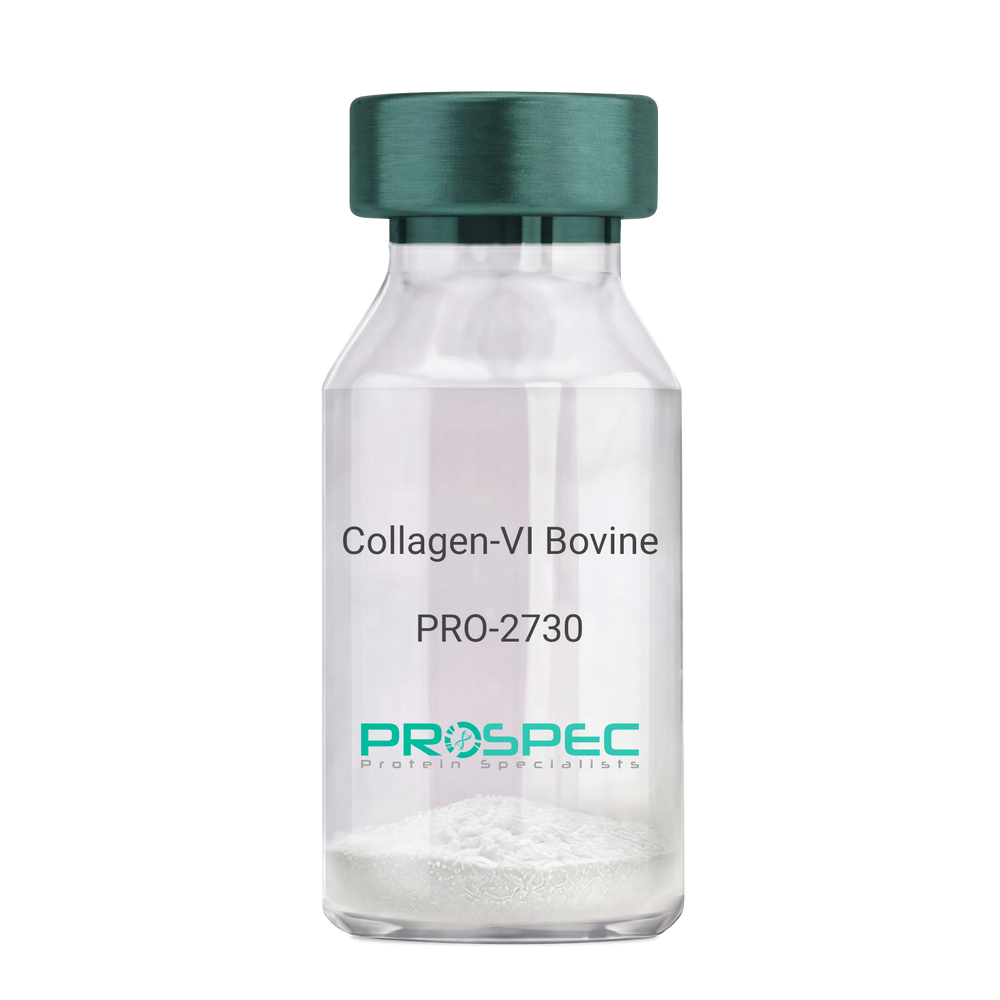
Collagen-VI BovineDescription:
Bovine Collagen-VI
Product # :
PRO-2730Price :
Quantity :
Shipping Method :
Shipped at Room temp
More Info
- description
- source
- formulation
- purity
- More Info
Description
Bovine Collagen-VI is a natural protein purified from Bovine placenta. Bovine Collagen-VI is purified by proprietary chromatographic techniques.
Source
Bovine placenta.
Formulation
Collagen-VI was lyophilized without additives.
Purity
> 90.0%.
More Info
-
Introduction
Collagen, a major component of the extracellular matrix, is a fibrous protein that provides tensile strength to tissues giving them structural integrity. Collagen and its derivative, gelatin, have been widely used in medical, pharmaceutical and consumer products for more than 100 years. The supply of these materials, created from animal remains, is both abundant and inexpensive. However, most formulations are not highly purified and have the potential to cause an inflammatory reaction in some product users. In addition, concerns have been raised over the last several years about the potential for contamination of bovine products with the agent that causes mad cow disease and its human variant, Creutzfeldt-Jakob Disease. Animal collagens are subject to extensive modifications that continue over the life of the molecule in the extracellular space. These differences influence both the extractability of collagens from tissue and the biophysical characteristics of these collagens. As a result, collagens isolated from tissues exhibit significant lot-to-lot variability and, as bulk materials, are often analytically intractable. Products that contain animal-derived collagen can induce potentially harmful inflammatory or immune responses in humans and pose risk of contamination with viruses or prions, potentially life-threatening pathogens. Recombinant collagens are essentially identical to the native collagen protein thereby reducing the risk of inflammation, immune response, and disease as compared to animal-sourced collagen.
-
Physical Appearance
Filtered White lyophilized (freeze-dried) powder.
-
Stability
Lyophilized Collagen-VI although stable at room temperature for 3 weeks, should be stored desiccated below -18C. Upon reconstitution Collagen-VI should be stored at 4C between 2-7 days and for future use below -18C.For long term storage it is recommended to add a carrier protein (0.1% HSA or BSA).Please prevent freeze-thaw cycles.
-
Solubility
It is recommended to Add 0.5 M acetic acid, pH 2.5 to prepare a working stock solution not less than 100µg/ml, which can then be further diluted to other aqueous solutions.
ProSpec's products are furnished for LABORATORY RESEARCH USE ONLY. The product may not be used as drugs, agricultural or pesticidal products, food additives or household chemicals.
- View Data Sheet
Name :
SEMA3C HumanDescription:
Semaphorin 3C Human Recombinant
Semaphorin 3C ,Semaphorin-3C, Semaphorin-3C isoform2, SEMA3C, Semaphorin-E, SEMAE, Sema E, SemE, SEME, Semaphorin E
Product # :
PRO-2750Price :
Quantity :
Shipping Method :
Shipped with Ice Packs
More Info
- description
- source
- formulation
- purity
- More Info
Description
SEMA3C Human Recombinant produced in HEK cells is a single, glycosylated, polypeptide chain (21-738 a.a) containing a total of 951 amino acids, having a molecular mass of 107.2kDa. SEMA3C is fused to a 233 amino acid hIgG-Tag at C-terminus,and is purified by proprietary chromatographic techniques.
Source
HEK293 Cells.
Formulation
The SEMA3C solution (1mg/ml) contains 10% Glycerol and Phosphate-Buffered Saline (pH 7.4).
Purity
Greater than 90.0% as determined by SDS-PAGE.
More Info
-
Introduction
SEMA3C, also known as Semaphorin 3C, is a member of the semaphorin family 3 that are grouped into 8 major classes based on phylogenetic tree analyses and structure. Class 3 have an important function after traumatic central nervous system injuries. SEMA3C regulates neuronal and non-neuronal cells associated with the traumatic injury due to their presence in the scar tissue. SEMA3C is expressed in all somatic motor neurons, in cardiac neural crest cells during development and in lung buds. The SEMA3C functions are mediated through binding to the Plexin-D1 and Neuropilin 1 or Neuropilin 2 coreceptor complex. SEMA3C activates integrins in certain cells, so besides its repulsive activities, it also acts as a chemoattractant.
-
Synonyms
Semaphorin 3C ,Semaphorin-3C, Semaphorin-3C isoform2, SEMA3C, Semaphorin-E, SEMAE, Sema E, SemE, SEME, Semaphorin E
-
Physical Appearance
Sterile Filtered colorless solution.
-
Stability
Store at 4°C if entire vial will be used within 2-4 weeks. Store, frozen at -20°C for longer periods of time. For long term storage it is recommended to add a carrier protein (0.1% HSA or BSA). Avoid multiple freeze-thaw cycles.
-
Amino Acid Sequence
GSSQPQARVY LTFDELRETK TSEYFSLSHH PLDYRILLMD EDQDRIYVGS KDHILSLNIN NISQEALSVF WPASTIKVEE CKMAGKDPTH GCGNFVRVIQ TFNRTHLYVC GSGAFSPVCT YLNRGRRSED QVFMIDSKCE SGKGRCSFNP NVNTVSVMIN EELFSGMYID FMGTDAAIFR SLTKRNAVRT DQHNSKWLSE PMFVDAHVIP DGTDPNDAKV YFFFKEKLTD NNRSTKQIHS MIARICPNDT GGLRSLVNKW TTFLKARLVC SVTDEDGPET HFDELEDVFL LETDNPRTTL VYGIFTTSSS VFKGSAVCVY HLSDIQTVFN GPFAHKEGPN HQLISYQGRI PYPRPGTCPG GAFTPNMRTT KEFPDDVVTF IRNHPLMYNS IYPIHKRPLI VRIGTDYKYT KIAVDRVNAA DGRYHVLFLG TDRGTVQKVV VLPTNNSVSG ELILEELEVF KNHAPITTMK ISSKKQQLYV SSNEGVSQVS LHRCHIYGTA CADCCLARDP YCAWDGHSCS RFYPTGKRRS AAQDVRHGNP LTQCRGFNLK AYRNAAEIVQ YGVKNNTTFL ECAPKSPQAS IKWLLQKDKD AAKEVKLNER IIATSQGLLI RSVQGSDQGL YHCIATENSF KQTIAKINFK VLDSEMVAVV TDKWSPWTWA SSVRALPFHP KDIMGAFSHS EMQMINQYCK DTRQQHQQGD ESQKMRGDYG KLKALINSLE PKSCDKTHTC PPCPAPELLG GPSVFLFPPK PKDTLMISRT PEVTCVVVDV SHEDPEVKFN WYVDGVEVHN AKTKPREEQY NSTYRVVSVL TVLHQDWLNG KEYKCKVSNK ALPAPIEKTI SKAKGQPREP QVYTLPPSRD ELTKNQVSLT CLVKGFYPSD IAVEWESNGQ PENNYKTTPP VLDSDGSFFL YSKLTVDKSR WQQGNVFSCS VMHEALHNHY TQKSLSLSPG K
ProSpec's products are furnished for LABORATORY RESEARCH USE ONLY. The product may not be used as drugs, agricultural or pesticidal products, food additives or household chemicals.
- View Data Sheet
Name :
Myostatin Propeptide HumanDescription:
Myostatin Propeptide Human Recombinant
GDF-8, MSTN, Growth Differentiation Factor 8, MSTN Muscle Hypertrophy.
Product # :
CYT-448Price :
Quantity :
Shipping Method :
Shipped at Room temp
More Info
- description
- source
- formulation
- purity
- biological activity
- More Info
Description
Recombinant Human Myostatin Propeptide is a 27.8kDa protein containing 244 amino acid residues of the human Myostatin Propeptide.
Source
Escherichia Coli.
Formulation
Lyophilized with no additives.
Purity
Greater than 95.0% as determined by SDS-PAGE.
Biological Activity
The protein has full biological activity when compared to a standard. The activity is determined by its ability to inhibit 50ng/ml of Myostatin on MPC-11 cells and is typically 0.13-0.2 μg/ml.More Info
-
Introduction
Myostatin (GDF-8), a member of the TGFbeta superfamily, is a potent and specific negative regulator of skeletal muscle mass. In serum, myostatin circulates as part of a latent complex containing myostatin propeptide and/or follistatin-related gene. The myostatin propeptide is known to bind and inhibit myostatin in vitro. This interaction is relevant in vivo, with a majority (>70%) of myostatin in serum bound to its propeptide. The myostatin propeptide is negative regulator of myostatin in vivo.
-
Synonyms
GDF-8, MSTN, Growth Differentiation Factor 8, MSTN Muscle Hypertrophy.
-
Physical Appearance
Sterile Filtered white lyophilized (freeze-dried) powder.
-
Stability
Store lyophilized protein at -20°C. Aliquot the product after reconstitution to avoid repeated freezing/thawing cycles. Reconstituted protein can be stored at 4°C for a limited period of time.
-
Solubility
It is recommended to reconstitute the lyophilized Myostatin Propeptide in sterile 20mM HCl at 0.1mg/ml, which can then be further diluted to other aqueous solutions.
-
Amino Acid Sequence
MNENSEQKE NVEKEGLCNA CTWRQNTKSS RIEAIKIQIL SKLRLETAPN ISKDVIRQLL PKAPPLRELI DQYDVQRDDS SDGSLEDDDY HATTETIITM PTESDFLMQV DGKPKCCFFK FSSKIQYNKV VKAQLWIYLR PVETPTTVFV QILRLIKPMK DGTRYTGIRS LKLDMNPGTG IWQSIDVKTV LQNWLKQPES NLGIEIKALD ENGHDLAVTF PGPGEDGLNP FLEVKVTDTP KRSRR.
ProSpec's products are furnished for LABORATORY RESEARCH USE ONLY. The product may not be used as drugs, agricultural or pesticidal products, food additives or household chemicals.
- View Data Sheet
Name :
Ecotin E.ColiDescription:
Ecotin E.Coli Recombinant
E. coli serine protease inhibitor.
Product # :
ENZ-058Price :
Quantity :
Shipping Method :
Shipped with Ice Packs
More Info
- description
- source
- formulation
- purity
- More Info
Description
Ecotin produced in E.Coli is a single, non-glycosylated polypeptide chain containing 163 amino acids (21-162a.a.) and having a molecular mass of 18.3kDa.Ecotin is fused to a 20 amino acid His-tag at N-terminus & purified by proprietary chromatographic techniques.
Source
Escherichia Coli.
Formulation
The Ecotin protein solution (1mg/ml) is formulated in 20mM Tris-HCl buffer (pH8.0), 1mM DTT, 50mM NaCl and 10% glycerol.
Purity
Greater than 95% as determined by SDS-PAGE.
More Info
-
Introduction
Ecotin inhibits pancreatic serine proteases. Ecotin protein inhibits chymotrypsin, trypsin, elastases, factor X, kallikrein as well as a variety of other proteases. The power of inhibition is not linked to a specific protease specificity.
-
Synonyms
E. coli serine protease inhibitor.
-
Physical Appearance
Sterile Filtered clear solution.
-
Stability
Store at 4°C if entire vial will be used within 2-4 weeks. Store, frozen at -20°C for longer periods of time.Please avoid freeze thaw cycles.
-
Amino Acid Sequence
MGSSHHHHHH SSGLVPRGSH MAESVQPLEK IAPYPQAEKG MKRQVIQLTP QEDESTLKVE LLIGQTLEVD CNLHRLGGKL ENKTLEGWGY DYYVFDKVSS PVSTMMACPD GKKEKKFVTA YLGDAGMLRY NSKLPIVVYT PDNVDVKYRV WKAEEKIDNA VVR
ProSpec's products are furnished for LABORATORY RESEARCH USE ONLY. The product may not be used as drugs, agricultural or pesticidal products, food additives or household chemicals.
- View Data Sheet
Name :
ATG5 HumanDescription:
Autophagy Related 5 Human Recombinant
Autophagy protein 5, APG5-like, Apoptosis-specific protein, ATG5, ASP, APG5, APG5L, hAPG5.
Product # :
PRO-454Price :
Quantity :
Shipping Method :
Shipped with Ice Packs
More Info
- description
- source
- formulation
- purity
- More Info
Description
ATG5 produced in E.Coli is a single, non-glycosylated polypeptide chain containing 295 amino acids (1-275a.a.) and having a molecular mass of 34.6kDa.ATG5 is fused to a 20 amino acid His-tag at N-terminus & purified by proprietary chromatographic techniques.
Source
Escherichia Coli.
Formulation
ATG5 at a concentration of 0.25mg/ml containing 20mM Tris-HCl, pH 8.0, 1mM DTT , 0.2M NaCl and 40% glycerol.
Purity
Greater than 85.0% as determined by SDS-PAGE.
More Info
-
Introduction
ATG5 is a member of the autophagy-related (ATG) genes family. Autophagy is a catabolic process for the autophagosomic-lysosomal degradation of bulk cytoplasmic contents. ATG5 protein is essential for autophagy. It conjugates to ATG12 and associates with isolation membrane to form autophagosomes. In addition ATG5 takes a vital part in the apoptotic process and it is expressed relatively late in the apoptotic process, downstream of caspase activity.
-
Synonyms
Autophagy protein 5, APG5-like, Apoptosis-specific protein, ATG5, ASP, APG5, APG5L, hAPG5.
-
Physical Appearance
Sterile Filtered clear solution.
-
Stability
Store at 4°C if entire vial will be used within 2-4 weeks. Store, frozen at -20°C for longer periods of time. For long term storage it is recommended to add a carrier protein (0.1% HSA or BSA).Avoid multiple freeze-thaw cycles.
-
Amino Acid Sequence
MGSSHHHHHH SSGLVPRGSH MTDDKDVLRD VWFGRIPTCF TLYQDEITER EAEPYYLLLPRVSYLTLVTD KVKKHFQKVM RQEDISEIWF EYEGTPLKWH YPIGLLFDLL ASSSALPWNITVHFKSFPEK DLLHCPSKDA IEAHFMSCMK EADALKHKSQ VINEMQKKDH KQLWMGLQND RFDQFWAINR KLMEYPAEEN GFRYIPFRIY QTTTERPFIQ KLFRPVAADG QLHTLGDLLKEVCPSAIDPE DGEKKNQVMI HGIEPMLETP LQWLSEHLSY PDNFLHISII PQPTD
ProSpec's products are furnished for LABORATORY RESEARCH USE ONLY. The product may not be used as drugs, agricultural or pesticidal products, food additives or household chemicals.
- View Data Sheet
Name :
EFNA1 Human, HEKDescription:
Ephrin A1 Human Recombinant, HEK
Ephrin-A1, EPLG1, TNFAIP4, LERK1, EFL1, ECKLG, EPH-related receptor tyrosine kinase ligand 1, Immediate early response protein B61, Tumor necrosis factor alpha-induced protein 4, TNF alpha-induced protein 4, ligand of eph-related kinase 1, tumor necrosis factor, alpha-induced protein 4.
Product # :
PRO-2477Price :
Quantity :
Shipping Method :
Shipped at Room temp
More Info
- description
- source
- formulation
- purity
- More Info
Description
EFNA1 Human Recombinant produced in HEK293 cells is a single, glycosylated polypeptide chain (a.a 19-182) containing 170 amino acids including a 6 a.a C-terminal His tag. The total molecular mass is 20.2kDa (calculated).
Source
HEK293 cells.
Formulation
EFNA1 filtered (0.4 µm) and lyophilized from 0.5mg/ml in phosphate buffered saline, pH 7.5 containing 5 % (w/v) trehalose.
Purity
Greater than 95.0% as determined by SDS-PAGE.
More Info
-
Introduction
EFNA1 belongs to the ephrin (EPH) family. The EPH subfamily is the biggest group of receptor protein kinases and they take part in vital nervous system function and development.
-
Synonyms
Ephrin-A1, EPLG1, TNFAIP4, LERK1, EFL1, ECKLG, EPH-related receptor tyrosine kinase ligand 1, Immediate early response protein B61, Tumor necrosis factor alpha-induced protein 4, TNF alpha-induced protein 4, ligand of eph-related kinase 1, tumor necrosis factor, alpha-induced protein 4.
-
Physical Appearance
Filtered White lyophilized (freeze-dried) powder.
-
Stability
Store lyophilized protein at -20°C. Aliquot the product after reconstitution to avoid repeated freezing/thawing cycles. Reconstituted protein can be stored at 4°C for a limited period of time; it does not show any change after one week at 4°C.
-
Solubility
It is recommended to add deionized water to prepare a working stock solution of approximately 0.5mg/ml and let the lyophilized pellet dissolve completely. EFNA1 is not sterile! Please filter the product by an appropriate sterile filter before using it in the cell culture.
-
Amino Acid Sequence
DRHTVFWNSS NPKFRNEDYT IHVQLNDYVD IICPHYEDHS VADAAMEQYI LYLVEHEEYQ LCQPQSKDQV RWQCNRPSAK HGPEKLSEKF QRFTPFTLGK EFKEGHSYYY ISKPIHQHED RCLRLKVTVS GKITHSPQAH DNPQEKRLAA DDPEVRVLHS IGHS HHHHHH.
ProSpec's products are furnished for LABORATORY RESEARCH USE ONLY. The product may not be used as drugs, agricultural or pesticidal products, food additives or household chemicals.
- View Data Sheet
Name :
OCM HumanDescription:
Oncomodulin-1 Human Recombinant
Oncomodulin-1, OM, Parvalbumin beta, OCM, OCM1, OCMN.
Product # :
PRO-143Price :
Quantity :
Shipping Method :
Shipped at Room temp
More Info
- description
- source
- formulation
- More Info
Description
The Recombinant Human Oncomodulin-1 produced in E.coli has a molecular mass of 13.21kDa containing 117 amino acid residues of the human Oncomodulin-1 and fused to a 9 a.a. His tag at N-terminus.
Source
Escherichia Coli.
Formulation
Oncomodulin-1 was filtered (0.4 µm) and lyophilized from 0.5 mg/ml in 20mM Tris and 50mM NaCl, pH 7.5.
More Info
-
Introduction
Oncomodulin is a member of the superfamily of calmodulin proteins, otherwise known as the EF-hand proteins. It is a high-affinity calcium ion-binding protein. Oncomodulin is an oncodevelopmental protein which is found in early embryonic cells in the placenta and also in tumors.
-
Synonyms
Oncomodulin-1, OM, Parvalbumin beta, OCM, OCM1, OCMN.
-
Stability
Store lyophilized protein at -20°C. Aliquot the product after reconstitution to avoid repeated freezing/thawing cycles. Reconstituted protein can be stored at 4°C for a limited period of time; it does not show any change after two weeks at 4°C.
-
Solubility
It is recommended to add deionized water to prepare a working stock solution of approximately 0.5 mg/ml and let the lyophilized pellet dissolve completely. Product is not sterile! Please filter the product by an appropriate sterile filter before using it in the cell culture.
-
Amino Acid Sequence
MKHHHHHHAS ITDVLSADDI S ITDVLSADDI AAALQECRDP DTFEPQKFFQ TSGLSKMSAN QVKDVFRFID NDQSGYLDEE ELKFFLQKFE SGARELTESE TKSLMAAADN DGDGKIGAEE FQEMVHS.
-
Applications
Western blotting.
ProSpec's products are furnished for LABORATORY RESEARCH USE ONLY. The product may not be used as drugs, agricultural or pesticidal products, food additives or household chemicals.
- View Data Sheet
Name :
ST6GALNAC5 HumanDescription:
ST6GALNAC5 Human Recombinant
Alpha-N-acetylgalactosaminide alpha-2,6-sialyltransferase 5, GD1 alpha synthase, GalNAc alpha-2,6-sialyltransferase V, ST6GalNAc V, ST6GalNAcV, Sialyltransferase 7E, SIAT7-E, SIAT7E
Product # :
ENZ-1153Price :
Quantity :
Shipping Method :
Shipped with Ice Packs
More Info
- description
- source
- formulation
- purity
- More Info
Description
ST6GALNAC5 produced in Sf9 Baculovirus cells is a single, glycosylated polypeptide chain containing 316 amino acids (30-336a.a.) and having a molecular mass of 36.4kDa.ST6GALNAC5 is expressed with a 6 amino acid His tag at C-Terminus and purified by proprietary chromatographic techniques.
Source
Sf9, Baculovirus cells.
Formulation
ST6GALNAC5 protein solution (0.25mg/ml) contains 10% glycerol & Phosphate Buffered Saline (pH 7.4).
Purity
Greater than 90.0% as determined by SDS-PAGE.
More Info
-
Introduction
Alpha-N-acetylgalactosaminide alpha-2,6-sialyltransferase 5 or ST6GALNAC5, is part of the glycosyltransferase 29 group of proteins. ST6GALNAC5 is a sialyltransferase that takes part in the synthesis of ganglioside GD1a. This protein is part of the protein glycosylation transduction, meaning, modification of proteins. ST6GALNAC5 is expressed strictly in the brain tissue, and is a crucial component in breast cancer cells metastasis to the brain tissue. It is thought to enable cancer cells to go through the blood-brain barrier.
-
Synonyms
Alpha-N-acetylgalactosaminide alpha-2,6-sialyltransferase 5, GD1 alpha synthase, GalNAc alpha-2,6-sialyltransferase V, ST6GalNAc V, ST6GalNAcV, Sialyltransferase 7E, SIAT7-E, SIAT7E
-
Physical Appearance
Sterile Filtered colorless solution.
-
Stability
Store at 4°C if entire vial will be used within 2-4 weeks. Store, frozen at -20°C for longer periods of time. For long term storage it is recommended to add a carrier protein (0.1% HSA or BSA).Avoid multiple freeze-thaw cycles.
-
Amino Acid Sequence
ADLGGQKERP PQQQQQQQQQ QQQASATGSS QPAAESSTQQ RPGVPAGPRP LDGYLGVADH KPLKMHCRDC ALVTSSGHLL HSRQGSQIDQ TECVIRMNDA PTRGYGRDVG NRTSLRVIAH SSIQRILRNR HDLLNVSQGT VFIFWGPSSY MRRDGKGQVY NNLHLLSQVL PRLKAFMITR HKMLQFDELF KQETGKDRKI SNTWLSTGWF TMTIALELCD RINVYGMVPP DFCRDPNHPS VPYHYYEPFG PDECTMYLSH ERGRKGSHHR FITEKRVFKN WARTFNIHFF QPDWKPESLA INHPENKPVF HHHHHH
ProSpec's products are furnished for LABORATORY RESEARCH USE ONLY. The product may not be used as drugs, agricultural or pesticidal products, food additives or household chemicals.
- View Data Sheet
Name :
BID HumanDescription:
BH3 Interacting Domain Death Agonist Human Recombinant
BH3-interacting domain death agonist, p22 BID, BID, FP497, MGC15319, MGC42355.
Product # :
PRO-627Price :
Quantity :
Shipping Method :
Shipped with Ice Packs
More Info
- description
- source
- formulation
- purity
- More Info
Description
BID Human Recombinant produced in E.Coli is a single, non-glycosylated polypeptide chain containing 195 amino acids and having a molecular mass of 21.9 kDa.
Source
Escherichia Coli.
Formulation
The protein solution contains 20mM Tris-HCl pH-8 & 20% NaCl.
Purity
Greater than 95.0% as determined by:
(a) Analysis by RP-HPLC.
(b) Analysis by SDS-PAGE.More Info
-
Introduction
BID accession number NP_001187 is a pro-apoptotic Bcl-2 protein having only the BH3 domain. In reaction to apoptotic signaling, BID interacts with another Bcl-2 family of cell death regulators, called Bax, they form a heterodimer resulting to the insertion of Bax into the outer mitochondrial membrane. Bax induces the opening of the mitochondrial voltage-dependent anion channel which lead to the release of cytochrome c and other pro-apoptotic factors from the mitochondria resulting in activation of caspases. BID is a mediator of mitochondrial damage induced by caspase-8 (CASP8). CASP8 cleaves BID, and the COOH-terminal part translocates to mitochondria where it triggers cytochrome c release. The major proteolytic product p15 BID releasea cytochrome c. Isoform 1, Isoform 2 and Isoform 4 induce ice-like proteases and apoptosis while Isoform 3 does not induce apoptosis.
-
Synonyms
BH3-interacting domain death agonist, p22 BID, BID, FP497, MGC15319, MGC42355.
-
Physical Appearance
Sterile Filtered colorless solution.
-
Stability
Store at 4°C if entire vial will be used within 2-4 weeks. Store, frozen at -20°C for longer periods of time. For long term storage it is recommended to add a carrier protein (0.1% HSA or BSA).Avoid multiple freeze-thaw cycles.
-
Amino Acid Sequence
MDCEVNNGSS LRDECITNLL VFGFLQSCSD NSFRRELDAL GHELPVLAPQ WEGYDELQTD GNRSSHSRLG RIEADSESQE
DIIRNIARHL AQVGDSMDRS IPPGLVNGLA LQLRNTSRSE EDRNRDLATA LEQLLQAYPR DMEKEKTMLV LALLLAKKVA SHTPSLLRDV FHTTVNFINQ NLRTYVRSLA RNGMD.
ProSpec's products are furnished for LABORATORY RESEARCH USE ONLY. The product may not be used as drugs, agricultural or pesticidal products, food additives or household chemicals.
- View Data Sheet
Name :
STK11 HumanDescription:
Serine/Threonine Kinase 11 Human Recombinant
Serine/threonine-protein kinase STK11, Liver kinase B1, LKB1, hLKB1, Renal carcinoma antigen NY-REN-19, STK11, LKB1, PJS
Product # :
PKA-123Price :
Quantity :
Shipping Method :
Shipped with Ice Packs
More Info
- description
- source
- formulation
- purity
- More Info
Description
STK11 Human Recombinant produced in E.Coli is a single, non-glycosylated polypeptide chain containing 456 amino acids (1-433) and having a molecular mass of 51kDa.STK11 is fused to a 23 amino acid His-Tag at N-terminus and purified by proprietary chromatographic techniques.
Source
Escherichia Coli.
Formulation
The STK11 solution (0.5mg/ml) contains 10% Glycerol and 20mM Tris-HCl buffer (pH 8.0).
Purity
Greater than 85.0% as determined by SDS-PAGE.
More Info
-
Introduction
STK11, which controls cell polarity and functions as a tumour suppressor, belongs to the serine/threonine kinase family. Mutations in this gene have been linked to Peutz-Jeghers syndrome- an autosomal dominant disorder. It is characterized by the growth of polyps in the gastrointestinal tract, pigmented macules on the skin and mouth, and other neoplasms.
-
Synonyms
Serine/threonine-protein kinase STK11, Liver kinase B1, LKB1, hLKB1, Renal carcinoma antigen NY-REN-19, STK11, LKB1, PJS
-
Physical Appearance
Sterile Filtered colorless solution.
-
Stability
Store at 4°C if entire vial will be used within 2-4 weeks. Store, frozen at -20°C for longer periods of time. For long term storage it is recommended to add a carrier protein (0.1% HSA or BSA).Avoid multiple freeze-thaw cycles.
-
Amino Acid Sequence
MGSSHHHHHH SSGLVPRGSH MGSMEVVDPQ QLGMFTEGEL MSVGMDTFIH RIDSTEVIYQ PRRKRAKLIG KYLMGDLLGE GSYGKVKEVL DSETLCRRAV KILKKKKLRR IPNGEANVKK EIQLLRRLRH KNVIQLVDVL YNEEKQKMYM VMEYCVCGMQ EMLDSVPEKR FPVCQAHGYF CQLIDGLEYL HSQGIVHKDI KPGNLLLTTG GTLKISDLGV AEALHPFAAD DTCRTSQGSP AFQPPEIANG LDTFSGFKVD IWSAGVTLYN ITTGLYPFEG DNIYKLFENI GKGSYAIPGD CGPPLSDLLK GMLEYEPAKR FSIRQIRQHS WFRKKHPPAE APVPIPPSPD TKDRWRSMTV VPYLEDLHGA DEDEDLFDIE DDIIYTQDFT VPGQVPEEEA SHNGQRRGLP KAVCMNGTEA AQLSTKSRAE GRAPNPARKA CSASSKIRRL SACKQQ
ProSpec's products are furnished for LABORATORY RESEARCH USE ONLY. The product may not be used as drugs, agricultural or pesticidal products, food additives or household chemicals.
- View Data Sheet
Name :
PAEP HumanDescription:
Progesterone-Associated Endometrial Protein Human Recombinant
GD, GdA, GdF, GdS, PAEG, PEP, PP14, Glycodelin, Placental protein 14, Pregnancy-associated endometrial alpha-2 globulin, PEG, Progestagen-associated endometrial protein.
Product # :
PRO-1397Price :
Quantity :
Shipping Method :
Shipped with Ice Packs
More Info
- description
- source
- formulation
- purity
- More Info
Description
PAEP Human Recombinant produced in E.Coli is a single, non-glycosylated polypeptide chain containing 185 amino acids (19-180a.a) and having a molecular mass of 21kDa. PAEP is fused to a 23 amino acid His-tag at N-terminus & purified by proprietary chromatographic techniques.
Source
E.coli.
Formulation
PAEP protein solution (0.5mg/ml) containing 20mM Tris-HCl buffer (pH 8.0), 0.15M NaCl, 30% glycerol and1mM DTT.
Purity
Greater than 90% as determined by SDS-PAGE.
More Info
-
Introduction
Progesterone-Associated Endometrial Protein (PAEP) is a member of the kernel lipocalin super family whose members share rather low sequence similarity but have highly conserved exon/intron structure and three-dimensional protein folding. Most lipocalins are clustered on the long arm of chromosome 9. PAEP protein has been previously referred to as pregnancy-associated endometrial alpha-2-globulin, placental protein 14, and glycodelin.
-
Synonyms
GD, GdA, GdF, GdS, PAEG, PEP, PP14, Glycodelin, Placental protein 14, Pregnancy-associated endometrial alpha-2 globulin, PEG, Progestagen-associated endometrial protein.
-
Physical Appearance
Sterile Filtered colorless solution.
-
Stability
Store at 4°C if entire vial will be used within 2-4 weeks. Store, frozen at -20°C for longer periods of time. For long term storage it is recommended to add a carrier protein (0.1% HSA or BSA).Avoid multiple freeze-thaw cycles.
-
Amino Acid Sequence
MGSSHHHHHH SSGLVPRGSH MGSMDIPQTK QDLELPKLAG TWHSMAMATN NISLMATLKA PLRVHITSLL PTPEDNLEIV LHRWENNSCV EKKVLGEKTE NPKKFKINYT VANEATLLDT DYDNFLFLCL QDTTTPIQSM MCQYLARVLV EDDEIMQGFI RAFRPLPRHL WYLLDLKQME EPCRF.
ProSpec's products are furnished for LABORATORY RESEARCH USE ONLY. The product may not be used as drugs, agricultural or pesticidal products, food additives or household chemicals.