Skip to content

High-quality research proteins.

  • 1-800-805-6531

  • Mon - Sat 8.00-18.00, Sun - Closed

  • info@prospecbio.com

  • PO Box 6591 East Brunswick NJ 08816

  • Products
    • Cytokines
    • Growth factors
    • Chemokines
    • Cd antigens
    • Neurotrophins
    • Hormones
    • Enzymes
    • Viral antigens
    • Recombinant proteins
    • Natural proteins
    • Monoclonal antibodies
    • Polyclonal antibodies
    • Thermal Packaging
  • About
    • Company
    • Founder
    • Contribution
  • Customers
    • Eastern Asia
    • Eastern Europe
    • North America
    • South America
    • South East Asia
    • Southern Asia
    • Western Europe
  • Ordering
    • Ordering Method
    • Ordering - Credit Card
    • Ordering - PO
    • Shipping Fees
    • FAQs
  • Services
    • DNA Cloning
    • Protein Expression
    • Monoclonal Antibody
    • Fermentation
    • Technology License
  • Contact us
Log in

Country/region

  • USD $ | Albania
  • USD $ | Andorra
  • USD $ | Argentina
  • USD $ | Armenia
  • USD $ | Australia
  • USD $ | Austria
  • USD $ | Azerbaijan
  • USD $ | Belarus
  • USD $ | Belgium
  • USD $ | Bolivia
  • USD $ | Brazil
  • USD $ | Bulgaria
  • USD $ | Cambodia
  • USD $ | Canada
  • USD $ | Chile
  • USD $ | China
  • USD $ | Colombia
  • USD $ | Costa Rica
  • USD $ | Croatia
  • USD $ | Cyprus
  • USD $ | Czechia
  • USD $ | Denmark
  • USD $ | Estonia
  • USD $ | Finland
  • USD $ | France
  • USD $ | Georgia
  • USD $ | Germany
  • USD $ | Greece
  • USD $ | Hong Kong SAR
  • USD $ | Hungary
  • USD $ | Iceland
  • USD $ | India
  • USD $ | Ireland
  • USD $ | Israel
  • USD $ | Italy
  • USD $ | Japan
  • USD $ | Kazakhstan
  • USD $ | Latvia
  • USD $ | Liechtenstein
  • USD $ | Lithuania
  • USD $ | Madagascar
  • USD $ | Malta
  • USD $ | Mexico
  • USD $ | Moldova
  • USD $ | Monaco
  • USD $ | Netherlands
  • USD $ | New Zealand
  • USD $ | North Macedonia
  • USD $ | Norway
  • USD $ | Panama
  • USD $ | Paraguay
  • USD $ | Peru
  • USD $ | Philippines
  • USD $ | Poland
  • USD $ | Portugal
  • USD $ | Romania
  • USD $ | Singapore
  • USD $ | Slovakia
  • USD $ | Slovenia
  • USD $ | South Africa
  • USD $ | South Korea
  • USD $ | Spain
  • USD $ | Sri Lanka
  • USD $ | Sweden
  • USD $ | Switzerland
  • USD $ | Taiwan
  • USD $ | Thailand
  • USD $ | Türkiye
  • USD $ | Ukraine
  • USD $ | United Kingdom
  • USD $ | United States
  • USD $ | Uruguay
  • USD $ | Vatican City
  • USD $ | Venezuela
  • USD $ | Vietnam
  • Facebook
  • Instagram
logoProSpec - Recombinant Protein Manufacturer for academic and R&D industry
Become a distributor
Account Log in
Wishlist
Cart Cart(0)
  • Products
    +
    • Cytokines
    • Growth factors
    • Chemokines
    • Cd antigens
    • Neurotrophins
    • Hormones
    • Enzymes
    • Viral antigens
    • Recombinant proteins
    • Natural proteins
    • Monoclonal antibodies
    • Polyclonal antibodies
    • Thermal Packaging
  • About
    +
    • Company
    • Founder
    • Contribution
  • Customers
    +
    • Eastern Asia
    • Eastern Europe
    • North America
    • South America
    • South East Asia
    • Southern Asia
    • Western Europe
  • Ordering
    +
    • Ordering Method
    • Ordering - Credit Card
    • Ordering - PO
    • Shipping Fees
    • FAQs
  • Services
    +
    • DNA Cloning
    • Protein Expression
    • Monoclonal Antibody
    • Fermentation
    • Technology License
  • Contact us

Item added to your cart

View cart
View All
  • Cytokines
  • Growth factors
  • Chemokines
  • Cd antigens
  • Neurotrophins
  • Hormones
  • Enzymes
  • Viral antigens
  • Recombinant proteins
  • Natural proteins
  • Monoclonal antibodies
  • Polyclonal antibodies
  • Thermal Packaging
  • Tumor Necrosis Factor

    Tumor Necrosis Factor

    View All
  • 4-1BB

    4-1BB

    View All
  • Adiponectin

    Adiponectin

    View All
  • AIF1

    AIF1

    View All
  • Other Cytokines

    Other Cytokines

    View All
  • AITRL

    AITRL

    View All
  • Angiopoietin

    Angiopoietin

    View All
  • Apolipoprotein

    Apolipoprotein

    View All
  • B-Cell Activating Factor

    B-Cell Activating Factor

    View All
  • Beta Defensin

    Beta Defensin

    View All
  • Bone Morphogenetic Protein

    Bone Morphogenetic Protein

    View All
  • B type Natriuretic Peptide

    B type Natriuretic Peptide

    View All
  • BST

    BST

    View All
  • Betacellulin

    Betacellulin

    View All
  • Cardiotrophin

    Cardiotrophin

    View All
  • Activin

    Activin

    View All
  • Fibroblast Growth Factor

    Fibroblast Growth Factor

    View All
  • Other Growth Factors

    Other Growth Factors

    View All
  • CSF

    CSF

    View All
  • CTGF

    CTGF

    View All
  • IGFBP

    IGFBP

    View All
  • VEGF Protein

    VEGF Protein

    View All
  • EGF

    EGF

    View All
  • Epigen

    Epigen

    View All
  • Erythropoietin

    Erythropoietin

    View All
  • Insulin-Like Growth Factor

    Insulin-Like Growth Factor

    View All
  • Growth Hormone

    Growth Hormone

    View All
  • HDGF

    HDGF

    View All
  • Hepatocyte Growth Factor

    Hepatocyte Growth Factor

    View All
  • Insulin

    Insulin

    View All
  • BCA-1/ BLC (CXCL13)

    BCA-1/ BLC (CXCL13)

    View All
  • BRAK (CXCL14)

    BRAK (CXCL14)

    View All
  • C-10 (CCL6)

    C-10 (CCL6)

    View All
  • Other Chemokines

    Other Chemokines

    View All
  • MEC (CCL28)

    MEC (CCL28)

    View All
  • LD78-beta (CCL3L1)

    LD78-beta (CCL3L1)

    View All
  • CTACK (CCL27)

    CTACK (CCL27)

    View All
  • CXCL16

    CXCL16

    View All
  • CXCL17

    CXCL17

    View All
  • Platelet Factor-4 (CXCL4)

    Platelet Factor-4 (CXCL4)

    View All
  • ENA-78 (CXCL5)

    ENA-78 (CXCL5)

    View All
  • Eotaxin (CCL11,24,26)

    Eotaxin (CCL11,24,26)

    View All
  • Exodus-2 (CCL21)

    Exodus-2 (CCL21)

    View All
  • Fractalkine (CX3CL1)

    Fractalkine (CX3CL1)

    View All
  • CXCL6

    CXCL6

    View All
  • Other CD Antigens

    Other CD Antigens

    View All
  • CD14

    CD14

    View All
  • CD164

    CD164

    View All
  • CD1

    CD1

    View All
  • CD2

    CD2

    View All
  • CD200

    CD200

    View All
  • CD207

    CD207

    View All
  • CD226

    CD226

    View All
  • CD23

    CD23

    View All
  • CD244

    CD244

    View All
  • CD247

    CD247

    View All
  • CD27

    CD27

    View All
  • CD274

    CD274

    View All
  • CD300

    CD300

    View All
  • CD33

    CD33

    View All
  • Other Neurotrophins

    Other Neurotrophins

    View All
  • Beta-NGF

    Beta-NGF

    View All
  • BDNF

    BDNF

    View All
  • CDNF

    CDNF

    View All
  • CNTF

    CNTF

    View All
  • GDNF

    GDNF

    View All
  • Glia Maturation Factor

    Glia Maturation Factor

    View All
  • MANF

    MANF

    View All
  • Midkine

    Midkine

    View All
  • Neuroglobin

    Neuroglobin

    View All
  • Neurotrophic factors

    Neurotrophic factors

    View All
  • Neuregulin

    Neuregulin

    View All
  • Neuropilin

    Neuropilin

    View All
  • Pigment Epithelium-Derived Factor

    Pigment Epithelium-Derived Factor

    View All
  • Pleiotrophin

    Pleiotrophin

    View All
  • Peptide Hormones

    Peptide Hormones

    View All
  • Other Hormones

    Other Hormones

    View All
  • HCG

    HCG

    View All
  • Endothelin

    Endothelin

    View All
  • Exendin

    Exendin

    View All
  • FSH

    FSH

    View All
  • Glucagon

    Glucagon

    View All
  • GHRP

    GHRP

    View All
  • GLP

    GLP

    View All
  • Thyrostimulin

    Thyrostimulin

    View All
  • Inhibin A

    Inhibin A

    View All
  • LHRH

    LHRH

    View All
  • Melanotan

    Melanotan

    View All
  • Procalcitonin

    Procalcitonin

    View All
  • PTH

    PTH

    View All
  • Peroxiredoxin

    Peroxiredoxin

    View All
  • Peptidase

    Peptidase

    View All
  • Synthetase

    Synthetase

    View All
  • Transferase

    Transferase

    View All
  • Hydrolase

    Hydrolase

    View All
  • Dehydrogenase

    Dehydrogenase

    View All
  • ACE2

    ACE2

    View All
  • Esterase

    Esterase

    View All
  • Protein Kinases

    Protein Kinases

    View All
  • Other Enzymes

    Other Enzymes

    View All
  • Phosphatase

    Phosphatase

    View All
  • Deaminase

    Deaminase

    View All
  • Oxygenase

    Oxygenase

    View All
  • Adenylate Kinase

    Adenylate Kinase

    View All
  • Lyase

    Lyase

    View All
  • Chagas

    Chagas

    View All
  • SARS

    SARS

    View All
  • Influenza

    Influenza

    View All
  • ASFV

    ASFV

    View All
  • Astrovirus

    Astrovirus

    View All
  • Borrelia

    Borrelia

    View All
  • Helicobacter Pylori

    Helicobacter Pylori

    View All
  • Chikungunya

    Chikungunya

    View All
  • Chlamydia

    Chlamydia

    View All
  • Cytomegalo

    Cytomegalo

    View All
  • Dengue

    Dengue

    View All
  • EBV

    EBV

    View All
  • Ebola

    Ebola

    View All
  • Feline Leukemia Virus

    Feline Leukemia Virus

    View All
  • Hepatitis A

    Hepatitis A

    View All
  • Other

    Other

    View All
  • Actin

    Actin

    View All
  • ADAM

    ADAM

    View All
  • Complement Component

    Complement Component

    View All
  • Ag85

    Ag85

    View All
  • Eukaryotic Translation Initiation Factor

    Eukaryotic Translation Initiation Factor

    View All
  • Anterior Gradient Protein

    Anterior Gradient Protein

    View All
  • Heat Shock Protein

    Heat Shock Protein

    View All
  • Alpha-2-HS-Glycoprotein

    Alpha-2-HS-Glycoprotein

    View All
  • Hemoglobin

    Hemoglobin

    View All
  • Allergy

    Allergy

    View All
  • Anaplasma

    Anaplasma

    View All
  • Angiogenin

    Angiogenin

    View All
  • Ankyrin Repeat Domain

    Ankyrin Repeat Domain

    View All
  • Annexin

    Annexin

    View All
  • Other Natural Proteins

    Other Natural Proteins

    View All
  • Aprotinin

    Aprotinin

    View All
  • Transferrin

    Transferrin

    View All
  • Avidin

    Avidin

    View All
  • Anti Coagulation Factors

    Anti Coagulation Factors

    View All
  • Natural Albumin

    Natural Albumin

    View All
  • Natural Coagulation Factors

    Natural Coagulation Factors

    View All
  • Fibronectin

    Fibronectin

    View All
  • Thrombin

    Thrombin

    View All
  • Anti Human Enzyme

    Anti Human Enzyme

    View All
  • Other Monoclonal Antibodies

    Other Monoclonal Antibodies

    View All
  • Anti Human Cytokine

    Anti Human Cytokine

    View All
  • Anti Human Heat Shock Protein

    Anti Human Heat Shock Protein

    View All
  • Anti Mouse Lymphocyte

    Anti Mouse Lymphocyte

    View All
  • Anti Human Chemokine

    Anti Human Chemokine

    View All
  • Anti Human Lymphocyte

    Anti Human Lymphocyte

    View All
  • Anti Viral Monoclonal

    Anti Viral Monoclonal

    View All
  • Anti Mouse Cytokine

    Anti Mouse Cytokine

    View All
  • Anti-GST Monoclonal

    Anti-GST Monoclonal

    View All
  • Other Polyclonal Antibodies

    Other Polyclonal Antibodies

    View All
  • Anti Viral

    Anti Viral

    View All
  • Anti-GST Monoclonal

    Anti-GST Monoclonal

    View All
Back

Search results

1000 results found for “Thioredoxin”

Name

Description

Product #

Price

Quantity

Shipping Method

  • View Data Sheet

    Name :

    PDCD1 Human

    Description:

    Programmed Cell Death 1 Human Recombinant

    Programmed Cell Death 1, Systemic Lupus Erythematosus Susceptibility 2, Protein PD-1, HPD-1, PD1, Programmed Cell Death 1 Protein, Programmed Cell Death Protein 1, CD279 Antigen, CD279, HPD-L, HSLE1, SLEB2, PD-1.

    Product # :

    PRO-2442

    Price :

    Quantity :

    Shipping Method :

    Ice Icon

    Shipped with Ice Packs

    Add To Cart

    More Info

    • description
    • source
    • formulation
    • purity
    • More Info

    Description

    PDCD1 Human Recombinant produced in Sf9 Baculovirus cells is a single, glycosylated polypeptide chain containing 392 amino acids (21-170a.a.) and having a molecular mass of 44.0kDa (Molecular size on SDS-PAGE will appear at approximately 40-57kDa).PDCD1 is expressed with a 239 amino acids hIgG-His tag at C-Terminus and purified by proprietary chromatographic techniques.

    Source

    Sf9, Baculovirus cells.

    Formulation

    PDCD1 protein solution (0.5mg/ml) contains Phosphate Buffered Saline (pH 7.4) and 10% glycerol.

    Purity

    Greater than 90.0% as determined by SDS-PAGE.

    More Info

    • Introduction

      PDCD1 is a cell surface membrane protein of the immunoglobulin superfamily. PDCD1 is expressed in pro-B-cells and is thought to have a role in their differentiation. In mice, expression of PDCD1 gene is induced in the thymus when anti-CD3 antibodies are injected and large numbers of thymocytes undergo apoptosis. Mice deficient for the PDCD1 gene bred on a BALB/c background developed dilated cardiomyopathy and died from congestive heart failure. These studies suggest that the PDCD1 gene product may also be important in T cell function and contribute to the prevention of autoimmune diseases.

    • Synonyms

      Programmed Cell Death 1, Systemic Lupus Erythematosus Susceptibility 2, Protein PD-1, HPD-1, PD1, Programmed Cell Death 1 Protein, Programmed Cell Death Protein 1, CD279 Antigen, CD279, HPD-L, HSLE1, SLEB2, PD-1.

    • Physical Appearance

      Sterile Filtered colorless solution.

    • Stability

      Store at 4°C if entire vial will be used within 2-4 weeks. Store, frozen at -20°C for longer periods of time. For long term storage it is recommended to add a carrier protein (0.1% HSA or BSA). Avoid multiple freeze-thaw cycles.

    • Amino Acid Sequence

      ADPPGWFLDS PDRPWNPPTF SPALLVVTEG DNATFTCSFS NTSESFVLNW YRMSPSNQTD KLAAFPEDRS QPGQDCRFRV TQLPNGRDFH MSVVRARRND SGTYLCGAIS LAPKAQIKES LRAELRVTER RAEVPTAHPS PSPRPAGQFQ TLVLEPKSCD KTHTCPPCPA PELLGGPSVF LFPPKPKDTL MISRTPEVTC VVVDVSHEDP EVKFNWYVDG VEVHNAKTKP REEQYNSTYR VVSVLTVLHQ DWLNGKEYKC KVSNKALPAP IEKTISKAKG QPREPQVYTL PPSRDELTKN QVSLTCLVKG FYPSDIAVEW ESNGQPENNY KTTPPVLDSD GSFFLYSKLT VDKSRWQQGN VFSCSVMHEA LHNHYTQKSL SLSPGKHHHH HH.

    ProSpec's products are furnished for LABORATORY RESEARCH USE ONLY. The product may not be used as drugs, agricultural or pesticidal products, food additives or household chemicals.

    Pdcd1 Human
  • View Data Sheet

    Name :

    TAF10 Human

    Description:

    TAF10 RNA Polymerase II Human Recombinant

    TAF10 RNA Polymerase II TATA Box Binding Protein (TBP)-Associated Factor 30kDa, Transcription Initiation Factor TFIID 30 KDa Subunit, STAF28, TAF2A, TAF2H.

    Product # :

    ENZ-750

    Price :

    Quantity :

    Shipping Method :

    Ice Icon

    Shipped with Ice Packs

    Add To Cart

    More Info

    • description
    • source
    • formulation
    • purity
    • More Info

    Description

    TAF10 Human Recombinant produced in E.coli is a single, non-glycosylated polypeptide chain containing 158 amino acids (84-218) and having a molecular mass of 16.9kDa.TAF10 is fused to a 23 amino acid His-tag at N-terminus & purified by proprietary chromatographic techniques.

    Source

    Escherichia Coli.

    Formulation

    The TAF10 solution (0.25mg/ml) contains 20mM Tris-HCl buffer (pH8.0), 0.15M NaCl, 1mM DTT and 20% glycerol.

    Purity

    Greater than 85.0% as determined by SDS-PAGE.

    More Info

    • Introduction

      TAF10 is a small subunit of TFIID which is related to a subdivision of TFIID complexes. Studies with human and mammalian cells verified that this subunit is mandatory for transcriptional activation by the estrogen receptor, for progression through the cell cycle, and is essential for several cellular differentiation programs.

    • Synonyms

      TAF10 RNA Polymerase II TATA Box Binding Protein (TBP)-Associated Factor 30kDa, Transcription Initiation Factor TFIID 30 KDa Subunit, STAF28, TAF2A, TAF2H.

    • Physical Appearance

      Sterile Filtered clear solution.

    • Stability

      Store at 4°C if entire vial will be used within 2-4 weeks. Store, frozen at -20°C for longer periods of time. For long term storage it is recommended to add a carrier protein (0.1% HSA or BSA).Avoid multiple freeze-thaw cycles.

    • Amino Acid Sequence

      MGSSHHHHHH SSGLVPRGSH MGSGAAPPEG AISNGVYVLP SAANGDVKPV VSSTPLVDFL MQLEDYTPTI PDAVTGYYLN RAGFEASDPR IIRLISLAAQ KFISDIANDA LQHCKMKGTA SGSSRSKSKD RKYTLTMEDL TPALSEYGIN VKKPHYFT

    ProSpec's products are furnished for LABORATORY RESEARCH USE ONLY. The product may not be used as drugs, agricultural or pesticidal products, food additives or household chemicals.

    Taf10 Human
  • View Data Sheet

    Name :

    C19ORF80 Human

    Description:

    Chromosome 19 Open Reading Frame 80 Human Recombinant

    Betatrophin, Angiopoietin-like protein 8, Lipasin, C19orf80, Angptl8, RIFL, TD26, PRO1185, PVPA599.

    Product # :

    PRO-1575

    Price :

    Quantity :

    Shipping Method :

    Room Temp Icon

    Shipped at Room temp

    Add To Cart

    More Info

    • description
    • source
    • formulation
    • purity
    • More Info

    Description

    C19ORF80 Human Recombinant produced in E.Coli is a single, non-glycosylated, polypeptide chain (a.a 22-198) containing 187 amino acids including a 10 a.a N-terminal His tag. The total molecular mass is 21.1kDa (calculated).

    Source

    Escherichia Coli.

    Formulation

    C19ORF80 filtered (0.4 µm) and lyophilized from 0.5mg/ml in 0.05M Acetate buffer pH-4.0.

    Purity

    Greater than 95.0% as determined by SDS-PAGE.

    More Info

    • Introduction

      Chromosome 19 Open Reading Frame 80 (C19ORF80) is a significant new regulator of lipid metabolism which regulates serum triglyceride levels, possibly by promoting ANGPTL3 cleavage. C19ORF80 belongs to the ANGPTL protein family. C19ORF80 is a hormone which specifically promotes pancreatic beta cell proliferation and beta cell mass expansion, thus improving glucose tolerance. C19ORF80 is mainly expressed in the liver; it is also expressed in adipose tissues. C19ORF80 is expressed in response to food intake.

    • Synonyms

      Betatrophin, Angiopoietin-like protein 8, Lipasin, C19orf80, Angptl8, RIFL, TD26, PRO1185, PVPA599.

    • Physical Appearance

      Filtered White lyophilized (freeze-dried) powder.

    • Stability

      Store lyophilized protein at -20°C. Aliquot the product after reconstitution to avoid repeated freezing/thawing cycles. Reconstituted protein can be stored at 4°C for a limited period of time; it does not show any change after two weeks at 4°C.

    • Solubility

      It is recommended to add 0.1M Acetate buffer pH-4 to prepare a working stock solution of approximately 0.5mg/ml and let the lyophilized pellet dissolve completely. For conversion into higher pH value, we recommend intensive dilution by relevant buffer to a concentration of 10µg/ml. In higher concentrations the solubility of this antigen is limited. C19ORF80 is not sterile! Please filter the product by an appropriate sterile filter before using it in the cell culture.

    • Amino Acid Sequence

      MKHHHHHHASAPMGGPELAQ HEELTLLFHG TLQLGQALNG VYRTTEGRLT KARNSLGLYG RTIELLGQEV SRGRDAAQEL RASLLETQME EDILQLQAEA TAEVLGEVAQ AQKVLRDSVQ RLEVQLRSAW LGPAYREFEV LKAHADKQSH ILWALTGHVQ RQRREMVAQQ HRLRQIQERL HTAALPA.

    ProSpec's products are furnished for LABORATORY RESEARCH USE ONLY. The product may not be used as drugs, agricultural or pesticidal products, food additives or household chemicals.

    C19Orf80 Human
  • View Data Sheet

    Name :

    TCEAL3 Human

    Description:

    Transcription Elongation Factor A (SII)-Like 3 Human Recombinant

    Transcription elongation factor A (SII)-like 3, TCEA-like protein 3, MGC15737.

    Product # :

    PRO-1128

    Price :

    Quantity :

    Shipping Method :

    Ice Icon

    Shipped with Ice Packs

    Add To Cart

    More Info

    • description
    • source
    • formulation
    • purity
    • More Info

    Description

    TCEAL3 Human Recombinant produced in E. coli is a single polypeptide chain containing 224 amino acids (1-200) and having a molecular mass of 25.0 kDa.TCEAL3 is fused to a 24 amino acid His-tag at N-terminus & purified by proprietary chromatographic techniques.

    Source

    E.coli.

    Formulation

    The TCEAL3 solution (0.5mg/ml) contains 20mM Tris-HCl buffer (pH 8.0) and 10% glycerol.

    Purity

    Greater than 85% as determined by SDS-PAGE.

    More Info

    • Introduction

      TCEAL3 belongs to the transcription elongation factor A (SII)-like (TCEAL) gene family. TCEAL family members hold TFA domains and operate as nuclear phosphoproteins which control transcription in a promoter context-dependent fashion. Various family members are situated in the X chromosome.

    • Synonyms

      Transcription elongation factor A (SII)-like 3, TCEA-like protein 3, MGC15737.

    • Physical Appearance

      Sterile Filtered colorless solution.

    • Stability

      Store at 4°C if entire vial will be used within 2-4 weeks. Store, frozen at -20°C for longer periods of time. For long term storage it is recommended to add a carrier protein (0.1% HSA or BSA).Avoid multiple freeze-thaw cycles.

    • Amino Acid Sequence

      MGSSHHHHHH SSGLVPRGSH MGSHMEKPYN KNEGNLENEG KPEDEVEPDD EGKSDEEEKP DVEGKTECEG KREDEGEPGD EGQLEDEGSQ EKQGRSEGEG KPQGEGKPAS QAKPESQPRA AEKRPAEDYV PRKAKRKTDR GTDDSPKDSQ EDLQERHLSS EEMMRECGDV SRAQEELRKK QKMGGFHWMQ RDVQDPFAPR GQRGVRGVRG GGRGQRGLHD IPYL

    ProSpec's products are furnished for LABORATORY RESEARCH USE ONLY. The product may not be used as drugs, agricultural or pesticidal products, food additives or household chemicals.

    Tceal3 Human
  • View Data Sheet

    Name :

    PFDN2 Human

    Description:

    Prefoldin Subunit 2 Human Recombinant

    Prefoldin subunit 2, PFDN2, PFD2.

    Product # :

    PRO-001

    Price :

    Quantity :

    Shipping Method :

    Ice Icon

    Shipped with Ice Packs

    Add To Cart

    More Info

    • description
    • source
    • formulation
    • purity
    • More Info

    Description

    PFDN2 Human Recombinant fused with a 20 amino acid His tag at N-terminus produced in E.Coli is a single, non-glycosylated, polypeptide chain containing 174 amino acids (1-154 a.a.) and having a molecular mass of 18.8kDa. The PFDN2 is purified by proprietary chromatographic techniques.

    Source

    Escherichia Coli.

    Formulation

    The PFDN2 solution (0.5 mg/ml) contains 20mM Tris-HCl buffer (pH8.0), 10% glycerol, 1mM DTT and 50mM NaCl.

    Purity

    Greater than 90.0% as determined by SDS-PAGE.

    More Info

    • Introduction

      Prefoldin subunit 2 (PFDN2) belongs to the prefoldin beta subunit family. The PFDN2 protein is one of 6 subunits of prefoldin, which is a molecular chaperone complex that binds and stabilizes newly synthesized polypeptides, thus allowing them to fold correctly. PFDN2 binds specifically to cytosolic chaperonin (c-CPN) and transfers target proteins to it. PFDN2 also binds to a nascent polypeptide chain and promotes folding in an setting in which there are many competing pathways for nonnative proteins.

    • Synonyms

      Prefoldin subunit 2, PFDN2, PFD2.

    • Physical Appearance

      Sterile Filtered colorless solution.

    • Stability

      Store at 4°C if entire vial will be used within 2-4 weeks. Store, frozen at -20°C for longer periods of time. For long term storage it is recommended to add a carrier protein (0.1% HSA or BSA). Avoid multiple freeze-thaw cycles.

    • Amino Acid Sequence

      MGSSHHHHHH SSGLVPRGSH MAENSGRAGK SSGSGAGKGA VSAEQVIAGF NRLRQEQRGL ASKAAELEME LNEHSLVIDT LKEVDETRKC YRMVGGVLVE RTVKEVLPAL ENNKEQIQKI IETLTQQLQA KGKELNEFRE KHNIRLMGED EKPAAKENSE GAGAKASSAG VLVS.

    ProSpec's products are furnished for LABORATORY RESEARCH USE ONLY. The product may not be used as drugs, agricultural or pesticidal products, food additives or household chemicals.

    Pfdn2 Human
  • View Data Sheet

    Name :

    TGFB1 Human, His

    Description:

    Transforming Growth Factor-Beta 1 Human Recombinant, His Tag

    Transforming growth factor beta-1, TGF-beta-1, CED, DPD1, TGFB, TGF-b 1, TGFB1.

    Product # :

    CYT-672

    Price :

    Quantity :

    Shipping Method :

    Ice Icon

    Shipped with Ice Packs

    Add To Cart

    More Info

    • description
    • source
    • formulation
    • purity
    • More Info

    Description

    TGF-b 1 Human Recombinant produced in E.Coli is a single, non-glycosylated, Polypeptide chain containing 112 amino acids fragment (279-390) having a molecular weight of 17.3kDa and fused with a 4.5kDa amino-terminal hexahistidine tag. The TGF-b 1 His is purified by proprietary chromatographic techniques.

    Source

    Escherichia Coli.

    Formulation

    TGF-b 1 His-Tag protein is supplied in 25mM NaAcetate pH 4.8 and 50% glycerol.

    Purity

    Greater than 95.0% as determined by SDS-PAGE.

    More Info

    • Introduction

      Transforming growth factor betas (TGFBetas) mediate many cell-cell interactions that occur during embryonic development. Three TGFBetas have been identified in mammals. TGFBeta1, TGFBeta2 and TGFBeta3 are each synthesized as precursor proteins that are very similar in that each is cleaved to yield a 112 amino acid polypeptide that remains associated with the latent portion of the molecule.
      TGF-b 1 regulates the actions of numerous other growth factors involved in a variety of human diseases including renal disease, hepatic disease, heart failure and cardiomyopathies.

    • Synonyms

      Transforming growth factor beta-1, TGF-beta-1, CED, DPD1, TGFB, TGF-b 1, TGFB1.

    • Physical Appearance

      Sterile Filtered clear solution.

    • Stability

      Store at 4°C if entire vial will be used within 2-4 weeks. Store, frozen at -20°C for longer periods of time. Please avoid freeze thaw cycles.

    ProSpec's products are furnished for LABORATORY RESEARCH USE ONLY. The product may not be used as drugs, agricultural or pesticidal products, food additives or household chemicals.

    Tgf Beta 1 Human His
  • View Data Sheet

    Name :

    PGD Human, Active

    Description:

    Phosphogluconate Dehydrogenase, Active Human Recombinant

    EC 1.1.1.44, 6PGD, PGDH, 6-phosphogluconate dehydrogenase decarboxylating, PGD.

    Product # :

    ENZ-1128

    Price :

    Quantity :

    Shipping Method :

    Ice Icon

    Shipped with Ice Packs

    Add To Cart

    More Info

    • description
    • source
    • formulation
    • purity
    • biological activity
    • More Info

    Description

    PGD Human Recombinant produced in E.Coli is a single, non-glycosylated polypeptide chain containing 503 amino acids (1-483) and having a molecular mass of 55.3 kDa.PGD Human is fused to a 20 amino acid His-Tag at N-terminus and purified by proprietary chromatographic techniques.

    Source

    Escherichia Coli.

    Formulation

    The PGD solution (1mg/ml) contains 10% Glycerol, 1mM DTT, 0.1M NaCl, and 20mM Tris-HCl buffer (pH 8.0).

    Purity

    Greater than 90.0% as determined by SDS-PAGE.

    Biological Activity

    Specific activity is > 10unit/mg. One unit will oxidize 1.0 umole of 6-phospho-D-gluconate to D-ribulose 5- phosphate per minute at pH 8.0 at 25˚C, in the presence of beta-NADP.

    More Info

    • Introduction

      6PGD is the 2nd dehydrogenase in the pentose phosphate shift. Pentose is crucial for the biosynthesis of nucleic acid. The pentose phosphate cycle is a prominent source of NADPH. 6PGD deficiency is mostly asymptomatic, and the inheritance of this deasis is autosomal dominant. PGD deficiency elevate the erythrocyte pyruvate kinase levels of activity & decreases glutathione synthetase, which causes hemolysis.

    • Synonyms

      EC 1.1.1.44, 6PGD, PGDH, 6-phosphogluconate dehydrogenase decarboxylating, PGD.

    • Physical Appearance

      Sterile Filtered colorless solution.

    • Stability

      Store at 4°C if entire vial will be used within 2-4 weeks. Store, frozen at -20°C for longer periods of time. For long term storage it is recommended to add a carrier protein (0.1% HSA or BSA).Avoid multiple freeze-thaw cycles.

    • Amino Acid Sequence

      MGSSHHHHHH SSGLVPRGSH MAQADIALIG LAVMGQNLIL NMNDHGFVVC AFNRTVSKVD DFLANEAKGT KVVGAQSLKE MVSKLKKPRR IILLVKAGQA VDDFIEKLVP LLDTGDIIID GGNSEYRDTT RRCRDLKAKG ILFVGSGVSG GEEGARYGPS LMPGGNKEAW PHIKTIFQGI AAKVGTGEPC CDWVGDEGAG HFVKMVHNGI EYGDMQLICE AYHLMKDVLG MAQDEMAQAF EDWNKTELDS FLIEITANIL KFQDTDGKHL LPKIRDSAGQ KGTGKWTAIS ALEYGVPVTL IGEAVFARCL SSLKDERIQA SKKLKGPQKF QFDGDKKSFL EDIRKALYAS KIISYAQGFM LLRQAATEFG WTLNYGGIAL MWRGGCIIRS VFLGKIKDAF DRNPELQNLL LDDFFKSAVE NCQDSWRRAV STGVQAGIPM PCFTTALSFY DGYRHEMLPA SLIQAQRDYF GAHTYELLAK PGQFIHTNWT GHGGTVSSSS YNA

    ProSpec's products are furnished for LABORATORY RESEARCH USE ONLY. The product may not be used as drugs, agricultural or pesticidal products, food additives or household chemicals.

    Pgd Enzyme
  • View Data Sheet

    Name :

    TIMP1 Human, HEK

    Description:

    Tissue Inhibitor of Metalloprotease 1 Human Recombinant, HEK

    Metalloproteinase inhibitor 1, Tissue inhibitor of metalloproteinases, TIMP-1, Erythroid-potentiating activity, EPA, TIMP1, CLGI, TIMP, EPO, HCI, FLJ90373.

    Product # :

    ENZ-508

    Price :

    Quantity :

    Shipping Method :

    Room Temp Icon

    Shipped at Room temp

    Add To Cart

    More Info

    • description
    • source
    • formulation
    • purity
    • biological activity
    • More Info

    Description

    TIMP1 Human Recombinant produced in HEK-293 cells is a secreted protein with the sequence of Human TIMP-1 (amino acids Cys24-Ala207) and fused to a polyhistidine tag at the C-terminus.

    Source

    HEK293 Cells.

    Formulation

    The TIMP1 protein was lyophilized after extensive dialysis against PBS.

    Purity

    Greater than 95.0% as determined by SDS-PAGE.

    Biological Activity

    The IC50 of 2.5-4 nM is measured by its ability to inhibit recombinant human MMP-2 cleavage of the colorimetric peptide substrate, Mca-PLGL-DpaAR-NH2.

    More Info

    • Introduction

      TIMP1 is a member of the TIMP family. TIMP1 is an inducible glycoprotein produced by various cell types. The TIMP1 glycoprotein is a natural inhibitor of the matrix metalloproteinases, which a group of peptidases involved in degradation of the extracellular matrix. TIMP1 binds in a reversible mode to MMPs, with regions in the N-terminal domain binding to the MMP substrate-binding site. On top of its inhibitory function against most of the known MMPs, TIMP1 is able to promote cell proliferation in a broad range of cell types, and may also have an anti-apoptotic role. Furthermore, TIMP1 has erthyroid-potentiating activity via translocation to the nucleus and also inhibits apoptosis in B-cells. The TIMP1 gene is situated within intron 6 of the synapsin I gene and is transcribed in the opposite direction. TIMP1 activity is dependent on the existence of disulfide bonds. TIMP1 transcription is extremely inducible in reaction to many cytokines and hormones. Increased TIMP1 levels are connecte

    • Synonyms

      Metalloproteinase inhibitor 1, Tissue inhibitor of metalloproteinases, TIMP-1, Erythroid-potentiating activity, EPA, TIMP1, CLGI, TIMP, EPO, HCI, FLJ90373.

    • Physical Appearance

      Sterile Filtered White lyophilized (freeze-dried) powder.

    • Stability

      Lyophilized TIMP1 although stable at room temperature for 3 weeks, should be stored desiccated below -18°C. Upon reconstitution TIMP1 should be stored at 4°C between 2-7 days and for future use below -18°C. For long term storage it is recommended to add a carrier protein (0.1% HSA or BSA). Please prevent freeze-thaw cycles.

    • Solubility

      It is recommended to reconstitute the lyophilized TIMP1 in sterile 18M-cm H2O not less than 100µg/ml, which can then be further diluted to other aqueous solutions.

    ProSpec's products are furnished for LABORATORY RESEARCH USE ONLY. The product may not be used as drugs, agricultural or pesticidal products, food additives or household chemicals.

    Timp1 Hek
  • View Data Sheet

    Name :

    TOP1 Human

    Description:

    DNA Topoisomerase-I Human Recombinant

    DNA topoisomerase 1, EC 5.99.1.2, DNA topoisomerase I, TOP1, Scl-70.

    Product # :

    ENZ-306

    Price :

    Quantity :

    Shipping Method :

    Ice Icon

    Shipped with Ice Packs

    Add To Cart

    More Info

    • description
    • source
    • formulation
    • purity
    • More Info

    Description

    DNA Topoisomerase-I Human Recombinant produced in SF9 is a glycosylated, polypeptide chain having a molecular mass of 102 kDa. The TOP1 is expressed with a -6xHis tag and purified by proprietary chromatographic techniques.

    Source

    Sf9 insect cells.

    Formulation

    TOP1 is supplied in 16mM HEPES buffer pH-7.5, 400mM sodium chloride, and 20% glycerol.

    Purity

    Greater than 95% as determined by SDS-PAGE.

    More Info

    • Introduction

      DNA toposisomerase I is a key nuclear enzyme that interconverts supercoiled DNA to the required topological conformations for normal DNA replication and transcription. This enzyme is the target antigen for the so-called Scl-70 autoantibodies. Scl-70 antibodies are a specific marker in Scleroderma patients (specificity 98-100%) and are associated with the presence of diffuse skin involvement and pulmonary fibrosis.
      In human tissues the DNA topoisomerase I is initially synthesized as a protein with 100 kDa molecular weight. Most of this precursor is then proteolytically processed to a species with 70 kDa molecular weight from which the Scl-70 antigen has derived its name.

    • Synonyms

      DNA topoisomerase 1, EC 5.99.1.2, DNA topoisomerase I, TOP1, Scl-70.

    • Physical Appearance

      Sterile Filtered clear solution.

    • Stability

      Store at 4°C if entire vial will be used within 2-4 weeks. Store, frozen at -20°C for longer periods of time. Avoid multiple freeze-thaw cycles.

    ProSpec's products are furnished for LABORATORY RESEARCH USE ONLY. The product may not be used as drugs, agricultural or pesticidal products, food additives or household chemicals.

    Top1 Human
  • View Data Sheet

    Name :

    PPARG Human

    Description:

    Peroxisome Proliferator Activated Receptor Gamma Human Recombinant

    Peroxisome proliferator-activated receptor gamma, PPAR-gamma, PPARG, NR1C3, PPARG1, PPARG2.

    Product # :

    PKA-228

    Price :

    Quantity :

    Shipping Method :

    Ice Icon

    Shipped with Ice Packs

    Add To Cart

    More Info

    • description
    • source
    • formulation
    • purity
    • More Info

    Description

    Peroxisome Proliferator Activated Receptor Gamma Human Recombinant is expressed in E.coli having a molecular weight of 59.2 kDa and fused to an amino terminal hexahistidine tag.

    Source

    Escherichia Coli.

    Formulation

    The protein solution contains 20mM Tris-HCl and 50% glycerol.

    Purity

    Greater than 90.0% as determined by SDS-PAGE.

    More Info

    • Introduction

      The peroxisome proliferator activated receptors (PPARs) are ligandactivated transcription factors within the nuclear receptor superfamily, which play important roles in adipogenesis, glucose homeostasis andinflammation. Three different isotypes can be distinguished; alpha, beta and gamma. PPARg, is mainly expressed in adipose tissue and to lesser extent in colon, the immune system and the retina. Whereas PPARg operates in the catabolism of fatty acids in the liver, PPARg influences the storage of fatty acids in the adipose tissue and plays a role in adipocyte differentiation. PPARg binds to DNA as a heterodimer with retinoid X receptor (RXR), activating expression of target genes after binding ligand.

    • Synonyms

      Peroxisome proliferator-activated receptor gamma, PPAR-gamma, PPARG, NR1C3, PPARG1, PPARG2.

    • Physical Appearance

      Sterile Filtered clear solution.

    • Stability

      Store at 4°C if entire vial will be used within 2-4 weeks.Store, frozen at -20°C for longer periods of time.Avoid multiple freeze-thaw cycles.

    ProSpec's products are furnished for LABORATORY RESEARCH USE ONLY. The product may not be used as drugs, agricultural or pesticidal products, food additives or household chemicals.

    Pparg Human
  • View Data Sheet

    Name :

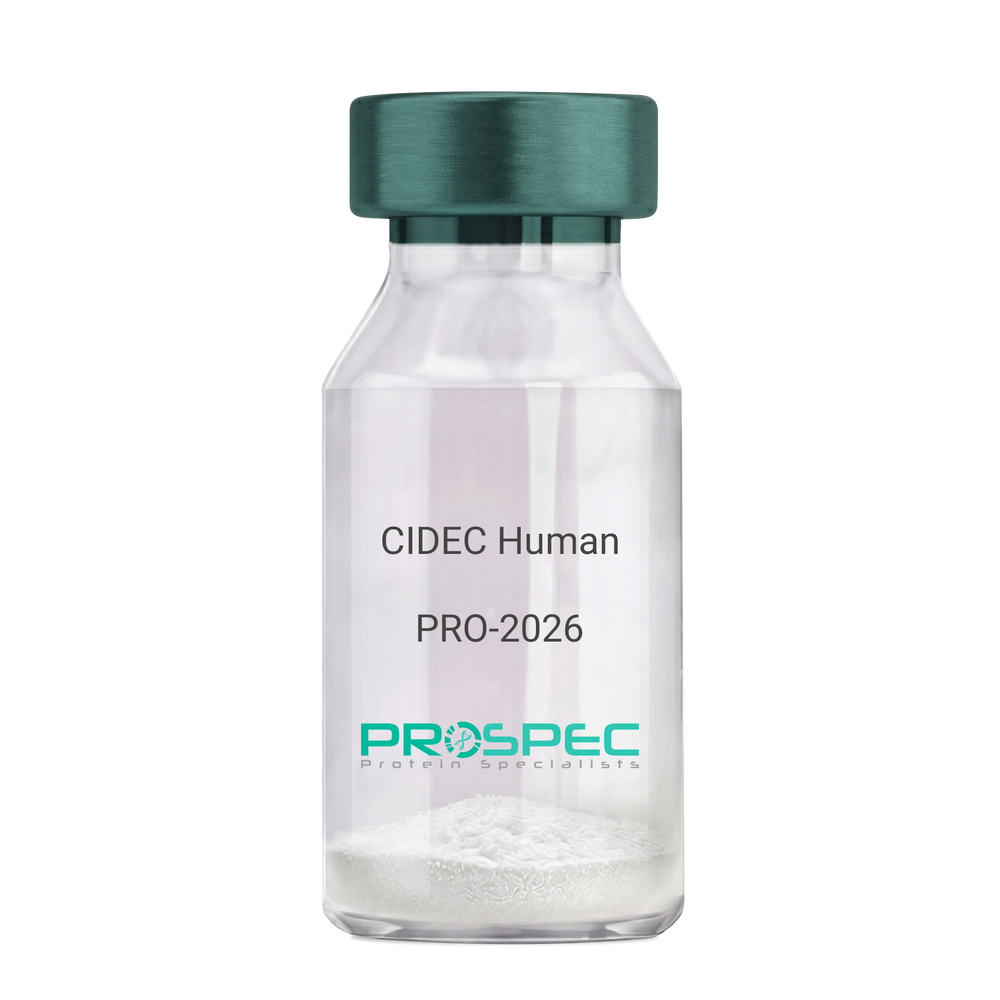
    CIDEC Human

    Description:

    Cell Death-Inducing DFFA-Like Effector C Human Recombinant

    Cell Death-Inducing DFFA-Like Effector C, FSP27, CIDE3, FPLD5, Cell Death-Inducing DFFA-Like Effector Protein C, Fat-Specific Protein FSP27 Homolog, Cell Death Activator CIDE-3, Fat Specific Protein 27, CIDE-3, CIDEC.

    Product # :

    PRO-2026

    Price :

    Quantity :

    Shipping Method :

    Ice Icon

    Shipped with Ice Packs

    Add To Cart

    More Info

    • description
    • source
    • formulation
    • purity
    • More Info

    Description

    CIDEC Human Recombinant produced in E.Coli is a single, non-glycosylated, polypeptide chain (Glu2-Gln238) containing 247 amino acids including a 10 aa His tag at N-terminus. The total calculated molecular mass is 28kDa.

    Source

    Escherichia Coli.

    Formulation

    CIDEC filtered (0.4µm) solution at a concentration of 0.4mg/ml in 30mM acetate buffer and 10mM dithiothreitol, pH 4.

    Purity

    Greater than 95.0% as determined by SDS-PAGE.

    More Info

    • Introduction

      Cell Death-Inducing DFFA-Like Effector C (CIDEC) belongs to the cell death-inducing DNA fragmentation factor-like effector family, whose members have significant roles in apoptosis. CIDEC is expressed mainly in adipocytes, intestine, heart, stomach, and weakly in the brain, kidney and liver. CIDEC overexpression in preadipocytes induces apoptosis. CIDEC regulates enlargement of lipid droplets.

    • Synonyms

      Cell Death-Inducing DFFA-Like Effector C, FSP27, CIDE3, FPLD5, Cell Death-Inducing DFFA-Like Effector Protein C, Fat-Specific Protein FSP27 Homolog, Cell Death Activator CIDE-3, Fat Specific Protein 27, CIDE-3, CIDEC.

    • Physical Appearance

      Filtered colorless solution.

    • Stability

      Store at 4°C if entire vial will be used within 2-4 weeks. Store, frozen at -20°C for longer periods of time. For long term storage it is recommended to add a carrier protein (0.1% HSA or BSA).Avoid multiple freeze-thaw cycles.

    • Amino Acid Sequence

      MKHHHHHHASEYAMKSLSLL YPKSLSRHVS VRTSVVTQQL LSEPSPKAPR ARPCRVSTAD RSVRKGIMAY SLEDLLLKVR DTLMLADKPF FLVLEEDGTT VETEEYFQAL AGDTVFMVLQ KGQKWQPPSE QGTRHPLSLS HKPAKKIDVA RVTFDLYKLN PQDFIGCLNV KATFYDTYSL SYDLHCCGAK RIMKEAFRWA LFSMQATGHV LLGTSCYLQQ LLDATEEGQP PKGKASSLIP TCLKILQ.

    ProSpec's products are furnished for LABORATORY RESEARCH USE ONLY. The product may not be used as drugs, agricultural or pesticidal products, food additives or household chemicals.

    Cidec Human
  • View Data Sheet

    Name :

    ATG3 Antibody

    Description:

    Autophagy Related 3, Mouse Anti Human

    APG3, APG3-LIKE, APG3L, PC3-96, Ubiquitin-like-conjugating enzyme ATG3, Autophagy-related protein 3, hApg3, PC3-96, ATG3.

    Product # :

    ANT-534

    Price :

    Quantity :

    Shipping Method :

    Ice Icon

    Shipped with Ice Packs

    Add To Cart

    More Info

    • formulation
    • More Info

    Formulation

    1mg/ml containing PBS, pH-7.4, 10% Glycerol and 0.02% Sodium Azide.

    More Info

    • Introduction

      Autophagy Related 3 (ATG3) is a conjugating enzyme essential for the cytoplasm to vacuole transport (Cvt), autophagy, and mitochondrial homeostasis. ATG3 is localizes to the cytoplasm and is expressed in tissues with predominant levels found in kidney, placenta, liver, heart and skeletal muscle. ATG3 catalyzes a reaction which is necessary for autophagy. That reaction is the formation of the Atg8-phosphatidylethanolamine (ATG-PE) conjugate.

    • Synonyms

      APG3, APG3-LIKE, APG3L, PC3-96, Ubiquitin-like-conjugating enzyme ATG3, Autophagy-related protein 3, hApg3, PC3-96, ATG3.

    • Physical Appearance

      Sterile filtered colorless solution.

    • Immunogen

      Anti-human ATG3mAb, clone PAT15F6AT, is derived from hybridization of mouse F0 myeloma cells with spleen cells from BALB/c mice immunized with a recombinant human ATG3 protein (1-314 amino acids purified from E. coli.

    • Ig Subclass

      Mouse IgG1 k.

    • Clone

      PAT15F6AT.

    • Applications

      The antibody has been tested by ELISA, Western blot analysis to assure specificity and reactivity. Since application varies, however, each investigation should be titrated by the reagent to obtain optimal results. Recommended starting dilution is 1:1000.

    • Type

      Mouse Anti Human Monoclonal.

    • Storage Procedures

      For periods up to 1 month store at 4°C, for longer periods of time, store at -20°C. Prevent freeze thaw cycles.

    • Purification Method

      ATG3 antibody was purified from mouse ascitic fluids by protein-A affinity chromatography.

    ProSpec's products are furnished for LABORATORY RESEARCH USE ONLY. The product may not be used as drugs, agricultural or pesticidal products, food additives or household chemicals.

    Atg3 Antibody
  • View Data Sheet

    Name :

    ACAD8 Human

    Description:

    Acyl-Coenzyme A Dehydrogenase 8 Human Recombinant

    Acyl-CoA dehydrogenase family member 8 mitochondrial, ACAD-8, Isobutyryl-CoA dehydrogenase, Activator-recruited cofactor 42 kDa component, ARC42, FLJ22590.

    Product # :

    ENZ-294

    Price :

    Quantity :

    Shipping Method :

    Ice Icon

    Shipped with Ice Packs

    Add To Cart

    More Info

    • description
    • source
    • formulation
    • purity
    • More Info

    Description

    ACAD8 Human Recombinant produced in E.coli is a single, non-glycosylated polypeptide chain containing 416 amino acids (23-415) and having a molecular mass of 45.1kDa.ACAD8 is fused to a 23 amino acid His-tag at N-terminus & purified by proprietary chromatographic techniques.

    Source

    Escherichia Coli.

    Formulation

    The ACAD8 solution contains 20mM Tris-HCl buffer (pH 8.0), 0.15M NaCl, 1mM DTT and 30% glycerol.

    Purity

    Greater than 95% as determined by SDS-PAGE.

    More Info

    • Introduction

      Acyl CoA dehydrogenase is the enzymeused to catalyzethe first step of ?-oxidationin Fatty acid metabolism.
      Acyl-coenzyme A (CoA) dehydrogenases (ACADs) are a family of mitochondrial enzymes that catalyze the first dehydrogenation step in the bets-oxidation of fatty acyl-CoA derivatives. Several human ACADs exist and all ACADs catalyze the same initial dehydrogenation of the substrate at the beta-carbon atom and require electron transfer flavoprotein as an alectron acceptor. The predicted 415-amino acid ACAD8 protein contains many of the residues conserved in most other ACADs, including an active site glutamic acid residue and residues important for tetramer formation.

    • Synonyms

      Acyl-CoA dehydrogenase family member 8 mitochondrial, ACAD-8, Isobutyryl-CoA dehydrogenase, Activator-recruited cofactor 42 kDa component, ARC42, FLJ22590.

    • Physical Appearance

      Sterile Filtered clear solution.

    • Stability

      Store at 4°C if entire vial will be used within 2-4 weeks. Store, frozen at -20°C for longer periods of time. For long term storage it is recommended to add a carrier protein (0.1% HSA or BSA).Avoid multiple freeze-thaw cycles.

    • Amino Acid Sequence

      MGSSHHHHHH SSGLVPRGSH MGSLVQTGHR SLTSCIDPSM GLNEEQKEFQ KVAFDFAARE MAPNMAEWDQ KELFPVDVMR KAAQLGFGGV YIQTDVGGSG LSRLDTSVIF EALATGCTST TAYISIHNMC AWMIDSFGNE EQRHKFCPPL CTMEKFASYC LTEPGSGSDA ASLLTSAKKQ GDHYILNGSK AFISGAGESD IYVVMCRTGG PGPKGISCIV VEKGTPGLSF GKKEKKVGWN SQPTRAVIFE DCAVPVANRI GSEGQGFLIA VRGLNGGRIN IASCSLGAAH ASVILTRDHL NVRKQFGEPL ASNQYLQFTL ADMATRLVAA RLMVRNAAVA LQEERKDAVA LCSMAKLFAT DECFAICNQA LQMHGGYGYL KDYAVQQYVR DSRVHQILEG SNEVMRILIS RSLLQE.

    ProSpec's products are furnished for LABORATORY RESEARCH USE ONLY. The product may not be used as drugs, agricultural or pesticidal products, food additives or household chemicals.

    Acad8 Human
  • View Data Sheet

    Name :

    MIA Human, His

    Description:

    Melanoma Inhibitory Activity Protein Human Recombinant, His Tag

    Melanoma-derived growth regulatory protein precursor, Cartilage-derived retinoic acid-sensitive protein, CD-RAP, MIA.

    Product # :

    CYT-810

    Price :

    Quantity :

    Shipping Method :

    Ice Icon

    Shipped with Ice Packs

    Add To Cart

    More Info

    • description
    • source
    • formulation
    • purity
    • More Info

    Description

    MIA Human Recombinant produced in E.coli is a single, non-glycosylated polypeptide chain containing 128 amino acids (25-131) and having a molecular mass of 14.4 kDa.MIA is fused to a 21 amino acid His-tag at N-terminus.

    Source

    Escherichia Coli.

    Formulation

    The MIA solution (0.25mg/ml) contains 20mM Tris-HCl buffer (pH 8.0), 0.4M Urea and 10% glycerol.

    Purity

    Greater than 90% as determined by SDS-PAGE.

    More Info

    • Introduction

      The Melanoma Inhibitory protein (MIA) was identified as an inhibitor of in vitro growth of malignant melanoma cells. The protein contains a SH3 domain. MIA acts as a potent tumor cell growth inhibitor for malignant melanoma cells and some other neuroectodermal tumors, including gliomas, in an autocrine fashion. In a study of human melanoma cell lines with different metastatic capacity MIA mRNA expression appeared to be inversely correlated with pigmentation. MIA has been shown to represent a very sensitive and specific serum marker for systemic malignant melanoma that might be useful for staging of primary melanomas, detection of progression from localized to metastatic disease during follow-up, and monitoring therapy of advanced melanomas.

    • Synonyms

      Melanoma-derived growth regulatory protein precursor, Cartilage-derived retinoic acid-sensitive protein, CD-RAP, MIA.

    • Physical Appearance

      Sterile Filtered clear solution.

    • Stability

      Store at 4°C if entire vial will be used within 2-4 weeks. Store, frozen at -20°C for longer periods of time. For long term storage it is recommended to add a carrier protein (0.1% HSA or BSA).Avoid multiple freeze-thaw cycles.

    • Amino Acid Sequence

      MGSSHHHHHH SSGLVPRGSH MGPMPKLADR KLCADQECSH PISMAVALQD YMAPDCRFLT IHRGQVVYVF SKLKGRGRLF WGGSVQGDYY GDLAARLGYF PSSIVREDQT LKPGKVDVKT DKWDFYCQ

    ProSpec's products are furnished for LABORATORY RESEARCH USE ONLY. The product may not be used as drugs, agricultural or pesticidal products, food additives or household chemicals.

    Mia Human His
  • View Data Sheet

    Name :

    SAR1A Human

    Description:

    GTP-Binding Protein SAR1A Human Recombinant

    GTP-binding protein SAR1a, COPII-associated small GTPase, SAR1A, SAR1, SARA, SARA1.

    Product # :

    PRO-709

    Price :

    Quantity :

    Shipping Method :

    Ice Icon

    Shipped with Ice Packs

    Add To Cart

    More Info

    • description
    • source
    • formulation
    • purity
    • More Info

    Description

    SAR1A Human Recombinant fused with 20 amino acid His tag at N-terminus produced in E.Coli is a single, non-glycosylated, polypeptide chain containing 218 amino acids (1- 198 a.a.) and having a molecular mass of 24.5kDa.The SAR1A is purified by proprietary chromatographic techniques.

    Source

    Escherichia Coli.

    Formulation

    The SAR1A solution contains 20mM Tris-HCl buffer (pH8.0), 1mM DTT and 10% glycerol.

    Purity

    Greater than 90.0% as determined by SDS-PAGE.

    More Info

    • Introduction

      SAR1A is a member of the small GTPase superfamily. SAR1A is a vital component of COPII vesicle coats involved in export of cargo from the ER (Endoplasmic Reticulum). The GTPase activity of SAR1A serves as a molecular switch to control protein-protein and protein-lipid interactions which dictate vesicle budding from the ER. SAR1A, while GDP-bound interacts with the membrane-bound exchange factor Sec12 and trades its bound GDP for GTP. SAR1A is also involved in the transport from the ER to the Golgi apparatus. SAR1A is required to maintain SEC16A localization at distinct locations on the ER membrane possibly by preventing its dissociation. SAR1A-GTP-dependent compilation of SEC16A on the ER membrane creates a structured scaffold defining endoplasmic reticulum exit sites.

    • Synonyms

      GTP-binding protein SAR1a, COPII-associated small GTPase, SAR1A, SAR1, SARA, SARA1.

    • Physical Appearance

      Sterile Filtered colorless solution.

    • Stability

      Store at 4°C if entire vial will be used within 2-4 weeks. Store, frozen at -20°C for longer periods of time. For long term storage it is recommended to add a carrier protein (0.1% HSA or BSA).Avoid multiple freeze-thaw cycles.

    • Amino Acid Sequence

      MGSSHHHHHH SSGLVPRGSH MSFIFEWIYN GFSSVLQFLG LYKKSGKLVF LGLDNAGKTT LLHMLKDDRL GQHVPTLHPT SEELTIAGMT FTTFDLGGHE QARRVWKNYL PAINGIVFLV DCADHSRLVE SKVELNALMT DETISNVPIL ILGNKIDRTD AISEEKLREI FGLYGQTTGK GNVTLKELNA RPMEVFMCSV LKRQGYGEGF RWLSQYID.

    ProSpec's products are furnished for LABORATORY RESEARCH USE ONLY. The product may not be used as drugs, agricultural or pesticidal products, food additives or household chemicals.

    Sar1A Human
  • View Data Sheet

    Name :

    HERC5 Human

    Description:

    HECT and RLD Domain Containing E3 Ubiquitin Protein Ligase 5 Human Recombinant

    HERC5, HECT and RLD Domain Containing E3 Ubiquitin Protein Ligase 5, CEB1, Hect Domain and RLD 5, Cyclin-E-Binding Protein 1, CEBP1, HECT Domain and RCC1-Like Domain-Containing Protein 5, E3 ISG15--Protein Ligase HERC5, Probable E3 Ubiquitin-Protein Ligase HERC5, EC 6.3.2.- , EC 6.3.2.

    Product # :

    ENZ-797

    Price :

    Quantity :

    Shipping Method :

    Ice Icon

    Shipped with Ice Packs

    Add To Cart

    More Info

    • description
    • source
    • formulation
    • purity
    • More Info

    Description

    HERC5 Human Recombinant produced in E.Coli is a single, non-glycosylated polypeptide chain containing 367 amino acids (681-1024 a.a.) and having a molecular mass of 43kDa. HERC5 is fused to a 23 amino acid His-tag at N-terminus.

    Source

    Escherichia Coli.

    Formulation

    HERC5 protein solution (1mg/ml) contains 20mM Tris-HCl buffer (pH 8.0), 0.4M Urea and 10% glycerol.

    Purity

    Greater than 90.0% as determined by SDS-PAGE.

    More Info

    • Introduction

      HECT and RLD Domain Containing E3 Ubiquitin Protein Ligase 5 (HERC5) is a member of the HERC family of ubiquitin ligases, found in a cluster of HERC family genes on chromosome 4. HERC5 is a protein with a HECT domain and 5 RCC1 repeats. The HERC5 protein localizes to the cytoplasm and perinuclear region and serves as an INF-induced E3 protein ligase that mediates ISGylation of protein targets. HERC5 exhibits antiviral activity towards HIV-1, influenza A virus and human papillomavirus. HERC5 is a major E3 ligase for ISG15 conjugation. HERC5 also serves as a positive regulator of innate antiviral response in cells induced by INF. Pro-inflammatory cytokines upregulate HERC5 in endothelial cells. HERC5 is physically connected with polyribosomes, broadly modifies recently synthesized proteins in a cotranslational fashion.

    • Synonyms

      HERC5, HECT and RLD Domain Containing E3 Ubiquitin Protein Ligase 5, CEB1, Hect Domain and RLD 5, Cyclin-E-Binding Protein 1, CEBP1, HECT Domain and RCC1-Like Domain-Containing Protein 5, E3 ISG15--Protein Ligase HERC5, Probable E3 Ubiquitin-Protein Ligase HERC5, EC 6.3.2.- , EC 6.3.2.

    • Physical Appearance

      Sterile Filtered colorless solution.

    • Stability

      Store at 4°C if entire vial will be used within 2-4 weeks. Store, frozen at -20°C for longer periods of time. For long term storage it is recommended to add a carrier protein (0.1% HSA or BSA).Avoid multiple freeze-thaw cycles.

    • Amino Acid Sequence

      MGSSHHHHHH SSGLVPRGSH MGSFDLTVRR NHLIEDVLNQ LSQFENEDLR KELWVSFSGE IGYDLGGVKK EFFYCLFAEM IQPEYGMFMY PEGASCMWFP VKPKFEKKRY FFFGVLCGLS LFNCNVANLP FPLALFKKLL DQMPSLEDLK ELSPDLGKNL QTLLDDEGDN FEEVFYIHFN VHWDRNDTNL IPNGSSITVN QTNKRDYVSK YINYIFNDSV KAVYEEFRRG FYKMCDEDII KLFHPEELKD VIVGNTDYDW KTFEKNARYE PGYNSSHPTI VMFWKAFHKL TLEEKKKFLV FLTGTDRLQM KDLNNMKITF CCPESWNERD PIRALTCFSV LFLPKYSTME TVEEALQEAI NNNRGFG.

    ProSpec's products are furnished for LABORATORY RESEARCH USE ONLY. The product may not be used as drugs, agricultural or pesticidal products, food additives or household chemicals.

    Herc5 Human
  • View Data Sheet

    Name :

    CYTH2 Human

    Description:

    Cytohesin 2 Human Recombinant

    ARF Nucleotide-Binding Site Opener, Pleckstrin Homology Sec7 And Coiled-Coil Domains 2 (Cytohesin-2), PH SEC7 And Coiled-Coil Domain-Containing Protein 2, Cytohesin 2, Protein ARNO, ARF Exchange Factor, Sec7p-Like, PSCD2, PSCD2L, CTS18.1, Sec7p-L, SEC7L.

    Product # :

    PRO-1248

    Price :

    Quantity :

    Shipping Method :

    Ice Icon

    Shipped with Ice Packs

    Add To Cart

    More Info

    • description
    • source
    • formulation
    • purity
    • More Info

    Description

    CYTH2 Human Recombinant produced in E. coli is a single polypeptide chain containing 422 amino acids (1-399) and having a molecular mass of 48.9 kDa. CYTH2 is fused to a 23 amino acid His-tag at N-terminus & purified by proprietary chromatographic techniques.

    Source

    E.coli.

    Formulation

    The CYTH2 solution (1mg/1ml) contains 20mM Tris-HCl buffer (pH 8.0), 0.2M NaCl, 1mM DTT and 10% glycerol.

    Purity

    Greater than 90% as determined by SDS-PAGE.

    More Info

    • Introduction

      Cytohesin 2 (CYTH2) is an ARF-1 guanine nucleotide exchange factor (GEF). ARF (ADP ribosylation factor) proteins are a part of a group within the RAS superfamily and bindes GTP-b proteins central to the process of vesicle budding. CYTH2 promotes guanine-nucleotide exchange on ARF1, ARF3 and ARF6. Furthermore, CYTH2 promotes the activation of ARF factors through replacement of GDP with GTP. The protein encoded by CYTH2 is a member of the PSCD family. Members of PSCD family appear to mediate the regulation of protein sorting and membrane trafficking. The cell membrane form, in association with ARL4 proteins, recruits ARF6 to the plasma membrane.

    • Synonyms

      ARF Nucleotide-Binding Site Opener, Pleckstrin Homology Sec7 And Coiled-Coil Domains 2 (Cytohesin-2), PH SEC7 And Coiled-Coil Domain-Containing Protein 2, Cytohesin 2, Protein ARNO, ARF Exchange Factor, Sec7p-Like, PSCD2, PSCD2L, CTS18.1, Sec7p-L, SEC7L.

    • Physical Appearance

      Sterile Filtered colorless solution.

    • Stability

      Store at 4°C if entire vial will be used within 2-4 weeks. Store, frozen at -20°C for longer periods of time. For long term storage it is recommended to add a carrier protein (0.1% HSA or BSA).Avoid multiple freeze-thaw cycles.

    • Amino Acid Sequence

      MGSSHHHHHH SSGLVPRGSH MGSMEDGVYE PPDLTPEERM ELENIRRRKQ ELLVEIQRLR EELSEAMSEV EGLEANEGSK TLQRNRKMAM GRKKFNMDPK KGIQFLVENE LLQNTPEEIA RFLYKGEGLN KTAIGDYLGE REELNLAVLH AFVDLHEFTD LNLVQALRQF LWSFRLPGEA QKIDRMMEAF AQRYCLCNPG VFQSTDTCYV LSFAVIMLNT SLHNPNVRDK PGLERFVAMN RGINEGGDLP EELLRNLYDS IRNEPFKIPE DDGNDLTHTF FNPDREGWLL KLGGRVKTWK RRWFILTDNC LYYFEYTTDK EPRGIIPLEN LSIREVDDPR KPNCFELYIP NNKGQLIKAC KTEADGRVVE GNHMVYRISA PTQEEKDEWI KSIQAAVSVD PFYEMLAARK KRISVKKKQE QP.

    ProSpec's products are furnished for LABORATORY RESEARCH USE ONLY. The product may not be used as drugs, agricultural or pesticidal products, food additives or household chemicals.

    Cyth2 Human
  • View Data Sheet

    Name :

    MRPS25 Human

    Description:

    Mitochondrial Ribosomal Protein S25 Human Recombinant

    Mitochondrial Ribosomal Protein S25, Mitochondrial 28S Ribosomal Protein S25, 28S Ribosomal Protein S25 Mitochondrial, MRP-S25, RPMS25, S25mt.

    Product # :

    PRO-1558

    Price :

    Quantity :

    Shipping Method :

    Ice Icon

    Shipped with Ice Packs

    Add To Cart

    More Info

    • description
    • source
    • formulation
    • purity
    • More Info

    Description

    MRPS25 Human Recombinant produced in E.coli is a single, non-glycosylated polypeptide chain containing 196 amino acids (1-173) and having a molecular mass of 22.5kDa.MRPS25 is fused to a 23 amino acid His-tag at N-terminus & purified by proprietary chromatographic techniques.

    Source

    Escherichia Coli.

    Formulation

    The MRPS25 solution (1mg/ml) contains 20mM Tris-HCl buffer (pH 8.0), 0.4M Urea and 10% glycerol.

    Purity

    Greater than 90% as determined by SDS-PAGE.

    More Info

    • Introduction

      MRPS25, a 28S subunit protein, is a member of the ribosomal protein S5P family. An equivalent pseudogene is located on chromosome 4.

    • Synonyms

      Mitochondrial Ribosomal Protein S25, Mitochondrial 28S Ribosomal Protein S25, 28S Ribosomal Protein S25 Mitochondrial, MRP-S25, RPMS25, S25mt.

    • Physical Appearance

      Sterile Filtered clear solution.

    • Stability

      Store at 4°C if entire vial will be used within 2-4 weeks. Store, frozen at -20°C for longer periods of time. For long term storage it is recommended to add a carrier protein (0.1% HSA or BSA).Avoid multiple freeze-thaw cycles.

    • Amino Acid Sequence

      MGSSHHHHHH SSGLVPRGSH MGSMPMKGRF PIRRTLQYLS QGNVVFKDSV KVMTVNYNTH GELGEGARKF VFFNIPQIQY KNPWVQIMMF KNMTPSPFLR FYLDSGEQVL VDVETKSNKE IMEHIRKILG KNEETLREEE EEKKQLSHPA NFGPRKYCLR ECICEVEGQV PCPSLVPLPK EMRGKYKAAL KADAQD

    ProSpec's products are furnished for LABORATORY RESEARCH USE ONLY. The product may not be used as drugs, agricultural or pesticidal products, food additives or household chemicals.

    Mrps25 Human
  • View Data Sheet

    Name :

    MTCP1 Human

    Description:

    Mature T-Cell Proliferation 1 Human Recombinant

    Mature T-Cell Proliferation 1, Mature T-Cell Proliferation-1 Type B1, MTCP-1 Type B1, P13MTCP1, Mature T-Cell Proliferation 1 Isoform P13, p8MTCP1, Protein P13 MTCP-1, C6.1B, p13MTCP1.

    Product # :

    PRO-1748

    Price :

    Quantity :

    Shipping Method :

    Ice Icon

    Shipped with Ice Packs

    Add To Cart

    More Info

    • description
    • source
    • formulation
    • purity
    • More Info

    Description

    MTCP1 Human Recombinant produced in E.Coli is a single, non-glycosylated polypeptide chain containing 130 amino acids (1-107a.a) and having a molecular mass of 15.0kDa.MTCP1 is fused to a 23 amino acid His-tag at N-terminus & purified by proprietary chromatographic techniques.

    Source

    Escherichia Coli.

    Formulation

    MTCP1 protein solution (1mg/ml) containing 20mM Tris-HCl buffer (pH 8.0), 0.15M NaCl ,10% glycerol and 1mM DTT.

    Purity

    Greater than 95% as determined by SDS-PAGE.

    More Info

    • Introduction

      Mature T-Cell Proliferation 1, also known as MTCP1 was recognized by involvement in some t(X;14) translocations linked with mature T-cellproliferations. This region has a complex gene structure, with a common promoter and 5' exon spliced to two dissimilar sets of 3' exons which encode two different proteins. It represents the upstream 13 kDa protein which belongs to the TCL1 family. In addition, MTCP1 enhances the phosphorylation and activation of AKT1 and AKT2. MTCP1 is involved in leukemogenesis.Among the diseases associated with MTCP1 are queensland tick typhus, and african tick-bite fever.

    • Synonyms

      Mature T-Cell Proliferation 1, Mature T-Cell Proliferation-1 Type B1, MTCP-1 Type B1, P13MTCP1, Mature T-Cell Proliferation 1 Isoform P13, p8MTCP1, Protein P13 MTCP-1, C6.1B, p13MTCP1.

    • Physical Appearance

      Sterile Filtered clear solution.

    • Stability

      Store at 4°C if entire vial will be used within 2-4 weeks. Store, frozen at -20°C for longer periods of time.For long term storage it is recommended to add a carrier protein (0.1% HSA or BSA).Please avoid freeze thaw cycles.

    • Amino Acid Sequence

      MGSSHHHHHH SSGLVPRGSH MGSMAGEDVG APPDHLWVHQ EGIYRDEYQR TWVAVVEEET SFLRARVQQI QVPLGDAARP SHLLTSQLPL MWQLYPEERY MDNNSRLWQI QHHLMVRGVQ ELLLKLLPDD

    ProSpec's products are furnished for LABORATORY RESEARCH USE ONLY. The product may not be used as drugs, agricultural or pesticidal products, food additives or household chemicals.

    Mtcp1 Human
  • View Data Sheet

    Name :

    NANA E.Coli

    Description:

    N-Acetylneuraminate Lyase E.Coli Recombinant

    N-acetylneuraminate lyase, N-acetylneuraminate pyruvate-lyase, N-acetylneuraminic acid aldolase, NALase, Sialate lyase, Sialic acid aldolase, Sialic acid lyase, nanA, npl, b3225, JW3194.

    Product # :

    ENZ-128

    Price :

    Quantity :

    Shipping Method :

    Ice Icon

    Shipped with Ice Packs

    Add To Cart

    More Info

    • description
    • source
    • formulation
    • purity
    • More Info

    Description

    NANA produced in E.Coli is a single, non-glycosylated polypeptide chain containing 317 amino acids (1-297 a.a.) and having a molecular mass of 34.7kDa.NANA is fused to a 20 amino acid His-tag at N-terminus & purified by proprietary chromatographic techniques.

    Source

    Escherichia Coli.

    Formulation

    The NANA protein solution (1mg/ml) 20mM Tris-HCl buffer (pH8.0) and 20% glycerol.

    Purity

    Greater than 95% as determined by SDS-PAGE.

    More Info

    • Introduction

      N-acetylneuraminate lyase (NanA) is a member of a family of lyases, specifically the oxo-acid-lyases, which cleave carbon-carbon bonds. NanA catalyzes the cleavage of N-acetylneuraminic acid (sialic acid) to form pyruvate and N-acetyl-D-mannosamine. NanA is inhibited by reduction with NaBH4 in the presence of the substrate, which indicates that it belongs to the Schiff-base-forming Class I aldolases. NanA is strongly inhibited by Cu2+ ions, p-chloromercuribenzoate and N-bromosuccinimide, it is also inhibited competitively by the reaction product, pyruvate, and its structurally related compounds, dihydroxyacetone and DL-glyceraldehyde.

    • Synonyms

      N-acetylneuraminate lyase, N-acetylneuraminate pyruvate-lyase, N-acetylneuraminic acid aldolase, NALase, Sialate lyase, Sialic acid aldolase, Sialic acid lyase, nanA, npl, b3225, JW3194.

    • Physical Appearance

      Sterile Filtered clear solution.

    • Stability

      Store at 4°C if entire vial will be used within 2-4 weeks. Store, frozen at -20°C for longer periods of time. For long term storage it is recommended to add a carrier protein (0.1% HSA or BSA). Avoid multiple freeze-thaw cycles.

    • Amino Acid Sequence

      MGSSHHHHHH SSGLVPRGSH MATNLRGVMA ALLTPFDQQQ ALDKASLRRL VQFNIQQGID GLYVGGSTGE AFVQSLSERE QVLEIVAEEA KGKIKLIAHV GCVSTAESQQ LAASAKRYGF DAVSAVTPFY YPFSFEEHCD HYRAIIDSAD GLPMVVYNIP ALSGVKLTLD QINTLVTLPG
      VGALKQTSGD LYQMEQIRRE HPDLVLYNGY DEIFASGLLA GADGGIGSTY NIMGWRYQGI VKALKEGDIQ TAQKLQTECN KVIDLLIKTG VFRGLKTVLH YMDVVSVPLC RKPFGPVDEK YLPELKALAQ QLMQERG.

    ProSpec's products are furnished for LABORATORY RESEARCH USE ONLY. The product may not be used as drugs, agricultural or pesticidal products, food additives or household chemicals.

    Nana Ecoli
  • View Data Sheet

    Name :

    DPH3P1 Human

    Description:

    Diphthamide Biosynthesis 3 Pseudogene 1 Human Recombinant

    Diphthamide Biosynthesis 3 Pseudogene 1, C20orf143, DPH3B, ZCSL1, CSL-Type Zinc Finger-Containing Protein 1, Chromosome 20 Open Reading Frame 143, DPH3, KTI11 Homolog (S. Cerevisiae) Pseudogene, DPH3B, KTI11 Homolog B (S. Cerevisiae), Zinc Finger, CSL-Type Containing 1, DPH3 Homolog B (KTI11, S. Cerevisiae), Putative DPH3 Homolog B, Zinc Finger, CSL Domain Containing 1.

    Product # :

    PRO-1914

    Price :

    Quantity :

    Shipping Method :

    Ice Icon

    Shipped with Ice Packs

    Add To Cart

    More Info

    • description
    • source
    • formulation
    • purity
    • More Info

    Description

    DPH3P1 Human Recombinant produced in E.Coli is a single, non-glycosylated polypeptide chain containing 101 amino acids (1-78 a.a) and having a molecular mass of 11.1kDa.DPH3P1 is fused to a 23 amino acid His-tag at N-terminus & purified by proprietary chromatographic techniques.

    Source

    Escherichia Coli.

    Formulation

    DPH3P1 protein solution (0.5mg/ml) containing 20mM Tris-HCl buffer (pH8.0) and 10% glycerol.

    Purity

    Greater than 90.0% as determined by SDS-PAGE.

    More Info

    • Introduction

      Diphthamide Biosynthesis 3 Pseudogene 1 also known as DPH3P1 may stand for a processed pseudogene of DPH3 since it lacks the exon/intron structurefound in the functional gene. Yet, DPH3P1 does contain an intact open reading frame, though its translation has not been established.

    • Synonyms

      Diphthamide Biosynthesis 3 Pseudogene 1, C20orf143, DPH3B, ZCSL1, CSL-Type Zinc Finger-Containing Protein 1, Chromosome 20 Open Reading Frame 143, DPH3, KTI11 Homolog (S. Cerevisiae) Pseudogene, DPH3B, KTI11 Homolog B (S. Cerevisiae), Zinc Finger, CSL-Type Containing 1, DPH3 Homolog B (KTI11, S. Cerevisiae), Putative DPH3 Homolog B, Zinc Finger, CSL Domain Containing 1.

    • Physical Appearance

      Sterile Filtered clear solution.

    • Stability

      Store at 4°C if entire vial will be used within 2-4 weeks. Store, frozen at -20°C for longer periods of time.For long term storage it is recommended to add a carrier protein (0.1% HSA or BSA).Please avoid freeze thaw cycles.

    • Amino Acid Sequence

      MGSSHHHHHH SSGLVPRGSH MGSMAVFHDE VEIEDFQYDE DSETYFCPCP CGDNFSITKE ELENGEGVAM CPGCSLIIKV IYDKDQFACG ETVPVPSVNK E

    ProSpec's products are furnished for LABORATORY RESEARCH USE ONLY. The product may not be used as drugs, agricultural or pesticidal products, food additives or household chemicals.

    Dph3P1 Human
  • View Data Sheet

    Name :

    SKP E. Coli

    Description:

    Chaperone Protein SKP E.Coli Recombinant

    hlpA, ompH, Chaperone protein skp, skp.

    Product # :

    HSP-034

    Price :

    Quantity :

    Shipping Method :

    Ice Icon

    Shipped with Ice Packs

    Add To Cart

    More Info

    • description
    • source
    • formulation
    • purity
    • More Info

    Description

    SKP Recombinant E.coli produced in E.Coli is a single, non-glycosylated polypeptide chain containing 162 amino acids (21-161 a.a.) and having a molecular mass of 17.9 kDa. The SKP is fused to a 21 amino acid His-Tag at N-terminus and purified by proprietary chromatographic techniques.

    Source

    Escherichia Coli.

    Formulation

    SKP E.Coli solution containing 20mM Tris-HCl pH-8 & 20% glycerol.

    Purity

    Greater than 95.0% as determined by SDS-PAGE.

    More Info

    • Introduction

      SKP is a 17kDa trimeric periplasmic chaperone that supports outer membrane proteins in their folding and insertion into membranes. SKP protein is necessary for the normal release of ompA from the inner membrane, the maintenance of its solubility in the periplasm, and, in association with lipopolysaccharide (LPS), for the efficient folding and insertion of ompA into the outer membrane.

    • Synonyms

      hlpA, ompH, Chaperone protein skp, skp.

    • Physical Appearance

      Sterile filtered colorless solution.

    • Stability

      Store at 4°C if entire vial will be used within 2-4 weeks. Store, frozen at -20°C for longer periods of time. For long term storage it is recommended to add a carrier protein (0.1% HSA or BSA).Avoid multiple freeze-thaw cycles.

    • Amino Acid Sequence

      MGSSHHHHHH SSGLVPRGSH MADKIAIVNM GSLFQQVAQK TGVSNTLENE FKGRASELQR METDLQAKMK KLQSMKAGSD RTKLEKDVMA QRQTFAQKAQ AFEQDRARRS NEERGKLVTR IQTAVKSVAN SQDIDLVVDA NAVAYNSSDV KDITADVLKQ VK.

    ProSpec's products are furnished for LABORATORY RESEARCH USE ONLY. The product may not be used as drugs, agricultural or pesticidal products, food additives or household chemicals.

    Skp E Coli
  • View Data Sheet

    Name :

    I TAC Human, His

    Description:

    I-TAC Human Recombinant (CXCL11), His Tag

    Small inducible cytokine B11, CXCL11, Interferon-inducible T-cell alpha chemoattractant, I-TAC, Interferon-gamma-inducible protein 9, IP-9, H174, Beta-R1, chemokine (C-X-C motif) ligand 11, IP9, b-R1, SCYB11, SCYB9B, MGC102770.

    Product # :

    CHM-232

    Price :

    Quantity :

    Shipping Method :

    Ice Icon

    Shipped with Ice Packs

    Add To Cart

    More Info

    • description
    • source
    • formulation
    • purity
    • More Info

    Description

    I-TAC (CXCL11) Human Recombinant produced in E.coli is a single, non-glycosylated polypeptide chain containing 94 amino acids (22-94) and having a molecular mass of 10.6kDa.I-TAC is fused to a 21 amino acid His-tag at N-terminus & purified by proprietary chromatographic techniques.

    Source

    Escherichia Coli.

    Formulation

    The I-TAC solution (1mg/ml) contains 10mM sodium citrate(pH 3.5), 20% glycerol and 2mM DTT.

    Purity

    Greater than 90.0% as determined by SDS-PAGE.

    More Info

    • Introduction

      Chemokine (C-X-C motif) ligand 11 (CXCL11) is a small cytokine belonging to the CXC chemokine family that is also called Interferon-inducible T-cell alpha chemoattractant (I-TAC) and Interferon-gamma-inducible protein 9 (IP-9). It is highly expressed in peripheral blood leukocytes, pancreas and liver, with moderate levels in thymus, spleen and lung and low expression levels were in small intestine, placenta and prostate. Gene expression of CXCL11 is strongly induced by IFN-g and IFN-b, and weakly induced by IFN-a. This chemokine elicits its effects on its target cells by interacting with the cell surface chemokine receptor CXCR3, with a higher affinity than do the other ligands for this receptor, CXCL9 and CXCL10. CXCL11 is chemotactic for activated T cells. Its gene is located on human chromosome 4 along with many other members of the CXC chemokine family.

    • Synonyms

      Small inducible cytokine B11, CXCL11, Interferon-inducible T-cell alpha chemoattractant, I-TAC, Interferon-gamma-inducible protein 9, IP-9, H174, Beta-R1, chemokine (C-X-C motif) ligand 11, IP9, b-R1, SCYB11, SCYB9B, MGC102770.

    • Physical Appearance

      Sterile filtered colorless solution.

    • Stability

      Store at 4°C if entire vial will be used within 2-4 weeks. Store, frozen at -20°C for longer periods of time. For long term storage it is recommended to add a carrier protein (0.1% HSA or BSA).Avoid multiple freeze-thaw cycles.

    • Amino Acid Sequence

      MGSSHHHHHH SSGLVPRGSH MFPMFKRGRC LCIGPGVKAV KVADIEKASI MYPSNNCDKI EVIITLKENK GQRCLNPKSK QARLIIKKVE RKNF.

    ProSpec's products are furnished for LABORATORY RESEARCH USE ONLY. The product may not be used as drugs, agricultural or pesticidal products, food additives or household chemicals.

    I Tac Human His
  • View Data Sheet

    Name :

    NMM Human

    Description:

    Non-Muscle Myosin-II Regulatory Light Chain Human Recombinant

    Non-Muscle Myosin-II Regulatory Light Chain, NMM.

    Product # :

    PRO-366

    Price :

    Quantity :

    Shipping Method :

    Ice Icon

    Shipped with Ice Packs

    Add To Cart

    More Info

    • description
    • source
    • formulation
    • purity
    • biological activity
    • More Info

    Description

    Non-Muscle Myosin-II Regulatory Light Chain Human Recombinant full length expressed in E.coli.The NMM is purified by proprietary chromatographic techniques.

    Source

    Escherichia Coli.

    Formulation

    NMM protein at 0.2mg/ml in 20mM HEPES-KOH, pH7, 50mM NaCl, 1mM EDTA and 1mM DTT.

    Purity

    Greater than 95.0% as determined by SDS-PAGE.

    Biological Activity

    Assayed for phosphorilation by MLCK.

    More Info

    • Introduction

      Non muscle Myosins are required for cytokinesis at the end of cell division, when a contractile ring near the plasmalemma divides the cytoplasm of the daughter cells. They are involved in cytoplasmic streaming movements in tissues, and especially in activation of motile cells such as fibroblasts and macrophages. Activation of non-muscle myosin-II is achieved by phosphorylation of Ser33 in the motif KKRPQRATSN by a dedicated, Ca +2 Calmodulin regulated light chain kinase (MLCK).

    • Synonyms

      Non-Muscle Myosin-II Regulatory Light Chain, NMM.

    • Physical Appearance

      Sterile Filtered clear solution.

    • Stability

      Store vial at -20°C to -80°C. When stored at the recommended temperature, this protein is stable for 12 months.Please prevent freeze-thaw cycles.

    • Amino Acid Sequence

      MSSKKAKTKT TKKRPQRATS NVFAMFDQSQ IQEFKEAFNM IDQNRDGFID KEDLHDMLAS LGKNPTDAYL DAMMNEAPGP INFTMFLTMF GEKLNGTDPE DVIRNAFACF DEEATGTIQE DYLRELLTTM GDRFTDEEVD ELYREAPIDK KGNFNYIEFT RILKHGAKDK DD.

    ProSpec's products are furnished for LABORATORY RESEARCH USE ONLY. The product may not be used as drugs, agricultural or pesticidal products, food additives or household chemicals.

    Nmm Human
  • 1
  • …
  • 40
  • 41
  • 42
Your browser does not support the video tag.

Products

  • Cytokines
  • Growth Factors
  • Chemokines
  • CD Antigens
  • Neurotrophins
  • Hormones
  • Enzymes
  • Viral Antigens
  • Recombinant Proteins
  • Natural Proteins
  • Monoclonal Antibodies
  • Polyclonal Antibodies
  • Thermal Packaging

About

  • Company
  • Founder
  • Contribution
  • Contact Us
  • My Account

Ordering

  • Ordering Method
  • Ordering - Credit Card
  • Ordering PO
  • Shipping Fees
  • FAQ's

Legal

  • Terms & Conditions
  • Privacy
  • Site Map
  • info@prospecbio.com
  • Facebook
  • Instagram
  • Linkedin Profile

© 2026 ProSpec-Tany TechnoGene Ltd. All Rights Reserved.

  • Choosing a selection results in a full page refresh.
  • Opens in a new window.