Skip to content

High-quality research proteins.

  • 1-800-805-6531

  • Mon - Sat 8.00-18.00, Sun - Closed

  • info@prospecbio.com

  • PO Box 6591 East Brunswick NJ 08816

  • Products
    • Cytokines
    • Growth factors
    • Chemokines
    • Cd antigens
    • Neurotrophins
    • Hormones
    • Enzymes
    • Viral antigens
    • Recombinant proteins
    • Natural proteins
    • Monoclonal antibodies
    • Polyclonal antibodies
    • Thermal Packaging
  • About
    • Company
    • Founder
    • Contribution
  • Customers
    • Eastern Asia
    • Eastern Europe
    • North America
    • South America
    • South East Asia
    • Southern Asia
    • Western Europe
  • Ordering
    • Ordering Method
    • Ordering - Credit Card
    • Ordering - PO
    • Shipping Fees
    • FAQs
  • Services
    • DNA Cloning
    • Protein Expression
    • Monoclonal Antibody
    • Fermentation
    • Technology License
  • Contact us
Log in

Country/region

  • USD $ | Albania
  • USD $ | Andorra
  • USD $ | Argentina
  • USD $ | Armenia
  • USD $ | Australia
  • USD $ | Austria
  • USD $ | Azerbaijan
  • USD $ | Belarus
  • USD $ | Belgium
  • USD $ | Bolivia
  • USD $ | Brazil
  • USD $ | Bulgaria
  • USD $ | Cambodia
  • USD $ | Canada
  • USD $ | Chile
  • USD $ | China
  • USD $ | Colombia
  • USD $ | Costa Rica
  • USD $ | Croatia
  • USD $ | Cyprus
  • USD $ | Czechia
  • USD $ | Denmark
  • USD $ | Estonia
  • USD $ | Finland
  • USD $ | France
  • USD $ | Georgia
  • USD $ | Germany
  • USD $ | Greece
  • USD $ | Hong Kong SAR
  • USD $ | Hungary
  • USD $ | Iceland
  • USD $ | India
  • USD $ | Ireland
  • USD $ | Israel
  • USD $ | Italy
  • USD $ | Japan
  • USD $ | Kazakhstan
  • USD $ | Latvia
  • USD $ | Liechtenstein
  • USD $ | Lithuania
  • USD $ | Madagascar
  • USD $ | Malta
  • USD $ | Mexico
  • USD $ | Moldova
  • USD $ | Monaco
  • USD $ | Netherlands
  • USD $ | New Zealand
  • USD $ | North Macedonia
  • USD $ | Norway
  • USD $ | Panama
  • USD $ | Paraguay
  • USD $ | Peru
  • USD $ | Philippines
  • USD $ | Poland
  • USD $ | Portugal
  • USD $ | Romania
  • USD $ | Singapore
  • USD $ | Slovakia
  • USD $ | Slovenia
  • USD $ | South Africa
  • USD $ | South Korea
  • USD $ | Spain
  • USD $ | Sri Lanka
  • USD $ | Sweden
  • USD $ | Switzerland
  • USD $ | Taiwan
  • USD $ | Thailand
  • USD $ | Türkiye
  • USD $ | Ukraine
  • USD $ | United Kingdom
  • USD $ | United States
  • USD $ | Uruguay
  • USD $ | Vatican City
  • USD $ | Venezuela
  • USD $ | Vietnam
  • Facebook
  • Instagram
logoProSpec - Recombinant Protein Manufacturer for academic and R&D industry
Become a distributor
Account Log in
Wishlist
Cart Cart(0)
  • Products
    +
    • Cytokines
    • Growth factors
    • Chemokines
    • Cd antigens
    • Neurotrophins
    • Hormones
    • Enzymes
    • Viral antigens
    • Recombinant proteins
    • Natural proteins
    • Monoclonal antibodies
    • Polyclonal antibodies
    • Thermal Packaging
  • About
    +
    • Company
    • Founder
    • Contribution
  • Customers
    +
    • Eastern Asia
    • Eastern Europe
    • North America
    • South America
    • South East Asia
    • Southern Asia
    • Western Europe
  • Ordering
    +
    • Ordering Method
    • Ordering - Credit Card
    • Ordering - PO
    • Shipping Fees
    • FAQs
  • Services
    +
    • DNA Cloning
    • Protein Expression
    • Monoclonal Antibody
    • Fermentation
    • Technology License
  • Contact us

Item added to your cart

View cart
View All
  • Cytokines
  • Growth factors
  • Chemokines
  • Cd antigens
  • Neurotrophins
  • Hormones
  • Enzymes
  • Viral antigens
  • Recombinant proteins
  • Natural proteins
  • Monoclonal antibodies
  • Polyclonal antibodies
  • Thermal Packaging
  • Tumor Necrosis Factor

    Tumor Necrosis Factor

    View All
  • 4-1BB

    4-1BB

    View All
  • Adiponectin

    Adiponectin

    View All
  • AIF1

    AIF1

    View All
  • Other Cytokines

    Other Cytokines

    View All
  • AITRL

    AITRL

    View All
  • Angiopoietin

    Angiopoietin

    View All
  • Apolipoprotein

    Apolipoprotein

    View All
  • B-Cell Activating Factor

    B-Cell Activating Factor

    View All
  • Beta Defensin

    Beta Defensin

    View All
  • Bone Morphogenetic Protein

    Bone Morphogenetic Protein

    View All
  • B type Natriuretic Peptide

    B type Natriuretic Peptide

    View All
  • BST

    BST

    View All
  • Betacellulin

    Betacellulin

    View All
  • Cardiotrophin

    Cardiotrophin

    View All
  • Activin

    Activin

    View All
  • Fibroblast Growth Factor

    Fibroblast Growth Factor

    View All
  • Other Growth Factors

    Other Growth Factors

    View All
  • CSF

    CSF

    View All
  • CTGF

    CTGF

    View All
  • IGFBP

    IGFBP

    View All
  • VEGF Protein

    VEGF Protein

    View All
  • EGF

    EGF

    View All
  • Epigen

    Epigen

    View All
  • Erythropoietin

    Erythropoietin

    View All
  • Insulin-Like Growth Factor

    Insulin-Like Growth Factor

    View All
  • Growth Hormone

    Growth Hormone

    View All
  • HDGF

    HDGF

    View All
  • Hepatocyte Growth Factor

    Hepatocyte Growth Factor

    View All
  • Insulin

    Insulin

    View All
  • BCA-1/ BLC (CXCL13)

    BCA-1/ BLC (CXCL13)

    View All
  • BRAK (CXCL14)

    BRAK (CXCL14)

    View All
  • C-10 (CCL6)

    C-10 (CCL6)

    View All
  • Other Chemokines

    Other Chemokines

    View All
  • MEC (CCL28)

    MEC (CCL28)

    View All
  • LD78-beta (CCL3L1)

    LD78-beta (CCL3L1)

    View All
  • CTACK (CCL27)

    CTACK (CCL27)

    View All
  • CXCL16

    CXCL16

    View All
  • CXCL17

    CXCL17

    View All
  • Platelet Factor-4 (CXCL4)

    Platelet Factor-4 (CXCL4)

    View All
  • ENA-78 (CXCL5)

    ENA-78 (CXCL5)

    View All
  • Eotaxin (CCL11,24,26)

    Eotaxin (CCL11,24,26)

    View All
  • Exodus-2 (CCL21)

    Exodus-2 (CCL21)

    View All
  • Fractalkine (CX3CL1)

    Fractalkine (CX3CL1)

    View All
  • CXCL6

    CXCL6

    View All
  • Other CD Antigens

    Other CD Antigens

    View All
  • CD14

    CD14

    View All
  • CD164

    CD164

    View All
  • CD1

    CD1

    View All
  • CD2

    CD2

    View All
  • CD200

    CD200

    View All
  • CD207

    CD207

    View All
  • CD226

    CD226

    View All
  • CD23

    CD23

    View All
  • CD244

    CD244

    View All
  • CD247

    CD247

    View All
  • CD27

    CD27

    View All
  • CD274

    CD274

    View All
  • CD300

    CD300

    View All
  • CD33

    CD33

    View All
  • Other Neurotrophins

    Other Neurotrophins

    View All
  • Beta-NGF

    Beta-NGF

    View All
  • BDNF

    BDNF

    View All
  • CDNF

    CDNF

    View All
  • CNTF

    CNTF

    View All
  • GDNF

    GDNF

    View All
  • Glia Maturation Factor

    Glia Maturation Factor

    View All
  • MANF

    MANF

    View All
  • Midkine

    Midkine

    View All
  • Neuroglobin

    Neuroglobin

    View All
  • Neurotrophic factors

    Neurotrophic factors

    View All
  • Neuregulin

    Neuregulin

    View All
  • Neuropilin

    Neuropilin

    View All
  • Pigment Epithelium-Derived Factor

    Pigment Epithelium-Derived Factor

    View All
  • Pleiotrophin

    Pleiotrophin

    View All
  • Peptide Hormones

    Peptide Hormones

    View All
  • Other Hormones

    Other Hormones

    View All
  • HCG

    HCG

    View All
  • Endothelin

    Endothelin

    View All
  • Exendin

    Exendin

    View All
  • FSH

    FSH

    View All
  • Glucagon

    Glucagon

    View All
  • GHRP

    GHRP

    View All
  • GLP

    GLP

    View All
  • Thyrostimulin

    Thyrostimulin

    View All
  • Inhibin A

    Inhibin A

    View All
  • LHRH

    LHRH

    View All
  • Melanotan

    Melanotan

    View All
  • Procalcitonin

    Procalcitonin

    View All
  • PTH

    PTH

    View All
  • Peroxiredoxin

    Peroxiredoxin

    View All
  • Peptidase

    Peptidase

    View All
  • Synthetase

    Synthetase

    View All
  • Transferase

    Transferase

    View All
  • Hydrolase

    Hydrolase

    View All
  • Dehydrogenase

    Dehydrogenase

    View All
  • ACE2

    ACE2

    View All
  • Esterase

    Esterase

    View All
  • Protein Kinases

    Protein Kinases

    View All
  • Other Enzymes

    Other Enzymes

    View All
  • Phosphatase

    Phosphatase

    View All
  • Deaminase

    Deaminase

    View All
  • Oxygenase

    Oxygenase

    View All
  • Adenylate Kinase

    Adenylate Kinase

    View All
  • Lyase

    Lyase

    View All
  • Chagas

    Chagas

    View All
  • SARS

    SARS

    View All
  • Influenza

    Influenza

    View All
  • ASFV

    ASFV

    View All
  • Astrovirus

    Astrovirus

    View All
  • Borrelia

    Borrelia

    View All
  • Helicobacter Pylori

    Helicobacter Pylori

    View All
  • Chikungunya

    Chikungunya

    View All
  • Chlamydia

    Chlamydia

    View All
  • Cytomegalo

    Cytomegalo

    View All
  • Dengue

    Dengue

    View All
  • EBV

    EBV

    View All
  • Ebola

    Ebola

    View All
  • Feline Leukemia Virus

    Feline Leukemia Virus

    View All
  • Hepatitis A

    Hepatitis A

    View All
  • Other

    Other

    View All
  • Actin

    Actin

    View All
  • ADAM

    ADAM

    View All
  • Complement Component

    Complement Component

    View All
  • Ag85

    Ag85

    View All
  • Eukaryotic Translation Initiation Factor

    Eukaryotic Translation Initiation Factor

    View All
  • Anterior Gradient Protein

    Anterior Gradient Protein

    View All
  • Heat Shock Protein

    Heat Shock Protein

    View All
  • Alpha-2-HS-Glycoprotein

    Alpha-2-HS-Glycoprotein

    View All
  • Hemoglobin

    Hemoglobin

    View All
  • Allergy

    Allergy

    View All
  • Anaplasma

    Anaplasma

    View All
  • Angiogenin

    Angiogenin

    View All
  • Ankyrin Repeat Domain

    Ankyrin Repeat Domain

    View All
  • Annexin

    Annexin

    View All
  • Other Natural Proteins

    Other Natural Proteins

    View All
  • Aprotinin

    Aprotinin

    View All
  • Transferrin

    Transferrin

    View All
  • Avidin

    Avidin

    View All
  • Anti Coagulation Factors

    Anti Coagulation Factors

    View All
  • Natural Albumin

    Natural Albumin

    View All
  • Natural Coagulation Factors

    Natural Coagulation Factors

    View All
  • Fibronectin

    Fibronectin

    View All
  • Thrombin

    Thrombin

    View All
  • Anti Human Enzyme

    Anti Human Enzyme

    View All
  • Other Monoclonal Antibodies

    Other Monoclonal Antibodies

    View All
  • Anti Human Cytokine

    Anti Human Cytokine

    View All
  • Anti Human Heat Shock Protein

    Anti Human Heat Shock Protein

    View All
  • Anti Mouse Lymphocyte

    Anti Mouse Lymphocyte

    View All
  • Anti Human Chemokine

    Anti Human Chemokine

    View All
  • Anti Human Lymphocyte

    Anti Human Lymphocyte

    View All
  • Anti Viral Monoclonal

    Anti Viral Monoclonal

    View All
  • Anti Mouse Cytokine

    Anti Mouse Cytokine

    View All
  • Anti-GST Monoclonal

    Anti-GST Monoclonal

    View All
  • Other Polyclonal Antibodies

    Other Polyclonal Antibodies

    View All
  • Anti Viral

    Anti Viral

    View All
  • Anti-GST Monoclonal

    Anti-GST Monoclonal

    View All
Back

Search results

1000 results found for “Omentin”

Name

Description

Product #

Price

Quantity

Shipping Method

  • View Data Sheet

    Name :

    CCL7 Human

    Description:

    Monocyte Chemotactic Protein-3 Human Recombinant (CCL7)

    Small inducible cytokine A7, CCL7, Monocyte chemotactic protein 3, MCP-3, Monocyte chemoattractant protein 3, NC28, chemokine (C-C motif) ligand 7, FIC, MARC, MCP3, SCYA6, SCYA7, MGC138463, MGC138465.

    Product # :

    CHM-317

    Price :

    Quantity :

    Shipping Method :

    Room Temp Icon

    Shipped at Room temp

    Add To Cart

    More Info

    • description
    • source
    • formulation
    • purity
    • biological activity
    • More Info

    Description

    Monocyte Chemotactic Protein-3 Human Recombinant produced in E.Coli is a non-glycosylated, Polypeptide chain containing 76 amino acids and having a molecular mass of 9011 Dalton. The MCP-3 is purified by proprietary chromatographic techniques.

    Source

    Escherichia Coli.

    Formulation

    The protein was lyophilized from a concentrated (1mg/ml) sterile solution containing no additives.

    Purity

    Greater than 98.0% as determined by:
    (a) Analysis by RP-HPLC.
    (b) Analysis by SDS-PAGE.

    Biological Activity

    The specific activity as determined by the ability of MCP-3 to chemoattract human peripheral blood at 8 - 80ng/ml corresponding to a Specific Activity of 12,500-125,000IU/mg.

    More Info

    • Introduction

      Chemokine (C-C motif) ligand 7 (CCL7) is a small cytokine known as a chemokine that was previously called monocyte-specific chemokine 3 (MCP3). Due to CCL7 possessing two adjacent N-terminal cysteine residues in its mature protein, it is classified among the subfamily of chemokines known as CC chemokines. CCL7 specifically attracts monocytes, and regulates macrophage function. It is produced by certain tumor cell lines and by macrophages. This chemokine is located on chromosome 17 in humans, in a large cluster containing many other CC chemokines and is most closely related to CCL2(previously called MCP1).

    • Synonyms

      Small inducible cytokine A7, CCL7, Monocyte chemotactic protein 3, MCP-3, Monocyte chemoattractant protein 3, NC28, chemokine (C-C motif) ligand 7, FIC, MARC, MCP3, SCYA6, SCYA7, MGC138463, MGC138465.

    • Physical Appearance

      Sterile Filtered White lyophilized (freeze-dried) powder.

    • Stability

      Lyophilized MCP-3 although stable at room temperature for 3 weeks, should be stored desiccated below -18°C. Upon reconstitution CCL7 should be stored at 4°C between 2-7 days and for future use below -18°C. For long term storage it is recommended to add a carrier protein (0.1% HSA or BSA).Please prevent freeze-thaw cycles.

    • Solubility

      It is recommended to reconstitute the lyophilized Monocyte Chemotactic Protein-3in sterile 18MΩ-cm H2O not less than 100µg/ml, which can then be further diluted to other aqueous solutions.

    • Amino Acid Sequence

      The sequence of the first five N-terminal amino acids was determined and was found to be Gln-Pro-Val-Gly-Ile.

    • Background

      What is the molecular weight/Mw of CCL7 HUMAN Protein?
      CCL7 HUMAN Protein has a total Mw of 9.01kDa.

      What is the source or expression system of CCL7 HUMAN Protein?
      Escherichia Coli.

      What is the Purity of CCL7 HUMAN Protein?
      CCL7 HUMAN Protein is >98% pure as determined by SDS-PAGE.

      What is the Biological Activity of CCL7 HUMAN Protein?
      The specific activity as determined by the ability of MCP-3 to chemoattract human peripheral blood at 8 - 80ng/ml corresponding to a Specific Activity of 12,500-125,000IU/mg.

      What is the amino acid sequence of CCL7 HUMAN Protein?
      The sequence of the first five N-terminal amino acids was determined and was found to be Gln-Pro-Val-Gly-Ile.

      What applications can CCL7 HUMAN Protein be used in?
      CCL7 HUMAN Protein can probably be used in western blot, ELISA and Lateral Flow.

      What is the endotoxin level for CCL7 HUMAN Protein?
      The endotoxin level is minimal, CCL7 HUMAN Protein was purified using conventional chromatography techniques.

    ProSpec's products are furnished for LABORATORY RESEARCH USE ONLY. The product may not be used as drugs, agricultural or pesticidal products, food additives or household chemicals.

    Mcp 3 Human
  • View Data Sheet

    Name :

    GH Carp

    Description:

    Growth Hormone Carp Recombinant

    GH1, GH, GHN, GH-N, hGH-N,Pituitary growth hormone, Growth hormone 1, Somatotropin.

    Product # :

    CYT-297

    Price :

    Quantity :

    Shipping Method :

    Room Temp Icon

    Shipped at Room temp

    Add To Cart

    More Info

    • description
    • source
    • formulation
    • purity
    • biological activity
    • More Info

    Description

    Growth Hormone Carp Recombinant produced in E.Coli is a single, non-glycosylated, polypeptide chain containing 188 amino acids & having a molecular mass of 21,408 Dalton. Growth Hormone Carp is purified by proprietary chromatographic techniques.

    Source

    Escherichia Coli.

    Formulation

    The GH Carp was lyophilized from a concentrated (1mg/ml) solution with 0.3% NaHCO3 adjusted to pH 8.

    Purity

    Greater than 95.0% as determined by:
    (a) Analysis by SEC-HPLC.
    (b) Analysis by SDS-PAGE.

    Biological Activity

    Carp GH is biologically active in rat 3T3 F442A preadipocytes, though its activity is 15-fold lower compared to bovine GH, but it is equally potent in vivo in promoting carp growth (Fine et al.1993). Furthermore, carp GH forms 1:2 complex with the extra cellular domain of ovine growth hormone receptor.

    More Info

    • Introduction

      Growth-Hormone is a member of the somatotropin/prolactin family of hormones which play an important role in growth control. The gene, along with four other related genes, is located at the growth hormone locus on chromosome 17 where they are interspersed in the same transcriptional orientation; an arrangement which is thought to have evolved by a series of gene duplications. The five genes share a remarkably high degree of sequence identity. Alternative splicing generates additional isoforms of each of the five growth hormones, leading to further diversity and potential for specialization. This particular family member is expressed in the pituitary but not in placental tissue as is the case for the other four genes in the growth hormone locus. Mutations in or deletions of the gene lead to growth hormone deficiency and short stature.

    • Synonyms

      GH1, GH, GHN, GH-N, hGH-N,Pituitary growth hormone, Growth hormone 1, Somatotropin.

    • Physical Appearance

      Sterile Filtered White lyophilized (freeze-dried) powder.

    • Stability

      Lyophilized Growth Hormone Carp recombinant although stable at room temperature for 3 weeks, should be stored desiccated below -18°C. Upon reconstitution Growth Hormone Carp should be stored at 4°C between 2-7 days and for future use below -18°C.For long term storage it is recommended to add a carrier protein (0.1% HSA or BSA).Please prevent freeze-thaw cycles.

    • Solubility

      It is recommended to reconstitute the lyophilized Growth Hormone Carp recombinant in sterile 18MΩ-cm H2O not less than 100µg/ml, which can then be further diluted to other aqueous solutions.

    • Amino Acid Sequence

      The sequence of the first five N-terminal amino acids was determined and found to be Ser-Asp-Asn-Gln-Arg.

    ProSpec's products are furnished for LABORATORY RESEARCH USE ONLY. The product may not be used as drugs, agricultural or pesticidal products, food additives or household chemicals.

    Growth Hormone Carp
  • View Data Sheet

    Name :

    G CSF Human, PEG

    Description:

    Granulocyte-Colony Stimulating Factor Pegylated Human Recombinant

    CSF-3, MGI-1G, GM-CSF beta, Pluripoietin, Filgrastim, Lenograstim, G-CSF, MGC45931, GCSF.

    Product # :

    CYT-018

    Price :

    Quantity :

    Shipping Method :

    Ice Icon

    Shipped with Ice Packs

    Add To Cart

    More Info

    • description
    • source
    • formulation
    • purity
    • biological activity
    • More Info

    Description

    Granulocyte Colony Stimulating Factor Human Recombinant produced in E.coli is a single, non-glycosylated, polypeptide chain containing 175 amino acids and having a molecular mass of 18.8kDa. The Pegylated G-CSF is produced by attaching a 20kDa methoxypolyethylene glycol propionaldehyde (mPEG-ALD) to the N-terminal amino acid of G-CSF giving a total molecular mass of 38.8kDa. G-CSF is purified by proprietary chromatographic techniques.

    Source

    Escherichia Coli.

    Formulation

    G-CSF is supplied in solution (0.69mg/ml) containing 10mM Acetate Buffer (pH 4.0), and 0.004% Polysorbate 80.

    Purity

    Greater than 95.0% as determined by SEC-HPLC.

    Biological Activity

    The ED50, calculated by the dose-dependent proliferation of murine NFS-60 indicator cells is less than 0.1 ng/ml, corresponding to a Specific Activity of 10,000,000IU/mg.

    More Info

    • Introduction

      GCSF is a cytokine that controls the production, differentiation, and function of granulocytes. The active protein is found extracellularly. Three transcript variants encoding three different isoforms have been found for this gene. Granulocyte/macrophage colony-stimulating factors are cytokines that act in hematopoiesis by controlling the production, differentiation, and function of 2 related white cell populations of the blood, the granulocytes and the monocytes-macrophages. This csf induces granulocytes.

    • Synonyms

      CSF-3, MGI-1G, GM-CSF beta, Pluripoietin, Filgrastim, Lenograstim, G-CSF, MGC45931, GCSF.

    • Physical Appearance

      Colorless, clear and transparent solution.

    • Stability

      G-CSF PEG should be stored refrigerated at 2° to 8°C. Vials should be kept in theirpackaging to protect from light until the time of use. Shaking and freezing should be avoided.

    • Background

      What is the molecular weight/Mw of G CSF HUMAN, PEG Protein?
      G CSF HUMAN, PEG Protein has a total Mw of 18.8kDa.

      What is the source or expression system of G CSF HUMAN, PEG Protein?
      Escherichia Coli.

      What is the Purity of G CSF HUMAN, PEG Protein?
      G CSF HUMAN, PEG Protein is >95% pure as determined by SDS-PAGE.

      What is the Biological Activity of G CSF HUMAN, PEG Protein?
      The ED50, calculated by the dose-dependent proliferation of murine NFS-60 indicator cells is less than 0.1 ng/ml, corresponding to a Specific Activity of 10,000,000IU/mg.

      What is the amino acid sequence of G CSF HUMAN, PEG Protein?
      G CSF HUMAN, PEG Protein is composed from 175 amino acids.

      What applications can G CSF HUMAN, PEG Protein be used in?
      G CSF HUMAN, PEG Protein can probably be used in western blot, ELISA and Lateral Flow.

      What is the endotoxin level for G CSF HUMAN, PEG Protein?
      The endotoxin level is minimal, G CSF HUMAN, PEG Protein was purified using conventional chromatography techniques.


    ProSpec's products are furnished for LABORATORY RESEARCH USE ONLY. The product may not be used as drugs, agricultural or pesticidal products, food additives or household chemicals.

    G Csf Human Pegylated
  • View Data Sheet

    Name :

    TOLLIP Antibody

    Description:

    Toll-interacting protein, Mouse Anti Human

    TOLLIP, Toll-interacting protein, FLJ33531, IL-1RAcPIP.

    Product # :

    ANT-430

    Price :

    Quantity :

    Shipping Method :

    Ice Icon

    Shipped with Ice Packs

    Add To Cart

    More Info

    • formulation
    • More Info

    Formulation

    1mg/ml containing PBS, pH-7.4, & 0.1% Sodium Azide.

    More Info

    • Introduction

      TOLLIP is a ubiquitin-binding protein that interacts with several Toll-like receptor (TLR) signaling cascade components. TOLLIP regulates inflammatory signaling and is involved in interleukin-1 receptor trafficking and in the turnover of IL1R-associated kinase.

    • Synonyms

      TOLLIP, Toll-interacting protein, FLJ33531, IL-1RAcPIP.

    • Immunogen

      Anti-human TOLLIP mAb, is derived from hybridization of mouse F0 myeloma cells with spleen cells from BALB/c mice immunized with recombinant human TOLLIP amino acids 61-274 purified from E. coli.

    • Ig Subclass

      Mouse IgG2a heavy chain and κ light chain.

    • Clone

      Pk1B17AT.

    • Applications

      TOLLIP antibody has been tested by ELISA and Western blot analysis to assure specificity and reactivity. Since application varies, however, each investigation should be titrated by the reagent to obtain optimal results. Recommended dilution range for Western blot analysis is 1:500 ~ 1,000. Recommended starting dilution is 1:500.

    • Type

      Mouse Anti Human Monoclonal.

    • Storage Procedures

      For periods up to 1 month store at 4°C, for longer periods of time, store at -20°C. Prevent freeze thaw cycles.

    • Purification Method

      TOLLIP antibody was purified from mouse ascitic fluids by protein-G affinity chromatography.

    ProSpec's products are furnished for LABORATORY RESEARCH USE ONLY. The product may not be used as drugs, agricultural or pesticidal products, food additives or household chemicals.

    Tollip Antibody
  • View Data Sheet

    Name :

    TGFB1 Human Recombinant

    Description:

    Transforming Growth Factor-Beta 1 Human Recombinant

    Transforming growth factor beta-1, TGF-beta-1, CED, DPD1, TGFB, TGF-b 1, LAP, TGFB1.

    Product # :

    CYT-716

    Price :

    Quantity :

    Shipping Method :

    Room Temp Icon

    Shipped at Room temp

    Add To Cart

    More Info

    • description
    • source
    • formulation
    • purity
    • biological activity
    • More Info

    Description

    TGFB1 Human Recombinant produced in CHO cells is a glycosylated homodimeric polypeptide chain containing 2 x 112 amino acids and having a total molecular mass of 25.6kDa. The TGFB1 is purified by proprietary chromatographic techniques.

    Source

    CHO cells.

    Formulation

    Lyophilized from a sterile filtered solution containing 0.1 % trifluoroacetic acid (TFA) And trehalose (1:20 protein to Trehalose ratio).

    Purity

    Greater than 95.0% as determined by SDS-PAGE.

    Biological Activity

    The ED50 as determined by the dose-dependent inhibition of IL-4-induced proliferation of HT-2 cells is 0.142ng/ml, corresponding to a specific activity of 7.4x10⁶units/mg.

    More Info

    • Introduction

      Transforming growth factor betas (TGFBetas) mediate many cell-cell interactions that occur during embryonic development. Three TGFBetas have been identified in mammals. TGFBeta1, TGFBeta2 and TGFBeta3 are each synthesized as precursor proteins that are very similar in that each is cleaved to yield a 112 amino acid polypeptide that remains associated with the latent portion of the molecule.

    • Synonyms

      Transforming growth factor beta-1, TGF-beta-1, CED, DPD1, TGFB, TGF-b 1, LAP, TGFB1.

    • Physical Appearance

      Sterile Filtered White lyophilized (freeze-dried) powder.

    • Stability

      Lyophilized TGFB1 although stable at room temperature for 3 weeks, should be stored desiccated below -18°C. Upon reconstitution TGFB1 Human should be stored at 4°C between 2-7 days and for future use below -18°C. For long term storage it is recommended to add a carrier protein (0.1% HSA or BSA). Please prevent freeze-thaw cycles.

    • Solubility

      It is recommended to reconstitute the lyophilized TGFB1 in sterile 10mM HCl at a concentration of 0.1 mg/ml, which can then be further diluted to other aqueous solutions.

    • Amino Acid Sequence

      ALDTNYCFSS TEKNCCVRQL YIDFRKDLGW KWIHEPKGYH ANFCLGPCPY IWSLDTQYSK VLALYNQHNP GASAAPCCVP QALEPLPIVY YVGRKPKVEQ LSNMIVRSCK CS.

    • Background

      Title: Transforming Growth Factor-Beta 1 Human Recombinant: A Promising Tool for Biomedical Research

      Abstract:


      Transforming Growth Factor-Beta 1 (TGF-β1) is a crucial cytokine involved in diverse cellular processes. This research paper provides an in-depth analysis of human recombinant TGF-β1, focusing on its production, purification, and applications in biomedical research. The paper discusses the significance of TGF-β1 in tissue engineering, regenerative medicine, and immunology. Furthermore, it elucidates the potential therapeutic implications of recombinant TGF-β1 in various diseases and highlights ongoing research in the field. The information presented in this paper aims to enhance the understanding of TGF-β1 and its utility as a research tool in biomedical sciences.

      Introduction:


      Transforming Growth Factor-Beta 1 (TGF-β1) is a multifunctional cytokine that regulates cellular processes such as cell growth, differentiation, and immune modulation. Human recombinant TGF-β1 is synthesized using genetic engineering techniques, enabling the production of large quantities of biologically active protein for research purposes.

      Production and Purification:


      Recombinant TGF-β1 is typically produced in expression systems such as bacteria, yeast, or mammalian cells. The protein is then purified using various chromatographic techniques to obtain a highly pure and active form. Quality control measures ensure the biological activity and integrity of the recombinant protein.

      Biomedical Applications:


      Human recombinant TGF-β1 has found broad applications in biomedical research. In tissue engineering and regenerative medicine, it plays a critical role in promoting cell proliferation, extracellular matrix production, and tissue repair. TGF-β1 is also involved in immune modulation, influencing immune cell differentiation and function. Recombinant TGF-β1 is a valuable tool for studying these processes and developing therapeutic interventions.

      Therapeutic Implications:


      The dysregulation of TGF-β1 signaling is associated with various diseases, including fibrosis, cancer, and autoimmune disorders. Recombinant TGF-β1 offers potential therapeutic applications through its ability to modulate cellular responses. Ongoing research aims to develop targeted therapies that specifically regulate TGF-β1 signaling for the treatment of these conditions.

      Conclusion:


      Human recombinant TGF-β1 holds immense potential as a research tool in biomedical sciences. Its production, purification, and applications in tissue engineering, regenerative medicine, and immunology contribute to advancing our understanding of cellular processes and disease mechanisms. With ongoing research, recombinant TGF-β1 may pave the way for novel therapeutic strategies in various medical fields.

    ProSpec's products are furnished for LABORATORY RESEARCH USE ONLY. The product may not be used as drugs, agricultural or pesticidal products, food additives or household chemicals.

    Tgfb1 Human
  • View Data Sheet

    Name :

    HBV core (1-183)

    Description:

    Hepatitis B Virus Core (1-183 a.a.) Recombinant

    Product # :

    HBV-269

    Price :

    Quantity :

    Shipping Method :

    Ice Icon

    Shipped with Ice Packs

    Add To Cart

    More Info

    • description
    • formulation
    • purity
    • More Info

    Description

    The E.Coli derived 18 kDa recombinant protein contains the HBV core ayw immunodominant region, amino acids 1-183.

    Formulation

    1x PBS (pH 7.2), 75 mM NaCl, 0.05% Proclin 300 and 50% glycerol.

    Purity

    HBV Core protein is >95% pure as determined by SDS-PAGE.

    More Info

    • Introduction

      Hepatitis B is one of a few known non-retroviralviruses which employ reverse transcriptionas a part of its replication process. (HIV, a completely unrelated virus, also uses reverse transcription, but it is a retrovirus.) HBV invades the cell by binding to surface receptor and become internalized. The viral core particles then migrate to the hepatocyte nucleus and the partially double-stranded, relaxed circular genomes (RC-DNA) are repaired to form a covalently closed circular DNA (cccDNA), which is the template for viral genomic and sub-genomic RNAs by cellular RNA polymerase II. Of these, the pregenomic RNA (pgRNA is selectively packaged into progeny capsids and is then reverse-transcribed into new RC-DNA. The core can either bud into the endoplasmic reticulum to be enveloped or exported from the cell or recycled back into the genome for conversion to cccDNA.

    • Stability

      HBV Core protein although stable at 4°C for 1 week, should be stored below -18°C. Please prevent freeze thaw cycles.

    • Amino Acid Sequence

      MDIDPYKEFG ASVELLSFLP SDFFPSIRDL LDTASALYRE ALESPEHCSPHHTALRQAIL CWGELMNLAT WVGSNLEDPA SRELVVSYVN VNMGLKFRQL LWFHVSCLTF GRETVLEYLV SFGVWIRTPP AYRPPNAPIL STLPETTVVR RRGRSPRRRT PSPRRRRSQS PRRRRSQSRE SQC.

    • Specificity

      Immunoreactive with sera HBV-infected individuals.

    • Purification Method

      HBV Core protein was purified by proprietary chromatographic technique.

    ProSpec's products are furnished for LABORATORY RESEARCH USE ONLY. The product may not be used as drugs, agricultural or pesticidal products, food additives or household chemicals.

    HBV core (1-183)
  • View Data Sheet

    Name :

    TNNT2 Human

    Description:

    Cardiac Muscle Troponin T Recombinant Human

    CMH2, RCM3, TnTC, cTnT, CMPD2, MGC3889, TNNT2, Troponin T- cardiac muscle, Cardiac muscle troponin T, troponin T type 2 (cardiac).

    Product # :

    PRO-2603

    Price :

    Quantity :

    Shipping Method :

    Ice Icon

    Shipped with Ice Packs

    Add To Cart

    More Info

    • description
    • source
    • formulation
    • purity
    • More Info

    Description

    Cardiac Muscle Troponin T Human Recombinant produced in E.Coli is a single, non- glycosylated polypeptide chain containing 297 amino acids and having a molecular mass of 35.8kDa.TNNT2 is purified by proprietary chromatographic techniques.

    Source

    Escherichia Coli.

    Formulation

    TNNT2 is supplied as a 0.2 μm filtered solution conteining 10mM Tris-HCl, pH8.0, 50% glycerol and 250mM NaCl.

    Purity

    Greater than 98.0% as determined by:
    (a) Analysis by RP-HPLC.
    (b) Analysis by SDS-PAGE.

    More Info

    • Introduction

      TNNT2 is the tropomyosin-binding subunit of the troponin complex, which is situated on the thin filament of striated muscles and regulates muscle contraction in response to alterations in intracellular calcium ion concentration. Mutations in TNNT2 gene can lead to familial hypertrophic cardiomyopathy as well as dilated cardiomyopathy. TNNT2 mutation takes part in hypertrophic cardiomyopathy.

    • Synonyms

      CMH2, RCM3, TnTC, cTnT, CMPD2, MGC3889, TNNT2, Troponin T- cardiac muscle, Cardiac muscle troponin T, troponin T type 2 (cardiac).

    • Physical Appearance

      Sterile filtered colorless solution.

    • Stability

      Store at 4°C if entire vial will be used within 2-4 weeks.Store, frozen at -20°C for longer periods of time.For long term storage it is recommended to add a carrier protein (0.1% HSA or BSA).Avoid multiple freeze-thaw cycles.

    • Amino Acid Sequence

      SDIEEVVEEY EEEEQEEAAV EEEEDWREDE DEQEEAAEED AEAEAETEET RAEEDEEEEE AKEAEDGPME ESKPKPRSFM PNLVPPKIPD GERVDFDDIH RKRMEKDLNE LQALIEAHFE NRKKEEEELV SLKDRIERRR AERAEQQRIR NEREKERQNR LAEERARREE EENRRKAEDE ARKKKALSNM MHFGGYIQKQ AQTERKSGKR QTEREKKKKI LAERRKVLAI DHLNEDQLRE KAKELWQSIY NLEAEKFDLQ EKFKQQKYEI NVLRNRINDN QKVSKTRGKA KVTGRWK.

    ProSpec's products are furnished for LABORATORY RESEARCH USE ONLY. The product may not be used as drugs, agricultural or pesticidal products, food additives or household chemicals.

    Cardiac Muscle Troponin T
  • View Data Sheet

    Name :

    COMP Human

    Description:

    Cartilage Oligomeric Matrix Protein Human Recombinant

    Cartilage Oligomeric Matrix Protein (pseudoachondroplasia epiphyseal dysplasia 1 multiple), MED, THBS5, TSP5, EDM1, PSACH, EPD1, Thrombospondin-5

    Product # :

    PRO-2727

    Price :

    Quantity :

    Shipping Method :

    Ice Icon

    Shipped with Ice Packs

    Add To Cart

    More Info

    • description
    • source
    • formulation
    • purity
    • More Info

    Description

    COMP Human Recombinant produced in HEK293 Cells is a single, glycosylated polypeptide chain containing 749 amino acids (21-757a.a) and having a molecular mass of 82.4kDa.COMP is expressed with a 6 amino acid His tag at C-Terminus and purified by proprietary chromatographic techniques.

    Source

    HEK293 Cells.

    Formulation

    The COMP solution (0. 5mg/1ml) contains phosphate buffered saline (pH7.4) and 10% glycerol.

    Purity

    Greater than 85.0% as determined by SDS-PAGE.

    More Info

    • Introduction

      COMP is a non-collagenous glycoprotein and is belongs to the thrombospondin family of extracellular proteins. COMP is a calcium-binding protein of high molecular weight (>500kDa) found in the extracellular matrix of articular, nasal and tracheal cartilage. COMP is not only cartilage-derived but is common in other tissues, such as synovium and tendon. Intact COMP is pentameric, with 5 equal subunits and the carboxy-terminal globular domain of native COMP binds to collagens I, II, and IX. COMP molecules are vital for conserving the properties and integrity of collagen network. Moreover, COMP has a storage and delivery function for hydrophobic cellsignaling molecules such as vitamin D. Mutations of the COMP gene cause Pseudoachondroplasia and some forms of multiple epiphyseal dysplasia which implicates that it is vital that COMP develops and functions normally.

    • Synonyms

      Cartilage Oligomeric Matrix Protein (pseudoachondroplasia epiphyseal dysplasia 1 multiple), MED, THBS5, TSP5, EDM1, PSACH, EPD1, Thrombospondin-5

    • Physical Appearance

      Sterile filtered colorless solution.

    • Stability

      Store at 4°C if entire vial will be used within 2-4 weeks.Store, frozen at -20°C for longer periods of time.For long term storage it is recommended to add a carrier protein (0.1% HSA or BSA).Avoid multiple freeze-thaw cycles.

    • Amino Acid Sequence

      ADPDAHSLWY NFTIIHLPRH GQQWCEVQSQ VDQKNFLSYD CGSDKVLSMG HLEEQLYATD AWGKQLEMLR EVGQRLRLEL ADTELEDFTP SGPLTLQVRM SCECEADGYI RGSWQFSFDG RKFLLFDSNN RKWTVVHAGA RRMKEKWEKD SGLTTFFKMV SMRDCKSWLR DFLMHRKKRL EPTAPPTMAP GLEPKSCDKT HTCPPCPAPE LLGGPSVFLF PPKPKDTLMI SRTPEVTCVV VDVSHEDPEV KFNWYVDGVE VHNAKTKPRE EQYNSTYRVV SVLTVLHQDW LNGKEYKCKV SNKALPAPIE KTISKAKGQP REPQVYTLPP SRDELTKNQV SLTCLVKGFY PSDIAVEWES NGQPENNYKT TPPVLDSDGS FFLYSKLTVD KSRWQQGNVF SCSVMHEALH NHYTQKSLSL SPGKHHHHHH

    ProSpec's products are furnished for LABORATORY RESEARCH USE ONLY. The product may not be used as drugs, agricultural or pesticidal products, food additives or household chemicals.

    Comp Protein
  • View Data Sheet

    Name :

    CRYZL1 Human

    Description:

    Quinone Oxidoreductase-like Protein 1 Human Recombinant

    Quinone Oxidoreductase-like Protein 1, Quinone oxidoreductase homolog 1, Zeta-crystallin homolog, Protein 4P11, QOH-1, CRYZL1, 4P11.

    Product # :

    ENZ-481

    Price :

    Quantity :

    Shipping Method :

    Ice Icon

    Shipped with Ice Packs

    Add To Cart

    More Info

    • description
    • source
    • formulation
    • purity
    • More Info

    Description

    CRYZL1 Human Recombinant produced in E.Coli is a single, non-glycosylated, polypeptide chain containing 369 amino acids (1-349 a.a.) and having a molecular mass of 40.8 kDa. CRYZL1 is fused to a 20 amino acid His Tag at N-terminus and purified by proprietary chromatographic techniques.

    Source

    Escherichia Coli.

    Formulation

    CRYZL1 solution containing 20mM Tris-HCl buffer (pH8.0), 2mM DTT, 0.1M NaCl and 20% glycerol.

    Purity

    Greater than 95% as determined by SDS-PAGE.

    More Info

    • Introduction

      Quinone Oxidoreductase (CRYZL1) is a protein that has sequence similarity to zeta crystalline. CRYZL1 has NADPH-dependent quinone reductase activity distinct from other known quinone reductases, and may have a role as a pH response element-binding protein. CRYZL1 contains an NAD(P)H binding site. CRYZL1 is expressed at different levels in the heart, brain, skeletal muscle, kidney, pancreas, liver and lung. CRYZL1 is present at low levels in human lens tissue.

    • Synonyms

      Quinone Oxidoreductase-like Protein 1, Quinone oxidoreductase homolog 1, Zeta-crystallin homolog, Protein 4P11, QOH-1, CRYZL1, 4P11.

    • Physical Appearance

      Sterile filtered colorless solution.

    • Stability

      Store at 4°C if entire vial will be used within 2-4 weeks. Store, frozen at -20°C for longer periods of time. For long term storage it is recommended to add a carrier protein (0.1% HSA or BSA).Avoid multiple freeze-thaw cycles.

    • Amino Acid Sequence

      MGSSHHHHHH SSGLVPRGSH MKGLYFQQSS TDEEITFVFQ EKEDLPVTED NFVKLQVKAC ALSQINTKLL AEMKMKKDLF PVGREIAGIV LDVGSKVSFF QPDDEVVGIL PLDSEDPGLC EVVRVHEHYL VHKPEKVTWT EAAGSIRDGV RAYTALHYLS HLSPGKSVLI MDGASAFGTI AIQLAHHRGA KVISTACSLE DKQCLERFRP PIARVIDVSN GKVHVAESCL EETGGLGVDI VLDAGVRLYS KDDEPAVKLQ LLPHKHDIIT LLGVGGHWVT TEENLQLDPP DSHCLFLKGA TLAFLNDEVW NLSNVQQGKY LCILKDVMEK LSTGVFRPQL DEPIPLYEAK VSMEAVQKNQ GRKKQVVQF.

    ProSpec's products are furnished for LABORATORY RESEARCH USE ONLY. The product may not be used as drugs, agricultural or pesticidal products, food additives or household chemicals.

    Cryzl1 Human
  • View Data Sheet

    Name :

    RAB27A Human

    Description:

    RAB27A, Member RAS Oncogene Family Human Recombinant

    GS2, RAM, RAB27, GS2, HsT18676, MGC117246, RAB27A, member RAS oncogene family.

    Product # :

    PRO-825

    Price :

    Quantity :

    Shipping Method :

    Ice Icon

    Shipped with Ice Packs

    Add To Cart

    More Info

    • description
    • source
    • formulation
    • purity
    • More Info

    Description

    RAB27A Human Recombinant produced in E.Coli is a single, non-glycosylated, polypeptide chain containing 241 amino acids (1-221a.a.) and having a molecular mass of 27 kDa. RAB27A protein is fused to a 20 amino acid His tag at N-terminus and is purified by standard chromatography.

    Source

    Escherichia Coli.

    Formulation

    RAB27A Human solution containing 20mM Trsi HCL pH-8, 1mM DTT, & 20% glycerol.

    Purity

    Greater than 90% as determined by SDS-PAGE.

    More Info

    • Introduction

      RAB27A is part of the small GTPase superfamily, Rab family. RAB27A is membrane-bound and participates in protein transport and small GTPase mediated signal transduction. Mutations in this RAB27A are associated with Griscelli syndrome type 2. RAB27A is involved in cytotoxic granule exocytosis in lymphocytes.RAB27A is necessary for both granule maturation and granule docking and priming at the immunologic synapse.

    • Synonyms

      GS2, RAM, RAB27, GS2, HsT18676, MGC117246, RAB27A, member RAS oncogene family.

    • Physical Appearance

      Sterile filtered colorless solution.

    • Stability

      Store at 4°C if entire vial will be used within 2-4 weeks. Store, frozen at -20°C for longer periods of time. For long term storage it is recommended to add a carrier protein (0.1% HSA or BSA). Avoid multiple freeze-thaw cycles.

    • Amino Acid Sequence

      MGSSHHHHHH SSGLVPRGSH MSDGDYDYLI KFLALGDSGV GKTSVLYQYT DGKFNSKFIT TVGIDFREKR VVYRASGPDG ATGRGQRIHL QLWDTAGQER FRSLTTAFFR DAMGFLLLFD LTNEQSFLNV RNWISQLQMH AYCENPDIVL CGNKSDLEDQ RVVKEEEAIA LAEKYGIPYF ETSAANGTNI SQAIEMLLDL IMKRMERCVD KSWIPEGVVR SNGHASTDQL SEEKEKGACG C.

    ProSpec's products are furnished for LABORATORY RESEARCH USE ONLY. The product may not be used as drugs, agricultural or pesticidal products, food additives or household chemicals.

    Rab27A Human
  • View Data Sheet

    Name :

    SERPINH1 Human

    Description:

    Heat Shock 47kDa Human Recombinant

    HSP47, HSP-47, Colligin-1, CBP1, Collagen Binding Protein-1, Serpin Peptidase Inhibitor Clade-H memebr 1, Serpin H1, Collagen-binding protein, Colligin, 47 kDa heat shock protein, Rheumatoid arthritis-related antigen RA-A47, Arsenic-transactivated protein 3, AsTP3, Cell proliferation-inducing gene 14 protein, SERPINH1, CBP2, gp46, PIG14, PPROM, RA-A47, SERPINH2.

    Product # :

    HSP-047

    Price :

    Quantity :

    Shipping Method :

    Ice Icon

    Shipped with Ice Packs

    Add To Cart

    More Info

    • description
    • source
    • formulation
    • purity
    • More Info

    Description

    Recombinant Human HSP47 produced in E.Coli is a single, non-glycosylated polypeptide chain containing 439 amino acids (18-418 a.a.) and having a molecular mass of 48.9 kDa. HSP47 human recombinant is fused to a 38 amino acid His Tag at N-terminus and purified by convential chromatogrpahy techniques.

    Source

    Escherichia Coli.

    Formulation

    The SERPINH1 protein solution (1mg/ml) contains 20mM Tris-HCl buffer (pH 8.0) and 20% glycerol.

    Purity

    Greater than 90.0% as determined by SDS-PAGE.

    More Info

    • Introduction

      SERPINH1 is part of the serpin superfamily of serine proteinase inhibitors. SEPINH1 expression is induced by heat shock. HSP47 localizes to the endoplasmic reticulum lumen and binds collagen therefore it is a molecular chaperone which takes part in the maturation of collagen molecules, facilitating the folding and assembly of procollagen molecules, retaining unfolded molecules within the ER, and assisting the transport of correctly folded-molecules from the ER to Golgi apparatus. Autoantibodies to HSP47 protein have been found in rheumatoid arthritis. SERPINH1 binds specifically to collagen and acts as a chaperone in the biosynthetic pathway of collagen.

    • Synonyms

      HSP47, HSP-47, Colligin-1, CBP1, Collagen Binding Protein-1, Serpin Peptidase Inhibitor Clade-H memebr 1, Serpin H1, Collagen-binding protein, Colligin, 47 kDa heat shock protein, Rheumatoid arthritis-related antigen RA-A47, Arsenic-transactivated protein 3, AsTP3, Cell proliferation-inducing gene 14 protein, SERPINH1, CBP2, gp46, PIG14, PPROM, RA-A47, SERPINH2.

    • Physical Appearance

      Sterile filtered colorless solution.

    • Stability

      Store at 4°C if entire vial will be used within 2-4 weeks. Store, frozen at -20°C for longer periods of time. For long term storage it is recommended to add a carrier protein (0.1% HSA or BSA). Avoid multiple freeze-thaw cycles.

    • Amino Acid Sequence

      MRGSHHHHHH GMASMTGGQQ MGRDLYDDDD KDRWGSHMAA EVKKPAAAAA PGTAEKLSPK AATLAERSAG LAFSLYQAMA KDQAVENILV SPVVVASSLG LVSLGGKATT ASQAKAVLSA EQLRDEEVHA GLGELLRSLS NSTARNVTWK LGSRLYGPSS VSFADDFVRS SKQHYNCEHS KINFRDKRSA LQSINEWAAQ TTDGKLPEVT KDVERTDGAL LVNAMFFKPH WDEKFHHKMV DNRGFMVTRS YTVGVMMMHR TGLYNYYDDE KEKLQIVEMP LAHKLSSLII LMPHHVEPLE RLEKLLTKEQ LKIWMGKMQK KAVAISLPKG VVEVTHDLQK HLAGLGLTEA IDKNKADLSR MSGKKDLYLA SVFHATAFEL DTDGNPFDQD IYGREELRSP KLFYADHPFI FLVRDTQSGS LLFIGRLVRP KGDKMRDEL.

    ProSpec's products are furnished for LABORATORY RESEARCH USE ONLY. The product may not be used as drugs, agricultural or pesticidal products, food additives or household chemicals.

    Serpinh1 Human
  • View Data Sheet

    Name :

    PRMT1 Human

    Description:

    Protein Arginine Methyltransferase 1 Human Recombinant

    ANM1, HCP1, HRMT1L2, IR1B4, INF receptor 1-bound protein 4, EC 2.1.1, Protein arginine N-methyltransferase 1, PRMT1, HMT2.

    Product # :

    ENZ-364

    Price :

    Quantity :

    Shipping Method :

    Ice Icon

    Shipped with Ice Packs

    Add To Cart

    More Info

    • description
    • source
    • formulation
    • purity
    • More Info

    Description

    PRMT1 Human Recombinant (a.a. 1-353) fused with His-MBP tag at N-terminus produced in E.Coli is a single, non-glycosylated, polypeptide chain containing 750 amino acids and having a molecular mass of 84 kDa.The PRMT1 is purified by proprietary chromatographic techniques.

    Source

    Escherichia Coli.

    Formulation

    The PRMT1 solution contains 40mM Tris-HCl pH 8.0, 100mM NaCl, 4mM MgCl2, 2mM DTT & 40% glycerol.

    Purity

    Greater than 90.0% as determined by SDS-PAGE.

    More Info

    • Introduction

      PRMT1 Methylates (mono & asymmetric dimethylation) the guanidino nitrogens of arginyl residues present in a glycine and arginine-rich domain (may methylate HNRNPA1 and histones). Methylates SUPT5H.
      The PRMT1 protein functions as a histone methyltransferase specific for H4.
      PRMT1 is an essential factor in oncogenesis and is a potential novel therapeutic target in cancer.
      PRMT1-mediated methylation serves as a positive modulator of IR/IRS-1/PI3K pathway and glucose uptake in skeletal muscle cells.
      CAF1 is a new regulator of PRMT1-dependent arginine methylation.
      PRMT1 arginine-methylates MRE11 therefore it regulates the activity of MRE11-RAD50-NBS1 complex during the intra-S-phase DNA damage checkpoint response.
      PRMT1 plays a post-translationally part in regulating the transcriptional activity.
      PRMT1 is found predominantly in the cytoplasma though a fraction of PRMT1 is located in the nucleus.

    • Synonyms

      ANM1, HCP1, HRMT1L2, IR1B4, INF receptor 1-bound protein 4, EC 2.1.1, Protein arginine N-methyltransferase 1, PRMT1, HMT2.

    • Physical Appearance

      Sterile Filtered colorless solution.

    • Stability

      Store at 4°C if entire vial will be used within 2-4 weeks. Store, frozen at -20°C for longer periods of time. For long term storage it is recommended to add a carrier protein (0.1% HSA or BSA).Avoid multiple freeze-thaw cycles.

    • Amino Acid Sequence

      MHHHHHHMKI EEGKLVIWIN GDKGYNGLAE VGKKFEKDTG IKVTVEHPDK LEEKFPQVAA TGDGPDIIFW AHDRFGGYAQ SGLLAEITPD KAFQDKLYPF TWDAVRYNGK LIAYPIAVEA LSLIYNKDLL PNPPKTWEEI PALDKELKAK GKSALMFNLQ EPYFTWPLIA ADGGYAFKYE NGKYDIKDVG VDNAGAKAGL TFLVDLIKNK HMNADTDYSI AEAAFNKGET AMTINGPWAW SNIDTSKVNY GVTVLPTFKG QPSKPFVGVL SAGINAASPN KELAKEFLEN YLLTDEGLEA VNKDKPLGAV ALKSYEEELA KDPRIAATME NAQKGEIMPN IPQMSAFWYA VRTAVINAAS GRQTVDEALK DAQTNSSSNN NNNNNNNNLG IEGRGSHMAA AEAANCIMEV SCGQAESSEKPNAEDMTSKD YYFDSYAHFG IHEEMLKDEV RTLTYRNSMF HNRHLFKDKV VLDVGSGTGI LCMFAAKAGA RKVIGIECSS ISDYAVKIVK ANKLDHVVTI IKGKVEEVEL PVEKVDIIIS EWMGYCLFYE SMLNTVLYAR DKWLAPDGLI FPDRATLYVT AIEDRQYKDY KIHWWENVYG FDMSCIKDVA IKEPLVDVVD PKQLVTNACL IKEVDIYTVK VEDLTFTSPF CLQVKRNDYV HALVAYFNIE FTRCHKRTGF STSPESPYTH WKQTVFYMED YLTVKTGEEI FGTIGMRPNA KNNRDLDFTI DLDFKGQLCE LSCSTDYRMR.

    • Unit Definition

      One unit will transfer 1pmol of methyl group to synthetic peptide of histone H4 for 10 minutes at 37°C.

    • Specific Activity

      10,000 Units/ml.

    ProSpec's products are furnished for LABORATORY RESEARCH USE ONLY. The product may not be used as drugs, agricultural or pesticidal products, food additives or household chemicals.

    Prmt1 Human
  • View Data Sheet

    Name :

    SELE Human, HEK

    Description:

    E-Selectin Human Recombinant, HEK

    E-selectin, Endothelial leukocyte adhesion molecule 1, ELAM-1, Leukocyte-endothelial cell adhesion molecule 2, LECAM2, CD62E antigen, SELE, ELAM1, ELAM, ESEL, CD62E.

    Product # :

    PRO-1645

    Price :

    Quantity :

    Shipping Method :

    Room Temp Icon

    Shipped at Room temp

    Add To Cart

    More Info

    • description
    • source
    • formulation
    • purity
    • More Info

    Description

    SELE Human Recombinant produced by mammalian expression system in human cells is a single polypeptide chain containing 543 amino acids (22-556). SELE is fused to an 8 amino acid His-tag at C-terminus is purified by proprietary chromatographic techniques.

    Source

    HEK293 cells.

    Formulation

    SELE was lyophilized from a 0.2 µM filtered solution of PBS and 4% Mannitol, pH 7.5.

    Purity

    Greater than 95% as determined by SDS-PAGE.

    More Info

    • Introduction

      E-selectin which is also called Endothelial leukocyte adhesion molecule 1, ELAM1, ELAM belongs to a family of divalent cation-dependent carbohydrate-binding glycoproteins or adhesion molecules. Eselectin is expressed on the surface of endothelial cells and mediates the interaction of leukocytes and platelets with endothelial cells during an inflammatory response. E-selectin is present in single copy in the human genome and contains 14 exons spanning about 13 kb of DNA.

    • Synonyms

      E-selectin, Endothelial leukocyte adhesion molecule 1, ELAM-1, Leukocyte-endothelial cell adhesion molecule 2, LECAM2, CD62E antigen, SELE, ELAM1, ELAM, ESEL, CD62E.

    • Physical Appearance

      Sterile Filtered White lyophilized (freeze-dried) powder.

    • Stability

      Lyophilized SELE although stable at room temperature for 3 weeks, should be stored desiccated below -18°C. Upon reconstitution SELE should be stored at 4°C between 2-7 days and for future use below -18°C. Please prevent freeze-thaw cycles.

    • Solubility

      It is recommended to reconstitute the lyophilized SELE in 1xPBS to a concentration no less than 100 µg/ml, which can then be further diluted to other aqueous solutions.

    • Amino Acid Sequence

      WSYNTSTEAMTYDEASAYCQQRYTHLVAIQNKEEIEYLNSILSYSPSYYWIGIRKVNNVW
      VWVGTQKPLTEEAKNWAPGEPNNRQKDEDCVEIYIKREKDVGMWNDERCSKKKLALCYTA
      ACTNTSCSGHGECVETINNYTCKCDPGFSGLKCEQIVNCTALESPEHGSLVCSHPLGNFSY
      NSSCSISCDRGYLPSSMETMQCMSSGEWSAPIPACNVVECDAVTNPANGFVECFQNPGSFPW
      NTTCTFDCEEGFELMGAQSLQCTSSGNWDNEKPTCKAVTCRAVRQPQNGSVRCSHSPAGEFT
      FKSSCNFTCEEGFMLQGPAQVECTTQGQWTQQIPVCEAFQCTALSNPERGYMNCLPSASGSFR
      YGSSCEFSCEQGFVLKGSKRLQCGPTGEWDNEKPTCEAVRCDAVHQPPKGLVRCAHSPIGEFTY
      KSSCAFSCEEGFELHGSTQLECTSQGQWTEEVPSCQVVKCSSLAVPGKINMSCSGEPVFGTVCKF
      ACPEGWTLNGSAARTCGATGHWSGLLPTCEAPTESNIPVDHHHHHH.

    ProSpec's products are furnished for LABORATORY RESEARCH USE ONLY. The product may not be used as drugs, agricultural or pesticidal products, food additives or household chemicals.

    Sele Human Hek
  • View Data Sheet

    Name :

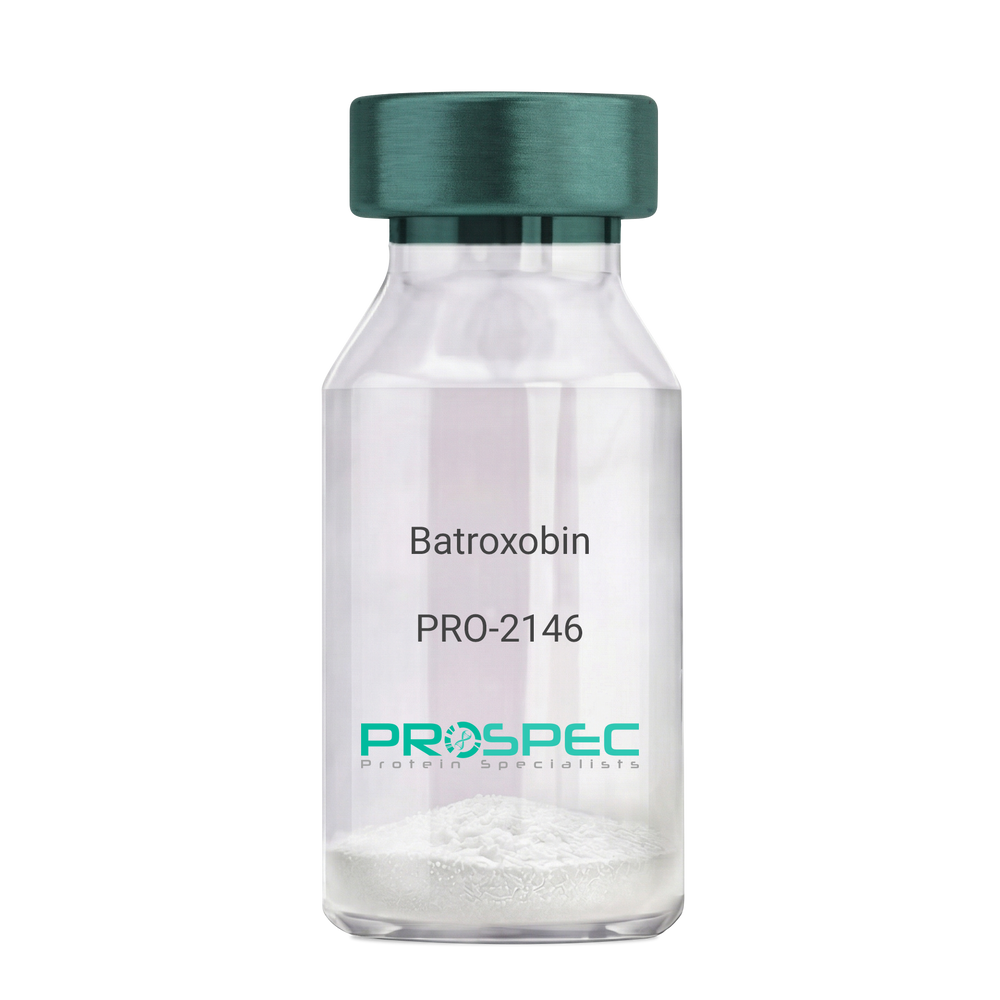
    Batroxobin

    Description:

    Batroxobin

    Thrombin-like enzyme batroxobin, EC 3.4.21.74, BX, Bothrops atrox serine proteinase, Venombin-A, Batroxobin.

    Product # :

    PRO-2146

    Price :

    Quantity :

    Shipping Method :

    Room Temp Icon

    Shipped at Room temp

    Add To Cart

    More Info

    • description
    • formulation
    • More Info

    Description

    Batroxobin, isolated from Bothrops atrox snake venom, has an Mw of approximately 43kDa.

    Formulation

    The Batroxobin protein was lyophilized from a concentrated (1mg/ml) solution with no additives.

    More Info

    • Introduction

      Batroxobin is a serin protease that reduces fibronogen levels and is originally extracted from snake venom of Bothrops Atrox. Batroxobin is used in defibrinogenation and thrombolysis and also has an effect on c-fos gene and growth factor.
      Batroxobin can efficiently restrain proliferation of VSMCs, by blocking the release and uptake of Ca2+, thus influencing [Ca2+]i.
      Batroxobin converts fibrinogen to fibrin through the restricted release of fibrinopeptide-A from fibrinogen to promote blood to clot. Unlike thrombin, it is not affected by heparin and hirudin.

    • Synonyms

      Thrombin-like enzyme batroxobin, EC 3.4.21.74, BX, Bothrops atrox serine proteinase, Venombin-A, Batroxobin.

    • Physical Appearance

      Sterile Filtered white lyophilized powder.

    • Stability

      Store the lyophilized Batroxobin between 2-8°C. Do not freeze!

    • Solubility

      It is recommended to reconstitute the lyophilized Batroxobin in sterile 18MΩ-cm H2O not less than 100µg/ml or more than 10mg/ml solutions.

    • Unit Definition

      100BU [Batroxobin Units]=1mg.

    ProSpec's products are furnished for LABORATORY RESEARCH USE ONLY. The product may not be used as drugs, agricultural or pesticidal products, food additives or household chemicals.

    Batroxobin Native
  • View Data Sheet

    Name :

    NKIRAS1 Human

    Description:

    NFKB Inhibitor Interacting Ras-Like 1 Human Recombinant

    NF-kappa-B inhibitor-interacting Ras-like protein 1, I-kappa-B-interacting Ras-like protein 1, Kappa B-Ras protein 1, KappaB-Ras1, NKIRAS1, KBRAS1.

    Product # :

    PRO-1039

    Price :

    Quantity :

    Shipping Method :

    Ice Icon

    Shipped with Ice Packs

    Add To Cart

    More Info

    • description
    • source
    • formulation
    • purity
    • More Info

    Description

    NKIRAS1 Human Recombinant produced in E.Coli is a single, non-glycosylated polypeptide chain containing 212 amino acids (1-192 a.a) and having a molecular mass of 23.8kDa (Molecular weight on SDS-PAGE will appear higher).NKIRAS1 is fused to a 20 amino acid His-tag at N-terminus & purified by proprietary chromatographic techniques.

    Source

    Escherichia Coli.

    Formulation

    NKIRAS1 protein solution (0.25mg/ml) containing 20mM Tris-HCl buffer (pH8.0), 20% glycerol and 1mM DTT.

    Purity

    Greater than 95.0% as determined by SDS-PAGE.

    More Info

    • Introduction

      NF-kappa-B inhibitor-interacting Ras-like protein 1 (NKIRAS1) is a member of the small GTPase superfamily. NKIRAS1 is an unusual Ras-like protein which acts as a potent regulator of NF-kappa-B activity by thwarting the degradation of NF-kappa-B inhibitor beta (NFKBIB) by most signals, describing why NFKBIB is more resistant to degradation. NKIRAS1 functions by blocking phosphorylation of NFKBIB and mediating cytoplasmic retention of p65/RELA NF-kappa-B subunit. Both GTP- and GDP-bound forms block phosphorylation of NFKBIB.

    • Synonyms

      NF-kappa-B inhibitor-interacting Ras-like protein 1, I-kappa-B-interacting Ras-like protein 1, Kappa B-Ras protein 1, KappaB-Ras1, NKIRAS1, KBRAS1.

    • Physical Appearance

      Sterile Filtered clear solution.

    • Stability

      Store at 4°C if entire vial will be used within 2-4 weeks. Store, frozen at -20°C for longer periods of time. For long term storage it is recommended to add a carrier protein (0.1% HSA or BSA).Avoid multiple freeze-thaw cycles.

    • Amino Acid Sequence

      MGSSHHHHHH SSGLVPRGSH MGKGCKVVVC GLLSVGKTAI LEQLLYGNHT IGMEDCETME DVYMASVETD RGVKEQLHLY DTRGLQEGVE LPKHYFSFAD GFVLVYSVNN LESFQRVELL KKEIDKFKDK KEVAIVVLGN KIDLSEQRQV DAEVAQQWAK SEKVRLWEVT VTDRKTLIEP FTLLASKLSQ PQSKSSFPLP GRKNKGNSNS EN.

    ProSpec's products are furnished for LABORATORY RESEARCH USE ONLY. The product may not be used as drugs, agricultural or pesticidal products, food additives or household chemicals.

    Nkiras1 Human
  • View Data Sheet

    Name :

    MCM7 PAT1G8AT Antibody

    Description:

    Minichromosome Maintenance Complex Component 7, Clone PAT1G8AT, Mouse Anti Human

    Minichromosome Maintenance Complex Component 7, MCM7 Minichromosome Maintenance Deficient 7 (S. Cerevisiae), Minichromosome Maintenance Deficient (S. Cerevisiae) 7, DNA Replication Licensing Factor MCM7, Homolog of S. Cerevisiae Cdc47, CDC47 Homolog, P1CDC47, PNAS146, P85MCM, MCM2, CDC47, P1.1-MCM3, EC 3.6.4.12.

    Product # :

    ANT-719

    Price :

    Quantity :

    Shipping Method :

    Ice Icon

    Shipped with Ice Packs

    Add To Cart

    More Info

    • formulation
    • More Info

    Formulation

    1mg/ml containing PBS, pH-7.4, & 0.1% Sodium Azide.

    More Info

    • Introduction

      MCM7 is a highly conserved mini-chromosome maintenance protein (MCM) vital for eukaryotic genome replication initiation. The MCM proteins form a hexameric protein complex which is a key component of the pre-replication complex (pre_RC) which takes part in replication forks formation and in DNA replication related proteins recruitment. The MCM complex is comprised of MCM2, 4, 6 and 7 proteins and possesses DNA helicase activity, such as DNA unwinding.

    • Synonyms

      Minichromosome Maintenance Complex Component 7, MCM7 Minichromosome Maintenance Deficient 7 (S. Cerevisiae), Minichromosome Maintenance Deficient (S. Cerevisiae) 7, DNA Replication Licensing Factor MCM7, Homolog of S. Cerevisiae Cdc47, CDC47 Homolog, P1CDC47, PNAS146, P85MCM, MCM2, CDC47, P1.1-MCM3, EC 3.6.4.12.

    • Immunogen

      Anti-human MCM7 mAb, is derived from hybridization of mouse F0 myeloma cells with spleen cells from BALB/c mice immunized with a recombinant human MCM7 protein 1-414 amino acids purified from E. coli.

    • Ig Subclass

      Mouse IgG2b heavy chain and k light chain.

    • Clone

      PAT1G8AT.

    • Applications

      MCM7 antibody has been tested by ELISA and Western blot analysis to assure specificity and reactivity. Since application varies, however, each investigation should be titrated by the reagent to obtain optimal results.

    • Type

      Mouse Anti Human Monoclonal.

    • Storage Procedures

      For periods up to 1 month store at 4°C, for longer periods of time, store at -20°C. Prevent freeze thaw cycles.

    • Purification Method

      MCM7 antibody was purified from mouse ascitic fluids by protein-G affinity chromatography.

    ProSpec's products are furnished for LABORATORY RESEARCH USE ONLY. The product may not be used as drugs, agricultural or pesticidal products, food additives or household chemicals.

    Anti Mcm7
  • View Data Sheet

    Name :

    Midkine Rat

    Description:

    Midkine Rat Recombinant

    Midkine, MK, Mdk.

    Product # :

    CYT-747

    Price :

    Quantity :

    Shipping Method :

    Room Temp Icon

    Shipped at Room temp

    Add To Cart

    More Info

    • description
    • source
    • formulation
    • purity
    • biological activity
    • More Info

    Description

    Midkine Rat Recombinant produced in E.Coli is a single, non-glycosylated, polypeptide chain containing 120 amino acids and having a molecular mass of 13.2kDa.The Midkine Rat is purified by proprietary chromatographic techniques.

    Source

    Escherichia Coli.

    Formulation

    Lyophilized from a 0.2µm filtered concentrated solution in 1xPBS, pH 7.4.

    Purity

    Greater than 97.0% as determined by:
    (a) Analysis by RP-HPLC.
    (b) Analysis by SDS-PAGE.

    Biological Activity

    The biological activity determined by a chemotaxis bioassay using human neutrophils is in a concentration range of 10-100 ng/ml.

    More Info

    • Introduction

      Midkine (MK) is the product of a retinoic acid responsive gene, MK, and is a member of a family of heparin binding factors. It contains 121 amino acid residues including 10 conserved cysteine residues, all of which appear to be disulphide linked.
      Midkine is expressed during embryogenesis, showing an expression pattern that suggests functions in neurogenesis, cell migration, secondary organogenetic induction, and mesoderm-epithelial interaction.
      The widespread downregulation of MK in the adult human is reverted in a number of cancers, in which polypeptides are able to act as both transforming growth factors and promoters of angiogenesis.
      Midkine (MK), induces chemotaxis of human neutrophils and was found to trigger mobilization of intracellular calcium of these cells.
      Midkine induces histamine release from rat peritoneal mast cells with a rapid response in a dose dependent manner.
      Midkine is also a potent stimulator of collagen and glycosaminoglycan synthesis.

    • Synonyms

      Midkine, MK, Mdk.

    • Physical Appearance

      Sterile Filtered White lyophilized (freeze-dried) powder.

    • Stability

      Lyophilized Midkine Rat although stable at room temperature for 3 weeks, should be stored desiccated below -18°C. Upon reconstitution Midkine Rat should be stored at 4°C between 2-7 days and for future use below -18°C.Please prevent freeze-thaw cycles.

    • Solubility

      It is recommended to reconstitute the lyophilized Midkine Rat in sterile 18M-cm H2O not less than 100µg/ml, which can then be further diluted to other aqueous solutions.

    • Amino Acid Sequence

      VAKKKDKVKK GSECSEWTWG PCTPSSKDCG MGFREGTCGA QTQRIHCKVP CNWKKEFGAD CKYKFESWGA CDGSTGTKAR QGTLKKARYN AQCQETIRVT KPCTSKTKSK AKAKKGKGKD.

    ProSpec's products are furnished for LABORATORY RESEARCH USE ONLY. The product may not be used as drugs, agricultural or pesticidal products, food additives or household chemicals.

    Midkine Rat
  • View Data Sheet

    Name :

    APOM Human

    Description:

    Apolipoprotein-M Human Recombinant

    G3a, HSPC336, NG20, Apolipoprotein M, APOM, Apo-M, MGC22400.

    Product # :

    CYT-715

    Price :

    Quantity :

    Shipping Method :

    Ice Icon

    Shipped with Ice Packs

    Add To Cart

    More Info

    • description
    • source
    • formulation
    • purity
    • More Info
    • sds-page

    Description

    APOM Human Recombinant produced in E.Coli is a single, non-glycosylated, polypeptide chain containing 187 amino acids (23-188 a.a.) and having a molecular mass of 20.9 kDa. APOM protein is fused to a 21 amino acid His-Tag at N-terminus and purified by standard chromatography.

    Source

    Escherichia Coli.

    Formulation

    APOM Human solution containing 20mM Tris-HCl pH-8 1mM DTT & 10% glycerol.

    Purity

    Greater than 90% as determined by SDS-PAGE.

    sds-page

    APOM-sds-page - Product image 1

    More Info

    • Introduction

      APOM is belongs to the lipocalin protein family and is associated with high density lipoproteins and to a lesser extent with low density lipoproteins and triglyceride-rich lipoproteins. APOM is secreted through the plasma membrane but remains membrane-bound, where it takes part in lipid transport. .

    • Synonyms

      G3a, HSPC336, NG20, Apolipoprotein M, APOM, Apo-M, MGC22400.

    • Physical Appearance

      Sterile filtered colorless solution.

    • Stability

      Store at 4°C if entire vial will be used within 2-4 weeks. Store, frozen at -20°C for longer periods of time. For long term storage it is recommended to add a carrier protein (0.1% HSA or BSA).Avoid multiple freeze-thaw cycles.

    • Amino Acid Sequence

      MGSSHHHHHH SSGLVPRGSH MCPEHSQLTT LGVDGKEFPE VHLGQWYFIA GAAPTKEELA TFDPVDNIVF NMAAGSAPMQ LHLRATIRMK DGLCVPRKWI YHLTEGSTDL RTEGRPDMKT ELFSSSCPGG IMLNETGQGY QRFLLYNRSP HPPEKCVEEF KSLTSCLDSK AFLLTPRNQE ACELSNN.

    • Background

      Apolipoprotein-M Human Recombinant: Insights into its Role in Lipid Metabolism and Cardiovascular Health

      Abstract:


      Apolipoprotein-M (ApoM), a unique member of the apolipoprotein family, has gained significant attention in the field of lipid metabolism and cardiovascular health. This research paper provides a comprehensive analysis of ApoM human recombinant, exploring its structure, function, and potential implications in cardiovascular diseases. Understanding the intricate nature of ApoM sheds light on its significance as a potential biomarker and therapeutic target in cardiovascular disorders. This article presents a concise yet comprehensive examination of ApoM, highlighting its impact on human health.

      Introduction:


      Cardiovascular diseases remain a leading cause of global morbidity and mortality, underscoring the importance of understanding lipid metabolism and its association with cardiovascular health. ApoM, an intriguing apolipoprotein, has emerged as a key player in lipid metabolism and cardiovascular function. This paper delves into the intricate nature of ApoM, elucidating its structure, molecular interactions, and potential roles in cardiovascular diseases.

      Structure and Function of Apolipoprotein-M:


      ApoM exhibits a unique structural configuration, comprising a single membrane-bound alpha-helix and a lipocalin-like domain. It predominantly associates with high-density lipoproteins (HDL) and plays a critical role in HDL metabolism and cholesterol transport. Additionally, ApoM has been implicated in endothelial function, inflammation, and modulation of sphingolipid metabolism.

      Apolipoprotein-M and Cardiovascular Diseases:


      Studies have highlighted the potential involvement of ApoM in cardiovascular diseases, such as atherosclerosis and coronary artery disease. Genetic variations in the ApoM gene and alterations in ApoM levels have been associated with disease development and progression. Understanding the role of ApoM in cardiovascular diseases offers insights into potential therapeutic interventions and diagnostic strategies.

      Apolipoprotein-M Human Recombinant Production:


      The production of ApoM human recombinant is made possible through advanced biotechnological techniques, including recombinant DNA technology and protein expression systems. These methods facilitate large-scale production, purification, and characterization of ApoM, providing opportunities for further research and potential therapeutic applications.

      Therapeutic Potential of Apolipoprotein-M Human Recombinant:


      Exploring the therapeutic potential of ApoM holds promise in the field of cardiovascular disorders. Strategies aimed at modulating ApoM expression or function may contribute to the prevention or treatment of lipid metabolism-related diseases. Furthermore, ApoM may serve as a potential biomarker for risk assessment and monitoring of cardiovascular conditions.

      Conclusion:


      Apolipoprotein-M human recombinant represents a fascinating area of research, shedding light on the role of this protein in lipid metabolism and cardiovascular health. Understanding the structure, function, and genetic implications of ApoM is pivotal in advancing our knowledge and exploring its potential as a therapeutic target. Continued investigation into the mechanisms and signaling pathways involving ApoM will likely pave the way for innovative strategies in the diagnosis, prevention, and treatment of cardiovascular diseases.

      What is the molecular weight/Mw of APOM Protein?
      APOM Protein has a total Mw of 20.9kDa.

      What is the source or expression system of APOM Protein?
      Escherichia Coli.

      What is the Purity of APOM Protein?
      APOM Protein is >90% pure as determined by SDS-PAGE.

      What is the Biological Activity of APOM Protein?
      The biological functionality of APOM Protein will be determined in the future.

      What is the amino acid sequence of APOM Protein?
      MGSSHHHHHH SSGLVPRGSH MCPEHSQLTT LGVDGKEFPE VHLGQWYFIA GAAPTKEELA TFDPVDNIVF NMAAGSAPMQ LHLRATIRMK DGLCVPRKWI YHLTEGSTDL RTEGRPDMKT ELFSSSCPGG IMLNETGQGY QRFLLYNRSP HPPEKCVEEF KSLTSCLDSK AFLLTPRNQE ACELSNN.

      What applications can APOM Protein be used in?
      APOM Protein can probably be used in western blot, ELISA and Lateral Flow.

      What is the endotoxin level for APOM Protein?
      The endotoxin level is minimal, APOM Protein was purified using conventional chromatography techniques.

    ProSpec's products are furnished for LABORATORY RESEARCH USE ONLY. The product may not be used as drugs, agricultural or pesticidal products, food additives or household chemicals.

    Apom Human
  • View Data Sheet

    Name :

    SPON1 Human

    Description:

    Recombinant Human Spondin-1

    F-Spondin, VSGP

    Product # :

    pro-2758

    Price :

    Quantity :

    Shipping Method :

    Ice Icon

    Shipped with Ice Packs

    Add To Cart

    More Info

    • description
    • source
    • formulation
    • purity
    • More Info

    Description

    SPON1 Human Recombinant produced in HEK293 cells is a single, glycosylated, polypeptide chain (29-807 a.a) containing a total of 785 amino acids, having a molecular mass of 88.9 kDa. SPON1 is fused to a 6 amino acid His-tag at C-terminus,and is purified by proprietary chromatographic techniques.

    Source

    HEK293 Cells.

    Formulation

    POR protein solution (0.25mg/ml) contains Phosphate buffer saline (pH 7.4) and 30% glycerol.

    Purity

    Greater than 90% as determined by SDS-PAGE.

    More Info

    • Introduction

      SPON1 is a cell adhesion protein which take part in the regulation of protein binding activity, regulation of protein processing and regulation of amyloid precursor protein catabolic mechanism. SPON1 is found in the extracellular space and it co-localizes with collagen-containing extracellular matrix. SPON1 stimulates the attachment of spinal cord and sensory neuron cells and the outgrowth of neurites in vitro.

    • Synonyms

      F-Spondin, VSGP

    • Physical Appearance

      Sterile filtered colorless solution.

    • Stability

      Store at 4°C if entire vial will be used within 2-4 weeks. Store, frozen at -20°C for longer periods of time. For long term storage it is recommended to add a carrier protein (0.1% HSA or BSA).Avoid multiple freeze-thaw cycles.

    • Amino Acid Sequence

      FSDETLDKVP KSEGYCSRIL RAQGTRREGY TEFSLRVEGD PDFYKPGTSY RVTLSAAPPS YFRGFTLIAL RENREGDKEE DHAGTFQIID EEETQFMSNC PVAVTESTPR RRTRIQVFWI APPAGTGCVI LKASIVQKRI IYFQDEGSLT KKLCEQDSTF DGVTDKPILD CCACGTAKYR LTFYGNWSEK THPKDYPRRA NHWSAIIGGS HSKNYVLWEY GGYASEGVKQ VAELGSPVKM EEEIRQQSDE VLTVIKAKAQ WPAWQPLNVR AAPSAEFSVD RTRHLMSFLT MMGPSPDWNV GLSAEDLCTK ECGWVQKVVQ DLIPWDAGTD SGVTYESPNK PTIPQEKIRP LTSLDHPQSP FYDPEGGSIT QVARVVIERI ARKGEQCNIV PDNVDDIVAD LAPEEKDEDD TPETCIYSNW SPWSACSSST CDKGKRMRQR MLKAQLDLSV PCPDTQDFQP CMGPGCSDED GSTCTMSEWI TWSPCSISCG MGMRSRERYV KQFPEDGSVC TLPTEETEKC TVNEECSPSS CLMTEWGEWD ECSATCGMGM KKRHRMIKMN PADGSMCKAE TSQAEKCMMP ECHTIPCLLS PWSEWSDCSV TCGKGMRTRQ RMLKSLAELG DCNEDLEQVE KCMLPECPID CELTEWSQWS ECNKSCGKGH VIRTRMIQME PQFGGAPCPE TVQRKKCRIR KCLRNPSIQK LRWREARESR RSEQLKEESE GEQFPGCRMR PWTAWSECTK LCGGGIQERY MTVKKRFKSS QFTSCKDKKE IRACNVHPC-HHHHHH

    ProSpec's products are furnished for LABORATORY RESEARCH USE ONLY. The product may not be used as drugs, agricultural or pesticidal products, food additives or household chemicals.

    product_image.jpg
  • View Data Sheet

    Name :

    C.Albicans PLB1

    Description:

    Candida Albicans Phospholipase B1 Recombinant

    Product # :

    PRO-2809

    Price :

    Quantity :

    Shipping Method :

    Ice Icon

    Shipped with Ice Packs

    Add To Cart

    More Info

    • description
    • source
    • formulation
    • purity
    • More Info

    Description

    Recombinant Candida Albicans Phospholipase B1 (24-526 a.a) produced in E. coli having a Mw of 52kDa. C.Albicans PLB1 is fused to a 6xHis tag at its C terminal is and purified by proprietary chromatographic technique.

    Source

    Escherichia Coli.

    Formulation

    Phosphate buffer and 25mM K2CO3.

    Purity

    Protein is >90% pure as determined by 10% PAGE (coomassie staining).

    More Info

    • Physical Appearance

      Sterile Filtered colorless solution.

    • Stability

      Store at 4°C if entire vial will be used within 2-4 weeks. Store, frozen at -20°C for longer periods of time. For long term storage it is recommended to add a carrier protein (0.1% HSA or BSA). Avoid multiple freeze-thaw cycles.

    • Background

      Potential as a Therapeutic Target:

      Understanding the role of PLB1 in fungal pathogenesis opens avenues for developing novel antifungal strategies. Inhibiting PLB1 activity could potentially render C. albicans less virulent and susceptible to host immune defenses. Recombinant Candida Albicans Phospholipase B1 studies play a critical role in identifying and characterizing potential inhibitors that could form the basis for antifungal drug development.

      Challenges and Future Directions:

      While the potential of Recombinant Candida Albicans Phospholipase B1 in antifungal research is promising, challenges persist. Fine-tuning its applications, deciphering its role in different infection scenarios, and optimizing strategies for therapeutic use are critical considerations for translational success. Additionally, understanding the interplay between PLB1 and other virulence factors in C. albicans pathogenesis remains an active area of investigation.

      Recombinant Candida Albicans Phospholipase B1 emerges as a key player in the intricate dance between the fungus and its human host. Its structural insights, enzymatic activities, and implications in host-pathogen interactions position it as a central focus in the exploration of C. albicans virulence. As researchers continue to unravel the molecular intricacies of PLB1, they not only deepen our understanding of fungal pathogenesis but also pave the way for transformative advancements in antifungal drug development, shaping the future of precision medicine in the realm of fungal infections.

    ProSpec's products are furnished for LABORATORY RESEARCH USE ONLY. The product may not be used as drugs, agricultural or pesticidal products, food additives or household chemicals.

    Candida Albicans Plb1
  • View Data Sheet

    Name :

    PROK Tritirachium album

    Description:

    Tritirachium album Proteinase-K Recombinant

    Proteinase K (EC:3.4.21.64), Endopeptidase K, Tritirachium alkaline proteinase, PROK.

    Product # :

    ENZ-1015

    Price :

    Quantity :

    Shipping Method :

    Room Temp Icon

    Shipped at Room temp

    Add To Cart

    More Info

    • description
    • source
    • formulation
    • purity
    • biological activity
    • More Info

    Description

    Recombinant Tritirachium album Proteinase-K expressed in yeast containing 285 amino acids having a Mw of 29.3 kDa is purified by standard chromatography techniques.

    Source

    Yeast

    Formulation

    The Proteinase-K was lyophilized without any additives.

    Purity

    Greater than 95% as determined by SDS-PAGE.

    Biological Activity

    36 Units/mg.
    One unit is defined as the amount of enzyme that will hydrolyze urea-denatured hemoglobin to produce color equivalent to 1.0 mol tyrosine per min at 37°C, pH 7.5 (color by Folin-Ciocalteu reagent).

    More Info

    • Introduction

      The Proteinase K enzyme is a member of the Peptidase family S8. Proteinase K is a broad-spectrum serine protease. Proteinase K is capable of digesting hair (keratin), henceforth, the name "Proteinase K". Proteinase K is activated by calcium, the enzyme digests proteins especially after hydrophobic amino acids (aliphatic, aromatic and other hydrophobic amino acids). Proteinase K is frequently utilized in molecular biology to digest protein and remove contamination from preparations of nucleic acid. Addition of Proteinase K to nucleic acid preparations rapidly inactivates nucleases which may otherwise degrade the DNA or RNA during purification. Proteinase K is greatly fitting to this application as the enzyme is active in the presence of chemicals which denature proteins, such as SDS and urea, chelating agents such as EDTA, sulfhydryl reagents, as well as trypsin or chymotrypsin inhibitors. Proteinase K is utilized for the destruction of proteins in cell lysates (tissue, cell culture cells) and for the release of nucleic acids, given that it quite effectively inactivates DNases and RNases.

    • Synonyms

      Proteinase K (EC:3.4.21.64), Endopeptidase K, Tritirachium alkaline proteinase, PROK.

    • Physical Appearance

      Sterile Filtered lyophilized powder.

    • Stability

      Recombinant Proteinase-K although stable at room temperature, should be stored between 2-8°C. Do not freeze!

    • Solubility

      It is recommended to reconstitute the lyophilized Proteinase-K in 20mM Tris-HCl (pH 7.4~8.0), 1mM CaCl2, 50% glycerol not less than 100µg/ml, which can then be further diluted to other aqueous solutions.

    • Note

      Bulk Proteinase-K recombinant is available 1,000 grams price is $100 per gram

    ProSpec's products are furnished for LABORATORY RESEARCH USE ONLY. The product may not be used as drugs, agricultural or pesticidal products, food additives or household chemicals.

    Prok Tritirachium Album
  • View Data Sheet

    Name :

    Car b 1.0109

    Description:

    Pollen allergen Car b 1 isoform Recombinant

    Pollen allergen Car b 1 isoform, Car b 1, Car b 1.0109.

    Product # :

    PRO-2284

    Price :

    Quantity :

    Shipping Method :

    Ice Icon

    Shipped with Ice Packs

    Add To Cart

    More Info

    • description
    • source
    • formulation
    • purity
    • More Info

    Description

    Recombinant Pollen allergen Car b 1 isoform produced in E.coli is a non-glycosylated, polypeptide chain having a calculated molecular mass of 18kDa. Car b 1.0109 is expressed with a 10xHis tag at N-terminus and purified by proprietary chromatographic techniques.

    Source

    Escherichia Coli.

    Formulation

    Car b 1.0109 is supplied in 20mM HEPES buffer pH-8.0, 20% Glycerol and 200mM NaCl.

    Purity

    Greater than 95.0% as determined by SDS-PAGE.

    More Info

    • Introduction

      Pollen allergen Car b 1 isoform (Car b 1.0109) causes an allergic reaction in humans.

    • Synonyms

      Pollen allergen Car b 1 isoform, Car b 1, Car b 1.0109.

    • Physical Appearance

      Sterile Filtered clear solution.

    • Stability

      Store at 4°C if entire vial will be used within 2-4 weeks. Store, frozen at -20°C for longer periods of time. Avoid multiple freeze-thaw cycles.

    • Immunological Functions

      1. Binds IgE type human antibodies. 2. Immunodot test with positive/negative sera panels.

    • Molar extinction coefficient

      8940; A280(1mg/ml)=0.477

    ProSpec's products are furnished for LABORATORY RESEARCH USE ONLY. The product may not be used as drugs, agricultural or pesticidal products, food additives or household chemicals.

    Car B 10109
  • View Data Sheet

    Name :

    ORC6 Human

    Description:

    Origin Recognition Complex, Subunit 6 Human Recombinant

    Origin Recognition Complex Subunit 6, Origin Recognition Complex Subunit 6 Homolog-Like (Yeast), ORC6L.

    Product # :

    PRO-1716

    Price :

    Quantity :

    Shipping Method :

    Ice Icon

    Shipped with Ice Packs

    Add To Cart

    More Info

    • description
    • source
    • formulation
    • purity
    • More Info

    Description

    ORC6 Human Recombinant produced in E.coli is a single, non-glycosylated polypeptide chain containing 275 amino acids (1-252) and having a molecular mass of 30.5kDa.ORC6 is fused to a 23 amino acid His-tag at N-terminus & purified by proprietary chromatographic techniques.

    Source

    Escherichia Coli.

    Formulation

    The ORC6 solution (0.25mg/ml) contains 20mM Tris-HCl buffer (pH8.0), 0.2M NaCl, 2mM DTT and 40% glycerol.

    Purity

    Greater than 90.0% as determined by SDS-PAGE.

    More Info

    • Introduction

      ORC6 is a member of the origin recognition complex (ORC) which is a highly conserved heterohexameric protein complex. ORC contacts to DNA at or near sites of initiation of DNA replication and all of its six subunits are vital for initiation of DNA replication. Additionally, ORC takes part in regulation of gene expression in response to stress. ORC6 is regularly expressed throughout the cell cycle. ORC2, ORC3, ORC4 and ORC5 form a primary complex at which point ORC6 and ORC1 assemble.

    • Synonyms

      Origin Recognition Complex Subunit 6, Origin Recognition Complex Subunit 6 Homolog-Like (Yeast), ORC6L.

    • Physical Appearance

      Sterile Filtered clear solution.

    • Stability

      Store at 4°C if entire vial will be used within 2-4 weeks. Store, frozen at -20°C for longer periods of time. For long term storage it is recommended to add a carrier protein (0.1% HSA or BSA).Avoid multiple freeze-thaw cycles.

    • Amino Acid Sequence

      MGSSHHHHHH SSGLVPRGSH MGSMGSELIG RLAPRLGLAE PDMLRKAEEY LRLSRVKCVG LSARTTETSS AVMCLDLAAS WMKCPLDRAY LIKLSGLNKE TYQSCLKSFE CLLGLNSNIG IRDLAVQFSC IEAVNMASKI LKSYESSLPQ TQQVDLDLSR PLFTSAALLS ACKILKLKVD KNKMVATSGV KKAIFDRLCK QLEKIGQQVD REPGDVATPP RKRKKIVVEA PAKEMEKVEE MPHKPQKDED LTQDYEEWKR KILENAASAQ KATAE

    ProSpec's products are furnished for LABORATORY RESEARCH USE ONLY. The product may not be used as drugs, agricultural or pesticidal products, food additives or household chemicals.

    Orc6 Human
  • View Data Sheet

    Name :

    Insulin Human, His

    Description:

    Insulin Human Recombinant, His Tag

    Insulin, Insulin-Dependent Diabetes Mellitus 2, Preproinsulin, Proinsulin, MODY10, IDDM1, IDDM2, IDDM, ILPR, IRDN.    

    Product # :

    CYT-1076

    Price :

    Quantity :

    Shipping Method :

    Ice Icon

    Shipped with Ice Packs

    Add To Cart

    More Info

    • description
    • source
    • formulation
    • purity
    • biological activity
    • More Info

    Description

    Insulin Recombinant produced in E.Coli is a single, non-glycosylated polypeptide chain containing 109 amino acids (25-110 a.a) and having a molecular mass of 11.8kDa. Insulin is fused to a 23 amino acid His-tag at N-terminus & purified by proprietary chromatographic techniques.

    Source

    Escherichia Coli.

    Formulation

    Insulin protein solution (0.5mg/ml) containing Phosphate-Buffered Saline (pH 7.4) and 10% Glycerol.

    Purity

    Greater than 95.0% as determined by SDS-PAGE.

    Biological Activity

    Measured in a cell proliferation assay using MCF7 human breast cancer cell. The ED50 for this effect is less or equal to 4 ug/ml.

    More Info

    • Introduction

      Insulin decreases blood glucose concentration. it increases cell permeability to monosaccharides, amino acids and fatty acids. it accelerates glycolysis, the pentose phosphate cycle, and glycogen synthesis in liver.

    • Synonyms

      Insulin, Insulin-Dependent Diabetes Mellitus 2, Preproinsulin, Proinsulin, MODY10, IDDM1, IDDM2, IDDM, ILPR, IRDN.

    • Physical Appearance

      Sterile Filtered clear solution.

    • Stability

      Store at 4°C if entire vial will be used within 2-4 weeks. Store, frozen at -20°C for longer periods of time. For long term storage it is recommended to add a carrier protein (0.1% HSA or BSA).Avoid multiple freeze-thaw cycles.

    • Amino Acid Sequence

      MGSSHHHHHH SSGLVPRGSH MGSFVNQHLC GSHLVEALYL VCGERGFFYT PKTRREAEDL QVGQVELGGG PGAGSLQPLA LEGSLQKRGI VEQCCTSICS LYQLENYCN

    ProSpec's products are furnished for LABORATORY RESEARCH USE ONLY. The product may not be used as drugs, agricultural or pesticidal products, food additives or household chemicals.

    Insulin 2
  • 1
  • …
  • 40
  • 41
  • 42
Your browser does not support the video tag.

Products

  • Cytokines
  • Growth Factors
  • Chemokines
  • CD Antigens
  • Neurotrophins
  • Hormones
  • Enzymes
  • Viral Antigens
  • Recombinant Proteins
  • Natural Proteins
  • Monoclonal Antibodies
  • Polyclonal Antibodies
  • Thermal Packaging

About

  • Company
  • Founder
  • Contribution
  • Contact Us
  • My Account

Ordering

  • Ordering Method
  • Ordering - Credit Card
  • Ordering PO
  • Shipping Fees
  • FAQ's

Legal

  • Terms & Conditions
  • Privacy
  • Site Map
  • info@prospecbio.com
  • Facebook
  • Instagram
  • Linkedin Profile

© 2026 ProSpec-Tany TechnoGene Ltd. All Rights Reserved.

  • Choosing a selection results in a full page refresh.
  • Opens in a new window.