Skip to content

High-quality research proteins.

  • 1-800-805-6531

  • Mon - Sat 8.00-18.00, Sun - Closed

  • info@prospecbio.com

  • PO Box 6591 East Brunswick NJ 08816

  • Products
    • Cytokines
    • Growth factors
    • Chemokines
    • Cd antigens
    • Neurotrophins
    • Hormones
    • Enzymes
    • Viral antigens
    • Recombinant proteins
    • Natural proteins
    • Monoclonal antibodies
    • Polyclonal antibodies
    • Thermal Packaging
  • About
    • Company
    • Founder
    • Contribution
  • Customers
    • Eastern Asia
    • Eastern Europe
    • North America
    • South America
    • South East Asia
    • Southern Asia
    • Western Europe
  • Ordering
    • Ordering Method
    • Ordering - Credit Card
    • Ordering - PO
    • Shipping Fees
    • FAQs
  • Services
    • DNA Cloning
    • Protein Expression
    • Monoclonal Antibody
    • Fermentation
    • Technology License
  • Contact us
Log in

Country/region

  • USD $ | Albania
  • USD $ | Andorra
  • USD $ | Argentina
  • USD $ | Armenia
  • USD $ | Australia
  • USD $ | Austria
  • USD $ | Azerbaijan
  • USD $ | Belarus
  • USD $ | Belgium
  • USD $ | Bolivia
  • USD $ | Brazil
  • USD $ | Bulgaria
  • USD $ | Cambodia
  • USD $ | Canada
  • USD $ | Chile
  • USD $ | China
  • USD $ | Colombia
  • USD $ | Costa Rica
  • USD $ | Croatia
  • USD $ | Cyprus
  • USD $ | Czechia
  • USD $ | Denmark
  • USD $ | Estonia
  • USD $ | Finland
  • USD $ | France
  • USD $ | Georgia
  • USD $ | Germany
  • USD $ | Greece
  • USD $ | Hong Kong SAR
  • USD $ | Hungary
  • USD $ | Iceland
  • USD $ | India
  • USD $ | Ireland
  • USD $ | Israel
  • USD $ | Italy
  • USD $ | Japan
  • USD $ | Kazakhstan
  • USD $ | Latvia
  • USD $ | Liechtenstein
  • USD $ | Lithuania
  • USD $ | Madagascar
  • USD $ | Malta
  • USD $ | Mexico
  • USD $ | Moldova
  • USD $ | Monaco
  • USD $ | Netherlands
  • USD $ | New Zealand
  • USD $ | North Macedonia
  • USD $ | Norway
  • USD $ | Panama
  • USD $ | Paraguay
  • USD $ | Peru
  • USD $ | Philippines
  • USD $ | Poland
  • USD $ | Portugal
  • USD $ | Romania
  • USD $ | Singapore
  • USD $ | Slovakia
  • USD $ | Slovenia
  • USD $ | South Africa
  • USD $ | South Korea
  • USD $ | Spain
  • USD $ | Sri Lanka
  • USD $ | Sweden
  • USD $ | Switzerland
  • USD $ | Taiwan
  • USD $ | Thailand
  • USD $ | Türkiye
  • USD $ | Ukraine
  • USD $ | United Kingdom
  • USD $ | United States
  • USD $ | Uruguay
  • USD $ | Vatican City
  • USD $ | Venezuela
  • USD $ | Vietnam
  • Facebook
  • Instagram
logoProSpec - Recombinant Protein Manufacturer for academic and R&D industry
Become a distributor
Account Log in
Wishlist
Cart Cart(0)
  • Products
    +
    • Cytokines
    • Growth factors
    • Chemokines
    • Cd antigens
    • Neurotrophins
    • Hormones
    • Enzymes
    • Viral antigens
    • Recombinant proteins
    • Natural proteins
    • Monoclonal antibodies
    • Polyclonal antibodies
    • Thermal Packaging
  • About
    +
    • Company
    • Founder
    • Contribution
  • Customers
    +
    • Eastern Asia
    • Eastern Europe
    • North America
    • South America
    • South East Asia
    • Southern Asia
    • Western Europe
  • Ordering
    +
    • Ordering Method
    • Ordering - Credit Card
    • Ordering - PO
    • Shipping Fees
    • FAQs
  • Services
    +
    • DNA Cloning
    • Protein Expression
    • Monoclonal Antibody
    • Fermentation
    • Technology License
  • Contact us

Item added to your cart

View cart
View All
  • Cytokines
  • Growth factors
  • Chemokines
  • Cd antigens
  • Neurotrophins
  • Hormones
  • Enzymes
  • Viral antigens
  • Recombinant proteins
  • Natural proteins
  • Monoclonal antibodies
  • Polyclonal antibodies
  • Thermal Packaging
  • Tumor Necrosis Factor

    Tumor Necrosis Factor

    View All
  • 4-1BB

    4-1BB

    View All
  • Adiponectin

    Adiponectin

    View All
  • AIF1

    AIF1

    View All
  • Other Cytokines

    Other Cytokines

    View All
  • AITRL

    AITRL

    View All
  • Angiopoietin

    Angiopoietin

    View All
  • Apolipoprotein

    Apolipoprotein

    View All
  • B-Cell Activating Factor

    B-Cell Activating Factor

    View All
  • Beta Defensin

    Beta Defensin

    View All
  • Bone Morphogenetic Protein

    Bone Morphogenetic Protein

    View All
  • B type Natriuretic Peptide

    B type Natriuretic Peptide

    View All
  • BST

    BST

    View All
  • Betacellulin

    Betacellulin

    View All
  • Cardiotrophin

    Cardiotrophin

    View All
  • Activin

    Activin

    View All
  • Fibroblast Growth Factor

    Fibroblast Growth Factor

    View All
  • Other Growth Factors

    Other Growth Factors

    View All
  • CSF

    CSF

    View All
  • CTGF

    CTGF

    View All
  • IGFBP

    IGFBP

    View All
  • VEGF Protein

    VEGF Protein

    View All
  • EGF

    EGF

    View All
  • Epigen

    Epigen

    View All
  • Erythropoietin

    Erythropoietin

    View All
  • Insulin-Like Growth Factor

    Insulin-Like Growth Factor

    View All
  • Growth Hormone

    Growth Hormone

    View All
  • HDGF

    HDGF

    View All
  • Hepatocyte Growth Factor

    Hepatocyte Growth Factor

    View All
  • Insulin

    Insulin

    View All
  • BCA-1/ BLC (CXCL13)

    BCA-1/ BLC (CXCL13)

    View All
  • BRAK (CXCL14)

    BRAK (CXCL14)

    View All
  • C-10 (CCL6)

    C-10 (CCL6)

    View All
  • Other Chemokines

    Other Chemokines

    View All
  • MEC (CCL28)

    MEC (CCL28)

    View All
  • LD78-beta (CCL3L1)

    LD78-beta (CCL3L1)

    View All
  • CTACK (CCL27)

    CTACK (CCL27)

    View All
  • CXCL16

    CXCL16

    View All
  • CXCL17

    CXCL17

    View All
  • Platelet Factor-4 (CXCL4)

    Platelet Factor-4 (CXCL4)

    View All
  • ENA-78 (CXCL5)

    ENA-78 (CXCL5)

    View All
  • Eotaxin (CCL11,24,26)

    Eotaxin (CCL11,24,26)

    View All
  • Exodus-2 (CCL21)

    Exodus-2 (CCL21)

    View All
  • Fractalkine (CX3CL1)

    Fractalkine (CX3CL1)

    View All
  • CXCL6

    CXCL6

    View All
  • Other CD Antigens

    Other CD Antigens

    View All
  • CD14

    CD14

    View All
  • CD164

    CD164

    View All
  • CD1

    CD1

    View All
  • CD2

    CD2

    View All
  • CD200

    CD200

    View All
  • CD207

    CD207

    View All
  • CD226

    CD226

    View All
  • CD23

    CD23

    View All
  • CD244

    CD244

    View All
  • CD247

    CD247

    View All
  • CD27

    CD27

    View All
  • CD274

    CD274

    View All
  • CD300

    CD300

    View All
  • CD33

    CD33

    View All
  • Other Neurotrophins

    Other Neurotrophins

    View All
  • Beta-NGF

    Beta-NGF

    View All
  • BDNF

    BDNF

    View All
  • CDNF

    CDNF

    View All
  • CNTF

    CNTF

    View All
  • GDNF

    GDNF

    View All
  • Glia Maturation Factor

    Glia Maturation Factor

    View All
  • MANF

    MANF

    View All
  • Midkine

    Midkine

    View All
  • Neuroglobin

    Neuroglobin

    View All
  • Neurotrophic factors

    Neurotrophic factors

    View All
  • Neuregulin

    Neuregulin

    View All
  • Neuropilin

    Neuropilin

    View All
  • Pigment Epithelium-Derived Factor

    Pigment Epithelium-Derived Factor

    View All
  • Pleiotrophin

    Pleiotrophin

    View All
  • Peptide Hormones

    Peptide Hormones

    View All
  • Other Hormones

    Other Hormones

    View All
  • HCG

    HCG

    View All
  • Endothelin

    Endothelin

    View All
  • Exendin

    Exendin

    View All
  • FSH

    FSH

    View All
  • Glucagon

    Glucagon

    View All
  • GHRP

    GHRP

    View All
  • GLP

    GLP

    View All
  • Thyrostimulin

    Thyrostimulin

    View All
  • Inhibin A

    Inhibin A

    View All
  • LHRH

    LHRH

    View All
  • Melanotan

    Melanotan

    View All
  • Procalcitonin

    Procalcitonin

    View All
  • PTH

    PTH

    View All
  • Peroxiredoxin

    Peroxiredoxin

    View All
  • Peptidase

    Peptidase

    View All
  • Synthetase

    Synthetase

    View All
  • Transferase

    Transferase

    View All
  • Hydrolase

    Hydrolase

    View All
  • Dehydrogenase

    Dehydrogenase

    View All
  • ACE2

    ACE2

    View All
  • Esterase

    Esterase

    View All
  • Protein Kinases

    Protein Kinases

    View All
  • Other Enzymes

    Other Enzymes

    View All
  • Phosphatase

    Phosphatase

    View All
  • Deaminase

    Deaminase

    View All
  • Oxygenase

    Oxygenase

    View All
  • Adenylate Kinase

    Adenylate Kinase

    View All
  • Lyase

    Lyase

    View All
  • Chagas

    Chagas

    View All
  • SARS

    SARS

    View All
  • Influenza

    Influenza

    View All
  • ASFV

    ASFV

    View All
  • Astrovirus

    Astrovirus

    View All
  • Borrelia

    Borrelia

    View All
  • Helicobacter Pylori

    Helicobacter Pylori

    View All
  • Chikungunya

    Chikungunya

    View All
  • Chlamydia

    Chlamydia

    View All
  • Cytomegalo

    Cytomegalo

    View All
  • Dengue

    Dengue

    View All
  • EBV

    EBV

    View All
  • Ebola

    Ebola

    View All
  • Feline Leukemia Virus

    Feline Leukemia Virus

    View All
  • Hepatitis A

    Hepatitis A

    View All
  • Other

    Other

    View All
  • Actin

    Actin

    View All
  • ADAM

    ADAM

    View All
  • Complement Component

    Complement Component

    View All
  • Ag85

    Ag85

    View All
  • Eukaryotic Translation Initiation Factor

    Eukaryotic Translation Initiation Factor

    View All
  • Anterior Gradient Protein

    Anterior Gradient Protein

    View All
  • Heat Shock Protein

    Heat Shock Protein

    View All
  • Alpha-2-HS-Glycoprotein

    Alpha-2-HS-Glycoprotein

    View All
  • Hemoglobin

    Hemoglobin

    View All
  • Allergy

    Allergy

    View All
  • Anaplasma

    Anaplasma

    View All
  • Angiogenin

    Angiogenin

    View All
  • Ankyrin Repeat Domain

    Ankyrin Repeat Domain

    View All
  • Annexin

    Annexin

    View All
  • Other Natural Proteins

    Other Natural Proteins

    View All
  • Aprotinin

    Aprotinin

    View All
  • Transferrin

    Transferrin

    View All
  • Avidin

    Avidin

    View All
  • Anti Coagulation Factors

    Anti Coagulation Factors

    View All
  • Natural Albumin

    Natural Albumin

    View All
  • Natural Coagulation Factors

    Natural Coagulation Factors

    View All
  • Fibronectin

    Fibronectin

    View All
  • Thrombin

    Thrombin

    View All
  • Anti Human Enzyme

    Anti Human Enzyme

    View All
  • Other Monoclonal Antibodies

    Other Monoclonal Antibodies

    View All
  • Anti Human Cytokine

    Anti Human Cytokine

    View All
  • Anti Human Heat Shock Protein

    Anti Human Heat Shock Protein

    View All
  • Anti Mouse Lymphocyte

    Anti Mouse Lymphocyte

    View All
  • Anti Human Chemokine

    Anti Human Chemokine

    View All
  • Anti Human Lymphocyte

    Anti Human Lymphocyte

    View All
  • Anti Viral Monoclonal

    Anti Viral Monoclonal

    View All
  • Anti Mouse Cytokine

    Anti Mouse Cytokine

    View All
  • Anti-GST Monoclonal

    Anti-GST Monoclonal

    View All
  • Other Polyclonal Antibodies

    Other Polyclonal Antibodies

    View All
  • Anti Viral

    Anti Viral

    View All
  • Anti-GST Monoclonal

    Anti-GST Monoclonal

    View All
Back

Search results

1000 results found for “Microtubule-Associated Protein”

Name

Description

Product #

Price

Quantity

Shipping Method

  • View Data Sheet

    Name :

    GIMAP6 Human

    Description:

    GTPase, IMAP Family Member 6 Human Recombinant

    GTPase IMAP Family Member 6, Immune Associated Nucleotide 2, Immune Associated Nucleotide 6, IAN6, IAN2, hIAN2, hIAN6.

    Product # :

    PRO-1628

    Price :

    Quantity :

    Shipping Method :

    Ice Icon

    Shipped with Ice Packs

    Add To Cart

    More Info

    • description
    • source
    • formulation
    • purity
    • More Info

    Description

    GIMAP6 Human Recombinant produced in E.coli is a single, non-glycosylated polypeptide chain containing 315 amino acids (1-292) and having a molecular mass of 35.0kDa.GIMAP6 is fused to a 23 amino acid His-tag at N-terminus & purified by proprietary chromatographic techniques.

    Source

    Escherichia Coli.

    Formulation

    The GIMAP6 solution contains 20mM Tris-HCl buffer (pH 8.0), 0.2M NaCl, 1mM DTT and 30% glycerol.

    Purity

    Greater than 85% as determined by SDS-PAGE.

    More Info

    • Introduction

      GIMAP6 is a member of the GTPases of immunity-associated proteins (GIMAP) family. GIMAP proteins contain GTP-binding and coiled-coil motifs, and may play roles in the regulation of cell survival. Decreased expression of this gene may play a role in non-small cell lung cancer. Alternatively spliced transcript variants encoding multiple isoforms have been observed for this gene, which is found in a cluster with seven additional GIMAP genes on the long arm of chromosome 7.

    • Synonyms

      GTPase IMAP Family Member 6, Immune Associated Nucleotide 2, Immune Associated Nucleotide 6, IAN6, IAN2, hIAN2, hIAN6.

    • Physical Appearance

      Sterile filtered colorless solution.

    • Stability

      Store at 4°C if entire vial will be used within 2-4 weeks. Store, frozen at -20°C for longer periods of time. For long term storage it is recommended to add a carrier protein (0.1% HSA or BSA).Avoid multiple freeze-thaw cycles.

    • Amino Acid Sequence

      MGSSHHHHHH SSGLVPRGSH MGSMEEEEYE QIPQENPPEE LSQDPVLELS GGLREKEQKT PRRLRLILMG KTGSGKSATG NSILGRDVFE SKLSTRPVTK TSQRRSREWA GKELEVIDTP NILSPQVSPE VADAICQAIV LSAPGPHAVL LVTQLGRFTD EDQQVVRRLQ EVFGVGVLGH TILVFTRKED LAGGSLEDYV RETNNQALAW LDVTLARRHC GFNNRAQGEE QEAQLRELME KVEAIMWENE GDYYSNKAYQ YTQQNFRLKE LQERQVSQGQ GSEDVPGEES WLEGLSQIQK ESEEAHRCLL GKADL

    ProSpec's products are furnished for LABORATORY RESEARCH USE ONLY. The product may not be used as drugs, agricultural or pesticidal products, food additives or household chemicals.

    Gimap6 Human
  • View Data Sheet

    Name :

    PBLD Human

    Description:

    Phenazine Biosynthesis-Like Protein Domain Containing Human Recombinant

    Phenazine biosynthesis-like domain-containing protein, MAWD-binding protein, Unknown protein 32 from 2D-page of liver tissue, PBLD, MAWBP, MAWDBP, FLJ14767, FLJ35507.

    Product # :

    PRO-010

    Price :

    Quantity :

    Shipping Method :

    Ice Icon

    Shipped with Ice Packs

    Add To Cart

    More Info

    • description
    • source
    • formulation
    • purity
    • More Info

    Description

    PBLD Human Recombinant fused with a 20 amino acid His tag at N-terminus produced in E.Coli is a single, non-glycosylated, polypeptide chain containing 308 amino acids (1-288 a.a.) and having a molecular mass of 33.9kDa. The PBLD is purified by proprietary chromatographic techniques.

    Source

    Escherichia Coli.

    Formulation

    The PBLD solution (1 mg/ml) contains 20mM Tris-HCl buffer(pH 8.0), 10% glycerol, 2mM DTT and 0.1M NaCl.

    Purity

    Greater than 95.0% as determined by SDS-PAGE.

    More Info

    • Introduction

      PBLD is member of the phenazine biosynthesis-like protein (PhzF) family. PBLD which is expressed in most tissues is the only representative of the PhzF family in the human genome. PBLD participates in the MAPK signaling pathway. PBLD is involved in multiple basic cellular functions, its expression is elevated in several disease processes, including folate deficiency and hypotension.

    • Synonyms

      Phenazine biosynthesis-like domain-containing protein, MAWD-binding protein, Unknown protein 32 from 2D-page of liver tissue, PBLD, MAWBP, MAWDBP, FLJ14767, FLJ35507.

    • Physical Appearance

      Sterile Filtered colorless solution.

    • Stability

      Store at 4°C if entire vial will be used within 2-4 weeks. Store, frozen at -20°C for longer periods of time. For long term storage it is recommended to add a carrier protein (0.1% HSA or BSA).Avoid multiple freeze-thaw cycles.

    • Amino Acid Sequence

      MGSSHHHHHH SSGLVPRGSH MKLPIFIADA FTARAFRGNP AAVCLLENEL DEDMHQKIAR EMNLSETAFI RKLHPTDNFA QSSCFGLRWF TPASEVPLCG HATLASAAVL FHKIKNMNST LTFVTLSGEL RARRAEDGIV LDLPLYPAHP QDFHEVEDLI KTAIGNTLVQ DICYSPDTQK LLVRLSDVYN RSFLENLKVN TENLLQVENT GKVKGLILTL KGEPGGQTQA FDFYSRYFAP WVGVAEDPVT GSAHAVLSSY WSQHLGKKEM HAFQCSHRGG ELGISLRPDG RVDIRGGAAV VLEGTLTA.

    ProSpec's products are furnished for LABORATORY RESEARCH USE ONLY. The product may not be used as drugs, agricultural or pesticidal products, food additives or household chemicals.

    Pbld Human
  • View Data Sheet

    Name :

    CUTC Human

    Description:

    cutC Copper Transporter Homolog Human Recombinant

    Copper homeostasis protein cutC homolog, CUTC, CGI-32, RP11-483F11.3.

    Product # :

    PRO-911

    Price :

    Quantity :

    Shipping Method :

    Ice Icon

    Shipped with Ice Packs

    Add To Cart

    More Info

    • description
    • source
    • formulation
    • purity
    • More Info

    Description

    CUTC Human Recombinant produced in E.Coli is a single, non-glycosylated polypeptide chain containing 293 amino acids (1-273 a.a) and having a molecular mass of 31.5kDa.CUTC is fused to a 20 amino acid His-tag at N-terminus & purified by proprietary chromatographic techniques.

    Source

    Escherichia Coli.

    Formulation

    CUTC protein solution (0.5mg/ml) containing 20mM Tris-HCl buffer (pH 8.0), 5mM DTT, 10% glycerol and 200mM NaCl.

    Purity

    Greater than 95.0% as determined by SDS-PAGE.

    More Info

    • Introduction

      CUTC belongs to the Cut family and may be involved in efflux trafficking of cuprous ion. The Cut family is linked with the copper homeostasis and involved in several vital metabolisms, such as uptake, storage, delivery, and efflux of copper. Copper which is an essential heavy metal trace element has an imperative role in cell physiology.

    • Synonyms

      Copper homeostasis protein cutC homolog, CUTC, CGI-32, RP11-483F11.3.

    • Physical Appearance

      Sterile filtered colorless solution.

    • Stability

      Store at 4°C if entire vial will be used within 2-4 weeks. Store, frozen at -20°C for longer periods of time. For long term storage it is recommended to add a carrier protein (0.1% HSA or BSA).Avoid multiple freeze-thaw cycles.

    • Amino Acid Sequence

      MGSSHHHHHH SSGLVPRGSH MKRQGASSER KRARIPSGKA GAANGFLMEV CVDSVESAVN AERGGADRIE LCSGLSEGGT TPSMGVLQVV KQSVQIPVFV MIRPRGGDFL YSDREIEVMK ADIRLAKLYG ADGLVFGALT EDGHIDKELC MSLMAICRPL PVTFHRAFDM VHDPMAALET LLTLGFERVL TSGCDSSALE GLPLIKRLIE QAKGRIVVMP GGGITDRNLQ RILEGSGATE FHCSARSTRD SGMKFRNSSV AMGASLSCSE YSLKVTDVTK VRTLNAIAKN ILV.

    ProSpec's products are furnished for LABORATORY RESEARCH USE ONLY. The product may not be used as drugs, agricultural or pesticidal products, food additives or household chemicals.

    Cutc Human
  • View Data Sheet

    Name :

    ARL4D Human

    Description:

    ADP-Ribosylation Factor-Like 4D Human Recombinant

    ADP-ribosylation factor-like 4D, ADP-ribosylation factor-like protein 4L, ARF4L, ARL6.

    Product # :

    PRO-953

    Price :

    Quantity :

    Shipping Method :

    Ice Icon

    Shipped with Ice Packs

    Add To Cart

    More Info

    • description
    • source
    • formulation
    • purity
    • More Info

    Description

    ARL4D Human Recombinant produced in E.coli is a single, non-glycosylated polypeptide chain containing 221 amino acids (1-201) and having a molecular mass of 24.3 kDa.ARL4D is fused to a 20 amino acid His-tag at N-terminus & purified by proprietary chromatographic techniques.

    Source

    E.coli.

    Formulation

    The ARL4D solution (0.25mg/ml) contains 20mM Tris-HCl buffer (pH 8.0), 2mM DTT, 0.2M NaCl and 20% glycerol.

    Purity

    Greater than 90% as determined by SDS-PAGE.

    More Info

    • Introduction

      ARL4D is a developmentally regulated member of the ADP-ribosylation factor/ARF-like protein (ARF/ARL) family of Ras-related GTPases. Small GTP-binding protein which cycles between an inactive GDP-bound and an active GTP-bound form, and the rate of cycling is regulated by guanine nucleotide exchange factors (GEF) and GTPase-activating proteins (GAP). ARL4D takes part in membrane-associated intracellular trafficking. Mutations in this gene is linked to Bardet-Biedl syndrome (BBS).

    • Synonyms

      ADP-ribosylation factor-like 4D, ADP-ribosylation factor-like protein 4L, ARF4L, ARL6.

    • Physical Appearance

      Sterile Filtered colorless solution.

    • Stability

      Store at 4°C if entire vial will be used within 2-4 weeks. Store, frozen at -20°C for longer periods of time. For long term storage it is recommended to add a carrier protein (0.1% HSA or BSA).Avoid multiple freeze-thaw cycles.

    • Amino Acid Sequence

      MGSSHHHHHH SSGLVPRGSH MGNHLTEMAP TASSFLPHFQ ALHVVVIGLD SAGKTSLLYR LKFKEFVQSV PTKGFNTEKI RVPLGGSRGI TFQVWDVGGQ EKLRPLWRSY TRRTDGLVFV VDAAEAERLE EAKVELHRIS RASDNQGVPV LVLANKQDQP GALSAAEVEK RLAVRELAAA TLTHVQGCSA VDGLGLQQGL ERLYEMILKR KKAARGGKKR R

    ProSpec's products are furnished for LABORATORY RESEARCH USE ONLY. The product may not be used as drugs, agricultural or pesticidal products, food additives or household chemicals.

    Arl4D Human
  • View Data Sheet

    Name :

    MALD3

    Description:

    Non-Specific Lipid-Transfer Protein Mal d 3 Recombinant

    Non-specific lipid-transfer protein, LTP, MALD3.

    Product # :

    ALR-023

    Price :

    Quantity :

    Shipping Method :

    Ice Icon

    Shipped with Ice Packs

    Add To Cart

    More Info

    • description
    • source
    • formulation
    • purity
    • More Info

    Description

    Recombinant Non-Specific Lipid-Transfer Protein Mal d 3 produced in SF9 is a glycosylated, polypeptide chain having a calculated molecular mass of 12kDa.MALD3 is expressed with a 6xHis tag and purified by proprietary chromatographic techniques.

    Source

    Sf9 insect cells.

    Formulation

    MALD3 is supplied in 20mM HEPES buffer pH-8.0, 200mM NaCl and 20% glycerol.

    Purity

    Greater than 80.0% as determined by SDS-PAGE.

    More Info

    • Introduction

      MALD3 (a non-specific lipid transfer protein) is a major apple allergen. LTPs are found mainly in aerial plant organs such as leaves, seeds, flowers, and fruit. MALD3 is a heat-stable protein which is characterized by having resistance to pepsin hydrolysis.

    • Synonyms

      Non-specific lipid-transfer protein, LTP, MALD3.

    • Physical Appearance

      Sterile Filtered colorless solution.

    • Stability

      Store at 4°C if entire vial will be used within 2-4 weeks.Store, frozen at -20°C for longer periods of time.Avoid multiple freeze-thaw cycles.

    • Immunological Functions

      1. Binds IgE-type human antibodies.2. Immunodot test with positive/negative samples

    • Applications

      Tested by LAL (Limulus Amoebocyte Lysate) chromogenic endotoxin assay.

    ProSpec's products are furnished for LABORATORY RESEARCH USE ONLY. The product may not be used as drugs, agricultural or pesticidal products, food additives or household chemicals.

    Mald3
  • View Data Sheet

    Name :

    FAM3B Human

    Description:

    Family with Sequence Similarity 3, Member B Human Recombinant

    Family with Sequence Similarity 3 member B, C21orf11, C21orf76, Cytokine-like protein 2-21, ORF9, PANDER, PRED44, Chromosome 21 open reading frame 11, Pancreatic-derived factor.

    Product # :

    PRO-139

    Price :

    Quantity :

    Shipping Method :

    Room Temp Icon

    Shipped at Room temp

    Add To Cart

    More Info

    • description
    • source
    • formulation
    • purity
    • More Info

    Description

    FAM3B Protein is a 24.1 kDa protein containing 216 amino acids fused to a 10 aa N-Terminal His-tag

    Source

    E. coli

    Formulation

    FAM3B Human was filtered (0.4µm) and lyophilized from 0.5mg/ml supplied in 20mM TRIS, 50mM NaCl, pH 7.5

    Purity

    Greater than 90% as determined by SDS-PAGE.

    More Info

    • Introduction

      FAM3B Protein induces apoptosis of alpha and beta cells in a quantity and time dependent way.

    • Synonyms

      Family with Sequence Similarity 3 member B, C21orf11, C21orf76, Cytokine-like protein 2-21, ORF9, PANDER, PRED44, Chromosome 21 open reading frame 11, Pancreatic-derived factor.

    • Stability

      Store lyophilized FAM3B uman at -20°C. Aliquot the product after reconstitution to avoid repeated freezing/thawing cycles. Reconstituted FAM3B an be stored at 4°C for a limited period of time; it does not show any change after two weeks at 4°C.

    • Solubility

      Add deionized water to prepare a working stock solution of 0.5 mg/ml and let the lyophilized pellet dissolve completely. Product is not sterile! Please filter the product by an appropriate sterile filter before using it in the cell culture.

    • Amino Acid Sequence

      MKHHHHHHAS ELIPDAPLSS AAYSIRSIGE RPVLKAPVPK RQKCDHWTPC PSDTYAYRLL SGGGRSKYAK ICFEDNLLMG EQLGNVARGI NIAIVNYVTG NVTATRCFDM YEGDNSGPMT KFIQSAAPKS LLFMVTYDDG STRLNNDAKN AIEALGSKEI RNMKFRSSWV FIAAKGLELP SEIQREKINH SDAKNNRYSG WPAEIQIEGC IPKERS

    ProSpec's products are furnished for LABORATORY RESEARCH USE ONLY. The product may not be used as drugs, agricultural or pesticidal products, food additives or household chemicals.

    Fam3B Human
  • View Data Sheet

    Name :

    Ubiquitin K48R Human

    Description:

    Ubiquitin K48R Human Recombinant

    Ubiquitin, Ribosomal Protein S27a, CEP80, UBA80, UBCEP1, UBCEP80, HUBCEP80, RPS27A, Ubiquitin K48R.

    Product # :

    PRO-372

    Price :

    Quantity :

    Shipping Method :

    Ice Icon

    Shipped with Ice Packs

    Add To Cart

    More Info

    • description
    • source
    • formulation
    • purity
    • More Info

    Description

    Recombinant human ubiquitin featuring a Lys 48 to Arg48 mutation is useful for the reduction of poly-Ub chain length and conjugation rates.Ubiquitin K48R is expressed in E.coliand purified by proprietary chromatographic techniques.

    Source

    Escherichia Coli.

    Formulation

    Diluted in PBS plus 5% glycerol.

    Purity

    Greater than 95% as determined by SDS-PAGE.

    More Info

    • Introduction

      Ubiquitin is a highly conserved 76 amino acid protein expressed in all eukariotes. Ub is found either in free form or conjugated to proteins as monomer or as chain of ubiquitin molecules. The most well characterized consequence of polyubiquitination is substrate degradation, while mono-ubiquitinated proteins are not degraded. Ubiquitin attachment to protein substrate is a complex process involving a ubiquitin activating enzyme (E1), a ubiquitin conjugating enzyme (E2) and a ubiquitin protein ligase (E3). The first ubiquitin moiety is transferred to the e-NH2 group of a Lys residue of the protein substrate to generate an isopeptide bond. In successive reactions, a poly ubiquitin chain is synthesized by processive transfer of additional activated moieties to Lys48 of the previously conjugated ubiquitin molecule. Ubiquitin K48R prevents the formation of poly ubiquitin chains via Lys48 linkages with mono ubiquitin molecules, avoiding the degradation of protein substrates.

    • Synonyms

      Ubiquitin, Ribosomal Protein S27a, CEP80, UBA80, UBCEP1, UBCEP80, HUBCEP80, RPS27A, Ubiquitin K48R.

    • Physical Appearance

      Sterile Filtered clear solution.

    • Stability

      Store vial at -20°C to -80°C. When stored at the recommended temperature, this protein is stable for 12 months.Please prevent freeze-thaw cycles.

    ProSpec's products are furnished for LABORATORY RESEARCH USE ONLY. The product may not be used as drugs, agricultural or pesticidal products, food additives or household chemicals.

    Ubiquitin K48R Human
  • View Data Sheet

    Name :

    TTC33 Human

    Description:

    Tetratricopeptide Repeat Domain 33 Human Recombinant

    Tetratricopeptide Repeat Domain 33, Osmosis-Responsive Factor, Tetratricopeptide Repeat Protein 33, TPR Repeat Protein 33, OSRF.

    Product # :

    PRO-1217

    Price :

    Quantity :

    Shipping Method :

    Ice Icon

    Shipped with Ice Packs

    Add To Cart

    More Info

    • description
    • source
    • formulation
    • purity
    • More Info

    Description

    TTC33 Human Recombinant produced in E. coli is a single polypeptide chain containing 285 amino acids (1-262) and having a molecular mass of 31.8 kDa.TTC33 is fused to a 23 amino acid His-tag at N-terminus & purified by proprietary chromatographic techniques.

    Source

    E.coli.

    Formulation

    The TTC33 solution (1mg/1ml) contains 20mM Tris-HCl buffer (pH 8.0), 0.1M NaCl and 10% glycerol.

    Purity

    Greater than 85% as determined by SDS-PAGE.

    More Info

    • Introduction

      Tetratricopeptide repeat protein 33 (TTC33) is comprised of 3 TPR repeats.

    • Synonyms

      Tetratricopeptide Repeat Domain 33, Osmosis-Responsive Factor, Tetratricopeptide Repeat Protein 33, TPR Repeat Protein 33, OSRF.

    • Physical Appearance

      Sterile Filtered colorless solution.

    • Stability

      Store at 4°C if entire vial will be used within 2-4 weeks. Store, frozen at -20°C for longer periods of time. For long term storage it is recommended to add a carrier protein (0.1% HSA or BSA).Avoid multiple freeze-thaw cycles.

    • Amino Acid Sequence

      MGSSHHHHHH SSGLVPRGSH MGS MASFGWK RKIGEKVSKV TSQQFEAEAA DEKDVVDNDE GNWLHAIKRR KEILLEGCAE KSKQLKDEGA SLAENKRYRE AIQKWDEALQ LTPNDATLYE MKSQVLMSLH EMFPAVHAAE MAVQQNPHSW ESWQTLGRAQ LGLGEIILAI RSFQVALHIY
      PMNPEIWKED LSWARTLQEQ QKVAQRIKKS EAPAEVTHFS PKSIPDYDFE SDEIVAVCAA IAEKEKTVSA NKTMVIVSAS GAIETVTEKE DGATPPDGSV FIKAR

    ProSpec's products are furnished for LABORATORY RESEARCH USE ONLY. The product may not be used as drugs, agricultural or pesticidal products, food additives or household chemicals.

    Ttc33 Human
  • View Data Sheet

    Name :

    MX2 Human

    Description:

    Myxovirus Resistance 2 Human Recombinant

    Myxovirus (Influenza Virus) Resistance 2 (Homolog Of Mouse), Myxovirus Resistance Protein 2, P78-Related Protein.

    Product # :

    PRO-1837

    Price :

    Quantity :

    Shipping Method :

    Ice Icon

    Shipped with Ice Packs

    Add To Cart

    More Info

    • description
    • source
    • formulation
    • purity
    • More Info

    Description

    MX2 Human Recombinant produced in E.coli is a single, non-glycosylated polypeptide chain containing 126 amino acids (626-715) and having a molecular mass of 14.9 kDa. MX2 is fused to a 36 amino acid His-tag at N-terminus.

    Source

    Escherichia Coli.

    Formulation

    The MX2 solution (1mg/ml) contains 20mM Tris-HCl buffer (pH 8.0), 0.4M Urea and 10% glycerol.

    Purity

    Greater than 90% as determined by SDS-PAGE.

    More Info

    • Introduction

      MX2 is a member of 2 protein families: the dynamin family and the large GTPases family. MX2 has a cytoplasmic and nuclear structure which is found in a granular pattern in the heterochromatin region under the nuclear envelope. The nuclear form has a NLS (nuclear localization signal) at the amino terminal end however it is missing in the cytoplasmic form as a result of the use of a different translation start codon. MX2 is upregulated by IFN-a, but unlike myxovirus resistance protein 1 has no antiviral activity.

    • Synonyms

      Myxovirus (Influenza Virus) Resistance 2 (Homolog Of Mouse), Myxovirus Resistance Protein 2, P78-Related Protein.

    • Physical Appearance

      Sterile Filtered clear solution.

    • Stability

      Store at 4°C if entire vial will be used within 2-4 weeks. Store, frozen at -20°C for longer periods of time. For long term storage it is recommended to add a carrier protein (0.1% HSA or BSA).Avoid multiple freeze-thaw cycles.

    • Amino Acid Sequence

      MRGSHHHHHH GMASMTGGQQ MGRDLYDDDD KDRWGSIGIH LNAYFLETSK RLANQIPFII QYFMLRENGD SLQKAMMQIL QEKNRYSWLL QEQSETATKR RILKERIYRL TQARHALCQF SSKEIH

    ProSpec's products are furnished for LABORATORY RESEARCH USE ONLY. The product may not be used as drugs, agricultural or pesticidal products, food additives or household chemicals.

    Mx2 Human
  • View Data Sheet

    Name :

    SIRT1 Human

    Description:

    Sirtuin-1 Human Recombinant

    Sirtuin 1, SIRT1, SIR2L1, Regulatory Protein SIR2 Homolog 1, hSIR2, hSIRT1, SIR2-Like Protein 1, SIR2alpha, NAD-Dependent Deacetylase Sirtuin-1, NAD-Dependent Protein Deacetylase Sirtuin-1, Sir2-Like 1, Sirtuin Type 1, EC 3.5.1.-.

    Product # :

    PRO-1909

    Price :

    Quantity :

    Shipping Method :

    Ice Icon

    Shipped with Ice Packs

    Add To Cart

    More Info

    • description
    • source
    • formulation
    • purity
    • More Info

    Description

    SIRT1 Human Recombinant produced in E.coli is a single, non-glycosylated polypeptide chain containing 280 amino acids (254-495) and having a molecular mass of 31.6 kDa.SIRT1 is fused to a 38 amino acid His-tag at N-terminus.

    Source

    Escherichia Coli.

    Formulation

    The SIRT1 solution (0.5mg/ml) contains 20mM Tris-HCl buffer (pH 8.0), 10% glycerol and 0.4M Urea.

    Purity

    Greater than 90.0% as determined by SDS-PAGE.

    More Info

    • Introduction

      Sirtuin-1 (SIRT1) belongs to the sirtuin family of proteins, homologs to the yeast Sir2 protein. Sirtuin family members are characterized by a sirtuin core domain and grouped into 4 classes. The functions of human sirtuins have not yet been established; though, yeast sirtuin proteins are known to regulate epigenetic gene silencing and suppress recombination of rDNA. It has been proposed that the human sirtuins may serve as intracellular regulatory proteins with mono-ADP-ribosyltransferase activity.

    • Synonyms

      Sirtuin 1, SIRT1, SIR2L1, Regulatory Protein SIR2 Homolog 1, hSIR2, hSIRT1, SIR2-Like Protein 1, SIR2alpha, NAD-Dependent Deacetylase Sirtuin-1, NAD-Dependent Protein Deacetylase Sirtuin-1, Sir2-Like 1, Sirtuin Type 1, EC 3.5.1.-.

    • Physical Appearance

      Sterile Filtered clear solution.

    • Stability

      Store at 4°C if entire vial will be used within 2-4 weeks. Store, frozen at -20°C for longer periods of time.For long term storage it is recommended to add a carrier protein (0.1% HSA or BSA).Please avoid freeze thaw cycles.

    • Amino Acid Sequence

      MRGSHHHHHH GMASMTGGQQ MGRDLYDDDD KDRWGSHMKK IIVLTGAGVS VSCGIPDFRS RDGIYARLAV DFPDLPDPQA MFDIEYFRKD PRPFFKFAKE IYPGQFQPSL CHKFIALSDK EGKLLRNYTQ NIDTLEQVAG IQRIIQCHGS FATASCLICK YKVDCEAVRG DIFNQVVPRC PRCPADEPLA IMKPEIVFFG ENLPEQFHRA MKYDKDEVDL LIVIGSSLKV RPVALIPSSI PHEVPQILIN REPLPHLHFD VELLGDCDVI INELCHRLGG.

    ProSpec's products are furnished for LABORATORY RESEARCH USE ONLY. The product may not be used as drugs, agricultural or pesticidal products, food additives or household chemicals.

    Sirt1 Human
  • View Data Sheet

    Name :

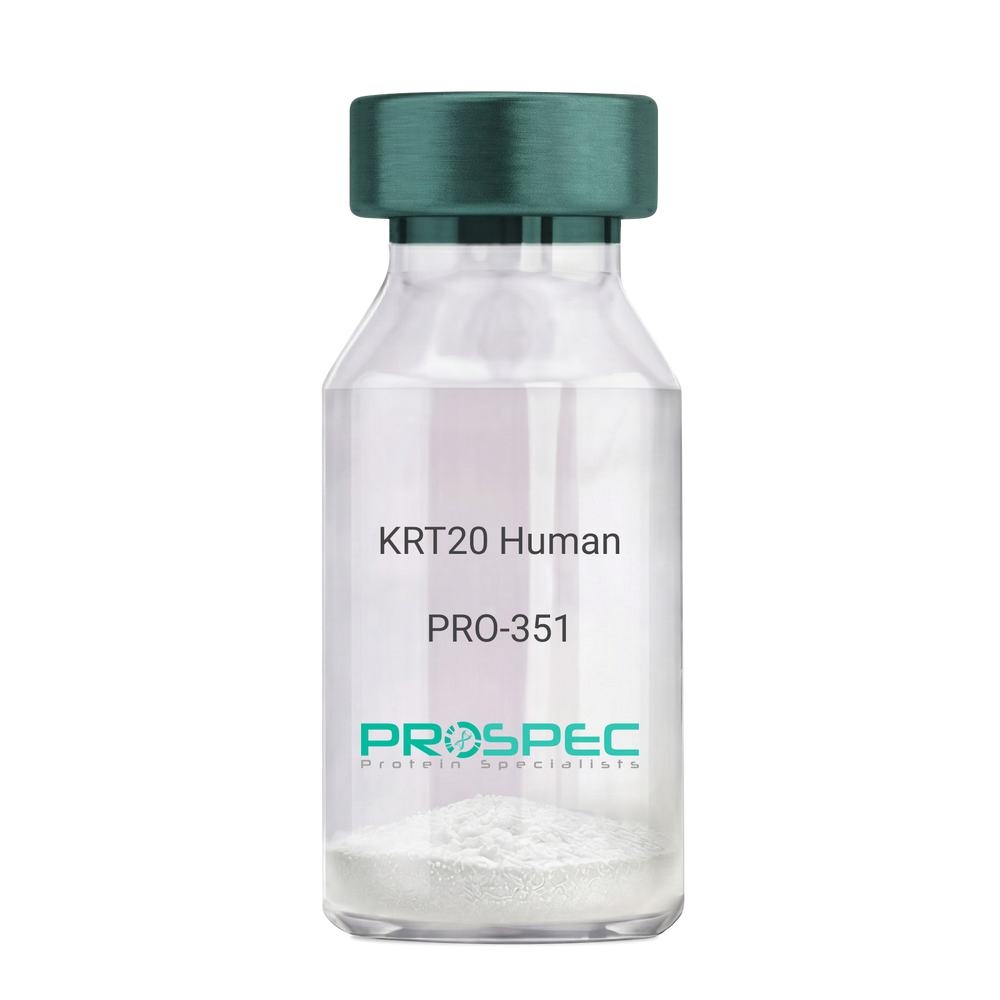
    KRT20 Human

    Description:

    Cytokeratin 20 Human Recombinant

    Keratin type I cytoskeletal 20, Cytokeratin-20, CK-20, Keratin-20, K20, Protein IT, KRT20, CD20, CK20, KRT21, MGC35423.

    Product # :

    PRO-351

    Price :

    Quantity :

    Shipping Method :

    Room Temp Icon

    Shipped at Room temp

    Add To Cart

    More Info

    • description
    • source
    • formulation
    • purity
    • More Info

    Description

    Cytokeratin 20 Human Recombinant produced in E.Coli is a single,non-glycosylated polypeptide chain having a molecular mass of 48,553 Dalton. The KRT20 is purified by proprietary chromatographic techniques.

    Source

    Escherichia Coli.

    Formulation

    The protein (1mg/1ml) was lyophilized after from a sterile solution containing 30mM Tris-HCL pH-8, 9.5M urea, 2mM DDT, 2mM EDTA and 10mM methylammonium chloride.

    Purity

    Greater than 95.0% as determined by SDS-PAGE.

    More Info

    • Introduction

      KRT20 is a member of the keratin family. The keratins are intermediate filament proteins responsible for the structural integrity of epithelial cells and are subdivided into cytokeratins and hair keratins. The type I cytokeratins consist of acidic proteins which are arranged in pairs of heterotypic keratin chains. This cytokeratin is a major cellular protein of mature enterocytes and goblet cells and is specifically expressed in the gastric and intestinal mucosa. The type I cytokeratin genes are clustered in a region of chromosome 17q12-q21.

    • Synonyms

      Keratin type I cytoskeletal 20, Cytokeratin-20, CK-20, Keratin-20, K20, Protein IT, KRT20, CD20, CK20, KRT21, MGC35423.

    • Physical Appearance

      Sterile Filtered White lyophilized (freeze-dried) powder.

    • Stability

      Lyophilized KRT20 although stable at room temperature for 3 weeks, should be stored desiccated below -18°C. Upon reconstitution KRT20 should be stored at 4°C between 2-7 days and for future use below -18°C.For long term storage it is recommended to add a carrier protein (0.1% HSA or BSA).Please prevent freeze-thaw cycles.

    • Solubility

      It is recommended to reconstitute the lyophilized KRT20 in sterile 18MΩ-cm H2O not less than 100µg/ml, which can then be further diluted to other aqueous solutions.

    • Reconstitution to filaments

      Performed by mixing equimolar amounts of cytokeratins of type I and type II at concentrations of approx. 0.5 mg/ml, both dissolved in 9.5 M urea buffer (see above). Protofilaments and filament complexes are obtained by dialyzing the resulting polypeptide solution stepwise to a concentration of 4 M urea and then to low salt condition (50 mM NaCI, 2 mM dithiothreitol, 10 mM Tris-HCI, pH 7.4). For immunization purposes, the solution can be further dialyzed against PBS (phosphate buffered saline, e.g. Dulbecco's PBS).

    ProSpec's products are furnished for LABORATORY RESEARCH USE ONLY. The product may not be used as drugs, agricultural or pesticidal products, food additives or household chemicals.

    Krt20 Human
  • View Data Sheet

    Name :

    RAB14 Human

    Description:

    RAB14, Member RAS Oncogene Family Human Recombinant

    RAB14 member RAS oncogene family, FBP, bA165P4.3 (member RAS oncogene family), F protein-binding protein 1, ras-related protein Rab-14, small GTP binding protein RAB14.

    Product # :

    PRO-873

    Price :

    Quantity :

    Shipping Method :

    Ice Icon

    Shipped with Ice Packs

    Add To Cart

    More Info

    • description
    • source
    • formulation
    • purity
    • More Info

    Description

    RAB14 Human Recombinant produced in E.coli is a single, non-glycosylated polypeptide chain containing 238 amino acids (1-215) and having a molecular mass of 26.3 kDa.The RAB14 is fused to a 23 amino acid His-Tag at N-terminus and purified by proprietary chromatographic techniques.

    Source

    Escherichia Coli.

    Formulation

    RAB14 protein 0.5mg/ml is supplied in 20mM Tris-HCL, pH-8, 0.1M NaCl, 1mM DTT and 20% Glycerol.

    Purity

    Greater than 90.0% as determined by SDS-PAGE.

    More Info

    • Introduction

      RAB14 belongs to the RAB protein family, low molecular mass monomeric GTPases which is found on the cytoplasmic surfaces of distinct membrane bound organelles. RAB14 has a role in vesicular trafficking and neurotransmitter release throughout the body and is expressed at high levels in brain, lung, kidney, spleen and thymus. In addition, RAB14 takes part in the biosynthetic/recycling pathway between the Golgi and endosomal compartments.

    • Synonyms

      RAB14 member RAS oncogene family, FBP, bA165P4.3 (member RAS oncogene family),
      F protein-binding protein 1, ras-related protein Rab-14, small GTP binding protein RAB14.

    • Physical Appearance

      RAB14 is supplied as a sterile filtered clear solution.

    • Stability

      Store at 4°C if entire vial will be used within 2-4 weeks. Store, frozen at -20°C for longer periods of time. For long term storage it is recommended to add a carrier protein (0.1% HSA or BSA).Avoid multiple freeze-thaw cycles.

    • Amino Acid Sequence

      MGSSHHHHHH SSGLVPRGSH MGSMATAPYN YSYIFKYIII GDMGVGKSCL LHQFTEKKFM ADCPHTIGVE FGTRIIEVSG QKIKLQIWDT AGQERFRAVT RSYYRGAAGA LMVYDITRRS TYNHLSSWLT DARNLTNPNT VIILIGNKAD LEAQRDVTYE EAKQFAEENG LLFLEASAKT GENVEDAFLE AAKKIYQNIQ DGSLDLNAAE SGVQHKPSAP QGGRLTSEPQ PQREGCGC

    ProSpec's products are furnished for LABORATORY RESEARCH USE ONLY. The product may not be used as drugs, agricultural or pesticidal products, food additives or household chemicals.

    Rab14 Human
  • View Data Sheet

    Name :

    ULBP2 Human

    Description:

    UL16 Binding Protein 2 Human Recombinant

    UL16 binding protein 2, retinoic acid early transcript 1 H, NKG2D ligand 2, Retinoic acid early transcript 1H, ALCAN-alpha, N2DL-2, RAET1H.

    Product # :

    PRO-1134

    Price :

    Quantity :

    Shipping Method :

    Ice Icon

    Shipped with Ice Packs

    Add To Cart

    More Info

    • description
    • source
    • formulation
    • purity
    • More Info

    Description

    ULBP2 Human Recombinant produced in E. coli is a single polypeptide chain containing 216 amino acids (26-216) and having a molecular mass of 24.3 kDa.ULBP2 is fused to a 25 amino acid His-tag at N-terminus & purified by proprietary chromatographic techniques.

    Source

    E.coli.

    Formulation

    The ULBP2 solution (1mg/ml) contains 20mM Tris-HCl buffer (pH 8.0), 2M urea, 0.2M NaCl, 2mM DTT and 30% glycerol.

    Purity

    Greater than 85% as determined by SDS-PAGE.

    More Info

    • Introduction

      ULBP2 is a member of the MHC class I family. ULBP2 is ligand for the NKG2D receptor, composed with at least ULBP1 and ULBP3. ULBPs promote multiple signaling pathways in primary NK cells, triggering the production of cytokines and chemokines. Binding of ULBPs ligands to NKG2D encourages calcium mobilization and activation of the JAK2, STAT5, ERK and PI3K kinase/Akt signal transduction pathway. In CMV infected cells, ULBP2 cooperates with soluble CMV glycoprotein UL16. This cooperation is blocked with the NKG2D receptor, providing a mechanism in which CMV infected cells can escape the immune system. Additionally, UL16 causes ULBP2 to be held in the ER and cis-Golgi apparatus so that it does not reach the cell surface.

    • Synonyms

      UL16 binding protein 2, retinoic acid early transcript 1 H, NKG2D ligand 2, Retinoic acid early transcript 1H, ALCAN-alpha, N2DL-2, RAET1H.

    • Physical Appearance

      Sterile Filtered colorless solution.

    • Stability

      Store at 4°C if entire vial will be used within 2-4 weeks. Store, frozen at -20°C for longer periods of time. For long term storage it is recommended to add a carrier protein (0.1% HSA or BSA).Avoid multiple freeze-thaw cycles.

    • Amino Acid Sequence

      MGSSHHHHHH SSGLVPRGSH MGSHMGRADP HSLCYDITVI PKFRPGPRWC AVQGQVDEKT FLHYDCGNKT VTPVSPLGKK LNVTTAWKAQ NPVLREVVDI LTEQLRDIQL ENYTPKEPLT LQARMSCEQK AEGHSSGSWQ FSFDGQIFLL FDSEKRMWTT VHPGARKMKE KWENDKVVAM SFHYFSMGDC IGWLEDFLMG MDSTLEPSAG APLAMS

    ProSpec's products are furnished for LABORATORY RESEARCH USE ONLY. The product may not be used as drugs, agricultural or pesticidal products, food additives or household chemicals.

    Ulbp2 Human
  • View Data Sheet

    Name :

    VBP1 Human

    Description:

    Von Hippel-Lindau Binding Protein 1 Human Recombinant

    Prefoldin subunit 3, HIBBJ46, Von Hippel-Lindau-binding protein 1, VBP-1, VHL-binding protein 1, VBP1, PFDN3, PFD3.

    Product # :

    PRO-1325

    Price :

    Quantity :

    Shipping Method :

    Ice Icon

    Shipped with Ice Packs

    Add To Cart

    More Info

    • description
    • source
    • formulation
    • purity
    • More Info

    Description

    VBP1 Human Recombinant produced in E.Coli is a single, non-glycosylated polypeptide chain containing 220 amino acids (1-197 a.a) and having a molecular mass of 25kDa.VBP1 is fused to a 23 amino acid His-tag at N-terminus & purified by proprietary chromatographic techniques.

    Source

    Escherichia Coli.

    Formulation

    VBP1 protein solution (0.5mg/ml) containing 20mM Tris-HCl buffer (pH 8.0), 0.2M NaCl, 50% glycerol and 2mM DTT.

    Purity

    Greater than 90.0% as determined by SDS-PAGE.

    More Info

    • Introduction

      Prefoldin subunit 3 (VBP1) is a member of the prefoldin subunit alpha family. VBP1 interacts with the Von Hippel-Lindau protein in order to create an intracellular complex. Since VBP1 serves as a chaperone protein, it is assumed to have a role in the transport of the Von Hippel-Lindau protein from the perinuclear granules to the nucleus or cytoplasm. VBP1 binds specifically to cytosolic chaperonin (c-CPN) and transfers target proteins to it. VBP1 also binds to nascent polypeptide chain and stimulates folding in an environment in which there are numerous competing pathways for nonnative proteins.

    • Synonyms

      Prefoldin subunit 3, HIBBJ46, Von Hippel-Lindau-binding protein 1, VBP-1, VHL-binding protein 1, VBP1, PFDN3, PFD3.

    • Physical Appearance

      Sterile Filtered colorless solution.

    • Stability

      Store at 4°C if entire vial will be used within 2-4 weeks. Store, frozen at -20°C for longer periods of time. For long term storage it is recommended to add a carrier protein (0.1% HSA or BSA).Avoid multiple freeze-thaw cycles.

    • Amino Acid Sequence

      MGSSHHHHHH SSGLVPRGSH MGSMAAVKDS CGKGEMATGN GRRLHLGIPE AVFVEDVDSF MKQPGNETAD TVLKKLDEQY QKYKFMELNL AQKKRRLKGQ IPEIKQTLEI LKYMQKKKES TNSMETRFLL ADNLYCKASV PPTDKVCLWL GANVMLEYDI DEAQALLEKN LSTATKNLDS LEEDLDFLRD QFTTTEVNMA RVYNWDVKRR NKDDSTKNKA.

    ProSpec's products are furnished for LABORATORY RESEARCH USE ONLY. The product may not be used as drugs, agricultural or pesticidal products, food additives or household chemicals.

    Vbp1 Human
  • View Data Sheet

    Name :

    TNNI1 Human Native

    Description:

    Troponin I Skeletal Muscle Human

    DKFZp451O223, SSTNI, TNN1, Troponin I, slow skeletal muscle, Troponin I, slow-twitch isoform.

    Product # :

    PRO-2789

    Price :

    Quantity :

    Shipping Method :

    Room Temp Icon

    Shipped at Room temp

    Add To Cart

    More Info

    • description
    • source
    • formulation
    • purity
    • More Info

    Description

    TNNI1 Native produced in Human skeletal is Immunological identity confirmed by reaction with monoclonal antibody that is specific for the Human Troponin I Skeletal Muscle. TNNI1 Native is purified by proprietary chromatographic technique.

    Source

    Human skeletal muscle.

    Formulation

    TNNI1 was lyophilized from 0.01M HCl.

    Purity

    Greater than 95.0% as determined by SDS-PAGE.

    More Info

    • Synonyms

      DKFZp451O223, SSTNI, TNN1, Troponin I, slow skeletal muscle, Troponin I, slow-twitch isoform.

    • Physical Appearance

      Sterile Filtered White lyophilized (freeze-dried) powder.

    • Stability

      Lyophilized Troponin I Skeletal Muscle although stable at room temperature for 3 weeks, should be stored desiccated below -18°C. Upon reconstitution TNNI1 should be stored at 4°C between 2-7 days and for future use below -18°C. For long term storage it is recommended to add a carrier protein (0.1% HSA or BSA). Please prevent freeze-thaw cycles.

    • Solubility

      It is recommended to reconstitute the lyophilized TNNI1 in Tris/urea buffer (20mM Tris, pH 7.5, 7M urea, 5mM EDTA, 15mM 2-mercaptoethanol) not less than 100µg/ml, which can then be further diluted to other aqueous solutions.

    • Background

      Troponin I, specifically the skeletal muscle isoform encoded by the TNNI1 gene, is a crucial regulator of muscle contraction. It functions as part of the troponin complex, which controls the interaction between actin and myosin filaments during muscle contraction. While extensive research has been conducted on troponin I in the context of cardiac muscle and cardiac diseases, the study of native human skeletal muscle troponin I remains an important but relatively understudied area. This research aims to provide a comprehensive exploration of native human skeletal muscle troponin I (TNNI1), elucidating its functions, structural significance, and potential applications in musculoskeletal research and clinical medicine.

      The primary objective of this research is to elucidate the physiological role of native human skeletal muscle TNNI1 in muscle contraction. Experiments involving human skeletal muscle tissue samples and isolated muscle fibers will be conducted to investigate how TNNI1 interacts with other components of the troponin complex and influences calcium-mediated muscle contraction. Understanding these mechanisms is fundamental for deciphering the complexities of skeletal muscle physiology and its implications for musculoskeletal health.

      The second objective is to assess the clinical relevance of native TNNI1 in muscle-related diseases. Clinical studies involving patients with various neuromuscular and muscle-wasting conditions will be conducted to evaluate the diagnostic and prognostic value of TNNI1 as a biomarker. These investigations may provide valuable insights into the use of native TNNI1 in the early detection and management of muscle disorders.

      The third objective is to explore the potential applications of native TNNI1 in musculoskeletal research and therapeutic development. Research will investigate the use of native TNNI1-expressing cells and tissues as models for studying muscle disorders and for developing novel therapeutic interventions targeting the troponin complex.

      By delving into the functions and roles of native human skeletal muscle TNNI1, this research aims to expand our knowledge of skeletal muscle physiology, its implications for muscle-related diseases, and its potential applications in musculoskeletal research and clinical medicine.

    ProSpec's products are furnished for LABORATORY RESEARCH USE ONLY. The product may not be used as drugs, agricultural or pesticidal products, food additives or household chemicals.

    Troponin 1 Skeletal Muscle
  • View Data Sheet

    Name :

    PTHrP N15 Human

    Description:

    Parathyroid Hormone Related Protein N15 Labeled Human Recombinant

    Parathyroid Hormone 2, PTH2, TIPF39, Tuberoinfundibular 39 Residue Protein.

    Product # :

    HOR-005

    Price :

    Quantity :

    Shipping Method :

    Room Temp Icon

    Shipped at Room temp

    Add To Cart

    More Info

    • description
    • source
    • formulation
    • purity
    • More Info

    Description

    PTHrP N15 Human Recombinant produced in E.Coli is a single, non-glycosylated, polypeptide chain containing 86 amino acids, having an MW of 10033 Da labeled by the stable isotope N15.The PTHrP is purified by proprietary chromatographic techniques.

    Source

    Escherichia Coli.

    Formulation

    PthRp N15 protein was lyophilized from a 0.2µm filtered concentrated solution in 1xPBS,
    pH 7.4.

    Purity

    Greater than 95.0% as determined by:
    (a) Analysis by RP-HPLC.
    (b) Analysis by SDS-PAGE.

    More Info

    • Introduction

      PTHrP is a powerful and discriminating agonist of PTH2R which takes part in adenyl cyclase activation and intracellular calcium levels elevation. PTHrP encourages protein kinase C beta activation, recruitment of beta-arrestin and PTH2R internalization. Additionally, PTHrP inhibits cell proliferation through its contribution to PTH2R activation, activates nociceptors and nociceptive circuits and acts as a neuropeptide in spermatogenesis.

    • Synonyms

      Parathyroid Hormone 2, PTH2, TIPF39, Tuberoinfundibular 39 Residue Protein.

    • Physical Appearance

      Sterile Filtered White lyophilized (freeze-dried) powder.

    • Stability

      Lyophilized PTHrP N15 although stable at room temperature for 3 weeks, should be stored desiccated below -18C. Upon reconstitution PTHrP N15 should be stored at 4C between 2-7 days and for future use below -18C.For long term storage it is recommended to add a carrier protein (0.1% HSA or BSA).Please prevent freeze-thaw cycles.

    • Solubility

      It is recommended to be briefly centrifuged prior to opening to bring the contents to the bottom. Reconstitute in 10mM HAc to a concentration of 0.1-1.0 mg/mL. Further dilutions should be made in appropriate buffered solutions.

    • Amino Acid Sequence

      AVSEHQLLHD KGKSIQDLRR RFFLHHLIAE IHTAEIRATS EVSPNSKPSP NTKNHPVRFG SDDEGRYLTQ ETNKVETYKE QPLKTP.

    ProSpec's products are furnished for LABORATORY RESEARCH USE ONLY. The product may not be used as drugs, agricultural or pesticidal products, food additives or household chemicals.

    Pthrp N15 Human
  • View Data Sheet

    Name :

    AITRL Human, T7

    Description:

    AITRL Human Recombinant, T7 Tag

    Osteostat, TNFSF18, Activation-induced TNFR member Ligand, GITRL,TL6, AITRL, Glucocorticoid-induced TNF-related ligand, hGITRL, Tumor necrosis factor ligand superfamily member 18, MGC138237.

    Product # :

    CYT-807

    Price :

    Quantity :

    Shipping Method :

    Ice Icon

    Shipped with Ice Packs

    Add To Cart

    More Info

    • description
    • source
    • formulation
    • purity
    • More Info

    Description

    AITRL Human Recombinant produced in E.Coli is a single, non-glycosylated polypeptide chain containing 134 amino acids (81-199 a.a) and having a molecular mass of 15kDa.AITRL is fused to a 15 amino acid T7-tag at N-terminus & purified by proprietary chromatographic techniques.

    Source

    Escherichia Coli.

    Formulation

    AITRL protein solution (0.25mg/ml) contains 20mM Tris-HCl buffer (pH 8.0), 10% glycerol and 0.4M Urea.

    Purity

    Greater than 90% as determined by SDS-PAGE.

    More Info

    • Introduction

      Osteostat is the cytokine that binds to TNFRSF18/AITR/GITR and is important for interactions between activated T-lymphocytes and endothelial cells and may modulate T-lymphocyte survival in peripheral tissues. Osteostat is expressed at high levels in the small intestine, ovary, testis, kidney and endothelial cells after stimulation by lipopolysaccharides.
      Osteostat protein is detectable in human microvascular EC and is highly up-regulated by IFN-alpha and IFN-beta. Osteostat inhibit differentiation of osteoclasts from monocytic precursor cells. Osteostat suppresses the early stage of osteoclastogenesis via inhibition of macrophage colony-stimulating factorinduced receptor activator of NF-kappaB (RANK) expression in the osteoclast precursor cells. Osteostat does not inhibit lipopolysaccharide-induced RANK expression in monocytes and dendritic cells, or activation-induced RANK expression in T cells. Osteostat is a novel regulator of osteoclast generation and substantiate the major role played by the endothelium in bone physiology.

    • Synonyms

      Osteostat, TNFSF18, Activation-induced TNFR member Ligand, GITRL,TL6, AITRL, Glucocorticoid-induced TNF-related ligand, hGITRL, Tumor necrosis factor ligand superfamily member 18, MGC138237.

    • Physical Appearance

      Sterile Filtered colorless solution.

    • Stability

      Store at 4°C if entire vial will be used within 2-4 weeks. Store, frozen at -20°C for longer periods of time. For long term storage it is recommended to add a carrier protein (0.1% HSA or BSA).Avoid multiple freeze-thaw cycles.

    • Amino Acid Sequence

      MASMTGGQQM GRGSHMAKFG PLPSKWQMAS SEPPCVNKVS DWKLEILQNG LYLIYGQVAP NANYNDVAPF EVRLYKNKDM IQTLTNKSKI QNVGGTYELH VGDTIDLIFN SEHQVLKNNT YWGIILLANP QFIS.

    • Background

      What is the molecular weight/Mw of AITRL Protein?
      AITRL Protein has a total Mw of 15kDa.

      What is the source or expression system of AITRL Protein?
      Escherichia Coli.

      What is the Purity of AITRL Protein?
      AITRL Protein is >90% pure as determined by SDS-PAGE.

      What is the Biological Activity of AITRL Protein?
      The biological functionality of AITRL Protein will be determined in the future.

      What is the amino acid sequence of AITRL Protein?
      MASMTGGQQM GRGSHMAKFG PLPSKWQMAS SEPPCVNKVS DWKLEILQNG LYLIYGQVAP NANYNDVAPF EVRLYKNKDM IQTLTNKSKI QNVGGTYELH VGDTIDLIFN SEHQVLKNNT YWGIILLANP QFIS.

      What applications can AITRL Protein be used in?
      AITRL Protein can probably be used in western blot, ELISA and Lateral Flow.

      What is the endotoxin level for AITRL Protein?
      The endotoxin level is minimal, AITRL Protein was purified using conventional chromatography techniques.

    ProSpec's products are furnished for LABORATORY RESEARCH USE ONLY. The product may not be used as drugs, agricultural or pesticidal products, food additives or household chemicals.

    Aitrl Human T7
  • View Data Sheet

    Name :

    KCNIP3 Human

    Description:

    Kv Channel Interacting Protein 3 Human Recombinant

    Calsenilin, A-type potassium channel modulatory protein 3, DRE-antagonist modulator, Kv channel-interacting protein 3, KCNIP3, CSEN, DREAM, KCHIP3, MGC18289.

    Product # :

    PRO-009

    Price :

    Quantity :

    Shipping Method :

    Ice Icon

    Shipped with Ice Packs

    Add To Cart

    More Info

    • description
    • source
    • formulation
    • purity
    • More Info

    Description

    KCNIP3 Human Recombinant fused with a 20 amino acid His tag at N-terminus produced in E.Coli is a single, non-glycosylated, polypeptide chain containing 276 amino acids (1-256 a.a.) and having a molecular mass of 31.4kDa. The KCNIP3 is purified by proprietary chromatographic techniques.

    Source

    Escherichia Coli.

    Formulation

    The KCNIP3 solution (1 mg/ml) contains 20mM Tris-HCl buffer(pH 8.0), 10% glycerol, 2mM DTT and 0.1M NaCl.

    Purity

    Greater than 90.0% as determined by SDS-PAGE.

    More Info

    • Introduction

      KCNIP3 belongs to a family of voltage-gated potassium (Kv) channel-interacting proteins, which belong to the recoverin branch of the EF-hand superfamily. KCNIP family members are small calcium binding proteins containing EF-hand-like domains. KCNIP3 also functions as a calcium-regulated transcriptional repressor, and interacts with presenilins. Mutations in the presenilin genes are implicated in Alzheimer's disease.

    • Synonyms

      Calsenilin, A-type potassium channel modulatory protein 3, DRE-antagonist modulator, Kv channel-interacting protein 3, KCNIP3, CSEN, DREAM, KCHIP3, MGC18289.

    • Physical Appearance

      Sterile Filtered colorless solution.

    • Stability

      Store at 4°C if entire vial will be used within 2-4 weeks. Store, frozen at -20°C for longer periods of time. For long term storage it is recommended to add a carrier protein (0.1% HSA or BSA).Avoid multiple freeze-thaw cycles.

    • Amino Acid Sequence

      MGSSHHHHHH SSGLVPRGSH MQPAKEVTKA SDGSLLGDLG HTPLSKKEGI KWQRPRLSRQ ALMRCCLVKW ILSSTAPQGS DSSDSELELS TVRHQPEGLD QLQAQTKFTK KELQSLYRGF KNECPTGLVD EDTFKLIYAQ FFPQGDATTY AHFLFNAFDA DGNGAIHFED FVVGLSILLR GTVHEKLKWA FNLYDINKDG YITKEEMLAI MKSIYDMMGR HTYPILREDA PAEHVERFFE KMDRNQDGVV TIEEFLEACQ KDENIMSSMQ LFENVI.

    ProSpec's products are furnished for LABORATORY RESEARCH USE ONLY. The product may not be used as drugs, agricultural or pesticidal products, food additives or household chemicals.

    Kcnip3 Human
  • View Data Sheet

    Name :

    S100A11 Human

    Description:

    S100 Calcium Binding Protein A11 Human Recombinant

    Protein S100-A11, S100 calcium-binding protein A11, Calgizzarin, MLN 70, S100A11, MLN70, S100C.

    Product # :

    PRO-385

    Price :

    Quantity :

    Shipping Method :

    Ice Icon

    Shipped with Ice Packs

    Add To Cart

    More Info

    • description
    • source
    • formulation
    • purity
    • More Info

    Description

    S100A11 Human Recombinant is expressed in E. coli having a molecular weight of 17kDa fused to an amino terminal hexahistidine tag.

    Source

    Escherichia Coli.

    Formulation

    S100A11 is supplied in PBS and 50% glycerol.

    Purity

    Greater than 95% as determined by SDS-PAGE.
    2 bands on Western blot at 17 and 34 kDa, respectively representing monomeric and dimeric form.

    More Info

    • Introduction

      S100A11 is a member of the S100 family of proteins which contains two EF-hand calcium-binding motifs and is thought to be involved in the regulation of a number of cellular processes including cell cycle progression and differentiation. S100A11 may function in motility, invasion and tubulin polymerisation. S100 proteins are localized either in the cytoplasm or the nucleus of a wide range of cells. There are at least 13 members in the S100 gene family, which are located as a cluster on chromosome 1q21. Chromosomal rearrangements and altered expression of S100A11 have been implicated in tumor metastasis.

    • Synonyms

      Protein S100-A11, S100 calcium-binding protein A11, Calgizzarin, MLN 70, S100A11, MLN70, S100C.

    • Stability

      Store at 4°C if entire vial will be used within 1-2 weeks. Store, frozen at -20°C for longer periods of time. Avoid multiple freeze-thaw cycles.

    • Applications

      S100A11 can be used directly as a positive control in Western blotting, ELISA, immunoprecipitation and other immunological experiments.
      The biological activity of this product has not yet been tested.

    ProSpec's products are furnished for LABORATORY RESEARCH USE ONLY. The product may not be used as drugs, agricultural or pesticidal products, food additives or household chemicals.

    S100A11 Human
  • View Data Sheet

    Name :

    TRAPPC4 Human

    Description:

    Trafficking Protein Particle Complex 4 Human Recombinant

    Trafficking protein particle complex subunit 4, TRS23 homolog, Synbindin, Hematopoietic stem/progenitor cell protein 172.

    Product # :

    PRO-1273

    Price :

    Quantity :

    Shipping Method :

    Ice Icon

    Shipped with Ice Packs

    Add To Cart

    More Info

    • description
    • source
    • formulation
    • purity
    • More Info

    Description

    TRAPPC4 Human Recombinant produced in E.coli is a single, non-glycosylated polypeptide chain containing 242 amino acids (1-219) and having a molecular mass of 26.7kDa. TRAPPC4 is fused to a 23 amino acid His-tag at N-terminus & purified by proprietary chromatographic techniques.

    Source

    Escherichia Coli.

    Formulation

    TRAPPC4 protein solution (0.25mg/ml) containing 20mM Tris-HCl buffer (pH 8.0), 0.2M NaCl, 20% glycerol and 1mM DTT.

    Purity

    Greater than 90.0% as determined by SDS-PAGE.

    More Info

    • Introduction

      Trafficking protein particle complex 4 (TRAPPC4) is part of the multisubunit TRAPP (transport protein particle) complex and interacts with SDC2. TRAPPC4 has a role in vesicular transport from endoplasmic reticulum to Golgi.

    • Synonyms

      Trafficking protein particle complex subunit 4, TRS23 homolog, Synbindin, Hematopoietic stem/progenitor cell protein 172.

    • Physical Appearance

      Sterile Filtered colorless solution.

    • Stability

      Store at 4°C if entire vial will be used within 2-4 weeks. Store, frozen at -20°C for longer periods of time. For long term storage it is recommended to add a carrier protein (0.1% HSA or BSA).Avoid multiple freeze-thaw cycles.

    • Amino Acid Sequence

      MGSSHHHHHH SSGLVPRGSH MGSMAIFSVY VVNKAGGLIY QLDSYAPRAE AEKTFSYPLD LLLKLHDERV LVAFGQRDGI RVGHAVLAIN GMDVNGRYTA DGKEVLEYLG NPANYPVSIR FGRPRLTSNE KLMLASMFHS LFAIGSQLSP EQGSSGIEML ETDTFKLHCY QTLTGIKFVV LADPRQAGID SLLRKIYEIY SDFALKNPFY SLEMPIRCEL FDQNLKLALE VAEKAGTFGP GS.

    ProSpec's products are furnished for LABORATORY RESEARCH USE ONLY. The product may not be used as drugs, agricultural or pesticidal products, food additives or household chemicals.

    Trappc4 Human
  • View Data Sheet

    Name :

    SUMO3 Human

    Description:

    Small Ubiquitin-Related Modifier 3 Human Recombinant

    SUMO-3, SMT3A, SMT3H1, SMT3 homolog 1, Small Ubiquitin-related modifier 3, Ubiquitin-like protein SMT3A.

    Product # :

    PRO-267

    Price :

    Quantity :

    Shipping Method :

    Ice Icon

    Shipped with Ice Packs

    Add To Cart

    More Info

    • description
    • source
    • formulation
    • purity
    • More Info

    Description

    SUMO3 produced in E.Coli is a single, non-glycosylated polypeptide chain containing 112 amino acids (1-92a.a.) and having a molecular mass of 12.6kDa (molecular weight on SDS-PAGE will appear higher).SUMO3 is fused to a 20 amino acid His-tag at N-terminus & purified by proprietary chromatographic techniques.

    Source

    Escherichia Coli.

    Formulation

    The SUMO3 protein solution (1mg/1ml) is formulated in 20mM Tris-HCl buffer (pH8.0) 0.1M NaCl,1mM DTT and 20% glycerol.

    Purity

    Greater than 95% as determined by SDS-PAGE.

    More Info

    • Introduction

      SUMO3 belongs to the SUMO protein family and operates like ubiquitin. Nevertheless, unlike ubiquitin that targets proteins for degradation, SUMO3 protein takes part in several cellular processes, like nuclear transport, transcriptional regulation, apoptosis, and protein stability. SUMO3 regulates amyloid beta generation and is crucial in the onset or progression of Alzheimer’s disease.

    • Synonyms

      SUMO-3, SMT3A, SMT3H1, SMT3 homolog 1, Small Ubiquitin-related modifier 3, Ubiquitin-like protein SMT3A.

    • Physical Appearance

      Sterile Filtered clear solution.

    • Stability

      Store at 4°C if entire vial will be used within 2-4 weeks.Store, frozen at -20°C for longer periods of time. For long term storage it is recommended to add a carrier protein (0.1% HSA or BSA).Avoid multiple freeze-thaw cycles.

    • Amino Acid Sequence

      MGSSHHHHHH SSGLVPRGSH MSEEKPKEGV KTENDHINLK VAGQDGSVVQ FKIKRHTPLS KLMKAYCERQ GLSMRQIRFR FDGQPINETD TPAQLEMEDE DTIDVFQQQT GG

    ProSpec's products are furnished for LABORATORY RESEARCH USE ONLY. The product may not be used as drugs, agricultural or pesticidal products, food additives or household chemicals.

    Sumo3 Human
  • View Data Sheet

    Name :

    C19ORF80 Rat

    Description:

    Chromosome 19 Open Reading Frame 80 Rat Recombinant

    Betatrophin, Angiopoietin-like protein 8, Lipasin, C19orf80, Angptl8, RIFL, TD26, PRO1185, PVPA599.

    Product # :

    PRO-2024

    Price :

    Quantity :

    Shipping Method :

    Room Temp Icon

    Shipped at Room temp

    Add To Cart

    More Info

    • description
    • source
    • formulation
    • purity
    • More Info

    Description

    C19ORF80 Rat Recombinant produced in E. coli is a polypeptide chain containing 193 amino acids and having a total molecular mass of 22.0 kDa. C19ORF80 has a N-Terminal His-tag (10 AA residue).

    Source

    Escherichia Coli.

    Formulation

    Filtered (0.4 µm) and lyophilized from a 0.5mg/ml solution containing 0.03M Acetate buffer pH 4.0.

    Purity

    Greater than 95.0% as determined by SDS-PAGE.

    More Info

    • Introduction

      Chromosome 19 Open Reading Frame 80 (C19ORF80) is a significant new regulator of lipid metabolism which regulates serum triglyceride levels, possibly by promoting ANGPTL3 cleavage. C19ORF80 belongs to the ANGPTL protein family. C19ORF80 is a hormone which specifically promotes pancreatic beta cell proliferation and beta cell mass expansion, thus improving glucose tolerance. C19ORF80 is mainly expressed in the liver; it is also expressed in adipose tissues. C19ORF80 is expressed in response to food intake and stimulated by insulin.

    • Synonyms

      Betatrophin, Angiopoietin-like protein 8, Lipasin, C19orf80, Angptl8, RIFL, TD26, PRO1185, PVPA599.

    • Physical Appearance

      Filtered White lyophilized (freeze-dried) powder.

    • Stability

      Store lyophilized protein at -20°C. Aliquot the product after reconstitution to avoid repeated freezing/thawing cycles. Reconstituted protein can be stored at 4°C for a limited period of time; it does not show any change after two weeks at 4°C.

    • Solubility

      It is recommended to add 0.1M Acetate buffer pH-4 to prepare a working stock solution of approximately 0.5mg/ml and let the lyophilized pellet dissolve completely. For conversion into higher pH value, we recommend intensive dilution by relevant buffer to a concentration of 10µg/ml. In higher concentrations the solubility of this antigen is limited. C19ORF80 is not sterile! Please filter the product by an appropriate sterile filter before using it in the cell culture.

    • Amino Acid Sequence

      MKHHHHHHAS VRPAPVAPLG GPEPAQYEEL TLLFHGALQL GQALNGVYKA TEARLTEAGR NLGLFDQALE FLGREVNQGR DATRELRTSL SEIQAEEDTL HLRAEATARS LREVARAQHA LRNSVRRLQV QLRGAWLGQA HQEFENLKDR ADKQNHLLWA LTGHVQRQQR EMAEQQQWLR QIQQRLHMAA LPA

    ProSpec's products are furnished for LABORATORY RESEARCH USE ONLY. The product may not be used as drugs, agricultural or pesticidal products, food additives or household chemicals.

    C19Orf80 Rat
  • View Data Sheet

    Name :

    TCEAL3 Human

    Description:

    Transcription Elongation Factor A (SII)-Like 3 Human Recombinant

    Transcription elongation factor A (SII)-like 3, TCEA-like protein 3, MGC15737.

    Product # :

    PRO-1128

    Price :

    Quantity :

    Shipping Method :

    Ice Icon

    Shipped with Ice Packs

    Add To Cart

    More Info

    • description
    • source
    • formulation
    • purity
    • More Info

    Description

    TCEAL3 Human Recombinant produced in E. coli is a single polypeptide chain containing 224 amino acids (1-200) and having a molecular mass of 25.0 kDa.TCEAL3 is fused to a 24 amino acid His-tag at N-terminus & purified by proprietary chromatographic techniques.

    Source

    E.coli.

    Formulation

    The TCEAL3 solution (0.5mg/ml) contains 20mM Tris-HCl buffer (pH 8.0) and 10% glycerol.

    Purity

    Greater than 85% as determined by SDS-PAGE.

    More Info

    • Introduction

      TCEAL3 belongs to the transcription elongation factor A (SII)-like (TCEAL) gene family. TCEAL family members hold TFA domains and operate as nuclear phosphoproteins which control transcription in a promoter context-dependent fashion. Various family members are situated in the X chromosome.

    • Synonyms

      Transcription elongation factor A (SII)-like 3, TCEA-like protein 3, MGC15737.

    • Physical Appearance

      Sterile Filtered colorless solution.

    • Stability

      Store at 4°C if entire vial will be used within 2-4 weeks. Store, frozen at -20°C for longer periods of time. For long term storage it is recommended to add a carrier protein (0.1% HSA or BSA).Avoid multiple freeze-thaw cycles.

    • Amino Acid Sequence

      MGSSHHHHHH SSGLVPRGSH MGSHMEKPYN KNEGNLENEG KPEDEVEPDD EGKSDEEEKP DVEGKTECEG KREDEGEPGD EGQLEDEGSQ EKQGRSEGEG KPQGEGKPAS QAKPESQPRA AEKRPAEDYV PRKAKRKTDR GTDDSPKDSQ EDLQERHLSS EEMMRECGDV SRAQEELRKK QKMGGFHWMQ RDVQDPFAPR GQRGVRGVRG GGRGQRGLHD IPYL

    ProSpec's products are furnished for LABORATORY RESEARCH USE ONLY. The product may not be used as drugs, agricultural or pesticidal products, food additives or household chemicals.

    Tceal3 Human
  • View Data Sheet

    Name :

    ILK1 Human

    Description:

    Integrin Linked Kinase Human Recombinant

    Integrin-linked protein kinase, ILK-1, ILK-2, 59 kDa serine/threonine-protein kinase, p59ILK, ILK, ILK1, ILK2, DKFZp686F1765, P59.

    Product # :

    PKA-353

    Price :

    Quantity :

    Shipping Method :

    Ice Icon

    Shipped with Ice Packs

    Add To Cart

    More Info

    • description
    • source
    • formulation
    • purity
    • More Info

    Description

    ILK1 Human Recombinant produced in E.Coli is single, a non-glycosylated, Polypeptide chain containing 452 amino acids fragment (1-452) having a molecular mass of 55.92kDa and fused with a 4.5kDa amino-terminal hexahistidine tag. The ILK1 is purified by proprietary chromatographic techniques.

    Source

    Escherichia Coli.

    Formulation

    ILK1 protein is supplied in 25mM Sodium Acetate (pH 4.8) and 50% glycerol.

    Purity

    Greater than 95.0% as determined by SDS-PAGE.

    More Info

    • Introduction

      ILK1 (Integrin-linked kinase) is a serine/threonine protein kinase, containing 4 ankyrin-like repeats. ILK1 regulates a number of biological properties which include: anchorage-independent cell cycle progression, tumor cell invasion and apoptosis. ILK1 can also be implicated in mediating cell architecture, adhesion to integrin substrates and anchorage-dependent growth in epithelial cells. Furthermore, ILK1 phosphorylates beta-1 and beta-3 integrin subunit on serine and threonine residues, but also AKT1 and GSK3B.
      ILK1 interacts with the cytoplasmic domains of integrin ?1 and ?3 subunits in addition to several adaptors and signaling proteins, it also acts as a proximal receptor kinase regulating integrin-mediated signal transduction. ILK1 is a focal adhesion protein part of the complex ILK-PINCH. This complex is deemed to be one of the convergence points of integrin- and growth factor-signaling pathway. ILK1 is stimulated rapidly but briefly by both cell fibronectin interactions in a PI3-K-dependent manner, probably through the binding of PtdIns(3,4,5)P3 with a PH-like domain of ILK.
      ILK1 over-expression has been documented in a wide variety of human malignancies.

    • Synonyms

      Integrin-linked protein kinase, ILK-1, ILK-2, 59 kDa serine/threonine-protein kinase, p59ILK, ILK, ILK1, ILK2, DKFZp686F1765, P59.

    • Physical Appearance

      Sterile Filtered clear solution.

    • Stability

      Store at 4°C if entire vial will be used within 2-4 weeks. Store, frozen at -20°C for longer periods of time. Please avoid freeze thaw cycles.

    ProSpec's products are furnished for LABORATORY RESEARCH USE ONLY. The product may not be used as drugs, agricultural or pesticidal products, food additives or household chemicals.

    Ilk1 Human
  • 1
  • …
  • 40
  • 41
  • 42
Your browser does not support the video tag.

Products

  • Cytokines
  • Growth Factors
  • Chemokines
  • CD Antigens
  • Neurotrophins
  • Hormones
  • Enzymes
  • Viral Antigens
  • Recombinant Proteins
  • Natural Proteins
  • Monoclonal Antibodies
  • Polyclonal Antibodies
  • Thermal Packaging

About

  • Company
  • Founder
  • Contribution
  • Contact Us
  • My Account

Ordering

  • Ordering Method
  • Ordering - Credit Card
  • Ordering PO
  • Shipping Fees
  • FAQ's

Legal

  • Terms & Conditions
  • Privacy
  • Site Map
  • info@prospecbio.com
  • Facebook
  • Instagram
  • Linkedin Profile

© 2026 ProSpec-Tany TechnoGene Ltd. All Rights Reserved.

  • Choosing a selection results in a full page refresh.
  • Opens in a new window.