Search results
1000 results found for “Ligase”
Name
Description
Product #
Price
Quantity
Shipping Method
- View Data Sheet
Name :
HADHB HumanDescription:
2-Enoyl-Coenzyme A (CoA) Hydratase, Beta Human Recombinant
Hydroxyacyl-CoA Dehydrogenase/3-Ketoacyl-CoA Thiolase/Enoyl-CoA Hydratase (Trifunctional Protein) Beta Subunit, Hydroxyacyl-Coenzyme A Dehydrogenase/3-Ketoacyl-Coenzyme A Thiolase/Enoyl-Coenzyme A Hydratase (Trifunctional Protein) Beta Subunit, TP-BETA, 3-Ketoacyl-Coenzyme A (CoA) Thiolase Of Mitochondrial Trifunctional Protein Beta Subunit, 2-Enoyl-Coenzyme A (CoA) Hydratase Beta Subunit, Trifunctional Enzyme Subunit Beta Mitochondrial, Mitochondrial Trifunctional Protein, Acetyl-CoA Acyltransferase, Beta-Ketothiolase, Beta Subunit, EC 2.3.1.16, EC 2.3.1, MSTP029, ECHB, MTPB.
Product # :
ENZ-845Price :
Quantity :
Shipping Method :
Shipped with Ice Packs
More Info
- description
- source
- formulation
- purity
- More Info
Description
HADHB Human Recombinant produced in E.Coli is a single, non-glycosylated polypeptide chain containing 464 amino acids (34-474 a.a) and having a molecular mass of 49.9kDa. HADHB is fused to a 23 amino acid His-tag at N-terminus & purified by proprietary chromatographic techniques.
Source
Escherichia Coli.
Formulation
HADHB protein solution (0. 5mg/ml) containing 20mM Tris-HCl (pH8.0) and 10% glycerol.
Purity
Greater than 90.0% as determined by SDS-PAGE.
More Info
-
Introduction
2-Enoyl-Coenzyme A (CoA) Hydratase, Beta (HADHB) is the beta subunit of the mitochondrial trifunctional protein, that catalyzes the last 3 phases of mitochondrial beta-oxidation of long chain fatty acids. HADHB binds RNA and reduces the stability of various mRNAs. Mutations in HADHB cause trifunctional protein deficiency.
-
Synonyms
Hydroxyacyl-CoA Dehydrogenase/3-Ketoacyl-CoA Thiolase/Enoyl-CoA Hydratase (Trifunctional Protein) Beta Subunit, Hydroxyacyl-Coenzyme A Dehydrogenase/3-Ketoacyl-Coenzyme A Thiolase/Enoyl-Coenzyme A Hydratase (Trifunctional Protein) Beta Subunit, TP-BETA, 3-Ketoacyl-Coenzyme A (CoA) Thiolase Of Mitochondrial Trifunctional Protein Beta Subunit, 2-Enoyl-Coenzyme A (CoA) Hydratase Beta Subunit, Trifunctional Enzyme Subunit Beta Mitochondrial, Mitochondrial Trifunctional Protein, Acetyl-CoA Acyltransferase, Beta-Ketothiolase, Beta Subunit, EC 2.3.1.16, EC 2.3.1, MSTP029, ECHB, MTPB.
-
Physical Appearance
Sterile Filtered clear solution.
-
Stability
Store at 4°C if entire vial will be used within 2-4 weeks. Store, frozen at -20°C for longer periods of time. For long term storage it is recommended to add a carrier protein (0.1% HSA or BSA).Avoid multiple freeze-thaw cycles.
-
Amino Acid Sequence
MGSSHHHHHH SSGLVPRGSH MGSAAPAVQT KTKKTLAKPN IRNVVVVDGV RTPFLLSGTS YKDLMPHDLA RAALTGLLHR TSVPKEVVDY IIFGTVIQEV KTSNVAREAA LGAGFSDKTP AHTVTMACIS ANQAMTTGVG LIASGQCDVI VAGGVELMSD VPIRHSRKMR KLMLDLNKAK SMGQRLSLIS KFRFNFLAPE LPAVSEFSTS ETMGHSADRL AAAFAVSRLE QDEYALRSHS LAKKAQDEGL LSDVVPFKVP GKDTVTKDNG IRPSSLEQMA KLKPAFIKPY GTVTAANSSF LTDGASAMLI MAEEKALAMG YKPKAYLRDF MYVSQDPKDQ LLLGPTYATP KVLEKAGLTM NDIDAFEFHE AFSGQILANF KAMDSDWFAE NYMGRKTKVG LPPLEKFNNW GGSLSLGHPF GATGCRLVMA AANRLRKEGG QYGLVAACAA GGQGHAMIVE AYPK.
ProSpec's products are furnished for LABORATORY RESEARCH USE ONLY. The product may not be used as drugs, agricultural or pesticidal products, food additives or household chemicals.
- View Data Sheet
Name :
SHH HumanDescription:
Sonic HedgeHog Human Recombinant
SHH, HHG-1, HHG1, Sonic hedgehog protein, TPT, HLP3, HPE3, SMMCI, TPTPS, MCOPCB5.
Product # :
CYT-676Price :
Quantity :
Shipping Method :
Shipped at Room temp
More Info
- description
- source
- formulation
- purity
- biological activity
- More Info
Description
Sonic HedgeHog Recombinant Human produced in E.Coli is a single, non-glycosylated polypeptide chain containing 179 amino acids and having a molecular mass of 20.2kDa. The Cys at position 2 has been substituted with 2 Ile’s.
Source
Escherichia Coli.
Formulation
SHH is lyophilized from 10mM Na3PO4, pH 7.5.
Purity
Greater than 95.0% as determined by SDS-PAGE.
Biological Activity
The ED50 is measured by the dose-dependent induction of alkaline phosphatase production by CCL-226 fibroblasts and is 1.47μg/ml corresponding to a specific activity of 680U/mg.
More Info
-
Introduction
Recombinant Human Sonic Hedgehog is part of a small group of secreted proteins that are vital for development in both vertebrates and invertebrates. 3 mammalian hedgehog genes (sonic, desert, Indian) share about 60% homology. The Human Sonic Hedgehog is 99% homologous to the mouse gene. Sonic HedgeHog is a protein that is vital in guding the early embryo. It has been associated as the major inductive signal in patterning of the ventral neural tube, the anterior-posterior limb axis, and the ventral somites. Sonic HedgeHog binds to the patched receptor, which functions in association with smoothened, to activate the transcription of target genes. In the absence of sonic HedgeHog, patched receptor represses the constitutive signaling activity of smoothened. Sonic HedgeHog also regulates another factor, the gli oncogene. Sonic HedgeHog intercellular signal is essential for a various patterning events during development: signal produced by the notochord that induces ventral cell fate in the neural tube and somites, and the polarizing signal for patterning of the anterior-posterior axis of the developing limb bud. Sonic HedgeHog exhibits both floor plate- and motor neuron-inducing activity. Mutations in a long-range Sonic HedgeHog enhancer located in an intron of the limb region 1 gene result in preaxial polydactyly.
-
Synonyms
SHH, HHG-1, HHG1, Sonic hedgehog protein, TPT, HLP3, HPE3, SMMCI, TPTPS, MCOPCB5.
-
Physical Appearance
Sterile Filtered White lyophilized (freeze-dried) powder.
-
Stability
Lyophilized Human Sonic HedgeHog although stable at room temperature for 3 weeks, should be stored desiccated below -18°C. Upon reconstitution Sonic HedgeHog should be stored at 4°C between 2-7 days and for future use below -18°C.Please prevent freeze-thaw cycles.
-
Solubility
It is recommended to reconstitute the lyophilized SHH in sterile water not less than 100µg/ml, which can then be further diluted to other aqueous solutions.
-
Amino Acid Sequence
MIIGPGRGFG KRRHPKKLTP LAYKQFIPNV AEKTLGASGR YEGKISRNSE RFKELTPNYN PDIIFKDEEN TGADRLMTQR CKDKLNALAI SVMNQWPGVK LRVTEGWDED GHHSEESLHY EGRALDITTS DRDRSKYGML ARLAVEAGFD WVYYESKAHI HCSVKAENSV AAKSGGCFP
ProSpec's products are furnished for LABORATORY RESEARCH USE ONLY. The product may not be used as drugs, agricultural or pesticidal products, food additives or household chemicals.
- View Data Sheet
Name :
Placental Lactogen HumanDescription:
Placental Lactogen Human Recombinant
Chorionic Somatomammotropin Hormone 1, CSH1, Choriomammotropin, Lactogen, CSH2, PL, CSA, CSMT, FLJ75407.
Product # :
CYT-656Price :
Quantity :
Shipping Method :
Shipped at Room temp
More Info
- description
- source
- formulation
- purity
- biological activity
- More Info
Description
Placental Lactogen Human Recombinant, is a single polypeptide chain containing 199 amino acids and an additional Ala at the N-terminus having a molecular mass of approximately 22.4 kDa. Placental Lactogen Recombinant is purified by proprietary chromatographic techniques.
Source
Escherichia Coli.
Formulation
The protein was lyophilized from a concentrated (1mg/ml) solution with 0.02-0.03% NaHCO3.
Purity
Greater than 99.0% as determined by:
(a) Analysis by Gel Filtration.
(b) Analysis by SDS-PAGE.Biological Activity
Placental Lactogen Human is biologically active as evidenced by inducing proliferation of Nb2 cells.More Info
-
Introduction
Placental Lactogen is a polypeptide hormone that is produced by the Syncytiotrophoblasts of the Placenta, also known as chorionic somatomammotropin. It has both GH and Prolactin activities on growth, lactation, and luteal steroid production. In women, placental lactogen secretion begins soon after implantation and increases to 1 g or more a day in late pregnancy. Placental lactogen is also an ins. antagonist.
Placental Lactogen Bovine is also capable of activating human and other heterologous GH receptors but not ruminat GH receptors. -
Synonyms
Chorionic Somatomammotropin Hormone 1, CSH1, Choriomammotropin, Lactogen, CSH2, PL, CSA, CSMT, FLJ75407.
-
Physical Appearance
Sterile Filtered White lyophilized (freeze-dried) powder.
-
Stability
Lyophilized Placental Lactogen Human Recombinant although stable at room temperature for 3 weeks, should be stored desiccated below -18°C. Upon reconstitution Placental Lactogen should be stored at 4°C between 2-7 days and for future use below -18°C. For long term storage it is recommended to add a carrier protein (0.1% HSA or BSA).Please prevent freeze-thaw cycles.
-
Solubility
It is recommended to reconstitute the lyophilized Placental Lactogen in sterile water or 0.4% NaHCO3 adjusted to pH 8-9, not less than 100µg/ml, which can then be further diluted to other aqueous solutions, preferably in presence of carrier protein.
-
Amino Acid Sequence
The sequence of the first 6 N-terminal amino acids was determined and was found to be Ala-Val-Gln-Thr-Val-Pro.
-
Protein content
UV spectroscopy at 280 nm using the absorbency value of 0.73 as the extinction coefficient for a 0.1% (1mg/ml) solution. This value is calculated by the DNAman computer analysis program of protein sequences.
ProSpec's products are furnished for LABORATORY RESEARCH USE ONLY. The product may not be used as drugs, agricultural or pesticidal products, food additives or household chemicals.
- View Data Sheet
Name :
NAP 2 AntibodyDescription:
Natural anti-proliferative protein, Mouse-Anti Human
Platelet basic protein, PBP, Small inducible cytokine B7, CXCL7, Leukocyte-derived growth factor, LDGF, Macrophage-derived growth factor, MDGF, pro-platelet basic protein (chemokine (C-X-C motif) ligand 7), TC1, TC2, TGB, TGB1, B-TG1, CTAP3, NAP-2, SCYB7, THBGB, LA-PF4, THBGB1, Beta-TG, CTAPIII, CTAP-III.
Product # :
ANT-170Price :
Quantity :
Shipping Method :
Shipped at Room temp
More Info
- formulation
- More Info
Formulation
1mg/ml in PBS (after reconstitution).
More Info
-
Introduction
Chemokine (C-X-C motif) ligand (CXCL7) is a small cytokine belonging to the CXC chemokine family. It is a protein that is released in large amounts from platelets following their activation. It stimulates various processes including mitogenesis, synthesis of extracellular matrix, glucose metabolism and synthesis of plasminogen activator.
-
Synonyms
Platelet basic protein, PBP, Small inducible cytokine B7, CXCL7, Leukocyte-derived growth factor, LDGF, Macrophage-derived growth factor, MDGF, pro-platelet basic protein (chemokine (C-X-C motif) ligand 7), TC1, TC2, TGB, TGB1, B-TG1, CTAP3, NAP-2, SCYB7, THBGB, LA-PF4, THBGB1, Beta-TG, CTAPIII, CTAP-III.
-
Solubility
Reconstitute with sterile H20. Mix gently, wash the sides of the vial and wait 30-60 seconds before use.
-
Immunogen
r.Human NAP-2.
-
Ig Subclass
Mouse IgG1.
-
Clone
NYRhNAP-2.
-
Applications
Direct ELISA, Western Blot, Immuneprecipitation.
-
Note
This antibody will bind very well to protein A in a buffer (PBS) containing high salt concentration (3M Nacl).
-
Titer
In direct ELISA, using alkaline phosphatase goat anti-mouse Ig (Jackson Laboratories) 1:10,000 dilution will yield 0.5 O.D within 10 minutes.
-
Shipping Conditions
Antibody is shipped lyophilized at ambient temperature.
-
Type
Mouse Anti Human Monoclonal.
-
Storage Procedures
In lyophilized form, for long periods, store at 4oC in a dry environment. After reconstitution, if not intended for use within a month, aliquot and store at -20oC.
-
Purification Method
ion exchange.
ProSpec's products are furnished for LABORATORY RESEARCH USE ONLY. The product may not be used as drugs, agricultural or pesticidal products, food additives or household chemicals.
- View Data Sheet
Name :
BHMT2 HumanDescription:
Betaine-Homocysteine Methyltransferase 2 Human Recombinant
BHMT2, Betaine--Homocysteine S-Methyltransferase 2, SMM-Hcy Methyltransferase, Betaine-Homocysteine Methyltransferase 2, S-Methylmethionine--Homocysteine S-Methyltransferase BHMT2, EC 2.1.1.10, EC 2.1.1.5.
Product # :
ENZ-798Price :
Quantity :
Shipping Method :
Shipped with Ice Packs
More Info
- description
- source
- formulation
- purity
- More Info
Description
BHMT2 Human Recombinant produced in E.Coli is a single, non-glycosylated polypeptide chain containing 386 amino acids (1-363 a.a.) and having a molecular mass of 42.7kDa. BHMT2 is fused to a 23 amino acid His-tag at N-terminus.
Source
Escherichia Coli.
Formulation
BHMT2 protein solution (0.5mg/ml) contains 20mM Tris-HCl buffer (pH 8.0), 0.4M Urea and 10% glycerol.
Purity
Greater than 90.0% as determined by SDS-PAGE.
More Info
-
Introduction
Betaine-Homocysteine Methyltransferase 2 (BHMT2) is involved in the regulation of homocysteine metabolism. Homocysteine is a sulfur-containing amino acid which has a key role in methylation reactions. Transfer of the methyl group from betaine to homocysteine generates methionine, which donates the methyl group to methylate DNA, proteins, lipids, and other intracellular metabolites. BHMT2 is one of two methyl transferases which can catalyze the transfer of the methyl group from betaine to homocysteine. BHMT2 converts homocysteine to methionine using S-methylmethionine (SMM) as a methyl donor. Homocysteine metabolism anomalies are implicated in disorders varying from vascular disease to neural tube birth defects such as spina bifida.
-
Synonyms
BHMT2, Betaine--Homocysteine S-Methyltransferase 2, SMM-Hcy Methyltransferase, Betaine-Homocysteine Methyltransferase 2, S-Methylmethionine--Homocysteine S-Methyltransferase BHMT2, EC 2.1.1.10, EC 2.1.1.5.
-
Physical Appearance
Sterile Filtered colorless solution.
-
Stability
Store at 4°C if entire vial will be used within 2-4 weeks. Store, frozen at -20°C for longer periods of time. For long term storage it is recommended to add a carrier protein (0.1% HSA or BSA).Avoid multiple freeze-thaw cycles.
-
Amino Acid Sequence
MGSSHHHHHH SSGLVPRGSH MGSMAPAGRP GAKKGILERL ESGEVVIGDG SFLITLEKRG YVKAGLWTPE AVIEHPDAVR QLHMEFLRAG SNVMQTFTFS ASEDNMESKW EDVNAAACDL AREVAGKGDA LVAGGICQTS IYKYQKDEAR IKKLFRQQLE VFAWKNVDFL IAEYFEHVEE AVWAVEVLKE SDRPVAVTMC IGPEGDMHDI TPGECAVRLV KAGASIVGVN CRFGPDTSLK TMELMKEGLE WAGLKAHLMV QPLGFHAPDC GKEGFVDLPE YPFGLESRVA TRWDIQKYAR EAYNLGVRYI GGCCGFEPYH IRAIAEELAP ERGFLPPASE KHGSWGSGLD MHTKPWIRAR ARREYWENLL PASGRPFCPS LSKPDF.
ProSpec's products are furnished for LABORATORY RESEARCH USE ONLY. The product may not be used as drugs, agricultural or pesticidal products, food additives or household chemicals.
- View Data Sheet
Name :
TCEAL3 HumanDescription:
Transcription Elongation Factor A (SII)-Like 3 Human Recombinant
Transcription elongation factor A (SII)-like 3, TCEA-like protein 3, MGC15737.
Product # :
PRO-1128Price :
Quantity :
Shipping Method :
Shipped with Ice Packs
More Info
- description
- source
- formulation
- purity
- More Info
Description
TCEAL3 Human Recombinant produced in E. coli is a single polypeptide chain containing 224 amino acids (1-200) and having a molecular mass of 25.0 kDa.TCEAL3 is fused to a 24 amino acid His-tag at N-terminus & purified by proprietary chromatographic techniques.
Source
E.coli.
Formulation
The TCEAL3 solution (0.5mg/ml) contains 20mM Tris-HCl buffer (pH 8.0) and 10% glycerol.
Purity
Greater than 85% as determined by SDS-PAGE.
More Info
-
Introduction
TCEAL3 belongs to the transcription elongation factor A (SII)-like (TCEAL) gene family. TCEAL family members hold TFA domains and operate as nuclear phosphoproteins which control transcription in a promoter context-dependent fashion. Various family members are situated in the X chromosome.
-
Synonyms
Transcription elongation factor A (SII)-like 3, TCEA-like protein 3, MGC15737.
-
Physical Appearance
Sterile Filtered colorless solution.
-
Stability
Store at 4°C if entire vial will be used within 2-4 weeks. Store, frozen at -20°C for longer periods of time. For long term storage it is recommended to add a carrier protein (0.1% HSA or BSA).Avoid multiple freeze-thaw cycles.
-
Amino Acid Sequence
MGSSHHHHHH SSGLVPRGSH MGSHMEKPYN KNEGNLENEG KPEDEVEPDD EGKSDEEEKP DVEGKTECEG KREDEGEPGD EGQLEDEGSQ EKQGRSEGEG KPQGEGKPAS QAKPESQPRA AEKRPAEDYV PRKAKRKTDR GTDDSPKDSQ EDLQERHLSS EEMMRECGDV SRAQEELRKK QKMGGFHWMQ RDVQDPFAPR GQRGVRGVRG GGRGQRGLHD IPYL
ProSpec's products are furnished for LABORATORY RESEARCH USE ONLY. The product may not be used as drugs, agricultural or pesticidal products, food additives or household chemicals.
- View Data Sheet
Name :
TEK MouseDescription:
TEK Tyrosine Kinase Endothelial Mouse Recombinant
Angiopoietin-1 receptor, Endothelial tyrosine kinase, HYK, STK1, Tunica interna endothelial cell kinase, Tyrosine kinase with Ig and EGF homology domains-2, Tyrosine-protein kinase receptor TEK, Tyrosine-protein kinase receptor TIE-2, mTIE2, p140 TEK, CD202b.
Product # :
PKA-083Price :
Quantity :
Shipping Method :
Shipped with Ice Packs
More Info
- description
- source
- formulation
- purity
- More Info
Description
TEK produced in Sf9 Baculovirus cells is a single, glycosylated polypeptide chain containing 730 amino acids (23-746 a.a.) and having a molecular mass of 81.6kDa (Migrates at 70-100kDa on SDS-PAGE under reducing conditions). TEK is expressed with a 6 amino acid His tag at C-Terminus and purified by proprietary chromatographic techniques.
Source
Sf9, Baculovirus cells.
Formulation
TEK protein solution (0.5mg/ml) contains Phosphate Buffered Saline (pH 7.4) and 10% glycerol.
Purity
Greater than 95.0% as determined by SDS-PAGE.
More Info
-
Introduction
TIE-1 (tyrosine kinase with Ig and EGF homology domains 1) and TIE-2/Tek comprise a receptor tyrosine kinase (RTK) subfamily with unique structural characteristics: two immunoglobulin-like domains flanking three epidermal growth factor (EGF)-like domains and followed by three fibronectin type III-like repeats in the extracellular region and a split tyrosine kinase domain in the cytoplasmic region. These receptors are expressed primarily on endothelial and hematopoietic progenitor cells and play critical roles in angiogenesis, vasculogenesis and hematopoiesis. Human TIE-1 cDNA encodes a 1122 amino acid (aa) residue precursor protein with an 18 residue putative signal peptide, a 726 residue extracellular domain and a 353 residue cytoplasmic domain. Two ligands, angiopoietin-1 (Ang1) and angiopoietin-2 (Ang2), which bind TIE-2 with high-affinity have been identified. Ang2 has been reported to act as an antagonist for Ang1. Mice engineered to overexpress Ang2 or to lack Ang1 or Tie-1 display similar angiogenic defects.
-
Synonyms
Angiopoietin-1 receptor, Endothelial tyrosine kinase, HYK, STK1, Tunica interna endothelial cell kinase, Tyrosine kinase with Ig and EGF homology domains-2, Tyrosine-protein kinase receptor TEK, Tyrosine-protein kinase receptor TIE-2, mTIE2, p140 TEK, CD202b.
-
Physical Appearance
Sterile Filtered colorless solution.
-
Stability
Store at 4°C if entire vial will be used within 2-4 weeks. Store, frozen at -20°C for longer periods of time. For long term storage it is recommended to add a carrier protein (0.1% HSA or BSA). Avoid multiple freeze-thaw cycles.
-
Amino Acid Sequence
AMDLILINSL PLVSDAETSL TCIASGWHPH EPITIGRDFE ALMNQHQDPL EVTQDVTREW AKKVVWKREK ASKINGAYFC EGRVRGQAIR IRTMKMRQQA SFLPATLTMT VDRGDNVNIS FKKVLIKEED AVIYKNGSFI HSVPRHEVPD ILEVHLPHAQ PQDAGVYSAR YIGGNLFTSA FTRLIVRRCE AQKWGPDCSR PCTTCKNNGV CHEDTGECIC PPGFMGRTCE KACEPHTFGR TCKERCSGPE GCKSYVFCLP DPYGCSCATG WRGLQCNEAC PSGYYGPDCK LRCHCTNEEI CDRFQGCLCS QGWQGLQCEK EGRPRMTPQI EDLPDHIEVN SGKFNPICKA SGWPLPTSEE MTLVKPDGTV LQPNDFNYTD RFSVAIFTVN RVLPPDSGVW VCSVNTVAGM VEKPFNISVK VLPEPLHAPN VIDTGHNFAI INISSEPYFG DGPIKSKKLF YKPVNQAWKY IEVTNEIFTL NYLEPRTDYE LCVQLARPGE GGEGHPGPVR RFTTASIGLP PPRGLSLLPK SQTALNLTWQ PIFTNSEDEF YVEVERRSLQ TTSDQQNIKV PGNLTSVLLS NLVPREQYTV RARVNTKAQG EWSEELRAWT LSDILPPQPE NIKISNITDS TAMVSWTIVD GYSISSIIIR YKVQGKNEDQ HIDVKIKNAT VTQYQLKGLE PETTYHVDIF AENNIGSSNP AFSHELRTLP HSPASADLGG GKMLHHHHHH.
ProSpec's products are furnished for LABORATORY RESEARCH USE ONLY. The product may not be used as drugs, agricultural or pesticidal products, food additives or household chemicals.
- View Data Sheet
Name :
FKBP2 HumanDescription:
FK506 Binding Protein 2 Human Recombinant
FKBP13, FKBP-2, Peptidyl-prolyl cis-trans isomerase FKBP2, PPIase FKBP2, FK506-binding protein 2, Rotamase, Immunophilin FKBP13, 13 kDa FK506-binding protein, 13 kDa FKBP, FKBP-13, FKBP2, PPIase.
Product # :
ENZ-503Price :
Quantity :
Shipping Method :
Shipped with Ice Packs
More Info
- description
- source
- formulation
- purity
- biological activity
- More Info
Description
FKBP2 Human Recombinant produced in E.Coli is a single, non-glycosylated, polypeptide chain containing 122 amino acids (22-142 a.a.) and having a molecular mass of 13.4 kDa. The FKBP2 is purified by proprietary chromatographic techniques.
Source
Escherichia Coli.
Formulation
The FKBP2 solution contains 20mM Tris-HCl pH-8, 1mM DTT, and 10% glycerol.
Purity
Greater than 90% as determined by SDS-PAGE.
Biological Activity
Specific activity is > 270 nmoles/min/ug, and is defined as the amount of enzyme that cleaves 1umole of suc-AAFP-pNA per minute at 25C in Tris-Hcl pH8.0 using chymotrypsin.More Info
-
Introduction
FKBP2 is part of the immunophilin protein family, which takes part in immunoregulation and basic cellular processes involving protein folding and trafficking. FKBP2 is a cis-trans prolyl isomerase that binds the immunosuppressants FK506 and rapamycin. FKBP2 functions as an ER chaperone and as a component of membrane cytoskeletal scaffolds.
-
Synonyms
FKBP13, FKBP-2, Peptidyl-prolyl cis-trans isomerase FKBP2, PPIase FKBP2, FK506-binding protein 2, Rotamase, Immunophilin FKBP13, 13 kDa FK506-binding protein, 13 kDa FKBP, FKBP-13, FKBP2, PPIase.
-
Physical Appearance
Sterile Filtered clear colorless solution.
-
Stability
Store at 4°C if entire vial will be used within 2-4 weeks. Store, frozen at -20°C for longer periods of time.For long term storage it is recommended to add a carrier protein (0.1% HSA or BSA).Avoid multiple freeze-thaw cycles.
-
Amino Acid Sequence
MATGAEGKRK LQIGVKKRVD HCPIKSRKGD VLHMHYTGKL EDGTEFDSSL PQNQPFVFSL GTGQVIKGWD QGLLGMCEGE KRKLVIPSEL GYGERGAPPK IPGGATLVFE VELLKIERRT EL.
ProSpec's products are furnished for LABORATORY RESEARCH USE ONLY. The product may not be used as drugs, agricultural or pesticidal products, food additives or household chemicals.
- View Data Sheet
Name :
TPSAB1 HumanDescription:
Tryptase Alpha/Beta 1 Human Recombinant
Tryptase Alpha/Beta 1, Tryptase Alpha II, Tryptase Beta-1, Tryptase Alpha-1, Tryptase Alpha/Beta-1, Tryptase-I, TPS1, TPS2, TPSB1, Tryptase-III, Mast Cell Alpha II Tryptase, Mast Cell Beta I Tryptase, EC 3.4.21.59.
Product # :
ENZ-652Price :
Quantity :
Shipping Method :
Shipped with Ice Packs
More Info
- description
- source
- formulation
- purity
- More Info
Description
TPSAB1 Human Recombinant produced in E. coli is a single polypeptide chain containing 270 amino acids (31-275) and having a molecular mass of 30.1 kDa.TPSAB1 is fused to a 25 amino acid His-tag at N-terminus & purified by proprietary chromatographic techniques.
Source
E.coli.
Formulation
The TPSAB1 solution (1mg/1ml) contains 20mM Tris-HCl buffer (pH 8.0), 0.4M Urea and 10% glycerol.
Purity
Greater than 85% as determined by SDS-PAGE.
More Info
-
Introduction
Tryptase alpha/beta-1 (TPSAB1) is a tryptase which is the key neutral protease present in mast cells and is discharged upon the coupled activation-degranulation response of this cell type. TPSAB1 is enzymatically active only as a heparin-stabilized tetramer, and is resistant to all known endogenous proteinase inhibitors. TPSAB1 is implicated as a mediator in the pathogenesis of asthma and other allergic and inflammatory disorders.
-
Synonyms
Tryptase Alpha/Beta 1, Tryptase Alpha II, Tryptase Beta-1, Tryptase Alpha-1, Tryptase Alpha/Beta-1, Tryptase-I, TPS1, TPS2, TPSB1, Tryptase-III, Mast Cell Alpha II Tryptase, Mast Cell Beta I Tryptase, EC 3.4.21.59.
-
Physical Appearance
Sterile Filtered colorless solution.
-
Stability
Store at 4°C if entire vial will be used within 2-4 weeks. Store, frozen at -20°C for longer periods of time. For long term storage it is recommended to add a carrier protein (0.1% HSA or BSA).Avoid multiple freeze-thaw cycles.
-
Amino Acid Sequence
MGSSHHHHHH SSGLVPRGSH MGSHMIVGGQ EAPRSKWPWQ VSLRVHGPYW MHFCGGSLIH PQWVLTAAHC VGPDVKDLAA LRVQLREQHL YYQDQLLPVS RIIVHPQFYT AQIGADIALL ELEEPVNVSS HVHTVTLPPA SETFPPGMPC WVTGWGDVDN DERLPPPFPL KQVKVPIMEN HICDAKYHLG AYTGDDVRIV RDDMLCAGNT RRDSCQGDSG GPLVCKVNGT WLQAGVVSWG EGCAQPNRPG IYTRVTYYLD WIHHYVPKKP.
ProSpec's products are furnished for LABORATORY RESEARCH USE ONLY. The product may not be used as drugs, agricultural or pesticidal products, food additives or household chemicals.
- View Data Sheet
Name :
LGALS9 MouseDescription:
Galectin-9 Mouse Recombinant
Galectin-9, Gal-9, Lgals9, Lgals5, LGALS35, AA407335, AI194909, AI265545.
Product # :
CYT-550Price :
Quantity :
Shipping Method :
Shipped with Ice Packs
More Info
- description
- source
- formulation
- purity
- More Info
- SDS-PAGE
Description
LGALS9 mouse Recombinant produced E. coli is a single polypeptide chain containing 345 amino acids (1-322) and having a molecular mass of 38kDa.LGALS9 is fused to a 23 amino acid His-tag at N-terminus & purified by proprietary chromatographic techniques.
Source
Escherichia Coli.
Formulation
The LGALS9 solution (0.5mg/ml) contains 20mM Tris-HCl buffer (pH 8.0), 0.4M Urea and 10% glycerol.
Purity
Greater than 90.0% as determined by SDS-PAGE.
SDS-PAGE
More Info
-
Introduction
LGLAS9 binds galactosides and has high affinity for the Forssman pentasaccharide. LGLAS9 participates in thymocyte-epithelial interactions relevant to the biology of the thymus and Inhibits cell proliferation. LGLAS9 is a ligand for HAVCR2/TIM3. LGLAS9 Induces T-helper type 1 lymphocyte (Th1) death. LGLAS9 performs as an eosinophil chemoattractant LGLAS9 is an S-type lectin which is over-expressed in Hodgkin's disease tissue and takes part in the interaction between the H&RS cells with their surrounding cells.
-
Synonyms
Galectin-9, Gal-9, Lgals9, Lgals5, LGALS35, AA407335, AI194909, AI265545.
-
Physical Appearance
Sterile Filtered colorless solution.
-
Stability
Store at 4°C if entire vial will be used within 2-4 weeks. Store, frozen at -20°C for longer periods of time. For long term storage it is recommended to add a carrier protein (0.1% HSA or BSA).Avoid multiple freeze-thaw cycles.
-
Amino Acid Sequence
MGSSHHHHHH SSGLVPRGSH MGSMALFSAQ SPYINPIIPF TGPIQGGLQE GLQVTLQGTT KSFAQRFVVN FQNSFNGNDI AFHFNPRFEE GGYVVCNTKQ NGQWGPEERK MQMPFQKGMP FELCFLVQRS EFKVMVNKKF FVQYQHRVPY HLVDTIAVSG CLKLSFITFQ TQNFRPAHQA PMAQTTIHMV HSTPGQMFST PGIPPVVYPT PAYTIPFYTP IPNGLYPSKS IMISGNVLPD ATRFHINLRC GGDIAFHLNP RFNENAVVRN TQINNSWGQE ERSLLGRMPF SRGQSFSVWI ICEGHCFKVA VNGQHMCEYY HRLKNLQDIN TLEVAGDIQL THVQT.
-
Background
What is the molecular weight/Mw of LGALS9 MOUSE Protein?
LGALS9 MOUSE Protein has a total Mw of 38kDa.
What is the source or expression system of LGALS9 MOUSE Protein?
Escherichia Coli.
What is the Purity of LGALS9 MOUSE Protein?
LGALS9 MOUSE Protein is >90% pure as determined by SDS-PAGE.
What is the Biological Activity of LGALS9 MOUSE Protein?
The biological functionality of LGALS9 MOUSE Protein will be determined in the future.
What is the amino acid sequence of LGALS9 MOUSE Protein?
MGSSHHHHHH SSGLVPRGSH MGSMALFSAQ SPYINPIIPF TGPIQGGLQE GLQVTLQGTT KSFAQRFVVN FQNSFNGNDI AFHFNPRFEE GGYVVCNTKQ NGQWGPEERK MQMPFQKGMP FELCFLVQRS EFKVMVNKKF FVQYQHRVPY HLVDTIAVSG CLKLSFITFQ TQNFRPAHQA PMAQTTIHMV HSTPGQMFST PGIPPVVYPT PAYTIPFYTP IPNGLYPSKS IMISGNVLPD ATRFHINLRC GGDIAFHLNP RFNENAVVRN TQINNSWGQE ERSLLGRMPF SRGQSFSVWI ICEGHCFKVA VNGQHMCEYY HRLKNLQDIN TLEVAGDIQL THVQT.
What applications can LGALS9 MOUSE Protein be used in?
LGALS9 MOUSE Protein can probably be used in western blot, ELISA and Lateral Flow.
What is the endotoxin level for LGALS9 MOUSE Protein?
The endotoxin level is minimal, LGALS9 MOUSE Protein was purified using conventional chromatography techniques.
ProSpec's products are furnished for LABORATORY RESEARCH USE ONLY. The product may not be used as drugs, agricultural or pesticidal products, food additives or household chemicals.
- View Data Sheet
Name :
RNMT HumanDescription:
RNA (guanine-7-) Methyltransferase Human Recombinant
mRNA cap guanine-N7 methyltransferase, RG7MT1, mRNA (guanine-N(7)-)-methyltransferase, mRNA cap methyltransferase, hCMT1, hMet, hcm1p, RNMT, KIAA0398, MET, RG7MT1, hCMT1c, DKFZp686H1252.
Product # :
ENZ-114Price :
Quantity :
Shipping Method :
Shipped with Ice Packs
More Info
- description
- source
- formulation
- purity
- More Info
Description
RNMT produced in E.Coli is a single, non-glycosylated polypeptide chain containing 496 amino acids (1-476 a.a.) and having a molecular mass of 57kDa.RNMT is fused to a 20 amino acid His-tag at N-terminus & purified by proprietary chromatographic techniques.
Source
Escherichia Coli.
Formulation
RNMT solution (0.5mg/ml) containing 20mM Tris-HCl buffer (pH 8.0) 2mM DTT, 20% glycerol and 100mM NaCl.
Purity
Greater than 90.0% as determined by SDS-PAGE.
More Info
-
Introduction
RNMT is a widely expressed nuclear protein which is a member of the mRNA cap methyltransferase family. Cap-dependent mRNA translation requires the methylation of the mRNA guanosine cap by RNMT. RNMT catalyzes the transfer of a methyl group from AdoMet (S-adenosylmethionine) to the GpppN end of the growing mRNA at the N-7 position, thus producing AdoHyc (S-adenosylhomocysteine) and m7GpppN terminated RNA.
-
Synonyms
mRNA cap guanine-N7 methyltransferase, RG7MT1, mRNA (guanine-N(7)-)-methyltransferase, mRNA cap methyltransferase, hCMT1, hMet, hcm1p, RNMT, KIAA0398, MET, RG7MT1, hCMT1c, DKFZp686H1252.
-
Physical Appearance
Sterile filtered colorless solution.
-
Stability
RNMT Human Recombinant although stable at 4°C for 1 week, should be stored below -18°C. Please prevent freeze thaw cycles.
-
Amino Acid Sequence
MGSSHHHHHH SSGLVPRGSH MANSAKAEEY EKMSLEQAKA SVNSETESSF NINENTTASG TGLSEKTSVC RQVDIARKRK EFEDDLVKES SSCGKDTPSK KRKLDPEIVP EEKDCGDAEG NSKKRKRETE DVPKDKSSTG DGTQNKRKIA LEDVPEKQKN LEEGHSSTVA AHYNELQEVG LEKRSQSRIF YLRNFNNWMK SVLIGEFLEK VRQKKKRDIT VLDLGCGKGG DLLKWKKGRI NKLVCTDIAD VSVKQCQQRY EDMKNRRDSE YIFSAEFITA DSSKELLIDK FRDPQMCFDI CSCQFVCHYS FESYEQADMM LRNACERLSP GGYFIGTTPN SFELIRRLEA SETESFGNEI YTVKFQKKGD YPLFGCKYDF NLEGVVDVPE FLVYFPLLNE MAKKYNMKLV YKKTFLEFYE EKIKNNENKM LLKRMQALEP YPANESSKLV SEKVDDYEHA AKYMKNSQVR LPLGTLSKSE WEATSIYLVF AFEKQQ.
ProSpec's products are furnished for LABORATORY RESEARCH USE ONLY. The product may not be used as drugs, agricultural or pesticidal products, food additives or household chemicals.
- View Data Sheet
Name :
ACYP1 HumanDescription:
Acylphosphatase 1 Human Recombinant
Acylphosphatase-1, Acylphosphatase, erythrocyte isozyme, Acylphosphatase, organ-common type isozyme, Acylphosphate phosphohydrolase 1, ACYP1, ACYPE.
Product # :
ENZ-078Price :
Quantity :
Shipping Method :
Shipped with Ice Packs
More Info
- description
- source
- formulation
- purity
- More Info
Description
ACYP1 Human Recombinant fused with a 23 amino acid His tag at N-terminus produced in E.Coli is a single, non-glycosylated, polypeptide chain containing 122 amino acids (1-99 a.a.) and having a molecular mass of 13.6kDa. The ACYP1 is purified by proprietary chromatographic techniques.
Source
Escherichia Coli.
Formulation
The ACYP1 solution (1 mg/ml) contains 20mM Tris-HCl buffer (pH8.0), 20% glycerol, 0.1M NaCl and 1mM DTT.
Purity
Greater than 90.0% as determined by SDS-PAGE.
More Info
-
Introduction
Erythrocyte acylphosphatase (ACYP1) is a cytosolic enzyme which catalyzes the hydrolysis of the carboxyl-phosphate bond of acylphosphates. There are two acylphophatase isoenzymes: ACYP1 and ACYP2. These isoenzymes share 60% homology and have the same substrate specificity, even though ACYP1 has a higher catalytic activity than ACYP2.
-
Synonyms
Acylphosphatase-1, Acylphosphatase, erythrocyte isozyme, Acylphosphatase, organ-common type isozyme, Acylphosphate phosphohydrolase 1, ACYP1, ACYPE.
-
Physical Appearance
Sterile Filtered colorless solution.
-
Stability
Store at 4°C if entire vial will be used within 2-4 weeks. Store, frozen at -20°C for longer periods of time. For long term storage it is recommended to add a carrier protein (0.1% HSA or BSA).Avoid multiple freeze-thaw cycles.
-
Amino Acid Sequence
MGSSHHHHHH SSGLVPRGSH MGSMAEGNTL ISVDYEIFGK VQGVFFRKHT QAEGKKLGLV GWVQNTDRGT VQGQLQGPIS KVRHMQEWLE TRGSPKSHID KANFNNEKVI LKLDYSDFQI VK.
ProSpec's products are furnished for LABORATORY RESEARCH USE ONLY. The product may not be used as drugs, agricultural or pesticidal products, food additives or household chemicals.
- View Data Sheet
Name :
MPST HumanDescription:
Mercaptopyruvate Sulfurtransferase Human Recombinant
3-mercaptopyruvate sulfurtransferase, MST, MPST, TST2.
Product # :
ENZ-676Price :
Quantity :
Shipping Method :
Shipped with Ice Packs
More Info
- description
- source
- formulation
- purity
- More Info
Description
MPST Human Recombinant produced in E.coli is a single, non-glycosylated polypeptide chain containing 321 amino acids (1-297) and having a molecular mass of 35kDa.MPST is fused to a 24 amino acid His-tag at N-terminus & purified by proprietary chromatographic techniques.
Source
Escherichia Coli.
Formulation
The MPST solution (0.5mg/ml) contains 20mM Tris-HCl buffer (pH 8.0), 0.15M NaCl, 20% glycerol and 1mM DTT.
Purity
Greater than 95.0% as determined by SDS-PAGE.
More Info
-
Introduction
Mercaptopyruvate Sulfurtransferase (MPST) catalyzes the transfer of a sulfur ion from 3-mercaptopyruvate to cyanide or other thiol compounds. MPST might be involved in cysteine degradation and cyanide detoxification. The MPST enzyme is regulated by oxidative stress and thioredoxin. In oxidative stress conditions, the catalytic cysteine site is transformed to a sulfenate which inhibits the MPST enzyme activity. The reduced thioredoxin cleaves an intersubunit disulfide bond to activate the redox switch and reactivate the enzyme. A deficiency in MPST activity is implicated in a rare inheritable condition known as MCDU (mercaptolactate-cysteine disulfiduria).
-
Synonyms
3-mercaptopyruvate sulfurtransferase, MST, MPST, TST2.
-
Physical Appearance
Sterile Filtered clear solution.
-
Stability
Store at 4°C if entire vial will be used within 2-4 weeks. Store, frozen at -20°C for longer periods of time. For long term storage it is recommended to add a carrier protein (0.1% HSA or BSA).Avoid multiple freeze-thaw cycles.
-
Amino Acid Sequence
MGSSHHHHHH SSGLVPRGSH MGSHMASPQL CRALVSAQWV AEALRAPRAG QPLQLLDASW YLPKLGRDAR REFEERHIPG AAFFDIDQCS DRTSPYDHML PGAEHFAEYA GRLGVGAATH VVIYDASDQG LYSAPRVWWM FRAFGHHAVS LLDGGLRHWL RQNLPLSSGK SQPAPAEFRA QLDPAFIKTY EDIKENLESR RFQVVDSRAT GRFRGTEPEP RDGIEPGHIP GTVNIPFTDF LSQEGLEKSP EEIRHLFQEK KVDLSKPLVA TCGSGVTACH VALGAYLCGK PDVPIYDGSW VEWYMRARPE DVISEGRGKT H.
ProSpec's products are furnished for LABORATORY RESEARCH USE ONLY. The product may not be used as drugs, agricultural or pesticidal products, food additives or household chemicals.
- View Data Sheet
Name :
DHFR MouseDescription:
Dihydrofolate Reductase Mouse Recombinant
Dihydrofolate reductase, DHFR, DHFRP1, AA607882, AI662710, AW555094, 8430436I03Rik.
Product # :
ENZ-069Price :
Quantity :
Shipping Method :
Shipped with Ice Packs
More Info
- description
- source
- formulation
- purity
- biological activity
- More Info
Description
DHFR Mouse Recombinant fused with a 20 amino acid His tag at N-terminus produced in E.Coli is a single, non-glycosylated, polypeptide chain containing 207 amino acids (1-187 a.a.) and having a molecular mass of 23.8kDa. The DHFR is purified by proprietary chromatographic techniques.
Source
Escherichia Coli.
Formulation
The DHFR solution (1 mg/ml) contains 20mM Tris-HCl buffer(pH 8.0), 10% glycerol, 2mM DTT and 0.1M NaCl.
Purity
Greater than 95.0% as determined by SDS-PAGE.
Biological Activity
Specific activity is > 0.2 units/mg, in which one unit will convert 1.0 umole of 7,8 –dihydrofloate and beta-NADPH to 5,6,7,8-tetrahydrofloate and beta-NADP per min at pH 6.5 at 25C.More Info
-
Introduction
Dihydrofolate reductase (DHFR) is an enzyme that reduces dihydrofolic acid to tetrahydrofolic acid, with NADPH as electron donor that can be converted to the kinds of tetrahydrofolate cofactors applied in 1-carbon transfer chemistry. DHFR converts dihydrofolate into tetrahydrofolate, which is a methyl group shuttle required for the de novo synthesis of purines, thymidylic acid, and specific amino acids. Even though the functional DHFR gene is mapped to chromosome 5, numerous intronless processed pseudogenes or dihydrofolate reductase-like genes are identified on separate chromosomes. DHFR deficiency is associated with megaloblastic anemia. DHFR knockdown plays a role in the anticancer activity of 2-hydroxyoleic acid. DHFR gene insertion/deletion polymorphism is linked to variation in serum and red blood cell folate concentrations in women.
-
Synonyms
Dihydrofolate reductase, DHFR, DHFRP1, AA607882, AI662710, AW555094, 8430436I03Rik.
-
Physical Appearance
Sterile Filtered colorless solution.
-
Stability
Store at 4°C if entire vial will be used within 2-4 weeks. Store, frozen at -20°C for longer periods of time. For long term storage it is recommended to add a carrier protein (0.1% HSA or BSA).Avoid multiple freeze-thaw cycles.
-
Amino Acid Sequence
MGSSHHHHHH SSGLVPRGSH MVRPLNCIVA VSQNMGIGKN GDLPWPPLRN EFKYFQRMTT TSSVEGKQNL VIMGRKTWFS IPEKNRPLKD RINIVLSREL KEPPRGAHFL AKSLDDALRL IEQPELASKV DMVWIVGGSS VYQEAMNQPG HLRLFVTRIM QEFESDTFFP EIDLGKYKLL PEYPGVLSEV QEEKGIKYKF EVYEKKD.
ProSpec's products are furnished for LABORATORY RESEARCH USE ONLY. The product may not be used as drugs, agricultural or pesticidal products, food additives or household chemicals.
- View Data Sheet
Name :
GLRX1 HumanDescription:
Glutaredoxin 1 Human Recombinant
Thioltransferase, GRX, GLRX1, GRX1, GRX-1, GLRX-1, Glutathione-dependent oxidoreductase 1, Glutaredoxin-1, Thioltransferase-1, TTase-1, GLRX, MGC117407.
Product # :
ENZ-391Price :
Quantity :
Shipping Method :
Shipped with Ice Packs
More Info
- description
- source
- formulation
- purity
- More Info
Description
Glutaredoxin Human Recombinant produced in E.Coli is a single, non-glycosylated, Polypeptide chain containing 106 amino acids having a molecular mass of 11.7 kDa.
Source
Escherichia Coli.
Formulation
Glutaredoxin solution (1mg/ml) contains 20mM Tris-HCl pH-8, 1mM DTT & 10% Glycerol.
Purity
Greater than 95% as determined by SDS-PAGE.
More Info
-
Introduction
GLRX1 has a glutathione-disulfide oxidoreductase activity in the presence of nadph and glutathione reductase. reduces low molecular weight disulfides and proteins. Glutaredoxin is a glutathione (GSH)-dependent hydrogen donor for ribonucleotide reductase and also catalyzes glutathione-disulfide oxidoreduction reactions in the presence of NADPH and glutathione reductase. GLRX1 is multifunctional enzyme with glutathione-dependent oxidoreductase, glutathione peroxidase and glutathione S-transferase (GST) activity. The disulfide bond functions as an electron carrier in the glutathione-dependent synthesis of deoxyribonucleotides by the enzyme ribonucleotide reductase. In addition, it is also involved in reducing cytosolic protein- and non-protein-disulfides in a coupled system with glutathione reductase. Required for resistance to reactive oxygen species (ROS) by directly reducing hydroperoxides and for the detoxification of ROS-mediated damage.
-
Synonyms
Thioltransferase, GRX, GLRX1, GRX1, GRX-1, GLRX-1, Glutathione-dependent oxidoreductase 1, Glutaredoxin-1, Thioltransferase-1, TTase-1, GLRX, MGC117407.
-
Physical Appearance
Sterile Filtered clear colorless solution.
-
Stability
Store at 4°C if entire vial will be used within 2-4 weeks. Store, frozen at -20°C for longer periods of time. For long term storage it is recommended to add a carrier protein (0.1% HSA or BSA).Avoid multiple freeze-thaw cycles.
-
Amino Acid Sequence
MAQEFVNCKI QPGKVVVFIK PTCPYCRRAQ EILSQLPIKQ GLLEFVDITA TNHTNEIQDY LQQLTGARTV PRVFIGKDCI GGCSDLVSLQ QSGELLTRLK QIGALQ.
ProSpec's products are furnished for LABORATORY RESEARCH USE ONLY. The product may not be used as drugs, agricultural or pesticidal products, food additives or household chemicals.
- View Data Sheet
Name :
TXNRD1 HumanDescription:
Thioredoxin Reductase 1 Human Recombinant
Thioredoxin reductase 1 cytoplasmic, TR, GRIM-12, Gene associated with retinoic and IFN-induced mortality 12 protein, KM-102-derived reductase-like factor, Thioredoxin reductase TR1, TXNRD1, GRIM12, KDRF, TR1, TXNR, TRXR1, MGC9145.
Product # :
ENZ-518Price :
Quantity :
Shipping Method :
Shipped with Ice Packs
More Info
- description
- source
- formulation
- purity
- biological activity
- More Info
Description
TXNRD1 Human Recombinant produced in E.Coli is a single, non-glycosylated,polypeptide chain containing 508 amino acids (161-647 a.a.) and having a molecular mass of 55.7 kDa. TXNRD1 protein is fused to a 21 amino acid His tag at N-terminus and is purified by standard chromatography.
Source
Escherichia Coli.
Formulation
TXNRD1 Human solution (0.5mg/ml) containing 1x PBS pH-7.4 & 20% glycerol.
Purity
Greater than 90% as determined by SDS-PAGE.
Biological Activity
Specific activity is > 15 units/mg, and was measured in a coupled assay with 5,5'-Dithiobis(2-nitrobenzoic acid)(DTNB)and NADPH. The amount of TNB generated by NADPH was measured in absorbance at 412 nm.More Info
-
Introduction
TXNRD1 belongs to the selenium-containing pyridine nucleotide-disulphide oxidoreductase family, which has a conserved catalytic site of Cys-Val-Asn-Val-Gly-Cys. TXNRD1 decreases thioredoxins as well as other substrates, and participates in selenium metabolism and protection against oxidative stress. Inhibition of TXNRD1 activity serves as a potential treatment for cancer, AIDS and other autoimmune diseases as well as bacterial infections and parasitic diseases.
-
Synonyms
Thioredoxin reductase 1 cytoplasmic, TR, GRIM-12, Gene associated with retinoic and IFN-induced mortality 12 protein, KM-102-derived reductase-like factor, Thioredoxin reductase TR1, TXNRD1, GRIM12, KDRF, TR1, TXNR, TRXR1, MGC9145.
-
Physical Appearance
Sterile filtered colorless solution.
-
Stability
Store at 4°C if entire vial will be used within 2-4 weeks. Store, frozen at -20°C for longer periods of time. For long term storage it is recommended to add a carrier protein (0.1% HSA or BSA).Avoid multiple freeze-thaw cycles.
-
Amino Acid Sequence
MGSSHHHHHH SSGLVPRGSH MYDYDLIIIG GGSGGLAAAK EAAQYGKKVM VLDFVTPTPL GTRWGLGGTC VNVGCIPKKL MHQAALLGQALQDSRNYGWK VEETVKHDWD RMIEAVQNHI GSLNWGYRVA LREKKVVYEN AYGQFIGPHR IKATNNKGKE KIYSAERFLI ATGERPRYLGIPGDKEYCIS SDDLFSLPYC PGKTLVVGAS YVALECAGFL AGIGLDVTVM VRSILLRGFD QDMANKIGEH MEEHGIKFIR QFVPIKVEQIEAGTPGRLRV VAQSTNSEEI IEGEYNTVML AIGRDACTRK IGLETVGVKI NEKTGKIPVT DEEQTNVPYI YAIGDILEDK VELTPVAIQAGRLLAQRLYA GSTVKCDYEN VPTTVFTPLE YGACGLSEEK AVEKFGEENI EVYHSYFWPL EWTIPSRDNN KCYAKIICNT KDNERVVGFH VLGPNAGEVT QGFAAALKCG LTKKQLDSTI GIHPVCAEVF TTLSVTKRSG ASILQAGC.
ProSpec's products are furnished for LABORATORY RESEARCH USE ONLY. The product may not be used as drugs, agricultural or pesticidal products, food additives or household chemicals.
- View Data Sheet
Name :
CXCL1 HumanDescription:
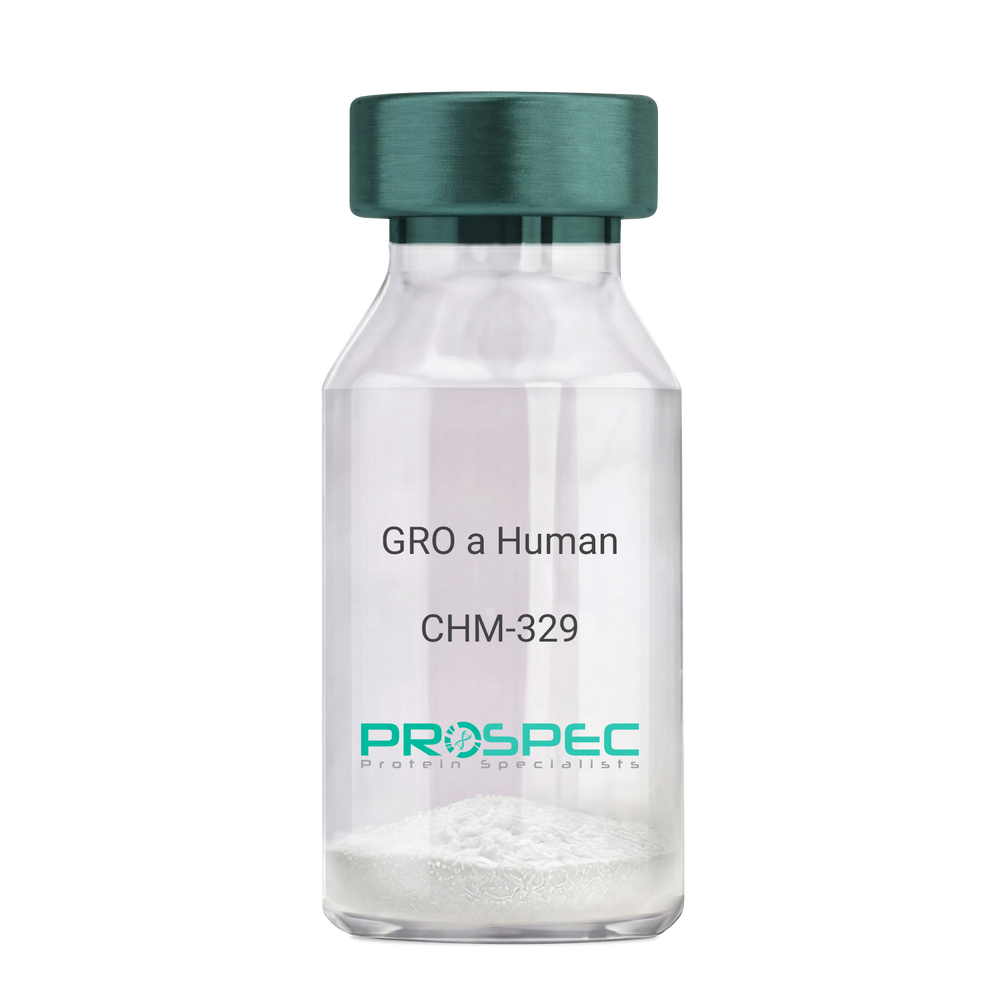
GRO-Alpha Human Recombinant (CXCL1)
Growth-regulated protein alpha, CXCL1, Melanoma growth stimulatory activity, MGSA, Neutrophil-activating protein 3, NAP-3, GRO-alpha (1-73), chemokine (C-X-C motif) ligand 1, GRO1, GROa, SCYB1, MGSA-a, MGSA alpha.
Product # :
CHM-329Price :
Quantity :
Shipping Method :
Shipped at Room temp
More Info
- description
- source
- formulation
- purity
- biological activity
- More Info
Description
GRO Alpha Human Recombinant produced in E.Coli is a single,non-glycosylated, polypeptide chain containing 73 amino acids and having a molecular mass of 7811 Dalton. The GRO-alpha is purified by proprietary chromatographic techniques.
Source
Escherichia Coli.
Formulation
Lyophilized from a 0.2µm filtered concentrated (1mg/ml) solution in 20mM PB, pH 7.4, 50mM NaCl.
Purity
Greater than 97.0% as determined by:
(a) Analysis by RP-HPLC.
(b) Analysis by SDS-PAGE.Biological Activity
Determined by its ability to chemoattract human peripheral blood neutrophils using a concentration range of 10.0-100.0 ng/ml.
More Info
-
Introduction
Chemokine (C-X-C motif) ligand 1 (CXCL1) is a small cytokine belonging to the CXC chemokine family that was previously called GRO1 oncogene, Neutrophil-activating protein 3 (NAP-3) and melanoma growth stimulating activity, alpha (MSGA-a). It is secreted by human melanoma cells, has mitogenic properties and is implicated in melanoma pathogenesis. CXCL1 is expressed by macrophages, neutrophilsand epithelial cells, and has neutrophil chemoattractant activity. CXCL1 plays a role in spinal cord development by inhibiting the migration of oligodendrocyte precursors and is involved in the processes of angiogenesis, inflammation, wound healing, and tumorigenesis. This chemokine elicits its effects by signaling through the chemokine receptor CXCR2. The gene for CXCL1 is located on human chromosome 4 amongst genes for other CXC chemokines.
-
Synonyms
Growth-regulated protein alpha, CXCL1, Melanoma growth stimulatory activity, MGSA, Neutrophil-activating protein 3, NAP-3, GRO-alpha (1-73), chemokine (C-X-C motif) ligand 1, GRO1, GROa, SCYB1, MGSA-a, MGSA alpha.
-
Physical Appearance
Sterile Filtered White lyophilized (freeze-dried) powder.
-
Stability
Lyophilized GRO-alpha although stable at room temperature for 3 weeks, should be stored desiccated below -18°C. Upon reconstitution CXCL1 should be stored at 4°C between 2-7 days and for future use below -18°C. For long term storage it is recommended to add a carrier protein (0.1% HSA or BSA).Please prevent freeze-thaw cycles.
-
Solubility
It is recommended to reconstitute the lyophilized CXCL1 in sterile 18MΩ-cm H2O not less than 100µg/ml, which can then be further diluted to other aqueous solutions.
-
Amino Acid Sequence
The sequence of the first five N-terminal amino acids was determined and was found to be Ala-Ser-Val-Ala-Thr.
-
Background
What is the molecular weight/Mw of CXCL1 HUMAN Protein?
CXCL1 HUMAN Protein has a total Mw of 7.81kDa.
What is the source or expression system of CXCL1 HUMAN Protein?
Escherichia Coli.
What is the Purity of CXCL1 HUMAN Protein?
CXCL1 HUMAN Protein is >97% pure as determined by SDS-PAGE.
What is the Biological Activity of CXCL1 HUMAN Protein?
Determined by its ability to chemoattract human peripheral blood neutrophils using a concentration range of 10.0-100.0 ng/ml.
What is the amino acid sequence of CXCL1 HUMAN Protein?
The sequence of the first five N-terminal amino acids was determined and was found to be Ala-Ser-Val-Ala-Thr.
What applications can CXCL1 HUMAN Protein be used in?
CXCL1 HUMAN Protein can probably be used in western blot, ELISA and Lateral Flow.
What is the endotoxin level for CXCL1 HUMAN Protein?
The endotoxin level is minimal, CXCL1 HUMAN Protein was purified using conventional chromatography techniques.
ProSpec's products are furnished for LABORATORY RESEARCH USE ONLY. The product may not be used as drugs, agricultural or pesticidal products, food additives or household chemicals.
- View Data Sheet
Name :
PTGR1 HumanDescription:
Prostaglandin Reductase 1 Human Recombinant
Prostaglandin reductase 1, PRG-1, 15-oxoprostaglandin 13-reductase, NADP-dependent leukotriene B4 12-hydroxydehydrogenase, PTGR1, LTB4DH, PGR1, ZADH3.
Product # :
ENZ-633Price :
Quantity :
Shipping Method :
Shipped with Ice Packs
More Info
- description
- source
- formulation
- purity
- More Info
Description
PTGR1 Human Recombinant produced in E. coli is a single polypeptide chain containing 354 amino acids (1-329) and having a molecular mass of 38.6kDa.PTGR1 is fused to a 25 amino acid His-tag at N-terminus & purified by proprietary chromatographic techniques.
Source
Escherichia Coli.
Formulation
The PTGR1 solution (0.5mg/ml) contains 20mM Tris-HCl buffer, pH7.5, 10% glycerol, 1mM DTT and 200mM NaCl.
Purity
Greater than 90.0% as determined by SDS-PAGE.
More Info
-
Introduction
Prostaglandin Reductase 1 (PTGR1) is a member of the NADP-dependent oxidoreductase L4BD family. PTGR1 catalyzes the conversion of leukotriene B4 into its biologically less active metabolite, 12-oxo-leukotriene B4, thus being a primary step of metabolic inactivation of leukotriene B4. PTGR1 is highly expressed in the kidney, liver, and intestine but not in leukocytes.
-
Synonyms
Prostaglandin reductase 1, PRG-1, 15-oxoprostaglandin 13-reductase, NADP-dependent leukotriene B4 12-hydroxydehydrogenase, PTGR1, LTB4DH, PGR1, ZADH3.
-
Physical Appearance
Sterile filtered colorless solution.
-
Stability
Store at 4°C if entire vial will be used within 2-4 weeks. Store, frozen at -20°C for longer periods of time. For long term storage it is recommended to add a carrier protein (0.1% HSA or BSA).Avoid multiple freeze-thaw cycles.
-
Amino Acid Sequence
MGSSHHHHHH SSGLVPRGSH MGSEFMVRTK TWTLKKHFVG YPTNSDFELK TAELPPLKNG EVLLEALFLT VDPYMRVAAK RLKEGDTMMG QQVAKVVESK NVALPKGTIV LASPGWTTHS ISDGKDLEKL LTEWPDTIPL SLALGTVGMP GLTAYFGLLE ICGVKGGETV MVNAAAGAVG SVVGQIAKLK GCKVVGAVGS DEKVAYLQKL GFDVVFNYKT VESLEETLKK ASPDGYDCYF DNVGGEFSNT VIGQMKKFGR IAICGAISTY NRTGPLPPGP PPEIVIYQEL RMEAFVVYRW QGDARQKALK DLLKWVLEGK IQYKEYIIEG FENMPAAFMG MLKGDNLGKT IVKA.
ProSpec's products are furnished for LABORATORY RESEARCH USE ONLY. The product may not be used as drugs, agricultural or pesticidal products, food additives or household chemicals.
- View Data Sheet
Name :
PTPN1 HumanDescription:
Protein Tyrosine Phosphatase Non Receptor Type-1 Human Recombinant
Tyrosine-protein phosphatase non-receptor type 1, EC 3.1.3.48, Protein-tyrosine phosphatase 1B, PTP-1B, PTPN1, PTP1B.
Product # :
PKA-219Price :
Quantity :
Shipping Method :
Shipped with Ice Packs
More Info
- description
- source
- formulation
- purity
- biological activity
- More Info
Description
Protein Tyrosine Phosphatase Non Receptor Type-1 Human Recombinant produced in E.Coli is a single, non-glycosylated polypeptide chain containing 321 amino acids and having a molecular mass of 37.3 kDa.
Source
Escherichia Coli.
Formulation
The protein (1mg/ml) contains 25mM Tris-HCl, pH 7.5, 2mM beta-mercaptoethanol, 1mM EDTA, 1mM DTT and 20% Glycerol.
Purity
Greater than 95.0% as determined by SDS-PAGE.
Biological Activity
Specific activity is > 10,000 units/mg, and is defined as the amount of enzyme that hydrolyze 1.0 nmole of p-nitrophenyl phosphate (pNPP) per minute at pH 7.5 at 37°C.More Info
-
Introduction
Protein Tyrosine Phosphatase 1B is the founding member of the protein tyrosine phosphatase (PTP) family, which was isolated and identified based on its enzymatic activity and amino acid sequence. PTPs catalyze the hydrolysis of the phosphate monoesters specifically on tyrosine residues. Members of the PTP family share a highly conserved catalytic motif, which is essential for the catalytic activity. PTPs are known to be signaling molecules that regulate a variety of cellular processes including cell growth, differentiation, mitotic cycle, and oncogenic transformation. This PTP has been shown to act as a negative regulator of INS signaling by dephosphorylating the phosphotryosine residues of INS receptor kinase. This PTP was also reported to dephosphorylate epidermal growth factor receptor kinase, as well as JAK2 and TYK2 kinases, which implicated the role of this PTP in cell growth control, and cell response to IFN stimulation.
-
Synonyms
Tyrosine-protein phosphatase non-receptor type 1, EC 3.1.3.48, Protein-tyrosine phosphatase 1B, PTP-1B, PTPN1, PTP1B.
-
Physical Appearance
Sterile filtered colorless solution.
-
Stability
Store at 4°C if entire vial will be used within 2-4 weeks. Store, frozen at -20°C for longer periods of time. For long term storage it is recommended to add a carrier protein (0.1% HSA or BSA). Avoid multiple freeze-thaw cycles.
-
Amino Acid Sequence
MEMEKEFEQI DKSGSWAAIY QDIRHEASDF PCRVAKLPKN KNRNRYRDVS PFDHSRIKLHQEDNDYINAS LIKMEEAQRS YILTQGPLPN TCGHFWEMVW EQKSRGVVML NRVMEKGSLKCAQYWPQKEE KEMIFEDTNL KLTLISEDIK SYYTVRQLEL ENLTTQETRE ILHFHYTTWPDFGVPESPAS FLNFLFKVRE SGSLSPEHGP VVVHCSAGIG RSGTFCLADT CLLLMDKRKDPSSVDIKKVL LEMRKFRMGL IQTADQLRFS YLAVIEGAKF IMGDSSVQDQ WKELSHEDLE PPPEHIPPPPRPPKRILEPHN.
ProSpec's products are furnished for LABORATORY RESEARCH USE ONLY. The product may not be used as drugs, agricultural or pesticidal products, food additives or household chemicals.
- View Data Sheet
Name :
PTRH2 HumanDescription:
Peptidyl-tRNA Hydrolase 2 Human Recombinant
Peptidyl-tRNA hydrolase 2, mitochondrial, PTH 2, Bcl-2 inhibitor of transcription 1, PTRH2, BIT1, PTH2, CGI-147, FLJ32471, PTRH2.
Product # :
ENZ-045Price :
Quantity :
Shipping Method :
Shipped with Ice Packs
More Info
- description
- source
- formulation
- purity
- More Info
Description
PTRH2 Human Recombinant fused with a 21 amino acid His tag at N-terminus produced in E.Coli is a single, non-glycosylated, polypeptide chain containing 137 amino acids (64-179 a.a.) and having a molecular mass of 14.9kDa. The PTRH2 is purified by proprietary chromatographic techniques.
Source
Escherichia Coli.
Formulation
The PTRH2 solution (1 mg/ml) contains 20mM Tris-HCl buffer (pH 8.0), 10% glycerol and 1mM DTT.
Purity
Greater than 95.0% as determined by SDS-PAGE.
More Info
-
Introduction
Peptidyl-tRNA hydrolase 2 (PTRH2) is a mitochondrial protein. PTRH2 is released during apoptosis from the mitochondria to the cytoplasm. When in the cytoplasm, PTRH2 regulates the function of 2 transcriptional regulators, TLE5 and TLE1, thus promoting caspase-independent cell death. Natural substrates for PTRH2 may be petidyl-tRNAs which drop off the ribosome during protein synthesis.
-
Synonyms
Peptidyl-tRNA hydrolase 2, mitochondrial, PTH 2, Bcl-2 inhibitor of transcription 1, PTRH2, BIT1, PTH2, CGI-147, FLJ32471, PTRH2.
-
Physical Appearance
Sterile Filtered colorless solution.
-
Stability
Store at 4°C if entire vial will be used within 2-4 weeks. Store, frozen at -20°C for longer periods of time. For long term storage it is recommended to add a carrier protein (0.1% HSA or BSA).Avoid multiple freeze-thaw cycles.
-
Amino Acid Sequence
MGSSHHHHHH SSGLVPRGSH MEYKMILVVR NDLKMGKGKV AAQCSHAAVS AYKQIQRRNP EMLKQWEYCG QPKVVVKAPD EETLIALLAH AKMLGLTVSL IQDAGRTQIA PGSQTVLGIG PGPADLIDKV TGHLKLY.
ProSpec's products are furnished for LABORATORY RESEARCH USE ONLY. The product may not be used as drugs, agricultural or pesticidal products, food additives or household chemicals.
- View Data Sheet
Name :
VHL HumanDescription:
Von Hippel-Lindau Protein Human Recombinant
Von Hippel-Lindau disease tumor suppressor, pVHL, Protein G7, VHL, RCA1, VHL1, HRCA1.
Product # :
PRO-440Price :
Quantity :
Shipping Method :
Shipped with Ice Packs
More Info
- description
- source
- formulation
- purity
- More Info
Description
Recombinant Human Von Hippel-Lindau Protein b-domain produced in E.Coli is a single, non-glycosylated polypeptide chain containing 174 amino acids (1-154) & having a molecular mass of 19.2 kDa. The Von Hippel-Lindau antigen is fused to 20 amino acid His-Tag at N-terminus and purified by proprietary chromatography techniques.
Source
Escherichia Coli.
Formulation
The Von Hippel-Lindau Protein contains 1x PBS pH-7.4, 2mM EDTA, and 1mM DTT.
Purity
Greater than 95.0% as determined by SDS-PAGE.
More Info
-
Introduction
Von Hippel-Lindau disease is a dominant inherited syndrome characterized by the predisposition to develop various kinds of benign and malignant tumors, including clear cell renal carcinomas, pheochromocytomas and hemangioblastomas of the central nervous system and retina. VHL syndrome is caused by germline mutation in the VHL tumor suppressor, and VHL tumors are associated with loss or mutation of the remaining wild-type allele. VHL has two domains: a roughly 100-residue NH2-terminal domain rich in b sheet (b-domain) and a smaller a-helical domain (a-domain), held together by two linkers and a polar interface. VHL protein is also involved in the degradation of hypoxia-inducible factor (HIF).
-
Synonyms
Von Hippel-Lindau disease tumor suppressor, pVHL, Protein G7, VHL, RCA1, VHL1, HRCA1.
-
Physical Appearance
Sterile filtered colorless solution.
-
Stability
Store at 4°C if entire vial will be used within 2-4 weeks. Store, frozen at -20°C for longer periods of time. For long term storage it is recommended to add a carrier protein (0.1% HSA or BSA). Avoid multiple freeze-thaw cycles.
-
Amino Acid Sequence
MGSSHHHHHH SSGLVPRGSH MPRRAENWDE AEVGAEEAGV EEYGPEEDGG EESGAEESGPEESGPEELGA EEEMEAGRPR PVLRSVNSRE PSQVIFCNRS PRVVLPVWLN FDGEPQPYPT LPPGTGRRIH SYRGHLWLFR DAGTHDGLLV NQTELFVPSL NVDGQPIFAN ITLP.
ProSpec's products are furnished for LABORATORY RESEARCH USE ONLY. The product may not be used as drugs, agricultural or pesticidal products, food additives or household chemicals.
- View Data Sheet
Name :
RELM g MouseDescription:
RELM-Gamma Mouse Recombinant
Resistin-like gamma, RELMgamma,RELM-γ, RELM-g.
Product # :
CYT-1035Price :
Quantity :
Shipping Method :
Shipped at Room temp
More Info
- description
- source
- formulation
- purity
- More Info
Description
RELM g Mouse Recombinant produced in E.Coli is a non glycosylated, homodimeric polypeptide chain containing 2 x 89 amino acids and having a total molecular mass of 18.9kDa. The RELM is purified by proprietary chromatographic techniques.
Source
Escherichia Coli.
Formulation
Lyophilized from a sterile filtered solution containing 0.1 % trifluoroacetic acid (TFA).
Purity
Greater than 95.0% as determined by SDS-PAGE.
More Info
-
Introduction
RELM-gamma is a novel member of the resistin-like molecule/found in inflammatory zone (RELM/FIZZ) family in mice and rats. Microarray and real-time RT-PCR experiments revealed a repression of RELMgamma mRNA in nasal respiratory epithelium of cigarette smoke-exposed versus untreated rats. The analysis of the physiological tissue-specific expression revealed highest expression in hematopoietic tissues, suggesting a cytokine-like role for RELM-gamma. RELM-gamma-mRNA is detectable in bone marrow, spleen, and lung as well as in peripheral blood granulocytes. Promyelocytic HL60 cells transfected with a RELM-gamma expression plasmid have an increased proliferation rate compared to mock-transfected cells and display an altered response to retinoic acid-induced granulocytic differentiation. Taken together, these data provide the first experimental evidence that RELM-gamma is a secreted molecule with a restricted expression pattern that may play a role in promyelocytic differentiation.
-
Synonyms
Resistin-like gamma, RELMgamma,RELM-γ, RELM-g.
-
Physical Appearance
Sterile Filtered White lyophilized (freeze-dried) powder.
-
Stability
Lyophilized RELM g although stable at room temperature for 3 weeks, should be stored desiccated below -18°C. Upon reconstitution RELM g Mouse should be stored at 4°C between 2-7 days and for future use below -18°C. For long term storage it is recommended to add a carrier protein (0.1% HSA or BSA). Please prevent freeze-thaw cycles.
-
Solubility
It is recommended to reconstitute the lyophilized RELM g in sterile 18MΩ-cm H2O at a concentration of 100µg/ml, which can then be further diluted to other aqueous solutions.
-
Amino Acid Sequence
MEGTLESIVE KKVKELLANR DDCPSTVTKT FSCTSITASG RLASCPSGMT VTGCACGYGC GSWDIRDGNT CHCQCSTMDW ATARCCQLA.
ProSpec's products are furnished for LABORATORY RESEARCH USE ONLY. The product may not be used as drugs, agricultural or pesticidal products, food additives or household chemicals.
- View Data Sheet
Name :
LGALSL HumanDescription:
Lectin Galactoside-Binding-Like Human Recombinant
GRP, HSPC159, Galectin-related protein, Lectin galactoside-binding-like protein, LGALSL.
Product # :
PRO-1374Price :
Quantity :
Shipping Method :
Shipped with Ice Packs
More Info
- description
- source
- formulation
- purity
- More Info
Description
LGALSL Human Recombinant produced in E.Coli is a single, non-glycosylated polypeptide chain containing 195 amino acids (1-172a.a) and having a molecular mass of 21.4kDa. LGALSL is fused to a 23 amino acid His-tag at N-terminus & purified by proprietary chromatographic techniques.
Source
E.coli.
Formulation
LGALSL protein solution (0.5mg/ml) containing 20mM Tris-HCl buffer (pH 8.0), 0.1M NaCl, 20% glycerol and 1mM DTT.
Purity
Greater than 90% as determined by SDS-PAGE.
More Info
-
Introduction
Galectins are a family of soluble b-galactoside-binding animal lectins that modulate cell-to-cell adhesion and cell-to-extracellular matrix interactions. Galectins also take part in tumor progression, pre-mRNA splicing and apoptosis. Galectin-related protein (LGALSL) is a 172 amino acid protein which holds one galectin domain. In spite of this, LGALSL does not appear to bind carbohydrates or lactose since the critical residues required for binding are not conserved.
-
Synonyms
GRP, HSPC159, Galectin-related protein, Lectin galactoside-binding-like protein, LGALSL.
-
Physical Appearance
Sterile Filtered colorless solution.
-
Stability
Store at 4°C if entire vial will be used within 2-4 weeks. Store, frozen at -20°C for longer periods of time. For long term storage it is recommended to add a carrier protein (0.1% HSA or BSA).Avoid multiple freeze-thaw cycles.
-
Amino Acid Sequence
MGSSHHHHHH SSGLVPRGSH MGSMAGSVAD SDAVVKLDDG HLNNSLSSPV QADVYFPRLI VPFCGHIKGG MRPGKKVLVM GIVDLNPESF AISLTCGDSE DPPADVAIEL KAVFTDRQLL RNSCISGERG EEQSAIPYFP FIPDQPFRVE ILCEHPRFRV FVDGHQLFDF YHRIQTLSAI DTIKINGDLQ ITKLG.
ProSpec's products are furnished for LABORATORY RESEARCH USE ONLY. The product may not be used as drugs, agricultural or pesticidal products, food additives or household chemicals.
- View Data Sheet
Name :
TYMP HumanDescription:
Thymidine Phosphorylase Human Recombinant
Thymidine phosphorylase, Gliostatin, Platelet-derived endothelial cell growth factor, PD-ECGF, TdRPase, TYMP, ECGF1, TP, MNGIE, MEDPS1, MTDPS1, PDECGF, hPD-ECGF.
Product # :
ENZ-005Price :
Quantity :
Shipping Method :
Shipped with Ice Packs
More Info
- description
- source
- formulation
- purity
- More Info
Description
TYMP Human Recombinant fused with a 21 amino acid His tag at N-terminus produced in E.Coli is a single, non-glycosylated, polypeptide chain containing 493 amino acids (11-482 a.a.) and having a molecular mass of 51.3kDa. The TYMP is purified by proprietary chromatographic techniques.
Source
Escherichia Coli.
Formulation
The TYMP solution (1mg/ml) contains 20mM Tris-HCl buffer (pH 8.0), 1mM DTT and 10% glycerol.
Purity
Greater than 90.0% as determined by SDS-PAGE.
More Info
-
Introduction
Thymidine phosphorylase precursor (TYMP) is a platelet-derived endothelial cell growth factor that catalyzes the formation of thymine and 2-deoxy-D-ribose-1-phosphate from thymidine and orthophosphate. TYMP is an angiogenic inducer that potently stimulates the growth of endothelial cells and induces chemotaxis. TYMP has a highly restricted target cell specificity acting only on endothelial cells. An increased expression of TYMP is found in a broad array of different solid tumors and inflammatory diseases and is frequently associated with poor prognosis. Mutations in the TYMP gene are linked to mitochondrial neurogastrointestinal encephalomyopathy.
-
Synonyms
Thymidine phosphorylase, Gliostatin, Platelet-derived endothelial cell growth factor, PD-ECGF, TdRPase, TYMP, ECGF1, TP, MNGIE, MEDPS1, MTDPS1, PDECGF, hPD-ECGF.
-
Physical Appearance
Sterile Filtered colorless solution.
-
Stability
Store at 4°C if entire vial will be used within 2-4 weeks. Store, frozen at -20°C for longer periods of time. For long term storage it is recommended to add a carrier protein (0.1% HSA or BSA).Avoid multiple freeze-thaw cycles.
-
Amino Acid Sequence
MGSSHHHHHH SSGLVPRGSH MAPPAPGDFS GEGSQGLPDP SPEPKQLPEL IRMKRDGGRL SEADIRGFVA AVVNGSAQGA QIGAMLMAIR LRGMDLEETS VLTQALAQSG QQLEWPEAWR QQLVDKHSTG GVGDKVSLVL APALAACGCK VPMISGRGLG HTGGTLDKLE SIPGFNVIQS PEQMQVLLDQ AGCCIVGQSE QLVPADGILY AARDVTATVD SLPLITASIL SKKLVEGLSA LVVDVKFGGA AVFPNQEQAR ELAKTLVGVG ASLGLRVAAA LTAMDKPLGR CVGHALEVEE ALLCMDGAGP PDLRDLVTTL GGALLWLSGH AGTQAQGAAR VAAALDDGSA LGRFERMLAA QGVDPGLARA LCSGSPAERR QLLPRAREQE ELLAPADGTV ELVRALPLAL VLHELGAGRS RAGEPLRLGV GAELLVDVGQ RLRRGTPWLR VHRDGPALSG PQSRALQEAL VLSDRAPFAA PSPFAELVLP PQQ.
ProSpec's products are furnished for LABORATORY RESEARCH USE ONLY. The product may not be used as drugs, agricultural or pesticidal products, food additives or household chemicals.