Search results
1000 results found for “HERV-K”
Name
Description
Product #
Price
Quantity
Shipping Method
- View Data Sheet
Name :
FLT1 D7 MouseDescription:
Vascular Endothelial Growth Factor Receptor-1 D1-7 Mouse Recombinant
FLT-1, FLT1, Tyrosine-protein kinase receptor FLT, Flt-1, Tyrosine-protein kinase FRT, Fms-like tyrosine kinase 1, VEGFR-1.
Product # :
PKA-312Price :
Quantity :
Shipping Method :
Shipped at Room temp
More Info
- description
- source
- formulation
- purity
- biological activity
- More Info
Description
Soluble FLT1 Mouse Recombinant fused with the Fc part of human IgG1 produced in baculovirus is disulfide-linked homodimeric , polypeptide containing 965 amino acids. The monomers have a molecular mass of 130 kDa. The soluble receptor protein contains all 7 extracellular domains (Tyr23-Asn757), which contain all the information necessary for high affinity ligand binding.
Source
Insect Cells.
Formulation
FLT1 D1-7 was lyophilized from a concentrated (1 mg/ml) sterile solution containing PBS Buffer.
Purity
Greater than 95.0% as determined by SDS-PAGE.
Biological Activity
The activity of sVEGFR-1/Fc was determined by its ability to inhibit the VEGF-dependent proliferation of human umbilical vein endothelial cells.More Info
-
Introduction
Endothelial cells express three different vascular endothelial growth factor (VEGF) receptors, belonging to the family of receptor tyrosine kinases (RTKs). They are named VEGFR-1 (Flt-1), VEGFR-2 (KDR/Flk-1), and VEGFR-3 (Flt-4). Their expression is almost exclusively restricted to endothelial cells, but VEGFR-1 can also be found on monocytes. All VEGF-receptors have seven immunoglobulin-like extracellular domains, a single transmembrane region and an intracellular split tyrosine kinase domain. VEGFR-2 has a lower affinity for VEGF than the Flt-1 receptor, but a higher signalling activity. Mitogenic activity in endothelial cells is mainly mediated by VEGFR-2 leading to their proliferation. Differential splicing of the flt-1 gene leads to the formation of a secreted, soluble variant of VEGFR-1 (sVEGFR-1). No naturally occurring, secreted forms of VEGFR-2 have so far been reported. The binding of VEGF165 to VEGFR-2 is dependent on heparin.
-
Synonyms
FLT-1, FLT1, Tyrosine-protein kinase receptor FLT, Flt-1, Tyrosine-protein kinase FRT, Fms-like tyrosine kinase 1, VEGFR-1.
-
Physical Appearance
Sterile Filtered White lyophilized (freeze-dried) powder.
-
Stability
Lyophilized FLT-1 although stable at room temperature for 3 weeks, should be stored desiccated below -18C. Upon reconstitution FLT1 should be stored at 4C between 2-7 days and for future use below -18C. For long term storage it is recommended to add a carrier protein (0.1% HSA or BSA). Please prevent freeze-thaw cycles.
-
Solubility
It is recommended to reconstitute the lyophilized FLT1 Fc/Chimera in PBS not less than 50µg/ml, which can then be further diluted to other aqueous solutions.
-
Amino Acid Sequence
YGSGSKLKVP ELSLKGTQHV MQAGQTLFLK CRGEAAHSWS LPTTVSQEDK RLSITPPSAC GRDNRQFCST LTLDTAQANH TGLYTCRYLP TSTSKKKKAE SSIYIFVSDA GSPFIEMHTD IPKLVHMTEG RQLIIPCRVT SPNVTVTLKK FPFDTLTPDG QRITWDSRRG FIIANATYKE IGLLNCEATV NGHLYQTNYL THRQTNTILD VQIRPPSPVR LLHGQTLVLN CTATTELNTR VQMSWNYPGK ATKRASIRQR IDRSHSHNNV FHSVLKINNV ESRDKGLYTC RVKSGSSFQS FNTSVHVYEK GFISVKHRKQ PVQETTAGRR SYRLSMKVKA FPSPEIVWLK DGSPATLKSA RYLVHGYSLI IKDVTTEDAG DYTILLGIKQ SRLFKNLTAT LIVNVKPQIY EKSVSSLPSP PLYPLGSRQV LTCTVYGIPR PTITWLWHPC HHNHSKERYD FCTENEESFI LDPSSNLGNR IESISQRMTV IEGTNKTVST LVVADSQTPG IYSCRAFNKI GTVERNIKFY VTDVPNGFHV SLEKMPAEGE DLKLSCVVNK FLYRDITWIL LRTVNNRTMH HSISKQKMAT TQDYSITLNL VIKNVSLEDS GTYACRARNI YTGEDILRKT EVLVRDSEAP HLLQNLSDYE VSISGSTTLD CQARGVPAPQ ITWFKNNHKI QQEPGIILGP GNSTLFIERV TEEDEGVYRC RATNQKGAVE SAAYLTVQGT SDKSNAASDK THTCPPCPAP ELLGGPSVFL FPPKPKDTLM ISRTPEVTCV VVDVSHEDPE VKFNWYVDGV EVHNAKTKPR EEQYNSTYRV VSVLTVLHQD WLNGKEYKCK VSNKALPAPI EKTISKAKGQ PREPQVYTLP PSREEMTKNQ VSLTCLVKGF YPSDIAVEWE SNGQPENNYK TTPPMLDSDG SFFLYSKLTV DKSRWQQGNV FSCSVMHEAL HNHYTQKSLS LSPGK
ProSpec's products are furnished for LABORATORY RESEARCH USE ONLY. The product may not be used as drugs, agricultural or pesticidal products, food additives or household chemicals.
- View Data Sheet
Name :
FLT4 Fc HumanDescription:
Vascular Endothelial Growth Factor Receptor-3 Fc Chimera Human Recombinant
Tyrosine-protein kinase receptor FLT4, PCL, FLT41, FMS-LIKE TYROSINE KINASE 4, VEGFR-3.
Product # :
PKA-245Price :
Quantity :
Shipping Method :
Shipped at Room temp
More Info
- description
- source
- formulation
- purity
- biological activity
- More Info
Description
Soluble FLT4 Human Recombinant fused with the Fc part of human IgG1 produced in baculovirus is a monomeric, glycosylated, polypeptide containing 774 amino acids and having a molecular mass of 260 kDa. The soluble receptor protein contains only the first 7 extracellular domains, which contain all the information necessary for ligand binding.The FLT4 Fc Chimera is purified by proprietary chromatographic techniques.
Source
Insect Cells.
Formulation
FLT4 Fc Chimera was lyophilized from a concentrated (1 mg/ml) sterile solution containing no additives.
Purity
Greater than 90.0% as determined by(a)Analysis by RP-HPLC.
(b)Analysis by SDS-PAGE.Biological Activity
Measured by its ability to bind recombinant rat VEGF-C in a functional solid phase binding assay. Immobilised recombinant human VEGFR-3/FLT-4 at 5 µg/ml can bind recombinant rat VEGF-C in a linear range of 8-500 ng/ml.More Info
-
Introduction
All three VEGF receptors belong to the class III subfamily of receptor tyrosine kinases (RTKs) characterised by the seven immunoglobulin-like loops in the extracellular domain. The expression of VEGFR-1 to -3 is almost exclusively restricted to hematopoietic precursor cells, vascular and lymphatic endothelial cells and to the monocyte/macrophage lineage. They play key roles in vasculogenesis, hematopoiesis, angiogenesis and lymphangiogenesis. The FLT-4 cDNA encodes a 1298 amino acid (aa) residue precursor protein with a 23 aa residue signal peptide. Mature VEGFR-3/FLT-4 is composed of a 751 aa residue extracellular domain, a 22 aa transmembrane domain and a 482 aa residue cytoplasmic domain. Both VEGF family members VEGF-C and VEGF-D have been shown to bind and activate VEGFR-3/FLT-4. The Flt-4 gene is widely expressed in the early embryo but becomes restricted to the lymphatic endothelial a latter stages of development. It is important for lymphangiogenesis.
-
Synonyms
Tyrosine-protein kinase receptor FLT4, PCL, FLT41, FMS-LIKE TYROSINE KINASE 4, VEGFR-3.
-
Physical Appearance
Sterile Filtered White lyophilized (freeze-dried) powder.
-
Stability
Lyophilized FLT4 although stable at room temperature for 3 weeks, should be stored desiccated below -18°C. Upon reconstitution FLT4 should be stored at 4°C between 2-7 days and for future use below -18°C.For long term storage it is recommended to add a carrier protein (0.1% HSA or BSA).Please prevent freeze-thaw cycles.
-
Solubility
It is recommended to reconstitute the lyophilized FLT4 Fc Chimera in sterile water not less than 100 µg/ml, which can then be further diluted to other aqueous solutions.
ProSpec's products are furnished for LABORATORY RESEARCH USE ONLY. The product may not be used as drugs, agricultural or pesticidal products, food additives or household chemicals.
- View Data Sheet
Name :
FN3KRP HumanDescription:
Fructosamine 3 Kinase Related Protein Human Recombinant
Ketosamine-3-kinase, Fructosamine-3-kinase-related protein, FN3K-RP, FN3K-related protein, FN3KRP, FN3KL.
Product # :
PKA-051Price :
Quantity :
Shipping Method :
Shipped with Ice Packs
More Info
- description
- source
- formulation
- purity
- More Info
Description
FN3KRP Human Recombinant produced in E.Coli is a single, non-glycosylated polypeptide chain containing 332 amino acids (1-309 a.a) and having a molecular mass of 36.8kDa.FN3KRP is fused to a 23 amino acid His-tag at N-terminus & purified by proprietary chromatographic techniques.
Source
Escherichia Coli.
Formulation
FN3KRP protein solution (1mg/ml) containing 20mM Tris-HCl buffer (pH 8.0), 0.4M urea and 10% glycerol.
Purity
Greater than 90.0% as determined by SDS-PAGE.
More Info
-
Introduction
Ketosamine-3-kinase (FN3KRP) catalyzes the phosphorylation of psicosamines and ribulosamines compared to the adjacent gene which encodes a highly analogous enzyme, fructosamine-3-kinase that has different substrate specificity. The activity of both enzymes may cause deglycation of proteins to reinstate their function. A high concentration of glucose can result in non-enzymatic oxidation of proteins by reaction of glucose and lysine residues (glycation). The proteins altered in this way, are less active or functional.
-
Synonyms
Ketosamine-3-kinase, Fructosamine-3-kinase-related protein, FN3K-RP, FN3K-related protein, FN3KRP, FN3KL.
-
Physical Appearance
Sterile filtered colorless solution.
-
Stability
Store at 4°C if entire vial will be used within 2-4 weeks. Store, frozen at -20°C for longer periods of time. For long term storage it is recommended to add a carrier protein (0.1% HSA or BSA).Avoid multiple freeze-thaw cycles.
-
Amino Acid Sequence
MGSSHHHHHH SSGLVPRGSH MGSMEELLRR ELGCSSVRAT GHSGGGCISQ GRSYDTDQGR VFVKVNPKAE ARRMFEGEMA SLTAILKTNT VKVPKPIKVL DAPGGGSVLV MEHMDMRHLS SHAAKLGAQL ADLHLDNKKL GEMRLKEAGT VGRGGGQEER PFVARFGFDV VTCCGYLPQV
NDWQEDWVVF YARQRIQPQM DMVEKESGDR EALQLWSALQ LKIPDLFRDL EIIPALLHGD LWGGNVAEDS SGPVIFDPAS FYGHSEYELA IAGMFGGFSS SFYSAYHGKI PKAPGFEKRL QLYQLFHYLN HWNHFGSGYR GSSLNIMRNL VK.
ProSpec's products are furnished for LABORATORY RESEARCH USE ONLY. The product may not be used as drugs, agricultural or pesticidal products, food additives or household chemicals.
- View Data Sheet
Name :
KGF 2 MouseDescription:
Keratinocyte Growth Factor-2 Mouse Recombinant
FGFA, FGF10, FGF-10, KGF-2, Fibroblast growth factor 10.
Product # :
CYT-126Price :
Quantity :
Shipping Method :
Shipped at Room temp
More Info
- description
- source
- formulation
- purity
- biological activity
- More Info
Description
KGF 2 Mouse Recombinant produced in E.Coli is a single, non-glycosylated polypeptide chain containing 173 amino acids and having a molecular mass of 19.5kDa. The KGF 2 is purified by proprietary chromatographic techniques.
Source
Escherichia Coli.
Formulation
Lyophilized from a 0.2µm filtered concentrated solution in 1×PBS, pH 7.4 containing 5% trehalose.
Purity
Greater than 97.0% as determined by:
(a) Analysis by RP-HPLC.
(b) Analysis by SDS-PAGE.Biological Activity
Fully biologically active when compared to standard. The ED50 as determined by the dose-dependent stimulation of thymidine uptake by BaF3 cells expressing FGF receptors is <0.5ng/ml.More Info
-
Introduction
KGF-2 is a member of the fibroblast growth factor (FGF) family. FGF family members possess broad mitogenic and cell survival activities, and are involved in a variety of biological processes, including embryonic development, cell growth, morphogenesis, tissue repair, tumor growth and invasion. FGF-10 exhibits mitogenic activity for keratinizing epidermal cells, but essentially no activity for fibroblasts, which is similar to the biological activity of FGF7. Studies of the mouse homolog of suggested that this gene is required for embryonic epidermal morphogenesis including brain development, lung morphogenesis, and initiation of lim bud formation. This gene is also implicated to be a primary factor in the process of wound healing.
-
Synonyms
FGFA, FGF10, FGF-10, KGF-2, Fibroblast growth factor 10.
-
Physical Appearance
Sterile Filtered White lyophilized (freeze-dried) powder.
-
Stability
Lyophilized KGF 2 although stable at room temperature for 3 weeks, should be stored desiccated below -18°C. Upon reconstitution KGF 2 should be stored at 4°C between 2-7 days and for future use below -18°C. For long term storage it is recommended to add a carrier protein (0.1% HSA or BSA).Please prevent freeze-thaw cycles.
-
Solubility
It is recommended to reconstitute the lyophilized KGF 2 Mouse Recombinant in sterile 18M-cm H2O not less than 100µg/ml, which can then be further diluted to other aqueous solutions.
-
Amino Acid Sequence
QALGQDMVSQ EATNCSSSSS SFSSPSSAGR HVRSYNHLQG DVRWRRLFSF TKYFLTIEKN GKVSGTKNED CPYSVLEITS VEIGVVAVKA INSNYYLAMN KKGKLYGSKE FNNDCKLKER IEENGYNTYA SFNWQHNGRQ MYVALNGKGA PRRGQKTRRK NTSAHFLPMT IQT
ProSpec's products are furnished for LABORATORY RESEARCH USE ONLY. The product may not be used as drugs, agricultural or pesticidal products, food additives or household chemicals.
- View Data Sheet
Name :
KHDC1L HumanDescription:
KH Homology Domain Containing 1-Like Human Recombinant
KH Homology Domain Containing 1-Like, RP11-257K9.7, Putative KHDC1-Like Protein.
Product # :
PRO-1720Price :
Quantity :
Shipping Method :
Shipped with Ice Packs
More Info
- description
- source
- formulation
- purity
- More Info
Description
KHDC1L Human Recombinant produced in E.Coli is a single, non-glycosylated polypeptide chain containing 151 amino acids (1-128 a.a) and having a molecular mass of 16.9kDa.KHDC1L is fused to a 23 amino acid His-tag at N-terminus & purified by proprietary chromatographic techniques.
Source
Escherichia Coli.
Formulation
KHDC1L protein solution (0.25mg/ml) containing 20mM Tris-HCl buffer (pH 8.0), 0.2M NaCl, 50% glycerol and 2mM DTT.
Purity
Greater than 90.0% as determined by SDS-PAGE.
More Info
-
Introduction
KH homology domain containing 1-like, also known as KHDC1L is a member of the KHDC1 family.KHDC1L is a protein-coding gene; an important paralog of this gene is KHDC1.
-
Synonyms
KH Homology Domain Containing 1-Like, RP11-257K9.7, Putative KHDC1-Like Protein.
-
Physical Appearance
Sterile Filtered clear solution.
-
Stability
Store at 4°C if entire vial will be used within 2-4 weeks. Store, frozen at -20°C for longer periods of time. For long term storage it is recommended to add a carrier protein (0.1% HSA or BSA).Avoid multiple freeze-thaw cycles.
-
Amino Acid Sequence
MGSSHHHHHH SSGLVPRGSH MGSMAVGTSA LSKEPWWTLP ENFHSPMVFH MEEDQEELIF GLDDTYLRCI ELHSHTLIQL ERCFTATGQT RVTVVGPPMA KQWLLLMFHC VGSQDSKCHA RGLKMLERVR SQPLTNDDLV TSVSLPPYTG D.
ProSpec's products are furnished for LABORATORY RESEARCH USE ONLY. The product may not be used as drugs, agricultural or pesticidal products, food additives or household chemicals.
- View Data Sheet
Name :
KIN HumanDescription:
KIN Human Recombinant
BTCD, KIN17, KIN, Binding to curved DNA, antigenic determinant of recA protein homolog, DNA/RNA-binding protein KIN17.
Product # :
PRO-1275Price :
Quantity :
Shipping Method :
Shipped with Ice Packs
More Info
- description
- source
- formulation
- purity
- More Info
Description
KIN Human Recombinant produced in E. coli is a single polypeptide chain containing 416 amino acids (1-393) and having a molecular mass of 47.8 kDa.KIN is fused to a 23 amino acid His-tag at N-terminus & purified by proprietary chromatographic techniques.
Source
Escherichia Coli.
Formulation
The KIN solution (0.5mg/ml) contains 20mM Tris-HCl buffer (pH 8.0), 0.2M NaCl and 20% glycerol.
Purity
Greater than 90.0% as determined by SDS-PAGE.
More Info
-
Introduction
DNA/RNA-binding protein KIN17 (KIN17) is a nuclear protein which constructs intranuclear foci for the duration of proliferation and is reallocated in the nucleoplasm during the cell cycle. KIN17 is ubiqutiously expressed having the highest levels of expression in the muscle, heart and testis. SV40- altered fibroblasts overexpress KIN17, which interacts with Large T antigen and decreases T-antigen-dependent DNA replication.
-
Synonyms
BTCD, KIN17, KIN, Binding to curved DNA, antigenic determinant of recA protein homolog, DNA/RNA-binding protein KIN17.
-
Physical Appearance
Sterile Filtered colorless solution.
-
Stability
Store at 4°C if entire vial will be used within 2-4 weeks. Store, frozen at -20°C for longer periods of time. For long term storage it is recommended to add a carrier protein (0.1% HSA or BSA).Avoid multiple freeze-thaw cycles.
-
Amino Acid Sequence
MGSSHHHHHH SSGLVPRGSH MGSMGKSDFL TPKAIANRIK SKGLQKLRWY CQMCQKQCRD
ENGFKCHCMS ESHQRQLLLA SENPQQFMDY FSEEFRNDFL ELLRRRFGTK RVHNNIVYNE YISHREHIHM NATQWETLTD FTKWLGREGL CKVDETPKGW YIQYIDRDPE TIRRQLELEK
KKKQDLDDEE KTAKFIEEQV RRGLEGKEQE VPTFTELSRE NDEEKVTFNL SKGACSSSGA
TSSKSSTLGP SALKTIGSSA SVKRKESSQS STQSKEKKKK KSALDEIMEI EEEKKRTART
DYWLQPEIIV KIITKKLGEK YHKKKAIVKE VIDKYTAVVK MIDSGDKLKL DQTHLETVIP
APGKRILVLN GGYRGNEGTL ESINEKTFSA TIVIETGPLK GRRVEGIQYE DISKLA.
ProSpec's products are furnished for LABORATORY RESEARCH USE ONLY. The product may not be used as drugs, agricultural or pesticidal products, food additives or household chemicals.
- View Data Sheet
Name :
TPRKB HumanDescription:
TP53RK Binding Protein Human Recombinant
TP53RK binding protein, PRPK-binding protein, PRPK (p53-related protein kinase)-binding protein, CGI-121.
Product # :
PRO-1185Price :
Quantity :
Shipping Method :
Shipped with Ice Packs
More Info
- description
- source
- formulation
- purity
- More Info
Description
TPRKB Human Recombinant produced E. coli is a single polypeptide chain containing 199 amino acids (1-175) and having a molecular mass of 22.2kDa.TPRKB is fused to a 24 amino acid His-tag at N-terminus & purified by proprietary chromatographic techniques.
Source
E.coli.
Formulation
The TPRKB solution (0.5mg/1ml) contains 20mM Tris-HCl buffer (pH 8.0), 150mM NaCl and 10% glycerol.
Purity
Greater than 95% as determined by SDS-PAGE.
More Info
-
Introduction
TPRKB is a member of the CGI121/TPRKB family. TPRKB is localized to nucleus and cytoplasm and is ubiquitously expressed. TPRKB is known to cooperate with TP53RK/PRPK.
-
Synonyms
TP53RK binding protein, PRPK-binding protein, PRPK (p53-related protein kinase)-binding protein, CGI-121.
-
Physical Appearance
Sterile Filtered colorless solution.
-
Stability
Store at 4°C if entire vial will be used within 2-4 weeks. Store, frozen at -20°C for longer periods of time. For long term storage it is recommended to add a carrier protein (0.1% HSA or BSA).Avoid multiple freeze-thaw cycles.
-
Amino Acid Sequence
MGSSHHHHHH SSGLVPRGSH MGSHMQLTHQ LDLFPECRVT LLLFKDVKNA GDLRRKAMEG TIDGSLINPT VIVDPFQILV AANKAVHLYK LGKMKTRTLS TEIIFNLSPN NNISEALKKF GISANDTSIL IVYIEEGEKQ INQEYLISQV EGHQVSLKNL PEIMNITEVK KIYKLSSQEE SIGTLLDAII CRMSTKDVL
ProSpec's products are furnished for LABORATORY RESEARCH USE ONLY. The product may not be used as drugs, agricultural or pesticidal products, food additives or household chemicals.
- View Data Sheet
Name :
GMNN HumanDescription:
Geminin Human Recombinant
GMNN, Geminin, DNA Replication Inhibitor, Gem, RP3-369A17.3.
Product # :
PRO-579Price :
Quantity :
Shipping Method :
Shipped with Ice Packs
More Info
- description
- source
- formulation
- purity
- More Info
Description
Geminin Human Recombinant fused to N-terminal His-Tag produced in E.Coli is a single, non-glycosylated polypeptide chain containing 245 amino acids and having a molecular mass of 27.7 kDa.
Source
Escherichia Coli.
Formulation
The protein solution contains 20mM Tris pH 8, 100mM NaCl and 10% glycerol.
Purity
Greater than 95.0% as determined by:
(a) Analysis by RP-HPLC.
(b) Analysis by SDS-PAGE.More Info
-
Introduction
Geminin is a 25 kDa nuclear protein, which inhibits DNA replication and is degraded during the mitotic phase of the cell cycle. Geminin controls replication by binding to the licensing factor Cdt1, and is involved in neural differentiation. In addition, Geminin directly interacts with Six3 and Hox homeodomain proteins during embryogenesis and inhibits their functions. Geminin can also promote DNA replication. Geminin has 2 roles in 2 different stages of the cell cycle: Geminin is a negative regulator of DNA replication during the “S phase” of the cell cycle. Inhibition of Geminin during the “S phase” (by RNAi) results in an additional round of replication of portions of the genome. During the “M phase” of the cell cycle (mitosis) Geminin stabilizes the replication factor Cdt1 promoting DNA replication during the next cell cycle. Moreover, inhibition of Geminin during mitosis (by RNAi) causes destabilization of Cdt1 protein and impairment of DNA replication during the next cell cycle. Geminin thus guarantees that only one round of replication occurs during each cell cycle. It was discovered that Geminin is overexpressed in a number of malignancies and cancer cell lines. This maintains the concept that Geminin has also a positive role in DNA replication and cell cycle progression. Geminin accumulates through S, G2 and M phases of the cell cycle but is absent during the G1 phase. During the metaphase/anaphase transition of mitosis Geminin levels decrease.
-
Synonyms
GMNN, Geminin, DNA Replication Inhibitor, Gem, RP3-369A17.3.
-
Physical Appearance
Sterile Filtered colorless solution.
-
Stability
Store at 4°C if entire vial will be used within 2-4 weeks. Store, frozen at -20°C for longer periods of time. For long term storage it is recommended to add a carrier protein (0.1% HSA or BSA).Avoid multiple freeze-thaw cycles.
-
Amino Acid Sequence
MRGSHHHHHH GMASMTGGQQ MGRDLYDDDD KDRWGSMNPS MKQKQEEIKE NIKNSSVPRR TLKMIQPSAS GSLVGRENEL SAGLSKRKHR NDHLTSTTSS PGVIVPESSE NKNLGGVTQE SFDLMIKENP SSQYWKEVAE KRRKALYEAL KENEKLHKEI EQKDNEIARL KKENKELAEV AEHVQYMAEL IERLNGEPLD NFESLDNQEF DSEEETVEDS LVEDSEIGTC AEGTVSSSTD
AKPCI.
ProSpec's products are furnished for LABORATORY RESEARCH USE ONLY. The product may not be used as drugs, agricultural or pesticidal products, food additives or household chemicals.
- View Data Sheet
Name :
CHGB HumanDescription:
Chromogranin B Human Recombinant
SCG1, Secretogranin 1, secretogranin B, CHGB, Sgl, CgB.
Product # :
PRO-824Price :
Quantity :
Shipping Method :
Shipped with Ice Packs
More Info
- description
- source
- formulation
- purity
- More Info
Description
CHGB Human Recombinant produced in E.Coli is a single, non-glycosylated, polypeptide chain containing 677 amino acids (21-677 a.a.) and having a molecular mass of 78.4kDa. CHGB protein is fused to a 20 amino acid His-Tag at N-terminus and purified by standard chromatography.
Source
Escherichia Coli.
Formulation
The CHGB protein 0.25mg/ml solution containing 20mM Tris-HCl pH-8, 0.15M NaCl & 10% glycerol.
Purity
Greater than 80% as determined by SDS-PAGE.
More Info
-
Introduction
CHGB is a neuroendocrine secretory granule protein, that is the precursor for other biologically active peptides. CHGB is part of the chromogranin/secretogranin protein family and is expressed in the adrenal medulla, and in pheochromocytoma.
-
Synonyms
SCG1, Secretogranin 1, secretogranin B, CHGB, Sgl, CgB.
-
Physical Appearance
Sterile filtered colorless solution.
-
Stability
Store at 4°C if entire vial will be used within 2-4 weeks. Store, frozen at -20°C for longer periods of time. For long term storage it is recommended to add a carrier protein (0.1% HSA or BSA).Avoid multiple freeze-thaw cycles.
-
Amino Acid Sequence
MGSSHHHHHH SSGLVPRGSH MPVDNRNHNE GMVTRCIIEV LSNALSKSSA PPITPECRQV LKTSRKDVKD KETTENENTK FEVRLLRDPA DASEAHESSS RGEAGAPGEE DIQGPTKADT EKWAEGGGHS RERADEPQWS LYPSDSQVSE EVKTRHSEKS QREDEEEEEG ENYQKGERGE DSSEEKHLEE PGETQNAFLN ERKQASAIKK EELVARSETH AAGHSQEKTH SREKSSQESG EEAGSQENHP QESKGQPRSQ EESEEGEEDA TSEVDKRRTR PRHHHGRSRP DRSSQGGSLP SEEKGHPQEE SEESNVSMAS LGEKRDHHST HYRASEEEPE YGEEIKGYPG VQAPEDLEWE RYRGRGSEEY RAPRPQSEES WDEEDKRNYP SLELDKMAHG YGEESEEERG LEPGKGRHHR GRGGEPRAYF MSDTREEKRF LGEGHHRVQE NQMDKARRHP QGAWKELDRN YLNYGEEGAP GKWQQQGDLQ DTKENREEAR FQDKQYSSHH TAEKRKRLGE LFNPYYDPLQ WKSSHFERRD NMNDNFLEGE EENELTLNEK NFFPEYNYDW WEKKPFSEDV NWGYEKRNLA RVPKLDLKRQ YDRVAQLDQL LHYRKKSAEF PDFYDSEEPV STHQEAENEK DRADQTVLTE DEKKELENLA AMDLELQKIA EKFSQRG.
ProSpec's products are furnished for LABORATORY RESEARCH USE ONLY. The product may not be used as drugs, agricultural or pesticidal products, food additives or household chemicals.
- View Data Sheet
Name :
GORASP2 HumanDescription:
Golgi Reassembly Stacking Protein 2 Human Recombinant
Golgi reassembly-stacking protein 2, GRS2, Golgi phosphoprotein 6, GOLPH6, Golgi reassembly-stacking protein of 55 kDa, GRASP55, GORASP2, p59, Golgi reassembly-stacking protein 2, isoform 1.
Product # :
PRO-2178Price :
Quantity :
Shipping Method :
Shipped with Ice Packs
More Info
- description
- source
- formulation
- purity
- More Info
Description
GORASP2 Human Recombinant produced in E. coli is a single polypeptide chain containing 475 amino acids (1-452) and having a molecular mass of 49.5kDa.GORASP2 is fused to a 23 amino acid His-tag at N-terminus & purified by proprietary chromatographic techniques.
Source
Escherichia Coli.
Formulation
The GORASP2 solution (1mg/1ml) contains Phosphate buffered saline (pH7.4).
Purity
Greater than 90.0% as determined by SDS-PAGE.
More Info
-
Introduction
Golgi Reassembly Stacking Protein 2, also known as GORASP2, takes part in the assembly and membrane stacking of the Golgi cisternae. Furthermore, GORASP2 is a protein coding gene which regulates the intracellular transport and presentation of various transmembrane proteins.
-
Synonyms
Golgi reassembly-stacking protein 2, GRS2, Golgi phosphoprotein 6, GOLPH6, Golgi reassembly-stacking protein of 55 kDa, GRASP55, GORASP2, p59, Golgi reassembly-stacking protein 2, isoform 1.
-
Physical Appearance
Sterile Filtered clear solution.
-
Stability
Store at 4°C if entire vial will be used within 2-4 weeks. Store, frozen at -20°C for longer periods of time. For long term storage it is recommended to add a carrier protein (0.1% HSA or BSA).Avoid multiple freeze-thaw cycles.
-
Amino Acid Sequence
MGSSHHHHHH SSGLVPRGSH MGSMGSSQSV EIPGGGTEGY HVLRVQENSP GHRAGLEPFF DFIVSINGSR LNKDNDTLKD LLKANVEKPV KMLIYSSKTL ELRETSVTPS NLWGGQGLLG VSIRFCSFDG ANENVWHVLE VESNSPAALA GLRPHSDYII GADTVMNESE DLFSLIETHE AKPLKLYVYN TDTDNCREVI ITPNSAWGGE GSLGCGIGYG YLHRIPTRPF EEGKKISLPG QMAGTPITPL KDGFTEVQLS SVNPPSLSPP GTTGIEQSLT GLSISSTPPA VSSVLSTGVP TVPLLPPQVN QSLTSVPPMN PATTLPGLMP LPAGLPNLPN LNLNLPAPHI MPGVGLPELV NPGLPPLPSM PPRNLPGIAP LPLPSEFLPS FPLVPESSSA ASSGELLSSL PPTSNAPSDP ATTTAKADAA SSLTVDVTPP TAKAPTTVED RVGDSTPVSE KPVSAAVDAN ASESP.
ProSpec's products are furnished for LABORATORY RESEARCH USE ONLY. The product may not be used as drugs, agricultural or pesticidal products, food additives or household chemicals.
- View Data Sheet
Name :
PRSS7 HumanDescription:
Protease Serine 7 Human Recombinant
PRSS7,ENTK,Protease, Serine, 7 (Enterokinase), Transmembrane Protease, Serine 15, Serine Protease 7, Enteropeptidase, EC 3.4.21.9, Transmembrane Protease Serine 15,Enterokinase Catalytic Subunit, Proenterokinase, Enterokinase, EC 3.4.21.
Product # :
ENZ-850Price :
Quantity :
Shipping Method :
Shipped with Ice Packs
More Info
- description
- source
- formulation
- purity
- More Info
Description
PRSS7 Human Recombinant produced in E.Coli is a single, non-glycosylated, polypeptide chain containing 237 amino acids (785-1019 a.a.) and having a molecular mass of 26.4kDa. The PRSS7 is purified by proprietary chromatographic techniques.
Source
Escherichia Coli.
Formulation
The PRSS7 protein solution (1mg/ml) contains 20mM Tris-HCl buffer (pH8.0) and 10% glycerol.
Purity
Greater than 85% as determined by SDS-PAGE.
More Info
-
Introduction
Protease Serine 7, also known as PRSS7, is in charge of initiating the activation of pancreatic proteolytic proenzymes such as trypsin, chymotrypsin and carboxypeptidase A. PRSS7 catalyzes the conversion of trypsinogen to trypsin which in turn activates other proenzymes including chymotrypsinogen, procarboxypeptidases, as well as proelastases.
-
Synonyms
PRSS7,ENTK,Protease, Serine, 7 (Enterokinase), Transmembrane Protease, Serine 15, Serine Protease 7, Enteropeptidase, EC 3.4.21.9, Transmembrane Protease Serine 15,Enterokinase Catalytic Subunit, Proenterokinase, Enterokinase, EC 3.4.21.
-
Physical Appearance
Sterile filtered colorless solution.
-
Stability
Store at 4°C if entire vial will be used within 2-4 weeks. Store, frozen at -20°C for longer periods of time. For long term storage it is recommended to add a carrier protein (0.1% HSA or BSA). Avoid multiple freeze-thaw cycles.
-
Amino Acid Sequence
MAIVGGSNAK EGAWPWVVGL YYGGRLLCGA SLVSSDWLVS AAHCVYGRNL EPSKWTAILG LHMKSNLTSP QTVPRLIDEI VINPHYNRRR KDNDIAMMHL EFKVNYTDYI QPICLPEENQ VFPPGRNCSI AGWGTVVYQG TTANILQEAD VPLLSNERCQ QQMPEYNITE NMICAGYEEG GIDSCQGDSG GPLMCQENNR WFLAGVTSFG YKCALPNRPG VYARVSRFTE WIQSFLH
ProSpec's products are furnished for LABORATORY RESEARCH USE ONLY. The product may not be used as drugs, agricultural or pesticidal products, food additives or household chemicals.
- View Data Sheet
Name :
CKBB HumanDescription:
Creatine Kinase Brain Human Recombinant
Creatine kinase B-type, B-CK, BCK, CKBB, HEL-211, HEL-S-29, CKB, EC 2.7.3.2, Creatine kinase B chain, CKB, CKBB, CKBBI.
Product # :
PKA-089Price :
Quantity :
Shipping Method :
Shipped with Ice Packs
More Info
- description
- source
- formulation
- purity
- More Info
Description
CKBB Human Recombinant produced in E.Coli is a single, non-glycosylated polypeptide chain containing 381 amino acids (1-381a.a) and having a molecular mass of 42.6kDa. CKB is purified by proprietary chromatographic techniques.
Source
E.coli.
Formulation
CKBB solution (1mg/ml) contains 20mM Tris-Hcl Buffer (pH 8.0), 10% glycerol and 1mM DTT.
Purity
CKBB purity was found to be greater than 90% as determined by SDS-PAGE.
More Info
-
Introduction
Creatine Kinase BB is a cytoplasmic enzyme involved in energy homeostasis. The encoded protein reversibly catalyzes the transfer of phosphate between ATP and various phosphogens such as creatine phosphate. It acts as a homodimer in brain as well as in other tissues, and as a heterodimer with a similar muscle isozyme in heart. The encoded protein is a member of the ATP:guanido phosphotransferase protein family. A pseudogene of this gene has been characterized.
-
Synonyms
Creatine kinase B-type, B-CK, BCK, CKBB, HEL-211, HEL-S-29, CKB, EC 2.7.3.2, Creatine kinase B chain, CKB, CKBB, CKBBI.
-
Physical Appearance
Sterile Filtered colorless solution.
-
Stability
Store at 4°C if entire CKBB vial will be used within 2-4 weeks. Store, frozen at -20°C for longer periods of time. For long term storage it is recommended to add a carrier protein (0.1% HSA or BSA).Avoid multiple freeze-thaw cycles.
-
Amino Acid Sequence
MPFSNSHNAL KLRFPAEDEF PDLSAHNNHM AKVLTPELYA ELRAKSTPSG FTLDDVIQTG VDNPGHPYIM TVGCVAGDEE SYEVFKDLFD PIIEDRHGGY KPSDEHKTDL NPDNLQGGDD LDPNYVLSSR VRTGRSIRGF CLPPHCSRGE RRAIEKLAVE ALSSLDGDLA GRYYALKSMT EAEQQQLIDD HFLFDKPVSP LLLASGMARD WPDARGIWHN DNKTFLVWVN EEDHLRVISM QKGGNMKEVF TRFCTGLTQI ETLFKSKDYE FMWNPHLGYI LTCPSNLGTG LRAGVHIKLP NLGKHEKFSE VLKRLRLQKR GTGGVDTAAV GGVFDVSNAD RLGFSEVELV QMVVDGVKLL IEMEQRLEQG QAIDDLMPAQ K.
ProSpec's products are furnished for LABORATORY RESEARCH USE ONLY. The product may not be used as drugs, agricultural or pesticidal products, food additives or household chemicals.
- View Data Sheet
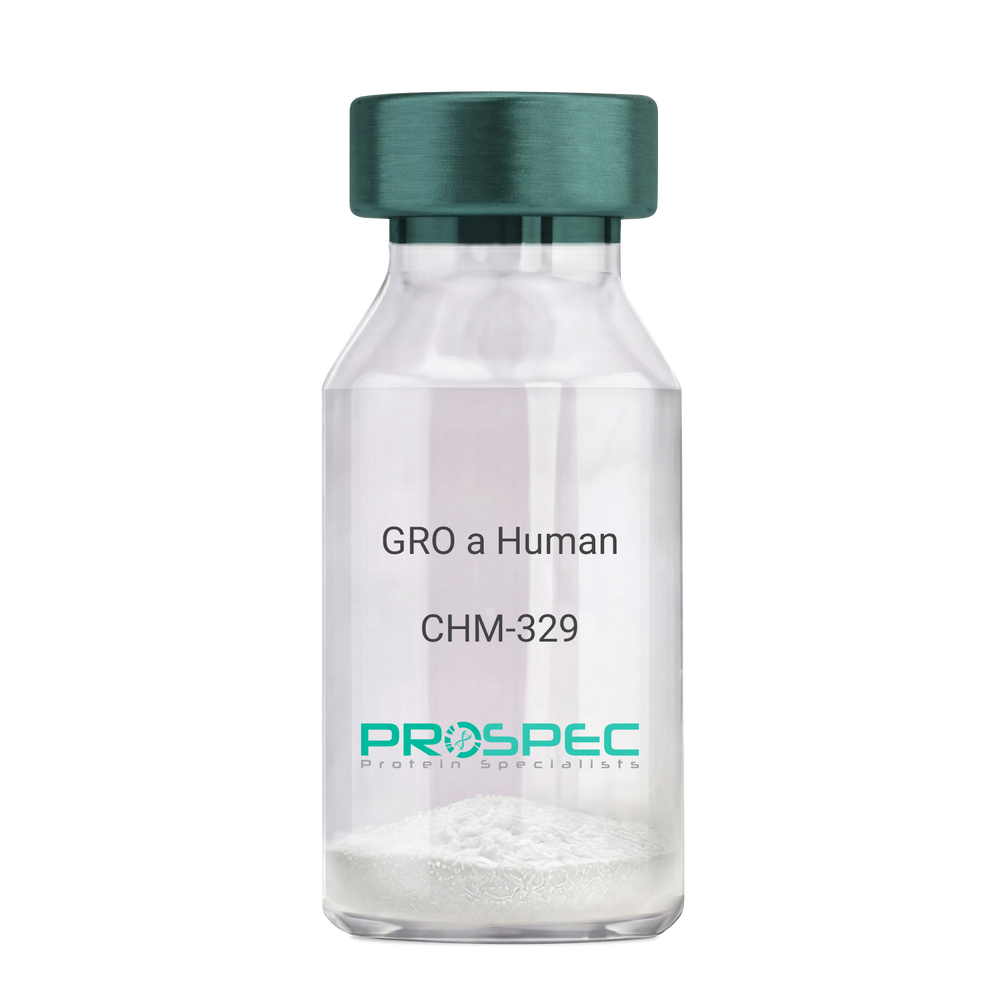
Name :
CXCL1 HumanDescription:
GRO-Alpha Human Recombinant (CXCL1)
Growth-regulated protein alpha, CXCL1, Melanoma growth stimulatory activity, MGSA, Neutrophil-activating protein 3, NAP-3, GRO-alpha (1-73), chemokine (C-X-C motif) ligand 1, GRO1, GROa, SCYB1, MGSA-a, MGSA alpha.
Product # :
CHM-329Price :
Quantity :
Shipping Method :
Shipped at Room temp
More Info
- description
- source
- formulation
- purity
- biological activity
- More Info
Description
GRO Alpha Human Recombinant produced in E.Coli is a single,non-glycosylated, polypeptide chain containing 73 amino acids and having a molecular mass of 7811 Dalton. The GRO-alpha is purified by proprietary chromatographic techniques.
Source
Escherichia Coli.
Formulation
Lyophilized from a 0.2µm filtered concentrated (1mg/ml) solution in 20mM PB, pH 7.4, 50mM NaCl.
Purity
Greater than 97.0% as determined by:
(a) Analysis by RP-HPLC.
(b) Analysis by SDS-PAGE.Biological Activity
Determined by its ability to chemoattract human peripheral blood neutrophils using a concentration range of 10.0-100.0 ng/ml.
More Info
-
Introduction
Chemokine (C-X-C motif) ligand 1 (CXCL1) is a small cytokine belonging to the CXC chemokine family that was previously called GRO1 oncogene, Neutrophil-activating protein 3 (NAP-3) and melanoma growth stimulating activity, alpha (MSGA-a). It is secreted by human melanoma cells, has mitogenic properties and is implicated in melanoma pathogenesis. CXCL1 is expressed by macrophages, neutrophilsand epithelial cells, and has neutrophil chemoattractant activity. CXCL1 plays a role in spinal cord development by inhibiting the migration of oligodendrocyte precursors and is involved in the processes of angiogenesis, inflammation, wound healing, and tumorigenesis. This chemokine elicits its effects by signaling through the chemokine receptor CXCR2. The gene for CXCL1 is located on human chromosome 4 amongst genes for other CXC chemokines.
-
Synonyms
Growth-regulated protein alpha, CXCL1, Melanoma growth stimulatory activity, MGSA, Neutrophil-activating protein 3, NAP-3, GRO-alpha (1-73), chemokine (C-X-C motif) ligand 1, GRO1, GROa, SCYB1, MGSA-a, MGSA alpha.
-
Physical Appearance
Sterile Filtered White lyophilized (freeze-dried) powder.
-
Stability
Lyophilized GRO-alpha although stable at room temperature for 3 weeks, should be stored desiccated below -18°C. Upon reconstitution CXCL1 should be stored at 4°C between 2-7 days and for future use below -18°C. For long term storage it is recommended to add a carrier protein (0.1% HSA or BSA).Please prevent freeze-thaw cycles.
-
Solubility
It is recommended to reconstitute the lyophilized CXCL1 in sterile 18MΩ-cm H2O not less than 100µg/ml, which can then be further diluted to other aqueous solutions.
-
Amino Acid Sequence
The sequence of the first five N-terminal amino acids was determined and was found to be Ala-Ser-Val-Ala-Thr.
-
Background
What is the molecular weight/Mw of CXCL1 HUMAN Protein?
CXCL1 HUMAN Protein has a total Mw of 7.81kDa.
What is the source or expression system of CXCL1 HUMAN Protein?
Escherichia Coli.
What is the Purity of CXCL1 HUMAN Protein?
CXCL1 HUMAN Protein is >97% pure as determined by SDS-PAGE.
What is the Biological Activity of CXCL1 HUMAN Protein?
Determined by its ability to chemoattract human peripheral blood neutrophils using a concentration range of 10.0-100.0 ng/ml.
What is the amino acid sequence of CXCL1 HUMAN Protein?
The sequence of the first five N-terminal amino acids was determined and was found to be Ala-Ser-Val-Ala-Thr.
What applications can CXCL1 HUMAN Protein be used in?
CXCL1 HUMAN Protein can probably be used in western blot, ELISA and Lateral Flow.
What is the endotoxin level for CXCL1 HUMAN Protein?
The endotoxin level is minimal, CXCL1 HUMAN Protein was purified using conventional chromatography techniques.
ProSpec's products are furnished for LABORATORY RESEARCH USE ONLY. The product may not be used as drugs, agricultural or pesticidal products, food additives or household chemicals.
- View Data Sheet
Name :
CXCL2 HumanDescription:
GRO-Beta Human Recombinant (CXCL2)
Macrophage inflammatory protein 2-alpha, MIP2-alpha, CXCL2, Growth- regulated protein beta, Gro-beta, chemokine (C-X-C motif) ligand 2, GRO2, GROb, MIP2, MIP2A, SCYB2, MGSA-b, MIP-2a, CINC-2a, MGSA beta.
Product # :
CHM-309Price :
Quantity :
Shipping Method :
Shipped at Room temp
More Info
- description
- source
- formulation
- purity
- biological activity
- More Info
Description
GRO-Beta Human Recombinant produced in E.Coli is a single,non-glycosylated, polypeptide chain containing 73 amino acids and having a molecular mass of 7908 Dalton. The CXCL2 is purified by proprietary chromatographic techniques.
Source
Escherichia Coli.
Formulation
The protein was lyophilized with no additives.
Purity
Greater than 98.0% as determined by:
(a) Analysis by RP-HPLC.
(b) Analysis by SDS-PAGE.Biological Activity
The Biological activity is calculated by its ability to chemoattract CXCR2 transfected 293 cells using 10-100ng/ml corresponding to a Specific Activity of 10,000-100,000IU/mg.More Info
-
Introduction
Chemokine (C-X-C motif) ligand 2 (CXCL2) is a small cytokine belonging to the CXC chemokine family that is also called macrophage inflammatory protein 2-alpha (MIP2-alpha), Growth-regulated protein beta (Gro-beta) and Gro oncogene-2 (Gro-2). CXCL2 is 90% identical in amino acid sequence as a related chemokine, CXCL1. This chemokine is secreted by monocytes and macrophages and is chemotactic for polymorphonuclear leukocytes and hematopoietic stem cells. The gene for CXCL2 is located on human chromosome 4 in a cluster of other CXC chemokines. CXCL2 mobilizes cells by interacting with a cell surface chemokine receptor called CXCR2.
-
Synonyms
Macrophage inflammatory protein 2-alpha, MIP2-alpha, CXCL2, Growth- regulated protein beta, Gro-beta, chemokine (C-X-C motif) ligand 2, GRO2, GROb, MIP2, MIP2A, SCYB2, MGSA-b, MIP-2a, CINC-2a, MGSA beta.
-
Physical Appearance
Sterile Filtered White lyophilized (freeze-dried) powder.
-
Stability
Lyophilized CXCL2 although stable at room temperature for 3 weeks, should be stored desiccated below -18°C. Upon reconstitution CXCL2 should be stored at 4°C between 2-7 days and for future use below -18°C. For long term storage it is recommended to add a carrier protein (0.1% HSA or BSA).Please prevent freeze-thaw cycles.
-
Solubility
It is recommended to reconstitute the lyophilized GRO-beta Human in sterile 18MΩ-cm H2O not less than 100µg/ml, which can then be further diluted to other aqueous solutions.
-
Amino Acid Sequence
The sequence of the first five N-terminal amino acids was determined and was found to be Ala-Pro-Leu-Ala-Thr.
-
Background
What is the molecular weight/Mw of CXCL2 HUMAN Protein?
CXCL2 HUMAN Protein has a total Mw of 7.9kDa.
What is the source or expression system of CXCL2 HUMAN Protein?
Escherichia Coli.
What is the Purity of CXCL2 HUMAN Protein?
CXCL2 HUMAN Protein is >98% pure as determined by SDS-PAGE.
What is the Biological Activity of CXCL2 HUMAN Protein?
The Biological activity is calculated by its ability to chemoattract CXCR2 transfected 293 cells using 10-100ng/ml corresponding to a Specific Activity of 10,000-100,000IU/mg.
What is the amino acid sequence of CXCL2 HUMAN Protein?
The sequence of the first five N-terminal amino acids was determined and was found to be Ala-Pro-Leu-Ala-Thr.
What applications can CXCL2 HUMAN Protein be used in?
CXCL2 HUMAN Protein can probably be used in western blot, ELISA and Lateral Flow.
What is the endotoxin level for CXCL2 HUMAN Protein?
The endotoxin level is minimal, CXCL2 HUMAN Protein was purified using conventional chromatography techniques.
ProSpec's products are furnished for LABORATORY RESEARCH USE ONLY. The product may not be used as drugs, agricultural or pesticidal products, food additives or household chemicals.
- View Data Sheet
Name :
GYPC HumanDescription:
Glycophorin C Human Recombinant
Glycophorin C (Gerbich Blood Group), Sialoglycoprotein D, Glycoprotein Beta, Glycoconnectin, Glycophorin-D, PAS-2, GPD 3 4, GPC, Glycophorin-C, CD236 Antigen, CD236R, CD236, GYPD, GLPC, GE, Glycophorin-C, Glycoconnectin, Glycophorin-D, GPD, Glycoprotein beta, PAS-2', Sialoglycoprotein D.
Product # :
PRO-2408Price :
Quantity :
Shipping Method :
Shipped with Ice Packs
More Info
- description
- source
- formulation
- purity
- More Info
Description
GYPC Human Recombinant produced in Sf9 Baculovirus cells is a single, glycosylated polypeptide chain containing 66 amino acids (1-57a.a.) and having a molecular mass of 7.2kDa (Molecular size on SDS-PAGE will appear at approximately 18-28kDa). GYPC is expressed with a 6 amino acids His tag at C-Terminus and purified by proprietary chromatographic techniques.
Source
Sf9, Baculovirus cells.
Formulation
GYPC protein solution (1mg/ml) contains Phosphate Buffered Saline (pH 7.4) and 10% glycerol.
Purity
Greater than 95.0% as determined by SDS-PAGE.
More Info
-
Introduction
Glycophorin C, also known as GYPC, is an integral membrane glycoprotein. GYPC is a minor species which is carried by human erythrocytes, however plays an important role in regulating the mechanical stability of red cells. Numeral glycophorin C mutations have been described. The Gerbich and Yus phenotypes are due to deletion of exon 3 & 2, respectively. The Webb & Duch antigens, also identified as glycophorin D, result from single point mutations of the glycophorin C gene. The glycophorin C protein has very slight homology with glycophorins A & B.
-
Synonyms
Glycophorin C (Gerbich Blood Group), Sialoglycoprotein D, Glycoprotein Beta, Glycoconnectin, Glycophorin-D, PAS-2, GPD 3 4, GPC, Glycophorin-C, CD236 Antigen, CD236R, CD236, GYPD, GLPC, GE, Glycophorin-C, Glycoconnectin, Glycophorin-D, GPD, Glycoprotein beta, PAS-2', Sialoglycoprotein D.
-
Physical Appearance
Sterile Filtered colorless solution.
-
Stability
Store at 4°C if entire vial will be used within 2-4 weeks. Store, frozen at -20°C for longer periods of time. For long term storage it is recommended to add a carrier protein (0.1% HSA or BSA).Avoid multiple freeze-thaw cycles.
-
Amino Acid Sequence
ADPMWSTRSP NSTAWPLSLE PDPGMASAST TMHTTTIAEP DPGMSGWPDG RMETSTPTIM HHHHHH.
ProSpec's products are furnished for LABORATORY RESEARCH USE ONLY. The product may not be used as drugs, agricultural or pesticidal products, food additives or household chemicals.
- View Data Sheet
Name :
Visfatin Human, HisDescription:
Visfatin Recombinant Human, His Tag
PBEF, Pre-B cell colony-enhancing factor, Nicotinamide phosphoribosyltransferase NAmPRTase, Nampt, MGC117256, DKFZP666B131, 1110035O14Rik.
Product # :
CYT-563Price :
Quantity :
Shipping Method :
Shipped with Ice Packs
More Info
- description
- source
- formulation
- purity
- More Info
Description
Visfatin Human Recombinant produced in E.Coli is a single, non-glycosylated, polypeptide chain containing 511 amino acids and having a molecular mass of 57 kDa. The recombinant human Visfatin is fused to His tag at N-Terminus.
Source
Escherichia Coli.
Formulation
Visfatin His tag protein contains 20mM Tris pH-8, 0.1mM DTT & 10% glycerol.
Purity
Greater than 95.0% as determined by(a) Analysis by RP-HPLC.
(b) Analysis by SDS-PAGE.More Info
-
Introduction
Excess adiposity is the most important risk in the development of insulin resistance and type 2 diabetes mellitus (T2DM). Adipose tissue produces several proteins (adipocytokines) such as leptin, adiponectin, resistin, tumor necrosis factor-?, and IL-6, that modulate insulin sensitivity and appear to play an important role in the pathogenesis of insulin resistance, diabetes, dyslipidemia, inflammation, and atherosclerosis. However, the mechanisms by which fat tissue induces insulin resistance and the role of adipocytokines in the pathogenesis of T2DM have not been well established.
Visfatin, also known as pre-B cell colony-enhancing factor (PBEF), is a cytokine that is highly expressed in visceral fat and was originally isolated as a secreted factor that synergizes with IL-7 and stem cell factors to promote the growth of B cell precursors. Visfatin homologs have been identified in carp, invertebrate mollusks, and bacteria, as well as in vertebrates, including humans and the mouse. It has been postulated to play a role in innate immunity.
Visfatin exerts insulin-mimetic effects that are dose-dependent and quantitatively similar to those of insulin in stimulating muscle and adipocyte glucose transport, and in inhibiting hepatocyte glucose production. Intravenous injection of recombinant visfatin in mice decreased plasma glucose in a dose-dependent fashion. In keeping with its insulin-mimetic effects, visfatin was as effective as insulin in reducing hyperglycemia in insulin-deficient diabetic mice. Visfatin was also found to be bound to and activate insulin receptor, causing receptor phosphorylation and the activation of downstream signaling molecules. However, visfatin and insulin did not compete for binding to the insulin receptor, indicating that the two proteins were recognized by different regions of the receptor. Thus, visfatin might play a role in glucose homeostasis and dysregulation in biosynthesis or signal transduction, and might contribute to the pathogenesis of diabetes. -
Synonyms
PBEF, Pre-B cell colony-enhancing factor, Nicotinamide phosphoribosyltransferase NAmPRTase, Nampt, MGC117256, DKFZP666B131, 1110035O14Rik.
-
Physical Appearance
Sterile Filtered solution at a concentration of 1mg/ml.
-
Stability
Store at 4°C if entire vial will be used within 2-4 weeks. Store, frozen at -20°C for longer periods of time. Please avoid freeze thaw cycles.
-
Amino Acid Sequence
MGSSHHHHHH SSGLVPRGSH MNPAAEAEFN ILLATDSYKV THYKQYPPNT SKVYSYFECR EKKTENSKLR KVKYEETVFY GLQYILNKYL KGKVVTKEKI QEAKDVYKEH FQDDVFNEKG WNYILEKYDG HLPIEIKAVP EGFVIPRGNV LFTVENTDPE CYWLTNWIET ILVQSWYPIT VATNSREQKK ILAKYLLETS GNLDGLEYKL HDFGYRGVSS QETAGIGASA HLVNFKGTDT VAGLALIKKY YGTKDPVPGY SVPAAEHSTI TAWGKDHEKD AFEHIVTQFS SVPVSVVSDS YDIYNACEKI WGEDLRHLIV SRSTQAPLII RPDSGNPLDT VLKVLEILGK KFPVTENSKG YKLLPPYLRV IQGDGVDINT LQEIVEGMKQ KMWSIENIAF GSGGGLLQKL TRDLLNCSFK CSYVVTNGLG INVFKDPVAD PNKRSKKGRL SLHRTPAGNF VTLEEGKGDL EEYGQDLLHT VFKNGKVTKS YSFDEIRKNA QLNIELEAAH H.
ProSpec's products are furnished for LABORATORY RESEARCH USE ONLY. The product may not be used as drugs, agricultural or pesticidal products, food additives or household chemicals.
- View Data Sheet
Name :
RANBP1 HumanDescription:
RAN Binding Protein 1 Human Recombinant
RAN binding protein 1, HTF9A, ran-specific GTPase-activating protein, RanBP1.
Product # :
PRO-1064Price :
Quantity :
Shipping Method :
Shipped with Ice Packs
More Info
- description
- source
- formulation
- purity
- More Info
Description
RANBP1 Human Recombinant produced in E. coli is a single polypeptide chain containing 225 amino acids (1-201) and having a molecular mass of 25.8kDa (molecular size on SDS-PAGE will appear higher).RANBP1 is fused to a 24 amino acid His-tag at N-terminus & purified by proprietary chromatographic techniques.
Source
E.coli.
Formulation
The RANBP1 solution (1mg/1ml) contains 20mM Tris-HCl buffer (pH 8.0), 100mM NaCl, 1mM DTT and 10% glycerol.
Purity
Greater than 95% as determined by SDS-PAGE.
More Info
-
Introduction
RANBP1 is a member of a family of proteins which bind Ran GTPase. Ran GTPase is vital for cell cycle control, mRNA processing, nuclear transport, mitotic spindle assembly, and postmitotic nuclear re-assembly and nuclear architecture maintenance. RANBP1 does not stimulate GTPase activity of RAN however RANBP1 does distinctly raise GTP hydrolysis by the RanGTPase-activating protein (RanGAP1). Additionally, RANBP1 operates as a negative regulator of RCC1 by inhibiting RCC1-stimulated guanine nucleotide release from RAN.
-
Synonyms
RAN binding protein 1, HTF9A, ran-specific GTPase-activating protein, RanBP1.
-
Physical Appearance
Sterile Filtered colorless solution.
-
Stability
Store at 4°C if entire vial will be used within 2-4 weeks. Store, frozen at -20°C for longer periods of time. For long term storage it is recommended to add a carrier protein (0.1% HSA or BSA).Avoid multiple freeze-thaw cycles.
-
Amino Acid Sequence
MGSSHHHHHH SSGLVPRGSH MGSHMAAAKD THEDHDTSTE NTDESNHDPQ FEPIVSLPEQ EIKTLEEDEE ELFKMRAKLF RFASENDLPE WKERGTGDVK LLKHKEKGAI RLLMRRDKTL KICANHYITP MMELKPNAGS DRAWVWNTHA DFADECPKPE LLAIRFLNAE NAQKFKTKFE ECRKEIEERE KKAGSGKNDH AEKVAEKLEA LSVKEETKED AEEKQ.
ProSpec's products are furnished for LABORATORY RESEARCH USE ONLY. The product may not be used as drugs, agricultural or pesticidal products, food additives or household chemicals.
- View Data Sheet
Name :
YWHAG HumanDescription:
Tyr-3/Trp-5 Monooxygenase Activation Protein Gamma Human Recombinant
14-3-3 protein gamma, Protein kinase C inhibitor protein 1, KCIP-1, YWHAG, Tyrosine 3-monooxygenase/tryptophan 5-monooxygenase activation protein, gamma polypeptide.
Product # :
PKA-238Price :
Quantity :
Shipping Method :
Shipped with Ice Packs
More Info
- description
- source
- formulation
- purity
- More Info
Description
YWHAG Human Recombinant produced in E.Coli is a single, non-glycosylated, polypeptide chain containing 247 amino acids (1-247) and having a molecular mass of 28 kDa. YWHAG is purified by proprietary chromatographic techniques.
Source
Escherichia Coli.
Formulation
YWHAG solution containing 20mM Tris 7.5.
Purity
Greater than 95.0% as determined by SDS-PAGE.
More Info
-
Introduction
The 14-3-3 family of proteins plays a key regulatory role in signal transduction, checkpoint control, apoptotic and nutrient-sensing pathways. 14-3-3 proteins are highly conserved and ubiquitously expressed. There are at least seven isoforms that have been identified in mammals. The 14-3-3gamma, a subtype of the 14-3-3 family of proteins, was thought to be brain and neuron-specific. It has been shown to interact with RAF1 and protein kinase C, proteins involved in various signal transduction pathways.
-
Synonyms
14-3-3 protein gamma, Protein kinase C inhibitor protein 1, KCIP-1, YWHAG, Tyrosine 3-monooxygenase/tryptophan 5-monooxygenase activation protein, gamma polypeptide.
-
Physical Appearance
Sterile filtered colorless solution.
-
Stability
Store at 4°C if entire vial will be used within 2-4 weeks. Store, frozen at -20°C for longer periods of time. For long term storage it is recommended to add a carrier protein (0.1% HSA or BSA).Avoid multiple freeze-thaw cycles.
-
Amino Acid Sequence
MVDREQLVQK ARLAEQAERY DDMAAAMKNV TELNEPLSNE ERNLLSVAYK NVVGARRSSW RVISSIEQKT SADGNEKKIE MVRAYREKIE KELEAVCQDV LSLLDNYLIK NCSETQYESK VFYLKMKGDY YRYLAEVATG EKRATVVESS EKAYSEAHEI SKEHMQPTHP IRLGLALNYS VFYYEIQNAP EQACHLAKTA FDDAIAELDT LNEDSYKDST LIMQLLRDNL TLWTSDQQDD DGGEGNN.
ProSpec's products are furnished for LABORATORY RESEARCH USE ONLY. The product may not be used as drugs, agricultural or pesticidal products, food additives or household chemicals.
- View Data Sheet
Name :
YWHAH HumanDescription:
Tyr-3/Trp-5 Monooxygenase Activation Protein ETA Human Recombinant
14-3-3 ETA, YWHAH, YWHA1, Protein AS1, Tyr-3/Trp-5 Monooxygenase Activation Protein ETA.
Product # :
PKA-087Price :
Quantity :
Shipping Method :
Shipped with Ice Packs
More Info
- description
- source
- formulation
- purity
- More Info
Description
YWHAH Human Recombinant produced in E.Coli is a single, non-glycosylated, polypeptide chain containing 246 amino acids and having a molecular mass of 28.2kDa. The YWHAH is purified by proprietary chromatographic techniques.
Source
Escherichia Coli.
Formulation
The YWHAH protein solution (1mg/ml) containing Phosphate Buffered Saline (pH7.4) 10% glycerol.
Purity
Greater than 90.0% as determined by SDS-PAGE.
More Info
-
Introduction
YWHAH belongs to the 14-3-3 family of proteins which mediate signal transduction by binding to phosphoserine-containing proteins. 14-3-3 ETA is found in plants and mammals, and there is 99% identity to the mouse, rat and bovine orthologs. YWHAH gene contains a 7 base pair repeat sequence in its 5' UTR, and changes in the number of this repeat has been associated with early-onset schizophrenia.
14-3-3 eta is specific to the site of joint inflammation.
14-3-3 proteins are colocalized with Lewy bodies in Parkinson disease, though there is no specific staining for the 14-3-3 eta subunit.
There are 3 different isoforms types of 14-3-3: Beta, Gamma and ETA that are DAL-1/Protein 4.1B-binding proteins. -
Synonyms
14-3-3 ETA, YWHAH, YWHA1, Protein AS1, Tyr-3/Trp-5 Monooxygenase Activation Protein ETA.
-
Physical Appearance
Sterile filtered colorless solution.
-
Stability
Store at 4°C if entire vial will be used within 2-4 weeks. Store, frozen at -20°C for longer periods of time. For long term storage it is recommended to add a carrier protein (0.1% HSA or BSA).Avoid multiple freeze-thaw cycles.
-
Amino Acid Sequence
MGDREQLLQR ARLAEQAERY DDMASAMKAV TELNEPLSNE DRNLLSVAYK NVVGARRSSW RVISSIEQKT MADGNEKKLE KVKAYREKIE KELETVCNDV LSLLDKFLIK NCNDFQYESK VFYLKMKGDY YRYLAEVASG EKKNSVVEAS EAAYKEAFEI SKEQMQPTHP IRLGLALNFS VFYYEIQNAP EQACLLAKQA FDDAIAELDT LNEDSYKDST LIMQLLRDNL TLWTSDQQDE EAGEGN.
ProSpec's products are furnished for LABORATORY RESEARCH USE ONLY. The product may not be used as drugs, agricultural or pesticidal products, food additives or household chemicals.
- View Data Sheet
Name :
RELM a MouseDescription:
RELM-alpha Mouse Recombinant
Resistin-like alpha, RELMalpha, Cysteine-rich secreted protein FIZZ1, Parasite-induced macrophage novel gene 1 protein, Cysteine-rich secreted protein A12-gamma, RELM-a.
Product # :
CYT-309Price :
Quantity :
Shipping Method :
Shipped at Room temp
More Info
- description
- source
- formulation
- purity
- More Info
Description
Mouse RELM-alpha Recombinant produced in E.Coli is a monomeric, non-glycosylated, polypeptide chain containing 88 amino acids and having a molecular mass of 10 kDa. The Mouse RELM-alpha is purified by proprietary chromatographic techniques.
Source
Escherichia Coli.
Formulation
Sterile filtered and lyophilized from 0.5mg/ml in 10mM sodium phosphate buffer, pH 7.5.
Purity
Greater than 98% as determined by SDS-PAGE & RP-HPLC.
More Info
-
Introduction
Bronchoalveolar lavage fluid from mice with experimentally induced allergic pulmonary inflammation contains a novel 9.4 kDa cysteine-rich secreted protein, RELM-alpha (FIZZ1, found in inflammatory zone). RELM-alpha is a secreted protein that has a restricted tissue distribution with highest levels in adipose tissue stroma. Murine RELM-alpha (FIZZ1) is the founding member of a new gene family including two other murine genes expressed, respectively, in intestinal crypt epithelium (RELM-beta) and white adipose tissue (Resistin), and two related human genes.
RELMalpha inhibits the differentiation of 3T3-L1 preadipocytes into adipocytes but has no effect on proliferation of 3T3-L1 preadipocytes. RELMalpha is able to form heterooligomers with resistin but not RELMbeta. Since RELMalpha is expressed by adipose tissue and it is a secreted factor, our findings suggest that RELMalpha may be involved in the control of the adipogenesis as well as in the process of muscle differentiation.
In the lung, RELM-alpha is induced by hypoxia and was renamed as hypoxia-induced mitogenic factor (HIMF). HIMF strongly activated Akt phosphorylation. The phosphatidylinositol 3-kinase (PI3K) inhibitor LY294002 (10 micromol/L) inhibited HIMF-activated Akt phosphorylation. It also inhibited HIMF stimulated RPSM proliferation. Thus, the PI3K/Akt pathway, at least in part, mediates the proliferative effect of HIMF. Further studies showed that HIMF had angiogenic and vasoconstrictive properties. HIMF increased pulmonary arterial pressure and vascular resistance. Further studies suggest that HIMF regulates apoptosis and may participate in lung alveolarization and maturation. -
Synonyms
Resistin-like alpha, RELMalpha, Cysteine-rich secreted protein FIZZ1, Parasite-induced macrophage novel gene 1 protein, Cysteine-rich secreted protein A12-gamma, RELM-a.
-
Physical Appearance
Sterile Filtered White lyophilized (freeze-dried) powder.
-
Stability
Store lyophilized protein at -20°C. Aliquot the product after reconstitution to avoid repeated freezing/thawing cycles. Reconstituted protein can be stored at 4°C for a limited period of time; it does not show any change after two weeks at 4°C.
-
Solubility
At 0.1mg/ml of deionized sterile water.
-
Amino Acid Sequence
MDETIEIIVE NKVKELLANP ANYPSTVTKT LSCTSVKTMN RWASCPAGMT ATGCACGFAC GSWEIQSGDT CNCLCLLVDW TTARCCQLS.
ProSpec's products are furnished for LABORATORY RESEARCH USE ONLY. The product may not be used as drugs, agricultural or pesticidal products, food additives or household chemicals.
- View Data Sheet
Name :
RELM g MouseDescription:
RELM-Gamma Mouse Recombinant
Resistin-like gamma, RELMgamma,RELM-γ, RELM-g.
Product # :
CYT-1035Price :
Quantity :
Shipping Method :
Shipped at Room temp
More Info
- description
- source
- formulation
- purity
- More Info
Description
RELM g Mouse Recombinant produced in E.Coli is a non glycosylated, homodimeric polypeptide chain containing 2 x 89 amino acids and having a total molecular mass of 18.9kDa. The RELM is purified by proprietary chromatographic techniques.
Source
Escherichia Coli.
Formulation
Lyophilized from a sterile filtered solution containing 0.1 % trifluoroacetic acid (TFA).
Purity
Greater than 95.0% as determined by SDS-PAGE.
More Info
-
Introduction
RELM-gamma is a novel member of the resistin-like molecule/found in inflammatory zone (RELM/FIZZ) family in mice and rats. Microarray and real-time RT-PCR experiments revealed a repression of RELMgamma mRNA in nasal respiratory epithelium of cigarette smoke-exposed versus untreated rats. The analysis of the physiological tissue-specific expression revealed highest expression in hematopoietic tissues, suggesting a cytokine-like role for RELM-gamma. RELM-gamma-mRNA is detectable in bone marrow, spleen, and lung as well as in peripheral blood granulocytes. Promyelocytic HL60 cells transfected with a RELM-gamma expression plasmid have an increased proliferation rate compared to mock-transfected cells and display an altered response to retinoic acid-induced granulocytic differentiation. Taken together, these data provide the first experimental evidence that RELM-gamma is a secreted molecule with a restricted expression pattern that may play a role in promyelocytic differentiation.
-
Synonyms
Resistin-like gamma, RELMgamma,RELM-γ, RELM-g.
-
Physical Appearance
Sterile Filtered White lyophilized (freeze-dried) powder.
-
Stability
Lyophilized RELM g although stable at room temperature for 3 weeks, should be stored desiccated below -18°C. Upon reconstitution RELM g Mouse should be stored at 4°C between 2-7 days and for future use below -18°C. For long term storage it is recommended to add a carrier protein (0.1% HSA or BSA). Please prevent freeze-thaw cycles.
-
Solubility
It is recommended to reconstitute the lyophilized RELM g in sterile 18MΩ-cm H2O at a concentration of 100µg/ml, which can then be further diluted to other aqueous solutions.
-
Amino Acid Sequence
MEGTLESIVE KKVKELLANR DDCPSTVTKT FSCTSITASG RLASCPSGMT VTGCACGYGC GSWDIRDGNT CHCQCSTMDW ATARCCQLA.
ProSpec's products are furnished for LABORATORY RESEARCH USE ONLY. The product may not be used as drugs, agricultural or pesticidal products, food additives or household chemicals.
- View Data Sheet
Name :
ACTN1 HumanDescription:
Actinin Alpha 1 Human Recombinant
ACTN1, Actinin, Alpha 1, Alpha-Actinin Cytoskeletal Isoform, F-Actin Cross-Linking Protein, Non-Muscle Alpha-Actinin-1, BDPLT15, Actinin 1 Smooth Muscle, Alpha-Actinin-1.
Product # :
PRO-2227Price :
Quantity :
Shipping Method :
Shipped with Ice Packs
More Info
- description
- source
- formulation
- purity
- More Info
Description
ACTN1 Human Recombinant produced in E.Coli is a single, non-glycosylated polypeptide chain containing 274 amino acids (1-249 a.a) and having a molecular mass of 31.4kDa. ACTN1 is fused to a 25 amino acid His-tag at N-terminus & purified by proprietary chromatographic techniques.
Source
Escherichia Coli.
Formulation
ACTN1 protein solution (1mg/ml) containing Phosphate Buffered Saline (pH7.4) and 10% glycerol.
Purity
Greater than 95.0% as determined by SDS-PAGE.
More Info
-
Introduction
ACTN1 encodes a nonmuscle, cytoskeletal, alpha actinin isoform and maps to the same site as the structurally similar erythroid beta spectrin gene. Alpha actinins belong to the spectrin gene superfamily which represents a diverse group of cytoskeletal proteins, including the alpha and beta spectrins and dystrophins. Alpha actinin is an actin-binding protein with multiple roles in different cell types. In nonmuscle cells, the cytoskeletal isoform is found along microfilament bundles and adherens-type junctions, where it is involved in binding actin to the membrane. In contrast, skeletal, cardiac, and smooth muscle isoforms are localized to the Z-disc and analogous dense bodies, where they help anchor the myofibrillar actin filaments.
-
Synonyms
ACTN1, Actinin, Alpha 1, Alpha-Actinin Cytoskeletal Isoform, F-Actin Cross-Linking Protein, Non-Muscle Alpha-Actinin-1, BDPLT15, Actinin 1 Smooth Muscle, Alpha-Actinin-1.
-
Physical Appearance
Sterile Filtered colorless solution.
-
Stability
Store at 4°C if entire vial will be used within 2-4 weeks. Store, frozen at -20°C for longer periods of time. For long term storage it is recommended to add a carrier protein (0.1% HSA or BSA).Avoid multiple freeze-thaw cycles.
-
Amino Acid Sequence
MGSSHHHHHH SSGLVPRGSH MGSEFMDHYD SQQTNDYMQP EEDWDRDLLL DPAWEKQQRK TFTAWCNSHL RKAGTQIENI EEDFRDGLKL MLLLEVISGE RLAKPERGKM RVHKISNVNK ALDFIASKGV KLVSIGAEEI VDGNVKMTLG MIWTIILRFA IQDISVEETS AKEGLLLWCQ RKTAPYKNVN IQNFHISWKD GLGFCALIHR HRPELIDYGK LRKDDPLTNL NTAFDVAEKY LDIPKMLDAE DIVGTARPDE KAIMTYVSSF YHAF.
ProSpec's products are furnished for LABORATORY RESEARCH USE ONLY. The product may not be used as drugs, agricultural or pesticidal products, food additives or household chemicals.
- View Data Sheet
Name :
DHH (C23II) His HumanDescription:
Desert HedgeHog (C23II) Human Recombinant, His Tag
HHG-3, Desert Hedgehog homolog, MGC35145, Desert hedgehog protein, DHH.
Product # :
CYT-763Price :
Quantity :
Shipping Method :
Shipped with Ice Packs
More Info
- description
- source
- formulation
- purity
- More Info
Description
DHH (C23II) His Human Recombinant produced in E.coli is a single, non-glycosylated polypeptide chain containing 201 amino acids (23-198) and having a molecular mass of 22.4kDa.DHH (C23II) His is fused to a 24 amino acid His-tag at N-terminus & purified by proprietary chromatographic techniques.
Source
Escherichia Coli.
Formulation
The DHH (C23II) His solution (0.25mg/ml) contains 20mM Tris-HCl buffer (pH 7.5), 0.15M NaCl, 1mM DTT and 10% glycerol.
Purity
Greater than 90% as determined by SDS-PAGE.
More Info
-
Introduction
DHH is part of the Hedgehog family which encodes signaling molecules that are involved in regulating morphogenesis. DHH protein is a precursor that is autocatalytically cleaved, the N-terminal portion is soluble and contains the signalling activity while the C-terminal portion is involved in precursor processing. Additionally, the C-terminal product covalently attaches a cholesterol moiety to the N-terminal product, restricting the N-terminal product to the cell surface and preventing it from freely diffusing throughout the organism. Defects in DHH protein have been associated with partial gonadal dysgenesis (PGD) accompanied by minifascicular polyneuropathy. DHH plays a role both male gonadal differentiation and perineurial development.
DHH plays a role in intercellular signaling which is essential for a variety of patterning events during development. DHH functions as a spermatocyte survival factor in the testes & is essential for testes development. -
Synonyms
HHG-3, Desert Hedgehog homolog, MGC35145, Desert hedgehog protein, DHH.
-
Physical Appearance
Sterile Filtered clear solution.
-
Stability
Store at 4°C if entire vial will be used within 2-4 weeks. Store, frozen at -20°C for longer periods of time. For long term storage it is recommended to add a carrier protein (0.1% HSA or BSA).Avoid multiple freeze-thaw cycles.
-
Amino Acid Sequence
MGSSHHHHHH SSGLVPRGSH MGSMIIGPGR GPVGRRRYAR KQLVPLLYKQ FVPGVPERTL GASGPAEGRV ARGSERFRDL VPNYNPDIIF KDEENSGADR LMTERCKERV NALAIAVMNM WPGVRLRVTE GWDEDGHHAQ DSLHYEGRAL DITTSDRDRN KYGLLARLAV EAGFDWVYYE SRNHVHVSVK ADNSLAVRAG G
ProSpec's products are furnished for LABORATORY RESEARCH USE ONLY. The product may not be used as drugs, agricultural or pesticidal products, food additives or household chemicals.
- View Data Sheet
Name :
CEA Human, HisDescription:
Carcinoembryonic Antigen Human Recombinant, His Tag
Carcinoembryonic Antigen Related Cell Adhesion Molecule 5, Carcinoembryonic Antigen-Related Cell Adhesion Molecule 5, Meconium Antigen 100, CEA, Carcinoembryonic Antigen, CD66e Antigen, CD66e, Carcinoembryonic antigen-related cell adhesion molecule 5, Carcinoembryonic antigen, CEA.
Product # :
PRO-2407Price :
Quantity :
Shipping Method :
Shipped with Ice Packs
More Info
- description
- source
- formulation
- purity
- More Info
Description
CEA Human Recombinant produced in Sf9 Baculovirus cells is a single, glycosylated polypeptide chain containing 659 amino acids (35-685a.a.) and having a molecular mass of 72.3kDa (Molecular size on SDS-PAGE will appear at approximately 70-150kDa). CEA is expressed with an 8 amino acids His tag at C-Terminus and purified by proprietary chromatographic techniques.
Source
Sf9, Baculovirus cells.
Formulation
CEA protein solution (0.5mg/ml) contains Phosphate Buffered Saline (pH 7.4) and 10% glycerol.
Purity
Greater than 95.0% as determined by SDS-PAGE.
More Info
-
Introduction
Carcinoembryonic antigen (CEA) is a glycoprotein present in fetal digestive-tract tissues; it’s involved in cell adhesion. The production of CEA stops before birth. CEA is called tumor marker since its elevated levels are found in the serum from individuals with colorectal, gastric, pancreatic, lung and breast carcinomas and in heavy smokers.
There are also benign conditions that elevate CEA levels such as smoking, infection, inflammatory bowel disease, pancreatitis, cirrhosis of the liver, and some benign tumors (in the equivalent organs which have cancers with elevated CEA). Typically, higher levels of CEA are found in men, smokers, and older individuals.
The presence of CEA assists in screening, in evaluating recurrent or disseminated disease, and in determining the success of surgical removal of malignant tumors.
CEA levels can be used as indicators of treatment success. The normal values range from 0.0 to 2.5 ng/ml of serum (from blood), in non-smokers, a greater amount than that may be suggestive of cancer. Levels above 20 ng/ml before treatment are associated with cancer which has already metastasized. Benign conditions do not usually cause a CEA increase over 10 ng/ml.
The high levels of CEA should return to normal after successful therapy, however if during follow up there’s an elevation in CEA levels it indicates a recurrence of tumor.
Carcinoembryonic antigen family belongs to the immunoglobulin superfamily; it consists of 29 genes, 18 of which are normally expressed. -
Synonyms
Carcinoembryonic Antigen Related Cell Adhesion Molecule 5, Carcinoembryonic Antigen-Related Cell Adhesion Molecule 5, Meconium Antigen 100, CEA, Carcinoembryonic Antigen, CD66e Antigen, CD66e, Carcinoembryonic antigen-related cell adhesion molecule 5, Carcinoembryonic antigen, CEA.
-
Physical Appearance
Sterile Filtered colorless solution.
-
Stability
Store at 4°C if entire vial will be used within 2-4 weeks. Store, frozen at -20°C for longer periods of time. For long term storage it is recommended to add a carrier protein (0.1% HSA or BSA). Avoid multiple freeze-thaw cycles.
-
Amino Acid Sequence
KLTIESTPFN VAEGKEVLLL VHNLPQHLFG YSWYKGERVD GNRQIIGYVI GTQQATPGPA YSGREIIYPN ASLLIQNIIQ NDTGFYTLHV IKSDLVNEEA TGQFRVYPEL PKPSISSNNS KPVEDKDAVA FTCEPETQDA TYLWWVNNQS LPVSPRLQLS NGNRTLTLFN VTRNDTASYK CETQNPVSAR RSDSVILNVL YGPDAPTISP LNTSYRSGEN LNLSCHAASN PPAQYSWFVN GTFQQSTQEL FIPNITVNNS GSYTCQAHNS DTGLNRTTVT TITVYAEPPK PFITSNNSNP VEDEDAVALT CEPEIQNTTY LWWVNNQSLP VSPRLQLSND NRTLTLLSVT RNDVGPYECG IQNKLSVDHS DPVILNVLYG PDDPTISPSY TYYRPGVNLS LSCHAASNPP AQYSWLIDGN IQQHTQELFI SNITEKNSGL YTCQANNSAS GHSRTTVKTI TVSAELPKPS ISSNNSKPVE DKDAVAFTCE PEAQNTTYLW WVNGQSLPVS PRLQLSNGNR TLTLFNVTRN DARAYVCGIQ NSVSANRSDP VTLDVLYGPD TPIISPPDSS YLSGANLNLS CHSASNPSPQ YSWRINGIPQ QHTQVLFIAK ITPNNNGTYA CFVSNLATGR NNSIVKSITV SASGTSPGLS ALEHHHHHH.
ProSpec's products are furnished for LABORATORY RESEARCH USE ONLY. The product may not be used as drugs, agricultural or pesticidal products, food additives or household chemicals.