Skip to content

High-quality research proteins.

  • 1-800-805-6531

  • Mon - Sat 8.00-18.00, Sun - Closed

  • info@prospecbio.com

  • PO Box 6591 East Brunswick NJ 08816

  • Products
    • Cytokines
    • Growth factors
    • Chemokines
    • Cd antigens
    • Neurotrophins
    • Hormones
    • Enzymes
    • Viral antigens
    • Recombinant proteins
    • Natural proteins
    • Monoclonal antibodies
    • Polyclonal antibodies
    • Thermal Packaging
  • About
    • Company
    • Founder
    • Contribution
  • Customers
    • Eastern Asia
    • Eastern Europe
    • North America
    • South America
    • South East Asia
    • Southern Asia
    • Western Europe
  • Ordering
    • Ordering Method
    • Ordering - Credit Card
    • Ordering - PO
    • Shipping Fees
    • FAQs
  • Services
    • DNA Cloning
    • Protein Expression
    • Monoclonal Antibody
    • Fermentation
    • Technology License
  • Contact us
Log in

Country/region

  • USD $ | Albania
  • USD $ | Andorra
  • USD $ | Argentina
  • USD $ | Armenia
  • USD $ | Australia
  • USD $ | Austria
  • USD $ | Azerbaijan
  • USD $ | Belarus
  • USD $ | Belgium
  • USD $ | Bolivia
  • USD $ | Brazil
  • USD $ | Bulgaria
  • USD $ | Cambodia
  • USD $ | Canada
  • USD $ | Chile
  • USD $ | China
  • USD $ | Colombia
  • USD $ | Costa Rica
  • USD $ | Croatia
  • USD $ | Cyprus
  • USD $ | Czechia
  • USD $ | Denmark
  • USD $ | Estonia
  • USD $ | Finland
  • USD $ | France
  • USD $ | Georgia
  • USD $ | Germany
  • USD $ | Greece
  • USD $ | Hong Kong SAR
  • USD $ | Hungary
  • USD $ | Iceland
  • USD $ | India
  • USD $ | Ireland
  • USD $ | Israel
  • USD $ | Italy
  • USD $ | Japan
  • USD $ | Kazakhstan
  • USD $ | Latvia
  • USD $ | Liechtenstein
  • USD $ | Lithuania
  • USD $ | Madagascar
  • USD $ | Malta
  • USD $ | Mexico
  • USD $ | Moldova
  • USD $ | Monaco
  • USD $ | Netherlands
  • USD $ | New Zealand
  • USD $ | North Macedonia
  • USD $ | Norway
  • USD $ | Panama
  • USD $ | Paraguay
  • USD $ | Peru
  • USD $ | Philippines
  • USD $ | Poland
  • USD $ | Portugal
  • USD $ | Romania
  • USD $ | Singapore
  • USD $ | Slovakia
  • USD $ | Slovenia
  • USD $ | South Africa
  • USD $ | South Korea
  • USD $ | Spain
  • USD $ | Sri Lanka
  • USD $ | Sweden
  • USD $ | Switzerland
  • USD $ | Taiwan
  • USD $ | Thailand
  • USD $ | Türkiye
  • USD $ | Ukraine
  • USD $ | United Kingdom
  • USD $ | United States
  • USD $ | Uruguay
  • USD $ | Vatican City
  • USD $ | Venezuela
  • USD $ | Vietnam
  • Facebook
  • Instagram
logoProSpec - Recombinant Protein Manufacturer for academic and R&D industry
Become a distributor
Account Log in
Wishlist
Cart Cart(0)
  • Products
    +
    • Cytokines
    • Growth factors
    • Chemokines
    • Cd antigens
    • Neurotrophins
    • Hormones
    • Enzymes
    • Viral antigens
    • Recombinant proteins
    • Natural proteins
    • Monoclonal antibodies
    • Polyclonal antibodies
    • Thermal Packaging
  • About
    +
    • Company
    • Founder
    • Contribution
  • Customers
    +
    • Eastern Asia
    • Eastern Europe
    • North America
    • South America
    • South East Asia
    • Southern Asia
    • Western Europe
  • Ordering
    +
    • Ordering Method
    • Ordering - Credit Card
    • Ordering - PO
    • Shipping Fees
    • FAQs
  • Services
    +
    • DNA Cloning
    • Protein Expression
    • Monoclonal Antibody
    • Fermentation
    • Technology License
  • Contact us

Item added to your cart

View cart
View All
  • Cytokines
  • Growth factors
  • Chemokines
  • Cd antigens
  • Neurotrophins
  • Hormones
  • Enzymes
  • Viral antigens
  • Recombinant proteins
  • Natural proteins
  • Monoclonal antibodies
  • Polyclonal antibodies
  • Thermal Packaging
  • Tumor Necrosis Factor

    Tumor Necrosis Factor

    View All
  • 4-1BB

    4-1BB

    View All
  • Adiponectin

    Adiponectin

    View All
  • AIF1

    AIF1

    View All
  • Other Cytokines

    Other Cytokines

    View All
  • AITRL

    AITRL

    View All
  • Angiopoietin

    Angiopoietin

    View All
  • Apolipoprotein

    Apolipoprotein

    View All
  • B-Cell Activating Factor

    B-Cell Activating Factor

    View All
  • Beta Defensin

    Beta Defensin

    View All
  • Bone Morphogenetic Protein

    Bone Morphogenetic Protein

    View All
  • B type Natriuretic Peptide

    B type Natriuretic Peptide

    View All
  • BST

    BST

    View All
  • Betacellulin

    Betacellulin

    View All
  • Cardiotrophin

    Cardiotrophin

    View All
  • Activin

    Activin

    View All
  • Fibroblast Growth Factor

    Fibroblast Growth Factor

    View All
  • Other Growth Factors

    Other Growth Factors

    View All
  • CSF

    CSF

    View All
  • CTGF

    CTGF

    View All
  • IGFBP

    IGFBP

    View All
  • VEGF Protein

    VEGF Protein

    View All
  • EGF

    EGF

    View All
  • Epigen

    Epigen

    View All
  • Erythropoietin

    Erythropoietin

    View All
  • Insulin-Like Growth Factor

    Insulin-Like Growth Factor

    View All
  • Growth Hormone

    Growth Hormone

    View All
  • HDGF

    HDGF

    View All
  • Hepatocyte Growth Factor

    Hepatocyte Growth Factor

    View All
  • Insulin

    Insulin

    View All
  • BCA-1/ BLC (CXCL13)

    BCA-1/ BLC (CXCL13)

    View All
  • BRAK (CXCL14)

    BRAK (CXCL14)

    View All
  • C-10 (CCL6)

    C-10 (CCL6)

    View All
  • Other Chemokines

    Other Chemokines

    View All
  • MEC (CCL28)

    MEC (CCL28)

    View All
  • LD78-beta (CCL3L1)

    LD78-beta (CCL3L1)

    View All
  • CTACK (CCL27)

    CTACK (CCL27)

    View All
  • CXCL16

    CXCL16

    View All
  • CXCL17

    CXCL17

    View All
  • Platelet Factor-4 (CXCL4)

    Platelet Factor-4 (CXCL4)

    View All
  • ENA-78 (CXCL5)

    ENA-78 (CXCL5)

    View All
  • Eotaxin (CCL11,24,26)

    Eotaxin (CCL11,24,26)

    View All
  • Exodus-2 (CCL21)

    Exodus-2 (CCL21)

    View All
  • Fractalkine (CX3CL1)

    Fractalkine (CX3CL1)

    View All
  • CXCL6

    CXCL6

    View All
  • Other CD Antigens

    Other CD Antigens

    View All
  • CD14

    CD14

    View All
  • CD164

    CD164

    View All
  • CD1

    CD1

    View All
  • CD2

    CD2

    View All
  • CD200

    CD200

    View All
  • CD207

    CD207

    View All
  • CD226

    CD226

    View All
  • CD23

    CD23

    View All
  • CD244

    CD244

    View All
  • CD247

    CD247

    View All
  • CD27

    CD27

    View All
  • CD274

    CD274

    View All
  • CD300

    CD300

    View All
  • CD33

    CD33

    View All
  • Other Neurotrophins

    Other Neurotrophins

    View All
  • Beta-NGF

    Beta-NGF

    View All
  • BDNF

    BDNF

    View All
  • CDNF

    CDNF

    View All
  • CNTF

    CNTF

    View All
  • GDNF

    GDNF

    View All
  • Glia Maturation Factor

    Glia Maturation Factor

    View All
  • MANF

    MANF

    View All
  • Midkine

    Midkine

    View All
  • Neuroglobin

    Neuroglobin

    View All
  • Neurotrophic factors

    Neurotrophic factors

    View All
  • Neuregulin

    Neuregulin

    View All
  • Neuropilin

    Neuropilin

    View All
  • Pigment Epithelium-Derived Factor

    Pigment Epithelium-Derived Factor

    View All
  • Pleiotrophin

    Pleiotrophin

    View All
  • Peptide Hormones

    Peptide Hormones

    View All
  • Other Hormones

    Other Hormones

    View All
  • HCG

    HCG

    View All
  • Endothelin

    Endothelin

    View All
  • Exendin

    Exendin

    View All
  • FSH

    FSH

    View All
  • Glucagon

    Glucagon

    View All
  • GHRP

    GHRP

    View All
  • GLP

    GLP

    View All
  • Thyrostimulin

    Thyrostimulin

    View All
  • Inhibin A

    Inhibin A

    View All
  • LHRH

    LHRH

    View All
  • Melanotan

    Melanotan

    View All
  • Procalcitonin

    Procalcitonin

    View All
  • PTH

    PTH

    View All
  • Peroxiredoxin

    Peroxiredoxin

    View All
  • Peptidase

    Peptidase

    View All
  • Synthetase

    Synthetase

    View All
  • Transferase

    Transferase

    View All
  • Hydrolase

    Hydrolase

    View All
  • Dehydrogenase

    Dehydrogenase

    View All
  • ACE2

    ACE2

    View All
  • Esterase

    Esterase

    View All
  • Protein Kinases

    Protein Kinases

    View All
  • Other Enzymes

    Other Enzymes

    View All
  • Phosphatase

    Phosphatase

    View All
  • Deaminase

    Deaminase

    View All
  • Oxygenase

    Oxygenase

    View All
  • Adenylate Kinase

    Adenylate Kinase

    View All
  • Lyase

    Lyase

    View All
  • Chagas

    Chagas

    View All
  • SARS

    SARS

    View All
  • Influenza

    Influenza

    View All
  • ASFV

    ASFV

    View All
  • Astrovirus

    Astrovirus

    View All
  • Borrelia

    Borrelia

    View All
  • Helicobacter Pylori

    Helicobacter Pylori

    View All
  • Chikungunya

    Chikungunya

    View All
  • Chlamydia

    Chlamydia

    View All
  • Cytomegalo

    Cytomegalo

    View All
  • Dengue

    Dengue

    View All
  • EBV

    EBV

    View All
  • Ebola

    Ebola

    View All
  • Feline Leukemia Virus

    Feline Leukemia Virus

    View All
  • Hepatitis A

    Hepatitis A

    View All
  • Other

    Other

    View All
  • Actin

    Actin

    View All
  • ADAM

    ADAM

    View All
  • Complement Component

    Complement Component

    View All
  • Ag85

    Ag85

    View All
  • Eukaryotic Translation Initiation Factor

    Eukaryotic Translation Initiation Factor

    View All
  • Anterior Gradient Protein

    Anterior Gradient Protein

    View All
  • Heat Shock Protein

    Heat Shock Protein

    View All
  • Alpha-2-HS-Glycoprotein

    Alpha-2-HS-Glycoprotein

    View All
  • Hemoglobin

    Hemoglobin

    View All
  • Allergy

    Allergy

    View All
  • Anaplasma

    Anaplasma

    View All
  • Angiogenin

    Angiogenin

    View All
  • Ankyrin Repeat Domain

    Ankyrin Repeat Domain

    View All
  • Annexin

    Annexin

    View All
  • Other Natural Proteins

    Other Natural Proteins

    View All
  • Aprotinin

    Aprotinin

    View All
  • Transferrin

    Transferrin

    View All
  • Avidin

    Avidin

    View All
  • Anti Coagulation Factors

    Anti Coagulation Factors

    View All
  • Natural Albumin

    Natural Albumin

    View All
  • Natural Coagulation Factors

    Natural Coagulation Factors

    View All
  • Fibronectin

    Fibronectin

    View All
  • Thrombin

    Thrombin

    View All
  • Anti Human Enzyme

    Anti Human Enzyme

    View All
  • Other Monoclonal Antibodies

    Other Monoclonal Antibodies

    View All
  • Anti Human Cytokine

    Anti Human Cytokine

    View All
  • Anti Human Heat Shock Protein

    Anti Human Heat Shock Protein

    View All
  • Anti Mouse Lymphocyte

    Anti Mouse Lymphocyte

    View All
  • Anti Human Chemokine

    Anti Human Chemokine

    View All
  • Anti Human Lymphocyte

    Anti Human Lymphocyte

    View All
  • Anti Viral Monoclonal

    Anti Viral Monoclonal

    View All
  • Anti Mouse Cytokine

    Anti Mouse Cytokine

    View All
  • Anti-GST Monoclonal

    Anti-GST Monoclonal

    View All
  • Other Polyclonal Antibodies

    Other Polyclonal Antibodies

    View All
  • Anti Viral

    Anti Viral

    View All
  • Anti-GST Monoclonal

    Anti-GST Monoclonal

    View All
Back

Search results

1000 results found for “secretoglobin”

Name

Description

Product #

Price

Quantity

Shipping Method

  • View Data Sheet

    Name :

    LAIR1 Human

    Description:

    Leukocyte-Associated Ig-Like Receptor 1 Human Recombinant

    Leukocyte-associated immunoglobulin-like receptor 1, LAIR-1, hLAIR1, CD305 antigen, LAIR1, CD305.

    Product # :

    PRO-431

    Price :

    Quantity :

    Shipping Method :

    Ice Icon

    Shipped with Ice Packs

    Add To Cart

    More Info

    • description
    • source
    • formulation
    • purity
    • More Info

    Description

    LAIR1 Recombinant produced in E.Coli is a single, non-glycosylated polypeptide chain containing amino acids 105 and having a molecular mass of 11.5 kDa. The extracellular domain of LAIR-1 (22-125aa) was overexpressed in E.coli, and purified by using conventional chromatography techniques.

    Source

    Escherichia Coli.

    Formulation

    The protein (1mg/ml) contains 20mM Tris-HCl (pH7.5) 50mM NaCl and 1mM EDTA.

    Purity

    Greater than 95.0% as determined by SDS-PAGE.

    More Info

    • Introduction

      LAIR1 is a glycoprotein (~32kDa) expressed on the surface of the majority of human peripheral blood mononuclear leukocytes including T cells, B cells, NK cells, macrophages and dendritic cells. LAIR-1 functions as an inhibitory receptor in NK cells, T cells and B cells. Inhibitory receptors control the immune response to prevent lysis of cells recognized as self. Lair1 consists of a leader sequence, extracellular domain, transmembrane domain, cytoplasmic region.
      LAIR1 is a member of both the immunoglobulin superfamily and the leukocyte-associated inhibitory receptor family. LAIR1 maps to a region of 19q13.4 labeled the leukocyte receptor cluster, which contains at least 29 genes encoding leukocyte-expressed receptors of the immunoglobulin superfamily.

    • Synonyms

      Leukocyte-associated immunoglobulin-like receptor 1, LAIR-1, hLAIR1, CD305 antigen, LAIR1, CD305.

    • Physical Appearance

      Sterile filtered colorless solution.

    • Stability

      Store at 4°C if entire vial will be used within 2-4 weeks.Store, frozen at -20°C for longer periods of time. For long term storage it is recommended to add a carrier protein (0.1% HSA or BSA).Avoid multiple freeze-thaw cycles.

    • Amino Acid Sequence

      MQEEDLPRPS ISAEPGTVIP LGSHVTFVCR GPVGVQTFRL ERESRSTYND TEDVSQASPSESEARFRIDS VSEGNAGPYR CIYYKPPKWS EQSDYLELLV KETSG.

    ProSpec's products are furnished for LABORATORY RESEARCH USE ONLY. The product may not be used as drugs, agricultural or pesticidal products, food additives or household chemicals.

    Lair1 Human
  • View Data Sheet

    Name :

    DEFB116 Human

    Description:

    Beta Defensin 116 Human Recombinant

    Beta-Defensin 16, DEFB-16, Beta 16, defensin, Beta-Defensin 116, Defensin, Beta 16, DEFB16.

    Product # :

    CYT-713

    Price :

    Quantity :

    Shipping Method :

    Ice Icon

    Shipped with Ice Packs

    Add To Cart

    More Info

    • description
    • source
    • formulation
    • purity
    • More Info
    • sds-page

    Description

    DEFB116 Human Recombinant produced in E.Coli is a single, non-glycosylated polypeptide chain containing 102 amino acids (24-102 a.a) and having a molecular mass of 11.5kDa.DEFB116 is fused to a 23 amino acid His-tag at N-terminus & purified by proprietary chromatographic techniques.

    Source

    Escherichia Coli.

    Formulation

    DEFB116 protein solution (0.5mg/ml) containing 20mM Tris-HCl buffer (pH8.0), 10% glycerol and 0.4M Urea.

    Purity

    Greater than 80.0% as determined by SDS-PAGE.

    sds-page

    DEFB116-sds-page - Product image 1

    More Info

    • Introduction

      Beta Defensin 116, also known as DEFB116 is a member of the beta-defensin family.DEFB116 has antibacterial activity. The innate immune system includes antimicrobial peptides that protect multicellular organisms from a diverse spectrum of microorganisms. In addition, Beta-Defensins contain one important family of mammalian antimicrobial peptides.

    • Synonyms

      Beta-Defensin 16, DEFB-16, Beta 16, defensin, Beta-Defensin 116, Defensin, Beta 16, DEFB16.

    • Physical Appearance

      Sterile Filtered clear solution.

    • Stability

      Store at 4°C if entire vial will be used within 2-4 weeks. Store, frozen at -20°C for longer periods of time. For long term storage it is recommended to add a carrier protein (0.1% HSA or BSA).Avoid multiple freeze-thaw cycles.

    • Amino Acid Sequence

      MGSSHHHHHH SSGLVPRGSH MGSGLFRSHN GKSREPWNPC ELYQGMCRNA CREYEIQYLT CPNDQKCCLK LSVKITSSKN VKEDYDSNSN LSVTNSSSYS HI.

    • Background

      Title: Beta Defensin 116 Human Recombinant: An Insight into its Antimicrobial Properties and Therapeutic Applications

      Abstract:


      Beta defensin 116 (BD116) is a key member of the beta defensin family, known for its potent antimicrobial activity against various pathogens. This research paper provides an in-depth analysis of human recombinant BD116, focusing on its production, characterization, and potential applications in antimicrobial therapy. The paper highlights the significance of BD116 in innate immunity and its role in combating microbial infections. Furthermore, it explores ongoing research and clinical trials investigating the therapeutic potential of recombinant BD116 in various infectious diseases. The information presented in this paper aims to enhance our understanding of human recombinant BD116 and its utility as a research tool and a potential antimicrobial agent.

      Introduction:


      Beta defensin 116 (BD116) is a small cationic peptide that plays a crucial role in the innate immune response against microbial pathogens. Human recombinant BD116, produced through genetic engineering techniques, offers a valuable tool for studying its antimicrobial properties and exploring its therapeutic potential.

      Production and Characterization:


      Recombinant BD116 is typically generated using expression systems such as bacteria or yeast. The protein is then purified and characterized to ensure its structural integrity and antimicrobial activity. Rigorous quality control measures are implemented to confirm the specificity and potency of the recombinant BD116.

      Antimicrobial Properties:


      BD116 exhibits broad-spectrum antimicrobial activity against bacteria, fungi, and viruses. It functions by disrupting the microbial cell membrane and interfering with essential cellular processes. Recombinant BD116 serves as a valuable tool for investigating the mechanisms underlying its antimicrobial action and exploring its potential as an antimicrobial agent.

      Therapeutic Implications:


      The emergence of multidrug-resistant pathogens poses a significant challenge in the treatment of infectious diseases. Recombinant BD116 holds promise as an alternative therapeutic option due to its potent antimicrobial properties. Ongoing research and clinical trials are investigating the therapeutic applications of recombinant BD116 in various infectious diseases, including bacterial skin infections and respiratory tract infections.

      Conclusion:


      Human recombinant BD116 is a valuable research tool and a potential antimicrobial agent. Its production, characterization, and applications in antimicrobial therapy contribute to our understanding of innate immunity and the development of novel therapeutic interventions. Continued research and clinical trials exploring the therapeutic potential of recombinant BD116 offer promising prospects for combating multidrug-resistant pathogens and improving outcomes in infectious diseases.

      What is the molecular weight/Mw of DEFB116 Protein?
      DEFB116 Protein has a total Mw of 11.5kDa.

      What is the source or expression system of DEFB116 Protein?
      Escherichia Coli.

      What is the Purity of DEFB116 Protein?
      DEFB116 Protein is >80% pure as determined by SDS-PAGE.

      What is the Biological Activity of DEFB116 Protein?
      The biological functionality of DEFB116 Protein will be determined in the future.

      What is the amino acid sequence of DEFB116 Protein?
      MGSSHHHHHH SSGLVPRGSH MGSGLFRSHN GKSREPWNPC ELYQGMCRNA CREYEIQYLT CPNDQKCCLK LSVKITSSKN VKEDYDSNSN LSVTNSSSYS HI.

      What applications can DEFB116 Protein be used in?
      DEFB116 Protein can probably be used in western blot, ELISA and Lateral Flow.

      What is the endotoxin level for DEFB116 Protein?
      The endotoxin level is minimal, DEFB116 Protein was purified using conventional chromatography techniques.

    ProSpec's products are furnished for LABORATORY RESEARCH USE ONLY. The product may not be used as drugs, agricultural or pesticidal products, food additives or household chemicals.

    Defb116 Human
  • View Data Sheet

    Name :

    LGALS9 Human

    Description:

    Galectin-9 Human Recombinant

    Lectin galactoside-binding soluble 9, Urate transporter/channel protein, LGALS9A, MGC125973, HUAT, Ecalectin, Galectin-9, MGC117375, MGC125974, HOM-HD-21, LGALS9.

    Product # :

    CYT-708

    Price :

    Quantity :

    Shipping Method :

    Ice Icon

    Shipped with Ice Packs

    Add To Cart

    More Info

    • description
    • source
    • formulation
    • purity
    • More Info
    • SDS-PAGE

    Description

    LGALS9 produced in E.Coli is a single, non-glycosylated polypeptide chain containing 168 amino acids (1-148 a.a.) and having a molecular mass of 18.5 kDa. Galectin-9 is fused to a 20 amino acid His-Tag at N-terminus and purified by proprietary chromatographic techniques.

    Source

    Escherichia Coli.

    Formulation

    The LGALS9 protein solution contains 20mM Tris-HCl, pH-8, 100mM NaCl and 20% glycerol.

    Purity

    Greater than 90.0% as determined by SDS-PAGE.

    SDS-PAGE

    LGALS9 Human-SDS-PAG - Product image 1

    More Info

    • Introduction

      LGLAS9 binds galactosides and has high affinity for the Forssman pentasaccharide. LGLAS9 participates in thymocyte-epithelial interactions relevant to the biology of the thymus and Inhibits cell proliferation. LGLAS9 is a ligand for HAVCR2/TIM3. LGLAS9 Induces T-helper type 1 lymphocyte (Th1) death. LGLAS9 performs as an eosinophil chemoattractant LGLAS9 is an S-type lectin which is over-expressed in Hodgkin's disease tissue and takes part in the interaction between the H&RS cells with their surrounding cells.

    • Synonyms

      Lectin galactoside-binding soluble 9, Urate transporter/channel protein, LGALS9A, MGC125973, HUAT, Ecalectin, Galectin-9, MGC117375, MGC125974, HOM-HD-21, LGALS9.

    • Physical Appearance

      Sterile filtered colorless solution.

    • Stability

      Store at 4°C if entire vial will be used within 2-4 weeks. Store, frozen at -20°C for longer periods of time. For long term storage it is recommended to add a carrier protein (0.1% HSA or BSA). Avoid multiple freeze-thaw cycles.

    • Amino Acid Sequence

      MGSSHHHHHH SSGLVPRGSH MAFSGSQAPY LSPAVPFSGT IQGGLQDGLQ ITVNGTVLSS SGTRFAVNFQ TGFSGNDIAF HFNPRFEDGG YVVCNTRQNG SWGPEERKTH MPFQKGMPFD LCFLVQSSDF KVMVNGILFV QYFHRVPFHR VDTISVNGSV QLSYISFQ.

    • Background

      What is the molecular weight/Mw of LGALS9 HUMAN Protein?
      LGALS9 HUMAN Protein has a total Mw of 18.5kDa.

      What is the source or expression system of LGALS9 HUMAN Protein?
      Escherichia Coli.

      What is the Purity of LGALS9 HUMAN Protein?
      LGALS9 HUMAN Protein is >90% pure as determined by SDS-PAGE.

      What is the Biological Activity of LGALS9 HUMAN Protein?
      The biological functionality of LGALS9 HUMAN Protein will be determined in the future.

      What is the amino acid sequence of LGALS9 HUMAN Protein?
      MGSSHHHHHH SSGLVPRGSH MAFSGSQAPY LSPAVPFSGT IQGGLQDGLQ ITVNGTVLSS SGTRFAVNFQ TGFSGNDIAF HFNPRFEDGG YVVCNTRQNG SWGPEERKTH MPFQKGMPFD LCFLVQSSDF KVMVNGILFV QYFHRVPFHR VDTISVNGSV QLSYISFQ.

      What applications can LGALS9 HUMAN Protein be used in?
      LGALS9 HUMAN Protein can probably be used in western blot, ELISA and Lateral Flow.

      What is the endotoxin level for LGALS9 HUMAN Protein?
      The endotoxin level is minimal, LGALS9 HUMAN Protein was purified using conventional chromatography techniques.


    ProSpec's products are furnished for LABORATORY RESEARCH USE ONLY. The product may not be used as drugs, agricultural or pesticidal products, food additives or household chemicals.

    Lgals9 Human
  • View Data Sheet

    Name :

    XG Human

    Description:

    XG Blood Group Human Recombinant

    Glycoprotein Xg isoform 1 precursor, PBDX, Glycoprotein Xg, PBDX, XG.

    Product # :

    PRO-1395

    Price :

    Quantity :

    Shipping Method :

    Ice Icon

    Shipped with Ice Packs

    Add To Cart

    More Info

    • description
    • source
    • formulation
    • purity
    • More Info

    Description

    XG Human Recombinant produced in E.Coli is a single, non-glycosylated polypeptide chain containing 144 amino acids (22-142a.a) and having a molecular mass of 15.5kDa. XG is fused to a 23 amino acid His-tag at N-terminus & purified by proprietary chromatographic techniques.

    Source

    E.coli.

    Formulation

    XG protein solution (0.25mg/ml) containing 20mM Tris-HCl buffer (pH 8.0), 0.15M NaCl, 10% glycerol and 1mM DTT.

    Purity

    Greater than 90% as determined by SDS-PAGE.

    More Info

    • Introduction

      XG is the XG blood group antigen, and is at the pseudoautosomal boundary on the short (p) arm of chromosome X. The three 5' exons are located in the pseudoautosomal area and the remaining exons within the X-specific end. A shorted copy of XG is found on the Y chromosome at the pseudoautosomal boundary. XG is transcribed, although not expected to make a Y-chromosome specific gene product.

    • Synonyms

      Glycoprotein Xg isoform 1 precursor, PBDX, Glycoprotein Xg, PBDX, XG.

    • Physical Appearance

      Sterile Filtered colorless solution.

    • Stability

      Store at 4°C if entire vial will be used within 2-4 weeks. Store, frozen at -20°C for longer periods of time. For long term storage it is recommended to add a carrier protein (0.1% HSA or BSA).Avoid multiple freeze-thaw cycles.

    • Amino Acid Sequence

      MGSSHHHHHH SSGLVPRGSH MGSQRDFDLA DALDDPEPTK KPNSDIYPKP KPPYYPQPEN PDSGGNIYPR PKPRPQPQPG NSGNSGGYFN DVDRDDGRYP PRPRPRPPAG GGGGGYSSYG NSDNTHGGDH HSTYGNPEGN MVAK.

    ProSpec's products are furnished for LABORATORY RESEARCH USE ONLY. The product may not be used as drugs, agricultural or pesticidal products, food additives or household chemicals.

    Xg Human
  • View Data Sheet

    Name :

    MIEN1 Human

    Description:

    Migration And Invasion Enhancer 1 Human Recombinant

    C17orf37, C35, ORB3, RDX12, XTP4, HBV X-transactivated gene 4 protein, HBV XAg-transactivated protein 4, Protein C35, Migration and invasion enhancer 1.

    Product # :

    PRO-1657

    Price :

    Quantity :

    Shipping Method :

    Ice Icon

    Shipped with Ice Packs

    Add To Cart

    More Info

    • description
    • source
    • formulation
    • purity
    • More Info

    Description

    MIEN1 Human Recombinant produced in E.Coli is a single, non-glycosylated polypeptide chain containing 135 amino acids (1-112 a.a.) and having a molecular mass of 14.5kDa.MIEN1 is fused to a 23 amino acid His-tag at N-terminus & purified by proprietary chromatographic techniques.

    Source

    Escherichia Coli.

    Formulation

    MIEN1 protein solution (0.5mg/ml) contains 20mM Tris-HCl buffer (pH 8.0), 0.15M NaCl, 10% glycerol and 1mM DTT.

    Purity

    Greater than 95.0% as determined by SDS-PAGE.

    More Info

    • Introduction

      Migration And Invasion Enhancer 1 (MIEN1) is a member of the SelWTH family. MIEN1 enhances cell migration by stimulating filopodia formation at the leading edge of migrating cells and takes parts in regulation of apoptosis, probably via control of CASP3. MIEN1 participates in a redox-related process as well.

    • Synonyms

      C17orf37, C35, ORB3, RDX12, XTP4, HBV X-transactivated gene 4 protein, HBV XAg-transactivated protein 4, Protein C35, Migration and invasion enhancer 1.

    • Physical Appearance

      Sterile Filtered clear solution.

    • Stability

      Store at 4°C if entire vial will be used within 2-4 weeks. Store, frozen at -20°C for longer periods of time. For long term storage it is recommended to add a carrier protein (0.1% HSA or BSA).Avoid multiple freeze-thaw cycles.

    • Amino Acid Sequence

      MGSSHHHHHH SSGLVPRGSH MGSMSGEPGQ TSVAPPPEEV EPGSGVRIVV EYCEPCGFEA TYLELASAVK EQYPGIEIES RLGGTGAFEI EINGQLVFSK LENGGFPYEK DLIEAIRRAS NGETLEKITN SRPPC.

    ProSpec's products are furnished for LABORATORY RESEARCH USE ONLY. The product may not be used as drugs, agricultural or pesticidal products, food additives or household chemicals.

    Mien1 Human
  • View Data Sheet

    Name :

    APMAP Human

    Description:

    Adipocyte Plasma Membrane Associated Protein Human Recombinant

    Adipocyte Plasma Membrane Associated Protein, Protein BSCv, C20orf3, Adipocyte Plasma Membrane-Associated Protein, Chromosome 20 Open Reading Frame 3, BSCv, APMAP.

    Product # :

    PRO-2170

    Price :

    Quantity :

    Shipping Method :

    Ice Icon

    Shipped with Ice Packs

    Add To Cart

    More Info

    • description
    • source
    • formulation
    • purity
    • More Info

    Description

    APMAP Human Recombinant produced in E.Coli is a single, non-glycosylated polypeptide chain containing 378 amino acids (62-416 a.a) and having a molecular mass of 42.2kDa.APMAP is fused to a 23 amino acid His-tag at N-terminus & purified by proprietary chromatographic techniques.

    Source

    E.coli.

    Formulation

    APMAP protein solution (1mg/ml) containing 20mM Tris-HCl(pH 8.0) and 10% glycerol.

    Purity

    Greater than 85% as determined by SDS-PAGE.

    More Info

    • Introduction

      Adipocyte plasma membrane-associated protein, also known as APMAP, is a member of the strictosidine synthase family. APMAP exhibits strong arylesterase activity with beta-naphthyl acetate in addition to phenyl acetate and takes part in adipocyte differentiation.

    • Synonyms

      Adipocyte Plasma Membrane Associated Protein, Protein BSCv, C20orf3, Adipocyte Plasma Membrane-Associated Protein, Chromosome 20 Open Reading Frame 3, BSCv, APMAP.

    • Physical Appearance

      Sterile Filtered colorless solution.

    • Stability

      Store at 4°C if entire vial will be used within 2-4 weeks. Store, frozen at -20°C for longer periods of time. For long term storage it is recommended to add a carrier protein (0.1% HSA or BSA).Avoid multiple freeze-thaw cycles.

    • Amino Acid Sequence

      MGSSHHHHHH SSGLVPRGSH MGSESPIDPQ PLSFKEPPLL LGVLHPNTKL RQAERLFENQ LVGPESIAHI GDVMFTGTAD GRVVKLENGE IETIARFGSG PCKTRDDEPV CGRPLGIRAG PNGTLFVADA YKGLFEVNPW KREVKLLLSS ETPIEGKNMS FVNDLTVTQD GRKIYFTDSS SKWQRRDYLL LVMEGTDDGR LLEYDTVTRE VKVLLDQLRF PNGVQLSPAE DFVLVAETTM ARIRRVYVSG LMKGGADLFV ENMPGFPDNI RPSSSGGYWV GMSTIRPNPG FSMLDFLSER PWIKRMIFKL FSQETVMKFV PRYSLVLELS DSGAFRRSLH DPDGLVATYI SEVHEHDGHL
      YLGSFRSPFL CRLSLQAV

    ProSpec's products are furnished for LABORATORY RESEARCH USE ONLY. The product may not be used as drugs, agricultural or pesticidal products, food additives or household chemicals.

    Apmap Human
  • View Data Sheet

    Name :

    LZTFL1 Human

    Description:

    Leucine Zipper Transcription Factor-Like 1 Human Recombinant

    Leucine Zipper Transcription Factor-Like 1, BBS17, Leucine Zipper Transcription Factor-Like Protein 1, Leucine zipper transcription factor-like protein 1.

    Product # :

    PRO-2157

    Price :

    Quantity :

    Shipping Method :

    Ice Icon

    Shipped with Ice Packs

    Add To Cart

    More Info

    • description
    • source
    • formulation
    • purity
    • More Info

    Description

    LZTFL1 Human Recombinant produced in E.Coli is a single, non-glycosylated polypeptide chain containing 322 amino acids (1-299 a.a) and having a molecular mass of 37.0kDa. LZTFL1 is fused to a 23 amino acid His-tag at N-terminus & purified by proprietary chromatographic techniques.

    Source

    Escherichia Coli.

    Formulation

    LZTFL1 protein solution (1mg/ml) containing PBS buffer (pH 7.4), 10% glycerol and 1mM DTT.

    Purity

    Greater than 90% as determined by SDS-PAGE.

    More Info

    • Introduction

      Leucine Zipper Transcription Factor-Like 1, also known as LZTFL1 is a ubiquitously expressed protein which localizes to the cytoplasm. LZTFL1 interacts with Bardet-Biedl Syndrome proteins (BBS) and during its interaction with BBS protein complexes, regulates protein trafficking to the ciliary membrane. Nonsense mutations in LZTFL1 cause a form of Bardet-Biedl Syndrome; a ciliopathy characterized partly by polydactyly, obesity, cognitive impairment, hypogonadism, and kidney failure. LZTFL1 also acts as a tumor suppressor; possibly by interacting with E-cadherin as well as the actin cytoskeleton and in this manner regulating the transition of epithelial cells to mesenchymal cells.

    • Synonyms

      Leucine Zipper Transcription Factor-Like 1, BBS17, Leucine Zipper Transcription Factor-Like Protein 1, Leucine zipper transcription factor-like protein 1.

    • Physical Appearance

      Sterile filtered colorless solution.

    • Stability

      Store at 4°C if entire vial will be used within 2-4 weeks. Store, frozen at -20°C for longer periods of time. For long term storage it is recommended to add a carrier protein (0.1% HSA or BSA).Avoid multiple freeze-thaw cycles.

    • Amino Acid Sequence

      MGSSHHHHHH SSGLVPRGSH MGSMAELGLN EHHQNEVINY MRFARSKRGL RLKTVDSCFQ DLKESRLVED TFTIDEVSEV LNGLQAVVHS EVESELINTA YTNVLLLRQL FAQAEKWYLK LQTDISELEN RELLEQVAEF EKAEITSSNK KPILDVTKPK LAPLNEGGTA ELLNKEILRL QEENEKLKSR LKTIEIQATN ALDEKSKLEK ALQDLQLDQG NQKDFIKAQD LSNLENTVAA LKSEFQKTLN DKTENQKSLE ENLATAKHDL LRVQEQLHMA EKELEKKFQQ TAAYRNMKEI LTKKNDQIKD LRKRLAQYEP ED.

    ProSpec's products are furnished for LABORATORY RESEARCH USE ONLY. The product may not be used as drugs, agricultural or pesticidal products, food additives or household chemicals.

    Lztfl1 Human
  • View Data Sheet

    Name :

    S100A4 Mouse

    Description:

    S100 Calcium Binding Protein A4 Mouse Recombinant

    Protein S100-A4, S100 calcium-binding protein A4, Metastasin, Protein Mts1, Placental calcium-binding protein, Calvasculin, S100A4, CAPL, MTS1, 42A, 18A2, FSP1, P9KA, PEL98.

    Product # :

    PRO-229

    Price :

    Quantity :

    Shipping Method :

    Ice Icon

    Shipped with Ice Packs

    Add To Cart

    More Info

    • description
    • source
    • formulation
    • purity
    • More Info

    Description

    S100A4 Mouse Recombinant produced in E.Coli is a single, non-glycosylated polypeptide chain containing 121 amino acids (1-101 a.a) and having a molecular mass of 13.9kDa.S100A4 is fused to a 20 amino acid His-tag at N-terminus & purified by proprietary chromatographic techniques.

    Source

    Escherichia Coli.

    Formulation

    S100A4 protein solution (1mg/1ml) containing 20mM Tris-HCl buffer (pH8.0), 20% glycerol, 0.1M NaCl and 2mM DTT.

    Purity

    Greater than 90.0% as determined by SDS-PAGE.

    More Info

    • Introduction

      S100A4 is a member of the S100 family of proteins containing 2 EF-hand calcium-binding motifs. S100 belongs to the family of calcium binding proteins such as calmodulin and troponin C. S100A is composed of an alpha and beta chain whereas S100B is composed of two beta chains. S100 protein is also expressed in the antigen presenting cells such as the Langerhans cells in skin and interdigitating reticulum cells in the paracortex of lymph nodes. S100 proteins are localized either in the cytoplasm or the nucleus of a wide range of cells. S100 proteins are involved in the regulation of a number of cellular processes such as cell cycle progression and differentiation. S100A4 may function in motility, invasion, and tubulin polymerization. There are at least 13 members in the S100 gene family, which are located as a cluster on chromosome 1q21. Chromosomal rearrangements and altered expression of the S100A4 gene have been implicated in tumor metastasis.

    • Synonyms

      Protein S100-A4, S100 calcium-binding protein A4, Metastasin, Protein Mts1, Placental calcium-binding protein, Calvasculin, S100A4, CAPL, MTS1, 42A, 18A2, FSP1, P9KA, PEL98.

    • Physical Appearance

      Sterile Filtered clear solution.

    • Stability

      Store at 4°C if entire vial will be used within 2-4 weeks. Store, frozen at -20°C for longer periods of time. For long term storage it is recommended to add a carrier protein (0.1% HSA or BSA).Avoid multiple freeze-thaw cycles.

    • Amino Acid Sequence

      MGSSHHHHHH SSGLVPRGSH MARPLEEALD VIVSTFHKYS GKEGDKFKLN KTELKELLTR ELPSFLGKRT DEAAFQKVMS NLDSNRDNEV DFQEYCVFLS CIAMMCNEFF EGCPDKEPRK K.

    ProSpec's products are furnished for LABORATORY RESEARCH USE ONLY. The product may not be used as drugs, agricultural or pesticidal products, food additives or household chemicals.

    S100A4 Mouse
  • View Data Sheet

    Name :

    SNCB Human

    Description:

    Beta-Synuclein Human Recombinant

    Beta-synuclein, SNCB, b-Synuclein.

    Product # :

    PRO-394

    Price :

    Quantity :

    Shipping Method :

    Ice Icon

    Shipped with Ice Packs

    Add To Cart

    More Info

    • description
    • source
    • formulation
    • purity
    • More Info

    Description

    Recombinant Human b-Synuclein produced in E.Coli is a single, non-glycosylated polypeptide chain (1-134 a.a) having a molecular mass of 14.2kDa (molecular size on SDS-PAGE will appear higher).

    Source

    Escherichia Coli.

    Formulation

    The protein (1mg/ml) contains 20mM Tris-HCl buffer (pH 7.5), 0.1M NaCl and 1mM MgCl2.

    Purity

    Greater than 95.0% as determined by SDS-PAGE.

    More Info

    • Introduction

      b-synuclein (amino acids 1-134), an acidic neuronal protein of 134 amino acids, is extremely heat-resistant. b-synucelin also has a chaperone-like activity. Recently, b-synuclein has been suggested to inhibit a-synuclein aggregation. b and a-synuclein are abundantly expressed in the brain and putatively inhibit phospholipase D2 selectively. The encoded protein, which may play a role in neuronal plasticity, is abundant in neurofibrillary lesions of patients with Alzheimer disease.

    • Synonyms

      Beta-synuclein, SNCB, b-Synuclein.

    • Physical Appearance

      Sterile filtered colorless solution.

    • Stability

      Store at 4°C if entire vial will be used within 2-4 weeks. Store, frozen at -20°C for longer periods of time. For long term storage it is recommended to add a carrier protein (0.1% HSA or BSA).Avoid multiple freeze-thaw cycles.

    • Amino Acid Sequence

      MDVFMKGLSM AKEGVVAAAE KTKQGVTEAA EKTKEGVLYV GSKTREGVVQ GVASVAEKTK EQASHLGGAV FSGAGNIAAA TGLVKREEFP TDLKPEEVAQ EAAEEPLIEP LMEPEGESYE DPPQEEYQEY EPEA.

    ProSpec's products are furnished for LABORATORY RESEARCH USE ONLY. The product may not be used as drugs, agricultural or pesticidal products, food additives or household chemicals.

    Sncb Human
  • View Data Sheet

    Name :

    PALM Human

    Description:

    Paralemmin Human Recombinant

    Paralemmin-1, Paralemmin, PALM, KIAA0270, Paralemmin-1 isoform 1.

    Product # :

    PRO-2053

    Price :

    Quantity :

    Shipping Method :

    Ice Icon

    Shipped with Ice Packs

    Add To Cart

    More Info

    • description
    • source
    • formulation
    • purity
    • More Info

    Description

    PALM Human Recombinant produced in E.coli is a single, non-glycosylated polypeptide chain containing 410 amino acids (1-387) and having a molecular mass of 44.5kDa.PALM is fused to a 23 amino acid His-tag at N-terminus & purified by proprietary chromatographic techniques.

    Source

    E.coli.

    Formulation

    The PALM solution (0.5mg/ml) contains 20mM Tris-HCl buffer (pH 8.0), 0.15M NaCl, 10% glycerol and 1mM DTT.

    Purity

    Greater than 85% as determined by SDS-PAGE.

    More Info

    • Introduction

      Paralemmin (PALM) belongs to the paralemmin protein family which takes part in plasma membrane dynamics and cell process formation. The product of PALM is related with the cytoplasmic face of plasma membranes and is implicated in plasma membrane dynamics in neurons and other cell types.

    • Synonyms

      Paralemmin-1, Paralemmin, PALM, KIAA0270, Paralemmin-1 isoform 1.

    • Physical Appearance

      Sterile Filtered colorless solution.

    • Stability

      Store at 4°C if entire vial will be used within 2-4 weeks. Store, frozen at -20°C for longer periods of time. For long term storage it is recommended to add a carrier protein (0.1% HSA or BSA).Avoid multiple freeze-thaw cycles.

    • Amino Acid Sequence

      MGSSHHHHHH SSGLVPRGSH MGSMEVLAAE TTSQQERLQA IAEKRKRQAE IENKRRQLED ERRQLQHLKS KALRERWLLE GTPSSASEGD EDLRRQMQDD EQKTRLLEDS VSRLEKEIEV LERGDSAPAT AKENAAAPSP VRAPAPSPAK EERKTEVVMN SQQTPVGTPK DKRVSNTPLR TVDGSPMMKA AMYSVEITVE KDKVTGETRV LSSTTLLPRQ PLPLGIKVYE DETKVVHAVD GTAENGIHPL SSSEVDELIH KADEVTLSEA GSTAGAAETR GAVEGAARTT PSRREITGVQ AQPGEATSGP PGIQPGQEPP VTMIFMGYQN VEDEAETKKV LGLQDTITAE LVVIEDAAEP KEPAPPNGSA AEPPTEAASR EENQAGPEAT TSDPQDLDMK KHRCKCCSIM.

    ProSpec's products are furnished for LABORATORY RESEARCH USE ONLY. The product may not be used as drugs, agricultural or pesticidal products, food additives or household chemicals.

    Palm Human
  • View Data Sheet

    Name :

    GPN1 Human

    Description:

    GPN-loop GTPase 1 Human Recombinant

    GPN-loop GTPase 1, XPA binding protein 1 GTPase, RNA polymerase II associated protein 4, MBD2-interacting protein, MBDin, ATP(GTP)-binding protein, XAB1, ATPBD1A, NTPBP, RPAP4.

    Product # :

    PRO-1140

    Price :

    Quantity :

    Shipping Method :

    Ice Icon

    Shipped with Ice Packs

    Add To Cart

    More Info

    • description
    • source
    • formulation
    • purity
    • More Info

    Description

    GPN1 Human Recombinant produced in E. coli is a single polypeptide chain containing 398 amino acids (1-374) and having a molecular mass of 44.3 kDa.GPN1 is fused to a 24 amino acid His-tag at N-terminus & purified by proprietary chromatographic techniques.

    Source

    E.coli.

    Formulation

    The GPN1 solution (1mg/1ml) contains 20mM Tris-HCl buffer (pH 8.0), 50mM NaCl, 1mM DTT and 10% glycerol.

    Purity

    Greater than 90% as determined by SDS-PAGE.

    More Info

    • Introduction

      GPN-loop GTPase 1 (GPN1) is a member of the GPN-loop GTPase family. GPN1 is a guanosine triphosphatase enzyme which has a role in DNA repair and may function in activation of transcription. Small GTPases, which share a biochemical mechanism, act as binary molecular switches and function in the cell is nucleocytoplasmic transport of both proteins and RNA. In addition, GPN1 establishs an interface between the RNA polymerase II enzyme and chaperone/scaffolding protein, proposing that it is essential to connect RNA polymerase II to regulators of protein complex formation. GPN1 may also be involved in nuclear localization of XPA.

    • Synonyms

      GPN-loop GTPase 1, XPA binding protein 1 GTPase, RNA polymerase II associated protein 4, MBD2-interacting protein, MBDin, ATP(GTP)-binding protein, XAB1, ATPBD1A, NTPBP, RPAP4.

    • Physical Appearance

      Sterile Filtered colorless solution.

    • Stability

      Store at 4°C if entire vial will be used within 2-4 weeks. Store, frozen at -20°C for longer periods of time. For long term storage it is recommended to add a carrier protein (0.1% HSA or BSA).Avoid multiple freeze-thaw cycles.

    • Amino Acid Sequence

      MGSSHHHHHH SSGLVPRGSH MGSHMAASAA AAELQASGGP RHPVCLLVLG MAGSGKTTFV QRLTGHLHAQ GTPPYVINLD PAVHEVPFPA NIDIRDTVKY KEVMKQYGLG PNGGIVTSLN LFATRFDQVM KFIEKAQNMS KYVLIDTPGQ IEVFTWSASG TIITEALASS FPTVVIYVMD TSRSTNPVTF MSNMLYACSI LYKTKLPFIV VMNKTDIIDH SFAVEWMQDF EAFQDALNQE TTYVSNLTRS MSLVLDEFYS SLRVVGVSAV LGTGLDELFV QVTSAAEEYE REYRPEYERL KKSLANAESQ QQREQLERLR KDMGSVALDA GTAKDSLSPV LHPSDLILTR GTLDEEDEEA DSDTDDIDHR VTEESHEEPA FQNFMQESMA QYWKRNNK

    ProSpec's products are furnished for LABORATORY RESEARCH USE ONLY. The product may not be used as drugs, agricultural or pesticidal products, food additives or household chemicals.

    Gpn1 Human
  • View Data Sheet

    Name :

    UCHL1 Human

    Description:

    Ubiquitin Carboxyl-Terminal Hydrolase L1 Human Recombinant

    Ubiquitin carboxyl-terminal hydrolase isozyme L1, UCH-L1, EC 3.4.19.12, Ubiquitin thioesterase L1, Neuron cytoplasmic protein 9.5, PGP 9.5, UCHL1, PGP9.5, PARK5.

    Product # :

    PRO-576

    Price :

    Quantity :

    Shipping Method :

    Ice Icon

    Shipped with Ice Packs

    Add To Cart

    More Info

    • description
    • source
    • formulation
    • purity
    • biological activity
    • More Info

    Description

    UCHL1 Human Recombinant produced in E.Coli is a single, non-glycosylated, polypeptide chain containing 223 amino acids (1-223 a.a.) and having a molecular mass of 24.8 kDa (molecular weight on SDS-PAGE will appear higher).

    Source

    Escherichia Coli.

    Formulation

    The UCHL1 protein solution (1mg/ml) contains 20mM Tris-HCl buffer (pH 8.0) and 2mM EDTA.

    Purity

    Greater than 95.0% as determined by SDS-PAGE.

    Biological Activity

    Specific activity: > 150 pmole/min/ug. Measured by the hydrolysis of Ubiquitin-AMC at pH 8.0, at 37C.

    More Info

    • Introduction

      UCHL1 (PGP9.5) belongs to a gene family whose products hydrolyze small C-terminal adducts of ubiquitin to produce the ubiquitin monomer. Protein Gene Product (PGP9.5) is a neuron specific protein, structurally and immunologically distinct from neuron specific enolase. Human UCHL1 and UCHL3 have an extremely complicated knot structure for a protein, with five knot crossings. It is considered that the knot structure may increase a protein's resistance to degradation in the proteasome.
      The protein, which has a molecular weight of 27 kDa was first defined by high resolution two dimetional PAGE. Standard immunohistochemical techniques have demonstrated the presence of PGP9.5 in neurons and nerve fibers at all levels of the central and peripheral nervous system, in many neurodcrine cells, in segments of the renal tubules, in spermatogonia and leydig cells of the testis, in ova and in some cells of both the pregnant and non pregnant corpus luteum. A point mutation (I93M) in UCHL1 is implicated as the cause of Parkinson's disease in one kindred. On the other hand, a polymorphism (S18Y) in UCHL1 has been found to be associated with a reduced risk for Parkinson's disease. Furthermore, UCHL1 is associated with the Alzheimer's disease, and required for normal synaptic and cognitive function.

    • Synonyms

      Ubiquitin carboxyl-terminal hydrolase isozyme L1, UCH-L1, EC 3.4.19.12, Ubiquitin thioesterase L1, Neuron cytoplasmic protein 9.5, PGP 9.5, UCHL1, PGP9.5, PARK5.

    • Physical Appearance

      Sterile Filtered clear solution.

    • Stability

      Store at 4°C if entire vial will be used within 2-4 weeks. Store, frozen at -20°C for longer periods of time. For long term storage it is recommended to add a carrier protein (0.1% HSA or BSA).Avoid multiple freeze-thaw cycles.

    • Amino Acid Sequence

      MQLKPMEINP EMLNKVLSRL GVAGQWRFVD VLGLEEESLG SVPAPACALL LLFPLTAQHE NFRKKQIEEL KGQEVSPKVY FMKQTIGNSC GTIGLIHAVA NNQDKLGFED GSVLKQFLSE TEKMSPEDRA KCFEKNEAIQ AAHDAVAQEG QCRVDDKVNF HFILFNNVDG HLYELDGRMP FPVNHGASSE DTLLKDAAKV CREFTEREQG EVRFSAVALC KAA.

    ProSpec's products are furnished for LABORATORY RESEARCH USE ONLY. The product may not be used as drugs, agricultural or pesticidal products, food additives or household chemicals.

    Uchl1 Human
  • View Data Sheet

    Name :

    GroEL E.Coli

    Description:

    GroEL (HSP60) E.Coli Recombinant

    CPN60, GROEL, HSP60, HSP65, SPG13, CHA60, GROL, crpA, mopA, 60 kDa chaperonin, Protein Cpn60, groEL protein, b4143, JW4103.

    Product # :

    HSP-004

    Price :

    Quantity :

    Shipping Method :

    Ice Icon

    Shipped with Ice Packs

    Add To Cart

    More Info

    • description
    • source
    • formulation
    • purity
    • More Info

    Description

    Recombinant GroEL produced in E.Coli is a single, non-glycosylated polypeptide chain containing 548 amino acids (1-548) and having a molecular mass of 57.3kDa. GroEL is purified by proprietary chromatographic techniques.

    Source

    Escherichia Coli.

    Formulation

    The groEL protein contains 25mM Tris buffer (pH 7.5), 100mM NaCl, 5mM DTT and 10% Glycerol.

    Purity

    Greater than 95.0% as determined by SDS-PAGE.

    More Info

    • Introduction

      GroEL protein is the major heat shock protein of E.coli and belongs to the chaperonin (HSP60) family. GroEL protein prevents misfolding of proteins and promotes the refolding and proper assembly of unfolded polypeptiedes generated under stress condition.

    • Synonyms

      CPN60, GROEL, HSP60, HSP65, SPG13, CHA60, GROL, crpA, mopA, 60 kDa chaperonin, Protein Cpn60, groEL protein, b4143, JW4103.

    • Physical Appearance

      Sterile filtered colorless solution.

    • Stability

      Store at 4°C if entire vial will be used within 2-4 weeks. Store, frozen at -20°C for longer periods of time. For long term storage it is recommended to add a carrier protein (0.1% HSA or BSA).Avoid multiple freeze-thaw cycles.

    • Amino Acid Sequence

      MAAKDVKFGN DARVKMLRGV NVLADAVKVT LGPKGRNVVL DKSFGAPTIT KDGVSVAREIELEDKFENMG AQMVKEVASK ANDAAGDGTT TATVLAQAII TEGLKAVAAG MNPMDLKRGIDKAVTAAVEE LKALSVPCSD SKAIAQVGTI SANSDETVGK LIAEAMDKVG KEGVITVEDGTGLQDELDVV EGMQFDRGYL SPYFINKPET GAVELESPFI LLADKKISNI REMLPVLEAVAKAGKPLLII AEDVEGEALA TAVVNTIRGI VKVAAVKAPG FGDRRKAMLQ DIATLTGGTVISEEIGMELE KATLEDLGQA KRVVINKDTT TIIDGVGEEA AIQGRVAQIR QQIEEATSDYDREKLQERVA KLAGGVAVIK VGAATEVEMK EKKARVEDAL HATRAAVEEG VVAGGGVALIRVASKLADLR GQNEDQNVGI KVALRAMEAP LRQIVLNCGE EPSVVANTVK GGDGNYGYNAATEEYGNMID MGILDPTKVT RSALQYAASV AGLMITTECM VTDLPKNDAA DLGAAGGMGG MGGMGGMM.

    ProSpec's products are furnished for LABORATORY RESEARCH USE ONLY. The product may not be used as drugs, agricultural or pesticidal products, food additives or household chemicals.

    Groel Ecoli
  • View Data Sheet

    Name :

    GTF2H5 Human

    Description:

    General Transcription Factor IIH Polypeptide 5 Human Recombinant

    General transcription factor IIH subunit 5, bA120J8.2, C6orf175, TFB5, TFIIH, TGF2H5, TTD, TTD-A, TTDA, TFIIH basal transcription factor complex TTD-A subunit, TFB5 ortholog.

    Product # :

    PRO-2125

    Price :

    Quantity :

    Shipping Method :

    Ice Icon

    Shipped with Ice Packs

    Add To Cart

    More Info

    • description
    • source
    • formulation
    • purity
    • More Info

    Description

    GTF2H5 Human Recombinant produced in E.Coli is a single, non-glycosylated polypeptide chain containing 94 amino acids (1-71 a.a) and having a molecular mass of 10.4kDa.GTF2H5 is fused to a 23 amino acid His-tag at N-terminus & purified by proprietary chromatographic techniques.

    Source

    Escherichia Coli.

    Formulation

    GTF2H5 protein solution (1mg/ml) containing Phosphate buffered saline (pH7.4) and 10% glycerol.

    Purity

    Greater than 95.0% as determined by SDS-PAGE.

    More Info

    • Introduction

      General Transcription Factor IIH Polypeptide 5 (GTF2H5) is a subunit of transcription/repair factor TFIIH, which serves in gene transcription and DNA repair. GTF2H5 protein stimulates ERCC3/XPB ATPase activity which triggers DNA opening during DNA repair, and is involved in the regulation of cellular levels of TFIIH. GTF2H5 gene mutations result in trichothiodystrophy, complementation group A.

    • Synonyms

      General transcription factor IIH subunit 5, bA120J8.2, C6orf175, TFB5, TFIIH, TGF2H5, TTD, TTD-A, TTDA, TFIIH basal transcription factor complex TTD-A subunit, TFB5 ortholog.

    • Physical Appearance

      Sterile Filtered clear solution.

    • Stability

      Store at 4°C if entire vial will be used within 2-4 weeks. Store, frozen at -20°C for longer periods of time. For long term storage it is recommended to add a carrier protein (0.1% HSA or BSA).Avoid multiple freeze-thaw cycles.

    • Amino Acid Sequence

      MGSSHHHHHH SSGLVPRGSH MGSMVNVLKG VLIECDPAMK QFLLYLDESN ALGKKFIIQD IDDTHVFVIA ELVNVLQERV GELMDQNAFS LTQK.

    ProSpec's products are furnished for LABORATORY RESEARCH USE ONLY. The product may not be used as drugs, agricultural or pesticidal products, food additives or household chemicals.

    Gtf2H5 Human
  • View Data Sheet

    Name :

    TFF2 Human

    Description:

    Trefoil Factor-2 Human Recombinant

    TFF-2, Spasmolytic polypeptide, Spasmolysin, SML1, Trefoil factor 2, SP, TFF2.

    Product # :

    CYT-612

    Price :

    Quantity :

    Shipping Method :

    Room Temp Icon

    Shipped at Room temp

    Add To Cart

    More Info

    • description
    • source
    • formulation
    • purity
    • biological activity
    • More Info

    Description

    TFF-2 Human Recombinant produced in E.Coli is a single, non-glycosylated, polypeptide chain containing 106 amino acids (24-129) and having a total molecular mass of 12 kDa. TFF2 Human Recombinant includes a 40-amino acid trefoil motif containing three conserved intramolecular disulfide bonds and was purified by proprietary chromatographic techniques.

    Source

    Escherichia Coli.

    Formulation

    The TFF2 protein was lyophilized from 0.4μm filtered solution at a concentration of 1mg/mL containing 1x PBS pH-7.4.

    Purity

    Greater than 97.0% as determined by(a) Analysis by RP-HPLC.
    (b) Analysis by SDS-PAGE.

    Biological Activity

    Determined by its ability to chemoattract human MCF-7 cells using a concentration 1.0-10.0 ng/ml.

    More Info

    • Introduction

      Proteins of the TFF family are characterized by obtaining a minimum of 1 copy of the trefoil motif, a 40-amino acid domain that contains 3 conserved disulfides. Trefoil Factors are stable secretory proteins expressed in gastrointestinal mucosa which protect the mucosa from insults, stabilize the mucus layer and affect healing of the epithelium.TFF2 inhibits gastric acid motility & secretion. TFF2 stabilizes glycoproteins in the mucus gel through interactions with carbohydrate side chains.

    • Synonyms

      TFF-2, Spasmolytic polypeptide, Spasmolysin, SML1, Trefoil factor 2, SP, TFF2.

    • Physical Appearance

      Sterile Filtered White lyophilized (freeze-dried) powder.

    • Stability

      Lyophilized TFF2 although stable at room temperature for 3 weeks, should be stored desiccated below -18°C. Upon reconstitution TFF2 should be stored at 4°C between 2-7 days and for future use below -18°C.For long term storage it is recommended to add a carrier protein (0.1% HSA or BSA).Please prevent freeze-thaw cycles.

    • Solubility

      It is recommended to reconstitute the lyophilized TFF2 in sterile 18MΩ-cm H2O not less than 100µg/ml, which can then be further diluted to other aqueous solutions.

    • Amino Acid Sequence

      EKPSPCQCSR LSPHNRTNCG FPGITSDQCF DNGCCFDSSV TGVPWCFHPL PKQESDQCVM EVSDRRNCGY PGISPEECAS RKCCFSNFIF EVPWCFFPKSVEDCHY.

    ProSpec's products are furnished for LABORATORY RESEARCH USE ONLY. The product may not be used as drugs, agricultural or pesticidal products, food additives or household chemicals.

    Tff2 Human
  • View Data Sheet

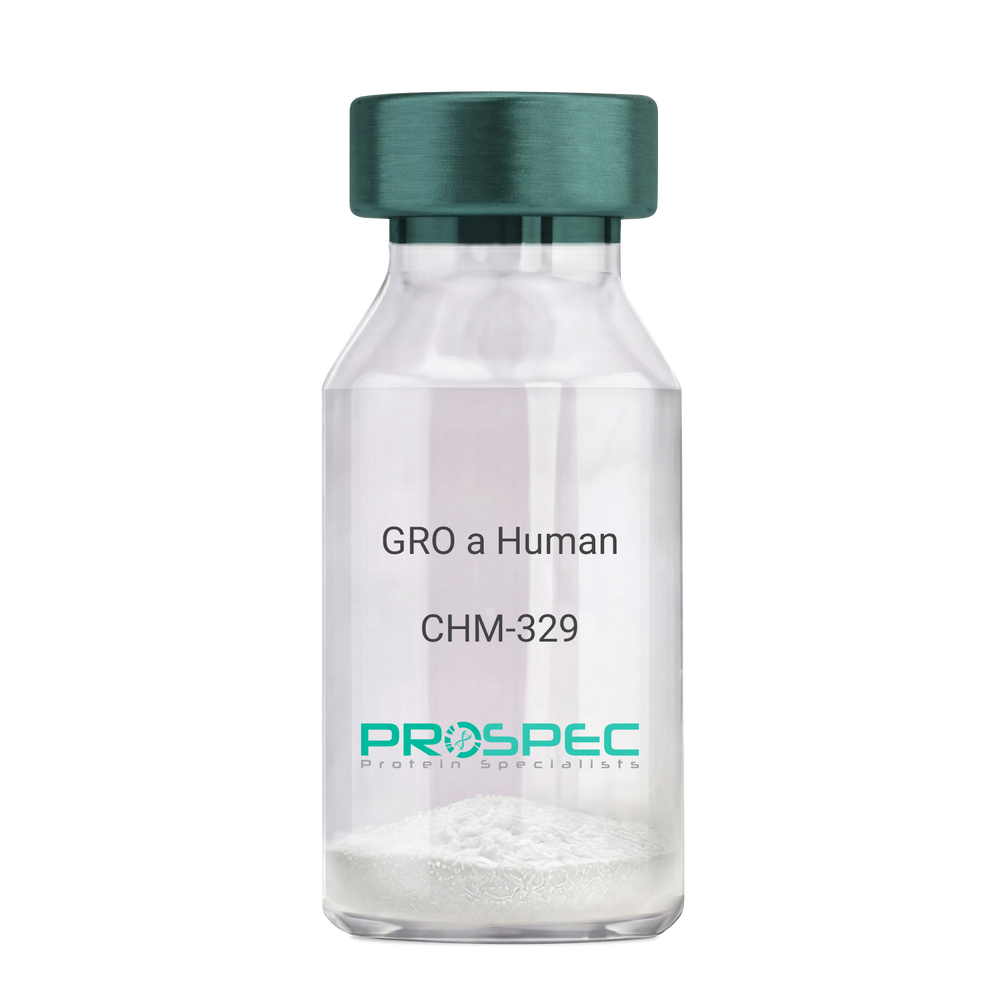
    Name :

    CXCL1 Human

    Description:

    GRO-Alpha Human Recombinant (CXCL1)

    Growth-regulated protein alpha, CXCL1, Melanoma growth stimulatory activity, MGSA, Neutrophil-activating protein 3, NAP-3, GRO-alpha (1-73), chemokine (C-X-C motif) ligand 1, GRO1, GROa, SCYB1, MGSA-a, MGSA alpha.

    Product # :

    CHM-329

    Price :

    Quantity :

    Shipping Method :

    Room Temp Icon

    Shipped at Room temp

    Add To Cart

    More Info

    • description
    • source
    • formulation
    • purity
    • biological activity
    • More Info

    Description

    GRO Alpha Human Recombinant produced in E.Coli is a single,non-glycosylated, polypeptide chain containing 73 amino acids and having a molecular mass of 7811 Dalton. The GRO-alpha is purified by proprietary chromatographic techniques.

    Source

    Escherichia Coli.

    Formulation

    Lyophilized from a 0.2µm filtered concentrated (1mg/ml) solution in 20mM PB, pH 7.4, 50mM NaCl.

    Purity

    Greater than 97.0% as determined by:
    (a) Analysis by RP-HPLC.
    (b) Analysis by SDS-PAGE.

    Biological Activity

    Determined by its ability to chemoattract human peripheral blood neutrophils using a concentration range of 10.0-100.0 ng/ml.

    More Info

    • Introduction

      Chemokine (C-X-C motif) ligand 1 (CXCL1) is a small cytokine belonging to the CXC chemokine family that was previously called GRO1 oncogene, Neutrophil-activating protein 3 (NAP-3) and melanoma growth stimulating activity, alpha (MSGA-a). It is secreted by human melanoma cells, has mitogenic properties and is implicated in melanoma pathogenesis. CXCL1 is expressed by macrophages, neutrophilsand epithelial cells, and has neutrophil chemoattractant activity. CXCL1 plays a role in spinal cord development by inhibiting the migration of oligodendrocyte precursors and is involved in the processes of angiogenesis, inflammation, wound healing, and tumorigenesis. This chemokine elicits its effects by signaling through the chemokine receptor CXCR2. The gene for CXCL1 is located on human chromosome 4 amongst genes for other CXC chemokines.

    • Synonyms

      Growth-regulated protein alpha, CXCL1, Melanoma growth stimulatory activity, MGSA, Neutrophil-activating protein 3, NAP-3, GRO-alpha (1-73), chemokine (C-X-C motif) ligand 1, GRO1, GROa, SCYB1, MGSA-a, MGSA alpha.

    • Physical Appearance

      Sterile Filtered White lyophilized (freeze-dried) powder.

    • Stability

      Lyophilized GRO-alpha although stable at room temperature for 3 weeks, should be stored desiccated below -18°C. Upon reconstitution CXCL1 should be stored at 4°C between 2-7 days and for future use below -18°C. For long term storage it is recommended to add a carrier protein (0.1% HSA or BSA).Please prevent freeze-thaw cycles.

    • Solubility

      It is recommended to reconstitute the lyophilized CXCL1 in sterile 18MΩ-cm H2O not less than 100µg/ml, which can then be further diluted to other aqueous solutions.

    • Amino Acid Sequence

      The sequence of the first five N-terminal amino acids was determined and was found to be Ala-Ser-Val-Ala-Thr.

    • Background

      What is the molecular weight/Mw of CXCL1 HUMAN Protein?
      CXCL1 HUMAN Protein has a total Mw of 7.81kDa.

      What is the source or expression system of CXCL1 HUMAN Protein?
      Escherichia Coli.

      What is the Purity of CXCL1 HUMAN Protein?
      CXCL1 HUMAN Protein is >97% pure as determined by SDS-PAGE.

      What is the Biological Activity of CXCL1 HUMAN Protein?
      Determined by its ability to chemoattract human peripheral blood neutrophils using a concentration range of 10.0-100.0 ng/ml.

      What is the amino acid sequence of CXCL1 HUMAN Protein?
      The sequence of the first five N-terminal amino acids was determined and was found to be Ala-Ser-Val-Ala-Thr.

      What applications can CXCL1 HUMAN Protein be used in?
      CXCL1 HUMAN Protein can probably be used in western blot, ELISA and Lateral Flow.

      What is the endotoxin level for CXCL1 HUMAN Protein?
      The endotoxin level is minimal, CXCL1 HUMAN Protein was purified using conventional chromatography techniques.


    ProSpec's products are furnished for LABORATORY RESEARCH USE ONLY. The product may not be used as drugs, agricultural or pesticidal products, food additives or household chemicals.

    Gro A Human
  • View Data Sheet

    Name :

    CXCL13 Human, His

    Description:

    BCA-1/ BLC Human Recombinant, His Tag

    C-X-C motif chemokine 13, Small-inducible cytokine B13, B lymphocyte chemoattractant, CXC chemokine BLC, CXCL13, BCA1, BCA-1, CXCL-13, B cell Attracting Chemokine-1, BLC, ANGIE, BLR1L, SCYB13, ANGIE2.

    Product # :

    CHM-023

    Price :

    Quantity :

    Shipping Method :

    Ice Icon

    Shipped with Ice Packs

    Add To Cart

    More Info

    • description
    • source
    • formulation
    • purity
    • More Info
    • SDS-PAGE

    Description

    BCA 1 Human Recombinant produced in E.Coli is a single, non-glycosylated polypeptide chain topological domain containing 110 amino acids (23-109 a.a) and having a molecular mass of 12.7kDa. BCA 1 is fused to a 23 amino acid His-tag at N-terminus.

    Source

    Escherichia Coli.

    Formulation

    BCA 1 protein solution (0.25mg/ml) containing 20mM Tris-HCl buffer (pH8.0), 0.4M Urea and 10% glycerol.

    Purity

    Greater than 85.0% as determined by SDS-PAGE.

    SDS-PAGE

    CXCL13 Human, His-SDS-PAGE - Product image 1

    More Info

    • Introduction

      BCA-1 is a CXC chemokine that is highly expressed in thesecondary lymphoid organs, such as follicles of the spleen, lymph nodes, and Peyer's patches. CXCL13 promotes the migration of B lymphocytes (compared to T cells and macrophages), by stimulating calcium influx into, and chemotaxis of, cells expressing Burkitt's lymphoma receptor 1 (BLR1). BCA1 therefore function in the homing of B lymphocytes to follicles. Human BCA-1 shares a 64% amino acid sequence similarity with the mouse protein and 23 - 34% amino acid sequence identity with other known CXC chemokines. Recombinant or chemically synthesized BCA1 is a potent chemoattractant for B lymphocytes but not T lymphocytes, monocytes or neutrophils. BLR1, a G protein-coupled receptor originally isolated from Burkitt’s lymphoma cells, has now been shown to be the specific receptor for BCA1. Among cells of the hematopoietic lineages, the expression of BLR-1, now designated CXCR-5, is restricted to B lymphocytes and a subpopulation of T helper memory cells.

    • Synonyms

      C-X-C motif chemokine 13, Small-inducible cytokine B13, B lymphocyte chemoattractant, CXC chemokine BLC, CXCL13, BCA1, BCA-1, CXCL-13, B cell Attracting Chemokine-1, BLC, ANGIE, BLR1L, SCYB13, ANGIE2.

    • Physical Appearance

      Sterile Filtered colorless solution.

    • Stability

      Store at 4°C if entire vial will be used within 2-4 weeks. Store, frozen at -20°C for longer periods of time. For long term storage it is recommended to add a carrier protein (0.1% HSA or BSA).Avoid multiple freeze-thaw cycles.

    • Amino Acid Sequence

      MGSSHHHHHH SSGLVPRGSH MGSVLEVYYT SLRCRCVQES SVFIPRRFID RIQILPRGNG CPRKEIIVWK KNKSIVCVDP QAEWIQRMME VLRKRSSSTL PVPVFKRKIP.

    • Background

      What is the molecular weight/Mw of CXCL13 HUMAN, HIS Protein?
      CXCL13 HUMAN, HIS Protein has a total Mw of 12.7kDa.

      What is the source or expression system of CXCL13 HUMAN, HIS Protein?
      Escherichia Coli.

      What is the Purity of CXCL13 HUMAN, HIS Protein?
      CXCL13 HUMAN, HIS Protein is >85% pure as determined by SDS-PAGE.

      What is the Biological Activity of CXCL13 HUMAN, HIS Protein?
      The biological functionality of CXCL13 HUMAN, HIS Protein will be determined in the future.

      What is the amino acid sequence of CXCL13 HUMAN, HIS Protein?
      MGSSHHHHHH SSGLVPRGSH MGSVLEVYYT SLRCRCVQES SVFIPRRFID RIQILPRGNG CPRKEIIVWK KNKSIVCVDP QAEWIQRMME VLRKRSSSTL PVPVFKRKIP.

      What applications can CXCL13 HUMAN, HIS Protein be used in?
      CXCL13 HUMAN, HIS Protein can probably be used in western blot, ELISA and Lateral Flow.

      What is the endotoxin level for CXCL13 HUMAN, HIS Protein?
      The endotoxin level is minimal, CXCL13 HUMAN, HIS Protein was purified using conventional chromatography techniques.


    ProSpec's products are furnished for LABORATORY RESEARCH USE ONLY. The product may not be used as drugs, agricultural or pesticidal products, food additives or household chemicals.

    Bca 1 Human His
  • View Data Sheet

    Name :

    BCCIP Human

    Description:

    BRCA2 And CDKN1A Interacting Protein Human Recombinant

    BRCA2 and CDKN1A-interacting protein, P21- and CDK-associated protein 1, Protein TOK-1, BCCIP, TOK1, BRCA2 and CDKN1A-interacting protein.

    Product # :

    PRO-2014

    Price :

    Quantity :

    Shipping Method :

    Ice Icon

    Shipped with Ice Packs

    Add To Cart

    More Info

    • description
    • source
    • formulation
    • purity
    • More Info

    Description

    BCCIP Human Recombinant produced in E.Coli is a single, non-glycosylated polypeptide chain containing 339 amino acids (1-314 a.a.) and having a molecular mass of 38.6kDa.BCCIP is fused to a 25 amino acid His-tag at N-terminus & purified by proprietary chromatographic techniques.

    Source

    Escherichia Coli.

    Formulation

    BCCIP protein solution (0.5mg/ml) containing 20mM Tris-HCl buffer (pH 8.0), 0.15M NaCl, 10% glycerol and 1mM DTT.

    Purity

    Greater than 90.0% as determined by SDS-PAGE.

    More Info

    • Introduction

      BRCA2 And CDKN1A Interacting Protein (BCCIP) is a nuclear protein with multiple interacting domains which remained conserved throughout the evolution. BCCIP is an important cofactor for BRCA2 in tumor suppression, and a modulator of CDK2 kinase activity via p21. BCCIP takes also part in the regulation of BRCA2 and RAD51 nuclear focus formation, doublestrand break-induced homologous recombination, and cell cycle progression.

    • Synonyms

      BRCA2 and CDKN1A-interacting protein, P21- and CDK-associated protein 1, Protein TOK-1, BCCIP, TOK1, BRCA2 and CDKN1A-interacting protein.

    • Physical Appearance

      Sterile Filtered colorless solution.

    • Stability

      Store at 4°C if entire vial will be used within 2-4 weeks. Store, frozen at -20°C for longer periods of time. For long term storage it is recommended to add a carrier protein (0.1% HSA or BSA).Avoid multiple freeze-thaw cycles.

    • Amino Acid Sequence

      MGSSHHHHHH SSGLVPRGSH MGSEFMASRS KRRAVESGVP QPPDPPVQRD EEEEKEVENE DEDDDDSDKE KDEEDEVIDE EVNIEFEAYS LSDNDYDGIK KLLQQLFLKA PVNTAELTDL LIQQNHIGSV IKQTDVSEDS NDDMDEDEVF GFISLLNLTE RKGTQCVEQI QELVLRFCEK NCEKSMVEQL DKFLNDTTKP VGLLLSERFI NVPPQIALPM YQQLQKELAG AHRTNKPCGK CYFYLLISKT FVEAGKNNSK KKPSNKKKAA LMFANAEEEF FYEKAILKFN YSVQEESDTC LGGKWSFDDV PMTPLRTVML IPGDKMNEIM DKLKEYLSV.

    ProSpec's products are furnished for LABORATORY RESEARCH USE ONLY. The product may not be used as drugs, agricultural or pesticidal products, food additives or household chemicals.

    Bccip Human
  • View Data Sheet

    Name :

    Actin Rabbit

    Description:

    Actin Rabbit

    Product # :

    PRO-517

    Price :

    Quantity :

    Shipping Method :

    Room Temp Icon

    Shipped at Room temp

    Add To Cart

    More Info

    • description
    • source
    • formulation
    • purity
    • More Info

    Description

    Ultra pure Actin consists in the alpha-skeletal muscle isoform and is purified from rabbit striated muscle.The purification method used (according to Spudich & Watts) results in a highly purified protein having a Molecular mass of 43,000 dalton.

    Source

    Rabbit Muscle.

    Formulation

    The protein was lyophilized from a 1mg/ml solution containing 10mM Tris/HCl buffer pH 8.0, 0.2mM CaCl2, 0.2mM ATP, 1mM DTT and 0.5% (w/v) SDS.

    Purity

    Greater than 98.0% as determined by SDS-PAGE.

    More Info

    • Introduction

      Actin is a muscle protein localized in the I band of the myofibrils; acting along with myosin, it is responsible for contraction and relaxation of muscle. Each actin protomer binds one molecule of ATP and has one high affinity site for either calcium or magnesium ions, as well as several low affinity sites. Actin exists as a monomer in low salt concentrations, but filaments form rapidly as salt concentration rises, with the consequent hydrolysis of ATP. It occurs in globular (G-actin) and fibrous (F-actin) forms. Actin is found in all eukaryotic cells (except for nematode sperm). Actin is one of the most highly-conserved proteins, differing by no more than 20% in species as diverse as algae and humans. Its other functions include cell motility, cell division and cytokinesis, vesicle and organelle movement, cell signaling, and the establishment and maintenance of cell junctions and cell shape.

    • Physical Appearance

      Sterile Filtered White lyophilized (freeze-dried) powder.

    • Stability

      Store the Lyophilized Actin between 2-8°C, do not freeze. Upon reconstitution Actin should be stored at 4°C between 2-7 days and for future use below -18°C. Please prevent freeze-thaw cycles.

    • Solubility

      It is recommended to reconstitute the lyophilized Actin in sterile 18MΩ-cm H2O not less than 1mg/ml, which can then be further diluted to other aqueous solutions.

    ProSpec's products are furnished for LABORATORY RESEARCH USE ONLY. The product may not be used as drugs, agricultural or pesticidal products, food additives or household chemicals.

    Actin
  • View Data Sheet

    Name :

    ANG Human

    Description:

    Angiogenin Human Recombinant

    Angiogenin, ANG, Ribonuclease 5, RNase 5, RNASE5, ribonuclease, RNase A family, 5, ALS9, HEL168, MGC22466, MGC71966, RNASE4.

    Product # :

    PRO-1903

    Price :

    Quantity :

    Shipping Method :

    Ice Icon

    Shipped with Ice Packs

    Add To Cart

    More Info

    • description
    • source
    • formulation
    • purity
    • More Info

    Description

    ANG Human Recombinant produced in E.coli is a single, non-glycosylated polypeptide chain containing 144 amino acids (25-147) and having a molecular mass of 16.4 kDa.ANG is fused to a 21 amino acid His-Tag at N-terminus and purified by proprietary chromatographic techniques.

    Source

    Escherichia Coli.

    Formulation

    The ANG solution (0.5mg/ml) contains 20mM Tris-HCl buffer (pH 8.0), 10% glycerol and 0.4M Urea.

    Purity

    Greater than 85.0% as determined by SDS-PAGE.

    More Info

    • Introduction

      Angiogenin (ANG) is a part of the RNase A family. ANG is an extremely effective mediator of new blood vessel formation. ANG Cleaves tRNA within anticodon loops in order to produce tRNA-derived stress-induced fragments (tiRNAs) that inhibit protein synthesis and trigger the assembly of stress granules. ANG is also stimulates ribosomal RNA synthesis. The interaction with RNH1 in vivo regulates the Angiogenic activity.

    • Synonyms

      Angiogenin, ANG, Ribonuclease 5, RNase 5, RNASE5, ribonuclease, RNase A family, 5, ALS9, HEL168, MGC22466, MGC71966, RNASE4.

    • Physical Appearance

      Sterile Filtered colorless solution.

    • Stability

      Store at 4°C if entire vial will be used within 2-4 weeks. Store, frozen at -20°C for longer periods of time. For long term storage it is recommended to add a carrier protein (0.1% HSA or BSA).Avoid multiple freeze-thaw cycles.

    • Amino Acid Sequence

      MGSSHHHHHH SSGLVPRGSH MQDNSRYTHF LTQHYDAKPQ GRDDRYCESI MRRRGLTSPC KDINTFIHGN KRSIKAICEN KNGNPHRENL RISKSSFQVT TCKLHGGSPW PPCQYRATAG FRNVVVACEN GLPVHLDQSI FRRP.

    ProSpec's products are furnished for LABORATORY RESEARCH USE ONLY. The product may not be used as drugs, agricultural or pesticidal products, food additives or household chemicals.

    Ang Human
  • View Data Sheet

    Name :

    EDF1 Human

    Description:

    Endothelial Differentiation-Related Factor 1 Human Recombinant

    EDF-1, MBF1, Multiprotein-bridging factor 1.

    Product # :

    PRO-494

    Price :

    Quantity :

    Shipping Method :

    Ice Icon

    Shipped with Ice Packs

    Add To Cart

    More Info

    • description
    • source
    • formulation
    • purity
    • More Info

    Description

    EDF1 Recombinant Human produced in E.Coli is a single, non-glycosylated polypeptide chain containing 156 amino acids (1-148 a.a.) and having a molecular mass of 17.4 kDa. The EDF1 is fused to 8 amino acid His-Tag at C-terminus and purified by proprietary chromatographic techniques.

    Source

    Escherichia Coli.

    Formulation

    0.5 mg/ml solution containing 20mM Tris pH-8, 1mM DTT, 0.1M NaCl & 20% glycerol.

    Purity

    Greater than 90.0% as determined by SDS-PAGE.

    More Info

    • Introduction

      EDF1 controls endothelial cell differentiation. EDF1 has a role as a bridging protein that interconnects regulatory proteins and the basal transcriptional machinery, thus modulating the transcription of genes that take part in endothelial differentiation. EDF1 binds calmodulin through its IQ domain and controls nitric oxide synthase activity via calmodulin sequestration in the cytoplasm. EDF1 is localized in adult liver, heart, adipose tissues, intestine and pancreas.

    • Synonyms

      EDF-1, MBF1, Multiprotein-bridging factor 1.

    • Physical Appearance

      Sterile filtered colorless solution.

    • Stability

      Store at 4°C if entire vial will be used within 2-4 weeks. Store, frozen at -20°C for longer periods of time. For long term storage it is recommended to add a carrier protein (0.1% HSA or BSA). Please prevent freeze thaw cycles.

    • Amino Acid Sequence

      MAESDWDTVT VLRKKGPTAA QAKSKQAILA AQRRGEDVET SKKWAAGQNK QHSITKNTAK LDRETEELHH DRVTLEVGKV IQQGRQSKGL TQKDLATKIN EKPQVIADYE SGRAIPNNQV LGKIERAIGL KLRGKDIGKP IEKGPRAKLE HHHHHH.

    ProSpec's products are furnished for LABORATORY RESEARCH USE ONLY. The product may not be used as drugs, agricultural or pesticidal products, food additives or household chemicals.

    Edf1 Human
  • View Data Sheet

    Name :

    LECT1 (214-333) Human

    Description:

    Leukocyte Cell Derived Chemotaxin 1 (214-333 a.a.) Human Recombinant

    BRICD3, CHM-I, CHM1, MYETS1, Leukocyte cell-derived chemotaxin 1, Chondrosurfactant protein, CH-SP, Chondromodulin-1, ChM-I, LECT1.

    Product # :

    PRO-1857

    Price :

    Quantity :

    Shipping Method :

    Ice Icon

    Shipped with Ice Packs

    Add To Cart

    More Info

    • description
    • source
    • formulation
    • purity
    • More Info

    Description

    LECT1 Human Recombinant produced in E. coli is. a single polypeptide chain containing 143 amino acids (214-333) and having a molecular mass of 16.2kDa. LECT1 is fused to a 23 amino acid His-tag at N-terminus & purified by proprietary chromatographic techniques.

    Source

    Escherichia Coli.

    Formulation

    The LECT1 solution (1mg/ml) contains 20mM Tris-HCl buffer (pH 8.0), 0.4M UREA and 10% glycerol.

    Purity

    Greater than 85% as determined by SDS-PAGE.

    More Info

    • Introduction

      Leukocyte Cell Derived Chemotaxin 1 (214-333 a.a.), also known as LECT1, is a glycosylated transmembrane protein which is cleaved to form a mature, secreted protein. The mature protein encourages chondrocyte growth and inhibits angiogenesis. The mature protein takes part in endochondral bone development by permitting cartilaginous anlagen to be vascularized and replaced by bone. LECT1 is expressed in the avascular area of prehypertrophic cartilage and its expression reduces during vascular invasion and chondrocyte hypertrophy.

    • Synonyms

      BRICD3, CHM-I, CHM1, MYETS1, Leukocyte cell-derived chemotaxin 1, Chondrosurfactant protein, CH-SP, Chondromodulin-1, ChM-I, LECT1.

    • Physical Appearance

      Sterile Filtered clear solution.

    • Stability

      Store at 4°C if entire vial will be used within 2-4 weeks. Store frozen at -20°C for longer periods of time. For long term storage it is recommended to add a carrier protein (0.1% HSA or BSA).Avoid multiple freeze-thaw cycles.

    • Amino Acid Sequence

      MGSSHHHHHH SSGLVPRGSH MGSREVVRKI VPTTTKRPHS GPRSNPGAGR LNNETRPSVQ EDSQAFNPDN PYHQEGESMT FDPRLDHEGI CCIECRRSYT HCQKICEPLG GYYPWPYNYQ GCRSACRVIM PCSWWVARIL GMV.

    ProSpec's products are furnished for LABORATORY RESEARCH USE ONLY. The product may not be used as drugs, agricultural or pesticidal products, food additives or household chemicals.

    Lect1 214 333 Human
  • View Data Sheet

    Name :

    Clusterin Mouse

    Description:

    Apolipoprotein-J Mouse Recombinant

    CLI, AAG4, KUB1, SGP2, SGP-2, SP-40, TRPM2, MGC24903, Clusterin, Apolipoprotein J, Apo-J.

    Product # :

    CYT-1172

    Price :

    Quantity :

    Shipping Method :

    Room Temp Icon

    Shipped at Room temp

    Add To Cart

    More Info

    • description
    • source
    • formulation
    • purity
    • More Info

    Description

    Clusterin Mouse Recombinant is a single, glycosylated polypeptide chain containing 433 amino acids (22-448a.a) and having a molecular mass of 50.2kDa (calculated). Clusterin is fused to a 6 a.a His tag at C-terminal.

    Source

    HEK293

    Formulation

    Clusterin filtered (0.4 µm) and lyophilized from 0.5mg/ml in 20 mM Tris buffer and 50 mM NaCl, pH 7.5.

    Purity

    Greater than 90.0% as determined by SDS-PAGE.

    More Info

    • Introduction

      Clusterin also known as Apolipoprotein J (APO-J) is a 75-80 kD disulfide-linked heterodimeric protein containing about 30% of N-linked carbohydrate rich in sialic acid but truncated forms targeted to the nucleus have also been identified.
      The precursor polypeptide chain is cleaved proteolytically to remove the 22-mer secretory signal peptide and subsequently between residues 227/228 to generate the a and b chains. These are assembled in anti-parallel to give a heterodimeric molecule in which the cysteine-rich centers are linked by 5 disulfide bridges and are flanked by 2 predicted coiled-coil a-helices and 3 predicted amphipathic a-helices.
      Across a broad range of species clusterin shows a high degree of sequence homology ranging from 70% -80%. It is nearly ubiquitously expressed in most mammalian tissues and can be found in plasma, milk, urine, cerebrospinal fluid and semen.
      It is able to bind and form complexes with numerous partners such as immunoglobulins, lipids, heparin, bacteria, complement components, paraoxonase, beta amyloid, leptin and others. Clusterin has been ascribed a plethora of functions such as phagocyte recruitment, aggregation induction, complement attack prevention, apoptosis inhibition, membrane remodeling, lipid transport, hormone transport and/or scavenging, matrix metalloproteinase inhibition.
      Clusterin is up/down regulated on the mRNA or protein level in many pathological and clinically relevant situations including cancer, organ regeneration, infection, Alzheimer disease, retinitis pigmentosa, myocardial infarction, renal tubular damage, autoimmunity and others.

    • Synonyms

      CLI, AAG4, KUB1, SGP2, SGP-2, SP-40, TRPM2, MGC24903, Clusterin, Apolipoprotein J, Apo-J.

    • Physical Appearance

      Filtered White lyophilized (freeze-dried) powder.

    • Stability

      Store lyophilized protein at -20°C. Aliquot the product after reconstitution to avoid repeated freezing/thawing cycles. Reconstituted protein can be stored at 4°C for a limited period of time; it does not show any change after two weeks at 4°C.

    • Solubility

      It is recommended to add deionized water to prepare a working stock solution of approximately 0.5mg/ml and let the lyophilized pellet dissolve completely.

    • Amino Acid Sequence

      EQEVSDNELQ ELSTQGSRYI NKEIQNAVQG VKHIKTLIEK TNAERKSLLN SLEEAKKKKE DALEDTRDSE MKLKAFPEVC NETMMALWEE CKPCLKHTCM KFYARVCRSG SGLVGQQLEE FLNQSSPFYF WMNGDRIDSL LESDRQQSQV LDAMQDSFAR ASGIIDTLFQ DRFFARELHD PHYFSPIGFP HKRPHFLYPK SRLVRSLMSP SHYGPPSFHN MFQPFFEMIH QAQQAMDVQL HSPAFQFPDV DFLREGEDDR TVCKEIRRNS TGCLKMKGQC EKCQEILSVD CSTNNPAQAN LRQELNDSLQ VAERLTEQYK ELLQSFQSKM LNTSSLLEQL NDQFNWVSQL ANLTQGEDKY YLRVSTVTTH SSDSEVPSRV TEVVVKLFDS DPITVVLPEE VSKDNPKFMD TVAEKALQEY RRKSRAEHHH HHH

    • Background

      What is the molecular weight/Mw of CLUSTERIN Protein?
      CLUSTERIN Protein has a total Mw of 50.2kDa.

      What is the source or expression system of CLUSTERIN Protein?
      HEK293

      What is the Purity of CLUSTERIN Protein?
      CLUSTERIN Protein is >90% pure as determined by SDS-PAGE.

      What is the Biological Activity of CLUSTERIN Protein?
      The biological functionality of CLUSTERIN Protein will be determined in the future.

      What is the amino acid sequence of CLUSTERIN Protein?
      EQEVSDNELQ ELSTQGSRYI NKEIQNAVQG VKHIKTLIEK TNAERKSLLN SLEEAKKKKE DALEDTRDSE MKLKAFPEVC NETMMALWEE CKPCLKHTCM KFYARVCRSG SGLVGQQLEE FLNQSSPFYF WMNGDRIDSL LESDRQQSQV LDAMQDSFAR ASGIIDTLFQ DRFFARELHD PHYFSPIGFP HKRPHFLYPK SRLVRSLMSP SHYGPPSFHN MFQPFFEMIH QAQQAMDVQL HSPAFQFPDV DFLREGEDDR TVCKEIRRNS TGCLKMKGQC EKCQEILSVD CSTNNPAQAN LRQELNDSLQ VAERLTEQYK ELLQSFQSKM LNTSSLLEQL NDQFNWVSQL ANLTQGEDKY YLRVSTVTTH SSDSEVPSRV TEVVVKLFDS DPITVVLPEE VSKDNPKFMD TVAEKALQEY RRKSRAEHHH HHH

      What applications can CLUSTERIN Protein be used in?
      CLUSTERIN Protein can probably be used in western blot, ELISA and Lateral Flow.

      What is the endotoxin level for CLUSTERIN Protein?
      The endotoxin level is minimal, CLUSTERIN Protein was purified using conventional chromatography techniques.

    ProSpec's products are furnished for LABORATORY RESEARCH USE ONLY. The product may not be used as drugs, agricultural or pesticidal products, food additives or household chemicals.

    Clusterin Mouse
  • View Data Sheet

    Name :

    DCN Human

    Description:

    Decorin Human Recombinant

    Decorin, Bone proteoglycan II, PG-S2, PG40, DCN, SLRR1B, CSCD, PGII, PGS2, DSPG2.

    Product # :

    PRO-1583

    Price :

    Quantity :

    Shipping Method :

    Ice Icon

    Shipped with Ice Packs

    Add To Cart

    More Info

    • description
    • source
    • formulation
    • purity
    • More Info

    Description

    DCN Human Recombinant produced in E.Coli is a single, non-glycosylated polypeptide chain containing 350 amino acids (31-359 a.a) and having a molecular mass of 38.6kDa.DCN is fused to a 21 amino acid His-tag at N-terminus & purified by proprietary chromatographic techniques.

    Source

    Escherichia Coli.

    Formulation

    DCN protein solution (0.25mg/ml) containing 20mM Tris pH 8.0 and 10% glycerol.

    Purity

    Greater than 80% as determined by SDS-PAGE.

    More Info

    • Introduction

      Decorin (DCN) is a small cellular or pericellular matrix proteoglycan which is closely related in structure to biglycan protein. Decorin is a secreted protein which binds to collagen and fibronectin in extracellular matrix. Decorin appears in different glycoforms, substituted with chondroitin sulfate or dermatan sulfate consistent with the original tissue. DCN contains one attached glycosaminoglycan chain. Decorin influences the rate of fibril formation. Decorin is capable of suppressing the growth of various tumor cell lines. DCN gene defects cause corneal dystrophy. The DCN gene is a candidate gene for Marfan syndrome.

    • Synonyms

      Decorin, Bone proteoglycan II, PG-S2, PG40, DCN, SLRR1B, CSCD, PGII, PGS2, DSPG2.

    • Physical Appearance

      Sterile filtered colorless solution.

    • Stability

      Store at 4°C if entire vial will be used within 2-4 weeks. Store, frozen at -20°C for longer periods of time. For long term storage it is recommended to add a carrier protein (0.1% HSA or BSA).Avoid multiple freeze-thaw cycles.

    • Amino Acid Sequence

      MGSSHHHHHH SSGLVPRGSH MDEASGIGPE VPDDRDFEPS LGPVCPFRCQ CHLRVVQCSDLGLDKVPKDL PPDTTLLDLQ NNKITEIKDG DFKNLKNLHA LILVNNKISK VSPGAFTPLVKLERLYLSKN QLKELPEKMP KTLQELRAHE NEITKVRKVT FNGLNQMIVI ELGTNPLKSS GIENGAFQGM KKLSYIRIAD TNITSIPQGL PPSLTELHLD GNKISRVDAA SLKGLNNLAKLGLSFNSISA VDNGSLANTP HLRELHLDNN KLTRVPGGLA EHKYIQVVYL HNNNISVVGSSDFCPPGHNT KKASYSGVSL FSNPVQYWEI QPSTFRCVYV RSAIQLGNYK.

    ProSpec's products are furnished for LABORATORY RESEARCH USE ONLY. The product may not be used as drugs, agricultural or pesticidal products, food additives or household chemicals.

    Dcn Human
  • 1
  • …
  • 39
  • 40
  • 41
  • 42
Your browser does not support the video tag.

Products

  • Cytokines
  • Growth Factors
  • Chemokines
  • CD Antigens
  • Neurotrophins
  • Hormones
  • Enzymes
  • Viral Antigens
  • Recombinant Proteins
  • Natural Proteins
  • Monoclonal Antibodies
  • Polyclonal Antibodies
  • Thermal Packaging

About

  • Company
  • Founder
  • Contribution
  • Contact Us
  • My Account

Ordering

  • Ordering Method
  • Ordering - Credit Card
  • Ordering PO
  • Shipping Fees
  • FAQ's

Legal

  • Terms & Conditions
  • Privacy
  • Site Map
  • info@prospecbio.com
  • Facebook
  • Instagram
  • Linkedin Profile

© 2026 ProSpec-Tany TechnoGene Ltd. All Rights Reserved.

  • Choosing a selection results in a full page refresh.
  • Opens in a new window.