Skip to content

High-quality research proteins.

  • 1-800-805-6531

  • Mon - Sat 8.00-18.00, Sun - Closed

  • info@prospecbio.com

  • PO Box 6591 East Brunswick NJ 08816

  • Products
    • Cytokines
    • Growth factors
    • Chemokines
    • Cd antigens
    • Neurotrophins
    • Hormones
    • Enzymes
    • Viral antigens
    • Recombinant proteins
    • Natural proteins
    • Monoclonal antibodies
    • Polyclonal antibodies
    • Thermal Packaging
  • About
    • Company
    • Founder
    • Contribution
  • Customers
    • Eastern Asia
    • Eastern Europe
    • North America
    • South America
    • South East Asia
    • Southern Asia
    • Western Europe
  • Ordering
    • Ordering Method
    • Ordering - Credit Card
    • Ordering - PO
    • Shipping Fees
    • FAQs
  • Services
    • DNA Cloning
    • Protein Expression
    • Monoclonal Antibody
    • Fermentation
    • Technology License
  • Contact us
Log in

Country/region

  • USD $ | Albania
  • USD $ | Andorra
  • USD $ | Argentina
  • USD $ | Armenia
  • USD $ | Australia
  • USD $ | Austria
  • USD $ | Azerbaijan
  • USD $ | Belarus
  • USD $ | Belgium
  • USD $ | Bolivia
  • USD $ | Brazil
  • USD $ | Bulgaria
  • USD $ | Cambodia
  • USD $ | Canada
  • USD $ | Chile
  • USD $ | China
  • USD $ | Colombia
  • USD $ | Costa Rica
  • USD $ | Croatia
  • USD $ | Cyprus
  • USD $ | Czechia
  • USD $ | Denmark
  • USD $ | Estonia
  • USD $ | Finland
  • USD $ | France
  • USD $ | Georgia
  • USD $ | Germany
  • USD $ | Greece
  • USD $ | Hong Kong SAR
  • USD $ | Hungary
  • USD $ | Iceland
  • USD $ | India
  • USD $ | Ireland
  • USD $ | Israel
  • USD $ | Italy
  • USD $ | Japan
  • USD $ | Kazakhstan
  • USD $ | Latvia
  • USD $ | Liechtenstein
  • USD $ | Lithuania
  • USD $ | Madagascar
  • USD $ | Malta
  • USD $ | Mexico
  • USD $ | Moldova
  • USD $ | Monaco
  • USD $ | Netherlands
  • USD $ | New Zealand
  • USD $ | North Macedonia
  • USD $ | Norway
  • USD $ | Panama
  • USD $ | Paraguay
  • USD $ | Peru
  • USD $ | Philippines
  • USD $ | Poland
  • USD $ | Portugal
  • USD $ | Romania
  • USD $ | Singapore
  • USD $ | Slovakia
  • USD $ | Slovenia
  • USD $ | South Africa
  • USD $ | South Korea
  • USD $ | Spain
  • USD $ | Sri Lanka
  • USD $ | Sweden
  • USD $ | Switzerland
  • USD $ | Taiwan
  • USD $ | Thailand
  • USD $ | Türkiye
  • USD $ | Ukraine
  • USD $ | United Kingdom
  • USD $ | United States
  • USD $ | Uruguay
  • USD $ | Vatican City
  • USD $ | Venezuela
  • USD $ | Vietnam
  • Facebook
  • Instagram
logoProSpec - Recombinant Protein Manufacturer for academic and R&D industry
Become a distributor
Account Log in
Wishlist
Cart Cart(0)
  • Products
    +
    • Cytokines
    • Growth factors
    • Chemokines
    • Cd antigens
    • Neurotrophins
    • Hormones
    • Enzymes
    • Viral antigens
    • Recombinant proteins
    • Natural proteins
    • Monoclonal antibodies
    • Polyclonal antibodies
    • Thermal Packaging
  • About
    +
    • Company
    • Founder
    • Contribution
  • Customers
    +
    • Eastern Asia
    • Eastern Europe
    • North America
    • South America
    • South East Asia
    • Southern Asia
    • Western Europe
  • Ordering
    +
    • Ordering Method
    • Ordering - Credit Card
    • Ordering - PO
    • Shipping Fees
    • FAQs
  • Services
    +
    • DNA Cloning
    • Protein Expression
    • Monoclonal Antibody
    • Fermentation
    • Technology License
  • Contact us

Item added to your cart

View cart
View All
  • Cytokines
  • Growth factors
  • Chemokines
  • Cd antigens
  • Neurotrophins
  • Hormones
  • Enzymes
  • Viral antigens
  • Recombinant proteins
  • Natural proteins
  • Monoclonal antibodies
  • Polyclonal antibodies
  • Thermal Packaging
  • Tumor Necrosis Factor

    Tumor Necrosis Factor

    View All
  • 4-1BB

    4-1BB

    View All
  • Adiponectin

    Adiponectin

    View All
  • AIF1

    AIF1

    View All
  • Other Cytokines

    Other Cytokines

    View All
  • AITRL

    AITRL

    View All
  • Angiopoietin

    Angiopoietin

    View All
  • Apolipoprotein

    Apolipoprotein

    View All
  • B-Cell Activating Factor

    B-Cell Activating Factor

    View All
  • Beta Defensin

    Beta Defensin

    View All
  • Bone Morphogenetic Protein

    Bone Morphogenetic Protein

    View All
  • B type Natriuretic Peptide

    B type Natriuretic Peptide

    View All
  • BST

    BST

    View All
  • Betacellulin

    Betacellulin

    View All
  • Cardiotrophin

    Cardiotrophin

    View All
  • Activin

    Activin

    View All
  • Fibroblast Growth Factor

    Fibroblast Growth Factor

    View All
  • Other Growth Factors

    Other Growth Factors

    View All
  • CSF

    CSF

    View All
  • CTGF

    CTGF

    View All
  • IGFBP

    IGFBP

    View All
  • VEGF Protein

    VEGF Protein

    View All
  • EGF

    EGF

    View All
  • Epigen

    Epigen

    View All
  • Erythropoietin

    Erythropoietin

    View All
  • Insulin-Like Growth Factor

    Insulin-Like Growth Factor

    View All
  • Growth Hormone

    Growth Hormone

    View All
  • HDGF

    HDGF

    View All
  • Hepatocyte Growth Factor

    Hepatocyte Growth Factor

    View All
  • Insulin

    Insulin

    View All
  • BCA-1/ BLC (CXCL13)

    BCA-1/ BLC (CXCL13)

    View All
  • BRAK (CXCL14)

    BRAK (CXCL14)

    View All
  • C-10 (CCL6)

    C-10 (CCL6)

    View All
  • Other Chemokines

    Other Chemokines

    View All
  • MEC (CCL28)

    MEC (CCL28)

    View All
  • LD78-beta (CCL3L1)

    LD78-beta (CCL3L1)

    View All
  • CTACK (CCL27)

    CTACK (CCL27)

    View All
  • CXCL16

    CXCL16

    View All
  • CXCL17

    CXCL17

    View All
  • Platelet Factor-4 (CXCL4)

    Platelet Factor-4 (CXCL4)

    View All
  • ENA-78 (CXCL5)

    ENA-78 (CXCL5)

    View All
  • Eotaxin (CCL11,24,26)

    Eotaxin (CCL11,24,26)

    View All
  • Exodus-2 (CCL21)

    Exodus-2 (CCL21)

    View All
  • Fractalkine (CX3CL1)

    Fractalkine (CX3CL1)

    View All
  • CXCL6

    CXCL6

    View All
  • Other CD Antigens

    Other CD Antigens

    View All
  • CD14

    CD14

    View All
  • CD164

    CD164

    View All
  • CD1

    CD1

    View All
  • CD2

    CD2

    View All
  • CD200

    CD200

    View All
  • CD207

    CD207

    View All
  • CD226

    CD226

    View All
  • CD23

    CD23

    View All
  • CD244

    CD244

    View All
  • CD247

    CD247

    View All
  • CD27

    CD27

    View All
  • CD274

    CD274

    View All
  • CD300

    CD300

    View All
  • CD33

    CD33

    View All
  • Other Neurotrophins

    Other Neurotrophins

    View All
  • Beta-NGF

    Beta-NGF

    View All
  • BDNF

    BDNF

    View All
  • CDNF

    CDNF

    View All
  • CNTF

    CNTF

    View All
  • GDNF

    GDNF

    View All
  • Glia Maturation Factor

    Glia Maturation Factor

    View All
  • MANF

    MANF

    View All
  • Midkine

    Midkine

    View All
  • Neuroglobin

    Neuroglobin

    View All
  • Neurotrophic factors

    Neurotrophic factors

    View All
  • Neuregulin

    Neuregulin

    View All
  • Neuropilin

    Neuropilin

    View All
  • Pigment Epithelium-Derived Factor

    Pigment Epithelium-Derived Factor

    View All
  • Pleiotrophin

    Pleiotrophin

    View All
  • Peptide Hormones

    Peptide Hormones

    View All
  • Other Hormones

    Other Hormones

    View All
  • HCG

    HCG

    View All
  • Endothelin

    Endothelin

    View All
  • Exendin

    Exendin

    View All
  • FSH

    FSH

    View All
  • Glucagon

    Glucagon

    View All
  • GHRP

    GHRP

    View All
  • GLP

    GLP

    View All
  • Thyrostimulin

    Thyrostimulin

    View All
  • Inhibin A

    Inhibin A

    View All
  • LHRH

    LHRH

    View All
  • Melanotan

    Melanotan

    View All
  • Procalcitonin

    Procalcitonin

    View All
  • PTH

    PTH

    View All
  • Peroxiredoxin

    Peroxiredoxin

    View All
  • Peptidase

    Peptidase

    View All
  • Synthetase

    Synthetase

    View All
  • Transferase

    Transferase

    View All
  • Hydrolase

    Hydrolase

    View All
  • Dehydrogenase

    Dehydrogenase

    View All
  • ACE2

    ACE2

    View All
  • Esterase

    Esterase

    View All
  • Protein Kinases

    Protein Kinases

    View All
  • Other Enzymes

    Other Enzymes

    View All
  • Phosphatase

    Phosphatase

    View All
  • Deaminase

    Deaminase

    View All
  • Oxygenase

    Oxygenase

    View All
  • Adenylate Kinase

    Adenylate Kinase

    View All
  • Lyase

    Lyase

    View All
  • Chagas

    Chagas

    View All
  • SARS

    SARS

    View All
  • Influenza

    Influenza

    View All
  • ASFV

    ASFV

    View All
  • Astrovirus

    Astrovirus

    View All
  • Borrelia

    Borrelia

    View All
  • Helicobacter Pylori

    Helicobacter Pylori

    View All
  • Chikungunya

    Chikungunya

    View All
  • Chlamydia

    Chlamydia

    View All
  • Cytomegalo

    Cytomegalo

    View All
  • Dengue

    Dengue

    View All
  • EBV

    EBV

    View All
  • Ebola

    Ebola

    View All
  • Feline Leukemia Virus

    Feline Leukemia Virus

    View All
  • Hepatitis A

    Hepatitis A

    View All
  • Other

    Other

    View All
  • Actin

    Actin

    View All
  • ADAM

    ADAM

    View All
  • Complement Component

    Complement Component

    View All
  • Ag85

    Ag85

    View All
  • Eukaryotic Translation Initiation Factor

    Eukaryotic Translation Initiation Factor

    View All
  • Anterior Gradient Protein

    Anterior Gradient Protein

    View All
  • Heat Shock Protein

    Heat Shock Protein

    View All
  • Alpha-2-HS-Glycoprotein

    Alpha-2-HS-Glycoprotein

    View All
  • Hemoglobin

    Hemoglobin

    View All
  • Allergy

    Allergy

    View All
  • Anaplasma

    Anaplasma

    View All
  • Angiogenin

    Angiogenin

    View All
  • Ankyrin Repeat Domain

    Ankyrin Repeat Domain

    View All
  • Annexin

    Annexin

    View All
  • Other Natural Proteins

    Other Natural Proteins

    View All
  • Aprotinin

    Aprotinin

    View All
  • Transferrin

    Transferrin

    View All
  • Avidin

    Avidin

    View All
  • Anti Coagulation Factors

    Anti Coagulation Factors

    View All
  • Natural Albumin

    Natural Albumin

    View All
  • Natural Coagulation Factors

    Natural Coagulation Factors

    View All
  • Fibronectin

    Fibronectin

    View All
  • Thrombin

    Thrombin

    View All
  • Anti Human Enzyme

    Anti Human Enzyme

    View All
  • Other Monoclonal Antibodies

    Other Monoclonal Antibodies

    View All
  • Anti Human Cytokine

    Anti Human Cytokine

    View All
  • Anti Human Heat Shock Protein

    Anti Human Heat Shock Protein

    View All
  • Anti Mouse Lymphocyte

    Anti Mouse Lymphocyte

    View All
  • Anti Human Chemokine

    Anti Human Chemokine

    View All
  • Anti Human Lymphocyte

    Anti Human Lymphocyte

    View All
  • Anti Viral Monoclonal

    Anti Viral Monoclonal

    View All
  • Anti Mouse Cytokine

    Anti Mouse Cytokine

    View All
  • Anti-GST Monoclonal

    Anti-GST Monoclonal

    View All
  • Other Polyclonal Antibodies

    Other Polyclonal Antibodies

    View All
  • Anti Viral

    Anti Viral

    View All
  • Anti-GST Monoclonal

    Anti-GST Monoclonal

    View All
Back

Search results

1000 results found for “mmp”

Name

Description

Product #

Price

Quantity

Shipping Method

  • View Data Sheet

    Name :

    MYL4 Antibody

    Description:

    Myosin Light Chain 4, Mouse Anti Human

    Myosin light chain 4 alkali atrial embryonic, ALC1, AMLC, GT1, Myosin light chain 1 embryonic muscle/atrial isoform, Myosin light chain alkali GT-1 isoform, PRO1957, MLC1.

    Product # :

    ANT-500

    Price :

    Quantity :

    Shipping Method :

    Ice Icon

    Shipped with Ice Packs

    Add To Cart

    More Info

    • formulation
    • More Info

    Formulation

    1mg/ml containing PBS, pH-7.4, 10% Glycerol and 0.02% Sodium Azide.

    More Info

    • Introduction

      MYL4 is a hexameric ATPase cellular motor protein which is composed of two nonphosphorylatable alkali light chains, two heavy chains and two phosphorylatable regulatory light chains. MYL4 encodes a myosin alkali light chain which is located in embryonic muscle and adult atria. Two alternatively spliced transcript variants encoding the same protein were found for this gene.

    • Synonyms

      Myosin light chain 4 alkali atrial embryonic, ALC1, AMLC, GT1, Myosin light chain 1 embryonic muscle/atrial isoform, Myosin light chain alkali GT-1 isoform, PRO1957, MLC1.

    • Physical Appearance

      Sterile filtered colorless solution.

    • Immunogen

      Anti-human MYL4 mAb, clone PAT4E8AT, is derived from hybridization of mouse F0 myeloma cells with spleen cells from BALB/c mice immunized with a recombinant human MYL4 protein 1-197 amino acids purified from E. coli.

    • Ig Subclass

      Mouse IgG2a heavy chain and k light chain.

    • Clone

      PAT4E8AT.

    • Applications

      The antibody has been tested by ELISA, Western blot analysis to assure specificity and reactivity. Since application varies, however, each investigation should be titrated by the reagent to obtain optimal results. Recommended starting dilution is 1:1000.

    • Type

      Mouse Anti Human Monoclonal.

    • Storage Procedures

      For periods up to 1 month store at 4°C, for longer periods of time, store at -20°C. Prevent freeze thaw cycles.

    • Purification Method

      MYL4 antibody was purified from mouse ascitic fluids by protein-A affinity chromatography.

    ProSpec's products are furnished for LABORATORY RESEARCH USE ONLY. The product may not be used as drugs, agricultural or pesticidal products, food additives or household chemicals.

    Myl4 Antibody
  • View Data Sheet

    Name :

    PFKM Antibody

    Description:

    Phosphofructokinase Muscle, Mouse Anti Human

    EC 2.7.1.11, GSD7, PFK-1, PFK1, PFKA, PFKX, Phosphofructokinase-M, Phosphofructokinase 1, Phosphohexokinase, Phosphofructo-1-kinase isozyme A, MGC8699, PFKM. 

    Product # :

    ANT-475

    Price :

    Quantity :

    Shipping Method :

    Ice Icon

    Shipped with Ice Packs

    Add To Cart

    More Info

    • formulation
    • More Info

    Formulation

    1mg/ml containing PBS, pH-7.4, 10% Glycerol and 0.01% Sodium Azide.

    More Info

    • Introduction

      PFKM is a regulatory glycolytic enzyme that converts fructose 6-phosphate and ATP into fructose 1,6-bisphosphate (through PFK-1), fructose 2,6-bisphosphate (through PFK-2) and ADP. Three phosphofructokinase isozymes exist in humans: muscle, liver and platelet. Mutations in PFKM gene have been related with glycogen storage disease type VII, also identified as Tarui disease.

    • Synonyms

      EC 2.7.1.11, GSD7, PFK-1, PFK1, PFKA, PFKX, Phosphofructokinase-M, Phosphofructokinase 1, Phosphohexokinase, Phosphofructo-1-kinase isozyme A, MGC8699, PFKM.

    • Physical Appearance

      Sterile Filtered colorless solution.

    • Immunogen

      Anti-human PFKM mAb, clone PAT2F11A, is derived from hybridization of mouse F0 myeloma cells with spleen cells from BALB/c mice immunized with a recombinant human PFKM protein.

    • Ig Subclass

      Mouse IgG2a heavy chain and Kappa light chain.

    • Clone

      PAT2F11A.

    • Applications

      The antibody has been tested by ELISA and Western blot analysis to assure specificity and reactivity. Since application varies, however, each investigation should be titrated by the reagent to obtain optimal results. Recommended dilution range for Western blot analysis is 1:500 ~ 1:2000. Recommended starting dilution is 1:2000.

    • Type

      Mouse Anti Human Monoclonal.

    • Storage Procedures

      For periods up to 1 month store at 4°C, for longer periods of time, store at -20°C. Prevent freeze thaw cycles.

    • Purification Method

      PFKM antibody was purified from mouse ascitic fluids by protein-G affinity chromatography.

    ProSpec's products are furnished for LABORATORY RESEARCH USE ONLY. The product may not be used as drugs, agricultural or pesticidal products, food additives or household chemicals.

    Pfkm Antibody
  • View Data Sheet

    Name :

    PSMD11 Antibody

    Description:

    26S proteasome non-ATPase regulatory subunit 11, Mouse Anti Human

    26S proteasome non-ATPase regulatory subunit 11, 26S proteasome regulatory subunit S9, 26S proteasome regulatory subunit RPN6, 26S proteasome regulatory subunit p44.5, PSMD11, S9, Rpn6, p44.5, MGC3844.

    Product # :

    ANT-444

    Price :

    Quantity :

    Shipping Method :

    Ice Icon

    Shipped with Ice Packs

    Add To Cart

    More Info

    • formulation
    • More Info

    Formulation

    1mg/ml containing PBS, pH-7.4, & 0.1% Sodium Azide.

    More Info

    • Introduction

      The 26S proteasome is a multicatalytic proteinase complex with a well ordered structure composed of two complexes- a 20S core and a 19S regulator. PSMD11 is a non-ATPase subunit of the 19S regulator. The 20S core is composed of four rings of 28 non-identical subunits; two rings are composed of 7 alpha subunits and two rings are composed of 7 beta subunits. The 19S regulator is composed of a base that contains six ATPase subunits and two non-ATPase subunits, and a lid that contains up to ten non-ATPase subunits. Proteasomes are spread throughout eukaryotic cells at a high concentration and cleave peptides in an ATP/ubiquitin-dependent process in a non-lysosomal pathway. An indispensable function of a modified proteasome, the immunoproteasome, is the processing of class I MHC peptides.

    • Synonyms

      26S proteasome non-ATPase regulatory subunit 11, 26S proteasome regulatory subunit S9, 26S proteasome regulatory subunit RPN6, 26S proteasome regulatory subunit p44.5, PSMD11, S9, Rpn6, p44.5, MGC3844.

    • Immunogen

      Anti-human PSMD11 mAb, is derived from hybridization of mouse F0 myeloma cells with spleen cells from BALB/c mice immunized with recombinant human PSMD11 amino acids 1-422 purified from E. coli.

    • Ig Subclass

      Mouse IgG1 heavy chain and κ light chain.

    • Clone

      PAT1F4AT.

    • Applications

      PSMD11 antibody has been tested by ELISA and Western blot analysis to assure specificity and reactivity. Since application varies, however, each investigation should be titrated by the reagent to obtain optimal results. Recommended dilution range for Western blot analysis is 1:250 ~ 1000. Recommended starting dilution is 1:250.

    • Type

      Mouse Anti Human Monoclonal.

    • Storage Procedures

      For periods up to 1 month store at 4°C, for longer periods of time, store at -20°C. Prevent freeze thaw cycles.

    • Purification Method

      PSMD11 antibody was purified from mouse ascitic fluids by protein-G affinity chromatography.

    ProSpec's products are furnished for LABORATORY RESEARCH USE ONLY. The product may not be used as drugs, agricultural or pesticidal products, food additives or household chemicals.

    Psmd11 Antibody
  • View Data Sheet

    Name :

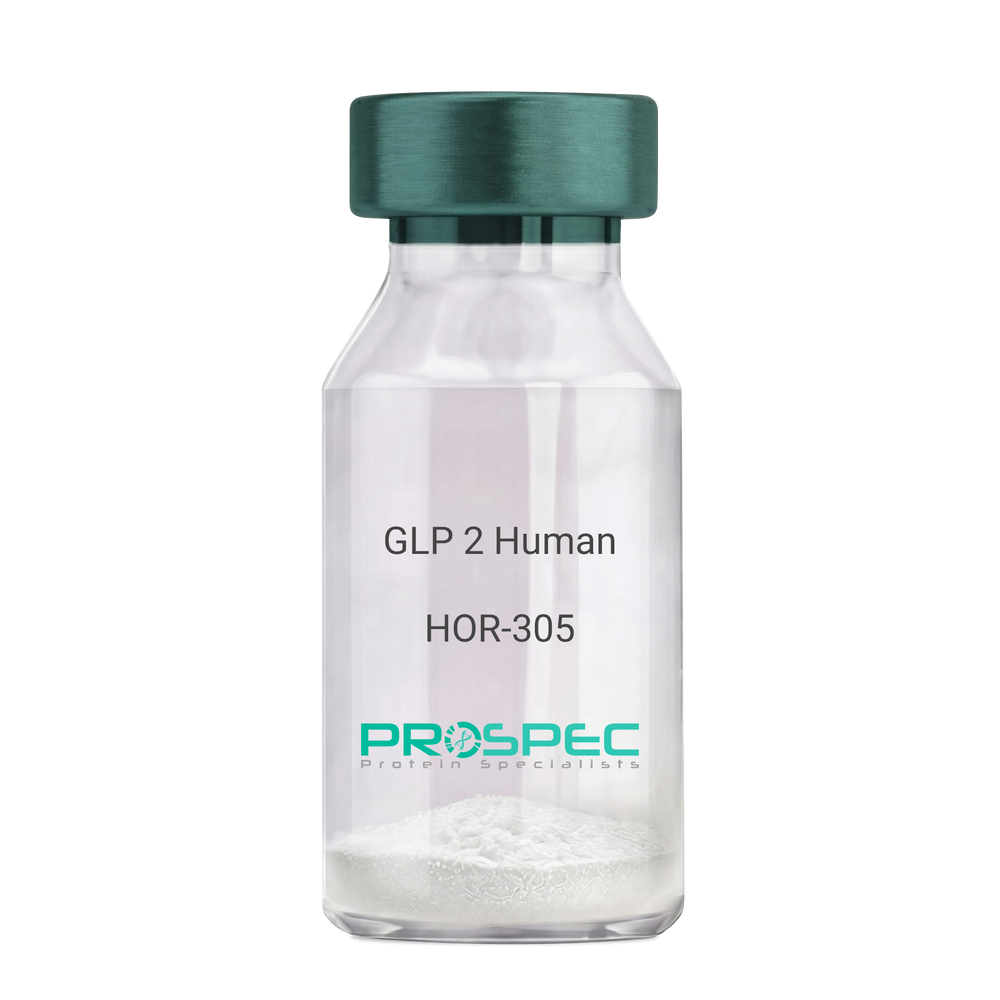
    GLP 2 Human

    Description:

    Human GLP-2

    GLP2, GLP-2, GLP 2.

    Product # :

    HOR-305

    Price :

    Quantity :

    Shipping Method :

    Room Temp Icon

    Shipped at Room temp

    Add To Cart

    More Info

    • description
    • formulation
    • purity
    • More Info

    Description

    GLP-2 contains 34 amino acids having a molecular mass of 3922.35 Dalton.

    Formulation

    The protein (1mg/ml) was lyophilized with no additives.

    Purity

    Greater than 98.0% as determined by RP-HPLC.

    More Info

    • Introduction

      GLP-2 functions as an intestinal growth factor, which stimulates intestinal epithelial growth. GLP2 is involved in diabetes-associated bowel growth. GLP2 enhances cell differentiation, playing a role as a cytokine and in tissue regeneration, and mediating cytoprotection. GLP2 is invloded numerous therapeutic applications. GLP2 regulates signaling pathways coupled to cell proliferation and cell death by apoptosis.
      GLP-2 is produced by specific post-translational proteolytic cleavage of proGLP. GLP-2 is manufactured by the intestinal endocrine L cell and by several neurons in the central nervous system.

    • Synonyms

      GLP2, GLP-2, GLP 2, Glucagon Like Peptide-2.

    • Physical Appearance

      Sterile Filtered White lyophilized (freeze-dried) powder.

    • Stability

      Lyophilized GLP2 although stable at room temperature for 3 weeks, should be stored desiccated below -18°C. Upon reconstitution GLP2 should be stored at 4°C between 2-7 days and for future use below -18°C.For long term storage it is recommended to add a carrier protein (0.1% HSA or BSA).Please prevent freeze-thaw cycles.

    • Solubility

      It is recommended to reconstitute the lyophilized GLP-2 in sterile 18MΩ-cm H2O not less than 100 µg/ml, which can then be further diluted to other aqueous solutions.

    • Amino Acid Sequence

      His-Ala-Asp-Gly-Ser-Phe-Ser-Asp-Glu-Met-Asn-Thr-Ile-Leu-Asp-Asn-Leu-Ala-Ala-Arg-Asp-Phe-Ile-Asn-Trp-Leu-Ile-Gln-Thr-Lys-Ile-Thr-Asp-Arg.

    • Background

      What is the molecular weight/Mw of GLP 2 HUMAN Protein?
      GLP 2 HUMAN Protein has a total Mw of 3.92kDa.


      What is the Purity of GLP 2 HUMAN Protein?
      GLP 2 HUMAN Protein is >95% pure as determined by SDS-PAGE.

      What is the Biological Activity of GLP 2 HUMAN Protein?
      The biological functionality of GLP 2 HUMAN Protein will be determined in the future.

      What is the amino acid sequence of GLP 2 HUMAN Protein?
      His-Ala-Asp-Gly-Ser-Phe-Ser-Asp-Glu-Met-Asn-Thr-Ile-Leu-Asp-Asn-Leu-Ala-Ala-Arg-Asp-Phe-Ile-Asn-Trp-Leu-Ile-Gln-Thr-Lys-Ile-Thr-Asp-Arg.

      What applications can GLP 2 HUMAN Protein be used in?
      GLP 2 HUMAN Protein can probably be used in western blot, ELISA and Lateral Flow.

      What is the endotoxin level for GLP 2 HUMAN Protein?
      The endotoxin level is minimal, GLP 2 HUMAN Protein was purified using conventional chromatography techniques.


    ProSpec's products are furnished for LABORATORY RESEARCH USE ONLY. The product may not be used as drugs, agricultural or pesticidal products, food additives or household chemicals.

    Glp 2 Human
  • View Data Sheet

    Name :

    MIP 3 Antibody

    Description:

    Macrophage Inflammatory Protein-3, Mouse Anti-Human

    C-C motif chemokine 23, Small-inducible cytokine A23, Macrophage inflammatory protein 3, Myeloid progenitor inhibitory factor 1, CK-beta-8, MIP-3, MPIF-1, CKB-8, CCL23, MIP3, MPIF1, SCYA23, CKb8, Ckb-8-1.

    Product # :

    ANT-121

    Price :

    Quantity :

    Shipping Method :

    Room Temp Icon

    Shipped at Room temp

    Add To Cart

    More Info

    • formulation
    • More Info

    Formulation

    1mg/ml in PBS (after reconstitution).

    More Info

    • Introduction

      CCL23 (MIP-3) is a ligand for the CCR1chemokine receptor. CCL23 is one of several cytokine genes clustered on the q-arm of chromosome 17, in a locus containing several other CC chemokines. MIP-3 chemoattracts monocytes, resting T-lymphocytes and neutrophils, but not activated lymphocytes. Furthermore, it was shown that MIP-3 inhibits colony formation of bone marrow myeloid immature progenitors. MIP-3 is mainly expressed in lung and liver tissue, but can be also found in bone marrow and placenta, as well as in some cell lines of myeloid origin.
      Alternative splicing of the CCL23 gene produces 2 mRNAs which encode a short (CK?8) and a long (CK?81) isoform of the MIP-3. CK?8 cDNA encodes a 120 amino acid residue precursor protein with a putative 21 a.a. residue signal peptide which is cleaved to generate a 99 a.a. residue mature CK?8 (a.a. 22-120). Further N-terminal processing of the 99 a.a. residue variant can produce a 75 a.a. residue CK?8 (a.a. 46-120) which is considerably more active than the 99 a.a. residue variant.
      MIP-3 may be involved in the malignant progression of certain human cancer cells which overexpress ErbB2 through the transactivation of ErbB2 tyrosine kinase. MIP-3 may also be involved in angiogenesis via upregulation of matrix metalloproteinase MMP-2 expression.

    • Synonyms

      C-C motif chemokine 23, Small-inducible cytokine A23, Macrophage inflammatory protein 3, Myeloid progenitor inhibitory factor 1, CK-beta-8, MIP-3, MPIF-1, CKB-8, CCL23, MIP3, MPIF1, SCYA23, CKb8, Ckb-8-1.

    • Solubility

      Reconstitute with sterile H20. Mix gently, wash the sides of the vial and wait 30-60 seconds before use.

    • Immunogen

      r.Human MIP-3.

    • Ig Subclass

      Mouse IgG1.

    • Clone

      YNR-HMIP3.

    • Titer

      By direct ELISA, 1:10,000 dilution will yield 0.5 O.D using alkaline phosphatase conjugated rabbit anti-mouse Ig (Jackson Laboratories).

    • Shipping Conditions

      Antibody is shipped lyophilized at ambient temperature.

    • Type

      Mouse Anti Human Monoclonal.

    • Storage Procedures

      In lyophilized form, for long periods, store at 4°C in a dry environment. After reconstitution, if not intended for use within a month, aliquot and store at -20°C.

    • Purification Method

      Ion exchange.

    ProSpec's products are furnished for LABORATORY RESEARCH USE ONLY. The product may not be used as drugs, agricultural or pesticidal products, food additives or household chemicals.

    Mip 3 Antibody
  • View Data Sheet

    Name :

    RNPA E.Coli

    Description:

    Ribonuclease P protein component E.Coli Recombinant

    ECK3696, Rnase P protein, RnaseP protein, b3704, JW3681, Ribonuclease P protein component, EC 3.1.26.5, Protein C5.

    Product # :

    ENZ-1169

    Price :

    Quantity :

    Shipping Method :

    Ice Icon

    Shipped with Ice Packs

    Add To Cart

    More Info

    • description
    • source
    • formulation
    • purity
    • More Info

    Description

    RNPA E.Coli Recombinant produced in E.Coli is a single, non-glycosylated polypeptide chain containing 119 amino acids (1-119a.a) and having a molecular mass of 13.7kDa.RNPA is purified by proprietary chromatographic techniques.

    Source

    Escherichia Coli.

    Formulation

    RNPA protein solution (0.25mg/ml) in Phosphate-Buffered Saline (pH 7.4) and 10% Glycerol.

    Purity

    Greater than 90.0% as determined by SDS-PAGE.

    More Info

    • Introduction

      Rnase P protein, AKA rnpA, is an important enzyme consisting of the C5 protein (which encoded by rnpA) and the catalytic M1 RNA (encoded by rnpB) subunits. rnpA is ribonucleoprotein that catalyzes the removal of the 50- leader elements of precursor tRNAs and generates the mature 50-end of tRNAs. This step is critical for theformation of functional tRNA molecules in bacteria, archaea and eukarya. More importantly, it has lately been established that RNase P is essential for the endonucleolytic separation of certain polycistronic tRNA transcripts such as valV valW, leuQ leuP leuV and secG leuU. Therefore, it was hypothesized that the essential function of RNase P might be related to the complete absence of a particular tRNAthat was dependent on the enzyme for initial separation from polycistronic transcripts.

    • Synonyms

      ECK3696, Rnase P protein, RnaseP protein, b3704, JW3681, Ribonuclease P protein component, EC 3.1.26.5, Protein C5.

    • Physical Appearance

      Sterile Filtered colorless solution.

    • Stability

      Store at 4°C if entire vial will be used within 2-4 weeks.Store, frozen at -20°C for longer periods of time.For long term storage it is recommended to add a carrier protein (0.1% HSA or BSA).Avoid multiple freeze-thaw cycles.

    • Amino Acid Sequence

      MVKLAFPREL RLLTPSQFTF VFQQPQRAGT PQITILGRLN SLGHPRIGLT VAKKNVRRAH ERNRIKRLTR ESFRLRQHEL PAMDFVVVAK KGVADLDNRA LSEALEKLWR RHCRLARGS

    ProSpec's products are furnished for LABORATORY RESEARCH USE ONLY. The product may not be used as drugs, agricultural or pesticidal products, food additives or household chemicals.

    Rnpa Ribonuclease P 2
  • View Data Sheet

    Name :

    Cetrorelix

    Description:

    Cetrorelix

    Product # :

    HOR-277

    Price :

    Quantity :

    Shipping Method :

    Room Temp Icon

    Shipped at Room temp

    Add To Cart

    More Info

    • description
    • formulation
    • purity
    • More Info

    Description

    Cetrorelix acetate is a synthetic decapeptide with gonadotropin-releasing hormone (GnRH) antagonistic activity. Cetrorelix acetate is an analog of native GnRH with substitutions of amino acids at positions 1, 2, 3, 6, and 10. The molecular formula is C70H92CIN17O14 (Ac-D-Nal1-D-Cpa2-D-Pal3-Ser4-Tyr5- D-Cit6-Leu7-Arg8-Pro9-D -Ala10-NH2), and the molecular weight is 1431 Dalton, calculated as the anhydrous free base.

    Formulation

    The Cetrorelix peptide was lyophilized with no additives.

    Purity

    Greater than 98.0% as determined by:
    (a) Analysis by RP-HPLC.
    (b) Analysis by SDS-PAGE.

    More Info

    • Physical Appearance

      Sterile Filtered White lyophilized (freeze-dried) powder.

    • Stability

      Lyophilized Cetrorelix although stable at room temperature for 3 weeks, should be stored desiccated below -18°C. Upon reconstitution Cetrorelix should be stored at 4°C between 2-7 days and for future use below -18°C. For long term storage it is recommended to add a carrier protein (0.1% HSA or BSA).Please prevent freeze-thaw cycles.

    • Solubility

      It is recommended to reconstitute the lyophilized Cetrorelix in sterile 18MΩ-cm H2O not less than 100 µg/ml, which can then be further diluted to other aqueous solutions.

    ProSpec's products are furnished for LABORATORY RESEARCH USE ONLY. The product may not be used as drugs, agricultural or pesticidal products, food additives or household chemicals.

    Cetrorelix
  • View Data Sheet

    Name :

    MIOX Human

    Description:

    Myo-Inositol Oxygenase Human Recombinant

    Myo-Inositol Oxygenase, Kidney-Specific Protein 32, Aldehyde Reductase (Aldose Reductase) Like 6, Renal-Specific Oxidoreductase, Aldehyde Reductase-Like 6, MI Oxygenase, EC 1.13.99.1, ALDRL6, Inositol Oxygenase, KSP32, RSOR, MIOX.

    Product # :

    ENZ-812

    Price :

    Quantity :

    Shipping Method :

    Room Temp Icon

    Shipped at Room temp

    Add To Cart

    More Info

    • description
    • source
    • formulation
    • purity
    • More Info

    Description

    MIOX Human Recombinant produced in E.Coli is a single, non-glycosylated, polypeptide chain (Met1-Trp285) containing 295 amino acids including a 10 aa His tag at N-terminus. The total calculated molecular mass is 34.2kDa.

    Source

    Escherichia Coli.

    Formulation

    MIOX was filtered (0.4 µm) and lyophilized in 20mM Tris buffer, 50mM NaCl and 5% (w/v) trehalose, pH 7.5.

    Purity

    Greater than 95.0% as determined by SDS-PAGE.

    More Info

    • Introduction

      Inositol oxygenase is a non-heme di-iron enzyme which oxidizes myo-inositol to glucuronic acid. In addition, inositol oxygenase oxidizes the less abundant chiro isomer of inositol. MIOX enzyme is a component of the only known pathway for the catabolism of inositol in humans. MIOX is expressed mostly in the kidneys. Reduction of Inositol Oxygenase and accumulation of polyols, such as inositol and xylitol, have been implicated as contributing factors in complications linked with diabetes.

    • Synonyms

      Myo-Inositol Oxygenase, Kidney-Specific Protein 32, Aldehyde Reductase (Aldose Reductase) Like 6, Renal-Specific Oxidoreductase, Aldehyde Reductase-Like 6, MI Oxygenase, EC 1.13.99.1, ALDRL6, Inositol Oxygenase, KSP32, RSOR, MIOX.

    • Physical Appearance

      Filtered White lyophilized (freeze-dried) powder.

    • Stability

      Store lyophilized protein at -20°C. Aliquot the product after reconstitution to avoid repeated freezing/thawing cycles. Reconstituted protein can be stored at 4°C for a limited period of time; it does not show any change after two weeks at 4°C.

    • Solubility

      It is recommended to add deionized water to prepare a working stock solution of approximately 0.5mg/ml and let the lyophilized pellet dissolve completely. MIOX is not sterile! Please filter the product by an appropriate sterile filter before using it in the cell culture.

    • Amino Acid Sequence

      MKHHHHHHASMKVTVGPDPS LVYRPDVDPE VAKDKASFRN YTSGPLLDRV FTTYKLMHTH QTVDFVRSKH AQFGGFSYKK MTVMEAVDLL DGLVDESDPD VDFPNSFHAF QTAEGIRKAH PDKDWFHLVG LLHDLGKVLA LFGEPQWAVV GDTFPVGCRP QASVVFCDST FQDNPDLQDP RYSTELGMYQ PHCGLDRVLM SWGHDEYMYQ VMKFNKFSLP PEAFYMIRFH SFYPWHTGRD YQQLCSQQDL AMLPWVREFN KFDLYTKCPD LPDVDKLRPY YQGLIDKYCP GILSW.

    ProSpec's products are furnished for LABORATORY RESEARCH USE ONLY. The product may not be used as drugs, agricultural or pesticidal products, food additives or household chemicals.

    Miox Human
  • View Data Sheet

    Name :

    ANAPC13 Human

    Description:

    Anaphase Promoting Complex Subunit 13 Human Recombinant

    Anaphase-promoting complex subunit 13, APC13, Cylosome subunit 13, ANAPC13, SWM1.

    Product # :

    PRO-1037

    Price :

    Quantity :

    Shipping Method :

    Ice Icon

    Shipped with Ice Packs

    Add To Cart

    More Info

    • description
    • source
    • formulation
    • purity
    • More Info

    Description

    ANAPC13 Human Recombinant produced in E.Coli is a single, non-glycosylated, polypeptide chain containing 89 amino acids (1-74) and having a molecular mass of 10kDa (Molecular weight on SDS-PAGE will appear higher).ANAPC13 protein is fused to a 15 amino acid T7-tag at N-terminus and is purified by standard chromatography.

    Source

    Escherichia Coli.

    Formulation

    The ANAPC13 solution (1mg/ml) contains 20mM Tris-HCl buffer (pH8.0), 20% glycerol, 1mM DTT and 0.1M NaCl.

    Purity

    Greater than 90.0% as determined by SDS-PAGE.

    More Info

    • Introduction

      Anaphase-promoting complex subunit 13 (ANAPC13) is a component of the anaphase promoting complex, which is a large ubiquitin-protein ligase that controls cell cycle progression by regulating the degradation of cell cycle regulators such as B-type cyclins. The ANAPC13 protein is evolutionarily conserved and is essential for the integrity and ubiquitin ligase activity of the anaphase promoting complex.

    • Synonyms

      Anaphase-promoting complex subunit 13, APC13, Cylosome subunit 13, ANAPC13, SWM1.

    • Physical Appearance

      Sterile Filtered clear solution.

    • Stability

      Store at 4°C if entire vial will be used within 2-4 weeks. Store, frozen at -20°C for longer periods of time. For long term storage it is recommended to add a carrier protein (0.1% HSA or BSA).Avoid multiple freeze-thaw cycles.

    • Amino Acid Sequence

      MASMTGGQQM GRGSHMDSEV QRDGRILDLI DDAWREDKLP YEDVAIPLNE LPEPEQDNGG TTESVKEQEM KWTDLALQYL HENVPPIGN.

    ProSpec's products are furnished for LABORATORY RESEARCH USE ONLY. The product may not be used as drugs, agricultural or pesticidal products, food additives or household chemicals.

    Anapc13 Human
  • View Data Sheet

    Name :

    DUSP18 Human, Active

    Description:

    Dual Specificity Phosphatase 18 Human Recombinant, Active

    Dual specificity protein phosphatase 18, Low molecular weight dual specificity phosphatase 20, LMW-DSP20, DUSP18, LMWDSP20, VHP, DUSP26.

    Product # :

    ENZ-1040

    Price :

    Quantity :

    Shipping Method :

    Ice Icon

    Shipped with Ice Packs

    Add To Cart

    More Info

    • description
    • source
    • formulation
    • purity
    • biological activity
    • More Info

    Description

    DUSP18 produced in E.Coli is a single, non-glycosylated polypeptide chain containing 212 amino acids (1-188a.a.) and having a molecular mass of 23.6kDa.DUSP18 is fused to a 24 amino acid His-tag at N-terminus & purified by proprietary chromatographic techniques.

    Source

    Escherichia Coli.

    Formulation

    The DUSP18 protein solution (0.5mg/ml) is formulated in 20mM Tris-HCl buffer (pH8.0), 0.1mM PMSF, 1mM DTT, 40% glycerol and 1mM EDTA.

    Purity

    Greater than 95.0% as determined by SDS-PAGE.

    Biological Activity

    Specific activity is > 300 units/mg, and is defined as the amount of enzyme that hydrolyze 1.0 nmole of p-nitrophenyl phosphate (pNPP) per minute at pH 7.5 at 37°C.

    More Info

    • Introduction

      Dual specificity phosphatase 18 (DUSP18) belongs to the dual-specificity phosphatase (DSP) family, which catalyzes dephosphorylation of phosphotyrosine and phosphothreonine residues. DUSP18 has a preferential enzymatic activity for phosphorylated tyrosine residues over threonine residues, in addition DUSP18 dephosphorylates p-nitrophenyl phosphate (pNPP) in vitro. Furthermore, DUSP18 is inhibited by iodoarectic acid and is activated by manganese ions. DUSP18 is extensively expressed with the highest levels in the liver, brain, ovary and testis.

    • Synonyms

      Dual specificity protein phosphatase 18, Low molecular weight dual specificity phosphatase 20, LMW-DSP20, DUSP18, LMWDSP20, VHP, DUSP26.

    • Physical Appearance

      Sterile Filtered clear solution.

    • Stability

      Store at 4°C if entire vial will be used within 2-4 weeks. Store, frozen at -20°C for longer periods of time. For long term storage it is recommended to add a carrier protein (0.1% HSA or BSA).Avoid multiple freeze-thaw cycles.

    • Amino Acid Sequence

      MGSSHHHHHH SSGLVPRGSH MGSHMTAPSC AFPVQFRQPS VSGLSQITKS LYISNGVAAN NKLMLSSNQI TMVINVSVEV VNTLYEDIQY MQVPVADSPN SRLCDFFDPI ADHIHSVEMK QGRTLLHCAA GVSRSAALCL AYLMKYHAMS LLDAHTWTKS CRPIIRPNSG FWEQLIHYEF QLFGKNTVHM VSSPVGMIPD IYEKEVRLMI PL

    ProSpec's products are furnished for LABORATORY RESEARCH USE ONLY. The product may not be used as drugs, agricultural or pesticidal products, food additives or household chemicals.

    Dusp18 Human Active
  • View Data Sheet

    Name :

    SRP54 Human

    Description:

    Signal Recognition Particle 54kDa Human Recombinant

    Signal Recognition Particle 54 kDa protein

    Product # :

    PRO-113

    Price :

    Quantity :

    Shipping Method :

    Ice Icon

    Shipped with Ice Packs

    Add To Cart

    More Info

    • description
    • source
    • formulation
    • purity
    • More Info

    Description

    SRP54 is a full-length cDNA coding for the human SRP54 protein having a molecular mass of 62kDa (pH 8.9). SRP54 protein is fused to a hexa-histidine purification tag.

    Source

    Sf9 insect cells.

    Formulation

    SRP54 is supplied in 16mM HEPES buffer pH-8.0, 320mM NaCl, 5mM DTT, 1mM EDTA, 0.16mM GDP and 20% glycerol.

    Purity

    Greater than 80% as determined by SDS-PAGE.

    More Info

    • Introduction

      SRP54 is a 54-kDa subunit of the signal recognition particle (SRP), a cytoplasmic ribonucleoprotein complex which leads the translocation of newly synthesized secretory proteins from the polysome to the endoplasmic reticulum. SRP is composed of six polypeptides and a tRNA-like molecule known as 7SL RNA. SRP54 is a GTP-binding protein that directly binds the signal sequences of nascent secretory and membrane proteins. Anti-SRP autoantibodies take place in patients with an autoimmune chronic muscle inflammation called polymyositis. These auto-antibodies predominantly recognize the SRP54 subunit and in addition are able to immunoprecipitate several of the SRP subunits and the RNA component. Nearly 5% of myositis patients are positive for anti-SRP autoantibodies, increasing to 18% in the subgroup of Jo-1 autoantibody-negative patients. The classic 'anti-SRP syndrome' is a severe form of polymyositis in which the myositic inflammation is acute and aggressive onset, with common myalgias and cardiac involvement. Normally there is a poor reaction to therapy with a 5-year survival rate of about 25%.

    • Synonyms

      Signal Recognition Particle 54 kDa protein

    • Stability

      Store at 4°C if entire vial will be used within 2-4 weeks. Store, frozen at -20°C for longer periods of time. Avoid multiple freeze-thaw cycles.

    • Immunological Functions

      1. Binds IgG-type human auto-antibodies. 2. Standard ELISA test (checkerboard analysis of positive/negative sera panels); immunodot test with positive/negative sera panels.

    • coating concentration

      0.5-0.9 µg/ml (depending on the type of ELISA plate and coating buffer). Suitable for biotinylation and iodination.

    • Applications

      Western blot with myositis sera or monoclonal anti-hexa-His-tag antibody.

    ProSpec's products are furnished for LABORATORY RESEARCH USE ONLY. The product may not be used as drugs, agricultural or pesticidal products, food additives or household chemicals.

    Srp54 Human
  • View Data Sheet

    Name :

    SVIP Human

    Description:

    Small VCP/P97-Interacting Protein Human Recombinant

    Small VCP/P97-Interacting Protein, SVIP.

    Product # :

    PRO-472

    Price :

    Quantity :

    Shipping Method :

    Ice Icon

    Shipped with Ice Packs

    Add To Cart

    More Info

    • description
    • source
    • formulation
    • purity
    • More Info

    Description

    SVIP Human Recombinant produced in E.coli is a single, non-glycosylated polypeptide chain containing 100 amino acids (1-77) and having a molecular mass of 10.8 kDa.SVIP is fused to a 23 amino acid His-tag at N-terminus & purified by proprietary chromatographic techniques.

    Source

    Escherichia Coli.

    Formulation

    The SVIP solution (0.25mg/ml) contains 20mM Tris-HCl buffer (pH 8.0), 0.15M NaCl, 20% glycerol and 2mM DTT.

    Purity

    Greater than 85.0% as determined by SDS-PAGE.

    More Info

    • Introduction

      Small VCP/p97-interacting protein (SVIP) is involved in various cellular processes, including membrane fusion and ubiquitin-dependent protein degradation. SVIP functions as an inhibitor of the endoplasmic reticulum (ER)-associated degradation (ERAD) pathway. On the other hand, SVIP overexpression increased the levels of p62 protein and enhanced starvation-activated autophagy as well as stimulated sequestration of polyubiquitinated proteins and p62 in autophagosomes.

    • Synonyms

      Small VCP/P97-Interacting Protein, SVIP.

    • Physical Appearance

      Sterile Filtered clear solution.

    • Stability

      Store at 4°C if entire vial will be used within 2-4 weeks. Store, frozen at -20°C for longer periods of time. For long term storage it is recommended to add a carrier protein (0.1% HSA or BSA).Avoid multiple freeze-thaw cycles.

    • Amino Acid Sequence

      MGSSHHHHHH SSGLVPRGSH MGSMGLCFPC PGESAPPTPD LEEKRAKLAE AAERRQKEAA SRGILDVQSV QEKRKKKEKI EKQIATSGPP PEGGLRWTVS.

    ProSpec's products are furnished for LABORATORY RESEARCH USE ONLY. The product may not be used as drugs, agricultural or pesticidal products, food additives or household chemicals.

    Svip Human
  • View Data Sheet

    Name :

    PDCD6 Human

    Description:

    Programmed Cell Death 6 Human Recombinant

    Programmed cell death 6, ALG-2, PEF1B, Apoptosis-linked gene 2 protein, Probable calcium-binding protein ALG-2, FLJ46208, MGC111017, MGC119050, MGC9123.

    Product # :

    PRO-184

    Price :

    Quantity :

    Shipping Method :

    Ice Icon

    Shipped with Ice Packs

    Add To Cart

    More Info

    • description
    • source
    • formulation
    • purity
    • More Info

    Description

    PDCD6 produced in E.Coli is a single, non-glycosylated polypeptide chain containing 211 amino acids (1-191a.a.) and having a molecular mass of 24.0 kDa. PDCD6 is fused to a 20 amino acid His-tag at N-terminus & purified by proprietary chromatographic techniques.

    Source

    Escherichia Coli.

    Formulation

    The PDCD6 protein solution (0.5mg/1ml) is formulated in 10mM sodium citrate (pH 3.5) and 40% glycerol.

    Purity

    Greater than 95% as determined by SDS-PAGE.

    More Info

    • Introduction

      PDCD6 is a calcium-binding protein and is a member of the penta-EF-hand protein family. Calcium binding is vital for homodimerization and for conformational changes essential for binding to other protein partners. PDCD6 takes part in T cell receptor-, Fas-, and glucocorticoid-induced programmed cell death. However, tests showed that in mice deficient for PDCD6, apoptosis was not blocked which suggests that PDCD6 is functionally redundant.

    • Synonyms

      Programmed cell death 6, ALG-2, PEF1B, Apoptosis-linked gene 2 protein, Probable calcium-binding protein ALG-2, FLJ46208, MGC111017, MGC119050, MGC9123.

    • Physical Appearance

      Sterile Filtered clear solution.

    • Stability

      Store at 4°C if entire vial will be used within 2-4 weeks. Store, frozen at -20°C for longer periods of time. For long term storage it is recommended to add a carrier protein (0.1% HSA or BSA).Avoid multiple freeze-thaw cycles.

    • Amino Acid Sequence

      MGSSHHHHHH SSGLVPRGSH MAAYSYRPGP GAGPGPAAGA ALPDQSFLWN VFQRVDKDRS GVISDTELQQ ALSNGTWTPF NPVTVRSIIS MFDRENKAGV NFSEFTGVWK YITDWQNVFR TYDRDNSGMI DKNELKQALS GFGYRLSDQF HDILIRKFDR QGRGQIAFDD FIQGCIVLQR LTDIFRRYDT DQDGWIQVSY EQYLSMVFSI V

    ProSpec's products are furnished for LABORATORY RESEARCH USE ONLY. The product may not be used as drugs, agricultural or pesticidal products, food additives or household chemicals.

    Pdcd6 Human
  • View Data Sheet

    Name :

    FAP Human

    Description:

    Fibroblast Activation Protein Alpha Human Recombinant

    Prolyl endopeptidase FAP, 170 kDa melanoma membrane-bound gelatinase, Dipeptidyl peptidase FAP, Fibroblast activation protein alpha, FAPalpha, Gelatine degradation protease FAP, Integral membrane serine protease, Post-proline cleaving enzyme, Serine integral membrane protease, Surface-expressed protease, Seprase, SIMP,  FAP

    Product # :

    ENZ-1160

    Price :

    Quantity :

    Shipping Method :

    Ice Icon

    Shipped with Ice Packs

    Add To Cart

    More Info

    • description
    • source
    • formulation
    • purity
    • biological activity
    • More Info

    Description

    FAP Human produced in Sf9 Baculovirus cells is a single, glycosylated polypeptide chain containing 744 amino acids (26-760aa) and having a molecular mass of 86.1 kDa.FAP is fused to a 6 amino acid His tag at C-terminus and purified by proprietary chromatographic techniques.

    Source

    Sf9, Baculovirus cells.

    Formulation

    The FAP solution (0.25mg/ml) contains 20% Glycerol and Phosphate-Buffered Saline (pH 7.4).

    Purity

    Greater than 90.0% as determined by SDS-PAGE.

    Biological Activity

    Specific activity > 5,000 pmol/min/ug. It is defined by the amount of enzyme that hydrolyzes 1.0 pmole of ZGP-AMC per minute at pH 7.5, at 37˚C.

    More Info

    • Introduction

      DPP4 also called adenosine deaminase complexing protein-2, and T-cell activation antigen CD26 is a serine exopeptidase and complex enzyme that is expressed on the surface of most cell types. DPPIV is an intrinsic membrane glycoprotein and a serine exopeptidase that cleaves X-proline dipeptides from the N-terminus of polypeptides. DPP4 plays a role in t-cell activation. DPP4 is associated with intracellular signal transduction, apoptosis and involved in tumor biology. There are at least 63 substrates which can bind specifically to DPP4 enzyme including growth factors, chemokines, neuro peptides. Furthermore, DPP4 plays a major role in glucose metabolism by cleaving incretins such as glucose-dependent insulinotropic polypeptide (GIP) and GLP-1.

    • Synonyms

      Prolyl endopeptidase FAP, 170 kDa melanoma membrane-bound gelatinase, Dipeptidyl peptidase FAP, Fibroblast activation protein alpha, FAPalpha, Gelatine degradation protease FAP, Integral membrane serine protease, Post-proline cleaving enzyme, Serine integral membrane protease, Surface-expressed protease, Seprase, SIMP, FAP

    • Physical Appearance

      Sterile Filtered colorless solution.

    • Stability

      Store at 4°C if entire vial will be used within 2-4 weeks. Store, frozen at -20°C for longer periods of time. For long term storage it is recommended to add a carrier protein (0.1% HSA or BSA).Avoid multiple freeze-thaw cycles.

    • Amino Acid Sequence

      ADPLRPSRVH NSEENTMRAL TLKDILNGTF SYKTFFPNWI SGQEYLHQSA DNNIVLYNIE TGQSYTILSN RTMKSVNASN YGLSPDRQFV YLESDYSKLW RYSYTATYYI YDLSNGEFVR GNELPRPIQY LCWSPVGSKL AYVYQNNIYL KQRPGDPPFQ ITFNGRENKI FNGIPDWVYE EEMLATKYAL WWSPNGKFLA YAEFNDTDIP VIAYSYYGDE QYPRTINIPY PKAGAKNPVV RIFIIDTTYP AYVGPQEVPV PAMIASSDYY FSWLTWVTDE RVCLQWLKRV QNVSVLSICD FREDWQTWDC PKTQEHIEES RTGWAGGFFV STPVFSYDAI SYYKIFSDKD GYKHIHYIKD TVENAIQITS GKWEAINIFR VTQDSLFYSS NEFEEYPGRR NIYRISIGSY PPSKKCVTCH LRKERCQYYT ASFSDYAKYY ALVCYGPGIP ISTLHDGRTD QEIKILEENK ELENALKNIQ LPKEEIKKLE VDEITLWYKM ILPPQFDRSK KYPLLIQVYG GPCSQSVRSV FAVNWISYLA SKEGMVIALV DGRGTAFQGD KLLYAVYRKL GVYEVEDQIT AVRKFIEMGF IDEKRIAIWG WSYGGYVSSL ALASGTGLFK CGIAVAPVSS WEYYASVYTE RFMGLPTKDD NLEHYKNSTV MARAEYFRNV DYLLIHGTAD DNVHFQNSAQ IAKALVNAQV DFQAMWYSDQ NHGLSGLSTN HLYTHMTHFL KQCFSLSDHH HHHH

    ProSpec's products are furnished for LABORATORY RESEARCH USE ONLY. The product may not be used as drugs, agricultural or pesticidal products, food additives or household chemicals.

    Fap Human
  • View Data Sheet

    Name :

    G3BP1 Human

    Description:

    GTPase Activating Protein (SH3 domain) Binding Protein 1 Human Recombinant

    Ras GTPase-activating protein-binding protein 1, G3BP-1, ATP-dependent DNA helicase VIII, hDH VIII, GAP SH3 domain-binding protein 1, G3BP1, G3BP, HDH-VIII, MGC111040.

    Product # :

    ENZ-048

    Price :

    Quantity :

    Shipping Method :

    Ice Icon

    Shipped with Ice Packs

    Add To Cart

    More Info

    • description
    • source
    • formulation
    • purity
    • More Info

    Description

    G3BP1 Human Recombinant fused with an 8 amino acid His tag at C-terminus produced in E.Coli is a single, non-glycosylated, polypeptide chain containing 474 amino acids (1-466 a.a.) and having a molecular mass of 53.2kDa.The G3BP1 is purified by proprietary chromatographic techniques.

    Source

    Escherichia Coli.

    Formulation

    The G3BP1 solution (0.5 mg/ml) contains 20mM Tris-HCl buffer (pH8.0), 10% glycerol, 2mM DTT and 100mM NaCl.

    Purity

    Greater than 85.0% as determined by SDS-PAGE.

    More Info

    • Introduction

      G3BP1 belongs to the heterogeneous nuclear RNA-binding proteins and is also an element of the Ras signal transduction pathway. G3BP1 is one of the DNA-unwinding enzymes that favors partially unwound 3'-tailed substrates and is also able to unwind partial RNA/DNA and RNA/RNA duplexes in an ATP-dependent fashion. G3BP1 binds specifically to the Ras-GTPase-activating protein by associating with its SH3 domain. In addition, G3BP1 cleaves exclusively between cytosine and adenine and cleaves MYC mRNA preferentially at the 3'-UTR.

    • Synonyms

      Ras GTPase-activating protein-binding protein 1, G3BP-1, ATP-dependent DNA helicase VIII, hDH VIII, GAP SH3 domain-binding protein 1, G3BP1, G3BP, HDH-VIII, MGC111040.

    • Physical Appearance

      Sterile Filtered colorless solution.

    • Stability

      Store at 4°C if entire vial will be used within 2-4 weeks. Store, frozen at -20°C for longer periods of time. For long term storage it is recommended to add a carrier protein (0.1% HSA or BSA).Avoid multiple freeze-thaw cycles.

    • Amino Acid Sequence

      MVMEKPSPLL VGREFVRQYY TLLNQAPDML HRFYGKNSSY VHGGLDSNGK PADAVYGQKE IHRKVMSQNF TNCHTKIRHV DAHATLNDGV VVQVMGLLSN NNQALRRFMQ TFVLAPEGSV ANKFYVHNDI FRYQDEVFGG FVTEPQEESE EEVEEPEERQ QTPEVVPDDS GTFYDQAVVS NDMEEHLEEP VAEPEPDPEP EPEQEPVSEI QEEKPEPVLE ETAPEDAQKS SSPAPADIAQ TVQEDLRTFS WASVTSKNLP PSGAVPVTGI PPHVVKVPAS QPRPESKPES QIPPQRPQRD QRVREQRINI PPQRGPRPIR EAGEQGDIEP RRMVRHPDSH QLFIGNLPHE VDKSELKDFF QSYGNVVELR INSGGKLPNF GFVVFDDSEP VQKVLSNRPI MFRGEVRLNV EEKKTRAARE GDRRDNRLRG PGGPRGGLGG GMRGPPRGGM VQKPGFGVGR GLAPRQVEHH HHHH.

    ProSpec's products are furnished for LABORATORY RESEARCH USE ONLY. The product may not be used as drugs, agricultural or pesticidal products, food additives or household chemicals.

    G3Bp1 Human
  • View Data Sheet

    Name :

    GHBP Human, Sf9

    Description:

    Growth Hormone Binding Protein Human Recombinant, Sf9

    GHR, GHBP, GHIP.

    Product # :

    CYT-1152

    Price :

    Quantity :

    Shipping Method :

    Ice Icon

    Shipped with Ice Packs

    Add To Cart

    More Info

    • description
    • source
    • formulation
    • purity
    • biological activity
    • More Info

    Description

    GHBP Human produced in Sf9 Baculovirus cells is a single, glycosylated polypeptide chain containing 254 amino acids (19-264aa) and having a molecular mass of 29.4kDa.GHBP is fused to a 8 amino acid His tag at C-terminus and purified by proprietary chromatographic techniques.

    Source

    Sf9, Baculovirus cells.

    Formulation

    The GHBP solution (1mg/ml) contains 10% Glycerol and Phosphate-Buffered Saline (pH 7.4).

    Purity

    Greater than 95.0% as determined by SDS-PAGE.

    Biological Activity

    Measured by ability to inhibit GH-induced proliferation assay using Nb2-11 Rat lymphoma cells in the presence of 1.25ng/ml of human growth hormone. The ED50 for this effect is equal or less than 10ng/ml.

    More Info

    • Introduction

      Growth Hormone Binding Protein or GHR, is a protein, part of the cytokine receptor superfamily. GHR binds to 2 receptors, therefore it enhances signal transduction via dimerization of receptors. In elevated levels, growth hormone operates as an antagonist due to high variance in the binding sites affinities. The antagonist operation can be embellished even more when the binding site is reduced its affinity.

    • Synonyms

      GHR, GHBP, GHIP.

    • Physical Appearance

      Sterile Filtered colorless solution.

    • Stability

      Store at 4°C if entire vial will be used within 2-4 weeks. Store, frozen at -20°C for longer periods of time. For long term storage it is recommended to add a carrier protein (0.1% HSA or BSA).Avoid multiple freeze-thaw cycles.

    • Amino Acid Sequence

      FSGSEATAAI LSRAPWSLQS VNPGLKTNSS KEPKFTKCRS PERETFSCHW TDEVHHGTKN LGPIQLFYTR RNTQEWTQEW KECPDYVSAG ENSCYFNSSF TSIWIPYCIK LTSNGGTVDE KCFSVDEIVQ PDPPIALNWT LLNVSLTGIH ADIQVRWEAP RNADIQKGWM VLEYELQYKE VNETKWKMMD PILTTSVPVY SLKVDKEYEV RVRSKQRNSG NYGEFSEVLY VTLPQMSQFT
      CEEDFYLEHH HHHH

    ProSpec's products are furnished for LABORATORY RESEARCH USE ONLY. The product may not be used as drugs, agricultural or pesticidal products, food additives or household chemicals.

    Ghr Protein
  • View Data Sheet

    Name :

    PSMA6 Human

    Description:

    Proteasome Subunit Alpha Type 6 Human Recombinant

    Proteasome (prosome, macropain) subunit alpha type 6, PROS27, p27K, IOTA, Macropain iota chain, Multicatalytic endopeptidase complex iota chain, Proteasome iota chain, 27 kDa prosomal protein.

    Product # :

    ENZ-198

    Price :

    Quantity :

    Shipping Method :

    Ice Icon

    Shipped with Ice Packs

    Add To Cart

    More Info

    • description
    • source
    • formulation
    • purity
    • More Info

    Description

    PSMA6 Human Recombinant produced in E.Coli is a single, non-glycosylated polypeptide chain containing 270 amino acids (1-246 a.a.) and having a molecular mass of 29.9kDa.PSMA6 is fused to a 24 amino acid His-tag at N-terminus & purified by proprietary chromatographic techniques.

    Source

    Escherichia Coli.

    Formulation

    PSMA6 protein solution (0.25mg/ml) containing 20mM Tris-HCl buffer (pH8.0), 100mM NaCl, 1mM DTT and 40% glycerol.

    Purity

    Greater than 90.0% as determined by SDS-PAGE.

    More Info

    • Introduction

      PSMA6 belongs to the peptidase T1A family, which is a 20S core alpha subunit. The proteasome is a multicatalytic proteinase complex with an extremely organized ring-shaped 20S core structure. The core structure consists of 4 rings of 28 non-identical subunits; 2 rings consist of 7 alpha subunits and 2 rings consist of 7 beta subunits. PSMA6 is spread all over eukaryotic cells in large quantities and cleave peptides in an ATP/ubiquitin-dependent procedure in a non-lysosomal pathway.

    • Synonyms

      Proteasome (prosome, macropain) subunit alpha type 6, PROS27, p27K, IOTA, Macropain iota chain, Multicatalytic endopeptidase complex iota chain, Proteasome iota chain, 27 kDa prosomal protein.

    • Physical Appearance

      Sterile Filtered colorless solution.

    • Stability

      Store at 4°C if entire vial will be used within 2-4 weeks. Store, frozen at -20°C for longer periods of time. For long term storage it is recommended to add a carrier protein (0.1% HSA or BSA).Avoid multiple freeze-thaw cycles.

    • Amino Acid Sequence

      MGSSHHHHHH SSGLVPRGSH MGSHMSRGSS AGFDRHITIF SPEGRLYQVE YAFKAINQGG LTSVAVRGKD CAVIVTQKKV PDKLLDSSTVTHLFKITENI GCVMTGMTAD SRSQVQRARY EAANWKYKYG YEIPVDMLCK RIADISQVYT QNAEMRPLGC CMILIGIDEE QGPQVYKCDP AGYYCGFKAT AAGVKQTEST SFLEKKVKKK FDWTFEQTVE TAITCLSTVL SIDFKPSEIE VGVVTVENPK FRILTEAEID AHLVALAERD

    ProSpec's products are furnished for LABORATORY RESEARCH USE ONLY. The product may not be used as drugs, agricultural or pesticidal products, food additives or household chemicals.

    Psma6 Human
  • View Data Sheet

    Name :

    PSMB1 Human

    Description:

    Proteasome Subunit Beta Type 1 Human Recombinant

    HC5, PSC5, PMSB1, FLJ25321, KIAA1838, PSMB1, Proteasome subunit beta type-1, Proteasome component C5, Macropain subunit C5, Multicatalytic endopeptidase complex subunit C5, Proteasome gamma chain.

    Product # :

    ENZ-405

    Price :

    Quantity :

    Shipping Method :

    Ice Icon

    Shipped with Ice Packs

    Add To Cart

    More Info

    • description
    • source
    • formulation
    • purity
    • More Info

    Description

    PSMB1 Human Recombinant fused to a 37 amino acid His Tag at N-terminal produced in E.Coli is a single, non-glycosylated, polypeptide chain containing 250 amino acids (30-241) and having a molecular mass of 27.7 kDa. The PSMB1 is purified by proprietary chromatographic techniques.

    Source

    Escherichia Coli.

    Formulation

    The PSMB1 solution contains 20mM Tris-HCl pH-8, 1mM DTT and 10% glycerol.

    Purity

    Greater than 95.0% as determined by SDS-PAGE.

    More Info

    • Introduction

      PSMB1 is part of the proteasome B-type family, also identified as the T1B family, that is a 20S core beta subunit. PSMB1 is tightly linked to the TBP (TATA-binding protein) gene in human and in mouse, and is transcribed in the opposite orientation in both species.The main function of PSMB1 is its degradation activity of unnecessary or damaged proteins by proteolysis. PSMB1 is a multicatalytic proteinase complex which is characterized by its ability to cleave peptides with arg, phe, tyr, leu, and glu adjacent to the leaving group at neutral or slightly basic ph. the proteasome has an atp-dependent proteolytic activity.

    • Synonyms

      HC5, PSC5, PMSB1, FLJ25321, KIAA1838, PSMB1, Proteasome subunit beta type-1, Proteasome component C5, Macropain subunit C5, Multicatalytic endopeptidase complex subunit C5, Proteasome gamma chain.

    • Physical Appearance

      Sterile Filtered clear colorless solution.

    • Stability

      Store at 4°C if entire vial will be used within 2-4 weeks. Store, frozen at -20°C for longer periods of time. For long term storage it is recommended to add a carrier protein (0.1% HSA or BSA).Avoid multiple freeze-thaw cycles.

    • Amino Acid Sequence

      MRGSHHHHHH GMASMTGGQQ MGRDLYDDDD KDRWGSHMFS PYVFNGGTIL AIAGEDFAIV ASDTRLSEGF SIHTRDSPKC YKLTDKTVIG CSGFHGDCLT LTKIIEARLK MYKHSNNKAM TTGAIAAMLS TILYSRRFFP YYVYNIIGGL DEEGKGAVYS FDPVGSYQRD SFKAGGSASA MLQPLLDNQV GFKNMQNVEH VPLSLDRAMR LVKDVFISAA ERDVYTGDAL RICIVTKEGI REETVSLRKD.

    ProSpec's products are furnished for LABORATORY RESEARCH USE ONLY. The product may not be used as drugs, agricultural or pesticidal products, food additives or household chemicals.

    Psmb1 Human
  • View Data Sheet

    Name :

    VAMP4 Human

    Description:

    Vesicle-associated membrane protein 4 Human Recombinant

    Vesicle-associated membrane protein 4, VAMP-4, VAMP4, VAMP24.

    Product # :

    PRO-714

    Price :

    Quantity :

    Shipping Method :

    Ice Icon

    Shipped with Ice Packs

    Add To Cart

    More Info

    • description
    • source
    • formulation
    • purity
    • More Info

    Description

    VAMP4 Human Recombinant produced in E.Coli is a single, non-glycosylated polypeptide chain containing 123 amino acids (1-115 a.a.) and having a molecular mass of 14.5kDa.VAMP4 is fused to an 8 amino acids His Tag at C-terminus and purified by proprietary chromatographic techniques.

    Source

    Escherichia Coli.

    Formulation

    The VAMP4 protein solution contains 20mM Tris-HCl buffer (pH 8.0), 0.1M NaCl, and 20% glycerol.

    Purity

    Greater than 90.0% as determined by SDS-PAGE.

    More Info

    • Introduction

      VAMP4 belongs to the synaptobrevin family who are involved in docking and/or fusion of vesicles with cell membrane. VAMP4 is enriched in the trans-Golgi network and may be a factor in the trans-Golgi network-to-endosome transport. VAMP4 is involved in the pathway which functions to eliminate an inhibitor (most likely synaptotagmin-4) of calcium-triggered exocytosis during the maturation of secretory granules. Synaptobrevins, syntaxins, and SNAP25 are the chief components of a protein complex involved in the docking and/or fusion of synaptic vesicles with the presynaptic membrane.

    • Synonyms

      Vesicle-associated membrane protein 4, VAMP-4, VAMP4, VAMP24.

    • Physical Appearance

      Sterile filtered colorless solution.

    • Stability

      Store at 4°C if entire vial will be used within 2-4 weeks. Store, frozen at -20°C for longer periods of time. For long term storage it is recommended to add a carrier protein (0.1% HSA or BSA).Avoid multiple freeze-thaw cycles.

    • Amino Acid Sequence

      MPPKFKRHLN DDDVTGSVKS ERRNLLEDDS DEEEDFFLRG PSGPRFGPRN DKIKHVQNQV DEVIDVMQEN ITKVIERGER LDELQDKSES LSDNATAFSN RSKQLRRQMW WRGCKLEHHH HHH.

    ProSpec's products are furnished for LABORATORY RESEARCH USE ONLY. The product may not be used as drugs, agricultural or pesticidal products, food additives or household chemicals.

    Vamp4 Human
  • View Data Sheet

    Name :

    MDH2 Human

    Description:

    Malate Dehydrogenase 2 Human Recombinant

    M-MDH, MDH, MOR1.

    Product # :

    ENZ-247

    Price :

    Quantity :

    Shipping Method :

    Ice Icon

    Shipped with Ice Packs

    Add To Cart

    More Info

    • description
    • source
    • formulation
    • purity
    • biological activity
    • More Info

    Description

    MDH2 Human Recombinant produced in E.Coli is a single, non-glycosylated polypeptide chain containing 335 amino acids (25-338 a.a.) and having a molecular mass of 35.2 kDa. The MDH2 is fused to a 21 amino acid His tag at N-terminus and purified by conventional chromatography.

    Source

    Escherichia Coli.

    Formulation

    The MDH2 1mg/ml protein solution contains 20mM Tris-HCl pH-7.5 and 10% glycerol.

    Purity

    Greater than 95.0% as determined by SDS-PAGE.

    Biological Activity

    Specific activity is > 30 units/mg, and is defined as the amount of enzyme that cleaves 1umole of oxalacetate and beta-NADH to L-malate and beta-NAD per minute at pH7.5 at 25°C.

    More Info

    • Introduction

      MDH2 catalyzes the reversible oxidation of malate to oxaloacetate, utilizing the NAD/NADH cofactor system in the citric acid cycle. MDH2 is localized to the mitochondria and takes part in the malate-aspartate shuttle that functions in the metabolic coordination between cytosol and mitochondria. MDH2 is highy expressed in the adrenal system, small intestine, heart and pancreas.

    • Synonyms

      M-MDH, MDH, MOR1.

    • Physical Appearance

      Sterile Filtered colorless solution.

    • Stability

      Store at 4°C if entire vial will be used within 2-4 weeks. Store, frozen at -20°C for longer periods of time. For long term storage it is recommended to add a carrier protein (0.1% HSA or BSA). Please prevent freeze-thaw cycles.

    • Amino Acid Sequence

      MGSSHHHHHH SSGLVPRGSH MAKVAVLGAS GGIGQPLSLL LKNSPLVSRL TLYDIAHTPG VAADLSHIET KAAVKGYLGP EQLPDCLKGC DVVVIPAGVP RKPGMTRDDL FNTNATIVAT LTAACAQHCP EAMICVIANP VNSTIPITAE VFKKHGVYNP NKIFGVTTLD IVRANTFVAE LKGLDPARVN VPVIGGHAGK TIIPLISQCT PKVDFPQDQL TALTGRIQEA GTEVVKAKAG AGSATLSMAY AGARFVFSLV DAMNGKEGVV ECSFVKSQET ECTYFSTPLL LGKKGIEKNL GIGKVSSFEE KMISDAIPEL KASIKKGEDF VKTLK.

    ProSpec's products are furnished for LABORATORY RESEARCH USE ONLY. The product may not be used as drugs, agricultural or pesticidal products, food additives or household chemicals.

    Mdh2 Human
  • View Data Sheet

    Name :

    RPAIN Human

    Description:

    RPA Interacting Protein Human Recombinant

    HRIP, RIP, RPA-interacting protein, hRIP, RPAIN.

    Product # :

    PRO-1661

    Price :

    Quantity :

    Shipping Method :

    Ice Icon

    Shipped with Ice Packs

    Add To Cart

    More Info

    • description
    • source
    • formulation
    • purity
    • More Info

    Description

    RPAIN Human Recombinant produced in E.Coli is a single, non-glycosylated polypeptide chain containing 129 amino acids (1-106 a.a.) and having a molecular mass of 14.7kDa.RPAIN is fused to a 23 amino acid His-tag at N-terminus & purified by proprietary chromatographic techniques.

    Source

    Escherichia Coli.

    Formulation

    RPAIN protein solution (0.25mg/ml) contains 20mM Tris-HCl buffer (pH 8.0), 0.2M NaCl, 40% glycerol and 2mM DTT.

    Purity

    Greater than 95.0% as determined by SDS-PAGE.

    More Info

    • Introduction

      RPA-interacting protein isoform d (RPAIN) is a single-stranded-DNA binding protein which participates in various eukaryotic DNA processes such as replication, repair and recombination. RPAIN interacting protein has been indicated as an adapter protein that is involved in RPA nuclear import instead of the prototypical importin proteins that normally mediate nuclear import. RPAIN is mainly expressed in pancreas, kidney, muscle, liver, lung, placenta, brain, heart, leukocytes, colon, intestine, ovary, testis, prostate, thymus and spleen.

    • Synonyms

      HRIP, RIP, RPA-interacting protein, hRIP, RPAIN.

    • Physical Appearance

      Sterile Filtered clear solution.

    • Stability

      Store at 4°C if entire vial will be used within 2-4 weeks. Store, frozen at -20°C for longer periods of time. For long term storage it is recommended to add a carrier protein (0.1% HSA or BSA).Avoid multiple freeze-thaw cycles.

    • Amino Acid Sequence

      MGSSHHHHHH SSGLVPRGSH MGSMAESLRS PRRSLYKLVG SPPWKEAFRQ RCLERMRNSR DRLLNRYRQA GSSGPGNSQN SFLVQEVMEE EWNALQSVEN CPEDLAQLEE LIDMAVLEEI QQELINQGL.

    ProSpec's products are furnished for LABORATORY RESEARCH USE ONLY. The product may not be used as drugs, agricultural or pesticidal products, food additives or household chemicals.

    Rpain Human
  • View Data Sheet

    Name :

    RPL23A Human

    Description:

    Ribosomal Protein L23A Human Recombinant

    L23A, MDA20, 60S ribosomal protein L23a, RPL23A, Melanoma Differentiation-Associated Gene 20.

    Product # :

    PRO-1465

    Price :

    Quantity :

    Shipping Method :

    Ice Icon

    Shipped with Ice Packs

    Add To Cart

    More Info

    • description
    • source
    • formulation
    • purity
    • More Info

    Description

    RPL23A Human Recombinant produced in E.Coli is a single, non-glycosylated polypeptide chain containing 179 amino acids (1-156 a.a) and having a molecular mass of 20.1kDa.RPL23A is fused to a 23 amino acid His-tag at N-terminus & purified by proprietary chromatographic techniques.

    Source

    Escherichia Coli.

    Formulation

    RPL23A protein solution (0.5mg/ml) containing 20mM Tris-HCl buffer (pH 8.0), 0.2M NaCl, 50% glycerol, 2mM DTT and 250mM imidazole.

    Purity

    Greater than 80.0% as determined by SDS-PAGE.

    More Info

    • Introduction

      RPL23A is a ribosomal protein which is a component of the 60S subunit. Ribosomes, the organelles which catalyze protein synthesis, consist of a small 40S subunit and a large 60S subunit. Together these subunits are composed of 4 RNA species and approximately 80 structurally different proteins. RPL23A is a member of the L23P family of ribosomal proteins. It is located in the cytoplasm. Recombinant Human Ribosomal Protein L23A may be one of the target molecules involved in mediating growth inhibition. The corresponding protein binds to a specific site on the 26S rRNA in yeast.

    • Synonyms

      L23A, MDA20, 60S ribosomal protein L23a, RPL23A, Melanoma Differentiation-Associated Gene 20.

    • Physical Appearance

      Sterile Filtered clear solution.

    • Stability

      Store at 4°C if entire vial will be used within 2-4 weeks. Store, frozen at -20°C for longer periods of time. For long term storage it is recommended to add a carrier protein (0.1% HSA or BSA).Avoid multiple freeze-thaw cycles.

    • Amino Acid Sequence

      MGSSHHHHHH SSGLVPRGSH MGSMAPKAKK EAPAPPKAEA KAKALKAKKA VLKGVHSHKK KKIRTSPTFR RPKTLRLRRQ PKYPRKSAPR RNKLDHYAII KFPLTTESAM KKIEDNNTLV FIVDVKANKH QIKQAVKKLY DIDVAKVNTL IRPDGEKKAY VRLAPDYDAL DVANKIGII

    ProSpec's products are furnished for LABORATORY RESEARCH USE ONLY. The product may not be used as drugs, agricultural or pesticidal products, food additives or household chemicals.

    Rpl23A Human
  • View Data Sheet

    Name :

    FABP7 Antibody

    Description:

    Fatty Acid Binding Protein-7, Mouse Anti Human

    MRG, BLBP, FABPB, B-FABP, DKFZp547J2313, Fatty acid-binding protein brain, Fatty acid-binding protein 7, Brain lipid-binding protein, Mammary-derived growth inhibitor related, FABP7.

    Product # :

    ANT-355

    Price :

    Quantity :

    Shipping Method :

    Ice Icon

    Shipped with Ice Packs

    Add To Cart

    More Info

    • formulation
    • More Info

    Formulation

    1mg/ml containing PBS, pH-7.4, & 0.1% Sodium Azide.

    More Info

    • Introduction

      FABP7 is a brain fatty acid binding protein. Fatty acid binding proteins (FABPs) are a family of small, highly conserved, cytoplasmic proteins that bind long-chain fatty acids and other hydrophobic ligands. FABPs are are inovlved in fatty acid uptake, transport, and metabolism. FABP7 is expressed in radial glia by the activation of Notch receptors and binds DHA with the highest affinity among all of FABPs. FABP7 plays an important role in transport of hydrophobic ligand with potential morphogenic activity during cns development. FABP7 is required for the establishment of the radial glial fiber system in developing brain, a system that is necessary for the migration of immature neurons to establish cortical layers (by similarity).

    • Synonyms

      MRG, BLBP, FABPB, B-FABP, DKFZp547J2313, Fatty acid-binding protein brain, Fatty acid-binding protein 7, Brain lipid-binding protein, Mammary-derived growth inhibitor related, FABP7.

    • Immunogen

      Anti-human FABP7 mAb is derived from hybridization of mouse F0 myeloma cells with spleen cells from BALB/c mice immunized with recombinant human FABP7 amino acids 1-132 purified from E. coli.

    • Ig Subclass

      Mouse IgG2b heavy chain and κ light chain.

    • Clone

      PAT1D1AT.

    • Applications

      FABP7 antibody has been tested by ELISA and Western blot analysis to assure specificity and reactivity. Since application varies, however, each investigation should be titrated by the reagent to obtain optimal results. Recommended dilution range for Western blot analysis is 1:1000 ~ 2000. Recommended starting dilution is 1:1000.

    • Type

      Mouse Anti Human Monoclonal.

    • Storage Procedures

      For periods up to 1 month store at 4°C, for longer periods of time, store at -20°C. Prevent freeze thaw cycles.

    • Purification Method

      FABP7 antibody was purified from mouse ascitic fluids by protein-G affinity chromatography.

    ProSpec's products are furnished for LABORATORY RESEARCH USE ONLY. The product may not be used as drugs, agricultural or pesticidal products, food additives or household chemicals.

    Fabp7 Antibody
  • View Data Sheet

    Name :

    SENP8 Human

    Description:

    Sentrin Specific Peptidase Family Member 8 Human Recombinant

    SUMO/sentrin specific peptidase family member 8, DEN1, NEDP1, Protease cysteine 2 (NEDD8 specific), PRSC2, NEDD8-specific protease 1, HsT17512, Deneddylase-1, NEDD8 specific-protease cysteine 2, Sentrin/SUMO-specific protease SENP8.

    Product # :

    ENZ-146

    Price :

    Quantity :

    Shipping Method :

    Ice Icon

    Shipped with Ice Packs

    Add To Cart

    More Info

    • description
    • source
    • formulation
    • purity
    • More Info

    Description

    SENP8 Human Recombinant produced in E.coli is a single, non-glycosylated polypeptide chain containing 232 amino acids (1-212) and having a molecular mass of 26.2 kDa.The SENP8 is fused to a 20 amino acid His-Tag at N-terminus and purified by proprietary chromatographic techniques.

    Source

    Escherichia Coli.

    Formulation

    SENP8 protein 1mg/ml is supplied in 20mM Tris-HCL, pH-8, 0.1M NaCl, 1mM DTT and 10% Glycerol.

    Purity

    Greater than 95.0% as determined by SDS-PAGE.

    More Info

    • Introduction

      SENP8 is a cysteine protease which belongs to the sentrin-specific protease family. SENP8 takes part in processing and deconjugation of the ubiquitin-like protein labeled, neural precursor cell expressed developmentally downregulated 8(NEDD8).

    • Synonyms

      SUMO/sentrin specific peptidase family member 8, DEN1, NEDP1, Protease cysteine 2
      (NEDD8 specific), PRSC2, NEDD8-specific protease 1, HsT17512, Deneddylase-1, NEDD8 specific-protease cysteine 2, Sentrin/SUMO-specific protease SENP8.

    • Physical Appearance

      SENP8 is supplied as a sterile filtered clear solution.

    • Stability

      Store at 4°C if entire vial will be used within 2-4 weeks. Store, frozen at -20°C for longer periods of time. For long term storage it is recommended to add a carrier protein (0.1% HSA or BSA).Avoid multiple freeze-thaw cycles.

    • Amino Acid Sequence

      MGSSHHHHHH SSGLVPRGSH MDPVVLSYMD SLLRQSDVSL LDPPSWLNDH IIGFAFEYFA NSQFHDCSDH VSFISPEVTQ FIKCTSNPAE IAMFLEPLDL PNKRVVFLAI NDNSNQAAGG THWSLLVYLQ DKNSFFHYDS HSRSNSVHAK QVAEKLEAFL GRKGDKLAFV EEKAPAQQNS YDCGMYVICN TEALCQNFFR QQTESLLQLL TPAYITKKRG EWKDLITTLA KK

    ProSpec's products are furnished for LABORATORY RESEARCH USE ONLY. The product may not be used as drugs, agricultural or pesticidal products, food additives or household chemicals.

    Senp8 Human
  • 1
  • …
  • 39
  • 40
  • 41
  • 42
Your browser does not support the video tag.

Products

  • Cytokines
  • Growth Factors
  • Chemokines
  • CD Antigens
  • Neurotrophins
  • Hormones
  • Enzymes
  • Viral Antigens
  • Recombinant Proteins
  • Natural Proteins
  • Monoclonal Antibodies
  • Polyclonal Antibodies
  • Thermal Packaging

About

  • Company
  • Founder
  • Contribution
  • Contact Us
  • My Account

Ordering

  • Ordering Method
  • Ordering - Credit Card
  • Ordering PO
  • Shipping Fees
  • FAQ's

Legal

  • Terms & Conditions
  • Privacy
  • Site Map
  • info@prospecbio.com
  • Facebook
  • Instagram
  • Linkedin Profile

© 2026 ProSpec-Tany TechnoGene Ltd. All Rights Reserved.

  • Choosing a selection results in a full page refresh.
  • Opens in a new window.