Skip to content

High-quality research proteins.

  • 1-800-805-6531

  • Mon - Sat 8.00-18.00, Sun - Closed

  • info@prospecbio.com

  • PO Box 6591 East Brunswick NJ 08816

  • Products
    • Cytokines
    • Growth factors
    • Chemokines
    • Cd antigens
    • Neurotrophins
    • Hormones
    • Enzymes
    • Viral antigens
    • Recombinant proteins
    • Natural proteins
    • Monoclonal antibodies
    • Polyclonal antibodies
    • Thermal Packaging
  • About
    • Company
    • Founder
    • Contribution
  • Customers
    • Eastern Asia
    • Eastern Europe
    • North America
    • South America
    • South East Asia
    • Southern Asia
    • Western Europe
  • Ordering
    • Ordering Method
    • Ordering - Credit Card
    • Ordering - PO
    • Shipping Fees
    • FAQs
  • Services
    • DNA Cloning
    • Protein Expression
    • Monoclonal Antibody
    • Fermentation
    • Technology License
  • Contact us
Log in

Country/region

  • USD $ | Albania
  • USD $ | Andorra
  • USD $ | Argentina
  • USD $ | Armenia
  • USD $ | Australia
  • USD $ | Austria
  • USD $ | Azerbaijan
  • USD $ | Belarus
  • USD $ | Belgium
  • USD $ | Bolivia
  • USD $ | Brazil
  • USD $ | Bulgaria
  • USD $ | Cambodia
  • USD $ | Canada
  • USD $ | Chile
  • USD $ | China
  • USD $ | Colombia
  • USD $ | Costa Rica
  • USD $ | Croatia
  • USD $ | Cyprus
  • USD $ | Czechia
  • USD $ | Denmark
  • USD $ | Estonia
  • USD $ | Finland
  • USD $ | France
  • USD $ | Georgia
  • USD $ | Germany
  • USD $ | Greece
  • USD $ | Hong Kong SAR
  • USD $ | Hungary
  • USD $ | Iceland
  • USD $ | India
  • USD $ | Ireland
  • USD $ | Israel
  • USD $ | Italy
  • USD $ | Japan
  • USD $ | Kazakhstan
  • USD $ | Latvia
  • USD $ | Liechtenstein
  • USD $ | Lithuania
  • USD $ | Madagascar
  • USD $ | Malta
  • USD $ | Mexico
  • USD $ | Moldova
  • USD $ | Monaco
  • USD $ | Netherlands
  • USD $ | New Zealand
  • USD $ | North Macedonia
  • USD $ | Norway
  • USD $ | Panama
  • USD $ | Paraguay
  • USD $ | Peru
  • USD $ | Philippines
  • USD $ | Poland
  • USD $ | Portugal
  • USD $ | Romania
  • USD $ | Singapore
  • USD $ | Slovakia
  • USD $ | Slovenia
  • USD $ | South Africa
  • USD $ | South Korea
  • USD $ | Spain
  • USD $ | Sri Lanka
  • USD $ | Sweden
  • USD $ | Switzerland
  • USD $ | Taiwan
  • USD $ | Thailand
  • USD $ | Türkiye
  • USD $ | Ukraine
  • USD $ | United Kingdom
  • USD $ | United States
  • USD $ | Uruguay
  • USD $ | Vatican City
  • USD $ | Venezuela
  • USD $ | Vietnam
  • Facebook
  • Instagram
logoProSpec - Recombinant Protein Manufacturer for academic and R&D industry
Become a distributor
Account Log in
Wishlist
Cart Cart(0)
  • Products
    +
    • Cytokines
    • Growth factors
    • Chemokines
    • Cd antigens
    • Neurotrophins
    • Hormones
    • Enzymes
    • Viral antigens
    • Recombinant proteins
    • Natural proteins
    • Monoclonal antibodies
    • Polyclonal antibodies
    • Thermal Packaging
  • About
    +
    • Company
    • Founder
    • Contribution
  • Customers
    +
    • Eastern Asia
    • Eastern Europe
    • North America
    • South America
    • South East Asia
    • Southern Asia
    • Western Europe
  • Ordering
    +
    • Ordering Method
    • Ordering - Credit Card
    • Ordering - PO
    • Shipping Fees
    • FAQs
  • Services
    +
    • DNA Cloning
    • Protein Expression
    • Monoclonal Antibody
    • Fermentation
    • Technology License
  • Contact us

Item added to your cart

View cart
View All
  • Cytokines
  • Growth factors
  • Chemokines
  • Cd antigens
  • Neurotrophins
  • Hormones
  • Enzymes
  • Viral antigens
  • Recombinant proteins
  • Natural proteins
  • Monoclonal antibodies
  • Polyclonal antibodies
  • Thermal Packaging
  • Tumor Necrosis Factor

    Tumor Necrosis Factor

    View All
  • 4-1BB

    4-1BB

    View All
  • Adiponectin

    Adiponectin

    View All
  • AIF1

    AIF1

    View All
  • Other Cytokines

    Other Cytokines

    View All
  • AITRL

    AITRL

    View All
  • Angiopoietin

    Angiopoietin

    View All
  • Apolipoprotein

    Apolipoprotein

    View All
  • B-Cell Activating Factor

    B-Cell Activating Factor

    View All
  • Beta Defensin

    Beta Defensin

    View All
  • Bone Morphogenetic Protein

    Bone Morphogenetic Protein

    View All
  • B type Natriuretic Peptide

    B type Natriuretic Peptide

    View All
  • BST

    BST

    View All
  • Betacellulin

    Betacellulin

    View All
  • Cardiotrophin

    Cardiotrophin

    View All
  • Activin

    Activin

    View All
  • Fibroblast Growth Factor

    Fibroblast Growth Factor

    View All
  • Other Growth Factors

    Other Growth Factors

    View All
  • CSF

    CSF

    View All
  • CTGF

    CTGF

    View All
  • IGFBP

    IGFBP

    View All
  • VEGF Protein

    VEGF Protein

    View All
  • EGF

    EGF

    View All
  • Epigen

    Epigen

    View All
  • Erythropoietin

    Erythropoietin

    View All
  • Insulin-Like Growth Factor

    Insulin-Like Growth Factor

    View All
  • Growth Hormone

    Growth Hormone

    View All
  • HDGF

    HDGF

    View All
  • Hepatocyte Growth Factor

    Hepatocyte Growth Factor

    View All
  • Insulin

    Insulin

    View All
  • BCA-1/ BLC (CXCL13)

    BCA-1/ BLC (CXCL13)

    View All
  • BRAK (CXCL14)

    BRAK (CXCL14)

    View All
  • C-10 (CCL6)

    C-10 (CCL6)

    View All
  • Other Chemokines

    Other Chemokines

    View All
  • MEC (CCL28)

    MEC (CCL28)

    View All
  • LD78-beta (CCL3L1)

    LD78-beta (CCL3L1)

    View All
  • CTACK (CCL27)

    CTACK (CCL27)

    View All
  • CXCL16

    CXCL16

    View All
  • CXCL17

    CXCL17

    View All
  • Platelet Factor-4 (CXCL4)

    Platelet Factor-4 (CXCL4)

    View All
  • ENA-78 (CXCL5)

    ENA-78 (CXCL5)

    View All
  • Eotaxin (CCL11,24,26)

    Eotaxin (CCL11,24,26)

    View All
  • Exodus-2 (CCL21)

    Exodus-2 (CCL21)

    View All
  • Fractalkine (CX3CL1)

    Fractalkine (CX3CL1)

    View All
  • CXCL6

    CXCL6

    View All
  • Other CD Antigens

    Other CD Antigens

    View All
  • CD14

    CD14

    View All
  • CD164

    CD164

    View All
  • CD1

    CD1

    View All
  • CD2

    CD2

    View All
  • CD200

    CD200

    View All
  • CD207

    CD207

    View All
  • CD226

    CD226

    View All
  • CD23

    CD23

    View All
  • CD244

    CD244

    View All
  • CD247

    CD247

    View All
  • CD27

    CD27

    View All
  • CD274

    CD274

    View All
  • CD300

    CD300

    View All
  • CD33

    CD33

    View All
  • Other Neurotrophins

    Other Neurotrophins

    View All
  • Beta-NGF

    Beta-NGF

    View All
  • BDNF

    BDNF

    View All
  • CDNF

    CDNF

    View All
  • CNTF

    CNTF

    View All
  • GDNF

    GDNF

    View All
  • Glia Maturation Factor

    Glia Maturation Factor

    View All
  • MANF

    MANF

    View All
  • Midkine

    Midkine

    View All
  • Neuroglobin

    Neuroglobin

    View All
  • Neurotrophic factors

    Neurotrophic factors

    View All
  • Neuregulin

    Neuregulin

    View All
  • Neuropilin

    Neuropilin

    View All
  • Pigment Epithelium-Derived Factor

    Pigment Epithelium-Derived Factor

    View All
  • Pleiotrophin

    Pleiotrophin

    View All
  • Peptide Hormones

    Peptide Hormones

    View All
  • Other Hormones

    Other Hormones

    View All
  • HCG

    HCG

    View All
  • Endothelin

    Endothelin

    View All
  • Exendin

    Exendin

    View All
  • FSH

    FSH

    View All
  • Glucagon

    Glucagon

    View All
  • GHRP

    GHRP

    View All
  • GLP

    GLP

    View All
  • Thyrostimulin

    Thyrostimulin

    View All
  • Inhibin A

    Inhibin A

    View All
  • LHRH

    LHRH

    View All
  • Melanotan

    Melanotan

    View All
  • Procalcitonin

    Procalcitonin

    View All
  • PTH

    PTH

    View All
  • Peroxiredoxin

    Peroxiredoxin

    View All
  • Peptidase

    Peptidase

    View All
  • Synthetase

    Synthetase

    View All
  • Transferase

    Transferase

    View All
  • Hydrolase

    Hydrolase

    View All
  • Dehydrogenase

    Dehydrogenase

    View All
  • ACE2

    ACE2

    View All
  • Esterase

    Esterase

    View All
  • Protein Kinases

    Protein Kinases

    View All
  • Other Enzymes

    Other Enzymes

    View All
  • Phosphatase

    Phosphatase

    View All
  • Deaminase

    Deaminase

    View All
  • Oxygenase

    Oxygenase

    View All
  • Adenylate Kinase

    Adenylate Kinase

    View All
  • Lyase

    Lyase

    View All
  • Chagas

    Chagas

    View All
  • SARS

    SARS

    View All
  • Influenza

    Influenza

    View All
  • ASFV

    ASFV

    View All
  • Astrovirus

    Astrovirus

    View All
  • Borrelia

    Borrelia

    View All
  • Helicobacter Pylori

    Helicobacter Pylori

    View All
  • Chikungunya

    Chikungunya

    View All
  • Chlamydia

    Chlamydia

    View All
  • Cytomegalo

    Cytomegalo

    View All
  • Dengue

    Dengue

    View All
  • EBV

    EBV

    View All
  • Ebola

    Ebola

    View All
  • Feline Leukemia Virus

    Feline Leukemia Virus

    View All
  • Hepatitis A

    Hepatitis A

    View All
  • Other

    Other

    View All
  • Actin

    Actin

    View All
  • ADAM

    ADAM

    View All
  • Complement Component

    Complement Component

    View All
  • Ag85

    Ag85

    View All
  • Eukaryotic Translation Initiation Factor

    Eukaryotic Translation Initiation Factor

    View All
  • Anterior Gradient Protein

    Anterior Gradient Protein

    View All
  • Heat Shock Protein

    Heat Shock Protein

    View All
  • Alpha-2-HS-Glycoprotein

    Alpha-2-HS-Glycoprotein

    View All
  • Hemoglobin

    Hemoglobin

    View All
  • Allergy

    Allergy

    View All
  • Anaplasma

    Anaplasma

    View All
  • Angiogenin

    Angiogenin

    View All
  • Ankyrin Repeat Domain

    Ankyrin Repeat Domain

    View All
  • Annexin

    Annexin

    View All
  • Other Natural Proteins

    Other Natural Proteins

    View All
  • Aprotinin

    Aprotinin

    View All
  • Transferrin

    Transferrin

    View All
  • Avidin

    Avidin

    View All
  • Anti Coagulation Factors

    Anti Coagulation Factors

    View All
  • Natural Albumin

    Natural Albumin

    View All
  • Natural Coagulation Factors

    Natural Coagulation Factors

    View All
  • Fibronectin

    Fibronectin

    View All
  • Thrombin

    Thrombin

    View All
  • Anti Human Enzyme

    Anti Human Enzyme

    View All
  • Other Monoclonal Antibodies

    Other Monoclonal Antibodies

    View All
  • Anti Human Cytokine

    Anti Human Cytokine

    View All
  • Anti Human Heat Shock Protein

    Anti Human Heat Shock Protein

    View All
  • Anti Mouse Lymphocyte

    Anti Mouse Lymphocyte

    View All
  • Anti Human Chemokine

    Anti Human Chemokine

    View All
  • Anti Human Lymphocyte

    Anti Human Lymphocyte

    View All
  • Anti Viral Monoclonal

    Anti Viral Monoclonal

    View All
  • Anti Mouse Cytokine

    Anti Mouse Cytokine

    View All
  • Anti-GST Monoclonal

    Anti-GST Monoclonal

    View All
  • Other Polyclonal Antibodies

    Other Polyclonal Antibodies

    View All
  • Anti Viral

    Anti Viral

    View All
  • Anti-GST Monoclonal

    Anti-GST Monoclonal

    View All
Back

Search results

1000 results found for “decorin”

Name

Description

Product #

Price

Quantity

Shipping Method

  • View Data Sheet

    Name :

    KLK10 Human

    Description:

    Kallikrein-10 Human Recombinant

    Kallikrein-Related Peptidase 10, KLK10, PRSSL1, NES1, Normal Epithelial Cell-Specific 1, Protease Serine-Like 1, Kallikrein 10, Breast Normal Epithelial Cell Associated Serine Protease, kallikrein-10, Protease, Serine-Like 1, EC 3.4.21.- , EC 3.4.21, EC 3.4.21.74.

    Product # :

    ENZ-795

    Price :

    Quantity :

    Shipping Method :

    Ice Icon

    Shipped with Ice Packs

    Add To Cart

    More Info

    • description
    • source
    • formulation
    • purity
    • More Info

    Description

    KLK10 Human Recombinant produced in E.coli is a single, non-glycosylated polypeptide chain containing 266 amino acids (34-276) and having a molecular mass of 29.1kDa.KLK10 is fused to a 23 amino acid His-tag at N-terminus & purified by proprietary chromatographic techniques.

    Source

    Escherichia Coli.

    Formulation

    The KLK10 solution (1mg/ml) contains 20mM Tris-HCl buffer (pH 8.0), 0.4M Urea and 10% glycerol.

    Purity

    Greater than 85% as determined by SDS-PAGE.

    More Info

    • Introduction

      Kallikrein-10 (KLK10) is one of the 15 kallikrein subfamily members located in a cluster on chromosome 19. Kallikreins are a subgroup of serine proteases having various physiological functions. KLK10 is secreted and has a role in suppression of tumorigenesis in breast and prostate cancers.

    • Synonyms

      Kallikrein-Related Peptidase 10, KLK10, PRSSL1, NES1, Normal Epithelial Cell-Specific 1, Protease Serine-Like 1, Kallikrein 10, Breast Normal Epithelial Cell Associated Serine Protease, kallikrein-10, Protease, Serine-Like 1, EC 3.4.21.- , EC 3.4.21, EC 3.4.21.74.

    • Physical Appearance

      Sterile Filtered colorless solution.

    • Stability

      Store at 4°C if entire vial will be used within 2-4 weeks. Store, frozen at -20°C for longer periods of time. For long term storage it is recommended to add a carrier protein (0.1% HSA or BSA).Avoid multiple freeze-thaw cycles.

    • Amino Acid Sequence

      MGSSHHHHHH SSGLVPRGSH MGSALLPQND TRLDPEAYGS PCARGSQPWQ VSLFNGLSFH CAGVLVDQSW VLTAAHCGNK PLWARVGDDH LLLLQGEQLR RTTRSVVHPK YHQGSGPILP RRTDEHDLML LKLARPVVLG PRVRALQLPY RCAQPGDQCQ VAGWGTTAAR RVKYNKGLTC SSITILSPKE CEVFYPGVVT NNMICAGLDR GQDPCQSDSG GPLVCDETLQ GILSWGVYPC GSAQHPAVYT QICKYMSWIN KVIRSN.

    ProSpec's products are furnished for LABORATORY RESEARCH USE ONLY. The product may not be used as drugs, agricultural or pesticidal products, food additives or household chemicals.

    Klk10 Human
  • View Data Sheet

    Name :

    CDC37 Human

    Description:

    Cell Division Cycle 37 Human Recombinant

    P50CDC37, CDC-37, CDC37, Hsp90 co-chaperone Cdc37, Hsp90 chaperone protein kinase-targeting subunit, CDC37A, Cell Division Cycle 37.

    Product # :

    PRO-464

    Price :

    Quantity :

    Shipping Method :

    Ice Icon

    Shipped with Ice Packs

    Add To Cart

    More Info

    • description
    • source
    • formulation
    • purity
    • More Info

    Description

    CDC37 Human Recombinant produced in E.Coli is a single, non-glycosylated polypeptide chain containing 378 amino acids and having a molecular mass of 44.4 kDa.

    Source

    Escherichia Coli.

    Formulation

    The CDC37 protein solution contains 20mM Tris-HCl pH-8 & 10% glycerol.

    Purity

    Greater than 95.0% as determined by SDS-PAGE.

    More Info

    • Introduction

      CDC37 is an essential protein in Saccharomyces cerevisiae and is a molecular chaperone with precise function in cell signal transduction. CDC37 forms a complex/associates with Hsp90 molecular chaperone as one of several auxiliary proteins that are collectively referred to as Hsp90 co-chaperones. CDC37 also forms complex with a number of protein kinases such as CDK4, CDK6, SRC, RAF-1, MOK, as well as eIF2 alpha kinases. CDC34 is involved in directing Hsp90 to its target kinases. CDC37 up-regulation is a common early event in some localized human cancers. CDC37 is necessary for maintaining prostate tumor cell growth and represents a novel target in the exploration for multitargeted therapies. CDC37 plays a role in regulating Hsp90 ATPase activity. CDC37 binds to Akt and HSP90 in the signal transduction pathway in human tumor cells. Tnf-induced recruitment and activation of the IKK complex require Cdc37 and Hsp90. CDC37 and heat shock protein 90 bind specifically to the kinase domain of LKB1.

    • Synonyms

      P50CDC37, CDC-37, CDC37, Hsp90 co-chaperone Cdc37, Hsp90 chaperone protein kinase-targeting subunit, CDC37A, Cell Division Cycle 37.

    • Physical Appearance

      Sterile Filtered colorless solution.

    • Stability

      Store at 4°C if entire vial will be used within 2-4 weeks. Store, frozen at -20°C for longer periods of time. For long term storage it is recommended to add a carrier protein (0.1% HSA or BSA).Avoid multiple freeze-thaw cycles.

    • Amino Acid Sequence

      MVDYSVWDHI EVSDDEDETH PNIDTASLFR WRHQARVERM EQFQKEKEEL DRGCRECKRK VAECQRKLKE LEVAEGGKAE LERLQAEAQQ LRKEERSWEQ KLEEMRKKEK SMPWNVDTLS KDGFSKSMVN TKPEKTEEDS EEVREQKHKT FVEKYEKQIK HFGMLRRWDD SQKYLSDNVH LVCEETANYL VIWCIDLEVE EKCALMEQVA HQTIVMQFIL ELAKSLKVDP RACFRQFFTK IKTADRQYME GFNDELEAFK ERVRGRAKLR IEKAMKEYEE EERKKRLGPG GLDPVEVYES LPEELQKCFD VKDVQMLQDA ISKMDPTDAK YHMQRCIDSG LWVPNSKASE AKEGEEAGPG DPLLEAVPKT GDEKDVSV.

    ProSpec's products are furnished for LABORATORY RESEARCH USE ONLY. The product may not be used as drugs, agricultural or pesticidal products, food additives or household chemicals.

    Cdc37 Human
  • View Data Sheet

    Name :

    LGALS7 Human, His

    Description:

    Galectin-7 Human Recombinant, His Tag

    Galectin-7, Gal-7, HKL-14, PI7, p53-induced gene 1 protein, LGALS7, PIG1, LGALS7B, GAL7, LGALS7A.

    Product # :

    CYT-617

    Price :

    Quantity :

    Shipping Method :

    Ice Icon

    Shipped with Ice Packs

    Add To Cart

    More Info

    • description
    • source
    • formulation
    • purity
    • More Info
    • SDS-PAGE

    Description

    Galectin-7 Human Recombinant fused with a 20 amino acid His tag at N-terminus produced in E.Coli is a single, non-glycosylated, polypeptide chain containing 156 amino acids (1-136 a.a.) and having a molecular mass of 17.2kDa. The Galectin-7 is purified by proprietary chromatographic techniques.

    Source

    Escherichia Coli.

    Formulation

    The Galectin-7 solution (1 mg/ml) 20mM Tris-HCl buffer (pH 8.0), 10% glycerol and 1mM DTT.

    Purity

    Greater than 95.0% as determined by SDS-PAGE.

    SDS-PAGE

    LGALS7 Human, His-SDS-PAGE - Product image 1

    More Info

    • Introduction

      Galectins are a family of animal lectins with an affinity for beta-galactosides. This family has at least 14 identified members. Galectins share similarities in the CRD (the carbohydrate recognition domain). Galectins are synthesized as cytosolic proteins. Though localized principally in the cytoplasm and lacking a classical signal peptide, galectins can also be stimulated to secretion by non-classical pathways or alternatively targeted to the nucleus. Galectins are involved in modulating cell-cell and cell-matrix interactions. Human Galectin-7 belongs to the prototypical Galectins containing a single CRD, which is initially identified in human epidermis as a monomer. The Galectin-7 expression is induced by tumor suppressor protein p53 and associated with apoptosis. Galectin-7 is a pro-apoptotic protein which functions intracellularlly upstream of JNK activation and mitochondrial cytochrome c release. The correlation of Galectin-7 with the UV-induced apoptosis of keratinocytes presents a critical mechanism in the maintenance of epidermal homeostasis. Human Galectin-7 is localized in both nucleus and cytoplasm.

    • Synonyms

      Galectin-7, Gal-7, HKL-14, PI7, p53-induced gene 1 protein, LGALS7, PIG1, LGALS7B, GAL7, LGALS7A.

    • Physical Appearance

      Sterile Filtered colorless solution.

    • Stability

      Store at 4°C if entire vial will be used within 2-4 weeks. Store, frozen at -20°C for longer periods of time. For long term storage it is recommended to add a carrier protein (0.1% HSA or BSA).Avoid multiple freeze-thaw cycles.

    • Amino Acid Sequence

      MGSSHHHHHH SSGLVPRGSH MSNVPHKSSL PEGIRPGTVL RIRGLVPPNA SRFHVNLLCG EEQGSDAALH FNPRLDTSEV VFNSKEQGSW GREERGPGVP FQRGQPFEVL IIASDDGFKA VVGDAQYHHF RHRLPLARVR LVEVGGDVQL DSVRIF.

    • Background

      What is the molecular weight/Mw of LGALS7 HUMAN, HIS Protein?
      LGALS7 HUMAN, HIS Protein has a total Mw of 17.2kDa.

      What is the source or expression system of LGALS7 HUMAN, HIS Protein?
      Escherichia Coli.

      What is the Purity of LGALS7 HUMAN, HIS Protein?
      LGALS7 HUMAN, HIS Protein is >95% pure as determined by SDS-PAGE.

      What is the Biological Activity of LGALS7 HUMAN, HIS Protein?
      The biological functionality of LGALS7 HUMAN, HIS Protein will be determined in the future.

      What is the amino acid sequence of LGALS7 HUMAN, HIS Protein?
      MGSSHHHHHH SSGLVPRGSH MSNVPHKSSL PEGIRPGTVL RIRGLVPPNA SRFHVNLLCG EEQGSDAALH FNPRLDTSEV VFNSKEQGSW GREERGPGVP FQRGQPFEVL IIASDDGFKA VVGDAQYHHF RHRLPLARVR LVEVGGDVQL DSVRIF.
      What applications can LGALS7 HUMAN, HIS Protein be used in?
      LGALS7 HUMAN, HIS Protein can probably be used in western blot, ELISA and Lateral Flow.

      What is the endotoxin level for LGALS7 HUMAN, HIS Protein?
      The endotoxin level is minimal, LGALS7 HUMAN, HIS Protein was purified using conventional chromatography techniques.


    ProSpec's products are furnished for LABORATORY RESEARCH USE ONLY. The product may not be used as drugs, agricultural or pesticidal products, food additives or household chemicals.

    Lgals7 Human His
  • View Data Sheet

    Name :

    TXN1 Human, His

    Description:

    Thioredoxin Human Recombinant, His Tag

    Thioredoxin, ATL-derived factor, ADF, Surface-associated sulphydryl protein, SASP, TXN, TRDX, TRX, TRX1, MGC61975, DKFZp686B1993.

    Product # :

    PRO-804

    Price :

    Quantity :

    Shipping Method :

    Ice Icon

    Shipped with Ice Packs

    Add To Cart

    More Info

    • description
    • source
    • formulation
    • purity
    • biological activity
    • More Info

    Description

    Thioredoxin Human Recombinant produced in E.Coli is a single, non-glycosylated, polypeptide chain containing 125 amino acids (1-105 a.a.) and having a molecular mass of 13.9 kDa (Molecular weight on SDS-PAGE will appear higher). TXN protein is fused to a 20 amino acid His-Tag at N-terminus and purified by standard chromatography.

    Source

    Escherichia Coli.

    Formulation

    TXN1 solution containing 1x PBS pH 7.4.

    Purity

    Greater than 95.0% as determined by SDS-PAGE.

    Biological Activity

    Specific activity is 7-10 A650/min/mg, obtained by measuring the increase of insulin precipitation in absorbance at 650 nm resulting from the reduction of insulin.

    More Info

    • Introduction

      Thioredoxins are small disulphide-containing redox proteins (within the conserved Cys-Gly-Pro-Cys active site) that have been found in all the kingdoms of living organisms. Thioredoxin contains a single disulfide active site and serves as a general protein disulphide oxidoreductase. Thioredoxins are involved in the first unique step in DNA synthesis. It interacts with a broad range of proteins by a redox mechanism based on reversible oxidation of two cysteine thiol groups to a disulphide, accompanied by the transfer of two electrons and two protons. The net result is the covalent interconversion of a disulphide and a dithiol. It has been suggested that thioredoxin may catalyze the formation of correct disulfides during protein folding because of its ability to act as an efficient oxidoreductant. Trx also provides control over a number of transcription factors affecting cell proliferation and death through a mechanism referred to as redox regulation.

    • Synonyms

      Thioredoxin, ATL-derived factor, ADF, Surface-associated sulphydryl protein, SASP, TXN, TRDX, TRX, TRX1, MGC61975, DKFZp686B1993.

    • Physical Appearance

      Sterile filtered colorless solution.

    • Stability

      Store at 4°C if entire vial will be used within 2-4 weeks. Store, frozen at -20°C for longer periods of time. For long term storage it is recommended to add a carrier protein (0.1% HSA or BSA).Avoid multiple freeze-thaw cycles.

    • Amino Acid Sequence

      MGSSHHHHHH SSGLVPRGSH MVKQIESKTA FQEALDAAGD KLVVVDFSAT WCGPCKMIKP FFHSLSEKYS NVIFLEVDVD DCQDVASECE VKCMPTFQFF KKGQKVGEFS GANKEKLEAT INELV.

    ProSpec's products are furnished for LABORATORY RESEARCH USE ONLY. The product may not be used as drugs, agricultural or pesticidal products, food additives or household chemicals.

    Txn1 Human His
  • View Data Sheet

    Name :

    CFP Human

    Description:

    Complement Factor Properdin Human Recombinant

    Properdin, Complement factor P, CFP, PFC, Complement factor properdin, BFD, PFD, PROPERDIN.

    Product # :

    PRO-2011

    Price :

    Quantity :

    Shipping Method :

    Ice Icon

    Shipped with Ice Packs

    Add To Cart

    More Info

    • description
    • source
    • formulation
    • purity
    • More Info

    Description

    CFP Human Recombinant produced in E.Coli is a single, non-glycosylated polypeptide chain containing 465 amino acids (28-469 a.a.) and having a molecular mass of 50.9kDa.CFP is fused to a 23 amino acid His-tag at N-terminus & purified by proprietary chromatographic techniques.

    Source

    Escherichia Coli.

    Formulation

    CFP protein solution (1mg/ml) containing 20mM Tris-HCl buffer (pH 8.0), 0.4M Urea and 10% glycerol.

    Purity

    Greater than 80.0% as determined by SDS-PAGE.

    More Info

    • Introduction

      Complement Factor Properdin (CFP) which is a plasma glycoprotein, is a positive regulator of the alternative complement pathway of the innate immune system. CFP binds and stabilizes the C3- and C5-convertase enzyme complexes in a feedback loop that eventually ends with formation of the membrane attack complex and lysis of the target cell. Mutations in CFP lead to 2 forms of properdin deficiency that cause high susceptibility to meningococcal infections.

    • Synonyms

      Properdin, Complement factor P, CFP, PFC, Complement factor properdin, BFD, PFD, PROPERDIN.

    • Physical Appearance

      Sterile Filtered colorless solution.

    • Stability

      Store at 4°C if entire vial will be used within 2-4 weeks. Store, frozen at -20°C for longer periods of time. For long term storage it is recommended to add a carrier protein (0.1% HSA or BSA).Avoid multiple freeze-thaw cycles.

    • Amino Acid Sequence

      MGSSHHHHHH SSGLVPRGSH MGSDPVLCFT QYEESSGKCK GLLGGGVSVE DCCLNTAFAY QKRSGGLCQP CRSPRWSLWS TWAPCSVTCS EGSQLRYRRC VGWNGQCSGK VAPGTLEWQL QACEDQQCCP EMGGWSGWGP WEPCSVTCSK GTRTRRRACN HPAPKCGGHC PGQAQESEAC DTQQVCPTHG AWATWGPWTP CSASCHGGPH EPKETRSRKC SAPEPSQKPP GKPCPGLAYE QRRCTGLPPC PVAGGWGPWG PVSPCPVTCG LGQTMEQRTC NHPVPQHGGP FCAGDATRTH ICNTAVPCPV DGEWDSWGEW SPCIRRNMKS ISCQEIPGQQ SRGRTCRGRK FDGHRCAGQQ QDIRHCYSIQ HCPLKGSWSE WSTWGLCMPP CGPNPTRARQ RLCTPLLPKY PPTVSMVEGQ GEKNVTFWGR PLPRCEELQG QKLVVEEKRP CLHVPACKDP EEEEL.

    ProSpec's products are furnished for LABORATORY RESEARCH USE ONLY. The product may not be used as drugs, agricultural or pesticidal products, food additives or household chemicals.

    Cfp Human
  • View Data Sheet

    Name :

    CHGA Human

    Description:

    Chromogranin-A Human Recombinant

    CGA, CHGA, Vasostatin-2, Pituitary secretory protein I, SP-I.

    Product # :

    PRO-692

    Price :

    Quantity :

    Shipping Method :

    Ice Icon

    Shipped with Ice Packs

    Add To Cart

    More Info

    • description
    • source
    • formulation
    • purity
    • More Info

    Description

    Recombinant Human CHGA produced in E.Coli is a single, non-glycosylated polypeptide chain containing 114 amino acids (19-131 a.a) and having a molecular mass of 12.8 kDa. Chromgranin-A is purified by proprietary chromatographic techniques.

    Source

    Escherichia Coli.

    Formulation

    The CHGA protein contains 20mM Tris-HCl buffer pH-8, and 10% glycerol.

    Purity

    Greater than 95.0% as determined by analysis by SDS-PAGE.

    More Info

    • Introduction

      Chromgranin-A is part of the neuroendocrine secretory protein family. CHGA is located in secretory vesicles of neurons and endocrine cells. Chromgranin-A is a precursor to three biologically active peptides; vasostatin, pancreastatin, and parastatin. These peptides act as autocrine or paracrine negative modulators of the neuroendocrine system. Other peptides, including chromostatin, beta-granin, WE-14 and GE-25, are also derived from the full-length protein. Chromgranin-A has numerous biological activities on some tissues and organs and exerts a large spectrum of homeostatic actions, including antifungal and antimicrobial effect, modulation of cell adhesion, and inhibition of parathyroid hormone secretion.

    • Synonyms

      CGA, CHGA, Vasostatin-2, Pituitary secretory protein I, SP-I.

    • Physical Appearance

      Sterile filtered colorless solution.

    • Stability

      Store at 4°C if entire vial will be used within 2-4 weeks. Store, frozen at -20°C for longer periods of time. For long term storage it is recommended to add a carrier protein (0.1% HSA or BSA). Avoid multiple freeze-thaw cycles.

    • Amino Acid Sequence

      MLPVNSPMNK GDTEVMKCIV EVISDTLSKP SPMPVSQECF ETLRGDERIL SILRHQNLLK ELQDLALQGA KERAHQQKKH SGFEDELSEV LENQSSQAEL KEAVEEPSSK DVME.

    ProSpec's products are furnished for LABORATORY RESEARCH USE ONLY. The product may not be used as drugs, agricultural or pesticidal products, food additives or household chemicals.

    Chromogranin A Human
  • View Data Sheet

    Name :

    CLTB Human

    Description:

    Clathrin, Light Chain B Human Recombinant

    Clathrin light chain B, Lcb, CLTB.

    Product # :

    PRO-1172

    Price :

    Quantity :

    Shipping Method :

    Ice Icon

    Shipped with Ice Packs

    Add To Cart

    More Info

    • description
    • source
    • formulation
    • purity
    • More Info

    Description

    CLTB Human Recombinant produced in E.Coli is a single, non-glycosylated polypeptide chain containing 234 amino acids (1-211 a.a) and having a molecular mass of 25.6kDa (Molecular size on SDS-PAGE will appear higher).CLTB is fused to a 23 amino acid His-tag at N-terminus & purified by proprietary chromatographic techniques.

    Source

    Escherichia Coli.

    Formulation

    CLTB protein solution (1mg/ml) containing 20mM Tris-HCl buffer, pH8.0, 10% glycerol, 0.2mM PMSF and 100mM NaCl.

    Purity

    Greater than 85.0% as determined by SDS-PAGE.

    More Info

    • Introduction

      Clathrin light chain B (CLTB) is a member of the clathrin light chain family. Clathrin is a protein that has a key role in the formation of coated vesicles. CLTB functions as the key structural component of the lattice-type cytoplasmic face of coated pits and vesicles which capture certain macromolecules during receptor-mediated endocytosis. CLTB forms a triskelion form comprised of 3 clathrin heavy chains and 3 light chains. When the triskelia interact they form a polyhedral pattern which encircles the vesicle. CME (Clathrin-mediated endocytosis) controls numerous cellular physiological processes such as the internalization of growth factors and receptors, entry of pathogens, and synaptic transmission.

    • Synonyms

      Clathrin light chain B, Lcb, CLTB.

    • Physical Appearance

      Sterile Filtered colorless solution.

    • Stability

      Store at 4°C if entire vial will be used within 2-4 weeks. Store, frozen at -20°C for longer periods of time. For long term storage it is recommended to add a carrier protein (0.1% HSA or BSA).Avoid multiple freeze-thaw cycles.

    • Amino Acid Sequence

      MGSSHHHHHH SSGLVPRGSH MGSMADDFGF FSSSESGAPE AAEEDPAAAF LAQQESEIAG IENDEGFGAP AGSHAAPAQP GPTSGAGSED MGTTVNGDVF QEANGPADGY AAIAQADRLT QEPESIRKWR EEQRKRLQEL DAASKVTEQE WREKAKKDLE EWNQRQSEQV EKNKINNRAS
      EEAFVKESKE ETPGTEWEKV AQLCDFNPKS SKQCKDVSRL RSVLMSLKQT PLSR.

    ProSpec's products are furnished for LABORATORY RESEARCH USE ONLY. The product may not be used as drugs, agricultural or pesticidal products, food additives or household chemicals.

    Cltb Human
  • View Data Sheet

    Name :

    CPEB1 Human

    Description:

    Cytoplasmic Polyadenylation Element Binding Protein 1 Human Recombinant

    Cytoplasmic Polyadenylation Element Binding Protein 1, CPE-Binding Protein 1, CPE-BP1, HCPEB-1, CPEB, Cytoplasmic Polyadenylation Element-Binding Protein 1, CPEB-1, H-CEBP, CEBP, CPEB1.

    Product # :

    PRO-1952

    Price :

    Quantity :

    Shipping Method :

    Ice Icon

    Shipped with Ice Packs

    Add To Cart

    More Info

    • description
    • source
    • formulation
    • purity
    • More Info

    Description

    CPEB1 Human Recombinant produced in E.coli is a single, non-glycosylated polypeptide chain containing 584 amino acids (1-561) and having a molecular mass of 64.5 kDa.CPEB1 is fused to a 23 amino acid His-tag at N-terminus & purified by proprietary chromatographic techniques.

    Source

    Escherichia Coli.

    Formulation

    The CPEB1 solution (1mg/ml) contains 20mM Tris-HCl buffer (pH 8.0), 0.4M Urea and 10% glycerol.

    Purity

    Greater than 85.0% as determined by SDS-PAGE.

    More Info

    • Introduction

      Cytoplasmic Polyadenylation Element Binding Protein 1 (CPEB1) belongs to the cytoplasmic polyadenylation element (CPE) binding protein family, whose members regulate translation of cyclin B1 during embryonic cell divisions. The CPEB1 is a highly conserved protein which binds to a specific RNA sequence called the CPE found in the 3' UTR of some mRNAs. Analogous proteins in Xenopus and mouse function to stimulate cytoplasmic polyadenylation of dormant mRNAs with short polyA tails, resulting in their translation.

    • Synonyms

      Cytoplasmic Polyadenylation Element Binding Protein 1, CPE-Binding Protein 1, CPE-BP1, HCPEB-1, CPEB, Cytoplasmic Polyadenylation Element-Binding Protein 1, CPEB-1, H-CEBP, CEBP, CPEB1.

    • Physical Appearance

      Sterile Filtered colorless solution.

    • Stability

      Store at 4°C if entire vial will be used within 2-4 weeks. Store, frozen at -20°C for longer periods of time. For long term storage it is recommended to add a carrier protein (0.1% HSA or BSA).Avoid multiple freeze-thaw cycles.

    • Amino Acid Sequence

      MGSSHHHHHH SSGLVPRGSH MGSMAFPLEE EAGRIKDCWD NQEAPALSTC SNANIFRRIN AILDNSLDFS RVCTTPINRG IHDHLPDFQD SEETVTSRML FPTSAQESSR GLPDANDLCL GLQSLSLTGW DRPWSTQDSD SSAQSSTHSV LSMLHNPLGN VLGKPPLSFL PLDPLGSDLV DKFPAPSVRG SRLDTRPILD SRSSSPSDSD TSGFSSGSDH LSDLISSLRI SPPLPFLSLS GGGPRDPLKM GVGSRMDQEQ AALAAVTPSP TSASKRWPGA SVWPSWDLLE APKDPFSIER EARLHRQAAA VNEATCTWSG QLPPRNYKNP IYSCKVFLGG VPWDITEAGL VNTFRVFGSL SVEWPGKDGK HPRCPPKGYV YLVFELEKSV RSLLQACSHD PLSPDGLSEY YFKMSSRRMR CKEVQVIPWV LADSNFVRSP SQRLDPSRTV FVGALHGMLN AEALAAILND LFGGVVYAGI DTDKHKYPIG SGRVTFNNQR SYLKAVSAAF VEIKTTKFTK KVQIDPYLED SLCHICSSQP GPFFCRDQVC FKYFCRSCWH WRHSMEGLRH HSPLMRNQKN RDSS.

    ProSpec's products are furnished for LABORATORY RESEARCH USE ONLY. The product may not be used as drugs, agricultural or pesticidal products, food additives or household chemicals.

    Cpeb1 Human
  • View Data Sheet

    Name :

    CRCP Human

    Description:

    CGRP Receptor Component Human Recombinant

    CGRP receptor component protein, CGRP-RCP, RCP, RCP9, Calcitonin gene-related peptide-receptor component protein, RNA polymerase III subunit C9, DNA-directed RNA polymerase III subunit RPC9, HsC17, MGC111194.

    Product # :

    PRO-919

    Price :

    Quantity :

    Shipping Method :

    Ice Icon

    Shipped with Ice Packs

    Add To Cart

    More Info

    • description
    • source
    • formulation
    • purity
    • More Info

    Description

    CRCP Human Recombinant produced in E.coli is a single, non-glycosylated polypeptide chain containing 168 amino acids (1-148) and having a molecular mass of 19.0 kDa.The CRCP is fused to a 20 amino acid His-Tag at N-terminus and purified by proprietary chromatographic techniques.

    Source

    E.coli.

    Formulation

    The CRCP solution (0.5mg/ml) contains 20mM Tris-HCl buffer (pH 8.0), 0.1M NaCl, 1mM DTT and 20% glycerol.

    Purity

    Greater than 95% as determined by SDS-PAGE.

    More Info

    • Introduction

      CRCP is a ubiquitous coupling protein for the calcitonin gene-related peptide and adrenomedullin receptors. CRCP controls ligand sensitivity in several tissues and has DNA-directed RNA polymerase activity, catalytic activity and calcitonin receptor activity.

    • Synonyms

      CGRP receptor component protein, CGRP-RCP, RCP, RCP9, Calcitonin gene-related peptide-receptor component protein, RNA polymerase III subunit C9, DNA-directed RNA polymerase III subunit RPC9, HsC17, MGC111194.

    • Physical Appearance

      Sterile Filtered colorless solution.

    • Stability

      Store at 4°C if entire vial will be used within 2-4 weeks. Store, frozen at -20°C for longer periods of time. For long term storage it is recommended to add a carrier protein (0.1% HSA or BSA).Avoid multiple freeze-thaw cycles.

    • Amino Acid Sequence

      MGSSHHHHHH SSGLVPRGSH MEVKDANSAL LSNYEVFQLL TDLKEQRKES GKNKHSSGQQ NLNTITYETL KYISKTPCRH QSPEIVREFL TALKSHKLTK AEKLQLLNHR PVTAVEIQLM VEESEERLTE EQIEALLHTV TSILPAEPEA EQKKNTNSNV AMDEEDPA

    ProSpec's products are furnished for LABORATORY RESEARCH USE ONLY. The product may not be used as drugs, agricultural or pesticidal products, food additives or household chemicals.

    Crcp Human
  • View Data Sheet

    Name :

    RGS10 Human

    Description:

    Regulator of G-Protein Signaling 10 Human Recombinant

    Regulator Of G-Protein Signaling 10, RGS10.

    Product # :

    PRO-890

    Price :

    Quantity :

    Shipping Method :

    Ice Icon

    Shipped with Ice Packs

    Add To Cart

    More Info

    • description
    • source
    • formulation
    • purity
    • More Info

    Description

    RGS10 Human Recombinant produced in E.coli is a single, non-glycosylated polypeptide chain containing 205 amino acids (1-181) and having a molecular mass of 23.7 kDa.The RGS10 is fused to a 24 amino acid His-Tag at N-terminus and purified by proprietary chromatographic techniques.

    Source

    E.coli.

    Formulation

    The RGS10 solution (1mg/ml) contains 20mM Tris-HCl buffer (pH 8.0), 1mM DTT, 0.1M NaCl and 10% glycerol.

    Purity

    Greater than 90% as determined by SDS-PAGE.

    More Info

    • Introduction

      RGS10 is a member of the RGS family that regulate molecules which perform as GTPase activating proteins (GAPs) for G alpha subunits of heterotrimeric G proteins. RGS proteins can disengage G protein subunits of the Gi alpha, Go alpha and Gq alpha subtypes. They drive G proteins into their inactive GDP-bound forms. All RGS proteins share a conserved 120-amino acid sequence termed the RGS domain. The nucleus localized RGS10 is associates specifically with the activated forms of the two related G-protein subunits, G-alphai3 and G-alphaz but is unable to cooperate with the structurally and functionally distinct G-alpha subunits.

    • Synonyms

      Regulator Of G-Protein Signaling 10, RGS10.

    • Physical Appearance

      Sterile Filtered colorless solution.

    • Stability

      Store at 4°C if entire vial will be used within 2-4 weeks. Store, frozen at -20°C for longer periods of time. For long term storage it is recommended to add a carrier protein (0.1% HSA or BSA).Avoid multiple freeze-thaw cycles.

    • Amino Acid Sequence

      MGSSHHHHHH SSGLVPRGSH MGSHMFNRAV SRLSRKRPPS DIHDSDGSSS SSHQSLKSTA KWAASLENLL EDPEGVKRFR EFLKKEFSEE NVLFWLACED FKKMQDKTQM QEKAKEIYMT FLSSKASSQV NVEGQSRLNE KILEEPHPLM FQKLQDQIFN LMKYDSYSRF LKSDLFLKHK RTEEEEEDLP DAQTAAKRAS RIYNT

    ProSpec's products are furnished for LABORATORY RESEARCH USE ONLY. The product may not be used as drugs, agricultural or pesticidal products, food additives or household chemicals.

    Rgs10 Human
  • View Data Sheet

    Name :

    CRP Human

    Description:

    C-Reactive Protein Human

    C-reactive protein, CRP, PTX1, MGC88244, MGC149895.

    Product # :

    PRO-557

    Price :

    Quantity :

    Shipping Method :

    Ice Icon

    Shipped with Ice Packs

    Add To Cart

    More Info

    • description
    • source
    • formulation
    • purity
    • More Info

    Description

    Human CRP produced in Human plasma having a molecular mass of 114 kDa. It can be used as a marker for inflammation and also used for monitoring and prediction of future events in coronary artery disease.

    Source

    Human Plasma.

    Formulation

    The protein solution is in 20mM TRIS buffer pH 8.0 containing 0.28M NaCl, 0.09% NaN3 and 5mM CaCl2.

    Purity

    Greater than 96.0%.

    More Info

    • Introduction

      CRP is an acute phase protein that correlates with inflammatory disease and is synthesized by hepatocytes during the acute phase response by certain cytokines (IL-1 and TNF Alpha and Beta). CRP levels increase dramatically ( up to 1,000 fold) and serve as a useful marker of inflammation in such conditions as bacterial infection, rheumatoid arthritis, viral infections, transplantation rejection, meningitis, myocardial infarction, septicemia, osteomyelitis and others. CRP is also highly correlated to Serum Amyloid A levels.

    • Synonyms

      C-reactive protein, CRP, PTX1, MGC88244, MGC149895.

    • Physical Appearance

      Sterile Filtered clear solution.

    • Stability

      Human CRP should be stored at 2-8°C. Do not freeze!

    • Human Virus Test

      Starting material donor has been tested and certified negative for antibodies to HIV-1, HIV-2, HCV, HBSAG and HIV/HBV/HCV (PCR).

    ProSpec's products are furnished for LABORATORY RESEARCH USE ONLY. The product may not be used as drugs, agricultural or pesticidal products, food additives or household chemicals.

    CRP Human
  • View Data Sheet

    Name :

    LTF Apo Human

    Description:

    Lactoferrin Apo Human Recombinant

    Lactotransferrin, Lactoferrin, Growth-inhibiting protein 12, Talalactoferrin, LTF, GIG12, LF, HLF2, Neutrophil Lactoferrin.

    Product # :

    PRO-2771

    Price :

    Quantity :

    Shipping Method :

    Room Temp Icon

    Shipped at Room temp

    Add To Cart

    More Info

    • description
    • source
    • formulation
    • purity
    • More Info

    Description

    Recombinant Human Apo Lactoferrin produced in Plant is a glycosylated mature polypeptide sequence having an approximate molecular mass of 80 kDa.The Human Apo Lactoferrin is purified by proprietary chromatographic techniques.

    Source

    Rice Flour.

    Formulation

    The Human Apo lactoferrin was lyophilized with no additives.

    Purity

    Greater than 95% as determined by SDS-PAGE.

    More Info

    • Introduction

      Lactoferrin is a glycoprotein that belongs to the transferrin family of iron binding proteins. It is found in human breast milk as well as most epithelial surface secretions including tears, nasogastric, saliva, and bronchial. Lactoferrin binds 2 molecules of iron with very high affinity. Lactoferrin inhibits bacterial growth by withholding iron, its N-terminal region is an antimicrobial peptide. Lactotransferrin acts synergistically with lysozyme to potentiate the activity of both proteins. The multifunctional protein lactoferrin has many physiological possible roles. It is often referred to as an innate defense protein and frequently serves as the first line of defense in protection against pathogens. It has been shown to have the ability to bind iron, it is a natural anti-bacterial, anti-fungal and anti-viral, it is an antioxidant and it also has immunomodulatory properties. It has many beneficial properties, which make it a good candidate for a number of product applications. Considerable research is currently going on to explain the various suggested biological functions of lactoferrin.

    • Synonyms

      Lactotransferrin, Lactoferrin, Growth-inhibiting protein 12, Talalactoferrin, LTF, GIG12, LF, HLF2, Neutrophil Lactoferrin.

    • Physical Appearance

      Pink lyophilized powder.

    • Stability

      Recombinant Apo Lactoferrin although stable at room temperature for 3 weeks, should be stored 2-8°C.

    • Solubility

      It is recommended to reconstitute the lyophilized LTF Apo Human in sterile water at 10mg/ml, which can then be further diluted to other aqueous solutions.

    ProSpec's products are furnished for LABORATORY RESEARCH USE ONLY. The product may not be used as drugs, agricultural or pesticidal products, food additives or household chemicals.

    Lactoferrin Apo
  • View Data Sheet

    Name :

    Omentin Antibody

    Description:

    Omentin, Mouse Anti Human

    Intelectin-1, HL1, LFR, HL-1, INTL, ITLN, hIntL.

    Product # :

    ANT-505

    Price :

    Quantity :

    Shipping Method :

    Ice Icon

    Shipped with Ice Packs

    Add To Cart

    More Info

    • formulation
    • More Info

    Formulation

    1mg/ml containing PBS, pH-7.4, 10% Glycerol and 0.02% Sodium Azide.

    More Info

    • Introduction

      Omentin is a recently recognized gene highly localized to the mental tissue (visceral adipose tissue). Omentin is present in the stromal vascular cells in the adipose tissue rather than in the adipocytes. Omentin is predominantly expressed in the visceral adipose tissue than the subcutaneous tissue, with the omentin mRNA being 150 times higher in the visceral adipose tissue. Omentin has also been detected in human blood using western blot analysis, and seems to increase insulin-stimulated glucose uptake in 3T3-L1 adipocytes in mice. Omentin seems to increase Akt phosphorylation irrespective of insulin presence. Its role in glucose metabolism and obesity remains to be described; an insulin-sensitizing action is possible.Differences in Omentin expression has been noted in adipose tissue from normals and patients with inflammatory bowel disease although its significance is unknown

    • Synonyms

      Intelectin-1, HL1, LFR, HL-1, INTL, ITLN, hIntL.

    • Physical Appearance

      Sterile filtered colorless solution.

    • Immunogen

      Anti-human Omentin mAb, clone PAT6C11AT, is derived from hybridization of mouse F0 myeloma cells with spleen cells from BALB/c mice immunized with a recombinant human Omentin protein 17-313 amino acids purified from E. coli.

    • Ig Subclass

      Mouse IgG1 heavy chain and Kappa light chain.

    • Clone

      PAT6C11AT.

    • Applications

      The antibody has been tested by ELISA and Western blot analysis to assure specificity and reactivity. Since application varies, however, each investigation should be titrated by the reagent to obtain optimal results. Recommended starting dilution is 1:250.

    • Type

      Mouse Anti Human Monoclonal.

    • Storage Procedures

      For periods up to 1 month store at 4°C, for longer periods of time, store at -20°C. Prevent freeze thaw cycles.

    • Purification Method

      Omentin antibody was purified by protein-A affinity chromatography.

    ProSpec's products are furnished for LABORATORY RESEARCH USE ONLY. The product may not be used as drugs, agricultural or pesticidal products, food additives or household chemicals.

    Omentin Antibody
  • View Data Sheet

    Name :

    Activin-A Human Plant-Active

    Description:

    Activin-A Human Recombinant, Plant-Active

    Inhba, Inhibin beta A, FSH releasing protein.

    Product # :

    CYT-414

    Price :

    Quantity :

    Shipping Method :

    Room Temp Icon

    Shipped at Room temp

    Add To Cart

    More Info

    • description
    • source
    • formulation
    • purity
    • biological activity
    • More Info

    Description

    Active form Activin-A Human Recombinant produced in Plant is a homodimeric, glycosylated, polypeptide chain containing 2 x 116 amino acids and having a molecular weight of 27.4kDa.The Active form Activin-A is fused to a 6-His tag at N-terminus and purified by standard chromatographic techniques.

    Source

    Nicotiana benthamiana.

    Formulation

    Active form Activin-A was lyophilized from a concentrated 1mg/ml protein solution containing 50mM Tris-HCl pH-7.4

    Purity

    Greater than 98% as obsereved by SDS-PAGE.

    Biological Activity

    The biological activity of INHBA is measured by its ability to inhibit mouse plasmacytoma cell line (MPC-11) cells proliferation ([3H]thymidine incorporation). ED50<5ng/ml.

    More Info

    • Introduction

      Activins are homodimers or heterodimers of the different β subunit isoforms, part of the TGFβ family. Mature Activin A has two 116 amino acids residues βA subunits (βA-βA). Activin displays an extensive variety of biological activities, including mesoderm induction, neural cell differentiation, bone remodelling, haematopoiesis, and reproductive physiology. Activins takes part in the production and regulation of hormones such as FSH, LH, GnRH and ACTH. Cells that are identified to express Activin A include fibroblasts, endothelial cells, hepatocytes, vascular smooth muscle cells, macrophages, keratinocytes, osteoclasts, bone marrow monocytes, prostatic epithelium, neurons, chondrocytes, osteoblasts, Leydig cells, Sertoli cells, and ovarian granulosa cells.

    • Synonyms

      Inhba, Inhibin beta A, FSH releasing protein.

    • Physical Appearance

      Lyophilized freeze dried powder.

    • Stability

      For long term storage it is recommended to add a carrier protein (0.1% HSA or BSA). Repeated freezing and thawing is not recommended.

    • Solubility

      INHBA protein should be reconstituted in distilled water to a concentration of 50 ug /ml. Due to the protein nature, dimmers and multimers may be observed.

    • Amino Acid Sequence

      HHHHHHGLECDGKVNICCKKQFFVSFKDIGWNDWIIAPSG
      YHANYCEGECPSHIAGTSGSSLSFHSTVINHYRMRGHSPFA
      NLKSCCVPTKLRPMSMLYYDDGQNIIKKDIQNMIVEECGCS.

    • Background

      What is the molecular weight / Mw of Activin A Protein?
      Activin A Protein has a total Mw of 27.4 kDa.

      What is the source or expression system of Activin A Protein?
      Nicotiana benthamiana.

      What is the Purity of Activin A Protein?
      Activin A Protein is >98% pure as determined by SDS-PAGE.

      What is the Biological Activity of Activin A Protein?
      The biological activity of INHBA is measured by its ability to inhibit mouse plasmacytoma cell line (MPC-11) cells proliferation ([3H]thymidine incorporation). ED50<5ng/ml.

      What is the endotoxin level for Activin A Protein?
      The endotoxin level is minimal, ACTIVIN A Protein was purified using conventional chromatography techniques.

      What is the amino acid sequence of ACTIVIN A Protein?HHHHHHGLECDGKVNICCKKQFFVSFKDIGWNDWIIAPSGYHANYCEGECPSHIAGTSGSSLSFHSTVINHYRMRGHSPFANLKSCCVPTKLRPMSMLYYDDGQNIIKKDIQNMIVEECGCS

      What applications can ACTIVIN-A Protein be used in?

      ACTIVIN A Protein can probably be used in western blot, ELISA and Lateral Flow.


    ProSpec's products are furnished for LABORATORY RESEARCH USE ONLY. The product may not be used as drugs, agricultural or pesticidal products, food additives or household chemicals.

    Activin A Active
  • View Data Sheet

    Name :

    CXCL4 Variant 1 Human

    Description:

    Platelet Factor-4 Variant 1 Human Recombinant

    CXCL4, PF-4, PF4, Iroplact, Oncostatin-A, SCYB4, MGC138298.

    Product # :

    CHM-243

    Price :

    Quantity :

    Shipping Method :

    Room Temp Icon

    Shipped at Room temp

    Add To Cart

    More Info

    • description
    • source
    • formulation
    • purity
    • More Info

    Description

    CXCL4 Variant-1 Human Recombinant produced in E.Coli is a single, non-glycosylated polypeptide chain containing 77 amino acids and having a molecular mass of 8.7 kDa. The CXCL4 Variant-1 is fused to 6xHis tag at N-Terminus and purified by standard chromatography techniques.

    Source

    Escherichia Coli.

    Formulation

    The protein was lyophilized without additives.

    Purity

    Greater than 95.0% as determined by SDS-PAGE.

    More Info

    • Introduction

      Platelet factor-4 is a 70-amino acid protein that is released from the alpha-granules of activated platelets . Its major physiologic role appears to be neutralization of molecules on the endothelial surface of blood vessels, thereby inhibiting local antithrombin III activity and promoting coagulation. As a strong chemoattractant for neutrophils and fibroblasts, PF4 probably has a role in inflammation and wound repair. Oncostatin-A is a member of the CXC chemocinfamily. Human PF4 is used for the proof of induced thrombocytopenia. Furthermore it is used as an inhibitor in the angiogenesis during tumor therapy.

    • Synonyms

      CXCL4, PF-4, PF4, Iroplact, Oncostatin-A, SCYB4, MGC138298.

    • Physical Appearance

      Sterile Filtered white lyophilized powder.

    • Stability

      Human CXCL4 although stable at 25°C 1 week, should be stored desiccated below -18°C. Please prevent freeze-thaw cycles.

    • Solubility

      It is recommended to reconstitute the lyophilized CXCL4 in sterile 18MΩ-cm H2O not less than 100µg/ml, which can then be further diluted to other aqueous solutions.

    • Amino Acid Sequence

      MHHHHHHEAE EDGDLQCLCV KTTSQVRPRH ITSLEVIKAG PHCPTAQLIA TLKNGRKICL DLQALLYKKI IKEHLES.

    ProSpec's products are furnished for LABORATORY RESEARCH USE ONLY. The product may not be used as drugs, agricultural or pesticidal products, food additives or household chemicals.

    Cxcl4 Variant 1
  • View Data Sheet

    Name :

    EPM2A Antibody

    Description:

    Laforin, Mouse Anti Human

    Laforin, Lafora PTPase, LAFPTPase, EPM2A, EPM2, MELF, epilepsy progressive myoclonus type 2A Lafora disease.

    Product # :

    ANT-427

    Price :

    Quantity :

    Shipping Method :

    Ice Icon

    Shipped with Ice Packs

    Add To Cart

    More Info

    • formulation
    • More Info

    Formulation

    1mg/ml containing PBS, pH-7.4, & 0.1% Sodium Azide.

    More Info

    • Introduction

      EPM2A is a dual-specificity phosphatase which associates with polyribosomes. The EPM2A protein may be involved in the regulation of glycogen metabolism. Mutations in the EPM2A gene have been linked to myoclonic epilepsy of Lafora.

    • Synonyms

      Laforin, Lafora PTPase, LAFPTPase, EPM2A, EPM2, MELF, epilepsy progressive myoclonus type 2A Lafora disease.

    • Immunogen

      Anti-human EPM2A mAb, is derived from hybridization of mouse F0 myeloma cells with spleen cells from BALB/c mice immunized with recombinant human EPM2A amino acids 243-331 purified from E. coli.

    • Ig Subclass

      Mouse IgG1 heavy chain and κ light chain.

    • Clone

      P3F3AT.

    • Applications

      EPM2A antibody has been tested by ELISA and Western blot analysis to assure specificity and reactivity. Since application varies, however, each investigation should be titrated by the reagent to obtain optimal results. Recommended dilution range for Western blot analysis is 1:1,000 ~ 2,000. Recommended starting dilution is 1:1,000.

    • Type

      Mouse Anti Human Monoclonal.

    • Storage Procedures

      For periods up to 1 month store at 4°C, for longer periods of time, store at -20°C. Prevent freeze thaw cycles.

    • Purification Method

      EPM2A antibody was purified from mouse ascitic fluids by protein-G affinity chromatography.

    ProSpec's products are furnished for LABORATORY RESEARCH USE ONLY. The product may not be used as drugs, agricultural or pesticidal products, food additives or household chemicals.

    Epm2A Antibody
  • View Data Sheet

    Name :

    SDF 1a Mouse, His

    Description:

    Stromal Cell-Derived Factor-1 alpha (CXCL12), Mouse Recombinant, His Tag

    SDF-1, CXCL12, Pre-B cell growth-stimulating factor, PBSF, hIRH, chemokine (C-X-C motif) ligand 12, SDF1, SDF1A, TPAR1, SCYB12, SDF-1a, TLSF-a, 12-O tetradecanoylphorbol 13-acetate repressed protein 1, Thymic lymphoma cell stimulating factor, TLSF.

    Product # :

    CHM-323

    Price :

    Quantity :

    Shipping Method :

    Ice Icon

    Shipped with Ice Packs

    Add To Cart

    More Info

    • description
    • source
    • formulation
    • purity
    • More Info

    Description

    SDF 1a Mouse Recombinant produced in E.Coli is a single, non-glycosylated polypeptide chain containing 91 amino acids (22-89 a.a) and having a molecular mass of 10.4kDa. SDF 1a is fused to a 23 amino acid His-tag at N-terminus & purified by proprietary chromatographic techniques.

    Source

    Escherichia Coli.

    Formulation

    SDF 1a protein solution (0.25mg/ml) containing Phosphate Buffered Saline (pH7.4) and 10% glycerol.

    Purity

    Greater than 95.0% as determined by SDS-PAGE.

    More Info

    • Introduction

      SDF-1 (stromal cell-derived factor-1) is small cytokine belonging to the chemokine family that is officially designated Chemokine (C-X-C motif) ligand 12 (CXCL12). It is produced in two forms, SDF-1?/CXCL12a and SDF-1?/CXCL12b, by alternate splicing of the same gene. Chemokines are characterized by the presence of four conserved cysteines, which form two disulfide bonds. The CXCL12 proteins belong to the group of CXC chemokines, whose initial pair of cysteines are separated by one intervening amino acid. CXCL12 is strongly chemotactic for lymphocytes and has been implicated as an important cell co-ordinator during development. During embryogenesis it directs the migration of hematopoietic cells from foetal liver to bone marrow. Mice which were knocked-out for CXCL12 gene were lethal before the birth or within just 1 hour of life. As another role, CXCL12a alters also the electrophysiology of neurons. CXCL12 was shown to be expressend in many tissues in mice (including brain, thymus, heart, lung, liver, kidney, spleen and bone marrow).
      The receptor for this chemokine is CXCR4, which was previously called fusin. This CXCL12-CXCR4 interaction used to be considered exclusive (unlike for other chemokines and their receptors), but recently it was suggested that CXCL12 is also bound by CXCR7 receptor.
      The gene for CXCL12 is located on human chromosome 10. In human and mouse both CXCL12 and CXCR4 show high identity of sequence: 99% and 90%, respectively.

    • Synonyms

      SDF-1, CXCL12, Pre-B cell growth-stimulating factor, PBSF, hIRH, chemokine (C-X-C motif) ligand 12, SDF1, SDF1A, TPAR1, SCYB12, SDF-1a, TLSF-a, 12-O tetradecanoylphorbol 13-acetate repressed protein 1, Thymic lymphoma cell stimulating factor, TLSF.

    • Physical Appearance

      Sterile Filtered colorless solution.

    • Stability

      Store at 4°C if entire vial will be used within 2-4 weeks. Store, frozen at -20°C for longer periods of time. For long term storage it is recommended to add a carrier protein (0.1% HSA or BSA).Avoid multiple freeze-thaw cycles.

    • Amino Acid Sequence

      MGSSHHHHHH SSGLVPRGSH MGSKPVSLSY RCPCRFFESH IARANVKHLK ILNTPNCALQ IVARLKNNNR QVCIDPKLKW IQEYLEKALN K.

    ProSpec's products are furnished for LABORATORY RESEARCH USE ONLY. The product may not be used as drugs, agricultural or pesticidal products, food additives or household chemicals.

    Sdf 1A Mouse His
  • View Data Sheet

    Name :

    BGN Human, Sf9

    Description:

    Biglycan Human Recombinant, Sf9

    BGN, DSPG1, MRLS, PG-S1, PGI, SEMDX, SLRR1A, Biglycan, Bone/cartilage proteoglycan I, Biglycan Proteoglycan, MRLS.

    Product # :

    PRO-2536

    Price :

    Quantity :

    Shipping Method :

    Ice Icon

    Shipped with Ice Packs

    Add To Cart

    More Info

    • description
    • source
    • formulation
    • purity
    • biological activity
    • More Info

    Description

    BGN produced in Sf9 Insect cells is a single, glycosylated polypeptide chain containing 340 amino acids (38-368 a.a.) and having a molecular mass of 38.3kDa (Molecular size on SDS-PAGE will appear at approximately 40-57kDa). BGN is expressed with a 9 amino acid His tag at C-Terminus and purified by proprietary chromatographic techniques.

    Source

    Sf9, Insect cells.

    Formulation

    The BGN solution (0.5mg/ml) contains Phosphate Buffered Saline (pH 7.4) and 10% glycerol.

    Purity

    Greater than 90.0% as determined by SDS-PAGE.

    Biological Activity

    The ED50 for this effect is ≤ 20 ug/ml. The specific activity is measured by inhibiting the cell growth using 3T3‑ L1 mouse embryonic  fibroblast  adipose-like cells.

    More Info

    • Introduction

      Biglycan (BGN) is a small cellular or pericellular matrix proteoglycan which takes part in assembly of collagen fibrils and muscle regeneration. BGN is closely correlated in structure to two other small proteoglycans, decorin and fibromodulin. BGN interacts with several proteins involved in muscular dystrophy, including alpha-dystroglycan, alpha- and gamma-sarcoglycan and collagen VI. BGN is also critical for the assembly of the dystrophin-associated protein complex.

    • Synonyms

      BGN, DSPG1, MRLS, PG-S1, PGI, SEMDX, SLRR1A, Biglycan, Bone/cartilage proteoglycan I, Biglycan Proteoglycan, MRLS.

    • Physical Appearance

      Sterile filtered colorless solution.

    • Stability

      Store at 4°C if entire vial will be used within 2-4 weeks. Store, frozen at -20°C for longer periods of time. For long term storage it is recommended to add a carrier protein (0.1% HSA or BSA).Avoid multiple freeze-thaw cycles.

    • Amino Acid Sequence

      ADPDEEASGA DTSGVLDPDS VTPTYSAMCP FGCHCHLRVV QCSDLGLKSV PKEISPDTTL LDLQNNDISE LRKDDFKGLQ HLYALVLVNN KISKIHEKAF SPLRKLQKLY ISKNHLVEIP PNLPSSLVEL RIHDNRIRKV PKGVFSGLRN MNCIEMGGNP LENSGFEPGA FDGLKLNYLR ISEAKLTGIP KDLPETLNEL HLDHNKIQAI ELEDLLRYSK LYRLGLGHNQ IRMIENGSLS FLPTLRELHL DNNKLARVPS GLPDLKLLQV VYLHSNNITK VGVNDFCPMG FGVKRAYYNG ISLFNNPVPY WEVQPATFRC VTDRLAIQFG NYKKHHHHHH.

    ProSpec's products are furnished for LABORATORY RESEARCH USE ONLY. The product may not be used as drugs, agricultural or pesticidal products, food additives or household chemicals.

    Biglycan Human
  • View Data Sheet

    Name :

    CCNB1 Human

    Description:

    Cyclin-B1 Human Recombinant

    G2/mitotic-specific cyclin-B1, cyclin B1, CCNB.

    Product # :

    PKA-037

    Price :

    Quantity :

    Shipping Method :

    Ice Icon

    Shipped with Ice Packs

    Add To Cart

    More Info

    • description
    • source
    • formulation
    • purity
    • More Info

    Description

    CCNB1 Human Recombinant produced in E. coli is a single polypeptide chain containing 457 amino acids (1-433) and having a molecular mass of 50.9 kDa.CCNB1 is fused to a 24 amino acid His-tag at N-terminus & purified by proprietary chromatographic techniques.

    Source

    E.coli.

    Formulation

    The CCNB1 solution (0.25mg/1ml) contains 20mM Tris-HCl buffer (pH 8.0), 150mM NaCl and 20% glycerol.

    Purity

    Greater than 85% as determined by SDS-PAGE.

    More Info

    • Introduction

      Cyclin B1 (CCNB1) is a regulatory protein involved in mitosis. CCNB1 creates a complex with p34(cdc2) to form the maturation-promoting factor (MPF). CCNB1 is vital for the control of the cell cycle at the G2/M (mitosis) transition. CCNB1 builds up steadily during the G2 and is immediately destroyed at mitosis. The 2 alternative transcripts produce a constitutively expressed transcript and a cell cycle-regulated transcript which is expressed predominantly during G2/M phase. These transcripts are a result of alternate transcription initiation sites.

    • Synonyms

      G2/mitotic-specific cyclin-B1, cyclin B1, CCNB.

    • Physical Appearance

      Sterile Filtered colorless solution.

    • Stability

      Store at 4°C if entire vial will be used within 2-4 weeks. Store, frozen at -20°C for longer periods of time. For long term storage it is recommended to add a carrier protein (0.1% HSA or BSA).Avoid multiple freeze-thaw cycles.

    • Amino Acid Sequence

      MGSSHHHHHH SSGLVPRGSH MGSHMALRVT RNSKINAENK AKINMAGAKR VPTAPAATSK PGLRPRTALG DIGNKVSEQL QAKMPMKKEA KPSATGKVID KKLPKPLEKV PMLVPVPVSE PVPEPEPEPE PEPVKEEKLS PEPILVDTAS PSPMETSGCA PAEEDLCQAF SDVILAVNDV DAEDGADPNL CSEYVKDIYA YLRQLEEEQA VRPKYLLGRE VTGNMRAILI DWLVQVQMKF RLLQETMYMT VSIIDRFMQN NCVPKKMLQL VGVTAMFIAS KYEEMYPPEI GDFAFVTDNT YTKHQIRQME MKILRALNFG LGRPLPLHFL RRASKIGEVD VEQHTLAKYL MELTMLDYDM VHFPPSQIAA GAFCLALKIL DNGEWTPTLQ HYLSYTEESL LPVMQHLAKN VVMVNQGLTK HMTVKNKYAT SKHAKISTLP QLNSALVQDL AKAVAKV.

    ProSpec's products are furnished for LABORATORY RESEARCH USE ONLY. The product may not be used as drugs, agricultural or pesticidal products, food additives or household chemicals.

    Ccnb1 Human
  • View Data Sheet

    Name :

    KLRF1 Human

    Description:

    Killer Cell lectin-like Receptor Subfamily F Member 1 Human Recombinant

    NKp80, KLRF1, C-type lectin domain family 5 member C, CLEC5C, ML, Killer cell lectin-like receptor F1, Killer cell lectin-like receptor subfamily F member 1,Killer cell lectin-like receptor subfamily F member 1 isoform 1, Lectin-like receptor F1, Activating coreceptor NKp80, CLEC5CMGC119908, MGC119907, MGC119909.

    Product # :

    PRO-2753

    Price :

    Quantity :

    Shipping Method :

    Ice Icon

    Shipped with Ice Packs

    Add To Cart

    More Info

    • description
    • source
    • formulation
    • purity
    • biological activity
    • More Info

    Description

    KLRF1 Human Recombinant produced in HEK293 Cells is a single, glycosylated polypeptide chain containing 414 amino acids (60-231a.a) and having a molecular mass of 47.1kDa.KLRF1 is fused to a 242 amino acid hIgG-His-Tag at C-terminus & purified by proprietary chromatographic techniques.

    Source

    HEK293 Cells.

    Formulation

    The KLRF1 solution (0.25mg/1ml) contains phosphate buffered saline (pH7.4) and 10% glycerol.

    Purity

    Greater than 85.0% as determined by SDS-PAGE.

    Biological Activity

    Measured by the ability of the immobilized protein to support the adhesion of U937 human histiocytic lymphoma cells. When cells are added to human KLRF1 coated plates 2 ug/ml. This effect is more to 60%.

    More Info

    • Introduction

      Killer cell lectin-like receptor subfamily F member 1, aka KLRF1, is a member of the C-type lectin family. KLRF1, an activating homodimeric C-type lectin-like receptor (CTLR), is expressed on nearly all natural killer (NK) cells and stimulates their cytoxicity and cytokine release. Killer cell lectin-like receptor subfamily F member 1 works through interaction with its ligand, AICL (activation-induced C-type lectin), which is selectively expressed on myeloid cells. AICL interaction regulates the immune responses at sites of inflammation by stimulating the release of proinflammatory cytokines. Diseases associated with KLRF1 include Developmental And Epileptic Encephalopathy 76.

    • Synonyms

      NKp80, KLRF1, C-type lectin domain family 5 member C, CLEC5C, ML, Killer cell lectin-like receptor F1, Killer cell lectin-like receptor subfamily F member 1,Killer cell lectin-like receptor subfamily F member 1 isoform 1, Lectin-like receptor F1, Activating coreceptor NKp80, CLEC5CMGC119908, MGC119907, MGC119909.

    • Physical Appearance

      Sterile filtered colorless solution.

    • Stability

      Store at 4°C if entire vial will be used within 2-4 weeks.Store, frozen at -20°C for longer periods of time.For long term storage it is recommended to add a carrier protein (0.1% HSA or BSA).Avoid multiple freeze-thaw cycles.

    • Amino Acid Sequence

      DGSLLVSQGV LLKCQKGSCS NATQYEDTGD LKVNNGTRRN ISNKDLCASR SADQTVLCQS EWLKYQGKCY WFSNEMKSWS DSYVYCLERK SHLLIIHDQL EMAFIQKNLR QLNYVWIGLN FTSLKMTWTW VDGSPIDSKI FFIKGPAKEN SCAAIKESKI FSETCSSVFK WICQYLEPKS CDRTHTCPPC PAPELLGGPS VFLFPPKPKD TLMISRTPEV TCVVVDVSHE DPEVKFNWYV DGVEVHNAKT KPREEQYNST YRVVSVLTVL HQDWLNGKEY KCKVSNKALP APIEKTISKA KGQPREPQVY TLPPSRDELT KNQVSLTCLV KGFYPSDIAV EWESNGQPEN NYKTTPPVLD SDGSFFLYSK LTVDKSRWQQ GNVFSCSVMH EALHNHYTQK SLSLSPGKHH HHHH

    ProSpec's products are furnished for LABORATORY RESEARCH USE ONLY. The product may not be used as drugs, agricultural or pesticidal products, food additives or household chemicals.

    Klrf1 Human
  • View Data Sheet

    Name :

    Dengue Envelope-2 & 4

    Description:

    Dengue Virus Subtype 2 & 4 fused Envelope 52kDa Recombinant

    Product # :

    DEN-026

    Price :

    Quantity :

    Shipping Method :

    Ice Icon

    Shipped with Ice Packs

    Add To Cart

    More Info

    • description
    • source
    • formulation
    • purity
    • More Info

    Description

    The E.coli derived recombinant 52kDa protein is genetically engineered peptide which is derived from Dengue Type-2 and 4 to be expressed as a fused envelope, each part in this fusion contains 170 a.a (positions 46-217),it is used in ELISA assay. This fusion protein is connected to a 6xHis Tag. Dengue Type-2 and 4 is purified by proprietary chromatographic technique.

    Source

    Escherichia Coli.

    Formulation

    The protein solution contains Phosphate buffered saline, pH-7.4 and 0.05% sodium azide.

    Purity

    Protein is >95% pure as determined by 12% PAGE (coomassie staining).

    More Info

    • Introduction

      Caused by one of four closely related virus serotypes of the genus Flavivirus, family Flaviviridae, each serotype is sufficiently different that there is no cross-protection and epidemics caused by multiple serotypes (hyperendemicity) can occur. In cell culture experiments and mice Morpholino antisense oligos have shown specific activity against Dengue virus.

    • Physical Appearance

      Sterile filtered colorless solution.

    • Stability

      Dengue Envelope-2 & 4 Recombinant although stable at 4°C for 1 week, should be stored below -18°C. Please prevent freeze thaw cycles.

    ProSpec's products are furnished for LABORATORY RESEARCH USE ONLY. The product may not be used as drugs, agricultural or pesticidal products, food additives or household chemicals.

    Dengue Envelope 2 4
  • View Data Sheet

    Name :

    Protein A/G

    Description:

    Protein A/G Recombinant

    Product # :

    PRO-646

    Price :

    Quantity :

    Shipping Method :

    Room Temp Icon

    Shipped at Room temp

    Add To Cart

    More Info

    • description
    • source
    • formulation
    • purity
    • More Info

    Description

    The recombinant Protein A/G consists of 5 IgG-binding regions of protein A and 2 of protein G, which corresponds to the Protein A and G domains that are included in the recombinant sequence. Cell wall binding region, cell membrane binding region and albumin binding region have been removed from the recombinant Protein A/G to ensure the maximum specific IgG binding. The Protein A portion is from Staphylococcus aureus segments E, D, A, B and C. The Protein G portion is from Streptococcus segments C1 and C3. The fusion protein has a predicted molecular mass of 47.7kDa and containing 429 amino acids.

    Source

    Escherichia coli.

    Formulation

    Lyophilized white Powder containing no additives.

    Purity

    >97% as determined by SDS-PAGE and RP-HPLC.

    More Info

    • Introduction

      Recombinant Protein A/G fusion protein joins IgG binding domains of both Protein A and Protein G.
      Protein A/G includes four Fc binding domains from Protein A and two from Protein G, yielding a final mass of 50.4 kDa. The binding dependency to pH of Protein A/G lower than Protein A, but has the additive properties of Protein A and G together. Protein A/G binds to all subclasses of human IgG, making it helpful for purifying polyclonal or monoclonal IgG antibodies whose subclasses have not been identifieed. Protein A/G binds to IgA, IgE, IgM and IgD. Protein A/G binds to all subclasses of mouse IgG excluding mouse IgA, IgM or serum albumin. This permits Protein A/G to be used in purification and detection of mouse monoclonal IgG antibodies, with no interference from IgA, IgM and serum albumin. Mouse monoclonal antibodies normally have a stronger affinity to the chimeric Protein A/G than to either Protein A or Protein G. Protein A/G also has been used for purification of macaque IgG.

    • Stability

      After reconstitution, aliquot and store at -20°C. Avoid repeated freeze/thaw cycles.

    • Solubility

      It is recommended to reconstitute the lyophilized Protein-A/G in sterile 18M-cm H2O not less than 0.1mg/ml, which can then be further diluted to other aqueous solutions.

    • Amino Acid Sequence

      NAAQHDEAQQ NAFYQVLNMP NLNADQRNGF IQSLKDDPSQ SANVLGEAQK LNDSQAPKAD AQQNNFNKDQ QSAFYEILNM PNLNEAQRNG FIQSLKDDPS QSTNVLGEAK KLNESQAPKA DNNFNKEQQN AFYEILNMPN LNEEQRNGFI QSLKDDPSQS ANLLSEAKKL NESQAPKADN KFNKEQQNAF YEILHLPNLN EEQRNGFIQS LKDDPSQSAN LLAEAKKLND AQAPKADNKF NKEQQNAFYE ILHLPNLTEE QRNGFIQSLK DDPSVSKEIL AEAKKLNDAQ APKEEDSLEG SGSGTYKLIL NGKTLKGETT TEAVDAATAE KVFKQYANDN GVDGEWTYDD ATKTFTVTEK PEVIDASELT PAVTTYKLVI NGKTLKGETT TKAVDAETAE KAFKQYANDN GVDGVWTYDD ATKTFTVTE.

    ProSpec's products are furnished for LABORATORY RESEARCH USE ONLY. The product may not be used as drugs, agricultural or pesticidal products, food additives or household chemicals.

    Protein A G
  • View Data Sheet

    Name :

    HIV-1 NEF Biotin

    Description:

    HIV-1 nef Recombinant Biotin Labeled

    Product # :

    HIV-009

    Price :

    Quantity :

    Shipping Method :

    Ice Icon

    Shipped with Ice Packs

    Add To Cart

    More Info

    • description
    • source
    • formulation
    • purity
    • More Info

    Description

    Recombinant HIV-1 nef Biotin Labeled is a full length protein produced in E.coli and having a molecular mass of 27kDa. HIV-1 nef Biotin is purified by proprietary chromatographic technique.

    Source

    Escherichia Coli.

    Formulation

    HIV-1 nef Biotin protein solution containing PBS & 0.05%(v/v) glycerol.

    Purity

    Greater than 90.0% as determined by SDS-PAGE.

    More Info

    • Introduction

      HIV-1 Nef is anessential factor for efficient viral replication and pathogenesis and therefore is produced shortly after virus infection. HIV-1 Nef is also facilitates virus replication and enhances virions infectivity. Nef exerts pleiotropic effects: decreases cell surface CD4 antigen by interacting with the Src family kinase LCK, down-modulates surface MHC-I molecules and protects the infected cell from apoptosis in order to keep it alive until the next virus generation is mature. Nef protein bypasses host T-cell signaling byinducing a trascriptional program almost identical to that of anti-CD3 cell activation.

    • Physical Appearance

      Sterile Filtered clear solution.

    • Stability

      HIV-1 nef Biotin although stable at 4°C for 1 week, should be stored below -18°C.Please prevent freeze thaw cycles

    • Applications

      Western Blotting, SDS Page

    ProSpec's products are furnished for LABORATORY RESEARCH USE ONLY. The product may not be used as drugs, agricultural or pesticidal products, food additives or household chemicals.

    Hiv 1 Nef
  • View Data Sheet

    Name :

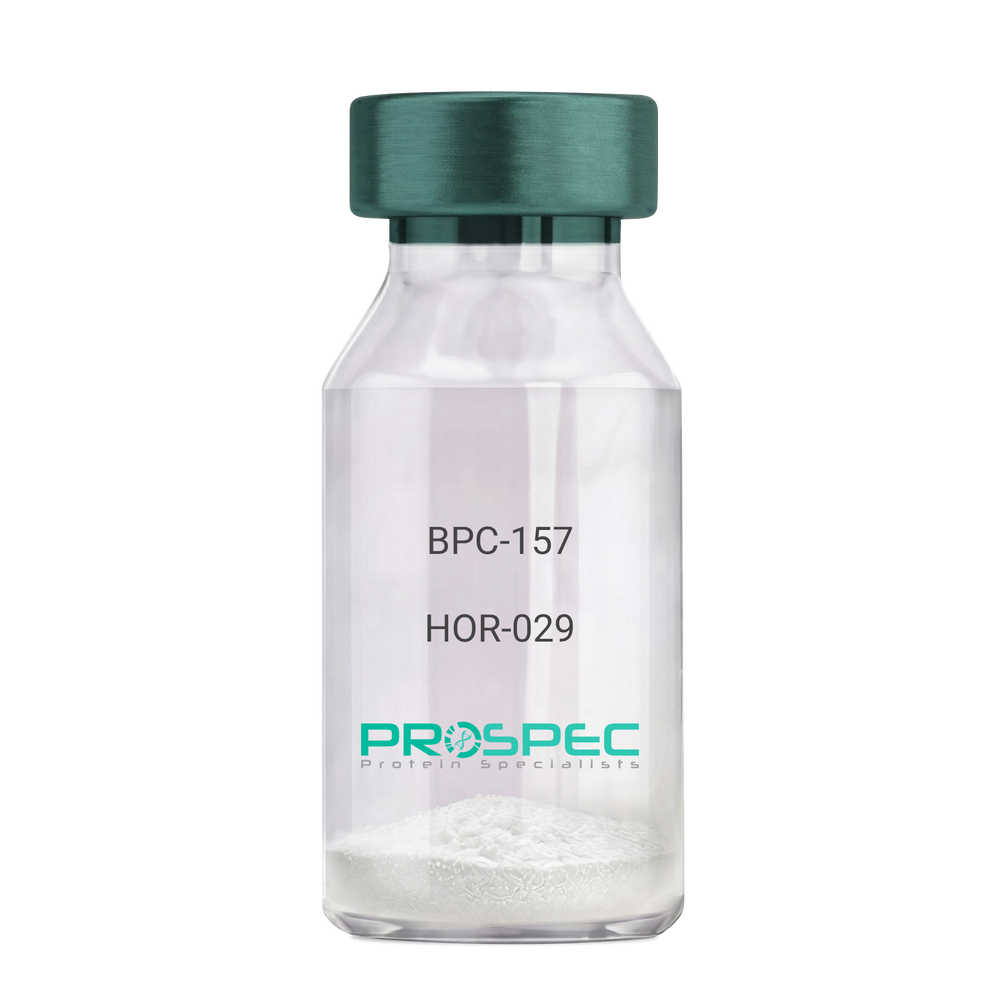
    BPC-157

    Description:

    BPC-157 Pentadecapeptide

    Product # :

    HOR-029

    Price :

    Quantity :

    Shipping Method :

    Room Temp Icon

    Shipped at Room temp

    Add To Cart

    More Info

    • description
    • formulation
    • purity
    • More Info

    Description

    BPC-157 Synthetic is a single, non-glycosylated polypeptide chain containing 15 amino acids, having a molecular mass of 1419.55 Dalton and a Molecular formula of C62H98N16O22.

    Formulation

    The protein was lyophilized with no additives.

    Purity

    Greater than 97.0% as determined by analysis by RP-HPLC.

    More Info

    • Physical Appearance

      Sterile Filtered White lyophilized (freeze-dried) powder.

    • Stability

      Lyophilized BPC-157 although stable at room temperature for 3 weeks, should be stored desiccated below -18°C. Upon reconstitution bpc-157 should be stored at 4°C between 2-7 days and for future use below -18°C. For long term storage it is recommended to add a carrier protein (0.1% HSA or BSA). Please prevent freeze-thaw cycles.

    • Solubility

      It is recommended to reconstitute the lyophilized BPC-157 in sterile 18MΩ-cm H2O not less than 100 µg/ml, which can then be further diluted to other aqueous solutions.

    • Amino Acid Sequence

      H-Gly-Glu-Pro-Pro-Pro-Gly-Lys-Pro-Ala-Asp-Asp-Ala-Gly-Leu-Val-OH

    • Background

      BPC-157, short for Body Protection Compound-157, is a synthetic peptide that has garnered significant attention in the field of regenerative medicine and sports science. This peptide, derived from a portion of the human gastric juice protein known as BPC, exhibits remarkable healing and tissue regeneration properties. BPC-157 has shown promise in various preclinical and clinical studies, demonstrating its potential for the treatment of a wide range of injuries and disorders.

      The research on BPC-157 encompasses investigations into its mechanisms of action, efficacy, safety, and potential therapeutic applications. Studies have elucidated the peptide's ability to enhance angiogenesis, promote collagen synthesis, modulate inflammatory responses, and protect against oxidative stress. These properties make BPC-157 an intriguing candidate for accelerating tissue healing, reducing inflammation, and improving overall recovery outcomes.

      Preclinical studies have revealed the beneficial effects of BPC-157 in several injury models. For instance, BPC-157 has demonstrated its potential in accelerating tendon and ligament healing, mitigating muscle damage, and promoting bone regeneration. These findings suggest that BPC-157 could be a valuable therapeutic tool in orthopedic medicine and sports-related injuries.

      Furthermore, BPC-157 has exhibited promising effects on gastrointestinal health. Studies have highlighted its ability to protect and heal the gut lining, reduce ulcer formation, and alleviate symptoms associated with inflammatory bowel disease. These observations open up avenues for BPC-157 as a potential treatment for gastrointestinal disorders.

      In addition to its regenerative properties, BPC-157 has shown potential in neurological and psychiatric conditions. Research has indicated its neuroprotective effects, with implications for the treatment of traumatic brain injury, stroke, and neurodegenerative disorders. Preliminary studies also suggest BPC-157's potential as an antidepressant and anxiolytic agent.

      Despite the promising findings, further research is needed to fully understand the mechanisms underlying BPC-157's actions and to assess its long-term safety and efficacy. Clinical trials are underway to explore its potential therapeutic applications in humans, including its use in tendon and ligament repair, inflammatory bowel disease, and neurodegenerative disorders.

      This comprehensive review aims to summarize the current state of research on BPC-157, providing an overview of its mechanisms of action and therapeutic potential. By examining relevant studies and findings, we aim to shed light on the diverse applications of BPC-157 and its implications for regenerative medicine, sports science, and various disease

    ProSpec's products are furnished for LABORATORY RESEARCH USE ONLY. The product may not be used as drugs, agricultural or pesticidal products, food additives or household chemicals.

    Bpc 157
  • 1
  • …
  • 39
  • 40
  • 41
  • 42
Your browser does not support the video tag.

Products

  • Cytokines
  • Growth Factors
  • Chemokines
  • CD Antigens
  • Neurotrophins
  • Hormones
  • Enzymes
  • Viral Antigens
  • Recombinant Proteins
  • Natural Proteins
  • Monoclonal Antibodies
  • Polyclonal Antibodies
  • Thermal Packaging

About

  • Company
  • Founder
  • Contribution
  • Contact Us
  • My Account

Ordering

  • Ordering Method
  • Ordering - Credit Card
  • Ordering PO
  • Shipping Fees
  • FAQ's

Legal

  • Terms & Conditions
  • Privacy
  • Site Map
  • info@prospecbio.com
  • Facebook
  • Instagram
  • Linkedin Profile

© 2026 ProSpec-Tany TechnoGene Ltd. All Rights Reserved.

  • Choosing a selection results in a full page refresh.
  • Opens in a new window.