Skip to content

High-quality research proteins.

  • 1-800-805-6531

  • Mon - Sat 8.00-18.00, Sun - Closed

  • info@prospecbio.com

  • PO Box 6591 East Brunswick NJ 08816

  • Products
    • Cytokines
    • Growth factors
    • Chemokines
    • Cd antigens
    • Neurotrophins
    • Hormones
    • Enzymes
    • Viral antigens
    • Recombinant proteins
    • Natural proteins
    • Monoclonal antibodies
    • Polyclonal antibodies
    • Thermal Packaging
  • About
    • Company
    • Founder
    • Contribution
  • Customers
    • Eastern Asia
    • Eastern Europe
    • North America
    • South America
    • South East Asia
    • Southern Asia
    • Western Europe
  • Ordering
    • Ordering Method
    • Ordering - Credit Card
    • Ordering - PO
    • Shipping Fees
    • FAQs
  • Services
    • DNA Cloning
    • Protein Expression
    • Monoclonal Antibody
    • Fermentation
    • Technology License
  • Contact us
Log in

Country/region

  • USD $ | Albania
  • USD $ | Andorra
  • USD $ | Argentina
  • USD $ | Armenia
  • USD $ | Australia
  • USD $ | Austria
  • USD $ | Azerbaijan
  • USD $ | Belarus
  • USD $ | Belgium
  • USD $ | Bolivia
  • USD $ | Brazil
  • USD $ | Bulgaria
  • USD $ | Cambodia
  • USD $ | Canada
  • USD $ | Chile
  • USD $ | China
  • USD $ | Colombia
  • USD $ | Costa Rica
  • USD $ | Croatia
  • USD $ | Cyprus
  • USD $ | Czechia
  • USD $ | Denmark
  • USD $ | Estonia
  • USD $ | Finland
  • USD $ | France
  • USD $ | Georgia
  • USD $ | Germany
  • USD $ | Greece
  • USD $ | Hong Kong SAR
  • USD $ | Hungary
  • USD $ | Iceland
  • USD $ | India
  • USD $ | Ireland
  • USD $ | Israel
  • USD $ | Italy
  • USD $ | Japan
  • USD $ | Kazakhstan
  • USD $ | Latvia
  • USD $ | Liechtenstein
  • USD $ | Lithuania
  • USD $ | Madagascar
  • USD $ | Malta
  • USD $ | Mexico
  • USD $ | Moldova
  • USD $ | Monaco
  • USD $ | Netherlands
  • USD $ | New Zealand
  • USD $ | North Macedonia
  • USD $ | Norway
  • USD $ | Panama
  • USD $ | Paraguay
  • USD $ | Peru
  • USD $ | Philippines
  • USD $ | Poland
  • USD $ | Portugal
  • USD $ | Romania
  • USD $ | Singapore
  • USD $ | Slovakia
  • USD $ | Slovenia
  • USD $ | South Africa
  • USD $ | South Korea
  • USD $ | Spain
  • USD $ | Sri Lanka
  • USD $ | Sweden
  • USD $ | Switzerland
  • USD $ | Taiwan
  • USD $ | Thailand
  • USD $ | Türkiye
  • USD $ | Ukraine
  • USD $ | United Kingdom
  • USD $ | United States
  • USD $ | Uruguay
  • USD $ | Vatican City
  • USD $ | Venezuela
  • USD $ | Vietnam
  • Facebook
  • Instagram
logoProSpec - Recombinant Protein Manufacturer for academic and R&D industry
Become a distributor
Account Log in
Wishlist
Cart Cart(0)
  • Products
    +
    • Cytokines
    • Growth factors
    • Chemokines
    • Cd antigens
    • Neurotrophins
    • Hormones
    • Enzymes
    • Viral antigens
    • Recombinant proteins
    • Natural proteins
    • Monoclonal antibodies
    • Polyclonal antibodies
    • Thermal Packaging
  • About
    +
    • Company
    • Founder
    • Contribution
  • Customers
    +
    • Eastern Asia
    • Eastern Europe
    • North America
    • South America
    • South East Asia
    • Southern Asia
    • Western Europe
  • Ordering
    +
    • Ordering Method
    • Ordering - Credit Card
    • Ordering - PO
    • Shipping Fees
    • FAQs
  • Services
    +
    • DNA Cloning
    • Protein Expression
    • Monoclonal Antibody
    • Fermentation
    • Technology License
  • Contact us

Item added to your cart

View cart
View All
  • Cytokines
  • Growth factors
  • Chemokines
  • Cd antigens
  • Neurotrophins
  • Hormones
  • Enzymes
  • Viral antigens
  • Recombinant proteins
  • Natural proteins
  • Monoclonal antibodies
  • Polyclonal antibodies
  • Thermal Packaging
  • Tumor Necrosis Factor

    Tumor Necrosis Factor

    View All
  • 4-1BB

    4-1BB

    View All
  • Adiponectin

    Adiponectin

    View All
  • AIF1

    AIF1

    View All
  • Other Cytokines

    Other Cytokines

    View All
  • AITRL

    AITRL

    View All
  • Angiopoietin

    Angiopoietin

    View All
  • Apolipoprotein

    Apolipoprotein

    View All
  • B-Cell Activating Factor

    B-Cell Activating Factor

    View All
  • Beta Defensin

    Beta Defensin

    View All
  • Bone Morphogenetic Protein

    Bone Morphogenetic Protein

    View All
  • B type Natriuretic Peptide

    B type Natriuretic Peptide

    View All
  • BST

    BST

    View All
  • Betacellulin

    Betacellulin

    View All
  • Cardiotrophin

    Cardiotrophin

    View All
  • Activin

    Activin

    View All
  • Fibroblast Growth Factor

    Fibroblast Growth Factor

    View All
  • Other Growth Factors

    Other Growth Factors

    View All
  • CSF

    CSF

    View All
  • CTGF

    CTGF

    View All
  • IGFBP

    IGFBP

    View All
  • VEGF Protein

    VEGF Protein

    View All
  • EGF

    EGF

    View All
  • Epigen

    Epigen

    View All
  • Erythropoietin

    Erythropoietin

    View All
  • Insulin-Like Growth Factor

    Insulin-Like Growth Factor

    View All
  • Growth Hormone

    Growth Hormone

    View All
  • HDGF

    HDGF

    View All
  • Hepatocyte Growth Factor

    Hepatocyte Growth Factor

    View All
  • Insulin

    Insulin

    View All
  • BCA-1/ BLC (CXCL13)

    BCA-1/ BLC (CXCL13)

    View All
  • BRAK (CXCL14)

    BRAK (CXCL14)

    View All
  • C-10 (CCL6)

    C-10 (CCL6)

    View All
  • Other Chemokines

    Other Chemokines

    View All
  • MEC (CCL28)

    MEC (CCL28)

    View All
  • LD78-beta (CCL3L1)

    LD78-beta (CCL3L1)

    View All
  • CTACK (CCL27)

    CTACK (CCL27)

    View All
  • CXCL16

    CXCL16

    View All
  • CXCL17

    CXCL17

    View All
  • Platelet Factor-4 (CXCL4)

    Platelet Factor-4 (CXCL4)

    View All
  • ENA-78 (CXCL5)

    ENA-78 (CXCL5)

    View All
  • Eotaxin (CCL11,24,26)

    Eotaxin (CCL11,24,26)

    View All
  • Exodus-2 (CCL21)

    Exodus-2 (CCL21)

    View All
  • Fractalkine (CX3CL1)

    Fractalkine (CX3CL1)

    View All
  • CXCL6

    CXCL6

    View All
  • Other CD Antigens

    Other CD Antigens

    View All
  • CD14

    CD14

    View All
  • CD164

    CD164

    View All
  • CD1

    CD1

    View All
  • CD2

    CD2

    View All
  • CD200

    CD200

    View All
  • CD207

    CD207

    View All
  • CD226

    CD226

    View All
  • CD23

    CD23

    View All
  • CD244

    CD244

    View All
  • CD247

    CD247

    View All
  • CD27

    CD27

    View All
  • CD274

    CD274

    View All
  • CD300

    CD300

    View All
  • CD33

    CD33

    View All
  • Other Neurotrophins

    Other Neurotrophins

    View All
  • Beta-NGF

    Beta-NGF

    View All
  • BDNF

    BDNF

    View All
  • CDNF

    CDNF

    View All
  • CNTF

    CNTF

    View All
  • GDNF

    GDNF

    View All
  • Glia Maturation Factor

    Glia Maturation Factor

    View All
  • MANF

    MANF

    View All
  • Midkine

    Midkine

    View All
  • Neuroglobin

    Neuroglobin

    View All
  • Neurotrophic factors

    Neurotrophic factors

    View All
  • Neuregulin

    Neuregulin

    View All
  • Neuropilin

    Neuropilin

    View All
  • Pigment Epithelium-Derived Factor

    Pigment Epithelium-Derived Factor

    View All
  • Pleiotrophin

    Pleiotrophin

    View All
  • Peptide Hormones

    Peptide Hormones

    View All
  • Other Hormones

    Other Hormones

    View All
  • HCG

    HCG

    View All
  • Endothelin

    Endothelin

    View All
  • Exendin

    Exendin

    View All
  • FSH

    FSH

    View All
  • Glucagon

    Glucagon

    View All
  • GHRP

    GHRP

    View All
  • GLP

    GLP

    View All
  • Thyrostimulin

    Thyrostimulin

    View All
  • Inhibin A

    Inhibin A

    View All
  • LHRH

    LHRH

    View All
  • Melanotan

    Melanotan

    View All
  • Procalcitonin

    Procalcitonin

    View All
  • PTH

    PTH

    View All
  • Peroxiredoxin

    Peroxiredoxin

    View All
  • Peptidase

    Peptidase

    View All
  • Synthetase

    Synthetase

    View All
  • Transferase

    Transferase

    View All
  • Hydrolase

    Hydrolase

    View All
  • Dehydrogenase

    Dehydrogenase

    View All
  • ACE2

    ACE2

    View All
  • Esterase

    Esterase

    View All
  • Protein Kinases

    Protein Kinases

    View All
  • Other Enzymes

    Other Enzymes

    View All
  • Phosphatase

    Phosphatase

    View All
  • Deaminase

    Deaminase

    View All
  • Oxygenase

    Oxygenase

    View All
  • Adenylate Kinase

    Adenylate Kinase

    View All
  • Lyase

    Lyase

    View All
  • Chagas

    Chagas

    View All
  • SARS

    SARS

    View All
  • Influenza

    Influenza

    View All
  • ASFV

    ASFV

    View All
  • Astrovirus

    Astrovirus

    View All
  • Borrelia

    Borrelia

    View All
  • Helicobacter Pylori

    Helicobacter Pylori

    View All
  • Chikungunya

    Chikungunya

    View All
  • Chlamydia

    Chlamydia

    View All
  • Cytomegalo

    Cytomegalo

    View All
  • Dengue

    Dengue

    View All
  • EBV

    EBV

    View All
  • Ebola

    Ebola

    View All
  • Feline Leukemia Virus

    Feline Leukemia Virus

    View All
  • Hepatitis A

    Hepatitis A

    View All
  • Other

    Other

    View All
  • Actin

    Actin

    View All
  • ADAM

    ADAM

    View All
  • Complement Component

    Complement Component

    View All
  • Ag85

    Ag85

    View All
  • Eukaryotic Translation Initiation Factor

    Eukaryotic Translation Initiation Factor

    View All
  • Anterior Gradient Protein

    Anterior Gradient Protein

    View All
  • Heat Shock Protein

    Heat Shock Protein

    View All
  • Alpha-2-HS-Glycoprotein

    Alpha-2-HS-Glycoprotein

    View All
  • Hemoglobin

    Hemoglobin

    View All
  • Allergy

    Allergy

    View All
  • Anaplasma

    Anaplasma

    View All
  • Angiogenin

    Angiogenin

    View All
  • Ankyrin Repeat Domain

    Ankyrin Repeat Domain

    View All
  • Annexin

    Annexin

    View All
  • Other Natural Proteins

    Other Natural Proteins

    View All
  • Aprotinin

    Aprotinin

    View All
  • Transferrin

    Transferrin

    View All
  • Avidin

    Avidin

    View All
  • Anti Coagulation Factors

    Anti Coagulation Factors

    View All
  • Natural Albumin

    Natural Albumin

    View All
  • Natural Coagulation Factors

    Natural Coagulation Factors

    View All
  • Fibronectin

    Fibronectin

    View All
  • Thrombin

    Thrombin

    View All
  • Anti Human Enzyme

    Anti Human Enzyme

    View All
  • Other Monoclonal Antibodies

    Other Monoclonal Antibodies

    View All
  • Anti Human Cytokine

    Anti Human Cytokine

    View All
  • Anti Human Heat Shock Protein

    Anti Human Heat Shock Protein

    View All
  • Anti Mouse Lymphocyte

    Anti Mouse Lymphocyte

    View All
  • Anti Human Chemokine

    Anti Human Chemokine

    View All
  • Anti Human Lymphocyte

    Anti Human Lymphocyte

    View All
  • Anti Viral Monoclonal

    Anti Viral Monoclonal

    View All
  • Anti Mouse Cytokine

    Anti Mouse Cytokine

    View All
  • Anti-GST Monoclonal

    Anti-GST Monoclonal

    View All
  • Other Polyclonal Antibodies

    Other Polyclonal Antibodies

    View All
  • Anti Viral

    Anti Viral

    View All
  • Anti-GST Monoclonal

    Anti-GST Monoclonal

    View All
Back

Search results

1000 results found for “decarboxylase”

Name

Description

Product #

Price

Quantity

Shipping Method

  • View Data Sheet

    Name :

    GZMK Human, Sf9

    Description:

    Granzyme-K, Human Recombinant, sf9

    GZMK, TRYP2, Granzyme-K, Granzyme K, Fragmentin-3, Granzyme-3, NK-tryptase-2, NK-Tryp-2.

    Product # :

    ENZ-1031

    Price :

    Quantity :

    Shipping Method :

    Ice Icon

    Shipped with Ice Packs

    Add To Cart

    More Info

    • description
    • source
    • formulation
    • purity
    • More Info

    Description

    GZMK Human Recombinant produced in Sf9 Baculovirus cells is a single, glycosylated polypeptide chain containing 247 amino acids (27-264) and having a molecular mass of 26.9kDa (Molecular size on SDS-PAGE will appear at approximately 28-40kDa). GZMK is fused to a 6 amino acid His-Tag at C-terminus and purified by proprietary chromatographic techniques.

    Source

    Sf9, Baculovirus cells.

    Formulation

    GZMK protein solution (0.25mg/ml) containing Phosphate Buffered Saline (pH 7.4), 20% glycerol and 1mM DTT.

    Purity

    Greater than 95.0% as determined by analysis by SDS-PAGE.

    More Info

    • Introduction

      GZMK is a part of a group of related serine proteases from the cytoplasmic granules of cytotoxic lymphocytes. Cytolytic T lymphocytes and natural killer cells have the outstanding ability to bind, recognize and lyse specific target cells. They defend their host by lysing cells bearing on their surface 'nonself' antigens, usually peptides or proteins resulting from infection by intracellular pathogens.

    • Synonyms

      GZMK, TRYP2, Granzyme-K, Granzyme K, Fragmentin-3, Granzyme-3, NK-tryptase-2, NK-Tryp-2.

    • Physical Appearance

      Sterile Filtered clear solution.

    • Stability

      Store at 4°C if entire vial will be used within 2-4 weeks. Store, frozen at -20°C for longer periods of time. For long term storage it is recommended to add a carrier protein (0.1% HSA or BSA).Avoid multiple freeze-thaw cycles.

    • Amino Acid Sequence

      ADPIIGGKEV SPHSRPFMAS IQYGGHHVCG GVLIDPQWVL TAAHCQYRFT KGQSPTVVLG AHSLSKNEAS KQTLEIKKFI PFSRVTSDPQ SNDIMLVKLQ TAAKLNKHVK MLHIRSKTSL RSGTKCKVTG WGATDPDSLR PSDTLREVTV TVLSRKLCNS QSYYNGDPFI TKDMVCAGDA KGQKDSCKGD SGGPLICKGV FHAIVSGGHE CGVATKPGIY TLLTKKYQTW IKSNLVPPHT NHHHHHH.

    ProSpec's products are furnished for LABORATORY RESEARCH USE ONLY. The product may not be used as drugs, agricultural or pesticidal products, food additives or household chemicals.

    Gzmk Sf9
  • View Data Sheet

    Name :

    AKR1C1 Human, His

    Description:

    Aldo-Keto Reductase Family 1 Member C1 Human Recombinant, His Tag

    DDH1, DDH, HAKRC, 20-alpha-HSD, DD1/DD2, HBAB, C9, DD1, H-37, MBAB, MGC8954, 2-ALPHA-HSD, AKR1C1, Aldo-keto reductase family 1 member C1, 20-alpha-hydroxysteroid dehydrogenase, Trans-1,2-dihydrobenzene-1,2-diol dehydrogenase, Indanol dehydrogenase, Dihydrodiol dehydrogenase 1/2, Chlordecone reductase homolog HAKRC, High-affinity hepatic bile acid-binding protein.

    Product # :

    ENZ-496

    Price :

    Quantity :

    Shipping Method :

    Ice Icon

    Shipped with Ice Packs

    Add To Cart

    More Info

    • description
    • source
    • formulation
    • purity
    • biological activity
    • More Info

    Description

    AKR1C1 Human Recombinant fused to a 20 amino acid His Tag at N-terminus produced in E.Coli is a single, non-glycosylated, polypeptide chain containing 343 amino acids (1-323 a.a.) and having a molecular mass of 38.9 kDa. The AKR1C1 is fused to a 20 a.a. His Tag at n-terminal and purified by proprietary chromatographic techniques.

    Source

    Escherichia Coli.

    Formulation

    The AKR1C1 protein solution (0.5mg/ml) contains 20mM Tris-HCl pH-8, 1mM DTT and 20% glycerol.

    Purity

    Greater than 90% as determined by SDS-PAGE.

    Biological Activity

    Specific activity is > 500 pmol/min/ug, and is defined as the amount of enzyme that catalyze the oxidation of 1.0 pmole 1-Acenaphthenol in the presence of NADP per minute at pH 8.8 at 25°C.

    More Info

    • Introduction

      AKR1C1 transfers progesterone to its inactive state or in other words catalyzes the reaction of 20-alpha-hydroxy progesterone (20-alpha-OHP). In the liver and intestine. AKR1C1 transfers bile and monitors the intrahepatic bile acid concentration though it has a low bile-binding ability. AKR1C1 participates in myelin formation. AKR1C1 is part of the aldo/keto reductase superfamily, which has over 40 known enzymes which catalyze the conversion of aldehydes and ketones to their corresponding alcohols by utilizing NADH and/or NADPH as cofactors thus display overlapping but distinct substrate specificity.

    • Synonyms

      DDH1, DDH, HAKRC, 20-alpha-HSD, DD1/DD2, HBAB, C9, DD1, H-37, MBAB, MGC8954, 2-ALPHA-HSD, AKR1C1, Aldo-keto reductase family 1 member C1, 20-alpha-hydroxysteroid dehydrogenase, Trans-1,2-dihydrobenzene-1,2-diol dehydrogenase, Indanol dehydrogenase, Dihydrodiol dehydrogenase 1/2, Chlordecone reductase homolog HAKRC, High-affinity hepatic bile acid-binding protein.

    • Physical Appearance

      Sterile Filtered clear colorless solution.

    • Stability

      Store at 4°C if entire vial will be used within 2-4 weeks. Store, frozen at -20°C for longer periods of time. For long term storage it is recommended to add a carrier protein (0.1% HSA or BSA).Avoid multiple freeze-thaw cycles.

    • Amino Acid Sequence

      MGSSHHHHHH SSGLVPRGSH MDSKYQCVKL NDGHFMPVLG FGTYAPAEVP KSKALEATKL AIEAGFRHID SAHLYNNEEQ VGLAIRSKIA DGSVKREDIF YTSKLWCNSH RPELVRPALE RSLKNLQLDY VDLYLIHFPV SVKPGEEVIP KDENGKILFD TVDLCATWEA VEKCKDAGLA KSIGVSNFNR RQLEMILNKP GLKYKPVCNQ VECHPYFNQR KLLDFCKSKD IVLVAYSALG SHREEPWVDP NSPVLLEDPV LCALAKKHKR TPALIALRYQ LQRGVVVLAK SYNEQRIRQN VQVFEFQLTS EEMKAIDGLN RNVRYLTLDI FAGPPNYPFS DEY.

    ProSpec's products are furnished for LABORATORY RESEARCH USE ONLY. The product may not be used as drugs, agricultural or pesticidal products, food additives or household chemicals.

    Akr1C1 Human
  • View Data Sheet

    Name :

    FTCD Human

    Description:

    Formiminotransferase Cyclodeaminase Human Recombinant

    Formiminotransferase-cyclodeaminase, FTCD, LCHC1, LC-1.

    Product # :

    ENZ-302

    Price :

    Quantity :

    Shipping Method :

    Ice Icon

    Shipped with Ice Packs

    Add To Cart

    More Info

    • description
    • source
    • formulation
    • purity
    • More Info

    Description

    Formiminotransferase Cyclodeaminase Human Recombinant (also called liver cytosol type 1) produced in SF9, is a glycosylated, polypeptide chain having a molecular mass of 59,749 Dalton.The FTCD is expressed with a -6xHis tag and purified by proprietary chromatographic techniques.

    Source

    Sf9 insect cells.

    Formulation

    FTCD is supplied in 16mM HEPES buffer pH-7.6, 240mM sodium chloride, and 20% glycerol.

    Purity

    Greater than 95% as determined by SDS-PAGE.

    More Info

    • Introduction

      Formiminotransferase cyclodeaminase is an enzyme which catalyzes the conversion of formiminoglutamateand tetrahydrofolateinto formiminotetrahydrofolateand glutamate.
      Formiminotransferase cyclodeaminase, a bifunctional enzyme of tetrahydrofolate synthesis, is the target antigen of anti-LC1 (liver cytosol antigen type 1) autoantibodies. Presence of LC1 autoantibodies is a marker for type 2 autoimmune hepatitis (for which anti-LKM 1/cytochrome P450 2D6 autoantibodies are a further marker).
      Serum LC1 autoantibody concentrations appear to fluctuate in parallel with aminotransferase levels, a particularly intriguing observation that suggests a possible role of LC1 autoreactivity in the pathogenic mechanism leading to hepatocyte injury.

    • Synonyms

      Formiminotransferase-cyclodeaminase, FTCD, LCHC1, LC-1.

    • Stability

      Store at 4°C if entire vial will be used within 2-4 weeks. Store, frozen at -20°Cfor longer periods of time. Avoid multiple freeze-thaw cycles.

    • Immunological Functions

      1. Binds IgG-type human auto-antibodies.2. Standard ELISA test (checker-board analysis of positive/negative sera panels, immuno-dot test).

    • coating concentration

      0.35-0.7 µg/ml (depending on the type of ELISA plate and coating buffer).Suitable for biotinylation and iodination.

    ProSpec's products are furnished for LABORATORY RESEARCH USE ONLY. The product may not be used as drugs, agricultural or pesticidal products, food additives or household chemicals.

    Ftcd Hunan
  • View Data Sheet

    Name :

    HBsAg adw

    Description:

    Hepatitis B Surface Antigen, adw Recombinant

    Product # :

    HBS-872

    Price :

    Quantity :

    Shipping Method :

    Ice Icon

    Shipped with Ice Packs

    Add To Cart

    More Info

    • description
    • source
    • formulation
    • purity
    • More Info

    Description

    HbsAg adw produced Pichia Pastoris, having a molecular weight of approximately 24.0 kDa as shown on SDS-PAGE.

    Source

    Pichia Pastoris.

    Formulation

    Sterile Filtered solution containing 20mM Phosphate Buffer, 154mM sodium chloride, pH 7.1.

    Purity

    Greater than 95.0% as determined by SDS-PAGE.

    More Info

    • Introduction

      HBsAg is the surface antigenof the Hepatitis-B-Virus (HBV). The capsidof a virus has different surface proteins from the rest of the virus. The antigen is a protein that binds specifically on one of these surface proteins. It is commonly referred to as the Australian Antigen.

    • Physical Appearance

      Sterile Filtered pale solution.

    • Stability

      HBsAg Should be stored at 4°C.DO NOT FREEZE.

    ProSpec's products are furnished for LABORATORY RESEARCH USE ONLY. The product may not be used as drugs, agricultural or pesticidal products, food additives or household chemicals.

    Hbsag Adw
  • View Data Sheet

    Name :

    PKAkt1/PKBa Human

    Description:

    Protein Kinase Akt1/PKB alpha, Inactive enzyme Human Recombinant

    RAC-alpha serine/threonine-protein kinase, EC 2.7.11.1, RAC-PK-alpha, Protein kinase B, PKB, C-AKT, AKT1, AKT, RAC, PRKBA, MGC99656, RAC-ALPHA.

    Product # :

    PKA-207

    Price :

    Quantity :

    Shipping Method :

    Ice Icon

    Shipped with Ice Packs

    Add To Cart

    More Info

    • description
    • source
    • formulation
    • purity
    • biological activity
    • More Info

    Description

    PKAkt1 is a glycosilated polypeptide having a molecular mass of 59.1 kDa, fused with a polyhistidine tag at N-terminus (to facilitate removal of Akt1 kinase from the reaction mixture).Inactive enzyme, suitable for negative control experiments or for phosphorylation as a substrate.Recombinant Protein Kinase B is purified by proprietary chromatographic techniques.

    Source

    Sf9 insect cells.

    Formulation

    PKAkt1 in 50mM Tris-HCl, 100mM NaCl, 1mM DTT, 25mM beta glycerophosphate, 50% glycerol, pH 8.5.

    Purity

    Greater than 90% as determined by SDS-PAGE.

    Biological Activity

    No protease activity (Twinning test). 
    The Specific activity is 235 U/mg.

    More Info

    • Introduction

      Akt1, also known as "Akt" or protein kinaseB (PKB) is an important molecule in mammaliancellular signaling.
      In humans, there are three genes in the "Akt family": Akt1, Akt2, and Akt3. These enzymesare members of the serine/threonine-specific protein kinasefamily (EC2.7.11.1).
      Akt1 is involved in cellular survival pathways, by inhibiting apoptoticprocesses. Akt1 is also able to induce protein synthesispathways, and is therefore a key signaling protein in the cellular pathways that lead to skeletal muscle hypertrophy, and general tissue growth. Since it can block apoptosis, and thereby promote cell survival, Akt1 has been implicated as a major factor in many types of cancer. Akt (now also called Akt1) was originally identified as the oncogenein the transforming retrovirus, AKT8.

    • Synonyms

      RAC-alpha serine/threonine-protein kinase, EC 2.7.11.1, RAC-PK-alpha, Protein kinase B, PKB, C-AKT, AKT1, AKT, RAC, PRKBA, MGC99656, RAC-ALPHA.

    • Physical Appearance

      Sterile Filtered clear solution.

    • Stability

      Store at 4°C if entire vial will be used within 2-4 weeks. Store, frozen at -20°C for longer periods of time. Avoid multiple freeze-thaw cycles.

    • Unit Definition

      1 Unit is defined as 1 picomole phosphate transferred to the synthetic peptide (RPRAATF) per min at 30°C.

    ProSpec's products are furnished for LABORATORY RESEARCH USE ONLY. The product may not be used as drugs, agricultural or pesticidal products, food additives or household chemicals.

    Akt1 Human Inactive Enzyme
  • View Data Sheet

    Name :

    G3BP1 Human

    Description:

    GTPase Activating Protein (SH3 domain) Binding Protein 1 Human Recombinant

    Ras GTPase-activating protein-binding protein 1, G3BP-1, ATP-dependent DNA helicase VIII, hDH VIII, GAP SH3 domain-binding protein 1, G3BP1, G3BP, HDH-VIII, MGC111040.

    Product # :

    ENZ-048

    Price :

    Quantity :

    Shipping Method :

    Ice Icon

    Shipped with Ice Packs

    Add To Cart

    More Info

    • description
    • source
    • formulation
    • purity
    • More Info

    Description

    G3BP1 Human Recombinant fused with an 8 amino acid His tag at C-terminus produced in E.Coli is a single, non-glycosylated, polypeptide chain containing 474 amino acids (1-466 a.a.) and having a molecular mass of 53.2kDa.The G3BP1 is purified by proprietary chromatographic techniques.

    Source

    Escherichia Coli.

    Formulation

    The G3BP1 solution (0.5 mg/ml) contains 20mM Tris-HCl buffer (pH8.0), 10% glycerol, 2mM DTT and 100mM NaCl.

    Purity

    Greater than 85.0% as determined by SDS-PAGE.

    More Info

    • Introduction

      G3BP1 belongs to the heterogeneous nuclear RNA-binding proteins and is also an element of the Ras signal transduction pathway. G3BP1 is one of the DNA-unwinding enzymes that favors partially unwound 3'-tailed substrates and is also able to unwind partial RNA/DNA and RNA/RNA duplexes in an ATP-dependent fashion. G3BP1 binds specifically to the Ras-GTPase-activating protein by associating with its SH3 domain. In addition, G3BP1 cleaves exclusively between cytosine and adenine and cleaves MYC mRNA preferentially at the 3'-UTR.

    • Synonyms

      Ras GTPase-activating protein-binding protein 1, G3BP-1, ATP-dependent DNA helicase VIII, hDH VIII, GAP SH3 domain-binding protein 1, G3BP1, G3BP, HDH-VIII, MGC111040.

    • Physical Appearance

      Sterile Filtered colorless solution.

    • Stability

      Store at 4°C if entire vial will be used within 2-4 weeks. Store, frozen at -20°C for longer periods of time. For long term storage it is recommended to add a carrier protein (0.1% HSA or BSA).Avoid multiple freeze-thaw cycles.

    • Amino Acid Sequence

      MVMEKPSPLL VGREFVRQYY TLLNQAPDML HRFYGKNSSY VHGGLDSNGK PADAVYGQKE IHRKVMSQNF TNCHTKIRHV DAHATLNDGV VVQVMGLLSN NNQALRRFMQ TFVLAPEGSV ANKFYVHNDI FRYQDEVFGG FVTEPQEESE EEVEEPEERQ QTPEVVPDDS GTFYDQAVVS NDMEEHLEEP VAEPEPDPEP EPEQEPVSEI QEEKPEPVLE ETAPEDAQKS SSPAPADIAQ TVQEDLRTFS WASVTSKNLP PSGAVPVTGI PPHVVKVPAS QPRPESKPES QIPPQRPQRD QRVREQRINI PPQRGPRPIR EAGEQGDIEP RRMVRHPDSH QLFIGNLPHE VDKSELKDFF QSYGNVVELR INSGGKLPNF GFVVFDDSEP VQKVLSNRPI MFRGEVRLNV EEKKTRAARE GDRRDNRLRG PGGPRGGLGG GMRGPPRGGM VQKPGFGVGR GLAPRQVEHH HHHH.

    ProSpec's products are furnished for LABORATORY RESEARCH USE ONLY. The product may not be used as drugs, agricultural or pesticidal products, food additives or household chemicals.

    G3Bp1 Human
  • View Data Sheet

    Name :

    YWHAG Human, His

    Description:

    Tyr-3/Trp-5 Monooxygenase Activation Protein Gamma Human Recombinant, His Tag

    14-3-3 protein gamma, Protein kinase C inhibitor protein 1, KCIP-1, YWHAG, Tyrosine 3-monooxygenase/tryptophan 5-monooxygenase activation protein, gamma polypeptide.

    Product # :

    PKA-262

    Price :

    Quantity :

    Shipping Method :

    Ice Icon

    Shipped with Ice Packs

    Add To Cart

    More Info

    • description
    • source
    • formulation
    • purity
    • More Info

    Description

    YWHAG Human Recombinant produced in E.Coli is a single, non-glycosylated, polypeptide chain containing 246 amino acids (2-247) and having a molecular mass of 36 kDa. YWHAG is fused to His Tag and purified by proprietary chromatographic techniques.

    Source

    Escherichia Coli.

    Formulation

    YWHAG solution containing 1x PBS and 50% glycerol.

    Purity

    Greater than 95.0% as determined by SDS-PAGE.

    More Info

    • Introduction

      The 14-3-3 family of proteins plays a key regulatory role in signal transduction, checkpoint control, apoptotic and nutrient-sensing pathways. 14-3-3 proteins are highly conserved and ubiquitously expressed. There are at least seven isoforms that have been identified in mammals. The 14-3-3gamma, a subtype of the 14-3-3 family of proteins, was thought to be brain and neuron-specific. It has been shown to interact with RAF1 and protein kinase C, proteins involved in various signal transduction pathways.

    • Synonyms

      14-3-3 protein gamma, Protein kinase C inhibitor protein 1, KCIP-1, YWHAG, Tyrosine 3-monooxygenase/tryptophan 5-monooxygenase activation protein, gamma polypeptide.

    • Physical Appearance

      Sterile filtered colorless solution.

    • Stability

      Store at 4°C if entire vial will be used within 2-4 weeks. Store, frozen at -20°C for longer periods of time. Avoid multiple freeze-thaw cycles.

    ProSpec's products are furnished for LABORATORY RESEARCH USE ONLY. The product may not be used as drugs, agricultural or pesticidal products, food additives or household chemicals.

    Ywhag Human His
  • View Data Sheet

    Name :

    SURA E.Coli

    Description:

    Chaperone SURA E.Coli Recombinant

    Rotamase surA, Survival protein A.

    Product # :

    ENZ-257

    Price :

    Quantity :

    Shipping Method :

    Ice Icon

    Shipped with Ice Packs

    Add To Cart

    More Info

    • description
    • source
    • formulation
    • purity
    • biological activity
    • More Info

    Description

    SURA E.Coli Recombinant produced in E.Coli is a single, non-glycosylated polypeptide chain containing 429 amino acids (21-428 a.a.) and having a molecular weight of 47.3kDa. The SURA is fused to 20 a.a His-Tag at N-terminus and purified by proprietary chromatographic techniques.

    Source

    Escherichia Coli.

    Formulation

    The SURA 1mg/ml protein solution contains 20mM Tris-HCl, pH-8, and 10% glycerol.

    Purity

    Greater than 95.0% as determined by SDS-PAGE.

    Biological Activity

    Specific activity is > 450 nmoles/min/ug, and is defined as the amount of enzyme that cleaves 1umole of suc-AAFP-pNA per minute at 25C in Tris-Hcl pH8.0 using chymotrypsin.

    More Info

    • Introduction

      SURA is a PPIase enzyme and chaperone of Escherichia coli and other Gram-negative bacteria. SURA is a key player in the biogenesis of beta-barrel outer membrane proteins and is involved in cell envelope homeostasis and cell envelope functions. SURA is necessary for the survival of E.coli in stationary phase and needed for pilus biogenesis.

    • Synonyms

      Rotamase surA, Survival protein A.

    • Physical Appearance

      Sterile filtered colorless solution.

    • Stability

      Store at 4°C if entire vial will be used within 2-4 weeks. Store, frozen at -20°C for longer periods of time. For long term storage it is recommended to add a carrier protein (0.1% HSA or BSA). Avoid multiple freeze-thaw cycles.

    • Amino Acid Sequence

      MGSSHHHHHH SSGLVPRGSH MAPQVVDKVA AVVNNGVVLE SDVDGLMQSV KLNAAQARQQ LPDDATLRHQ IMERLIMDQI ILQMGQKMGV KISDEQLDQA IANIAKQNNM TLDQMRSRLA YDGLNYNTYR NQIRKEMIIS EVRNNEVRRR ITILPQEVES LAQQVGNQND ASTELNLSHI LIPLPENPTS DQVNEAESQA RAIVDQARNG ADFGKLAIAH SADQQALNGG QMGWGRIQEL PGIFAQALST AKKGDIVGPI RSGVGFHILK VNDLRGESKN ISVTEVHARH ILLKPSPIMT DEQARVKLEQ IAADIKSGKT TFAAAAKEFS QDPGSANQGG DLGWATPDIF DPAFRDALTR LNKGQMSAPV HSSFGWHLIE LLDTRNVDKT DAAQKDRAYR MLMNRKFSEE AASWMQEQRA SAYVKILSN.

    ProSpec's products are furnished for LABORATORY RESEARCH USE ONLY. The product may not be used as drugs, agricultural or pesticidal products, food additives or household chemicals.

    Sura
  • View Data Sheet

    Name :

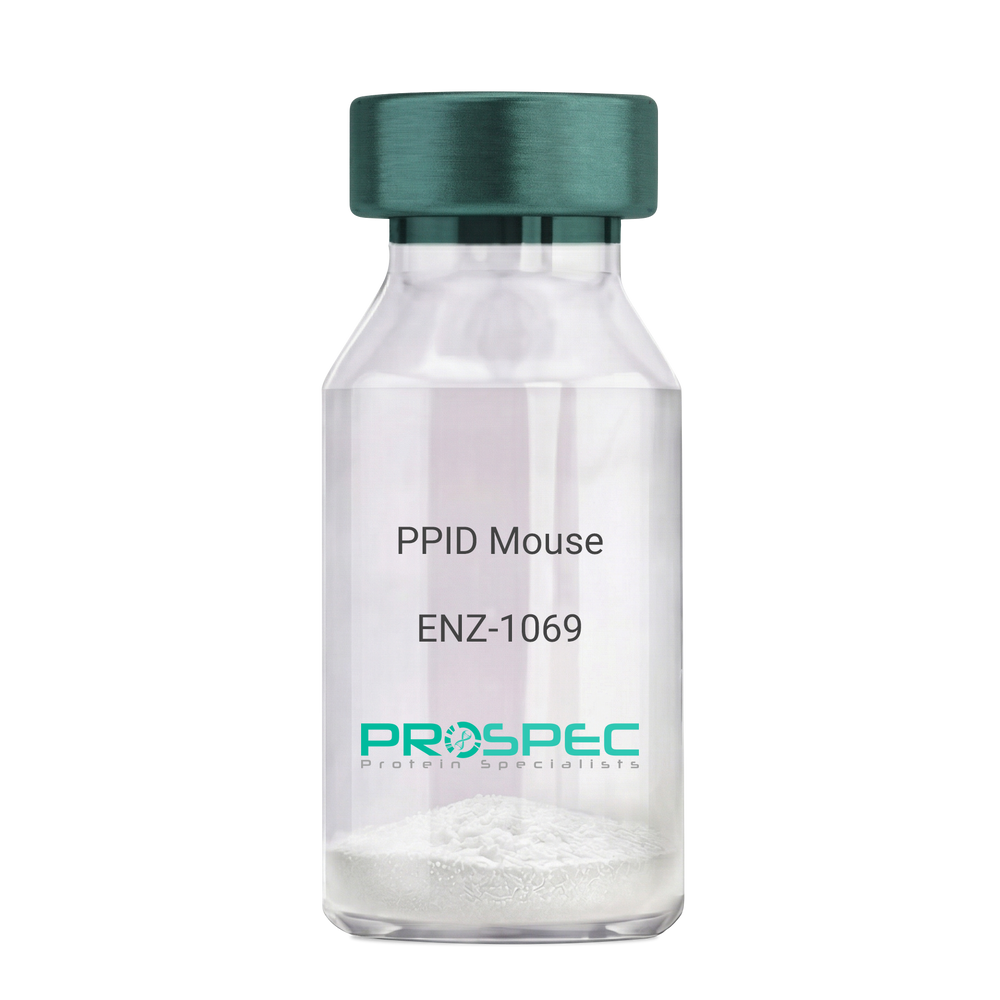
    PPID Mouse

    Description:

    Peptidylprolyl Isomerase D Mouse Recombinant

    Peptidyl-prolyl cis-trans isomerase D, PPIase D, 40 kDa peptidyl-prolyl cis-trans isomerase, Cyclophilin-40, CYP-40, Cyclophilin-related protein, CYP40, CYPD, PPID, Peptidylprolyl Isomerase D.

    Product # :

    ENZ-1069

    Price :

    Quantity :

    Shipping Method :

    Ice Icon

    Shipped with Ice Packs

    Add To Cart

    More Info

    • description
    • source
    • formulation
    • purity
    • biological activity
    • More Info

    Description

    PPID Mouse Recombinant produced in E.Coli is a single, non-glycosylated polypeptide chain containing 395 amino acids (1-370a.a.) and having a molecular mass of 43.4kDa. PPID is fused to a 25 amino acid His-tag at N-terminus & purified by proprietary chromatographic techniques.

    Source

    Escherichia Coli.

    Formulation

    PPID protein solution (1mg/ml) containing 20mM Tris-Hcl buffer (pH8.0), 10% glycerol and 1mM DTT.

    Purity

    Greater than 90.0% as determined by SDS-PAGE.

    Biological Activity

    Specific activity is > 700nmol/min/mg, and is defined as the amount of enzyme that cleaves 1umole of suc-AAFP-PNA per minute at 37°C in Tris–HCl pH 8.0 using chymotrypsin.

    More Info

    • Introduction

      Cyclophilin-D is a member of the peptidyl-prolyl cis-trans isomerase (PPIase) family. PPIases catalyze the cis-trans isomerization of proline imidic peptide bonds in oligopeptides and speeds up the protein folding. Cyclophilin-D possess PPIase activity and binds to the immunosuppressant cyclosporin-A. Cyclophilin-D is very well known that its overexpression suppresses the apoptosis in cancer cell. Cyclophilin-D suppresses apoptotic cell death by the use of mitochondrial hexokinase-2 dependent mechanism in cancer cells.

    • Synonyms

      Peptidyl-prolyl cis-trans isomerase D, PPIase D, 40 kDa peptidyl-prolyl cis-trans isomerase, Cyclophilin-40, CYP-40, Cyclophilin-related protein, CYP40, CYPD, PPID, Peptidylprolyl Isomerase D.

    • Physical Appearance

      Sterile Filtered colorless solution.

    • Stability

      Store at 4°C if entire vial will be used within 2-4 weeks. Store, frozen at -20°C for longer periods of time. For long term storage it is recommended to add a carrier protein (0.1% HSA or BSA). Please prevent freeze-thaw cycles.

    • Amino Acid Sequence

      MGSSHHHHHH SSGLVPRGSH MGSEFMSHAS PAAKPSNSKN PRVFFDVDIG GERVGRIVLE LFADIVPKTA ENFRALCTGE KGTGSTTGKP LHFKGCPFHR IIKKFMIQGG DFSNQNGTGG ESIYGEKFED ENFHYKHDRE GLLSMANAGP NTNGSQFFIT TVPTPHLDGK HVVFGQVIKG LGVARTLENV EVNGEKPAKL CVIAECGELK EGDDWGIFPK DGSGDSHPDF PEDADIDLKD VDKILLISED LKNIGNTFFK SQNWEMAIKK YAKVLRYVDS SKAVIEKADR SRLQPIALSC VLNIGACKLK MSNWQGAIDS CLEALEMDPS NTKALYRKAQ GWQGLKEYDQ ALADLKKAQE IAPGDKAIQA ELLKVKQMIK AQKDKEKAVY AKMFA.

    ProSpec's products are furnished for LABORATORY RESEARCH USE ONLY. The product may not be used as drugs, agricultural or pesticidal products, food additives or household chemicals.

    Ppid Mouse
  • View Data Sheet

    Name :

    HBZ Mouse

    Description:

    Hemoglobin-Zeta Mouse Recombinant

    Hemoglobin subunit zeta, Hba-x, Hbz1, AI450015, Alpha-like embryonic globin chain x, Zeta-globin.

    Product # :

    PRO-2517

    Price :

    Quantity :

    Shipping Method :

    Ice Icon

    Shipped with Ice Packs

    Add To Cart

    More Info

    • description
    • source
    • formulation
    • purity
    • More Info

    Description

    HBZ Mouse Recombinant produced in E.Coli is a single, non-glycosylated polypeptide chain containing 162 amino acids (1-142 a.a) and having a molecular mass of 18.3kDa.HBZ is fused to a 20 amino acid His-tag at N-terminus & purified by proprietary chromatographic techniques.

    Source

    Escherichia Coli.

    Formulation

    HBZ protein solution (0.25mg/ml) containing 20mM MES(pH6.0), 0.1M NaCl and 10% glycerol.

    Purity

    Greater than 90.0% as determined by SDS-PAGE.

    More Info

    • Introduction

      Hemoglobin Subunit Zeta (Hbz) or Hba-x is a alpha-like hemoglobin and part of the globin family. The protein is expressed and produced in the the yolk sac in early stages of embryonic development. Hemoglobin subunit zeta has 2 pseudogenes and 5 functional genes.

    • Synonyms

      Hemoglobin subunit zeta, Hba-x, Hbz1, AI450015, Alpha-like embryonic globin chain x, Zeta-globin.

    • Physical Appearance

      Sterile Filtered clear colorless solution.

    • Stability

      Store at 4°C if entire vial will be used within 2-4 weeks. Store, frozen at -20°C for longer periods of time. For long term storage it is recommended to add a carrier protein (0.1% HSA or BSA).Avoid multiple freeze-thaw cycles.

    • Amino Acid Sequence

      MGSSHHHHHH SSGLVPRGSH MSLMKNERAI IMSMWEKMAA QAEPIGTETL ERLFCSYPQT KTYFPHFDLH HGSQQLRAHG FKIMTAVGDA VKSIDNLSSA LTKLSELHAY ILRVDPVNFK LLSHCLLVTM AARFPADFTP EVHEAWDKFM SILSSILTEK YR.

    ProSpec's products are furnished for LABORATORY RESEARCH USE ONLY. The product may not be used as drugs, agricultural or pesticidal products, food additives or household chemicals.

    Hemoglobin Zeta Mouse
  • View Data Sheet

    Name :

    PSMB3 Human

    Description:

    Proteasome Subunit Beta Type 3 Human Recombinant

    Proteasome (prosome, macropain) subunit beta type 3, Proteasome chain 13, HC10-II, Proteasome component C10-II, Proteasome theta chain, EC 3.4.25.1, MGC4147.

    Product # :

    ENZ-200

    Price :

    Quantity :

    Shipping Method :

    Ice Icon

    Shipped with Ice Packs

    Add To Cart

    More Info

    • description
    • source
    • formulation
    • purity
    • More Info

    Description

    PSMB3 Human Recombinant produced in E.Coli is a single, non-glycosylated polypeptide chain containing 225 amino acids (1-205 a.a.) and having a molecular mass of 25.1kDa.PSMB3 is fused to a 20 amino acid His-tag at N-terminus & purified by proprietary chromatographic techniques.

    Source

    Escherichia Coli.

    Formulation

    PSMB3 protein solution (0.25mg/ml) containing 20mM Tris-HCl buffer (pH8.0), 200mM NaCl, 1mM DTT and 50% glycerol.

    Purity

    Greater than 90.0% as determined by SDS-PAGE.

    More Info

    • Introduction

      The proteasome is a multicatalytic proteinase complex with an extremely organized ring-shaped 20S core structure. The core structure consists of 4 rings of 28 non-identical subunits; 2 rings consist of 7 alpha subunits and 2 rings consist of 7 beta subunits. Proteasomes are spread all over the eukaryotic cells in large quantities and cleave peptides in an ATP/ubiquitin-dependent procedure in a non-lysosomal pathway. A vital role of a modified proteasome, the immunoproteasome, is the handling of class I MHC peptides.

    • Synonyms

      Proteasome (prosome, macropain) subunit beta type 3, Proteasome chain 13, HC10-II, Proteasome component C10-II, Proteasome theta chain, EC 3.4.25.1, MGC4147.

    • Physical Appearance

      Sterile Filtered colorless solution.

    • Stability

      Store at 4°C if entire vial will be used within 2-4 weeks. Store, frozen at -20°C for longer periods of time. For long term storage it is recommended to add a carrier protein (0.1% HSA or BSA).Avoid multiple freeze-thaw cycles.

    • Amino Acid Sequence

      MGSSHHHHHH SSGLVPRGSH MSIMSYNGGA VMAMKGKNCV AIAADRRFGI QAQMVTTDFQ KIFPMGDRLY IGLAGLATDV QTVAQRLKFR LNLYELKEGR QIKPYTLMSM VANLLYEKRF GPYYTEPVIA GLDPKTFKPF ICSLDLIGCP MVTDDFVVSG TCAEQMYGMC ESLWEPNMDP DHLFETISQA MLNAVDRDAV SGMGVIVHII EKDKITTRTL KARMD

    ProSpec's products are furnished for LABORATORY RESEARCH USE ONLY. The product may not be used as drugs, agricultural or pesticidal products, food additives or household chemicals.

    Psmb3 Human
  • View Data Sheet

    Name :

    CKMM1 Human

    Description:

    Creatine Kinase Muscle Type-1 Human Recombinant

    Creatine kinase M-type, EC 2.7.3.2, Creatine kinase M chain, M-CK, CKM, CKMM, CKMMITI.

    Product # :

    CKI-271

    Price :

    Quantity :

    Shipping Method :

    Room Temp Icon

    Shipped at Room temp

    Add To Cart

    More Info

    • description
    • source
    • formulation
    • purity
    • biological activity
    • More Info

    Description

    CKMM Type-1 Human Recombinant produced in E.Coli is a noncovalently linked homodimer, consisting of 2 x 380 amino acid polypeptide chains, having a total Mw of 86kDa.

    Source

    E.Coli

    Formulation

    CKMT1 contains 20mM Tris, 150mM NaCl, 1mM TCEP, pH-8

    Purity

    Greater than 95.0% as determined by SDS-PAGE

    Biological Activity

    The enzymatic activity was measured by its ability to phosphorylate creatine at room temperature. The specific activity is > 1,900 pmol/min/μg..

    More Info

    • Introduction

      Creatine Kinase MM is a cytoplasmic enzyme involved in energy homeostasis and is an important serum marker for myocardial infarction. The encoded protein reversibly catalyzes the transfer of phosphate between ATP and various phosphogens such as creatine phosphate. It acts as a homodimer in striated muscle as well as in other tissues, and as a heterodimer with a similar brain isozyme in heart. The encoded protein is a member of the ATP:guanido phosphotransferase protein family.

    • Synonyms

      Creatine kinase M-type, EC 2.7.3.2, Creatine kinase M chain, M-CK, CKM, CKMM, CKMMITI.

    • Physical Appearance

      Sterile Filtered colourless liquid formulation.

    • Stability

      Lyophilized CKMM type-1 protein although stable at room temperature for 3 weeks, should be stored desiccated below -18°C. Upon reconstitution CKMM should be stored at 4°C between 2-7 days and for future use below -18°C.
      Please prevent freeze-thaw cycles.

    • Solubility

      It is recommended to reconstitute the lyophilized CKMM type-1 in sterile 18MΩ-cm H2O not less than 100µg/ml, which can then be further diluted to other aqueous solutions.

    • Amino Acid Sequence

      MPFGNTHNKF KLNYKPEEEY PDLSKHNNHM AKVLTLELYK KLRDKETPSG FTVDDVIQTG VDNPGHPFIM TVGCVAGDEE SYEVFKELFD PIISDRHGGY KPTDKHKTDL NHENLKGGDD LDPNYVLSSR VRTGRSIKGY TLPPHCSRGE RRAVEKLSVE ALNSLTGEFK GKYYPLKSMT EKEQQQLIDD HFLFDKPVSP LLLASGMARD WPDARGIWHN DNKSFLVWVN EEDHLRVISM EKGGNMKEVF RRFCVGLQKI EEIFKKAGHP FMWNQHLGYV LTCPSNLGTG LRGGVHVKLA HLSKHPKFEE ILTRLRLQKR GTGGVDTAAV GSVFDVSNAD RLGSSEVEQV QLVVDGVKLM VEMEKKLEKG QSIDDMIPAQ

    • Background

      What is the molecular weight / Mw of CKMM type-1 Protein?
      CKMM type-1 Protein is a non covalently homodimer having a total Mw of 86kda

      What is the source or expression system of CKMM type-1 Protein?
      Escherichia Coli.

      What is the Purity of CKMM type-1 Protein?
      CKMM Protein is >95% pure as determined by SDS-PAGE.

      What is the Biological Activity of CKMM type-1 Protein?
      The enzymatic activity was determined by its ability to phosphorylate creatine at room temperature. The specific activity is > 1,900 pmol/min/μg.

      What is the amino acid sequence of CKMM type-1 Protein?
      MPFGNTHNKF KLNYKPEEEY PDLSKHNNHM AKVLTLELYK KLRDKETPSG FTVDDVIQTG VDNPGHPFIM TVGCVAGDEE SYEVFKELFD PIISDRHGGY KPTDKHKTDL NHENLKGGDD LDPNYVLSSR VRTGRSIKGY TLPPHCSRGE RRAVEKLSVE ALNSLTGEFK GKYYPLKSMT EKEQQQLIDD HFLFDKPVSP LLLASGMARD WPDARGIWHN DNKSFLVWVN EEDHLRVISM EKGGNMKEVF RRFCVGLQKI EEIFKKAGHP FMWNQHLGYV LTCPSNLGTG LRGGVHVKLA HLSKHPKFEE ILTRLRLQKR GTGGVDTAAV GSVFDVSNAD RLGSSEVEQV QLVVDGVKLM VEMEKKLEKG QSIDDMIPAQ

      What applications can CKMM type-1 Protein be used in?
      CKMM Protein can probably be used in western blot, ELISA and Lateral Flow.

      What is the endotoxin level for CKMM type-1 Protein?
      The endotoxin level is minimal, CKMM type-1 Protein was purified using conventional chromatography techniques.

    ProSpec's products are furnished for LABORATORY RESEARCH USE ONLY. The product may not be used as drugs, agricultural or pesticidal products, food additives or household chemicals.

    Ckmmiti Human
  • View Data Sheet

    Name :

    CAMK4 Human

    Description:

    Calcium/Calmodulin-Dependent Protein Kinase IV Human Recombinant

    Calcium/calmodulin-dependent protein kinase type IV catalytic chain, CaMK-GR, CaM kinase-GR, CaMK IV, IV, brain Ca(2+)-calmodulin-dependent protein kinase type IV, caMK, CAM kinase IV, EC 2.7.11.17.

    Product # :

    PKA-021

    Price :

    Quantity :

    Shipping Method :

    Ice Icon

    Shipped with Ice Packs

    Add To Cart

    More Info

    • description
    • source
    • formulation
    • purity
    • More Info

    Description

    CAMK4 Human Recombinant produced in E.coli is a single, non-glycosylated polypeptide chain containing 497 amino acids (1-473) and having a molecular mass of 54.5kDa.CAMK4 is fused to a 24 amino acid His-tag at N-terminus & purified by proprietary chromatographic techniques.

    Source

    E.coli.

    Formulation

    The CAMK4 solution (0.5mg/ml) contains 20mM Tris-HCl buffer (pH 8.0), 100mM NaCl and 10% glycerol.

    Purity

    Greater than 85% as determined by SDS-PAGE.

    More Info

    • Introduction

      CAMK4 is a member of the serine/threonine protein kinase family, and of the Ca(2+)/calmodulin-dependent protein kinase subfamily. CAMK4 is a multifunctional serine/threonine protein kinase with restricted tissue distribution which is associated to transcriptional regulation in lymphocytes, neurons and male germ cells.

    • Synonyms

      Calcium/calmodulin-dependent protein kinase type IV catalytic chain, CaMK-GR, CaM kinase-GR, CaMK IV, IV, brain Ca(2+)-calmodulin-dependent protein kinase type IV, caMK, CAM kinase IV, EC 2.7.11.17.

    • Physical Appearance

      Sterile Filtered colorless solution.

    • Stability

      Store at 4°C if entire vial will be used within 2-4 weeks. Store, frozen at -20°C for longer periods of time. For long term storage it is recommended to add a carrier protein (0.1% HSA or BSA).Avoid multiple freeze-thaw cycles.

    • Amino Acid Sequence

      MGSSHHHHHH SSGLVPRGSH MGSHMLKVTV PSCSASSCSS VTASAAPGTA SLVPDYWIDG SNRDALSDFF EVESELGRGA TSIVYRCKQK GTQKPYALKV LKKTVDKKIV RTEIGVLLRL SHPNIIKLKE IFETPTEISL VLELVTGGEL FDRIVEKGYY SERDAADAVK QILEAVAYLH ENGIVHRDLK PENLLYATPA PDAPLKIADF GLSKIVEHQV LMKTVCGTPG YCAPEILRGC AYGPEVDMWS VGIITYILLC GFEPFYDERG DQFMFRRILN CEYYFISPWW DEVSLNAKDL VRKLIVLDPK KRLTTFQALQ HPWVTGKAAN FVHMDTAQKK LQEFNARRKL KAAVKAVVAS SRLGSASSSH GSIQESHKAS RDPSPIQDGN EDMKAIPEGE KIQGDGAQAA VKGAQAELMK VQALEKVKGA DINAEEAPKM VPKAVEDGIK VADLELEEGL AEEKLKTVEE AAAPREGQGS SAVGFEVPQQ DVILPEY.

    ProSpec's products are furnished for LABORATORY RESEARCH USE ONLY. The product may not be used as drugs, agricultural or pesticidal products, food additives or household chemicals.

    Camk4 Human
  • View Data Sheet

    Name :

    PTRH2 Human

    Description:

    Peptidyl-tRNA Hydrolase 2 Human Recombinant

    Peptidyl-tRNA hydrolase 2, mitochondrial, PTH 2, Bcl-2 inhibitor of transcription 1, PTRH2, BIT1, PTH2, CGI-147, FLJ32471, PTRH2.

    Product # :

    ENZ-045

    Price :

    Quantity :

    Shipping Method :

    Ice Icon

    Shipped with Ice Packs

    Add To Cart

    More Info

    • description
    • source
    • formulation
    • purity
    • More Info

    Description

    PTRH2 Human Recombinant fused with a 21 amino acid His tag at N-terminus produced in E.Coli is a single, non-glycosylated, polypeptide chain containing 137 amino acids (64-179 a.a.) and having a molecular mass of 14.9kDa. The PTRH2 is purified by proprietary chromatographic techniques.

    Source

    Escherichia Coli.

    Formulation

    The PTRH2 solution (1 mg/ml) contains 20mM Tris-HCl buffer (pH 8.0), 10% glycerol and 1mM DTT.

    Purity

    Greater than 95.0% as determined by SDS-PAGE.

    More Info

    • Introduction

      Peptidyl-tRNA hydrolase 2 (PTRH2) is a mitochondrial protein. PTRH2 is released during apoptosis from the mitochondria to the cytoplasm. When in the cytoplasm, PTRH2 regulates the function of 2 transcriptional regulators, TLE5 and TLE1, thus promoting caspase-independent cell death. Natural substrates for PTRH2 may be petidyl-tRNAs which drop off the ribosome during protein synthesis.

    • Synonyms

      Peptidyl-tRNA hydrolase 2, mitochondrial, PTH 2, Bcl-2 inhibitor of transcription 1, PTRH2, BIT1, PTH2, CGI-147, FLJ32471, PTRH2.

    • Physical Appearance

      Sterile Filtered colorless solution.

    • Stability

      Store at 4°C if entire vial will be used within 2-4 weeks. Store, frozen at -20°C for longer periods of time. For long term storage it is recommended to add a carrier protein (0.1% HSA or BSA).Avoid multiple freeze-thaw cycles.

    • Amino Acid Sequence

      MGSSHHHHHH SSGLVPRGSH MEYKMILVVR NDLKMGKGKV AAQCSHAAVS AYKQIQRRNP EMLKQWEYCG QPKVVVKAPD EETLIALLAH AKMLGLTVSL IQDAGRTQIA PGSQTVLGIG PGPADLIDKV TGHLKLY.

    ProSpec's products are furnished for LABORATORY RESEARCH USE ONLY. The product may not be used as drugs, agricultural or pesticidal products, food additives or household chemicals.

    Ptrh2 Human
  • View Data Sheet

    Name :

    PTGES2 Human

    Description:

    Prostaglandin E Synthase 2 Human Recombinant

    Prostaglandin E synthase 2, Microsomal prostaglandin E synthase 2, mPGES-2, PTGES2, C9orf15, PGES2, GBF1.

    Product # :

    ENZ-136

    Price :

    Quantity :

    Shipping Method :

    Ice Icon

    Shipped with Ice Packs

    Add To Cart

    More Info

    • description
    • source
    • formulation
    • purity
    • More Info

    Description

    PTGES2 produced in E.Coli is a single, non-glycosylated polypeptide chain containing 206 amino acids (1-186 a.a.) and having a molecular mass of 23.5kDa.PTGES2 is fused to a 20 amino acid His-tag at N-terminus & purified by proprietary chromatographic techniques.

    Source

    Escherichia Coli.

    Formulation

    PTGES2 protein solution (0.5mg/ml) containing 20mM Tris-HCl buffer (pH 8.0), 20% glycerol, 2mM DTT and 0.2M NaCl.

    Purity

    Greater than 95.0% as determined by SDS-PAGE.

    More Info

    • Introduction

      PTGES2 is a membrane-associated prostaglandin E synthase, which catalyzes the conversion of prostaglandin H2 to prostaglandin E2. Additionally, PTGES2 activates the transcription regulated by a gamma-INF-activated transcription element. PTGES2 is widely expressed- in the heart, including apex, inter-ventricular septum, both atria and ventricles, but not in the aorta. PTGES2 is also expressed in fetal heart. PTGES2 is detected in various regions of the brain: cerebellum; occipital, frontal and parietal lobes. It is also expressed in the lymph nodes, skeletal muscle, kidney and trachea, but not in the thymus or lung. PTGES2 is overexpressed in colorectal cancer.

    • Synonyms

      Prostaglandin E synthase 2, Microsomal prostaglandin E synthase 2, mPGES-2, PTGES2, C9orf15, PGES2, GBF1.

    • Physical Appearance

      Sterile Filtered colorless solution.

    • Stability

      Store at 4°C if entire vial will be used within 2-4 weeks. Store, frozen at -20°C for longer periods of time. For long term storage it is recommended to add a carrier protein (0.1% HSA or BSA).Avoid multiple freeze-thaw cycles.

    • Amino Acid Sequence

      MGSSHHHHHH SSGLVPRGSH MKAVNEQGKE VTEFGNKYWL MLNEKEAQQV YGGKEARTEE MKWRQWADDW LVHLISPNVY RTPTEALASF DYIVREGKFG AVEGAVAKYM GAAAMYLISK RLKSRHRLQD NVREDLYEAA DKWVAAVGKD RPFMGGQKPN LADLAVYGVL RVMEGLDAFD DLMQHTHIQP WYLRVERAIT EASPAH.

    ProSpec's products are furnished for LABORATORY RESEARCH USE ONLY. The product may not be used as drugs, agricultural or pesticidal products, food additives or household chemicals.

    Ptges2 Human
  • View Data Sheet

    Name :

    REV1 Human

    Description:

    REV1 Polymerase Human Recombinant

    REV1 Polymerase (DNA Directed), REV1L, Alpha Integrin-Binding Protein 80, Rev1-Like Terminal Deoxycytidyl Transferase, AIBP80, REV1 (Yeast Homolog)- Like, REV1 Homolog (S. Cerevisiae) , REV1-Like (Yeast) , DNA Repair Protein REV1, REV1 Homolog, REV1- Like, EC 2.7.7.-.

    Product # :

    ENZ-796

    Price :

    Quantity :

    Shipping Method :

    Ice Icon

    Shipped with Ice Packs

    Add To Cart

    More Info

    • description
    • source
    • formulation
    • purity
    • More Info

    Description

    REV1 Human Recombinant produced in E.coli is a single, non-glycosylated polypeptide chain containing 227 amino acids (51-256) and having a molecular mass of 25.2kDa.REV1 is fused to a 21 amino acid His-tag at N-terminus.

    Source

    Escherichia Coli.

    Formulation

    The REV1 solution (1mg/ml) contains 20mM Tris-HCl buffer (pH 8.0), 0.4M Urea and 10% glycerol.

    Purity

    Greater than 85.0% as determined by SDS-PAGE.

    More Info

    • Introduction

      REV1 Polymerase (REV1) contains a BRCT domain, which is imperative in protein-protein interactions. REV1 is a deoxycytidyl transferase involved in DNA repair. REV1 assists in the 1st step in the bypass of abasic lesions by the incorporation of a nucleotide opposite the lesion. REV1 is essential for normal generation of mutations by physical and chemical agents. REV1 transfers a dCMP residue from dCTP to the 3'-end of a DNA primer in a template-dependent reaction. A role for the human Rev1-like protein has been suggested as a scaffold which recruits DNA polymerases involved in translesion synthesis (TLS) of damaged DNA.

    • Synonyms

      REV1 Polymerase (DNA Directed), REV1L, Alpha Integrin-Binding Protein 80, Rev1-Like Terminal Deoxycytidyl Transferase, AIBP80, REV1 (Yeast Homolog)- Like, REV1 Homolog (S. Cerevisiae) , REV1-Like (Yeast) , DNA Repair Protein REV1, REV1 Homolog, REV1- Like, EC 2.7.7.-.

    • Physical Appearance

      Sterile Filtered colorless solution.

    • Stability

      Store at 4°C if entire vial will be used within 2-4 weeks. Store, frozen at -20°C for longer periods of time. For long term storage it is recommended to add a carrier protein (0.1% HSA or BSA).Avoid multiple freeze-thaw cycles.

    • Amino Acid Sequence

      MGSSHHHHHH SSGLVPRGSH MGVAIYVNGY TDPSAEELRK LMMLHGGQYH VYYSRSKTTH IIATNLPNAK IKELKGEKVI RPEWIVESIK AGRLLSYIPY QLYTKQSSVQ KGLSFNPVCR PEDPLPGPSN IAKQLNNRVN HIVKKIETEN EVKVNGMNSW NEEDENNDFS FVDLEQTSPG RKQNGIPHPR GSTAIFNGHT PSSNGALKTQ DCLVPMVNSV ASRLSPA.

    ProSpec's products are furnished for LABORATORY RESEARCH USE ONLY. The product may not be used as drugs, agricultural or pesticidal products, food additives or household chemicals.

    Rev1 Human
  • View Data Sheet

    Name :

    PLA2G2A Human

    Description:

    Secreted Phospholipase A2-IIA Human Recombinant

    MOM1, PLA2, PLA2B, PLA2L, PLA2S, PLAS1, sPLA2, Phospholipase A2 membrane associated, EC 3.1.1.4, Phosphatidylcholine 2-acylhydrolase, Group IIA phospholipase A2, GIIC sPLA2, Non-pancreatic secretory phospholipase A2, NPS-PLA2, sPLA2-IIA, PLA2G2A.

    Product # :

    ENZ-290

    Price :

    Quantity :

    Shipping Method :

    Room Temp Icon

    Shipped at Room temp

    Add To Cart

    More Info

    • description
    • source
    • formulation
    • purity
    • More Info

    Description

    Secreted Phospholipase A2-IIA Human Recombinant is manufactured with N-terminal fusion of HisTag. PLA2G2A His-Tagged Fusion Protein is 15.8 kDa containing 124 amino acid residues of the human secreted phospholipase A2-IIA and 16 additional amino acid residues – HisTag.

    Source

    Escherichia Coli.

    Formulation

    Lyophilized from 0.5 mg/ml in 0.05M Acetate buffer pH-4.

    Purity

    Greater than 95% as determined by SDS-PAGE.

    More Info

    • Introduction

      Phospholipase A2 (PLA2) catalyzes the hydrolysis of the sn-2 position of membrane glycerophospholipids to liberate arachidonic acid (AA), a precursor of eicosanoids including prostaglandins and leukotrienes. The same reaction also produces lysophosholipids, which represent another class of lipid mediators.
      The secretory PLA2 (sPLA2) family, in which 10 isozymes have been identified, consists of lowmolecular weight, Ca2+-requiring secretory enzymes that have been implicated in a number of biological processes, such as modification of eicosanoid generation, inflammation, and host defense.
      This enzyme has been proposed to hydrolyze phosphatidylcholine (PC) in lipoproteins to liberate lyso- PC and free fatty acids in the arterial wall, thereby facilitating the accumulation of bioactive lipids and modified lipoproteins in atherosclerotic foci.
      In mice, sPLA2 expression significantly influences HDL particle size and composition and demonstrate that an induction of sPLA2 is required for the decrease in plasma HDL cholesterol in response to inflammatory stimuli. Instillation of bacteria into the bronchi was associated with surfactant degradation and a decrease in large:small ratio of surfactant aggregates in rats.
      sPLA2-IIA can exert beneficial action in the context of infectious diseases since recent studies have shown that this enzyme exhibits potent bactericidal effects. Induction of the synthesis of sPLA2-IIA is generally initiated by endotoxin and a limited number of cytokines via paracrine and/or autocrine processes.

    • Synonyms

      MOM1, PLA2, PLA2B, PLA2L, PLA2S, PLAS1, sPLA2, Phospholipase A2 membrane associated, EC 3.1.1.4, Phosphatidylcholine 2-acylhydrolase, Group IIA phospholipase A2, GIIC sPLA2, Non-pancreatic secretory phospholipase A2, NPS-PLA2, sPLA2-IIA, PLA2G2A.

    • Physical Appearance

      Filtered lyophilized (freeze-dried) powder.

    • Stability

      Store lyophilized protein at -20°C. Aliquot the product after reconstitution to avoid repeated freezing/thawing cycles. Reconstituted protein can be stored at 4°C for a limited period of time; it does not show any change after two weeks at 4°C.

    • Solubility

      It is recommended to add 0.1M Acetate buffer pH-4 to prepare a working stock solution of approximately 0.5mg/ml and let the lyophilized pellet dissolve completely. For conversion into higher pH value, an intensive dilution by relevant buffer to a concentration of 10μg/ml is recomended. In higher concentrations the solubility of the PLA2G2A antigen is limited. Product is not sterile! Please filter the product by an appropriate sterile filter before using it in the cell culture.

    • Amino Acid Sequence

      MRGSHHHHHH GMASHMNLVN FHRMIKLTTG KEAALSYGFY GCHCGVGGRG SPKDATDRCC VTHDCCYKRL EKRGCGTKFL SYKFSNSGSR ITCAKQDSCR SQLCECDKAA ATCFARNKTT YNKKYQYYSN KHCRGSTPRC.

    ProSpec's products are furnished for LABORATORY RESEARCH USE ONLY. The product may not be used as drugs, agricultural or pesticidal products, food additives or household chemicals.

    Pla2G2A Human
  • View Data Sheet

    Name :

    T4 DNA

    Description:

    T4 DNA Ligase Recombinant

    DNA ligase 4, EC 6.5.1.1, DNA ligase IV, Polydeoxyribonucleotide synthase [ATP] 4.

    Product # :

    ENZ-286

    Price :

    Quantity :

    Shipping Method :

    Ice Icon

    Shipped with Ice Packs

    Add To Cart

    More Info

    • description
    • source
    • formulation
    • More Info

    Description

    T4 DNA Ligase 55.3kDa protein catalyzes the formation of a phosphodiester bond between juxtaposed 5' -phosphate and 3' -hydroxyl termini in duplex DNA or RNA. This enzyme will join blunt end and cohesive end termini as well as repair single stranded nicks in duplex DNA, RNA or DNA/RNA hybrids.

    Source

    E.Coli, cloned gene-30, bacteriophage T4.

    Formulation

    50% glycerol, 20mM Tris-HCl (pH-7.5), 50mM KCl, 1mM DTT and 0.1mM EDTA.

    More Info

    • Synonyms

      DNA ligase 4, EC 6.5.1.1, DNA ligase IV, Polydeoxyribonucleotide synthase [ATP] 4.

    • Physical Appearance

      400U/ul solution.

    • Stability

      Store T4 DNA Ligase at 4°C if entire vial will be used within 2-4 weeks.Store, frozen at -20°C for longer periods of time.For long term storage it is recommended to add a carrier protein (0.1% HSA or BSA).Avoid multiple freeze-thaw cycles.

    • Applications

      Cloning of restriction enzyme generated DNA fragments.

      Cloning of PCR products.

      Joining of double-stranded oligonucleotide linkers or adaptors to DNA.

      Site-directed mutagenesis.

      Amplified fragment length polymorphism (AFLP).

      Ligase-mediated RNA detection.

      Nick repair in duplex DNA, RNA or DNA/RNA hybrids.

      Self-circularization of linear DNA

    • Reaction Conditions

      50mM Tris-HCl, pH7.5 at 25°C, 10mM MgCl2, 10mM DTT and 1mM ATP. Incubate at 16 °C

    • Inactivation

      T4 DNA Ligase can be inhibited by NaCl/KCl at a concentrations >than 200mM or by heating at 65 °C for 10 min or at 70 °C for 5 min.

    • Unit Definition

      1U is the amount of T4 DNA Ligase required to ligate > than 50% DNA fragments in a 20μl ligation reaction system, 6μg of λDNA-Hind III decomposition product reacts at 16°C for 30 minutes.

    ProSpec's products are furnished for LABORATORY RESEARCH USE ONLY. The product may not be used as drugs, agricultural or pesticidal products, food additives or household chemicals.

    T4 Dna Ligase
  • View Data Sheet

    Name :

    Pfu DNA Polymerase

    Description:

    Pfu-DNA Polymerase Recombinant

    DNA polymerase, EC 2.7.7.7, Pfu polymerase, Pfu-DNA Polymerase.

    Product # :

    ENZ-265

    Price :

    Quantity :

    Shipping Method :

    Ice Icon

    Shipped with Ice Packs

    Add To Cart

    More Info

    • description
    • source
    • formulation
    • More Info

    Description

    Pfu DNA Polymerase is a thermo-stable enzyme having a Mw of about 90kDa. Pfu DNA Polymerase is derived from E. coli that and cloned from Pyrococcus furiosus strain Vc1 DSM3638. Pfu DNA Polymerase replicates DNA at 75°C, catalyzing the polymerization of nucleotides into duplex DNA in the 5´ to 3´ direction in the existence of magnesium. Pfu DNA Polymerase possesses 3´ to 5´ exonuclease (proofreading) activity. Base misinsertions that take place during polymerization are swiftly removed by the proofreading activity of the polymerase. Therefore, Pfu DNA Polymerase is suggested for use in PCR and primer extension reactions that require high-fidelity synthesis. Pfu DNA Polymerase-generated PCR fragments are blunt-ended.

    Source

    Escherichia Coli.

    Formulation

    50mM Tris-HCl, pH 8.2, 1mM DTT, 0.1mM EDTA, 0.05% CHAPS and 50% glycerol.

    More Info

    • Introduction

      Pfu DNA polymeraseenzyme is found in the hyperthermophilic archaeonPyrococcus furiosus, where it functions in vivoto replicate the organism's DNA. In vitro, Pfu is used to swiftly amplify DNAin the Polymerase Chain Reaction, where the enzyme serves the central function of copying a new strand of DNA during each extension step. Pfu DNA polymerase has superior thermostability and 'proofreading' properties compared to other thermostable polymerases. Unlike Taq DNA polymerase, Pfu DNA polymerase possesses 3' to 5' exonuclease proof reading activity, meaning that it works its way along the DNA from the 5' endto the 3' endand corrects nucleotidemisin corporation errors. Pfu DNA polymerase-generated PCRfragments will have fewer errors than Taq-generated PCR inserts. As a result, Pfu is more commonly used for molecular cloning of PCR fragments than the historically popular Taq. Pfu DNA polymerase is superior for techniques that require high-fidelity DNA synthesis, but can also be used in conjunction with Taq polymerase to obtain the fidelity of Pfu with the speed of Taq polymerase activity.

    • Synonyms

      DNA polymerase, EC 2.7.7.7, Pfu polymerase, Pfu-DNA Polymerase.

    • Physical Appearance

      Sterile liquid formulation.

    • Stability

      Pfu DNA Polymerase although stable at 10°C for 5 days, should be stored below -18°C.Please prevent freeze-thaw cycles.

    • Applications

      1. Ideal for high-fidelity amplification.
      2. 3'-5' exonuclease activity provides a low error rate.
      3. One of the most thermostable DNA polymerases known.
      4. Lack of extendase activity means no unwanted 3’ overhangs.
      5. Optimal for blunt-end PCR cloning.
      6. Optimum temperature near 75°C.
      7. 95% active after 1-hour incubation at 98°C.

    • PCR Protocol

      Add the following components to amplify 1kb DNA template: 0.2µl Pfu-DNA Polymerase.4µl 2.5mM dNTPs.5µl 10x buffer with MgSO4. 1µl Primers mix (10µM each).1µl Template.38µl ddH2O. Amplify using the following cycling parameters: Heat Soak: 1 cycle at 94°C/4 min.Denaturation: 30 cycles at 94°C/30 sec.Annealing: 30 cycles at 55°C /30 sec.Extension: 30 cycles at 72°C /90 sec. Final: 1 cycle at 72°C /5 min.

    • Unit Definition

      1U of enzyme catalyzes the incorporation of 10nmol of dNTP into acid-insoluble product in 30 minutes at 75°C.

    ProSpec's products are furnished for LABORATORY RESEARCH USE ONLY. The product may not be used as drugs, agricultural or pesticidal products, food additives or household chemicals.

    Pfu Dna Polymerase
  • View Data Sheet

    Name :

    AK1 Human

    Description:

    Adenylate Kinase 1 Human Recombinant

    Adenylate kinase isoenzyme 1, AK 1, ATP-AMP transphosphorylase 1, Myokinase, AK1.

    Product # :

    PKA-316

    Price :

    Quantity :

    Shipping Method :

    Ice Icon

    Shipped with Ice Packs

    Add To Cart

    More Info

    • description
    • source
    • formulation
    • purity
    • biological activity
    • More Info

    Description

    AK1 Human Recombinant fused with a 20 amino acid His tag at N-terminus produced in E.Coli is a single, non-glycosylated, polypeptide chain containing 214 amino acids (1-194 a.a.) and having a molecular mass of 23.7kDa. The AK1 is purified by proprietary chromatographic techniques.

    Source

    Escherichia Coli.

    Formulation

    The AK1 protein solution (1mg/ml) contains 20mM Tris-HCl pH-7.5 and 10% glycerol.

    Purity

    Greater than 95.0% as determined by SDS-PAGE.

    Biological Activity

    Specific activity: > 600 units/mg. One unit will convert 2.0 umoles of ADP to ATP + AMP per minute at pH 7.5 at 25°C.

    More Info

    • Introduction

      AK1 is a small ubiquitous enzyme which is essential for maintenance and cell growth. It is involved in the regulation of adenine nucleotide composition within a cell by catalyzing the reversible transfer of the terminal phosphate group between ATP and AMP. The AK1 protein is found in the cytosol of skeletal muscle, brain and erythrocytes. Defects in the AK1 gene are the cause of a form of hemolytic anemia.

    • Synonyms

      Adenylate kinase isoenzyme 1, AK 1, ATP-AMP transphosphorylase 1, Myokinase, AK1.

    • Physical Appearance

      Sterile Filtered colorless solution.

    • Stability

      Store at 4°C if entire vial will be used within 2-4 weeks.Store, frozen at -20°C for longer periods of time. For long term storage it is recommended to add a carrier protein (0.1% HSA or BSA).Avoid multiple freeze-thaw cycles.

    • Amino Acid Sequence

      MGSSHHHHHH SSGLVPRGSH MEEKLKKTKI IFVVGGPGSG KGTQCEKIVQ KYGYTHLSTG DLLRSEVSSG SARGKKLSEI MEKGQLVPLE TVLDMLRDAM VAKVNTSKGF LIDGYPREVQ QGEEFERRIG QPTLLLYVDA GPETMTQRLL KRGETSGRVD DNEETIKKRL ETYYKATEPV IAFYEKRGIV RKVNAEGSVD SVFSQVCTHL DALK.

    ProSpec's products are furnished for LABORATORY RESEARCH USE ONLY. The product may not be used as drugs, agricultural or pesticidal products, food additives or household chemicals.

    Ak1 Human
  • View Data Sheet

    Name :

    PAFAH2 Human

    Description:

    Platelet-Activating Factor Acetylhydrolase 2 Human Recombinant

    HSD-PLA2, Platelet-activating factor acetylhydrolase 2, cytoplasmic, Serine-dependent phospholipase A2, SD-PLA2, hSD-PLA2.

    Product # :

    ENZ-899

    Price :

    Quantity :

    Shipping Method :

    Ice Icon

    Shipped with Ice Packs

    Add To Cart

    More Info

    • description
    • source
    • formulation
    • purity
    • More Info

    Description

    PAFAH2 Human Recombinant produced in E.Coli is a single, non-glycosylated polypeptide chain containing 415 amino acids (1-392 a.a) and having a molecular mass of 46.4kDa.PAFAH2 is fused to a 23 amino acid His-tag at N-terminus & purified by proprietary chromatographic techniques.

    Source

    Escherichia Coli.

    Formulation

    PAFAH2 protein solution (1mg/ml) in Phosphate buffered saline (pH7.4), 20% glycerol and 1mM DTT.

    Purity

    Greater than 90.0% as determined by SDS-PAGE.

    More Info

    • Introduction

      Platelet-activating factor acetylhydrolase 2 cytoplasmic (PAFAH2) has a marked selectivity for phospholipids with short acyl chains at the sn-2 position. PAFAH2 may share a mutual physiologic function with the plasma-type enzyme.

    • Synonyms

      HSD-PLA2, Platelet-activating factor acetylhydrolase 2, cytoplasmic, Serine-dependent phospholipase A2, SD-PLA2, hSD-PLA2.

    • Physical Appearance

      Sterile Filtered colorless solution.

    • Stability

      Store at 4°C if entire vial will be used within 2-4 weeks. Store, frozen at -20°C for longer periods of time. For long term storage it is recommended to add a carrier protein (0.1% HSA or BSA).Avoid multiple freeze-thaw cycles.

    • Amino Acid Sequence

      MGSSHHHHHH SSGLVPRGSH MGSMGVNQSV GFPPVTGPHL VGCGDVMEGQ NLQGSFFRLF YPCQKAEETM EQPLWIPRYE YCTGLAEYLQ FNKRCGGLLF NLAVGSCRLP VSWNGPFKTK DSGYPLIIFS HGLGAFRTLY SAFCMELASR GFVVAVPEHR DRSAATTYFC KQAPEENQPT NESLQEEWIP FRRVEEGEKE FHVRNPQVHQ RVSECLRVLK ILQEVTAGQT VFNILPGGLD LMTLKGNIDM SRVAVMGHSF GGATAILALA KETQFRCAVA LDAWMFPLER DFYPKARGPV FFINTEKFQT MESVNLMKKI CAQHEQSRII TVLGSVHRSQ TDFAFVTGNL IGKFFSTETR GSLDPYEGQE VMVRAMLAFL QKHLDLKEDY NQWNNLIEGI GPSLTPGAPH HLSSL.

    ProSpec's products are furnished for LABORATORY RESEARCH USE ONLY. The product may not be used as drugs, agricultural or pesticidal products, food additives or household chemicals.

    Pafah2 Human
  • View Data Sheet

    Name :

    GSTO1 Human Mutant

    Description:

    Glutathione S-Transferase Omega 1 Mutant Human Recombinant

    Glutathione S-transferase omega-1, GSTO 1-1, GSTO1, GSTTLP28, P28, DKFZp686H13163.

    Product # :

    ENZ-435

    Price :

    Quantity :

    Shipping Method :

    Ice Icon

    Shipped with Ice Packs

    Add To Cart

    More Info

    • description
    • source
    • formulation
    • purity
    • More Info

    Description

    Several polymorphisms in the coding regions of the human GSTO1 have been identified. A polymorphism causing an alanine-to-aspartate (A140D) substitution in amino acid 140 produces a variant with lowered enzyme activities in the arsenic biotransformation.GSTO1 Variant Human Recombinant produced in E.Coli is single, a non-glycosylated, Polypeptide chain containing 241 amino acids fragment (1-241) having a total molecular mass of 36kDa and fused with a 4.5kDa amino-terminal hexahistidine tag. The GSTO1 is purified by proprietary chromatographic techniques.

    Source

    Escherichia Coli.

    Formulation

    GSTO1 protein is supplied in 1x PBS and 50% glycerol.

    Purity

    Greater than 95.0% as determined by SDS-PAGE.

    More Info

    • Introduction

      GSTO1 belongs to the theta class glutathione S-transferase-like (GSTTL) protein family. GSTO1 is expressed in a broad array of human tissues and exhibits glutathione-dependent thiol transferase and dehydroascorbate reductase activities as well as catalyzing the reduction of monomethylarsonate which is an intermediate in the pathway of arsenic biotransformation. Furthermore, GSTO1 shields from oxidative stress which is a risk factor for Alzheimer disease, vascular dementia and stroke. GSTO1 is abundant in alveolar macrophages and airway secretions, with the levels reduced in chronic obstructive pulmonary disease patients. In mouse, the GSTO1 protein acts as a small stress response protein, probably involved in cellular redox homeostasis.

    • Synonyms

      Glutathione S-transferase omega-1, GSTO 1-1, GSTO1, GSTTLP28, P28, DKFZp686H13163.

    • Physical Appearance

      Sterile Filtered clear solution.

    • Stability

      Store at 4°C if entire vial will be used within 2-4 weeks. Store, frozen at -20°C for longer periods of time. Please avoid freeze thaw cycles.

    ProSpec's products are furnished for LABORATORY RESEARCH USE ONLY. The product may not be used as drugs, agricultural or pesticidal products, food additives or household chemicals.

    Gsto1 Human Mutant
  • View Data Sheet

    Name :

    NUDT5 Human

    Description:

    Nudix Type Motif 5 Human Recombinant

    hYSAH1, YSA1, YSA1H, ADP-sugar pyrophosphatase, EC=3.6.1.-, EC=3.6.1.13, Nucleoside diphosphate-linked moiety X motif 5, Nudix motif 5, HSPC115.

    Product # :

    ENZ-547

    Price :

    Quantity :

    Shipping Method :

    Ice Icon

    Shipped with Ice Packs

    Add To Cart

    More Info

    • description
    • source
    • formulation
    • purity
    • More Info

    Description

    NUDT5 Recombinant Human produced in E.Coli is a single, non-glycosylated polypeptide chain containing 239 amino acids (1-219 a.a.) and having a molecular mass of 26.5 kDa. The NUDT5 is fused to a 20 amino acid His-Tag at N-terminus and purified by proprietary chromatographic techniques.

    Source

    Escherichia Coli.

    Formulation

    NUDT5 Human 1mg/ml solution containing 20mM Tris-HCl pH-8, 1mM DTT, 0.1M NaCl & 10% glycerol.

    Purity

    Greater than 85.0% as determined by SDS-PAGE.

    More Info

    • Introduction

      NUDT5 is part of the nudix hydrolase family which remove toxic nucleotide derivatives from the cell. NUDT5 hydrolyzes ADP-ribose and ADP-mannose in the presence of magnesium, and in addition hydrolyzes nucleotide sugars with decreasing activity such as ADP-glucose and diadenosine diphosphate. As a nudix hydrolase, NUDT5 holds a central nudix motif and functions to eliminate toxic nucleotide metabolites from the cell while maintaining the levels of signaling nucleotides.
      NUDT5 is broadly expressed but is most abundant in liver as a homodimer.

    • Synonyms

      hYSAH1, YSA1, YSA1H, ADP-sugar pyrophosphatase, EC=3.6.1.-, EC=3.6.1.13, Nucleoside diphosphate-linked moiety X motif 5, Nudix motif 5, HSPC115.

    • Physical Appearance

      Sterile filtered colorless solution.

    • Stability

      Store at 4°C if entire vial will be used within 2-4 weeks. Store, frozen at -20°C for longer periods of time. For long term storage it is recommended to add a carrier protein (0.1% HSA or BSA).Avoid multiple freeze-thaw cycles.

    • Amino Acid Sequence

      MGSSHHHHHH SSGLVPRGSH MESQEPTESS QNGKQYIISE ELISEGKWVK LEKTTYMDPT GKTRTWESVK RTTRKEQTAD GVAVIPVLQR TLHYECIVLV KQFRPPMGGY CIEFPAGLID DGETPEAAAL RELEEETGYK GDIAECSPAV CMDPGLSNCT IHIVTVTING DDAENARPKP KPGDGEFVEV ISLPKNDLLQ RLDALVAEEH LTVDARVYSY ALALKHANAK PFEVPFLKF.

    ProSpec's products are furnished for LABORATORY RESEARCH USE ONLY. The product may not be used as drugs, agricultural or pesticidal products, food additives or household chemicals.

    Nudt5 Human
  • View Data Sheet

    Name :

    ACE2 (18-740) Human

    Description:

    Angiotensin Converting Enzyme 2 (18-740 a.a.), Human Recombinant

    Product # :

    ENZ-1125

    Price :

    Quantity :

    Shipping Method :

    Ice Icon

    Shipped with Ice Packs

    Add To Cart

    More Info

    • description
    • source
    • formulation
    • purity
    • biological activity
    • More Info

    Description

    The HEK293 derived ACE2 Human recombinant protein contains the amino acids 18-740 fused to IgG-His tag ( 242 a.a. ) at N-terminal having a total Mw of 110.8 kDa. ACE2 Protein binds to SARS Coronavirus-2 [ CoV-2019 ] Spike receptor binding domain.

    Source

    HEK293 Cells

    Formulation

    ACE2 Human protein 0.5mg/ml solution is supplied in PBS, pH7.4, and 10% glycerol.

    Purity

    Protein is >90% pure as determined SDS-PAGE.

    Biological Activity

    Determined by its binding ability in a functional ELISA using SARS-CoV-2 Spike RBD. The ED50 range ≤ 100ng/ml. Specific activity is > 250 pmol/min/ug, and is defined as the amount of enzyme that hydrolysis 1.0 pmole of Mca-YVADAPK(Dnp)-OH / min. at pH-7.5, at 25C

    More Info

    • Introduction

      ACE-2 (Angiotensin converting enzyme 2) an enzyme bound to cell membranes in various organs such as intestines arteries , lungs, heart & kidney. ACE2 an entry receptor of SARS coronaviruses as well as SARS-CoV-2,.The coronavirus spike (S) glycoprotein is a class I viral fusion antigen located on the external envelope of the virion that takes part in a critical part in viral infection by identifying host cell receptors and facilitating fusion of the viral and cellular membranes. 2 main domains in coronavirus S1 have been recognized, the N-terminal domain and C-terminal domain. One or the other and/or both S1 domains function as a receptor-binding domain. SARS-CoV + MERS-CoV equally use C-domain to attach their receptors.ACE2 is a type I transmembrane antigen with an extracellular N-terminal domain having the catalytic site and an intracellular C-terminal tail. ACE2 obtains a signal peptide, a transmembrane domain, and a single metalloproteinase active site containing an HEXXH zinc-binding domain. ACE-2 plays a role as a mono-carboxypeptidase which degrades Ang I to produce the nonapeptide Ang 1–9 and Ang II to create the heptapeptide Ang 1–7.

    • Physical Appearance

      Sterile Filtered clear solution.

    • Stability

      ACE-2 Human Recombinant Protein is shipped on ice packs. Upon arrival, Store at -20°C.

    • Amino Acid Sequence

      DGS QSTIEEQ AKTFLDKFNH EAEDLFYQSS LASWNYNTNI TEENVQNMNN AGDKWSAFLK EQSTLAQMYP LQEIQNLTVK LQLQALQQNG SSVLSEDKSK RLNTILNTMS TIYSTGKVCN PDNPQECLLL EPGLNEIMAN SLDYNERLWA WESWRSEVGK QLRPLYEEYV VLKNEMARAN HYEDYGDYWR GDYEVNGVDG YDYSRGQLIE DVEHTFEEIK PLYEHLHAYV RAKLMNAYPS YISPIGCLPA HLLGDMWGRF WTNLYSLTVP FGQKPNIDVT DAMVDQAWDA QRIFKEAEKF FVSVGLPNMT QGFWENSMLT DPGNVQKAVC HPTAWDLGKG DFRILMCTKV TMDDFLTAHH EMGHIQYDMA YAAQPFLLRN GANEGFHEAV GEIMSLSAAT PKHLKSIGLL SPDFQEDNET EINFLLKQAL TIVGTLPFTY MLEKWRWMVF KGEIPKDQWM KKWWEMKREI VGVVEPVPHD ETYCDPASLF HVSNDYSFIR YYTRTLYQFQ FQEALCQAAK HEGPLHKCDI SNSTEAGQKL FNMLRLGKSE PWTLALENVV GAKNMNVRPL LNYFEPLFTW LKDQNKNSFV GWSTDWSPYA DQSIKVRISL KSALGDKAYE WNDNEMYLFR SSVAYAMRQY FLKVKNQMIL FGEEDVRVAN LKPRISFNFF VTAPKNVSDI IPRTEVEKAI RMSRSRINDA FRLNDNSLEF LGIQPTLGPP NQPPVSLEPK SCDKTHTCPP CPAPELLGGP SVFLFPPKPK DTLMISRTPE VTCVVVDVSHEDPEVKFNWY VDGVEVHNAK TKPREEQYNS TYRVVSVLTV LHQDWLNGKE YKCKVSNKAL PAPIEKTISK AKGQPREPQVYTLPPSRDEL TKNQVSLTCL VKGFYPSDIA VEWESNGQPE NNYKTTPPVL DSDGSFFLYS KLTVDKSRWQ QGNVFSCSVMHEALHNHYTQ KSLSLSPGKH HHHHH

    ProSpec's products are furnished for LABORATORY RESEARCH USE ONLY. The product may not be used as drugs, agricultural or pesticidal products, food additives or household chemicals.

    Angiotensin Converting Enzyme 2
  • 1
  • …
  • 39
  • 40
  • 41
  • 42
Your browser does not support the video tag.

Products

  • Cytokines
  • Growth Factors
  • Chemokines
  • CD Antigens
  • Neurotrophins
  • Hormones
  • Enzymes
  • Viral Antigens
  • Recombinant Proteins
  • Natural Proteins
  • Monoclonal Antibodies
  • Polyclonal Antibodies
  • Thermal Packaging

About

  • Company
  • Founder
  • Contribution
  • Contact Us
  • My Account

Ordering

  • Ordering Method
  • Ordering - Credit Card
  • Ordering PO
  • Shipping Fees
  • FAQ's

Legal

  • Terms & Conditions
  • Privacy
  • Site Map
  • info@prospecbio.com
  • Facebook
  • Instagram
  • Linkedin Profile

© 2026 ProSpec-Tany TechnoGene Ltd. All Rights Reserved.

  • Choosing a selection results in a full page refresh.
  • Opens in a new window.