Skip to content

High-quality research proteins.

  • 1-800-805-6531

  • Mon - Sat 8.00-18.00, Sun - Closed

  • info@prospecbio.com

  • PO Box 6591 East Brunswick NJ 08816

  • Products
    • Cytokines
    • Growth factors
    • Chemokines
    • Cd antigens
    • Neurotrophins
    • Hormones
    • Enzymes
    • Viral antigens
    • Recombinant proteins
    • Natural proteins
    • Monoclonal antibodies
    • Polyclonal antibodies
    • Thermal Packaging
  • About
    • Company
    • Founder
    • Contribution
  • Customers
    • Eastern Asia
    • Eastern Europe
    • North America
    • South America
    • South East Asia
    • Southern Asia
    • Western Europe
  • Ordering
    • Ordering Method
    • Ordering - Credit Card
    • Ordering - PO
    • Shipping Fees
    • FAQs
  • Services
    • DNA Cloning
    • Protein Expression
    • Monoclonal Antibody
    • Fermentation
    • Technology License
  • Contact us
Log in

Country/region

  • USD $ | Albania
  • USD $ | Andorra
  • USD $ | Argentina
  • USD $ | Armenia
  • USD $ | Australia
  • USD $ | Austria
  • USD $ | Azerbaijan
  • USD $ | Belarus
  • USD $ | Belgium
  • USD $ | Bolivia
  • USD $ | Brazil
  • USD $ | Bulgaria
  • USD $ | Cambodia
  • USD $ | Canada
  • USD $ | Chile
  • USD $ | China
  • USD $ | Colombia
  • USD $ | Costa Rica
  • USD $ | Croatia
  • USD $ | Cyprus
  • USD $ | Czechia
  • USD $ | Denmark
  • USD $ | Estonia
  • USD $ | Finland
  • USD $ | France
  • USD $ | Georgia
  • USD $ | Germany
  • USD $ | Greece
  • USD $ | Hong Kong SAR
  • USD $ | Hungary
  • USD $ | Iceland
  • USD $ | India
  • USD $ | Ireland
  • USD $ | Israel
  • USD $ | Italy
  • USD $ | Japan
  • USD $ | Kazakhstan
  • USD $ | Latvia
  • USD $ | Liechtenstein
  • USD $ | Lithuania
  • USD $ | Madagascar
  • USD $ | Malta
  • USD $ | Mexico
  • USD $ | Moldova
  • USD $ | Monaco
  • USD $ | Netherlands
  • USD $ | New Zealand
  • USD $ | North Macedonia
  • USD $ | Norway
  • USD $ | Panama
  • USD $ | Paraguay
  • USD $ | Peru
  • USD $ | Philippines
  • USD $ | Poland
  • USD $ | Portugal
  • USD $ | Romania
  • USD $ | Singapore
  • USD $ | Slovakia
  • USD $ | Slovenia
  • USD $ | South Africa
  • USD $ | South Korea
  • USD $ | Spain
  • USD $ | Sri Lanka
  • USD $ | Sweden
  • USD $ | Switzerland
  • USD $ | Taiwan
  • USD $ | Thailand
  • USD $ | Türkiye
  • USD $ | Ukraine
  • USD $ | United Kingdom
  • USD $ | United States
  • USD $ | Uruguay
  • USD $ | Vatican City
  • USD $ | Venezuela
  • USD $ | Vietnam
  • Facebook
  • Instagram
logoProSpec - Recombinant Protein Manufacturer for academic and R&D industry
Become a distributor
Account Log in
Wishlist
Cart Cart(0)
  • Products
    +
    • Cytokines
    • Growth factors
    • Chemokines
    • Cd antigens
    • Neurotrophins
    • Hormones
    • Enzymes
    • Viral antigens
    • Recombinant proteins
    • Natural proteins
    • Monoclonal antibodies
    • Polyclonal antibodies
    • Thermal Packaging
  • About
    +
    • Company
    • Founder
    • Contribution
  • Customers
    +
    • Eastern Asia
    • Eastern Europe
    • North America
    • South America
    • South East Asia
    • Southern Asia
    • Western Europe
  • Ordering
    +
    • Ordering Method
    • Ordering - Credit Card
    • Ordering - PO
    • Shipping Fees
    • FAQs
  • Services
    +
    • DNA Cloning
    • Protein Expression
    • Monoclonal Antibody
    • Fermentation
    • Technology License
  • Contact us

Item added to your cart

View cart
View All
  • Cytokines
  • Growth factors
  • Chemokines
  • Cd antigens
  • Neurotrophins
  • Hormones
  • Enzymes
  • Viral antigens
  • Recombinant proteins
  • Natural proteins
  • Monoclonal antibodies
  • Polyclonal antibodies
  • Thermal Packaging
  • Tumor Necrosis Factor

    Tumor Necrosis Factor

    View All
  • 4-1BB

    4-1BB

    View All
  • Adiponectin

    Adiponectin

    View All
  • AIF1

    AIF1

    View All
  • Other Cytokines

    Other Cytokines

    View All
  • AITRL

    AITRL

    View All
  • Angiopoietin

    Angiopoietin

    View All
  • Apolipoprotein

    Apolipoprotein

    View All
  • B-Cell Activating Factor

    B-Cell Activating Factor

    View All
  • Beta Defensin

    Beta Defensin

    View All
  • Bone Morphogenetic Protein

    Bone Morphogenetic Protein

    View All
  • B type Natriuretic Peptide

    B type Natriuretic Peptide

    View All
  • BST

    BST

    View All
  • Betacellulin

    Betacellulin

    View All
  • Cardiotrophin

    Cardiotrophin

    View All
  • Activin

    Activin

    View All
  • Fibroblast Growth Factor

    Fibroblast Growth Factor

    View All
  • Other Growth Factors

    Other Growth Factors

    View All
  • CSF

    CSF

    View All
  • CTGF

    CTGF

    View All
  • IGFBP

    IGFBP

    View All
  • VEGF Protein

    VEGF Protein

    View All
  • EGF

    EGF

    View All
  • Epigen

    Epigen

    View All
  • Erythropoietin

    Erythropoietin

    View All
  • Insulin-Like Growth Factor

    Insulin-Like Growth Factor

    View All
  • Growth Hormone

    Growth Hormone

    View All
  • HDGF

    HDGF

    View All
  • Hepatocyte Growth Factor

    Hepatocyte Growth Factor

    View All
  • Insulin

    Insulin

    View All
  • BCA-1/ BLC (CXCL13)

    BCA-1/ BLC (CXCL13)

    View All
  • BRAK (CXCL14)

    BRAK (CXCL14)

    View All
  • C-10 (CCL6)

    C-10 (CCL6)

    View All
  • Other Chemokines

    Other Chemokines

    View All
  • MEC (CCL28)

    MEC (CCL28)

    View All
  • LD78-beta (CCL3L1)

    LD78-beta (CCL3L1)

    View All
  • CTACK (CCL27)

    CTACK (CCL27)

    View All
  • CXCL16

    CXCL16

    View All
  • CXCL17

    CXCL17

    View All
  • Platelet Factor-4 (CXCL4)

    Platelet Factor-4 (CXCL4)

    View All
  • ENA-78 (CXCL5)

    ENA-78 (CXCL5)

    View All
  • Eotaxin (CCL11,24,26)

    Eotaxin (CCL11,24,26)

    View All
  • Exodus-2 (CCL21)

    Exodus-2 (CCL21)

    View All
  • Fractalkine (CX3CL1)

    Fractalkine (CX3CL1)

    View All
  • CXCL6

    CXCL6

    View All
  • Other CD Antigens

    Other CD Antigens

    View All
  • CD14

    CD14

    View All
  • CD164

    CD164

    View All
  • CD1

    CD1

    View All
  • CD2

    CD2

    View All
  • CD200

    CD200

    View All
  • CD207

    CD207

    View All
  • CD226

    CD226

    View All
  • CD23

    CD23

    View All
  • CD244

    CD244

    View All
  • CD247

    CD247

    View All
  • CD27

    CD27

    View All
  • CD274

    CD274

    View All
  • CD300

    CD300

    View All
  • CD33

    CD33

    View All
  • Other Neurotrophins

    Other Neurotrophins

    View All
  • Beta-NGF

    Beta-NGF

    View All
  • BDNF

    BDNF

    View All
  • CDNF

    CDNF

    View All
  • CNTF

    CNTF

    View All
  • GDNF

    GDNF

    View All
  • Glia Maturation Factor

    Glia Maturation Factor

    View All
  • MANF

    MANF

    View All
  • Midkine

    Midkine

    View All
  • Neuroglobin

    Neuroglobin

    View All
  • Neurotrophic factors

    Neurotrophic factors

    View All
  • Neuregulin

    Neuregulin

    View All
  • Neuropilin

    Neuropilin

    View All
  • Pigment Epithelium-Derived Factor

    Pigment Epithelium-Derived Factor

    View All
  • Pleiotrophin

    Pleiotrophin

    View All
  • Peptide Hormones

    Peptide Hormones

    View All
  • Other Hormones

    Other Hormones

    View All
  • HCG

    HCG

    View All
  • Endothelin

    Endothelin

    View All
  • Exendin

    Exendin

    View All
  • FSH

    FSH

    View All
  • Glucagon

    Glucagon

    View All
  • GHRP

    GHRP

    View All
  • GLP

    GLP

    View All
  • Thyrostimulin

    Thyrostimulin

    View All
  • Inhibin A

    Inhibin A

    View All
  • LHRH

    LHRH

    View All
  • Melanotan

    Melanotan

    View All
  • Procalcitonin

    Procalcitonin

    View All
  • PTH

    PTH

    View All
  • Peroxiredoxin

    Peroxiredoxin

    View All
  • Peptidase

    Peptidase

    View All
  • Synthetase

    Synthetase

    View All
  • Transferase

    Transferase

    View All
  • Hydrolase

    Hydrolase

    View All
  • Dehydrogenase

    Dehydrogenase

    View All
  • ACE2

    ACE2

    View All
  • Esterase

    Esterase

    View All
  • Protein Kinases

    Protein Kinases

    View All
  • Other Enzymes

    Other Enzymes

    View All
  • Phosphatase

    Phosphatase

    View All
  • Deaminase

    Deaminase

    View All
  • Oxygenase

    Oxygenase

    View All
  • Adenylate Kinase

    Adenylate Kinase

    View All
  • Lyase

    Lyase

    View All
  • Chagas

    Chagas

    View All
  • SARS

    SARS

    View All
  • Influenza

    Influenza

    View All
  • ASFV

    ASFV

    View All
  • Astrovirus

    Astrovirus

    View All
  • Borrelia

    Borrelia

    View All
  • Helicobacter Pylori

    Helicobacter Pylori

    View All
  • Chikungunya

    Chikungunya

    View All
  • Chlamydia

    Chlamydia

    View All
  • Cytomegalo

    Cytomegalo

    View All
  • Dengue

    Dengue

    View All
  • EBV

    EBV

    View All
  • Ebola

    Ebola

    View All
  • Feline Leukemia Virus

    Feline Leukemia Virus

    View All
  • Hepatitis A

    Hepatitis A

    View All
  • Other

    Other

    View All
  • Actin

    Actin

    View All
  • ADAM

    ADAM

    View All
  • Complement Component

    Complement Component

    View All
  • Ag85

    Ag85

    View All
  • Eukaryotic Translation Initiation Factor

    Eukaryotic Translation Initiation Factor

    View All
  • Anterior Gradient Protein

    Anterior Gradient Protein

    View All
  • Heat Shock Protein

    Heat Shock Protein

    View All
  • Alpha-2-HS-Glycoprotein

    Alpha-2-HS-Glycoprotein

    View All
  • Hemoglobin

    Hemoglobin

    View All
  • Allergy

    Allergy

    View All
  • Anaplasma

    Anaplasma

    View All
  • Angiogenin

    Angiogenin

    View All
  • Ankyrin Repeat Domain

    Ankyrin Repeat Domain

    View All
  • Annexin

    Annexin

    View All
  • Other Natural Proteins

    Other Natural Proteins

    View All
  • Aprotinin

    Aprotinin

    View All
  • Transferrin

    Transferrin

    View All
  • Avidin

    Avidin

    View All
  • Anti Coagulation Factors

    Anti Coagulation Factors

    View All
  • Natural Albumin

    Natural Albumin

    View All
  • Natural Coagulation Factors

    Natural Coagulation Factors

    View All
  • Fibronectin

    Fibronectin

    View All
  • Thrombin

    Thrombin

    View All
  • Anti Human Enzyme

    Anti Human Enzyme

    View All
  • Other Monoclonal Antibodies

    Other Monoclonal Antibodies

    View All
  • Anti Human Cytokine

    Anti Human Cytokine

    View All
  • Anti Human Heat Shock Protein

    Anti Human Heat Shock Protein

    View All
  • Anti Mouse Lymphocyte

    Anti Mouse Lymphocyte

    View All
  • Anti Human Chemokine

    Anti Human Chemokine

    View All
  • Anti Human Lymphocyte

    Anti Human Lymphocyte

    View All
  • Anti Viral Monoclonal

    Anti Viral Monoclonal

    View All
  • Anti Mouse Cytokine

    Anti Mouse Cytokine

    View All
  • Anti-GST Monoclonal

    Anti-GST Monoclonal

    View All
  • Other Polyclonal Antibodies

    Other Polyclonal Antibodies

    View All
  • Anti Viral

    Anti Viral

    View All
  • Anti-GST Monoclonal

    Anti-GST Monoclonal

    View All
Back

Search results

1000 results found for “VEGF Receptors”

Name

Description

Product #

Price

Quantity

Shipping Method

  • View Data Sheet

    Name :

    SRP19 Human

    Description:

    Signal Recognition Particle 19kDa Human Recombinant

    Signal recognition particle 19kDa protein, SRP19.

    Product # :

    PRO-1474

    Price :

    Quantity :

    Shipping Method :

    Ice Icon

    Shipped with Ice Packs

    Add To Cart

    More Info

    • description
    • source
    • formulation
    • purity
    • More Info
    • Citations

    Description

    SRP19 Human Recombinant fused with a 23 amino acid His tag at N-terminus produced in E.Coli is a single, non-glycosylated, polypeptide chain containing 167 amino acids (1-144 a.a.) and having a molecular mass of 18.5kDa. The SRP19 is purified by proprietary chromatographic techniques.

    Source

    Escherichia Coli.

    Formulation

    The SRP19 solution (0.25mg/ml) contains 20mM Tris-HCl buffer (pH8.0), 0.2M NaCl, 50% glycerol and 2mM DTT.

    Purity

    Greater than 90.0% as determined by SDS-PAGE.

    Citations

    More Info

    • Introduction

      Signal recognition particle 19kDa protein (SRP19) is a member of the SRP19 family. SRP19 binds directly to 7S RNA and mediates binding of the 54 kDa subunit of the SRP.

    • Synonyms

      Signal recognition particle 19kDa protein, SRP19.

    • Physical Appearance

      Sterile Filtered colorless solution.

    • Stability

      Store at 4°C if entire vial will be used within 2-4 weeks. Store, frozen at -20°C for longer periods of time. For long term storage it is recommended to add a carrier protein (0.1% HSA or BSA).Avoid multiple freeze-thaw cycles.

    • Amino Acid Sequence

      MGSSHHHHHH SSGLVPRGSH MGSMACAAAR SPADQDRFIC IYPAYLNNKK TIAEGRRIPI SKAVENPTAT EIQDVCSAVG LNVFLEKNKM YSREWNRDVQ YRGRVRVQLK QEDGSLCLVQ FPSRKSVMLY AAEMIPKLKT RTQKTGGADQ SLQQGEGSKK GKGKKKK.

    ProSpec's products are furnished for LABORATORY RESEARCH USE ONLY. The product may not be used as drugs, agricultural or pesticidal products, food additives or household chemicals.

    Srp19 Human
  • View Data Sheet

    Name :

    CXCL4 V1 Human

    Description:

    Platelet Factor 4 Variant 1 Human Recombinant

    PF4V1, Platelet Factor 4 Variant 1, CXCL4L1, CXCL4V1, PF4alt, PF4var1, SCYB4V1, PF4-ALT, PF4A, C-X-C Motif Chemokine 4, Platelet Factor 4 Variant, Platelet Factor 4, Variant 1 (PF4-Like) , C-X-C Motif Chemokine 4 Variant.

    Product # :

    CHM-027

    Price :

    Quantity :

    Shipping Method :

    Ice Icon

    Shipped with Ice Packs

    Add To Cart

    More Info

    • description
    • source
    • formulation
    • purity
    • More Info
    • Citations

    Description

    PF4V1 Human Recombinant produced in E.Coli is a single, non-glycosylated polypeptide chain containing 97 amino acids (31-104 a.a.) and having a molecular mass of 10.6kDa.PF4V1 is fused to a 23 amino acid His-tag at N-terminus & purified by proprietary chromatographic techniques.

    Source

    Escherichia Coli.

    Formulation

    PF4V1 protein solution (0.25mg/ml) contains 20mM Tris-HCl buffer (pH 8.0), 0.2M NaCl, 50% glycerol and 1mM DTT.

    Purity

    Greater than 85.0% as determined by SDS-PAGE.

    Citations

    More Info

    • Introduction

      Platelet Factor 4 Variant 1 (PF4V1) is a member of the intercrine alpha (chemokine CxC) family. PF4V1 is an inhibitor of angiogenesis and inhibitor of endothelial cell chemotaxis (in vitro).

    • Synonyms

      PF4V1, Platelet Factor 4 Variant 1, CXCL4L1, CXCL4V1, PF4alt, PF4var1, SCYB4V1, PF4-ALT, PF4A, C-X-C Motif Chemokine 4, Platelet Factor 4 Variant, Platelet Factor 4, Variant 1 (PF4-Like) , C-X-C Motif Chemokine 4 Variant.

    • Physical Appearance

      Sterile Filtered colorless clear solution.

    • Stability

      Store at 4°C if entire vial will be used within 2-4 weeks. Store, frozen at -20°C for longer periods of time. For long term storage it is recommended to add a carrier protein (0.1% HSA or BSA).Please avoid freeze thaw cycles.

    • Amino Acid Sequence

      MGSSHHHHHH SSGLVPRGSH MGSFARAEAE EDGDLQCLCV KTTSQVRPRH ITSLEVIKAG PHCPTAQLIA TLKNGRKICL DLQALLYKKI IKEHLES.

    • Background

      What is the molecular weight/Mw of CXCL4 V1 HUMAN Protein?
      CXCL4 V1 HUMAN Protein has a total Mw of 10.6kDa.

      What is the source or expression system of CXCL4 V1 HUMAN Protein?
      Escherichia Coli.

      What is the Purity of CXCL4 V1 HUMAN Protein?
      CXCL4 V1 HUMAN Protein is >85% pure as determined by SDS-PAGE.

      What is the Biological Activity of CXCL4 V1 HUMAN Protein?
      The biological functionality of CXCL4 V1 HUMAN Protein will be determined in the future.

      What is the amino acid sequence of CXCL4 V1 HUMAN Protein?
      MGSSHHHHHH SSGLVPRGSH MGSFARAEAE EDGDLQCLCV KTTSQVRPRH ITSLEVIKAG PHCPTAQLIA TLKNGRKICL DLQALLYKKI IKEHLES.

      What applications can CXCL4 V1 HUMAN Protein be used in?
      CXCL4 V1 HUMAN Protein can probably be used in western blot, ELISA and Lateral Flow.

      What is the endotoxin level for CXCL4 V1 HUMAN Protein?
      The endotoxin level is minimal, CXCL4 V1 HUMAN Protein was purified using conventional chromatography techniques.

      Who supplies recombinant CXCL4 V1 HUMAN that is in stock and available to order?
      ProSpec has the protein in stock and available for immediate delivery.

      Where can I order bulk mg quantities of CXCL4 V1 HUMAN?
      ProSpec supplies bulk mg quantities at affordable prices that meets research and academic budgets.

    ProSpec's products are furnished for LABORATORY RESEARCH USE ONLY. The product may not be used as drugs, agricultural or pesticidal products, food additives or household chemicals.

    Pf4V1 Human
  • View Data Sheet

    Name :

    CHGA Human, His

    Description:

    Chromogranin-A Human Recombinant, His Tag

    CGA, CHGA, Vasostatin-2, Pituitary secretory protein I, SP-I.

    Product # :

    PRO-699

    Price :

    Quantity :

    Shipping Method :

    Ice Icon

    Shipped with Ice Packs

    Add To Cart

    More Info

    • description
    • source
    • formulation
    • purity
    • More Info
    • Citations

    Description

    Recombinant Human CHGA produced in E.Coli is a single, non-glycosylated polypeptide chain containing 460 amino acids (19-457 a.a) and having a molecular mass of 51.2kDa (Molecular weight on SDS-PAGE will appear higher). Chromgranin-A is fused to 21 amino acid His Tag at N-terminus and purified by proprietary chromatographic techniques.

    Source

    Escherichia Coli.

    Formulation

    The CHGA protein (0.5mg/ml) contains 20mM Tris-HCl buffer pH-7.5, 2mM EDTA, 0.1mM PMSF and 10% glycerol.

    Purity

    Greater than 80.0% as determined by Analysis by SDS-PAGE.

    Citations

    More Info

    • Introduction

      Chromgranin-A is part of the neuroendocrine secretory protein family. CHGA is located in secretory vesicles of neurons and endocrine cells. Chromgranin-A is a precursor to three biologically active peptides; vasostatin, pancreastatin, and parastatin. These peptides act as autocrine or paracrine negative modulators of the neuroendocrine system. Other peptides, including chromostatin, beta-granin, WE-14 and GE-25, are also derived from the full-length protein. Chromgranin-A has numerous biological activities on some tissues and organs and exerts a large spectrum of homeostatic actions, including antifungal and antimicrobial effect, modulation of cell adhesion, and inhibition of parathyroid hormone secretion.

    • Synonyms

      CGA, CHGA, Vasostatin-2, Pituitary secretory protein I, SP-I.

    • Physical Appearance

      Sterile filtered colorless solution.

    • Stability

      Store at 4°C if entire vial will be used within 2-4 weeks. Store, frozen at -20°C for longer periods of time. For long term storage it is recommended to add a carrier protein (0.1% HSA or BSA). Avoid multiple freeze-thaw cycles.

    • Amino Acid Sequence

      MGSSHHHHHH SSGLVPRGSH MLPVNSPMNK GDTEVMKCIV EVISDTLSKP SPMPVSQECF ETLRGDERIL SILRHQNLLK ELQDLALQGA KERAHQQKKH SGFEDELSEV LENQSSQAEL KEAVEEPSSK DVMEKREDSK EAEKSGEATD GARPQALPEP MQESKAEGNN QAPGEEEEEE EEATNTHPPA SLPSQKYPGP QAEGDSEGLS QGLVDREKGL SAEPGWQAKR EEEEEEEEEA EAGEEAVPEE EGPTVVLNPH PSLGYKEIRK GESRSEALAV DGAGKPGAEE AQDPEGKGEQ EHSQQKEEEE EMAVVPQGLF RGGKSGELEQ EEERLSKEWE DSKRWSKMDQ LAKELTAEKR LEGQEEEEDN RDSSMKLSFR ARAYGFRGPG PQLRRGWRPS SREDSLEAGL PLQVRGYPEE KKEEEGSANR RPEDQELESL SAIEAELEKV AHQLQALRRG.

    ProSpec's products are furnished for LABORATORY RESEARCH USE ONLY. The product may not be used as drugs, agricultural or pesticidal products, food additives or household chemicals.

    Chromogranin A Human His
  • View Data Sheet

    Name :

    CHGB Human

    Description:

    Chromogranin B Human Recombinant

    SCG1, Secretogranin 1, secretogranin B, CHGB, Sgl, CgB.

    Product # :

    PRO-824

    Price :

    Quantity :

    Shipping Method :

    Ice Icon

    Shipped with Ice Packs

    Add To Cart

    More Info

    • description
    • source
    • formulation
    • purity
    • More Info
    • Citations

    Description

    CHGB Human Recombinant produced in E.Coli is a single, non-glycosylated, polypeptide chain containing 677 amino acids (21-677 a.a.) and having a molecular mass of 78.4kDa. CHGB protein is fused to a 20 amino acid His-Tag at N-terminus and purified by standard chromatography.

    Source

    Escherichia Coli.

    Formulation

    The CHGB protein 0.25mg/ml solution containing 20mM Tris-HCl pH-8, 0.15M NaCl & 10% glycerol.

    Purity

    Greater than 80% as determined by SDS-PAGE.

    Citations

    More Info

    • Introduction

      CHGB is a neuroendocrine secretory granule protein, that is the precursor for other biologically active peptides. CHGB is part of the chromogranin/secretogranin protein family and is expressed in the adrenal medulla, and in pheochromocytoma.

    • Synonyms

      SCG1, Secretogranin 1, secretogranin B, CHGB, Sgl, CgB.

    • Physical Appearance

      Sterile filtered colorless solution.

    • Stability

      Store at 4°C if entire vial will be used within 2-4 weeks. Store, frozen at -20°C for longer periods of time. For long term storage it is recommended to add a carrier protein (0.1% HSA or BSA).Avoid multiple freeze-thaw cycles.

    • Amino Acid Sequence

      MGSSHHHHHH SSGLVPRGSH MPVDNRNHNE GMVTRCIIEV LSNALSKSSA PPITPECRQV LKTSRKDVKD KETTENENTK FEVRLLRDPA DASEAHESSS RGEAGAPGEE DIQGPTKADT EKWAEGGGHS RERADEPQWS LYPSDSQVSE EVKTRHSEKS QREDEEEEEG ENYQKGERGE DSSEEKHLEE PGETQNAFLN ERKQASAIKK EELVARSETH AAGHSQEKTH SREKSSQESG EEAGSQENHP QESKGQPRSQ EESEEGEEDA TSEVDKRRTR PRHHHGRSRP DRSSQGGSLP SEEKGHPQEE SEESNVSMAS LGEKRDHHST HYRASEEEPE YGEEIKGYPG VQAPEDLEWE RYRGRGSEEY RAPRPQSEES WDEEDKRNYP SLELDKMAHG YGEESEEERG LEPGKGRHHR GRGGEPRAYF MSDTREEKRF LGEGHHRVQE NQMDKARRHP QGAWKELDRN YLNYGEEGAP GKWQQQGDLQ DTKENREEAR FQDKQYSSHH TAEKRKRLGE LFNPYYDPLQ WKSSHFERRD NMNDNFLEGE EENELTLNEK NFFPEYNYDW WEKKPFSEDV NWGYEKRNLA RVPKLDLKRQ YDRVAQLDQL LHYRKKSAEF PDFYDSEEPV STHQEAENEK DRADQTVLTE DEKKELENLA AMDLELQKIA EKFSQRG.

    ProSpec's products are furnished for LABORATORY RESEARCH USE ONLY. The product may not be used as drugs, agricultural or pesticidal products, food additives or household chemicals.

    Chgb Human
  • View Data Sheet

    Name :

    PRRT2 Human

    Description:

    Proline-Rich Transmembrane Protein 2 Human Recombinant

    Proline-Rich Transmembrane Protein 2, Infantile Convulsions And Paroxysmal Choreoathetosis, Dispanin Subfamily B Member 3, DSPB3, BFIC2, BFIS2, DYT10, EKD1, PKC, FICCA, IFITMD1, ICCA.

    Product # :

    PRO-1852

    Price :

    Quantity :

    Shipping Method :

    Ice Icon

    Shipped with Ice Packs

    Add To Cart

    More Info

    • description
    • source
    • formulation
    • purity
    • More Info
    • Citations

    Description

    PRRT2 Human Recombinant produced in E.coli is a single, non-glycosylated polypeptide chain containing 291 amino acids (1-268) and having a molecular mass of 29.7 kDa. PRRT2 is fused to a 23 amino acid His-tag at N-terminus.

    Source

    Escherichia Coli.

    Formulation

    The PRRT2 solution (0.25mg/ml) contains 20mM Tris-HCl buffer (pH 8.0), 0.15M NaCl, 1mM DTT and 10% glycerol.

    Purity

    Greater than 85% as determined by SDS-PAGE.

    Citations

    More Info

    • Introduction

      Transmembrane protein PRRT2 holds a proline-rich domain in its N-terminal half. PRRT2 is known to be primarily expressed in brain and spinal cord in embryonic and postnatal stages. Alterations in this gene are the cause for paroxysmal kinesigenic dyskinesia. PRRT2 mutations were found in nearly 30% of sporadic PKC patients.

    • Synonyms

      Proline-Rich Transmembrane Protein 2, Infantile Convulsions And Paroxysmal Choreoathetosis, Dispanin Subfamily B Member 3, DSPB3, BFIC2, BFIS2, DYT10, EKD1, PKC, FICCA, IFITMD1, ICCA.

    • Physical Appearance

      Sterile Filtered clear solution.

    • Stability

      Store at 4°C if entire vial will be used within 2-4 weeks. Store, frozen at -20°C for longer periods of time. For long term storage it is recommended to add a carrier protein (0.1% HSA or BSA).Avoid multiple freeze-thaw cycles.

    • Amino Acid Sequence

      MGSSHHHHHH SSGLVPRGSH MGSMAASSSE ISEMKGVEES PKVPGEGPGH SEAETGPPQV LAGVPDQPEA PQPGPNTTAA PVDSGPKAGL APETTETPAG ASETAQATDL SLSPGGESKA NCSPEDPCQE TVSKPEVSKE ATADQGSRLE SAAPPEPAPE PAPQPDPRPD SQPTPKPALQ PELPTQEDPT PEILSESVGE KQENGAVVPL QAGDGEEGPA PEPHSPPSKK SPPANGAPPR VLQQLVEEDR MRRAHSGHPG SPRGSLSRHP SSQLAGPGVE GGEGTQKPRD Y.

    ProSpec's products are furnished for LABORATORY RESEARCH USE ONLY. The product may not be used as drugs, agricultural or pesticidal products, food additives or household chemicals.

    Prrt2 Human
  • View Data Sheet

    Name :

    PRRX1 Human

    Description:

    Paired Related Homeobox 1 Human Recombinant

    AGOTC, PHOX1, PMX1, PRX-1, PRX1, Paired mesoderm homeobox protein 1, Homeobox protein PHOX1, Paired-related homeobox protein 1, PRRX1.

    Product # :

    PRO-1729

    Price :

    Quantity :

    Shipping Method :

    Ice Icon

    Shipped with Ice Packs

    Add To Cart

    More Info

    • description
    • source
    • formulation
    • purity
    • More Info
    • Citations

    Description

    PRRX1 Human Recombinant produced in E.Coli is a single, non-glycosylated polypeptide chain containing 241 amino acids (1-217 a.a) and having a molecular mass of 26.9kDa.PRRX1 is fused to a 24 amino acid His-tag at N-terminus & purified by proprietary chromatographic techniques.

    Source

    Escherichia Coli.

    Formulation

    PRRX1 protein solution (0.25mg/ml) containing 20mM Tris-HCl buffer (pH 8.0), 0.2M NaCl, 50% glycerol and 2mM DTT.

    Purity

    Greater than 85.0% as determined by SDS-PAGE.

    Citations

    More Info

    • Introduction

      PRRX1 is part of the paired family of homeobox proteins. PRRX1 functions as a transcription co-activator, enhancing the DNA-binding activity of serum response factor, a protein required for the induction of genes by growth and differentiation factors. PRRX1 also regulates muscle creatine kinase, and therefore has a part in the establishment of diverse mesodermal muscle types. The protein binds to an A/T-rich element in the muscle creatine enhancer. Among the diseases associated with PRRX1 are agnathia-otocephaly complex, and pleomorphic liposarcoma.

    • Synonyms

      AGOTC, PHOX1, PMX1, PRX-1, PRX1, Paired mesoderm homeobox protein 1, Homeobox protein PHOX1, Paired-related homeobox protein 1, PRRX1.

    • Physical Appearance

      Sterile Filtered clear solution.

    • Stability

      Store at 4°C if entire vial will be used within 2-4 weeks. Store, frozen at -20°C for longer periods of time. For long term storage it is recommended to add a carrier protein (0.1% HSA or BSA).Avoid multiple freeze-thaw cycles.

    • Amino Acid Sequence

      MGSSHHHHHH SSGLVPRGSH MGSHMTSSYG HVLERQPALG GRLDSPGNLD TLQAKKNFSV SHLLDLEEAG DMVAAQADEN VGEAGRSLLE SPGLTSGSDT PQQDNDQLNS EEKKKRKQRR NRTTFNSSQL QALERVFERT HYPDAFVRED LARRVNLTEA RVQVWFQNRR AKFRRNERAM LANKNASLLK SYSGDVTAVE QPIVPRPAPR PTDYLSWGTA SPYRSSSLPR CCLHEGLHNG F

    ProSpec's products are furnished for LABORATORY RESEARCH USE ONLY. The product may not be used as drugs, agricultural or pesticidal products, food additives or household chemicals.

    Prrx1 Human
  • View Data Sheet

    Name :

    RCVRN Mouse

    Description:

    Recoverin Mouse Recombinant

    RCV1, Cancer-associated retinopathy protein, Protein CAR, RCVRN, Recoverin, S-modulin.

    Product # :

    PRO-2547

    Price :

    Quantity :

    Shipping Method :

    Ice Icon

    Shipped with Ice Packs

    Add To Cart

    More Info

    • description
    • source
    • formulation
    • purity
    • More Info
    • Citations

    Description

    Recoverin Mouse Recombinant produced in E.Coli is a single, non-glycosylated polypeptide chain containing 225 amino acids (1-202a.a.) and having a molecular mass of 25.8kDa. Recoverin Mouse is fused to a 23 amino acid His-tag at N-terminus & purified by proprietary chromatographic techniques.

    Source

    Escherichia Coli.

    Formulation

    The protein (1mg/ml) contains Phosphate Buffered Saline (pH 7.4), 10% glycerol and 1mM DTT.

    Purity

    Greater than 90.0% as determined by SDS-PAGE.

    Citations

    More Info

    • Introduction

      Recoverin is a member of the recoverin family of neuronal calcium sensors. Recoverin is a heterogeneously acylated calcium-binding and intracellular signal transduction 23kDa protein in the photoreceptor cells of retina. Recoverin contains four EF-hands, of which two bind Ca. Ca-induced extrusion of the acyl group from a hydrophobic cleft in the protein drives the translocation of recoverin from solution to the disc membrane. Recoverin may prolong the termination of the phototransduction cascade in the retina by blocking the phosphorylation of photo-activated rhodopsin. Recoverin plays a key role in the inhibition of rhodopsin kinase, a molecule that regulates the phosphorylation of rhodopsin. This in due course controls the ability of the eye to adapt to, and recover from, exposure to the presence of light. Recoverin is a detectable serologic protein that is expressed in patients with cancer-associated retinopathy, a paraneoplastic syndrome.

    • Synonyms

      RCV1, Cancer-associated retinopathy protein, Protein CAR, RCVRN, Recoverin, S-modulin.

    • Physical Appearance

      Sterile filtered colorless solution.

    • Stability

      Store at 4°C if entire vial will be used within 2-4 weeks. Store, frozen at -20°C for longer periods of time. For long term storage it is recommended to add a carrier protein (0.1% HSA or BSA). Avoid multiple freeze-thaw cycles.

    • Amino Acid Sequence

      MGSSHHHHHH SSGLVPRGSH MGSMGNSKSG ALSKEILEEL QLNTKFTEEE LSAWYQSFLK ECPSGRITRQ EFESIYSKFF PDSDPKAYAQ HVFRSFDANS DGTLDFKEYV IALHMTTAGK PTQKLEWAFS LYDVDGNGTI SKNEVLEIVM AIFKMIKPED VKLLPDDENT PEKRAEKIWA FFGKKEDDKL TEEEFIEGTL ANKEILRLIQ FEPQKVKERI KEKKQ.

    ProSpec's products are furnished for LABORATORY RESEARCH USE ONLY. The product may not be used as drugs, agricultural or pesticidal products, food additives or household chemicals.

    Recoverin Mouse
  • View Data Sheet

    Name :

    CoV-2 S1 (319-537)

    Description:

    Coronavirus 2019 Spike Glycoprotein-S1 Receptor Binding Domain (319-537 a.a), Recombinant

    Product # :

    SARS-038

    Price :

    Quantity :

    Shipping Method :

    Room Temp Icon

    Shipped at Room temp

    Add To Cart

    More Info

    • description
    • source
    • formulation
    • purity
    • More Info
    • Citations

    Description

    The HEK293 derived recombinant protein contains the Coronavirus 2019 Spike Glycoprotein S1 Receptor Binding Domain [ RBD ], Wuhan-Hu-1 strain, amino acids 319-537, having a Mw of 26.5kDa. Cov-2 RBD is fused to His tag at C-terminal

    Source

    HEK293 Cells.

    Formulation

    Lyophilized from a 0.2μm filtered concentrated solution in PBS pH-7.4 and 10% treaholse.

    Purity

    Protein is >90% pure as determined SDS-PAGE.

    Citations

    More Info

    • Introduction

      A human infecting coronavirus (viral pneumonia) called 2019 novel coronavirus, 2019-nCoV was found in the fish market at the city of Wuhan, Hubei province of China on December 2019.

      The 2019-nCoV shares an 87% identity to the 2 bat-derived severe acute respiratory syndrome 2018 SARS-CoV-2 located in Zhoushan of eastern China. 2019-nCoV has an analogous receptor-BD-structure to that of 2018 SARS-CoV, even though there is a.a. diversity so thus the 2019-nCoV might bind to ACE2 receptor protein (angiotensin-converting enzyme 2) in humans.

      While bats are possibly the host of 2019-nCoV, researchers suspect that animal from the ocean sold at the seafood market was an intermediate host. RSCU analysis proposes that the 2019-nCoV is a recombinant within the viral spike glycoprotein between the bat coronavirus and an unknown coronavirus.

    • Physical Appearance

      Sterile Filtered White lyophilized (freeze-dried) powder.

    • Stability

      Lyophilized Cov-2 RBD protein although stable at room temperature for 3 weeks, should be stored desiccated below -18°C. Upon reconstitution CoV2 RBD protein should be stored at 4°C between 2-7 days and for future use below -18°C.For long term storage it is recommended to add a carrier protein (0.1% HSA or BSA).Please prevent freeze-thaw cycles.

    • Solubility

      It is recommended to reconstitute the lyophilized CoV-2 S1 protein in sterile 18M-cm H2O at a conc. of 0.5mg/ml and not less than 0.1mg/ml, which can then be further diluted to other aqueous solutions

    • Purification Method

      Purified by Metal-Afinity chromatographic technique.

    ProSpec's products are furnished for LABORATORY RESEARCH USE ONLY. The product may not be used as drugs, agricultural or pesticidal products, food additives or household chemicals.

    product_image.jpg
  • View Data Sheet

    Name :

    CRYGD Mouse

    Description:

    Crystallin, Gamma D Mouse Recombinant

    Gamma-crystallin D, Gamma-D-crystallin , Gamma-crystallin 1, CRYGD.

    Product # :

    PRO-2484

    Price :

    Quantity :

    Shipping Method :

    Ice Icon

    Shipped with Ice Packs

    Add To Cart

    More Info

    • description
    • source
    • formulation
    • purity
    • More Info
    • Citations

    Description

    CRYGD Mouse Recombinant produced in E.Coli is a single, non-glycosylated polypeptide chain containing 197 amino acids (1-174 a.a.) and having a molecular mass of 23.5kDa.CRYGD is fused to a 23 amino acid His-tag at N-terminus & purified by proprietary chromatographic techniques.

    Source

    Escherichia Coli.

    Formulation

    CRYGD protein solution (1mg/ml) containing 20mM Tris-HCl buffer (pH 8.0), 0.1M NaCl and 10% glycerol.

    Purity

    Greater than 95.0% as determined by SDS-PAGE.

    Citations

    More Info

    • Introduction

      CRYGD is a member of the beta/gamma-crystallin family. Crystallins are the principal structural components of the vertebrate eye lens. The mammalian lens crystallins are divided into alpha, beta, and gamma families. Gamma-crystallins are involved in cataract formation. Defects in the CRYGD gene are responsible for cataract autosomal dominant (ADC), cataract congenital non-nuclear polymorphic autosomal dominant (CCP), cataract congenital cerulean type 3 (CCA3) and cataract crystalline aculeiform (CACA).

    • Synonyms

      Gamma-crystallin D, Gamma-D-crystallin , Gamma-crystallin 1, CRYGD.

    • Physical Appearance

      Sterile filtered colorless solution.

    • Stability

      Store at 4°C if entire vial will be used within 2-4 weeks. Store, frozen at -20°C for longer periods of time. For long term storage it is recommended to add a carrier protein (0.1% HSA or BSA).Avoid multiple freeze-thaw cycles.

    • Amino Acid Sequence

      MGSSHHHHHH SSGLVPRGSH MGSMGKITFY EDRGFQGRHY ECSTDHSNLQ PYFSRCNSVR VDSGCWMLYE QPNFTGCQYF LRRGDYPDYQ QWMGFSDSVR SCRLIPHAGS HRIRLYEREE YRGQMIEFTE DCPSLQDRFH FNEIYSLNVL EGCWVLYDMT NYRGRQYLLR PGEYRRYHDW
      GAMNARVGSL RRVMDFY

    ProSpec's products are furnished for LABORATORY RESEARCH USE ONLY. The product may not be used as drugs, agricultural or pesticidal products, food additives or household chemicals.

    Crygd Mouse
  • View Data Sheet

    Name :

    MIF Human

    Description:

    Macrophage Migration Inhibitory Factor Human Recombinant

    Phenylpyruvate tautomerase, Glycosylation-inhibiting factor, GIF, MMIF, MIF.

    Product # :

    CYT-575

    Price :

    Quantity :

    Shipping Method :

    Ice Icon

    Shipped with Ice Packs

    Add To Cart

    More Info

    • description
    • source
    • formulation
    • purity
    • More Info
    • Citations

    Description

    Macrophage Inducing Factor Human Recombinant produced in E. coli is a single, non-glycosylated, polypeptide chain containing 115 amino acids (1-115aa) and having a molecular mass of 12kDa. MIF human Recombinant is purified by proprietary chromatographic techniques.

    Source

    Escherichia Coli.

    Formulation

    1mg/ml solution containing 50mM Tris-HCl pH-8, 0.5mM DTT & 10% glycerol.

    Purity

    Greater than 98.0% as determined by SDS-PAGE.

    Citations

    More Info

    • Introduction

      The cytokine Macrophage migration inhibitory factor (MIF) has been identified to be secreted by the pituitary gland and the monocyte/macrophage and to play an important role in endotoxic shock. MIF has the unique property of being released from macrophages and T cells in response to physiological concentrations of glucocorticoids. The secretion of MIF is tightly regulated and decreases at high, anti-inflammatory steroid concentration.

    • Synonyms

      Phenylpyruvate tautomerase, Glycosylation-inhibiting factor, GIF, MMIF, MIF.

    • Physical Appearance

      Sterile Filtered clear solution.

    • Stability

      Store at 4°C if entire vial will be used within 2-4 weeks. Store, frozen at -20°C for longer periods of time. For long term storage it is recommended to add a carrier protein (0.1% HSA or BSA).Avoid multiple freeze-thaw cycles.

    • Amino Acid Sequence

      MPMFIVNTNV PRASVPDGFL SELTQQLAQA TGKPPQYIAV HVVPDQLMAF GGSSEPCALC SLHSIGKIGG AQNRSYSKLL CGLLAERLRI SPDRVYINYY DMNAANVGWN NSTFA.

    ProSpec's products are furnished for LABORATORY RESEARCH USE ONLY. The product may not be used as drugs, agricultural or pesticidal products, food additives or household chemicals.

    Mif Human
  • View Data Sheet

    Name :

    CCL15 Human

    Description:

    Macrophage Inflammatory Protein-5 Human Recombinant (CCL15)

    Small inducible cytokine A15 precursor, CCL15, Macrophage inflammatory protein 5, MIP-5, MIP5, Chemokine CC-2, HCC-2, NCC-3, MIP- 1 delta, Leukotactin-1, LKN-1, Mrp-2b, C-C motif chemokine 15.

    Product # :

    CHM-230

    Price :

    Quantity :

    Shipping Method :

    Room Temp Icon

    Shipped at Room temp

    Add To Cart

    More Info

    • description
    • source
    • formulation
    • purity
    • biological activity
    • More Info
    • Citations

    Description

    Macrophage Inflammatory Protein-5 Human Recombinant produced in E.Coli is a single, non-glycosylated, polypeptide chain containing 92 amino acids and having a molecular mass of 10.1 kDa. The MIP5 is purified by proprietary chromatographic techniques.

    Source

    Escherichia Coli.

    Formulation

    MIP5 was lyophilized from a concentrated (1mg/ml) solution containing 20mM PBS pH-7.4 and 100mM NaCl.

    Purity

    Greater than 97.0% as determined by:
    (a) Analysis by RP-HPLC.
    (b) Analysis by SDS-PAGE.

    Biological Activity

    Determined by its ability to chemoattract human T-lymphocytes using a concentration range of 1-10 ng/ml corresponding to a Specific Activity of 100,000-1,000,000IU/mg.

    Citations

    More Info

    • Introduction

      CCL15, a new human CC chemokine, was isolated from a human fetal spleen cDNA library. CCL15 cDNA encodes a predicted 113 amino acid (aa) protein containing a putative signal peptide of 21 amino acids that is cleaved to generate a 92 aa residue mature protein. Within the CC family members, human CCL15 shares 45%, 44%, 35%, and 30% aa homology with mouse C10, human MPIF-1, human HCC-1, and mouse MIP-1?, respectively. The gene for MIP-5 is found on chromosome 17 where the genes for most of the human CC chemokines are located. Human CCL15 is expressed in T and B lymphocytes, NK cells, monocytes and monocyte-derived dendritic cells. Human MIP-5 is chemotactic for T cells and monocytes and has been shown to induce calcium flux in human CCR-1-transfected cells.

    • Synonyms

      Small inducible cytokine A15 precursor, CCL15, Macrophage inflammatory protein 5, MIP-5, MIP5, Chemokine CC-2, HCC-2, NCC-3, MIP- 1 delta, Leukotactin-1, LKN-1, Mrp-2b, C-C motif chemokine 15.

    • Physical Appearance

      Sterile Filtered White lyophilized (freeze-dried) powder.

    • Stability

      Lyophilized MIP-5 although stable at room temperature for 3 weeks, should be stored desiccated below -18°C. Upon reconstitution CCL15 should be stored at 4°C between 2-7 days and for future use below -18°C.For long term storage it is recommended to add a carrier protein (0.1% HSA or BSA).Please prevent freeze-thaw cycles.

    • Solubility

      It is recommended to reconstitute the lyophilized MIP5 in sterile 18MΩ-cm H2O not less than 100µg/ml, which can then be further diluted to other aqueous solutions.

    • Amino Acid Sequence

      QFINDAETELMMSKLPLENPVVLNSFHFAADCCTSYISQSIPCSLMKSYFETSSECSKP GVIFLTKKGRQVCAKPSGPGVQDCMKKLKPYSI.

    • Background

      What is the molecular weight/Mw of CCL15 HUMAN Protein?
      CCL15 HUMAN Protein has a total Mw of 10.1kDa.

      What is the source or expression system of CCL15 HUMAN Protein?
      Escherichia Coli.

      What is the Purity of CCL15 HUMAN Protein?
      CCL15 HUMAN Protein is > 97% pure as determined by SDS-PAGE.

      What is the Biological Activity of CCL15 HUMAN Protein?
      Determined by its ability to chemoattract human T-lymphocytes using a concentration range of 1-10 ng/ml corresponding to a Specific Activity of 100,000-1,000,000IU/mg.

      What is the amino acid sequence of CCL15 HUMAN Protein?
      QFINDAETELMMSKLPLENPVVLNSFHFAADCCTSYISQSIPCSLMKSYFETSSECSKP GVIFLTKKGRQVCAKPSGPGVQDCMKKLKPYSI.

      What applications can CCL15 HUMAN Protein be used in?
      CCL15 HUMAN Protein can probably be used in western blot, ELISA and Lateral Flow.

      What is the endotoxin level for CCL15 HUMAN Protein?
      The endotoxin level is minimal, CCL15 HUMAN Protein was purified using conventional chromatography techniques.


    ProSpec's products are furnished for LABORATORY RESEARCH USE ONLY. The product may not be used as drugs, agricultural or pesticidal products, food additives or household chemicals.

    Mip 5 Human
  • View Data Sheet

    Name :

    HIF1AN Human

    Description:

    Hypoxia-Inducible Factor-1 Alpha Inhibitor Human Recombinant

    FIH1, FIH-1, HIF1AN, Factor Inhibiting HIF1A, Hypoxia-inducible factor 1-alpha inhibitor, Hypoxia-inducible factor asparagine hydroxylase, Factor inhibiting HIF-1, FLJ20615, FLJ22027, DKFZp762F1811.

    Product # :

    PRO-662

    Price :

    Quantity :

    Shipping Method :

    Ice Icon

    Shipped with Ice Packs

    Add To Cart

    More Info

    • description
    • source
    • formulation
    • purity
    • More Info
    • Citations

    Description

    HIF1AN Human Recombinant produced in E.Coli is a single, non-glycosylated polypeptide chain containing 349 amino acids (1-349) and having a molecular mass of 40.2kDa. The HIF1AN is purified by proprietary chromatographic techniques.

    Source

    Escherichia Coli.

    Formulation

    The protein solution (1mg/ml) contains 20mM Tris-HCl pH-8.

    Purity

    Greater than 90% as determined by SDS-PAGE.

    Citations

    More Info

    • Introduction

      Overexpression of the HIF1AN is linked with tumor aggressiveness in pancreatic endocrine tumors. HIF1AN hydroxylates Notch ICD at two residues that are crucial for the function of Notch ICD as a transactivator within cells and during neurogenesis and myogenesis. HIF1AN is commonly expressed in invasive breast carcinoma. The hypoxic response and survival recommends that tumour regulation of HIF1AN is an additional important mechanism for HIF pathway activation. HIF1AN is an asparaginyl hydroxylase enzyme that controls the transcriptional activity of hypoxia-inducible factor. FIH1 is a part of the Fe2+ and 2-oxoglutarate-dependent dioxygenase superfamily, FIH1 is protein that hydoxylates a specific asparagine residue (Asn-803) within the HIF1A C-terminal transactivation domain. In normoxia, the HIF1AN-mediated hydroxylation of the HIF1? transactivation domain which results in blockage of the HIF1A-p300/CBP interaction and represses transcriptional activity of HIF1A targeted genes.

    • Synonyms

      FIH1, FIH-1, HIF1AN, Factor Inhibiting HIF1A, Hypoxia-inducible factor 1-alpha inhibitor, Hypoxia-inducible factor asparagine hydroxylase, Factor inhibiting HIF-1, FLJ20615, FLJ22027, DKFZp762F1811.

    • Physical Appearance

      Sterile Filtered colorless solution.

    • Stability

      Store at 4°C if entire vial will be used within 2-4 weeks.Store, frozen at -20°C for longer periods of time. For long term storage it is recommended to add a carrier protein (0.1% HSA or BSA).Avoid multiple freeze-thaw cycles.

    • Amino Acid Sequence

      MAATAAEAVA SGSGEPREEA GALGPAWDES QLRSYSFPTR PIPRLSQSDP RAEELIENEE PVVLTDTNLV YPALKWDLEY LQENIGNGDF SVYSASTHKF LYYDEKKMAN FQNFKPRSNR EEMKFHEFVE KLQDIQQRGG EERLYLQQTL NDTVGRKIVM DFLGFNWNWI NKQQGKRGWG QLTSNLLLIG MEGNVTPAHY DEQQNFFAQI KGYKRCILFP PDQFECLYPY PVHHPCDRQS QVDFDNPDYE RFPNFQNVVG YETVVGPGDV LYIPMYWWHH IESLLNGGIT ITVNFWYKGA PTPKRIEYPL KAHQKVAIMR NIEKMLGEAL GNPQEVGPLL NTMIKGRYN.

    ProSpec's products are furnished for LABORATORY RESEARCH USE ONLY. The product may not be used as drugs, agricultural or pesticidal products, food additives or household chemicals.

    Hif1An Human
  • View Data Sheet

    Name :

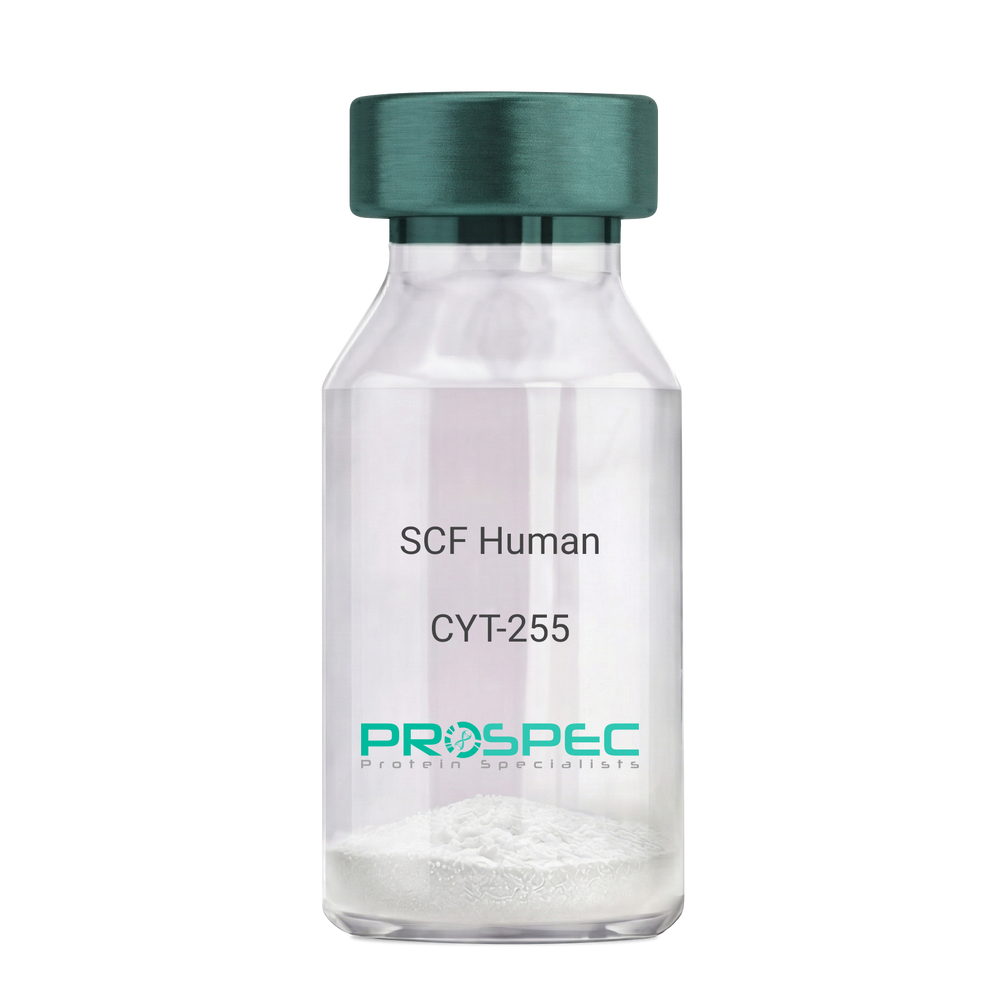
    SCF Human

    Description:

    Stem Cell Factor Human Recombinant

    Kit ligand Precursor, C-kit ligand, SCF, Mast cell growth factor, MGF, SF, KL-1, Kitl, DKFZp686F2250.

    Product # :

    CYT-255

    Price :

    Quantity :

    Shipping Method :

    Room Temp Icon

    Shipped at Room temp

    Add To Cart

    More Info

    • description
    • source
    • formulation
    • purity
    • biological activity
    • More Info
    • Citations

    Description

    Stem Cell Factor Human Recombinant produced in E.Coli is a single, non-glycosylated polypeptide chain containing 165 amino acids and having a molecular mass of 18409 Dalton. The SCF is purified by proprietary chromatographic techniques.

    Source

    Escherichia Coli.

    Formulation

    Lyophilized from a concentrated (1mg/ml) solution in water containing 0.02% NaHCO3.

    Purity

    Greater than 98.0% as determined by:
    (a) Analysis by SEC-HPLC.
    (b) Analysis by SDS-PAGE.

    Biological Activity

    The ED50 as determined by the dose-dependant stimulation of Human TF-1 cells is < 2 ng/ml, corresponding to a Specific Activity of 500,000 IU/mg.

    Citations

    More Info

    • Introduction

      Stem cell factor / KIT ligand (SCF) is a cytokine which binds CD117(c-Kit). SCF is also known as "steel factor" or "c-kit ligand". SCF exists in two forms, cell surface bound SCF and soluble (or free) SCF. Soluble SCF is produced by the cleavage of surface bound SCF by metalloproteases. SCF is a growth factor important for the survival, proliferation, and differentiation of hematopoietic stem cells and other hematopoietic progenitor cells. One of its roles is to change the BFU-E (burst-forming unit-erythroid) cells, which are the earliest erythrocyte precursors in the erythrocytic series, into the CFU-E (colony-forming unit-erythroid).

    • Synonyms

      Kit ligand Precursor, C-kit ligand, SCF, Mast cell growth factor, MGF, SF, KL-1, Kitl, DKFZp686F2250.

    • Physical Appearance

      Sterile Filtered White lyophilized (freeze-dried) powder.

    • Stability

      Lyophilized KIT ligand although stable at room temperature for 3 weeks, should be stored desiccated below -18°C. Upon reconstitution SCF should be stored at 4°C between 2-7 days and for future use below -18°C.For long term storage it is recommended to add a carrier protein (0.1% HSA or BSA).Please prevent freeze-thaw cycles.

    • Solubility

      It is recommended to reconstitute the lyophilized Stem Cell Factor in sterile 18MΩ-cm H2O not less than 100µg/ml, which can then be further diluted to other aqueous solutions.

    • Amino Acid Sequence

      The sequence of the first five N-terminal amino acids was determined and was found to be Met-Glu-Gly-Ile-Cys.

    • Protein content

      Protein quantitation was carried out by two independent methods1. UV spectroscopy at 280 nm using the absorbency value of 0.52 as the extinction coefficient for a 0.1% (1mg/ml) solution. This value is calculated by the PC GENE computer analysis program of protein sequences (IntelliGenetics). 2. Analysis by RP-HPLC, using a standard solution of Stem Cell Factor as a Reference Standard.

    ProSpec's products are furnished for LABORATORY RESEARCH USE ONLY. The product may not be used as drugs, agricultural or pesticidal products, food additives or household chemicals.

    Scf Human
  • View Data Sheet

    Name :

    AITRL Human, His

    Description:

    AITRL Human Recombinant, His Tag

    Osteostat, TNFSF18, Activation-induced TNFR member Ligand, GITRL,TL6, AITRL, Glucocorticoid-induced TNF-related ligand, hGITRL, Tumor necrosis factor ligand superfamily member 18, MGC138237.

    Product # :

    CYT-317

    Price :

    Quantity :

    Shipping Method :

    Ice Icon

    Shipped with Ice Packs

    Add To Cart

    More Info

    • description
    • source
    • formulation
    • purity
    • More Info
    • Citations

    Description

    AITRL Recombinant Human produced in E.Coli is a single, non-glycosylated polypeptide chain (aa 50-177) containing a total of 137 amino acids and having a molecular mass of 15.6kDa. The AITRL protein is fused to a 9 aa His Tag at C-terminus and purified by proprietary chromatographic techniques.

    Source

    Escherichia Coli.

    Formulation

    AITRL protein solution (1mg/ml) contains 20mM Tris-HCl buffer (pH8.0) & 10% glycerol.

    Purity

    Greater than 85.0% as determined bySDS-PAGE.

    Citations

    More Info

    • Introduction

      Osteostat is the cytokine that binds to TNFRSF18/AITR/GITR and is important for interactions between activated T-lymphocytes and endothelial cells and may modulate T-lymphocyte survival in peripheral tissues. Osteostat is expressed at high levels in the small intestine, ovary, testis, kidney and endothelial cells after stimulation by lipopolysaccharides.
      Osteostat protein is detectable in human microvascular EC and is highly up-regulated by IFN-alpha and IFN-beta. Osteostat inhibit differentiation of osteoclasts from monocytic precursor cells. Osteostat suppresses the early stage of osteoclastogenesis via inhibition of macrophage colony-stimulating factorinduced receptor activator of NF-kappaB (RANK) expression in the osteoclast precursor cells. Osteostat does not inhibit lipopolysaccharide-induced RANK expression in monocytes and dendritic cells, or activation-induced RANK expression in T cells. Osteostat is a novel regulator of osteoclast generation and substantiate the major role played by the endothelium in bone physiology.

    • Synonyms

      Osteostat, TNFSF18, Activation-induced TNFR member Ligand, GITRL,TL6, AITRL, Glucocorticoid-induced TNF-related ligand, hGITRL, Tumor necrosis factor ligand superfamily member 18, MGC138237.

    • Physical Appearance

      Sterile filtered colorless solution.

    • Stability

      Store at 4°C if entire vial will be used within 2-4 weeks. Store, frozen at -20°C for longer periods of time. For long term storage it is recommended to add a carrier protein (0.1% HSA or BSA).Avoid multiple freeze-thaw cycles.

    • Amino Acid Sequence

      MQLETAKEPC MAKFGPLPSK WQMASSEPPC VNKVSDWKLE ILQNGLYLIY GQVAPNANYN DVAPFEVRLY KNKDMIQTLT NKSKIQNVGG TYELHVGDTI DLIFNSEHQV LKNNTYWGII LIANPQEISL EHHHHHH.

    • Background

      What is the molecular weight/Mw of ADIPONECTIN Protein?
      ADIPONECTIN Protein has a total Mw of 15.6kDa.

      What is the source or expression system of ADIPONECTIN Protein?
      Escherichia Coli.

      What is the Purity of ADIPONECTIN Protein?
      ADIPONECTIN Protein is >85% pure as determined by SDS-PAGE.

      What is the Biological Activity of ADIPONECTIN Protein?
      The biological functionality of ADIPONECTIN Protein will be determined in the future.

      What is the amino acid sequence of ADIPONECTIN Protein?
      MQLETAKEPC MAKFGPLPSK WQMASSEPPC VNKVSDWKLE ILQNGLYLIY GQVAPNANYN DVAPFEVRLY KNKDMIQTLT NKSKIQNVGG TYELHVGDTI DLIFNSEHQV LKNNTYWGII LIANPQEISL EHHHHHH

      What applications can ADIPONECTIN Protein be used in?
      ADIPONECTIN Protein can probably be used in western blot, ELISA and Lateral Flow.

      What is the endotoxin level for ADIPONECTIN Protein?
      The endotoxin level is minimal, ADIPONECTIN Protein was purified using conventional chromatography techniques.

    ProSpec's products are furnished for LABORATORY RESEARCH USE ONLY. The product may not be used as drugs, agricultural or pesticidal products, food additives or household chemicals.

    Gitrl Human
  • View Data Sheet

    Name :

    MSRB E.Coli

    Description:

    Methionine Sulfoxide Reductase B E.Coli Recombinant

    Peptide methionine sulfoxide reductase MsrB, Peptide-methionine (R)-S-oxide reductase, msrB, yeaA, b1778, JW1767.

    Product # :

    ENZ-124

    Price :

    Quantity :

    Shipping Method :

    Ice Icon

    Shipped with Ice Packs

    Add To Cart

    More Info

    • description
    • source
    • formulation
    • purity
    • More Info
    • Citations

    Description

    MSRB produced in E.Coli is a single, non-glycosylated polypeptide chain containing 157 amino acids (1-137 a.a.) and having a molecular mass of 17.6kDa.MSRB is fused to a 20 amino acid His-tag at N-terminus & purified by proprietary chromatographic techniques.

    Source

    Escherichia Coli.

    Formulation

    MSRB protein solution (1mg/ml) 20mM Tris-HCl buffer (pH8.0), 20% glycerol 0.1M NaCl and 1mM DTT.

    Purity

    Greater than 95.0% as determined by SDS-PAGE.

    Citations

    More Info

    • Introduction

      Methionine sulfoxide reductase B (MsrB) from Escherichia coli is a member of the msrB Met sulfoxide reductase family. The E.coli msrB carries out the reduction of methionine-R-sulfoxide to methionine. msrB possess a metal binding site composed of 2 CXXC motifs. The bound metal (zinc or iron) may stabilize the conformation of the enzymes.

    • Synonyms

      Peptide methionine sulfoxide reductase MsrB, Peptide-methionine (R)-S-oxide reductase, msrB, yeaA, b1778, JW1767.

    • Physical Appearance

      Sterile filtered colorless solution.

    • Stability

      Store at 4°C if entire vial will be used within 2-4 weeks. Store, frozen at -20°C for longer periods of time. For long term storage it is recommended to add a carrier protein (0.1% HSA or BSA).Avoid multiple freeze-thaw cycles.

    • Amino Acid Sequence

      MGSSHHHHHH SSGLVPRGSH MANKPSAEEL KKNLSEMQFY VTQNHGTEPP FTGRLLHNKR DGVYHCLICD APLFHSQTKY DSGCGWPSFY EPVSEESIRY IKDLSHGMQR IEIRCGNCDA HLGHVFPDGP QPTGERYCVN SASLRFTDGE NGEEING.

    ProSpec's products are furnished for LABORATORY RESEARCH USE ONLY. The product may not be used as drugs, agricultural or pesticidal products, food additives or household chemicals.

    Msrb Ecoli
  • View Data Sheet

    Name :

    SELE Human, Sf9

    Description:

    E-Selectin Human Recombinant, Sf9

    E-selectin, Endothelial leukocyte adhesion molecule 1, ELAM-1, Leukocyte-endothelial cell adhesion molecule 2, LECAM2, CD62E antigen, SELE, ELAM1, ELAM, ESEL, CD62E

    Product # :

    PRO-2712

    Price :

    Quantity :

    Shipping Method :

    Ice Icon

    Shipped with Ice Packs

    Add To Cart

    More Info

    • description
    • source
    • formulation
    • purity
    • biological activity
    • More Info
    • Citations

    Description

    SELE Human Recombinant produced in Sf9 Baculovirus cells is a single, glycosylated polypeptide chain containing 541 amino acids (22-556 a.a) and having a molecular mass of 59.4kDa.SELE is fused to a 6 amino acid His-tag at C-terminus & purified by proprietary chromatographic techniques.

    Source

    Sf9, Baculovirus cells.

    Formulation

    The SELE solution (0.5mg/1ml) contains Phosphate-Buffered Saline (pH 7.4) and 10% glycerol.

    Purity

    Greater than 95.0% as determined by SDS-PAGE.

    Biological Activity

    Measured by the ability of the immobilized protein to support the adhesion of U937 human histiocytic lymphoma cells, which are added to human E-Seletin/CD62E coated plates 2ug/ml.  This effect is > 40%.

    Citations

    More Info

    • Introduction

      E-selectin (SELE) is a part of a family of divalent cation-dependent carbohydrate-binding glycoproteins or adhesion molecules. E-selectin is expressed on the surface of endothelial cells and mediates the interaction of leukocytes and platelets with endothelial cells during an inflammatory response. E-selectin is present in single copy in the human genome and contains 14 exons spanning about 13 kb of DNA.

    • Synonyms

      E-selectin, Endothelial leukocyte adhesion molecule 1, ELAM-1, Leukocyte-endothelial cell adhesion molecule 2, LECAM2, CD62E antigen, SELE, ELAM1, ELAM, ESEL, CD62E

    • Physical Appearance

      Sterile filtered colorless solution.

    • Stability

      Store at 4°C if entire vial will be used within 2-4 weeks.Store, frozen at -20°C for longer periods of time.For long term storage it is recommended to add a carrier protein (0.1% HSA or BSA).Avoid multiple freeze-thaw cycles.

    • Amino Acid Sequence

      WSYNTSTEAM TYDEASAYCQ QRYTHLVAIQ NKEEIEYLNS ILSYSPSYYW IGIRKVNNVW VWVGTQKPLT EEAKNWAPGE PNNRQKDEDC VEIYIKREKD VGMWNDERCS KKKLALCYTA ACTNTSCSGH GECVETINNY TCKCDPGFSG LKCEQIVNCT ALESPEHGSL VCSHPLGNFS YNSSCSISCD RGYLPSSMET MQCMSSGEWS APIPACNVVE CDAVTNPANG FVECFQNPGS FPWNTTCTFD CEEGFELMGA QSLQCTSSGN WDNEKPTCKA VTCRAVRQPQ NGSVRCSHSP AGEFTFKSSC NFTCEEGFML QGPAQVECTT QGQWTQQIPV CEAFQCTALS NPERGYMNCL PSASGSFRYG SSCEFSCEQG FVLKGSKRLQ CGPTGEWDNE KPTCEAVRCD AVHQPPKGLV RCAHSPIGEF TYKSSCAFSC EEGFELHGST QLECTSQGQW TEEVPSCQVV KCSSLAVPGK INMSCSGEPV FGTVCKFACP EGWTLNGSAA RTCGATGHWS GLLPTCEAPT ESNIPHHHHH H

    ProSpec's products are furnished for LABORATORY RESEARCH USE ONLY. The product may not be used as drugs, agricultural or pesticidal products, food additives or household chemicals.

    E Selectin Protein
  • View Data Sheet

    Name :

    DKK1 Human

    Description:

    Dickkopf-Related Protein 1 Human Recombinant

    Dickkopf-related protein 1, Dickkopf-1, Dkk-1, hDkk-1, SK, DKK1, dickkopf WNT signaling pathway inhibitor 1, Dickkopf 1 Homolog, Dickkopf Related Protein-1, Dickkopf-1 Like, Dickkopf-Like Protein 1, Dickkopf (Xenopus Laevis) Homolog 1, DKK-1.

    Product # :

    PRO-1566

    Price :

    Quantity :

    Shipping Method :

    Ice Icon

    Shipped with Ice Packs

    Add To Cart

    More Info

    • description
    • source
    • formulation
    • purity
    • More Info
    • Citations

    Description

    DKK1 Human Recombinant produced in E.Coli is a single, non-glycosylated polypeptide chain containing 258 amino acids (32-266 a.a) and having a molecular mass of 28.2kDa.DKK1 is fused to a 23 amino acid His-tag at N-terminus & purified by proprietary chromatographic techniques.

    Source

    Escherichia Coli.

    Formulation

    DKK1 protein solution (1mg/ml) containing 20mM Tris-HCl buffer (pH 8.0), 0.4M urea and 10% glycerol.

    Purity

    Greater than 90.0% as determined by SDS-PAGE.

    Citations

    More Info

    • Introduction

      Dickkopf-related protein 1 (DKK1) antagonizes canonical Wnt signaling by inhibiting LRP5/6 interaction with Wnt and by creating a ternary complex with the transmembrane protein KREMEN which promotes internalization of LRP5/6. DKKs have a significant role in vertebrate development, where they locally inhibit Wnt controlled processes for instance antero-posterior axial patterning, limb development, somitogenesis and eye formation. Furthermore, Dkks are involved in bone formation and bone disease, cancer and Alzheimer disease in Adults.

    • Synonyms

      Dickkopf-related protein 1, Dickkopf-1, Dkk-1, hDkk-1, SK, DKK1, dickkopf WNT signaling pathway inhibitor 1, Dickkopf 1 Homolog, Dickkopf Related Protein-1, Dickkopf-1 Like, Dickkopf-Like Protein 1, Dickkopf (Xenopus Laevis) Homolog 1, DKK-1.

    • Physical Appearance

      Sterile Filtered colorless solution.

    • Stability

      Store at 4°C if entire vial will be used within 2-4 weeks. Store, frozen at -20°C for longer periods of time. For long term storage it is recommended to add a carrier protein (0.1% HSA or BSA).Avoid multiple freeze-thaw cycles.

    • Amino Acid Sequence

      MGSSHHHHHH SSGLVPRGSH MGSTLNSVLN SNAIKNLPPP LGGAAGHPGS AVSAAPGILY PGGNKYQTID NYQPYPCAED EECGTDEYCA SPTRGGDAGV QICLACRKRR KRCMRHAMCC PGNYCKNGIC VSSDQNHFRG EIEETITESF GNDHSTLDGY SRRTTLSSKM YHTKGQEGSV CLRSSDCASG LCCARHFWSK ICKPVLKEGQ VCTKHRRKGS HGLEIFQRCY CGEGLSCRIQ KDHHQASNSS RLHTCQRH.

    ProSpec's products are furnished for LABORATORY RESEARCH USE ONLY. The product may not be used as drugs, agricultural or pesticidal products, food additives or household chemicals.

    Human Dkk1
  • View Data Sheet

    Name :

    SH3BGRL Human

    Description:

    SH3 Domain Binding Glutamic Acid-Rich Protein Like Human Recombinant

    SH3 domain-binding glutamic acid-rich-like protein, SH3BGRL, SH3BGR.

    Product # :

    PRO-1159

    Price :

    Quantity :

    Shipping Method :

    Ice Icon

    Shipped with Ice Packs

    Add To Cart

    More Info

    • description
    • source
    • formulation
    • purity
    • More Info
    • Citations

    Description

    SH3BGRL Human Recombinant produced in E.Coli is a single, non-glycosylated polypeptide chain containing 138 amino acids (1-114 a.a) and having a molecular mass of 15.3kDa.SH3BGRL is fused to a 24 amino acid His-tag at N-terminus & purified by proprietary chromatographic techniques.

    Source

    Escherichia Coli.

    Formulation

    SH3BGRL protein solution (1mg/ml) containing 20mM Tris-HCl buffer (pH8.0), 10% glycerol and 0.15M NaCl.

    Purity

    Greater than 95.0% as determined by SDS-PAGE.

    Citations

    More Info

    • Introduction

      SH3 domain-binding glutamic acid-rich-like protein (SH3BGRL) belongs to the human SH3BGR family. SH3BGRL gene which is located to chromosome Xq13.3, encodes a small protein of 114 amino acids that is extensively expressed in various tissues including liver and blood. SH3BGRL protein contains a prolinerich sequence (PLPPQIF), which is comprsed of both the SH3 binding (PXXP)3 and the Homer EVH1 binding (PPXXF)4 motif.

    • Synonyms

      SH3 domain-binding glutamic acid-rich-like protein, SH3BGRL, SH3BGR.

    • Physical Appearance

      Sterile Filtered colorless solution.

    • Stability

      Store at 4°C if entire vial will be used within 2-4 weeks. Store, frozen at -20°C for longer periods of time. For long term storage it is recommended to add a carrier protein (0.1% HSA or BSA).Avoid multiple freeze-thaw cycles.

    • Amino Acid Sequence

      MGSSHHHHHH SSGLVPRGSH MGSHMVIRVY IASSSGSTAI KKKQQDVLGF LEANKIGFEE KDIAANEENR KWMRENVPEN SRPATGYPLP PQIFNESQYR GDYDAFFEAR ENNAVYAFLG LTAPPGSKEA EVQAKQQA.

    ProSpec's products are furnished for LABORATORY RESEARCH USE ONLY. The product may not be used as drugs, agricultural or pesticidal products, food additives or household chemicals.

    Sh3Bgrl Human
  • View Data Sheet

    Name :

    NDRG1 Human

    Description:

    N-Myc Downstream Regulated 1 Human Recombinant

    Protein NDRG1, N-myc downstream-regulated gene 1 protein, Differentiation-related gene 1 protein, Reducing agents and tunicamycin-responsive protein, Nickel-specific induction protein Cap43, DRG-1, RTP, Rit42, NDRG1, CAP43, DRG1, GC4, NDR1, NMSL, TDD5, CMT4D, HMSNL, TARG1, PROXY1.

    Product # :

    PRO-724

    Price :

    Quantity :

    Shipping Method :

    Ice Icon

    Shipped with Ice Packs

    Add To Cart

    More Info

    • description
    • source
    • formulation
    • purity
    • biological activity
    • More Info
    • Citations

    Description

    NDRG1 Human Recombinant fused with 8 amino acid His tag at C-terminus produced in E.Coli is a single, non-glycosylated, polypeptide chain containing 402 amino acids (1-394 a.a.) and having a molecular mass of 43.9 kDa.The NDRG1 is purified by proprietary chromatographic techniques.

    Source

    Escherichia Coli.

    Formulation

    The NDRG1 solution contains 20mM Tris-HCl buffer (pH8.0), 0.1mM PMSF and 10% Glycerol.

    Purity

    Greater than 95.0% as determined by SDS-PAGE.

    Biological Activity

    Measured in a cell proliferation assay using MCF7 cell. The ED50 for this effect is 0.5 - 1.5ng/ml, corresponding to a Specific Activity of 666,000 -2,000,000 IU/mg.

    Citations

    More Info

    • Introduction

      NDRG1 is a cytoplasmic protein that is involved in stress responses, hormone responses, cell growth, and differentiation. NDRG1 is one of 4 members of the NDRG ?/?-hydrolase family. NDRG1 is classified in databases as a tumor suppressor and heavy metal-response protein. NDRG1’s functions include cell-cycle regulation, cellular differentiation, apoptosis, hypoxia response and metal-ion sensing. NDRG1 is also essential for p53-mediated caspase activation and apoptosis. The NDRG1 is a Rab4a effector that is involved in vesicular recycling of E-cadherin. NDRG1 is ubiquitous; it is expressed most notably in placental membranes and prostate, kidney, small intestine, and ovary tissues. NDRG1 has reduced expression in adenocarcinomas compared to normal tissues.
      NDRG1 gene mutations are reported to be the cause for hereditary motor and sensory neuropathy-Lom (HMSNL), which is a severe autosomal recessive form of Charcot- Marie-Tooth (CMT) disease. In addition, decreased NDRG1 expression in glioma is linked to tumor progression. On the other hand, overexpression of NDRG1 is connected to malignant status of esophageal cancer. NDRG1 may also have a role in portal vein invasion and intrahepatic metastasis in human hepatocellular carcinoma.

    • Synonyms

      Protein NDRG1, N-myc downstream-regulated gene 1 protein, Differentiation-related gene 1 protein, Reducing agents and tunicamycin-responsive protein, Nickel-specific induction protein Cap43, DRG-1, RTP, Rit42, NDRG1, CAP43, DRG1, GC4, NDR1, NMSL, TDD5, CMT4D, HMSNL, TARG1, PROXY1.

    • Physical Appearance

      Sterile Filtered colorless solution.

    • Stability

      Store at 4°C if entire vial will be used within 2-4 weeks.Store, frozen at -20°C for longer periods of time. For long term storage it is recommended to add a carrier protein (0.1% HSA or BSA).Avoid multiple freeze-thaw cycles.

    • Amino Acid Sequence

      MSREMQDVDL AEVKPLVEKG ETITGLLQEF DVQEQDIETL HGSVHVTLCG TPKGNRPVIL TYHDIGMNHK TCYNPLFNYE DMQEITQHFA
      VCHVDAPGQQ DGAASFPAGY MYPSMDQLAE MLPGVLQQFG LKSIIGMGTG AGAYILTRFA LNNPEMVEGL VLINVNPCAE GWMDWAASKI SGWTQALPDM VVSHLFGKEE MQSNVEVVHT YRQHIVNDMN PGNLHLFINA YNSRRDLEIE RPMPGTHTVT LQCPALLVVG DSSPAVDAVV ECNSKLDPTK TTLLKMADCG GLPQISQPAK LAEAFKYFVQ GMGYMPSASM TRLMRSRTAS GSSVTSLDGT RSRSHTSEGT RSRSHTSEGT RSRSHTSEGA HLDITPNSGA AGNSAGPKSM EVSCLEHHHH HH

    ProSpec's products are furnished for LABORATORY RESEARCH USE ONLY. The product may not be used as drugs, agricultural or pesticidal products, food additives or household chemicals.

    Ndrg1 Human
  • View Data Sheet

    Name :

    ASB13 Human

    Description:

    Ankyrin Repeat And SOCS Box Containing 13 Human Recombinant

    Ankyrin repeat and SOCS box protein 13, ASB-13, ASB13, ankyrin repeat and SOCS box containing 13.

    Product # :

    PRO-2060

    Price :

    Quantity :

    Shipping Method :

    Ice Icon

    Shipped with Ice Packs

    Add To Cart

    More Info

    • description
    • source
    • formulation
    • purity
    • More Info
    • Citations

    Description

    ASB13 Human Recombinant produced in E.Coli is a single, non-glycosylated polypeptide chain containing 301 amino acids (1-278 a.a.) and having a molecular mass of 32.4kDa.ASB13 is fused to a 23 amino acid His-tag at N-terminus & purified by proprietary chromatographic techniques.

    Source

    Escherichia Coli.

    Formulation

    ASB13 protein solution (1mg/ml) containing 20mM Tris-HCl buffer (pH8.0), 0.4M UREA and 10% glycerol.

    Purity

    Greater than 90% as determined by SDS-PAGE.

    Citations

    More Info

    • Introduction

      ASB13 belongs to the ankyrin repeat and SOCS box-containing (ASB) family of proteins which contains ankyrin repeat sequence and a SOCS box domain. ASB13 is a protein coding gene that plays a role as a substrate-recognition part of a SCF-like ECS E3 ubiquitin-protein ligase complex which arbitrates the ubiquitination and subsequent proteasomal degradation of target proteins.

    • Synonyms

      Ankyrin repeat and SOCS box protein 13, ASB-13, ASB13, ankyrin repeat and SOCS box containing 13.

    • Physical Appearance

      Sterile Filtered clear solution.

    • Stability

      Store at 4°C if entire vial will be used within 2-4 weeks. Store, frozen at -20°C for longer periods of time.For long term storage it is recommended to add a carrier protein (0.1% HSA or BSA).Please avoid freeze thaw cycles.

    • Amino Acid Sequence

      MGSSHHHHHH SSGLVPRGSH MGSMEPRAAD GCFLGDVGFW VERTPVHEAA QRGESLQLQQ LIESGACVNQ VTVDSITPLH AASLQGQARC VQLLLAAGAQ VDARNIDGST PLCDACASGS IECVKLLLSY GAKVNPPLYT ASPLHEACMS GSSECVRLLI DVGANLEAHD CHFGTPLHVA CAREHLDCVK VLLNAGANVN AAKLHETALH HAAKVKNVDL IEMLIEFGGN IYARDNRGKK PSDYTWSSSA PAKCFEYYEK TPLTLSQLCR VNLRKATGVR GLEKIAKLNI PPRLIDYLSY N.

    ProSpec's products are furnished for LABORATORY RESEARCH USE ONLY. The product may not be used as drugs, agricultural or pesticidal products, food additives or household chemicals.

    Asb13 Human
  • View Data Sheet

    Name :

    ATG10 Human

    Description:

    Autophagy Related 10 Human Recombinant

    Autophagy Related Protein 10, ATG10 Autophagy Related 10 Homolog (S. Cerevisiae), Ubiquitin-Like-Conjugating Enzyme ATG10, APG10 Autophagy 10-Like (S. Cerevisiae), APG10-Like, APG10L, Pp12616, DKFZP586I0418, FLJ13954, EC 6.3.2.-.

    Product # :

    PRO-1234

    Price :

    Quantity :

    Shipping Method :

    Ice Icon

    Shipped with Ice Packs

    Add To Cart

    More Info

    • description
    • source
    • formulation
    • purity
    • More Info
    • Citations

    Description

    ATG10 Human Recombinant produced in E. coli is a single polypeptide chain containing 243 amino acids (1-220) and having a molecular mass of 27.7 kDa.ATG10 is fused to a 23 amino acid His-tag at N-terminus & purified by proprietary chromatographic techniques.

    Source

    E.coli.

    Formulation

    The ATG10 solution (1mg/1ml) contains 20mM Tris-HCl buffer (pH 8.0), 0.1M NaCl, 1mM DTT and 10% glycerol.

    Purity

    Greater than 95% as determined by SDS-PAGE.

    Citations

    More Info

    • Introduction

      Ubiquitin-like-conjugating enzyme ATG10 (ATG10) is a 220 amino acid protein which localizes to the cytoplasm and has a role in autophagy, specifically acting as an E2-like enzyme providing Atg recognition sites during autophagosome synthesis. ATG10 functions as an E2-like enzyme which catalyzes the conjugation of ATG12 to ATG5, which is required for autophagy. In addition, ATG10 interacts with ATG12 in human embryonic kidney cells in the presence of ATG7. ATG10 probably serves as an ATG5-recognition molecule. Furthermore, ATG10 has a role in adenovirus-mediated cell lysis.

    • Synonyms

      Autophagy Related Protein 10, ATG10 Autophagy Related 10 Homolog (S. Cerevisiae), Ubiquitin-Like-Conjugating Enzyme ATG10, APG10 Autophagy 10-Like (S. Cerevisiae), APG10-Like, APG10L, Pp12616, DKFZP586I0418, FLJ13954, EC 6.3.2.-.

    • Physical Appearance

      Sterile Filtered colorless solution.

    • Stability

      Store at 4°C if entire vial will be used within 2-4 weeks. Store, frozen at -20°C for longer periods of time. For long term storage it is recommended to add a carrier protein (0.1% HSA or BSA).Avoid multiple freeze-thaw cycles.

    • Amino Acid Sequence

      MGSSHHHHHH SSGLVPRGSH MGSMEEDEFI GEKTFQRYCA EFIKHSQQIG DSWEWRPSKD CSDGYMCKIH FQIKNGSVMS HLGASTHGQT CLPMEEAFEL PLDDCEVIET AAASEVIKYE YHVLYSCSYQ VPVLYFRASF LDGRPLTLKD IWEGVHECYK MRLLQGPWDT ITQQEHPILG QPFFVLHPCK TNEFMTPVLK NSQKINKNVN YITSWLSIVG PVVGLNLPLS YAKATSQDER NVP

    ProSpec's products are furnished for LABORATORY RESEARCH USE ONLY. The product may not be used as drugs, agricultural or pesticidal products, food additives or household chemicals.

    Atg10 Human
  • View Data Sheet

    Name :

    ATG4B Human

    Description:

    ATG4 Autophagy Related 4 Homolog B Human Recombinant

    Cysteine protease ATG4B, AUT-like 1 cysteine endopeptidasem, Autophagin-1, Autophagy-related cysteine endopeptidase 1, Autophagy-related protein 4 homolog B, hAPG4B, ATG4B, APG4B, AUTL1, KIAA0943.

    Product # :

    PRO-1048

    Price :

    Quantity :

    Shipping Method :

    Ice Icon

    Shipped with Ice Packs

    Add To Cart

    More Info

    • description
    • source
    • formulation
    • purity
    • More Info
    • Citations

    Description

    ATG4B Human Recombinant produced in E.Coli is a single, non-glycosylated polypeptide chain containing 401 amino acids (1-393 a.a.) and having a molecular mass of 45.4kDa.ATG4B is fused to an 8 amino acid His-tag at C-terminus & purified by proprietary chromatographic techniques.

    Source

    Escherichia Coli.

    Formulation

    ATG4B protein solution (0.5mg/ml) containing 20mM Tris-HCl buffer (pH8.0), 20% glycerol, 1mM DTT and 0.1mM PMSF.

    Purity

    Greater than 90.0% as determined by SDS-PAGE.

    Citations

    More Info

    • Introduction

      Cysteine protease ATG4B (ATG4B) belongs to the autophagin protein family. Autophagy is the manner by which endogenous proteins and damaged organelles are destroyed intracellularly. Autophagy is vital for cell homeostasis and cell remodeling during differentiation, metamorphosis, non-apoptotic cell death, and aging. ATG4B is a cysteine protease necessary for autophagy, which cleaves the C-terminal part of either MAP1LC3, GABARAPL2 or GABARAP, allowing the liberation of form I. A subpopulation of form I is then transformed to a smaller form (form II). Form II, with an exposed C-terminal glycine, is deemed to be the phosphatidylethanolamine (PE)-conjugated form, and is capable of binding to autophagosomes. Reduced levels of autophagy are seen in some malignant tumors; therefore autophagy may have a role in controlling the unregulated cell growth linked to cancer.

    • Synonyms

      Cysteine protease ATG4B, AUT-like 1 cysteine endopeptidasem, Autophagin-1, Autophagy-related cysteine endopeptidase 1, Autophagy-related protein 4 homolog B, hAPG4B, ATG4B, APG4B, AUTL1, KIAA0943.

    • Physical Appearance

      Sterile Filtered clear solution.

    • Stability

      Store at 4°C if entire vial will be used within 2-4 weeks. Store, frozen at -20°C for longer periods of time. For long term storage it is recommended to add a carrier protein (0.1% HSA or BSA).Avoid multiple freeze-thaw cycles.

    • Amino Acid Sequence

      MDAATLTYDT LRFAEFEDFP ETSEPVWILG RKYSIFTEKD EILSDVASRL WFTYRKNFPA IGGTGPTSDT GWGCMLRCGQ MIFAQALVCR HLGRDWRWTQ RKRQPDSYFS VLNAFIDRKD SYYSIHQIAQ MGVGEGKSIG QWYGPNTVAQ VLKKLAVFDT WSSLAVHIAM DNTVVMEEIR RLCRTSVPCA GATAFPADSD RHCNGFPAGA EVTNRPSPWR PLVLLIPLRL GLTDINEAYV ETLKHCFMMP QSLGVIGGKP NSAHYFIGYV GEELIYLDPH TTQPAVEPTD GCFIPDESFH CQHPPCRMSI AELDPSIAVG FFCKTEDDFN DWCQQVKKLS LLGGALPMFE LVEQQPSHLA CPDVLNLSLD SSDVERLERF FDSEDEDFEI LSLLEHHHHH H.

    ProSpec's products are furnished for LABORATORY RESEARCH USE ONLY. The product may not be used as drugs, agricultural or pesticidal products, food additives or household chemicals.

    Atg4B Human
  • View Data Sheet

    Name :

    SNF8 Human

    Description:

    SNF8, ESCRT-II Complex Subunit Human Recombinant

    SNF8 ESCRT-II complex subunit homolog (S. cerevisiae), ESCRT-II complex subunit VPS22, ELL-associated protein of 30 kDa, EAP30 subunit of ELL complex, vacuolar-sorting protein SNF8, EAP30, VPS22, Dot3.

    Product # :

    PRO-1135

    Price :

    Quantity :

    Shipping Method :

    Ice Icon

    Shipped with Ice Packs

    Add To Cart

    More Info

    • description
    • source
    • formulation
    • purity
    • More Info
    • Citations

    Description

    SNF8 Human Recombinant produced in E. coli is a single polypeptide chain containing 282 amino acids (1-258) and having a molecular mass of 31.4 kDa.SNF8 is fused to a 24 amino acid His-tag at N-terminus & purified by proprietary chromatographic techniques.

    Source

    E.coli.

    Formulation

    The SNF8 solution (0.25mg/ml) contains 20mM Tris-HCl buffer (pH 8.0), 0.2M NaCl, 2mM DTT and 50% glycerol.

    Purity

    Greater than 90% as determined by SDS-PAGE.

    Citations

    More Info

    • Introduction

      SNF8 belongs to the SNF8 family of vacuolar sorting proteins and is restricts to both the nucleus and the cytoplasm. SNF8 is a subunit of the endosomal sorting complex essential for transport II (ESCRT-II), which is necessary for multivesicular body (MVB) formation and sorting of endosomal cargo proteins into MVBs. The MVB pathway facilitates transfer of transmembrane proteins into the lumen of the lysosome for degradation. Additionally, the ESCRT-II complex takes part in transcription regulation by contributing to derepression of transcription by RNA polymerase II, probably by its interface with ELL.

    • Synonyms

      SNF8 ESCRT-II complex subunit homolog (S. cerevisiae), ESCRT-II complex subunit VPS22, ELL-associated protein of 30 kDa, EAP30 subunit of ELL complex, vacuolar-sorting protein SNF8, EAP30, VPS22, Dot3.

    • Physical Appearance

      Sterile Filtered colorless solution.

    • Stability

      Store at 4°C if entire vial will be used within 2-4 weeks. Store, frozen at -20°C for longer periods of time. For long term storage it is recommended to add a carrier protein (0.1% HSA or BSA).Avoid multiple freeze-thaw cycles.

    • Amino Acid Sequence

      MGSSHHHHHH SSGLVPRGSH MGSHMHRRGV GAGAIAKKKL AEAKYKERGT VLAEDQLAQM SKQLDMFKTN LEEFASKHKQ EIRKNPEFRV QFQDMCATIG VDPLASGKGF WSEMLGVGDF YYELGVQIIE VCLALKHRNG GLITLEELHQ QVLKGRGKFA QDVSQDDLIR AIKKLKALGT GFGIIPVGGT YLIQSVPAEL NMDHTVVLQL AEKNGYVTVS EIKASLKWET ERARQVLEHL LKEGLAWLDL QAPGEAHYWL PALFTDLYSQ EITAEEAREA LP

    ProSpec's products are furnished for LABORATORY RESEARCH USE ONLY. The product may not be used as drugs, agricultural or pesticidal products, food additives or household chemicals.

    Snf8 Human
  • View Data Sheet

    Name :

    Noggin Human

    Description:

    Noggin Human Recombinant

    SYM1, SYNS1, NOG.

    Product # :

    CYT-475

    Price :

    Quantity :

    Shipping Method :

    Room Temp Icon

    Shipped at Room temp

    Add To Cart

    More Info

    • description
    • source
    • formulation
    • purity
    • biological activity
    • More Info
    • Citations

    Description

    Noggin Human Recombinant produced in E.Coli is a non-glycosylated, non-disulfide-linked homodimer consisting of two 206 amino acid polypeptide chains, having a total molecular mass of approximately 46.3kDa. Noggin is purified by proprietary chromatographic techniques.

    Source

    Escherichia Coli.

    Formulation

    Lyophilized from a 0.2μm filtered solution in 30% CH3CN, 0.1% TFA.

    Purity

    Greater than 95.0% as determined by SDS-PAGE.

    Biological Activity

    The ED50 was determined by its ability to inhibit 5.0ng/ml of BMP-4 induced alkaline phosphatase production by murine ATDC-5 cells. The expected ED50 for this effect  is < 3ng/ml of Noggin, corresponding to a Specific Activity of 3.3x10⁵units/mg.

    Citations

    More Info

    • Introduction

      The secreted polypeptide noggin, encoded by the NOG gene, binds and inactivates members of the transforming growth factor-beta (TGF-beta) superfamily signaling proteins, such as bone morphogenetic protein-4 (BMP4). By diffusing through extracellular matrices more efficiently than members of the TGF-beta superfamily, noggin may have a principal role in creating morphogenic gradients. Noggin appears to have pleiotropic effect, both early in development as well as in later stages. It was originally isolated from Xenopus based on its ability to restore normal dorsal-ventral body axis in embryos that had been artificially ventralized by UV treatment. The results of the mouse knockout of noggin suggest that it is involved in numerous developmental processes, such as neural tube fusion and joint formation. Recently, several dominant human NOG mutations in unrelated families with proximal symphalangism (SYM1) and multiple synostoses syndrome (SYNS1) were identified; both SYM1 and SYNS1 have multiple joint fusion as their principal feature, and map to the same region (17q22) as NOG. All NOG mutations altered evolutionarily conserved amino acid residues. The amino acid sequence of human noggin is highly homologous to that of Xenopus, rat and mouse.

    • Synonyms

      SYM1, SYNS1, NOG.

    • Physical Appearance

      Sterile Filtered White lyophilized (freeze-dried) powder.

    • Stability

      Lyophilized Noggin although stable at room temperature for 3 weeks, should be stored desiccated below -18°C. Upon reconstitution Noggin should be stored at 4°C between 2-7 days and for future use below -18°C.For long term storage it is recommended to add a carrier protein (0.1% HSA or BSA).Please prevent freeze-thaw cycles.

    • Solubility

      It is recommended to be briefly centrifuged prior to opening to bring the contents to the bottom. Reconstitute in 10mM HCl to a concentration of 0.1-1.0 mg/ml. Further dilutions should be made in appropriate buffered solutions.

    • Amino Acid Sequence

      MQHYLHIRPAPSDNLPLVDLIEHPDPIFDPKEKDLNETLLRSLLGGHYDPGFMATSPP
      EDRPGGGGGAAGGAEDLAELDQLLRQRPSGAMPSEIKGLEFSEGLAQGKKQRLSKKLR
      RKLQMWLWSQTFCPVLYAWNDLGSRFWPRYVKVGSCFSKRSCSVPEGMVCKPSKSVHL
      TVLRWRCQRRGGQRCGWIPIQYPIISECKCSC.

    • Background

      Recombinant Human Noggin Growth Beta Factor: A Potent Inhibitor of Bone Morphogenetic Protein Signaling.

      Abstract:

      Recombinant human Noggin Growth Beta Factor (Noggin) is a highly conserved protein that acts as a potent antagonist of the Bone Morphogenetic Protein (BMP) signaling pathway.

      Noggin plays a critical role in embryonic development, tissue homeostasis, and disease processes.

      This research paper provides a comprehensive analysis of the molecular characteristics, signaling mechanisms, and diverse physiological functions of recombinant human Noggin.

      Additionally, it explores the therapeutic implications of Noggin in various disorders. Synonyms such as SYM1, SYNS1, and NOG associated with Noggin are discussed throughout the paper to highlight their relevance in scientific literature.

      Introduction:

      1. Recombinant human Noggin Growth Beta Factor (Noggin) is a protein with multifaceted roles in development, tissue homeostasis, and disease. This section introduces Noggin and its synonyms, including SYM1, SYNS1, and NOG, emphasizing their significance and relevance in scientific research.

      Molecular Characteristics of Noggin :

      1. This section explores the molecular characteristics of Noggin, including its primary amino acid sequence, protein structure, and post-translational modifications. The interactions of Noggin with BMPs and other regulatory molecules are also discussed, highlighting the importance of these interactions in modulating BMP signaling.

      Inhibition of BMP Signaling by Noggin:

      1. Noggin acts as a potent inhibitor of BMP signaling by binding to BMP ligands and preventing their interaction with BMP receptors. This section delves into the mechanisms through which Noggin interferes with BMP signaling, including competition for receptor binding and sequestration of BMPs in extracellular spaces. The implications of Noggin-mediated inhibition of BMP signaling in development and tissue homeostasis are also discussed.

      Physiological Functions of Noggin:

      1. Noggin plays critical roles in various physiological processes, including embryonic development, neurogenesis, skeletal development, and joint formation. This section provides an in-depth analysis of Noggin's contributions to these processes, highlighting its role in maintaining proper tissue patterning, cell fate determination, and morphogenesis.

      Therapeutic Implications of Noggin:

      1. The unique inhibitory properties of Noggin make it an attractive therapeutic candidate for various disorders. This section discusses the potential applications of Noggin in bone and joint diseases, neurological disorders, and cancer. Additionally, it explores the challenges and future prospects of utilizing Noggin as a therapeutic agent.

      Clinical Studies and Translational Research:

      1. This section reviews clinical studies and translational research involving Noggin, emphasizing its potential in regenerative medicine and tissue engineering. It highlights ongoing efforts to develop Noggin-based therapeutics and discusses the promising results observed in preclinical and clinical studies.

    ProSpec's products are furnished for LABORATORY RESEARCH USE ONLY. The product may not be used as drugs, agricultural or pesticidal products, food additives or household chemicals.

    Noggin Human
  • 1
  • …
  • 39
  • 40
  • 41
  • 42
Your browser does not support the video tag.

Products

  • Cytokines
  • Growth Factors
  • Chemokines
  • CD Antigens
  • Neurotrophins
  • Hormones
  • Enzymes
  • Viral Antigens
  • Recombinant Proteins
  • Natural Proteins
  • Monoclonal Antibodies
  • Polyclonal Antibodies
  • Thermal Packaging

About

  • Company
  • Founder
  • Contribution
  • Contact Us
  • My Account

Ordering

  • Ordering Method
  • Ordering - Credit Card
  • Ordering PO
  • Shipping Fees
  • FAQ's

Legal

  • Terms & Conditions
  • Privacy
  • Site Map
  • info@prospecbio.com
  • Facebook
  • Instagram
  • Linkedin Profile

© 2026 ProSpec-Tany TechnoGene Ltd. All Rights Reserved.

  • Choosing a selection results in a full page refresh.
  • Opens in a new window.