Skip to content

High-quality research proteins.

  • 1-800-805-6531

  • Mon - Sat 8.00-18.00, Sun - Closed

  • info@prospecbio.com

  • PO Box 6591 East Brunswick NJ 08816

  • Products
    • Cytokines
    • Growth factors
    • Chemokines
    • Cd antigens
    • Neurotrophins
    • Hormones
    • Enzymes
    • Viral antigens
    • Recombinant proteins
    • Natural proteins
    • Monoclonal antibodies
    • Polyclonal antibodies
    • Thermal Packaging
  • About
    • Company
    • Founder
    • Contribution
  • Customers
    • Eastern Asia
    • Eastern Europe
    • North America
    • South America
    • South East Asia
    • Southern Asia
    • Western Europe
  • Ordering
    • Ordering Method
    • Ordering - Credit Card
    • Ordering - PO
    • Shipping Fees
    • FAQs
  • Services
    • DNA Cloning
    • Protein Expression
    • Monoclonal Antibody
    • Fermentation
    • Technology License
  • Contact us
Log in

Country/region

  • USD $ | Albania
  • USD $ | Andorra
  • USD $ | Argentina
  • USD $ | Armenia
  • USD $ | Australia
  • USD $ | Austria
  • USD $ | Azerbaijan
  • USD $ | Belarus
  • USD $ | Belgium
  • USD $ | Bolivia
  • USD $ | Brazil
  • USD $ | Bulgaria
  • USD $ | Cambodia
  • USD $ | Canada
  • USD $ | Chile
  • USD $ | China
  • USD $ | Colombia
  • USD $ | Costa Rica
  • USD $ | Croatia
  • USD $ | Cyprus
  • USD $ | Czechia
  • USD $ | Denmark
  • USD $ | Estonia
  • USD $ | Finland
  • USD $ | France
  • USD $ | Georgia
  • USD $ | Germany
  • USD $ | Greece
  • USD $ | Hong Kong SAR
  • USD $ | Hungary
  • USD $ | Iceland
  • USD $ | India
  • USD $ | Ireland
  • USD $ | Israel
  • USD $ | Italy
  • USD $ | Japan
  • USD $ | Kazakhstan
  • USD $ | Latvia
  • USD $ | Liechtenstein
  • USD $ | Lithuania
  • USD $ | Madagascar
  • USD $ | Malta
  • USD $ | Mexico
  • USD $ | Moldova
  • USD $ | Monaco
  • USD $ | Netherlands
  • USD $ | New Zealand
  • USD $ | North Macedonia
  • USD $ | Norway
  • USD $ | Panama
  • USD $ | Paraguay
  • USD $ | Peru
  • USD $ | Philippines
  • USD $ | Poland
  • USD $ | Portugal
  • USD $ | Romania
  • USD $ | Singapore
  • USD $ | Slovakia
  • USD $ | Slovenia
  • USD $ | South Africa
  • USD $ | South Korea
  • USD $ | Spain
  • USD $ | Sri Lanka
  • USD $ | Sweden
  • USD $ | Switzerland
  • USD $ | Taiwan
  • USD $ | Thailand
  • USD $ | Türkiye
  • USD $ | Ukraine
  • USD $ | United Kingdom
  • USD $ | United States
  • USD $ | Uruguay
  • USD $ | Vatican City
  • USD $ | Venezuela
  • USD $ | Vietnam
  • Facebook
  • Instagram
logoProSpec - Recombinant Protein Manufacturer for academic and R&D industry
Become a distributor
Account Log in
Wishlist
Cart Cart(0)
  • Products
    +
    • Cytokines
    • Growth factors
    • Chemokines
    • Cd antigens
    • Neurotrophins
    • Hormones
    • Enzymes
    • Viral antigens
    • Recombinant proteins
    • Natural proteins
    • Monoclonal antibodies
    • Polyclonal antibodies
    • Thermal Packaging
  • About
    +
    • Company
    • Founder
    • Contribution
  • Customers
    +
    • Eastern Asia
    • Eastern Europe
    • North America
    • South America
    • South East Asia
    • Southern Asia
    • Western Europe
  • Ordering
    +
    • Ordering Method
    • Ordering - Credit Card
    • Ordering - PO
    • Shipping Fees
    • FAQs
  • Services
    +
    • DNA Cloning
    • Protein Expression
    • Monoclonal Antibody
    • Fermentation
    • Technology License
  • Contact us

Item added to your cart

View cart
View All
  • Cytokines
  • Growth factors
  • Chemokines
  • Cd antigens
  • Neurotrophins
  • Hormones
  • Enzymes
  • Viral antigens
  • Recombinant proteins
  • Natural proteins
  • Monoclonal antibodies
  • Polyclonal antibodies
  • Thermal Packaging
  • Tumor Necrosis Factor

    Tumor Necrosis Factor

    View All
  • 4-1BB

    4-1BB

    View All
  • Adiponectin

    Adiponectin

    View All
  • AIF1

    AIF1

    View All
  • Other Cytokines

    Other Cytokines

    View All
  • AITRL

    AITRL

    View All
  • Angiopoietin

    Angiopoietin

    View All
  • Apolipoprotein

    Apolipoprotein

    View All
  • B-Cell Activating Factor

    B-Cell Activating Factor

    View All
  • Beta Defensin

    Beta Defensin

    View All
  • Bone Morphogenetic Protein

    Bone Morphogenetic Protein

    View All
  • B type Natriuretic Peptide

    B type Natriuretic Peptide

    View All
  • BST

    BST

    View All
  • Betacellulin

    Betacellulin

    View All
  • Cardiotrophin

    Cardiotrophin

    View All
  • Activin

    Activin

    View All
  • Fibroblast Growth Factor

    Fibroblast Growth Factor

    View All
  • Other Growth Factors

    Other Growth Factors

    View All
  • CSF

    CSF

    View All
  • CTGF

    CTGF

    View All
  • IGFBP

    IGFBP

    View All
  • VEGF Protein

    VEGF Protein

    View All
  • EGF

    EGF

    View All
  • Epigen

    Epigen

    View All
  • Erythropoietin

    Erythropoietin

    View All
  • Insulin-Like Growth Factor

    Insulin-Like Growth Factor

    View All
  • Growth Hormone

    Growth Hormone

    View All
  • HDGF

    HDGF

    View All
  • Hepatocyte Growth Factor

    Hepatocyte Growth Factor

    View All
  • Insulin

    Insulin

    View All
  • BCA-1/ BLC (CXCL13)

    BCA-1/ BLC (CXCL13)

    View All
  • BRAK (CXCL14)

    BRAK (CXCL14)

    View All
  • C-10 (CCL6)

    C-10 (CCL6)

    View All
  • Other Chemokines

    Other Chemokines

    View All
  • MEC (CCL28)

    MEC (CCL28)

    View All
  • LD78-beta (CCL3L1)

    LD78-beta (CCL3L1)

    View All
  • CTACK (CCL27)

    CTACK (CCL27)

    View All
  • CXCL16

    CXCL16

    View All
  • CXCL17

    CXCL17

    View All
  • Platelet Factor-4 (CXCL4)

    Platelet Factor-4 (CXCL4)

    View All
  • ENA-78 (CXCL5)

    ENA-78 (CXCL5)

    View All
  • Eotaxin (CCL11,24,26)

    Eotaxin (CCL11,24,26)

    View All
  • Exodus-2 (CCL21)

    Exodus-2 (CCL21)

    View All
  • Fractalkine (CX3CL1)

    Fractalkine (CX3CL1)

    View All
  • CXCL6

    CXCL6

    View All
  • Other CD Antigens

    Other CD Antigens

    View All
  • CD14

    CD14

    View All
  • CD164

    CD164

    View All
  • CD1

    CD1

    View All
  • CD2

    CD2

    View All
  • CD200

    CD200

    View All
  • CD207

    CD207

    View All
  • CD226

    CD226

    View All
  • CD23

    CD23

    View All
  • CD244

    CD244

    View All
  • CD247

    CD247

    View All
  • CD27

    CD27

    View All
  • CD274

    CD274

    View All
  • CD300

    CD300

    View All
  • CD33

    CD33

    View All
  • Other Neurotrophins

    Other Neurotrophins

    View All
  • Beta-NGF

    Beta-NGF

    View All
  • BDNF

    BDNF

    View All
  • CDNF

    CDNF

    View All
  • CNTF

    CNTF

    View All
  • GDNF

    GDNF

    View All
  • Glia Maturation Factor

    Glia Maturation Factor

    View All
  • MANF

    MANF

    View All
  • Midkine

    Midkine

    View All
  • Neuroglobin

    Neuroglobin

    View All
  • Neurotrophic factors

    Neurotrophic factors

    View All
  • Neuregulin

    Neuregulin

    View All
  • Neuropilin

    Neuropilin

    View All
  • Pigment Epithelium-Derived Factor

    Pigment Epithelium-Derived Factor

    View All
  • Pleiotrophin

    Pleiotrophin

    View All
  • Peptide Hormones

    Peptide Hormones

    View All
  • Other Hormones

    Other Hormones

    View All
  • HCG

    HCG

    View All
  • Endothelin

    Endothelin

    View All
  • Exendin

    Exendin

    View All
  • FSH

    FSH

    View All
  • Glucagon

    Glucagon

    View All
  • GHRP

    GHRP

    View All
  • GLP

    GLP

    View All
  • Thyrostimulin

    Thyrostimulin

    View All
  • Inhibin A

    Inhibin A

    View All
  • LHRH

    LHRH

    View All
  • Melanotan

    Melanotan

    View All
  • Procalcitonin

    Procalcitonin

    View All
  • PTH

    PTH

    View All
  • Peroxiredoxin

    Peroxiredoxin

    View All
  • Peptidase

    Peptidase

    View All
  • Synthetase

    Synthetase

    View All
  • Transferase

    Transferase

    View All
  • Hydrolase

    Hydrolase

    View All
  • Dehydrogenase

    Dehydrogenase

    View All
  • ACE2

    ACE2

    View All
  • Esterase

    Esterase

    View All
  • Protein Kinases

    Protein Kinases

    View All
  • Other Enzymes

    Other Enzymes

    View All
  • Phosphatase

    Phosphatase

    View All
  • Deaminase

    Deaminase

    View All
  • Oxygenase

    Oxygenase

    View All
  • Adenylate Kinase

    Adenylate Kinase

    View All
  • Lyase

    Lyase

    View All
  • Chagas

    Chagas

    View All
  • SARS

    SARS

    View All
  • Influenza

    Influenza

    View All
  • ASFV

    ASFV

    View All
  • Astrovirus

    Astrovirus

    View All
  • Borrelia

    Borrelia

    View All
  • Helicobacter Pylori

    Helicobacter Pylori

    View All
  • Chikungunya

    Chikungunya

    View All
  • Chlamydia

    Chlamydia

    View All
  • Cytomegalo

    Cytomegalo

    View All
  • Dengue

    Dengue

    View All
  • EBV

    EBV

    View All
  • Ebola

    Ebola

    View All
  • Feline Leukemia Virus

    Feline Leukemia Virus

    View All
  • Hepatitis A

    Hepatitis A

    View All
  • Other

    Other

    View All
  • Actin

    Actin

    View All
  • ADAM

    ADAM

    View All
  • Complement Component

    Complement Component

    View All
  • Ag85

    Ag85

    View All
  • Eukaryotic Translation Initiation Factor

    Eukaryotic Translation Initiation Factor

    View All
  • Anterior Gradient Protein

    Anterior Gradient Protein

    View All
  • Heat Shock Protein

    Heat Shock Protein

    View All
  • Alpha-2-HS-Glycoprotein

    Alpha-2-HS-Glycoprotein

    View All
  • Hemoglobin

    Hemoglobin

    View All
  • Allergy

    Allergy

    View All
  • Anaplasma

    Anaplasma

    View All
  • Angiogenin

    Angiogenin

    View All
  • Ankyrin Repeat Domain

    Ankyrin Repeat Domain

    View All
  • Annexin

    Annexin

    View All
  • Other Natural Proteins

    Other Natural Proteins

    View All
  • Aprotinin

    Aprotinin

    View All
  • Transferrin

    Transferrin

    View All
  • Avidin

    Avidin

    View All
  • Anti Coagulation Factors

    Anti Coagulation Factors

    View All
  • Natural Albumin

    Natural Albumin

    View All
  • Natural Coagulation Factors

    Natural Coagulation Factors

    View All
  • Fibronectin

    Fibronectin

    View All
  • Thrombin

    Thrombin

    View All
  • Anti Human Enzyme

    Anti Human Enzyme

    View All
  • Other Monoclonal Antibodies

    Other Monoclonal Antibodies

    View All
  • Anti Human Cytokine

    Anti Human Cytokine

    View All
  • Anti Human Heat Shock Protein

    Anti Human Heat Shock Protein

    View All
  • Anti Mouse Lymphocyte

    Anti Mouse Lymphocyte

    View All
  • Anti Human Chemokine

    Anti Human Chemokine

    View All
  • Anti Human Lymphocyte

    Anti Human Lymphocyte

    View All
  • Anti Viral Monoclonal

    Anti Viral Monoclonal

    View All
  • Anti Mouse Cytokine

    Anti Mouse Cytokine

    View All
  • Anti-GST Monoclonal

    Anti-GST Monoclonal

    View All
  • Other Polyclonal Antibodies

    Other Polyclonal Antibodies

    View All
  • Anti Viral

    Anti Viral

    View All
  • Anti-GST Monoclonal

    Anti-GST Monoclonal

    View All
Back

Search results

1000 results found for “Phosphatase and Tensin”

Name

Description

Product #

Price

Quantity

Shipping Method

  • View Data Sheet

    Name :

    PSMB2 Human

    Description:

    Proteasome Subunit Beta Type 2 Human Recombinant

    Proteasome subunit beta type-2, Macropain subunit C7-I, Multicatalytic endopeptidase complex subunit C7-I, Proteasome component C7-I, PSMB2, HC7-I.

    Product # :

    ENZ-204

    Price :

    Quantity :

    Shipping Method :

    Ice Icon

    Shipped with Ice Packs

    Add To Cart

    More Info

    • description
    • source
    • formulation
    • purity
    • More Info

    Description

    PSMB2 Human Recombinant produced in E.coli is a single, non-glycosylated polypeptide chain containing 221 amino acids (1-201) and having a molecular mass of 24.9kDa.PSMB2 is fused to a 20 amino acid His-tag at N-terminus & purified by proprietary chromatographic techniques.

    Source

    Escherichia Coli.

    Formulation

    The PSMB2 solution (0.5mg/ml) contains 20mM Tris-HCl buffer (pH 8.0), 1mM DTT, 30% glycerol and 0.1M NaCl.

    Purity

    Greater than 90.0% as determined by SDS-PAGE.

    More Info

    • Introduction

      Proteasome subunit beta type-2 (PSMB2) belongs to the proteasome T1B family, which is a 20S core beta subunit. The proteasome is a multicatalytic proteinase complex with a highly ordered ring-shaped 20S core structure. Proteasomes are spread throughout eukaryotic cells at a high concentration and cleave peptides in an ATP/ubiquitin-dependent process in a non-lysosomal pathway. A crucial function of a modified proteasome, the immunoproteasome, is the processing of class I MHC peptides. PSMB2 is up-regulated in ovarian cancer cell lines.

    • Synonyms

      Proteasome subunit beta type-2, Macropain subunit C7-I, Multicatalytic endopeptidase complex subunit C7-I, Proteasome component C7-I, PSMB2, HC7-I.

    • Physical Appearance

      Sterile Filtered colorless solution.

    • Stability

      Store at 4°C if entire vial will be used within 2-4 weeks. Store, frozen at -20°C for longer periods of time. For long term storage it is recommended to add a carrier protein (0.1% HSA or BSA).Avoid multiple freeze-thaw cycles.

    • Amino Acid Sequence

      MGSSHHHHHH SSGLVPRGSH MEYLIGIQGP DYVLVASDRV AASNIVQMKD DHDKMFKMSE KILLLCVGEA GDTVQFAEYI QKNVQLYKMR NGYELSPTAA ANFTRRNLAD CLRSRTPYHV NLLLAGYDEH EGPALYYMDY LAALAKAPFA AHGYGAFLTL SILDRYYTPT ISRERAVELL
      RKCLEELQKR FILNLPTFSV RIIDKNGIHD LDNISFPKQG S.

    ProSpec's products are furnished for LABORATORY RESEARCH USE ONLY. The product may not be used as drugs, agricultural or pesticidal products, food additives or household chemicals.

    Psmb2 Human
  • View Data Sheet

    Name :

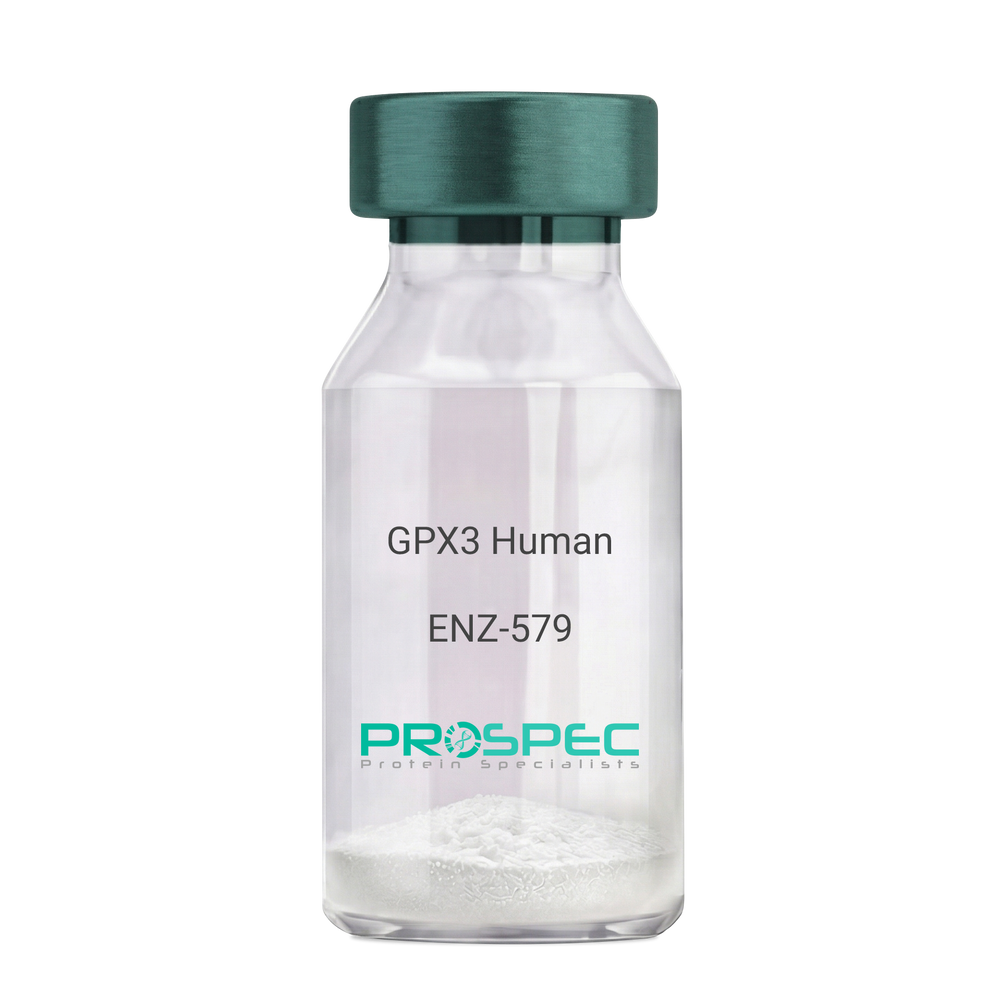
    GPX3 Human

    Description:

    Glutathione Peroxidase 3 Human Recombinant

    Glutathione peroxidase 3, GPx-3, GSHPx-3, Extracellular glutathione peroxidase, Plasma glutathione peroxidase, GPx-P, GSHPx-P, GPX3, GPXP.

    Product # :

    ENZ-579

    Price :

    Quantity :

    Shipping Method :

    Ice Icon

    Shipped with Ice Packs

    Add To Cart

    More Info

    • description
    • source
    • formulation
    • purity
    • More Info

    Description

    GPX3 Human Recombinant produced in E.coli is a single, non-glycosylated polypeptide chain containing 227 amino acids (21-226) and having a molecular mass of 25.7kDa.GPX3 is fused to a 21 amino acid His-tag at N-terminus & purified by proprietary chromatographic techniques.

    Source

    Escherichia Coli.

    Formulation

    The GPX3 solution contains 20mM Tris-HCl buffer (pH7.5), 40% glycerol, 0.15M NaCl and 1mM DTT.

    Purity

    Greater than 85% as determined by SDS-PAGE.

    More Info

    • Introduction

      Glutathione peroxidase 3 (GPX3) is a member of the glutathione peroxidase family, which acts in the detoxification of hydrogen peroxide. GPX3 shields cells and enzymes from oxidative damage, by catalyzing the reduction of hydrogen peroxide, lipid peroxides and organic hydroperoxide, by glutathione. The GPX3 protein is one of only a few proteins known in higher vertebrates to contain selenocysteine, which occurs at the active site of glutathione peroxidase and is coded by the nonsense (stop) codon TGA.

    • Synonyms

      Glutathione peroxidase 3, GPx-3, GSHPx-3, Extracellular glutathione peroxidase, Plasma glutathione peroxidase, GPx-P, GSHPx-P, GPX3, GPXP.

    • Physical Appearance

      Sterile filtered colorless solution.

    • Stability

      Store at 4°C if entire vial will be used within 2-4 weeks. Store, frozen at -20°C for longer periods of time. For long term storage it is recommended to add a carrier protein (0.1% HSA or BSA).Avoid multiple freeze-thaw cycles.

    • Amino Acid Sequence

      MGSSHHHHHH SSGLVPRGSH MQSRGQEKSK MDCHGGISGT IYEYGALTID GEEYIPFKQY AGKYVLFVNV ASYCGLTGQY IELNALQEEL APFGLVILGF PCNQFGKQEP GENSEILPTL KYVRPGGGFV PNFQLFEKGD VNGEKEQKFY TFLKNSCPPT SELLGTSDRL FWEPMKVHDI RWNFEKFLVG PDGIPIMRWH HRTTVSNVKM DILSYMRRQA ALGVKRK.

    ProSpec's products are furnished for LABORATORY RESEARCH USE ONLY. The product may not be used as drugs, agricultural or pesticidal products, food additives or household chemicals.

    Gpx3 Human
  • View Data Sheet

    Name :

    DDT Human

    Description:

    D-Dopachrome Tautomerase Human Recombinant

    EC 4.1.1.84, DDCT, D-dopachtome decarboxylase, D-Dopachrome Tautomerase.

    Product # :

    ENZ-527

    Price :

    Quantity :

    Shipping Method :

    Ice Icon

    Shipped with Ice Packs

    Add To Cart

    More Info

    • description
    • source
    • formulation
    • purity
    • More Info

    Description

    DDT Recombinant E.coli produced in E.Coli is a single, non-glycosylated polypeptide chain containing 138 amino acids (1-118 a.a.) and having a molecular mass of 14.8 kDa. The DDT is fused to a 20 amino acids His-Tag at N-terminus and purified by proprietary chromatographic techniques.

    Source

    Escherichia Coli.

    Formulation

    DDT Human solution containing 20mM Tris-HCl pH-8, & 10% glycerol.

    Purity

    Greater than 95.0% as determined by SDS-PAGE.

    More Info

    • Introduction

      DDT is an enzyme that catayzes the tautomerization of D-dopachrome to give 5,6-dihydroxyindole (DHI). DDT is part of the family of lyases, specifically the carboxy-lyases, which cleave carbon-carbon bonds. DDT shares a homologous amino acid sequence (33% identical) with MIF and has similar tautomerase activity. DDT functions a proinflammatory cytokine.

    • Synonyms

      EC 4.1.1.84, DDCT, D-dopachtome decarboxylase, D-Dopachrome Tautomerase.

    • Physical Appearance

      Sterile filtered colorless solution.

    • Stability

      Store at 4°C if entire vial will be used within 2-4 weeks. Store, frozen at -20°C for longer periods of time. For long term storage it is recommended to add a carrier protein (0.1% HSA or BSA).Avoid multiple freeze-thaw cycles.

    • Amino Acid Sequence

      MGSSHHHHHH SSGLVPRGSH MPFLELDTNL PANRVPAGLE KRLCAAAASI LGKPADRVNV TVRPGLAMAL SGSTEPCAQL SISSIGVVGT AEDNRSHSAH FFEFLTKELA LGQDRILIRF FPLESWQIGK IGTVMTFL.

    ProSpec's products are furnished for LABORATORY RESEARCH USE ONLY. The product may not be used as drugs, agricultural or pesticidal products, food additives or household chemicals.

    Ddt Human
  • View Data Sheet

    Name :

    MYL1 Human

    Description:

    Myosin Light Chain 1 Human Recombinant

    Myosin light chain 1 skeletal muscle isoform, MLC1F, A1 catalytic, Alkali myosin light chain 1, MYL1, MLC3F.

    Product # :

    PRO-365

    Price :

    Quantity :

    Shipping Method :

    Ice Icon

    Shipped with Ice Packs

    Add To Cart

    More Info

    • description
    • source
    • formulation
    • purity
    • More Info

    Description

    Recombinant Human Ventricular Myosin Light Chain-1 (MYL1) protein has a molecular mass of 25 kDa and is fused to 7 amino acids at N-terminus. The MYL1 protein was affinity purified using anti MYL1 monoclonal antibody 39-15 column.

    Source

    Escherichia Coli.

    Formulation

    Human MYL1 in 10mM Tris -HCI, 1mM EDTA PH 7.5.

    Purity

    Greater than 90.0% as determined by SDS-PAGE.

    More Info

    • Introduction

      Myosin is a hexameric ATPase cellular motor protein, which is composed of 2 heavy chains, 2 non-phosphorylatable alkali light chains, and 2 phosphorylatable regulatory light chains.
      MYL1 gene encodes a myosin alkali light chain expressed in fast skeletal muscle. Two transcript variants have been identified for the MYL1 gene. In humans MYL1 is localized to chromosome 2q32.1-qter. The Myl1 locus encodes two alkali myosin light chains- Mlc1f and Mlc3f, from two promoters that are differentially regulated throughout development. The Mlc1f promoter is active in embryonic, fetal and adult fast skeletal muscle while the Mlc3f promoter is upregulated during fetal development and stays on in adult fast skeletal muscle.

    • Synonyms

      Myosin light chain 1 skeletal muscle isoform, MLC1F, A1 catalytic, Alkali myosin light chain 1, MYL1, MLC3F.

    • Physical Appearance

      Sterile Filtered clear solution.

    • Stability

      Store vial at -20°C to -80°C. When stored at the recommended temperature, this protein is stable for 12 months.Please prevent freeze-thaw cycles.

    ProSpec's products are furnished for LABORATORY RESEARCH USE ONLY. The product may not be used as drugs, agricultural or pesticidal products, food additives or household chemicals.

    Myl1 Human
  • View Data Sheet

    Name :

    HPGDS Human

    Description:

    Hematopoietic Prostaglandin D Synthase Human Recombinant

    Hematopoietic prostaglandin D synthase, H-PGDS, GST class-sigma, Glutathione S-transferase, Glutathione-dependent PGD synthase, Glutathione-requiring prostaglandin D synthase, Prostaglandin-H2 D-isomerase, HPGDS, GSTS, PGDS, PTGDS2GSTS, PGD2, GSTS1-1.

    Product # :

    ENZ-616

    Price :

    Quantity :

    Shipping Method :

    Ice Icon

    Shipped with Ice Packs

    Add To Cart

    More Info

    • description
    • source
    • formulation
    • purity
    • More Info

    Description

    HPGDS Human Recombinant produced in E.Coli is a single, non-glycosylated polypeptide chain containing 223 amino acids (1-199 a.a.) and having a molecular mass of 25.9kDa.HPGDS is fused to a 24 amino acid His-tag at N-terminus & purified by proprietary chromatographic techniques.

    Source

    Escherichia Coli.

    Formulation

    HPGDS protein solution (1mg/ml) containing 20mM Tris-HCl buffer (pH8.0), 10% glycerol, 0.15M NaCl and 1mM DTT.

    Purity

    Greater than 95.0% as determined by SDS-PAGE.

    More Info

    • Introduction

      Hematopoietic Prostaglandin D Synthase (HPGDS) belongs to the sigma class glutathione-S-transferase family. The HPGDS enzyme catalyzes the conversion of PGH2 to PGD2 and has a role in the production of prostanoids in the immune system and mast cells. The presence of the HPGDS enzyme can be utilized to identify the differentiation stage of human megakaryocytes. Furthermore, HPGDS is a prostaglandin involved in smooth muscle contraction/relaxation and an effective inhibitor of platelet aggregation, and the conjugation of glutathione with a extensive range of aryl halides and organic isothiocyanates. In addition, HPGDS displays low glutathione-peroxidase activity towards cumene hydroperoxide. HPGDS is expressed in a number of megakaryocytic cell lines but not in platelets. HPGDS is highly expressed in the adipose tissue, macrophages and placenta; however it is expressed at lower levels in the lung, heart, lymph nodes, appendix, bone marrow and fetal liver.

    • Synonyms

      Hematopoietic prostaglandin D synthase, H-PGDS, GST class-sigma, Glutathione S-transferase, Glutathione-dependent PGD synthase, Glutathione-requiring prostaglandin D synthase, Prostaglandin-H2 D-isomerase, HPGDS, GSTS, PGDS, PTGDS2GSTS, PGD2, GSTS1-1.

    • Physical Appearance

      Sterile Filtered colorless solution.

    • Stability

      Store at 4°C if entire vial will be used within 2-4 weeks. Store, frozen at -20°C for longer periods of time. For long term storage it is recommended to add a carrier protein (0.1% HSA or BSA).Avoid multiple freeze-thaw cycles.

    • Amino Acid Sequence

      MGSSHHHHHH SSGLVPRGSH MGSHMPNYKL TYFNMRGRAE IIRYIFAYLD IQYEDHRIEQ ADWPEIKSTL PFGKIPILEV DGLTLHQSLA IARYLTKNTD LAGNTEMEQC HVDAIVDTLD DFMSCFPWAE KKQDVKEQMF NELLTYNAPH LMQDLDTYLG GREWLIGNSV TWADFYWEIC
      STTLLVFKPD LLDNHPRLVT LRKKVQAIPA VANWIKRRPQ TKL.

    ProSpec's products are furnished for LABORATORY RESEARCH USE ONLY. The product may not be used as drugs, agricultural or pesticidal products, food additives or household chemicals.

    Hpgds Human
  • View Data Sheet

    Name :

    DHH Human

    Description:

    Desert Hedgehog Human Recombinant

    HHG-3, Desert Hedgehog homolog, MGC35145, Desert hedgehog protein, DHH.

    Product # :

    CYT-467

    Price :

    Quantity :

    Shipping Method :

    Ice Icon

    Shipped with Ice Packs

    Add To Cart

    More Info

    • description
    • source
    • formulation
    • purity
    • More Info

    Description

    DHH Human Recombinant produced in E.Coli is a single, non-glycosylated, polypeptide chain containing 197 amino acids (23-198) and having a molecular mass of 22 kDa. DHH is fused to His-tag (20 a.a.) at N-terminus and is purified by proprietary chromatographic techniques.

    Source

    Escherichia Coli.

    Formulation

    DHH solution containing 20mM MES pH-5.5, 0.5mM DTT and 20% glycerol.

    Purity

    Greater than 95.0% as determined by SDS-PAGE.

    More Info

    • Introduction

      DHH is part of the Hedgehog family which encodes signaling molecules that are involved in regulating morphogenesis. DHH protein is a precursor that is autocatalytically cleaved, the N-terminal portion is soluble and contains the signalling activity while the C-terminal portion is involved in precursor processing. Additionally, the C-terminal product covalently attaches a cholesterol moiety to the N-terminal product, restricting the N-terminal product to the cell surface and preventing it from freely diffusing throughout the organism. Defects in DHH protein have been associated with partial gonadal dysgenesis (PGD) accompanied by minifascicular polyneuropathy. DHH plays a role both male gonadal differentiation and perineurial development.
      DHH plays a role in intercellular signaling which is essential for a variety of patterning events during development. DHH functions as a spermatocyte survival factor in the testes & is essential for testes development.

    • Synonyms

      HHG-3, Desert Hedgehog homolog, MGC35145, Desert hedgehog protein, DHH.

    • Physical Appearance

      Sterile filtered colorless solution.

    • Stability

      Store at 4°C if entire vial will be used within 2-4 weeks. Store, frozen at -20°C for longer periods of time. For long term storage it is recommended to add a carrier protein (0.1% HSA or BSA).Please prevent freeze thaw cycles.

    • Amino Acid Sequence

      MGSSHHHHHH SSGLVPRGSH MCGPGRGPVG RRRYARKQLV PLLYKQFVPG VPERTLGASG PAEGRVARGS ERFRDLVPNY NPDIIFKDEE NSGADRLMTE RCKERVNALA IAVMNMWPGV RLRVTEGWDE DGHHAQDSLH YEGRALDITT SDRDRNKYGL LARLAVEAGF DWVYYESRNH VHVSVKADNS LAVRAGG.

    ProSpec's products are furnished for LABORATORY RESEARCH USE ONLY. The product may not be used as drugs, agricultural or pesticidal products, food additives or household chemicals.

    Dhh Human
  • View Data Sheet

    Name :

    HSD17B11 Human

    Description:

    Hydroxysteroid (17-beta) Dehydrogenase 11 Human Recombinant

    17-beta-hydroxysteroid dehydrogenase 11, 17-beta-HSD 11, 17bHSD11, 17betaHSD11, 17-beta-hydroxysteroid dehydrogenase XI, 17-beta-HSD XI, 17betaHSDXI, Cutaneous T-cell lymphoma-associated antigen HD-CL-03, CTCL-associated antigen HD-CL-03, Dehydrogenase/reductase SDR family member 8, Retinal short-chain dehydrogenase/reductase 2, retSDR2, HSD17B11, DHRS8, PAN1B, SDR16C2, 17BHSD11.

    Product # :

    ENZ-049

    Price :

    Quantity :

    Shipping Method :

    Ice Icon

    Shipped with Ice Packs

    Add To Cart

    More Info

    • description
    • source
    • formulation
    • purity
    • More Info

    Description

    HSD17B11 Human Recombinant fused with a 21 amino acid His tag at N-terminus produced in E.Coli is a single, non-glycosylated, polypeptide chain containing 287 amino acids (20-285 a.a.) and having a molecular mass of 31.4kDa. The HSD17B11 is purified by proprietary chromatographic techniques.

    Source

    Escherichia Coli.

    Formulation

    The HSD17B11 solution (0.5 mg/ml) contains 20mM Tris-HCl buffer (pH8.0), 0.2M NaCl, 5mM DTT and 20% glycerol.

    Purity

    Greater than 95.0% as determined by SDS-PAGE.

    More Info

    • Introduction

      Dehydrogenase/reductase SDR family member 8 (HSD17B11) is a member of the HSD17B family of proteins, which regulate the availability of steroids within various tissues throughout the body. HSD17B11 is widely expressed with the highest levels found in the retina, pancreas, kidney, liver, lung, adrenal, small intestine, ovary and heart as well as in steroidogenic cells. HSD17B11 converts androstan-3-?,17-?-diol (3-?-diol) to androsterone, suggesting it may participate in androgen metabolism during steroidogenesis.

    • Synonyms

      17-beta-hydroxysteroid dehydrogenase 11, 17-beta-HSD 11, 17bHSD11, 17betaHSD11, 17-beta-hydroxysteroid dehydrogenase XI, 17-beta-HSD XI, 17betaHSDXI, Cutaneous T-cell lymphoma-associated antigen HD-CL-03, CTCL-associated antigen HD-CL-03, Dehydrogenase/reductase SDR family member 8, Retinal short-chain dehydrogenase/reductase 2, retSDR2, HSD17B11, DHRS8, PAN1B, SDR16C2, 17BHSD11.

    • Physical Appearance

      Sterile Filtered colorless solution.

    • Stability

      Store at 4°C if entire vial will be used within 2-4 weeks. Store, frozen at -20°C for longer periods of time. For long term storage it is recommended to add a carrier protein (0.1% HSA or BSA).Avoid multiple freeze-thaw cycles.

    • Amino Acid Sequence

      MGSSHHHHHH SSGLVPRGSH MESFVKLFIP KRRKSVTGEI VLITGAGHGI GRLTAYEFAK LKSKLVLWDI NKHGLEETAA KCKGLGAKVH TFVVDCSNRE DIYSSAKKVK AEIGDVSILV NNAGVVYTSD LFATQDPQIE KTFEVNVLAH FWTTKAFLPA MTKNNHGHIV TVASAAGHVS VPFLLAYCSS KFAAVGFHKT LTDELAALQI TGVKTTCLCP NFVNTGFIKN PSTSLGPTLE PEEVVNRLMH GILTEQKMIF IPSSIAFLTT LERILPERFL AVLKQKI.

    ProSpec's products are furnished for LABORATORY RESEARCH USE ONLY. The product may not be used as drugs, agricultural or pesticidal products, food additives or household chemicals.

    Hsd17B11 Human
  • View Data Sheet

    Name :

    NCEH1 Human

    Description:

    Neutral Cholesterol Ester Hydrolase 1 Human Recombinant

    AADACL1, NCEH, Neutral cholesterol ester hydrolase 1, Arylacetamide deacetylase-like, KIAA1363, NCEH1.

    Product # :

    PRO-1393

    Price :

    Quantity :

    Shipping Method :

    Ice Icon

    Shipped with Ice Packs

    Add To Cart

    More Info

    • description
    • source
    • formulation
    • purity
    • More Info

    Description

    NCEH1 Human Recombinant produced in E.Coli is a single, non-glycosylated polypeptide chain containing 298 amino acids (1-275a.a) and having a molecular mass of 33.6kDa. NCEH1 is fused to a 23 amino acid His-tag at N-terminus & purified by proprietary chromatographic techniques.

    Source

    E.coli.

    Formulation

    NCEH1 protein solution (1mg/ml) containing 20mM Tris-HCl buffer (pH 8.0), 0.4M urea and 10% glycerol.

    Purity

    Greater than 90% as determined by SDS-PAGE.

    More Info

    • Introduction

      Neutral cholesterol ester hydrolase 1 (NCEH1), hydrolyzes 2-acetyl monoalkylglycerol ether, the penultimate precursor of the pathway for de novo synthesis of platelet-activating factor. NCEH1 is responsible for cholesterol ester hydrolysis in macrophages, by this means contributing to the development of atherosclerosis. NCEH1 contributes also to cancer pathogenesis by promoting tumor cell migration. NCEH1 is involved in organ detoxification by hydrolyzing exogenous organophosphorus compounds.

    • Synonyms

      AADACL1, NCEH, Neutral cholesterol ester hydrolase 1, Arylacetamide deacetylase-like, KIAA1363, NCEH1.

    • Physical Appearance

      Sterile Filtered colorless solution.

    • Stability

      Store at 4°C if entire vial will be used within 2-4 weeks. Store, frozen at -20°C for longer periods of time. For long term storage it is recommended to add a carrier protein (0.1% HSA or BSA).Avoid multiple freeze-thaw cycles.

    • Amino Acid Sequence

      MGSSHHHHHH SSGLVPRGSH MGSMAEELNA VIVSIEYRLV PKVYFPEQIH DVVRATKYFL KPEVLQKYMV DPGRICISGD SAGGNLAAAL GQQFTQDASL KNKLKLQALI YPVLQALDFN TPSYQQNVNT PILPRYVMVK YWVDYFKGNY DFVQAMIVNN HTSLDVEEAA AVRARLNWTS LLPASFTKNY KPVVQTTGNA RIVQELPQLL DARSAPLIAD QAVLQLLPKT YILTCEHDVL RDDGIMYAKR LESAGVEVTL DHFEDGFHGC MIFTSWPTNF SVGIRTRNSY IKWLDQNL.

    ProSpec's products are furnished for LABORATORY RESEARCH USE ONLY. The product may not be used as drugs, agricultural or pesticidal products, food additives or household chemicals.

    Nceh1 Human
  • View Data Sheet

    Name :

    ST3GAL5 Human

    Description:

    ST3 Beta-Galactoside Alpha-2,3-Sialyltransferase 5 Human Recombinant

    ST3 Beta-Galactoside Alpha-2,3-Sialyltransferase 5, SIAT9, Sialyltransferase 9 (CMP-NeuAc:Lactosylceramide Alpha-2,3-Sialyltransferase; GM3 Synthase), Ganglioside GM3 Synthase, ST3GalV, CMP-NeuAc:Lactosylceramide Alpha-2,3-Sialyltransferase, ST3Gal V, EC 2.4.99.9, SATI, SIATGM3S, Alpha 2,3-Sialyltransferase V, Lactosylceramide Alpha-2,3-Sialyltransferase, Sialyltransferase 9, ST3GALV, GM3 Synthase.

    Product # :

    ENZ-755

    Price :

    Quantity :

    Shipping Method :

    Ice Icon

    Shipped with Ice Packs

    Add To Cart

    More Info

    • description
    • source
    • formulation
    • purity
    • More Info

    Description

    ST3GAL5 Human Recombinant produced in E.Coli is a single, non-glycosylated polypeptide chain containing 359 amino acids (83-418a.a) and having a molecular mass of 41kDa. ST3GAL5 is fused to a 23 amino acid His-tag at N-terminus & purified by proprietary chromatographic techniques.

    Source

    Escherichia Coli.

    Formulation

    ST3GAL5 protein solution (1mg/ml) containing In 20mM Tris-HCl buffer (pH 8.0), 10% glycerol and 0.4M Urea.

    Purity

    Greater than 85.0% as determined by SDS-PAGE.

    More Info

    • Introduction

      ST3 Beta-Galactoside Alpha-2,3-Sialyltransferase 5, also know as ST3GAL5 belongs to the glycosyltransferase family 29 and localized to the Golgi apparatus. ST3GAL5 is known to play a part in the induction of cell differentiation, modulation of cell proliferation, maintenance of fibroblast morphology, signal transduction, and integrin-mediated cell adhesion. ST3GAL5 is a type II membrane protein which catalyzes the formation of GM3 with lactosylceramide as the substrate. Mutation in this ST3GAL5 has been connected with Amish infantile epilepsy syndrome. Transcript variants encoding various isoforms have been found for this gene.

    • Synonyms

      ST3 Beta-Galactoside Alpha-2,3-Sialyltransferase 5, SIAT9, Sialyltransferase 9 (CMP-NeuAc:Lactosylceramide Alpha-2,3-Sialyltransferase; GM3 Synthase), Ganglioside GM3 Synthase, ST3GalV, CMP-NeuAc:Lactosylceramide Alpha-2,3-Sialyltransferase, ST3Gal V, EC 2.4.99.9, SATI, SIATGM3S, Alpha 2,3-Sialyltransferase V, Lactosylceramide Alpha-2,3-Sialyltransferase, Sialyltransferase 9, ST3GALV, GM3 Synthase.

    • Physical Appearance

      Sterile Filtered clear solution.

    • Stability

      Store at 4°C if entire vial will be used within 2-4 weeks. Store, frozen at -20°C for longer periods of time.For long term storage it is recommended to add a carrier protein (0.1% HSA or BSA).Please avoid freeze thaw cycles.

    • Amino Acid Sequence

      MGSSHHHHHH SSGLVPRGSH MGSLKLNYTT EECDMKKMHY VDPDHVKRAQ KYAQQVLQKE CRPKFAKTSM ALLFEHRYSV DLLPFVQKAP KDSEAESKYD PPFGFRKFSS KVQTLLELLP EHDLPEHLKA KTCRRCVVIG SGGILHGLEL GHTLNQFDVV IRLNSAPVEG YSEHVGNKTT IRMTYPEGAP LSDLEYYSND LFVAVLFKSV DFNWLQAMVK KETLPFWVRL FFWKQVAEKI PLQPKHFRIL NPVIIKETAF DILQYSEPQS RFWGRDKNVP TIGVIAVVLA THLCDEVSLA GFGYDLNQPR TPLHYFDSQC MAAMNFQTMH NVTTETKFLL KLVKEGVVKD LSGGIDREF

    ProSpec's products are furnished for LABORATORY RESEARCH USE ONLY. The product may not be used as drugs, agricultural or pesticidal products, food additives or household chemicals.

    St3Gal5 Human
  • View Data Sheet

    Name :

    FAAH2 Human

    Description:

    Fatty Acid Amide Hydrolase 2 Human Recombinant

    Fatty acid amide hydrolase 2, AMDD, Amidase domain-containing protein, Anandamide amidohydrolase 2, Oleamide hydrolase 2, FAAH2.

    Product # :

    ENZ-777

    Price :

    Quantity :

    Shipping Method :

    Ice Icon

    Shipped with Ice Packs

    Add To Cart

    More Info

    • description
    • source
    • formulation
    • purity
    • More Info

    Description

    FAAH2 Human Recombinant produced in E.coli is a single, non-glycosylated polypeptide chain containing 524 amino acids (32-532a.a) and having a molecular mass of 57.4kDa. FAAH2 is fused to a 23 amino acid His-tag at N-terminus & purified by proprietary chromatographic techniques.

    Source

    Escherichia Coli.

    Formulation

    The FAAH2 solution (1mg/ml) contains 20mM Tris-HCl buffer (pH 8.0), 10% glycerol and 0.4M Urea.

    Purity

    Greater than 80% as determined by SDS-PAGE.

    More Info

    • Introduction

      Fatty Acid Amide Hydrolase 2 (FAAH2) shares a conserved protein motif with the amidase signature family of enzymes. FAAH2 catalyzes the hydrolysis of a broad range of bioactive lipids, including those from the 3 main classes of fatty acid amides; N-acylethanolamines, fatty acid primary amides and N-acyl amino acids. FAAH2 is also degrades bioactive fatty acid amides to their corresponding acids, thus helping to end the signaling functions of these molecules. FAAH2 prefers monounsaturated acyl chains as a substrate.

    • Synonyms

      Fatty acid amide hydrolase 2, AMDD, Amidase domain-containing protein, Anandamide amidohydrolase 2, Oleamide hydrolase 2, FAAH2.

    • Physical Appearance

      Sterile Filtered clear solution.

    • Stability

      Store at 4°C if entire vial will be used within 2-4 weeks. Store, frozen at -20°C for longer periods of time. For long term storage it is recommended to add a carrier protein (0.1% HSA or BSA).Avoid multiple freeze-thaw cycles.

    • Amino Acid Sequence

      MGSSHHHHHH SSGLVPRGSH MGSGGPKFAS KTPRPVTEPL LLLSGMQLAK LIRQRKVKCI DVVQAYINRI KDVNPMINGI VKYRFEEAMK EAHAVDQKLA EKQEDEATLE NKWPFLGVPL TVKEAFQLQG MPNSSGLMNR RDAIAKTDAT VVALLKGAGA IPLGITNCSE LCMWYESSNK IYGRSNNPYD LQHIVGGSSG GEGCTLAAAC SVIGVGSDIG GSIRMPAFFN GIFGHKPSPG VVPNKGQFPL AVGAQELFLC TGPMCRYAED LAPMLKVMAG PGIKRLKLDT KVHLKDLKFY WMEHDGGSFL MSKVDQDLIM TQKKVVVHLE TILGASVQHV KLKKMKYSFQ LWIAMMSAKG HDGKEPVKFV DLLGDHGKHV SPLWELIKWC LGLSVYTIPS IGLALLEEKL RYSNEKYQKF KAVEESLRKE LVDMLGDDGV FLYPSHPTVA PKHHVPLTRP FNFAYTGVFS ALGLPVTQCP LGLNAKGLPL GIQVVAGPFN DHLTLAVAQY LEKTFGGWVC PGKF.

    ProSpec's products are furnished for LABORATORY RESEARCH USE ONLY. The product may not be used as drugs, agricultural or pesticidal products, food additives or household chemicals.

    Faah2 Human
  • View Data Sheet

    Name :

    CA14 Human

    Description:

    Carbonic Anhydrase XIV Human Recombinant

    Carbonic anhydrase 14, Carbonate dehydratase XIV, Carbonic anhydrase XIV, CA-XIV, CA14, CAXiV.

    Product # :

    ENZ-761

    Price :

    Quantity :

    Shipping Method :

    Ice Icon

    Shipped with Ice Packs

    Add To Cart

    More Info

    • description
    • source
    • formulation
    • purity
    • More Info

    Description

    CA14 Human Recombinant produced in E.Coli is a single, non-glycosylated polypeptide chain containing 298 amino acids (16-290 a.a.) and having a molecular mass of 33.2kDa. CA14 is fused to a 23 amino acid His-tag at N-terminus & purified by proprietary chromatographic techniques.

    Source

    Escherichia Coli.

    Formulation

    CA14 protein solution (0.5mg/ml) contains 20mM Tris-HCl buffer (pH 8.0), 0.15M NaCl, 10% glycerol and 1mM DTT.

    Purity

    Greater than 85.0% as determined by SDS-PAGE.

    More Info

    • Introduction

      CA14 is a part of the Carbonic anhydrases family. Carbonic anhydrases (CAs) are a large family of zinc metalloenzymes which catalyze the reversible hydration of carbon dioxide. They present wide variety in tissue distribution and in their subcellular localization. CA14 is a type I membrane protein which shares highest sequence similarity with the other transmembrane CA isoform, CA XII. Nevertheless, they have different patterns of tissue-specific expression and therefore take different physiologic parts.

    • Synonyms

      Carbonic anhydrase 14, Carbonate dehydratase XIV, Carbonic anhydrase XIV, CA-XIV, CA14, CAXiV.

    • Physical Appearance

      Sterile Filtered colorless solution.

    • Stability

      NPL Human Recombinant although stable at 4°C for 1 week, should be stored below -18°C. Please prevent freeze thaw cycles.

    • Amino Acid Sequence

      MGSSHHHHHH SSGLVPRGSH MGSADGGQHW TYEGPHGQDH WPASYPECGN NAQSPIDIQT DSVTFDPDLP ALQPHGYDQP GTEPLDLHNN GHTVQLSLPS TLYLGGLPRK YVAAQLHLHW GQKGSPGGSE HQINSEATFA ELHIVHYDSD SYDSLSEAAE RPQGLAVLGI LIEVGETKNI AYEHILSHLH EVRHKDQKTS VPPFNLRELL PKQLGQYFRY NGSLTTPPCY QSVLWTVFYR RSQISMEQLE KLQGTLFSTE EEPSKLLVQN YRALQPLNQR MVFASFIQAG SSYTTGEM.

    ProSpec's products are furnished for LABORATORY RESEARCH USE ONLY. The product may not be used as drugs, agricultural or pesticidal products, food additives or household chemicals.

    Ca14 Human
  • View Data Sheet

    Name :

    IP 10 Mouse

    Description:

    IP-10 Mouse Recombinant (CXCL10)

    Small inducible cytokine B10, CXCL10, 10 kDa, Gamma-IP10, IP-10, chemokine (C-X-C motif) ligand 10, C7, IFI10, INP10, crg-2, mob-1, SCYB10, gIP-10.

    Product # :

    CHM-336

    Price :

    Quantity :

    Shipping Method :

    Room Temp Icon

    Shipped at Room temp

    Add To Cart

    More Info

    • description
    • source
    • formulation
    • purity
    • biological activity
    • More Info
    • sds-page

    Description

    IP-10 Mouse Recombinant produced in E.Coli is a single,non-glycosylated, polypeptide chain containing 77 amino acids and having a molecular mass of 8701 Dalton. The IP-10 is purified by proprietary chromatographic techniques.

    Source

    Escherichia Coli.

    Formulation

    IP-10 was lyophilized from a 0.2µm filtered concentrated solution in 1×PBS, pH 7.4.

    Purity

    Greater than 97.0% as determined by:
    (a) Analysis by RP-HPLC.
    (b) Analysis by SDS-PAGE.

    Biological Activity

    Determined by its ability to chemoattract hCXCR3/HEK293 cells using a concentration range of 100.0-500.0 ng/ml.

    sds-page

    cxcl10 mouse sds-page - Product image 1

    More Info

    • Introduction

      Chemokine (C-X-C motif) ligand 10 (CXCL10) is a small cytokine belonging to the CXC chemokine family. CXCL10 is secreted by several cell types. These cell types include monocytes, endothelial cells and fibroblasts. CXCL10 has been attributed to several roles, such as chemoattraction for monocytes and T cells, promotion of T cell adhesion to endothelial cells, antitumor activity, and inhibition of bone marrow colony formation and angiogenesis. The gene for CXCL10 is located on human chromosome 4 in a cluster among several other CXC chemokines. This chemokine elicits its effects by binding to the cell surface chemokine receptor CXCR3. The three-dimensional crystal structure of this chemokine has been determined under 3 different conditions to a resolution of up to 1.92A.

    • Synonyms

      Small inducible cytokine B10, CXCL10, 10 kDa, Gamma-IP10, IP-10, chemokine (C-X-C motif) ligand 10, C7, IFI10, INP10, crg-2, mob-1, SCYB10, gIP-10.

    • Physical Appearance

      Sterile Filtered White lyophilized (freeze-dried) powder.

    • Stability

      Lyophilized IP-10 although stable at room temperature for 3 weeks, should be stored desiccated below -18°C. Upon reconstitution CXCL10 should be stored at 4°C between 2-7 days and for future use below -18°C. For long term storage it is recommended to add a carrier protein (0.1% HSA or BSA).Please prevent freeze-thaw cycles.

    • Solubility

      It is recommended to reconstitute the lyophilized IP-10 in sterile 18MΩ-cm H2O not less than 100µg/ml, which can then be further diluted to other aqueous solutions.

    • Amino Acid Sequence

      IPLARTVRCN CIHIDDGPVR MRAIGKLEII PASLSCPRVE IIATMKKNDE QRCLNPESKT IKNLMKAFSQ KRSKRAP.

    • Protein content

      Protein quantitation was carried out by two independent methods:1. UV spectroscopy at 280 nm using the absorbency value of 0.02 as the extinction coefficient for a 0.1% (1mg/ml) solution. This value is calculated by the PC GENE computer analysis program of protein sequences (IntelliGenetics). 2. Analysis by RP-HPLC, using a standard solution of IP-10 as a Reference Standard.

    ProSpec's products are furnished for LABORATORY RESEARCH USE ONLY. The product may not be used as drugs, agricultural or pesticidal products, food additives or household chemicals.

    Ip 10 Mouse
  • View Data Sheet

    Name :

    TIE1 Fc Mouse

    Description:

    TIE1 Fc Chimera Mouse Recombinant

    Tyrosine kinase with immunoglobulin-like and EGF-like domains 1, JTK14, TIE, TIE1.

    Product # :

    PKA-247

    Price :

    Quantity :

    Shipping Method :

    Room Temp Icon

    Shipped at Room temp

    Add To Cart

    More Info

    • description
    • source
    • formulation
    • purity
    • More Info

    Description

    Soluble TIE-1 Mouse Recombinant fused with the Fc part of human IgG1 produced in CHO cells is a glycosylated disulfide-linked homodimeric polypeptide chain containing amino acids 23-749 and having a total molecular mass of 260kDa. The Mouse TIE-1/Fc monomer has a calculated molecular mass of approximately 105kDa. As a result of glycosylation, the recombinant protein migrates as an approximately 130kDa protein in SDS-PAGE under reducing conditions.The TIE1 Fc Chimera is purified by proprietary chromatographic techniques.

    Source

    CHO Cells.

    Formulation

    TIE-1 Fc Chimera was lyophilized from a concentrated (1mg/ml) sterile solution containing 1x PBS.

    Purity

    Greater than 90.0% as determined by SDS-PAGE.

    More Info

    • Introduction

      TIE-1 (tyrosine kinase with Ig and EGF homology domains 1) and TIE-2/Tek comprise a receptor tyrosine kinase (RTK) subfamily with unique structural characteristics: two immunoglobulin-like domains flanking three epidermal growth factor (EGF)-like domains and followed by three fibronectin type III-like repeats in the extracellular region and a split tyrosine kinase domain in the cytoplasmic region. These receptors are expressed primarily on endothelial and hematopoietic progenitor cells and play critical roles in angiogenesis, vasculogenesis and hematopoiesis. Human TIE-1 cDNA encodes a 1124 amino acid (aa) residue precursor protein with an 18 residue putative signal peptide, a 727 residue extracellular domain and a 354 residue cytoplasmic domain. Whereas two ligands have been described for TIE-2 [angiopoietin-1 (Ang1) and angiopoietin-2 (Ang2)], so far no ligand was found for TIE-1.

    • Synonyms

      Tyrosine kinase with immunoglobulin-like and EGF-like domains 1, JTK14, TIE, TIE1.

    • Physical Appearance

      Sterile Filtered White lyophilized (freeze-dried) powder.

    • Stability

      Lyophilized sTIE-1 although stable at room temperature for 3 weeks, should be stored desiccated below -18°C. Upon reconstitution TIE-1 should be stored at 4°C between 2-7 days and for future use below -18°C.For long term storage it is recommended to add a carrier protein (0.1% HSA or BSA).Please prevent freeze-thaw cycles.

    • Solubility

      It is recommended to reconstitute the lyophilized TIE-1 Fc Chimera in sterile water not less than 100µg/ml, which can then be further diluted to other aqueous solutions.

    ProSpec's products are furnished for LABORATORY RESEARCH USE ONLY. The product may not be used as drugs, agricultural or pesticidal products, food additives or household chemicals.

    Tie 1 Mouse Fc
  • View Data Sheet

    Name :

    PINX1 Human

    Description:

    PIN2-Interacting Protein 1 Human Recombinant

    PINX1, LPTL, LPTS, MGC8850, FLJ20565, Pin2-interacting protein X1, TRF1-interacting protein 1, Liver-related putative tumor suppressor, Protein 67-11-3.

    Product # :

    PRO-693

    Price :

    Quantity :

    Shipping Method :

    Ice Icon

    Shipped with Ice Packs

    Add To Cart

    More Info

    • description
    • source
    • formulation
    • purity
    • More Info

    Description

    Recombinant Human PINX1 produced in E.Coli is a single, non-glycosylated polypeptide chain containing 348 amino acids (1-328 a.a) and having a molecular mass of 39.1 kDa. PINX1 is fused to 20 amino acid His Tag at N-terminus and purified by proprietary chromatographic techniques.

    Source

    Escherichia Coli.

    Formulation

    The PINX1 protein contains 20mM Tris-HCl buffer pH-8, 1mM DTT and 10% glycerol.

    Purity

    Greater than 95.0% as determined by analysis by SDS-PAGE.

    More Info

    • Introduction

      PINX1 is a common expressed protein that localizes to nucleoli and telomere speckles. PINX1 contains a Telomerase Inhibiting Domain that is caable of binding MCRS1, TERT and TERF1. PINX1 has been shown to be a potent telomerase inhibitor and putative tumor suppressor. PINX1 is recruited to chromosome periphery by Nucleolin, their complex is necessary for faithful chromosome congression. PINX1 regulates the nucleolar accumulation and telomeric association of TRF1. PINX1 is involved in gastric cancer development. PINX1 expression is a sign of gastric cancer development. Constitutive expression of PINX1 attributes to telomere maintenance by telomerase and tumorigenicity in cancer cells.

    • Synonyms

      PINX1, LPTL, LPTS, MGC8850, FLJ20565, Pin2-interacting protein X1, TRF1-interacting protein 1, Liver-related putative tumor suppressor, Protein 67-11-3.

    • Physical Appearance

      Sterile filtered colorless solution.

    • Stability

      Store at 4°C if entire vial will be used within 2-4 weeks. Store, frozen at -20°C for longer periods of time. For long term storage it is recommended to add a carrier protein (0.1% HSA or BSA). Avoid multiple freeze-thaw cycles.

    • Amino Acid Sequence

      MGSSHHHHHH SSGLVPRGSH MSMLAERRRK QKWAVDPQNT AWSNDDSKFG QRMLEKMGWS KGKGLGAQEH GATDHIKVQV KNNHLGLGAT INNEDNWIAH QDDFNQLLAE LNTCHGQETT DSSDKKEKKS FSLEEKSKIS KNRVHYMKFT KGKDLSSRSK TDLDCIFGKR QSKKTPEGDA SPSTPEENET TTTSAFTIQE YFAKRMAALK NKPQVPVPGS DISETQVERK RGKKINKEAT GKDVESYLQP KAKRHTEGKP ERAEAQERVA KKKSAPAEEQ LRGPCWDQSS KASAQDAGDH VQPPEGRDFT LKPKKRRGKK KLQKPVEIAE DATLEETLVK KKKKKDSK.

    ProSpec's products are furnished for LABORATORY RESEARCH USE ONLY. The product may not be used as drugs, agricultural or pesticidal products, food additives or household chemicals.

    Pinx1 Human
  • View Data Sheet

    Name :

    PITPNA Human

    Description:

    Phosphatidylinositol Transfer Protein Alpha Human Recombinant

    Phosphatidylinositol transfer protein alpha isoform, PI-TP-alpha, PtdIns transfer protein alpha, PtdInsTP alpha, PITPNA, PITPN, VIB1A, MGC99649, PI-TPalpha.

    Product # :

    PRO-044

    Price :

    Quantity :

    Shipping Method :

    Ice Icon

    Shipped with Ice Packs

    Add To Cart

    More Info

    • description
    • source
    • formulation
    • purity
    • More Info

    Description

    PITPNA Human Recombinant fused with a 20 amino acid His tag at N-terminus produced in E.Coli is a single, non-glycosylated, polypeptide chain containing 290 amino acids (1-270 a.a.) and having a molecular mass of 33.9kDa. The PITPNA is purified by proprietary chromatographic techniques.

    Source

    Escherichia Coli.

    Formulation

    The PITPNA solution (1 mg/ml) contains 20mM Tris-HCl buffer (pH 8.0), 1mM DTT, 10% glycerol, 1mM EDTA.

    Purity

    Greater than 95.0% as determined by SDS-PAGE.

    More Info

    • Introduction

      Phosphatidylinositol transfer protein alpha (PITPNA) is found in the cytoplasm, where it catalyzes the transfer of phosphatidylinositol (PI) and phosphatidylcholine (PC) between membranes. PITPNA belongs to a family of lipid-binding proteins which transfer molecules of phosphatidylinositol or phosphatidylcholine between membrane surfaces. PITPNA is implicated in phospholipase C signaling and in the production of phosphatidylinositol 3, 4, 5-trisphosphate (PIP3) by phosphoinositide-3-kinase.

    • Synonyms

      Phosphatidylinositol transfer protein alpha isoform, PI-TP-alpha, PtdIns transfer protein alpha, PtdInsTP alpha, PITPNA, PITPN, VIB1A, MGC99649, PI-TPalpha.

    • Physical Appearance

      Sterile Filtered colorless solution.

    • Stability

      Store at 4°C if entire vial will be used within 2-4 weeks. Store, frozen at -20°C for longer periods of time. For long term storage it is recommended to add a carrier protein (0.1% HSA or BSA).Avoid multiple freeze-thaw cycles.

    • Amino Acid Sequence

      MGSSHHHHHH SSGLVPRGSH MVLLKEYRVI LPVSVDEYQV GQLYSVAEAS KNETGGGEGV EVLVNEPYEK DGEKGQYTHK IYHLQSKVPT FVRMLAPEGA LNIHEKAWNA YPYCRTVITN EYMKEDFLIK IETWHKPDLG TQENVHKLEP EAWKHVEAVY IDIADRSQVL SKDYKAEEDP AKFKSIKTGR GPLGPNWKQE LVNQKDCPYM CAYKLVTVKF KWWGLQNKVE NFIHKQERRL FTNFHRQLFC WLDKWVDLTM DDIRRMEEET KRQLDEMRQK DPVKGMTADD.

    ProSpec's products are furnished for LABORATORY RESEARCH USE ONLY. The product may not be used as drugs, agricultural or pesticidal products, food additives or household chemicals.

    Pitpna Human
  • View Data Sheet

    Name :

    IVD Human

    Description:

    Isovaleryl Coenzyme A Dehydrogenase Human Recombinant

    FLJ12715, isovaleryl-CoA dehydrogenase mitochondrial, FLJ34849, EC 1.3.99.10, IVD, ACAD2.

    Product # :

    ENZ-490

    Price :

    Quantity :

    Shipping Method :

    Ice Icon

    Shipped with Ice Packs

    Add To Cart

    More Info

    • description
    • source
    • formulation
    • purity
    • More Info

    Description

    IVD Human Recombinant produced in E.Coli is a single, non-glycosylated polypeptide chain containing 415 amino acids (33-426 a.a.) and having a molecular mass of 45.3 kDa. The IVD is fused to a 20 amino acid his tag at N-terminus and purified by conventional chromatography.

    Source

    Escherichia Coli.

    Formulation

    The IVD protein solution (1mg/ml) contains 20mM Tris-HCl pH-8, 1mM DTT and 10% glycerol.

    Purity

    Greater than 90.0% as determined by SDS-PAGE.

    More Info

    • Introduction

      IVD is a mitochondrial matrix enzyme that is part of the cyl-CoA dehydrogenase family which catalyzes the third step in leucine catabolism. The genetic deficiency of IVD leads to a buildup of isovaleric acid, which is toxic to the central nervous system and results in isovaleric acidemia. IVD is a homotetrameric flavoenzyme which catalyzes the conversion of isovaleryl-CoA to 3-methylcrotonyl-CoA.

    • Synonyms

      FLJ12715, isovaleryl-CoA dehydrogenase mitochondrial, FLJ34849, EC 1.3.99.10, IVD, ACAD2.

    • Physical Appearance

      Sterile Filtered colorless solution.

    • Stability

      Store at 4°C if entire vial will be used within 2-4 weeks. Store, frozen at -20°C for longer periods of time. For long term storage it is recommended to add a carrier protein (0.1% HSA or BSA).Avoid multiple freeze-thaw cycles.

    • Amino Acid Sequence

      MGSSHHHHHH SSGLVPRGSH MHSLLPVDDA INGLSEEQRQ LRQTMAKFLQ EHLAPKAQEI DRSNEFKNLR EFWKQLGNLG VLGITAPVQY GGSGLGYLEH VLVMEEISRA SGAVGLSYGA HSNLCINQLV RNGNEAQKEK YLPKLISGEY IGALAMSEPN AGSDVVSMKL KAEKKGNHYI LNGNKFWITN GPDADVLIVY AKTDLAAVPA SRGITAFIVE KGMPGFSTSK KLDKLGMRGS NTCELIFEDC KIPAANILGH ENKGVYVLMS GLDLERLVLA GGPLGLMQAV LDHTIPYLHV REAFGQKIGH FQLMQGKMAD MYTRLMACRQ YVYNVAKACD EGHCTAKDCA GVILYSAECA TQVALDGIQC FGGNGYINDF PMGRFLRDAK LYEIGAGTSE VRRLVIGRAF NADFH.

    ProSpec's products are furnished for LABORATORY RESEARCH USE ONLY. The product may not be used as drugs, agricultural or pesticidal products, food additives or household chemicals.

    Ivd Human
  • View Data Sheet

    Name :

    TNNI1 Human

    Description:

    Troponin I Type 1 Human Recombinant

    DKFZp451O223, SSTNI, TNN1, Troponin I, slow skeletal muscle ,Troponin I, slow-twitch isoform.

    Product # :

    PRO-1269

    Price :

    Quantity :

    Shipping Method :

    Ice Icon

    Shipped with Ice Packs

    Add To Cart

    More Info

    • description
    • source
    • formulation
    • purity
    • More Info

    Description

    TNNI1 Human Recombinant produced in E.Coli is a single, non-glycosylated polypeptide chain containing 207 amino acids (1-187 a.a.) and having a molecular mass of 23.8kDa.TNNI1 is fused to a 20 amino acid His-tag at N-terminus & purified by proprietary chromatographic techniques.

    Source

    Escherichia Coli.

    Formulation

    TNNI1 protein solution (1mg/ml) contains 20mM Tris-HCl buffer (pH 8.0), 0.4M urea and 10% glycerol.

    Purity

    Greater than 90.0% as determined by SDS-PAGE.

    More Info

    • Introduction

      Troponin I, (TNNI1) is a member of the troponin I family. Troponin complex has 3 subunits, TNNI1 known as the inhibitory Subunit which prevents the actin-myosin interactions and thus mediating striated muscle relaxation. TNNI1 combines with tropomyosin and regulates calcium sensitivity of striated muscles by structural modifications in actin-myosin complexes.

    • Synonyms

      DKFZp451O223, SSTNI, TNN1, Troponin I, slow skeletal muscle ,Troponin I, slow-twitch isoform.

    • Physical Appearance

      Sterile Filtered clear solution.

    • Stability

      Store at 4°C if entire vial will be used within 2-4 weeks. Store, frozen at -20°C for longer periods of time. For long term storage it is recommended to add a carrier protein (0.1% HSA or BSA).Avoid multiple freeze-thaw cycles.

    • Amino Acid Sequence

      MGSSHHHHHH SSGLVPRGSH MPEVERKPKI TASRKLLLKS LMLAKAKECW EQEHEEREAE KVRYLAERIP TLQTRGLSLS ALQDLCRELH AKVEVVDEER YDIEAKCLHN TREIKDLKLK VMDLRGKFKR PPLRRVRVSA DAMLRALLGS KHKVSMDLRA NLKSVKKEDT EKERPVEVGD WRKNVEAMSG MEGRKKMFDA AKSPTSQ

    ProSpec's products are furnished for LABORATORY RESEARCH USE ONLY. The product may not be used as drugs, agricultural or pesticidal products, food additives or household chemicals.

    Tnni1 Human
  • View Data Sheet

    Name :

    POU5F1 Human

    Description:

    POU Class 5 Homeobox 1 Human Recombinant

    POU domain class 5 transcription factor 1, Octamer-binding protein 3, Oct-3, Octamer-binding protein 4, Oct-4, Octamer-binding transcription factor 3, OTF-3, POU5F1, OCT3, OCT4, OTF3, OTF4, MGC22487.

    Product # :

    PRO-088

    Price :

    Quantity :

    Shipping Method :

    Ice Icon

    Shipped with Ice Packs

    Add To Cart

    More Info

    • description
    • source
    • formulation
    • purity
    • More Info

    Description

    POU5F1 Human Recombinant produced in E. coli is a single polypeptide chain containing 285 amino acids (1-265) and having a molecular mass of 32.2 kDa.POU5F1 is fused to a 20 amino acid His-tag at N-terminus & purified by proprietary chromatographic techniques.

    Source

    Escherichia Coli.

    Formulation

    The POU5F1 solution contains 20mM Tris-HCl buffer (pH 8.0), 0.4M Urea and 10% glycerol.

    Purity

    Greater than 85% as determined by SDS-PAGE.

    More Info

    • Introduction

      POU5F1 is a homeodomain transcription factor of the POU family, expressed in embryonic stem (ES) cells and embryonic carcinoma (EC) cells.POU5F1 is significantly involved in the signaling pathway for maintaining self-renewal and pluripotency of ES cells. POU5F1 has 2 distinct DNA binding domains which independently bind half-sites of the canonical octamer motif. This flexibility allows POU5F1 to bind with distinct DNA motifs by forming heterodimers with other transcription factors or by forming homodimers in several conformations. Human POU5F1 contains a 75aa POU specific (POUS) domain and a 60aa POU-Homeo-(POUH) domain connected by a linker region. The Human POU5F1 specifically interacts with Octamer motif ATGCAAAT. In addition, 2 proline-rich domains in the N-terminal and C-terminal regions are vital for POU5F1 transactivation. POU5F1 regulates a number of target genes and has been shown to work jointly with other transcription factors including Sox2 as well as Nanog to sustain stem cell potency and self-renewal.

    • Synonyms

      POU domain class 5 transcription factor 1, Octamer-binding protein 3, Oct-3, Octamer-binding protein 4, Oct-4, Octamer-binding transcription factor 3, OTF-3, POU5F1, OCT3, OCT4, OTF3, OTF4, MGC22487.

    • Physical Appearance

      Sterile filtered colorless solution.

    • Stability

      Store at 4°C if entire vial will be used within 2-4 weeks. Store, frozen at -20°C for longer periods of time. For long term storage it is recommended to add a carrier protein (0.1% HSA or BSA).Avoid multiple freeze-thaw cycles.

    • Amino Acid Sequence

      MGSSHHHHHH SSGLVPRGSH MHFYRLFLGA TRRFLNPEWK GEIDNWCVYV LTSLLPFKIQ SQDIKALQKE LEQFAKLLKQ KRITLGYTQA DVGLTLGVLF GKVFSQTTIC RFEALQLSFK NMCKLRPLLQ KWVEEADNNE NLQEICKAET LVQARKRKRT SIENRVRGNL ENLFLQCPKP TLQQISHIAQ QLGLEKDVVR VWFCNRRQKG KRSSSDYAQR EDFEAAGSPF SGGPVSFPLA PGPHFGTPGY GSPHFTALYS SVPFPEGEAF PPVSVTTLGS PMHSN.

    ProSpec's products are furnished for LABORATORY RESEARCH USE ONLY. The product may not be used as drugs, agricultural or pesticidal products, food additives or household chemicals.

    Pou5F1 Human
  • View Data Sheet

    Name :

    PPIF Human

    Description:

    Cyclophilin-F Human Recombinant

    Oeptidylprolyl Isomerase F, PPIF, CYP-D, CYP3, SnuCyp-20, Peptidyl-prolyl cis-trans isomerase mitochondrial, Cyclophilin F, FLJ90798, MGC117207, peptidylprolyl isomerase F.

    Product # :

    ENZ-385

    Price :

    Quantity :

    Shipping Method :

    Ice Icon

    Shipped with Ice Packs

    Add To Cart

    More Info

    • description
    • source
    • formulation
    • purity
    • biological activity
    • More Info

    Description

    PPIF Human Recombinant produced in E.Coli is a single, non-glycosylated, polypeptide chain containing 198 amino acids (30-207) and having a molecular mass of 21 kDa. The PPIF is fused to a 20 amino acid His tag at N-terminus and is purified by proprietary chromatographic techniques.

    Source

    Escherichia Coli.

    Formulation

    PPIF solution containing 20mM Tris-HCl pH-7.5, 10% glycerol and 1mM DTT.

    Purity

    Greater than 95.0% as determined by SDS-PAGE.

    Biological Activity

    Specific activity is > 250 nmoles/min/mg, and is defined as the amount of enzyme that cleaves 1umole of suc-AAFP-pNA per minute at 25C in Tris-Hcl pH8.0 using chymotrypsin.

    More Info

    • Introduction

      PPIF is a part of the peptidyl-prolyl cis-trans isomerase (PPIase) family. PPIF accelerates the folding of proteins. It catalyzes the cis-trans isomerization of proline imidic peptide bonds in oligopeptides. PPIF is key component of the mitochondrial permeability transition pore in the inner mitochondrial membrane. Activation of this pore is thought to be involved in the induction of apoptotic and necrotic cell death.

    • Synonyms

      Oeptidylprolyl Isomerase F, PPIF, CYP-D, CYP3, SnuCyp-20, Peptidyl-prolyl cis-trans isomerase mitochondrial, Cyclophilin F, FLJ90798, MGC117207, peptidylprolyl isomerase F.

    • Physical Appearance

      Sterile filtered colorless solution.

    • Stability

      Store at 4°C if entire vial will be used within 2-4 weeks. Store, frozen at -20°C for longer periods of time. For long term storage it is recommended to add a carrier protein (0.1% HSA or BSA).Avoid multiple freeze-thaw cycles.

    • Amino Acid Sequence

      MGSSHHHHHH SSGLVPRGSH CSKGSGDPSS SSSSGNPLVY LDVDANGKPL GRVVLELKAD VVPKTAENFR ALCTGEKGFG YKGSTFHRVI PSFMCQAGDF TNHNGTGGKS IYGSRFPDEN FTLKHVGPGV LSMANAGPNT NGSQFFICTI KTDWLDGKHV VFGHVKEGMD VVKKIESFGS KSGRTSKKIV ITDCGQLS.

    ProSpec's products are furnished for LABORATORY RESEARCH USE ONLY. The product may not be used as drugs, agricultural or pesticidal products, food additives or household chemicals.

    Ppif Human
  • View Data Sheet

    Name :

    TPX E.coli

    Description:

    Thiol Peroxidase E.Coli Recombinant

    Thiol peroxidase, Scavengase P20, tpx, yzzJ, b1324, JW1317.

    Product # :

    ENZ-135

    Price :

    Quantity :

    Shipping Method :

    Ice Icon

    Shipped with Ice Packs

    Add To Cart

    More Info

    • description
    • source
    • formulation
    • purity
    • More Info

    Description

    TPX produced in E.Coli is a single, non-glycosylated polypeptide chain containing 188 amino acids (1-168 a.a.) and having a molecular mass of 19.9kDa.TPX is fused to a 20 amino acid His-tag at N-terminus & purified by proprietary chromatographic techniques.

    Source

    Escherichia Coli.

    Formulation

    The Recombinant TPX solution (1mg/ml) contains 20mM Tris-HCl buffer (pH 8.0) 10% glycerol, 2mM DTT and 0.1M NaCl.

    Purity

    Greater than 95.0% as determined by SDS-PAGE.

    More Info

    • Introduction

      Lipid hydroperoxide peroxidase (TPX) belongs to the peroxiredoxin family of antioxidant enzymes, which reduce hydrogen peroxide and alkyl hydroperoxides. TPX has an imperative role in thioredoxin peroxidase activity.

    • Synonyms

      Thiol peroxidase, Scavengase P20, tpx, yzzJ, b1324, JW1317.

    • Physical Appearance

      Sterile filtered liquid formulation 1 mg/ml.

    • Stability

      TPX E.Coli Recombinant although stable at 4°C for 1 week, should be stored below -18°C. Please prevent freeze thaw cycles.

    • Amino Acid Sequence

      MGSSHHHHHH SSGLVPRGSH MSQTVHFQGN PVTVANSIPQ AGSKAQTFTL VAKDLSDVTL GQFAGKRKVL NIFPSIDTGV CAASVRKFNQ LATEIDNTVV LCISADLPFA QSRFCGAEGL NNVITLSTFR NAEFLQAYGV AIADGPLKGL AARAVVVIDE NDNVIFSQLV DEITTEPDYE AALAVLKA.

    ProSpec's products are furnished for LABORATORY RESEARCH USE ONLY. The product may not be used as drugs, agricultural or pesticidal products, food additives or household chemicals.

    Tpx Ecoli
  • View Data Sheet

    Name :

    TSFM Human

    Description:

    Ts Translation Elongation Factor Mitochondrial Human Recombinant

    Elongation factor Ts, mitochondrial, Ts Translation Elongation Factor Mitochondrial, TSFM, EF-Ts, EF-TsMt, COXPD3.

    Product # :

    PRO-1971

    Price :

    Quantity :

    Shipping Method :

    Ice Icon

    Shipped with Ice Packs

    Add To Cart

    More Info

    • description
    • source
    • formulation
    • purity
    • More Info

    Description

    TSFM Human Recombinant produced in E.Coli is a single, non-glycosylated polypeptide chain containing 302 amino acids (46-346 a.a) and having a molecular mass of 32.9kDa.TSFM is purified by proprietary chromatographic techniques.

    Source

    Escherichia Coli.

    Formulation

    TSFM protein solution (1mg/ml) containing 20mM Tris-HCl buffer (pH 8.0), 10% glycerol and 0.4M Urea.

    Purity

    Greater than 85.0% as determined by SDS-PAGE.

    More Info

    • Introduction

      TSFM is a mitochondrial translation elongation factor which is linked with the EF-Tu.GDP complex and induces the exchange of GDP to GTP. TSFM stays bound to the aminoacyl-tRNA.EF-Tu.GTP complex until the GTP hydrolysis stage on the ribosome. Mutations in TSFM are related with combined oxidative phosphorylation deficiency-3 syndrome.

    • Synonyms

      Elongation factor Ts, mitochondrial, Ts Translation Elongation Factor Mitochondrial, TSFM, EF-Ts, EF-TsMt, COXPD3.

    • Physical Appearance

      Sterile Filtered colorless solution.

    • Stability

      Store at 4°C if entire vial will be used within 2-4 weeks. Store, frozen at -20°C for longer periods of time. For long term storage it is recommended to add a carrier protein (0.1% HSA or BSA).Avoid multiple freeze-thaw cycles.

    • Amino Acid Sequence

      MSKELLMKLR RKTGYSFVNC KKALETCGGD LKQAEIWLHK EAQKEGWSKA AKLQGRKTKE GLIGLLQEGN TTVLVEVNCE TDFVSRNLKF QLLVQQVALG TMMHCQTLKD QPSAYSKVQW LTPVNLALWE AEAGGSLEGF LNSSELSGLP AGPDREGSLK DQLALAIGKL GENMILKRAA WVKVPSGFYV GSYVHGAMQS PSLHKLVLGK YGALVICETS EQKTNLEDVG RRLGQHVVGM APLSVGSLDD EPGGEAETKM LSQPYLLDPS ITLGQYVQPQ GVSVVDFVRF ECGEGEEAAE TE.

    ProSpec's products are furnished for LABORATORY RESEARCH USE ONLY. The product may not be used as drugs, agricultural or pesticidal products, food additives or household chemicals.

    Tsfm Human
  • View Data Sheet

    Name :

    TTC32 Human

    Description:

    Tetratricopeptide Repeat Domain 32 Human Recombinant

    Tetratricopeptide Repeat Domain 32, Tetratricopeptide Repeat Protein 32, TPR Repeat Protein 32.

    Product # :

    PRO-1246

    Price :

    Quantity :

    Shipping Method :

    Ice Icon

    Shipped with Ice Packs

    Add To Cart

    More Info

    • description
    • source
    • formulation
    • purity
    • More Info

    Description

    TTC32 Human Recombinant produced in E. coli is a single polypeptide chain containing 174 amino acids (1-151) and having a molecular mass of 19.7 kDa. TTC32 is fused to a 23 amino acid His-tag at N-terminus & purified by proprietary chromatographic techniques.

    Source

    E.coli.

    Formulation

    The TTC32 solution (0.5mg/1ml) contains 20mM Tris-HCl buffer (pH 8.0), 0.15M NaCl, 2mM DTT and 20% glycerol.

    Purity

    Greater than 90% as determined by SDS-PAGE.

    More Info

    • Introduction

      TTC32 contains 3 TPR repeats. The tetratricopeptide repeat (TPR) is a structural motif. TPR is observed in organized 3–16 motifs, which form scaffolds to mediate protein–protein interactions and frequently the assembly of multiprotein complexes. TPR-containing proteins include the anaphase-promoting complex subunits cdc16, cdc23 and cdc27, the NADPH oxidase subunit p67-phox, hsp90-binding immunophilins, transcription factors, the major receptor for peroxisomal matrix protein import PEX5, the PKR protein kinase inhibitor and mitochondrial import proteins.

    • Synonyms

      Tetratricopeptide Repeat Domain 32, Tetratricopeptide Repeat Protein 32, TPR Repeat Protein 32.

    • Physical Appearance

      Sterile Filtered colorless solution.

    • Stability

      Store at 4°C if entire vial will be used within 2-4 weeks. Store, frozen at -20°C for longer periods of time. For long term storage it is recommended to add a carrier protein (0.1% HSA or BSA).Avoid multiple freeze-thaw cycles.

    • Amino Acid Sequence

      MGSSHHHHHH SSGLVPRGSH MGSMEGQRQE SHATLTLAQA HFNNGEYAEA EALYSAYIRR CACAASSDES PGSKCSPEDL ATAYNNRGQI KYFRVDFYEA MDDYTSAIEV QPNFEVPYYN RGLILYRLGY FDDALEDFKK VLDLNPGFQD ATLSLKQTIL DKEEKQRRNV AKNY.

    ProSpec's products are furnished for LABORATORY RESEARCH USE ONLY. The product may not be used as drugs, agricultural or pesticidal products, food additives or household chemicals.

    Ttc32 Human
  • View Data Sheet

    Name :

    TYW5 Human

    Description:

    tRNA-yW Synthesizing Protein 5 Human Recombinant

    tRNA wybutosine-synthesizing protein 5, hTYW5, TYW5, C2orf60.

    Product # :

    PRO-1315

    Price :

    Quantity :

    Shipping Method :

    Ice Icon

    Shipped with Ice Packs

    Add To Cart

    More Info

    • description
    • source
    • formulation
    • purity
    • More Info

    Description

    TYW5 Human Recombinant produced in E.Coli is a single, non-glycosylated polypeptide chain containing 338 amino acids (1-315 a.a.) and having a molecular mass of 38.9kDa.TYW5 is fused to a 23 amino acid His-tag at N-terminus & purified by proprietary chromatographic techniques.

    Source

    Escherichia Coli.

    Formulation

    TYW5 protein solution (1mg/ml) containing 20mM Tris-HCl buffer (pH 8.0), 0.15M NaCl, 10% glycerol and 1mM DTT.

    Purity

    Greater than 95.0% as determined by SDS-PAGE.

    More Info

    • Introduction

      tRNA wybutosine-synthesizing protein 5 (TYW5) functions as a component of the wybutosine biosynthesis pathway. Wybutosine is a hyper modified guanosine with a tricyclic base found at the 3'-position closest to the anticodon of eukaryotic phenylalanine tRNA. TYW5 catalyzes the hydroxylation of 7-(a-amino-a-carboxypropyl)wyosine (yW-72) into undermodified hydroxywybutosine (OHyW). OHyW is a derivative of wybutosine observed in higher eukaryotes.

    • Synonyms

      tRNA wybutosine-synthesizing protein 5, hTYW5, TYW5, C2orf60.

    • Physical Appearance

      Sterile Filtered colorless solution.

    • Stability

      Store at 4°C if entire vial will be used within 2-4 weeks. Store, frozen at -20°C for longer periods of time. For long term storage it is recommended to add a carrier protein (0.1% HSA or BSA).Avoid multiple freeze-thaw cycles.

    • Amino Acid Sequence

      MGSSHHHHHH SSGLVPRGSH MGSMAGQHLP VPRLEGVSRE QFMQHLYPQR KPLVLEGIDL GPCTSKWTVD YLSQVGGKKE VKIHVAAVAQ MDFISKNFVY RTLPFDQLVQ RAAEEKHKEF FVSEDEKYYL RSLGEDPRKD VADIRKQFPL LKGDIKFPEF FKEEQFFSSV FRISSPGLQL WTHYDVMDNL LIQVTGKKRV VLFSPRDAQY LYLKGTKSEV LNIDNPDLAK YPLFSKARRY ECSLEAGDVL FIPALWFHNV ISEEFGVGVN IFWKHLPSEC YDKTDTYGNK DPTAASRAAQ ILDRALKTLA ELPEEYRDFY ARRMVLHIQD KAYSKNSE.

    ProSpec's products are furnished for LABORATORY RESEARCH USE ONLY. The product may not be used as drugs, agricultural or pesticidal products, food additives or household chemicals.

    Tyw5 Human
  • View Data Sheet

    Name :

    PSMA2 Human

    Description:

    Proteasome Subunit Alpha Type 2 Human Recombinant

    Proteasome subunit alpha type-2, Macropain subunit C3, Multicatalytic endopeptidase complex subunit C3, Proteasome component C3, PSMA2, HC3, PSC3, MU, PSC2.

    Product # :

    ENZ-175

    Price :

    Quantity :

    Shipping Method :

    Ice Icon

    Shipped with Ice Packs

    Add To Cart

    More Info

    • description
    • source
    • formulation
    • purity
    • More Info

    Description

    PSMA2 Human Recombinant produced in E.Coli is a single, non-glycosylated polypeptide chain containing 254 amino acids (1-234 a.a.) and having a molecular mass of 28kDa.PSMA2 is fused to a 20 amino acid His-tag at N-terminus & purified by proprietary chromatographic techniques.

    Source

    Escherichia Coli.

    Formulation

    PSMA2 protein solution (1mg/ml) containing 20mM Tris-HCl buffer (pH8.0), 30% glycerol, 0.1M NaCl, 1mM DTT and 0.1mM PMSF.

    Purity

    Greater than 95.0% as determined by SDS-PAGE.

    More Info

    • Introduction

      Proteasome subunit alpha type-2 (PSMA2) is a multicatalytic proteinase complex which is characterized by its ability to cleave peptides with Arg, Phe, Tyr, Leu, and Glu adjacent to the leaving group at neutral or slightly basic pH. PSMA2 is a 20S core alpha subunit of proteasome belonging to the peptidase T1A family. PSMA2 functions as a docking domain for the regulatory particles and exterior gates blocking unregulated access to the inner cavity.

    • Synonyms

      Proteasome subunit alpha type-2, Macropain subunit C3, Multicatalytic endopeptidase complex subunit C3, Proteasome component C3, PSMA2, HC3, PSC3, MU, PSC2.

    • Physical Appearance

      Sterile Filtered colorless solution.

    • Stability

      Store at 4°C if entire vial will be used within 2-4 weeks. Store, frozen at -20°C for longer periods of time. For long term storage it is recommended to add a carrier protein (0.1% HSA or BSA).Avoid multiple freeze-thaw cycles.

    • Amino Acid Sequence

      MGSSHHHHHH SSGLVPRGSH MAERGYSFSL TTFSPSGKLV QIEYALAAVA GGAPSVGIKA ANGVVLATEK KQKSILYDER SVHKVEPITK HIGLVYSGMG PDYRVLVHRA RKLAQQYYLV YQEPIPTAQL VQRVASVMQE YTQSGGVRPF GVSLLICGWN EGRPYLFQSD PSGAYFAWKA TAMGKNYVNG KTFLEKRYNE DLELEDAIHT AILTLKESFE GQMTEDNIEV GICNEAGFRR LTPTEVKDYL AAIA.

    ProSpec's products are furnished for LABORATORY RESEARCH USE ONLY. The product may not be used as drugs, agricultural or pesticidal products, food additives or household chemicals.

    Psma2 Human
  • 1
  • …
  • 39
  • 40
  • 41
  • 42
Your browser does not support the video tag.

Products

  • Cytokines
  • Growth Factors
  • Chemokines
  • CD Antigens
  • Neurotrophins
  • Hormones
  • Enzymes
  • Viral Antigens
  • Recombinant Proteins
  • Natural Proteins
  • Monoclonal Antibodies
  • Polyclonal Antibodies
  • Thermal Packaging

About

  • Company
  • Founder
  • Contribution
  • Contact Us
  • My Account

Ordering

  • Ordering Method
  • Ordering - Credit Card
  • Ordering PO
  • Shipping Fees
  • FAQ's

Legal

  • Terms & Conditions
  • Privacy
  • Site Map
  • info@prospecbio.com
  • Facebook
  • Instagram
  • Linkedin Profile

© 2026 ProSpec-Tany TechnoGene Ltd. All Rights Reserved.

  • Choosing a selection results in a full page refresh.
  • Opens in a new window.