Search results
1000 results found for “Other Enzymes”
Name
Description
Product #
Price
Quantity
Shipping Method
- View Data Sheet
Name :
QTRT1 HumanDescription:
Queuine TRNA-Ribosyltransferase 1 Human Recombinant
Queuine TRNA-Ribosyltransferase 1, TRNA-Guanine Transglycosylase, TGT, Guanine Insertion Enzyme, EC 2.4.2.29, TGUT, Queuine TRNA-Ribosyltransferase, TGT, Catalytic Subunit, TGT, 43-KD Subunit, FP3235, Queuine tRNA-ribosyltransferase.
Product # :
ENZ-877Price :
Quantity :
Shipping Method :
Shipped with Ice Packs
More Info
- description
- source
- formulation
- purity
- More Info
Description
QTRT1 Human Recombinant produced in E.Coli is a single, non-glycosylated polypeptide chain containing 428 amino acids (1-403 a.a) and having a molecular mass of 46.7kDa. QTRT1 is fused to a 25 amino acid His-tag at N-terminus & purified by proprietary chromatographic techniques.
Source
Escherichia Coli.
Formulation
QTRT1 protein solution (0.25mg/ml) containing Phosphate buffered saline (pH7.4), 30% glycerol and 1mM DTT.
Purity
Greater than 80.0% as determined by SDS-PAGE.
More Info
-
Introduction
Queuine TRNA-Ribosyltransferase 1 also known as QTRT1 is a member of the queuine tRNA-ribosyltransferase family. QTRT1 interacts with QTRTD1 to form an active queuine tRNA-ribosyltransferase. Furthermore, QTRT1 exchanges queuine for the guanine at the wobble position of tRNAs with GUN anticodons (tRNA-Asp, -Asn, -His and -Tyr), in this manner forming the hypermodified nucleoside queuosine (Q) (7-(((4,5-cis-dihydroxy-2-cyclopenten-1-yl)amino)methyl)-7-deazaguanosine).
-
Synonyms
Queuine TRNA-Ribosyltransferase 1, TRNA-Guanine Transglycosylase, TGT, Guanine Insertion Enzyme, EC 2.4.2.29, TGUT, Queuine TRNA-Ribosyltransferase, TGT, Catalytic Subunit, TGT, 43-KD Subunit, FP3235, Queuine tRNA-ribosyltransferase.
-
Physical Appearance
Sterile Filtered clear solution.
-
Stability
Store at 4°C if entire vial will be used within 2-4 weeks. Store, frozen at -20°C for longer periods of time. For long term storage it is recommended to add a carrier protein (0.1% HSA or BSA).Avoid multiple freeze-thaw cycles.
-
Amino Acid Sequence
MGSSHHHHHH SSGLVPRGSH MGSEFMAGAA TQASLESAPR IMRLVAECSR SRARAGELWL PHGTVATPVF MPVGTQATMK GITTEQLDAL GCRICLGNTY HLGLRPGPEL IQKANGLHGF MNWPHNLLTD SGGFQMVSLV SLSEVTEEGV RFRSPYDGNE TLLSPEKSVQ IQNALGSDII MQLDDVVSST VTGPRVEEAM YRSIRWLDRC IAAHQRPDKQ NLFAIIQGGL DADLRATCLE EMTKRDVPGF AIGGLSGGES KSQFWRMVAL STSRLPKDKP RYLMGVGYAT DLVVCVALGC DMFDCVFPTR TARFGSALVP TGNLQLRKKV FEKDFGPIDP ECTCPTCQKH SRAFLHALLH SDNTAALHHL TVHNIAYQLQ LMSAVRTSIV EKRFPDFVRD FMGAMYGDPT LCPTWATDAL ASVGITLG.
ProSpec's products are furnished for LABORATORY RESEARCH USE ONLY. The product may not be used as drugs, agricultural or pesticidal products, food additives or household chemicals.
- View Data Sheet
Name :
LYPLA2 HumanDescription:
Lysophospholipase II Human Recombinant
Acyl-protein thioesterase 2, APT-2, Lysophospholipase II, LPL-II, LysoPLA II, LYPLA2, APT2, DJ886K2.4.
Product # :
ENZ-076Price :
Quantity :
Shipping Method :
Shipped with Ice Packs
More Info
- description
- source
- formulation
- purity
- More Info
Description
LYPLA2 Human Recombinant fused with a 20 amino acid His tag at N-terminus produced in E.Coli is a single, non-glycosylated, polypeptide chain containing 251 amino acids (1-231 a.a.) and having a molecular mass of 26.9kDa. The LYPLA2 is purified by proprietary chromatographic techniques.
Source
Escherichia Coli.
Formulation
The LYPLA2 solution (1 mg/ml) contains 20mM Tris-HCl buffer (pH 8.0), 1mM DTT, 10% glycerol and 100mM NaCl.
Purity
Greater than 95.0% as determined by SDS-PAGE.
More Info
-
Introduction
Acyl-protein thioesterase 2 (LYPLA2) is lysophospholipase which acts on biological membranes to regulate the multifunctional lysophospholipids. LYPLA2 may hydrolyze fatty acids from S-acylated cysteine residues in proteins such as trimeric G alpha proteins or HRAS.
-
Synonyms
Acyl-protein thioesterase 2, APT-2, Lysophospholipase II, LPL-II, LysoPLA II, LYPLA2, APT2, DJ886K2.4.
-
Physical Appearance
Sterile Filtered colorless solution.
-
Stability
Store at 4°C if entire vial will be used within 2-4 weeks. Store, frozen at -20°C for longer periods of time. For long term storage it is recommended to add a carrier protein (0.1% HSA or BSA).Avoid multiple freeze-thaw cycles.
-
Amino Acid Sequence
MGSSHHHHHH SSGLVPRGSH MCGNTMSVPL LTDAATVSGA ERETAAVIFL HGLGDTGHSW ADALSTIRLP HVKYICPHAP RIPVTLNMKM VMPSWFDLMG LSPDAPEDEA GIKKAAENIK ALIEHEMKNG IPANRIVLGG FSQGGALSLY TALTCPHPLA GIVALSCWLP LHRAFPQAAN GSAKDLAILQ CHGELDPMVP VRFGALTAEK LRSVVTPARV QFKTYPGVMH SSCPQEMAAV KEFLEKLLPP V.
ProSpec's products are furnished for LABORATORY RESEARCH USE ONLY. The product may not be used as drugs, agricultural or pesticidal products, food additives or household chemicals.
- View Data Sheet
Name :
HDAC2 HumanDescription:
Histone Deacetylase 2 Human Recombinant
Histone deacetylase 2, YAF1, HD2, YY1-associated factor 1, transcriptional regulator homolog RPD3, RPD3, EC 3.5.1.98.
Product # :
ENZ-157Price :
Quantity :
Shipping Method :
Shipped with Ice Packs
More Info
- description
- source
- formulation
- purity
- More Info
Description
HDAC2 Human Recombinant produced in Hi-5 Cell is a single, non-glycosylated polypeptide chain containing 496 amino acids (1-488) and having a molecular mass of 56.4 kDa.The HDAC2 is fused to an 8 amino acid His-Tag at C-terminus and purified by proprietary chromatographic techniques.
Source
Hi-5 Cell.
Formulation
The HDAC2 solution (0.25mg/ml) contains 20mM Tris-HCl buffer (pH 8.0), 1mM DTT, 0.1M NaCl, 0.1mM PMSF and 20% glycerol.
Purity
Greater than 85% as determined by SDS-PAGE.
More Info
-
Introduction
HDAC2 is a member of the histone deacetylase family that performs through the construction of large multiprotein complexes and are in charge of the deacetylation of lysine residues on the N-terminal region of the core histones. HDAC2 forms transcriptional repressor complexes by relating to a diversity of proteins, like YY1- a mammalian zinc-finger transcription factor.
In addition, HDAC2 has a vital part in transcriptional regulation, cell cycle progression and developmental procedures. -
Synonyms
Histone deacetylase 2, YAF1, HD2, YY1-associated factor 1, transcriptional regulator homolog RPD3, RPD3, EC 3.5.1.98.
-
Physical Appearance
Sterile Filtered colorless solution.
-
Stability
Store at 4°C if entire vial will be used within 2-4 weeks. Store, frozen at -20°C for longer periods of time. For long term storage it is recommended to add a carrier protein (0.1% HSA or BSA).Avoid multiple freeze-thaw cycles.
-
Amino Acid Sequence
MAYSQGGGKK KVCYYYDGDI GNYYYGQGHP MKPHRIRMTH NLLLNYGLYR KMEIYRPHKA TAEEMTKYHS DEYIKFLRSI RPDNMSEYSK QMQRFNVGED CPVFDGLFEF CQLSTGGSVA GAVKLNRQQT DMAVNWAGGL HHAKKSEASG FCYVNDIVLA ILELLKYHQR VLYIDIDIHH
GDGVEEAFYT TDRVMTVSFH KYGEYFPGTG DLRDIGAGKG KYYAVNFPMR DGIDDESYGQ IFKPIISKVM EMYQPSAVVL QCGADSLSGD RLGCFNLTVK GHAKCVEVVK TFNLPLLMLG GGGYTIRNVA RCWTYETAVA LDCEIPNELP YNDYFEYFGP DFKLHISPSN MTNQNTPEYM
EKIKQRLFEN LRMLPHAPGV QMQAIPEDAV HEDSGDEDGE DPDKRISIRA SDKRIACDEE FSDSEDEGEG GRRNVADHKK GAKKARIEED KKETEDKKTD VKEEDKSKDN SGEKTDTKGT KSEQLSNPSR HHHHHH
ProSpec's products are furnished for LABORATORY RESEARCH USE ONLY. The product may not be used as drugs, agricultural or pesticidal products, food additives or household chemicals.
- View Data Sheet
Name :
CHST5 HumanDescription:
Carbohydrate Sulfotransferase 5 Human Recombinant
Carbohydrate sulfotransferase 5, Galactose/N-acetylglucosamine/N-acetylglucosamine 6-O-sulfotransferase 4, GST4, Intestinal N-acetylglucosamine-6-O-sulfotransferase, I-GlcNAc6ST, Intestinal GlcNAc-6-sulfotransferase, mIGn6ST, N-acetylglucosamine 6-O-sulfotransferase 3, GlcNAc6ST-3, Gn6st-3, Chst5, Gst4.
Product # :
ENZ-1165Price :
Quantity :
Shipping Method :
Shipped with Ice Packs
More Info
- description
- source
- formulation
- purity
- biological activity
- More Info
Description
CHST5 Human produced in Sf9 Baculovirus cells is a single, glycosylated polypeptide chain containing 380 amino acids (27-395 a.a.) and having a molecular mass of 42.9kDa.CHST5 is expressed with a 6 amino acid His tag at C-Terminus and purified by proprietary chromatographic techniques.
Source
Sf9, Baculovirus cells.
Formulation
CHST5 protein solution (0.25mg/ml) containing 20% glycerol and Phosphate-Buffered Saline (pH 7.4).
Purity
Greater than 90.0% as determined by SDS-PAGE.
Biological Activity
Specific activity is greater than 10,000 pmol/min/ug, and is defined as the amount of enzyme that sulfate from PAPS to Nacetyl-D-glucosamine per minute at pH 7.5, at 37˚C.
More Info
-
Introduction
Carbohydrate Sulfotransferase 5 (CHST5) is a Golgi-embedded enzyme that is found in B cells, T cells and intestinal epithelium and is also mediates sulfation of keratan in cornea. CHST5 is a sulfotransferase that utilizes 3'-phospho-5'-adenylyl sulfate (PAPS) as sulfonate donor to catalyze the transfer of sulfate to position 6 of non-reducing N-acetylglucosamine residues of keratan. CHST5 works on the non-reducing terminal GlcNAc of short andlong carbohydrate substrates that have poly-N-acetyllactosamine structures.
-
Synonyms
Carbohydrate sulfotransferase 5, Galactose/N-acetylglucosamine/N-acetylglucosamine 6-O-sulfotransferase 4, GST4, Intestinal N-acetylglucosamine-6-O-sulfotransferase, I-GlcNAc6ST, Intestinal GlcNAc-6-sulfotransferase, mIGn6ST, N-acetylglucosamine 6-O-sulfotransferase 3, GlcNAc6ST-3, Gn6st-3, Chst5, Gst4.
-
Physical Appearance
Sterile filtered colorless solution.
-
Stability
Store at 4°C if entire vial will be used within 2-4 weeks.Store, frozen at -20°C for longer periods of time.For long term storage it is recommended to add a carrier protein (0.1% HSA or BSA).Avoid multiple freeze-thaw cycles.
-
Amino Acid Sequence
ADPEFSRQVP SSPAGLGERV HVLVLSSWRS GSSFVGQLFS QHPDVFYLME PAWHVWDTLS QGSAPALHMA VRDLIRSVFL CDMDVFDAYL PWRRNISDLF QWAVSRALCS PPVCEAFARG NISSEEVCKP LCATRPFGLA QEACSSYSHV VLKEVRFFNL QVLYPLLSDP ALNLRIVHLV RDPRAVLRSR EQTAKALARD NGIVLGTNGT WVEADPRLRV VNEVCRSHVR IAEAALHKPP PFLQDRYRLV RYEDLARDPL TVIRELYAFT GLGLTPQLQT WIHNITHGSG PGARREAFKT TSRDALSVSQ AWRHTLPFAK IRRVQELCGG ALQLLGYRSV HSELEQRDLS LDLLLPRGMD SFKWASSTEK QPESHHHHHH
ProSpec's products are furnished for LABORATORY RESEARCH USE ONLY. The product may not be used as drugs, agricultural or pesticidal products, food additives or household chemicals.
- View Data Sheet
Name :
PSMA6 HumanDescription:
Proteasome Subunit Alpha Type 6 Human Recombinant
Proteasome (prosome, macropain) subunit alpha type 6, PROS27, p27K, IOTA, Macropain iota chain, Multicatalytic endopeptidase complex iota chain, Proteasome iota chain, 27 kDa prosomal protein.
Product # :
ENZ-198Price :
Quantity :
Shipping Method :
Shipped with Ice Packs
More Info
- description
- source
- formulation
- purity
- More Info
Description
PSMA6 Human Recombinant produced in E.Coli is a single, non-glycosylated polypeptide chain containing 270 amino acids (1-246 a.a.) and having a molecular mass of 29.9kDa.PSMA6 is fused to a 24 amino acid His-tag at N-terminus & purified by proprietary chromatographic techniques.
Source
Escherichia Coli.
Formulation
PSMA6 protein solution (0.25mg/ml) containing 20mM Tris-HCl buffer (pH8.0), 100mM NaCl, 1mM DTT and 40% glycerol.
Purity
Greater than 90.0% as determined by SDS-PAGE.
More Info
-
Introduction
PSMA6 belongs to the peptidase T1A family, which is a 20S core alpha subunit. The proteasome is a multicatalytic proteinase complex with an extremely organized ring-shaped 20S core structure. The core structure consists of 4 rings of 28 non-identical subunits; 2 rings consist of 7 alpha subunits and 2 rings consist of 7 beta subunits. PSMA6 is spread all over eukaryotic cells in large quantities and cleave peptides in an ATP/ubiquitin-dependent procedure in a non-lysosomal pathway.
-
Synonyms
Proteasome (prosome, macropain) subunit alpha type 6, PROS27, p27K, IOTA, Macropain iota chain, Multicatalytic endopeptidase complex iota chain, Proteasome iota chain, 27 kDa prosomal protein.
-
Physical Appearance
Sterile Filtered colorless solution.
-
Stability
Store at 4°C if entire vial will be used within 2-4 weeks. Store, frozen at -20°C for longer periods of time. For long term storage it is recommended to add a carrier protein (0.1% HSA or BSA).Avoid multiple freeze-thaw cycles.
-
Amino Acid Sequence
MGSSHHHHHH SSGLVPRGSH MGSHMSRGSS AGFDRHITIF SPEGRLYQVE YAFKAINQGG LTSVAVRGKD CAVIVTQKKV PDKLLDSSTVTHLFKITENI GCVMTGMTAD SRSQVQRARY EAANWKYKYG YEIPVDMLCK RIADISQVYT QNAEMRPLGC CMILIGIDEE QGPQVYKCDP AGYYCGFKAT AAGVKQTEST SFLEKKVKKK FDWTFEQTVE TAITCLSTVL SIDFKPSEIE VGVVTVENPK FRILTEAEID AHLVALAERD
ProSpec's products are furnished for LABORATORY RESEARCH USE ONLY. The product may not be used as drugs, agricultural or pesticidal products, food additives or household chemicals.
- View Data Sheet
Name :
DPP4 HumanDescription:
Dipeptidyl-Peptidase 4 Human Recombinant
CD26, ADABP, ADCP2, DPPIV, TP103, DPP4, Dipeptidyl peptidase 4, Dipeptidyl peptidase IV, DPP IV, T-cell activation antigen CD26, Adenosine deaminase complexing protein 2, CD26 antigen.
Product # :
ENZ-375Price :
Quantity :
Shipping Method :
Shipped with Ice Packs
More Info
- description
- source
- formulation
- purity
- biological activity
- More Info
Description
DPPIV Human Recombinant produced in Insect cells is a single, glycosylated polypeptide chain containing 737 amino acids (39-766) and having a molecular mass of 85.4kDa.DPPIV is fused to a 6 His Tag at C-terminus and purified using conventional chromatography techniques.
Source
Insect cells.
Formulation
DPP4 is formulated in 20mM Tris-HCl buffer pH-8, 100mM NaCl, 1mM EDTA and 10% glycerol.
Purity
Greater than 95.0% as determined by Analysis by SDS-PAGE.
Biological Activity
>200 Units/mg.More Info
-
Introduction
DPP4 also called adenosine deaminase complexing protein-2, and T-cell activation antigen CD26 is a serine exopeptidase and complex enzyme that is expressed on the surface of most cell types. DPPIV is an intrinsic membrane glycoprotein and a serine exopeptidase that cleaves X-proline dipeptides from the N-terminus of polypeptides. DPP4 plays a role in t-cell activation. DPP4 is associated with intracellular signal transduction, apoptosis and involved in tumor biology. There are at least 63 substrates which can bind specifically to DPP4 enzyme including growth factors, chemokines, neuro peptides. Furthermore, DPP4 plays a major role in glucose metabolism by cleaving incretins such as glucose-dependent insulinotropic polypeptide (GIP) and GLP-1.
-
Synonyms
CD26, ADABP, ADCP2, DPPIV, TP103, DPP4, Dipeptidyl peptidase 4, Dipeptidyl peptidase IV, DPP IV, T-cell activation antigen CD26, Adenosine deaminase complexing protein 2, CD26 antigen.
-
Physical Appearance
Sterile Filtered colorless solution.
-
Stability
Store at 4°C if entire vial will be used within 2-4 weeks. Store, frozen at -20°C for longer periods of time. For long term storage it is recommended to add a carrier protein (0.1% HSA or BSA).Avoid multiple freeze-thaw cycles.
-
Amino Acid Sequence
ADPSRKTYTL TDYLKNTYRL KLYSLRWISD HEYLYKQENN ILVFNAEYGN SSVFLENSTF DEFGHSINDY SISPDGQFIL LEYNYVKQWR HSYTASYDIY DLNKRQLITE ERIPNNTQWV TWSPVGHKLA YVWNNDIYVK IEPNLPSYRI TWTGKEDIIY NGITDWVYEE EVFSAYSALW WSPNGTFLAY AQFNDTEVPL IEYSFYSDES LQYPKTVRVP YPKAGAVNPT VKFFVVNTDS LSSVTNATSI QITAPASMLI GDHYLCDVTW ATQERISLQW LRRIQNYSVM DICDYDESSG RWNCLVARQH IEMSTTGWVG RFRPSEPHFT LDGNSFYKII SNEEGYRHIC YFQIDKKDCT FITKGTWEVI GIEALTSDYL YYISNEYKGM PGGRNLYKIQ LSDYTKVTCL SCELNPERCQ YYSVSFSKEA KYYQLRCSGP GLPLYTLHSS VNDKGLRVLE DNSALDKMLQ NVQMPSKKLD FIILNETKFW YQMILPPHFD KSKKYPLLLD VYAGPCSQKA DTVFRLNWAT YLASTENIIV ASFDGRGSGY QGDKIMHAIN RRLGTFEVED QIEAARQFSK MGFVDNKRIA IWGWSYGGYV TSMVLGSGSG VFKCGIAVAP VSRWEYYDSV YTERYMGLPT PEDNLDHYRN STVMSRAENF KQVEYLLIHG TADDNVHFQQ SAQISKALVD VGVDFQAMWY TDEDHGIASS TAHQHIYTHM SHFIKQCFSL PHHHHHH.
-
Unit Definition
One unit will hydrolyze 1 umole of p-nitroaniline per minute at pH8.0 at 37°C using 1mM of Gly-Pro p-nitroanilde as a substrate.
ProSpec's products are furnished for LABORATORY RESEARCH USE ONLY. The product may not be used as drugs, agricultural or pesticidal products, food additives or household chemicals.
- View Data Sheet
Name :
AKR1C1 HumanDescription:
Aldo-Keto Reductase Family 1 Member C1 Human Recombinant
DDH1, DDH, HAKRC, 20-alpha-HSD, DD1/DD2, HBAB, C9, DD1, H-37, MBAB, MGC8954, 2-ALPHA-HSD, AKR1C1, Aldo-keto reductase family 1 member C1, 20-alpha-hydroxysteroid dehydrogenase, Trans-1,2-dihydrobenzene-1,2-diol dehydrogenase, Indanol dehydrogenase, Dihydrodiol dehydrogenase 1/2, Chlordecone reductase homolog HAKRC, High-affinity hepatic bile acid-binding protein
Product # :
ENZ-1130Price :
Quantity :
Shipping Method :
Shipped with Ice Packs
More Info
- description
- source
- formulation
- purity
- biological activity
- More Info
Description
AKR1C1 Human Recombinant produced in E.Coli is a single, non-glycosylated polypeptide chain containing 323 amino acids (1-323) and having a molecular mass of 36.7 kDa.AKR1C1 is purified by proprietary chromatographic techniques.
Source
Escherichia Coli.
Formulation
The AKR1C1 solution (1mg/ml) contains 20% Glycerol, 0.1M NaCl and 20mM Tris-HCl buffer (pH 8.5).
Purity
Greater than 95.0% as determined by SDS-PAGE.
Biological Activity
Specific activity is > 500pmol/min/ug. It is defined by the amount of enzyme that catalyzes oxidation of 1.0pmole 1-Acenaphthenol in the presence of NADP per minute at pH 8.8 at 25˚C.
More Info
-
Introduction
Aldo-keto reductase family 1 member C1 or AKR1C1 is an enzyme, part of the aldo/keto reductase family that holds over 40 familiar proteins. AKR1C1 promotes the conversion of ketones & aldehydes to their alcohol forms by using cofactors such as NADH & NADPH. AKR1C1 promotes the progesterone reduction to its inactive molecule form 20-alpha-hydroxy-progesterone.
-
Synonyms
DDH1, DDH, HAKRC, 20-alpha-HSD, DD1/DD2, HBAB, C9, DD1, H-37, MBAB, MGC8954, 2-ALPHA-HSD, AKR1C1, Aldo-keto reductase family 1 member C1, 20-alpha-hydroxysteroid dehydrogenase, Trans-1,2-dihydrobenzene-1,2-diol dehydrogenase, Indanol dehydrogenase, Dihydrodiol dehydrogenase 1/2, Chlordecone reductase homolog HAKRC, High-affinity hepatic bile acid-binding protein
-
Physical Appearance
Sterile Filtered colorless solution.
-
Stability
Store at 4°C if entire vial will be used within 2-4 weeks. Store, frozen at -20°C for longer periods of time. For long term storage it is recommended to add a carrier protein (0.1% HSA or BSA).Avoid multiple freeze-thaw cycles.
-
Amino Acid Sequence
MDSKYQCVKL NDGHFMPVLG FGTYAPAEVP KSKALEATKL AIEAGFRHID SAHLYNNEEQ VGLAIRSKIA DGSVKREDIF YTSKLWCNSH RPELVRPALE RSLKNLQLDY VDLYLIHFPV SVKPGEEVIP KDENGKILFD TVDLCATWEA VEKCKDAGLA KSIGVSNFNR RQLEMILNKP GLKYKPVCNQ VECHPYFNQR KLLDFCKSKD IVLVAYSALG SHREEPWVDP NSPVLLEDPV
LCALAKKHKR TPALIALRYQ LQRGVVVLAK SYNEQRIRQN VQVFEFQLTS EEMKAIDGLN RNVRYLTLDI FAGPPNYPFS DEY
ProSpec's products are furnished for LABORATORY RESEARCH USE ONLY. The product may not be used as drugs, agricultural or pesticidal products, food additives or household chemicals.
- View Data Sheet
Name :
PRPS1 HumanDescription:
Phosphoribosyl Pyrophosphate Synthetase 1 Human Recombinant
ARTS, CMTX5, PPRibP, PRSI, DFN2, Ribose-phosphate pyrophosphokinase 1, DFNX1, Phosphoribosyl pyrophosphate synthase I, PRS-I, PRPS1, KIAA0967.
Product # :
PKA-361Price :
Quantity :
Shipping Method :
Shipped with Ice Packs
More Info
- description
- source
- formulation
- purity
- More Info
Description
PRPS1 Human Recombinant produced in E.Coli is a single, non-glycosylated polypeptide chain containing 338 amino acids (1-318 a.a.) and having a molecular weight of 36.9kDa.The PRPS1 is fused to 20 a.a His-Tag at N-terminus and purified by proprietary chromatographic techniques.
Source
Escherichia Coli.
Formulation
The PRPS1 protein solution contains 20mM Tris-HCl, pH-8, 100mM NaCl, 1mM DTT and 20% glycerol.
Purity
Greater than 90.0% as determined by SDS-PAGE.
More Info
-
Introduction
PRPS1 catalyzes the synthesis of phosphoribosylpyrophosphate (PRPP) that is essential for nucleotide synthesis. PRPS1 catalyzes the phosphoribosylation of ribose 5-phosphate to 5-phosphoribosyl-1-pyrophosphate, which is essential for purine metabolism and nucleotide biosynthesis. Defects in PRPS1 result in phosphoribosylpyrophosphate synthetase superactivity, Charcot-Marie-Tooth disease X-linked recessive type 5 and Arts Syndrome.
-
Synonyms
ARTS, CMTX5, PPRibP, PRSI, DFN2, Ribose-phosphate pyrophosphokinase 1, DFNX1, Phosphoribosyl pyrophosphate synthase I, PRS-I, PRPS1, KIAA0967.
-
Physical Appearance
Sterile filtered colorless solution.
-
Stability
Store at 4°C if entire vial will be used within 2-4 weeks. Store, frozen at -20°C for longer periods of time. For long term storage it is recommended to add a carrier protein (0.1% HSA or BSA). Avoid multiple freeze-thaw cycles.
-
Amino Acid Sequence
MGSSHHHHHH SSGLVPRGSH MPNIKIFSGS SHQDLSQKIA DRLGLELGKV VTKKFSNQET CVEIGESVRG EDVYIVQSGC GEINDNLMEL LIMINACKIA SASRVTAVIP CFPYARQDKK DKSRAPISAK LVANMLSVAG ADHIITMDLH ASQIQGFFDI PVDNLYAEPA VLKWIRENIS EWRNCTIVSP DAGGAKRVTS IADRLNVDFA LIHKERKKAN EVDRMVLVGD VKDRVAILVD DMADTCGTIC HAADKLLSAG ATRVYAILTH GIFSGPAISR INNACFEAVV VTNTIPQEDK MKHCSKIQVI DISMILAEAI RRTHNGESVS YLFSHVPL.
ProSpec's products are furnished for LABORATORY RESEARCH USE ONLY. The product may not be used as drugs, agricultural or pesticidal products, food additives or household chemicals.
- View Data Sheet
Name :
NNMT MouseDescription:
Nicotinamide N-Methyltransferase Mouse Recombinant
Nicotinamide N-methyltransferase , Nnmt, icotinamide N-methyltransferase isoform1.
Product # :
ENZ-1037Price :
Quantity :
Shipping Method :
Shipped with Ice Packs
More Info
- description
- source
- formulation
- purity
- More Info
Description
NNMT Mouse Recombinant produced in E.Coli is a single, non-glycosylated polypeptide chain containing 288 amino acids (1-264a.a) and having a molecular mass of 32.1kDa.NNMT is fused to a 24 amino acid His-tag at N-terminus & purified by proprietary chromatographic techniques.
Source
Escherichia Coli.
Formulation
NNMT protein solution (1mg/ml) containing 20mM Tris-HCl (pH8.0), 10% glycerol and 1mM DTT.
Purity
Greater than 90.0% as determined by SDS-PAGE.
More Info
-
Introduction
NNMT is part of the family of transferases, especially those transferring one-carbon group methyltransferases. NNMT is mostly expressed in the liver, and a lower expression is seen in the kidney, lung, skeletal muscle, placenta and heart. NNMT catalyzes the N-methylation of nicotinamide and other pyridines to form pyridinium ions. This activity is significant for biotransformation of many drugs and xenobiotic compounds. NNMT is accountable for the enzymatic activity which uses S-adenosyl methionine as the methyl donor. NNMT expression is related with tumor stage and DFS time in hepatocellular carcinoma cases. NNMT is a good candidate as a tumor marker of various kinds of cancers. NNMT serum levels have significance in the premature detection and in the management of patients with colorectal cancer.
-
Synonyms
Nicotinamide N-methyltransferase , Nnmt, icotinamide N-methyltransferase isoform1.
-
Physical Appearance
Sterile filtered colorless solution.
-
Stability
Store at 4°C if entire vial will be used within 2-4 weeks. Store, frozen at -20°C for longer periods of time. For long term storage it is recommended to add a carrier protein (0.1% HSA or BSA).Avoid multiple freeze-thaw cycles.
-
Amino Acid Sequence
MGSSHHHHHH SSGLVPRGSH MGSHMESGFT SKDTYLSHFN PRDYLEKYYS FGSRHCAENE ILRHLLKNLF KIFCLGAVKG ELLIDIGSGP TIYQLLSACE SFTEIIVSDY TDQNLWELQK WLKKEPGAFD WSPVVTYVCD LEGNRMKGPE KEEKLRRAIK QVLKCDVTQS QPLGGVSLPP ADCLLSTLCL DAACPDLPAY RTALRNLGSL LKPGGFLVMV DALKSSYYMI GEQKFSSLPL GWETVRDAVE EAGYTIEQFE VISQNYSSTT SNNEGLFSLV GRKPGRSE.
ProSpec's products are furnished for LABORATORY RESEARCH USE ONLY. The product may not be used as drugs, agricultural or pesticidal products, food additives or household chemicals.
- View Data Sheet
Name :
PLA2G7 Human, HEKDescription:
Secreted Phospholipase A2-VII Human Recombinant, HEK
Platelet-activating factor acetylhydrolase, PAF acetylhydrolase, PAF 2-acylhydrolase, LDL-associated phospholipase A2, LDL-PLA(2), 2-acetyl-1-alkylglycerophosphocholine esterase, 1-alkyl-2-acetylglycerophosphocholine esterase, PLA2G7, PAFAH, LP-PLA2, LDL-PLA2.
Product # :
ENZ-736Price :
Quantity :
Shipping Method :
Shipped with Ice Packs
More Info
- description
- source
- formulation
- purity
- More Info
Description
Recombinant Human PLA2G7 produced in HEK293 cells is a polypeptide chain (22-441 a.a), fused to an 8 amino acid His-tag at C-terminus, containing a total of 428 amino acids. PLA2G7 is purified by proprietary chromatographic techniques.
Source
HEK293 cells.
Formulation
The PLA2G7 is supplied as a 0.2µm filtered solution in 20mM HAc-NaCl, 150mM NaCl and 10% Glycerol, pH 4.5.
Purity
Greater than 95% as determined by SEC-HPLC and SDS-PAGE.
More Info
-
Introduction
PLA2G7 is a secreted enzyme which catalyzes the degradation of platelet-activating factor to biologically inactive products. The PLA2G7 enzyme is produced by inflammatory cells and hydrolyzes oxidised phospholipids in LDL. In the blood, PLA2G7 goes mainly with LDL and less than 20% is coupled with HDL.
PLA2G7 is implicated in the development of atherosclerosis and is also a marker for cardiac disease. PLA2G7 might have a major physiologic effect in the presence of inflammatory bodily responses.
PLA2G7 alters the action of PAF (platelet-activating factor) by hydrolyzing the sn-2 ester bond to yield the biologically inactive lyso-PAF. PLA2G7 has specificity for substrates with a short residue at the sn-2 position. PLA2G7 is inactive against long-chain phospholipids.
PLA2G7 gene defects are the source of platelet-activating factor acetylhydrolase deficiency, which is a trait that is present in 27% of the Japanese population. -
Synonyms
Platelet-activating factor acetylhydrolase, PAF acetylhydrolase, PAF 2-acylhydrolase, LDL-associated phospholipase A2, LDL-PLA(2), 2-acetyl-1-alkylglycerophosphocholine esterase, 1-alkyl-2-acetylglycerophosphocholine esterase, PLA2G7, PAFAH, LP-PLA2, LDL-PLA2.
-
Physical Appearance
Sterile Filtered colorless solution.
-
Stability
Store at 4°C if entire vial will be used within 2-4 weeks. Store, frozen at -20°C for longer periods of time.Avoid multiple freeze-thaw cycles.
-
Amino Acid Sequence
FDWQYINPVAHMKSSAWVNKIQVLMAAASFGQTKIPRGNGPYSVGCTDLMFDHTNKGTFLRLYYPS
QDNDRLDTLWIPNKEYFWGLSKFLGTHWLMGNILRLLFGSMTTPANWNSPLRPGEKYPLVVFSHGL
GAFRTLYSAIGIDLASHGFIVAAVEHRDRSASATYYFKDQSAAEIGDKSWLYLRTLKQEEETHIRN
EQVRQRAKECSQALSLILDIDHGKPVKNALDLKFDMEQLKDSIDREKIAVIGHSFGGATVIQTLSE
DQRFRCGIALDAWMFPLGDEVYSRIPQPLFFINSEYFQYPANIIKMKKCYSPDKERKMITIRGSVH
QNFADFTFATGKIIGHMLKLKGDIDSNAAIDLSNKASLAFLQKHLGLHKDFDQWDCLIEGDDENLI
PGTNINTTNQHIMLQNSSGIEKYNVDHHHHHH.
ProSpec's products are furnished for LABORATORY RESEARCH USE ONLY. The product may not be used as drugs, agricultural or pesticidal products, food additives or household chemicals.
- View Data Sheet
Name :
PRMT1 HumanDescription:
Protein Arginine Methyltransferase 1 Human Recombinant
ANM1, HCP1, HRMT1L2, IR1B4, INF receptor 1-bound protein 4, EC 2.1.1, Protein arginine N-methyltransferase 1, PRMT1, HMT2.
Product # :
ENZ-364Price :
Quantity :
Shipping Method :
Shipped with Ice Packs
More Info
- description
- source
- formulation
- purity
- More Info
Description
PRMT1 Human Recombinant (a.a. 1-353) fused with His-MBP tag at N-terminus produced in E.Coli is a single, non-glycosylated, polypeptide chain containing 750 amino acids and having a molecular mass of 84 kDa.The PRMT1 is purified by proprietary chromatographic techniques.
Source
Escherichia Coli.
Formulation
The PRMT1 solution contains 40mM Tris-HCl pH 8.0, 100mM NaCl, 4mM MgCl2, 2mM DTT & 40% glycerol.
Purity
Greater than 90.0% as determined by SDS-PAGE.
More Info
-
Introduction
PRMT1 Methylates (mono & asymmetric dimethylation) the guanidino nitrogens of arginyl residues present in a glycine and arginine-rich domain (may methylate HNRNPA1 and histones). Methylates SUPT5H.
The PRMT1 protein functions as a histone methyltransferase specific for H4.
PRMT1 is an essential factor in oncogenesis and is a potential novel therapeutic target in cancer.
PRMT1-mediated methylation serves as a positive modulator of IR/IRS-1/PI3K pathway and glucose uptake in skeletal muscle cells.
CAF1 is a new regulator of PRMT1-dependent arginine methylation.
PRMT1 arginine-methylates MRE11 therefore it regulates the activity of MRE11-RAD50-NBS1 complex during the intra-S-phase DNA damage checkpoint response.
PRMT1 plays a post-translationally part in regulating the transcriptional activity.
PRMT1 is found predominantly in the cytoplasma though a fraction of PRMT1 is located in the nucleus. -
Synonyms
ANM1, HCP1, HRMT1L2, IR1B4, INF receptor 1-bound protein 4, EC 2.1.1, Protein arginine N-methyltransferase 1, PRMT1, HMT2.
-
Physical Appearance
Sterile Filtered colorless solution.
-
Stability
Store at 4°C if entire vial will be used within 2-4 weeks. Store, frozen at -20°C for longer periods of time. For long term storage it is recommended to add a carrier protein (0.1% HSA or BSA).Avoid multiple freeze-thaw cycles.
-
Amino Acid Sequence
MHHHHHHMKI EEGKLVIWIN GDKGYNGLAE VGKKFEKDTG IKVTVEHPDK LEEKFPQVAA TGDGPDIIFW AHDRFGGYAQ SGLLAEITPD KAFQDKLYPF TWDAVRYNGK LIAYPIAVEA LSLIYNKDLL PNPPKTWEEI PALDKELKAK GKSALMFNLQ EPYFTWPLIA ADGGYAFKYE NGKYDIKDVG VDNAGAKAGL TFLVDLIKNK HMNADTDYSI AEAAFNKGET AMTINGPWAW SNIDTSKVNY GVTVLPTFKG QPSKPFVGVL SAGINAASPN KELAKEFLEN YLLTDEGLEA VNKDKPLGAV ALKSYEEELA KDPRIAATME NAQKGEIMPN IPQMSAFWYA VRTAVINAAS GRQTVDEALK DAQTNSSSNN NNNNNNNNLG IEGRGSHMAA AEAANCIMEV SCGQAESSEKPNAEDMTSKD YYFDSYAHFG IHEEMLKDEV RTLTYRNSMF HNRHLFKDKV VLDVGSGTGI LCMFAAKAGA RKVIGIECSS ISDYAVKIVK ANKLDHVVTI IKGKVEEVEL PVEKVDIIIS EWMGYCLFYE SMLNTVLYAR DKWLAPDGLI FPDRATLYVT AIEDRQYKDY KIHWWENVYG FDMSCIKDVA IKEPLVDVVD PKQLVTNACL IKEVDIYTVK VEDLTFTSPF CLQVKRNDYV HALVAYFNIE FTRCHKRTGF STSPESPYTH WKQTVFYMED YLTVKTGEEI FGTIGMRPNA KNNRDLDFTI DLDFKGQLCE LSCSTDYRMR.
-
Unit Definition
One unit will transfer 1pmol of methyl group to synthetic peptide of histone H4 for 10 minutes at 37°C.
-
Specific Activity
10,000 Units/ml.
ProSpec's products are furnished for LABORATORY RESEARCH USE ONLY. The product may not be used as drugs, agricultural or pesticidal products, food additives or household chemicals.
- View Data Sheet
Name :
Thrombin PorcineDescription:
Porcine Thrombin
Product # :
PRO-617Price :
Quantity :
Shipping Method :
Shipped at Room temp
More Info
- source
- formulation
- More Info
Source
Porcine Blood.
Formulation
Lyophilized Powder from glycine, calcium chloride pH 7.0 containing 0.9% NaCl
More Info
-
Introduction
Thrombin enzyme (Activated Factor IIa) is an important clotting promoter that controls the transformation of soluble fibrinogen to insoluble active fibrin strands. Thrombin is a coagulation protein and a serine protease (EC 3.4.21.5) that catalyzes many coagulation-related reactions. Thrombin triggers factor-XI, factor-V, Factor-XIII and factor-VIII. Thrombin endorses platelet activation, using activation of protease-activated receptors on the platelet. As a result of its high proteolytic specificity, thrombin has become an important biochemical protein. The thrombin cleavage site (Leu-Val-Pro-Arg-Gly-Ser) is widely used in linker regions of recombinant fusion protein constructs. After the purification of the fusion protein, thrombin is used to cleave between the Arginine and Glycine residues of the cleavage site, efficiently removing the purification tag from the protein of interest with a high degree of specificity.
-
Physical Appearance
Sterile Filtered White lyophilized (freeze-dried) powder.
-
Stability
Lyophilized Porcine Thrombin although stable at room temperature for 3 weeks, should be stored desiccated below -18°C. Upon reconstitution IPF1 should be stored at 4°C between 2-7 days and for future use below -18°C.For long term storage it is recommended to add a carrier protein (0.1% HSA or BSA).Please prevent freeze-thaw cycles.
-
Solubility
It is recommended to reconstitute the lyophilized porcine Thrombin in sterile 0.9% NaCl.
ProSpec's products are furnished for LABORATORY RESEARCH USE ONLY. The product may not be used as drugs, agricultural or pesticidal products, food additives or household chemicals.
- View Data Sheet
Name :
AKR1C4 HumanDescription:
Aldo-Keto Reductase Family 1 Member C4 Human Recombinant
Aldo-keto reductase family 1 member C4 (chlordecone reductase 3-alpha hydroxysteroid dehydrogenase type I dihydrodiol dehydrogenase 4), 3-alpha-hydroxysteroid dehydrogenase type I, MGC22581, HAKRA, 3 alpha-hydroxysteroid dehydrogenase/dihydrodiol dehydrogenase 4, CDR, DD4, CHDR, 3-alpha-HSD1, C11.
Product # :
ENZ-1132Price :
Quantity :
Shipping Method :
Shipped with Ice Packs
More Info
- description
- source
- formulation
- purity
- biological activity
- More Info
Description
AKR1C4 Human Recombinant produced in E.Coli is a single, non-glycosylated, polypeptide chain containing 323 amino acids (1-323aa ) and having a molecular mass of 37kDa.
Source
Escherichia Coli.
Formulation
AKR1C4 protein solution (1mg/ml) containing 20mM Tris-HCl buffer (pH 8.5), 0.1M NaCl, 10% glycerol and 1mM DTT.
Purity
Greater than 90.0% as determined by SDS-PAGE.
Biological Activity
Specific activity is > 700pmol/min/ug, and is defined as the amount of enzyme that catalyze the oxidation of 1.0pmole 1-Acenaphthenol in the presence of NADP per minute at pH 8.8 at 25C
More Info
-
Introduction
Aldo-keto reductase family 1 member C4 or AKR1C4 is a part of the aldo/keto reductase superfamily that has more then 40 known proteins & enzymes. AKR1C4 catalyzes the conversion of aldehydes and ketones to their corresponding alcohols with NADH and/or NADPH as cofactors. AKR1C4 takes place in the bioreduction of chlordecone, a toxic organochlorine pesticide, to chlordecone alcohol in the liver tissue.
-
Synonyms
Aldo-keto reductase family 1 member C4 (chlordecone reductase 3-alpha hydroxysteroid dehydrogenase type I dihydrodiol dehydrogenase 4), 3-alpha-hydroxysteroid dehydrogenase type I, MGC22581, HAKRA, 3 alpha-hydroxysteroid dehydrogenase/dihydrodiol dehydrogenase 4, CDR, DD4, CHDR, 3-alpha-HSD1, C11.
-
Physical Appearance
Sterile Filtered colorless solution.
-
Stability
Store at 4°C if entire vial will be used within 2-4 weeks. Store, frozen at -20°C for longer periods of time. For long term storage it is recommended to add a carrier protein (0.1% HSA or BSA).Avoid multiple freeze-thaw cycles.
-
Amino Acid Sequence
MDPKYQRVEL NDGHFMPVLG FGTYAPPEVP RNRAVEVTKL AIEAGFRHID SAYLYNNEEQ VGLAIRSKIA DGSVKREDIF YTSKLWCTFF QPQMVQPALE SSLKKLQLDY VDLYLLHFPM ALKPGETPLP KDENGKVIFD TVDLSATWEV MEKCKDAGLA KSIGVSNFNC RQLEMILNKP GLKYKPVCNQ VECHPYLNQS KLLDFCKSKD IVLVAHSALG TQRHKLWVDP NSPVLLEDPV LCALAKKHKR TPALIALRYQ LQRGVVVLAK SYNEQRIREN IQVFEFQLTS EDMKVLDGLN RNYRYVVMDF LMDHPDYPFS DEY.
ProSpec's products are furnished for LABORATORY RESEARCH USE ONLY. The product may not be used as drugs, agricultural or pesticidal products, food additives or household chemicals.
- View Data Sheet
Name :
TDP1 HumanDescription:
Tyrosyl-DNA Phosphodiesterase 1 Human Recombinant
Tyrosyl-DNA phosphodiesterase 1, TDP1 protein, TDP1.
Product # :
ENZ-685Price :
Quantity :
Shipping Method :
Shipped with Ice Packs
More Info
- description
- source
- formulation
- purity
- More Info
Description
TDP1 Human Recombinant produced in E.coli is a single, non-glycosylated polypeptide chain containing 318 amino acids (1-298) and having a molecular mass of 35.8kDa. TDP1 is fused to a 20 amino acid His-tag at N-terminus & purified by proprietary chromatographic techniques.
Source
Escherichia Coli.
Formulation
The TDP1 solution (1mg/ml) contains 20mM Tris-HCl buffer (pH 8.0), 0.4M urea and 10% glycerol.
Purity
Greater than 90.0% as determined by SDS-PAGE.
More Info
-
Introduction
Tyrosyl-DNA phosphodiesterase 1 ( TDP1) is required for repairing stalled topoisomerase I-DNA complexes by catalyzing the hydrolysis of the phosphodiester bond between the tyrosine residue of topoisomerase I and the 3-prime phosphate of DNA. TDP1 also detach glycolate from single-stranded DNA having 3-prime phosphoglycolate, suggesting a role in repair of free-radical mediated DNA double-strand breaks.
-
Synonyms
Tyrosyl-DNA phosphodiesterase 1, TDP1 protein, TDP1.
-
Physical Appearance
Sterile Filtered colorless solution.
-
Stability
Store at 4°C if entire vial will be used within 2-4 weeks. Store, frozen at -20°C for longer periods of time. For long term storage it is recommended to add a carrier protein (0.1% HSA or BSA).Avoid multiple freeze-thaw cycles.
-
Amino Acid Sequence
MGSSHHHHHH SSGLVPRGSH MSQEGDYGRW TISSSDESEE EKPKPDKPST SSLLCARQGA ANEPRYTCSE AQKAAHKRKI SPVKFSNTDS VLPPKRQKSG SQEDLGWCLS SSDDELQPEM PQKQAEKVVI KKEKDISAPN DGTAQRTENH GAPACHRLKE EEDEYETSGE GQDIWDMLDK GNPFQFYLTR VSGVKPKYNS GALHIKDILS PLFGTLVSSA QFNYCFDVDW LVKQYPPEFR KKPILLVHGD KREAKAHLHA QAKPYENISL CQAKLDIAFG THHTKMMLLL YEEGLRVVIH TSNLIHADWH QKTQGTHL.
ProSpec's products are furnished for LABORATORY RESEARCH USE ONLY. The product may not be used as drugs, agricultural or pesticidal products, food additives or household chemicals.
- View Data Sheet
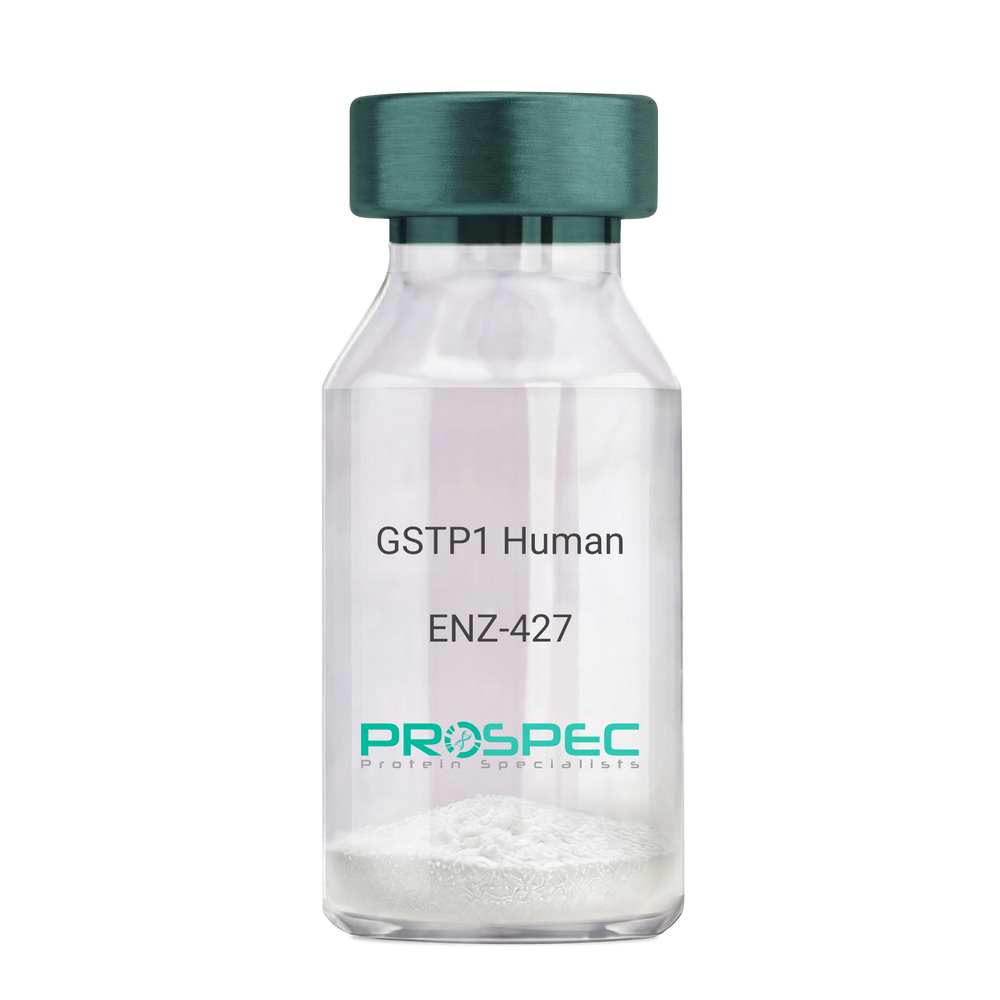
Name :
GSTP1 HumanDescription:
Glutathione S-Transferase pi 1 Human Recombinant
Glutathione S-transferase P, GST class-pi, GSTP1-1, GSTP1, FAEES3, GST3, PI, DFN7.
Product # :
ENZ-427Price :
Quantity :
Shipping Method :
Shipped with Ice Packs
More Info
- description
- source
- formulation
- purity
- biological activity
- More Info
Description
GSTP1 Human Recombinant fused with 36 amino acid His tag at N-terminus produced in E.Coli is a single, non-glycosylated, polypeptide chain containing 246 amino acids (1-210 a.a.) And having a molecular mass of 27.4kDa. The GSTP1 is purified by proprietary chromatographic techniques.
Source
Escherichia Coli.
Formulation
The GSTP1 solution (0.5mg/ml) contains 20mM Tris-HCl buffer (pH7.0), 30% glycerol, 1mM EDTA and 0.1mM PMSF.
Purity
Greater than 95.0% as determined by SDS-PAGE.
Biological Activity
Specific activity is > 80 units/mg, and is defined as the amount of enzyme that conjugate 1.0 u mole of 1-chloro-2,4-dinitrobenzene (CDNB) with reduced glutathione per minute at pH 6.5 at 25°C.
More Info
-
Introduction
GSTP1 is a polymorphic gene encoding active, functionally different GSTP1 variant proteins that are believed to function in xenobiotic metabolism and have a part in susceptibility to cancer, and other diseases. GSTP1 is a glutathione S-transferase belonging to the pi class. GST family enzymes play a significant role in detoxification by catalyzing the conjugation of many hydrophobic and electrophilic compounds with reduced glutathione. Based upon the biochemical, immunologic and structural properties of the soluble GSTs they are grouped into 4 main classes: alpha, mu, pi, and theta. The GSTP1 enzyme acts by catalyzing the reaction of glutathione with an acceptor molecule to form a Sulfur-substituted glutathione. The reactions employing glutathione contribute the transformation of a broad range of electrophiles, including reactive products of lipid, protein, carcinogens, therapeutic drugs, environmental toxins, and products of oxidative stress.
The GSTP1 inactivation through CpG hypermethylation is frequent in pituitary adenomas and may be a factor in aggressive pituitary tumor behavior. GSTP1 is may be a transcriptional target of the p53 tumor suppressor gene. Single-nucleotide polymorphism in GSTP1 is linked to modified protein binding, which influence GSTP1's contribution to carcinogen and drug metabolism, and possibly disease pathogenesis and/or drug response. GST-pi might have central roles in proliferation of androgen-independent human prostate cancer cells. -
Synonyms
Glutathione S-transferase P, GST class-pi, GSTP1-1, GSTP1, FAEES3, GST3, PI, DFN7.
-
Physical Appearance
Sterile Filtered colorless solution.
-
Stability
Store at 4°C if entire vial will be used within 2-4 weeks. Store, frozen at -20°C for longer periods of time. For long term storage it is recommended to add a carrier protein (0.1% HSA or BSA). Avoid multiple freeze-thaw cycles.
-
Amino Acid Sequence
MRGSHHHHHH GMASMTGGQQ MGRDLYDDDD KDRWGSMPPY TVVYFPVRGR CAALRMLLAD QGQSWKEEVV TVETWQEGSL KASCLYGQLP KFQDGDLTLY QSNTILRHLG RTLGLYGKDQ QEAALVDMVN DGVEDLRCKY ISLIYTNYEA GKDDYVKALP GQLKPFETLL SQNQGGKTFI VGDQISFADY NLLDLLLIHE VLAPGCLDAF PLLSAYVGRL SARPKLKAFL ASPEYVNLPI NGNGKQ.
ProSpec's products are furnished for LABORATORY RESEARCH USE ONLY. The product may not be used as drugs, agricultural or pesticidal products, food additives or household chemicals.
- View Data Sheet
Name :
Thrombin BovineDescription:
Bovine Thrombin
Coagulation Factor II (Thrombin), Prepro-Coagulation Factor II, EC 3.4.21.5, RPRGL2, THPH1, Coagulation Factor II, Prothrombin B-Chain, Serine Protease, Prothrombin, EC 3.4.21, PT, F2.
Product # :
PRO-447Price :
Quantity :
Shipping Method :
Shipped at Room temp
More Info
- source
- formulation
- biological activity
- More Info
Source
Bovine Blood.
Formulation
Lyophilized freeze dry powder formulated with glycine, CaCl2 and sodium chloride, PH 6.8.
Biological Activity
155 US units/mg protein.
More Info
-
Introduction
Thrombin enzyme (Activated Factor IIa) is an important clotting promoter that controls the transformation of soluble fibrinogen to insoluble active fibrin strands. Thrombin is a coagulation protein and a serine protease (EC 3.4.21.5) that catalyzes many coagulation-related reactions. Thrombin triggers factor-XI, factor-V, Factor-XIII and factor-VIII. Thrombin endorses platelet activation, using activation of protease-activated receptors on the platelet. As a result of its high proteolytic specificity, thrombin has become an important biochemical protein. The thrombin cleavage site (Leu-Val-Pro-Arg-Gly-Ser) is widely used in linker regions of recombinant fusion protein constructs. After the purification of the fusion protein, thrombin is used to cleave between the Arginine and Glycine residues of the cleavage site, efficiently removing the purification tag from the protein of interest with a high degree of specificity.
-
Synonyms
Coagulation Factor II (Thrombin), Prepro-Coagulation Factor II, EC 3.4.21.5, RPRGL2, THPH1, Coagulation Factor II, Prothrombin B-Chain, Serine Protease, Prothrombin, EC 3.4.21, PT, F2.
-
Physical Appearance
Sterile Filtered beige lyophilized (freeze-dried) powder.
-
Stability
Lyophilized Thrombin although stable at room temperature for 3 weeks, should be stored desiccated below -18°C. Upon reconstitution Thrmbin should be stored at 4°C between 2-7 days and for future use below -18°C. For long term storage it is recommended to add a carrier protein (0.1% HSA or BSA).Please prevent freeze-thaw cycles.
-
Solubility
It is recommended to reconstitute the lyophilized Thrombin in 0.9% NaCl.
ProSpec's products are furnished for LABORATORY RESEARCH USE ONLY. The product may not be used as drugs, agricultural or pesticidal products, food additives or household chemicals.
- View Data Sheet
Name :
GPX7 HumanDescription:
Glutathione Peroxidase 7 Human Recombinant
Glutathione peroxidase 7, glutathione peroxidase 6, GPX6, NPGPx, CL683, GPx-7, GSHPx-7, non-selenocysteine containing phospholipid hydroperoxide glutathione peroxidase, FLJ14777, EC 1.11.1.9.
Product # :
ENZ-237Price :
Quantity :
Shipping Method :
Shipped with Ice Packs
More Info
- description
- source
- formulation
- purity
- More Info
Description
GPX7 Human Recombinant produced in E.coli is a single, non-glycosylated polypeptide chain containing 193 amino acids (20-187) and having a molecular mass of 21.8kDa.GPX7 is fused to a 25 amino acid His-tag at N-terminus & purified by proprietary chromatographic techniques.
Source
E.coli.
Formulation
The GPX7 solution (1mg/ml) contains 20mM Tris-HCl buffer (pH 8.0), 100mM NaCl, 1mM DTT and 20% glycerol.
Purity
Greater than 95% as determined by SDS-PAGE.
More Info
-
Introduction
GPX7 is a member of the glutathione peroxidase family. Glutathione peroxidases (GPx) are a family of enzymes with peroxidase activity whose central biological role is to guard the organism from oxidative damage by reducing lipid hydroperoxides to their corresponding alcohols and to reduce free hydrogen peroxide to water.
-
Synonyms
Glutathione peroxidase 7, glutathione peroxidase 6, GPX6, NPGPx, CL683, GPx-7, GSHPx-7, non-selenocysteine containing phospholipid hydroperoxide glutathione peroxidase, FLJ14777, EC 1.11.1.9.
-
Physical Appearance
Sterile Filtered colorless solution.
-
Stability
Store at 4°C if entire vial will be used within 2-4 weeks. Store, frozen at -20°C for longer periods of time. For long term storage it is recommended to add a carrier protein (0.1% HSA or BSA).Avoid multiple freeze-thaw cycles.
-
Amino Acid Sequence
MGSSHHHHHH SSGLVPRGSH MGSHMQQEQD FYDFKAVNIR GKLVSLEKYR GSVSLVVNVA SECGFTDQHY RALQQLQRDL GPHHFNVLAF PCNQFGQQEP DSNKEIESFA RRTYSVSFPM FSKIAVTGTG AHPAFKYLAQ TSGKEPTWNF WKYLVAPDGK VVGAWDPTVS VEEVRPQITA LVRKLILLKR EDL
ProSpec's products are furnished for LABORATORY RESEARCH USE ONLY. The product may not be used as drugs, agricultural or pesticidal products, food additives or household chemicals.
- View Data Sheet
Name :
PPME1 HumanDescription:
Protein Phosphatase Methylesterase 1 Human Recombinant
Protein phosphatase methylesterase 1, PME-1, FLJ22226, EC 3.1.1.
Product # :
ENZ-155Price :
Quantity :
Shipping Method :
Shipped with Ice Packs
More Info
- description
- source
- formulation
- purity
- More Info
Description
PPME1 Human Recombinant produced in E.coli is a single, non-glycosylated polypeptide chain containing 406 amino acids (1-386) and having a molecular mass of 44.4 kDa.The PPME1 is fused to a 20 amino acid His-Tag at N-terminus and purified by proprietary chromatographic techniques.
Source
E.coli.
Formulation
The PPME1 solution (0.5mg/ml) contains 20mM Tris-HCl buffer (pH 8.0), 1mM DTT, 0.1M NaCl and 20% glycerol.
Purity
Greater than 95% as determined by SDS-PAGE.
More Info
-
Introduction
PPME1 catalyzes the demethylation and inactivation of protein phosphatase (PP2A), a multimeric phosphoserine/ threonine protein phosphatase related to growth inhibition and cell cycle arrest. PPME1 can demethylate PP2A catalytic subunit in vitro and okadaic acid treatment can inhibit this reaction. It is conserved from yeast to human and holds a motif found in lipases having a catalytic triad activated serine as their active site nucleophile.
-
Synonyms
Protein phosphatase methylesterase 1, PME-1, FLJ22226, EC 3.1.1.
-
Physical Appearance
Sterile Filtered colorless solution.
-
Stability
Store at 4°C if entire vial will be used within 2-4 weeks. Store, frozen at -20°C for longer periods of time. For long term storage it is recommended to add a carrier protein (0.1% HSA or BSA).Avoid multiple freeze-thaw cycles.
-
Amino Acid Sequence
MGSSHHHHHH SSGLVPRGSH MSALEKSMHL GRLPSRPPLP GSGGSQSGAK MRMGPGRKRD FSPVPWSQYF ESMEDVEVEN ETGKDTFRVY KSGSEGPVLL LLHGGGHSAL SWAVFTAAII SRVQCRIVAL DLRSHGETKV KNPEDLSAET MAKDVGNVVE AMYGDLPPPI MLIGHSMGGA IAVHTASSNL VPSLLGLCMI DVVEGTAMDA LNSMQNFLRG RPKTFKSLEN AIEWSVKSGQ IRNLESARVS MVGQVKQCEG ITSPEGSKSI VEGIIEEEEE DEEGSESISK RKKEDDMETK KDHPYTWRIE LAKTEKYWDG WFRGLSNLFL SCPIPKLLLL AGVDRLDKDL TIGQMQGKFQ MQVLPQCGHA VHEDAPDKVA EAVATFLIRH RFAEPIGGFQ CVFPGC
ProSpec's products are furnished for LABORATORY RESEARCH USE ONLY. The product may not be used as drugs, agricultural or pesticidal products, food additives or household chemicals.
- View Data Sheet
Name :
GLRX1 HumanDescription:
Glutaredoxin 1 Human Recombinant
Thioltransferase, GRX, GLRX1, GRX1, GRX-1, GLRX-1, Glutathione-dependent oxidoreductase 1, Glutaredoxin-1, Thioltransferase-1, TTase-1, GLRX, MGC117407.
Product # :
ENZ-391Price :
Quantity :
Shipping Method :
Shipped with Ice Packs
More Info
- description
- source
- formulation
- purity
- More Info
Description
Glutaredoxin Human Recombinant produced in E.Coli is a single, non-glycosylated, Polypeptide chain containing 106 amino acids having a molecular mass of 11.7 kDa.
Source
Escherichia Coli.
Formulation
Glutaredoxin solution (1mg/ml) contains 20mM Tris-HCl pH-8, 1mM DTT & 10% Glycerol.
Purity
Greater than 95% as determined by SDS-PAGE.
More Info
-
Introduction
GLRX1 has a glutathione-disulfide oxidoreductase activity in the presence of nadph and glutathione reductase. reduces low molecular weight disulfides and proteins. Glutaredoxin is a glutathione (GSH)-dependent hydrogen donor for ribonucleotide reductase and also catalyzes glutathione-disulfide oxidoreduction reactions in the presence of NADPH and glutathione reductase. GLRX1 is multifunctional enzyme with glutathione-dependent oxidoreductase, glutathione peroxidase and glutathione S-transferase (GST) activity. The disulfide bond functions as an electron carrier in the glutathione-dependent synthesis of deoxyribonucleotides by the enzyme ribonucleotide reductase. In addition, it is also involved in reducing cytosolic protein- and non-protein-disulfides in a coupled system with glutathione reductase. Required for resistance to reactive oxygen species (ROS) by directly reducing hydroperoxides and for the detoxification of ROS-mediated damage.
-
Synonyms
Thioltransferase, GRX, GLRX1, GRX1, GRX-1, GLRX-1, Glutathione-dependent oxidoreductase 1, Glutaredoxin-1, Thioltransferase-1, TTase-1, GLRX, MGC117407.
-
Physical Appearance
Sterile Filtered clear colorless solution.
-
Stability
Store at 4°C if entire vial will be used within 2-4 weeks. Store, frozen at -20°C for longer periods of time. For long term storage it is recommended to add a carrier protein (0.1% HSA or BSA).Avoid multiple freeze-thaw cycles.
-
Amino Acid Sequence
MAQEFVNCKI QPGKVVVFIK PTCPYCRRAQ EILSQLPIKQ GLLEFVDITA TNHTNEIQDY LQQLTGARTV PRVFIGKDCI GGCSDLVSLQ QSGELLTRLK QIGALQ.
ProSpec's products are furnished for LABORATORY RESEARCH USE ONLY. The product may not be used as drugs, agricultural or pesticidal products, food additives or household chemicals.
- View Data Sheet
Name :
CTSB Mouse, ActiveDescription:
Cathepsin-B Mouse Recombinant, Active
Cathepsin B, Cathepsin B1, CTSB.
Product # :
PRO-2377Price :
Quantity :
Shipping Method :
Shipped with Ice Packs
More Info
- description
- source
- formulation
- purity
- biological activity
- More Info
Description
CTSB Mouse Recombinant produced in Sf9 Baculovirus cells is a single, glycosylated polypeptide chain containing 330 amino acids (18-339a.a.) and having a molecular mass of 36.4kDa (Molecular size on SDS-PAGE will appear at approximately 28-40kDa). CTSB is expressed with an 8 amino acid His tag at C-Terminus and purified by proprietary chromatographic techniques.
Source
Sf9, Baculovirus cells.
Formulation
CTSB protein solution (0.5mg/ml) containing Phosphate Buffered Saline (pH 7.4) and 10% glycerol.
Purity
Greater than 90% as determined by SDS-PAGE.
Biological Activity
Specific activity is > 2,000 pmol/min/ug and is defined as the amount of enzyme that hydrolyze 1pmole of Z-Arg-Arg-AMC to Z-Arg-Arg and AMC per minute at pH 6.0 at 37C.More Info
-
Introduction
Cathepsin B preproprotein (CTSB) is a papain-family cysteine protease which is normally located in lysosomes. CTSB is able to degrade several extracellular matrix components at both neutral and acidic pH and has been implicated in the progression of some human and rodent tumors progression and arthritis.
-
Synonyms
Cathepsin B, Cathepsin B1, CTSB.
-
Physical Appearance
Sterile Filtered clear solution.
-
Stability
Store at 4°C if entire vial will be used within 2-4 weeks. Store, frozen at -20°C for longer periods of time.For long term storage it is recommended to add a carrier protein (0.1% HSA or BSA).Please avoid freeze thaw cycles.
-
Amino Acid Sequence
HDKPSFHPLS DDLINYINKQ NTTWQAGRNF YNVDISYLKK LCGTVLGGPK LPGRVAFGED IDLPETFDAR EQWSNCPTIG QIRDQGSCGS CWAFGAVEAI SDRTCIHTNG RVNVEVSAED LLTCCGIQCG DGCNGGYPSG AWSFWTKKGL VSGGVYNSHV GCLPYTIPPC EHHVNGSRPP CTGEGDTPRC NKSCEAGYSP SYKEDKHFGY TSYSVSNSVK EIMAEIYKNG PVEGAFTVFS DFLTYKSGVY KHEAGDMMGG HAIRILGWGV ENGVPYWLAA NSWNLDWGDN GFFKILRGEN HCGIESEIVA GIPRTDQYWG RFLEHHHHHH.
ProSpec's products are furnished for LABORATORY RESEARCH USE ONLY. The product may not be used as drugs, agricultural or pesticidal products, food additives or household chemicals.
- View Data Sheet
Name :
PSMB3 HumanDescription:
Proteasome Subunit Beta Type 3 Human Recombinant
Proteasome (prosome, macropain) subunit beta type 3, Proteasome chain 13, HC10-II, Proteasome component C10-II, Proteasome theta chain, EC 3.4.25.1, MGC4147.
Product # :
ENZ-200Price :
Quantity :
Shipping Method :
Shipped with Ice Packs
More Info
- description
- source
- formulation
- purity
- More Info
Description
PSMB3 Human Recombinant produced in E.Coli is a single, non-glycosylated polypeptide chain containing 225 amino acids (1-205 a.a.) and having a molecular mass of 25.1kDa.PSMB3 is fused to a 20 amino acid His-tag at N-terminus & purified by proprietary chromatographic techniques.
Source
Escherichia Coli.
Formulation
PSMB3 protein solution (0.25mg/ml) containing 20mM Tris-HCl buffer (pH8.0), 200mM NaCl, 1mM DTT and 50% glycerol.
Purity
Greater than 90.0% as determined by SDS-PAGE.
More Info
-
Introduction
The proteasome is a multicatalytic proteinase complex with an extremely organized ring-shaped 20S core structure. The core structure consists of 4 rings of 28 non-identical subunits; 2 rings consist of 7 alpha subunits and 2 rings consist of 7 beta subunits. Proteasomes are spread all over the eukaryotic cells in large quantities and cleave peptides in an ATP/ubiquitin-dependent procedure in a non-lysosomal pathway. A vital role of a modified proteasome, the immunoproteasome, is the handling of class I MHC peptides.
-
Synonyms
Proteasome (prosome, macropain) subunit beta type 3, Proteasome chain 13, HC10-II, Proteasome component C10-II, Proteasome theta chain, EC 3.4.25.1, MGC4147.
-
Physical Appearance
Sterile Filtered colorless solution.
-
Stability
Store at 4°C if entire vial will be used within 2-4 weeks. Store, frozen at -20°C for longer periods of time. For long term storage it is recommended to add a carrier protein (0.1% HSA or BSA).Avoid multiple freeze-thaw cycles.
-
Amino Acid Sequence
MGSSHHHHHH SSGLVPRGSH MSIMSYNGGA VMAMKGKNCV AIAADRRFGI QAQMVTTDFQ KIFPMGDRLY IGLAGLATDV QTVAQRLKFR LNLYELKEGR QIKPYTLMSM VANLLYEKRF GPYYTEPVIA GLDPKTFKPF ICSLDLIGCP MVTDDFVVSG TCAEQMYGMC ESLWEPNMDP DHLFETISQA MLNAVDRDAV SGMGVIVHII EKDKITTRTL KARMD
ProSpec's products are furnished for LABORATORY RESEARCH USE ONLY. The product may not be used as drugs, agricultural or pesticidal products, food additives or household chemicals.
- View Data Sheet
Name :
PKM2 HumanDescription:
Tumor Type M2 Pyruvate Kinase Human Recombinant
Pyruvate kinase isozymes M1/M2, EC 2.7.1.40, Pyruvate kinase muscle isozyme, Pyruvate kinase 2/3, Cytosolic thyroid hormone-binding protein, CTHBP, THBP1, M2PK, PKM2, PK3, PK2, PKM, TCB, OIP3, MGC3932, Tumor Type M2 Pyruvate Kinase.
Product # :
PKA-339Price :
Quantity :
Shipping Method :
Shipped with Ice Packs
More Info
- description
- source
- formulation
- purity
- biological activity
- More Info
Description
PKM2 Human Recombinant fused with a 20 amino acid His tag at N-terminus produced in E.Coli is a single, non-glycosylated, polypeptide chain containing 551 amino acids (1-531 a.a.) and having a molecular mass of 60.1kDa. The PKM2 is purified by proprietary chromatographic techniques.
Source
Escherichia Coli.
Formulation
The PKM2 solution (1mg/ml) contains 20mM Tris-HCl buffer (pH8.0) and 10% glycerol.
Purity
Greater than 95.0% as determined by SDS-PAGE.
Biological Activity
The Specific activity is > 25,000 pmol/min/ug. 1 unit will form 1pmol of phospho(enol)pyruvate to pyruvate per minute at pH 7.5 at 37°C.
More Info
-
Introduction
Pyruvate kinase is a key enzyme in the glycolytic pathway. The M2 isoenzyme of pyruvate kinase is specifically expressed at high levels in tumor cells, and can be measured in plasma of patients with advanced breast cancer. The marker is useful for measuring disease activity, sensitivity to chemotherapy and recurrence.
-
Synonyms
Pyruvate kinase isozymes M1/M2, EC 2.7.1.40, Pyruvate kinase muscle isozyme, Pyruvate kinase 2/3, Cytosolic thyroid hormone-binding protein, CTHBP, THBP1, M2PK, PKM2, PK3, PK2, PKM, TCB, OIP3, MGC3932, Tumor Type M2 Pyruvate Kinase.
-
Physical Appearance
Sterile Filtered clear solution.
-
Stability
Store at 4°C if entire vial will be used within 2-4 weeks. Store, frozen at -20°C for longer periods of time. For long term storage it is recommended to add a carrier protein (0.1% HSA or BSA). Avoid multiple freeze-thaw cycles.
-
Amino Acid Sequence
MGSSHHHHHH SSGLVPRGSH MSKPHSEAGT AFIQTQQLHA AMADTFLEHM CRLDIDSPPI TARNTGIICT IGPASRSVET LKEMIKSGMN VARLNFSHGT HEYHAETIKN VRTATESFAS DPILYRPVAV ALDTKGPEIR TGLIKGSGTA EVELKKGATL KITLDNAYME KCDENILWLD YKNICKVVEV GSKIYVDDGL ISLQVKQKGA DFLVTEVENG GSLGSKKGVN LPGAAVDLPA VSEKDIQDLK FGVEQDVDMV FASFIRKASD VHEVRKVLGE KGKNIKIISK IENHEGVRRF DEILEASDGI MVARGDLGIE IPAEKVFLAQ KMMIGRCNRA GKPVICATQM LESMIKKPRP TRAEGSDVAN AVLDGADCIM LSGETAKGDY PLEAVRMQHL IAREAEAAIY HLQLFEELRR LAPITSDPTE ATAVGAVEAS FKCCSGAIIV LTKSGRSAHQ VARYRPRAPI IAVTRNPQTA RQAHLYRGIF PVLCKDPVQE AWAEDVDLRV NFAMNVGKAR GFFKKGDVVI VLTGWRPGSG FTNTMRVVPV P.
ProSpec's products are furnished for LABORATORY RESEARCH USE ONLY. The product may not be used as drugs, agricultural or pesticidal products, food additives or household chemicals.
- View Data Sheet
Name :
CKMT1A HumanDescription:
Creatine Kinase, Mitochondrial 1A Human Recombinant
Creatine kinase mitochondrial 1A, creatine kinase mitochondrial 1 (ubiquitous), creatine kinase U-type mitochondrial, Acidic-type mitochondrial creatine kinase, Ubiquitous mitochondrial creatine kinase, CKMT1, U-MtCK, mia-CK, EC 2.7.3, EC 2.7.3.2.
Product # :
CKI-275Price :
Quantity :
Shipping Method :
Shipped with Ice Packs
More Info
- description
- source
- formulation
- purity
- biological activity
- More Info
Description
CKMT1A Human Recombinant produced in E. coli is a single polypeptide chain containing 403 amino acids (40-417) and having a molecular mass of 45.0 kDa.CKMT1A is fused to a 25 amino acid His-tag at N-terminus & purified by proprietary chromatographic techniques.
Source
E.coli.
Formulation
The CKMT1A solution (1mg/ml) contains 20mM Tris-HCl buffer (pH 8.0), 0.15M NaCl and 10% glycerol.
Purity
Greater than 95% as determined by SDS-PAGE.
Biological Activity
Specific activity is greater than 50unit/mg and is defined as the amount of enzyme that convert 1.0 umole of phosphate from phosphocreatine to ADP per minute at pH 7.5 at 37C.
More Info
-
Introduction
CKMT1A is in charge of the transfer of high energy phosphate from mitochondria to the cytosolic carrier, creatine. CKMT1A is a member of the creatine kinase isoenzyme family and exists as two isoenzymes, sarcomeric MtCK and ubiquitous MtCK, encoded by separate genes. Mitochondrial creatine kinase arises in two different oligomeric forms: dimers and octamers, unlike the exclusively dimeric cytosolic creatine kinase isoenzymes. Numerous malignant cancers with poor prognosis have displayed overexpression of ubiquitous mitochondrial creatine kinase which is linked to high energy turnover and inability to remove cancer cells through apoptosis.
-
Synonyms
Creatine kinase mitochondrial 1A, creatine kinase mitochondrial 1 (ubiquitous), creatine kinase U-type mitochondrial, Acidic-type mitochondrial creatine kinase, Ubiquitous mitochondrial creatine kinase, CKMT1, U-MtCK, mia-CK, EC 2.7.3, EC 2.7.3.2.
-
Physical Appearance
Sterile Filtered colorless solution.
-
Stability
Store at 4°C if entire vial will be used within 2-4 weeks. Store, frozen at -20°C for longer periods of time. For long term storage it is recommended to add a carrier protein (0.1% HSA or BSA).Avoid multiple freeze-thaw cycles.
-
Amino Acid Sequence
MGSSHHHHHH SSGLVPRGSH MGSHMASERR RLYPPSAEYP DLRKHNNCMA SHLTPAVYAR LCDKTTPTGW TLDQCIQTGV DNPGHPFIKT VGMVAGDEET YEVFADLFDP VIQERHNGYD PRTMKHTTDL DASKIRSGYF DERYVLSSRV RTGRSIRGLS LPPACTRAER REVERVVVDA LSGLKGDLAG RYYRLSEMTE AEQQQLIDDH FLFDKPVSPL LTAAGMARDW PDARGIWHNN EKSFLIWVNE EDHTRVISME KGGNMKRVFE RFCRGLKEVE RLIQERGWEF MWNERLGYIL TCPSNLGTGL RAGVHIKLPL LSKDSRFPKI LENLRLQKRG TGGVDTAATG GVFDISNLDR LGKSEVELVQ LVIDGVNYLI DCERRLERGQ DIRIPTPVIH TKH
ProSpec's products are furnished for LABORATORY RESEARCH USE ONLY. The product may not be used as drugs, agricultural or pesticidal products, food additives or household chemicals.
- View Data Sheet
Name :
PSMA8 HumanDescription:
Proteasome Subunit Alpha Type 8 Human Recombinant
Proteasome subunit alpha type-7-like, PSMA8, PSMA7L.
Product # :
ENZ-203Price :
Quantity :
Shipping Method :
Shipped with Ice Packs
More Info
- description
- source
- formulation
- purity
- More Info
Description
PSMA8 Human Recombinant produced in E.coli is a single, non-glycosylated polypeptide chain containing 270 amino acids (1-250) and having a molecular mass of 30kDa.PSMA8 is fused to a 20 amino acid His-tag at N-terminus & purified by proprietary chromatographic techniques.
Source
E.coli.
Formulation
The PSMA8 solution (0.5mg/ml) contains 20mM Tris-HCl buffer (pH 8.0), 1mM DTT, 10% glycerol and 0.1M NaCl.
Purity
Greater than 90% as determined by SDS-PAGE.
More Info
-
Introduction
Proteasome subunit alpha type-8 (PSMA8) is a member of the peptidase T1A family. PSMA8 is a multicatalytic proteinase complex which is distinguished by its ability to cleave peptides with Arg, Phe, Tyr, Leu, and Glu adjacent to the leaving group at neutral or slightly basic pH. The proteasome has an ATP-dependent proteolytic activity. The PSMA8 subunit may be testis-specific.
-
Synonyms
Proteasome subunit alpha type-7-like, PSMA8, PSMA7L.
-
Physical Appearance
Sterile Filtered colorless solution.
-
Stability
Store at 4°C if entire vial will be used within 2-4 weeks. Store, frozen at -20°C for longer periods of time. For long term storage it is recommended to add a carrier protein (0.1% HSA or BSA).Avoid multiple freeze-thaw cycles.
-
Amino Acid Sequence
MGSSHHHHHH SSGLVPRGSH MASRYDRAIT VFSPDGHLFQ VEYAQEAVKK GSTAVGIRGT NIVVLGVEKK SVAKLQDERT VRKICALDDH VCMAFAGLTA DARVVINRAR VECQSHKLTV EDPVTVEYIT RFIATLKQKY TQSNGRRPFG ISALIVGFDD DGISRLYQTD PSGTYHAWKA
NAIGRSAKTV REFLEKNYTE DAIASDSEAI KLAIKALLEV VQSGGKNIEL AIIRRNQPLK MFSAKEVELY VTEIEKEKEE AEKKKSKKSV.
ProSpec's products are furnished for LABORATORY RESEARCH USE ONLY. The product may not be used as drugs, agricultural or pesticidal products, food additives or household chemicals.