Search results
1000 results found for “Neurotrophic factors”
Name
Description
Product #
Price
Quantity
Shipping Method
- View Data Sheet
Name :
Leptin HumanDescription:
Human Leptin
OB Protein, Obesity Protein, OBS, Obesity factor, Leptin.
Product # :
CYT-683Price :
Quantity :
Shipping Method :
Shipped at Room temp
More Info
- description
- formulation
- purity
- More Info
Description
Leptin Human produced syntheticaly contains 35 amino acids (22-56 a.a.) having a molecular mass of 3950.6 Dalton.
Formulation
The protein was lyophilized from a concentrated (1mg/ml) solution with no additives.
Purity
Greater than 95.0% as determined by RP-HPLC.
More Info
-
Introduction
A 16kDa peptide hormone secreted from white adipocytes and implicated in the regulation of food intake and energy balance. Leptin provides the key afferent signal from fat cells in the feedback system that controls body fat stores.
-
Synonyms
OB Protein, Obesity Protein, OBS, Obesity factor, Leptin.
-
Physical Appearance
Sterile Filtered White lyophilized (freeze-dried) powder.
-
Stability
Lyophilized Leptin although stable at room temperature, should be stored desiccated below -20°C. Reconstituted Leptin is best stored refrigerated at 4°C.
-
Solubility
The lyophilized Leptin is very soluble in water and most aqueous buffers below and above the isoelectric point.
-
Amino Acid Sequence
Val-Pro-Ile-Gln-Lys-Val-Gln-Asp-Asp-Thr-Lys-Thr-Leu-Ile-Lys-Thr-Ile-Val-Thr-Arg-Ile-Asn-Asp-Ile-Ser-His-Thr-Gln-Ser-Val-Ser-Ser-Lys-Gln-Lys.
ProSpec's products are furnished for LABORATORY RESEARCH USE ONLY. The product may not be used as drugs, agricultural or pesticidal products, food additives or household chemicals.
- View Data Sheet
Name :
IL 6 Human, HisDescription:
Interleukin-6 Human Recombinant, His Tag
IFN-b2, B cell differentiation factor, BCDF, BSF-2, HPGF, HSF, MGI-2, B-cell stimulatory factor 2, Interferon beta-2, Hybridoma growth factor, CTL differentiation factor, CDF, IL-6, HGF.
Product # :
CYT-484Price :
Quantity :
Shipping Method :
Shipped with Ice Packs
More Info
- description
- source
- formulation
- purity
- More Info
Description
IL-6 Human Recombinant produced in E.Coli migrates to 25kDa and is fused to a 6 amino acid his tag at its C-terminus. IL-6 is purified by proprietary chromatographic technique.
Source
Escherichia Coli.
Formulation
Interleukin-6 His-Tag protein is supplied in Phosphate buffered saline and 25mM K2CO3
Purity
Protein is >95% pure as determined by 10% PAGE (coomassie staining).
More Info
-
Introduction
Interleukin-6 is a potent pro-inflammatory cytokine primarily produced by activated T cells and an assortment of other cells including endothelial cells and macrophages. IL-6 affects B and T lymphocytes and has been shown to have a role in host defense, acute phase reactions, immune responses and hematopoiesis.
-
Synonyms
IFN-b2, B cell differentiation factor, BCDF, BSF-2, HPGF, HSF, MGI-2, B-cell stimulatory factor 2, Interferon beta-2, Hybridoma growth factor, CTL differentiation factor, CDF, IL-6, HGF.
-
Physical Appearance
Sterile Filtered clear solution.
-
Stability
Store at 4°C if entire vial will be used within 2-4 weeks. Store, frozen at -20°C for longer periods of time. For long term storage it is recommended to add a carrier protein (0.1% HSA or BSA).Avoid multiple freeze-thaw cycles.
-
Background
Research Paper on Interleukin-6 Human Recombinant, His Tag
Abstract:
Interleukin-6 (IL-6) Human Recombinant, tagged with His, serves as a cornerstone in unraveling the intricacies of immune modulation. This research paper delves into its molecular attributes and implications within immunological studies. Through an exploration of its functions, synonyms like DIF, TNFA, and TNFSF2, and potential applications, we gain insights into its pivotal role in shaping immune responses.
Introduction:
IL-6 Human Recombinant, bearing a His tag, holds a pivotal position in immunology research. This paper aims to comprehensively elucidate its molecular characteristics and its contribution to our understanding of immune mechanisms.
Molecular Structure and Insights:
Analyzing the molecular architecture of IL-6 Human Recombinant, His Tag, we unearth its pivotal role in immune signaling. Its interactions and functions contribute to orchestrating immune responses.
Navigating Immune Dynamics:
The well-established role of IL-6 in immune cell activation and inflammation forms a foundation. IL-6 Human Recombinant, His Tag, enables a deeper exploration of these immune processes, enriching our comprehension of cytokine-mediated functions.
Synonyms and Network Connections:
Understanding synonyms linked with IL-6, such as DIF, TNFA, and TNFSF2, enhances our grasp of immune signaling networks. IL-6 Human Recombinant, His Tag, plays a vital role in unraveling the intricacies of these interconnected pathways.
Potential Applications in Research and Beyond:
IL-6 Human Recombinant, His Tag, extends beyond research realms, holding promise in elucidating immune-related diseases. Its significance stretches to potential therapeutic interventions and diagnostic applications.
Clinical Implications and Future Prospects:
The clinical relevance of IL-6 Human Recombinant, His Tag, is underscored by its role in diseases marked by dysregulated IL-6 signaling. Exploring its therapeutic potential paves the way for innovative strategies in disease management.
Conclusion:
Within the landscape of immunology, IL-6 Human Recombinant, His Tag, stands as a vital tool. Its molecular insights, fundamental functions, and potential implications position it as a cornerstone in advancing our understanding of immune regulation.
ProSpec's products are furnished for LABORATORY RESEARCH USE ONLY. The product may not be used as drugs, agricultural or pesticidal products, food additives or household chemicals.
- View Data Sheet
Name :
GH Zebrafish MutantDescription:
Growth Hormone Mutant Zebrafish Recombinant
GH1, GH, GHN, GH-N, hGH-N, Pituitary growth hormone, Growth hormone 1, Somatotropin.
Product # :
CYT-709Price :
Quantity :
Shipping Method :
Shipped at Room temp
More Info
- description
- source
- formulation
- purity
- More Info
Description
Somatotropin Zebrafish Mutant G113R Recombinant produced in E.Coli is a single, non-glycosylated polypeptide chain containing 185 amino acids with an additional Ala at the N-terminus and having a molecular mass of 21.18 kDa. The Zebrafish Mutant G113R Recombinant is purified by proprietary chromatographic techniques.
Source
Escherichia Coli.
Formulation
The protein was lyophilized from a concentrated (1mg/ml) solution with 0.5% NaHCO3 pH-8.
Purity
Greater than 95.0% as determined by:
(a) Analysis by RP-HPLC.
(b) Analysis by SDS-PAGE.More Info
-
Introduction
GH is a member of the somatotropin/prolactin family of hormones which play an important role in growth control. The gene, along with four other related genes, is located at the growth hormone locus on chromosome 17 where they are interspersed in the same transcriptional orientation; an arrangement which is thought to have evolved by a series of gene duplications. The five genes share a remarkably high degree of sequence identity. Alternative splicing generates additional isoforms of each of the five growth hormones, leading to further diversity and potential for specialization. This particular family member is expressed in the pituitary but not in placental tissue as is the case for the other four genes in the growth hormone locus. Mutations in or deletions of the gene lead to growth hormone deficiency and short stature.
-
Synonyms
GH1, GH, GHN, GH-N, hGH-N, Pituitary growth hormone, Growth hormone 1, Somatotropin.
-
Physical Appearance
Sterile Filtered White lyophilized (freeze-dried) powder.
-
Stability
Lyophilized Growth-Hormone although stable at room temperature for at least two weeks, should be stored desiccated below -18°C. Upon reconstitution and filter sterilization GH can be stored at 4°C, pH 9 for up to 4 weeks. For long term storage and more diluted solutions it is recommended to add a carrier protein (0.1% HSA or BSA). Please prevent freeze-thaw cycles.
-
Solubility
It is recommended to reconstitute the lyophilized Zebrafish Mutant G113R in 0.4% NaHCO3 or water adjusted to pH-9, not less than 100µg/ml, which can then be further diluted to other aqueous solutions, preferably in a presence of a carrier protein such as BSA or similar.
-
Amino Acid Sequence
The sequence of the first six N-terminal amino acids was determined and was found to be Ala-Gln-Arg-Leu-Phe-Asn.
ProSpec's products are furnished for LABORATORY RESEARCH USE ONLY. The product may not be used as drugs, agricultural or pesticidal products, food additives or household chemicals.
- View Data Sheet
Name :
CD30 HumanDescription:
CD30 Human Recombinant
CD30, D1S166E, KI-1, Tumor necrosis factor receptor superfamily member 8, CD30L receptor, Ki-1 antigen, Lymphocyte activation antigen CD30, TNFRSF8.
Product # :
PRO-1369Price :
Quantity :
Shipping Method :
Shipped with Ice Packs
More Info
- description
- source
- formulation
- purity
- More Info
Description
CD30 Human Recombinant produced in E.Coli is a single, non-glycosylated polypeptide chain containing 384 amino acids (19-379a.a.) and having a molecular mass of 40.8kDa. CD30 is fused to a 23 amino acid His-tag at N-terminus & purified by proprietary chromatographic techniques.
Source
E.coli.
Formulation
CD30 protein solution (1mg/ml) containing 20mM Tris-HCl buffer (pH 8.0), 0.15M NaCl, 10% glycerol and 1mM DTT.
Purity
Greater than 85% as determined by SDS-PAGE.
More Info
-
Introduction
Tumor necrosis factor receptor superfamily member 8 (CD30) is a member of the TNF-receptor superfamily. CD30 is expressed by activated (not by resting) T and B cells. CD30 interacts with TRAF2 and TRAF5 which mediate the signal transduction that leads to the activation of NF-kappaB. CD30 is a positive regulator of apoptosis, and also has been shown to limit the proliferative potential of autoreactive CD8 effector T cells and protect the body against autoimmunity.
-
Synonyms
CD30, D1S166E, KI-1, Tumor necrosis factor receptor superfamily member 8, CD30L receptor, Ki-1 antigen, Lymphocyte activation antigen CD30, TNFRSF8.
-
Physical Appearance
Sterile Filtered colorless solution.
-
Stability
Store at 4°C if entire vial will be used within 2-4 weeks. Store, frozen at -20°C for longer periods of time. For long term storage it is recommended to add a carrier protein (0.1% HSA or BSA).Avoid multiple freeze-thaw cycles.
-
Amino Acid Sequence
MGSSHHHHHH SSGLVPRGSH MGSFPQDRPF EDTCHGNPSH YYDKAVRRCC YRCPMGLFPT QQCPQRPTDC RKQCEPDYYL DEADRCTACV TCSRDDLVEK TPCAWNSSRV CECRPGMFCS TSAVNSCARC FFHSVCPAGM IVKFPGTAQK NTVCEPASPG VSPACASPEN CKEPSSGTIP QAKPTPVSPA TSSASTMPVR GGTRLAQEAA SKLTRAPDSP SSVGRPSSDP GLSPTQPCPE GSGDCRKQCE PDYYLDEAGR CTACVSCSRD DLVEKTPCAW NSSRTCECRP GMICATSATN SCARCVPYPI CAAETVTKPQ DMAEKDTTFE APPLGTQPDC NPTPENGEAP ASTSPTQSLL VDSQASKTLP IPTSAPVALS STGK.
ProSpec's products are furnished for LABORATORY RESEARCH USE ONLY. The product may not be used as drugs, agricultural or pesticidal products, food additives or household chemicals.
- View Data Sheet
Name :
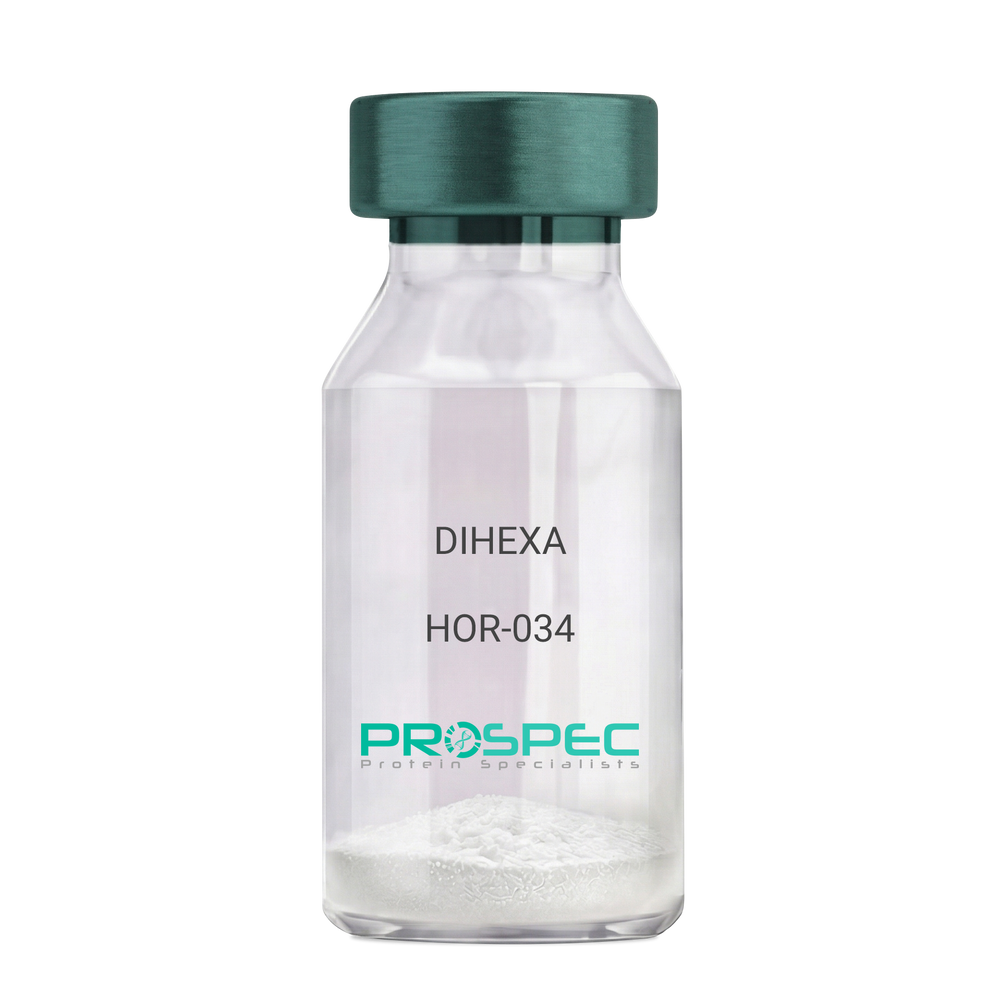
DIHEXADescription:
DIHEXA
Product # :
HOR-034Price :
Quantity :
Shipping Method :
Shipped at Room temp
More Info
- description
- formulation
- purity
- More Info
Description
DIHEXA Synthetic is a single, non-glycosylated polypeptide chain containing 3 amino acids, having a molecular mass of 504.28 Dalton and a Molecular formula of C27H44N4O5.
Formulation
The protein was lyophilized with no additives.
Purity
Greater than 97.0% as determined by analysis by RP-HPLC.
More Info
-
Physical Appearance
Sterile Filtered White lyophilized (freeze-dried) powder.
-
Stability
Lyophilized DIHEXA although stable at room temperature for 3 weeks, should be stored desiccated below -18°C. Upon reconstitution DIHEXA should be stored at 4°C between 2-7 days and for future use below -18°C. For long term storage it is recommended to add a carrier protein (0.1% HSA or BSA). Please prevent freeze-thaw cycles.
-
Solubility
It is recommended to reconstitute the lyophilized DIHEXA in sterile 18MΩ-cm H2O not less than 100 µg/ml, which can then be further diluted to other aqueous solutions.
-
Amino Acid Sequence
Hexanoyl-Tyr-Ile-Ahx-NH2.
-
Background
Dihexa, also known as N-hexanoic-Tyr-Ile-(6) aminohexanoic amide, is a potent and orally active small peptide that has been the focus of significant research due to its potential neurogenic and neuroprotective effects. This compound, derived from angiotensin IV, has been shown to possess a wide range of biological activities, including enhancing cognitive function, promoting neurogenesis, and potentially mitigating the effects of neurodegenerative diseases.
Dihexa's primary mechanism of action involves its interaction with hepatocyte growth factor (HGF) and its receptor, c-Met. By mimicking the effects of HGF, Dihexa can stimulate the c-Met receptor, leading to a cascade of events that promote neurogenesis and synaptic plasticity. Studies by Benoist et al. (2014) have demonstrated that Dihexa can enhance cognitive function in rats, suggesting potential applications in cognitive enhancement and the treatment of cognitive disorders.
In addition to its neurogenic effects, Dihexa has been shown to possess neuroprotective properties. Research by Kawas et al. (2017) found that Dihexa could protect neurons from apoptosis, suggesting potential applications in the treatment of neurodegenerative diseases such as Alzheimer's and Parkinson's disease.
Given its neurogenic and neuroprotective effects, Dihexa has been proposed as a potential therapeutic agent for a variety of conditions, including cognitive disorders, neurodegenerative diseases, and stroke. For instance, a study by Harding et al. (2018) found that Dihexa could improve outcomes in animal models of stroke, indicating its potential as a therapeutic agent in stroke recovery.
While research on Dihexa is promising, it is important to note that most studies have been conducted in animals or in vitro. More research is needed to fully understand the potential effects and applications of Dihexa in humans. However, the existing body of research suggests that Dihexa could be a promising tool in the treatment of cognitive disorders and neurodegenerative diseases.
ProSpec's products are furnished for LABORATORY RESEARCH USE ONLY. The product may not be used as drugs, agricultural or pesticidal products, food additives or household chemicals.
- View Data Sheet
Name :
Leptin tA OvineDescription:
Leptin Antagonist Triple Mutant Ovine Recombinant
Product # :
CYT-356Price :
Quantity :
Shipping Method :
Shipped at Room temp
More Info
- description
- source
- formulation
- purity
- biological activity
- More Info
Description
Leptin Antagonist Triple Mutant Ovine Recombinant is a single non-glycosilated polypeptide chain containing 146 amino and additional Ala at N-terminus acids and having a molecular mass of ~ 16 kDa, Leptin was mutated, resulting in L39A/D40A/F41A mutant. Leptin Antagonist Triple Mutant Ovine Recombinant was purified by proprietary chromatographic techniques.
Source
Escherichia coli.
Formulation
The protein was lyophilized from a concentrated (0.65mg/ml) solution with 0.003mM NaHCO3.
Purity
Greater than 98.0% as determined by:
(a) Gel filtration analysis.
(b) Analysis by SDS-PAGE.Biological Activity
ProSpec’s Leptin-Antagonist Triple Mutant Ovine Recombinant is capable of inhibiting leptin-induced proliferation of BAF/3 cells stably transfected with the long form of mouse leptin receptor. It also inhibits various leptin effects in several in vitro bioassays.More Info
-
Physical Appearance
White lyophilized (freeze-dried) powder.
-
Stability
Lyophilized Leptin Antagonist Triple Mutant Ovine Recombinant although stable at room temperature for several weeks, should be stored desiccated below -18°C. Upon reconstitution at > 0.1 Lep-tA mutant mg/ml and up to 2 mM and filter sterilization Leptin mutant can be stored at 4°C or even room temperature for several weeks making it suitable for long term infusion studies using osmotic pumps. At lower concentration addition of a carrier protein (0.1% HSA or BSA) is suggested. Please prevent freeze-thaw cycles.
-
Solubility
It is recommended to reconstitute the lyophilized Leptin-Antagonist Triple Mutant Ovine Recombinant in sterile water or sterile 0.4% NaHCO3 adjusted to pH 8, not less than 100µg/ml, which can then be further diluted to other aqueous solutions.
-
Amino Acid Sequence
The sequence of the first five N-terminal amino acids was determined and was found to be Ala-Val-Pro-Ile-Arg.
-
Protein content
Protein quantitation was carried out by UV spectroscopy at 280 nm using the absorbency value of 0.21 as the extinction coefficient for a 0.1% (1mg/ml) solution at pH 8.0. This value is calculated by the PC GENE computer analysis program of protein sequences (IntelliGenetics).
ProSpec's products are furnished for LABORATORY RESEARCH USE ONLY. The product may not be used as drugs, agricultural or pesticidal products, food additives or household chemicals.
- View Data Sheet
Name :
LGALS13 HumanDescription:
Galectin-13 Human Recombinant
Galactoside-binding soluble lectin 13, Galectin-13, Gal-13, Placental tissue protein 13, PP13, Placental protein 13, LGALS13, PLAC8, GAL13.
Product # :
CYT-004Price :
Quantity :
Shipping Method :
Shipped with Ice Packs
More Info
- description
- source
- formulation
- purity
- More Info
Description
Recombinant Human LGALS13 produced in E.Coli is a single, non-glycosylated polypeptide chain having a molecular mass of 16kDa. The LGALS13 also might appear as a homodimer, having a total Mw of 32kDa. LGALS13 is fused to a 6xHis tag at n-terminal and purified using standard chromatography techniques.
Source
Escherichia Coli.
Formulation
LGALS13 protein solution (0.5mg/ml) is formulated in 1xPBS buffer pH 7.4.
Purity
Greater than 90.0% as determined by SDS-PAGE.
More Info
-
Introduction
Recombinant Galectin-13 is an E. coli expressed peptide, this protein is one of human placenta specific galectins, like all galectin family, it contains a carbohydrate recognition domain (CRD) as well. Increased blood concentration was found highly asscoaited with preeclampsia and HELLP syndrome in pregnant women. The molecular weight of galectin-13 is 16kDa.
-
Synonyms
Galactoside-binding soluble lectin 13, Galectin-13, Gal-13, Placental tissue protein 13, PP13, Placental protein 13, LGALS13, PLAC8, GAL13.
-
Physical Appearance
Sterile Filtered colorless solution.
-
Stability
Store at 4°C if entire vial will be used within 2-4 weeks.Store, frozen at -20°C for longer periods of time. For long term storage it is recommended to add a carrier protein (0.1% HSA or BSA). Avoid multiple freeze-thaw cycles.
-
Amino Acid Sequence
MSSLPVPYKLPVSLSVGSCVIIKGTPIHSFINDPQLQVDFYTDM DEDSDIAFRFRVHFGNHVVMNRREFGIWMLEETTDYVPFEDGK
QFELCIYVHYNEYEIKVNGIRIYGFVHRIPPSFVKMVQVSRDISLTSVCVCN
-
Background
What is the molecular weight/Mw of LGALS13 HUMAN Protein?
LGALS13 HUMAN Protein has a total Mw of 32kDa.
What is the source or expression system of LGALS13 HUMAN Protein?
Escherichia Coli.
What is the Purity of LGALS13 HUMAN Protein?
LGALS13 HUMAN Protein is >90% pure as determined by SDS-PAGE.
What is the Biological Activity of LGALS13 HUMAN Protein?
The biological functionality of LGALS13 HUMAN Protein will be determined in the future.
What is the amino acid sequence of LGALS13 HUMAN Protein?
MSSLPVPYKLPVSLSVGSCVIIKGTPIHSFINDPQLQVDFYTDM DEDSDIAFRFRVHFGNHVVMNRREFGIWMLEETTDYVPFEDGK
QFELCIYVHYNEYEIKVNGIRIYGFVHRIPPSFVKMVQVSRDISLTSVCVCN
What applications can LGALS13 HUMAN Protein be used in?
LGALS13 HUMAN Protein can probably be used in western blot, ELISA and Lateral Flow.
What is the endotoxin level for LGALS13 HUMAN Protein?
The endotoxin level is minimal, LGALS13 HUMAN Protein was purified using conventional chromatography techniques.
ProSpec's products are furnished for LABORATORY RESEARCH USE ONLY. The product may not be used as drugs, agricultural or pesticidal products, food additives or household chemicals.
- View Data Sheet
Name :
Leptin PorcineDescription:
Leptin Porcine Recombinant
OB Protein, Obesity Protein, OBS, Obesity factor.
Product # :
CYT-503Price :
Quantity :
Shipping Method :
Shipped at Room temp
More Info
- description
- source
- formulation
- purity
- biological activity
- More Info
Description
Leptin Porcine Recombinant produced in E.Coli is a single, non-glycosylated, polypeptide chain containing 146 amino acids and additional Ala at N-terminus, having a molecular mass of 16kDa. The Leptin is purified by proprietary chromatographic techniques.
Source
Escherichia Coli.
Formulation
The protein was lyophilized from a concentrated (1mg/ml) solution with 0.02% NaHCO3.
Purity
Greater than 98.0% as determined by:
(a) Gel filtration analysis.
(b) Analysis by SDS-PAGE.Biological Activity
Biological active as evidenced by inducing proliferation of BAF/3 cells stably transfected with the long form of human leptin receptor.More Info
-
Introduction
A 16-kDa peptide hormone secreted from white adipocytes and implicated in the regulation of food intake and energy balance. Leptin provides the key afferent signal from fat cells in the feedback system that controls body fat stores.
-
Synonyms
OB Protein, Obesity Protein, OBS, Obesity factor.
-
Physical Appearance
Sterile Filtered White lyophilized (freeze-dried) powder.
-
Stability
Lyophilized Leptin although stable at room temperature for 3 weeks, should be stored desiccated below -18°C. Upon reconstitution Leptin should be stored at 4°C between 2-7 days and for future use below -18°C.For long term storage it is recommended to add a carrier protein (0.1% HSA or BSA).Please prevent freeze-thaw cycles.
-
Solubility
It is recommended to reconstitute the lyophilized recombinant porcine leptin in sterile 0.4% NaHCO3 adjusted to ph 8-9, not less than 100µg/ml, which can then be further diluted to other aqueous solutions.
-
Amino Acid Sequence
The sequence of the first five N-terminal amino acids was determined and was found to be Ala-Val-Pro-Ile-Trp.
-
Protein content
Protein quantitation was carried out by two independent methods:1. UV spectroscopy at 280 nm using the absorbency value of 0.57 as the extinction coefficient for a 0.1% (1mg/ml) solution. This value is calculated by the PC GENE computer analysis program of protein sequences (IntelliGenetics). 2. Analysis by RP-HPLC,using calibrated solution of Leptin Porcine as a Reference Standard.
ProSpec's products are furnished for LABORATORY RESEARCH USE ONLY. The product may not be used as drugs, agricultural or pesticidal products, food additives or household chemicals.
- View Data Sheet
Name :
Thrombin BovineDescription:
Bovine Thrombin
Coagulation Factor II (Thrombin), Prepro-Coagulation Factor II, EC 3.4.21.5, RPRGL2, THPH1, Coagulation Factor II, Prothrombin B-Chain, Serine Protease, Prothrombin, EC 3.4.21, PT, F2.
Product # :
PRO-447Price :
Quantity :
Shipping Method :
Shipped at Room temp
More Info
- source
- formulation
- biological activity
- More Info
Source
Bovine Blood.
Formulation
Lyophilized freeze dry powder formulated with glycine, CaCl2 and sodium chloride, PH 6.8.
Biological Activity
155 US units/mg protein.
More Info
-
Introduction
Thrombin enzyme (Activated Factor IIa) is an important clotting promoter that controls the transformation of soluble fibrinogen to insoluble active fibrin strands. Thrombin is a coagulation protein and a serine protease (EC 3.4.21.5) that catalyzes many coagulation-related reactions. Thrombin triggers factor-XI, factor-V, Factor-XIII and factor-VIII. Thrombin endorses platelet activation, using activation of protease-activated receptors on the platelet. As a result of its high proteolytic specificity, thrombin has become an important biochemical protein. The thrombin cleavage site (Leu-Val-Pro-Arg-Gly-Ser) is widely used in linker regions of recombinant fusion protein constructs. After the purification of the fusion protein, thrombin is used to cleave between the Arginine and Glycine residues of the cleavage site, efficiently removing the purification tag from the protein of interest with a high degree of specificity.
-
Synonyms
Coagulation Factor II (Thrombin), Prepro-Coagulation Factor II, EC 3.4.21.5, RPRGL2, THPH1, Coagulation Factor II, Prothrombin B-Chain, Serine Protease, Prothrombin, EC 3.4.21, PT, F2.
-
Physical Appearance
Sterile Filtered beige lyophilized (freeze-dried) powder.
-
Stability
Lyophilized Thrombin although stable at room temperature for 3 weeks, should be stored desiccated below -18°C. Upon reconstitution Thrmbin should be stored at 4°C between 2-7 days and for future use below -18°C. For long term storage it is recommended to add a carrier protein (0.1% HSA or BSA).Please prevent freeze-thaw cycles.
-
Solubility
It is recommended to reconstitute the lyophilized Thrombin in 0.9% NaCl.
ProSpec's products are furnished for LABORATORY RESEARCH USE ONLY. The product may not be used as drugs, agricultural or pesticidal products, food additives or household chemicals.
- View Data Sheet
Name :
Resistin Human, HisDescription:
Resistin Human Recombinant, His Tag
Cysteine-rich secreted protein FIZZ3, Adipose tissue-specific secretory factor, ADSF, C/EBP-epsilon-regulated myeloid-specific secreted cysteine-rich protein, Cysteine-rich secreted protein A12-alpha-like 2, RSTN, XCP1, RETN1, MGC126603, MGC126609.
Product # :
CYT-256Price :
Quantity :
Shipping Method :
Shipped with Ice Packs
More Info
- description
- source
- formulation
- purity
- More Info
Description
Resistin Human Recombinant produced in E.Coli is a single, non-glycosylated, Polypeptide chain containing a 92 amino acids fragment (17-108) of the mature Human Resistin, having a total molecular mass of 14.23kDa and fused with a 4.5kDa amino-terminal hexahistidine tag. The Resistin is purified by proprietary chromatographic techniques.
Source
Escherichia Coli.
Formulation
Resistin protein solution is supplied in 20mM Tris-HCl pH 8.0, 5mM EDTA and 50% glycerol.
Purity
Greater than 95% as determined by SDS-PAGE.
More Info
-
Introduction
Resistin, a product of the RSTN gene, is a peptide hormone belonging to the class of cysteine-rich secreted proteins which is termed the RELM family, and is also described as ADSF (Adipose Tissue- Specific Secretory Factor) and FIZZ3 (Found in Inflammatory Zone). Human resistin contains 108 amino acids as a prepeptide, and its hydrofobic signal peptide is cleaved before its secretion. Resistin circulates in human blood as a dimeric protein consisting of two 92 amino acid polypeptides, which are disulfide-linked via Cys26.
Resistin may be an important link between obesity and insulin resistance. Mouse resistin, specifically produced and secreted by adipocyte, acts on skeletal muscle myocytes, hepatocytes and adipocytes themselves so that it reduces their sensitivity to insulin. Steppan et al. have suggested that resistin suppresses the ability of insulin to stimulate glucose uptake. They have also suggested that resistin is present at elevated levels in blood of obese mice, and is down regulated by fasting and antidiabetic drugs. Way et al., on the other hand, have found that resistin expression is severly suppressed in obesity and is stimulated by several antidiabetic drugs.
Other studies have shown that mouse resistin increases during the differentiation of adipocytes, but it also seems to inhibit adipogenesis. In contrast, the human adipogenic differentiation is likely to be associated with a down regulation of resistin gene expression. -
Synonyms
Cysteine-rich secreted protein FIZZ3, Adipose tissue-specific secretory factor, ADSF, C/EBP-epsilon-regulated myeloid-specific secreted cysteine-rich protein, Cysteine-rich secreted protein A12-alpha-like 2, RSTN, XCP1, RETN1, MGC126603, MGC126609.
-
Physical Appearance
Sterile filtered colorless solution.
-
Stability
Store at 4°C if entire vial will be used within 2-4 weeks. Store, frozen at -20°C for longer periods of time.Please avoid freeze thaw cycles.
ProSpec's products are furnished for LABORATORY RESEARCH USE ONLY. The product may not be used as drugs, agricultural or pesticidal products, food additives or household chemicals.
- View Data Sheet
Name :
Activin B HumanDescription:
Activin-B Human Recombinant
Inhibin beta B (activin AB beta polypeptide), Inhibin, beta-2, Activin beta-B chain, MGC157939.
Product # :
CYT-058Price :
Quantity :
Shipping Method :
Shipped at Room temp
More Info
- description
- source
- formulation
- purity
- More Info
Description
Activin B human Recombinant produced in Nicotiana benthamiana plant is a beta-B single chain (aa 293-406) containing 123 amino acids (molecular formula C615H910N178O177S12). Activin B is fused to a 10-His-tag at the N-terminal having the total molecular mass of 14kDa and purified by standard chromatographic techniques.
Source
Nicotiana benthamiana plant
Formulation
Lyophilized from 1mg/ml solution in 0.05M Tris-HCl buffer pH 7.4.
Purity
Greater than 97.0% as determined by Analysis by SDS-PAGE.
More Info
-
Introduction
Inhibins are dimeric peptide hormones produced by female ovarian granulose cells and male Sertoli cells as well as a variety of other tissues. Inhibins have two isoforms, A and B, with the same alpha subunit but different beta subunits. Inhibin A is a dimer of alpha and beta A subunits, inhibin B is a dimer of alpha and beta B subunits.
Inhibins are thought to inhibit the production of follicle-stimulating hormone (FSH) by the pituitary gland. In addition, Inhibins are also thought to play a role in the control of gametogenesis, and embryonic and fetal development. -
Synonyms
Inhibin beta B (activin AB beta polypeptide), Inhibin, beta-2, Activin beta-B chain, MGC157939.
-
Physical Appearance
Sterile Filtered White lyophilized (freeze-dried) powder.
-
Stability
Lyophilized Activin B although stable at room temperature for 3 weeks, should be stored desiccated below -18°C. Upon reconstitution Activin B should be stored at 4°C between 2-7 days and for future use below -18°C. For long term storage it is recommended to add a carrier protein (0.1% HSA or BSA). Please prevent freeze-thaw cycles.
-
Solubility
It is recommended to reconstitute the lyophilized Activin B in sterile 18M-cm H2O not less than 100µg/ml, which can then be further diluted to other aqueous solutions.
-
Amino Acid Sequence
HHHHHHHHHH GLECDGRTNL CCRQQFFIDF RLIGWNDWII APTGYYGNYC EGSCPAYLAG VPGSASSFHT AVVNQYRMRG LNPGTVNSCC IPTKLSTMSM LYFDDEYNIV KRDVPNMIVE ECG
-
Background
What is the molecular weight / Mw of Activin B Protein?
Activin A Protein has a total Mw of 14 kDa.
What is the source or expression system of Activin B Protein?
Nicotinia
What is the Purity of Activin B Protein?
Activin B Protein is >97% pure as determined by SDS-PAGE.
What is the Biological Activity of Activin B Protein?
The biological functionality of Activin-B Protein will be determined in the future.
What is the endotoxin level for Activin B Protein?
The endotoxin level is minimal, ACTIVIN B Protein was purified using conventional chromatography techniques.
What is the amino acid sequence of ACTIVIN B Protein?
HHHHHHHHHH GLECDGRTNL CCRQQFFIDF RLIGWNDWII APTGYYGNYC EGSCPAYLAG VPGSASSFHT AVVNQYRMRG LNPGTVNSCC IPTKLSTMSM LYFDDEYNIV KRDVPNMIVE ECG
What applications can ACTIVIN B Protein be used in?
ACTIVIN A Protein can probably be used in western blot, ELISA and Lateral Flow.
ProSpec's products are furnished for LABORATORY RESEARCH USE ONLY. The product may not be used as drugs, agricultural or pesticidal products, food additives or household chemicals.
- View Data Sheet
Name :
Activin B Human ActiveDescription:
Activin-B Human Recombinant, Active
Inhibin beta B (activin AB beta polypeptide), Inhibin, beta-2, Activin beta-B chain, MGC157939.
Product # :
CYT-057Price :
Quantity :
Shipping Method :
Shipped at Room temp
More Info
- description
- source
- formulation
- purity
- biological activity
- More Info
Description
Activin B human Recombinant produced in Nicotiana benthamiana plant is a beta-B single chain (aa 293-406) containing 123 amino acids (molecular formula C615H910N178O177S12). Activin B is fused to a 10-His-tag at the N-terminal having the total molecular mass of 14kDa and purified by standard chromatographic techniques.
Source
Nicotiana benthamiana plant
Formulation
Lyophilized from 1mg/ml solution in 0.05M Tris-HCl buffer pH 7.4.
Purity
Greater than 97.0% as determined by Analysis by SDS-PAGE.
Biological Activity
The biological activity of Activin B is measured by its ability to inhibit mouse plasmacytoma cell line (MPC-11) cells proliferation. EC50 <5ng/ml is required to stimulate a half-maximal response at cytokine saturation. Note: Since applications vary, each investigator should titrate the reagent to obtain optimal results.More Info
-
Synonyms
Inhibin beta B (activin AB beta polypeptide), Inhibin, beta-2, Activin beta-B chain, MGC157939.
-
Physical Appearance
Sterile Filtered White lyophilized (freeze-dried) powder.
-
Stability
Lyophilized Activin B although stable at room temperature for 3 weeks, should be stored desiccated below -18°C. Upon reconstitution Activin B should be stored at 4°C between 2-7 days and for future use below -18°C. For long term storage it is recommended to add a carrier protein (0.1% HSA or BSA). Please prevent freeze-thaw cycles.
-
Solubility
It is recommended to reconstitute the lyophilized Activin B in sterile 18M-cm H2O not less than 100µg/ml, which can then be further diluted to other aqueous solutions.
-
Amino Acid Sequence
HHHHHHHHHH GLECDGRTNL CCRQQFFIDF RLIGWNDWII APTGYYGNYC EGSCPAYLAG VPGSASSFHT AVVNQYRMRG LNPGTVNSCC IPTKLSTMSM LYFDDEYNIV KRDVPNMIVE ECG.
-
Background
An Investigation into the Functional Roles and Therapeutic Potential of Activin-B Human Recombinant, Active
1. Abstract
Activin-B Human Recombinant, Active, also referred to as beta-2, Activin beta-B chain, or MGC157939, is a crucial component of the Transforming Growth Factor-beta (TGF-beta) superfamily. The multifaceted nature of this protein implicates it in numerous physiological processes. This paper delves into the bioactivity of Activin-B, exploring its role in cellular proliferation, differentiation, apoptosis, and its potential for therapeutic applications, especially in the realms of regenerative medicine, reproductive health, and cancer therapy.
2. Introduction
The TGF-beta superfamily, of which Activin-B is a member, is renowned for its far-reaching implications in cell and developmental biology. This superfamily boasts members that control cell growth, differentiation, and apoptosis, thus playing vital roles in organogenesis, bone growth, and reproductive functions. This research paper aims to shed light on the characteristics and potential therapeutic applications of Activin-B.
3. Structure and Synthesis of Activin-B
Activin-B is a dimeric protein, composed of two identical beta-B chains. This homodimer undergoes multiple stages of synthesis, starting as a precursor protein, which then experiences proteolytic processing to eventually form the mature peptide. It is this coordinated activity of various enzymes and molecular chaperones that ensure the accurate biosynthesis of Activin-B.
4. Biological Functions of Activin-B
Activin-B's roles extend from embryogenesis and organogenesis to the modulation of reproductive functions. Its influence over cellular proliferation, differentiation, and apoptosis has significant repercussions in physiological and pathological scenarios. Its regulatory functions also encompass immunomodulation and wound healing, underpinning its extensive biological reach.
5. Activin-B in Regenerative Medicine
Regenerative medicine's primary focus is the repair and regeneration of tissues, and it is here that the potential of Activin-B shines. The protein's capacity to regulate cellular processes positions it as a possible agent in tissue repair, making it an intriguing research topic for therapeutic applications in regenerative medicine.
6. Activin-B and Reproductive Health
Activin-B’s role in reproductive health is undeniable, having been implicated in follicular development, ovulation, and pregnancy maintenance. Its potent influence on reproductive functions indicates the possibility of its use in the treatment of reproductive disorders, providing a potential pathway for further therapeutic development.
7. Activin-B in Cancer
Recent research has connected the deregulation of Activin-B to various types of cancer. Deciphering the mechanisms through which Activin-B affects cancer cell proliferation and survival could open up new avenues for targeted cancer therapy. This critical linkage emphasizes the need for comprehensive studies on Activin-B's role in oncogenesis.
8. Conclusion and Future Perspectives
Our understanding of Activin-B's biological functions has grown immensely, but many mysteries remain. The continued exploration of the molecular mechanisms through which Activin-B operates will undoubtedly yield more insights into its potential therapeutic uses, guiding the development of new treatments for a myriad of diseases.
What is the molecular weight / Mw of Activin B Protein?
Activin A Protein has a total Mw of 14 kDa.What is the source or expression system of Activin B Protein?
Nicotinia
What is the Purity of Activin B Protein?
Activin B Protein is >97% pure as determined by SDS-PAGE.
What is the Biological Activity of Activin B Protein?
The biological activity of Activin B is measured by its ability to inhibit mouse plasmacytoma cell line (MPC-11) cells proliferation. EC50 <5ng/ml is required to stimulate a half-maximal response at cytokine saturation. Note: Since applications vary, each investigator should titrate the reagent to obtain optimal results.
What is the endotoxin level for Activin B Protein?
The endotoxin level is minimal, ACTIVIN B Protein was purified using conventional chromatography techniques.
What is the amino acid sequence of ACTIVIN B Protein?
HHHHHHHHHH GLECDGRTNL CCRQQFFIDF RLIGWNDWII APTGYYGNYC EGSCPAYLAG VPGSASSFHT AVVNQYRMRG LNPGTVNSCC IPTKLSTMSM LYFDDEYNIV KRDVPNMIVE ECG
What applications can ACTIVIN B Protein be used in?
ACTIVIN A Protein can probably be used in western blot, ELISA and Lateral Flow.
ProSpec's products are furnished for LABORATORY RESEARCH USE ONLY. The product may not be used as drugs, agricultural or pesticidal products, food additives or household chemicals.
- View Data Sheet
Name :
pGH 20kDa HumanDescription:
Growth Hormone Placental 20kDa Human Recombinant
GHL, GHV, GH-V, hGH-V, PGH.
Product # :
CYT-337Price :
Quantity :
Shipping Method :
Shipped at Room temp
More Info
- description
- source
- formulation
- purity
- More Info
Description
Growth Hormone Placental 20kDa Human Recombinant produced in E.Coli is a single, non-glycosylated, polypeptide chain containing 177 amino acids and having a molecular mass of 20498 Dalton. Predicted pI=8.20. Growth Hormone 20K placental is devoid of lactogenic (prolactin receptor mediated) activity characteristic to pituitary GHs. GH 20K placental is purified by proprietary chromatographic techniques.
Source
Escherichia Coli.
Formulation
pGH 20kDa was lyophilized from a concentrated (1mg/ml) solution with0.0045mM NaHCO3 previously adjusted pH 11.
Purity
Greater than 98.0% as determined by:
(a) Analysis by SEC-HPLC.
(b) Analysis by SDS-PAGE.More Info
-
Introduction
GH is a member of the somatotropin/prolactin family of hormones which play an important role in growth control. The gene, along with four other related genes, is located at the growth hormone locus on chromosome 17 where they are interspersed in the same transcriptional orientation; an arrangement which is thought to have evolved by a series of gene duplications. The five genes share a remarkably high degree of sequence identity. Alternative splicing generates additional isoforms of each of the five growth hormones, leading to further diversity and potential for specialization. This particular family member is expressed in the pituitary but not in placental tissue as is the case for the other four genes in the growth hormone locus. Mutations in or deletions of the gene lead to growth hormone deficiency and short stature.
-
Synonyms
GHL, GHV, GH-V, hGH-V, PGH.
-
Physical Appearance
Sterile Filtered White lyophilized (freeze-dried) powder.
-
Stability
Lyophilized Growth Hormone 20K Placental although stable at room temperature for 3 weeks, should be stored desiccated below -18°C. Upon reconstitution and filter sterilization GH 20K pl can be stored at 4°C for up to 4 weeks. For long term storage and more diluted solutions it is recommended to add a carrier protein (0.1% HSA or BSA). Please prevent freeze-thaw cycles.
-
Solubility
It is recommended to reconstitute the lyophilized Placental Growth Hormone in 0.4% NaHCO3or water adjusted to pH 11, not less than 100µg/ml, which can then be further diluted to other aqueous solutions.
-
Amino Acid Sequence
AFPTI PLSRLFDNAM LRARRLYQLA YDTYQEFNPQ TSLCFSESIP TPSNRVKTQQ KSNLELLRIS LLLIQSWLEP VQLLRSVFAN SLVYGASDSN VYRHLKDLEE GIQTLMWRLE DGSPRTGQIF NQSYSKFDTK SHNDDALLKN YGLLYCFRKD MDKVETFLRI VQCRSVEGSC GF
ProSpec's products are furnished for LABORATORY RESEARCH USE ONLY. The product may not be used as drugs, agricultural or pesticidal products, food additives or household chemicals.
- View Data Sheet
Name :
IL 31 HumanDescription:
Interleukin-31 Human Recombinant
Interleukin 31, IL31, IL-31.
Product # :
CYT-625Price :
Quantity :
Shipping Method :
Shipped at Room temp
More Info
- description
- source
- formulation
- purity
- biological activity
- More Info
Description
IL-31 human recombinant produced in E.Coli is a single, non-glycosylated, polypeptide chain containing 141 amino acids (24-164 a.a.) and having a molecular mass of 15.8 kDa.
Source
Escherichia Coli.
Formulation
The IL-31 (1mg/ml) was lyophilized with 20mM Phosphate buffer, 150mM NaCl pH-7.4.
Purity
Greater than 95.0% as determined by(a) Analysis by SEC-HPLC.
(b) Analysis by SDS-PAGE.Biological Activity
The ED50 was determined by its ability to activate STAT following receptor ligand interaction and found to be <5ng/ml, corresponding to a specific activity of 200,000 units.More Info
-
Introduction
IL-31 produced by activated Th2-type T cells, cooperates with a heterodimeric receptor consisting of IL-31 Receptor Anatagonist and Onconstatin-M Receptor that is continuesly expressed on epithelial cells and keratinocytes. IL-31 plays a role in the promotion of allergic skin disorders and in regulating other allergic diseases, such as asthma. IL-31 is involved in the itching sensation and endorses the scratching behavior in NC/Nga mice with atopic dermatitis. IL-31 expression is connectd with CLA(+) T cells and contributes to the development of atopic dermatitis-induced skin inflammation and pruritus. IL-31 is a powerful inducer of proinflammatory mediators in human colonic SEMFs. IL-31 takes part as a proinflammatory cytokine derived from Th2 cells.
Serum IL-31 level is higher in patients with atopic dermatitis. IL-31 is involved in a broad range of immune- & non-immune cells & possesses potential pleiotropic physiological functions, including regulating hematopoiesis & immune response, causing inflammatory bowel disease, airway hypersensitivity & dermatitis. -
Synonyms
Interleukin 31, IL31, IL-31.
-
Physical Appearance
Sterile Filtered White lyophilized (freeze-dried) powder.
-
Stability
Lyophilized IL-31 Recombinant although stable at room temperature for 3 weeks, should be stored desiccated below -18°C. Upon reconstitution IL-31 should be stored at 4°C between 2-7 days and for future use below -18°C.Please prevent freeze-thaw cycles.
-
Solubility
It is recommended to reconstitute the lyophilized IL-31 in sterile 18MΩ-cm H2O not less than 100µg/ml, which can then be further diluted to other aqueous solutions.
-
Amino Acid Sequence
SHTLPVRLLR PSDDVQKIVE ELQSLSKMLL KDVEEEKGVL VSQNYTLPCL SPDAQPPNNI HSPAIRAYLK TIRQLDNKSV IDEIIEHLDK LIFQDAPETN ISVPTDTHEC KRFILTISQQ FSECMDLALK SLTSGAQQAT T.
ProSpec's products are furnished for LABORATORY RESEARCH USE ONLY. The product may not be used as drugs, agricultural or pesticidal products, food additives or household chemicals.
- View Data Sheet
Name :
PLA2G7 HumanDescription:
Secreted Phospholipase A2-VII Human Recombinant
Platelet-activating factor acetylhydrolase, PAF acetylhydrolase, PAF 2-acylhydrolase, LDL-associated phospholipase A2, LDL-PLA(2), 2-acetyl-1-alkylglycerophosphocholine esterase, 1-alkyl-2-acetylglycerophosphocholine esterase, PLA2G7, PAFAH, LP-PLA2, LDL-PLA2.
Product # :
ENZ-436Price :
Quantity :
Shipping Method :
Shipped with Ice Packs
More Info
- description
- source
- formulation
- purity
- More Info
Description
PLA2G7 Human Recombinant produced in E.Coli is single, a non-glycosylated, Polypeptide chain containing 420 amino acids fragment (22-441) having a total molecular mass of 52.29kDa and fused with a 4.5kDa amino-terminal hexahistidine tag. The PLA2G7 is purified by proprietary chromatographic techniques.
Source
Escherichia Coli.
Formulation
PLA2G7 protein is supplied in 20mM Tris-HCl pH-8.0, 1mM EDTA and 50% glycerol.
Purity
Greater than 95.0% as determined by SDS-PAGE.
More Info
-
Introduction
PLA2G7 is a secreted enzyme which catalyzes the degradation of platelet-activating factor to biologically inactive products. The PLA2G7 enzyme is produced by inflammatory cells and hydrolyzes oxidised phospholipids in LDL. In the blood, PLA2G7 goes mainly with LDL and less than 20% is coupled with HDL.
PLA2G7 is implicated in the development of atherosclerosis and is also a marker for cardiac disease. PLA2G7 might have a major physiologic effect in the presence of inflammatory bodily responses.
PLA2G7 alters the action of PAF (platelet-activating factor) by hydrolyzing the sn-2 ester bond to yield the biologically inactive lyso-PAF. PLA2G7 has specificity for substrates with a short residue at the sn-2 position. PLA2G7 is inactive against long-chain phospholipids.
PLA2G7 gene defects are the source of platelet-activating factor acetylhydrolase deficiency, which is a trait that is present in 27% of the Japanese population. -
Synonyms
Platelet-activating factor acetylhydrolase, PAF acetylhydrolase, PAF 2-acylhydrolase, LDL-associated phospholipase A2, LDL-PLA(2), 2-acetyl-1-alkylglycerophosphocholine esterase, 1-alkyl-2-acetylglycerophosphocholine esterase, PLA2G7, PAFAH, LP-PLA2, LDL-PLA2.
-
Physical Appearance
Sterile Filtered clear solution.
-
Stability
Store at 4°C if entire vial will be used within 2-4 weeks. Store, frozen at -20°C for longer periods of time. Please avoid freeze thaw cycles.
ProSpec's products are furnished for LABORATORY RESEARCH USE ONLY. The product may not be used as drugs, agricultural or pesticidal products, food additives or household chemicals.
- View Data Sheet
Name :
GH Antagonist OvineDescription:
Growth Hormone Antagonist Ovine Recombinant
GH1, GH, GHN, GH-N, hGH-N, Pituitary growth hormone, Growth hormone 1, Somatotropin.
Product # :
CYT-215Price :
Quantity :
Shipping Method :
Shipped at Room temp
More Info
- description
- source
- formulation
- purity
- biological activity
- More Info
Description
Somatotropin Ovine Antagonist Recombinant G119R produced in E.Coli is a single, non-glycosylated polypeptide chain containing 191 amino acids and having a molecular mass of 22 kDa. The Somatotropin Ovine Antagonist Recombinant is purified by proprietary chromatographic techniques.
Source
Escherichia Coli.
Formulation
The protein was lyophilized from a concentrated (1mg/ml) solution with 0.0045M NaHCO3, pH 9.
Purity
Greater than 98.0% as determined by:
(a) Analysis by RP-HPLC
(b) Analysis by Gel Filtration. (c) Analysis by SDS-PAGE.Biological Activity
GH G119R acts as antagonist using an in vitro bioassay in PDF-P1 3B9 cells stably transfected with rabbit GH receptors. It is capable of forming a 1:1 complex with the recombinant ovine growth hormone receptor extracellular domain (ECD) and binds to this ECD with affinity similar the the wild type oGH.More Info
-
Introduction
GH is a member of the somatotropin/prolactin family of hormones which play an important role in growth control. The gene, along with four other related genes, is located at the growth hormone locus on chromosome 17 where they are interspersed in the same transcriptional orientation; an arrangement which is thought to have evolved by a series of gene duplications. The five genes share a remarkably high degree of sequence identity. Alternative splicing generates additional isoforms of each of the five growth hormones, leading to further diversity and potential for specialization. This particular family member is expressed in the pituitary but not in placental tissue as is the case for the other four genes in the growth hormone locus. Mutations in or deletions of the gene lead to growth hormone deficiency and short stature.
-
Synonyms
GH1, GH, GHN, GH-N, hGH-N, Pituitary growth hormone, Growth hormone 1, Somatotropin.
-
Physical Appearance
Sterile Filtered White lyophilized (freeze-dried) powder.
-
Stability
Lyophilized GH G119R although stable at room temperature for at least two weeks, should be stored desiccated below -18°C. Upon reconstitution and filter sterilization GH can be stored at 4°C, pH 9 for up to 4 weeks. For long term storage and more diluted solutions it is recommended to add a carrier protein (0.1% HSA or BSA). Please prevent freeze-thaw cycles.
-
Solubility
It is recommended to reconstitute the lyophilized GH G119R in 0.4% NaHCO3 or water adjusted to pH 9, not less than 100µg/ml, which can then be further diluted to other aqueous solutions, preferably in a presence of a carrier protein such as BSA or similar.
-
Amino Acid Sequence
The sequence of the first five N-terminal amino acids was determined and was found to be Ala-Thr-Phe-Pro-Ala.
-
Protein content
Protein quantitation was carried out by UV spectroscopy at 280 nm using the absorbency value of 0.63 as the extinction coefficient for a 0.1% (1mg/ml) solution. This value is calculated by the DNAman computer analysis program of protein sequences.
ProSpec's products are furnished for LABORATORY RESEARCH USE ONLY. The product may not be used as drugs, agricultural or pesticidal products, food additives or household chemicals.
- View Data Sheet
Name :
CXCL9 Human, HisDescription:
MIG Human Recombinant (CXCL9), His Tag
C-X-C motif chemokine 9, CMK, crg-10, Humig, MIG, SCYB9, Gamma-interferon-induced monokine, Monokine induced by interferon-gamma, HuMIG, Small-inducible cytokine B9, CXCL9.
Product # :
CHM-016Price :
Quantity :
Shipping Method :
Shipped with Ice Packs
More Info
- description
- source
- formulation
- purity
- More Info
Description
MIG Human Recombinant produced in E.Coli is a single, non-glycosylated polypeptide chain containing 126 amino acids (23-125 a.a.) and having a molecular mass of 14kDa.MIG is fused to a 23 amino acid His-tag at N-terminus & purified by proprietary chromatographic techniques.
Source
Escherichia Coli.
Formulation
MIG protein solution (0.25mg/ml) contains 20mM Tris-HCl buffer (pH 8.0), 0.15M NaCl and 30% glycerol.
Purity
Greater than 85.0% as determined by SDS-PAGE.
More Info
-
Introduction
MIG (CXCL9) is a small cytokine which is part of the CXC chemokine family. MIG, which is also recognized as monokine is induced by gamma interferon. MIG is related to 2 other CXC chemokines named CXCL10 and CXCL11, whose genes are located next to the gene for CXCL9 on human chromosome 4. CXCL9, CXCL10 and CXCL11 obtain their chemotactic functions by interacting with the chemokine receptor CXCR3.
-
Synonyms
C-X-C motif chemokine 9, CMK, crg-10, Humig, MIG, SCYB9, Gamma-interferon-induced monokine, Monokine induced by interferon-gamma, HuMIG, Small-inducible cytokine B9, CXCL9.
-
Physical Appearance
Sterile Filtered colorless solution.
-
Stability
Store at 4°C if entire vial will be used within 2-4 weeks. Store, frozen at -20°C for longer periods of time. For long term storage it is recommended to add a carrier protein (0.1% HSA or BSA).Avoid multiple freeze-thaw cycles.
-
Amino Acid Sequence
MGSSHHHHHH SSGLVPRGSH MGSTPVVRKG RCSCISTNQG TIHLQSLKDL KQFAPSPSCE KIEIIATLKN GVQTCLNPDS ADVKELIKKW EKQVSQKKKQ KNGKKHQKKK VLKVRKSQRS RQKKTT.
-
Background
What is the molecular weight/Mw of CXCL9 HUMAN, HIS Protein?
CXCL9 HUMAN, HIS Protein has a total Mw of 14kDa.
What is the source or expression system of CXCL9 HUMAN, HIS Protein?
Escherichia Coli.
What is the Purity of CXCL9 HUMAN, HIS Protein?
CXCL9 HUMAN, HIS Protein is > 85% pure as determined by SDS-PAGE.
What is the Biological Activity of CXCL9 HUMAN, HIS Protein?
The biological functionality of CXCL9 HUMAN, HIS Protein will be determined in the future.
What is the amino acid sequence of CXCL9 HUMAN, HIS Protein?
MGSSHHHHHH SSGLVPRGSH MGSTPVVRKG RCSCISTNQG TIHLQSLKDL KQFAPSPSCE KIEIIATLKN GVQTCLNPDS ADVKELIKKW EKQVSQKKKQ KNGKKHQKKK VLKVRKSQRS RQKKTT.
What applications can CXCL9 HUMAN, HIS Protein be used in?
CXCL9 HUMAN, HIS Protein can probably be used in western blot, ELISA and Lateral Flow.
What is the endotoxin level for CXCL9 HUMAN, HIS Protein?
The endotoxin level is minimal, CXCL9 HUMAN, HIS Protein was purified using conventional chromatography techniques.
ProSpec's products are furnished for LABORATORY RESEARCH USE ONLY. The product may not be used as drugs, agricultural or pesticidal products, food additives or household chemicals.
- View Data Sheet
Name :
SincalideDescription:
Sincalide
Product # :
HOR-274Price :
Quantity :
Shipping Method :
Shipped at Room temp
More Info
- description
- formulation
- purity
- More Info
Description
Sincalide also called CCK-8 has a molecular formula of C49H62N10O16S3 , H-Asp-Tyr(SO3H)-Met-Gly-Trp-Met-Asp-Phe-NH2 having an Mw of 1143.29 Dalton.
Formulation
The Sincalide was lyophilized from a concentrated (1mg/ml) solution with no additives.
Purity
Greater than 99.0% as determined by RP-HPLC.
More Info
-
Introduction
Sincalide corresponds to the C-terminal octapeptide of cholecystokinin (CCK) which acts on receptors within the gallbladder wall causing it to contract.
Cholecystokinin (CCK) is a hormone originally isolated from porcine intestinal mucosa and described as a linear 33-amino acid peptide containing a sulfated tyrosine, which is essential for its biological activity. It has been found in mammals in both the digestive tract and the central nervous system. Among its multiple biological functions, this hormone stimulates pancreatic exocrine secretion, gallbladder contraction, and intestine motility and may also act as a neurotransmitter/neuromodulator in the central nervous system. -
Physical Appearance
Sterile Filtered White lyophilized (freeze-dried) powder.
-
Stability
Lyophilized Sincalide although stable at room temperature for 3 weeks, should be stored desiccated below -18°C. Upon reconstitution CCK-8 should be stored at 4°C between 2-7 days and for future use below -18°C.For long term storage it is recommended to add a carrier protein (0.1% HSA or BSA).Please prevent freeze-thaw cycles.
-
Solubility
It is recommended to reconstitute the lyophilized Sincalide in sterile 18MΩ-cm H2O at a concentration of 0.5mg/ml, which can then be further diluted to other aqueous solutions.
ProSpec's products are furnished for LABORATORY RESEARCH USE ONLY. The product may not be used as drugs, agricultural or pesticidal products, food additives or household chemicals.
- View Data Sheet
Name :
Placental Lactogen HumanDescription:
Placental Lactogen Human Recombinant
Chorionic Somatomammotropin Hormone 1, CSH1, Choriomammotropin, Lactogen, CSH2, PL, CSA, CSMT, FLJ75407.
Product # :
CYT-656Price :
Quantity :
Shipping Method :
Shipped at Room temp
More Info
- description
- source
- formulation
- purity
- biological activity
- More Info
Description
Placental Lactogen Human Recombinant, is a single polypeptide chain containing 199 amino acids and an additional Ala at the N-terminus having a molecular mass of approximately 22.4 kDa. Placental Lactogen Recombinant is purified by proprietary chromatographic techniques.
Source
Escherichia Coli.
Formulation
The protein was lyophilized from a concentrated (1mg/ml) solution with 0.02-0.03% NaHCO3.
Purity
Greater than 99.0% as determined by:
(a) Analysis by Gel Filtration.
(b) Analysis by SDS-PAGE.Biological Activity
Placental Lactogen Human is biologically active as evidenced by inducing proliferation of Nb2 cells.More Info
-
Introduction
Placental Lactogen is a polypeptide hormone that is produced by the Syncytiotrophoblasts of the Placenta, also known as chorionic somatomammotropin. It has both GH and Prolactin activities on growth, lactation, and luteal steroid production. In women, placental lactogen secretion begins soon after implantation and increases to 1 g or more a day in late pregnancy. Placental lactogen is also an ins. antagonist.
Placental Lactogen Bovine is also capable of activating human and other heterologous GH receptors but not ruminat GH receptors. -
Synonyms
Chorionic Somatomammotropin Hormone 1, CSH1, Choriomammotropin, Lactogen, CSH2, PL, CSA, CSMT, FLJ75407.
-
Physical Appearance
Sterile Filtered White lyophilized (freeze-dried) powder.
-
Stability
Lyophilized Placental Lactogen Human Recombinant although stable at room temperature for 3 weeks, should be stored desiccated below -18°C. Upon reconstitution Placental Lactogen should be stored at 4°C between 2-7 days and for future use below -18°C. For long term storage it is recommended to add a carrier protein (0.1% HSA or BSA).Please prevent freeze-thaw cycles.
-
Solubility
It is recommended to reconstitute the lyophilized Placental Lactogen in sterile water or 0.4% NaHCO3 adjusted to pH 8-9, not less than 100µg/ml, which can then be further diluted to other aqueous solutions, preferably in presence of carrier protein.
-
Amino Acid Sequence
The sequence of the first 6 N-terminal amino acids was determined and was found to be Ala-Val-Gln-Thr-Val-Pro.
-
Protein content
UV spectroscopy at 280 nm using the absorbency value of 0.73 as the extinction coefficient for a 0.1% (1mg/ml) solution. This value is calculated by the DNAman computer analysis program of protein sequences.
ProSpec's products are furnished for LABORATORY RESEARCH USE ONLY. The product may not be used as drugs, agricultural or pesticidal products, food additives or household chemicals.
- View Data Sheet
Name :
PRLR Human, AntagonistDescription:
Prolactin Receptor Antagonist Human Recombinant
Mammotropin, Luteotropic hormone, Luteotropin, PRL.
Product # :
CYT-1254Price :
Quantity :
Shipping Method :
Shipped at Room temp
More Info
- description
- source
- formulation
- purity
- biological activity
- More Info
Description
Prolactin Human Receptor Antagonist del 1-9, G129R mutant produced in E.Coli is a single, non-glycosylated polypeptide chain containing 190 amino acids + an additional Ala at n-terminal and having a molecular mass of ~ 22 kDa. The Human Prolactin Receptor Antagonist is purified by proprietary chromatographic techniques.
Source
Escherichia coli.
Formulation
The protein was lyophilized from a concentrated (1-2mg/ml) solution with 0.02% -0.03% NaHCO3.
Purity
Greater than 97.0% as determined by:
(a) Analysis by Gel Filtration.
(b) Analysis by SDS-PAGE.
Biological Activity
fully biologically active as evidenced by inhibiting PRLR-induced proliferation of Nb2 cells or Baf3 cells stably transfected with hPRL receptors. It also interacts at 1:1 molar ratio with human prolactin receptor extracellular domain as documented by SEC and SPR (Biacore analysis).
More Info
-
Synonyms
Mammotropin, Luteotropic hormone, Luteotropin, PRL.
-
Physical Appearance
Sterile Filtered White lyophilized (freeze-dried) powder.
-
Stability
Lyophilized PRLR although stable at room temperature for 3 weeks, should be stored desiccated below -18°C. Upon reconstitution at > 0.1 mg/ml and up to 3 mg/ml and filter sterilization PRLR can be stored at 4C for several weeks. Please prevent freeze-thaw cycles.
-
Solubility
It is recommended to reconstitute the lyophilized PRLR in sterile 0.4% NaHCO3 adjusted to pH 8-9 not less than 100µg/ml, which can then be further diluted to other aqueous solutions.
-
Amino Acid Sequence
The sequence of the first six N-terminal amino acids was determined and was found to be Ala-Arg-Ser-Gln-Val-Thr
-
Background
Prolactin is a pituitary hormone which takes part in the stimulation of milk production, salt and water regulation, development, growth and reproduction. The primary step in its action is binding a specific membrane receptor (prolactin receptor) which belongs to the superfamily of class 1 cytokine receptors. PRLR varies in size (short and long forms) with tissue source and species, from ~40 kDa to 100 kDa. The PRL-R consists of at least 3 separate domains: an extracellular region with 5 cysteines which contains the prolactin binding site, a single transmembrane domain and a cytoplasmic region, the length of which appears to influence ligand binding and regulate cellular function.
ProSpec's products are furnished for LABORATORY RESEARCH USE ONLY. The product may not be used as drugs, agricultural or pesticidal products, food additives or household chemicals.
- View Data Sheet
Name :
LGALS14 HumanDescription:
Galectin-14 Human Recombinant
Placental protein 13-like, Charcot-Leyden crystal protein 2, CLC2, Galectin-14, Gal-14, LGALS14, PPL13, MGC22235.
Product # :
CYT-003Price :
Quantity :
Shipping Method :
Shipped with Ice Packs
More Info
- description
- source
- formulation
- purity
- More Info
Description
LGALS14 Human Recombinant fused with a 23 amino acid His tag at N-terminus produced in E.Coli is a single, non-glycosylated, polypeptide chain containing 162 amino acids (1-139 a.a.) and having a molecular mass of 18.5kDa. The LGALS14 is purified by proprietary chromatographic techniques.
Source
Escherichia Coli.
Formulation
The LGALS14 solution (0.5mg/ml) contains 20mM Tris-HCl buffer (pH8.0), 20% glycerol, 0.1M NaCl and 1mM DTT.
Purity
Greater than 90.0% as determined by SDS-PAGE.
More Info
-
Introduction
Galectin14, aka LGALS14, is a member of the galectin family of carbohydrate binding proteins. Galectin family members contain one or two carbohydrate recognition domains, which can bind beta-galactoside. The LGALS14 gene is predominantly expressed in the placenta. LGALS14 is expressed intracellularly in the placenta and eosinophils and is released by eosinophils following allergen stimulation. LGALS14 may be involved in the development of allergic inflammation.
-
Synonyms
Placental protein 13-like, Charcot-Leyden crystal protein 2, CLC2, Galectin-14, Gal-14, LGALS14, PPL13, MGC22235.
-
Physical Appearance
Sterile Filtered colorless solution.
-
Stability
Store at 4°C if entire vial will be used within 2-4 weeks. Store, frozen at -20°C for longer periods of time. For long term storage it is recommended to add a carrier protein (0.1% HSA or BSA).Avoid multiple freeze-thaw cycles.
-
Amino Acid Sequence
MGSSHHHHHH SSGLVPRGSH MGSMSSLPVP YTLPVSLPVG SCVIITGTPI LTFVKDPQLE VNFYTGMDED SDIAFQFRLH FGHPAIMNSR VFGIWRYEEK CYYLPFEDGK PFELCIYVRH KEYKVMVNGQ RIYNFAHRFP PASVKMLQVL RDISLTRVLI SD.
-
Background
What is the molecular weight/Mw of LGALS14 HUMAN Protein?
LGALS14 HUMAN Protein has a total Mw of 18.5kDa.
What is the source or expression system of LGALS14 HUMAN Protein?
Escherichia Coli.
What is the Purity of LGALS14 HUMAN Protein?
LGALS14 HUMAN Protein is >90% pure as determined by SDS-PAGE.
What is the Biological Activity of LGALS14 HUMAN Protein?
The biological functionality of LGALS14 HUMAN Protein will be determined in the future.
What is the amino acid sequence of LGALS14 HUMAN Protein?
MGSSHHHHHH SSGLVPRGSH MGSMSSLPVP YTLPVSLPVG SCVIITGTPI LTFVKDPQLE VNFYTGMDED SDIAFQFRLH FGHPAIMNSR VFGIWRYEEK CYYLPFEDGK PFELCIYVRH KEYKVMVNGQ RIYNFAHRFP PASVKMLQVL RDISLTRVLI SD.
What applications can LGALS14 HUMAN Protein be used in?
LGALS14 HUMAN Protein can probably be used in western blot, ELISA and Lateral Flow.
What is the endotoxin level for LGALS14 HUMAN Protein?
The endotoxin level is minimal, LGALS14 HUMAN Protein was purified using conventional chromatography techniques.
ProSpec's products are furnished for LABORATORY RESEARCH USE ONLY. The product may not be used as drugs, agricultural or pesticidal products, food additives or household chemicals.
- View Data Sheet
Name :
PCCDescription:
Prothrombin Complex
PCC, Prothrombin Complex.
Product # :
PRO-439Price :
Quantity :
Shipping Method :
Shipped at Room temp
More Info
- description
- formulation
- More Info
Description
Prothrombin complex is a double virus–inactivated concentrate, containing equal concentrations of Factors II, VIII, IX, X and Heparin.
Formulation
Lyophilized Powder from 0.1M sodium chloride and 10mM sodium citrate buffer.
More Info
-
Introduction
Prothrombin Complex Concentrate (PCC) is a combination of several blood clotting factors II, VII, IX and X. PCC is used in the treatment of the congenital bleeding disorders associated with Factors II, VII, IX, and X deficiencies. PCC reverses the effect of warfarin (a coumarin anti-coagulant) and is used in cases of significant bleeding in patients with a coagulopathy, for example, gastrointestinal haemorrhage or intracranial haemorrhage. The PCC is also extensively used in treating acquired coagulation abnormalities secondary to vitamin K deficiency, warfarin ingestion, and various types of liver disease.
Hepatitis, anaphylaxis and thrombosis have been reported as complications of prothrombin complex concentrates administration. -
Synonyms
PCC, Prothrombin Complex.
-
Physical Appearance
Sterile Filtered White lyophilized (freeze-dried) powder.
-
Stability
Lyophilized Prothrombin-Complex although stable at room temperature for 3 weeks, should be stored desiccated below -18°C. Upon reconstitution Prothrombin-Complex should be stored at 4°C between 2-7 days and for future use below -18°C.For long term storage it is recommended to add a carrier protein (0.1% HSA or BSA).Please prevent freeze-thaw cycles.
-
Solubility
It is recommended to reconstitute the lyophilized Prothrombin Complex in sterile 18MΩ-cm H2O.
ProSpec's products are furnished for LABORATORY RESEARCH USE ONLY. The product may not be used as drugs, agricultural or pesticidal products, food additives or household chemicals.
- View Data Sheet
Name :
GH Rainbow TroutDescription:
Growth Hormone Rainbow Trout (Oncorhynchus mykiss) Recombinant
GH1, GH, GHN, GH-N, hGH-N, Pituitary growth hormone, Growth hormone 1, Somatotropin.
Product # :
CYT-1010Price :
Quantity :
Shipping Method :
Shipped at Room temp
More Info
- description
- source
- formulation
- purity
- biological activity
- More Info
Description
Somatotropin Rainbow Trout (Oncorhynchus mykiss) Recombinant produced in E.Coli is a single, non-glycosylated polypeptide chain containing 188 amino acids with an additional Ala at the N-terminus and having a molecular mass of 21, 535 Dalton. The Rainbow Trout (Oncorhynchus mykiss) Growth-Hormone Recombinant is purified by proprietary chromatographic techniques.
Source
Escherichia Coli.
Formulation
The protein was lyophilized from a concentrated (1mg/ml) solution with 0.5% NaHCO3. Adjusted to pH-8.
Purity
Greater than 95.0% as determined by:
(a) Analysis by SEC-HPLC.
(b) Analysis by SDS-PAGE.Biological Activity
Somatotropin Rainbow Trout (Oncorhynchus mykiss) Recombinant is biologically active in PDF-P1 3B9 cells stable transfected with rabbit GH receptors, though its activity is about 10 fold lower than that of human GH.
More Info
-
Introduction
GH is a member of the somatotropin/prolactin family of hormones which play an important role in growth control. The gene, along with four other related genes, is located at the growth hormone locus on chromosome 17 where they are interspersed in the same transcriptional orientation; an arrangement which is thought to have evolved by a series of gene duplications. The five genes share a remarkably high degree of sequence identity. Alternative splicing generates additional isoforms of each of the five growth hormones, leading to further diversity and potential for specialization. This particular family member is expressed in the pituitary but not in placental tissue as is the case for the other four genes in the growth hormone locus. Mutations in or deletions of the gene lead to growth hormone deficiency and short stature.
-
Synonyms
GH1, GH, GHN, GH-N, hGH-N, Pituitary growth hormone, Growth hormone 1, Somatotropin.
-
Physical Appearance
Sterile Filtered White lyophilized (freeze-dried) powder.
-
Stability
Lyophilized Growth-Hormone Rainbow Trout (Oncorhynchus mykiss) although stable at room temperature for at least two weeks, should be stored desiccated below -18°C. Upon reconstitution and filter sterilization GH can be stored at 4°C, pH 9 for up to 4 weeks. For long term storage and more diluted solutions it is recommended to add a carrier protein (0.1% HSA or BSA). Please prevent freeze-thaw cycles.
-
Solubility
It is recommended to reconstitute the lyophilized Growth-Hormone Rainbow Trout (Oncorhynchus mykiss) in 0.4% NaHCO3 or water adjusted to pH 8-9, not less than 100µg/ml and not more than 3mg/ml, which can then be further diluted to other aqueous solutions, preferably in a presence of a carrier protein such as BSA or similar.
-
Amino Acid Sequence
AIENQRLFNIAVSRVQHLHLLAQKMFNDFDGTLLPDERRQLNKIFLLDFCNSDSIVSPVD
KHETQKSSVLKLLHISFRLIESWEYPSQTLIISNSLMVRNANQISEKLSDLKVGINLLIT
GSQDGVLSLDDNDSQQLPPYGNYYQNLGGDGNVRRNYELLACFKKDMHKVETYLTVAKCR
KSLEANCTL.
ProSpec's products are furnished for LABORATORY RESEARCH USE ONLY. The product may not be used as drugs, agricultural or pesticidal products, food additives or household chemicals.
- View Data Sheet
Name :
IL 2 EquineDescription:
Interleukin-2 Equine Recombinant
Interleukin-2, IL-2, T-cell growth factor, TCGF, IL2.
Product # :
CYT-738Price :
Quantity :
Shipping Method :
Shipped at Room temp
More Info
- description
- source
- formulation
- purity
- biological activity
- More Info
Description
Recombinant Equine Interleukin-2 produced in E.Coli is a single, non-glycosylated, polypeptide chain containing 129 amino acids (with a substitution of S for C - at position 141 compared with the wild type IL2) and having a molecular mass of 14.9kDa.The IL-2 Equine is purified by proprietary chromatographic techniques.
Source
Escherichia Coli.
Formulation
Lyophilized from a 0.2µm filtered concentrated solution in PBS, pH 6.0.
Purity
Greater than 97.0% as determined by SDS-PAGE and HPLC analyses.
Biological Activity
The ED50 as determined by a cell proliferation assay using murine CTLL-2 cells is less than 1.0 µg/ml, corresponding to a specific activity of > 1000 IU/mg.More Info
-
Introduction
IL2 is a secreted cytokine that is important for the proliferation of T and B lymphocytes. The receptor of this cytokine is a heterotrimeric protein complex whose gamma chain is also shared by interleukin 4 (IL4) and interleukin 7 (IL7). The expression of this gene in mature thymocytes is monoallelic, which represents an unusual regulatory mode for controlling the precise expression of a single gene. The targeted disruption of a similar gene in mice leads to ulcerative colitis-like disease, which suggests an essential role of this gene in the immune response to antigenic stimuli.
-
Synonyms
Interleukin-2, IL-2, T-cell growth factor, TCGF, IL2.
-
Physical Appearance
Sterile Filtered White lyophilized (freeze-dried) powder.
-
Stability
Lyophilized Interleukin-2 although stable at room temperature for 3 weeks, should be stored desiccated below -18°C. Upon reconstitution IL2 should be stored at 4°C between 2-7 days and for future use below -18°C.For long term storage it is recommended to add a carrier protein (0.1% HSA or BSA).Please prevent freeze-thaw cycles.
-
Solubility
It is recommended to reconstitute the lyophilized IL2 in sterile 18M-cm H2O not less than 100µg/ml, which can then be further diluted to other aqueous solutions.
-
Amino Acid Sequence
APTSSSKRET QQQLKQLQMD LKLLLEGVNN NKNPKLSKML TFKINMPKKA TELKHLQCLE EELKPLEEML KNFLSKDIKE LMSNINVTVL GLKGSETRFT CEYDDETGTI VEFLNKWITF SQSIFSTMT.
ProSpec's products are furnished for LABORATORY RESEARCH USE ONLY. The product may not be used as drugs, agricultural or pesticidal products, food additives or household chemicals.