Search results
1000 results found for “glypican”
Name
Description
Product #
Price
Quantity
Shipping Method
- View Data Sheet
Name :
TGIF2LX HumanDescription:
TGFB-Induced Factor Homeobox 2-Like, X-Linked Human Recombinant
Homeobox protein TGIF2LX, TGF-beta-induced transcription factor 2-like protein, TGFB-induced factor 2-like protein, X-linked, TGIF-like on the X, TGIF2LX, TGIFLX, TGFB-Induced Factor Homeobox 2-Like, X-Linked.
Product # :
PRO-1902Price :
Quantity :
Shipping Method :
Shipped with Ice Packs
More Info
- description
- source
- formulation
- purity
- More Info
Description
TGIF2LX Human Recombinant produced in E. coli is. a single polypeptide chain containing 264 amino acids (1-241) and having a molecular mass of 29.1kDa.TGIF2LX is fused to a 23 amino acid His-tag at N-terminus & purified by proprietary chromatographic techniques.
Source
Escherichia Coli.
Formulation
The TGIF2LX solution (0.5mg/ml) contains 20mM Tris-HCl buffer (pH 8.0), 0.2M NaCl, 50% glycerol and 1mM DTT.
Purity
Greater than 85% as determined by SDS-PAGE.
More Info
-
Introduction
TGFB-Induced Factor Homeobox 2-Like, X-Linked (TGIF2LX) belongs to the TALE/TGIF homeobox family of transcription factors and takes part in spermatogenesis. A homolog of TGIF2LX is located in the male specific region of chromosome Y, in a block of sequence which is the outcome of a large X-to-Y transposition.
-
Synonyms
Homeobox protein TGIF2LX, TGF-beta-induced transcription factor 2-like protein,
TGFB-induced factor 2-like protein, X-linked, TGIF-like on the X, TGIF2LX, TGIFLX, TGFB-Induced Factor Homeobox 2-Like, X-Linked. -
Physical Appearance
Sterile Filtered clear solution.
-
Stability
Store at 4°C if entire vial will be used within 2-4 weeks. Store frozen at -20°C for longer periods of time. For long term storage it is recommended to add a carrier protein (0.1% HSA or BSA).Avoid multiple freeze-thaw cycles.
-
Amino Acid Sequence
MGSSHHHHHH SSGLVPRGSH MGSMEAAADG PAETQSPVEK DSPAKTQSPA QDTSIMSRNN ADTGRVLALP EHKKKRKGNL PAESVKILRD WMYKHRFKAY PSEEEKQMLS EKTNLSLLQI SNWFINARRR ILPDMLQQRR NDPIIGHKTG KDAHATHLQS TEASVPAKSG PSGPDNVQSL PLWPLPKGQM SREKQPDPES APSQKLTGIA QPKKKVKVSV TSPSSPELVS PEEHADFSSF LLLVDAAVQR AAELELEKKQ EPNP.
ProSpec's products are furnished for LABORATORY RESEARCH USE ONLY. The product may not be used as drugs, agricultural or pesticidal products, food additives or household chemicals.
- View Data Sheet
Name :
GALM HumanDescription:
Galactose Mutarotase Human Recombinant
Aldose 1-epimerase, BLOCK25, IBD1, EC=5.1.3.3, GALM, galactose mutarotase.
Product # :
ENZ-541Price :
Quantity :
Shipping Method :
Shipped with Ice Packs
More Info
- description
- source
- formulation
- purity
- More Info
Description
GALM Human Recombinant produced in E.Coli is a single, non-glycosylated polypeptide chain containing 362 amino acids (1-342 a.a.) and having a molecular mass of 39.9 kDa. The GALM is fused to a 20 amino acid His-Tag at N-terminus and purified by proprietary chromatographic techniques.
Source
Escherichia Coli.
Formulation
GALM solution (1mg/ml) contains 20mM Tris-HCl (pH 8.0) and 10% glycerol.
Purity
Greater than 95.0% as determined by SDS-PAGE.
More Info
-
Introduction
GALM is a main enzyme of carbohydrate metabolism catalysing the translation of beta-D-galactose to alpha-D-galactose. GALM is needed for normal galactose metabolism by preserveing the equilibrium of alpha and beta anomers of galactose. GALM is required for the production of complex oligosaccharides.
-
Synonyms
Aldose 1-epimerase, BLOCK25, IBD1, EC=5.1.3.3, GALM, galactose mutarotase.
-
Physical Appearance
Sterile filtered colorless solution.
-
Stability
Store at 4°C if entire vial will be used within 2-4 weeks. Store, frozen at -20°C for longer periods of time. For long term storage it is recommended to add a carrier protein (0.1% HSA or BSA).Avoid multiple freeze-thaw cycles.
-
Amino Acid Sequence
MGSSHHHHHH SSGLVPRGSH MASVTRAVFG ELPSGGGTVE KFQLQSDLLR VDIISWGCTI TALEVKDRQG RASDVVLGFA ELEGYLQKQP YFGAVIGRVA NRIAKGTFKV DGKEYHLAIN KEPNSLHGGV RGFDKVLWTP RVLSNGVQFS RISPDGEEGY PGELKVWVTY TLDGGELIVN YRAQASQATP VNLTNHSYFN LAGQASPNIN DHEVTIEADT YLPVDETLIP TGEVAPVQGT AFDLRKPVEL GKHLQDFHLN GFDHNFCLKG SKEKHFCARV HHAASGRVLE VYTTQPGVQF YTGNFLDGTL KGKNGAVYPK HSGFCLETQN WPDAVNQPRF PPVLLRPGEE YDHTTWFKFS VA.
ProSpec's products are furnished for LABORATORY RESEARCH USE ONLY. The product may not be used as drugs, agricultural or pesticidal products, food additives or household chemicals.
- View Data Sheet
Name :
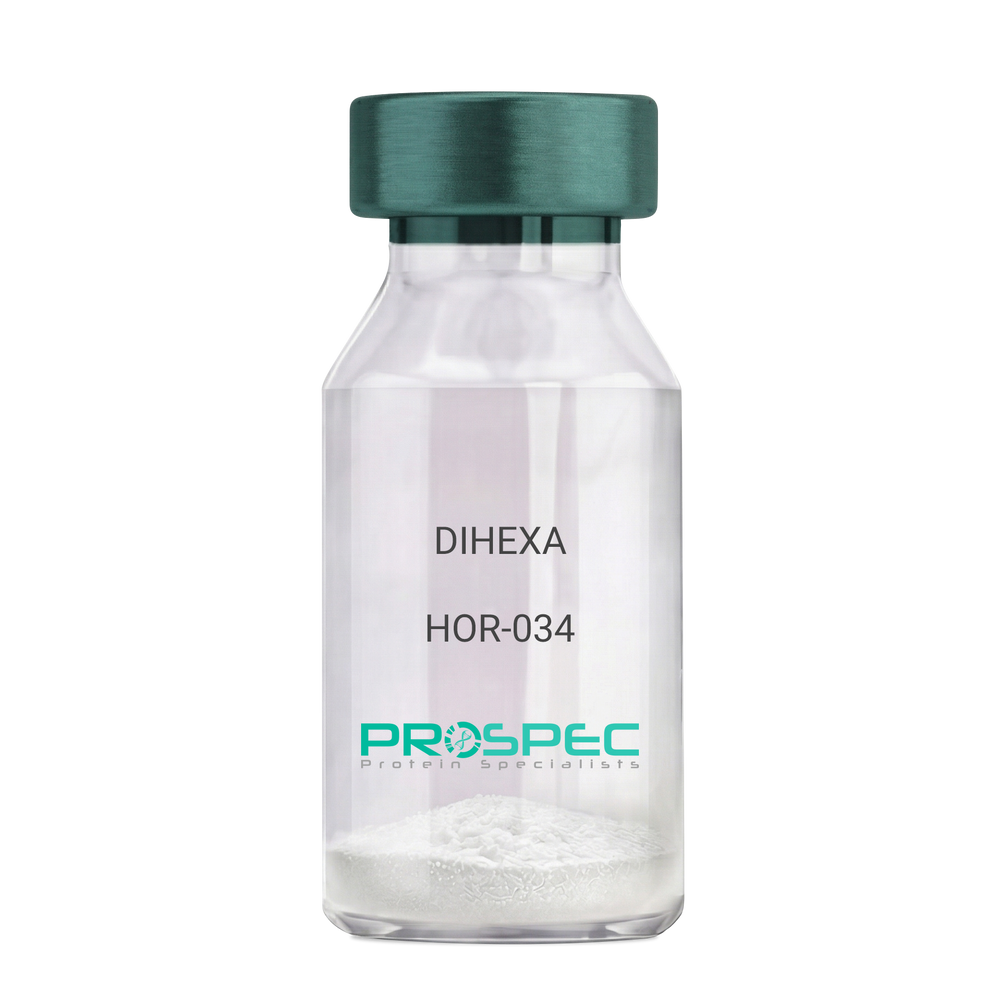
DIHEXADescription:
DIHEXA
Product # :
HOR-034Price :
Quantity :
Shipping Method :
Shipped at Room temp
More Info
- description
- formulation
- purity
- More Info
Description
DIHEXA Synthetic is a single, non-glycosylated polypeptide chain containing 3 amino acids, having a molecular mass of 504.28 Dalton and a Molecular formula of C27H44N4O5.
Formulation
The protein was lyophilized with no additives.
Purity
Greater than 97.0% as determined by analysis by RP-HPLC.
More Info
-
Physical Appearance
Sterile Filtered White lyophilized (freeze-dried) powder.
-
Stability
Lyophilized DIHEXA although stable at room temperature for 3 weeks, should be stored desiccated below -18°C. Upon reconstitution DIHEXA should be stored at 4°C between 2-7 days and for future use below -18°C. For long term storage it is recommended to add a carrier protein (0.1% HSA or BSA). Please prevent freeze-thaw cycles.
-
Solubility
It is recommended to reconstitute the lyophilized DIHEXA in sterile 18MΩ-cm H2O not less than 100 µg/ml, which can then be further diluted to other aqueous solutions.
-
Amino Acid Sequence
Hexanoyl-Tyr-Ile-Ahx-NH2.
-
Background
Dihexa, also known as N-hexanoic-Tyr-Ile-(6) aminohexanoic amide, is a potent and orally active small peptide that has been the focus of significant research due to its potential neurogenic and neuroprotective effects. This compound, derived from angiotensin IV, has been shown to possess a wide range of biological activities, including enhancing cognitive function, promoting neurogenesis, and potentially mitigating the effects of neurodegenerative diseases.
Dihexa's primary mechanism of action involves its interaction with hepatocyte growth factor (HGF) and its receptor, c-Met. By mimicking the effects of HGF, Dihexa can stimulate the c-Met receptor, leading to a cascade of events that promote neurogenesis and synaptic plasticity. Studies by Benoist et al. (2014) have demonstrated that Dihexa can enhance cognitive function in rats, suggesting potential applications in cognitive enhancement and the treatment of cognitive disorders.
In addition to its neurogenic effects, Dihexa has been shown to possess neuroprotective properties. Research by Kawas et al. (2017) found that Dihexa could protect neurons from apoptosis, suggesting potential applications in the treatment of neurodegenerative diseases such as Alzheimer's and Parkinson's disease.
Given its neurogenic and neuroprotective effects, Dihexa has been proposed as a potential therapeutic agent for a variety of conditions, including cognitive disorders, neurodegenerative diseases, and stroke. For instance, a study by Harding et al. (2018) found that Dihexa could improve outcomes in animal models of stroke, indicating its potential as a therapeutic agent in stroke recovery.
While research on Dihexa is promising, it is important to note that most studies have been conducted in animals or in vitro. More research is needed to fully understand the potential effects and applications of Dihexa in humans. However, the existing body of research suggests that Dihexa could be a promising tool in the treatment of cognitive disorders and neurodegenerative diseases.
ProSpec's products are furnished for LABORATORY RESEARCH USE ONLY. The product may not be used as drugs, agricultural or pesticidal products, food additives or household chemicals.
- View Data Sheet
Name :
HSP90B1 HumanDescription:
Heat Shock Protein 90kDa Beta (GRP94) Member 1 Human Recombinant
ECGP, GP96, TRA1, GRP94, HSP90B1, Endoplasmin, Heat shock protein 90 kDa beta member 1, 94 kDa glucose-regulated protein, gp96 homolog, Tumor rejection antigen 1.
Product # :
HSP-091Price :
Quantity :
Shipping Method :
Shipped with Ice Packs
More Info
- description
- source
- formulation
- purity
- More Info
Description
HSP90B1 produced in E.Coli is a single, non-glycosylated polypeptide chain containing 819 amino acids (22-803 a.a.) and having a molecular mass of 94.4 kDa.HSP90B1 is expressed with a 36 amino acid His tag at N-Terminus and purified by proprietary chromatographic techniques.
Source
Escherichia Coli.
Formulation
The GRP94 protein solution (1mg/ml) contains 20mM Tris-HCl, pH-8, 1mM EDTA, 0.1M NaCl, 1mM DTT and 10% Glycerol.
Purity
Greater than 90.0% as determined by SDS-PAGE.
More Info
-
Introduction
HSP90B1 is an abundant molecular chaperone resident endoplasmic reticulum (ER) lumenal stress protein which is part of the Hsp90 family. HSP90B1 is involved in maintaining protein homeostasis in the secretory pathway as well as functioning in the intracellular trafficking of peptides from the extracellular space to the MHC class I antigen processing pathway of antigen presentation cells. HSP90B1 has key roles in signal transduction, protein folding, protein degradation, and morphologic evolution. HSP90B1 protein associates with numerous cochaperones and involved in folding of newly synthesized proteins or stabilizing and refolding denatured proteins after stress. HSP90B1 is highly expressed in human gastric carcinoma BGC-823 cells during the whole cell cycle.
-
Synonyms
ECGP, GP96, TRA1, GRP94, HSP90B1, Endoplasmin, Heat shock protein 90 kDa beta member 1, 94 kDa glucose-regulated protein, gp96 homolog, Tumor rejection antigen 1.
-
Physical Appearance
Sterile filtered colorless solution.
-
Stability
Store at 4°C if entire vial will be used within 2-4 weeks. Store, frozen at -20°C for longer periods of time. For long term storage it is recommended to add a carrier protein (0.1% HSA or BSA).Avoid multiple freeze-thaw cycles.
-
Amino Acid Sequence
MRGSHHHHHH GMASMTGGQQ MGRDLYDDDD KDRWGSMDDE VDVDGTVEED LGKSREGSRT DDEVVQREEE AIQLDGLNAS QIRELREKSE KFAFQAEVNR MMKLIINSLY KNKEIFLREL ISNASDALDK IRLISLTDEN ALSGNEELTV KIKCDKEKNL LHVTDTGVGM TREELVKNLG TIAKSGTSEF LNKMTEAQED GQSTSELIGQ FGVGFYSAFL VADKVIVTSK HNNDTQHIWE SDSNEFSVIA DPRGNTLGRG TTITLVLKEE ASDYLELDTI KNLVKKYSQF INFPIYVWSS KTETVEEPME EEEAAKEEKE ESDDEAAVEE EEEEKKPKTK KVEKTVWDWE LMNDIKPIWQ RPSKEVEEDE YKAFYKSFSK ESDDPMAYIH FTAEGEVTFK SILFVPTSAP RGLFDEYGSK KSDYIKLYVR RVFITDDFHD MMPKYLNFVK GVVDSDDLPL NVSRETLQQH KLLKVIRKKL VRKTLDMIKK IADDKYNDTF WKEFGTNIKL GVIEDHSNRT RLAKLLRFQS SHHPTDITSL DQYVERMKEK QDKIYFMAGS SRKEAESSPF VERLLKKGYE VIYLTEPVDE YCIQALPEFD GKRFQNVAKE GVKFDESEKT KESREAVEKE FEPLLNWMKD KALKDKIEKA VVSQRLTESP CALVASQYGW SGNMERIMKA QAYQTGKDIS TNYYASQKKT FEINPRHPLI RDMLRRIKED EDDKTVLDLA VVLFETATLR SGYLLPDTKA YGDRIERMLR LSLNIDPDAK VEEEPEEEPE ETAEDTTEDT EQDEDEEMDV GTDEEEETAK ESTAEKDEL.
ProSpec's products are furnished for LABORATORY RESEARCH USE ONLY. The product may not be used as drugs, agricultural or pesticidal products, food additives or household chemicals.
- View Data Sheet
Name :
SHH Human, HisDescription:
Sonic HedgeHog Human Recombinant, His Tag
SHH, HHG-1, HHG1, Sonic hedgehog protein, TPT, HLP3, HPE3, SMMCI, TPTPS, MCOPCB5.
Product # :
CYT-717Price :
Quantity :
Shipping Method :
Shipped with Ice Packs
More Info
- description
- source
- formulation
- purity
- More Info
Description
Sonic HedgeHog Recombinant Human produced in E.Coli is a single, non-glycosylated polypeptide chain containing 183 amino acids and having a molecular mass of 20.7kDa. The Sonic HedgeHog is fused to 8 amino acid His-Tag at C-terminus and purified by proprietary chromatographic techniques.
Source
Escherichia Coli.
Formulation
SHH Human solution containing 20mM Tris HCL pH-8, 0.1M NaCl, & 10% glycerol.
Purity
Greater than 95.0% as determined by SDS-PAGE.
More Info
-
Introduction
Recombinant Human Sonic Hedgehog is part of a small group of secreted proteins that are vital for development in both vertebrates and invertebrates. 3 mammalian hedgehog genes (sonic, desert, Indian) share about 60% homology. The Human Sonic Hedgehog is 99% homologous to the mouse gene. Sonic HedgeHog is a protein that is vital in guding the early embryo. It has been associated as the major inductive signal in patterning of the ventral neural tube, the anterior-posterior limb axis, and the ventral somites. Sonic HedgeHog binds to the patched receptor, which functions in association with smoothened, to activate the transcription of target genes. In the absence of sonic HedgeHog, patched receptor represses the constitutive signaling activity of smoothened. Sonic HedgeHog also regulates another factor, the gli oncogene. Sonic HedgeHog intercellular signal is essential for a various patterning events during development: signal produced by the notochord that induces ventral cell fate in the
-
Synonyms
SHH, HHG-1, HHG1, Sonic hedgehog protein, TPT, HLP3, HPE3, SMMCI, TPTPS, MCOPCB5.
-
Physical Appearance
Sterile filtered colorless solution.
-
Stability
Store at 4°C if entire vial will be used within 2-4 weeks. Store, frozen at -20°C for longer periods of time. For long term storage it is recommended to add a carrier protein (0.1% HSA or BSA). Please prevent freeze thaw cycles.
-
Amino Acid Sequence
MCGPGRGFGK RRHPKKLTPL AYKQFIPNVA EKTLGASGRY EGKISRNSER FKELTPNYNP DIIFKDEENT GADRLMTQRC KDKLNALAIS VMNQWPGVKL RVTEGWDEDG HHSEESLHYE GRAVDITTSD RDRSKYGMLA RLAVEAGFDW VYYESKAHIH CSVKAENSVA AKSGGLEHHH HHH.
ProSpec's products are furnished for LABORATORY RESEARCH USE ONLY. The product may not be used as drugs, agricultural or pesticidal products, food additives or household chemicals.
- View Data Sheet
Name :
PODXL Human (335-387)Description:
Podocalyxin-Like (335-387 a.a) Human Recombinant
Product # :
PRO-2840Price :
Quantity :
Shipping Method :
Shipped at Room temp
More Info
- description
- source
- formulation
- purity
- More Info
Description
The PODXL Human is created as a recombinant protein with a 4kda N-terminal fusion of His Tag. The PODXL His-Tagged Fusion Protein, produced in E. coli, is a 11kDa protein containing 53 amino acid residues of the PODXL Human, 335-387 amino acids.
Source
Escherichia Coli.
Formulation
Each mg was lyophilized with 1xPBS, 0.4% SDS and 4mM DTT.
Purity
Greater than 90% as determined by SDS-PAGE.
More Info
-
Physical Appearance
Filtered White lyophilized (freeze-dried) powder.
-
Stability
Store lyophilized PODXLat -20°C. Aliquot the product after reconstitution to avoid repeated freezing/thawing cycles. Reconstituted protein can be stored at 4°C for a limited period of time; it does not show any change after two weeks at 4°C.
-
Solubility
It is recommended to add deionized water to prepare a working stock solution of approximately 0.5mg/ml and let the lyophilized pellet dissolve completely. Product is not sterile! Please filter the product by an appropriate sterile filter before using it on cell culture.
-
Amino Acid Sequence
AGGASDEKLI SLICRAVKAT FNPAQDKCGI RLASVPGSQT VVVKEITIHS.
-
Background
Podocalyxin-Like also known as PODXL is a glycosylated transmembrane sialoprotein in the CD34 and endoglycan family. The PODXL protein takes part in the regulation of both adhesion and cell morphology and cancer progression. PODXL plays a role as an anti-adhesive molecule, which retains an open filtration pathway between neighboring foot processes in the podocyte by charge repulsion. PODXL also functions as a pro-adhesive molecule, enhancing the adherence of cells to immobilized ligand which leads to rate increase of migration and cell-cell contacts in an integrin-dependent manner.
ProSpec's products are furnished for LABORATORY RESEARCH USE ONLY. The product may not be used as drugs, agricultural or pesticidal products, food additives or household chemicals.
- View Data Sheet
Name :
Treponema MosaicDescription:
Treponema pallidum Mosaic Recombinant
Product # :
TRP-276Price :
Quantity :
Shipping Method :
Shipped with Ice Packs
More Info
- description
- source
- formulation
- purity
- More Info
Description
Recombinant Treponema pallidum Mosaic contains TP15, TP17 & TP47 epitopes containing 382 a.a. produced in E.Coli and fused to a 6xHis tag at C-terminus. The total Mw is 38kDa and purified by proprietary chromatographic techniques.
Source
Escherichia Coli.
Formulation
Treponema Mosaic protein solution contains 1x PBS & 25mM K2CO3.
Purity
Treponema Mosaic is >95% pure as determined by 10% PAGE (coomassie staining).
More Info
-
Introduction
Treponema pallidum is a gram-negative spirochaete bacterium and is considered to be metabolically crippled. There are at least four known subspecies: T. pallidum pallidum, T. pallidum pertenue, T. pallidum carateum and T. pallidum endemicum. The helical structure of T. pallidum pallidum allows it to move in a corkscrew motion through viscous mediums such as mucus. Treponema pallidum sub sp. pallidum has one of the smallest bacterial genomes at 1.14 million base pairs (Mb) and has limited metabolic capabilities, reflecting its adaptation through genome reduction to the rich environment of mammalian tissue.
-
Physical Appearance
Sterile Filtered solution.
-
Stability
Treponema Mosaic protein although stable at 4°C for 1 week, should be stored below -18°C. Please prevent freeze thaw cycles.
-
Applications
Immunoassay.
ProSpec's products are furnished for LABORATORY RESEARCH USE ONLY. The product may not be used as drugs, agricultural or pesticidal products, food additives or household chemicals.
- View Data Sheet
Name :
CHIKV CapsidDescription:
Chikungunya Capsid Recombinant
Product # :
CHI-005Price :
Quantity :
Shipping Method :
Shipped with Ice Packs
More Info
- description
- source
- formulation
- purity
- More Info
Description
Recombinant Chikungunya Full length capsid protein containing 220 amino acids produced in E.coli having a molecular weight of 25kDa.
Source
Escherichia Coli.
Formulation
Sterile Filtered solution containing 1x PBS, 2M urea and 25mM K2CO3.
Purity
Protein is >90% pure as determined by SDS-PAGE.
More Info
-
Introduction
Chikungunya is an infection caused by the chikungunya virus which is passed to humans by two species of mosquito of the genus Aedes: A. albopictus and A. aegypti. Animal reservoirs of the virus include monkeys, birds, cattle, and rodents. The features of the disease are a sudden onset of fever 2-4 days after exposure. The fever typically lasts 2-7 days, while the associated joint pains usually last weeks or months but sometimes years. The mortality rate is a little less than 1 in 1,000. The disease has occurred in outbreaks in Asia, Europe and the Americas since 2004. CHIKV is a single-stranded positive-sense RNA genome, 11,800 nts long which encodes 2 open reading frames. The nucleocapsid is tightly enveloped by a host-derived lipid bilayer (envelope) supporting the virus-encoded envelope proteins. 80 glycoprotein spikes are C- terminally anchored within the viral envelope. The structural polyprotein is translated from a viral sub genomic mRNA, while as the 5 structural proteins (capsid, E3, E2, 6K, E1) are translated as a single polyprotein, from which capsid (C) is cleaved off to encapsidate. The envelope polyprotein precursor E3-E2-6K-E1 is translocated to the endoplasmatic reticulum. Polyprotein is processed by host signalases, resulting in E3, E2 & E1 forming viral hetero-trimeric spikes. The viral spikes majorly contains E2 and E1 facilitate cell receptor recognition, cell entry thru pH-dependent endocytosis and support viral budding.
-
Physical Appearance
Sterile filtered colorless solution.
-
Stability
CHIKV Capsid although stable at 4°C for 1 week, should be stored below -18°C. Please prevent freeze thaw cycles.
-
Purification Method
Purified by proprietary chromatographic technique.
ProSpec's products are furnished for LABORATORY RESEARCH USE ONLY. The product may not be used as drugs, agricultural or pesticidal products, food additives or household chemicals.
- View Data Sheet
Name :
AREG HumanDescription:
Amphiregulin Human Recombinant
Schwannoma-derived growth factor, Colorectum cell-derived growth factor, AR, CRDGF, SDGF, AREGB, MGC13647.
Product # :
CYT-041Price :
Quantity :
Shipping Method :
Shipped at Room temp
More Info
- description
- source
- formulation
- purity
- biological activity
- More Info
Description
Amphiregulin (AREG) Human Recombinant produced in E.Coli is a single, non-glycosylated, polypeptide chain containing 98 amino acids and having a molecular mass of 11.3 KDa.The AREG is purified by proprietary chromatographic techniques.
Source
Escherichia Coli.
Formulation
Lyophilized from a 0.2µm filtered concentrated solution in PBS, pH7.4.
Purity
Greater than 95.0% as determined by:
(a) Analysis by HPLC.
(b) Analysis by SDS-PAGE.Biological Activity
Determined by its ability to stimulate the proliferation of mouse Balb/c 3T3 cells. The expected ED50 for this effect is 5-10 ng/ml, corresponding to a specific activity of 100,000-200,000units/mg.More Info
-
Synonyms
Schwannoma-derived growth factor, Colorectum cell-derived growth factor, AR, CRDGF, SDGF, AREGB, MGC13647.
-
Physical Appearance
Sterile Filtered White lyophilized (freeze-dried) powder.
-
Stability
Lyophilized AREG although stable at room temperature for 3 weeks, should be stored desiccated below -18°C. Upon reconstitution AREG should be stored at 4°C between 2-7 days and for future use below -18°C.For long term storage it is recommended to add a carrier protein (0.1% HSA or BSA).Please prevent freeze-thaw cycles.
-
Solubility
It is recommended to reconstitute the lyophilized AREG in sterile 18M-cm H2O not less than 100µg/ml, which can then be further diluted to other aqueous solutions.
-
Amino Acid Sequence
SVRVEQVVKP PQNKTESENT SDKPKRKKKG GKNGKNRRNR KKKNPCNAEF QNFCIHGECK YIEHLEAVTC KCQQEYFGER CGEKSMKTHS MIDSSLSK.
-
Background
Amphiregulin Human Recombinant: Exploring its Role in Cancer Biology and Therapeutic Applications
Abstract:
Amphiregulin, a member of the epidermal growth factor (EGF) family, has gained significant attention in cancer research. This research paper provides an overview of Amphiregulin human recombinant, highlighting its molecular characteristics, signaling pathways, and therapeutic potential. Understanding the multifaceted role of Amphiregulin opens avenues for targeted cancer therapies. This article provides a concise analysis of Amphiregulin, emphasizing its impact on cancer biology and its therapeutic applications.Introduction:
Cancer continues to be a significant health challenge worldwide, necessitating novel therapeutic approaches. Amphiregulin, an EGF family member, has emerged as a promising target in cancer research. This paper provides an overview of Amphiregulin, shedding light on its structure, function, and therapeutic potential.Amphiregulin Signaling and Mechanisms:
Amphiregulin exerts its effects through the binding and activation of the EGF receptor (EGFR). Upon activation, a cascade of intracellular signaling pathways is triggered, including the MAPK and PI3K/AKT pathways. These pathways regulate critical cellular processes such as cell proliferation, survival, migration, and angiogenesis.Amphiregulin in Cancer Biology:
Amphiregulin has been implicated in various aspects of cancer biology, including tumor growth, metastasis, and resistance to therapy. Its overexpression is observed in several cancer types, and its role in promoting tumor growth and metastasis has been demonstrated in preclinical studies. Targeting Amphiregulin signaling shows promise in inhibiting cancer progression and overcoming therapy resistance.Therapeutic Potential of Amphiregulin Human Recombinant:
Amphiregulin human recombinant holds significant therapeutic potential in cancer treatment. Strategies aimed at blocking Amphiregulin-EGFR interactions or inhibiting downstream signaling pathways are being explored as potential therapeutic interventions. Additionally, Amphiregulin could serve as a predictive biomarker to identify patients who are more likely to respond to targeted therapies.Challenges and Future Directions:
While the therapeutic targeting of Amphiregulin shows promise, several challenges need to be addressed. Further research is required to fully understand the complex interplay between Amphiregulin and other molecular pathways in cancer biology. Additionally, the development of specific and potent inhibitors and the identification of patient selection criteria are important considerations for successful clinical translation.Conclusion:
Amphiregulin human recombinant represents a promising avenue for targeted cancer therapy. Understanding the molecular mechanisms and functional implications of Amphiregulin in cancer biology offers new opportunities for developing innovative treatments. Continued research in this field has the potential to improve patient outcomes and contribute to the advancement of personalized medicine.What is the molecular weight/Mw of AREG Protein?
AREG Protein has a total Mw of 11.3kDa.
What is the source or expression system of AREG Protein?
Escherichia Coli.
What is the Purity of AREG Protein?
AREG Protein is >95% pure as determined by SDS-PAGE.
What is the Biological Activity of AREG Protein?
Determined by its ability to stimulate the proliferation of mouse Balb/c 3T3 cells. The expected ED50 for this effect is 5-10 ng/ml, corresponding to a specific activity of 100,000-200,000units/mg.
What is the amino acid sequence of AREG Protein?
SVRVEQVVKP PQNKTESENT SDKPKRKKKG GKNGKNRRNR KKKNPCNAEF QNFCIHGECK YIEHLEAVTC KCQQEYFGER CGEKSMKTHS MIDSSLSK.
What applications can AREG Protein be used in?
AREG Protein can probably be used in western blot, ELISA and Lateral Flow.
What is the endotoxin level for AREG Protein?
The endotoxin level is minimal, AREG Protein was purified using conventional chromatography techniques.
ProSpec's products are furnished for LABORATORY RESEARCH USE ONLY. The product may not be used as drugs, agricultural or pesticidal products, food additives or household chemicals.
- View Data Sheet
Name :
VTCN1 Human, Sf9Description:
V-Set Domain Containing T Cell Activation Inhibitor 1 Human Recombinant, Sf9
V-set domain-containing T-cell activation inhibitor 1, B7 homolog 4, B7-H4, B7h.5, Immune costimulatory protein B7-H4, Protein B7S1, T-cell costimulatory molecule B7x, B7H4, VTCN1, B7S1, B7X, PRO1291, RP11-229A19.4.
Product # :
PRO-2439Price :
Quantity :
Shipping Method :
Shipped with Ice Packs
More Info
- description
- source
- formulation
- purity
- More Info
Description
VTCN1 Human Recombinant produced in Sf9 Baculovirus cells is a single, glycosylated polypeptide chain containing 244 amino acids (25-259a.a.) and having a molecular mass of 26.9kDa (Molecular size on SDS-PAGE will appear at approximately 28-40kDa). VTCN1 is expressed with a 9 amino acids His tag at C-Terminus and purified by proprietary chromatographic techniques.
Source
Sf9, Baculovirus cells.
Formulation
VTCN1 protein solution (0.25mg/ml) contains Phosphate Buffered Saline (pH 7.4) and 10% glycerol.
Purity
Greater than 90.0% as determined by SDS-PAGE.
More Info
-
Introduction
V-Set Domain Containing T Cell Activation Inhibitor 1, also known as VCTN1, is part of the B7 costimulatory protein family. Proteins in this family are located on the surface of antigen-presenting cells and interact with ligand bound to receptors on the surface of T cells. High level of the encoded protein has been associated with tumor progression. VCTN1 also takes part in promoting epithelial cell transformation.
-
Synonyms
V-set domain-containing T-cell activation inhibitor 1, B7 homolog 4, B7-H4, B7h.5, Immune costimulatory protein B7-H4, Protein B7S1, T-cell costimulatory molecule B7x, B7H4, VTCN1, B7S1, B7X, PRO1291, RP11-229A19.4.
-
Physical Appearance
Sterile Filtered colorless solution.
-
Stability
Store at 4°C if entire vial will be used within 2-4 weeks. Store, frozen at -20°C for longer periods of time. For long term storage it is recommended to add a carrier protein (0.1% HSA or BSA).Avoid multiple freeze-thaw cycles.
-
Amino Acid Sequence
ADPLIIGFGI SGRHSITVTT VASAGNIGED GILSCTFEPD IKLSDIVIQW LKEGVLGLVH EFKEGKDELS EQDEMFRGRT AVFADQVIVG NASLRLKNVQ LTDAGTYKCY IITSKGKGNA NLEYKTGAFS MPEVNVDYNA SSETLRCEAP RWFPQPTVVW ASQVDQGANF SEVSNTSFEL NSENVTMKVV SVLYNVTINN TYSCMIENDI AKATGDIKVT ESEIKRRSHL QLLNSKASHH HHHH.
ProSpec's products are furnished for LABORATORY RESEARCH USE ONLY. The product may not be used as drugs, agricultural or pesticidal products, food additives or household chemicals.
- View Data Sheet
Name :
LLODescription:
Listeriolysin-O Recombinant
Listeriolysin-O, LLO, hlyA.
Product # :
PRO-320Price :
Quantity :
Shipping Method :
Shipped with Ice Packs
More Info
- description
- source
- formulation
- purity
- biological activity
- More Info
Description
LLO is a single, non-glycosylated polypeptide chain containing 529 amino acids and having a molecular mass of 58kDa. (accession number: AAF64524).
Source
Escherichia Coli.
Formulation
The protein contains 50mM NaH2PO4, 1mM EDTA, 2.7mM KCl, pH 6.4, 1mM DTT, 5% (v/v) glycerol and 0.5M NaCl.
Purity
Greater than 90.0% as determined by SDS-PAGE.
Biological Activity
Hemolytic activity is 8,27E+05 HU/mg of protein where HU means hemolytic activity unit that is the amount of toxin needed to release half the hemoglobin (50% lysis) of the erythrocytes as determined by hemolysin assay.
More Info
-
Introduction
Listeriolysin O (aka LLO) is a hemolysin produced by Listeria monocytogenes bacteria, the pathogen responsible for causing listeriosis. The toxin may be regarded as a virulence factor, since it is crucial for the virulence of L. monocytogenes. LLO is a single polypeptide protein encoded by the hlyA gene and composed of 529 residues. LLO is a thiol-activated cholesterol-dependent pore forming toxin protein; therefore, it is activated by reducing agents and inhibited by oxidizing agents. Still, LLO differs from other thiol-activated toxins, as its cytolytic activity is maximized at a pH of 5.5. Inside the acidic phagosomes (average pH ~ 5.9) of cells that have phagocytosed L. monocytogenes, LLO is selectively activated by maximizing activity at a pH of 5.5. Following the phagosome lysis by LLO, the bacterium breaks out into the cytosol, where it is able to grow intracellularly, and the toxin has reduced activity in the more basic cytosol. Thus, LLO permits L. monocytogenes to break out from the phagosomes into the cytosol without harming the plasma membrane of the infected cell, which allows the bacteria to live intracellularly, where they are sheltered from extracellular immune system factors such as the complement system and antibodies. LLO also brings about dephosphorylation of histone H3 and deacetylation of histone H4 in the early phases of infection, before entry of L. monocytogenes into the host cell. The pore-forming activity is not implicated in causing the histone modifications. The modifications of the histones affect the down regulation of genes encoding proteins involved in the inflammatory response. Therefore, LLO may be significant in subverting the host immune response to L. monocytogenes. At its NH2-terminus it possesses a 25 residues long typical signal sequence excited during the secretion process. Moreover, in its NH2-terminus there is also a 19 amino acids PEST- like sequence that may target this toxin for degradation. The PEST-like sequence found in LLO and is considered crucial for virulence, given that mutants lacking the sequence lysed the host cell. Nevertheless, contrary to PEST's supposed role in protein degradation, evidence implies that the PEST-like sequence may control LLO production in the cytosol rather than increase degradation of LLO.
-
Synonyms
Listeriolysin-O, LLO, hlyA.
-
Physical Appearance
Sterile Filtered clear solution.
-
Stability
Store at 4°C if entire vial will be used within 2-4 weeks. Store, frozen at -20°C for longer periods of time. Avoid multiple freeze-thaw cycles.
ProSpec's products are furnished for LABORATORY RESEARCH USE ONLY. The product may not be used as drugs, agricultural or pesticidal products, food additives or household chemicals.
- View Data Sheet
Name :
Tissue Factor Human, ActiveDescription:
Coagulation Factor III Active Human Recombinant
Tissue factor, TF, Coagulation factor III, CD142.
Product # :
PRO-2845Price :
Quantity :
Shipping Method :
Shipped at Room temp
More Info
- description
- source
- formulation
- purity
- biological activity
- More Info
Description
Recombinant Human Tissue Factor Active is a glycosylated, polypeptide chain containing 225 amino acids and having a total molecular mass of 45.0kDa. Coagulation Factor III is fused at C-terminus & is purified by proprietary chromatographic techniques.
Source
CHO cells.
Formulation
Lyophilized from a 0.2μm filtered solution in 20mM Tris and 150mM NaCl, pH 8.0.
Purity
Greater than 98.0% as determined by Analysis by SDS-PAGE.
Biological Activity
The ED50 was determined by its ability to activate fluorogenic peptide substrate Boc-VPR-AMC cleavage, when bound in 1:1 complex with Coagulation Factor VII.More Info
-
Synonyms
Tissue factor, TF, Coagulation factor III, CD142.
-
Physical Appearance
Sterile Filtered White lyophilized (freeze-dried) powder.
-
Stability
Lyophilized Coagulation Factor III although stable at room temperature for 3 weeks, should be stored desiccated below -18°C. Upon reconstitution Tissue Factor should be stored at 4°C between 2-7 days and for future use below -18°C.
Please prevent freeze-thaw cycles. -
Solubility
It is recommended to reconstitute the lyophilized Coagulation Factor III in sterile 18MΩ-cm H2O not less than 100µg/ml, which can then be further diluted to other aqueous solutions.
-
Amino Acid Sequence
SGTTNTVAAY NLTWKSTNFK TILEWEPKPV NQVYTVQIST KSGDWKSKCF YTTDTECDLT DEIVKDVKQT YLARVFSYPA GNVESTGSAG EPLYENSPEF TPYLETNLGQ PTIQSFEQVG TKVNVTVEDE RTLVRRNNTF LSLRDVFGKD LIYTLYYWKS SSSGKKTAKT NTNEFLIDVD KGENYCFSVQ AVIPSRTVNR KSTDSPVECM GQEKGEFREH HHHHH.
-
Background
Tissue Factor is the main initiator of the extrinsic blood coagulation pathway. after vascular injury, Tissue Factor binds circulating Factor VII/VIIa, forming the TF–FVIIa complex, which activates Factors IX and X, leading to thrombin generation and fibrin clot formation. Tissue Factor also participates in cell signalling influencing inflammation, angiogenesis, wound healing, and tumor progression.
What is the molecular weight / Mw of Tissue Factor Protein?
Tissue Factor Protein has a total Mw of 45kDa.
What is the source or expression system of Tissue Factor Protein?
CHO Cells
What is the Purity of Tissue Factor Protein?
Tissue Factor Protein is >98% pure as determined by SDS-PAGE.
What is the Biological Activity of Tissue Factor Protein?
The enzymatic activity was determined by its ability to activate fluorogenic peptide substrate Boc-VPR-AMC cleavage, when bound in 1:1 complex with Coagulation Factor VII.
What is the amino acid sequence of Tissue Factor Protein?
SGTTNTVAAY NLTWKSTNFK TILEWEPKPV NQVYTVQIST KSGDWKSKCF YTTDTECDLT DEIVKDVKQT YLARVFSYPA GNVESTGSAG EPLYENSPEF TPYLETNLGQ PTIQSFEQVG TKVNVTVEDE RTLVRRNNTF LSLRDVFGKD LIYTLYYWKS SSSGKKTAKT NTNEFLIDVD KGENYCFSVQ AVIPSRTVNR KSTDSPVECM GQEKGEFREH HHHHH
What applications can Tissue Factor Protein be used in?
Tissue Factor Protein can probably be used in western blot, ELISA and Lateral Flow.
What is the endotoxin level for Tissue Factor Protein?
The endotoxin level is minimal, Tissue Factor Protein was purified using conventional chromatography techniques.
ProSpec's products are furnished for LABORATORY RESEARCH USE ONLY. The product may not be used as drugs, agricultural or pesticidal products, food additives or household chemicals.
- View Data Sheet
Name :
UPK3A HumanDescription:
Uroplakin 3A Human Recombinant
Uroplakin 3A, UPK3, UPIII, Uroplakin III, UP3A.
Product # :
PRO-988Price :
Quantity :
Shipping Method :
Shipped with Ice Packs
More Info
- description
- source
- formulation
- purity
- More Info
Description
UPK3A Human Recombinant produced in E.Coli is a single, non-glycosylated polypeptide chain containing 214 amino acids (19-207 a.a.) and having a molecular mass of 23.1kDa.UPK3A is fused to a 25 amino acid His-tag at N-terminus & purified by proprietary chromatographic techniques.
Source
E.coli.
Formulation
UPK3A protein solution (0.25mg/ml) containing 20mM Tris-HCl buffer (pH8.0), 150mM NaCl, 2mM DTT and 20% glycerol.
Purity
Greater than 90% as determined by SDS-PAGE.
More Info
-
Introduction
UPK3A is a member of the uroplakin-3 family. Uroplakins (UP) which are transmembrane proteins are important components of the urothelium that pass the lipid bilayer once (UPII, UPIIIa, and UPIIIb) or four times (UPIa and UPIb; both members of the "tetraspanin" family). All hold great luminal/extracellular domains, but only UPIIIa and UPIIIb have significant cytoplasmic shares in their C-termini. UPK3A is an extremely specific and moderately sensitive immunohistochemical marker for primary and metastatic urothelial carcinomas. Alterations in this gene are related to renal adysplasia.
-
Synonyms
Uroplakin 3A, UPK3, UPIII, Uroplakin III, UP3A.
-
Physical Appearance
Sterile Filtered colorless solution.
-
Stability
Store at 4°C if entire vial will be used within 2-4 weeks. Store, frozen at -20°C for longer periods of time. For long term storage it is recommended to add a carrier protein (0.1% HSA or BSA).Avoid multiple freeze-thaw cycles.
-
Amino Acid Sequence
MGSSHHHHHH SSGLVPRGSH MGSHMVNLQP QLASVTFATN NPTLTTVALE KPLCMFDSKE ALTGTHEVYL YVLVDSAISR NASVQDSTNT PLGSTFLQTE GGRTGPYKAV AFDLIPCSDL PSLDAIGDVS KASQILNAYL VRVGANGTCL WDPNFQGLCN PPLSAATEYR FKYVLVNMST GLVEDQTLWS DPIRTNQLTP YSTIDTWPGR RSGG.
ProSpec's products are furnished for LABORATORY RESEARCH USE ONLY. The product may not be used as drugs, agricultural or pesticidal products, food additives or household chemicals.
- View Data Sheet
Name :
iL22RA (Y51A) Mouse, PEGDescription:
Interleukin-22 Receptor Antagonist (Y51A), PEG Mouse Recombinant
Product # :
CYT-1248Price :
Quantity :
Shipping Method :
Shipped at Room temp
More Info
- description
- source
- formulation
- purity
- biological activity
- More Info
Description
Interleukin 22 Y51A mutan Mouse Recombinant is a single non-glycosilated polypeptide chain containing 147 amino acids and additional Ala at N-terminus. The iL22RA is bound to 20 kDa PEG molecule at N-terminus, resulting in 36.0 kDa. The Mouse iL22RA (Y51A) Pegylated runs as a 50 kDa due to enlarged hydrodymanic volume. iL22RA Mutant Mouse Recombinant was purified by proprietary chromatographic techniques.
Source
Escherichia coli.
Formulation
The Mouse iL22RA (Y51A) was lyophilized from a concentrated (1mg/ml) solution with 0.003mM NaHCO3.
Purity
Greater than 98.0% as determined by:
(a) Gel filtration analysis.
(b) Analysis by SDS-PAGE.
Biological Activity
Pegylated Mouse iL22RA inhibits mouse IL-22 induced STAT3 phosphorylation in HepG cells. Its inhibitory acrtivity in vitro is ~ 10-20% compared to the non-pegylated mIL22 (Y51A) mutant.
More Info
-
Physical Appearance
White lyophilized (freeze-dried) powder.
-
Stability
Lyophilized iL22RA (Y51A) Mutant Mouse Recombinant although stable at room temperature for several weeks, should be stored desiccated below -18°C. Upon reconstitution at > 0.1 mg/ml and up to 2mM and filter sterilization iL22RA mutant can be stored at 4°C or even room temperature for several weeks making it suitable for long term infusion studies using osmotic pumps. At lower concentration addition of a carrier protein (0.1% HSA or BSA) is suggested. Please prevent freeze-thaw cycles.
-
Solubility
It is recommended to reconstitute the lyophilized iL22RA (Y51A) Mutant Mouse Recombinant in sterile water or sterile 0.4% NaHCO3 adjusted to pH 8-9, not less than 100µg/ml, which can then be further diluted with other aqueous solutions.
-
Background
IL-22 is a part of the IL-10 family of regulatory cytokines and produced by several populations of immune cells at a site of inflammation. Members of this family share partial homology in their amino acid sequences, but varies in their biological functions. IL-22 takes effect on non-hematopoietic cells. IL-22 takes part in wound healing and in protection against microbs. Produced by T lymphocytes, IL-22 inhibits IL-4 production by Th2 cells, and induces acute phase reactants in the pancreas and liver.
-
Protein content
Protein quantization was carried out by UV spectroscopy at 280 nm using the absorbency value of 0.18 as the extinction coefficient for a 0.1% (1mg/ml) solution at pH 8.0. This value is calculated by the DNAman computer analysis program of protein sequences.
ProSpec's products are furnished for LABORATORY RESEARCH USE ONLY. The product may not be used as drugs, agricultural or pesticidal products, food additives or household chemicals.
- View Data Sheet
Name :
GAP43 HumanDescription:
Growth Associated Protein 43 Human Recombinant
Growth associated protein 43, Axonal membrane protein GAP-43, Neural phosphoprotein B-50, calmodulin-binding protein P-57, nerve growth-related peptide GAP43, neuromodulin, protein F1, pp46, B-50.
Product # :
PRO-1126Price :
Quantity :
Shipping Method :
Shipped with Ice Packs
More Info
- description
- source
- formulation
- purity
- More Info
Description
GAP43 Human Recombinant produced in E. coli is a single polypeptide chain containing 262 amino acids (1-238) and having a molecular mass of 27.3kDa (Molecular size on SDS-PAGE will appear higher).GAP43 is fused to a 24 amino acid His-tag at N-terminus & purified by proprietary chromatographic techniques.
Source
E.coli.
Formulation
The GAP43 solution (0.5mg/ml) contains 20mM Tris-HCl buffer (pH 8.0), 100mM Nacl and 10% glycerol.
Purity
Greater than 90% as determined by SDS-PAGE.
More Info
-
Introduction
GAP43 is a phosphoprotein of the presynaptic membrane that takes part in synaptic reorganization and neural development. GAP43 is found in large quantities in neuronal growth cones all through the development and axonal regeneration. Additionally, GAP43 is involved in specific regions of the normal adult nervous system and has a vital part in the conservation mechanism of long-term potentiation (LTP).
-
Synonyms
Growth associated protein 43, Axonal membrane protein GAP-43, Neural phosphoprotein B-50, calmodulin-binding protein P-57, nerve growth-related peptide GAP43, neuromodulin, protein F1, pp46, B-50.
-
Physical Appearance
Sterile Filtered colorless solution.
-
Stability
Store at 4°C if entire vial will be used within 2-4 weeks. Store, frozen at -20°C for longer periods of time. For long term storage it is recommended to add a carrier protein (0.1% HSA or BSA).Avoid multiple freeze-thaw cycles.
-
Amino Acid Sequence
MGSSHHHHHH SSGLVPRGSH MGSHMLCCMR RTKQVEKNDD DQKIEQDGIK PEDKAHKAAT KIQASFRGHI TRKKLKGEKK DDVQAAEAEA NKKDEAPVAD GVEKKGEGTT TAEAAPATGS KPDEPGKAGE TPSEEKKGEG DAATEQAAPQ APASSEEKAG SAETESATKA STDNSPSSKA EDAPAKEEPK QADVPAAVTA AAATTPAAED AAAKATAQPP TETGESSQAE ENIEAVDETK PKESARQDEG KEEEPEADQE HA
ProSpec's products are furnished for LABORATORY RESEARCH USE ONLY. The product may not be used as drugs, agricultural or pesticidal products, food additives or household chemicals.
- View Data Sheet
Name :
GATC HumanDescription:
Glutamyl-TRNA Amidotransferase, Subunit C Human Recombinant
Glutamyl-TRNA(Gln) Amidotransferase Subunit C, Glu-AdT Subunit C, 15E1.2, Glutamyl-TRNA(Gln) Amidotransferase Subunit C Homolog (Bacterial), Glutamyl-TRNA(Gln) Amidotransferase Subunit C Mitochondrial, Glutamyl-TRNA(Gln) Amidotransferase Subunit C Homolog, EC 6.3.5, Protein 15E1.2.
Product # :
ENZ-722Price :
Quantity :
Shipping Method :
Shipped with Ice Packs
More Info
- description
- source
- formulation
- purity
- More Info
Description
GATC Human Recombinant produced in E.Coli is a single, non-glycosylated polypeptide chain containing 159 amino acids (1-136 a.a) and having a molecular mass of 17.5kDa (Molecular size on SDS-PAGE will appear higher).GATC is fused to a 23 amino acid His-tag at N-terminus & purified by proprietary chromatographic techniques.
Source
Escherichia Coli.
Formulation
GATC protein solution (0.25mg/ml) containing 20mM Tris-HCl buffer (pH 8.0), 0.15M NaCl, 30% glycerol and 1mM DTT.
Purity
Greater than 85.0% as determined by SDS-PAGE.
More Info
-
Introduction
Glutamyl-TRNA Amidotransferase, Subunit C also known as GATC allows the formation of properly charged Gln-tRNA(Gln) through the transamidation of misacylated Glu-tRNA(Gln) in the mitochondria. The reaction occurs in the attendance of glutamine and ATP through an activated gamma-phospho-Glu-tRNA(Gln). In addition, GATC is subunit of the heterotrimeric GatCAB amidotransferase (AdT) complex, composed of A (QRSL1), B (PET112) and C (GATC) subunits.
-
Synonyms
Glutamyl-TRNA(Gln) Amidotransferase Subunit C, Glu-AdT Subunit C, 15E1.2, Glutamyl-TRNA(Gln) Amidotransferase Subunit C Homolog (Bacterial), Glutamyl-TRNA(Gln) Amidotransferase Subunit C Mitochondrial, Glutamyl-TRNA(Gln) Amidotransferase Subunit C Homolog, EC 6.3.5, Protein 15E1.2.
-
Physical Appearance
Sterile Filtered clear solution.
-
Stability
Store at 4°C if entire vial will be used within 2-4 weeks. Store, frozen at -20°C for longer periods of time. For long term storage it is recommended to add a carrier protein (0.1% HSA or BSA).Avoid multiple freeze-thaw cycles.
-
Amino Acid Sequence
MGSSHHHHHH SSGLVPRGSH MGSMWSRLVW LGLRAPLGGR QGFTSKADPQ GSGRITAAVI EHLERLALVD FGSREAVARL EKAIAFADRL RAVDTDGVEP MESVLEDRCL YLRSDNVVEG NCADELLQNS HRVVEEYFVA PPGNISLPKL DEQEPFPHS
ProSpec's products are furnished for LABORATORY RESEARCH USE ONLY. The product may not be used as drugs, agricultural or pesticidal products, food additives or household chemicals.
- View Data Sheet
Name :
NPPA HumanDescription:
Natriuretic Peptide A Human Recombinant
Natriuretic peptides A, CDD-ANF, Cardiodilatin, CDD, Cardiodilatin-related peptide, CDP, N-terminal proatrial natriuretic peptide, ANP, PND.
Product # :
CYT-1028Price :
Quantity :
Shipping Method :
Shipped at Room temp
More Info
- description
- source
- formulation
- purity
- More Info
Description
NPPA Human Recombinant produced in E.Coli is a single, non-glycosylated, polypeptide chain (a.a 26-123) containing 106 amino acids including an 8 a.a N-terminal His tag. The total molecular mass is 11.7kDa (calculated).
Source
Escherichia Coli.
Formulation
NPPA filtered (0.4 µm) and lyophilized from 0.5mg/ml in 20 mM Tris buffer, 50 mM NaCl and 5% w/v trehalosa, pH 7.5.
Purity
Greater than 95.0% as determined by SDS-PAGE.
More Info
-
Introduction
Natriuretic Peptide A (NPPA) is a part of the natriuretic peptide family and is involved in cardiovascular homeostasis through regulation of natriuresis, diuresis, and vasodilation. NPPA is synthesized as a great precursor which releases a peptide from the N-terminus with similarity to vasoactive peptide, cardiodilatin, and another peptide from the C-terminus with natriuretic-diuretic activity. In female pregnancy, NPPA is promoting trophoblast invasion and spiral artery remodeling in uterus.
-
Synonyms
Natriuretic peptides A, CDD-ANF, Cardiodilatin, CDD, Cardiodilatin-related peptide, CDP, N-terminal proatrial natriuretic peptide, ANP, PND.
-
Physical Appearance
Filtered White lyophilized (freeze-dried) powder.
-
Stability
Store lyophilized protein at -20°C. Aliquot the product after reconstitution to avoid repeated freezing/thawing cycles. Reconstituted protein can be stored at 4°C for a limited period of time; it does not show any change after two weeks at 4°C.
-
Solubility
It is recommended to add deionized water to prepare a working stock solution of approximately 0.5mg/ml and let the lyophilized pellet dissolve completely. NPPA is not sterile! Please filter the product by an appropriate sterile filter before using it in the cell culture.
-
Amino Acid Sequence
MKHHHHHHNP MYNAVSNADL MDFKNLLDHL EEKMPLEDEV VPPQVLSEPN EEAGAALSPL PEVPPWTGEV SPAQRDGGAL GRGPWDSSDR SALLKSKLRA LLTAPR.
ProSpec's products are furnished for LABORATORY RESEARCH USE ONLY. The product may not be used as drugs, agricultural or pesticidal products, food additives or household chemicals.
- View Data Sheet
Name :
Exodus-2 Mouse, Sf9Description:
Exodus-2 (CCL21) Mouse Recombinant, Sf9
Ccl21a, C-C motif chemokine 21a, 6Ckine, Beta-chemokine exodus-2, Small-inducible cytokine A21a,Thymus-derived chemotactic agent 4, TCA4, Ccl21a, Scya21, Scya21a, 6CKBAC2, 6Ckine, ALP,AW987545, CKb9, plt, Scya21b, SLC.
Product # :
CHM-043Price :
Quantity :
Shipping Method :
Shipped with Ice Packs
More Info
- description
- source
- formulation
- purity
- More Info
Description
Exodus-2 Mouse Recombinant produced in Sf9 Baculovirus cells is a single, glycosylated polypeptide chain containing 119 amino acids (24-133aa) and having a molecular mass of 13.1kDa.Exodus-2 is fused to a 9 amino acid His tag at C-terminus and purified by proprietary chromatographic techniques.
Source
Sf9, Baculovirus cells.
Formulation
The Exodus-2 solution (0.5mg/ml) contains Phosphate-Buffered Saline (pH 7.4) and 10% glycerol.
Purity
Greater than 90.0% as determined by SDS-PAGE.
More Info
-
Introduction
Exodus-2 protein or CCL21 is a cytokine, part of the CC chemokines subgroup. Because of its 6 conserved residues of the cysteine amino acid (instead of the 4 residues we usually see in chemokines), the protein is also named 6Ckine and SLC (secondary lymphoid-tissue chemokine). The gene that codes for this protein is located on chromosome 9 in humans. The Exodus-2 is binding to the CCR7 receptor, which is a chemokine receptor located to the cell’s surface.
-
Synonyms
Ccl21a, C-C motif chemokine 21a, 6Ckine, Beta-chemokine exodus-2, Small-inducible cytokine A21a,Thymus-derived chemotactic agent 4, TCA4, Ccl21a, Scya21, Scya21a, 6CKBAC2, 6Ckine, ALP,AW987545, CKb9, plt, Scya21b, SLC.
-
Physical Appearance
Sterile Filtered colorless solution.
-
Stability
Store at 4°C if entire vial will be used within 2-4 weeks. Store, frozen at -20°C for longer periods of time. For long term storage it is recommended to add a carrier protein (0.1% HSA or BSA).Avoid multiple freeze-thaw cycles.
-
Amino Acid Sequence
ADPSDGGGQD CCLKYSQKKI PYSIVRGYRK QEPSLGCPIP AILFSPRKHS KPELCANPEE GWVQNLMRRL DQPPAPGKQS PGCRKNRGTS KSGKKGKGSK GCKRTEQTQP SRGHHHHHH
ProSpec's products are furnished for LABORATORY RESEARCH USE ONLY. The product may not be used as drugs, agricultural or pesticidal products, food additives or household chemicals.
- View Data Sheet
Name :
Y.Enterocolitica (O:9) YopMDescription:
Yersinia Enterocolitica (O:9) YopM Recombinant
Product # :
PRO-2273Price :
Quantity :
Shipping Method :
Shipped with Ice Packs
More Info
- description
- source
- formulation
- purity
- More Info
Description
Recombinant Yersinia Enterocolitica (O:9) YopM produced in E.coli is a non-glycosylated, polypeptide chain having a calculated molecular mass of 42,703 Dalton. Y.Enterocolitica (O:9) YopM is expressed with a 10xHis tag at N-terminus and purified by proprietary chromatographic techniques.
Source
Escherichia Coli.
Formulation
Y.Enterocolitica (O:9) YopM is supplied in 20mM HEPES buffer pH-7.6, 250mM NaCl and 20% glycerol.
Purity
Greater than 80.0% as determined by SDS-PAGE.
More Info
-
Introduction
Yersinia enterocolitica is a Gram-negative bacillus-shaped bacterium, which is a member of the Enterobacteriaceae family. Y.Enterocolitica is motile at temperatures between 22-29°C, however becomes non-motile at normal human body temperature. Y. Enterocolitica infection causes the yersiniosis disease, which is an animal-borne disease occurring in humans, as well as in a various groups of animals such as cattle, deer, pigs, and birds. Yersinia enterocolitica is a heterogeneous group of strains, which are conventionally classified by bio-typing into six bio-groups on the basis of phenotypic characteristics, and by serotyping into more than 57 “O” serogroups, on the basis of their O (lipopolysaccharide or LPS) surface antigen. Five of the six biogroups (1B and 2–5) are considered as pathogens. Nevertheless, only a few of these serogroups have been linked with disease in either humans or animals. Strains which belong to serogroups O:3 (biogroup 4), O:5,27 (biogroups 2 and 3), O:8 (biogroup 1B), and O:9 (biogroup 2) are most frequently isolated worldwide from human samples. Still, the main Y. enterocolitica serogroup in many European countries is serogroup O:3 followed by O:9, whereas the serogroup O:8 is mostly detected in the United States.
-
Physical Appearance
Sterile Filtered clear solution.
-
Stability
Store at 4°C if entire vial will be used within 2-4 weeks. Store, frozen at -20°C for longer periods of time. Avoid multiple freeze-thaw cycles.
-
Immunological Functions
1. Binds IgG- and IgM- and IgA-type human antibodies.2. Immunodot test with positive/negative sera panels.
ProSpec's products are furnished for LABORATORY RESEARCH USE ONLY. The product may not be used as drugs, agricultural or pesticidal products, food additives or household chemicals.
- View Data Sheet
Name :
Rantes RatDescription:
Rantes Rat Recombinant (CCL5)
Small inducible cytokine A5, CCL5, T-cell-specific RANTES protein, SIS-delta, T cell- specific protein P228, TCP228, chemokine (C-C motif) ligand 5, SISd, SCYA5, RANTES, D17S136E, MGC17164.
Product # :
CHM-352Price :
Quantity :
Shipping Method :
Shipped at Room temp
More Info
- description
- source
- formulation
- purity
- biological activity
- More Info
Description
Rantes Rat Recombinant produced in E.Coli is a single, non-glycosylated polypeptide chain containing 68 amino acids and having a molecular mass of 7876 Dalton. The Rat Rantes is purified by proprietary chromatographic techniques.
Source
Escherichia Coli.
Formulation
Lyophilized from a concentrated (1mg/ml) solution in water containing no additives.
Purity
Greater than 95.0% as determined by:
(a) Analysis by RP-HPLC.
(b) Analysis by SDS-PAGE.Biological Activity
The activity is determined by the ability to chemoattract total human lymphocytes and murine T-cells at a concentration between 1-10ng/ml corresponding to a Specific Activity of 100,000-1,000,000IU/mg.More Info
-
Introduction
Regulated upon Activation, Normal T-cell Expressed, and Secreted or RANTES is an 8 kDa protein classified as a chemotactic cytokine or chemokine. It has recently been renamed CCL5. RANTES is chemotactic for T cells, eosinophils and basophils and plays an active role in recruiting leukocytes into inflammatory sites. With the help of particular cytokines (i.e. IL-2 and IFN-?) that are released by T cells, RANTES also induces the proliferation and activation of certain natural killer (NK) cells to form CHAK (CC-Chemokine-activated killer) cells. It is also a HIV-suppressive factor released from CD8+ T cells. This chemokine has been localized to chromosome 17 in humans.
-
Synonyms
Small inducible cytokine A5, CCL5, T-cell-specific RANTES protein, SIS-delta, T cell- specific protein P228, TCP228, chemokine (C-C motif) ligand 5, SISd, SCYA5, RANTES, D17S136E, MGC17164.
-
Physical Appearance
Sterile Filtered White lyophilized (freeze-dried) powder.
-
Stability
Lyophilized Rat Rantes although stable at room temperature for 3 weeks, should be stored desiccated below -18°C. Upon reconstitution Rat CCL5 should be stored at 4°C between 2-7 days and for future use below -18°C.For long term storage it is recommended to add a carrier protein (0.1% HSA or BSA).Please prevent freeze-thaw cycles.
-
Solubility
It is recommended to reconstitute the lyophilized Rantes in sterile 18MΩ-cm H2O not less than 100µg/ml, which can then be further diluted to other aqueous solutions.
-
Amino Acid Sequence
SPYGSDTTPC CFAYLSLALP RAHVKEYFYT SSKCSNLAVV FVTRRNRQVC ANPEKKWVQE YINYLEMS.
ProSpec's products are furnished for LABORATORY RESEARCH USE ONLY. The product may not be used as drugs, agricultural or pesticidal products, food additives or household chemicals.
- View Data Sheet
Name :
Resistin Human (64-110)Description:
Resistin (64-110) Human Recombinant
Cysteine-rich secreted protein FIZZ3, Adipose tissue-specific secretory factor, ADSF.
Product # :
CYT-1232Price :
Quantity :
Shipping Method :
Shipped at Room temp
More Info
- description
- source
- formulation
- purity
- More Info
Description
The Resistin Human is created as a recombinant protein with a 4kda N-terminal fusion of His Tag. The Resistin His-Tagged Fusion Protein, produced in E. coli, is a 12kDa protein containing 47 amino acid residues of the Resistin Human, 64-110 amino acids.
Source
Escherichia Coli.
Formulation
Each mg was lyophilized with 1xPBS, 0.4% SDS and 4mM DTT.
Purity
Greater than 80% as determined by SDS-PAGE.
More Info
-
Synonyms
Cysteine-rich secreted protein FIZZ3, Adipose tissue-specific secretory factor, ADSF.
-
Physical Appearance
Filtered White lyophilized (freeze-dried) powder.
-
Stability
Store lyophilized Resistin at -20°C. Aliquot the product after reconstitution to avoid repeated freezing/thawing cycles. Reconstituted protein can be stored at 4°C for a limited period of time; it does not show any change after two weeks at 4°C.
-
Solubility
It is recommended to add deionized water to prepare a working stock solution of approximately 0.5mg/ml and let the lyophilized pellet dissolve completely. Product is not sterile! Please filter the product by an appropriate sterile filter before using it on cell culture.
-
Background
Human resistin is an adipokine primarily secreted by adipose tissue, mainly in response to obesity and inflammatory conditions.
Resistin Function
Resistin takes part in insulin resistance, which can be the cause of the development of type 2 diabetes. Resistin can also affect glucose metabolism and insulin signalling.
Regulation
Levels of resistin are influenced by factors such as inflammation, obesity and certain hormones. It tends to increase in conditions associated with obesity and metabolic syndrome.
Clinical Relevance
Elevated levels of resistin have been associated with obesity-related conditions, cardiovascular diseases, and metabolic disorders. Resisting is considered as a potential biomarker for these conditions.
Resistin Mechanism
Resistin promotes insulin resistance through different pathways such as the modulation of inflammatory processes and the inhibition of insulin signaling in target tissues like liver and muscle.
Research
Ongoing studies are exploring resistin’s role in metabolic regulation, the exact mechanisms of action of resistin and its potential as a therapeutic target for treating metabolic diseases.
Overall, resistin is a critical factor in metabolic health, mainly in the context of diabetes and obesity.
ProSpec's products are furnished for LABORATORY RESEARCH USE ONLY. The product may not be used as drugs, agricultural or pesticidal products, food additives or household chemicals.
- View Data Sheet
Name :
T.pallidum p47Description:
Treponema pallidum p47 Recombinant
Product # :
TRP-243Price :
Quantity :
Shipping Method :
Shipped with Ice Packs
More Info
- description
- source
- formulation
- purity
- More Info
Description
The E.Coli derived recombinant protein contains the T.Pallidum p47 immunodominant regions. The protein contains beta-galactosidase (114 kDa) fused at the N- terminus.
Source
Escherichia Coli.
Formulation
8M urea, 10mM Tris-HCl pH 8.0, 1mM EDTA and 1mM DTT.
Purity
Treponema Pallidum protein is >95% pure as determined by SDS-PAGE.
More Info
-
Introduction
Treponema pallidum is a gram-negative spirochaete bacterium and is considered to be metabolically crippled. There are at least four known subspecies: T. pallidum pallidum, T. pallidum pertenue, T. pallidum carateum and T. pallidum endemicum. The helical structure of T. pallidum pallidum allows it to move in a corkscrew motion through viscous mediums such as mucus. Treponema pallidum subsp. pallidum has one of the smallest bacterial genomes at 1.14 million base pairs (Mb) and has limited metabolic capabilities, reflecting its adaptation through genome reduction to the rich environment of mammalian tissue.
-
Stability
Treponema Pallidum although stable at 4°C for 1 week, should be stored below -18°C. Please prevent freeze thaw cycles.
-
Applications
Treponema Pallidum protein is suitable for ELISA and Western blots, excellent antigen for detection of T.Pallidum with minimal specificity problems.
-
Specificity
Immunoreactive with sera of T.Pallidum infected individuals.
-
Purification Method
Treponema Pallidum proteinwas purified by proprietary chromatographic technique.
ProSpec's products are furnished for LABORATORY RESEARCH USE ONLY. The product may not be used as drugs, agricultural or pesticidal products, food additives or household chemicals.
- View Data Sheet
Name :
TirzepatideDescription:
Tirzepatide
Product # :
HOR-057Price :
Quantity :
Shipping Method :
Shipped at Room temp
More Info
- description
- formulation
- purity
- More Info
Description
Tirzepatide is a synthetic single, non-glycosylated polypeptide chain containing 39 amino acids, having a molecular mass of 4813 Dalton and a Molecular formula of C187H291N45O59.
Formulation
The protein was lyophilized with no additives.
Purity
Greater than 97.0% as determined by analysis by RP-HPLC.
More Info
-
Physical Appearance
Sterile Filtered White lyophilized (freeze-dried) powder.
-
Stability
Lyophilized Tirzepatide although stable at room temperature for 3 weeks, should be stored desiccated below -18°C. Upon reconstitution Tirzepatide should be stored at 4°C between 2-7 days and for future use below -18°C.
For long term storage it is recommended to add a carrier protein (0.1% HSA or BSA).
Please prevent freeze-thaw cycles. -
Solubility
It is recommended to reconstitute the lyophilized Tirzepatide in sterile 18MΩ-cm H2O not less than 100 µg/ml, which can then be further diluted to other aqueous solutions.
-
Amino Acid Sequence
His-Ala-Glu-Gly-Thr-Phe-Thr-Ser-Asp-Tyr-Ser-Ile-Aib-Leu-Asp-Lys-Ile-Ala-Gln-Lys (Eicosanedioyl-isoGlu-PEG2-PEG2)-Ala-Phe-Val-Gln-Trp-Leu-Ile-Ala-Gly-Gly-Pro-Ser-Ser-Gly-Ala-Pro-Pro-Pro-Ser-NH2.
-
Background
Tirzepatide is a first-in-class dual glucose-dependent insulinotropic polypeptide and glucagon-like peptide-1 receptor agonist. Recent development suggests Tirzepatide as organ protection and systemic metabolic health while at first, it was only approved for Type 2 Diabetes and Chronic Weight Management. Preclinical data also indicates a promising future in neuroprotection and most likely to expand its clinical utility into neurodegenerative pathologies.
ProSpec's products are furnished for LABORATORY RESEARCH USE ONLY. The product may not be used as drugs, agricultural or pesticidal products, food additives or household chemicals.
- View Data Sheet
Name :
MMP 7 HumanDescription:
Matrix Metalloproteinase-7 Human Recombinant
Matrilysin, EC 3.4.24.23, Pump-1 protease, Uterine metalloproteinase, Matrix metalloproteinase-7, MMP-7, Matrin, MPSL1, PUMP-1, MMP7.
Product # :
ENZ-867Price :
Quantity :
Shipping Method :
Shipped with Ice Packs
More Info
- description
- source
- formulation
- purity
- More Info
Description
MMP-7 Human Recombinant produced in E.Coli is a single, non-glycosylated polypeptide chain containing 174 amino acids (95-267 a.a) and having a molecular mass of 19.2kDa.MMP7 is purified by proprietary chromatographic techniques.
Source
Escherichia Coli.
Formulation
MMP7 protein solution (1mg/ml) containing 20mM Tris 8.0 and 10% glycerol.
Purity
Greater than 90% as determined by SDS-PAGE.
More Info
-
Introduction
Matrix metalloproteinase-7 (MMP-7) also known as matrilysin and PUMP (EC 3.4.24.23) cleaves a number of substrates including collagen types IV and X, elastin, fibronectin, gelatin, laminin and proteoglycans. MMP-7 is closely related to the stromelysin family members but is encoded by a different gene. MMP-7 is the smallest of all the MMPs consisting of a pro-peptide domain and a catalytic domain. It lacks the hemopexin-like domain common to other members of the MMPs. MMP-7 is secreted as a 28 kDa proenzyme and can be activated in vitro by organomercurials and trypsin and in vivo by MMP-3 to a 18 kDa active MMP-7 enzyme. Once activated, MMP-7 can activate pro-MMP-1 and pro-MMP-9 but not pro-MMP-2. MMP-7 is widely expressed having been reported in elevated levels in cycling endometrium as well as in colorectal cancers and adenomas, hepatocellular carcinomas, rectal carcinomas, and approximately 50% of gliomas.
-
Synonyms
Matrilysin, EC 3.4.24.23, Pump-1 protease, Uterine metalloproteinase, Matrix metalloproteinase-7, MMP-7, Matrin, MPSL1, PUMP-1, MMP7.
-
Physical Appearance
Sterile Filtered colorless solution.
-
Stability
Store at 4°C if entire vial will be used within 2-4 weeks. Store, frozen at -20°C for longer periods of time. For long term storage it is recommended to add a carrier protein (0.1% HSA or BSA). Avoid multiple freeze-thaw cycles.
-
Amino Acid Sequence
MYSLFPNSPK WTSKVVTYRI VSYTRDLPHI TVDRLVSKAL NMWGKEIPLH FRKVVWGTAD IMIGFARGAH GDSYPFDGPG NTLAHAFAPG TGLGGDAHFD EDERWTDGSS LGINFLYAAT HELGHSLGMG HSSDPNAVMY PTYGNGDPQN FKLSQDDIKG IQKLYGKRSN SRKK.
ProSpec's products are furnished for LABORATORY RESEARCH USE ONLY. The product may not be used as drugs, agricultural or pesticidal products, food additives or household chemicals.