Skip to content

High-quality research proteins.

  • 1-800-805-6531

  • Mon - Sat 8.00-18.00, Sun - Closed

  • info@prospecbio.com

  • PO Box 6591 East Brunswick NJ 08816

  • Products
    • Cytokines
    • Growth factors
    • Chemokines
    • Cd antigens
    • Neurotrophins
    • Hormones
    • Enzymes
    • Viral antigens
    • Recombinant proteins
    • Natural proteins
    • Monoclonal antibodies
    • Polyclonal antibodies
    • Thermal Packaging
  • About
    • Company
    • Founder
    • Contribution
  • Customers
    • Eastern Asia
    • Eastern Europe
    • North America
    • South America
    • South East Asia
    • Southern Asia
    • Western Europe
  • Ordering
    • Ordering Method
    • Ordering - Credit Card
    • Ordering - PO
    • Shipping Fees
    • FAQs
  • Services
    • DNA Cloning
    • Protein Expression
    • Monoclonal Antibody
    • Fermentation
    • Technology License
  • Contact us
Log in

Country/region

  • USD $ | Albania
  • USD $ | Andorra
  • USD $ | Argentina
  • USD $ | Armenia
  • USD $ | Australia
  • USD $ | Austria
  • USD $ | Azerbaijan
  • USD $ | Belarus
  • USD $ | Belgium
  • USD $ | Bolivia
  • USD $ | Brazil
  • USD $ | Bulgaria
  • USD $ | Cambodia
  • USD $ | Canada
  • USD $ | Chile
  • USD $ | China
  • USD $ | Colombia
  • USD $ | Costa Rica
  • USD $ | Croatia
  • USD $ | Cyprus
  • USD $ | Czechia
  • USD $ | Denmark
  • USD $ | Estonia
  • USD $ | Finland
  • USD $ | France
  • USD $ | Georgia
  • USD $ | Germany
  • USD $ | Greece
  • USD $ | Hong Kong SAR
  • USD $ | Hungary
  • USD $ | Iceland
  • USD $ | India
  • USD $ | Ireland
  • USD $ | Israel
  • USD $ | Italy
  • USD $ | Japan
  • USD $ | Kazakhstan
  • USD $ | Latvia
  • USD $ | Liechtenstein
  • USD $ | Lithuania
  • USD $ | Madagascar
  • USD $ | Malta
  • USD $ | Mexico
  • USD $ | Moldova
  • USD $ | Monaco
  • USD $ | Netherlands
  • USD $ | New Zealand
  • USD $ | North Macedonia
  • USD $ | Norway
  • USD $ | Panama
  • USD $ | Paraguay
  • USD $ | Peru
  • USD $ | Philippines
  • USD $ | Poland
  • USD $ | Portugal
  • USD $ | Romania
  • USD $ | Singapore
  • USD $ | Slovakia
  • USD $ | Slovenia
  • USD $ | South Africa
  • USD $ | South Korea
  • USD $ | Spain
  • USD $ | Sri Lanka
  • USD $ | Sweden
  • USD $ | Switzerland
  • USD $ | Taiwan
  • USD $ | Thailand
  • USD $ | Türkiye
  • USD $ | Ukraine
  • USD $ | United Kingdom
  • USD $ | United States
  • USD $ | Uruguay
  • USD $ | Vatican City
  • USD $ | Venezuela
  • USD $ | Vietnam
  • Facebook
  • Instagram
logoProSpec - Recombinant Protein Manufacturer for academic and R&D industry
Become a distributor
Account Log in
Wishlist
Cart Cart(0)
  • Products
    +
    • Cytokines
    • Growth factors
    • Chemokines
    • Cd antigens
    • Neurotrophins
    • Hormones
    • Enzymes
    • Viral antigens
    • Recombinant proteins
    • Natural proteins
    • Monoclonal antibodies
    • Polyclonal antibodies
    • Thermal Packaging
  • About
    +
    • Company
    • Founder
    • Contribution
  • Customers
    +
    • Eastern Asia
    • Eastern Europe
    • North America
    • South America
    • South East Asia
    • Southern Asia
    • Western Europe
  • Ordering
    +
    • Ordering Method
    • Ordering - Credit Card
    • Ordering - PO
    • Shipping Fees
    • FAQs
  • Services
    +
    • DNA Cloning
    • Protein Expression
    • Monoclonal Antibody
    • Fermentation
    • Technology License
  • Contact us

Item added to your cart

View cart
View All
  • Cytokines
  • Growth factors
  • Chemokines
  • Cd antigens
  • Neurotrophins
  • Hormones
  • Enzymes
  • Viral antigens
  • Recombinant proteins
  • Natural proteins
  • Monoclonal antibodies
  • Polyclonal antibodies
  • Thermal Packaging
  • Tumor Necrosis Factor

    Tumor Necrosis Factor

    View All
  • 4-1BB

    4-1BB

    View All
  • Adiponectin

    Adiponectin

    View All
  • AIF1

    AIF1

    View All
  • Other Cytokines

    Other Cytokines

    View All
  • AITRL

    AITRL

    View All
  • Angiopoietin

    Angiopoietin

    View All
  • Apolipoprotein

    Apolipoprotein

    View All
  • B-Cell Activating Factor

    B-Cell Activating Factor

    View All
  • Beta Defensin

    Beta Defensin

    View All
  • Bone Morphogenetic Protein

    Bone Morphogenetic Protein

    View All
  • B type Natriuretic Peptide

    B type Natriuretic Peptide

    View All
  • BST

    BST

    View All
  • Betacellulin

    Betacellulin

    View All
  • Cardiotrophin

    Cardiotrophin

    View All
  • Activin

    Activin

    View All
  • Fibroblast Growth Factor

    Fibroblast Growth Factor

    View All
  • Other Growth Factors

    Other Growth Factors

    View All
  • CSF

    CSF

    View All
  • CTGF

    CTGF

    View All
  • IGFBP

    IGFBP

    View All
  • VEGF Protein

    VEGF Protein

    View All
  • EGF

    EGF

    View All
  • Epigen

    Epigen

    View All
  • Erythropoietin

    Erythropoietin

    View All
  • Insulin-Like Growth Factor

    Insulin-Like Growth Factor

    View All
  • Growth Hormone

    Growth Hormone

    View All
  • HDGF

    HDGF

    View All
  • Hepatocyte Growth Factor

    Hepatocyte Growth Factor

    View All
  • Insulin

    Insulin

    View All
  • BCA-1/ BLC (CXCL13)

    BCA-1/ BLC (CXCL13)

    View All
  • BRAK (CXCL14)

    BRAK (CXCL14)

    View All
  • C-10 (CCL6)

    C-10 (CCL6)

    View All
  • Other Chemokines

    Other Chemokines

    View All
  • MEC (CCL28)

    MEC (CCL28)

    View All
  • LD78-beta (CCL3L1)

    LD78-beta (CCL3L1)

    View All
  • CTACK (CCL27)

    CTACK (CCL27)

    View All
  • CXCL16

    CXCL16

    View All
  • CXCL17

    CXCL17

    View All
  • Platelet Factor-4 (CXCL4)

    Platelet Factor-4 (CXCL4)

    View All
  • ENA-78 (CXCL5)

    ENA-78 (CXCL5)

    View All
  • Eotaxin (CCL11,24,26)

    Eotaxin (CCL11,24,26)

    View All
  • Exodus-2 (CCL21)

    Exodus-2 (CCL21)

    View All
  • Fractalkine (CX3CL1)

    Fractalkine (CX3CL1)

    View All
  • CXCL6

    CXCL6

    View All
  • Other CD Antigens

    Other CD Antigens

    View All
  • CD14

    CD14

    View All
  • CD164

    CD164

    View All
  • CD1

    CD1

    View All
  • CD2

    CD2

    View All
  • CD200

    CD200

    View All
  • CD207

    CD207

    View All
  • CD226

    CD226

    View All
  • CD23

    CD23

    View All
  • CD244

    CD244

    View All
  • CD247

    CD247

    View All
  • CD27

    CD27

    View All
  • CD274

    CD274

    View All
  • CD300

    CD300

    View All
  • CD33

    CD33

    View All
  • Other Neurotrophins

    Other Neurotrophins

    View All
  • Beta-NGF

    Beta-NGF

    View All
  • BDNF

    BDNF

    View All
  • CDNF

    CDNF

    View All
  • CNTF

    CNTF

    View All
  • GDNF

    GDNF

    View All
  • Glia Maturation Factor

    Glia Maturation Factor

    View All
  • MANF

    MANF

    View All
  • Midkine

    Midkine

    View All
  • Neuroglobin

    Neuroglobin

    View All
  • Neurotrophic factors

    Neurotrophic factors

    View All
  • Neuregulin

    Neuregulin

    View All
  • Neuropilin

    Neuropilin

    View All
  • Pigment Epithelium-Derived Factor

    Pigment Epithelium-Derived Factor

    View All
  • Pleiotrophin

    Pleiotrophin

    View All
  • Peptide Hormones

    Peptide Hormones

    View All
  • Other Hormones

    Other Hormones

    View All
  • HCG

    HCG

    View All
  • Endothelin

    Endothelin

    View All
  • Exendin

    Exendin

    View All
  • FSH

    FSH

    View All
  • Glucagon

    Glucagon

    View All
  • GHRP

    GHRP

    View All
  • GLP

    GLP

    View All
  • Thyrostimulin

    Thyrostimulin

    View All
  • Inhibin A

    Inhibin A

    View All
  • LHRH

    LHRH

    View All
  • Melanotan

    Melanotan

    View All
  • Procalcitonin

    Procalcitonin

    View All
  • PTH

    PTH

    View All
  • Peroxiredoxin

    Peroxiredoxin

    View All
  • Peptidase

    Peptidase

    View All
  • Synthetase

    Synthetase

    View All
  • Transferase

    Transferase

    View All
  • Hydrolase

    Hydrolase

    View All
  • Dehydrogenase

    Dehydrogenase

    View All
  • ACE2

    ACE2

    View All
  • Esterase

    Esterase

    View All
  • Protein Kinases

    Protein Kinases

    View All
  • Other Enzymes

    Other Enzymes

    View All
  • Phosphatase

    Phosphatase

    View All
  • Deaminase

    Deaminase

    View All
  • Oxygenase

    Oxygenase

    View All
  • Adenylate Kinase

    Adenylate Kinase

    View All
  • Lyase

    Lyase

    View All
  • Chagas

    Chagas

    View All
  • SARS

    SARS

    View All
  • Influenza

    Influenza

    View All
  • ASFV

    ASFV

    View All
  • Astrovirus

    Astrovirus

    View All
  • Borrelia

    Borrelia

    View All
  • Helicobacter Pylori

    Helicobacter Pylori

    View All
  • Chikungunya

    Chikungunya

    View All
  • Chlamydia

    Chlamydia

    View All
  • Cytomegalo

    Cytomegalo

    View All
  • Dengue

    Dengue

    View All
  • EBV

    EBV

    View All
  • Ebola

    Ebola

    View All
  • Feline Leukemia Virus

    Feline Leukemia Virus

    View All
  • Hepatitis A

    Hepatitis A

    View All
  • Other

    Other

    View All
  • Actin

    Actin

    View All
  • ADAM

    ADAM

    View All
  • Complement Component

    Complement Component

    View All
  • Ag85

    Ag85

    View All
  • Eukaryotic Translation Initiation Factor

    Eukaryotic Translation Initiation Factor

    View All
  • Anterior Gradient Protein

    Anterior Gradient Protein

    View All
  • Heat Shock Protein

    Heat Shock Protein

    View All
  • Alpha-2-HS-Glycoprotein

    Alpha-2-HS-Glycoprotein

    View All
  • Hemoglobin

    Hemoglobin

    View All
  • Allergy

    Allergy

    View All
  • Anaplasma

    Anaplasma

    View All
  • Angiogenin

    Angiogenin

    View All
  • Ankyrin Repeat Domain

    Ankyrin Repeat Domain

    View All
  • Annexin

    Annexin

    View All
  • Other Natural Proteins

    Other Natural Proteins

    View All
  • Aprotinin

    Aprotinin

    View All
  • Transferrin

    Transferrin

    View All
  • Avidin

    Avidin

    View All
  • Anti Coagulation Factors

    Anti Coagulation Factors

    View All
  • Natural Albumin

    Natural Albumin

    View All
  • Natural Coagulation Factors

    Natural Coagulation Factors

    View All
  • Fibronectin

    Fibronectin

    View All
  • Thrombin

    Thrombin

    View All
  • Anti Human Enzyme

    Anti Human Enzyme

    View All
  • Other Monoclonal Antibodies

    Other Monoclonal Antibodies

    View All
  • Anti Human Cytokine

    Anti Human Cytokine

    View All
  • Anti Human Heat Shock Protein

    Anti Human Heat Shock Protein

    View All
  • Anti Mouse Lymphocyte

    Anti Mouse Lymphocyte

    View All
  • Anti Human Chemokine

    Anti Human Chemokine

    View All
  • Anti Human Lymphocyte

    Anti Human Lymphocyte

    View All
  • Anti Viral Monoclonal

    Anti Viral Monoclonal

    View All
  • Anti Mouse Cytokine

    Anti Mouse Cytokine

    View All
  • Anti-GST Monoclonal

    Anti-GST Monoclonal

    View All
  • Other Polyclonal Antibodies

    Other Polyclonal Antibodies

    View All
  • Anti Viral

    Anti Viral

    View All
  • Anti-GST Monoclonal

    Anti-GST Monoclonal

    View All
Back

Search results

1000 results found for “dehydrogenase”

Name

Description

Product #

Price

Quantity

Shipping Method

  • View Data Sheet

    Name :

    P4HB Human

    Description:

    Prolyl 4-Hydroxylase Beta Human Recombinant

    P4Hbeta, PDI, PDIA1, PHD, PO4DB, PO4HB, ERBA2L.

    Product # :

    ENZ-252

    Price :

    Quantity :

    Shipping Method :

    Ice Icon

    Shipped with Ice Packs

    Add To Cart

    More Info

    • description
    • source
    • formulation
    • purity
    • More Info

    Description

    P4HB Human Recombinant produced in E.Coli is a single, non-glycosylated polypeptide chain containing 512 amino acids (18-508 a.a.) and having a molecular mass of 57.5 kDa. The P4HB is fused to a 21 amino acid His Tag and purified by conventional chromatography.

    Source

    Escherichia Coli.

    Formulation

    The P4HB 1mg/ml protein solution contains 20mM Tris-HCl pH-8, and 10% glycerol.

    Purity

    Greater than 90.0% as determined by SDS-PAGE.

    More Info

    • Introduction

      P4HB is a multifunctional and highly abundant enzyme that is part of the protein disulfide isomerase family. When present as a tetramer consisting of two alpha and two beta subunits, P4HB has a role in hydroxylation of prolyl residues in preprocollagen. P4HB is a disulfide isomerase containing two thioredoxin domains that catalyze the formation, breakage and rearrangement of disulfide bonds.

    • Synonyms

      P4Hbeta, PDI, PDIA1, PHD, PO4DB, PO4HB, ERBA2L.

    • Physical Appearance

      Sterile Filtered colorless solution.

    • Stability

      Store at 4°C if entire vial will be used within 2-4 weeks. Store, frozen at -20°C for longer periods of time. For long term storage it is recommended to add a carrier protein (0.1% HSA or BSA). Avoid multiple freeze-thaw cycles.

    • Amino Acid Sequence

      MGSSHHHHHH SSGLVPRGSH MDAPEEEDHV LVLRKSNFAE ALAAHKYLLV EFYAPWCGHC KALAPEYAKA AGKLKAEGSE IRLAKVDATE ESDLAQQYGV RGYPTIKFFR NGDTASPKEY TAGREADDIV NWLKKRTGPA ATTLPDGAAA ESLVESSEVA VIGFFKDVES DSAKQFLQAA
      EAIDDIPFGI TSNSDVFSKY QLDKDGVVLF KKFDEGRNNF EGEVTKENLL DFIKHNQLPL VIEFTEQTAP KIFGGEIKTH ILLFLPKSVS DYDGKLSNFK TAAESFKGKI LFIFIDSDHT DNQRILEFFG LKKEECPAVR LITLEEEMTK YKPESEELTA ERITEFCHRF LEGKIKPHLM
      SQELPEDWDK QPVKVLVGKN FEDVAFDEKK NVFVEFYAPW CGHCKQLAPI WDKLGETYKD HENIVIAKMD STANEVEAVK VHSFPTLKFF PASADRTVID YNGERTLDGF KKFLESGGQD GAGDDDDLED LEEAEEPDME EDDDQKAVKD EL.

    ProSpec's products are furnished for LABORATORY RESEARCH USE ONLY. The product may not be used as drugs, agricultural or pesticidal products, food additives or household chemicals.

    P4Hb Human
  • View Data Sheet

    Name :

    LAP3 Human

    Description:

    Leucine Aminopeptidase 3 Human Recombinant

    Leucine Aminopeptidase 3, Peptidase S, PEPS, Proline Aminopeptidase, Leucyl Aminopeptidase, Prolyl Aminopeptidase, EC 3.4.11.1, LAP-3, LAPEP, Epididymis Secretory Protein Li 106, Cytosol Aminopeptidase, EC 3.4.11.5, HEL-S-106, EC 3.4.11, LAP, Cytosol aminopeptidase, Leucine aminopeptidase 3, Leucyl aminopeptidase, Proline aminopeptidase, Prolyl aminopeptidase.

    Product # :

    ENZ-889

    Price :

    Quantity :

    Shipping Method :

    Ice Icon

    Shipped with Ice Packs

    Add To Cart

    More Info

    • description
    • source
    • formulation
    • purity
    • More Info

    Description

    LAP3 Human Recombinant produced in E.Coli is a single, non-glycosylated polypeptide chain containing 539 amino acids (1-519 a.a) and having a molecular mass of 58.3kDa. LAP3 is fused to a 20 amino acid His-tag at N-terminus & purified by proprietary chromatographic techniques.

    Source

    Escherichia Coli.

    Formulation

    LAP3 protein solution (0.5mg/ml) containing 20mM Tris-HCl(pH8.5), 50% glycerol, 5mM DTT and 1mM EDTA.

    Purity

    Greater than 85% as determined by SDS-PAGE.

    More Info

    • Introduction

      Leucine Aminopeptidase 3 also known as LAP3 is a member of the peptidase M17 family. LAP3 is implicated in the processing as well as regular turnover of intracellular proteins. LAP3 catalyzes the removal of unsubstituted N-terminal amino acids from different peptides. LAP3 is responsible of releasing an N-terminal amino acid, Xaa-|-Yaa-, in which Xaa is preferably Leu, but could be other amino acids including Pro although not Arg or Lys, and Yaa may be Pro. Amino acid amides and methyl esters are as well readily hydrolyzed; however rates on arylamides are exceedingly low.

    • Synonyms

      Leucine Aminopeptidase 3, Peptidase S, PEPS, Proline Aminopeptidase, Leucyl Aminopeptidase, Prolyl Aminopeptidase, EC 3.4.11.1, LAP-3, LAPEP, Epididymis Secretory Protein Li 106, Cytosol Aminopeptidase, EC 3.4.11.5, HEL-S-106, EC 3.4.11, LAP, Cytosol aminopeptidase, Leucine aminopeptidase 3, Leucyl aminopeptidase, Proline aminopeptidase, Prolyl aminopeptidase.

    • Physical Appearance

      Sterile Filtered colorless solution.

    • Stability

      Store at 4°C if entire vial will be used within 2-4 weeks. Store, frozen at -20°C for longer periods of time. For long term storage it is recommended to add a carrier protein (0.1% HSA or BSA).Avoid multiple freeze-thaw cycles.

    • Amino Acid Sequence

      MGSSHHHHHH SSGLVPRGSH MFLLPLPAAG RVVVRRLAVR RFGSRSLSTA DMTKGLVLGI YSKEKEDDVP QFTSAGENFD KLLAGKLRET LNISGPPLKA GKTRTFYGLH QDFPSVVLVG LGKKAAGIDE QENWHEGKEN IRAAVAAGCR QIQDLELSSV EVDPCGDAQA AAEGAVLGLY EYDDLKQKKK MAVSAKLYGS GDQEAWQKGV LFASGQNLAR QLMETPANEM TPTRFAEIIE KNLKSASSKT EVHIRPKSWI EEQAMGSFLS VAKGSDEPPV FLEIHYKGSP NANEPPLVFV GKGITFDSGG ISIKASANMD LMRADMGGAA TICSAIVSAA KLNLPINIIG LAPLCENMPS GKANKPGDVV RAKNGKTIQV DNTDAEGRLI LADALCYAHT FNPKVILNAA TLTGAMDVAL GSGATGVFTN SSWLWNKLFE ASIETGDRVW RMPLFEHYTR QVVDCQLADV NNIGKYRSAG ACTAAAFLKE FVTHPKWAHL DIAGVMTNKD EVPYLRKGMT GRPTRTLIEF LLRFSQDNA.

    ProSpec's products are furnished for LABORATORY RESEARCH USE ONLY. The product may not be used as drugs, agricultural or pesticidal products, food additives or household chemicals.

    Lap3 Human
  • View Data Sheet

    Name :

    GLRX2 Human

    Description:

    Glutaredoxin 2 Human Recombinant

    Thioltransferase, Glutathione-dependent oxidoreductase 2, TTR, TTR1, GLRX2, GRX2, GRX-2, GLRX-2, Glutaredoxin 2, CGI133.

    Product # :

    ENZ-466

    Price :

    Quantity :

    Shipping Method :

    Ice Icon

    Shipped with Ice Packs

    Add To Cart

    More Info

    • description
    • source
    • formulation
    • purity
    • More Info

    Description

    Glutaredoxin-2 Human Recombinant produced in E.Coli is a single, non-glycosylated, Polypeptide chain containing 154 amino acids (20-164 a.a.) and having a molecular mass of 17 kDa. The GRX2 is fused to 9 amino acid His tag at C-Terminus.

    Source

    Escherichia Coli.

    Formulation

    Glutaredoxin-2 solution (0.5mg/ml) contains 20mM Tris-HCl Buffer (pH 8.0), 0.1mM PMSF and 10% glycerol.

    Purity

    Purity of GRX2 is greater than 90% as determined by SDS-PAGE.

    More Info

    • Introduction

      GLRX2 is a multifunctional enzyme with glutathione-dependent oxidoreductase, glutathione peroxidase and glutathione S-transferase (GST) activity. The disulfide bond functions as an electron carrier in the glutathione-dependent synthesis of deoxyribonucleotides by the enzyme ribonucleotide reductase. In addition, it is also involved in reducing cytosolic protein- and non-protein-disulfides in a coupled system with glutathione reductase. Required for resistance to reactive oxygen species (ROS) by directly reducing hydroperoxides and for the detoxification of ROS-mediated damage. Glutaredoxins are a family of glutathione-dependent hydrogen donors that participate in a variety of cellular redox reactions.

    • Synonyms

      Thioltransferase, Glutathione-dependent oxidoreductase 2, TTR, TTR1, GLRX2, GRX2, GRX-2, GLRX-2, Glutaredoxin 2, CGI133.

    • Physical Appearance

      Sterile Filtered clear colorless solution.

    • Stability

      Store at 4°C if entire vial will be used within 2-4 weeks. Store, frozen at -20°C for longer periods of time. For long term storage it is recommended to add a carrier protein (0.1% HSA or BSA).Avoid multiple freeze-thaw cycles.

    • Amino Acid Sequence

      MSAGWLDRAA GAAGAAAAAA SGMESNTSSS LENLATAPVN QIQETISDNC VVIFSKTSCS YCTMAKKLFH DMNVNYKVVE LDLLEYGNQF QDALYKMTGE RTVPRIFVNG TFIGGATDTH RLHKEGKLLP LVHQCYLKKS KRKEFQLEHH HHHH.

    ProSpec's products are furnished for LABORATORY RESEARCH USE ONLY. The product may not be used as drugs, agricultural or pesticidal products, food additives or household chemicals.

    Glrx2 Human
  • View Data Sheet

    Name :

    CKBB Human His

    Description:

    Creatine Kinase Brain Human Recombinant, His Tag

    EC 2.7.3.2, Creatine kinase B chain, Creatine kinase B type, CKB, CKBBB, B-CK, Creatine Kinase Brain.

    Product # :

    CKI-274

    Price :

    Quantity :

    Shipping Method :

    Ice Icon

    Shipped with Ice Packs

    Add To Cart

    More Info

    • description
    • source
    • formulation
    • purity
    • More Info

    Description

    CKBB Recombinant Human produced in E.Coli is a single, non-glycosylated polypeptide chain containing 401 amino acids (1-381 a.a.) and having a molecular mass of 44.8 kDa. The CKB is fused to 20 amino acid His-Tag at N-terminus and purified by proprietary chromatographic techniques.

    Source

    Escherichia Coli.

    Formulation

    CKBB Human solution containing 20mM Trsi pH-8, 1mM DTT, & 10% glycerol.

    Purity

    Greater than 95.0% as determined by SDS-PAGE.

    More Info

    • Introduction

      CKB is a cytoplasmic enzyme that takes part in energy homeostasis. CKB enzyme reversibly catalyzes the transfer of phosphate among ATP and various phosphogens such as creatine phosphate. CKB functions as a homodimer in the brain as well as in different tissues, and as a heterodimer with a similar muscle isozyme in heart. Creatine kinases supply the energy of phosphate hydrolysis essential to drive the normal role of many cellular systems including muscle, tumor and cancer cells.

    • Synonyms

      EC 2.7.3.2, Creatine kinase B chain, Creatine kinase B type, CKB, CKBBB, B-CK, Creatine Kinase Brain.

    • Physical Appearance

      Sterile filtered colorless solution.

    • Stability

      CKBB Human although stable at 4°C for 1 week, should be stored below -18°C. Please prevent freeze thaw cycles.

    • Amino Acid Sequence

      MGSSHHHHHH SSGLVPRGSH MPFSNSHNAL KLRFPAEDEF PDLSAHNNHM AKVLTPELYA ELRAKSTPSG FTLDDVIQTG VDNPGHPYIM TVGCVAGDEE SYEVFKDLFD PIIEDRHGGY KPSDEHKTDL NPDNLQGGDD LDPNYVLSSR VRTGRSIRGF CLPPHCSRGE RRAIEKLAVE ALSSLDGDLA GRYYALKSMT EAEQQQLIDD HFLFDKPVSP LLLASGMARD WPDARGIWHN DNKTFLVWVN EEDHLRVISM QKGGNMKEVF TRFCTGLTQI ETLFKSKDYE FMWNPHLGYI LTCPSNLGTG LRAGVHIKLP NLGKHEKFSE VLKRLRLQKR GTGGVDTAAV GGVFDVSNAD
      RLGFSEVELV QMVVDGVKLL IEMEQRLEQG QAIDDLMPAQ K.

    ProSpec's products are furnished for LABORATORY RESEARCH USE ONLY. The product may not be used as drugs, agricultural or pesticidal products, food additives or household chemicals.

    Ckb Human
  • View Data Sheet

    Name :

    SUMF1 Human

    Description:

    Sulfatase Modifying Factor 1 Human Recombinant

    Sulfatase modifying factor 1, FGE, C-alpha-formylglycine-generating enzyme 1, FGly-generating enzyme, UNQ3037, AAPA3037, EC 1.8.99.

    Product # :

    PRO-986

    Price :

    Quantity :

    Shipping Method :

    Ice Icon

    Shipped with Ice Packs

    Add To Cart

    More Info

    • description
    • source
    • formulation
    • purity
    • More Info

    Description

    SUMF1 Human Recombinant produced in E.Coli is a single, non-glycosylated polypeptide chain containing 304 amino acids (91-374 a.a.) and having a molecular mass of 34.1kDa.SUMF1 is fused to a 20 amino acid His-tag at N-terminus & purified by proprietary chromatographic techniques.

    Source

    E.coli.

    Formulation

    SUMF1 protein solution (0.5mg/ml) containing 20mM Tris-HCl buffer (pH8.0), 2M UREA, 2mM DTT and 20% glycerol.

    Purity

    Greater than 85% as determined by SDS-PAGE.

    More Info

    • Introduction

      SUMF1 is a member of the SUMF family. SUMF1 catalyzes the hydrolysis of sulfate esters by oxidizing a cysteine residue in the substrate sulfatase to an active site 3-oxoalanine residue called C-alpha-formylglycine. Alterations in this gene result in multiple sulfatase deficiency which is a lysosomal storage disorder.

    • Synonyms

      Sulfatase modifying factor 1, FGE, C-alpha-formylglycine-generating enzyme 1, FGly-generating enzyme, UNQ3037, AAPA3037, EC 1.8.99.

    • Physical Appearance

      Sterile Filtered colorless solution.

    • Stability

      Store at 4°C if entire vial will be used within 2-4 weeks. Store, frozen at -20°C for longer periods of time. For long term storage it is recommended to add a carrier protein (0.1% HSA or BSA).Avoid multiple freeze-thaw cycles.

    • Amino Acid Sequence

      MGSSHHHHHH SSGLVPRGSH MVPIPAGVFT MGTDDPQIKQ DGEAPARRVT IDAFYMDAYE VSNTEFEKFV NSTGYLTEAE KFGDSFVFEG MLSEQVKTNI QQAVAAAPWW LPVKGANWRH PEGPDSTILH RPDHPVLHVS WNDAVAYCTW AGKRLPTEAE WEYSCRGGLH NRLFPWGNKL QPKGQHYANI WQGEFPVTNT GEDGFQGTAP VDAFPPNGYG LYNIVGNAWE TSDWWTVHH SVEETLNPKG PPSGKDRVKK GGSYMCHRSY CYRYRCAARS QNTPDSSASN LGFRCAADRL PTMD

    ProSpec's products are furnished for LABORATORY RESEARCH USE ONLY. The product may not be used as drugs, agricultural or pesticidal products, food additives or household chemicals.

    Sumf1 Human
  • View Data Sheet

    Name :

    PDIA4 Human, Active

    Description:

    Protein Disulfide Isomerase A4 Human Recombinant, Active

    Endoplasmic reticulum resident protein 72, ERP70, ERP72.

    Product # :

    ENZ-993

    Price :

    Quantity :

    Shipping Method :

    Ice Icon

    Shipped with Ice Packs

    Add To Cart

    More Info

    • description
    • source
    • formulation
    • purity
    • biological activity
    • More Info

    Description

    PDIA4 Human Recombinant produced in E.Coli is a single, non-glycosylated polypeptide chain containing 646 amino acids (21-645 a.a.) and having a molecular weight of 72.9kDa. The PDIA4 is fused to 21 a.a. His-Tag at N-terminus and purified by proprietary chromatographic techniques.

    Source

    Escherichia Coli.

    Formulation

    The PDIA4 1mg/ml protein solution contains 20mM Tris-HCl, pH-8, 1mM DTT, 0.1M NaCl and 10% glycerol.

    Purity

    Greater than 90.0% as determined by SDS-PAGE.

    Biological Activity

    Specific activity > 10 A650/cm/min/mg. Enzymatic activity was confirmed by measuring the aggregation of insulin in the presence of DTT.

    More Info

    • Introduction

      PDIA4 is an endoplasmic reticulum luminal protein that is a stress protein as well as a member of the protein disulfide isomerase family of proteins. PDIA4 participates in the catalysis of protein-S-S-bond rearrangement. PDIA4 and PDIA3 function as proteases, protein disulfide isomerases, phospholipases or an arrangement of these.

    • Synonyms

      Endoplasmic reticulum resident protein 72, ERP70, ERP72.

    • Physical Appearance

      Sterile filtered colorless solution.

    • Stability

      Store at 4°C if entire vial will be used within 2-4 weeks. Store, frozen at -20°C for longer periods of time. For long term storage it is recommended to add a carrier protein (0.1% HSA or BSA). Avoid multiple freeze-thaw cycles.

    • Amino Acid Sequence

      MGSSHHHHHH SSGLVPRGSH MVAGAEGPDE DSSNRENAIE DEEEEEEEDD DEEEDDLEVK EENGVLVLND ANFDNFVADK DTVLLEFYAP WCGHCKQFAP EYEKIANILK DKDPPIPVAK IDATSASVLA SRFDVSGYPT IKILKKGQAV DYEGSRTQEE IVAKVREVSQ PDWTPPPEVT LVLTKENFDE VVNDADIILV EFYAPWCGHC KKLAPEYEKA AKELSKRSPP IPLAKVDATA ETDLAKRFDV SGYPTLKIFR KGRPYDYNGP REKYGIVDYM IEQSGPPSKE ILTLKQVQEF LKDGDDVIII GVFKGESDPA YQQYQDAANN LREDYKFHHT FSTEIAKFLK VSQGQLVVMQ PEKFQSKYEP RSHMMDVQGS TQDSAIKDFV LKYALPLVGH RKVSNDAKRY TRRPLVVVYY SVDFSFDYRA ATQFWRSKVL EVAKDFPEYT FAIADEEDYA GEVKDLGLSE SGEDVNAAIL DESGKKFAME PEEFDSDTLR EFVTAFKKGK LKPVIKSQPV PKNNKGPVKV VVGKTFDSIV MDPKKDVLIE FYAPWCGHCK QLEPVYNSLA KKYKGQKGLV IAKMDATAND VPSDRYKVEG FPTIYFAPSG DKKNPVKFEG GDRDLEHLSK FIEEHATKLS RTKEEL.

    ProSpec's products are furnished for LABORATORY RESEARCH USE ONLY. The product may not be used as drugs, agricultural or pesticidal products, food additives or household chemicals.

    Pdia4 Human Active
  • View Data Sheet

    Name :

    DTYMK Human

    Description:

    Deoxythymidylate Kinase Human Recombinant

    Deoxythymidylate Kinase (Thymidylate Kinase), DTMP Kinase, CDC8, TMPK, TYMK, Thymidylate (DTMP) Kinase, EC 2.7.4.9, PP3731, Thymidylate kinase.

    Product # :

    PKA-005

    Price :

    Quantity :

    Shipping Method :

    Ice Icon

    Shipped with Ice Packs

    Add To Cart

    More Info

    • description
    • source
    • formulation
    • purity
    • More Info

    Description

    DTYMK Human Recombinant produced in E.Coli is a single, non-glycosylated polypeptide chain containing 232 amino acids (1-212 a.a) and having a molecular mass of 26kDa. DTYMK is fused to a 20 amino acid His-tag at N-terminus & purified by proprietary chromatographic techniques.

    Source

    E.coli.

    Formulation

    DTYMK protein solution (1mg/ml) containing 20mM Tris-HCl buffer (pH 8.0), 20% glycerol, 2mM DTT and 0.1M NaCl.

    Purity

    Greater than 95% as determined by SDS-PAGE.

    More Info

    • Introduction

      Thymidylate kinase (DTYMK) is involved in pyrimidine metabolism. Specifically, DTYMK catalyzes the ATP-dependent conversion of dTMP (deoxythymidine monophosphate) to dTDP (deoxythymidine diphosphate), which then acts as one of the 4 nucleotides in DNA. Through its role in the catalytic creation of dTDP, DTYMK has an imperative role in the pathway of DNA synthesis and is assumed to be involved in cell cycle progression and cell growth.

    • Synonyms

      Deoxythymidylate Kinase (Thymidylate Kinase), DTMP Kinase, CDC8, TMPK, TYMK, Thymidylate (DTMP) Kinase, EC 2.7.4.9, PP3731, Thymidylate kinase.

    • Physical Appearance

      Sterile Filtered colorless solution.

    • Stability

      Store at 4°C if entire vial will be used within 2-4 weeks. Store, frozen at -20°C for longer periods of time. For long term storage it is recommended to add a carrier protein (0.1% HSA or BSA).Avoid multiple freeze-thaw cycles.

    • Amino Acid Sequence

      MGSSHHHHHH SSGLVPRGSH MAARRGALIV LEGVDRAGKS TQSRKLVEAL CAAGHRAELL RFPERSTEIG KLLSSYLQKK SDVEDHSVHL LFSANRWEQV PLIKEKLSQG VTLVVDRYAF SGVAFTGAKE NFSLDWCKQP DVGLPKPDLV LFLQLQLADA AKRGAFGHER YENGAFQERA LRCFHQLMKD TTLNWKMVDA SKSIEAVHED IRVLSEDAIR TATEKPLGEL WK.

    ProSpec's products are furnished for LABORATORY RESEARCH USE ONLY. The product may not be used as drugs, agricultural or pesticidal products, food additives or household chemicals.

    Dtymk Human
  • View Data Sheet

    Name :

    GH Human, Plant

    Description:

    Growth Hormone Human Recombinant, Plant

    GH1, GH, GHN, GH-N, hGH-N,Pituitary growth hormone, Growth hormone 1, Somatotropin.

    Product # :

    CYT-053

    Price :

    Quantity :

    Shipping Method :

    Room Temp Icon

    Shipped at Room temp

    Add To Cart

    More Info

    • description
    • source
    • formulation
    • purity
    • biological activity
    • More Info

    Description

    GH human Recombinant produced in Nicotiana benthamiana plant is a single chain containing 205 amino acids (molecular formula C1025H1570N280O306S7) and 6-His-tag at the N-terminal having the total molecular mass of 22.9kDa.

    Source

    Nicotiana benthamiana plant

    Formulation

    Lyophilized from 1mg/ml solution in PBS 0.05M buffer at pH 7.5.

    Purity

    Greater than 97.0% as determined by Analysis by SDS-PAGE.

    Biological Activity

    The biological activity of human Growth Hormone is measured by cell proliferation using Nb2-11 cells. ED50 < 0.04-0.1 ng/mL.

    More Info

    • Introduction

      GH is a member of the somatotropin/prolactin family of hormones which play an important role in growth control. The gene, along with four other related genes, is located at the growth hormone locus on chromosome 17 where they are interspersed in the same transcriptional orientation; an arrangement which is thought to have evolved by a series of gene duplications. The five genes share a remarkably high degree of sequence identity. Alternative splicing generates additional isoforms of each of the five growth hormones, leading to further diversity and potential for specialization. This particular family member is expressed in the pituitary but not in placental tissue as is the case for the other four genes in the growth hormone locus. Mutations in or deletions of the gene lead to growth hormone deficiency and short stature.

    • Synonyms

      GH1, GH, GHN, GH-N, hGH-N,Pituitary growth hormone, Growth hormone 1, Somatotropin.

    • Physical Appearance

      Sterile Filtered White lyophilized (freeze-dried) powder.

    • Stability

      Lyophilized GH although stable at room temperature for 3 weeks, should be stored desiccated below -18°C. Upon reconstitution GH should be stored at 4°C between 2-7 days and for future use below -18°C. For long term storage it is recommended to add a carrier protein (0.1% HSA or BSA). Please prevent freeze-thaw cycles.

    • Solubility

      It is recommended to reconstitute the lyophilized GH in sterile 18M-cm H2O not less than 100µg/ml, which can then be further diluted to other aqueous solutions.

    • Amino Acid Sequence

      HHHHHHFPTI PLSRPFDNAM LRAHRLHQLA FDTYQEFEEA YIPKEQKYSF LQNPQTSLCF SESIPTPSNR EETQQKSNLE LLRISLLLIQ SWLEPVQFLR SVFANSLVYG ASDSNVYDLL KDLEEGIQTL MGRLEDGSPR TGQIFKQTYS KFDTNSHNDD ALLKNYGLLY CFRKDMDKVE TFLRIVQCRS VEGSCGFAG

    ProSpec's products are furnished for LABORATORY RESEARCH USE ONLY. The product may not be used as drugs, agricultural or pesticidal products, food additives or household chemicals.

    Gh Human Plant
  • View Data Sheet

    Name :

    PARP1 Human

    Description:

    Poly (ADP-Ribose) Polymerase 1 Human Recombinant

    ADPRT, ADPRT1, pADPRT, pADPRT-1, PARP, PARP-1, PPOL, Poly [ADP-ribose] polymerase 1, NAD(+) ADP-ribosyltransferase 1, Poly[ADP-ribose] synthase 1, PARP1.

    Product # :

    ENZ-477

    Price :

    Quantity :

    Shipping Method :

    Ice Icon

    Shipped with Ice Packs

    Add To Cart

    More Info

    • description
    • source
    • formulation
    • purity
    • More Info

    Description

    PARP1 Human Recombinant produced in E.Coli is a single, non-glycosylated, polypeptide chain containing 354 amino acids (662-1014a.a.) and having a molecular mass of 39.6 kDa. PARP1 is purified by proprietary chromatographic techniques.

    Source

    Escherichia Coli.

    Formulation

    PARP1 solution containing 20mM Tris pH-8, 1mM DTT and 10% glycerol.

    Purity

    Greater than 95% as determined by SDS-PAGE.

    More Info

    • Introduction

      PARP1 takes part in the base excision repair pathway, by catalyzing the poly ADP-ribosyl of a restricted number of acceptor proteins involved in chromatin architecture and in DNA metabolism.. PARP1 mediates the poly ADP-ribosy of APLF and CHFR. PARP1 positively regulates the transcription of MTUS1 and negatively regulates the transcription of MTUS2/TIP150. PARP1 is a chromatin-associated enzyme, poly (ADP-ribosyl) transferase, which modifies various nuclear proteins by poly ADP-ribosyl. PARP1 takes part in the regulation of various significant cellular processes such as differentiation, proliferation, and tumor transformation and also in the regulation of the molecular events involved in the recovery of cell from DNA damage. PARP1 is a site of mutation in Fanconi anemia, and is involved in the pathophysiology of type I diabetes.

    • Synonyms

      ADPRT, ADPRT1, pADPRT, pADPRT-1, PARP, PARP-1, PPOL, Poly [ADP-ribose] polymerase 1, NAD(+) ADP-ribosyltransferase 1, Poly[ADP-ribose] synthase 1, PARP1.

    • Physical Appearance

      Sterile filtered colorless solution.

    • Stability

      Store at 4°C if entire vial will be used within 2-4 weeks. Store, frozen at -20°C for longer periods of time. For long term storage it is recommended to add a carrier protein (0.1% HSA or BSA).Avoid multiple freeze-thaw cycles.

    • Amino Acid Sequence

      MKSKLPKPVQ DLIKMIFDVE SMKKAMVEYE IDLQKMPLGK LSKRQIQAAY SILSEVQQAV SQGSSDSQIL DLSNRFYTLI PHDFGMKKPP LLNNADSVQA KAEMLDNLLD IEVAYSLLRG GSDDSSKDPI DVNYEKLKTD IKVVDRDSEE AEIIRKYVKN THATTHNAYD LEVIDIFKIE REGECQRYKP FKQLHNRRLL WHGSRTTNFA GILSQGLRIA PPEAPVTGYM FGKGIYFADM VSKSANYCHT SQGDPIGLIL LGEVALGNMY ELKHASHISK LPKGKHSVKG LGKTTPDPSA NISLDGVDVP LGTGISSGVN DTSLLYNEYI VYDIAQVNLK YLLKLKFNFK TSLW.

    ProSpec's products are furnished for LABORATORY RESEARCH USE ONLY. The product may not be used as drugs, agricultural or pesticidal products, food additives or household chemicals.

    Parp1 Human
  • View Data Sheet

    Name :

    SULT1A2 Human

    Description:

    Sulfotransferase Family, Cytosolic, 1A, Member 2 Human Recombinant

    Sulfotransferase 1A2, ST1A2, Aryl sulfotransferase 2, Phenol sulfotransferase 2, Phenol-sulfating phenol sulfotransferase 2, P-PST 2, SULT1A2, STP2, HAST4, TSPST2.

    Product # :

    ENZ-152

    Price :

    Quantity :

    Shipping Method :

    Ice Icon

    Shipped with Ice Packs

    Add To Cart

    More Info

    • description
    • source
    • formulation
    • purity
    • More Info

    Description

    SULT1A2 Human Recombinant produced in E.Coli is a single, non-glycosylated polypeptide chain containing 315 amino acids (1-295 a.a.) and having a molecular mass of 36.4kDa.SULT1A2 is fused to a 20 amino acid His-tag at N-terminus & purified by proprietary chromatographic techniques.

    Source

    Escherichia Coli.

    Formulation

    SULT1A2 protein solution (1mg/ml) containing 20mM Tris-HCl buffer (pH 8.0), 1mM DTT, 10% glycerol and 0.1M NaCl.

    Purity

    Greater than 95.0% as determined by SDS-PAGE.

    More Info

    • Introduction

      Sulfotransferase 1A2 (SULT1A2) belongs to the sulfotransferase family. Sulfotransferase enzymes catalyze the sulfate conjugation of many hormones, neurotransmitters, drugs, and xenobiotic compounds. SULT1A2 mediates the metabolic activation of carcinogenic N-hydroxyarylamines to DNA binding products and might thus participate as a modulating factor of cancer risk.

    • Synonyms

      Sulfotransferase 1A2, ST1A2, Aryl sulfotransferase 2, Phenol sulfotransferase 2, Phenol-sulfating phenol sulfotransferase 2, P-PST 2, SULT1A2, STP2, HAST4, TSPST2.

    • Physical Appearance

      Sterile Filtered colorless solution.

    • Stability

      Store at 4°C if entire vial will be used within 2-4 weeks. Store, frozen at -20°C for longer periods of time. For long term storage it is recommended to add a carrier protein (0.1% HSA or BSA).Avoid multiple freeze-thaw cycles.

    • Amino Acid Sequence

      MGSSHHHHHH SSGLVPRGSH MELIQDISRP PLEYVKGVPL IKYFAEALGP LQSFQARPDD LLISTYPKSG TTWVSQILDM IYQGGDLEKC HRAPIFMRVP FLEFKVPGIP SGMETLKNTP APRLLKTHLP LALLPQTLLD QKVKVVYVAR NAKDVAVSYY HFYHMAKVYP HPGTWESFLE KFMAGEVSYG SWYQHVQEWW ELSRTHPVLY LFYEDMKENP KREIQKILEF VGRSLPEETV DLMVEHTSFK EMKKNPMTNY TTVRREFMDH SISPFMRKGM AGDWKTTFTV AQNERFDADY AEKMAGCSLS FRSEL.

    ProSpec's products are furnished for LABORATORY RESEARCH USE ONLY. The product may not be used as drugs, agricultural or pesticidal products, food additives or household chemicals.

    Sult1A2 Human
  • View Data Sheet

    Name :

    PAFAH1B3 Human

    Description:

    Platelet-activating Factor Acetylhydrolase 1b, Catalytic Subunit 3 Human Recombinant

    Platelet-activating factor acetylhydrolase 1b catalytic subunit 3 (29kDa), PAF acetylhydrolase 29 kDa subunit, platelet-activating factor acetylhydrolase, isoform Ib gamma subunit (29kD), PAF-AH1b alpha 1 subunit, PAF-AH 29 kDa subunit, PAFAHG, PAFAH subunit gamma, EC 3.1.1.47.

    Product # :

    ENZ-641

    Price :

    Quantity :

    Shipping Method :

    Ice Icon

    Shipped with Ice Packs

    Add To Cart

    More Info

    • description
    • source
    • formulation
    • purity
    • More Info

    Description

    PAFAH1B3 Human Recombinant produced in E. coli is a single polypeptide chain containing 254 amino acids (1-231) and having a molecular mass of 28.2 kDa.PAFAH1B3 is fused to a 23 amino acid His-tag at N-terminus & purified by proprietary chromatographic techniques.

    Source

    E.coli.

    Formulation

    The PAFAH1B3 solution (1mg/1ml) contains 20mM Tris-HCl buffer (pH 8.0), 100mM NaCl and 10% glycerol.

    Purity

    Greater than 95% as determined by SDS-PAGE.

    More Info

    • Introduction

      Platelet-activating Factor Acetylhydrolase 1b Catalytic Subunit 3 (PAFAH1B3) is a member of the 'GDSL' lipolytic enzyme family. Acetylhydrolase catalyzes the elimination of an acetyl group from the glycerol backbone of platelet-activating factor. PAFAH1B3, which is a subunit of the platelet-activating factor cetylhydrolase isoform 1B complex, is comprised of the catalytic beta and gamma subunits and the regulatory alpha subunit. The PAFAH1B3 complex has an imperative role during the development of brain.

    • Synonyms

      Platelet-activating factor acetylhydrolase 1b catalytic subunit 3 (29kDa), PAF acetylhydrolase 29 kDa subunit, platelet-activating factor acetylhydrolase, isoform Ib gamma subunit (29kD), PAF-AH1b alpha 1 subunit, PAF-AH 29 kDa subunit, PAFAHG, PAFAH subunit gamma, EC 3.1.1.47.

    • Physical Appearance

      Sterile Filtered colorless solution.

    • Stability

      Store at 4°C if entire vial will be used within 2-4 weeks. Store, frozen at -20°C for longer periods of time. For long term storage it is recommended to add a carrier protein (0.1% HSA or BSA).Avoid multiple freeze-thaw cycles.

    • Amino Acid Sequence

      MGSSHHHHHH SSGLVPRGSH MGSMSGEENP ASKPTPVQDV QGDGRWMSLH HRFVADSKDK EPEVVFIGDS LVQLMHQCEI WRELFSPLHA LNFGIGGDGT QHVLWRLENG ELEHIRPKIV VVWVGTNNHG HTAEQVTGGI KAIVQLVNER QPQARVVVLG LLPRGQHPNP LREKNRQVNE LVRAALAGHP RAHFLDADPG FVHSDGTISH HDMYDYLHLS RLGYTPVCRA LHSLLLRLLA QDQGQGAPLL EPAP

    ProSpec's products are furnished for LABORATORY RESEARCH USE ONLY. The product may not be used as drugs, agricultural or pesticidal products, food additives or household chemicals.

    Pafah1B3 Human
  • View Data Sheet

    Name :

    IFIH1 Human

    Description:

    Interferon Induced With Helicase C Domain 1 Human Recombinant

    Interferon-induced helicase C domain-containing protein 1, Clinically amyopathic dermatomyositis autoantigen 140 kDa, CADM-140 autoantigen, Helicase with 2 CARD domains, Helicard, Interferon-induced with helicase C domain protein 1, Melanoma differentiation-associated protein 5, MDA-5, Murabutide down-regulated protein, RIG-I-like receptor 2, RLR-2, RNA helicase-DEAD box protein 116, IFIH1, MDA5, RH116, Hlcd, IDDM19.

    Product # :

    PRO-1505

    Price :

    Quantity :

    Shipping Method :

    Ice Icon

    Shipped with Ice Packs

    Add To Cart

    More Info

    • description
    • source
    • formulation
    • purity
    • More Info

    Description

    IFIH1 Human Recombinant produced in SF9 is a glycosylated, polypeptide chain having a calculated molecular mass of 152,000 Dalton. IFIH1 is expressed with a -10xHis tag at N-terminus and purified by proprietary chromatographic techniques.

    Source

    Sf9 Insect Cells.

    Formulation

    IFIH1 is supplied in 20mM HEPES buffer pH-7.9, 550mM NaCl and 6M Urea.

    Purity

    Greater than 93.0% as determined by SDS-PAGE.

    More Info

    • Introduction

      IFIH1 is a DEAD box protein which is upregulated in response to treatment with beta-interferon and a protein kinase C-activating compound, mezerein. Irreversible reprogramming of melanomas can be attained by therapy with both these agents; treatment with either agent alone only achieves reversible differentiation. DEAD box proteins are implicated in several cellular processes involving alteration of RNA secondary structure such as translation initiation, nuclear and mitochondrial splicing, and ribosome and spliceosome assembly.

    • Synonyms

      Interferon-induced helicase C domain-containing protein 1, Clinically amyopathic dermatomyositis autoantigen 140 kDa, CADM-140 autoantigen, Helicase with 2 CARD domains, Helicard, Interferon-induced with helicase C domain protein 1, Melanoma differentiation-associated protein 5, MDA-5, Murabutide down-regulated protein, RIG-I-like receptor 2, RLR-2, RNA helicase-DEAD box protein 116, IFIH1, MDA5, RH116, Hlcd, IDDM19.

    • Physical Appearance

      Sterile Filtered clear solution.

    • Stability

      Store at 4°C if entire vial will be used within 2-4 weeks. Store, frozen at -20°C for longer periods of time. Avoid multiple freeze-thaw cycles.

    ProSpec's products are furnished for LABORATORY RESEARCH USE ONLY. The product may not be used as drugs, agricultural or pesticidal products, food additives or household chemicals.

    Ifih1 Human
  • View Data Sheet

    Name :

    PDIA3 Human, Active

    Description:

    Protein Disulfide Isomerase A3 Human Recombinant, Active

    ERp57, ERp60, ERp61, GRP57, GRP58, HsT17083, P58, PI-PLC, ER60, Protein disulfide-isomerase A3, Disulfide isomerase ER-60, Endoplasmic reticulum resident protein 60, ER protein 60, 58 kDa microsomal protein, Endoplasmic reticulum resident protein 57, ER protein 57, 58 kDa glucose-regulated protein, PDIA3.

    Product # :

    ENZ-992

    Price :

    Quantity :

    Shipping Method :

    Ice Icon

    Shipped with Ice Packs

    Add To Cart

    More Info

    • description
    • source
    • formulation
    • purity
    • biological activity
    • More Info

    Description

    PDIA3 Human Recombinant produced in E.Coli is a single, non-glycosylated polypeptide chain containing 518 amino acids (25-505 a.a.) and having a molecular wieght of 58.5 kDa. The PDIA3 is fused to 37 a.a. His-Tag at N-terminus and purified by proprietary chromatographic techniques.

    Source

    Escherichia Coli.

    Formulation

    The PDIA3 protein solution contains 20mM Tris-HCl, pH-8, 1mM DTT, 0.1M NaCl and 10% glycerol.

    Purity

    Greater than 95.0% as determined by SDS-PAGE.

    Biological Activity

    Specific activity > 20 A650/cm/min/mg. Enzymatic activity was confirmed by measuring the aggregation of insulin in the presence of DTT.

    More Info

    • Introduction

      PDIA3 is an enzyme that belongs to the endoplasmic reticulum and interacts with lectin chaperones calreticulin and calnexin to modulate folding of newly synthesized glycoproteins. PDIA3 has protein disulfide isomerase activity. Complexes of lectins and PDIA3 mediate protein folding by promoting formation of disulfide bonds in their glycoprotein substrates. PDIA3 is expressed in the lumbar spinal cord from rats submitted to peripheral lesion during neonatal period. PDIA3 interacts with thiazide-sensitive sodium-chloride cotransporter in the kidney and is induced by glucose deprivation. PDIA3 is part of the major histocompatibility complex (MHC) class I peptide-loading complex (TAP1), which is important for formation of the final antigen conformation and export from the endoplasmic reticulum to the cell surface.

    • Synonyms

      ERp57, ERp60, ERp61, GRP57, GRP58, HsT17083, P58, PI-PLC, ER60, Protein disulfide-isomerase A3, Disulfide isomerase ER-60, Endoplasmic reticulum resident protein 60, ER protein 60, 58 kDa microsomal protein, Endoplasmic reticulum resident protein 57, ER protein 57, 58 kDa glucose-regulated protein, PDIA3.

    • Physical Appearance

      Sterile filtered colorless solution.

    • Stability

      Store at 4°C if entire vial will be used within 2-4 weeks. Store, frozen at -20°C for longer periods of time. For long term storage it is recommended to add a carrier protein (0.1% HSA or BSA). Avoid multiple freeze-thaw cycles.

    • Amino Acid Sequence

      MRGSHHHHHH GMASMTGGQQ MGRDLYDDDD KDRWGSMSDV LELTDDNFES RISDTGSAGL MLVEFFAPWC GHCKRLAPEY EAAATRLKGI VPLAKVDCTA NTNTCNKYGV SGYPTLKIFR DGEEAGAYDG PRTADGIVSH LKKQAGPASV PLRTEEEFKK FISDKDASIV GFFDDSFSEA HSEFLKAASN LRDNYRFAHT NVESLVNEYD DNGEGIILFR PSHLTNKFED KTVAYTEQKM TSGKIKKFIQ ENIFGICPHM TEDNKDLIQG KDLLIAYYDV DYEKNAKGSN YWRNRVMMVA KKFLDAGHKL NFAVASRKTF SHELSDFGLE STAGEIPVVA IRTAKGEKFV MQEEFSRDGK ALERFLQDYF DGNLKRYLKS EPIPESNDGP VKVVVAENFD EIVNNENKDV LIEFYAPWCG HCKNLEPKYK ELGEKLSKDP NIVIAKMDAT ANDVPSPYEV RGFPTIYFSP ANKKLNPKKY EGGRELSDFI SYLQREATNP PVIQEEKPKK KKKAQEDL.

    ProSpec's products are furnished for LABORATORY RESEARCH USE ONLY. The product may not be used as drugs, agricultural or pesticidal products, food additives or household chemicals.

    Pdia3 Human Active
  • View Data Sheet

    Name :

    TXNRD1 Human 161-649 a.a.

    Description:

    Thioredoxin Reductase 1 161-649 a.a. Human Recombinant

    Thioredoxin reductase 1 cytoplasmic, TR, Gene associated with retinoic and interferon-induced mortality 12 protein, GRIM-12, Gene associated with retinoic and IFN-induced mortality 12 protein, KM-102-derived reductase-like factor, Thioredoxin reductase TR1, TXNRD1, GRIM12, KDRF, TR1, TXNR, TRXR1, MGC9145.

    Product # :

    ENZ-042

    Price :

    Quantity :

    Shipping Method :

    Ice Icon

    Shipped with Ice Packs

    Add To Cart

    More Info

    • description
    • source
    • formulation
    • purity
    • More Info

    Description

    TXNRD1 Human Recombinant fused with a 21 amino acid His tag at N-terminus produced in E.Coli is a single, non-glycosylated, polypeptide chain containing 510 amino acids (161-649 a.a.) and having a molecular mass of 55.9kDa. The TXNRD1 is purified by proprietary chromatographic techniques.

    Source

    Escherichia Coli.

    Formulation

    The TXNRD1 solution (1 mg/ml) contains 20mM Tris-HCl buffer (pH8.0) and 10% Glycerol.

    Purity

    Greater than 90.0% as determined by SDS-PAGE.

    More Info

    • Introduction

      TXNRD1 belongs to the selenium-containing pyridine nucleotide-disulphide oxidoreductase family, which has a conserved catalytic site of Cys-Val-Asn-Val-Gly-Cys. TXNRD1 decreases thioredoxins as well as other substrates, and participates in selenium metabolism and protection against oxidative stress. Inhibition of TXNRD1 activity serves as a potential treatment for cancer, AIDS and other autoimmune diseases as well as bacterial infections and parasitic diseases.

    • Synonyms

      Thioredoxin reductase 1 cytoplasmic, TR, Gene associated with retinoic and interferon-induced mortality 12 protein, GRIM-12, Gene associated with retinoic and IFN-induced mortality 12 protein, KM-102-derived reductase-like factor, Thioredoxin reductase TR1, TXNRD1, GRIM12, KDRF, TR1, TXNR, TRXR1, MGC9145.

    • Physical Appearance

      Sterile Filtered colorless solution.

    • Stability

      Store at 4°C if entire vial will be used within 2-4 weeks. Store, frozen at -20°C for longer periods of time. For long term storage it is recommended to add a carrier protein (0.1% HSA or BSA).Avoid multiple freeze-thaw cycles.

    • Amino Acid Sequence

      MGSSHHHHHH SSGLVPRGSH MYDYDLIIIG GGSGGLAAAK EAAQYGKKVM VLDFVTPTPL GTRWGLGGTC VNVGCIPKKL MHQAALLGQA LQDSRNYGWK VEETVKHDWD RMIEAVQNHI GSLNWGYRVA LREKKVVYEN AYGQFIGPHR IKATNNKGKE KIYSAERFLI ATGERPRYLG IPGDKEYCIS SDDLFSLPYC PGKTLVVGAS YVALECAGFL AGIGLDVTVM VRSILLRGFD QDMANKIGEH MEEHGIKFIR QFVPIKVEQI EAGTPGRLRV VAQSTNSEEI IEGEYNTVML AIGRDACTRK IGLETVGVKI NEKTGKIPVT DEEQTNVPYI YAIGDILEDK VELTPVAIQA GRLLAQRLYA GSTVKCDYEN VPTTVFTPLE YGACGLSEEK AVEKFGEENI EVYHSYFWPL EWTIPSRDNN KCYAKIICNT KDNERVVGFH VLGPNAGEVT QGFAAALKCG LTKKQLDSTI GIHPVCAEVF TTLSVTKRSG ASILQAGCCG.

    ProSpec's products are furnished for LABORATORY RESEARCH USE ONLY. The product may not be used as drugs, agricultural or pesticidal products, food additives or household chemicals.

    Txnrd1 Human 161 649 Aa
  • View Data Sheet

    Name :

    TK2 Human

    Description:

    Thymidine Kinase 2 Human Recombinant

    Thymidine kinase 2 mitochondrial, Mt-TK, TK2, MTTK, MTDPS2.

    Product # :

    PKA-041

    Price :

    Quantity :

    Shipping Method :

    Ice Icon

    Shipped with Ice Packs

    Add To Cart

    More Info

    • description
    • source
    • formulation
    • purity
    • More Info

    Description

    TK2 Human Recombinant produced in E.Coli is a single, non-glycosylated polypeptide chain containing 257 amino acids (34-265 a.a) and having a molecular mass of 30.2kDa.TK2 is fused to a 25 amino acid His-tag at N-terminus & purified by proprietary chromatographic techniques.

    Source

    E.coli.

    Formulation

    TK2 protein solution (0.5mg/ml) containing 20mM Tris-HCl buffer, pH8.0, 30% glycerol, 2mM DTT and 200mM NaCl.

    Purity

    Greater than 85% as determined by SDS-PAGE.

    More Info

    • Introduction

      Thymidine kinase 2 mitochondrial (TK2) is a member of the DCK/DGK family. TK2 is an enzyme, a phosphotransferase (a kinase): 2'-deoxythymidine kinase, ATP-thymidine 5'-phosphotransferase. Thymidine kinase is found in most living cells. Thymidine kinase is present in 2 forms in mammalian cells, TK1 and TK2. Thymidine kinases have a central function in the synthesis of DNA and thus in cell division, since they are part of the exceptional reaction chain to introduce deoxythymidine into the DNA. TK2 is a deoxyribonucleoside kinase which specifically phosphorylates thymidine, deoxycytidine, and deoxyuridine. TK2 localizes to the mitochondria and is essential for mitochondrial DNA synthesis. TK2 gene defects are a cause of mitochondrial DNA depletion syndrome type 2 (MTDPS2).

    • Synonyms

      Thymidine kinase 2 mitochondrial, Mt-TK, TK2, MTTK, MTDPS2.

    • Physical Appearance

      Sterile Filtered colorless solution.

    • Stability

      Store at 4°C if entire vial will be used within 2-4 weeks. Store, frozen at -20°C for longer periods of time. For long term storage it is recommended to add a carrier protein (0.1% HSA or BSA).Avoid multiple freeze-thaw cycles.

    • Amino Acid Sequence

      MGSSHHHHHH SSGLVPRGSH MGSHMVQRRA WPPDKEQEKE KKSVICVEGN IASGKTTCLE FFSNATDVEV LTEPVSKWRN VRGHNPLGLM YHDASRWGLT LQTYVQLTML DRHTRPQVSS VRLMERSIHS ARYIFVENLY RSGKMPEVDY VVLSEWFDWI LRNMDVSVDL IVYLRTNPET CYQRLKKRCR EEEKVIPLEY LEAIHHLHEE WLIKGSLFPM AAPVLVIEAD HHMERMLELF EQNRDRILTP ENRKHCP.

    ProSpec's products are furnished for LABORATORY RESEARCH USE ONLY. The product may not be used as drugs, agricultural or pesticidal products, food additives or household chemicals.

    Tk2 Human
  • View Data Sheet

    Name :

    TaqDNA

    Description:

    Taq DNA Polymerase Recombinant

    DNA polymerase I thermostable, EC 2.7.7.7, Taq polymerase 1.

    Product # :

    ENZ-308

    Price :

    Quantity :

    Shipping Method :

    Ice Icon

    Shipped with Ice Packs

    Add To Cart

    More Info

    • description
    • source
    • formulation
    • purity
    • More Info

    Description

    Taq DNA Polymerase(a) is a thermostable enzyme of approximately 95 kDa isolated from Thermus aquaticus. This unmodified enzyme replicates DNA at 74°C and exhibits a half-life of 40 minutes at 95°C. The enzyme catalyzes the polymerization of nucleotides into duplex DNA in the 5´~3´ direction in the presence of magnesium and also possesses a 5´~3´ exonuclease activity. Taq DNA Polymerase is recommended for use in PCR but is not recommended for use in DNA sequencing reactions.

    Source

    Recombinant e.coli contains Thermus aquaticus polymerase gene.

    Formulation

    Taq DNA Polymerase solution in 20mM Tris-HCl, pH 8.0, 100mM KCl, 0.1mM EDTA, 1mM DTT, 50% Glycerol, 0.5% NP40, 0.5% Tween 20.

    Purity

    Greater than 95.0% as determined by SDS-PAGE.

    More Info

    • Synonyms

      DNA polymerase I thermostable, EC 2.7.7.7, Taq polymerase 1.

    • Stability

      Stable for 5 days at 10°C, for longer period of time store at -20°C.

    • Specify Your Own Reaction Conditions

      Choose either Taq with Mg-free 10X Reaction Buffer and separate 25mM MgCl2 or Taq with 10X Reaction Buffer containing 15mM MgCl2.

    • Storage Buffer

      Compatibility with Reaction Buffers: Taq DNA Polymerase in Storage Buffer. Use of other reaction buffers that do not contain Triton X-100 (final concentration of 0.1%) will result in inactivation of the enzyme. 50mM Tris-HCl (pH 8.0), 100mM NaCl, 0.1mM EDTA, 1mM DTT, 50% glycerol and 1% Triton X-100.

    • Unit Definition

      One unit is defined as the amount of enzyme required to catalyze the incorporation of 10nmol of dNTP into acid-insoluble material in 30 minutes at 74°C. The reaction conditions are: 50mM Tris-HCl (pH 9.0 at 25°C), 50mM NaCl, 5mM MgCl2, 200µm each of dATP, dCTP, dGTP, dTTP (a mix of unlabeled and [3H]dTTP), 10µg activated calf thymus DNA and 0.1mg/ml BSA in a final volume of 50ul.

    ProSpec's products are furnished for LABORATORY RESEARCH USE ONLY. The product may not be used as drugs, agricultural or pesticidal products, food additives or household chemicals.

    Taq Dna Polymerase
  • View Data Sheet

    Name :

    ASPRV1 Human

    Description:

    Aspartic Peptidase, Retroviral-Like 1 Human Recombinant

    Retroviral-like aspartic protease 1, Skin-specific retroviral-like aspartic protease, SASPase, Skin aspartic protease, TPA-inducible aspartic proteinase-like protein, TAPS, ASPRV1, SASP, MUNO.

    Product # :

    ENZ-659

    Price :

    Quantity :

    Shipping Method :

    Ice Icon

    Shipped with Ice Packs

    Add To Cart

    More Info

    • description
    • source
    • formulation
    • purity
    • More Info

    Description

    ASPRV1 Human Recombinant produced in E.coli is a single, non-glycosylated polypeptide chain containing 159 amino acids (191-326) and having a molecular mass of 17.2kDa.ASPRV1 is fused to a 23 amino acid His-tag at N-terminus & purified by proprietary chromatographic techniques.

    Source

    Escherichia Coli.

    Formulation

    The ASPRV1 solution (0.25mg/ml) contains 20mM Tris-HCl buffer (pH 8.0), 0.15M NaCl, 10% glycerol and 1mM DTT.

    Purity

    Greater than 90.0% as determined by SDS-PAGE.

    More Info

    • Introduction

      Aspartic Peptidase, Retroviral-Like 1 (ASPRV1) is a protein which contains one peptidase A2 domain. ASPRV1 undergoes autocleavage which is essential for activation of the protein. ASPRV1 is expressed mostly in the granular layer of the epidermis and inner root sheath of hair follicles and localized to membrane region. In the psoriatic skin, ASPRV1 is expressed throughout the stratum corneum. In the ulcerated skin, ASPRV1 is expressed in the stratum granulosum of intact epidermis; however it is virtually nonexistent from ulcerated regions. In addition, ASPRV1 is expressed in differentiated areas of squamous cell carcinomas but not in the undifferentiated tumors.

    • Synonyms

      Retroviral-like aspartic protease 1, Skin-specific retroviral-like aspartic protease, SASPase, Skin aspartic protease, TPA-inducible aspartic proteinase-like protein, TAPS, ASPRV1, SASP, MUNO.

    • Physical Appearance

      Sterile filtered colorless solution.

    • Stability

      Store at 4°C if entire vial will be used within 2-4 weeks. Store, frozen at -20°C for longer periods of time. For long term storage it is recommended to add a carrier protein (0.1% HSA or BSA).Avoid multiple freeze-thaw cycles.

    • Amino Acid Sequence

      MGSSHHHHHH SSGLVPRGSH MGSSMGKGYY LKGKIGKVPV RFLVDSGAQV SVVHPNLWEE VTDGDLDTLQ PFENVVKVAN GAEMKILGVW DTAVSLGKLK LKAQFLVANA SAEEAIIGTD VLQDHNAILD FEHRTCTLKG KKFRLLPVGG SLEDEFDLE.

    ProSpec's products are furnished for LABORATORY RESEARCH USE ONLY. The product may not be used as drugs, agricultural or pesticidal products, food additives or household chemicals.

    Asprv1 Human
  • View Data Sheet

    Name :

    SULT1C4 Human

    Description:

    Sulfotransferase Family, Cytosolic 1C, Member 4 Human Recombinant

    Sulfotransferase 1C4, SULT1C, SULT1C2, Sulfotransferase Family, Cytosolic 1C, Member 4, SULT1C4, ST1C4, Sulfotransferase 1C2, SULT1C#2.

    Product # :

    ENZ-710

    Price :

    Quantity :

    Shipping Method :

    Ice Icon

    Shipped with Ice Packs

    Add To Cart

    More Info

    • description
    • source
    • formulation
    • purity
    • More Info

    Description

    SULT1C4 Human Recombinant produced in E.Coli is a single, non-glycosylated polypeptide chain containing 322 amino acids (1-302 a.a) and having a molecular mass of 37.6kDa. SULT1C4 is fused to a 20 amino acid His-tag at N-terminus & purified by proprietary chromatographic techniques.

    Source

    Escherichia Coli.

    Formulation

    SULT1C4 protein solution (1mg/ml) containing 0.1M NaCl, 20% glycerol and 1mM DTT.

    Purity

    Greater than 95.0% as determined by SDS-PAGE.

    More Info

    • Introduction

      Sulfotransferase 1C4 (SULT1C4) is a member of the SULT subfamily. SULT1C4 is responsible for transferring a sulfo moiety from PAPS to phenol-containing compounds. Sulfotransferase enzymes catalyze the sulfate conjugation of many hormones, neurotransmitters, drugs, and xenobiotic compounds. Sulfotransferase enzymes are different in their tissue distributions and substrate specificities. SULT1C4 catalyzes the sulfonation of p-nitrophenol and N-hydroxy-2-acetylaminofluorene.

    • Synonyms

      Sulfotransferase 1C4, SULT1C, SULT1C2, Sulfotransferase Family, Cytosolic 1C, Member 4, SULT1C4, ST1C4, Sulfotransferase 1C2, SULT1C#2.

    • Physical Appearance

      Sterile Filtered colorless solution.

    • Stability

      Store at 4°C if entire vial will be used within 2-4 weeks. Store, frozen at -20°C for longer periods of time. For long term storage it is recommended to add a carrier protein (0.1% HSA or BSA).Avoid multiple freeze-thaw cycles.

    • Amino Acid Sequence

      MGSSHHHHHH SSGLVPRGSH MALHDMEDFT FDGTKRLSVN YVKGILQPTD TCDIWDKIWN FQAKPDDLLI STYPKAGTTW TQEIVELIQN EGDVEKSKRA PTHQRFPFLE MKIPSLGSGL EQAHAMPSPR ILKTHLPFHL LPPSLLEKNC KIIYVARNPK DNMVSYYHFQ RMNKALPAPG TWEEYFETFL AGKVCWGSWH EHVKGWWEAK DKHRILYLFY EDMKKNPKHE IQKLAEFIGK KLDDKVLDKI VHYTSFDVMK QNPMANYSSI PAEIMDHSIS PFMRKGAVGD WKKHFTVAQN ERFDEDYKKK MTDTRLTFHF QF.

    ProSpec's products are furnished for LABORATORY RESEARCH USE ONLY. The product may not be used as drugs, agricultural or pesticidal products, food additives or household chemicals.

    Sult1C4 Human
  • View Data Sheet

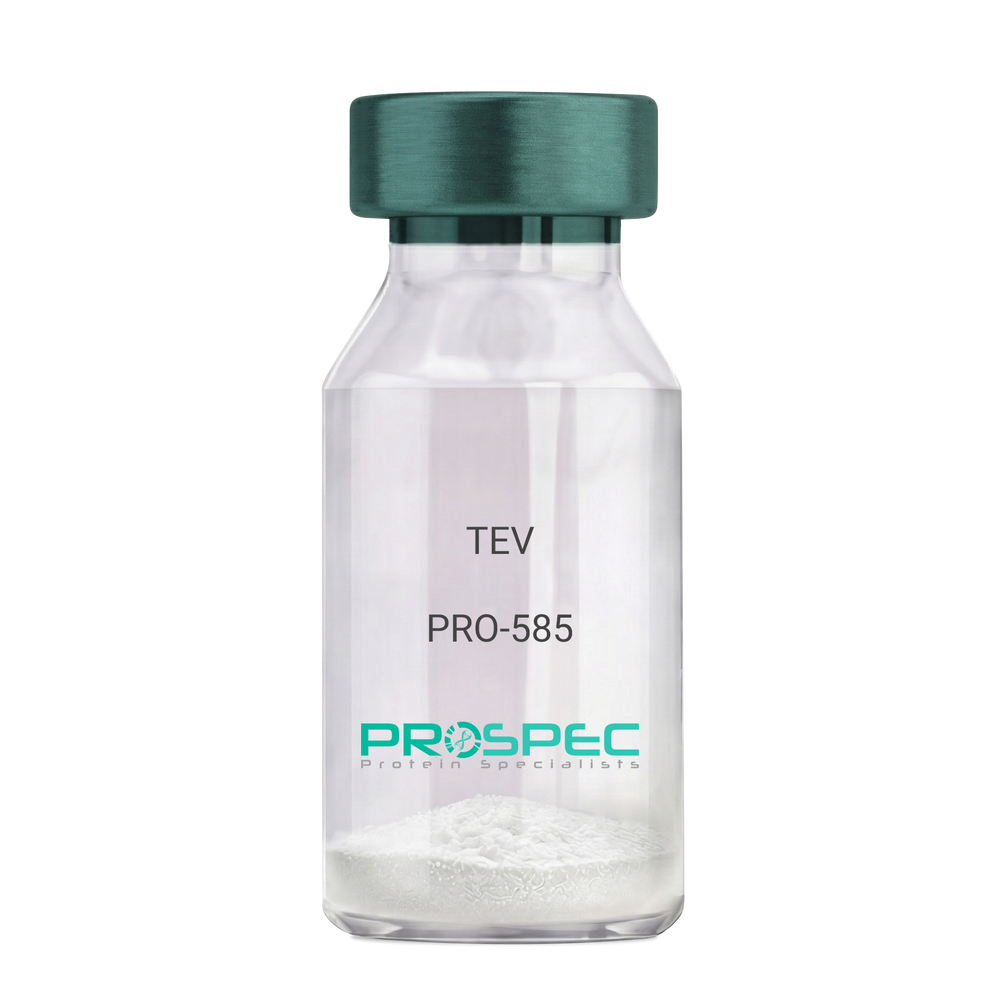
    Name :

    TEV

    Description:

    Tobacco Etch Virus Protease Recombinant

    rTEV, TEV, P1 protease.

    Product # :

    PRO-585

    Price :

    Quantity :

    Shipping Method :

    Ice Icon

    Shipped with Ice Packs

    Add To Cart

    More Info

    • description
    • source
    • formulation
    • purity
    • More Info

    Description

    Recombinant TEV Protease (rTEV) is a site-specific protease purified from E. coli. The protease can be used for the removal of affinity tags from fusion proteins. The seven-amino-acid recognition site for rTEV is Glu-Asn-Leu-Tyr-Phe-Gln-Gly with cleavage occurring between Gln and Gly. The optimal temperature for cleavage is 30°C; however, the enzyme can be used at temperatures as low as 4°C. The rTEV contains His tag.The rTEV is purified by proprietary chromatographic techniques.

    Source

    Escherichia Coli.

    Formulation

    The rTEV contains 25mM Tris, Ph 8.0, 75mM NaCl, 5mM EDTA, 10mM GSH, 50% Glycerol.

    Purity

    Greater than 90.0% as determined by analysis by SDS-PAGE.

    More Info

    • Introduction

      TEV protease is the common name for the 27 kDa catalytic domain of the Nuclear Inclusion a (NIa) protein encoded by the tobacco etch virus (TEV). Because its sequence specificity is far more stringent than that of factor Xa, thrombin, or enterokinase, TEV protease is a very useful reagent for cleaving fusion proteins. TEV protease recognizes a linear epitope of the general form E-Xaa-Xaa-Y -Xaa-Q-(G/S), with cleavage occurring between Q and G or Q and S. The most commonly used sequence is ENLYFQG.

    • Synonyms

      rTEV, TEV, P1 protease.

    • Physical Appearance

      Sterile liquid formulation.

    • Stability

      rTEV although stable at 4°C for 1 week, should be stored below -18°C. Please prevent freeze thaw cycles.

    • Cleavage Conditions

      A number of variables can be changed to optimize the cleavage of any specific protein. The amount of rTEV, the temperature of the incubation, and the time needed for cleavage may be examined. If the protein of interest is heat-labile, then 4°C incubations are recommended. Reactions at 4°C will require longer incubation times and/or more rTEV.

    • Unit Definition

      One unit is defined as the amount of enzyme needed to cleave 3 ug of fusion protein in 1 hour to 85 % completion at 30°C in a buffer containing 50 mM Tris-HCl, pH 8.0, 0.5 mM EDTA, and 1 mM DTT.

    ProSpec's products are furnished for LABORATORY RESEARCH USE ONLY. The product may not be used as drugs, agricultural or pesticidal products, food additives or household chemicals.

    Tev Protease
  • View Data Sheet

    Name :

    CKMT1A Human

    Description:

    Creatine Kinase, Mitochondrial 1A Human Recombinant

    Creatine kinase mitochondrial 1A, creatine kinase mitochondrial 1 (ubiquitous), creatine kinase U-type mitochondrial, Acidic-type mitochondrial creatine kinase, Ubiquitous mitochondrial creatine kinase, CKMT1, U-MtCK, mia-CK, EC 2.7.3, EC 2.7.3.2.

    Product # :

    CKI-275

    Price :

    Quantity :

    Shipping Method :

    Ice Icon

    Shipped with Ice Packs

    Add To Cart

    More Info

    • description
    • source
    • formulation
    • purity
    • biological activity
    • More Info

    Description

    CKMT1A Human Recombinant produced in E. coli is a single polypeptide chain containing 403 amino acids (40-417) and having a molecular mass of 45.0 kDa.CKMT1A is fused to a 25 amino acid His-tag at N-terminus & purified by proprietary chromatographic techniques.

    Source

    E.coli.

    Formulation

    The CKMT1A solution (1mg/ml) contains 20mM Tris-HCl buffer (pH 8.0), 0.15M NaCl and 10% glycerol.

    Purity

    Greater than 95% as determined by SDS-PAGE.

    Biological Activity

    Specific activity is greater than 50unit/mg and is defined as the amount of enzyme that convert 1.0 umole of phosphate from phosphocreatine to ADP per minute at pH 7.5 at 37C.

    More Info

    • Introduction

      CKMT1A is in charge of the transfer of high energy phosphate from mitochondria to the cytosolic carrier, creatine. CKMT1A is a member of the creatine kinase isoenzyme family and exists as two isoenzymes, sarcomeric MtCK and ubiquitous MtCK, encoded by separate genes. Mitochondrial creatine kinase arises in two different oligomeric forms: dimers and octamers, unlike the exclusively dimeric cytosolic creatine kinase isoenzymes. Numerous malignant cancers with poor prognosis have displayed overexpression of ubiquitous mitochondrial creatine kinase which is linked to high energy turnover and inability to remove cancer cells through apoptosis.

    • Synonyms

      Creatine kinase mitochondrial 1A, creatine kinase mitochondrial 1 (ubiquitous), creatine kinase U-type mitochondrial, Acidic-type mitochondrial creatine kinase, Ubiquitous mitochondrial creatine kinase, CKMT1, U-MtCK, mia-CK, EC 2.7.3, EC 2.7.3.2.

    • Physical Appearance

      Sterile Filtered colorless solution.

    • Stability

      Store at 4°C if entire vial will be used within 2-4 weeks. Store, frozen at -20°C for longer periods of time. For long term storage it is recommended to add a carrier protein (0.1% HSA or BSA).Avoid multiple freeze-thaw cycles.

    • Amino Acid Sequence

      MGSSHHHHHH SSGLVPRGSH MGSHMASERR RLYPPSAEYP DLRKHNNCMA SHLTPAVYAR LCDKTTPTGW TLDQCIQTGV DNPGHPFIKT VGMVAGDEET YEVFADLFDP VIQERHNGYD PRTMKHTTDL DASKIRSGYF DERYVLSSRV RTGRSIRGLS LPPACTRAER REVERVVVDA LSGLKGDLAG RYYRLSEMTE AEQQQLIDDH FLFDKPVSPL LTAAGMARDW PDARGIWHNN EKSFLIWVNE EDHTRVISME KGGNMKRVFE RFCRGLKEVE RLIQERGWEF MWNERLGYIL TCPSNLGTGL RAGVHIKLPL LSKDSRFPKI LENLRLQKRG TGGVDTAATG GVFDISNLDR LGKSEVELVQ LVIDGVNYLI DCERRLERGQ DIRIPTPVIH TKH

    ProSpec's products are furnished for LABORATORY RESEARCH USE ONLY. The product may not be used as drugs, agricultural or pesticidal products, food additives or household chemicals.

    Ckmt1A Human
  • View Data Sheet

    Name :

    PRDX2 Human

    Description:

    Peroxiredoxin-2 Human Recombinant

    PRP, TSA, PRX2, NKEFB, PRXII, TDPX1, MGC4104, PRDX2, Peroxiredoxin-2, Thioredoxin peroxidase 1, Thioredoxin-dependent peroxide reductase 1, Thiol-specific antioxidant protein, Natural killer cell-enhancing factor B, NKEF-B.

    Product # :

    ENZ-414

    Price :

    Quantity :

    Shipping Method :

    Ice Icon

    Shipped with Ice Packs

    Add To Cart

    More Info

    • description
    • source
    • formulation
    • purity
    • biological activity
    • More Info

    Description

    PRDX2 Human Recombinant produced in E.Coli is a single, non-glycosylated, polypeptide chain containing 198 amino acids and having a molecular mass of 21.8 kDa.The PRDX2 is purified by proprietary chromatographic techniques.

    Source

    Escherichia Coli.

    Formulation

    The Peroxiredoxin solution contains 20mM Tris-HCl pH-8, & 10% glycerol.

    Purity

    Greater than 90.0% as determined by SDS-PAGE.

    Biological Activity

    The specific activity is > 2000 pmole/min/µg. Enzymatic activity is defined as the amount of hydroperoxide that 1ug of enzyme can reduce at 25°C for 1 minute.

    More Info

    • Introduction

      PRDX2 is part of the peroxiredoxin family of antioxidant enzymes, which reduce hydrogen peroxide and alkyl hydroperoxides. PRDX2 takes part as an antioxidant protective role in cells, and contributes to the antiviral activity of CD8(+) T-cells. PRDX2 has proliferative effect in cancer development or progression.
      If PRDX2 protection is insufficient against peroxidases, the DNA damage results in neurological disease such as Alzheimer's or DNA damage leading to cancer.

    • Synonyms

      PRP, TSA, PRX2, NKEFB, PRXII, TDPX1, MGC4104, PRDX2, Peroxiredoxin-2, Thioredoxin peroxidase 1, Thioredoxin-dependent peroxide reductase 1, Thiol-specific antioxidant protein, Natural killer cell-enhancing factor B, NKEF-B.

    • Physical Appearance

      Sterile Filtered colorless solution.

    • Stability

      Store at 4°C if entire vial will be used within 2-4 weeks. Store, frozen at -20°C for longer periods of time. For long term storage it is recommended to add a carrier protein (0.1% HSA or BSA).Avoid multiple freeze-thaw cycles.

    • Amino Acid Sequence

      MASGNARIGK PAPDFKATAV VDGAFKEVKL SDYKGKYVVL FFYPLDFTFV CPTEIIAFSN RAEDFRKLGC EVLGVSVDSQ FTHLAWINTP RKEGGLGPLN IPLLADVTRR LSEDYGVLKT DEGIAYRGLF IIDGKGVLRQ ITVNDLPVGR SVDEALRLVQ AFQYTDEHGE VCPAGWKPGS DTIKPNVDDS KEYFSKHN.

    ProSpec's products are furnished for LABORATORY RESEARCH USE ONLY. The product may not be used as drugs, agricultural or pesticidal products, food additives or household chemicals.

    Prdx2 Human
  • View Data Sheet

    Name :

    T7 RNAP

    Description:

    T7 RNA Polymerase Recombinant

    T7 RNAP.

    Product # :

    ENZ-1180

    Price :

    Quantity :

    Shipping Method :

    Ice Icon

    Shipped with Ice Packs

    Add To Cart

    More Info

    • description
    • source
    • formulation
    • purity
    • More Info

    Description

    T7 RNA polymerase Recombinant protein is produced by bacteriophage T7 DNA which is expressed in recombinant E. coli bacterial system T7 RNA Polymerase is a DNA-dependent 5'→ 3' RNA polymerase which specifically recognizes T7 promoter sequences.

    Source

    T7 Bacteriophage RNA Polymerase gene

    Formulation

    Transcription Buffer 40mM Tris-HCl (25°C, pH-8), 20mM MgCl2, 2.5mM TCEP & 2mM spermidine.

    Purity

    Greater than 95% as visualized by SDS-PAGE

    More Info

    • Introduction

      T7 RNA polymerase active enzyme synthesizes RNA at an increasing degree of that of E. coli RNA polymerase and it terminates transcription often. T7 RNA polymerase is very selective for initiation at its own promoter sequences and is resistant to antibiotics that inhibit E. coli RNA polymerase. In-vitro transcription of mRNA is achieved via bacteriophage T7 RNA polymerase using its ability to produce full-length RNA transcripts with high reliability, thoughT7 RNAP can manufacture as well immunostimulatory by products for example dsRNA which affect protein expression.

    • Synonyms

      T7 RNAP.

    • Physical Appearance

      Sterile Filtered clear solution.

    • Stability

      Two years when stored at -20°C, 2 weeks at 4°C. DO NOT STORE AT -70C.

    • Applications

      Synthesis of :

      • ssRNAs.
      • Labeled or unlabeled highly specific RNA probes.
      • Capped mRNA using cap analogues.
    • Unit Definition

      1U is defined as the amount of enzyme required to incorporate 1nmol of [3H] ATP into acid-insoluble precipitates within 1 hour at 37℃, pH-8.

    ProSpec's products are furnished for LABORATORY RESEARCH USE ONLY. The product may not be used as drugs, agricultural or pesticidal products, food additives or household chemicals.

    T7 Rnap
  • View Data Sheet

    Name :

    SOD Human, 15N

    Description:

    Superoxide Dismutase, 15N Human Recombinant

    Superoxide dismutase [Cu-Zn], EC 1.15.1.1, SOD1, SOD, ALS, ALS1, IPOA.

    Product # :

    PRO-2613

    Price :

    Quantity :

    Shipping Method :

    Room Temp Icon

    Shipped at Room temp

    Add To Cart

    More Info

    • description
    • source
    • formulation
    • purity
    • More Info

    Description

    Recombinant Human Superoxide Dismutase, 15N produced in E.Coli is a single non-glycosylated polypeptide chain containing 153 amino acids and having a total molecular mass of 15.8kDa.

    Source

    Escherichia Coli.

    Formulation

    Lyophilized from a 0.2μm filtered concentrated (1mg/ml) solution in PBS, 0.1mM CuCl2 and 0.2mM ZnCl2.

    Purity

    Greater than 95.0% as determined by SDS-PAGE Analysis.

    More Info

    • Introduction

      Human Cu/Zn Superoxide Dismutase (SOD) catalyzes the reaction between superoxide anions and hydrogen to yield molecular oxygen and hydrogen peroxide. SOD protects the cell against dangerous levels of superoxide. SOD binds copper and zinc ions and is 1 of 3 isozymes accountable for destroying free superoxide radicals in the body. The encoded protein neutralizes supercharged oxygen molecules, which can damage cells if their levels are not controlled.

    • Synonyms

      Superoxide dismutase [Cu-Zn], EC 1.15.1.1, SOD1, SOD, ALS, ALS1, IPOA.

    • Physical Appearance

      Sterile Filtered White lyophilized (freeze-dried) powder.

    • Stability

      Lyophilized SOD although stable at room temperature for 3 weeks, should be stored desiccated below -18°C. Upon reconstitution SOD should be stored at 4°C between 2-7 days and for future use below -18°C.For long term storage it is recommended to add a carrier protein (0.1% HSA or BSA).Please prevent freeze-thaw cycles.

    • Solubility

      It is recommended to reconstitute the lyophilized SOD in sterile 18MΩ-cm H2O not less than 100µg/ml, which can then be further diluted to other aqueous solutions.

    • Amino Acid Sequence

      ATKAVCVLKGDGPVQGIINFEQKESNGPVKVWGSIKGLTEGLHGFHVHEFGD NTAGCTSAGPHFNPLSRKHGGPKDEERHVGDLGNVTADKDGVADVSIEDSV ISLSGDHCIIGRTLVVHEKADDLGKGGNEESTKTGNAGSRLACGVIGIAQ.

    ProSpec's products are furnished for LABORATORY RESEARCH USE ONLY. The product may not be used as drugs, agricultural or pesticidal products, food additives or household chemicals.

    Sod1 Protein
  • View Data Sheet

    Name :

    HDDC2 Human

    Description:

    HD Domain Containing 2 Human Recombinant

    HD Domain Containing 2, Hepatitis C Virus NS5A-Transactivated Protein 2, HCV NS5A-Transactivated Protein 2, C6orf74, NS5ATP2, Chromosome 6 Open Reading Frame 74, HD Domain-Containing Protein 2,DJ167O5.2, CGI-130, HDDC2.

    Product # :

    ENZ-839

    Price :

    Quantity :

    Shipping Method :

    Ice Icon

    Shipped with Ice Packs

    Add To Cart

    More Info

    • description
    • source
    • formulation
    • purity
    • More Info

    Description

    HDDC2 Human Recombinant produced in E.Coli is a single, non-glycosylated polypeptide chain containing 227 amino acids (1-204 a.a) and having a molecular mass of 25.8 kDa.HDDC2 is fused to a 23 amino acid His-tag at N-terminus & purified by proprietary chromatographic techniques.

    Source

    Escherichia Coli.

    Formulation

    HDDC2 protein solution (1mg/ml) containing Phosphate buffered saline (pH7.4) and 10% glycerol.

    Purity

    Greater than 95.0% as determined by SDS-PAGE.

    More Info

    • Introduction

      HD Domain Containing 2, also known as HDDC2 is a member of the HDDC2 family. HDDC2 is an enzyme which contains one HD domain and it is expected to exhibit phosphohydrolase activity. It has been proposed that HDDC2 takes part in nucleic acid metabolism, signal transduction and possibly other functions in bacteria, archaea and eukaryotes. The HD domain consists of highly conserved residues, in particular histidines or aspartates. Porphyria cutanea tarda, Parkinson’s disease and Stickler syndrome have all been related with HDDC2.

    • Synonyms

      HD Domain Containing 2, Hepatitis C Virus NS5A-Transactivated Protein 2, HCV NS5A-Transactivated Protein 2, C6orf74, NS5ATP2, Chromosome 6 Open Reading Frame 74, HD Domain-Containing Protein 2,DJ167O5.2, CGI-130, HDDC2.

    • Physical Appearance

      Sterile Filtered clear solution.

    • Stability

      Store at 4°C if entire vial will be used within 2-4 weeks. Store, frozen at -20°C for longer periods of time. For long term storage it is recommended to add a carrier protein (0.1% HSA or BSA).Avoid multiple freeze-thaw cycles.

    • Amino Acid Sequence

      MGSSHHHHHH SSGLVPRGSH MGSMASVSSA TFSGHGARSL LQFLRLVGQL KRVPRTGWVY RNVQRPESVS DHMYRMAVMA MVIKDDRLNK DRCVRLALVH DMAECIVGDI APADNIPKEE KHRREEEAMK QITQLLPEDL RKELYELWEE YETQSSAEAK FVKQLDQCEM ILQASEYEDL EHKPGRLQDF YDSTAGKFNH PEIVQLVSEL EAERSTNIAA AASEPHS

    ProSpec's products are furnished for LABORATORY RESEARCH USE ONLY. The product may not be used as drugs, agricultural or pesticidal products, food additives or household chemicals.

    Hddc2 Human
  • 1
  • …
  • 38
  • 39
  • 40
  • 41
  • 42
Your browser does not support the video tag.

Products

  • Cytokines
  • Growth Factors
  • Chemokines
  • CD Antigens
  • Neurotrophins
  • Hormones
  • Enzymes
  • Viral Antigens
  • Recombinant Proteins
  • Natural Proteins
  • Monoclonal Antibodies
  • Polyclonal Antibodies
  • Thermal Packaging

About

  • Company
  • Founder
  • Contribution
  • Contact Us
  • My Account

Ordering

  • Ordering Method
  • Ordering - Credit Card
  • Ordering PO
  • Shipping Fees
  • FAQ's

Legal

  • Terms & Conditions
  • Privacy
  • Site Map
  • info@prospecbio.com
  • Facebook
  • Instagram
  • Linkedin Profile

© 2026 ProSpec-Tany TechnoGene Ltd. All Rights Reserved.

  • Choosing a selection results in a full page refresh.
  • Opens in a new window.