Skip to content

High-quality research proteins.

  • 1-800-805-6531

  • Mon - Sat 8.00-18.00, Sun - Closed

  • info@prospecbio.com

  • PO Box 6591 East Brunswick NJ 08816

  • Products
    • Cytokines
    • Growth factors
    • Chemokines
    • Cd antigens
    • Neurotrophins
    • Hormones
    • Enzymes
    • Viral antigens
    • Recombinant proteins
    • Natural proteins
    • Monoclonal antibodies
    • Polyclonal antibodies
    • Thermal Packaging
  • About
    • Company
    • Founder
    • Contribution
  • Customers
    • Eastern Asia
    • Eastern Europe
    • North America
    • South America
    • South East Asia
    • Southern Asia
    • Western Europe
  • Ordering
    • Ordering Method
    • Ordering - Credit Card
    • Ordering - PO
    • Shipping Fees
    • FAQs
  • Services
    • DNA Cloning
    • Protein Expression
    • Monoclonal Antibody
    • Fermentation
    • Technology License
  • Contact us
Log in

Country/region

  • USD $ | Albania
  • USD $ | Andorra
  • USD $ | Argentina
  • USD $ | Armenia
  • USD $ | Australia
  • USD $ | Austria
  • USD $ | Azerbaijan
  • USD $ | Belarus
  • USD $ | Belgium
  • USD $ | Bolivia
  • USD $ | Brazil
  • USD $ | Bulgaria
  • USD $ | Cambodia
  • USD $ | Canada
  • USD $ | Chile
  • USD $ | China
  • USD $ | Colombia
  • USD $ | Costa Rica
  • USD $ | Croatia
  • USD $ | Cyprus
  • USD $ | Czechia
  • USD $ | Denmark
  • USD $ | Estonia
  • USD $ | Finland
  • USD $ | France
  • USD $ | Georgia
  • USD $ | Germany
  • USD $ | Greece
  • USD $ | Hong Kong SAR
  • USD $ | Hungary
  • USD $ | Iceland
  • USD $ | India
  • USD $ | Ireland
  • USD $ | Israel
  • USD $ | Italy
  • USD $ | Japan
  • USD $ | Kazakhstan
  • USD $ | Latvia
  • USD $ | Liechtenstein
  • USD $ | Lithuania
  • USD $ | Madagascar
  • USD $ | Malta
  • USD $ | Mexico
  • USD $ | Moldova
  • USD $ | Monaco
  • USD $ | Netherlands
  • USD $ | New Zealand
  • USD $ | North Macedonia
  • USD $ | Norway
  • USD $ | Panama
  • USD $ | Paraguay
  • USD $ | Peru
  • USD $ | Philippines
  • USD $ | Poland
  • USD $ | Portugal
  • USD $ | Romania
  • USD $ | Singapore
  • USD $ | Slovakia
  • USD $ | Slovenia
  • USD $ | South Africa
  • USD $ | South Korea
  • USD $ | Spain
  • USD $ | Sri Lanka
  • USD $ | Sweden
  • USD $ | Switzerland
  • USD $ | Taiwan
  • USD $ | Thailand
  • USD $ | Türkiye
  • USD $ | Ukraine
  • USD $ | United Kingdom
  • USD $ | United States
  • USD $ | Uruguay
  • USD $ | Vatican City
  • USD $ | Venezuela
  • USD $ | Vietnam
  • Facebook
  • Instagram
logoProSpec - Recombinant Protein Manufacturer for academic and R&D industry
Become a distributor
Account Log in
Wishlist
Cart Cart(0)
  • Products
    +
    • Cytokines
    • Growth factors
    • Chemokines
    • Cd antigens
    • Neurotrophins
    • Hormones
    • Enzymes
    • Viral antigens
    • Recombinant proteins
    • Natural proteins
    • Monoclonal antibodies
    • Polyclonal antibodies
    • Thermal Packaging
  • About
    +
    • Company
    • Founder
    • Contribution
  • Customers
    +
    • Eastern Asia
    • Eastern Europe
    • North America
    • South America
    • South East Asia
    • Southern Asia
    • Western Europe
  • Ordering
    +
    • Ordering Method
    • Ordering - Credit Card
    • Ordering - PO
    • Shipping Fees
    • FAQs
  • Services
    +
    • DNA Cloning
    • Protein Expression
    • Monoclonal Antibody
    • Fermentation
    • Technology License
  • Contact us

Item added to your cart

View cart
View All
  • Cytokines
  • Growth factors
  • Chemokines
  • Cd antigens
  • Neurotrophins
  • Hormones
  • Enzymes
  • Viral antigens
  • Recombinant proteins
  • Natural proteins
  • Monoclonal antibodies
  • Polyclonal antibodies
  • Thermal Packaging
  • Tumor Necrosis Factor

    Tumor Necrosis Factor

    View All
  • 4-1BB

    4-1BB

    View All
  • Adiponectin

    Adiponectin

    View All
  • AIF1

    AIF1

    View All
  • Other Cytokines

    Other Cytokines

    View All
  • AITRL

    AITRL

    View All
  • Angiopoietin

    Angiopoietin

    View All
  • Apolipoprotein

    Apolipoprotein

    View All
  • B-Cell Activating Factor

    B-Cell Activating Factor

    View All
  • Beta Defensin

    Beta Defensin

    View All
  • Bone Morphogenetic Protein

    Bone Morphogenetic Protein

    View All
  • B type Natriuretic Peptide

    B type Natriuretic Peptide

    View All
  • BST

    BST

    View All
  • Betacellulin

    Betacellulin

    View All
  • Cardiotrophin

    Cardiotrophin

    View All
  • Activin

    Activin

    View All
  • Fibroblast Growth Factor

    Fibroblast Growth Factor

    View All
  • Other Growth Factors

    Other Growth Factors

    View All
  • CSF

    CSF

    View All
  • CTGF

    CTGF

    View All
  • IGFBP

    IGFBP

    View All
  • VEGF Protein

    VEGF Protein

    View All
  • EGF

    EGF

    View All
  • Epigen

    Epigen

    View All
  • Erythropoietin

    Erythropoietin

    View All
  • Insulin-Like Growth Factor

    Insulin-Like Growth Factor

    View All
  • Growth Hormone

    Growth Hormone

    View All
  • HDGF

    HDGF

    View All
  • Hepatocyte Growth Factor

    Hepatocyte Growth Factor

    View All
  • Insulin

    Insulin

    View All
  • BCA-1/ BLC (CXCL13)

    BCA-1/ BLC (CXCL13)

    View All
  • BRAK (CXCL14)

    BRAK (CXCL14)

    View All
  • C-10 (CCL6)

    C-10 (CCL6)

    View All
  • Other Chemokines

    Other Chemokines

    View All
  • MEC (CCL28)

    MEC (CCL28)

    View All
  • LD78-beta (CCL3L1)

    LD78-beta (CCL3L1)

    View All
  • CTACK (CCL27)

    CTACK (CCL27)

    View All
  • CXCL16

    CXCL16

    View All
  • CXCL17

    CXCL17

    View All
  • Platelet Factor-4 (CXCL4)

    Platelet Factor-4 (CXCL4)

    View All
  • ENA-78 (CXCL5)

    ENA-78 (CXCL5)

    View All
  • Eotaxin (CCL11,24,26)

    Eotaxin (CCL11,24,26)

    View All
  • Exodus-2 (CCL21)

    Exodus-2 (CCL21)

    View All
  • Fractalkine (CX3CL1)

    Fractalkine (CX3CL1)

    View All
  • CXCL6

    CXCL6

    View All
  • Other CD Antigens

    Other CD Antigens

    View All
  • CD14

    CD14

    View All
  • CD164

    CD164

    View All
  • CD1

    CD1

    View All
  • CD2

    CD2

    View All
  • CD200

    CD200

    View All
  • CD207

    CD207

    View All
  • CD226

    CD226

    View All
  • CD23

    CD23

    View All
  • CD244

    CD244

    View All
  • CD247

    CD247

    View All
  • CD27

    CD27

    View All
  • CD274

    CD274

    View All
  • CD300

    CD300

    View All
  • CD33

    CD33

    View All
  • Other Neurotrophins

    Other Neurotrophins

    View All
  • Beta-NGF

    Beta-NGF

    View All
  • BDNF

    BDNF

    View All
  • CDNF

    CDNF

    View All
  • CNTF

    CNTF

    View All
  • GDNF

    GDNF

    View All
  • Glia Maturation Factor

    Glia Maturation Factor

    View All
  • MANF

    MANF

    View All
  • Midkine

    Midkine

    View All
  • Neuroglobin

    Neuroglobin

    View All
  • Neurotrophic factors

    Neurotrophic factors

    View All
  • Neuregulin

    Neuregulin

    View All
  • Neuropilin

    Neuropilin

    View All
  • Pigment Epithelium-Derived Factor

    Pigment Epithelium-Derived Factor

    View All
  • Pleiotrophin

    Pleiotrophin

    View All
  • Peptide Hormones

    Peptide Hormones

    View All
  • Other Hormones

    Other Hormones

    View All
  • HCG

    HCG

    View All
  • Endothelin

    Endothelin

    View All
  • Exendin

    Exendin

    View All
  • FSH

    FSH

    View All
  • Glucagon

    Glucagon

    View All
  • GHRP

    GHRP

    View All
  • GLP

    GLP

    View All
  • Thyrostimulin

    Thyrostimulin

    View All
  • Inhibin A

    Inhibin A

    View All
  • LHRH

    LHRH

    View All
  • Melanotan

    Melanotan

    View All
  • Procalcitonin

    Procalcitonin

    View All
  • PTH

    PTH

    View All
  • Peroxiredoxin

    Peroxiredoxin

    View All
  • Peptidase

    Peptidase

    View All
  • Synthetase

    Synthetase

    View All
  • Transferase

    Transferase

    View All
  • Hydrolase

    Hydrolase

    View All
  • Dehydrogenase

    Dehydrogenase

    View All
  • ACE2

    ACE2

    View All
  • Esterase

    Esterase

    View All
  • Protein Kinases

    Protein Kinases

    View All
  • Other Enzymes

    Other Enzymes

    View All
  • Phosphatase

    Phosphatase

    View All
  • Deaminase

    Deaminase

    View All
  • Oxygenase

    Oxygenase

    View All
  • Adenylate Kinase

    Adenylate Kinase

    View All
  • Lyase

    Lyase

    View All
  • Chagas

    Chagas

    View All
  • SARS

    SARS

    View All
  • Influenza

    Influenza

    View All
  • ASFV

    ASFV

    View All
  • Astrovirus

    Astrovirus

    View All
  • Borrelia

    Borrelia

    View All
  • Helicobacter Pylori

    Helicobacter Pylori

    View All
  • Chikungunya

    Chikungunya

    View All
  • Chlamydia

    Chlamydia

    View All
  • Cytomegalo

    Cytomegalo

    View All
  • Dengue

    Dengue

    View All
  • EBV

    EBV

    View All
  • Ebola

    Ebola

    View All
  • Feline Leukemia Virus

    Feline Leukemia Virus

    View All
  • Hepatitis A

    Hepatitis A

    View All
  • Other

    Other

    View All
  • Actin

    Actin

    View All
  • ADAM

    ADAM

    View All
  • Complement Component

    Complement Component

    View All
  • Ag85

    Ag85

    View All
  • Eukaryotic Translation Initiation Factor

    Eukaryotic Translation Initiation Factor

    View All
  • Anterior Gradient Protein

    Anterior Gradient Protein

    View All
  • Heat Shock Protein

    Heat Shock Protein

    View All
  • Alpha-2-HS-Glycoprotein

    Alpha-2-HS-Glycoprotein

    View All
  • Hemoglobin

    Hemoglobin

    View All
  • Allergy

    Allergy

    View All
  • Anaplasma

    Anaplasma

    View All
  • Angiogenin

    Angiogenin

    View All
  • Ankyrin Repeat Domain

    Ankyrin Repeat Domain

    View All
  • Annexin

    Annexin

    View All
  • Other Natural Proteins

    Other Natural Proteins

    View All
  • Aprotinin

    Aprotinin

    View All
  • Transferrin

    Transferrin

    View All
  • Avidin

    Avidin

    View All
  • Anti Coagulation Factors

    Anti Coagulation Factors

    View All
  • Natural Albumin

    Natural Albumin

    View All
  • Natural Coagulation Factors

    Natural Coagulation Factors

    View All
  • Fibronectin

    Fibronectin

    View All
  • Thrombin

    Thrombin

    View All
  • Anti Human Enzyme

    Anti Human Enzyme

    View All
  • Other Monoclonal Antibodies

    Other Monoclonal Antibodies

    View All
  • Anti Human Cytokine

    Anti Human Cytokine

    View All
  • Anti Human Heat Shock Protein

    Anti Human Heat Shock Protein

    View All
  • Anti Mouse Lymphocyte

    Anti Mouse Lymphocyte

    View All
  • Anti Human Chemokine

    Anti Human Chemokine

    View All
  • Anti Human Lymphocyte

    Anti Human Lymphocyte

    View All
  • Anti Viral Monoclonal

    Anti Viral Monoclonal

    View All
  • Anti Mouse Cytokine

    Anti Mouse Cytokine

    View All
  • Anti-GST Monoclonal

    Anti-GST Monoclonal

    View All
  • Other Polyclonal Antibodies

    Other Polyclonal Antibodies

    View All
  • Anti Viral

    Anti Viral

    View All
  • Anti-GST Monoclonal

    Anti-GST Monoclonal

    View All
Back

Search results

1000 results found for “chitinase”

Name

Description

Product #

Price

Quantity

Shipping Method

  • View Data Sheet

    Name :

    GSTP2 Mouse

    Description:

    Glutathione S-Transferase pi 2 Mouse Recombinant

    Glutathione S-transferase P 2, Gst P2, GST YF-YF, GST class-pi, GST-piA.

    Product # :

    ENZ-943

    Price :

    Quantity :

    Shipping Method :

    Ice Icon

    Shipped with Ice Packs

    Add To Cart

    More Info

    • description
    • source
    • formulation
    • purity
    • More Info

    Description

    GSTP2 Mouse Recombinant produced in E.Coli is a single, non-glycosylated, polypeptide chain containing 210 amino acids (1-210 a.a.) and having a molecular mass of 23.5kDa. The GSTP2 is purified by proprietary chromatographic techniques.

    Source

    Escherichia Coli.

    Formulation

    The GSTP2 protein solution (0.5mg/ml) contains Phosphate Buffered Saline (pH 7.4) and 20% glycerol.

    Purity

    Greater than 95.0% as determined by SDS-PAGE.

    More Info

    • Introduction

      Gltathione S-transferase PI 2, also known as GSTP2 is multifunctional enzyme which is involved in the protection of cellular components against anti-cancer drugs or peroxidative stress. Furthermore, down regulation of GSTP2 induces an increase of oxidative damage in the pyramidal cells of the CA1&CA3 regions as well as in the granular layer of the dentate gyrus, which at the end leads to structural and functional damage.

    • Synonyms

      Glutathione S-transferase P 2, Gst P2, GST YF-YF, GST class-pi, GST-piA.

    • Physical Appearance

      Sterile Filtered clear solution.

    • Stability

      Store at 4°C if entire vial will be used within 2-4 weeks. Store, frozen at -20°C for longer periods of time. For long term storage it is recommended to add a carrier protein (0.1% HSA or BSA). Avoid multiple freeze-thaw cycles.

    • Amino Acid Sequence

      MPPYTIVYFP SPGRCEAMRM LLADQGQSWK EEVVTIDTWM QGLLKPTCLY GQLPKFEDGD LTLYQSNAIL RHLGRSLGLY GKNQREAAQV DMVNDGVEDL RGKYGTMIYR NYENGKNDYV KALPGHLKPF ETLLSQNQGG KAFIVGDQIS FADYNLLDLL LIHQVLAPGC LDNFPLLSAY VARLSARPKI KAFLSSPEHV NRPINGNGKQ.

    ProSpec's products are furnished for LABORATORY RESEARCH USE ONLY. The product may not be used as drugs, agricultural or pesticidal products, food additives or household chemicals.

    Mouse Gstp2
  • View Data Sheet

    Name :

    DBH Human

    Description:

    DBH Human Recombinant

    EC 1.14.17.1, DBM, DBH.

    Product # :

    ENZ-891

    Price :

    Quantity :

    Shipping Method :

    Ice Icon

    Shipped with Ice Packs

    Add To Cart

    More Info

    • description
    • source
    • formulation
    • purity
    • More Info

    Description

    DBH Human Recombinant produced in E.Coli is a single, non-glycosylated polypeptide chain containing 599 amino acids (40-617 a.a) and having a molecular mass of 67.2kDa.DBH is fused to a 21 amino acid His-tag at N-terminus & purified by proprietary chromatographic techniques.

    Source

    Escherichia Coli.

    Formulation

    DBH protein solution (0.25mg/ml) containing Phosphate buffered saline (pH7.4), 10% glycerol and 1mM DTT.

    Purity

    Greater than 85.0% as determined by SDS-PAGE.

    More Info

    • Introduction

      DBH catalyzes the chemical reaction. DBH is an oxidoreductase which belongs to the copper type II, ascorbate-dependent monooxygenase family, in particular those performing on paired donors, with O2 as oxidant and incorporation or reduction of oxygen. The oxygen incorporated can not be derived from O2 with reduced ascorbate as one donor, as well as incorporation of one ato of oxygen into the other donor.

    • Synonyms

      EC 1.14.17.1, DBM, DBH.

    • Physical Appearance

      Sterile Filtered colorless solution.

    • Stability

      Store at 4°C if entire vial will be used within 2-4 weeks. Store, frozen at -20°C for longer periods of time. For long term storage it is recommended to add a carrier protein (0.1% HSA or BSA).Avoid multiple freeze-thaw cycles.

    • Amino Acid Sequence

      MGSSHHHHHH SSGLVPRGSH MSAPRESPLP YHIPLDPEGS LELSWNVSYT QEAIHFQLLV RRLKAGVLFG MSDRGELENA DLVVLWTDGD TAYFADAWSD QKGQIHLDPQ QDYQLLQVQR TPEGLTLLFK RPFGTCDPKD YLIEDGTVHL VYGILEEPFR SLEAINGSGL QMGLQRVQLL KPNIPEPELP SDACTMEVQA PNIQIPSQET TYWCYIKELP KGFSRHHIIK YEPIVTKGNE ALVHHMEVFQ CAPEMDSVPH FSGPCDSKMK PDRLNYCRHV LAAWALGAKA FYYPEEAGLA FGGPGSSRYL RLEVHYHNPL VIEGRNDSSG IRLYYTAKLR RFNAGIMELG LVYTPVMAIP PRETAFILTG YCTDKCTQLA LPPSGIHIFA SQLHTHLTGR KVVTVLVRDG REWEIVNQDN HYSPHFQEIR MLKKVVSVHP GDVLITSCTY NTEDRELATV GGFGILEEMC VNYVHYYPQT QLELCKSAVD AGFLQKYFHL INRFNNEDVC TCPQASVSQQ FTSVPWNSFN RDVLKALYSF APISMHCNKS SAVRFQGEWN LQPLPKVIST LEEPTPQCPT SQGRSPAGPT VVSIGGGKG

    ProSpec's products are furnished for LABORATORY RESEARCH USE ONLY. The product may not be used as drugs, agricultural or pesticidal products, food additives or household chemicals.

    Dbh Human
  • View Data Sheet

    Name :

    MMP1 (24-207) Human

    Description:

    Matrix Metalloproteinase-1 (24-207 a.a) Human Recombinant, HEK

    nterstitial collagenase, Fibroblast collagenase, Matrix metalloproteinase-1, MMP-1, MMP1, CLG, CLGN.

    Product # :

    ENZ-1085

    Price :

    Quantity :

    Shipping Method :

    Room Temp Icon

    Shipped at Room temp

    Add To Cart

    More Info

    • description
    • source
    • formulation
    • purity
    • More Info

    Description

    MMP1 (24-207) Human Recombinant is a single, glycosylated polypeptide chain containing 190 amino acids and having a molecular mass of 21.2kDa. MMP1 (24-207) is fused to a 6 a.a C-terminal His tag.

    Source

    HEK293 Cells.

    Formulation

    MMP1 (24-207) filtered (0.4 µm) and lyophilized from 0.5mg/ml in PBS, pH7.5 and 5% (w/v) Threalose.

    Purity

    Greater than 95.0% as determined by SDS-PAGE.

    More Info

    • Introduction

      MMP-1 (interstitial collagenase) can break down a wide range of substrates including types I, II, III, VII, VIII, and X collagens as well as L-Selectin, pro-TNF, IGFBP-3, IGFBP-5, casein, gelatin, myelin basic protein, pro-MMP2 and pro-MMP9. A significant function of MMP-1 is the degradation of fibrillar collagens in extracellular matrix remodeling. MMP-1 is expressed in fibroblasts, keratinocytes, endothelial cells, monocytes and macrophages. MMP1 can be divided into a number of distinct domains: a prodomain which is cleaved on activation, a catalytic domain containing the zinc binding site and a short hinge region with a carboxyl terminal domain. MMP1 is part of a cluster of MMP genes which localize to chromosome 11q22.3.

    • Synonyms

      nterstitial collagenase, Fibroblast collagenase, Matrix metalloproteinase-1, MMP-1, MMP1, CLG, CLGN.

    • Physical Appearance

      Filtered White lyophilized (freeze-dried) powder.

    • Stability

      Store lyophilized protein at -20°C. Aliquot the product after reconstitution to avoid repeated freezing/thawing cycles. Reconstituted protein can be stored at 4°C for a limited period of time; it does not show any change after two weeks at 4°C.

    • Solubility

      It is recommended to add deionized water to prepare a working stock solution of approximately 0.5mg/ml and let the lyophilized pellet dissolve completely.

    • Amino Acid Sequence

      CTCVPPHPQT AFCNSDLVIR AKFVGTPEVN QTTLYQRYEI KMTKMYKGFQ ALGDAADIRF VYTPAMESVC GYFHRSHNRS EEFLIAGKLQ DGLLHITTCS FVAPWNSLSL AQRRGFTKTY TVGCEECTVF PCLSIPCKLQ SGTHCLWTDQ LLQGSEKGFQ SRHLACLPRE PGLCTWQSLR SQIAHHHHHH.

    ProSpec's products are furnished for LABORATORY RESEARCH USE ONLY. The product may not be used as drugs, agricultural or pesticidal products, food additives or household chemicals.

    Mmp1 Protein
  • View Data Sheet

    Name :

    Cyclophilin B Human, His

    Description:

    Cyclophilin-B Human Recombinant, His Tag

    Peptidylprolyl isomerase B, PPIase, Rotamase, S-cyclophilin, PPIB, cyclophilin-like protein, peptidyl-prolyl cis-trans isomerase B, Cyclophilin B, SCYLP, CYPB, CYP-S1, MGC2224, MGC14109.

    Product # :

    ENZ-808

    Price :

    Quantity :

    Shipping Method :

    Room Temp Icon

    Shipped at Room temp

    Add To Cart

    More Info

    • description
    • source
    • formulation
    • purity
    • More Info

    Description

    Cyclophilin-B Human Recombinant produced in E.Coli is a single, non-glycosylated, polypeptide chain (Asp34-Glu216) containing 193 amino acids including a 10 aa His tag at N-terminus. The total calculated molecular mass is 22kDa.

    Source

    Escherichia Coli.

    Formulation

    Cyclophilin-B was filtered (0.4 µm) and lyophilized in 20mM Tris buffer and 50mM NaCl, pH 7.5.

    Purity

    Greater than 95.0% as determined by SDS-PAGE.

    More Info

    • Introduction

      Cyclophilin B (also known as PPIB, peptidylpropyl isomerase B) is a cyclosporine-binding protein and is mainly located within the endoplasmic reticulum. It is associated with the secretory pathway and released in biological fluids. This protein can bind to cells derived from T- and B-lymphocytes, and may regulate cyclosporine A-mediated immunosuppression.

    • Synonyms

      Peptidylprolyl isomerase B, PPIase, Rotamase, S-cyclophilin, PPIB, cyclophilin-like protein, peptidyl-prolyl cis-trans isomerase B, Cyclophilin B, SCYLP, CYPB, CYP-S1, MGC2224, MGC14109.

    • Physical Appearance

      Filtered White lyophilized (freeze-dried) powder.

    • Stability

      Store lyophilized protein at -20°C. Aliquot the product after reconstitution to avoid repeated freezing/thawing cycles. Reconstituted protein can be stored at 4°C for a limited period of time; it does not show any change after two weeks at 4°C.

    • Solubility

      It is recommended to add deionized water to prepare a working stock solution of approximately 0.5mg/ml and let the lyophilized pellet dissolve completely. Cyclophilin-B is not sterile! Please filter the product by an appropriate sterile filter before using it in the cell culture.

    • Amino Acid Sequence

      MKHHHHHHAS DEKKKGPKVT VKVYFDLRIG DEDVGRVIFG LFGKTVPKTV DNFVALATGE KGFGYKNSKF HRVIKDFMIQ GGDFTRGDGT GGKSIYGERF PDENFKLKHY GPGWVSMANA GKDTNGSQFF ITTVKTAWLD GKHVVFGKVL EGMEVVRKVE STKTDSRDKP LKDVIIADCG KIEVEKPFAI AKE.

    ProSpec's products are furnished for LABORATORY RESEARCH USE ONLY. The product may not be used as drugs, agricultural or pesticidal products, food additives or household chemicals.

    Cyclophilin B Human His
  • View Data Sheet

    Name :

    PPP1CC Human, Active

    Description:

    Protein Phosphatase 1, Catalytic Subunit Gamma Human Recombinant, Active

    Protein phosphatase 1 catalytic subunit gamma isozyme/isoform, Protein phosphatase 1C catalytic subunit, serine/threonine phosphatase 1 gamma, serine/threonine-protein phosphatase PP1-gamma catalytic subunit, PP1gamma, PPP1G, EC 3.1.3.16.

    Product # :

    ENZ-1042

    Price :

    Quantity :

    Shipping Method :

    Ice Icon

    Shipped with Ice Packs

    Add To Cart

    More Info

    • description
    • source
    • formulation
    • purity
    • biological activity
    • More Info

    Description

    PPP1CC produced in E.Coli is a single, non-glycosylated polypeptide chain containing 343 amino acids (1-323a.a.) and having a molecular mass of 39.1kDa.PPP1CC is fused to a 20 amino acid His-tag at N-terminus & purified by proprietary chromatographic techniques.

    Source

    Escherichia Coli.

    Formulation

    The PPP1CC protein solution (0.25mg/ml) containing 20mM Tris-HCl buffer (pH8.0), 0.2M NaCl, 2mM DTT and 50% glycerol.

    Purity

    Greater than 85.0% as determined by SDS-PAGE.

    Biological Activity

    Specific activity is > 700 units/mg, and is defined as the amount of enzyme that hydrolyzes 1.0 nmole of p-nitrophenyl phosphate (pNPP) per minute at pH 7.5 at 37°C.

    More Info

    • Introduction

      PPP1CC is vital for cell division and takes part in the regulation of protein synthesis, muscle contractility and glycogen metabolism. Additionally, PPP1CC has a role in long-term synaptic plasticity and regulation of ionic conductance, and has a significant role in dephosphorylating substrates such as the postsynaptic density-associated Ca2+/calmodulin dependent protein kinase II.

    • Synonyms

      Protein phosphatase 1 catalytic subunit gamma isozyme/isoform, Protein phosphatase 1C catalytic subunit, serine/threonine phosphatase 1 gamma, serine/threonine-protein phosphatase PP1-gamma catalytic subunit, PP1gamma, PPP1G, EC 3.1.3.16.

    • Physical Appearance

      Sterile Filtered clear solution.

    • Stability

      Store at 4°C if entire vial will be used within 2-4 weeks. Store, frozen at -20°C for longer periods of time. For long term storage it is recommended to add a carrier protein (0.1% HSA or BSA).Avoid multiple freeze-thaw cycles.

    • Amino Acid Sequence

      MGSSHHHHHH SSGLVPRGSH MADLDKLNID SIIQRLLEVR GSKPGKNVQL QENEIRGLCL KSREIFLSQP ILLELEAPLK ICGDIHGQYY DLLRLFEYGG FPPESNYLFL GDYVDRGKQS LETICLLLAY KIKYPENFFL LRGNHECASI NRIYGFYDEC KRRYNIKLWK TFTDCFNCLP IAAIVDEKIF CCHGGLSPDL QSMEQIRRIM RPTDVPDQGL LCDLLWSDPD KDVLGWGEND RGVSFTFGAE VVAKFLHKHD LDLICRAHQV VEDGYEFFAK RQLVTLFSAP NYCGEFDNAG AMMSVDETLM CSFQILKPAE KKKPNATRPV TPPRGMITKQ AKK.

    ProSpec's products are furnished for LABORATORY RESEARCH USE ONLY. The product may not be used as drugs, agricultural or pesticidal products, food additives or household chemicals.

    Ppp1Cc Human Active
  • View Data Sheet

    Name :

    TSEN15 Human

    Description:

    tRNA Splicing Endonuclease 15 Human Recombinant

    tRNA-splicing endonuclease subunit Sen15, SEN15 homolog, HsSEN15, tRNA-intron endonuclease Sen15, TSEN15, C1orf19, SEN15.

    Product # :

    PRO-144

    Price :

    Quantity :

    Shipping Method :

    Ice Icon

    Shipped with Ice Packs

    Add To Cart

    More Info

    • description
    • source
    • formulation
    • purity
    • More Info

    Description

    TSEN15 Human Recombinant fused with a 20 amino acid His tag at N-terminus produced in E.Coli is a single, non-glycosylated, polypeptide chain containing 191 amino acids (1-171 a.a.) and having a molecular mass of 20.9kDa. The TSEN15 is purified by proprietary chromatographic techniques.

    Source

    Escherichia Coli.

    Formulation

    The TSEN15 solution (0.5mg/ml) contains 20mM Tris-HCl buffer (pH 8.0), 2mM DTT, 20% glycerol and 200mM NaCl.

    Purity

    Greater than 90.0% as determined by SDS-PAGE.

    More Info

    • Introduction

      tRNA-splicing endonuclease subunit Sen15 (TSEN15) is a member of the SEN15 family. tRNA splicing is an essential process required for cell growth and division. TSEN15 is a subunit of the tRNA splicing endonuclease. TSEN15 cleaves pre-tRNA at the 5' and 3' splice sites to release the intron.

    • Synonyms

      tRNA-splicing endonuclease subunit Sen15, SEN15 homolog, HsSEN15, tRNA-intron endonuclease Sen15, TSEN15, C1orf19, SEN15.

    • Physical Appearance

      Sterile Filtered colorless solution.

    • Stability

      Store at 4°C if entire vial will be used within 2-4 weeks. Store, frozen at -20°C for longer periods of time. For long term storage it is recommended to add a carrier protein (0.1% HSA or BSA).Avoid multiple freeze-thaw cycles.

    • Amino Acid Sequence

      MGSSHHHHHH SSGLVPRGSH MEERGDSEPT PGCSGLGPDG VRGFGDGGGA PSWAPEDAWM GTHPKYLEMM ELDIGDATHV YVAFLVYLDL MESKSWHEVN CVGLPELQLI CLVGTEIEGE GLQTVVPTPI TASLSHNRIR EILKASRKLQ GDPDLPMSFT LAIVESDSTI VYYKLTDGFM LPDPQNISLR R.

    ProSpec's products are furnished for LABORATORY RESEARCH USE ONLY. The product may not be used as drugs, agricultural or pesticidal products, food additives or household chemicals.

    Tsen15 Human
  • View Data Sheet

    Name :

    UGDH Mouse

    Description:

    UDP-Glucose Dehydrogenase Mouse Recombinant

    GDH, UDP-GlcDH, UDPGDH, UGD, EC=1.1.1.22, UDP-Glc dehydrogenase, UDP-glucose 6-dehydrogenase, UGDH.

    Product # :

    ENZ-1070

    Price :

    Quantity :

    Shipping Method :

    Ice Icon

    Shipped with Ice Packs

    Add To Cart

    More Info

    • description
    • source
    • formulation
    • purity
    • biological activity
    • More Info

    Description

    UGDH Mouse Recombinant produced in E.Coli is a single, non-glycosylated polypeptide chain containing 516 amino acids (1-493a.a.) and having a molecular mass of 57.2kDa. UGDH is fused to a 23 amino acid His-tag at N-terminus & purified by proprietary chromatographic techniques.

    Source

    Escherichia Coli.

    Formulation

    UGDH protein solution (0.5mg/ml) containing 20mM MES buffer (pH5.0), 20% glycerol 150mM NaCl and 1mM EDTA.

    Purity

    Greater than 90.0% as determined by SDS-PAGE.

    Biological Activity

    Specific activity is > 2,500 pmol/min/ug, and is defined as the amount of enzyme that converts 1.0 pmole of UDP-glucose to UDP-glucuronate per minute at pH 8.7 at 37°C.

    More Info

    • Introduction

      UGDH is part of the UDP-glucose/GDP-mannose dehydrogenase family and is a widely expressed enzyme localized in the liver. UGDH transfers UDP-glucose to UDP-glucuronate and thus takes part in the biosynthesis of glycosaminoglycans such as hyaluronan, chondroitin sulfate, and heparan sulfate. These glycosylated products are ordinary molecules of the extracellular matrix and participate in signal transduction, cell migration, and cancer growth and metastasis.

    • Synonyms

      GDH, UDP-GlcDH, UDPGDH, UGD, EC=1.1.1.22, UDP-Glc dehydrogenase, UDP-glucose 6-dehydrogenase, UGDH.

    • Physical Appearance

      Sterile Filtered colorless solution.

    • Stability

      Store at 4°C if entire vial will be used within 2-4 weeks. Store, frozen at -20°C for longer periods of time. For long term storage it is recommended to add a carrier protein (0.1% HSA or BSA). Please prevent freeze-thaw cycles.

    • Amino Acid Sequence

      MGSSHHHHHH SSGLVPRGSH MGSMVEIKKI CCIGAGYVGG PTCSVIAHMC PEIRVTVVDV NEARINAWNS PTLPIYEPGL KEVVESCRGK NLFFSTNIDD AIREADLVFI SVNTPTKTYG MGKGRAADLK YIEACARRIV QNSNGYKIVT EKSTVPVRAA ESIRRIFDAN TKPNLNLQVL SNPEFLAEGT AIKDLKNPDR VLIGGDETPE GQKAVRALCA VYEHWVPKEK ILTTNTWSSE LSKLAANAFL AQRISSINSI SALCEATGAD VEEVATAIGM DQRIGNKFLK ASVGFGGSCF QKDVLNLVYL CEALNLPEVA RYWQQVIDMN DYQRRRFASR IIDSLFNTVT DKKIAILGFA FKKDTGDTRE SSSIYISKYL MDEGAHLHIY DPKVPREQIV VDLSHPGVSA DDQVSRLVTI SKDPYEACDG AHALVICTEW DMFKELDYER IHKKMLKPAF IFDGRRVLDG LHSELQTIGF QIETIGKKVS SKRIPYTPGE IPKFSLQDPP NKKPKV.

    ProSpec's products are furnished for LABORATORY RESEARCH USE ONLY. The product may not be used as drugs, agricultural or pesticidal products, food additives or household chemicals.

    Ugdh Mouse
  • View Data Sheet

    Name :

    SULT1E1 Human

    Description:

    Estrogen Sulfotransferase Human Recombinant

    EST, STE, EST-1, MGC34459, SULT1E1, Estrogen sulfotransferase, Sulfotransferase estrogen-preferring.

    Product # :

    ENZ-409

    Price :

    Quantity :

    Shipping Method :

    Ice Icon

    Shipped with Ice Packs

    Add To Cart

    More Info

    • description
    • source
    • formulation
    • purity
    • More Info

    Description

    Recombinant Human SULT1E1 produced in E.Coli is a single, non-glycosylated polypeptide chain containing 302 amino acids (1-294 a.a.) and having a molecular mass of 36.1 kDa. SULT1E1 is fused to 6 amino acid His Tag at C-terminus and purified by conventional chromatography techniques.

    Source

    Escherichia Coli.

    Formulation

    The SULT1E1 protein solution contains 20mM Tris-HCl, pH-8 and 20% Glycerol.

    Purity

    Greater than 95.0% as determined by SDS-PAGE.

    More Info

    • Introduction

      SULT1E1 catalyzes the sulfate conjugation of many hormones, neurotransmitters, drugs, and xenobiotic compounds. These cytosolic enzymes are different in their tissue distributions and substrate specificities. Decreased SULT1E1 expression is linked with estrogen-dependent endometrial carcinomas. Altered cellular proliferation was detected in cells stably expressing SULT1E1.

    • Synonyms

      EST, STE, EST-1, MGC34459, SULT1E1, Estrogen sulfotransferase, Sulfotransferase estrogen-preferring.

    • Physical Appearance

      Sterile filtered colorless solution.

    • Stability

      Store at 4°C if entire vial will be used within 2-4 weeks. Store, frozen at -20°C for longer periods of time. For long term storage it is recommended to add a carrier protein (0.1% HSA or BSA).Avoid multiple freeze-thaw cycles.

    • Amino Acid Sequence

      MNSELDYYEK FEEVHGILMY KDFVKYWDNV EAFQARPDDL VIATYPKSGT TWVSEIVYMI YKEGDVEKCK EDVIFNRIPF LECRKENLMN GVKQLDEMNS PRIVKTHLPP ELLPASFWEK DCKIIYLCRN AKDVAVSFYY FFLMVAGHPN PGSLPEFVEK FMQGQVPYGS WYKHVKSWWE KGKSPRVLFL FYEDLKEDIR KEVIKLIHFL ERKPSEELVD RIIHHTSFQE MKNNPSTNYT TLPDEIMNQK LSPFMRKGIT GDWKNHFTVA LNEKFDKHYE QQMKESTLKF RTEILEHHHH HH.

    ProSpec's products are furnished for LABORATORY RESEARCH USE ONLY. The product may not be used as drugs, agricultural or pesticidal products, food additives or household chemicals.

    Sult1E1 Human
  • View Data Sheet

    Name :

    UBA2 Human

    Description:

    Ubiquitin-Like Modifier Activating Enzyme 2 Human Recombinant

    SAE2, UBA-2, SAE-2, SUMO-1 Activating Enzyme Subunit 2.

    Product # :

    ENZ-959

    Price :

    Quantity :

    Shipping Method :

    Ice Icon

    Shipped with Ice Packs

    Add To Cart

    More Info

    • description
    • source
    • formulation
    • purity
    • More Info

    Description

    UBA2 Human Recombinant produced in in Sf9 Baculovirus cells is a single, glycosylated polypeptide chain containing 649 amino acids (1-640a.a) and having a molecular mass of 72.3kDa. UBA2 is fused to a 6 amino acid His-tag at C-Terminus and purified by proprietary chromatographic techniques.

    Source

    Sf9, Baculovirus cells.

    Formulation

    UBA2 protein solution (0.5mg/ml) containing Phosphate Buffered Saline (pH 7.4) and 10% glycerol.

    Purity

    Greater than 85.0% as determined by SDS-PAGE.

    More Info

    • Introduction

      SUMO-activating enzyme subunit 2 (UBA2) belongs to a family of small and related proteins which can be enzymatically attached to a target protein by a post-translational modification process termed sumoylation. UBA2 is conjugated to various molecules in the presence of the SAE1/UBA2 SUMO-activating(E1) enzyme and the UBE2I/Ubc9 SUMO-conjugating(E2) enzyme. UBA2 represents a vital mechanism to protect neurons during episodes of cerebral ischemia.

    • Synonyms

      SAE2, UBA-2, SAE-2, SUMO-1 Activating Enzyme Subunit 2.

    • Physical Appearance

      Sterile Filtered colorless solution.

    • Stability

      Store at 4°C if entire vial will be used within 2-4 weeks. Store, frozen at -20°C for longer periods of time. For long term storage it is recommended to add a carrier protein (0.1% HSA or BSA).Avoid multiple freeze-thaw cycles.

    • Amino Acid Sequence

      ADLMALSRGL PRELAEAVAG GRVLVVGAGG IGCELLKNLV LTGFSHIDLI DLDTIDVSNL NRQFLFQKKH VGRSKAQVAK ESVLQFYPKA NIVAYHDSIM NPDYNVEFFR QFILVMNALD NRAARNHVNR MCLAADVPLI ESGTAGYLGQ VTTIKKGVTE CYECHPKPTQ RTFPGCTIRN TPSEPIHCIV WAKYLFNQLF GEEDADQEVS PDRADPEAAW EPTEAEARAR ASNEDGDIKR ISTKEWAKST GYDPVKLFTK LFKDDIRYLL TMDKLWRKRK PPVPLDWAEV QSQGEETNAS DQQNEPQLGL KDQQVLDVKS YARLFSKSIE TLRVHLAEKG DGAELIWDKD DPSAMDFVTS AANLRMHIFS MNMKSRFDIK SMAGNIIPAI ATTNAVIAGL IVLEGLKILS GKIDQCRTIF LNKQPNPRKK LLVPCALDPP NPNCYVCASK PEVTVRLNVH KVTVLTLQDK IVKEKFAMVA PDVQIEDGKG TILISSEEGE TEANNHKKLS EFGIRNGSRL QADDFLQDYT LLINILHSED LGKDVEFEVV GDAPEKVGPK QAEDAAKSIT NGSDDGAQPS TSTAQEQDDV LIVDSDEEDS SNNADVSEEE RSRKRKLDEK ENLSAKRSRI EQKEELDDVI ALDHHHHHH

    ProSpec's products are furnished for LABORATORY RESEARCH USE ONLY. The product may not be used as drugs, agricultural or pesticidal products, food additives or household chemicals.

    Uba2 Human
  • View Data Sheet

    Name :

    PLA2G2E Human

    Description:

    Secreted Phospholipase A2-IIE Human Recombinant

    Group IIE secretory phospholipase A2, EC 3.1.1.4, Phosphatidylcholine 2-acylhydrolase GIIE, GIIE sPLA2, sPLA(2)-IIE, sPLA2-IIE, PLA2G2E.

    Product # :

    ENZ-327

    Price :

    Quantity :

    Shipping Method :

    Room Temp Icon

    Shipped at Room temp

    Add To Cart

    More Info

    • description
    • source
    • formulation
    • purity
    • More Info

    Description

    Secreted Phospholipase A2-IIE Human Recombinant manufactured with N-terminal His-Tag. PLA2G2E His-Tagged Fusion Protein is 15.8 kDa protein containing 123 amino acid residues of the human secreted phospholipase A2-IIE and 16 additional amino acid residues – His-Tag (underlined).

    Source

    Escherichia Coli.

    Formulation

    Sterile filtered and lyophilized from 0.5 mg/ml in 0.05M Acetate buffer pH-4.

    Purity

    Greater than 95% as determined by SDS PAGE.

    More Info

    • Introduction

      Phospholipase A2 (PLA2) catalyzes the hydrolysis of the sn-2 position of membrane glycerophospholipids to liberate arachidonic acid (AA), a precursor of eicosanoids including prostaglandins and leukotrienes. The same reaction also produces lysophosholipids, which represent another class of lipid mediators.
      The secretory PLA2 (sPLA2) family, in which 10 isozymes have been identified, consists of low molecular weight, Ca2+-requiring secretory enzymes that have been implicated in a number of biological processes, such as modification of eicosanoid generation, inflammation, and host defense.This enzyme has been proposed to hydrolyze phosphatidylcholine (PC) in lipoproteins to liberate lyso-PC and free fatty acids in the arterial wall, thereby facilitating the accumulation of bioactive lipids and modified lipoproteins in atherosclerotic foci.
      In mice, sPLA2 expression significantly influences HDL particle size and composition and demonstrate that an induction of sPLA2 is required for the decrease in plasma HDL cholesterol in response to inflammatory stimuli. Instillation of bacteria into the bronchi was associated with surfactant degradation and a decrease in large:small ratio of surfactant aggregates in rats.

    • Synonyms

      Group IIE secretory phospholipase A2, EC 3.1.1.4, Phosphatidylcholine 2-acylhydrolase GIIE, GIIE sPLA2, sPLA(2)-IIE, sPLA2-IIE, PLA2G2E.

    • Physical Appearance

      Sterile Filtered lyophilized (freeze-dried) powder.

    • Stability

      Store lyophilized protein at -20°C. Aliquot the product after reconstitution to avoid repeated freezing/thawing cycles. Reconstituted protein can be stored at 4°C for a limited period of time; it does not show any change after two weeks at 4°C.

    • Solubility

      Add 0.2 ml of 0.1M Acetate buffer pH-4 and let the lyophilized pellet dissolve completely. For conversion into higher pH value, we recommend intensive dilution by relevant buffer to a concentration of 10 μg/ml. In higher concentrations the solubility of this antigen is limited.

    • Amino Acid Sequence

      MRGSHHHHHH GMASHMNLVQ FGVMIEKMTG KSALQYNDYG CYCGIGGSHW PVDQTDWCCH AHDCCYGRLE KLGCEPKLEK YLFSVSERGI FCAGRTTCQR LTCECDKRAA LCFRRNLGTY NRKYAHYPNK LCTGPTPPC

    ProSpec's products are furnished for LABORATORY RESEARCH USE ONLY. The product may not be used as drugs, agricultural or pesticidal products, food additives or household chemicals.

    Pla2G2E Human
  • View Data Sheet

    Name :

    SHH Human

    Description:

    Sonic HedgeHog Human Recombinant

    SHH, HHG-1, HHG1, Sonic hedgehog protein, TPT, HLP3, HPE3, SMMCI, TPTPS, MCOPCB5.

    Product # :

    CYT-676

    Price :

    Quantity :

    Shipping Method :

    Room Temp Icon

    Shipped at Room temp

    Add To Cart

    More Info

    • description
    • source
    • formulation
    • purity
    • biological activity
    • More Info

    Description

    Sonic HedgeHog Recombinant Human produced in E.Coli is a single, non-glycosylated polypeptide chain containing 179 amino acids and having a molecular mass of 20.2kDa. The Cys at position 2 has been substituted with 2 Ile’s.

    Source

    Escherichia Coli.

    Formulation

    SHH is lyophilized from 10mM Na3PO4, pH 7.5.

    Purity

    Greater than 95.0% as determined by SDS-PAGE.

    Biological Activity

    The ED50 is measured by the dose-dependent induction of alkaline phosphatase production by CCL-226 fibroblasts and is 1.47μg/ml corresponding to a specific activity of 680U/mg.

    More Info

    • Introduction

      Recombinant Human Sonic Hedgehog is part of a small group of secreted proteins that are vital for development in both vertebrates and invertebrates. 3 mammalian hedgehog genes (sonic, desert, Indian) share about 60% homology. The Human Sonic Hedgehog is 99% homologous to the mouse gene. Sonic HedgeHog is a protein that is vital in guding the early embryo. It has been associated as the major inductive signal in patterning of the ventral neural tube, the anterior-posterior limb axis, and the ventral somites. Sonic HedgeHog binds to the patched receptor, which functions in association with smoothened, to activate the transcription of target genes. In the absence of sonic HedgeHog, patched receptor represses the constitutive signaling activity of smoothened. Sonic HedgeHog also regulates another factor, the gli oncogene. Sonic HedgeHog intercellular signal is essential for a various patterning events during development: signal produced by the notochord that induces ventral cell fate in the neural tube and somites, and the polarizing signal for patterning of the anterior-posterior axis of the developing limb bud. Sonic HedgeHog exhibits both floor plate- and motor neuron-inducing activity. Mutations in a long-range Sonic HedgeHog enhancer located in an intron of the limb region 1 gene result in preaxial polydactyly.

    • Synonyms

      SHH, HHG-1, HHG1, Sonic hedgehog protein, TPT, HLP3, HPE3, SMMCI, TPTPS, MCOPCB5.

    • Physical Appearance

      Sterile Filtered White lyophilized (freeze-dried) powder.

    • Stability

      Lyophilized Human Sonic HedgeHog although stable at room temperature for 3 weeks, should be stored desiccated below -18°C. Upon reconstitution Sonic HedgeHog should be stored at 4°C between 2-7 days and for future use below -18°C.Please prevent freeze-thaw cycles.

    • Solubility

      It is recommended to reconstitute the lyophilized SHH in sterile water not less than 100µg/ml, which can then be further diluted to other aqueous solutions.

    • Amino Acid Sequence

      MIIGPGRGFG KRRHPKKLTP LAYKQFIPNV AEKTLGASGR YEGKISRNSE RFKELTPNYN PDIIFKDEEN TGADRLMTQR CKDKLNALAI SVMNQWPGVK LRVTEGWDED GHHSEESLHY EGRALDITTS DRDRSKYGML ARLAVEAGFD WVYYESKAHI HCSVKAENSV AAKSGGCFP

    ProSpec's products are furnished for LABORATORY RESEARCH USE ONLY. The product may not be used as drugs, agricultural or pesticidal products, food additives or household chemicals.

    Sonic Hedgehog Human
  • View Data Sheet

    Name :

    TPSAB1 Human, Sf9

    Description:

    Tryptase Alpha/Beta 1 Human Recombinant, Sf9

    Tryptase alpha/beta-1, TPSAB1, TPS1, TPS2, TPSB1, Tryptase I, Tryptase alpha-1.

    Product # :

    ENZ-1062

    Price :

    Quantity :

    Shipping Method :

    Ice Icon

    Shipped with Ice Packs

    Add To Cart

    More Info

    • description
    • source
    • formulation
    • purity
    • More Info

    Description

    TPSAB1 produced in Sf9 Baculovirus cells is a single, glycosylated polypeptide chain (31-275 a.a.) and fused to a 6 aa His Tag at C-terminus containing a total of 251 amino acids and having a molecular mass of 28.2kDa.TPSAB1 shows multiple bands between 28-40kDa on SDS-PAGE, reducing conditions and purified by proprietary chromatographic techniques.

    Source

    Sf9, Baculovirus cells.

    Formulation

    TPSAB1 protein solution (0.5mg/ml) contains Phosphate Buffered Saline (pH 7.4) & 20% glycerol.

    Purity

    Greater than 90.0% as determined by SDS-PAGE.

    More Info

    • Introduction

      Tryptase alpha/beta-1 (TPSAB1) is a tryptase which is the key neutral protease present in mast cells and is discharged upon the coupled activation-degranulation response of this cell type. TPSAB1 is enzymatically active only as a heparin-stabilized tetramer, and is resistant to all known endogenous proteinase inhibitors. TPSAB1 is implicated as a mediator in the pathogenesis of asthma and other allergic and inflammatory disorders.

    • Synonyms

      Tryptase alpha/beta-1, TPSAB1, TPS1, TPS2, TPSB1, Tryptase I, Tryptase alpha-1.

    • Physical Appearance

      Sterile Filtered colorless solution.

    • Stability

      Store at 4°C if entire vial will be used within 2-4 weeks. Store, frozen at -20°C for longer periods of time. For long term storage it is recommended to add a carrier protein (0.1% HSA or BSA). Avoid multiple freeze-thaw cycles.

    • Amino Acid Sequence

      IVGGQEAPRS KWPWQVSLRV HGPYWMHFCG GSLIHPQWVL TAAHCVGPDV KDLAALRVQL REQHLYYQDQ LLPVSRIIVH PQFYTAQIGA DIALLELEEP VNVSSHVHTV TLPPASETFP PGMPCWVTGW GDVDNDERLP PPFPLKQVKV PIMENHICDA KYHLGAYTGD DVRIVRDDML CAGNTRRDSC QGDSGGPLVC KVNGTWLQAG VVSWGEGCAQ PNRPGIYTRV TYYLDWIHHY VPKKPHHHHH H.

    ProSpec's products are furnished for LABORATORY RESEARCH USE ONLY. The product may not be used as drugs, agricultural or pesticidal products, food additives or household chemicals.

    Tpsab1 Protein
  • View Data Sheet

    Name :

    GLK E.coli

    Description:

    Glucokinase E.coli Recombinant

    Glucokinase, Glucose kinase, glk, b2388, JW2385.

    Product # :

    PKA-059

    Price :

    Quantity :

    Shipping Method :

    Ice Icon

    Shipped with Ice Packs

    Add To Cart

    More Info

    • description
    • source
    • formulation
    • purity
    • More Info

    Description

    GLK E.coli Recombinant produced in E.Coli is a single, non-glycosylated polypeptide chain containing 344 amino acids (1-321 a.a) and having a molecular mass of 37.1kDa. GLK is fused to a 23 amino acid His-tag at N-terminus & purified by proprietary chromatographic techniques.

    Source

    E.coli.

    Formulation

    GLK protein solution (1.0 mg/ml) containing 20mM Tris-HCl buffer (pH 8.0), 0.15M NaCl and 10% glycerol.

    Purity

    Greater than 95% as determined by SDS-PAGE.

    More Info

    • Introduction

      Glucokinase also known as GLK is a member of the bacterial glucokinase family. GLK is not highly significant in E.coli since glucoseis already transported into the cell through the PTS system as glucose 6-phosphate.

    • Synonyms

      Glucokinase, Glucose kinase, glk, b2388, JW2385.

    • Physical Appearance

      Sterile Filtered colorless solution.

    • Stability

      Store at 4°C if entire vial will be used within 2-4 weeks. Store, frozen at -20°C for longer periods of time. For long term storage it is recommended to add a carrier protein (0.1% HSA or BSA).Avoid multiple freeze-thaw cycles.

    • Amino Acid Sequence

      MGSSHHHHHH SSGLVPRGSH MGSMTKYALV GDVGGTNARL ALCDIASGEI SQAKTYSGLD YPSLEAVIRV YLEEHKVEVK DGCIAIACPI TGDWVAMTNH TWAFSIAEMK KNLGFSHLEI INDFTAVSMA IPMLKKEHLI QFGGAEPVEG KPIAVYGAGT GLGVAHLVHV DKRWVSLPGE GGHVDFAPNS EEEAIILEIL RAEIGHVSAE RVLSGPGLVN LYRAIVKADN RLPENLKPKD ITERALADSC TDCRRALSLF CVIMGRFGGN LALNLGTFGG VFIAGGIVPR FLEFFKASGF RAAFEDKGRF KEYVHDIPVY LIVHDNPGLL GSGAHLRQTL GHIL.

    ProSpec's products are furnished for LABORATORY RESEARCH USE ONLY. The product may not be used as drugs, agricultural or pesticidal products, food additives or household chemicals.

    Glk Ecoli
  • View Data Sheet

    Name :

    GPD1 Human

    Description:

    Glycerol-3-Phosphate Dehydrogenase 1 Human Recombinant

    EC 1.1.1.8, Glycerol-3-phosphate dehydrogenase [NAD+], GPDH-C, GPD-C, GPD1.

    Product # :

    ENZ-489

    Price :

    Quantity :

    Shipping Method :

    Ice Icon

    Shipped with Ice Packs

    Add To Cart

    More Info

    • description
    • source
    • formulation
    • purity
    • More Info

    Description

    GPD1 Human Recombinant produced in E.Coli is a single, non-glycosylated polypeptide chain containing 349 amino acids (1-349 a.a.) and having a molecular mass of 37.5 kDa. The GPD1 is purified by conventional chromatography.

    Source

    Escherichia Coli.

    Formulation

    The GPD1 protein solution contains 20mM Tris-HCl pH-8, and 10% glycerol.

    Purity

    Greater than 90.0% as determined by SDS-PAGE.

    More Info

    • Introduction

      GPD1 enzyme catalyzes the reduction of dihydroxyacetone phosphate to sn-glycerol 3-phosphate. (sn-glycerol 3-phosphate + NAD+ = glycerone phosphate + NADH) previous names for glycerol-3-phosphate dehydrogenase include alpha glycerol-3-phosphate dehydrogenase and glycerolphosphate dehydrogenase. However, GPD1 differs from glyceraldehyde 3-phosphate dehydrogenase (GAPDH) whose substrate is an aldehyde not an alcohol.

    • Synonyms

      EC 1.1.1.8, Glycerol-3-phosphate dehydrogenase [NAD+], GPDH-C, GPD-C, GPD1.

    • Physical Appearance

      Sterile Filtered colorless solution.

    • Stability

      Store at 4°C if entire vial will be used within 2-4 weeks. Store, frozen at -20°C for longer periods of time. For long term storage it is recommended to add a carrier protein (0.1% HSA or BSA).Avoid multiple freeze-thaw cycles.

    • Amino Acid Sequence

      MASKKVCIVG SGNWGSAIAK IVGGNAAQLA QFDPRVTMWV FEEDIGGKKL TEIINTQHEN VKYLPGHKLP PNVVAVPDVV QAAEDADILI FVVPHQFIGK ICDQLKGHLK ANATGISLIK GVDEGPNGLK LISEVIGERL GIPMSVLMGA NIASEVADEK FCETTIGCKD PAQGQLLKEL MQTPNFRITV VQEVDTVEIC GALKNVVAVG AGFCDGLGFG DNTKAAVIRL GLMEMIAFAK LFCSGPVSSA TFLESCGVAD LITTCYGGRN RKVAEAFART GKSIEQLEKE LLNGQKLQGP ETARELYSIL QHKGLVDKFP LFMAVYKVCY EGQPVGEFIH CLQNHPEHM.

    ProSpec's products are furnished for LABORATORY RESEARCH USE ONLY. The product may not be used as drugs, agricultural or pesticidal products, food additives or household chemicals.

    Gpd1 Human
  • View Data Sheet

    Name :

    PRMT1 Human

    Description:

    Protein Arginine Methyltransferase 1 Human Recombinant

    ANM1, HCP1, HRMT1L2, IR1B4, INF receptor 1-bound protein 4, EC 2.1.1, Protein arginine N-methyltransferase 1, PRMT1, HMT2.

    Product # :

    ENZ-364

    Price :

    Quantity :

    Shipping Method :

    Ice Icon

    Shipped with Ice Packs

    Add To Cart

    More Info

    • description
    • source
    • formulation
    • purity
    • More Info

    Description

    PRMT1 Human Recombinant (a.a. 1-353) fused with His-MBP tag at N-terminus produced in E.Coli is a single, non-glycosylated, polypeptide chain containing 750 amino acids and having a molecular mass of 84 kDa.The PRMT1 is purified by proprietary chromatographic techniques.

    Source

    Escherichia Coli.

    Formulation

    The PRMT1 solution contains 40mM Tris-HCl pH 8.0, 100mM NaCl, 4mM MgCl2, 2mM DTT & 40% glycerol.

    Purity

    Greater than 90.0% as determined by SDS-PAGE.

    More Info

    • Introduction

      PRMT1 Methylates (mono & asymmetric dimethylation) the guanidino nitrogens of arginyl residues present in a glycine and arginine-rich domain (may methylate HNRNPA1 and histones). Methylates SUPT5H.
      The PRMT1 protein functions as a histone methyltransferase specific for H4.
      PRMT1 is an essential factor in oncogenesis and is a potential novel therapeutic target in cancer.
      PRMT1-mediated methylation serves as a positive modulator of IR/IRS-1/PI3K pathway and glucose uptake in skeletal muscle cells.
      CAF1 is a new regulator of PRMT1-dependent arginine methylation.
      PRMT1 arginine-methylates MRE11 therefore it regulates the activity of MRE11-RAD50-NBS1 complex during the intra-S-phase DNA damage checkpoint response.
      PRMT1 plays a post-translationally part in regulating the transcriptional activity.
      PRMT1 is found predominantly in the cytoplasma though a fraction of PRMT1 is located in the nucleus.

    • Synonyms

      ANM1, HCP1, HRMT1L2, IR1B4, INF receptor 1-bound protein 4, EC 2.1.1, Protein arginine N-methyltransferase 1, PRMT1, HMT2.

    • Physical Appearance

      Sterile Filtered colorless solution.

    • Stability

      Store at 4°C if entire vial will be used within 2-4 weeks. Store, frozen at -20°C for longer periods of time. For long term storage it is recommended to add a carrier protein (0.1% HSA or BSA).Avoid multiple freeze-thaw cycles.

    • Amino Acid Sequence

      MHHHHHHMKI EEGKLVIWIN GDKGYNGLAE VGKKFEKDTG IKVTVEHPDK LEEKFPQVAA TGDGPDIIFW AHDRFGGYAQ SGLLAEITPD KAFQDKLYPF TWDAVRYNGK LIAYPIAVEA LSLIYNKDLL PNPPKTWEEI PALDKELKAK GKSALMFNLQ EPYFTWPLIA ADGGYAFKYE NGKYDIKDVG VDNAGAKAGL TFLVDLIKNK HMNADTDYSI AEAAFNKGET AMTINGPWAW SNIDTSKVNY GVTVLPTFKG QPSKPFVGVL SAGINAASPN KELAKEFLEN YLLTDEGLEA VNKDKPLGAV ALKSYEEELA KDPRIAATME NAQKGEIMPN IPQMSAFWYA VRTAVINAAS GRQTVDEALK DAQTNSSSNN NNNNNNNNLG IEGRGSHMAA AEAANCIMEV SCGQAESSEKPNAEDMTSKD YYFDSYAHFG IHEEMLKDEV RTLTYRNSMF HNRHLFKDKV VLDVGSGTGI LCMFAAKAGA RKVIGIECSS ISDYAVKIVK ANKLDHVVTI IKGKVEEVEL PVEKVDIIIS EWMGYCLFYE SMLNTVLYAR DKWLAPDGLI FPDRATLYVT AIEDRQYKDY KIHWWENVYG FDMSCIKDVA IKEPLVDVVD PKQLVTNACL IKEVDIYTVK VEDLTFTSPF CLQVKRNDYV HALVAYFNIE FTRCHKRTGF STSPESPYTH WKQTVFYMED YLTVKTGEEI FGTIGMRPNA KNNRDLDFTI DLDFKGQLCE LSCSTDYRMR.

    • Unit Definition

      One unit will transfer 1pmol of methyl group to synthetic peptide of histone H4 for 10 minutes at 37°C.

    • Specific Activity

      10,000 Units/ml.

    ProSpec's products are furnished for LABORATORY RESEARCH USE ONLY. The product may not be used as drugs, agricultural or pesticidal products, food additives or household chemicals.

    Prmt1 Human
  • View Data Sheet

    Name :

    CTSC Mouse

    Description:

    Cathepsin-C Mouse Recombinant

    DPPI, Cathepsin C, CTSC

    Product # :

    PRO-2769

    Price :

    Quantity :

    Shipping Method :

    Ice Icon

    Shipped with Ice Packs

    Add To Cart

    More Info

    • description
    • source
    • formulation
    • purity
    • biological activity
    • More Info

    Description

    CTSC Mouse Recombinant produced in HEK293 cells is a single, polypeptide chain containing 444 amino acids (25-462 a.a.) and having a molecular mass of 50.5kDa. CTSC is expressed with a 6 amino acid His tag at C-Terminus and purified by proprietary chromatographic techniques.

    Source

    HEK293 cells.

    Formulation

    CTSC protein solution (0.5mg/ml) containing Phosphate Buffered Saline (pH 7.4) and 10% glycerol.

    Purity

    Greater than 95% as determined by SDS-PAGE.

    Biological Activity

    > 50,000 pmol/min/ug and is defined as the amount of enzyme that hydrolyzes 1pmole of GlyArg-AMC / minute at pH 6.0 at 37C.

    More Info

    • Introduction

      CTSC has an important role in the activation of granule serine proteases in inflammatory cells.CTSC catalyses excision of dipeptides from the N-terminus of protein and peptide substrates. Once activated by CTSC, proteases are capable of degrading extracellular matrix components, which can result in tissue damage and chronic inflammation. CTSCcomprises of 4 subunits, each composed of the N-terminal proregion fragment, heavy chain and light chains. Defects in the CTSC protein have been demonstratedto result in Papillon-Lefevre disease which is an autosomal recessive disorder.

    • Synonyms

      DPPI, Cathepsin C, CTSC

    • Physical Appearance

      Sterile Filtered clear solution.

    • Stability

      Store at 4°C if entire vial will be used within 2-4 weeks. Store, frozen at -20°C for longer periods of time.For long term storage it is recommended to add a carrier protein (0.1% HSA or BSA).Please avoid freeze thaw cycles.

    • Amino Acid Sequence

      DTPANCTYPD LLGTWVFQVG PRSSRSDINC SVMEATEEKV VVHLKKLDTA YDELGNSGHF TLIYNQGFEI VLNDYKWFAF FKYEVRGHTA ISYCHETMTG WVHDVLGRNW ACFVGKKVES HIEKVNMNAA HLGGLQERYS ERLYTHNHNF VKAINTVQKS WTATAYKEYE KMSLRDLIRR SGHSQRIPRP KPAPMTDEIQ QQILNLPESW DWRNVQGVNY VSPVRNQESC GSCYSFASMG MLEARIRILT NNSQTPILSP QEVVSCSPYA QGCDGGFPYL IAGKYAQDFG VVEESCFPYT AKDSPCKPRE NCLRYYSSDY YYVGGFYGGC NEALMKLELV KHGPMAVAFE VHDDFLHYHS GIYHHTGLSD PFNPFELTNH AVLLVGYGRD PVTGIEYWII KNSWGSNWGE SGYFRIRRGT DECAIESIAV AAIPIPKL-HHHHHH

    ProSpec's products are furnished for LABORATORY RESEARCH USE ONLY. The product may not be used as drugs, agricultural or pesticidal products, food additives or household chemicals.

    Ctsc Mouse
  • View Data Sheet

    Name :

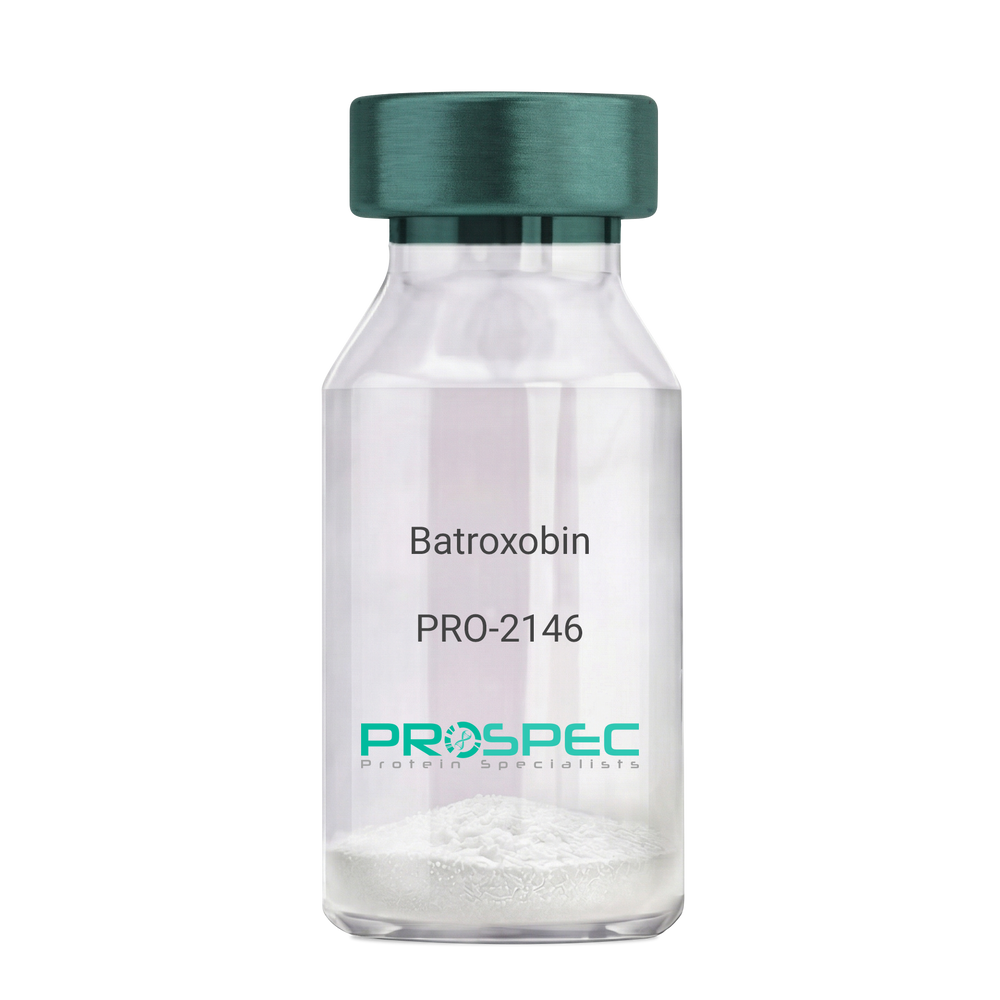
    Batroxobin

    Description:

    Batroxobin

    Thrombin-like enzyme batroxobin, EC 3.4.21.74, BX, Bothrops atrox serine proteinase, Venombin-A, Batroxobin.

    Product # :

    PRO-2146

    Price :

    Quantity :

    Shipping Method :

    Room Temp Icon

    Shipped at Room temp

    Add To Cart

    More Info

    • description
    • formulation
    • More Info

    Description

    Batroxobin, isolated from Bothrops atrox snake venom, has an Mw of approximately 43kDa.

    Formulation

    The Batroxobin protein was lyophilized from a concentrated (1mg/ml) solution with no additives.

    More Info

    • Introduction

      Batroxobin is a serin protease that reduces fibronogen levels and is originally extracted from snake venom of Bothrops Atrox. Batroxobin is used in defibrinogenation and thrombolysis and also has an effect on c-fos gene and growth factor.
      Batroxobin can efficiently restrain proliferation of VSMCs, by blocking the release and uptake of Ca2+, thus influencing [Ca2+]i.
      Batroxobin converts fibrinogen to fibrin through the restricted release of fibrinopeptide-A from fibrinogen to promote blood to clot. Unlike thrombin, it is not affected by heparin and hirudin.

    • Synonyms

      Thrombin-like enzyme batroxobin, EC 3.4.21.74, BX, Bothrops atrox serine proteinase, Venombin-A, Batroxobin.

    • Physical Appearance

      Sterile Filtered white lyophilized powder.

    • Stability

      Store the lyophilized Batroxobin between 2-8°C. Do not freeze!

    • Solubility

      It is recommended to reconstitute the lyophilized Batroxobin in sterile 18MΩ-cm H2O not less than 100µg/ml or more than 10mg/ml solutions.

    • Unit Definition

      100BU [Batroxobin Units]=1mg.

    ProSpec's products are furnished for LABORATORY RESEARCH USE ONLY. The product may not be used as drugs, agricultural or pesticidal products, food additives or household chemicals.

    Batroxobin Native
  • View Data Sheet

    Name :

    HCV NS3, Biotin

    Description:

    Hepatitis C Virus NS3, Biotin Recombinant

    Product # :

    HCV-244

    Price :

    Quantity :

    Shipping Method :

    Ice Icon

    Shipped with Ice Packs

    Add To Cart

    More Info

    • description
    • formulation
    • purity
    • More Info

    Description

    The E.coli derived recombinant Biotin Labeled protein contains the HCV NS3 immunodominant regions, a.a. 1450-1643, 22 kDa. The Biotin labeled protein is fused with a 6xHis-Tag at N-terminus.

    Formulation

    (1mg/ml) 1.5M urea, 20mM Tris-HCl pH 8.0 and 10mM β-mercaptoethanol.

    Purity

    HCV NS3 Biotin labeled protein is >95% pure as determined by 10% PAGE (coomassie staining).

    More Info

    • Introduction

      HCV is a small 50nm, enveloped, single-stranded, positive sense RNAvirus in the family Flaviviridae.
      HCV has a high rate of replication with approximately one trillion particles produced each day in an infected individual. Due to lack of proofreading by the HCV RNA polymerase, the HCV has an exceptionally high mutation rate, a factor that may help it elude the host's immune response. Hepatitis C virus is classified into six genotypes(1-6) with several subtypes within each genotype. The preponderance and distribution of HCV genotypes varies globally. Genotype is clinically important in determining potential response to interferon-based therapy and the required duration of such therapy. Genotypes 1 and 4 are less responsive to interferon-based treatment than are the other genotypes (2, 3, 5 and 6).

    • Stability

      HCV NS3 Biotin although stable at 4°C for 1 week, should be stored below -18°C. Please prevent freeze thaw cycles.

    • Applications

      HCV NS3 Biotin labeled antigen is suitable for ELISA and Western blots, excellent antigen for detection of HCV with minimal specificity problems.

    • Specificity

      Reactivity with human HCV positive serum undetermined.

    • Purification Method

      HCV NS3 Biotin labeled protein was purified by proprietary chromatographic technique.

    ProSpec's products are furnished for LABORATORY RESEARCH USE ONLY. The product may not be used as drugs, agricultural or pesticidal products, food additives or household chemicals.

    Hcv Ns3 Biotin
  • View Data Sheet

    Name :

    AKR1C1 Human, His

    Description:

    Aldo-Keto Reductase Family 1 Member C1 Human Recombinant, His Tag

    DDH1, DDH, HAKRC, 20-alpha-HSD, DD1/DD2, HBAB, C9, DD1, H-37, MBAB, MGC8954, 2-ALPHA-HSD, AKR1C1, Aldo-keto reductase family 1 member C1, 20-alpha-hydroxysteroid dehydrogenase, Trans-1,2-dihydrobenzene-1,2-diol dehydrogenase, Indanol dehydrogenase, Dihydrodiol dehydrogenase 1/2, Chlordecone reductase homolog HAKRC, High-affinity hepatic bile acid-binding protein.

    Product # :

    ENZ-496

    Price :

    Quantity :

    Shipping Method :

    Ice Icon

    Shipped with Ice Packs

    Add To Cart

    More Info

    • description
    • source
    • formulation
    • purity
    • biological activity
    • More Info

    Description

    AKR1C1 Human Recombinant fused to a 20 amino acid His Tag at N-terminus produced in E.Coli is a single, non-glycosylated, polypeptide chain containing 343 amino acids (1-323 a.a.) and having a molecular mass of 38.9 kDa. The AKR1C1 is fused to a 20 a.a. His Tag at n-terminal and purified by proprietary chromatographic techniques.

    Source

    Escherichia Coli.

    Formulation

    The AKR1C1 protein solution (0.5mg/ml) contains 20mM Tris-HCl pH-8, 1mM DTT and 20% glycerol.

    Purity

    Greater than 90% as determined by SDS-PAGE.

    Biological Activity

    Specific activity is > 500 pmol/min/ug, and is defined as the amount of enzyme that catalyze the oxidation of 1.0 pmole 1-Acenaphthenol in the presence of NADP per minute at pH 8.8 at 25°C.

    More Info

    • Introduction

      AKR1C1 transfers progesterone to its inactive state or in other words catalyzes the reaction of 20-alpha-hydroxy progesterone (20-alpha-OHP). In the liver and intestine. AKR1C1 transfers bile and monitors the intrahepatic bile acid concentration though it has a low bile-binding ability. AKR1C1 participates in myelin formation. AKR1C1 is part of the aldo/keto reductase superfamily, which has over 40 known enzymes which catalyze the conversion of aldehydes and ketones to their corresponding alcohols by utilizing NADH and/or NADPH as cofactors thus display overlapping but distinct substrate specificity.

    • Synonyms

      DDH1, DDH, HAKRC, 20-alpha-HSD, DD1/DD2, HBAB, C9, DD1, H-37, MBAB, MGC8954, 2-ALPHA-HSD, AKR1C1, Aldo-keto reductase family 1 member C1, 20-alpha-hydroxysteroid dehydrogenase, Trans-1,2-dihydrobenzene-1,2-diol dehydrogenase, Indanol dehydrogenase, Dihydrodiol dehydrogenase 1/2, Chlordecone reductase homolog HAKRC, High-affinity hepatic bile acid-binding protein.

    • Physical Appearance

      Sterile Filtered clear colorless solution.

    • Stability

      Store at 4°C if entire vial will be used within 2-4 weeks. Store, frozen at -20°C for longer periods of time. For long term storage it is recommended to add a carrier protein (0.1% HSA or BSA).Avoid multiple freeze-thaw cycles.

    • Amino Acid Sequence

      MGSSHHHHHH SSGLVPRGSH MDSKYQCVKL NDGHFMPVLG FGTYAPAEVP KSKALEATKL AIEAGFRHID SAHLYNNEEQ VGLAIRSKIA DGSVKREDIF YTSKLWCNSH RPELVRPALE RSLKNLQLDY VDLYLIHFPV SVKPGEEVIP KDENGKILFD TVDLCATWEA VEKCKDAGLA KSIGVSNFNR RQLEMILNKP GLKYKPVCNQ VECHPYFNQR KLLDFCKSKD IVLVAYSALG SHREEPWVDP NSPVLLEDPV LCALAKKHKR TPALIALRYQ LQRGVVVLAK SYNEQRIRQN VQVFEFQLTS EEMKAIDGLN RNVRYLTLDI FAGPPNYPFS DEY.

    ProSpec's products are furnished for LABORATORY RESEARCH USE ONLY. The product may not be used as drugs, agricultural or pesticidal products, food additives or household chemicals.

    Akr1C1 Human
  • View Data Sheet

    Name :

    AUH Human

    Description:

    AU RNA Binding Protein/Enoyl-CoA Hydratase Human Recombinant

    Methylglutaconyl-CoA hydratase, mitochondrial, AU-specific RNA-binding enoyl-CoA hydratase, AU-binding protein/enoyl-CoA hydratase, AUH.

    Product # :

    ENZ-046

    Price :

    Quantity :

    Shipping Method :

    Ice Icon

    Shipped with Ice Packs

    Add To Cart

    More Info

    • description
    • source
    • formulation
    • purity
    • More Info

    Description

    AUH Human Recombinant fused with a 21 amino acid His tag at N-terminus produced in E.Coli is a single, non-glycosylated, polypeptide chain containing 293 amino acids (68-339 a.a.) and having a molecular mass of 31.4kDa. The AUH is purified by proprietary chromatographic techniques.

    Source

    Escherichia Coli.

    Formulation

    The AUH solution (1 mg/ml) contains 20mM Tris-HCl buffer (pH8.0), 20% glycerol, 0.1M NaCl and 1mM DTT.

    Purity

    Greater than 95.0% as determined by SDS-PAGE.

    More Info

    • Introduction

      Mitochondrial methylglutaconyl-CoA hydratase (AUH) is involved in the amino acid degradation pathway by catalyzing the conversion of 3-methylglutaconyl-CoA to 3-hydroxy-3-methylglutaryl-CoA and water. AUH Human is expressed as a single mRNA species of 1.8 kb, and translated as a 40kDa precursor protein which is consequently processed to a 32kDa mature form. AUH has a very low enoyl-CoA hydratase activity. The AUH protein binds to the AU-rich element (ARE), which is a common element found in the 3' UTR of rapidly decaying mRNA such as c-fos, c-myc and granulocyte/ macrophage colony stimulating factor. AU-rich elements are involved in directing RNA to rapid degradation and deadenylation. In addition, AUH is homologous to enol-CoA hydratase, which is an enzyme involved in fatty acid degradation, and has been shown to have intrinsic hydratase enzymatic activity. AUH is therefore a bifunctional chimera between RNA binding and metabolic enzyme activity.

    • Synonyms

      Methylglutaconyl-CoA hydratase, mitochondrial, AU-specific RNA-binding enoyl-CoA hydratase, AU-binding protein/enoyl-CoA hydratase, AUH.

    • Physical Appearance

      Sterile Filtered colorless solution.

    • Stability

      Store at 4°C if entire vial will be used within 2-4 weeks. Store, frozen at -20°C for longer periods of time. For long term storage it is recommended to add a carrier protein (0.1% HSA or BSA).Avoid multiple freeze-thaw cycles.

    • Amino Acid Sequence

      MGSSHHHHHH SSGLVPRGSH MSSEMKTEDE LRVRHLEEEN RGIVVLGINR AYGKNSLSKN LIKMLSKAVD ALKSDKKVRT IIIRSEVPGI FCAGADLKER AKMSSSEVGP FVSKIRAVIN DIANLPVPTI AAIDGLALGG GLELALACDI RVAASSAKMG LVETKLAIIP GGGGTQRLPR AIGMSLAKEL IFSARVLDGK EAKAVGLISH VLEQNQEGDA AYRKALDLAR EFLPQGPVAM RVAKLAINQG MEVDLVTGLA IEEACYAQTI PTKDRLEGLL AFKEKRPPRY KGE.

    ProSpec's products are furnished for LABORATORY RESEARCH USE ONLY. The product may not be used as drugs, agricultural or pesticidal products, food additives or household chemicals.

    Auh Human
  • View Data Sheet

    Name :

    GAPDH Mouse

    Description:

    GAPDH Mouse Recombinant

    Glyceraldehyde-3-phosphate dehydrogenase, GAPDH, Peptidyl-cysteine S-nitrosylase GAPDH, Gapdh, Gapd, Glyceraldehyde-3-phosphate dehydrogenase isoform 2, G3PD, GAPD, HEL-S-162eP.

    Product # :

    ENZ-860

    Price :

    Quantity :

    Shipping Method :

    Ice Icon

    Shipped with Ice Packs

    Add To Cart

    More Info

    • description
    • source
    • formulation
    • purity
    • More Info

    Description

    GAPDH Mouse Recombinant produced in E.Coli is a single, non-glycosylated polypeptide chain containing 356 amino acids (1-333a.a.) and having a molecular mass of 38.2kDa.GAPDH is fused to a 23 amino acid His-tag at N-terminus & purified by proprietary chromatographic techniques.

    Source

    E.coli.

    Formulation

    GAPDH protein solution (0.25mg/ml) containing Phosphate buffered saline (pH7.4), 20% glycerol and 1mM DTT.

    Purity

    Greater than 95% as determined by SDS-PAGE.

    More Info

    • Introduction

      GAPDH is a catalytic enzyme normally known to play a role in glycolysis. GAPDH exists as a tetramer composed of 36-kDa subunits and has a range of intracellular functions. GAPDH catalyzes the reversible reduction of 1,3-bisphosphoglycerate to glyceraldehyde 3-phosphophate in the presence of NADPH. Besides functioning as a glycolytic enzyme in cytoplasm, GAPDH has function in intracellular processes such as membrane fusion, microtubule bundling, phosphotransferase activity, nuclear RNA export, DNA replication and DNA repair. GAPDH catalyzes a vital energy-yielding step in carbohydrate metabolism, the reversible oxidative phosphorylation of glyceraldehyde-3-phosphate in the presence of inorganic phosphate and nicotinamide adenine dinucleotide (NAD). The enzyme exists as a tetramer of identical chains.

    • Synonyms

      Glyceraldehyde-3-phosphate dehydrogenase, GAPDH, Peptidyl-cysteine S-nitrosylase GAPDH, Gapdh, Gapd, Glyceraldehyde-3-phosphate dehydrogenase isoform 2, G3PD, GAPD, HEL-S-162eP.

    • Physical Appearance

      Sterile Filtered colorless solution.

    • Stability

      Store at 4°C if entire vial will be used within 2-4 weeks. Store, frozen at -20°C for longer periods of time. For long term storage it is recommended to add a carrier protein (0.1% HSA or BSA).Avoid multiple freeze-thaw cycles.

    • Amino Acid Sequence

      MGSSHHHHHH SSGLVPRGSH MGSMVKVGVN GFGRIGRLVT RAAICSGKVE IVAINDPFID LNYMVYMFQY DSTHGKFNGT VKAENGKLVI NGKPITIFQE RDPTNIKWGE AGAEYVVEST GVFTTMEKAG AHLKGGAKRV IISAPSADAP MFVMGVNHEK YDNSLKIVSN ASCTTNCLAP LAKVIHDNFG IVEGLMTTVH AITATQKTVD GPSGKLWRDG RGAAQNIIPA STGAAKAVGK VIPELNGKLT GMAFRVPTPN VSVVDLTCRL EKPAKYDDIK KVVKQASEGP LKGILGYTED QVVSCDFNSN SHSSTFDAGA GIALNDNFVK LISWYDNEYG YSNRVVDLMA YMASKE.

    ProSpec's products are furnished for LABORATORY RESEARCH USE ONLY. The product may not be used as drugs, agricultural or pesticidal products, food additives or household chemicals.

    Gapdh Mouse
  • View Data Sheet

    Name :

    CX3CL1 Mouse

    Description:

    Fractalkine Mouse Recombinant (CX3CL1)

    Fractalkine, C-X3-C motif chemokine 1, CX3C membrane-anchored chemokine, Neurotactin, Small-inducible cytokine D1, Cx3cl1, Cx3c, Fkn, Scyd1, CX3C, ABCD-3, AB030188, AI848747, D8Bwg0439e.

    Product # :

    CHM-017

    Price :

    Quantity :

    Shipping Method :

    Room Temp Icon

    Shipped at Room temp

    Add To Cart

    More Info

    • description
    • source
    • formulation
    • purity
    • biological activity
    • More Info

    Description

    Fractalkine Mouse Recombinant produced in E.Coli is a single, non-glycosylated, polypeptide chain containing 76 amino acids and having a molecular mass of 8.7kDa. The CX3CL1 is purified by proprietary chromatographic techniques.

    Source

    Escherichia Coli.

    Formulation

    Lyophilized from a 0.2µm filtered concentrated solution in PBS, pH 7.4.

    Purity

    Greater than 97.0% as determined by:
    (a) Analysis by RP-HPLC.
    (b) Analysis by SDS-PAGE.

    Biological Activity

    The ED50as determined by a cell proliferation assay using human peripheral blood lymphocytes (PBL) is less than 0.5 µg/ml, corresponding to a specific activity of > 2000IU/mg.

    More Info

    • Introduction

      Fractalkine soluble form is chemotactic for t-cells and monocytes, but not for neutrophils. Fractalkine membrane-bound form promotes adhesion of those leukocytes to endothelial cells. Fractalkine regulates leukocyte adhesion and migration processes at the endothelium and binds to CX3CR1. Natural Human Fractalkine is produced as a long protein (373-amino acid) with an extended mucin-like stalk and a chemokine domain on top. The mucin-like stalk permits it to bind to the cell surface. Fractalkine gene is located on human chromosome 16 along with some CC chemokines known as CCL17 and CCL22.

    • Synonyms

      Fractalkine, C-X3-C motif chemokine 1, CX3C membrane-anchored chemokine, Neurotactin, Small-inducible cytokine D1, Cx3cl1, Cx3c, Fkn, Scyd1, CX3C, ABCD-3, AB030188, AI848747, D8Bwg0439e.

    • Physical Appearance

      Sterile Filtered White lyophilized (freeze-dried) powder.

    • Stability

      Lyophilized CX3CL1 although stable at room temperature for 3 weeks, should be stored desiccated below -18°C. Upon reconstitution CX3CL1 should be stored at 4°C between 2-7 days and for future use below -18°C.For long term storage it is recommended to add a carrier protein (0.1% HSA or BSA).Please prevent freeze-thaw cycles.

    • Solubility

      It is recommended to reconstitute the lyophilized CX3CL1 in sterile 18MΩ-cm H2O not less than 100µg/ml, which can then be further diluted to other aqueous solutions.

    • Amino Acid Sequence

      QHLGMTKCEI MCGKMTSRIP VALLIRYQLN QESCGKRAIV LETTQHRRFC ADPKEKWVQD AMKHLDHQAA ALTKNG.

    • Background

      What is the molecular weight/Mw of CX3CL1 MOUSE Protein?
      CX3CL1 MOUSE Protein has a total Mw of 8.7kDa.

      What is the source or expression system of CX3CL1 MOUSE Protein?
      Escherichia Coli.

      What is the Purity of CX3CL1 MOUSE Protein?
      CX3CL1 MOUSE Protein is >97% pure as determined by SDS-PAGE.

      What is the Biological Activity of CX3CL1 MOUSE Protein?
      The ED50as determined by a cell proliferation assay using human peripheral blood lymphocytes (PBL) is less than 0.5 µg/ml, corresponding to a specific activity of > 2000IU/mg.

      What is the amino acid sequence of CX3CL1 MOUSE Protein?
      QHLGMTKCEI MCGKMTSRIP VALLIRYQLN QESCGKRAIV LETTQHRRFC ADPKEKWVQD AMKHLDHQAA ALTKNG.

      What applications can CX3CL1 MOUSE Protein be used in?
      CX3CL1 MOUSE Protein can probably be used in western blot, ELISA and Lateral Flow.

      What is the endotoxin level for CX3CL1 MOUSE Protein?
      The endotoxin level is minimal, CX3CL1 MOUSE Protein was purified using conventional chromatography techniques.


    ProSpec's products are furnished for LABORATORY RESEARCH USE ONLY. The product may not be used as drugs, agricultural or pesticidal products, food additives or household chemicals.

    Fractalkine Mouse
  • View Data Sheet

    Name :

    DUSP23 Human

    Description:

    Dual Specificity Phosphatase 23 Human Recombinant

    Dual specificity protein phosphatase 23, DUSP25, Low molecular mass dual specificity phosphatase 3, LDP-3, VHZ, VH1-like phosphatase Z, MOSP, RP11-190A12.1, FLJ20442, EC 3.1.3.16, EC 3.1.3.48.

    Product # :

    ENZ-195

    Price :

    Quantity :

    Shipping Method :

    Ice Icon

    Shipped with Ice Packs

    Add To Cart

    More Info

    • description
    • source
    • formulation
    • purity
    • More Info

    Description

    DUSP23 Human Recombinant produced in E.Coli is a single, non-glycosylated polypeptide chain containing 170 amino acids (1-150 a.a.) and having a molecular mass of 18.8kDa.DUSP23 is fused to a 20 amino acid His-tag at N-terminus & purified by proprietary chromatographic techniques.

    Source

    Escherichia Coli.

    Formulation

    DUSP23 protein solution (1mg/ml) containing 20mM Tris-HCl buffer (pH8.0), 100mM NaCl, 2mM DTT, and 10% glycerol.

    Purity

    Greater than 90.0% as determined by SDS-PAGE analysis.

    More Info

    • Introduction

      DUSP23 is a member of the protein-tyrosine phosphatase family. DUSP23 is a protein phosphatase which facilitates dephosphorylation of phosphorylated proteins on Tyr and Ser/Thr residues. In vitro, DUSP23 dephosphorylate p44-ERK1 (MAPK3) but not p54 SAPK-beta (MAPK10). In addition, DUSP23 enhances activation of JNK and p38(MAPK14).

    • Synonyms

      Dual specificity protein phosphatase 23, DUSP25, Low molecular mass dual specificity phosphatase 3, LDP-3, VHZ, VH1-like phosphatase Z, MOSP, RP11-190A12.1, FLJ20442, EC 3.1.3.16, EC 3.1.3.48.

    • Physical Appearance

      Sterile Filtered colorless solution.

    • Stability

      Store at 4°C if entire vial will be used within 2-4 weeks.Store, frozen at -20°C for longer periods of time. For long term storage it is recommended to add a carrier protein (0.1% HSA or BSA).Avoid multiple freeze-thaw cycles.

    • Amino Acid Sequence

      MGSSHHHHHH SSGLVPRGSH MGVQPPNFSW VLPGRLAGLA LPRLPAHYQF LLDLGVRHLV SLTERGPPHS DSCPGLTLHR LRIPDFCPPA PDQIDRFVQI VDEANARGEA VGVHCALGFG RTGTMLACYL VKERGLAAGD AIAEIRRLRP GSIETYEQEK AVFQFYQRTK

    ProSpec's products are furnished for LABORATORY RESEARCH USE ONLY. The product may not be used as drugs, agricultural or pesticidal products, food additives or household chemicals.

    Dusp23 Human
  • View Data Sheet

    Name :

    LTA4H Human

    Description:

    Leukotriene A4 Hydrolase Human Recombinant

    Leukotriene A-4 hydrolase isoform1, LTA-4 hydrolase, Leukotriene A(4) hydrolase, LTA4.

    Product # :

    ENZ-869

    Price :

    Quantity :

    Shipping Method :

    Ice Icon

    Shipped with Ice Packs

    Add To Cart

    More Info

    • description
    • source
    • formulation
    • purity
    • More Info

    Description

    LTA4H Human Recombinant produced in E.Coli is a single, non-glycosylated polypeptide chain containing 634 amino acids (1-611 a.a) and having a molecular mass of 71.7kDa.LTA4H is fused to a 23 amino acid His-tag at N-terminus & purified by proprietary chromatographic techniques.

    Source

    Escherichia Coli.

    Formulation

    LTA4H protein solution (0.25mg/ml) in Phosphate buffered saline (pH7.4), 20% glycerol and 1mM DTT.

    Purity

    Greater than 90.0% as determined by SDS-PAGE.

    More Info

    • Introduction

      Leukotriene A-4 hydrolase (LTA4H) is a bifunctional enzyme that converts leukotriene A4 to leukotriene B4 and functions as an aminopeptidase. The LTA4H enzyme is a member of the family of hydrolases, specifically those acting on ether bonds (ether hydrolases). LTA4H participates in arachidonic acid metabolism.

    • Synonyms

      Leukotriene A-4 hydrolase isoform1, LTA-4 hydrolase, Leukotriene A(4) hydrolase, LTA4.

    • Physical Appearance

      Sterile Filtered colorless solution.

    • Stability

      Store at 4°C if entire vial will be used within 2-4 weeks. Store, frozen at -20°C for longer periods of time. For long term storage it is recommended to add a carrier protein (0.1% HSA or BSA).Avoid multiple freeze-thaw cycles.

    • Amino Acid Sequence

      MGSSHHHHHH SSGLVPRGSH MGSMPEIVDT CSLASPASVC RTKHLHLRCS VDFTRRTLTG TAALTVQSQE DNLRSLVLDT KDLTIEKVVI NGQEVKYALG ERQSYKGSPM EISLPIALSK NQEIVIEISF ETSPKSSALQ WLTPEQTSGK EHPYLFSQCQ AIHCRAILPC QDTPSVKLTY TAEVSVPKEL VALMSAIRDG ETPDPEDPSR KIYKFIQKVP IPCYLIALVV GALESRQIGP RTLVWSEKEQ VEKSAYEFSE TESMLKIAED LGGPYVWGQY DLLVLPPSFP YGGMENPCLT FVTPTLLAGD KSLSNVIAHE ISHSWTGNLV TNKTWDHFWL NEGHTVYLER HICGRLFGEK FRHFNALGGW GELQNSVKTF GETHPFTKLV VDLTDIDPDV AYSSVPYEKG FALLFYLEQL LGGPEIFLGF LKAYVEKFSY KSITTDDWKD FLYSYFKDKV DVLNQVDWNA WLYSPGLPPI KPNYDMTLTN ACIALSQRWI TAKEDDLNSF NATDLKDLSS HQLNEFLAQT LQRAPLPLGH IKRMQEVYNF NAINNSEIRF RWLRLCIQSK WEDAIPLALK MATEQGRMKF TRPLFKDLAA FDKSHDQAVR TYQEHKASMH PVTAMLVGKD LKVD.

    ProSpec's products are furnished for LABORATORY RESEARCH USE ONLY. The product may not be used as drugs, agricultural or pesticidal products, food additives or household chemicals.

    Lta4H Human
  • 1
  • …
  • 38
  • 39
  • 40
  • 41
  • 42
Your browser does not support the video tag.

Products

  • Cytokines
  • Growth Factors
  • Chemokines
  • CD Antigens
  • Neurotrophins
  • Hormones
  • Enzymes
  • Viral Antigens
  • Recombinant Proteins
  • Natural Proteins
  • Monoclonal Antibodies
  • Polyclonal Antibodies
  • Thermal Packaging

About

  • Company
  • Founder
  • Contribution
  • Contact Us
  • My Account

Ordering

  • Ordering Method
  • Ordering - Credit Card
  • Ordering PO
  • Shipping Fees
  • FAQ's

Legal

  • Terms & Conditions
  • Privacy
  • Site Map
  • info@prospecbio.com
  • Facebook
  • Instagram
  • Linkedin Profile

© 2026 ProSpec-Tany TechnoGene Ltd. All Rights Reserved.

  • Choosing a selection results in a full page refresh.
  • Opens in a new window.