Skip to content

High-quality research proteins.

  • 1-800-805-6531

  • Mon - Sat 8.00-18.00, Sun - Closed

  • info@prospecbio.com

  • PO Box 6591 East Brunswick NJ 08816

  • Products
    • Cytokines
    • Growth factors
    • Chemokines
    • Cd antigens
    • Neurotrophins
    • Hormones
    • Enzymes
    • Viral antigens
    • Recombinant proteins
    • Natural proteins
    • Monoclonal antibodies
    • Polyclonal antibodies
    • Thermal Packaging
  • About
    • Company
    • Founder
    • Contribution
  • Customers
    • Eastern Asia
    • Eastern Europe
    • North America
    • South America
    • South East Asia
    • Southern Asia
    • Western Europe
  • Ordering
    • Ordering Method
    • Ordering - Credit Card
    • Ordering - PO
    • Shipping Fees
    • FAQs
  • Services
    • DNA Cloning
    • Protein Expression
    • Monoclonal Antibody
    • Fermentation
    • Technology License
  • Contact us
Log in

Country/region

  • USD $ | Albania
  • USD $ | Andorra
  • USD $ | Argentina
  • USD $ | Armenia
  • USD $ | Australia
  • USD $ | Austria
  • USD $ | Azerbaijan
  • USD $ | Belarus
  • USD $ | Belgium
  • USD $ | Bolivia
  • USD $ | Brazil
  • USD $ | Bulgaria
  • USD $ | Cambodia
  • USD $ | Canada
  • USD $ | Chile
  • USD $ | China
  • USD $ | Colombia
  • USD $ | Costa Rica
  • USD $ | Croatia
  • USD $ | Cyprus
  • USD $ | Czechia
  • USD $ | Denmark
  • USD $ | Estonia
  • USD $ | Finland
  • USD $ | France
  • USD $ | Georgia
  • USD $ | Germany
  • USD $ | Greece
  • USD $ | Hong Kong SAR
  • USD $ | Hungary
  • USD $ | Iceland
  • USD $ | India
  • USD $ | Ireland
  • USD $ | Israel
  • USD $ | Italy
  • USD $ | Japan
  • USD $ | Kazakhstan
  • USD $ | Latvia
  • USD $ | Liechtenstein
  • USD $ | Lithuania
  • USD $ | Madagascar
  • USD $ | Malta
  • USD $ | Mexico
  • USD $ | Moldova
  • USD $ | Monaco
  • USD $ | Netherlands
  • USD $ | New Zealand
  • USD $ | North Macedonia
  • USD $ | Norway
  • USD $ | Panama
  • USD $ | Paraguay
  • USD $ | Peru
  • USD $ | Philippines
  • USD $ | Poland
  • USD $ | Portugal
  • USD $ | Romania
  • USD $ | Singapore
  • USD $ | Slovakia
  • USD $ | Slovenia
  • USD $ | South Africa
  • USD $ | South Korea
  • USD $ | Spain
  • USD $ | Sri Lanka
  • USD $ | Sweden
  • USD $ | Switzerland
  • USD $ | Taiwan
  • USD $ | Thailand
  • USD $ | Türkiye
  • USD $ | Ukraine
  • USD $ | United Kingdom
  • USD $ | United States
  • USD $ | Uruguay
  • USD $ | Vatican City
  • USD $ | Venezuela
  • USD $ | Vietnam
  • Facebook
  • Instagram
logoProSpec - Recombinant Protein Manufacturer for academic and R&D industry
Become a distributor
Account Log in
Wishlist
Cart Cart(0)
  • Products
    +
    • Cytokines
    • Growth factors
    • Chemokines
    • Cd antigens
    • Neurotrophins
    • Hormones
    • Enzymes
    • Viral antigens
    • Recombinant proteins
    • Natural proteins
    • Monoclonal antibodies
    • Polyclonal antibodies
    • Thermal Packaging
  • About
    +
    • Company
    • Founder
    • Contribution
  • Customers
    +
    • Eastern Asia
    • Eastern Europe
    • North America
    • South America
    • South East Asia
    • Southern Asia
    • Western Europe
  • Ordering
    +
    • Ordering Method
    • Ordering - Credit Card
    • Ordering - PO
    • Shipping Fees
    • FAQs
  • Services
    +
    • DNA Cloning
    • Protein Expression
    • Monoclonal Antibody
    • Fermentation
    • Technology License
  • Contact us

Item added to your cart

View cart
View All
  • Cytokines
  • Growth factors
  • Chemokines
  • Cd antigens
  • Neurotrophins
  • Hormones
  • Enzymes
  • Viral antigens
  • Recombinant proteins
  • Natural proteins
  • Monoclonal antibodies
  • Polyclonal antibodies
  • Thermal Packaging
  • Tumor Necrosis Factor

    Tumor Necrosis Factor

    View All
  • 4-1BB

    4-1BB

    View All
  • Adiponectin

    Adiponectin

    View All
  • AIF1

    AIF1

    View All
  • Other Cytokines

    Other Cytokines

    View All
  • AITRL

    AITRL

    View All
  • Angiopoietin

    Angiopoietin

    View All
  • Apolipoprotein

    Apolipoprotein

    View All
  • B-Cell Activating Factor

    B-Cell Activating Factor

    View All
  • Beta Defensin

    Beta Defensin

    View All
  • Bone Morphogenetic Protein

    Bone Morphogenetic Protein

    View All
  • B type Natriuretic Peptide

    B type Natriuretic Peptide

    View All
  • BST

    BST

    View All
  • Betacellulin

    Betacellulin

    View All
  • Cardiotrophin

    Cardiotrophin

    View All
  • Activin

    Activin

    View All
  • Fibroblast Growth Factor

    Fibroblast Growth Factor

    View All
  • Other Growth Factors

    Other Growth Factors

    View All
  • CSF

    CSF

    View All
  • CTGF

    CTGF

    View All
  • IGFBP

    IGFBP

    View All
  • VEGF Protein

    VEGF Protein

    View All
  • EGF

    EGF

    View All
  • Epigen

    Epigen

    View All
  • Erythropoietin

    Erythropoietin

    View All
  • Insulin-Like Growth Factor

    Insulin-Like Growth Factor

    View All
  • Growth Hormone

    Growth Hormone

    View All
  • HDGF

    HDGF

    View All
  • Hepatocyte Growth Factor

    Hepatocyte Growth Factor

    View All
  • Insulin

    Insulin

    View All
  • BCA-1/ BLC (CXCL13)

    BCA-1/ BLC (CXCL13)

    View All
  • BRAK (CXCL14)

    BRAK (CXCL14)

    View All
  • C-10 (CCL6)

    C-10 (CCL6)

    View All
  • Other Chemokines

    Other Chemokines

    View All
  • MEC (CCL28)

    MEC (CCL28)

    View All
  • LD78-beta (CCL3L1)

    LD78-beta (CCL3L1)

    View All
  • CTACK (CCL27)

    CTACK (CCL27)

    View All
  • CXCL16

    CXCL16

    View All
  • CXCL17

    CXCL17

    View All
  • Platelet Factor-4 (CXCL4)

    Platelet Factor-4 (CXCL4)

    View All
  • ENA-78 (CXCL5)

    ENA-78 (CXCL5)

    View All
  • Eotaxin (CCL11,24,26)

    Eotaxin (CCL11,24,26)

    View All
  • Exodus-2 (CCL21)

    Exodus-2 (CCL21)

    View All
  • Fractalkine (CX3CL1)

    Fractalkine (CX3CL1)

    View All
  • CXCL6

    CXCL6

    View All
  • Other CD Antigens

    Other CD Antigens

    View All
  • CD14

    CD14

    View All
  • CD164

    CD164

    View All
  • CD1

    CD1

    View All
  • CD2

    CD2

    View All
  • CD200

    CD200

    View All
  • CD207

    CD207

    View All
  • CD226

    CD226

    View All
  • CD23

    CD23

    View All
  • CD244

    CD244

    View All
  • CD247

    CD247

    View All
  • CD27

    CD27

    View All
  • CD274

    CD274

    View All
  • CD300

    CD300

    View All
  • CD33

    CD33

    View All
  • Other Neurotrophins

    Other Neurotrophins

    View All
  • Beta-NGF

    Beta-NGF

    View All
  • BDNF

    BDNF

    View All
  • CDNF

    CDNF

    View All
  • CNTF

    CNTF

    View All
  • GDNF

    GDNF

    View All
  • Glia Maturation Factor

    Glia Maturation Factor

    View All
  • MANF

    MANF

    View All
  • Midkine

    Midkine

    View All
  • Neuroglobin

    Neuroglobin

    View All
  • Neurotrophic factors

    Neurotrophic factors

    View All
  • Neuregulin

    Neuregulin

    View All
  • Neuropilin

    Neuropilin

    View All
  • Pigment Epithelium-Derived Factor

    Pigment Epithelium-Derived Factor

    View All
  • Pleiotrophin

    Pleiotrophin

    View All
  • Peptide Hormones

    Peptide Hormones

    View All
  • Other Hormones

    Other Hormones

    View All
  • HCG

    HCG

    View All
  • Endothelin

    Endothelin

    View All
  • Exendin

    Exendin

    View All
  • FSH

    FSH

    View All
  • Glucagon

    Glucagon

    View All
  • GHRP

    GHRP

    View All
  • GLP

    GLP

    View All
  • Thyrostimulin

    Thyrostimulin

    View All
  • Inhibin A

    Inhibin A

    View All
  • LHRH

    LHRH

    View All
  • Melanotan

    Melanotan

    View All
  • Procalcitonin

    Procalcitonin

    View All
  • PTH

    PTH

    View All
  • Peroxiredoxin

    Peroxiredoxin

    View All
  • Peptidase

    Peptidase

    View All
  • Synthetase

    Synthetase

    View All
  • Transferase

    Transferase

    View All
  • Hydrolase

    Hydrolase

    View All
  • Dehydrogenase

    Dehydrogenase

    View All
  • ACE2

    ACE2

    View All
  • Esterase

    Esterase

    View All
  • Protein Kinases

    Protein Kinases

    View All
  • Other Enzymes

    Other Enzymes

    View All
  • Phosphatase

    Phosphatase

    View All
  • Deaminase

    Deaminase

    View All
  • Oxygenase

    Oxygenase

    View All
  • Adenylate Kinase

    Adenylate Kinase

    View All
  • Lyase

    Lyase

    View All
  • Chagas

    Chagas

    View All
  • SARS

    SARS

    View All
  • Influenza

    Influenza

    View All
  • ASFV

    ASFV

    View All
  • Astrovirus

    Astrovirus

    View All
  • Borrelia

    Borrelia

    View All
  • Helicobacter Pylori

    Helicobacter Pylori

    View All
  • Chikungunya

    Chikungunya

    View All
  • Chlamydia

    Chlamydia

    View All
  • Cytomegalo

    Cytomegalo

    View All
  • Dengue

    Dengue

    View All
  • EBV

    EBV

    View All
  • Ebola

    Ebola

    View All
  • Feline Leukemia Virus

    Feline Leukemia Virus

    View All
  • Hepatitis A

    Hepatitis A

    View All
  • Other

    Other

    View All
  • Actin

    Actin

    View All
  • ADAM

    ADAM

    View All
  • Complement Component

    Complement Component

    View All
  • Ag85

    Ag85

    View All
  • Eukaryotic Translation Initiation Factor

    Eukaryotic Translation Initiation Factor

    View All
  • Anterior Gradient Protein

    Anterior Gradient Protein

    View All
  • Heat Shock Protein

    Heat Shock Protein

    View All
  • Alpha-2-HS-Glycoprotein

    Alpha-2-HS-Glycoprotein

    View All
  • Hemoglobin

    Hemoglobin

    View All
  • Allergy

    Allergy

    View All
  • Anaplasma

    Anaplasma

    View All
  • Angiogenin

    Angiogenin

    View All
  • Ankyrin Repeat Domain

    Ankyrin Repeat Domain

    View All
  • Annexin

    Annexin

    View All
  • Other Natural Proteins

    Other Natural Proteins

    View All
  • Aprotinin

    Aprotinin

    View All
  • Transferrin

    Transferrin

    View All
  • Avidin

    Avidin

    View All
  • Anti Coagulation Factors

    Anti Coagulation Factors

    View All
  • Natural Albumin

    Natural Albumin

    View All
  • Natural Coagulation Factors

    Natural Coagulation Factors

    View All
  • Fibronectin

    Fibronectin

    View All
  • Thrombin

    Thrombin

    View All
  • Anti Human Enzyme

    Anti Human Enzyme

    View All
  • Other Monoclonal Antibodies

    Other Monoclonal Antibodies

    View All
  • Anti Human Cytokine

    Anti Human Cytokine

    View All
  • Anti Human Heat Shock Protein

    Anti Human Heat Shock Protein

    View All
  • Anti Mouse Lymphocyte

    Anti Mouse Lymphocyte

    View All
  • Anti Human Chemokine

    Anti Human Chemokine

    View All
  • Anti Human Lymphocyte

    Anti Human Lymphocyte

    View All
  • Anti Viral Monoclonal

    Anti Viral Monoclonal

    View All
  • Anti Mouse Cytokine

    Anti Mouse Cytokine

    View All
  • Anti-GST Monoclonal

    Anti-GST Monoclonal

    View All
  • Other Polyclonal Antibodies

    Other Polyclonal Antibodies

    View All
  • Anti Viral

    Anti Viral

    View All
  • Anti-GST Monoclonal

    Anti-GST Monoclonal

    View All
Back

Search results

1000 results found for “Glyoxalase”

Name

Description

Product #

Price

Quantity

Shipping Method

  • View Data Sheet

    Name :

    YWHAH Human

    Description:

    Tyr-3/Trp-5 Monooxygenase Activation Protein ETA Human Recombinant

    14-3-3 ETA, YWHAH, YWHA1, Protein AS1, Tyr-3/Trp-5 Monooxygenase Activation Protein ETA.

    Product # :

    PKA-087

    Price :

    Quantity :

    Shipping Method :

    Ice Icon

    Shipped with Ice Packs

    Add To Cart

    More Info

    • description
    • source
    • formulation
    • purity
    • More Info
    • Citations

    Description

    YWHAH Human Recombinant produced in E.Coli is a single, non-glycosylated, polypeptide chain containing 246 amino acids and having a molecular mass of 28.2kDa. The YWHAH is purified by proprietary chromatographic techniques.

    Source

    Escherichia Coli.

    Formulation

    The YWHAH protein solution (1mg/ml) containing Phosphate Buffered Saline (pH7.4) 10% glycerol.

    Purity

    Greater than 90.0% as determined by SDS-PAGE.

    Citations

    More Info

    • Introduction

      YWHAH belongs to the 14-3-3 family of proteins which mediate signal transduction by binding to phosphoserine-containing proteins. 14-3-3 ETA is found in plants and mammals, and there is 99% identity to the mouse, rat and bovine orthologs. YWHAH gene contains a 7 base pair repeat sequence in its 5' UTR, and changes in the number of this repeat has been associated with early-onset schizophrenia.
      14-3-3 eta is specific to the site of joint inflammation.
      14-3-3 proteins are colocalized with Lewy bodies in Parkinson disease, though there is no specific staining for the 14-3-3 eta subunit.
      There are 3 different isoforms types of 14-3-3: Beta, Gamma and ETA that are DAL-1/Protein 4.1B-binding proteins.

    • Synonyms

      14-3-3 ETA, YWHAH, YWHA1, Protein AS1, Tyr-3/Trp-5 Monooxygenase Activation Protein ETA.

    • Physical Appearance

      Sterile filtered colorless solution.

    • Stability

      Store at 4°C if entire vial will be used within 2-4 weeks. Store, frozen at -20°C for longer periods of time. For long term storage it is recommended to add a carrier protein (0.1% HSA or BSA).Avoid multiple freeze-thaw cycles.

    • Amino Acid Sequence

      MGDREQLLQR ARLAEQAERY DDMASAMKAV TELNEPLSNE DRNLLSVAYK NVVGARRSSW RVISSIEQKT MADGNEKKLE KVKAYREKIE KELETVCNDV LSLLDKFLIK NCNDFQYESK VFYLKMKGDY YRYLAEVASG EKKNSVVEAS EAAYKEAFEI SKEQMQPTHP IRLGLALNFS VFYYEIQNAP EQACLLAKQA FDDAIAELDT LNEDSYKDST LIMQLLRDNL TLWTSDQQDE EAGEGN.

    ProSpec's products are furnished for LABORATORY RESEARCH USE ONLY. The product may not be used as drugs, agricultural or pesticidal products, food additives or household chemicals.

    Human Ywhah
  • View Data Sheet

    Name :

    Welqut Protease, His

    Description:

    Welqut Protease Staphylococcus aureus Recombinant, His Tag

    Product # :

    ENZ-1114

    Price :

    Quantity :

    Shipping Method :

    Ice Icon

    Shipped with Ice Packs

    Add To Cart

    More Info

    • description
    • source
    • formulation
    • purity
    • More Info
    • Citations

    Description

    Welqut Protease Recombinant is a single, non-glycosylated polypeptide chain containing 210 amino acids and having a molecular mass of 22kDa. The Welqut Protease is fused to a 6 amino acid His tag at C-terminus and is purified by proprietary chromatographic techniques.

    Source

    Escherichia Coli.

    Formulation

    Welqut Protease contains 10 mM Na2HPO4, 50% glycerol, 1.8 mM KH2PO4, pH 7.3, 140 mM NaCl and 2.7 mM KCl.

    Purity

    Greater than 97% as determined by SDS-PAGE.

    Citations

    More Info

    • Introduction

      WELQut Protease is an extremely specific and recombinant serine protease from Staphylococcus aureus. The WELQut Protease identifies and accurately cleaves recombinant proteins that has a recognition sequence added to them, with the amino acid sequence Trp, Glu, Leu, Gln, X (any amino acid). WELQut Protease cut externally from the recognition sequence, therefor doesn’t leave extra amino acids bound to the target protein. The protease isn’t temperature sensitive (works in 4-30°C) or pH sensitive (pH 6.5-9.0), also, there is no need in any particular buffers.

    • Physical Appearance

      Sterile filtered colorless solution.

    • Stability

      Store at 4°C if entire vial will be used within 2-4 weeks. Store, frozen at -20°C for longer periods of time. For long term storage it is recommended to add a carrier protein (0.1% HSA or BSA). Avoid multiple freeze-thaw cycles.

    • Unit Definition

      Each unit is defined as the amount of enzyme required to cleave ≥99% of 100μg of a control protein in 16 h at 20°C. Enzyme activity is assayed in 100μl 100 mM Tris-HCl (pH 8.0).

    ProSpec's products are furnished for LABORATORY RESEARCH USE ONLY. The product may not be used as drugs, agricultural or pesticidal products, food additives or household chemicals.

    Welqut Protease Enzyme
  • View Data Sheet

    Name :

    NMNAT2 Human

    Description:

    Nicotinamide Nucleotide Adenylyltransferase 2 Human Recombinant

    Nicotinamide Nucleotide Adenylyltransferase 2, C1orf15, Nicotinate-Nucleotide Adenylyltransferase 2, NaMN Adenylyltransferase 2, NMN Adenylyltransferase 2, PNAT2, KIAA0479, Chromosome 1 Open Reading Frame 15, Nicotinamide Mononucleotide Adenylyltransferase 2, Pyridine Nucleotide Adenylyltransferase 2, EC 2.7.7.1, EC 2.7.7.18.

    Product # :

    ENZ-509

    Price :

    Quantity :

    Shipping Method :

    Ice Icon

    Shipped with Ice Packs

    Add To Cart

    More Info

    • description
    • source
    • formulation
    • purity
    • biological activity
    • More Info
    • Citations

    Description

    NMNAT2 Human Recombinant produced in E.Coli is a single, non-glycosylated polypeptide chain containing 327 amino acids (1-307 a.a) and having a molecular mass of 36.6kDa.NMNAT2 is fused to a 20 amino acid His-tag at N-terminus & purified by proprietary chromatographic techniques.

    Source

    Escherichia Coli.

    Formulation

    NMNAT2 protein solution (0.25mg/ml) containing 20mM Tris-HCl buffer (pH 8.0), 0.15M NaCl, 20% glycerol and 1mM DTT.

    Purity

    Greater than 85.0% as determined by SDS-PAGE.

    Biological Activity

    Specific activity: > 500 pmol/min/ug. One unit will convert 1.0 pmole of beta-NADH per minute to beta-NAD at PH 8.0 at 37°C.

    Citations

    More Info

    • Introduction

      Nicotinamide Nucleotide Adenylyltransferase 2, also known as NMNAT2 is a member of the nicotinamide mononucleotide adenylyltransferase (NMNAT) enzyme family, members of which catalyze a vital step in NAD (NADP) biosynthetic pathway. Unlike the other human family member, which is localized to the nucleus, and is ubiquitously expressed; NMNAT2 is cytoplasmic, and is predominantly expressed in the brain. Two transcript variants encoding different isoforms have been found for NMNAT2. Among the diseases associated with NMNAT2 are tauopathy, and systemic lupus erythematosus.

    • Synonyms

      Nicotinamide Nucleotide Adenylyltransferase 2, C1orf15, Nicotinate-Nucleotide Adenylyltransferase 2, NaMN Adenylyltransferase 2, NMN Adenylyltransferase 2, PNAT2, KIAA0479, Chromosome 1 Open Reading Frame 15, Nicotinamide Mononucleotide Adenylyltransferase 2, Pyridine Nucleotide Adenylyltransferase 2, EC 2.7.7.1, EC 2.7.7.18.

    • Physical Appearance

      Sterile Filtered clear solution.

    • Stability

      Store at 4°C if entire vial will be used within 2-4 weeks. Store, frozen at -20°C for longer periods of time. For long term storage it is recommended to add a carrier protein (0.1% HSA or BSA).Avoid multiple freeze-thaw cycles.

    • Amino Acid Sequence

      MGSSHHHHHH SSGLVPRGSH MTETTKTHVI LLACGSFNPI TKGHIQMFER ARDYLHKTGR FIVIGGIVSP VHDSYGKQGL VSSRHRLIMC QLAVQNSDWI RVDPWECYQD TWQTTCSVLE HHRDLMKRVT GCILSNVNTP SMTPVIGQPQ NETPQPIYQN SNVATKPTAA KILGKVGESL SRICCVRPPV ERFTFVDENA NLGTVMRYEE IELRILLLCG SDLLESFCIP GLWNEADMEV IVGDFGIVVV PRDAADTDRI MNHSSILRKY KNNIMVVKDD INHPMSVVSS TKSRLALQHG DGHVVDYLSQ PVIDYILKSQ LYINASG

    ProSpec's products are furnished for LABORATORY RESEARCH USE ONLY. The product may not be used as drugs, agricultural or pesticidal products, food additives or household chemicals.

    Nmnat2 Human
  • View Data Sheet

    Name :

    GSTP2 Mouse, His

    Description:

    Glutathione S-Transferase pi 2 Mouse Recombinant, His Tag

    Glutathione S-transferase P 2 (EC:2.5.1.18), Gst P2, GST YF-YF, GST class-pi, GST-piA, Gstp2, Gstpia.

    Product # :

    ENZ-928

    Price :

    Quantity :

    Shipping Method :

    Ice Icon

    Shipped with Ice Packs

    Add To Cart

    More Info

    • description
    • source
    • formulation
    • purity
    • More Info
    • Citations

    Description

    GSTP2 Mouse Recombinant produced in E.Coli is a single, non-glycosylated polypeptide chain containing 233 amino acids (1-210 a.a) and having a molecular mass of 25.9kDa. GSTP2 is fused to a 23 amino acid His-tag at N-terminus & purified by proprietary chromatographic techniques.

    Source

    Escherichia Coli.

    Formulation

    GSTP2 protein solution (1mg/ml) containing Phosphate Buffered Saline (pH 7.4) and 10% glycerol.

    Purity

    Greater than 95.0% as determined by SDS-PAGE.

    Citations

    More Info

    • Introduction

      Gltathione S-transferase PI 2, also known as GSTP2 is multifunctional enzyme which is involved in theprotection of cellular components against anti-cancer drugs or peroxidative stress. Furthermore, down regulation of GSTP2induces an increase of oxidative damage in the pyramidal cells of the CA1&CA3 regions as well as in the granular layer ofthe dentate gyrus, which at the end leads to structural and functional damage.

    • Synonyms

      Glutathione S-transferase P 2 (EC:2.5.1.18), Gst P2, GST YF-YF, GST class-pi, GST-piA, Gstp2, Gstpia.

    • Physical Appearance

      Sterile filtered colorless solution.

    • Stability

      Store at 4°C if entire vial will be used within 2-4 weeks. Store, frozen at -20°C for longer periods of time. For long term storage it is recommended to add a carrier protein (0.1% HSA or BSA).Avoid multiple freeze-thaw cycles.

    • Amino Acid Sequence

      MGSSHHHHHH SSGLVPRGSH MGSMPPYTIV YFPSPGRCEA MRMLLADQGQ SWKEEVVTID TWMQGLLKPT CLYGQLPKFE DGDLTLYQSN AILRHLGRSL GLYGKNQREA AQVDMVNDGV EDLRGKYGTM IYRNYENGKN DYVKALPGHL KPFETLLSQN QGGKAFIVGD QISFADYNLL DLLLIHQVLA PGCLDNFPLL SAYVARLSAR PKIKAFLSSP EHVNRPINGN GKQ.

    ProSpec's products are furnished for LABORATORY RESEARCH USE ONLY. The product may not be used as drugs, agricultural or pesticidal products, food additives or household chemicals.

    Gstp2 Mouse
  • View Data Sheet

    Name :

    PNP Human

    Description:

    Purine Nucleoside Phosphorylase Human Recombinant

    Purine nucleoside phosphorylase, Inosine phosphorylase, NP, PUNP, PRO1837, FLJ94043, FLJ97288, FLJ97312, MGC117396, MGC125915, MGC125916, PNP.

    Product # :

    ENZ-025

    Price :

    Quantity :

    Shipping Method :

    Ice Icon

    Shipped with Ice Packs

    Add To Cart

    More Info

    • description
    • source
    • formulation
    • purity
    • More Info
    • Citations

    Description

    PNP Human Recombinant fused with a 20 amino acid His tag at N-terminus produced in E.Coli is a single, non-glycosylated, polypeptide chain containing 309 amino acids (1-289 a.a.) and having a molecular mass of 34.2kDa. The PNP is purified by proprietary chromatographic techniques.

    Source

    Escherichia Coli.

    Formulation

    The PNP solution (1mg/ml) contains 20mM Tris-HCl buffer (pH8.0), 0.1M NaCl, 2mM DTT and 10% glycerol.

    Purity

    Greater than 90.0% as determined by SDS-PAGE.

    Citations

    More Info

    • Introduction

      PNP is a member of the PNP/MTAP phosphorylase family of proteins. PNP catalyzes the reversible phosphorolysis of ribonucleosides and 2’-deoxyribonucleosides with specificity for guanine, hypoxanthine and their analogs. PNP deficiency is a rare autosomal recessive genetic disease linked to a severe defect in T-lymphocyte function and neurologic disorder in children, comprising four percent of combined immunodeficiency cases.

    • Synonyms

      Purine nucleoside phosphorylase, Inosine phosphorylase, NP, PUNP, PRO1837, FLJ94043, FLJ97288, FLJ97312, MGC117396, MGC125915, MGC125916, PNP.

    • Physical Appearance

      Sterile Filtered colorless solution.

    • Stability

      Store at 4°C if entire vial will be used within 2-4 weeks. Store, frozen at -20°C for longer periods of time. For long term storage it is recommended to add a carrier protein (0.1% HSA or BSA).Avoid multiple freeze-thaw cycles.

    • Amino Acid Sequence

      MGSSHHHHHH SSGLVPRGSH MENGYTYEDY KNTAEWLLSH TKHRPQVAII CGSGLGGLTD KLTQAQIFDY GEIPNFPRST VPGHAGRLVF GFLNGRACVM MQGRFHMYEG YPLWKVTFPV RVFHLLGVDT LVVTNAAGGL NPKFEVGDIM LIRDHINLPG FSGQNPLRGP NDERFGDRFP AMSDAYDRTM RQRALSTWKQ MGEQRELQEG TYVMVAGPSF ETVAECRVLQ KLGADAVGMS TVPEVIVARH CGLRVFGFSL ITNKVIMDYE SLEKANHEEV LAAGKQAAQK LEQFVSILMA SIPLPDKAS.

    ProSpec's products are furnished for LABORATORY RESEARCH USE ONLY. The product may not be used as drugs, agricultural or pesticidal products, food additives or household chemicals.

    Pnp Human
  • View Data Sheet

    Name :

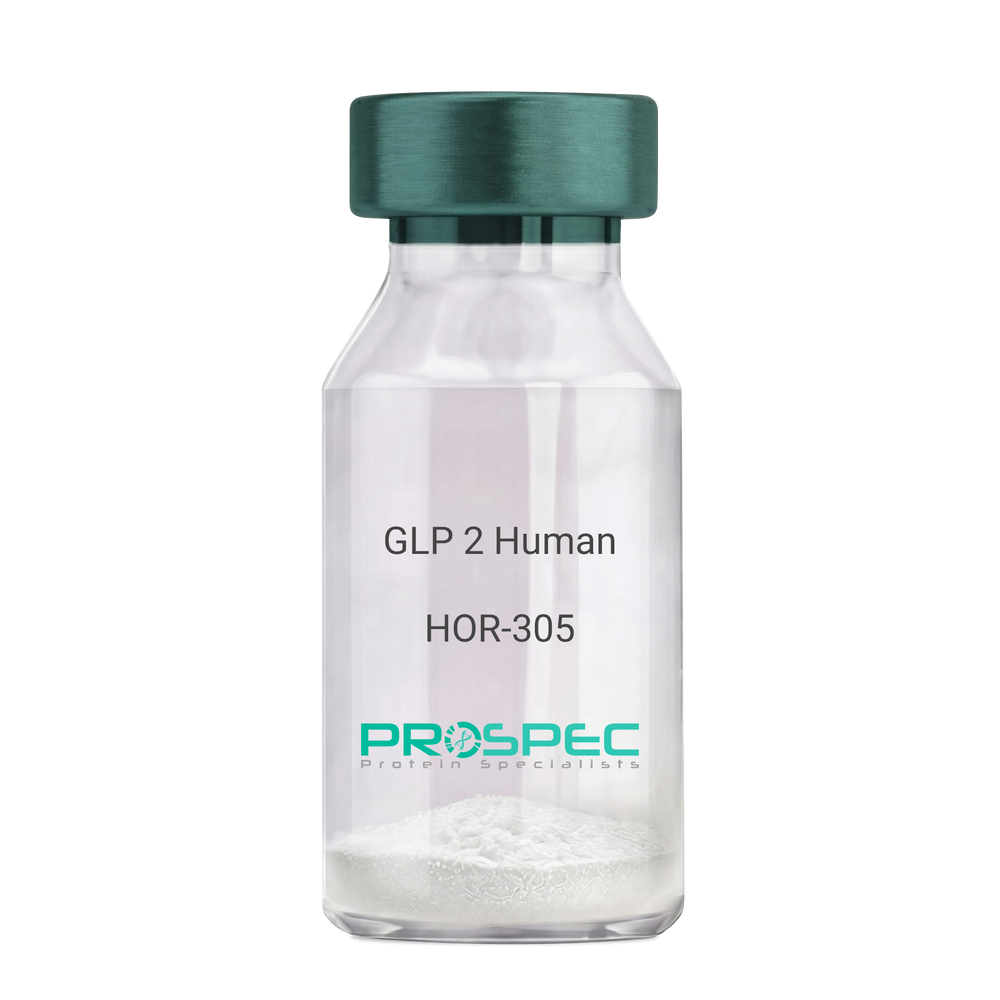
    GLP 2 Human

    Description:

    Human GLP-2

    GLP2, GLP-2, GLP 2.

    Product # :

    HOR-305

    Price :

    Quantity :

    Shipping Method :

    Room Temp Icon

    Shipped at Room temp

    Add To Cart

    More Info

    • description
    • formulation
    • purity
    • More Info
    • Citations

    Description

    GLP-2 contains 34 amino acids having a molecular mass of 3922.35 Dalton.

    Formulation

    The protein (1mg/ml) was lyophilized with no additives.

    Purity

    Greater than 98.0% as determined by RP-HPLC.

    Citations

    More Info

    • Introduction

      GLP-2 functions as an intestinal growth factor, which stimulates intestinal epithelial growth. GLP2 is involved in diabetes-associated bowel growth. GLP2 enhances cell differentiation, playing a role as a cytokine and in tissue regeneration, and mediating cytoprotection. GLP2 is invloded numerous therapeutic applications. GLP2 regulates signaling pathways coupled to cell proliferation and cell death by apoptosis.
      GLP-2 is produced by specific post-translational proteolytic cleavage of proGLP. GLP-2 is manufactured by the intestinal endocrine L cell and by several neurons in the central nervous system.

    • Synonyms

      GLP2, GLP-2, GLP 2, Glucagon Like Peptide-2.

    • Physical Appearance

      Sterile Filtered White lyophilized (freeze-dried) powder.

    • Stability

      Lyophilized GLP2 although stable at room temperature for 3 weeks, should be stored desiccated below -18°C. Upon reconstitution GLP2 should be stored at 4°C between 2-7 days and for future use below -18°C.For long term storage it is recommended to add a carrier protein (0.1% HSA or BSA).Please prevent freeze-thaw cycles.

    • Solubility

      It is recommended to reconstitute the lyophilized GLP-2 in sterile 18MΩ-cm H2O not less than 100 µg/ml, which can then be further diluted to other aqueous solutions.

    • Amino Acid Sequence

      His-Ala-Asp-Gly-Ser-Phe-Ser-Asp-Glu-Met-Asn-Thr-Ile-Leu-Asp-Asn-Leu-Ala-Ala-Arg-Asp-Phe-Ile-Asn-Trp-Leu-Ile-Gln-Thr-Lys-Ile-Thr-Asp-Arg.

    • Background

      What is the molecular weight/Mw of GLP 2 HUMAN Protein?
      GLP 2 HUMAN Protein has a total Mw of 3.92kDa.


      What is the Purity of GLP 2 HUMAN Protein?
      GLP 2 HUMAN Protein is >95% pure as determined by SDS-PAGE.

      What is the Biological Activity of GLP 2 HUMAN Protein?
      The biological functionality of GLP 2 HUMAN Protein will be determined in the future.

      What is the amino acid sequence of GLP 2 HUMAN Protein?
      His-Ala-Asp-Gly-Ser-Phe-Ser-Asp-Glu-Met-Asn-Thr-Ile-Leu-Asp-Asn-Leu-Ala-Ala-Arg-Asp-Phe-Ile-Asn-Trp-Leu-Ile-Gln-Thr-Lys-Ile-Thr-Asp-Arg.

      What applications can GLP 2 HUMAN Protein be used in?
      GLP 2 HUMAN Protein can probably be used in western blot, ELISA and Lateral Flow.

      What is the endotoxin level for GLP 2 HUMAN Protein?
      The endotoxin level is minimal, GLP 2 HUMAN Protein was purified using conventional chromatography techniques.


    ProSpec's products are furnished for LABORATORY RESEARCH USE ONLY. The product may not be used as drugs, agricultural or pesticidal products, food additives or household chemicals.

    Glp 2 Human
  • View Data Sheet

    Name :

    DDT Mouse

    Description:

    D-Dopachrome Tautomerase Mouse Recombinant

    D-dopachrome decarboxylase (EC:4.1.1.84), D-dopachrome tautomerase, Ddt.

    Product # :

    ENZ-1073

    Price :

    Quantity :

    Shipping Method :

    Ice Icon

    Shipped with Ice Packs

    Add To Cart

    More Info

    • description
    • source
    • formulation
    • purity
    • More Info
    • Citations

    Description

    DDT Mouse Recombinant produced in E.Coli is a single, non-glycosylated polypeptide chain containing 141 amino acids (1-118 a.a) and having a molecular mass of 15.5kDa. DDT is fused to a 23 amino acid His-tag at N-terminus & purified by proprietary chromatographic techniques.

    Source

    Escherichia Coli.

    Formulation

    DDT protein solution (1mg/ml) contains 20mM Tris-Hcl buffer (pH8.0) & 10% glycerol.

    Purity

    Greater than 95.0% as determined by SDS-PAGE.

    Citations

    More Info

    • Introduction

      DDT is an enzyme that catayzes the tautomerization of D-dopachrome to give 5,6-dihydroxyindole (DHI). DDT is part of the family of lyases, specifically the carboxy-lyases, which cleave carbon-carbon bonds. DDT shares a homologous amino acid sequence (33% identical) with MIF and has similar tautomerase activity. DDT functions a proinflammatory cytokine.

    • Synonyms

      D-dopachrome decarboxylase (EC:4.1.1.84), D-dopachrome tautomerase, Ddt.

    • Physical Appearance

      Sterile Filtered clear solution.

    • Stability

      Store at 4°C if entire vial will be used within 2-4 weeks. Store, frozen at -20°C for longer periods of time. For long term storage it is recommended to add a carrier protein (0.1% HSA or BSA).Avoid multiple freeze-thaw cycles.

    • Amino Acid Sequence

      MGSSHHHHHH SSGLVPRGSH MGSMPFVELE TNLPASRIPA GLENRLCAAT ATILDKPEDR VSVTIRPGMT LLMNKSTEPC AHLLVSSIGV VGTAEQNRTH SASFFKFLTE ELSLDQDRIV IRFFPLEAWQ IGKKGTVMTF L

    ProSpec's products are furnished for LABORATORY RESEARCH USE ONLY. The product may not be used as drugs, agricultural or pesticidal products, food additives or household chemicals.

    Ddt Mouse
  • View Data Sheet

    Name :

    GPC3 Human

    Description:

    Glypican-3 Human Recombinant

    Glypican 3, Intestinal Protein OCI-5, Glypican Proteoglycan 3, GTR2-2, MXR7, Heparan Sulphate Proteoglycan, Secreted Glypican-3, Glypican-3, OCI-5, SGBS1, DGSX, SGBS, SDYS, OCI5, SGB, GPC3.

    Product # :

    PRO-2423

    Price :

    Quantity :

    Shipping Method :

    Ice Icon

    Shipped with Ice Packs

    Add To Cart

    More Info

    • description
    • source
    • formulation
    • purity
    • More Info
    • Citations

    Description

    GPC3 Human Recombinant produced in Sf9 Baculovirus cells is a single, glycosylated polypeptide chain containing 544 amino acids (25-559a.a.) and having a molecular mass of 61.8kDa (Molecular size on SDS-PAGE will appear at approximately 50-70kDa). GPC3 is expressed with a 6 amino acids His tag at C-Terminus and purified by proprietary chromatographic techniques.

    Source

    Sf9, Baculovirus cells.

    Formulation

    GPC3 protein solution (0.5mg/ml) contains Phosphate Buffered Saline (pH 7.4) and 10% glycerol.

    Purity

    Greater than 90.0% as determined by SDS-PAGE.

    Citations

    More Info

    • Introduction

      Glypican-3 (GPC3) belongs to the glypican family, and is highly expressed in the lung, liver, and the kidney. In some tissues, GPC3 functionss as a tumor suppressor gene and an oncofetal protein. The Glypican-3 protein is currently considered as a tumor marker and potential target for immunotherapy. Glypican-3 binds to and inhibits the dipeptidyl peptidase activity of CD26, and it can also induce apoptosis in certain cell types. Deletion mutations in the GPC3 gene are linked with Simpson-Golabi-Behmel syndrome, aka Simpson dysmorphia syndrome.

    • Synonyms

      Glypican 3, Intestinal Protein OCI-5, Glypican Proteoglycan 3, GTR2-2, MXR7, Heparan Sulphate Proteoglycan, Secreted Glypican-3, Glypican-3, OCI-5, SGBS1, DGSX, SGBS, SDYS, OCI5, SGB, GPC3.

    • Physical Appearance

      Sterile filtered colorless solution.

    • Stability

      Store at 4°C if entire vial will be used within 2-4 weeks. Store, frozen at -20°C for longer periods of time. For long term storage it is recommended to add a carrier protein (0.1% HSA or BSA).Avoid multiple freeze-thaw cycles.

    • Amino Acid Sequence

      ADPQPPPPPP DATCHQVRSF FQRLQPGLKW VPETPVPGSD LQVCLPKGPT CCSRKMEEKY QLTARLNMEQ LLQSASMELK FLIIQNAAVF QEAFEIVVRH AKNYTNAMFK NNYPSLTPQA FEFVGEFFTD VSLYILGSDI NVDDMVNELF DSLFPVIYTQ LMNPGLPDSA LDINECLRGA RRDLKVFGNF PKLIMTQVSK SLQVTRIFLQ ALNLGIEVIN TTDHLKFSKD CGRMLTRMWY CSYCQGLMMV KPCGGYCNVV MQGCMAGVVE IDKYWREYIL SLEELVNGMY RIYDMENVLL GLFSTIHDSI QYVQKNAGKL TTTIGKLCAH SQQRQYRSAY YPEDLFIDKK VLKVAHVEHE ETLSSRRREL IQKLKSFISF YSALPGYICS HSPVAENDTL CWNGQELVER YSQKAARNGM KNQFNLHELK MKGPEPVVSQ IIDKLKHINQ LLRTMSMPKG RVLDKNLDEE GFESGDCGDD EDECIGGSGD GMIKVKNQLR FLAELAYDLD VDDAPGNSQQ ATPKDNEIST FHNLGNVHHH HHHH.

    ProSpec's products are furnished for LABORATORY RESEARCH USE ONLY. The product may not be used as drugs, agricultural or pesticidal products, food additives or household chemicals.

    Gpc3 Human
  • View Data Sheet

    Name :

    SURA E.Coli

    Description:

    Chaperone SURA E.Coli Recombinant

    Rotamase surA, Survival protein A.

    Product # :

    ENZ-257

    Price :

    Quantity :

    Shipping Method :

    Ice Icon

    Shipped with Ice Packs

    Add To Cart

    More Info

    • description
    • source
    • formulation
    • purity
    • biological activity
    • More Info
    • Citations

    Description

    SURA E.Coli Recombinant produced in E.Coli is a single, non-glycosylated polypeptide chain containing 429 amino acids (21-428 a.a.) and having a molecular weight of 47.3kDa. The SURA is fused to 20 a.a His-Tag at N-terminus and purified by proprietary chromatographic techniques.

    Source

    Escherichia Coli.

    Formulation

    The SURA 1mg/ml protein solution contains 20mM Tris-HCl, pH-8, and 10% glycerol.

    Purity

    Greater than 95.0% as determined by SDS-PAGE.

    Biological Activity

    Specific activity is > 450 nmoles/min/ug, and is defined as the amount of enzyme that cleaves 1umole of suc-AAFP-pNA per minute at 25C in Tris-Hcl pH8.0 using chymotrypsin.

    Citations

    More Info

    • Introduction

      SURA is a PPIase enzyme and chaperone of Escherichia coli and other Gram-negative bacteria. SURA is a key player in the biogenesis of beta-barrel outer membrane proteins and is involved in cell envelope homeostasis and cell envelope functions. SURA is necessary for the survival of E.coli in stationary phase and needed for pilus biogenesis.

    • Synonyms

      Rotamase surA, Survival protein A.

    • Physical Appearance

      Sterile filtered colorless solution.

    • Stability

      Store at 4°C if entire vial will be used within 2-4 weeks. Store, frozen at -20°C for longer periods of time. For long term storage it is recommended to add a carrier protein (0.1% HSA or BSA). Avoid multiple freeze-thaw cycles.

    • Amino Acid Sequence

      MGSSHHHHHH SSGLVPRGSH MAPQVVDKVA AVVNNGVVLE SDVDGLMQSV KLNAAQARQQ LPDDATLRHQ IMERLIMDQI ILQMGQKMGV KISDEQLDQA IANIAKQNNM TLDQMRSRLA YDGLNYNTYR NQIRKEMIIS EVRNNEVRRR ITILPQEVES LAQQVGNQND ASTELNLSHI LIPLPENPTS DQVNEAESQA RAIVDQARNG ADFGKLAIAH SADQQALNGG QMGWGRIQEL PGIFAQALST AKKGDIVGPI RSGVGFHILK VNDLRGESKN ISVTEVHARH ILLKPSPIMT DEQARVKLEQ IAADIKSGKT TFAAAAKEFS QDPGSANQGG DLGWATPDIF DPAFRDALTR LNKGQMSAPV HSSFGWHLIE LLDTRNVDKT DAAQKDRAYR MLMNRKFSEE AASWMQEQRA SAYVKILSN.

    ProSpec's products are furnished for LABORATORY RESEARCH USE ONLY. The product may not be used as drugs, agricultural or pesticidal products, food additives or household chemicals.

    Sura
  • View Data Sheet

    Name :

    PPCDC Human

    Description:

    Phosphopantothenoylcysteine Decarboxylase Human Recombinant

    FLJ14585, PPC-DC, MDS018, COAC, CoaC, Phosphopantothenoylcysteine Decarboxylase.

    Product # :

    ENZ-011

    Price :

    Quantity :

    Shipping Method :

    Ice Icon

    Shipped with Ice Packs

    Add To Cart

    More Info

    • description
    • source
    • formulation
    • purity
    • More Info
    • Citations

    Description

    PPCDC produced in E.Coli is a single, non-glycosylated polypeptide chain containing 224 amino acids (1-204a.a.) and having a molecular mass of 24.6kDa.PPCDC is fused to a 20 amino acid His-tag at N-terminus & purified by proprietary chromatographic techniques.

    Source

    Escherichia Coli.

    Formulation

    The PPCDC protein solution (1mg/1ml) is formulated in 20mM Tris-HCl buffer(pH 8.0), 1mM DTT, 0.1M NaCl and 10% glycerol.

    Purity

    Greater than 95% as determined by SDS-PAGE.

    Citations

    More Info

    • Introduction

      PPCDC is a member of the HFCD (homo oligomeric flavin containing Cys decarboxylase) superfamily which takes a part in the biosynthesis of coenzyme A (CoA) from pantothenate (Vitamin B). The biosynthesis of CoA from pantothenate needs several steps: the phosphorylation of pantothenate, the conversion of 4’-hosphopantothenate to 4''-phosphopantetheine, the adenylation by phosphopantetheine adenylyltransferase to form dephospho-CoA and the phosphorylation by dephospho-CoA kinase to form CoA. PPCDC is a key player in this pathway. PPCDC converts 4''-phosphopantothenate into 4''-phosphopantetheine.

    • Synonyms

      FLJ14585, PPC-DC, MDS018, COAC, CoaC, Phosphopantothenoylcysteine Decarboxylase.

    • Physical Appearance

      Sterile Filtered clear solution.

    • Stability

      Store at 4°C if entire vial will be used within 2-4 weeks. Store, frozen at -20°C for longer periods of time.Please avoid freeze thaw cycles.

    • Amino Acid Sequence

      MGSSHHHHHH SSGLVPRGSH MEPKASCPAA APLMERKFHV LVGVTGSVAA LKLPLLVSKL LDIPGLEVAV VTTERAKHFY SPQDIPVTLY SDADEWEMWK SRSDPVLHID LRRWADLLLV APLDANTLGK VASGICDNLL TCVMRAWDRS KPLLFCPAMN TAMWEHPITA QQVDQLKAFG YVEIPCVAKK LVCGDEGLGA MAEVGTIVDK VKEVLFQHSG FQQS

    ProSpec's products are furnished for LABORATORY RESEARCH USE ONLY. The product may not be used as drugs, agricultural or pesticidal products, food additives or household chemicals.

    Ppcdc Human
  • View Data Sheet

    Name :

    Thrombin

    Description:

    Human Thrombin

    Product # :

    PRO-339

    Price :

    Quantity :

    Shipping Method :

    Room Temp Icon

    Shipped at Room temp

    Add To Cart

    More Info

    • description
    • source
    • formulation
    • biological activity
    • More Info
    • Citations

    Description

    Thrombin was purified from human plasma.

    Source

    Human Plasma.

    Formulation

    Lyophilized protein containing mannitol, sodium chloride, calcium chloride.

    Biological Activity

    The specific activity was found to be 116 US Units/mg protein.

    Citations

    More Info

    • Introduction

      Thrombin enzyme (Activated Factor IIa) is an important clotting promoter that controls the transformation of soluble fibrinogen to insoluble active fibrin strands. Thrombin is a coagulation protein and a serine protease (EC 3.4.21.5) that catalyzes many coagulation-related reactions. Thrombin triggers factor-XI, factor-V, Factor-XIII and factor-VIII. Thrombin endorses platelet activation, using activation of protease-activated receptors on the platelet. As a result of its high proteolytic specificity, thrombin has become an important biochemical protein. The thrombin cleavage site (Leu-Val-Pro-Arg-Gly-Ser) is widely used in linker regions of recombinant fusion protein constructs. After the purification of the fusion protein, thrombin is used to cleave between the Arginine and Glycine residues of the cleavage site, efficiently removing the purification tag from the protein of interest with a high degree of specificity.

    • Physical Appearance

      lyophilized powder.

    • Stability

      Lyophilized Human Thrombin although stable at room temperature for 3 weeks, should be stored desiccated below -18°C. Upon reconstitution human thrombin should be stored at 4°C between 2-7 days and for future use below -18°C. For long term storage it is recommended to add a carrier protein (0.1% HSA or BSA). Please prevent freeze-thaw cycles.

    • Solubility

      It is recommended to reconstitute the lyophilized human thrombin in sterile a 0.9% NaCl solution at 500U/ml.

    ProSpec's products are furnished for LABORATORY RESEARCH USE ONLY. The product may not be used as drugs, agricultural or pesticidal products, food additives or household chemicals.

    Thrombin Human
  • View Data Sheet

    Name :

    MBP E.Coli, His

    Description:

    Maltose Binding Protein E.coli Recombinant, His Tag

    Maltose-binding periplasmic protein, MBP, MMBP, Maltodextrin-binding protein, malE, b4034, JW3994.

    Product # :

    PRO-2322

    Price :

    Quantity :

    Shipping Method :

    Ice Icon

    Shipped with Ice Packs

    Add To Cart

    More Info

    • description
    • source
    • formulation
    • purity
    • More Info
    • Citations

    Description

    Recombinant E.Coli MBP produced in E.Coli is a single, non-glycosylated polypeptide chain containing 410 amino acids (27-392 a.a) and having a molecular mass of 44.9kDa. MBP is fused to a 24 amino acid His-tag at N-terminus & purified by proprietary chromatographic techniques.

    Source

    Escherichia Coli.

    Formulation

    MBP protein solution (0.5mg/ml) containing 20mM Tris-HCl buffer (pH 8.0), 0.1M NaCl and 10% glycerol.

    Purity

    Greater than 95.0% as determined by SDS-PAGE.

    Citations

    More Info

    • Introduction

      Maltose Binding Protein is a member of the maltose/maltodextrin system of E.Coli, which is accountable for the uptake and efficient catabolism of maltodextrins. The maltose/maltodextrin is a complex regulatory and transport system involving many proteins and protein complexes.
      MBP elevates the yield of its fusion partner in many cases and is often able to promote the solubility of polypeptides to which it is fused.

    • Synonyms

      Maltose-binding periplasmic protein, MBP, MMBP, Maltodextrin-binding protein, malE, b4034, JW3994.

    • Physical Appearance

      Sterile Filtered colorless solution.

    • Stability

      Store at 4°C if entire vial will be used within 2-4 weeks. Store, frozen at -20°C for longer periods of time. For long term storage it is recommended to add a carrier protein (0.1% HSA or BSA).Avoid multiple freeze-thaw cycles.

    • Amino Acid Sequence

      MGSSHHHHHH SSGLVPRGSH MGSMKIEEGK LVIWINGDKG YNGLAEVGKK FEKDTGIKVT VEHPDKLEEK FPQVAATGDG PDIIFWAHDR FGGYAQSGLL AEITPDKAFQ DKLYPFTWDA VRYNGKLIAY PIAVEALSLI YNKDLLPNPP KTWEEIPALD KELKAKGKSA LMFNLQEPYF TWPLIAADGG YAFKYENGKY DIKDVGVDNA GAKAGLTFLV DLIKNKHMNA DTDYSIAEAA FNKGETAMTI NGPWAWSNID TSKVNYGVTV LPTFKGQPSK PFVGVLSAGI NAASPNKELA KEFLENYLLT DEGLEAVNKD KPLGAVALKS YEEELAKDPR IAATMENAQK GEIMPNIPQM SAFWYAVRTA VINAASGRQT VDEALKDAQT NSSSNNNNNN NNNNLGIEGR.

    ProSpec's products are furnished for LABORATORY RESEARCH USE ONLY. The product may not be used as drugs, agricultural or pesticidal products, food additives or household chemicals.

    Mbp Ecoli His
  • View Data Sheet

    Name :

    GH Chicken

    Description:

    GH Chicken Recombinant

    GH1, GH, GHN, GH-N, hGH-N,Pituitary GH, GH 1, 

    Product # :

    CYT-430

    Price :

    Quantity :

    Shipping Method :

    Room Temp Icon

    Shipped at Room temp

    Add To Cart

    More Info

    • description
    • source
    • formulation
    • purity
    • biological activity
    • More Info
    • Citations

    Description

    GH Chicken Recombinant produced in E.Coli is a single, non-glycosylated, polypeptide chain containing 191 amino acids with an additional Ala at its N-terminus and having a molecular mass of 22255 Dalton. GH Chicken recombinant is purified by proprietary chromatographic techniques.

    Source

    Escherichia Coli.

    Formulation

    The protein was lyophilized from a concentrated (1mg/ml) solution with 0.3% NaHCO3 adjusted to pH 8.

    Purity

    Greater than 99.0% as determined by:
    (a) Analysis by SDS-PAGE gel.
    (b) Analysis by SEC-HPLC.

    Biological Activity

    GH Chicken Recombinantis fully biologically active in homologous assays and in PDF-P1 3B9 cells stably transfected with rabbit GH receptors.

    Citations

    More Info

    • Introduction

      GH is a member of the prolactin family of hormones which play an important role in growth control. The gene, along with four other related genes, is located at the GH locus on chromosome 17 where they are interspersed in the same transcriptional orientation; an arrangement which is thought to have evolved by a series of gene duplications. The five genes share a remarkably high degree of sequence identity. Alternative splicing generates additional isoforms of each of the five GHs, leading to further diversity and potential for specialization. This particular family member is expressed in the pituitary but not in placental tissue as is the case for the other four genes in the GH locus. Mutations in or deletions of the gene lead to GH deficiency and short stature.

    • Synonyms

      GH1, GH, GHN, GH-N, hGH-N,Pituitary GH, GH 1,

    • Physical Appearance

      Sterile Filtered White lyophilized (freeze-dried) powder.

    • Stability

      Lyophilized GH Chicken although stable at room temperature for 3 weeks, should be stored desiccated below -18°C. Upon reconstitution at > 0.1 mg/ml and filter sterilization GH can be stored at 4°C for several weeks. At lower concentration addition of a carrier protein (0.1% HSA or BSA) is recommended.Please prevent freeze-thaw cycles.

    • Solubility

      It is recommended to reconstitute the lyophilized GH Chicken Recombinant in sterile water or 0.4% NaHCO3 adjusted to pH 8-9, not less than 100µg/ml and not more than 3 mg/ml, which can then be further diluted to other aqueous solutions, preferably in presence of carrier protein.

    • Amino Acid Sequence

      The sequence of the first five N-terminal amino acids was determined and was found to be Ala-Thr-Phe-Pro-Ala.

    • Protein content

      Protein quantitation was carried out by two independent methods:1. UV spectroscopy at 280 nm using the absorbency value of 0.75 as the extinction coefficient for a 0.1% (1mg/ml) solution at pH 8.0 This value is calculated by the PC GENE computer analysis program of protein sequences (IntelliGenetics). 2. Analysis by RP-HPLC, using a calibrated solution of GH as a Reference Standard.

    ProSpec's products are furnished for LABORATORY RESEARCH USE ONLY. The product may not be used as drugs, agricultural or pesticidal products, food additives or household chemicals.

    Growth Hormone Chicken
  • View Data Sheet

    Name :

    Streptokinase

    Description:

    Streptokinase Recombinant

    Streptokinase, SK.

    Product # :

    ENZ-315

    Price :

    Quantity :

    Shipping Method :

    Room Temp Icon

    Shipped at Room temp

    Add To Cart

    More Info

    • description
    • source
    • formulation
    • purity
    • biological activity
    • More Info
    • sds-page
    • Citations

    Description

    Streptokinase Recombinant produced in E.Coli is a non-glycosylated polypeptide chain containing 414 amino acids and having a molecular weight of 47.3kDa.The Streptokinase is purified by proprietary chromatographic techniques.

    Source

    Escherichia Coli.

    Formulation

    Lyophilized from a 0.2µm filtered concentrated (1mg/ml) solution in PBS, pH 7.4.

    Purity

    Greater than 97.0% as determined by:
    (a) Analysis by RP-HPLC.
    (b) Analysis by SDS-PAGE.

    Biological Activity

    The specific biological activity measured by the ability of fibrin lysis in agarose plate was found to be 80000IU/mg.

    sds-page

    streptokinase sds-page - Product image 1

    Citations

    More Info

    • Introduction

      Streptokinase is an extracellular metallo-enzymeproduced by beta-haemolytic streptococcusand is used as an effective and cheap clot-dissolving medicationin some cases of myocardial infarction(heart attack) and pulmonary embolism.
      It belongs to a group of medications known as fibrinolytics, and works by activating plasminogenthrough cleavage to produce plasmin.

    • Synonyms

      Streptokinase, SK.

    • Physical Appearance

      Sterile Filtered White lyophilized (freeze-dried) powder.

    • Stability

      Lyophilized Streptokinase although stable at room temperature for 3 weeks, should be stored desiccated below -18°C. Upon reconstitution Streptokinase should be stored at 4°C between 2-7 days and for future use below -18°C.Please prevent freeze-thaw cycles.

    • Solubility

      It is recommended to reconstitute the lyophilized Streptokinase in sterile 18M-cm H2O not less than 100µg/ml, which can then be further diluted to other aqueous solutions.

    • Amino Acid Sequence

      IAGPEWLLDR PSVNNSQLVV SVAGTVEGTN QDISLKFFEI DLTSRPAHGG KTEQGLSPKS KLFATDSGAM PHKLEKADLL KAIQEQLIAN VHSNDDYFEV IDFASDATIT DRNGKVYFAD KDGSVTLPIQ PVQEFLLKGH VRVRPYKEKP VQNQAKSVDV EYTVQFTPLN PDDDFRPALK DTKLLKTLAI GDTITSQELL AQAQSILNKN HPGYTIYERD SSIVTHDNDI FRTILPMDQE FTYHVKNREQ AYRINKKSGL NEEINNTDLI SEKYYVLKKG EKPYDPFDRS HLKLFTIKYV DVNTNELLKS EQLLTASERN LDFRDLYDPR DKAKLLYNNL DAFGIMDYTL TGKVEDNHDD TNRIITVYMG KRPEGENASY HLAYDKDRYT EEEREVYSYL RYTGTPIPDN PNDK.

    ProSpec's products are furnished for LABORATORY RESEARCH USE ONLY. The product may not be used as drugs, agricultural or pesticidal products, food additives or household chemicals.

    Streptokinase
  • View Data Sheet

    Name :

    Collagen-III Bovine

    Description:

    Bovine Collagen-III

    Product # :

    PRO-2731

    Price :

    Quantity :

    Shipping Method :

    Room Temp Icon

    Shipped at Room temp

    Add To Cart

    More Info

    • description
    • source
    • formulation
    • purity
    • More Info
    • Citations

    Description

    Mouse Collagen-III is a natural protein purified from washed dissected tissue into dilute acetic acid. Collagen-I is purified by proprietary chromatographic techniques.

    Source

    Bovine washed dissected tissue.

    Formulation

    Collagen-III was lyophilized without additives.

    Purity

    > 90.0%.

    Citations

    More Info

    • Introduction

      Collagen, a major component of the extracellular matrix, is a fibrous protein that provides tensile strength to tissues giving them structural integrity. Collagen and its derivative, gelatin, have been widely used in medical, pharmaceutical and consumer products for more than 100 years. The supply of these materials, created from animal remains, is both abundant and inexpensive. However, most formulations are not highly purified and have the potential to cause an inflammatory reaction in some product users. In addition, concerns have been raised over the last several years about the potential for contamination of bovine products with the agent that causes mad cow disease and its human variant, Creutzfeldt-Jakob Disease. Animal collagens are subject to extensive modifications that continue over the life of the molecule in the extracellular space. These differences influence both the extractability of collagens from tissue and the biophysical characteristics of these collagens. As a result, collagens isolated from tissues exhibit significant lot-to-lot variability and, as bulk materials, are often analytically intractable. Products that contain animal-derived collagen can induce potentially harmful inflammatory or immune responses in humans and pose risk of contamination with viruses or prions, potentially life-threatening pathogens. Recombinant collagens are essentially identical to the native collagen protein thereby reducing the risk of inflammation, immune response, and disease as compared to animal-sourced collagen.

    • Physical Appearance

      Filtered White lyophilized (freeze-dried) powder.

    • Stability

      Lyophilized Collagen-III although stable at room temperature for 3 weeks, should be stored desiccated below -18C. Upon reconstitution Collagen-III should be stored at 4C between 2-7 days and for future use below -18C.For long term storage it is recommended to add a carrier protein (0.1% HSA or BSA).Please prevent freeze-thaw cycles.

    • Solubility

      It is recommended to add 20 mM acetic acid to prepare a working stock solution of 1-5 mg/ml, which can then be further diluted to other aqueous solutions. Suspension should be shaken or stirred for several hours or overnight between 2-8°C.

    ProSpec's products are furnished for LABORATORY RESEARCH USE ONLY. The product may not be used as drugs, agricultural or pesticidal products, food additives or household chemicals.

    Collagen Iii Bovine
  • View Data Sheet

    Name :

    UBE2L6 Antibody

    Description:

    Ubiquitin Conjugating Enzyme E2L 6, Mouse Anti Human

    RIG-B, UBCH8, MGC40331, UBE2L6, Ubiquitin/ISG15-conjugating enzyme E2 L6, Ubiquitin-protein ligase L6, Ubiquitin carrier protein L6, Retinoic acid-induced gene B protein.

    Product # :

    ANT-386

    Price :

    Quantity :

    Shipping Method :

    Ice Icon

    Shipped with Ice Packs

    Add To Cart

    More Info

    • formulation
    • More Info
    • Citations

    Formulation

    1mg/ml containing PBS, pH-7.4, & 0.1% Sodium Azide.

    Citations

    More Info

    • Introduction

      UBE2L6 belongs to the E2 ubiquitin-conjugating enzyme family. UBE2L6 enzyme is very similar in its primary structure to the enzyme encoded by UBE2L3 gene. UBE2L6 catalyzes the covalent attachment of ubiquitin to other proteins. UBE2L6 functions in the e6/e6-ap-induced ubiquitination of p53/tp53.

    • Synonyms

      RIG-B, UBCH8, MGC40331, UBE2L6, Ubiquitin/ISG15-conjugating enzyme E2 L6, Ubiquitin-protein ligase L6, Ubiquitin carrier protein L6, Retinoic acid-induced gene B protein.

    • Immunogen

      Anti-human UBE2L6 mAb is derived from hybridization of mouse F0 myeloma cells with spleen cells from BALB/c mice immunized with recombinant human UBE2L6 amino acids 1-152 purified from E. coli.

    • Ig Subclass

      Mouse IgG2b heavy chain and κ light chain.

    • Clone

      Pk1H3AT.

    • Applications

      UBE2L6 antibody has been tested by ELISA, Western blot and immunohistochemistry analysis to assure specificity and reactivity. Since application varies, however, each investigation should be titrated by the reagent to obtain optimal results. Recommended dilution range for Western blot is 1:1,000~1:3,000 and immunohistochemistry analysis is 1:50~100. Recommended starting dilution for Western blot is 1:2,000 and Immunohistochemistry is 1:50.

    • Type

      Mouse Anti Human Monoclonal.

    • Storage Procedures

      For periods up to 1 month store at 4°C, for longer periods of time, store at -20°C. Prevent freeze thaw cycles.

    • Purification Method

      UBE2L6 antibody was purified from mouse ascitic fluids by protein-G affinity chromatography.

    ProSpec's products are furnished for LABORATORY RESEARCH USE ONLY. The product may not be used as drugs, agricultural or pesticidal products, food additives or household chemicals.

    Ube2L6 Antibody
  • View Data Sheet

    Name :

    IDH1

    Description:

    Isocitrate Dehydrogenase-1 Yeast Recombinant

    Isocitrate dehydrogenase [NADP] cytoplasmic, EC 1.1.1.42, Cytosolic NADP-isocitrate dehydrogenase, Oxalosuccinate decarboxylase, IDH, NADP(+)-specific ICDH, IDP, PICD.

    Product # :

    ENZ-289

    Price :

    Quantity :

    Shipping Method :

    Ice Icon

    Shipped with Ice Packs

    Add To Cart

    More Info

    • description
    • source
    • formulation
    • purity
    • biological activity
    • More Info
    • Citations

    Description

    Recombinant Saccharomyces Cerevisiae ICDH (NADP) derived from yeast host cells by using over-expression system, is full length same as designated ICD1 from Saccharomyces Cerevisiae. The N-terminal amino acid Phenylalanine residue next to Met is substituted with Alanine for overexpression. The ICDH is purified by proprietary chromatographic techniques.

    Source

    Yeast cells.

    Formulation

    One ml of solution contains 0.075 mol/l KPO4, 50% Glycerol, pH 7.1.

    Purity

    Greater than 90% as determined by SDS-PAGE.

    Biological Activity

    The specific activity was found to be 115 U/mg.

    Citations

    More Info

    • Introduction

      Isocitrate Dehydrogenase is an enzyme of the oxidoreductase class that catalyzes the conversion of isocitrate and NAD+ to yield 2-ketoglutarate, carbon dioxide, and NADH. It occurs in cell mitochondria. The enzyme requires Mg2+, Mn2+; it is activated by ADP, citrate, and Ca2+, and inhibited by NADH, NADPH, and ATP. The reaction is the key rate-limiting step of the citric acid (tricarboxylic) cycle.

    • Synonyms

      Isocitrate dehydrogenase [NADP] cytoplasmic, EC 1.1.1.42, Cytosolic NADP-isocitrate dehydrogenase, Oxalosuccinate decarboxylase, IDH, NADP(+)-specific ICDH, IDP, PICD.

    • Physical Appearance

      Sterile Filtered clear solution.

    • Stability

      Store at 4°C if entire vial will be used within 2-4 weeks. Store, frozen at -20°C for longer periods of time. For long term storage it is recommended to add a carrier protein (0.1% HSA or BSA).Avoid multiple freeze-thaw cycles.

    • Unit Definition

      One unit is defined as 1 µmol of NAD+ production per minute under the assay conditions (25°C, pH 7.5).

    ProSpec's products are furnished for LABORATORY RESEARCH USE ONLY. The product may not be used as drugs, agricultural or pesticidal products, food additives or household chemicals.

    Isocitrate Dehydrogenase
  • View Data Sheet

    Name :

    ACADM Human

    Description:

    Acyl-Coenzyme A Dehydrogenase, C-4 to C-12 Human Recombinant

    ACADM, ACAD1, CAD, MCADH, MCAD, EC=1.3.99.3, Medium-chain specific acyl-CoA dehydrogenase, mitochondrial, FLJ18227, FLJ93013, FLJ99884.

    Product # :

    ENZ-529

    Price :

    Quantity :

    Shipping Method :

    Ice Icon

    Shipped with Ice Packs

    Add To Cart

    More Info

    • description
    • source
    • formulation
    • purity
    • More Info
    • Citations

    Description

    ACADM Recombinant Human produced in E.Coli is a single, non-glycosylated polypeptide chain containing 417 amino acids (26-421 a.a.) and having a molecular mass of 45.9 kDa. The ACADM is fused to a 21 amino acid His-Tag at N-terminus and purified by proprietary chromatographic techniques.

    Source

    Escherichia Coli.

    Formulation

    The ACADM (0.5mg/ml) protein solution containing 20mM Tris-HCl pH-7.5, 0.1M NaCl & 20% glycerol.

    Purity

    Greater than 90.0% as determined by SDS-PAGE.

    Citations

    More Info

    • Introduction

      ACADM enzyme is essential for the degradation a certain group of fats called medium-chain fatty acids. ACADM is essential for converting specific fatty acids to energy, mainly during fasting periods. ACADM functions in mitochondria, the energy-producing centers within cells. ACADM is localized in the mitochondria of numerous tissue types, predominantly the liver.

    • Synonyms

      ACADM, ACAD1, CAD, MCADH, MCAD, EC=1.3.99.3, Medium-chain specific acyl-CoA dehydrogenase, mitochondrial, FLJ18227, FLJ93013, FLJ99884.

    • Physical Appearance

      Sterile filtered colorless solution.

    • Stability

      Store at 4°C if entire vial will be used within 2-4 weeks. Store, frozen at -20°C for longer periods of time. For long term storage it is recommended to add a carrier protein (0.1% HSA or BSA).Avoid multiple freeze-thaw cycles.

    • Amino Acid Sequence

      MGSSHHHHHH SSGLVPRGSH MKANRQREPG LGFSFEFTEQ QKEFQATARK FAREEIIPVA AEYDKTGEYP VPLIRRAWEL GLMNTHIPEN CGGLGLGTFD ACLISEELAY GCTGVQTAIE GNSLGQMPII IAGNDQQKKK YLGRMTEEPL MCAYCVTEPG AGSDVAGIKT KAEKKGDEYI INGQKMWITN GGKANWYFLL ARSDPDPKAP ANKAFTGFIV EADTPGIQIG RKELNMGQRC SDTRGIVFED VKVPKENVLI GDGAGFKVAM GAFDKTRPVV AAGAVGLAQR ALDEATKYAL ERKTFGKLLV EHQAISFMLA EMAMKVELAR MSYQRAAWEV DSGRRNTYYA SIAKAFAGDI ANQLATDAVQ ILGGNGFNTE YPVEKLMRDA KIYQIYEGTS QIQRLIVARE HIDKYKN.

    ProSpec's products are furnished for LABORATORY RESEARCH USE ONLY. The product may not be used as drugs, agricultural or pesticidal products, food additives or household chemicals.

    Acadm Human
  • View Data Sheet

    Name :

    ACE2 Rat

    Description:

    Angiotensin Converting Enzyme 2 Rat Recombinant

    ACE2, 2010305L05Rik, Angiotensin I Converting Enzyme, Angiotensin I Converting, Enzyme (Peptidyl-Dipeptidase A), Angiotensin-Converting Enzyme Homolog, Angiotensin-Converting Enzyme, ACE-Related Carboxypeptidase, Metalloprotease MPROT15, Peptidyl-Dipeptidase A, ACEH, EC 3.4.17.23, EC 3.4.17.

    Product # :

    ENZ-1124

    Price :

    Quantity :

    Shipping Method :

    Ice Icon

    Shipped with Ice Packs

    Add To Cart

    More Info

    • description
    • source
    • formulation
    • purity
    • biological activity
    • More Info
    • Citations

    Description

    ACE2 Rat produced in Sf9 Baculovirus cells is a single, glycosylated polypeptide chain containing 731 amino acids (18-740 aa) and having a molecular mass of 84.7kDa. ACE2 is fused to an 8 amino acid His-Tag at C-terminus and purified by proprietary chromatographic techniques.

    Source

    Sf9, Baculovirus cells.

    Formulation

    The ACE2 solution contains 10% Glycerol and Phosphate-Buffered Saline (pH 7.4).

    Purity

    Greater than 95.0% as determined by SDS-PAGE.

    Biological Activity

    Specific activity is > 150 pmol/min/ug, and is defined as the amount of enzyme that hydrolysis 1.0 pmole of McaYVADAPK(Dnp)-OH per minute at pH 7.5, at 25C.

    Citations

    More Info

    • Introduction

      Angiotensin converting enzyme 2 or ACE-2 is an enzyme that is located in the cell membranes in different organs such as kidney, intestines, lungs, heart & arteries. ACE2 acts as an entry receptor of SARS coronaviruses & SARS-CoV-2.The coronavirus spike (S) glycoprotein is a class I viral fusion antigen bound to the external envelope of the virion that has a role in a crucial part in viral infection by identifying host cell receptors and starting fusion of the viral and cellular membranes. Couple of main domains in coronavirus S1 have been identified, the N-terminal domain and C-terminal domain. One or the other and/or both S1 domains acts as a receptor-binding domain. SARS-CoV + MERS-CoV equally use C-domain to attach their receptors.ACE2 is a type I transmembrane antigen with an extracellular N-terminal domain having the catalytic site and an intracellular C-terminal tail. ACE2 has a signal peptide, a transmembrane domain & a single metalloproteinase active site holds an HEXXH zinc-binding domain. ACE-2 takes part as a mono-carboxypeptidase which degrades Ang I to produce the nonapeptide Ang 1–9 and Ang II to create the heptapeptide Ang 1–7.

    • Synonyms

      ACE2, 2010305L05Rik, Angiotensin I Converting Enzyme, Angiotensin I Converting, Enzyme (Peptidyl-Dipeptidase A), Angiotensin-Converting Enzyme Homolog, Angiotensin-Converting Enzyme, ACE-Related Carboxypeptidase, Metalloprotease MPROT15, Peptidyl-Dipeptidase A, ACEH, EC 3.4.17.23, EC 3.4.17.

    • Physical Appearance

      Sterile Filtered colorless solution.

    • Stability

      Store at 4°C if entire vial will be used within 2-4 weeks. Store, frozen at -20°C for longer periods of time. For long term storage it is recommended to add a carrier protein (0.1% HSA or BSA).Avoid multiple freeze-thaw cycles.

    • Amino Acid Sequence

      QSLIEEKAES FLNKFNQEAE DLSYQSSLAS WNYNTNITEE NAQKMNEAAA KWSAFYEEQS KIAQNFSLQE IQNATIKRQL KALQQSGSSA LSPDKNKQLN TILNTMSTIY STGKVCNSMN PQECFLLEPG LDEIMATSTD YNRRLWAWEG WRAEVGKQLR PLYEEYVVLK NEMARANNYE DYGDYWRGDY EAEGVEGYNY NRNQLIEDVE NTFKEIKPLY EQLHAYVRTK LMEVYPSYIS PTGCLPAHLL GDMWGRFWTN LYPLTTPFLQ KPNIDVTDAM VNQSWDAERI FKEAEKFFVS VGLPQMTPGF WTNSMLTEPG DDRKVVCHPT AWDLGHGDFR IKMCTKVTMD NFLTAHHEMG HIQYDMAYAK QPFLLRNGAN EGFHEAVGEI MSLSAATPKH LKSIGLLPSN FQEDNETEIN FLLKQALTIV GTLPFTYMLE KWRWMVFQDK IPREQWTKKW WEMKREIVGV VEPLPHDETY CDPASLFHVS NDYSFIRYYT RTIYQFQFQE ALCQAAKHDG PLHKCDISNS TEAGQKLLNM LSLGNSGPWT LALENVVGSR NMDVKPLLNY FQPLFVWLKE QNRNSTVGWS TDWSPYADQS IKVRISLKSA LGKNAYEWTD NEMYLFRSSV AYAMREYFSR EKNQTVPFGE ADVWVSDLKP RVSFNFFVTS PKNVSDIIPR SEVEEAIRMS RGRINDIFGL NDNSLEFLGI YPTLKPPYEP PVTLEHHHHH H.

    ProSpec's products are furnished for LABORATORY RESEARCH USE ONLY. The product may not be used as drugs, agricultural or pesticidal products, food additives or household chemicals.

    Ace2 Rat
  • View Data Sheet

    Name :

    CTGF Human (183-255)

    Description:

    Connective Tissue Growth Factor (183-255 a.a.) Human Recombinant

    CCN2, NOV2, HCS24, IGFBP8, MGC102839, CTGF, Connective Tissue Growth Factor.

    Product # :

    CYT-1174

    Price :

    Quantity :

    Shipping Method :

    Room Temp Icon

    Shipped at Room temp

    Add To Cart

    More Info

    • description
    • source
    • formulation
    • purity
    • More Info
    • Citations

    Description

    CTGF Human Recombinant is a single, glycosylated polypeptide chain containing 80 amino acids (183-255a.a) and having a molecular mass of 9.1kDa (calculated). CTGF is fused to a 7 a.a His tag at N-terminal.

    Source

    HEK293 cells.

    Formulation

    CTGF filtered (0.4 µm) and lyophilized from 0.5mg/ml in 20 mM Tris buffer and 50 mM NaCl, pH 7.5.

    Purity

    Greater than 95.0% as determined by SDS-PAGE.

    Citations

    More Info

    • Introduction

      Connective Tissue Growth Factor is a part of the CCN family of proteins. The CCN family presently consists of six members in human also known as: Cyr61 (Cystein rich 61), CTGF, Nov (Nephroblastoma Overexpressed gene), WISP-1, 2 and 3 (Wnt-1 Induced Secreted Proteins). CCN proteins are matricellular proteins which are involved in the regulation of various cellular functions including: proliferation, differentiation, survival, adhesion and migration. They are expressed in derivatives of the three embryonic sheets and are implicated in the development of kidney, nervous system, muscle, bone marrow, cartilage and bone. During adulthood, they are implicated in wound healing, bone fracture repair, and pathologies such as: tumorigenesis,fibrosis and vascular ailments. Full length secreted CCN proteins can show an antiproliferative activity, whereas truncated isoforms are likely to stimulate proliferation and behave as oncogenes.
      The full length protein consists of 4 modules: Module I shares partial identity with the N-terminal part of the Insulin-like Growth Factor Binding Proteins (IGFBPs).
      Module II includes a stretch of 70amino acid residues – which shares sequence identity with the Von Willebrand Factor Type C repeat (VWC).
      Module III contains sequences sharing identity with the Thrombospondin type 1 repeat (TSP1) (WSXCSXXCG), which is thought to be implicated in the binding of sulfated glycoconjugates and to be important for cell adhesion.
      Module IV, also designated CT, is encoded by exon5. It is the leasts conserved one of the four domains at the level of nucleotide sequence, but it appears to be critical for several of the biological functions attributed to the CCN proteins.
      Proteolysis of the secreted full-length CCN proteins that has been reported in the case of CCN2 and CCN3 might result in the production of CCN-derived peptides with high affinity for ligands that full-length CNN proteins bind only poorly. Amino-truncated CCN2 isoforms were biologically active whereas no specific biological activity has been attributed to the truncated CCN3. Although the molecular processes underlying the production of these secreted isoforms is presently unknown, it is important to note that proteolysis occur at the same amino acid residues in both CCN2 and CCN3. An elevated expression of CCN2 has also been detected by Northern blotting in human invasive mammary ductal carcinomas, dermatofibromas, pyogenic granuloma, endothelial cells of angiolipomas and angioleiomyomas, and in pancreatic tumors. A study performed with chondrosarcomas representative of various histological grades established that CCN2 expression was closely correlated with increasing levels of malignancy.
      In agreement with CCN2 playing a role in brain tumor angiogenesis, immunocytochemistry studies indicated that both glioblastoma tumor cells and proliferating endothelial cells stained positive for CCN2. In astrocytomas, CCN2 expression was particularly elevated in high grade tumors, with a marked effect of CCN2 on cell proliferation. Downregulation of CCN2 expression in these cells was associated with a growth arrest at the G1/S transition while over-expression of CCN2 induced a two-fold increase of the number of cells in the G1 phase. Gene profiling analysis allowed to identify a set of about 50 genes whose expression might account for the proliferative activity of CCN2 in these cells.
      CCN2 was seen in a higher proportion of mononuclear cells of patients with acute lymphoblastic leukemia.

    • Synonyms

      CCN2, NOV2, HCS24, IGFBP8, MGC102839, CTGF, Connective Tissue Growth Factor.

    • Physical Appearance

      Filtered White lyophilized (freeze-dried) powder.

    • Stability

      Store lyophilized protein at -20°C. Aliquot the product after reconstitution to avoid repeated freezing/thawing cycles. Reconstituted protein can be stored at 4°C for a limited period of time; it does not show any change after two weeks at 4°C.

    • Solubility

      It is recommended to add deionized water to prepare a working stock solution of approximately 0.5mg/ml and let the lyophilized pellet dissolve completely.

    • Amino Acid Sequence

      MHHHHHHRLE DTFGPDPTMI RANCLVQTTE WSACSKTCGM GISTRVTNDN ASCRLEKQSR LCMVRPCEAD LEENIKKGKK.

    • Background

      What is the molecular weight/Mw of CTGF Protein?
      CTGF Protein has a total Mw of 9.1kDa.

      What is the source or expression system of CTGF Protein?
      HEK293 cells.

      What is the Purity of CTGF Protein?
      CTGF Protein is >95% pure as determined by SDS-PAGE.

      What is the Biological Activity of CTGF Protein?
      The biological functionality of CTGF Protein will be determined in the future.

      What is the amino acid sequence of CTGF Protein?
      MHHHHHHRLE DTFGPDPTMI RANCLVQTTE WSACSKTCGM GISTRVTNDN ASCRLEKQSR LCMVRPCEAD LEENIKKGKK.

      What applications can CTGF Protein be used in?
      CTGF Protein can probably be used in western blot, ELISA and Lateral Flow.

      What is the endotoxin level for CTGF Protein?
      The endotoxin level is minimal, CTGF Protein was purified using conventional chromatography techniques.

    ProSpec's products are furnished for LABORATORY RESEARCH USE ONLY. The product may not be used as drugs, agricultural or pesticidal products, food additives or household chemicals.

    Ctgf Protein
  • View Data Sheet

    Name :

    ADK Human

    Description:

    Adenosine Kinase Human Recombinant

    Adenosine 5'-phosphotransferase, EC 2.7.1.20, AK, ADK.

    Product # :

    PKA-367

    Price :

    Quantity :

    Shipping Method :

    Ice Icon

    Shipped with Ice Packs

    Add To Cart

    More Info

    • description
    • source
    • formulation
    • purity
    • More Info
    • Citations

    Description

    Adenosine Kinase Human Recombinant produced in E.Coli is a single, non-glycosylated, polypeptide chain containing 362 amino acids (22-362a.a.) and having a molecular mass of 40.5 kDa. Adenosine Kinase protein is fused to a 21 amino acid His tag at N-terminus and is purified by standard chromatography.

    Source

    Escherichia Coli.

    Formulation

    ADK protein solution (0.5mg/ml) containing 20mM Tris-HCl pH-8, 1mM DTT, 1mM EDTA, 50mM NaCl & 20% glycerol.

    Purity

    Greater than 95% as determined by SDS-PAGE.

    Citations

    More Info

    • Introduction

      Adenosine Kinase is an abundant enzyme in mammalian tissues which catalyzes the transfer of the gamma-phosphate from ATP to adenosine, thus is as a regulator of concentrations of both extracellular adenosine and intracellular adenine nucleotides. Adenosine has extensive effects on the cardiovascular, nervous, respiratory, and immune systems and inhibitors of the enzyme take a crucial pharmacological part in growing intravascular adenosine concentrations and acting as anti-inflammatory agents.

    • Synonyms

      Adenosine 5'-phosphotransferase, EC 2.7.1.20, AK, ADK.

    • Physical Appearance

      Sterile filtered colorless solution.

    • Stability

      Store at 4°C if entire vial will be used within 2-4 weeks. Store, frozen at -20°C for longer periods of time. For long term storage it is recommended to add a carrier protein (0.1% HSA or BSA).Avoid multiple freeze-thaw cycles.

    • Amino Acid Sequence

      MGSSHHHHHH SSGLVPRGSH MRENILFGMG NPLLDISAVV DKDFLDKYSL KPNDQILAED KHKELFDELV KKFKVEYHAG GSTQNSIKVA QWMIQQPHKA ATFFGCIGID KFGEILKRKA AEAHVDAHYY EQNEQPTGTC AACITGDNRS LIANLAAANC YKKEKHLDLE KNWMLVEKAR VCYIAGFFLT VSPESVLKVA HHASENNRIF TLNLSAPFIS QFYKESLMKV MPYVDILFGN ETEAATFARE QGFETKDIKE IAKKTQALPK MNSKRQRIVI FTQGRDDTIM ATESEVTAFA VLDQDQKEII DTNGAGDAFV GGFLSQLVSD KPLTECIRAG HYAASIIIRR TGCTFPEKPD FH.

    ProSpec's products are furnished for LABORATORY RESEARCH USE ONLY. The product may not be used as drugs, agricultural or pesticidal products, food additives or household chemicals.

    Adk Human
  • View Data Sheet

    Name :

    AK5 Human

    Description:

    Adenylate Kinase 5 Human Recombinant

    Adenylate kinase isoenzyme 5, AK 5, ATP-AMP transphosphorylase 5, AK5, AK6.

    Product # :

    PKA-011

    Price :

    Quantity :

    Shipping Method :

    Ice Icon

    Shipped with Ice Packs

    Add To Cart

    More Info

    • description
    • source
    • formulation
    • purity
    • More Info
    • Citations

    Description

    AK5 Human Recombinant produced in E.Coli is a single, non-glycosylated polypeptide chain containing 586 amino acids (1-562 a.a.) and having a molecular mass of 65.9kDa.AK5 is fused to a 24 amino acid His-tag at N-terminus & purified by proprietary chromatographic techniques.

    Source

    Escherichia Coli.

    Formulation

    AK5 protein solution (0.25mg/ml) containing 20mM Tris-HCl buffer (pH8.0), 20% glycerol and 1mM DTT.

    Purity

    Greater than 85% as determined by SDS-PAGE.

    Citations

    More Info

    • Introduction

      Adenylate kinase isoenzyme 5 (AK5) belongs to the adenylate kinase family, which is involved in regulating the adenine nucleotide composition within a cell by catalyzing the reversible transfer of phosphate groups among adenine nucleotides. AK5 is related to the UMP/CMP kinase of several species. AK5 is located in the cytosol and expressed exclusively in the brain.

    • Synonyms

      Adenylate kinase isoenzyme 5, AK 5, ATP-AMP transphosphorylase 5, AK5, AK6.

    • Physical Appearance

      Sterile filtered colorless solution.

    • Stability

      Store at 4°C if entire vial will be used within 2-4 weeks. Store, frozen at -20°C for longer periods of time. For long term storage it is recommended to add a carrier protein (0.1% HSA or BSA).Avoid multiple freeze-thaw cycles.

    • Amino Acid Sequence

      MGSSHHHHHH SSGLVPRGSH MGSHMNTNDA KEYMARREIP QLFESLLNGL MCSKPEDPVE YLESCLQKVK ELGGCDKVKW DTFVSQEKKT LPPLNGGQSR RSFLRNVMPG NSNFPYRRYD RLPPIHQFSI ESDTDLSETA ELIEEYEVFD PTRPRPKIIL VIGGPGSGKG TQSLKIAERY GFQYISVGEL LRKKIHSTSS NRKWSLIAKI ITTGELAPQE TTITEIKQKL MQIPDEEGIV IDGFPRDVAQ ALSFEDQICT PDLVVFLACA NQRLKERLLK RAEQQGRPDD NVKATQRRLM NFKQNAAPLV KYFQEKGLIM TFDADRDEDE VFYDISMAVD NKLFPNKEAA AGSSDLDPSM ILDTGEIIDT GSDYEDQGDD QLNVFGEDTM GGFMEDLRKC KIIFIIGGPG SGKGTQCEKL VEKYGFTHLS TGELLREELA SESERSKLIR DIMERGDLVP SGIVLELLKE AMVASLGDTR GFLIDGYPRE VKQGEEFGRR IGDPQLVICM DCSADTMTNR LLQRSRSSLP VDDTTKTIAK RLEAYYRASI PVIAYYETKT QLHKINAEGT PEDVFLQLCT AIDSIF.

    ProSpec's products are furnished for LABORATORY RESEARCH USE ONLY. The product may not be used as drugs, agricultural or pesticidal products, food additives or household chemicals.

    Ak5 Human
  • View Data Sheet

    Name :

    ALDH5A1 Human

    Description:

    Aldehyde Dehydrogenase 5 A1 Human Recombinant

    Succinate-semialdehyde dehydrogenase mitochondrial, Aldehyde dehydrogenase family 5 member A1, NAD(+)-dependent succinic semialdehyde dehydrogenase, ALDH5A1, SSADH, SSDH.

    Product # :

    ENZ-567

    Price :

    Quantity :

    Shipping Method :

    Ice Icon

    Shipped with Ice Packs

    Add To Cart

    More Info

    • description
    • source
    • formulation
    • purity
    • More Info
    • Citations

    Description

    ALDH5A1 Human Recombinant fused with a 20 amino acid His tag at N-terminus produced in E.Coli is a single, non-glycosylated, polypeptide chain containing 509 amino acids (48-535 a.a.) and having a molecular mass of 54.6kDa. The ALDH5A1 is purified by proprietary chromatographic techniques.

    Source

    Escherichia Coli.

    Formulation

    The ALDH5A1 solution (0.5 mg/ml) contains 20mM Tris-HCl buffer(pH 8.0), 10% glycerol
    1mM DTT, 0.1M NaCl and 1mM EDTA.

    Purity

    Greater than 90.0% as determined by SDS-PAGE.

    Citations

    More Info

    • Introduction

      ALDH5A1 is a mitochondrial NAD(+)-dependent succinic semialdehyde dehydrogenase, which is a member of the aldehyde dehydrogenase family of proteins. The ALDH5A1 protein functions as a mediator to the NADP+-dependent oxidation of aldehydes into acids and has an imperative role in the detoxification of alcohol-derived acetaldehyde, as well as in lipid peroxidation and in the metabolism of corticosteroids, biogenic amines and neurotransmitters. ALDH5A1 is expressed in various tissues, including the liver, heart, lung, brain, kidney and placenta. Deficiency in the ALDH5A1 enzyme, known as 4-hydroxybutyricaciduria, is a rare inborn error in the metabolism of the neurotransmitter 4-aminobutyric acid (GABA). In response to this defect, physiologic fluids from patients accumulate GHB, which is a compound with numerous neuromodulatory properties.

    • Synonyms

      Succinate-semialdehyde dehydrogenase mitochondrial, Aldehyde dehydrogenase family 5 member A1, NAD(+)-dependent succinic semialdehyde dehydrogenase, ALDH5A1, SSADH, SSDH.

    • Physical Appearance

      Sterile Filtered colorless solution.

    • Stability

      Store at 4°C if entire vial will be used within 2-4 weeks. Store, frozen at -20°C for longer periods of time. For long term storage it is recommended to add a carrier protein (0.1% HSA or BSA).Avoid multiple freeze-thaw cycles.

    • Amino Acid Sequence

      MGSSHHHHHH SSGLVPRGSH MAGRLAGLSA ALLRTDSFVG GRWLPAAATF PVQDPASGAA LGMVADCGVR EARAAVRAAY EAFCRWREVS AKERSSLLRK WYNLMIQNKD DLARIITAES GKPLKEAHGE ILYSAFFLEW FSEEARRVYG DIIHTPAKDR RALVLKQPIG VAAVITPWNF PSAMITRKVG AALAAGCTVV VKPAEDTPFS ALALAELASQ AGIPSGVYNV IPCSRKNAKE VGEAICTDPL VSKISFTGST TTGKILLHHA ANSVKRVSME LGGLAPFIVF DSANVDQAVA GAMASKFRNT GQTCVCSNQF LVQRGIHDAF VKAFAEAMKK NLRVGNGFEE GTTQGPLINE KAVEKVEKQV NDAVSKGATV VTGGKRHQLG KNFFEPTLLC NVTQDMLCTH EETFGPLAPV IKFDTEEEAI AIANAADVGL AGYFYSQDPA QIWRVAEQLE VGMVGVNEGL ISSVECPFGG VKQSGLGREG SKYGIDEYLE LKYVCYGGL.

    ProSpec's products are furnished for LABORATORY RESEARCH USE ONLY. The product may not be used as drugs, agricultural or pesticidal products, food additives or household chemicals.

    Aldh5A1 Human
  • View Data Sheet

    Name :

    SDSL Human

    Description:

    Serine Dehydratase-Like Human Recombinant

    Serine dehydratase-like, SDS-RS1, Serine dehydratase 2, TDH, L-serine dehydratase/L-threonine deaminase, SDH 2, serine dehydratase related sequence 1, EC 4.3.1.17, EC 4.3.1.19.

    Product # :

    ENZ-180

    Price :

    Quantity :

    Shipping Method :

    Ice Icon

    Shipped with Ice Packs

    Add To Cart

    More Info

    • description
    • source
    • formulation
    • purity
    • More Info
    • Citations

    Description

    SDSL Human Recombinant produced in E.coli is a single, non-glycosylated polypeptide chain containing 353 amino acids (1-329) and having a molecular mass of 37.3 kDa.SDSL is fused to a 20 amino acid His-tag at N-terminus & purified by proprietary chromatographic techniques.

    Source

    E.coli.

    Formulation

    The SDSL solution (0.5mg/ml) contains 20mM Tris-HCl buffer (pH 8.0), 2mM DTT, 0.1M NaCl and 10% glycerol.

    Purity

    Greater than 90% as determined by SDS-PAGE.

    Citations

    More Info

    • Introduction

      SDSL belongs to the serine/threonine dehydratase family and function as a serinespecific dehydratase. SDSL utilizes pyridoxal phosphate and is one of three key enzymes which take part in the metabolism of Glycine and serine.

    • Synonyms

      Serine dehydratase-like, SDS-RS1, Serine dehydratase 2, TDH, L-serine dehydratase/L-threonine deaminase, SDH 2, serine dehydratase related sequence 1, EC 4.3.1.17, EC 4.3.1.19.

    • Physical Appearance

      Sterile Filtered colorless solution.

    • Stability

      Store at 4°C if entire vial will be used within 2-4 weeks. Store, frozen at -20°C for longer periods of time. For long term storage it is recommended to add a carrier protein (0.1% HSA or BSA).Avoid multiple freeze-thaw cycles.

    • Amino Acid Sequence

      MGSSHHHHHH SSGLVPRGSH MGSHMDGPVA EHAKQEPFHV VTPLLESWAL SQVAGMPVFL KCENVQPSGS FKIRGIGHFC QEMAKKGCRH LVCSSGGNAG IAAAYAARKL GIPATIVLPE STSLQVVQRL QGEGAEVQLT GKVWDEANLR AQELAKRDGW ENVPPFDHPL IWKGHASLVQ ELKAVLRTPP GALVLAVGGG GLLAGVVAGL LEVGWQHVPI IAMETHGAHC FNAAITAGKL VTLPDITSVA KSLGAKTVAA RALECMQVCK IHSEVVEDTE AVSAVQQLLD DERMLVEPAC GAALAAIYSG LLRRLQAEGC LPPSLTSVVV IVCGGNNINS RELQALKTHL GQV.

    ProSpec's products are furnished for LABORATORY RESEARCH USE ONLY. The product may not be used as drugs, agricultural or pesticidal products, food additives or household chemicals.

    Sdsl Human
  • 1
  • …
  • 38
  • 39
  • 40
  • 41
  • 42
Your browser does not support the video tag.

Products

  • Cytokines
  • Growth Factors
  • Chemokines
  • CD Antigens
  • Neurotrophins
  • Hormones
  • Enzymes
  • Viral Antigens
  • Recombinant Proteins
  • Natural Proteins
  • Monoclonal Antibodies
  • Polyclonal Antibodies
  • Thermal Packaging

About

  • Company
  • Founder
  • Contribution
  • Contact Us
  • My Account

Ordering

  • Ordering Method
  • Ordering - Credit Card
  • Ordering PO
  • Shipping Fees
  • FAQ's

Legal

  • Terms & Conditions
  • Privacy
  • Site Map
  • info@prospecbio.com
  • Facebook
  • Instagram
  • Linkedin Profile

© 2026 ProSpec-Tany TechnoGene Ltd. All Rights Reserved.

  • Choosing a selection results in a full page refresh.
  • Opens in a new window.