Search results
207 results found for “retinoic acid receptor responder”
Name
Description
Product #
Price
Quantity
Shipping Method
- View Data Sheet
Description:
Prolactin Receptor Antagonist, S. Active Human Recombinant
Mammotropin, Luteotropic hormone, Luteotropin, PRL.
Product # :
CYT-1253Price :
Quantity :
Shipping Method :
Shipped at Room temp
More Info
- description
- source
- formulation
- purity
- biological activity
- More Info
Description
Prolactin Human Receptor Antagonist del 1-9, G129R mutant produced in E.Coli is a single, non-glycosylated polypeptide chain containing 190 amino acids + an additional Ala at n-terminal and having a molecular mass of ~ 22 kDa was modified by additional 12 mutations. The Human Prolactin Receptor Antagonist is purified by proprietary chromatographic techniques.
Source
Escherichia coli.
Formulation
The protein was lyophilized from a concentrated (1-2mg/ml) solution with 0.02% -0.03% NaHCO3.
Purity
Greater than 97.0% as determined by:
(a) Analysis by Gel Filtration.
(b) Analysis by SDS-PAGE.
Biological Activity
fully biologically active as evidenced by inhibiting PRLR-induced proliferation of Nb2 cells or Baf3 cells stably transfected with hPRL receptors. It also interacts at 1:1 molar ratio with human prolactin receptor extracellular domain as documented by SEC and SPR (Biacore analysis). It is ~ 100 fold more potent than 1-9 G129R hPRL in Ba/F3 cells and > 1000-fold potent in Nb2 cells.
More Info
-
Synonyms
Mammotropin, Luteotropic hormone, Luteotropin, PRL.
-
Physical Appearance
Sterile Filtered White lyophilized (freeze-dried) powder.
-
Stability
Lyophilized PRLR although stable at room temperature for 3 weeks, should be stored desiccated below -18°C. Upon reconstitution at > 0.1 mg/ml and up to 3 mg/ml and filter sterilization PRLR can be stored at 4C for several weeks. Please prevent freeze-thaw cycles.
-
Solubility
It is recommended to reconstitute the lyophilized PRLR in sterile 0.4% NaHCO3 adjusted to pH 8-9 not less than 100µg/ml, which can then be further diluted to other aqueous solutions.
-
Amino Acid Sequence
The sequence of the first six N-terminal amino acids was determined and was found to be Ala-Arg-Ser-Gln-Val-Thr
-
Background
Prolactin is a pituitary hormone which takes part in the stimulation of milk production, salt and water regulation, development, growth and reproduction. The primary step in its action is binding a specific membrane receptor (prolactin receptor) which belongs to the superfamily of class 1 cytokine receptors. PRLR varies in size (short and long forms) with tissue source and species, from ~40 kDa to 100 kDa. The PRL-R consists of at least 3 separate domains: an extracellular region with 5 cysteines which contains the prolactin binding site, a single transmembrane domain and a cytoplasmic region, the length of which appears to influence ligand binding and regulate cellular function.
ProSpec's products are furnished for LABORATORY RESEARCH USE ONLY. The product may not be used as drugs, agricultural or pesticidal products, food additives or household chemicals.
- View Data Sheet
Name :
HAVCR2 MouseDescription:
Hepatitis A Virus Cellular Receptor 2 Mouse Recombinant
Hepatitis A virus cellular receptor 2, HAVcr-2, T-cell immunoglobulin and mucin domain-containing protein 3, TIMD-3, T-cell membrane protein 3, TIM-3, HAVCR2, TIM3, TIMD3, TIM3, KIM-3
Product # :
HAV-233Price :
Quantity :
Shipping Method :
Shipped with Ice Packs
More Info
- description
- source
- formulation
- purity
- More Info
Description
HAVCR2 Mouse Recombinant produced in HEK293 cells is a single, glycosylated polypeptide chain (20-193 a.a) containing 413 amino acids and having a molecular mass of 46.3kDa.HAVCR2 is fused to a 239 amino acid hIgG-His-Tag at C-terminus & purified by proprietary chromatographic techniques.
Source
HEK293 cells.
Formulation
The HAVCR2 solution (0.5mg/ml) contains 10% Glycerol and Phosphate-Buffered Saline (pH 7.4).
Purity
Greater than 95.0% as determined by SDS-PAGE.
More Info
-
Introduction
Hepatitis A Virus Cellular Receptor 2 (HAVCR2) is a member of the immunoglobulin superfamily. HACVR2 controls macrophage activation. HACVR2 inhibits T-helper type 1 lymphocyte (Th1)-mediated auto- and alloimmune responses and stimulates immunological tolerance.
-
Synonyms
Hepatitis A virus cellular receptor 2, HAVcr-2, T-cell immunoglobulin and mucin domain-containing protein 3, TIMD-3, T-cell membrane protein 3, TIM-3, HAVCR2, TIM3, TIMD3, TIM3, KIM-3
-
Physical Appearance
Sterile filtered colorless solution.
-
Stability
Store at 4°C if entire vial will be used within 2-4 weeks.Store, frozen at -20°C for longer periods of time.For long term storage it is recommended to add a carrier protein (0.1% HSA or BSA).Avoid multiple freeze-thaw cycles.
-
Amino Acid Sequence
RSLENAYVFE VGKNAYLPCS YTLSTPGALV PMCWGKGFCP WSQCTNELLR TDERNVTYQK SSRYQLKGDL NKGDVSLIIK NVTLDDHGTY CCRIQFPGLM NDKKLELKLD IKAAKVTPAQ TAHGDSTTAS PRTLTTERNG SETQTLVTLH NNNGTKISTW ADEIKDSGET IRTALEPKSC DKTHTCPPCP APELLGGPSV FLFPPKPKDT LMISRTPEVT CVVVDVSHED PEVKFNWYVD GVEVHNAKTK PREEQYNSTY RVVSVLTVLH QDWLNGKEYK CKVSNKALPA PIEKTISKAK GQPREPQVYT LPPSRDELTK NQVSLTCLVK GFYPSDIAVE WESNGQPENN YKTTPPVLDS DGSFFLYSKL TVDKSRWQQG NVFSCSVMHE ALHNHYTQKS LSLSPGKHHH HHH
ProSpec's products are furnished for LABORATORY RESEARCH USE ONLY. The product may not be used as drugs, agricultural or pesticidal products, food additives or household chemicals.
- View Data Sheet
Name :
IL 1RA RatDescription:
Interleukin-1 Receptor Antagonist Rat Recombinant
IRAP, IL1F3, IL1RA, IL-1ra3, ICIL-1RA, IL1RN, IL1 inhibitor, IL-1ra, MGC10430.
Product # :
CYT-152Price :
Quantity :
Shipping Method :
Shipped at Room temp
More Info
- description
- source
- formulation
- purity
- biological activity
- More Info
Description
IL 1RA Rat Recombinant produced in E.Coli is a single, non-glycosylated, polypeptide chain containing 152 amino acids and having a molecular mass of 17.5kDa.The IL 1RA Rat is purified by proprietary chromatographic techniques.
Source
Escherichia Coli.
Formulation
Lyophilized from a 0.2µm filtered concentrated solution in PBS, pH 7.4.
Purity
Greater than 95.0% as determined by SDS-PAGE.
Biological Activity
Fully biologically active when compared to standard. Measured by its ability to inhibit IL1a-dependent proliferation in D10.G4.1 mouse helper T cells. The ED50 for this effect is typically 30-150ng/ml (corresponding to a specific activity of 6,667-33,334units/mg ) in the presence of 50pg/ml of rrIL1a.More Info
-
Introduction
Interleukin-1 ra is a member of the interleukin 1 cytokine family. This protein inhibits the activities of interleukin 1, alpha (IL1A) and interleukin 1, beta (IL1B), and modulates a variety of interleukin 1 related immune and inflammatory responses. This gene and five other closely related cytokine genes form a gene cluster spanning approximately 400 kb on chromosome 2. A polymorphism of this gene is reported to be associated with increased risk of osteoporotic fractures and gastric cancer. Four alternatively spliced transcript variants encoding distinct isoforms have been reported.
-
Synonyms
IRAP, IL1F3, IL1RA, IL-1ra3, ICIL-1RA, IL1RN, IL1 inhibitor, IL-1ra, MGC10430.
-
Physical Appearance
Sterile Filtered White lyophilized (freeze-dried) powder.
-
Stability
Lyophilized IL 1RA although stable at room temperature for 3 weeks, should be stored desiccated below -18°C. Upon reconstitution IL 1RA should be stored at 4°C between 2-7 days and for future use below -18°C.Please prevent freeze-thaw cycles.
-
Solubility
It is recommended to reconstitute the lyophilized IL 1RA in sterile 18MΩ-cm H2O not less than 100µg/ml, which can then be further diluted to other aqueous solutions.
-
Amino Acid Sequence
HPAGKRPCKM QAFRIWDTNQ KTFYLRNNQL IAGYLQGPNT KLEEKIDMVP IDFRNVFLGI HGGKLCLSCV KSGDDTKLQL EEVNITDLNK NKEEDKRFTF IRSETGPTTS FESLACPGWF LCTTLEADHP VSLTNTPKEP CTVTKFYFQE DQ
ProSpec's products are furnished for LABORATORY RESEARCH USE ONLY. The product may not be used as drugs, agricultural or pesticidal products, food additives or household chemicals.
- View Data Sheet
Name :
CetrorelixDescription:
Cetrorelix
Product # :
HOR-277Price :
Quantity :
Shipping Method :
Shipped at Room temp
More Info
- description
- formulation
- purity
- More Info
Description
Cetrorelix acetate is a synthetic decapeptide with gonadotropin-releasing hormone (GnRH) antagonistic activity. Cetrorelix acetate is an analog of native GnRH with substitutions of amino acids at positions 1, 2, 3, 6, and 10. The molecular formula is C70H92CIN17O14 (Ac-D-Nal1-D-Cpa2-D-Pal3-Ser4-Tyr5- D-Cit6-Leu7-Arg8-Pro9-D -Ala10-NH2), and the molecular weight is 1431 Dalton, calculated as the anhydrous free base.
Formulation
The Cetrorelix peptide was lyophilized with no additives.
Purity
Greater than 98.0% as determined by:
(a) Analysis by RP-HPLC.
(b) Analysis by SDS-PAGE.More Info
-
Physical Appearance
Sterile Filtered White lyophilized (freeze-dried) powder.
-
Stability
Lyophilized Cetrorelix although stable at room temperature for 3 weeks, should be stored desiccated below -18°C. Upon reconstitution Cetrorelix should be stored at 4°C between 2-7 days and for future use below -18°C. For long term storage it is recommended to add a carrier protein (0.1% HSA or BSA).Please prevent freeze-thaw cycles.
-
Solubility
It is recommended to reconstitute the lyophilized Cetrorelix in sterile 18MΩ-cm H2O not less than 100 µg/ml, which can then be further diluted to other aqueous solutions.
ProSpec's products are furnished for LABORATORY RESEARCH USE ONLY. The product may not be used as drugs, agricultural or pesticidal products, food additives or household chemicals.
- View Data Sheet
Name :
HAVCR2 Human, Sf9Description:
Hepatitis A Virus Cellular Receptor 2 Human Recombinant, Sf9
Hepatitis A virus cellular receptor 2, HAVCR2, Hepatitis A virus cellular receptor 2, HAVcr-2, T-cell immunoglobulin and mucin domain-containing protein 3, TIMD-3, T-cell immunoglobulin mucin receptor 3, TIM-3, T-cell membrane protein 3, TIM3, TIMD3, KIM-3.
Product # :
HAV-221Price :
Quantity :
Shipping Method :
Shipped with Ice Packs
More Info
- description
- source
- formulation
- purity
- More Info
Description
Recombinant Human HAVCR2 produced in Sf9 Baculovirus cells is a single, glycosylated polypeptide chain containing 423 amino acids (aa 22-202) and having a molecular mass of 47.3kDa. (Molecular size on SDS-PAGE will appear at approximately 40-57kDa). HAVCR2 is fused to a 239 amino acid hIgG-His-tag at C-terminus & purified by proprietary chromatographic techniques.
Source
Sf9, Baculovirus cells.
Formulation
The HAVCR2 solution (0.5mg/ml) contains Phosphate Buffered Saline (pH 7.4) and 10% glycerol.
Purity
Greater than 85% as determined by SDS-PAGE.
More Info
-
Introduction
Hepatitis A Virus Cellular Receptor 2 (HAVCR2) is a member of the immunoglobulin superfamily. HACVR2 controls macrophage activation. HACVR2 inhibits T-helper type 1 lymphocyte (Th1)-mediated auto- and alloimmune responses and stimulates immunological tolerance.
-
Synonyms
Hepatitis A virus cellular receptor 2, HAVCR2, Hepatitis A virus cellular receptor 2, HAVcr-2, T-cell immunoglobulin and mucin domain-containing protein 3, TIMD-3, T-cell immunoglobulin mucin receptor 3, TIM-3, T-cell membrane protein 3, TIM3, TIMD3, KIM-3.
-
Physical Appearance
Sterile filtered colorless solution.
-
Stability
Store at 4°C if entire vial will be used within 2-4 weeks. Store, frozen at -20°C for longer periods of time. For long term storage it is recommended to add a carrier protein (0.1% HSA or BSA).Avoid multiple freeze-thaw cycles.
-
Amino Acid Sequence
ADLSEVEYRA EVGQNAYLPC FYTPAAPGNL VPVCWGKGAC PVFECGNVVL RTDERDVNYW TSRYWLNGDF RKGDVSLTIE NVTLADSGIY CCRIQIPGIM NDEKFNLKLV IKPAKVTPAP TRQRDFTAAF PRMLTTRGHG PAETQTLGSL PDINLTQIST LANELRDSRL ANDLRDSGAT IRIGLEPKSC DKTHTCPPCP APELLGGPSV FLFPPKPKDT LMISRTPEVT CVVVDVSHED PEVKFNWYVD GVEVHNAKTK PREEQYNSTY RVVSVLTVLH QDWLNGKEYK CKVSNKALPA PIEKTISKAK GQPREPQVYT LPPSRDELTK NQVSLTCLVK GFYPSDIAVE WESNGQPENN YKTTPPVLDS DGSFFLYSKL TVDKSRWQQG NVFSCSVMHE ALHNHYTQKS LSLSPGKHHH HHH.
ProSpec's products are furnished for LABORATORY RESEARCH USE ONLY. The product may not be used as drugs, agricultural or pesticidal products, food additives or household chemicals.
- View Data Sheet
Name :
Adiponectin Mouse, TrimericDescription:
Adiponectin Mouse Recombinant, Trimeric form
Acrp30, AdipoQ, GBP-28, APM-1, ACDC.
Product # :
CYT-247Price :
Quantity :
Shipping Method :
Shipped at Room temp
More Info
- description
- source
- formulation
- purity
- More Info
Description
Trimeric form of Acrp30 Mouse was expressed in HEK293 cells.The cysteine 39 was replaced with alanine (C39A) 9. mAd-C39A can only form trimer, but not hexamer or HMW form.
Source
HEK293 (Human embryonic kidney cell line).
Formulation
Mouse Acrp30 filtered (0.4µm) and lyophilized from 0.5 mg/ml in 0.05M phosphate buffer, 0.05M NaCl, pH 7.2.
Purity
Acrp30 Mouse purity is greater than 95% as determined by SDS-PAGE.
More Info
-
Introduction
Adiponectin is a hormone exclusively expressed from adipose tissue. Many studies demonstrate that adiponectin has direct anti-diabetic, anti-atherogenic and anti-inflammatory functions. APM-1 can increase insulin sensitivity of skeletal muscle, attenuate hepatic lipogenesis and luconeogenesis, regulate NO production in endothelial cells, inhibit proliferation of smooth muscle cells and prevent lipid accumulation of macrophage cells.
In the circulation, adiponectin is present as three different oligomeric complexes, including the high molecular weight (HMW), the middle molecular weight (MMW, also called hexamer) and low molecular weigh (MMW, also called trimer) forms 8. Different oligomeric complex of adiponectin activates different signaling pathways and exerts distinct functions. -
Synonyms
Acrp30, AdipoQ, GBP-28, APM-1, ACDC.
-
Physical Appearance
Filtered white lyophilized (freeze-dried) powder.
-
Stability
Store lyophilized Acrp30 Mouse at -20°C. Aliquot the product after reconstitution to avoid repeated freezing/thawing cycles. Reconstituted Acrp30 Mouse can be stored at 4°C for a limited period of time; it does not show any change after two weeks at 4°C.
-
Solubility
Add deionized water to prepare a working stock solution of approximately 0.5 mg/mL and let the lyophilized pellet dissolve completely. Product is not sterile! Please filter the product by an appropriate sterile filter before using it in the cell culture.
-
Background
What is the molecular weight/Mw of ADIPONECTIN Protein?
ADIPONECTIN Protein has a total Mw of 26kDa.
What is the source or expression system of ADIPONECTIN Protein?
HEK293
What is the Purity of ADIPONECTIN Protein?
ADIPONECTIN Protein is >95% pure as determined by SDS-PAGE.
What is the Biological Activity of ADIPONECTIN Protein?
The biological functionality of ADIPONECTIN Protein will be determined in the future.
What applications can ADIPONECTIN Protein be used in?
ADIPONECTIN Protein can probably be used in western blot, ELISA and Lateral Flow.
What is the endotoxin level for ADIPONECTIN Protein?
The endotoxin level is minimal, ADIPONECTIN Protein was purified using conventional chromatography techniques.
ProSpec's products are furnished for LABORATORY RESEARCH USE ONLY. The product may not be used as drugs, agricultural or pesticidal products, food additives or household chemicals.
- View Data Sheet
Name :
HAVCR1 HumanDescription:
Hepatitis A Virus Cellular Receptor 1 Human Recombinant
Hepatitis A Virus Cellular Receptor 1, T-Cell Immunoglobulin Mucin Family Member 1, T-Cell Immunoglobulin Mucin Receptor 1, T-Cell Membrane Protein 1, Kidney Injury Molecule 1, HAVCR-1, TIMD-1, HAVCR, KIM-1, TIM-1, TIMD1, TIM1, KIM1, TIM, T-Cell Immunoglobulin And Mucin Domain-Containing Protein 1, T Cell Immunoglobin Domain And Mucin Domain Protein 1, HAVCR1.
Product # :
HAV-222Price :
Quantity :
Shipping Method :
Shipped with Ice Packs
More Info
- description
- source
- formulation
- purity
- More Info
Description
HAVCR1 Human Recombinant produced in E. coli is a single polypeptide chain containing 298 amino acids (21-295aa) and having a molecular mass of 31.9kDa.HAVCR1 is fused to a 23 amino acid His-tag at N-terminus & purified by proprietary chromatographic techniques.
Source
Escherichia Coli.
Formulation
The HAVCR1 solution (1mg/ml) contains 20mM Tris-HCl (pH 8.0) and 10% glycerol.
Purity
Greater than 85% as determined by SDS-PAGE.
More Info
-
Introduction
Hepatitis A virus cellular receptor 1 (HAVCR1) is a membrane receptor for both human hepatitis A virus (HHAV) and TIMD4. HAVCR1 is a type I trans-membrane structural glycoprotein located in the renal proximal tubule epithelial cells. HAVCR1 protein may be involved in the control of asthma and allergic diseases. The reference genome represents an allele which retains a MTTVP amino acid segment that presents defense against atopy in HHAV seropositive individuals.
-
Synonyms
Hepatitis A Virus Cellular Receptor 1, T-Cell Immunoglobulin Mucin Family Member 1, T-Cell Immunoglobulin Mucin Receptor 1, T-Cell Membrane Protein 1, Kidney Injury Molecule 1, HAVCR-1, TIMD-1, HAVCR, KIM-1, TIM-1, TIMD1, TIM1, KIM1, TIM, T-Cell Immunoglobulin And Mucin Domain-Containing Protein 1, T Cell Immunoglobin Domain And Mucin Domain Protein 1, HAVCR1.
-
Physical Appearance
Sterile filtered colorless solution.
-
Stability
Store at 4°C if entire vial will be used within 2-4 weeks. Store, frozen at -20°C for longer periods of time. For long term storage it is recommended to add a carrier protein (0.1% HSA or BSA).Avoid multiple freeze-thaw cycles.
-
Amino Acid Sequence
MGSSHHHHHH SSGLVPRGSH MGSSVKVGGE AGPSVTLPCH YSGAVTSMCW NRGSCSLFTC QNGIVWTNGT HVTYRKDTRY KLLGDLSRRD VSLTIENTAV SDSGVYCCRV EHRGWFNDMK ITVSLEIVPP KVTTTPIVTT VPTVTTVRTS TTVPTTTTVP MTTVPTTTVP TTMSIPTTTT VLTTMTVSTT TSVPTTTSIP TTTSVPVTTT VSTFVPPMPL PRQNHEPVAT SPSSPQPAET HPTTLQGAIR REPTSSPLYS YTTDGNDTVT ESSDGLWNNN QTQLFLEHSL LTANTTKG
ProSpec's products are furnished for LABORATORY RESEARCH USE ONLY. The product may not be used as drugs, agricultural or pesticidal products, food additives or household chemicals.
- View Data Sheet
Name :
IL10RA Human, ActiveDescription:
Interleukin 10 Receptor Alpha Human Recombinant, BioActive
Interleukin 10 Receptor, Alpha, IL10R, Interleukin-10 Receptor Subunit 1, IL-10 Receptor Subunit Alpha, IL-10R Subunit Alpha, IL-10R Subunit 1, CDW210A, IL-10R1, IL-10RA, Interleukin-10 Receptor Subunit Alpha, Interleukin-10 Receptor Alpha Chain, CD210 Antigen, HIL-10R, CD210a, CD210, IBD28, IL10RA.
Product # :
CYT-1142Price :
Quantity :
Shipping Method :
Shipped with Ice Packs
More Info
- description
- source
- formulation
- purity
- biological activity
- More Info
Description
IL10RA Human produced in Sf9 Baculovirus cells is a single, glycosylated polypeptide chain containing 220 amino acids (22-235 aa) and having a molecular mass of 25.2kDa.IL10RA is fused to a 6 amino acid His tag at C-terminus and purified by proprietary chromatographic techniques.
Source
Sf9, Baculovirus cells.
Formulation
The IL10RA solution (0.2mg/ml) contains 20% Glycerol and Phosphate-Buffered Saline (pH 7.4).
Purity
Greater than 90.0% as determined by SDS-PAGE.
Biological Activity
Determined by its ability to inhibit proliferation using MC/9 mouse mast cells. ED50 for this effect is ≤ 300 ng/ml with Human IL-10.
More Info
-
Introduction
Interleukin 10 receptor, alpha subunit or CDW210A, is a part of the IL-10 receptor. This protein is encoded by the IL10RA gene in humans. IL10RA is a receptor for IL-10 (interleukin 10), it is part of the interferon receptors family. This protein is responsible for the inhibition of interferon receptors synthesis by taking part in the immunosuppressive signal of interleukin 10. Among its other roles are the insulin receptor substrate-2/PI 3-kinase/AKT pathway and phosphorylation of JAK1 and TYK2 kinases.
-
Synonyms
Interleukin 10 Receptor, Alpha, IL10R, Interleukin-10 Receptor Subunit 1, IL-10 Receptor Subunit Alpha, IL-10R Subunit Alpha, IL-10R Subunit 1, CDW210A, IL-10R1, IL-10RA, Interleukin-10 Receptor Subunit Alpha, Interleukin-10 Receptor Alpha Chain, CD210 Antigen, HIL-10R, CD210a, CD210, IBD28, IL10RA.
-
Physical Appearance
Sterile Filtered colorless solution.
-
Stability
Store at 4°C if entire vial will be used within 2-4 weeks. Store, frozen at -20°C for longer periods of time. For long term storage it is recommended to add a carrier protein (0.1% HSA or BSA).Avoid multiple freeze-thaw cycles.
-
Amino Acid Sequence
HGTELPSPPS VWFEAEFFHH ILHWTPIPNQ SESTCYEVAL LRYGIESWNS ISNCSQTLSY DLTAVTLDLY HSNGYRARVR AVDGSRHSNW TVTNTRFSVD EVTLTVGSVN LEIHNGFILG KIQLPRPKMA PANDTYESIF SHFREYEIAI RKVPGNFTFT HKKVKHENFS CVQVKPSVAS RSNKGMWSKE ECISLTRQYF TVTNHHHHHH
ProSpec's products are furnished for LABORATORY RESEARCH USE ONLY. The product may not be used as drugs, agricultural or pesticidal products, food additives or household chemicals.
- View Data Sheet
Name :
GHRL ProteinDescription:
Ghrelin Human
Appetite-regulating hormone precursor, Growth hormone secretagogue, Growth hormone-releasing peptide, GHRP, Motilin-related peptide, M46 protein, Ghrelin, Obestatin, MTLRP.
Product # :
HOR-297Price :
Quantity :
Shipping Method :
Shipped at Room temp
More Info
- description
- formulation
- purity
- More Info
Description
Ghrelin Human contains 28 amino acids and a total molecular mass of 3370.9 Dalton and a molecular formula of C149H249N47O42.The GHRL is purified by proprietary chromatographic techniques.
Formulation
GHRL was lyophilized without additives.
Purity
Greater than 97% as determined by:
(a) Analysis by RP-HPLC.
(b) Analysis by SDS-PAGE.More Info
-
Introduction
Obestatin is a hormone that is produced in the cells lining the stomach and small intestine of several mammals including humans; it drastically reduces appetite in mice and is expected to do the same in humans. Obestatin is a peptide hormone - a relatively small protein. It is encoded by the same gene that also encodes ghrelin, a peptide hormone that increases appetite. The protein produced by that gene breaks into two smaller peptides, ghrelin and obestatin. Ghrelin is an endogenous ligand for the growth hormone secretagogue receptor and is involved in regulating growth hormone release. Ghrelin is derived from a preprohormone called preproghrelin, which also generates a second peptide called obestatin. Ghrelin is an endogenous ligand for the orphan G protein-coupled receptor GPR39 and is involved in satiety and decreased food intake.
-
Synonyms
Appetite-regulating hormone precursor, Growth hormone secretagogue, Growth hormone-releasing peptide, GHRP, Motilin-related peptide, M46 protein, Ghrelin, Obestatin, MTLRP.
-
Physical Appearance
Sterile Filtered Yellowish lyophilized (freeze-dried) powder that may appear as a gel form.
-
Stability
Store the lyophilized Ghrelin at -20°C. Aliquot the product after reconstitution to avoid repeated freezing/thawing cycles. Reconstituted GHRL can be stored at 4°C for a limited period of time; it does not show any change after two weeks at 4°C.
-
Solubility
Add deionized water to a working concentration approximately 0.5mg/1ml and let the lyophilized pellet dissolve completely.
-
Amino Acid Sequence
Gly-Ser-Ser(n-octanoyl)-Phe-Leu-Ser-Pro-Glu-His-Gln-Arg-Val-Gln-Gln-Arg-Lys-Glu-Ser-Lys-Lys-Pro-Pro-Ala-Lys-Leu-Gln-Pro-Arg-OH.
ProSpec's products are furnished for LABORATORY RESEARCH USE ONLY. The product may not be used as drugs, agricultural or pesticidal products, food additives or household chemicals.
- View Data Sheet
Name :
PRL R Rainbow TroutDescription:
Prolactin Soluble Receptor Rainbow Trout Recombinant
PRL-R.
Product # :
CYT-532Price :
Quantity :
Shipping Method :
Shipped at Room temp
More Info
- description
- source
- formulation
- purity
- biological activity
- More Info
Description
Prolactin Receptor Rainbow Trout Extra Celleular Domain Recombinant ?produced in E.Coli is a non-glycosylated, Polypeptide chain containing 210 amino acids and having a molecular mass of 24034 Dalton. The Prolactin Receptor is purified by proprietary chromatographic techniques.
Source
Escherichia Coli.
Formulation
The protein was lyophilized from a concentrated (1mg/ml) solution with 0.0045mM NaHCO3.
Purity
Greater than 97.0% as determined by:
(a) Analysis by SEC-HPLC.
(b) Analysis by SDS-PAGE.Biological Activity
Activity is determined by the dose-dependant inhibition of Prolactin-stimuled proliferation of Nb2 cells and by high affinity binding of oPLR and other lactogenic hormones.More Info
-
Introduction
Prolactin is a pituitary hormone involved in the stimulation of milk production, salt and water regulation, growth, development and reproduction. The initial step in its action is the binding to a specific membrane receptor (prolactin receptor) which belongs to the superfamily of class 1 cytokine receptors. The function of the prolactin receptor is mediated, at least in part, by two families of signaling molecules: Janus kinases and signal transducers and activators of transcription. Prolactin (PRL) is a hormone involved in a variety of important functions including ion transport and osmoregulation, stimulation of milk, protein synthesis as well as the regulation of numerous reproductive functions. PRL exerts its influence on different cell types through a signal transduction pathway which begins with the binding of the hormone to a transmembrane PRL receptor. Immunoreactive PRL receptor, a member of the cytokine receptor family, varies in size (short and long forms) with tissue source and species, from ~40 kDa to 100 kDa. The PRL receptor consists of at least three separate domains: an extracellular region with 5 cysteines which contains the prolactin binding site, a single transmembrane domain and a cytoplasmic region, the length of which appears to influence ligand binding and regulate cellular function.
-
Synonyms
PRL-R.
-
Physical Appearance
Sterile Filtered White lyophilized (freeze-dried) powder.
-
Stability
Lyophilized PRL-R although stable at room temperature for 3 weeks, should be stored desiccated below -18°C. Upon reconstitution Prolactin Receptor should be stored at 4°C between 2-7 days and for future use below -18°C.For long term storage it is recommended to add a carrier protein (0.1% HSA or BSA).Please prevent freeze-thaw cycles.
-
Solubility
It is recommended to reconstitute the lyophilized PRL-R in sterile 18MΩ-cm H2O not less than 100µg/ml, which can then be further diluted to other aqueous solutions.
-
Amino Acid Sequence
The sequence of the first five N-terminal amino acids was determined and was found to be Ala-Arg-His-Thr-Pro.
-
Protein content
Protein quantitation was carried out by two independent methods1. UV spectroscopy at 280 nm using the absorbency value of 2.48 as the extinction coefficient for a 0.1% (1mg/ml) solution. This value is calculated by the PC GENE computer analysis program of protein sequences (IntelliGenetics).2. Analysis by RP-HPLC, using a standard solution of PRLr-ECD as a Reference Standard.
ProSpec's products are furnished for LABORATORY RESEARCH USE ONLY. The product may not be used as drugs, agricultural or pesticidal products, food additives or household chemicals.
- View Data Sheet
Name :
MIA HumanDescription:
Melanoma Inhibitory Activity Human Recombinant
Melanoma-derived growth regulatory protein precursor, Cartilage-derived retinoic acid-sensitive protein, CD-RAP, MIA.
Product # :
CYT-310Price :
Quantity :
Shipping Method :
Shipped at Room temp
More Info
- description
- source
- formulation
- purity
- biological activity
- More Info
Description
Melanoma Inhibitory Activity Human Recombinant produced in E.Coli is a single, non-glycosylated, polypeptide chain consisting of 108 amino having a total molecular mass of 12237 Dalton.The MIA is purified by proprietary chromatographic techniques.
Source
Escherichia Coli.
Formulation
The protein was lyophilized from a concentrated (1mg/ml) solution containing 20mM Potassium-phosphate pH=7 and 150mM potassium chloride.
Purity
Greater than 95.0% as determined by:
(a) Analysis by RP-HPLC.
(b) Analysis by SDS-PAGE.Biological Activity
The biological activity is calculated by the inhibiting effect on the invasion of Mel In Tumor cells and found active in Mel In assay.More Info
-
Introduction
The Melanoma Inhibitory protein (MIA) was identified as an inhibitor of in vitro growth of malignant melanoma cells. The protein contains a SH3 domain.
MIA acts as a potent tumor cell growth inhibitor for malignant melanoma cells and some other neuroectodermal tumors, including gliomas, in an autocrine fashion. In a study of human melanoma cell lines with different metastatic capacity MIA mRNA expression appeared to be inversely correlated with pigmentation. MIA has been shown to represent a very sensitive and specific serum marker for systemic malignant melanoma that might be useful for staging of primary melanomas, detection of progression from localized to metastatic disease during follow-up, and monitoring therapy of advanced melanomas. -
Synonyms
Melanoma-derived growth regulatory protein precursor, Cartilage-derived retinoic acid-sensitive protein, CD-RAP, MIA.
-
Physical Appearance
Sterile Filtered White lyophilized (freeze-dried) powder.
-
Stability
Lyophilized MIA although stable at room temperature for 3 weeks, should be stored desiccated below -18°C. Upon reconstitution MIA should be stored at 4°C between 2-7 days and for future use below -18°C.Please prevent freeze-thaw cycles.
-
Solubility
It is recommended to reconstitute the lyophilized Melanoma Inhibitory Activity in sterile 18MΩ-cm H2O not less than 100µg/ml, which can then be further diluted to other aqueous solutions.
-
Amino Acid Sequence
Agrees with the sequence of native MIA human with an addition N-terminal Methionine residue.
MGPMPKLADRKLCADQECSSHPISMAVALQDYMAPDCRFLTIHRGQVV
YVFSLKGRGRFLWGGSVQGDYYGDLAARLGYFPSSIVREDQTLKVDVKT
DKWDFYCQ. -
Protein content
UV spectroscopy at 280 nm using the absorption coefficient of 19300 M-1cm-1.
ProSpec's products are furnished for LABORATORY RESEARCH USE ONLY. The product may not be used as drugs, agricultural or pesticidal products, food additives or household chemicals.
- View Data Sheet
Name :
PRL R RatDescription:
Prolactin Soluble Receptor Rat Recombinant
PRL-R, Prolactin receptor, Lactogen receptor, Prlr.
Product # :
CYT-533Price :
Quantity :
Shipping Method :
Shipped at Room temp
More Info
- description
- source
- formulation
- purity
- biological activity
- More Info
Description
Prolactin Receptor Rat Extra Celleular Domain Recombinant produced in E.Coli is a non-glycosylated, Polypeptide chain containing 206 amino acids and having a molecular mass of 24120 Dalton. The Prolactin Receptor is purified by proprietary chromatographic techniques.
Source
Escherichia Coli.
Formulation
The protein was lyophilized from a concentrated (1mg/ml) solution with 0.0045mM NaHCO3.
Purity
Greater than 97.0% as determined by:
(a) Analysis by SEC-HPLC.
(b) Analysis by SDS-PAGE.Biological Activity
Activity is determined by the dose-dependant inhibition of Prolactin-stimuled proliferation of Nb2 cells and by high affinity binding of oPLR and other lactogenic hormones.More Info
-
Introduction
Prolactin is a pituitary hormone involved in the stimulation of milk production, salt and water regulation, growth, development and reproduction. The initial step in its action is the binding to a specific membrane receptor (prolactin receptor) which belongs to the superfamily of class 1 cytokine receptors. The function of the prolactin receptor is mediated, at least in part, by two families of signaling molecules: Janus kinases and signal transducers and activators of transcription. Prolactin (PRL) is a hormone involved in a variety of important functions including ion transport and osmoregulation, stimulation of milk, protein synthesis as well as the regulation of numerous reproductive functions. PRL exerts its influence on different cell types through a signal transduction pathway which begins with the binding of the hormone to a transmembrane PRL receptor. Immunoreactive PRL receptor, a member of the cytokine receptor family, varies in size (short and long forms) with tissue source and species, from ~40 kDa to 100 kDa. The PRL receptor consists of at least three separate domains: an extracellular region with 5 cysteines which contains the prolactin binding site, a single transmembrane domain and a cytoplasmic region, the length of which appears to influence ligand binding and regulate cellular function.
-
Synonyms
PRL-R, Prolactin receptor, Lactogen receptor, Prlr.
-
Physical Appearance
Sterile Filtered White lyophilized (freeze-dried) powder.
-
Stability
Lyophilized PRL-R although stable at room temperature for 3 weeks, should be stored desiccated below -18°C. Upon reconstitution Prolactin Receptor should be stored at 4°C between 2-7 days and for future use below -18°C.For long term storage it is recommended to add a carrier protein (0.1% HSA or BSA).Please prevent freeze-thaw cycles.
-
Solubility
It is recommended to reconstitute the lyophilized PRL-R in sterile 18MΩ-cm H2O not less than 100µg/ml, which can then be further diluted to other aqueous solutions.
-
Amino Acid Sequence
The sequence of the first five N-terminal amino acids was determined and was found to be Gly-Lys-Pro-Glu-Ile.
-
Protein content
Protein quantitation was carried out by two independent methods 1. UV spectroscopy at 280 nm using the absorbency value of 2.48 as the extinction coefficient for a 0.1% (1mg/ml) solution. This value is calculated by the PC GENE computer analysis program of protein sequences (IntelliGenetics).2. Analysis by RP-HPLC, using a standard solution of PRLr-ECD as a Reference Standard.
ProSpec's products are furnished for LABORATORY RESEARCH USE ONLY. The product may not be used as drugs, agricultural or pesticidal products, food additives or household chemicals.
- View Data Sheet
Name :
TNFRSF8 MouseDescription:
CD30 Ligand Receptor Mouse Recombinant
Tumor Necrosis Factor Receptor Superfamily, Member 8, Lymphocyte Activation Antigen CD30, CD30L Receptor, Ki-1 Antigen, D1S166E, CD30, Cytokine Receptor CD30, CD30 Antigen, Ki-1
Product # :
CYT-1165Price :
Quantity :
Shipping Method :
Shipped with Ice Packs
More Info
- description
- source
- formulation
- purity
- More Info
Description
TNFRSF8 Mouse Recombinant produced in Baculovirus is a single glycosylated polypeptide chain containing 479 amino acids (19-258 aa) and having a molecular mass of 52.2kDa.TNFRSF8 is fused to a 239 amino acid hIgG-His tag at C-terminus and purified by proprietary chromatographic techniques.
Source
Sf9, Baculovirus cells.
Formulation
TNFRSF8 protein (1mg/ml) contains 10% glycerol and Phosphate-Buffered Saline (pH 7.4).
Purity
Greater than 90.0% as determined by SDS-PAGE.
More Info
-
Introduction
Tumor necrosis factor receptor superfamily member 8 (TNFRSF8) is a receptor for TNFSF8/CD30L. TNFRSF8 has a role in the regulation of cellular growth and transformation of activated lymphoblasts. In addition, the TNFRSF8 protein regulates gene expression via activation of NF-kappa-B. TNFRSF8 being a regulator of apoptosis, induces cell death or proliferation, depending on the cell type.
-
Synonyms
Tumor Necrosis Factor Receptor Superfamily, Member 8, Lymphocyte Activation Antigen CD30, CD30L Receptor, Ki-1 Antigen, D1S166E, CD30, Cytokine Receptor CD30, CD30 Antigen, Ki-1
-
Physical Appearance
Sterile Filtered colorless solution.
-
Stability
Store at 4°C if entire vial will be used within 2-4 weeks. Store, frozen at -20°C for longer periods of time. For long term storage it is recommended to add a carrier protein (0.1% HSA or BSA).Avoid multiple freeze-thaw cycles.
-
Amino Acid Sequence
FPTDRPLKTT CAGDLSHYPG EAARNCCYQC PSGLSPTQPC PRGPAHCRKQ CAPDYYVNED GKCTACVTCL PGLVEKAPCS GNSPRICECQ PGMHCCTPAV NSCARCKLHC SGEEVVKSPG TAKKDTICEL PSSGSGPNCS NPGDRKTLTS HATPQAMPTL ESPANDSARS LLPMRVTNLV QEDATELVKV PESSSSKARE PSPDPGNAEK NMTLELPSPG TLPDISTSEN SKEPASTAST LEPKSCDKTH TCPPCPAPEL LGGPSVFLFP PKPKDTLMIS RTPEVTCVVV DVSHEDPEVK FNWYVDGVEV HNAKTKPREE QYNSTYRVVS VLTVLHQDWL NGKEYKCKVS NKALPAPIEK TISKAKGQPR EPQVYTLPPS RDELTKNQVS LTCLVKGFYP SDIAVEWESN GQPENNYKTT PPVLDSDGSF FLYSKLTVDK SRWQQGNVFS CSVMHEALHN HYTQKSLSLS PGKHHHHHH
ProSpec's products are furnished for LABORATORY RESEARCH USE ONLY. The product may not be used as drugs, agricultural or pesticidal products, food additives or household chemicals.
- View Data Sheet
Name :
LAIR2 HumanDescription:
Leukocyte-Associated Ig-Like Receptor 2 Human Recombinant
Leukocyte-associated immunoglobulin-like receptor 2, LAIR-2, CD306, LAIR2.
Product # :
PRO-1081Price :
Quantity :
Shipping Method :
Shipped with Ice Packs
More Info
- description
- source
- formulation
- purity
- More Info
Description
LAIR2 Human Recombinant produced in E.Coli is a single, non-glycosylated polypeptide chain containing 139 amino acids (22-135 a.a) and having a molecular mass of 15.2kDa.LAIR2 is fused to a 25 amino acid His-tag at N-terminus & purified by proprietary chromatographic techniques.
Source
Escherichia Coli.
Formulation
LAIR2 protein solution (1mg/ml) containing 20mM Tris-HCl buffer (pH8.0), 20% glycerol, 0.1M NaCl and 1mM DTT.
Purity
Greater than 90.0% as determined by SDS-PAGE.
More Info
-
Introduction
Leukocyte-associated immunoglobulin-like receptor 2 (LAIR2) is a secreted, 131 amino acids protein which contains one IglikeC2 type domain, rendering it a member of the Ig superfamily. Even though one is secreted and one is membrane bound, the 2 LAIR proteins are assumed to have evolved from a common gene ancestor and seem to share similar adhesion profiles, suggesting that LAIR2 may compete with LAIR1 for ligand binding. LAIR2 was discovered by its similarity to LAIR1, which is an inhibitory receptor present on mononuclear leukocytes. The LAIR2 gene maps to a region of 19q13.4, dubbed the leukocyte receptor cluster, which contains 29 genes in the immunoglobulin superfamily, including LAIR1. The function of the LAIR2 protein is unknown, though it is assumed to be secreted and may help modulate mucosal tolerance.
-
Synonyms
Leukocyte-associated immunoglobulin-like receptor 2, LAIR-2, CD306, LAIR2.
-
Physical Appearance
Sterile Filtered colorless solution.
-
Stability
Store at 4°C if entire vial will be used within 2-4 weeks. Store, frozen at -20°C for longer periods of time. For long term storage it is recommended to add a carrier protein (0.1% HSA or BSA).Avoid multiple freeze-thaw cycles.
-
Amino Acid Sequence
MGSSHHHHHH SSGLVPRGSH MGSHMQEGAL PRPSISAEPG TVISPGSHVT FMCRGPVGVQ TFRLEREDRA KYKDSYNVFR LGPSESEARF HIDSVSEGNA GLYRCLYYKP PGWSEHSDFL ELLVKGTVPG TEASGFDAP.
ProSpec's products are furnished for LABORATORY RESEARCH USE ONLY. The product may not be used as drugs, agricultural or pesticidal products, food additives or household chemicals.
- View Data Sheet
Name :
MSRB E.ColiDescription:
Methionine Sulfoxide Reductase B E.Coli Recombinant
Peptide methionine sulfoxide reductase MsrB, Peptide-methionine (R)-S-oxide reductase, msrB, yeaA, b1778, JW1767.
Product # :
ENZ-124Price :
Quantity :
Shipping Method :
Shipped with Ice Packs
More Info
- description
- source
- formulation
- purity
- More Info
Description
MSRB produced in E.Coli is a single, non-glycosylated polypeptide chain containing 157 amino acids (1-137 a.a.) and having a molecular mass of 17.6kDa.MSRB is fused to a 20 amino acid His-tag at N-terminus & purified by proprietary chromatographic techniques.
Source
Escherichia Coli.
Formulation
MSRB protein solution (1mg/ml) 20mM Tris-HCl buffer (pH8.0), 20% glycerol 0.1M NaCl and 1mM DTT.
Purity
Greater than 95.0% as determined by SDS-PAGE.
More Info
-
Introduction
Methionine sulfoxide reductase B (MsrB) from Escherichia coli is a member of the msrB Met sulfoxide reductase family. The E.coli msrB carries out the reduction of methionine-R-sulfoxide to methionine. msrB possess a metal binding site composed of 2 CXXC motifs. The bound metal (zinc or iron) may stabilize the conformation of the enzymes.
-
Synonyms
Peptide methionine sulfoxide reductase MsrB, Peptide-methionine (R)-S-oxide reductase, msrB, yeaA, b1778, JW1767.
-
Physical Appearance
Sterile filtered colorless solution.
-
Stability
Store at 4°C if entire vial will be used within 2-4 weeks. Store, frozen at -20°C for longer periods of time. For long term storage it is recommended to add a carrier protein (0.1% HSA or BSA).Avoid multiple freeze-thaw cycles.
-
Amino Acid Sequence
MGSSHHHHHH SSGLVPRGSH MANKPSAEEL KKNLSEMQFY VTQNHGTEPP FTGRLLHNKR DGVYHCLICD APLFHSQTKY DSGCGWPSFY EPVSEESIRY IKDLSHGMQR IEIRCGNCDA HLGHVFPDGP QPTGERYCVN SASLRFTDGE NGEEING.
ProSpec's products are furnished for LABORATORY RESEARCH USE ONLY. The product may not be used as drugs, agricultural or pesticidal products, food additives or household chemicals.
- View Data Sheet
Name :
RB1 HumanDescription:
Retinoblastoma Associated Protein Human Recombinant
RB, OSRC, RB-1, RB1, p105-Rb, OSTEOSARCOMA, RETINOBLASTOMA-RELATED,PP110, Retinoblastoma-associated protein.
Product # :
PRO-584Price :
Quantity :
Shipping Method :
Shipped at Room temp
More Info
- description
- source
- formulation
- purity
- More Info
Description
Retinoblastoma Human Recombinant fused with 6X His tag produced in E.Coli is a single, non-glycosylated, polypeptide chain containing 146 amino acids and having a molecular mass of 16.5 kDa.The Retinoblastoma is purified by proprietary chromatographic techniques.
Source
Escherichia Coli.
Formulation
The RB1 was lyophilized from 1xPBS pH-7.4.
Purity
Greater than 95.0% as determined by:
(a) Analysis by RP-HPLC.
(b) Analysis by SDS-PAGE.More Info
-
Introduction
Retinoblastoma (RB) is an embryonic malignant neoplasm of retinal origin. It almost always presents in early childhood and is often bilateral. Spontaneous regression ('cure') occurs in some cases. Retinoblastoma acts as a regulator of other genes and forms a complex with adenovirus e1a and with sv40 large t antigen. Retinoblastoma acts as a tumor suppressor and modulats functionally certain cellular proteins with which t and e1a compete for pocket binding. Retinoblastoma is potent inhibitor of e2f-mediated trans-activation, recruits and targets histone methyltransferase suv39h1 leading to epigenetic transcriptional repression, inhibits the intrinsic kinase activity of taf1.
-
Synonyms
RB, OSRC, RB-1, RB1, p105-Rb, OSTEOSARCOMA, RETINOBLASTOMA-RELATED,PP110, Retinoblastoma-associated protein.
-
Physical Appearance
Sterile Filtered White lyophilized (freeze-dried) powder.
-
Stability
Lyophilized Retinoblastoma although stable at room temperature for 3 weeks, should be stored desiccated below -18°C. Upon reconstitution Retinoblastoma should be stored at 4°C between 2-7 days and for future use below -18°C.For long term storage it is recommended to add a carrier protein (0.1% HSA or BSA).Please prevent freeze-thaw cycles.
-
Solubility
It is recommended to reconstitute the lyophilized Retinoblastoma in sterile 18MΩ-cm H2O not less than 100 µg/ml, which can then be further diluted to other aqueous solutions.
-
Amino Acid Sequence
MASFPSSPLRIPGGNIYISPLKSPYKISEGLPTPTKMTPRSRILVSIGESFG
TSEKFQKINQMVCNSDRVLKRSAEGSNPPKPLKKLRFDIEGSDEADGSK
HLPGESKFQQKLAEMTSTRTRMQKQKMNDSMDTSNKEEKHHHHHH.
ProSpec's products are furnished for LABORATORY RESEARCH USE ONLY. The product may not be used as drugs, agricultural or pesticidal products, food additives or household chemicals.
- View Data Sheet
Name :
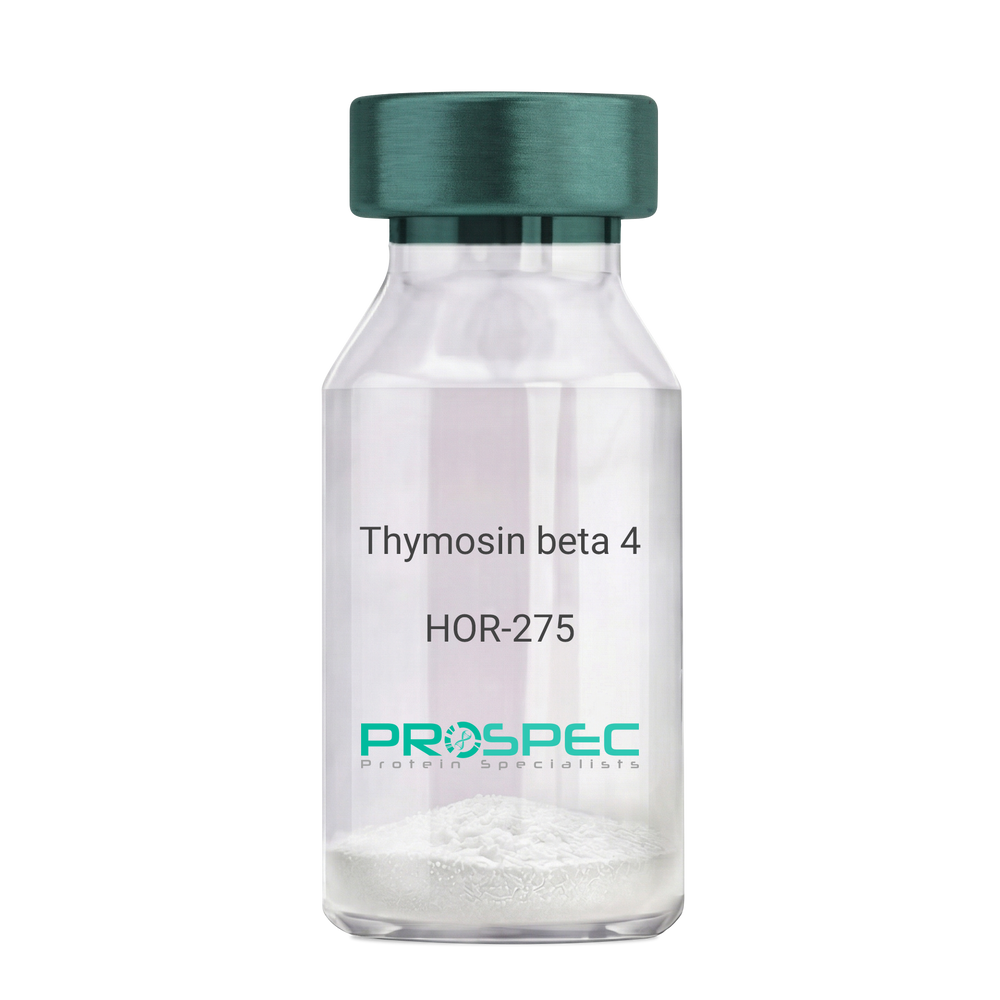
Thymosin beta 4Description:
Thymosin β4
Thymosin beta-4. TB500, TB-500
Product # :
HOR-275Price :
Quantity :
Shipping Method :
Shipped at Room temp
More Info
- description
- formulation
- purity
- More Info
Description
Thymosin b4 is a 43 amino acid peptide which is regarded as the main intracellular G-actin sequestering peptide. It has a molecular weight of 4963.55 Da, and its molecular formula is: C212H350N56O78S1. Extracellular Thymosin b4 may contribute to physiological processes such as angiogenesis, wound healing, and regulation of inflammation.
Formulation
The protein (1mg/ml) was lyophilized with no additives.
Purity
Greater than 98.0% as determined by RP-HPLC.
More Info
-
Introduction
Thymosin is a hormone secreted from the thymus. Its primary function is to stimulate the production of T cells, which are an important part of the immune system. Thymosin also assists in the development of B cells to plasma cells to produce antibodies. The predominant form of thymosin, thymosin b4, is a member of a highly conserved family of actin monomer-sequestering proteins. b-thymosins are the primary regulators of unpolymerized actin, and are essential for maintaining the small cytoplasmic pool of free G-actin monomers required for rapid filament elongation and allowing for the flux of monomers between the thymosin-bound pool and F-actin.
-
Synonyms
Thymosin beta-4. TB500, TB-500
-
Physical Appearance
Sterile Filtered White lyophilized (freeze-dried) powder.
-
Stability
Lyophilized Thymosin b4 although stable at room temperature for 3 weeks, should be stored desiccated below -18°C. Upon reconstitution T beta 4 should be stored at 4°C between 2-7 days and for future use below -18°C.For long term storage it is recommended to add a carrier protein (0.1% HSA or BSA).Please prevent freeze-thaw cycles.
-
Solubility
It is recommended to reconstitute the lyophilized Thymosin beta-4 in sterile 18MΩ-cm H2O not less than 100 µg/ml, which can then be further diluted to other aqueous solutions.
-
Amino Acid Sequence
Thymosin b4 has an a.a. sequence of Ac-Ser-Asp-Lys-Pro-Asp-Met-Ala-Glu-Ile-Glu-Lys-Phe-Asp-Lys-Ser-Lys-Leu-Lys-Lys-Thr-Glu-Thr-Gln-Glu-Lys-Asn-Pro-Leu-Pro-Ser-Lys-Glu-Thr-Ile-Glu-Gln-Glu-Lys-Gln-Ala-Gly-Glu-Ser-OH.
ProSpec's products are furnished for LABORATORY RESEARCH USE ONLY. The product may not be used as drugs, agricultural or pesticidal products, food additives or household chemicals.
- View Data Sheet
Name :
LRPAP1 AntibodyDescription:
Low Density Lipoprotein Receptor-Related Protein Associated Protein 1, Mouse Anti Human
Low density lipoprotein-related protein-associated protein 1 (alpha-2-macroglobulin receptor-associated protein 1), A2MRAP, HBP44, RAP, A2RAP, Alpha-2-MRAP, LRPAP1.
Product # :
ANT-547Price :
Quantity :
Shipping Method :
Shipped with Ice Packs
More Info
- formulation
- More Info
Formulation
1mg/ml containing PBS, pH-7.4, 10% Glycerol and 0.02% Sodium Azide.
More Info
-
Introduction
LRPAP1 is a member of the alpha-2-MRAP family. LRPAP1 cooperates with LRP1/alpha-2-macroglobulin receptor and glycoprotein 330. LRPAP1, located on the cell surface, creates a complex with the alpha 2 macroglobulin receptor light and heavy chains and has part in the pathogenesis of membrane glomerular nephritis.
-
Synonyms
Low density lipoprotein-related protein-associated protein 1 (alpha-2-macroglobulin receptor-associated protein 1), A2MRAP, HBP44, RAP, A2RAP, Alpha-2-MRAP, LRPAP1.
-
Physical Appearance
Sterile filtered colorless solution.
-
Immunogen
Anti-human LRPAP1 mAb, is derived from hybridization of mouse F0 myeloma cells with spleen cells from BALB/c mice immunized with a recombinant human LRPAP1 protein 35-357 amino acids purified from E. coli.
-
Ig Subclass
Mouse IgG1 heavy chain and k light chain.
-
Clone
PAT8G8AT.
-
Applications
LRPAP1 antibody has been tested by ELISA, Western blot analysis to assure specificity and reactivity. Since application varies, however, each investigation should be titrated by the reagent to obtain optimal results. Recommended starting dilution is 1:500.
-
Type
Mouse Anti Human Monoclonal.
-
Storage Procedures
For periods up to 1 month store at 4°C, for longer periods of time, store at -20°C. Prevent freeze thaw cycles.
-
Purification Method
LRPAP1 antibody was purified from mouse ascitic fluids by protein-A affinity chromatography.
ProSpec's products are furnished for LABORATORY RESEARCH USE ONLY. The product may not be used as drugs, agricultural or pesticidal products, food additives or household chemicals.
- View Data Sheet
Name :
PRLR Human, AntagonistDescription:
Prolactin Receptor Antagonist Human Recombinant
Mammotropin, Luteotropic hormone, Luteotropin, PRL.
Product # :
CYT-1254Price :
Quantity :
Shipping Method :
Shipped at Room temp
More Info
- description
- source
- formulation
- purity
- biological activity
- More Info
Description
Prolactin Human Receptor Antagonist del 1-9, G129R mutant produced in E.Coli is a single, non-glycosylated polypeptide chain containing 190 amino acids + an additional Ala at n-terminal and having a molecular mass of ~ 22 kDa. The Human Prolactin Receptor Antagonist is purified by proprietary chromatographic techniques.
Source
Escherichia coli.
Formulation
The protein was lyophilized from a concentrated (1-2mg/ml) solution with 0.02% -0.03% NaHCO3.
Purity
Greater than 97.0% as determined by:
(a) Analysis by Gel Filtration.
(b) Analysis by SDS-PAGE.
Biological Activity
fully biologically active as evidenced by inhibiting PRLR-induced proliferation of Nb2 cells or Baf3 cells stably transfected with hPRL receptors. It also interacts at 1:1 molar ratio with human prolactin receptor extracellular domain as documented by SEC and SPR (Biacore analysis).
More Info
-
Synonyms
Mammotropin, Luteotropic hormone, Luteotropin, PRL.
-
Physical Appearance
Sterile Filtered White lyophilized (freeze-dried) powder.
-
Stability
Lyophilized PRLR although stable at room temperature for 3 weeks, should be stored desiccated below -18°C. Upon reconstitution at > 0.1 mg/ml and up to 3 mg/ml and filter sterilization PRLR can be stored at 4C for several weeks. Please prevent freeze-thaw cycles.
-
Solubility
It is recommended to reconstitute the lyophilized PRLR in sterile 0.4% NaHCO3 adjusted to pH 8-9 not less than 100µg/ml, which can then be further diluted to other aqueous solutions.
-
Amino Acid Sequence
The sequence of the first six N-terminal amino acids was determined and was found to be Ala-Arg-Ser-Gln-Val-Thr
-
Background
Prolactin is a pituitary hormone which takes part in the stimulation of milk production, salt and water regulation, development, growth and reproduction. The primary step in its action is binding a specific membrane receptor (prolactin receptor) which belongs to the superfamily of class 1 cytokine receptors. PRLR varies in size (short and long forms) with tissue source and species, from ~40 kDa to 100 kDa. The PRL-R consists of at least 3 separate domains: an extracellular region with 5 cysteines which contains the prolactin binding site, a single transmembrane domain and a cytoplasmic region, the length of which appears to influence ligand binding and regulate cellular function.
ProSpec's products are furnished for LABORATORY RESEARCH USE ONLY. The product may not be used as drugs, agricultural or pesticidal products, food additives or household chemicals.
- View Data Sheet
Name :
TACI Human, Sf9Description:
Tumor Necrosis Factor Receptor 13B Human Recombinant, Sf9
Tumor Necrosis Factor Receptor Superfamily Member 13B, Tumor Necrosis Factor Receptor Superfamily, Member 13B, Transmembrane Activator And CAML Interactor ,TACI , Tumor Necrosis Factor Receptor 13B, CD267 Antigen, TNFRSF14B, CD267, CVID2, IGAD2, CVID, RYZN.
Product # :
CYT-982Price :
Quantity :
Shipping Method :
Shipped with Ice Packs
More Info
- description
- source
- formulation
- purity
- More Info
Description
TACI produced in Sf9 Insect cells is a single, glycosylated polypeptide chain containing 407 amino acids (1-165a.a.) and having a molecular mass of 45.8kDa (Molecular size on SDS-PAGE will appear at approximately 25-50kDa). TACI is expressed with a 242 amino acid hIgG-His tag at C-Terminus and purified by proprietary chromatographic techniques.
Source
Sf9, Insect cells.
Formulation
TACI a protein solution (0.25mg/ml) contains Phosphate Buffered Saline (pH 7.4), 30% glycerol and 1mM DTT.
Purity
Greater than 90.0% as determined by SDS-PAGE.
More Info
-
Introduction
TNFRSF13B (TACI) is a transmembrane receptor protein found predominantly on the surface of B cells (a significant part of the immune system). TACI was at first discovered owing to its ability to interact with calcium-modulator and cyclophilin ligand (CAML). Later on, it was found that TACI plays a key role in humoral immunity by interacting with two members of the TNF family. Also, TACI controls T cell-independent B cell antibody responses, isotype switching, and B cell homeostasis.
-
Synonyms
Tumor Necrosis Factor Receptor Superfamily Member 13B, Tumor Necrosis Factor Receptor Superfamily, Member 13B, Transmembrane Activator And CAML Interactor ,TACI , Tumor Necrosis Factor Receptor 13B, CD267 Antigen, TNFRSF14B, CD267, CVID2, IGAD2, CVID, RYZN.
-
Physical Appearance
Sterile filtered colorless solution.
-
Stability
Store at 4°C if entire vial will be used within 2-4 weeks.Store, frozen at -20°C for longer periods of time. For long term storage it is recommended to add a carrier protein (0.1% HSA or BSA).Avoid multiple freeze-thaw cycles.
-
Amino Acid Sequence
ADLMSGLGRS RRGGRSRVDQ EERFPQGLWT GVAMRSCPEE QYWDPLLGTC MSCKTICNHQ SQRTCAAFCR SLSCRKEQGK FYDHLLRDCI SCASICGQHP KQCAYFCENK LRSPVNLPPE LRRQRSGEVE NNSDNSGRYQ GLEHRGSEAS PALPGLKLSA DQVALVYSLE PKSCDKTHTC PPCPAPELLG GPSVFLFPPK PKDTLMISRT PEVTCVVVDV SHEDPEVKFN WYVDGVEVHN AKTKPREEQY NSTYRVVSVL TVLHQDWLNG KEYKCKVSNK ALPAPIEKTI SKAKGQPREP QVYTLPPSRD ELTKNQVSLT CLVKGFYPSD IAVEWESNGQ PENNYKTTPP VLDSDGSFFL YSKLTVDKSR WQQGNVFSCS VMHEALHNHY TQKSLSLSPG KHHHHHH.
ProSpec's products are furnished for LABORATORY RESEARCH USE ONLY. The product may not be used as drugs, agricultural or pesticidal products, food additives or household chemicals.
- View Data Sheet
Name :
TNFR2 HumanDescription:
Tumor Necrosis Factor Receptor Type 2 Human Recombinant
Tumor necrosis factor receptor superfamily member 1B, Tumor necrosis factor receptor 2, TNF-R2, Tumor necrosis factor receptor type II, TNF-RII, TNFR-II, p75, p80 TNF-alpha receptor, TNFRSF1B, TNFBR, TNFR2.
Product # :
CYT-769Price :
Quantity :
Shipping Method :
Shipped at Room temp
More Info
- description
- source
- formulation
- purity
- biological activity
- More Info
Description
TNFR2 Human produced in E.Coli is a single, non-glycosylated polypeptide chain containing 184 amino acids and having a molecular mass of 20kDa. The TNFR2 is purified by proprietary chromatographic techniques.
Source
Escherichia Coli.
Formulation
TNFR2 was Lyophilized from a 0.2µm filtered concentrated solution in PBS, pH7.4.
Purity
Greater than 97.0% as determined by SDS-PAGE.
Biological Activity
The ED50 as determined by its ability to inhibit the TNF-a mediated cytotoxicity in the L-929 cells is less than 0.2µg/ml, corresponding to a specific activity of > 5000IU/mg in the presence of 0.25ng/mL of rHuTNF-a.More Info
-
Introduction
TNFR2 belongs to the TNF-receptor superfamily. TNFR2 is receptor with high affinity for TNFSF2/TNF-alpha and approximately 5-fold lower affinity for homotrimeric TNFSF1/lymphotoxin-alpha. TNFR2 mediates the majority of the metabolic effects of TNF-alpha. In addition, knockout studies in mice propose a role for TNFR2 in protecting neurons from apoptosis by stimulating antioxidative pathways. TNFR2 expression might have a significant role in the angiogenesis, tumor cell proliferation and metastasis of Invasive micropapillary carcinoma of the breast.
There are 2 types of soluble TNF receptors: sTNFR-I and sTNFR-II, which act to neutralize the biological activities of TNF alpha and TNF beta. The levels of these soluble receptors seem to increase as a result of shedding of the extracellular domains of the membrane bound receptors. High levels of soluble TNF receptors are found in the amniotic fluid of pregnant women. TNFR2 and TNFR1 form a heterocomplex which mediates the recruitment of 2 anti-apoptotic proteins, c-IAP1 and c-IAP2, which possess E3 ubiquitin ligase activity. IAPs’ function in TNF-receptor signaling is unknown; nevertheless, c-IAP1 is believed to potentiate TNF-induced apoptosis by the ubiquitination and degradation of TNF-receptor-associated factor 2, which mediates anti-apoptotic signals. Oxidative stress promotes TNFR1 and TNFR2 self-interaction, ligand-independent and enhanced ligand-dependent TNF signaling. TNF-a, TNFR1 and TNFR2 have roles in cellular differentiation. TNFR1 and TNFR2 function in cell type-specific renal injury. -
Synonyms
Tumor necrosis factor receptor superfamily member 1B, Tumor necrosis factor receptor 2, TNF-R2, Tumor necrosis factor receptor type II, TNF-RII, TNFR-II, p75, p80 TNF-alpha receptor, TNFRSF1B, TNFBR, TNFR2.
-
Physical Appearance
Sterile Filtered White lyophilized (freeze-dried) powder.
-
Stability
Lyophilized TNFR2 although stable at room temperature for 3 weeks, should be stored desiccated below -18C. Upon reconstitution TNFR2 should be stored at 4C between 2-7 days and for future use below -18C. For long term storage it is recommended to add a carrier protein (0.1% HSA or BSA). Please prevent freeze-thaw cycles.
-
Solubility
It is recommended to reconstitute the lyophilized TNFR2 in sterile 18M-cm H2O not less than 100µg/ml, which can then be further diluted to other aqueous solutions.
-
Amino Acid Sequence
MPAQVAFTPY APEPGSTCRL REYYDQTAQM CCSKCSPGQH AKVFCTKTSD TVCDSCEDST YTQLWNWVPE CLSCGSRCSS DQVETQACTR EQNRICTCRP GWYCALSKQE GCRLCAPLRK CRPGFGVARP GTETSDVVCK PCAPGTFSNT TSSTDICRPH QICNVVAIPG NASMDAVCTS TSPT.
ProSpec's products are furnished for LABORATORY RESEARCH USE ONLY. The product may not be used as drugs, agricultural or pesticidal products, food additives or household chemicals.
- View Data Sheet
Name :
TNFR (22-211) HumanDescription:
Tumor Necrosis Factor Receptor (22-211 a.a.) Human Recombinant
CD120a, FPF, MS5, p55, p55-R, p60, TBP1, TNF-R, TNF-R-I, TNF-R55, TNFAR, TNFR1, TNFR1-d2,TNFR55, TNFR60, Tumor necrosis factor receptor superfamily member 1A, Tumor necrosis factor receptor superfamily member 1A.
Product # :
CYT-851Price :
Quantity :
Shipping Method :
Shipped with Ice Packs
More Info
- description
- source
- formulation
- purity
- More Info
Description
TNFR Human Recombinant produced in E.Coli is a single, non-glycosylated polypeptide chain containing 213 amino acids (22-211 a.a) and having a molecular mass of 23.6kDa.TNFR is fused to a 23 amino acid His-tag at N-terminus & purified by proprietary chromatographic techniques.
Source
Escherichia Coli.
Formulation
TNFR protein solution (1mg/ml) containing 20mM Tirs-HCl (pH8.0) and 10% glycerol.
Purity
Greater than 85% as determined by SDS-PAGE.
More Info
-
Introduction
TNFR1 belongs to the TNF-receptor superfamily. TNFR1 is a receptor for TNFSF2/TNF-alpha and homotrimeric TNFSF1/lymphotoxin-alpha.
There are 2 types of soluble TNF receptors: sTNFR-I and sTNFR-II, which act to neutralize the biological activities of TNF alpha and TNF beta. The levels of these soluble receptors seem to increase as a result of shedding of the extracellular domains of the membrane bound receptors. TNF-a, TNFR1 and TNFR2 have roles in cellular differentiation. TNFR1 and TNFR2 function in cell type-specific renal injury.
TNFR1 is capable of signaling both cell survival and apoptosis. TNFR1-induced apoptosis requires 2 sequential signaling complexes. TNFR1 is capable of activating NF-kappaB, mediate apoptosis, and function as a regulator of inflammation. Oxidative stress promotes TNFR1 and TNFR2 self-interaction, ligand-independent and enhanced ligand-dependent TNF signaling. TNFR1 contributes to the induction of non-cytocidal TNF effects including anti-viral state and activation of the acid sphingomyelinase. Human TNFR1 has a major region which controls cell surface expression. High levels of soluble TNF receptors are found in the amniotic fluid of pregnant women.
Germline mutations of the extracellular domains of TNFR1 are linked to the autosomal dominant periodic fever syndrome. The impaired receptor clearance is believed to be a mechanism of the disease. Familial hibernian fever (FHF) is caused by defects in TNFRSF1A gene. -
Synonyms
CD120a, FPF, MS5, p55, p55-R, p60, TBP1, TNF-R, TNF-R-I, TNF-R55, TNFAR, TNFR1, TNFR1-d2,TNFR55, TNFR60, Tumor necrosis factor receptor superfamily member 1A, Tumor necrosis factor receptor superfamily member 1A.
-
Physical Appearance
Sterile filtered colorless solution.
-
Stability
Store at 4°C if entire vial will be used within 2-4 weeks. Store, frozen at -20°C for longer periods of time. For long term storage it is recommended to add a carrier protein (0.1% HSA or BSA).Avoid multiple freeze-thaw cycles.
-
Amino Acid Sequence
MGSSHHHHHH SSGLVPRGSH MGSIYPSGVI GLVPHLGDRE KRDSVCPQGK YIHPQNNSIC CTKCHKGTYL YNDCPGPGQD TDCRECESGS FTASENHLRH CLSCSKCRKE MGQVEISSCT VDRDTVCGCR KNQYRHYWSE NLFQCFNCSL CLNGTVHLSC QEKQNTVCTC HAGFFLRENE CVSCSNCKKS LECTKLCLPQ IENVKGTEDS GTT.
ProSpec's products are furnished for LABORATORY RESEARCH USE ONLY. The product may not be used as drugs, agricultural or pesticidal products, food additives or household chemicals.
- View Data Sheet
Name :
INSR HumanDescription:
Insulin Receptor Human Recombinant
Insulin receptor, IR, EC 2.7.10.1, CD220, INSR, HHF5.
Product # :
CYT-777Price :
Quantity :
Shipping Method :
Shipped at Room temp
More Info
- description
- source
- formulation
- purity
- More Info
Description
Insulin Receptor Human Recombinant produced in HEK cells is a single, glycosylated, polypeptide chain (aa 28-944 of the short isoform- HIR-A, Uniprot accession # P06213-2 which includes the whole subunit alpha and extracellular domain of subunit beta) containing a total of 927 amino acids, having a molecular mass of 105.9kDa (calculated), though it migrates at approximately 160kDa on SDS PAGE, the INSR is fused to a 2 a.a N-terminal linker, a 2 a.a C-terminal linker and fused to a 6 a.a His tag at C-Terminus.The Human INSR is purified by proprietary chromatographic techniques.
Source
HEK 293.
Formulation
INSR was filtered (0.4µm) and lyophilized from 0.5mg/ml in 0.05M phosphate buffer and 0.075M NaCl, pH 7.4.
Purity
Greater than 95.0% as determined by SDS-PAGE.
More Info
-
Introduction
Insulin Receptor (INSR) is a receptor tyrosine kinase which mediates the pleiotropic actions of insulin. Binding of insulin to the insulin receptor (INSR) stimulates glucose uptake. Once the precursor signal peptide is removed, the insulin receptor precursor is post-translationally cleaved into 2 chains (alpha and beta) which are covalently linked. Insulin binding initiates phosphorylation of several intracellular substrates, including, insulin receptor substrates (IRS1, 2, 3, 4), SHC, GAB1, CBL and other signaling intermediates. Each of these phosphorylated proteins function as docking proteins for other signaling proteins which contain Src-homology-2 domains (SH2 domain) that specifically recognize different phosphotyrosines residues, including the p85 regulatory subunit of PI3K and SHP2.
-
Synonyms
Insulin receptor, IR, EC 2.7.10.1, CD220, INSR, HHF5.
-
Physical Appearance
Filtered White lyophilized (freeze-dried) powder.
-
Stability
Store lyophilized protein at -20°C. Aliquot the product after reconstitution to avoid repeated freezing/thawing cycles. Reconstituted protein can be stored at 4°C for a limited period of time.
-
Solubility
It is recommended to add deionized water to a working concentration of 0.5mg/ml and let the lyophilized pellet dissolve completely. INSR is not sterile! Please filter the product by an appropriate sterile filter before using it in the cell culture.
-
Amino Acid Sequence
ASHLYPGEVC PGMDIRNNLT RLHELENCSV IEGHLQILLM FKTRPEDFRD LSFPKLIMIT DYLLLFRVYG LESLKDLFPN LTVIRGSRLF FNYALVIFEM VHLKELGLYN LMNITRGSVR IEKNNELCYL ATIDWSRILD SVEDNYIVLN KDDNEECGDI CPGTAKGKTN CPATVINGQF VERCWTHSHC QKVCPTICKS HGCTAEGLCC HSECLGNCSQ PDDPTKCVAC RNFYLDGRCV ETCPPPYYHF QDWRCVNFSF CQDLHHKCKN SRRQGCHQYV IHNNKCIPEC PSGYTMNSSN LLCTPCLGPC PKVCHLLEGE KTIDSVTSAQ ELRGCTVING SLIINIRGGN NLAAELEANL GLIEEISGYL KIRRSYALVS LSFFRKLRLI RGETLEIGNY SFYALDNQNL RQLWDWSKHN LTITQGKLFF HYNPKLCLSE IHKMEEVSGT KGRQERNDIA LKTNGDQASC ENELLKFSYI RTSFDKILLR WEPYWPPDFR DLLGFMLFYK EAPYQNVTEF DGQDACGSNS WTVVDIDPPL RSNDPKSQNH PGWLMRGLKP WTQYAIFVKT LVTFSDERRT YGAKSDIIYV QTDATNPSVP LDPISVSNSS SQIILKWKPP SDPNGNITHY LVFWERQAED SELFELDYCL KGLKLPSRTW SPPFESEDSQ KHNQSEYEDS AGECCSCPKT DSQILKELEE SSFRKTFEDY LHNVVFVPRP SRKRRSLGDV GNVTVAVPTV AAFPNTSSTS VPTSPEEHRP FEKVVNKESL VISGLRHFTG YRIELQACNQ DTPEERCSVA AYVSARTMPE AKADDIVGPV THEIFENNVV HLMWQEPKEP NGLIVLYEVS YRRYGDEELH LCVSRKHFAL ERGCRLRGLS PGNYSVRIRA TSLAGNGSWT EPTYFYVTDY LDVPSNIAKK LHHHHHH.
ProSpec's products are furnished for LABORATORY RESEARCH USE ONLY. The product may not be used as drugs, agricultural or pesticidal products, food additives or household chemicals.
- View Data Sheet
Name :
Recombinant EGFR AntibodyDescription:
Recombinant Anti Human Epidermal Growth Factor Receptor
Product # :
ANT-600Price :
Quantity :
Shipping Method :
Shipped with Ice Packs
More Info
- description
- source
- formulation
- purity
- biological activity
- More Info
Description
Recombinant Anti Human Epidermal Growth Factor Receptor monoclonal antibody produced in CHO is a glycosylated dimer containing 1326 amino acids and having a molecular mass of 187.2 kDa.
Source
CHO.
Formulation
The protein 15.6mg/ml solution contains 20mmol/L Na2HPO4- NaH2PO4, 0.005% Tween 80, pH7.0.
Purity
Greater than 95.0% as determined by:
(a) Analysis by SEC-HPLC.
(b) Analysis by SDS-PAGE.Biological Activity
Compared with reference standard, the range of biological activity was found to be 86%.More Info
-
Introduction
The epidermal growth factor receptor (EGF R) subfamily of receptor tyrosine kinases comprises four members: EGF R (also known as HER1, ErbB1 or ErbB), ErbB2 (Neu, HER-2), ErbB3 (HER-3), and ErbB4 (HER-4). All family members are type I transmembrane glycoprotein that has an extracellular domain which contains two cysteine-rich domains separated by a spacer region that is involved in ligand-binding, and a cytoplasmic domain which has a membrane-proximal tyrosine kinase domain and a C-terminal tail with multiple tyrosine autophosphorylation sites. The human EGF R gene encodes a 1210 amino acid (aa) residue precursor with a 24 aa putative signal peptide, a 621 aa extracellular domain, a 23 aa transmembrane domain, and a 542 aa cytoplasmic domain. EGF R has been shown to bind a subset of the EGF family ligands, including EGF, amphiregulin, TGF-a , betacellulin, epiregulin, heparin-binding EGF and neuregulin-2 in the absence of a co-receptor. Ligand binding induces EGF R homodimerization as well as heterdimerization with ErbB2, resulting in kinase activation, tyrosine phosphorylation and cell signaling. EGF R can also be recruited to form heterodimers with the ligand-activated ErbB3 or ErbB4. EGF R signaling has been shown to regulate multiple biological functions including cell proliferation, differentiation, motility and apoptosis. In addition, EGF R signaling has also been shown to play a role in carcinogenesis.
-
Physical Appearance
Sterile filtered colorless liquid formulation.
-
Stability
Recombinant EGFR Antibody should be stored between 2-8°C. Please do not freeze.
-
Amino Acid Sequence
Heavy chain
QVQLKQSGPGLVQPSQSLSITCTVSGFSLTNYGVHWVRQSPGKGLEWLGVIWSGGNTDYNTP
FTSRLSINKDNSKSQVFFKMNSLQSNDTAIYYCARALTYYDYEFAYWGQGTLVTVSAASTKG
PSVFPLAPSSKSTSGGTAALGCLVKDYFPEPVTVSWNSGALTSGVHTFPAVLQSSGLYSLSS
VVTVPSSSLGTQTYICNVNHKPSNTKVDKRVEPKSCDKTHTCPPCPAPELLGGPSVFLFPPK
PKDTLMISRTPEVTCVVVDVSHEDPEVKFNWYVDGVEVHNAKTKPREEQYNSTYRVVSVLTV
LHQDWLNGKEYKCKVSNKALPAPIEKTISKAKGQPREPQVYTLPPSREEMTKNQVSLTCLVK
GFYPSDIAVEWESNGQPENNYKTTPPVLDSDGSFFLYSKLTVDKSRWQQGNVFSCSVMHEAL
HNHYTQKSLSLSPGK.
Light chain
DILLTQSPVILSVSPGERVSFSCRASQSIGTNIHWYQQRTNGSPRLLIKYASESISGIPSRF
SGSGSGTDFTLSINSVESEDIADYYCQQNNNWPTTFGAGTKLELKRTVAAPSVFIFPPSDEQ
LKSGTASVVCLLNNFYPREAKVQWKVDNALQSGNSQESVTEQDSKDSTYSLSSTLTLSKADY
EKHKVYACEVTHQGLSSPVTKSFNRGEC.
ProSpec's products are furnished for LABORATORY RESEARCH USE ONLY. The product may not be used as drugs, agricultural or pesticidal products, food additives or household chemicals.