Search results
1000 results found for “pleiotrophin”
Name
Description
Product #
Price
Quantity
Shipping Method
- View Data Sheet
Name :
SELPLG HumanDescription:
Selectin P Ligand Human Recombinant
Cutaneous Lymphocyte-Associated Associated Antigen, Selectin P Ligand, PSGL-1, CD162 Antigen, P-Selectin Glycoprotein Ligand 1, CLA.
Product # :
PRO-2714Price :
Quantity :
Shipping Method :
Shipped with Ice Packs
More Info
- description
- source
- formulation
- purity
- More Info
Description
SELPLG Human Recombinant produced in HEK293 Cells is a single, glycosylated polypeptide chain containing 496 amino acids (42-295 a.a) and having a molecular mass of 53.4kDa.SELPLG is fused to a 239 amino acid hIgG-His-Tag at C-terminus & purified by proprietary chromatographic techniques.
Source
HEK293 Cells.
Formulation
The SELPLG solution (1mg/1ml) contains phosphate buffered saline (pH7.4) and 10% glycerol.
Purity
Greater than 90.0% as determined by SDS-PAGE.
More Info
-
Introduction
SELPLG glycoprotein functions as a high affinity counter-receptor for the cell adhesion selectin molecules (P, E and L) located in stimulated T lymphocytes and myeloid cells. SELPLG binds leukocytes to activated platelets or endothelia expressing selectins, a vital role in leukocyte trafficking throughout inflammation. In order to have a high-affinity binding activity SELPLG needs two post-translational modifications, tyrosine sulfation and the addition of the sialyl Lewis x tetrasaccharide (sLex) to its O-linked glycans. Polymorphisms and abnormal expression of SELPLG are linked to defects in the innate and adaptive immune response. Alternate splicing results in multiple transcript variants.
-
Synonyms
Cutaneous Lymphocyte-Associated Associated Antigen, Selectin P Ligand, PSGL-1, CD162 Antigen, P-Selectin Glycoprotein Ligand 1, CLA.
-
Physical Appearance
Sterile filtered colorless solution.
-
Stability
Store at 4°C if entire vial will be used within 2-4 weeks.Store, frozen at -20°C for longer periods of time.For long term storage it is recommended to add a carrier protein (0.1% HSA or BSA).Avoid multiple freeze-thaw cycles.
-
Amino Acid Sequence
DGSQATEYEY LDYDFLPETE PPEMLRNSTD TTPLTGPGTP ESTTVEPAAR RSTGLDAGGA VTELTTELAN MGNLSTDSAA MEIQTTQPAA TEAQTTPLAA TEAQTTRLTA TEAQTTPLAA TEAQTTPPAA TEAQTTQPTG LEAQTTAPAA MEAQTTAPAA MEAQTTPPAA MEAQTTQTTA MEAQTTAPEA TEAQTTQPTA TEAQTTPLAA MEALSTEPSA TEALSMEPTT KRGLFIPFSV SSVTHKGIPM AASNLSVLEP KSCDKTHTCP PCPAPELLGG PSVFLFPPKP KDTLMISRTP EVTCVVVDVS HEDPEVKFNW YVDGVEVHNA KTKPREEQYN STYRVVSVLT VLHQDWLNGK EYKCKVSNKA LPAPIEKTIS KAKGQPREPQ VYTLPPSRDE LTKNQVSLTC LVKGFYPSDI AVEWESNGQP ENNYKTTPPV LDSDGSFFLY SKLTVDKSRW QQGNVFSCSV MHEALHNHYT QKSLSLSPGK HHHHHH
ProSpec's products are furnished for LABORATORY RESEARCH USE ONLY. The product may not be used as drugs, agricultural or pesticidal products, food additives or household chemicals.
- View Data Sheet
Name :
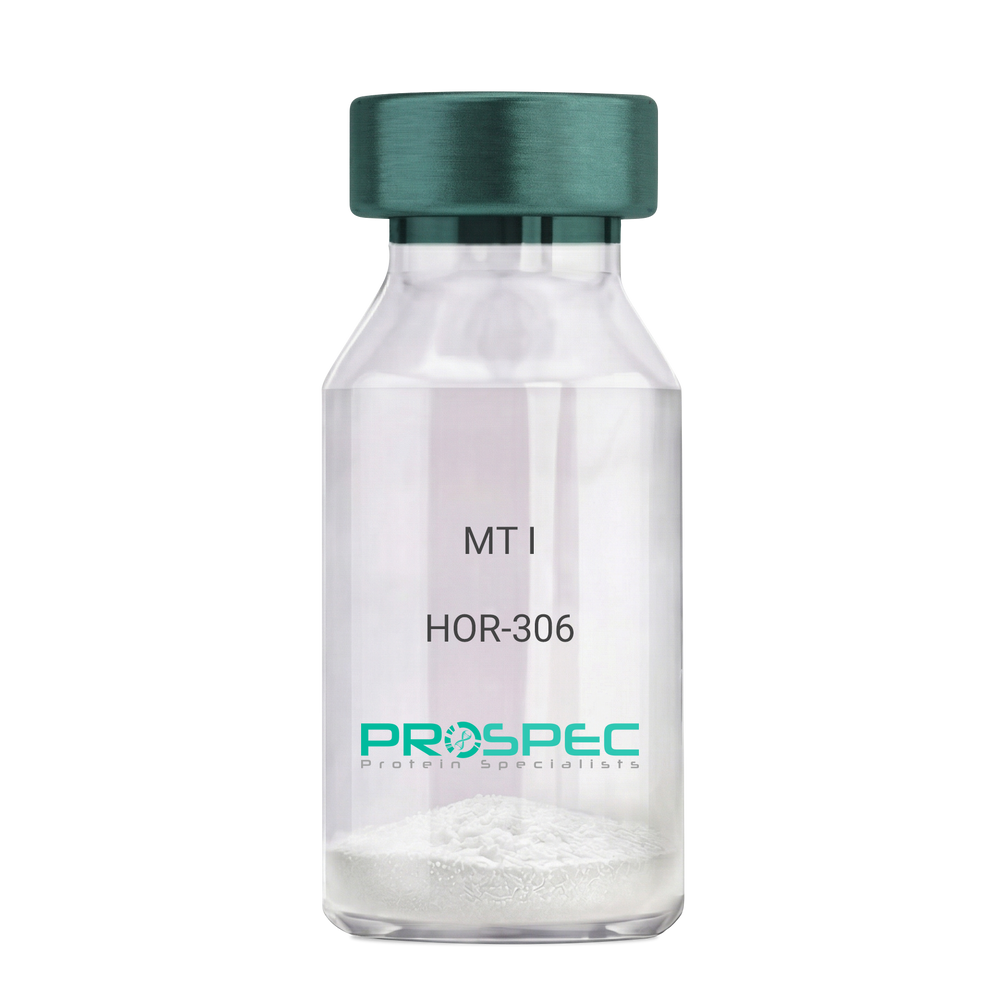
MT IDescription:
Melanotan-I
Melanotan-I, MT-I, Melanotan-1.
Product # :
HOR-306Price :
Quantity :
Shipping Method :
Shipped at Room temp
More Info
- description
- formulation
- purity
- More Info
Description
Melanotan-I has the amino acid sequence of Ser-Tyr-Ser-Nle-Glu-His-D-Phe-Arg-Trp-Gly-Lys-Pro-Val and a molecular weight of 1647.4 Dalton.
Formulation
The protein (1mg/ml) was lyophilized with no additives.
Purity
Greater than 98.0% as determined by RP-HPLC.
More Info
-
Synonyms
Melanotan-I, MT-I, Melanotan-1.
-
Physical Appearance
Sterile Filtered off-White lyophilized (freeze-dried) powder.
-
Stability
Lyophilized Melanotan-I although stable at room temperature for 3 weeks, should be stored desiccated below -18°C. Upon reconstitution MT-I should be stored at 4°C between 2-7 days and for future use below -18°C.For long term storage it is recommended to add a carrier protein (0.1% HSA or BSA).Please prevent freeze-thaw cycles.
-
Solubility
It is recommended to reconstitute the lyophilized Melanotan-I in sterile 1% acetic acid not less than 100 µg/ml, which can then be further diluted to other aqueous solutions.
ProSpec's products are furnished for LABORATORY RESEARCH USE ONLY. The product may not be used as drugs, agricultural or pesticidal products, food additives or household chemicals.
- View Data Sheet
Name :
PTH (7-84) HumanDescription:
Parathyroid Hormone (7-84) Human Recombinant
Parathyrin, PTH, Parathormone.
Product # :
HOR-011Price :
Quantity :
Shipping Method :
Shipped at Room temp
More Info
- description
- source
- formulation
- purity
- More Info
Description
PTH (7-84) Human Recombinant produced in E.Coli is a single, non-glycosylated, polypeptide chain containing 76 amino acids, having an MW of 8.8kDa. The PTH (7-84) is purified by proprietary chromatographic techniques.
Source
Escherichia Coli.
Formulation
Lyophilized from a 0.2 µm filtered concentrated solution in PBS, pH 7.4.
Purity
Greater than 97.0% as determined by:
(a) Analysis by RP-HPLC.
(b) Analysis by SDS-PAGE.More Info
-
Introduction
Parathyroid hormone (PTH), or parathormone, is secreted by the parathyroid glands as a polypeptide containing 84 amino acids. It acts to increase the concentration of calcium in the blood, whereas calcitonin (a hormone produced by the parafollicular cells of the thyroid gland) acts to decrease calcium concentration. PTH acts to increase the concentration of calcium in the blood by acting upon parathyroid hormone receptor in three parts of the body: In the bones- It enhances the release of calcium from the large reservoir contained in the bones. Bone resorption is the normal destruction of bone by osteoclasts, which are indirectly stimulated by PTH. Stimulation is indirect since osteoclasts do not have a receptor for PTH; rather, PTH binds to osteoblasts, the cells responsible for creating bone. Binding stimulates osteoblasts to increase their expression of RANKL, which can bind to osteoclast precursors containing RANK, a receptor for RANKL. The binding of RANKL to RANK stimulates these precursors to fuse, forming new osteoclasts which ultimately enhances the resorption of bone. In the kidney- It enhances active reabsorption of calcium from distal tubules and the thick ascending limb. In the intestine- It enhances the absorption of calcium in the intestine by increasing the production of vitamin D and upregulating the enzyme responsible for 1-alpha hydroxylation of 25-hydroxy vitamin D, converting vitamin D to its active form (1,25-dihydroxy vitamin D) which effects the actual absorption of calcium (as Ca2+ ions) by the intestine via calbindin.
-
Synonyms
Parathyrin, PTH, Parathormone.
-
Physical Appearance
Sterile Filtered White lyophilized (freeze-dried) powder.
-
Stability
Lyophilized PTH (7-84) although stable at room temperature for 3 weeks, should be stored desiccated below -18C. Upon reconstitution PTH (7-84) should be stored at 4C between 2-7 days and for future use below -18C.For long term storage it is recommended to add a carrier protein (0.1% HSA or BSA).Please prevent freeze-thaw cycles.
-
Solubility
It is recommended to reconstitute the lyophilized PTH (7-84) in sterile 18MΩ-cm H2O not less than 100 µg/ml, which can then be further diluted to other aqueous solutions.
-
Amino Acid Sequence
LMHNLGKHLN SMERVEWLRK KLQDVHNFVA LGAPLAPRDA GSQRPRKKED NVLVESHEKS LGEADKADVN VLTKAKSQ.
ProSpec's products are furnished for LABORATORY RESEARCH USE ONLY. The product may not be used as drugs, agricultural or pesticidal products, food additives or household chemicals.
- View Data Sheet
Name :
PDGF B HumanDescription:
Platelet-Derived Growth Factor B Human Recombinant
Glioma-derived growth factor, GDGF, Osteosarcoma-derived Growth Factor, ODGF, SIS, SSV, PDGF2, c-sis, FLJ12858, PDGF-BB, PDGF B-chain, Platelet-derived growth factor beta polypeptide, Becaplermin.
Product # :
CYT-492Price :
Quantity :
Shipping Method :
Shipped with Ice Packs
More Info
- description
- source
- formulation
- purity
- More Info
Description
PDGF-B Human Recombinant mature chain produced in E.Coli is a non-glycosylated, polypeptide chain containing 109 amino acids fragment (82-190) and having a molecular mass of 16.75 kDa. The PDGF-B is fused with an amino-terminal hexahistidine tag and purified by proprietary chromatographic techniques.
Source
Escherichia Coli.
Formulation
Platelet-Derived Growth Factor-B is supplied in 25mM Na-Acetate pH 4.8, 1mM EDTA and 50% glycerol.
Purity
Greater than 95.0% as determined by SDS-PAGE.
More Info
-
Introduction
The term ‘PDGF’ refers to a family of disulphide bond-linked dimeric isoforms that act as autocrine and paracrine growth factors and are produced by a variety of cell types other than platelets.
They act as potent mitogens for almost all mesenchymally-derived cells. Aberrant expression is involved in certain cancers, fibroproliferative disorders and atherosclerosis. The protein also contributes to wound healing and neural regeneration. There are four members of the PDGF family – PDGF A, PDGF B, PDGF C and PDGF D. Two distinct types of PDGF-A exist – a short form that is soluble and a long form that is retained by the extracellular matrix. -
Synonyms
Glioma-derived growth factor, GDGF, Osteosarcoma-derived Growth Factor, ODGF, SIS, SSV, PDGF2, c-sis, FLJ12858, PDGF-BB, PDGF B-chain, Platelet-derived growth factor beta polypeptide, Becaplermin.
-
Physical Appearance
Sterile Filtered clear solution.
-
Stability
Store at 4°C if entire vial will be used within 2-4 weeks. Store, frozen at -20°C for longer periods of time. Please avoid freeze thaw cycles.
ProSpec's products are furnished for LABORATORY RESEARCH USE ONLY. The product may not be used as drugs, agricultural or pesticidal products, food additives or household chemicals.
- View Data Sheet
Name :
PPARG HumanDescription:
Peroxisome Proliferator Activated Receptor Gamma Human Recombinant
Peroxisome proliferator-activated receptor gamma, PPAR-gamma, PPARG, NR1C3, PPARG1, PPARG2.
Product # :
PKA-228Price :
Quantity :
Shipping Method :
Shipped with Ice Packs
More Info
- description
- source
- formulation
- purity
- More Info
Description
Peroxisome Proliferator Activated Receptor Gamma Human Recombinant is expressed in E.coli having a molecular weight of 59.2 kDa and fused to an amino terminal hexahistidine tag.
Source
Escherichia Coli.
Formulation
The protein solution contains 20mM Tris-HCl and 50% glycerol.
Purity
Greater than 90.0% as determined by SDS-PAGE.
More Info
-
Introduction
The peroxisome proliferator activated receptors (PPARs) are ligandactivated transcription factors within the nuclear receptor superfamily, which play important roles in adipogenesis, glucose homeostasis andinflammation. Three different isotypes can be distinguished; alpha, beta and gamma. PPARg, is mainly expressed in adipose tissue and to lesser extent in colon, the immune system and the retina. Whereas PPARg operates in the catabolism of fatty acids in the liver, PPARg influences the storage of fatty acids in the adipose tissue and plays a role in adipocyte differentiation. PPARg binds to DNA as a heterodimer with retinoid X receptor (RXR), activating expression of target genes after binding ligand.
-
Synonyms
Peroxisome proliferator-activated receptor gamma, PPAR-gamma, PPARG, NR1C3, PPARG1, PPARG2.
-
Physical Appearance
Sterile Filtered clear solution.
-
Stability
Store at 4°C if entire vial will be used within 2-4 weeks.Store, frozen at -20°C for longer periods of time.Avoid multiple freeze-thaw cycles.
ProSpec's products are furnished for LABORATORY RESEARCH USE ONLY. The product may not be used as drugs, agricultural or pesticidal products, food additives or household chemicals.
- View Data Sheet
Name :
GCHFR HumanDescription:
GTP Cyclohydrolase I Feedback Regulator Human Recombinant
GFRP, HsT16933, P35,GTP cyclohydrolase 1 feedback regulatory protein, GTP cyclohydrolase I feedback regulatory protein, p35, GCHFR
Product # :
PRO-2006Price :
Quantity :
Shipping Method :
Shipped with Ice Packs
More Info
- description
- source
- formulation
- purity
- More Info
Description
GCHFR Human Recombinant produced in E.Coli is a single, non-glycosylated polypeptide chain containing 107 amino acids (1-84a.a) and having a molecular mass of 12.1kDa. GCHFR is fused to a 23 amino acid His-tag at N-terminus & purified by proprietary chromatographic techniques.
Source
Escherichia Coli.
Formulation
GCHFR protein solution (1mg/ml) containing 20mM Tris-HCl buffer (pH 8.0), 0.15M NaCl, 40% glycerol and 1mM DTT.
Purity
Greater than 95.0% as determined by SDS-PAGE.
More Info
-
Introduction
GTP Cyclohydrolase I Feedback Regulator, also known as GCHFR, is a Protein coding gene which includes a homodimer. GCHFR binds and mediates tetrahydrobiopterin inhibition of GTP cyclohydrolase I. GCHFR also regulates phenylalanine metabolism in the liver and in the production of biogenic amine neurotransmitters and nitric oxide.
-
Synonyms
GFRP, HsT16933, P35,GTP cyclohydrolase 1 feedback regulatory protein, GTP cyclohydrolase I feedback regulatory protein, p35, GCHFR
-
Physical Appearance
Sterile Filtered colorless solution.
-
Stability
Store at 4°C if entire vial will be used within 2-4 weeks. Store, frozen at -20°C for longer periods of time. For long term storage it is recommended to add a carrier protein (0.1% HSA or BSA).Avoid multiple freeze-thaw cycles.
-
Amino Acid Sequence
MGSSHHHHHH SSGLVPRGSH MGSMPYLLIS TQIRMEVGPT MVGDEQSDPE LMQHLGASKR RALGNNFYEY YVDDPPRIVL DKLERRGFRV LSMTGVGQTL VWCLHKE.
ProSpec's products are furnished for LABORATORY RESEARCH USE ONLY. The product may not be used as drugs, agricultural or pesticidal products, food additives or household chemicals.
- View Data Sheet
Name :
GMFB His HumanDescription:
Glia Maturation Factor Beta Human His Tag Recombinant
GMF, GMF beta.
Product # :
CYT-726Price :
Quantity :
Shipping Method :
Shipped with Ice Packs
More Info
- description
- source
- formulation
- purity
- More Info
Description
GMFB Human Recombinant produced in E.Coli is a signle, non-glycosylated, polypeptide chain containing 162 amino acids (1-142 a.a.)and having a total molecular mass of 18.8 kDa. GMGB is fused to a 20 amino acid His Tag at N-terminus and is purified by proprietary chromatographic techniques.
Source
Escherichia Coli.
Formulation
The GMFB 1mg/ml protein solution contains 20mM Tris-HCL pH-8, 1mM DTT, 0.1M NaCl and 10% Glycerol.
Purity
Greater than 95.0% as determined by SDS-PAGE.
More Info
-
Introduction
GMFB is part of the GMF subfamily of the larger actin-binding protein ADF family. GMFB is phosphorylated after phorbol ester stimulation, and is crucial for the nervous system. GMFB causes brain cell differentiation, stimulates neural regeneration and inhibits tumor cell proliferation. GMFB overexpression in astrocytes results in the increase of BDNF production. GMFB expression is increased by exercise, thus BDNF is important for exercise-induction of BDNF.
-
Synonyms
GMF, GMF beta.
-
Physical Appearance
Sterile Filtered colorless clear solution.
-
Stability
Store at 4°C if entire vial will be used within 2-4 weeks. Store, frozen at -20°C for longer periods of time. Please avoid freeze thaw cycles.
-
Amino Acid Sequence
MGSSHHHHHH SSGLVPRGSH MSESLVVCDV AEDLVEKLRK FRFRKETNNA AIIMKIDKDK RLVVLDEELE GISPDELKDE LPERQPRFIV
YSYKYQHDDG RVSYPLCFIF SSPVGCKPEQ QMMYAGSKNK LVQTAELTKV FEIRNTEDLT EEWLREKLGF FH. -
Background
What is the molecular weight/Mw of GMFB HIS HUMAN Protein?
GMFB HIS HUMAN Protein has a total Mw of 18.8kDa.
What is the source or expression system of GMFB HIS HUMAN Protein?
Escherichia Coli.
What is the Purity of GMFB HIS HUMAN Protein?
GMFB HIS HUMAN Protein is >95% pure as determined by SDS-PAGE.
What is the Biological Activity of GMFB HIS HUMAN Protein?
The biological functionality of GMFB HIS HUMAN Protein will be determined in the future.
What is the amino acid sequence of GMFB HIS HUMAN Protein?
MGSSHHHHHH SSGLVPRGSH MSESLVVCDV AEDLVEKLRK FRFRKETNNA AIIMKIDKDK RLVVLDEELE GISPDELKDE LPERQPRFIV
YSYKYQHDDG RVSYPLCFIF SSPVGCKPEQ QMMYAGSKNK LVQTAELTKV FEIRNTEDLT EEWLREKLGF FH.
What applications can GMFB HIS HUMAN Protein be used in?
GMFB HIS HUMAN Protein can probably be used in western blot, ELISA and Lateral Flow.
What is the endotoxin level for GMFB HIS HUMAN Protein?
The endotoxin level is minimal, GMFB HIS HUMAN Protein was purified using conventional chromatography techniques.
ProSpec's products are furnished for LABORATORY RESEARCH USE ONLY. The product may not be used as drugs, agricultural or pesticidal products, food additives or household chemicals.
- View Data Sheet
Name :
PRL R Rainbow TroutDescription:
Prolactin Soluble Receptor Rainbow Trout Recombinant
PRL-R.
Product # :
CYT-532Price :
Quantity :
Shipping Method :
Shipped at Room temp
More Info
- description
- source
- formulation
- purity
- biological activity
- More Info
Description
Prolactin Receptor Rainbow Trout Extra Celleular Domain Recombinant ?produced in E.Coli is a non-glycosylated, Polypeptide chain containing 210 amino acids and having a molecular mass of 24034 Dalton. The Prolactin Receptor is purified by proprietary chromatographic techniques.
Source
Escherichia Coli.
Formulation
The protein was lyophilized from a concentrated (1mg/ml) solution with 0.0045mM NaHCO3.
Purity
Greater than 97.0% as determined by:
(a) Analysis by SEC-HPLC.
(b) Analysis by SDS-PAGE.Biological Activity
Activity is determined by the dose-dependant inhibition of Prolactin-stimuled proliferation of Nb2 cells and by high affinity binding of oPLR and other lactogenic hormones.More Info
-
Introduction
Prolactin is a pituitary hormone involved in the stimulation of milk production, salt and water regulation, growth, development and reproduction. The initial step in its action is the binding to a specific membrane receptor (prolactin receptor) which belongs to the superfamily of class 1 cytokine receptors. The function of the prolactin receptor is mediated, at least in part, by two families of signaling molecules: Janus kinases and signal transducers and activators of transcription. Prolactin (PRL) is a hormone involved in a variety of important functions including ion transport and osmoregulation, stimulation of milk, protein synthesis as well as the regulation of numerous reproductive functions. PRL exerts its influence on different cell types through a signal transduction pathway which begins with the binding of the hormone to a transmembrane PRL receptor. Immunoreactive PRL receptor, a member of the cytokine receptor family, varies in size (short and long forms) with tissue source and species, from ~40 kDa to 100 kDa. The PRL receptor consists of at least three separate domains: an extracellular region with 5 cysteines which contains the prolactin binding site, a single transmembrane domain and a cytoplasmic region, the length of which appears to influence ligand binding and regulate cellular function.
-
Synonyms
PRL-R.
-
Physical Appearance
Sterile Filtered White lyophilized (freeze-dried) powder.
-
Stability
Lyophilized PRL-R although stable at room temperature for 3 weeks, should be stored desiccated below -18°C. Upon reconstitution Prolactin Receptor should be stored at 4°C between 2-7 days and for future use below -18°C.For long term storage it is recommended to add a carrier protein (0.1% HSA or BSA).Please prevent freeze-thaw cycles.
-
Solubility
It is recommended to reconstitute the lyophilized PRL-R in sterile 18MΩ-cm H2O not less than 100µg/ml, which can then be further diluted to other aqueous solutions.
-
Amino Acid Sequence
The sequence of the first five N-terminal amino acids was determined and was found to be Ala-Arg-His-Thr-Pro.
-
Protein content
Protein quantitation was carried out by two independent methods1. UV spectroscopy at 280 nm using the absorbency value of 2.48 as the extinction coefficient for a 0.1% (1mg/ml) solution. This value is calculated by the PC GENE computer analysis program of protein sequences (IntelliGenetics).2. Analysis by RP-HPLC, using a standard solution of PRLr-ECD as a Reference Standard.
ProSpec's products are furnished for LABORATORY RESEARCH USE ONLY. The product may not be used as drugs, agricultural or pesticidal products, food additives or household chemicals.
- View Data Sheet
Name :
GDNF HumanDescription:
Glial-Derived Neurotrophic Factor Human Recombinant
ATF1, ATF2, HFB1-GDNF, GDNF.
Product # :
CYT-305Price :
Quantity :
Shipping Method :
Shipped at Room temp
More Info
- description
- source
- formulation
- purity
- biological activity
- More Info
- sds-page
Description
Glial derived Neurotrophic Factor Human Recombinant produced in E.Coli is a non-glycosylated disulfide-linked homodimer containing 2 x 135 amino acids and having a total molecular mass of approximately 30kDa. GDNF is purified by proprietary chromatographic techniques.
Source
Escherichia Coli.
Formulation
GDNF was lyophilized from a 0.2µm filtered concentrated solution in 1×PBS, pH 7.4 and 5% Trehalose.
Purity
Greater than 95.0% as determined by analysis by SDS-PAGE.
Biological Activity
The ED50 was determined by the proliferation of rat C6 cells is < 0.1 ng/ml, corresponding to a specific activity of > 1.0x10⁷ units/mg.
sds-page
More Info
-
Introduction
GDNF promotes the survival and differentiation of minergic neurons in culture, and is able to prevent apoptosis of motor neurons induced by axotomy. The encoded protein is processed to a mature secreted form that exists as a homodimer. The mature form of the protein is a ligand for the product of the RET (rearranged during transfection) protooncogene. In addition to the transcript encoding GDNF, two additional alternative transcripts encoding distinct proteins, referred to as astrocyte-derived trophic factors, have also been described. Mutations in this gene may be associated with Hirschsprung disease.
GDNF enhances survival and morphological differentiation of minergic neurons and increases their high-affinity uptake. -
Synonyms
ATF1, ATF2, HFB1-GDNF, GDNF.
-
Physical Appearance
Sterile Filtered White lyophilized (freeze-dried) powder.
-
Stability
Lyophilized Glial-derived Neurotrophic Factor although stable at room temperature for 3 weeks, should be stored desiccated below -18°C. Upon reconstitution GDNF should be stored at 4°C between 2-7 days and for future use below -18°C.For long term storage it is recommended to add a carrier protein (0.1% HSA or BSA).Please prevent freeze-thaw cycles.
-
Solubility
It is recommended to reconstitute the lyophilized Glial Derived Neurotrophic Factor in sterile 18MΩ-cm H2O not less than 100µg/ml, which can then be further diluted to other aqueous solutions.
-
Amino Acid Sequence
SPDKQMAVLP RRERNRQAAA ANPENSRGKG RRGQRGKNRG CVLTAIHLNV TDLGLGYETK EELIFRYCSG SCDAAETTYD KILKNLSRNR RLVSDKVGQA CCRPIAFDDD LSFLDDNLVY HILRKHSAKR CGCI.
-
Background
What is the molecular weight/Mw of GDNF HUMAN Protein?
GDNF HUMAN Protein has a total Mw of 30kDa.
What is the source or expression system of GDNF HUMAN Protein?
Escherichia Coli.
What is the Purity of GDNF HUMAN Protein?
GDNF HUMAN Protein is >95% pure as determined by SDS-PAGE.
What is the Biological Activity of GDNF HUMAN Protein?
The ED50 was determined by the proliferation of rat C6 cells is < 0.1 ng/ml, corresponding to a specific activity of > 1.0x10⁷ units/mg.
What is the amino acid sequence of GDNF HUMAN Protein?
SPDKQMAVLP RRERNRQAAA ANPENSRGKG RRGQRGKNRG CVLTAIHLNV TDLGLGYETK EELIFRYCSG SCDAAETTYD KILKNLSRNR RLVSDKVGQA CCRPIAFDDD LSFLDDNLVY HILRKHSAKR CGCI.
What applications can GDNF HUMAN Protein be used in?
GDNF HUMAN Protein can probably be used in western blot, ELISA and Lateral Flow.
What is the endotoxin level for GDNF HUMAN Protein?
The endotoxin level is minimal, GDNF HUMAN Protein was purified using conventional chromatography techniques.
ProSpec's products are furnished for LABORATORY RESEARCH USE ONLY. The product may not be used as drugs, agricultural or pesticidal products, food additives or household chemicals.
- View Data Sheet
Name :
GDF6 HumanDescription:
Bone Morphogenetic protein-13 Human Recombinant
Growth Differentiation Factor 6, Growth/Differentiation Factor 16, Bone Morphogenetic Protein 13, BMP-13, BMP13, GDF-6, Klippel-Feil Malformation, Segmentation Syndrome 1, Klip-Feil Malformation, Klippel-Feil Syndrome, MCOPCB6, SCDO4, CDMP2, LCA17, MCOP4, GDF16, KFS1, KFSL, SGM1, KFM, KFS, GDF6.
Product # :
CYT-938Price :
Quantity :
Shipping Method :
Shipped at Room temp
More Info
- description
- source
- formulation
- purity
- biological activity
- More Info
Description
BMP13 Human Recombinant produced in E.coli is a non-glycosylated disulfide linked homodimer containing 2 chains of 120 amino acids and having a molecular mass of 27.1kDa.The BMP-13 is purified by proprietary chromatographic techniques.
Source
Escherichia Coli.
Formulation
BMP-13 protein was lyophilized from a 0.2µm filtered concentrated solution in 30% Acetonitrile and 0.1% TFA.
Purity
Greater than 95.0% as determined by: (a) Analysis by HPLC. (b) Analysis by SDS-PAGE.
Biological Activity
The ED50 as determined by inducing alkaline phosphatase production of murine ATDC5 cells is less than 2.0µg/ml, corresponding to a specific activity of > 500IU/mg.More Info
-
Introduction
Growth/differentiation factors (GDF1-GDF15) belong to the BMP family of TGF-beta superfamily proteins. These factors are produced as inactive preproproteins which are subsequently cleaved and assembled into active secreted homodimers. BMP13 is a growth factor which controls proliferation and cellular differentiation in the retina and bone formation. BMP13 has a central role in regulating apoptosis during retinal development. GDF proteins are vital during embryonic development, particularly in the skeletal, nervous, and muscular systems. BMP13 gene mutations result in colobomata, which are congenital abnormalities in ocular development, and in Klippel-Feil syndrome (KFS), which is a congenital disorder of spinal segmentation.
-
Synonyms
Growth Differentiation Factor 6, Growth/Differentiation Factor 16, Bone Morphogenetic Protein 13, BMP-13, BMP13, GDF-6, Klippel-Feil Malformation, Segmentation Syndrome 1, Klip-Feil Malformation, Klippel-Feil Syndrome, MCOPCB6, SCDO4, CDMP2, LCA17, MCOP4, GDF16, KFS1, KFSL, SGM1, KFM, KFS, GDF6.
-
Physical Appearance
Sterile Filtered White lyophilized (freeze-dried) powder.
-
Stability
Lyophilized BMP13 although stable at room temperature for 3 weeks, should be stored desiccated below -18°C. Upon reconstitution BMP-13 should be stored at 4°C between 2-7 days and for future use below -18°C. For long term storage it is recommended to add a carrier protein (0.1% HSA or BSA). Please prevent freeze-thaw cycles.
-
Solubility
It is recommended to reconstitute the lyophilized BMP13 in sterile 18M-cm H2O not less than 100µg/ml, which can then be further diluted to other aqueous solutions.
-
Amino Acid Sequence
TAFASRHGKR HGKKSRLRCS KKPLHVNFKE LGWDDWIIAP LEYEAYHCEG VCDFPLRSHL EPTNHAIIQT LMNSMDPGST PPSCCVPTKL TPISILYIDA GNNVVYKQYE DMVVESCGCR.
-
Background
Bone Morphogenetic Protein-13 Human Recombinant: Unraveling its Potential in Tissue Engineering and Regenerative Medicine
Abstract:
Bone Morphogenetic Protein-13 (BMP-13) human recombinant is a pivotal member of the bone morphogenetic protein family, known for its crucial role in tissue development, regeneration, and repair. This research paper aims to provide a comprehensive analysis of BMP-13, including its characteristics, signaling pathways, and potential therapeutic applications. Furthermore, innovative methodologies for the production and optimization of BMP-13 human recombinant are proposed, shedding light on its future implications in the field of tissue engineering and regenerative medicine.
Introduction:
Tissue engineering and regenerative medicine hold great promise in addressing tissue repair and regeneration challenges. BMP-13, a prominent member of the BMP family, plays a vital role in orchestrating cellular responses during tissue development and healing. This paper explores the distinctive features of BMP-13 and presents novel approaches for the production and optimization of BMP-13 human recombinant, aiming to unlock its therapeutic potential in various regenerative contexts.
Characteristics and Signaling Pathways:
BMP-13 is a secreted growth factor belonging to the transforming growth factor-beta (TGF-β) superfamily. It exerts its biological effects by binding to specific cell surface receptors, initiating intricate intracellular signaling cascades. BMP-13 signaling pathways, including Smad-dependent and Smad-independent pathways, regulate critical processes such as cell differentiation, proliferation, and extracellular matrix synthesis, influencing tissue development and repair.
Production of BMP-13 Human Recombinant:
Efficient production methodologies are crucial for harnessing the therapeutic potential of BMP-13 human recombinant. Various recombinant protein expression systems, such as mammalian cells or baculovirus-insect cell systems, have been utilized for the production of functional BMP-13. Optimization strategies, including codon optimization, signal peptide engineering, and protein folding enhancement, have been employed to improve the yield and bioactivity of BMP-13 recombinant protein.
Potential Therapeutic Applications:
BMP-13 human recombinant holds immense promise in the field of tissue engineering and regenerative medicine. Its involvement in cartilage formation, osteogenesis, and tissue repair makes it a potential candidate for the treatment of musculoskeletal disorders, joint injuries, and cartilage defects. Furthermore, the ability of BMP-13 to modulate cell behavior and tissue remodeling indicates its wider therapeutic applications in diverse regenerative processes.
Conclusion:
BMP-13 human recombinant emerges as a crucial regulator in tissue engineering and regenerative medicine, offering significant potential for tissue repair and regeneration. Optimizing production methodologies and further unraveling its signaling mechanisms will undoubtedly enhance its therapeutic applications. Given its involvement in cartilage and bone formation, as well as tissue repair, BMP-13 human recombinant represents a valuable tool for promoting tissue regeneration and addressing the unmet clinical needs in regenerative medicine.
What is the molecular weight/Mw of GDF6 Protein?
GDF6 Protein has a total Mw of 27.1kDa.
What is the source or expression system of GDF6 Protein?
Escherichia Coli.
What is the Purity of GDF6 Protein?
GDF6 Protein is >95% pure as determined by SDS-PAGE.
What is the Biological Activity of GDF6 Protein?
The ED50 as determined by inducing alkaline phosphatase production of murine ATDC5 cells is less than 2.0µg/ml, corresponding to a specific activity of > 500IU/mg.
What is the amino acid sequence of GDF6 Protein?
TAFASRHGKR HGKKSRLRCS KKPLHVNFKE LGWDDWIIAP LEYEAYHCEG VCDFPLRSHL EPTNHAIIQT LMNSMDPGST PPSCCVPTKL TPISILYIDA GNNVVYKQYE DMVVESCGCR.
What applications can GDF6 Protein be used in?
GDF6 Protein can probably be used in western blot, ELISA and Lateral Flow.
What is the endotoxin level for GDF6 Protein?
The endotoxin level is minimal, GDF6 Protein was purified using conventional chromatography techniques.
ProSpec's products are furnished for LABORATORY RESEARCH USE ONLY. The product may not be used as drugs, agricultural or pesticidal products, food additives or household chemicals.
- View Data Sheet
Name :
CNTF HumanDescription:
Ciliary-Neurotrophic Factor Human Recombinant
HCNTF, CNTF, Ciliary Neurotrophic Factor.
Product # :
CYT-272Price :
Quantity :
Shipping Method :
Shipped at Room temp
More Info
- description
- source
- formulation
- purity
- biological activity
- More Info
Description
Ciliary Neurotrophic Factor Recombinant Human produced in E.Coli is a single, non-glycosylated polypeptide chain containing 199 amino acids and having a molecular mass of 22706 Dalton. The CNTF is purified by proprietary chromatographic techniques.
Source
Escherichia Coli.
Formulation
Lyophilized from a concentrated (1mg/ml) solution in water containing 5mM sodium Phosphate buffer pH=7.5 and 5mM sodium chloride.
Purity
Greater than 98.0% as determined by(a) Analysis by RP-HPLC.
(b) Analysis by SDS-PAGE.Biological Activity
The ED50 as determined by the dose-dependant stimulation of TF-1 cells is < 2 ng/ml, corresponding to a Specific Activity of 500,000IU/mg.More Info
-
Introduction
CNTF is a polypeptide hormone whose actions appear to be restricted to the nervous system where it promotes neurotransmitter synthesis and neurite outgrowth in certain neuronal populations. The protein is a potent survival factor for neurons and oligodendrocytes and may be relevant in reducing tissue destruction during inflammatory attacks. A mutation in this gene, which results in aberrant splicing, leads to ciliary neurotrophic factor deficiency, but this phenotype is not causally related to neurologic disease. In addition to the predominant monocistronic transcript originating from this locus, the gene is also co-transcribed with the upstream ZFP91 gene. Co-transcription from the two loci results in a transcript that contains a complete coding region for the zinc finger protein but lacks a complete coding region for ciliary neurotrophic factor.
CNTF is a survival factor for various neuronal cell types. Seems to prevent the degeneration of motor axons after axotomy. -
Synonyms
HCNTF, CNTF, Ciliary Neurotrophic Factor.
-
Physical Appearance
Sterile Filtered White lyophilized (freeze-dried) powder.
-
Stability
Lyophilized Ciliary Neurotrophic Factor although stable at room temperature for 3 weeks, should be stored desiccated below -18°C. Upon reconstitution CNTF should be stored at 4°C between 2-7 days and for future use below -18°C.Please prevent freeze-thaw cycles.
-
Solubility
It is recommended to reconstitute the lyophilized HCNTF in sterile 18MΩ-cm H2O not less than 100µg/ml, which can then be further diluted to other aqueous solutions.
-
Amino Acid Sequence
The sequence of the first five N-terminal amino acids was determined and was found to be Met-Ala-Phe-Thr-Glu.
-
Background
Exploring the Potential of Human Recombinant Ciliary-Neurotrophic Factor: Implications and Applications
Abstract:
Ciliary-Neurotrophic Factor (CNTF) holds remarkable promise in neurobiology and therapeutic development due to its neuroprotective and regenerative properties. This paper delves into the significance of Human Recombinant CNTF, its production methodologies, and its potential applications in treating neurodegenerative disorders. The review sheds light on the therapeutic potential of CNTF and its role in advancing neuroregeneration research.
Introduction:
CNTF, a neurotrophic cytokine, is known for its pivotal role in neuronal survival and growth. The availability of Human Recombinant CNTF allows researchers to investigate its therapeutic potential and explore avenues for developing novel treatments for neurodegenerative diseases. CNTF's ability to support neuronal health and promote regeneration makes it a promising candidate for medical interventions.
Mechanisms of Action:
CNTF interacts with specific receptor complexes, activating various downstream signaling pathways, including Janus kinase (JAK) and Signal Transducer and Activator of Transcription (STAT) pathways. These pathways contribute to cell survival, differentiation, and axonal growth, forming the foundation for CNTF's neuroprotective effects.
Production Methods:
Human Recombinant CNTF is produced by introducing the CNTF gene into suitable expression systems, often employing bacterial or mammalian cells. Ensuring proper post-translational modifications is essential for maintaining the protein's biological activity and therapeutic potential.
Therapeutic Applications:
CNTF's neuroprotective and regenerative effects offer potential therapeutic applications in neurodegenerative disorders, such as amyotrophic lateral sclerosis (ALS), retinal degeneration, and Parkinson's disease. It holds promise for preserving and restoring neuronal function, thereby improving the quality of life for affected individuals.
Challenges and Future Directions:
While Human Recombinant CNTF shows great potential, challenges include precise dosing, delivery methods, and potential side effects. Further research is needed to optimize CNTF-based therapies and assess their long-term safety and efficacy in clinical settings.
Conclusion:
Human Recombinant Ciliary-Neurotrophic Factor emerges as a critical tool in advancing our understanding of neuroprotection and neuroregeneration. Its potential in treating neurodegenerative disorders highlights the ongoing quest for innovative therapeutic approaches that harness the body's inherent ability to heal and regenerate.
What is the molecular weight/Mw of CNTF Protein?
CNTF Protein has a total Mw of 22kDa.
What is the source or expression system of CNTF Protein?
Escherichia Coli.
What is the Purity of CNTF Protein?
CNTF Protein is >98% pure as determined by SDS-PAGE.
What is the Biological Activity of CNTF Protein?
The ED50 as determined by the dose-dependant stimulation of TF-1 cells is < 2 ng/ml, corresponding to a Specific Activity of 500,000IU/mg.
What is the amino acid sequence of CNTF Protein?
CNTF Protein is composed from 199 amino acids.
What applications can CNTF Protein be used in?
CNTF Protein can probably be used in western blot, ELISA and Lateral Flow.
What is the endotoxin level for CNTF Protein?
The endotoxin level is minimal, CNTF Protein was purified using conventional chromatography techniques.
-
Protein content
CNTF quantitation was carried out by two independent methods1. UV spectroscopy at 280 nm using the absorbency value of 1.28 as the extinction coefficient for a 0.1% (1mg/ml) solution. This value is calculated by the PC GENE computer analysis program of protein sequences (IntelliGenetics). 2. Analysis by RP-HPLC, using a standard solution of CNTF Recombinant as a Reference Standard.
ProSpec's products are furnished for LABORATORY RESEARCH USE ONLY. The product may not be used as drugs, agricultural or pesticidal products, food additives or household chemicals.
- View Data Sheet
Name :
PDGFD HumanDescription:
Platelet Derived Growth Factor-D Human Recombinant
Platelet Derived Growth Factor D, Spinal Cord-Derived Growth Factor B, Iris-Expressed Growth Factor, SCDGF-B, IEGF, PDGF-D, MSTP036.
Product # :
CYT-155Price :
Quantity :
Shipping Method :
Shipped with Ice Packs
More Info
- description
- source
- formulation
- purity
- More Info
Description
PDGFD Human Recombinant produced in E. coli is a single polypeptide chain containing 146 amino acids (250-370) and having a molecular mass of 16.6 kDa.PDGFD is fused to a 25 amino acid His-tag at N-terminus & purified by proprietary chromatographic techniques.
Source
E.coli.
Formulation
The PDGFD solution (1mg/1ml) contains 20mM Tris-HCl buffer (pH 8.0), 0.4M Urea and 10% glycerol.
Purity
Greater than 90% as determined by SDS-PAGE.
More Info
-
Introduction
Platelet-derived growth factor D (PDGFD) belongs to the platelet-derived growth factor family. PDGFD gene product only forms homodimers and, thus, does not dimerize with the other 3 family members. PDGFD has an imperative role in wound healing. PDGFD induces macrophage recruitment, increased interstitial pressure, and blood vessel maturation during angiogenesis. PDGFD initiates events which lead to a mesangial proliferative glomerulonephritis, including influx of monocytes and macrophages and production of extracellular matrix. The 4 members of the PDGF family are mitogenic factors for cells of mesenchymal origin and are distinguished by a core motif of eight cysteines, 7 of which are found in this factor. PDGFD differs from alpha and beta members of this family by having an odd N-terminal domain, the CUB domain.
-
Synonyms
Platelet Derived Growth Factor D, Spinal Cord-Derived Growth Factor B, Iris-Expressed Growth Factor, SCDGF-B, IEGF, PDGF-D, MSTP036.
-
Physical Appearance
Sterile Filtered colorless solution.
-
Stability
Store at 4°C if entire vial will be used within 2-4 weeks. Store, frozen at -20°C for longer periods of time. For long term storage it is recommended to add a carrier protein (0.1% HSA or BSA).Avoid multiple freeze-thaw cycles.
-
Amino Acid Sequence
MGSSHHHHHH SSGLVPRGSH MGSHMSYHDR KSKVDLDRLN DDAKRYSCTP RNYSVNIREE LKLANVVFFP RCLLVQRCGG NCGCGTVNWR SCTCNSGKTV KKYHEVLQFE PGHIKRRGRA KTMALVDIQL DHHERCDCIC SSRPPR.
ProSpec's products are furnished for LABORATORY RESEARCH USE ONLY. The product may not be used as drugs, agricultural or pesticidal products, food additives or household chemicals.
- View Data Sheet
Name :
CLCF1 HumanDescription:
Neurotrophin-1 Human Recombinant
Cardiotrophin-Like Cytokine Factor 1, Novel Neurotrophin-1 , BSF3, CLC, CRLF1 Associated Cytokine-Like Factor 1, B-Cell Stimulating Factor 3, B-Cell-Stimulating Factor 3, BSF-3, NNT-1, NNT1, Neurotrophin-1/B-Cell Stimulating Factor-3, Cold-Induced Sweating Syndrome 2, B-Cell Stimulatory Factor 3, CISS2, NR6, CLCF1.
Product # :
CYT-869Price :
Quantity :
Shipping Method :
Shipped at Room temp
More Info
- description
- source
- formulation
- purity
- biological activity
- More Info
Description
Neurotrophin-1 Human Recombinant (28-225) produced in E.Coli is a single, non-glycosylated, polypeptide chain containing 199 amino acids and having a molecular mass of 22kDa.The NNT-1 is purified by proprietary chromatographic techniques.
Source
Escherichia Coli.
Formulation
NNT-1 protein was lyophilized from a 0.2µm filtered solution in Acetonitrile and TFA.
Purity
Greater than 95.0% as determined by SDS-PAGE.
Biological Activity
The ED50, as measured in a cell proliferation assay using human TF?1 cells transfected with human CNTF R?, is less than 15ng/ml.More Info
-
Introduction
Cardiotrophin-like cytokine (CLC/ NNT-1) belongs to the IL-6 family of cytokines. All family members share the receptor subunit gp130, which belongs to the type I cytokine receptor superfamily. NNT1 is a trophic factor for motor neurons, a stimulator of ACTH release from corticotrophs, and an inducer of IgE synthesis and B cell proliferation. Cells expressing NNT-1 include embryonic muscle, lung epithelium, and mesenchyme. NNT1 binds to and activates the ILST/gp130 receptor.
-
Synonyms
Cardiotrophin-Like Cytokine Factor 1, Novel Neurotrophin-1 , BSF3, CLC, CRLF1 Associated Cytokine-Like Factor 1, B-Cell Stimulating Factor 3, B-Cell-Stimulating Factor 3, BSF-3, NNT-1, NNT1, Neurotrophin-1/B-Cell Stimulating Factor-3, Cold-Induced Sweating Syndrome 2, B-Cell Stimulatory Factor 3, CISS2, NR6, CLCF1.
-
Physical Appearance
Sterile Filtered White lyophilized (freeze-dried) powder.
-
Stability
Lyophilized Neurotrophin-1 although stable at room temperature for 3 weeks, should be stored desiccated below -18°C. Upon reconstitution NNT1 should be stored at 4°C between 2-7 days and for future use below -18°C. For long term storage it is recommended to add a carrier protein (0.1% HSA or BSA). Please prevent freeze-thaw cycles.
-
Solubility
It is recommended to reconstitute the lyophilized NNT1 in sterile 18M-cm H2O not less than 0.5mg/ml, which can then be further diluted to other aqueous solutions.
-
Amino Acid Sequence
MLNRTGDPGP GPSIQKTYDL TRYLEHQLRS LAGTYLNYLG PPFNEPDFNP PRLGAETLPR ATVDLEVWRS LNDKLRLTQN YEAYSHLLCY LRGLNRQAAT AELRRSLAHF CTSLQGLLGS IAGVMAALGY PLPQPLPGTE PTWTPGPAHS DFLQKMDDFW LLKELQTWLW RSAKDFNRLK KKMQPPAAAV TLHLGAHGF.
-
Background
What is the molecular weight/Mw of CLCF Protein?
CLCF Protein has a total Mw of 22kDa.
What is the source or expression system of CLCF Protein?
Escherichia Coli.
What is the Purity of CLCF Protein?
CLCF Protein is >95% pure as determined by SDS-PAGE.
What is the Biological Activity of CLCF Protein?
The ED50, as measured in a cell proliferation assay using human TF?1 cells transfected with human CNTF R?, is less than 15ng/ml.
What is the amino acid sequence of CLCF Protein?
MLNRTGDPGP GPSIQKTYDL TRYLEHQLRS LAGTYLNYLG PPFNEPDFNP PRLGAETLPR ATVDLEVWRS LNDKLRLTQN YEAYSHLLCY LRGLNRQAAT AELRRSLAHF CTSLQGLLGS IAGVMAALGY PLPQPLPGTE PTWTPGPAHS DFLQKMDDFW LLKELQTWLW RSAKDFNRLK KKMQPPAAAV TLHLGAHGF.
What applications can CLCF Protein be used in?
CLCF Protein can probably be used in western blot, ELISA and Lateral Flow.
What is the endotoxin level for CLCF Protein?
The endotoxin level is minimal, CLCF Protein was purified using conventional chromatography techniques.
ProSpec's products are furnished for LABORATORY RESEARCH USE ONLY. The product may not be used as drugs, agricultural or pesticidal products, food additives or household chemicals.
- View Data Sheet
Name :
FGF 8 Mouse, 194 a.a.Description:
Fibroblast Growth Factor-8 Mouse Recombinant, 194 a.a.
FGF8B, FGF-8B, FGF8-B, KAL6, HBGF-8, HBGF8, AIGF, HBGF-8, MGC149376, fibroblast growth factor 8.
Product # :
CYT-840Price :
Quantity :
Shipping Method :
Shipped at Room temp
More Info
- description
- source
- formulation
- purity
- biological activity
- More Info
Description
FGF 8 Mouse Recombinant produced in E.Coli is a non-glycosylated polypeptide chain containing 194 amino acids and having a total molecular mass of 22.5kDa.
Source
Escherichia Coli.
Formulation
Lyophilized from a concentrated (1mg/ml) solution containing 5mM Na3PO4 and 50 mM NaCl, pH 7.5.
Purity
Greater than 97.0% as determined by analysis by SDS-PAGE.
Biological Activity
The activity is determined by its ability to induce proliferation of mouse 3T3 cells and is typically less than 20ng/ml corresponding to a specific activity of 50,000units/mg.More Info
-
Introduction
FGF8 is part of the fibroblast growth factor family. FGF family members have wide mitogenic and cell survival activities, and participate in a variety of biological processes, including embryonic development, cell growth, morphogenesis, tissue repair, tumor growth and invasion. FGF8 supports androgen and anchorage independent growth of mammary tumor cells. FGF8 over expression increases tumor growth and angiogensis. The adult expression of FGF-8 gene is restricted to testes and ovaries. FGF8 functions as an embryonic epithelial factor. FGF8 takes part in midbrain and limb development, organogenesis, embryo gastrulation and left-right axis determination.
-
Synonyms
FGF8B, FGF-8B, FGF8-B, KAL6, HBGF-8, HBGF8, AIGF, HBGF-8, MGC149376, fibroblast growth factor 8.
-
Physical Appearance
Sterile Filtered White lyophilized (freeze-dried) powder.
-
Stability
Lyophilized FGF 8 although stable at room temperature for 3 weeks, should be stored desiccated below -18?C. Upon reconstitution FGF 8 should be stored at 4?C between 2-7 days and for future use below -18?C.For long term storage it is recommended to add a carrier protein (0.1% HSA or BSA).Please prevent freeze-thaw cycles.
-
Solubility
It is recommended to reconstitute the lyophilized FGF 8 in sterile 18MΩ-cm H2O not less than 100µg/ml, which can then be further diluted to other aqueous solutions.
-
Amino Acid Sequence
MQVTVQSSPN FTQHVREQSL VTDQLSRRLI RTYQLYSRTS GKHVQVLANK RINAMAEDGDPFAKLIVETD TFGSRVRVRG AETGLYICMN KKGKLIAKSN GKGKDCVFTE IVLENNYTAL QNAKYEGWYM AFTRKGRPRK GSKTRQHQRE VHFMKRLPRG HHTTEQSLRF EFLNYPPFTR SLRGSQRTWA PEPR
-
Background
What is the molecular weight/Mw of FGF8 Protein?
FGF8 Protein has a total Mw of 22.5kDa.
What is the source or expression system of FGF8 Protein?
Escherichia Coli.
What is the Purity of FGF8 Protein?
FGF8 Protein is >97% pure as determined by SDS-PAGE.
What is the Biological Activity of FGF8 Protein?
The activity is determined by its ability to induce proliferation of mouse 3T3 cells and is typically less than 20ng/ml corresponding to a specific activity of 50,000units/mg.
What is the amino acid sequence of FGF8 Protein?
MQVTVQSSPN FTQHVREQSL VTDQLSRRLI RTYQLYSRTS GKHVQVLANK RINAMAEDGDPFAKLIVETD TFGSRVRVRG AETGLYICMN KKGKLIAKSN GKGKDCVFTE IVLENNYTAL QNAKYEGWYM AFTRKGRPRK GSKTRQHQRE VHFMKRLPRG HHTTEQSLRF EFLNYPPFTR SLRGSQRTWA PEPR
What applications can FGF8 Protein be used in?
FGF8 Protein can probably be used in western blot, ELISA and Lateral Flow.
What is the endotoxin level for FGF8 Protein?
The endotoxin level is minimal, FGF8 Protein was purified using conventional chromatography techniques.
ProSpec's products are furnished for LABORATORY RESEARCH USE ONLY. The product may not be used as drugs, agricultural or pesticidal products, food additives or household chemicals.
- View Data Sheet
Name :
G CSF HumanDescription:
Granulocyte-Colony Stimulating Factor Human Recombinant
CSF-3, MGI-1G, GM-CSF beta, Pluripoietin, Lenograstim, G-CSF, MGC45931, GCSF.
Product # :
CYT-220Price :
Quantity :
Shipping Method :
Shipped at Room temp
More Info
- description
- source
- formulation
- purity
- biological activity
- More Info
Description
Granulocyte Colony Stimulating Factor Human Recombinant produced in E.coli is a single, non-glycosylated, polypeptide chain containing 175 amino acids and having a molecular mass of 18.8 KD.GCSF is purified by proprietary chromatographic techniques.
Source
Escherichia Coli.
Formulation
GCSF was lyophilized after extensive dialysis against 10mM sodium acetate buffer pH= 4.
Purity
Greater than 98.0% as determined by:
(a) Analysis by RP-HPLC.
(b) Analysis by SDS-PAGE.Biological Activity
The ED50, calculated by the dose-dependant proliferation of murine NFS-60 indicator cells (measured by 3H-thymidine uptake) is < 0.1 ng/ml, corresponding to a Specific Activity of 100,000,000 IU/mg.More Info
-
Introduction
GCSF is a cytokine that controls the production, differentiation, and function of granulocytes. The active protein is found extracellularly. Three transcript variants encoding three different isoforms have been found for the GCSF gene. Granulocyte/macrophage colony-stimulating factors are cytokines that act in hematopoiesis by controlling the production, differentiation, and function of 2 related white cell populations of the blood, the granulocytes and the monocytes-macrophages. This csf induces granulocytes.
-
Synonyms
CSF-3, MGI-1G, GM-CSF beta, Pluripoietin, Lenograstim, G-CSF, MGC45931, GCSF.
-
Physical Appearance
Sterile Filtered White lyophilized (freeze-dried) powder.
-
Stability
Lyophilized GCSF although stable at room temperature for 3 weeks, should be stored desiccated below -18°C. Upon reconstitution GCSF should be stored at 4°C between 2-7 days and for future use below -18°C.For long term storage it is recommended to add a carrier protein (0.1% HSA or BSA).Please prevent freeze-thaw cycles.
-
Solubility
It is recommended to reconstitute the lyophilized GCSF in sterile 20mM AcOH not less than 100µg/ml, which can then be further diluted to other aqueous solutions.
-
Amino Acid Sequence
The sequence of the first five N-terminal amino acids of GCSF was determined and was found to be Met-Thr-Pro-Leu-Gly.
-
Background
What is the molecular weight/Mw of GDF15 HUMAN, HIS Protein?
GDF15 HUMAN, HIS Protein has a total Mw of 18.8kDa.
What is the source or expression system of GDF15 HUMAN, HIS Protein?
Escherichia Coli.
What is the Purity of GDF15 HUMAN, HIS Protein?
GDF15 HUMAN, HIS Protein is >98% pure as determined by SDS-PAGE.
What is the Biological Activity of GDF15 HUMAN, HIS Protein?
The ED50, calculated by the dose-dependant proliferation of murine NFS-60 indicator cells (measured by 3H-thymidine uptake) is < 0.1 ng/ml, corresponding to a Specific Activity of 100,000,000 IU/mg.
What is the amino acid sequence of GDF15 HUMAN, HIS Protein?
GDF15 HUMAN, HIS Protein is composed from 175 amino acids.
What applications can GDF15 HUMAN, HIS Protein be used in?
GDF15 HUMAN, HIS Protein can probably be used in western blot, ELISA and Lateral Flow.
What is the endotoxin level for GDF15 HUMAN, HIS Protein?
The endotoxin level is minimal, GDF15 HUMAN, HIS Protein was purified using conventional chromatography techniques.
-
Protein content
GCSF quantitation was carried out by two independent methods:1. UV spectroscopy at 280 nm using the absorbency value of 0.815 as the extinction coefficient for a 0.1% (1mg/ml) solution. This value is calculated by the PC GENE computer analysis program of protein sequences (IntelliGenetics). 2. Analysis by RP-HPLC, using a calibrated solution of GCSF as a Reference Standard.
ProSpec's products are furnished for LABORATORY RESEARCH USE ONLY. The product may not be used as drugs, agricultural or pesticidal products, food additives or household chemicals.
- View Data Sheet
Description:
Myostatin Propeptide Human Recombinant, HEK
GDF-8, MSTN, Growth Differentiation Factor 8, MSTN Muscle Hypertrophy.
Product # :
CYT-936Price :
Quantity :
Shipping Method :
Shipped with Ice Packs
More Info
- description
- source
- formulation
- purity
- More Info
Description
Myostatin Propetide Human Recombinant produced in HEK cells is a single, glycosylated, polypeptide chain (Asn24-Arg266) containing a total of 253 amino acids, having a calculated molecular mass of 29.1kDa. Myostatin Propetide is fused to a 10 aa C-terminal His tag.
Source
HEK 293.
Formulation
Myostatin Propetide solution at a concentration of 0.25mg/ml in phosphate buffered saline (PBS) pH 8.0 and 20% (w/v) glycerol.
Purity
Greater than 80.0% as determined by SDS-PAGE.
More Info
-
Introduction
GDF8 is a member of the bone morphogenetic protein (BMP) family and the TGF-beta superfamily. This group of proteins is characterized by a polybasic proteolytic processing site which is cleaved to produce a mature protein containing seven conserved cysteine residues. The members of this family are regulators of cell growth and differentiation in both embryonic and adult tissues. This gene is thought to encode a secreted protein which negatively regulates skeletal muscle growth.
-
Synonyms
GDF-8, MSTN, Growth Differentiation Factor 8, MSTN Muscle Hypertrophy.
-
Physical Appearance
Filtered colorless solution.
-
Stability
Store at 4°C if entire vial will be used within 2-4 weeks. Store, frozen at -20°C for longer periods of time. For long term storage it is recommended to add a carrier protein (0.1% HSA or BSA).Avoid multiple freeze-thaw cycles.
-
Amino Acid Sequence
NENSEQKENV EKEGLCNACT WRQNTKSSRI EAIKIQILSK LRLETAPNIS KDVIRQLLPK APPLRELIDQ YDVQRDDSSD GSLEDDDYHA TTETIITMPT ESDFLMQVDG KPKCCFFKFS SKIQYNKVVK AQLWIYLRPV ETPTTVFVQI LRLIKPMKDG TRYTGIRSLK LDMNPGTGIW QSIDVKTVLQ NWLKQPESNL GIEIKALDEN GHDLAVTFPG PGEDGLNPFL EVKVTDTPKR SRR HHHHHHH HHH.
ProSpec's products are furnished for LABORATORY RESEARCH USE ONLY. The product may not be used as drugs, agricultural or pesticidal products, food additives or household chemicals.
- View Data Sheet
Name :
FLT4 HumanDescription:
Vascular Endothelial Growth Factor Receptor-3 Human Recombinant
Tyrosine-protein kinase receptor FLT4, PCL, FLT41, FMS-LIKE TYROSINE KINASE 4, VEGFR-3, VEGFR3.
Product # :
PKA-244Price :
Quantity :
Shipping Method :
Shipped at Room temp
More Info
- description
- source
- formulation
- purity
- biological activity
- More Info
Description
Soluble FLT4 Human Recombinant fused with a carboxy-terminal 6X histidine-tag produced in baculovirus is a monomeric, glycosylated, polypeptide containing the extracellular part, 25-774 amino acids and having a total molecular mass of 120 kDa. The soluble receptor protein contains only the first 7 extracellular domains, which contain all the information necessary for ligand binding. The FLT4 is purified by proprietary chromatographic techniques.
Source
Insect Cells.
Formulation
FLT4 was lyophilized from a concentrated (1mg/ml) sterile solution containing 1xPBS.
Purity
Greater than 90.0% as determined by SDS-PAGE.
Biological Activity
Measured by its ability to bind recombinant rat VEGF-C in a functional solid phase binding assay. Immobilised recombinant human VEGFR-3/FLT-4 at 5 µg/ml can bind recombinant rat VEGF-C in a linear range of 8-500 ng/ml.More Info
-
Introduction
All three VEGF receptors belong to the class III subfamily of receptor tyrosine kinases (RTKs) characterised by the seven immunoglobulin-like loops in the extracellular domain. The expression of VEGFR-1 to -3 is almost exclusively restricted to hematopoietic precursor cells, vascular and lymphatic endothelial cells and to the monocyte/macrophage lineage. They play key roles in vasculogenesis, hematopoiesis, angiogenesis and lymphangiogenesis. The FLT-4 cDNA encodes a 1298 amino acid (aa) residue precursor protein with a 23 aa residue signal peptide. Mature VEGFR-3/FLT-4 is composed of a 751 aa residue extracellular domain, a 22 aa transmembrane domain and a 482 aa residue cytoplasmic domain. Both VEGF family members VEGF-C and VEGF-D have been shown to bind and activate VEGFR-3/FLT-4. The Flt-4 gene is widely expressed in the early embryo but becomes restricted to the lymphatic endothelial a latter stages of development. It is important for lymphangiogenesis.
-
Synonyms
Tyrosine-protein kinase receptor FLT4, PCL, FLT41, FMS-LIKE TYROSINE KINASE 4, VEGFR-3, VEGFR3.
-
Physical Appearance
Sterile Filtered White lyophilized (freeze-dried) powder.
-
Stability
Lyophilized FLT4 although stable at room temperature for 3 weeks, should be stored desiccated below -18°C. Upon reconstitution FLT4 should be stored at 4°C between 2-7 days and for future use below -18°C.For long term storage it is recommended to add a carrier protein (0.1% HSA or BSA).Please prevent freeze-thaw cycles.
-
Solubility
It is recommended to reconstitute the lyophilized FLT4 in sterile water not less than 100 µg/ml, which can then be further diluted to other aqueous solutions.
ProSpec's products are furnished for LABORATORY RESEARCH USE ONLY. The product may not be used as drugs, agricultural or pesticidal products, food additives or household chemicals.
- View Data Sheet
Name :
PTHrP N15 HumanDescription:
Parathyroid Hormone Related Protein N15 Labeled Human Recombinant
Parathyroid Hormone 2, PTH2, TIPF39, Tuberoinfundibular 39 Residue Protein.
Product # :
HOR-005Price :
Quantity :
Shipping Method :
Shipped at Room temp
More Info
- description
- source
- formulation
- purity
- More Info
Description
PTHrP N15 Human Recombinant produced in E.Coli is a single, non-glycosylated, polypeptide chain containing 86 amino acids, having an MW of 10033 Da labeled by the stable isotope N15.The PTHrP is purified by proprietary chromatographic techniques.
Source
Escherichia Coli.
Formulation
PthRp N15 protein was lyophilized from a 0.2µm filtered concentrated solution in 1xPBS,
pH 7.4.Purity
Greater than 95.0% as determined by:
(a) Analysis by RP-HPLC.
(b) Analysis by SDS-PAGE.More Info
-
Introduction
PTHrP is a powerful and discriminating agonist of PTH2R which takes part in adenyl cyclase activation and intracellular calcium levels elevation. PTHrP encourages protein kinase C beta activation, recruitment of beta-arrestin and PTH2R internalization. Additionally, PTHrP inhibits cell proliferation through its contribution to PTH2R activation, activates nociceptors and nociceptive circuits and acts as a neuropeptide in spermatogenesis.
-
Synonyms
Parathyroid Hormone 2, PTH2, TIPF39, Tuberoinfundibular 39 Residue Protein.
-
Physical Appearance
Sterile Filtered White lyophilized (freeze-dried) powder.
-
Stability
Lyophilized PTHrP N15 although stable at room temperature for 3 weeks, should be stored desiccated below -18C. Upon reconstitution PTHrP N15 should be stored at 4C between 2-7 days and for future use below -18C.For long term storage it is recommended to add a carrier protein (0.1% HSA or BSA).Please prevent freeze-thaw cycles.
-
Solubility
It is recommended to be briefly centrifuged prior to opening to bring the contents to the bottom. Reconstitute in 10mM HAc to a concentration of 0.1-1.0 mg/mL. Further dilutions should be made in appropriate buffered solutions.
-
Amino Acid Sequence
AVSEHQLLHD KGKSIQDLRR RFFLHHLIAE IHTAEIRATS EVSPNSKPSP NTKNHPVRFG SDDEGRYLTQ ETNKVETYKE QPLKTP.
ProSpec's products are furnished for LABORATORY RESEARCH USE ONLY. The product may not be used as drugs, agricultural or pesticidal products, food additives or household chemicals.
- View Data Sheet
Name :
PTX3 HumanDescription:
Pentraxin-3 Human Recombinant
TSG-14, TNFAIP5, PTX3, Pentraxin-related protein PTX3, Pentaxin-related protein PTX3, Tumor necrosis factor-inducible gene 14 protein, TSG14, pentraxin-related gene rapidly induced by IL-1 beta.
Product # :
PRO-694Price :
Quantity :
Shipping Method :
Shipped with Ice Packs
More Info
- description
- source
- formulation
- purity
- More Info
Description
Recombinant Human PTX3 produced in E.Coli is a single, non-glycosylated polypeptide chain containing 401 amino acids (18-381 a.a) and having a molecular mass of 44.4 kDa. PTX3 is fused to a 37 amino acid His Tag at N-terminus and purified by proprietary chromatographic techniques.
Source
Escherichia Coli.
Formulation
The PTX3 protein contains 20mM Tris-HCl buffer pH-8, 1mM DTT and 10% glycerol.
Purity
Greater than 90% as determined by Analysis by SDS-PAGE.
More Info
-
Introduction
PTX3 is part of the pentraxin family sharing the C-terminal domain with short pentraxins and containing a unique N-terminal domain. PTX3 is produced and released at inflammatory sites by various cell types including monocytes/macrophages, endothelial cells, vascular smooth muscle cells, fibroblasts, and adipocytes. PTX3 is involved in the regulation of innate resistance to pathogens, inflammatory reactions, possibly clearance of self-components and female fertility. PTX3 is used as a marker for disease activity of psoriasis. High serum PTX3 levels are associated with the disease severity of systemic sclerosis. Elevated serum PTX3 is associated with pulmonary fungal infections.
-
Synonyms
TSG-14, TNFAIP5, PTX3, Pentraxin-related protein PTX3, Pentaxin-related protein PTX3, Tumor necrosis factor-inducible gene 14 protein, TSG14, pentraxin-related gene rapidly induced by IL-1 beta.
-
Physical Appearance
Sterile filtered colorless solution.
-
Stability
Store at 4°C if entire vial will be used within 2-4 weeks. Store, frozen at -20°C for longer periods of time. For long term storage it is recommended to add a carrier protein (0.1% HSA or BSA). Avoid multiple freeze-thaw cycles.
-
Amino Acid Sequence
MRGSHHHHHH GMASMTGGQQ MGRDLYDDDD KDRWGSMENS DDYDLMYVNL DNEIDNGLHP TEDPTPCDCG QEHSEWDKLF IMLENSQMRE RMLLQATDDV LRGELQRLRE ELGRLAESLA RPCAPGAPAE ARLTSALDEL LQATRDAGRR LARMEGAEAQ RPEEAGRALA AVLEELRQTR ADLHAVQGWA ARSWLPAGCE TAILFPMRSK KIFGSVHPVR PMRLESFSAC IWVKATDVLN KTILFSYGTK RNPYEIQLYL SYQSIVFVVG GEENKLVAEA MVSLGRWTHL CGTWNSEEGL TSLWVNGELA ATTVEMATGH IVPEGGILQI GQEKNGCCVG GGFDETLAFS GRLTGFNIWD SVLSNEEIRE TGGAESCHIR GNIVGWGVTE IQPHGGAQYV S.
ProSpec's products are furnished for LABORATORY RESEARCH USE ONLY. The product may not be used as drugs, agricultural or pesticidal products, food additives or household chemicals.
- View Data Sheet
Name :
CNTF RatDescription:
Ciliary Neurotrophic Factor Rat Recombinant
HCNTF, CNTF, Ciliary Neurotrophic Factor.
Product # :
CYT-654Price :
Quantity :
Shipping Method :
Shipped at Room temp
More Info
- description
- source
- formulation
- purity
- biological activity
- More Info
Description
CNTF Recombinant Rat produced in E.Coli is a single, non-glycosylated polypeptide chain containing 200 amino acids and having a molecular mass of 22834 Dalton. The CNTF is purified by proprietary chromatographic techniques.
Source
Escherichia Coli.
Formulation
Lyophilized from a concentrated (1mg/ml) solution in water containing 0.025% NaHCO3.
Purity
Greater than 99.0% as determined by:
(a) Analysis by Gel Filtration.
(b) Analysis by SDS-PAGE.Biological Activity
Fully biologically active by its ability to phosphorylate STAT3 in several cells lines.More Info
-
Introduction
CNTF is a polypeptide hormone whose actions appear to be restricted to the nervous system where it promotes neurotransmitter synthesis and neurite outgrowth in certain neuronal populations. The protein is a potent survival factor for neurons and oligodendrocytes and may be relevant in reducing tissue destruction during inflammatory attacks. A mutation in this gene, which results in aberrant splicing, leads to ciliary neurotrophic factor deficiency, but this phenotype is not causally related to neurologic disease. In addition to the predominant monocistronic transcript originating from this locus, the gene is also co-transcribed with the upstream ZFP91 gene. Co-transcription from the two loci results in a transcript that contains a complete coding region for the zinc finger protein but lacks a complete coding region for ciliary neurotrophic factor.
CNTF is a survival factor for various neuronal cell types. Seems to prevent the degeneration of motor axons after axotomy. -
Synonyms
HCNTF, CNTF, Ciliary Neurotrophic Factor.
-
Physical Appearance
Sterile Filtered White lyophilized (freeze-dried) powder.
-
Stability
Lyophilized CNTF although stable at room temperature for 3 weeks, should be stored desiccated below -18°C. Upon reconstitution CNTF should be stored at 4°C between 2-7 days and for future use below -18°C.Please prevent freeze-thaw cycles.
-
Solubility
It is recommended to reconstitute the lyophilized CNTF in sterile water or 0.4% NaHCO3 adjusted to pH 8-9, not less than 100µg/ml, which can then be further diluted to other aqueous solutions, preferably in presence of carrier protein.
-
Amino Acid Sequence
AFAEQTPLTL HRRDLSSRSIWLARKIRSDLTALMESYVKHQGLNKNI
NLDSVDGVPVASTDRWSEMTEAERLQENLQAYRTFQGMLTKLLEDQRV
HFTPTEGDFHQAIHTLMLQVSAFAYQLEELMVLLEQKIPENEADGMPA
TVGDGGLFEKKLWGLKVLQELSQWTVRSIHDLRVISSHQMGISALESH
YGAKDKQM. -
Background
What is the molecular weight/Mw of CNTF Protein?
CNTF Protein has a total Mw of 22kDa.
What is the source or expression system of CNTF Protein?
Escherichia Coli.
What is the Purity of CNTF Protein?
CNTF Protein is >99% pure as determined by SDS-PAGE.
What is the Biological Activity of CNTF Protein?
Fully biologically active by its ability to phosphorylate STAT3 in several cells lines.
What is the amino acid sequence of CNTF Protein?
AFAEQTPLTL HRRDLSSRSIWLARKIRSDLTALMESYVKHQGLNKNI
NLDSVDGVPVASTDRWSEMTEAERLQENLQAYRTFQGMLTKLLEDQRV
HFTPTEGDFHQAIHTLMLQVSAFAYQLEELMVLLEQKIPENEADGMPA
TVGDGGLFEKKLWGLKVLQELSQWTVRSIHDLRVISSHQMGISALESH YGAKDKQM.
What applications can CNTF Protein be used in?
CNTF Protein can probably be used in western blot, ELISA and Lateral Flow.
What is the endotoxin level for CNTF Protein?
The endotoxin level is minimal, CNTF Protein was purified using conventional chromatography techniques.
ProSpec's products are furnished for LABORATORY RESEARCH USE ONLY. The product may not be used as drugs, agricultural or pesticidal products, food additives or household chemicals.
- View Data Sheet
Name :
PramlintideDescription:
Pramlintide
Product # :
HOR-300Price :
Quantity :
Shipping Method :
Shipped at Room temp
More Info
- description
- formulation
- purity
- More Info
Description
Pramlintide Synthetic is a single, non-glycosylated polypeptide chain containing 37 amino acids, having a molecular mass of 3949.4 Dalton and a Molecular formula of C171H267N51O53S2.
Formulation
The protein was lyophilized with no additives.
Purity
Greater than 98.0% as determined by:
(a) Analysis by RP-HPLC.
(b) Analysis by SDS-PAGE.More Info
-
Introduction
Pramlintide acetate is a hormone that is released into the bloodstream, in a similar pattern as insulin. Pramlintide aids in the absorption of glucose by slowing gastric emptying, promoting satiety, and inhibiting inappropriate secretion of glucagon, a catabolic hormone that opposes the effects of insulin.
-
Physical Appearance
Sterile Filtered White lyophilized (freeze-dried) powder.
-
Stability
Lyophilized Pramlintide although stable at room temperature for 3 weeks, should be stored desiccated below -18°C. Upon reconstitution Pramlintide should be stored at 4°C between 2-7 days and for future use below -18°C.For long term storage it is recommended to add a carrier protein (0.1% HSA or BSA).Please prevent freeze-thaw cycles.
-
Solubility
It is recommended to reconstitute the lyophilized Pramlintide in sterile 18MΩ-cm H2O not less than 100 µg/ml, which can then be further diluted to other aqueous solutions. The Pramlintide is also soluble in 1% Acetic Acid.
-
Amino Acid Sequence
KCNTATCATNRLANFLVHSSNNFGPILPPTNVGSNTY-NH2.
ProSpec's products are furnished for LABORATORY RESEARCH USE ONLY. The product may not be used as drugs, agricultural or pesticidal products, food additives or household chemicals.
- View Data Sheet
Name :
Leptin ChickenDescription:
Leptin Chicken Recombinant
OB Protein, Obesity Protein, OBS, Obesity factor.
Product # :
CYT-505Price :
Quantity :
Shipping Method :
Shipped at Room temp
More Info
- description
- source
- formulation
- purity
- biological activity
- More Info
Description
Leptin Chicken Recombinant produced in E.Coli is a single, non-glycosylated, polypeptide chain containing 145 amino acids and having a molecular mass of 16 kDa.The Leptin is purified by proprietary chromatographic techniques.
Source
Escherichia Coli.
Formulation
The protein was lyophilized from a concentrated (1mg/ml) solution with 0.0045mM NaHCO3.
Purity
Greater than 95.0% as determined by:
(a) Analysis by SEC-HPLC.
(b) Analysis by SDS-PAGE.Biological Activity
Biological active as evidenced by inducing proliferation of BAF/3 cells stably transfected with the long form of human leptin receptor. Its activity is however 5-10 fold lower as compared to mammalian leptins.More Info
-
Introduction
A 16-kDa peptide hormone secreted from white adipocytes and implicated in the regulation of food intake and energy balance. Leptin provides the key afferent signal from fat cells in the feedback system that controls body fat stores.
-
Synonyms
OB Protein, Obesity Protein, OBS, Obesity factor.
-
Physical Appearance
Sterile Filtered White lyophilized (freeze-dried) powder.
-
Stability
Lyophilized Leptin although stable at room temperature for 3 weeks, should be stored desiccated below -18°C. Upon reconstitution Leptin should be stored at 4°C between 2-7 days and for future use below -18°C.For long term storage it is recommended to add a carrier protein (0.1% HSA or BSA).Please prevent freeze-thaw cycles.
-
Solubility
It is recommended to reconstitute the lyophilized Leptin in sterile 18MΩ-cm H2O not less than 100µg/ml, which can then be further diluted to other aqueous solutions.
-
Amino Acid Sequence
The sequence of the first five N-terminal amino acids was determined and was found to be Ala-Val-Pro-Cys-Gln.
Recombinant Chicken leptin was produced according to the a.a. sequence published by the groups of Taouis & McMutry, see Raver et al. Protein Expr Purif. 1998 Dec; 14(3):403-8.
-
Protein content
Protein quantitation was carried out by two independent methods1. UV spectroscopy at 280 nm using the absorbency value of 0.19 as the extinction coefficient for a 0.1% (1mg/ml) solution. This value is calculated by the PC GENE computer analysis program of protein sequences (IntelliGenetics). 2. Analysis by RP-HPLC,using calibrated solution of Leptin Chicken as a Reference Standard.
ProSpec's products are furnished for LABORATORY RESEARCH USE ONLY. The product may not be used as drugs, agricultural or pesticidal products, food additives or household chemicals.
- View Data Sheet
Name :
PDGFRB HumanDescription:
Platelet-Derived Growth Factor Receptor, Beta Human Recombinant
Platelet-derived growth factor receptor beta, PDGF-R-beta, PDGFR-beta, Beta platelet-derived growth factor receptor, Beta-type platelet-derived growth factor receptor, CD140 antigen-like family member B, Platelet-derived growth factor receptor 1, PDGFR-1, CD140b, PDGFRB, Beta Platelet-Derived Growth Factor Receptor, Activated Tyrosine Kinase PDGFRB, CD140b AntigenNDEL1-PDGFRB, EC 2.7.10, CD140B, IBGC4, JTK12, PENTT, IMF1, KOGS, Platelet Derived Growth Factor Receptor Beta, Platelet-Derived Growth Factor Receptor, Beta Polypeptide, Beta-Type Platelet-Derived Growth Factor Receptor, Platelet-Derived Growth Factor Receptor 1, CD140, Antigen-Like Family Member B, PDGF-R-Beta, EC 2.7.10.1, PDGFR-Beta, PDGFR-1, PDGFR1, PDGFR,Platelet-Derived Growth Factor Receptor Beta.
Product # :
CYT-1051Price :
Quantity :
Shipping Method :
Shipped with Ice Packs
More Info
- description
- source
- formulation
- purity
- More Info
Description
PDGFRB produced in Sf9 Insect cells is a single, glycosylated polypeptide chain containing 739 amino acids (33-532a.a.) and having a molecular mass of 83.3kDa (Molecular size on SDS-PAGE will appear at approximately 100-150kDa).PDGFRB is expressed with an 239 amino acid hIgG-His tag at C-Terminus and purified by proprietary chromatographic techniques.
Source
Sf9, Insect cells.
Formulation
PDGFRB protein solution (0.25mg/ml) contains Phosphate Buffered Saline (pH 7.4) and 10% glycerol.
Purity
Greater than 90.0% as determined by SDS-PAGE.
More Info
-
Introduction
Platelet-derived growth factor receptor beta (PDGFRB), belongs to the class III subfamily of receptor tyrosine kinases (RTK) which also consist of the receptors for Flt3-ligand, SCF and M-CSF. PDGFRB takes a vital part in blood vessel development by promoting growth, migration as well as recruitment of pericytes and smooth muscle cells to endothelial cells. PDGFRB helps in rearrangement of the actin cytoskeleton in addition the formation of membrane ruffles. PDGFRB phosphorylates, NCK1, PIK3R1, PTPN11, CBL, SHC1, RASA1/GAP and PLCG1.
-
Synonyms
Platelet-derived growth factor receptor beta, PDGF-R-beta, PDGFR-beta, Beta platelet-derived growth factor receptor, Beta-type platelet-derived growth factor receptor, CD140 antigen-like family member B, Platelet-derived growth factor receptor 1, PDGFR-1, CD140b, PDGFRB, Beta Platelet-Derived Growth Factor Receptor, Activated Tyrosine Kinase PDGFRB, CD140b Antigen
NDEL1-PDGFRB, EC 2.7.10, CD140B, IBGC4, JTK12, PENTT, IMF1, KOGS, Platelet Derived Growth Factor Receptor Beta, Platelet-Derived Growth Factor Receptor, Beta Polypeptide, Beta-Type Platelet-Derived Growth Factor Receptor, Platelet-Derived Growth Factor Receptor 1, CD140, Antigen-Like Family Member B, PDGF-R-Beta, EC 2.7.10.1, PDGFR-Beta, PDGFR-1, PDGFR1, PDGFR,
Platelet-Derived Growth Factor Receptor Beta. -
Physical Appearance
Sterile filtered colorless solution.
-
Stability
Store at 4°C if entire vial will be used within 2-4 weeks. Store, frozen at -20°C for longer periods of time. For long term storage it is recommended to add a carrier protein (0.1% HSA or BSA).Avoid multiple freeze-thaw cycles.
-
Amino Acid Sequence
LVVTPPGPEL VLNVSSTFVL TCSGSAPVVW ERMSQEPPQE MAKAQDGTFS SVLTLTNLTG LDTGEYFCTH NDSRGLETDE RKRLYIFVPD PTVGFLPNDA EELFIFLTEI TEITIPCRVT DPQLVVTLHE KKGDVALPVP YDHQRGFSGI FEDRSYICKT TIGDREVDSD AYYVYRLQVS SINVSVNAVQ TVVRQGENIT LMCIVIGNEV VNFEWTYPRK ESGRLVEPVT DFLLDMPYHI RSILHIPSAE LEDSGTYTCN VTESVNDHQD EKAINITVVE SGYVRLLGEV GTLQFAELHR SRTLQVVFEA YPPPTVLWFK DNRTLGDSSA GEIALSTRNV SETRYVSELT LVRVKVAEAG HYTMRAFHED AEVQLSFQLQ INVPVRVLEL SESHPDSGEQ TVRCRGRGMP QPNIIWSACR DLKRCPRELP PTLLGNSSEE ESQLETNVTY WEEEQEFEVV STLRLQHVDR PLSVRCTLRN AVGQDTQEVI VVPHSLPFKV LEPKSCDKTH TCPPCPAPEL LGGPSVFLFP PKPKDTLMIS RTPEVTCVVV DVSHEDPEVK FNWYVDGVEV HNAKTKPREE QYNSTYRVVS VLTVLHQDWL NGKEYKCKVS NKALPAPIEK TISKAKGQPR EPQVYTLPPS RDELTKNQVS LTCLVKGFYP SDIAVEWESN GQPENNYKTT PPVLDSDGSF FLYSKLTVDK SRWQQGNVFS CSVMHEALHN HYTQKSLSLS PGKHHHHHH.
ProSpec's products are furnished for LABORATORY RESEARCH USE ONLY. The product may not be used as drugs, agricultural or pesticidal products, food additives or household chemicals.
- View Data Sheet
Name :
PGLYRP1 HumanDescription:
Peptidoglycan Recognition Protein 1 Human Recombinant
Peptidoglycan recognition protein 1, Peptidoglycan recognition protein short, PGRP-S, PGLYRP1, PGLYRP, PGRP, TNFSF3L, TAG7, PGRPS.
Product # :
PRO-1597Price :
Quantity :
Shipping Method :
Shipped at Room temp
More Info
- description
- source
- formulation
- purity
- More Info
Description
PGLYRP1 Human Recombinant produced in E.Coli is a single, non-glycosylated, polypeptide chain (a.a 22-196) containing 185 amino acids including a 10 a.a N-terminal His tag. The total molecular mass is 20.68kDa (calculated).
Source
Escherichia Coli.
Formulation
PGLYRP1 filtered (0.4 µm) and lyophilized from 0.5mg/ml in 0.05M Acetate buffer pH-4.0.
Purity
Greater than 90.0% as determined by SDS-PAGE.
More Info
-
Introduction
Peptidoglycan Recognition Protein 1 (PGLYRP1) is a member of the N-acetylmuramoyl-L-alanine amidase 2 family. PGLYRP1 binds to peptidoglycan of bacteria and affects the peptidoglycan biosynthesis. PGLYRP1 displays bactericidal activity towards Gram-positive bacteria and is bacteriostatic towards Gram-negative bacteria. PGLYRP1 has a role in innate immunity. PGLYRP1 is highly expressed in the bone marrow, and weakly expressed in the kidney, liver, small intestine, spleen, thymus, peripheral leukocyte, lung, fetal spleen and neutrophils.
-
Synonyms
Peptidoglycan recognition protein 1, Peptidoglycan recognition protein short, PGRP-S, PGLYRP1, PGLYRP, PGRP, TNFSF3L, TAG7, PGRPS.
-
Physical Appearance
Filtered White lyophilized (freeze-dried) powder.
-
Stability
Store lyophilized protein at -20°C. Aliquot the product after reconstitution to avoid repeated freezing/thawing cycles. Reconstituted protein can be stored at 4°C for a limited period of time; it does not show any change after two weeks at 4°C.
-
Solubility
It is recommended to add 0.1M Acetate buffer pH-4 to prepare a working stock solution of approximately 0.5mg/ml and let the lyophilized pellet dissolve completely at 37°C. For conversion into higher pH value, we recommend intensive dilution by relevant buffer to a concentration of 10µg/ml. In higher concentrations the solubility of this antigen is limited. PGLYRP1 is not sterile! Please filter the product by an appropriate sterile filter before using it in the cell culture.
-
Amino Acid Sequence
MKHHHHHHASQETEDPACCS PIVPRNEWKA LASECAQHLS LPLRYVVVSH TAGSSCNTPA SCQQQARNVQ HYHMKTLGWC DVGYNFLIGE DGLVYEGRGW NFTGAHSGHL WNPMSIGISF MGNYMDRVPT PQAIRAAQGL LACGVAQGAL RSNYVLKGHR DVQRTLSPGN QLYHLIQNWP HYRSP.
ProSpec's products are furnished for LABORATORY RESEARCH USE ONLY. The product may not be used as drugs, agricultural or pesticidal products, food additives or household chemicals.