Skip to content

High-quality research proteins.

  • 1-800-805-6531

  • Mon - Sat 8.00-18.00, Sun - Closed

  • info@prospecbio.com

  • PO Box 6591 East Brunswick NJ 08816

  • Products
    • Cytokines
    • Growth factors
    • Chemokines
    • Cd antigens
    • Neurotrophins
    • Hormones
    • Enzymes
    • Viral antigens
    • Recombinant proteins
    • Natural proteins
    • Monoclonal antibodies
    • Polyclonal antibodies
    • Thermal Packaging
  • About
    • Company
    • Founder
    • Contribution
  • Customers
    • Eastern Asia
    • Eastern Europe
    • North America
    • South America
    • South East Asia
    • Southern Asia
    • Western Europe
  • Ordering
    • Ordering Method
    • Ordering - Credit Card
    • Ordering - PO
    • Shipping Fees
    • FAQs
  • Services
    • DNA Cloning
    • Protein Expression
    • Monoclonal Antibody
    • Fermentation
    • Technology License
  • Contact us
Log in

Country/region

  • USD $ | Albania
  • USD $ | Andorra
  • USD $ | Argentina
  • USD $ | Armenia
  • USD $ | Australia
  • USD $ | Austria
  • USD $ | Azerbaijan
  • USD $ | Belarus
  • USD $ | Belgium
  • USD $ | Bolivia
  • USD $ | Brazil
  • USD $ | Bulgaria
  • USD $ | Cambodia
  • USD $ | Canada
  • USD $ | Chile
  • USD $ | China
  • USD $ | Colombia
  • USD $ | Costa Rica
  • USD $ | Croatia
  • USD $ | Cyprus
  • USD $ | Czechia
  • USD $ | Denmark
  • USD $ | Estonia
  • USD $ | Finland
  • USD $ | France
  • USD $ | Georgia
  • USD $ | Germany
  • USD $ | Greece
  • USD $ | Hong Kong SAR
  • USD $ | Hungary
  • USD $ | Iceland
  • USD $ | India
  • USD $ | Ireland
  • USD $ | Israel
  • USD $ | Italy
  • USD $ | Japan
  • USD $ | Kazakhstan
  • USD $ | Latvia
  • USD $ | Liechtenstein
  • USD $ | Lithuania
  • USD $ | Madagascar
  • USD $ | Malta
  • USD $ | Mexico
  • USD $ | Moldova
  • USD $ | Monaco
  • USD $ | Netherlands
  • USD $ | New Zealand
  • USD $ | North Macedonia
  • USD $ | Norway
  • USD $ | Panama
  • USD $ | Paraguay
  • USD $ | Peru
  • USD $ | Philippines
  • USD $ | Poland
  • USD $ | Portugal
  • USD $ | Romania
  • USD $ | Singapore
  • USD $ | Slovakia
  • USD $ | Slovenia
  • USD $ | South Africa
  • USD $ | South Korea
  • USD $ | Spain
  • USD $ | Sri Lanka
  • USD $ | Sweden
  • USD $ | Switzerland
  • USD $ | Taiwan
  • USD $ | Thailand
  • USD $ | Türkiye
  • USD $ | Ukraine
  • USD $ | United Kingdom
  • USD $ | United States
  • USD $ | Uruguay
  • USD $ | Vatican City
  • USD $ | Venezuela
  • USD $ | Vietnam
  • Facebook
  • Instagram
logoProSpec - Recombinant Protein Manufacturer for academic and R&D industry
Become a distributor
Account Log in
Wishlist
Cart Cart(0)
  • Products
    +
    • Cytokines
    • Growth factors
    • Chemokines
    • Cd antigens
    • Neurotrophins
    • Hormones
    • Enzymes
    • Viral antigens
    • Recombinant proteins
    • Natural proteins
    • Monoclonal antibodies
    • Polyclonal antibodies
    • Thermal Packaging
  • About
    +
    • Company
    • Founder
    • Contribution
  • Customers
    +
    • Eastern Asia
    • Eastern Europe
    • North America
    • South America
    • South East Asia
    • Southern Asia
    • Western Europe
  • Ordering
    +
    • Ordering Method
    • Ordering - Credit Card
    • Ordering - PO
    • Shipping Fees
    • FAQs
  • Services
    +
    • DNA Cloning
    • Protein Expression
    • Monoclonal Antibody
    • Fermentation
    • Technology License
  • Contact us

Item added to your cart

View cart
View All
  • Cytokines
  • Growth factors
  • Chemokines
  • Cd antigens
  • Neurotrophins
  • Hormones
  • Enzymes
  • Viral antigens
  • Recombinant proteins
  • Natural proteins
  • Monoclonal antibodies
  • Polyclonal antibodies
  • Thermal Packaging
  • Tumor Necrosis Factor

    Tumor Necrosis Factor

    View All
  • 4-1BB

    4-1BB

    View All
  • Adiponectin

    Adiponectin

    View All
  • AIF1

    AIF1

    View All
  • Other Cytokines

    Other Cytokines

    View All
  • AITRL

    AITRL

    View All
  • Angiopoietin

    Angiopoietin

    View All
  • Apolipoprotein

    Apolipoprotein

    View All
  • B-Cell Activating Factor

    B-Cell Activating Factor

    View All
  • Beta Defensin

    Beta Defensin

    View All
  • Bone Morphogenetic Protein

    Bone Morphogenetic Protein

    View All
  • B type Natriuretic Peptide

    B type Natriuretic Peptide

    View All
  • BST

    BST

    View All
  • Betacellulin

    Betacellulin

    View All
  • Cardiotrophin

    Cardiotrophin

    View All
  • Activin

    Activin

    View All
  • Fibroblast Growth Factor

    Fibroblast Growth Factor

    View All
  • Other Growth Factors

    Other Growth Factors

    View All
  • CSF

    CSF

    View All
  • CTGF

    CTGF

    View All
  • IGFBP

    IGFBP

    View All
  • VEGF Protein

    VEGF Protein

    View All
  • EGF

    EGF

    View All
  • Epigen

    Epigen

    View All
  • Erythropoietin

    Erythropoietin

    View All
  • Insulin-Like Growth Factor

    Insulin-Like Growth Factor

    View All
  • Growth Hormone

    Growth Hormone

    View All
  • HDGF

    HDGF

    View All
  • Hepatocyte Growth Factor

    Hepatocyte Growth Factor

    View All
  • Insulin

    Insulin

    View All
  • BCA-1/ BLC (CXCL13)

    BCA-1/ BLC (CXCL13)

    View All
  • BRAK (CXCL14)

    BRAK (CXCL14)

    View All
  • C-10 (CCL6)

    C-10 (CCL6)

    View All
  • Other Chemokines

    Other Chemokines

    View All
  • MEC (CCL28)

    MEC (CCL28)

    View All
  • LD78-beta (CCL3L1)

    LD78-beta (CCL3L1)

    View All
  • CTACK (CCL27)

    CTACK (CCL27)

    View All
  • CXCL16

    CXCL16

    View All
  • CXCL17

    CXCL17

    View All
  • Platelet Factor-4 (CXCL4)

    Platelet Factor-4 (CXCL4)

    View All
  • ENA-78 (CXCL5)

    ENA-78 (CXCL5)

    View All
  • Eotaxin (CCL11,24,26)

    Eotaxin (CCL11,24,26)

    View All
  • Exodus-2 (CCL21)

    Exodus-2 (CCL21)

    View All
  • Fractalkine (CX3CL1)

    Fractalkine (CX3CL1)

    View All
  • CXCL6

    CXCL6

    View All
  • Other CD Antigens

    Other CD Antigens

    View All
  • CD14

    CD14

    View All
  • CD164

    CD164

    View All
  • CD1

    CD1

    View All
  • CD2

    CD2

    View All
  • CD200

    CD200

    View All
  • CD207

    CD207

    View All
  • CD226

    CD226

    View All
  • CD23

    CD23

    View All
  • CD244

    CD244

    View All
  • CD247

    CD247

    View All
  • CD27

    CD27

    View All
  • CD274

    CD274

    View All
  • CD300

    CD300

    View All
  • CD33

    CD33

    View All
  • Other Neurotrophins

    Other Neurotrophins

    View All
  • Beta-NGF

    Beta-NGF

    View All
  • BDNF

    BDNF

    View All
  • CDNF

    CDNF

    View All
  • CNTF

    CNTF

    View All
  • GDNF

    GDNF

    View All
  • Glia Maturation Factor

    Glia Maturation Factor

    View All
  • MANF

    MANF

    View All
  • Midkine

    Midkine

    View All
  • Neuroglobin

    Neuroglobin

    View All
  • Neurotrophic factors

    Neurotrophic factors

    View All
  • Neuregulin

    Neuregulin

    View All
  • Neuropilin

    Neuropilin

    View All
  • Pigment Epithelium-Derived Factor

    Pigment Epithelium-Derived Factor

    View All
  • Pleiotrophin

    Pleiotrophin

    View All
  • Peptide Hormones

    Peptide Hormones

    View All
  • Other Hormones

    Other Hormones

    View All
  • HCG

    HCG

    View All
  • Endothelin

    Endothelin

    View All
  • Exendin

    Exendin

    View All
  • FSH

    FSH

    View All
  • Glucagon

    Glucagon

    View All
  • GHRP

    GHRP

    View All
  • GLP

    GLP

    View All
  • Thyrostimulin

    Thyrostimulin

    View All
  • Inhibin A

    Inhibin A

    View All
  • LHRH

    LHRH

    View All
  • Melanotan

    Melanotan

    View All
  • Procalcitonin

    Procalcitonin

    View All
  • PTH

    PTH

    View All
  • Peroxiredoxin

    Peroxiredoxin

    View All
  • Peptidase

    Peptidase

    View All
  • Synthetase

    Synthetase

    View All
  • Transferase

    Transferase

    View All
  • Hydrolase

    Hydrolase

    View All
  • Dehydrogenase

    Dehydrogenase

    View All
  • ACE2

    ACE2

    View All
  • Esterase

    Esterase

    View All
  • Protein Kinases

    Protein Kinases

    View All
  • Other Enzymes

    Other Enzymes

    View All
  • Phosphatase

    Phosphatase

    View All
  • Deaminase

    Deaminase

    View All
  • Oxygenase

    Oxygenase

    View All
  • Adenylate Kinase

    Adenylate Kinase

    View All
  • Lyase

    Lyase

    View All
  • Chagas

    Chagas

    View All
  • SARS

    SARS

    View All
  • Influenza

    Influenza

    View All
  • ASFV

    ASFV

    View All
  • Astrovirus

    Astrovirus

    View All
  • Borrelia

    Borrelia

    View All
  • Helicobacter Pylori

    Helicobacter Pylori

    View All
  • Chikungunya

    Chikungunya

    View All
  • Chlamydia

    Chlamydia

    View All
  • Cytomegalo

    Cytomegalo

    View All
  • Dengue

    Dengue

    View All
  • EBV

    EBV

    View All
  • Ebola

    Ebola

    View All
  • Feline Leukemia Virus

    Feline Leukemia Virus

    View All
  • Hepatitis A

    Hepatitis A

    View All
  • Other

    Other

    View All
  • Actin

    Actin

    View All
  • ADAM

    ADAM

    View All
  • Complement Component

    Complement Component

    View All
  • Ag85

    Ag85

    View All
  • Eukaryotic Translation Initiation Factor

    Eukaryotic Translation Initiation Factor

    View All
  • Anterior Gradient Protein

    Anterior Gradient Protein

    View All
  • Heat Shock Protein

    Heat Shock Protein

    View All
  • Alpha-2-HS-Glycoprotein

    Alpha-2-HS-Glycoprotein

    View All
  • Hemoglobin

    Hemoglobin

    View All
  • Allergy

    Allergy

    View All
  • Anaplasma

    Anaplasma

    View All
  • Angiogenin

    Angiogenin

    View All
  • Ankyrin Repeat Domain

    Ankyrin Repeat Domain

    View All
  • Annexin

    Annexin

    View All
  • Other Natural Proteins

    Other Natural Proteins

    View All
  • Aprotinin

    Aprotinin

    View All
  • Transferrin

    Transferrin

    View All
  • Avidin

    Avidin

    View All
  • Anti Coagulation Factors

    Anti Coagulation Factors

    View All
  • Natural Albumin

    Natural Albumin

    View All
  • Natural Coagulation Factors

    Natural Coagulation Factors

    View All
  • Fibronectin

    Fibronectin

    View All
  • Thrombin

    Thrombin

    View All
  • Anti Human Enzyme

    Anti Human Enzyme

    View All
  • Other Monoclonal Antibodies

    Other Monoclonal Antibodies

    View All
  • Anti Human Cytokine

    Anti Human Cytokine

    View All
  • Anti Human Heat Shock Protein

    Anti Human Heat Shock Protein

    View All
  • Anti Mouse Lymphocyte

    Anti Mouse Lymphocyte

    View All
  • Anti Human Chemokine

    Anti Human Chemokine

    View All
  • Anti Human Lymphocyte

    Anti Human Lymphocyte

    View All
  • Anti Viral Monoclonal

    Anti Viral Monoclonal

    View All
  • Anti Mouse Cytokine

    Anti Mouse Cytokine

    View All
  • Anti-GST Monoclonal

    Anti-GST Monoclonal

    View All
  • Other Polyclonal Antibodies

    Other Polyclonal Antibodies

    View All
  • Anti Viral

    Anti Viral

    View All
  • Anti-GST Monoclonal

    Anti-GST Monoclonal

    View All
Back

Search results

910 results found for “intercellular adhesion molecule”

Name

Description

Product #

Price

Quantity

Shipping Method

  • View Data Sheet

    Name :

    FCGR2A Human, HEK

    Description:

    CD32a Human Recombinant, HEK

    CD32, CD32A, CDw32, FcGR, IGFR2, MGC23887, MGC30032, Low affinity immunoglobulin gamma Fc region receptor II-a, IgG Fc receptor II-a, Fc-gamma-RIIa, FcRII-a, FCG2, FCGR2A1.

    Product # :

    PRO-2775

    Price :

    Quantity :

    Shipping Method :

    Ice Icon

    Shipped with Ice Packs

    Add To Cart

    More Info

    • description
    • source
    • formulation
    • purity
    • biological activity
    • More Info

    Description

    FCGR2A Human Recombinant is a single, glycosylated, polypeptide chain (30-218 a.a) containing a total of 195 amino acids, having a molecular mass of 21.6kDa. FCGR2A is fused to a 6 amino acid His-tag at C-terminus and is purified by proprietary chromatographic techniques.

    Source

    HEK293 Cells.

    Formulation

    FCGR2A protein solution (1mg/ml) containing 10% Glycerol and Phosphate-Buffered Saline (pH 7.4).

    Purity

    Greater than 95.0% as determined by SDS-PAGE.

    Biological Activity

    The ED50 range ≤5 ug/ml. and is measured by its binding ability in a functional ELISA with Human IgG1 Fc (CAT# pro-2763). 

    More Info

    • Synonyms

      CD32, CD32A, CDw32, FcGR, IGFR2, MGC23887, MGC30032, Low affinity immunoglobulin gamma Fc region receptor II-a, IgG Fc receptor II-a, Fc-gamma-RIIa, FcRII-a, FCG2, FCGR2A1.

    • Physical Appearance

      Sterile Filtered colorless solution.

    • Stability

      Store at 4°C if entire vial will be used within 2-4 weeks. Store, frozen at -20°C for longer periods of time. For long term storage it is recommended to add a carrier protein (0.1% HSA or BSA). Avoid multiple freeze-thaw cycles.

    • Amino Acid Sequence

      SADSQAAAPP KAVLKLEPPW INVLQEDSVT LTCQGARSPE SDSIQWFHNG NLIPTHTQPS YRFKANNNDS GEYTCQTGQT SLSDPVHLTV LSEWLVLQTP HLEFQEGETI MLRCHSWKDK PLVKVTFFQN GKSQKFSHLD PTFSIPQANH SHSGDYHCTG NIGYTLFSSK PVTITVQVPS MGSSSPMGIH HHHHH.

    • Background

      The immune system is a complex network of cells and molecules that play a crucial role in protecting the body against pathogens and maintaining homeostasis. Fc gamma receptors (FcγRs) are a family of cell surface receptors that mediate the effector functions of antibodies, particularly immunoglobulin G (IgG). Among these receptors, FCGR2A, also known as CD32a, is a prominent member expressed on the surface of various immune cells. This research aims to investigate the structure, function, and implications of FCGR2A protein in immune responses, with a focus on its relevance to human health and therapeutic applications.

      Structure and Expression of FCGR2A:

      FCGR2A is a transmembrane glycoprotein composed of two extracellular immunoglobulin-like domains, a transmembrane domain, and a cytoplasmic tail. It is primarily expressed on immune cells such as macrophages, monocytes, and dendritic cells. The unique structure of FCGR2A allows it to bind to the Fc portion of IgG antibodies, initiating immune effector functions.

      Role of FCGR2A in Immune Responses:

      FCGR2A plays a crucial role in modulating immune responses through its involvement in antibody-dependent cellular cytotoxicity (ADCC) and phagocytosis. Upon binding to IgG antibodies, FCGR2A triggers intracellular signaling cascades that activate immune effector cells, leading to the elimination of antibody-bound pathogens or targeted cells. Furthermore, FCGR2A is involved in immune complex clearance, regulation of cytokine production, and modulation of cellular activation, thus contributing to the overall immune response.

      Implications of FCGR2A in Human Health:

      The dysregulation of FCGR2A has been implicated in various immune-related diseases. Genetic variations in FCGR2A have been associated with increased susceptibility to autoimmune disorders, such as systemic lupus erythematosus and rheumatoid arthritis. Altered FCGR2A expression or function has also been observed in infectious diseases, including HIV and malaria, affecting disease progression and immune control. Understanding the role of FCGR2A in these conditions is crucial for developing targeted therapeutic strategies.

      Therapeutic Potential of FCGR2A:

      The unique properties of FCGR2A make it an attractive target for therapeutic interventions. Modulating FCGR2A activity and function can potentially enhance immune responses against pathogens or tumor cells. For example, monoclonal antibodies that target FCGR2A have shown promising results in cancer immunotherapy by promoting ADCC and phagocytosis of tumor cells. Furthermore, strategies aimed at selectively activating or inhibiting FCGR2A signaling could lead to the development of novel immunotherapeutic approaches.

      Challenges and Future Perspectives:

      While the study of FCGR2A holds great promise, several challenges need to be addressed. Further research is required to unravel the intricate interplay between FCGR2A and other immune receptors and signaling molecules. Additionally, the development of therapeutic agents that selectively target FCGR2A without compromising normal immune functions remains a challenge.

      Conclusion:

      The investigation of FCGR2A protein provides insights into its pivotal role in immune responses and its implications for human health and therapeutics. Understanding the structure, function, and dysregulation of FCGR2A in immune-related diseases opens avenues for the development of targeted therapies. Continued research on FCGR2A and its interactions within the immune system will contribute to advancements in immunotherapy and personalized medicine.

    ProSpec's products are furnished for LABORATORY RESEARCH USE ONLY. The product may not be used as drugs, agricultural or pesticidal products, food additives or household chemicals.

    Fcgr2A Human Hek
  • View Data Sheet

    Name :

    IMPAD1 Human, Active

    Description:

    Inositol Monophosphatase Domain Containing 1 Human Recombinant, BioActive

    Inositol monophosphatase 3, IMP 3, IMPase 3, EC 3.1.3.25, EC 3.1.3.7, Golgi 3-prime phosphoadenosine 5-prime phosphate 3-prime phosphatase, Golgi-resident PAP phosphatase, gPAPP, Inositol monophosphatase domain-containing protein 1, Inositol-1(or 4)-monophosphatase 3, Myo-inositol monophosphatase A3, IMPAD1, IMPA3, GPAPP, IMP-3

    Product # :

    PRO-2638

    Price :

    Quantity :

    Shipping Method :

    Ice Icon

    Shipped with Ice Packs

    Add To Cart

    More Info

    • description
    • source
    • formulation
    • purity
    • biological activity
    • More Info

    Description

    IMPAD1 Human Recombinant produced in E.Coli is a single, non-glycosylated polypeptide chain containing 349 amino acids (34-359 a.a.) and having a molecular mass of 37.6kDa.IMPAD1 is fused to a 23 amino acid His-tag at N-terminus & purified by proprietary chromatographic techniques.

    Source

    Escherichia Coli.

    Formulation

    The IMPAD1 solution (0.25mg/ml) contains Phosphate-Buffered Saline (pH 7.4).

    Purity

    Greater than 90.0% as determined by SDS-PAGE.

    Biological Activity

    Specific activity is > 3300pmol/min/ug, and is defined as its ability to dephosphorylate adenosine 3'5'-diphosphate sodium slat at pH7.5, 25˚C.

    More Info

    • Introduction

      Inositol Monophosphatase Domain Containing 1 or IMPAD1 is a protein, part of the inositol monophosphatase group of proteins. The protein is found in Golgi apparatus and enhances phosphoadenosine phosphate hydrolysis to adenosine monophosphate. When Mutation in the IMPAD1 gene occurs leads to GRAPP type chondrodysplasia and therefore joint dislocations. On long arm chromosome 1 a pseudogene can be found.

    • Synonyms

      Inositol monophosphatase 3, IMP 3, IMPase 3, EC 3.1.3.25, EC 3.1.3.7, Golgi 3-prime phosphoadenosine 5-prime phosphate 3-prime phosphatase, Golgi-resident PAP phosphatase, gPAPP, Inositol monophosphatase domain-containing protein 1, Inositol-1(or 4)-monophosphatase 3, Myo-inositol monophosphatase A3, IMPAD1, IMPA3, GPAPP, IMP-3

    • Physical Appearance

      Sterile Filtered colorless solution.

    • Stability

      Store at 4°C if entire vial will be used within 2-4 weeks. Store, frozen at -20°C for longer periods of time. For long term storage it is recommended to add a carrier protein (0.1% HSA or BSA).Avoid multiple freeze-thaw cycles.

    • Amino Acid Sequence

      MGSSHHHHHH SSGLVPRGSH MGSGRFSLFG LGGEPGGGAA GPAAAADGGT VDLREMLAVS VLAAVRGGDE VRRVRESNVL HEKSKGKTRE GAEDKMTSGD VLSNRKMFYL LKTAFPSVQI NTEEHVDAAD QEVILWDHKI PEDILKEVTT PKEVPAESVT VWIDPLDATQ EYTEDLRKYV TTMVCVAVNG KPMLGVIHKP FSEYTAWAMV DGGSNVKARS SYNEKTPRIV VSRSHSGMVK QVALQTFGNQ TTIIPAGGAG YKVLALLDVP DKSQEKADLY IHVTYIKKWD ICAGNAILKA LGGHMTTLSG EEISYTGSDG IEGGLLASIR MNHQALVRKL PDLEKTGHK

    ProSpec's products are furnished for LABORATORY RESEARCH USE ONLY. The product may not be used as drugs, agricultural or pesticidal products, food additives or household chemicals.

    Impad1 Protein
  • View Data Sheet

    Name :

    IMPAD1 Mouse Bioactive

    Description:

    Inositol Monophosphatase Domain Containing 1 Mouse Recombinant Bioactive

    Inositol monophosphatase 3, IMP 3, IMPase 3, Golgi 3-prime phosphoadenosine 5-prime phosphate 3-prime phosphatase, Golgi-resident PAP phosphatase, gPAPP, Inositol monophosphatase domain-containing protein 1, Inositol-1(or 4)-monophosphatase 3, Myo-inositol monophosphatase A3.

    Product # :

    PRO-2380

    Price :

    Quantity :

    Shipping Method :

    Ice Icon

    Shipped with Ice Packs

    Add To Cart

    More Info

    • description
    • source
    • formulation
    • purity
    • biological activity
    • More Info

    Description

    IMPAD1 Mouse Recombinant produced in Sf9 Baculovirus cells is a single, glycosylated polypeptide chain containing 332 amino acids (34-356a.a.) and having a molecular mass of 36.2kDa. (Molecular size on SDS-PAGE will appear at approximately 28-40kDa). IMPAD1 is expressed with a 6 amino acid His tag at C-Terminus and purified by proprietary chromatographic techniques.

    Source

    Sf9, Baculovirus cells.

    Formulation

    IMPAD1 protein solution (0.5mg/ml) containing Phosphate Buffered Saline (pH 7.4) and 10% glycerol.

    Purity

    Greater than 95.0% as determined by SDS-PAGE.

    Biological Activity

    Specific activity is > 5,000 pmol/min/ug and is defined as the amount of enzyme that hydrolyze Adenosine 3, 5-diphosphate per minute at pH 7.5 at 25C.

    More Info

    • Introduction

      Inositol monophosphatase 3 (IMPAD1) belongs to the inositol monophosphatase family. IMPAD1 is restricted to the Golgi apparatus and catalyzes the hydrolysis of phosphoadenosine phosphate (PAP) to adenosine monophosphate (AMP). IMPAD1 gene mutations cause the GRAPP type chondrodysplasia with joint dislocations, and a pseudogene of the IMPAD1 gene is located on the long arm of chromosome 1.

    • Synonyms

      Inositol monophosphatase 3, IMP 3, IMPase 3, Golgi 3-prime phosphoadenosine 5-prime phosphate 3-prime phosphatase, Golgi-resident PAP phosphatase, gPAPP, Inositol monophosphatase domain-containing protein 1, Inositol-1(or 4)-monophosphatase 3, Myo-inositol monophosphatase A3.

    • Physical Appearance

      Sterile Filtered colorless solution.

    • Stability

      Store at 4°C if entire vial will be used within 2-4 weeks. Store, frozen at -20°C for longer periods of time. For long term storage it is recommended to add a carrier protein (0.1% HSA or BSA).Avoid multiple freeze-thaw cycles.

    • Amino Acid Sequence

      ADPGRFSLFG LGSEPAAGEA EVASDGGTVD LREMLAVAVL AAERGGDEVR RVRESNVLHE KSKGKTREGA DDKMTSGDVL SNRKMFYLLK TAFPNVQINT EEHVDASDKE VIVWNRKIPE DILKEIAAPK EVPAESVTVW IDPLDATQEY TEDLRKYVTT MVCVAVNGKP VLGVIHKPFS EYTAWAMVDG GSNVKARSSY NEKTPKIIVS RSHAGMVKQV ALQTFGNQTS IIPAGGAGYK VLALLDVPDM TQEKADLYIH VTYIKKWDIC AGNAILKALG GHMTTLNGEE ISYTGSDGIE GGLLASIRMN HQALVRKLPD LEKSGHHHHH HH.

    ProSpec's products are furnished for LABORATORY RESEARCH USE ONLY. The product may not be used as drugs, agricultural or pesticidal products, food additives or household chemicals.

    Impad1 Mouse Bioactive
  • View Data Sheet

    Name :

    MIF Antibody

    Description:

    Macrophage Migration Inhibitory Factor, Mouse Anti Human

    Phenylpyruvate tautomerase, Glycosylation- inhibiting factor, GIF, MMIF, MIF.

    Product # :

    ANT-311

    Price :

    Quantity :

    Shipping Method :

    Ice Icon

    Shipped with Ice Packs

    Add To Cart

    More Info

    • formulation
    • More Info

    Formulation

    1mg/ml containing PBS, pH-7.4, 0.02% Sodium Azide and 10% Glycerol.

    More Info

    • Introduction

      The cytokine Macrophage migration inhibitory factor (MIF) has been identified to be secreted by the pituitary gland and the monocyte/macrophage and to play an important role in endotoxic shock. MIF has the unique property of being released from macrophages and T cells in response to physiological concentrations of glucocorticoids. The secretion of MIF is tightly regulated and decreases at high, anti-inflammatory steroid concentration.

    • Synonyms

      Phenylpyruvate tautomerase, Glycosylation- inhibiting factor, GIF, MMIF, MIF.

    • Immunogen

      Anti-human MIF mAb, is derived from hybridization of mouse SP2/0 myeloma cells with spleen cells from BALB/c mice immunized with Recombinant human MIF amino acids 1-114 purified from E. coli.

    • Ig Subclass

      Mouse IgG1 heavy chain and κ light chain.

    • Clone

      P4E4AT.

    • Applications

      MIF antibody has been tested by ELISA and Western blot analysis to assure specificity and reactivity. Since application varies, however, each investigation should be titrated by the reagent to obtain optimal results.

    • Type

      Mouse Anti Human Monoclonal.

    • Storage Procedures

      For periods up to 1 month store at 4°C, for longer periods of time, store at -20°C. Prevent freeze thaw cycles.

    • Purification Method

      MIF antibody was purified from mouse ascitic fluids by protein-G affinity chromatography.

    ProSpec's products are furnished for LABORATORY RESEARCH USE ONLY. The product may not be used as drugs, agricultural or pesticidal products, food additives or household chemicals.

    Mif Antibody
  • View Data Sheet

    Name :

    Ig Kappa antibody

    Description:

    Ig Kappa Light Chain, Mouse Anti-Human

    Product # :

    ANT-202

    Price :

    Quantity :

    Shipping Method :

    Room Temp Icon

    Shipped at Room temp

    Add To Cart

    More Info

    • formulation
    • More Info

    Formulation

    1mg/ml in PBS (after reconstitution).

    More Info

    • Solubility

      Reconstitute with H20 to get a 1 mg/ml concentration. Mix gently, wash the sides of the vial and wait 30-60 seconds before use.

    • Immunogen

      Purified hIgG Kappa.

    • Ig Subclass

      Mouse IgG2a.

    • Titer

      By direct ELISA, 1:10,000 dilution will yield 0.75 O.D using alkaline phosphatase conjugated rabbit anti-mouse Ig (Jackson Laboratories).

    • Shipping Conditions

      Antibody is shipped lyophilized at ambient temperature.

    • Type

      Mouse Anti Human Monoclonal.

    • Storage Procedures

      In lyophilized form, for long periods, store at 4°C in a dry environment. After reconstitution, if not intended for use within a month, aliquot and store at -20°C.Please prevent freeze-thaw cycles.

    • Purification Method

      Ion exchange column.

    ProSpec's products are furnished for LABORATORY RESEARCH USE ONLY. The product may not be used as drugs, agricultural or pesticidal products, food additives or household chemicals.

    Ig Kappa Antibody
  • View Data Sheet

    Name :

    ESM1 Human

    Description:

    Endothelial Cell-Specific Molecule 1 Human Recombinant

    Endothelial cell-specific molecule 1, ESM-1, ESM1, endocan.

    Product # :

    PRO-1328

    Price :

    Quantity :

    Shipping Method :

    Ice Icon

    Shipped with Ice Packs

    Add To Cart

    More Info

    • description
    • source
    • formulation
    • purity
    • More Info

    Description

    ESM1 Human Recombinant produced in E.Coli is a single, non-glycosylated polypeptide chain containing 188 amino acids (20-184 a.a.) and having a molecular mass of 20.5kDa.ESM1 is fused to a 23 amino acid His-tag at N-terminus & purified by proprietary chromatographic techniques.

    Source

    Escherichia Coli.

    Formulation

    ESM1 protein solution (1mg/ml) contains 20mM Tris-HCl buffer (pH 8.0), 2M Urea and 10% glycerol.

    Purity

    Greater than 90.0% as determined by SDS-PAGE.

    More Info

    • Introduction

      Endothelial cell-specific molecule 1 (ESM1) is a proteoglycan secreted by endothelial cells (mostly in the human lung and kidney tissues) and its mRNA expression is regulated by inflammatory cytokines. ESM1 has potent implications in lung endothelial cell-leukocyte interactions. In addition, ESM1 expression is detected in various epithelia and in adipocytes. ESM1 is involved in angiogenesis and it also promotes angiogenic sprouting. ESM1 expression is upregulated by TNF alpha, IL1 beta, or lipopolysaccharide and downregulated by IFN gamma. Genetically engineered cells overexpressing ESM1 induce tumor formation, implying that ESM1 might be involved in the pathophysiology of tumor growth in vivo.

    • Synonyms

      Endothelial cell-specific molecule 1, ESM-1, ESM1, endocan.

    • Physical Appearance

      Sterile Filtered colorless solution.

    • Stability

      Store at 4°C if entire vial will be used within 2-4 weeks. Store, frozen at -20°C for longer periods of time. For long term storage it is recommended to add a carrier protein (0.1% HSA or BSA).Avoid multiple freeze-thaw cycles.

    • Amino Acid Sequence

      MGSSHHHHHH SSGLVPRGSH MGSWSNNYAV DCPQHCDSSE CKSSPRCKRT VLDDCGCCRV CAAGRGETCY RTVSGMDGMK CGPGLRCQPS NGEDPFGEEF GICKDCPYGT FGMDCRETCN CQSGICDRGT GKCLKFPFFQ YSVTKSSNRF VSLTEHDMAS GDGNIVREEV VKENAAGSPV MRKWLNPR.

    ProSpec's products are furnished for LABORATORY RESEARCH USE ONLY. The product may not be used as drugs, agricultural or pesticidal products, food additives or household chemicals.

    Esm1 Human
  • View Data Sheet

    Name :

    FCGR3B Human

    Description:

    CD16b Human Recombinant

    Fc Fragment Of IgG Receptor IIIb, Fc Fragment Of IgG, Low Affinity IIIb, Receptor (CD16b), Fc Gamma Receptor IIIb, IgG Fc Receptor III-1, Fc-Gamma RIII-Beta, Fc-Gamma RIIIb, FCRIIIb, FCR-10, FCRIII, FCGR3, CD16b, FCG3, Fc Fragment Of IgG, Low Affinity IIIb, Receptor For (CD16), Low Affinity Immunoglobulin Gamma Fc Region Receptor III-B, Fc-Gamma Receptor IIIb (CD 16), Fc-Gamma RIII, CD16b Antigen, IGFR3, CD16.

    Product # :

    PRO-2486

    Price :

    Quantity :

    Shipping Method :

    Ice Icon

    Shipped with Ice Packs

    Add To Cart

    More Info

    • description
    • source
    • formulation
    • purity
    • More Info

    Description

    FCGR3B produced in Sf9 Baculovirus cells is a single, glycosylated polypeptide chain containing 188 amino acids (21-200a.a.) and having a molecular mass of 21.4kDa. (Molecular size on SDS-PAGE will appear at approximately 28-40kDa).FCGR3B is expressed with an 8 amino acid His tag at C-Terminus and purified by proprietary chromatographic techniques.

    Source

    Sf9, Baculovirus cells.

    Formulation

    FCGR3B protein solution (0.25mg/ml) contains Phosphate Buffered Saline (pH 7.4) and 10% glycerol.

    Purity

    Greater than 90.0% as determined by SDS-PAGE.

    More Info

    • Introduction

      FCGR3B, also known as CD16b belongs to the Ig super family. FCGR3B encodes a glycosylphosphatidylinositol (GPI)-anchored protein which is expressed constitutively by neutrophils. FCGR3B binds to complex or aggregated IgG and monomeric IgG. Different from III-A, FCGR3B cannot arbitrate antibody-dependent cytotoxicity and phagocytosis. FCGR3B operate to capture immune complexes in peripheral blood circulation that does not activate neutrophils.

    • Synonyms

      Fc Fragment Of IgG Receptor IIIb, Fc Fragment Of IgG, Low Affinity IIIb, Receptor (CD16b), Fc Gamma Receptor IIIb, IgG Fc Receptor III-1, Fc-Gamma RIII-Beta, Fc-Gamma RIIIb, FCRIIIb, FCR-10, FCRIII, FCGR3, CD16b, FCG3, Fc Fragment Of IgG, Low Affinity IIIb, Receptor For (CD16), Low Affinity Immunoglobulin Gamma Fc Region Receptor III-B, Fc-Gamma Receptor IIIb (CD 16), Fc-Gamma RIII, CD16b Antigen, IGFR3, CD16.

    • Physical Appearance

      Sterile filtered colorless solution.

    • Stability

      Store at 4°C if entire vial will be used within 2-4 weeks. Store, frozen at -20°C for longer periods of time. For long term storage it is recommended to add a carrier protein (0.1% HSA or BSA).Avoid multiple freeze-thaw cycles.

    • Amino Acid Sequence

      EDLPKAVVFL EPQWYSVLEK DSVTLKCQGA YSPEDNSTQW FHNENLISSQ ASSYFIDAAT VNDSGEYRCQ TNLSTLSDPV QLEVHIGWLL LQAPRWVFKE EDPIHLRCHS WKNTALHKVT YLQNGKDRKY FHHNSDFHIP KATLKDSGSY FCRGLVGSKN VSSETVNITI TQGLAVSTIS VEHHHHHH.

    ProSpec's products are furnished for LABORATORY RESEARCH USE ONLY. The product may not be used as drugs, agricultural or pesticidal products, food additives or household chemicals.

    Fcgr3B Human
  • View Data Sheet

    Name :

    IL 2r Antibody

    Description:

    Interleukin-2 Receptor (CD25), Mouse Anti-Human

    CD25, IL2R, TCGFR, IL-2RA, sIL-2RA, TAC antigen, sIL-2R, IDDM10, p55 TypeMouse Anti Human Monoclonal.

    Product # :

    ANT-104

    Price :

    Quantity :

    Shipping Method :

    Room Temp Icon

    Shipped at Room temp

    Add To Cart

    More Info

    • formulation
    • More Info

    Formulation

    1mg/ml in PBS (after reconstitution).

    More Info

    • Introduction

      IL2-Ra is one of the three constituent subunits of the IL2 receptor. IL-2Ra is released into the serum after increased cellular expression such as increased activation of B and T cells. Clinical manifestations of IL2-Ra elevation include autoimmune conditions and some leukemias and lymphomas.

    • Synonyms

      CD25, IL2R, TCGFR, IL-2RA, sIL-2RA, TAC antigen, sIL-2R, IDDM10, p55 TypeMouse Anti Human Monoclonal.

    • Solubility

      Reconstitute with sterile H20. Mix gently, wash the sides of the vial and wait 30-60 seconds before use.

    • Immunogen

      Con A-activated human T cells.

    • Ig Subclass

      Mouse IgG2a.

    • Clone

      YNRhIL2R.

    • Titer

      1:50 dilution will block 70-80% of CTLL proliferative response to 50 units of r.human IL-2 and will stain 70% of PHA-activated human T cells (by FACS) 10µl will stain 106 IL-2R positive cells for FACS analysis or sorting.

    • Shipping Conditions

      Antibody is shipped lyophilized at ambient temperature.

    • Storage Procedures

      In lyophilized form, for long periods, store at 4°C in a dry environment. After reconstitution, if not intended for use within a month, aliquot and store at -20°C.

    • Purification Method

      Ion Exchange.

    ProSpec's products are furnished for LABORATORY RESEARCH USE ONLY. The product may not be used as drugs, agricultural or pesticidal products, food additives or household chemicals.

    Il 2R Human Antibody
  • View Data Sheet

    Name :

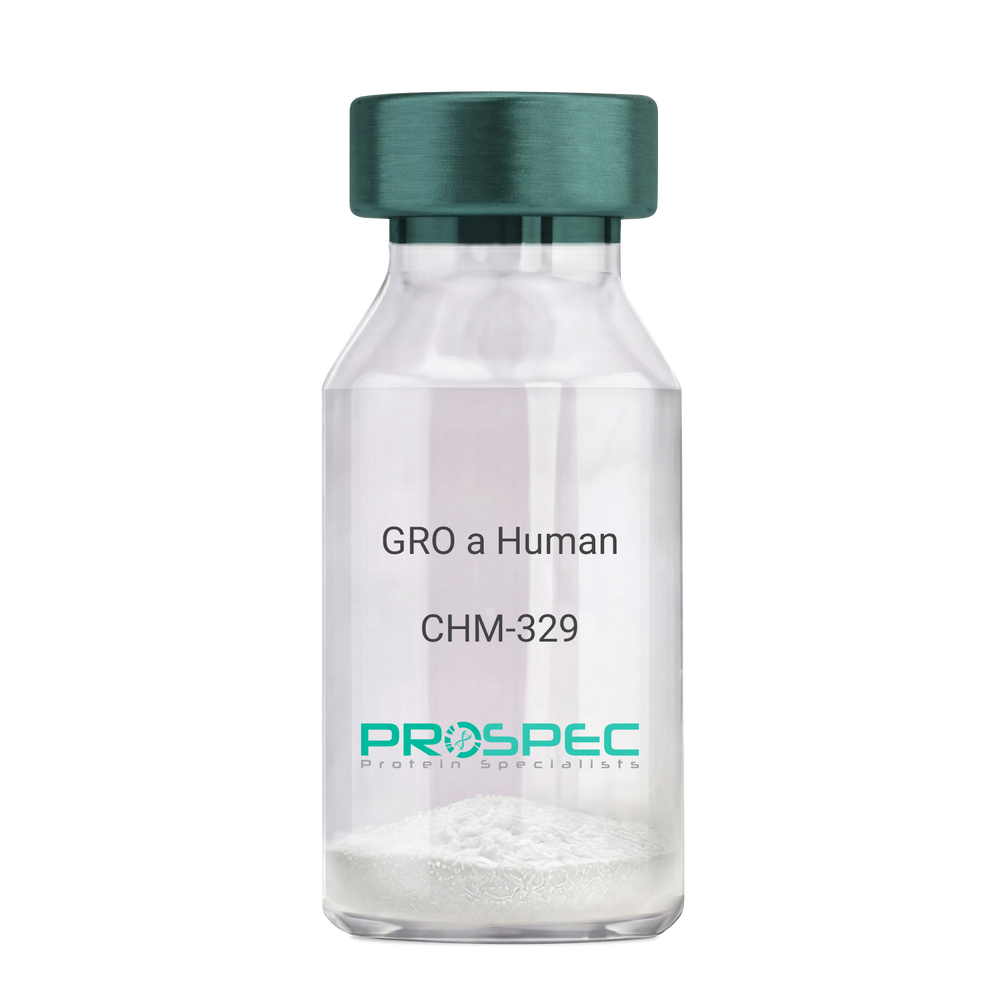
    CXCL1 Human

    Description:

    GRO-Alpha Human Recombinant (CXCL1)

    Growth-regulated protein alpha, CXCL1, Melanoma growth stimulatory activity, MGSA, Neutrophil-activating protein 3, NAP-3, GRO-alpha (1-73), chemokine (C-X-C motif) ligand 1, GRO1, GROa, SCYB1, MGSA-a, MGSA alpha.

    Product # :

    CHM-329

    Price :

    Quantity :

    Shipping Method :

    Room Temp Icon

    Shipped at Room temp

    Add To Cart

    More Info

    • description
    • source
    • formulation
    • purity
    • biological activity
    • More Info

    Description

    GRO Alpha Human Recombinant produced in E.Coli is a single,non-glycosylated, polypeptide chain containing 73 amino acids and having a molecular mass of 7811 Dalton. The GRO-alpha is purified by proprietary chromatographic techniques.

    Source

    Escherichia Coli.

    Formulation

    Lyophilized from a 0.2µm filtered concentrated (1mg/ml) solution in 20mM PB, pH 7.4, 50mM NaCl.

    Purity

    Greater than 97.0% as determined by:
    (a) Analysis by RP-HPLC.
    (b) Analysis by SDS-PAGE.

    Biological Activity

    Determined by its ability to chemoattract human peripheral blood neutrophils using a concentration range of 10.0-100.0 ng/ml.

    More Info

    • Introduction

      Chemokine (C-X-C motif) ligand 1 (CXCL1) is a small cytokine belonging to the CXC chemokine family that was previously called GRO1 oncogene, Neutrophil-activating protein 3 (NAP-3) and melanoma growth stimulating activity, alpha (MSGA-a). It is secreted by human melanoma cells, has mitogenic properties and is implicated in melanoma pathogenesis. CXCL1 is expressed by macrophages, neutrophilsand epithelial cells, and has neutrophil chemoattractant activity. CXCL1 plays a role in spinal cord development by inhibiting the migration of oligodendrocyte precursors and is involved in the processes of angiogenesis, inflammation, wound healing, and tumorigenesis. This chemokine elicits its effects by signaling through the chemokine receptor CXCR2. The gene for CXCL1 is located on human chromosome 4 amongst genes for other CXC chemokines.

    • Synonyms

      Growth-regulated protein alpha, CXCL1, Melanoma growth stimulatory activity, MGSA, Neutrophil-activating protein 3, NAP-3, GRO-alpha (1-73), chemokine (C-X-C motif) ligand 1, GRO1, GROa, SCYB1, MGSA-a, MGSA alpha.

    • Physical Appearance

      Sterile Filtered White lyophilized (freeze-dried) powder.

    • Stability

      Lyophilized GRO-alpha although stable at room temperature for 3 weeks, should be stored desiccated below -18°C. Upon reconstitution CXCL1 should be stored at 4°C between 2-7 days and for future use below -18°C. For long term storage it is recommended to add a carrier protein (0.1% HSA or BSA).Please prevent freeze-thaw cycles.

    • Solubility

      It is recommended to reconstitute the lyophilized CXCL1 in sterile 18MΩ-cm H2O not less than 100µg/ml, which can then be further diluted to other aqueous solutions.

    • Amino Acid Sequence

      The sequence of the first five N-terminal amino acids was determined and was found to be Ala-Ser-Val-Ala-Thr.

    • Background

      What is the molecular weight/Mw of CXCL1 HUMAN Protein?
      CXCL1 HUMAN Protein has a total Mw of 7.81kDa.

      What is the source or expression system of CXCL1 HUMAN Protein?
      Escherichia Coli.

      What is the Purity of CXCL1 HUMAN Protein?
      CXCL1 HUMAN Protein is >97% pure as determined by SDS-PAGE.

      What is the Biological Activity of CXCL1 HUMAN Protein?
      Determined by its ability to chemoattract human peripheral blood neutrophils using a concentration range of 10.0-100.0 ng/ml.

      What is the amino acid sequence of CXCL1 HUMAN Protein?
      The sequence of the first five N-terminal amino acids was determined and was found to be Ala-Ser-Val-Ala-Thr.

      What applications can CXCL1 HUMAN Protein be used in?
      CXCL1 HUMAN Protein can probably be used in western blot, ELISA and Lateral Flow.

      What is the endotoxin level for CXCL1 HUMAN Protein?
      The endotoxin level is minimal, CXCL1 HUMAN Protein was purified using conventional chromatography techniques.


    ProSpec's products are furnished for LABORATORY RESEARCH USE ONLY. The product may not be used as drugs, agricultural or pesticidal products, food additives or household chemicals.

    Gro A Human
  • View Data Sheet

    Name :

    iL22RA (Y51A) Mouse, PEG

    Description:

    Interleukin-22 Receptor Antagonist (Y51A), PEG Mouse Recombinant

    Product # :

    CYT-1248

    Price :

    Quantity :

    Shipping Method :

    Room Temp Icon

    Shipped at Room temp

    Add To Cart

    More Info

    • description
    • source
    • formulation
    • purity
    • biological activity
    • More Info

    Description

    Interleukin 22 Y51A mutan Mouse Recombinant is a single non-glycosilated polypeptide chain containing 147 amino acids and additional Ala at N-terminus. The iL22RA is bound to 20 kDa PEG molecule at N-terminus, resulting in 36.0 kDa. The Mouse iL22RA (Y51A) Pegylated runs as a 50 kDa due to enlarged hydrodymanic volume. iL22RA Mutant Mouse Recombinant was purified by proprietary chromatographic techniques.

    Source

    Escherichia coli.

    Formulation

    The Mouse iL22RA (Y51A) was lyophilized from a concentrated (1mg/ml) solution with 0.003mM NaHCO3.

    Purity

    Greater than 98.0% as determined by:

    (a) Gel filtration analysis.

    (b) Analysis by SDS-PAGE.

    Biological Activity

    Pegylated Mouse iL22RA inhibits mouse IL-22 induced STAT3 phosphorylation in HepG cells. Its inhibitory acrtivity in vitro is ~ 10-20% compared to the non-pegylated mIL22 (Y51A) mutant.

    More Info

    • Physical Appearance

      White lyophilized (freeze-dried) powder.

    • Stability

      Lyophilized iL22RA (Y51A) Mutant Mouse Recombinant although stable at room temperature for several weeks, should be stored desiccated below -18°C. Upon reconstitution at > 0.1 mg/ml and up to 2mM and filter sterilization iL22RA mutant can be stored at 4°C or even room temperature for several weeks making it suitable for long term infusion studies using osmotic pumps. At lower concentration addition of a carrier protein (0.1% HSA or BSA) is suggested. Please prevent freeze-thaw cycles.

    • Solubility

      It is recommended to reconstitute the lyophilized iL22RA (Y51A) Mutant Mouse Recombinant in sterile water or sterile 0.4% NaHCO3 adjusted to pH 8-9, not less than 100µg/ml, which can then be further diluted with other aqueous solutions.

    • Background

      IL-22 is a part of the IL-10 family of regulatory cytokines and produced by several populations of immune cells at a site of inflammation. Members of this family share partial homology in their amino acid sequences, but varies in their biological functions. IL-22 takes effect on non-hematopoietic cells. IL-22 takes part in wound healing and in protection against microbs. Produced by T lymphocytes, IL-22 inhibits IL-4 production by Th2 cells, and induces acute phase reactants in the pancreas and liver.

    • Protein content

      Protein quantization was carried out by UV spectroscopy at 280 nm using the absorbency value of 0.18 as the extinction coefficient for a 0.1% (1mg/ml) solution at pH 8.0. This value is calculated by the DNAman computer analysis program of protein sequences.

    ProSpec's products are furnished for LABORATORY RESEARCH USE ONLY. The product may not be used as drugs, agricultural or pesticidal products, food additives or household chemicals.

    Il22Ra Mouse Peg
  • View Data Sheet

    Name :

    AMIGO2 Human

    Description:

    Adhesion Molecule with Ig-Like Domain 2 Human Recombinant

    Adhesion Molecule with Ig-Like Domain 2, Differentially Expressed in Gastric, Adenocarcinomas, AMIGO-2, ALI1, DEGA, Differentially Expressed in Gastric, Adenocarcinoma, Amphoterin-Induced Gene and Open Reading Frame 2, Transmembrane Protein AMIGO2, Amphoterin Induced Gene, Alivin 1, Alivin-1.

    Product # :

    PRO-2254

    Price :

    Quantity :

    Shipping Method :

    Ice Icon

    Shipped with Ice Packs

    Add To Cart

    More Info

    • description
    • source
    • formulation
    • purity
    • More Info

    Description

    AMIGO2 produced in Sf9 Insect cells is a single, glycosylated polypeptide chain containing 367 amino acids (40-398a.a.) and having a molecular mass of 41.9kDa (Molecular size on SDS-PAGE will appear at approximately 40-57kDa).AMIGO2 is expressed with an 8 amino acid His tag at C-Terminus and purified by proprietary chromatographic techniques.

    Source

    Sf9, Insect cells.

    Formulation

    AMIGO2 protein solution (0.5mg/ml) contains Phosphate Buffered Saline (pH 7.4) and 10% glycerol.

    Purity

    Greater than 95.0% as determined by SDS-PAGE.

    More Info

    • Introduction

      Adhesion Molecule with Ig-Like Domain 2, also known as AMIGO2 is a member of the leucine-rich repeat family. AMIGO2 arbitrates homophilic in addition to heterophilic cell-cell interaction with AMIGO1 or AMIGO3. Furthermore, AMIGO2 contributes to signal transduction via its intracellular domain and is also essential for tumorigenesis of a subset of gastric adenocarcinomas.

    • Synonyms

      Adhesion Molecule with Ig-Like Domain 2, Differentially Expressed in Gastric, Adenocarcinomas, AMIGO-2, ALI1, DEGA, Differentially Expressed in Gastric, Adenocarcinoma, Amphoterin-Induced Gene and Open Reading Frame 2, Transmembrane Protein AMIGO2, Amphoterin Induced Gene, Alivin 1, Alivin-1.

    • Physical Appearance

      Sterile filtered colorless solution.

    • Stability

      Store at 4°C if entire vial will be used within 2-4 weeks.Store, frozen at -20°C for longer periods of time. For long term storage it is recommended to add a carrier protein (0.1% HSA or BSA).Avoid multiple freeze-thaw cycles.

    • Amino Acid Sequence

      VCPTACICAT DIVSCTNKNL SKVPGNLFRL IKRLDLSYNR IGLLDSEWIP VSFAKLNTLI
      LRHNNITSIS TGSFSTTPNL KCLDLSSNKL KTVKNAVFQE LKVLEVLLLY NNHISYLDPS AFGGLSQLQK LYLSGNFLTQ FPMDLYVGRF KLAELMFLDV SYNRIPSMPM HHINLVPGKQ LRGIYLHGNP FVCDCSLYSL LVFWYRRHFS SVMDFKNDYT CRLWSDSRHS RQVLLLQDSF MNCSDSIING SFRALGFIHE AQVGERLMVH CDSKTGNANT DFIWVGPDNR LLEPDKEMEN FYVFHNGSLV IESPRFEDAG VYSCIAMNKQ RLLNETVDVT INVSNFTVSR SHAHEAFNTL EHHHHHH.

    ProSpec's products are furnished for LABORATORY RESEARCH USE ONLY. The product may not be used as drugs, agricultural or pesticidal products, food additives or household chemicals.

    Amigo2 Human
  • View Data Sheet

    Name :

    PCDHGC4 Human

    Description:

    Protocadherin Gamma Subfamily C 4 Human Recombinant

    Protocadherin Gamma Subfamily C 4, PCDH-GAMMA-C4.

    Product # :

    PRO-1844

    Price :

    Quantity :

    Shipping Method :

    Ice Icon

    Shipped with Ice Packs

    Add To Cart

    More Info

    • description
    • source
    • formulation
    • purity
    • More Info

    Description

    PCDHGC4 Human Recombinant produced in E.coli is a single, non-glycosylated polypeptide chain containing 684 amino acids (30-692) and having a molecular mass of 74.3 kDa. PCDHGC4 is fused to a 21 amino acid His-tag at N-terminus.

    Source

    Escherichia Coli.

    Formulation

    The PCDHGC4 solution (1mg/ml) contains 20mM Tris-HCl buffer (pH 8.0), 0.4M Urea and 10% glycerol.

    Purity

    Greater than 85% as determined by SDS-PAGE.

    More Info

    • Introduction

      PCDHGL4 belongs to one of three related clusters tandemly linked on chromosome five - the protocadherin gamma gene cluster. These gene clusters have an immunoglobulin-like organization, which indicates that a novel mechanism takes part in their regulation and expression. These neural cadherin-like cell adhesion proteins have a vital role in the establishment and function of specific cell-cell connections in the brain.

    • Synonyms

      Protocadherin Gamma Subfamily C 4, PCDH-GAMMA-C4.

    • Physical Appearance

      Sterile Filtered clear solution.

    • Stability

      Store at 4°C if entire vial will be used within 2-4 weeks. Store, frozen at -20°C for longer periods of time. For long term storage it is recommended to add a carrier protein (0.1% HSA or BSA).Avoid multiple freeze-thaw cycles.

    • Amino Acid Sequence

      MGSSHHHHHH SSGLVPRGSH MQIRYPVPEE SQEGTFVGNV AQDFLLDTDS LSARRLQVAG EVNQRHFRVD LDSGALLIKN PIDREALCGL SASCIVPLEF VTEGPLEMYR AEVEIVDVND HAPRFPRQQL DLEIGEAAPP GQRFPLEKAQ DADVGSNSIS SYRLSSNEHF ALDVKKRSDG SLVPELLLEK PLDREKQSDY RLVLTAVDGG NPPRSGTAEL RVSVLDVNDN APAFQQSSYR ISVLESAPAG MVLIQLNASD PDLGPSGNVT FYFSGHTPDR VRNLFSLHPT TGKLTLLGPL DFESENYYEF DVRARDGGSP AMEQHCSLRV DLLDVNDNAP YITVTSELGT LPESAEPGTV VALISVQDPD SGSNGDVSLR IPDHLPFALK SAFRNQFSLV TAGPLDREAK SSYDIMVTAS DAGNPPLSTH RTIFLNISDV NDNPPSFFQR SHEVFVPENN RPGDLLCSLA ASDPDSGLNA LISYSLLEPR NRDVSASSFI SLNPQTGAVH ATRSFDYEQT QTLQFEVQAR DRGNPPLSST VTVRLFVLDL NDNAPAVLRP RARPGSLCPQ ALPPSVGAGH LITKVTAVDL DSGYNAWVSY QLLEAPDPSL FAVSRYAGEV RTAVPIPADL PPQKLVIVVK DSGSPPLSTS VTLLVSLEED THPVVPDLRE SSAPREGESR LTLY

    ProSpec's products are furnished for LABORATORY RESEARCH USE ONLY. The product may not be used as drugs, agricultural or pesticidal products, food additives or household chemicals.

    Pcdhgc4 Human
  • View Data Sheet

    Name :

    LECT1 (214-333) Human

    Description:

    Leukocyte Cell Derived Chemotaxin 1 (214-333 a.a.) Human Recombinant

    BRICD3, CHM-I, CHM1, MYETS1, Leukocyte cell-derived chemotaxin 1, Chondrosurfactant protein, CH-SP, Chondromodulin-1, ChM-I, LECT1.

    Product # :

    PRO-1857

    Price :

    Quantity :

    Shipping Method :

    Ice Icon

    Shipped with Ice Packs

    Add To Cart

    More Info

    • description
    • source
    • formulation
    • purity
    • More Info

    Description

    LECT1 Human Recombinant produced in E. coli is. a single polypeptide chain containing 143 amino acids (214-333) and having a molecular mass of 16.2kDa. LECT1 is fused to a 23 amino acid His-tag at N-terminus & purified by proprietary chromatographic techniques.

    Source

    Escherichia Coli.

    Formulation

    The LECT1 solution (1mg/ml) contains 20mM Tris-HCl buffer (pH 8.0), 0.4M UREA and 10% glycerol.

    Purity

    Greater than 85% as determined by SDS-PAGE.

    More Info

    • Introduction

      Leukocyte Cell Derived Chemotaxin 1 (214-333 a.a.), also known as LECT1, is a glycosylated transmembrane protein which is cleaved to form a mature, secreted protein. The mature protein encourages chondrocyte growth and inhibits angiogenesis. The mature protein takes part in endochondral bone development by permitting cartilaginous anlagen to be vascularized and replaced by bone. LECT1 is expressed in the avascular area of prehypertrophic cartilage and its expression reduces during vascular invasion and chondrocyte hypertrophy.

    • Synonyms

      BRICD3, CHM-I, CHM1, MYETS1, Leukocyte cell-derived chemotaxin 1, Chondrosurfactant protein, CH-SP, Chondromodulin-1, ChM-I, LECT1.

    • Physical Appearance

      Sterile Filtered clear solution.

    • Stability

      Store at 4°C if entire vial will be used within 2-4 weeks. Store frozen at -20°C for longer periods of time. For long term storage it is recommended to add a carrier protein (0.1% HSA or BSA).Avoid multiple freeze-thaw cycles.

    • Amino Acid Sequence

      MGSSHHHHHH SSGLVPRGSH MGSREVVRKI VPTTTKRPHS GPRSNPGAGR LNNETRPSVQ EDSQAFNPDN PYHQEGESMT FDPRLDHEGI CCIECRRSYT HCQKICEPLG GYYPWPYNYQ GCRSACRVIM PCSWWVARIL GMV.

    ProSpec's products are furnished for LABORATORY RESEARCH USE ONLY. The product may not be used as drugs, agricultural or pesticidal products, food additives or household chemicals.

    Lect1 214 333 Human
  • View Data Sheet

    Name :

    CIB2 Human

    Description:

    Calcium and Integrin Binding 2 Human Recombinant

    Calcium and integrin-binding family member 2, Kinase-interacting protein 2, KIP 2, CIB2, KIP2.

    Product # :

    PKA-268

    Price :

    Quantity :

    Shipping Method :

    Ice Icon

    Shipped with Ice Packs

    Add To Cart

    More Info

    • description
    • source
    • formulation
    • purity
    • More Info

    Description

    CIB2 Human Recombinant fused with a 20 amino acid His tag at N-terminus produced in E.Coli is a single, non-glycosylated, polypeptide chain containing 207 amino acids (1-187a.a.) and having a molecular mass of 23.8kDa (Molecular weight on SDS-PAGE will appear higher). The CIB2 is purified by proprietary chromatographic techniques.

    Source

    Escherichia Coli.

    Formulation

    The CIB2 solution (0.5 mg/ml) contains 20mM Tris-HCl buffer (pH8.0), 10% glycerol, 2mM DTT, 100mM NaCl and 1mM PMSF.

    Purity

    Greater than 90.0% as determined by SDS-PAGE.

    More Info

    • Introduction

      CIB2 is a member of the calcium and integrin-binding family.CIB2 is possibly a Ca2+-binding regulatory protein which interacts with DNA-dependent protein kinase catalytic subunit (DNA-PKcs). In the skeletal muscle, CIB2 co-localizes with the integrin alpha7B subunit at the sarcolemma and at the neuromuscular and myotendinous junctions. CIB2 is closely related to CIB1.

    • Synonyms

      Calcium and integrin-binding family member 2, Kinase-interacting protein 2, KIP 2, CIB2, KIP2.

    • Physical Appearance

      Sterile Filtered colorless solution.

    • Stability

      Store at 4°C if entire vial will be used within 2-4 weeks. Store, frozen at -20°C for longer periods of time. For long term storage it is recommended to add a carrier protein (0.1% HSA or BSA).Avoid multiple freeze-thaw cycles.

    • Amino Acid Sequence

      MGSSHHHHHH SSGLVPRGSH MGNKQTIFTE EQLDNYQDCT FFNKKDILKL HSRFYELAPN LVPMDYRKSP IVHVPMSLII QMPELRENPF KERIVAAFSE DGEGNLTFND FVDMFSVLCE SAPRELKANY AFKIYDFNTD NFICKEDLEL TLARLTKSEL DEEEVVLVCD KVIEEADLDG DGKLGFADFE DMIAKAPDFL STFHIRI.

    ProSpec's products are furnished for LABORATORY RESEARCH USE ONLY. The product may not be used as drugs, agricultural or pesticidal products, food additives or household chemicals.

    Cib2 Human
  • View Data Sheet

    Name :

    CD44 Human

    Description:

    CD44 Human Recombinant

    CD44 Molecule (Indian Blood Group), Hematopoietic Cell E- And L-Selectin Ligand, GP90 Lymphocyte Homing/Adhesion Receptor, Chondroitin Sulfate Proteoglycan 8, Extracellular Matrix Receptor III, Heparan Sulfate Proteoglycan, Phagocytic Glycoprotein 1, Hyaluronate Receptor, Hermes Antigen, ECMR-III, HUTCH-I, Epican, CDW44, MDU2, MDU3, MIC4, LHR, CD44 Antigen (Homing Function And Indian Blood Group System),Homing Function And Indian Blood Group System, Cell Surface Glycoprotein CD44, Phagocytic Glycoprotein I, Soluble CD44, CSPG8, HCELL, PGP-1, PGP-I, MC56, Pgp1, IN, CD44 .

    Product # :

    PRO-2540

    Price :

    Quantity :

    Shipping Method :

    Ice Icon

    Shipped with Ice Packs

    Add To Cart

    More Info

    • description
    • source
    • formulation
    • purity
    • More Info

    Description

    CD44 produced in Sf9 Baculovirus cells is a single, glycosylated polypeptide chain (21-220 a.a.) and fused to a 239 aa hIgG-His-tag at C-terminus containing a total of 439 amino acids and having a molecular mass of 49kDa.CD44 shows multiple bands between 57-70kDa on SDS-PAGE, reducing conditions and purified by proprietary chromatographic techniques.

    Source

    Sf9, Baculovirus cells.

    Formulation

    CD44 protein solution (0.25mg/ml) contains 10% glycerol & Phosphate buffered saline (pH7.4).

    Purity

    Greater than 95.0% as determined by SDS-PAGE.

    More Info

    • Introduction

      CD44 is a cell-surface glycoprotein that plays a role in cell-cell interactions, cell adhesion and migration. CD44 is a receptor for hyaluronic acid and also interacts with other ligands, such as osteopontin, collagens, and matrix metalloproteinases. CD44 participates in a wide variety of cellular functions such as lymphocyte activation, recirculation and homing, hematopoiesis, and tumor metastasis.

    • Synonyms

      CD44 Molecule (Indian Blood Group), Hematopoietic Cell E- And L-Selectin Ligand, GP90 Lymphocyte Homing/Adhesion Receptor, Chondroitin Sulfate Proteoglycan 8, Extracellular Matrix Receptor III, Heparan Sulfate Proteoglycan, Phagocytic Glycoprotein 1, Hyaluronate Receptor, Hermes Antigen, ECMR-III, HUTCH-I, Epican, CDW44, MDU2, MDU3, MIC4, LHR, CD44 Antigen (Homing Function And Indian Blood Group System),Homing Function And Indian Blood Group System, Cell Surface Glycoprotein CD44, Phagocytic Glycoprotein I, Soluble CD44, CSPG8, HCELL, PGP-1, PGP-I, MC56, Pgp1, IN, CD44 .

    • Physical Appearance

      Sterile filtered colorless solution.

    • Stability

      Store at 4°C if entire vial will be used within 2-4 weeks. Store, frozen at -20°C for longer periods of time. For long term storage it is recommended to add a carrier protein (0.1% HSA or BSA).Avoid multiple freeze-thaw cycles.

    • Amino Acid Sequence

      QIDLNITCRF AGVFHVEKNG RYSISRTEAA DLCKAFNSTL PTMAQMEKAL SIGFETCRYG FIEGHVVIPR IHPNSICAAN NTGVYILTSN TSQYDTYCFN ASAPPEEDCT SVTDLPNAFD GPITITIVNR DGTRYVQKGE YRTNPEDIYP SNPTDDDVSS GSSSERSSTS GGYIFYTFST VHPIPDEDSP WITDSTDRIP LEPKSCDKTH TCPPCPAPEL LGGPSVFLFP PKPKDTLMIS RTPEVTCVVV DVSHEDPEVK FNWYVDGVEV HNAKTKPREE QYNSTYRVVS VLTVLHQDWL NGKEYKCKVS NKALPAPIEK TISKAKGQPR EPQVYTLPPS RDELTKNQVS LTCLVKGFYP SDIAVEWESN GQPENNYKTT PPVLDSDGSF FLYSKLTVDK SRWQQGNVFS CSVMHEALHN HYTQKSLSLS PGKHHHHHH

    ProSpec's products are furnished for LABORATORY RESEARCH USE ONLY. The product may not be used as drugs, agricultural or pesticidal products, food additives or household chemicals.

    Cd44 Human
  • View Data Sheet

    Name :

    IL 2r Antibody, Biotin

    Description:

    Mouse Anti Human Interleukin-2 receptor Biotinylated

    CD25, IL2R, TCGFR, IL-2RA, sIL-2RA, TAC antigen, sIL-2R, IDDM10, p55 TypeMouse Anti Human Monoclonal.

    Product # :

    ANT-071

    Price :

    Quantity :

    Shipping Method :

    Room Temp Icon

    Shipped at Room temp

    Add To Cart

    More Info

    • formulation
    • More Info

    Formulation

    1mg/ml in PBS (after reconstitution).

    More Info

    • Introduction

      IL2-Ra is one of the three constituent subunits of the IL2 receptor. IL-2Ra is released into the serum after increased cellular expression such as increased activation of B and T cells. Clinical manifestations of IL2-Ra elevation include autoimmune conditions and some leukemias and lymphomas.

    • Synonyms

      CD25, IL2R, TCGFR, IL-2RA, sIL-2RA, TAC antigen, sIL-2R, IDDM10, p55 TypeMouse Anti Human Monoclonal.

    • Solubility

      Reconstitute with sterile H20. Mix gently, wash the sides of the vial and wait 30-60 seconds before use.

    • Immunogen

      Con A-activated human T cells.

    • Ig Subclass

      Mouse IgG2a.

    • Clone

      YNRhIL2R.

    • Titer

      This antibody will stain 70% of PHA-activated human T cells (by FACS). 10µl will stain 106 IL-2R positive cells for FACS analysis or sorting.

    • Shipping Conditions

      Antibody is shipped lyophilized at ambient temperature.

    • Storage Procedures

      In lyophilized form, for long periods, store at 4°C in a dry environment. After reconstitution, if not intended for use within a month, aliquot and store at -20°C.

    • Purification Method

      Ion Exchange.

    ProSpec's products are furnished for LABORATORY RESEARCH USE ONLY. The product may not be used as drugs, agricultural or pesticidal products, food additives or household chemicals.

    Il 2R Antibody Biotin
  • View Data Sheet

    Name :

    CD209 Human

    Description:

    CD209 Human Recombinant

    CD209 antigen, CD209 antigen isoform 1, C-type lectin domain family 4 member L, Dendritic cell-specific ICAM-3-grabbing non-integrin 1, DC-SIGN, DC-SIGN1, CD209, CLEC4L, CDSIGN

    Product # :

    PRO-2722

    Price :

    Quantity :

    Shipping Method :

    Ice Icon

    Shipped with Ice Packs

    Add To Cart

    More Info

    • description
    • source
    • formulation
    • purity
    • More Info

    Description

    CD209 Human Recombinant produced in Sf9 Baculovirus cells is a single, glycosylated polypeptide chain containing 587 amino acids (60-404 a.a) and having a molecular mass of 66.5kDa.CD209 is fused to a 239 amino acid hIgG-His-Tag at C-terminus & purified by proprietary chromatographic techniques.

    Source

    Sf9, Baculovirus cells.

    Formulation

    The CD209 solution (0.25mg/ml) contains 10% glycerol and Phosphate-Buffered Saline (pH 7.4).

    Purity

    Greater than 90.0% as determined by SDS-PAGE.

    More Info

    • Introduction

      CD209 (a member of the C-typelectin family) is Pathogen-recognition receptor expressed on the surface of immature dendritic cells (DCs) andtakes part in initiation of primary immune response.CD209has a high affinity for theICAM3 molecule and binds various microorganisms by recognizing high-mannose-containing glycoproteins ontheir envelopes and especially functions as receptor for several viruses such as HIV and Hepatitis C. Along with other C-typelectins, CD209is involved in recognition of tumors by dendritic cells.CD209also initiatesnatural immunity bymodulating toll-like receptors.

    • Synonyms

      CD209 antigen, CD209 antigen isoform 1, C-type lectin domain family 4 member L, Dendritic cell-specific ICAM-3-grabbing non-integrin 1, DC-SIGN, DC-SIGN1, CD209, CLEC4L, CDSIGN

    • Physical Appearance

      Sterile filtered colorless solution.

    • Stability

      Store at 4°C if entire vial will be used within 2-4 weeks.Store, frozen at -20°C for longer periods of time.For long term storage it is recommended to add a carrier protein (0.1% HSA or BSA).Avoid multiple freeze-thaw cycles.

    • Amino Acid Sequence

      ADPVSKVPSS ISQEQSRQDA IYQNLTQLKA AVGELSEKSK LQEIYQELTQ LKAAVGELPE KSKLQEIYQE LTRLKAAVGE LPEKSKLQEI YQELTWLKAA VGELPEKSKM QEIYQELTRL KAAVGELPEK SKQQEIYQEL TRLKAAVGEL PEKSKQQEIY QELTRLKAAV GELPEKSKQQ EIYQELTQLK AAVERLCHPC PWEWTFFQGN CYFMSNSQRN WHDSITACKE VGAQLVVIKS AEEQNFLQLQ SSRSNRFTWM GLSDLNQEGT WQWVDGSPLL PSFKQYWNRG EPNNVGEEDC AEFSGNGWND DKCNLAKFWI CKKSAASCSR DEEQFLSPAP ATPNPPPAVE PKSCDKTHTC PPCPAPELLG GPSVFLFPPK PKDTLMISRT PEVTCVVVDV SHEDPEVKFN WYVDGVEVHN AKTKPREEQY NSTYRVVSVL TVLHQDWLNG KEYKCKVSNK ALPAPIEKTI SKAKGQPREP QVYTLPPSRD ELTKNQVSLT CLVKGFYPSD IAVEWESNGQ PENNYKTTPP VLDSDGSFFL YSKLTVDKSR WQQGNVFSCS VMHEALHNHY TQKSLSLSPG KHHHHHH

    ProSpec's products are furnished for LABORATORY RESEARCH USE ONLY. The product may not be used as drugs, agricultural or pesticidal products, food additives or household chemicals.

    Cd209 Human
  • View Data Sheet

    Name :

    LYVE1 Antibody

    Description:

    Lymphatic Vessel Endothelial Hyaluronic Acid Receptor 1, Mouse Anti Human

    Lymphatic vessel endothelial hyaluronic acid receptor 1 precursor, LYVE-1, Cell surface retention sequence-binding protein 1, CRSBP-1, Hyaluronic acid receptor, Extracellular link domain-containing protein.

    Product # :

    ANT-322

    Price :

    Quantity :

    Shipping Method :

    Ice Icon

    Shipped with Ice Packs

    Add To Cart

    More Info

    • formulation
    • More Info

    Formulation

    1mg/ml containing PBS, pH-7.4, & 0.02% Sodium Azide and 10% Glycerol.

    More Info

    • Introduction

      LYVE-1 has been identified as a major receptor for HA (extracellular matrix glycosaminoglycan hyaluronan) on the lymph vessel wall. The deduced amino acid sequence of LYVE-1 predicts a 322-residue type I integral membrane polypeptide 41% similar to the CD44 HA receptor with a 212-residue extracellular domain containing a single Link module the prototypic HA binding domain of the Link protein superfamily. Like CD44, the LYVE-1 molecule binds both soluble and immobilized HA. However, unlike CD44, the LYVE-1 molecule colocalizes with HA on the luminal face of the lymph vessel wall and is completely absent from blood vessels. Hence, LYVE-1 is the first lymph-specific HA receptor to be characterized and is a uniquely powerful marker for lymph vessels themselves.

    • Synonyms

      Lymphatic vessel endothelial hyaluronic acid receptor 1 precursor, LYVE-1, Cell surface retention sequence-binding protein 1, CRSBP-1, Hyaluronic acid receptor, Extracellular link domain-containing protein.

    • Immunogen

      Anti-human LYVE1 mAb is derived from hybridization of mouse SP2/O myeloma cells with spleen cells from BALB/c mice immunized with recombinant human LYVE1 amino acids 25-235 purified from E. coli.

    • Ig Subclass

      Mouse IgG2b heavy chain and κ light chain.

    • Clone

      P4G1AT.

    • Applications

      LYVE1 antibody has been tested by ELISA and Western blot analysis to assure specificity and reactivity. Since application varies, however, each investigation should be titrated by the reagent to obtain optimal results. Recommended dilution range for Western blot analysis is 1:500 ~ 1,000. Recommended starting dilution is 1:1,000.

    • Type

      Mouse Anti Human Monoclonal.

    • Storage Procedures

      For periods up to 1 month store at 4°C, for longer periods of time, store at -20°C. Prevent freeze thaw cycles.

    • Purification Method

      LYVE1 antibody was purified from mouse ascitic fluids by protein-G affinity chromatography.

    ProSpec's products are furnished for LABORATORY RESEARCH USE ONLY. The product may not be used as drugs, agricultural or pesticidal products, food additives or household chemicals.

    Lyve1 Antibody
  • View Data Sheet

    Name :

    YWHAQ Antibody

    Description:

    Tyr-3/Trp- 5 Monooxygenase Activation Protein Theta, Mouse Anti Human

    14-3-3 theta, 14-3-3 tau, 14-3-3 T-cell, HS1, YWHAQ, 1C5, 14-3-3 Tau, Tyr-3/Trp- 5 Monooxygenase Activation Protein Theta.

    Product # :

    ANT-387

    Price :

    Quantity :

    Shipping Method :

    Ice Icon

    Shipped with Ice Packs

    Add To Cart

    More Info

    • formulation
    • More Info

    Formulation

    1mg/ml containing PBS, pH-7.4, 10% glycerol & 0.02% Sodium Azide.

    More Info

    • Introduction

      The 14-3-3 family of proteins plays a key regulatory role in signal transduction, checkpoint control, apoptotic and nutrient-sensing pathways. 14-3-3 proteins are highly conserved and ubiquitously expressed. There are at least seven isoforms, β, γ, ε, σ, ζ, τ and η that have been identified in mammals. The 14-3-3 tau, a subtype of the 14-3-3 family of proteins, was found in T Cells, brain and testes. This 14-3-3 tau is upregulated in patients with amyotrophic lateral sclerosis.

    • Synonyms

      14-3-3 theta, 14-3-3 tau, 14-3-3 T-cell, HS1, YWHAQ, 1C5, 14-3-3 Tau, Tyr-3/Trp- 5 Monooxygenase Activation Protein Theta.

    • Immunogen

      Anti-human YWHAQ mAb is derived from hybridization of mouse F0 myeloma cells with spleen cells from BALB/c mice immunized with recombinant human YWHAQ amino acids 1-245 purified from E. coli.

    • Ig Subclass

      Mouse IgG1 heavy chain and κ light chain.

    • Clone

      PAT1A1AT.

    • Applications

      YWHAQ antibody has been tested by ELISA and Western blot analysis to assure specificity and reactivity. Since application varies, however, each investigation should be titrated by the reagent to obtain optimal results. Recommended dilution range for Western blot analysis is 1:1000 ~ 2000. Recommended starting dilution is 1:1000.

    • Type

      Mouse Anti Human Monoclonal.

    • Storage Procedures

      For periods up to 1 month store at 4°C, for longer periods of time, store at -20°C. Prevent freeze thaw cycles.

    • Purification Method

      YWHAQ antibody was purified from mouse ascitic fluids by protein-G affinity chromatography.

    ProSpec's products are furnished for LABORATORY RESEARCH USE ONLY. The product may not be used as drugs, agricultural or pesticidal products, food additives or household chemicals.

    Ywhaq Antibody
  • View Data Sheet

    Name :

    HAVCR1 Mouse

    Description:

    Hepatitis A Virus Cellular Receptor 1 Mouse Recombinant

    Hepatitis A virus cellular receptor 1 homolog, HAVcr-1, Kidney injury molecule 1, KIM-1, T cell immunoglobulin and mucin domain-containing protein 1, TIMD-1, T cell membrane protein 1, T-cell immunoglobulin mucin receptor 1, TIM-1.

    Product # :

    HAV-232

    Price :

    Quantity :

    Shipping Method :

    Ice Icon

    Shipped with Ice Packs

    Add To Cart

    More Info

    • description
    • source
    • formulation
    • purity
    • More Info

    Description

    HAVCR1 produced in Sf9 Baculovirus cells is a single, glycosylated polypeptide chain containing 222 amino acids (22-237 a.a.) and having a molecular mass of 24.4kDa (Migrates at 40-57kDa on SDS-PAGE under reducing conditions). HAVCR1 is expressed with a 6 amino acid His tag at C-Terminus and purified by proprietary chromatographic techniques.

    Source

    Sf9, Baculovirus cells.

    Formulation

    HAVCR1 protein solution (0.25mg/ml) contains Phosphate Buffered Saline (pH 7.4) and 10% glycerol.

    Purity

    Greater than 90.0% as determined by SDS-PAGE.

    More Info

    • Introduction

      Hepatitis A virus cellular receptor 1 (HAVCR1) is a membrane receptor for both human hepatitis A virus (HHAV) and TIMD4. HAVCR1 is a type I trans-membrane structural glycoprotein located in the renal proximal tubule epithelial cells. HAVCR1 protein may be involved in the control of asthma and allergic diseases. The reference genome represents an allele which retains a MTTVP amino acid segment that presents defense against atopy in HHAV seropositive individuals.

    • Synonyms

      Hepatitis A virus cellular receptor 1 homolog, HAVcr-1, Kidney injury molecule 1, KIM-1, T cell immunoglobulin and mucin domain-containing protein 1, TIMD-1, T cell membrane protein 1, T-cell immunoglobulin mucin receptor 1, TIM-1.

    • Physical Appearance

      Sterile Filtered colorless solution.

    • Stability

      Store at 4°C if entire vial will be used within 2-4 weeks. Store, frozen at -20°C for longer periods of time. For long term storage it is recommended to add a carrier protein (0.1% HSA or BSA). Avoid multiple freeze-thaw cycles.

    • Amino Acid Sequence

      YVEVKGVVGH PVTLPCTYST YRGITTTCWG RGQCPSSACQ NTLIWTNGHR VTYQKSSRYN LKGHISEGDV SLTIENSVES DSGLYCCRVE IPGWFNDQKV TFSLQVKPEI PTRPPTRPTT TRPTATGRPT TISTRSTHVP TSIRVSTSTP PTSTHTWTHK PEPTTFCPHE TTAEVTGIPS HTPTDWNGTV TSSGDTWSNH TEAIPPGKPQ KNPTKGHHHH HH.

    ProSpec's products are furnished for LABORATORY RESEARCH USE ONLY. The product may not be used as drugs, agricultural or pesticidal products, food additives or household chemicals.

    Havcr1 Mouse
  • View Data Sheet

    Name :

    L-Selectin Human, Sf9

    Description:

    L-Selectin Human Recombinant, Sf9

    Selectin L, Leukocyte-Endothelial Cell Adhesion Molecule 1, CD62 Antigen-Like Family Member L, Leukocyte Surface Antigen Leu-8, Lymphocyte Adhesion Molecule 1, Lymph Node Homing Receptor, Gp90-MEL, LECAM1, LYAM1, LNHR, TQ1, Leukocyte Adhesion Molecule, Pln Homing Receptor, CD62L Antigen, L-Selectin, CD62L, PLNHR, LAM-1, LAM1, LEU8, LSEL, L-selectin.

    Product # :

    PRO-2487

    Price :

    Quantity :

    Shipping Method :

    Ice Icon

    Shipped with Ice Packs

    Add To Cart

    More Info

    • description
    • source
    • formulation
    • purity
    • More Info

    Description

    L-Selectin produced in Sf9 Baculovirus cells is a single, glycosylated polypeptide chain containing 303 amino acids (52-345a.a.) and having a molecular mass of 34.1kDa. (Molecular size on SDS-PAGE will appear at approximately 40-57kDa).L-Selectin is expressed with a 6 amino acid His tag at C-Terminus and purified by proprietary chromatographic techniques.

    Source

    Sf9, Baculovirus cells.

    Formulation

    L-Selectin protein solution (0.25mg/ml) contains Phosphate Buffered Saline (pH 7.4) and 10% glycerol.

    Purity

    Greater than 90% as determined by SDS-PAGE.

    More Info

    • Introduction

      L-Selectin belongs to a family of divalent cation-dependent carbohydrate-binding glycoproteins or adhesion molecules. The L-Selectin molecule is composed of various domains: one homologous to lectins, one to epidermal growth factor, and two to the consensus repeat units found in C3/C4 binding proteins.
      L-selectin is expressed constitutively on lymphocytes, monocytes and granulocytes and interacts specifically with carbohydrate groups on activated endothelial cells. L-Selectin may be shed by proteolytic cleavage and circulating levels in biological fluids may be used as an indicator of various pathological conditions. L-Selectin is cleaved by ADAM17.
      L-selectin works as a "homing receptor" for leukocytes to enter secondary lymphoid tissues via the high endothelial venules. Ligands present on endothelial cells will attach to leukocytes expressing L-selectin, which causes the leukocytes to become localized at that juncture. The receptor is also located on the cell surfaces of "naive" T cells, which have not yet encountered their particular antigen. This surface expression is lost following the cells activation.

    • Synonyms

      Selectin L, Leukocyte-Endothelial Cell Adhesion Molecule 1, CD62 Antigen-Like Family Member L, Leukocyte Surface Antigen Leu-8, Lymphocyte Adhesion Molecule 1, Lymph Node Homing Receptor, Gp90-MEL, LECAM1, LYAM1, LNHR, TQ1, Leukocyte Adhesion Molecule, Pln Homing Receptor, CD62L Antigen, L-Selectin, CD62L, PLNHR, LAM-1, LAM1, LEU8, LSEL, L-selectin.

    • Physical Appearance

      Sterile Filtered clear solution.

    • Stability

      Store at 4°C if entire vial will be used within 2-4 weeks. Store, frozen at -20°C for longer periods of time. For long term storage it is recommended to add a carrier protein (0.1% HSA or BSA).Avoid multiple freeze-thaw cycles.

    • Amino Acid Sequence

      ADPWTYHYSE KPMNWQRARR FCRDNYTDLV AIQNKAEIEY LEKTLPFSRS YYWIGIRKIG GIWTWVGTNK SLTEEAENWG DGEPNNKKNK EDCVEIYIKR NKDAGKWNDD ACHKLKAALC YTASCQPWSC SGHGECVEII NNYTCNCDVG YYGPQCQFVI QCEPLEAPEL GTMDCTHPLG NFSFSSQCAF SCSEGTNLTG IEETTCGPFG NWSSPEPTCQ VIQCEPLSAP DLGIMNCSHP LASFSFTSAC TFICSEGTEL IGKKKTICES SGIWSNPSPI CQKLDKSFSM IKEGDYNHHH HHH.

    ProSpec's products are furnished for LABORATORY RESEARCH USE ONLY. The product may not be used as drugs, agricultural or pesticidal products, food additives or household chemicals.

    L Selectin
  • View Data Sheet

    Name :

    HEPACAM2 Human

    Description:

    HEPACAM2 Human Recombinant

    HEPACAM family member 2 isoform 1, MIKI, HEPACAM family member 2, Mitotic kinetics regulator, HEPACAM2, UNQ305/PRO346.

    Product # :

    PRO-1672

    Price :

    Quantity :

    Shipping Method :

    Ice Icon

    Shipped with Ice Packs

    Add To Cart

    More Info

    • description
    • source
    • formulation
    • purity
    • More Info

    Description

    HEPACAM2 Human Recombinant produced in E.coli is a single, non-glycosylated polypeptide chain containing 343 amino acids (32-351) and having a molecular mass of 37.9 kDa.HEPACAM2 is fused to a 23 amino acid His-tag at N-terminus & purified by proprietary chromatographic techniques.

    Source

    Escherichia Coli.

    Formulation

    The HEPACAM2 solution (1mg/ml) contains 20mM Tris-HCl buffer (pH 8.0), 0.4M Urea and 10% glycerol.

    Purity

    Greater than 85.0% as determined by SDS-PAGE.

    More Info

    • Introduction

      HEPACAM2 is necessary during prometaphase for centrosome maturation. Following poly-ADP-ribosylation (PARsylation) by TNKS, HEPACAM2 translocates from the Golgi apparatus to mitotic centrosomes and takes a significant part in the formation of robust microtubules for quick movement of chromosomes.

    • Synonyms

      HEPACAM family member 2 isoform 1, MIKI, HEPACAM family member 2, Mitotic kinetics regulator, HEPACAM2, UNQ305/PRO346.

    • Physical Appearance

      Sterile Filtered colorless solution.

    • Stability

      Store at 4°C if entire vial will be used within 2-4 weeks. Store, frozen at -20°C for longer periods of time. For long term storage it is recommended to add a carrier protein (0.1% HSA or BSA).Avoid multiple freeze-thaw cycles.

    • Amino Acid Sequence

      MGSSHHHHHH SSGLVPRGSH MGSLKVTVPS HTVHGVRGQA LYLPVHYGFH TPASDIQIIW LFERPHTMPK YLLGSVNKSV VPDLEYQHKF TMMPPNASLL INPLQFPDEG NYIVKVNIQG NGTLSASQKI QVTVDDPVTK PVVQIHPPSG AVEYVGNMTL TCHVEGGTRL AYQWLKNGRP VHTSSTYSFS PQNNTLHIAP VTKEDIGNYS CLVRNPVSEM ESDIIMPIIY YGPYGLQVNS DKGLKVGEVF TVDLGEAILF DCSADSHPPN TYSWIRRTDN TTYIIKHGPR LEVASEKVAQ KTMDYVCCAY NNITGRQDET HFTVIITSVG LEKLAQKGKS LSP.

    ProSpec's products are furnished for LABORATORY RESEARCH USE ONLY. The product may not be used as drugs, agricultural or pesticidal products, food additives or household chemicals.

    Hepacam2 Human
  • View Data Sheet

    Name :

    CX3CL1 Human, Sf9

    Description:

    Fractalkine (CX3CL1) Human Recombinant, Sf9

    Fractalkine, CX3CL1, Neurotactin, CX3C membrane-anchored chemokine, Small inducible cytokine D1, NTN, NTT, CXC3, CXC3C, SCYD1, ABCD-3, C3Xkine.

    Product # :

    CHM-042

    Price :

    Quantity :

    Shipping Method :

    Ice Icon

    Shipped with Ice Packs

    Add To Cart

    More Info

    • description
    • source
    • formulation
    • purity
    • More Info
    • SDS-PAGE

    Description

    Fractalkine Human Recombinant produced in Sf9 Baculovirus cells is a single, glycosylated polypeptide chain containing 323 amino acids (25-339aa) and having a molecular mass of 34.3kDa.Fractalkine is fused to a 8 amino acid His tag at C-terminus and purified by proprietary chromatographic techniques.

    Source

    Sf9, Baculovirus cells.

    Formulation

    The Fractalkine solution (1 mg/ml) contains 10% Glycerol and Phosphate Buffered Saline (pH 7.4).

    Purity

    Greater than 90.0% as determined by SDS-PAGE.

    SDS-PAGE

    CX3CL1 Human, Sf9-SDS-PAGE - Product image 1

    More Info

    • Introduction

      Fractalkine soluble form is chemotactic for t-cells and monocytes, but not for neutrophils. Fractalkine membrane-bound form promotes adhesion of those leukocytes to endothelial cells. Fractalkine regulates leukocyte adhesion and migration processes at the endothelium and binds to CX3CR1. Fractalkine gene is located on human chromosome 16 along with some CC chemokines known as CCL17 and CCL22.

    • Synonyms

      Fractalkine, CX3CL1, Neurotactin, CX3C membrane-anchored chemokine, Small inducible cytokine D1, NTN, NTT, CXC3, CXC3C, SCYD1, ABCD-3, C3Xkine.

    • Physical Appearance

      Sterile Filtered colorless solution.

    • Stability

      Store at 4°C if entire vial will be used within 2-4 weeks. Store, frozen at -20°C for longer periods of time. For long term storage it is recommended to add a carrier protein (0.1% HSA or BSA).Avoid multiple freeze-thaw cycles.

    • Amino Acid Sequence

      QHHGVTKCNI TCSKMTSKIP VALLIHYQQN QASCGKRAII LETRQHRLFC ADPKEQWVKD
      AMQHLDRQAA ALTRNGGTFE KQIGEVKPRT TPAAGGMDES VVLEPEATGE SSSLEPTPSS
      QEAQRALGTS PELPTGVTGS SGTRLPPTPK AQDGGPVGTE LFRVPPVSTA ATWQSSAPHQ
      PGPSLWAEAK TSEAPSTQDP STQASTASSP APEENAPSEG QRVWGQGQSP RPENSLEREE
      MGPVPAHTDA FQDWGPGSMA HVSVVPVSSE GTPSREPVAS GSWTPKAEEP IHATMDPQRL GVLITPVPDA QAATRLEHHH HHH

    • Background

      What is the molecular weight/Mw of CX3CL1 HUMAN, SF9 Protein?
      CX3CL1 HUMAN, SF9 Protein has a total Mw of 34.3kDa.

      What is the source or expression system of CX3CL1 HUMAN, SF9 Protein?
      Sf9, Baculovirus cells.

      What is the Purity of CX3CL1 HUMAN, SF9 Protein?
      CX3CL1 HUMAN, SF9 Protein is >90% pure as determined by SDS-PAGE.

      What is the Biological Activity of CX3CL1 HUMAN, SF9 Protein?
      The biological functionality of CX3CL1 HUMAN, SF9 Protein will be determined in the future.

      What is the amino acid sequence of CX3CL1 HUMAN, SF9 Protein?
      QHHGVTKCNI TCSKMTSKIP VALLIHYQQN QASCGKRAII LETRQHRLFC ADPKEQWVKD
      AMQHLDRQAA ALTRNGGTFE KQIGEVKPRT TPAAGGMDES VVLEPEATGE SSSLEPTPSS
      QEAQRALGTS PELPTGVTGS SGTRLPPTPK AQDGGPVGTE LFRVPPVSTA ATWQSSAPHQ
      PGPSLWAEAK TSEAPSTQDP STQASTASSP APEENAPSEG QRVWGQGQSP RPENSLEREE
      MGPVPAHTDA FQDWGPGSMA HVSVVPVSSE GTPSREPVAS GSWTPKAEEP IHATMDPQRL GVLITPVPDA QAATRLEHHH HHH

      What applications can CX3CL1 HUMAN, SF9 Protein be used in?
      CX3CL1 HUMAN, SF9 Protein can probably be used in western blot, ELISA and Lateral Flow.

      What is the endotoxin level for CX3CL1 HUMAN, SF9 Protein?
      The endotoxin level is minimal, CX3CL1 HUMAN, SF9 Protein was purified using conventional chromatography techniques.


    ProSpec's products are furnished for LABORATORY RESEARCH USE ONLY. The product may not be used as drugs, agricultural or pesticidal products, food additives or household chemicals.

    Cx3Cl1 Human
  • View Data Sheet

    Name :

    SIGLEC7 Human

    Description:

    Sialic Acid Binding Ig Like Lectin 7 Human Recombinant

    Sialic Acid Binding Ig Like Lectin 7, QA79 Membrane Protein, SIGLEC-7, D-Siglec, AIRM-1, CDw328, AIRM1, P75, Sialic Acid Binding Ig-Like Lectin 19, Pseudogene, Adhesion Inhibitory Receptor Molecule 1, Siglec-7, Sialic Acid Binding Ig-Like Lectin, Pseudogene 2, Sialic Acid Binding Immunoglobulin-Like Lectin 7, Adhesion Inhibitory Receptor Molecule 1, Sialic Acid Binding Ig-Like Lectin 7, Sialic Acid-Binding Ig-Like Lectin 7, CD328 Antigen, SIGLEC19P, P75/AIRM1, SIGLECP2, CD328, QA79.

    Product # :

    PRO-2458

    Price :

    Quantity :

    Shipping Method :

    Ice Icon

    Shipped with Ice Packs

    Add To Cart

    More Info

    • description
    • source
    • formulation
    • purity
    • More Info

    Description

    SIGLEC7 Human Recombinant produced in Sf9 Baculovirus cells is a single, glycosylated polypeptide chain containing 577 amino acids (19-353a.a.) and having a molecular mass of 64.2kDa. SIGLEC7 is expressed with a 239 amino acid hIgG-His-tag at C-Terminus and purified by proprietary chromatographic techniques.

    Source

    Sf9, Baculovirus cells.

    Formulation

    SIGLEC7 protein solution (0.5mg/ml) contains Phosphate Buffered Saline (pH 7.4) and 10% glycerol.

    Purity

    Greater than 90.0% as determined by SDS-PAGE.

    More Info

    • Introduction

      Sialic acid-binding Ig-like lectin 7 isoform 1, also known as SIGLEC7, is a newly discovered family of sialic acid-binding lectins of the immunoglobulin (Ig) superfamily. The extracellular portion has two Ig-like domains, with the amino-terminal V-set Ig domain containing amino acid residues which known to be implicated in sialic acid recognition by other Siglecs. The combination of an extracellular sialic acid binding site and an intracellular ITIM motif proposes that SIGLEC7 is involved in trans-membrane regulatory signaling reactions. Furthermore, on the cell surface SIGLEC7 exists as a monomer and is expressed on natural killer cells.

    • Synonyms

      Sialic Acid Binding Ig Like Lectin 7, QA79 Membrane Protein, SIGLEC-7, D-Siglec, AIRM-1, CDw328, AIRM1, P75, Sialic Acid Binding Ig-Like Lectin 19, Pseudogene, Adhesion Inhibitory Receptor Molecule 1, Siglec-7, Sialic Acid Binding Ig-Like Lectin, Pseudogene 2, Sialic Acid Binding Immunoglobulin-Like Lectin 7, Adhesion Inhibitory Receptor Molecule 1, Sialic Acid Binding Ig-Like Lectin 7, Sialic Acid-Binding Ig-Like Lectin 7, CD328 Antigen, SIGLEC19P, P75/AIRM1, SIGLECP2, CD328, QA79.

    • Physical Appearance

      Sterile filtered colorless solution.

    • Stability

      Store at 4°C if entire vial will be used within 2-4 weeks. Store, frozen at -20°C for longer periods of time. For long term storage it is recommended to add a carrier protein (0.1% HSA or BSA).Avoid multiple freeze-thaw cycles.

    • Amino Acid Sequence

      ADPQKSNRKD YSLTMQSSVT VQEGMCVHVR CSFSYPVDSQ TDSDPVHGYW FRAGNDISWK APVATNNPAW AVQEETRDRF HLLGDPQTKN CTLSIRDARM SDAGRYFFRM EKGNIKWNYK YDQLSVNVTA LTHRPNILIP GTLESGCFQN LTCSVPWACE QGTPPMISWM GTSVSPLHPS TTRSSVLTLI PQPQHHGTSL TCQVTLPGAG VTTNRTIQLN VSYPPQNLTV TVFQGEGTAS TALGNSSSLS VLEGQSLRLV CAVDSNPPAR LSWTWRSLTL YPSQPSNPLV LELQVHLGDE GEFTCRAQNS LGSQHVSLNL SLQQEYTGKM RPVSGVLLLE PKSCDKTHTC PPCPAPELLG GPSVFLFPPK PKDTLMISRT PEVTCVVVDV SHEDPEVKFN WYVDGVEVHN AKTKPREEQY NSTYRVVSVL TVLHQDWLNG KEYKCKVSNK ALPAPIEKTI SKAKGQPREP QVYTLPPSRD ELTKNQVSLT CLVKGFYPSD IAVEWESNGQ PENNYKTTPP VLDSDGSFFL YSKLTVDKSR WQQGNVFSCS VMHEALHNHY TQKSLSLSPG KHHHHHH.

    ProSpec's products are furnished for LABORATORY RESEARCH USE ONLY. The product may not be used as drugs, agricultural or pesticidal products, food additives or household chemicals.

    Siglec7 Human
  • 1
  • 2
  • 3
  • 4
  • 5
  • 6
  • …
  • 38
Your browser does not support the video tag.

Products

  • Cytokines
  • Growth Factors
  • Chemokines
  • CD Antigens
  • Neurotrophins
  • Hormones
  • Enzymes
  • Viral Antigens
  • Recombinant Proteins
  • Natural Proteins
  • Monoclonal Antibodies
  • Polyclonal Antibodies
  • Thermal Packaging

About

  • Company
  • Founder
  • Contribution
  • Contact Us
  • My Account

Ordering

  • Ordering Method
  • Ordering - Credit Card
  • Ordering PO
  • Shipping Fees
  • FAQ's

Legal

  • Terms & Conditions
  • Privacy
  • Site Map
  • info@prospecbio.com
  • Facebook
  • Instagram
  • Linkedin Profile

© 2026 ProSpec-Tany TechnoGene Ltd. All Rights Reserved.

  • Choosing a selection results in a full page refresh.
  • Opens in a new window.