Skip to content

High-quality research proteins.

  • 1-800-805-6531

  • Mon - Sat 8.00-18.00, Sun - Closed

  • info@prospecbio.com

  • PO Box 6591 East Brunswick NJ 08816

  • Products
    • Cytokines
    • Growth factors
    • Chemokines
    • Cd antigens
    • Neurotrophins
    • Hormones
    • Enzymes
    • Viral antigens
    • Recombinant proteins
    • Natural proteins
    • Monoclonal antibodies
    • Polyclonal antibodies
    • Thermal Packaging
  • About
    • Company
    • Founder
    • Contribution
  • Customers
    • Eastern Asia
    • Eastern Europe
    • North America
    • South America
    • South East Asia
    • Southern Asia
    • Western Europe
  • Ordering
    • Ordering Method
    • Ordering - Credit Card
    • Ordering - PO
    • Shipping Fees
    • FAQs
  • Services
    • DNA Cloning
    • Protein Expression
    • Monoclonal Antibody
    • Fermentation
    • Technology License
  • Contact us
Log in

Country/region

  • USD $ | Albania
  • USD $ | Andorra
  • USD $ | Argentina
  • USD $ | Armenia
  • USD $ | Australia
  • USD $ | Austria
  • USD $ | Azerbaijan
  • USD $ | Belarus
  • USD $ | Belgium
  • USD $ | Bolivia
  • USD $ | Brazil
  • USD $ | Bulgaria
  • USD $ | Cambodia
  • USD $ | Canada
  • USD $ | Chile
  • USD $ | China
  • USD $ | Colombia
  • USD $ | Costa Rica
  • USD $ | Croatia
  • USD $ | Cyprus
  • USD $ | Czechia
  • USD $ | Denmark
  • USD $ | Estonia
  • USD $ | Finland
  • USD $ | France
  • USD $ | Georgia
  • USD $ | Germany
  • USD $ | Greece
  • USD $ | Hong Kong SAR
  • USD $ | Hungary
  • USD $ | Iceland
  • USD $ | India
  • USD $ | Ireland
  • USD $ | Israel
  • USD $ | Italy
  • USD $ | Japan
  • USD $ | Kazakhstan
  • USD $ | Latvia
  • USD $ | Liechtenstein
  • USD $ | Lithuania
  • USD $ | Madagascar
  • USD $ | Malta
  • USD $ | Mexico
  • USD $ | Moldova
  • USD $ | Monaco
  • USD $ | Netherlands
  • USD $ | New Zealand
  • USD $ | North Macedonia
  • USD $ | Norway
  • USD $ | Panama
  • USD $ | Paraguay
  • USD $ | Peru
  • USD $ | Philippines
  • USD $ | Poland
  • USD $ | Portugal
  • USD $ | Romania
  • USD $ | Singapore
  • USD $ | Slovakia
  • USD $ | Slovenia
  • USD $ | South Africa
  • USD $ | South Korea
  • USD $ | Spain
  • USD $ | Sri Lanka
  • USD $ | Sweden
  • USD $ | Switzerland
  • USD $ | Taiwan
  • USD $ | Thailand
  • USD $ | Türkiye
  • USD $ | Ukraine
  • USD $ | United Kingdom
  • USD $ | United States
  • USD $ | Uruguay
  • USD $ | Vatican City
  • USD $ | Venezuela
  • USD $ | Vietnam
  • Facebook
  • Instagram
logoProSpec - Recombinant Protein Manufacturer for academic and R&D industry
Become a distributor
Account Log in
Wishlist
Cart Cart(0)
  • Products
    +
    • Cytokines
    • Growth factors
    • Chemokines
    • Cd antigens
    • Neurotrophins
    • Hormones
    • Enzymes
    • Viral antigens
    • Recombinant proteins
    • Natural proteins
    • Monoclonal antibodies
    • Polyclonal antibodies
    • Thermal Packaging
  • About
    +
    • Company
    • Founder
    • Contribution
  • Customers
    +
    • Eastern Asia
    • Eastern Europe
    • North America
    • South America
    • South East Asia
    • Southern Asia
    • Western Europe
  • Ordering
    +
    • Ordering Method
    • Ordering - Credit Card
    • Ordering - PO
    • Shipping Fees
    • FAQs
  • Services
    +
    • DNA Cloning
    • Protein Expression
    • Monoclonal Antibody
    • Fermentation
    • Technology License
  • Contact us

Item added to your cart

View cart
View All
  • Cytokines
  • Growth factors
  • Chemokines
  • Cd antigens
  • Neurotrophins
  • Hormones
  • Enzymes
  • Viral antigens
  • Recombinant proteins
  • Natural proteins
  • Monoclonal antibodies
  • Polyclonal antibodies
  • Thermal Packaging
  • Tumor Necrosis Factor

    Tumor Necrosis Factor

    View All
  • 4-1BB

    4-1BB

    View All
  • Adiponectin

    Adiponectin

    View All
  • AIF1

    AIF1

    View All
  • Other Cytokines

    Other Cytokines

    View All
  • AITRL

    AITRL

    View All
  • Angiopoietin

    Angiopoietin

    View All
  • Apolipoprotein

    Apolipoprotein

    View All
  • B-Cell Activating Factor

    B-Cell Activating Factor

    View All
  • Beta Defensin

    Beta Defensin

    View All
  • Bone Morphogenetic Protein

    Bone Morphogenetic Protein

    View All
  • B type Natriuretic Peptide

    B type Natriuretic Peptide

    View All
  • BST

    BST

    View All
  • Betacellulin

    Betacellulin

    View All
  • Cardiotrophin

    Cardiotrophin

    View All
  • Activin

    Activin

    View All
  • Fibroblast Growth Factor

    Fibroblast Growth Factor

    View All
  • Other Growth Factors

    Other Growth Factors

    View All
  • CSF

    CSF

    View All
  • CTGF

    CTGF

    View All
  • IGFBP

    IGFBP

    View All
  • VEGF Protein

    VEGF Protein

    View All
  • EGF

    EGF

    View All
  • Epigen

    Epigen

    View All
  • Erythropoietin

    Erythropoietin

    View All
  • Insulin-Like Growth Factor

    Insulin-Like Growth Factor

    View All
  • Growth Hormone

    Growth Hormone

    View All
  • HDGF

    HDGF

    View All
  • Hepatocyte Growth Factor

    Hepatocyte Growth Factor

    View All
  • Insulin

    Insulin

    View All
  • BCA-1/ BLC (CXCL13)

    BCA-1/ BLC (CXCL13)

    View All
  • BRAK (CXCL14)

    BRAK (CXCL14)

    View All
  • C-10 (CCL6)

    C-10 (CCL6)

    View All
  • Other Chemokines

    Other Chemokines

    View All
  • MEC (CCL28)

    MEC (CCL28)

    View All
  • LD78-beta (CCL3L1)

    LD78-beta (CCL3L1)

    View All
  • CTACK (CCL27)

    CTACK (CCL27)

    View All
  • CXCL16

    CXCL16

    View All
  • CXCL17

    CXCL17

    View All
  • Platelet Factor-4 (CXCL4)

    Platelet Factor-4 (CXCL4)

    View All
  • ENA-78 (CXCL5)

    ENA-78 (CXCL5)

    View All
  • Eotaxin (CCL11,24,26)

    Eotaxin (CCL11,24,26)

    View All
  • Exodus-2 (CCL21)

    Exodus-2 (CCL21)

    View All
  • Fractalkine (CX3CL1)

    Fractalkine (CX3CL1)

    View All
  • CXCL6

    CXCL6

    View All
  • Other CD Antigens

    Other CD Antigens

    View All
  • CD14

    CD14

    View All
  • CD164

    CD164

    View All
  • CD1

    CD1

    View All
  • CD2

    CD2

    View All
  • CD200

    CD200

    View All
  • CD207

    CD207

    View All
  • CD226

    CD226

    View All
  • CD23

    CD23

    View All
  • CD244

    CD244

    View All
  • CD247

    CD247

    View All
  • CD27

    CD27

    View All
  • CD274

    CD274

    View All
  • CD300

    CD300

    View All
  • CD33

    CD33

    View All
  • Other Neurotrophins

    Other Neurotrophins

    View All
  • Beta-NGF

    Beta-NGF

    View All
  • BDNF

    BDNF

    View All
  • CDNF

    CDNF

    View All
  • CNTF

    CNTF

    View All
  • GDNF

    GDNF

    View All
  • Glia Maturation Factor

    Glia Maturation Factor

    View All
  • MANF

    MANF

    View All
  • Midkine

    Midkine

    View All
  • Neuroglobin

    Neuroglobin

    View All
  • Neurotrophic factors

    Neurotrophic factors

    View All
  • Neuregulin

    Neuregulin

    View All
  • Neuropilin

    Neuropilin

    View All
  • Pigment Epithelium-Derived Factor

    Pigment Epithelium-Derived Factor

    View All
  • Pleiotrophin

    Pleiotrophin

    View All
  • Peptide Hormones

    Peptide Hormones

    View All
  • Other Hormones

    Other Hormones

    View All
  • HCG

    HCG

    View All
  • Endothelin

    Endothelin

    View All
  • Exendin

    Exendin

    View All
  • FSH

    FSH

    View All
  • Glucagon

    Glucagon

    View All
  • GHRP

    GHRP

    View All
  • GLP

    GLP

    View All
  • Thyrostimulin

    Thyrostimulin

    View All
  • Inhibin A

    Inhibin A

    View All
  • LHRH

    LHRH

    View All
  • Melanotan

    Melanotan

    View All
  • Procalcitonin

    Procalcitonin

    View All
  • PTH

    PTH

    View All
  • Peroxiredoxin

    Peroxiredoxin

    View All
  • Peptidase

    Peptidase

    View All
  • Synthetase

    Synthetase

    View All
  • Transferase

    Transferase

    View All
  • Hydrolase

    Hydrolase

    View All
  • Dehydrogenase

    Dehydrogenase

    View All
  • ACE2

    ACE2

    View All
  • Esterase

    Esterase

    View All
  • Protein Kinases

    Protein Kinases

    View All
  • Other Enzymes

    Other Enzymes

    View All
  • Phosphatase

    Phosphatase

    View All
  • Deaminase

    Deaminase

    View All
  • Oxygenase

    Oxygenase

    View All
  • Adenylate Kinase

    Adenylate Kinase

    View All
  • Lyase

    Lyase

    View All
  • Chagas

    Chagas

    View All
  • SARS

    SARS

    View All
  • Influenza

    Influenza

    View All
  • ASFV

    ASFV

    View All
  • Astrovirus

    Astrovirus

    View All
  • Borrelia

    Borrelia

    View All
  • Helicobacter Pylori

    Helicobacter Pylori

    View All
  • Chikungunya

    Chikungunya

    View All
  • Chlamydia

    Chlamydia

    View All
  • Cytomegalo

    Cytomegalo

    View All
  • Dengue

    Dengue

    View All
  • EBV

    EBV

    View All
  • Ebola

    Ebola

    View All
  • Feline Leukemia Virus

    Feline Leukemia Virus

    View All
  • Hepatitis A

    Hepatitis A

    View All
  • Other

    Other

    View All
  • Actin

    Actin

    View All
  • ADAM

    ADAM

    View All
  • Complement Component

    Complement Component

    View All
  • Ag85

    Ag85

    View All
  • Eukaryotic Translation Initiation Factor

    Eukaryotic Translation Initiation Factor

    View All
  • Anterior Gradient Protein

    Anterior Gradient Protein

    View All
  • Heat Shock Protein

    Heat Shock Protein

    View All
  • Alpha-2-HS-Glycoprotein

    Alpha-2-HS-Glycoprotein

    View All
  • Hemoglobin

    Hemoglobin

    View All
  • Allergy

    Allergy

    View All
  • Anaplasma

    Anaplasma

    View All
  • Angiogenin

    Angiogenin

    View All
  • Ankyrin Repeat Domain

    Ankyrin Repeat Domain

    View All
  • Annexin

    Annexin

    View All
  • Other Natural Proteins

    Other Natural Proteins

    View All
  • Aprotinin

    Aprotinin

    View All
  • Transferrin

    Transferrin

    View All
  • Avidin

    Avidin

    View All
  • Anti Coagulation Factors

    Anti Coagulation Factors

    View All
  • Natural Albumin

    Natural Albumin

    View All
  • Natural Coagulation Factors

    Natural Coagulation Factors

    View All
  • Fibronectin

    Fibronectin

    View All
  • Thrombin

    Thrombin

    View All
  • Anti Human Enzyme

    Anti Human Enzyme

    View All
  • Other Monoclonal Antibodies

    Other Monoclonal Antibodies

    View All
  • Anti Human Cytokine

    Anti Human Cytokine

    View All
  • Anti Human Heat Shock Protein

    Anti Human Heat Shock Protein

    View All
  • Anti Mouse Lymphocyte

    Anti Mouse Lymphocyte

    View All
  • Anti Human Chemokine

    Anti Human Chemokine

    View All
  • Anti Human Lymphocyte

    Anti Human Lymphocyte

    View All
  • Anti Viral Monoclonal

    Anti Viral Monoclonal

    View All
  • Anti Mouse Cytokine

    Anti Mouse Cytokine

    View All
  • Anti-GST Monoclonal

    Anti-GST Monoclonal

    View All
  • Other Polyclonal Antibodies

    Other Polyclonal Antibodies

    View All
  • Anti Viral

    Anti Viral

    View All
  • Anti-GST Monoclonal

    Anti-GST Monoclonal

    View All
Back

Search results

1000 results found for “integrin”

Name

Description

Product #

Price

Quantity

Shipping Method

  • View Data Sheet

    Name :

    WNT7A Human

    Description:

    Wingless-Type MMTV Integration Site Family, Member 7A Human Recombinant

    Wingless-Type MMTV Integration Site Family, Member 7A, Proto-Oncogene Wnt7a Protein, Protein Wnt-7a.

    Product # :

    CYT-795

    Price :

    Quantity :

    Shipping Method :

    Ice Icon

    Shipped with Ice Packs

    Add To Cart

    More Info

    • description
    • source
    • formulation
    • purity
    • More Info

    Description

    WNT7A Human Recombinant produced in E.Coli is a single, non-glycosylated polypeptide chain containing 341 amino acids (32-349 a.a) and having a molecular mass of 38kDa.WNT7A is fused to a 23 amino acid His-tag at N-terminus & purified by proprietary chromatographic techniques.

    Source

    Escherichia Coli.

    Formulation

    WNT7A protein solution (1mg/ml) containing 20mM Tris-HCl buffer (pH8.0), 10% glycerol and 0.4M Urea.

    Purity

    Greater than 85.0% as determined by SDS-PAGE.

    More Info

    • Introduction

      Wingless-Type MMTV Integration Site Family, Member 7A also known as WNT7A belongs to the WNT gene family, this family consists of structurally related genes which encode secreted signaling proteins. These proteins have been implicated in oncogenesis and in several developmental processes, including regulation of cell fate and patterning during embryogenesis. WNT7A is involved in the development of the anterior-posterior axis in the female reproductive tract, and also plays an essential role in uterine smooth muscle pattering and maintenance of adult uterine function. In addition, Mutations in WNT7A have been associated with Fuhrmann and Al-Awadi Raas-Rothschild Schinzel phocomelia syndromes.

    • Synonyms

      Wingless-Type MMTV Integration Site Family, Member 7A, Proto-Oncogene Wnt7a Protein, Protein Wnt-7a.

    • Physical Appearance

      Sterile filtered colorless solution.

    • Stability

      Store at 4°C if entire vial will be used within 2-4 weeks. Store, frozen at -20°C for longer periods of time. For long term storage it is recommended to add a carrier protein (0.1% HSA or BSA).Avoid multiple freeze-thaw cycles.

    • Amino Acid Sequence

      MGSSHHHHHH SSGLVPRGSH MGSLGASIIC NKIPGLAPRQ RAICQSRPDA IIVIGEGSQM GLDECQFQFR NGRWNCSALG ERTVFGKELK VGSREAAFTY AIIAAGVAHA ITAACTQGNL SDCGCDKEKQ GQYHRDEGWK WGGCSADIRY GIGFAKVFVD AREIKQNART LMNLHNNEAG RKILEENMKL ECKCHGVSGS CTTKTCWTTL PQFRELGYVL KDKYNEAVHV EPVRASRNKR PTFLKIKKPL SYRKPMDTDL VYIEKSPNYC EEDPVTGSVG TQGRACNKTA PQASGCDLMC CGRGYNTHQY ARVWQCNCKF HWCCYVKCNT CSERTEMYTC K.

    ProSpec's products are furnished for LABORATORY RESEARCH USE ONLY. The product may not be used as drugs, agricultural or pesticidal products, food additives or household chemicals.

    Wnt7A Human
  • View Data Sheet

    Name :

    Lymphotactin Mouse

    Description:

    Lymphotactin (XCL1) Mouse Recombinant

    XCL1, Cytokine SCM-1, ATAC, Lymphotaxin, SCM-1-alpha, Small inducible cytokine C1, XC chemokine ligand 1, LTN, LPTN, SCM1, SCM-1, SCYC1, SCM-1a.

    Product # :

    CHM-037

    Price :

    Quantity :

    Shipping Method :

    Room Temp Icon

    Shipped at Room temp

    Add To Cart

    More Info

    • description
    • source
    • formulation
    • purity
    • biological activity
    • More Info

    Description

    Lymphotactin (XCL1) Mouse Recombinant produced in E.Coli is a non-glycosylated polypeptide chain containing 93 amino acids and having a molecular mass of approximately 10.1kDa.Lymphotactin is purified by proprietary chromatographic techniques.

    Source

    Escherichia Coli.

    Formulation

    Lyophilized from a 0.2μm filtered concentrated solution in PBS, pH 7.4.

    Purity

    reater than 97.0% as determined by:
    (a) Analysis by RP-HPLC.
    (b) Analysis by SDS-PAGE.

    Biological Activity

    The ED50 as determined by a chemotaxis bioassay using human XCR1 transfected murine BaF3 cells is < 100 ng/ml, corresponding to a specific activity of > 1.0 × 10⁴ IU/mg.

    More Info

    • Introduction

      XCL1 is a small cytokine belongs to the XC chemokine family that is also known as lymphotactin. XCL1 is found in high levels in spleen, thymus, intestine and peripheral blood leukocytes, and at lower levels in lung, prostate gland and ovary. Cellular sources for XCL1 include activated thymic and peripheral blood CD8+ T cells. This chemokine attracts T cells. In humans, XCL1 is closely related to XCL2, whose gene is found at the same locus on chromosome 1. XCL1 induces it chemotactic function by binding to a chemokine receptor called XCR1.

    • Synonyms

      XCL1, Cytokine SCM-1, ATAC, Lymphotaxin, SCM-1-alpha, Small inducible cytokine C1, XC chemokine ligand 1, LTN, LPTN, SCM1, SCM-1, SCYC1, SCM-1a.

    • Physical Appearance

      Sterile Filtered White lyophilized (freeze-dried) powder.

    • Stability

      Lyophilized XCL1 although stable at room temperature for 3 weeks, should be stored desiccated below -18°C. Upon reconstitution Lymphotactin should be stored at 4°C between 2-7 days and for future use below -18°C.Please prevent freeze-thaw cycles.

    • Solubility

      It is recommended to reconstitute the lyophilized Lymphotactin in sterile 18MΩ-cm H2O not less than 100µg/ml, which can then be further diluted to other aqueous solutions.

    • Amino Acid Sequence

      VGTEVLEESS CVNLQTQRLP VQKIKTYIIW EGAMRAVIFV TKRGLKICAD PEAKWVKAAI KTVDGRASTR KNMAETVPTG AQRSTSTAIT LTG.

    ProSpec's products are furnished for LABORATORY RESEARCH USE ONLY. The product may not be used as drugs, agricultural or pesticidal products, food additives or household chemicals.

    Lymphotactin Mouse
  • View Data Sheet

    Name :

    ICAM-1 Human

    Description:

    Intercellular Adhesion Molecule-1 Human Recombinant

    Intercellular adhesion molecule 1, ICAM-1, Major group rhinovirus receptor, CD54 antigen, ICAM1, BB2, CD54, P3.58.

    Product # :

    PRO-383

    Price :

    Quantity :

    Shipping Method :

    Ice Icon

    Shipped with Ice Packs

    Add To Cart

    More Info

    • description
    • source
    • formulation
    • purity
    • More Info

    Description

    ICAM-1 Human Recombinant is expressed in E. coli containing 455 amino acids 28-483 fused to an amino terminal hexahistidine tag.The ICAM-1 is purified by proprietary chromatographic techniques.

    Source

    Escherichia Coli.

    Formulation

    ICAM-1 is supplied (0.2mg/ml) in PBS, 50% Glycerol, 2mM Imidazole.

    Purity

    Greater than 95% as determined by SDS-PAGE.

    More Info

    • Introduction

      ICAM-1 also called CD54 is a single chain membrane glycoprotein expressed on the surface of a variety of non-haematopoietic and haematopoietic cell types and has roles in signal transduction, cell signaling and lymphocyte adhesion. ICAM1 binds to integrins such as CD11a / CD18, or CD11b / CD18. ICAM1 is also used by Rhinovirus as a receptor. ICAM-1 is an intercellular adhesion molecule constantly present in low concentrations in the membranes of leukocytes and endothelial cells. When stimulated by cytokine the concentrations significantly increase. ICAM-1 can be stimulated by interleukin-1 (IL-1) and tumor necrosis factor alpha (TNFA) and is expressed by the vascular endothelium, macrophages and lymphocytes. ICAM-1 is a ligand for LFA-1 which is a receptor found on leukocytes. Upon activation, leukocytes bind to endothelial cells via ICAM-1/LFA-1 and then transmigrate into tissues.
      ICAM-1 is implicated in subarachnoid hemorrhage (SAH). Levels of ICAM-1 are shown to be notably elevated in patients with SAH.
      Soluble ICAM-1 is detectable in the plasma and is elevated in patients with various inflammatory conditions.

    • Synonyms

      Intercellular adhesion molecule 1, ICAM-1, Major group rhinovirus receptor, CD54 antigen, ICAM1, BB2, CD54, P3.58.

    • Physical Appearance

      Sterile Filtered clear solution.

    • Stability

      Store at 4°C if entire vial will be used within 1-2 weeks. Store, frozen at -20°C for longer periods of time. Avoid multiple freeze-thaw cycles.

    • Applications

      ICAM-I can be used directly as a positive control in Western blotting, ELISA, immunoprecipitation and other immunological experiments.
      The biological activity of this product has not yet been tested.

    ProSpec's products are furnished for LABORATORY RESEARCH USE ONLY. The product may not be used as drugs, agricultural or pesticidal products, food additives or household chemicals.

    Icam 1 Human
  • View Data Sheet

    Name :

    SPINT2 Human

    Description:

    Serine Peptidase Inhibitor, Kunitz Type 2 Human Recombinant

    DIAR3, FLJ45571, HAI-2, HAI2, Kop, PB, Kunitz-type protease inhibitor 2, Hepatocyte growth factor activator inhibitor type 2, Placental bikunin, SPINT2.

    Product # :

    PRO-1296

    Price :

    Quantity :

    Shipping Method :

    Ice Icon

    Shipped with Ice Packs

    Add To Cart

    More Info

    • description
    • source
    • formulation
    • purity
    • More Info

    Description

    SPINT2 Human Recombinant produced in E.Coli is a single, non-glycosylated polypeptide chain containing 195 amino acids (28-197 a.a.) and having a molecular mass of 21.8kDa.SPINT2 is fused to a 25 amino acid His-tag at N-terminus & purified by proprietary chromatographic techniques.

    Source

    Escherichia Coli.

    Formulation

    SPINT2 protein solution (0.5mg/ml) contains 20mM Tris-HCl buffer (pH 8.0), 0.4M Urea and 10% glycerol.

    Purity

    Greater than 85.0% as determined by SDS-PAGE.

    More Info

    • Introduction

      SPINT2 is a transmembrane protein acts as an inhibitor of HGF activator. SPINT2 inhibits plasmin, plasma and tissue kallikrein, and factor XIa. SPINT2 has two extracellular Kunitz domains that inhibit few serine proteases. SPINT2 is assumed tumor suppressor, mutations in SPINT2 leads to a congenital sodium diarrhea.

    • Synonyms

      DIAR3, FLJ45571, HAI-2, HAI2, Kop, PB, Kunitz-type protease inhibitor 2, Hepatocyte growth factor activator inhibitor type 2, Placental bikunin, SPINT2.

    • Physical Appearance

      Sterile Filtered clear solution.

    • Stability

      Store at 4°C if entire vial will be used within 2-4 weeks. Store, frozen at -20°C for longer periods of time. For long term storage it is recommended to add a carrier protein (0.1% HSA or BSA).Avoid multiple freeze-thaw cycles.

    • Amino Acid Sequence

      MGSSHHHHHH SSGLVPRGSH MGSHMADRER SIHDFCLVSK VVGRCRASMP RWWYNVTDGS CQLFVYGGCD GNSNNYLTKE ECLKKCATVT ENATGDLATS RNAADSSVPS APRRQDSEDH SSDMFNYEEY CTANAVTGPC RASFPRWYFD VERNSCNNFI YGGCRGNKNS YRSEEACMLR CFRQQENPPL PLGSK.

    ProSpec's products are furnished for LABORATORY RESEARCH USE ONLY. The product may not be used as drugs, agricultural or pesticidal products, food additives or household chemicals.

    Spint2 Human
  • View Data Sheet

    Name :

    MIF Human His C

    Description:

    Macrophage Migration Inhibitory Factor Human Recombinant, His Tag C-Terminus

    Phenylpyruvate tautomerase, Glycosylation-inhibiting factor, GIF, MMIF, MIF.

    Product # :

    CYT-521

    Price :

    Quantity :

    Shipping Method :

    Room Temp Icon

    Shipped at Room temp

    Add To Cart

    More Info

    • description
    • source
    • formulation
    • purity
    • biological activity
    • More Info

    Description

    MIF human Recombinant, fused to His-tag at C-terminus, was cloned into an E. coli expression vector and was purified to apparent homogeneity by using conventional column chromatography techniques.Macrophage Inducing Factor Human Recombinant is a single, non-glycosylated, polypeptide chaincontaining 123 amino acidsand having a molecular mass of 13.5 kDa.

    Source

    Escherichia Coli.

    Formulation

    Human MIF was lyophilized from a 1mg/ml solution containing PBS pH-7.4.

    Purity

    Greater than 95.0% as determined by:
    (a) Analysis by RP-HPLC.
    (b) Analysis by SDS-PAGE.

    Biological Activity

    Measured by its ability to bind rhCD74 in a functional ELISA.

    More Info

    • Introduction

      The cytokine Macrophage migration inhibitory factor (MIF) has been identified to be secreted by the pituitary gland and the monocyte/macrophage and to play an important role in endotoxic shock. MIF has the unique property of being released from macrophages and T cells in response to physiological concentrations of glucocorticoids. The secretion of MIF is tightly regulated and decreases at high, anti-inflammatory steroid concentration.

    • Synonyms

      Phenylpyruvate tautomerase, Glycosylation-inhibiting factor, GIF, MMIF, MIF.

    • Physical Appearance

      Sterile Filtered lyophilized powder.

    • Stability

      Lyophilized MIF although stable at room temperature for 3 weeks, should be stored desiccated below -18°C. Upon reconstitution MIF should be stored at 4°C between 2-7 days and for future use below -18°C.For long term storage it is recommended to add a carrier protein (0.1% HSA or BSA).Please prevent freeze-thaw cycles.

    • Solubility

      It is recommended to reconstitute the lyophilized MIF in sterile 18MΩ-cm H2O not less than 100µg/ml, which can then be further diluted to other aqueous solutions.

    • Amino Acid Sequence

      MPMFIVNTNVPRASVPDGFLSELTQQLAQATGKPPQYIAVHVVPDQLMAFGGSSEPC
      ALCSLHSIGKIGGAQNRSYSKLLCGLLAERLRISPDRVYINYYDMNAANVGWNNSTF
      ALEHHHHHH.

    ProSpec's products are furnished for LABORATORY RESEARCH USE ONLY. The product may not be used as drugs, agricultural or pesticidal products, food additives or household chemicals.

    Mif Human His C
  • View Data Sheet

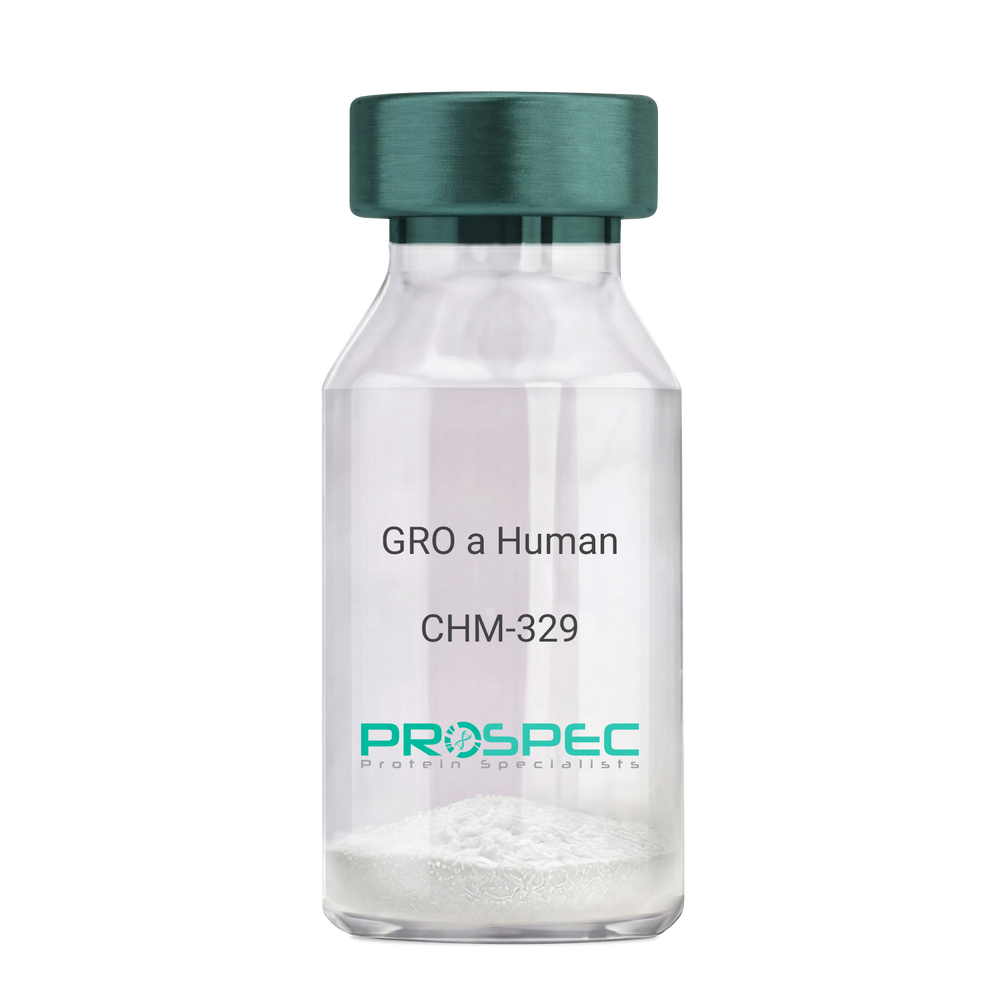
    Name :

    CXCL1 Human

    Description:

    GRO-Alpha Human Recombinant (CXCL1)

    Growth-regulated protein alpha, CXCL1, Melanoma growth stimulatory activity, MGSA, Neutrophil-activating protein 3, NAP-3, GRO-alpha (1-73), chemokine (C-X-C motif) ligand 1, GRO1, GROa, SCYB1, MGSA-a, MGSA alpha.

    Product # :

    CHM-329

    Price :

    Quantity :

    Shipping Method :

    Room Temp Icon

    Shipped at Room temp

    Add To Cart

    More Info

    • description
    • source
    • formulation
    • purity
    • biological activity
    • More Info

    Description

    GRO Alpha Human Recombinant produced in E.Coli is a single,non-glycosylated, polypeptide chain containing 73 amino acids and having a molecular mass of 7811 Dalton. The GRO-alpha is purified by proprietary chromatographic techniques.

    Source

    Escherichia Coli.

    Formulation

    Lyophilized from a 0.2µm filtered concentrated (1mg/ml) solution in 20mM PB, pH 7.4, 50mM NaCl.

    Purity

    Greater than 97.0% as determined by:
    (a) Analysis by RP-HPLC.
    (b) Analysis by SDS-PAGE.

    Biological Activity

    Determined by its ability to chemoattract human peripheral blood neutrophils using a concentration range of 10.0-100.0 ng/ml.

    More Info

    • Introduction

      Chemokine (C-X-C motif) ligand 1 (CXCL1) is a small cytokine belonging to the CXC chemokine family that was previously called GRO1 oncogene, Neutrophil-activating protein 3 (NAP-3) and melanoma growth stimulating activity, alpha (MSGA-a). It is secreted by human melanoma cells, has mitogenic properties and is implicated in melanoma pathogenesis. CXCL1 is expressed by macrophages, neutrophilsand epithelial cells, and has neutrophil chemoattractant activity. CXCL1 plays a role in spinal cord development by inhibiting the migration of oligodendrocyte precursors and is involved in the processes of angiogenesis, inflammation, wound healing, and tumorigenesis. This chemokine elicits its effects by signaling through the chemokine receptor CXCR2. The gene for CXCL1 is located on human chromosome 4 amongst genes for other CXC chemokines.

    • Synonyms

      Growth-regulated protein alpha, CXCL1, Melanoma growth stimulatory activity, MGSA, Neutrophil-activating protein 3, NAP-3, GRO-alpha (1-73), chemokine (C-X-C motif) ligand 1, GRO1, GROa, SCYB1, MGSA-a, MGSA alpha.

    • Physical Appearance

      Sterile Filtered White lyophilized (freeze-dried) powder.

    • Stability

      Lyophilized GRO-alpha although stable at room temperature for 3 weeks, should be stored desiccated below -18°C. Upon reconstitution CXCL1 should be stored at 4°C between 2-7 days and for future use below -18°C. For long term storage it is recommended to add a carrier protein (0.1% HSA or BSA).Please prevent freeze-thaw cycles.

    • Solubility

      It is recommended to reconstitute the lyophilized CXCL1 in sterile 18MΩ-cm H2O not less than 100µg/ml, which can then be further diluted to other aqueous solutions.

    • Amino Acid Sequence

      The sequence of the first five N-terminal amino acids was determined and was found to be Ala-Ser-Val-Ala-Thr.

    • Background

      What is the molecular weight/Mw of CXCL1 HUMAN Protein?
      CXCL1 HUMAN Protein has a total Mw of 7.81kDa.

      What is the source or expression system of CXCL1 HUMAN Protein?
      Escherichia Coli.

      What is the Purity of CXCL1 HUMAN Protein?
      CXCL1 HUMAN Protein is >97% pure as determined by SDS-PAGE.

      What is the Biological Activity of CXCL1 HUMAN Protein?
      Determined by its ability to chemoattract human peripheral blood neutrophils using a concentration range of 10.0-100.0 ng/ml.

      What is the amino acid sequence of CXCL1 HUMAN Protein?
      The sequence of the first five N-terminal amino acids was determined and was found to be Ala-Ser-Val-Ala-Thr.

      What applications can CXCL1 HUMAN Protein be used in?
      CXCL1 HUMAN Protein can probably be used in western blot, ELISA and Lateral Flow.

      What is the endotoxin level for CXCL1 HUMAN Protein?
      The endotoxin level is minimal, CXCL1 HUMAN Protein was purified using conventional chromatography techniques.


    ProSpec's products are furnished for LABORATORY RESEARCH USE ONLY. The product may not be used as drugs, agricultural or pesticidal products, food additives or household chemicals.

    Gro A Human
  • View Data Sheet

    Name :

    INSR Human

    Description:

    Insulin Receptor Human Recombinant

    Insulin receptor, IR, EC 2.7.10.1, CD220, INSR, HHF5.

    Product # :

    CYT-777

    Price :

    Quantity :

    Shipping Method :

    Room Temp Icon

    Shipped at Room temp

    Add To Cart

    More Info

    • description
    • source
    • formulation
    • purity
    • More Info

    Description

    Insulin Receptor Human Recombinant produced in HEK cells is a single, glycosylated, polypeptide chain (aa 28-944 of the short isoform- HIR-A, Uniprot accession # P06213-2 which includes the whole subunit alpha and extracellular domain of subunit beta) containing a total of 927 amino acids, having a molecular mass of 105.9kDa (calculated), though it migrates at approximately 160kDa on SDS PAGE, the INSR is fused to a 2 a.a N-terminal linker, a 2 a.a C-terminal linker and fused to a 6 a.a His tag at C-Terminus.The Human INSR is purified by proprietary chromatographic techniques.

    Source

    HEK 293.

    Formulation

    INSR was filtered (0.4µm) and lyophilized from 0.5mg/ml in 0.05M phosphate buffer and 0.075M NaCl, pH 7.4.

    Purity

    Greater than 95.0% as determined by SDS-PAGE.

    More Info

    • Introduction

      Insulin Receptor (INSR) is a receptor tyrosine kinase which mediates the pleiotropic actions of insulin. Binding of insulin to the insulin receptor (INSR) stimulates glucose uptake. Once the precursor signal peptide is removed, the insulin receptor precursor is post-translationally cleaved into 2 chains (alpha and beta) which are covalently linked. Insulin binding initiates phosphorylation of several intracellular substrates, including, insulin receptor substrates (IRS1, 2, 3, 4), SHC, GAB1, CBL and other signaling intermediates. Each of these phosphorylated proteins function as docking proteins for other signaling proteins which contain Src-homology-2 domains (SH2 domain) that specifically recognize different phosphotyrosines residues, including the p85 regulatory subunit of PI3K and SHP2.

    • Synonyms

      Insulin receptor, IR, EC 2.7.10.1, CD220, INSR, HHF5.

    • Physical Appearance

      Filtered White lyophilized (freeze-dried) powder.

    • Stability

      Store lyophilized protein at -20°C. Aliquot the product after reconstitution to avoid repeated freezing/thawing cycles. Reconstituted protein can be stored at 4°C for a limited period of time.

    • Solubility

      It is recommended to add deionized water to a working concentration of 0.5mg/ml and let the lyophilized pellet dissolve completely. INSR is not sterile! Please filter the product by an appropriate sterile filter before using it in the cell culture.

    • Amino Acid Sequence

      ASHLYPGEVC PGMDIRNNLT RLHELENCSV IEGHLQILLM FKTRPEDFRD LSFPKLIMIT DYLLLFRVYG LESLKDLFPN LTVIRGSRLF FNYALVIFEM VHLKELGLYN LMNITRGSVR IEKNNELCYL ATIDWSRILD SVEDNYIVLN KDDNEECGDI CPGTAKGKTN CPATVINGQF VERCWTHSHC QKVCPTICKS HGCTAEGLCC HSECLGNCSQ PDDPTKCVAC RNFYLDGRCV ETCPPPYYHF QDWRCVNFSF CQDLHHKCKN SRRQGCHQYV IHNNKCIPEC PSGYTMNSSN LLCTPCLGPC PKVCHLLEGE KTIDSVTSAQ ELRGCTVING SLIINIRGGN NLAAELEANL GLIEEISGYL KIRRSYALVS LSFFRKLRLI RGETLEIGNY SFYALDNQNL RQLWDWSKHN LTITQGKLFF HYNPKLCLSE IHKMEEVSGT KGRQERNDIA LKTNGDQASC ENELLKFSYI RTSFDKILLR WEPYWPPDFR DLLGFMLFYK EAPYQNVTEF DGQDACGSNS WTVVDIDPPL RSNDPKSQNH PGWLMRGLKP WTQYAIFVKT LVTFSDERRT YGAKSDIIYV QTDATNPSVP LDPISVSNSS SQIILKWKPP SDPNGNITHY LVFWERQAED SELFELDYCL KGLKLPSRTW SPPFESEDSQ KHNQSEYEDS AGECCSCPKT DSQILKELEE SSFRKTFEDY LHNVVFVPRP SRKRRSLGDV GNVTVAVPTV AAFPNTSSTS VPTSPEEHRP FEKVVNKESL VISGLRHFTG YRIELQACNQ DTPEERCSVA AYVSARTMPE AKADDIVGPV THEIFENNVV HLMWQEPKEP NGLIVLYEVS YRRYGDEELH LCVSRKHFAL ERGCRLRGLS PGNYSVRIRA TSLAGNGSWT EPTYFYVTDY LDVPSNIAKK LHHHHHH.

    ProSpec's products are furnished for LABORATORY RESEARCH USE ONLY. The product may not be used as drugs, agricultural or pesticidal products, food additives or household chemicals.

    Insr Human
  • View Data Sheet

    Name :

    Conglutin

    Description:

    Allergen Ara h 6.0101 Recombinant

    Conglutin, Allergen Ara h 6.

    Product # :

    ALR-009

    Price :

    Quantity :

    Shipping Method :

    Ice Icon

    Shipped with Ice Packs

    Add To Cart

    More Info

    • description
    • source
    • formulation
    • purity
    • More Info

    Description

    Recombinant Conglutin produced in SF9 is a glycosylated, polypeptide chain having a calculated molecular mass of 16,217 Dalton. Conglutin is expressed with a 10xHis tag at N-terminus and purified by proprietary chromatographic techniques.

    Source

    Sf9 insect cells.

    Formulation

    Conglutin is supplied in 20mM HEPES buffer pH-7.9 and 6M Urea.

    Purity

    Greater than 80.0% as determined by SDS-PAGE.

    More Info

    • Introduction

      Conglutin, also known as Ara h 6.0101 is a part of the 2S albumin protein family. Conglutin along with Ara h 2.0201 are considered as some of the most potent elicitors of anaphylaxis. Both proteins hold multiple disulphide-bridged cysteine residues, resulting in a tightly coiled, heat-stable, protease resistant core structure. Conglutin causes an allergic reaction in human and binds to IgE.

    • Synonyms

      Conglutin, Allergen Ara h 6.

    • Physical Appearance

      Sterile Filtered clear solution.

    • Stability

      Store at 4°C if entire vial will be used within 2-4 weeks. Store, frozen at -20°C for longer periods of time. Avoid multiple freeze-thaw cycles.

    • Immunological Functions

      1. Binds IgE type human antibodies. 2. Immunodot test with positive/negative sera panels.

    ProSpec's products are furnished for LABORATORY RESEARCH USE ONLY. The product may not be used as drugs, agricultural or pesticidal products, food additives or household chemicals.

    Conglutin
  • View Data Sheet

    Name :

    NECTIN2 Human

    Description:

    Nectin Cell Adhesion Molecule 2 Human Recombinant

    Nectin-2, Herpes virus entry mediator B, Herpesvirus entry mediator B, HveB, Nectin cell adhesion molecule 2, Poliovirus receptor-related protein 2, CD112, HVEB, PRR2, PVRL2.

    Product # :

    PRO-2461

    Price :

    Quantity :

    Shipping Method :

    Ice Icon

    Shipped with Ice Packs

    Add To Cart

    More Info

    • description
    • source
    • formulation
    • purity
    • More Info

    Description

    NECTIN2 Human Recombinant produced in Sf9 Insect cells is a single, glycosylated polypeptide chain containing 337 amino acids (32-360a.a.) and having a molecular mass of 36.3kDa (Molecular size on SDS-PAGE will appear at approximately 40-57kDa).NECTIN2 is expressed with an 8 amino acids His tag at C-Terminus and purified by proprietary chromatographic techniques.

    Source

    Sf9, Insect cells.

    Formulation

    NECTIN2 protein solution (0.25mg/ml) contains Phosphate Buffered Saline (pH 7.4) and 10% glycerol.

    Purity

    Greater than 90.0% as determined by SDS-PAGE.

    More Info

    • Introduction

      Nectin Cell Adhesion Molecule 2, also known as NECTIN2, is a Ca(2+)-independent cell-cell adhesion molecule which is one of the plasma membrane components of adherens junctions. NECTIN2 takes a vital part in the establishment of homotypic as well as heterotypic cell to cell contacts. NECTIN2 is essential for resisting herpes simplex virus type 2 infection in transfected cells. NECTIN2 is also a possible target for antibody therapy of breast & ovarian cancers. NECTIN2 might be related with human longevity. Two diseases which have been associated with NECTIN2 are Herpes Simplex and Ovarian Cystic Teratoma.

    • Synonyms

      Nectin-2, Herpes virus entry mediator B, Herpesvirus entry mediator B, HveB, Nectin cell adhesion molecule 2, Poliovirus receptor-related protein 2, CD112, HVEB, PRR2, PVRL2.

    • Stability

      Store at 4°C if entire vial will be used within 2-4 weeks. Store, frozen at -20°C for longer periods of time. For long term storage it is recommended to add a carrier protein (0.1% HSA or BSA).Avoid multiple freeze-thaw cycles.

    • Amino Acid Sequence

      QDVRVQVLPE VRGQLGGTVE LPCHLLPPVP GLYISLVTWQ RPDAPANHQN VAAFHPKMGP SFPSPKPGSE RLSFVSAKQS TGQDTEAELQ DATLALHGLT VEDEGNYTCE FATFPKGSVR GMTWLRVIAK PKNQAEAQKV TFSQDPTTVA LCISKEGRPP ARISWLSSLD WEAKETQVSG TLAGTVTVTS RFTLVPSGRA DGVTVTCKVE HESFEEPALI PVTLSVRYPP EVSISGYDDN WYLGRTDATL SCDVRSNPEP TGYDWSTTSG TFPTSAVAQG SQLVIHAVDS LFNTTFVCTV TNAVGMGRAE QVIFVRETPN TAGAGATGGL EHHHHHH.

    ProSpec's products are furnished for LABORATORY RESEARCH USE ONLY. The product may not be used as drugs, agricultural or pesticidal products, food additives or household chemicals.

    Nectin2 Human
  • View Data Sheet

    Name :

    JAM2 Human

    Description:

    Junctional Adhesion Molecule 2 Human Recombinant

    Junctional adhesion molecule B, JAM-B, Junctional adhesion molecule 2, JAM-2, Vascular endothelial junction-associated molecule, VE-JAM, CD322.

    Product # :

    PRO-1336

    Price :

    Quantity :

    Shipping Method :

    Ice Icon

    Shipped with Ice Packs

    Add To Cart

    More Info

    • description
    • source
    • formulation
    • purity
    • More Info

    Description

    JAM2 Human Recombinant produced in E.coli is a single, non-glycosylated polypeptide chain containing 241 amino acids (21-238) and having a molecular mass of 26.7kDa. JAM2 is fused to a 23 amino acid His-tag at N-terminus & purified by proprietary chromatographic techniques.

    Source

    Escherichia Coli.

    Formulation

    JAM2 protein solution (1mg/ml) containing 20mM Tris-HCl buffer (pH 8.0), 0.4M urea and 10% glycerol.

    Purity

    Greater than 90.0% as determined by SDS-PAGE.

    More Info

    • Introduction

      Junctional Adhesion Molecule 2 (JAM2) is a member of the immunoglobulin superfamily, and the junctional adhesion molecule (JAM) family. JAM2 is a type I membrane protein which is localized at the tight junctions of both epithelial and endothelial cells. JAM2 functions as an adhesive ligand for interacting with various immune cell types, and may have a role in lymphocyte homing to secondary lymphoid organs.

    • Synonyms

      Junctional adhesion molecule B, JAM-B, Junctional adhesion molecule 2, JAM-2, Vascular endothelial junction-associated molecule, VE-JAM, CD322.

    • Physical Appearance

      Sterile Filtered colorless solution.

    • Stability

      Store at 4°C if entire vial will be used within 2-4 weeks. Store, frozen at -20°C for longer periods of time. For long term storage it is recommended to add a carrier protein (0.1% HSA or BSA).Avoid multiple freeze-thaw cycles.

    • Amino Acid Sequence

      MGSSHHHHHH SSGLVPRGSH MGSLGYHKAY GFSAPKDQQV VTAVEYQEAI LACKTPKKTV SSRLEWKKLG RSVSFVYYQQ TLQGDFKNRA EMIDFNIRIK NVTRSDAGKY RCEVSAPSEQ GQNLEEDTVT LEVLVAPAVP SCEVPSSALS GTVVELRCQD KEGNPAPEYT WFKDGIRLLE NPRLGSQSTN SSYTMNTKTG TLQFNTVSKL DTGEYSCEAR NSVGYRRCPG KRMQVDDLNI S.

    ProSpec's products are furnished for LABORATORY RESEARCH USE ONLY. The product may not be used as drugs, agricultural or pesticidal products, food additives or household chemicals.

    Jam2 Human
  • View Data Sheet

    Name :

    Vimentin Human

    Description:

    Vimentin Human Recombinant

    Vimentin, Vim, FLJ36605.

    Product # :

    PRO-309

    Price :

    Quantity :

    Shipping Method :

    Room Temp Icon

    Shipped at Room temp

    Add To Cart

    More Info

    • description
    • source
    • formulation
    • purity
    • More Info

    Description

    Vimentin Human Recombinant produced in E.coli cells is a single non-glycosylated protein containing 465 amino acids chain and having a molecular mass of 53.5kDa. The Vimentin is purified by proprietary chromatographic techniques.

    Source

    Escherichia Coli.

    Formulation

    The Vimentin was lyophilized from a 0.2µm filtered concentrated solution in 30% Acetonitrile and 0.1% TFA.

    Purity

    Greater than 95.0% as determined by:
    (a) Analysis by RP-HPLC.
    (b) Analysis by SDS-PAGE.

    More Info

    • Introduction

      Vimentin expression in human malignant glioma cells depends on cellular density, algorithms of drug delivery and chemo/radio treatment. Vimentin and detyrosinated microtubules provide structural support for the extensive microtentacles observed in detached tumor cells and a mechanism to promote successful metastatic spread. Primary colorectal carcinomas display aberrant expression of vimentin, and have activated Notch and TGFbeta signaling pathways. Vimentin is a strong arterial substrate for transglutaminases. Transglutaminase-mediated vimentin dimerization results in a novel unifying pathway by which vasodilatory and remodeling responses may be regulated. Ablation of vimentin expression inhibits migration and invasion of colon and breast cancer cell lines. Vimentin is the main intermediate filament protein in mesenchymal cells and is therefore of value in the differential diagnosis of undifferentiated neoplasms.

    • Synonyms

      Vimentin, Vim, FLJ36605.

    • Physical Appearance

      Sterile Filtered White lyophilized (freeze-dried) powder.

    • Stability

      Lyophilized Vimentin although stable at room temperature for 3 weeks, should be stored desiccated below -18°C. Upon reconstitution Vimentin should be stored at 4°C between 2-7 days and for future use below -18°C.For long term storage it is recommended to add a carrier protein (0.1% HSA or BSA).Please prevent freeze-thaw cycles.

    • Solubility

      It is recommended to reconstitute the lyophilized Vimentin in sterile 4mM HCl not less than 100µg/ml, which can then be further diluted to other aqueous solutions.

    • Amino Acid Sequence

      STRSVSSSSY RRMFGGPGTA SRPSSSRSYV TTSTRTYSLG SALRPSTSRS LYASSPGGVY ATRSSAVRLR SSVPGVRLLQ DSVDFSLADA INTEFKNTRT NEKVELQELN DRFANYIDKV RFLEQQNKIL LAELEQLKGQ GKSRLGDLYE EEMRELRRQV DQLTNDKARV EVERDNLAED IMRLREKLQE EMLQREEAEN TLQSFRQDVD NASLARLDLE RKVESLQEEI AFLKKLHEEE IQELQAQIQE QHVQIDVDVS KPDLTAALRD VRQQYESVAA KNLQEAEEWY KSKFADLSEA ANRNNDALRQ AKQESTEYRR QVQSLTCEVD ALKGTNESLE RQMREMEENF AVEAANYQDT IGRLQDEIQN MKEEMARHLR EYQDLLNVKM ALDIEIATYR KLLEGEESRI SLPLPNFSSL NLRETNLDSL PLVDTHSKRT LLIKTVETRD GQVINETSQH HDDLE.

    ProSpec's products are furnished for LABORATORY RESEARCH USE ONLY. The product may not be used as drugs, agricultural or pesticidal products, food additives or household chemicals.

    Vimentin Human
  • View Data Sheet

    Name :

    Vimentin Bovine

    Description:

    Bovine Vimentin

    Vimentin, Vim, FLJ36605.

    Product # :

    PRO-525

    Price :

    Quantity :

    Shipping Method :

    Room Temp Icon

    Shipped at Room temp

    Add To Cart

    More Info

    • description
    • source
    • formulation
    • purity
    • More Info

    Description

    Bovine Vimentin protein produced in Bovine Lens, having a molecular weight of 57 kDa.

    Source

    Bovine Lens.

    Formulation

    The protein (1mg/ml) was lyophilized from a 1mg/ml solution containing 10mM sodium phosphate pH 7.5, 6M urea, 2mM DTT, 1mM EDTA and 10mM methylammonium chloride.

    Purity

    Greater than 98.0% as determined by SDS-PAGE.

    More Info

    • Introduction

      Vimentin expression in human malignant glioma cells depends on cellular density, algorithms of drug delivery and chemo/radio treatment. Vimentin and detyrosinated microtubules provide structural support for the extensive microtentacles observed in detached tumor cells and a mechanism to promote successful metastatic spread. Primary colorectal carcinomas display aberrant expression of vimentin, and have activated Notch and TGFbeta signaling pathways. Vimentin is a strong arterial substrate for transglutaminases. Transglutaminase-mediated vimentin dimerization results in a novel unifying pathway by which vasodilatory and remodeling responses may be regulated. Ablation of vimentin expression inhibits migration and invasion of colon and breast cancer cell lines. Vimentin is the main intermediate filament protein in mesenchymal cells and is therefore of value in the differential diagnosis of undifferentiated neoplasms.

    • Synonyms

      Vimentin, Vim, FLJ36605.

    • Physical Appearance

      Sterile Filtered White lyophilized (freeze-dried) powder.

    • Stability

      Lyophilized Bovine Vimentin although stable at room temperature for 3 weeks, should be stored desiccated below -18°C. Upon reconstitution BovineVimentin should be stored at 4°C between 2-7 days and for future use below -18°C.For long term storage it is recommended to add a carrier protein (0.1% HSA or BSA).Please prevent freeze-thaw cycles.

    • Solubility

      It is recommended to reconstitute the Bovine Vimentin in sterile 18MΩ-cm H2O not less than 100µg/ml, which can then be further diluted to other aqueous solutions.

    • Reconstitution to filaments

      After vimentin is dissolved in 6M urea buffer (see above), protofilaments and filament complexes are obtained by dialyzing the resulting polypeptide solution stepwise to a concentration of 4M urea and then to low salt condition (50mM NaCl, 2mM dithiothreitol, 10mM Sodium Phosphate, pH 7.4). For immunization purposes, the solution can be further dialyzed against PBS (phosphate buffered saline, e.g. Dulbecco''s PBS).- Hatzfeld M. and Franke W.W. (1985). J. Cell Biol. 101, 1826-1841.- Hatzfeld M. et al. (1987). J. Mol. Biol. 197, 237-255.

    ProSpec's products are furnished for LABORATORY RESEARCH USE ONLY. The product may not be used as drugs, agricultural or pesticidal products, food additives or household chemicals.

    Vimentin Bovine
  • View Data Sheet

    Name :

    JAM2 antibody

    Description:

    Mouse Anti Human Junctional Adhesion Molecule 2

    Junctional adhesion molecule B, JAM-B, Junctional adhesion molecule 2, JAM-2, Vascular endothelial junction-associated molecule, VE-JAM, CD322.

    Product # :

    ANT-738

    Price :

    Quantity :

    Shipping Method :

    Ice Icon

    Shipped with Ice Packs

    Add To Cart

    More Info

    • formulation
    • More Info

    Formulation

    1mg/ml containing PBS, pH-7.4, 10% Glycerol and 0.02% Sodium Azide.

    More Info

    • Introduction

      Junctional Adhesion Molecule 2 (JAM2) is a member of the immunoglobulin superfamily, and the junctional adhesion molecule (JAM) family. JAM2 is a type I membrane protein which is localized at the tight junctions of both epithelial and endothelial cells. JAM2 functions as an adhesive ligand for interacting with various immune cell types, and may have a role in lymphocyte homing to secondary lymphoid organs.

    • Synonyms

      Junctional adhesion molecule B, JAM-B, Junctional adhesion molecule 2, JAM-2, Vascular endothelial junction-associated molecule, VE-JAM, CD322.

    • Physical Appearance

      Sterile filtered colorless solution.

    • Immunogen

      Anti-human JAM2 mAb, is derived from hybridization of mouse F0 myeloma cells with spleen cells from BALB/c mice immunized with a recombinant human JAM2 protein 21-238 amino acids purified from E. coli.

    • Ig Subclass

      Mouse IgG2a heavy chain and k light chain.

    • Clone

      PAT21D7AT.

    • Applications

      JAM2 antibody has been tested by ELISA and Western blot analysis to assure specificity and reactivity. Since application varies, however, each investigation should be titrated by the reagent to obtain optimal results.

    • Type

      Mouse Anti Human Monoclonal.

    • Storage Procedures

      For periods up to 1 month store at 4°C, for longer periods of time, store at -20°C. Prevent freeze thaw cycles.

    • Purification Method

      JAM2 antibody was purified from mouse ascitic fluids by protein-A affinity chromatography.

    ProSpec's products are furnished for LABORATORY RESEARCH USE ONLY. The product may not be used as drugs, agricultural or pesticidal products, food additives or household chemicals.

    Jam2 Antibody
  • View Data Sheet

    Name :

    Activin-A Mouse

    Description:

    Activin-A Mouse Recombinant

    Inhba, Inhibin beta A, FSH releasing protein.

    Product # :

    CYT-146

    Price :

    Quantity :

    Shipping Method :

    Room Temp Icon

    Shipped at Room temp

    Add To Cart

    More Info

    • description
    • source
    • formulation
    • purity
    • biological activity
    • More Info

    Description

    Active form Activin-A Murine Recombinant produced in e.coli is a homodimeric, non-glycosylated, polypeptide chain containing 2 x 117 amino acids and having a molecular weight of 26.2kDa.The Active form Activin-A is purified by standard chromatographic techniques.

    Source

    E.Coli.

    Formulation

    Mouse Activin-A lyophilized from a concentrated 1mg/ml protein solution containing 0.1% TFA.

    Purity

    Greater than 95% as obsereved by SDS-PAGE.

    Biological Activity

    Biological activity is assessed by the ability to induce cytoxicity of MPC-11 cells and was found to be 8.8ng/ml corresponding to a specific activity of 1.1 x 10⁵ units/mg.

    More Info

    • Introduction

      Activins are homodimers or heterodimers of the different β subunit isoforms, part of the TGFβ family. Mature Activin A has two 116 amino acids residues βA subunits (βA-βA). Activin displays an extensive variety of biological activities, including mesoderm induction, neural cell differentiation, bone remodelling, haematopoiesis, and reproductive physiology. Activins takes part in the production and regulation of hormones such as FSH, LH, GnRH and ACTH. Cells that are identified to express Activin A include fibroblasts, endothelial cells, hepatocytes, vascular smooth muscle cells, macrophages, keratinocytes, osteoclasts, bone marrow monocytes, prostatic epithelium, neurons, chondrocytes, osteoblasts, Leydig cells, Sertoli cells, and ovarian granulosa cells.

    • Synonyms

      Inhba, Inhibin beta A, FSH releasing protein.

    • Physical Appearance

      Lyophilized freeze dried powder.

    • Stability

      Lyophilized Activin-A although stable at room temperature for 3 weeks, should be stored desiccated below -18°C. Upon reconstitution Activin-A should be stored at 4°C between 2-7 days and for future use below -18°C.For long term storage it is recommended to add a carrier protein (0.1% HSA or BSA).Please prevent freeze-thaw cycles.

    • Solubility

      Murine INHBA protein should be reconstituted in distilled pyrogen free water to a concentration of 100ug /ml which can then be further diluted to other aqueous solutions.

    • Amino Acid Sequence

      MGLECDGKVN ICCKKQFFVS FKDIGWNDWI IAPSGYHANY CEGECPSHIA GTSGSSLSFH STVINHYRMR GHSPFANLKS CCVPTKLRPM SMLYYDDGQN IIKKDIQNMI VEECGCS.

    • Background

      What is the molecular weight / Mw of Activin A Protein?
      Activin A Protein has a total Mw of 26.2 kDa.

      What is the source or expression system of Activin A Protein?
      Ecoli

      What is the Purity of Activin A Protein?
      Activin A Protein is >95% pure as determined by SDS-PAGE.

      What is the Biological Activity of Activin A Protein?
      Biological activity is assessed by the ability to induce cytoxicity of MPC-11 cells and was found to be 8.8ng/ml corresponding to a specific activity of 110,000 units/mg.

      What is the endotoxin level for Activin A Protein?
      The endotoxin level is minimal, ACTIVIN A Protein was purified using conventional chromatography techniques.

      What is the amino acid sequence of ACTIVIN A Protein?
      MGLECDGKVN ICCKKQFFVS FKDIGWNDWI IAPSGYHANY CEGECPSHIA GTSGSSLSFH STVINHYRMR GHSPFANLKS CCVPTKLRPM SMLYYDDGQN IIKKDIQNMI VEECGCS.

      What applications can ACTIVIN A Protein be used in?
      ACTIVIN A Protein can probably be used in western blot, ELISA and Lateral Flow.

    ProSpec's products are furnished for LABORATORY RESEARCH USE ONLY. The product may not be used as drugs, agricultural or pesticidal products, food additives or household chemicals.

    Inhba Mouse
  • View Data Sheet

    Name :

    BCAM Human

    Description:

    Basal Cell Adhesion Molecule (CD239) Human Recombinant

    Basal cell adhesion molecule isoform 1, BCAM, AU, CD239, LU, MSK19, Auberger B antigen, B-CAM cell surface glycoprotein, F8/G253 antigen, Lutheran antigen, Lutheran blood group glycoprotein, CD_antigen: CD239, LU, MSK19.

    Product # :

    PRO-2429

    Price :

    Quantity :

    Shipping Method :

    Ice Icon

    Shipped with Ice Packs

    Add To Cart

    More Info

    • description
    • source
    • formulation
    • purity
    • More Info

    Description

    BCAM produced in Sf9 Baculovirus cells is a single, glycosylated polypeptide chain containing 755 amino acids (32-547a.a.) and having a molecular mass of 83.2kDa. (Molecular size on SDS-PAGE will appear at approximately 70-100kDa). BCAM is expressed with a 239 amino acid hIgG-His tag at C-Terminus and purified by proprietary chromatographic techniques.

    Source

    Sf9, Baculovirus cells.

    Formulation

    BCAM protein solution (0.5mg/ml) containing Phosphate Buffered Saline (pH 7.4), and 10% glycerol.

    Purity

    Greater than 90% as determined by SDS-PAGE.

    More Info

    • Introduction

      Basal Cell Adhesion Molecule (BCAM) which is a product of alternate splicing of the Lutheran blood group molecule is a part of the immunoglobulin superfamily. BCAM contains five extracellular immunoglobulin domains, a single transmembrane domain, and a short C-terminal cytoplasmic tail. BCAM protein is upregulated following malignant transformation of some cell types in vivo and in vitro. Furthermore, BCAM interacts with integrin in sickle red cells, and participates in vasoocclusive episodes.

    • Synonyms

      Basal cell adhesion molecule isoform 1, BCAM, AU, CD239, LU, MSK19, Auberger B antigen, B-CAM cell surface glycoprotein, F8/G253 antigen, Lutheran antigen, Lutheran blood group glycoprotein, CD_antigen: CD239, LU, MSK19.

    • Physical Appearance

      Sterile Filtered colorless solution.

    • Stability

      Store at 4°C if entire vial will be used within 2-4 weeks. Store, frozen at -20°C for longer periods of time. For long term storage it is recommended to add a carrier protein (0.1% HSA or BSA).Avoid multiple freeze-thaw cycles.

    • Amino Acid Sequence

      EVRLSVPPLV EVMRGKSVIL DCTPTGTHDH YMLEWFLTDR SGARPRLASA EMQGSELQVT MHDTRGRSPP YQLDSQGRLV LAEAQVGDER DYVCVVRAGA AGTAEATARL NVFAKPEATE VSPNKGTLSV MEDSAQEIAT CNSRNGNPAP KITWYRNGQR LEVPVEMNPE GYMTSRTVRE ASGLLSLTST LYLRLRKDDR DASFHCAAHY SLPEGRHGRL DSPTFHLTLH YPTEHVQFWV GSPSTPAGWV REGDTVQLLC RGDGSPSPEY TLFRLQDEQE EVLNVNLEGN LTLEGVTRGQ SGTYGCRVED YDAADDVQLS KTLELRVAYL DPLELSEGKV LSLPLNSSAV VNCSVHGLPT PALRWTKDST PLGDGPMLSL SSITFDSNGT YVCEASLPTV PVLSRTQNFT LLVQGSPELK TAEIEPKADG SWREGDEVTL ICSARGHPDP KLSWSQLGGS PAEPIPGRQG WVSSSLTLKV TSALSRDGIS CEASNPHGNK RHVFHFGTVS PQTSQAVEPK SCDKTHTCPP CPAPELLGGP SVFLFPPKPK DTLMISRTPE VTCVVVDVSH EDPEVKFNWY VDGVEVHNAK TKPREEQYNS TYRVVSVLTV LHQDWLNGKE YKCKVSNKAL PAPIEKTISK AKGQPREPQV YTLPPSRDEL TKNQVSLTCL VKGFYPSDIA VEWESNGQPE NNYKTTPPVL DSDGSFFLYS KLTVDKSRWQ QGNVFSCSVM HEALHNHYTQ KSLSLSPGKH HHHHH.

    ProSpec's products are furnished for LABORATORY RESEARCH USE ONLY. The product may not be used as drugs, agricultural or pesticidal products, food additives or household chemicals.

    Bcam Human
  • View Data Sheet

    Name :

    STX1A Human

    Description:

    Syntaxin-1A Human Recombinant

    STX1, HPC-1, p35-1, Syntaxin-1A, Neuron-specific antigen HPC-1, STX-1A, STX1A.

    Product # :

    PRO-574

    Price :

    Quantity :

    Shipping Method :

    Ice Icon

    Shipped with Ice Packs

    Add To Cart

    More Info

    • description
    • source
    • formulation
    • purity
    • More Info

    Description

    Syntaxin-1A Human Recombinant fused to N-terminal His-Tag produced in E.Coli is a single, non-glycosylated polypeptide chain containing 226 amino acids (1-226) and having a molecular mass of 26.1 kDa.Recombinant Human STX1A contains N-terminal domain (Habc) and t_SNARE domain (H3 domain).

    Source

    Escherichia Coli.

    Formulation

    The protein solution contains 20mM Tris-HCl pH7.5, 10% glycerol, and 1mM DTT.

    Purity

    Greater than 95.0% as determined by Analysis by SDS-PAGE.

    More Info

    • Introduction

      Syntaxin is membrane integrated Q-SNARE protein participating in exocytosis. Syntaxin is composed of an N-terminal regulatory domain (Habc), a SNARE domain (known as H3), and a single C-terminal transmembrane domain. The SNARE (H3) domain binds to both synaptobrevin and SNAP-25 forming the core SNARE complex. Synaptic vesicles store neurotransmitters that are released during calcium-regulated exocytosis. The specificity of neurotransmitter release requires the localization of both synaptic vesicles and calcium channels to the presynaptic active zone. Syntaxins function in this vesicle fusion process. Syntaxins also serve as a substrate for botulinum neurotoxin type C, a metalloprotease that blocks exocytosis and has high affinity for a molecular complex that includes the alpha-latrotoxin receptor which produces exocytosis.

    • Synonyms

      STX1, HPC-1, p35-1, Syntaxin-1A, Neuron-specific antigen HPC-1, STX-1A, STX1A.

    • Physical Appearance

      Sterile Filtered colorless solution.

    • Stability

      Store at 4°C if entire vial will be used within 2-4 weeks.Store, frozen at -20°C for longer periods of time. For long term storage it is recommended to add a carrier protein (0.1% HSA or BSA).Avoid multiple freeze-thaw cycles.

    • Amino Acid Sequence

      MKDRTQELRT AKDSDDDDDV AVTVDRDRFM DEFFEQVEEI RGFIDKIAEN VEEVKRKHSA ILASPNPDEK TKEELEELMS DIKKTANKVR SKLKSIEQSI EQEEGLNRSS ADLRIRKTQH STLSRKFVEV MSEYNATQSD YRERCKGRIQ RQLEITGRTT TSEELEDMLE SGNPAIFASG IIMDSSISKQ ALSEIETRHS EIIKLENSIR ELHDMFMDMA MLVESQ.

    ProSpec's products are furnished for LABORATORY RESEARCH USE ONLY. The product may not be used as drugs, agricultural or pesticidal products, food additives or household chemicals.

    Stx1A Human
  • View Data Sheet

    Name :

    ICAM5 Human

    Description:

    Intercellular Adhesion Molecule-5 Human Recombinant

    Intercellular adhesion molecule 5, ICAM5, ICAM-5, Telencephalin, telencephalin, TLN, TLCN, TLNtelencephalin, TLCNTelencephalin.

    Product # :

    PRO-2661

    Price :

    Quantity :

    Shipping Method :

    Ice Icon

    Shipped with Ice Packs

    Add To Cart

    More Info

    • description
    • source
    • formulation
    • purity
    • More Info

    Description

    ICAM5 Human Recombinant produced in HEK293 is a single, glycosylated polypeptide chain containing 1052 amino acids (23-835 a.a) and having a molecular mass of 113.8kDa. ICAM5 is fused to a 239 amino acid hIgG-His-tag at C-terminus & purified by proprietary chromatographic techniques.

    Source

    HEK293.

    Formulation

    ICAM5 protein solution (0.5mg/ml) containing Phosphate Buffered Saline (pH 7.4) and 10% glycerol.

    Purity

    Greater than 90.0% as determined by SDS-PAGE.

    More Info

    • Introduction

      Intercellular Adhesion Molecule-5 or ICAM-5 is a glycoprotein, part of the immunoglobulin family and located in the cell membrane. We can find ICAM-5 in telencephalic neurons, in a couple of adhesion activity, firstly heterophilic binding amid neurons and leukocytes and secondly, homophilic binding amid neurons. ICAM-5 is expressed exclusively in telencephalic areas of the central nervous system. Similar to other ICAMs molecules, ICAM-5 adhere to LFA-1 which is a leukocyte integrin.

    • Synonyms

      Intercellular adhesion molecule 5, ICAM5, ICAM-5, Telencephalin, telencephalin, TLN, TLCN, TLNtelencephalin, TLCNTelencephalin.

    • Physical Appearance

      Sterile filtered colorless solution.

    • Stability

      Store at 4°C if entire vial will be used within 2-4 weeks.Store, frozen at -20°C for longer periods of time. For long term storage it is recommended to add a carrier protein (0.1% HSA or BSA).Avoid multiple freeze-thaw cycles.

    • Amino Acid Sequence

      LFGLSAVSQE PFWADLQPRV AFVERGGSLW LNCSTNCPRP ERGGLETSLR RNGTQRGLRW LARQLVDIRE PETQPVCFFR CARRTLQARG LIRTFQRPDR VELMPLPPWQ PVGENFTLSC RVPGAGPRAS LTLTLLRGAQ ELIRRSFAGE PPRARGAVLT ATVLARREDH GANFSCRAEL DLRPHGLGLF ENSSAPRELR TFSLSPDAPR LAAPRLLEVG SERPVSCTLD GLFPASEARV YLALGDQNLS PDVTLEGDAF VATATATASA EQEGARQLVC NVTLGGENRE TRENVTIYSF PAPLLTLSEP SVSEGQMVTV TCAAGAQALV TLEGVPAAVP GQPAQLQLNA TENDDRRSFF CDATLDVDGE TLIKNRSAEL RVLYAPRLDD SDCPRSWTWP EGPEQTLRCE ARGNPEPSVH CARSDGGAVL ALGLLGPVTR ALSGTYRCKA ANDQGEAVKD VTLTVEYAPA LDSVGCPERI TWLEGTEASL SCVAHGVPPP DVICVRSGEL GAVIEGLLRV AREHAGTYRC EATNPRGSAA KNVAVTVEYG PRFEEPSCPS NWTWVEGSGR LFSCEVDGKP QPSVKCVGSG GATEGVLLPL APPDPSPRAP RIPRVLAPGI YVCNATNRHG SVAKTVVVSA ESPPEMDEST CPSHQTWLEG AEASALACAA RGRPSPGVRC SREGIPWPEQ QRVSREDAGT YHCVATNAHG TDSRTVTVGV EYRPVVAELA ASPPGGVRPG GNFTLTCRAE AWPPAQISWR APPGALNIGL SSNNSTLSVA GAMGSHGGEY ECAATNAHGR HARRITVRVA GPWLEPKSCD KTHTCPPCPA PELLGGPSVF LFPPKPKDTL MISRTPEVTC VVVDVSHEDP EVKFNWYVDG VEVHNAKTKP REEQYNSTYR VVSVLTVLHQ DWLNGKEYKC KVSNKALPAP IEKTISKAKG QPREPQVYTL PPSRDELTKN QVSLTCLVKG FYPSDIAVEW ESNGQPENNY KTTPPVLDSD GSFFLYSKLT VDKSRWQQGN VFSCSVMHEA LHNHYTQKSL SLSPGKHHHH HH.

    ProSpec's products are furnished for LABORATORY RESEARCH USE ONLY. The product may not be used as drugs, agricultural or pesticidal products, food additives or household chemicals.

    Icam5 Human
  • View Data Sheet

    Name :

    IF Human

    Description:

    Intrinsic Factor Human Recombinant

    Gastric intrinsic factor, Intrinsic factor, INF, IF, GIF, IFMH, TCN3, Cobalamin/Vitamin B-12 binding transport protein.

    Product # :

    PRO-375

    Price :

    Quantity :

    Shipping Method :

    Ice Icon

    Shipped with Ice Packs

    Add To Cart

    More Info

    • description
    • source
    • formulation
    • purity
    • More Info

    Description

    Intrinsic Factor Human Recombinant produced in baculovirus is a glycosylated, polypeptide chain having a molecular mass of 55,000 Dalton. The Intrinsic Factor is fused to a hexa-histidine at the C-terminus and purified by proprietary chromatographic techniques for removal of bound Vitamin B-12.

    Source

    Sf9 Insect Cells.

    Formulation

    The protein solution contains 20mM HEPES pH-8.0, 100mM NaCl and 20% Glycerol.

    Purity

    Greater than 95.0% as determined by:
    (a) Analysis by RP-HPLC.
    (b) Analysis by SDS-PAGE.

    More Info

    • Introduction

      Intrinsic Factor is a member of the cobalamin transport protein family. It encodes a glycoprotein secreted by parietal cells of the gastric mucosa and is required for adequate absorption of vitamin B12 in the terminal ileum. Vitamin B12 is essential for erythrocyte maturation and mutations in the Intrinsic Factor may lead to congenital pernicious anemia. Upon entry into the stomach, vitamin B12 binds to one of two B12 binding proteins present in the gastric fluid. In the less acidic environment of the small intestine, these proteins dissociate from the vitamin, allowing it to bind to intrinsic factor and enter the portal circulation through a receptor in the ileal mucosa specific for the B12-intrinsic factor complex.

    • Synonyms

      Gastric intrinsic factor, Intrinsic factor, INF, IF, GIF, IFMH, TCN3, Cobalamin/Vitamin B-12 binding transport protein.

    • Physical Appearance

      Sterile Filtered pink solution.

    • Stability

      Store at 4°C if entire vial will be used within 2-4 weeks. Store, frozen at -20°C for longer periods of time. For long term storage it is recommended to add a carrier protein (0.1% HSA or BSA).Avoid multiple freeze-thaw cycles.

    ProSpec's products are furnished for LABORATORY RESEARCH USE ONLY. The product may not be used as drugs, agricultural or pesticidal products, food additives or household chemicals.

    Intrinsic Factor Human
  • View Data Sheet

    Name :

    sRAGE Human

    Description:

    Advanced Glycosylation End Product-Specific Receptor Human Recombinant

    Advanced glycosylation end product-specific receptor, Receptor for advanced glycosylation end products, AGER, SRAGE, RAGE, MGC22357.

    Product # :

    PRO-600

    Price :

    Quantity :

    Shipping Method :

    Room Temp Icon

    Shipped at Room temp

    Add To Cart

    More Info

    • description
    • source
    • formulation
    • purity
    • More Info

    Description

    sRAGE Human Recombinant produced in E.Coli is a single, non-glycosylated, polypeptide chain containing 339 amino acids and having a molecular mass of 36.5 kDa. The Human sRAGE is fused to a 14 a.a. His tag at N-Terminus.The Human sRAGE is purified by proprietary chromatographic techniques.

    Source

    Escherichia Coli.

    Formulation

    The sterile filtered (0.4 µm) concentrated (0.5mg/ml) protein solution was lyophilized with 30mM acetate buffer pH-4.

    Purity

    Greater than 95% as determined by SDS-PAGE.

    More Info

    • Introduction

      sRAGE is a member of the immunoglobulin superfamily of cell surface molecules. sRAGE is a receptor for various molecules, including the amyloidogenic form of serum amyloid A, amyloid-beta protein, members of the S100/calgranulin superfamily and advanced glycation end products. sRAGE lies within the major histocompatibility complex (MHC) class III region on chromosome 6. Alternative splicing results in two transcript variants encoding different isoforms. sRAGE mediates interactions of nonenzymatic glycosylated proteins which accumulate in vascular tissue during aging & at an increasing rate in diabetes. sRAGE is a receptor for amyloid beta peptide.

    • Synonyms

      Advanced glycosylation end product-specific receptor, Receptor for advanced glycosylation end products, AGER, SRAGE, RAGE, MGC22357.

    • Physical Appearance

      Sterile Filtered White lyophilized (freeze-dried) powder.

    • Stability

      Store lyophilized protein at -20°C. Aliquot the product after reconstitution to avoid repeated freezing/thawing cycles. Reconstituted protein can be stored at 4°C for a limited period of time.

    • Solubility

      Add 0.1M Acetate buffer pH4 to a working concentration of 0.5mg/ml and let the lyophilized pellet dissolve completely.

    • Amino Acid Sequence

      MRGSHHHHHH GMASAQNITA RIGEPLVLKC KGAPKKPPQR LEWKLNTGRT EAWKVLSPQG GGPWDSVARV LPNGSLFLPAV GIQDEGIFRCQ AMNRNGKETKS NYRVRVYQIP GKPEIVDSASE LTAGVPNKVG TCVSEGSYPA GTLSWHLDGKPL VPNEKGVSVK EQTRRHPETG LFTLQSELMV TPARGGDPRP TFSCSFSPGL PRHRALRTAP IQPRVWEPVPL EEVQLVVEPE GGAVAPGGTV TLTCEVPAQP SPQIHWMKDGVP LPLPPSPVLI LPEIGPQDQG TYSCVATHSS HGPQESRAVS ISIIEPGEEG PTAGEGFDKV REAEDSPQHM

    ProSpec's products are furnished for LABORATORY RESEARCH USE ONLY. The product may not be used as drugs, agricultural or pesticidal products, food additives or household chemicals.

    Srage Human
  • View Data Sheet

    Name :

    VCAM1 Mouse

    Description:

    Vascular cell adhesion molecule 1 Mouse Recombinant

    V-CAM 1, VCAM-1, CD106, Vcam1, Vcam-1, Vascular cell adhesion protein 1.

    Product # :

    PRO-2257

    Price :

    Quantity :

    Shipping Method :

    Ice Icon

    Shipped with Ice Packs

    Add To Cart

    More Info

    • description
    • source
    • formulation
    • purity
    • More Info

    Description

    VCAM1 Mouse Recombinant produced in Sf9 Baculovirus cells is a single, glycosylated polypeptide chain containing 682 amino acids (25-698 a.a) and having a molecular mass of 75.4kDa (Migrates at 70-100kDa on SDS-PAGE under reducing conditions). VCAM1 is fused to an 8 amino acid His-tag at C-terminus & purified by proprietary chromatographic techniques.

    Source

    Sf9, Baculovirus cells.

    Formulation

    VCAM1 protein solution (0.5mg/ml) containing Phosphate Buffered Saline (pH 7.4) and 10% glycerol.

    Purity

    Greater than 95.0% as determined by SDS-PAGE.

    More Info

    • Introduction

      VCAM1 is a member of the Ig superfamily. It is a cell surface sialoglycoprotein expressed by cytokine activated endothelium. VCAM-1 contains 6 or 7 immunoglobulin domains, and is expressed on both large and small vessels only after the endothelial cells are stimulated by cytokines. The protein has a number of functions including the regulation of leukocyte migration, leukocyte endothelial cell adhesion and signal transduction and may play a role in a number of inflammatory diseases (artherosclerosis and rheumatoid arthritis).

    • Synonyms

      V-CAM 1, VCAM-1, CD106, Vcam1, Vcam-1, Vascular cell adhesion protein 1.

    • Physical Appearance

      Sterile Filtered colorless solution.

    • Stability

      Store at 4°C if entire vial will be used within 2-4 weeks. Store, frozen at -20°C for longer periods of time. For long term storage it is recommended to add a carrier protein (0.1% HSA or BSA).Avoid multiple freeze-thaw cycles.

    • Amino Acid Sequence

      FKIEISPEYK TIAQIGDSMA LTCSTTGCES PLFSWRTQID SPLNAKVRTE GSKSVLTMEP VSFENEHSYL CTATCGSGKL ERSIHVDIYS FPKDPEIQFS GPLEVGKPVT VKCLAPDIYP VYRLEIDLFK GDQLMNRQEF SSEEMTKSLE TKSLEVTFTP VIEDIGKALV CRAKLHIDQI DSTLKERETV KELQVYISPR NTTISVHPST RLQEGGAVTM TCSSEGLPAP EIFWGRKLDN EVLQLLSGNA TLTLIAMRME DSGVYVCEGV NLIGRDKAEV ELVVQEKPFI VDISPGSQVA AQVGDSVVLT CAAIGCDSPS FSWRTQTDSP LNGVVRNEGA KSTLVLSSVG FEDEHSYLCA VTCLQRTLEK RTQVEVYSFP EDPVIKMSGP LVHGRPVTVN CTVPNVYPFD HLEIELLKGE TTLMKKYFLE EMGIKSLETK ILETTFIPTI EDTGKSLVCL ARLHSGEMES EPKQRQSVQP LYVNVAPKET TIWVSPSPIL EEGSPVNLTC SSDGIPAPKI LWSRQLNNGE LQPLSENTTL TFMSTKRDDS GIYVCEGINE AGISRKSVEL IIQVSPKDIQ LTVFPSKSVK EGDTVIISCT CGNVPETWII LKKKAKTGDM VLKSVDGSYT IRQAQLQDAG IYECESKTEV GSQLRSLTLD VKGKEHNKNY FSPELEHHHH HH.

    ProSpec's products are furnished for LABORATORY RESEARCH USE ONLY. The product may not be used as drugs, agricultural or pesticidal products, food additives or household chemicals.

    Vcam1 Mouse
  • View Data Sheet

    Name :

    MIF Human

    Description:

    Macrophage Migration Inhibitory Factor Human Recombinant

    Phenylpyruvate tautomerase, Glycosylation-inhibiting factor, GIF, MMIF, MIF.

    Product # :

    CYT-575

    Price :

    Quantity :

    Shipping Method :

    Ice Icon

    Shipped with Ice Packs

    Add To Cart

    More Info

    • description
    • source
    • formulation
    • purity
    • More Info

    Description

    Macrophage Inducing Factor Human Recombinant produced in E. coli is a single, non-glycosylated, polypeptide chain containing 115 amino acids (1-115aa) and having a molecular mass of 12kDa. MIF human Recombinant is purified by proprietary chromatographic techniques.

    Source

    Escherichia Coli.

    Formulation

    1mg/ml solution containing 50mM Tris-HCl pH-8, 0.5mM DTT & 10% glycerol.

    Purity

    Greater than 98.0% as determined by SDS-PAGE.

    More Info

    • Introduction

      The cytokine Macrophage migration inhibitory factor (MIF) has been identified to be secreted by the pituitary gland and the monocyte/macrophage and to play an important role in endotoxic shock. MIF has the unique property of being released from macrophages and T cells in response to physiological concentrations of glucocorticoids. The secretion of MIF is tightly regulated and decreases at high, anti-inflammatory steroid concentration.

    • Synonyms

      Phenylpyruvate tautomerase, Glycosylation-inhibiting factor, GIF, MMIF, MIF.

    • Physical Appearance

      Sterile Filtered clear solution.

    • Stability

      Store at 4°C if entire vial will be used within 2-4 weeks. Store, frozen at -20°C for longer periods of time. For long term storage it is recommended to add a carrier protein (0.1% HSA or BSA).Avoid multiple freeze-thaw cycles.

    • Amino Acid Sequence

      MPMFIVNTNV PRASVPDGFL SELTQQLAQA TGKPPQYIAV HVVPDQLMAF GGSSEPCALC SLHSIGKIGG AQNRSYSKLL CGLLAERLRI SPDRVYINYY DMNAANVGWN NSTFA.

    ProSpec's products are furnished for LABORATORY RESEARCH USE ONLY. The product may not be used as drugs, agricultural or pesticidal products, food additives or household chemicals.

    Mif Human
  • View Data Sheet

    Name :

    Actin Rabbit

    Description:

    Actin Rabbit

    Product # :

    PRO-517

    Price :

    Quantity :

    Shipping Method :

    Room Temp Icon

    Shipped at Room temp

    Add To Cart

    More Info

    • description
    • source
    • formulation
    • purity
    • More Info

    Description

    Ultra pure Actin consists in the alpha-skeletal muscle isoform and is purified from rabbit striated muscle.The purification method used (according to Spudich & Watts) results in a highly purified protein having a Molecular mass of 43,000 dalton.

    Source

    Rabbit Muscle.

    Formulation

    The protein was lyophilized from a 1mg/ml solution containing 10mM Tris/HCl buffer pH 8.0, 0.2mM CaCl2, 0.2mM ATP, 1mM DTT and 0.5% (w/v) SDS.

    Purity

    Greater than 98.0% as determined by SDS-PAGE.

    More Info

    • Introduction

      Actin is a muscle protein localized in the I band of the myofibrils; acting along with myosin, it is responsible for contraction and relaxation of muscle. Each actin protomer binds one molecule of ATP and has one high affinity site for either calcium or magnesium ions, as well as several low affinity sites. Actin exists as a monomer in low salt concentrations, but filaments form rapidly as salt concentration rises, with the consequent hydrolysis of ATP. It occurs in globular (G-actin) and fibrous (F-actin) forms. Actin is found in all eukaryotic cells (except for nematode sperm). Actin is one of the most highly-conserved proteins, differing by no more than 20% in species as diverse as algae and humans. Its other functions include cell motility, cell division and cytokinesis, vesicle and organelle movement, cell signaling, and the establishment and maintenance of cell junctions and cell shape.

    • Physical Appearance

      Sterile Filtered White lyophilized (freeze-dried) powder.

    • Stability

      Store the Lyophilized Actin between 2-8°C, do not freeze. Upon reconstitution Actin should be stored at 4°C between 2-7 days and for future use below -18°C. Please prevent freeze-thaw cycles.

    • Solubility

      It is recommended to reconstitute the lyophilized Actin in sterile 18MΩ-cm H2O not less than 1mg/ml, which can then be further diluted to other aqueous solutions.

    ProSpec's products are furnished for LABORATORY RESEARCH USE ONLY. The product may not be used as drugs, agricultural or pesticidal products, food additives or household chemicals.

    Actin
  • View Data Sheet

    Name :

    Osteocrin Human, HEK

    Description:

    Osteocrin Human Recombinant, HEK

    Osteocrin, Musclin, OSTN.

    Product # :

    PRO-2818

    Price :

    Quantity :

    Shipping Method :

    Ice Icon

    Shipped with Ice Packs

    Add To Cart

    More Info

    • description
    • source
    • formulation
    • purity
    • biological activity
    • More Info

    Description

    Osteocrin Human Recombinant is a single, glycosylated, polypeptide chain (28-133 a.a) containing a total of 112 amino acids and having a molecular mass of 12.5 kDa. Osteocrin is fused to a 6 a.a His-Tag at C-terminus and is purified by proprietary chromatographic techniques.

    Source

    HEK293 Cells.

    Formulation

    The Osteocrin solution (0.5mg/ml) contains 10% Glycerol and Phosphate-Buffered Saline (pH 7.4).

    Purity

    Greater than 95.0% as determined by SDS-PAGE.

    Biological Activity

    The ED50 range ≤ 20 ng/ml measured by its binding ability in a functional ELISA with Human NPRC.

    More Info

    • Synonyms

      Osteocrin, Musclin, OSTN.

    • Physical Appearance

      Sterile Filtered colorless solution.

    • Stability

      Store at 4°C if entire vial will be used within 2-4 weeks. Store, frozen at -20°C for longer periods of time. For long term storage it is recommended to add a carrier protein (0.1% HSA or BSA). Avoid multiple freeze-thaw cycles.

    • Amino Acid Sequence

      VDVTTTEAFD SGVIDVQSTP TVREEKSATD LTAKLLLLDE LVSLENDVIE TKKKRSFSGF GSPLDRLSAG SVDHKGKQRK VVDHPKRRFG IPMDRIGRNR LSNSRGHHHH HH.

    • Background

      Research has demonstrated that osteocrin influences bone formation by enhancing the anabolic effects of osteoblasts, the cells responsible for new bone formation. In addition to its skeletal roles, osteocrin has been shown to regulate cardiovascular functions by modulating blood pressure and cardiac hypertrophy. Furthermore, emerging evidence suggests that osteocrin may play a role in the central nervous system, impacting cognitive function and neuroprotection.

    ProSpec's products are furnished for LABORATORY RESEARCH USE ONLY. The product may not be used as drugs, agricultural or pesticidal products, food additives or household chemicals.

    Osteocrin Human
  • View Data Sheet

    Name :

    VWA2 Human

    Description:

    Von Willebrand Factor A Domain Containing 2 Human Recombinant

    A domain-containing protein similar to matrilin and collagen, AMACO, Colon cancer secreted protein 2, CCSP-2.

    Product # :

    PRO-2752

    Price :

    Quantity :

    Shipping Method :

    Ice Icon

    Shipped with Ice Packs

    Add To Cart

    More Info

    • description
    • source
    • formulation
    • purity
    • More Info

    Description

    VWA2 Human Recombinant produced in E.Coli is a single, non-glycosylated polypeptide chain containing 177 amino acids (341-517 a.a) and having a molecular mass of 19.3kDa.The VWA2 is expressed with an amino-terminal hexahistidine tag and purified by proprietary chromatographic techniques.

    Source

    Escherichia Coli.

    Formulation

    The VWA2 protein solution contains 20mM Tris-HCl, pH 8.0, 0.8M Urea & 50% glycerol.

    Purity

    Greater than 95% as determined by SDS-PAGE.

    More Info

    • Introduction

      Von Willebrand Factor A Domain Containing 2 (VWA2) is an extracellular matrix protein containing vWA-like domains. VWA2 contains a signal peptide sequence, an N-terminal VWA domain connected to 2 additional tandem vWA domains by a cysteine-rich sequence and an EGF-like domain. Also, another EGF-like domain is located at the C-terminus. Expression of VWA2 is induced in stage II, III and IV colon cancers and colon adenomas and is considered a novel serum marker for the diagnosis of early-stage colon cancer.

    • Synonyms

      A domain-containing protein similar to matrilin and collagen, AMACO, Colon cancer secreted protein 2, CCSP-2.

    • Physical Appearance

      Sterile Filtered colorless liquid formulation.

    • Stability

      Store at 4°C if entire vial will be used within 2-4 weeks. Store, frozen at -20°C for longer periods of time.Please avoid freeze thaw cycles.

    ProSpec's products are furnished for LABORATORY RESEARCH USE ONLY. The product may not be used as drugs, agricultural or pesticidal products, food additives or household chemicals.

    Vwa2 Human
  • 1
  • 2
  • 3
  • 4
  • 5
  • 6
  • …
  • 42
Your browser does not support the video tag.

Products

  • Cytokines
  • Growth Factors
  • Chemokines
  • CD Antigens
  • Neurotrophins
  • Hormones
  • Enzymes
  • Viral Antigens
  • Recombinant Proteins
  • Natural Proteins
  • Monoclonal Antibodies
  • Polyclonal Antibodies
  • Thermal Packaging

About

  • Company
  • Founder
  • Contribution
  • Contact Us
  • My Account

Ordering

  • Ordering Method
  • Ordering - Credit Card
  • Ordering PO
  • Shipping Fees
  • FAQ's

Legal

  • Terms & Conditions
  • Privacy
  • Site Map
  • info@prospecbio.com
  • Facebook
  • Instagram
  • Linkedin Profile

© 2026 ProSpec-Tany TechnoGene Ltd. All Rights Reserved.

  • Choosing a selection results in a full page refresh.
  • Opens in a new window.