Skip to content

High-quality research proteins.

  • 1-800-805-6531

  • Mon - Sat 8.00-18.00, Sun - Closed

  • info@prospecbio.com

  • PO Box 6591 East Brunswick NJ 08816

  • Products
    • Cytokines
    • Growth factors
    • Chemokines
    • Cd antigens
    • Neurotrophins
    • Hormones
    • Enzymes
    • Viral antigens
    • Recombinant proteins
    • Natural proteins
    • Monoclonal antibodies
    • Polyclonal antibodies
    • Thermal Packaging
  • About
    • Company
    • Founder
    • Contribution
  • Customers
    • Eastern Asia
    • Eastern Europe
    • North America
    • South America
    • South East Asia
    • Southern Asia
    • Western Europe
  • Ordering
    • Ordering Method
    • Ordering - Credit Card
    • Ordering - PO
    • Shipping Fees
    • FAQs
  • Services
    • DNA Cloning
    • Protein Expression
    • Monoclonal Antibody
    • Fermentation
    • Technology License
  • Contact us
Log in

Country/region

  • USD $ | Albania
  • USD $ | Andorra
  • USD $ | Argentina
  • USD $ | Armenia
  • USD $ | Australia
  • USD $ | Austria
  • USD $ | Azerbaijan
  • USD $ | Belarus
  • USD $ | Belgium
  • USD $ | Bolivia
  • USD $ | Brazil
  • USD $ | Bulgaria
  • USD $ | Cambodia
  • USD $ | Canada
  • USD $ | Chile
  • USD $ | China
  • USD $ | Colombia
  • USD $ | Costa Rica
  • USD $ | Croatia
  • USD $ | Cyprus
  • USD $ | Czechia
  • USD $ | Denmark
  • USD $ | Estonia
  • USD $ | Finland
  • USD $ | France
  • USD $ | Georgia
  • USD $ | Germany
  • USD $ | Greece
  • USD $ | Hong Kong SAR
  • USD $ | Hungary
  • USD $ | Iceland
  • USD $ | India
  • USD $ | Ireland
  • USD $ | Israel
  • USD $ | Italy
  • USD $ | Japan
  • USD $ | Kazakhstan
  • USD $ | Latvia
  • USD $ | Liechtenstein
  • USD $ | Lithuania
  • USD $ | Madagascar
  • USD $ | Malta
  • USD $ | Mexico
  • USD $ | Moldova
  • USD $ | Monaco
  • USD $ | Netherlands
  • USD $ | New Zealand
  • USD $ | North Macedonia
  • USD $ | Norway
  • USD $ | Panama
  • USD $ | Paraguay
  • USD $ | Peru
  • USD $ | Philippines
  • USD $ | Poland
  • USD $ | Portugal
  • USD $ | Romania
  • USD $ | Singapore
  • USD $ | Slovakia
  • USD $ | Slovenia
  • USD $ | South Africa
  • USD $ | South Korea
  • USD $ | Spain
  • USD $ | Sri Lanka
  • USD $ | Sweden
  • USD $ | Switzerland
  • USD $ | Taiwan
  • USD $ | Thailand
  • USD $ | Türkiye
  • USD $ | Ukraine
  • USD $ | United Kingdom
  • USD $ | United States
  • USD $ | Uruguay
  • USD $ | Vatican City
  • USD $ | Venezuela
  • USD $ | Vietnam
  • Facebook
  • Instagram
logoProSpec - Recombinant Protein Manufacturer for academic and R&D industry
Become a distributor
Account Log in
Wishlist
Cart Cart(0)
  • Products
    +
    • Cytokines
    • Growth factors
    • Chemokines
    • Cd antigens
    • Neurotrophins
    • Hormones
    • Enzymes
    • Viral antigens
    • Recombinant proteins
    • Natural proteins
    • Monoclonal antibodies
    • Polyclonal antibodies
    • Thermal Packaging
  • About
    +
    • Company
    • Founder
    • Contribution
  • Customers
    +
    • Eastern Asia
    • Eastern Europe
    • North America
    • South America
    • South East Asia
    • Southern Asia
    • Western Europe
  • Ordering
    +
    • Ordering Method
    • Ordering - Credit Card
    • Ordering - PO
    • Shipping Fees
    • FAQs
  • Services
    +
    • DNA Cloning
    • Protein Expression
    • Monoclonal Antibody
    • Fermentation
    • Technology License
  • Contact us

Item added to your cart

View cart
View All
  • Cytokines
  • Growth factors
  • Chemokines
  • Cd antigens
  • Neurotrophins
  • Hormones
  • Enzymes
  • Viral antigens
  • Recombinant proteins
  • Natural proteins
  • Monoclonal antibodies
  • Polyclonal antibodies
  • Thermal Packaging
  • Tumor Necrosis Factor

    Tumor Necrosis Factor

    View All
  • 4-1BB

    4-1BB

    View All
  • Adiponectin

    Adiponectin

    View All
  • AIF1

    AIF1

    View All
  • Other Cytokines

    Other Cytokines

    View All
  • AITRL

    AITRL

    View All
  • Angiopoietin

    Angiopoietin

    View All
  • Apolipoprotein

    Apolipoprotein

    View All
  • B-Cell Activating Factor

    B-Cell Activating Factor

    View All
  • Beta Defensin

    Beta Defensin

    View All
  • Bone Morphogenetic Protein

    Bone Morphogenetic Protein

    View All
  • B type Natriuretic Peptide

    B type Natriuretic Peptide

    View All
  • BST

    BST

    View All
  • Betacellulin

    Betacellulin

    View All
  • Cardiotrophin

    Cardiotrophin

    View All
  • Activin

    Activin

    View All
  • Fibroblast Growth Factor

    Fibroblast Growth Factor

    View All
  • Other Growth Factors

    Other Growth Factors

    View All
  • CSF

    CSF

    View All
  • CTGF

    CTGF

    View All
  • IGFBP

    IGFBP

    View All
  • VEGF Protein

    VEGF Protein

    View All
  • EGF

    EGF

    View All
  • Epigen

    Epigen

    View All
  • Erythropoietin

    Erythropoietin

    View All
  • Insulin-Like Growth Factor

    Insulin-Like Growth Factor

    View All
  • Growth Hormone

    Growth Hormone

    View All
  • HDGF

    HDGF

    View All
  • Hepatocyte Growth Factor

    Hepatocyte Growth Factor

    View All
  • Insulin

    Insulin

    View All
  • BCA-1/ BLC (CXCL13)

    BCA-1/ BLC (CXCL13)

    View All
  • BRAK (CXCL14)

    BRAK (CXCL14)

    View All
  • C-10 (CCL6)

    C-10 (CCL6)

    View All
  • Other Chemokines

    Other Chemokines

    View All
  • MEC (CCL28)

    MEC (CCL28)

    View All
  • LD78-beta (CCL3L1)

    LD78-beta (CCL3L1)

    View All
  • CTACK (CCL27)

    CTACK (CCL27)

    View All
  • CXCL16

    CXCL16

    View All
  • CXCL17

    CXCL17

    View All
  • Platelet Factor-4 (CXCL4)

    Platelet Factor-4 (CXCL4)

    View All
  • ENA-78 (CXCL5)

    ENA-78 (CXCL5)

    View All
  • Eotaxin (CCL11,24,26)

    Eotaxin (CCL11,24,26)

    View All
  • Exodus-2 (CCL21)

    Exodus-2 (CCL21)

    View All
  • Fractalkine (CX3CL1)

    Fractalkine (CX3CL1)

    View All
  • CXCL6

    CXCL6

    View All
  • Other CD Antigens

    Other CD Antigens

    View All
  • CD14

    CD14

    View All
  • CD164

    CD164

    View All
  • CD1

    CD1

    View All
  • CD2

    CD2

    View All
  • CD200

    CD200

    View All
  • CD207

    CD207

    View All
  • CD226

    CD226

    View All
  • CD23

    CD23

    View All
  • CD244

    CD244

    View All
  • CD247

    CD247

    View All
  • CD27

    CD27

    View All
  • CD274

    CD274

    View All
  • CD300

    CD300

    View All
  • CD33

    CD33

    View All
  • Other Neurotrophins

    Other Neurotrophins

    View All
  • Beta-NGF

    Beta-NGF

    View All
  • BDNF

    BDNF

    View All
  • CDNF

    CDNF

    View All
  • CNTF

    CNTF

    View All
  • GDNF

    GDNF

    View All
  • Glia Maturation Factor

    Glia Maturation Factor

    View All
  • MANF

    MANF

    View All
  • Midkine

    Midkine

    View All
  • Neuroglobin

    Neuroglobin

    View All
  • Neurotrophic factors

    Neurotrophic factors

    View All
  • Neuregulin

    Neuregulin

    View All
  • Neuropilin

    Neuropilin

    View All
  • Pigment Epithelium-Derived Factor

    Pigment Epithelium-Derived Factor

    View All
  • Pleiotrophin

    Pleiotrophin

    View All
  • Peptide Hormones

    Peptide Hormones

    View All
  • Other Hormones

    Other Hormones

    View All
  • HCG

    HCG

    View All
  • Endothelin

    Endothelin

    View All
  • Exendin

    Exendin

    View All
  • FSH

    FSH

    View All
  • Glucagon

    Glucagon

    View All
  • GHRP

    GHRP

    View All
  • GLP

    GLP

    View All
  • Thyrostimulin

    Thyrostimulin

    View All
  • Inhibin A

    Inhibin A

    View All
  • LHRH

    LHRH

    View All
  • Melanotan

    Melanotan

    View All
  • Procalcitonin

    Procalcitonin

    View All
  • PTH

    PTH

    View All
  • Peroxiredoxin

    Peroxiredoxin

    View All
  • Peptidase

    Peptidase

    View All
  • Synthetase

    Synthetase

    View All
  • Transferase

    Transferase

    View All
  • Hydrolase

    Hydrolase

    View All
  • Dehydrogenase

    Dehydrogenase

    View All
  • ACE2

    ACE2

    View All
  • Esterase

    Esterase

    View All
  • Protein Kinases

    Protein Kinases

    View All
  • Other Enzymes

    Other Enzymes

    View All
  • Phosphatase

    Phosphatase

    View All
  • Deaminase

    Deaminase

    View All
  • Oxygenase

    Oxygenase

    View All
  • Adenylate Kinase

    Adenylate Kinase

    View All
  • Lyase

    Lyase

    View All
  • Chagas

    Chagas

    View All
  • SARS

    SARS

    View All
  • Influenza

    Influenza

    View All
  • ASFV

    ASFV

    View All
  • Astrovirus

    Astrovirus

    View All
  • Borrelia

    Borrelia

    View All
  • Helicobacter Pylori

    Helicobacter Pylori

    View All
  • Chikungunya

    Chikungunya

    View All
  • Chlamydia

    Chlamydia

    View All
  • Cytomegalo

    Cytomegalo

    View All
  • Dengue

    Dengue

    View All
  • EBV

    EBV

    View All
  • Ebola

    Ebola

    View All
  • Feline Leukemia Virus

    Feline Leukemia Virus

    View All
  • Hepatitis A

    Hepatitis A

    View All
  • Other

    Other

    View All
  • Actin

    Actin

    View All
  • ADAM

    ADAM

    View All
  • Complement Component

    Complement Component

    View All
  • Ag85

    Ag85

    View All
  • Eukaryotic Translation Initiation Factor

    Eukaryotic Translation Initiation Factor

    View All
  • Anterior Gradient Protein

    Anterior Gradient Protein

    View All
  • Heat Shock Protein

    Heat Shock Protein

    View All
  • Alpha-2-HS-Glycoprotein

    Alpha-2-HS-Glycoprotein

    View All
  • Hemoglobin

    Hemoglobin

    View All
  • Allergy

    Allergy

    View All
  • Anaplasma

    Anaplasma

    View All
  • Angiogenin

    Angiogenin

    View All
  • Ankyrin Repeat Domain

    Ankyrin Repeat Domain

    View All
  • Annexin

    Annexin

    View All
  • Other Natural Proteins

    Other Natural Proteins

    View All
  • Aprotinin

    Aprotinin

    View All
  • Transferrin

    Transferrin

    View All
  • Avidin

    Avidin

    View All
  • Anti Coagulation Factors

    Anti Coagulation Factors

    View All
  • Natural Albumin

    Natural Albumin

    View All
  • Natural Coagulation Factors

    Natural Coagulation Factors

    View All
  • Fibronectin

    Fibronectin

    View All
  • Thrombin

    Thrombin

    View All
  • Anti Human Enzyme

    Anti Human Enzyme

    View All
  • Other Monoclonal Antibodies

    Other Monoclonal Antibodies

    View All
  • Anti Human Cytokine

    Anti Human Cytokine

    View All
  • Anti Human Heat Shock Protein

    Anti Human Heat Shock Protein

    View All
  • Anti Mouse Lymphocyte

    Anti Mouse Lymphocyte

    View All
  • Anti Human Chemokine

    Anti Human Chemokine

    View All
  • Anti Human Lymphocyte

    Anti Human Lymphocyte

    View All
  • Anti Viral Monoclonal

    Anti Viral Monoclonal

    View All
  • Anti Mouse Cytokine

    Anti Mouse Cytokine

    View All
  • Anti-GST Monoclonal

    Anti-GST Monoclonal

    View All
  • Other Polyclonal Antibodies

    Other Polyclonal Antibodies

    View All
  • Anti Viral

    Anti Viral

    View All
  • Anti-GST Monoclonal

    Anti-GST Monoclonal

    View All
Back

Search results

1000 results found for “ghrp”

Name

Description

Product #

Price

Quantity

Shipping Method

  • View Data Sheet

    Name :

    GPN1 Human

    Description:

    GPN-loop GTPase 1 Human Recombinant

    GPN-loop GTPase 1, XPA binding protein 1 GTPase, RNA polymerase II associated protein 4, MBD2-interacting protein, MBDin, ATP(GTP)-binding protein, XAB1, ATPBD1A, NTPBP, RPAP4.

    Product # :

    PRO-1140

    Price :

    Quantity :

    Shipping Method :

    Ice Icon

    Shipped with Ice Packs

    Add To Cart

    More Info

    • description
    • source
    • formulation
    • purity
    • More Info
    • Citations

    Description

    GPN1 Human Recombinant produced in E. coli is a single polypeptide chain containing 398 amino acids (1-374) and having a molecular mass of 44.3 kDa.GPN1 is fused to a 24 amino acid His-tag at N-terminus & purified by proprietary chromatographic techniques.

    Source

    E.coli.

    Formulation

    The GPN1 solution (1mg/1ml) contains 20mM Tris-HCl buffer (pH 8.0), 50mM NaCl, 1mM DTT and 10% glycerol.

    Purity

    Greater than 90% as determined by SDS-PAGE.

    Citations

    More Info

    • Introduction

      GPN-loop GTPase 1 (GPN1) is a member of the GPN-loop GTPase family. GPN1 is a guanosine triphosphatase enzyme which has a role in DNA repair and may function in activation of transcription. Small GTPases, which share a biochemical mechanism, act as binary molecular switches and function in the cell is nucleocytoplasmic transport of both proteins and RNA. In addition, GPN1 establishs an interface between the RNA polymerase II enzyme and chaperone/scaffolding protein, proposing that it is essential to connect RNA polymerase II to regulators of protein complex formation. GPN1 may also be involved in nuclear localization of XPA.

    • Synonyms

      GPN-loop GTPase 1, XPA binding protein 1 GTPase, RNA polymerase II associated protein 4, MBD2-interacting protein, MBDin, ATP(GTP)-binding protein, XAB1, ATPBD1A, NTPBP, RPAP4.

    • Physical Appearance

      Sterile Filtered colorless solution.

    • Stability

      Store at 4°C if entire vial will be used within 2-4 weeks. Store, frozen at -20°C for longer periods of time. For long term storage it is recommended to add a carrier protein (0.1% HSA or BSA).Avoid multiple freeze-thaw cycles.

    • Amino Acid Sequence

      MGSSHHHHHH SSGLVPRGSH MGSHMAASAA AAELQASGGP RHPVCLLVLG MAGSGKTTFV QRLTGHLHAQ GTPPYVINLD PAVHEVPFPA NIDIRDTVKY KEVMKQYGLG PNGGIVTSLN LFATRFDQVM KFIEKAQNMS KYVLIDTPGQ IEVFTWSASG TIITEALASS FPTVVIYVMD TSRSTNPVTF MSNMLYACSI LYKTKLPFIV VMNKTDIIDH SFAVEWMQDF EAFQDALNQE TTYVSNLTRS MSLVLDEFYS SLRVVGVSAV LGTGLDELFV QVTSAAEEYE REYRPEYERL KKSLANAESQ QQREQLERLR KDMGSVALDA GTAKDSLSPV LHPSDLILTR GTLDEEDEEA DSDTDDIDHR VTEESHEEPA FQNFMQESMA QYWKRNNK

    ProSpec's products are furnished for LABORATORY RESEARCH USE ONLY. The product may not be used as drugs, agricultural or pesticidal products, food additives or household chemicals.

    Gpn1 Human
  • View Data Sheet

    Name :

    HIV-1 gp41, HRP

    Description:

    HIV-1 gp41 Recombinant, HRP labeled

    Product # :

    HIV-118

    Price :

    Quantity :

    Shipping Method :

    Ice Icon

    Shipped with Ice Packs

    Add To Cart

    More Info

    • description
    • source
    • formulation
    • purity
    • More Info
    • Citations

    Description

    HIV-1 gp41 HRP labeledis a non-glycosylated polypeptide chain, containing 288 amino acids (466-753 a.a.) and having a Mw of 32kDa. HIV1 gp41 HRP labeled is fused to an 114kDa beta-galactosidase tag at N-terminus having a total Mw of 146kDa.

    Source

    Escherichia Coli.

    Formulation

    (1mg/ml) 8M urea, 20mM Tris-HCl pH-8.0 and 10mM b-mercaptoethanol.

    Purity

    Greater than 95.0% as determined by SDS-PAGE.

    Citations

    More Info

    • Introduction

      Human immunodeficiency virus (HIV) is a retrovirusthat can lead to a condition in which the immune systembegins to fail, leading to opportunistic infections. HIV primarily infects vital cells in the humanimmune systemsuch as helper T cells(specifically CD4+ T cells), macrophagesand dendritic cells. HIV infection leads to low levels of CD4+ T cells through three main mechanisms: firstly, direct viral killing of infected cells; secondly, increased rates of apoptosisin infected cells; and thirdly, killing of infected CD4+ T cells by CD8 cytotoxic lymphocytesthat recognize infected cells. When CD4+ T cell numbers decline below a critical level, cell-mediated immunityis lost, and the body becomes progressively more susceptible to opportunistic infections. HIV was classified as a member of the genus Lentivirus, part of the family of Retroviridae. Lentiviruses have many common morphologies and biological properties. Many species are infected by lentiviruses, which are characteristically responsible for long-duration illnesses with a long incubation period. Lentiviruses are transmitted as single-stranded, positive-sense, enveloped RNA viruses. Upon entry of the target cell, the viral RNA genomeis converted to double-stranded DNAby a virally encoded reverse transcriptasethat is present in the virus particle. This viral DNA is then integrated into the cellular DNA by a virally encoded integraseso that the genome can be transcribed. Once the virus has infected the cell, two pathways are possible: either the virus becomes latentand the infected cell continues to function, or the virus becomes active and replicates, and a large number of virus particles are liberated that can then infect other cells.

    • Physical Appearance

      Sterile filtered colorless clear solution.

    • Stability

      HIV-1 horseradish peroxidase although stable at 4°C for 1 week, should be stored below -18°C. Please prevent freeze thaw cycles.

    • Specificity

      Reacts strongly with human HIV positive serum.

    ProSpec's products are furnished for LABORATORY RESEARCH USE ONLY. The product may not be used as drugs, agricultural or pesticidal products, food additives or household chemicals.

    Hiv 1 Gp41 Hrp
  • View Data Sheet

    Name :

    GH Bovine

    Description:

    Growth Hormone Bovine Recombinant

    BGH, BST, rBGH, rBST, Bovine Somatotropin, Bovine GH, Growth hormone, GH1.

    Product # :

    CYT-636

    Price :

    Quantity :

    Shipping Method :

    Room Temp Icon

    Shipped at Room temp

    Add To Cart

    More Info

    • description
    • source
    • formulation
    • purity
    • biological activity
    • More Info
    • Citations

    Description

    Growth Hormone Bovine Recombinant produced in E.Coli is a single, non-glycosylated polypeptide chain containing 191 amino acids and having a molecular mass of 21.8 kDa. The GH Bovine Recombinant is purified by proprietary chromatographic techniques.

    Source

    Escherichia Coli.

    Formulation

    The Bovine Growth Hormone protein was lyophilized from a concentrated (1mg/ml) solution with 4.5mM NaHCO3 adjusted to pH 8-9.

    Purity

    Greater than 98.0% as determined by:
    (a) Analysis by RP-HPLC.
    (b) Analysis by SDS-PAGE.

    Biological Activity

    The activity as determined by the PDFP13B9 cells stably transfected with rabbit GH receptors. Bovine GH is also capable of forming a 1:2 complex with the recombinant ovine growth hormone receptor extracellular domain (ECD).

    Citations

    More Info

    • Introduction

      GH is a member of the somatotropin/prolactin family of hormones which play an important role in growth control. The gene, along with four other related genes, is located at the growth hormone locus on chromosome 17 where they are interspersed in the same transcriptional orientation; an arrangement which is thought to have evolved by a series of gene duplications. The five genes share a remarkably high degree of sequence identity. Alternative splicing generates additional isoforms of each of the five growth hormones, leading to further diversity and potential for specialization. This particular family member is expressed in the pituitary but not in placental tissue as is the case for the other four genes in the growth hormone locus. Mutations in or deletions of the gene lead to growth hormone deficiency and short stature.

    • Synonyms

      BGH, BST, rBGH, rBST, Bovine Somatotropin, Bovine GH, Growth hormone, GH1.

    • Physical Appearance

      Sterile Filtered White lyophilized (freeze-dried) powder.

    • Stability

      Lyophilized Bovine Growth Hormone although stable at room temperature for 3 weeks, should be stored desiccated below -18°C. Upon reconstitution GH Bovine should be stored at 4°C between 2-7 days and for future use below -18°C.For long term storage it is recommended to add a carrier protein (0.1% HSA or BSA).Please prevent freeze-thaw cycles.

    • Solubility

      It is recommended to reconstitute the lyophilized Bovine Growth Hormone in sterile 18MΩ-cm H2O not less than 100µg/ml, which can then be further diluted to other aqueous solutions.

    • Protein content

      UV spectroscopy at 280 nm using the absorbency value of 0.63 as the extinction coefficient for a 0.1% (1mg/ml) solution. This value is calculated by the PC GENE computer analysis program of protein sequences.

    ProSpec's products are furnished for LABORATORY RESEARCH USE ONLY. The product may not be used as drugs, agricultural or pesticidal products, food additives or household chemicals.

    Growth Hormone Bovine
  • View Data Sheet

    Name :

    Dengue-HRP

    Description:

    Dengue Horseradish Peroxidase Recombinant

    Product # :

    DEN-044

    Price :

    Quantity :

    Shipping Method :

    Ice Icon

    Shipped with Ice Packs

    Add To Cart

    More Info

    • description
    • source
    • formulation
    • More Info
    • Citations

    Description

    Recombinant Dengue-HRP is genetically designed dengue protein conjugated to Horseradish peroxidase which detects low titer dengue antibodies having a sharp OD value compared to the control with optimal dilutions. The proprietary Dengue-HRP protein sequence is designed for broad reactions to specific antibodies produced from the different serotypes of dengue infection. Potential applications for Dengue-HRP include indirect ELISA for the detection of dengue IgG or MAC ELISA for the detection of dengue IgM.

    Source

    Escherichia Coli.

    Formulation

    Phosphate buffered saline, pH 7.4 and 25% glycerol.

    Citations

    More Info

    • Introduction

      The DENV is small structure that can only reproduce inside a host organism. There are 4 related dengue viruses- Degue-1, Dengue-2, Dengue-3, & Dengue4. All of them are present in the same areas of the world. The dengue virus has just about a sphere shaped structure comprised of the viral genome and capsid proteins bordered by an envelope and a shell of antigen. Subsequently infecting, the dengue virus takes over the host cell's system to replicate the viral RNA genome and viral antigens. Once matured, the resynthesized DENVs are discharged and continue to infect additional host cells.

    • Physical Appearance

      Sterile filtered colorless solution.

    • Stability

      Store at 4°C if entire vial will be used within 2-4 weeks. Store, frozen at -20°C for longer periods of time. For long term storage it is recommended to add a carrier protein (0.1% HSA or BSA). Avoid multiple freeze-thaw cycles.

    • Applications

      Indirect ELISA and MAC-ELISA 1:100-200 diluted Dengue-HRP produced 3 to 6 fold OD value compared to OD from the control. The OD value may vary depending on the concentration of specific IgG or IgM, sample fold dilution, sample loading volume and other variables.

    • Assay Conditions

      Coat each well with 1 to 3ug/well polyclonal or monoclonal anti-human IgG or IgM. Leave in 4C for overnight. Wash with wash buffer and block with 3% goat serum PBS for 1 hour at 37 C. Wash with wash buffer again. 1:20 dilution of sample with PBS. Add 100ul diluted sample into each well. Leave in 37 oC for 1 hour. Wash with wash buffer again. 1:100 to 200 dilute Den-HRP with PBS and add 100ul into each well. Incubate for 1 hour at 37C. After wash with wash buffer and add 100ul substrate for color reaction.

    ProSpec's products are furnished for LABORATORY RESEARCH USE ONLY. The product may not be used as drugs, agricultural or pesticidal products, food additives or household chemicals.

    Dengue Hrp
  • View Data Sheet

    Name :

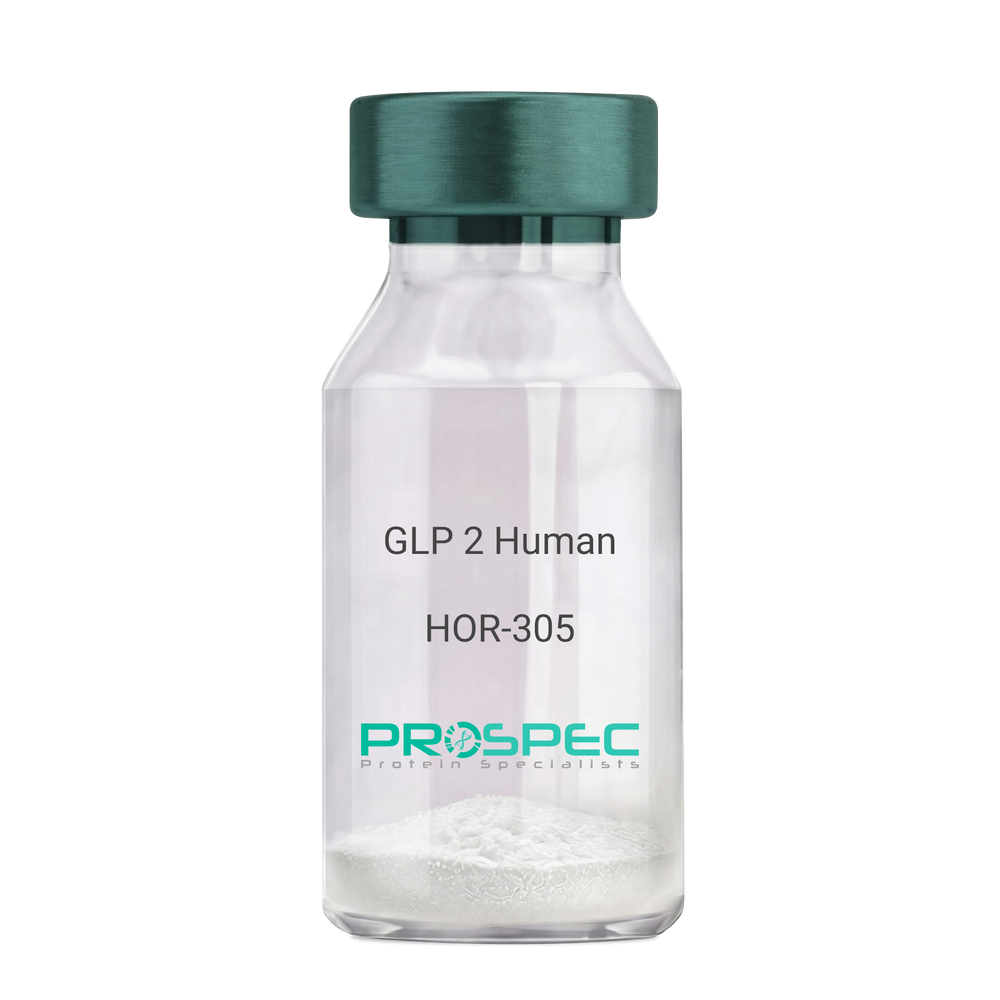
    GLP 2 Human

    Description:

    Human GLP-2

    GLP2, GLP-2, GLP 2.

    Product # :

    HOR-305

    Price :

    Quantity :

    Shipping Method :

    Room Temp Icon

    Shipped at Room temp

    Add To Cart

    More Info

    • description
    • formulation
    • purity
    • More Info
    • Citations

    Description

    GLP-2 contains 34 amino acids having a molecular mass of 3922.35 Dalton.

    Formulation

    The protein (1mg/ml) was lyophilized with no additives.

    Purity

    Greater than 98.0% as determined by RP-HPLC.

    Citations

    More Info

    • Introduction

      GLP-2 functions as an intestinal growth factor, which stimulates intestinal epithelial growth. GLP2 is involved in diabetes-associated bowel growth. GLP2 enhances cell differentiation, playing a role as a cytokine and in tissue regeneration, and mediating cytoprotection. GLP2 is invloded numerous therapeutic applications. GLP2 regulates signaling pathways coupled to cell proliferation and cell death by apoptosis.
      GLP-2 is produced by specific post-translational proteolytic cleavage of proGLP. GLP-2 is manufactured by the intestinal endocrine L cell and by several neurons in the central nervous system.

    • Synonyms

      GLP2, GLP-2, GLP 2, Glucagon Like Peptide-2.

    • Physical Appearance

      Sterile Filtered White lyophilized (freeze-dried) powder.

    • Stability

      Lyophilized GLP2 although stable at room temperature for 3 weeks, should be stored desiccated below -18°C. Upon reconstitution GLP2 should be stored at 4°C between 2-7 days and for future use below -18°C.For long term storage it is recommended to add a carrier protein (0.1% HSA or BSA).Please prevent freeze-thaw cycles.

    • Solubility

      It is recommended to reconstitute the lyophilized GLP-2 in sterile 18MΩ-cm H2O not less than 100 µg/ml, which can then be further diluted to other aqueous solutions.

    • Amino Acid Sequence

      His-Ala-Asp-Gly-Ser-Phe-Ser-Asp-Glu-Met-Asn-Thr-Ile-Leu-Asp-Asn-Leu-Ala-Ala-Arg-Asp-Phe-Ile-Asn-Trp-Leu-Ile-Gln-Thr-Lys-Ile-Thr-Asp-Arg.

    • Background

      What is the molecular weight/Mw of GLP 2 HUMAN Protein?
      GLP 2 HUMAN Protein has a total Mw of 3.92kDa.


      What is the Purity of GLP 2 HUMAN Protein?
      GLP 2 HUMAN Protein is >95% pure as determined by SDS-PAGE.

      What is the Biological Activity of GLP 2 HUMAN Protein?
      The biological functionality of GLP 2 HUMAN Protein will be determined in the future.

      What is the amino acid sequence of GLP 2 HUMAN Protein?
      His-Ala-Asp-Gly-Ser-Phe-Ser-Asp-Glu-Met-Asn-Thr-Ile-Leu-Asp-Asn-Leu-Ala-Ala-Arg-Asp-Phe-Ile-Asn-Trp-Leu-Ile-Gln-Thr-Lys-Ile-Thr-Asp-Arg.

      What applications can GLP 2 HUMAN Protein be used in?
      GLP 2 HUMAN Protein can probably be used in western blot, ELISA and Lateral Flow.

      What is the endotoxin level for GLP 2 HUMAN Protein?
      The endotoxin level is minimal, GLP 2 HUMAN Protein was purified using conventional chromatography techniques.


    ProSpec's products are furnished for LABORATORY RESEARCH USE ONLY. The product may not be used as drugs, agricultural or pesticidal products, food additives or household chemicals.

    Glp 2 Human
  • View Data Sheet

    Name :

    Myc-HRP Antibody

    Description:

    Myc, Mouse Antibody Peroxidase Conjugated

    MYC, CMYC, C-MYS, V-MYC, P64.

    Product # :

    ANT-224

    Price :

    Quantity :

    Shipping Method :

    Room Temp Icon

    Shipped at Room temp

    Add To Cart

    More Info

    • description
    • formulation
    • More Info
    • Citations

    Description

    Monoclonal antibodies are produced by immunizing mouse with synthetic peptide (EQKLISEEDL) coupled to KLH.

    Formulation

    1×PBS & 50% glycerol.

    Citations

    More Info

    • Introduction

      c-Myc is a multifunctional, nuclear phosphoprotein that plays a role in cell cycle progression, apoptosis and cellular transformation. It functions as a transcription factor that regulates transcription of specific target genes. Mutations, overexpression, rearrangement and translocation of c-Myc have been associated with a variety of hematopoietic tumors, leukemias and lymphomas, including Burkitt lymphoma. There is evidence to show that alternative translation initiations from an upstream, in-frame non-AUG (CUG) and a downstream AUG start site result in the production of two isoforms with distinct N-termini. The synthesis of non-AUG initiated protein is suppressed in Burkitt's lymphomas, suggesting its importance in the normal function of this gene.

    • Synonyms

      MYC, CMYC, C-MYS, V-MYC, P64.

    • Ig Subclass

      Mouse IgG1.

    • Clone

      PMYCHRPSHG.

    • Applications

      Western Blot.

    • Titer

      Western Blotting, 1:1000.

    • Type

      Mouse Antibody Monoclonal.

    ProSpec's products are furnished for LABORATORY RESEARCH USE ONLY. The product may not be used as drugs, agricultural or pesticidal products, food additives or household chemicals.

    Myc Hrp Antibody
  • View Data Sheet

    Name :

    GMPR2 Human

    Description:

    Guanosine Monophosphate Reductase 2 Human Recombinant

    GMP reductase 2, Guanosine 5''-monophosphate oxidoreductase 2.

    Product # :

    ENZ-557

    Price :

    Quantity :

    Shipping Method :

    Ice Icon

    Shipped with Ice Packs

    Add To Cart

    More Info

    • description
    • source
    • formulation
    • purity
    • More Info
    • Citations

    Description

    GMPR2 Human Recombinant produced in E.Coli is a single, non-glycosylated, polypeptide chain containing 368 amino acids (1-348 a.a.) and having a molecular mass of 40 kDa. GMPR2 is fused to a 20 amino acid His-tag at N-terminus and purified by proprietary chromatographic techniques.

    Source

    Escherichia Coli.

    Formulation

    GMPR2 1mg/ml solution contains 20mM Tris pH-8, 1mM DTT and 10% glycerol.

    Purity

    Greater than 90% as determined by SDS-PAGE.

    Citations

    More Info

    • Introduction

      GMPR2 is the single known metabolic step by which guanine nucleotides can be transformed to the pivotal precursor of both adenine and guanine nucleotides. GMPR2 catalyzes the permanent NADPH-dependent reductive deamination of GMP to IMP, and is involved in re-utilization of free intracellular bases and purine nucleosides.

    • Synonyms

      GMP reductase 2, Guanosine 5''-monophosphate oxidoreductase 2.

    • Physical Appearance

      Sterile filtered colorless solution.

    • Stability

      GMPR2 Human Recombinant although stable at 4°C for 1 week, should be stored below -18°C. Please prevent freeze thaw cycles.

    • Amino Acid Sequence

      MGSSHHHHHH SSGLVPRGSH MPHIDNDVKL DFKDVLLRPK RSTLKSRSEV DLTRSFSFRN SKQTYSGVPI IAANMDTVGT FEMAKVLCKF
      SLFTAVHKHY SLVQWQEFAG QNPDCLEHLA ASSGTGSSDF EQLEQILEAI PQVKYICLDV ANGYSEHFVE FVKDVRKRFP QHTIMAGNVV
      TGEMVEELIL SGADIIKVGI GPGSVCTTRK KTGVGYPQLS AVMECADAAH GLKGHIISDG GCSCPGDVAK AFGAGADFVM LGGMLAGHSE
      SGGELIERDG KKYKLFYGMS SEMAMKKYAG GVAEYRASEG KTVEVPFKGD VEHTIRDILG GIRSTCTYVG AAKLKELSRR TTFIRVTQQV
      NPIFSEAC.

    ProSpec's products are furnished for LABORATORY RESEARCH USE ONLY. The product may not be used as drugs, agricultural or pesticidal products, food additives or household chemicals.

    Gmpr2 Human
  • View Data Sheet

    Name :

    HNRNPK Human

    Description:

    Heterogeneous Nuclear Ribonucleoprotein K Human Recombinant

    CSBP, HNRPK, TUNP, Heterogeneous nuclear ribonucleoprotein K, hnRNP K, Transformation up-regulated nuclear protein, HNRNPK.

    Product # :

    PRO-1539

    Price :

    Quantity :

    Shipping Method :

    Ice Icon

    Shipped with Ice Packs

    Add To Cart

    More Info

    • description
    • source
    • formulation
    • purity
    • More Info
    • Citations

    Description

    HNRNPK Human Recombinant produced in E. coli is a single polypeptide chain containing 299 amino acids (1-276) and having a molecular mass of 33kDa. HNRNPK is fused to a 23 amino acid His-tag at N-terminus & purified by proprietary chromatographic techniques.

    Source

    Escherichia Coli.

    Formulation

    The HNRNPK solution (1mg/ml) contains 20mM Tris-HCl buffer (pH 8.0), 0.15M NaCl, 20% glycerol and 1mM DTT.

    Purity

    Greater than 95% as determined by SDS-PAGE.

    Citations

    More Info

    • Introduction

      Heterogeneous Nuclear Ribonucleoprotein K, also known as HNRNPK, is a part of the subfamily of ubiquitously expressed heterogeneous nuclear ribonucleoproteins (hnRNPs). HNRNPK takes part in p53/TP53 reaction to DNA damage, acting at the level of both transcription activation and repression. HNRNPK is located in the nucleoplasm and has 3 repeats of KH domains which bind to RNAs.

    • Synonyms

      CSBP, HNRPK, TUNP, Heterogeneous nuclear ribonucleoprotein K, hnRNP K, Transformation up-regulated nuclear protein, HNRNPK.

    • Physical Appearance

      Sterile Filtered clear solution.

    • Stability

      Store at 4°C if entire vial will be used within 2-4 weeks. Store frozen at -20°C for longer periods of time. For long term storage it is recommended to add a carrier protein (0.1% HSA or BSA).Avoid multiple freeze-thaw cycles.

    • Amino Acid Sequence

      MGSSHHHHHH SSGLVPRGSH MGSMETEQPE ETFPNTETNG EFGKRPAEDM EEEQAFKRSR NTDEMVELRI LLQSKNAGAV IGKGGKNIKA LRTDYNASVS VPDSSGPERI LSISADIETI GEILKKIIPT LEEGLQLPSP TATSQLPLES DAVECLNYQH YKGSDFDCEL RLLIHQSLAG GIIGVKGAKI KELRENTQTT IKLFQECCPH STDRVVLIGG KPDRVVECIK IILDLISESP IKGRAQPYDP NFYDETYDYG GFTMMFDDRR GRPVGFPMRG RGGFDRMPPG RGGRPMPPS.

    ProSpec's products are furnished for LABORATORY RESEARCH USE ONLY. The product may not be used as drugs, agricultural or pesticidal products, food additives or household chemicals.

    Hnrnpk Human
  • View Data Sheet

    Name :

    SIRPG Human

    Description:

    Signal-Regulatory Protein Gamma Human Recombinant

    signal-regulatory protein gamma isoform 1 precursor, bA77C3.1, CD172g, SIRP-B2, SIRPB2, SIRPgamma, Signal-Regulatory Protein Gamma, SIRPG, SIRP-b2, SIRP-beta-2, CD_antigen: CD172g, CD172 antigen-like family member B, Signal-regulatory protein beta-2, SIRP-gamma.

    Product # :

    PRO-2013

    Price :

    Quantity :

    Shipping Method :

    Ice Icon

    Shipped with Ice Packs

    Add To Cart

    More Info

    • description
    • source
    • formulation
    • purity
    • More Info
    • Citations

    Description

    SIRPG Human Recombinant produced in E.Coli is a single, non-glycosylated polypeptide chain containing 355 amino acids (29-360 a.a.) and having a molecular mass of 39.1kDa.SIRPG is fused to a 23 amino acid His-tag at N-terminus & purified by proprietary chromatographic techniques.

    Source

    Escherichia Coli.

    Formulation

    SIRPG protein solution (1mg/ml) containing 20mM Tris-HCl buffer (pH 8.0), 0.4M Urea and 10% glycerol.

    Purity

    Greater than 80.0% as determined by SDS-PAGE.

    Citations

    More Info

    • Introduction

      Signal-Regulatory Protein Gamma (SIRPG) belongs to the signal-regulatory protein (SIRP) family whose members are receptor-type transmembrane glycoproteins which negatively regulate the receptor tyrosine kinase-coupled signaling processes. SIRPG is also a part of the immunoglobulin superfamily.

    • Synonyms

      signal-regulatory protein gamma isoform 1 precursor, bA77C3.1, CD172g, SIRP-B2, SIRPB2, SIRPgamma, Signal-Regulatory Protein Gamma, SIRPG, SIRP-b2, SIRP-beta-2, CD_antigen: CD172g, CD172 antigen-like family member B, Signal-regulatory protein beta-2, SIRP-gamma.

    • Physical Appearance

      Sterile Filtered colorless solution.

    • Stability

      Store at 4°C if entire vial will be used within 2-4 weeks. Store, frozen at -20°C for longer periods of time. For long term storage it is recommended to add a carrier protein (0.1% HSA or BSA).Avoid multiple freeze-thaw cycles.

    • Amino Acid Sequence

      MGSSHHHHHH SSGLVPRGSH MGSEEELQMI QPEKLLLVTV GKTATLHCTV TSLLPVGPVL WFRGVGPGRE LIYNQKEGHF PRVTTVSDLT KRNNMDFSIR ISSITPADVG TYYCVKFRKG SPENVEFKSG PGTEMALGAK PSAPVVLGPA ARTTPEHTVS FTCESHGFSP RDITLKWFKN GNELSDFQTN VDPTGQSVAY SIRSTARVVL DPWDVRSQVI CEVAHVTLQG DPLRGTANLS EAIRVPPTLE VTQQPMRVGN QVNVTCQVRK FYPQSLQLTW SENGNVCQRE TASTLTENKD GTYNWTSWFL VNISDQRDDV VLTCQVKHDG QLAVSKRLAL EVTVHQKDQS SDATP.

    ProSpec's products are furnished for LABORATORY RESEARCH USE ONLY. The product may not be used as drugs, agricultural or pesticidal products, food additives or household chemicals.

    Sirpg Human
  • View Data Sheet

    Name :

    GRXB E.Coli

    Description:

    Glutaredoxin-2 E.Coli Recombinant

    Glutaredoxin-2, Grx2, grxB, b1064, JW1051.

    Product # :

    ENZ-130

    Price :

    Quantity :

    Shipping Method :

    Ice Icon

    Shipped with Ice Packs

    Add To Cart

    More Info

    • description
    • source
    • formulation
    • purity
    • More Info
    • Citations

    Description

    GRXB produced in E.Coli is a single, non-glycosylated polypeptide chain containing 235 amino acids (1-215 a.a.) and having a molecular mass of 26.5kDa.GRXB is fused to a 20 amino acid His-tag at N-terminus & purified by proprietary chromatographic techniques.

    Source

    Escherichia Coli.

    Formulation

    GRXB protein solution (1mg/ml) 20mM Tris-HCl buffer (pH 8.0), 1mM DTT, 10% glycerol and 50mM NaCl.

    Purity

    Greater than 95% as determined by SDS-PAGE.

    Citations

    More Info

    • Introduction

      Glutaredoxin-2 (GrxB) is amember of the glutaredoxin family. Glutaredoxins are small redox enzymes of approximately 100 amino-acid residues which use glutathione as a cofactor. Glutaredoxins are oxidized by substrates, and reduced non-enzymatically by glutathione. GrxB is involved in reducing some disulfides in a coupled system with glutathione reductase. GrxB doesn’t act as hydrogen donor for ribonucleotide reductase.

    • Synonyms

      Glutaredoxin-2, Grx2, grxB, b1064, JW1051.

    • Physical Appearance

      Sterile filtered colorless solution.

    • Stability

      Store at 4°C if entire vial will be used within 2-4 weeks.Store, frozen at -20°C for longer periods of time. For long term storage it is recommended to add a carrier protein (0.1% HSA or BSA).Avoid multiple freeze-thaw cycles.

    • Amino Acid Sequence

      MGSSHHHHHH SSGLVPRGSH MKLYIYDHCP YCLKARMIFG LKNIPVELHV LLNDDAETPT RMVGQKQVPI LQKDDSRYMP ESMDIVHYVD KLDGKPLLTG KRSPAIEEWL RKVNGYANKL LLPRFAKSAF DEFSTPAARK YFVDKKEASA GNFADLLAHS DGLIKNISDD LRALDKLIVK PNAVNGELSE DDIQLFPLLR NLTLVAGINW PSRVADYRDN MAKQTQINLL SSMAI.

    ProSpec's products are furnished for LABORATORY RESEARCH USE ONLY. The product may not be used as drugs, agricultural or pesticidal products, food additives or household chemicals.

    Grxb Ecoli
  • View Data Sheet

    Name :

    GFRA3 Human, Sf9

    Description:

    GDNF Family Receptor Alpha 3 Human Recombinant, Sf9

    GDNF Family Receptor Alpha3, GDNFR-alpha-3, GFR-alpha-3, GDNF Receptor Alpha-3, GDNFR3, GDNF Family Receptor Alpha-3, Glial Cell Line-Derived Neurotrophic Factor Receptor Alpha-3, GPI-Linked Receptor, GFRA3.

    Product # :

    CYT-1013

    Price :

    Quantity :

    Shipping Method :

    Ice Icon

    Shipped with Ice Packs

    Add To Cart

    More Info

    • description
    • source
    • formulation
    • purity
    • More Info
    • Citations

    Description

    GFRA3 Human Recombinant produced in Sf9 Baculovirus cells is a single, glycosylated polypeptide chain containing 585 amino acids (32-374) and having a molecular mass of 65.5kDa (Molecular size on SDS-PAGE will appear at approximately 70-100kDa). GFRA3 is fused to a 239 amino acid hIgG-His-Tag at C-terminus and purified by proprietary chromatographic techniques.

    Source

    Sf9, Baculovirus cells.

    Formulation

    GFRA3 protein solution (0.25mg/ml) containing Phosphate Buffered Saline (pH 7.4) and 10% glycerol.

    Purity

    Greater than 85.0% as determined by SDS-PAGE.

    Citations

    More Info

    • Introduction

      GDNF Family Receptor Alpha 3 (GFRA3) belongs to the GDNF receptor family. GFRA3 creates a signaling receptor complex with RET tyrosine kinase receptor and binds the ligand, artemin (ARTN).

    • Synonyms

      GDNF Family Receptor Alpha3, GDNFR-alpha-3, GFR-alpha-3, GDNF Receptor Alpha-3, GDNFR3, GDNF Family Receptor Alpha-3, Glial Cell Line-Derived Neurotrophic Factor Receptor Alpha-3, GPI-Linked Receptor, GFRA3.

    • Physical Appearance

      Sterile Filtered clear solution.

    • Stability

      Store at 4°C if entire vial will be used within 2-4 weeks. Store, frozen at -20°C for longer periods of time. For long term storage it is recommended to add a carrier protein (0.1% HSA or BSA).Avoid multiple freeze-thaw cycles.

    • Amino Acid Sequence

      ADPDPLPTES RLMNSCLQAR RKCQADPTCS AAYHHLDSCT SSISTPLPSE EPSVPADCLE AAQQLRNSSL IGCMCHRRMK NQVACLDIYW TVHRARSLGN YELDVSPYED TVTSKPWKMN LSKLNMLKPD SDLCLKFAML CTLNDKCDRL RKAYGEACSG PHCQRHVCLR QLLTFFEKAA EPHAQGLLLC PCAPNDRGCG ERRRNTIAPN CALPPVAPNC LELRRLCFSD PLCRSRLVDF QTHCHPMDIL GTCATEQSRC LRAYLGLIGT AMTPNFVSNV NTSVALSCTC RGSGNLQEEC EMLEGFFSHN PCLTEAIAAK MRFHSQLFSQ DWPHPTFAVM AHQNENLEPK SCDKTHTCPP CPAPELLGGP SVFLFPPKPK DTLMISRTPE VTCVVVDVSH EDPEVKFNWY VDGVEVHNAK TKPREEQYNS TYRVVSVLTV LHQDWLNGKE YKCKVSNKAL PAPIEKTISK AKGQPREPQV YTLPPSRDEL TKNQVSLTCL VKGFYPSDIA VEWESNGQPE NNYKTTPPVL DSDGSFFLYS KLTVDKSRWQ QGNVFSCSVM HEALHNHYTQ KSLSLSPGKH HHHHH.

    • Background

      What is the molecular weight/Mw of GFRA3 HUMAN, SF9 Protein?
      GFRA3 HUMAN, SF9 Protein has a total Mw of 65.5kDa.

      What is the source or expression system of GFRA3 HUMAN, SF9 Protein?
      Sf9, Baculovirus cells.
      What is the Purity of GFRA3 HUMAN, SF9 Protein?
      GFRA3 HUMAN, SF9 Protein is >85% pure as determined by SDS-PAGE.

      What is the Biological Activity of GFRA3 HUMAN, SF9 Protein?
      The biological functionality of GFRA3 HUMAN, SF9 Protein will be determined in the future.

      What is the amino acid sequence of GFRA3 HUMAN, SF9 Protein?
      ADPDPLPTES RLMNSCLQAR RKCQADPTCS AAYHHLDSCT SSISTPLPSE EPSVPADCLE AAQQLRNSSL IGCMCHRRMK NQVACLDIYW TVHRARSLGN YELDVSPYED TVTSKPWKMN LSKLNMLKPD SDLCLKFAML CTLNDKCDRL RKAYGEACSG PHCQRHVCLR QLLTFFEKAA EPHAQGLLLC PCAPNDRGCG ERRRNTIAPN CALPPVAPNC LELRRLCFSD PLCRSRLVDF QTHCHPMDIL GTCATEQSRC LRAYLGLIGT AMTPNFVSNV NTSVALSCTC RGSGNLQEEC EMLEGFFSHN PCLTEAIAAK MRFHSQLFSQ DWPHPTFAVM AHQNENLEPK SCDKTHTCPP CPAPELLGGP SVFLFPPKPK DTLMISRTPE VTCVVVDVSH EDPEVKFNWY VDGVEVHNAK TKPREEQYNS TYRVVSVLTV LHQDWLNGKE YKCKVSNKAL PAPIEKTISK AKGQPREPQV YTLPPSRDEL TKNQVSLTCL VKGFYPSDIA VEWESNGQPE NNYKTTPPVL DSDGSFFLYS KLTVDKSRWQ QGNVFSCSVM HEALHNHYTQ KSLSLSPGKH HHHHH.

      What applications can GFRA3 HUMAN, SF9 Protein be used in?
      GFRA3 HUMAN, SF9 Protein can probably be used in western blot, ELISA and Lateral Flow.

      What is the endotoxin level for GFRA3 HUMAN, SF9 Protein?
      The endotoxin level is minimal, GFRA3 HUMAN, SF9 Protein was purified using conventional chromatography techniques.


    ProSpec's products are furnished for LABORATORY RESEARCH USE ONLY. The product may not be used as drugs, agricultural or pesticidal products, food additives or household chemicals.

    Gfra3 Human Sf9
  • View Data Sheet

    Name :

    GGPS1 Human

    Description:

    Geranylgeranyl Diphosphate Synthase 1 Human Recombinant

    GGPPS, GGPPS1, GGPP synthetase.

    Product # :

    ENZ-555

    Price :

    Quantity :

    Shipping Method :

    Ice Icon

    Shipped with Ice Packs

    Add To Cart

    More Info

    • description
    • source
    • formulation
    • purity
    • More Info
    • Citations

    Description

    GGPS1 Recombinant Human produced in E.Coli is a single, non-glycosylated polypeptide chain containing 320 amino acids (1-300 a.a.) and having a molecular mass of 37 kDa. The GGPS1 is fused to a 20 amino acids His-Tag at N-terminus and purified by proprietary chromatographic techniques.

    Source

    Escherichia Coli.

    Formulation

    GGPS1 Human recombinant (1mg/ml) protein solution contains 20mM Tris-HCl pH-8, 1mM DTT & 10% glycerol.

    Purity

    Greater than 90.0% as determined by SDS-PAGE.

    Citations

    More Info

    • Introduction

      GGPS1 is PART of the prenyltransferase family. GGPS1 is widely expressed in testis, heart and skeletal muscle, GGPS1 is localized in the cytoplasm and catalyzes the formation of geranylgeranyl pyrophosphate, a precursor of geranylgeranylated proteins and carotenoids. GGPS1 is a significant enzyme that is responsible for the C20-prenylation of proteins and for the regulation of a nuclear hormone receptor.

    • Synonyms

      GGPPS, GGPPS1, GGPP synthetase.

    • Physical Appearance

      Sterile filtered colorless solution.

    • Stability

      Store at 4°C if entire vial will be used within 2-4 weeks. Store, frozen at -20°C for longer periods of time. For long term storage it is recommended to add a carrier protein (0.1% HSA or BSA).Avoid multiple freeze-thaw cycles.

    • Amino Acid Sequence

      MGSSHHHHHH SSGLVPRGSH MEKTQETVQR ILLEPYKYLL QLPGKQVRTK LSQAFNHWLK VPEDKLQIII EVTEMLHNAS LLIDDIEDNS KLRRGFPVAH SIYGIPSVIN SANYVYFLGL EKVLTLDHPD AVKLFTRQLL ELHQGQGLDI YWRDNYTCPT EEEYKAMVLQ KTGGLFGLAV
      GLMQLFSDYK EDLKPLLNTL GLFFQIRDDY ANLHSKEYSE NKSFCEDLTE GKFSFPTIHA IWSRPESTQV QNILRQRTEN IDIKKYCVHY LEDVGSFEYT RNTLKELEAK AYKQIDARGG NPELVALVKH LSKMFKEENE.

    ProSpec's products are furnished for LABORATORY RESEARCH USE ONLY. The product may not be used as drugs, agricultural or pesticidal products, food additives or household chemicals.

    Ggps1 Human
  • View Data Sheet

    Name :

    GCGR Human

    Description:

    Glucagon Receptor Human Recombinant

    GL-R, GLR, Glucagon Receptor.

    Product # :

    HOR-020

    Price :

    Quantity :

    Shipping Method :

    Room Temp Icon

    Shipped at Room temp

    Add To Cart

    More Info

    • description
    • source
    • formulation
    • purity
    • More Info
    • Citations

    Description

    GCGR Human Recombinant produced in E. coli is a single, non-glycosylated polypeptide chain (a.a 29-142) containing 125 amino acids including an 8 a.a C-terminal His tag. The total molecular mass is 19.9kDa (calculated).

    Source

    E. coli

    Formulation

    GCGR filtered (0.4 µm) and lyophilized from solution in acetonitrile/0,1%TFA and 1% (w/v) trehalose.

    Purity

    Greater than 95.0% as determined by SDS-PAGE.

    Citations

    More Info

    • Introduction

      Glucagon receptor is part of the glucagon receptor family which also contains GLP-1, GLP-2, GHRH and GIP receptors. GCGR regulates blood glucose levels and is mainly expressed in the pancreas, liver and kidneys. Mutations in GCGR are a cause of non-insulin-dependent diabetes mellitus.

    • Synonyms

      GL-R, GLR, Glucagon Receptor.

    • Physical Appearance

      Filtered White lyophilized (freeze-dried) powder.

    • Stability

      Store lyophilized protein at -20°C. Aliquot the product after reconstitution to avoid repeated freezing/thawing cycles. Reconstituted protein can be stored at 4°C for a limited period of time; it does not show any change after one week at 4°C.

    • Solubility

      It is recommended to add deionized water to prepare a working stock solution of approximately 0.5mg/ml and let the lyophilized pellet dissolve completely. GCGR is not sterile! Please filter the product by an appropriate sterile filter before using it in the cell culture.

    • Amino Acid Sequence

      MQVMDFLFEK WKLYGDQCHH NLSLLPPPTE LVCNRTFDKY SCWPDTPANT TANISCPWYL PWHHKVQHRF VFKRCGPDGQ WVRGPRGQPW RDASQCQMDG EEIEVQKEVA KMYSSFQLEH HHHHH.

    ProSpec's products are furnished for LABORATORY RESEARCH USE ONLY. The product may not be used as drugs, agricultural or pesticidal products, food additives or household chemicals.

    Gcgr Human
  • View Data Sheet

    Name :

    CRCP Human

    Description:

    CGRP Receptor Component Human Recombinant

    CGRP receptor component protein, CGRP-RCP, RCP, RCP9, Calcitonin gene-related peptide-receptor component protein, RNA polymerase III subunit C9, DNA-directed RNA polymerase III subunit RPC9, HsC17, MGC111194.

    Product # :

    PRO-919

    Price :

    Quantity :

    Shipping Method :

    Ice Icon

    Shipped with Ice Packs

    Add To Cart

    More Info

    • description
    • source
    • formulation
    • purity
    • More Info
    • Citations

    Description

    CRCP Human Recombinant produced in E.coli is a single, non-glycosylated polypeptide chain containing 168 amino acids (1-148) and having a molecular mass of 19.0 kDa.The CRCP is fused to a 20 amino acid His-Tag at N-terminus and purified by proprietary chromatographic techniques.

    Source

    E.coli.

    Formulation

    The CRCP solution (0.5mg/ml) contains 20mM Tris-HCl buffer (pH 8.0), 0.1M NaCl, 1mM DTT and 20% glycerol.

    Purity

    Greater than 95% as determined by SDS-PAGE.

    Citations

    More Info

    • Introduction

      CRCP is a ubiquitous coupling protein for the calcitonin gene-related peptide and adrenomedullin receptors. CRCP controls ligand sensitivity in several tissues and has DNA-directed RNA polymerase activity, catalytic activity and calcitonin receptor activity.

    • Synonyms

      CGRP receptor component protein, CGRP-RCP, RCP, RCP9, Calcitonin gene-related peptide-receptor component protein, RNA polymerase III subunit C9, DNA-directed RNA polymerase III subunit RPC9, HsC17, MGC111194.

    • Physical Appearance

      Sterile Filtered colorless solution.

    • Stability

      Store at 4°C if entire vial will be used within 2-4 weeks. Store, frozen at -20°C for longer periods of time. For long term storage it is recommended to add a carrier protein (0.1% HSA or BSA).Avoid multiple freeze-thaw cycles.

    • Amino Acid Sequence

      MGSSHHHHHH SSGLVPRGSH MEVKDANSAL LSNYEVFQLL TDLKEQRKES GKNKHSSGQQ NLNTITYETL KYISKTPCRH QSPEIVREFL TALKSHKLTK AEKLQLLNHR PVTAVEIQLM VEESEERLTE EQIEALLHTV TSILPAEPEA EQKKNTNSNV AMDEEDPA

    ProSpec's products are furnished for LABORATORY RESEARCH USE ONLY. The product may not be used as drugs, agricultural or pesticidal products, food additives or household chemicals.

    Crcp Human
  • View Data Sheet

    Name :

    SIRPA Human, HEK

    Description:

    Signal-Regulatory Protein Alpha Human Recombinant, HEK

    Tyrosine-protein phosphatase non-receptor type substrate 1 isoform 1, SHP substrate 1, SHPS-1, Brain Iglike molecule with tyrosine-based activation motifs, Bit, CD172 antigen-like family member A, MYD1, PTPNS1, SHPS1,SIRP, Inhibitory receptorSHPS-1, Macrophage fusion receptor, MyD-1 antigen, Signal-regulatory protein alpha-1, Sirp-alpha-1, Signalregulatory protein alpha-2, Sirp-alpha-2, Signal-regulatory protein alpha-3, Sirp-alpha-3, p84, CD172a, BIT, MFR.

    Product # :

    PRO-2755

    Price :

    Quantity :

    Shipping Method :

    Ice Icon

    Shipped with Ice Packs

    Add To Cart

    More Info

    • description
    • source
    • formulation
    • purity
    • biological activity
    • More Info
    • Citations

    Description

    SIRPA Human Recombinant produced in HEK293 cells is a single, glycosylated polypeptide chain (27-373a.a) containing 356 amino acids and having a molecular mass of 39kDa.SIRPA is fused to a 6 amino acid His-tag at C-terminus,and is purified by proprietary chromatographic techniques.

    Source

    HEK293 Cells.

    Formulation

    The SIRPA solution (1mg/ml) contains Phosphate-Buffered Saline (pH 7.4) and 10% glycerol.

    Purity

    Greater than 95% as determined by SDS-PAGE.

    Biological Activity

    Measured by its binding ability in a functional ELISA with Human CD47.

    Citations

    More Info

    • Introduction

      Signal-Regulatory Protein Alpha, SIRPA belongs to the signal-regulatory-protein (SIRP) family, as well as the immunoglobulin super family. The members of the SIRP family are receptor-type transmembrane glycoproteins which are involved in the negative regulation of receptor tyrosine kinase-coupled signaling processes.
      SIRPA can be phosphorylated by tyrosine kinases. The phospho-tyrosine residues of this PTP have been shown to recruit SH2 domain containing tyrosine phosphatases (PTP), and perform as substrates of PTPs. SIRPA take part in signal transduction mediated by a variety of growth factor receptors. CD47 has been shown to be a ligand for SIRPA.

    • Synonyms

      Tyrosine-protein phosphatase non-receptor type substrate 1 isoform 1, SHP substrate 1, SHPS-1, Brain Iglike molecule with tyrosine-based activation motifs, Bit, CD172 antigen-like family member A, MYD1, PTPNS1, SHPS1,SIRP, Inhibitory receptor
      SHPS-1, Macrophage fusion receptor, MyD-1 antigen, Signal-regulatory protein alpha-1, Sirp-alpha-1, Signalregulatory protein alpha-2, Sirp-alpha-2, Signal-regulatory protein alpha-3, Sirp-alpha-3, p84, CD172a, BIT, MFR.

    • Physical Appearance

      Sterile Filtered clear solution.

    • Stability

      Store at 4°C if entire vial will be used within 2-4 weeks. Store, frozen at -20°C for longer periods of time. For long term storage it is recommended to add a carrier protein (0.1% HSA or BSA).Avoid multiple freeze-thaw cycles.

    • Amino Acid Sequence

      DGSGVAGEEE LQVIQPDKSV LVAAGETATL RCTATSLIPV GPIQWFRGAG PGRELIYNQK EGHFPRVTTV SDLTKRNNMD FSIRIGNITP ADAGTYYCVK FRKGSPDDVE FKSGAGTELS VRAKPSAPVV SGPAARATPQ HTVSFTCESH GFSPRDITLK WFKNGNELSD FQTNVDPVGE SVSYSIHSTA KVVLTREDVH SQVICEVAHV TLQGDPLRGT ANLSETIRVP PTLEVTQQPV RAENQVNVTC QVRKFYPQRL QLTWLENGNV SRTETASTVT ENKDGTYNWM SWLLVNVSAH RDDVKLTCQV EHDGQPAVSK SHDLKVSAHP KEQGSNTAAE NTGSNERNIY HHHHHH.

    ProSpec's products are furnished for LABORATORY RESEARCH USE ONLY. The product may not be used as drugs, agricultural or pesticidal products, food additives or household chemicals.

    Cd172A Human
  • View Data Sheet

    Name :

    HSP90B1 Human, HEK

    Description:

    Heat Shock Protein 90kDa Beta (GRP94) Member 1 Human Recombinant, HEK

    ECGP, GP96, TRA1, GRP94, HSP90B1, Endoplasmin, Heat shock protein 90 kDa beta member 1, 94 kDa glucose-regulated protein, gp96 homolog, Tumor rejection antigen 1.

    Product # :

    HSP-061

    Price :

    Quantity :

    Shipping Method :

    Room Temp Icon

    Shipped at Room temp

    Add To Cart

    More Info

    • description
    • source
    • formulation
    • purity
    • More Info
    • Citations

    Description

    HSP90B1 Human Recombinant produced in HEK cells is a single, glycosylated, polypeptide chain (Asp22-Glu798) containing a total of 789 amino acids, having a calculated molecular mass of 90.9kDa. HSP90B1 is fused to a 2 aa N-terminal linker, a 4 aa C-terminal linker and a 6 aa His tag at C-Terminus.

    Source

    HEK 293.

    Formulation

    HSP90B1 was filtered (0.4 µm) and lyophilized in phosphate buffered saline (PBS) pH 8.0, 1% (w/v) Sucrose and 4% (w/v) Mannitol.

    Purity

    Greater than 90.0% as determined by SDS-PAGE.

    Citations

    More Info

    • Introduction

      HSP90B1 is an abundant molecular chaperone resident endoplasmic reticulum (ER) lumenal stress protein which is part of the Hsp90 family. HSP90B1 is involved in maintaining protein homeostasis in the secretory pathway as well as functioning in the intracellular trafficking of peptides from the extracellular space to the MHC class I antigen processing pathway of antigen presentation cells. HSP90B1 has key roles in signal transduction, protein folding, protein degradation, and morphologic evolution. HSP90B1 protein associates with numerous cochaperones and involved in folding of newly synthesized proteins or stabilizing and refolding denatured proteins after stress. HSP90B1 is highly expressed in human gastric carcinoma BGC-823 cells during the whole cell cycle.

    • Synonyms

      ECGP, GP96, TRA1, GRP94, HSP90B1, Endoplasmin, Heat shock protein 90 kDa beta member 1, 94 kDa glucose-regulated protein, gp96 homolog, Tumor rejection antigen 1.

    • Physical Appearance

      Filtered White lyophilized (freeze-dried) powder.

    • Stability

      Store lyophilized protein at -20°C. Aliquot the product after reconstitution to avoid repeated freezing/thawing cycles. Reconstituted protein can be stored at 4°C for a limited period of time.

    • Solubility

      It is recommended to add deionized water to prepare a working stock solution of approximately 0.5mg/ml and let the lyophilized pellet dissolve completely. HSP90B1 is not sterile! Please filter the product by an appropriate sterile filter before using it in the cell culture.

    • Amino Acid Sequence

      ASDDEVDVDG TVEEDLGKSR EGSRTDDEVV QREEEAIQLD GLNASQIREL REKSEKFAFQ AEVNRMMKLI INSLYKNKEI FLRELISNAS DALDKIRLIS LTDENALSGN EELTVKIKCD KEKNLLHVTD TGVGMTREEL VKNLGTIAKS GTSEFLNKMT EAQEDGQSTS ELIGQFGVGF YSAFLVADKV IVTSKHNNDT QHIWESDSNE FSVIADPRGN TLGRGTTITL VLKEEASDYL ELDTIKNLVK KYSQFINFPI YVWSSKTETV EEPMEEEEAA KEEKEESDDE AAVEEEEEEK KPKTKKVEKT VWDWELMNDI KPIWQRPSKE VEEDEYKAFY KSFSKESDDP MAYIHFTAEG EVTFKSILFV PTSAPRGLFD EYGSKKSDYI KLYVRRVFIT DDFHDMMPKY LNFVKGVVDS DDLPLNVSRE TLQQHKLLKV IRKKLVRKTL DMIKKIADDK YNDTFWKEFG TNIKLGVIED HSNRTRLAKL LRFQSSHHPT DITSLDQYVE RMKEKQDKIY FMAGSSRKEA ESSPFVERLL KKGYEVIYLT EPVDEYCIQA LPEFDGKRFQ NVAKEGVKFD ESEKTKESRE AVEKEFEPLL NWMKDKALKD KIEKAVVSQR LTESPCALVA SQYGWSGNME RIMKAQAYQT GKDISTNYYA SQKKTFEINP RHPLIRDMLR RIKEDEDDKT VLDLAVVLFE TATLRSGYLL PDTKAYGDRI ERMLRLSLNI DPDAKVEEEP EEEPEETAED TTEDTEQDED EEMDVGTDEE ETAKESTAE G PKLHHHHHH.

    ProSpec's products are furnished for LABORATORY RESEARCH USE ONLY. The product may not be used as drugs, agricultural or pesticidal products, food additives or household chemicals.

    Hsp90B1 Human Hek
  • View Data Sheet

    Name :

    GADD45GIP1 Human

    Description:

    Growth Arrest and DNA-Damage-Inducible Gamma Interacting Protein 1 Human Recombinant

    Growth arrest and DNA-damage-inducible gamma interacting protein 1, PRG6, CRIF1, PLINP-1, KBBP2, Plinp1, Papillomavirus L2-interacting nuclear protein 1, CKII beta-associating protein, CR6-interacting factor 1, p53-responsive gene 6 protein, CKII beta binding protein 2, growth arrest and DNA damage-inducible proteins-interacting protein 1, papillomavirus L2 interacting nuclear protein 1, PLINP1.

    Product # :

    PRO-972

    Price :

    Quantity :

    Shipping Method :

    Ice Icon

    Shipped with Ice Packs

    Add To Cart

    More Info

    • description
    • source
    • formulation
    • purity
    • More Info
    • Citations

    Description

    GADD45GIP1 Human Recombinant produced in E.coli is a single, non-glycosylated polypeptide chain containing 196 amino acids (48-222) and having a molecular mass of 22.6 kDa.GADD45GIP1 is fused to a 21 amino acid His-tag at N-terminus & purified by proprietary chromatographic techniques.

    Source

    E.coli.

    Formulation

    The GADD45GIP1 solution (0.25mg/ml) contains 20mM Tris-HCl buffer (pH 8.0), 2mM DTT, 0.2M NaCl and 40% glycerol.

    Purity

    Greater than 90% as determined by SDS-PAGE.

    Citations

    More Info

    • Introduction

      GADD45GIP1 is a nuclear protein which takes part in apoptosis control. GADD45GIP1 is expressed in several tissues, such as heart, thyroid, trachea, kidney, ovary, pancreas, testis and stomach and acts as a negative regulator of G1 to S phase cell cycle production by collaborating with GADD45 proteins to inhibit the activity of cyclin-dependent kinases.

    • Synonyms

      Growth arrest and DNA-damage-inducible gamma interacting protein 1, PRG6, CRIF1, PLINP-1, KBBP2, Plinp1, Papillomavirus L2-interacting nuclear protein 1, CKII beta-associating protein, CR6-interacting factor 1, p53-responsive gene 6 protein, CKII beta binding protein 2, growth arrest and DNA damage-inducible proteins-interacting protein 1, papillomavirus L2 interacting nuclear protein 1, PLINP1.

    • Physical Appearance

      Sterile Filtered colorless solution.

    • Stability

      Store at 4°C if entire vial will be used within 2-4 weeks. Store, frozen at -20°C for longer periods of time. For long term storage it is recommended to add a carrier protein (0.1% HSA or BSA).Avoid multiple freeze-thaw cycles.

    • Amino Acid Sequence

      MGSSHHHHHH SSGLVPRGSH MPRWQLGPRY AAKQFARYGA ASGVVPGSLW PSPEQLRELE AEEREWYPSL ATMQESLRVK QLAEEQKRRE REQHIAECMA KMPQMIVNWQ QQQRENWEKA QADKERRARL QAEAQELLGY QVDPRSARFQ ELLQDLEKKE RKRLKEEKQK RKKEARAAAL AAAVAQDPAA SGAPSS

    ProSpec's products are furnished for LABORATORY RESEARCH USE ONLY. The product may not be used as drugs, agricultural or pesticidal products, food additives or household chemicals.

    Gadd45Gip1 Human
  • View Data Sheet

    Name :

    GIP Human

    Description:

    Gastric Inhibitory Polypeptide Human Recombinant

    Gastric inhibitory polypeptide, GIP, Incretin hormone.

    Product # :

    PRO-1438

    Price :

    Quantity :

    Shipping Method :

    Ice Icon

    Shipped with Ice Packs

    Add To Cart

    More Info

    • description
    • source
    • formulation
    • purity
    • More Info
    • Citations

    Description

    GIP Human Recombinant produced in E. coli is a single polypeptide chain containing 155 amino acids (22-153) and having a molecular mass of 17.3kDa. GIP is fused to a 23 amino acid His-tag at N-terminus & purified by proprietary chromatographic techniques.

    Source

    E.coli.

    Formulation

    The GIP solution (0.25mg/ml) contains 20mM Tris-HCl buffer (pH8.0), 50% glycerol 0.1M NaCl and 2mM DTT.

    Purity

    Greater than 90% as determined by SDS-PAGE.

    Citations

    More Info

    • Introduction

      Gastric Inhibitory Polypeptide (GIP) which is a significant hormone of the enteroinsular axis has a functional profile of possible therapeutic value for type 2 diabetes. GIP is an important incretin hormone released into the circulation from endocrine K-cells of the duodenum and jejunum after ingestion of food1. GIP was evaluated for his ability to elevate cellular cAMP production. GIP promotes plasma triglyceride clearance in response to oral fat loading.

    • Synonyms

      Gastric inhibitory polypeptide, GIP, Incretin hormone.

    • Physical Appearance

      Sterile Filtered colorless solution.

    • Stability

      Store at 4°C if entire vial will be used within 2-4 weeks. Store, frozen at -20°C for longer periods of time. For long term storage it is recommended to add a carrier protein (0.1% HSA or BSA).Avoid multiple freeze-thaw cycles.

    • Amino Acid Sequence

      MGSSHHHHHH SSGLVPRGSH MGSEKKEGHF SALPSLPVGS HAKVSSPQPR GPRYAEGTFI SDYSIAMDKI HQQDFVNWLL AQKGKKNDWK HNITQREARA LELAGQANRK EEEAVEPQSS PAKNPSDEDL LRDLLIQELL ACLLDQTNLC RLRSR.

    ProSpec's products are furnished for LABORATORY RESEARCH USE ONLY. The product may not be used as drugs, agricultural or pesticidal products, food additives or household chemicals.

    Gip Human
  • View Data Sheet

    Name :

    HSP90B1 Human

    Description:

    Heat Shock Protein 90kDa Beta (GRP94) Member 1 Human Recombinant

    ECGP, GP96, TRA1, GRP94, HSP90B1, Endoplasmin, Heat shock protein 90 kDa beta member 1, 94 kDa glucose-regulated protein, gp96 homolog, Tumor rejection antigen 1.

    Product # :

    HSP-091

    Price :

    Quantity :

    Shipping Method :

    Ice Icon

    Shipped with Ice Packs

    Add To Cart

    More Info

    • description
    • source
    • formulation
    • purity
    • More Info
    • Citations

    Description

    HSP90B1 produced in E.Coli is a single, non-glycosylated polypeptide chain containing 819 amino acids (22-803 a.a.) and having a molecular mass of 94.4 kDa.HSP90B1 is expressed with a 36 amino acid His tag at N-Terminus and purified by proprietary chromatographic techniques.

    Source

    Escherichia Coli.

    Formulation

    The GRP94 protein solution (1mg/ml) contains 20mM Tris-HCl, pH-8, 1mM EDTA, 0.1M NaCl, 1mM DTT and 10% Glycerol.

    Purity

    Greater than 90.0% as determined by SDS-PAGE.

    Citations

    More Info

    • Introduction

      HSP90B1 is an abundant molecular chaperone resident endoplasmic reticulum (ER) lumenal stress protein which is part of the Hsp90 family. HSP90B1 is involved in maintaining protein homeostasis in the secretory pathway as well as functioning in the intracellular trafficking of peptides from the extracellular space to the MHC class I antigen processing pathway of antigen presentation cells. HSP90B1 has key roles in signal transduction, protein folding, protein degradation, and morphologic evolution. HSP90B1 protein associates with numerous cochaperones and involved in folding of newly synthesized proteins or stabilizing and refolding denatured proteins after stress. HSP90B1 is highly expressed in human gastric carcinoma BGC-823 cells during the whole cell cycle.

    • Synonyms

      ECGP, GP96, TRA1, GRP94, HSP90B1, Endoplasmin, Heat shock protein 90 kDa beta member 1, 94 kDa glucose-regulated protein, gp96 homolog, Tumor rejection antigen 1.

    • Physical Appearance

      Sterile filtered colorless solution.

    • Stability

      Store at 4°C if entire vial will be used within 2-4 weeks. Store, frozen at -20°C for longer periods of time. For long term storage it is recommended to add a carrier protein (0.1% HSA or BSA).Avoid multiple freeze-thaw cycles.

    • Amino Acid Sequence

      MRGSHHHHHH GMASMTGGQQ MGRDLYDDDD KDRWGSMDDE VDVDGTVEED LGKSREGSRT DDEVVQREEE AIQLDGLNAS QIRELREKSE KFAFQAEVNR MMKLIINSLY KNKEIFLREL ISNASDALDK IRLISLTDEN ALSGNEELTV KIKCDKEKNL LHVTDTGVGM TREELVKNLG TIAKSGTSEF LNKMTEAQED GQSTSELIGQ FGVGFYSAFL VADKVIVTSK HNNDTQHIWE SDSNEFSVIA DPRGNTLGRG TTITLVLKEE ASDYLELDTI KNLVKKYSQF INFPIYVWSS KTETVEEPME EEEAAKEEKE ESDDEAAVEE EEEEKKPKTK KVEKTVWDWE LMNDIKPIWQ RPSKEVEEDE YKAFYKSFSK ESDDPMAYIH FTAEGEVTFK SILFVPTSAP RGLFDEYGSK KSDYIKLYVR RVFITDDFHD MMPKYLNFVK GVVDSDDLPL NVSRETLQQH KLLKVIRKKL VRKTLDMIKK IADDKYNDTF WKEFGTNIKL GVIEDHSNRT RLAKLLRFQS SHHPTDITSL DQYVERMKEK QDKIYFMAGS SRKEAESSPF VERLLKKGYE VIYLTEPVDE YCIQALPEFD GKRFQNVAKE GVKFDESEKT KESREAVEKE FEPLLNWMKD KALKDKIEKA VVSQRLTESP CALVASQYGW SGNMERIMKA QAYQTGKDIS TNYYASQKKT FEINPRHPLI RDMLRRIKED EDDKTVLDLA VVLFETATLR SGYLLPDTKA YGDRIERMLR LSLNIDPDAK VEEEPEEEPE ETAEDTTEDT EQDEDEEMDV GTDEEEETAK ESTAEKDEL.

    ProSpec's products are furnished for LABORATORY RESEARCH USE ONLY. The product may not be used as drugs, agricultural or pesticidal products, food additives or household chemicals.

    Hsp90B1 Human
  • View Data Sheet

    Name :

    GFAP Human

    Description:

    Glial Fibrillary Acidic Protein Human Recombinant

    Glial fibrillary acidic protein, GFAP

    Product # :

    PRO-2802

    Price :

    Quantity :

    Shipping Method :

    Room Temp Icon

    Shipped at Room temp

    Add To Cart

    More Info

    • description
    • source
    • formulation
    • purity
    • More Info
    • Citations

    Description

    GFAP Human produced in E.coli is a single, non-glycosylated polypeptide chain (60-383 a.a.) and having a molecular mass of 37906 Dalton.

    Source

    Escherichia Coli.

    Formulation

    GFAP was lyophilized from 50mM Tris-HCl pH-7.5, 4M Urea 150mM NaCl.

    Purity

    Greater than 90.0% as determined by SDS-PAGE.

    Citations

    More Info

    • Synonyms

      Glial fibrillary acidic protein, GFAP

    • Physical Appearance

      Sterile Filtered White lyophilized (freeze-dried) powder.

    • Stability

      Lyophilized GFAP although stable at room temperature for 3 weeks, should be stored desiccated below -18°C. Upon reconstitution Glial Fibrillary Acidic Protein should be stored at 4°C between 2-7 days and for future use below -18°C. For long term storage it is recommended to add a carrier protein (0.1% HSA or BSA). Please prevent freeze-thaw cycles.

    • Solubility

      It is recommended to reconstitute the lyophilized GFAP in sterile 18MΩ-cm H2O not less than 100µg/ml, which can then be further diluted to other aqueous solutions.

    • Background

      Glial Fibrillary Acidic Protein (GFAP), a key intermediate filament protein predominantly found in astrocytes, plays a fundamental role in the central nervous system. Initially recognized for its structural functions, GFAP has emerged as a multifaceted molecule with implications in neural development, synaptic plasticity, and various neurological disorders. This research delves into the realm of GFAP human recombinant protein, shedding light on its structural properties, physiological significance, and its diverse roles in both health and disease.

      Structural Complexity of GFAP:

      GFAP belongs to the family of intermediate filament proteins, conferring structural support to astrocytes. Its unique structure comprises a central α-helical rod domain flanked by non-helical head and tail domains. This structural complexity allows GFAP to form stable filaments, providing structural integrity to astrocytes and contributing to the architecture of the central nervous system.

      Physiological Functions in Glial Cells:

      Beyond its structural role, GFAP participates in various physiological processes within glial cells. It is involved in the regulation of astrocyte morphology, motility, and migration, crucial for their interactions with neurons and blood vessels. Additionally, GFAP contributes to the formation and maintenance of the blood-brain barrier, highlighting its significance in the brain's homeostasis.

      Implications in Neurological Disorders:

      Aberrant GFAP expression and aggregation are associated with several neurological disorders. In Alexander disease, a rare neurodegenerative disorder, mutations in the GFAP gene lead to the formation of GFAP aggregates, contributing to disease pathology. Moreover, elevated levels of GFAP in cerebrospinal fluid serve as a biomarker for various neurological conditions, including traumatic brain injury, Alzheimer's disease, and multiple sclerosis, indicating its involvement in the brain's response to injury and neuroinflammation.

      GFAP in Neural Regeneration:

      Recent studies have unveiled GFAP’s role in neural regeneration and repair processes. In response to brain injury, GFAP-expressing astrocytes become reactive, forming a glial scar that isolates damaged areas. While this scar formation initially limits tissue damage, persistent scar formation can impede neural regeneration. Understanding the dynamics of GFAP expression in reactive astrocytes is crucial for developing therapies that promote neural regeneration following brain injuries or neurodegenerative diseases.

      GFAP human recombinant protein, once thought of as a structural element in astrocytes, has proven to be a pivotal player in the complex landscape of glial biology and neurological disorders. Its intricate functions extend beyond providing structural support, encompassing roles in neural development, disease pathology, and tissue repair. As research continues to uncover the nuances of GFAP’s involvement in health and disease, it offers promising avenues for developing targeted therapies and diagnostic tools, emphasizing its significance in the intricate workings of the central nervous system.

    ProSpec's products are furnished for LABORATORY RESEARCH USE ONLY. The product may not be used as drugs, agricultural or pesticidal products, food additives or household chemicals.

    Gfap Human
  • View Data Sheet

    Name :

    HIV-1 gp41 Long, HRP

    Description:

    HIV-1 gp41 Long Recombinant, HRP Labeled

    Product # :

    HIV-120

    Price :

    Quantity :

    Shipping Method :

    Ice Icon

    Shipped with Ice Packs

    Add To Cart

    More Info

    • description
    • source
    • formulation
    • purity
    • More Info
    • Citations

    Description

    The E.Coli derived HRP Labeled protein contains HIV immunodominant regions from HIV-I gp41 and is fused to beta-galactosidase (114 kDa) at the N-terminus.

    Source

    Escherichia Coli.

    Formulation

    8M urea, 20mM Tris-HCl pH 8.0, 10mM b-mercaptoethanol.

    Purity

    Greater than 95.0% as determined by SDS-PAGE.

    Citations

    More Info

    • Introduction

      Human immunodeficiency virus (HIV) is a retrovirusthat can lead to a condition in which the immune systembegins to fail, leading to opportunistic infections. HIV primarily infects vital cells in the humanimmune systemsuch as helper T cells(specifically CD4+ T cells), macrophagesand dendritic cells. HIV infection leads to low levels of CD4+ T cells through three main mechanisms: firstly, direct viral killing of infected cells; secondly, increased rates of apoptosisin infected cells; and thirdly, killing of infected CD4+ T cells by CD8 cytotoxic lymphocytesthat recognize infected cells. When CD4+ T cell numbers decline below a critical level, cell-mediated immunityis lost, and the body becomes progressively more susceptible to opportunistic infections. HIV was classified as a member of the genus Lentivirus, part of the family of Retroviridae. Lentiviruses have many common morphologies and biological properties. Many species are infected by lentiviruses, which are characteristically responsible for long-duration illnesses with a long incubation period. Lentiviruses are transmitted as single-stranded, positive-sense, enveloped RNA viruses. Upon entry of the target cell, the viral RNA genomeis converted to double-stranded DNAby a virally encoded reverse transcriptasethat is present in the virus particle. This viral DNA is then integrated into the cellular DNA by a virally encoded integraseso that the genome can be transcribed. Once the virus has infected the cell, two pathways are possible: either the virus becomes latentand the infected cell continues to function, or the virus becomes active and replicates, and a large number of virus particles are liberated that can then infect other cells.

    • Physical Appearance

      Sterile filtered colorless clear solution.

    • Stability

      HIV-1 gp41 Long HRP although stable at 4°C for 1 week, should be stored below -18°C. Please prevent freeze thaw cycles.

    • Specificity

      Immunoreactive with HIV positive serum.

    ProSpec's products are furnished for LABORATORY RESEARCH USE ONLY. The product may not be used as drugs, agricultural or pesticidal products, food additives or household chemicals.

    Hiv 1 Gp41 Long Hrp
  • View Data Sheet

    Name :

    GAPDH Human

    Description:

    Glyceraldehyde-3-Phosphate Dehydrogenase Human Recombinant

    G3PD, GAPD, MGC88685, GAPDH, Glyceraldehyde-3-Phosphate Dehydrogenase.

    Product # :

    ENZ-350

    Price :

    Quantity :

    Shipping Method :

    Ice Icon

    Shipped with Ice Packs

    Add To Cart

    More Info

    • description
    • source
    • formulation
    • purity
    • More Info
    • Citations

    Description

    GAPDH Human Recombinant produced in E.Coli is a single, non-glycosylated polypeptide chain containing 335 amino acids and having a molecular mass of 36kDa.The GAPDH is purified by proprietary chromatographic techniques.

    Source

    Escherichia Coli.

    Formulation

    The GAPDH protein (1 mg/ml) contains 20mM Tris-HCl buffer pH-8, 1mM EDTA, 1mM DTT and 20% glycerol.

    Purity

    Greater than 95.0% as determined by SDS-PAGE.

    Citations

    More Info

    • Introduction

      GAPDH is a catalytic enzyme normally known to play a role in glycolysis. GAPDH exists as a tetramer composed of 36-kDa subunits and has a range of intracellular functions. GAPDH catalyzes the reversible reduction of 1,3-bisphosphoglycerate to glyceraldehyde 3-phosphophate in the presence of NADPH. Besides functioning as a glycolytic enzyme in cytoplasm, GAPDH has function in intracellular processes such as membrane fusion, microtubule bundling, phosphotransferase activity, nuclear RNA export, DNA replication and DNA repair. GAPDH catalyzes a vital energy-yielding step in carbohydrate metabolism, the reversible oxidative phosphorylation of glyceraldehyde-3-phosphate in the presence of inorganic phosphate and nicotinamide adenine dinucleotide (NAD). The enzyme exists as a tetramer of identical chains.

    • Synonyms

      G3PD, GAPD, MGC88685, GAPDH, Glyceraldehyde-3-Phosphate Dehydrogenase.

    • Physical Appearance

      Sterile filtered colorless solution.

    • Stability

      Store at 4°C if entire vial will be used within 2-4 weeks. Store, frozen at -20°C for longer periods of time. For long term storage it is recommended to add a carrier protein (0.1% HSA or BSA).Avoid multiple freeze-thaw cycles.

    • Amino Acid Sequence

      MGKVKVGVNG FGRIGRLVTR AAFNSGKVDI VAINDPFIDL NYMVYMFQYD STHGKFHGTV KAENGKLVIN GNPITIFQER DPSKIKWGDA GAEYVVESTG VFTTMEKAGA HLQGGAKRVI ISAPSADAPM FVMGVNHEKY DNSLKIISNA SCTTNCLAPL AKVIHDNFGI VEGLMTTVHA ITATQKTVDG PSGKLWRDGR GALQNIIPAS TGAAKAVGKV IPELNGKLTG MAFRVPTANV SVVDLTCRLE KPAKYDDIKK VVKQASEGPL KGILGYTEHQ VVSSDFNSDT HSSTFDAGAG IALNDHFVKL ISWYDNEFGY SNRVVDLMAH MASKE.

    ProSpec's products are furnished for LABORATORY RESEARCH USE ONLY. The product may not be used as drugs, agricultural or pesticidal products, food additives or household chemicals.

    Gapdh Human
  • View Data Sheet

    Name :

    GH1 Antibody

    Description:

    Growth Hormone-1, Mouse Anti Human

    GH1, GH, GHN, GH-N, hGH-N, Pituitary growth hormone, Growth hormone 1, Somatotropin.

    Product # :

    ANT-230

    Price :

    Quantity :

    Shipping Method :

    Ice Icon

    Shipped with Ice Packs

    Add To Cart

    More Info

    • formulation
    • More Info
    • Citations

    Formulation

    1mg/ml containing PBS, pH-7.4, & 0.1% sodium azide.

    Citations

    More Info

    • Introduction

      GH is a member of the somatotropin/prolactin family of hormones which play an important role in growth control. The gene, along with four other related genes, is located at the growth hormone locus on chromosome 17 where they are interspersed in the same transcriptional orientation; an arrangement which is thought to have evolved by a series of gene duplications. The five genes share a remarkably high degree of sequence identity. Alternative splicing generates additional isoforms of each of the five growth hormones, leading to further diversity and potential for specialization. This particular family member is expressed in the pituitary but not in placental tissue as is the case for the other four genes in the growth hormone locus. Mutations in or deletions of the gene lead to growth hormone deficiency and short stature.

    • Synonyms

      GH1, GH, GHN, GH-N, hGH-N, Pituitary growth hormone, Growth hormone 1, Somatotropin.

    • Physical Appearance

      Sterile Filtered solution.

    • Immunogen

      GH Antibody is derived from hybridization of mouse SP2/O myeloma cells with spleen cells from BALB/c mice immunized with recombinant Growth hormone.

    • Ig Subclass

      Mouse IgG2b heavy chain and k light chain.

    • Clone

      PG3H5AT.

    • Applications

      The GH antibody has been tested by ELISA and by Western blot analysis to assure specificity and reactivity. Since application vary, however, each investigation should titrate the reagent to obtain optimal results. Recommended dilution range for Western blot analysis: 1:500 ~ 1:1000. Recommended starting dilution: 1:500.

    • Type

      Mouse Anti Human Monoclonal.

    • Storage Procedures

      For periods up to 1 month store at 4 C, for longer periods of time, store at -20 C. Prevent freeze thaw cycles.

    • Purification Method

      GH antibody was purified from mouse ascitic fluids by protein-G affinity chromatography.

    ProSpec's products are furnished for LABORATORY RESEARCH USE ONLY. The product may not be used as drugs, agricultural or pesticidal products, food additives or household chemicals.

    Growth Hormone Igg2B Antibody
  • View Data Sheet

    Name :

    HSV-2 gG

    Description:

    Herpes Simplex Virus-2 gG Recombinant

    Product # :

    HSV-223

    Price :

    Quantity :

    Shipping Method :

    Ice Icon

    Shipped with Ice Packs

    Add To Cart

    More Info

    • description
    • formulation
    • purity
    • More Info
    • Citations

    Description

    The E.Coli derived recombinant protein contains the HSV-2 gG immunodominant regions, 525-578 amino acids, the total MW is 32,100 Dalton, fused with 26 kDa GST-tag.

    Formulation

    25mM Tris pH 8, 1.5M Urea and 50% glycerol.

    Purity

    HSV-2 gG protein is >95% pure as determined by 10% PAGE (coomassie staining).

    Citations

    More Info

    • Introduction

      Entry of HSV into the host cell involves interactions of several viral glycoproteins with cell surface receptors. The virus particle is covered by an envelope which, when bound to specific receptors on the cell surface, will fuse with the cell membrane and create an opening, or pore, through which the virus enters the host cell. The sequential stages of HSV entry are analagous to those of other viruses. At first, complementary receptors on the virus and cell surface bring the two membranes into proximity. In an intermediate state, the two membranes begin to merge, forming a hemifusion state. Finally, a stable entry pore is formed through which the viral envelope contents are introduced to the host cell.

    • Physical Appearance

      Sterile Filtered clear solution.

    • Stability

      HSV-2 gG protein although stable at 4°C for 1 week, should be stored below -18°C. Please prevent freeze thaw cycles.

    • Specificity

      Immunoreactive with sera of HSV-infected individuals.

    • Purification Method

      HSV-2 gG protein was purified by proprietary chromatographic technique.

    ProSpec's products are furnished for LABORATORY RESEARCH USE ONLY. The product may not be used as drugs, agricultural or pesticidal products, food additives or household chemicals.

    Hsv 2 Gg
  • 1
  • 2
  • 3
  • 4
  • 5
  • 6
  • …
  • 42
Your browser does not support the video tag.

Products

  • Cytokines
  • Growth Factors
  • Chemokines
  • CD Antigens
  • Neurotrophins
  • Hormones
  • Enzymes
  • Viral Antigens
  • Recombinant Proteins
  • Natural Proteins
  • Monoclonal Antibodies
  • Polyclonal Antibodies
  • Thermal Packaging

About

  • Company
  • Founder
  • Contribution
  • Contact Us
  • My Account

Ordering

  • Ordering Method
  • Ordering - Credit Card
  • Ordering PO
  • Shipping Fees
  • FAQ's

Legal

  • Terms & Conditions
  • Privacy
  • Site Map
  • info@prospecbio.com
  • Facebook
  • Instagram
  • Linkedin Profile

© 2026 ProSpec-Tany TechnoGene Ltd. All Rights Reserved.

  • Choosing a selection results in a full page refresh.
  • Opens in a new window.