Search results
1000 results found for “Tropomyosin”
Name
Description
Product #
Price
Quantity
Shipping Method
- View Data Sheet
Description:
Myostatin Propeptide Human Recombinant, HEK
GDF-8, MSTN, Growth Differentiation Factor 8, MSTN Muscle Hypertrophy.
Product # :
CYT-936Price :
Quantity :
Shipping Method :
Shipped with Ice Packs
More Info
- description
- source
- formulation
- purity
- More Info
Description
Myostatin Propetide Human Recombinant produced in HEK cells is a single, glycosylated, polypeptide chain (Asn24-Arg266) containing a total of 253 amino acids, having a calculated molecular mass of 29.1kDa. Myostatin Propetide is fused to a 10 aa C-terminal His tag.
Source
HEK 293.
Formulation
Myostatin Propetide solution at a concentration of 0.25mg/ml in phosphate buffered saline (PBS) pH 8.0 and 20% (w/v) glycerol.
Purity
Greater than 80.0% as determined by SDS-PAGE.
More Info
-
Introduction
GDF8 is a member of the bone morphogenetic protein (BMP) family and the TGF-beta superfamily. This group of proteins is characterized by a polybasic proteolytic processing site which is cleaved to produce a mature protein containing seven conserved cysteine residues. The members of this family are regulators of cell growth and differentiation in both embryonic and adult tissues. This gene is thought to encode a secreted protein which negatively regulates skeletal muscle growth.
-
Synonyms
GDF-8, MSTN, Growth Differentiation Factor 8, MSTN Muscle Hypertrophy.
-
Physical Appearance
Filtered colorless solution.
-
Stability
Store at 4°C if entire vial will be used within 2-4 weeks. Store, frozen at -20°C for longer periods of time. For long term storage it is recommended to add a carrier protein (0.1% HSA or BSA).Avoid multiple freeze-thaw cycles.
-
Amino Acid Sequence
NENSEQKENV EKEGLCNACT WRQNTKSSRI EAIKIQILSK LRLETAPNIS KDVIRQLLPK APPLRELIDQ YDVQRDDSSD GSLEDDDYHA TTETIITMPT ESDFLMQVDG KPKCCFFKFS SKIQYNKVVK AQLWIYLRPV ETPTTVFVQI LRLIKPMKDG TRYTGIRSLK LDMNPGTGIW QSIDVKTVLQ NWLKQPESNL GIEIKALDEN GHDLAVTFPG PGEDGLNPFL EVKVTDTPKR SRR HHHHHHH HHH.
ProSpec's products are furnished for LABORATORY RESEARCH USE ONLY. The product may not be used as drugs, agricultural or pesticidal products, food additives or household chemicals.
- View Data Sheet
Name :
Myostatin HumanDescription:
Myostatin Human Recombinant
GDF-8, MSTN, Growth Differentiation Factor 8, MSTN Muscle Hypertrophy.
Product # :
CYT-418Price :
Quantity :
Shipping Method :
Shipped at Room temp
More Info
- description
- source
- formulation
- purity
- biological activity
- More Info
Description
Myostatin Human Recombinant produced in E.Coli is a homodimer, non-glycosylated polypeptide chain containing 2 x 10⁹ amino acids and having a total molecular mass of 24814 Dalton. The GDF-8 is purified by proprietary chromatographic techniques.
Source
Escherichia Coli.
Formulation
Lyophilized from a concentrated (1mg/ml) solution containing no additives.
Purity
Greater than 95.0% as determined by:
(a) Analysis by RP-HPLC.
(b) Analysis by SDS-PAGE.Biological Activity
The ED50 as determined by the inhibition of the proliferation of MPC-11 cells is < 20ng/ml, corresponding to a Specific Activity of 50,000units/mg.More Info
-
Introduction
GDF8 is a member of the bone morphogenetic protein (BMP) family and the TGF-beta superfamily. This group of proteins is characterized by a polybasic proteolytic processing site which is cleaved to produce a mature protein containing seven conserved cysteine residues. The members of this family are regulators of cell growth and differentiation in both embryonic and adult tissues. This gene is thought to encode a secreted protein which negatively regulates skeletal muscle growth.
-
Synonyms
GDF-8, MSTN, Growth Differentiation Factor 8, MSTN Muscle Hypertrophy.
-
Physical Appearance
Sterile Filtered White lyophilized (freeze-dried) powder.
-
Stability
Lyophilized Myostatin although stable at room temperature for 3 weeks, should be stored desiccated below -18°C. Upon reconstitution Myostatin should be stored at 4°C between 2-7 days and for future use below -18°C.For long term storage it is recommended to add a carrier protein (0.1% HSA or BSA).Please prevent freeze-thaw cycles.
-
Solubility
It is recommended to reconstitute the lyophilized Myostatin in sterile 20mM HCl at 0.1 mg/ml, which can then be further diluted to other aqueous solutions.
-
Amino Acid Sequence
The sequence of the first five N-terminal amino acids was determined and was found to be Asp-Phe-Gly-Leu-Asp.
-
Protein content
Protein quantitation was carried out by two independent methods:1. UV spectroscopy at 280 nm using the absorbency value of 1.55 as the extinction coefficient for a 0.1% (1mg/ml) solution. This value is calculated by the PC GENE computer analysis program of protein sequences (IntelliGenetics). 2. Analysis by RP-HPLC, using a standard solution of Myostatin as a Reference Standard.
ProSpec's products are furnished for LABORATORY RESEARCH USE ONLY. The product may not be used as drugs, agricultural or pesticidal products, food additives or household chemicals.
- View Data Sheet
Name :
FGF 18 MouseDescription:
Fibroblast Growth Factor-18 Mouse Recombinant
Fibroblast growth factor 18, FGF-18, zFGF5, Fgf18, D130055P09Rik.
Product # :
CYT-064Price :
Quantity :
Shipping Method :
Shipped at Room temp
More Info
- description
- source
- formulation
- purity
- biological activity
- More Info
- sds-page
Description
FGF-18 Mouse Recombinant produced in E.coli is a single, non-glycosylated polypeptide chain containing 180 amino acids and having a molecular mass of 21kDa.The FGF-18 is purified by proprietary chromatographic techniques.
Source
Escherichia Coli.
Formulation
FGF-18 protein was lyophilized from a 0.2µm filtered concentrated solution in PBS, pH 7.4.
Purity
Greater than 95.0% as determined by:
(a) Analysis by RP-HPLC.
(b) Analysis by SDS-PAGE.Biological Activity
The ED50 as determined by the dose-dependent stimulation of thymidine uptake by BaF3 cells expressing FGF-receptors is < 0.5ng/ml, corresponding to a specific activity of > 2.0×10⁶ units/mg.sds-page
More Info
-
Introduction
Fibroblast growth factor 18 (FGF18) is a member of the large FGF family which has at least 23 members. FGF18 is a heparin binding growth factor with a core 120 amino acid FGF domain which allows for a common tertiary structure. FGFs are expressed in the course of the embryonic development and in restricted adult tissues. FGF-18 is an indispensable regulator of long bone and calvarial development. FGF-18 signals via FGFR 1c, 2c, 3c, and 4.
-
Synonyms
Fibroblast growth factor 18, FGF-18, zFGF5, Fgf18, D130055P09Rik.
-
Physical Appearance
Sterile Filtered White lyophilized (freeze-dried) powder.
-
Stability
Lyophilized FGF-18 although stable at room temperature for 3 weeks, should be stored desiccated below -18°C. Upon reconstitution FGF-18 should be stored at 4°C between 2-7 days and for future use below -18°C. For long term storage it is recommended to add a carrier protein (0.1% HSA or BSA). Please prevent freeze-thaw cycles.
-
Solubility
It is recommended to reconstitute the lyophilized FGF-18 in sterile 18M-cm H2O not less than 100µg/ml, which can then be further diluted to other aqueous solutions.
-
Amino Acid Sequence
EENVDFRIHV ENQTRARDDV SRKQLRLYQL YSRTSGKHIQ VLGRRISARG EDGDKYAQLL VETDTFGSQV RIKGKETEFY LCMNRKGKLV GKPDGTSKEC VFIEKVLENN YTALMSAKYS GWYVGFTKKG RPRKGPKTRE NQQDVHFMKR YPKGQAELQK PFKYTTVTKR SRRIRPTHPG.
-
Background
What is the molecular weight/Mw of FGF18 Protein?
FGF18 Protein has a total Mw of 21kDa.
What is the source or expression system of FGF18 Protein?
Escherichia Coli.
What is the Purity of FGF18 Protein?
FGF18 Protein is >95% pure as determined by SDS-PAGE.
What is the Biological Activity of FGF18 Protein?
The ED50 as determined by the dose-dependent stimulation of thymidine uptake by BaF3 cells expressing FGF-receptors is < 0.5ng/ml, corresponding to a specific activity of > 2.0×10⁶ units/mg.
What is the amino acid sequence of FGF18 Protein?
EENVDFRIHV ENQTRARDDV SRKQLRLYQL YSRTSGKHIQ VLGRRISARG EDGDKYAQLL VETDTFGSQV RIKGKETEFY LCMNRKGKLV GKPDGTSKEC VFIEKVLENN YTALMSAKYS GWYVGFTKKG RPRKGPKTRE NQQDVHFMKR YPKGQAELQK PFKYTTVTKR SRRIRPTHPG.
What applications can FGF18 Protein be used in?
FGF18 Protein can probably be used in western blot, ELISA and Lateral Flow.
What is the endotoxin level for FGF18 Protein?
The endotoxin level is minimal, FGF18 Protein was purified using conventional chromatography techniques.
ProSpec's products are furnished for LABORATORY RESEARCH USE ONLY. The product may not be used as drugs, agricultural or pesticidal products, food additives or household chemicals.
- View Data Sheet
Name :
TK1 HumanDescription:
Thymidine Kinase 1 Human Recombinant
Thymidine kinase 1 soluble, thymidine kinase cytosolic, TK2, EC 2.7.1.21.
Product # :
PKA-036Price :
Quantity :
Shipping Method :
Shipped with Ice Packs
More Info
- description
- source
- formulation
- purity
- More Info
Description
TK1 Human Recombinant produced in E. coli is a single polypeptide chain containing 258 amino acids (1-234) and having a molecular mass of 28.0 kDa.TK1 is fused to a 24 amino acid His-tag at N-terminus & purified by proprietary chromatographic techniques.
Source
E.coli.
Formulation
The TK1 solution (1mg/1ml) contains 20mM Tris-HCl buffer (pH 8.0), 100mM NaCl, 1mM DTT and 20% glycerol.
Purity
Greater than 90% as determined by SDS-PAGE.
More Info
-
Introduction
Thymidine Kinase 1 (TK1) is a phosphotransferase (a kinase): 2'-deoxythymidine kinase, ATP-thymidine 5'-phosphotransferase. TK1 is present in 2 forms in mammalian cells, TK1 and TK2. Thymidine kinases hold a main function in the synthesis of DNA and thus in cell division, as they are part of the distinctive reaction chain to introduce deoxythymidine (present in the body fluids as a result of degradation of DNA from food and from dead cells) into the DNA. Thymidine kinase is necessary for the action of many antiviral drugs. Thymidine kinase is used to select hybridoma cell lines in production of monoclonal antibodies.
-
Synonyms
Thymidine kinase 1 soluble, thymidine kinase cytosolic, TK2, EC 2.7.1.21.
-
Physical Appearance
Sterile Filtered colorless solution.
-
Stability
Store at 4°C if entire vial will be used within 2-4 weeks. Store, frozen at -20°C for longer periods of time. For long term storage it is recommended to add a carrier protein (0.1% HSA or BSA).Avoid multiple freeze-thaw cycles.
-
Amino Acid Sequence
MGSSHHHHHH SSGLVPRGSH MGSHMSCINL PTVLPGSPSK TRGQIQVILG PMFSGKSTEL MRRVRRFQIA QYKCLVIKYA KDTRYSSSFC THDRNTMEAL PACLLRDVAQ EALGVAVIGI DEGQFFPDIV EFCEAMANAG KTVIVAALDG TFQRKPFGAI LNLVPLAESV VKLTAVCMEC FREAAYTKRL GTEKEVEVIG GADKYHSVCR LCYFKKASGQ PAGPDNKENC PVPGKPGEAV AARKLFAPQQ ILQCSPAN.
ProSpec's products are furnished for LABORATORY RESEARCH USE ONLY. The product may not be used as drugs, agricultural or pesticidal products, food additives or household chemicals.
- View Data Sheet
Name :
CXCL3 MouseDescription:
GRO-Gamma Mouse Recombinant (CXCL3)
C-X-C motif chemokine 3, Dendritic cell inflammatory protein 1, Cxcl3, Dcip1, Gm1960.
Product # :
CHM-255Price :
Quantity :
Shipping Method :
Shipped at Room temp
More Info
- description
- source
- formulation
- purity
- biological activity
- More Info
Description
GRO-g Mouse Recombinant produced in E.Coli is a single,non-glycosylated, polypeptide chain containing 69 amino acids and having a molecular mass of 7.7kDa. The CXCL3 is purified by proprietary chromatographic techniques.
Source
Escherichia Coli.
Formulation
The Mouse CXCL3 lyophilized from a 0.2µm filtered concentrated solution in 1×PBS, pH 7.4.
Purity
Greater than 97.0% as determined by:
(a) Analysis by RP-HPLC.
(b) Analysis by SDS-PAGE.Biological Activity
Determined by its ability to chemoattract 293 transfected CXCR2 cells using a concentration range of 10-100 ng/ml, corresponding to a specific activity of 10,000-100,000 units/mg.More Info
-
Introduction
Chemokine (C-X-C motif) ligand 3 (CXCL3) is a small cytokine belonging to the CXC chemokine family that is also known as GRO3 oncogene (GRO3), GRO protein gamma (GROg) and macrophage inflammatory protein-2-beta (MIP2b). CXCL3 controls migration and adhesion of monocytes and mediates it effects on its target cell by interacting with a cell surface chemokine receptor called CXCR2. The gene for CXCL3 is located on chromosome 4 in a cluster of other CXC chemokines.
-
Synonyms
C-X-C motif chemokine 3, Dendritic cell inflammatory protein 1, Cxcl3, Dcip1, Gm1960.
-
Physical Appearance
Sterile Filtered White lyophilized (freeze-dried) powder.
-
Stability
Lyophilized GRO-gamma although stable at room temperature for 3 weeks, should be stored desiccated below -18°C. Upon reconstitution CXCL3 should be stored at 4°C between 2-7 days and for future use below -18°C.For long term storage it is recommended to add a carrier protein (0.1% HSA or BSA).Please prevent freeze-thaw cycles.
-
Solubility
It is recommended to reconstitute the lyophilized GRO-gamma in sterile 18M-cm H2O not less than 100µg/ml, which can then be further diluted to other aqueous solutions.
-
Amino Acid Sequence
SELRCQCLNT LPRVDFETIQ SLTVTPPGPH CTQTEVIATL KDGQEVCLNP QGPRLQIIIK KILKSGKSS.
-
Background
What is the molecular weight/Mw of CXCL3 MOUSE Protein?
CXCL3 MOUSE Protein has a total Mw of 7.7kDa.
What is the source or expression system of CXCL3 MOUSE Protein?
Escherichia Coli.
What is the Purity of CXCL3 MOUSE Protein?
CXCL3 MOUSE Protein is >97% pure as determined by SDS-PAGE.
What is the Biological Activity of CXCL3 MOUSE Protein?
Determined by its ability to chemoattract 293 transfected CXCR2 cells using a concentration range of 10-100 ng/ml, corresponding to a specific activity of 10,000-100,000 units/mg.
What is the amino acid sequence of CXCL3 MOUSE Protein?
SELRCQCLNT LPRVDFETIQ SLTVTPPGPH CTQTEVIATL KDGQEVCLNP QGPRLQIIIK KILKSGKSS.
What applications can CXCL3 MOUSE Protein be used in?
CXCL3 MOUSE Protein can probably be used in western blot, ELISA and Lateral Flow.
What is the endotoxin level for CXCL3 MOUSE Protein?
The endotoxin level is minimal, CXCL3 MOUSE Protein was purified using conventional chromatography techniques.
ProSpec's products are furnished for LABORATORY RESEARCH USE ONLY. The product may not be used as drugs, agricultural or pesticidal products, food additives or household chemicals.
- View Data Sheet
Name :
GTSF1 HumanDescription:
Gametocyte Specific Factor 1 Human Recombinant
Gametocyte Specific Factor 1, FAM112B, Family with Sequence Similarity 112 Member B, Gametocyte-Specific Factor 1, Protein FAM112B, GTSF1.
Product # :
PRO-561Price :
Quantity :
Shipping Method :
Shipped with Ice Packs
More Info
- description
- source
- formulation
- purity
- More Info
Description
GTSF1 Human Recombinant produced in E.coli is a single, non-glycosylated polypeptide chain containing 190 amino acids (1-167) and having a molecular mass of 21.7 kDa.GTSF1 is fused to a 23 amino acid His-tag at N-terminus & purified by proprietary chromatographic techniques.
Source
Escherichia Coli.
Formulation
The GTSF1 solution (0.5mg/ml) contains 20mM Tris-HCl buffer (pH 8.0), 0.15M NaCl and 20% glycerol and 1mM DTT.
Purity
Greater than 90.0% as determined by SDS-PAGE.
More Info
-
Introduction
Gametocyte Specific Factor 1 (GTSF1) is a member of the UPF0224 (FAM112) family and contains 1 CHHC-type zinc finger. A key paralog of the GTSF1 gene is GTSF1L.
-
Synonyms
Gametocyte Specific Factor 1, FAM112B, Family with Sequence Similarity 112 Member B, Gametocyte-Specific Factor 1, Protein FAM112B, GTSF1.
-
Physical Appearance
Sterile Filtered clear solution.
-
Stability
Store at 4°C if entire vial will be used within 2-4 weeks. Store, frozen at -20°C for longer periods of time. For long term storage it is recommended to add a carrier protein (0.1% HSA or BSA).Avoid multiple freeze-thaw cycles.
-
Amino Acid Sequence
MGSSHHHHHH SSGLVPRGSH MGSMEETYTD SLDPEKLLQC PYDKNHQIRA CRFPYHLIKC RKNHPDVASK LATCPFNARH QVPRAEISHH ISSCDDRSCI EQDVVNQTRS LRQETLAEST WQCPPCDEDW DKDLWEQTST PFVWGTTHYS DNNSPASNIV TEHKNNLASG MRVPKSLPYV LPWKNNGNAQ.
ProSpec's products are furnished for LABORATORY RESEARCH USE ONLY. The product may not be used as drugs, agricultural or pesticidal products, food additives or household chemicals.
- View Data Sheet
Name :
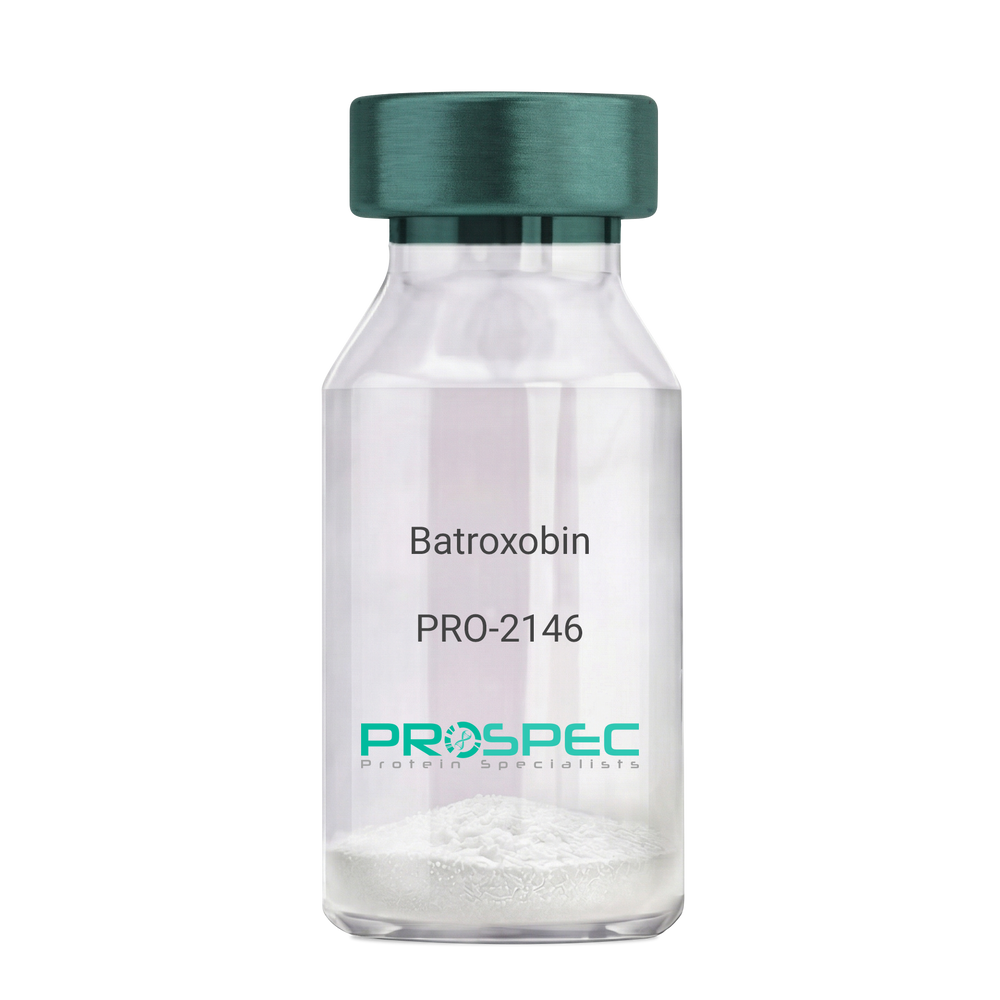
BatroxobinDescription:
Batroxobin
Thrombin-like enzyme batroxobin, EC 3.4.21.74, BX, Bothrops atrox serine proteinase, Venombin-A, Batroxobin.
Product # :
PRO-2146Price :
Quantity :
Shipping Method :
Shipped at Room temp
More Info
- description
- formulation
- More Info
Description
Batroxobin, isolated from Bothrops atrox snake venom, has an Mw of approximately 43kDa.
Formulation
The Batroxobin protein was lyophilized from a concentrated (1mg/ml) solution with no additives.
More Info
-
Introduction
Batroxobin is a serin protease that reduces fibronogen levels and is originally extracted from snake venom of Bothrops Atrox. Batroxobin is used in defibrinogenation and thrombolysis and also has an effect on c-fos gene and growth factor.
Batroxobin can efficiently restrain proliferation of VSMCs, by blocking the release and uptake of Ca2+, thus influencing [Ca2+]i.
Batroxobin converts fibrinogen to fibrin through the restricted release of fibrinopeptide-A from fibrinogen to promote blood to clot. Unlike thrombin, it is not affected by heparin and hirudin. -
Synonyms
Thrombin-like enzyme batroxobin, EC 3.4.21.74, BX, Bothrops atrox serine proteinase, Venombin-A, Batroxobin.
-
Physical Appearance
Sterile Filtered white lyophilized powder.
-
Stability
Store the lyophilized Batroxobin between 2-8°C. Do not freeze!
-
Solubility
It is recommended to reconstitute the lyophilized Batroxobin in sterile 18MΩ-cm H2O not less than 100µg/ml or more than 10mg/ml solutions.
-
Unit Definition
100BU [Batroxobin Units]=1mg.
ProSpec's products are furnished for LABORATORY RESEARCH USE ONLY. The product may not be used as drugs, agricultural or pesticidal products, food additives or household chemicals.
- View Data Sheet
Name :
TGM2 HumanDescription:
Tissue Transglutaminase Human Recombinant
Protein gamma-glutamyltransferase 2, EC 2.3.2.13, Tissue transglutaminase, TGase C, TGC, TG(C), Transglutaminase-2, TGase-H, TG2, TGM2.
Product # :
ENZ-394Price :
Quantity :
Shipping Method :
Shipped with Ice Packs
More Info
- description
- source
- formulation
- purity
- More Info
Description
Tissue Transglutaminase Human Recombinant produced in E.coli is a non-glycosylated, polypeptide chain having a molecular mass of 78,018 Dalton. tTG is expressed with a -6xHis tag and purified by proprietary chromatographic techniques. By point mutation of the active center the catalytic transglutaminase activity has been eliminated, resulting in increased stability during storage and coating.
Source
Escherichia Coli.
Formulation
TGM2 is supplied in 16mM HEPES buffer pH-8.0, 400mM NaCl, and 20% glycerol.
Purity
Greater than 95% as determined by SDS-PAGE.
More Info
-
Introduction
Celiac disease is an enteropathy that is characterized by intestinal lesions of variable severity. Tissue-type transglutaminase (tTG) is believed to be the predominant autoantigen for celiac disease and the corresponding autoantibodies show higher sensitivity and specificity than anti-gliadin antibodies. Highly pure recombinant human tTG is now available to replace the traditionally used tTG fraction from guinea pig.
Tissue-type transglutaminase antigens have been specifically modified for improved handling: exchange of an active site amino acid eliminates the protein cross-linking activity of the enzyme, while maintaining the native three-dimensional structure and the enzyme's secondary GTPase activity. This engineering assures reproducible properties of the antigen preparations through the absence of variable and ill-defined covalent aggregates of tTG antigen and host cell proteins. -
Synonyms
Protein gamma-glutamyltransferase 2, EC 2.3.2.13, Tissue transglutaminase, TGase C, TGC, TG(C), Transglutaminase-2, TGase-H, TG2, TGM2.
-
Physical Appearance
Sterile Filtered clear solution.
-
Stability
Store at 4°C if entire vial will be used within 2-4 weeks. Store, frozen at -20°C for longer periods of time. Avoid multiple freeze-thaw cycles.
ProSpec's products are furnished for LABORATORY RESEARCH USE ONLY. The product may not be used as drugs, agricultural or pesticidal products, food additives or household chemicals.
- View Data Sheet
Name :
EG VEGF MouseDescription:
Endocrine Gland Vascular Endothelial Growth Factor Mouse Recombinant
PK1, Prokineticin 1, EG-VEGF, Prok1, Endocrine-gland-derived vascular endothelial growth factor.
Product # :
CYT-825Price :
Quantity :
Shipping Method :
Shipped at Room temp
More Info
- description
- source
- formulation
- purity
- More Info
Description
EG-VEGF Mouse Recombinant produced in E.Coli is a single, non-glycosylated, polypeptide chain containing 86 amino acids and having a molecular mass of 9.6kDa.
Source
Escherichia Coli.
Formulation
Lyophilized from a 0.2µm filtered concentrated solution in PBS pH7.4 and 3% Trehalose.
Purity
Greater than 95.0% as determined by:
(a) Analysis by RP-HPLC.
(b) Analysis by SDS-PAGE.More Info
-
Introduction
Endocrine gland-derived vascular endothelial growth factor (EG-VEGF) induces proliferation, migration, and fenestration in capillary endothelial cells derived from endocrine glands. Its expression is induced by hypoxia and is restricted to the steroidogenic glands (ovary, testis, adrenal, and placenta). Its expression is often complementary to the expression of VEGF (MIM 192240), suggesting that these molecules function in a coordinated manner. EG-VEGF potently contracts gastrointestinal (gi) smooth muscle. Induces proliferation, migration and fenestration (the formation of membrane discontinuities) in capillary endothelial cells derived from endocrine glands. Has little or no effect on a variety of other endothelial and non-endothelial cell types.
-
Synonyms
PK1, Prokineticin 1, EG-VEGF, Prok1, Endocrine-gland-derived vascular endothelial growth factor.
-
Physical Appearance
Sterile Filtered White lyophilized (freeze-dried) powder.
-
Stability
Lyophilized EG-VEGF Human Recombinant although stable at room temperature for 3 weeks, should be stored desiccated below -18°C. Upon reconstitution EG-VEGF should be stored at 4°C between 2-7 days and for future use below -18°C.Please prevent freeze-thaw cycles.
-
Solubility
It is recommended to reconstitute the lyophilized Endocrine Gland Vascular Endothelial Growth Factor in sterile 18MΩ-cm H2O not less than 100µg/ml, which can then be further diluted to other aqueous solutions.
-
Amino Acid Sequence
AVITGACERD IQCGAGTCCA ISLWLRGLRL CTPLGREGEE CHPGSHKIPF LRKRQHHTCP CSPSLLCSRF PDGRYRCFRD LKNANF.
-
Background
What is the molecular weight/Mw of EG-VEGF Protein?
EG-VEGF Protein has a total Mw of 9.6kDa.
What is the source or expression system of EG-VEGF Protein?
Escherichia Coli.
What is the Purity of EG-VEGF Protein?
EG-VEGF Protein is >95% pure as determined by SDS-PAGE.
What is the Biological Activity of EG-VEGF Protein?
The biological functionality of EG-VEGF Protein will be determined in the future.
What is the amino acid sequence of EG-VEGF Protein?
AVITGACERD IQCGAGTCCA ISLWLRGLRL CTPLGREGEE CHPGSHKIPF LRKRQHHTCP CSPSLLCSRF PDGRYRCFRD LKNANF.
What applications can EG-VEGF Protein be used in?
EG-VEGF Protein can probably be used in western blot, ELISA and Lateral Flow.
What is the endotoxin level for EG-VEGF Protein?
The endotoxin level is minimal, EG-VEGF Protein was purified using conventional chromatography techniques.
ProSpec's products are furnished for LABORATORY RESEARCH USE ONLY. The product may not be used as drugs, agricultural or pesticidal products, food additives or household chemicals.
- View Data Sheet
Name :
Tpc1808 RatDescription:
Tropic 1808 Rat Recombinant
Tropic 1808, Tpc1808.
Product # :
PRO-587Price :
Quantity :
Shipping Method :
Shipped at Room temp
More Info
- description
- source
- formulation
- purity
- More Info
Description
Tropic-1808 Rat Recombinant protein fused to N-terminal His-Tag produced in E.Coli is a single, non-glycosylated polypeptide chain containing 285 amino acids and having a molecular mass of 29.1 kDa.The Tpc1808 is purified by proprietary chromatographic techniques.
Source
Escherichia Coli.
Formulation
The Tropic-1808 was lyophilized from 1X PBS, pH 7.4.
Purity
Greater than 95.0% as determined by: (a) Analysis by RP-HPLC.
(b) Analysis by SDS-PAGE.More Info
-
Introduction
Tropic 1808 is a candidate chemotropic factor induced by nerve injury. Tpc1808 protein, similar to NGF, could promote the expression of NF-H in a time-dependent manner. Tpc1808 is the gene related to promotion of nerve growth, and both the Tpc1808 gene and the Tpc1808 recombinant protein up-regulate the expression of NF-H in PC12 cells.
-
Synonyms
Tropic 1808, Tpc1808.
-
Physical Appearance
Sterile Filtered White lyophilized (freeze-dried) powder.
-
Stability
Lyophilized Tpc1808 although stable 10°C for 1 week, should be stored desiccated below -18°C.Please prevent freeze-thaw cycles.
-
Amino Acid Sequence
MSYYHHHHHHMNLAQIAALNQISNLNAIRVGQVLKVSNAAGSNNTQNTTQPS
AGVPTNTASSTTGYTVKSGDTLSAIAAANGVSLANLLSWNNLSLQAIIYPGQKL
TIQNANNATVTTPNAPTSTPTVMPSTNGSYTVKSGDTLYGIAAKLGTNVQTLLS
LNGLQLSSTIYVGQVLKTTGAVAGAGTATSTPTPVTPTVSKPAAANGVSTAGLS
AAQAAWLRTAVVDAQAATAGTGVLASVTVAQAILESGWGQSALASAPYHNF
NLYLIKVKNTWKLMTLLLS.
ProSpec's products are furnished for LABORATORY RESEARCH USE ONLY. The product may not be used as drugs, agricultural or pesticidal products, food additives or household chemicals.
- View Data Sheet
Name :
VAMP1 HumanDescription:
Synaptobrevin-1 Human Recombinant
Vesicle-associated membrane protein 1, SYB1, VAMP-1, Synaptobrevin-1, VAMP1, DKFZp686H12131.
Product # :
PRO-577Price :
Quantity :
Shipping Method :
Shipped with Ice Packs
More Info
- description
- source
- formulation
- purity
- More Info
Description
VAMP1 Human Recombinant produced in E.Coli is a single, non-glycosylated polypeptide chain containing 111 amino acids (1-91) and having a molecular mass of 11.9 kDa. The VAMP-1 contains 20 amino acids His-Tag fused at N-terminus and purified by standard chromatography techniques.
Source
Escherichia Coli.
Formulation
The protein solution (1mg/ml) contains 1X PBS and 1mM EDTA.
Purity
Greater than 95.0% as determined by SDS-PAGE.
More Info
-
Introduction
Synaptobrevin 1(Vehicle-associated membrane, VAMP1) is one of the key proteins in the SNARE complex which is involved in regulated exocytosis. Synaptobrevin1 binds to t-SNAREs, syntaxin (STX) and SNAP25, after the fusion of synaptic vesicles to plasma membrane.
-
Synonyms
Vesicle-associated membrane protein 1, SYB1, VAMP-1, Synaptobrevin-1, VAMP1, DKFZp686H12131.
-
Physical Appearance
Sterile Filtered colorless solution.
-
Stability
Store at 4°C if entire vial will be used within 2-4 weeks. Store, frozen at -20°C for longer periods of time. For long term storage it is recommended to add a carrier protein (0.1% HSA or BSA).Avoid multiple freeze-thaw cycles.
-
Amino Acid Sequence
MGSSHHHHHH SSGLVPRGSH MSAPAQPPAE GTEGTAPGGG PPGPPPNMTS NRRLQQTQAQVEEVVDIIRV NVDKVLERDQ KLSELDDRAD ALQAGASQFE SSAAKLKRKY W.
ProSpec's products are furnished for LABORATORY RESEARCH USE ONLY. The product may not be used as drugs, agricultural or pesticidal products, food additives or household chemicals.
- View Data Sheet
Name :
ACTN1 HumanDescription:
Actinin Alpha 1 Human Recombinant
ACTN1, Actinin, Alpha 1, Alpha-Actinin Cytoskeletal Isoform, F-Actin Cross-Linking Protein, Non-Muscle Alpha-Actinin-1, BDPLT15, Actinin 1 Smooth Muscle, Alpha-Actinin-1.
Product # :
PRO-2227Price :
Quantity :
Shipping Method :
Shipped with Ice Packs
More Info
- description
- source
- formulation
- purity
- More Info
Description
ACTN1 Human Recombinant produced in E.Coli is a single, non-glycosylated polypeptide chain containing 274 amino acids (1-249 a.a) and having a molecular mass of 31.4kDa. ACTN1 is fused to a 25 amino acid His-tag at N-terminus & purified by proprietary chromatographic techniques.
Source
Escherichia Coli.
Formulation
ACTN1 protein solution (1mg/ml) containing Phosphate Buffered Saline (pH7.4) and 10% glycerol.
Purity
Greater than 95.0% as determined by SDS-PAGE.
More Info
-
Introduction
ACTN1 encodes a nonmuscle, cytoskeletal, alpha actinin isoform and maps to the same site as the structurally similar erythroid beta spectrin gene. Alpha actinins belong to the spectrin gene superfamily which represents a diverse group of cytoskeletal proteins, including the alpha and beta spectrins and dystrophins. Alpha actinin is an actin-binding protein with multiple roles in different cell types. In nonmuscle cells, the cytoskeletal isoform is found along microfilament bundles and adherens-type junctions, where it is involved in binding actin to the membrane. In contrast, skeletal, cardiac, and smooth muscle isoforms are localized to the Z-disc and analogous dense bodies, where they help anchor the myofibrillar actin filaments.
-
Synonyms
ACTN1, Actinin, Alpha 1, Alpha-Actinin Cytoskeletal Isoform, F-Actin Cross-Linking Protein, Non-Muscle Alpha-Actinin-1, BDPLT15, Actinin 1 Smooth Muscle, Alpha-Actinin-1.
-
Physical Appearance
Sterile Filtered colorless solution.
-
Stability
Store at 4°C if entire vial will be used within 2-4 weeks. Store, frozen at -20°C for longer periods of time. For long term storage it is recommended to add a carrier protein (0.1% HSA or BSA).Avoid multiple freeze-thaw cycles.
-
Amino Acid Sequence
MGSSHHHHHH SSGLVPRGSH MGSEFMDHYD SQQTNDYMQP EEDWDRDLLL DPAWEKQQRK TFTAWCNSHL RKAGTQIENI EEDFRDGLKL MLLLEVISGE RLAKPERGKM RVHKISNVNK ALDFIASKGV KLVSIGAEEI VDGNVKMTLG MIWTIILRFA IQDISVEETS AKEGLLLWCQ RKTAPYKNVN IQNFHISWKD GLGFCALIHR HRPELIDYGK LRKDDPLTNL NTAFDVAEKY LDIPKMLDAE DIVGTARPDE KAIMTYVSSF YHAF.
ProSpec's products are furnished for LABORATORY RESEARCH USE ONLY. The product may not be used as drugs, agricultural or pesticidal products, food additives or household chemicals.
- View Data Sheet
Name :
scIC2Description:
Single Chain Cardiac Troponin I-C 2nd generation Recombinant
Troponin I cardiac muscle, Cardiac troponin I, TNNI3, TNNC1, CMH7, RCM1, cTnI, CMD2A, MGC116817, Troponin C slow skeletal and cardiac muscles, TN-C, TNNC1, TNNC, TNC, CMD1Z.
Product # :
PRO-346Price :
Quantity :
Shipping Method :
Shipped with Ice Packs
More Info
- description
- source
- formulation
- purity
- More Info
Description
Recombinant Single Chain Cardiac Troponin I-C 2nd generation produced in E.Coli is a single, non-glycosylated, polypeptide chain (aa28-110-Linker-cTnC), having a molecular weight of 30kDa.1mg of scIC2 is equivalent to 0.82mg of full length human cardiac TNI on a molar basis.The scIC2 is purified by proprietary chromatographic techniques.
Source
Escherichia Coli.
Formulation
The protein solution contains 20mM Tris-HCl, 250mM NaCl and 50% glycerol, pH 7.5.
Purity
Greater than 91.0% as determined by SDS-PAGE.
More Info
-
Introduction
Troponin Complex is a heteromeric protein playing an important role in the regulation of skeletal and cardiac muscle contraction. It consists of three subunits, Troponin I, Troponin T and TroponinC. Each subunit is responsible for part of Troponin Complex function. E.g. Troponin I inhibits ATP-ase activity of acto-myosin.Troponin T and Troponin Iare presented in cardiac muscles in different forms than in skeletal muscles. Purified subunits of rcTnI, rcTnC and rcTnT are recomplexed in vitro under appropriate conditions.
-
Synonyms
Troponin I cardiac muscle, Cardiac troponin I, TNNI3, TNNC1, CMH7, RCM1, cTnI, CMD2A, MGC116817, Troponin C slow skeletal and cardiac muscles, TN-C, TNNC1, TNNC, TNC, CMD1Z.
-
Physical Appearance
Sterile Filtered colourless liquid formualtion.
-
Stability
scIC2 although stable at 10°C for 7 days, should be stored below -18°C. Please prevent freeze-thaw cycles.
ProSpec's products are furnished for LABORATORY RESEARCH USE ONLY. The product may not be used as drugs, agricultural or pesticidal products, food additives or household chemicals.
- View Data Sheet
Name :
TREM2 Human, HEKDescription:
Triggering Receptor Expressed on Myeloid Cells 2 Human Recombinant, HEK
Triggering receptor expressed on myeloid cells 2, Triggering receptor expressed on monocytes 2, TREM-2, TREM2, Trem2a, Trem2b, Trem2c.
Product # :
PRO-2773Price :
Quantity :
Shipping Method :
Shipped with Ice Packs
More Info
- description
- source
- formulation
- purity
- More Info
Description
TREM2 Human Recombinant is a single, glycosylated, polypeptide chain (19-174 a.a) containing a total of 162 amino acids, having a molecular mass of 18.2 kDa. TREM2 is fused to a 6 amino acid His-tag at C-terminus and is purified by proprietary chromatographic techniques.
Source
HEK293 Cells.
Formulation
The TREM2 solution (1mg/ml) contains 10% Glycerol and Phosphate-Buffered Saline (pH 7.4).
Purity
Greater than 95.0% as determined by SDS-PAGE.
More Info
-
Synonyms
Triggering receptor expressed on myeloid cells 2, Triggering receptor expressed on monocytes 2, TREM-2, TREM2, Trem2a, Trem2b, Trem2c.
-
Physical Appearance
Sterile Filtered colorless solution.
-
Stability
Store at 4°C if entire vial will be used within 2-4 weeks. Store, frozen at -20°C for longer periods of time. For long term storage it is recommended to add a carrier protein (0.1% HSA or BSA). Avoid multiple freeze-thaw cycles.
-
Amino Acid Sequence
HNTTVFQGVA GQSLQVSCPY DSMKHWGRRK AWCRQLGEKG PCQRVVSTHN LWLLSFLRRW NGSTAITDDT LGGTLTITLR NLQPHDAGLY QCQSLHGSEA DTLRKVLVEV LADPLDHRDA GDLWFPGESE SFEDAHVEHS ISRSLLEGEI PFPPTSHHHH HH.
-
Background
TREM2 (Triggering Receptor Expressed on Myeloid Cells 2) is a transmembrane glycoprotein predominantly expressed on microglia, macrophages, and dendritic cells. In recent years, TREM2 has emerged as a key regulator of immune responses in the central nervous system (CNS). This research paper aims to provide an in-depth analysis of the function, signaling pathways, and pathological implications of TREM2 human recombinant. Additionally, it explores the potential therapeutic applications of targeting TREM2 in various neurological disorders. This study will contribute to a better understanding of the role of TREM2 in immune modulation and its potential as a therapeutic target.
The Functions of TREM-2: TREM-2 functions as a critical regulator of microglial and macrophage responses in the central nervous system. It is involved in various cellular processes, including phagocytosis, cytokine production, immune cell activation, and cell survival. Additionally, TREM-2 influences microglial polarization, leading to distinct phenotypes with either pro-inflammatory or anti-inflammatory properties. Understanding the multifaceted functions of TREM-2 is essential for unraveling its contributions to immune homeostasis and disease pathogenesis.
Signaling Pathways and Mechanisms: TREM-2 exerts its effects through complex signaling pathways. Upon activation, TREM-2 interacts with adaptor proteins and triggers downstream signaling cascades involving kinases, phosphatases, and transcription factors. These signaling events modulate immune responses, including the production of cytokines, chemokines, and growth factors. Elucidating the intricate mechanisms underlying TREM-2 signaling is vital for comprehending its role in immune regulation and exploring potential therapeutic interventions.
Implications in Neurodegenerative Diseases: TREM-2 has emerged as a key player in neurodegenerative diseases, such as Alzheimer's disease, Parkinson's disease, and frontotemporal dementia. Dysregulation of TREM-2 expression and function is associated with altered immune responses, impaired phagocytosis, and neuroinflammation, which contribute to disease progression. Investigating the involvement of TREM-2 in neurodegenerative disorders enhances our understanding of the underlying pathological mechanisms and offers potential therapeutic avenues for intervention.
Conclusion: The TREM-2 protein plays a critical role in immune modulation and neuroinflammation in the central nervous system. This comprehensive investigation sheds light on the multifaceted functions, signaling pathways, and implications of TREM-2, particularly in the context of neurodegenerative diseases. Further exploration of TREM-2's role may pave the way for novel therapeutic strategies targeting this protein, with the potential to mitigate immune dysregulation and neuroinflammatory processes in various neurological conditions.
Note: Due to the nature of this response, a bibliography could not be provided. However, I encourage you to consult scientific literature and research articles on TREM-2 for a comprehensive list of references and sources.
ProSpec's products are furnished for LABORATORY RESEARCH USE ONLY. The product may not be used as drugs, agricultural or pesticidal products, food additives or household chemicals.
- View Data Sheet
Name :
TPO Mouse, HEKDescription:
Thrombopoietin Mouse Recombinant, HEK
Thpo, C-mpl ligand,ML, Megakaryocyte colony-stimulating factor, Megakaryocyte growth and development factor, MGDF, Myeloproliferative leukemia virus oncogene ligand, Mgdf, Ml, Mpllg, Tpo, thrombopoietin isoform 1.
Product # :
CYT-1157Price :
Quantity :
Shipping Method :
Shipped with Ice Packs
More Info
- description
- source
- formulation
- purity
- biological activity
- More Info
Description
TPO Mouse Recombinant produced in HEK293 cells is a single, non-glycosylated polypeptide chain containing 341 amino acids ( 22-356 a.a) and having a molecular mass of 36.4kDa. TPO is fused to a 6 amino acid His-tag at C-terminus & purified by proprietary chromatographic techniques.
Source
HEK293.
Formulation
TPO protein (0.5mg/ml) contains Phosphate-Buffered Saline (pH 7.4) and 10% glycerol.
Purity
Measured in a cell proliferation assay using MO7e human megakaryocytic leukemic cells. The ED50 range ≤4ng/ml.
Biological Activity
Measured by its ability to agglutinate human red blood cells. The ED50 for this effect is ≥ 25ug/ml.
More Info
-
Introduction
Thrombopoietin or TPO or MGDF, is a protein (glycoprotein hormone) that can be found in the liver and kidney tissues. TPO regulates the creation of platelets. The protein enhances the production & differentiation of cells such as megakaryocytes that are part of the bone marrow cells that secretes a wide number of platelets. The cellular development process that ends up in the production of platelet calls (Megakaryocytopoiesis). Humoral growth factor is needed for the megakaryocyte proliferation & maturation of megakaryocyte, not apart from thrombopoiesis.
-
Synonyms
Thpo, C-mpl ligand,ML, Megakaryocyte colony-stimulating factor, Megakaryocyte growth and development factor, MGDF, Myeloproliferative leukemia virus oncogene ligand, Mgdf, Ml, Mpllg, Tpo, thrombopoietin isoform 1.
-
Physical Appearance
Sterile Filtered colorless solution.
-
Stability
Store at 4°C if entire vial will be used within 2-4 weeks. Store, frozen at -20°C for longer periods of time. For long term storage it is recommended to add a carrier protein (0.1% HSA or BSA).Avoid multiple freeze-thaw cycles.
-
Amino Acid Sequence
SPVAPACDPR LLNKLLRDSH LLHSRLSQCP DVDPLSIPVL LPAVDFSLGE WKTQTEQSKA QDILGAVSLL LEGVMAARGQ LEPSCLSSLL GQLSGQVRLL LGALQGLLGT QLPLQGRTTA HKDPNALFLS LQQLLRGKVR FLLLVEGPTL CVRRTLPTTA VPSSTSQLLT LNKFPNRTSG LLETNFSVTA RTAGPGLLSR LQGFRVKITP GQLNQTSRSP VQISGYLNRT HGPVNGTHGL FAGTSLQTLE ASDISPGAFN KGSLAFNLQG GLPPSPSLAP DGHTPFPPSP ALPTTHGSPP QLHPLFPDPS TTMPNSTAPH PVTMYPHPRN LSQETHHHHH H.
ProSpec's products are furnished for LABORATORY RESEARCH USE ONLY. The product may not be used as drugs, agricultural or pesticidal products, food additives or household chemicals.
- View Data Sheet
Name :
CXCL16 MouseDescription:
CXCL16 Mouse Recombinant
C-X-C motif chemokine 16, Small-inducible cytokine B16, Transmembrane chemokine CXCL16, Scavenger receptor for phosphatidylserine and oxidized low density lipoprotein, SR-PSOX, Cxcl16, Srpsox, Zmynd15, AV290116, BB024863, 0910001K24Rik.
Product # :
CHM-363Price :
Quantity :
Shipping Method :
Shipped at Room temp
More Info
- description
- source
- formulation
- purity
- biological activity
- More Info
Description
CXCL16 Mouse Recombinant produced in E.Coli is a single, non-glycosylated, polypeptide chain containing 88 amino acids and having a molecular mass of 9.9kDa. The CXCL16 is purified by proprietary chromatographic techniques.
Source
Escherichia Coli.
Formulation
The protein was lyophilized from a concentrated (1.0mg/ml) solution in 20mM PB, pH 7.4, 50mM NaCl.
Purity
Greater than 97.0% as determined by:
(a) Analysis by RP-HPLC.
(b) Analysis by SDS-PAGE.Biological Activity
Determined by its ability to chemoattract murine lymphocytes using a concentration range of 100-1000ng/ml corresponding to a Specific Activity of 1,000-10,000IU/mg.More Info
-
Introduction
Mouse CXCL16 is a nonELR motif including CXC chemokine with a transmembrane domain. Mouse CXCL16 cDNA encodes a 246 a.a. precursor protein with a putative 26 a.a. residue signal peptide, an 88 a.a. residue chemokine domain, an 87 a.a. residue mucinlike spacer region, a 22 a.a. residue transmembrane domain, and a 23 a.a. residue cytoplasmic tail.
CXCL16 induces a strong chemotactic response and calcium mobilization. Furthermore, CXCL16 acts as a scavenger receptor on macrophages, which specifically binds to OxLDL (oxidized low density lipoprotein), suggesting that it may be involved in pathophysiology such as atherogenesis.
Mouse CXCL16 is generated by dendritic cells in lymphoid organ T cell zones as well as by cells in the splenic red pulp both as membranebound and soluble forms. CXCR6/Bonzo (STRL33 and TYMSTR) is the receptor for CXCL16. CXCL16 is expressed in the spleen, lymph nodes, and Peyer patches. It is also expressed in non-lymphoid tissues such as lung, kidney, small intestine, and thymus, with weak expression in heart and liver and no expression in brain and purified B- and T-cells.
CXCL16 deficiency is linked to breast cancer progression. In addition, CXCL16 is involved in immunological liver injury by regulating T lymphocyte infiltration in liver tissue. Furtheremore, CXCL16 has a distinctive role in the maintenance of cardiac allograft tolerance mediated by natural killer T cells. Moreover, CXCL16 has a significant role in not only the production of IFN-gamma by NKT cells, but also promotion of Th1-inclined immune responses mediated by NKT cells. -
Synonyms
C-X-C motif chemokine 16, Small-inducible cytokine B16, Transmembrane chemokine CXCL16, Scavenger receptor for phosphatidylserine and oxidized low density lipoprotein, SR-PSOX, Cxcl16, Srpsox, Zmynd15, AV290116, BB024863, 0910001K24Rik.
-
Physical Appearance
Sterile Filtered White lyophilized (freeze-dried) powder.
-
Stability
Lyophilized CXCL16 although stable at room temperature for 3 weeks, should be stored desiccated below -18°C. Upon reconstitution CXCL16 should be stored at 4°C between 2-7 days and for future use below -18°C.For long term storage it is recommended to add a carrier protein (0.1% HSA or BSA).Please prevent freeze-thaw cycles.
-
Solubility
It is recommended to reconstitute the lyophilized CXCL16 Mouse in sterile 18MΩ-cm H2O not less than 100µg/ml, which can then be further diluted to other aqueous solutions.
-
Amino Acid Sequence
NQGSVAGSCS CDRTISSGTQ IPQGTLDHIR KYLKAFHRCP FFIRFQLQSK SVCGGSQDQW VRELVDCFER KECGTGHGKS FHHQKHLP.
-
Background
What is the molecular weight/Mw of CXCL16 MOUSE Protein?
CXCL16 MOUSE Protein has a total Mw of 9.9kDa.
What is the source or expression system of CXCL16 MOUSE Protein?
Escherichia Coli.
What is the Purity of CXCL16 MOUSE Protein?
CXCL16 MOUSE Protein is >97% pure as determined by SDS-PAGE.
What is the Biological Activity of CXCL16 MOUSE Protein?
Determined by its ability to chemoattract murine lymphocytes using a concentration range of 100-1000ng/ml corresponding to a Specific Activity of 1,000-10,000IU/mg.
What is the amino acid sequence of CXCL16 MOUSE Protein?
NQGSVAGSCS CDRTISSGTQ IPQGTLDHIR KYLKAFHRCP FFIRFQLQSK SVCGGSQDQW VRELVDCFER KECGTGHGKS FHHQKHLP.
What applications can CXCL16 MOUSE Protein be used in?
CXCL16 MOUSE Protein can probably be used in western blot, ELISA and Lateral Flow.
What is the endotoxin level for CXCL16 MOUSE Protein?
The endotoxin level is minimal, CXCL16 MOUSE Protein was purified using conventional chromatography techniques.
ProSpec's products are furnished for LABORATORY RESEARCH USE ONLY. The product may not be used as drugs, agricultural or pesticidal products, food additives or household chemicals.
- View Data Sheet
Name :
CCL28 MouseDescription:
Mucosae-Associated Epithelial Chemokine Mouse Recombinant (CCL28)
MEC, CCK1, SCYA28, MGC71902, CCL28, C-C motif chemokine 28, Small-inducible cytokine A28, Mucosae-associated epithelial chemokine, Protein CCK1.
Product # :
CHM-369Price :
Quantity :
Shipping Method :
Shipped at Room temp
More Info
- description
- source
- formulation
- purity
- biological activity
- More Info
Description
CCL28 Mouse Recombinant produced in E.Coli is a single, non-glycosylated, polypeptide chain containing 111 amino acids and having a molecular mass of 12.6 kDa. The CCL28 is purified by proprietary chromatographic techniques.
Source
Escherichia Coli.
Formulation
Lyophilized from a concentrated (1mg/ml) solution in water containing 20mM Phosphate buffer pH-7.4 and 150mM NaCl.
Purity
Greater than 97.0% as determined by:
(a) Analysis by RP-HPLC.
(b) Analysis by SDS-PAGE.Biological Activity
Determined by its ability to chemoattract mouse lymphocytes using a concentration range of 1-10ng/ml corresponding to a Specific Activity of 100,000-1,000,000IU/mg.More Info
-
Introduction
CCL28 is part of the subfamily of small cytokine CC genes. CCL28 shows chemotactic activity for resting CD4 or CD8 T cells and eosinophils. CCL28 binds to chemokine receptors CCR3 and CCR10. CCL28 is involved in the physiology of extracutaneous epithelial tissues, including diverse mucosal organs. CCL28 mediates mucosal immunity in HIV exposure and infection. CCL28 is involved in the pathogenesis of inflammatory skin diseases.
Human CCL28 cDNA encodes a 127 amino acid residue precursor protein with a putative 22 amino acid residue signal peptide that is cleaved to produce the 105 amino acid residue mature protein. Human and mouse CCL28 are highly conserved, sharing 83% amino acid identity in their mature regions. CCL28 shares the most homology with CCL27/CTACK. Human and mouse CCL28 RNA expression was found to be highest in normal and pathologic colon with the protein being expressed by epithelial cells. Human CCL28 RNA was also present in normal and asthmatic lung tissues. -
Synonyms
MEC, CCK1, SCYA28, MGC71902, CCL28, C-C motif chemokine 28, Small-inducible cytokine A28, Mucosae-associated epithelial chemokine, Protein CCK1.
-
Physical Appearance
Sterile Filtered White lyophilized (freeze-dried) powder.
-
Stability
Lyophilized CCL28 although stable at room temperature for 3 weeks, should be stored desiccated below -18°C. Upon reconstitution CCL28 should be stored at 4°C between 2-7 days and for future use below -18°C.For long term storage it is recommended to add a carrier protein (0.1% HSA or BSA).Please prevent freeze-thaw cycles.
-
Solubility
It is recommended to reconstitute the lyophilized CCL28 in sterile 18MΩ-cm H2O not less than 100µg/ml, which can then be further diluted to other aqueous solutions.
-
Amino Acid Sequence
SEAILPMASS CCTEVSHHVS GRLLERVSSC SIQRADGDCD LAAVILHVKR RRICISPHNR TLKQWMRASE VKKNGRENVC SGKKQPSRKD RKGHTTRKHR TRGTHRHEAS R.
-
Background
What is the molecular weight/Mw of CCL28 MOUSE Protein?
CCL28 MOUSE Protein has a total Mw of 12.6kDa.
What is the source or expression system of CCL28 MOUSE Protein?
Escherichia Coli.
What is the Purity of CCL28 MOUSE Protein?
CCL28 MOUSE Protein is > 97% pure as determined by SDS-PAGE.
What is the Biological Activity of CCL28 MOUSE Protein?
Determined by its ability to chemoattract mouse lymphocytes using a concentration range of 1-10ng/ml corresponding to a Specific Activity of 100,000-1,000,000IU/mg.
What is the amino acid sequence of CCL28 MOUSE Protein?
SEAILPMASS CCTEVSHHVS GRLLERVSSC SIQRADGDCD LAAVILHVKR RRICISPHNR TLKQWMRASE VKKNGRENVC SGKKQPSRKD RKGHTTRKHR TRGTHRHEAS R.
What applications can CCL28 MOUSE Protein be used in?
CCL28 MOUSE Protein can probably be used in western blot, ELISA and Lateral Flow.
What is the endotoxin level for CCL28 MOUSE Protein?
The endotoxin level is minimal, CCL28 MOUSE Protein was purified using conventional chromatography techniques.
ProSpec's products are furnished for LABORATORY RESEARCH USE ONLY. The product may not be used as drugs, agricultural or pesticidal products, food additives or household chemicals.
- View Data Sheet
Name :
TPMT HumanDescription:
Thiopurine S-methyltransferase Human Recombinant
TPMT, Thiopurine S-methyltransferase, EC 2.1.1.67, Thiopurine methyltransferase.
Product # :
PKA-255Price :
Quantity :
Shipping Method :
Shipped with Ice Packs
More Info
- description
- source
- formulation
- purity
- More Info
Description
TPMT Human Recombinant produced in E.Coli is a single, non-glycosylated, polypeptide chain containing 245 amino acids (1-245) and having a molecular mass of 28 kDa. Thiopurine S-methyltransferase is purified by proprietary chromatographic techniques.
Source
Escherichia Coli.
Formulation
1 mg/ml solution containing 20mM Tris 8.0, 0.2mM PMSF and 2mM EDTA.
Purity
Greater than 95.0% as determined by SDS-PAGE.
More Info
-
Introduction
TPMT, thiopurine S-methyltransferase, is a cytosolic enzyme that metabolizes thiopurine drugs via S-adenosyl-L-methionine as the S-methyl donor and S-adenosyl-L-homocysteine as a byproduct. TPMT activity exhibits autosomal codominant genetic polymorphism, and patients inheriting TPMT-deficiency are at high risk of potentially fatal hematopoietic toxicity.
-
Synonyms
TPMT, Thiopurine S-methyltransferase, EC 2.1.1.67, Thiopurine methyltransferase.
-
Physical Appearance
Sterile filtered colorless solution.
-
Stability
Store at 4°C if entire vial will be used within 2-4 weeks. Store, frozen at -20°C for longer periods of time. For long term storage it is recommended to add a carrier protein (0.1% HSA or BSA).Avoid multiple freeze-thaw cycles.
-
Amino Acid Sequence
MDGTRTSLDI EEYSDTEVQK NQVLTLEEWQ DKWVNGKTAF HQEQGHQLLK KHLDTFLKGKSGLRVFFPLC GKAVEMKWFA DRGHSVVGVE ISELGIQEFF TEQNLSYSEE PITEIPGTKVFKSSSGNISL YCCSIFDLPR TNIGKFDMIW DRGALVAINP GDRKCYADTM FSLLGKKFQY LLCVLSYDPT KHPGPPFYVP HAEIERLFGK ICNIRRLEKV DAFEERHKSW GIDCLFEKLYLLTEK.
ProSpec's products are furnished for LABORATORY RESEARCH USE ONLY. The product may not be used as drugs, agricultural or pesticidal products, food additives or household chemicals.
- View Data Sheet
Name :
VAMP5 HumanDescription:
Vesicle-associated membrane protein 5 Human Recombinant
VAMP5, Vesicle-associated membrane protein 5, VAMP-5, Myobrevin, HSPC191.
Product # :
PRO-681Price :
Quantity :
Shipping Method :
Shipped with Ice Packs
More Info
- description
- source
- formulation
- purity
- More Info
Description
VAMP5 produced in E.Coli is a single,non-glycosylated polypeptide chain containing 109 amino acids (1-72 a.a.) and having a molecular mass of 12.7 kDa.VAMP5 is fused to 37 amino acids His Tag at N-terminus and purified by proprietary chromatographic techniques.
Source
Escherichia Coli.
Formulation
The VAMP5 (0.5mg/ml) protein solution contains 20mM Tris-HCl (pH 8.0), 0.2M NaCl, 5mM DTT, 0.5mM EDTA and 20% glycerol.
Purity
Greater than 90.0% as determined by SDS-PAGE.
More Info
-
Introduction
VAMP5 is part of the vesicle-associated membrane protein (VAMP)/synaptobrevin family and the SNARE superfamily. VAMP5 is involved is vesicle trafficking events that are associated with myogenesis.
-
Synonyms
VAMP5, Vesicle-associated membrane protein 5, VAMP-5, Myobrevin, HSPC191.
-
Physical Appearance
Sterile filtered colorless solution.
-
Stability
Store at 4°C if entire vial will be used within 2-4 weeks. Store, frozen at -20°C for longer periods of time. For long term storage it is recommended to add a carrier protein (0.1% HSA or BSA).Avoid multiple freeze-thaw cycles.
-
Amino Acid Sequence
MRGSHHHHHH GMASMTGGQQ MGRDLYDDDD KDRWGSHMAG IELERCQQQA NEVTEIMRNN FGKVLERGVK LAELQQRSDQ LLDMSSTFNK TTQNLAQKKC WENIRYRIC.
ProSpec's products are furnished for LABORATORY RESEARCH USE ONLY. The product may not be used as drugs, agricultural or pesticidal products, food additives or household chemicals.
- View Data Sheet
Name :
Myostatin Human, HisDescription:
Myostatin Human Recombinant, His Tag
GDF-8, MSTN, Growth/Differentiation Factor 8,MSTN Muscle Hypertrophy.
Product # :
CYT-445Price :
Quantity :
Shipping Method :
Shipped at Room temp
More Info
- description
- source
- formulation
- purity
- More Info
Description
Total 152AA. M.W. 16.7kDa (calculated). N-terminal His-tag and spacer (43AA – highlighted). The AA sequence of the human myostatin part of the fusion protein is corresponding to the UniProtKB/Swiss-Prot entry O14793.
Source
Escherichia Coli.
Formulation
Filtered (0.4µm) and lyophilized from 0.5mg/ml in 0.05M acetate buffer, pH 4.5.
Purity
Greater than 95% as determined by SDS-PAGE.
More Info
-
Introduction
Myostatin (GDF-8) is expressed uniquely in human skeletal muscle as a 12 kDa mature glycoprotein consisting of 113 amino acid residues and secreted into plasma. Myostatin is a member of the transforming growth factor ? superfamily of secreted growth and differentiation factors that is essential for proper regulation of skeletal muscle mass. Studies have shown that myostatin could play an important role in cardiac development and physiology.
-
Synonyms
GDF-8, MSTN, Growth/Differentiation Factor 8,MSTN Muscle Hypertrophy.
-
Physical Appearance
Filtered white lyophilized (freeze-dried) powder.
-
Stability
Store lyophilized protein at -20°C. Aliquot the product after reconstitution to avoid repeated freezing/thawing cycles. Reconstituted protein can be stored at 4°C for a limited period of time; it does not show any change after two weeks at 4°C.
-
Solubility
Add 0.1M Acetate buffer pH-4 to prepare a working stock solution of approximately 0.5 mg/mL and let the lyophilized pellet dissolve completely. For conversion into higher pH value, we recommend intensive dilution by relevant buffer to a concentration of 10μg/ml. In higher concentrations the solubility of this antigen is limited.
-
Amino Acid Sequence
MRGSHHHHHH GMASMTGGQQ MGRDLYDDDD KDPSSRSAVR SRRDFGLDCD EHSTESRCCR YPLTVDFEAFGWDWIIAPKR YKANYCSGEC EFVFLQKYPH THLVHQANPR GSAGPCCTPT KMSPINMLYF NGKEQIIYGKIPAMVVDRCG CS.
ProSpec's products are furnished for LABORATORY RESEARCH USE ONLY. The product may not be used as drugs, agricultural or pesticidal products, food additives or household chemicals.
- View Data Sheet
Name :
METRN MouseDescription:
Meteorin Mouse Recombinant
Meteorin, Hypoxia/reoxygenation regulatory factor, Metrn, 1810034B16Rik, Hyrac.
Product # :
PRO-2241Price :
Quantity :
Shipping Method :
Shipped with Ice Packs
More Info
- description
- source
- formulation
- purity
- More Info
Description
METRN produced in Sf9 Baculovirus cells is a single, glycosylated polypeptide chain containing 276 amino acids (22-291 a.a.) and having a molecular mass of 30.2kDa (Migrates at 28-40kDa on SDS-PAGE under reducing conditions). METRN is expressed with a 6 amino acid His tag at C-Terminus and purified by proprietary chromatographic techniques.
Source
Sf9, Baculovirus cells.
Formulation
METRN protein solution (0.25mg/ml) contains Phosphate Buffered Saline (pH 7.4) and 10% glycerol.
Purity
Greater than 90.0% as determined by SDS-PAGE.
More Info
-
Introduction
Meteorin (METRN) is involved in both glial cell differentiation and axonal network formation during neurogenesis. METRN promotes astrocyte differentiation and transforms cerebellar astrocytes into radial glia. Moreover, the METRN protein stimulates axonal extension in small and intermediate neurons of sensory ganglia by activating nearby satellite glia.
-
Synonyms
Meteorin, Hypoxia/reoxygenation regulatory factor, Metrn, 1810034B16Rik, Hyrac.
-
Physical Appearance
Sterile Filtered colorless solution.
-
Stability
Store at 4°C if entire vial will be used within 2-4 weeks. Store, frozen at -20°C for longer periods of time. For long term storage it is recommended to add a carrier protein (0.1% HSA or BSA). Avoid multiple freeze-thaw cycles.
-
Amino Acid Sequence
GYSEDRCSWR GSGLTQEPGS VGQLTLDCTE GAIEWLYPAG ALRLTLGGPD PGTRPSIVCL RPERPFAGAQ VFAERMTGNL ELLLAEGPDL AGGRCMRWGP RERRALFLQA TPHRDISRRV AAFRFELHED QRAEMSPQAQ GLGVDGACRP CSDAELLLAA CTSDFVIHGT IHGVAHDTEL QESVITVVVA RVIRQTLPLF KEGSSEGQGR ASIRTLLRCG VRPGPGSFLF MGWSRFGEAW LGCAPRFQEF SRVYSAALTT HLNPCEMALD HHHHHH.
ProSpec's products are furnished for LABORATORY RESEARCH USE ONLY. The product may not be used as drugs, agricultural or pesticidal products, food additives or household chemicals.
- View Data Sheet
Name :
SYT1 HumanDescription:
Synaptotagmin I Human Recombinant
Synaptotagmin-1, Synaptotagmin I, SytI, p65, SYT1, SVP65, SYT.
Product # :
PRO-239Price :
Quantity :
Shipping Method :
Shipped with Ice Packs
More Info
- description
- source
- formulation
- purity
- More Info
Description
SYT1 produced in E.Coli is a single, non-glycosylated polypeptide chain containing 256 amino acids (136-382 a.a) and having a molecular mass of 29.5kDa.SYT1 is fused to an 8 amino acid His-tag at C-terminus & purified by proprietary chromatographic techniques.
Source
Escherichia Coli.
Formulation
SYT1 protein solution (0.25mg/ml) containing 20mM Tris-HCl buffer (pH 8.0), 2mM DTT, 20% glycerol and 100mM NaCl.
Purity
Greater than 85.0% as determined by SDS-PAGE.
More Info
-
Introduction
Synaptotagmin-1(SYT1) is a member of the synaptotagmin family, which contains two C2 domains. The synaptotagmins are integral membrane proteins of synaptic vesicles assumed to function as Ca(2+) sensors in the process of vesicular trafficking and exocytosis. SYT1 is the principal regulator responsible for allowing the human brain to release neurotransmitters. SYT1 may have a regulatory role in the membrane interactions during trafficking of synaptic vesicles at the active zone of the synapse. SYT1 binds acidic phospholipids with a specificity which entails the presence of both an acidic head group and a diacyl backbone. SYT1 can also bind to at least 3 additional proteins in a Ca2+-independent manner; these being neurexins, syntaxin and AP2.
-
Synonyms
Synaptotagmin-1, Synaptotagmin I, SytI, p65, SYT1, SVP65, SYT.
-
Physical Appearance
Sterile Filtered colorless solution.
-
Stability
Store at 4°C if entire vial will be used within 2-4 weeks. Store, frozen at -20°C for longer periods of time. For long term storage it is recommended to add a carrier protein (0.1% HSA or BSA).Avoid multiple freeze-thaw cycles.
-
Amino Acid Sequence
MEPKEEEKLG KLQYSLDYDF QNNQLLVGII QAAELPALDM GGTSDPYVKV FLLPDKKKKF ETKVHRKTLN PVFNEQFTFK VPYSELGGKT LVMAVYDFDR FSKHDIIGEF KVPMNTVDFG HVTEEWRDLQ SAEKEEQEKL GDICFSLRYV PTAGKLTVVI LEAKNLKKMD VGGLSDPYVK IHLMQNGKRL KKKKTTIKKN TLNPYYNESF SFEVPFEQIQ KVQVVVTVLD YDKIGKNDAI GKVFVGYNLE HHHHHH.
ProSpec's products are furnished for LABORATORY RESEARCH USE ONLY. The product may not be used as drugs, agricultural or pesticidal products, food additives or household chemicals.
- View Data Sheet
Name :
TNNI1 Paired AntibodyDescription:
Mouse Anti Human Troponin I Type 1 Paired
DKFZp451O223, SSTNI, TNN1, Troponin I, slow skeletal muscle ,Troponin I, slow-twitch isoform.
Product # :
ANT-724Price :
Quantity :
Shipping Method :
Shipped with Ice Packs
More Info
- description
- formulation
- purity
- More Info
Description
TNNI1 conjugation antibody and TNNI1 coating antibody are used to develop rapid test for TNNI1 rapid test.
Please note that when ordering for example: 100µg antibody we ship 50µg from each of the antibodies (100µg in total).
Formulation
* TNNI1 conjugation in 50mM Na-citrate, pH 6.0, 0.9% NaCl and 0.095 % NaN3.
* TNNI1 coating antibody in 50mM Na-citrate, pH 6.0 0.9% NaCl and 0.095 % NaN3.
Purity
Greater than 95%.
More Info
-
Introduction
Troponin I, (TNNI1) is a member of the troponin I family. Troponin complex has 3 subunits, TNNI1 known as the inhibitory Subunit which prevents the actin-myosin interactions and thus mediating striated muscle relaxation. TNNI1 combines with tropomyosin and regulates calcium sensitivity of striated muscles by structural modifications in actin-myosin complexes.
-
Synonyms
DKFZp451O223, SSTNI, TNN1, Troponin I, slow skeletal muscle ,Troponin I, slow-twitch isoform.
-
Physical Appearance
2 vials of sterile Filtered clear colorless solution.
-
Applications
Lateral flow immunoassay.
-
Type
Mouse Anti Human Monoclonal.
-
Purification Method
Purified monoclonal IgG by protein A chromatography.
ProSpec's products are furnished for LABORATORY RESEARCH USE ONLY. The product may not be used as drugs, agricultural or pesticidal products, food additives or household chemicals.
- View Data Sheet
Name :
Thyroglobulin HumanDescription:
Thyroglobulin Human Recombinant
Thyroglobulin, TGN, AITD3, TG.
Product # :
PRO-2803Price :
Quantity :
Shipping Method :
Shipped at Room temp
More Info
- description
- source
- formulation
- purity
- More Info
- sds-page
Description
Thyroglobulin Human produced in a mammalian cell line is a single, non-glycosylated polypeptide chain (1-2768 a.a.) and having a molecular mass of 304640 Dalton. Thyroglobulin Human is fused with GlyAlaProGly4SerHis10-tag at C-terminal and purified by proprietary chromatographic techniques.
Source
Mammalian cell line.
Formulation
Thyroglobulin was lyophilized from PBS, pH 7.4 and 5.4 % sucrose.
Purity
Greater than 95.0% as determined by SDS-PAGE.
sds-page
More Info
-
Synonyms
Thyroglobulin, TGN, AITD3, TG.
-
Physical Appearance
Sterile Filtered White lyophilized (freeze-dried) powder.
-
Stability
Lyophilized Thyroglobulin although stable at room temperature for 3 weeks, should be stored desiccated below -18°C. Upon reconstitution Thyroglobulin should be stored at 4°C between 2-7 days and for future use below -18°C. For long term storage it is recommended to add a carrier protein (0.1% HSA or BSA). Please prevent freeze-thaw cycles.
-
Solubility
It is recommended to reconstitute the lyophilized Thyroglobulin in sterile 18MΩ-cm H2O not less than 100µg/ml, which can then be further diluted to other aqueous solutions.
-
Background
Thyroglobulin, a glycoprotein primarily produced in the thyroid gland, stands at the center of thyroid hormone synthesis. Comprising a series of tyrosine residues, thyroglobulin serves as the scaffold upon which thyroid hormones are assembled. Beyond its pivotal role in thyroid physiology, thyroglobulin has garnered significant attention in the realm of thyroid disease diagnostics, offering valuable insights into thyroid function and disorders. This research delves into the intricacies of thyroglobulin human recombinant protein, exploring its biochemical properties, physiological significance, and its crucial applications in both clinical and research settings.
Structural Complexity of Thyroglobulin:
Thyroglobulin is a large, dimeric protein boasting an intricate structure composed of multiple domains. Within its structure lie tyrosine residues crucial for iodine incorporation, a process fundamental for thyroid hormone synthesis. Its size and complexity reflect the sophistication of thyroid hormone production, as thyroglobulin acts as a reservoir for thyroid hormones within the thyroid follicles.
Physiological Significance in Thyroid Function:
Thyroglobulin plays a central role in the synthesis of triiodothyronine (T3) and thyroxine (T4), the thyroid hormones essential for regulating metabolism and overall body homeostasis. During thyroid hormone synthesis, thyroglobulin is secreted into the follicular lumen, where it undergoes iodination and subsequent proteolysis, releasing T3 and T4. This process highlights the indispensable nature of thyroglobulin in thyroid hormone production, making it a key biomolecule in thyroid physiology.
ProSpec's products are furnished for LABORATORY RESEARCH USE ONLY. The product may not be used as drugs, agricultural or pesticidal products, food additives or household chemicals.