Skip to content

High-quality research proteins.

  • 1-800-805-6531

  • Mon - Sat 8.00-18.00, Sun - Closed

  • info@prospecbio.com

  • PO Box 6591 East Brunswick NJ 08816

  • Products
    • Cytokines
    • Growth factors
    • Chemokines
    • Cd antigens
    • Neurotrophins
    • Hormones
    • Enzymes
    • Viral antigens
    • Recombinant proteins
    • Natural proteins
    • Monoclonal antibodies
    • Polyclonal antibodies
    • Thermal Packaging
  • About
    • Company
    • Founder
    • Contribution
  • Customers
    • Eastern Asia
    • Eastern Europe
    • North America
    • South America
    • South East Asia
    • Southern Asia
    • Western Europe
  • Ordering
    • Ordering Method
    • Ordering - Credit Card
    • Ordering - PO
    • Shipping Fees
    • FAQs
  • Services
    • DNA Cloning
    • Protein Expression
    • Monoclonal Antibody
    • Fermentation
    • Technology License
  • Contact us
Log in

Country/region

  • USD $ | Albania
  • USD $ | Andorra
  • USD $ | Argentina
  • USD $ | Armenia
  • USD $ | Australia
  • USD $ | Austria
  • USD $ | Azerbaijan
  • USD $ | Belarus
  • USD $ | Belgium
  • USD $ | Bolivia
  • USD $ | Brazil
  • USD $ | Bulgaria
  • USD $ | Cambodia
  • USD $ | Canada
  • USD $ | Chile
  • USD $ | China
  • USD $ | Colombia
  • USD $ | Costa Rica
  • USD $ | Croatia
  • USD $ | Cyprus
  • USD $ | Czechia
  • USD $ | Denmark
  • USD $ | Estonia
  • USD $ | Finland
  • USD $ | France
  • USD $ | Georgia
  • USD $ | Germany
  • USD $ | Greece
  • USD $ | Hong Kong SAR
  • USD $ | Hungary
  • USD $ | Iceland
  • USD $ | India
  • USD $ | Ireland
  • USD $ | Israel
  • USD $ | Italy
  • USD $ | Japan
  • USD $ | Kazakhstan
  • USD $ | Latvia
  • USD $ | Liechtenstein
  • USD $ | Lithuania
  • USD $ | Madagascar
  • USD $ | Malta
  • USD $ | Mexico
  • USD $ | Moldova
  • USD $ | Monaco
  • USD $ | Netherlands
  • USD $ | New Zealand
  • USD $ | North Macedonia
  • USD $ | Norway
  • USD $ | Panama
  • USD $ | Paraguay
  • USD $ | Peru
  • USD $ | Philippines
  • USD $ | Poland
  • USD $ | Portugal
  • USD $ | Romania
  • USD $ | Singapore
  • USD $ | Slovakia
  • USD $ | Slovenia
  • USD $ | South Africa
  • USD $ | South Korea
  • USD $ | Spain
  • USD $ | Sri Lanka
  • USD $ | Sweden
  • USD $ | Switzerland
  • USD $ | Taiwan
  • USD $ | Thailand
  • USD $ | Türkiye
  • USD $ | Ukraine
  • USD $ | United Kingdom
  • USD $ | United States
  • USD $ | Uruguay
  • USD $ | Vatican City
  • USD $ | Venezuela
  • USD $ | Vietnam
  • Facebook
  • Instagram
logoProSpec - Recombinant Protein Manufacturer for academic and R&D industry
Become a distributor
Account Log in
Wishlist
Cart Cart(0)
  • Products
    +
    • Cytokines
    • Growth factors
    • Chemokines
    • Cd antigens
    • Neurotrophins
    • Hormones
    • Enzymes
    • Viral antigens
    • Recombinant proteins
    • Natural proteins
    • Monoclonal antibodies
    • Polyclonal antibodies
    • Thermal Packaging
  • About
    +
    • Company
    • Founder
    • Contribution
  • Customers
    +
    • Eastern Asia
    • Eastern Europe
    • North America
    • South America
    • South East Asia
    • Southern Asia
    • Western Europe
  • Ordering
    +
    • Ordering Method
    • Ordering - Credit Card
    • Ordering - PO
    • Shipping Fees
    • FAQs
  • Services
    +
    • DNA Cloning
    • Protein Expression
    • Monoclonal Antibody
    • Fermentation
    • Technology License
  • Contact us

Item added to your cart

View cart
View All
  • Cytokines
  • Growth factors
  • Chemokines
  • Cd antigens
  • Neurotrophins
  • Hormones
  • Enzymes
  • Viral antigens
  • Recombinant proteins
  • Natural proteins
  • Monoclonal antibodies
  • Polyclonal antibodies
  • Thermal Packaging
  • Tumor Necrosis Factor

    Tumor Necrosis Factor

    View All
  • 4-1BB

    4-1BB

    View All
  • Adiponectin

    Adiponectin

    View All
  • AIF1

    AIF1

    View All
  • Other Cytokines

    Other Cytokines

    View All
  • AITRL

    AITRL

    View All
  • Angiopoietin

    Angiopoietin

    View All
  • Apolipoprotein

    Apolipoprotein

    View All
  • B-Cell Activating Factor

    B-Cell Activating Factor

    View All
  • Beta Defensin

    Beta Defensin

    View All
  • Bone Morphogenetic Protein

    Bone Morphogenetic Protein

    View All
  • B type Natriuretic Peptide

    B type Natriuretic Peptide

    View All
  • BST

    BST

    View All
  • Betacellulin

    Betacellulin

    View All
  • Cardiotrophin

    Cardiotrophin

    View All
  • Activin

    Activin

    View All
  • Fibroblast Growth Factor

    Fibroblast Growth Factor

    View All
  • Other Growth Factors

    Other Growth Factors

    View All
  • CSF

    CSF

    View All
  • CTGF

    CTGF

    View All
  • IGFBP

    IGFBP

    View All
  • VEGF Protein

    VEGF Protein

    View All
  • EGF

    EGF

    View All
  • Epigen

    Epigen

    View All
  • Erythropoietin

    Erythropoietin

    View All
  • Insulin-Like Growth Factor

    Insulin-Like Growth Factor

    View All
  • Growth Hormone

    Growth Hormone

    View All
  • HDGF

    HDGF

    View All
  • Hepatocyte Growth Factor

    Hepatocyte Growth Factor

    View All
  • Insulin

    Insulin

    View All
  • BCA-1/ BLC (CXCL13)

    BCA-1/ BLC (CXCL13)

    View All
  • BRAK (CXCL14)

    BRAK (CXCL14)

    View All
  • C-10 (CCL6)

    C-10 (CCL6)

    View All
  • Other Chemokines

    Other Chemokines

    View All
  • MEC (CCL28)

    MEC (CCL28)

    View All
  • LD78-beta (CCL3L1)

    LD78-beta (CCL3L1)

    View All
  • CTACK (CCL27)

    CTACK (CCL27)

    View All
  • CXCL16

    CXCL16

    View All
  • CXCL17

    CXCL17

    View All
  • Platelet Factor-4 (CXCL4)

    Platelet Factor-4 (CXCL4)

    View All
  • ENA-78 (CXCL5)

    ENA-78 (CXCL5)

    View All
  • Eotaxin (CCL11,24,26)

    Eotaxin (CCL11,24,26)

    View All
  • Exodus-2 (CCL21)

    Exodus-2 (CCL21)

    View All
  • Fractalkine (CX3CL1)

    Fractalkine (CX3CL1)

    View All
  • CXCL6

    CXCL6

    View All
  • Other CD Antigens

    Other CD Antigens

    View All
  • CD14

    CD14

    View All
  • CD164

    CD164

    View All
  • CD1

    CD1

    View All
  • CD2

    CD2

    View All
  • CD200

    CD200

    View All
  • CD207

    CD207

    View All
  • CD226

    CD226

    View All
  • CD23

    CD23

    View All
  • CD244

    CD244

    View All
  • CD247

    CD247

    View All
  • CD27

    CD27

    View All
  • CD274

    CD274

    View All
  • CD300

    CD300

    View All
  • CD33

    CD33

    View All
  • Other Neurotrophins

    Other Neurotrophins

    View All
  • Beta-NGF

    Beta-NGF

    View All
  • BDNF

    BDNF

    View All
  • CDNF

    CDNF

    View All
  • CNTF

    CNTF

    View All
  • GDNF

    GDNF

    View All
  • Glia Maturation Factor

    Glia Maturation Factor

    View All
  • MANF

    MANF

    View All
  • Midkine

    Midkine

    View All
  • Neuroglobin

    Neuroglobin

    View All
  • Neurotrophic factors

    Neurotrophic factors

    View All
  • Neuregulin

    Neuregulin

    View All
  • Neuropilin

    Neuropilin

    View All
  • Pigment Epithelium-Derived Factor

    Pigment Epithelium-Derived Factor

    View All
  • Pleiotrophin

    Pleiotrophin

    View All
  • Peptide Hormones

    Peptide Hormones

    View All
  • Other Hormones

    Other Hormones

    View All
  • HCG

    HCG

    View All
  • Endothelin

    Endothelin

    View All
  • Exendin

    Exendin

    View All
  • FSH

    FSH

    View All
  • Glucagon

    Glucagon

    View All
  • GHRP

    GHRP

    View All
  • GLP

    GLP

    View All
  • Thyrostimulin

    Thyrostimulin

    View All
  • Inhibin A

    Inhibin A

    View All
  • LHRH

    LHRH

    View All
  • Melanotan

    Melanotan

    View All
  • Procalcitonin

    Procalcitonin

    View All
  • PTH

    PTH

    View All
  • Peroxiredoxin

    Peroxiredoxin

    View All
  • Peptidase

    Peptidase

    View All
  • Synthetase

    Synthetase

    View All
  • Transferase

    Transferase

    View All
  • Hydrolase

    Hydrolase

    View All
  • Dehydrogenase

    Dehydrogenase

    View All
  • ACE2

    ACE2

    View All
  • Esterase

    Esterase

    View All
  • Protein Kinases

    Protein Kinases

    View All
  • Other Enzymes

    Other Enzymes

    View All
  • Phosphatase

    Phosphatase

    View All
  • Deaminase

    Deaminase

    View All
  • Oxygenase

    Oxygenase

    View All
  • Adenylate Kinase

    Adenylate Kinase

    View All
  • Lyase

    Lyase

    View All
  • Chagas

    Chagas

    View All
  • SARS

    SARS

    View All
  • Influenza

    Influenza

    View All
  • ASFV

    ASFV

    View All
  • Astrovirus

    Astrovirus

    View All
  • Borrelia

    Borrelia

    View All
  • Helicobacter Pylori

    Helicobacter Pylori

    View All
  • Chikungunya

    Chikungunya

    View All
  • Chlamydia

    Chlamydia

    View All
  • Cytomegalo

    Cytomegalo

    View All
  • Dengue

    Dengue

    View All
  • EBV

    EBV

    View All
  • Ebola

    Ebola

    View All
  • Feline Leukemia Virus

    Feline Leukemia Virus

    View All
  • Hepatitis A

    Hepatitis A

    View All
  • Other

    Other

    View All
  • Actin

    Actin

    View All
  • ADAM

    ADAM

    View All
  • Complement Component

    Complement Component

    View All
  • Ag85

    Ag85

    View All
  • Eukaryotic Translation Initiation Factor

    Eukaryotic Translation Initiation Factor

    View All
  • Anterior Gradient Protein

    Anterior Gradient Protein

    View All
  • Heat Shock Protein

    Heat Shock Protein

    View All
  • Alpha-2-HS-Glycoprotein

    Alpha-2-HS-Glycoprotein

    View All
  • Hemoglobin

    Hemoglobin

    View All
  • Allergy

    Allergy

    View All
  • Anaplasma

    Anaplasma

    View All
  • Angiogenin

    Angiogenin

    View All
  • Ankyrin Repeat Domain

    Ankyrin Repeat Domain

    View All
  • Annexin

    Annexin

    View All
  • Other Natural Proteins

    Other Natural Proteins

    View All
  • Aprotinin

    Aprotinin

    View All
  • Transferrin

    Transferrin

    View All
  • Avidin

    Avidin

    View All
  • Anti Coagulation Factors

    Anti Coagulation Factors

    View All
  • Natural Albumin

    Natural Albumin

    View All
  • Natural Coagulation Factors

    Natural Coagulation Factors

    View All
  • Fibronectin

    Fibronectin

    View All
  • Thrombin

    Thrombin

    View All
  • Anti Human Enzyme

    Anti Human Enzyme

    View All
  • Other Monoclonal Antibodies

    Other Monoclonal Antibodies

    View All
  • Anti Human Cytokine

    Anti Human Cytokine

    View All
  • Anti Human Heat Shock Protein

    Anti Human Heat Shock Protein

    View All
  • Anti Mouse Lymphocyte

    Anti Mouse Lymphocyte

    View All
  • Anti Human Chemokine

    Anti Human Chemokine

    View All
  • Anti Human Lymphocyte

    Anti Human Lymphocyte

    View All
  • Anti Viral Monoclonal

    Anti Viral Monoclonal

    View All
  • Anti Mouse Cytokine

    Anti Mouse Cytokine

    View All
  • Anti-GST Monoclonal

    Anti-GST Monoclonal

    View All
  • Other Polyclonal Antibodies

    Other Polyclonal Antibodies

    View All
  • Anti Viral

    Anti Viral

    View All
  • Anti-GST Monoclonal

    Anti-GST Monoclonal

    View All
Back

Search results

1000 results found for “Paraoxonase”

Name

Description

Product #

Price

Quantity

Shipping Method

  • View Data Sheet

    Name :

    Heparanase 1 (HPA1), Polyclonal

    Description:

    Heparanase 1 (HPA1), Polyclonal Rabbit Anti-Human

    Product # :

    ANT-155

    Price :

    Quantity :

    Shipping Method :

    Ice Icon

    Shipped with Ice Packs

    Add To Cart

    More Info

    • source
    • formulation
    • More Info

    Source

    Polyclonal rabbit anti-human HPA1 is a Protein G affinity purified polyclonal antibody raised against the 50 kDa-8 kDa Heparanase heterodimer.

    Formulation

    Each vial contains 0.29 mg or 0.57 mg of antibody in 50 or 100 µL, respectively, of 20 mM sodium phosphate; 150 mM NaCl; pH 7.2, containing 0. 01% Thimerosal.

    More Info

    • Introduction

      Heparanase is an endo ß-D-glucuronidase, which degrades heparan sulfate side chains of heparan sulfate proteoglycans (HSPGs) in the extracellular matrix. Heparanase plays an important role in ECM degradation, facilitating the migration and extravasation of tumor cells and inflammatory leukocytes (1,2,3). Upon degradation, heparanase releases growth factors and cytokines that stimulate cell proliferation and chemotaxis (4,5). Heparanase is a heterodimer comprised of a 50 kDa subunit harboring the active site and a 8 kDa subunit. It is produced as a latent 65 kDa precursor and proteolytically processed to its active form (1,6). Heparanase is highly expressed in myeloid leukocytes (i.e. neutrophils) in platelets and in human placenta. Human heparanase was found to be upregulated in various types of primary tumors, correlating in some cases with increased tumor invasiveness and vascularity and with poor prospective survival (7,8).

    • Stability

      Store at 4°C. For extended storage, freeze in working aliquots at -20°C.Avoid repeated freeze-thaw cycles.

    • Applications

      Western blot
      Immunohistochemistry

    • Data Sheet

      To view the FULL VERSION click Heparanase-1 Polyclonal Rabbit :

    • Patent Protected Countries

      Polyclonal and monoclonal Anti-heparanase antibodies and their uses are protected by US. Patents No. 6,177,545; 6,531,129, additional US patent applications and patents and patent applications worldwide.

    • Specificity

      Western blot analysis: The antibody reacts with the 65 kDa precursor as well as the 50 kDa and 8 kDa subunits of human or mouse Heparanase.Immunohistochemistry: The antibody interacts with Heparanase in paraffin sections and blood smears.Recommended dilution range for Western blot analysis: 1:2000.Recommended dilution range for immunohistochemistry: 1:100.

    ProSpec's products are furnished for LABORATORY RESEARCH USE ONLY. The product may not be used as drugs, agricultural or pesticidal products, food additives or household chemicals.

    Heparanase 1 Hpa1 Polyclonal Antibody
  • View Data Sheet

    Name :

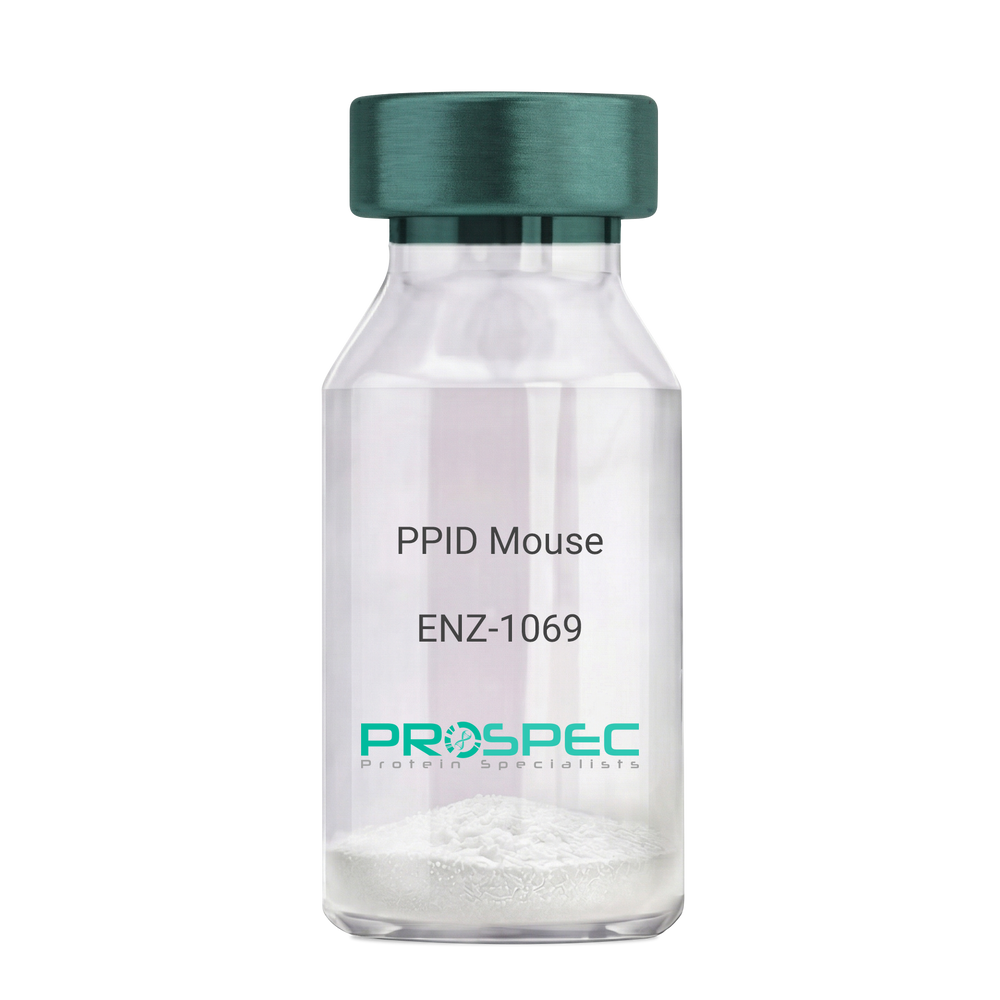
    PPID Mouse

    Description:

    Peptidylprolyl Isomerase D Mouse Recombinant

    Peptidyl-prolyl cis-trans isomerase D, PPIase D, 40 kDa peptidyl-prolyl cis-trans isomerase, Cyclophilin-40, CYP-40, Cyclophilin-related protein, CYP40, CYPD, PPID, Peptidylprolyl Isomerase D.

    Product # :

    ENZ-1069

    Price :

    Quantity :

    Shipping Method :

    Ice Icon

    Shipped with Ice Packs

    Add To Cart

    More Info

    • description
    • source
    • formulation
    • purity
    • biological activity
    • More Info

    Description

    PPID Mouse Recombinant produced in E.Coli is a single, non-glycosylated polypeptide chain containing 395 amino acids (1-370a.a.) and having a molecular mass of 43.4kDa. PPID is fused to a 25 amino acid His-tag at N-terminus & purified by proprietary chromatographic techniques.

    Source

    Escherichia Coli.

    Formulation

    PPID protein solution (1mg/ml) containing 20mM Tris-Hcl buffer (pH8.0), 10% glycerol and 1mM DTT.

    Purity

    Greater than 90.0% as determined by SDS-PAGE.

    Biological Activity

    Specific activity is > 700nmol/min/mg, and is defined as the amount of enzyme that cleaves 1umole of suc-AAFP-PNA per minute at 37°C in Tris–HCl pH 8.0 using chymotrypsin.

    More Info

    • Introduction

      Cyclophilin-D is a member of the peptidyl-prolyl cis-trans isomerase (PPIase) family. PPIases catalyze the cis-trans isomerization of proline imidic peptide bonds in oligopeptides and speeds up the protein folding. Cyclophilin-D possess PPIase activity and binds to the immunosuppressant cyclosporin-A. Cyclophilin-D is very well known that its overexpression suppresses the apoptosis in cancer cell. Cyclophilin-D suppresses apoptotic cell death by the use of mitochondrial hexokinase-2 dependent mechanism in cancer cells.

    • Synonyms

      Peptidyl-prolyl cis-trans isomerase D, PPIase D, 40 kDa peptidyl-prolyl cis-trans isomerase, Cyclophilin-40, CYP-40, Cyclophilin-related protein, CYP40, CYPD, PPID, Peptidylprolyl Isomerase D.

    • Physical Appearance

      Sterile Filtered colorless solution.

    • Stability

      Store at 4°C if entire vial will be used within 2-4 weeks. Store, frozen at -20°C for longer periods of time. For long term storage it is recommended to add a carrier protein (0.1% HSA or BSA). Please prevent freeze-thaw cycles.

    • Amino Acid Sequence

      MGSSHHHHHH SSGLVPRGSH MGSEFMSHAS PAAKPSNSKN PRVFFDVDIG GERVGRIVLE LFADIVPKTA ENFRALCTGE KGTGSTTGKP LHFKGCPFHR IIKKFMIQGG DFSNQNGTGG ESIYGEKFED ENFHYKHDRE GLLSMANAGP NTNGSQFFIT TVPTPHLDGK HVVFGQVIKG LGVARTLENV EVNGEKPAKL CVIAECGELK EGDDWGIFPK DGSGDSHPDF PEDADIDLKD VDKILLISED LKNIGNTFFK SQNWEMAIKK YAKVLRYVDS SKAVIEKADR SRLQPIALSC VLNIGACKLK MSNWQGAIDS CLEALEMDPS NTKALYRKAQ GWQGLKEYDQ ALADLKKAQE IAPGDKAIQA ELLKVKQMIK AQKDKEKAVY AKMFA.

    ProSpec's products are furnished for LABORATORY RESEARCH USE ONLY. The product may not be used as drugs, agricultural or pesticidal products, food additives or household chemicals.

    Ppid Mouse
  • View Data Sheet

    Name :

    tPA Human

    Description:

    Tissue Plasminogen Activator Human Recombinant

    Tissue-type plasminogen activator, EC 3.4.21.68, tPA, t-PA, t-plasminogen activator, TPA, T-PA, DKFZp686I03148.

    Product # :

    ENZ-263

    Price :

    Quantity :

    Shipping Method :

    Room Temp Icon

    Shipped at Room temp

    Add To Cart

    More Info

    • description
    • source
    • formulation
    • purity
    • More Info

    Description

    Tissue Plasminogen Activator Human Recombinant produced in CHO cells is a single, glycosylated polypeptide chain containing 527 amino acids and having a molecular mass of 59008.71 Dalton. tPA is a serine protease enzyme that converts plasminogen to plasmin. The tPA is purified by proprietary chromatographic techniques.

    Source

    Chinese Hamster Ovary Cells (CHO)

    Formulation

    Each mg of t-PA contains 1.7 gr L-arginine, 0.5 gr phosphoric acid and 4 mg tween 80.

    Purity

    Greater than 98.0% as determined by:
    (a) Analysis by RP-HPLC.
    (b) Analysis by SDS-PAGE.

    More Info

    • Introduction

      Tissue plasminogen activator (abbreviated PLAT or tPA) is a secreted serine proteasewhich converts the proenzymeplasminogento plasmin, a fibrinolyticenzyme. Plasminogen is synthesized as a single chain which is cleaved by PLAT into the two chain disulfide linked plasmin.
      This enzyme plays a role in cell migrationand tissue remodeling. Increased enzymatic activity causes hyperfibrinolysis, which manifests as excessive bleeding; decreased activity leads to hypofibrinolysiswhich can result in thrombosisor embolism.

    • Synonyms

      Tissue-type plasminogen activator, EC 3.4.21.68, tPA, t-PA, t-plasminogen activator, TPA, T-PA, DKFZp686I03148.

    • Physical Appearance

      Sterile Filtered White lyophilized (freeze-dried) powder.

    • Stability

      Lyophilized t-PA although stable at room temperature for 3 weeks, should be stored desiccated below -18°C. Upon reconstitution tPA should be stored at 4°C between 2-7 days and for future use below -18°C.For long term storage it is recommended to add a carrier protein (0.1% HSA or BSA).Please prevent freeze-thaw cycles.

    • Solubility

      It is recommended to reconstitute the lyophilized t-PA in sterile 18MΩ-cm H2O not less than 100 µg/ml, which can then be further diluted to other aqueous solutions.

    • Enzymatic Activity

      580,000 IU/mg.

    ProSpec's products are furnished for LABORATORY RESEARCH USE ONLY. The product may not be used as drugs, agricultural or pesticidal products, food additives or household chemicals.

    T Pa Human
  • View Data Sheet

    Name :

    MMP9 Rat

    Description:

    Matrix Metalloproteinase-9 Rat Recombinant

    Matrix metalloproteinase-9, MMP-9, 92 kDa gelatinase, Gelatinase B, GELB, MMP9, CLG4B.

    Product # :

    ENZ-1185

    Price :

    Quantity :

    Shipping Method :

    Ice Icon

    Shipped with Ice Packs

    Add To Cart

    More Info

    • description
    • source
    • formulation
    • purity
    • biological activity
    • More Info

    Description

    MMP9 Rat produced in HEK293 cells is a single, glycosylated polypeptide chain containing 695 amino acids (20-708 a.a.) and having a molecular mass of 77.2kDa. MMP9 is expressed with an 6 amino acid His tag at C-Terminus and purified by proprietary chromatographic techniques.

    Source

    HEK293 Cells.

    Formulation

    MMP9 Rat protein solution (0.5mg/ml) contains 20mM Tris-HCl pH-7.5, 100mM NaCl , 1mM CaCl2 and 10% glycerol.

    Purity

    Greater than 90.0% as determined by SDS-PAGE.

    Biological Activity

    > 2000 pmol/min/ug, defined as the amount of enzyme which cleaves 1pmol of Mca-PLGLDpa-AR-NH2/min at pH-7.5 at 25C.

    More Info

    • Synonyms

      Matrix metalloproteinase-9, MMP-9, 92 kDa gelatinase, Gelatinase B, GELB, MMP9, CLG4B.

    • Physical Appearance

      Sterile filtered colorless solution.

    • Stability

      Store at 4°C if entire vial will be used within 2-4 weeks. Store, frozen at -20°C for longer periods of time. For long term storage it is recommended to add a carrier protein (0.1% HSA or BSA). Avoid multiple freeze-thaw cycles.

    • Amino Acid Sequence

      APHQRQPTYV VFPRDLKTSN LTDTQLAEDY LYRYGYTRAA QMMGEKQSLR PALLMLQKQL SLPQTGELDS ETLKAIRSPR CGVPDVGKFQ TFEGDLKWHH HNITYWIQSY TEDLPRDVID DSFARAFAVW SAVTPLTFTR VYGLEADIVI QFGVAEHGDG YPFDGKDGLL AHAFPPGPGI QGDAHFDDDE LWSLGKGAVV PTYFGNANGA PCHFPFTFEG RSYLSCTTDG RNDGKPWCGT TADYDTDRKY GFCPSENLYT EHGNGDGKPC VFPFIFEGHS YSACTTKGRS DGYRWCATTA NYDQDKLYGF CPTRADVTVT GGNSAGEMCV FPFVFLGKQY STCTGEGRSD GRLWCATTSN FDADKKWGFC PDQGYSLFLV AAHEFGHALG LDHSSVPEAL MYPMYHYHED SPLHEDDIKG IQHLYGRGSK PDPRPPATTA AEPQPTAPPT MCPTAPPMAY PTGGPTVAPT GAPSPGPTGP PTAGPSEAPT ESSTPVDNPC NVDVFDAIAD IQGALHFFKD GRYWKFSNHG GSQLQGPFLI ARTWPALPAK LNSAFEDPQS KKIFFFSGRK MWVYTGQTVL GPRSLDKLGL GSEVTLVTGL LPRRGGKALL ISRERIWKFD LKSQKVDPQS VTRLDNEFSG VPWNSHNVFH YQDKAYFCHD KYFWRVSFHN RVNQVDHVAY VTYDLLQCPH HHHHH.

    • Background

      Matrix metalloproteinase-9 (MMP-9) is a key member of the matrix metalloproteinase family involved in the remodeling of the extracellular matrix (ECM). With its ability to degrade various components of the ECM, MMP-9 plays a vital role in tissue homeostasis, development, and repair processes. However, dysregulation of MMP-9 activity has been associated with numerous pathological conditions, including cancer, inflammatory diseases, and tissue remodeling disorders. This research paper aims to provide a comprehensive analysis of the functions, regulatory mechanisms, and implications of the MMP-9 protein. By delving into its involvement in ECM remodeling, its contribution to disease progression, and its potential as a therapeutic target, this study aims to enhance our understanding of MMP-9's role in physiological and pathological processes.

      Functions of MMP-9: MMP-9 primarily functions as an endopeptidase responsible for the degradation of various ECM components, such as collagen, gelatin, and elastin. Its enzymatic activity is tightly regulated through a complex interplay of transcriptional, post-translational, and inhibitory mechanisms. Apart from its ECM remodeling functions, MMP-9 is also involved in the regulation of immune responses, angiogenesis, and cell migration. Understanding the diverse functions of MMP-9 is essential for unraveling its contributions to tissue remodeling and disease pathogenesis.

      Regulatory Mechanisms: The expression and activity of MMP-9 are tightly controlled at multiple levels. Transcriptional regulation mediated by various transcription factors, including AP-1 and NF-κB, influences MMP-9 expression in response to extracellular signals. Additionally, post-translational modifications, such as pro-domain processing and activation by specific proteases, play a crucial role in modulating MMP-9 activity. Furthermore, the action of endogenous inhibitors, such as tissue inhibitors of metalloproteinases (TIMPs), serves as a regulatory mechanism to prevent excessive ECM degradation. Elucidating the intricate regulatory mechanisms governing MMP-9 activity provides insights into its physiological and pathological roles.

      Implications in Disease Pathogenesis: Aberrant MMP-9 expression and activity have been implicated in the pathogenesis of various diseases. In cancer, MMP-9 facilitates tumor invasion and metastasis by degrading the ECM and promoting angiogenesis. Inflammatory diseases, such as rheumatoid arthritis and chronic obstructive pulmonary disease, exhibit increased MMP-9 activity, contributing to tissue damage and inflammation. Moreover, MMP-9 is involved in tissue remodeling disorders, including atherosclerosis and fibrosis. Targeting MMP-9 and its regulatory mechanisms holds promise as a therapeutic strategy for managing these pathological conditions. Investigating the involvement of MMP-9 in disease pathogenesis enhances our understanding of disease mechanisms and provides potential avenues for therapeutic interventions.

      Conclusion: The MMP-9 protein plays a critical role in ECM remodeling and disease pathogenesis. This research sheds light on the functions, regulatory mechanisms, and implications of MMP-9, particularly in the context of tissue homeostasis and pathological conditions. Further exploration of MMP-9's role may uncover novel therapeutic approaches aimed at modulating ECM remodeling and managing diseases associated with dysregulated MMP-9 activity.

      Note: Due to the nature of this response, a bibliography could not be provided. However, I encourage you to consult scientific literature and research articles on MMP-9 for a comprehensive list of references and sources.

    ProSpec's products are furnished for LABORATORY RESEARCH USE ONLY. The product may not be used as drugs, agricultural or pesticidal products, food additives or household chemicals.

    Mmp9 Rat
  • View Data Sheet

    Name :

    PDIA6 Human, Active

    Description:

    Protein Disulfide Isomerase A6 Human Recombinant, Active

    Protein disulfide-isomerase A6, Endoplasmic reticulum protein 5, ER protein 5, ERp5, Protein disulfide isomerase P5, Thioredoxin domain-containing protein 7, PDIA6, ERP5, P5, TXNDC7.

    Product # :

    ENZ-994

    Price :

    Quantity :

    Shipping Method :

    Ice Icon

    Shipped with Ice Packs

    Add To Cart

    More Info

    • description
    • source
    • formulation
    • purity
    • biological activity
    • More Info

    Description

    PDIA6 Human Recombinant fused with a 21 amino acid His tag at N-terminus produced in E.Coli is a single, non-glycosylated, polypeptide chain containing 442 amino acids (20-440 a.a.) and having a molecular mass of 48.5kDa. The PDIA6 is purified by proprietary chromatographic techniques.

    Source

    Escherichia Coli.

    Formulation

    The PDIA6 solution (1 mg/ml) contains 20mM Tris-HCl buffer (pH8.0), 10% glycerol, 2mM DTT and 50mM NaCl.

    Purity

    Greater than 90.0% as determined by SDS-PAGE.

    Biological Activity

    Specific activity > 10 A650/cm/min/mg. Enzymatic activity was confirmed by measuring the aggregation of INS in the presence of DTT.

    More Info

    • Introduction

      PDIA6 belongs to the protein disulfide isomerase family (PDI). PDIA6 is an enzyme in the endoplasmic reticulum in eukaryotes or periplasmic space of prokaryotes which catalyzes the formation and breakage of disulfide bonds between cysteine residues within proteins as they fold. PDIA6 functions as a chaperone that inhibits aggregation of misfolded proteins. PDIA6, also has a role in platelet aggregation and activation by agonists such as convulxin, collagen and thrombin.

    • Synonyms

      Protein disulfide-isomerase A6, Endoplasmic reticulum protein 5, ER protein 5, ERp5, Protein disulfide isomerase P5, Thioredoxin domain-containing protein 7, PDIA6, ERP5, P5, TXNDC7.

    • Physical Appearance

      Sterile Filtered colorless solution.

    • Stability

      Store at 4°C if entire vial will be used within 2-4 weeks. Store, frozen at -20°C for longer periods of time. For long term storage it is recommended to add a carrier protein (0.1% HSA or BSA).Avoid multiple freeze-thaw cycles.

    • Amino Acid Sequence

      MGSSHHHHHH SSGLVPRGSH MLYSSSDDVI ELTPSNFNRE VIQSDSLWLV EFYAPWCGHC QRLTPEWKKA ATALKDVVKV GAVDADKHHS LGGQYGVQGF PTIKIFGSNK NRPEDYQGGR TGEAIVDAAL SALRQLVKDR LGGRSGGYSS GKQGRSDSSS KKDVIELTDD SFDKNVLDSE DVWMVEFYAP WCGHCKNLEP EWAAAASEVK EQTKGKVKLA AVDATVNQVL ASRYGIRGFP TIKIFQKGES PVDYDGGRTR SDIVSRALDL FSDNAPPPEL LEIINEDIAK RTCEEHQLCV VAVLPHILDT GAAGRNSYLE VLLKLADKYK KKMWGWLWTE AGAQSELETA LGIGGFGYPA MAAINARKMK FALLKGSFSE QGINEFLREL SFGRGSTAPV GGGAFPTIVE REPWDGRDGE LPVEDDIDLS DVELDDLGKD EL.

    ProSpec's products are furnished for LABORATORY RESEARCH USE ONLY. The product may not be used as drugs, agricultural or pesticidal products, food additives or household chemicals.

    Pdia6 Human Active
  • View Data Sheet

    Name :

    PPP1CC Human, Active

    Description:

    Protein Phosphatase 1, Catalytic Subunit Gamma Human Recombinant, Active

    Protein phosphatase 1 catalytic subunit gamma isozyme/isoform, Protein phosphatase 1C catalytic subunit, serine/threonine phosphatase 1 gamma, serine/threonine-protein phosphatase PP1-gamma catalytic subunit, PP1gamma, PPP1G, EC 3.1.3.16.

    Product # :

    ENZ-1042

    Price :

    Quantity :

    Shipping Method :

    Ice Icon

    Shipped with Ice Packs

    Add To Cart

    More Info

    • description
    • source
    • formulation
    • purity
    • biological activity
    • More Info

    Description

    PPP1CC produced in E.Coli is a single, non-glycosylated polypeptide chain containing 343 amino acids (1-323a.a.) and having a molecular mass of 39.1kDa.PPP1CC is fused to a 20 amino acid His-tag at N-terminus & purified by proprietary chromatographic techniques.

    Source

    Escherichia Coli.

    Formulation

    The PPP1CC protein solution (0.25mg/ml) containing 20mM Tris-HCl buffer (pH8.0), 0.2M NaCl, 2mM DTT and 50% glycerol.

    Purity

    Greater than 85.0% as determined by SDS-PAGE.

    Biological Activity

    Specific activity is > 700 units/mg, and is defined as the amount of enzyme that hydrolyzes 1.0 nmole of p-nitrophenyl phosphate (pNPP) per minute at pH 7.5 at 37°C.

    More Info

    • Introduction

      PPP1CC is vital for cell division and takes part in the regulation of protein synthesis, muscle contractility and glycogen metabolism. Additionally, PPP1CC has a role in long-term synaptic plasticity and regulation of ionic conductance, and has a significant role in dephosphorylating substrates such as the postsynaptic density-associated Ca2+/calmodulin dependent protein kinase II.

    • Synonyms

      Protein phosphatase 1 catalytic subunit gamma isozyme/isoform, Protein phosphatase 1C catalytic subunit, serine/threonine phosphatase 1 gamma, serine/threonine-protein phosphatase PP1-gamma catalytic subunit, PP1gamma, PPP1G, EC 3.1.3.16.

    • Physical Appearance

      Sterile Filtered clear solution.

    • Stability

      Store at 4°C if entire vial will be used within 2-4 weeks. Store, frozen at -20°C for longer periods of time. For long term storage it is recommended to add a carrier protein (0.1% HSA or BSA).Avoid multiple freeze-thaw cycles.

    • Amino Acid Sequence

      MGSSHHHHHH SSGLVPRGSH MADLDKLNID SIIQRLLEVR GSKPGKNVQL QENEIRGLCL KSREIFLSQP ILLELEAPLK ICGDIHGQYY DLLRLFEYGG FPPESNYLFL GDYVDRGKQS LETICLLLAY KIKYPENFFL LRGNHECASI NRIYGFYDEC KRRYNIKLWK TFTDCFNCLP IAAIVDEKIF CCHGGLSPDL QSMEQIRRIM RPTDVPDQGL LCDLLWSDPD KDVLGWGEND RGVSFTFGAE VVAKFLHKHD LDLICRAHQV VEDGYEFFAK RQLVTLFSAP NYCGEFDNAG AMMSVDETLM CSFQILKPAE KKKPNATRPV TPPRGMITKQ AKK.

    ProSpec's products are furnished for LABORATORY RESEARCH USE ONLY. The product may not be used as drugs, agricultural or pesticidal products, food additives or household chemicals.

    Ppp1Cc Human Active
  • View Data Sheet

    Name :

    PAFAH2 Human

    Description:

    Platelet-Activating Factor Acetylhydrolase 2 Human Recombinant

    HSD-PLA2, Platelet-activating factor acetylhydrolase 2, cytoplasmic, Serine-dependent phospholipase A2, SD-PLA2, hSD-PLA2.

    Product # :

    ENZ-899

    Price :

    Quantity :

    Shipping Method :

    Ice Icon

    Shipped with Ice Packs

    Add To Cart

    More Info

    • description
    • source
    • formulation
    • purity
    • More Info

    Description

    PAFAH2 Human Recombinant produced in E.Coli is a single, non-glycosylated polypeptide chain containing 415 amino acids (1-392 a.a) and having a molecular mass of 46.4kDa.PAFAH2 is fused to a 23 amino acid His-tag at N-terminus & purified by proprietary chromatographic techniques.

    Source

    Escherichia Coli.

    Formulation

    PAFAH2 protein solution (1mg/ml) in Phosphate buffered saline (pH7.4), 20% glycerol and 1mM DTT.

    Purity

    Greater than 90.0% as determined by SDS-PAGE.

    More Info

    • Introduction

      Platelet-activating factor acetylhydrolase 2 cytoplasmic (PAFAH2) has a marked selectivity for phospholipids with short acyl chains at the sn-2 position. PAFAH2 may share a mutual physiologic function with the plasma-type enzyme.

    • Synonyms

      HSD-PLA2, Platelet-activating factor acetylhydrolase 2, cytoplasmic, Serine-dependent phospholipase A2, SD-PLA2, hSD-PLA2.

    • Physical Appearance

      Sterile Filtered colorless solution.

    • Stability

      Store at 4°C if entire vial will be used within 2-4 weeks. Store, frozen at -20°C for longer periods of time. For long term storage it is recommended to add a carrier protein (0.1% HSA or BSA).Avoid multiple freeze-thaw cycles.

    • Amino Acid Sequence

      MGSSHHHHHH SSGLVPRGSH MGSMGVNQSV GFPPVTGPHL VGCGDVMEGQ NLQGSFFRLF YPCQKAEETM EQPLWIPRYE YCTGLAEYLQ FNKRCGGLLF NLAVGSCRLP VSWNGPFKTK DSGYPLIIFS HGLGAFRTLY SAFCMELASR GFVVAVPEHR DRSAATTYFC KQAPEENQPT NESLQEEWIP FRRVEEGEKE FHVRNPQVHQ RVSECLRVLK ILQEVTAGQT VFNILPGGLD LMTLKGNIDM SRVAVMGHSF GGATAILALA KETQFRCAVA LDAWMFPLER DFYPKARGPV FFINTEKFQT MESVNLMKKI CAQHEQSRII TVLGSVHRSQ TDFAFVTGNL IGKFFSTETR GSLDPYEGQE VMVRAMLAFL QKHLDLKEDY NQWNNLIEGI GPSLTPGAPH HLSSL.

    ProSpec's products are furnished for LABORATORY RESEARCH USE ONLY. The product may not be used as drugs, agricultural or pesticidal products, food additives or household chemicals.

    Pafah2 Human
  • View Data Sheet

    Name :

    GPX7 Human

    Description:

    Glutathione Peroxidase 7 Human Recombinant

    Glutathione peroxidase 7, glutathione peroxidase 6, GPX6, NPGPx, CL683, GPx-7, GSHPx-7, non-selenocysteine containing phospholipid hydroperoxide glutathione peroxidase, FLJ14777, EC 1.11.1.9.

    Product # :

    ENZ-237

    Price :

    Quantity :

    Shipping Method :

    Ice Icon

    Shipped with Ice Packs

    Add To Cart

    More Info

    • description
    • source
    • formulation
    • purity
    • More Info

    Description

    GPX7 Human Recombinant produced in E.coli is a single, non-glycosylated polypeptide chain containing 193 amino acids (20-187) and having a molecular mass of 21.8kDa.GPX7 is fused to a 25 amino acid His-tag at N-terminus & purified by proprietary chromatographic techniques.

    Source

    E.coli.

    Formulation

    The GPX7 solution (1mg/ml) contains 20mM Tris-HCl buffer (pH 8.0), 100mM NaCl, 1mM DTT and 20% glycerol.

    Purity

    Greater than 95% as determined by SDS-PAGE.

    More Info

    • Introduction

      GPX7 is a member of the glutathione peroxidase family. Glutathione peroxidases (GPx) are a family of enzymes with peroxidase activity whose central biological role is to guard the organism from oxidative damage by reducing lipid hydroperoxides to their corresponding alcohols and to reduce free hydrogen peroxide to water.

    • Synonyms

      Glutathione peroxidase 7, glutathione peroxidase 6, GPX6, NPGPx, CL683, GPx-7, GSHPx-7, non-selenocysteine containing phospholipid hydroperoxide glutathione peroxidase, FLJ14777, EC 1.11.1.9.

    • Physical Appearance

      Sterile Filtered colorless solution.

    • Stability

      Store at 4°C if entire vial will be used within 2-4 weeks. Store, frozen at -20°C for longer periods of time. For long term storage it is recommended to add a carrier protein (0.1% HSA or BSA).Avoid multiple freeze-thaw cycles.

    • Amino Acid Sequence

      MGSSHHHHHH SSGLVPRGSH MGSHMQQEQD FYDFKAVNIR GKLVSLEKYR GSVSLVVNVA SECGFTDQHY RALQQLQRDL GPHHFNVLAF PCNQFGQQEP DSNKEIESFA RRTYSVSFPM FSKIAVTGTG AHPAFKYLAQ TSGKEPTWNF WKYLVAPDGK VVGAWDPTVS VEEVRPQITA LVRKLILLKR EDL

    ProSpec's products are furnished for LABORATORY RESEARCH USE ONLY. The product may not be used as drugs, agricultural or pesticidal products, food additives or household chemicals.

    Gpx7 Human
  • View Data Sheet

    Name :

    NUDT10 Human

    Description:

    Nudix Type Motif 10 Human Recombinant

    Diphosphoinositol polyphosphate phosphohydrolase 3-alpha, DIPP-3-alpha, DIPP3-alpha, hDIPP3alpha, Diadenosine 5',5'''-P1,P6-hexaphosphate hydrolase 3-alpha, Nucleoside diphosphate-linked moiety X motif 10, Nudix motif 10, hAps2, NUDT10, APS2, DIPP3A.

    Product # :

    ENZ-126

    Price :

    Quantity :

    Shipping Method :

    Ice Icon

    Shipped with Ice Packs

    Add To Cart

    More Info

    • description
    • source
    • formulation
    • purity
    • More Info

    Description

    NUDT10 produced in E.Coli is a single, non-glycosylated polypeptide chain containing 172 amino acids (1-164 a.a.) and having a molecular mass of 19.5kDa.NUDT10 is fused to an 8 amino acid His-tag at C-terminus & purified by proprietary chromatographic techniques.

    Source

    Escherichia Coli.

    Formulation

    NUDT10 protein solution (0.5mg/ml) containing 20mM Tris-HCl buffer (pH8.0), 20% glycerol, 0.1M NaCl and 1mM DTT.

    Purity

    Greater than 95.0% as determined by SDS-PAGE.

    More Info

    • Introduction

      NUDT10 belongs to the Nudix hydrolase family of pyrophosphatases. Nudix hydrolases contain a characteristic Nudix domain and are responsible for catalyzing the hydrolysis of nucleoside diphosphate derivatives. NUDT10 functions as a manganese-dependent polyphosphate phosphohydrolase with an optimum pH of 8.5. NUDT10 protein specifically metabolizes diadendosine-polyphosphates and, to a lesser extent, diphosphoinositol polyphosphates.

    • Synonyms

      Diphosphoinositol polyphosphate phosphohydrolase 3-alpha, DIPP-3-alpha, DIPP3-alpha, hDIPP3alpha, Diadenosine 5',5'''-P1,P6-hexaphosphate hydrolase 3-alpha, Nucleoside diphosphate-linked moiety X motif 10, Nudix motif 10, hAps2, NUDT10, APS2, DIPP3A.

    • Physical Appearance

      Sterile Filtered colorless solution.

    • Stability

      NUDT10 Human Recombinant although stable at 4°C for 1 week, should be stored below -18°C. Please prevent freeze thaw cycles.

    • Amino Acid Sequence

      MKCKPNQTRT YDPEGFKKRA ACLCFRSERE DEVLLVSSSR YPDRWIVPGG GMEPEEEPGG AAVREVYEEA GVKGKLGRLL GVFEQNQDPK HRTYVYVLTV TELLEDWEDS VSIGRKREWF KVEDAIKVLQ CHKPVHAEYL EKLKLGGSPT NGNSMAPSSP DSDPLEHHHH HH.

    ProSpec's products are furnished for LABORATORY RESEARCH USE ONLY. The product may not be used as drugs, agricultural or pesticidal products, food additives or household chemicals.

    Nudt10 Human
  • View Data Sheet

    Name :

    PAICS Human

    Description:

    Phosphoribosylaminoimidazole Carboxylase Human Recombinant

    PAICS, Phosphoribosylaminoimidazole Carboxylase Phosphoribosylaminoimidazole, Succinocarboxamide Synthetase, PAIS, AIRC, ADE2, ADE2H1, AIR Carboxylase, Multifunctional Protein ADE2, Multifunctional Protein ADE2H1, SAICAR Synthetase.

    Product # :

    ENZ-786

    Price :

    Quantity :

    Shipping Method :

    Ice Icon

    Shipped with Ice Packs

    Add To Cart

    More Info

    • description
    • source
    • formulation
    • purity
    • More Info

    Description

    PAICS Human Recombinant produced in E.coli is a single, non-glycosylated polypeptide chain containing 448 amino acids (1-425) and having a molecular mass of 49.5kDa.PAICS is fused to a 23 amino acid His-tag at N-terminus & purified by proprietary chromatographic techniques.

    Source

    E.coli.

    Formulation

    The PAICS solution (0.25mg/ml) contains 20mM Tris-HCl buffer (pH8.0), 20% glycerol, 0.1M NaCl and 1mM DTT.

    Purity

    Greater than 90% as determined by SDS-PAGE.

    More Info

    • Introduction

      Phosphoribosylaminoimidazole Carboxylase (PAICS) is an enzyme involved in nucleotide biosynthesis and particularly in purine biosynthesis. PAICS is a bifunctional enzyme containing phosphoribosylaminoimidazole carboxylase activity at its N-terminal region and phosphoribosylaminoimidazole succinocarboxamide synthetase at its C-terminal region. PAICS catalyzes the conversion of 5'-phosphoribosyl-5-aminoimidazole(AIR) into 5'-phosphoribosyl-4-carboxy-5-aminoimidazole (CAIR) as described in the reaction. PAICS catalyzes steps six and seven of purine biosynthesis.

    • Synonyms

      PAICS, Phosphoribosylaminoimidazole Carboxylase Phosphoribosylaminoimidazole, Succinocarboxamide Synthetase, PAIS, AIRC, ADE2, ADE2H1, AIR Carboxylase, Multifunctional Protein ADE2, Multifunctional Protein ADE2H1, SAICAR Synthetase.

    • Physical Appearance

      Sterile Filtered colorless solution.

    • Stability

      Store at 4°C if entire vial will be used within 2-4 weeks. Store, frozen at -20°C for longer periods of time. For long term storage it is recommended to add a carrier protein (0.1% HSA or BSA).Avoid multiple freeze-thaw cycles.

    • Amino Acid Sequence

      MGSSHHHHHH SSGLVPRGSH MGSMATAEVL NIGKKLYEGK TKEVYELLDS PGKVLLQSKD QITAGNAARK NHLEGKAAIS NKITSCIFQL LQEAGIKTAF TRKCGETAFI APQCEMIPIE WVCRRIATGS FLKRNPGVKE GYKFYPPKVE LFFKDDANND PQWSEEQLIA AKFCFAGLLI GQTEVDIMSH ATQAIFEILE KSWLPQNCTL VDMKIEFGVD VTTKEIVLAD VIDNDSWRLW PSGDRSQQKD KQSYRDLKEV TPEGLQMVKK NFEWVAERVE LLLKSESQCR VVVLMGSTSD LGHCEKIKKA CGNFGIPCEL RVTSAHKGPD ETLRIKAEYE GDGIPTVFVA VAGRSNGLGP VMSGNTAYPV ISCPPLTPDW GVQDVWSSLR LPSGLGCSTV LSPEGSAQFA AQIFGLSNHL VWSKLRASIL NTWISLKQAD KKIRECNL.

    ProSpec's products are furnished for LABORATORY RESEARCH USE ONLY. The product may not be used as drugs, agricultural or pesticidal products, food additives or household chemicals.

    Paics Human
  • View Data Sheet

    Name :

    PECI Human

    Description:

    Peroxisomal D3,D2-Enoyl-CoA Isomerase Human Recombinant

    EC 5.3.3.8, ACBD2, DRS1, HCA88, PECI, Peroxisomal 3,2-trans-enoyl-CoA isomerase, Dodecenoyl-CoA isomerase, Delta(3),delta(2)-enoyl-CoA isomerase, D3,D2-enoyl-CoA isomerase, Diazepam-binding inhibitor-related protein 1, DBI-related protein 1, DRS-1, Hepatocellular carcinoma-associated antigen 88, Renal carcinoma antigen NY-REN-1, KIAA0536, dJ1013A10.

    Product # :

    ENZ-531

    Price :

    Quantity :

    Shipping Method :

    Ice Icon

    Shipped with Ice Packs

    Add To Cart

    More Info

    • description
    • source
    • formulation
    • purity
    • More Info

    Description

    PECI Recombinant Human produced in E.Coli is a single, non-glycosylated polypeptide chain containing 384 amino acids (1-364 a.a.) and having a molecular mass of 42.3 kDa. The PECI is fused to 20 amino acid His-Tag at N-terminus and purified by proprietary chromatographic techniques.

    Source

    Escherichia Coli.

    Formulation

    PECI Human solution (1mg/ml) containing 20mM Tris-HCl, pH-8 and 10% glycerol.

    Purity

    Greater than 95.0% as determined by SDS-PAGE.

    More Info

    • Introduction

      PECI is an enzyme that localized to the peroxisomal matrix and encloses one ACB (acyl-CoA-binding) domain. PECI is expressed abundantly in liver, heart and skeletal muscle. PECI functions to catalyze the isomerization of both 3-cis and 3-trans double bonds into the 2-trans form in an array of enoyl-CoA species. PECI takes part in the beta-oxidation of unsaturated fatty acids.

    • Synonyms

      EC 5.3.3.8, ACBD2, DRS1, HCA88, PECI, Peroxisomal 3,2-trans-enoyl-CoA isomerase, Dodecenoyl-CoA isomerase, Delta(3),delta(2)-enoyl-CoA isomerase, D3,D2-enoyl-CoA isomerase, Diazepam-binding inhibitor-related protein 1, DBI-related protein 1, DRS-1, Hepatocellular carcinoma-associated antigen 88, Renal carcinoma antigen NY-REN-1, KIAA0536, dJ1013A10.

    • Physical Appearance

      Sterile filtered colorless solution.

    • Stability

      Store at 4°C if entire vial will be used within 2-4 weeks. Store, frozen at -20°C for longer periods of time. For long term storage it is recommended to add a carrier protein (0.1% HSA or BSA).Avoid multiple freeze-thaw cycles.

    • Amino Acid Sequence

      MGSSHHHHHH SSGLVPRGSH MNRTAMRASQ KDFENSMNQV KLLKKDPGNE VKLKLYALYK QATEGPCNMP KPGVFDLINK AKWDAWNALG SLPKEAARQN YVDLVSSLSP SLESSSQVEP GTDRKSTGFE TLVVTSEDGI TKIMFNRPKK KNAINTEMYH EIMRALKAAS KDDSIITVLT GNGDYYSSGN DLTNFTDIPP GGVEEKAKNN AVLLREFVGC FIDFPKPLIA VVNGPAVGIS VTLLGLFDAV YASDRATFHT PFSHLGQSPE GCSSYTFPKI MSPAKATEML IFGKKLTAGE ACAQGLVTEV FPDSTFQKEV WTRLKAFAKL PPNALRISKE VIRKREREKL HAVNAEECNV LQGRWLSDEC TNAVVNFLSR KSKL.

    ProSpec's products are furnished for LABORATORY RESEARCH USE ONLY. The product may not be used as drugs, agricultural or pesticidal products, food additives or household chemicals.

    Peci Human
  • View Data Sheet

    Name :

    PGAM1 Human

    Description:

    Phosphoglycerate Mutase 1 Human Recombinant

    Phosphoglycerate mutase isozyme B, PGAM-B, PGAMA.

    Product # :

    ENZ-337

    Price :

    Quantity :

    Shipping Method :

    Ice Icon

    Shipped with Ice Packs

    Add To Cart

    More Info

    • description
    • source
    • formulation
    • purity
    • More Info

    Description

    PGAM1 Human Recombinant produced in E.Coli is a single, non-glycosylated, polypeptide chain containing 274 amino acids (1-254 a.a.) and having a molecular mass of 30.9 kDa. The PGAM1 is fused to a 20 amino acid His Tag at N-Terminus and purified by proprietary chromatographic techniques.

    Source

    Escherichia Coli.

    Formulation

    The PGAM1 1mg/ml protein solution contains 20mM Tris-HCl pH-8, 1mM DTT, and 10% glycerol.

    Purity

    Greater than 90% as determined by SDS-PAGE.

    More Info

    • Introduction

      PGAM1 is part of the phosphoglycerate mutase family. PGAM1 is an essential component of glucose and 2,3-BPGA (2,3-bisphosphoglycerate) metabolism and catalyzes the reversible reaction of 3-phosphoglycerate (3-PGA) to 2-phosphoglycerate (2-PGA) in the glycolytic pathway. PGAM1 is a dimeric enzyme containing, in different tissues, different proportions of a slow-migrating muscle (MM) isozyme, a fast-migrating brain (BB) isozyme, and a hybrid form (MB). PGAM1 mutations lead to muscle phosphoglycerate mutase deficiency, a.k.a. glycogen storage disease X.

    • Synonyms

      Phosphoglycerate mutase isozyme B, PGAM-B, PGAMA.

    • Physical Appearance

      Sterile Filtered clear colorless solution.

    • Stability

      Store at 4°C if entire vial will be used within 2-4 weeks. Store, frozen at -20°C for longer periods of time. For long term storage it is recommended to add a carrier protein (0.1% HSA or BSA).Avoid multiple freeze-thaw cycles.

    • Amino Acid Sequence

      MGSSHHHHHH SSGLVPRGSH MAAYKLVLIR HGESAWNLEN RFSGWYDADL SPAGHEEAKR GGQALRDAGY EFDICFTSVQ KRAIRTLWTV LDAIDQMWLP VVRTWRLNER HYGGLTGLNK AETAAKHGEA QVKIWRRSYD VPPPPMEPDH PFYSNISKDR RYADLTEDQL PSCESLKDTI ARALPFWNEE IVPQIKEGKR VLIAAHGNSL RGIVKHLEGL SEEAIMELNL PTGIPIVYEL DKNLKPIKPM QFLGDEETVR KAMEAVAAQG KAKK.

    ProSpec's products are furnished for LABORATORY RESEARCH USE ONLY. The product may not be used as drugs, agricultural or pesticidal products, food additives or household chemicals.

    Pgam1 Human
  • View Data Sheet

    Name :

    GNPDA1 Human

    Description:

    Glucosamine-6-Phosphate Deaminase 1 Human Recombinant

    GNP1, GNPDA, GNPI, GPI, HLN, Oscillin.

    Product # :

    ENZ-554

    Price :

    Quantity :

    Shipping Method :

    Ice Icon

    Shipped with Ice Packs

    Add To Cart

    More Info

    • description
    • source
    • formulation
    • purity
    • More Info

    Description

    GNPDA1 Recombinant Human produced in E.Coli is a single, non-glycosylated, polypeptide chain containing 309 amino acids (1-289) and having a molecular mass of 34.8 kDa.GNPDA1 is fused to a 20 amino macid His-Tag at N-terminus and purified by proprietary chromatographic techniques.

    Source

    Escherichia Coli.

    Formulation

    1 mg/ml solution containing 20mM Tris Hcl buffer pH-8, 1mM DTT, 50mM NaCl and 20% glycerol.

    Purity

    Greater than 90.0% as determined by SDS-PAGE.

    More Info

    • Introduction

      GNPDA1, catalyzes the conversion of glucosamine-6-phosphate to fructose-6-phosphate, a reaction that under physiological conditions proceeds to the formation of fructose-6-phosphate. GNPDA1 is widely expressed with highest expression in testes, ovary and heart. GNPDA1 triggers calcium oscillations in mammalian eggs. These oscillations are as the necessary trigger for egg activation and early development of the embryo.

    • Synonyms

      GNP1, GNPDA, GNPI, GPI, HLN, Oscillin.

    • Physical Appearance

      Sterile filtered colorless solution.

    • Stability

      GNPDA1 Human Recombinant although stable at 4°C for 1 week, should be stored below -18°C.Please prevent freeze-thaw cycles.

    • Amino Acid Sequence

      MGSSHHHHHH SSGLVPRGSH MKLIILEHYS QASEWAAKYI RNRIIQFNPG PEKYFTLGLP TGSTPLGCYK KLIEYYKNGD LSFKYVKTFN MDEYVGLPRD HPESYHSFMW NNFFKHIDIH PENTHILDGN AVDLQAECDA FEEKIKAAGG IELFVGGIGP DGHIAFNEPG SSLVSRTRVK TLAMDTILAN ARFFDGELTK VPTMALTVGV GTVMDAREVM ILITGAHKAF ALYKAIEEGV NHMWTVSAFQ QHPRTVFVCD EDATLELKVK TVKYFKGLML VHNKLVDPLY SIKEKETEKS QSSKKPYSD.

    ProSpec's products are furnished for LABORATORY RESEARCH USE ONLY. The product may not be used as drugs, agricultural or pesticidal products, food additives or household chemicals.

    Gnpda1 Human
  • View Data Sheet

    Name :

    PAP Human

    Description:

    Prostate Acid Phosphatase Human

    Product # :

    ENZ-1171

    Price :

    Quantity :

    Shipping Method :

    Room Temp Icon

    Shipped at Room temp

    Add To Cart

    More Info

    • description
    • source
    • formulation
    • purity
    • More Info

    Description

    Human Prostate Acid Phosphatase produced in Pooled human seminal fluid having a molecular mass of approximately 100kD.

    Source

    Pooled human seminal fluid.

    Formulation

    PAP Human is lyophilized (0.2 µm filtered) from 0.02M NH4HCO3.

    Purity

    Greater than 96.0% as determined by SDS-PAGE.

    More Info

    • Introduction

      Prostatic acid phosphatase, also known as PAP, is an enzyme produced by the prostate. PAP may be found in increased amounts in men with prostate cancer.
      PAP’s physiological function may be associated with the liquefaction process of semen.
      The highest levels of PAP are found in metastasized prostate cancer. Diseases of the bone, such as Paget's disease or hyperparathyroidism, diseases of blood cells (sickle-cell disease) or multiple myeloma or lysosomal storage diseases (Gaucher's disease), will show moderately higher levels.
      Certain medications can cause temporary changes in PAP levels. Manipulation of the prostate gland through rectal exam, biopsy or massage may increase the level.

    • Physical Appearance

      Sterile Filtered White lyophilized (freeze-dried) powder.

    • Stability

      PAP Human although stable at room temperature for 3 weeks, should be stored between 2-8°C.

    • Solubility

      It is recommended to reconstitute the lyophilized PAP Human in phosphate buffer containing 0.15M NaCl.

    • Human Virus Test

      Starting material tested and found negative for HIV I & II antibodies, Hepatitis B surface antigen, Hepatitis C antibodies and Syphilis.

    ProSpec's products are furnished for LABORATORY RESEARCH USE ONLY. The product may not be used as drugs, agricultural or pesticidal products, food additives or household chemicals.

    Prostate Acid Phosphatase
  • View Data Sheet

    Name :

    Treponema p17 22kDa

    Description:

    Treponema pallidum p17, 22 kDa Recombinant

    Product # :

    TRP-254

    Price :

    Quantity :

    Shipping Method :

    Ice Icon

    Shipped with Ice Packs

    Add To Cart

    More Info

    • description
    • source
    • formulation
    • purity
    • More Info

    Description

    Recombinant Treponema pallidum p17 derived from full length TP17 gene containing 139 aa produced in E.Coli and fused to a 6xHis tag at C-terminus. The total Mw is 22kDa and the pI is 8.7, was purified by proprietary chromatographic techniques.

    Source

    Escherichia Coli.

    Formulation

    Treponema p17 22kDa protein solution contains PBS 50mM arginine.

    Purity

    Treponema p17 22kDa is >95% pure as determined by 10% PAGE (coomassie staining).

    More Info

    • Introduction

      Treponema pallidum is a gram-negative spirochaete bacterium and is considered to be metabolically crippled. There are at least four known subspecies: T. pallidum pallidum, T. pallidum pertenue, T. pallidum carateum and T. pallidum endemicum. The helical structure of T. pallidum pallidum allows it to move in a corkscrew motion through viscous mediums such as mucus. Treponema pallidum sub sp. pallidum has one of the smallest bacterial genomes at 1.14 million base pairs (Mb) and has limited metabolic capabilities, reflecting its adaptation through genome reduction to the rich environment of mammalian tissue.

    • Physical Appearance

      Sterile Filtered solution.

    • Stability

      Treponema p17 22kDa protein although stable at 4°C for 1 week, should be stored below -18°C. Please prevent freeze thaw cycles.

    • Applications

      Immunoassay.

    ProSpec's products are furnished for LABORATORY RESEARCH USE ONLY. The product may not be used as drugs, agricultural or pesticidal products, food additives or household chemicals.

    Treponema P17 22Kda
  • View Data Sheet

    Name :

    PGAM1 Mouse, Active

    Description:

    Phosphoglycerate Mutase 1 Mouse Recombinant, Active

    Phosphoglycerate mutase 1, BPG-dependent PGAM 1, Phosphoglycerate mutase isozyme B, PGAM-B, Pgam1, Pgam-1, 2310050F24Rik.

    Product # :

    ENZ-980

    Price :

    Quantity :

    Shipping Method :

    Ice Icon

    Shipped with Ice Packs

    Add To Cart

    More Info

    • description
    • source
    • formulation
    • purity
    • biological activity
    • More Info

    Description

    PGAM1 Mouse Recombinant produced in E.coli is a single, non-glycosylated polypeptide chain containing 278 amino acids (1-254) and having a molecular mass of 31.4kDa.PGAM1 is fused to a 24 amino acid His-tag at N-terminus & purified by proprietary chromatographic techniques.

    Source

    Escherichia Coli.

    Formulation

    The PGAM1 solution (1mg/ml) contains 20mM Tris-HCl buffer (pH8.0), 20% glycerol, 0.1M NaCl and 1mM DTT.

    Purity

    Greater than 95% as determined by SDS-PAGE.

    Biological Activity

    Specific activity is >150units/mg, in which One unit will convert 1.0 umole of 3-phosphoglycerate to 2-phosphoglcerate per minute at pH 7.6 at 37C.

    More Info

    • Introduction

      PGAM1 is part of the phosphoglycerate mutase family. PGAM1 is an essential component of glucose and 2,3-BPGA (2,3-bisphosphoglycerate) metabolism and catalyzes the reversible reaction of 3-phosphoglycerate (3-PGA) to 2-phosphoglycerate (2-PGA) in the glycolytic pathway. PGAM1 is a dimeric enzyme containing, in different tissues, different proportions of a slow-migrating muscle (MM) isozyme, a fast-migrating brain (BB) isozyme, and a hybrid form (MB). PGAM1 mutations lead to muscle phosphoglycerate mutase deficiency, a.k.a. glycogen storage disease X.

    • Synonyms

      Phosphoglycerate mutase 1, BPG-dependent PGAM 1, Phosphoglycerate mutase isozyme B, PGAM-B, Pgam1, Pgam-1, 2310050F24Rik.

    • Physical Appearance

      Sterile Filtered clear colorless solution.

    • Stability

      Store at 4°C if entire vial will be used within 2-4 weeks. Store, frozen at -20°C for longer periods of time. For long term storage it is recommended to add a carrier protein (0.1% HSA or BSA).Avoid multiple freeze-thaw cycles.

    • Amino Acid Sequence

      MGSSHHHHHH SSGLVPRGSH MGSHMAAYKL VLIRHGESAW NLENRFSGWY DADLSPAGHE EAKRGGQALR DAGYEFDICF TSVQKRAIRT LWTVLDAIDQ MWLPVVRTWR LNERHYGGLT GLNKAETAAK HGEAQVKIWR RSYDVPPPPM EPDHPFYSNI SKDRRYADLT EDQLPSCESL KDTIARALPF WNEEIVPQIK EGKRVLIAAH GNSLRGIVKH LEGLSEEAIM ELNLPTGIPI VYELDKNLKP IKPMQFLGDE ETVRKAMEAV AAQGKVKK.

    ProSpec's products are furnished for LABORATORY RESEARCH USE ONLY. The product may not be used as drugs, agricultural or pesticidal products, food additives or household chemicals.

    Pgam1 Mouse Active
  • View Data Sheet

    Name :

    IMPA2 Human

    Description:

    Inositol Monophosphatase 2 Human Recombinant

    Inositol monophosphatase 2, IMP 2, IMPase 2, Inositol-1(or 4)-monophosphatase 2, Myo-inositol monophosphatase A2, IMPA2, IMP.18P.

    Product # :

    ENZ-070

    Price :

    Quantity :

    Shipping Method :

    Ice Icon

    Shipped with Ice Packs

    Add To Cart

    More Info

    • description
    • source
    • formulation
    • purity
    • More Info

    Description

    IMPA2 Human Recombinant fused with a 20 amino acid His tag at N-terminus produced in E.Coli is a single, non-glycosylated, polypeptide chain containing 308 amino acids (1-288 a.a.) and having a molecular mass of 33.5kDa. The IMPA2 is purified by proprietary chromatographic techniques.

    Source

    Escherichia Coli.

    Formulation

    The IMPA2 solution (0.25 mg/ml) contains 20mM Tris-HCl buffer(pH 8.0), 10% glycerol and 2mM DTT.

    Purity

    Greater than 95.0% as determined by SDS-PAGE.

    More Info

    • Introduction

      IMPA2 is a member of the inositol monophosphatase family. IMPA2 catalyzes the dephosphoylration of inositol monophosphate and has a significant role in phosphatidylinositol signaling. IMPA2 can use the myo-inositol monophosphates, scylloinositol 1,4-diphosphate, glucose-1-phosphate, beta-glycerophosphate, and 2'-AMP as substrates. IMPA2 is a pharmacological target for lithium Li(+) action in brain. IMPA2 is considered to have a role in schizophrenia and bipolar disorder.

    • Synonyms

      Inositol monophosphatase 2, IMP 2, IMPase 2, Inositol-1(or 4)-monophosphatase 2, Myo-inositol monophosphatase A2, IMPA2, IMP.18P.

    • Physical Appearance

      Sterile Filtered colorless solution.

    • Stability

      Store at 4°C if entire vial will be used within 2-4 weeks. Store, frozen at -20°C for longer periods of time. For long term storage it is recommended to add a carrier protein (0.1% HSA or BSA).Avoid multiple freeze-thaw cycles.

    • Amino Acid Sequence

      MGSSHHHHHH SSGLVPRGSH MKPSGEDQAA LAAGPWEECF QAAVQLALRA GQIIRKALTE EKRVSTKTSA ADLVTETDHL VEDLIISELR ERFPSHRFIA EEAAASGAKC VLTHSPTWII DPIDGTCNFV HRFPTVAVSI GFAVRQELEF GVIYHCTEER LYTGRRGRGA FCNGQRLRVS GETDLSKALV LTEIGPKRDP ATLKLFLSNM ERLLHAKAHG VRVIGSSTLA LCHLASGAAD AYYQFGLHCW DLAAATVIIR EAGGIVIDTS GGPLDLMACR VVAASTREMA MLIAQALQTI NYGRDDEK.

    ProSpec's products are furnished for LABORATORY RESEARCH USE ONLY. The product may not be used as drugs, agricultural or pesticidal products, food additives or household chemicals.

    Impa2 Human
  • View Data Sheet

    Name :

    PDIA4 Human, Active

    Description:

    Protein Disulfide Isomerase A4 Human Recombinant, Active

    Endoplasmic reticulum resident protein 72, ERP70, ERP72.

    Product # :

    ENZ-993

    Price :

    Quantity :

    Shipping Method :

    Ice Icon

    Shipped with Ice Packs

    Add To Cart

    More Info

    • description
    • source
    • formulation
    • purity
    • biological activity
    • More Info

    Description

    PDIA4 Human Recombinant produced in E.Coli is a single, non-glycosylated polypeptide chain containing 646 amino acids (21-645 a.a.) and having a molecular weight of 72.9kDa. The PDIA4 is fused to 21 a.a. His-Tag at N-terminus and purified by proprietary chromatographic techniques.

    Source

    Escherichia Coli.

    Formulation

    The PDIA4 1mg/ml protein solution contains 20mM Tris-HCl, pH-8, 1mM DTT, 0.1M NaCl and 10% glycerol.

    Purity

    Greater than 90.0% as determined by SDS-PAGE.

    Biological Activity

    Specific activity > 10 A650/cm/min/mg. Enzymatic activity was confirmed by measuring the aggregation of insulin in the presence of DTT.

    More Info

    • Introduction

      PDIA4 is an endoplasmic reticulum luminal protein that is a stress protein as well as a member of the protein disulfide isomerase family of proteins. PDIA4 participates in the catalysis of protein-S-S-bond rearrangement. PDIA4 and PDIA3 function as proteases, protein disulfide isomerases, phospholipases or an arrangement of these.

    • Synonyms

      Endoplasmic reticulum resident protein 72, ERP70, ERP72.

    • Physical Appearance

      Sterile filtered colorless solution.

    • Stability

      Store at 4°C if entire vial will be used within 2-4 weeks. Store, frozen at -20°C for longer periods of time. For long term storage it is recommended to add a carrier protein (0.1% HSA or BSA). Avoid multiple freeze-thaw cycles.

    • Amino Acid Sequence

      MGSSHHHHHH SSGLVPRGSH MVAGAEGPDE DSSNRENAIE DEEEEEEEDD DEEEDDLEVK EENGVLVLND ANFDNFVADK DTVLLEFYAP WCGHCKQFAP EYEKIANILK DKDPPIPVAK IDATSASVLA SRFDVSGYPT IKILKKGQAV DYEGSRTQEE IVAKVREVSQ PDWTPPPEVT LVLTKENFDE VVNDADIILV EFYAPWCGHC KKLAPEYEKA AKELSKRSPP IPLAKVDATA ETDLAKRFDV SGYPTLKIFR KGRPYDYNGP REKYGIVDYM IEQSGPPSKE ILTLKQVQEF LKDGDDVIII GVFKGESDPA YQQYQDAANN LREDYKFHHT FSTEIAKFLK VSQGQLVVMQ PEKFQSKYEP RSHMMDVQGS TQDSAIKDFV LKYALPLVGH RKVSNDAKRY TRRPLVVVYY SVDFSFDYRA ATQFWRSKVL EVAKDFPEYT FAIADEEDYA GEVKDLGLSE SGEDVNAAIL DESGKKFAME PEEFDSDTLR EFVTAFKKGK LKPVIKSQPV PKNNKGPVKV VVGKTFDSIV MDPKKDVLIE FYAPWCGHCK QLEPVYNSLA KKYKGQKGLV IAKMDATAND VPSDRYKVEG FPTIYFAPSG DKKNPVKFEG GDRDLEHLSK FIEEHATKLS RTKEEL.

    ProSpec's products are furnished for LABORATORY RESEARCH USE ONLY. The product may not be used as drugs, agricultural or pesticidal products, food additives or household chemicals.

    Pdia4 Human Active
  • View Data Sheet

    Name :

    PDI Human

    Description:

    Protein Disulfide Isomerase Human Recombinant

    Protein Disulfide Isomerase, PDI, EC 5.3.4.1, Prolyl 4-hydroxylase subunit beta, Cellular thyroid hormone-binding protein, p55, P4HB, ERBA2L, PDIA1, PO4DB, DSI, GIT, PHDB, PO4HB, PROHB, P4Hbeta.

    Product # :

    ENZ-262

    Price :

    Quantity :

    Shipping Method :

    Room Temp Icon

    Shipped at Room temp

    Add To Cart

    More Info

    • description
    • source
    • formulation
    • purity
    • More Info

    Description

    PDI Human Recombinant produced in E.Coli is a single, non-glycosylated, polypeptide chain containing a total of 502 amino acids and having a molecular mass of 56.6kDa. The PDI is fused to a 12 amino acid His tag at N-terminal and purified by proprietary chromatographic techniques.

    Source

    Escherichia Coli.

    Formulation

    The PDI protein (1mg/ml)solution was lyophilized from PBS pH-7.

    Purity

    Greater than 95.0% as determined by:
    a) Analysis by RP-HPLC.
    b) Analysis by SDS-PAGE.

    More Info

    • Introduction

      Protein disulfide isomerases (PDIs) constitute a family of structurally related enzymes which catalyze disulfide bonds formation, reduction, or isomerization of newly synthesized proteins in the lumen of the endoplasmic reticulum (ER). They act also as chaperones, and are, therefore, part of a quality-control system for the correct folding of the proteins in the same subcellular compartment. PDI has been found to have moderate effects (25-fold) on the rate of oxidative folding of proteins in vitro.
      Recombinant Human Protein Disulfide Isomerase is involved in disulphide-bond formation and isomerization, as well as the reduction of disulphide bonds in proteins. Recombinant PDI has been found to have moderate effects (25-fold) on the rate of oxidative folding of proteins in vitro.

    • Synonyms

      Protein Disulfide Isomerase, PDI, EC 5.3.4.1, Prolyl 4-hydroxylase subunit beta, Cellular thyroid hormone-binding protein, p55, P4HB, ERBA2L, PDIA1, PO4DB, DSI, GIT, PHDB, PO4HB, PROHB, P4Hbeta.

    • Physical Appearance

      Sterile Filtered White lyophilized (freeze-dried) powder.

    • Stability

      Lyophilized Protein Disulfide Isomerase although stable at room temperature for 3 weeks, should be stored desiccated below -18°C. Upon reconstitution Human PDI should be stored at 4°C between 2-7 days and for future use below -18°C. For long term storage it is recommended to add a carrier protein (0.1% HSA or BSA).Please avoid freeze-thaw cycles.

    • Solubility

      It is recommended to reconstitute the lyophilized PDI in sterile 18MΩ-cm H2O not less than 100µg/ml, which can then be further diluted to other aqueous solutions.

    • Amino Acid Sequence

      MRGSGSHHHHHHAPEEEDHVLVLRKSNFAEALAAHKYLLVEFYAPWCGHCKALAPEYAKA

      AGKLKAEGSEIRLAKVDATEESDLAQQYGVRGYPTIKFFRNGDTASPKEYTAGREADDIVN

      WLKKRTGPAATTLPDGAAAESLVESSEVAVIGFFKDVESDSAKQFLQAAEAIDDIPFGITSNS

      DVFSKYQLDKDGVVLFKKFDEGRNNFEGEVTKENLLDFIKHNQLPLVIEFTEQTAPKIFGGEIK

      THILLFLPKSVSDYDGKLSNFKTAAESFKGKILFIFIDSDHTDNQRILEFFGLKKEECPAVRLITL

      EEEMTKYKPESEELTAERITEFCHRFLEGKIKPHLMSQELPEDWDKQPVKVLVGKNFEDVAFDEK

      KNVFVEFYAPWCGHCKQLAPIWDKLGETYKDHENIVIAKMDSTANEVEAVKVHSFPTLKFFP

      ASADRTVIDYNGERTLDGFKKFLESGGQDGAGDDDDLEDLEEAEEPDMEEDDDQKAVKDEL

    • Reductase Activity

      0.001 650nm/ min-2. By measuring the turbidity increase at 650 nm due to insulin reduction (Holmgren, A. (1979) J. Biol. Chem. 254, 9627–9632). The activity is expressed as the ratio of the slope of a linear part of the turbidity curve to the lag time (Mart

    • Isomerase Activity

      0.5 µmol active RNase A min-1 µmol PDI-1. According to the re-activation of reduced and denatured RNase A (Lyles, M. M. and Gilbert, H. F. (1991) Biochemistry 30, 613-619).

    ProSpec's products are furnished for LABORATORY RESEARCH USE ONLY. The product may not be used as drugs, agricultural or pesticidal products, food additives or household chemicals.

    Protein Disulfide Isomerase Human
  • View Data Sheet

    Name :

    T.pallidum p41

    Description:

    Treponema pallidum p41 Recombinant

    Product # :

    TRP-242

    Price :

    Quantity :

    Shipping Method :

    Ice Icon

    Shipped with Ice Packs

    Add To Cart

    More Info

    • description
    • source
    • formulation
    • purity
    • More Info

    Description

    The E.coli derived recombinant protein contains the outer membrane T.Pallidum p41 immunodominant regions. The protein is fused with a Beta-galactosidase tag.

    Source

    Escherichia Coli.

    Formulation

    10mM Tris-HCl pH8.0, 1mM EDTA, 1mMDTT and 8M urea.

    Purity

    Treponema pallidum protein is >90% pure as determined by 10% PAGE (coomassie staining).

    More Info

    • Introduction

      Treponema pallidum is a gram-negative spirochaete bacterium and is considered to be metabolically crippled. There are at least four known subspecies: T. pallidum pallidum, T. pallidum pertenue, T. pallidum carateum and T. pallidum endemicum. The helical structure of T. pallidum pallidum allows it to move in a corkscrew motion through viscous mediums such as mucus. Treponema pallidum sub sp. pallidum has one of the smallest bacterial genomes at 1.14 million base pairs (Mb) and has limited metabolic capabilities, reflecting its adaptation through genome reduction to the rich environment of mammalian tissue.

    • Stability

      T.pallidum p41 although stable at 4°C for 1 week, should be stored below -18°C. Please prevent freeze thaw cycles.

    • Applications

      Treponema pallidum is suitable for ELISA and Western blots, excellent antigen for detection of T. Pallidum with minimal specificity problems.

    • Specificity

      Immunoreactive with sera of T.Pallidum infected individuals.

    • Purification Method

      Treponema pallidum protein was purified by proprietary chromatographic technique.

    ProSpec's products are furnished for LABORATORY RESEARCH USE ONLY. The product may not be used as drugs, agricultural or pesticidal products, food additives or household chemicals.

    Tpallidum P41
  • View Data Sheet

    Name :

    MMP 9 Human

    Description:

    Matrix Metalloproteinase-9 Human Recombinant

    Matrix metalloproteinase-9, MMP-9, 92 kDa gelatinase, Gelatinase B, GELB, MMP9, CLG4B.

    Product # :

    ENZ-438

    Price :

    Quantity :

    Shipping Method :

    Ice Icon

    Shipped with Ice Packs

    Add To Cart

    More Info

    • description
    • source
    • formulation
    • purity
    • More Info

    Description

    MMP-9 Human Recombinant produced in E.Coli is single, a non-glycosylated, Polypeptide chain containing 338 amino acids fragment (113-450) corresponding to the catalytic domain of the protein, having a total molecular mass of 42.03kDa and fused with a 4.5kDa amino-terminal hexahistidine tag. The MMP-9 is purified by proprietary chromatographic techniques.

    Source

    Escherichia Coli.

    Formulation

    MMP-9 protein is supplied in 20mM Tris-HCl pH 8.0 and 50% glycerol.

    Purity

    Greater than 95.0% as determined by SDS-PAGE.

    More Info

    • Introduction

      Matrix metalloproteinases are a family of zinc and calcium-dependent endopeptidases that break down extracellular matrix proteins. The MMP9 is secreted as a 92kDa zymogen. Cleavage of ProMMP-9 results in the active enzyme, having a molecular weight of approximately 82kDa. MMP9 is composed of the following domains: a gelatin-binding domain consisting of three fibronectin type II units, a catalytic domain containing the zinc-binding site, a proline-rich type V collagen-homologous domain and a hemopexin-like domain. MMP9 is produced by the several cell types: monocytes, macrophages, neutrophils, keratinocytes, fibroblasts, osteoclasts and endothelial cells. MMP9 is involved in inflammatory responses, tissue remodeling, wound healing, tumor growth and metastasis. MMP9 may also play an important part in local proteolysis of the extracellular matrix and in leukocyte migration, as well as in bone osteoclastic resorption. MMP9 cleaves type IV and type V collagens into large C-terminal three quarter fragments and shorter N-terminal one quarter fragments. MMP9 can also degrade fibronectin but not laminin or Pz-peptide.
      MMP9 defects may be a cause of susceptibility to intervertebral disc disease (IDD), also known as lumbar disk herniation (LDH).

    • Synonyms

      Matrix metalloproteinase-9, MMP-9, 92 kDa gelatinase, Gelatinase B, GELB, MMP9, CLG4B.

    • Physical Appearance

      Sterile Filtered clear solution.

    • Stability

      Store at 4°C if entire vial will be used within 2-4 weeks. Store, frozen at -20°C for longer periods of time. Please avoid freeze thaw cycles.

    • Amino Acid Sequence

      4.5kDa His Tag-DLKWHHHNITYWIQNYSEDLPRAVIDDAFARAFALWSAVTPLTFTRVYSRDAD
      IVIQFGVAEHGDGYPFDGKDGLLAHAFPPGPGIQGDAHFDDDELWSLGKGVVVPTRFGNADGAACHFP
      FIFEGRSYSACTTDGRSDGLPWCSTTANYDTDDRFGFCPSERLYTRDGNADGKPCQFPFIFQGQSYSA
      CTTDGRSDGYRWCATTANYDRDKLFGFCPTRADSTVMGGNSAGELCVFPFTFLGKEYSTCTSEGRGDG
      RLWCATTSNFDSDKKWGFCPDQGYSLFLVAAHEFGHALGLDHSSVPEALMYPMYRFTEGPPLHKDDVN
      GIRHLYGP.

    ProSpec's products are furnished for LABORATORY RESEARCH USE ONLY. The product may not be used as drugs, agricultural or pesticidal products, food additives or household chemicals.

    Mmp 9 Human
  • View Data Sheet

    Name :

    TDP2 Human

    Description:

    Tyrosyl-DNA Phosphodiesterase 2 Human Recombinant

    AD022, dJ30M3.3, EAP2, EAPII, RP1-30M3.3, TTRAP, 5'-tyrosyl-DNA phosphodiesterase,hTDP2, ETS1-associated protein 2, ETS1-associated protein II.

    Product # :

    ENZ-698

    Price :

    Quantity :

    Shipping Method :

    Ice Icon

    Shipped with Ice Packs

    Add To Cart

    More Info

    • description
    • source
    • formulation
    • purity
    • More Info

    Description

    TDP2 Human Recombinant produced in E.coli is a single, non-glycosylated polypeptide chain containing 385 amino acids (1-362) and having a molecular mass of 43.3kDa. TDP2 is fused to a 23 amino acid His-tag at N-terminus & purified by proprietary chromatographic techniques.

    Source

    Escherichia Coli.

    Formulation

    The TDP2 solution (0.5mg/ml) contains 20mM Tris-HCl buffer, (pH 8.0), 0.15M NaCl, 10% glycerol and 1mM DTT.

    Purity

    Greater than 85.0% as determined by SDS-PAGE.

    More Info

    • Introduction

      Tyrosyl-DNA Phosphodiesterase 2 (TDP2), belongs to the CCR4/nocturin family of divalent cation-dependent phosphodiesterases.TDP2 associates with CD40, tumor necrosis factor (TNF) receptor-75 and TNF receptor associated factors (TRAFs), and inhibits nuclear factor-kappa-B activation. TDP2 is characterized by similar sequence and structure as APE1 endonuclease, which participates in DNA repair and the activation of transcription factors.

    • Synonyms

      AD022, dJ30M3.3, EAP2, EAPII, RP1-30M3.3, TTRAP, 5'-tyrosyl-DNA phosphodiesterase,hTDP2, ETS1-associated protein 2, ETS1-associated protein II.

    • Physical Appearance

      Sterile filtered colorless solution.

    • Stability

      Store at 4°C if entire vial will be used within 2-4 weeks. Store, frozen at -20°C for longer periods of time. For long term storage it is recommended to add a carrier protein (0.1% HSA or BSA). Avoid multiple freeze-thaw cycles.

    • Amino Acid Sequence

      MGSSHHHHHH SSGLVPRGSH MGSMELGSCL EGGREAAEEE GEPEVKKRRL LCVEFASVAS CDAAVAQCFL AENDWEMERA LNSYFEPPVE ESALERRPET ISEPKTYVDL TNEETTDSTT SKISPSEDTQ QENGSMFSLI TWNIDGLDLN NLSERARGVC SYLALYSPDV IFLQEVIPPY YSYLKKRSSN YEIITGHEEG YFTAIMLKKS RVKLKSQEII PFPSTKMMRN LLCVHVNVSG NELCLMTSHL ESTRGHAAER MNQLKMVLKK MQEAPESATV IFAGDTNLRD REVTRCGGLP NNIVDVWEFL GKPKHCQYTW DTQMNSNLGI TAACKLRFDR IFFRAAAEEG HIIPRSLDLL GLEKLDCGRF PSDHWGLLCN LDIIL.

    ProSpec's products are furnished for LABORATORY RESEARCH USE ONLY. The product may not be used as drugs, agricultural or pesticidal products, food additives or household chemicals.

    Tdp2 Human
  • View Data Sheet

    Name :

    PRDX3 Antibody

    Description:

    Peroxiredoxin-3, Mouse Anti Human

    AOP1, MER5, AOP-1, SP-22, PRO1748, MGC24293, MGC104387, PRDX3, Thioredoxin-dependent peroxide reductase mitochondrial, Peroxiredoxin-3, PRX III, Antioxidant protein 1, Protein MER5 homolog, HBC189.

    Product # :

    ANT-630

    Price :

    Quantity :

    Shipping Method :

    Ice Icon

    Shipped with Ice Packs

    Add To Cart

    More Info

    • formulation
    • More Info

    Formulation

    1mg/ml containing PBS, pH-7.4, 10% Glycerol and 0.02% Sodium Azide.

    More Info

    • Introduction

      PRDX3 is part of the peroxiredoxin family of antioxidant enzymes, that reduces hydrogen peroxide and alkyl hydroperoxides. PRDX3 is particularly located in the mitochondria and involved in the regulation of cellular redox status by serving as a primary line of defense against H2O2 produced during respiration. PRDX3 is a significant regulator of the abundance of mitochondrial H(2)O(2), which itself promotes apoptosis in cooperation with other mediators of apoptotic signaling. PRDX3 mitochondrial protein is significantly decreased in Alzheimer Disease and Down Syndrome.

    • Synonyms

      AOP1, MER5, AOP-1, SP-22, PRO1748, MGC24293, MGC104387, PRDX3, Thioredoxin-dependent peroxide reductase mitochondrial, Peroxiredoxin-3, PRX III, Antioxidant protein 1, Protein MER5 homolog, HBC189.

    • Physical Appearance

      Sterile filtered colorless solution.

    • Immunogen

      Anti-human PRDX3 mAb, is derived from hybridization of mouse F0 myeloma cells with spleen cells from BALB/c mice immunized with a recombinant human PRDX3 protein 63-256 amino acids purified from E. coli.

    • Ig Subclass

      Mouse IgG3 heavy chain and k light chain.

    • Clone

      PAT1F8AT.

    • Applications

      The antibody has been tested by ELISA, Western blot analysis, Flow cytometry and ICC/IF to assure specificity and reactivity. Since application varies, however, each investigation should be titrated by the reagent to obtain optimal results.

    • Type

      Mouse Anti Human Monoclonal.

    • Storage Procedures

      For periods up to 1 month store at 4°C, for longer periods of time, store at -20°C. Prevent freeze thaw cycles.

    • Purification Method

      PRDX3 antibody was purified from mouse ascitic fluids by protein-A affinity chromatography.

    ProSpec's products are furnished for LABORATORY RESEARCH USE ONLY. The product may not be used as drugs, agricultural or pesticidal products, food additives or household chemicals.

    Prdx3 Antibody
  • View Data Sheet

    Name :

    AOC1 Human

    Description:

    Amine Oxidase Copper Containing 1 Human Recombinant

    Amiloride-sensitive amine oxidase (copper-containing), DAO, Diamine oxidase, Amiloride-binding protein 1, Amine oxidase copper domain-containing protein 1, Histaminase, Kidney amine oxidase, KAO, ABP, ABP1, DAO1

    Product # :

    PRO-2657

    Price :

    Quantity :

    Shipping Method :

    Ice Icon

    Shipped with Ice Packs

    Add To Cart

    More Info

    • description
    • source
    • formulation
    • purity
    • More Info

    Description

    AOC1 Human Recombinant produced in HEK cells is a single, glycosylated, polypeptide chain (20-751 a.a) containing a total of 738 amino acids, having a molecular mass of 84.2kDa. AOC1 is fused to a 6 amino acid His-tag at C-terminus,and is purified by proprietary chromatographic techniques.

    Source

    HEK293 Cells.

    Formulation

    The AOC1 solution (0.25mg/ml) contains 10% Glycerol and Phosphate-Buffered Saline (pH 7.4).

    Purity

    Greater than 90.0% as determined by SDS-PAGE.

    More Info

    • Introduction

      Amine Oxidase Copper Containing 1 or AOC1 is n enzyme, part of the copper-containing amine oxidase group of proteins. AOC1 is responsible for oxidation of many different biogenic amines, such as neurotransmitters, xenobiotic amines & histamine. Dietary histamine intolerance and histaminosis can be caused from AOC1 deficiencies. This enzyme can also cause Tumor Progression by AKT & EMT transduction promotion in stomach cancer.

    • Synonyms

      Amiloride-sensitive amine oxidase (copper-containing), DAO, Diamine oxidase, Amiloride-binding protein 1, Amine oxidase copper domain-containing protein 1, Histaminase, Kidney amine oxidase, KAO, ABP, ABP1, DAO1

    • Physical Appearance

      Sterile Filtered colorless solution.

    • Stability

      Store at 4°C if entire vial will be used within 2-4 weeks. Store, frozen at -20°C for longer periods of time. For long term storage it is recommended to add a carrier protein (0.1% HSA or BSA).Avoid multiple freeze-thaw cycles.

    • Amino Acid Sequence

      EPSPGTLPRK AGVFSDLSNQ ELKAVHSFLW SKKELRLQPS STTTMAKNTV FLIEMLLPKK YHVLRFLDKG ERHPVREARA VIFFGDQEHP NVTEFAVGPL PGPCYMRALS PRPGYQSSWA SRPISTAEYA LLYHTLQEAT KPLHQFFLNT TGFSFQDCHD RCLAFTDVAP RGVASGQRRS WLIIQRYVEG YFLHPTGLEL LVDHGSTDAG HWAVEQVWYN GKFYGSPEEL ARKYADGEVD VVVLEDPLPG GKGHDSTEEP PLFSSHKPRG DFPSPIHVSG PRLVQPHGPR FRLEGNAVLY GGWSFAFRLR SSSGLQVLNV HFGGERIAYE VSVQEAVALY GGHTPAGMQT KYLDVGWGLG SVTHELAPGI DCPETATFLD TFHYYDADDP VHYPRALCLF EMPTGVPLRR HFNSNFKGGF NFYAGLKGQV LVLRTTSTVY NYDYIWDFIF YPNGVMEAKM HATGYVHATF YTPEGLRHGT RLHTHLIGNI HTHLVHYRVD LDVAGTKNSF QTLQMKLENI TNPWSPRHRV VQPTLEQTQY SWERQAAFRF KRKLPKYLLF TSPQENPWGH KRTYRLQIHS MADQVLPPGW QEEQAITWAR YPLAVTKYRE SELCSSSIYH QNDPWHPPVV FEQFLHNNEN IENEDLVAWV TVGFLHIPHS EDIPNTATPG NSVGFLLRPF NFFPEDPSLA SRDTVIVWPR DNGPNYVQRW IPEDRDCSMP PPFSYNGTYR PVHHHHHH

    ProSpec's products are furnished for LABORATORY RESEARCH USE ONLY. The product may not be used as drugs, agricultural or pesticidal products, food additives or household chemicals.

    Aoc1 Human
  • 1
  • 2
  • 3
  • 4
  • 5
  • 6
  • …
  • 42
Your browser does not support the video tag.

Products

  • Cytokines
  • Growth Factors
  • Chemokines
  • CD Antigens
  • Neurotrophins
  • Hormones
  • Enzymes
  • Viral Antigens
  • Recombinant Proteins
  • Natural Proteins
  • Monoclonal Antibodies
  • Polyclonal Antibodies
  • Thermal Packaging

About

  • Company
  • Founder
  • Contribution
  • Contact Us
  • My Account

Ordering

  • Ordering Method
  • Ordering - Credit Card
  • Ordering PO
  • Shipping Fees
  • FAQ's

Legal

  • Terms & Conditions
  • Privacy
  • Site Map
  • info@prospecbio.com
  • Facebook
  • Instagram
  • Linkedin Profile

© 2026 ProSpec-Tany TechnoGene Ltd. All Rights Reserved.

  • Choosing a selection results in a full page refresh.
  • Opens in a new window.