Skip to content

High-quality research proteins.

  • 1-800-805-6531

  • Mon - Sat 8.00-18.00, Sun - Closed

  • info@prospecbio.com

  • PO Box 6591 East Brunswick NJ 08816

  • Products
    • Cytokines
    • Growth factors
    • Chemokines
    • Cd antigens
    • Neurotrophins
    • Hormones
    • Enzymes
    • Viral antigens
    • Recombinant proteins
    • Natural proteins
    • Monoclonal antibodies
    • Polyclonal antibodies
    • Thermal Packaging
  • About
    • Company
    • Founder
    • Contribution
  • Customers
    • Eastern Asia
    • Eastern Europe
    • North America
    • South America
    • South East Asia
    • Southern Asia
    • Western Europe
  • Ordering
    • Ordering Method
    • Ordering - Credit Card
    • Ordering - PO
    • Shipping Fees
    • FAQs
  • Services
    • DNA Cloning
    • Protein Expression
    • Monoclonal Antibody
    • Fermentation
    • Technology License
  • Contact us
Log in

Country/region

  • USD $ | Albania
  • USD $ | Andorra
  • USD $ | Argentina
  • USD $ | Armenia
  • USD $ | Australia
  • USD $ | Austria
  • USD $ | Azerbaijan
  • USD $ | Belarus
  • USD $ | Belgium
  • USD $ | Bolivia
  • USD $ | Brazil
  • USD $ | Bulgaria
  • USD $ | Cambodia
  • USD $ | Canada
  • USD $ | Chile
  • USD $ | China
  • USD $ | Colombia
  • USD $ | Costa Rica
  • USD $ | Croatia
  • USD $ | Cyprus
  • USD $ | Czechia
  • USD $ | Denmark
  • USD $ | Estonia
  • USD $ | Finland
  • USD $ | France
  • USD $ | Georgia
  • USD $ | Germany
  • USD $ | Greece
  • USD $ | Hong Kong SAR
  • USD $ | Hungary
  • USD $ | Iceland
  • USD $ | India
  • USD $ | Ireland
  • USD $ | Israel
  • USD $ | Italy
  • USD $ | Japan
  • USD $ | Kazakhstan
  • USD $ | Latvia
  • USD $ | Liechtenstein
  • USD $ | Lithuania
  • USD $ | Madagascar
  • USD $ | Malta
  • USD $ | Mexico
  • USD $ | Moldova
  • USD $ | Monaco
  • USD $ | Netherlands
  • USD $ | New Zealand
  • USD $ | North Macedonia
  • USD $ | Norway
  • USD $ | Panama
  • USD $ | Paraguay
  • USD $ | Peru
  • USD $ | Philippines
  • USD $ | Poland
  • USD $ | Portugal
  • USD $ | Romania
  • USD $ | Singapore
  • USD $ | Slovakia
  • USD $ | Slovenia
  • USD $ | South Africa
  • USD $ | South Korea
  • USD $ | Spain
  • USD $ | Sri Lanka
  • USD $ | Sweden
  • USD $ | Switzerland
  • USD $ | Taiwan
  • USD $ | Thailand
  • USD $ | Türkiye
  • USD $ | Ukraine
  • USD $ | United Kingdom
  • USD $ | United States
  • USD $ | Uruguay
  • USD $ | Vatican City
  • USD $ | Venezuela
  • USD $ | Vietnam
  • Facebook
  • Instagram
logoProSpec - Recombinant Protein Manufacturer for academic and R&D industry
Become a distributor
Account Log in
Wishlist
Cart Cart(0)
  • Products
    +
    • Cytokines
    • Growth factors
    • Chemokines
    • Cd antigens
    • Neurotrophins
    • Hormones
    • Enzymes
    • Viral antigens
    • Recombinant proteins
    • Natural proteins
    • Monoclonal antibodies
    • Polyclonal antibodies
    • Thermal Packaging
  • About
    +
    • Company
    • Founder
    • Contribution
  • Customers
    +
    • Eastern Asia
    • Eastern Europe
    • North America
    • South America
    • South East Asia
    • Southern Asia
    • Western Europe
  • Ordering
    +
    • Ordering Method
    • Ordering - Credit Card
    • Ordering - PO
    • Shipping Fees
    • FAQs
  • Services
    +
    • DNA Cloning
    • Protein Expression
    • Monoclonal Antibody
    • Fermentation
    • Technology License
  • Contact us

Item added to your cart

View cart
View All
  • Cytokines
  • Growth factors
  • Chemokines
  • Cd antigens
  • Neurotrophins
  • Hormones
  • Enzymes
  • Viral antigens
  • Recombinant proteins
  • Natural proteins
  • Monoclonal antibodies
  • Polyclonal antibodies
  • Thermal Packaging
  • Tumor Necrosis Factor

    Tumor Necrosis Factor

    View All
  • 4-1BB

    4-1BB

    View All
  • Adiponectin

    Adiponectin

    View All
  • AIF1

    AIF1

    View All
  • Other Cytokines

    Other Cytokines

    View All
  • AITRL

    AITRL

    View All
  • Angiopoietin

    Angiopoietin

    View All
  • Apolipoprotein

    Apolipoprotein

    View All
  • B-Cell Activating Factor

    B-Cell Activating Factor

    View All
  • Beta Defensin

    Beta Defensin

    View All
  • Bone Morphogenetic Protein

    Bone Morphogenetic Protein

    View All
  • B type Natriuretic Peptide

    B type Natriuretic Peptide

    View All
  • BST

    BST

    View All
  • Betacellulin

    Betacellulin

    View All
  • Cardiotrophin

    Cardiotrophin

    View All
  • Activin

    Activin

    View All
  • Fibroblast Growth Factor

    Fibroblast Growth Factor

    View All
  • Other Growth Factors

    Other Growth Factors

    View All
  • CSF

    CSF

    View All
  • CTGF

    CTGF

    View All
  • IGFBP

    IGFBP

    View All
  • VEGF Protein

    VEGF Protein

    View All
  • EGF

    EGF

    View All
  • Epigen

    Epigen

    View All
  • Erythropoietin

    Erythropoietin

    View All
  • Insulin-Like Growth Factor

    Insulin-Like Growth Factor

    View All
  • Growth Hormone

    Growth Hormone

    View All
  • HDGF

    HDGF

    View All
  • Hepatocyte Growth Factor

    Hepatocyte Growth Factor

    View All
  • Insulin

    Insulin

    View All
  • BCA-1/ BLC (CXCL13)

    BCA-1/ BLC (CXCL13)

    View All
  • BRAK (CXCL14)

    BRAK (CXCL14)

    View All
  • C-10 (CCL6)

    C-10 (CCL6)

    View All
  • Other Chemokines

    Other Chemokines

    View All
  • MEC (CCL28)

    MEC (CCL28)

    View All
  • LD78-beta (CCL3L1)

    LD78-beta (CCL3L1)

    View All
  • CTACK (CCL27)

    CTACK (CCL27)

    View All
  • CXCL16

    CXCL16

    View All
  • CXCL17

    CXCL17

    View All
  • Platelet Factor-4 (CXCL4)

    Platelet Factor-4 (CXCL4)

    View All
  • ENA-78 (CXCL5)

    ENA-78 (CXCL5)

    View All
  • Eotaxin (CCL11,24,26)

    Eotaxin (CCL11,24,26)

    View All
  • Exodus-2 (CCL21)

    Exodus-2 (CCL21)

    View All
  • Fractalkine (CX3CL1)

    Fractalkine (CX3CL1)

    View All
  • CXCL6

    CXCL6

    View All
  • Other CD Antigens

    Other CD Antigens

    View All
  • CD14

    CD14

    View All
  • CD164

    CD164

    View All
  • CD1

    CD1

    View All
  • CD2

    CD2

    View All
  • CD200

    CD200

    View All
  • CD207

    CD207

    View All
  • CD226

    CD226

    View All
  • CD23

    CD23

    View All
  • CD244

    CD244

    View All
  • CD247

    CD247

    View All
  • CD27

    CD27

    View All
  • CD274

    CD274

    View All
  • CD300

    CD300

    View All
  • CD33

    CD33

    View All
  • Other Neurotrophins

    Other Neurotrophins

    View All
  • Beta-NGF

    Beta-NGF

    View All
  • BDNF

    BDNF

    View All
  • CDNF

    CDNF

    View All
  • CNTF

    CNTF

    View All
  • GDNF

    GDNF

    View All
  • Glia Maturation Factor

    Glia Maturation Factor

    View All
  • MANF

    MANF

    View All
  • Midkine

    Midkine

    View All
  • Neuroglobin

    Neuroglobin

    View All
  • Neurotrophic factors

    Neurotrophic factors

    View All
  • Neuregulin

    Neuregulin

    View All
  • Neuropilin

    Neuropilin

    View All
  • Pigment Epithelium-Derived Factor

    Pigment Epithelium-Derived Factor

    View All
  • Pleiotrophin

    Pleiotrophin

    View All
  • Peptide Hormones

    Peptide Hormones

    View All
  • Other Hormones

    Other Hormones

    View All
  • HCG

    HCG

    View All
  • Endothelin

    Endothelin

    View All
  • Exendin

    Exendin

    View All
  • FSH

    FSH

    View All
  • Glucagon

    Glucagon

    View All
  • GHRP

    GHRP

    View All
  • GLP

    GLP

    View All
  • Thyrostimulin

    Thyrostimulin

    View All
  • Inhibin A

    Inhibin A

    View All
  • LHRH

    LHRH

    View All
  • Melanotan

    Melanotan

    View All
  • Procalcitonin

    Procalcitonin

    View All
  • PTH

    PTH

    View All
  • Peroxiredoxin

    Peroxiredoxin

    View All
  • Peptidase

    Peptidase

    View All
  • Synthetase

    Synthetase

    View All
  • Transferase

    Transferase

    View All
  • Hydrolase

    Hydrolase

    View All
  • Dehydrogenase

    Dehydrogenase

    View All
  • ACE2

    ACE2

    View All
  • Esterase

    Esterase

    View All
  • Protein Kinases

    Protein Kinases

    View All
  • Other Enzymes

    Other Enzymes

    View All
  • Phosphatase

    Phosphatase

    View All
  • Deaminase

    Deaminase

    View All
  • Oxygenase

    Oxygenase

    View All
  • Adenylate Kinase

    Adenylate Kinase

    View All
  • Lyase

    Lyase

    View All
  • Chagas

    Chagas

    View All
  • SARS

    SARS

    View All
  • Influenza

    Influenza

    View All
  • ASFV

    ASFV

    View All
  • Astrovirus

    Astrovirus

    View All
  • Borrelia

    Borrelia

    View All
  • Helicobacter Pylori

    Helicobacter Pylori

    View All
  • Chikungunya

    Chikungunya

    View All
  • Chlamydia

    Chlamydia

    View All
  • Cytomegalo

    Cytomegalo

    View All
  • Dengue

    Dengue

    View All
  • EBV

    EBV

    View All
  • Ebola

    Ebola

    View All
  • Feline Leukemia Virus

    Feline Leukemia Virus

    View All
  • Hepatitis A

    Hepatitis A

    View All
  • Other

    Other

    View All
  • Actin

    Actin

    View All
  • ADAM

    ADAM

    View All
  • Complement Component

    Complement Component

    View All
  • Ag85

    Ag85

    View All
  • Eukaryotic Translation Initiation Factor

    Eukaryotic Translation Initiation Factor

    View All
  • Anterior Gradient Protein

    Anterior Gradient Protein

    View All
  • Heat Shock Protein

    Heat Shock Protein

    View All
  • Alpha-2-HS-Glycoprotein

    Alpha-2-HS-Glycoprotein

    View All
  • Hemoglobin

    Hemoglobin

    View All
  • Allergy

    Allergy

    View All
  • Anaplasma

    Anaplasma

    View All
  • Angiogenin

    Angiogenin

    View All
  • Ankyrin Repeat Domain

    Ankyrin Repeat Domain

    View All
  • Annexin

    Annexin

    View All
  • Other Natural Proteins

    Other Natural Proteins

    View All
  • Aprotinin

    Aprotinin

    View All
  • Transferrin

    Transferrin

    View All
  • Avidin

    Avidin

    View All
  • Anti Coagulation Factors

    Anti Coagulation Factors

    View All
  • Natural Albumin

    Natural Albumin

    View All
  • Natural Coagulation Factors

    Natural Coagulation Factors

    View All
  • Fibronectin

    Fibronectin

    View All
  • Thrombin

    Thrombin

    View All
  • Anti Human Enzyme

    Anti Human Enzyme

    View All
  • Other Monoclonal Antibodies

    Other Monoclonal Antibodies

    View All
  • Anti Human Cytokine

    Anti Human Cytokine

    View All
  • Anti Human Heat Shock Protein

    Anti Human Heat Shock Protein

    View All
  • Anti Mouse Lymphocyte

    Anti Mouse Lymphocyte

    View All
  • Anti Human Chemokine

    Anti Human Chemokine

    View All
  • Anti Human Lymphocyte

    Anti Human Lymphocyte

    View All
  • Anti Viral Monoclonal

    Anti Viral Monoclonal

    View All
  • Anti Mouse Cytokine

    Anti Mouse Cytokine

    View All
  • Anti-GST Monoclonal

    Anti-GST Monoclonal

    View All
  • Other Polyclonal Antibodies

    Other Polyclonal Antibodies

    View All
  • Anti Viral

    Anti Viral

    View All
  • Anti-GST Monoclonal

    Anti-GST Monoclonal

    View All
Back

Search results

84 results found for “Fragile Histidine Triad”

Name

Description

Product #

Price

Quantity

Shipping Method

  • View Data Sheet

    Name :

    GLUL Human, His Active

    Description:

    Glutamine Synthetase Human Recombinant, His Active

    GLNS, EC 6.3.1.2, EC 4.1.1.15, GLUL, Glutamine Synthetase, GS, Glutamate decarboxylase, Glutamate--ammonia ligase, PIG43, PIG59.

    Product # :

    ENZ-984

    Price :

    Quantity :

    Shipping Method :

    Ice Icon

    Shipped with Ice Packs

    Add To Cart

    More Info

    • description
    • source
    • formulation
    • purity
    • biological activity
    • More Info

    Description

    GLUL Recombinant Human produced in E.Coli is a single, non-glycosylated polypeptide chain containing 393 amino acids (1-373 a.a.) and having a molecular mass of 44.2 kDa. The GLUL is fused to a 20 amino acid His-Tag at N-terminus and purified by proprietary chromatographic techniques.

    Source

    Escherichia Coli.

    Formulation

    GLUL Human solution containing 20mM Tris-HCl pH-8, 5mM DTT, 0.2M NaCl & 20% glycerol.

    Purity

    Greater than 90.0% as determined by SDS-PAGE.

    Biological Activity

    Specific activity is > 2,800 pmol/min/ug, and is defined as the amount of enzyme that convert 1.0 pmole of L-glutamate to L-glutamine per miunte at pH 7.5 at 37C in coupled system with PK/LDH.

    More Info

    • Introduction

      GLUL catalyzes the synthesis of glutamine from glutamate and ammonia. Glutamine is a major source of energy and that takes part in cell proliferation, inhibition of apoptosis, and cell signaling. GLUL is expressed during early fetal stages, and has a role in maintaining body pH by removing ammonia from circulation. Mutations in GLUL gene are related with congenital glutamine deficiency.

    • Synonyms

      GLNS, EC 6.3.1.2, EC 4.1.1.15, GLUL, Glutamine Synthetase, GS, Glutamate decarboxylase, Glutamate--ammonia ligase, PIG43, PIG59.

    • Physical Appearance

      Sterile filtered colorless solution.

    • Stability

      Store at 4°C if entire vial will be used within 2-4 weeks. Store, frozen at -20°C for longer periods of time. For long term storage it is recommended to add a carrier protein (0.1% HSA or BSA).Avoid multiple freeze-thaw cycles.

    • Amino Acid Sequence

      MGSSHHHHHH SSGLVPRGSH MTTSASSHLN KGIKQVYMSL PQGEKVQAMY IWIDGTGEGL RCKTRTLDSE PKCVEELPEW NFDGSSTLQS EGSNSDMYLV PAAMFRDPFR KDPNKLVLCE VFKYNRRPAE TNLRHTCKRI MDMVSNQHPW FGMEQEYTLM GTDGHPFGWP SNGFPGPQGP YYCGVGADRA YGRDIVEAHY RACLYAGVKI AGTNAEVMPA QWEFQIGPCE GISMGDHLWV ARFILHRVCE DFGVIATFDP KPIPGNWNGA GCHTNFSTKA MREENGLKYI EEAIEKLSKR HQYHIRAYDP KGGLDNARRL TGFHETSNIN DFSAGVANRS ASIRIPRTVG QEKKGYFEDR RPSANCDPFS VTEALIRTCL LNETGDEPFQ YKN.

    ProSpec's products are furnished for LABORATORY RESEARCH USE ONLY. The product may not be used as drugs, agricultural or pesticidal products, food additives or household chemicals.

    Glul Human His Active
  • View Data Sheet

    Name :

    Streptavidin, His

    Description:

    Streptavidin Recombinant, His Tag

    Product # :

    PRO-621

    Price :

    Quantity :

    Shipping Method :

    Ice Icon

    Shipped with Ice Packs

    Add To Cart

    More Info

    • description
    • source
    • formulation
    • purity
    • More Info

    Description

    Recombinant Streptomyces Avidinii Streptavidin produced in E.Coli is a single, non-glycosylated polypeptide chain (25-183) containing a total of 167 amino acids and having a molecular mass of 17kDa. The Streptavidin protein is fused to an 8 aa N-terminal His-Tag and purified by proprietary chromatographic techniques.

    Source

    Escherichia Coli.

    Formulation

    The Streptavidin protein solution (1mg/ml) contains 20mM Tris-HCl pH7.5.

    Purity

    Greater than 95.0% as determined by analysis by SDS-PAGE.

    More Info

    • Introduction

      Streptavidin is a tetrameric protein secreted by Streptomyces avidinii which binds firmly to biotin. Streptavidin is widely used in molecular biology through its unique high affinity for the vitamin biotin. The dissociation constant (Kd) of the biotin-streptavidin complex is about ~10-15 mol/L. The strong affinity recognition of biotin and biotinylated molecules has made streptavidin one of the most important components in diagnostics and laboratory kits. The streptavidin/biotin system has one of the biggest free energies of association of yet observed for noncovalent binding of a protein and small ligand in aqueous solution (K_assoc = 10**14). The complexes are also extremely stable over a wide range of temperature and pH.

    • Physical Appearance

      Sterile Filtered colorless solution.

    • Stability

      Store at 4°C if entire vial will be used within 2-4 weeks. Store, frozen at -20°C for longer periods of time. For long term storage it is recommended to add a carrier protein (0.1% HSA or BSA).Avoid multiple freeze-thaw cycles.

    • Amino Acid Sequence

      MVHHHHHHDP SKDSKAQVSA AEAGITGTWY NQLGSTFIVT AGADGALTGT YESAVGNAES RYVLTGRYDS APATDGSGTA LGWTVAWKNN YRNAHSATTW SGQYVGGAEA RINTQWLLTS GTTEANAWKS TLVGHDTFTK VKPSAASIDA AKKAGVNNGN PLDAVQQ.

    ProSpec's products are furnished for LABORATORY RESEARCH USE ONLY. The product may not be used as drugs, agricultural or pesticidal products, food additives or household chemicals.

    Streptavidin His
  • View Data Sheet

    Name :

    BRCC3 Antibody

    Description:

    Lys-63-specific deubiquitinase BRCC36, Mouse Anti Human

    Lys-63-specific deubiquitinase BRCC36, BRCA1-A complex subunit BRCC36, BRISC complex subunit BRCC36, BRCA1/BRCA2-containing complex subunit 3, BRCA1/BRCA2-containing complex subunit 36, BRCC3, BRCC36, C6.1A, CXorf53, C6.1A, RP11-143H17.2.

    Product # :

    ANT-448

    Price :

    Quantity :

    Shipping Method :

    Ice Icon

    Shipped with Ice Packs

    Add To Cart

    More Info

    • formulation
    • More Info

    Formulation

    1mg/ml containing PBS, pH-7.4, & 0.1% Sodium Azide.

    More Info

    • Introduction

      BRCC3 is a subunit of the BRCA1-BRCA2-containing complex (BRCC), which is an E3 ubiquitin ligase. BRCC3 is also thought to be involved in the cellular response to ionizing radiation and progression through the G2/M checkpoint.

    • Synonyms

      Lys-63-specific deubiquitinase BRCC36, BRCA1-A complex subunit BRCC36, BRISC complex subunit BRCC36, BRCA1/BRCA2-containing complex subunit 3, BRCA1/BRCA2-containing complex subunit 36, BRCC3, BRCC36, C6.1A, CXorf53, C6.1A, RP11-143H17.2.

    • Immunogen

      Anti-human BRCC3 mAb, is derived from hybridization of mouse F0 myeloma cells with spleen cells from BALB/c mice immunized with recombinant human BRCC3 amino acids 1-316 purified from E. coli.

    • Ig Subclass

      Mouse IgG1 heavy chain and κ light chain.

    • Clone

      PAT3B1AT.

    • Applications

      BRCC3 antibody has been tested by ELISA and Western blot analysis to assure specificity and reactivity. Since application varies, however, each investigation should be titrated by the reagent to obtain optimal results. Recommended dilution range for Western blot analysis is 1:1000 ~ 2000. Recommended starting dilution is 1:1000.

    • Type

      Mouse Anti Human Monoclonal.

    • Storage Procedures

      For periods up to 1 month store at 4°C, for longer periods of time, store at -20°C. Prevent freeze thaw cycles.

    • Purification Method

      BRCC3 antibody was purified from mouse ascitic fluids by protein-G affinity chromatography.

    ProSpec's products are furnished for LABORATORY RESEARCH USE ONLY. The product may not be used as drugs, agricultural or pesticidal products, food additives or household chemicals.

    Brcc3 Antibody
  • View Data Sheet

    Name :

    DPH2 Human

    Description:

    Diphthamide Biosynthesis 2 Human Recombinant

    DPH2 Homolog, S-Adenosyl-L-Methionine:L-Histidine 3-Amino-3-Carboxypropyltransferase 2, Diphtheria Toxin Resistance Protein 2, Diphthamide Biosynthesis Protein 2, DPH2L2, Diptheria Toxin Resistance Protein Required For Diphthamide Biosynthesis-Like 2, 2-(3-Amino-3-Carboxypropyl)Histidine Synthase Subunit 2, Diphthamide Biosynthesis Protein 2 Homolog-Like 2, Diphthamide Biosynthesis-Like Protein 2, EC 2.5.1.108, DPH2-Like 2, DPH2.

    Product # :

    PRO-2421

    Price :

    Quantity :

    Shipping Method :

    Ice Icon

    Shipped with Ice Packs

    Add To Cart

    More Info

    • description
    • source
    • formulation
    • purity
    • More Info

    Description

    DPH2 Human Recombinant produced in Sf9 Baculovirus cells is a single, glycosylated polypeptide chain containing 497 amino acids (1-489a.a.) and having a molecular mass of 53.1kDa (Molecular size on SDS-PAGE will appear at approximately 50-70kDa). DPH2 is expressed with an 8 amino acids His tag at C-Terminus and purified by proprietary chromatographic techniques.

    Source

    Sf9, Baculovirus cells.

    Formulation

    DPH2 protein solution (0.5mg/ml) contains Phosphate Buffered Saline (pH 7.4), 1mM DTT and 20% glycerol.

    Purity

    Greater than 85.0% as determined by SDS-PAGE.

    More Info

    • Introduction

      Diphthamide biosynthesis protein 2 (DPH2) is a homodimer and each of its monomers can bind a [4Fe-4S] cluster. DPH2 is the target of ADP ribosylating diphtheria toxin (DT) and Pseudomonas exotoxin A (PE). DPH2 was identified by its ability to complement a diphthamide mutant strain, and thus serves in diphthamide biosynthesis. The loss of DPH2 pre-activates NF-kB and death receptor pathways and renders MCF7 cells hypersensitive to tumor necrosis factor.

    • Synonyms

      DPH2 Homolog, S-Adenosyl-L-Methionine:L-Histidine 3-Amino-3-Carboxypropyltransferase 2, Diphtheria Toxin Resistance Protein 2, Diphthamide Biosynthesis Protein 2, DPH2L2, Diptheria Toxin Resistance Protein Required For Diphthamide Biosynthesis-Like 2, 2-(3-Amino-3-Carboxypropyl)Histidine Synthase Subunit 2, Diphthamide Biosynthesis Protein 2 Homolog-Like 2, Diphthamide Biosynthesis-Like Protein 2, EC 2.5.1.108, DPH2-Like 2, DPH2.

    • Physical Appearance

      Sterile filtered colorless solution.

    • Stability

      Store at 4°C if entire vial will be used within 2-4 weeks. Store, frozen at -20°C for longer periods of time. For long term storage it is recommended to add a carrier protein (0.1% HSA or BSA).Avoid multiple freeze-thaw cycles.

    • Amino Acid Sequence

      MESMFSSPAE AALQRETGVP GLLTPLPDLD GVYELERVAG FVRDLGCERV ALQFPDQLLG DAVAVAARLE ETTGSKMFIL GDTAYGSCCV DVLGAEQAGA QALIHFGPAC LSPPARPLPV AFVLRQRSVA LELCVKAFEA QNPDPKAPVV LLSEPACAHA LEALATLLRP RYLDLLVSSP AFPQPVGSLS PEPMPLERFG RRFPLAPGRR LEEYGAFYVG GSKASPDPDL DPDLSRLLLG WAPGQPFSSC CPDTGKTQDE GARAGRLRAR RRYLVERARD ARVVGLLAGT LGVAQHREAL AHLRNLTQAA GKRSYVLALG RPTPAKLANF PEVDVFVLLA CPLGALAPQL SGSFFQPILA PCELEAACNP AWPPPGLAPH LTHYADLLPG SPFHVALPPP ESELWETPDV SLITGDLRPP PAWKSSNDHG SLALTPRPQL ELAESSPAAS FLSSRSWQGL EPRLGQTPVT EAVSGRRGIA IAYEDEGSGL EHHHHHH.

    ProSpec's products are furnished for LABORATORY RESEARCH USE ONLY. The product may not be used as drugs, agricultural or pesticidal products, food additives or household chemicals.

    Dph2 Human
  • View Data Sheet

    Name :

    NDUFS5 Human

    Description:

    Histidine NADH Dehydrogenase Fe-S Protein 5 Human Recombinant

    CI-15k, CI15K, NADH dehydrogenase [ubiquinone] iron-sulfur protein 5, Complex I-15 kDa, NADH-ubiquinone oxidoreductase 15 kDa subunit, CI-15 kDa, NDUFS5.

    Product # :

    ENZ-771

    Price :

    Quantity :

    Shipping Method :

    Ice Icon

    Shipped with Ice Packs

    Add To Cart

    More Info

    • description
    • source
    • formulation
    • purity
    • More Info

    Description

    NDUFS5 Human Recombinant produced in E.coli is a single, non-glycosylated polypeptide chain containing 129 amino acids (1-106a.a) and having a molecular mass of 14.9kDa. NDUFS5 is fused to a 23 amino acid His-tag at N-terminus & purified by proprietary chromatographic techniques.

    Source

    Escherichia Coli.

    Formulation

    The NDUFS5 solution (1mg/ml) contains 20mM Tris-HCl buffer (pH8.0), 10% glycerol and 0.4M Urea.

    Purity

    Greater than 85% as determined by SDS-PAGE.

    More Info

    • Introduction

      Histidine NADH Dehydrogenase Fe-S Protein 5 (NDUFS5) belongs to the NADH dehydrogenase (ubiquinone) iron-sulfur protein family. NDUFS5 is a subunit of the mitochondrial membrane respiratory chain NADH dehydrogenase (Complex I), which doesn’t take part in catalysis. Complex I is transferring the electrons from NADH to the respiratory chain.

    • Synonyms

      CI-15k, CI15K, NADH dehydrogenase [ubiquinone] iron-sulfur protein 5, Complex I-15 kDa, NADH-ubiquinone oxidoreductase 15 kDa subunit, CI-15 kDa, NDUFS5.

    • Physical Appearance

      Sterile Filtered colorless solution.

    • Stability

      Store at 4°C if entire vial will be used within 2-4 weeks. Store, frozen at -20°C for longer periods of time. For long term storage it is recommended to add a carrier protein (0.1% HSA or BSA). Avoid multiple freeze-thaw cycles.

    • Amino Acid Sequence

      MGSSHHHHHH SSGLVPRGSH MGSMPFLDIQ KRFGLNIDRW LTIQSGEQPY KMAGRCHAFE KEWIECAHGI GYTRAEKECK IEYDDFVECL LRQKTMRRAG TIRKQRDKLI KEGKYTPPPH HIGKGEPRP.

    ProSpec's products are furnished for LABORATORY RESEARCH USE ONLY. The product may not be used as drugs, agricultural or pesticidal products, food additives or household chemicals.

    Ndufs5 Human
  • View Data Sheet

    Name :

    CDCP1 Human

    Description:

    CUB Domain Containing Protein 1 Human Recombinant

    CUB Domain Containing Protein 1, Subtractive Immunization M Plus HEp3-Associated 135 KDa Protein, Transmembrane And Associated With Src Kinases, Membrane Glycoprotein Gp140, SIMA135, TRASK, CD318 Antigen, CD318, CUB domain-containing protein 1, Membrane glycoprotein gp140, Subtractive immunization M plus HEp3-associated 135 kDa protein, Transmembrane and associated with src kinases.

    Product # :

    PRO-2264

    Price :

    Quantity :

    Shipping Method :

    Ice Icon

    Shipped with Ice Packs

    Add To Cart

    More Info

    • description
    • source
    • formulation
    • purity
    • More Info

    Description

    CDCP1 produced in Sf9 Baculovirus cells is a single, glycosylated polypeptide chain containing 646 amino acids (30-667a.a.) and having a molecular mass of 72.8kDa (Molecular size on SDS-PAGE will appear at approximately 70-100kDa). CDCP1 is expressed with an 8 amino acid His tag at C-Terminus and purified by proprietary chromatographic techniques.

    Source

    Sf9, Baculovirus cells.

    Formulation

    CDCP1 protein solution (0.25mg/ml) contains Phosphate Buffered Saline (pH 7.4) and 10% glycerol.

    Purity

    Greater than 90.0% as determined by SDS-PAGE.

    More Info

    • Introduction

      CUB Domain Containing Protein 1, also known as CDCP1 is a transmembrane protein which contains three extracellular CUB domains. CDCP1 is implicated in cell adhesion and cell matrix association. In addition, CDCP1 takes part in the regulation of anchorage versus migration or proliferation versus differentiation through its phosphorylation. CDCP1 is also a novel marker for leukemia diagnosis as well as for immature hematopoietic stem cell subsets. Furthermore, the extracellular region of human CDCP1 shares amino acid identity sequence with the mouse CDCP1.

    • Synonyms

      CUB Domain Containing Protein 1, Subtractive Immunization M Plus HEp3-Associated 135 KDa Protein, Transmembrane And Associated With Src Kinases, Membrane Glycoprotein Gp140, SIMA135, TRASK, CD318 Antigen, CD318, CUB domain-containing protein 1, Membrane glycoprotein gp140, Subtractive immunization M plus HEp3-associated 135 kDa protein, Transmembrane and associated with src kinases.

    • Physical Appearance

      Sterile Filtered colorless solution.

    • Stability

      Store at 4°C if entire vial will be used within 2-4 weeks. Store, frozen at -20°C for longer periods of time. For long term storage it is recommended to add a carrier protein (0.1% HSA or BSA).Avoid multiple freeze-thaw cycles.

    • Amino Acid Sequence

      FEIALPRESN ITVLIKLGTP TLLAKPCYIV ISKRHITMLS IKSGERIVFT FSCQSPENHF VIEIQKNIDC MSGPCPFGEV QLQPSTSLLP TLNRTFIWDV KAHKSIGLEL QFSIPRLRQI GPGESCPDGV THSISGRIDA TVVRIGTFCS NGTVSRIKMQ EGVKMALHLP WFHPRNVSGF SIANRSSIKR LCIIESVFEG EGSATLMSAN YPEGFPEDEL MTWQFVVPAH LRASVSFLNF NLSNCERKEE RVEYYIPGST TNPEVFKLED KQPGNMAGNF NLSLQGCDQD AQSPGILRLQ FQVLVQHPQN ESNKIYVVDL SNERAMSLTI EPRPVKQSRK FVPGCFVCLE SRTCSSNLTL TSGSKHKISF LCDDLTRLWM NVEKTISCTD HRYCQRKSYS LQVPSDILHL PVELHDFSWK LLVPKDRLSL VLVPAQKLQQ HTHEKPCNTS FSYLVASAIP SQDLYFGSFC PGGSIKQIQV KQNISVTLRT FAPSFQQEAS RQGLTVSFIP YFKEEGVFTV TPDTKSKVYL RTPNWDRGLP SLTSVSWNIS VPRDQVACLT FFKERSGVVC QTGRAFMIIQ EQRTRAEEIF SLDEDVLPKP SFHHHSFWVN ISNCSPTSGK QLDLLFSVTL TPRTVDLTLE HHHHHH.

    ProSpec's products are furnished for LABORATORY RESEARCH USE ONLY. The product may not be used as drugs, agricultural or pesticidal products, food additives or household chemicals.

    Cdcp1 Human
  • View Data Sheet

    Name :

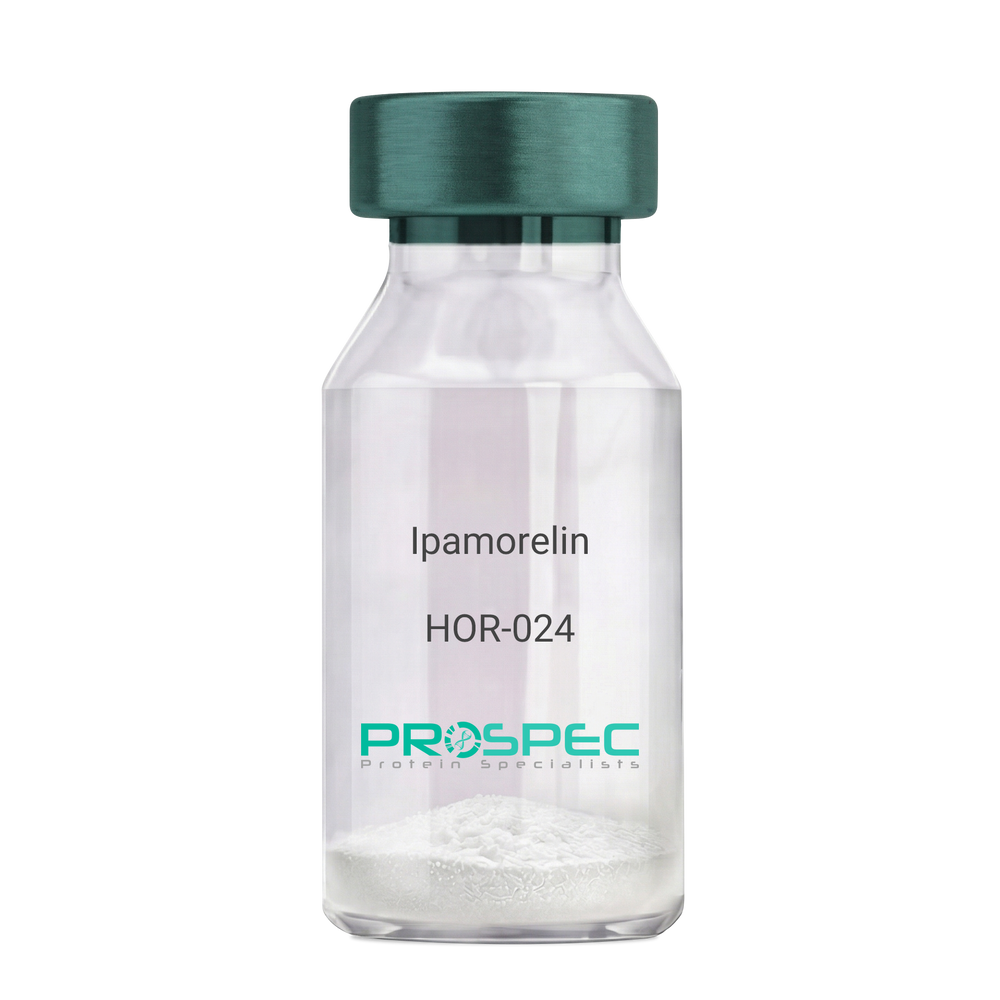
    Ipamorelin

    Description:

    Ipamorelin

    Ipamorelin

    Product # :

    HOR-024

    Price :

    Quantity :

    Shipping Method :

    Room Temp Icon

    Shipped at Room temp

    Add To Cart

    More Info

    • description
    • formulation
    • purity
    • More Info

    Description

    Ipamorelin Synthetic is a single, non-glycosylated polypeptide chain containing 4 amino acids, having a molecular mass of 711.85 Dalton and a Molecular formula of C38H49N9O5.

    Formulation

    The protein was lyophilized with no additives.

    Purity

    Greater than 97.0% as determined by analysis by RP-HPLC.

    More Info

    • Introduction

      Ipamorelin is a peptide selective agonist of the ghrelin/growth hormone secretagogue receptor and a growth hormone secretagogue. Ipamorelin is a pentapeptide that was derived from GHRP1. Ipamorelin significantly increases plasma growth hormone levels in both animals and humans. Like pralmorelin and GHRP-6, ipamorelin does not affect prolactin, FSH, LH or TSH levels. However, unlike GHRP2 and GHRP6, but as growth hormone-releasing hormone (GHRH), ipamorelin does not stimulate the secretion of adrenocorticotropic hormone (ACTH) or cortisol, and is highly selective for inducing the secretion only of GH.

    • Synonyms

      Ipamorelin

    • Physical Appearance

      Sterile Filtered White lyophilized (freeze-dried) powder.

    • Stability

      Lyophilized Ipamorelin although stable at room temperature for 3 weeks, should be stored desiccated below -18°C. Upon reconstitution Ipamorelin should be stored at 4°C between 2-7 days and for future use below -18°C. For long term storage it is recommended to add a carrier protein (0.1% HSA or BSA). Please prevent freeze-thaw cycles.

    • Solubility

      It is recommended to reconstitute the lyophilized Ipamorelin in sterile 18MΩ-cm H2O not less than 100 µg/ml, which can then be further diluted to other aqueous solutions.

    • Amino Acid Sequence

      Aib-His-D-2-Nal-D-Phe-Lys-NH2.

    ProSpec's products are furnished for LABORATORY RESEARCH USE ONLY. The product may not be used as drugs, agricultural or pesticidal products, food additives or household chemicals.

    Ipamorelin
  • View Data Sheet

    Name :

    NME2 Rat

    Description:

    Non-Metastatic Cells 2 Rat Recombinant

    Nucleoside diphosphate kinase B, NDK B, NDP kinase B, Histidine protein kinase NDKB, P18.

    Product # :

    PKA-082

    Price :

    Quantity :

    Shipping Method :

    Ice Icon

    Shipped with Ice Packs

    Add To Cart

    More Info

    • description
    • source
    • formulation
    • purity
    • More Info

    Description

    NME2 Rat Recombinant produced in E.Coli is a single, non-glycosylated polypeptide chain containing 175 amino acids (1-152 a.a) and having a molecular mass of 19.7kDa. NME2 is fused to a 23 amino acid His-tag at N-terminus & purified by proprietary chromatographic techniques.

    Source

    Escherichia Coli.

    Formulation

    NME2 protein solution (1mg/ml) containing Phosphate Buffered Saline pH 7.4 and 10% glycerol.

    Purity

    Greater than 90.0% as determined by SDS-PAGE.

    More Info

    • Introduction

      NME2 takes an important part in the synthesis of nucleoside triphosphates other than ATP. NME2 negatively controls Rho activity by interacting with AKAP13/LBC. NME2 acts as a transcriptional activator of the MYC gene. NME2 binds DNA non-specifically. NME2 is a heterodimeric enzyme functioning as a nucleoside diphosphate kinase. NME1 and NME2 contain 152 amino acids, A and B polypeptide chains of the NM23 enzyme, respectively. NME2 is identical to the beta subunit of human erythrocyte NDP kinase. NDP kinases participate in the synthesis of nucleoside triphosphates, and NM23 is involved in the regulation of signal transduction by complexing with G proteins, causing activation/inactivation of developmental pathways.

    • Synonyms

      Nucleoside diphosphate kinase B, NDK B, NDP kinase B, Histidine protein kinase NDKB, P18.

    • Physical Appearance

      Sterile Filtered clear solution.

    • Stability

      Store at 4°C if entire vial will be used within 2-4 weeks. Store, frozen at -20°C for longer periods of time. For long term storage it is recommended to add a carrier protein (0.1% HSA or BSA).Avoid multiple freeze-thaw cycles.

    • Amino Acid Sequence

      MGSSHHHHHH SSGLVPRGSH MGSMANLERT FIAIKPDGVQ RGLVGEIIKR FEQKGFRLVA MKFLRASEEH LKQHYIDLKD RPFFPGLVKY MNSGPVVAMV WEGLNVVKTG RVMLGETNPA DSKPGTIRGD FCIQVGRNII HGSDSVESAE KEIGLWFKPE ELIDYKSCAH DWVYE.

    ProSpec's products are furnished for LABORATORY RESEARCH USE ONLY. The product may not be used as drugs, agricultural or pesticidal products, food additives or household chemicals.

    Nme2 Rat
  • View Data Sheet

    Name :

    Resistin Rat, His

    Description:

    Resistin Rat Recombinant, His Tag

    Cysteine-rich secreted protein FIZZ3, Adipose tissue-specific secretory factor, ADSF, C/EBP-epsilon-regulated myeloid-specific secreted cysteine-rich protein, Cysteine-rich secreted protein A12-alpha-like 2, RSTN, XCP1, RETN1, MGC126603, MGC126609.

    Product # :

    CYT-458

    Price :

    Quantity :

    Shipping Method :

    Room Temp Icon

    Shipped at Room temp

    Add To Cart

    More Info

    • description
    • source
    • formulation
    • purity
    • More Info

    Description

    Resistin Rat Recombinant is manufactured with N-terminal fusion of His tag. Resistin Rat Recombinant His-Tagged Fusion Protein is an 11.9 kDa protein containing 94 amino acid residues of the Resistin Rat and 16 additional amino acid residues – His Tag (underlined).

    Source

    Escherichia Coli.

    Formulation

    Filtered (0.4µm) and lyophilized from 0.5mg/ml in 20mM Tris pH 8.0.

    Purity

    Greater than 95% as determined by SDS-PAGE.

    More Info

    • Introduction

      Resistin, a product of the RSTN gene, is a peptide hormone belonging to the class of cysteine-rich secreted proteins (monomeric peptide contains 11 cysteine residues) referred to as the RELM family, and is also described as ADSF (Adipose Tissue-Specific Secretory Factor) or FIZZ3 (Found in Inflammatory Zone 3). Mouse resistin is expressed as a 114 amino acid prepeptide; its hydrofobic Nterminal 20 amino acid signal peptide is cleaved before its secretion. Mouse resistin circulates in blood as a homodimeric protein consisting of two 94 amino acid polypeptides, which are disulfide-linked via Cys26.
      Resistin may be an important link between obesity. Mouse resistin, specifically produced and secreted by adipocyte, acts on skeletal muscle myocytes, hepatocytes and adipocytes themselves so that it reduces their sensitivity. Steppan et al. have suggested that resistin suppressed the ability to stimulate glucose uptake. They have also suggested that resistin was present at elevated levels in blood of obese mice, and was down regulated by fasting and by antidiabetic drugs. Way et al., on the other hand, have found that resistin expression is severely suppressed in obesity.
      Other studies have shown that mouse resistin increases during the differentiation of adipocytes, but it also seems to inhibit adipogenesis. In contrast, the human adipogenic differentiation is likely to be associated with a down regulation of resistin gene expression.

    • Synonyms

      Cysteine-rich secreted protein FIZZ3, Adipose tissue-specific secretory factor, ADSF, C/EBP-epsilon-regulated myeloid-specific secreted cysteine-rich protein, Cysteine-rich secreted protein A12-alpha-like 2, RSTN, XCP1, RETN1, MGC126603, MGC126609.

    • Physical Appearance

      Filtered White lyophilized (freeze-dried) powder.

    • Stability

      Store lyophilized protein at -20°C. Aliquot the product after reconstitution to avoid repeated freezing/thawing cycles. Reconstituted protein can be stored at 4°C for a limited period of time; it does not show any change after two weeks at 4°C.

    • Solubility

      It is recommended to add deionized water to prepare a working stock solution of approximately 0.5mg/ml and let the lyophilized pellet dissolve completely. Product is not sterile! Please filter the product by an appropriate sterile filter before using it on cell culture.

    • Amino Acid Sequence

      MRGSHHHHHH GMASHMPSMS LCPMDEAISK KINQDFSSLL PAAMKNTVLH CWSVSSRGRL ASCPEGTTVT SCSCGSGCGS WDVREDTMCH CQCGSIDWTA ARCCTLRVGS.

    ProSpec's products are furnished for LABORATORY RESEARCH USE ONLY. The product may not be used as drugs, agricultural or pesticidal products, food additives or household chemicals.

    Resistin Rat
  • View Data Sheet

    Name :

    NDUFS4 Human

    Description:

    Histidine NADH Dehydrogenase Fe-S Protein 4 Human Recombinant

    AQDQ, NDUFS4, NADH dehydrogenase [ubiquinone] iron-sulfur protein 4 mitochondrial, NADH-ubiquinone oxidoreductase 18 kDa subunit, Complex I-18 kDa, CI-18 kDa, Complex I-AQDQ, CI-AQDQ.

    Product # :

    ENZ-421

    Price :

    Quantity :

    Shipping Method :

    Ice Icon

    Shipped with Ice Packs

    Add To Cart

    More Info

    • description
    • source
    • formulation
    • purity
    • More Info

    Description

    NDUFS4 Human Recombinant produced in E.Coli is a single, non-glycosylated, polypeptide chain containing 134 amino acids (43-175 a.a.) and having a molecular mass of 15.5 kDa.The NDUFS4 is purified by proprietary chromatographic techniques.

    Source

    Escherichia Coli.

    Formulation

    The NDUFS4 solution contains 20mM Tris pH-8 & 30% glycerol.

    Purity

    Greater than 90.0% as determined by SDS-PAGE.

    More Info

    • Introduction

      NDUFS4 is a subunit of the mitochondrial membrane respiratory chain NADH dehydrogenase (Complex I), the primary multi-subunit enzyme complex of the mitochondrial respiratory chain. Complex I is involved in cellular ATP production, the main source of energy for numerous vital processes in living cells. NDUFS4 removes electrons from NADH and passes them by a series of diverse protein-coupled redox centers to the electron acceptor ubiquinone. NDUFS4 presents a hotspot of mutations in the genetic apparatus of oxidative phosphorylation and the correct assembly of the subunit it encodes is essential for completion of the assembly of complex I.

    • Synonyms

      AQDQ, NDUFS4, NADH dehydrogenase [ubiquinone] iron-sulfur protein 4 mitochondrial, NADH-ubiquinone oxidoreductase 18 kDa subunit, Complex I-18 kDa, CI-18 kDa, Complex I-AQDQ, CI-AQDQ.

    • Physical Appearance

      Sterile Filtered colorless solution.

    • Stability

      Store at 4°C if entire vial will be used within 2-4 weeks. Store, frozen at -20°C for longer periods of time. For long term storage it is recommended to add a carrier protein (0.1% HSA or BSA).Please prevent freeze-thaw cycles.

    • Amino Acid Sequence

      MAQDQTQDTQ LITVDEKLDI TTLTGVPEEH IKTRKVRIFV PARNNMQSGV NNTKKWKMEF DTRERWENPL MGWASTADPL SNMVLTFSTK EDAVSFAEKN GWSYDIEERK VPKPKSKSYG ANFSWNKRTR VSTK.

    ProSpec's products are furnished for LABORATORY RESEARCH USE ONLY. The product may not be used as drugs, agricultural or pesticidal products, food additives or household chemicals.

    Ndufs4 Human
  • View Data Sheet

    Name :

    NDUFS2 Human

    Description:

    Histidine NADH Dehydrogenase Fe-S Protein 2 Human Recombinant

    CI-49 , NADH dehydrogenase [ubiquinone] iron-sulfur protein 2, mitochondrial, Complex I-49kD, CI-49kD, NADH-ubiquinone oxidoreductase 49 kDa subunit, NDUFS2.

    Product # :

    ENZ-737

    Price :

    Quantity :

    Shipping Method :

    Ice Icon

    Shipped with Ice Packs

    Add To Cart

    More Info

    • description
    • source
    • formulation
    • purity
    • More Info

    Description

    NDUFS2 Human Recombinant produced in E.coli is a single, non-glycosylated polypeptide chain containing 410 amino acids (77-463a.a) and having a molecular mass of 46.5kDa. NDUFS2 is fused to a 23 amino acid His-tag at N-terminus & purified by proprietary chromatographic techniques.

    Source

    Escherichia Coli.

    Formulation

    The NDUFS2 solution (0.25mg/ml) contains 20mM Tris-HCl buffer (pH 8.0), 0.4M Urea and 10% glycerol.

    Purity

    Greater than 80% as determined by SDS-PAGE.

    More Info

    • Introduction

      NDUFS2 is a core subunit of the mitochondrial membrane respiratory chain NADH dehydrogenase (Complex I) which is a part of the minimal assembly required for catalysis. Complex I takes part in the transfer of electrons from NADH to the respiratory chain. Histidine NADH Dehydrogenase Fe-S Protein 2 (NDUFS2) is required for catalytic activity. Imperfections in NDUFS2 are the source of complex I mitochondrial respiratory chain deficiency, which is characterized by many symptoms including liver failure, cardiomyopathy and neurodegeneration.

    • Synonyms

      CI-49 , NADH dehydrogenase [ubiquinone] iron-sulfur protein 2, mitochondrial, Complex I-49kD, CI-49kD, NADH-ubiquinone oxidoreductase 49 kDa subunit, NDUFS2.

    • Physical Appearance

      Sterile Filtered clear solution.

    • Stability

      Store at 4°C if entire vial will be used within 2-4 weeks. Store, frozen at -20°C for longer periods of time. For long term storage it is recommended to add a carrier protein (0.1% HSA or BSA).Avoid multiple freeze-thaw cycles.

    • Amino Acid Sequence

      MGSSHHHHHH SSGLVPRGSH MGSVKNITLN FGPQHPAAHG VLRLVMELSG EMVRKCDPHI GLLHRGTEKL IEYKTYLQAL PYFDRLDYVS MMCNEQAYSL AVEKLLNIRP PPRAQWIRVL FGEITRLLNH IMAVTTHALD LGAMTPFFWL FEEREKMFEF YERVSGARMH AAYIRPGGVH QDLPLGLMDD IYQFSKNFSL RLDELEELLT NNRIWRNRTI DIGVVTAEEA LNYGFSGVML RGSGIQWDLR KTQPYDVYDQ VEFDVPVGSR GDCYDRYLCR VEEMRQSLRI IAQCLNKMPP GEIKVDDAKV SPPKRAEMKT SMESLIHHFK LYTEGYQVPP GATYTAIEAP KGEFGVYLVS DGSSRPYRCK IKAPGFAHLA GLDKMSKGHM LADVVAIIGT QDIVFGEVDR.

    ProSpec's products are furnished for LABORATORY RESEARCH USE ONLY. The product may not be used as drugs, agricultural or pesticidal products, food additives or household chemicals.

    Ndufs2 Human
  • View Data Sheet

    Name :

    NDUFS6 Human

    Description:

    Histidine NADH Dehydrogenase Fe-S Protein 6 Human Recombinant

    NADH Dehydrogenase (Ubiquinone) Fe-S Protein 6 13kDa (NADH-Coenzyme Q Reductase), Complex I Mitochondrial Respiratory Chain 13-KD Subunit, NADH Dehydrogenase [Ubiquinone] Iron-Sulfur Protein 6 Mitochondrial, NADH: Ubiquinone Oxidoreductase NDUFS6 Subunit, NADH-Ubiquinone Oxidoreductase 13 KDa-A Subunit, Complex I-13kD-A, CI13KDA.

    Product # :

    ENZ-725

    Price :

    Quantity :

    Shipping Method :

    Ice Icon

    Shipped with Ice Packs

    Add To Cart

    More Info

    • description
    • source
    • formulation
    • purity
    • More Info

    Description

    NADH Dehydrogenase (Ubiquinone) Fe-S Protein 6 13kDa (NADH-Coenzyme Q Reductase), Complex I Mitochondrial Respiratory Chain 13-KD Subunit, NADH Dehydrogenase [Ubiquinone] Iron-Sulfur Protein 6 Mitochondrial, NADH: Ubiquinone Oxidoreductase NDUFS6 Subunit, NADH-Ubiquinone Oxidoreductase 13 KDa-A Subunit, Complex I-13kD-A, CI13KDA.

    Source

    Escherichia Coli.

    Formulation

    The NDUFS6 solution (0.25mg/ml) contains 20mM Tris-HCl buffer (pH 8.0), 0.15M NaCl, 1mM DTT and 30% glycerol.

    Purity

    Greater than 90% as determined by SDS-PAGE.

    More Info

    • Introduction

      NADH Dehydrogenase Fe-S Protein 6 (NDUFS6) is a subunit of the NADH: ubiquinone oxidoreductase (complex I), which is the 1st enzyme complex in the electron transport chain of the mitochondria. This complex operates in the transfer of electrons from NADH to the respiratory chain. NDUFS6 is one of seven subunits in the iron-sulfur protein segment. DNA alterations in NDUFS6 are the cause for mitochondrial complex I deficiency, a disease which results in an extensive assortment of clinical disorders, like adult-onset neurodegenerative disorders and neonatal disease.

    • Synonyms

      NADH Dehydrogenase (Ubiquinone) Fe-S Protein 6 13kDa (NADH-Coenzyme Q Reductase), Complex I Mitochondrial Respiratory Chain 13-KD Subunit, NADH Dehydrogenase [Ubiquinone] Iron-Sulfur Protein 6 Mitochondrial, NADH: Ubiquinone Oxidoreductase NDUFS6 Subunit, NADH-Ubiquinone Oxidoreductase 13 KDa-A Subunit, Complex I-13kD-A, CI13KDA.

    • Physical Appearance

      Sterile Filtered clear solution.

    • Stability

      Store at 4°C if entire vial will be used within 2-4 weeks. Store, frozen at -20°C for longer periods of time. For long term storage it is recommended to add a carrier protein (0.1% HSA or BSA).Avoid multiple freeze-thaw cycles.

    • Amino Acid Sequence

      MGSSHHHHHH SSGLVPRGSH MGSFGVRVSP TGEKVTHTGQ VYDDKDYRRI RFVGRQKEVN ENFAIDLIAE QPVSEVETRV IACDGGGGAL GHPKVYINLD KETKTGTCGY CGLQFRQHHH

    ProSpec's products are furnished for LABORATORY RESEARCH USE ONLY. The product may not be used as drugs, agricultural or pesticidal products, food additives or household chemicals.

    Ndufs6 Human
  • 1
  • 2
  • 3
  • 4
Your browser does not support the video tag.

Products

  • Cytokines
  • Growth Factors
  • Chemokines
  • CD Antigens
  • Neurotrophins
  • Hormones
  • Enzymes
  • Viral Antigens
  • Recombinant Proteins
  • Natural Proteins
  • Monoclonal Antibodies
  • Polyclonal Antibodies
  • Thermal Packaging

About

  • Company
  • Founder
  • Contribution
  • Contact Us
  • My Account

Ordering

  • Ordering Method
  • Ordering - Credit Card
  • Ordering PO
  • Shipping Fees
  • FAQ's

Legal

  • Terms & Conditions
  • Privacy
  • Site Map
  • info@prospecbio.com
  • Facebook
  • Instagram
  • Linkedin Profile

© 2026 ProSpec-Tany TechnoGene Ltd. All Rights Reserved.

  • Choosing a selection results in a full page refresh.
  • Opens in a new window.