Search results
1000 results found for “Charged Multivesicular Body Protein”
Name
Description
Product #
Price
Quantity
Shipping Method
- View Data Sheet
Name :
SLC51B HumanDescription:
Solute Carrier Family 51 Beta Human Recombinant
OSTB, OSTBETA, Organic solute transporter subunit beta, OST-beta, Solute carrier family 51 subunit beta.
Product # :
PRO-1727Price :
Quantity :
Shipping Method :
Shipped with Ice Packs
More Info
- description
- source
- formulation
- purity
- More Info
- Citations
Description
SLC51B Human Recombinant produced in E.Coli is a single, non-glycosylated polypeptide chain containing 95 amino acids (57-128 a.a) and having a molecular mass of 10.7kDa.SLC51B is fused to a 23 amino acid His-tag at N-terminus & purified by proprietary chromatographic techniques.
Source
Escherichia Coli.
Formulation
SLC51B protein solution (1mg/ml) containing 20mM Tris-HCl buffer (pH8.0), 10% glycerol and 0.1M NaCl.
Purity
Greater than 95.0% as determined by SDS-PAGE.
Citations
More Info
-
Introduction
Solute Carrier Family 51 Beta (SLC51B), is a protein coding gene. SLC51B is an organic solute transporter subunit. SLC51 is composed of twodifferent proteins that must heterodimerize to generate transport activity, however the role of the individual subunits inmediating transport activity is unknown. The results show that SLC51B is required for both proper traffickingof SLC51A and formation of the functional transport unit, and identify specific residues of SLC51B essential for theseprocesses. Among the diseases associated with SLC51B are extrahepatic cholestasis, and biliary atresia.
-
Synonyms
OSTB, OSTBETA, Organic solute transporter subunit beta, OST-beta, Solute carrier family 51 subunit beta.
-
Physical Appearance
Sterile Filtered clear solution.
-
Stability
Store at 4°C if entire vial will be used within 2-4 weeks. Store, frozen at -20°C for longer periods of time. For long term storage it is recommended to add a carrier protein (0.1% HSA or BSA).Avoid multiple freeze-thaw cycles.
-
Amino Acid Sequence
MGSSHHHHHH SSGLVPRGSH MGSRSIQASR KEKMQPPEKE TPEVLHLDEA KDHNSLNNLR ETLLSEKPNL AQVELELKER DVLSVFLPDV PETES
ProSpec's products are furnished for LABORATORY RESEARCH USE ONLY. The product may not be used as drugs, agricultural or pesticidal products, food additives or household chemicals.
- View Data Sheet
Name :
CFB-a HumanDescription:
Complement Factor B Fragment a Human
Complement factor B (EC:3.4.21.47), C3/C5 convertase, Glycine-rich beta glycoprotein, GBG, PBF2, Properdin factor B, Complement factor B Ba fragment, Complement factor B Bb fragment, CFB, Complement Factor B, BFD, AHUS4, BF, BFD, CFAB, FB, FBI12, H2-Bf.
Product # :
PRO-2735Price :
Quantity :
Shipping Method :
Shipped with Ice Packs
More Info
- description
- source
- formulation
- purity
- More Info
- Citations
Description
CFB-a Human produced in Human Plasma having a molecular mass of 33 kDa.
Source
Human Plasma.
Formulation
CFB-a solution (1mg/ml) contains Phosphate-buffered saline, pH 7.2.
Purity
Greater than 95.0% as determined by SDS-PAGE.
Citations
More Info
-
Introduction
Complement Factor B, also known as CFB, encodes complement factor B which is a component of the alternative pathway of complement activation. Factor B circulates in the blood as a single chain polypeptide. Once the alternative pathway is activated it is cleaved by complement factor D yielding the noncatalytic chain Ba and the catalytic subunit Bb. The active subunit Bb is a serine protease which connects with C3b to form the alternative pathway C3 convertase. Also, Bb is involved in the proliferation of preactivated B lymphocytes, while Ba inhibits their proliferation.
-
Synonyms
Complement factor B (EC:3.4.21.47), C3/C5 convertase, Glycine-rich beta glycoprotein, GBG, PBF2, Properdin factor B, Complement factor B Ba fragment, Complement factor B Bb fragment, CFB, Complement Factor B, BFD, AHUS4, BF, BFD, CFAB, FB, FBI12, H2-Bf.
-
Physical Appearance
Sterile filtered solution.
-
Stability
CFB-a Human is stable at 4°C if entire vial will be used within 2-4 weeks. Store, frozen below -20°C for longer periods of time.For long term storage it is recommended to add a carrier protein (0.1% HSA or BSA).Avoid multiple freeze-thaw cycles.
-
Human Virus Test
Plasma from each donor has been tested and found negative for antibody to HIV-1, HIV-2, HCV and HBSAG.
ProSpec's products are furnished for LABORATORY RESEARCH USE ONLY. The product may not be used as drugs, agricultural or pesticidal products, food additives or household chemicals.
- View Data Sheet
Name :
IMPACT HumanDescription:
Impact RWD Domain Protein Human Recombinant
RWDD5, Protein IMPACT, Imprinted and ancient gene protein homolog, IMPACT.
Product # :
PRO-1653Price :
Quantity :
Shipping Method :
Shipped with Ice Packs
More Info
- description
- source
- formulation
- purity
- More Info
- Citations
Description
IMPACT Human Recombinant produced in E.Coli is a single, non-glycosylated polypeptide chain containing 343 amino acids (1-320 a.a.) and having a molecular mass of 38.9kDa.IMPACT is fused to a 23 amino acid His-tag at N-terminus & purified by proprietary chromatographic techniques.
Source
Escherichia Coli.
Formulation
IMPACT protein solution (1mg/ml) contains 20mM Tris-HCl buffer, (pH 8.0), 0.15M NaCl, 10% glycerol and 1mM DTT.
Purity
Greater than 90.0% as determined by SDS-PAGE.
Citations
More Info
-
Introduction
Impact RWD Domain Protein (IMPACT) is a member of the IMPACT family which is comprised of 1 RWD domain. IMPACT is a translational regulator which certifies constant high levels of translation under amino acid starvation. IMPACT interacts with GCN1/GCN1L1, thus preventing activation of GCN2 protein kinases (EIF2AK1 to 4) and subsequent down-regulation of protein synthesis. IMPACT is highly expressed especially in brain.
-
Synonyms
RWDD5, Protein IMPACT, Imprinted and ancient gene protein homolog, IMPACT.
-
Physical Appearance
Sterile Filtered clear solution.
-
Stability
Store at 4°C if entire vial will be used within 2-4 weeks. Store, frozen at -20°C for longer periods of time. For long term storage it is recommended to add a carrier protein (0.1% HSA or BSA).Avoid multiple freeze-thaw cycles.
-
Amino Acid Sequence
MGSSHHHHHH SSGLVPRGSH MGSMAEGDAG SDQRQNEEIE AMAAIYGEEW CVIDDCAKIF CIRISDDIDD PKWTLCLQVM LPNEYPGTAP PIYQLNAPWL KGQERADLSN SLEEIYIQNI GESILYLWVE KIRDVLIQKS QMTEPGPDVK KKTEEEDVEC EDDLILACQP ESSVKALDFD ISETRTEVEV EELPPIDHGI PITDRRSTFQ AHLAPVVCPK QVKMVLSKLY ENKKIASATH NIYAYRIYCE DKQTFLQDCE DDGETAAGGR LLHLMEILNV KNVMVVVSRW YGGILLGPDR FKHINNCARN ILVEKNYTNS PEESSKALGK NKKVRKDKKR NEH.
ProSpec's products are furnished for LABORATORY RESEARCH USE ONLY. The product may not be used as drugs, agricultural or pesticidal products, food additives or household chemicals.
- View Data Sheet
Name :
Aprotinin ProteinDescription:
Aprotinin
Pancreatic trypsin inhibitor, Basic protease inhibitor, BPI, BPTI, Aprotinin, AP.
Product # :
PRO-285Price :
Quantity :
Shipping Method :
Shipped at Room temp
More Info
- description
- source
- formulation
- More Info
- Citations
Description
Aprotinin is a natural proteinase inhibitor polypeptide consisting of fifty-eight amino acids {C284H432N84O79S7} arranged in a single polypeptide chain, cross-linked by three disulfide bridges and having a molecular mass of 6512.
Source
Bovine Lung.
Formulation
The protein (1mg/ml) was lyophilized with no additives.
Citations
More Info
-
Introduction
Aprotinin inhibits the activity of several proteolytic enzymes such as chymotrypsin, kallikrein, plasmin and trypsin. Aprotinin is present in blood and in most tissues, with a high concentration in lung. Aprotinin inhibits pro-inflammatory cytokine release and maintains glycoprotein homeostasis. In platelets, aprotinin reduces glycoprotein loss (e.g., GpIb, GpIIb/IIIa), while in granulocytes it prevents the expression of pro-inflammatory adhesive glycoproteins (e.g., CD11b).
-
Synonyms
Pancreatic trypsin inhibitor, Basic protease inhibitor, BPI, BPTI, Aprotinin, AP.
-
Physical Appearance
Sterile Filtered White lyophilized (freeze-dried) powder.
-
Stability
Lyophilized Aprotinin although stable at room temperature for 3 weeks, should be stored desiccated below -18°C. Upon reconstitution Aprotinin should be stored at 4°C between 2-7 days and for future use below -18°C.For long term storage it is recommended to add a carrier protein (0.1% HSA or BSA).Please prevent freeze-thaw cycles.
-
Solubility
It is recommended to reconstitute the lyophilized Aprotinin in sterile 18MΩ-cm H2O not less than 100µg/ml, which can then be further diluted to other aqueous solutions.
-
Specific Activity
5,940 KIU (Kallikrein Inactivator Units) per mg, 3.3 pH.Eur.U/mg.
ProSpec's products are furnished for LABORATORY RESEARCH USE ONLY. The product may not be used as drugs, agricultural or pesticidal products, food additives or household chemicals.
- View Data Sheet
Name :
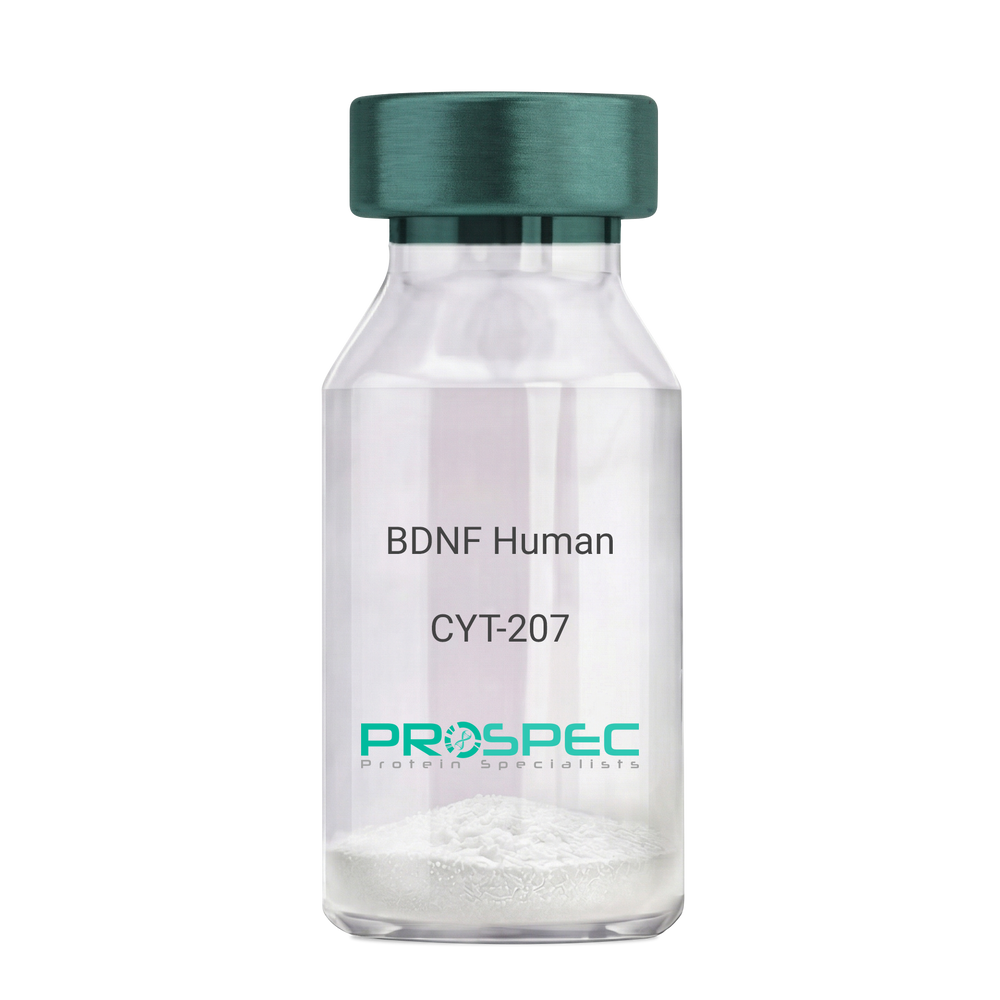
BDNF HumanDescription:
Brain-Derived Neurotrophic Factor Human Recombinant
Brain-Derived Neurotrophic Factor, BDNF, MGC34632.
Product # :
CYT-207Price :
Quantity :
Shipping Method :
Shipped at Room temp
More Info
- description
- source
- formulation
- purity
- biological activity
- More Info
- Activity
- Citations
Description
BDNF Human Recombinant produced in E.Coli is a homodimer, non-glycosylated, polypeptide chain containing 2 x 119 amino acids (and an N-terminal Met) and having a total molecular mass of 28kDa. BDNF Human Recombinant is purified by proprietary chromatographic techniques.
Source
Escherichia Coli.
Formulation
The protein was lyophilized with 20mM PB and 400mM NaCl, pH 7.2.
Purity
BDNF is greater than 950% as determined SDS-PAGE.
Biological Activity
The activity was determined using Immobilized Human TrkB-His tag protein 2ug/ml (100 μl/well) for its binding to NHS-Biotin BDNF. The ED50 of was found to be ≤20ng/mLActivity
Citations
More Info
-
Introduction
BDNF promotes the survival of neuronal populations that are all located either in the central nervous system or directly connected to it. BDNF is a major regulator of synaptic transmission and plasticity at adult synapses in many regions of the cns. The versatility of BDNF is emphasized by its contribution to a range of adaptive neuronal responses including long-term potentiation (ltp), long-term depression (ltd), certain forms of short-term synaptic plasticity, as well as homeostatic regulation of intrinsic neuronal excitability.
-
Synonyms
Brain-Derived Neurotrophic Factor, BDNF, MGC34632.
-
Physical Appearance
Sterile Filtered White lyophilized (freeze-dried) powder.
-
Stability
Lyophilized BDNF although stable at room temperature for 3 weeks, should be stored desiccated below -18°C. Upon reconstitution BDNF should be stored at 4°C between 2-7 days and for future use below -18°C.For long term storage it is recommended to add a carrier protein (0.1% HSA or BSA).Please prevent freeze-thaw cycles.
-
Solubility
It is recommended to reconstitute the lyophilized BDNF in sterile 18M-cm H2O not less than 100µg/ml, which can then be further diluted to other aqueous solutions.
-
Amino Acid Sequence
HSDPARRGE LSVCDSISEW VTAADKKTAV DMSGGTVTVL EKVPVSKGQL KQYFYETKCN PMGYTKEGCR GIDKRHWNSQ CRTTQSYVRA LTMDSKKRIG WRFIRIDTSC VCTLTIKRGR.
-
Background
Final Thoughts
Although more research is needed on the safety and effectiveness of BDNF human recombinant, trials suggest that this laboratory-produced protein may be effective in managing and treating several neurological and psychiatric disorders. It's important for experts to stay up to date on the latest developments and research to learn more about potential risks and benefits.
What is the molecular weight/Mw of BDNF Protein?
BDNF Protein has a total Mw of 27kDa.
What is the source or expression system of BDNF Protein?
Escherichia Coli.
What is the Purity of BDNF Protein?
BDNF Protein is >97% pure as determined by SDS-PAGE.
What is the Biological Activity of BDNF Protein?
The ED50, as determined by the dose-dependent induction of C6 cells proliferation, is 1.3-2µg/ml.
What is the amino acid sequence of BDNF Protein?
MHSDPARRGE LSVCDSISEW VTAADKKTAV DMSGGTVTVL EKVPVSKGQL KQYFYETKCN PMGYTKEGCR GIDKRHWNSQ CRTTQSYVRA LTMDSKKRIG WRFIRIDTSC VCTLTIKRGR.
What applications can BDNF Protein be used in?
BDNF Protein can probably be used in western blot, ELISA and Lateral Flow.
What is the endotoxin level for BDNF Protein?
The endotoxin level is minimal, BDNF Protein was purified using conventional chromatography techniques.
-
Protein content
BDNF quantitation was carried out by two independent methods:1. UV spectroscopy at 280 nm using the absorbency value of 1.6 as the extinction coefficient for a 0.1% (1mg/ml) solution. This value is calculated by the PC GENE computer analysis program of protein sequences (IntelliGenetics). 2. Analysis by RP-HPLC, using a standard solution of Brain-derived Neurotrophic Factor as a Reference Standard.
ProSpec's products are furnished for LABORATORY RESEARCH USE ONLY. The product may not be used as drugs, agricultural or pesticidal products, food additives or household chemicals.
- View Data Sheet
Name :
MGP HumanDescription:
Matrix Gla Protein Human Recombinant
Matrix Gla protein, Cell growth-inhibiting gene 36 protein, MGLAP, NTI.
Product # :
PRO-922Price :
Quantity :
Shipping Method :
Shipped with Ice Packs
More Info
- description
- source
- formulation
- purity
- More Info
- Citations
Description
MGP Human Recombinant produced in E.coli is a single, non-glycosylated polypeptide chain containing 98 amino acids (20-96) and having a molecular mass of 11.8 kDa.The MGP is fused to a 21 amino acid His-Tag at N-terminus and purified by proprietary chromatographic techniques.
Source
E.coli.
Formulation
The MGP solution (1mg/ml) contains 20mM Tris-HCl buffer (pH 8.0) and 10% glycerol.
Purity
Greater than 90% as determined by SDS-PAGE.
Citations
More Info
-
Introduction
MGP is vital for the regulation of calcification in the extracellular matrix, particularly in cartilage and arteries. The K-dependent vitamin MGP has five to six residues of Gla, a Ca2+ binding amino acid crucial for vitamin K-dependent gamma carboxylase for its formation. MGP is formed by COOH-terminal processing by carboxypeptidase B-like enzymatic activity and localized in the human bone.
-
Synonyms
Matrix Gla protein, Cell growth-inhibiting gene 36 protein, MGLAP, NTI.
-
Physical Appearance
Sterile Filtered colorless solution.
-
Stability
Store at 4°C if entire vial will be used within 2-4 weeks. Store, frozen at -20°C for longer periods of time. For long term storage it is recommended to add a carrier protein (0.1% HSA or BSA).Avoid multiple freeze-thaw cycles.
-
Amino Acid Sequence
MGSSHHHHHH SSGLVPRGSH MYESHESMES YELNPFINRR NANTFISPQQ RWRAKVQERI RERSKPVHEL NREACDDYRL CERYAMVYGY NAAYNRYF
ProSpec's products are furnished for LABORATORY RESEARCH USE ONLY. The product may not be used as drugs, agricultural or pesticidal products, food additives or household chemicals.
- View Data Sheet
Name :
IPP-POZ HumanDescription:
IPP-POZ Human Recombinant
Intracisternal A Particle-Promoted Polypeptide, Actin-binding protein IPP, MIPP protein, Kelch-like protein 27, IPP, KLHL27, IPP-POZ.
Product # :
PRO-436Price :
Quantity :
Shipping Method :
Shipped with Ice Packs
More Info
- description
- source
- formulation
- purity
- More Info
- Citations
Description
IPP-POZ Human Recombinant produced in E.Coli is a single, non-glycosylated polypeptide chain containing 157 amino acids & having a molecular mass of 17.3 kDa.
Source
Escherichia Coli.
Formulation
The protein (1mg/ml) containing 10mM HEPES (pH7.4) and 25mM NaCl.
Purity
Greater than 95.0% as determined by(a) Analysis by RP-HPLC.
(b) Analysis by SDS-PAGE.Citations
More Info
-
Introduction
Intracisternal A particle-promoted polypeptide (IPP) is a 66kDa protein (584 amino acids), which contains an N-terminal POZ protein-protein interaction domain and a C-terminal kelch repeat domain consisting of six tandem arranged repeats. The POZ domain (also called BTB domain) is present near the N-terminus of a fraction of zinc finger proteins and in protein that contain the pfam01344 motif such as kelch and pox virus proteins. The BTB/POZ domain mediates homomeric dimerization and in some instances heteromeric dimerization. POZ domains from several zinc finger proteins have been shown to mediate transcriptional repression and to interact with components of histone deacetylase co-repressor complexes including N-coR and SMRT.
-
Synonyms
Intracisternal A Particle-Promoted Polypeptide, Actin-binding protein IPP, MIPP protein, Kelch-like protein 27, IPP, KLHL27, IPP-POZ.
-
Physical Appearance
Sterile filtered colorless solution.
-
Stability
Store at 4°C if entire vial will be used within 2-4 weeks. Store, frozen at -20°C for longer periods of time. For long term storage it is recommended to add a carrier protein (0.1% HSA or BSA). Avoid multiple freeze-thaw cycles.
-
Amino Acid Sequence
MANEDCPKAA DSPFSSDKHA QLILAQINKM RNGQHFCDVQ LQVGQESFKA HRLVLAASSPYFAALFTGGM KESSKDVVPI LGIEAGIFQI LLDFIYTGIV NIGVNNVQEL IIAADMLQLTEVVHLCCEFL KGQIDPLNCI GIFQFSEQIA CHDLLEF.
ProSpec's products are furnished for LABORATORY RESEARCH USE ONLY. The product may not be used as drugs, agricultural or pesticidal products, food additives or household chemicals.
- View Data Sheet
Name :
SMCP HumanDescription:
Sperm Mitochondria-Associated Cysteine-Rich Protein Human Recombinant
Sperm Mitochondria-Associated Cysteine-Rich Protein, MCSP, MCS, Mitochondrial Capsule Selenoprotein, HSMCSGEN1, Sperm Mitochondrial-Associated Cysteine-Rich Protein.
Product # :
PRO-1719Price :
Quantity :
Shipping Method :
Shipped with Ice Packs
More Info
- description
- source
- formulation
- purity
- More Info
- Citations
Description
SMCP Human Recombinant produced in E.Coli is a single, non-glycosylated polypeptide chain containing 139 amino acids (1-116 a.a) and having a molecular mass of 15.2kDa (Molecular size on SDS-PAGE will appear higher). SMCP is fused to a 23 amino acid His-tag at N-terminus & purified by proprietary chromatographic techniques.
Source
Escherichia Coli.
Formulation
SMCP protein solution (0.5mg/ml) containing 20mM Tris-HCl buffer (pH 8.0), 0.15M NaCl, 20% glycerol, 1mM EDTA and 0.1mM PMSF.
Purity
Greater than 85.0% as determined by SDS-PAGE.
Citations
More Info
-
Introduction
SMCP is a protein-coding gene. SMCP localizes to the capsule linked with the mitochondrial outer membranes and assumed to function in the organization and stabilization of the helical structure of the sperm's mitochondrial sheath. Sperm mitochondria vary in morphology and subcellular localization from those of somatic cells. They are elongated, flattened, and arranged circumferentially construct a helical coiled sheath in the midpiece of the sperm flagellum. Diseases associated with SMCP include middle ear disease, and hard palate cancer.
-
Synonyms
Sperm Mitochondria-Associated Cysteine-Rich Protein, MCSP, MCS, Mitochondrial Capsule Selenoprotein, HSMCSGEN1, Sperm Mitochondrial-Associated Cysteine-Rich Protein.
-
Physical Appearance
Sterile Filtered clear solution.
-
Stability
Store at 4°C if entire vial will be used within 2-4 weeks. Store, frozen at -20°C for longer periods of time. For long term storage it is recommended to add a carrier protein (0.1% HSA or BSA).Avoid multiple freeze-thaw cycles.
-
Amino Acid Sequence
MGSSHHHHHH SSGLVPRGSH MGSMCDQTKH SKCCPAKGNQ CCPPQQNQCC QSKGNQCCPP KQNQCCQPKG SQCCPPKHNH CCQPKPPCCI QARCCGLETK PEVSPLNMES EPNSPQTQDK GCQTQQQPHS PQNESRPSK.
ProSpec's products are furnished for LABORATORY RESEARCH USE ONLY. The product may not be used as drugs, agricultural or pesticidal products, food additives or household chemicals.
- View Data Sheet
Name :
APOC1 HumanDescription:
Apolipoprotein C-I Human Recombinant
Apolipoprotein C-I, Apo-CI, ApoC-I, Apolipoprotein C1, APOC1.
Product # :
CYT-812Price :
Quantity :
Shipping Method :
Shipped with Ice Packs
More Info
- description
- source
- formulation
- purity
- More Info
- sds-page
- Citations
Description
APOC1 Human Recombinant produced in E.Coli is a single, non-glycosylated polypeptide chain containing 80 amino acids (27-83 a.a.) and having a molecular mass of 9.0kDa. APOC1 is fused to a 23 amino acid His-tag at N-terminus & purified by proprietary chromatographic techniques.
Source
Escherichia Coli.
Formulation
APOC1 protein solution (0.25mg/ml) contains 20mM Tris-HCl buffer (pH 8.0), 0.15M NaCl and 10% glycerol.
Purity
Greater than 85% as determined by SDS-PAGE.
sds-page
Citations
More Info
-
Introduction
Apolipoprotein C-I (APOC1) which expressed mainly in the liver is a part of the apolipoprotein C family. APOC1 which is usually found in plasma and responsible for the activation of esterified lechitin cholesterol takes an important part in the exchange of esterified cholesterol among lipoproteins and in removal of cholesterol from tissues. APOC1 is activated when monocytes differentiate into macrophages. APOC1 protein’s main role is to inhibit CETP by altering the electric charge of HDL molecules. APOC1 is also binds free fatty acids and reduces their intracellular esterification.
-
Synonyms
Apolipoprotein C-I, Apo-CI, ApoC-I, Apolipoprotein C1, APOC1.
-
Physical Appearance
Sterile Filtered clear solution.
-
Stability
Store at 4°C if entire vial will be used within 2-4 weeks. Store, frozen at -20°C for longer periods of time. For long term storage it is recommended to add a carrier protein (0.1% HSA or BSA).Avoid multiple freeze-thaw cycles.
-
Amino Acid Sequence
MGSSHHHHHH SSGLVPRGSH MGSTPDVSSA LDKLKEFGNT LEDKARELIS RIKQSELSAK MREWFSETFQ KVKEKLKIDS.
-
Background
Apolipoprotein C-I Human Recombinant: Unraveling the Complexity of Lipid Regulation
Abstract:
Apolipoprotein C-I (ApoC-I) is a remarkable protein that plays a significant role in lipid metabolism and cardiovascular health. It is primarily synthesized in the liver and is associated with lipoproteins involved in lipid transport. This research paper aims to provide a comprehensive overview of ApoC-I human recombinant, shedding light on its physiological functions, production methods, and potential therapeutic applications. By delving into the intricacies of ApoC-I, we can gain valuable insights into its role as a key player in lipid regulation and its potential as a therapeutic target.
Introduction:
The prevalence of lipid disorders and cardiovascular diseases necessitates a deeper understanding of the mechanisms governing lipid metabolism. ApoC-I, a critical component of lipoproteins, offers unique insights into the regulation of lipid levels and its implications for cardiovascular health.
Structure and Function of Apolipoprotein C-I:
ApoC-I exhibits a complex molecular structure, comprising functional domains that enable its interaction with lipoproteins. It plays a crucial role in regulating lipoprotein metabolism by inhibiting the activity of lipoprotein lipase and modulating the clearance of triglyceride-rich lipoproteins.
Regulation of Apolipoprotein C-I Expression:
The synthesis and secretion of ApoC-I are tightly regulated processes influenced by various factors, including nutritional status and hormonal signals. Understanding the regulatory mechanisms underlying ApoC-I expression can provide insights into its role in maintaining lipid homeostasis.
Apolipoprotein C-I and Cardiovascular Diseases:
Dysregulation of ApoC-I has been associated with various lipid disorders and cardiovascular diseases. Altered levels of ApoC-I have been observed in conditions such as hypertriglyceridemia and atherosclerosis, highlighting its potential as a biomarker for cardiovascular risk assessment.
Production of Apolipoprotein C-I Human Recombinant:
Recombinant ApoC-I can be produced using advanced biotechnological approaches, including recombinant DNA technology and protein expression systems. These methods enable large-scale production, purification, and characterization of ApoC-I, facilitating its potential therapeutic applications.
Therapeutic Potential of Apolipoprotein C-I Human Recombinant:
Targeting ApoC-I opens up exciting avenues for therapeutic interventions in lipid disorders and cardiovascular diseases. Modulating ApoC-I expression or function holds promise for restoring lipid balance and reducing the risk of cardiovascular complications.
Conclusion:
Apolipoprotein C-I human recombinant represents a fascinating area of research in the field of lipid metabolism and cardiovascular health. By unraveling the intricate interplay between ApoC-I, lipoproteins, and cardiovascular diseases, we can pave the way for novel therapeutic strategies and improved risk assessment. Further studies are required to fully understand the therapeutic potential of ApoC-I human recombinant and translate these findings into clinical applications.
What is the molecular weight/Mw of APOC1 Protein?
APOC1 Protein has a total Mw of 9kDa.
What is the source or expression system of APOC1 Protein?
Escherichia Coli.
What is the Purity of APOC1 Protein?
APOC1 Protein is >85% pure as determined by SDS-PAGE.
What is the Biological Activity of APOC1 Protein?
The biological functionality of APOC1 Protein will be determined in the future.
What is the amino acid sequence of APOC1 Protein?
MGSSHHHHHH SSGLVPRGSH MGSTPDVSSA LDKLKEFGNT LEDKARELIS RIKQSELSAK MREWFSETFQ KVKEKLKIDS.
What applications can APOC1 Protein be used in?
APOC1 Protein can probably be used in western blot, ELISA and Lateral Flow.
What is the endotoxin level for APOC1 Protein?
The endotoxin level is minimal, APOC1 Protein was purified using conventional chromatography techniques.
ProSpec's products are furnished for LABORATORY RESEARCH USE ONLY. The product may not be used as drugs, agricultural or pesticidal products, food additives or household chemicals.
- View Data Sheet
Name :
SIGLEC9 HumanDescription:
Sialic Acid Binding Ig Like Lectin 9 Human Recombinant
Sialic Acid Binding Ig Like Lectin 9, Protein FOAP-9, Siglec-9, CDw329, Sialic Acid Binding Ig-Like Lectin 9, Sialic Acid-Binding Ig-Like Lectin 9, CD329 Antigen, OBBP-LIKE, FOAP-9, CD329.
Product # :
PRO-2447Price :
Quantity :
Shipping Method :
Shipped with Ice Packs
More Info
- description
- source
- formulation
- purity
- More Info
- Citations
Description
SIGLEC9 Human Recombinant produced in Sf9 Insect cells is a single, glycosylated polypeptide chain containing 573 amino acids (18-348a.a.) and having a molecular mass of 63.3kDa (Molecular size on SDS-PAGE will appear at approximately 70-100kDa).SIGLEC9 is expressed with a 239 amino acids hIgG-His tag at C-Terminus and purified by proprietary chromatographic techniques.
Source
Sf9, Baculovirus cells.
Formulation
SIGLEC9 protein solution (0.5mg/ml) contains Phosphate Buffered Saline (pH 7.4) and 10% glycerol.
Purity
Greater than 95.0% as determined by SDS-PAGE.
Citations
More Info
-
Introduction
Sialic Acid Binding Ig Like Lectin 9 (SIGLEC9) is a member of the sialic acid-binding Ig-like lectin family, which is a part of the immunoglobulin superfamily expressed mostly on human blood leukocytes. SIGLEC9 is a Putative adhesion molecule which is expressed in bone marrow, placenta, spleen, and fetal liver. SIGLEC9 is also a part of the recently characterized CD33-related Siglec family of sialic acid binding protein.
-
Synonyms
Sialic Acid Binding Ig Like Lectin 9, Protein FOAP-9, Siglec-9, CDw329, Sialic Acid Binding Ig-Like Lectin 9, Sialic Acid-Binding Ig-Like Lectin 9, CD329 Antigen, OBBP-LIKE, FOAP-9, CD329.
-
Physical Appearance
Sterile Filtered colorless solution.
-
Stability
Store at 4°C if entire vial will be used within 2-4 weeks. Store, frozen at -20°C for longer periods of time. For long term storage it is recommended to add a carrier protein (0.1% HSA or BSA).Avoid multiple freeze-thaw cycles.
-
Amino Acid Sequence
ADPQTSKLLT MQSSVTVQEG LCVHVPCSFS YPSHGWIYPG PVVHGYWFRE GANTDQDAPV ATNNPARAVW EETRDRFHLL GDPHTKNCTL SIRDARRSDA GRYFFRMEKG SIKWNYKHHR LSVNVTALTH RPNILIPGTL ESGCPQNLTC SVPWACEQGT PPMISWIGTS VSPLDPSTTR SSVLTLIPQP QDHGTSLTCQ VTFPGASVTT NKTVHLNVSY PPQNLTMTVF QGDGTVSTVL GNGSSLSLPE GQSLRLVCAV DAVDSNPPAR LSLSWRGLTL CPSQPSNPGV LELPWVHLRD AAEFTCRAQN PLGSQQVYLN VSLQSKATSG VTQGLEPKSC DKTHTCPPCP APELLGGPSV FLFPPKPKDT LMISRTPEVT CVVVDVSHED PEVKFNWYVD GVEVHNAKTK PREEQYNSTY RVVSVLTVLH QDWLNGKEYK CKVSNKALPA PIEKTISKAK GQPREPQVYT LPPSRDELTK NQVSLTCLVK GFYPSDIAVE WESNGQPENN YKTTPPVLDS DGSFFLYSKL TVDKSRWQQG NVFSCSVMHE ALHNHYTQKS LSLSPGKHHH HHH.
ProSpec's products are furnished for LABORATORY RESEARCH USE ONLY. The product may not be used as drugs, agricultural or pesticidal products, food additives or household chemicals.
- View Data Sheet
Name :
CCL17 HumanDescription:
Thymus & Activation Regulated Chemokine Human Recombinant (CCL17)
C-C motif chemokine 17, Small-inducible cytokine A17, Thymus and activation-regulated chemokine, CC chemokine TARC, ABCD-2, CCL17, CCL-17, SCYA17, TARC, A-152E5.3, MGC138271, MGC138273.
Product # :
CHM-240Price :
Quantity :
Shipping Method :
Shipped at Room temp
More Info
- description
- source
- formulation
- purity
- biological activity
- More Info
- Citations
Description
CCL17 Human Recombinant produced in E.Coli is a single,non-glycosylated, polypeptide chain containing 71 amino acids and having a molecular mass of 8 kDa. The TARC is purified by proprietary chromatographic techniques.
Source
Escherichia Coli.
Formulation
The protein was lyophilized from a concentrated (0.5mg/ml) solution containing 20mM PBS & 150mM NaCl pH-7.4.
Purity
Greater than 97.0% as determined by:
(a) Analysis by RP-HPLC.
(b) Analysis by SDS-PAGE.Biological Activity
Determined by its ability to chemoattract human T-Lymphocytes using a concentration range of 1.0-10.0 ng/ml corresponding to a Specific Activity of 100,000-1,000,000IU/mg.Citations
More Info
-
Introduction
TARC cDNA encodes a 94 amino acid precursor protein with a 23 amino acid residue signal peptide that is cleaved off to generate the 71 amino acid residue mature secreted protein. Along with CC chemokine family members, CCL-17 has approximately 24-29% amino acid sequence identity with RANTES, MIP-1a, MIP-1b, MCP-1, MCP-2, MCP-3 and I-309. TARC is expressed in thymus, and at a lower level in the lung, colon, and small intestine. TARC is in addition transiently expressed in stimulated peripheral blood mononuclear cells. Recombinant TARC has been shown to be chemotactic for T cell lines but not monocytes or neutrophils. CCL-17 was recently identified to be a specific functional ligand for CCR4, a receptor that is selectively expressed on T cells. CCL17 is one of quite a few Cys-Cys (CC) cytokine genes clustered on the q arm of chromosome 16. CCL17 shows chemotactic activity for T lymphocytes, but not monocytes or granulocytes. CCL17 binds to chemokine receptors CCR4 and CCR8. This chemokine plays important roles in T cell development in thymus as well as in trafficking and activation of mature T cells.
-
Synonyms
C-C motif chemokine 17, Small-inducible cytokine A17, Thymus and activation-regulated chemokine, CC chemokine TARC, ABCD-2, CCL17, CCL-17, SCYA17, TARC, A-152E5.3, MGC138271, MGC138273.
-
Physical Appearance
Sterile Filtered White lyophilized (freeze-dried) powder.
-
Stability
Lyophilized TARC although stable at room temperature for 3 weeks, should be stored desiccated below -18°C. Upon reconstitution TARC should be stored at 4°C between 2-7 days and for future use below -18°C.For long term storage it is recommended to add a carrier protein (0.1% HSA or BSA).Please prevent freeze-thaw cycles.
-
Solubility
It is recommended to reconstitute the lyophilized CCL17 in sterile 18MΩ-cm H2O not less than 100µg/ml, which can then be further diluted to other aqueous solutions.
-
Amino Acid Sequence
ARGTNVGRECCLEYFKGAIPLRKLKTWYQTSEDCSRD
AIVFVTVQGRAICSDPNNK RVKNAVKYLQSLERS. -
Background
What is the molecular weight/Mw of CCL17 HUMAN Protein?
CCL17 HUMAN Protein has a total Mw of 8kDa.
What is the source or expression system of CCL17 HUMAN Protein?
Escherichia Coli.
What is the Purity of CCL17 HUMAN Protein?
CCL17 HUMAN Protein is > 97% pure as determined by SDS-PAGE.
What is the Biological Activity of CCL17 HUMAN Protein?
Determined by its ability to chemoattract human T-Lymphocytes using a concentration range of 1.0-10.0 ng/ml corresponding to a Specific Activity of 100,000-1,000,000IU/mg.
What is the amino acid sequence of CCL17 HUMAN Protein?
ARGTNVGRECCLEYFKGAIPLRKLKTWYQTSEDCSRD
AIVFVTVQGRAICSDPNNK RVKNAVKYLQSLERS.
What applications can CCL17 HUMAN Protein be used in?
CCL17 HUMAN Protein can probably be used in western blot, ELISA and Lateral Flow.
What is the endotoxin level for CCL17 HUMAN Protein?
The endotoxin level is minimal, CCL17 HUMAN Protein was purified using conventional chromatography techniques.
Who supplies recombinant CCL17 HUMAN that is in stock and available to order?
ProSpec has the protein in stock and available for immediate delivery.
Where can I order bulk mg quantities of CCL17 HUMAN?
ProSpec supplies bulk mg quantities at affordable prices that meets research and academic budgets.
ProSpec's products are furnished for LABORATORY RESEARCH USE ONLY. The product may not be used as drugs, agricultural or pesticidal products, food additives or household chemicals.
- View Data Sheet
Name :
CETN3 HumanDescription:
Centrin-3 Human Recombinant
CEN3, CEN-3, CETN-3.
Product # :
PRO-533Price :
Quantity :
Shipping Method :
Shipped with Ice Packs
More Info
- description
- source
- formulation
- purity
- More Info
- Citations
Description
CETN3 Human Recombinant produced in E.Coli is a single, non-glycosylated, polypeptide chain containing 187 amino acids (1-167 a.a.) and having a molecular mass of 21.7 kDa. CETN3 protein is fused to a 20 amino acid His-Tag at N-terminus and purified by standard chromatography.
Source
Escherichia Coli.
Formulation
CETN3 Human 0.5mg/ml solution contains 20mM Trsi HCl pH-8, 0.1M NaCl and 10% glycerol.
Purity
Greater than 95% as determined by SDS-PAGE.
Citations
More Info
-
Introduction
CETN3 comprises of 4 EF-hand calcium binding domains, and is a part of the centrin protein family. CETN3 protein is widely expressed cytoskeletal components that demonstrate increased expression during cell differentiation. CETN3 takes part in centrosome reproduction.
-
Synonyms
CEN3, CEN-3, CETN-3.
-
Physical Appearance
Sterile filtered colorless solution.
-
Stability
Store at 4°C if entire vial will be used within 2-4 weeks. Store, frozen at -20°C for longer periods of time. For long term storage it is recommended to add a carrier protein (0.1% HSA or BSA).Avoid multiple freeze-thaw cycles.
-
Amino Acid Sequence
MGSSHHHHHH SSGLVPRGSH MSLALRSELV VDKTKRKKRR ELSEEQKQEI KDAFELFDTD KDEAIDYHEL KVAMRALGFD VKKADVLKIL
KDYDREATGK ITFEDFNEVV TDWILERDPH EEILKAFKLF DDDDSGKISL RNLRRVAREL GENMSDEELR AMIEEFDKDG DGEINQEEFI
AIMTGDI.
ProSpec's products are furnished for LABORATORY RESEARCH USE ONLY. The product may not be used as drugs, agricultural or pesticidal products, food additives or household chemicals.
- View Data Sheet
Name :
BID HumanDescription:
BH3 Interacting Domain Death Agonist Human Recombinant
BH3-interacting domain death agonist, p22 BID, BID, FP497, MGC15319, MGC42355.
Product # :
PRO-627Price :
Quantity :
Shipping Method :
Shipped with Ice Packs
More Info
- description
- source
- formulation
- purity
- More Info
- Citations
Description
BID Human Recombinant produced in E.Coli is a single, non-glycosylated polypeptide chain containing 195 amino acids and having a molecular mass of 21.9 kDa.
Source
Escherichia Coli.
Formulation
The protein solution contains 20mM Tris-HCl pH-8 & 20% NaCl.
Purity
Greater than 95.0% as determined by:
(a) Analysis by RP-HPLC.
(b) Analysis by SDS-PAGE.Citations
More Info
-
Introduction
BID accession number NP_001187 is a pro-apoptotic Bcl-2 protein having only the BH3 domain. In reaction to apoptotic signaling, BID interacts with another Bcl-2 family of cell death regulators, called Bax, they form a heterodimer resulting to the insertion of Bax into the outer mitochondrial membrane. Bax induces the opening of the mitochondrial voltage-dependent anion channel which lead to the release of cytochrome c and other pro-apoptotic factors from the mitochondria resulting in activation of caspases. BID is a mediator of mitochondrial damage induced by caspase-8 (CASP8). CASP8 cleaves BID, and the COOH-terminal part translocates to mitochondria where it triggers cytochrome c release. The major proteolytic product p15 BID releasea cytochrome c. Isoform 1, Isoform 2 and Isoform 4 induce ice-like proteases and apoptosis while Isoform 3 does not induce apoptosis.
-
Synonyms
BH3-interacting domain death agonist, p22 BID, BID, FP497, MGC15319, MGC42355.
-
Physical Appearance
Sterile Filtered colorless solution.
-
Stability
Store at 4°C if entire vial will be used within 2-4 weeks. Store, frozen at -20°C for longer periods of time. For long term storage it is recommended to add a carrier protein (0.1% HSA or BSA).Avoid multiple freeze-thaw cycles.
-
Amino Acid Sequence
MDCEVNNGSS LRDECITNLL VFGFLQSCSD NSFRRELDAL GHELPVLAPQ WEGYDELQTD GNRSSHSRLG RIEADSESQE
DIIRNIARHL AQVGDSMDRS IPPGLVNGLA LQLRNTSRSE EDRNRDLATA LEQLLQAYPR DMEKEKTMLV LALLLAKKVA SHTPSLLRDV FHTTVNFINQ NLRTYVRSLA RNGMD.
ProSpec's products are furnished for LABORATORY RESEARCH USE ONLY. The product may not be used as drugs, agricultural or pesticidal products, food additives or household chemicals.
- View Data Sheet
Name :
DCUN1D1 HumanDescription:
DCN1 Defective in Cullin Neddylation 1 Domain Containing 1 Human Recombinant
DCN1, defective in cullin neddylation 1-domain containing 1 (S. cerevisiae), RP42, DCUN1L1, SCCRO, SCRO, Tes3, Defective in cullin neddylation protein 1-like protein 1, Squamous cell carcinoma-related oncogene, DCUN1 domain-containing protein 1, DCN1-like protein 1, RP42 homolog.
Product # :
PRO-078Price :
Quantity :
Shipping Method :
Shipped with Ice Packs
More Info
- description
- source
- formulation
- purity
- More Info
- Citations
Description
DCUN1D1 produced in E.Coli is a single, non-glycosylated polypeptide chain containing 279 amino acids (1-259a.a.) and having a molecular mass of 32.2kDa. DCUN1D1 is fused to a 20 amino acid His-tag at N-terminus & purified by proprietary chromatographic techniques.
Source
Escherichia Coli.
Formulation
The DCUN1D1 protein solution (1mg/1ml) is formulated in 20mM Tris-HCl buffer (pH8.0) 0.1M NaCl and 10% glycerol.
Purity
Greater than 90% as determined by SDS-PAGE.
Citations
More Info
-
Introduction
DCUN1D1 takes part in the malignant transformation of squamous cell lineage. DCUN1D1 protein regulates Gli1, a main regulator of the hedgehog (HH) pathway which takes a vital role in development, maintenance, and regeneration of practically all adult tissues.
-
Synonyms
DCN1, defective in cullin neddylation 1-domain containing 1 (S. cerevisiae), RP42, DCUN1L1, SCCRO, SCRO, Tes3, Defective in cullin neddylation protein 1-like protein 1, Squamous cell carcinoma-related oncogene, DCUN1 domain-containing protein 1, DCN1-like protein 1, RP42 homolog.
-
Physical Appearance
Sterile Filtered clear solution.
-
Stability
Store at 4°C if entire vial will be used within 2-4 weeks. Store, frozen at -20°C for longer periods of time.Please avoid freeze thaw cycles.
-
Amino Acid Sequence
MGSSHHHHHH SSGLVPRGSH MNKLKSSQKD KVRQFMIFTQ SSEKTAVSCL SQNDWKLDVA TDNFFQNPEL YIRESVKGSL DRKKLEQLYN RYKDPQDENK IGIDGIQQFC DDLALDPASI SVLIIAWKFR AATQCEFSKQ EFMDGMTELG CDSIEKLKAQ IPKMEQELKE PGRFKDFYQF TFNFAKNPGQ KGLDLEMAIA YWNLVLNGRF KFLDLWNKFL LEHHKRSIPK DTWNLLLDFS TMIADDMSNY DEEGAWPVLI DDFVEFARPQ IAGTKSTTV
ProSpec's products are furnished for LABORATORY RESEARCH USE ONLY. The product may not be used as drugs, agricultural or pesticidal products, food additives or household chemicals.
- View Data Sheet
Name :
BMP4 Human, CHODescription:
Bone Morphogenetic protein-4 Active Human Recombinant, CHO
BMP4, ZYME, BMP2B, BMP2B1.
Product # :
CYT-1093Price :
Quantity :
Shipping Method :
Shipped at Room temp
More Info
- description
- source
- formulation
- purity
- biological activity
- More Info
- Citations
Description
Bone Morphogenetic protein-4 Active Human Recombinant produced in CHO cells is a glycosylated homodimer chain containing 2x116 amino acids and having a total molecular mass of 26.2kDa. BMP4 is purified by proprietary chromatographic techniques.
Source
CHO cells.
Formulation
The protein was lyophilized from a sterile (0.2µm) filtered solution containing 0.1% Trifluoroacetic Acid (TFA).
Purity
Greater than 95.0% as determined by SDS-PAGE.
Biological Activity
The ED50, as calculated by Alkaline phosphatase activity induced in ATDC-5 cells is 15ng/ml corresponding to a specific activity which is 6.7 x 10^4 units/mg.
Citations
More Info
-
Introduction
The protein encoded by this gene is a member of the bone morphogenetic protein family which is part of the transforming growth factor-beta superfamily.
The superfamily includes large families of growth and differentiation factors.
Bone morphogenetic proteins were originally identified by an ability of demineralized bone extract to induce endochondral osteogenesis in vivo in an extraskeletal site.
This particular family member plays an important role in the onset of endochondral bone formation in humans, and a reduction in expression has been associated with a variety of bone diseases, including the heritable disorder Fibrodysplasia Ossificans Progressiva.
Alternative splicing in the 5' untranslated region of this gene has been described and three variants are described, all encoding an identical protein.
-
Synonyms
BMP4, ZYME, BMP2B, BMP2B1.
-
Physical Appearance
Sterile Filtered White lyophilized (freeze-dried) powder.
-
Stability
Lyophilized BMP4 although stable at room temperature for 3 weeks, should be stored desiccated below -18°C. Upon reconstitution BMP4 should be stored at 4°C between 2-7 days and for future use below -18°C. Please prevent freeze-thaw cycles.
-
Solubility
It is recommended to reconstitute the lyophilized BMP4 in sterile 10mM HCl at a concentration of 0.1 mg/ml, which can then be further diluted to other aqueous solutions.
-
Amino Acid Sequence
SPKHHSQRAR KKNKNCRRHS LYVDFSDVGW NDWIVAPPGY QAFYCHGDCP FPLADHLNST NHAI VQT LVN SVNSSIPKAC CVPTELSAIS MLYLDEYDKV VLKNYQEMVV EGCGCR.
-
Background
What is the molecular weight/Mw of BMP4 Protein?
BMP4 Protein has a total Mw of 26.4kDa.
What is the source or expression system of BMP4 Protein?
CHO cells.
What is the Purity of BMP4 Protein?
BMP4 Protein is >95% pure as determined by SDS-PAGE.
What is the Biological Activity of BMP4 Protein?
The ED50, as calculated by Alkaline phosphatase activity induced in ATDC-5 cells is 15ng/ml corresponding to a specific activity which is 6.7 x 10^4 units/mg.
What is the amino acid sequence of BMP4 Protein?
SPKHHSQRAR KKNKNCRRHS LYVDFSDVGW NDWIVAPPGY QAFYCHGDCP FPLADHLNST NHAI VQT LVN SVNSSIPKAC CVPTELSAIS MLYLDEYDKV VLKNYQEMVV EGCGCR.
What applications can BMP4 Protein be used in?
BMP4 Protein can probably be used in western blot, ELISA and Lateral Flow.
What is the endotoxin level for BMP4 Protein?
The endotoxin level is minimal, BMP4 Protein was purified using conventional chromatography techniques.
ProSpec's products are furnished for LABORATORY RESEARCH USE ONLY. The product may not be used as drugs, agricultural or pesticidal products, food additives or household chemicals.
- View Data Sheet
Name :
CACYBP HumanDescription:
Calcyclin Binding Protein Human Recombinant
S100A6BP, S100A6 Binding Protein, GIG5, PNAS-107, RP1-102G20.6, SIP, CACYBP, hCacyBP, Siah-interacting protein, MGC87971.
Product # :
PRO-831Price :
Quantity :
Shipping Method :
Shipped with Ice Packs
More Info
- description
- source
- formulation
- purity
- More Info
- Citations
Description
CACYBP Human Recombinant produced in E.Coli is a single, non-glycosylated, polypeptide chain containing 205 amino acids (1-185a.a.) and having a molecular mass of 23.4 kDa. CACYBP protein is fused to a 20 amino acid His tag at N-terminus and is purified by standard chromatography.
Source
Escherichia Coli.
Formulation
CACYBP Human solution containing 20mM Tris HCL pH-8, 1mM DTT, 0.1M NaCl & 10% glycerol.
Purity
Greater than 85% as determined by SDS-PAGE.
Citations
More Info
-
Introduction
CACYBP (calcyclin binding protein) participates in calcium-dependent ubiquitination and subsequent proteosomal degradation of target proteins. CACYBP acts as a molecular bridge in ubiquitin E3 complexes. CACYBP is involved in the ubiquitin-mediated degradation of beta-catenin.
-
Synonyms
S100A6BP, S100A6 Binding Protein, GIG5, PNAS-107, RP1-102G20.6, SIP, CACYBP, hCacyBP, Siah-interacting protein, MGC87971.
-
Physical Appearance
Sterile filtered colorless solution.
-
Stability
Store at 4°C if entire vial will be used within 2-4 weeks. Store, frozen at -20°C for longer periods of time. For long term storage it is recommended to add a carrier protein (0.1% HSA or BSA).Avoid multiple freeze-thaw cycles.
-
Amino Acid Sequence
MGSSHHHHHH SSGLVPRGSH MQQKSQKKAE LLDNEKPAAV VAPITTGYTV KISNYGWDQS DKFVKIYITL TGVHQVPTEN VQVHFTERSF DLLVKNLNGK SYSMIVNNLL KPISVEGSSK KVKTDTVLIL CRKKVENTRW DYLTQVEKEC KEKEKPSYDT ETDPSEGLMN VLKKIYEDGD DDMKRTINKA WVESREKQAK GDTEF.
ProSpec's products are furnished for LABORATORY RESEARCH USE ONLY. The product may not be used as drugs, agricultural or pesticidal products, food additives or household chemicals.
- View Data Sheet
Name :
NKIRAS1 HumanDescription:
NFKB Inhibitor Interacting Ras-Like 1 Human Recombinant
NF-kappa-B inhibitor-interacting Ras-like protein 1, I-kappa-B-interacting Ras-like protein 1, Kappa B-Ras protein 1, KappaB-Ras1, NKIRAS1, KBRAS1.
Product # :
PRO-1039Price :
Quantity :
Shipping Method :
Shipped with Ice Packs
More Info
- description
- source
- formulation
- purity
- More Info
- Citations
Description
NKIRAS1 Human Recombinant produced in E.Coli is a single, non-glycosylated polypeptide chain containing 212 amino acids (1-192 a.a) and having a molecular mass of 23.8kDa (Molecular weight on SDS-PAGE will appear higher).NKIRAS1 is fused to a 20 amino acid His-tag at N-terminus & purified by proprietary chromatographic techniques.
Source
Escherichia Coli.
Formulation
NKIRAS1 protein solution (0.25mg/ml) containing 20mM Tris-HCl buffer (pH8.0), 20% glycerol and 1mM DTT.
Purity
Greater than 95.0% as determined by SDS-PAGE.
Citations
More Info
-
Introduction
NF-kappa-B inhibitor-interacting Ras-like protein 1 (NKIRAS1) is a member of the small GTPase superfamily. NKIRAS1 is an unusual Ras-like protein which acts as a potent regulator of NF-kappa-B activity by thwarting the degradation of NF-kappa-B inhibitor beta (NFKBIB) by most signals, describing why NFKBIB is more resistant to degradation. NKIRAS1 functions by blocking phosphorylation of NFKBIB and mediating cytoplasmic retention of p65/RELA NF-kappa-B subunit. Both GTP- and GDP-bound forms block phosphorylation of NFKBIB.
-
Synonyms
NF-kappa-B inhibitor-interacting Ras-like protein 1, I-kappa-B-interacting Ras-like protein 1, Kappa B-Ras protein 1, KappaB-Ras1, NKIRAS1, KBRAS1.
-
Physical Appearance
Sterile Filtered clear solution.
-
Stability
Store at 4°C if entire vial will be used within 2-4 weeks. Store, frozen at -20°C for longer periods of time. For long term storage it is recommended to add a carrier protein (0.1% HSA or BSA).Avoid multiple freeze-thaw cycles.
-
Amino Acid Sequence
MGSSHHHHHH SSGLVPRGSH MGKGCKVVVC GLLSVGKTAI LEQLLYGNHT IGMEDCETME DVYMASVETD RGVKEQLHLY DTRGLQEGVE LPKHYFSFAD GFVLVYSVNN LESFQRVELL KKEIDKFKDK KEVAIVVLGN KIDLSEQRQV DAEVAQQWAK SEKVRLWEVT VTDRKTLIEP FTLLASKLSQ PQSKSSFPLP GRKNKGNSNS EN.
ProSpec's products are furnished for LABORATORY RESEARCH USE ONLY. The product may not be used as drugs, agricultural or pesticidal products, food additives or household chemicals.
- View Data Sheet
Name :
ENHO HumanDescription:
Energy Homeostasis Associated Human Recombinant
Adropin, Energy homeostasis-associated protein, ENHO, C9orf165, UNQ470.
Product # :
PRO-1569Price :
Quantity :
Shipping Method :
Shipped at Room temp
More Info
- description
- source
- formulation
- purity
- More Info
- Citations
Description
ENHO Human Recombinant produced in E.Coli is a single, non-glycosylated, polypeptide chain (a.a 34-76) containing 121 amino acids including extra 78 N-terminal amino acids. The total molecular mass is 13.05kDa (calculated).
Source
Escherichia Coli.
Formulation
ENHO filtered (0.4 µm) and lyophilized from 0.5mg/ml in phosphate buffered saline.
Purity
Greater than 90.0% as determined by SDS-PAGE.
Citations
More Info
-
Introduction
Energy Homeostasis Associated (ENHO) participates in glucose homeostasis maintenance and lipid metabolism. ENHO is expressed in the liver and the brain. The role of ENHO in obesity or diabetes is studied.
-
Synonyms
Adropin, Energy homeostasis-associated protein, ENHO, C9orf165, UNQ470.
-
Physical Appearance
Filtered White lyophilized (freeze-dried) powder.
-
Stability
Store lyophilized protein at -20°C. Aliquot the product after reconstitution to avoid repeated freezing/thawing cycles. Reconstituted protein can be stored at 4°C for a limited period of time; it does not show any change after two weeks at 4°C.
-
Solubility
It is recommended to add deionized water to prepare a working stock solution of approximately 0.5mg/ml and let the lyophilized pellet dissolve completely. ENHO is not sterile! Please filter the product by an appropriate sterile filter before using it in the cell culture.
-
Amino Acid Sequence
MGGKSNGEKK YIVGFKQGFK SCAKKEDVIS EKGGKLQKCF KYVDAASATL NEKAVEELKK DPSVAYVEED KLFKALTSCHSRSADVDSLS ESSPNSSPGP CPEKAPPPQK PSHEGSYLLQ P.
ProSpec's products are furnished for LABORATORY RESEARCH USE ONLY. The product may not be used as drugs, agricultural or pesticidal products, food additives or household chemicals.
- View Data Sheet
Name :
GCSH HumanDescription:
Glycine Cleavage System Protein H Human Recombinant
Glycine cleavage system protein H (aminomethyl carrier), NKH, GCE, Lipoic acid-containing protein, Mitochondrial glycine cleavage system H-protein.
Product # :
PRO-973Price :
Quantity :
Shipping Method :
Shipped with Ice Packs
More Info
- description
- source
- formulation
- purity
- More Info
- Citations
Description
GCSH Human Recombinant produced in E.coli is a single, non-glycosylated polypeptide chain containing 149 amino acids (48-173) and having a molecular mass of 16.4 kDa.GCSH is fused to a 24 amino acid His-tag at N-terminus & purified by proprietary chromatographic techniques.
Source
E.coli.
Formulation
The GCSH solution (1mg/ml) contains 20mM Tris-HCl buffer (pH 8.0), 1mM DTT, 0.15M NaCl and 10% glycerol.
Purity
Greater than 95% as determined by SDS-PAGE.
Citations
More Info
-
Introduction
There are four mitochondrial proteins composing the enzyme system for cleavage of glycine (glycine cleavage system): P protein, H protein, T protein, and L protein. GCSH is the H protein. GCSH transfers the methylamine group of glycine from the P protein to the T protein. Mutations in this gene results in nonketotic hyperglycinemia (NKH).
-
Synonyms
Glycine cleavage system protein H (aminomethyl carrier), NKH, GCE, Lipoic acid-containing protein, Mitochondrial glycine cleavage system H-protein.
-
Physical Appearance
Sterile Filtered colorless solution.
-
Stability
Store at 4°C if entire vial will be used within 2-4 weeks. Store, frozen at -20°C for longer periods of time. For long term storage it is recommended to add a carrier protein (0.1% HSA or BSA).Avoid multiple freeze-thaw cycles.
-
Amino Acid Sequence
MGSSHHHHHH SSGLVPRGSH MGSMSVRKFT EKHEWVTTEN GIGTVGISNF AQEALGDVVY CSLPEVGTKL NKQDEFGALE SVKAASELYS PLSGEVTEIN EALAENPGLV NKSCYEDGWL IKMTLSNPSE LDELMSEEAY EKYIKSIEE
ProSpec's products are furnished for LABORATORY RESEARCH USE ONLY. The product may not be used as drugs, agricultural or pesticidal products, food additives or household chemicals.
- View Data Sheet
Name :
MX1 BovineDescription:
Myxovirus Resistance 1 Bovine Recombinant
Interferon-induced GTP-binding protein Mx1, Myxoma resistance protein 1, Myxovirus resistance protein 1, MX1, Interferon-Induced Protein P78, IFI-78K, IFI78, MxA.
Product # :
PRO-1662Price :
Quantity :
Shipping Method :
Shipped at Room temp
More Info
- description
- source
- formulation
- purity
- More Info
- Citations
Description
MX1 Bovine Recombinant fused with a 20 amino acid His tag at N-terminus produced in E.Coli is a single, non-glycosylated, polypeptide chain (1-648 a.a) containing a total of 668 amino acids and having a molecular mass of 77kDa. The MX1 is purified by proprietary chromatographic techniques.
Source
Escherichia Coli.
Formulation
The MX1 protein was lyophilized from a (1mg/ml) 0.2µm filtered solution containing 20mM Tris-HCl, pH7.9, 500mM NaCl, 0.5mM Imidazole, 0.1mM DTT and 6M urea.
Purity
Greater than 90.0% as determined by:
(a) Analysis by RP-HPLC.
(b) Analysis by SDS-PAGE.Citations
More Info
-
Introduction
Myxoma Resistance Protein 1 (MX1) is a member of the dynamin family and contains 1 GED domain. MX1 is an Interferon-induced dynamin-like GTPase with antiviral activity against rabies virus (RABV), vesicular stomatitis virus (VSV) and murine pneumonia virus (MPV). MX1 is ubiquitously expressed. MX1 is induced by type I and type III interferons.
-
Synonyms
Interferon-induced GTP-binding protein Mx1, Myxoma resistance protein 1, Myxovirus resistance protein 1, MX1, Interferon-Induced Protein P78, IFI-78K, IFI78, MxA.
-
Physical Appearance
Sterile Filtered White lyophilized (freeze-dried) powder.
-
Stability
Lyophilized MX1 although stable at room temperature for 3 weeks, should be stored desiccated below -18°C. Upon reconstitution MX1 should be stored at 4°C between 2-7 days and for future use below -18°C.For long term storage it is recommended to add a carrier protein (0.1% HSA or BSA).Please prevent freeze-thaw cycles.
-
Solubility
It is recommended to reconstitute the lyophilized MX1 in sterile 18M-cm H2O not less than 100µg/ml, which can then be further diluted to other aqueous solutions.
-
Amino Acid Sequence
MGSSHHHHHHSSGLVPRGSHMVHSDLGIEELDSPESSLNGSEDMESKSNLYSQYEEKVRPCID
LIDSLRSLGVEQDLALPAIAVIGDQSSGKSSVLEALSGVALPRGSGIVTRCPLVLRLKKLGNE
DEWKGKVSFLDKEIEIPDASQVEKEISEAQIAIAGEGTGISHELISLEVSSPHVPDLTLIDLP
GITRVAVGNQPPDIEYQIKSLIRKYILRQETINLVVVPANVDIATTEALRMAQEVDPQGDRTI
GILTKPDLVDKGTEDKVVDVVRNLVFHLKKGYMIVKCRGQQDIKHRMSLDKALQRERIFFEDH
AHFRDLLEEGKATIPCLAERLTSELIMHICKTLPLLENQIKETHQRITEELQKYGKDIPEEES
EKMFCLIEKIDTFNKEIISTIEGEEFVEQYDSRLFTKVRAEFSKWSAVVEKNFEKGYEAIRKE
IKQFENRYRGRELPGFVNYKTFETIIKKQVRVLEEPAVDMLHTVTDIIRNTFTDVSGKHFNEF
FNLHRTAKSKIEDIRLEQENEAEKSIRLHFQMEQLVYCQDQVYRRALQQVREKEAEEEKNKKS
NHYFQSQVSEPSTDEIFQHLTAYQQEVSTRISGHIPLIIQFFVLRTYGEQLKKSMLQLLQDKD
QYDWLLKERTDTRDKRKFLKERLERLTRARQRLAKFPG.
ProSpec's products are furnished for LABORATORY RESEARCH USE ONLY. The product may not be used as drugs, agricultural or pesticidal products, food additives or household chemicals.
- View Data Sheet
Name :
GDNF RatDescription:
Glial-Derived Neurotrophic Factor Rat Recombinant
ATF1, ATF2, HFB1-GDNF, GDNF.
Product # :
CYT-403Price :
Quantity :
Shipping Method :
Shipped at Room temp
More Info
- description
- source
- formulation
- purity
- biological activity
- More Info
- Citations
Description
Glial derived Neurotrophic Factor Rat Recombinant produced in E.Coli is a homodimer, non-glycosylated, polypeptide chain containing 2 x 134 amino acids and having a total molecular mass of 29.8 kDa.
Source
Escherichia Coli.
Formulation
GDNF was lyophilized from a sterile solution containing 1xPBS, pH 7.4.
Purity
Greater than 98.0% as determined by HPLC analysis and by SDS-PAGE.
Biological Activity
Recombinant rat GDNF has full biological activity when compared to standards. The ED50, determined by a cell proliferation assay using rat C6 cells, is less than 0.2ng/ml corresponding to a specific activity of more than 5,000,000IU/mg.Citations
More Info
-
Introduction
GDNF promotes the survival and differentiation of neurons in culture, and is able to prevent apoptosis of motor neurons induced by axotomy. The encoded protein is processed to a mature secreted form that exists as a homodimer. The mature form of the protein is a ligand for the product of the RET (rearranged during transfection) protooncogene. In addition to the transcript encoding GDNF, two additional alternative transcripts encoding distinct proteins, referred to as astrocyte-derived trophic factors, have also been described. Mutations in this gene may be associated with Hirschsprung disease.
GDNF enhances survival and morphological differentiation of neurons and increases their high-affinity uptake. -
Synonyms
ATF1, ATF2, HFB1-GDNF, GDNF.
-
Physical Appearance
Sterile Filtered White lyophilized (freeze-dried) powder.
-
Stability
Lyophilized Glial-derived Neurotrophic Factor although stable at room temperature for 3 weeks, should be stored desiccated below -18°C. Upon reconstitution GDNF should be stored at 4°C between 2-7 days and for future use below -18°C.For long term storage it is recommended to add a carrier protein (0.1% HSA or BSA).Please prevent freeze-thaw cycles.
-
Solubility
It is recommended to reconstitute the lyophilized Glial Derived Neurotrophic Factor in sterile 18MΩ-cm H2O not less than 100µg/ml, which can then be further diluted to other aqueous solutions.
-
Amino Acid Sequence
SPDKQAALP RRENRNRQAAA ASPENSRGKG RRGQRGKNRG CVLTAIHLNV TDLGLGYETK EELIFRYCSG SCESAETMYD KILKNLSRSR RLTSDKVGQA CCRPVAFDDD LSFLDDNLVY HILRKHSAKR CGCI
-
Background
What is the molecular weight/Mw of GDNF RAT Protein?
GDNF RAT Protein has a total Mw of 29.8kDa.
What is the source or expression system of GDNF RAT Protein?
Escherichia Coli.
What is the Purity of GDNF RAT Protein?
GDNF RAT Protein is >98% pure as determined by SDS-PAGE.
What is the Biological Activity of GDNF RAT Protein?
Recombinant rat GDNF has full biological activity when compared to standards. The ED50, determined by a cell proliferation assay using rat C6 cells, is less than 0.2ng/ml corresponding to a specific activity of more than 5,000,000IU/mg.
What is the amino acid sequence of GDNF RAT Protein?
SPDKQAALP RRENRNRQAAA ASPENSRGKG RRGQRGKNRG CVLTAIHLNV TDLGLGYETK EELIFRYCSG SCESAETMYD KILKNLSRSR RLTSDKVGQA CCRPVAFDDD LSFLDDNLVY HILRKHSAKR CGCI
What applications can GDNF RAT Protein be used in?
GDNF RAT Protein can probably be used in western blot, ELISA and Lateral Flow.
What is the endotoxin level for GDNF RAT Protein?
The endotoxin level is minimal, GDNF RAT Protein was purified using conventional chromatography techniques.
ProSpec's products are furnished for LABORATORY RESEARCH USE ONLY. The product may not be used as drugs, agricultural or pesticidal products, food additives or household chemicals.
- View Data Sheet
Name :
MTPN HumanDescription:
Myotrophin Human Recombinant
Protein V-1, GCDP, Myotrophin, FLJ31098, FLJ99857.
Product # :
CYT-723Price :
Quantity :
Shipping Method :
Shipped with Ice Packs
More Info
- description
- source
- formulation
- purity
- More Info
- Citations
Description
MTPN Recombinant Human produced in E.Coli is a single, non-glycosylated polypeptide chain containing 138 amino acids (1-118 a.a.) and having a molecular mass of 15 kDa. The MTPN is fused to 20 amino acid His-Tag at N-terminus and purified by proprietary chromatographic techniques.
Source
Escherichia Coli.
Formulation
MTPN Human solution containing 20mM Tris-HCl pH-8 and 10% glycerol.
Purity
Greater than 90.0% as determined by SDS-PAGE.
Citations
More Info
-
Introduction
MTPN is an ankyrin repeat protein, that stimulates protein synthesis and cardiomyocyte growth to commence cardiac hypertrophy by activating the NF-kappaB signaling cascade. Myotrophin participates in cerebellar morphogenesis and takes part in differentiation of cerebellar neurons, particularly of granule cells. High levels of MTPN are expressed in human dilated cardiomyopathic and ischemic hearts.
-
Synonyms
Protein V-1, GCDP, Myotrophin, FLJ31098, FLJ99857.
-
Physical Appearance
Sterile filtered colorless solution.
-
Stability
Store at 4°C if entire vial will be used within 2-4 weeks. Store, frozen at -20°C for longer periods of time. For long term storage it is recommended to add a carrier protein (0.1% HSA or BSA).Avoid multiple freeze-thaw cycles.
-
Amino Acid Sequence
MGSSHHHHHH SSGLVPRGSH MCDKEFMWAL KNGDLDEVKD YVAKGEDVNR TLEGGRKPLH YAADCGQLEI LEFLLLKGAD INAPDKHHIT PLLSAVYEGH VSCVKLLLSK GADKTVKGPD GLTAFEATDN QAIKALLQ.
ProSpec's products are furnished for LABORATORY RESEARCH USE ONLY. The product may not be used as drugs, agricultural or pesticidal products, food additives or household chemicals.
- View Data Sheet
Name :
MSMB HumanDescription:
Beta-Microseminoprotein Human Recombinant
Beta-microseminoprotein, Prostate secreted seminal plasma protein, Prostate secretory protein PSP94, Seminal plasma beta-inhibin, Immunoglobulin-binding factor, MSP, PSP, PSP57, PSP94, PSP-94, MSP-beta, beta-MSP, Microseminoprotein, IGBF, PN44, MSMB, MSP-B, MSPB, PRPS, Prostatic Secretory Protein.
Product # :
PRO-598Price :
Quantity :
Shipping Method :
Shipped at Room temp
More Info
- description
- source
- formulation
- purity
- More Info
- Citations
Description
MSMB Recombinant Human produced in E.Coli is a single, non-glycosylated, polypeptide chain containing 104 amino acids and having a molecular mass of 12 kDa. The MSMB is fused to His tag at N-Terminus.The Human MSMB is purified by proprietary chromatographic techniques.
Source
Escherichia Coli.
Formulation
The sterile filtered concentrated (0.5mg/ml) protein solution was lyophilized with 20mM Tris & 20mM NaCl pH-7.5.
Purity
Greater than 95% as determined by SDS-PAGE.
Citations
More Info
-
Introduction
Microseminoprotein is a member of the immunoglobulin binding factor family. It is synthesized by the epithelial cells of the prostate gland and secreted into the seminal plasma. This protein has inhibin-like activity. It may have a role as an autocrine paracrine factor in uterine, breast and other female reproductive tissues. The expression of the encoded protein is found to be decreased in prostate cancer. Two alternatively spliced transcript variants encoding different isoforms are described for this gene. The use of alternate polyadenylation sites has been found for this gene.
-
Synonyms
Beta-microseminoprotein, Prostate secreted seminal plasma protein, Prostate secretory protein PSP94, Seminal plasma beta-inhibin, Immunoglobulin-binding factor, MSP, PSP, PSP57, PSP94, PSP-94, MSP-beta, beta-MSP, Microseminoprotein, IGBF, PN44, MSMB, MSP-B, MSPB, PRPS, Prostatic Secretory Protein.
-
Physical Appearance
Sterile Filtered White lyophilized (freeze-dried) powder.
-
Stability
Store lyophilized protein at -20°C. Aliquot the product after reconstitution to avoid repeated freezing/thawing cycles. Reconstituted protein can be stored at 4°C for a limited period of time.
-
Solubility
Add deionized water to a working concentration of 0.5mg/ml and let the lyophilized pellet dissolve completely.
-
Amino Acid Sequence
MKHHHHHHAS SCYFIPNEGV PGDSTRKCMD LKGNKHPINS EWQTDNCETC TCYETEISCC TLVSTPVGYD KDNCQRIFKK EDCKYIVVEK KDPKKTCSVSEWII.
ProSpec's products are furnished for LABORATORY RESEARCH USE ONLY. The product may not be used as drugs, agricultural or pesticidal products, food additives or household chemicals.
- View Data Sheet
Name :
REG1B HumanDescription:
Regenerating Islet-Derived 1 Beta Human Recombinant
Lithostathine-1-beta, Regenerating protein I beta, REG1B, REGL.
Product # :
PRO-391Price :
Quantity :
Shipping Method :
Shipped at Room temp
More Info
- description
- source
- formulation
- purity
- More Info
- Citations
Description
The Recombinant Human REG 1 beta manufactured with N-terminal fusion of His Tag. The Human REG 1 beta His-Tagged Fusion Protein, produced in E. coli, is 17.8 kDa protein containing 144 amino acid residues of the Human REG 1 beta and 12 additional amino acid residues – His Tag (underlined).
Source
Escherichia Coli.
Formulation
Filtered (0.4µm) and lyophilized from 0.5 mg/ml in 20mM Tris, pH 8.0.
Purity
Greater than 95% as determined by SDS-PAGE.
Citations
More Info
-
Introduction
Reg protein was shown to be stimulated during the regeneration of pancreatic islets. Since then, many Reg-related proteins have been identified in humans and other animals. In human, the four REG family genes, i.e., REG 1 alpha, REG 1 beta, REG-related sequence (RS) and HIP/PAP, have so far been isolated. These Reg-related proteins are classified into four subfamilies according to their amino-acid sequences, but they share a similar structure and physiological function. Reg protein is a growth factor for pancreatic beta cells and also suggests that the administration of Reg protein could be used as another therapeutic approach for diabetes mellitus. Human REG cDNA which encodes a 166-amino acid protein with a 22-amino acid signal peptide. The amino acid sequence of human REG protein has 68% homology to that of rat Reg protein.
Reg I was found to be expressed mainly in pancreatic beta and acinoductular cells as well as gastric fundic enterochromaffin-like (ECL) cells. Reg I production in ECL cells is stimulated by gastrin, as well as by the proinflammatory cytokine, cytokine-induced neutrophil chemoattractant (CINC)-2Beta. In patients with chronic hypergastrinemia, Reg production is stimulated, with the increased proliferation of gastric mucosal cells. Patients with Helicobacter pylori infection also showed increased Reg production in the gastric mucosa, partly via increased plasma gastrin concentration and partly via increased proinflammatory cytokine production. The serum concentration of the reg-protein was significantly higher in patients with various pancreatic diseases than in normal controls, and was also significantly higher in patients with acute pancreatitis or chronic relapsing pancreatitis than in patients with chronic pancreatitis. Furthermore, the serum PSP/reg-protein concentration was also significantly increased in liver cirrhosis, choledocholithiasis, and various cancers of the digestive system. -
Synonyms
Lithostathine-1-beta, Regenerating protein I beta, REG1B, REGL.
-
Physical Appearance
Filtered White lyophilized (freeze-dried) powder.
-
Stability
Store lyophilized protein at -20°C. Aliquot the product after reconstitution to avoid repeated freezing/thawing cycles. Reconstituted protein can be stored at 4°C for a limited period of time; it does not show any change after two weeks at 4°C.
-
Solubility
It is recommended to add deionized water to a working concentration approximately 0.5 mg/ml and let the lyophilized pellet dissolve completely. Product is not sterile! Please filter the product by appropriate sterile filter before using it in the cell culture.
-
Amino Acid Sequence
MKHHHHHHAS HMQESQTELP NPRISCPEGT NAYRSYCYYF NEDPETWVDA DLYCQNMNSG NLVSVLTQAE GAFVASLIKE SSTDDSNVWI GLHDPKKNRR WHWSSGSLVS YKSWDTGSPS SANAGYCASL TSCSGFKKWK DESCEKKFSF VCKFKN.
ProSpec's products are furnished for LABORATORY RESEARCH USE ONLY. The product may not be used as drugs, agricultural or pesticidal products, food additives or household chemicals.