Skip to content

High-quality research proteins.

  • 1-800-805-6531

  • Mon - Sat 8.00-18.00, Sun - Closed

  • info@prospecbio.com

  • PO Box 6591 East Brunswick NJ 08816

  • Products
    • Cytokines
    • Growth factors
    • Chemokines
    • Cd antigens
    • Neurotrophins
    • Hormones
    • Enzymes
    • Viral antigens
    • Recombinant proteins
    • Natural proteins
    • Monoclonal antibodies
    • Polyclonal antibodies
    • Thermal Packaging
  • About
    • Company
    • Founder
    • Contribution
  • Customers
    • Eastern Asia
    • Eastern Europe
    • North America
    • South America
    • South East Asia
    • Southern Asia
    • Western Europe
  • Ordering
    • Ordering Method
    • Ordering - Credit Card
    • Ordering - PO
    • Shipping Fees
    • FAQs
  • Services
    • DNA Cloning
    • Protein Expression
    • Monoclonal Antibody
    • Fermentation
    • Technology License
  • Contact us
Log in

Country/region

  • USD $ | Albania
  • USD $ | Andorra
  • USD $ | Argentina
  • USD $ | Armenia
  • USD $ | Australia
  • USD $ | Austria
  • USD $ | Azerbaijan
  • USD $ | Belarus
  • USD $ | Belgium
  • USD $ | Bolivia
  • USD $ | Brazil
  • USD $ | Bulgaria
  • USD $ | Cambodia
  • USD $ | Canada
  • USD $ | Chile
  • USD $ | China
  • USD $ | Colombia
  • USD $ | Costa Rica
  • USD $ | Croatia
  • USD $ | Cyprus
  • USD $ | Czechia
  • USD $ | Denmark
  • USD $ | Estonia
  • USD $ | Finland
  • USD $ | France
  • USD $ | Georgia
  • USD $ | Germany
  • USD $ | Greece
  • USD $ | Hong Kong SAR
  • USD $ | Hungary
  • USD $ | Iceland
  • USD $ | India
  • USD $ | Ireland
  • USD $ | Israel
  • USD $ | Italy
  • USD $ | Japan
  • USD $ | Kazakhstan
  • USD $ | Latvia
  • USD $ | Liechtenstein
  • USD $ | Lithuania
  • USD $ | Madagascar
  • USD $ | Malta
  • USD $ | Mexico
  • USD $ | Moldova
  • USD $ | Monaco
  • USD $ | Netherlands
  • USD $ | New Zealand
  • USD $ | North Macedonia
  • USD $ | Norway
  • USD $ | Panama
  • USD $ | Paraguay
  • USD $ | Peru
  • USD $ | Philippines
  • USD $ | Poland
  • USD $ | Portugal
  • USD $ | Romania
  • USD $ | Singapore
  • USD $ | Slovakia
  • USD $ | Slovenia
  • USD $ | South Africa
  • USD $ | South Korea
  • USD $ | Spain
  • USD $ | Sri Lanka
  • USD $ | Sweden
  • USD $ | Switzerland
  • USD $ | Taiwan
  • USD $ | Thailand
  • USD $ | Türkiye
  • USD $ | Ukraine
  • USD $ | United Kingdom
  • USD $ | United States
  • USD $ | Uruguay
  • USD $ | Vatican City
  • USD $ | Venezuela
  • USD $ | Vietnam
  • Facebook
  • Instagram
logoProSpec - Recombinant Protein Manufacturer for academic and R&D industry
Become a distributor
Account Log in
Wishlist
Cart Cart(0)
  • Products
    +
    • Cytokines
    • Growth factors
    • Chemokines
    • Cd antigens
    • Neurotrophins
    • Hormones
    • Enzymes
    • Viral antigens
    • Recombinant proteins
    • Natural proteins
    • Monoclonal antibodies
    • Polyclonal antibodies
    • Thermal Packaging
  • About
    +
    • Company
    • Founder
    • Contribution
  • Customers
    +
    • Eastern Asia
    • Eastern Europe
    • North America
    • South America
    • South East Asia
    • Southern Asia
    • Western Europe
  • Ordering
    +
    • Ordering Method
    • Ordering - Credit Card
    • Ordering - PO
    • Shipping Fees
    • FAQs
  • Services
    +
    • DNA Cloning
    • Protein Expression
    • Monoclonal Antibody
    • Fermentation
    • Technology License
  • Contact us

Item added to your cart

View cart
View All
  • Cytokines
  • Growth factors
  • Chemokines
  • Cd antigens
  • Neurotrophins
  • Hormones
  • Enzymes
  • Viral antigens
  • Recombinant proteins
  • Natural proteins
  • Monoclonal antibodies
  • Polyclonal antibodies
  • Thermal Packaging
  • Tumor Necrosis Factor

    Tumor Necrosis Factor

    View All
  • 4-1BB

    4-1BB

    View All
  • Adiponectin

    Adiponectin

    View All
  • AIF1

    AIF1

    View All
  • Other Cytokines

    Other Cytokines

    View All
  • AITRL

    AITRL

    View All
  • Angiopoietin

    Angiopoietin

    View All
  • Apolipoprotein

    Apolipoprotein

    View All
  • B-Cell Activating Factor

    B-Cell Activating Factor

    View All
  • Beta Defensin

    Beta Defensin

    View All
  • Bone Morphogenetic Protein

    Bone Morphogenetic Protein

    View All
  • B type Natriuretic Peptide

    B type Natriuretic Peptide

    View All
  • BST

    BST

    View All
  • Betacellulin

    Betacellulin

    View All
  • Cardiotrophin

    Cardiotrophin

    View All
  • Activin

    Activin

    View All
  • Fibroblast Growth Factor

    Fibroblast Growth Factor

    View All
  • Other Growth Factors

    Other Growth Factors

    View All
  • CSF

    CSF

    View All
  • CTGF

    CTGF

    View All
  • IGFBP

    IGFBP

    View All
  • VEGF Protein

    VEGF Protein

    View All
  • EGF

    EGF

    View All
  • Epigen

    Epigen

    View All
  • Erythropoietin

    Erythropoietin

    View All
  • Insulin-Like Growth Factor

    Insulin-Like Growth Factor

    View All
  • Growth Hormone

    Growth Hormone

    View All
  • HDGF

    HDGF

    View All
  • Hepatocyte Growth Factor

    Hepatocyte Growth Factor

    View All
  • Insulin

    Insulin

    View All
  • BCA-1/ BLC (CXCL13)

    BCA-1/ BLC (CXCL13)

    View All
  • BRAK (CXCL14)

    BRAK (CXCL14)

    View All
  • C-10 (CCL6)

    C-10 (CCL6)

    View All
  • Other Chemokines

    Other Chemokines

    View All
  • MEC (CCL28)

    MEC (CCL28)

    View All
  • LD78-beta (CCL3L1)

    LD78-beta (CCL3L1)

    View All
  • CTACK (CCL27)

    CTACK (CCL27)

    View All
  • CXCL16

    CXCL16

    View All
  • CXCL17

    CXCL17

    View All
  • Platelet Factor-4 (CXCL4)

    Platelet Factor-4 (CXCL4)

    View All
  • ENA-78 (CXCL5)

    ENA-78 (CXCL5)

    View All
  • Eotaxin (CCL11,24,26)

    Eotaxin (CCL11,24,26)

    View All
  • Exodus-2 (CCL21)

    Exodus-2 (CCL21)

    View All
  • Fractalkine (CX3CL1)

    Fractalkine (CX3CL1)

    View All
  • CXCL6

    CXCL6

    View All
  • Other CD Antigens

    Other CD Antigens

    View All
  • CD14

    CD14

    View All
  • CD164

    CD164

    View All
  • CD1

    CD1

    View All
  • CD2

    CD2

    View All
  • CD200

    CD200

    View All
  • CD207

    CD207

    View All
  • CD226

    CD226

    View All
  • CD23

    CD23

    View All
  • CD244

    CD244

    View All
  • CD247

    CD247

    View All
  • CD27

    CD27

    View All
  • CD274

    CD274

    View All
  • CD300

    CD300

    View All
  • CD33

    CD33

    View All
  • Other Neurotrophins

    Other Neurotrophins

    View All
  • Beta-NGF

    Beta-NGF

    View All
  • BDNF

    BDNF

    View All
  • CDNF

    CDNF

    View All
  • CNTF

    CNTF

    View All
  • GDNF

    GDNF

    View All
  • Glia Maturation Factor

    Glia Maturation Factor

    View All
  • MANF

    MANF

    View All
  • Midkine

    Midkine

    View All
  • Neuroglobin

    Neuroglobin

    View All
  • Neurotrophic factors

    Neurotrophic factors

    View All
  • Neuregulin

    Neuregulin

    View All
  • Neuropilin

    Neuropilin

    View All
  • Pigment Epithelium-Derived Factor

    Pigment Epithelium-Derived Factor

    View All
  • Pleiotrophin

    Pleiotrophin

    View All
  • Peptide Hormones

    Peptide Hormones

    View All
  • Other Hormones

    Other Hormones

    View All
  • HCG

    HCG

    View All
  • Endothelin

    Endothelin

    View All
  • Exendin

    Exendin

    View All
  • FSH

    FSH

    View All
  • Glucagon

    Glucagon

    View All
  • GHRP

    GHRP

    View All
  • GLP

    GLP

    View All
  • Thyrostimulin

    Thyrostimulin

    View All
  • Inhibin A

    Inhibin A

    View All
  • LHRH

    LHRH

    View All
  • Melanotan

    Melanotan

    View All
  • Procalcitonin

    Procalcitonin

    View All
  • PTH

    PTH

    View All
  • Peroxiredoxin

    Peroxiredoxin

    View All
  • Peptidase

    Peptidase

    View All
  • Synthetase

    Synthetase

    View All
  • Transferase

    Transferase

    View All
  • Hydrolase

    Hydrolase

    View All
  • Dehydrogenase

    Dehydrogenase

    View All
  • ACE2

    ACE2

    View All
  • Esterase

    Esterase

    View All
  • Protein Kinases

    Protein Kinases

    View All
  • Other Enzymes

    Other Enzymes

    View All
  • Phosphatase

    Phosphatase

    View All
  • Deaminase

    Deaminase

    View All
  • Oxygenase

    Oxygenase

    View All
  • Adenylate Kinase

    Adenylate Kinase

    View All
  • Lyase

    Lyase

    View All
  • Chagas

    Chagas

    View All
  • SARS

    SARS

    View All
  • Influenza

    Influenza

    View All
  • ASFV

    ASFV

    View All
  • Astrovirus

    Astrovirus

    View All
  • Borrelia

    Borrelia

    View All
  • Helicobacter Pylori

    Helicobacter Pylori

    View All
  • Chikungunya

    Chikungunya

    View All
  • Chlamydia

    Chlamydia

    View All
  • Cytomegalo

    Cytomegalo

    View All
  • Dengue

    Dengue

    View All
  • EBV

    EBV

    View All
  • Ebola

    Ebola

    View All
  • Feline Leukemia Virus

    Feline Leukemia Virus

    View All
  • Hepatitis A

    Hepatitis A

    View All
  • Other

    Other

    View All
  • Actin

    Actin

    View All
  • ADAM

    ADAM

    View All
  • Complement Component

    Complement Component

    View All
  • Ag85

    Ag85

    View All
  • Eukaryotic Translation Initiation Factor

    Eukaryotic Translation Initiation Factor

    View All
  • Anterior Gradient Protein

    Anterior Gradient Protein

    View All
  • Heat Shock Protein

    Heat Shock Protein

    View All
  • Alpha-2-HS-Glycoprotein

    Alpha-2-HS-Glycoprotein

    View All
  • Hemoglobin

    Hemoglobin

    View All
  • Allergy

    Allergy

    View All
  • Anaplasma

    Anaplasma

    View All
  • Angiogenin

    Angiogenin

    View All
  • Ankyrin Repeat Domain

    Ankyrin Repeat Domain

    View All
  • Annexin

    Annexin

    View All
  • Other Natural Proteins

    Other Natural Proteins

    View All
  • Aprotinin

    Aprotinin

    View All
  • Transferrin

    Transferrin

    View All
  • Avidin

    Avidin

    View All
  • Anti Coagulation Factors

    Anti Coagulation Factors

    View All
  • Natural Albumin

    Natural Albumin

    View All
  • Natural Coagulation Factors

    Natural Coagulation Factors

    View All
  • Fibronectin

    Fibronectin

    View All
  • Thrombin

    Thrombin

    View All
  • Anti Human Enzyme

    Anti Human Enzyme

    View All
  • Other Monoclonal Antibodies

    Other Monoclonal Antibodies

    View All
  • Anti Human Cytokine

    Anti Human Cytokine

    View All
  • Anti Human Heat Shock Protein

    Anti Human Heat Shock Protein

    View All
  • Anti Mouse Lymphocyte

    Anti Mouse Lymphocyte

    View All
  • Anti Human Chemokine

    Anti Human Chemokine

    View All
  • Anti Human Lymphocyte

    Anti Human Lymphocyte

    View All
  • Anti Viral Monoclonal

    Anti Viral Monoclonal

    View All
  • Anti Mouse Cytokine

    Anti Mouse Cytokine

    View All
  • Anti-GST Monoclonal

    Anti-GST Monoclonal

    View All
  • Other Polyclonal Antibodies

    Other Polyclonal Antibodies

    View All
  • Anti Viral

    Anti Viral

    View All
  • Anti-GST Monoclonal

    Anti-GST Monoclonal

    View All
Back

Search results

1000 results found for “Calumenin”

Name

Description

Product #

Price

Quantity

Shipping Method

  • View Data Sheet

    Name :

    RAB27A Human

    Description:

    RAB27A, Member RAS Oncogene Family Human Recombinant

    GS2, RAM, RAB27, GS2, HsT18676, MGC117246, RAB27A, member RAS oncogene family.

    Product # :

    PRO-825

    Price :

    Quantity :

    Shipping Method :

    Ice Icon

    Shipped with Ice Packs

    Add To Cart

    More Info

    • description
    • source
    • formulation
    • purity
    • More Info
    • Citations

    Description

    RAB27A Human Recombinant produced in E.Coli is a single, non-glycosylated, polypeptide chain containing 241 amino acids (1-221a.a.) and having a molecular mass of 27 kDa. RAB27A protein is fused to a 20 amino acid His tag at N-terminus and is purified by standard chromatography.

    Source

    Escherichia Coli.

    Formulation

    RAB27A Human solution containing 20mM Trsi HCL pH-8, 1mM DTT, & 20% glycerol.

    Purity

    Greater than 90% as determined by SDS-PAGE.

    Citations

    More Info

    • Introduction

      RAB27A is part of the small GTPase superfamily, Rab family. RAB27A is membrane-bound and participates in protein transport and small GTPase mediated signal transduction. Mutations in this RAB27A are associated with Griscelli syndrome type 2. RAB27A is involved in cytotoxic granule exocytosis in lymphocytes.RAB27A is necessary for both granule maturation and granule docking and priming at the immunologic synapse.

    • Synonyms

      GS2, RAM, RAB27, GS2, HsT18676, MGC117246, RAB27A, member RAS oncogene family.

    • Physical Appearance

      Sterile filtered colorless solution.

    • Stability

      Store at 4°C if entire vial will be used within 2-4 weeks. Store, frozen at -20°C for longer periods of time. For long term storage it is recommended to add a carrier protein (0.1% HSA or BSA). Avoid multiple freeze-thaw cycles.

    • Amino Acid Sequence

      MGSSHHHHHH SSGLVPRGSH MSDGDYDYLI KFLALGDSGV GKTSVLYQYT DGKFNSKFIT TVGIDFREKR VVYRASGPDG ATGRGQRIHL QLWDTAGQER FRSLTTAFFR DAMGFLLLFD LTNEQSFLNV RNWISQLQMH AYCENPDIVL CGNKSDLEDQ RVVKEEEAIA LAEKYGIPYF ETSAANGTNI SQAIEMLLDL IMKRMERCVD KSWIPEGVVR SNGHASTDQL SEEKEKGACG C.

    ProSpec's products are furnished for LABORATORY RESEARCH USE ONLY. The product may not be used as drugs, agricultural or pesticidal products, food additives or household chemicals.

    Rab27A Human
  • View Data Sheet

    Name :

    Vimentin Bovine

    Description:

    Bovine Vimentin

    Vimentin, Vim, FLJ36605.

    Product # :

    PRO-525

    Price :

    Quantity :

    Shipping Method :

    Room Temp Icon

    Shipped at Room temp

    Add To Cart

    More Info

    • description
    • source
    • formulation
    • purity
    • More Info
    • Citations

    Description

    Bovine Vimentin protein produced in Bovine Lens, having a molecular weight of 57 kDa.

    Source

    Bovine Lens.

    Formulation

    The protein (1mg/ml) was lyophilized from a 1mg/ml solution containing 10mM sodium phosphate pH 7.5, 6M urea, 2mM DTT, 1mM EDTA and 10mM methylammonium chloride.

    Purity

    Greater than 98.0% as determined by SDS-PAGE.

    Citations

    More Info
    • Introduction

      Vimentin expression in human malignant glioma cells depends on cellular density, algorithms of drug delivery and chemo/radio treatment. Vimentin and detyrosinated microtubules provide structural support for the extensive microtentacles observed in detached tumor cells and a mechanism to promote successful metastatic spread. Primary colorectal carcinomas display aberrant expression of vimentin, and have activated Notch and TGFbeta signaling pathways. Vimentin is a strong arterial substrate for transglutaminases. Transglutaminase-mediated vimentin dimerization results in a novel unifying pathway by which vasodilatory and remodeling responses may be regulated. Ablation of vimentin expression inhibits migration and invasion of colon and breast cancer cell lines. Vimentin is the main intermediate filament protein in mesenchymal cells and is therefore of value in the differential diagnosis of undifferentiated neoplasms.

    • Synonyms

      Vimentin, Vim, FLJ36605.

    • Physical Appearance

      Sterile Filtered White lyophilized (freeze-dried) powder.

    • Stability

      Lyophilized Bovine Vimentin although stable at room temperature for 3 weeks, should be stored desiccated below -18°C. Upon reconstitution BovineVimentin should be stored at 4°C between 2-7 days and for future use below -18°C.For long term storage it is recommended to add a carrier protein (0.1% HSA or BSA).Please prevent freeze-thaw cycles.

    • Solubility

      It is recommended to reconstitute the Bovine Vimentin in sterile 18MΩ-cm H2O not less than 100µg/ml, which can then be further diluted to other aqueous solutions.

    • Reconstitution to filaments

      After vimentin is dissolved in 6M urea buffer (see above), protofilaments and filament complexes are obtained by dialyzing the resulting polypeptide solution stepwise to a concentration of 4M urea and then to low salt condition (50mM NaCl, 2mM dithiothreitol, 10mM Sodium Phosphate, pH 7.4). For immunization purposes, the solution can be further dialyzed against PBS (phosphate buffered saline, e.g. Dulbecco''s PBS).- Hatzfeld M. and Franke W.W. (1985). J. Cell Biol. 101, 1826-1841.- Hatzfeld M. et al. (1987). J. Mol. Biol. 197, 237-255.

    ProSpec's products are furnished for LABORATORY RESEARCH USE ONLY. The product may not be used as drugs, agricultural or pesticidal products, food additives or household chemicals.

    Vimentin Bovine
  • View Data Sheet

    Name :

    Omentin 298 a.a. Human

    Description:

    Omentin 298 a.a. Human Recombinant

    Intelectin-1, HL1, LFR, HL-1, INTL, ITLN, hIntL.

    Product # :

    CYT-061

    Price :

    Quantity :

    Shipping Method :

    Ice Icon

    Shipped with Ice Packs

    Add To Cart

    More Info

    • description
    • source
    • formulation
    • purity
    • More Info
    • Citations

    Description

    Omentin Human Recombinant produced in E.coli is a single, non-glycosylated polypeptide chain containing 298 amino acids (17-313) and having a molecular mass of 33.2 kDa.The Omentin is purified by proprietary chromatographic techniques.

    Source

    Escherichia Coli.

    Formulation

    Omentin protein (1mg/ml) is supplied in 20mM Tris-HCL, pH-8, 0.4M Urea and 10% Glycerol.

    Purity

    Greater than 90.0% as determined by SDS-PAGE.

    Citations

    More Info

    • Introduction

      Omentin is a recently recognized gene highly localized to the mental tissue (visceral adipose tissue). Omentin is present in the stromal vascular cells in the adipose tissue rather than in the adipocytes. Omentin is predominantly expressed in the visceral adipose tissue than the subcutaneous tissue, with the omentin mRNA being 150 times higher in the visceral adipose tissue. Omentin has also been detected in human blood using western blot analysis, and seems to increase insulin-stimulated glucose uptake in 3T3-L1 adipocytes in mice. Omentin seems to increase Akt phosphorylation irrespective of insulin presence. Its role in glucose metabolism and obesity remains to be described; an insulin-sensitizing action is possible.Differences in Omentin expression has been noted in adipose tissue from normals and patients with inflammatory bowel disease although its significance is unknown.

    • Synonyms

      Intelectin-1, HL1, LFR, HL-1, INTL, ITLN, hIntL.

    • Physical Appearance

      Sterile Filtered colorless solution.

    • Stability

      Store at 4°C if entire vial will be used within 2-4 weeks. Store, frozen at -20°C for longer periods of time. For long term storage it is recommended to add a carrier protein (0.1% HSA or BSA).Avoid multiple freeze-thaw cycles.

    • Amino Acid Sequence

      MWSTDEANTY FKEWTCSSSP SLPRSCKEIK DECPSAFDGL YFLRTENGVI YQTFCDMTSG GGGWTLVASV HENDMRGKCT VGDRWSSQQG SKAVYPEGDG NWANYNTFGS AEAATSDDYK NPGYYDIQAK DLGIWHVPNK SPMQHWRNSS LLRYRTDTGF LQTLGHNLFG IYQKYPVKYG EGKCWTDNGP VIPVVYDFGD AQKTASYYSP YGQREFTAGF VQFRVFNNER AANALCAGMR VTGCNTEHHC IGGGGYFPEA SPQQCGDFSG FDWSGYGTHV GYSSSREITE AAVLLFYR

    ProSpec's products are furnished for LABORATORY RESEARCH USE ONLY. The product may not be used as drugs, agricultural or pesticidal products, food additives or household chemicals.

    Omentin 298 Aa Human
  • View Data Sheet

    Name :

    NPM1 Human

    Description:

    Nucleophosmin Human Recombinant

    Nucleophosmin, NPM, Nucleolar phosphoprotein B23, Nucleolar protein NO38, Numatrin, NPM1, NPM, B23.

    Product # :

    PRO-1120

    Price :

    Quantity :

    Shipping Method :

    Ice Icon

    Shipped with Ice Packs

    Add To Cart

    More Info

    • description
    • source
    • formulation
    • purity
    • More Info
    • Citations

    Description

    NPM1 Human Recombinant produced in E.Coli is a single, non-glycosylated polypeptide chain containing 314 amino acids (1-294 a.a) and having a molecular mass of 34.7kDa.NPM1 is fused to a 20 amino acid His-tag at N-terminus & purified by proprietary chromatographic techniques.

    Source

    Escherichia Coli.

    Formulation

    NPM1 protein solution (0.5mg/ml) containing 20mM Tris-HCl buffer (pH8.0), 10% glycerol, 0.15M NaCl and 1mM DTT.

    Purity

    Greater than 85.0% as determined by SDS-PAGE.

    Citations

    More Info

    • Introduction

      Nucleophosmin (NPM1) is a phosphoprotein which shuffles between the nucleus and the cytoplasm. NPM1 is assumed to be involved in a number of processes including regulation of the ARF/p53 pathway. Several genes fusion partners have been described, particularly the anaplastic lymphoma kinase gene on chromosome 2. NPM1 gene mutations are linked with acute myeloid leukemia.

    • Synonyms

      Nucleophosmin, NPM, Nucleolar phosphoprotein B23, Nucleolar protein NO38, Numatrin, NPM1, NPM, B23.

    • Physical Appearance

      Sterile Filtered colorless solution.

    • Stability

      Store at 4°C if entire vial will be used within 2-4 weeks. Store, frozen at -20°C for longer periods of time. For long term storage it is recommended to add a carrier protein (0.1% HSA or BSA).Avoid multiple freeze-thaw cycles.

    • Amino Acid Sequence

      MGSSHHHHHH SSGLVPRGSH MEDSMDMDMS PLRPQNYLFG CELKADKDYH FKVDNDENEH QLSLRTVSLG AGAKDELHIV EAEAMNYEGS PIKVTLATLK MSVQPTVSLG GFEITPPVVL RLKCGSGPVH ISGQHLVAVE EDAESEDEEE EDVKLLSISG KRSAPGGGSK VPQKKVKLAA
      DEDDDDDDEE DDDEDDDDDD FDDEEAEEKA PVKKSIRDTP AKNAQKSNQN GKDSKPSSTP RSKGQESFKK QEKTPKTPKG PSSVEDIKAK MQASIEKGGS LPKVEAKFIN YVKNCFRMTD QEAIQDLWQW RKSL.

    ProSpec's products are furnished for LABORATORY RESEARCH USE ONLY. The product may not be used as drugs, agricultural or pesticidal products, food additives or household chemicals.

    Npm1 Human
  • View Data Sheet

    Name :

    CLCF1 Human, His

    Description:

    Neurotrophin-1 Human Recombinant, His Tag

    Cardiotrophin-like cytokine factor 1, B-cell-stimulating factor 3, BSF-3, Novel neurotrophin-1, NNT-1, CLCF1, BSF3, CLC, NNT1, NR6, CISS2.

    Product # :

    CYT-071

    Price :

    Quantity :

    Shipping Method :

    Ice Icon

    Shipped with Ice Packs

    Add To Cart

    More Info

    • description
    • source
    • formulation
    • purity
    • More Info
    • sds-page
    • Citations

    Description

    CLCF1 Human Recombinant produced in E.Coli is a single, non-glycosylated polypeptide chain containing 219 amino acids (28-225 a.a) and having a molecular mass of 24.6kDa.CLCF1 is fused to a 21 amino acid His-tag at N-terminus & purified by proprietary chromatographic techniques.

    Source

    Escherichia Coli.

    Formulation

    CLCF1 protein solution (1mg/ml) containing 20mM sodium citrate (pH 3.5), 0.4M Urea and 10% glycerol.

    Purity

    Greater than 90% as determined by SDS-PAGE.

    sds-page

    CLCF-sds-page - Product image 1

    Citations

    More Info

    • Introduction

      Cardiotrophin-like cytokine factor 1 (CLCF1) is a member of the interleukin 6 family of cytokines, which are involved in cell signaling via phosphorylation of gp130. CLCF1 has a sequence of 225 amino acids with a 27 aa signal peptide, having a molecular mass of 22kDa in the mature form, and the maximum homology to cardiotrophin-1 and ciliary neurotrophic factor. CLCF1 is actively secreted from cells by forming a complex with soluble type I CRLF1 or soluble CNTFR. Defects in the CLCF1 gene cause cold-induced sweating syndrome 2 (CISS2). The CISS2 syndrome is typified by profuse sweating after exposure to cold as well as congenital physical abnormalities of the head and spine.

    • Synonyms

      Cardiotrophin-like cytokine factor 1, B-cell-stimulating factor 3, BSF-3, Novel neurotrophin-1, NNT-1, CLCF1, BSF3, CLC, NNT1, NR6, CISS2.

    • Physical Appearance

      Sterile Filtered clear solution.

    • Stability

      Store at 4°C if entire vial will be used within 2-4 weeks. Store, frozen at -20°C for longer periods of time. For long term storage it is recommended to add a carrier protein (0.1% HSA or BSA).Avoid multiple freeze-thaw cycles.

    • Amino Acid Sequence

      MGSSHHHHHH SSGLVPRGSH MLNRTGDPGP GPSIQKTYDL TRYLEHQLRS LAGTYLNYLG PPFNEPDFNP PRLGAETLPR ATVDLEVWRS LNDKLRLTQN YEAYSHLLCY LRGLNRQAAT AELRRSLAHF CTSLQGLLGS IAGVMAALGY PLPQPLPGTE PTWTPGPAHS DFLQKMDDFW LLKELQTWLW RSAKDFNRLK KKMQPPAAAV TLHLGAHGF.

    • Background

      Cardiotrophin-Like Cytokine Factor 1 Human Recombinant: A Significant Player in Neuronal Development and Immune Regulation

      Cardiotrophin-like cytokine factor 1 (CLCF1) has emerged as a crucial player in neuronal development and immune regulation. As a heterodimeric neurotropic cytokine, CLCF1 in complex with cytokine-like factor-1 (CLF-1) has demonstrated vital roles in neuronal development. Studies show that mice lacking this heterodimer exhibit reduced motor neurons and die shortly after birth due to suckling defects. In humans, mutations in the genes encoding for CLCF1 and CLF-1 manifest as Sohar-Crisponi or cold-induced sweating syndrome, with individuals at high risk of early death​1​.

      CLCF1 also exhibits a significant role in the regulation of hematopoiesis, particularly skewing towards myeloid cell differentiation. It has been demonstrated that in mice, CLCF1 promotes B-cell expansion, enhances humoral responses, and triggers autoimmunity. Further, CLCF1 administration resulted in an increase in circulating myeloid cells, along with augmented hematopoietic progenitor cells in the bone marrow. These findings underscore CLCF1's crucial role in modulating the immune system, particularly in the context of bonemarrow transplants and recovery following sub-lethal irradiation​2​.

      Interestingly, CLCF1 is a member of the IL-6 family of cytokines, known for their significant roles in immune regulation and stem cell biology. Like other family members, CLCF1 is secreted as a composite cytokine with CRLF1 and signals through the heterodimerization of the signaling chains LIFRβ and gp130. This suggests overlapping functions with leukemia inhibitor factor (LIF), another IL-6 family member. Expression of CLCF1 is documented in lymph nodes, spleen, and circulating lymphocytes, further establishing its role in immune modulation. However, the comprehensive implications of CLCF1 in immune regulation and hematopoiesis remain an active area of investigation​3​.

      In summary, Cardiotrophin-like cytokine factor 1 human recombinant represents a promising area of research with potential therapeutic implications in neurodevelopmental disorders and immune regulation.

      What is the molecular weight/Mw of CLCF Protein?
      CLCF Protein has a total Mw of 24.6kDa.

      What is the source or expression system of CLCF Protein?
      Escherichia Coli.

      What is the Purity of CLCF Protein?
      CLCF Protein is >90% pure as determined by SDS-PAGE.

      What is the Biological Activity of CLCF Protein?
      The biological functionality of CLCF Protein will be determined in the future.

      What is the amino acid sequence of CLCF Protein?
      MGSSHHHHHH SSGLVPRGSH MLNRTGDPGP GPSIQKTYDL TRYLEHQLRS LAGTYLNYLG PPFNEPDFNP PRLGAETLPR ATVDLEVWRS LNDKLRLTQN YEAYSHLLCY LRGLNRQAAT AELRRSLAHF CTSLQGLLGS IAGVMAALGY PLPQPLPGTE PTWTPGPAHS DFLQKMDDFW LLKELQTWLW RSAKDFNRLK KKMQPPAAAV TLHLGAHGF.

      What applications can CLCF Protein be used in?
      CLCF Protein can probably be used in western blot, ELISA and Lateral Flow.

      What is the endotoxin level for CLCF Protein?
      The endotoxin level is minimal, CLCF Protein was purified using conventional chromatography techniqu

    ProSpec's products are furnished for LABORATORY RESEARCH USE ONLY. The product may not be used as drugs, agricultural or pesticidal products, food additives or household chemicals.

    Clcf1 Human
  • View Data Sheet

    Name :

    CCM2 Human

    Description:

    Cerebral Cavernous Malformation 2 Human Recombinant

    Cerebral Cavernous Malformation 2, C7orf22, malcavernin, Cerebral Cavernous Malformations 2 Protein, Chromosome 7 Open Reading Frame 22, OSM, MGC4067.

    Product # :

    PRO-1825

    Price :

    Quantity :

    Shipping Method :

    Ice Icon

    Shipped with Ice Packs

    Add To Cart

    More Info

    • description
    • source
    • formulation
    • purity
    • More Info
    • Citations

    Description

    CCM2 Human Recombinant produced in E.Coli is a single, non-glycosylated polypeptide chain containing 311 amino acids (66-353 a.a) and having a molecular mass of 34.3kDa.CCM2 is fused to a 23 amino acid His-tag at N-terminus & purified by proprietary chromatographic techniques.

    Source

    Escherichia Coli.

    Formulation

    CCM2 protein solution (0.5mg/ml) containing 20mM Tris-HCl buffer (pH8.0), 20% glycerol and 1mM DTT.

    Purity

    Greater than 90.0% as determined by SDS-PAGE.

    Citations

    More Info

    • Introduction

      Cerebral Cavernous Malformation 2, also known as CCM2 is a piece of the CCM signaling pathway which is a vital regulator of heart and vessel formation as well as integrity. CCM2 performs through the stabilization of endothelial cell junctions. In addition, CCM2 functions as a scaffold protein for MAP2K3-MAP3K3 signaling. CCM2 plays a key role in the modulation of MAP3K3-dependent p38 activation induced by hyperosmotic shock. Mutations in CCM2 result in cerebral cavernous malformations. Multiple transcript variants encoding dissimilar isoforms have been discovered for CCM2.

    • Synonyms

      Cerebral Cavernous Malformation 2, C7orf22, malcavernin, Cerebral Cavernous Malformations 2 Protein, Chromosome 7 Open Reading Frame 22, OSM, MGC4067.

    • Physical Appearance

      Sterile Filtered clear solution.

    • Stability

      Store at 4°C if entire vial will be used within 2-4 weeks. Store, frozen at -20°C for longer periods of time.For long term storage it is recommended to add a carrier protein (0.1% HSA or BSA).Please avoid freeze thaw cycles.

    • Amino Acid Sequence

      MGSSHHHHHH SSGLVPRGSH MGSEVKYLGQ LTSIPGYLNP SSRTEILHFI DNAKRAHQLP GHLTQEHDAV LSLSAYNVKL AWRDGEDIIL RVPIHDIAAV SYVRDDAAHL VVLKTDDSST KVDIKETYEV EASTFCFPES VDVGGASPHS KTISESELSA SATELLQDYM LTLRTKLSSQ EIQQFAALLH EYRNGASIHE FCINLRQLYG DSRKFLLLGL RPFIPEKDSQ HFENFLETIG VKDGRGIITD SFGRHRRALS TTSSSTTNGN RATGSSDDRS APSEGDEWDR MISDISSDIE ALGCSMDQDS A

    ProSpec's products are furnished for LABORATORY RESEARCH USE ONLY. The product may not be used as drugs, agricultural or pesticidal products, food additives or household chemicals.

    Ccm2 Human
  • View Data Sheet

    Name :

    HSPA9 Human

    Description:

    Heat Shock 70kDa Protein 9 Human Recombinant

    Mortalin, GRP75, MOT2, GSPA9B, PBP74, MOT-2, MTHSP75, Stress-70 protein mitochondrial, 75 kDa glucose-regulated protein, GRP 75, Heat shock 70 kDa protein 9, Peptide-binding protein 74, MOT, HSPA9, HSPA9B, CSA, MGC4500.

    Product # :

    HSP-023

    Price :

    Quantity :

    Shipping Method :

    Ice Icon

    Shipped with Ice Packs

    Add To Cart

    More Info

    • description
    • source
    • formulation
    • purity
    • More Info
    • Citations

    Description

    Recombinant Human HSPA9 produced in E.Coli is a single,non-glycosylated polypeptide chain containing 654 amino acids (47-679) and having a molecular mass of 71 kDa.HSP9A is expressed with a 20 amino acid His tag fused at N-Terminus and purified by proprietary chromatographic techniques.

    Source

    Escherichia Coli.

    Formulation

    The HSPA9 protein solution contains 20mM Tris-HCl, pH-8, 10% glycerol and 0.5mM DTT.

    Purity

    Greater than 95.0% as determined by SDS-PAGE.

    Citations

    More Info

    • Introduction

      HSPA9 is part of the heat shock protein 70 family which contains both heat-inducible and constitutively expressed members that are also called heat-shock cognate proteins. HSPA9 encodes a heat-shock cognate protein that is involved in the control of cell proliferation and acts as a chaperone. HSPA9 was restricted to chromosome 5, band q31, a region that is often deleted in myeloid leukemias and myelodysplasia (MDS), making it a candidate tumor suppressor gene, which is consistent with the biological function of its murine homologue. HSPA9 supresses nuclear translocation, transcriptional activation, and control of centrosome-duplication functions of p53.

    • Synonyms

      Mortalin, GRP75, MOT2, GSPA9B, PBP74, MOT-2, MTHSP75, Stress-70 protein mitochondrial, 75 kDa glucose-regulated protein, GRP 75, Heat shock 70 kDa protein 9, Peptide-binding protein 74, MOT, HSPA9, HSPA9B, CSA, MGC4500.

    • Physical Appearance

      Sterile filtered colorless solution.

    • Stability

      Store at 4°C if entire vial will be used within 2-4 weeks. Store, frozen at -20°C for longer periods of time. For long term storage it is recommended to add a carrier protein (0.1% HSA or BSA). Avoid multiple freeze-thaw cycles.

    • Amino Acid Sequence

      MGSSHHHHHH SSGLVPRGSH MASEAIKGAV VGIDLGTTNS CVAVMEGKQA KVLENAEGAR TTPSVVAFTA DGERLVGMPA KRQAVTNPNN TFYATKRLIG RRYDDPEVQK DIKNVPFKIV RASNGDAWVE AHGKLYSPSQ IGAFVLMKMK ETAENYLGHT AKNAVITVPA YFNDSQRQAT KDAGQISGLN VLRVINEPTA AALAYGLDKS EDKVIAVYDL GGGTFDISIL EIQKGVFEVK STNGDTFLGG EDFDQALLRH IVKEFKRETG VDLTKDNMAL QRVREAAEKA KCELSSSVQT DINLPYLTMD SSGPKHLNMK LTRAQFEGIV TDLIRRTIAP CQKAMQDAEV SKSDIGEVIL VGGMTRMPKV QQTVQDLFGR APSKAVNPDE AVAIGAAIQG GVLAGDVTDV LLLDVTPLSL GIETLGGVFT KLINRNTTIP TKKSQVFSTA ADGQTQVEIK VCQGEREMAG DNKLLGQFTL IGIPPAPRGV PQIEVTFDID ANGIVHVSAK DKGTGREQQI VIQSSGGLSK DDIENMVKNA EKYAEEDRRK KERVEAVNMA EGIIHDTETK MEEFKDQLPA DECNKLKEEI SKMRELLARK DSETGENIRQ AASSLQQASL KLFEMAYKKM ASEREGSGSS GTGEQKEDQK EEKQ.

    ProSpec's products are furnished for LABORATORY RESEARCH USE ONLY. The product may not be used as drugs, agricultural or pesticidal products, food additives or household chemicals.

    Hspa9 Human
  • View Data Sheet

    Name :

    ARPC5 Human

    Description:

    Actin Related Protein 2/3 Complex, Subunit 5 Human Recombinant

    Actin-related protein 2/3 complex subunit 5, Arp2/3 complex 16 kDa subunit, p16-ARC, ARPC5, ARC16, MGC88523, dJ127C7.3.

    Product # :

    PRO-145

    Price :

    Quantity :

    Shipping Method :

    Ice Icon

    Shipped with Ice Packs

    Add To Cart

    More Info

    • description
    • source
    • formulation
    • purity
    • More Info
    • Citations

    Description

    ARPC5 Human Recombinant fused with a 20 amino acid His tag at N-terminus produced in E.Coli is a single, non-glycosylated, polypeptide chain containing 171 amino acids (1-151 a.a.) and having a molecular mass of 18.4kDa. The ARPC5 is purified by proprietary chromatographic techniques.

    Source

    Escherichia Coli.

    Formulation

    The ARPC5 solution (0.5mg/ml) contains 20mM Tris-HCl buffer (pH 8.0), 1mM DTT, 50% glycerol and 0.1M NaCl.

    Purity

    Greater than 90.0% as determined by SDS-PAGE.

    Citations

    More Info

    • Introduction

      ARPC5 is a 151 amino acid subunit of the Arp2/3 complex. ARPC5 is believed to have a role in maintaining the integrity of Arp2/3. ARPC5 is a substrate for MAPKAPK-2 which, via phosphorylation of ARPC5, may participate in Arp2/3 regulatory functions and remodeling of the Actin cytoskeleton.

    • Synonyms

      Actin-related protein 2/3 complex subunit 5, Arp2/3 complex 16 kDa subunit, p16-ARC, ARPC5, ARC16, MGC88523, dJ127C7.3.

    • Physical Appearance

      Sterile Filtered colorless solution.

    • Stability

      Store at 4°C if entire vial will be used within 2-4 weeks. Store, frozen at -20°C for longer periods of time. For long term storage it is recommended to add a carrier protein (0.1% HSA or BSA).Avoid multiple freeze-thaw cycles.

    • Amino Acid Sequence

      MGSSHHHHHH SSGLVPRGSH MSKNTVSSAR FRKVDVDEYD ENKFVDEEDG GDGQAGPDEG EVDSCLRQGN MTAALQAALK NPPINTKSQA VKDRAGSIVL KVLISFKAND IEKAVQSLDK NGVDLLMKYI YKGFESPSDN SSAMLLQWHE KALAAGGVGS IVRVLTARKT V.

    ProSpec's products are furnished for LABORATORY RESEARCH USE ONLY. The product may not be used as drugs, agricultural or pesticidal products, food additives or household chemicals.

    Arpc5 Human
  • View Data Sheet

    Name :

    CACYBP Human

    Description:

    Calcyclin Binding Protein Human Recombinant

    S100A6BP, S100A6 Binding Protein, GIG5, PNAS-107, RP1-102G20.6, SIP, CACYBP, hCacyBP, Siah-interacting protein, MGC87971.

    Product # :

    PRO-831

    Price :

    Quantity :

    Shipping Method :

    Ice Icon

    Shipped with Ice Packs

    Add To Cart

    More Info

    • description
    • source
    • formulation
    • purity
    • More Info
    • Citations

    Description

    CACYBP Human Recombinant produced in E.Coli is a single, non-glycosylated, polypeptide chain containing 205 amino acids (1-185a.a.) and having a molecular mass of 23.4 kDa. CACYBP protein is fused to a 20 amino acid His tag at N-terminus and is purified by standard chromatography.

    Source

    Escherichia Coli.

    Formulation

    CACYBP Human solution containing 20mM Tris HCL pH-8, 1mM DTT, 0.1M NaCl & 10% glycerol.

    Purity

    Greater than 85% as determined by SDS-PAGE.

    Citations

    More Info

    • Introduction

      CACYBP (calcyclin binding protein) participates in calcium-dependent ubiquitination and subsequent proteosomal degradation of target proteins. CACYBP acts as a molecular bridge in ubiquitin E3 complexes. CACYBP is involved in the ubiquitin-mediated degradation of beta-catenin.

    • Synonyms

      S100A6BP, S100A6 Binding Protein, GIG5, PNAS-107, RP1-102G20.6, SIP, CACYBP, hCacyBP, Siah-interacting protein, MGC87971.

    • Physical Appearance

      Sterile filtered colorless solution.

    • Stability

      Store at 4°C if entire vial will be used within 2-4 weeks. Store, frozen at -20°C for longer periods of time. For long term storage it is recommended to add a carrier protein (0.1% HSA or BSA).Avoid multiple freeze-thaw cycles.

    • Amino Acid Sequence

      MGSSHHHHHH SSGLVPRGSH MQQKSQKKAE LLDNEKPAAV VAPITTGYTV KISNYGWDQS DKFVKIYITL TGVHQVPTEN VQVHFTERSF DLLVKNLNGK SYSMIVNNLL KPISVEGSSK KVKTDTVLIL CRKKVENTRW DYLTQVEKEC KEKEKPSYDT ETDPSEGLMN VLKKIYEDGD DDMKRTINKA WVESREKQAK GDTEF.

    ProSpec's products are furnished for LABORATORY RESEARCH USE ONLY. The product may not be used as drugs, agricultural or pesticidal products, food additives or household chemicals.

    Cacybp Human
  • View Data Sheet

    Name :

    Vimentin Human

    Description:

    Vimentin Human Recombinant

    Vimentin, Vim, FLJ36605.

    Product # :

    PRO-309

    Price :

    Quantity :

    Shipping Method :

    Room Temp Icon

    Shipped at Room temp

    Add To Cart

    More Info

    • description
    • source
    • formulation
    • purity
    • More Info
    • Citations

    Description

    Vimentin Human Recombinant produced in E.coli cells is a single non-glycosylated protein containing 465 amino acids chain and having a molecular mass of 53.5kDa. The Vimentin is purified by proprietary chromatographic techniques.

    Source

    Escherichia Coli.

    Formulation

    The Vimentin was lyophilized from a 0.2µm filtered concentrated solution in 30% Acetonitrile and 0.1% TFA.

    Purity

    Greater than 95.0% as determined by:
    (a) Analysis by RP-HPLC.
    (b) Analysis by SDS-PAGE.

    Citations

    More Info

    • Introduction

      Vimentin expression in human malignant glioma cells depends on cellular density, algorithms of drug delivery and chemo/radio treatment. Vimentin and detyrosinated microtubules provide structural support for the extensive microtentacles observed in detached tumor cells and a mechanism to promote successful metastatic spread. Primary colorectal carcinomas display aberrant expression of vimentin, and have activated Notch and TGFbeta signaling pathways. Vimentin is a strong arterial substrate for transglutaminases. Transglutaminase-mediated vimentin dimerization results in a novel unifying pathway by which vasodilatory and remodeling responses may be regulated. Ablation of vimentin expression inhibits migration and invasion of colon and breast cancer cell lines. Vimentin is the main intermediate filament protein in mesenchymal cells and is therefore of value in the differential diagnosis of undifferentiated neoplasms.

    • Synonyms

      Vimentin, Vim, FLJ36605.

    • Physical Appearance

      Sterile Filtered White lyophilized (freeze-dried) powder.

    • Stability

      Lyophilized Vimentin although stable at room temperature for 3 weeks, should be stored desiccated below -18°C. Upon reconstitution Vimentin should be stored at 4°C between 2-7 days and for future use below -18°C.For long term storage it is recommended to add a carrier protein (0.1% HSA or BSA).Please prevent freeze-thaw cycles.

    • Solubility

      It is recommended to reconstitute the lyophilized Vimentin in sterile 4mM HCl not less than 100µg/ml, which can then be further diluted to other aqueous solutions.

    • Amino Acid Sequence

      STRSVSSSSY RRMFGGPGTA SRPSSSRSYV TTSTRTYSLG SALRPSTSRS LYASSPGGVY ATRSSAVRLR SSVPGVRLLQ DSVDFSLADA INTEFKNTRT NEKVELQELN DRFANYIDKV RFLEQQNKIL LAELEQLKGQ GKSRLGDLYE EEMRELRRQV DQLTNDKARV EVERDNLAED IMRLREKLQE EMLQREEAEN TLQSFRQDVD NASLARLDLE RKVESLQEEI AFLKKLHEEE IQELQAQIQE QHVQIDVDVS KPDLTAALRD VRQQYESVAA KNLQEAEEWY KSKFADLSEA ANRNNDALRQ AKQESTEYRR QVQSLTCEVD ALKGTNESLE RQMREMEENF AVEAANYQDT IGRLQDEIQN MKEEMARHLR EYQDLLNVKM ALDIEIATYR KLLEGEESRI SLPLPNFSSL NLRETNLDSL PLVDTHSKRT LLIKTVETRD GQVINETSQH HDDLE.

    ProSpec's products are furnished for LABORATORY RESEARCH USE ONLY. The product may not be used as drugs, agricultural or pesticidal products, food additives or household chemicals.

    Vimentin Human
  • View Data Sheet

    Name :

    S100A7 Human

    Description:

    S100 Calcium Binding Protein A7 Human Recombinant

    S100 calcium-binding protein A7 (psoriasin 1), S100A7c, PSOR1.

    Product # :

    PRO-149

    Price :

    Quantity :

    Shipping Method :

    Ice Icon

    Shipped with Ice Packs

    Add To Cart

    More Info

    • description
    • source
    • formulation
    • purity
    • More Info
    • Citations

    Description

    S100A7 Human Recombinant produced in E.coli is a single, non-glycosylated polypeptide chain containing 121 amino acids (1-101) and having a molecular mass of 13.6 kDa.The S100A4 is fused to a 20 amino acid His-Tag at N-terminus and purified by proprietary chromatographic techniques.

    Source

    Escherichia Coli.

    Formulation

    S100A7 protein at 0.5mg/ml in 20mM Tris-HCl, pH-8, 0.1M NaCl, 1mM DTT and 30% Glycerol.

    Purity

    Greater than 95.0% as determined by SDS-PAGE.

    Citations

    More Info

    • Introduction

      S100A7 is a member of the S-100 family of calcium binding proteins and is produced through a non-classical secretory pathway to the cytoplasm. S100A7 takes part in the regulation of several cellular courses, such as cell cycle, cell progression and cellular differentiation. S100A7 holds two EF-hand domains and is extremely upregulated in psoriatic epidermis, in addition to bladder squamous cell carcinoma and breast cancer tissue, signifying a probable part in carcinogenesis.

    • Synonyms

      S100 calcium-binding protein A7 (psoriasin 1), S100A7c, PSOR1.

    • Physical Appearance

      Sterile Filtered clear solution.

    • Stability

      Store at 4°C if entire vial will be used within 2-4 weeks. Store, frozen at -20°C for longer periods of time. For long term storage it is recommended to add a carrier protein (0.1% HSA or BSA).Avoid multiple freeze-thaw cycles.

    • Amino Acid Sequence

      MGSSHHHHHH SSGLVPRGSH MSNTQAERSI IGMIDMFHKY TRRDDKIDKP SLLTMMKENFPNFLSACDKK GTNYLADVFE KKDKNEDKKI DFSEFLSLLG DIATDYHKQS HGAAPCSGGS Q.

    ProSpec's products are furnished for LABORATORY RESEARCH USE ONLY. The product may not be used as drugs, agricultural or pesticidal products, food additives or household chemicals.

    S100A7 Human
  • View Data Sheet

    Name :

    CNTF Human

    Description:

    Ciliary-Neurotrophic Factor Human Recombinant

    HCNTF, CNTF, Ciliary Neurotrophic Factor.

    Product # :

    CYT-272

    Price :

    Quantity :

    Shipping Method :

    Room Temp Icon

    Shipped at Room temp

    Add To Cart

    More Info

    • description
    • source
    • formulation
    • purity
    • biological activity
    • More Info
    • Citations

    Description

    Ciliary Neurotrophic Factor Recombinant Human produced in E.Coli is a single, non-glycosylated polypeptide chain containing 199 amino acids and having a molecular mass of 22706 Dalton. The CNTF is purified by proprietary chromatographic techniques.

    Source

    Escherichia Coli.

    Formulation

    Lyophilized from a concentrated (1mg/ml) solution in water containing 5mM sodium Phosphate buffer pH=7.5 and 5mM sodium chloride.

    Purity

    Greater than 98.0% as determined by(a) Analysis by RP-HPLC.
    (b) Analysis by SDS-PAGE.

    Biological Activity

    The ED50 as determined by the dose-dependant stimulation of TF-1 cells is < 2 ng/ml, corresponding to a Specific Activity of 500,000IU/mg.

    Citations

    More Info

    • Introduction

      CNTF is a polypeptide hormone whose actions appear to be restricted to the nervous system where it promotes neurotransmitter synthesis and neurite outgrowth in certain neuronal populations. The protein is a potent survival factor for neurons and oligodendrocytes and may be relevant in reducing tissue destruction during inflammatory attacks. A mutation in this gene, which results in aberrant splicing, leads to ciliary neurotrophic factor deficiency, but this phenotype is not causally related to neurologic disease. In addition to the predominant monocistronic transcript originating from this locus, the gene is also co-transcribed with the upstream ZFP91 gene. Co-transcription from the two loci results in a transcript that contains a complete coding region for the zinc finger protein but lacks a complete coding region for ciliary neurotrophic factor.
      CNTF is a survival factor for various neuronal cell types. Seems to prevent the degeneration of motor axons after axotomy.

    • Synonyms

      HCNTF, CNTF, Ciliary Neurotrophic Factor.

    • Physical Appearance

      Sterile Filtered White lyophilized (freeze-dried) powder.

    • Stability

      Lyophilized Ciliary Neurotrophic Factor although stable at room temperature for 3 weeks, should be stored desiccated below -18°C. Upon reconstitution CNTF should be stored at 4°C between 2-7 days and for future use below -18°C.Please prevent freeze-thaw cycles.

    • Solubility

      It is recommended to reconstitute the lyophilized HCNTF in sterile 18MΩ-cm H2O not less than 100µg/ml, which can then be further diluted to other aqueous solutions.

    • Amino Acid Sequence

      The sequence of the first five N-terminal amino acids was determined and was found to be Met-Ala-Phe-Thr-Glu.

    • Background

      Exploring the Potential of Human Recombinant Ciliary-Neurotrophic Factor: Implications and Applications

      Abstract:

      Ciliary-Neurotrophic Factor (CNTF) holds remarkable promise in neurobiology and therapeutic development due to its neuroprotective and regenerative properties. This paper delves into the significance of Human Recombinant CNTF, its production methodologies, and its potential applications in treating neurodegenerative disorders. The review sheds light on the therapeutic potential of CNTF and its role in advancing neuroregeneration research.

      Introduction:

      CNTF, a neurotrophic cytokine, is known for its pivotal role in neuronal survival and growth. The availability of Human Recombinant CNTF allows researchers to investigate its therapeutic potential and explore avenues for developing novel treatments for neurodegenerative diseases. CNTF's ability to support neuronal health and promote regeneration makes it a promising candidate for medical interventions.

      Mechanisms of Action:

      CNTF interacts with specific receptor complexes, activating various downstream signaling pathways, including Janus kinase (JAK) and Signal Transducer and Activator of Transcription (STAT) pathways. These pathways contribute to cell survival, differentiation, and axonal growth, forming the foundation for CNTF's neuroprotective effects.

      Production Methods:

      Human Recombinant CNTF is produced by introducing the CNTF gene into suitable expression systems, often employing bacterial or mammalian cells. Ensuring proper post-translational modifications is essential for maintaining the protein's biological activity and therapeutic potential.

      Therapeutic Applications:

      CNTF's neuroprotective and regenerative effects offer potential therapeutic applications in neurodegenerative disorders, such as amyotrophic lateral sclerosis (ALS), retinal degeneration, and Parkinson's disease. It holds promise for preserving and restoring neuronal function, thereby improving the quality of life for affected individuals.

      Challenges and Future Directions:

      While Human Recombinant CNTF shows great potential, challenges include precise dosing, delivery methods, and potential side effects. Further research is needed to optimize CNTF-based therapies and assess their long-term safety and efficacy in clinical settings.

      Conclusion:

      Human Recombinant Ciliary-Neurotrophic Factor emerges as a critical tool in advancing our understanding of neuroprotection and neuroregeneration. Its potential in treating neurodegenerative disorders highlights the ongoing quest for innovative therapeutic approaches that harness the body's inherent ability to heal and regenerate.

      What is the molecular weight/Mw of CNTF Protein?
      CNTF Protein has a total Mw of 22kDa.

      What is the source or expression system of CNTF Protein?
      Escherichia Coli.

      What is the Purity of CNTF Protein?
      CNTF Protein is >98% pure as determined by SDS-PAGE.

      What is the Biological Activity of CNTF Protein?
      The ED50 as determined by the dose-dependant stimulation of TF-1 cells is < 2 ng/ml, corresponding to a Specific Activity of 500,000IU/mg.

      What is the amino acid sequence of CNTF Protein?
      CNTF Protein is composed from 199 amino acids.

      What applications can CNTF Protein be used in?
      CNTF Protein can probably be used in western blot, ELISA and Lateral Flow.

      What is the endotoxin level for CNTF Protein?
      The endotoxin level is minimal, CNTF Protein was purified using conventional chromatography techniques.

    • Protein content

      CNTF quantitation was carried out by two independent methods1. UV spectroscopy at 280 nm using the absorbency value of 1.28 as the extinction coefficient for a 0.1% (1mg/ml) solution. This value is calculated by the PC GENE computer analysis program of protein sequences (IntelliGenetics). 2. Analysis by RP-HPLC, using a standard solution of CNTF Recombinant as a Reference Standard.

    ProSpec's products are furnished for LABORATORY RESEARCH USE ONLY. The product may not be used as drugs, agricultural or pesticidal products, food additives or household chemicals.

    Cntf Human
  • View Data Sheet

    Name :

    NMB Human

    Description:

    Neuromedin B Human Recombinant

    Neuromedin-B, NMB, Neuromedin-B-32, Neuromedin B.

    Product # :

    PRO-1518

    Price :

    Quantity :

    Shipping Method :

    Ice Icon

    Shipped with Ice Packs

    Add To Cart

    More Info

    • description
    • source
    • formulation
    • purity
    • More Info
    • Citations

    Description

    NMB Human Recombinant produced in E.coli is a single, non-glycosylated polypeptide chain containing 120 amino acids (25-121) and having a molecular mass of 13.2 kDa.NMB is fused to a 23 amino acid His-tag at N-terminus & purified by proprietary chromatographic techniques.

    Source

    Escherichia Coli.

    Formulation

    The NMB solution (0.5mg/ml) contains 20mM Tris-HCl buffer (pH 8.0), 0.4M urea and 10% glycerol.

    Purity

    Greater than 85.0% as determined by SDS-PAGE.

    Citations

    More Info

    • Introduction

      Neuromedin B (NMB) which is a part of the bombesin/neuromedin-B/ranatensin family and stimulates smooth muscle contraction in a way similar to that of bombesin.

    • Synonyms

      Neuromedin-B, NMB, Neuromedin-B-32, Neuromedin B.

    • Physical Appearance

      Sterile Filtered colorless solution.

    • Stability

      Store at 4°C if entire vial will be used within 2-4 weeks. Store, frozen at -20°C for longer periods of time. For long term storage it is recommended to add a carrier protein (0.1% HSA or BSA).Avoid multiple freeze-thaw cycles.

    • Amino Acid Sequence

      MGSSHHHHHH SSGLVPRGSH MGSAPLSWDL PEPRSRASKI RVHSRGNLWA TGHFMGKKSL EPSSPSPLGT APHTSLRDQR LQLSHDLLGI LLLKKALGVS LSRPAPQIQY RRLLVQILQK.

    ProSpec's products are furnished for LABORATORY RESEARCH USE ONLY. The product may not be used as drugs, agricultural or pesticidal products, food additives or household chemicals.

    Nmb Human
  • View Data Sheet

    Name :

    E Selectin Human

    Description:

    E-selectin Human Recombinant

    E-selectin, Endothelial leukocyte adhesion molecule 1, ELAM-1, Leukocyte-endothelial cell adhesion molecule 2, LECAM2, CD62E antigen, SELE, ELAM1, ELAM, ESEL, CD62E.

    Product # :

    PRO-380

    Price :

    Quantity :

    Shipping Method :

    Ice Icon

    Shipped with Ice Packs

    Add To Cart

    More Info

    • description
    • source
    • formulation
    • purity
    • More Info
    • Citations

    Description

    E-Selectin Human Recombinant is expressed in E. coli containing amino acids 179-557 fused to an amino terminal hexahistidine tag, having a total molecular weight of 45.22 kDa.

    Source

    Escherichia Coli.

    Formulation

    E-Selectin is supplied in 1x PBS and 50% Glycerol.

    Purity

    Greater than 95% as determined by SDS-PAGE.
    Single band on Western Blot.

    Citations

    More Info

    • Introduction

      E-selectin which is also called Endothelial leukocyte adhesion molecule 1, ELAM1, ELAM belongs to a family of divalent cation-dependent carbohydrate-binding glycoproteins or adhesion molecules. Eselectin is expressed on the surface of endothelial cells and mediates the interaction of leukocytes and platelets with endothelial cells during an inflammatory response. E-selectin is present in single copy in the human genome and contains 14 exons spanning about 13 kb of DNA.

    • Synonyms

      E-selectin, Endothelial leukocyte adhesion molecule 1, ELAM-1, Leukocyte-endothelial cell adhesion molecule 2, LECAM2, CD62E antigen, SELE, ELAM1, ELAM, ESEL, CD62E.

    • Physical Appearance

      Sterile Filtered liquid formulation.

    • Stability

      Store at 4°C if entire vial will be used within 1-2 weeks. Store, frozen at -20°C for longer periods of time. Avoid multiple freeze-thaw cycles.

    ProSpec's products are furnished for LABORATORY RESEARCH USE ONLY. The product may not be used as drugs, agricultural or pesticidal products, food additives or household chemicals.

    E Selectin Human
  • View Data Sheet

    Name :

    Resistin Rat, His

    Description:

    Resistin Rat Recombinant, His Tag

    Cysteine-rich secreted protein FIZZ3, Adipose tissue-specific secretory factor, ADSF, C/EBP-epsilon-regulated myeloid-specific secreted cysteine-rich protein, Cysteine-rich secreted protein A12-alpha-like 2, RSTN, XCP1, RETN1, MGC126603, MGC126609.

    Product # :

    CYT-458

    Price :

    Quantity :

    Shipping Method :

    Room Temp Icon

    Shipped at Room temp

    Add To Cart

    More Info

    • description
    • source
    • formulation
    • purity
    • More Info
    • Citations

    Description

    Resistin Rat Recombinant is manufactured with N-terminal fusion of His tag. Resistin Rat Recombinant His-Tagged Fusion Protein is an 11.9 kDa protein containing 94 amino acid residues of the Resistin Rat and 16 additional amino acid residues – His Tag (underlined).

    Source

    Escherichia Coli.

    Formulation

    Filtered (0.4µm) and lyophilized from 0.5mg/ml in 20mM Tris pH 8.0.

    Purity

    Greater than 95% as determined by SDS-PAGE.

    Citations

    More Info

    • Introduction

      Resistin, a product of the RSTN gene, is a peptide hormone belonging to the class of cysteine-rich secreted proteins (monomeric peptide contains 11 cysteine residues) referred to as the RELM family, and is also described as ADSF (Adipose Tissue-Specific Secretory Factor) or FIZZ3 (Found in Inflammatory Zone 3). Mouse resistin is expressed as a 114 amino acid prepeptide; its hydrofobic Nterminal 20 amino acid signal peptide is cleaved before its secretion. Mouse resistin circulates in blood as a homodimeric protein consisting of two 94 amino acid polypeptides, which are disulfide-linked via Cys26.
      Resistin may be an important link between obesity. Mouse resistin, specifically produced and secreted by adipocyte, acts on skeletal muscle myocytes, hepatocytes and adipocytes themselves so that it reduces their sensitivity. Steppan et al. have suggested that resistin suppressed the ability to stimulate glucose uptake. They have also suggested that resistin was present at elevated levels in blood of obese mice, and was down regulated by fasting and by antidiabetic drugs. Way et al., on the other hand, have found that resistin expression is severely suppressed in obesity.
      Other studies have shown that mouse resistin increases during the differentiation of adipocytes, but it also seems to inhibit adipogenesis. In contrast, the human adipogenic differentiation is likely to be associated with a down regulation of resistin gene expression.

    • Synonyms

      Cysteine-rich secreted protein FIZZ3, Adipose tissue-specific secretory factor, ADSF, C/EBP-epsilon-regulated myeloid-specific secreted cysteine-rich protein, Cysteine-rich secreted protein A12-alpha-like 2, RSTN, XCP1, RETN1, MGC126603, MGC126609.

    • Physical Appearance

      Filtered White lyophilized (freeze-dried) powder.

    • Stability

      Store lyophilized protein at -20°C. Aliquot the product after reconstitution to avoid repeated freezing/thawing cycles. Reconstituted protein can be stored at 4°C for a limited period of time; it does not show any change after two weeks at 4°C.

    • Solubility

      It is recommended to add deionized water to prepare a working stock solution of approximately 0.5mg/ml and let the lyophilized pellet dissolve completely. Product is not sterile! Please filter the product by an appropriate sterile filter before using it on cell culture.

    • Amino Acid Sequence

      MRGSHHHHHH GMASHMPSMS LCPMDEAISK KINQDFSSLL PAAMKNTVLH CWSVSSRGRL ASCPEGTTVT SCSCGSGCGS WDVREDTMCH CQCGSIDWTA ARCCTLRVGS.

    ProSpec's products are furnished for LABORATORY RESEARCH USE ONLY. The product may not be used as drugs, agricultural or pesticidal products, food additives or household chemicals.

    Resistin Rat
  • View Data Sheet

    Name :

    GAL Human

    Description:

    Galanin Prepropeptide Human Recombinant

    GALN, GLNN, GMAP, GAL, GAL1.

    Product # :

    PRO-1433

    Price :

    Quantity :

    Shipping Method :

    Ice Icon

    Shipped with Ice Packs

    Add To Cart

    More Info

    • description
    • source
    • formulation
    • purity
    • More Info
    • Citations

    Description

    GAL Human Recombinant produced in E. coli is a single polypeptide chain containing 127 amino acids (20-123) and having a molecular mass of 13.9kDa. GAL is fused to a 23 amino acid His-tag at N-terminus & purified by proprietary chromatographic techniques.

    Source

    E.coli.

    Formulation

    The GAL solution (0.25mg/ml) contains 20mM Tris-HCl buffer (pH 8.0), 0.2M NaCl, 50% glycerol and 2mM DTT.

    Purity

    Greater than 90% as determined by SDS-PAGE.

    Citations

    More Info

    • Introduction

      Galanin Prepropeptide (GAL) which is localized in brain pathways is involved in both cognition and affect, and also inhibits learning and memory by inhibiting neurotransmitter release and neuronal firing rate. GAL is a part of the galanin family and modulates a variety of physiological processed including cognition/memory, sensory/pain processing, neurotransmitter/hormone secretion, and feeding behavior. Galanin Prepropeptide is upregulated in primary afferent and sympathetic neurones and is required for the development of sympathetic perineuronal baskets subsequent to nerve injury.

    • Synonyms

      GALN, GLNN, GMAP, GAL, GAL1.

    • Physical Appearance

      Sterile Filtered colorless solution.

    • Stability

      Store at 4°C if entire vial will be used within 2-4 weeks. Store, frozen at -20°C for longer periods of time. For long term storage it is recommended to add a carrier protein (0.1% HSA or BSA).Avoid multiple freeze-thaw cycles.

    • Amino Acid Sequence

      MGSSHHHHHH SSGLVPRGSH MGSASAGLWS PAKEKRGWTL NSAGYLLGPH AVGNHRSFSD KNGLTSKREL RPEDDMKPGS FDRSIPENNI MRTIIEFLSF LHLKEAGALD RLLDLPAAASSEDIERS.

    ProSpec's products are furnished for LABORATORY RESEARCH USE ONLY. The product may not be used as drugs, agricultural or pesticidal products, food additives or household chemicals.

    Gal Human
  • View Data Sheet

    Name :

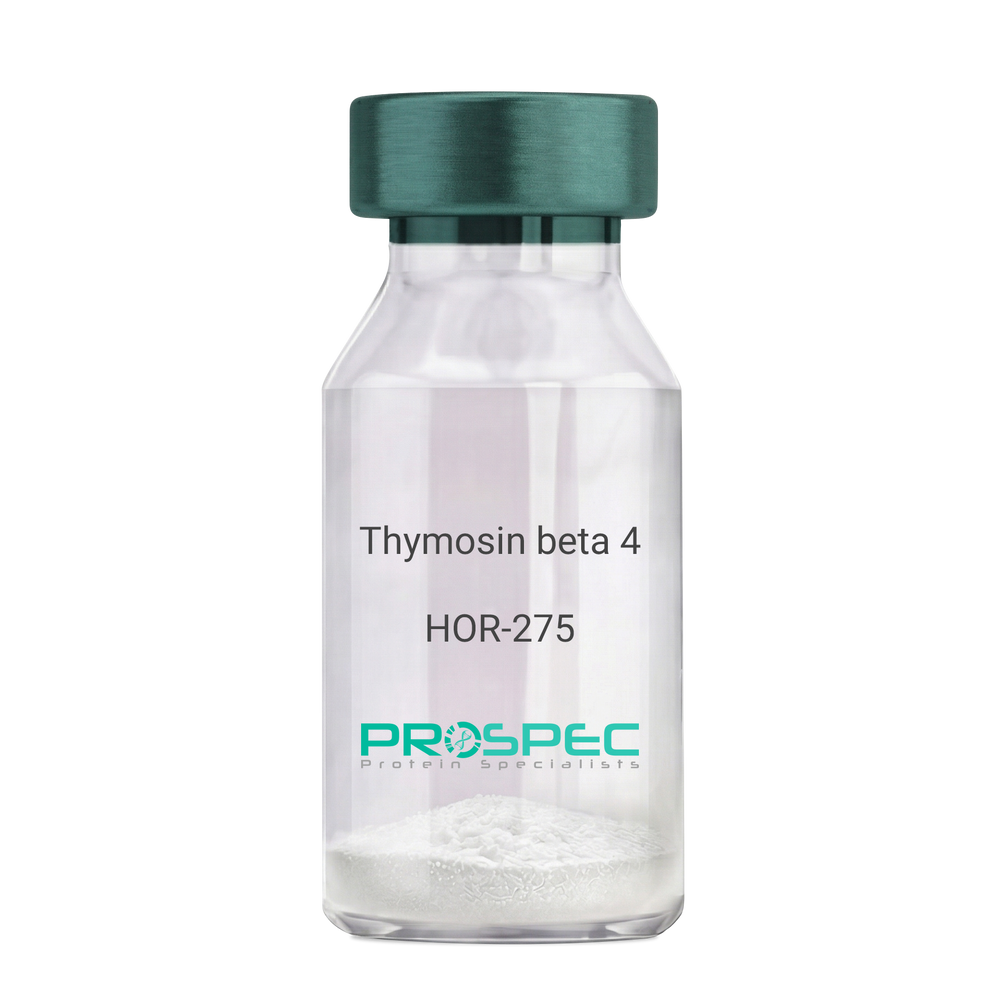
    Thymosin beta 4

    Description:

    Thymosin β4

    Thymosin beta-4. TB500, TB-500

    Product # :

    HOR-275

    Price :

    Quantity :

    Shipping Method :

    Room Temp Icon

    Shipped at Room temp

    Add To Cart

    More Info

    • description
    • formulation
    • purity
    • More Info
    • Citations

    Description

    Thymosin b4 is a 43 amino acid peptide which is regarded as the main intracellular G-actin sequestering peptide. It has a molecular weight of 4963.55 Da, and its molecular formula is: C212H350N56O78S1. Extracellular Thymosin b4 may contribute to physiological processes such as angiogenesis, wound healing, and regulation of inflammation.

    Formulation

    The protein (1mg/ml) was lyophilized with no additives.

    Purity

    Greater than 98.0% as determined by RP-HPLC.

    Citations

    More Info

    • Introduction

      Thymosin is a hormone secreted from the thymus. Its primary function is to stimulate the production of T cells, which are an important part of the immune system. Thymosin also assists in the development of B cells to plasma cells to produce antibodies. The predominant form of thymosin, thymosin b4, is a member of a highly conserved family of actin monomer-sequestering proteins. b-thymosins are the primary regulators of unpolymerized actin, and are essential for maintaining the small cytoplasmic pool of free G-actin monomers required for rapid filament elongation and allowing for the flux of monomers between the thymosin-bound pool and F-actin.

    • Synonyms

      Thymosin beta-4. TB500, TB-500

    • Physical Appearance

      Sterile Filtered White lyophilized (freeze-dried) powder.

    • Stability

      Lyophilized Thymosin b4 although stable at room temperature for 3 weeks, should be stored desiccated below -18°C. Upon reconstitution T beta 4 should be stored at 4°C between 2-7 days and for future use below -18°C.For long term storage it is recommended to add a carrier protein (0.1% HSA or BSA).Please prevent freeze-thaw cycles.

    • Solubility

      It is recommended to reconstitute the lyophilized Thymosin beta-4 in sterile 18MΩ-cm H2O not less than 100 µg/ml, which can then be further diluted to other aqueous solutions.

    • Amino Acid Sequence

      Thymosin b4 has an a.a. sequence of Ac-Ser-Asp-Lys-Pro-Asp-Met-Ala-Glu-Ile-Glu-Lys-Phe-Asp-Lys-Ser-Lys-Leu-Lys-Lys-Thr-Glu-Thr-Gln-Glu-Lys-Asn-Pro-Leu-Pro-Ser-Lys-Glu-Thr-Ile-Glu-Gln-Glu-Lys-Gln-Ala-Gly-Glu-Ser-OH.

    • Background

      What is the molecular weight/Mw of THYMOSIN BETA 4 Protein?
      THYMOSIN BETA 4 Protein has a total Mw of 4.96kDa.

      What is the Purity of THYMOSIN BETA 4 Protein?
      THYMOSIN BETA 4 Protein is >98% pure as determined by SDS-PAGE.

      What is the Biological Activity of THYMOSIN BETA 4 Protein?
      The biological functionality of THYMOSIN BETA 4 Protein will be determined in the future.

      What is the amino acid sequence of THYMOSIN BETA 4 Protein?
      Thymosin b4 has an a.a. sequence of Ac-Ser-Asp-Lys-Pro-Asp-Met-Ala-Glu-Ile-Glu-Lys-Phe-Asp-Lys-Ser-Lys-Leu-Lys-Lys-Thr-Glu-Thr-Gln-Glu-Lys-Asn-Pro-Leu-Pro-Ser-Lys-Glu-Thr-Ile-Glu-Gln-Glu-Lys-Gln-Ala-Gly-Glu-Ser-OH.
      What applications can THYMOSIN BETA 4 Protein be used in?
      THYMOSIN BETA 4 Protein can probably be used in western blot, ELISA and Lateral Flow.

      What is the endotoxin level for THYMOSIN BETA 4 Protein?
      The endotoxin level is minimal, THYMOSIN BETA 4 Protein was purified using conventional chromatography techniques.

      Who supplies THYMOSIN BETA 4 that is in stock and available to order?
      ProSpec has the protein in stock and available for immediate delivery.

      Where can I order bulk mg quantities of THYMOSIN BETA 4?
      ProSpec supplies bulk mg quantities at affordable prices that meets research and academic budgets.

    ProSpec's products are furnished for LABORATORY RESEARCH USE ONLY. The product may not be used as drugs, agricultural or pesticidal products, food additives or household chemicals.

    Thymosin Beta 4
  • View Data Sheet

    Name :

    CLCF1 Human

    Description:

    Neurotrophin-1 Human Recombinant

    Cardiotrophin-Like Cytokine Factor 1, Novel Neurotrophin-1 , BSF3, CLC, CRLF1 Associated Cytokine-Like Factor 1, B-Cell Stimulating Factor 3, B-Cell-Stimulating Factor 3, BSF-3, NNT-1, NNT1, Neurotrophin-1/B-Cell Stimulating Factor-3, Cold-Induced Sweating Syndrome 2, B-Cell Stimulatory Factor 3, CISS2, NR6, CLCF1.

    Product # :

    CYT-869

    Price :

    Quantity :

    Shipping Method :

    Room Temp Icon

    Shipped at Room temp

    Add To Cart

    More Info

    • description
    • source
    • formulation
    • purity
    • biological activity
    • More Info
    • Citations

    Description

    Neurotrophin-1 Human Recombinant (28-225) produced in E.Coli is a single, non-glycosylated, polypeptide chain containing 199 amino acids and having a molecular mass of 22kDa.The NNT-1 is purified by proprietary chromatographic techniques.

    Source

    Escherichia Coli.

    Formulation

    NNT-1 protein was lyophilized from a 0.2µm filtered solution in Acetonitrile and TFA.

    Purity

    Greater than 95.0% as determined by SDS-PAGE.

    Biological Activity

    The ED50, as measured in a cell proliferation assay using human TF?1 cells transfected with human CNTF R?, is less than 15ng/ml.

    Citations

    More Info

    • Introduction

      Cardiotrophin-like cytokine (CLC/ NNT-1) belongs to the IL-6 family of cytokines. All family members share the receptor subunit gp130, which belongs to the type I cytokine receptor superfamily. NNT1 is a trophic factor for motor neurons, a stimulator of ACTH release from corticotrophs, and an inducer of IgE synthesis and B cell proliferation. Cells expressing NNT-1 include embryonic muscle, lung epithelium, and mesenchyme. NNT1 binds to and activates the ILST/gp130 receptor.

    • Synonyms

      Cardiotrophin-Like Cytokine Factor 1, Novel Neurotrophin-1 , BSF3, CLC, CRLF1 Associated Cytokine-Like Factor 1, B-Cell Stimulating Factor 3, B-Cell-Stimulating Factor 3, BSF-3, NNT-1, NNT1, Neurotrophin-1/B-Cell Stimulating Factor-3, Cold-Induced Sweating Syndrome 2, B-Cell Stimulatory Factor 3, CISS2, NR6, CLCF1.

    • Physical Appearance

      Sterile Filtered White lyophilized (freeze-dried) powder.

    • Stability

      Lyophilized Neurotrophin-1 although stable at room temperature for 3 weeks, should be stored desiccated below -18°C. Upon reconstitution NNT1 should be stored at 4°C between 2-7 days and for future use below -18°C. For long term storage it is recommended to add a carrier protein (0.1% HSA or BSA). Please prevent freeze-thaw cycles.

    • Solubility

      It is recommended to reconstitute the lyophilized NNT1 in sterile 18M-cm H2O not less than 0.5mg/ml, which can then be further diluted to other aqueous solutions.

    • Amino Acid Sequence

      MLNRTGDPGP GPSIQKTYDL TRYLEHQLRS LAGTYLNYLG PPFNEPDFNP PRLGAETLPR ATVDLEVWRS LNDKLRLTQN YEAYSHLLCY LRGLNRQAAT AELRRSLAHF CTSLQGLLGS IAGVMAALGY PLPQPLPGTE PTWTPGPAHS DFLQKMDDFW LLKELQTWLW RSAKDFNRLK KKMQPPAAAV TLHLGAHGF.

    • Background

      What is the molecular weight/Mw of CLCF Protein?
      CLCF Protein has a total Mw of 22kDa.

      What is the source or expression system of CLCF Protein?
      Escherichia Coli.

      What is the Purity of CLCF Protein?
      CLCF Protein is >95% pure as determined by SDS-PAGE.

      What is the Biological Activity of CLCF Protein?
      The ED50, as measured in a cell proliferation assay using human TF?1 cells transfected with human CNTF R?, is less than 15ng/ml.

      What is the amino acid sequence of CLCF Protein?
      MLNRTGDPGP GPSIQKTYDL TRYLEHQLRS LAGTYLNYLG PPFNEPDFNP PRLGAETLPR ATVDLEVWRS LNDKLRLTQN YEAYSHLLCY LRGLNRQAAT AELRRSLAHF CTSLQGLLGS IAGVMAALGY PLPQPLPGTE PTWTPGPAHS DFLQKMDDFW LLKELQTWLW RSAKDFNRLK KKMQPPAAAV TLHLGAHGF.

      What applications can CLCF Protein be used in?
      CLCF Protein can probably be used in western blot, ELISA and Lateral Flow.

      What is the endotoxin level for CLCF Protein?
      The endotoxin level is minimal, CLCF Protein was purified using conventional chromatography techniques.

    ProSpec's products are furnished for LABORATORY RESEARCH USE ONLY. The product may not be used as drugs, agricultural or pesticidal products, food additives or household chemicals.

    Nnt1 Human
  • View Data Sheet

    Name :

    CARHSP1 Human

    Description:

    Calcium Regulated Heat Stable Protein 1 Human Recombinant

    Calcium-regulated heat stable protein 1, Calcium-regulated heat-stable protein of 24 kDa, CRHSP-24, CARHSP1, asCSDC1, MGC111446.

    Product # :

    PRO-257

    Price :

    Quantity :

    Shipping Method :

    Ice Icon

    Shipped with Ice Packs

    Add To Cart

    More Info

    • description
    • source
    • formulation
    • purity
    • More Info
    • Citations

    Description

    CRAHSP1 Human Recombinant fused with a 20 amino acid His tag at N-terminus produced in E.Coli is a single, non-glycosylated, polypeptide chain containing 167 amino acids (1-147 a.a.) and having a molecular mass of 18kDa. The CRAHSP1 is purified by proprietary chromatographic techniques.

    Source

    Escherichia Coli.

    Formulation

    The CRAHSP1 solution (0.5 mg/ml) contains 20mM Tris-HCl buffer (pH8.0) containing 10% glycerol and 0.1M NaCl.

    Purity

    Greater than 90.0% as determined by SDS-PAGE.

    Citations

    More Info

    • Introduction

      CRAHSP1 is a serine phosphoprotein initially identified as a physiological substrate for the Ca2+-calmodulin regulated protein phosphatase calcineurin (PP2B). CRAHSP1 interacts with the STYX/dead phosphate protein in developing spermatids and is a paralog of the brain-specific mRNA-binding protein PIPPIN. It is believed to have a common role in calcium-mediated signal transduction resulting from phosphorylation on serine residues.

    • Synonyms

      Calcium-regulated heat stable protein 1, Calcium-regulated heat-stable protein of 24 kDa, CRHSP-24, CARHSP1, asCSDC1, MGC111446.

    • Physical Appearance

      Sterile Filtered colorless solution.

    • Stability

      Store at 4°C if entire vial will be used within 2-4 weeks. Store, frozen at -20°C for longer periods of time. For long term storage it is recommended to add a carrier protein (0.1% HSA or BSA).Avoid multiple freeze-thaw cycles.

    • Amino Acid Sequence

      MGSSHHHHHH SSGLVPRGSH MSSEPPPPPQ PPTHQASVGL LDTPRSRERS PSPLRGNVVP SPLPTRRTRT FSATVRASQG PVYKGVCKCF CRSKGHGFIT PADGGPDIFL HISDVEGEYV PVEGDEVTYK MCSIPPKNEK LQAVEVVITH LAPGTKHETW SGHVISS.

    ProSpec's products are furnished for LABORATORY RESEARCH USE ONLY. The product may not be used as drugs, agricultural or pesticidal products, food additives or household chemicals.

    Carhsp1 Human
  • View Data Sheet

    Name :

    Streptavidin

    Description:

    Streptavidin Recombinant

    Product # :

    PRO-791

    Price :

    Quantity :

    Shipping Method :

    Room Temp Icon

    Shipped at Room temp

    Add To Cart

    More Info

    • description
    • source
    • formulation
    • purity
    • More Info
    • Citations

    Description

    Streptavidin Streptomyces Avidinii Recombinant produced in E.Coli. The molecular weight per tetramer is approximately 52kDa.

    Source

    Escherichia Coli.

    Formulation

    Lyophilized in 10mM potassium phosphate buffer pH 6.5.

    Purity

    Greater than 98.0% as determined by SDS-PAGE and HPLC.

    Citations

    More Info

    • Introduction

      Streptavidin is a tetrameric protein secreted by Streptomyces avidinii which binds firmly to biotin. Streptavidin is widely used in molecular biology through its unique high affinity for the vitamin biotin. The dissociation constant (Kd) of the biotin-streptavidin complex is about ~10-15 mol/L. The strong affinity recognition of biotin and biotinylated molecules has made streptavidin one of the most important components in diagnostics and laboratory kits. The streptavidin/biotin system has one of the biggest free energies of association of yet observed for noncovalent binding of a protein and small ligand in aqueous solution (K_assoc = 10**14). The complexes are also extremely stable over a wide range of temperature and pH.

    • Physical Appearance

      Sterile Filtered White lyophilized (freeze-dried) powder.

    • Stability

      Streptavidin is shipped at ambient temperature, upon arrival store at -20°C.

    • Solubility

      It is recommended to reconstitute the lyophilized Streptavidin in sterile 18MΩ-cm H2O not less than 0.5mg/ml, which can then be further diluted to other aqueous solutions.

    • Amino Acid Sequence

      MAEAGITGTWYNQLGSTFIVTAGADGALTGTYESAVGNAESRYVLT
      GRYDSAPATDGSGTALGWTVAWKNNYRNAHSATTWSGQYVGGA
      EARINTQWLLTSGTTEANAWKSTLVGHDTFTKVKPSAAS.

    • Proteolytic Activity

      < 10-3 U/mg protein (Azocoll, 25 °C, 24 h, pH 8.0).

    • Specific Activity

      > 17U/mg (one unit binds 1 μg D-biotin).

    ProSpec's products are furnished for LABORATORY RESEARCH USE ONLY. The product may not be used as drugs, agricultural or pesticidal products, food additives or household chemicals.

    Streptavidin Recombinant
  • View Data Sheet

    Name :

    LUM Human

    Description:

    Lumican Human Recombinant

    Lumican, LDC, Lumican Proteoglycan, Keratan Sulfate Proteoglycan Lumican, SLRR2D, KSPG Lumican.

    Product # :

    PRO-1821

    Price :

    Quantity :

    Shipping Method :

    Ice Icon

    Shipped with Ice Packs

    Add To Cart

    More Info

    • description
    • source
    • formulation
    • purity
    • More Info
    • Citations

    Description

    LUM Human Recombinant produced in E.Coli is a single, non-glycosylated polypeptide chain containing 343 amino acids (19-338a.a) and having a molecular mass of 39kDa. LUM is fused to a 23 amino acid His-tag at N-terminus & purified by proprietary chromatographic techniques.

    Source

    Escherichia Coli.

    Formulation

    LUM protein solution (1mg/ml) containing 20mM Tris-HCl buffer (pH 8.0), 0.4M Urea and 10% glycerol.

    Purity

    Greater than 90.0% as determined by SDS-PAGE.

    Citations

    More Info

    • Introduction

      Lumican also known as LUM belongs to the small leucine-rich proteoglycan (SLRP) family which comprises decorin, biglycan, fibromodulin, keratocan, epiphycan, and osteoglycin. Furthermore we can see that in these bifunctional molecules, the protein moiety binds collagen fibrils and the highly charged hydrophilic glycosaminoglycans regulate interfibrillar spacings. Lumican is the main keratan sulfate proteoglycan of the cornea however LUM is also distributed in interstitial collagenous matrices throughout the body. Lumican regulates collagen fibril organization and circumferential growth, corneal transparency, epithelial cell migration and tissue repair. Among the diseases associated with LUM is posterior amorphous corneal dystrophy.

    • Synonyms

      Lumican, LDC, Lumican Proteoglycan, Keratan Sulfate Proteoglycan Lumican, SLRR2D, KSPG Lumican.

    • Physical Appearance

      Sterile Filtered clear solution.

    • Stability

      Store at 4°C if entire vial will be used within 2-4 weeks. Store, frozen at -20°C for longer periods of time.For long term storage it is recommended to add a carrier protein (0.1% HSA or BSA).Please avoid freeze thaw cycles.

    • Amino Acid Sequence

      MGSSHHHHHH SSGLVPRGSH MGSQYYDYDF PLSIYGQSSP NCAPECNCPE SYPSAMYCDE LKLKSVPMVP PGIKYLYLRN NQIDHIDEKA FENVTDLQWL ILDHNLLENS KIKGRVFSKL KQLKKLHINH NNLTESVGPL PKSLEDLQLT HNKITKLGSF EGLVNLTFIH LQHNRLKEDA VSAAFKGLKS LEYLDLSFNQ IARLPSGLPV SLLTLYLDNN KISNIPDEYF KRFNALQYLR LSHNELADSG IPGNSFNVSS LVELDLSYNK LKNIPTVNEN LENYYLEVNQ LEKFDIKSFC KILGPLSYSK IKHLRLDGNR ISETSLPPDM YECLRVANEV TLN.

    ProSpec's products are furnished for LABORATORY RESEARCH USE ONLY. The product may not be used as drugs, agricultural or pesticidal products, food additives or household chemicals.

    Lum Human
  • View Data Sheet

    Name :

    GREM1 Human

    Description:

    GREM1 Human Recombinant

    Gremlin-1 isoform 1, CKTSF1B1, DAND2, DRM, GREMLIN, IHG-2, PIG2, GREM1, Cell proliferation-inducing gene 2 protein, Cysteine knot superfamily 1, BMP antagonist 1, DAN domain family member 2, Down-regulated in Mos-transformed cells protein, Increased in high glucose protein 2.

    Product # :

    PRO-1359

    Price :

    Quantity :

    Shipping Method :

    Ice Icon

    Shipped with Ice Packs

    Add To Cart

    More Info

    • description
    • source
    • formulation
    • purity
    • More Info
    • Citations

    Description

    GREM1 Human Recombinant produced in E.coli is a single, non-glycosylated polypeptide chain containing 183 amino acids (25-184) and having a molecular mass of 20.7 kDa. GREM1 is fused to a 23 amino acid His-tag at N-terminus & purified by proprietary chromatographic techniques.

    Source

    Escherichia Coli.

    Formulation

    The GREM1 solution (0.5mg/ml) contains 20mM Tris-HCl buffer (pH 8.0), 0.4M Urea and 10% glycerol.

    Purity

    Greater than 90.0% as determined by SDS-PAGE.

    Citations

    More Info

    • Introduction

      GREM1 belongs to the BMP (bone morphogenic protein) antagonist family. Like BMPs, BMP antagonists comprise cystine knots and usually form homo- and heterodimers. The CAN (cerberus and dan) subfamily of BMP antagonists, to which GREM1 belongs, is characterized by a C-terminal cystine knot with an eight-membered ring. The antagonistic effect of the secreted glycosylated protein is because of its direct binding to BMP proteins. As an antagonist of BMP, GREM1 takes a place in regulating organogenesis, body patterning, and tissue differentiation. In mouse, GREM1 has been shown to convey the sonic hedgehog (SHH) signal from the polarizing region to the apical ectodermal ridge during limb bud outgrowth. Alternatively merged transcript variants encoding different isoforms have been found for this gene.

    • Synonyms

      Gremlin-1 isoform 1, CKTSF1B1, DAND2, DRM, GREMLIN, IHG-2, PIG2, GREM1, Cell proliferation-inducing gene 2 protein, Cysteine knot superfamily 1, BMP antagonist 1, DAN domain family member 2, Down-regulated in Mos-transformed cells protein, Increased in high glucose protein 2.

    • Physical Appearance

      Sterile Filtered colorless solution.

    • Stability

      Store at 4°C if entire vial will be used within 2-4 weeks. Store, frozen at -20°C for longer periods of time. For long term storage it is recommended to add a carrier protein (0.1% HSA or BSA).Avoid multiple freeze-thaw cycles.

    • Amino Acid Sequence

      MGSSHHHHHH SSGLVPRGSH MGSKKKGSQG AIPPPDKAQH NDSEQTQSPQ QPGSRNRGRG QGRGTAMPGE EVLESSQEAL HVTERKYLKR DWCKTQPLKQ TIHEEGCNSR TIINRFCYGQ CNSFYIPRHI RKEEGSFQSC SFCKPKKFTT MMVTLNCPEL QPPTKKKRVT RVKQCRCISI DLD.

    ProSpec's products are furnished for LABORATORY RESEARCH USE ONLY. The product may not be used as drugs, agricultural or pesticidal products, food additives or household chemicals.

    Grem1 Human
  • View Data Sheet

    Name :

    LMNA Human

    Description:

    Lamin A/C Human Recombinant

    Prelamin-A/C, Lamin-A/C, 70 kDa lamin, LMNA, LMN1, Renal carcinoma antigen NY-REN-32, Progerin.

    Product # :

    PRO-2666

    Price :

    Quantity :

    Shipping Method :

    Ice Icon

    Shipped with Ice Packs

    Add To Cart

    More Info

    • description
    • source
    • formulation
    • purity
    • More Info
    • Citations

    Description

    LMNA Human Recombinant fused with a His tag produced in E.Coli is a single, non-glycosylated, polypeptide chain containing 614 amino acids and having a molecular mass of 68.0kDa. The LMNA is purified by proprietary chromatographic techniques.

    Source

    Escherichia Coli.

    Formulation

    The LMNA solution contains 20mM Tris-HCl pH 7.5, 1mM DTT, 0.5M NaCl, 1.5mM EDTA and 20%(v/v) glycerol.

    Purity

    Greater than 90.0% as determined by SDS-PAGE.

    Citations

    More Info

    • Introduction

      Lamin-A is a major component of the nuclear lamina, a dynamic meshwork located just under the nuclear envelope and it is encoded by lamin A/C gene (LMNA).
      Lamin-A is synthesized as Prelamin A, a longer precursor that in vivo goes through a serial post-translational modifications that lead to mature Lamin A.
      Diverse mutations in the Lamin A/C gene are associated with different diseases that are collectively called laminophaties, including Emery-Dreifuss muscular dystrophy, familiar partial lipodystrophy, limb girdle muscular dystrophy, dilated cardiomyopathy, Charcot-Marie-Tooth disease, and Hutchinson-Gilford progeria syndrome.

    • Synonyms

      Prelamin-A/C, Lamin-A/C, 70 kDa lamin, LMNA, LMN1, Renal carcinoma antigen NY-REN-32, Progerin.

    • Physical Appearance

      Sterile filtered colorless solution.

    • Stability

      Store at 4°C if entire vial will be used within 2-4 weeks.Store, frozen at -20°C for longer periods of time.For long term storage it is recommended to add a carrier protein (0.1% HSA or BSA).Avoid multiple freeze-thaw cycles.

    • Amino Acid Sequence

      MAHHHHHHVG TGSNDDDDKS PDMETPSQRR ATRSGAQASS TPLSPTRITR LQEKEDLQEL NDRLAVYIDR VRSLETENAG LRLRITESEE VVSREVSGI KAAYEAELGD ARKTLDSVAK ERARLQLELS KVREEFKELK ARNTKKEGDL IAAQARLKDL EALLNSKEAA LSTALSEKRT LEGELHDLRG QVAKLEAALG EAKKQLQDEM LRRVDAENRL QTMKEELDFQ KNIYSEELRE TKRRHETRLV EIDNGKQREF ESRLADALQE LRAQHEDQVE QYKKELEKTY SAKLDNARQS AERNSNLVGA AHEELQQSRI RIDSLSAQLS QLQKQLAAKE AKLRDLEDSL ARERDTSRRL LAEKEREMAE MRARMQQQLD EYQELLDIKL ALDMEIHAYR KLLEGEEERL RLSPSPTSQR SRGRASSHSS QTQGGGSVTK KRKLESTESR SSFSQHARTS GRVAVEEVDE EGKFVRLRNK SNEDQSMGNW QIKRQNGDDP LLTYRFPPKF TLKAGQVVTI WAAGAGATHS PPTDLVWKAQ NTWGCGNSLR TALINSTGEE VAMRKLVRSV TVVEDDEDED GDDLLHHHHG SHCSSSGDPA EYNLRSRTVL CGTCGQPADK ASASGSGAQS PQNCSIM

    ProSpec's products are furnished for LABORATORY RESEARCH USE ONLY. The product may not be used as drugs, agricultural or pesticidal products, food additives or household chemicals.

    Lmna Human
  • View Data Sheet

    Name :

    CALB2 Antibody

    Description:

    Calbindin-2, Mouse Anti Human

    Calretinin, CR, Calb2, calbindin 2.

    Product # :

    ANT-667

    Price :

    Quantity :

    Shipping Method :

    Ice Icon

    Shipped with Ice Packs

    Add To Cart

    More Info

    • formulation
    • More Info
    • Citations

    Formulation

    1mg/ml containing PBS, pH-7.4, 10% Glycerol and 0.02% Sodium Azide.

    Citations

    More Info

    • Introduction

      Calretinin is an intracellular calcium-binding protein belonging to the troponin C superfamily characterized by a structural motif described as the EF-hand domain. The immunohistochemical detection of calretinin in developing cerebellum is restricted to the later stages indicated by weak staining from week 21 of gestation, in Purkinje and basket cells and in neurons of the dentate nucleus. The intensity of staining increases as the cerebellum matures. In tumors, calretinin has been detected in mesotheliomas and some pulmonary adenocarcinomas.

    • Synonyms

      Calretinin, CR, Calb2, calbindin 2.

    • Physical Appearance

      Sterile filtered colorless solution.

    • Immunogen

      Anti-human CALB2 mAb, is derived from hybridization of mouse F0 myeloma cells with spleen cells from BALB/c mice immunized with a recombinant human CALB2 protein 1-271 amino acids purified from E. coli.

    • Ig Subclass

      Mouse IgG1 heavy chain and k light chain.

    • Clone

      PAT5C5AT.

    • Applications

      The antibody has been tested by ELISA, Western blot analysis, Flow cytometry and ICC/IF to assure specificity and reactivity. Since application varies, however, each investigation should be titrated by the reagent to obtain optimal results.

    • Type

      Mouse Anti Human Monoclonal.

    • Storage Procedures

      For periods up to 1 month store at 4°C, for longer periods of time, store at -20°C. Prevent freeze thaw cycles.

    • Purification Method

      CALB2 antibody was purified from mouse ascitic fluids by protein-A affinity chromatography.

    ProSpec's products are furnished for LABORATORY RESEARCH USE ONLY. The product may not be used as drugs, agricultural or pesticidal products, food additives or household chemicals.

    Calb2 Antibody
  • 1
  • 2
  • 3
  • 4
  • 5
  • 6
  • …
  • 42
Your browser does not support the video tag.

Products

  • Cytokines
  • Growth Factors
  • Chemokines
  • CD Antigens
  • Neurotrophins
  • Hormones
  • Enzymes
  • Viral Antigens
  • Recombinant Proteins
  • Natural Proteins
  • Monoclonal Antibodies
  • Polyclonal Antibodies
  • Thermal Packaging

About

  • Company
  • Founder
  • Contribution
  • Contact Us
  • My Account

Ordering

  • Ordering Method
  • Ordering - Credit Card
  • Ordering PO
  • Shipping Fees
  • FAQ's

Legal

  • Terms & Conditions
  • Privacy
  • Site Map
  • info@prospecbio.com
  • Facebook
  • Instagram
  • Linkedin Profile

© 2026 ProSpec-Tany TechnoGene Ltd. All Rights Reserved.

  • Choosing a selection results in a full page refresh.
  • Opens in a new window.