Search results
1000 results found for “tsh”
Name
Description
Product #
Price
Quantity
Shipping Method
- View Data Sheet
Name :
TIMP2 Human, Sf9Description:
Tissue Inhibitor of Metalloprotease 2 Human Recombinant, Sf9
TIMP Metallopeptidase Inhibitor 2, Tissue Inhibitor Of Metalloproteinases 2, CSC-21K, Tissue Inhibitor Of Metalloproteinase 2, TIMP-2, DDC8, Metalloproteinase inhibitor 2.
Product # :
ENZ-936Price :
Quantity :
Shipping Method :
Shipped with Ice Packs
More Info
- description
- source
- formulation
- purity
- More Info
- Citations
Description
TIMP2 produced in Sf9 Baculovirus cells is a single, glycosylated polypeptide chain containing 200 amino acids (27-220a.a.) and having a molecular mass of 22.5kDa. (Molecular size on SDS-PAGE will appear at approximately 18-28kDa). TIMP2 is expressed with a 6 amino acid His tag at C-Terminus and purified by proprietary chromatographic techniques.
Source
Sf9, Baculovirus cells.
Formulation
TIMP2 protein solution (0.25mg/ml) contains Phosphate Buffered Saline (pH 7.4) and 10% glycerol.
Purity
Greater than 95.0% as determined by SDS-PAGE.
Citations
More Info
-
Introduction
TIMP2 belongs to the TIMP gene family. The proteins encoded by this gene family are natural inhibitors of the matrix metalloproteinases, a group of peptidases that take part in degradation of the extracellular matrix. Besides having an inhibitory role against metalloproteinases, the encoded protein has a exclusive part among TIMP family members in its capability to directly suppress the proliferation of endothelial cells. Consequently, the encoded protein is crucial to the conservation of tissue homeostasis by suppressing the production of quiescent tissues as an answer to angiogenic factors, and by inhibiting protease activity in tissues undergoing renovation of the extracellular matrix.
-
Synonyms
TIMP Metallopeptidase Inhibitor 2, Tissue Inhibitor Of Metalloproteinases 2, CSC-21K, Tissue Inhibitor Of Metalloproteinase 2, TIMP-2, DDC8, Metalloproteinase inhibitor 2.
-
Physical Appearance
Sterile Filtered clear solution.
-
Stability
Store at 4°C if entire vial will be used within 2-4 weeks. Store, frozen at -20°C for longer periods of time.For long term storage it is recommended to add a carrier protein (0.1% HSA or BSA). Avoid multiple freeze-thaw cycles.
-
Amino Acid Sequence
CSCSPVHPQQ AFCNADVVIR AKAVSEKEVD SGNDIYGNPI KRIQYEIKQI KMFKGPEKDI EFIYTAPSSA VCGVSLDVGG KKEYLIAGKA EGDGKMHITL CDFIVPWDTL STTQKKSLNH RYQMGCECKI TRCPMIPCYI SSPDECLWMD WVTEKNINGH QAKFFACIKR SDGSCAWYRG AAPPKQEFLD IEDPHHHHHH.
ProSpec's products are furnished for LABORATORY RESEARCH USE ONLY. The product may not be used as drugs, agricultural or pesticidal products, food additives or household chemicals.
- View Data Sheet
Name :
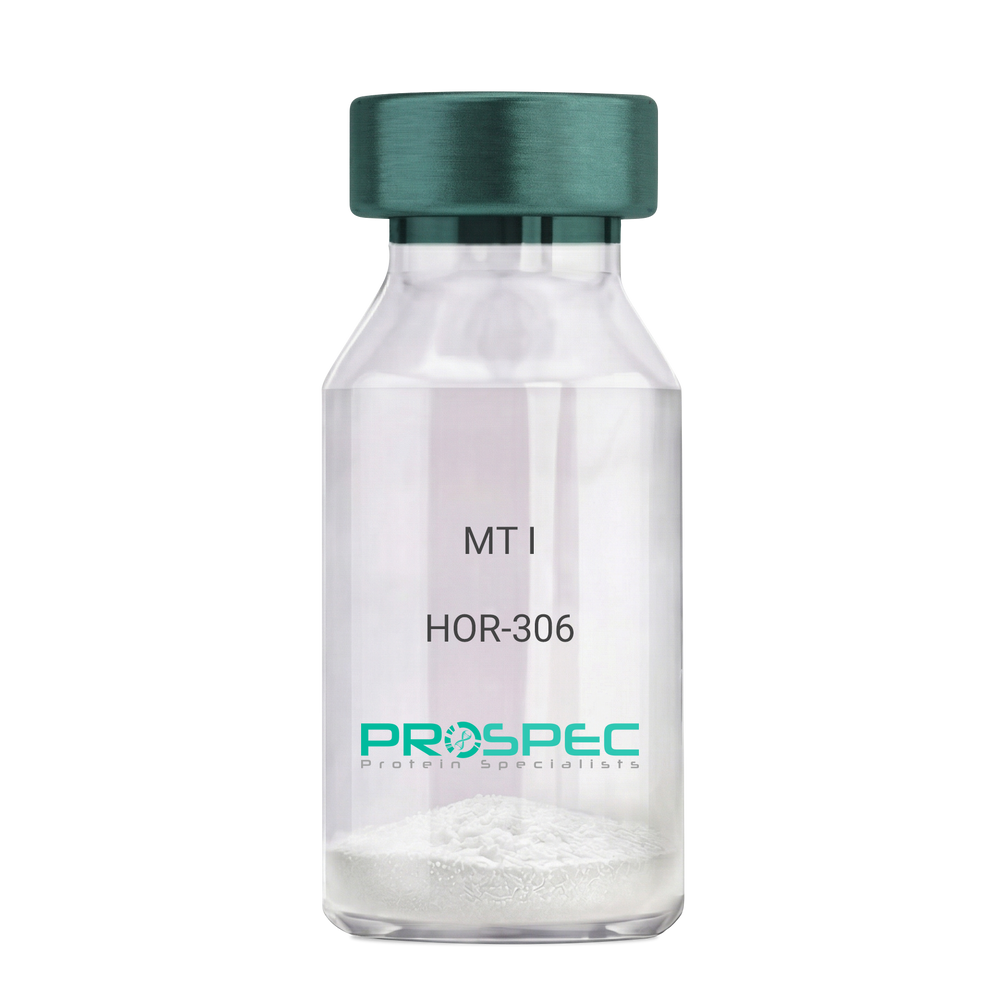
MT IDescription:
Melanotan-I
Melanotan-I, MT-I, Melanotan-1.
Product # :
HOR-306Price :
Quantity :
Shipping Method :
Shipped at Room temp
More Info
- description
- formulation
- purity
- More Info
- Citations
Description
Melanotan-I has the amino acid sequence of Ser-Tyr-Ser-Nle-Glu-His-D-Phe-Arg-Trp-Gly-Lys-Pro-Val and a molecular weight of 1647.4 Dalton.
Formulation
The protein (1mg/ml) was lyophilized with no additives.
Purity
Greater than 98.0% as determined by RP-HPLC.
Citations
More Info
-
Synonyms
Melanotan-I, MT-I, Melanotan-1.
-
Physical Appearance
Sterile Filtered off-White lyophilized (freeze-dried) powder.
-
Stability
Lyophilized Melanotan-I although stable at room temperature for 3 weeks, should be stored desiccated below -18°C. Upon reconstitution MT-I should be stored at 4°C between 2-7 days and for future use below -18°C.For long term storage it is recommended to add a carrier protein (0.1% HSA or BSA).Please prevent freeze-thaw cycles.
-
Solubility
It is recommended to reconstitute the lyophilized Melanotan-I in sterile 1% acetic acid not less than 100 µg/ml, which can then be further diluted to other aqueous solutions.
ProSpec's products are furnished for LABORATORY RESEARCH USE ONLY. The product may not be used as drugs, agricultural or pesticidal products, food additives or household chemicals.
- View Data Sheet
Name :
Troponin C-I-T ComplexDescription:
Cardiac Troponin C-I-T Complex Human
Troponin I cardiac muscle, Cardiac troponin I, TNNI3, TNNC1, CMH7, RCM1, cTnI, CMD2A, MGC116817, Troponin C slow skeletal and cardiac muscles, TN-C, TNNC1, TNNC, TNC, CMD1Z
Product # :
PRO-2741Price :
Quantity :
Shipping Method :
Shipped with Ice Packs
More Info
- description
- source
- formulation
- More Info
- Citations
Description
Human Cardiac Troponin C-I-T Complex Protein produced in Human heart tissue having a molecular mass of approximately 75kDa.
Source
Human cardiac tissue.
Formulation
Troponin C-I-T Complex solution (0.2µm filtered) contains 25mM TRIS buffer, 0.15M NaCl, 0.09% sodium azide, pH 7.5.
Citations
More Info
-
Introduction
Troponin Complex is a heteromeric protein playing an important role in the regulation of skeletal and cardiac muscle contraction. It consists of three subunits, Troponin I , Troponin T and Troponin C. Each subunit is responsible for part of Troponin Complex function. E.g. Troponin I inhibits ATP-ase activity of acto-myosin. Troponin T and Troponin I are presented in cardiac muscles in different forms than in skeletal muscles. Purified subunits of rcTnI, rcTnC and rcTnT are recomplexed in vitro under appropriate conditions.
-
Synonyms
Troponin I cardiac muscle, Cardiac troponin I, TNNI3, TNNC1, CMH7, RCM1, cTnI, CMD2A, MGC116817, Troponin C slow skeletal and cardiac muscles, TN-C, TNNC1, TNNC, TNC, CMD1Z
-
Physical Appearance
Sterile Filtered brown solution.
-
Stability
Store at 4°C if entire vial will be used within 2-4 weeks. Store, frozen at -20°C for longer periods of time. For long term storage it is recommended to add a carrier protein (0.1% HSA or BSA). Avoid multiple freeze-thaw cycles.
-
Human Virus Test
Starting material donor has been tested and certified negative for antibodies to HIV-1, HIV-2, HCV, HBSAG, Syphilis and HIV/HBV/HCV.
ProSpec's products are furnished for LABORATORY RESEARCH USE ONLY. The product may not be used as drugs, agricultural or pesticidal products, food additives or household chemicals.
- View Data Sheet
Name :
SincalideDescription:
Sincalide
Product # :
HOR-274Price :
Quantity :
Shipping Method :
Shipped at Room temp
More Info
- description
- formulation
- purity
- More Info
- Citations
Description
Sincalide also called CCK-8 has a molecular formula of C49H62N10O16S3 , H-Asp-Tyr(SO3H)-Met-Gly-Trp-Met-Asp-Phe-NH2 having an Mw of 1143.29 Dalton.
Formulation
The Sincalide was lyophilized from a concentrated (1mg/ml) solution with no additives.
Purity
Greater than 99.0% as determined by RP-HPLC.
Citations
More Info
-
Introduction
Sincalide corresponds to the C-terminal octapeptide of cholecystokinin (CCK) which acts on receptors within the gallbladder wall causing it to contract.
Cholecystokinin (CCK) is a hormone originally isolated from porcine intestinal mucosa and described as a linear 33-amino acid peptide containing a sulfated tyrosine, which is essential for its biological activity. It has been found in mammals in both the digestive tract and the central nervous system. Among its multiple biological functions, this hormone stimulates pancreatic exocrine secretion, gallbladder contraction, and intestine motility and may also act as a neurotransmitter/neuromodulator in the central nervous system. -
Physical Appearance
Sterile Filtered White lyophilized (freeze-dried) powder.
-
Stability
Lyophilized Sincalide although stable at room temperature for 3 weeks, should be stored desiccated below -18°C. Upon reconstitution CCK-8 should be stored at 4°C between 2-7 days and for future use below -18°C.For long term storage it is recommended to add a carrier protein (0.1% HSA or BSA).Please prevent freeze-thaw cycles.
-
Solubility
It is recommended to reconstitute the lyophilized Sincalide in sterile 18MΩ-cm H2O at a concentration of 0.5mg/ml, which can then be further diluted to other aqueous solutions.
ProSpec's products are furnished for LABORATORY RESEARCH USE ONLY. The product may not be used as drugs, agricultural or pesticidal products, food additives or household chemicals.
- View Data Sheet
Name :
ST13 AntibodyDescription:
HSP70 Interacting Protein, Mouse Anti Human
AAG2, SNC6, HSPABP, FAM10A1, FAM10A4, HSPABP1, ST-13, Hsc70-interacting protein, Suppression of tumorigenicity protein 13, Putative tumor suppressor ST13, Protein FAM10A1, Progesterone receptor-associated p48 protein, Renal carcinoma antigen NY-REN-33, ST13, HIP, HOP, P48, PRO0786, FLJ27260, MGC129952.
Product # :
ANT-330Price :
Quantity :
Shipping Method :
Shipped with Ice Packs
More Info
- formulation
- More Info
- Citations
Formulation
1mg/ml containing PBS, pH-7.4, & 0.1% Sodium Azide.
Citations
More Info
-
Introduction
ST13 is an adaptor protein (co-chaperone) that mediates the association of HSP70 & HSP90 and appears in early receptor complexes. ST13 plays a role in the assembly process of glucocorticoid receptor, which requires the assistance of multiple molecular chaperones. The expression of ST13 is downregulated in colorectal carcinoma tissue signifying that is candidate tumor suppressor gene. Through common binding to both Hsp70 and Hsp90, ST13 functions as an adaptor that can integrate Hsp70 and Hsp90 interactions. The expression of ST13 decreases in colorectal cancer tissue compared with that in adjacent normal tissue. ST13 is mostly expressed in colorectal epithelia and adenocarcinoma cells. ST13 functions to promote the efficiency of glucocorticoid receptor maturation in cells. The expression levels of the ST13 gene were significantly decreased in primary tumors compared with adjacent mucosa.
-
Synonyms
AAG2, SNC6, HSPABP, FAM10A1, FAM10A4, HSPABP1, ST-13, Hsc70-interacting protein, Suppression of tumorigenicity protein 13, Putative tumor suppressor ST13, Protein FAM10A1, Progesterone receptor-associated p48 protein, Renal carcinoma antigen NY-REN-33, ST13, HIP, HOP, P48, PRO0786, FLJ27260, MGC129952.
-
Immunogen
Anti-human ST13 mAb, is derived from hybridization of mouse F0 myeloma cells with spleen cells from BALB/c mice immunized with recombinant human ST13 amino acids 1-369 purified from E. coli.
-
Ig Subclass
Mouse IgG1 heavy chain and κ light chain.
-
Clone
PAT1F1AT.
-
Applications
ST13 antibody has been tested by ELISA and Western blot analysis to assure specificity and reactivity. Since application varies, however, each investigation should be titrated by the reagent to obtain optimal results. Recommended dilution range for Western blot analysis is 1:1000 ~ 3000. Recommended starting dilution is 1:1000.
-
Type
Mouse Anti Human Monoclonal.
-
Storage Procedures
For periods up to 1 month store at 4°C, for longer periods of time, store at -20°C. Prevent freeze thaw cycles.
-
Purification Method
ST13 antibody was purified from mouse ascitic fluids by protein-G affinity chromatography.
ProSpec's products are furnished for LABORATORY RESEARCH USE ONLY. The product may not be used as drugs, agricultural or pesticidal products, food additives or household chemicals.
- View Data Sheet
Name :
CTSD MouseDescription:
Cathepsin-D Mouse Recombinant
Ctsd, CatD, CD, Cathepsin D.
Product # :
ENZ-1017Price :
Quantity :
Shipping Method :
Shipped with Ice Packs
More Info
- description
- source
- formulation
- purity
- biological activity
- More Info
- Citations
Description
CTSD produced in Sf9 Baculovirus cells is a single, glycosylated polypeptide chain containing 398 amino acids (21-410 a.a.) and having a molecular mass of 44.0kDa (Molecular size on SDS-PAGE will appear at approximately 40-57kDa). CTSD is expressed with an 8 amino acid His tag at C-Terminus and purified by proprietary chromatographic techniques.
Source
Sf9, Baculovirus cells.
Formulation
CTSD protein solution (0.25mg/ml) contains Phosphate Buffered Saline (pH 7.4) and 10% glycerol.
Purity
Greater than 90.0% as determined by SDS-PAGE.
Biological Activity
Specific activity is > 1,000 pmol/min/ug in which one unit will convert 1.0 pmole of Mca-PLGL-Dpa-AR-NH2 to MCA- Pro-Leu-OH per minute at pH 3.5 at 25C.Citations
More Info
-
Introduction
Cathepsin D is synthesized as a 54kDa precursor, which is proteolytically processed to an intermediate 48kDa single chain, which matures into more stable 34kDa and 14kDa two chain form. It is an estrogen-regulated lysosomal protease that has been suggested to facilitate cancer cell migration and invasion by digesting the basement membrane, extracellular matrix, and xonnective tissue. Because of its mitogenic and proteolytic activities, it has been implicated as a prognostic marker in many tumor types. Cathepsin D is expressed in epithelial cells as well as in macrophages.
-
Synonyms
Ctsd, CatD, CD, Cathepsin D.
-
Physical Appearance
Sterile Filtered colorless solution.
-
Stability
Store at 4°C if entire vial will be used within 2-4 weeks. Store, frozen at -20°C for longer periods of time. For long term storage it is recommended to add a carrier protein (0.1% HSA or BSA). Avoid multiple freeze-thaw cycles.
-
Amino Acid Sequence
IIRIPLRKFT SIRRTMTEVG GSVEDLILKG PITKYSMQSS PKTTEPVSEL LKNYLDAQYY GDIGIGTPPQ CFTVVFDTGS SNLWVPSIHC KILDIACWVH HKYNSDKSST YVKNGTSFDI HYGSGSLSGY LSQDTVSVPC KSDQSKARGI KVEKQIFGEA TKQPGIVFVA AKFDGILGMG YPHISVNNVL PVFDNLMQQK LVDKNIFSFY LNRDPEGQPG GELMLGGTDS KYYHGELSYL NVTRKAYWQV HMDQLEVGNE LTLCKGGCEA IVDTGTSLLV GPVEEVKELQ KAIGAVPLIQ GEYMIPCEKV SSLPTVYLKL GGKNYELHPD KYILKVSQGG KTICLSGFMG MDIPPPSGPL WILGDVFIGS YYTVFDRDNN RVGFANAVVL LEHHHHHH.
ProSpec's products are furnished for LABORATORY RESEARCH USE ONLY. The product may not be used as drugs, agricultural or pesticidal products, food additives or household chemicals.
- View Data Sheet
Name :
TPRKB HumanDescription:
TP53RK Binding Protein Human Recombinant
TP53RK binding protein, PRPK-binding protein, PRPK (p53-related protein kinase)-binding protein, CGI-121.
Product # :
PRO-1185Price :
Quantity :
Shipping Method :
Shipped with Ice Packs
More Info
- description
- source
- formulation
- purity
- More Info
- Citations
Description
TPRKB Human Recombinant produced E. coli is a single polypeptide chain containing 199 amino acids (1-175) and having a molecular mass of 22.2kDa.TPRKB is fused to a 24 amino acid His-tag at N-terminus & purified by proprietary chromatographic techniques.
Source
E.coli.
Formulation
The TPRKB solution (0.5mg/1ml) contains 20mM Tris-HCl buffer (pH 8.0), 150mM NaCl and 10% glycerol.
Purity
Greater than 95% as determined by SDS-PAGE.
Citations
More Info
-
Introduction
TPRKB is a member of the CGI121/TPRKB family. TPRKB is localized to nucleus and cytoplasm and is ubiquitously expressed. TPRKB is known to cooperate with TP53RK/PRPK.
-
Synonyms
TP53RK binding protein, PRPK-binding protein, PRPK (p53-related protein kinase)-binding protein, CGI-121.
-
Physical Appearance
Sterile Filtered colorless solution.
-
Stability
Store at 4°C if entire vial will be used within 2-4 weeks. Store, frozen at -20°C for longer periods of time. For long term storage it is recommended to add a carrier protein (0.1% HSA or BSA).Avoid multiple freeze-thaw cycles.
-
Amino Acid Sequence
MGSSHHHHHH SSGLVPRGSH MGSHMQLTHQ LDLFPECRVT LLLFKDVKNA GDLRRKAMEG TIDGSLINPT VIVDPFQILV AANKAVHLYK LGKMKTRTLS TEIIFNLSPN NNISEALKKF GISANDTSIL IVYIEEGEKQ INQEYLISQV EGHQVSLKNL PEIMNITEVK KIYKLSSQEE SIGTLLDAII CRMSTKDVL
ProSpec's products are furnished for LABORATORY RESEARCH USE ONLY. The product may not be used as drugs, agricultural or pesticidal products, food additives or household chemicals.
- View Data Sheet
Name :
GPT Human, His ActiveDescription:
Glutamic-Pyruvate Transaminase, His Tag Active Human Recombinant
Glutamic-pyruvate transaminase (alanine aminotransferase), GPT1, ALT1, AAT1, Glutamic-alanine transaminase 1, EC 2.6.1.2.
Product # :
ENZ-1000Price :
Quantity :
Shipping Method :
Shipped with Ice Packs
More Info
- description
- source
- formulation
- purity
- biological activity
- More Info
- Citations
Description
GPT Human Recombinant produced in E.coli is a single, non-glycosylated polypeptide chain containing 516 amino acids (1-496) and having a molecular mass of 56.8 kDa.GPT is fused to a 20 amino acid His-tag at N-terminus & purified by proprietary chromatographic techniques.
Source
E.coli.
Formulation
The GPT solution (0.5mg/ml) contains 20mM Tris-HCl buffer (pH 8.0), 2mM DTT and 20% glycerol.
Purity
Greater than 90% as determined by SDS-PAGE.
Biological Activity
Specific activity is > 100units/mg, and is defined as the amount of enzyme that cleaves 1umole of L-Alanine to L-Glutamate per minute at pH 7.5 at 37C.
Citations
More Info
-
Introduction
GPT catalyzes the reversible transamination between alanine and 2-oxoglutarate to create pyruvate and glutamate. GPT has a crucial part in the intermediary metabolism of glucose and amino acids. GPT is broadly used as an indicator of liver reliability or hepatocellular destruction in clinical tests.
-
Synonyms
Glutamic-pyruvate transaminase (alanine aminotransferase), GPT1, ALT1, AAT1, Glutamic-alanine transaminase 1, EC 2.6.1.2.
-
Physical Appearance
Sterile Filtered colorless solution.
-
Stability
Store at 4°C if entire vial will be used within 2-4 weeks. Store, frozen at -20°C for longer periods of time. For long term storage it is recommended to add a carrier protein (0.1% HSA or BSA).Avoid multiple freeze-thaw cycles.
-
Amino Acid Sequence
MGSSHHHHHH SSGLVPRGSH MASSTGDRSQ AVRHGLRAKV LTLDGMNPRV RRVEYAVRGP IVQRALELEQ ELRQGVKKPF TEVIRANIGD AQAMGQRPIT FLRQVLALCV NPDLLSSPNF PDDAKKRAER ILQACGGHSL GAYSVSSGIQ LIREDVARYI ERRDGGIPAD PNNVFLSTGA SDAIVTVLKL LVAGEGHTRT GVLIPIPQYP LYSATLAELG AVQVDYYLDE ERAWALDVAE LHRALGQARD HCRPRALCVI NPGNPTGQVQ TRECIEAVIR FAFEERLFLL ADEVYQDNVY AAGSQFHSFK KVLMEMGPPY AGQQELASFH STSKGYMGEC GFRGGYVEVV NMDAAVQQQM LKLMSVRLCP PVPGQALLDL VVSPPAPTDP SFAQFQAEKQ AVLAELAAKA KLTEQVFNEA PGISCNPVQG AMYSFPRVQL PPRAVERAQE LGLAPDMFFC LRLLEETGIC VVPGSGFGQR EGTYHFRMTI LPPLEKLRLL LEKLSRFHAK FTLEYS
ProSpec's products are furnished for LABORATORY RESEARCH USE ONLY. The product may not be used as drugs, agricultural or pesticidal products, food additives or household chemicals.
- View Data Sheet
Name :
HAVCR1 Human, HEKDescription:
Hepatitis A Virus Cellular Receptor 1 Human Recombinant, HEK
Hepatitis A Virus Cellular Receptor 1, T-Cell Immunoglobulin Mucin Family Member 1, T-Cell Immunoglobulin Mucin Receptor 1, T-Cell Membrane Protein 1, Kidney Injury Molecule 1, HAVCR-1, TIMD-1, HAVCR, KIM-1, TIM-1, TIMD1, TIM1, KIM1, TIM, T-Cell Immunoglobulin And Mucin Domain-Containing Protein 1, T Cell Immunoglobin Domain And Mucin Domain Protein 1, HAVCR1.
Product # :
HAV-223Price :
Quantity :
Shipping Method :
Shipped at Room temp
More Info
- description
- source
- formulation
- purity
- More Info
- Citations
Description
HAVCR1 Human Recombinant produced in HEK cells is a single, glycosylated, polypeptide chain (Ser21-Thr288) containing a total of 283 amino acids, having a calculated molecular mass of 30.5kDa. HAVCR1 is fused to a 2 aa N-terminal linker, a 2 aa C-terminal linker and a 6 aa His tag at C-Terminus.
Source
HEK 293.
Formulation
HAVCR1 was filtered (0.4µm) and lyophilized from 0.5mg/ml solution in phosphate buffered saline and 5% (w/v) Trehalose.
Purity
Greater than 90.0% as determined by SDS-PAGE.
Citations
More Info
-
Introduction
Hepatitis A virus cellular receptor 1 (HAVCR1) is a membrane receptor for both human hepatitis A virus (HHAV) and TIMD4. HAVCR1 is a type I trans-membrane structural glycoprotein located in the renal proximal tubule epithelial cells. HAVCR1 protein may be involved in the control of asthma and allergic diseases. The reference genome represents an allele which retains a MTTVP amino acid segment that presents defense against atopy in HHAV seropositive individuals.
-
Synonyms
Hepatitis A Virus Cellular Receptor 1, T-Cell Immunoglobulin Mucin Family Member 1, T-Cell Immunoglobulin Mucin Receptor 1, T-Cell Membrane Protein 1, Kidney Injury Molecule 1, HAVCR-1, TIMD-1, HAVCR, KIM-1, TIM-1, TIMD1, TIM1, KIM1, TIM, T-Cell Immunoglobulin And Mucin Domain-Containing Protein 1, T Cell Immunoglobin Domain And Mucin Domain Protein 1, HAVCR1.
-
Physical Appearance
Filtered White lyophilized (freeze-dried) powder.
-
Stability
Store lyophilized protein at -20°C. Aliquot the product after reconstitution to avoid repeated freezing/thawing cycles. Reconstituted protein can be stored at 4°C for a limited period of time; it does not show any change after two weeks at 4°C.
-
Solubility
It is recommended to add deionized water to prepare a working stock solution of approximately 0.5 mg/ml and let the lyophilized pellet dissolve completely. HAVCR1 is not sterile! Please filter the product by an appropriate sterile filter before using it in the cell culture.
-
Amino Acid Sequence
ASSVKVGGEA GPSVTLPCHY SGAVTSMCWN RGSCSLFTCQ NGIVWTNGTH VTYRKDTRYK LLGDLSRRDV SLTIENTAVS DSGVYCCRVE HRGWFNDMKI TVSLEIVPPK VTTTPIVTTV PTVTTVRTST TVPTTTTVPM TTVPTTTVPT TMSIPTTTTV LTTMTVSTTT SVPTTTSIPT TTSVPVTTTV STFVPPMPLP RQNHEPVATS PSSPQPAETH PTTLQGAIRR EPTSSPLYSY TTDGNDTVTE SSDGLWNNNQ TQLFLEHSLL TANTTKLHHH HHH.
ProSpec's products are furnished for LABORATORY RESEARCH USE ONLY. The product may not be used as drugs, agricultural or pesticidal products, food additives or household chemicals.
- View Data Sheet
Name :
YWHAG Human, HisDescription:
Tyr-3/Trp-5 Monooxygenase Activation Protein Gamma Human Recombinant, His Tag
14-3-3 protein gamma, Protein kinase C inhibitor protein 1, KCIP-1, YWHAG, Tyrosine 3-monooxygenase/tryptophan 5-monooxygenase activation protein, gamma polypeptide.
Product # :
PKA-262Price :
Quantity :
Shipping Method :
Shipped with Ice Packs
More Info
- description
- source
- formulation
- purity
- More Info
- Citations
Description
YWHAG Human Recombinant produced in E.Coli is a single, non-glycosylated, polypeptide chain containing 246 amino acids (2-247) and having a molecular mass of 36 kDa. YWHAG is fused to His Tag and purified by proprietary chromatographic techniques.
Source
Escherichia Coli.
Formulation
YWHAG solution containing 1x PBS and 50% glycerol.
Purity
Greater than 95.0% as determined by SDS-PAGE.
Citations
More Info
-
Introduction
The 14-3-3 family of proteins plays a key regulatory role in signal transduction, checkpoint control, apoptotic and nutrient-sensing pathways. 14-3-3 proteins are highly conserved and ubiquitously expressed. There are at least seven isoforms that have been identified in mammals. The 14-3-3gamma, a subtype of the 14-3-3 family of proteins, was thought to be brain and neuron-specific. It has been shown to interact with RAF1 and protein kinase C, proteins involved in various signal transduction pathways.
-
Synonyms
14-3-3 protein gamma, Protein kinase C inhibitor protein 1, KCIP-1, YWHAG, Tyrosine 3-monooxygenase/tryptophan 5-monooxygenase activation protein, gamma polypeptide.
-
Physical Appearance
Sterile filtered colorless solution.
-
Stability
Store at 4°C if entire vial will be used within 2-4 weeks. Store, frozen at -20°C for longer periods of time. Avoid multiple freeze-thaw cycles.
ProSpec's products are furnished for LABORATORY RESEARCH USE ONLY. The product may not be used as drugs, agricultural or pesticidal products, food additives or household chemicals.
- View Data Sheet
Name :
LypressinDescription:
Lypressin
Product # :
HOR-278Price :
Quantity :
Shipping Method :
Shipped at Room temp
More Info
- description
- formulation
- purity
- More Info
- Citations
Description
Lypressin is a hormone used to prevent or control the frequent urination, increased thirst, and loss of water associated with diabetes insipidus (water diabetes). Its molecular weight is 1056.2 Dalton having an amino acid sequence of Cys-Tyr-Phe-Gln-Asn-Cys-Pro-Lys-Gly-NH2. The Molecular Formula is: C46H65N13O12S2. The CAS Number is: 50-57-7.
Formulation
The protein (1mg/ml) was lyophilized with no additives.
Purity
Greater than 99.0% as determined by RP-HPLC.
Citations
More Info
-
Physical Appearance
Sterile Filtered White lyophilized (freeze-dried) powder.
-
Stability
Store the lyophilized Lypressin between 2-8°C, do not freeze. Upon reconstitution Lypressin should be stored at 4°C between 2-7 days and for future use below -18°C. Please prevent freeze-thaw cycles.
-
Solubility
It is recommended to reconstitute the lyophilized Lypressin in sterile 18MΩ-cm H2O not less than 100 µg/ml, which can then be further diluted to other aqueous solutions.
Lypressin is also soluble in 1% Acetic Acid.
ProSpec's products are furnished for LABORATORY RESEARCH USE ONLY. The product may not be used as drugs, agricultural or pesticidal products, food additives or household chemicals.
- View Data Sheet
Name :
HLA-DOA HumanDescription:
Major Histocompatibility Complex Class II DO Alpha Human Recombinant
HLA-DNA, HLA-DZA, HLADZ, HLA class II histocompatibility antigen, DO alpha chain, MHC DN-alpha, MHC DZ alpha, MHC class II antigen DOA, HLA-DOA.
Product # :
PRO-1535Price :
Quantity :
Shipping Method :
Shipped with Ice Packs
More Info
- description
- source
- formulation
- purity
- More Info
- Citations
Description
HLA-DOA Human Recombinant produced in E. coli is a single polypeptide chain containing 215 amino acids (26-217) and having a molecular mass of 24.1kDa. HLA-DOA is fused to a 23 amino acid His-tag at N-terminus & purified by proprietary chromatographic techniques.
Source
Escherichia Coli.
Formulation
The HLA-DOA solution (1mg/ml) contains 20mM Tris-HCl buffer (pH 8.0), 0.4M UREA and 10% glycerol.
Purity
Greater than 90% as determined by SDS-PAGE.
Citations
More Info
-
Introduction
Major Histocompatibility Complex Class II DO Alpha (HLA-DOA) is a significant modulator in the HLA class II restricted antigen presentation pathway by interaction with the HLA-DM molecule in B-cells. HLA-DOA forms a heterodimer along with HLA-DOB. The heterodimer is located in lysosomes in B cells and regulates HLA-DM-mediated peptide loading on MHC class II molecules. HLA-DOA exhibits very little sequence variation, particularly at the protein level.
-
Synonyms
HLA-DNA, HLA-DZA, HLADZ, HLA class II histocompatibility antigen, DO alpha chain, MHC DN-alpha, MHC DZ alpha, MHC class II antigen DOA, HLA-DOA.
-
Physical Appearance
Sterile Filtered clear solution.
-
Stability
Store at 4°C if entire vial will be used within 2-4 weeks. Store frozen at -20°C for longer periods of time. For long term storage it is recommended to add a carrier protein (0.1% HSA or BSA).Avoid multiple freeze-thaw cycles.
-
Amino Acid Sequence
MGSSHHHHHH SSGLVPRGSH MGSTKADHMG SYGPAFYQSY GASGQFTHEF DEEQLFSVDL KKSEAVWRLP EFGDFARFDP QGGLAGIAAI KAHLDILVER SNRSRAINVP PRVTVLPKSR VELGQPNILI CIVDNIFPPV INITWLRNGQ TVTEGVAQTS FYSQPDHLFR KFHYLPFVPS AEDVYDCQVE HWGLDAPLLR HWELQVPIPP PDAME.
ProSpec's products are furnished for LABORATORY RESEARCH USE ONLY. The product may not be used as drugs, agricultural or pesticidal products, food additives or household chemicals.
- View Data Sheet
Name :
AS3MT HumanDescription:
Arsenic Methyltransferase Human Recombinant
Arsenite methyltransferase, Methylarsonite methyltransferase, S-adenosyl-L-methionine:arsenic(III) methyltransferase, AS3MT, CYT19, RP11-753C18.6.
Product # :
ENZ-615Price :
Quantity :
Shipping Method :
Shipped with Ice Packs
More Info
- description
- source
- formulation
- purity
- More Info
- Citations
Description
AS3MT Human Recombinant produced in E.Coli is a single, non-glycosylated polypeptide chain containing 399 amino acids (1-375 a.a.) and having a molecular mass of 44.3kDa.AS3MT is fused to a 24 amino acid His-tag at N-terminus & purified by proprietary chromatographic techniques.
Source
Escherichia Coli.
Formulation
AS3MT protein solution (1mg/ml) containing 20mM Tris-HCl buffer (pH8.0), 10% glycerol and 0.15M NaCl.
Purity
Greater than 90.0% as determined by SDS-PAGE.
Citations
More Info
-
Introduction
Arsenic Methyltransferase (AS3MT) catalyzes the transfer of a methyl group from S-adenosyl-L-methionine (AdoMet) to trivalent arsenical and may have a role in arsenic metabolism. AS3MT methylates arsenite to produce methylarsonate, Me-AsO3H2, which is reduced by methylarsonate reductase to methylarsonite, Me-As(OH)2. Methylarsonite which is also a substrate, is transformed into the much less toxic complex dimethylarsinate (cacodylate), Me2As(O)-OH.
-
Synonyms
Arsenite methyltransferase, Methylarsonite methyltransferase, S-adenosyl-L-methionine:arsenic(III) methyltransferase, AS3MT, CYT19, RP11-753C18.6.
-
Physical Appearance
Sterile Filtered colorless solution.
-
Stability
Store at 4°C if entire vial will be used within 2-4 weeks. Store, frozen at -20°C for longer periods of time. For long term storage it is recommended to add a carrier protein (0.1% HSA or BSA).Avoid multiple freeze-thaw cycles.
-
Amino Acid Sequence
MGSSHHHHHH SSGLVPRGSH MGSHMAALRD AEIQKDVQTY YGQVLKRSAD LQTNGCVTTA RPVPKHIREA LQNVHEEVAL RYYGCGLVIP EHLENCWILD LGSGSGRDCY VLSQLVGEKG HVTGIDMTKG QVEVAEKYLD YHMEKYGFQA SNVTFIHGYI EKLGEAGIKN ESHDIVVSNC
VINLVPDKQQ VLQEAYRVLK HGGELYFSDV YTSLELPEEI RTHKVLWGEC LGGALYWKEL AVLAQKIGFC PPRLVTANLI TIQNKELERV IGDCRFVSAT FRLFKHSKTG PTKRCQVIYN GGITGHEKEL MFDANFTFKE GEIVEVDEET AAILKNSRFA QDFLIRPIGE KLPTSGGCSA
LELKDIITDP FKLAEESDSM KSRCVPDAAG GCCGTKKSC.
ProSpec's products are furnished for LABORATORY RESEARCH USE ONLY. The product may not be used as drugs, agricultural or pesticidal products, food additives or household chemicals.
- View Data Sheet
Name :
Eotaxin Human, HisDescription:
Eotaxin Human Recombinant (CCL11), His Tag
Small inducible cytokine A11, CCL11, Eosinophil chemotactic protein, chemokine (C-C motif) ligand 11, SCYA11, MGC22554.
Product # :
CHM-344Price :
Quantity :
Shipping Method :
Shipped with Ice Packs
More Info
- description
- source
- formulation
- purity
- More Info
- Citations
Description
Eotaxin His Tag Human Recombinant produced in E.Coli is a single, non-glycosylated polypeptide chain containing 74 amino acids fragment (24-87) corresponding to the mature Eotaxin protein and having a molecular mass of 8345.9 Dalton with an amino-terminal hexahistidine tag.The Eotaxin-His is purified by proprietary chromatographic techniques.
Source
Escherichia Coli.
Formulation
Eotaxin-His is supplied liquid In Phosphate Buffered Saline pH7.4 containing 10% glycerol.
Purity
Greater than 90.0% as determined by SDS-PAGE
Citations
More Info
-
Introduction
Chemokine (C-C motif) ligand 11 (CCL11) is a small cytokine belonging to the CC chemokine family that is also known as eotaxin. CCL11 selectively recruits eosinophils by inducing their chemotaxis, and therefore, is implicated in allergic responses. The effects of CCL11 are mediated by its binding to a G-protein-linked receptor known as a chemokine receptor. Chemokine receptors for which CCL11 is a ligand include CCR2, CCR3 and CCR5. The gene for human CCL11 (scya11) is encoded on three exons and is located on chromosome 17.
-
Synonyms
Small inducible cytokine A11, CCL11, Eosinophil chemotactic protein, chemokine (C-C motif) ligand 11, SCYA11, MGC22554.
-
Physical Appearance
Sterile Filtered clear solution.
-
Stability
Store at 4°C if entire vial will be used within 2-4 weeks. Store, frozen at -20°C for longer periods of time. Please avoid freeze thaw cycles.
-
Amino Acid Sequence
MGSSHHHHHH SSGLVPRGSH MGPASVPTTC CFNLANRKIP LQRLESYRRI TSGKCPQKAV IFKTKLAKDI CADPKKKWVQ DSMKYLDQKS PTPKP
-
Background
What is the molecular weight/Mw of EOTAXIN HUMAN, HIS Protein?
EOTAXIN HUMAN, HIS Protein has a total Mw of 8.34kDa.
What is the source or expression system of EOTAXIN HUMAN, HIS Protein?
Escherichia Coli.
What is the Purity of EOTAXIN HUMAN, HIS Protein?
EOTAXIN HUMAN, HIS Protein is >90% pure as determined by SDS-PAGE.
What is the Biological Activity of EOTAXIN HUMAN, HIS Protein?
The biological functionality of EOTAXIN HUMAN, HIS Protein will be determined in the future.
What is the amino acid sequence of EOTAXIN HUMAN, HIS Protein?
MGSSHHHHHH SSGLVPRGSH MGPASVPTTC CFNLANRKIP LQRLESYRRI TSGKCPQKAV IFKTKLAKDI CADPKKKWVQ DSMKYLDQKS PTPKP
What applications can EOTAXIN HUMAN, HIS Protein be used in?
EOTAXIN HUMAN, HIS Protein can probably be used in western blot, ELISA and Lateral Flow.
What is the endotoxin level for EOTAXIN HUMAN, HIS Protein?
The endotoxin level is minimal, EOTAXIN HUMAN, HIS Protein was purified using conventional chromatography techniques.
Who supplies recombinant EOTAXIN HUMAN, HIS that is in stock and available to order?
ProSpec has the protein in stock and available for immediate delivery.
Where can I order bulk mg quantities of EOTAXIN HUMAN, HIS?
ProSpec supplies bulk mg quantities at affordable prices that meets research and academic budgets.
ProSpec's products are furnished for LABORATORY RESEARCH USE ONLY. The product may not be used as drugs, agricultural or pesticidal products, food additives or household chemicals.
- View Data Sheet
Name :
CCL28 Human, HisDescription:
Mucosae-Associated Epithelial Chemokine Human Recombinant (CCL28), His Tag
MEC, CCK1, SCYA28, MGC71902, CCL28, C-C motif chemokine 28, Small-inducible cytokine A28, Mucosae-associated epithelial chemokine, Protein CCK1.
Product # :
CHM-366Price :
Quantity :
Shipping Method :
Shipped with Ice Packs
More Info
- description
- source
- formulation
- purity
- More Info
- Citations
Description
CCL28 Human Recombinant produced in E.Coli is a non-glycosylated, Polypeptide chain containing 126 amino acids (23-127 a.a.) and having a molecular mass of 14.3 kDa. The CCL28 is fused to 20 amino acid His-Tag at N-terminus and purified by proprietary chromatographic techniques.
Source
Escherichia Coli.
Formulation
The CCL28 protein contains 10mM Sodium Citrate pH3.5 and 10% Glycerol.
Purity
Greater than 90% as determined by Analysis by SDS-PAGE.
Citations
More Info
-
Introduction
CCL28 is part of the subfamily of small cytokine CC genes. CCL28 shows chemotactic activity for resting CD4 or CD8 T cells and eosinophils. CCL28 binds to chemokine receptors CCR3 and CCR10. CCL28 is involved in the physiology of extracutaneous epithelial tissues, including diverse mucosal organs. CCL28 mediates mucosal immunity in HIV exposure and infection. CCL28 is involved in the pathogenesis of inflammatory skin diseases.
Human CCL28 cDNA encodes a 127 amino acid residue precursor protein with a putative 22 amino acid residue signal peptide that is cleaved to produce the 105 amino acid residue mature protein. Human and mouse CCL28 are highly conserved, sharing 83% amino acid identity in their mature regions. CCL28 shares the most homology with CCL27/CTACK. Human and mouse CCL28 RNA expression was found to be highest in normal and pathologic colon with the protein being expressed by epithelial cells. Human CCL28 RNA was also present in normal and asthmatic lung tissues. -
Synonyms
MEC, CCK1, SCYA28, MGC71902, CCL28, C-C motif chemokine 28, Small-inducible cytokine A28, Mucosae-associated epithelial chemokine, Protein CCK1.
-
Physical Appearance
Sterile filtered colorless solution.
-
Stability
Store at 4°C if entire vial will be used within 2-4 weeks. Store, frozen at -20°C for longer periods of time. For long term storage it is recommended to add a carrier protein (0.1% HSA or BSA). Avoid multiple freeze-thaw cycles.
-
Amino Acid Sequence
MGSSHHHHHH SSGLVPRGSH MILPIASSCC TEVSHHISRR LLERVNMCRI QRADGDCDLA AVILHVKRRR ICVSPHNHTV KQWMKVQAAK KNGKGNVCHR KKHHGKRNSN RAHQGKHETY GHKTPY.
-
Background
What is the molecular weight/Mw of CCL28 HUMAN, HIS Protein?
CCL28 HUMAN, HIS Protein has a total Mw of 14.3kDa.
What is the source or expression system of CCL28 HUMAN, HIS Protein?
Escherichia Coli.
What is the Purity of CCL28 HUMAN, HIS Protein?
CCL28 HUMAN, HIS Protein is > 90% pure as determined by SDS-PAGE.
What is the Biological Activity of CCL28 HUMAN, HIS Protein?
The biological functionality of CCL28 HUMAN, HIS Protein will be determined in the future.
What is the amino acid sequence of CCL28 HUMAN, HIS Protein?
MGSSHHHHHH SSGLVPRGSH MILPIASSCC TEVSHHISRR LLERVNMCRI QRADGDCDLA AVILHVKRRR ICVSPHNHTV KQWMKVQAAK KNGKGNVCHR KKHHGKRNSN RAHQGKHETY GHKTPY.
What applications can CCL28 HUMAN, HIS Protein be used in?
CCL28 HUMAN, HIS Protein can probably be used in western blot, ELISA and Lateral Flow.
What is the endotoxin level for CCL28 HUMAN, HIS Protein?
The endotoxin level is minimal, CCL28 HUMAN, HIS Protein was purified using conventional chromatography techniques.
ProSpec's products are furnished for LABORATORY RESEARCH USE ONLY. The product may not be used as drugs, agricultural or pesticidal products, food additives or household chemicals.
- View Data Sheet
Name :
GSTP2 MouseDescription:
Glutathione S-Transferase pi 2 Mouse Recombinant
Glutathione S-transferase P 2, Gst P2, GST YF-YF, GST class-pi, GST-piA.
Product # :
ENZ-943Price :
Quantity :
Shipping Method :
Shipped with Ice Packs
More Info
- description
- source
- formulation
- purity
- More Info
- Citations
Description
GSTP2 Mouse Recombinant produced in E.Coli is a single, non-glycosylated, polypeptide chain containing 210 amino acids (1-210 a.a.) and having a molecular mass of 23.5kDa. The GSTP2 is purified by proprietary chromatographic techniques.
Source
Escherichia Coli.
Formulation
The GSTP2 protein solution (0.5mg/ml) contains Phosphate Buffered Saline (pH 7.4) and 20% glycerol.
Purity
Greater than 95.0% as determined by SDS-PAGE.
Citations
More Info
-
Introduction
Gltathione S-transferase PI 2, also known as GSTP2 is multifunctional enzyme which is involved in the protection of cellular components against anti-cancer drugs or peroxidative stress. Furthermore, down regulation of GSTP2 induces an increase of oxidative damage in the pyramidal cells of the CA1&CA3 regions as well as in the granular layer of the dentate gyrus, which at the end leads to structural and functional damage.
-
Synonyms
Glutathione S-transferase P 2, Gst P2, GST YF-YF, GST class-pi, GST-piA.
-
Physical Appearance
Sterile Filtered clear solution.
-
Stability
Store at 4°C if entire vial will be used within 2-4 weeks. Store, frozen at -20°C for longer periods of time. For long term storage it is recommended to add a carrier protein (0.1% HSA or BSA). Avoid multiple freeze-thaw cycles.
-
Amino Acid Sequence
MPPYTIVYFP SPGRCEAMRM LLADQGQSWK EEVVTIDTWM QGLLKPTCLY GQLPKFEDGD LTLYQSNAIL RHLGRSLGLY GKNQREAAQV DMVNDGVEDL RGKYGTMIYR NYENGKNDYV KALPGHLKPF ETLLSQNQGG KAFIVGDQIS FADYNLLDLL LIHQVLAPGC LDNFPLLSAY VARLSARPKI KAFLSSPEHV NRPINGNGKQ.
ProSpec's products are furnished for LABORATORY RESEARCH USE ONLY. The product may not be used as drugs, agricultural or pesticidal products, food additives or household chemicals.
- View Data Sheet
Name :
Tissue Factor Human, ActiveDescription:
Coagulation Factor III Active Human Recombinant
Tissue factor, TF, Coagulation factor III, CD142.
Product # :
PRO-2845Price :
Quantity :
Shipping Method :
Shipped at Room temp
More Info
- description
- source
- formulation
- purity
- biological activity
- More Info
- Citations
Description
Recombinant Human Tissue Factor Active is a glycosylated, polypeptide chain containing 225 amino acids and having a total molecular mass of 45.0kDa. Coagulation Factor III is fused at C-terminus & is purified by proprietary chromatographic techniques.
Source
CHO cells.
Formulation
Lyophilized from a 0.2μm filtered solution in 20mM Tris and 150mM NaCl, pH 8.0.
Purity
Greater than 98.0% as determined by Analysis by SDS-PAGE.
Biological Activity
The ED50 was determined by its ability to activate fluorogenic peptide substrate Boc-VPR-AMC cleavage, when bound in 1:1 complex with Coagulation Factor VII.Citations
More Info
-
Synonyms
Tissue factor, TF, Coagulation factor III, CD142.
-
Physical Appearance
Sterile Filtered White lyophilized (freeze-dried) powder.
-
Stability
Lyophilized Coagulation Factor III although stable at room temperature for 3 weeks, should be stored desiccated below -18°C. Upon reconstitution Tissue Factor should be stored at 4°C between 2-7 days and for future use below -18°C.
Please prevent freeze-thaw cycles. -
Solubility
It is recommended to reconstitute the lyophilized Coagulation Factor III in sterile 18MΩ-cm H2O not less than 100µg/ml, which can then be further diluted to other aqueous solutions.
-
Amino Acid Sequence
SGTTNTVAAY NLTWKSTNFK TILEWEPKPV NQVYTVQIST KSGDWKSKCF YTTDTECDLT DEIVKDVKQT YLARVFSYPA GNVESTGSAG EPLYENSPEF TPYLETNLGQ PTIQSFEQVG TKVNVTVEDE RTLVRRNNTF LSLRDVFGKD LIYTLYYWKS SSSGKKTAKT NTNEFLIDVD KGENYCFSVQ AVIPSRTVNR KSTDSPVECM GQEKGEFREH HHHHH.
-
Background
Tissue Factor is the main initiator of the extrinsic blood coagulation pathway. after vascular injury, Tissue Factor binds circulating Factor VII/VIIa, forming the TF–FVIIa complex, which activates Factors IX and X, leading to thrombin generation and fibrin clot formation. Tissue Factor also participates in cell signalling influencing inflammation, angiogenesis, wound healing, and tumor progression.
What is the molecular weight / Mw of Tissue Factor Protein?
Tissue Factor Protein has a total Mw of 45kDa.
What is the source or expression system of Tissue Factor Protein?
CHO Cells
What is the Purity of Tissue Factor Protein?
Tissue Factor Protein is >98% pure as determined by SDS-PAGE.
What is the Biological Activity of Tissue Factor Protein?
The enzymatic activity was determined by its ability to activate fluorogenic peptide substrate Boc-VPR-AMC cleavage, when bound in 1:1 complex with Coagulation Factor VII.
What is the amino acid sequence of Tissue Factor Protein?
SGTTNTVAAY NLTWKSTNFK TILEWEPKPV NQVYTVQIST KSGDWKSKCF YTTDTECDLT DEIVKDVKQT YLARVFSYPA GNVESTGSAG EPLYENSPEF TPYLETNLGQ PTIQSFEQVG TKVNVTVEDE RTLVRRNNTF LSLRDVFGKD LIYTLYYWKS SSSGKKTAKT NTNEFLIDVD KGENYCFSVQ AVIPSRTVNR KSTDSPVECM GQEKGEFREH HHHHH
What applications can Tissue Factor Protein be used in?
Tissue Factor Protein can probably be used in western blot, ELISA and Lateral Flow.
What is the endotoxin level for Tissue Factor Protein?
The endotoxin level is minimal, Tissue Factor Protein was purified using conventional chromatography techniques.
ProSpec's products are furnished for LABORATORY RESEARCH USE ONLY. The product may not be used as drugs, agricultural or pesticidal products, food additives or household chemicals.
- View Data Sheet
Name :
S100A8 Human, HisDescription:
S100 Calcium Binding Protein A8 Human Recombinant, His Tag
Calgranulin A, MRP8, CAGA, CGLA, CFAG, Protein S100-A8, S100 calcium-binding protein A8, Migration inhibitory factor-related protein 8, MRP-8, p8, Cystic fibrosis antigen, Leukocyte L1 complex light chain, Calprotectin L1L subunit, Urinary stone protein band A, S100A8, MIF, NIF, L1Ag, CP-10, MA387, 60B8AG.
Product # :
PRO-150Price :
Quantity :
Shipping Method :
Shipped at Room temp
More Info
- description
- source
- formulation
- More Info
- Citations
Description
The Recombinant Human S100A8 produced in E.coli has a molecular mass of 12.08kDa containing 103 amino acid residues of the human S100A8 and fused to a 10 a.a. His tag at N-terminus.
Source
Escherichia Coli.
Formulation
S100A8 was filtered (0.4µm) and lyophilized in 0.5mg/ml in 20mM Tris and 100mM NaCl, pH 7.5.
Citations
More Info
-
Introduction
S100A8 is a part of the S100 family of proteins containing 2 EF-hand calcium-binding motifs. S100 proteins are localized in the cytoplasm and/or nucleus of a broad range of cells, and participate in the regulation of cellular processes such as cell cycle progression and differentiation. S100A8 plays a role in the inhibition of casein kinase and as a cytokine. S100A8 altered expression is related with cystic fibrosis disease. S100A8 is a calcium-binding protein that has antimicrobial activity against bacteria and fungi.S100A8 is crucial for resistance towards invasion by pathogenic bacteria. S100A8 up-regulates transcription of genes that are under the control of NF-kappa-B. S100A8 plays a role in the development of endotoxic shock in response to bacterial lipopolysaccharide. S100A8 endorses tubulin polymerization and promotes phagocyte migration and infiltration of granulocytes at sites of wounding. S100A8 takes part as a pro-inflammatory mediator in acute and chronic inflammation and up-regulates the release of IL8 and cell-surface expression of ICAM1.
-
Synonyms
Calgranulin A, MRP8, CAGA, CGLA, CFAG, Protein S100-A8, S100 calcium-binding protein A8, Migration inhibitory factor-related protein 8, MRP-8, p8, Cystic fibrosis antigen, Leukocyte L1 complex light chain, Calprotectin L1L subunit, Urinary stone protein band A, S100A8, MIF, NIF, L1Ag, CP-10, MA387, 60B8AG.
-
Stability
Store lyophilized protein at -20°C. Aliquot the product after reconstitution to avoid repeated freezing/thawing cycles. Reconstituted protein can be stored at 4°C for a limited period of time; it does not show any change after two weeks at 4°C.
-
Solubility
It is recommended to add deionized water to prepare a working stock solution of approximately 0.5 mg/ml and let the lyophilized pellet dissolve completely. Product is not sterile! Please filter the product by an appropriate sterile filter before using it in the cell culture.
-
Amino Acid Sequence
MKHHHHHHAS MLTELEKALN SIIDVYHKYS LIKGNFHAVY RDDLKKLLET ECPQYIRKKG ADVWFKELDI NTDGAVNFQEMLTELEKALN SIIDVYHKYS LIKGNFHAVY RDDLKKLLET ECPQYIRKKG ADVWFKELDI NTDGAVNFQE FLILVIKMGV AAHKKSHEES HKE.
ProSpec's products are furnished for LABORATORY RESEARCH USE ONLY. The product may not be used as drugs, agricultural or pesticidal products, food additives or household chemicals.
- View Data Sheet
Name :
CTGF Human (183-255)Description:
Connective Tissue Growth Factor (183-255 a.a.) Human Recombinant
CCN2, NOV2, HCS24, IGFBP8, MGC102839, CTGF, Connective Tissue Growth Factor.
Product # :
CYT-1174Price :
Quantity :
Shipping Method :
Shipped at Room temp
More Info
- description
- source
- formulation
- purity
- More Info
- Citations
Description
CTGF Human Recombinant is a single, glycosylated polypeptide chain containing 80 amino acids (183-255a.a) and having a molecular mass of 9.1kDa (calculated). CTGF is fused to a 7 a.a His tag at N-terminal.
Source
HEK293 cells.
Formulation
CTGF filtered (0.4 µm) and lyophilized from 0.5mg/ml in 20 mM Tris buffer and 50 mM NaCl, pH 7.5.
Purity
Greater than 95.0% as determined by SDS-PAGE.
Citations
More Info
-
Introduction
Connective Tissue Growth Factor is a part of the CCN family of proteins. The CCN family presently consists of six members in human also known as: Cyr61 (Cystein rich 61), CTGF, Nov (Nephroblastoma Overexpressed gene), WISP-1, 2 and 3 (Wnt-1 Induced Secreted Proteins). CCN proteins are matricellular proteins which are involved in the regulation of various cellular functions including: proliferation, differentiation, survival, adhesion and migration. They are expressed in derivatives of the three embryonic sheets and are implicated in the development of kidney, nervous system, muscle, bone marrow, cartilage and bone. During adulthood, they are implicated in wound healing, bone fracture repair, and pathologies such as: tumorigenesis,fibrosis and vascular ailments. Full length secreted CCN proteins can show an antiproliferative activity, whereas truncated isoforms are likely to stimulate proliferation and behave as oncogenes.
The full length protein consists of 4 modules: Module I shares partial identity with the N-terminal part of the Insulin-like Growth Factor Binding Proteins (IGFBPs).
Module II includes a stretch of 70amino acid residues – which shares sequence identity with the Von Willebrand Factor Type C repeat (VWC).
Module III contains sequences sharing identity with the Thrombospondin type 1 repeat (TSP1) (WSXCSXXCG), which is thought to be implicated in the binding of sulfated glycoconjugates and to be important for cell adhesion.
Module IV, also designated CT, is encoded by exon5. It is the leasts conserved one of the four domains at the level of nucleotide sequence, but it appears to be critical for several of the biological functions attributed to the CCN proteins.
Proteolysis of the secreted full-length CCN proteins that has been reported in the case of CCN2 and CCN3 might result in the production of CCN-derived peptides with high affinity for ligands that full-length CNN proteins bind only poorly. Amino-truncated CCN2 isoforms were biologically active whereas no specific biological activity has been attributed to the truncated CCN3. Although the molecular processes underlying the production of these secreted isoforms is presently unknown, it is important to note that proteolysis occur at the same amino acid residues in both CCN2 and CCN3. An elevated expression of CCN2 has also been detected by Northern blotting in human invasive mammary ductal carcinomas, dermatofibromas, pyogenic granuloma, endothelial cells of angiolipomas and angioleiomyomas, and in pancreatic tumors. A study performed with chondrosarcomas representative of various histological grades established that CCN2 expression was closely correlated with increasing levels of malignancy.
In agreement with CCN2 playing a role in brain tumor angiogenesis, immunocytochemistry studies indicated that both glioblastoma tumor cells and proliferating endothelial cells stained positive for CCN2. In astrocytomas, CCN2 expression was particularly elevated in high grade tumors, with a marked effect of CCN2 on cell proliferation. Downregulation of CCN2 expression in these cells was associated with a growth arrest at the G1/S transition while over-expression of CCN2 induced a two-fold increase of the number of cells in the G1 phase. Gene profiling analysis allowed to identify a set of about 50 genes whose expression might account for the proliferative activity of CCN2 in these cells.
CCN2 was seen in a higher proportion of mononuclear cells of patients with acute lymphoblastic leukemia. -
Synonyms
CCN2, NOV2, HCS24, IGFBP8, MGC102839, CTGF, Connective Tissue Growth Factor.
-
Physical Appearance
Filtered White lyophilized (freeze-dried) powder.
-
Stability
Store lyophilized protein at -20°C. Aliquot the product after reconstitution to avoid repeated freezing/thawing cycles. Reconstituted protein can be stored at 4°C for a limited period of time; it does not show any change after two weeks at 4°C.
-
Solubility
It is recommended to add deionized water to prepare a working stock solution of approximately 0.5mg/ml and let the lyophilized pellet dissolve completely.
-
Amino Acid Sequence
MHHHHHHRLE DTFGPDPTMI RANCLVQTTE WSACSKTCGM GISTRVTNDN ASCRLEKQSR LCMVRPCEAD LEENIKKGKK.
-
Background
What is the molecular weight/Mw of CTGF Protein?
CTGF Protein has a total Mw of 9.1kDa.
What is the source or expression system of CTGF Protein?
HEK293 cells.
What is the Purity of CTGF Protein?
CTGF Protein is >95% pure as determined by SDS-PAGE.
What is the Biological Activity of CTGF Protein?
The biological functionality of CTGF Protein will be determined in the future.
What is the amino acid sequence of CTGF Protein?
MHHHHHHRLE DTFGPDPTMI RANCLVQTTE WSACSKTCGM GISTRVTNDN ASCRLEKQSR LCMVRPCEAD LEENIKKGKK.
What applications can CTGF Protein be used in?
CTGF Protein can probably be used in western blot, ELISA and Lateral Flow.
What is the endotoxin level for CTGF Protein?
The endotoxin level is minimal, CTGF Protein was purified using conventional chromatography techniques.
ProSpec's products are furnished for LABORATORY RESEARCH USE ONLY. The product may not be used as drugs, agricultural or pesticidal products, food additives or household chemicals.
- View Data Sheet
Name :
HIBCH HumanDescription:
3-Hydroxyisobutyryl-CoA Hydrolase Human Recombinant
3-hydroxyisobutyryl-coenzyme A hydrolase mitochondrial, HIBYL-CoA-H, HIB-CoA hydrolase, EC 3.1.2.4
Product # :
ENZ-594Price :
Quantity :
Shipping Method :
Shipped with Ice Packs
More Info
- description
- source
- formulation
- purity
- More Info
- Citations
Description
HIBCH Recombinant produced in E. coli is a single polypeptide chain containing 379 amino acids (33-386) and having a molecular mass of 42.1kDa.HIBCH is fused to a 25 amino acid His-tag at N-terminus & purified by proprietary chromatographic techniques.
Source
E.coli.
Formulation
The HIBCH solution (1mg/ml) contains 20mM Tris-HCl buffer (pH 8.0), 200mM NaCl, 1mM DTT and 10% glycerol.
Purity
Greater than 90% as determined by SDS-PAGE.
Citations
More Info
-
Introduction
HIBCH enzyme is in charge of hydrolysis of both HIBYL-CoA and beta-hydroxypropionyl-CoA. Damages in the HIBCH gene linked to 3-hyroxyisobutyryl-CoA hydrolase deficiency. Multiple transcript variants exist as a result of alternative splicing.
-
Synonyms
3-hydroxyisobutyryl-coenzyme A hydrolase mitochondrial, HIBYL-CoA-H, HIB-CoA hydrolase, EC 3.1.2.4
-
Physical Appearance
Sterile Filtered colorless solution.
-
Stability
Store at 4°C if entire vial will be used within 2-4 weeks. Store, frozen at -20°C for longer periods of time. For long term storage it is recommended to add a carrier protein (0.1% HSA or BSA).Avoid multiple freeze-thaw cycles.
-
Amino Acid Sequence
MGSSHHHHHH SSGLVPRGSH MGSHMDAAEE VLLEKKGCTG VITLNRPKFL NALTLNMIRQ IYPQLKKWEQ DPETFLIIIK GAGGKAFCAG GDIRVISEAE KAKQKIAPVF FREEYMLNNA VGSCQKPYVA LIHGITMGGG VGLSVHGQFR VATEKCLFAM PETAIGLFPD VGGGYFLPRL QGKLGYFLAL TGFRLKGRDV YRAGIATHFV DSEKLAMLEE DLLALKSPSK ENIASVLENY HTESKIDRDK SFILEEHMDK INSCFSANTV EEIIENLQQD GSSFALEQLK VINKMSPTSL KITLRQLMEG SSKTLQEVLT MEYRLSQACM RGHDFHEGVR AVLIDKDQSP KWKPADLKEV TEEDLNNHFK SLGSSDLKF.
ProSpec's products are furnished for LABORATORY RESEARCH USE ONLY. The product may not be used as drugs, agricultural or pesticidal products, food additives or household chemicals.
- View Data Sheet
Name :
HSPA8 HumanDescription:
Heat Shock 70kDa Protein-8 Human Recombinant
LAP1, HSC54, HSC70, HSC71, HSP1, HSP73, NIP71, HSPA10, MGC29929, MGC131511, HSPA8, Heat shock cognate 71 kDa protein, Heat shock 70 kDa protein 8.
Product # :
HSP-026Price :
Quantity :
Shipping Method :
Shipped with Ice Packs
More Info
- description
- source
- formulation
- purity
- More Info
- Citations
Description
Recombinant Human HSC70 produced in E.Coli is a single, non-glycosylated polypeptide chain containing 666 amino acids (1-646 a.a.) and having a molecular mass of 73.1kDa.HSC70 human recombinant is fused to 20 amino acid His Tag at N-terminus and purified by convential chromatogrpahy techniques.
Source
Escherichia Coli.
Formulation
The HSC70 protein solution contains 20mM Tris, pH-8 & 10% Glycerol.
Purity
Greater than 90.0% as determined by SDS-PAGE.
Citations
More Info
-
Introduction
HSPA8 is part of the heat shock protein 70 family which includes both heat-inducible and constitutively expressed proteins (heat-shock cognate proteins). HSPA8 is a heat-shock cognate protein that binds to nascent polypeptides to facilitate correct folding. HSPA8 plays a role as an ATPase in the disassembly of clathrin-coated vesicles through transport of membrane components through the cell. HSPA8 is expressed in colon cancer cells, HSPA8 takes part in reovirus outer capsid disassembly, through membrane penetration, to plan the entering particle for gene expression and replication. serum HSPA8 concentrations are reduced in normal human pregnancy. HSPA8 plays a role in androgen action on dermal papilla cells. HSPA8 is directly linked with Influenza virus matrix protein 1 and thus required for viral production.
-
Synonyms
LAP1, HSC54, HSC70, HSC71, HSP1, HSP73, NIP71, HSPA10, MGC29929, MGC131511, HSPA8, Heat shock cognate 71 kDa protein, Heat shock 70 kDa protein 8.
-
Physical Appearance
Sterile filtered colorless solution.
-
Stability
Store at 4°C if entire vial will be used within 2-4 weeks. Store, frozen at -20°C for longer periods of time. For long term storage it is recommended to add a carrier protein (0.1% HSA or BSA). Avoid multiple freeze-thaw cycles.
-
Amino Acid Sequence
MGSSHHHHHH SSGLVPRGSH MSKGPAVGID LGTTYSCVGV FQHGKVEIIA NDQGNRTTPS YVAFTDTERL IGDAAKNQVA MNPTNTVFDA KRLIGRRFDD AVVQSDMKHW PFMVVNDAGR PKVQVEYKGE TKSFYPEEVS SMVLTKMKEI AEAYLGKTVT NAVVTVPAYF NDSQRQATKD AGTIAGLNVL RIINEPTAAA IAYGLDKKVG AERNVLIFDL GGGTFDVSIL TIEDGIFEVK STAGDTHLGG EDFDNRMVNH FIAEFKRKHK KDISENKRAV RRLRTACERA KRTLSSSTQA SIEIDSLYEG IDFYTSITRA RFEELNADLF RGTLDPVEKA LRDAKLDKSQ IHDIVLVGGS TRIPKIQKLL QDFFNGKELN KSINPDEAVA YGAAVQAAIL SGDKSENVQD LLLLDVTPLS LGIETAGGVM TVLIKRNTTI PTKQTQTFTT YSDNQPGVLI QVYEGERAMT KDNNLLGKFE LTGIPPAPRG VPQIEVTFDI DANGILNVSA VDKSTGKENK ITITNDKGRL SKEDIERMVQ EAEKYKAEDE KQRDKVSSKN SLESYAFNMK ATVEDEKLQG KINDEDKQKI LDKCNEIINW LDKNQTAEKE EFEHQQKELE KVCNPIITKL YQSAGGMPGG MPGGFPGGGA PPSGGASSGP TIEEVD.
ProSpec's products are furnished for LABORATORY RESEARCH USE ONLY. The product may not be used as drugs, agricultural or pesticidal products, food additives or household chemicals.
- View Data Sheet
Name :
IDH3G HumanDescription:
Isocitrate Dehydrogenase 3 (NAD+) Gamma Human Recombinant
Isocitrate dehydrogenase [NAD] subunit gamma, mitochondrial, Isocitric dehydrogenase subunit gamma, NAD(+)-specific ICDH subunit gamma, IDH3G, H-IDHG.
Product # :
ENZ-205Price :
Quantity :
Shipping Method :
Shipped with Ice Packs
More Info
- description
- source
- formulation
- purity
- More Info
- Citations
Description
IDH3G Human Recombinant produced in E.coli is a single, non-glycosylated polypeptide chain containing 375 amino acids (40-393) and having a molecular mass of 41.1kDa.IDH3G is fused to a 21 amino acid His-tag at N-terminus & purified by proprietary chromatographic techniques.
Source
E.coli.
Formulation
The IDH3G solution (0.25mg/ml) contains 20mM Tris-HCl buffer (pH8.0), 50% glycerol, 0.2M NaCl, 5mM DTT and 2mM EDTA.
Purity
Greater than 85% as determined by SDS-PAGE.
Citations
More Info
-
Introduction
Isocitrate dehydrogenase [NAD] subunit gamma (IDH3G) mitochondrial is a member of the isocitrate and isopropylmalate dehydrogenases family. Isocitrate dehydrogenases catalyze the oxidative decarboxylation of isocitrate to 2-oxoglutarate. The IDH3G is a gamma subunit of one isozyme of isocitrate dehydrogenase which belongs to a distinct subclass, which utilizes NAD(+) as the electron acceptor, and is restricted to the mitochondrial matrix.
-
Synonyms
Isocitrate dehydrogenase [NAD] subunit gamma, mitochondrial, Isocitric dehydrogenase subunit gamma, NAD(+)-specific ICDH subunit gamma, IDH3G, H-IDHG.
-
Physical Appearance
Sterile Filtered colorless solution.
-
Stability
Store at 4°C if entire vial will be used within 2-4 weeks. Store, frozen at -20°C for longer periods of time. For long term storage it is recommended to add a carrier protein (0.1% HSA or BSA).Avoid multiple freeze-thaw cycles.
-
Amino Acid Sequence
MGSSHHHHHH SSGLVPRGSH MFSEQTIPPS AKYGGRHTVT MIPGDGIGPE LMLHVKSVFR HACVPVDFEE VHVSSNADEE DIRNAIMAIR RNRVALKGNI ETNHNLPPSH KSRNNILRTS LDLYANVIHC KSLPGVVTRH KDIDILIVRE NTEGEYSSLE HESVAGVVES LKIITKAKSL RIAEYAFKLA QESGRKKVTA VHKANIMKLG DGLFLQCCRE VAARYPQITF ENMIVDNTTM QLVSRPQQFD VMVMPNLYGN IVNNVCAGLV GGPGLVAGAN YGHVYAVFET ATRNTGKSIA NKNIANPTAT LLASCMMLDH LKLHSYATSI RKAVLASMDN ENMHTPDIGG QGTTSEAIQD VIRHIRVING RAVEA.
ProSpec's products are furnished for LABORATORY RESEARCH USE ONLY. The product may not be used as drugs, agricultural or pesticidal products, food additives or household chemicals.
- View Data Sheet
Name :
FGFR1 Human, HisDescription:
Fibroblast Growth Factor Receptor-1 Human Recombinant, His Tag
FGFR-1, bFGF-R, C-FGR, CD331, fms-related tyrosine kinase 2, Pfeiffer syndrome, CEK, FLG, FLT2, KAL2, BFGFR, FGFBR, HBGFR, FGFR1/FGFR1OP2 FUSION GENE, FGFR1/ZNF198 FUSION GENE, FLG FGFR1/BCR FUSION GENE, FLG protein, FMS-LIKE GENE, N-sam tyrosine kinase, basic fibroblast growth factor receptor 1.
Product # :
PKA-100Price :
Quantity :
Shipping Method :
Shipped with Ice Packs
More Info
- description
- source
- formulation
- purity
- More Info
- Citations
Description
FGFR Human Recombinant produced in Sf9 Baculovirus cells is a single, glycosylated polypeptide chain containing 363 amino acids (22-376) and having a molecular mass of 40.4kDa. (Molecular size on SDS-PAGE will appear at approximately 40-57kDa). FGFR is fused to a 8 amino acid His-tag at C-terminus & purified by proprietary chromatographic techniques.
Source
Sf9, Baculovirus cells.
Formulation
The FGFR solution (0.5mg/1ml) contains phosphate buffered Saline (pH7.4), and 10% glycerol.
Purity
Greater than 95.0% as determined by SDS-PAGE.
Citations
More Info
-
Introduction
Fibroblast Growth Factors (FGFs) comprise a family of at least eighteen structurally realted proteins that are involved in a multitude of physiological and pathological cellular processes, including cell growth, differentation, angiogenesis, wound healing and tumorgenesis. The biological activities of the FGFs are mediated by a family if type I transmembrane tyrosine kinases which undergo dimerization and autophosphorylation after ligand binding. Four distinct genes encoding closely related FGF receptors, FGFR-1to -4 are known. Multiple forms of FGFR-1 to -3 are generated by alternative splicing of the mRNAs. A frequent splicing event involving FGFR-1 and -2 results in receptors containing all three Ig domains, referred to as the alpha isoform, or only IgII and IgIII, referred to as the ? isoform. Only the alpha isoform has been identified for FGFR-3 and FGFR-4. Additional splicing events for FGFR-1 to -3, involving the C-terminal half of the IgIII domain encoded by two mutually exclusive alternative exons, generate FGF receptors with alternative IgIII domains (IIIb and IIIc). A IIIa isoform which is a secreted FGF binding protein containing only the N-terminal half of the IgIII domain plus some intron sequences has also been reported for FGFR-1. Mutations in FGFR-1 to -3 have been found in patients with birth defects involving craniosynostosis.
-
Synonyms
FGFR-1, bFGF-R, C-FGR, CD331, fms-related tyrosine kinase 2, Pfeiffer syndrome, CEK, FLG, FLT2, KAL2, BFGFR, FGFBR, HBGFR, FGFR1/FGFR1OP2 FUSION GENE, FGFR1/ZNF198 FUSION GENE, FLG FGFR1/BCR FUSION GENE, FLG protein, FMS-LIKE GENE, N-sam tyrosine kinase, basic fibroblast growth factor receptor 1.
-
Physical Appearance
Sterile Filtered colorless solution.
-
Stability
Store at 4°C if entire vial will be used within 2-4 weeks.Store, frozen at -20°C for longer periods of time. For long term storage it is recommended to add a carrier protein (0.1% HSA or BSA).Avoid multiple freeze-thaw cycles.
-
Amino Acid Sequence
RPSPTLPEQA QPWGAPVEVE SFLVHPGDLL QLRCRLRDDV QSINWLRDGV QLAESNRTRI TGEEVEVQDS VPADSGLYAC VTSSPSGSDT TYFSVNVSDA LPSSEDDDDD DDSSSEEKET DNTKPNRMPV APYWTSPEKM EKKLHAVPAA KTVKFKCPSS GTPNPTLRWL KNGKEFKPDH RIGGYKVRYA TWSIIMDSVV PSDKGNYTCI VENEYGSINH TYQLDVVERS PHRPILQAGL PANKTVALGS NVEFMCKVYS DPQPHIQWLK HIEVNGSKIG PDNLPYVQIL KTAGVNTTDK EMEVLHLRNV SFEDAGEYTC LAGNSIGLSH HSAWLTVLEA LEERPAVMTS PLYLELEHHH HHH.
ProSpec's products are furnished for LABORATORY RESEARCH USE ONLY. The product may not be used as drugs, agricultural or pesticidal products, food additives or household chemicals.
- View Data Sheet
Name :
PHPT1 Human, ActiveDescription:
Phosphohistidine Phosphatase 1 Human Recombinant, Active
PHP14, CGI-202, HSPC141, Phosphohistidine Phosphatase 1, Phosphohistidine Phosphatase 14kDa, Protein janus-A homolog, Sex-regulated protein Janus-a.
Product # :
ENZ-1041Price :
Quantity :
Shipping Method :
Shipped with Ice Packs
More Info
- description
- source
- formulation
- purity
- biological activity
- More Info
- Citations
Description
PHPT1 produced in E.Coli is a single, non-glycosylated polypeptide chain containing 145 amino acids (1-125a.a.) and having a molecular mass of 15.9kDa.PHPT1 is fused to a 20 amino acid His-tag at N-terminus & purified by proprietary chromatographic techniques.
Source
Escherichia Coli.
Formulation
The PHPT1 protein solution (0.5mg/ml) is formulated in 20mM Tris-HCl buffer (pH8.0), 0.2M NaCl, 2mM DTT and 10% glycerol.
Purity
Greater than 95.0% as determined by SDS-PAGE.
Biological Activity
Specific activity is >120 units/mg, and is defined as the amount of enzyme that hydrolyze 1nmol f p-nitrophenyl phosphate per minute at pH7.5 at 37°C.
Citations
More Info
-
Introduction
PHPT1 is a member of the Janus protein familyand is 125 amino acid long. PHPT1 appears as a monomer in the cytoplasm and is an EDTA-insensitive phosphohistidine phosphatase. Overexpression of PHPT1 resolts in specific phosphohistidine phosphatase activity towards phosphopeptide I, with no activity detected towards phosphotyrosine, phosphothreonine and phosphoserine peptides.
-
Synonyms
PHP14, CGI-202, HSPC141, Phosphohistidine Phosphatase 1, Phosphohistidine Phosphatase 14kDa, Protein janus-A homolog, Sex-regulated protein Janus-a.
-
Physical Appearance
Sterile Filtered clear solution.
-
Stability
Store at 4°C if entire vial will be used within 2-4 weeks. Store, frozen at -20°C for longer periods of time. For long term storage it is recommended to add a carrier protein (0.1% HSA or BSA).Avoid multiple freeze-thaw cycles.
-
Amino Acid Sequence
MGSSHHHHHH SSGLVPRGSH MAVADLALIP DVDIDSDGVF KYVLIRVHSA PRSGAPAAES KEIVRGYKWA EYHADIYDKV SGDMQKQGCD CECLGGGRIS HQSQDKKIHV YGYSMAYGPA QHAISTEKIK AKYPDYEVTW ANDGY.
ProSpec's products are furnished for LABORATORY RESEARCH USE ONLY. The product may not be used as drugs, agricultural or pesticidal products, food additives or household chemicals.