Search results
1000 results found for “trypsin”
Name
Description
Product #
Price
Quantity
Shipping Method
- View Data Sheet
Name :
PSMD11 HumanDescription:
Proteasome 26S Subunit, Non-ATPase 11 Human Recombinant
S9, Rpn6, p44.5, MGC26S proteasome regulatory subunit S9, 26S proteasome regulatory subunit p44.5, PSMD11.3844, 26S proteasome non-ATPase regulatory subunit 11, 26S proteasome regulatory subunit RPN6.
Product # :
ENZ-760Price :
Quantity :
Shipping Method :
Shipped with Ice Packs
More Info
- description
- source
- formulation
- purity
- More Info
Description
PSMD11 Human Recombinant produced in E.coli is a single, non-glycosylated polypeptide chain containing 442 amino acids (1-422a.a) and having a molecular mass of 49.6kDa. PSMD11 is fused to a 20 amino acid His-tag at N-terminus & purified by proprietary chromatographic techniques.
Source
Escherichia Coli.
Formulation
The PSMD11 solution (1mg/ml) contains 20mM Tris-HCl buffer (pH 8.0) and 10% glycerol.
Purity
Greater than 85% as determined by SDS-PAGE.
More Info
-
Introduction
The 26S proteasome is a multicatalytic proteinase complex with a well ordered structure composed of two complexes- a 20S core and a 19S regulator. PSMD11 is a non-ATPase subunit of the 19S regulator. The 20S core is composed of four rings of 28 non-identical subunits; two rings are composed of 7 alpha subunits and two rings are composed of 7 beta subunits. The 19S regulator is composed of a base that contains six ATPase subunits and two non-ATPase subunits, and a lid that contains up to ten non-ATPase subunits. Proteasomes are spread throughout eukaryotic cells at a high concentration and cleave peptides in an ATP/ubiquitin-dependent process in a non-lysosomal pathway. An indispensable function of a modified proteasome, the immunoproteasome, is the processing of class I MHC peptides.
-
Synonyms
S9, Rpn6, p44.5, MGC26S proteasome regulatory subunit S9, 26S proteasome regulatory subunit p44.5, PSMD11.3844, 26S proteasome non-ATPase regulatory subunit 11, 26S proteasome regulatory subunit RPN6.
-
Physical Appearance
Sterile Filtered clear solution.
-
Stability
Store at 4°C if entire vial will be used within 2-4 weeks. Store, frozen at -20°C for longer periods of time. For long term storage it is recommended to add a carrier protein (0.1% HSA or BSA).Avoid multiple freeze-thaw cycles.
-
Amino Acid Sequence
MGSSHHHHHH SSGLVPRGSH MAAAAVVEFQ RAQSLLSTDR EASIDILHSI VKRDIQENDE EAVQVKEQSI LELGSLLAKT GQAAELGGLL KYVRPFLNSI SKAKAARLVR SLLDLFLDME AATGQEVELC LECIEWAKSE KRTFLRQALE ARLVSLYFDT KRYQEALHLG SQLLRELKKM DDKALLVEVQ LLESKTYHAL SNLPKARAAL TSARTTANAI YCPPKLQATL DMQSGIIHAA EEKDWKTAYS YFYEAFEGYD SIDSPKAITS LKYMLLCKIM LNTPEDVQAL VSGKLALRYA GRQTEALKCV AQASKNRSLA DFEKALTDYR AELRDDPIIS THLAKLYDNL LEQNLIRVIE PFSRVQIEHI SSLIKLSKAD VERKLSQMIL DKKFHGILDQ GEGVLIIFDE PPVDKTYEAA LETIQNMSKV VDSLYNKAKK LT.
ProSpec's products are furnished for LABORATORY RESEARCH USE ONLY. The product may not be used as drugs, agricultural or pesticidal products, food additives or household chemicals.
- View Data Sheet
Name :
Clusterin RatDescription:
Clusterin Rat Recombinant
CLI, AAG4, KUB1, SGP2, SGP-2, SP-40, TRPM2, MGC24903, Complement-associated protein SP-40,40, Complement cytolysis inhibitor, NA1/NA2, Apolipoprotein J, Apo-J, Testosterone-repressed prostate message 2, TRPM-2.
Product # :
CYT-437Price :
Quantity :
Shipping Method :
Shipped at Room temp
More Info
- description
- source
- formulation
- purity
- More Info
Description
The Clusterin Rat His-Tagged Fusion Protein, produced in E.coli, is 26.5kDa protein containing 215 amino acid residues of the APO-J Rat and 25 additional amino acid residues: N-terminal fusion of T7-Tag (16AA) and C-terminal fusion of His-Tag (9AA). (Underlined).
Source
Escherichia Coli.
Formulation
Filtered (0.4µm) and lyophilized from 0.5mg/ml in 0.02M Tris buffer and 0.05M NaCl, pH 7.5.
Purity
Greater than 90% as determined by SDS PAGE.
More Info
-
Introduction
Clusterin also named Apolipoprotein J (APO-J) is a 75-80 kD disulfide-linked heterodimeric protein containing about 30% of N-linked carbohydrate rich in sialic acid but truncated forms targeted to the nucleus have also been identified.
The precursor polypeptide chain is cleaved proteolytically to remove the 22-mer secretory signal peptide and subsequently between residues 227/228 to generate the a and b chains. These are assembled in anti-parallel to give a heterodimeric molecule in which the cysteine-rich centers are linked by five disulfide bridges and are flanked by two predicted coiled-coil a-helices and three predicted amphipathic a-helices.
Across a broad range of species clusterin shows a high degree of sequence homology ranging from 70% to 80%. It is nearly ubiquitously expressed in most mammalian tissues and can be found in plasma, milk, urine, cerebrospinal fluid and semen.
It is able to bind and form complexes with numerous partners such as immunoglobulins, lipids, heparin, bacteria, complement components, paraoxonase, beta amyloid, leptin and others. Clusterin has been ascribed a plethora of functions such as phagocyte recruitment, aggregation induction, complement attack prevention, apoptosis inhibition, membrane remodeling, lipid transport, hormone transport and/or scavenging, matrix metalloproteinase inhibition.
A genuine function of clusterin has not been defined. One tempting hypothesis says that clusterin is an extracellular chaperone protecting cells from stress induced insults caused by degraded and misfolded protein precipitates.
Clusterin is up- or down regulated on the mRNA or protein level in many pathological and clinically relevant situations including cancer, organ regeneration, infection, Alzheimer disease, retinitis pigmentosa, myocardial infarction, renal tubular damage, autoimmunity and others. -
Synonyms
CLI, AAG4, KUB1, SGP2, SGP-2, SP-40, TRPM2, MGC24903, Complement-associated protein SP-40,40, Complement cytolysis inhibitor, NA1/NA2, Apolipoprotein J, Apo-J, Testosterone-repressed prostate message 2, TRPM-2.
-
Physical Appearance
White lyophilized (freeze-dried) powder.
-
Stability
Store lyophilized protein at -20°C. Aliquot the product after reconstitution to avoid repeated freezing/thawing cycles. Reconstituted protein can be stored at 4°C for a limited period of time; it does not show any change after two weeks at 4°C.
-
Solubility
It is recommended to add deionized water to a working concentration of 0.5mg/ml and let the lyophilized pellet dissolve completely. Product is not sterile! Please filter the product by an appropriate sterile filter before using it in the cell culture.
-
Amino Acid Sequence
MASMTGGQQM GRDPNSSSPF YFWMNGDRID SLLESDRQQS QVLDAMQDSF TRASGIIDTL FQDRFFTHEPQDIHHFSPMG FPHKRPHLLY PKSRLVRSLM PLSHYGPLSF HNMFQPFFDM IHQAQQAMDV QLHSPALQFPDVDFLKEGED DRTVCKEIRH NSTGCLKMKG QCEKCQEILS VDCSTNNPAQ ANLRQELNDS LQVAERLTQQYNELLHSLQS KMLNTSSLLE QALEHHHHHH.
-
Background
What is the molecular weight/Mw of CLUSTERIN Protein?
CLUSTERIN Protein has a total Mw of 26.5kDa.
What is the source or expression system of CLUSTERIN Protein?
Escherichia Coli.
What is the Purity of CLUSTERIN Protein?
CLUSTERIN Protein is >90% pure as determined by SDS-PAGE.
What is the Biological Activity of CLUSTERIN Protein?
The biological functionality of CLUSTERIN Protein will be determined in the future.
What is the amino acid sequence of CLUSTERIN Protein?
MASMTGGQQM GRDPNSSSPF YFWMNGDRID SLLESDRQQS QVLDAMQDSF TRASGIIDTL FQDRFFTHEPQDIHHFSPMG FPHKRPHLLY PKSRLVRSLM PLSHYGPLSF HNMFQPFFDM IHQAQQAMDV QLHSPALQFPDVDFLKEGED DRTVCKEIRH NSTGCLKMKG QCEKCQEILS VDCSTNNPAQ ANLRQELNDS LQVAERLTQQYNELLHSLQS KMLNTSSLLE QALEHHHHHH.
What applications can CLUSTERIN Protein be used in?
CLUSTERIN Protein can probably be used in western blot, ELISA and Lateral Flow.
What is the endotoxin level for CLUSTERIN Protein?
The endotoxin level is minimal, CLUSTERIN Protein was purified using conventional chromatography techniques.
ProSpec's products are furnished for LABORATORY RESEARCH USE ONLY. The product may not be used as drugs, agricultural or pesticidal products, food additives or household chemicals.
- View Data Sheet
Name :
GSTM1 MouseDescription:
Glutathione S-Transferase M1 Mouse Recombinant
GST1, GTH4, GTM1, GSTM1-1, MGC26563, GSTM1a-1a, GSTM1b-1b, GSTM1, Glutathione S-transferase Mu 1, GST class-mu 1, Glutathione S-transferase GT8.7, pmGT10, GST 1-1.
Product # :
ENZ-397Price :
Quantity :
Shipping Method :
Shipped with Ice Packs
More Info
- description
- source
- formulation
- purity
- biological activity
- More Info
Description
GSTM1 Mouse Recombinant produced in E.Coli is a single, non-glycosylated, polypeptide chain containing 218 amino acids and having a molecular mass of 25.9 kDa.The GTM1 is purified by proprietary chromatographic techniques.
Source
Escherichia Coli.
Formulation
The GSTM1 solution contains PBS pH-7.4 & 5mM glutathione.
Purity
Greater than 95.0% as determined by SDS-PAGE.
Biological Activity
Specific activity is 3 units/mg, and is defined as the amount of enzyme that conjugate 1.0 u mole of 1-chloro-2,4-dinitrobenzene (CDNB) with reduced glutathione per minute at pH 6.5 at 25°C.More Info
-
Introduction
Cytosolic and membrane-bound types of GST are encoded by 2 different supergene families. There are 8 classes of the soluble cytoplasmic mammalian GST: alpha, kappa, mu, omega, pi, sigma, theta and zeta. The mu class of enzymes functions in the detoxification of electrophilic compounds, including carcinogens, therapeutic drugs, environmental toxins and products of oxidative stress, by conjugation with glutathione. The genes encoding the mu class of enzymes are arranged in a gene cluster on chromosome 1p13.3 and aare highly polymorphic. These genetic differences can change an individual's resistance to carcinogens and toxins as well as affect the toxicity and efficacy of certain drugs. Null mutations of this class mu gene have been linked with the rise in a number of cancers.
-
Synonyms
GST1, GTH4, GTM1, GSTM1-1, MGC26563, GSTM1a-1a, GSTM1b-1b, GSTM1, Glutathione S-transferase Mu 1, GST class-mu 1, Glutathione S-transferase GT8.7, pmGT10, GST 1-1.
-
Physical Appearance
Sterile Filtered colorless solution.
-
Stability
Store at 4°C if entire vial will be used within 2-4 weeks. Store, frozen at -20°C for longer periods of time. For long term storage it is recommended to add a carrier protein (0.1% HSA or BSA).Avoid multiple freeze-thaw cycles.
-
Amino Acid Sequence
MPMILGYWNV RGLTHPIRML LEYTDSSYDE KRYTMGDAPD FDRSQWLNEK FKLGLDFPNL PYLIDGSHKI TQSNAILRYL ARKHHLDGET EEERIRADIV ENQVMDTRMQ LIMLCYNPDF EKQKPEFLKT IPEKMKLYSE FLGKRPWFAG DKVTYVDFLA YDILDQYRMF EPKCLDAFPN LRDFLARFEG LKKISAYMKS SRYIATPIFS KMAHWSNK.
ProSpec's products are furnished for LABORATORY RESEARCH USE ONLY. The product may not be used as drugs, agricultural or pesticidal products, food additives or household chemicals.
- View Data Sheet
Name :
GTSF1 HumanDescription:
Gametocyte Specific Factor 1 Human Recombinant
Gametocyte Specific Factor 1, FAM112B, Family with Sequence Similarity 112 Member B, Gametocyte-Specific Factor 1, Protein FAM112B, GTSF1.
Product # :
PRO-561Price :
Quantity :
Shipping Method :
Shipped with Ice Packs
More Info
- description
- source
- formulation
- purity
- More Info
Description
GTSF1 Human Recombinant produced in E.coli is a single, non-glycosylated polypeptide chain containing 190 amino acids (1-167) and having a molecular mass of 21.7 kDa.GTSF1 is fused to a 23 amino acid His-tag at N-terminus & purified by proprietary chromatographic techniques.
Source
Escherichia Coli.
Formulation
The GTSF1 solution (0.5mg/ml) contains 20mM Tris-HCl buffer (pH 8.0), 0.15M NaCl and 20% glycerol and 1mM DTT.
Purity
Greater than 90.0% as determined by SDS-PAGE.
More Info
-
Introduction
Gametocyte Specific Factor 1 (GTSF1) is a member of the UPF0224 (FAM112) family and contains 1 CHHC-type zinc finger. A key paralog of the GTSF1 gene is GTSF1L.
-
Synonyms
Gametocyte Specific Factor 1, FAM112B, Family with Sequence Similarity 112 Member B, Gametocyte-Specific Factor 1, Protein FAM112B, GTSF1.
-
Physical Appearance
Sterile Filtered clear solution.
-
Stability
Store at 4°C if entire vial will be used within 2-4 weeks. Store, frozen at -20°C for longer periods of time. For long term storage it is recommended to add a carrier protein (0.1% HSA or BSA).Avoid multiple freeze-thaw cycles.
-
Amino Acid Sequence
MGSSHHHHHH SSGLVPRGSH MGSMEETYTD SLDPEKLLQC PYDKNHQIRA CRFPYHLIKC RKNHPDVASK LATCPFNARH QVPRAEISHH ISSCDDRSCI EQDVVNQTRS LRQETLAEST WQCPPCDEDW DKDLWEQTST PFVWGTTHYS DNNSPASNIV TEHKNNLASG MRVPKSLPYV LPWKNNGNAQ.
ProSpec's products are furnished for LABORATORY RESEARCH USE ONLY. The product may not be used as drugs, agricultural or pesticidal products, food additives or household chemicals.
- View Data Sheet
Name :
BDH2 HumanDescription:
3-Hydroxybutyrate Dehydrogenase, Type 2 Human Recombinant
3-hydroxybutyrate dehydrogenase type 2, FLJ13261, PRO20933, SDR15C1, UCPA-OR, UNQ6308, dehydrogenase/reductase (SDR family) member 6, Oxidoreductase UCPA, DHRS6, R-beta-hydroxybutyrate dehydrogenase, EFA6R, EC 1.1.1.30.
Product # :
ENZ-060Price :
Quantity :
Shipping Method :
Shipped with Ice Packs
More Info
- description
- source
- formulation
- purity
- More Info
Description
BDH2 produced in E.Coli is a single, non-glycosylated polypeptide chain containing 265 amino acids (1-245a.a.) and having a molecular mass of 28.8kDa.BDH2 is fused to a 20 amino acid His-tag at N-terminus & purified by proprietary chromatographic techniques.
Source
Escherichia Coli.
Formulation
The BDH2 protein solution (1mg/1ml) is formulated in 20mM Tris-HCl buffer (pH8.0) 0.1M NaCl and 10% glycerol.
Purity
Greater than 95% as determined by SDS-PAGE.
More Info
-
Introduction
BDH2 is a member of the short-chain dehydrogenases/reductases (SDR) family. BDH2 protein has a significant part in the peripheral utilization of 3-hydroxybutyrate. BDH2 can convert high levels of circulating 3-hydroxybutyrate into acetoacetate due to cytoplasmic localization in high ratio of oxidized NAD+, the NAD+ dependence and the kinetic parameters.
-
Synonyms
3-hydroxybutyrate dehydrogenase type 2, FLJ13261, PRO20933, SDR15C1, UCPA-OR, UNQ6308, dehydrogenase/reductase (SDR family) member 6, Oxidoreductase UCPA, DHRS6, R-beta-hydroxybutyrate dehydrogenase, EFA6R, EC 1.1.1.30.
-
Physical Appearance
Sterile Filtered clear solution.
-
Stability
Store at 4°C if entire vial will be used within 2-4 weeks. Store, frozen at -20°C for longer periods of time.Please avoid freeze thaw cycles.
-
Amino Acid Sequence
MGSSHHHHHH SSGLVPRGSH MGRLDGKVII LTAAAQGIGQ AAALAFAREG AKVIATDINE SKLQELEKYP GIQTRVLDVT KKKQIDQFAN EVERLDVLFN VAGFVHHGTV LDCEEKDWDF SMNLNVRSMY LMIKAFLPKM LAQKSGNIIN MSSVASSVKG VVNRCVYSTT KAAVIGLTKS VAADFIQQGI RCNCVCPGTV DTPSLQERIQ ARGNPEEARN DFLKRQKTGR FATAEEIAML CVYLASDESA YVTGNPVIID GGWSL
ProSpec's products are furnished for LABORATORY RESEARCH USE ONLY. The product may not be used as drugs, agricultural or pesticidal products, food additives or household chemicals.
- View Data Sheet
Name :
MAT2A HumanDescription:
Methionine Adenosyltransferase II Alpha Human Recombinant
MATA2, MATII, SAMS2, MAT-2A, S-adenosylmethionine synthetase isoform type-2, AdoMet synthetase 2, Methionine adenosyltransferase 2, Methionine adenosyltransferase II, MAT2A, AMS2.
Product # :
ENZ-320Price :
Quantity :
Shipping Method :
Shipped with Ice Packs
More Info
- description
- source
- formulation
- purity
- More Info
Description
MAT2A Human Recombinant fused with His tag (20 a.a.) at N-terminus produced in E.Coli is a single, non-glycosylated, polypeptide chain containing 415 amino acids and having a molecular mass of 45.8 kDa.The MAT2A is purified by proprietary chromatographic techniques.
Source
Escherichia Coli.
Formulation
The MAT2A solution (1mg/ml) contains 20mM Tris pH-8 & 10% glycerol.
Purity
Greater than 95.0% as determined by SDS-PAGE.
More Info
-
Introduction
MAT2A is an important enzyme in cellular metabolism and catalyzes the formation of S-adenosylmethionine (SAMe) from L-methionine and ATP. MAT2A is expressed in extrahepatic tissues. In liver, MAT2A expression associates with growth, dedifferentiation, and cancer. NF-kappa B and AP-1 are necessary for basal MAT2A expression in HepG2 cells and mediate the increase in MAT2A expression in response to TNF-alpha. Up-regulation of MAT2A provides growth improvement and s-adenosylmethionine and methylthioadenosine thus can block mitogenic signaling in colon cancer cells. Lower expression of both MAT2A and MAT2beta and interfere with leptin signaling in liver cancer cells.
-
Synonyms
MATA2, MATII, SAMS2, MAT-2A, S-adenosylmethionine synthetase isoform type-2, AdoMet synthetase 2, Methionine adenosyltransferase 2, Methionine adenosyltransferase II, MAT2A, AMS2.
-
Physical Appearance
Sterile Filtered colorless solution.
-
Stability
Store at 4°C if entire vial will be used within 2-4 weeks. Store, frozen at -20°C for longer periods of time. For long term storage it is recommended to add a carrier protein (0.1% HSA or BSA).Please prevent freeze-thaw cycles.
-
Amino Acid Sequence
MGSSHHHHHH SSGLVPRGSH MNGQLNGFHE AFIEEGTFLF TSESVGEGHP DKICDQISDA VLDAHLQQDP DAKVACETVA KTGMILLAGE ITSRAAVDYQ KVVREAVKHI GYDDSSKGFD YKTCNVLVAL EQQSPDIAQG VHLDRNEEDI GAGDQGLMFG YATDETEECM PLTIVLAHKL NAKLAELRRN GTLPWLRPDS KTQVTVQYMQ DRGAVLPIRV HTIVISVQHD EEVCLDEMRD ALKEKVIKAV VPAKYLDEDT IYHLQPSGRF VIGGPQGDAG LTGRKIIVDT YGGWGAHGGG AFSGKDYTKV DRSAAYAARW VAKSLVKGGL CRRVLVQVSY AIGVSHPLSI SIFHYGTSQK SERELLEIVK KNFDLRPGVI VRDLDLKKPI YQRTAAYGHF GRDSFPWEVP KKLKY.
ProSpec's products are furnished for LABORATORY RESEARCH USE ONLY. The product may not be used as drugs, agricultural or pesticidal products, food additives or household chemicals.
- View Data Sheet
Name :
ALPP Human, ActiveDescription:
Alkaline Phosphatase Placental Human Recombinant, BioActive
3 ALPP, Alkaline phosphatase Regan isozyme, Placental alkaline phosphatase 1, PLAP-1, ALP, PLAP, Alkaline phosphatase placental type, EC 3.1.3.1, PLAP-1, Alkaline phosphatase Regan isozyme.
Product # :
ENZ-1133Price :
Quantity :
Shipping Method :
Shipped with Ice Packs
More Info
- description
- source
- formulation
- purity
- biological activity
- More Info
Description
ALPP Human produced in Sf9 Baculovirus cells is a single, glycosylated polypeptide chain containing 494 amino acids (23-506 a.a.) and having a molecular mass of 53.9kDa. ALPP is expressed with a 10 amino acid His tag at C-Terminus and purified by proprietary chromatographic techniques.
Source
Sf9, Baculovirus cells.
Formulation
ALPP protein solution (0.5mg/ml) containing Phosphate-Buffered Saline (pH 7.4) and 10% glycerol.
Purity
Greater than 95.0% as determined by SDS-PAGE.
Biological Activity
Specific activity is > 2,500unit/mg, and is defined as the amount of enzyme that hydrolyze 1.0nmole of pnitrophenyl phosphate (pNPP) per minute at pH 7.5 at 37C.
More Info
-
Introduction
Placental alkaline phosphatase also known as PLAP is a membranal siaglycoprotein enzyme typicallyfoundin high concentration in syncytiotrophoblasts in the placenta amid the 3th trimester of gestation. The expression of PLAP was at firstconsidered to be onlyin the term placenta, though, a human PLAP-like variant has been found,thathas more than 85% homology with PLAP itself. PLAP is expressed strictly in normal term placenta, endocervix & fallopian tube and in ovarian and proximal gastrointestinal tumors. It is also widely expressed in germ cell tumors and more recently found in seminomas.
-
Synonyms
3 ALPP, Alkaline phosphatase Regan isozyme, Placental alkaline phosphatase 1, PLAP-1, ALP, PLAP, Alkaline phosphatase placental type, EC 3.1.3.1, PLAP-1, Alkaline phosphatase Regan isozyme.
-
Physical Appearance
Sterile Filtered colorless solution.
-
Stability
Store at 4°C if entire vial will be used within 2-4 weeks. Store, frozen at -20°C for longer periods of time. For long term storage it is recommended to add a carrier protein (0.1% HSA or BSA).Avoid multiple freeze-thaw cycles.
-
Amino Acid Sequence
ADLMIIPVEE ENPDFWNREA AEALGAAKKL QPAQTAAKNL IIFLGDGMGV STVTAARILK GQKKDKLGPE LPLAMDRFPY VALSKTYNVD KHVPDSGATA TAYLCGVKGN FQTIGLSAAA RFNQCNTTRG NEVISVMNRA KKAGKSVGVV TTTRVQHASP AGTYAHTVNR NWYSDADVPA SARQEGCQDI ATQLISNMDI DVILGGGRKY MFRMGTPDPE YPDDYSQGGT RLDGKNLVQE WLAKRQGARY VWNRTELMQA SLDPSVTHLM GLFEPGDMKY EIHRDSTLDP SLMEMTEAAL RLLSRNPRGF FLFVEGGRID HGHHESRAYR ALTETIMFDD AIERAGQLTS EEDTLSLVTA DHSHVFSFGG YPLRGSSIFG LAPGKARDRK AYTVLLYGNG PGYVLKDGAR PDVTESESGS PEYRQQSAVP LDEETHAGED VAVFARGPQA HLVHGVQEQT FIAHVMAFAA CLEPYTACDL APPAGTTDHH HHHH.
ProSpec's products are furnished for LABORATORY RESEARCH USE ONLY. The product may not be used as drugs, agricultural or pesticidal products, food additives or household chemicals.
- View Data Sheet
Name :
FUT7 HumanDescription:
Fucosyltransferase 7 Human Recombinant
Fucosyltransferase 7 (Alpha (1,3) Fucosyltransferase), Fucosyltransferase VII, Galactoside 3-L-Fucosyltransferase, Selectin Ligand Synthase, FucT-VII, Fuc-TVII, FUT7, Alpha-(1,3)-Fucosyltransferase 7, Selectin-Ligand Synthase, EC 2.4.1.-, Fuc-TVII, Fucosyltransferase 7, EC 2.4.1, EC 2.4.1.65.
Product # :
ENZ-784Price :
Quantity :
Shipping Method :
Shipped with Ice Packs
More Info
- description
- source
- formulation
- purity
- More Info
Description
FUT7 Human Recombinant produced in E.coli is a single, non-glycosylated polypeptide chain containing 329 amino acids (37-342) and having a molecular mass of 37.9kDa.FUT7 is fused to a 23 amino acid His-tag at N-terminus & purified by proprietary chromatographic techniques.
Source
Escherichia Coli.
Formulation
The FUT7 solution (0.25mg/ml) contains 20mM Tris-HCl buffer (pH 8.0), 0.4M Urea and 10% glycerol.
Purity
Greater than 85.0% as determined by SDS-PAGE.
More Info
-
Introduction
Fucosyltransferase 7 (FUT7) is a golgi stack membrane protein which is involved in the creation of sialyl-Lewis X antigens. The FUT7 protein leads the synthesis of the E-selectin-binding sialyl-Lewis X moiety. FUT7 catalyzes alpha-1,3 glycosidic linkages involved in the expression of sialyl Lewis X antigens.
-
Synonyms
Fucosyltransferase 7 (Alpha (1,3) Fucosyltransferase), Fucosyltransferase VII, Galactoside 3-L-Fucosyltransferase, Selectin Ligand Synthase, FucT-VII, Fuc-TVII, FUT7, Alpha-(1,3)-Fucosyltransferase 7, Selectin-Ligand Synthase, EC 2.4.1.-, Fuc-TVII, Fucosyltransferase 7, EC 2.4.1, EC 2.4.1.65.
-
Physical Appearance
Sterile Filtered colorless solution.
-
Stability
Store at 4°C if entire vial will be used within 2-4 weeks. Store, frozen at -20°C for longer periods of time. For long term storage it is recommended to add a carrier protein (0.1% HSA or BSA).Avoid multiple freeze-thaw cycles.
-
Amino Acid Sequence
MGSSHHHHHH SSGLVPRGSH MGSPRGTPAP QPTITILVWH WPFTDQPPEL PSDTCTRYGI ARCHLSANRS LLASADAVVF HHRELQTRRS HLPLAQRPRG QPWVWASMES PSHTHGLSHL RGIFNWVLSY RRDSDIFVPY GRLEPHWGPS PPLPAKSRVA AWVVSNFQER QLRARLYRQL APHLRVDVFG RANGRPLCAS CLVPTVAQYR FYLSFENSQH RDYITEKFWR NALVAGTVPV VLGPPRATYE AFVPADAFVH VDDFGSAREL AAFLTGMNES RYQRFFAWRD RLRVRLFTDW RERFCAICDR YPHLPRSQVY EDLEGWFQA.
ProSpec's products are furnished for LABORATORY RESEARCH USE ONLY. The product may not be used as drugs, agricultural or pesticidal products, food additives or household chemicals.
- View Data Sheet
Name :
TPGS2 HumanDescription:
Tubulin Polyglutamylase Complex Subunit 2 Human Recombinant
Tubulin polyglutamylase complex subunit 2, C18orf10; HMFN0601, HsT3006, L17, PGs2, TPGS2.
Product # :
PRO-1668Price :
Quantity :
Shipping Method :
Shipped with Ice Packs
More Info
- description
- source
- formulation
- purity
- More Info
Description
TPGS2 Human Recombinant produced in E.coli is a single, non-glycosylated polypeptide chain containing 323 amino acids (1-300) and having a molecular mass of 35.7kDa.TPGS2 is fused to a 23 amino acid His-tag at N-terminus & purified by proprietary chromatographic techniques.
Source
Escherichia Coli.
Formulation
The TPGS2 solution (0.25mg/ml) contains 20mM Tris-HCl buffer (pH 8.0), 0.2M NaCl, 50% glycerol, 2mM DTT and 2mM EDTA.
Purity
Greater than 85.0% as determined by SDS-PAGE.
More Info
-
Introduction
Tubulin Polyglutamylase Complex Subunit 2 (TPGS2) is a component of the neuronal polyglutamylase complex, which takes part in post-translational addition of glutamate residues to C-terminal tubulin tails. Alternatively spliced transcript variants encoding multiple isoforms have been monitored for TPGS2.
-
Synonyms
Tubulin polyglutamylase complex subunit 2, C18orf10; HMFN0601, HsT3006, L17, PGs2, TPGS2.
-
Physical Appearance
Sterile Filtered colorless solution.
-
Stability
Store at 4°C if entire vial will be used within 2-4 weeks. Store, frozen at -20°C for longer periods of time. For long term storage it is recommended to add a carrier protein (0.1% HSA or BSA).Avoid multiple freeze-thaw cycles.
-
Amino Acid Sequence
MGSSHHHHHH SSGLVPRGSH MGSMEEEASS PGLGCSKPHL EKLTLGITRI LESSPGVTEV TIIEKPPAER HMISSWEQKN NCVMPEDVKN FYLMTNGFHM TWSVKLDEHI IPLGSMAINS ISKLTQLTQS SMYSLPNAPT LADLEDDTHE ASDDQPEKPH FDSRSVIFEL DSCNGSGKVC LVYKSGKPAL AEDTEIWFLD RALYWHFLTD TFTAYYRLLI THLGLPQWQY AFTSYGISPQ AKQWFSMYKP ITYNTNLLTE ETDSFVNKLD PSKVFKSKNK IVIPKKKGPV QPAGGQKGPS GPSGPSTSST SKSSSGSGNP TRK.
ProSpec's products are furnished for LABORATORY RESEARCH USE ONLY. The product may not be used as drugs, agricultural or pesticidal products, food additives or household chemicals.
- View Data Sheet
Name :
Thrombin Human, HEKDescription:
Thrombin Human Recombinant, HEK
Prothrombin, EC 3.4.21.5, Coagulation factor II, F2, PT, THPH1, RPRGL2.
Product # :
PRO-1422Price :
Quantity :
Shipping Method :
Shipped with Ice Packs
More Info
- description
- source
- formulation
- biological activity
- More Info
Description
Recombinant Human Thrombin produced in HEK cells, having a total molecular weight of 36kDa. The Thrombin is purified by proprietary chromatographic techniques.
Source
HEK
Formulation
The Thrombin solution contains 20mM MES, pH6.0 and 500mM Choline Chloride.
Biological Activity
5396 NIH Units/mg.
The activity was determined in NIH units by comparing to Sigma’s human plasma thrombin. Protein concentration was measured using E(0.1%)@280nm = 1.83.More Info
-
Introduction
Thrombin enzyme (Activated Factor IIa) is an important clotting promoter that controls the transformation of soluble fibrinogen to insoluble active fibrin strands. Thrombin is a coagulation protein and a serine protease (EC 3.4.21.5) that catalyzes many coagulation-related reactions. Thrombin triggers factor-XI, factor-V, Factor-XIII and factor-VIII. Thrombin endorses platelet activation, using activation of protease-activated receptors on the platelet. As a result of its high proteolytic specificity, thrombin has become an important biochemical protein. The thrombin cleavage site (Leu-Val-Pro-Arg-Gly-Ser) is widely used in linker regions of recombinant fusion protein constructs. After the purification of the fusion protein, thrombin is used to cleave between the Arginine and Glycine residues of the cleavage site, efficiently removing the purification tag from the protein of interest with a high degree of specificity.
-
Synonyms
Prothrombin, EC 3.4.21.5, Coagulation factor II, F2, PT, THPH1, RPRGL2.
-
Physical Appearance
Sterile Filtered colorless solution.
-
Stability
Store frozen at -20°C to -80°C for long periods of time. Avoid multiple freeze-thaw cycles.
-
Assay Conditions
Thrombin (1nM) was assayed using SPECTROZYME TH as a substrate (20µM) in 5mM Tris-HCl (pH8.0), 0.1% PEG, 200mM NaCl at 25°C.
ProSpec's products are furnished for LABORATORY RESEARCH USE ONLY. The product may not be used as drugs, agricultural or pesticidal products, food additives or household chemicals.
- View Data Sheet
Name :
sRAGE MouseDescription:
Advanced Glycosylation End Product-Specific Receptor Mouse Recombinant
Advanced glycosylation end product-specific receptor, Receptor for advanced glycosylation end products, AGER, SRAGE, RAGE, MGC22357.
Product # :
PRO-2781Price :
Quantity :
Shipping Method :
Shipped at Room temp
More Info
- description
- source
- formulation
- purity
- More Info
Description
sRAGE Mouse Recombinant produced in HEK cells is a single, glycosylated, polypeptide chain containing 317 amino acids (Gly23–Asp333) and having a molecular mass of 34.0kDa. sRAGE Mouse is fused to a 6 a.a his tag at C-Terminus and is purified by proprietary chromatographic techniques.
Source
HEK 293.
Formulation
The filtered (0.4µm) concentrated protein solution was lyophilized with PBS, PH 7.4.
Purity
Greater than 95% as determined by SDS-PAGE.
More Info
-
Synonyms
Advanced glycosylation end product-specific receptor, Receptor for advanced glycosylation end products, AGER, SRAGE, RAGE, MGC22357.
-
Physical Appearance
Sterile Filtered White lyophilized (freeze-dried) powder.
-
Stability
Store lyophilized protein at -20°C. Aliquot the product after reconstitution to avoid repeated freezing/thawing cycles. Reconstituted protein can be stored at 4°C for a limited period of time.
-
Solubility
It is recommended to add deionized water to prepare a working stock solution of approximately 0.5mg/ml and let the lyophilized pellet dissolve completely.
-
Amino Acid Sequence
GQNITARIGE PLVLSCKGAP KKPPQQLEWK LNTGRTEAWK VLSPQGGPWD SVARILPNGS LLLPATGIVD EGTFRCRATN RRGKEVKSNY RVRVYQIPGK PEIVDPASEL TASVPNKVGT CVSEGSYPAG TLSWHLDGKL LIPDGKETLV KEETRRHPET GLFTLRSELT VIPTQGGTHP TFSCSFSLGL PRRRPLNTAP IQLRVREPGP PEGIQLLVEP EGGIVAPGGT VTLTCAISAQ PPPQVHWIKD GAPLPLAPSP VLLLPEVGHE DEGTYSCVAT HPSHGPQESP PVSIRVTETG DEGPAEGEGL DHHHHHH.
-
Background
The soluble receptor for advanced glycation end products, sRAGE, is a multifunctional protein known for its involvement in diverse physiological processes, including inflammation, aging, and chronic diseases. Research using mouse models has been instrumental in unraveling the complexities of sRAGE biology and its implications for health and disease. This study aims to provide a comprehensive exploration of sRAGE in mouse physiology, shedding light on its various functions and potential applications in understanding aging and disease mechanisms.
The primary objective of this research is to elucidate the impact of sRAGE in mouse models on aging processes. In vivo experiments utilizing genetically modified mice with altered sRAGE expression will be conducted to investigate how sRAGE influences the aging process, including effects on tissue homeostasis, oxidative stress, and longevity. Understanding these mechanisms is fundamental for deciphering the role of sRAGE in age-related diseases.
The second objective is to assess the clinical relevance of sRAGE in mouse models of chronic diseases. Mouse models of diseases such as diabetes, Alzheimer's disease, and cancer will be employed to explore how sRAGE modulation affects disease progression, inflammation, and tissue damage. These investigations may provide valuable insights into potential therapeutic strategies targeting sRAGE in various chronic diseases.
The third objective is to explore the broader implications of sRAGE in mouse physiology, including its effects on immunity, tissue repair, and metabolic regulation. Research will investigate its roles in immune cell function, wound healing, and glucose homeostasis. Understanding the multifaceted properties of sRAGE in mouse models may open new avenues for therapeutic interventions in various health and disease contexts.
By delving into the diverse functions of sRAGE in mouse physiology, this research aims to expand our knowledge of its physiological roles and clinical applications. The findings may contribute to the development of targeted interventions for age-related diseases and chronic conditions influenced by sRAGE.
ProSpec's products are furnished for LABORATORY RESEARCH USE ONLY. The product may not be used as drugs, agricultural or pesticidal products, food additives or household chemicals.
- View Data Sheet
Name :
AMPD2 HumanDescription:
AMPD2 Human Recombinant
(Isoform L), EC 3.5.4.6, SPG63, AMP Deaminase Isoform L, AMP Deaminase 2, AMPD Isoform L, AMPD, PCH9, AMP deaminase 2.
Product # :
ENZ-835Price :
Quantity :
Shipping Method :
Shipped with Ice Packs
More Info
- description
- source
- formulation
- purity
- More Info
Description
AMPD2 Human Recombinant produced in E.Coli is a single, non-glycosylated polypeptide chain containing 667 amino acids (236-879 a.a) and having a molecular mass of 77.0kDa. AMPD2 is fused to a 23 amino acid His-tag at N-terminus & purified by proprietary chromatographic techniques.
Source
Escherichia Coli.
Formulation
AMPD2 protein solution (0.25mg/ml) containing Phosphate buffered saline (pH7.4) and 10% glycerol.
Purity
Greater than 85% as determined by Analysis by SDS-PAGE.
More Info
-
Introduction
AMPD2 is significant in purine metabolism by converting AMP to IMP. AMPD2 which functions as a homotetramer, is one of the three AMP deaminases shown in mammals. More than a few transcript variants encoding differentisoforms have been discovered for AMPD2.
-
Synonyms
(Isoform L), EC 3.5.4.6, SPG63, AMP Deaminase Isoform L, AMP Deaminase 2, AMPD Isoform L, AMPD, PCH9, AMP deaminase 2.
-
Physical Appearance
Sterile filtered colorless solution.
-
Stability
Store at 4°C if entire vial will be used within 2-4 weeks. Store, frozen at -20°C for longer periods of time. For long term storage it is recommended to add a carrier protein (0.1% HSA or BSA). Avoid multiple freeze-thaw cycles.
-
Amino Acid Sequence
MGSSHHHHHH SSGLVPRGSH MGSDLLDAAK SVVRALFIRE KYMALSLQSF CPTTRRYLQQ LAEKPLETRT YEQGPDTPVS ADAPVHPPAL EQHPYEHCEP STMPGDLGLG LRMVRGVVHV YTRREPDEHC SEVELPYPDL QEFVADVNVL MALIINGPIK SFCYRRLQYL SSKFQMHVLL NEMKELAAQK KVPHRDFYNI RKVDTHIHAS SCMNQKHLLR FIKRAMKRHL EEIVHVEQGR EQTLREVFES MNLTAYDLSV DTLDVHADRN TFHRFDKFNA KYNPIGESVL REIFIKTDNR VSGKYFAHII KEVMSDLEES KYQNAELRLS IYGRSRDEWD KLARWAVMHR VHSPNVRWLV QVPRLFDVYR TKGQLANFQE MLENIFLPLF EATVHPASHP ELHLFLEHVD GFDSVDDESK PENHVFNLES PLPEAWVEED NPPYAYYLYY TFANMAMLNH LRRQRGFHTF VLRPHCGEAG PIHHLVSAFM LAENISHGLL LRKAPVLQYL YYLAQIGIAM SPLSNNSLFL SYHRNPLPEY LSRGLMVSLS TDDPLQFHFT KEPLMEEYSI ATQVWKLSSC DMCELARNSV LMSGFSHKVK SHWLGPNYTK EGPEGNDIRR TNVPDIRVGY RYETLCQELA LITQAVQSEM LETIPEEAGI TMSPGPQ.
ProSpec's products are furnished for LABORATORY RESEARCH USE ONLY. The product may not be used as drugs, agricultural or pesticidal products, food additives or household chemicals.
- View Data Sheet
Name :
PI3Ka BovineDescription:
Phosphoinositide 3-kinase alpha p110a/p85a Bovine Recombinant
Phosphoinositide 3-kinase alpha p110a/p85a, PI3Ka, 2.7.1.137, Phosphatidylinositol 3-kinase, 1-phosphatidylinositol 3-kinase, PI3-kinase, PtdIns-3-kinase, Type I phosphatidylinositol kinase, Type III phosphoinositide 3-kinase.
Product # :
PKA-327Price :
Quantity :
Shipping Method :
Shipped with Ice Packs
More Info
- description
- source
- formulation
- purity
- More Info
Description
The PI3Ka catalytic and regulatory subunits are coexpressed in Sf9 insect cells. Phosphoinositide 3-kinase alpha Bovine Recombinant is a glycosilated protein having a molecular weight as follows: p85a chain 83.5 kDa, p110 chain 124.3 kDa.
Source
Sf9 insect cells.
Formulation
PI3Ka solution in 25mM HEPES, pH 8.0, 25mM NaCl, 2.5mM MgCl2 and 50% glycerol.
Purity
Greater than 90.0% as determined by SDS-PAGE.
More Info
-
Introduction
PI3Ka plays a specific role in apoptosis in human colon cancer cells. Injection of neutralizing antibodies specific to PI3Ka into adenocarcinoma cells induced apoptosis, a response that was reverted by treating cells with caspase inhibitor. It was also shown that PI3Ka mediated phosphorylation of the p85a adapter reduces the lipid kinase activity of the heterodimer and this gives hints for PI3K-dependent signaling events not requiring production of 3’-phosphorylated phosphoinositides.
PI3Ka is a key regulator of the initiation of keratinocyte differentiation. A decrease in PI3Ka activity results in a loss of keratinocyte adhesion to the extracellular membrane and the initiation of early phase differentiation. -
Synonyms
Phosphoinositide 3-kinase alpha p110a/p85a, PI3Ka, 2.7.1.137, Phosphatidylinositol 3-kinase, 1-phosphatidylinositol 3-kinase, PI3-kinase, PtdIns-3-kinase, Type I phosphatidylinositol kinase, Type III phosphoinositide 3-kinase.
-
Physical Appearance
Sterile filtered liquid formualtion.
-
Stability
Store at 4°C if entire vial will be used within 2-4 weeks. Store, frozen at -20°C for longer periods of time. For long term storage it is recommended to add a carrier protein (0.1% HSA or BSA).Avoid multiple freeze-thaw cycles.
-
Unit Definition
1 unit is defined as 1 picomole phosphate transferred to PIP2 per minute.
-
Specific Activity
1,000 U/mg.
ProSpec's products are furnished for LABORATORY RESEARCH USE ONLY. The product may not be used as drugs, agricultural or pesticidal products, food additives or household chemicals.
- View Data Sheet
Name :
Collagen-II HumanDescription:
Human Collagen-II
Product # :
PRO-2732Price :
Quantity :
Shipping Method :
Shipped at Room temp
More Info
- description
- source
- formulation
- purity
- More Info
Description
Human Collagen-II is a natural protein purified from human cartilage. Collagen- II is purified by proprietary chromatographic techniques.
Source
Human cartilage.
Formulation
Collagen-I was lyophilized without additives.
Purity
> 95.0%.
More Info
-
Introduction
Collagen, a major component of the extracellular matrix, is a fibrous protein that provides tensile strength to tissues giving them structural integrity. Collagen and its derivative, gelatin, have been widely used in medical, pharmaceutical and consumer products for more than 100 years. The supply of these materials, created from animal remains, is both abundant and inexpensive. However, most formulations are not highly purified and have the potential to cause an inflammatory reaction in some product users. In addition, concerns have been raised over the last several years about the potential for contamination of bovine products with the agent that causes mad cow disease and its human variant, Creutzfeldt-Jakob Disease. Animal collagens are subject to extensive modifications that continue over the life of the molecule in the extracellular space. These differences influence both the extractability of collagens from tissue and the biophysical characteristics of these collagens. As a result, collagens isolated from tissues exhibit significant lot-to-lot variability and, as bulk materials, are often analytically intractable. Products that contain animal-derived collagen can induce potentially harmful inflammatory or immune responses in humans and pose risk of contamination with viruses or prions, potentially life-threatening pathogens. Recombinant collagens are essentially identical to the native collagen protein thereby reducing the risk of inflammation, immune response, and disease as compared to animal-sourced collagen.
-
Physical Appearance
Filtered White lyophilized (freeze-dried) powder.
-
Stability
Lyophilized Collagen-II although stable at room temperature for 3 weeks, should be stored desiccated below -18C. Upon reconstitution Collagen-II should be stored at 4C between 2-7 days and for future use below -18C.For long term storage it is recommended to add a carrier protein (0.1% HSA or BSA).Please prevent freeze-thaw cycles.
-
Solubility
It is recommended to add 0.5 M acetic acid, pH 2.5 to prepare a working stock solution not less than 100µg/ml, which can then be further diluted to other aqueous solutions.
ProSpec's products are furnished for LABORATORY RESEARCH USE ONLY. The product may not be used as drugs, agricultural or pesticidal products, food additives or household chemicals.
- View Data Sheet
Name :
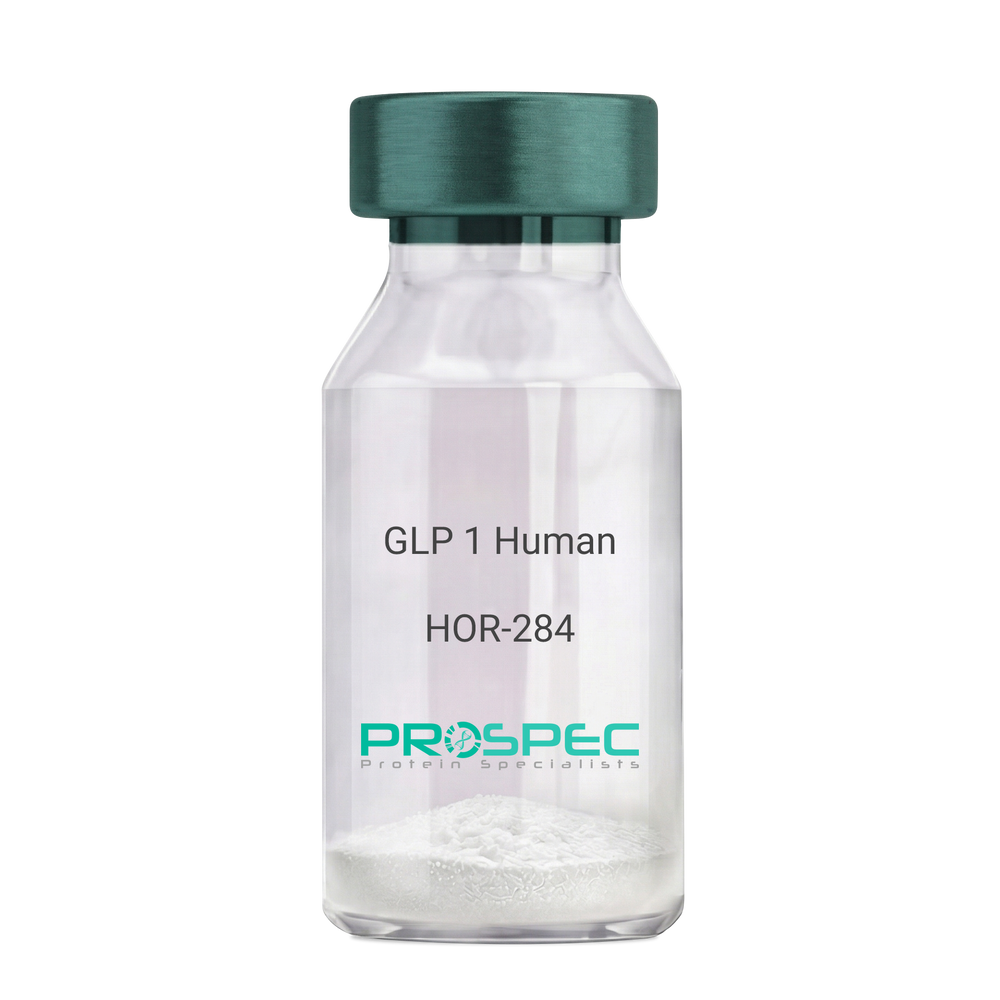
GLP 1 HumanDescription:
Human Glucagon Like Peptide-1
GLP1, Glucagon Like Peptide-1, Incretin hormone.
Product # :
HOR-284Price :
Quantity :
Shipping Method :
Shipped at Room temp
More Info
- description
- formulation
- purity
- More Info
Description
Glucagon Like Peptide-1 is a single, non-glycosylated, polypeptide chain containing 30 amino acids and having a molecular mass of 3297.7 Dalton.The GLP-1 is purified by proprietary chromatographic techniques.
Formulation
The GLP-1 peptide was lyophilized with no additives.
Purity
Greater than 96.0% as determined by RP-HPLC.
More Info
-
Introduction
Glucagon-like peptide-1 (GLP-1) is derived from the transcription product of the proglucagon gene. The major source of GLP-1 in the body is the intestinal L cell that secretes GLP-1 as a guthormone. The biologically active forms of GLP-1 are: GLP-1-(7-37) and GLP-1-(7-36)NH2.
GLP-1 secretion by L cells is dependent on the presence of nutrients in the lumen of the small intestine. The secretagogues (agents that causes or stimulates secretion) of this hormone include major nutrients like carbohydrate, proteinand lipid. Once in the circulation, GLP-1 has a half life of less than 2 minutes, due to rapid degradation by the enzyme dipeptidyl peptidase-4.
GLP-1 possesses several physiological properties that make it a subject of intensive investigation as a potential treatment of diabetes mellitus. The known physiological functions of GLP-1 include: Increases insulin secretion from the pancreas in a glucose-dependent manner, decreases glucagon secretion from the pancreas, increases beta cells mass and insulin gene expression, inhibits acid secretion and gastric emptying in the stomach, decreases food intake by increasing satiety. -
Synonyms
GLP1, Glucagon Like Peptide-1, Incretin hormone.
-
Physical Appearance
Sterile Filtered White lyophilized (freeze-dried) powder.
-
Stability
Lyophilized Glucagon Like Peptide-1 although stable at room temperature for 3 weeks, should be stored desiccated below -18°C. Upon reconstitution GLP-1 should be stored at 4°C between 2-7 days and for future use below -18°C. For long term storage it is recommended to add a carrier protein (0.1% HSA or BSA).Please prevent freeze-thaw cycles.
-
Solubility
It is recommended to reconstitute the lyophilized Glucagon Like Peptide-1 in sterile H2O at 0.5mg/ml, which can then be further diluted to other aqueous solutions.
-
Amino Acid Sequence
H-His-Ala-Glu-Gly-Thr-Phe-Thr-Ser-Asp-Val-Ser-Ser-Tyr-Leu-Glu-Gly-Gln-Ala-Ala-Lys-Glu-Phe-Ile-Ala-Trp-Leu-Val-Lys-Gly-Arg-NH2.
ProSpec's products are furnished for LABORATORY RESEARCH USE ONLY. The product may not be used as drugs, agricultural or pesticidal products, food additives or household chemicals.
- View Data Sheet
Name :
ACOT13 HumanDescription:
Acyl-CoA Thioesterase 13 Human Recombinant
Acyl-coenzyme A thioesterase 13, Acyl-CoA thioesterase 13, Thioesterase superfamily member 2, ACOT13, THEM2, HT012, MGC4961, PNAS-27, ACOT13.
Product # :
ENZ-004Price :
Quantity :
Shipping Method :
Shipped with Ice Packs
More Info
- description
- source
- formulation
- purity
- More Info
Description
ACOT13 Human Recombinant fused with a 20 amino acid His tag at N-terminus produced in E.Coli is a single, non-glycosylated, polypeptide chain containing 160 amino acids (1-140 a.a.) and having a molecular mass of 17.1kDa. The ACOT13 is purified by proprietary chromatographic techniques.
Source
Escherichia Coli.
Formulation
The ACOT13 solution (1mg/ml) contains 20mM Tris-HCl buffer (pH 8.0), 1mM DTT and 10% glycerol.
Purity
Greater than 95.0% as determined by SDS-PAGE.
More Info
-
Introduction
Acyl-coenzyme A thioesterase 13 (ACOT13) belongs to the thioesterase subfamily of esterase family. ACOT13 is highly expressed in the kidney with moderate expression in the brain, liver and intestines. ACOT13 contains a hotdog-fold and is thought to co-localize with microtubules, possibly having a role in cellular proliferation events. Deletion of a segment of the q arm of chromosome 6 is linked to early onset intestinal cancer, suggesting the presence of a cancer susceptibility locus.
-
Synonyms
Acyl-coenzyme A thioesterase 13, Acyl-CoA thioesterase 13, Thioesterase superfamily member 2, ACOT13, THEM2, HT012, MGC4961, PNAS-27, ACOT13.
-
Physical Appearance
Sterile Filtered colorless solution.
-
Stability
Store at 4°C if entire vial will be used within 2-4 weeks. Store, frozen at -20°C for longer periods of time. For long term storage it is recommended to add a carrier protein (0.1% HSA or BSA).Avoid multiple freeze-thaw cycles.
-
Amino Acid Sequence
MGSSHHHHHH SSGLVPRGSH MTSMTQSLRE VIKAMTKARN FERVLGKITL VSAAPGKVIC EMKVEEEHTN AIGTLHGGLT ATLVDNISTM ALLCTERGAP GVSVDMNITY MSPAKLGEDI VITAHVLKQG KTLAFTSVDL TNKATGKLIA QGRHTKHLGN.
ProSpec's products are furnished for LABORATORY RESEARCH USE ONLY. The product may not be used as drugs, agricultural or pesticidal products, food additives or household chemicals.
- View Data Sheet
Name :
Cyclophilin B MouseDescription:
Cyclophilin-B Mouse Recombinant
Peptidyl-prolyl cis-trans isomerase B, PPIase B, CYP-S1, Cyclophilin B, Rotamase B, S-cyclophilin, SCYLP.
Product # :
ENZ-1039Price :
Quantity :
Shipping Method :
Shipped with Ice Packs
More Info
- description
- source
- formulation
- purity
- biological activity
- More Info
Description
Cyclophilin B Mouse Recombinant produced in E.Coli is a single, non-glycosylated polypeptide chain containing 207 amino acids (34-216 a.a) and having a molecular mass of 22.7kDa.Cyclophilin B is fused to a 24 amino acid His-tag at N-terminus & purified by proprietary chromatographic techniques.
Source
Escherichia Coli.
Formulation
Cyclophilin B protein solution (1mg/ml) containing Phosphate Buffered Saline (pH7.4) and 10% glycerol.
Purity
Greater than 95.0% as determined by SDS-PAGE.
Biological Activity
Specific activity is > 1,000 nmol/min/mg, and is defined as the amount of enzyme that cleaves 1nmole of suc-AAFP-PNA per minute at 37C in Tris–HCl pH 8.0 using chymotrypsin.
More Info
-
Introduction
Cyclophilin B (also known as PPIB, peptidylpropyl isomerase B) is a cyclosporine-binding protein and is mainly located within the endoplasmic reticulum. It is associated with the secretory pathway and released in biological fluids. This protein can bind to cells derived from T- and B-lymphocytes, and may regulate cyclosporine A-mediated immunosuppression.
-
Synonyms
Peptidyl-prolyl cis-trans isomerase B, PPIase B, CYP-S1, Cyclophilin B, Rotamase B, S-cyclophilin, SCYLP.
-
Physical Appearance
Sterile filtered colorless solution.
-
Stability
Store at 4°C if entire vial will be used within 2-4 weeks. Store, frozen at -20°C for longer periods of time. For long term storage it is recommended to add a carrier protein (0.1% HSA or BSA).Avoid multiple freeze-thaw cycles.
-
Amino Acid Sequence
MGSSHHHHHH SSGLVPRGSH MGSMNDKKKG PKVTVKVYFD LQIGDESVGR VVFGLFGKTV PKTVDNFVAL ATGEKGFGYK NSKFHRVIKD FMIQGGDFTR GDGTGGKSIY GERFPDENFK LKHYGPGWVS MANAGKDTNG SQFFITTVKT SWLDGKHVVF GKVLEGMDVV RKVESTKTDS
RDKPLKDVII VDSGKIEVEK PFAIAKE.
ProSpec's products are furnished for LABORATORY RESEARCH USE ONLY. The product may not be used as drugs, agricultural or pesticidal products, food additives or household chemicals.
- View Data Sheet
Name :
DLAT HumanDescription:
Dihydrolipoamide S-Acetyltransferase Human Recombinant
Dihydrolipoamide S-Acetyltransferase, PDC-E2, dihydrolipoyllysine-residue acetyltransferase component of pyruvate dehydrogenase complex mitochondrial, Pyruvate dehydrogenase complex component E2, 70 kDa mitochondrial autoantigen of primary biliary cirrhosis, DLAT, PBC, M2 antigen complex 70 kDa subunit, EC 2.3.1.12, EC 2.3.1.
Product # :
ENZ-082Price :
Quantity :
Shipping Method :
Shipped with Ice Packs
More Info
- description
- source
- formulation
- purity
- More Info
Description
DLAT is a full-length cDNA coding for the mature form of the human PDC-E2 protein having a molecular mass of 60,630 Dalton (pH 5.8). DLAT protein is fused to a hexa-histidine purification tag.
Source
Sf9 insect cells.
Formulation
DLAT is supplied in 20mM HEPES buffer pH-8.0, 200mM NaCl and 20% glycerol.
Purity
DLAT purity was found to be greater than 75% as determined by SDS-PAGE.
More Info
-
Introduction
DLAT gene encodes component E2 of the multi-enzyme pyruvate dehydrogenase complex (PDC). PDC is located in the inner mitochondrial membrane and catalyzes the conversion of pyruvate to acetyl coenzyme A. The protein product of this gene, dihydrolipoamide acetyltransferase, takes acetyl groups created by the oxidative decarboxylation of pyruvate and transfers them to coenzyme A. Dihydrolipoamide acetyltransferase is the antigen for antimitochondrial antibodies which are found in about 95% of patients with the autoimmune liver disease primary biliary cirrhosis (PBC). In patients who suffer from this illness, activated T lymphocytes attack and destroy epithelial cells in the bile duct where this protein is abnormally distributed and overexpressed. PBC ultimately leads to cirrhosis and liver failure. Mutations in DLAT are also a cause of pyruvate dehydrogenase E2 deficiency which causes primary lactic acidosis in infancy and early childhood.
-
Synonyms
Dihydrolipoamide S-Acetyltransferase, PDC-E2, dihydrolipoyllysine-residue acetyltransferase component of pyruvate dehydrogenase complex mitochondrial, Pyruvate dehydrogenase complex component E2, 70 kDa mitochondrial autoantigen of primary biliary cirrhosis, DLAT, PBC, M2 antigen complex 70 kDa subunit, EC 2.3.1.12, EC 2.3.1.
-
Physical Appearance
Sterile Filtered colorless solution.
-
Stability
Store DLAT at 4°C if entire vial will be used within 2-4 weeks. Store, frozen at -20°C for longer periods of time. Avoid multiple freeze-thaw cycles.
ProSpec's products are furnished for LABORATORY RESEARCH USE ONLY. The product may not be used as drugs, agricultural or pesticidal products, food additives or household chemicals.
- View Data Sheet
Name :
SIRPA RatDescription:
Signal-Regulatory Protein Alpha Rat Recombinant
Tyrosine-protein phosphatase non-receptor type substrate 1, SHP substrate, SHPS-1, Brain Ig-like molecule with tyrosine-based activation motifs, Bit, CD172 antigen-like family member A, Inhibitory receptor SHPS-1, Macrophage fusion receptor, Macrophage membrane protein MFP150, Signal-regulatory protein alpha-1, Sirp-alpha-1, CD172a, Sirpa, Bit, Mfr, Ptpns1, Shps1, Sirp.
Product # :
PRO-2258Price :
Quantity :
Shipping Method :
Shipped with Ice Packs
More Info
- description
- source
- formulation
- purity
- More Info
Description
SIRPA Rat Recombinant produced in Sf9 Baculovirus cells is a single, glycosylated polypeptide chain containing 350 amino acids (32-373a.a) and having a molecular mass of 38.5kDa. (Migrates at 57-70kDa on SDS-PAGE under reducing conditions). SIRPA is fused to an 8 amino acid His-tag at C-terminus & purified by proprietary chromatographic techniques.
Source
Sf9, Baculovirus cells.
Formulation
SIRPA protein solution (0.5mg/ml) containing Phosphate Buffered Saline (pH 7.4) and 10% glycerol.
Purity
Greater than 95.0% as determined by SDS-PAGE.
More Info
-
Introduction
Signal-Regulatory Protein Alpha, SIRPA belongs to the signal-regulatory-protein (SIRP) family, as well as theimmunoglobulin super family. The members of the SIRP family are receptor-type transmembrane glycoproteins which areinvolved in the negative regulation of receptor tyrosine kinase-coupled signaling processes. SIRPA can bephosphorylated by tyrosine kinases. The phospho-tyrosine residues of this PTP have been shown to recruit SH2domain containing tyrosine phosphatases (PTP), and perform as substrates of PTPs. SIRPA take part insignal transduction mediated by a variety of growth factor receptors. CD47 has been shown to be a ligand forSIRPA.
-
Synonyms
Tyrosine-protein phosphatase non-receptor type substrate 1, SHP substrate, SHPS-1, Brain Ig-like molecule with tyrosine-based activation motifs, Bit, CD172 antigen-like family member A, Inhibitory receptor SHPS-1, Macrophage fusion receptor, Macrophage membrane protein MFP150, Signal-regulatory protein alpha-1, Sirp-alpha-1, CD172a, Sirpa, Bit, Mfr, Ptpns1, Shps1, Sirp.
-
Physical Appearance
Sterile Filtered clear solution.
-
Stability
Store at 4°C if entire vial will be used within 2-4 weeks. Store, frozen at -20°C for longer periods of time. For long term storage it is recommended to add a carrier protein (0.1% HSA or BSA).Avoid multiple freeze-thaw cycles.
-
Amino Acid Sequence
KELKVTQADK SVSVAAGDSA TLNCTVSSLT PVGPIKWFKG EGQNRSPIYS FIGGEHFPRI TNVSDATKRN NMDFSICISN VTPEDAGTYY CVKFQKGIVE PDTEIKSGGG TTLYVLAKPS SPEVSGPDSR GSPGQTVNFT CKSYGFSPRN ITLKWLKNGK ELSHLETTIS SKSNVSYNIS STVSVKLSPE DIHSRVICEV AHVTLEGRPL NGTANFSNII RVSPTLKITQ QPLTPASQVN LTCQVQKFYP KALQLNWLEN GNLSRTDKPE HFTDNRDGTY NYTSLFLVNS SAHREDVVFT CQVEHDSQPA ITENHTVRAF AHSSSGGSME TIPDNNAYYN WNVEHHHHHH.
ProSpec's products are furnished for LABORATORY RESEARCH USE ONLY. The product may not be used as drugs, agricultural or pesticidal products, food additives or household chemicals.
- View Data Sheet
Name :
IMPA2 HumanDescription:
Inositol Monophosphatase 2 Human Recombinant
Inositol monophosphatase 2, IMP 2, IMPase 2, Inositol-1(or 4)-monophosphatase 2, Myo-inositol monophosphatase A2, IMPA2, IMP.18P.
Product # :
ENZ-070Price :
Quantity :
Shipping Method :
Shipped with Ice Packs
More Info
- description
- source
- formulation
- purity
- More Info
Description
IMPA2 Human Recombinant fused with a 20 amino acid His tag at N-terminus produced in E.Coli is a single, non-glycosylated, polypeptide chain containing 308 amino acids (1-288 a.a.) and having a molecular mass of 33.5kDa. The IMPA2 is purified by proprietary chromatographic techniques.
Source
Escherichia Coli.
Formulation
The IMPA2 solution (0.25 mg/ml) contains 20mM Tris-HCl buffer(pH 8.0), 10% glycerol and 2mM DTT.
Purity
Greater than 95.0% as determined by SDS-PAGE.
More Info
-
Introduction
IMPA2 is a member of the inositol monophosphatase family. IMPA2 catalyzes the dephosphoylration of inositol monophosphate and has a significant role in phosphatidylinositol signaling. IMPA2 can use the myo-inositol monophosphates, scylloinositol 1,4-diphosphate, glucose-1-phosphate, beta-glycerophosphate, and 2'-AMP as substrates. IMPA2 is a pharmacological target for lithium Li(+) action in brain. IMPA2 is considered to have a role in schizophrenia and bipolar disorder.
-
Synonyms
Inositol monophosphatase 2, IMP 2, IMPase 2, Inositol-1(or 4)-monophosphatase 2, Myo-inositol monophosphatase A2, IMPA2, IMP.18P.
-
Physical Appearance
Sterile Filtered colorless solution.
-
Stability
Store at 4°C if entire vial will be used within 2-4 weeks. Store, frozen at -20°C for longer periods of time. For long term storage it is recommended to add a carrier protein (0.1% HSA or BSA).Avoid multiple freeze-thaw cycles.
-
Amino Acid Sequence
MGSSHHHHHH SSGLVPRGSH MKPSGEDQAA LAAGPWEECF QAAVQLALRA GQIIRKALTE EKRVSTKTSA ADLVTETDHL VEDLIISELR ERFPSHRFIA EEAAASGAKC VLTHSPTWII DPIDGTCNFV HRFPTVAVSI GFAVRQELEF GVIYHCTEER LYTGRRGRGA FCNGQRLRVS GETDLSKALV LTEIGPKRDP ATLKLFLSNM ERLLHAKAHG VRVIGSSTLA LCHLASGAAD AYYQFGLHCW DLAAATVIIR EAGGIVIDTS GGPLDLMACR VVAASTREMA MLIAQALQTI NYGRDDEK.
ProSpec's products are furnished for LABORATORY RESEARCH USE ONLY. The product may not be used as drugs, agricultural or pesticidal products, food additives or household chemicals.
- View Data Sheet
Name :
GARS Human, sf9Description:
Glycyl-TRNA Synthetase Human Recombinant, sf9
Glycine--tRNA ligase, EC 6.1.1.14, Diadenosine tetraphosphate synthetase, AP-4-A synthetase, Glycyl-tRNA synthetase, GlyRS, GARS, HMN5, CMT2D, DSMAV, SMAD1.
Product # :
ENZ-717Price :
Quantity :
Shipping Method :
Shipped with Ice Packs
More Info
- description
- source
- formulation
- purity
- More Info
Description
GARS Human Recombinant produced in SF9 is a glycosylated, polypeptide chain having a calculated molecular mass of 78,902 Dalton. GARS is expressed with a -10xHis tag at N-terminus and purified by proprietary chromatographic techniques.
Source
Sf9 Insect Cells.
Formulation
GARS is supplied in 20mM HEPES buffer pH-7.6, 250mM NaCl and 20% glycerol.
Purity
Greater than 80.0% as determined by SDS-PAGE.
More Info
-
Introduction
GARS is an (alpha)2 dimer which is a member of the class II family of tRNA synthetases. GARS is a glycyl-tRNA synthetase, one of the aminoacyl-tRNA synthetases which charge tRNAs with their cognate amino acids. GARS catalyzes the attachment of glycine to tRNA(Gly). In addition, GARS is able to produce diadenosine tetraphosphate (Ap4A), which is a universal pleiotropic signaling molecule required for cell regulation pathways, by direct condensation of two ATPs. GARS has been demonstrated to be a target of autoantibodies in the human autoimmune diseases, polymyositis or dermatomyositis.
-
Synonyms
Glycine--tRNA ligase, EC 6.1.1.14, Diadenosine tetraphosphate synthetase, AP-4-A synthetase, Glycyl-tRNA synthetase, GlyRS, GARS, HMN5, CMT2D, DSMAV, SMAD1.
-
Physical Appearance
Sterile Filtered clear solution.
-
Stability
Store at 4°C if entire vial will be used within 2-4 weeks. Store, frozen at -20°C for longer periods of time. Avoid multiple freeze-thaw cycles.
ProSpec's products are furnished for LABORATORY RESEARCH USE ONLY. The product may not be used as drugs, agricultural or pesticidal products, food additives or household chemicals.
- View Data Sheet
Name :
GKN3P HumanDescription:
Gastrokine 3 Human Recombinant
Gastrokine 3 Pseudogene, Gastrokine-3, GKN3P.
Product # :
PRO-2033Price :
Quantity :
Shipping Method :
Shipped with Ice Packs
More Info
- description
- source
- formulation
- purity
- More Info
Description
GKN3P Human Recombinant produced in E.Coli is a single, non-glycosylated, polypeptide chain (Met21-Leu181) containing 171 amino acids including a 10 aa His tag at N-terminus. The total calculated molecular mass is 19.4kDa.
Source
Escherichia Coli.
Formulation
GKN3P filtered (0.4µm) solution at a concentration of 0.3mg/ml in 0.03M acetate buffer, pH 4.0 and 20% glycerol.
Purity
Greater than 95.0% as determined by SDS-PAGE.
More Info
-
Introduction
Gastrokine 3 (GKN3P) is a Pseudogene, which May inhibit gastric epithelial cell proliferation.
-
Synonyms
Gastrokine 3 Pseudogene, Gastrokine-3, GKN3P.
-
Physical Appearance
Filtered colorless solution.
-
Stability
Store at 4°C if entire vial will be used within 2-4 weeks. Store, frozen at -20°C for longer periods of time. For long term storage it is recommended to add a carrier protein (0.1% HSA or BSA).Avoid multiple freeze-thaw cycles.
-
Amino Acid Sequence
MKHHHHHHASMMNIRFNHPL YGSFGTQIIH IGAFQGMVSI RDNNIFSEWD GILDYKNALL VAKVFNKMAC VLARMDKAVF PSLDDISKAL DKQAFKYYPS TRGLTYTVLP SWVKNLAQYG KPIKNMCRDD PTYFAQQQKE GTALAIDSNS CFEIQLLSFM GLFICGETPG L.
ProSpec's products are furnished for LABORATORY RESEARCH USE ONLY. The product may not be used as drugs, agricultural or pesticidal products, food additives or household chemicals.
- View Data Sheet
Name :
GLYATL2 HumanDescription:
Glycine-N-Acyltransferase-Like 2 Human Recombinant
BXMAS2-10, GATF-B, Glycine N-acyltransferase-like protein 2, Acyl-CoA:glycine N-acyltransferase-like protein 2, GLYATL2.
Product # :
ENZ-770Price :
Quantity :
Shipping Method :
Shipped with Ice Packs
More Info
- description
- source
- formulation
- purity
- More Info
Description
GLYATL2 Human Recombinant produced in E.coli is a single, non-glycosylated polypeptide chain containing 317 amino acids (1-294a.a) and having a molecular mass of 36.7kDa. GLYATL2 is fused to a 23 amino acid His-tag at N-terminus & purified by proprietary chromatographic techniques.
Source
Escherichia Coli.
Formulation
The GLYATL2 solution (0.5mg/ml) contains 20mM Tris-HCl buffer (pH 8.0), 0.1M NaCl, 50% glycerol and 2mM DTT.
Purity
Greater than 85% as determined by SDS-PAGE.
More Info
-
Introduction
Glycine-N-Acyltransferase-Like 2 (GLYATL2) is a part of the glycine N-acyltransferase family expressed mainly in salivary gland and trachea. GLYATL2 is a mitochondrial acyltransferase that transfers the acyl group to the N-terminus of glycine. GLYATL2 conjugates numerous substrates, like arachidonoyl-CoA and saturated medium and longchain acyl-CoAs ranging from chain-length C8:0-CoA to C18:0-CoA, to form a variety of N-acylglycines. GLYATL2 also shows a preference for monounsaturated fatty acid oleoyl-CoA (C18:1-CoA) as an acyl donor.
-
Synonyms
BXMAS2-10, GATF-B, Glycine N-acyltransferase-like protein 2, Acyl-CoA:glycine N-acyltransferase-like protein 2, GLYATL2.
-
Physical Appearance
Sterile Filtered colorless solution.
-
Stability
Store at 4°C if entire vial will be used within 2-4 weeks. Store, frozen at -20°C for longer periods of time. For long term storage it is recommended to add a carrier protein (0.1% HSA or BSA). Avoid multiple freeze-thaw cycles.
-
Amino Acid Sequence
MGSSHHHHHH SSGLVPRGSH MGSMLVLHNS QKLQILYKSL EKSIPESIKV YGAIFNIKDK NPFNMEVLVD AWPDYQIVIT RPQKQEMKDD QDHYTNTYHI FTKAPDKLEE VLSYSNVISW EQTLQIQGCQ EGLDEAIRKV ATSKSVQVDY MKTILFIPEL PKKHKTSSND KMELFEVDDD NKEGNFSNMF LDASHAGLVN EHWAFGKNER SLKYIERCLQ DFLGFGVLGP EGQLVSWIVM EQSCELRMGY TVPKYRHQGN MLQIGYHLEK YLSQKEIPFY FHVADNNEKS LQALNNLGFK ICPCGWHQWK CTPKKYC.
ProSpec's products are furnished for LABORATORY RESEARCH USE ONLY. The product may not be used as drugs, agricultural or pesticidal products, food additives or household chemicals.
- View Data Sheet
Name :
GSTM1 Human, Sf9Description:
Glutathione S-Transferase M1 Human Recombinant, Sf9
GST1, GTH4, GTM1, GSTM1-1, MGC26563, GSTM1a-1a, GSTM1b-1b, GSTM1, Glutathione S-transferase Mu 1, GST class-mu 1, Glutathione S-transferase GT8.7, pmGT10, GST 1-1.
Product # :
ENZ-1092Price :
Quantity :
Shipping Method :
Shipped with Ice Packs
More Info
- description
- source
- formulation
- purity
- More Info
Description
GSTM1 produced in Sf9 Insect cells is a single, glycosylated polypeptide chain (1-218a.a.) fused to a 9 aa His Tag at C-terminus containing 227 amino acids and having a molecular mass of 26.8kDa. GSTM1 shows multiple bands between 28-40kDa on SDS-PAGE, reducing conditions and purified by proprietary chromatographic techniques.
Source
Sf9, Insect cells.
Formulation
GSTM1 protein solution (0.5mg/ml) contains 40% glycerol, 0.2M NaCl, 2mM DTT and 0.1mM PMSF.
Purity
Greater than 90.0% as determined by SDS-PAGE.
More Info
-
Introduction
Cytosolic and membrane-bound types of GST are encoded by 2 different supergene families. There are 8 classes of the soluble cytoplasmic mammalian GST: alpha, kappa, mu, omega, pi, sigma, theta and zeta. The mu class of enzymes functions in the detoxification of electrophilic compounds, including carcinogens, therapeutic drugs, environmental toxins and products of oxidative stress, by conjugation with glutathione. The genes encoding the mu class of enzymes are arranged in a gene cluster on chromosome 1p13.3 and aare highly polymorphic. These genetic differences can change an individual's resistance to carcinogens and toxins as well as affect the toxicity and efficacy of certain drugs. Null mutations of this class mu gene have been linked with the rise in a number of cancers.
-
Synonyms
GST1, GTH4, GTM1, GSTM1-1, MGC26563, GSTM1a-1a, GSTM1b-1b, GSTM1, Glutathione S-transferase Mu 1, GST class-mu 1, Glutathione S-transferase GT8.7, pmGT10, GST 1-1.
-
Physical Appearance
Sterile Filtered colorless solution.
-
Stability
Store at 4°C if entire vial will be used within 2-4 weeks. Store, frozen at -20°C for longer periods of time. For long term storage it is recommended to add a carrier protein (0.1% HSA or BSA).Avoid multiple freeze-thaw cycles.
-
Amino Acid Sequence
ADPMPMILGY WDIRGLAHAI RLLLEYTDSS YEEKKYTMGD APDYDRSQWL NEKFKLGLDF PNLPYLIDGA HKITQSNAIL CYIARKHNLC GETEEEKIRV DILENQTMDN HMQLGMICYN PEFEKLKPKY LEELPEKLKL YSEFLGKRPW FAGNKITFVD FLVYDVLDLH RIFEPKCLDA FPNLKDFISR FEGLEKISAY MKSSRFLPRP VFSKMAVWGN KHHHHHH.
ProSpec's products are furnished for LABORATORY RESEARCH USE ONLY. The product may not be used as drugs, agricultural or pesticidal products, food additives or household chemicals.