Skip to content

High-quality research proteins.

  • 1-800-805-6531

  • Mon - Sat 8.00-18.00, Sun - Closed

  • info@prospecbio.com

  • PO Box 6591 East Brunswick NJ 08816

  • Products
    • Cytokines
    • Growth factors
    • Chemokines
    • Cd antigens
    • Neurotrophins
    • Hormones
    • Enzymes
    • Viral antigens
    • Recombinant proteins
    • Natural proteins
    • Monoclonal antibodies
    • Polyclonal antibodies
    • Thermal Packaging
  • About
    • Company
    • Founder
    • Contribution
  • Customers
    • Eastern Asia
    • Eastern Europe
    • North America
    • South America
    • South East Asia
    • Southern Asia
    • Western Europe
  • Ordering
    • Ordering Method
    • Ordering - Credit Card
    • Ordering - PO
    • Shipping Fees
    • FAQs
  • Services
    • DNA Cloning
    • Protein Expression
    • Monoclonal Antibody
    • Fermentation
    • Technology License
  • Contact us
Log in

Country/region

  • USD $ | Albania
  • USD $ | Andorra
  • USD $ | Argentina
  • USD $ | Armenia
  • USD $ | Australia
  • USD $ | Austria
  • USD $ | Azerbaijan
  • USD $ | Belarus
  • USD $ | Belgium
  • USD $ | Bolivia
  • USD $ | Brazil
  • USD $ | Bulgaria
  • USD $ | Cambodia
  • USD $ | Canada
  • USD $ | Chile
  • USD $ | China
  • USD $ | Colombia
  • USD $ | Costa Rica
  • USD $ | Croatia
  • USD $ | Cyprus
  • USD $ | Czechia
  • USD $ | Denmark
  • USD $ | Estonia
  • USD $ | Finland
  • USD $ | France
  • USD $ | Georgia
  • USD $ | Germany
  • USD $ | Greece
  • USD $ | Hong Kong SAR
  • USD $ | Hungary
  • USD $ | Iceland
  • USD $ | India
  • USD $ | Ireland
  • USD $ | Israel
  • USD $ | Italy
  • USD $ | Japan
  • USD $ | Kazakhstan
  • USD $ | Latvia
  • USD $ | Liechtenstein
  • USD $ | Lithuania
  • USD $ | Madagascar
  • USD $ | Malta
  • USD $ | Mexico
  • USD $ | Moldova
  • USD $ | Monaco
  • USD $ | Netherlands
  • USD $ | New Zealand
  • USD $ | North Macedonia
  • USD $ | Norway
  • USD $ | Panama
  • USD $ | Paraguay
  • USD $ | Peru
  • USD $ | Philippines
  • USD $ | Poland
  • USD $ | Portugal
  • USD $ | Romania
  • USD $ | Singapore
  • USD $ | Slovakia
  • USD $ | Slovenia
  • USD $ | South Africa
  • USD $ | South Korea
  • USD $ | Spain
  • USD $ | Sri Lanka
  • USD $ | Sweden
  • USD $ | Switzerland
  • USD $ | Taiwan
  • USD $ | Thailand
  • USD $ | Türkiye
  • USD $ | Ukraine
  • USD $ | United Kingdom
  • USD $ | United States
  • USD $ | Uruguay
  • USD $ | Vatican City
  • USD $ | Venezuela
  • USD $ | Vietnam
  • Facebook
  • Instagram
logoProSpec - Recombinant Protein Manufacturer for academic and R&D industry
Become a distributor
Account Log in
Wishlist
Cart Cart(0)
  • Products
    +
    • Cytokines
    • Growth factors
    • Chemokines
    • Cd antigens
    • Neurotrophins
    • Hormones
    • Enzymes
    • Viral antigens
    • Recombinant proteins
    • Natural proteins
    • Monoclonal antibodies
    • Polyclonal antibodies
    • Thermal Packaging
  • About
    +
    • Company
    • Founder
    • Contribution
  • Customers
    +
    • Eastern Asia
    • Eastern Europe
    • North America
    • South America
    • South East Asia
    • Southern Asia
    • Western Europe
  • Ordering
    +
    • Ordering Method
    • Ordering - Credit Card
    • Ordering - PO
    • Shipping Fees
    • FAQs
  • Services
    +
    • DNA Cloning
    • Protein Expression
    • Monoclonal Antibody
    • Fermentation
    • Technology License
  • Contact us

Item added to your cart

View cart
View All
  • Cytokines
  • Growth factors
  • Chemokines
  • Cd antigens
  • Neurotrophins
  • Hormones
  • Enzymes
  • Viral antigens
  • Recombinant proteins
  • Natural proteins
  • Monoclonal antibodies
  • Polyclonal antibodies
  • Thermal Packaging
  • Tumor Necrosis Factor

    Tumor Necrosis Factor

    View All
  • 4-1BB

    4-1BB

    View All
  • Adiponectin

    Adiponectin

    View All
  • AIF1

    AIF1

    View All
  • Other Cytokines

    Other Cytokines

    View All
  • AITRL

    AITRL

    View All
  • Angiopoietin

    Angiopoietin

    View All
  • Apolipoprotein

    Apolipoprotein

    View All
  • B-Cell Activating Factor

    B-Cell Activating Factor

    View All
  • Beta Defensin

    Beta Defensin

    View All
  • Bone Morphogenetic Protein

    Bone Morphogenetic Protein

    View All
  • B type Natriuretic Peptide

    B type Natriuretic Peptide

    View All
  • BST

    BST

    View All
  • Betacellulin

    Betacellulin

    View All
  • Cardiotrophin

    Cardiotrophin

    View All
  • Activin

    Activin

    View All
  • Fibroblast Growth Factor

    Fibroblast Growth Factor

    View All
  • Other Growth Factors

    Other Growth Factors

    View All
  • CSF

    CSF

    View All
  • CTGF

    CTGF

    View All
  • IGFBP

    IGFBP

    View All
  • VEGF Protein

    VEGF Protein

    View All
  • EGF

    EGF

    View All
  • Epigen

    Epigen

    View All
  • Erythropoietin

    Erythropoietin

    View All
  • Insulin-Like Growth Factor

    Insulin-Like Growth Factor

    View All
  • Growth Hormone

    Growth Hormone

    View All
  • HDGF

    HDGF

    View All
  • Hepatocyte Growth Factor

    Hepatocyte Growth Factor

    View All
  • Insulin

    Insulin

    View All
  • BCA-1/ BLC (CXCL13)

    BCA-1/ BLC (CXCL13)

    View All
  • BRAK (CXCL14)

    BRAK (CXCL14)

    View All
  • C-10 (CCL6)

    C-10 (CCL6)

    View All
  • Other Chemokines

    Other Chemokines

    View All
  • MEC (CCL28)

    MEC (CCL28)

    View All
  • LD78-beta (CCL3L1)

    LD78-beta (CCL3L1)

    View All
  • CTACK (CCL27)

    CTACK (CCL27)

    View All
  • CXCL16

    CXCL16

    View All
  • CXCL17

    CXCL17

    View All
  • Platelet Factor-4 (CXCL4)

    Platelet Factor-4 (CXCL4)

    View All
  • ENA-78 (CXCL5)

    ENA-78 (CXCL5)

    View All
  • Eotaxin (CCL11,24,26)

    Eotaxin (CCL11,24,26)

    View All
  • Exodus-2 (CCL21)

    Exodus-2 (CCL21)

    View All
  • Fractalkine (CX3CL1)

    Fractalkine (CX3CL1)

    View All
  • CXCL6

    CXCL6

    View All
  • Other CD Antigens

    Other CD Antigens

    View All
  • CD14

    CD14

    View All
  • CD164

    CD164

    View All
  • CD1

    CD1

    View All
  • CD2

    CD2

    View All
  • CD200

    CD200

    View All
  • CD207

    CD207

    View All
  • CD226

    CD226

    View All
  • CD23

    CD23

    View All
  • CD244

    CD244

    View All
  • CD247

    CD247

    View All
  • CD27

    CD27

    View All
  • CD274

    CD274

    View All
  • CD300

    CD300

    View All
  • CD33

    CD33

    View All
  • Other Neurotrophins

    Other Neurotrophins

    View All
  • Beta-NGF

    Beta-NGF

    View All
  • BDNF

    BDNF

    View All
  • CDNF

    CDNF

    View All
  • CNTF

    CNTF

    View All
  • GDNF

    GDNF

    View All
  • Glia Maturation Factor

    Glia Maturation Factor

    View All
  • MANF

    MANF

    View All
  • Midkine

    Midkine

    View All
  • Neuroglobin

    Neuroglobin

    View All
  • Neurotrophic factors

    Neurotrophic factors

    View All
  • Neuregulin

    Neuregulin

    View All
  • Neuropilin

    Neuropilin

    View All
  • Pigment Epithelium-Derived Factor

    Pigment Epithelium-Derived Factor

    View All
  • Pleiotrophin

    Pleiotrophin

    View All
  • Peptide Hormones

    Peptide Hormones

    View All
  • Other Hormones

    Other Hormones

    View All
  • HCG

    HCG

    View All
  • Endothelin

    Endothelin

    View All
  • Exendin

    Exendin

    View All
  • FSH

    FSH

    View All
  • Glucagon

    Glucagon

    View All
  • GHRP

    GHRP

    View All
  • GLP

    GLP

    View All
  • Thyrostimulin

    Thyrostimulin

    View All
  • Inhibin A

    Inhibin A

    View All
  • LHRH

    LHRH

    View All
  • Melanotan

    Melanotan

    View All
  • Procalcitonin

    Procalcitonin

    View All
  • PTH

    PTH

    View All
  • Peroxiredoxin

    Peroxiredoxin

    View All
  • Peptidase

    Peptidase

    View All
  • Synthetase

    Synthetase

    View All
  • Transferase

    Transferase

    View All
  • Hydrolase

    Hydrolase

    View All
  • Dehydrogenase

    Dehydrogenase

    View All
  • ACE2

    ACE2

    View All
  • Esterase

    Esterase

    View All
  • Protein Kinases

    Protein Kinases

    View All
  • Other Enzymes

    Other Enzymes

    View All
  • Phosphatase

    Phosphatase

    View All
  • Deaminase

    Deaminase

    View All
  • Oxygenase

    Oxygenase

    View All
  • Adenylate Kinase

    Adenylate Kinase

    View All
  • Lyase

    Lyase

    View All
  • Chagas

    Chagas

    View All
  • SARS

    SARS

    View All
  • Influenza

    Influenza

    View All
  • ASFV

    ASFV

    View All
  • Astrovirus

    Astrovirus

    View All
  • Borrelia

    Borrelia

    View All
  • Helicobacter Pylori

    Helicobacter Pylori

    View All
  • Chikungunya

    Chikungunya

    View All
  • Chlamydia

    Chlamydia

    View All
  • Cytomegalo

    Cytomegalo

    View All
  • Dengue

    Dengue

    View All
  • EBV

    EBV

    View All
  • Ebola

    Ebola

    View All
  • Feline Leukemia Virus

    Feline Leukemia Virus

    View All
  • Hepatitis A

    Hepatitis A

    View All
  • Other

    Other

    View All
  • Actin

    Actin

    View All
  • ADAM

    ADAM

    View All
  • Complement Component

    Complement Component

    View All
  • Ag85

    Ag85

    View All
  • Eukaryotic Translation Initiation Factor

    Eukaryotic Translation Initiation Factor

    View All
  • Anterior Gradient Protein

    Anterior Gradient Protein

    View All
  • Heat Shock Protein

    Heat Shock Protein

    View All
  • Alpha-2-HS-Glycoprotein

    Alpha-2-HS-Glycoprotein

    View All
  • Hemoglobin

    Hemoglobin

    View All
  • Allergy

    Allergy

    View All
  • Anaplasma

    Anaplasma

    View All
  • Angiogenin

    Angiogenin

    View All
  • Ankyrin Repeat Domain

    Ankyrin Repeat Domain

    View All
  • Annexin

    Annexin

    View All
  • Other Natural Proteins

    Other Natural Proteins

    View All
  • Aprotinin

    Aprotinin

    View All
  • Transferrin

    Transferrin

    View All
  • Avidin

    Avidin

    View All
  • Anti Coagulation Factors

    Anti Coagulation Factors

    View All
  • Natural Albumin

    Natural Albumin

    View All
  • Natural Coagulation Factors

    Natural Coagulation Factors

    View All
  • Fibronectin

    Fibronectin

    View All
  • Thrombin

    Thrombin

    View All
  • Anti Human Enzyme

    Anti Human Enzyme

    View All
  • Other Monoclonal Antibodies

    Other Monoclonal Antibodies

    View All
  • Anti Human Cytokine

    Anti Human Cytokine

    View All
  • Anti Human Heat Shock Protein

    Anti Human Heat Shock Protein

    View All
  • Anti Mouse Lymphocyte

    Anti Mouse Lymphocyte

    View All
  • Anti Human Chemokine

    Anti Human Chemokine

    View All
  • Anti Human Lymphocyte

    Anti Human Lymphocyte

    View All
  • Anti Viral Monoclonal

    Anti Viral Monoclonal

    View All
  • Anti Mouse Cytokine

    Anti Mouse Cytokine

    View All
  • Anti-GST Monoclonal

    Anti-GST Monoclonal

    View All
  • Other Polyclonal Antibodies

    Other Polyclonal Antibodies

    View All
  • Anti Viral

    Anti Viral

    View All
  • Anti-GST Monoclonal

    Anti-GST Monoclonal

    View All
Back

Search results

993 results found for “persephin”

Name

Description

Product #

Price

Quantity

Shipping Method

  • View Data Sheet

    Name :

    GDF11 Human, His

    Description:

    Growth and Differentiation factor 11 Human Recombinant, His Tag

    Growth Differentiation Factor 11, BMP11, Bone Morphogenetic Protein 11, BMP-11, GDF-11, Growth/Differentiation Factor 11, Growth/differentiation factor 11.

    Product # :

    CYT-887

    Price :

    Quantity :

    Shipping Method :

    Ice Icon

    Shipped with Ice Packs

    Add To Cart

    More Info

    • description
    • source
    • formulation
    • purity
    • More Info

    Description

    GDF11 Human Recombinant produced in E.Coli is a single, non-glycosylated polypeptide chain containing 132 amino acids (299-407a.a) and having a molecular mass of 14.8kDa. GDF11 is fused to a 23 amino acid His-tag at N-terminus & purified by proprietary chromatographic techniques.

    Source

    Escherichia Coli.

    Formulation

    GDF11 protein solution (1mg/ml) containing 20mM Tris-HCl (pH8.0) and 10% glycerol.

    Purity

    Greater than 85.0% as determined by SDS-PAGE.

    More Info

    • Introduction

      GDF-11 belongs to the bone morphogenetic protein (BMP) family and the TGF-beta superfamily. GDF-11 is a central developmental factor which controls muscular and neural development. In adults, GDF-11 encourages cardiac hypertrophy reverse by the revival of cardiomyocytes.

    • Synonyms

      Growth Differentiation Factor 11, BMP11, Bone Morphogenetic Protein 11, BMP-11, GDF-11, Growth/Differentiation Factor 11, Growth/differentiation factor 11.

    • Physical Appearance

      Sterile Filtered colorless solution.

    • Stability

      Store at 4°C if entire vial will be used within 2-4 weeks. Store, frozen at -20°C for longer periods of time. For long term storage it is recommended to add a carrier protein (0.1% HSA or BSA).Avoid multiple freeze-thaw cycles.

    • Amino Acid Sequence

      MGSSHHHHHH SSGLVPRGSH MGSNLGLDCD EHSSESRCCR YPLTVDFEAF GWDWIIAPKR YKANYCSGQC EYMFMQKYPH THLVQQANPR GSAGPCCTPT KMSPINMLYF NDKQQIIYGK IPGMVVDRCG CS.

    • Background

      What is the molecular weight/Mw of GDF11 HUMAN, HIS Protein?
      GDF11 HUMAN, HIS Protein has a total Mw of 14.8kDa.

      What is the source or expression system of GDF11 HUMAN, HIS Protein?
      Escherichia Coli.

      What is the Purity of GDF11 HUMAN, HIS Protein?
      GDF11 HUMAN, HIS Protein is >85% pure as determined by SDS-PAGE.

      What is the Biological Activity of GDF11 HUMAN, HIS Protein?
      The biological functionality of GDF11 HUMAN, HIS Protein will be determined in the future.

      What is the amino acid sequence of GDF11 HUMAN, HIS Protein?
      MGSSHHHHHH SSGLVPRGSH MGSNLGLDCD EHSSESRCCR YPLTVDFEAF GWDWIIAPKR YKANYCSGQC EYMFMQKYPH THLVQQANPR GSAGPCCTPT KMSPINMLYF NDKQQIIYGK IPGMVVDRCG CS.

      What applications can GDF11 HUMAN, HIS Protein be used in?
      GDF11 HUMAN, HIS Protein can probably be used in western blot, ELISA and Lateral Flow.

      What is the endotoxin level for GDF11 HUMAN, HIS Protein?
      The endotoxin level is minimal, GDF11 HUMAN, HIS Protein was purified using conventional chromatography techniques.


    ProSpec's products are furnished for LABORATORY RESEARCH USE ONLY. The product may not be used as drugs, agricultural or pesticidal products, food additives or household chemicals.

    Gdf11 Human His
  • View Data Sheet

    Name :

    OPG Human, His

    Description:

    Osteoprotegerin Human Recombinant, His Tag

    TNFRSF11B, OPG, OCIF, Osteoclastogenesis inhibitory factor, TR1, MGC29565.

    Product # :

    CYT-290

    Price :

    Quantity :

    Shipping Method :

    Room Temp Icon

    Shipped at Room temp

    Add To Cart

    More Info

    • description
    • source
    • formulation
    • purity
    • More Info

    Description

    Recombinant Human OCIF produced in E.coli cells is a single, non-glycosylated, polypeptide chain containing amino acids 201-401 and having a molecular mass of 31 kDa which includes a 4 kDa His tag.The OPG is purified by proprietary chromatographic techniques.

    Source

    Escherichia Coli.

    Formulation

    The protein was lyophilized from a concentrated (1mg/ml) solution with 1X PBS, 0.1% SDS and 1mM DTT.

    Purity

    Greater than 80.0% as determined by(a) Analysis by RP-HPLC.
    (b) Analysis by SDS-PAGE.

    More Info

    • Introduction

      Osteoprotegerin, which is a member of the tumor necrosis factor receptor superfamily and is involved in the regulation of bone metabolism. OPGand its ligand (OPGL) are cytokines regulating osteoclasto-genesis. OPGL binds to receptors on the surface of preosteoclasts and stimulates their differentiation into active osteoclasts. This leads to osteoresorption. OPG inhibits this osteoclasto-genesis (OPG is secreted by osteoblasts, and binds to OPGL, thus inhibiting maturation of osteoclasts and osteoresorption). The degree and activity of osteoresorption depend mainly on the balance between OPG and its ligand (OPGL); factors increasing OPGL expression mostly reduce OPG expression and vice versa.

    • Synonyms

      TNFRSF11B, OPG, OCIF, Osteoclastogenesis inhibitory factor, TR1, MGC29565.

    • Physical Appearance

      Sterile Filtered White lyophilized (freeze-dried) powder.

    • Stability

      Lyophilized Osteoprotegerin although stable at room temperature for 3 weeks, should be stored desiccated below -18°C. Upon reconstitution OCIF should be stored at 4°C between 2-7 days and for future use below -18°C.For long term storage it is recommended to add a carrier protein (0.1% HSA or BSA).Please prevent freeze-thaw cycles.

    • Solubility

      It is recommended to reconstitute the lyophilized Osteoprotegerin in sterile 18MΩ-cm H2O not less than 100µg/ml, which can then be further diluted to other aqueous solutions.

    • Applications

      1. Positive control for Western blot.
      2. Antibody production.
      3. Protein assay.

    ProSpec's products are furnished for LABORATORY RESEARCH USE ONLY. The product may not be used as drugs, agricultural or pesticidal products, food additives or household chemicals.

    Osteoprotegerin Human His
  • View Data Sheet

    Name :

    PIH1D2 Human

    Description:

    PIH1 Domain Containing 2 Human Recombinant

    PIH1 Domain Containing 2, PIH1D2.

    Product # :

    PRO-2118

    Price :

    Quantity :

    Shipping Method :

    Ice Icon

    Shipped with Ice Packs

    Add To Cart

    More Info

    • description
    • source
    • formulation
    • purity
    • More Info

    Description

    PIH1D2 Human Recombinant produced in E.Coli is a single, non-glycosylated polypeptide chain containing 338 amino acids (1-315 a.a) and having a molecular mass of 38.3kDa.PIH1D2 is fused to a 23 amino acid His-tag at N-terminus & purified by proprietary chromatographic techniques.

    Source

    Escherichia Coli.

    Formulation

    PIH1D2 protein solution (0.25mg/ml) containing Phosphate buffered saline (pH7.4), 20% glycerol and 1mM DTT.

    Purity

    Greater than 85.0% as determined by SDS-PAGE.

    More Info

    • Introduction

      PIH1 Domain Containing 2, also known as PIH1D2 is a member of the PIH1 family.PIH1D2 was present in the common ancestor of chordates. There are 45 Species with no ortholog for PIH1D2. In addition, no disorders were found for PIH1D2 Gene.

    • Synonyms

      PIH1 Domain Containing 2, PIH1D2.

    • Physical Appearance

      Sterile Filtered colorless solution.

    • Stability

      Store at 4°C if entire vial will be used within 2-4 weeks. Store, frozen at -20°C for longer periods of time. For long term storage it is recommended to add a carrier protein (0.1% HSA or BSA).Avoid multiple freeze-thaw cycles.

    • Amino Acid Sequence

      MGSSHHHHHH SSGLVPRGSH MGSMETSSKG LLTQVTQFWN LLDDLAQSDP EGYEKFIQQQ LKEGKQLCAA PEPQLCLQTR ILKPKEKILF INLCQWTRIP APQSTTHPVP LTVGKPEDTT EISDAYTVID VAYNPDVLHA AEKDQVKKNQ LIQMAMKCIE EKFQFTLSHS YHITKFRIKG SIQRMKQNLM GIQTDSIDLR EKMRRELTLG QIRSSTMSNP DHFPQLLLPK DQVSGKAVCL IEEISSTEIQ VEMKMPAYEL KIVHDHSEKP LKIELKVELP GINSVSLCDL SVSEDDLLIE VSEKYRLHLN LPKLIDTEMT TAKFIKEKST LIITMPLV.

    ProSpec's products are furnished for LABORATORY RESEARCH USE ONLY. The product may not be used as drugs, agricultural or pesticidal products, food additives or household chemicals.

    Pih1D2 Human
  • View Data Sheet

    Name :

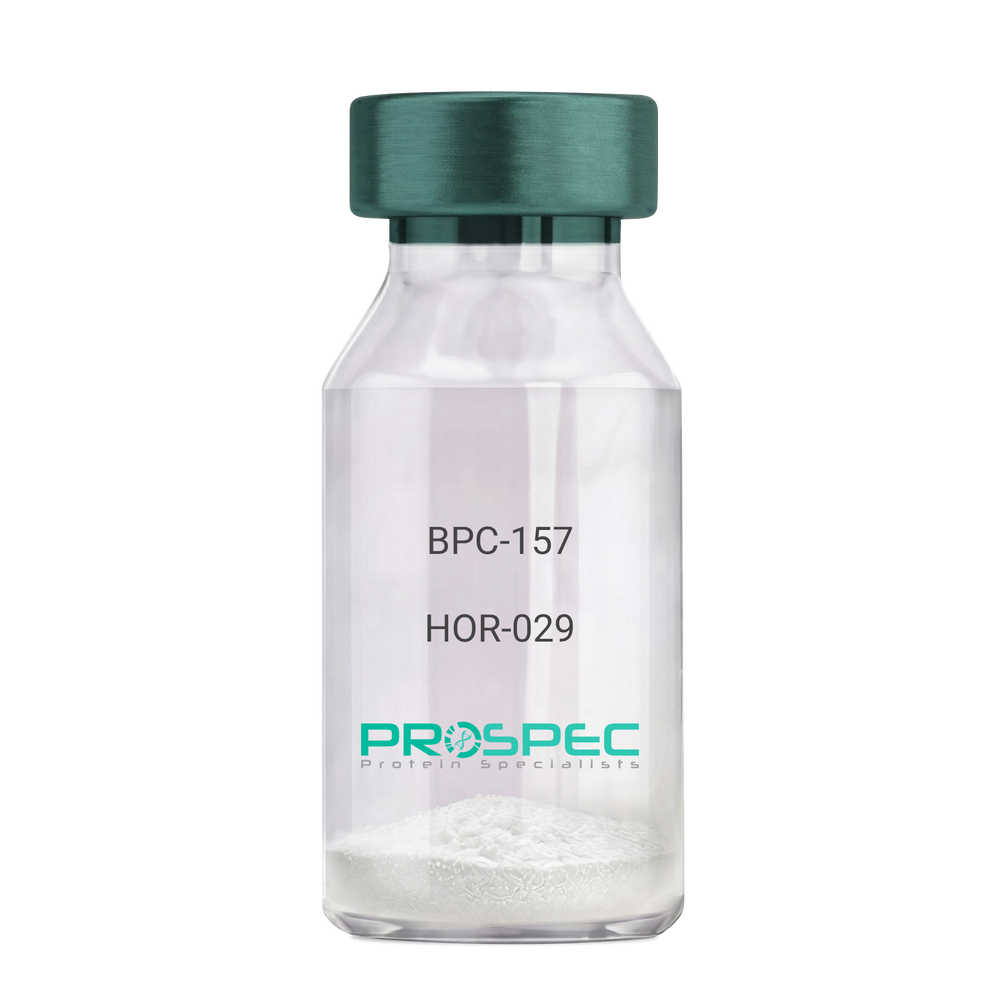
    BPC-157

    Description:

    BPC-157 Pentadecapeptide

    Product # :

    HOR-029

    Price :

    Quantity :

    Shipping Method :

    Room Temp Icon

    Shipped at Room temp

    Add To Cart

    More Info

    • description
    • formulation
    • purity
    • More Info

    Description

    BPC-157 Synthetic is a single, non-glycosylated polypeptide chain containing 15 amino acids, having a molecular mass of 1419.55 Dalton and a Molecular formula of C62H98N16O22.

    Formulation

    The protein was lyophilized with no additives.

    Purity

    Greater than 97.0% as determined by analysis by RP-HPLC.

    More Info

    • Physical Appearance

      Sterile Filtered White lyophilized (freeze-dried) powder.

    • Stability

      Lyophilized BPC-157 although stable at room temperature for 3 weeks, should be stored desiccated below -18°C. Upon reconstitution bpc-157 should be stored at 4°C between 2-7 days and for future use below -18°C. For long term storage it is recommended to add a carrier protein (0.1% HSA or BSA). Please prevent freeze-thaw cycles.

    • Solubility

      It is recommended to reconstitute the lyophilized BPC-157 in sterile 18MΩ-cm H2O not less than 100 µg/ml, which can then be further diluted to other aqueous solutions.

    • Amino Acid Sequence

      H-Gly-Glu-Pro-Pro-Pro-Gly-Lys-Pro-Ala-Asp-Asp-Ala-Gly-Leu-Val-OH

    • Background

      BPC-157, short for Body Protection Compound-157, is a synthetic peptide that has garnered significant attention in the field of regenerative medicine and sports science. This peptide, derived from a portion of the human gastric juice protein known as BPC, exhibits remarkable healing and tissue regeneration properties. BPC-157 has shown promise in various preclinical and clinical studies, demonstrating its potential for the treatment of a wide range of injuries and disorders.

      The research on BPC-157 encompasses investigations into its mechanisms of action, efficacy, safety, and potential therapeutic applications. Studies have elucidated the peptide's ability to enhance angiogenesis, promote collagen synthesis, modulate inflammatory responses, and protect against oxidative stress. These properties make BPC-157 an intriguing candidate for accelerating tissue healing, reducing inflammation, and improving overall recovery outcomes.

      Preclinical studies have revealed the beneficial effects of BPC-157 in several injury models. For instance, BPC-157 has demonstrated its potential in accelerating tendon and ligament healing, mitigating muscle damage, and promoting bone regeneration. These findings suggest that BPC-157 could be a valuable therapeutic tool in orthopedic medicine and sports-related injuries.

      Furthermore, BPC-157 has exhibited promising effects on gastrointestinal health. Studies have highlighted its ability to protect and heal the gut lining, reduce ulcer formation, and alleviate symptoms associated with inflammatory bowel disease. These observations open up avenues for BPC-157 as a potential treatment for gastrointestinal disorders.

      In addition to its regenerative properties, BPC-157 has shown potential in neurological and psychiatric conditions. Research has indicated its neuroprotective effects, with implications for the treatment of traumatic brain injury, stroke, and neurodegenerative disorders. Preliminary studies also suggest BPC-157's potential as an antidepressant and anxiolytic agent.

      Despite the promising findings, further research is needed to fully understand the mechanisms underlying BPC-157's actions and to assess its long-term safety and efficacy. Clinical trials are underway to explore its potential therapeutic applications in humans, including its use in tendon and ligament repair, inflammatory bowel disease, and neurodegenerative disorders.

      This comprehensive review aims to summarize the current state of research on BPC-157, providing an overview of its mechanisms of action and therapeutic potential. By examining relevant studies and findings, we aim to shed light on the diverse applications of BPC-157 and its implications for regenerative medicine, sports science, and various disease

    ProSpec's products are furnished for LABORATORY RESEARCH USE ONLY. The product may not be used as drugs, agricultural or pesticidal products, food additives or household chemicals.

    Bpc 157
  • View Data Sheet

    Name :

    AGO2 Human

    Description:

    Argonaute 2 Human Recombinant

    Protein argonaute-2, Argonaute2, hAgo2, Argonaute RISC catalytic component 2, Eukaryotic translation initiation factor 2C 2, eIF-2C 2, eIF2C 2, PAZ Piwi domain protein, PPD, AGO2, EIF2C2, Protein slicer.

    Product # :

    PRO-2577

    Price :

    Quantity :

    Shipping Method :

    Ice Icon

    Shipped with Ice Packs

    Add To Cart

    More Info

    • description
    • source
    • formulation
    • purity
    • More Info

    Description

    AGO2 Human Recombinant produced in E.Coli is a single, non-glycosylated, polypeptide chain (a.a 1-859) containing 869 amino acids including a 10 a.a N-terminal His tag. The total molecular mass is 98.4kDa (calculated).

    Source

    Escherichia Coli.

    Formulation

    AGO2 filltered solution in 50mM acetate buffer, pH 4.0 and 20% (w/v) glycerol.

    Purity

    Greater than 90.0% as determined by SDS-PAGE.

    More Info

    • Introduction

      The Argonaute protein is part of the RISC or RNA-induced silencing complex, as so, the protein has a key part in the slicing processes of RNA. The RNA interference (RNAi) is being held by RISC. Small non-coding RNA fragments bond to the Argonaute proteins, through base pairing, eventually leads to the cleavage of messenger RNA or translation suppression.

    • Synonyms

      Protein argonaute-2, Argonaute2, hAgo2, Argonaute RISC catalytic component 2, Eukaryotic translation initiation factor 2C 2, eIF-2C 2, eIF2C 2, PAZ Piwi domain protein, PPD, AGO2, EIF2C2, Protein slicer.

    • Physical Appearance

      Filtered colorless solution.

    • Stability

      Store at 4°C if entire vial will be used within 2-4 weeks. Store, frozen at -20°C for longer periods of time. For long term storage it is recommended to add a carrier protein (0.1% HSA or BSA). Avoid multiple freeze-thaw cycles.

    • Amino Acid Sequence

      MKHHHHHHAS MYSGAGPALA PPAPPPPIQG YAFKPPPRPD FGTSGRTIKL QANFFEMDIP KIDIYHYELD IKPEKCPRRV NREIVEHMVQ HFKTQIFGDR KPVFDGRKNL YTAMPLPIGR DKVELEVTLP GEGKDRIFKV SIKWVSCVSL QALHDALSGR LPSVPFETIQ ALDVVMRHLP SMRYTPVGRS FFTASEGCSN PLGGGREVWF GFHQSVRPSL WKMMLNIDVS ATAFYKAQPV IEFVCEVLDF KSIEEQQKPL TDSQRVKFTK EIKGLKVEIT HCGQMKRKYR VCNVTRRPAS HQTFPLQQES GQTVECTVAQ YFKDRHKLVL RYPHLPCLQV GQEQKHTYLP LEVCNIVAGQ RCIKKLTDNQ TSTMIRATAR SAPDRQEEIS KLMRSASFNT DPYVREFGIM VKDEMTDVTG RVLQPPSILY GGRNKAIATP VQGVWDMRNK QFHTGIEIKV WAIACFAPQR QCTEVHLKSF TEQLRKISRD AGMPIQGQPC FCKYAQGADS VEPMFRHLKN TYAGLQLVVV ILPGKTPVYA EVKRVGDTVL GMATQCVQMK NVQRTTPQTL SNLCLKINVK LGGVNNILLP QGRPPVFQQP VIFLGADVTH PPAGDGKKPS IAAVVGSMDA HPNRYCATVR VQQHRQEIIQ DLAAMVRELL IQFYKSTRFK PTRIIFYRDG VSEGQFQQVL HHELLAIREA CIKLEKDYQP GITFIVVQKR HHTRLFCTDK NERVGKSGNI PAGTTVDTKI THPTEFDFYL CSHAGIQGTS RPSHYHVLWD DNRFSSDELQ ILTYQLCHTY VRCTRSVSIP APAYYAHLVA FRARYHLVDK EHDSAEGSHT SGQSNGRDHQ ALAKAVQVHQ DTLRTMYFA.

    ProSpec's products are furnished for LABORATORY RESEARCH USE ONLY. The product may not be used as drugs, agricultural or pesticidal products, food additives or household chemicals.

    Ago2 Human
  • View Data Sheet

    Name :

    Thymalin

    Description:

    Thymulin

    Product # :

    HOR-047

    Price :

    Quantity :

    Shipping Method :

    Room Temp Icon

    Shipped at Room temp

    Add To Cart

    More Info

    • description
    • formulation
    • purity
    • More Info

    Description

    Thymulin Synthetic is a single, non-glycosylated polypeptide chain containing 9 amino acids, having a molecular mass of 858 Dalton and a Molecular formula of C33H54N12O15.

    Formulation

    The protein was lyophilized with no additives.

    Purity

    Greater than 97.0% as determined by analysis by RP-HPLC.

    More Info

    • Physical Appearance

      Sterile Filtered White lyophilized (freeze-dried) powder.

    • Stability

      Lyophilized Thymulin although stable at room temperature for 3 weeks, should be stored desiccated below -18°C. Upon reconstitution Thymulin should be stored at 4°C between 2-7 days and for future use below -18°C. For long term storage it is recommended to add a carrier protein (0.1% HSA or BSA). Please prevent freeze-thaw cycles.

    • Solubility

      It is recommended to reconstitute the lyophilized Thymulin in sterile 18MΩ-cm H2O not less than 100 µg/ml, which can then be further diluted to other aqueous solutions.

    • Amino Acid Sequence

      Pyr-Ala-Lys-Ser-Gln-Gly-Gly-Ser-Asn-OH.

    • Background

      Thymulin, a nonapeptide hormone, is produced primarily by the thymus gland and has been recognized for its pivotal role in the immune system. It plays a significant role in the maturation and differentiation of T lymphocytes, which are crucial for immune function. Beyond its immune-related functions, research has increasingly unveiled the diverse physiological roles of thymulin. This study aims to comprehensively investigate thymulin, shedding light on its immunological functions and exploring its potential applications in various aspects of health and medicine.

      The primary objective of this research is to elucidate the mechanisms underlying thymulin's role in immune regulation. In vitro and in vivo experiments will be conducted to explore thymulin's interactions with immune cells, its impact on T cell development and function, and its potential modulation of immune responses. Understanding these mechanisms is fundamental for harnessing thymulin's immunomodulatory properties.

      The second objective is to assess the clinical relevance of thymulin in immune-related disorders. Clinical trials and studies involving individuals with autoimmune diseases, immunodeficiencies, and age-related immune decline will be conducted to evaluate the potential therapeutic applications of thymulin. These investigations may offer insights into the use of thymulin as an immunomodulatory agent in various clinical settings.

      The third objective is to explore the broader implications of thymulin in health and medicine. Research will investigate its potential roles in areas beyond immunology, such as neuroprotection, wound healing, and tissue regeneration. Understanding the multifaceted properties of thymulin may open new avenues for therapeutic interventions in various medical specialties.

      By delving into the diverse functions of thymulin, this research aims to expand our knowledge of its physiological roles and clinical applications. The findings may have implications for the development of innovative approaches in immunology and healthcare, ultimately benefiting patients affected by immune-related disorders and other medical conditions.

      What is the molecular weight/Mw of THYMALIN Protein?
      THYMALIN Protein has a total Mw of 0.85kDa.

      What is the Purity of THYMALIN Protein?
      THYMALIN Protein is >97% pure as determined by SDS-PAGE.

      What is the Biological Activity of THYMALIN Protein?
      The biological functionality of THYMALIN Protein will be determined in the future.

      What is the amino acid sequence of THYMALIN Protein?
      Pyr-Ala-Lys-Ser-Gln-Gly-Gly-Ser-Asn-OH.

      What applications can THYMALIN Protein be used in?
      THYMALIN Protein can probably be used in western blot, ELISA and Lateral Flow.

      What is the endotoxin level for THYMALIN Protein?
      The endotoxin level is minimal, THYMALIN Protein was purified using conventional chromatography techniques.

    ProSpec's products are furnished for LABORATORY RESEARCH USE ONLY. The product may not be used as drugs, agricultural or pesticidal products, food additives or household chemicals.

    Thymulin
  • View Data Sheet

    Name :

    TARDBP Human

    Description:

    TAR DNA Binding Protein Human Recombinant

    ALS10, TDP43, TAR DNA-binding protein 43, TDP-43, TARDBP.

    Product # :

    PRO-1410

    Price :

    Quantity :

    Shipping Method :

    Ice Icon

    Shipped with Ice Packs

    Add To Cart

    More Info

    • description
    • source
    • formulation
    • purity
    • More Info

    Description

    TARDBP Human Recombinant produced in E.Coli is a single, non-glycosylated polypeptide chain containing 296 amino acids (1-260 a.a) and having a molecular mass of 33.6kDa. TARDBP is fused to a 36 amino acid His-tag at N-terminus & purified by proprietary chromatographic techniques.

    Source

    E.coli.

    Formulation

    TARDBP protein solution (0.5mg/ml) containing 20mM Tris-HCl buffer (pH8.0), 10% glycerol and 0.1M NaCl.

    Purity

    Greater than 90% as determined by SDS-PAGE.

    More Info

    • Introduction

      TARDBP binds both DNA and RNA and have numerous roles in transcriptional repression, pre-mRNA splicing and translational regulation. TARDBP was initially identified as a transcriptional repressor that binds to chromosomally integrated TAR DNA and represses HIV-1 transcription. TARDBP has also been identified in individuals diagnosed with chronic traumatic ncephalopathy, a condition which frequently mimics ALS and that has been associated with athletes who have experienced multiple concussions and other types of head injury. TARDBP may also be involved in microRNA biogenesis, apoptosis and cell division.

    • Synonyms

      ALS10, TDP43, TAR DNA-binding protein 43, TDP-43, TARDBP.

    • Physical Appearance

      Sterile Filtered colorless solution.

    • Stability

      Store at 4°C if entire vial will be used within 2-4 weeks. Store, frozen at -20°C for longer periods of time. For long term storage it is recommended to add a carrier protein (0.1% HSA or BSA).Avoid multiple freeze-thaw cycles.

    • Amino Acid Sequence

      MRGSHHHHHH GMASMTGGQQ MGRDLYDDDD KDRWGSMSEY IRVTEDENDE PIEIPSEDDG TVLLSTVTAQ FPGACGLRYR NPVSQCMRGV RLVEGILHAP DAGWGNLVYV VNYPKDNKRK MDETDASSAV KVKRAVQKTS DLIVLGLPWK TTEQDLKEYF STFGEVLMVQ VKKDLKTGHS KGFGFVRFTE YETQVKVMSQ RHMIDGRWCD CKLPNSKQSQ DEPLRSRKVF VGRCTEDMTE DELREFFSQY GDVMDVFIPK PFRAFAFVTF ADDQIAQSLC GEDLIIKGIS VHISNA.

    ProSpec's products are furnished for LABORATORY RESEARCH USE ONLY. The product may not be used as drugs, agricultural or pesticidal products, food additives or household chemicals.

    Tardbp Human
  • View Data Sheet

    Name :

    Dengue NS1 ST1, Insect

    Description:

    Dengue Virus NS1 Subtype 1 Recombinant, Insect Cells

    Product # :

    DEN-029

    Price :

    Quantity :

    Shipping Method :

    Ice Icon

    Shipped with Ice Packs

    Add To Cart

    More Info

    • description
    • source
    • formulation
    • purity
    • More Info

    Description

    Recombinant Dengue Virus NS1 Subtype 1 produced in Insect Cells is a polypeptide chain containing amino acids 777-1131 and having a molecular weight of approximately 50kDa. Dengue NS1 ST1 is purified by proprietary chromatographic technique.

    Source

    Insect cells.

    Formulation

    Dengue NS1 ST1 protein solution (1mg/ml) in 1xPBS, pH7.4, 0.1% Thimerosal, 5mM EDTA, 1µg/ml of Leupeptin, Aprotinin and Pepstatin A.

    Purity

    Protein is >95% pure as determined by 12.5% SDS-PAGE.

    More Info

    • Introduction

      Caused by one of four closely related virus serotypes of the genus Flavivirus, family Flaviviridae, each serotype is sufficiently different that there is no cross-protection and epidemics caused by multiple serotypes (hyperendemicity) can occur. In cell culture experiments and mice Morpholino antisense oligos have shown specific activity against Dengue virus.

    • Physical Appearance

      Sterile filtered colorless solution.

    • Stability

      Store at 4°C if entire vial will be used within 2-4 weeks. Store, frozen at -20°C for longer periods of time. For long term storage it is recommended to add a carrier protein (0.1% HSA or BSA).Avoid multiple freeze-thaw cycles.

    • Applications

      Ag test control.

    ProSpec's products are furnished for LABORATORY RESEARCH USE ONLY. The product may not be used as drugs, agricultural or pesticidal products, food additives or household chemicals.

    Dengue Ns1 St1 Insect
  • View Data Sheet

    Name :

    ID1 Human

    Description:

    Inhibitor of DNA Binding 1 Human Recombinant

    bHLHb24, ID, DNA-binding protein inhibitor ID-1, Class B basic helix-loop-helix protein 24, Inhibitor of DNA binding 1, ID1.

    Product # :

    PRO-1426

    Price :

    Quantity :

    Shipping Method :

    Ice Icon

    Shipped with Ice Packs

    Add To Cart

    More Info

    • description
    • source
    • formulation
    • purity
    • More Info

    Description

    ID1 Human Recombinant produced in E. coli is a single polypeptide chain containing 178 amino acids (1-155) and having a molecular mass of 18.5kDa. ID1 is fused to a 23 amino acid His-tag at N-terminus & purified by proprietary chromatographic techniques.

    Source

    E.coli.

    Formulation

    The ID1 solution (0.5mg/ml) contains 20mM Tris-HCl buffer (pH 8.0), 0.15M NaCl, 10% glycerol and 1mM DTT.

    Purity

    Greater than 85% as determined by SDS-PAGE.

    More Info

    • Introduction

      Inhibitor of DNA Binding 1 (ID1) is a helix-loop-helix protein which can form heterodimers with members of the basic HLH family of transcription factors. ID1 is lacking DNA binding activity and thus can inhibit the DNA binding and transcriptional activation ability of basic HLH proteins with which it interacts. ID1 participates in cell growth, senescence, and differentiation.

    • Synonyms

      bHLHb24, ID, DNA-binding protein inhibitor ID-1, Class B basic helix-loop-helix protein 24, Inhibitor of DNA binding 1, ID1.

    • Physical Appearance

      Sterile Filtered colorless solution.

    • Stability

      Store at 4°C if entire vial will be used within 2-4 weeks. Store, frozen at -20°C for longer periods of time. For long term storage it is recommended to add a carrier protein (0.1% HSA or BSA).Avoid multiple freeze-thaw cycles.

    • Amino Acid Sequence

      MGSSHHHHHH SSGLVPRGSH MGSMKVASGS TATAAAGPSC ALKAGKTASG AGEVVRCLSE QSVAISRCAG GAGARLPALL DEQQVNVLLY DMNGCYSRLK ELVPTLPQNR KVSKVEILQH VIDYIRDLQL ELNSESEVGT PGGRGLPVRA PLSTLNGEIS ALTAEAACVP ADDRILCR.

    ProSpec's products are furnished for LABORATORY RESEARCH USE ONLY. The product may not be used as drugs, agricultural or pesticidal products, food additives or household chemicals.

    Id1 Human
  • View Data Sheet

    Name :

    IL 16 Human, (121 a.a.)

    Description:

    Interleukin-16 Human Recombinant, (121 a.a.)

    IL16, Interleukin-16, LCF, Lymphocyte Chemoattractant Factor, prIL-16, IL-16, FLJ16806, FLJ42735, FLJ44234, HsT19289.

    Product # :

    CYT-142

    Price :

    Quantity :

    Shipping Method :

    Room Temp Icon

    Shipped at Room temp

    Add To Cart

    More Info

    • description
    • source
    • formulation
    • purity
    • biological activity
    • More Info

    Description

    Interleukin-16 Human Recombinant produced in E.Coli is a single, non-glycosylated polypeptide chain containing 121 amino acids and having a molecular mass of 12.4 kDa. The IL-16 is purified by proprietary chromatographic techniques.

    Source

    Escherichia Coli.

    Formulation

    IL-16 was lyophilized from a 0.2µm filtered concentrated solution in PBS, pH 7.4.

    Purity

    Greater than 97.0% as determined by:
    (a) Analysis by RP-HPLC.
    (b) Analysis SDS-PAGE.

    Biological Activity

    Fully biologically active when compared to standard. Determined by its ability to chemoattract human CD4+ T-Lymphocytes using a concentration range of 50.0-100.0 ng/ml.

    More Info

    • Introduction

      IL-16 is a pleiotropic cytokine that functions as a chemoattractant, a modulator of T cell activation, and an inhibitor of HIV replication. The signaling process of IL-16 is mediated by CD4. The product of this gene undergoes proteolytic processing, which is found to yield two functional proteins. IL-16 functions exclusively attributed to the secreted C-terminal peptide, while the N-terminal product may play a role in cell cycle control. Caspase 3 is reported to be involved in the proteolytic processing of this protein. Two transcript variants encoding different isoforms have been found for this gene.
      IL-16 stimulates a migratory response in cd4+ lymphocytes, monocytes, and eosinophils. Also induces t-lymphocyte expression of interleukin 2 receptor, ligand for cd4.

    • Synonyms

      IL16, Interleukin-16, LCF, Lymphocyte Chemoattractant Factor, prIL-16, IL-16, FLJ16806, FLJ42735, FLJ44234, HsT19289.

    • Physical Appearance

      Sterile Filtered White lyophilized (freeze-dried) powder.

    • Stability

      Lyophilized Interleukin-16 although stable at room temperature for 3 weeks, should be stored desiccated below -18°C. Upon reconstitution IL16 should be stored at 4°C between 2-7 days and for future use below -18°C.For long term storage it is recommended to add a carrier protein (0.1% HSA or BSA).Please prevent freeze-thaw cycles.

    • Solubility

      It is recommended to reconstitute the lyophilized Interleukin-16 in sterile 18MΩ-cm H2O not less than 100µg/ml, which can then be further diluted to other aqueous solutions.

    • Amino Acid Sequence

      SAASASAASD VSVESTAEAT VCTVTLEKMS AGLGFSLEGG KGSLHGDKPL TINRIFKGAA SEQSETVQPG DEILQLGGTA MQGLTRFEAW NIIKALPDGP VTIVIRRKSL QSKETTAAGD S

    ProSpec's products are furnished for LABORATORY RESEARCH USE ONLY. The product may not be used as drugs, agricultural or pesticidal products, food additives or household chemicals.

    Il 16 Human 121 Aa
  • View Data Sheet

    Name :

    IL 16 Human, (130 a.a.)

    Description:

    Interleukin-16 Human Recombinant, (130 a.a.)

    IL16, Interleukin-16, LCF, Lymphocyte Chemoattractant Factor, prIL-16, IL-16, FLJ16806, FLJ42735, FLJ44234, HsT19289.

    Product # :

    CYT-536

    Price :

    Quantity :

    Shipping Method :

    Room Temp Icon

    Shipped at Room temp

    Add To Cart

    More Info

    • description
    • source
    • formulation
    • purity
    • biological activity
    • More Info

    Description

    Interleukin-16 Human Recombinant produced in E.Coli is a single, non-glycosylated polypeptide chain containing 130 amino acids and having a molecular mass of 13.5 kDa. The IL-16 is purified by proprietary chromatographic techniques.

    Source

    Escherichia Coli.

    Formulation

    IL-16 was lyophilized at 1 mg/ml in 10mM NaP, pH-7.5.

    Purity

    Greater than 90.0% as determined by:
    (a) Analysis by RP-HPLC.
    (b) Analysis SDS-PAGE.

    Biological Activity

    The ED50 as determined by its ability to chemoattract human CD4+ T lymphocytes using a concentration range of 10-100ng/ml, corresponding to a Specific Activity of 10,000-100,000 units/mg.

    More Info

    • Introduction

      IL-16 is a pleiotropic cytokine that functions as a chemoattractant, a modulator of T cell activation, and an inhibitor of HIV replication. The signaling process of IL-16 is mediated by CD4. The product of this gene undergoes proteolytic processing, which is found to yield two functional proteins. IL-16 functions exclusively attributed to the secreted C-terminal peptide, while the N-terminal product may play a role in cell cycle control. Caspase 3 is reported to be involved in the proteolytic processing of this protein. Two transcript variants encoding different isoforms have been found for this gene.
      IL-16 stimulates a migratory response in cd4+ lymphocytes, monocytes, and eosinophils. Also induces t-lymphocyte expression of interleukin 2 receptor, ligand for cd4.

    • Synonyms

      IL16, Interleukin-16, LCF, Lymphocyte Chemoattractant Factor, prIL-16, IL-16, FLJ16806, FLJ42735, FLJ44234, HsT19289.

    • Physical Appearance

      Sterile Filtered White lyophilized (freeze-dried) powder.

    • Stability

      Lyophilized Interleukin-16 although stable at room temperature for 3 weeks, should be stored desiccated below -18°C. Upon reconstitution IL16 should be stored at 4°C between 2-7 days and for future use below -18°C.For long term storage it is recommended to add a carrier protein (0.1% HSA or BSA).Please prevent freeze-thaw cycles.

    • Solubility

      It is recommended to reconstitute the lyophilized Interleukin-16 in sterile 18MΩ-cm H2O not less than 100µg/ml, which can then be further diluted to other aqueous solutions.

    • Amino Acid Sequence

      The sequence of the first five N-terminal amino acids was determined and was found to be Met-Pro-Asp-Leu-Asn.

    ProSpec's products are furnished for LABORATORY RESEARCH USE ONLY. The product may not be used as drugs, agricultural or pesticidal products, food additives or household chemicals.

    Il 16 Human
  • View Data Sheet

    Name :

    OSM Mouse

    Description:

    Oncostatin-M Mouse Recombinant

    Oncostatin-M, OSM, OncoM.

    Product # :

    CYT-168

    Price :

    Quantity :

    Shipping Method :

    Room Temp Icon

    Shipped at Room temp

    Add To Cart

    More Info

    • description
    • source
    • formulation
    • purity
    • biological activity
    • More Info

    Description

    OSM Mouse Recombinant produced in E.coli is a single, non-glycosylated polypeptide chain containing 181 amino acids and having a molecular mass of 20.4kDa.The OSM is purified by proprietary chromatographic techniques.

    Source

    Escherichia Coli.

    Formulation

    OSM protein was lyophilized from a 0.2µm filtered concentrated solution in 1xPBS, pH 7.4.

    Purity

    Greater than 95.0% as determined by:
    (a) Analysis by RP-HPLC.
    (b) Analysis by SDS-PAGE.

    Biological Activity

    The ED50 as determined by the dose-dependent stimulation of the proliferation of NIH-3T3 mouse embryonic fibroblast cells is < 1 ng/ml, corresponding to a specific activity of > 1.0×10⁶ units/mg.

    More Info

    • Introduction

      Oncostatin M is a member of a cytokine family that includes leukemia-inhibitory factor, granulocyte colony-stimulating factor, and interleukin 6. This gene encodes a growth regulator which inhibits the proliferation of a number of tumor cell lines. It regulates cytokine production, including IL-6, G-CSF and GM-CSF from endothelial cells.

    • Synonyms

      Oncostatin-M, OSM, OncoM.

    • Physical Appearance

      Sterile Filtered White lyophilized (freeze-dried) powder.

    • Stability

      Lyophilized Oncostatin M although stable at room temperature for 3 weeks, should be stored desiccated below -18°C. Upon reconstitution Oncostatin should be stored at 4°C between 2-7 days and for future use below -18°C.For long term storage it is recommended to add a carrier protein (0.1% HSA or BSA).Please prevent freeze-thaw cycles.

    • Solubility

      It is recommended to reconstitute the lyophilized Oncostatin M in sterile 18MΩ-cm H2O not less than 100µg/ml, which can then be further diluted to other aqueous solutions.

    • Amino Acid Sequence

      NRGCSNSSSQ LLSQLQNQAN LTGNTESLLE PYIRLQNLNT PDLRAACTQH SVAFPSEDTL RQLSKPHFLS TVYTTLDRVL YQLDALRQKF LKTPAFPKLD SARHNILGIR NNVFCMARLL NHSLEIPEPT QTDSGASRST TTPDVFNTKI GSCGFLWGYH RFMGSVGRVF REWDDGSTRS R.

    ProSpec's products are furnished for LABORATORY RESEARCH USE ONLY. The product may not be used as drugs, agricultural or pesticidal products, food additives or household chemicals.

    Osm Mouse
  • View Data Sheet

    Name :

    IL 21 Mouse

    Description:

    Interleukin-21 Mouse Recombinant

    Interleukin-21, IL-21, Il21.

    Product # :

    CYT-684

    Price :

    Quantity :

    Shipping Method :

    Room Temp Icon

    Shipped at Room temp

    Add To Cart

    More Info

    • description
    • source
    • formulation
    • purity
    • biological activity
    • More Info
    • sds-page

    Description

    Interleukin-21 Mouse Recombinant produced in E.Coli is a single, non-glycosilated polypeptide chain containing 130 amino acids and having a total molecular mass of 15kDa. The Murine IL-21 is purified by proprietary chromatographic techniques.

    Source

    Escherichia Coli.

    Formulation

    Mouse IL-21 was lyophilized from 20mM NaHCO3, pH 8.5.

    Purity

    Greater than 95.0% as determined by(a) Analysis by RP-HPLC.
    (b) Analysis by SDS-PAGE.

    Biological Activity

    The ED50=10 -50 ng/ml, determined by the cell proliferation assay of modified Ba/F3 cells.

    sds-page

    IL21 Mouse SDS-PAGE - Product image 1

    More Info

    • Introduction

      IL-21 is produced by CD4+ T cells in response to antigenic stimulation. Its action enhances antigen-specific responses of immune cells. The biological effects of IL-21 include induction of differentiation of T-cells-stimulated B-cells into plasma cells and memory B-cells, stimulation (in conjuction) with IL-4 of IgG production, and induction of apoptotic effects in naive B-cells and stimulated B-cells in the absence of T-cell signaling. Additionally, IL-21 promotes the anti-tumor activity of CD8+ T-cells and NK cells. IL-21 exerts its effect through binding to a specific type I cytokine receptor, IL-21R, which also contains the gamma chain (°C) found in other cytokine receptors including IL-2, IL-4, IL-7, IL-9 and IL-15. The IL-21/IL-21R interaction triggers a cascade of events which includes activation of the tyrosine kinases JAK1 and JAK3, followed by activation of the transcription factors STAT1 and STAT3.

    • Synonyms

      Interleukin-21, IL-21, Il21.

    • Physical Appearance

      Sterile Filtered White lyophilized (freeze-dried) powder.

    • Stability

      Lyophilized Mouse IL-21 although stable at room temperature for 3 weeks, should be stored desiccated below -18°C. Upon reconstitution Mouse IL21 should be stored at 4°C between 2-7 days and for future use below -18°C. For long term storage it is recommended to add a carrier protein (0.1% HSA or BSA).Please prevent freeze-thaw cycles.

    • Solubility

      It is recommended to reconstitute the lyophilized Mouse IL21 in sterile 18MΩ-cm H2O not less than 100µg/ml, which can then be further diluted to other aqueous solutions.

    • Amino Acid Sequence

      The sequence of the first five N-terminal amino acids was determined and was found to be Met-His-Lys-Ser-Ser.

    ProSpec's products are furnished for LABORATORY RESEARCH USE ONLY. The product may not be used as drugs, agricultural or pesticidal products, food additives or household chemicals.

    Il 21 Mouse
  • View Data Sheet

    Name :

    Borrelia Afzelii p100

    Description:

    Borrelia Afzelii Outer Surface Protein p100 Recombinant

    Product # :

    BOR-017

    Price :

    Quantity :

    Shipping Method :

    Ice Icon

    Shipped with Ice Packs

    Add To Cart

    More Info

    • description
    • source
    • formulation
    • purity
    • More Info

    Description

    Recombinant Borrelia Afzelii Outer Surface Protein p100 produced in SF9 is a glycosylated, polypeptide chain having a calculated molecular mass of 74,782 Dalton. Borrelia Afzelii p100 is expressed with a 10xHis tag at N-terminus and purified by proprietary chromatographic techniques.

    Source

    Sf9 insect cells.

    Formulation

    Borrelia Afzelii p100 is supplied in 20mM HEPES buffer pH-7.6, 250mM NaCl and 20% glycerol.

    Purity

    Greater than 80.0% as determined by SDS-PAGE.

    More Info

    • Introduction

      Borrelia belongs to a genus of bacteria of the spirochete phylum. Borrelia causes borreliosis, which is a zoonotic, vector-borne disease transmitted mainly by ticks and some by lice, depending on the species. Of the 36 known species of Borrelia, 12 are distinguished to cause Lyme disease or borreliosis and are transmitted by ticks. The main Borrelia species causing Lyme disease are Borrelia burgdorferi, Borrelia afzelii, and Borrelia garinii. The Borrelia genus members have a linear chromosome which is about 900 kbp in length as well as an excess of both linear and circular plasmids in the 5-220 kbp size range. The plasmids are atypical, as compared to most bacterial plasmids, since they contain many paralogous sequences, a large number of pseudogenes and, in some cases, essential genes. Moreover, a number of the plasmids have features suggesting that they are prophages.

    • Physical Appearance

      Sterile Filtered clear solution.

    • Stability

      Store at 4°C if entire vial will be used within 2-4 weeks. Store, frozen at -20°C for longer periods of time. Avoid multiple freeze-thaw cycles.

    • Immunological Functions

      1. Binds IgG- and IgM-type human antibodies.2. Immunodot test with Lyme disease positive/negative plasma.

    ProSpec's products are furnished for LABORATORY RESEARCH USE ONLY. The product may not be used as drugs, agricultural or pesticidal products, food additives or household chemicals.

    Borrelia Afzelii P100
  • View Data Sheet

    Name :

    IL 33 Human, His

    Description:

    Interleukin-33 Human Recombinant, His Tag

    Interleukin 33, DVS27, NF-HEV, NKHEV, C9orf26, Interleukin-1 family member 11, IL- 1F11, Nuclear factor from high endothelial venules, NFEHEV, DKFZp586H0523, RP11-575C20.2, IL-33, IL33.

    Product # :

    CYT-667

    Price :

    Quantity :

    Shipping Method :

    Ice Icon

    Shipped with Ice Packs

    Add To Cart

    More Info

    • description
    • source
    • formulation
    • purity
    • More Info

    Description

    Interleukin-33 Human Recombinant produced in E.Coli is a single, non-glycosylated, Polypeptide chain containing 159 amino acids C-terminal fragment (112-270) having a molecular weight of 22.49kDa and fused with a 4.5kDa amino-terminal hexahistidine tag. The IL-33 His is purified by proprietary chromatographic techniques.

    Source

    Escherichia Coli.

    Formulation

    Interleukin-33 protein solution is supplied in 10mM Tris-HCl pH 8.0, 180mM NaCl and 50% glycerol.

    Purity

    Greater than 90.0% as determined by SDS-PAGE.

    More Info

    • Introduction

      Interleukin 33 (IL-33) is a 32kDa proinflammatory cytokine that may also regulate gene transcription in producer cells. IL-33 is structurally related to IL-1, which induces helper T cells to produce type 2 cytokines and acts through the receptor IL1RL-1 (IL1 receptor-like-1), which is known also as ST2. Binding of IL-33 to this receptor activates NF-kappa-B and MAP kinases and induces in vitro Th2 cells to produce cytokines. In vivo, IL-33 induces expression of IL-4, IL-5, IL-13 and leads to severe pathological changes in mucosal organs and in vitro, it can be divided to N-terminal fragment of 12kDa and C-terminal fragment of 18kDa by cleavage of caspase-1.

    • Synonyms

      Interleukin 33, DVS27, NF-HEV, NKHEV, C9orf26, Interleukin-1 family member 11, IL- 1F11, Nuclear factor from high endothelial venules, NFEHEV, DKFZp586H0523, RP11-575C20.2, IL-33, IL33.

    • Physical Appearance

      Sterile Filtered clear solution.

    • Stability

      Store at 4°C if entire vial will be used within 2-4 weeks. Store, frozen at -20°C for longer periods of time. Please avoid freeze thaw cycles.

    ProSpec's products are furnished for LABORATORY RESEARCH USE ONLY. The product may not be used as drugs, agricultural or pesticidal products, food additives or household chemicals.

    Il 33 Human His
  • View Data Sheet

    Name :

    IL 33 Mouse

    Description:

    Interleukin-33 Mouse Recombinant

    Interleukin 33, DVS27, NF-HEV, NKHEV, C9orf26, Interleukin-1 family member 11, IL- 1F11, Nuclear factor from high endothelial venules, Il-33, Il1f11, 9230117N10Rik, Il33.

    Product # :

    CYT-655

    Price :

    Quantity :

    Shipping Method :

    Room Temp Icon

    Shipped at Room temp

    Add To Cart

    More Info

    • description
    • source
    • formulation
    • purity
    • biological activity
    • More Info

    Description

    Interleukin33 Mouse recombinant produced in E.Coli is a single, non-glycosylated, polypeptide chain containing 159 amino acids and having a molecular mass of 17.7 kDa.

    Source

    Escherichia Coli.

    Formulation

    The Mouse IL-33 was lyophilized from a sterile 0.2 micron filtered aqueous solution containing 10mM sodium phosphate, pH 7.5.

    Purity

    Greater than 90.0% as determined by analysis by SDS-PAGE.

    Biological Activity

    The ED50 as determined by the dose-dependent stimulation of the proliferation of murine D10S cells is 0.04ng/ml, corresponding to a specific activity of 2.5x10⁷units/mg.

    More Info

    • Introduction

      Interleukin 33 (IL-33) is a 32kDa proinflammatory cytokine that may also regulate gene transcription in producer cells. IL-33 is structurally related to IL-1, which induces helper T cells to produce type 2 cytokines and acts through the receptor IL1RL-1 (IL1 receptor-like-1), which is known also as ST2. Binding of IL-33 to this receptor activates NF-kappa-B and MAP kinases and induces in vitro Th2 cells to produce cytokines. In vivo, IL-33 induces expression of IL-4, IL-5, IL-13 and leads to severe pathological changes in mucosal organs and in vitro, it can be divided to N-terminal fragment of 12kDa and C-terminal fragment of 18kDa by cleavage of caspase-1.

    • Synonyms

      Interleukin 33, DVS27, NF-HEV, NKHEV, C9orf26, Interleukin-1 family member 11, IL- 1F11, Nuclear factor from high endothelial venules, Il-33, Il1f11, 9230117N10Rik, Il33.

    • Physical Appearance

      Sterile Filtered White lyophilized (freeze-dried) powder.

    • Stability

      Lyophilized IL-33 Recombinant although stable at room temperature for 3 weeks, should be stored desiccated below -18°C. Upon reconstitution IL-33 should be stored at 4°C between 2-7 days and for future use below -18°C.Please prevent freeze-thaw cycles.

    • Solubility

      It is recommended to reconstitute the lyophilized IL-33 in sterile 18MΩ-cm H2O not less than 100µg/ml, which can then be further diluted to other aqueous solutions.

    • Amino Acid Sequence

      MSIQGTSLLT QSPASLSTYN DQSVSFVLEN GCYVINVDDS GKDQEQDQVL LRYYESPCPA SQSGDGVDGK KLMVNMSPIK DTDIWLHAND KDYSVELQRG DVSPPEQAFF VLHKKSSDFV SFECKNLPGT YIGVKDNQLA LVEEKDESCN NIMFKLSKI.

    ProSpec's products are furnished for LABORATORY RESEARCH USE ONLY. The product may not be used as drugs, agricultural or pesticidal products, food additives or household chemicals.

    Il 33 Mouse
  • View Data Sheet

    Name :

    IL 4 Human, His

    Description:

    Interleukin-4 Human Recombinant, His Tag

    BCGF, BCDF, B cell stimulating factor, BSF-1, Lymphocyte stimulatory factor 1, IL-4, MGC79402, Binetrakin, Pitrakinra.

    Product # :

    CYT-483

    Price :

    Quantity :

    Shipping Method :

    Ice Icon

    Shipped with Ice Packs

    Add To Cart

    More Info

    • description
    • source
    • formulation
    • purity
    • biological activity
    • More Info

    Description

    Interleukin-4 Human Recombinant produced in E.Coli is single, a non-glycosylated, Polypeptide chain containing 150 amino acids fragment (25-153) and having a total molecular mass of 17.2kDa.The IL-4 is fused to a 20 amino acid His-Tag at N-terminus and purified by proprietary chromatographic techniques.

    Source

    Escherichia Coli.

    Formulation

    Interleukin-4 His-Tag is supplied in 20mM Tris-HCl and10% glycerol.

    Purity

    Greater than 95.0% as determined by SDS-PAGE.

    Biological Activity

    The ED50 for this effect is <0.5ng/ml. Measured in a cell proliferation assay using TF1 human erythroleukemic cells.

    More Info

    • Introduction

      Interleukin-4 is a pleiotropic cytokine produced primarily by activated T lymphocytes, basophils and mast cells. Multiple immune response-modulating functions are performed by IL-4 on a variety of cell types and it has an important role in the regulator of isotype switching, induction of IgE production in B lymphocytes and differentiation of precursor T helper cells. IL-4 binds to both membrane-bound and secreted soluble IL-4 receptors.

    • Synonyms

      BCGF, BCDF, B cell stimulating factor, BSF-1, Lymphocyte stimulatory factor 1, IL-4, MGC79402, Binetrakin, Pitrakinra.

    • Physical Appearance

      Sterile Filtered clear solution.

    • Stability

      Store at 4°C if entire vial will be used within 2-4 weeks. Store, frozen at -20°C for longer periods of time.For long term storage it is recommended to add a carrier protein (0.1% HSA or BSA).Please avoid freeze thaw cycles.

    • Amino Acid Sequence

      MGSSHHHHHH SSGLVPRGSH MHKCDITLQE IIKTLNSLTE QKTLCTELTV TDIFAASKNT TEKETFCRAA TVLRQFYSHH EKDTRCLGAT AQQFHRHKQL IRFLKRLDRN LWGLAGLNSC PVKEANQSTL ENFLERLKTI MREKYSKCSS.

    • Background

      Recombinant IL-4 (Interleukin-4) is a bioengineered version of a naturally occurring cytokine, which plays a crucial role in the immune system. IL-4 is primarily produced by activated T cells, mast cells, and basophils, and it is involved in the regulation of immune responses, including the differentiation of T helper cells, B cell activation, and the production of immunoglobulins.Recombinant IL-4 is synthesized using recombinant DNA technology, which involves inserting the gene encoding IL-4 into a suitable expression system, such as bacteria, yeast, or mammalian cells. The host cells are then cultured, allowing them to produce the desired protein, which can be purified and used for various applications.One of the main functions of IL-4 is to promote the differentiation of naïve CD4+ T cells into T helper 2 (Th2) cells. Th2 cells are essential for coordinating immune responses against extracellular pathogens, such as parasites and allergens. They achieve this by secreting cytokines, including IL-4 itself, IL-5, and IL-13, which stimulate B cells to produce specific antibodies, eosinophils to combat parasites, and mast cells to release histamine and other inflammatory mediators.Recombinant IL-4 has been extensively studied for its potential therapeutic applications. It has been shown to have anti-inflammatory properties, making it a potential candidate for the treatment of autoimmune and inflammatory diseases, such as rheumatoid arthritis, multiple sclerosis, and inflammatory bowel disease. Additionally, IL-4 has been found to inhibit the growth of certain cancer cells, suggesting that it may have potential as an anti-cancer agent.However, the use of recombinant IL-4 as a therapeutic agent is not without challenges. One of the main concerns is the potential for adverse effects due to its immunomodulatory properties. For example, excessive IL-4 activity can lead to the development of allergies and asthma, as it promotes the production

    ProSpec's products are furnished for LABORATORY RESEARCH USE ONLY. The product may not be used as drugs, agricultural or pesticidal products, food additives or household chemicals.

    Il 4 Human His
  • View Data Sheet

    Name :

    IL 7 Human, His

    Description:

    Interleukin-7 Human Recombinant, His Tag

    Lymphopoietin 1 (LP-1), pre-B cell factor, IL-7.

    Product # :

    CYT-485

    Price :

    Quantity :

    Shipping Method :

    Ice Icon

    Shipped with Ice Packs

    Add To Cart

    More Info

    • description
    • source
    • formulation
    • purity
    • More Info

    Description

    IL-7 Human Recombinant produced in E.Coli is single, a non-glycosylated, Polypeptide chain containing 152 amino acids fragment (26-177) and having a total molecular mass of 21.97 kDa with an amino-terminal hexahistidine tag. The IL-7 His-Tag protein is purified by proprietary chromatographic techniques.

    Source

    Escherichia Coli.

    Formulation

    Interleukin -7 His is supplied in 1x PBS and 50% glycerol.

    Purity

    Greater than 95.0% as determined by SDS-PAGE.

    More Info

    • Introduction

      Interleukin-7 is a potent lymphoid cell growth factor produced primarily by stromal cells.
      IL-7 has been shown to support the proliferation and differentiation of pre B- and early T cells as well as displaying a biological effect on cells of NK and myeloid lineages.

    • Synonyms

      Lymphopoietin 1 (LP-1), pre-B cell factor, IL-7.

    • Physical Appearance

      Sterile Filtered clear solution.

    • Stability

      Store at 4°C if entire vial will be used within 2-4 weeks. Store, frozen at -20°C for longer periods of time. Please avoid freeze thaw cycles.

    ProSpec's products are furnished for LABORATORY RESEARCH USE ONLY. The product may not be used as drugs, agricultural or pesticidal products, food additives or household chemicals.

    Il 7 Human His
  • View Data Sheet

    Name :

    IL10 Human

    Description:

    Interleukin-10 Human Recombinant

    B-TCGF, CSIF, TGIF, IL-10, IL10A, MGC126450, MGC126451, Cytokine synthesis inhibitory factor.

    Product # :

    CYT-500

    Price :

    Quantity :

    Shipping Method :

    Room Temp Icon

    Shipped at Room temp

    Add To Cart

    More Info

    • description
    • source
    • formulation
    • purity
    • biological activity
    • More Info

    Description

    Interleukin-10 Human Recombinant produced in E.coli is a single non-glycosylated polypeptide chains containing 161 amino acids each and having a molecular mass of 18.6kDa.The IL-10 is purified by proprietary chromatographic techniques.

    Source

    Escherichia Coli.

    Formulation

    Lyophilized from a 0.2µm filtered concentrated (1mg/ml) solution in PBS, pH 7.4.

    Purity

    Greater than 97.0% as determined by:
    (a) Analysis by RP-HPLC.
    (b) Analysis by SDS-PAGE.

    Biological Activity

    The ED50 as determined by the dose-dependent co-stimulation (with murine IL-4) of MC/9 cells was found to be less than 2.0ng/ml, corresponding to a specific activity of 5.0×10⁵ IU/mg.

    More Info

    • Introduction

      Recombinant IL10 is a cytokine produced primarily by monocytes and to a lesser extent by lymphocytes. This cytokine has pleiotropic effects in immunoregulation and inflammation. It down-regulates the expression of Th1 cytokines, MHC class II Ags, and costimulatory molecules on macrophages. It also enhances B cell survival, proliferation, and antibody production. This cytokine can block NF-kappa B activity, and is involved in the regulation of the JAK-STAT signaling pathway. Knockout studies in mice suggested the function of this cytokine as an essential immunoregulator in the intestinal tract.

    • Synonyms

      B-TCGF, CSIF, TGIF, IL-10, IL10A, MGC126450, MGC126451, Cytokine synthesis inhibitory factor.

    • Physical Appearance

      Sterile Filtered White lyophilized (freeze-dried) powder.

    • Stability

      Lyophilized Interleukin-10 although stable at room temperature for 3 weeks, should be stored desiccated below -18°C. Upon reconstitution IL10 should be stored at 4°C between 2-7 days and for future use below -18°C.For long term storage it is recommended to add a carrier protein (0.1% HSA or BSA).Please prevent freeze-thaw cycles.

    • Solubility

      It is recommended to reconstitute the lyophilized Interleukin-10 in sterile 18MΩ-cm H2O not less than 100µg/ml, which can then be further diluted to other aqueous solutions.

    • Amino Acid Sequence

      MSPGQGTQSE NSCTHFPGNL PNMLRDLRDA FSRVKTFFQM KDQLDNLLLK ESLLEDFKGY LGCQALSEMI QFYLEEVMPQ AENQDPDIKA HVNSLGENLK TLRLRLRRCH RFLPCENKSK AVEQVKNAFN KLQEKGIYKA MSEFDIFINY IEAYMTMKIR N.

    ProSpec's products are furnished for LABORATORY RESEARCH USE ONLY. The product may not be used as drugs, agricultural or pesticidal products, food additives or household chemicals.

    Il 10 Human
  • View Data Sheet

    Name :

    IL10RB Human

    Description:

    Recombinant Human Interleukin 10 Receptor Beta

    Interleukin-10 receptor subunit beta, IL-10 receptor subunit beta, IL-10R subunit beta, IL-10RB, Cytokine receptor class-II member 4, Cytokine receptor family 2 member 4, CRF2-4, Interleukin-10 receptor subunit 2, IL-10R subunit 2, IL-10R2, CDw210b, IL10RB.  

    Product # :

    CYT-1025

    Price :

    Quantity :

    Shipping Method :

    Ice Icon

    Shipped with Ice Packs

    Add To Cart

    More Info

    • description
    • source
    • formulation
    • purity
    • More Info

    Description

    IL10RB Human Recombinant produced in Sf9 Insect cells is a single, glycosylated polypeptide chain containing 440 amino acids (20-220 a.a.) and having a molecular mass of 50.5kDa (Molecular size on SDS-PAGE will appear at approximately 50-70kDa).IL10RB is expressed with a 239 amino acids hIgG-His tag at C-Terminus and purified by proprietary chromatographic techniques.

    Source

    Sf9, Insect cells.

    Formulation

    IL10RB protein solution (1.0mg/ml) contains Phosphate Buffered Saline (pH 7.4) and 10% glycerol.

    Purity

    Greater than 95.0% as determined by SDS-PAGE.

    More Info

    • Introduction

      IL10 is a cytokine produced primarily by monocytes and to a lesser extent by lymphocytes. This cytokine has pleiotropic effects in immunoregulation and inflammation. It down-regulates the expression of Th1 cytokines, MHC class II Ags, and costimulatory molecules on macrophages. It also enhances B cell survival, proliferation, and antibody production. This cytokine can block NF-kappa B activity, and is involved in the regulation of the JAK-STAT signaling pathway. Knockout studies in mice suggested the function of this cytokine as an essential immunoregulator in the intestinal tract.

    • Synonyms

      Interleukin-10 receptor subunit beta, IL-10 receptor subunit beta, IL-10R subunit beta, IL-10RB, Cytokine receptor class-II member 4, Cytokine receptor family 2 member 4, CRF2-4, Interleukin-10 receptor subunit 2, IL-10R subunit 2, IL-10R2, CDw210b, IL10RB.

    • Physical Appearance

      Sterile filtered colorless solution.

    • Stability

      Store at 4°C if entire vial will be used within 2-4 weeks. Store, frozen at -20°C for longer periods of time. For long term storage, it is recommended to add a carrier protein (0.1% HSA or BSA).Avoid multiple freeze-thaw cycles.

    • Amino Acid Sequence

      MVPPPENVRM NSVNFKNILQ WESPAFAKGN LTFTAQYLSY RIFQDKCMNT TLTECDFSSL SKYGDHTLRV RAEFADEHSD WVNITFCPVD DTIIGPPGMQ VEVLADSLHM RFLAPKIENE YETWTMKNVY NSWTYNVQYW KNGTDEKFQI TPQYDFEVLR NLEPWTTYCV QVRGFLPDRN KAGEWSEPVC EQTTHDETVP SLEPKSCDKT HTCPPCPAPE LLGGPSVFLF PPKPKDTLMI SRTPEVTCVV VDVSHEDPEV KFNWYVDGVE VHNAKTKPRE EQYNSTYRVV SVLTVLHQDW LNGKEYKCKV SNKALPAPIE KTISKAKGQP REPQVYTLPP SRDELTKNQV SLTCLVKGFY PSDIAVEWES NGQPENNYKT TPPVLDSDGS FFLYSKLTVD KSRWQQGNVF SCSVMHEALH NHYTQKSLSL SPGKHHHHHH.

    ProSpec's products are furnished for LABORATORY RESEARCH USE ONLY. The product may not be used as drugs, agricultural or pesticidal products, food additives or household chemicals.

    Il10 Receptor Beta
  • View Data Sheet

    Name :

    IL12RB1 Human, Sf9

    Description:

    Interleukin 12 Receptor Beta 1 Human Recombinant, Sf9

    Interleukin 12 Receptor, Beta 1, IL-12 Receptor Beta Component, IL-12 Receptor Subunit Beta-1, IL-12R Subunit Beta-1, IL12RB, Interleukin-12 Receptor Subunit Beta-1, Interleukin-12 Receptor Beta-1 Chain, Cluster Of Differentiation 212, CD212 Antigen, IL-12R-Beta-1, IL-12R-BETA1, IL-12RB1, CD212, IMD30, IL12R, IL12RB1.

    Product # :

    CYT-894

    Price :

    Quantity :

    Shipping Method :

    Ice Icon

    Shipped with Ice Packs

    Add To Cart

    More Info

    • description
    • source
    • formulation
    • purity
    • More Info

    Description

    IL12RB1 produced in Sf9 Baculovirus cells is a single, glycosylated polypeptide chain (24-545 a.a.) and fused to a 6 aa His Tag at C-terminus containing a total of 528 amino acids and having a molecular mass of 58.4kDa.IL12RB1 shows multiple bands between 50-70kDa on SDS-PAGE, reducing conditions and purified by proprietary chromatographic techniques.

    Source

    Sf9, Baculovirus cells.

    Formulation

    IL12RB1 protein solution (0.25mg/ml) contains Phosphate buffered saline (pH7.4), 30% glycerol, 1mM EDTA and 0.1mM PMSF.

    Purity

    Greater than 85.0% as determined by SDS-PAGE.

    More Info

    • Introduction

      IL-12 is a heterodimeric cytokine that stimulates the production of interferon gamma from T-cells and natural killer cells, and also induces differentiation of Th1 helper cells. It is an initiator of cell-mediated immunity.

    • Synonyms

      Interleukin 12 Receptor, Beta 1, IL-12 Receptor Beta Component, IL-12 Receptor Subunit Beta-1, IL-12R Subunit Beta-1, IL12RB, Interleukin-12 Receptor Subunit Beta-1, Interleukin-12 Receptor Beta-1 Chain, Cluster Of Differentiation 212, CD212 Antigen, IL-12R-Beta-1, IL-12R-BETA1, IL-12RB1, CD212, IMD30, IL12R, IL12RB1.

    • Physical Appearance

      Sterile filtered colorless solution.

    • Stability

      Store at 4°C if entire vial will be used within 2-4 weeks. Store, frozen at -20°C for longer periods of time. For long term storage it is recommended to add a carrier protein (0.1% HSA or BSA).Avoid multiple freeze-thaw cycles.

    • Amino Acid Sequence

      CRTSECCFQD PPYPDADSGS ASGPRDLRCY RISSDRYECS WQYEGPTAGV SHFLRCCLSS GRCCYFAAGS ATRLQFSDQA GVSVLYTVTL WVESWARNQT EKSPEVTLQL YNSVKYEPPL GDIKVSKLAG QLRMEWETPD NQVGAEVQFR HRTPSSPWKL GDCGPQDDDT ESCLCPLEMN VAQEFQLRRR QLGSQGSSWS KWSSPVCVPP ENPPQPQVRF SVEQLGQDGR RRLTLKEQPT QLELPEGCQG LAPGTEVTYR LQLHMLSCPC KAKATRTLHL GKMPYLSGAA YNVAVISSNQ FGPGLNQTWH IPADTHTEPV ALNISVGTNG TTMYWPARAQ SMTYCIEWQP VGQDGGLATC SLTAPQDPDP AGMATYSWSR ESGAMGQEKC YYITIFASAH PEKLTLWSTV LSTYHFGGNA SAAGTPHHVS VKNHSLDSVS VDWAPSLLST CPGVLKEYVV RCRDEDSKQV SEHPVQPTET QVTLSGLRAG VAYTVQVRAD TAWLRGVWSQ PQRFSIEVQV SDHHHHHH

    ProSpec's products are furnished for LABORATORY RESEARCH USE ONLY. The product may not be used as drugs, agricultural or pesticidal products, food additives or household chemicals.

    Il12Rb1 Human Sf9
  • View Data Sheet

    Name :

    IL31 Mouse

    Description:

    Interleukin-31 Mouse Recombinant

    Interleukin 31, IL31, IL-31.

    Product # :

    CYT-604

    Price :

    Quantity :

    Shipping Method :

    Room Temp Icon

    Shipped at Room temp

    Add To Cart

    More Info

    • description
    • source
    • formulation
    • purity
    • More Info

    Description

    IL31 mouse recombinant produced in E.Coli is a single, non-glycosylated, polypeptide chain containing 141 amino acids and having a molecular mass of 15.7 kDa.

    Source

    Escherichia Coli.

    Formulation

    The IL31 (1mg/ml) was lyophilized from 10mM sodium Phosphate pH-7.5.

    Purity

    Greater than 95.0% as determined by SDS-PAGE.

    More Info

    • Introduction

      IL-31 produced by activated Th2-type T cells, cooperates with a heterodimeric receptor consisting of IL-31 Receptor Anatagonist and Onconstatin-M Receptor that is continuesly expressed on epithelial cells and keratinocytes. IL-31 plays a role in the promotion of allergic skin disorders and in regulating other allergic diseases, such as asthma. IL-31 is involved in the itching sensation and endorses the scratching behavior in NC/Nga mice with atopic dermatitis. IL-31 expression is connectd with CLA(+) T cells and contributes to the development of atopic dermatitis-induced skin inflammation and pruritus. IL-31 is a powerful inducer of proinflammatory mediators in human colonic SEMFs. IL-31 takes part as a proinflammatory cytokine derived from Th2 cells.
      Serum IL-31 level is higher in patients with atopic dermatitis. IL-31 is involved in a broad range of immune- & non-immune cells & possesses potential pleiotropic physiological functions, including regulating hematopoiesis & immune re

    • Synonyms

      Interleukin 31, IL31, IL-31.

    • Physical Appearance

      Sterile Filtered White lyophilized (freeze-dried) powder.

    • Stability

      Lyophilized IL31 Recombinant although stable at room temperature for 3 weeks, should be stored desiccated below -18°C. Upon reconstitution IL31 should be stored at 4°C between 2-7 days and for future use below -18°C.Please prevent freeze-thaw cycles.

    • Solubility

      It is recommended to reconstitute the lyophilized IL31 in sterile 18MΩ -cm H2O not less than 100µg/ml, which can then be further diluted to other aqueous solutions.

    • Amino Acid Sequence

      MTCSLSFGAP ISKEDLRTTI DLLKQESQDL YNNYSIKQAS GMSADESIQL PCFSLDREAL TNISVIIAHL EKVKVLSENT VDTSWVIRWL TNISCFNPLN LNISVPGNTD ESYDCKVFVL TVLKQFSNCM AELQAKDNTT C.

    ProSpec's products are furnished for LABORATORY RESEARCH USE ONLY. The product may not be used as drugs, agricultural or pesticidal products, food additives or household chemicals.

    Il31 Mouse
  • View Data Sheet

    Name :

    IL36A 158 a.a. Human

    Description:

    Interleukin-36 Alpha 158 a.a. Human Recombinant

    Interleukin 36 alpha, FIL1E, IL1F6, FIL1, IL1(EPSILON), interleukin 1 family member 6 (epsilon), MGC129552, MGC129553.

    Product # :

    CYT-179

    Price :

    Quantity :

    Shipping Method :

    Room Temp Icon

    Shipped at Room temp

    Add To Cart

    More Info

    • description
    • source
    • formulation
    • purity
    • biological activity
    • More Info

    Description

    IL36A 158 a.a. Human Recombinant produced in E.Coli is a single, non-glycosylated, polypeptide chain containing 158 amino acids and having a molecular mass of 17.7kDa.The IL36A 158 a.a. Human is purified by proprietary chromatographic techniques.

    Source

    Escherichia Coli.

    Formulation

    Lyophilized from a 0.2?m filtered concentrated solution in 2xPBS, pH 7.4.

    Purity

    Greater than 95.0% as determined by SDS-PAGE and HPLC analyses.

    Biological Activity

    Fully biologically active when compared to standard. The specific activity determined by its ability in a functional ELISA. Immobilized rHuIL-36? at 1 ?g/mL can bind recombinant human IL-1 Rrp2 Fc Chimera with a range of 0.15-5?g/ml corresponding to a specific activity of 200,000-6,666,667IU/mg.

    More Info

    • Introduction

      Human IL-36a belongs to the IL-1 family which includes IL-1b, IL-1a, IL-1ra, IL-18, IL-36ra (IL1F5), IL-36b (IL1F8), IL-36g (IL1F9), IL-37 (IL1F7) and IL-38 (IL-1F10). The IL-1 family members display a 12 b-strand, b-trefoil configuration, and are thought to have ascended from a mutual ancestral gene. IL-36a is an 18-22kDa, 158aa intracellular and secreted protein which holds no signal sequence, no prosegment and no potential from N-linked glycosylation sites. IL-36a is released as a reaction to LPS and the cell ATP-induced activation of the P2X7 receptor.
      Human IL-36a (aa 6-158) shares 57-68% aa sequence homology with mouse, rabbit, equine and bovine IL-36a and 27-57% aa sequence homology with other new IL-1 family members. IL-36a is mostly found in skin and lymphoid tissues, but also in fetal brain, trachea, stomach and intestine.

    • Synonyms

      Interleukin 36 alpha, FIL1E, IL1F6, FIL1, IL1(EPSILON), interleukin 1 family member 6 (epsilon), MGC129552, MGC129553.

    • Physical Appearance

      Sterile Filtered White lyophilized (freeze-dried) powder.

    • Stability

      Lyophilized IL36A 158 a.a. Human although stable at room temperature for 3 weeks, should be stored desiccated below -18°C. Upon reconstitution IL36A 158 a.a. Human should be stored at 4°C between 2-7 days and for future use below -18°C.Please prevent freeze-thaw cycles.

    • Solubility

      It is recommended to reconstitute the lyophilized IL36A 158 a.a. Human in sterile 18M-cm H2O not less than 100µg/ml, which can then be further diluted to other aqueous solutions.

    • Amino Acid Sequence

      MEKALKIDTP QQGSIQDINH RVWVLQDQTL IAVPRKDRMS PVTIALISCR HVETLEKDRG NPIYLGLNGL NLCLMCAKVG DQPTLQLKEK DIMDLYNQPE PVKSFLFYHS QSGRNSTFES VAFPGWFIAV SSEGGCPLIL TQELGKANTT DFGLTMLF

    ProSpec's products are furnished for LABORATORY RESEARCH USE ONLY. The product may not be used as drugs, agricultural or pesticidal products, food additives or household chemicals.

    Il36A 158 Aa Human
  • View Data Sheet

    Name :

    IL36B 153 a.a. Human

    Description:

    Interleukin-36 Beta 153 a.a Human Recombinant

    Interleukin 36 beta, interleukin 1 family member 8 (eta), Interleukin-1 homolog 2, IL1F8 (Canonical product IL-1F8a), IL-1F8 (FIL1-eta), Interleukin-1 Superfamily e, IL1H2, MGC126880, MGC126882.

    Product # :

    CYT-180

    Price :

    Quantity :

    Shipping Method :

    Room Temp Icon

    Shipped at Room temp

    Add To Cart

    More Info

    • description
    • source
    • formulation
    • purity
    • biological activity
    • More Info

    Description

    IL36B 153 a.a. Human Recombinant produced in E.Coli is a single, non-glycosylated, polypeptide chain containing 153 amino acids (5-157a.a.) and having a molecular mass of 17.2kDa.The IL36B 153 a.a. Human is purified by proprietary chromatographic techniques.

    Source

    Escherichia Coli.

    Formulation

    Lyophilized from a 0.2µm filtered concentrated solution in 1xPBS, pH 7.4.

    Purity

    Greater than 97.0% as determined by SDS-PAGE and HPLC analyses.

    Biological Activity

    Fully biologically active when compared to standard. The ED50 as measured by its ability to induce IL-8 secretion in human preadipocytes is less than 10ng/ml, corresponding to a specific activity of 10IU/mg.

    More Info

    • Introduction

      Human IL-36b belongs to the IL-1 family that includes IL-1b, IL-1a, IL-1ra, IL-18, IL-36ra (IL1F5), IL-36b (IL1F8), IL-36g (IL1F9), IL-37 (IL1F7) and IL-38 (IL-1F10). The IL-1 family members display a 12 b-strand, b-trefoil configuration, and are thought to have ascended from a mutual ancestral gene. IL-36 beta is known to be actively secreted. Cells expressing IL-36 beta include resting and activated monocytes and B cells. The receptor for IL-36 beta is a blend of IL-1 Rrp2 and IL-1 RAcP. Recombinant IL-36 beta stimulates processes involving NF-kB and MAPK in an IL-1 Rrp2-dependent manner.

    • Synonyms

      Interleukin 36 beta, interleukin 1 family member 8 (eta), Interleukin-1 homolog 2, IL1F8 (Canonical product IL-1F8a), IL-1F8 (FIL1-eta), Interleukin-1 Superfamily e, IL1H2, MGC126880, MGC126882.

    • Physical Appearance

      Sterile Filtered White lyophilized (freeze-dried) powder.

    • Stability

      Lyophilized IL36B 153 a.a. Human although stable at room temperature for 3 weeks, should be stored desiccated below -18°C. Upon reconstitution IL36B 153 a.a. Human should be stored at 4°C between 2-7 days and for future use below -18°C.Please prevent freeze-thaw cycles.

    • Solubility

      It is recommended to reconstitute the lyophilized IL36B 153 a.a. Human in sterile 18M-cm H2O not less than 100µg/ml, which can then be further diluted to other aqueous solutions.

    • Amino Acid Sequence

      REAAPKSYAI RDSRQMVWVL SGNSLIAAPL SRSIKPVTLH LIACRDTEFS DKEKGNMVYL GIKGKDLCLF CAEIQGKPTL QLKEKNIMDL YVEKKAQKPF LFFHNKEGST SVFQSVSYPG WFIATSTTSG QPIFLTKERG ITNNTNFYLD SVE

    ProSpec's products are furnished for LABORATORY RESEARCH USE ONLY. The product may not be used as drugs, agricultural or pesticidal products, food additives or household chemicals.

    Il36B 153 Aa Human
  • 1
  • …
  • 37
  • 38
  • 39
  • 40
  • 41
  • 42
Your browser does not support the video tag.

Products

  • Cytokines
  • Growth Factors
  • Chemokines
  • CD Antigens
  • Neurotrophins
  • Hormones
  • Enzymes
  • Viral Antigens
  • Recombinant Proteins
  • Natural Proteins
  • Monoclonal Antibodies
  • Polyclonal Antibodies
  • Thermal Packaging

About

  • Company
  • Founder
  • Contribution
  • Contact Us
  • My Account

Ordering

  • Ordering Method
  • Ordering - Credit Card
  • Ordering PO
  • Shipping Fees
  • FAQ's

Legal

  • Terms & Conditions
  • Privacy
  • Site Map
  • info@prospecbio.com
  • Facebook
  • Instagram
  • Linkedin Profile

© 2026 ProSpec-Tany TechnoGene Ltd. All Rights Reserved.

  • Choosing a selection results in a full page refresh.
  • Opens in a new window.