Skip to content

High-quality research proteins.

  • 1-800-805-6531

  • Mon - Sat 8.00-18.00, Sun - Closed

  • info@prospecbio.com

  • PO Box 6591 East Brunswick NJ 08816

  • Products
    • Cytokines
    • Growth factors
    • Chemokines
    • Cd antigens
    • Neurotrophins
    • Hormones
    • Enzymes
    • Viral antigens
    • Recombinant proteins
    • Natural proteins
    • Monoclonal antibodies
    • Polyclonal antibodies
    • Thermal Packaging
  • About
    • Company
    • Founder
    • Contribution
  • Customers
    • Eastern Asia
    • Eastern Europe
    • North America
    • South America
    • South East Asia
    • Southern Asia
    • Western Europe
  • Ordering
    • Ordering Method
    • Ordering - Credit Card
    • Ordering - PO
    • Shipping Fees
    • FAQs
  • Services
    • DNA Cloning
    • Protein Expression
    • Monoclonal Antibody
    • Fermentation
    • Technology License
  • Contact us
Log in

Country/region

  • USD $ | Albania
  • USD $ | Andorra
  • USD $ | Argentina
  • USD $ | Armenia
  • USD $ | Australia
  • USD $ | Austria
  • USD $ | Azerbaijan
  • USD $ | Belarus
  • USD $ | Belgium
  • USD $ | Bolivia
  • USD $ | Brazil
  • USD $ | Bulgaria
  • USD $ | Cambodia
  • USD $ | Canada
  • USD $ | Chile
  • USD $ | China
  • USD $ | Colombia
  • USD $ | Costa Rica
  • USD $ | Croatia
  • USD $ | Cyprus
  • USD $ | Czechia
  • USD $ | Denmark
  • USD $ | Estonia
  • USD $ | Finland
  • USD $ | France
  • USD $ | Georgia
  • USD $ | Germany
  • USD $ | Greece
  • USD $ | Hong Kong SAR
  • USD $ | Hungary
  • USD $ | Iceland
  • USD $ | India
  • USD $ | Ireland
  • USD $ | Israel
  • USD $ | Italy
  • USD $ | Japan
  • USD $ | Kazakhstan
  • USD $ | Latvia
  • USD $ | Liechtenstein
  • USD $ | Lithuania
  • USD $ | Madagascar
  • USD $ | Malta
  • USD $ | Mexico
  • USD $ | Moldova
  • USD $ | Monaco
  • USD $ | Netherlands
  • USD $ | New Zealand
  • USD $ | North Macedonia
  • USD $ | Norway
  • USD $ | Panama
  • USD $ | Paraguay
  • USD $ | Peru
  • USD $ | Philippines
  • USD $ | Poland
  • USD $ | Portugal
  • USD $ | Romania
  • USD $ | Singapore
  • USD $ | Slovakia
  • USD $ | Slovenia
  • USD $ | South Africa
  • USD $ | South Korea
  • USD $ | Spain
  • USD $ | Sri Lanka
  • USD $ | Sweden
  • USD $ | Switzerland
  • USD $ | Taiwan
  • USD $ | Thailand
  • USD $ | Türkiye
  • USD $ | Ukraine
  • USD $ | United Kingdom
  • USD $ | United States
  • USD $ | Uruguay
  • USD $ | Vatican City
  • USD $ | Venezuela
  • USD $ | Vietnam
  • Facebook
  • Instagram
logoProSpec - Recombinant Protein Manufacturer for academic and R&D industry
Become a distributor
Account Log in
Wishlist
Cart Cart(0)
  • Products
    +
    • Cytokines
    • Growth factors
    • Chemokines
    • Cd antigens
    • Neurotrophins
    • Hormones
    • Enzymes
    • Viral antigens
    • Recombinant proteins
    • Natural proteins
    • Monoclonal antibodies
    • Polyclonal antibodies
    • Thermal Packaging
  • About
    +
    • Company
    • Founder
    • Contribution
  • Customers
    +
    • Eastern Asia
    • Eastern Europe
    • North America
    • South America
    • South East Asia
    • Southern Asia
    • Western Europe
  • Ordering
    +
    • Ordering Method
    • Ordering - Credit Card
    • Ordering - PO
    • Shipping Fees
    • FAQs
  • Services
    +
    • DNA Cloning
    • Protein Expression
    • Monoclonal Antibody
    • Fermentation
    • Technology License
  • Contact us

Item added to your cart

View cart
View All
  • Cytokines
  • Growth factors
  • Chemokines
  • Cd antigens
  • Neurotrophins
  • Hormones
  • Enzymes
  • Viral antigens
  • Recombinant proteins
  • Natural proteins
  • Monoclonal antibodies
  • Polyclonal antibodies
  • Thermal Packaging
  • Tumor Necrosis Factor

    Tumor Necrosis Factor

    View All
  • 4-1BB

    4-1BB

    View All
  • Adiponectin

    Adiponectin

    View All
  • AIF1

    AIF1

    View All
  • Other Cytokines

    Other Cytokines

    View All
  • AITRL

    AITRL

    View All
  • Angiopoietin

    Angiopoietin

    View All
  • Apolipoprotein

    Apolipoprotein

    View All
  • B-Cell Activating Factor

    B-Cell Activating Factor

    View All
  • Beta Defensin

    Beta Defensin

    View All
  • Bone Morphogenetic Protein

    Bone Morphogenetic Protein

    View All
  • B type Natriuretic Peptide

    B type Natriuretic Peptide

    View All
  • BST

    BST

    View All
  • Betacellulin

    Betacellulin

    View All
  • Cardiotrophin

    Cardiotrophin

    View All
  • Activin

    Activin

    View All
  • Fibroblast Growth Factor

    Fibroblast Growth Factor

    View All
  • Other Growth Factors

    Other Growth Factors

    View All
  • CSF

    CSF

    View All
  • CTGF

    CTGF

    View All
  • IGFBP

    IGFBP

    View All
  • VEGF Protein

    VEGF Protein

    View All
  • EGF

    EGF

    View All
  • Epigen

    Epigen

    View All
  • Erythropoietin

    Erythropoietin

    View All
  • Insulin-Like Growth Factor

    Insulin-Like Growth Factor

    View All
  • Growth Hormone

    Growth Hormone

    View All
  • HDGF

    HDGF

    View All
  • Hepatocyte Growth Factor

    Hepatocyte Growth Factor

    View All
  • Insulin

    Insulin

    View All
  • BCA-1/ BLC (CXCL13)

    BCA-1/ BLC (CXCL13)

    View All
  • BRAK (CXCL14)

    BRAK (CXCL14)

    View All
  • C-10 (CCL6)

    C-10 (CCL6)

    View All
  • Other Chemokines

    Other Chemokines

    View All
  • MEC (CCL28)

    MEC (CCL28)

    View All
  • LD78-beta (CCL3L1)

    LD78-beta (CCL3L1)

    View All
  • CTACK (CCL27)

    CTACK (CCL27)

    View All
  • CXCL16

    CXCL16

    View All
  • CXCL17

    CXCL17

    View All
  • Platelet Factor-4 (CXCL4)

    Platelet Factor-4 (CXCL4)

    View All
  • ENA-78 (CXCL5)

    ENA-78 (CXCL5)

    View All
  • Eotaxin (CCL11,24,26)

    Eotaxin (CCL11,24,26)

    View All
  • Exodus-2 (CCL21)

    Exodus-2 (CCL21)

    View All
  • Fractalkine (CX3CL1)

    Fractalkine (CX3CL1)

    View All
  • CXCL6

    CXCL6

    View All
  • Other CD Antigens

    Other CD Antigens

    View All
  • CD14

    CD14

    View All
  • CD164

    CD164

    View All
  • CD1

    CD1

    View All
  • CD2

    CD2

    View All
  • CD200

    CD200

    View All
  • CD207

    CD207

    View All
  • CD226

    CD226

    View All
  • CD23

    CD23

    View All
  • CD244

    CD244

    View All
  • CD247

    CD247

    View All
  • CD27

    CD27

    View All
  • CD274

    CD274

    View All
  • CD300

    CD300

    View All
  • CD33

    CD33

    View All
  • Other Neurotrophins

    Other Neurotrophins

    View All
  • Beta-NGF

    Beta-NGF

    View All
  • BDNF

    BDNF

    View All
  • CDNF

    CDNF

    View All
  • CNTF

    CNTF

    View All
  • GDNF

    GDNF

    View All
  • Glia Maturation Factor

    Glia Maturation Factor

    View All
  • MANF

    MANF

    View All
  • Midkine

    Midkine

    View All
  • Neuroglobin

    Neuroglobin

    View All
  • Neurotrophic factors

    Neurotrophic factors

    View All
  • Neuregulin

    Neuregulin

    View All
  • Neuropilin

    Neuropilin

    View All
  • Pigment Epithelium-Derived Factor

    Pigment Epithelium-Derived Factor

    View All
  • Pleiotrophin

    Pleiotrophin

    View All
  • Peptide Hormones

    Peptide Hormones

    View All
  • Other Hormones

    Other Hormones

    View All
  • HCG

    HCG

    View All
  • Endothelin

    Endothelin

    View All
  • Exendin

    Exendin

    View All
  • FSH

    FSH

    View All
  • Glucagon

    Glucagon

    View All
  • GHRP

    GHRP

    View All
  • GLP

    GLP

    View All
  • Thyrostimulin

    Thyrostimulin

    View All
  • Inhibin A

    Inhibin A

    View All
  • LHRH

    LHRH

    View All
  • Melanotan

    Melanotan

    View All
  • Procalcitonin

    Procalcitonin

    View All
  • PTH

    PTH

    View All
  • Peroxiredoxin

    Peroxiredoxin

    View All
  • Peptidase

    Peptidase

    View All
  • Synthetase

    Synthetase

    View All
  • Transferase

    Transferase

    View All
  • Hydrolase

    Hydrolase

    View All
  • Dehydrogenase

    Dehydrogenase

    View All
  • ACE2

    ACE2

    View All
  • Esterase

    Esterase

    View All
  • Protein Kinases

    Protein Kinases

    View All
  • Other Enzymes

    Other Enzymes

    View All
  • Phosphatase

    Phosphatase

    View All
  • Deaminase

    Deaminase

    View All
  • Oxygenase

    Oxygenase

    View All
  • Adenylate Kinase

    Adenylate Kinase

    View All
  • Lyase

    Lyase

    View All
  • Chagas

    Chagas

    View All
  • SARS

    SARS

    View All
  • Influenza

    Influenza

    View All
  • ASFV

    ASFV

    View All
  • Astrovirus

    Astrovirus

    View All
  • Borrelia

    Borrelia

    View All
  • Helicobacter Pylori

    Helicobacter Pylori

    View All
  • Chikungunya

    Chikungunya

    View All
  • Chlamydia

    Chlamydia

    View All
  • Cytomegalo

    Cytomegalo

    View All
  • Dengue

    Dengue

    View All
  • EBV

    EBV

    View All
  • Ebola

    Ebola

    View All
  • Feline Leukemia Virus

    Feline Leukemia Virus

    View All
  • Hepatitis A

    Hepatitis A

    View All
  • Other

    Other

    View All
  • Actin

    Actin

    View All
  • ADAM

    ADAM

    View All
  • Complement Component

    Complement Component

    View All
  • Ag85

    Ag85

    View All
  • Eukaryotic Translation Initiation Factor

    Eukaryotic Translation Initiation Factor

    View All
  • Anterior Gradient Protein

    Anterior Gradient Protein

    View All
  • Heat Shock Protein

    Heat Shock Protein

    View All
  • Alpha-2-HS-Glycoprotein

    Alpha-2-HS-Glycoprotein

    View All
  • Hemoglobin

    Hemoglobin

    View All
  • Allergy

    Allergy

    View All
  • Anaplasma

    Anaplasma

    View All
  • Angiogenin

    Angiogenin

    View All
  • Ankyrin Repeat Domain

    Ankyrin Repeat Domain

    View All
  • Annexin

    Annexin

    View All
  • Other Natural Proteins

    Other Natural Proteins

    View All
  • Aprotinin

    Aprotinin

    View All
  • Transferrin

    Transferrin

    View All
  • Avidin

    Avidin

    View All
  • Anti Coagulation Factors

    Anti Coagulation Factors

    View All
  • Natural Albumin

    Natural Albumin

    View All
  • Natural Coagulation Factors

    Natural Coagulation Factors

    View All
  • Fibronectin

    Fibronectin

    View All
  • Thrombin

    Thrombin

    View All
  • Anti Human Enzyme

    Anti Human Enzyme

    View All
  • Other Monoclonal Antibodies

    Other Monoclonal Antibodies

    View All
  • Anti Human Cytokine

    Anti Human Cytokine

    View All
  • Anti Human Heat Shock Protein

    Anti Human Heat Shock Protein

    View All
  • Anti Mouse Lymphocyte

    Anti Mouse Lymphocyte

    View All
  • Anti Human Chemokine

    Anti Human Chemokine

    View All
  • Anti Human Lymphocyte

    Anti Human Lymphocyte

    View All
  • Anti Viral Monoclonal

    Anti Viral Monoclonal

    View All
  • Anti Mouse Cytokine

    Anti Mouse Cytokine

    View All
  • Anti-GST Monoclonal

    Anti-GST Monoclonal

    View All
  • Other Polyclonal Antibodies

    Other Polyclonal Antibodies

    View All
  • Anti Viral

    Anti Viral

    View All
  • Anti-GST Monoclonal

    Anti-GST Monoclonal

    View All
Back

Search results

1000 results found for “calbindin”

Name

Description

Product #

Price

Quantity

Shipping Method

  • View Data Sheet

    Name :

    Adiponectin Human, His

    Description:

    Adiponectin Human Recombinant, His tag

    Acrp30, AdipoQ, GBP-28, APM-1, ACDC.

    Product # :

    CYT-433

    Price :

    Quantity :

    Shipping Method :

    Room Temp Icon

    Shipped at Room temp

    Add To Cart

    More Info

    • description
    • source
    • formulation
    • purity
    • More Info

    Description

    The Acrp30 Human is created as a recombinant protein with N-terminal fusion of His Tag. The Adiponectin His-Tagged Fusion Protein, produced in E. coli, is 26.4 kDa protein containing 230 amino acid residues of the Acrp30 Human and 12 additional amino acid residues - HisTag (underlined).

    Source

    Escherichia Coli.

    Formulation

    Acrp30 Human was filtered (0.4µm) and lyophilized from 0.5 mg/ml in 0.02M Tris buffer pH7.5, 0.15M NaCl.

    Purity

    Acrp30 Human purity is greater than 95% as determined by SDS-PAGE.

    More Info

    • Introduction

      Adiponectin, also referred to as Acrp30, AdipoQ and GBP-28, is a recently discovered 244 amino acid protein, the product of the apM1 gene, which is physiologically active and specifically and highly expressed in adipose cells (Adipokine). The protein belongs to the soluble defense collagen super family; it has a collagen-like domain structurally homologous with collagen VIII and X and complement factor C1q-like globular domain. APM-1 forms homotrimers, which are the building blocks for higher order complexes found circulating in serum.

    • Synonyms

      Acrp30, AdipoQ, GBP-28, APM-1, ACDC.

    • Physical Appearance

      Filtered White lyophilized (freeze-dried) powder.

    • Stability

      Store lyophilized Acrp30 Human at -20°C. Aliquot the product after reconstitution to avoid repeated freezing/thawing cycles. Reconstituted Acrp30 Human can be stored at 4°C for a limited period of time; it does not show any change after two weeks at 4°C.

    • Solubility

      It is recommended to add deionized water to prepare a working stock solution of approximately 0.5mg/ml and let the lyophilized pellet dissolve completely. Product is not sterile! Please filter the product by an appropriate sterile filter before using it on cell culture.

    • Amino Acid Sequence

      MRGSHHHHHHGSGHDQETTT QGPGVLLPLP KGACTGWMAG IPGHPGHNGA PGRDGRDGTP GEKGEKGDPG LIGPKGDIGE TGVPGAEGPR GFPGIQGRKG EPGEGAYVYR SAFSVGLETY VTIPNMPIRF TKIFYNQQNH YDGSTGKFHC NIPGLYYFAY HITVYMKDVK VSLFKKDKAM LFTYDQYQEN NVDQASGSVL LHLEVGDQVW LQVYGEGERN GLYADNDNDS TFTGFLLYHD TN.

    • Background

      What is the molecular weight / Mw of ADIPONECTIN Protein?
      ADIPONECTIN Protein has a total Mw of 26.4kDa.
      What is the source or expression system of ADIPONECTIN Protein?
      Escherichia Coli.

      What is the Purity of ADIPONECTIN Protein?
      ADIPONECTIN Protein is >95% pure as determined by SDS-PAGE.

      What is the Biological Activity of ADIPONECTIN Protein?
      The biological functionality of ADIPONECTIN Protein will be determined in the future.

      What is the amino acid sequence of ADIPONECTIN Protein?
      MRGSHHHHHHGSGHDQETTT QGPGVLLPLP KGACTGWMAG IPGHPGHNGA PGRDGRDGTP GEKGEKGDPG LIGPKGDIGE TGVPGAEGPR GFPGIQGRKG EPGEGAYVYR SAFSVGLETY VTIPNMPIRF TKIFYNQQNH YDGSTGKFHC NIPGLYYFAY HITVYMKDVK VSLFKKDKAM LFTYDQYQEN NVDQASGSVL LHLEVGDQVW LQVYGEGERN GLYADNDNDS TFTGFLLYHD TN.

      What applications can ADIPONECTIN Protein be used in?
      ADIPONECTIN Protein can probably be used in western blot, ELISA and Lateral Flow.

      What is the endotoxin level for ADIPONECTIN Protein?
      The endotoxin level is minimal, ADIPONECTIN Protein was purified using conventional chromatography techniques

    ProSpec's products are furnished for LABORATORY RESEARCH USE ONLY. The product may not be used as drugs, agricultural or pesticidal products, food additives or household chemicals.

    Adiponectin Human His
  • View Data Sheet

    Name :

    CXCL9 Mouse

    Description:

    MIG Mouse Recombinant (CXCL9)

    Small inducible cytokine B9, CXCL9, MIG, chemokine (C-X-C motif) ligand 9, CMK, Humig, SCYB9, crg-10, M119.

    Product # :

    CHM-337

    Price :

    Quantity :

    Shipping Method :

    Room Temp Icon

    Shipped at Room temp

    Add To Cart

    More Info

    • description
    • source
    • formulation
    • purity
    • biological activity
    • More Info

    Description

    MIG (CXCK9) Mouse Recombinant produced in E.Coli is a single, non-glycosylated, polypeptide chain containing 105 amino acids and having a molecular mass of 12208 Dalton. The MIG is purified by proprietary chromatographic techniques.

    Source

    Escherichia Coli.

    Formulation

    Filtered (0.2µm) and lyophilized from a concentrated (0.5mg/ml) solution in 20mM PB, pH7.4 and 100mM NaCl.

    Purity

    Greater than 97.0% as determined by:
    (a) Analysis by RP-HPLC.
    (b) Analysis by SDS-PAGE.

    Biological Activity

    The Activity is calculated by the ability to chemoattract Human lymphocytes using a concentration of 0.1-1 ng/ml.

    More Info

    • Introduction

      Chemokine (C-X-C motif) ligand 9 (CXCL9) is a small cytokine belonging to the CXC chemokine family that is also known as Monokine induced by MIG. CXCL9 is a T-cell chemoattractant. It is closely related to two other CXC chemokines called CXCL10 and CXCL11, whose genes are located near the gene for CXCL9 on human chromosome 4. CXCL9, CXCL10 and CXCL11 all elicit their chemotactic functions by interacting with the chemokine receptor CXCR3.

    • Synonyms

      Small inducible cytokine B9, CXCL9, MIG, chemokine (C-X-C motif) ligand 9, CMK, Humig, SCYB9, crg-10, M119.

    • Physical Appearance

      Sterile Filtered White lyophilized (freeze-dried) powder.

    • Stability

      Lyophilized MIG although stable at room temperature for 3 weeks, should be stored desiccated below -18°C. Upon reconstitution CXCL9 should be stored at 4°C between 2-7 days and for future use below -18°C. For long term storage it is recommended to add a carrier protein (0.1% HSA or BSA).Please prevent freeze-thaw cycles.

    • Solubility

      It is recommended to reconstitute the lyophilized MIG in sterile 18MΩ-cm H2O not less than 100µg/ml, which can then be further diluted to other aqueous solutions.

    • Amino Acid Sequence

      TLVIRNARCS CISTSRGTIH YKSLKDLKQF APSPNCNKTE IIATLKNGDQ TCLDPDSANV KKLMKEWEKK INQKKKQKRG KKHQKNMKNR KPKTPQSRRR SRKTT.

    • Background

      What is the molecular weight/Mw of CXCL9 MOUSE Protein?
      CXCL9 MOUSE Protein has a total Mw of 12.2kDa.

      What is the source or expression system of CXCL9 MOUSE Protein?
      Escherichia Coli.

      What is the Purity of CXCL9 MOUSE Protein?
      CXCL9 MOUSE Protein is > 97% pure as determined by SDS-PAGE.

      What is the Biological Activity of CXCL9 MOUSE Protein?
      The Activity is calculated by the ability to chemoattract Human lymphocytes using a concentration of 0.1-1 ng/ml.

      What is the amino acid sequence of CXCL9 MOUSE Protein?
      TLVIRNARCS CISTSRGTIH YKSLKDLKQF APSPNCNKTE IIATLKNGDQ TCLDPDSANV KKLMKEWEKK INQKKKQKRG KKHQKNMKNR KPKTPQSRRR SRKTT.

      What applications can CXCL9 MOUSE Protein be used in?
      CXCL9 MOUSE Protein can probably be used in western blot, ELISA and Lateral Flow.

      What is the endotoxin level for CXCL9 MOUSE Protein?
      The endotoxin level is minimal, CXCL9 MOUSE Protein was purified using conventional chromatography techniques.


    ProSpec's products are furnished for LABORATORY RESEARCH USE ONLY. The product may not be used as drugs, agricultural or pesticidal products, food additives or household chemicals.

    Mig Mouse
  • View Data Sheet

    Name :

    Hemopexin Human

    Description:

    Hemopexin Human Recombinant

    Hemopexin, Beta-1B-glycoprotein, HPX, Haemopexin.

    Product # :

    PRO-1869

    Price :

    Quantity :

    Shipping Method :

    Ice Icon

    Shipped with Ice Packs

    Add To Cart

    More Info

    • description
    • source
    • formulation
    • purity
    • More Info

    Description

    Hemopexin Human Recombinant produced in E. coli is. a single polypeptide chain containing 462 amino acids (24-462) and having a molecular mass of 51.7kDa. Hemopexin is fused to a 23 amino acid His-tag at N-terminus & purified by proprietary chromatographic techniques.

    Source

    Escherichia Coli.

    Formulation

    The Hemopexin solution (1mg/ml) contains 20mM Tris-HCl buffer (pH 8.0), 0.4M Urea and 10% glycerol.

    Purity

    Greater than 85% as determined by SDS-PAGE.

    More Info

    • Introduction

      Hemopexin (or haemopexin) is a plasma protein that binds heme with the highest affinity of any known protein. Hemopexin is generally expressed in liver, and belongs to acute phase reactants, the synthesis of which is induced after inflammation. Heme is potentially very toxic because of its ability to intercalate into lipid membrane and to generate hydroxyl radicals. Hemopexin’s function of scavenging the heme released or lost by the turnover of heme proteins such as hemoglobin defends the body from the oxidative damage that free heme can cause. Additionally, hemopexin discharges its bound ligand for internalisation upon interacting with a specific receptor located on the surface of liver cells. This hemopexin function is in order to preserve the body's iron. Hemopexin’s levels in the serum are an indication of how much heme is present in the blood. Low Hemopexin levels show that there is a lot of it in the serum. For that reason, low hemopexin levels indicate that there has been consid

    • Synonyms

      Hemopexin, Beta-1B-glycoprotein, HPX, Haemopexin.

    • Physical Appearance

      Sterile filtered colorless solution.

    • Stability

      Store at 4°C if entire vial will be used within 2-4 weeks.Store, frozen at -20°C for longer periods of time. For long term storage it is recommended to add a carrier protein (0.1% HSA or BSA). Avoid multiple freeze-thaw cycles.

    • Amino Acid Sequence

      MGSSHHHHHH SSGLVPRGSH MGSTPLPPTS AHGNVAEGET KPDPDVTERC SDGWSFDATT LDDNGTMLFF KGEFVWKSHK WDRELISERW KNFPSPVDAA FRQGHNSVFL IKGDKVWVYP PEKKEKGYPK LLQDEFPGIP SPLDAAVECH RGECQAEGVL FFQGDREWFW DLATGTMKER SWPAVGNCSS ALRWLGRYYC FQGNQFLRFD PVRGEVPPRY PRDVRDYFMP CPGRGHGHRN GTGHGNSTHH GPEYMRCSPH LVLSALTSDN HGATYAFSGT HYWRLDTSRD GWHSWPIAHQ WPQGPSAVDA AFSWEEKLYL VQGTQVYVFL TKGGYTLVSG YPKRLEKEVG TPHGIILDSV DAAFICPGSS RLHIMAGRRL WWLDLKSGAQ ATWTELPWPH EKVDGALCME KSLGPNSCSA NGPGLYLIHG PNLYCYSDVE KLNAAKALPQ PQNVTSLLGC TH.

    ProSpec's products are furnished for LABORATORY RESEARCH USE ONLY. The product may not be used as drugs, agricultural or pesticidal products, food additives or household chemicals.

    Human Hemopexin
  • View Data Sheet

    Name :

    CXADR Human

    Description:

    Coxsackie Virus And Adenovirus Receptor Human Recombinant

    Coxsackie Virus And Adenovirus Receptor, CAR, 46 KD Coxsackievirus And Adenovirus Receptor (CAR) Protein 11, Coxsackievirus B-Adenovirus Receptor, HCVADR, CVB3-Binding Protein, CAR4/6, HCAR.

    Product # :

    PRO-1548

    Price :

    Quantity :

    Shipping Method :

    Ice Icon

    Shipped with Ice Packs

    Add To Cart

    More Info

    • description
    • source
    • formulation
    • purity
    • More Info

    Description

    CXADR Human Recombinant produced in E.coli is a single, non-glycosylated polypeptide chain containing 241 amino acids (20-237) and having a molecular mass of 26.0kDa.CXADR is fused to a 23 amino acid His-tag at N-terminus & purified by proprietary chromatographic techniques.

    Source

    Escherichia Coli.

    Formulation

    The CXADR solution (0.5mg/ml) contains 20mM Tris-HCl buffer (pH 8.0), 0.15M NaCl, 1mM DTT and 10% glycerol.

    Purity

    Greater than 90% as determined by SDS-PAGE.

    More Info

    • Introduction

      CXADR is a component of the epithelial apical junction complex which operates as an homophilic cell adhesion molecule and is crucial for tight junction integrity. CXADR also takes part in transepithelial relocation of leukocytes through adhesive interactions with AMICA1/JAML a transmembrane protein of the plasma membrane of leukocytes. A number of transcript variants encoding different isoforms were identified for this gene. Pseudogenes of this gene were located on chromosomes 15, 18, and 21.

    • Synonyms

      Coxsackie Virus And Adenovirus Receptor, CAR, 46 KD Coxsackievirus And Adenovirus Receptor (CAR) Protein 11, Coxsackievirus B-Adenovirus Receptor, HCVADR, CVB3-Binding Protein, CAR4/6, HCAR.

    • Physical Appearance

      Sterile Filtered clear solution.

    • Stability

      Store at 4°C if entire vial will be used within 2-4 weeks. Store, frozen at -20°C for longer periods of time. For long term storage it is recommended to add a carrier protein (0.1% HSA or BSA).Avoid multiple freeze-thaw cycles.

    • Amino Acid Sequence

      MGSSHHHHHH SSGLVPRGSH MGSLSITTPE EMIEKAKGET AYLPCKFTLS PEDQGPLDIE WLISPADNQK VDQVIILYSG DKIYDDYYPD LKGRVHFTSN DLKSGDASIN VTNLQLSDIG TYQCKVKKAP GVANKKIHLV VLVKPSGARC YVDGSEEIGS DFKIKCEPKE GSLPLQYEWQ KLSDSQKMPT SWLAEMTSSV ISVKNASSEY SGTYSCTVRN RVGSDQCLLR LNVVPPSNKA G.

    ProSpec's products are furnished for LABORATORY RESEARCH USE ONLY. The product may not be used as drugs, agricultural or pesticidal products, food additives or household chemicals.

    Cxadr Human
  • View Data Sheet

    Name :

    HINT1 Human

    Description:

    Histidine Triad Nucleotide Binding Protein 1 Human Recombinant

    HINT, PKCI-1, PRKCNH1, FLJ30414, FLJ32340, HINT1, Histidine triad nucleotide-binding protein 1, Adenosine 5'-monophosphoramidase, Protein kinase C inhibitor 1, Protein kinase C-interacting protein 1, PKCI1.

    Product # :

    PRO-702

    Price :

    Quantity :

    Shipping Method :

    Ice Icon

    Shipped with Ice Packs

    Add To Cart

    More Info

    • description
    • source
    • formulation
    • purity
    • More Info

    Description

    HINT1 Human Recombinant produced in E.Coli is a single, non-glycosylated, polypeptide chain containing 126 amino acids (1-126 a.a.) and having a molecular mass of 13.8 kDa.The HINT1 is purified by proprietary chromatographic techniques.

    Source

    Escherichia Coli.

    Formulation

    The HINT1 solution contains 20mM Tris pH-8 & 10% glycerol.

    Purity

    Greater than 90.0% as determined by SDS-PAGE.

    More Info

    • Introduction

      HINT1, also known as Histidine triad nucleotide-binding protein 1 is part of the superfamily named for a near C-terminal HXHXHXX motif (H:Histidine, X:a hydrophobic amino acid) positioned at the ?-phosphate of nucleotide substrates. HINT1 hydrolyzes adenosine 5'-monophosphoramidate substrates such as AMP-morpholidate, AMP-N-alanine methyl ester, AMP-alpha-acetyl lysine methyl ester and AMP-NH2. Though it was initially considered to be a protein kinase C inhibitor and act as a haplod-insufficient tumor suppressor including spontaneous tumor formation in Hint+/- and Hint-/- , its actual physiologic function is not known.

    • Synonyms

      HINT, PKCI-1, PRKCNH1, FLJ30414, FLJ32340, HINT1, Histidine triad nucleotide-binding protein 1, Adenosine 5'-monophosphoramidase, Protein kinase C inhibitor 1, Protein kinase C-interacting protein 1, PKCI1.

    • Physical Appearance

      Sterile Filtered colorless solution.

    • Stability

      Store at 4°C if entire vial will be used within 2-4 weeks. Store, frozen at -20°C for longer periods of time. For long term storage it is recommended to add a carrier protein (0.1% HSA or BSA).Avoid multiple freeze-thaw cycles.

    • Amino Acid Sequence

      MADEIAKAQV ARPGGDTIFG KIIRKEIPAK IIFEDDRCLA FHDISPQAPT HFLVIPKKHI SQISVAEDDD ESLLGHLMIV GKKCAADLGL NKGYRMVVNE GSDGGQSVYH VHLHVLGGRQ MHWPPG.

    ProSpec's products are furnished for LABORATORY RESEARCH USE ONLY. The product may not be used as drugs, agricultural or pesticidal products, food additives or household chemicals.

    Hint1 Human
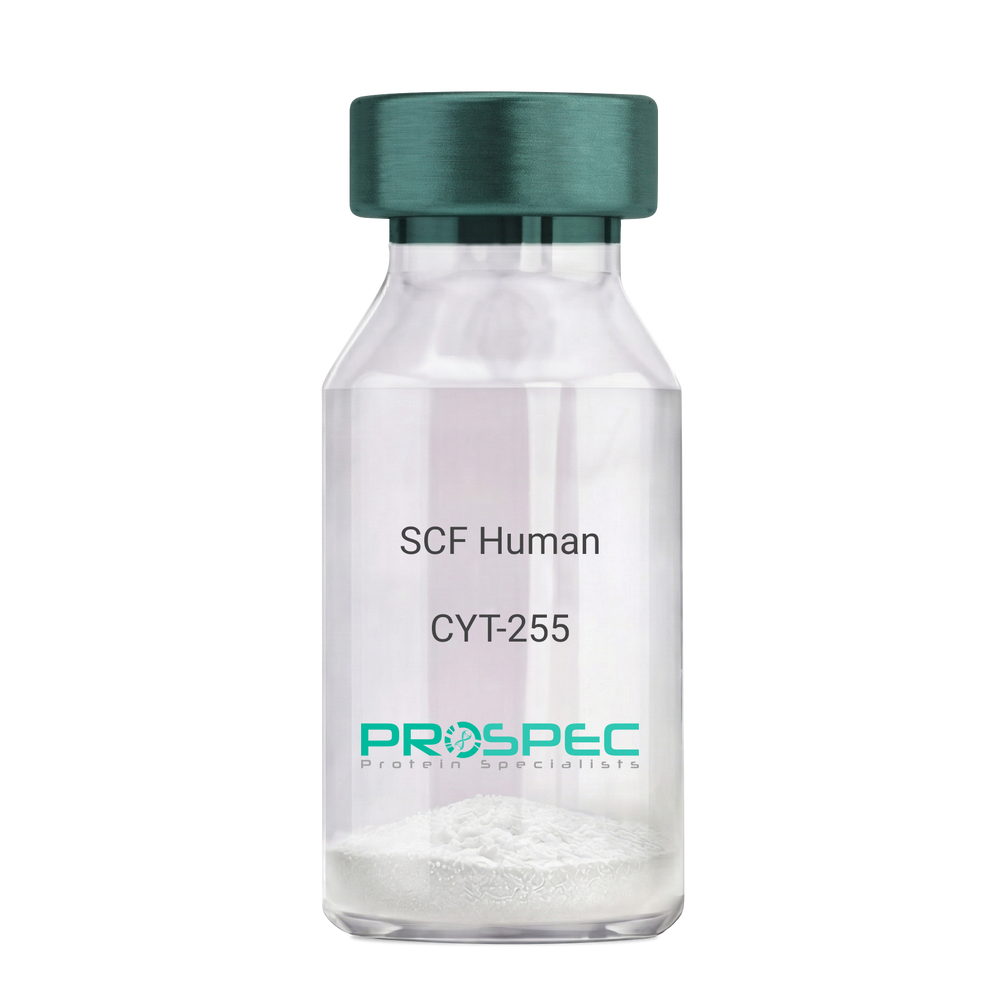
  • View Data Sheet

    Name :

    SCF Human

    Description:

    Stem Cell Factor Human Recombinant

    Kit ligand Precursor, C-kit ligand, SCF, Mast cell growth factor, MGF, SF, KL-1, Kitl, DKFZp686F2250.

    Product # :

    CYT-255

    Price :

    Quantity :

    Shipping Method :

    Room Temp Icon

    Shipped at Room temp

    Add To Cart

    More Info

    • description
    • source
    • formulation
    • purity
    • biological activity
    • More Info

    Description

    Stem Cell Factor Human Recombinant produced in E.Coli is a single, non-glycosylated polypeptide chain containing 165 amino acids and having a molecular mass of 18409 Dalton. The SCF is purified by proprietary chromatographic techniques.

    Source

    Escherichia Coli.

    Formulation

    Lyophilized from a concentrated (1mg/ml) solution in water containing 0.02% NaHCO3.

    Purity

    Greater than 98.0% as determined by:
    (a) Analysis by SEC-HPLC.
    (b) Analysis by SDS-PAGE.

    Biological Activity

    The ED50 as determined by the dose-dependant stimulation of Human TF-1 cells is < 2 ng/ml, corresponding to a Specific Activity of 500,000 IU/mg.

    More Info

    • Introduction

      Stem cell factor / KIT ligand (SCF) is a cytokine which binds CD117(c-Kit). SCF is also known as "steel factor" or "c-kit ligand". SCF exists in two forms, cell surface bound SCF and soluble (or free) SCF. Soluble SCF is produced by the cleavage of surface bound SCF by metalloproteases. SCF is a growth factor important for the survival, proliferation, and differentiation of hematopoietic stem cells and other hematopoietic progenitor cells. One of its roles is to change the BFU-E (burst-forming unit-erythroid) cells, which are the earliest erythrocyte precursors in the erythrocytic series, into the CFU-E (colony-forming unit-erythroid).

    • Synonyms

      Kit ligand Precursor, C-kit ligand, SCF, Mast cell growth factor, MGF, SF, KL-1, Kitl, DKFZp686F2250.

    • Physical Appearance

      Sterile Filtered White lyophilized (freeze-dried) powder.

    • Stability

      Lyophilized KIT ligand although stable at room temperature for 3 weeks, should be stored desiccated below -18°C. Upon reconstitution SCF should be stored at 4°C between 2-7 days and for future use below -18°C.For long term storage it is recommended to add a carrier protein (0.1% HSA or BSA).Please prevent freeze-thaw cycles.

    • Solubility

      It is recommended to reconstitute the lyophilized Stem Cell Factor in sterile 18MΩ-cm H2O not less than 100µg/ml, which can then be further diluted to other aqueous solutions.

    • Amino Acid Sequence

      The sequence of the first five N-terminal amino acids was determined and was found to be Met-Glu-Gly-Ile-Cys.

    • Protein content

      Protein quantitation was carried out by two independent methods1. UV spectroscopy at 280 nm using the absorbency value of 0.52 as the extinction coefficient for a 0.1% (1mg/ml) solution. This value is calculated by the PC GENE computer analysis program of protein sequences (IntelliGenetics). 2. Analysis by RP-HPLC, using a standard solution of Stem Cell Factor as a Reference Standard.

    ProSpec's products are furnished for LABORATORY RESEARCH USE ONLY. The product may not be used as drugs, agricultural or pesticidal products, food additives or household chemicals.

    Scf Human
  • View Data Sheet

    Name :

    DBI Human

    Description:

    DBI Human Recombinant

    ACBP, ACBD1, CCK-RP, EP, DBI, EP, MGC70414, Acyl-CoA-binding protein, GABA receptor modulator.

    Product # :

    PRO-832

    Price :

    Quantity :

    Shipping Method :

    Ice Icon

    Shipped with Ice Packs

    Add To Cart

    More Info

    • description
    • source
    • formulation
    • purity
    • More Info

    Description

    DBI Human Recombinant produced in E.Coli is a single, non-glycosylated, polypeptide chain containing 107 amino acids (1-87a.a.) and having a molecular mass of 12.2kDa. DBI protein is fused to a 20 amino acid His tag at N-terminus and is purified by standard chromatography.

    Source

    Escherichia Coli.

    Formulation

    DBI Human solution containing 20mM Tris-HCl pH-8, 0.1M NaCl & 10% glycerol.

    Purity

    Greater than 95% as determined by SDS-PAGE.

    More Info

    • Introduction

      DBI, also known as Acyl-CoA-binding protein isoform 2, is a binding inhibitor, which is regulated by hormones. DBI participates in lipid metabolism and in the displacement of beta-carbolines & benzodiazepines, which modulate signal transduction at type A gamma-aminobutyric acid receptors located in brain synapses. Moreover, during adipocyte differentiation the expression of DBI is significantly induced. DBI preforms as an acyl-CoA pool former and regulates LCFA (long-chain fatty acids) metabolism in peripheral tissues.

    • Synonyms

      ACBP, ACBD1, CCK-RP, EP, DBI, EP, MGC70414, Acyl-CoA-binding protein, GABA receptor modulator.

    • Physical Appearance

      Sterile filtered colorless solution.

    • Stability

      Store at 4°C if entire vial will be used within 2-4 weeks.Store, frozen at -20°C for longer periods of time. For long term storage it is recommended to add a carrier protein (0.1% HSA or BSA).Avoid multiple freeze-thaw cycles.

    • Amino Acid Sequence

      MGSSHHHHHH SSGLVPRGSH MSQAEFEKAA EEVRHLKTKP SDEEMLFIYG HYKQATVGDI NTERPGMLDF TGKAKWDAWN ELKGTSKEDA MKAYINKVEE LKKKYGI.

    ProSpec's products are furnished for LABORATORY RESEARCH USE ONLY. The product may not be used as drugs, agricultural or pesticidal products, food additives or household chemicals.

    Dbi Human
  • View Data Sheet

    Name :

    DCUN1D2 Human

    Description:

    DCN1 Defective in Cullin Neddylation 1 Domain Containing 2 Human Recombinant

    DCN1-like protein 2, DCUN1 domain-containing protein 2, Defective in cullin neddylation protein 1-like protein 2, DCUN1D2, C13orf17, DCUN1L2.

    Product # :

    PRO-899

    Price :

    Quantity :

    Shipping Method :

    Ice Icon

    Shipped with Ice Packs

    Add To Cart

    More Info

    • description
    • source
    • formulation
    • purity
    • More Info

    Description

    DCUN1D2 Human Recombinant produced in E.Coli is a single, non-glycosylated polypeptide chain containing 279 amino acids (1-259 a.a.) and having a molecular mass of 32.3kDa.DCUN1D2 is fused to a 20 amino acid His-tag at N-terminus & purified by proprietary chromatographic techniques.

    Source

    Escherichia Coli.

    Formulation

    DCUN1D2 protein solution (1mg/ml) containing 20mM Tris-HCl buffer (pH 8.0), 1mM DTT, 30% glycerol and 0.1M NaCl.

    Purity

    Greater than 95.0% as determined by SDS-PAGE.

    More Info

    • Introduction

      DCN1-like protein 2 (DCUN1D2) which contains one DCUN1 domain and 1 UBA-like domain, may have a role in the neddylation of cullins which regulate SCF-type ubiquitin ligase complexes. The gene encoding Dcun1D2 is located on human chromosome 13. Chromosome 13 contains major tumor suppressor genes, including BRCA2 and RB1, which are linked with breast cancer susceptibility and retinoblastoma, respectively.

    • Synonyms

      DCN1-like protein 2, DCUN1 domain-containing protein 2, Defective in cullin neddylation protein 1-like protein 2, DCUN1D2, C13orf17, DCUN1L2.

    • Physical Appearance

      Sterile Filtered clear solution.

    • Stability

      Store at 4°C if entire vial will be used within 2-4 weeks. Store, frozen at -20°C for longer periods of time. For long term storage it is recommended to add a carrier protein (0.1% HSA or BSA).Avoid multiple freeze-thaw cycles.

    • Amino Acid Sequence

      MGSSHHHHHH SSGLVPRGSH MHKLKSSQKD KVRQFMACTQ AGERTAIYCL TQNEWRLDEA TDSFFQNPDS LHRESMRNAV DKKKLERLYG RYKDPQDENK IGVDGIQQFC DDLSLDPASI SVLVIAWKFR AATQCEFSRK EFLDGMTELG CDSMEKLKAL LPRLEQELKD TAKFKDFYQF
      TFTFAKNPGQ KGLDLEMAVA YWKLVLSGRF KFLDLWNTFL MEHHKRSIPR DTWNLLLDFG NMIADDMSNY DEEGAWPVLI DDFVEYARPV VTGGKRSLF.

    ProSpec's products are furnished for LABORATORY RESEARCH USE ONLY. The product may not be used as drugs, agricultural or pesticidal products, food additives or household chemicals.

    Dcun1D2 Human
  • View Data Sheet

    Name :

    SEPT5 Human

    Description:

    Septin-5 Human Recombinant

    Septin 5, PNUTL1, H5, HCDCREL-1, CDCREL-1, cell division control related protein 1, Peanut-like protein 1 (Drosophila), platelet glycoprotein Ib beta chain.

    Product # :

    PRO-879

    Price :

    Quantity :

    Shipping Method :

    Ice Icon

    Shipped with Ice Packs

    Add To Cart

    More Info

    • description
    • source
    • formulation
    • purity
    • More Info

    Description

    SEPT5 Human Recombinant produced in E.coli is a single, non-glycosylated polypeptide chain containing 392 amino acids (1-369) and having a molecular mass of 45.2 kDa.The SEPT5 is fused to a 23 amino acid His-Tag at N-terminus and purified by proprietary chromatographic techniques.

    Source

    Escherichia Coli.

    Formulation

    SEPT5 protein (0.25mg/ml) is supplied in 20mM Tris-HCL, pH-8, 0.3M NaCl, 1mM DTT and 40% Glycerol.

    Purity

    Greater than 90.0% as determined by SDS-PAGE.

    More Info

    • Introduction

      SEPT5 is a member of the septin gene family of nucleotide binding proteins which were initially defined in yeast as cell division cycle regulatory proteins. Septins are extremely conserved in yeast, Drosophila, and mouse and seem to regulate cytoskeletal organization. Interference of septin function disrupts cytokinesis and results in high multinucleate or polyploid cells.

    • Synonyms

      Septin 5, PNUTL1, H5, HCDCREL-1, CDCREL-1, cell division control related protein 1, Peanut-like protein 1 (Drosophila), platelet glycoprotein Ib beta chain.

    • Physical Appearance

      Sterile Filtered colorless solution.

    • Stability

      Store at 4°C if entire vial will be used within 2-4 weeks. Store, frozen at -20°C for longer periods of time. For long term storage it is recommended to add a carrier protein (0.1% HSA or BSA).Avoid multiple freeze-thaw cycles.

    • Amino Acid Sequence

      MGSSHHHHHH SSGLVPRGSH MGSMSTGLRY KSKLATPEDK QDIDKQYVGF ATLPNQVHRK SVKKGFDFTL MVAGESGLGK STLVHSLFLT DLYKDRKLLS AEERISQTVE ILKHTVDIEE KGVKLKLTIV DTPGFGDAVN NTECWKPITD YVDQQFEQYF RDESGLNRKN IQDNRVHCCL YFISPFGHGL RPVDVGFMKA LHEKVNIVPL IAKADCLVPS EIRKLKERIR EEIDKFGIHV YQFPECDSDE DEDFKQQDRE LKESAPFAVI GSNTVVEAKG QRVRGRLYPW GIVEVENQAH CDFVKLRNML IRTHMHDLKD VTCDVHYENY RAHCIQQMTS KLTQDSRMES PIPILPLPTP DAETEKLIRM KDEELRRMQE MLQRMKQQMQ DQ

    ProSpec's products are furnished for LABORATORY RESEARCH USE ONLY. The product may not be used as drugs, agricultural or pesticidal products, food additives or household chemicals.

    Sept5 Human
  • View Data Sheet

    Name :

    SERPINA1 Human

    Description:

    Alpha 1 Antitrypsin Human Recombinant

    Alpha-1-antitrypsin, Alpha-1 protease inhibitor, Alpha-1-antiproteinase, SERPINA1, A1AT, PI, A1A, AAT, PI1, MGC9222, PRO2275, MGC23330.

    Product # :

    PRO-529

    Price :

    Quantity :

    Shipping Method :

    Ice Icon

    Shipped with Ice Packs

    Add To Cart

    More Info

    • description
    • source
    • formulation
    • purity
    • More Info

    Description

    SERPINA1 Human Recombinant produced in E.Coli is a single, non-glycosylated polypeptide chain containing 395 amino acids (25-418) and having a molecular mass of 44.4 kDa. The SERPINA1 protein is purified by proprietary chromatographic techniques.

    Source

    Escherichia Coli.

    Formulation

    The protein solution contains 20mM Tris-HCl pH-7.5, 1mM DTT, 10% glycerol, and 2mM EDTA.

    Purity

    Greater than 90% as determined by SDS-PAGE.

    More Info

    • Introduction

      SERPINA1 is secreted and is a serine protease inhibitor which its targets include elastase, plasmin, collagenase, thrombin, leucocytic proteases, trypsin, chymotrypsin, and plasminogen activator. Defects in SERPINA1 gene can cause emphysema or liver disease. Antral SERPINA1 expression is particularly induced by H. pylori infection. lung and prostate cancers have shown a significant increase in SERPINA1 serum levels compared with healthy controls though breast cancers did not show a significant change. SERPINA1 is an endogenous inhibitor of serine proteases and inhibits the catalytic domain of human recombinant matriptase in vitro. Rise in SERPINA1 occurs as an acute phase response to tissue necrosis and inflammation. mutations in SERPINA1 and SLC11A1 genes change the balance between elastase produced by leukocytes during phagocytosis.

    • Synonyms

      Alpha-1-antitrypsin, Alpha-1 protease inhibitor, Alpha-1-antiproteinase, SERPINA1, A1AT, PI, A1A, AAT, PI1, MGC9222, PRO2275, MGC23330.

    • Physical Appearance

      Sterile Filtered colorless solution.

    • Stability

      Store at 4°C if entire vial will be used within 2-4 weeks. Store, frozen at -20°C for longer periods of time. For long term storage it is recommended to add a carrier protein (0.1% HSA or BSA).Avoid multiple freeze-thaw cycles.

    • Amino Acid Sequence

      MEDPQGDAAQ KTDTSHHDQD HPTFNKITPN LAEFAFSLYR QLAHQSNSTN IFFSPVSIAT AFAMLSLGTK ADTHDEILEG LNFNLTEIPE AQIHEGFQEL LRTLNQPDSQ LQLTTGNGLF LSEGLKLVDK FLEDVKKLYH SEAFTVNFGD TEEAKKQIND YVEKGTQGKI VDLVKELDRD TVFALVNYIF FKGKWERPFE VKDTEEEDFH VDQVTTVKVP MMKRLGMFNI QHCKKLSSWV LLMKYLGNAT AIFFLPDEGK LQHLENELTH DIITKFLENE DRRSASLHLP KLSITGTYDL KSVLGQLGIT KVFSNGADLS GVTEEAPLKL SKAVHKAVLT IDEKGTEAAG AMFLEAIPMS IPPEVKFNKP FVFLMIDQNT KSPLFMGKVV NPTQK.

    ProSpec's products are furnished for LABORATORY RESEARCH USE ONLY. The product may not be used as drugs, agricultural or pesticidal products, food additives or household chemicals.

    Serpina1 Human Recombinant
  • View Data Sheet

    Name :

    SERPINC1 Human

    Description:

    Serpin Peptidase Inhibitor, Clade C Member 1 Human Recombinant

    AT3, AT3D, ATIII, THPH7, Antithrombin-III, Serpin C1, SERPINC1.

    Product # :

    PRO-1877

    Price :

    Quantity :

    Shipping Method :

    Ice Icon

    Shipped with Ice Packs

    Add To Cart

    More Info

    • description
    • source
    • formulation
    • purity
    • More Info

    Description

    SERPINC1 Human Recombinant produced in E.Coli is a single, non-glycosylated polypeptide chain containing 455 amino acids (33-464 a.a) and having a molecular mass of 51.4kDa. SERPINC1 is fused to a 23 amino acid His-tag at N-terminus & purified by proprietary chromatographic techniques.

    Source

    Escherichia Coli.

    Formulation

    SERPINC1 protein solution (0.5mg/ml) containing 20mM Tris-HCl buffer (pH 8.0), 0.4M Urea and 10% glycerol.

    Purity

    Greater than 85.0% as determined by SDS-PAGE.

    More Info

    • Introduction

      Serpin Peptidase Inhibitor, Clade C Member 1 (SERPINC1), which is a part of the serpin superfamily, is a plasma protease inhibitor. SERPINC1 inhibits thrombin and other activated serine proteases of the coagulation system, and regulates the blood coagulation cascade. SERPINC1 also inhibits Thrombin and Factors IXa, Xa and XIa. Deficiencies in SERPINC1 can cause ATIII deficiency, an autosomal dominant disease which might lead to a hereditary thrombophilia.

    • Synonyms

      AT3, AT3D, ATIII, THPH7, Antithrombin-III, Serpin C1, SERPINC1.

    • Physical Appearance

      Sterile Filtered colorless solution.

    • Stability

      Store at 4°C if entire vial will be used within 2-4 weeks. Store, frozen at -20°C for longer periods of time. For long term storage it is recommended to add a carrier protein (0.1% HSA or BSA).Avoid multiple freeze-thaw cycles.

    • Amino Acid Sequence

      MGSSHHHHHH SSGLVPRGSH MGSHGSPVDI CTAKPRDIPM NPMCIYRSPE KKATEDEGSE QKIPEATNRR VWELSKANSR FATTFYQHLA DSKNDNDNIF LSPLSISTAF AMTKLGACND TLQQLMEVFK FDTISEKTSD QIHFFFAKLN CRLYRKANKS SKLVSANRLF GDKSLTFNET YQDISELVYG AKLQPLDFKE NAEQSRAAIN KWVSNKTEGR ITDVIPSEAI NELTVLVLVN TIYFKGLWKS KFSPENTRKE LFYKADGESC SASMMYQEGK FRYRRVAEGT QVLELPFKGD DITMVLILPK PEKSLAKVEK ELTPEVLQEW LDELEEMMLV VHMPRFRIED GFSLKEQLQD MGLVDLFSPE KSKLPGIVAE GRDDLYVSDA FHKAFLEVNE EGSEAAASTA VVIAGRSLNP NRVTFKANRP FLVFIREVPL NTIIFMGRVA NPCVK.

    ProSpec's products are furnished for LABORATORY RESEARCH USE ONLY. The product may not be used as drugs, agricultural or pesticidal products, food additives or household chemicals.

    Serpinc1 Human
  • View Data Sheet

    Name :

    DSTN Human

    Description:

    Destrin Human Recombinant

    Destrin (actin depolymerizing factor), ACTDP, ADF, bA462D18.2 (destrin (actin depolymerizing factor ADF) (ACTDP)), destrin, DSN.

    Product # :

    PRO-1137

    Price :

    Quantity :

    Shipping Method :

    Ice Icon

    Shipped with Ice Packs

    Add To Cart

    More Info

    • description
    • source
    • formulation
    • purity
    • More Info

    Description

    DSTN Human Recombinant produced in E. coli is a single polypeptide chain containing 173 amino acids (1-165) and having a molecular mass of 19.5 kDa.DSTN is fused to an 8 amino acid His-tag at C-terminus & purified by proprietary chromatographic techniques.

    Source

    E.coli.

    Formulation

    The DSTN solution (0.5mg/ml) contains 20mM Tris-HCl buffer (pH 8.0), 0.1M NaCl, 1mM DTT and 10% glycerol.

    Purity

    Greater than 95% as determined by SDS-PAGE.

    More Info

    • Introduction

      Actin depolymerizing factor (Destrin/DSTN) belongs to the ADF/Cofilin/destrin superfamily which has the ability to swiftly depolymerize F-Actin in a stoichiometric mode. The ADF family of proteins is responsible for enhancing the turnover rate of actin in vivo. Destrin is a small phosphoinositide-sensitive actin-binding protein capable of depolymerizing actin-filaments in vitro. DSTN functions in a pH-independent manner. DSTN is found in a variety of epithelial and endothelial cells, however it is virtually nonexistent in adult mouse heart and skeletal muscle cells. Destrin shares a 71% sequence homology with Cofilin, however the 2 proteins vary in their interaction with Actin.

    • Synonyms

      Destrin (actin depolymerizing factor), ACTDP, ADF, bA462D18.2 (destrin (actin depolymerizing factor ADF) (ACTDP)), destrin, DSN.

    • Physical Appearance

      Sterile Filtered colorless solution.

    • Stability

      Store at 4°C if entire vial will be used within 2-4 weeks. Store, frozen at -20°C for longer periods of time. For long term storage it is recommended to add a carrier protein (0.1% HSA or BSA).Avoid multiple freeze-thaw cycles.

    • Amino Acid Sequence

      MASGVQVADE VCRIFYDMKV RKCSTPEEIK KRKKAVIFCL SADKKCIIVE EGKEILVGDV GVTITDPFKH FVGMLPEKDC RYALYDASFE TKESRKEELM FFLWAPELAP LKSKMIYASS KDAIKKKFQG IKHECQANGP EDLNRACIAE KLGGSLIVAF EGCPVLEHHH HHH

    ProSpec's products are furnished for LABORATORY RESEARCH USE ONLY. The product may not be used as drugs, agricultural or pesticidal products, food additives or household chemicals.

    Dstn Human
  • View Data Sheet

    Name :

    I TAC Human, His

    Description:

    I-TAC Human Recombinant (CXCL11), His Tag

    Small inducible cytokine B11, CXCL11, Interferon-inducible T-cell alpha chemoattractant, I-TAC, Interferon-gamma-inducible protein 9, IP-9, H174, Beta-R1, chemokine (C-X-C motif) ligand 11, IP9, b-R1, SCYB11, SCYB9B, MGC102770.

    Product # :

    CHM-232

    Price :

    Quantity :

    Shipping Method :

    Ice Icon

    Shipped with Ice Packs

    Add To Cart

    More Info

    • description
    • source
    • formulation
    • purity
    • More Info

    Description

    I-TAC (CXCL11) Human Recombinant produced in E.coli is a single, non-glycosylated polypeptide chain containing 94 amino acids (22-94) and having a molecular mass of 10.6kDa.I-TAC is fused to a 21 amino acid His-tag at N-terminus & purified by proprietary chromatographic techniques.

    Source

    Escherichia Coli.

    Formulation

    The I-TAC solution (1mg/ml) contains 10mM sodium citrate(pH 3.5), 20% glycerol and 2mM DTT.

    Purity

    Greater than 90.0% as determined by SDS-PAGE.

    More Info

    • Introduction

      Chemokine (C-X-C motif) ligand 11 (CXCL11) is a small cytokine belonging to the CXC chemokine family that is also called Interferon-inducible T-cell alpha chemoattractant (I-TAC) and Interferon-gamma-inducible protein 9 (IP-9). It is highly expressed in peripheral blood leukocytes, pancreas and liver, with moderate levels in thymus, spleen and lung and low expression levels were in small intestine, placenta and prostate. Gene expression of CXCL11 is strongly induced by IFN-g and IFN-b, and weakly induced by IFN-a. This chemokine elicits its effects on its target cells by interacting with the cell surface chemokine receptor CXCR3, with a higher affinity than do the other ligands for this receptor, CXCL9 and CXCL10. CXCL11 is chemotactic for activated T cells. Its gene is located on human chromosome 4 along with many other members of the CXC chemokine family.

    • Synonyms

      Small inducible cytokine B11, CXCL11, Interferon-inducible T-cell alpha chemoattractant, I-TAC, Interferon-gamma-inducible protein 9, IP-9, H174, Beta-R1, chemokine (C-X-C motif) ligand 11, IP9, b-R1, SCYB11, SCYB9B, MGC102770.

    • Physical Appearance

      Sterile filtered colorless solution.

    • Stability

      Store at 4°C if entire vial will be used within 2-4 weeks. Store, frozen at -20°C for longer periods of time. For long term storage it is recommended to add a carrier protein (0.1% HSA or BSA).Avoid multiple freeze-thaw cycles.

    • Amino Acid Sequence

      MGSSHHHHHH SSGLVPRGSH MFPMFKRGRC LCIGPGVKAV KVADIEKASI MYPSNNCDKI EVIITLKENK GQRCLNPKSK QARLIIKKVE RKNF.

    ProSpec's products are furnished for LABORATORY RESEARCH USE ONLY. The product may not be used as drugs, agricultural or pesticidal products, food additives or household chemicals.

    I Tac Human His
  • View Data Sheet

    Name :

    I TAC Mouse

    Description:

    I-TAC (CXCL11) Mouse Recombinant

    C-X-C motif chemokine 11, I-TAC, Small-inducible cytokine B11, Cxcl11, Scyb11.

    Product # :

    CHM-026

    Price :

    Quantity :

    Shipping Method :

    Room Temp Icon

    Shipped at Room temp

    Add To Cart

    More Info

    • description
    • source
    • formulation
    • purity
    • biological activity
    • More Info

    Description

    I TAC Mouse Recombinant produced in E.Coli is a single, non-glycosylated, polypeptide chain containing 79 amino acids and having a molecular mass of 9.1kDa.

    Source

    Escherichia Coli.

    Formulation

    I TAC protein was lyophilized from a 0.2 µm filtered concentrated solution in 10 mM Sodium Citrate, pH 4.0, with 600 mM NaCl.

    Purity

    Greater than 98.0% as determined by:
    (a) Analysis by RP-HPLC.
    (b) Analysis by SDS-PAGE.

    Biological Activity

    Fully biologically active when compared to standard. The biological activity determined by a chemotaxis bioassay using murine CXCR3 transfected 293 cells is in a concentration of 10-100 ng/ml corresponding to a specific activity of 10,000-100,000 IU/mg.

    More Info

    • Introduction

      Chemokine (C-X-C motif) ligand 11 (CXCL11) is a small cytokine belonging to the CXC chemokinen family. I-TAC is highly expressed in peripheral blood leukocytes, pancreas and liver, with moderate levels in thymus, spleen and lung and low expression levels were in small intestine, placenta and prostate. Gene expression of CXCL11 is strongly induced by IFN-g and IFN-b, and weakly induced by IFN-a. The I-TACchemokine elicits its effects on its target cells by interacting with the cell surface chemokine receptor CXCR3, with a higher affinity than do the other ligands for this receptor, CXCL9 and CXCL10. I-TAC is chemotactic for activated T cells.The CXCL11 gene is located on human chromosome 4 along with many other members of the CXC chemokine family.

    • Synonyms

      C-X-C motif chemokine 11, I-TAC, Small-inducible cytokine B11, Cxcl11, Scyb11.

    • Physical Appearance

      Sterile Filtered White lyophilized (freeze-dried) powder.

    • Stability

      Lyophilized I TAC although stable at room temperature for 3 weeks, should be stored desiccated below -18°C. Upon reconstitution I TAC should be stored at 4°C between 2-7 days and for future use below -18°C. For long term storage it is recommended to add a carrier protein (0.1% HSA or BSA). Please prevent freeze-thaw cycles.

    • Solubility

      It is recommended to reconstitute the lyophilized I TAC in sterile 18M-cm H2O not less than 100µg/ml, which can then be further diluted to other aqueous solutions.

    • Amino Acid Sequence

      FLMFKQGRCL CIGPGMKAVK MAEIEKASVI YPSNGCDKVE VIVTMKAHKR QRCLDPRSKQ ARLIMQAIEK KNFLRRQNM.

    ProSpec's products are furnished for LABORATORY RESEARCH USE ONLY. The product may not be used as drugs, agricultural or pesticidal products, food additives or household chemicals.

    I Tac Mouse
  • View Data Sheet

    Name :

    ASB13 Human

    Description:

    Ankyrin Repeat And SOCS Box Containing 13 Human Recombinant

    Ankyrin repeat and SOCS box protein 13, ASB-13, ASB13, ankyrin repeat and SOCS box containing 13.

    Product # :

    PRO-2060

    Price :

    Quantity :

    Shipping Method :

    Ice Icon

    Shipped with Ice Packs

    Add To Cart

    More Info

    • description
    • source
    • formulation
    • purity
    • More Info

    Description

    ASB13 Human Recombinant produced in E.Coli is a single, non-glycosylated polypeptide chain containing 301 amino acids (1-278 a.a.) and having a molecular mass of 32.4kDa.ASB13 is fused to a 23 amino acid His-tag at N-terminus & purified by proprietary chromatographic techniques.

    Source

    Escherichia Coli.

    Formulation

    ASB13 protein solution (1mg/ml) containing 20mM Tris-HCl buffer (pH8.0), 0.4M UREA and 10% glycerol.

    Purity

    Greater than 90% as determined by SDS-PAGE.

    More Info

    • Introduction

      ASB13 belongs to the ankyrin repeat and SOCS box-containing (ASB) family of proteins which contains ankyrin repeat sequence and a SOCS box domain. ASB13 is a protein coding gene that plays a role as a substrate-recognition part of a SCF-like ECS E3 ubiquitin-protein ligase complex which arbitrates the ubiquitination and subsequent proteasomal degradation of target proteins.

    • Synonyms

      Ankyrin repeat and SOCS box protein 13, ASB-13, ASB13, ankyrin repeat and SOCS box containing 13.

    • Physical Appearance

      Sterile Filtered clear solution.

    • Stability

      Store at 4°C if entire vial will be used within 2-4 weeks. Store, frozen at -20°C for longer periods of time.For long term storage it is recommended to add a carrier protein (0.1% HSA or BSA).Please avoid freeze thaw cycles.

    • Amino Acid Sequence

      MGSSHHHHHH SSGLVPRGSH MGSMEPRAAD GCFLGDVGFW VERTPVHEAA QRGESLQLQQ LIESGACVNQ VTVDSITPLH AASLQGQARC VQLLLAAGAQ VDARNIDGST PLCDACASGS IECVKLLLSY GAKVNPPLYT ASPLHEACMS GSSECVRLLI DVGANLEAHD CHFGTPLHVA CAREHLDCVK VLLNAGANVN AAKLHETALH HAAKVKNVDL IEMLIEFGGN IYARDNRGKK PSDYTWSSSA PAKCFEYYEK TPLTLSQLCR VNLRKATGVR GLEKIAKLNI PPRLIDYLSY N.

    ProSpec's products are furnished for LABORATORY RESEARCH USE ONLY. The product may not be used as drugs, agricultural or pesticidal products, food additives or household chemicals.

    Asb13 Human
  • View Data Sheet

    Name :

    NOB1 Human

    Description:

    NIN1/RPN12 Binding Protein 1 Human Recombinant

    NIN1/RPN12 Binding Protein 1 Homolog, PSMD8BP1, PSMD8 Binding Protein 1, Nin One Binding Protein, Phosphorylation Regulatory Protein HP-10, Protein ART-4, RNA-Binding Protein NOB1, Adenocarcinoma Antigen Recognized By T Lymphocytes 4, NOB1P, MST158.

    Product # :

    PRO-1701

    Price :

    Quantity :

    Shipping Method :

    Ice Icon

    Shipped with Ice Packs

    Add To Cart

    More Info

    • description
    • source
    • formulation
    • purity
    • More Info

    Description

    NOB1 Human Recombinant produced in E.coli is a single, non-glycosylated polypeptide chain containing 435 amino acids (1-412) and having a molecular mass of 49.1kDa.NOB1 is fused to a 23 amino acid His-tag at N-terminus & purified by proprietary chromatographic techniques.

    Source

    Escherichia Coli.

    Formulation

    The NOB1 solution (1mg/ml) contains 20mM Tris-HCl buffer (pH 8.0), 0.4M Urea and 10% glycerol.

    Purity

    Greater than 80.0% as determined by SDS-PAGE.

    More Info

    • Introduction

      Nob1 takes part in pre-rRNA processing and cleaves in a late cytoplasmic processing step a 20S rRNA intermediate at cleavage site D to create the mature 18S rRNA. In yeast, more than 200 protein and RNA cofactors are essential for ribosome assembly, and these are mostly conserved in eukaryotes. These factors oversee alteration and cleavage of the initial 35S precursor rRNA transcript into the mature 18S, 5.8S, and 25S rRNAs, folding of the rRNA, and binding of ribosomal proteins and 5S RNA.

    • Synonyms

      NIN1/RPN12 Binding Protein 1 Homolog, PSMD8BP1, PSMD8 Binding Protein 1, Nin One Binding Protein, Phosphorylation Regulatory Protein HP-10, Protein ART-4, RNA-Binding Protein NOB1, Adenocarcinoma Antigen Recognized By T Lymphocytes 4, NOB1P, MST158.

    • Physical Appearance

      Sterile Filtered clear solution.

    • Stability

      Store at 4°C if entire vial will be used within 2-4 weeks. Store, frozen at -20°C for longer periods of time. For long term storage it is recommended to add a carrier protein (0.1% HSA or BSA).Avoid multiple freeze-thaw cycles.

    • Amino Acid Sequence

      MGSSHHHHHH SSGLVPRGSH MGSMAPVEHV VADAGAFLRH AALQDIGKNI YTIREVVTEI RDKATRRRLA VLPYELRFKE PLPEYVRLVT EFSKKTGDYP SLSATDIQVL ALTYQLEAEF VGVSHLKQEP QKVKVSSSIQ HPETPLHISG FHLPYKPKPP QETEKGHSAC EPENLEFSSF MFWRNPLPNI DHELQELLID RGEDVPSEEE EEEENGFEDR KDDSDDDGGG WITPSNIKQI QQELEQCDVP EDVRVGCLTT DFAMQNVLLQ MGLHVLAVNG MLIREARSYI LRCHGCFKTT SDMSRVFCSH CGNKTLKKVS VTVSDDGTLH MHFSRNPKVL NPRGLRYSLP TPKGGKYAIN PHLTEDQRFP QLRLSQKARQ KTNVFAPDYI AGVSPFVEND ISSRSATLQV RDSTLGAGRR RLNPNASRKK FVKKR

    ProSpec's products are furnished for LABORATORY RESEARCH USE ONLY. The product may not be used as drugs, agricultural or pesticidal products, food additives or household chemicals.

    Nob1 Human
  • View Data Sheet

    Name :

    SNX3 Human

    Description:

    Sorting Nexin 3 Human Recombinant

    Sorting nexin-3, Protein SDP3, SNX3, SDP3, Grd19, MCOPS8.

    Product # :

    PRO-246

    Price :

    Quantity :

    Shipping Method :

    Ice Icon

    Shipped with Ice Packs

    Add To Cart

    More Info

    • description
    • source
    • formulation
    • purity
    • More Info

    Description

    SNX3 produced in E.Coli is a single, non-glycosylated polypeptide chain containing 182 amino acids (1-162 a.a) and having a molecular mass of 20.9kDa.SNX3 is fused to a 20 amino acid His-tag at N-terminus & purified by proprietary chromatographic techniques.

    Source

    Escherichia Coli.

    Formulation

    SNX3 protein solution (1mg/ml) containing 20mM Tris-HCl buffer (pH 8.0), 1mM DTT, 20% glycerol and 0.1M NaCl.

    Purity

    Greater than 95.0% as determined by SDS-PAGE.

    More Info

    • Introduction

      Sorting nexin 3 (SNX3) belongs to the large family of hydrophilic proteins, which interact with various receptor types and are involved in intracellular trafficking. SNX3 interacts with phosphatidylinositol-3-phosphate, and is involved in protein trafficking. SNX3 comprises a distinct subgroup of nexins, which share less sequence similarity outside of the PX domain and have significantly different binding affinities for the tyrosine kinase receptors.

    • Synonyms

      Sorting nexin-3, Protein SDP3, SNX3, SDP3, Grd19, MCOPS8.

    • Physical Appearance

      Sterile Filtered colorless solution.

    • Stability

      SNX3 Human Recombinant although stable at 4°C for 1 week, should be stored below -18°C. Please prevent freeze thaw cycles.

    • Amino Acid Sequence

      MGSSHHHHHH SSGLVPRGSH MAETVADTRR LITKPQNLND AYGPPSNFLE IDVSNPQTVG VGRGRFTTYE IRVKTNLPIF KLKESTVRRR YSDFEWLRSE LERESKVVVP PLPGKAFLRQ LPFRGDDGIF DDNFIEERKQ GLEQFINKVA GHPLAQNERC LHMFLQDEII DKSYTPSKIR
      HA.

    ProSpec's products are furnished for LABORATORY RESEARCH USE ONLY. The product may not be used as drugs, agricultural or pesticidal products, food additives or household chemicals.

    Snx3 Human
  • View Data Sheet

    Name :

    BLVRB Human

    Description:

    Biliverdin Reductase B Human Recombinant

    FLR, BVRB, SDR43U1, MGC117413, BLVRB, Flavin reductase, FR, NADPH-dependent diaphorase, NADPH-flavin reductase, Biliverdin reductase B, BVR-B, Biliverdin-IX beta-reductase, Green heme-binding protein, GHBP.

    Product # :

    ENZ-387

    Price :

    Quantity :

    Shipping Method :

    Ice Icon

    Shipped with Ice Packs

    Add To Cart

    More Info

    • description
    • source
    • formulation
    • purity
    • More Info

    Description

    BLVRB Human Recombinant amino produced in E.Coli is a single, non-glycosylated polypeptide chain containing 206 amino acids having a molecular mass of 22.1 kDa.The BLVRB is purified by proprietary chromatographic techniques.

    Source

    Escherichia Coli.

    Formulation

    The protein contains 20mM Tris-HCl buffer pH 8.5, 10% glycerol, and 1mM DTT.

    Purity

    Greater than 95.0% as determined by SDS-PAGE.

    More Info

    • Introduction

      BLVRB (EC 1.3.1.24) catalyzes electron transfer from reduced pyridine nucleotides to flavins as well as methylene blue, pyrroloquinoline quinone, riboflavin, or methemoglobin. BLVRB is involved in protecting cells from oxidative damage or in regulating iron metabolism. BLVRB converts biliverdin to bilirubin in the liver, converting a double-bond between the second and third pyrrole ring into a single-bond. BLVRB plays a role as in human erythrocytic heme catabolic pathway and most mammalian species. Biliverdin reductase is abundantly expressed in kidney, spleen, liver and brain as well as at lower levels in the thymus and minimal levels being detected in testis.

    • Synonyms

      FLR, BVRB, SDR43U1, MGC117413, BLVRB, Flavin reductase, FR, NADPH-dependent diaphorase, NADPH-flavin reductase, Biliverdin reductase B, BVR-B, Biliverdin-IX beta-reductase, Green heme-binding protein, GHBP.

    • Physical Appearance

      Sterile filtered colorless solution.

    • Stability

      Store at 4°C if entire vial will be used within 2-4 weeks. Store, frozen at -20°C for longer periods of time. For long term storage it is recommended to add a carrier protein (0.1% HSA or BSA).Avoid multiple freeze-thaw cycles.

    • Amino Acid Sequence

      MAVKKIAIFG ATGQTGLTTL AQAVQAGYEV TVLVRDSSRL PSEGPRPAHV VVGDVLQAAD VDKTVAGQDA VIVLLGTRND LSPTTVMSEG ARNIVAAMKA HGVDKVVACT SAFLLWDPTK VPPRLQAVTD DHIRMHKVLR ESGLKYVAVM PPHIGDQPLT GAYTVTLDGR GPSRVISKHD LGHFMLRCLT TDEYDGHSTY PSHQYQ.

    ProSpec's products are furnished for LABORATORY RESEARCH USE ONLY. The product may not be used as drugs, agricultural or pesticidal products, food additives or household chemicals.

    Blvrb Human
  • View Data Sheet

    Name :

    CXCL14 Rat

    Description:

    BRAK (CXCL14) Rat Recombinant

    C-X-C motif chemokine 14, B-cell and monocyte-activating chemokine, Chemokine BRAK, Kidney-expressed chemokine CXC, MIP-2G, Small-inducible cytokine B14, Cxcl14, Bmac, Kec, Ks1, Mip2g, Scyb14, BRAK, NJAC, AI414372, bolekine, MIP2gamma, 1110031L23Rik, 1200006I23Rik.

    Product # :

    CHM-021

    Price :

    Quantity :

    Shipping Method :

    Room Temp Icon

    Shipped at Room temp

    Add To Cart

    More Info

    • description
    • source
    • formulation
    • purity
    • biological activity
    • More Info

    Description

    CXCL14 Rat Recombinant produced in E.Coli is a single, non-glycosylated, Polypeptide chain containing 77 amino acids and having a molecular mass of 9.4kDa.The CXCL14 is purified by proprietary chromatographic techniques.

    Source

    Escherichia Coli.

    Formulation

    CXCL14 was lyophilized from a 0.2µm filtered concentrated solution in 30% Acetonitrile and 0.1% TFA.

    Purity

    Greater than 95.0% as determined by:
    (a) Analysis by RP-HPLC.
    (b) Analysis by SDS-PAGE.

    Biological Activity

    Determined by its ability to chemoattract activated monocytes using a concentration range of 1.0-10.0 ng/ml.

    More Info

    • Introduction

      CXCL14 is involved in immunoregulatory and inflammatory processes. BRAK protein is structurally related to the CXC (Cys-X-Cys) subfamily of cytokines. CXCL14 displays chemotactic activity for monocytes but not for lymphocytes, dendritic cells, neutrophils or macrophages. CXCL14 is involved in the homeostasis of monocyte-derived macrophages.

    • Synonyms

      C-X-C motif chemokine 14, B-cell and monocyte-activating chemokine, Chemokine BRAK, Kidney-expressed chemokine CXC, MIP-2G, Small-inducible cytokine B14, Cxcl14, Bmac, Kec, Ks1, Mip2g, Scyb14, BRAK, NJAC, AI414372, bolekine, MIP2gamma, 1110031L23Rik, 1200006I23Rik.

    • Physical Appearance

      Sterile Filtered White lyophilized (freeze-dried) powder.

    • Stability

      Lyophilized CXCL14 although stable at room temperature for 3 weeks, should be stored desiccated below -18°C. Upon reconstitution CXCL14 should be stored at 4°C between 2-7 days and for future use below -18°C.Please prevent freeze-thaw cycles.

    • Solubility

      It is recommended to reconstitute the lyophilized CXCL14 in sterile 18M-cm H2O not less than 100µg/ml, which can then be further diluted to other aqueous solutions.

    • Amino Acid Sequence

      SKCKCSRKGP KIRYSDVKKL EMKPKYPHCE EKMVIITTKS MSRYRGQEHC LHPKLQSTKR FIKWYNAWNE KRRVYEE.

    • Background

      What is the molecular weight/Mw of CXCL14 RAT Protein?
      CXCL14 RAT Protein has a total Mw of 9.4kDa.

      What is the source or expression system of CXCL14 RAT Protein?
      Escherichia Coli.

      What is the Purity of CXCL14 RAT Protein?
      CXCL14 RAT Protein is >95% pure as determined by SDS-PAGE.

      What is the Biological Activity of CXCL14 RAT Protein?
      Determined by its ability to chemoattract activated monocytes using a concentration range of 1.0-10.0 ng/ml.

      What is the amino acid sequence of CXCL14 RAT Protein?
      SKCKCSRKGP KIRYSDVKKL EMKPKYPHCE EKMVIITTKS MSRYRGQEHC LHPKLQSTKR FIKWYNAWNE KRRVYEE.

      What applications can CXCL14 RAT Protein be used in?
      CXCL14 RAT Protein can probably be used in western blot, ELISA and Lateral Flow.

      What is the endotoxin level for CXCL14 RAT Protein?
      The endotoxin level is minimal, CXCL14 RAT Protein was purified using conventional chromatography techniques.

    ProSpec's products are furnished for LABORATORY RESEARCH USE ONLY. The product may not be used as drugs, agricultural or pesticidal products, food additives or household chemicals.

    Cxcl14 Rat
  • View Data Sheet

    Name :

    CCL6 Rat

    Description:

    C-10 Rat Recombinant (CCL6)

    Small inducible cytokine A6, CCL6, C10 protein, c10, MRP-1, Scya6, chemokine (C-C motif) ligand 6.

    Product # :

    CHM-268

    Price :

    Quantity :

    Shipping Method :

    Room Temp Icon

    Shipped at Room temp

    Add To Cart

    More Info

    • description
    • source
    • formulation
    • purity
    • biological activity
    • More Info

    Description

    C-10 Rat Recombinant produced in E.Coli is a signle, non-glycosylated, polypeptide chain containing 94 amino acids and having a total molecular mass of 10.4kDa. C-10 is purified by proprietary chromatographic techniques.

    Source

    Escherichia Coli.

    Formulation

    Lyophilized from a 0.2µm filtered concentrated (1.0mg/ml) solution in 1×PBS, pH 7.4.

    Purity

    Greater than 95.0% as determined by
    (a) Analysis by RP-HPLC.
    (b) Analysis by SDS-PAGE.

    Biological Activity

    Determined by its ability to chemoattract human CCR1 transfected BaF3 mouse proB cells using a concentration range of 0.05-0.25 ug/ml.

    More Info

    • Introduction

      Chemokine (C-C motif) ligand 6 (CCL6) is a small cytokine belonging to the CC chemokine family that has only been identified in rodents.
      In mice, CCL6 is expressed in cells from neutrophil and macrophage lineages, and can be greatly induced under conditions suitable for myeloid cell differentiation. It is highly expressed in bone marrow cultures that have been stimulated with the cytokine GM-CSF. Some low levels of gene expression also occur in certain cell lines of myeloid origin (e.g. the immature myeloid cell lines DA3 and 32D cl3, and the macrophage cell line P388D) that can also be greatly induced in culture with GM-CSF. However, in activated T cell lines, expression of CCL6 is greatly reduced. CCL6 can also be induced in the mouse lung by the cytokine interleukin 13. Mouse CCL6 is located on chromosome 11. The cell surface receptor for CCL6 is believed to be the chemokine receptor CCR1.

    • Synonyms

      Small inducible cytokine A6, CCL6, C10 protein, c10, MRP-1, Scya6, chemokine (C-C motif) ligand 6.

    • Physical Appearance

      Sterile Filtered White lyophilized (freeze-dried) powder.

    • Stability

      Lyophilized C-10 although stable at room temperature for 3 weeks, should be stored desiccated below -18C. Upon reconstitution C-10 should be stored at 4C between 2-7 days and for future use below -18C.For long term storage it is recommended to add a carrier protein (0.1% HSA or BSA).Please prevent freeze-thaw cycles.

    • Solubility

      It is recommended to reconstitute the lyophilized C-10 in sterile 18M-cm H2O not less than 100µg/ml, which can then be further diluted to other aqueous solutions.

    • Amino Acid Sequence

      GLIQDTVKED RPFNPTIIHQ GFQDSSDCCF SYASQIPCSR FIYYFPTSGG CTKPGIIFVT RKRKRVCANP SDQRVQTCIS TLKLGPRSGN SAIA.

    • Background

      What is the molecular weight/Mw of CCL6 RAT Protein?
      CCL6 RAT Protein has a total Mw of 10.4kDa.

      What is the source or expression system of CCL6 RAT Protein?
      Escherichia Coli.

      What is the Purity of CCL6 RAT Protein?
      CCL6 RAT Protein is >95% pure as determined by SDS-PAGE.

      What is the Biological Activity of CCL6 RAT Protein?
      Determined by its ability to chemoattract human CCR1 transfected BaF3 mouse proB cells using a concentration range of 0.05-0.25 ug/ml.

      What is the amino acid sequence of CCL6 RAT Protein?
      GLIQDTVKED RPFNPTIIHQ GFQDSSDCCF SYASQIPCSR FIYYFPTSGG CTKPGIIFVT RKRKRVCANP SDQRVQTCIS TLKLGPRSGN SAIA.

      What applications can CCL6 RAT Protein be used in?
      CCL6 RAT Protein can probably be used in western blot, ELISA and Lateral Flow.

      What is the endotoxin level for CCL6 RAT Protein?
      The endotoxin level is minimal, CCL6 RAT Protein was purified using conventional chromatography techniques.


    ProSpec's products are furnished for LABORATORY RESEARCH USE ONLY. The product may not be used as drugs, agricultural or pesticidal products, food additives or household chemicals.

    C 10 Rat
  • View Data Sheet

    Name :

    C1QBP Human

    Description:

    Complement Component 1 Human Recombinant

    p32, HABP1, gC1Qr, GC1QBP, SF2p32, gC1Q-R, Complement component 1 Q subcomponent-binding protein mitochondrial, Glycoprotein gC1qBP, C1qBP, GC1q-R protein, Hyaluronan-binding protein 1, Mitochondrial matrix protein p32, p33, C1QBP.

    Product # :

    PRO-636

    Price :

    Quantity :

    Shipping Method :

    Ice Icon

    Shipped with Ice Packs

    Add To Cart

    More Info

    • description
    • source
    • formulation
    • purity
    • More Info

    Description

    C1QBP Human Recombinant produced in E.Coli is a single, non-glycosylated polypeptide chain containing 210 amino acids and having a molecular mass of 23.9 kDa.

    Source

    Escherichia Coli.

    Formulation

    The C1QBP protein solution contains 20mM Tris-HCl pH7.5, 20% glycerol and 1mM DTT.

    Purity

    Greater than 95.0% as determined by Analysis by SDS-PAGE.

    More Info

    • Introduction

      C1QBP having the accession number of NP_001203 binds to the globular "heads" of c1q thus inhibiting c1 activation. C1QBP interacts with a wide range of ligands and is implicated in cell signaling. C1QBP associates with C1r and C1s in order to yield the first component of the serum complement system. C1QBP protein has been identified as the p32 subunit of pre-mRNA splicing factor SF2, as well as a hyaluronic acid-binding protein.
      C1QBP is a new marker of tumor cells and tumor-associated macrophages/myeloid cells in hypoxic/metabolically deprived areas of tumors.
      Mitochondrial C1QBP is a critical mediator of p14ARF-induced apoptosis.
      C1QBP functions as a chemotactic factor for immature dendritic cells, and migration is mediated through ligation of both C1QBP and cC1qR/CR.
      C1QBP overexpression successfully blocks mRNA accumulation from the adenovirus major late transcription unit (MLTU) and stimulates RNA polymerase II carboxy-terminal domain phosphorylation in virus-infected cells.
      C1QBP binds with Hepacivirus core protein on CD8+ and CD4+ positive t-cells and inactivates lck and akt.

    • Synonyms

      p32, HABP1, gC1Qr, GC1QBP, SF2p32, gC1Q-R, Complement component 1 Q subcomponent-binding protein mitochondrial, Glycoprotein gC1qBP, C1qBP, GC1q-R protein, Hyaluronan-binding protein 1, Mitochondrial matrix protein p32, p33, C1QBP.

    • Physical Appearance

      Sterile Filtered colorless solution.

    • Stability

      Store at 4°C if entire vial will be used within 2-4 weeks. Store, frozen at -20°C for longer periods of time. For long term storage it is recommended to add a carrier protein (0.1% HSA or BSA).Avoid multiple freeze-thaw cycles.

    • Amino Acid Sequence

      MLHTDGDKAF VDFLSDEIKE ERKIQKHKTL PKMSGGWELE LNGTEAKLVR KVAGEKITVT FNINNSIPPT FDGEEEPSQG QKVEEQEPEL TSTPNFVVEV IKNDDGKKAL VLDCHYPEDE VGQEDEAESD IFSIREVSFQ STGESEWKDT NYTLNTDSLD WALYDHLMDF LADRGVDNTF ADELVELSTA LEHQEYITFL EDLKSFVKSQ.

    ProSpec's products are furnished for LABORATORY RESEARCH USE ONLY. The product may not be used as drugs, agricultural or pesticidal products, food additives or household chemicals.

    C1Qbp Human
  • View Data Sheet

    Name :

    TARDBP (1-414) Human, His

    Description:

    TAR DNA Binding Protein (1-414 a.a.) Human Recombinant, His Tag

    ALS10, TDP43, TAR DNA-binding protein 43, TDP-43, TARDBP.

    Product # :

    PRO-1459

    Price :

    Quantity :

    Shipping Method :

    Ice Icon

    Shipped with Ice Packs

    Add To Cart

    More Info

    • description
    • source
    • formulation
    • purity
    • More Info

    Description

    TARDBP Human Recombinant produced in E.Coli is a single, non-glycosylated, polypeptide chain containing 450 amino acids (1-414 a.a) and having a total molecular mass of 48.8 kDa. TARDBP is fused to a 36 amino acid His-tag at N-terminus & purified by proprietary chromatographic techniques.

    Source

    E.coli.

    Formulation

    TARDBP protein solution (1mg/ml) containing 20mM Tris-HCl buffer (pH8.0), 10% glycerol and 0.4M urea.

    Purity

    Greater than 90% as determined by SDS-PAGE.

    More Info

    • Introduction

      TAR DNA Binding Protein (TARDBP) was initially recognized as a transcriptional repressor which binds to chromosomally integrated TAR DNA and represses HIV-1 transcription. In addition, TARDBP has been detected in individuals diagnosed with chronic traumatic encephalopathy as well, which is a condition that often imitates ALS andhas been related with athletes who have experienced multiple concussions and other types of head injury.TARDBP has been shown to bind both DNA and RNA, it has multiple functions in transcriptional repression, pre-mRNAsplicing and translational regulation.

    • Synonyms

      ALS10, TDP43, TAR DNA-binding protein 43, TDP-43, TARDBP.

    • Physical Appearance

      Sterile Filtered colorless solution.

    • Stability

      Store at 4°C if entire vial will be used within 2-4 weeks. Store, frozen at -20°C for longer periods of time. For long term storage it is recommended to add a carrier protein (0.1% HSA or BSA).Avoid multiple freeze-thaw cycles.

    • Amino Acid Sequence

      MRGSHHHHHH GMASMTGGQQ MGRDLYDDDD KDRWGSMSEY IRVTEDENDE PIEIPSEDDG TVLLSTVTAQ FPGACGLRYR NPVSQCMRGV RLVEGILHAP DAGWGNLVYV VNYPKDNKRK MDETDASSAV KVKRAVQKTS DLIVLGLPWK TTEQDLKEYF STFGEVLMVQ VKKDLKTGHS KGFGFVRFTE YETQVKVMSQ RHMIDGRWCD CKLPNSKQSQ DEPLRSRKVF VGRCTEDMTE DELREFFSQY GDVMDVFIPK PFRAFAFVTF ADDQIAQSLC GEDLIIKGIS VHISNAEPKH NSNRQLERSG RFGGNPGGFG NQGGFGNSRG GGAGLGNNQG SNMGGGMNFG AFSINPAMMA AAQAALQSSW GMMGMLASQQ NQSGPSGNNQ NQGNMQREPN QAFGSGNNSY SGSNSGAAIG WGSASNAGSG SGFNGGFGSS MDSKSSGWGM.

    ProSpec's products are furnished for LABORATORY RESEARCH USE ONLY. The product may not be used as drugs, agricultural or pesticidal products, food additives or household chemicals.

    Tardbp 1 414 Human
  • View Data Sheet

    Name :

    PEBP1 Mouse

    Description:

    Phosphatidylethanolamine Binding Protein 1 Mouse Recombinant

    Phosphatidylethanolamine-binding protein 1, PEBP-1, HCNPpp.

    Product # :

    PRO-2230

    Price :

    Quantity :

    Shipping Method :

    Ice Icon

    Shipped with Ice Packs

    Add To Cart

    More Info

    • description
    • source
    • formulation
    • purity
    • More Info

    Description

    PEBP1 Mouse Recombinant produced in E.Coli is a single, non-glycosylated polypeptide chain containing 210 amino acids (1-187 a.a) and having a molecular mass of 23.2kDa. PEBP1 is fused to a 23 amino acid His-tag at N-terminus & purified by proprietary chromatographic techniques.

    Source

    Escherichia Coli.

    Formulation

    PEBP1 protein solution (1mg/ml) containing Phosphate Buffered Saline (pH7.4) and 10% glycerol.

    Purity

    Greater than 95.0% as determined by SDS-PAGE.

    More Info

    • Introduction

      PEBP1 (Phosphatidylethanolamine binding protein 1) belongs to the phosphatidylethanolamine-binding protein family and a serine protease inhibitor that inhibits thrombin, neuropsin. PEBP1 plays a key modulatory part in several protein kinase signaling cascades. PKC phosphorylates PEBP1, resulting in the release of Raf-1 and activation of MEK and ERK. PEBP1 is expressed in many tissues and implicated in the regulation of such physiological processes as membrane biosynthesis, spermatogenesis, neural development, and metastasis suppression.
      PEBP1 binds ATP, opioids and phosphatidylethanolamine, however it has lower affinity for phosphatidylinositol and phosphatidylcholine. PEBP1 may also be involved in the function of the presynaptic cholinergic neurons of the CNS. PEBP1 increases the production of choline acetyltransferase although not acetylcholinesterase. Furtheremore, PEBP1 functions in potentially sequestering toxic compounds, including locostatin which may have harmful effects on cells.
      Loss of PEBP1 expression may have a significant role as prognostic marker in Gastrointestinal stromal tumors. In addition, PEBP1 is found differentially expressed in the Wernicke's Area from schizophrenia patients. PEBP1 is also, an invasion suppressor protein in nasopharyngeal carcinoma.

    • Synonyms

      Phosphatidylethanolamine-binding protein 1, PEBP-1, HCNPpp.

    • Physical Appearance

      Sterile Filtered colorless solution.

    • Stability

      Store at 4°C if entire vial will be used within 2-4 weeks. Store, frozen at -20°C for longer periods of time. For long term storage it is recommended to add a carrier protein (0.1% HSA or BSA).Avoid multiple freeze-thaw cycles.

    • Amino Acid Sequence

      MGSSHHHHHH SSGLVPRGSH MGSMAADISQ WAGPLCLQEV DEPPQHALRV DYAGVTVDEL GKVLTPTQVM NRPSSISWDG LDPGKLYTLV LTDPDAPSRK DPKFREWHHF LVVNMKGNDI SSGTVLSDYV GSGPPSGTGL HRYVWLVYEQ EQPLSCDEPI LSNKSGDNRG KFKVETFRKK YNLGAPVAGT CYQAEWDDYV PKLYEQLSGK.

    ProSpec's products are furnished for LABORATORY RESEARCH USE ONLY. The product may not be used as drugs, agricultural or pesticidal products, food additives or household chemicals.

    Pebp1 Mouse
  • View Data Sheet

    Name :

    FGF 9 Rat

    Description:

    Fibroblast Growth Factor-9 Rat Recombinant

    GAF (Glia-activating factor), HBGF-9, MGC119914, MGC119915, FGF-9.

    Product # :

    CYT-558

    Price :

    Quantity :

    Shipping Method :

    Room Temp Icon

    Shipped at Room temp

    Add To Cart

    More Info

    • description
    • source
    • formulation
    • purity
    • biological activity
    • More Info

    Description

    Rat FGF9 Recombinant produced in E.Coli is a single, non-glycosylated, polypeptide chain containing 207 amino acids and having a molecular mass of 23.3kDa.The FGF-9 Mouse Recombinant is purified by proprietary chromatographic techniques.

    Source

    Escherichia Coli.

    Formulation

    The FGF-9 was lyophilized from a concentrated (1mg/ml) sterile solution containing 10mM NaP, pH-7.5 &, 75mM Ammonium Sulfate.

    Purity

    Greater than 95.0% as determined by:
    (a) Analysis by RP-HPLC.
    (b) Analysis by SDS-PAGE.

    Biological Activity

    The ED50, calculated by the dose-dependant proliferation of BAF3 cells expressing FGF receptors (measured by 3H-thymidine uptake) is <0.5 ng/ml, corresponding to a specific activity of 2,000,000 Units/mg.

    More Info

    • Introduction

      Rat and mouse FGF-9 show a very high homology to human FGF-9. The transcripts for FGF-9 have been found in brain and in kidney tissue. Fibroblast Growth Factor-9 is a member of the fibroblast growth factor (FGF) family. FGF family members possess broad mitogenic and cell survival activities, and are involved in a variety of biological processes, including embryonic development, cell growth, morphogenesis, tissue repair, tumor growth and invasion. FGF9 was isolated as a secreted factor that exhibits a growth-stimulating effect on cultured glial cells. In nervous system, this protein is produced mainly by neurons and may be important for glial cell development. Expression of the mouse homolog of this gene was found to be dependent on Sonic hedgehog (Shh) signaling. Mice lacking the homolog gene displayed a male-to-female sex reversal phenotype, which suggested a role in testicular embryogenesis Fibroblast Growth Factor 9 may have a role in glial cell growth and differentiation during development, gliosis during repair and regeneration of brain tissue after damage, differentiation and survival of neuronal cells, and growth stimulation of glial tumors.

    • Synonyms

      GAF (Glia-activating factor), HBGF-9, MGC119914, MGC119915, FGF-9.

    • Physical Appearance

      Sterile Filtered White lyophilized (freeze-dried) powder.

    • Stability

      Lyophilized Rat Fibroblast Growth Factor-9 although stable at room temperature for 3 weeks, should be stored desiccated below -18°C. Upon reconstitution FGF9 Rat Recombinant should be stored at 4°C between 2-7 days and for future use below -18°C.For long term storage it is recommended to add a carrier protein (0.1% HSA or BSA).Please prevent freeze-thaw cycles.

    • Solubility

      It is recommended to reconstitute the lyophilized Rat FGF-9 in sterile 18MΩ-cm H2O not less than 100µg/ml, which can then be further diluted to other aqueous solutions.

    • Amino Acid Sequence

      MPLGEVGSYFG VQDAVPFGNV PVLPVDSPVL LNDHLGQSEA GGLPRGPAVT DLDHLKGILR RRQLYCRTGF HLEIFPNGTI QGTRKDHSRF GILEFISIAV GLVSIRGVDS GLYLGMNEKG ELYGSEKLTQ ECVFREQFEE NWYNTYSSNL YKHVDTGRRY YVALNKDGTP REGTRTKRHQ KFTHFLPRPV DPDKVPELYK DILSQS.

    • Background

      What is the molecular weight/Mw of FGF9 Protein?
      FGF9 Protein has a total Mw of 23.3kDa.

      What is the source or expression system of FGF9 Protein?
      Escherichia Coli.

      What is the Purity of FGF9 Protein?
      FGF9 Protein is >95% pure as determined by SDS-PAGE.

      What is the Biological Activity of FGF9 Protein?
      The ED50, calculated by the dose-dependant proliferation of BAF3 cells expressing FGF receptors (measured by 3H-thymidine uptake) is <0.5 ng/ml, corresponding to a specific activity of 2,000,000 Units/mg.

      What is the amino acid sequence of FGF9 Protein?
      MPLGEVGSYFG VQDAVPFGNV PVLPVDSPVL LNDHLGQSEA GGLPRGPAVT DLDHLKGILR RRQLYCRTGF HLEIFPNGTI QGTRKDHSRF GILEFISIAV GLVSIRGVDS GLYLGMNEKG ELYGSEKLTQ ECVFREQFEE NWYNTYSSNL YKHVDTGRRY YVALNKDGTP REGTRTKRHQ KFTHFLPRPV DPDKVPELYK DILSQS.

      What applications can FGF9 Protein be used in?
      FGF9 Protein can probably be used in western blot, ELISA and Lateral Flow.

      What is the endotoxin level for FGF9 Protein?
      The endotoxin level is minimal, FGF9 Protein was purified using conventional chromatography techniques.

    ProSpec's products are furnished for LABORATORY RESEARCH USE ONLY. The product may not be used as drugs, agricultural or pesticidal products, food additives or household chemicals.

    Fgf9 Rat
  • 1
  • …
  • 37
  • 38
  • 39
  • 40
  • 41
  • 42
Your browser does not support the video tag.

Products

  • Cytokines
  • Growth Factors
  • Chemokines
  • CD Antigens
  • Neurotrophins
  • Hormones
  • Enzymes
  • Viral Antigens
  • Recombinant Proteins
  • Natural Proteins
  • Monoclonal Antibodies
  • Polyclonal Antibodies
  • Thermal Packaging

About

  • Company
  • Founder
  • Contribution
  • Contact Us
  • My Account

Ordering

  • Ordering Method
  • Ordering - Credit Card
  • Ordering PO
  • Shipping Fees
  • FAQ's

Legal

  • Terms & Conditions
  • Privacy
  • Site Map
  • info@prospecbio.com
  • Facebook
  • Instagram
  • Linkedin Profile

© 2026 ProSpec-Tany TechnoGene Ltd. All Rights Reserved.

  • Choosing a selection results in a full page refresh.
  • Opens in a new window.