Skip to content

High-quality research proteins.

  • 1-800-805-6531

  • Mon - Sat 8.00-18.00, Sun - Closed

  • info@prospecbio.com

  • PO Box 6591 East Brunswick NJ 08816

  • Products
    • Cytokines
    • Growth factors
    • Chemokines
    • Cd antigens
    • Neurotrophins
    • Hormones
    • Enzymes
    • Viral antigens
    • Recombinant proteins
    • Natural proteins
    • Monoclonal antibodies
    • Polyclonal antibodies
    • Thermal Packaging
  • About
    • Company
    • Founder
    • Contribution
  • Customers
    • Eastern Asia
    • Eastern Europe
    • North America
    • South America
    • South East Asia
    • Southern Asia
    • Western Europe
  • Ordering
    • Ordering Method
    • Ordering - Credit Card
    • Ordering - PO
    • Shipping Fees
    • FAQs
  • Services
    • DNA Cloning
    • Protein Expression
    • Monoclonal Antibody
    • Fermentation
    • Technology License
  • Contact us
Log in

Country/region

  • USD $ | Albania
  • USD $ | Andorra
  • USD $ | Argentina
  • USD $ | Armenia
  • USD $ | Australia
  • USD $ | Austria
  • USD $ | Azerbaijan
  • USD $ | Belarus
  • USD $ | Belgium
  • USD $ | Bolivia
  • USD $ | Brazil
  • USD $ | Bulgaria
  • USD $ | Cambodia
  • USD $ | Canada
  • USD $ | Chile
  • USD $ | China
  • USD $ | Colombia
  • USD $ | Costa Rica
  • USD $ | Croatia
  • USD $ | Cyprus
  • USD $ | Czechia
  • USD $ | Denmark
  • USD $ | Estonia
  • USD $ | Finland
  • USD $ | France
  • USD $ | Georgia
  • USD $ | Germany
  • USD $ | Greece
  • USD $ | Hong Kong SAR
  • USD $ | Hungary
  • USD $ | Iceland
  • USD $ | India
  • USD $ | Ireland
  • USD $ | Israel
  • USD $ | Italy
  • USD $ | Japan
  • USD $ | Kazakhstan
  • USD $ | Latvia
  • USD $ | Liechtenstein
  • USD $ | Lithuania
  • USD $ | Madagascar
  • USD $ | Malta
  • USD $ | Mexico
  • USD $ | Moldova
  • USD $ | Monaco
  • USD $ | Netherlands
  • USD $ | New Zealand
  • USD $ | North Macedonia
  • USD $ | Norway
  • USD $ | Panama
  • USD $ | Paraguay
  • USD $ | Peru
  • USD $ | Philippines
  • USD $ | Poland
  • USD $ | Portugal
  • USD $ | Romania
  • USD $ | Singapore
  • USD $ | Slovakia
  • USD $ | Slovenia
  • USD $ | South Africa
  • USD $ | South Korea
  • USD $ | Spain
  • USD $ | Sri Lanka
  • USD $ | Sweden
  • USD $ | Switzerland
  • USD $ | Taiwan
  • USD $ | Thailand
  • USD $ | Türkiye
  • USD $ | Ukraine
  • USD $ | United Kingdom
  • USD $ | United States
  • USD $ | Uruguay
  • USD $ | Vatican City
  • USD $ | Venezuela
  • USD $ | Vietnam
  • Facebook
  • Instagram
logoProSpec - Recombinant Protein Manufacturer for academic and R&D industry
Become a distributor
Account Log in
Wishlist
Cart Cart(0)
  • Products
    +
    • Cytokines
    • Growth factors
    • Chemokines
    • Cd antigens
    • Neurotrophins
    • Hormones
    • Enzymes
    • Viral antigens
    • Recombinant proteins
    • Natural proteins
    • Monoclonal antibodies
    • Polyclonal antibodies
    • Thermal Packaging
  • About
    +
    • Company
    • Founder
    • Contribution
  • Customers
    +
    • Eastern Asia
    • Eastern Europe
    • North America
    • South America
    • South East Asia
    • Southern Asia
    • Western Europe
  • Ordering
    +
    • Ordering Method
    • Ordering - Credit Card
    • Ordering - PO
    • Shipping Fees
    • FAQs
  • Services
    +
    • DNA Cloning
    • Protein Expression
    • Monoclonal Antibody
    • Fermentation
    • Technology License
  • Contact us

Item added to your cart

View cart
View All
  • Cytokines
  • Growth factors
  • Chemokines
  • Cd antigens
  • Neurotrophins
  • Hormones
  • Enzymes
  • Viral antigens
  • Recombinant proteins
  • Natural proteins
  • Monoclonal antibodies
  • Polyclonal antibodies
  • Thermal Packaging
  • Tumor Necrosis Factor

    Tumor Necrosis Factor

    View All
  • 4-1BB

    4-1BB

    View All
  • Adiponectin

    Adiponectin

    View All
  • AIF1

    AIF1

    View All
  • Other Cytokines

    Other Cytokines

    View All
  • AITRL

    AITRL

    View All
  • Angiopoietin

    Angiopoietin

    View All
  • Apolipoprotein

    Apolipoprotein

    View All
  • B-Cell Activating Factor

    B-Cell Activating Factor

    View All
  • Beta Defensin

    Beta Defensin

    View All
  • Bone Morphogenetic Protein

    Bone Morphogenetic Protein

    View All
  • B type Natriuretic Peptide

    B type Natriuretic Peptide

    View All
  • BST

    BST

    View All
  • Betacellulin

    Betacellulin

    View All
  • Cardiotrophin

    Cardiotrophin

    View All
  • Activin

    Activin

    View All
  • Fibroblast Growth Factor

    Fibroblast Growth Factor

    View All
  • Other Growth Factors

    Other Growth Factors

    View All
  • CSF

    CSF

    View All
  • CTGF

    CTGF

    View All
  • IGFBP

    IGFBP

    View All
  • VEGF Protein

    VEGF Protein

    View All
  • EGF

    EGF

    View All
  • Epigen

    Epigen

    View All
  • Erythropoietin

    Erythropoietin

    View All
  • Insulin-Like Growth Factor

    Insulin-Like Growth Factor

    View All
  • Growth Hormone

    Growth Hormone

    View All
  • HDGF

    HDGF

    View All
  • Hepatocyte Growth Factor

    Hepatocyte Growth Factor

    View All
  • Insulin

    Insulin

    View All
  • BCA-1/ BLC (CXCL13)

    BCA-1/ BLC (CXCL13)

    View All
  • BRAK (CXCL14)

    BRAK (CXCL14)

    View All
  • C-10 (CCL6)

    C-10 (CCL6)

    View All
  • Other Chemokines

    Other Chemokines

    View All
  • MEC (CCL28)

    MEC (CCL28)

    View All
  • LD78-beta (CCL3L1)

    LD78-beta (CCL3L1)

    View All
  • CTACK (CCL27)

    CTACK (CCL27)

    View All
  • CXCL16

    CXCL16

    View All
  • CXCL17

    CXCL17

    View All
  • Platelet Factor-4 (CXCL4)

    Platelet Factor-4 (CXCL4)

    View All
  • ENA-78 (CXCL5)

    ENA-78 (CXCL5)

    View All
  • Eotaxin (CCL11,24,26)

    Eotaxin (CCL11,24,26)

    View All
  • Exodus-2 (CCL21)

    Exodus-2 (CCL21)

    View All
  • Fractalkine (CX3CL1)

    Fractalkine (CX3CL1)

    View All
  • CXCL6

    CXCL6

    View All
  • Other CD Antigens

    Other CD Antigens

    View All
  • CD14

    CD14

    View All
  • CD164

    CD164

    View All
  • CD1

    CD1

    View All
  • CD2

    CD2

    View All
  • CD200

    CD200

    View All
  • CD207

    CD207

    View All
  • CD226

    CD226

    View All
  • CD23

    CD23

    View All
  • CD244

    CD244

    View All
  • CD247

    CD247

    View All
  • CD27

    CD27

    View All
  • CD274

    CD274

    View All
  • CD300

    CD300

    View All
  • CD33

    CD33

    View All
  • Other Neurotrophins

    Other Neurotrophins

    View All
  • Beta-NGF

    Beta-NGF

    View All
  • BDNF

    BDNF

    View All
  • CDNF

    CDNF

    View All
  • CNTF

    CNTF

    View All
  • GDNF

    GDNF

    View All
  • Glia Maturation Factor

    Glia Maturation Factor

    View All
  • MANF

    MANF

    View All
  • Midkine

    Midkine

    View All
  • Neuroglobin

    Neuroglobin

    View All
  • Neurotrophic factors

    Neurotrophic factors

    View All
  • Neuregulin

    Neuregulin

    View All
  • Neuropilin

    Neuropilin

    View All
  • Pigment Epithelium-Derived Factor

    Pigment Epithelium-Derived Factor

    View All
  • Pleiotrophin

    Pleiotrophin

    View All
  • Peptide Hormones

    Peptide Hormones

    View All
  • Other Hormones

    Other Hormones

    View All
  • HCG

    HCG

    View All
  • Endothelin

    Endothelin

    View All
  • Exendin

    Exendin

    View All
  • FSH

    FSH

    View All
  • Glucagon

    Glucagon

    View All
  • GHRP

    GHRP

    View All
  • GLP

    GLP

    View All
  • Thyrostimulin

    Thyrostimulin

    View All
  • Inhibin A

    Inhibin A

    View All
  • LHRH

    LHRH

    View All
  • Melanotan

    Melanotan

    View All
  • Procalcitonin

    Procalcitonin

    View All
  • PTH

    PTH

    View All
  • Peroxiredoxin

    Peroxiredoxin

    View All
  • Peptidase

    Peptidase

    View All
  • Synthetase

    Synthetase

    View All
  • Transferase

    Transferase

    View All
  • Hydrolase

    Hydrolase

    View All
  • Dehydrogenase

    Dehydrogenase

    View All
  • ACE2

    ACE2

    View All
  • Esterase

    Esterase

    View All
  • Protein Kinases

    Protein Kinases

    View All
  • Other Enzymes

    Other Enzymes

    View All
  • Phosphatase

    Phosphatase

    View All
  • Deaminase

    Deaminase

    View All
  • Oxygenase

    Oxygenase

    View All
  • Adenylate Kinase

    Adenylate Kinase

    View All
  • Lyase

    Lyase

    View All
  • Chagas

    Chagas

    View All
  • SARS

    SARS

    View All
  • Influenza

    Influenza

    View All
  • ASFV

    ASFV

    View All
  • Astrovirus

    Astrovirus

    View All
  • Borrelia

    Borrelia

    View All
  • Helicobacter Pylori

    Helicobacter Pylori

    View All
  • Chikungunya

    Chikungunya

    View All
  • Chlamydia

    Chlamydia

    View All
  • Cytomegalo

    Cytomegalo

    View All
  • Dengue

    Dengue

    View All
  • EBV

    EBV

    View All
  • Ebola

    Ebola

    View All
  • Feline Leukemia Virus

    Feline Leukemia Virus

    View All
  • Hepatitis A

    Hepatitis A

    View All
  • Other

    Other

    View All
  • Actin

    Actin

    View All
  • ADAM

    ADAM

    View All
  • Complement Component

    Complement Component

    View All
  • Ag85

    Ag85

    View All
  • Eukaryotic Translation Initiation Factor

    Eukaryotic Translation Initiation Factor

    View All
  • Anterior Gradient Protein

    Anterior Gradient Protein

    View All
  • Heat Shock Protein

    Heat Shock Protein

    View All
  • Alpha-2-HS-Glycoprotein

    Alpha-2-HS-Glycoprotein

    View All
  • Hemoglobin

    Hemoglobin

    View All
  • Allergy

    Allergy

    View All
  • Anaplasma

    Anaplasma

    View All
  • Angiogenin

    Angiogenin

    View All
  • Ankyrin Repeat Domain

    Ankyrin Repeat Domain

    View All
  • Annexin

    Annexin

    View All
  • Other Natural Proteins

    Other Natural Proteins

    View All
  • Aprotinin

    Aprotinin

    View All
  • Transferrin

    Transferrin

    View All
  • Avidin

    Avidin

    View All
  • Anti Coagulation Factors

    Anti Coagulation Factors

    View All
  • Natural Albumin

    Natural Albumin

    View All
  • Natural Coagulation Factors

    Natural Coagulation Factors

    View All
  • Fibronectin

    Fibronectin

    View All
  • Thrombin

    Thrombin

    View All
  • Anti Human Enzyme

    Anti Human Enzyme

    View All
  • Other Monoclonal Antibodies

    Other Monoclonal Antibodies

    View All
  • Anti Human Cytokine

    Anti Human Cytokine

    View All
  • Anti Human Heat Shock Protein

    Anti Human Heat Shock Protein

    View All
  • Anti Mouse Lymphocyte

    Anti Mouse Lymphocyte

    View All
  • Anti Human Chemokine

    Anti Human Chemokine

    View All
  • Anti Human Lymphocyte

    Anti Human Lymphocyte

    View All
  • Anti Viral Monoclonal

    Anti Viral Monoclonal

    View All
  • Anti Mouse Cytokine

    Anti Mouse Cytokine

    View All
  • Anti-GST Monoclonal

    Anti-GST Monoclonal

    View All
  • Other Polyclonal Antibodies

    Other Polyclonal Antibodies

    View All
  • Anti Viral

    Anti Viral

    View All
  • Anti-GST Monoclonal

    Anti-GST Monoclonal

    View All
Back

Search results

1000 results found for “Serglycin”

Name

Description

Product #

Price

Quantity

Shipping Method

  • View Data Sheet

    Name :

    Dengue Control Antibody

    Description:

    Monoclonal Mouse Anti Dengue Control for Lateral Flow Test

    Product # :

    ANT-543

    Price :

    Quantity :

    Shipping Method :

    Ice Icon

    Shipped with Ice Packs

    Add To Cart

    More Info

    • description
    • formulation
    • purity
    • More Info

    Description

    Monoclonal Mouse Anti Dengue Control for Lateral Flow Test. Used to prepare a control line for dengue IgG/IgM rapid test, coating concentration is 0.4-0.5mg/ml, 1µl/cm.

    Formulation

    10mM phosphate buffered saline pH-7.2.

    Purity

    90% pure (12% SDS-PAGE and Coomassie staining).

    More Info

    • Physical Appearance

      Sterile Filtered clear colorless solution.

    • Stability

      Store at 4°C if entire vial will be used within 2-4 weeks. Store, frozen at -20°C for longer periods of time. For long term storage it is recommended to add a carrier protein (0.1% HSA or BSA).Avoid multiple freeze-thaw cycles.

    • Applications

      Immunoassay.

    • Purification Method

      Purified monoclonal IgG by protein A chromatography.

    ProSpec's products are furnished for LABORATORY RESEARCH USE ONLY. The product may not be used as drugs, agricultural or pesticidal products, food additives or household chemicals.

    Dengue Control Antibody
  • View Data Sheet

    Name :

    ACE Human

    Description:

    Angiotensin Converting Enzyme Human Recombinant

    Angiotensin-converting enzyme, ACE, Dipeptidyl carboxypeptidase I, Kininase II, CD_antigen: CD143, DCP, DCP1, ACE1, CD143

    Product # :

    ENZ-1156

    Price :

    Quantity :

    Shipping Method :

    Ice Icon

    Shipped with Ice Packs

    Add To Cart

    More Info

    • description
    • source
    • formulation
    • purity
    • biological activity
    • More Info

    Description

    ACE Human produced in Sf9 Baculovirus cells is a single, glycosylated polypeptide chain containing 1235 amino acids (30-1256 a.a.) and having a molecular mass of 142kDa. ACE is expressed with an 8 amino acid His tag at C-Terminus and purified by proprietary chromatographic techniques.

    Source

    Sf9, Baculovirus cells.

    Formulation

    ACE protein solution (0.25mg/ml) contains Phosphate Buffered Saline (pH 7.4) and 10% glycerol.

    Purity

    Greater than 90.0% as determined by SDS-PAGE.

    Biological Activity

    Specific activity is > 1,000 pmol/min/mg. Defined by the amount of enzyme that cleaves 1pmol of McaRPPGFSAFK(Dnp)-OH per minute at 25C˚.

    More Info

    • Introduction

      Angiotensin Converting Enzyme (ACE) is a zinc metallopeptidase vital for blood pressure control and salt and water metabolism.ACE converts angiotensin I to angiotensin II by release of the terminal His-Leu which causes the vasoconstrictor activity of angiotensin to increase.ACE inactivates bradykinin, a potent vasodilator and has also a glycosidase activity which releases GPI-anchored proteins from the membrane by cleaving the mannose linkage in the GPI moiety.

    • Synonyms

      Angiotensin-converting enzyme, ACE, Dipeptidyl carboxypeptidase I, Kininase II, CD_antigen: CD143, DCP, DCP1, ACE1, CD143

    • Physical Appearance

      Sterile Filtered colorless solution.

    • Stability

      Store at 4°C if entire vial will be used within 2-4 weeks. Store, frozen at -20°C for longer periods of time. For long term storage it is recommended to add a carrier protein (0.1% HSA or BSA).Avoid multiple freeze-thaw cycles.

    • Amino Acid Sequence

      LDPGLQPGNF SADEAGAQLF AQSYNSSAEQ VLFQSVAASW AHDTNITAEN ARRQEEAALL SQEFAEAWGQ KAKELYEPIW QNFTDPQLRR IIGAVRTLGS ANLPLAKRQQ YNALLSNMSR IYSTAKVCLP NKTATCWSLD PDLTNILASS RSYAMLLFAW EGWHNAAGIP LKPLYEDFTA LSNEAYKQDG FTDTGAYWRS WYNSPTFEDD LEHLYQQLEP LYLNLHAFVR RALHRRYGDR YINLRGPIPA HLLGDMWAQS WENIYDMVVP FPDKPNLDVT STMLQQGWNA THMFRVAEEF FTSLELSPMP PEFWEGSMLE KPADGREVVC HASAWDFYNR KDFRIKQCTR VTMDQLSTVH HEMGHIQYYL QYKDLPVSLR RGANPGFHEA IGDVLALSVS TPEHLHKIGL LDRVTNDTES DINYLLKMAL EKIAFLPFGY LVDQWRWGVF SGRTPPSRYN FDWWYLRTKY QGICPPVTRN ETHFDAGAKF HVPNVTPYIR YFVSFVLQFQ FHEALCKEAG YEGPLHQCDI YRSTKAGAKL RKVLQAGSSR PWQEVLKDMV GLDALDAQPL LKYFQPVTQW LQEQNQQNGE VLGWPEYQWH PPLPDNYPEG IDLVTDEAEA SKFVEEYDRT SQVVWNEYAE ANWNYNTNIT TETSKILLQK NMQIANHTLK YGTQARKFDV NQLQNTTIKR IIKKVQDLER AALPAQELEE YNKILLDMET TYSVATVCHP NGSCLQLEPD LTNVMATSRK YEDLLWAWEG WRDKAGRAIL QFYPKYVELI NQAARLNGYV DAGDSWRSMY ETPSLEQDLE RLFQELQPLY LNLHAYVRRA LHRHYGAQHI NLEGPIPAHL LGNMWAQTWS NIYDLVVPFP SAPSMDTTEA MLKQGWTPRR MFKEADDFFT SLGLLPVPPE FWNKSMLEKP TDGREVVCHA SAWDFYNGKD FRIKQCTTVN LEDLVVAHHE MGHIQYFMQY KDLPVALREG ANPGFHEAIG DVLALSVSTP KHLHSLNLLS SEGGSDEHDI NFLMKMALDK IAFIPFSYLV DQWRWRVFDG SITKENYNQE WWSLRLKYQG LCPPVPRTQG DFDPGAKFHI PSSVPYIRYF VSFIIQFQFH EALCQAAGHT GPLHKCDIYQ SKEAGQRLAT AMKLGFSRPW PEAMQLITGQ PNMSASAMLS YFKPLLDWLR TENELHGEKL GWPQYNWTPN SARSEGPLPD SGRVSFLGLD LDAQQARVEH HHHHH

    ProSpec's products are furnished for LABORATORY RESEARCH USE ONLY. The product may not be used as drugs, agricultural or pesticidal products, food additives or household chemicals.

    Ace Human
  • View Data Sheet

    Name :

    Activin B Human

    Description:

    Activin-B Human Recombinant

    Inhibin beta B (activin AB beta polypeptide), Inhibin, beta-2, Activin beta-B chain, MGC157939.

    Product # :

    CYT-058

    Price :

    Quantity :

    Shipping Method :

    Room Temp Icon

    Shipped at Room temp

    Add To Cart

    More Info

    • description
    • source
    • formulation
    • purity
    • More Info

    Description

    Activin B human Recombinant produced in Nicotiana benthamiana plant is a beta-B single chain (aa 293-406) containing 123 amino acids (molecular formula C615H910N178O177S12). Activin B is fused to a 10-His-tag at the N-terminal having the total molecular mass of 14kDa and purified by standard chromatographic techniques.

    Source

    Nicotiana benthamiana plant

    Formulation

    Lyophilized from 1mg/ml solution in 0.05M Tris-HCl buffer pH 7.4.

    Purity

    Greater than 97.0% as determined by Analysis by SDS-PAGE.

    More Info

    • Introduction

      Inhibins are dimeric peptide hormones produced by female ovarian granulose cells and male Sertoli cells as well as a variety of other tissues. Inhibins have two isoforms, A and B, with the same alpha subunit but different beta subunits. Inhibin A is a dimer of alpha and beta A subunits, inhibin B is a dimer of alpha and beta B subunits.
      Inhibins are thought to inhibit the production of follicle-stimulating hormone (FSH) by the pituitary gland. In addition, Inhibins are also thought to play a role in the control of gametogenesis, and embryonic and fetal development.

    • Synonyms

      Inhibin beta B (activin AB beta polypeptide), Inhibin, beta-2, Activin beta-B chain, MGC157939.

    • Physical Appearance

      Sterile Filtered White lyophilized (freeze-dried) powder.

    • Stability

      Lyophilized Activin B although stable at room temperature for 3 weeks, should be stored desiccated below -18°C. Upon reconstitution Activin B should be stored at 4°C between 2-7 days and for future use below -18°C. For long term storage it is recommended to add a carrier protein (0.1% HSA or BSA). Please prevent freeze-thaw cycles.

    • Solubility

      It is recommended to reconstitute the lyophilized Activin B in sterile 18M-cm H2O not less than 100µg/ml, which can then be further diluted to other aqueous solutions.

    • Amino Acid Sequence

      HHHHHHHHHH GLECDGRTNL CCRQQFFIDF RLIGWNDWII APTGYYGNYC EGSCPAYLAG VPGSASSFHT AVVNQYRMRG LNPGTVNSCC IPTKLSTMSM LYFDDEYNIV KRDVPNMIVE ECG

    • Background

      What is the molecular weight / Mw of Activin B Protein?
      Activin A Protein has a total Mw of 14 kDa.

      What is the source or expression system of Activin B Protein?
      Nicotinia

      What is the Purity of Activin B Protein?
      Activin B Protein is >97% pure as determined by SDS-PAGE.

      What is the Biological Activity of Activin B Protein?
      The biological functionality of Activin-B Protein will be determined in the future.

      What is the endotoxin level for Activin B Protein?
      The endotoxin level is minimal, ACTIVIN B Protein was purified using conventional chromatography techniques.

      What is the amino acid sequence of ACTIVIN B Protein?
      HHHHHHHHHH GLECDGRTNL CCRQQFFIDF RLIGWNDWII APTGYYGNYC EGSCPAYLAG VPGSASSFHT AVVNQYRMRG LNPGTVNSCC IPTKLSTMSM LYFDDEYNIV KRDVPNMIVE ECG

      What applications can ACTIVIN B Protein be used in?

      ACTIVIN A Protein can probably be used in western blot, ELISA and Lateral Flow.

    ProSpec's products are furnished for LABORATORY RESEARCH USE ONLY. The product may not be used as drugs, agricultural or pesticidal products, food additives or household chemicals.

    Activin B Human Plant
  • View Data Sheet

    Name :

    OPG Mouse

    Description:

    Osteoprotegerin Mouse Recombinant

    Tumor necrosis factor receptor superfamily member 11B, Ocif, Opg, Tnfrsf11b, Osteoclastogenesis inhibitory factor, TR1.

    Product # :

    CYT-956

    Price :

    Quantity :

    Shipping Method :

    Ice Icon

    Shipped with Ice Packs

    Add To Cart

    More Info

    • description
    • source
    • formulation
    • purity
    • More Info

    Description

    OPG Mouse Recombinant produced in Sf9 Baculovirus cells is a single, glycosylated polypeptide chain containing 388 amino acids (22-401a.a.) and having a molecular mass of 44.4kDa (Molecular size on SDS-PAGE will appear at approximately 40-57kDa).OPG is expressed with an 8 amino acid His tag at C-Terminus and purified by proprietary chromatographic techniques.

    Source

    Sf9, Baculovirus cells.

    Formulation

    OPG protein solution (0.25mg/ml) containing Phosphate Buffered Saline (pH 7.4) and 10% glycerol.

    Purity

    Greater than 90.0% as determined by SDS-PAGE.

    More Info

    • Introduction

      Osteoprotegerin acts as decoy receptor for rankl and thereby neutralizes its function in osteoclastogenesis. OPG inhibits the activation of osteoclasts and promotes osteoclast apoptosis in vitro. Bone homeostasis seems to depend on the local rankl/opg ratio. Osteoprotegerin may also play a role in preventing arterial calcification. May act as decoy receptor for trail and protect against apoptosis. Trail binding blocks the inhibition of osteoclastogenesis.

    • Synonyms

      Tumor necrosis factor receptor superfamily member 11B, Ocif, Opg, Tnfrsf11b, Osteoclastogenesis inhibitory factor, TR1.

    • Physical Appearance

      Sterile filtered colorless solution.

    • Stability

      Store at 4°C if entire vial will be used within 2-4 weeks. Store, frozen at -20°C for longer periods of time. For long term storage it is recommended to add a carrier protein (0.1% HSA or BSA).Avoid multiple freeze-thaw cycles.

    • Amino Acid Sequence

      ETLPPKYLHY DPETGHQLLC DKCAPGTYLK QHCTVRRKTL CVPCPDHSYT DSWHTSDECV YCSPVCKELQ SVKQECNRTH NRVCECEEGR YLEIEFCLKH RSCPPGSGVV QAGTPERNTV CKKCPDGFFS GETSSKAPCI KHTNCSTFGL LLIQKGNATH DNVCSGNREA TQKCGIDVTL CEEAFFRFAV PTKIIPNWLS VLVDSLPGTK VNAESVERIK RRHSSQEQTF QLLKLWKHQN RDQEMVKKII QDIDLCESSV QRHLGHSNLT TEQLLALMES LPGKKISPEE IERTRKTCKS SEQLLKLLSL WRIKNGDQDT LKGLMYALKH LKTSHFPKTV THSLRKTMRF LHSFTMYRLY QKLFLEMIGN QVQSVKISCL LEHHHHHH.

    ProSpec's products are furnished for LABORATORY RESEARCH USE ONLY. The product may not be used as drugs, agricultural or pesticidal products, food additives or household chemicals.

    Opg Mouse
  • View Data Sheet

    Name :

    Placental Lactogen Sf9, Human

    Description:

    Placental Lactogen Human Recombinant, Sf9

    Chorionic Somatomammotropin Hormone 1, CSH1, Choriomammotropin, Lactogen, CSH2, PL, CSA, CSMT, FLJ75407

    Product # :

    CYT-1164

    Price :

    Quantity :

    Shipping Method :

    Ice Icon

    Shipped with Ice Packs

    Add To Cart

    More Info

    • description
    • source
    • formulation
    • purity
    • biological activity
    • More Info

    Description

    Placental Lactogen Human produced in Sf9 Baculovirus cells is a single, glycosylated polypeptide chain containing 197 amino acids (27-217 aa) and having a molecular mass of 23.1kDa.Placental Lactogen is fused to a 6 amino acid His tag at C-terminus and purified by proprietary chromatographic techniques.

    Source

    Sf9, Baculovirus cells.

    Formulation

    The Placental Lactogen solution (0.25mg/ml) contains 30% Glycerol and Phosphate-Buffered Saline (pH 7.4).

    Purity

    Greater than 90.0% as determined by SDS-PAGE.

    Biological Activity

    Determined by cell proliferation assay using Nb2-11 Rat lymphoma cells. ED50 range for this effect is ≤ 0.8 ng/ml.

    More Info

    • Introduction

      Placental Lactogen is a polypeptide hormone that is produced by the Syncytiotrophoblasts of the Placenta.Placental Lactogen has both GH and Prolactin activities on growth, lactation, and luteal steroid production. In women, placental lactogen secretion begins soon after implantation and increases to 1 g or more a day in late pregnancy. Placental Lactogen Bovine is also capable of activating human and other heterologous GH receptors.

    • Synonyms

      Chorionic Somatomammotropin Hormone 1, CSH1, Choriomammotropin, Lactogen, CSH2, PL, CSA, CSMT, FLJ75407

    • Physical Appearance

      Sterile Filtered colorless solution.

    • Stability

      Store at 4°C if entire vial will be used within 2-4 weeks. Store, frozen at -20°C for longer periods of time. For long term storage it is recommended to add a carrier protein (0.1% HSA or BSA).Avoid multiple freeze-thaw cycles.

    • Amino Acid Sequence

      VQTVPLSRLF DHAMLQAHRA HQLAIDTYQE FEETYIPKDQ KYSFLHDSQT SFCFSDSIPT PSNMEETQQK SNLELLRISL LLIESWLEPV RFLRSMFANN LVYDTSDSDD YHLLKDLEEG IQTLMGRLED GSRRTGQILK QTYSKFDTNS HNHDALLKNY GLLYCFRKDM DKVETFLRMV QCRSVEGSCG FHHHHHH

    ProSpec's products are furnished for LABORATORY RESEARCH USE ONLY. The product may not be used as drugs, agricultural or pesticidal products, food additives or household chemicals.

    Csh1 Human
  • View Data Sheet

    Name :

    TNFRSF17 Human

    Description:

    B-Cell Maturation Antigen Human Recombinant

    BCMA, CD269, Tumor Necrosis Factor Receptor Superfamily Member 17, BCM, TNFRSF17, B-cell maturation protein, CD269 antigen.

    Product # :

    CYT-598

    Price :

    Quantity :

    Shipping Method :

    Room Temp Icon

    Shipped at Room temp

    Add To Cart

    More Info

    • description
    • source
    • formulation
    • purity
    • More Info

    Description

    TNFRSF17 Human Recombinant produced in E.Coli is a single, non-glycosylated, polypeptide chain containing 50 amino acids and having a molecular mass of 5.3 kDa. The TNFRSF17 is purified by standard chromatographic techniques.

    Source

    Escherichia Coli.

    Formulation

    1mg of TNFRSF17 Human contain 20mM sodium phosphate buffer, pH-7.4, and 130mM NaCl.

    Purity

    Greater than 98.0% as determined by:
    (a) Analysis by RP-HPLC.
    (b) Analysis by SDS-PAGE.

    More Info

    • Introduction

      TNFRSF17 is a receptor for tnfsf13b/blys/baff and tnfsf13/april. TNFRSF17 promotes b-cell survival and plays a role in the regulation of humoral immunity. TNFRSF17 activates nf-kappa-b and jnk. TNFRSF17 is a member of the TNF-receptor superfamily. TNFRSF17 is expressed in mature B lymphocytes, and is invloved in B cell development and autoimmune response. TNFRSF17 specifically binds to the tumor TNFSF13B/TALL-1/BAFF, which causes NF-kappaB and MAPK8/JNK activation. TNFRSF17 binds to a variety of TRAF family members, and therefore transduces signals for cell survival and proliferation. TNFRSF17 is a type III membrane protein having 1 extracellular cysteine rich domain. Within the TNFRSF, it shares the highest homology with TACI. BCMA and TACI have both been shown to bind to APRIL and BAFF, members of the TNF ligand superfamily. BCMA expression has been found in immune organs. TNFRSF17 appears to be localized to the Golgi compartment. The binding of BCMA to APRIL or BAFF has been shown to stimulate IgM production in peripheral blood B cells and increase the survival of cultured B cells.

    • Synonyms

      BCMA, CD269, Tumor Necrosis Factor Receptor Superfamily Member 17, BCM, TNFRSF17, B-cell maturation protein, CD269 antigen.

    • Physical Appearance

      Sterile Filtered White lyophilized (freeze-dried) powder.

    • Stability

      Lyophilized TNFRSF17 although stable at room temperature for 3 weeks, should be stored desiccated below -18°C. Upon reconstitution TNFRSF17 should be stored at 4°C between 2-7 days and for future use below -18°C.For long term storage it is recommended to add a carrier protein (0.1% HSA or BSA).Please prevent freeze-thaw cycles.

    • Solubility

      It is recommended to reconstitute the lyophilized TNFRSF17 in sterile 18MΩ-cm H2O not less than 100µg/ml, which can then be further diluted to other aqueous solutions.

    • Amino Acid Sequence

      AGQCSQNEYF DSLLHACIPC QLRCSSNTPP LTCQRYCNAS VTNSVKGTNA.

    ProSpec's products are furnished for LABORATORY RESEARCH USE ONLY. The product may not be used as drugs, agricultural or pesticidal products, food additives or household chemicals.

    Tnfrsf17 Human
  • View Data Sheet

    Name :

    LIN28 Human

    Description:

    LIN28 Human Recombinant

    CSDD1, FLJ12457, LIN-28, LIN28A, Protein lin-28 homolog A, ZCCHC1, Zinc finger CCHC domain-containing protein 1, Lin-28A, LIN28.

    Product # :

    PRO-743

    Price :

    Quantity :

    Shipping Method :

    Ice Icon

    Shipped with Ice Packs

    Add To Cart

    More Info

    • description
    • source
    • formulation
    • purity
    • More Info

    Description

    Recombinant Human LIN28 produced in E.Coli is a single, non-glycosylated polypeptide chain containing 191 amino acids (42-209) and having a molecular mass of 21.1 kDa.LIN28 is expressed with a 23 amino acid His tag fused at N-Terminus and purified by proprietary chromatographic techniques.

    Source

    Escherichia Coli.

    Formulation

    The LIN28 protein solution (0.5mg/ml) contains 20mM Tris-HCl, pH-8, 10% glycerol, 0.1mM PMSF and 0.1M NaCl.

    Purity

    Greater than 85.0% as determined by SDS-PAGE

    More Info

    • Introduction

      LIN28 plays an important role as a 'translational enhancer', leading specific mRNAs to polysomes and therefore increasing the competence of protein synthesis. LIN28 is a marker of undifferentiated human embryonic stem cells and it enhances the efficiency of the formation of induced pluripotent stem (iPS) cells from human fibroblasts. LIN28 binds to the let-7 pre-miRNA and blocks production of the mature let-7 microRNA in mouse embryonic stem cells. Overexpression of LIN28 is associated with human germ-cell tumors.

    • Synonyms

      CSDD1, FLJ12457, LIN-28, LIN28A, Protein lin-28 homolog A, ZCCHC1, Zinc finger CCHC domain-containing protein 1, Lin-28A, LIN28.

    • Physical Appearance

      Sterile filtered colorless solution.

    • Stability

      Store at 4°C if entire vial will be used within 2-4 weeks. Store, frozen at -20°C for longer periods of time. For long term storage it is recommended to add a carrier protein (0.1% HSA or BSA). Avoid multiple freeze-thaw cycles.

    • Amino Acid Sequence

      MGSSHHHHHH SSGLVPRGSHRSMGICKWFN VRMGFGFLSM TARAGVALDP PVDVFVHQSK LHMEGFRSLK EGEAVEFTFK KSAKGLESIR VTGPGGVFCI GSERRPKGKS MQKRRSKGDR CYNCGGLDHH AKECKLPPQP KKCHFCQSIS HMVASCPLKA QQGPSAQGKP TYFREEEEEI HSPTLLPEAQ N.

    ProSpec's products are furnished for LABORATORY RESEARCH USE ONLY. The product may not be used as drugs, agricultural or pesticidal products, food additives or household chemicals.

    Lin28 Human
  • View Data Sheet

    Name :

    CCL1 Human

    Description:

    I-309 Human Recombinant (CCL1)

    Small inducible cytokine A1, CCL1, T lymphocyte-secreted protein I-309, chemokine (C-C motif) ligand 1, P500, SISe, TCA3, I-309, SCYA1.

    Product # :

    CHM-312

    Price :

    Quantity :

    Shipping Method :

    Room Temp Icon

    Shipped at Room temp

    Add To Cart

    More Info

    • description
    • source
    • formulation
    • purity
    • biological activity
    • More Info

    Description

    I-309 Human Recombinant produced in E.Coli is a single,non-glycosylated, polypeptide chain containing 74 amino acids and having a molecular mass of 8504 Dalton. The I-309 is purified by proprietary chromatographic techniques.

    Source

    Escherichia Coli.

    Formulation

    The CCL1 protein was lyophilized with no additives.

    Purity

    Greater than 99.0% as determined by:
    (a) Analysis by RP-HPLC.
    (b) Analysis by SDS-PAGE.

    Biological Activity

    The Biological activity is calculated by its ability to chemoattract human T cells at 10-100ng/ml corresponding to a Specific Activity of 10,000-100,000IU/mg.

    More Info

    • Introduction

      Chemokine (C-C motif) ligand 1 (CCL1) is a small glycoprotein secreted by activated T cells that belongs to a family inflammatory cytokines known as chemokines. CCL1 attracts monocytes, NK cells, and immature B cells and dendritic cells by interacting with a cell surface chemokine receptor called CCR8. This chemokine resides in a large cluster of CC chemokines on human chromosome 17.

    • Synonyms

      Small inducible cytokine A1, CCL1, T lymphocyte-secreted protein I-309, chemokine (C-C motif) ligand 1, P500, SISe, TCA3, I-309, SCYA1.

    • Physical Appearance

      Sterile Filtered White lyophilized (freeze-dried) powder.

    • Stability

      Lyophilized I-309 although stable at room temperature for 3 weeks, should be stored desiccated below -18°C. Upon reconstitution CCL1 should be stored at 4°C between 2-7 days and for future use below -18°C. For long term storage it is recommended to add a carrier protein (0.1% HSA or BSA).Please prevent freeze-thaw cycles.

    • Solubility

      It is recommended to reconstitute the lyophilized I-309 in sterile 18MΩ-cm H2O not less than 100µg/ml, which can then be further diluted to other aqueous solutions.

    • Amino Acid Sequence

      The sequence of the first five N-terminal amino acids was determined and was found to be Ser-Lys-Ser-Met-Gln.

    • Background

      What is the molecular weight/Mw of CCL1 HUMAN Protein?
      CCL1 HUMAN Protein has a total Mw of 8.5kDa.

      What is the source or expression system of CCL1 HUMAN Protein?
      Escherichia Coli.

      What is the Purity of CCL1 HUMAN Protein?
      CCL1 HUMAN Protein is >99% pure as determined by SDS-PAGE.

      What is the Biological Activity of CCL1 HUMAN Protein?
      The Biological activity is calculated by its ability to chemoattract human T cells at 10-100ng/ml corresponding to a Specific Activity of 10,000-100,000IU/mg.

      What is the amino acid sequence of CCL1 HUMAN Protein?
      The sequence of the first five N-terminal amino acids was determined and was found to be Ser-Lys-Ser-Met-Gln.

      What applications can CCL1 HUMAN Protein be used in?
      CCL1 HUMAN Protein can probably be used in western blot, ELISA and Lateral Flow.

      What is the endotoxin level for CCL1 HUMAN Protein?
      The endotoxin level is minimal, CCL1 HUMAN Protein was purified using conventional chromatography techniques.


    ProSpec's products are furnished for LABORATORY RESEARCH USE ONLY. The product may not be used as drugs, agricultural or pesticidal products, food additives or household chemicals.

    I 309 Human
  • View Data Sheet

    Name :

    TARC Rat

    Description:

    Thymus and Activation Regulated Chemokine (CCL17) Rat Recombinant

    Thymus and activation-regulated chemokine, CCL17, SCYA17, TARC.

    Product # :

    CHM-012

    Price :

    Quantity :

    Shipping Method :

    Room Temp Icon

    Shipped at Room temp

    Add To Cart

    More Info

    • description
    • source
    • formulation
    • purity
    • biological activity
    • More Info

    Description

    TARC Rat Recombinant produced in E.Coli is a non-glycosylated, polypeptide chain containing 70 amino acids and having a molecular mass of 8.1kDa. The TARC Rat is purified by proprietary chromatographic techniques.

    Source

    Escherichia Coli.

    Formulation

    The protein was lyophilized from a 0.2µm filtered concentrated solution in 1×PBS, pH7.4.

    Purity

    Greater than 97.0% as determined by
    (a) Analysis by RP-HPLC.
    (b) Analysis by SDS-PAGE.

    Biological Activity

    Determined by its ability to chemoattract human T-Lymphocytes using a concentration range of 1.0-10.0 ng/ml.

    More Info

    • Introduction

      TARC cDNA encodes a 94 amino acid precursor protein with a 23 amino acid residue signal peptide that is cleaved off to generate the 71 amino acid residue mature secreted protein. Along with CC chemokine family members, CCL-17 has approximately 24-29% amino acid sequence identity with RANTES, MIP-1a, MIP-1b, MCP-1, MCP-2, MCP-3 and I-309. TARC is expressed in thymus, and at a lower level in the lung, colon, and small intestine. TARC is in addition transiently expressed in stimulated peripheral blood mononuclear cells. Recombinant TARC has been shown to be chemotactic for T cell lines but not monocytes or neutrophils. CCL-17 was recently identified to be a specific functional ligand for CCR4, a receptor that is selectively expressed on T cells. CCL17 is one of quite a few Cys-Cys (CC) cytokine genes clustered on the q arm of chromosome 16. CCL17 shows chemotactic activity for T lymphocytes, but not monocytes or granulocytes. CCL17 binds to chemokine receptors CCR4 and CCR8. This chemokine plays important roles in T cell development in thymus as well as in trafficking and activation of mature T cells.

    • Synonyms

      Thymus and activation-regulated chemokine, CCL17, SCYA17, TARC.

    • Physical Appearance

      Sterile Filtered White lyophilized (freeze-dried) powder.

    • Stability

      Lyophilized TARC although stable at room temperature for 3 weeks, should be stored desiccated below -18C. Upon reconstitution TARC should be stored at 4C between 2-7 days and for future use below -18C. For long term storage it is recommended to add a carrier protein (0.1% HSA or BSA).Please prevent freeze-thaw cycles.

    • Solubility

      It is recommended to reconstitute the lyophilized TARC in sterile 18M-cm H2O not less than 100µg/ml, which can then be further diluted to other aqueous solutions.

    • Amino Acid Sequence

      ARATNVGREC CLDYFKGAIP IRKLVTWFRT SVECPKDAIV FETVQGRLIC TDPKDKHVKK AIRHLKNQRL.

    ProSpec's products are furnished for LABORATORY RESEARCH USE ONLY. The product may not be used as drugs, agricultural or pesticidal products, food additives or household chemicals.

    Tarc Rat
  • View Data Sheet

    Name :

    CD100 Human HEK

    Description:

    CD100 Human Recombinant HEK

    Thesemaphorin family containing 1 Ig-like C2-type domain, 1 PSI domain and 1 Sema domai,Semaphorin-4D, A8, BB18, GR3, SEMA4D, C9orf164, CD100, SEMAJ.

    Product # :

    PRO-1640

    Price :

    Quantity :

    Shipping Method :

    Room Temp Icon

    Shipped at Room temp

    Add To Cart

    More Info

    • description
    • source
    • formulation
    • purity
    • More Info

    Description

    CD100 Human Recombinant produced by mammalian expression system in human cells is a single polypeptide chain containing 721 amino acids (22-734). CD100 is fused to an 8 amino acid His-tag at C-terminus & purified by proprietary chromatographic techniques.

    Source

    HEK293 cells.

    Formulation

    CD100 was lyophilized from a 0.2 µM filtered solution of 20mM PB and 150mM NaCl, PH 7.4.

    Purity

    Greater than 95% as determined by SDS-PAGE.

    More Info

    • Introduction

      Semaphorin-4D (CD100) is a member of the semaphorin family containing 1 Ig-like C2-type domain, 1 PSI domain and 1 Sema domain. CD100 is the cell surface receptor forPLXN1B and PLXNB2 which plays a central role in cell-cell signaling. CD100 stimulates the migration of cerebellar granule cells and of endothelial cells, regulates dendrite and axon branching and morphogenesis. In addition, CD100 has a role in the immune system; it promotes signaling via SRC and PTK2B/PYK2, which subsequently mediates activation of phosphatidylinositol 3-kinase and of the AKT1 signaling cascade.

    • Synonyms

      Thesemaphorin family containing 1 Ig-like C2-type domain, 1 PSI domain and 1 Sema domai,Semaphorin-4D, A8, BB18, GR3, SEMA4D, C9orf164, CD100, SEMAJ.

    • Physical Appearance

      Sterile Filtered White lyophilized (freeze-dried) powder.

    • Stability

      Lyophilized CD100 although stable at room temperature for 3 weeks, should be stored desiccated below -18°C. Upon reconstitution CD100 should be stored at 4°C between 2-7 days and for future use below -18°C. Please prevent freeze-thaw cycles.

    • Solubility

      It is recommended to reconstitute the lyophilized CCD100 in 1xPBS to a concentration no less than 100 µg/ml, which can then be further diluted to other aqueous solutions.

    • Amino Acid Sequence

      MAFAPIPRITWEHREVHLVQFHEPDIYNYSALLLSEDKDTLYIGAREAVFAVNALNISEKQHE
      VYWKVSEDKKAKCAEKGKSKQTECLNYIRVLQPLSATSLYVCGTNAFQPACDHLNLTSFKFLG
      KNEDGKGRCPFDPAHSYTSVMVDGELYSGTSYNFLGSEPIISRNSSHSPLRTEYAIPWLNEPSF
      VFADVIRKSPDSPDGEDDRVYFFFTEVSVEYEFVFRVLIPRIARVCKGDQGGLRTLQKKWTSFL
      KARLICSRPDSGLVFNVLRDVFVLRSPGLKVPVFYALFTPQLNNVGLSAVCAYNLSTAEEVFSH
      GKYMQSTTVEQSHTKWVRYNGPVPKPRPGACIDSEARAANYTSSLNLPDKTLQFVKDHPLMDDSV
      TPIDNRPRLIKKDVNYTQIVVDRTQALDGTVYDVMFVSTDRGALHKAISLEHAVHIIEETQLFQD
      FEPVQTLLLSSKKGNRFVYAGSNSGVVQAPLAFCGKHGTCEDCVLARDPYCAWSPPTATCVALHQ
      TESPSRGLIQEMSGDASVCPDKSKGSYRQHFFKHGGTAELKCSQKSNSEKTMYLKSSDNRVDHHHHHH.

    ProSpec's products are furnished for LABORATORY RESEARCH USE ONLY. The product may not be used as drugs, agricultural or pesticidal products, food additives or household chemicals.

    Cd100 Human Hek
  • View Data Sheet

    Name :

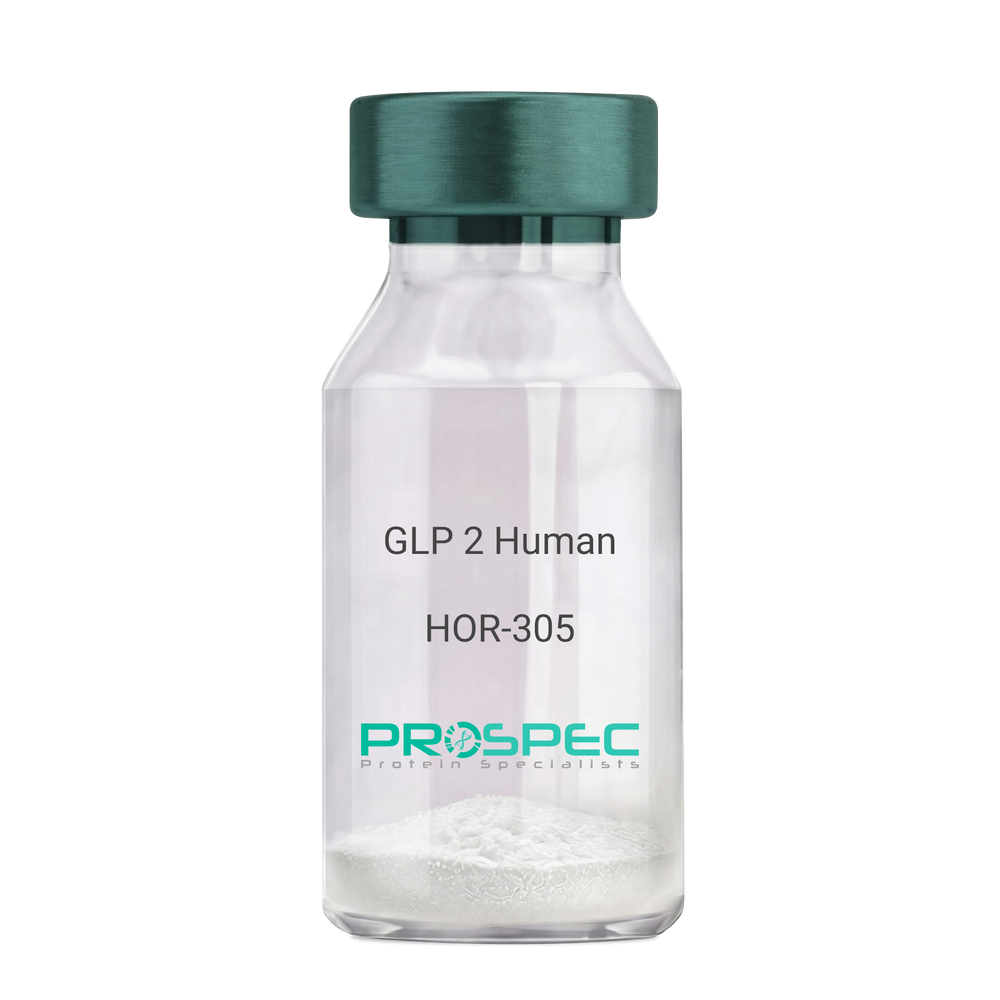
    GLP 2 Human

    Description:

    Human GLP-2

    GLP2, GLP-2, GLP 2.

    Product # :

    HOR-305

    Price :

    Quantity :

    Shipping Method :

    Room Temp Icon

    Shipped at Room temp

    Add To Cart

    More Info

    • description
    • formulation
    • purity
    • More Info

    Description

    GLP-2 contains 34 amino acids having a molecular mass of 3922.35 Dalton.

    Formulation

    The protein (1mg/ml) was lyophilized with no additives.

    Purity

    Greater than 98.0% as determined by RP-HPLC.

    More Info

    • Introduction

      GLP-2 functions as an intestinal growth factor, which stimulates intestinal epithelial growth. GLP2 is involved in diabetes-associated bowel growth. GLP2 enhances cell differentiation, playing a role as a cytokine and in tissue regeneration, and mediating cytoprotection. GLP2 is invloded numerous therapeutic applications. GLP2 regulates signaling pathways coupled to cell proliferation and cell death by apoptosis.
      GLP-2 is produced by specific post-translational proteolytic cleavage of proGLP. GLP-2 is manufactured by the intestinal endocrine L cell and by several neurons in the central nervous system.

    • Synonyms

      GLP2, GLP-2, GLP 2, Glucagon Like Peptide-2.

    • Physical Appearance

      Sterile Filtered White lyophilized (freeze-dried) powder.

    • Stability

      Lyophilized GLP2 although stable at room temperature for 3 weeks, should be stored desiccated below -18°C. Upon reconstitution GLP2 should be stored at 4°C between 2-7 days and for future use below -18°C.For long term storage it is recommended to add a carrier protein (0.1% HSA or BSA).Please prevent freeze-thaw cycles.

    • Solubility

      It is recommended to reconstitute the lyophilized GLP-2 in sterile 18MΩ-cm H2O not less than 100 µg/ml, which can then be further diluted to other aqueous solutions.

    • Amino Acid Sequence

      His-Ala-Asp-Gly-Ser-Phe-Ser-Asp-Glu-Met-Asn-Thr-Ile-Leu-Asp-Asn-Leu-Ala-Ala-Arg-Asp-Phe-Ile-Asn-Trp-Leu-Ile-Gln-Thr-Lys-Ile-Thr-Asp-Arg.

    • Background

      What is the molecular weight/Mw of GLP 2 HUMAN Protein?
      GLP 2 HUMAN Protein has a total Mw of 3.92kDa.


      What is the Purity of GLP 2 HUMAN Protein?
      GLP 2 HUMAN Protein is >95% pure as determined by SDS-PAGE.

      What is the Biological Activity of GLP 2 HUMAN Protein?
      The biological functionality of GLP 2 HUMAN Protein will be determined in the future.

      What is the amino acid sequence of GLP 2 HUMAN Protein?
      His-Ala-Asp-Gly-Ser-Phe-Ser-Asp-Glu-Met-Asn-Thr-Ile-Leu-Asp-Asn-Leu-Ala-Ala-Arg-Asp-Phe-Ile-Asn-Trp-Leu-Ile-Gln-Thr-Lys-Ile-Thr-Asp-Arg.

      What applications can GLP 2 HUMAN Protein be used in?
      GLP 2 HUMAN Protein can probably be used in western blot, ELISA and Lateral Flow.

      What is the endotoxin level for GLP 2 HUMAN Protein?
      The endotoxin level is minimal, GLP 2 HUMAN Protein was purified using conventional chromatography techniques.


    ProSpec's products are furnished for LABORATORY RESEARCH USE ONLY. The product may not be used as drugs, agricultural or pesticidal products, food additives or household chemicals.

    Glp 2 Human
  • View Data Sheet

    Name :

    Trypsin-2 Human

    Description:

    Trypsin-2 Human Recombinant

    Product # :

    PRO-770

    Price :

    Quantity :

    Shipping Method :

    Room Temp Icon

    Shipped at Room temp

    Add To Cart

    More Info

    • description
    • source
    • formulation
    • purity
    • biological activity
    • More Info

    Description

    Recombinant Human Trypsin-2 expressed in E.Coli having an Mw of 24kDa is purified by standard chromatography techniques.

    Source

    Escherichia Coli.

    Formulation

    The protein was lyophilized without any additives.

    Purity

    Greater than 90% as determined by SDS-PAGE.

    Biological Activity

    2,800 units/mg.

    More Info

    • Introduction

      Trypsin (EC3.4.21.4) is part of the serine protease family. Trypsin cleaves lysine and arginine at the C-terminal side of the peptide. The hydrolysis rate is slower if an acidic residue is on either sides of the cleavage site and no cleavage occurs if a proline residue is on the carboxyl side of the cleavage site. Trypsin optimum pH is pH-7 to 9. Trypsin will also hydrolyze ester and amide linkages of synthetic derivatives of amino acids such as: benzoyl L-arginine ethyl ester (BAEE), p-toluenesulfonyl- L-arginine methyl ester (TAME), tosyl-L-arginine methyl ester, N-α-benzoyl-L-arginine p-nitroanilide (BAPNA), L-lysyl-p-nitroanilide, and benzoyl-L-tyrosine ethyl ester (BTEE). Serine protease inhibitors that inhibit recombinant trypsin include TLCK (N-p-tosyl-L-lysine chloromethyl ketone), PMSF (phenylmethanesulfonyl fluoride), benzamidine, soybean trypsin inhibitor, and ovomucoid.

    • Physical Appearance

      Sterile Filtered lyophilized powder.

    • Stability

      Recombinant Human Trypsin although stable at room temp for 1 week, should be stored desiccated below -18°C. For long term storage it is recommended to add a carrier protein (0.1% HSA or BSA). Please prevent freeze-thaw cycles.

    • Solubility

      It is recommended to reconstitute the lyophilized Human Trypsin in sterile 1mM HCl or 50mM HAC not less than 100µg/ml, which can then be further diluted to other aqueous solutions.

    • Applications

      Trypsin digestion: the suggested ratio is 1:50 to 1:1000 (w/w).

    • Unit Definition

      One USP unit of trypsin activity will produce a Delta A253 of 0.003 per minute in a reaction volume of 3.0ml at pH7.6 and 25°C, with BAEE as a substrate (1cm light path).

    ProSpec's products are furnished for LABORATORY RESEARCH USE ONLY. The product may not be used as drugs, agricultural or pesticidal products, food additives or household chemicals.

    Trypsin Human
  • View Data Sheet

    Name :

    SARS Spike (306-515)

    Description:

    Coronavirus Spike Receptor Binding Domain (306-515 a.a.), Recombinant

    Spike glycoprotein, S glycoprotein, Peplomer protein, E2 glycoprotein precursor, Severe acute repiratory Syndrome-related Coronavirus, SARS, SRAS-CoV, SARS-CoV1, E2.

    Product # :

    SARS-046

    Price :

    Quantity :

    Shipping Method :

    Ice Icon

    Shipped with Ice Packs

    Add To Cart

    More Info

    • description
    • source
    • formulation
    • purity
    • biological activity
    • More Info

    Description

    The recombinant SARS Spike containing a total of 220 amino acids (306-515) and having a calculated Mw of 24.8 kDa.SARS Spike is fused to a 6 amino acid His-tag at C-terminus,and is purified by proprietary chromatographic techniques.

    Source

    HEK293 Cells.

    Formulation

    The SARS Spike (306-515) solution (0.5mg/ml) contains Phosphate-Buffered Saline (pH 7.4) and 10% Glycerol.

    Purity

    Greater than 95.0% as determined by SDS-PAGE.

    Biological Activity

    Measured by its binding ability in a functional ELISA with Human ACE-2 (CAT# enz-1159).

    More Info

    • Introduction

      SARS Coronavirus is an enveloped virus containing 3 outer structural proteins, namely the membrane (M), envelope (E), and spike (S) proteins. Spike (S)-glycoprotein of the virus interacts with a cellular receptor and mediates membrane fusion to allow viral entry into susceptible target cells. Accordingly, S-protein takes part in virus infection cycle and is the primary target of neutralizing antibodies.

    • Synonyms

      Spike glycoprotein, S glycoprotein, Peplomer protein, E2 glycoprotein precursor, Severe acute repiratory Syndrome-related Coronavirus, SARS, SRAS-CoV, SARS-CoV1, E2.

    • Physical Appearance

      Sterile Filtered colorless solution.

    • Stability

      Store at 4°C if entire vial will be used within 2-4 weeks. Store, frozen at -20°C for longer periods of time. For long term storage it is recommended to add a carrier protein (0.1% HSA or BSA). Avoid multiple freeze-thaw cycles.

    • Amino Acid Sequence

      DGSMRVVPSG DVVRFPNITN LCPFGEVFNA TKFPSVYAWE RKKISNCVAD YSVLYNSTFF STFKCYGVSA TKLNDLCFSN VYADSFVVKG DDVRQIAPGQ TGVIADYNYK LPDDFMGCVL AWNTRNIDAT STGNYNYKYR YLRHGKLRPF ERDISNVPFS PDGKPCTPPA LNCYWPLNDY GFYTTTGIGY QPYRVVVLSF ELLNAPATVC GPKLHHHHHH

    ProSpec's products are furnished for LABORATORY RESEARCH USE ONLY. The product may not be used as drugs, agricultural or pesticidal products, food additives or household chemicals.

    product_image.jpg
  • View Data Sheet

    Name :

    A2M Human

    Description:

    Macroglobulin Alpha-2 Human

    Alpha-2-macroglobulin, Alpha-2-M, A2M, CPAMD5, FWP007, S863-7, alpha 2M, DKFZp779B086.

    Product # :

    PRO-551

    Price :

    Quantity :

    Shipping Method :

    Room Temp Icon

    Shipped at Room temp

    Add To Cart

    More Info

    • description
    • source
    • formulation
    • purity
    • More Info

    Description

    Human Alpha-2 Macroglobulin is a tetrameric glycoprotein, produced in Human plasma and having a molecular mass of 725 kDa.

    Source

    Human Plasma.

    Formulation

    Lyophilized from a concentrated solution containing 5mM potassium phosphate buffer, pH 6.5 and 1:1 ratio (w/w) of Glycine.

    Purity

    Greater than 95.0%.

    More Info

    • Introduction

      Alpha-2 Macroglobulin is a serine proteases inhibitor, which inhibits coagulation by inactivating thrombin and Kallikrein, it inhibits fibrinolysis by inactivating plasmin and involved in transport. Alpha-2-Macroglobulin is a large plasma protein, which is produced by the liver, it’s composed of 4 identical subunits bound together by -S-S- bonds. A2M is able to inactivate many kinds of proteinases (including serine-, cysteine-, aspartic- and metalloproteinases). A2M has a 35 amino acid "bait" region in its structure. Proteinases bind and cleave the “bait” region become bound to A2M. Macrophage receptors recognize the proteinase-A2M complex and clear it from the system. A2M binds to and removes MMP-2 and MMP-9 (active forms of the gelatinase) from the circulation using scavenger receptors on the phagocytes. The levels of Alpha-2-macroglobulin are increased in nephrotic syndrome which is a condition where the kidneys start to leak out some of the smaller blood proteins. Due to its large size, A2-macroglobulin is retained in the bloodstream. Increased production of all proteins causes A2-macroglobulin concentration to increase. Chronic renal failure might lead to amyloid by alpha-2-macroglobulin. A2M is raised in cirrhosis, pregnancy and diabetes.

    • Synonyms

      Alpha-2-macroglobulin, Alpha-2-M, A2M, CPAMD5, FWP007, S863-7, alpha 2M, DKFZp779B086.

    • Physical Appearance

      Sterile Filtered White lyophilized (freeze-dried) powder.

    • Stability

      Lyophilized A2M protein although stable at room temperature for 3 weeks, should be stored desiccated below -18°C. Upon reconstitution and filter sterilization A2M can be stored at 4°C for up to 4 weeks. For long term storage and more diluted solutions it is recommended to add a carrier protein (0.1% HSA or BSA). Please prevent freeze-thaw cycles.

    • Solubility

      It is recommended to reconstitute the lyophilized A2M in sterile 18MΩ-cm H2O.

    • Human Virus Test

      Serum from each donor has been tested and found negative for antibody to HIV-1, HIV-2, HCV and HBV.

    ProSpec's products are furnished for LABORATORY RESEARCH USE ONLY. The product may not be used as drugs, agricultural or pesticidal products, food additives or household chemicals.

    Macroglobulin Alpha 2 Human
  • View Data Sheet

    Name :

    Leptin-A Tilapia

    Description:

    Leptin-A Tilapia Recombinant

    Product # :

    CYT-1109

    Price :

    Quantity :

    Shipping Method :

    Room Temp Icon

    Shipped at Room temp

    Add To Cart

    More Info

    • description
    • source
    • formulation
    • purity
    • biological activity
    • More Info

    Description

    Leptin-A Tilapia Recombinant produced in E.Coli is a single, non-glycosylated polypeptide chain containing 161 amino acids and having a molecular mass of 16,491 Dalton. The Leptin-A Tilapia is purified by proprietary chromatographic techniques.

    Source

    Escherichia Coli.

    Formulation

    Lyophilized from a concentrated (1mg/ml) solution containing NaHCO3 at 1:2 salt: protein ratio.

    Purity

    Greater than 95.0% as determined by:
    (a) Gel filtration analysis.
    (b) Analysis by SDS-PAGE.

    Biological Activity

    Tilapia leptins were found to be biologically active in promoting proliferation of BAF/3 cells stably transfected with the long form of human leptin receptor, but their activity was lower than that of mammalian leptin. Furthermore, the Tilapia leptins were biologically active in promoting STAT‐LUC activation in COS7 cells transfected with Tilapia leptin receptor but not in cells transfected with human leptin receptor. Tilapia Leptin A was more active than Tilapia Leptin B.

    More Info

    • Introduction

      Leptin is a protein hormone. It is mainly produced in adipose cells that regulate energy homeostasis by restraining hunger. Leptin ties to nuclear receptors in the hypothalamus (arcuate nucleus). Similar to insulin resistance in type II diabetes, in obesity there is a decrease in the sensitivity towards leptin, ending in a failure to identify satiety, even in high levels of energy stores or leptin itself. Full-length cDNA encoding 2 leptin sequences (tLepA and tLepB) and 1 leptin receptor sequence (tLepR) exists in tilapia (Oreochromis niloticus). The full-length cDNA of tLepR is 3423 bp, encoding a protein of 1140 amino acid which contained all functionally important domains conserved among vertebrate leptin receptors. The cDNAs of tLepA and tLepB are 486 bp and 459 bp in length, encoding proteins of 161 aa and 152 aa, respectively. The three-dimensional structures of tLepA and tLepB demonstrates strong conservation of tertiary structure with that of human leptin comprised of 4 helixes.

    • Physical Appearance

      Sterile Filtered White lyophilized (freeze-dried) powder.

    • Stability

      Lyophilized Leptin-A Tilapia although stable at room temperature for 3 weeks, should be stored desiccated below -18°C. Upon reconstitution Leptin-A Tilapia should be stored at 4°C between 2-7 days and for future use below -18°C. For long term storage it is recommended to add a carrier protein (0.1% HSA or BSA). Please prevent freeze-thaw cycles.

    • Solubility

      It is recommended to reconstitute the lyophilized Leptin-A Tilapia in sterile water or 0.4% NaHCO3 adjusted to pH 8-9, not less than 100µg/ml, which can then be further diluted to other aqueous solutions.

    • Amino Acid Sequence

      The first six N-terminal amino acids of recombinant Tilapia leptin A are Ala-Pro-Leu-Pro-Val-Glu.

    • Protein content

      Protein quantitation was carried out by UV spectroscopy at 280 nm using the absorbency value of 1.33 for 1 mg/ml Leptin-A Tilapia as the extinction coefficient for a 0.1% (1mg/ml) solution at pH 8.0. This value is calculated by the DNAman computer analysis program of protein sequences.

    ProSpec's products are furnished for LABORATORY RESEARCH USE ONLY. The product may not be used as drugs, agricultural or pesticidal products, food additives or household chemicals.

    Leptin A
  • View Data Sheet

    Name :

    SPOCK3 Mouse

    Description:

    Sparc/Osteonectin 3 Mouse Recombinant

    Testican-3, SPARC/osteonectin, CWCV, Kazal-like domains proteoglycan 3, Spock3.

    Product # :

    PRO-2328

    Price :

    Quantity :

    Shipping Method :

    Ice Icon

    Shipped with Ice Packs

    Add To Cart

    More Info

    • description
    • source
    • formulation
    • purity
    • More Info

    Description

    SPOCK3 Mouse Recombinant produced in Sf9 Baculovirus cells is a single, glycosylated polypeptide chain containing 423 amino acids (22-436 a.a.) and having a molecular mass of 47.9kDa (Migrates at 40-57kDa on SDS-PAGE under reducing conditions).SPOCK3 is expressed with an 8 amino acid His tag at C-Terminus and purified by proprietary chromatographic techniques.

    Source

    Sf9, Baculovirus cells.

    Formulation

    SPOCK3 protein solution (0.25mg/ml) containing Phosphate Buffered Saline (pH 7.4) and 10% glycerol.

    Purity

    Greater than 90% as determined by SDS-PAGE.

    More Info

    • Introduction

      Testican-3 (Spock3) is a nervous system-expressed heparan sulfate proteoglycan belonging to a subgroup of the BM-40/SPARC/osteonectin family, whose role of in brain development is unclear. Spock3 inhibits the processing of pro-matrix metalloproteinase 2(MMP-2) by MT1-MMP and MT3-MMP. Spock3 is mostly confined to the developmental stage of the brain.

    • Synonyms

      Testican-3, SPARC/osteonectin, CWCV, Kazal-like domains proteoglycan 3, Spock3.

    • Physical Appearance

      Sterile Filtered colorless solution.

    • Stability

      Store at 4°C if entire vial will be used within 2-4 weeks. Store, frozen at -20°C for longer periods of time. For long term storage it is recommended to add a carrier protein (0.1% HSA or BSA).Avoid multiple freeze-thaw cycles.

    • Amino Acid Sequence

      AAAAVAVAGG RSDGGNFLDE KQWLTTISQY DKEVGQWNKF RDEVEDDYFR TWNPGKPFDQ ALDPAKDPCL KTKCSRHKVC ITQDAQTALC ISHRRLTHSM KEVGGSHKQW RGLPSSTCKP CPIAYASPVC GSDGHSYSSQ CKLEYQACVL GKQISIKCEG RCPCPSDKSM NIGRNVKRAC
      SDLEFREVAN RLRDWFKALH ESGSQNKKTK ALLRPERSRF DTSILPICKD SLGWMFNRLD TNYDLLLDQS ELGSIYLDKN EQCTKAFFNS CDTYKDSLIS NNEWCYCFQR QQDPPCHTEL SNIQKRQGIK KLLGQYIPLC DEDGYYKPTQ CHGSVGQCWC VDRYGNEVVG SRINGVADCA
      IDFEISGDFA SGDFREWTDD EGEEDDIMND KDDIEDDDED EGDDDDDGDV HDGYILEHHH HHH

    ProSpec's products are furnished for LABORATORY RESEARCH USE ONLY. The product may not be used as drugs, agricultural or pesticidal products, food additives or household chemicals.

    Spock3 Mouse
  • View Data Sheet

    Name :

    EMCN Human

    Description:

    Endomucin Human Recombinant

    Endomucin, Endomucin-2, Gastric cancer antigen Ga34, Mucin-14, MUC-14, EMCN, EMCN2, MUC14.

    Product # :

    PRO-1156

    Price :

    Quantity :

    Shipping Method :

    Ice Icon

    Shipped with Ice Packs

    Add To Cart

    More Info

    • description
    • source
    • formulation
    • purity
    • More Info

    Description

    EMCN Human Recombinant produced in E.Coli is a single, non-glycosylated polypeptide chain containing 197 amino acids (19-190 a.a) and having a molecular mass of 20.5kDa.EMCN is fused to a 25 amino acid His-tag at N-terminus & purified by proprietary chromatographic techniques.

    Source

    Escherichia Coli.

    Formulation

    EMCN protein solution (0.25mg/ml) containing 20mM Tris-HCl buffer, pH8.0, 10% glycerol, 1mM DTT and 100mM NaCl.

    Purity

    Greater than 90% as determined by SDS-PAGE.

    More Info

    • Introduction

      Endothelial sialomucin (Endomucin) interferes with the assembly of focal adhesion complexes and inhibits interaction between cells and the extracellular matrix. Endomucin is expressed in the heart, kidney and lung.

    • Synonyms

      Endomucin, Endomucin-2, Gastric cancer antigen Ga34, Mucin-14, MUC-14, EMCN, EMCN2, MUC14.

    • Physical Appearance

      Sterile filtered colorless solution.

    • Stability

      Store at 4°C if entire vial will be used within 2-4 weeks. Store, frozen at -20°C for longer periods of time. For long term storage it is recommended to add a carrier protein (0.1% HSA or BSA).Avoid multiple freeze-thaw cycles.

    • Amino Acid Sequence

      MGSSHHHHHH SSGLVPRGSH MGSHMNSTGV LEAANNSLVV TTTKPSITTP NTESLQKNVV TPTTGTTPKG TITNELLKMS LMSTATFLTS KDEGLKATTT DVRKNDSIIS NVTVTSVTLP NAVSTLQSSK PKTETQSSIK TTEIPGSVLQ PDASPSKTGT LTSIPVTIPE NTSQSQVIGT EGGKNASTSA TSRSYSS.

    ProSpec's products are furnished for LABORATORY RESEARCH USE ONLY. The product may not be used as drugs, agricultural or pesticidal products, food additives or household chemicals.

    Emcn Human
  • View Data Sheet

    Name :

    FGF 1 Human

    Description:

    Fibroblast Growth Factor-Acidic Human Recombinant

    HBGF-1, ECGF-beta, FIBP, FGFIBP, FIBP-1, ECGF, ECGFA, GLIO703, FGF1, FGF-a.

    Product # :

    CYT-264

    Price :

    Quantity :

    Shipping Method :

    Room Temp Icon

    Shipped at Room temp

    Add To Cart

    More Info

    • description
    • source
    • formulation
    • purity
    • biological activity
    • More Info

    Description

    Fibroblast Growth Factor-acidic Human Recombinant (FGF-1) produced in E.Coli is a single, non-glycosylated, polypeptide chain containing 140 amino acids and having a molecular mass of approximately 15.8kDa.The FGF acidic is purified by proprietary chromatographic techniques.

    Source

    Escherichia Coli.

    Formulation

    The protein was lyophilized from a concentrated (1mg/ml) sterile solution containing PBS, pH 7.4.

    Purity

    Greater than 95.0% as determined by:
    (a) Analysis by RP-HPLC.
    (b) Analysis by SDS-PAGE.

    Biological Activity

    The ED50, calculated by the dose-dependant proliferation of mouse BALB/c 3T3 cells is <0.5 ng/ml, corresponding to a specific activity of > 2,000,000IU/mg.

    More Info

    • Introduction

      Acidic fibroblast growth factor is a member of the fibroblast growth factor (FGF) family. FGF family members possess broad mitogenic and cell survival activities, and are involved in a variety of biological processes, including embryonic development, cell growth, morphogenesis, tissue repair, tumor growth and invasion. This protein functions as a modifier of endothelial cell migration and proliferation, as well as an angiogenic factor. It acts as a mitogen for a variety of mesoderm- and neuroectoderm-derived cells in vitro, thus is thought to be involved in organogenesis.
      Three alternatively spliced variants encoding different isoforms have been described.
      The hep-binding growth factors are angiogenic agents in vivo and are potent mitogens for a variety of cell types in vitro. There are differences in the tissue distribution and concentration of these 2 growth factors.

    • Synonyms

      HBGF-1, ECGF-beta, FIBP, FGFIBP, FIBP-1, ECGF, ECGFA, GLIO703, FGF1, FGF-a.

    • Physical Appearance

      Sterile Filtered White lyophilized (freeze-dried) powder.

    • Stability

      Lyophilized Fibroblast Growth Factor-1 although stable at room temperature for 3 weeks, should be stored desiccated below -18°C. Upon reconstitution FGF-a should be stored at 4°C between 2-7 days and for future use below -18°C.Please prevent freeze-thaw cycles.

    • Solubility

      It is recommended to reconstitute the lyophilized Fibroblast Growth Factor-acidic in sterile 18MΩ-cm H2O at 4 degrees Celsius at a concentration of 0.1mg-0.25mg per 1ml. Allow sample to sit for 5 min. at 4 degrees, spin to remove precipitant.

    • Amino Acid Sequence

      MFNLPPGNYK KPKLLYCSNG GHFLRILPDG TVDGTRDRSD QHIQLQLSAE SVGEVYIKST ETGQYLAMDT DGLLYGSQTP NEECLFLERL EENHYNTYIS KKHAEKNWFV GLKKNGSCKR GPRTHYGQKA ILFLPLPVSS D.

    • Background

      What is the molecular weight/Mw of FGF 1 Protein?
      FGF 1 Protein has a total Mw of 15.8kDa.

      What is the source or expression system of FGF 1 Protein?
      Escherichia Coli.

      What is the Purity of FGF 1 Protein?
      FGF 1 Protein is >95% pure as determined by SDS-PAGE.

      What is the Biological Activity of FGF 1 Protein?
      The ED50, calculated by the dose-dependant proliferation of mouse BALB/c 3T3 cells is <0.5 ng/ml, corresponding to a specific activity of > 2,000,000IU/mg.

      What is the amino acid sequence of FGF 1 Protein?
      MFNLPPGNYK KPKLLYCSNG GHFLRILPDG TVDGTRDRSD QHIQLQLSAE SVGEVYIKST ETGQYLAMDT DGLLYGSQTP NEECLFLERL EENHYNTYIS KKHAEKNWFV GLKKNGSCKR GPRTHYGQKA ILFLPLPVSS D.

      What applications can FGF 1 Protein be used in?
      FGF 1 Protein can probably be used in western blot, ELISA and Lateral Flow.

      What is the endotoxin level for FGF 1 Protein?
      The endotoxin level is minimal, FGF 1 Protein was purified using conventional chromatography techniques.

    ProSpec's products are furnished for LABORATORY RESEARCH USE ONLY. The product may not be used as drugs, agricultural or pesticidal products, food additives or household chemicals.

    Fgf 1 Human
  • View Data Sheet

    Name :

    GKN1 Human

    Description:

    Gastrokine 1 Human Recombinant

    BRICHOS domain containing 1, 18 kDa antrum mucosa protein, gastrokine 1, Protein CA11, AMP-18, BRICD1, foveolin, FOV.

    Product # :

    PRO-1206

    Price :

    Quantity :

    Shipping Method :

    Ice Icon

    Shipped with Ice Packs

    Add To Cart

    More Info

    • description
    • source
    • formulation
    • purity
    • More Info

    Description

    GKN1 Human Recombinant produced in E. coli is a single polypeptide chain containing 223 amino acids (1-199) and having a molecular mass of 24.5 kDa.GKN1 is fused to a 24 amino acid His-tag at N-terminus & purified by proprietary chromatographic techniques.

    Source

    E.coli.

    Formulation

    The GKN1 solution (0.25mg/1ml) contains 20mM Tris-HCl buffer (pH 8.0), 0.1M NaCl, 1mM DTT and 10% glycerol.

    Purity

    Greater than 85% as determined by SDS-PAGE.

    More Info

    • Introduction

      Gastrokine-1 (GKN1) is a member of the gastrokine family. GKN1 has mitogenic activity and is involved in preserving the integrity of the gastric mucosal epithelium. GKN1 is down-regulated in human gastric cancer tissue in comparison to normal gastric mucosa. GKN1 is expressed in the stomach; however no expression is detected in cancer tissue or gastric cancer cell lines.

    • Synonyms

      BRICHOS domain containing 1, 18 kDa antrum mucosa protein, gastrokine 1, Protein CA11, AMP-18, BRICD1, foveolin, FOV.

    • Physical Appearance

      Sterile Filtered colorless solution.

    • Stability

      Store at 4°C if entire vial will be used within 2-4 weeks. Store, frozen at -20°C for longer periods of time. For long term storage it is recommended to add a carrier protein (0.1% HSA or BSA).Avoid multiple freeze-thaw cycles.

    • Amino Acid Sequence

      MGSSHHHHHH SSGLVPRGSH MGSH MLAYSS VHCFREDKMK FTIVFAGLLG VFLAPALANY NINVNDDNNN AGSGQQSVSV NNEHNVANVD NNNGWDSWNS IWDYGNGFAA TRLFQKKTCI VHKMNKEVMP SIQSLDALVK EKKLQGKGPG GPPPKGLMYS VNPNKVDDLS KFGKNIANMC RGIPTYMAEE MQEASLFFYS GTCYTTSVLW IVDISFCGDT VEN.

    ProSpec's products are furnished for LABORATORY RESEARCH USE ONLY. The product may not be used as drugs, agricultural or pesticidal products, food additives or household chemicals.

    Gkn1 Human
  • View Data Sheet

    Name :

    Streptavidin-NC

    Description:

    Streptavidin-NC Recombinant

    Product # :

    PRO-338

    Price :

    Quantity :

    Shipping Method :

    Ice Icon

    Shipped with Ice Packs

    Add To Cart

    More Info

    • description
    • source
    • formulation
    • purity
    • More Info

    Description

    Recombinant Streptavidin-NC produced in E.Coli is a single, non-glycosylated, polypeptide chain having a molecular mass of 24kDa. Streptavidin-NC is engineered to bind to nitrocellulose.

    Source

    Escherichia Coli.

    Formulation

    The sterile solution contains 10mM K2HPO4-KH2PO4, pH 7.3.

    Purity

    Greater than 93.0% as determined by SDS-PAGE.

    More Info

    • Introduction

      Streptavidin is a tetrameric protein secreted by Streptomyces avidinii which binds firmly to biotin. Streptavidin is wilyde used in molecular biology through its unique high affinity for the vitamin biotin. The dissociation constant (Kd) of the biotin-streptavidin complex is about ~10-15 mol/L. The strong affinity recognition of biotin and biotinylated molecules has made streptavidin one of the most important components in diagnostics and laboratory kits. The streptavidin/biotin system has one of the biggest free energies of association of yet observed for noncovalent binding of a protein and small ligand in aqueous solution (K_assoc = 10**14). The complexes are also extremely stable over a wide range of temperature and pH.

    • Physical Appearance

      Sterile Liquid formulation.

    • Stability

      Streptavidin-NC although stable at 4°C for 3 weeks, should be stored below -18°C. Please prevent freeze thaw cycles.

    ProSpec's products are furnished for LABORATORY RESEARCH USE ONLY. The product may not be used as drugs, agricultural or pesticidal products, food additives or household chemicals.

    Streptavidin Nc
  • View Data Sheet

    Name :

    ProNGF Human

    Description:

    Pro-Nerve Growth Factor Human Recombinant

    Human Pro-NGF, ProNGF, NGFB.

    Product # :

    CYT-426

    Price :

    Quantity :

    Shipping Method :

    Room Temp Icon

    Shipped at Room temp

    Add To Cart

    More Info

    • description
    • source
    • formulation
    • purity
    • More Info

    Description

    Pro-NGF Human Recombinant produced in E.Coli is a single, non-glycosylated, polypeptide chain containing 224 amino acids and having a molecular mass of 25 kDa.ProNGF Human Recombinant is purified by proprietary chromatographic techniques.

    Source

    Escherichia Coli.

    Formulation

    ProNGF was lyophilized from a 0.2 μM filtered solution of 20m Tris-HCL, 0.5M NaCl, 5% Trehalose, 5% Mannitol. 0.01% Tween-80 and 1mM EDTA pH-8.

    Purity

    Greater than 95.0% as determined by SDS-PAGE.

    More Info

    • Synonyms

      Human Pro-NGF, ProNGF, NGFB.

    • Physical Appearance

      Sterile Filtered White lyophilized (freeze-dried) powder.

    • Stability

      Lyophilized ProNGF although stable at room temperature for 3 weeks, should be stored desiccated below -18°C. Upon reconstitution ProNGF should be stored at 4°C between 2-7 days and for future use below -18°C. Please prevent freeze-thaw cycles.

    • Solubility

      It is recommended to reconstitute the lyophilized ProNGF in distilled water to a concentration no less than 100 µg/ml, which can then be further diluted to other aqueous solutions.

    • Amino Acid Sequence

      MEPHSESNVPAGHTIPQAHWTKLQHSLDTALRRARSAPAAAIAARVAGQTRNI
      TVDPRLFKKRRLRSPRVLFSTQPPREAADTQDLDFEVGGAAPFNRTHRSKRS
      SSHPIFHRGEFSVCDSVSVWVGDKTTATDIKGKEVMVLGEVNINNSVFKQYFFET
      KCRDPNPVDSGCRGIDSKHWNSYCTTTHTFVKALTMDGKQAAWRFIRIDTAC
      VCVLSRKAVRRA.

    • Background

      Pro-Nerve Growth Factor Human Recombinant: Unveiling its Potential in Neuroregulation and Disease Pathogenesis

      Abstract:

      Pro-Nerve Growth Factor (Pro-NGF) human recombinant is a crucial precursor protein involved in neuronal development, survival, and degenerative processes. This research paper aims to provide a comprehensive analysis of Pro-NGF, including its characteristics, processing mechanisms, and implications in neuroregulation and disease pathogenesis. Additionally, innovative methodologies for the production and manipulation of Pro-NGF human recombinant are proposed, highlighting its potential as a therapeutic target for neurological disorders and neurodegenerative diseases.

      Introduction:

      Neuroregulation and maintenance of neuronal health are intricate processes governed by a network of signaling molecules. Pro-NGF, the precursor form of Nerve Growth Factor (NGF), acts as a key player in neuronal development, synaptic plasticity, and cell survival. This paper delves into the distinctive features of Pro-NGF and presents novel approaches for the production and manipulation of Pro-NGF human recombinant, aiming to unravel its role in neuroregulation and disease pathogenesis.

      Characteristics and Processing Mechanisms:

      Pro-NGF is initially synthesized as an inactive precursor, requiring proteolytic cleavage for conversion into mature NGF. The processing of Pro-NGF involves the action of proteases, such as furin, and the formation of distinct protein complexes. The balance between Pro-NGF and mature NGF levels plays a critical role in modulating neuronal function and fate, influencing processes such as neuronal survival, axonal growth, and synaptic plasticity.

      Production and Manipulation of Pro-NGF Human Recombinant:

      Efficient production methodologies and manipulation strategies are crucial for studying the role of Pro-NGF in neuroregulation and disease pathogenesis. Recombinant protein expression systems, including mammalian cell culture and bacterial expression systems, have been employed to produce functional Pro-NGF human recombinant. Techniques such as mutagenesis, protein purification, and specific inhibitors targeting Pro-NGF processing pathways enable the manipulation of Pro-NGF levels and investigation of its downstream effects.

      Implications in Neuroregulation and Disease Pathogenesis:

      Pro-NGF human recombinant holds significant potential in understanding the intricate mechanisms underlying neuroregulation and disease pathogenesis. Dysregulation of Pro-NGF processing and altered Pro-NGF/mature NGF ratios have been implicated in various neurological disorders, including Alzheimer's disease, Parkinson's disease, and ischemic stroke. Manipulating Pro-NGF levels and the balance between its mature form may offer therapeutic strategies for modulating neurotrophic signaling and promoting neuronal health in these conditions.

      Conclusion:

      Pro-NGF human recombinant emerges as a key regulator in neuroregulation and disease pathogenesis, offering promising avenues for therapeutic intervention. Enhancing our understanding of Pro-NGF processing mechanisms and its downstream signaling cascades will provide valuable insights into neurodevelopment, neurodegeneration, and potential therapeutic strategies. Targeting Pro-NGF as a therapeutic intervention may hold immense promise in treating neurological disorders and promoting neuronal health.

      What is the molecular weight / Mw of ProNGF Protein?
      ProNGF Protein has a total Mw of 25kDa.

      What is the source or expression system of ProNGF Protein?
      Escherichia Coli.

      What is the Purity of ProNGF Protein?
      ProNGF Protein is >95% pure as determined by SDS-PAGE.


      What is the Biological Activity of ProNGF Protein?
      The biological functionality of ProNGF Protein will be determined in the future.

      What is the amino acid sequence of ProNGF Protein?
      MEPHSESNVPAGHTIPQAHWTKLQHSLDTALRRARSAPAAAIAARVAGQTRNI
      TVDPRLFKKRRLRSPRVLFSTQPPREAADTQDLDFEVGGAAPFNRTHRSKRS
      SSHPIFHRGEFSVCDSVSVWVGDKTTATDIKGKEVMVLGEVNINNSVFKQYFFET
      KCRDPNPVDSGCRGIDSKHWNSYCTTTHTFVKALTMDGKQAAWRFIRIDTAC
      VCVLSRKAVRRA

      What applications can ProNGF Protein be used in?
      Tissue Factor Protein can probably be used in western blot, ELISA and Lateral Flow.

      What is the endotoxin level for ProNGF Protein?
      The endotoxin level is minimal, ProNGF Protein was purified using conventional chromatography techniques

    ProSpec's products are furnished for LABORATORY RESEARCH USE ONLY. The product may not be used as drugs, agricultural or pesticidal products, food additives or household chemicals.

    Pro Ngf Human
  • View Data Sheet

    Name :

    Activin-A Human Plant-Active

    Description:

    Activin-A Human Recombinant, Plant-Active

    Inhba, Inhibin beta A, FSH releasing protein.

    Product # :

    CYT-414

    Price :

    Quantity :

    Shipping Method :

    Room Temp Icon

    Shipped at Room temp

    Add To Cart

    More Info

    • description
    • source
    • formulation
    • purity
    • biological activity
    • More Info

    Description

    Active form Activin-A Human Recombinant produced in Plant is a homodimeric, glycosylated, polypeptide chain containing 2 x 116 amino acids and having a molecular weight of 27.4kDa.The Active form Activin-A is fused to a 6-His tag at N-terminus and purified by standard chromatographic techniques.

    Source

    Nicotiana benthamiana.

    Formulation

    Active form Activin-A was lyophilized from a concentrated 1mg/ml protein solution containing 50mM Tris-HCl pH-7.4

    Purity

    Greater than 98% as obsereved by SDS-PAGE.

    Biological Activity

    The biological activity of INHBA is measured by its ability to inhibit mouse plasmacytoma cell line (MPC-11) cells proliferation ([3H]thymidine incorporation). ED50<5ng/ml.

    More Info

    • Introduction

      Activins are homodimers or heterodimers of the different β subunit isoforms, part of the TGFβ family. Mature Activin A has two 116 amino acids residues βA subunits (βA-βA). Activin displays an extensive variety of biological activities, including mesoderm induction, neural cell differentiation, bone remodelling, haematopoiesis, and reproductive physiology. Activins takes part in the production and regulation of hormones such as FSH, LH, GnRH and ACTH. Cells that are identified to express Activin A include fibroblasts, endothelial cells, hepatocytes, vascular smooth muscle cells, macrophages, keratinocytes, osteoclasts, bone marrow monocytes, prostatic epithelium, neurons, chondrocytes, osteoblasts, Leydig cells, Sertoli cells, and ovarian granulosa cells.

    • Synonyms

      Inhba, Inhibin beta A, FSH releasing protein.

    • Physical Appearance

      Lyophilized freeze dried powder.

    • Stability

      For long term storage it is recommended to add a carrier protein (0.1% HSA or BSA). Repeated freezing and thawing is not recommended.

    • Solubility

      INHBA protein should be reconstituted in distilled water to a concentration of 50 ug /ml. Due to the protein nature, dimmers and multimers may be observed.

    • Amino Acid Sequence

      HHHHHHGLECDGKVNICCKKQFFVSFKDIGWNDWIIAPSG
      YHANYCEGECPSHIAGTSGSSLSFHSTVINHYRMRGHSPFA
      NLKSCCVPTKLRPMSMLYYDDGQNIIKKDIQNMIVEECGCS.

    • Background

      What is the molecular weight / Mw of Activin A Protein?
      Activin A Protein has a total Mw of 27.4 kDa.

      What is the source or expression system of Activin A Protein?
      Nicotiana benthamiana.

      What is the Purity of Activin A Protein?
      Activin A Protein is >98% pure as determined by SDS-PAGE.

      What is the Biological Activity of Activin A Protein?
      The biological activity of INHBA is measured by its ability to inhibit mouse plasmacytoma cell line (MPC-11) cells proliferation ([3H]thymidine incorporation). ED50<5ng/ml.

      What is the endotoxin level for Activin A Protein?
      The endotoxin level is minimal, ACTIVIN A Protein was purified using conventional chromatography techniques.

      What is the amino acid sequence of ACTIVIN A Protein?HHHHHHGLECDGKVNICCKKQFFVSFKDIGWNDWIIAPSGYHANYCEGECPSHIAGTSGSSLSFHSTVINHYRMRGHSPFANLKSCCVPTKLRPMSMLYYDDGQNIIKKDIQNMIVEECGCS

      What applications can ACTIVIN-A Protein be used in?

      ACTIVIN A Protein can probably be used in western blot, ELISA and Lateral Flow.


    ProSpec's products are furnished for LABORATORY RESEARCH USE ONLY. The product may not be used as drugs, agricultural or pesticidal products, food additives or household chemicals.

    Activin A Active
  • View Data Sheet

    Name :

    B3GNT2 Human

    Description:

    Beta-1,3-N-Acetylglucosaminyltransferase 2 Human Recombinant

    B3GNT2, B3GN-T2, B3GNT, B3GNT-2, B3GNT1, BETA3GNT, BGnT-2, BGNT2, N-acetyllactosaminide beta-1,3-N-acetylglucosaminyltransferase 2, Beta-1,3-N-acetylglucosaminyltransferase 1, BGnT-1, Beta-1,3-Gn-T1, Beta3Gn-T1, Beta-1,3-galactosyltransferase 7, Beta-1,3-GalTase 7, Beta3Gal-T7, Beta3GalT7, b3Gal-T7, Beta-3-Gx-T7, beta-GlcNAc beta-1,3-galactosyltransferase 7, betaGal beta-1,3-N-acetylglucosaminyltransferase 2, BGnT-2, Beta-1,3-Gn-T2, Beta-1,3-N-acetylglucosaminyltransferase 2, Beta3Gn-T2, beta-N-acetylglucosamine beta-1,3-galactosyltransferase 7.

    Product # :

    ENZ-973

    Price :

    Quantity :

    Shipping Method :

    Ice Icon

    Shipped with Ice Packs

    Add To Cart

    More Info

    • description
    • source
    • formulation
    • purity
    • More Info

    Description

    B3GNT2 produced in Sf9 Baculovirus cells is a single, glycosylated polypeptide chain containing 375 amino acids (29-397a.a.) and having a molecular mass of 43.5kDa (Molecular size on SDS-PAGE will appear at approximately 40-57kDa). B3GNT2 is expressed with a 6 amino acid His tag at C-Terminus and purified by proprietary chromatographic techniques.

    Source

    Sf9, Baculovirus cells.

    Formulation

    B3GNT2 protein solution (0.5mg/ml) contains Phosphate Buffered Saline (pH 7.4) and 10% glycerol.

    Purity

    Greater than 90.0% as determined by SDS-PAGE.

    More Info

    • Introduction

      Beta-1,3-N-Acetylglucosaminyltransferase 2 (B3GNT2) is a part of the beta-1,3-N-acetylglucosaminyltransferase family which takes part in the synthesis of poly-N-acetyllactosamine. B3GNT2 is a type II transmembrane protein which prefers the substrate of lacto-N-neotetraose. B3GNT2 catalyzes the initiation and elongation of poly-N-acetyllactosamine chains and comprises the main polylactosamine synthase.

    • Synonyms

      B3GNT2, B3GN-T2, B3GNT, B3GNT-2, B3GNT1, BETA3GNT, BGnT-2, BGNT2, N-acetyllactosaminide beta-1,3-N-acetylglucosaminyltransferase 2, Beta-1,3-N-acetylglucosaminyltransferase 1, BGnT-1, Beta-1,3-Gn-T1, Beta3Gn-T1, Beta-1,3-galactosyltransferase 7, Beta-1,3-GalTase 7, Beta3Gal-T7, Beta3GalT7, b3Gal-T7, Beta-3-Gx-T7, beta-GlcNAc beta-1,3-galactosyltransferase 7, betaGal beta-1,3-N-acetylglucosaminyltransferase 2, BGnT-2, Beta-1,3-Gn-T2, Beta-1,3-N-acetylglucosaminyltransferase 2, Beta3Gn-T2, beta-N-acetylglucosamine beta-1,3-galactosyltransferase 7.

    • Physical Appearance

      Sterile Filtered colorless solution.

    • Stability

      Store at 4°C if entire vial will be used within 2-4 weeks. Store, frozen at -20°C for longer periods of time. For long term storage it is recommended to add a carrier protein (0.1% HSA or BSA). Avoid multiple freeze-thaw cycles.

    • Amino Acid Sequence

      ADPKSSSQEK NGKGEVIIPK EKFWKISTPP EAYWNREQEK LNRQYNPILS MLTNQTGEAG RLSNISHLNY CEPDLRVTSV VTGFNNLPDR FKDFLLYLRC RNYSLLIDQP DKCAKKPFLL LAIKSLTPHF ARRQAIRESW GQESNAGNQT VVRVFLLGQT PPEDNHPDLS DMLKFESEKH QDILMWNYRD TFFNLSLKEV LFLRWVSTSC PDTEFVFKGD DDVFVNTHHI LNYLNSLSKT KAKDLFIGDV IHNAGPHRDK KLKYYIPEVV YSGLYPPYAG GGGFLYSGHL ALRLYHITDQ VHLYPIDDVY TGMCLQKLGL VPEKHKGFRT FDIEEKNKNN ICSYVDLMLV HSRKPQEMID IWSQLQSAHL KCHHHHHH.

    ProSpec's products are furnished for LABORATORY RESEARCH USE ONLY. The product may not be used as drugs, agricultural or pesticidal products, food additives or household chemicals.

    B3Gnt2 Human
  • View Data Sheet

    Name :

    GALNT1 Human

    Description:

    Polypeptide N-Acetylgalactosaminyltransferase 1 Human Recombinant

    Polypeptide N-acetylgalactosaminyltransferase 1, GALNT1, GALNAC-T1

    Product # :

    enz-1098

    Price :

    Quantity :

    Shipping Method :

    Ice Icon

    Shipped with Ice Packs

    Add To Cart

    More Info

    • description
    • source
    • formulation
    • purity
    • biological activity
    • More Info

    Description

    GALNT1 produced in Sf9 Insect cells is a single, glycosylated polypeptide chain containing 528 amino acids (41-559a.a.) and having a molecular mass of 60.4kDa.GALNT1 is expressed with an 9 amino acid His tag at C-Terminus and purified by proprietary chromatographic techniques.

    Source

    Sf9, Insect cells.

    Formulation

    GALNT1 protein solution (1mg/ml) contains 20mM Tris-HCl buffer (pH 8.0) containing 0.1M NaCl and 10% glycerol.

    Purity

    Greater than 90.0% as determined by SDS-PAGE.

    Biological Activity

    The specific activity which is defined as the amount of enzyme that transfer 1.0 pmole of GalNAc from UDP-GalNAc to peptide EA2 per minute at pH 8.0 at 37C is > 300 pmol/min/ug.

    More Info

    • Introduction

      Polypeptide N-Acetylgalactosaminyltransferase 1 (Galnt1) is a part of the UDP-N-acetyl-alpha-D-galactosamine:polypeptide N-acetylgalactosaminyltransferase (GalNAc-T) family of enzymes. The initial reaction in O-linked oligosaccharide biosynthesis is catalyzed by Glant1, the transfer of an N-acetyl-D-galactosamine residue to a serine or threonine residue on the protein receptor. Moreover, Galnt1 is implicated in the glycosylation of proteins vital for bone formation for instance osteopontin and bone sialoprotein.

    • Synonyms

      Polypeptide N-acetylgalactosaminyltransferase 1, GALNT1, GALNAC-T1

    • Physical Appearance

      Sterile filtered colorless solution.

    • Stability

      Store at 4°C if entire vial will be used within 2-4 weeks. Store, frozen at -20°C for longer periods of time. For long term storage it is recommended to add a carrier protein (0.1% HSA or BSA).Avoid multiple freeze-thaw cycles.

    • Amino Acid Sequence

      ADPGLPAGDV LEPVQKPHEG PGEMGKPVVI PKEDQEKMKE MFKINQFNLM ASEMIALNRS
      LPDVRLEGCK TKVYPDNLPT TSVVIVFHNE AWSTLLRTVH SVINRSPRHM IEEIVLVDDA
      SERDFLKRPL ESYVKKLKVP VHVIRMEQRS GLIRARLKGA AVSKGQVITF LDAHCECTVG
      WLEPLLARIK HDRRTVVCPI IDVISDDTFE YMAGSDMTYG GFNWKLNFRW YPVPQREMDR
      RKGDRTLPVR TPTMAGGLFS IDRDYFQEIG TYDAGMDIWG GENLEISFRI WQCGGTLEIV
      TCSHVGHVFR KATPYTFPGG TGQIINKNNR RLAEVWMDEF KNFFYIISPG VTKVDYGDIS
      SRVGLRHKLQ CKPFSWYLEN IYPDSQIPRH YFSLGEIRNV ETNQCLDNMA RKENEKVGIF
      NCHGMGGNQV FSYTANKEIR TDDLCLDVSK LNGPVTMLKC HHLKGNQLWE YDPVKLTLQH
      VNSNQCLDKA TEEDSQVPSI RDCNGSRSQQ WLLRNVTLPE IFHHHHHH.

    ProSpec's products are furnished for LABORATORY RESEARCH USE ONLY. The product may not be used as drugs, agricultural or pesticidal products, food additives or household chemicals.

    product_image.jpg
  • 1
  • …
  • 37
  • 38
  • 39
  • 40
  • 41
  • 42
Your browser does not support the video tag.

Products

  • Cytokines
  • Growth Factors
  • Chemokines
  • CD Antigens
  • Neurotrophins
  • Hormones
  • Enzymes
  • Viral Antigens
  • Recombinant Proteins
  • Natural Proteins
  • Monoclonal Antibodies
  • Polyclonal Antibodies
  • Thermal Packaging

About

  • Company
  • Founder
  • Contribution
  • Contact Us
  • My Account

Ordering

  • Ordering Method
  • Ordering - Credit Card
  • Ordering PO
  • Shipping Fees
  • FAQ's

Legal

  • Terms & Conditions
  • Privacy
  • Site Map
  • info@prospecbio.com
  • Facebook
  • Instagram
  • Linkedin Profile

© 2026 ProSpec-Tany TechnoGene Ltd. All Rights Reserved.

  • Choosing a selection results in a full page refresh.
  • Opens in a new window.