Skip to content

High-quality research proteins.

  • 1-800-805-6531

  • Mon - Sat 8.00-18.00, Sun - Closed

  • info@prospecbio.com

  • PO Box 6591 East Brunswick NJ 08816

  • Products
    • Cytokines
    • Growth factors
    • Chemokines
    • Cd antigens
    • Neurotrophins
    • Hormones
    • Enzymes
    • Viral antigens
    • Recombinant proteins
    • Natural proteins
    • Monoclonal antibodies
    • Polyclonal antibodies
    • Thermal Packaging
  • About
    • Company
    • Founder
    • Contribution
  • Customers
    • Eastern Asia
    • Eastern Europe
    • North America
    • South America
    • South East Asia
    • Southern Asia
    • Western Europe
  • Ordering
    • Ordering Method
    • Ordering - Credit Card
    • Ordering - PO
    • Shipping Fees
    • FAQs
  • Services
    • DNA Cloning
    • Protein Expression
    • Monoclonal Antibody
    • Fermentation
    • Technology License
  • Contact us
Log in

Country/region

  • USD $ | Albania
  • USD $ | Andorra
  • USD $ | Argentina
  • USD $ | Armenia
  • USD $ | Australia
  • USD $ | Austria
  • USD $ | Azerbaijan
  • USD $ | Belarus
  • USD $ | Belgium
  • USD $ | Bolivia
  • USD $ | Brazil
  • USD $ | Bulgaria
  • USD $ | Cambodia
  • USD $ | Canada
  • USD $ | Chile
  • USD $ | China
  • USD $ | Colombia
  • USD $ | Costa Rica
  • USD $ | Croatia
  • USD $ | Cyprus
  • USD $ | Czechia
  • USD $ | Denmark
  • USD $ | Estonia
  • USD $ | Finland
  • USD $ | France
  • USD $ | Georgia
  • USD $ | Germany
  • USD $ | Greece
  • USD $ | Hong Kong SAR
  • USD $ | Hungary
  • USD $ | Iceland
  • USD $ | India
  • USD $ | Ireland
  • USD $ | Israel
  • USD $ | Italy
  • USD $ | Japan
  • USD $ | Kazakhstan
  • USD $ | Latvia
  • USD $ | Liechtenstein
  • USD $ | Lithuania
  • USD $ | Madagascar
  • USD $ | Malta
  • USD $ | Mexico
  • USD $ | Moldova
  • USD $ | Monaco
  • USD $ | Netherlands
  • USD $ | New Zealand
  • USD $ | North Macedonia
  • USD $ | Norway
  • USD $ | Panama
  • USD $ | Paraguay
  • USD $ | Peru
  • USD $ | Philippines
  • USD $ | Poland
  • USD $ | Portugal
  • USD $ | Romania
  • USD $ | Singapore
  • USD $ | Slovakia
  • USD $ | Slovenia
  • USD $ | South Africa
  • USD $ | South Korea
  • USD $ | Spain
  • USD $ | Sri Lanka
  • USD $ | Sweden
  • USD $ | Switzerland
  • USD $ | Taiwan
  • USD $ | Thailand
  • USD $ | Türkiye
  • USD $ | Ukraine
  • USD $ | United Kingdom
  • USD $ | United States
  • USD $ | Uruguay
  • USD $ | Vatican City
  • USD $ | Venezuela
  • USD $ | Vietnam
  • Facebook
  • Instagram
logoProSpec - Recombinant Protein Manufacturer for academic and R&D industry
Become a distributor
Account Log in
Wishlist
Cart Cart(0)
  • Products
    +
    • Cytokines
    • Growth factors
    • Chemokines
    • Cd antigens
    • Neurotrophins
    • Hormones
    • Enzymes
    • Viral antigens
    • Recombinant proteins
    • Natural proteins
    • Monoclonal antibodies
    • Polyclonal antibodies
    • Thermal Packaging
  • About
    +
    • Company
    • Founder
    • Contribution
  • Customers
    +
    • Eastern Asia
    • Eastern Europe
    • North America
    • South America
    • South East Asia
    • Southern Asia
    • Western Europe
  • Ordering
    +
    • Ordering Method
    • Ordering - Credit Card
    • Ordering - PO
    • Shipping Fees
    • FAQs
  • Services
    +
    • DNA Cloning
    • Protein Expression
    • Monoclonal Antibody
    • Fermentation
    • Technology License
  • Contact us

Item added to your cart

View cart
View All
  • Cytokines
  • Growth factors
  • Chemokines
  • Cd antigens
  • Neurotrophins
  • Hormones
  • Enzymes
  • Viral antigens
  • Recombinant proteins
  • Natural proteins
  • Monoclonal antibodies
  • Polyclonal antibodies
  • Thermal Packaging
  • Tumor Necrosis Factor

    Tumor Necrosis Factor

    View All
  • 4-1BB

    4-1BB

    View All
  • Adiponectin

    Adiponectin

    View All
  • AIF1

    AIF1

    View All
  • Other Cytokines

    Other Cytokines

    View All
  • AITRL

    AITRL

    View All
  • Angiopoietin

    Angiopoietin

    View All
  • Apolipoprotein

    Apolipoprotein

    View All
  • B-Cell Activating Factor

    B-Cell Activating Factor

    View All
  • Beta Defensin

    Beta Defensin

    View All
  • Bone Morphogenetic Protein

    Bone Morphogenetic Protein

    View All
  • B type Natriuretic Peptide

    B type Natriuretic Peptide

    View All
  • BST

    BST

    View All
  • Betacellulin

    Betacellulin

    View All
  • Cardiotrophin

    Cardiotrophin

    View All
  • Activin

    Activin

    View All
  • Fibroblast Growth Factor

    Fibroblast Growth Factor

    View All
  • Other Growth Factors

    Other Growth Factors

    View All
  • CSF

    CSF

    View All
  • CTGF

    CTGF

    View All
  • IGFBP

    IGFBP

    View All
  • VEGF Protein

    VEGF Protein

    View All
  • EGF

    EGF

    View All
  • Epigen

    Epigen

    View All
  • Erythropoietin

    Erythropoietin

    View All
  • Insulin-Like Growth Factor

    Insulin-Like Growth Factor

    View All
  • Growth Hormone

    Growth Hormone

    View All
  • HDGF

    HDGF

    View All
  • Hepatocyte Growth Factor

    Hepatocyte Growth Factor

    View All
  • Insulin

    Insulin

    View All
  • BCA-1/ BLC (CXCL13)

    BCA-1/ BLC (CXCL13)

    View All
  • BRAK (CXCL14)

    BRAK (CXCL14)

    View All
  • C-10 (CCL6)

    C-10 (CCL6)

    View All
  • Other Chemokines

    Other Chemokines

    View All
  • MEC (CCL28)

    MEC (CCL28)

    View All
  • LD78-beta (CCL3L1)

    LD78-beta (CCL3L1)

    View All
  • CTACK (CCL27)

    CTACK (CCL27)

    View All
  • CXCL16

    CXCL16

    View All
  • CXCL17

    CXCL17

    View All
  • Platelet Factor-4 (CXCL4)

    Platelet Factor-4 (CXCL4)

    View All
  • ENA-78 (CXCL5)

    ENA-78 (CXCL5)

    View All
  • Eotaxin (CCL11,24,26)

    Eotaxin (CCL11,24,26)

    View All
  • Exodus-2 (CCL21)

    Exodus-2 (CCL21)

    View All
  • Fractalkine (CX3CL1)

    Fractalkine (CX3CL1)

    View All
  • CXCL6

    CXCL6

    View All
  • Other CD Antigens

    Other CD Antigens

    View All
  • CD14

    CD14

    View All
  • CD164

    CD164

    View All
  • CD1

    CD1

    View All
  • CD2

    CD2

    View All
  • CD200

    CD200

    View All
  • CD207

    CD207

    View All
  • CD226

    CD226

    View All
  • CD23

    CD23

    View All
  • CD244

    CD244

    View All
  • CD247

    CD247

    View All
  • CD27

    CD27

    View All
  • CD274

    CD274

    View All
  • CD300

    CD300

    View All
  • CD33

    CD33

    View All
  • Other Neurotrophins

    Other Neurotrophins

    View All
  • Beta-NGF

    Beta-NGF

    View All
  • BDNF

    BDNF

    View All
  • CDNF

    CDNF

    View All
  • CNTF

    CNTF

    View All
  • GDNF

    GDNF

    View All
  • Glia Maturation Factor

    Glia Maturation Factor

    View All
  • MANF

    MANF

    View All
  • Midkine

    Midkine

    View All
  • Neuroglobin

    Neuroglobin

    View All
  • Neurotrophic factors

    Neurotrophic factors

    View All
  • Neuregulin

    Neuregulin

    View All
  • Neuropilin

    Neuropilin

    View All
  • Pigment Epithelium-Derived Factor

    Pigment Epithelium-Derived Factor

    View All
  • Pleiotrophin

    Pleiotrophin

    View All
  • Peptide Hormones

    Peptide Hormones

    View All
  • Other Hormones

    Other Hormones

    View All
  • HCG

    HCG

    View All
  • Endothelin

    Endothelin

    View All
  • Exendin

    Exendin

    View All
  • FSH

    FSH

    View All
  • Glucagon

    Glucagon

    View All
  • GHRP

    GHRP

    View All
  • GLP

    GLP

    View All
  • Thyrostimulin

    Thyrostimulin

    View All
  • Inhibin A

    Inhibin A

    View All
  • LHRH

    LHRH

    View All
  • Melanotan

    Melanotan

    View All
  • Procalcitonin

    Procalcitonin

    View All
  • PTH

    PTH

    View All
  • Peroxiredoxin

    Peroxiredoxin

    View All
  • Peptidase

    Peptidase

    View All
  • Synthetase

    Synthetase

    View All
  • Transferase

    Transferase

    View All
  • Hydrolase

    Hydrolase

    View All
  • Dehydrogenase

    Dehydrogenase

    View All
  • ACE2

    ACE2

    View All
  • Esterase

    Esterase

    View All
  • Protein Kinases

    Protein Kinases

    View All
  • Other Enzymes

    Other Enzymes

    View All
  • Phosphatase

    Phosphatase

    View All
  • Deaminase

    Deaminase

    View All
  • Oxygenase

    Oxygenase

    View All
  • Adenylate Kinase

    Adenylate Kinase

    View All
  • Lyase

    Lyase

    View All
  • Chagas

    Chagas

    View All
  • SARS

    SARS

    View All
  • Influenza

    Influenza

    View All
  • ASFV

    ASFV

    View All
  • Astrovirus

    Astrovirus

    View All
  • Borrelia

    Borrelia

    View All
  • Helicobacter Pylori

    Helicobacter Pylori

    View All
  • Chikungunya

    Chikungunya

    View All
  • Chlamydia

    Chlamydia

    View All
  • Cytomegalo

    Cytomegalo

    View All
  • Dengue

    Dengue

    View All
  • EBV

    EBV

    View All
  • Ebola

    Ebola

    View All
  • Feline Leukemia Virus

    Feline Leukemia Virus

    View All
  • Hepatitis A

    Hepatitis A

    View All
  • Other

    Other

    View All
  • Actin

    Actin

    View All
  • ADAM

    ADAM

    View All
  • Complement Component

    Complement Component

    View All
  • Ag85

    Ag85

    View All
  • Eukaryotic Translation Initiation Factor

    Eukaryotic Translation Initiation Factor

    View All
  • Anterior Gradient Protein

    Anterior Gradient Protein

    View All
  • Heat Shock Protein

    Heat Shock Protein

    View All
  • Alpha-2-HS-Glycoprotein

    Alpha-2-HS-Glycoprotein

    View All
  • Hemoglobin

    Hemoglobin

    View All
  • Allergy

    Allergy

    View All
  • Anaplasma

    Anaplasma

    View All
  • Angiogenin

    Angiogenin

    View All
  • Ankyrin Repeat Domain

    Ankyrin Repeat Domain

    View All
  • Annexin

    Annexin

    View All
  • Other Natural Proteins

    Other Natural Proteins

    View All
  • Aprotinin

    Aprotinin

    View All
  • Transferrin

    Transferrin

    View All
  • Avidin

    Avidin

    View All
  • Anti Coagulation Factors

    Anti Coagulation Factors

    View All
  • Natural Albumin

    Natural Albumin

    View All
  • Natural Coagulation Factors

    Natural Coagulation Factors

    View All
  • Fibronectin

    Fibronectin

    View All
  • Thrombin

    Thrombin

    View All
  • Anti Human Enzyme

    Anti Human Enzyme

    View All
  • Other Monoclonal Antibodies

    Other Monoclonal Antibodies

    View All
  • Anti Human Cytokine

    Anti Human Cytokine

    View All
  • Anti Human Heat Shock Protein

    Anti Human Heat Shock Protein

    View All
  • Anti Mouse Lymphocyte

    Anti Mouse Lymphocyte

    View All
  • Anti Human Chemokine

    Anti Human Chemokine

    View All
  • Anti Human Lymphocyte

    Anti Human Lymphocyte

    View All
  • Anti Viral Monoclonal

    Anti Viral Monoclonal

    View All
  • Anti Mouse Cytokine

    Anti Mouse Cytokine

    View All
  • Anti-GST Monoclonal

    Anti-GST Monoclonal

    View All
  • Other Polyclonal Antibodies

    Other Polyclonal Antibodies

    View All
  • Anti Viral

    Anti Viral

    View All
  • Anti-GST Monoclonal

    Anti-GST Monoclonal

    View All
Back

Search results

1000 results found for “Profilin”

Name

Description

Product #

Price

Quantity

Shipping Method

  • View Data Sheet

    Name :

    GP9 Human

    Description:

    Glycoprotein-9 Human Recombinant

    Platelet glycoprotein IX, GP-IX, GPIX, Glycoprotein 9, CD42a, Glycoprotein IX (Platelet).

    Product # :

    PRO-055

    Price :

    Quantity :

    Shipping Method :

    Ice Icon

    Shipped with Ice Packs

    Add To Cart

    More Info

    • description
    • source
    • formulation
    • purity
    • More Info

    Description

    GP9 Human Recombinant produced in E.coli is a single, non-glycosylated polypeptide chain containing 154 amino acids (17-147) and having a molecular mass of 16.8kDa. GP9 is fused to a 23 amino acid His-tag at N-terminus & purified by proprietary chromatographic techniques.

    Source

    Escherichia Coli.

    Formulation

    GP9 protein solution (1mg/ml) containing 20mM Tris-HCl buffer (pH 8.0), 2M UREA and 10% glycerol.

    Purity

    Greater than 90.0% as determined by SDS-PAGE.

    More Info

    • Introduction

      Glycoprotein-9 (GP9) is a small membrane glycoprotein found on the surface of human platelets. GP9 forms a one to one noncovalent complex with glycoprotein Ib, a platelet surface membrane glycoprotein complex which functions as a receptor for von Willebrand factor. The complete receptor complex includes noncovalent association of the alpha and beta subunits with the protein and platelet glycoprotein V. GP9 gene defects cause the Bernard-Soulier syndrome, aka giant platelet disease whose patients have unusually large platelets and have a clinical bleeding tendency.

    • Synonyms

      Platelet glycoprotein IX, GP-IX, GPIX, Glycoprotein 9, CD42a, Glycoprotein IX (Platelet).

    • Physical Appearance

      Sterile Filtered colorless solution.

    • Stability

      Store at 4°C if entire vial will be used within 2-4 weeks. Store, frozen at -20°C for longer periods of time. For long term storage it is recommended to add a carrier protein (0.1% HSA or BSA).Avoid multiple freeze-thaw cycles.

    • Amino Acid Sequence

      MGSSHHHHHH SSGLVPRGSH MGSTKDCPSP CTCRALETMG LWVDCRGHGL TALPALPART RHLLLANNSL QSVPPGAFDH LPQLQTLDVT QNPWHCDCSL TYLRLWLEDR TPEALLQVRC ASPSLAAHGP LGRLTGYQLG SCGWQLQASW VRPG.

    ProSpec's products are furnished for LABORATORY RESEARCH USE ONLY. The product may not be used as drugs, agricultural or pesticidal products, food additives or household chemicals.

    Gp9 Human
  • View Data Sheet

    Name :

    VAPA Human

    Description:

    VAMP Associated Protein A 33kDa Human Recombinant

    hVAP-33, VAP-33, VAP-A, VAP33, Vesicle-associated membrane protein-associated protein A, VAMP-associated protein A, VAMP-A, 33 kDa VAMP-associated protein, VAPA.

    Product # :

    PRO-779

    Price :

    Quantity :

    Shipping Method :

    Ice Icon

    Shipped with Ice Packs

    Add To Cart

    More Info

    • description
    • source
    • formulation
    • purity
    • More Info

    Description

    VAPA Human Recombinant produced in E.Coli is a single, non-glycosylated, polypeptide chain containing 264 amino acids (1-227 a.a.) and having a molecular mass of 29.8 kDa. VAPA is fused to 37 amino acid His Tag and purified by proprietary chromatographic techniques.

    Source

    Escherichia Coli.

    Formulation

    VAPA solution containing 20mM Tris pH-8, 1mM DTT and 10% glycerol.

    Purity

    Greater than 85% as determined by SDS-PAGE.

    More Info

    • Introduction

      VAPA is involved in vesicle traficking. VAPA is a type IV membrane protein. It is localized in the plasma membrane and intracellular vesicles. VAPA is related with the cytoskeleton. VAPA functions membrane fusion, protein complex assembly and cell motility. VAPA is an essential regulator both of the subcellular localization of protrudin and of its ability to stimulate neurite outgrowth.

    • Synonyms

      hVAP-33, VAP-33, VAP-A, VAP33, Vesicle-associated membrane protein-associated protein A, VAMP-associated protein A, VAMP-A, 33 kDa VAMP-associated protein, VAPA.

    • Physical Appearance

      Sterile filtered colorless solution.

    • Stability

      Store at 4°C if entire vial will be used within 2-4 weeks. Store, frozen at -20°C for longer periods of time. For long term storage it is recommended to add a carrier protein (0.1% HSA or BSA).Avoid multiple freeze-thaw cycles.

    • Amino Acid Sequence

      RGSHHHHHH GMASMTGGQQ MGRDLYDDDD KDRWGSHMAS ASGAMAKHEQ ILVLDPPTDL KFKGPFTDVV TTNLKLRNPS DRKVCFKVKT TAPRRYCVRP NSGIIDPGST VTVSVMLQPF DYDPNEKSKH KFMVQTIFAP PNTSDMEAVW KEAKPDELMD SKLRCVFEMP NENDKLNDME PSKAVPLNAS KQDGPMPKPH SVSLNDTETR KLMEECKRLQ GEMMKLSEEN RHLRDEGLRL RKVAHSDKPG STSTASFRDN VTSP.

    ProSpec's products are furnished for LABORATORY RESEARCH USE ONLY. The product may not be used as drugs, agricultural or pesticidal products, food additives or household chemicals.

    Vapa Human
  • View Data Sheet

    Name :

    GTSF1 Human

    Description:

    Gametocyte Specific Factor 1 Human Recombinant

    Gametocyte Specific Factor 1, FAM112B, Family with Sequence Similarity 112 Member B, Gametocyte-Specific Factor 1, Protein FAM112B, GTSF1.

    Product # :

    PRO-561

    Price :

    Quantity :

    Shipping Method :

    Ice Icon

    Shipped with Ice Packs

    Add To Cart

    More Info

    • description
    • source
    • formulation
    • purity
    • More Info

    Description

    GTSF1 Human Recombinant produced in E.coli is a single, non-glycosylated polypeptide chain containing 190 amino acids (1-167) and having a molecular mass of 21.7 kDa.GTSF1 is fused to a 23 amino acid His-tag at N-terminus & purified by proprietary chromatographic techniques.

    Source

    Escherichia Coli.

    Formulation

    The GTSF1 solution (0.5mg/ml) contains 20mM Tris-HCl buffer (pH 8.0), 0.15M NaCl and 20% glycerol and 1mM DTT.

    Purity

    Greater than 90.0% as determined by SDS-PAGE.

    More Info

    • Introduction

      Gametocyte Specific Factor 1 (GTSF1) is a member of the UPF0224 (FAM112) family and contains 1 CHHC-type zinc finger. A key paralog of the GTSF1 gene is GTSF1L.

    • Synonyms

      Gametocyte Specific Factor 1, FAM112B, Family with Sequence Similarity 112 Member B, Gametocyte-Specific Factor 1, Protein FAM112B, GTSF1.

    • Physical Appearance

      Sterile Filtered clear solution.

    • Stability

      Store at 4°C if entire vial will be used within 2-4 weeks. Store, frozen at -20°C for longer periods of time. For long term storage it is recommended to add a carrier protein (0.1% HSA or BSA).Avoid multiple freeze-thaw cycles.

    • Amino Acid Sequence

      MGSSHHHHHH SSGLVPRGSH MGSMEETYTD SLDPEKLLQC PYDKNHQIRA CRFPYHLIKC RKNHPDVASK LATCPFNARH QVPRAEISHH ISSCDDRSCI EQDVVNQTRS LRQETLAEST WQCPPCDEDW DKDLWEQTST PFVWGTTHYS DNNSPASNIV TEHKNNLASG MRVPKSLPYV LPWKNNGNAQ.

    ProSpec's products are furnished for LABORATORY RESEARCH USE ONLY. The product may not be used as drugs, agricultural or pesticidal products, food additives or household chemicals.

    Gtsf1 Human
  • View Data Sheet

    Name :

    MANF Mouse

    Description:

    Mesencephalic Astrocyte-Derived Neurotrophic Factor Mouse Recombinant

    Mesencephalic astrocyte-derived neurotrophic factor, Arginine-rich protein, Protein ARMET, Manf, Armet.

    Product # :

    CYT-827

    Price :

    Quantity :

    Shipping Method :

    Room Temp Icon

    Shipped at Room temp

    Add To Cart

    More Info

    • description
    • source
    • formulation
    • purity
    • biological activity
    • More Info

    Description

    MANF Mouse Recombinant produced in E.Coli is a single, non-glycosylated, polypeptide chain containing 158 amino acids and having a molecular mass of 18.2kDa.

    Source

    Escherichia Coli.

    Formulation

    Lyophilized from a 0.2µm filtered concentrated solution in PBS, pH 7.4.

    Purity

    Greater than 98.0% as determined by:
    (a) Analysis by RP-HPLC.
    (b) Analysis by SDS-PAGE.

    Biological Activity

    The ED50 as determined by a cell proliferation assay using rat C6 cells is less than 10µg/ml, corresponding to a specific activity of >100 IU/mg.

    More Info

    • Introduction

      MANF is a 20kDa protein which belongs to the ARMET family. MANF was originally known as an arginine-rich region protein which was extremely mutated in a large number of tumors. MANF Expression is induced during ER stress, signifying that MANF takes part in protein quality control during ER stress.

    • Synonyms

      Mesencephalic astrocyte-derived neurotrophic factor, Arginine-rich protein, Protein ARMET, Manf, Armet.

    • Physical Appearance

      Sterile Filtered White lyophilized (freeze-dried) powder.

    • Stability

      Lyophilized MANF although stable at room temperature for 3 weeks, should be stored desiccated below -18°C. Upon reconstitution MANF should be stored at 4°C between 2-7 days and for future use below -18°C.For long term storage it is recommended to add a carrier protein (0.1% HSA or BSA).Please prevent freeze-thaw cycles.

    • Solubility

      It is recommended to reconstitute the lyophilized MANF in sterile 18M-cm H2O not less than 100µg/ml, which can then be further diluted to other aqueous solutions.

    • Amino Acid Sequence

      LRPGDCEVCI SYLGRFYQDL KDRDVTFSPA TIEEELIKFC REARGKENRL CYYIGATDDA ATKIINEVSK PLAHHIPVEK ICEKLKKKDS QICELKYDNQ IDLSTVDLKK LRVKELKKIL DDWGEMCKGC AEKSDYIRKI NELMPKYAPK AASARTDL.

    ProSpec's products are furnished for LABORATORY RESEARCH USE ONLY. The product may not be used as drugs, agricultural or pesticidal products, food additives or household chemicals.

    Manf Mouse
  • View Data Sheet

    Name :

    CREG1 Human

    Description:

    Cellular Repressor of E1A-Stimulated Genes 1 Human Recombinant

    Cellular repressor of E1A-stimulated genes 1, protein CREG1, CREG.

    Product # :

    PRO-1196

    Price :

    Quantity :

    Shipping Method :

    Ice Icon

    Shipped with Ice Packs

    Add To Cart

    More Info

    • description
    • source
    • formulation
    • purity
    • More Info

    Description

    CREG1 Human Recombinant produced in E. coli is a single polypeptide chain containing 213 amino acids (32-220) and having a molecular mass of 23.6 kDa.CREG1 is fused to a 24 amino acid His-tag at N-terminus & purified by proprietary chromatographic techniques.

    Source

    E.coli.

    Formulation

    The CREG1 solution (1mg/1ml) contains 20mM Tris-HCl buffer (pH 8.0), 0.15M NaCl and 10% glycerol.

    Purity

    Greater than 95% as determined by SDS-PAGE.

    More Info

    • Introduction

      Cellular Repressor of E1A-Stimulated Genes 1 (CREG1) both activates and inhibits gene expression to stimulate cellular proliferation and hinder differentiation. CREG1 antagonizes transcriptional activation and cellular transformation by E1A. CREG1 shares partial sequence similarity with E1A and binds both the general transcription factor TBP and the tumor suppressor pRb in vitro. CREG1 contributes to the transcriptional control of cell growth and differentiation.

    • Synonyms

      Cellular repressor of E1A-stimulated genes 1, protein CREG1, CREG.

    • Physical Appearance

      Sterile Filtered colorless solution.

    • Stability

      Store at 4°C if entire vial will be used within 2-4 weeks. Store, frozen at -20°C for longer periods of time. For long term storage it is recommended to add a carrier protein (0.1% HSA or BSA).Avoid multiple freeze-thaw cycles.

    • Amino Acid Sequence

      MGSSHHHHHH SSGLVPRGSH MGSMRGGRDH GDWDEASRLP PLPPREDAAR VARFVTHVSD WGALATISTL EAVRGRPFAD VLSLSDGPPG AGSGVPYFYL SPLQLSVSNL QENPYATLTM TLAQTNFCKK HGFDPQSPLC VHIMLSGTVT KVNETEMDIA KHSLFIRHPE MKTWPSSHNW FFAKLNITNI WVLDYFGGPK IVTPEEYYNV TVQ

    ProSpec's products are furnished for LABORATORY RESEARCH USE ONLY. The product may not be used as drugs, agricultural or pesticidal products, food additives or household chemicals.

    Creg1 Human
  • View Data Sheet

    Name :

    CRIP1 Human

    Description:

    Cysteine-Rich Protein 1 Human Recombinant

    Cysteine-rich protein 1, Cysteine-rich heart protein, CRHP, hCRHP, Cysteine-rich intestinal protein, CRIP, CRP1.

    Product # :

    PRO-1563

    Price :

    Quantity :

    Shipping Method :

    Ice Icon

    Shipped with Ice Packs

    Add To Cart

    More Info

    • description
    • source
    • formulation
    • purity
    • More Info

    Description

    CRIP1 Human Recombinant produced in E.Coli is a single, non-glycosylated polypeptide chain containing 100 amino acids (1-77 a.a) and having a molecular mass of 10.9kDa.CRIP1 is fused to a 23 amino acid His-tag at N-terminus & purified by proprietary chromatographic techniques.

    Source

    Escherichia Coli.

    Formulation

    CRIP1 protein solution (0.25mg/ml) containing 20mM Tris-HCl(pH 8.0), 20% glycerol, 0.15M NaCl and 1mM DTT.

    Purity

    Greater than 95.0% as determined by SDS-PAGE.

    More Info

    • Introduction

      CRIP1 also known as Cysteine-Rich Protein 1is a member to the LIM/double zinc finger protein family, membersof which comprise cysteine- and glycine-rich protein-1, rhombotin-1, rhombotin-2, and rhombotin-3. CRIP1 may beimplicated in zinc absorption and also may function as an intracellular zinc transport protein. Among the diseases associated with CRIP1 are situs inversus, and osteosarcoma.

    • Synonyms

      Cysteine-rich protein 1, Cysteine-rich heart protein, CRHP, hCRHP, Cysteine-rich intestinal protein, CRIP, CRP1.

    • Physical Appearance

      Sterile Filtered clear solution.

    • Stability

      Store at 4°C if entire vial will be used within 2-4 weeks. Store, frozen at -20°C for longer periods of time. For long term storage it is recommended to add a carrier protein (0.1% HSA or BSA).Avoid multiple freeze-thaw cycles.

    • Amino Acid Sequence

      MGSSHHHHHH SSGLVPRGSH MGSMPKCPKC NKEVYFAERV TSLGKDWHRP CLKCEKCGKT LTSGGHAEHE GKPYCNHPCY AAMFGPKGFG RGGAESHTFK

    ProSpec's products are furnished for LABORATORY RESEARCH USE ONLY. The product may not be used as drugs, agricultural or pesticidal products, food additives or household chemicals.

    Crip1 Human
  • View Data Sheet

    Name :

    ZCCHC12 Human

    Description:

    Zinc Finger, CCHC Domain Containing 12 Human Recombinant

    PNMA7A, SIZN, SIZN1, Zinc finger CCHC domain-containing protein 12, Smad-interacting zinc finger protein 1, ZCCHC12.

    Product # :

    PRO-1982

    Price :

    Quantity :

    Shipping Method :

    Ice Icon

    Shipped with Ice Packs

    Add To Cart

    More Info

    • description
    • source
    • formulation
    • purity
    • More Info

    Description

    ZCCHC12 Human Recombinant produced in E.Coli is a single, non-glycosylated polypeptide chain containing 425 amino acids (1-402 a.a) and having a molecular mass of 47.8kDa. ZCCHC12 is fused to a 23 amino acid His-tag at N-terminus & purified by proprietary chromatographic techniques.

    Source

    Escherichia Coli.

    Formulation

    ZCCHC12 protein solution (1mg/ml) containing 20mM Tris-HCl buffer (pH 8.0), 0.4M UREA and 10% glycerol.

    Purity

    Greater than 85.0% as determined by SDS-PAGE.

    More Info

    • Introduction

      Zinc Finger, CCHC Domain Containing 12 (ZCCHC12) which holds 1 CCHC-type zinc finger is a part of the ZCCHC12 family. ZCCHC12 takes part in the bone morphogenetic protein (BMP)-signaling pathway as a transcriptional coactivator. BMP signaling is positively modulated as a result of the interaction between ZCCHC12 with SMAD1 and the association with CBP in the transcription complex.

    • Synonyms

      PNMA7A, SIZN, SIZN1, Zinc finger CCHC domain-containing protein 12, Smad-interacting zinc finger protein 1, ZCCHC12.

    • Physical Appearance

      Sterile Filtered colorless solution.

    • Stability

      Store at 4°C if entire vial will be used within 2-4 weeks. Store, frozen at -20°C for longer periods of time. For long term storage it is recommended to add a carrier protein (0.1% HSA or BSA).Avoid multiple freeze-thaw cycles.

    • Amino Acid Sequence

      MGSSHHHHHH SSGLVPRGSH MGSMASIIAR VGNSRRLNAP LPPWAHSMLR SLGRSLGPIM ASMADRNMKL FSGRVVPAQG EETFENWLTQ VNGVLPDWNM SEEEKLKRLM KTLRGPAREV MRVLQATNPN LSVADFLRAM KLVFGESESS VTAHGKFFNT LQAQGEKASL YVIRLEVQLQ NAIQAGIIAE KDANRTRLQQ LLLGGELSRD LRLRLKDFLR MYANEQERLP NFLELIRMVR EEEDWDDAFI KRKRPKRSES MVERAVSPVA FQGSPPIVIG SADCNVIEID DTLDDSDEDV ILVESQDPPL PSWGAPPLRD RARPQDEVLV IDSPHNSRAQ FPSTSGGSGY KNNGPGEMRR ARKRKHTIRC SYCGEEGHSK ETCDNESDKA QVFENLIITL QELTHTEMER SRVAPGEYND FSEPL.

    ProSpec's products are furnished for LABORATORY RESEARCH USE ONLY. The product may not be used as drugs, agricultural or pesticidal products, food additives or household chemicals.

    Zcchc12 Human
  • View Data Sheet

    Name :

    Histrelin

    Description:

    Histrelin

    Product # :

    HOR-244

    Price :

    Quantity :

    Shipping Method :

    Room Temp Icon

    Shipped at Room temp

    Add To Cart

    More Info

    • description
    • formulation
    • purity
    • More Info

    Description

    Histrelin has a molecular formula of C66H86N18O12, a.a. sequence of Pyr-His-Trp-Ser-Tyr-D-His(Bzl)-Leu-Arg-Pro-NHEt and having a Mw of 1323.32 Dalton.

    Formulation

    The Histrelin peptide was lyophilized with no additives.

    Purity

    Greater than 99.0% as determined by(a) Analysis by RP-HPLC.
    (b) Analysis by SDS-PAGE.

    More Info

    • Introduction

      Histrelin is a hormone similar to one normally released from the hypothalamus gland in the brain. Histrelin works by decreasing the amount of estrogen and testosterone in the blood. Suppressing estrogen can cause thinning of the bones or slowing of their growth. Histrelin acetate is a potent LHRH agonist which stimulates LH and FSH release and inhibits the actions of sex steroids on the male and female reproductive tracts. After a transient increase, continuous administration results in down regulation of LH and FSH levels followed by a suppression of ovarian and testicular steroid biosynthesis. Histrelin potency in vivo and in vitro is similar to that of the D-Trp6-containing analog. Especially because of its high water solubility and greater lipophilic character, it appears promising for clinical application.

    • Physical Appearance

      Sterile Filtered White lyophilized (freeze-dried) powder.

    • Stability

      Lyophilized Histrelin although stable at room temperature for 3 weeks, should be stored desiccated below -18°C. Upon reconstitution Histrelin should be stored at 4°C between 2-7 days and for future use below -18°C. For long term storage it is recommended to add a carrier protein (0.1% HSA or BSA).Please prevent freeze-thaw cycles.

    • Solubility

      It is recommended to reconstitute the lyophilized Histrelin in sterile 18MΩ-cm H2O not less than 100 µg/ml, which can then be further diluted to other aqueous solutions.

    ProSpec's products are furnished for LABORATORY RESEARCH USE ONLY. The product may not be used as drugs, agricultural or pesticidal products, food additives or household chemicals.

    Histrelin
  • View Data Sheet

    Name :

    CRP Rat

    Description:

    C-Reactive Protein Rat Recombinant

    Ptx1, C-reactive protein, Pentraxin 1, C-Reactive Protein Pentraxin-Related.

    Product # :

    PRO-1421

    Price :

    Quantity :

    Shipping Method :

    Ice Icon

    Shipped with Ice Packs

    Add To Cart

    More Info

    • description
    • source
    • formulation
    • purity
    • More Info

    Description

    CRP produced in Sf9 Insect cells is a single, glycosylated polypeptide chain containing 217 amino acids (20-230 a.a.) and having a molecular mass of 24.1kDa. (Molecular size on SDS-PAGE will appear at approximately 28-40 kDa).CRP is expressed with a 6 amino acid His tag at C-Terminus and purified by proprietary chromatographic techniques.

    Source

    Sf9, Insect cells.

    Formulation

    CRP protein solution (0.5mg/ml) contains Phosphate Buffered Saline (pH 7.4) and 10% glycerol.

    Purity

    Greater than 95.0% as determined by SDS-PAGE.

    More Info

    • Introduction

      CRP is an acute phase protein that correlates with inflammatory disease and is synthesized by hepatocytes during the acute phase response by certain cytokines (IL-1 and TNF Alpha and Beta). CRP levels increase dramatically (up to 1,000 fold) and serve as a useful marker of inflammation in such conditions as bacterial infection, rheumatoid arthritis, viral infections, transplantation rejection, meningitis, myocardial infarction, septicemia, osteomyelitis and others. CRP is also highly correlated to Serum Amyloid A levels.

    • Synonyms

      Ptx1, C-reactive protein, Pentraxin 1, C-Reactive Protein Pentraxin-Related.

    • Physical Appearance

      Sterile filtered colorless solution.

    • Stability

      Store at 4°C if entire vial will be used within 2-4 weeks.Store, frozen at -20°C for longer periods of time. For long term storage it is recommended to add a carrier protein (0.1% HSA or BSA).Avoid multiple freeze-thaw cycles.

    • Amino Acid Sequence

      HEDMSKQAFV FPGVSATAYV SLEAESKKPL EAFTVCLYAH ADVSRSFSIF SYATKTSFNE ILLFWTRGQG FSIAVGGPEI LFSASEIPEV PTHICATWES ATGIVELWLD GKPRVRKSLQ KGYIVGTNAS IILGQEQDSY GGGFDANQSL VGDIGDVNMW DFVLSPEQIN AVYVGRVFSP NVLNWRALKY ETHGDVFIKP QLWPLTDCCE SHHHHHH.

    ProSpec's products are furnished for LABORATORY RESEARCH USE ONLY. The product may not be used as drugs, agricultural or pesticidal products, food additives or household chemicals.

    Crp Rat
  • View Data Sheet

    Name :

    TACI Human, Sf9

    Description:

    Tumor Necrosis Factor Receptor 13B Human Recombinant, Sf9

    Tumor Necrosis Factor Receptor Superfamily Member 13B, Tumor Necrosis Factor Receptor Superfamily, Member 13B, Transmembrane Activator And CAML Interactor ,TACI , Tumor Necrosis Factor Receptor 13B, CD267 Antigen, TNFRSF14B, CD267, CVID2, IGAD2, CVID, RYZN.

    Product # :

    CYT-982

    Price :

    Quantity :

    Shipping Method :

    Ice Icon

    Shipped with Ice Packs

    Add To Cart

    More Info

    • description
    • source
    • formulation
    • purity
    • More Info

    Description

    TACI produced in Sf9 Insect cells is a single, glycosylated polypeptide chain containing 407 amino acids (1-165a.a.) and having a molecular mass of 45.8kDa (Molecular size on SDS-PAGE will appear at approximately 25-50kDa). TACI is expressed with a 242 amino acid hIgG-His tag at C-Terminus and purified by proprietary chromatographic techniques.

    Source

    Sf9, Insect cells.

    Formulation

    TACI a protein solution (0.25mg/ml) contains Phosphate Buffered Saline (pH 7.4), 30% glycerol and 1mM DTT.

    Purity

    Greater than 90.0% as determined by SDS-PAGE.

    More Info

    • Introduction

      TNFRSF13B (TACI) is a transmembrane receptor protein found predominantly on the surface of B cells (a significant part of the immune system). TACI was at first discovered owing to its ability to interact with calcium-modulator and cyclophilin ligand (CAML). Later on, it was found that TACI plays a key role in humoral immunity by interacting with two members of the TNF family. Also, TACI controls T cell-independent B cell antibody responses, isotype switching, and B cell homeostasis.

    • Synonyms

      Tumor Necrosis Factor Receptor Superfamily Member 13B, Tumor Necrosis Factor Receptor Superfamily, Member 13B, Transmembrane Activator And CAML Interactor ,TACI , Tumor Necrosis Factor Receptor 13B, CD267 Antigen, TNFRSF14B, CD267, CVID2, IGAD2, CVID, RYZN.

    • Physical Appearance

      Sterile filtered colorless solution.

    • Stability

      Store at 4°C if entire vial will be used within 2-4 weeks.Store, frozen at -20°C for longer periods of time. For long term storage it is recommended to add a carrier protein (0.1% HSA or BSA).Avoid multiple freeze-thaw cycles.

    • Amino Acid Sequence

      ADLMSGLGRS RRGGRSRVDQ EERFPQGLWT GVAMRSCPEE QYWDPLLGTC MSCKTICNHQ SQRTCAAFCR SLSCRKEQGK FYDHLLRDCI SCASICGQHP KQCAYFCENK LRSPVNLPPE LRRQRSGEVE NNSDNSGRYQ GLEHRGSEAS PALPGLKLSA DQVALVYSLE PKSCDKTHTC PPCPAPELLG GPSVFLFPPK PKDTLMISRT PEVTCVVVDV SHEDPEVKFN WYVDGVEVHN AKTKPREEQY NSTYRVVSVL TVLHQDWLNG KEYKCKVSNK ALPAPIEKTI SKAKGQPREP QVYTLPPSRD ELTKNQVSLT CLVKGFYPSD IAVEWESNGQ PENNYKTTPP VLDSDGSFFL YSKLTVDKSR WQQGNVFSCS VMHEALHNHY TQKSLSLSPG KHHHHHH.

    ProSpec's products are furnished for LABORATORY RESEARCH USE ONLY. The product may not be used as drugs, agricultural or pesticidal products, food additives or household chemicals.

    Taci Human Sf9
  • View Data Sheet

    Name :

    FGF 18 Human, His

    Description:

    Fibroblast Growth Factor-18 Human Recombinant, His Tag

    Fibroblast growth factor 18, FGF-18, zFGF5, FGF18.

    Product # :

    CYT-935

    Price :

    Quantity :

    Shipping Method :

    Room Temp Icon

    Shipped at Room temp

    Add To Cart

    More Info

    • description
    • source
    • formulation
    • purity
    • More Info

    Description

    FGF18 Human Recombinant produced in E.Coli is a single, non-glycosylated, polypeptide chain (Glu28-Ala207) containing 190 amino acids including a 10 aa His tag at N-terminus. The total calculated molecular mass is 22.3kDa.

    Source

    Escherichia Coli.

    Formulation

    FGF18 was filtered (0.4µm) and lyophilized in phosphate buffered saline and 5% w/v trehalose.

    Purity

    Purity as determined by densitometric image analysis is greater than 95%.

    More Info

    • Introduction

      Fibroblast growth factor 18 (FGF18) is a member of the large FGF family which has at least 23 members. FGF18 is a binding growth factor with a core 120 amino acid FGF domain which allows for a common tertiary structure. FGFs are expressed in the course of the embryonic development and in restricted adult tissues. FGF-18 is an indispensable regulator of long bone and calvarial development. FGF-18 signals via FGFR 1c, 2c, 3c, and 4.

    • Synonyms

      Fibroblast growth factor 18, FGF-18, zFGF5, FGF18.

    • Physical Appearance

      Filtered White lyophilized (freeze-dried) powder.

    • Stability

      Store lyophilized protein at -20°C. Aliquot the product after reconstitution to avoid repeated freezing/thawing cycles. Reconstituted protein can be stored at 4°C for a limited period of time; it does not show any change after two weeks at 4°C.

    • Solubility

      It is recommended to add deionized water to prepare a working stock solution of approximately 0.5mg/ml and let the lyophilized pellet dissolve completely. FGF18 is not sterile! Please filter the product by an appropriate sterile filter before using it in the cell culture.

    • Amino Acid Sequence

      MKHHHHHHASEENVDFRIHV ENQTRARDDV SRKQLRLYQL YSRTSGKHIQ VLGRRISARG EDGDKYAQLL VETDTFGSQV RIKGKETEFY LCMNRKGKLV GKPDGTSKEC VFIEKVLENN YTALMSAKYS GWYVGFTKKG RPRKGPKTRE NQQDVHFMKR YPKGQPELQK PFKYTTVTKR SRRIRPTHPA.

    • Background

      What is the molecular weight/Mw of FGF18 HIS Protein?
      FGF18 HIS Protein has a total Mw of 22.3kDa.

      What is the source or expression system of FGF18 HIS Protein?
      Escherichia Coli.

      What is the Purity of FGF18 HIS Protein?
      FGF18 HIS Protein is >95% pure as determined by SDS-PAGE.

      What is the Biological Activity of FGF18 HIS Protein?
      The biological functionality of FGF18 HIS Protein will be determined in the future.

      What is the amino acid sequence of FGF18 HIS Protein?
      MKHHHHHHASEENVDFRIHV ENQTRARDDV SRKQLRLYQL YSRTSGKHIQ VLGRRISARG EDGDKYAQLL VETDTFGSQV RIKGKETEFY LCMNRKGKLV GKPDGTSKEC VFIEKVLENN YTALMSAKYS GWYVGFTKKG RPRKGPKTRE NQQDVHFMKR YPKGQPELQK PFKYTTVTKR SRRIRPTHPA.

      What applications can FGF18 HIS Protein be used in?
      FGF18 HIS Protein can probably be used in western blot, ELISA and Lateral Flow.

      What is the endotoxin level for FGF18 HIS Protein?
      The endotoxin level is minimal, FGF18 HIS Protein was purified using conventional chromatography techniques.

    ProSpec's products are furnished for LABORATORY RESEARCH USE ONLY. The product may not be used as drugs, agricultural or pesticidal products, food additives or household chemicals.

    Fgf 18 Human His
  • View Data Sheet

    Name :

    Aln G 1.0101

    Description:

    Major pollen allergen Aln g 1 Recombinant

    Major pollen allergen Aln g 1, Allergen Aln g I, Aln g 1.

    Product # :

    PRO-2280

    Price :

    Quantity :

    Shipping Method :

    Ice Icon

    Shipped with Ice Packs

    Add To Cart

    More Info

    • description
    • source
    • formulation
    • purity
    • More Info

    Description

    Recombinant Major pollen allergen Aln g 1 produced in SF9 is a glycosylated, polypeptide chain having a calculated molecular mass of 18,710 Dalton. Aln G 1.0101 is expressed with a 10xHis tag at N-terminus and purified by proprietary chromatographic techniques.

    Source

    Sf9 insect cells.

    Formulation

    Aln G 1.0101 is supplied in 20mM HEPES buffer pH-7.9 and 6M Urea.

    Purity

    Greater than 80.0% as determined by SDS-PAGE.

    More Info

    • Introduction

      Major pollen allergen Aln g 1 (Aln G 1.0101) causes an allergic reaction in humans.

    • Synonyms

      Major pollen allergen Aln g 1, Allergen Aln g I, Aln g 1.

    • Physical Appearance

      Sterile Filtered clear solution.

    • Stability

      Store at 4°C if entire vial will be used within 2-4 weeks. Store, frozen at -20°C for longer periods of time. Avoid multiple freeze-thaw cycles.

    • Immunological Functions

      1. Binds IgE type human antibodies. 2. Immunodot test with positive/negative sera panels.

    • Molar extinction coefficient

      7450; A280(1mg/ml)=0.398

    ProSpec's products are furnished for LABORATORY RESEARCH USE ONLY. The product may not be used as drugs, agricultural or pesticidal products, food additives or household chemicals.

    Aln G 10101
  • View Data Sheet

    Name :

    CXCL6 Bovine

    Description:

    Granulocyte Chemotactic Protein 2 (CXCL6) Bovine Recombinant

    C-X-C motif chemokine 6, Chemokine alpha 3, CKA-3, Granulocyte chemotactic protein 2, GCP-2, Small-inducible cytokine B6.

    Product # :

    CHM-040

    Price :

    Quantity :

    Shipping Method :

    Room Temp Icon

    Shipped at Room temp

    Add To Cart

    More Info

    • description
    • source
    • formulation
    • purity
    • biological activity
    • More Info

    Description

    Granulocyte Chemotactic Protein 2 (CXCL6) Bovine Recombinant produced in E.Coli is a non-glycosylated polypeptide chain containing 76 amino acids and having a molecular mass of approximately 8.0kDa.GCP2 is purified by proprietary chromatographic techniques.

    Source

    Escherichia Coli.

    Formulation

    Lyophilized from a 0.2μm filtered concentrated solution in 20 mM PB and 500mM NaCl, pH 7.0.

    Purity

    Greater than 97.0% as determined by:
    (a) Analysis by RP-HPLC.
    (b) Analysis by SDS-PAGE.

    Biological Activity

    The biological activity determined by a chemotaxis bioassay using human neutrophils is 10-50 ng/ml.

    More Info

    • Introduction

      Granulocyte Chemotactic Protein 2 (CXCL6), also known as GCP-2, is a Chemotactic for neutrophil granulocytes. GCP-2 signals through binding and activation of its receptors (CXCR1 and CXCR2). GCP-2 has strong antibacterial activity against Gram-positive and Gram-negative bacteria in addition to its chemotactic and angiogenic property.

    • Synonyms

      C-X-C motif chemokine 6, Chemokine alpha 3, CKA-3, Granulocyte chemotactic protein 2, GCP-2, Small-inducible cytokine B6.

    • Physical Appearance

      Sterile Filtered White lyophilized (freeze-dried) powder.

    • Stability

      Lyophilized GCP2 although stable at room temperature for 3 weeks, should be stored desiccated below -18°C. Upon reconstitution Granulocyte Chemotactic Protein 2 (CXCL6) should be stored at 4°C between 2-7 days and for future use below -18°C.Please prevent freeze-thaw cycles.

    • Solubility

      It is recommended to reconstitute the lyophilized Granulocyte Chemotactic Protein 2 (CXCL6) in sterile 18MΩ-cm H2O not less than 100µg/ml, which can then be further diluted to other aqueous solutions.

    • Amino Acid Sequence

      GPVAAVVREL RCVCLTTTPG IHPKTVSDLQ VIAAGPQCSK VEVIATLKNG REVCLDPEAP LIKKIVQKIL DSGKNN.

    • Background

      What is the molecular weight/Mw of CXCL6 BOVINE Protein?
      CXCL6 BOVINE Protein has a total Mw of 8.0kDa.

      What is the source or expression system of CXCL6 BOVINE Protein?
      Escherichia Coli.

      What is the Purity of CXCL6 BOVINE Protein?
      CXCL6 BOVINE Protein is >97% pure as determined by SDS-PAGE.

      What is the Biological Activity of CXCL6 BOVINE Protein?
      The biological activity determined by a chemotaxis bioassay using human neutrophils is 10-50 ng/ml.

      What is the amino acid sequence of CXCL6 BOVINE Protein?
      GPVAAVVREL RCVCLTTTPG IHPKTVSDLQ VIAAGPQCSK VEVIATLKNG REVCLDPEAP LIKKIVQKIL DSGKNN.

      What applications can CXCL6 BOVINE Protein be used in?
      CXCL6 BOVINE Protein can probably be used in western blot, ELISA and Lateral Flow.

      What is the endotoxin level for CXCL6 BOVINE Protein?
      The endotoxin level is minimal, CXCL6 BOVINE Protein was purified using conventional chromatography techniques.


    ProSpec's products are furnished for LABORATORY RESEARCH USE ONLY. The product may not be used as drugs, agricultural or pesticidal products, food additives or household chemicals.

    Gcp2 Bovine
  • View Data Sheet

    Name :

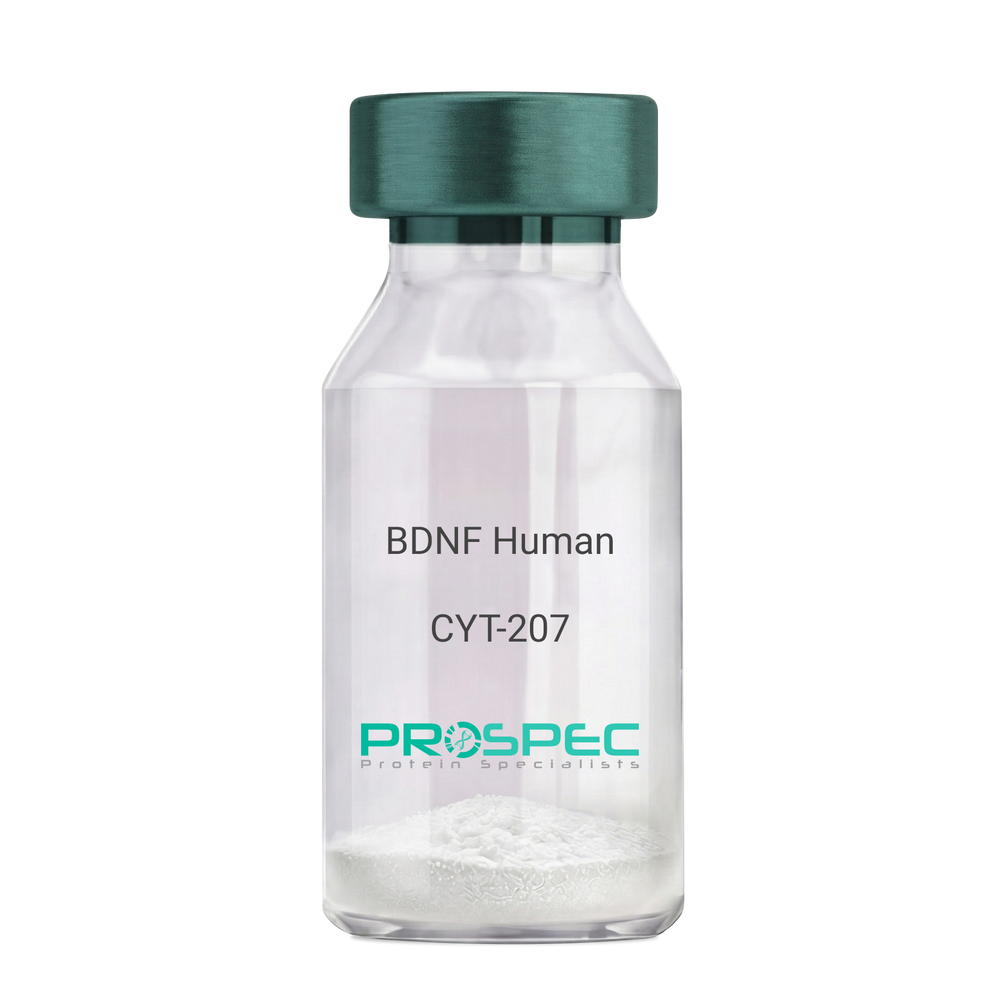
    BDNF Human

    Description:

    Brain-Derived Neurotrophic Factor Human Recombinant

    Brain-Derived Neurotrophic Factor, BDNF, MGC34632.

    Product # :

    CYT-207

    Price :

    Quantity :

    Shipping Method :

    Room Temp Icon

    Shipped at Room temp

    Add To Cart

    More Info

    • description
    • source
    • formulation
    • purity
    • biological activity
    • More Info
    • Activity

    Description

    BDNF Human Recombinant produced in E.Coli is a homodimer, non-glycosylated, polypeptide chain containing 2 x 119 amino acids (and an N-terminal Met) and having a total molecular mass of 28kDa. BDNF Human Recombinant is purified by proprietary chromatographic techniques.

    Source

    Escherichia Coli.

    Formulation

    The protein was lyophilized with 20mM PB and 400mM NaCl, pH 7.2.

    Purity

    BDNF is greater than 950% as determined SDS-PAGE.

    Biological Activity

    The activity was determined using Immobilized Human TrkB-His tag protein 2ug/ml (100 μl/well) for its binding to NHS-Biotin BDNF. The ED50 of was found to be ≤20ng/mL

    Activity

    bdnf activity - Product image 1

    More Info

    • Introduction

      BDNF promotes the survival of neuronal populations that are all located either in the central nervous system or directly connected to it. BDNF is a major regulator of synaptic transmission and plasticity at adult synapses in many regions of the cns. The versatility of BDNF is emphasized by its contribution to a range of adaptive neuronal responses including long-term potentiation (ltp), long-term depression (ltd), certain forms of short-term synaptic plasticity, as well as homeostatic regulation of intrinsic neuronal excitability.

    • Synonyms

      Brain-Derived Neurotrophic Factor, BDNF, MGC34632.

    • Physical Appearance

      Sterile Filtered White lyophilized (freeze-dried) powder.

    • Stability

      Lyophilized BDNF although stable at room temperature for 3 weeks, should be stored desiccated below -18°C. Upon reconstitution BDNF should be stored at 4°C between 2-7 days and for future use below -18°C.For long term storage it is recommended to add a carrier protein (0.1% HSA or BSA).Please prevent freeze-thaw cycles.

    • Solubility

      It is recommended to reconstitute the lyophilized BDNF in sterile 18M-cm H2O not less than 100µg/ml, which can then be further diluted to other aqueous solutions.

    • Amino Acid Sequence

      HSDPARRGE LSVCDSISEW VTAADKKTAV DMSGGTVTVL EKVPVSKGQL KQYFYETKCN PMGYTKEGCR GIDKRHWNSQ CRTTQSYVRA LTMDSKKRIG WRFIRIDTSC VCTLTIKRGR.

    • Background

      Final Thoughts

      Although more research is needed on the safety and effectiveness of BDNF human recombinant, trials suggest that this laboratory-produced protein may be effective in managing and treating several neurological and psychiatric disorders. It's important for experts to stay up to date on the latest developments and research to learn more about potential risks and benefits.

      What is the molecular weight/Mw of BDNF Protein?
      BDNF Protein has a total Mw of 27kDa.

      What is the source or expression system of BDNF Protein?
      Escherichia Coli.

      What is the Purity of BDNF Protein?
      BDNF Protein is >97% pure as determined by SDS-PAGE.

      What is the Biological Activity of BDNF Protein?
      The ED50, as determined by the dose-dependent induction of C6 cells proliferation, is 1.3-2µg/ml.

      What is the amino acid sequence of BDNF Protein?
      MHSDPARRGE LSVCDSISEW VTAADKKTAV DMSGGTVTVL EKVPVSKGQL KQYFYETKCN PMGYTKEGCR GIDKRHWNSQ CRTTQSYVRA LTMDSKKRIG WRFIRIDTSC VCTLTIKRGR.

      What applications can BDNF Protein be used in?
      BDNF Protein can probably be used in western blot, ELISA and Lateral Flow.

      What is the endotoxin level for BDNF Protein?
      The endotoxin level is minimal, BDNF Protein was purified using conventional chromatography techniques.

    • Protein content

      BDNF quantitation was carried out by two independent methods:1. UV spectroscopy at 280 nm using the absorbency value of 1.6 as the extinction coefficient for a 0.1% (1mg/ml) solution. This value is calculated by the PC GENE computer analysis program of protein sequences (IntelliGenetics). 2. Analysis by RP-HPLC, using a standard solution of Brain-derived Neurotrophic Factor as a Reference Standard.

    ProSpec's products are furnished for LABORATORY RESEARCH USE ONLY. The product may not be used as drugs, agricultural or pesticidal products, food additives or household chemicals.

    Bdnf Human
  • View Data Sheet

    Name :

    CFB Human, Native

    Description:

    Complement Factor B Human

    CFB, C3/C5 convertase, Glycine-rich beta glycoprotein, GBG, PBF2, Properdin factor B, BF, BFD, AHUS4, ARMD14, CFAB, CFBD, FB, FBI12, GBG, H2-Bf.

    Product # :

    PRO-2698

    Price :

    Quantity :

    Shipping Method :

    Ice Icon

    Shipped with Ice Packs

    Add To Cart

    More Info

    • description
    • source
    • formulation
    • purity
    • More Info

    Description

    Human Complement Factor B produced in Human plasma is glycosylated polypeptide chain having a total molecular mass of 93kDa.

    Source

    Human Plasma.

    Formulation

    CFB protein solution contains 10mM Sodium phosphate and 145mM NaCl, pH 7.2.

    Purity

    Greater than 95.0% as determined by SDS-PAGE.

    More Info

    • Introduction

      Complement Factor B, also known as CFB, encodes complement factor B which is a component of the alternative pathway of complement activation. Factor B circulates in the blood as a single chain polypeptide. Once the alternative pathway is activated it is cleaved by complement factor D yielding the noncatalytic chain Ba and the catalytic subunit Bb. The active subunit Bb is a serine protease which connects with C3b to form the alternative pathway C3 convertase. Also, Bb is involved in the proliferation of preactivated B lymphocytes, while Ba inhibits their proliferation.

    • Synonyms

      CFB, C3/C5 convertase, Glycine-rich beta glycoprotein, GBG, PBF2, Properdin factor B, BF, BFD, AHUS4, ARMD14, CFAB, CFBD, FB, FBI12, GBG, H2-Bf.

    • Physical Appearance

      Sterile filtered solution.

    • Stability

      CFB Human is stable at 4°C if entire vial will be used within 2-4 weeks.Store, frozen below -20°C for longer periods of time.For long term storage it is recommended to add a carrier protein (0.1% HSA or BSA).Avoid multiple freeze-thaw cycles.

    • Human Virus Test

      Plasma from each donor has been tested and found negative for antibody to HIV-1, HIV-2, HCV and HBSAG.

    ProSpec's products are furnished for LABORATORY RESEARCH USE ONLY. The product may not be used as drugs, agricultural or pesticidal products, food additives or household chemicals.

    Complement Factor B Protein
  • View Data Sheet

    Name :

    Midkine Human

    Description:

    Midkine Human Recombinant

    NEGF-2, Neurite Growth-Promoting Factor 2, MK, Neurite outgrowth-promoting protein, Midgestation and kidney protein, Amphiregulin-associated protein, ARAP, Neurite outgrowth-promoting factor 2, FLJ27379, Midkine, MK1, NEGF2.

    Product # :

    CYT-192

    Price :

    Quantity :

    Shipping Method :

    Room Temp Icon

    Shipped at Room temp

    Add To Cart

    More Info

    • description
    • source
    • formulation
    • purity
    • biological activity
    • More Info

    Description

    Midkine Human Recombinant produced in E.Coli is a single, non-glycosylated polypeptide chain containing 123 amino acids and having a molecular mass of 13.4kDa. The Midkine is purified by proprietary chromatographic techniques.

    Source

    Escherichia Coli.

    Formulation

    Lyophilized from a 0.2µm filtered concentrated solution in 1×PBS, pH 7.4.

    Purity

    Greater than 95.0% as determined by:
    (a) Analysis by RP-HPLC.
    (b) Analysis by SDS-PAGE.

    Biological Activity

    Determined by its ability to chemoattract human neutrophils using a concentration range of 0.1-10 ng/ml corresponding to a specific activity of 100,000-10,000,000IU/mg.

    More Info

    • Introduction

      Midkine (MK) is the product of a retinoic acid responsive gene. It contains 121 amino acid residues including 10 conserved cysteine residues, all of which appear to be disulphide linked.
      Midkine is expressed during embryogenesis, showing an expression pattern that suggests functions in neurogenesis, cell migration, secondary organogenetic induction, and mesoderm-epithelial interaction.
      The widespread downregulation of MK in the adult human is reverted in a number of cancers, in which polypeptides are able to act as both transforming growth factors and promoters of angiogenesis.
      Midkine (MK), induces chemotaxis of human neutrophils and was found to trigger mobilization of intracellular calcium of these cells.
      Midkine induces histamine release from rat peritoneal mast cells with a rapid response in a dose dependent manner.
      Midkine is also a potent stimulator of collagen and glycosaminoglycan synthesis.

    • Synonyms

      NEGF-2, Neurite Growth-Promoting Factor 2, MK, Neurite outgrowth-promoting protein, Midgestation and kidney protein, Amphiregulin-associated protein, ARAP, Neurite outgrowth-promoting factor 2, FLJ27379, Midkine, MK1, NEGF2.

    • Physical Appearance

      Sterile Filtered White lyophilized (freeze-dried) powder.

    • Stability

      Lyophilized Midkine although stable at room temperature for 3 weeks, should be stored desiccated below -18°C. Upon reconstitution Midkine should be stored at 4°C between 2-7 days and for future use below -18°C. For long term storage it is recommended to add a carrier protein (0.1% HSA or BSA).Please prevent freeze-thaw cycles.

    • Solubility

      It is recommended to reconstitute the lyophilized Midkine in sterile 18M-cm H2O not less than 100µg/ml, which can then be further diluted to other aqueous solutions.

    • Amino Acid Sequence

      VAKKKDKVKK GGPGSECAEW AWGPCTPSSK DCGVGFREGT CGAQTQRIRC RVPCNWKKEF GADCKYKFEN WGACDGGTGT KVRQGTLKKA RYNAQCQETI RVTKPCTPKT KAKAKAKKGK GKD.

    ProSpec's products are furnished for LABORATORY RESEARCH USE ONLY. The product may not be used as drugs, agricultural or pesticidal products, food additives or household chemicals.

    Midkine Human
  • View Data Sheet

    Name :

    TRAIL Human (114-281 a.a.)

    Description:

    TRAIL/APO 2 Ligand (114-281 a.a.) Human Recombinant

    Tumor necrosis factor ligand superfamily member 10, TNF-related apoptosis-inducing ligand, Protein TRAIL, Apo-2 ligand, Apo-2L, CD253 antigen, TL2, APO2L, TNFSF10.

    Product # :

    CYT-546

    Price :

    Quantity :

    Shipping Method :

    Ice Icon

    Shipped with Ice Packs

    Add To Cart

    More Info

    • description
    • source
    • formulation
    • purity
    • More Info

    Description

    Soluble TNF-related apoptosis-inducing ligand Human Recombinant produced in E.Coli is a single, non-glycosylated polypeptide chain containing 169 amino acids (114-281) and having a molecular mass of 19.6 kDa. The sTRAIL is purified by proprietary chromatographic techniques.

    Source

    Escherichia Coli.

    Formulation

    1mg/ml in 20mM Tris-HCl pH-7.5, 300mM NaCl, 0.1mM DTT & 10% glycerol.

    Purity

    Greater than 95.0% as determined by SDS-PAGE.

    More Info

    • Introduction

      TNF-related apoptosis-inducing ligand (TRAIL) is a ligand molecule which induces apoptosis. It is a type II transmembrane protein with homology to other members of the tumor necrosis factor family.
      In humans, the gene that encodes for TRAIL is located at chromosome 3q26.
      TRAIL binds to the death receptors, DR4 and DR5. The process of apoptosis is caspase-8-dependent. This protein preferentially induces apoptosis in transformed and tumor cells, but does not appear to kill normal cells although it is expressed at a significant level in most normal tissues.

    • Synonyms

      Tumor necrosis factor ligand superfamily member 10, TNF-related apoptosis-inducing ligand, Protein TRAIL, Apo-2 ligand, Apo-2L, CD253 antigen, TL2, APO2L, TNFSF10.

    • Physical Appearance

      Sterile Filtered colorless liquid.

    • Stability

      Store at 4°C if entire vial will be used within 2-4 weeks. Store, frozen at -20°C for longer periods of time. For long term storage it is recommended to add a carrier protein (0.1% HSA or BSA).Avoid multiple freeze-thaw cycles.

    • Amino Acid Sequence

      MVRERGPQRV AAHITGTRGR SNTLSSPNSK NEKALGRKIN SWESSRSGHS FLSNLHLRNGELVIHEKGFY YIYSQTYFRF QEEIKENTKN DKQMVQYIYK YTSYPDPILL MKSARNSCWSKDAEYGLYSI YQGGIFELKE NDRIFVSVTN EHLIDMDHEA SFFGAFLVG.

    ProSpec's products are furnished for LABORATORY RESEARCH USE ONLY. The product may not be used as drugs, agricultural or pesticidal products, food additives or household chemicals.

    Apo2L 114 281 Human
  • View Data Sheet

    Name :

    PRL R Rainbow Trout

    Description:

    Prolactin Soluble Receptor Rainbow Trout Recombinant

    PRL-R.

    Product # :

    CYT-532

    Price :

    Quantity :

    Shipping Method :

    Room Temp Icon

    Shipped at Room temp

    Add To Cart

    More Info

    • description
    • source
    • formulation
    • purity
    • biological activity
    • More Info

    Description

    Prolactin Receptor Rainbow Trout Extra Celleular Domain Recombinant ?produced in E.Coli is a non-glycosylated, Polypeptide chain containing 210 amino acids and having a molecular mass of 24034 Dalton. The Prolactin Receptor is purified by proprietary chromatographic techniques.

    Source

    Escherichia Coli.

    Formulation

    The protein was lyophilized from a concentrated (1mg/ml) solution with 0.0045mM NaHCO3.

    Purity

    Greater than 97.0% as determined by:
    (a) Analysis by SEC-HPLC.
    (b) Analysis by SDS-PAGE.

    Biological Activity

    Activity is determined by the dose-dependant inhibition of Prolactin-stimuled proliferation of Nb2 cells and by high affinity binding of oPLR and other lactogenic hormones.

    More Info

    • Introduction

      Prolactin is a pituitary hormone involved in the stimulation of milk production, salt and water regulation, growth, development and reproduction. The initial step in its action is the binding to a specific membrane receptor (prolactin receptor) which belongs to the superfamily of class 1 cytokine receptors. The function of the prolactin receptor is mediated, at least in part, by two families of signaling molecules: Janus kinases and signal transducers and activators of transcription. Prolactin (PRL) is a hormone involved in a variety of important functions including ion transport and osmoregulation, stimulation of milk, protein synthesis as well as the regulation of numerous reproductive functions. PRL exerts its influence on different cell types through a signal transduction pathway which begins with the binding of the hormone to a transmembrane PRL receptor. Immunoreactive PRL receptor, a member of the cytokine receptor family, varies in size (short and long forms) with tissue source and species, from ~40 kDa to 100 kDa. The PRL receptor consists of at least three separate domains: an extracellular region with 5 cysteines which contains the prolactin binding site, a single transmembrane domain and a cytoplasmic region, the length of which appears to influence ligand binding and regulate cellular function.

    • Synonyms

      PRL-R.

    • Physical Appearance

      Sterile Filtered White lyophilized (freeze-dried) powder.

    • Stability

      Lyophilized PRL-R although stable at room temperature for 3 weeks, should be stored desiccated below -18°C. Upon reconstitution Prolactin Receptor should be stored at 4°C between 2-7 days and for future use below -18°C.For long term storage it is recommended to add a carrier protein (0.1% HSA or BSA).Please prevent freeze-thaw cycles.

    • Solubility

      It is recommended to reconstitute the lyophilized PRL-R in sterile 18MΩ-cm H2O not less than 100µg/ml, which can then be further diluted to other aqueous solutions.

    • Amino Acid Sequence

      The sequence of the first five N-terminal amino acids was determined and was found to be Ala-Arg-His-Thr-Pro.

    • Protein content

      Protein quantitation was carried out by two independent methods1. UV spectroscopy at 280 nm using the absorbency value of 2.48 as the extinction coefficient for a 0.1% (1mg/ml) solution. This value is calculated by the PC GENE computer analysis program of protein sequences (IntelliGenetics).2. Analysis by RP-HPLC, using a standard solution of PRLr-ECD as a Reference Standard.

    ProSpec's products are furnished for LABORATORY RESEARCH USE ONLY. The product may not be used as drugs, agricultural or pesticidal products, food additives or household chemicals.

    Prlr Rainbow Trout
  • View Data Sheet

    Name :

    PhI p 2

    Description:

    Pollen allergen Phl p 2 Recombinant

    Pollen allergen Phl p 2, Allergen Phl p II, Phl p 2, PHLPII.

    Product # :

    PRO-2306

    Price :

    Quantity :

    Shipping Method :

    Ice Icon

    Shipped with Ice Packs

    Add To Cart

    More Info

    • description
    • source
    • formulation
    • purity
    • More Info

    Description

    Recombinant Pollen allergen Phl p 2 produced in SF9 is a glycosylated, polypeptide chain having a calculated molecular mass of 14,734 Dalton. PhI p 2 is expressed with a 10xHis tag at N-terminus and purified by proprietary chromatographic techniques.

    Source

    Sf9 insect cells.

    Formulation

    PhI p 2 is supplied in 20mM HEPES buffer pH-7.9 and 6M Urea.

    Purity

    Greater than 80.0% as determined by SDS-PAGE.

    More Info

    • Introduction

      Pollen allergen Phl p 2 (PhI p 2) causes an allergic reaction in humans.

    • Synonyms

      Pollen allergen Phl p 2, Allergen Phl p II, Phl p 2, PHLPII.

    • Physical Appearance

      Sterile Filtered clear solution.

    • Stability

      Store at 4°C if entire vial will be used within 2-4 weeks. Store, frozen at -20°C for longer periods of time. Avoid multiple freeze-thaw cycles.

    • Immunological Functions

      1. Binds IgE type human antibodies. 2. Immunodot test with positive/negative sera panels.

    • Molar extinction coefficient

      15470; A280(1mg/ml)=1.269

    ProSpec's products are furnished for LABORATORY RESEARCH USE ONLY. The product may not be used as drugs, agricultural or pesticidal products, food additives or household chemicals.

    Phi P 2
  • View Data Sheet

    Name :

    CSTB Human, Active

    Description:

    Cystatin-B, BioActive Human Recombinant

    Cystatin-B, Stefin-B, Liver thiol proteinase inhibitor, CPI-B, CSTB, CST6, EPM1, PME, STFB

    Product # :

    PRO-2631

    Price :

    Quantity :

    Shipping Method :

    Ice Icon

    Shipped with Ice Packs

    Add To Cart

    More Info

    • description
    • source
    • formulation
    • purity
    • biological activity
    • More Info

    Description

    CSTB Human Recombinant produced in E.Coli is a single, non-glycosylated polypeptide chain containing 118 amino acids (1-98 a.a.) and having a molecular mass of 13kDa.CSTB is fused to a 20 amino acid His tag at N-Terminus and purified by proprietary chromatographic techniques.

    Source

    E.coli.

    Formulation

    The CSTB solution (1mg/1ml) contains 50mM NaCl and 20mM Tris-HCl buffer (pH 8.0).

    Purity

    Greater than 95.0% as determined by SDS-PAGE.

    Biological Activity

    The IC50 value is < 3.0nM. The inhibitory function of Cystatin B on protease activity of papain was measured by a fluorometric assay using Z-FR-AMC at pH 7.5 at 25˚C.

    More Info

    • Introduction

      Cystatin B or CSTB, is an protein (anti-protease) that is suspected to be involved in myoclonus epilepsy. As part of the encompasses proteins family, it has many cystatin-like sequences. Part of the cystatin superfamily are cysteine protease inhibitors; part don’t have the ability. CSTB can create a dimer that is stable because of noncovalent bonds and has a crucial part in shielding from lysosomal proteases leaking. Cystatin B can be found in the lysosomes, nucleus & the cytoplasm in cells.

    • Synonyms

      Cystatin-B, Stefin-B, Liver thiol proteinase inhibitor, CPI-B, CSTB, CST6, EPM1, PME, STFB

    • Physical Appearance

      Sterile Filtered colorless solution.

    • Stability

      Store at 4°C if entire vial will be used within 2-4 weeks. Store, frozen at -20°C for longer periods of time. For long term storage it is recommended to add a carrier protein (0.1% HSA or BSA).Avoid multiple freeze-thaw cycles.

    • Amino Acid Sequence

      MGSSHHHHHH SSGLVPRGSH MMCGAPSATQ PATAETQHIA DQVRSQLEEK ENKKFPVFKA VSFKSQVVAG TNYFIKVHVG DEDFVHLRVF QSLPHENKPL TLSNYQTNKA KHDELTYF

    ProSpec's products are furnished for LABORATORY RESEARCH USE ONLY. The product may not be used as drugs, agricultural or pesticidal products, food additives or household chemicals.

    Ctsb Human
  • View Data Sheet

    Name :

    SORBS3 Human

    Description:

    Sorbin And SH3 Domain Containing 3 Human Recombinant

    Sorbin And SH3 Domain Containing 3, SCAM1, Vinexin Beta (SH3-Containing Adaptor Molecule-1), vinexin, SH3-Containing Adapter Molecule 1.

    Product # :

    PRO-1829

    Price :

    Quantity :

    Shipping Method :

    Ice Icon

    Shipped with Ice Packs

    Add To Cart

    More Info

    • description
    • source
    • formulation
    • purity
    • More Info

    Description

    SORBS3 Human Recombinant produced in E.coli is a single, non-glycosylated polypeptide chain containing 352 amino acids (1-329) and having a molecular mass of 39.1 kDa. SORBS3 is fused to a 23 amino acid His-tag at N-terminus.

    Source

    Escherichia Coli.

    Formulation

    The SORBS3 solution (0.25mg/ml) contains 20mM Tris-HCl buffer (pH 8.0), 1mM DTT and 20% glycerol.

    Purity

    Greater than 90% as determined by SDS-PAGE.

    More Info

    • Introduction

      SORBS3 is an SH3 domain-containing adaptor protein. The existence of SH3 domains in the SORBS3 protein have a role in its capability to attach to other cytoplasmic molecules and contribute to cystoskeletal organization, cell adhesion and migration, signaling, and gene expression. Various transcript variants encoding different isoforms are known for this gene.

    • Synonyms

      Sorbin And SH3 Domain Containing 3, SCAM1, Vinexin Beta (SH3-Containing Adaptor Molecule-1), vinexin, SH3-Containing Adapter Molecule 1.

    • Physical Appearance

      Sterile Filtered clear solution.

    • Stability

      Store at 4°C if entire vial will be used within 2-4 weeks. Store, frozen at -20°C for longer periods of time. For long term storage it is recommended to add a carrier protein (0.1% HSA or BSA).Avoid multiple freeze-thaw cycles.

    • Amino Acid Sequence

      MGSSHHHHHH SSGLVPRGSH MGSMADGGSP FLGRRDFVYP SSTRDPSASN GGGSPARREE KKRKAARLKF DFQAQSPKEL TLQKGDIVYI HKEVDKNWLE GEHHGRLGIF PANYVEVLPA DEIPKPIKPP TYQVLEYGEA VAQYTFKGDL EVELSFRKGE HICLIRKVNE NWYEGRITGT GRQGIFPASY VQVSREPRLR LCDDGPQLPT SPRLTAAARS ARHPSSPSAL RSPADPIDLG GQTSPRRTGF SFPTQEPRPQ TQNLGTPGPA LSHSRGPSHP LDLGTSSPNT SQIHWTPYRA MYQYRPQNED ELELREGDRV DVMQQCDDGW FVGVSRRTQK FGTFPGNYVA PV

    ProSpec's products are furnished for LABORATORY RESEARCH USE ONLY. The product may not be used as drugs, agricultural or pesticidal products, food additives or household chemicals.

    Sorbs3 Human
  • View Data Sheet

    Name :

    BAFF R Human

    Description:

    B-cell Activating Factor Receptor Human Recombinant

    TNFRSF13C, CD268, BAFF-R, MGC138235, B cell-activating factor receptor.

    Product # :

    CYT-429

    Price :

    Quantity :

    Shipping Method :

    Room Temp Icon

    Shipped at Room temp

    Add To Cart

    More Info

    • description
    • source
    • formulation
    • purity
    • biological activity
    • More Info

    Description

    B Lymphocyte Stimulator Receptor Human Recombinant extracellular produced in E.Coli is a single, non-glycosylated polypeptide chain containing 76 amino acids and having a molecular mass of 7.7 kDa.The BAFF-R is purified by proprietary chromatographic techniques.

    Source

    Escherichia Coli.

    Formulation

    Lyophilized from a 0.2μm filtered concentrated (1.0mg/ml) solution in 20mM PB, pH 8.0, 500mM NaCl.

    Purity

    Greater than 95.0% as determined by:
    (a) Analysis by RP-HPLC.
    (b) Analysis by SDS-PAGE.

    Biological Activity

    Determined by its ability to block BAFF induced mouse splenocyte survival. The expected ED50 for this effect is 1.0-5.0 µg/ml in the presence of 1.0µg/ml of human soluble BAFF.

    More Info

    • Introduction

      B cell-activating factor (BAFF) enhances B-cell survival in vitro and is a regulator of the peripheral B-cell population. Overexpression of Baff in mice results in mature B-cell hyperplasia and symptoms of systemic lupus erythematosus (SLE). Also, some SLE patients have increased levels of BAFF in serum. Therefore, it has been proposed that abnormally high levels of BAFF may contribute to the pathogenesis of autoimmune diseases by enhancing the survival of autoreactive B cells. The protein encoded by this gene is a receptor for BAFF and is a type III transmembrane protein containing a single extracellular cysteine-rich domain. It is thought that this receptor is the principal receptor required for BAFF-mediated mature B-cell survival.

    • Synonyms

      TNFRSF13C, CD268, BAFF-R, MGC138235, B cell-activating factor receptor.

    • Physical Appearance

      Sterile Filtered White lyophilized (freeze-dried) powder.

    • Stability

      Lyophilized BAFF-R although stable at room temperature for 3 weeks, should be stored desiccated below -18°C. Upon reconstitution B Lymphocyte Stimulator Receptor should be stored at 4°C between 2-7 days and for future use below -18°C.Please prevent freeze-thaw cycles.

    • Solubility

      It is recommended to reconstitute the lyophilized B Lymphocyte Stimulator Receptor Recombinant in sterile 18MΩ-cm H2O not less than 100µg/ml, which can then be further diluted to other aqueous solutions.

    • Amino Acid Sequence

      MRRGPRSLRGRDAPAPTPCVPAECFDLLVRHCVACGLLRTPRPKPAG
      ASSPAPRTALQPQESVGAGAGEAALPLPG.

    • Background

      B-cell Activating Factor Receptor Human Recombinant: Unlocking the Potential of a Key Immunomodulatory Target

      Abstract:

      B-cell Activating Factor Receptor (BAFF-R) human recombinant is a critical component of the B-cell immune response, playing a pivotal role in B-cell survival, maturation, and antibody production. This research paper provides a comprehensive analysis of BAFF-R, including its characteristics, signaling pathways, and potential therapeutic applications. Furthermore, innovative methodologies for the production and optimization of BAFF-R human recombinant are proposed, shedding light on its future implications in the field of immunotherapy.

      Introduction:

      The immune system relies on the precise regulation of B-cell functions, with BAFF-R serving as a key modulator of B-cell development and activation. This paper explores the unique features of BAFF-R and presents novel approaches for its production and optimization, aiming to uncover its therapeutic potential.

      Characteristics and Signaling Pathways:

      BAFF-R is a type III transmembrane protein expressed primarily on B-cells. It belongs to the tumor necrosis factor receptor superfamily and binds specifically to B-cell activating factor (BAFF). Engagement of BAFF-R by BAFF initiates intracellular signaling cascades, including the activation of nuclear factor-kappa B (NF-κB) and mitogen-activated protein kinase (MAPK) pathways, promoting B-cell survival, proliferation, and differentiation.

      Production of BAFF-R Human Recombinant:

      Efficient production methodologies are crucial for the therapeutic application of BAFF-R human recombinant. Various expression systems, such as mammalian cell-based platforms, have been explored to ensure proper folding and post-translational modifications of the protein. Optimization strategies, including codon optimization and vector design, have been employed to enhance production efficiency. Purification techniques, such as affinity chromatography and size exclusion chromatography, have been optimized to isolate high-quality BAFF-R recombinant.

      Potential Therapeutic Applications:

      BAFF-R human recombinant holds great promise in the field of immunotherapy. Dysregulation of the BAFF/BAFF-R signaling axis has been implicated in autoimmune diseases, such as systemic lupus erythematosus and rheumatoid arthritis. Thus, modulating BAFF-R activity using BAFF-R human recombinant may provide a targeted therapeutic approach for these conditions. Additionally, BAFF-R represents a potential target for B-cell malignancies, and BAFF-R human recombinant may serve as an adjuvant therapy in combination with existing treatments.

      Conclusion:

      BAFF-R human recombinant represents a crucial immunomodulatory target with diverse therapeutic applications in immunotherapy. Optimizing production methodologies and further understanding its signaling pathways will enhance its clinical utility. With its potential implications in autoimmune diseases and B-cell malignancies, BAFF-R human recombinant holds immense promise as an innovative therapeutic tool for immune-related disorders.

      What is the molecular weight/Mw of BAFF R Protein?
      BAFF R Protein has a total Mw of 7.7kDa.

      What is the source or expression system of BAFF R Protein?
      Escherichia Coli.

      What is the Purity of BAFF R Protein?
      BAFF R Protein is >95% pure as determined by SDS-PAGE.

      What is the Biological Activity of BAFF R Protein?
      Determined by its ability to block BAFF induced mouse splenocyte survival. The expected ED50 for this effect is 1.0-5.0 µg/ml in the presence of 1.0µg/ml of human soluble BAFF.

      What is the amino acid sequence of BAFF R Protein?
      MRRGPRSLRGRDAPAPTPCVPAECFDLLVRHCVACGLLRTPRPKPAG
      ASSPAPRTALQPQESVGAGAGEAALPLPG.

      What applications can BAFF R Protein be used in?
      BAFF R Protein can probably be used in western blot, ELISA and Lateral Flow.

      What is the endotoxin level for BAFF R Protein?
      The endotoxin level is minimal, BAFF R Protein was purified using conventional chromatography techniques.

    ProSpec's products are furnished for LABORATORY RESEARCH USE ONLY. The product may not be used as drugs, agricultural or pesticidal products, food additives or household chemicals.

    Baff R Human
  • View Data Sheet

    Name :

    OPG Human, Hi-5

    Description:

    Osteoprotegerin Human Recombinant, Hi-5

    TNFRSF11B, OPG, OCIF, Osteoclastogenesis inhibitory factor, Osteoprotegerin, TR1, MGC29565.

    Product # :

    CYT-633

    Price :

    Quantity :

    Shipping Method :

    Ice Icon

    Shipped with Ice Packs

    Add To Cart

    More Info

    • description
    • source
    • formulation
    • purity
    • biological activity
    • More Info

    Description

    Recombinant Osteoprotegerin produced in baculovirus is a signle, glycosylated polypeptide chain containing 389 amino acid residues (22-401 a.a.), having a calculated molecular mass of 44.7 kDa. The Osteoprotegerin is fused to a 6 amino acid His tag at C-terminus and purified by proprietary chromatographic techniques.

    Source

    Hi-5.

    Formulation

    Osteoprotegerin protein contains PBS pH-7.4 and 10% glycerol.

    Purity

    Greater than 90.0% as determined by SDS-PAGE.

    Biological Activity

    The ED50 range ≤ 8 ng/ml and is measured by its ability to inhibit cytotoxicity using Jurkat human acute T cell leukemia cells in the presence of 2ng/ml of human TRAIL (CAT# cyt-1014).

    More Info

    • Introduction

      Osteoprotegerin acts as decoy receptor for rankl and thereby neutralizes its function in osteoclastogenesis. OPG inhibits the activation of osteoclasts and promotes osteoclast apoptosis in vitro. Bone homeostasis seems to depend on the local rankl/opg ratio. Osteoprotegerin may also play a role in preventing arterial calcification. May act as decoy receptor for trail and protect against apoptosis. Trail binding blocks the inhibition of osteoclastogenesis.

    • Synonyms

      TNFRSF11B, OPG, OCIF, Osteoclastogenesis inhibitory factor, Osteoprotegerin, TR1, MGC29565.

    • Physical Appearance

      Sterile Filtered colorless clear solution.

    • Stability

      Store at 4°C if entire vial will be used within 2-4 weeks. Store, frozen at -20°C for longer periods of time. Please avoid freeze thaw cycles.

    • Amino Acid Sequence

      ADPETFPPKY LHYDEETSHQ LLCDKCPPGT YLKQHCTAKW KTVCAPCPDH YYTDSWHTSD ECLYCSPVCK ELQYVKQECN RTHNRVCECK EGRYLEIEFC LKHRSCPPGF GVVQAGTPER NTVCKRCPDG FFSNETSSKA PCRKHTNCSV FGLLLTQKGN ATHDNICSGN SESTQKCGID VTLCEEAFFR FAVPTKFTPN WLSVLVDNLP GTKVNAESVE RIKRQHSSQE QTFQLLKLWK HQNKDQDIVK KIIQDIDLCE NSVQRHIGHA NLTFEQLRSL MESLPGKKVG AEDIEKTIKA CKPSDQILKL LSLWRIKNGD QDTLKGLMHA LKHSKTYHFP KTVTQSLKKT IRFLHSFTMY KLYQKLFLEM IGNQVQSVKI SCLSHHHHHH.

    ProSpec's products are furnished for LABORATORY RESEARCH USE ONLY. The product may not be used as drugs, agricultural or pesticidal products, food additives or household chemicals.

    Osteoprotegerin Human Hi 5
  • View Data Sheet

    Name :

    ITGB1BP3 Human

    Description:

    Integrin Beta 1 Binding Protein 3 Human Recombinant

    Nicotinamide riboside kinase 2, Ribosylnicotinamide kinase 2, Ribosylnicotinic acid kinase 2, ITGB1BP3, MIBP, NRK2, NmR-K 2.

    Product # :

    PRO-1177

    Price :

    Quantity :

    Shipping Method :

    Ice Icon

    Shipped with Ice Packs

    Add To Cart

    More Info

    • description
    • source
    • formulation
    • purity
    • More Info

    Description

    ITGB1BP3 Human Recombinant produced in E. coli is a single polypeptide chain containing 253 amino acids (1-230) and having a molecular mass of 28.4 kDa.ITGB1BP3 is fused to a 23 amino acid His-tag at N-terminus & purified by proprietary chromatographic techniques.

    Source

    E.coli.

    Formulation

    The ITGB1BP3 solution (0.25mg/1ml) contains 20mM Tris-HCl buffer (pH 8.0), 100mM NaCl, 1mM DTT and 40% glycerol.

    Purity

    Greater than 90% as determined by SDS-PAGE.

    More Info

    • Introduction

      Nicotinamide riboside kinase 2 (ITGB1BP3) is a member of the uridine kinase family and NRK subfamily. ITGB1BP3 catalyzes the phosphorylation of nicotinic acid riboside and nicotinamide riboside to create nicotinic acid mononucleotide and nicotinamide mononucleotide. ITGB1BP3 reduces laminin matrix deposition and cell adhesion to laminin, but not to fibronectin. ITGB1BP3 is involved in the regulation of PXN at the protein level and of PXN tyrosine phosphorylation. ITGB1BP3 also has a role in the regulation of terminal myogenesis.

    • Synonyms

      Nicotinamide riboside kinase 2, Ribosylnicotinamide kinase 2, Ribosylnicotinic acid kinase 2, ITGB1BP3, MIBP, NRK2, NmR-K 2.

    • Physical Appearance

      Sterile Filtered colorless solution.

    • Stability

      Store at 4°C if entire vial will be used within 2-4 weeks. Store, frozen at -20°C for longer periods of time. For long term storage it is recommended to add a carrier protein (0.1% HSA or BSA).Avoid multiple freeze-thaw cycles.

    • Amino Acid Sequence

      MGSSHHHHHH SSGLVPRGSH MGSMKLIVGI GGMTNGGKTT LTNSLLRALP NCCVIHQDDF FKPQDQIAVG EDGFKQWDVL ESLDMEAMLD TVQAWLSSPQ KFARAHGVSV QPEASDTHIL LLEGFLLYSY KPLVDLYSRR YFLTVPYEEC KWRRSTRNYT VPDPPGLFDG HVWPMYQKYR QEMEANGVEV VYLDGMKSRE ELFREVLEDI QNSLLNRSQE SAPSPARPAR TQGPGRGCGH RTARPAASQQ DSM

    ProSpec's products are furnished for LABORATORY RESEARCH USE ONLY. The product may not be used as drugs, agricultural or pesticidal products, food additives or household chemicals.

    Itgb1Bp3 Human
  • 1
  • …
  • 37
  • 38
  • 39
  • 40
  • 41
  • 42
Your browser does not support the video tag.

Products

  • Cytokines
  • Growth Factors
  • Chemokines
  • CD Antigens
  • Neurotrophins
  • Hormones
  • Enzymes
  • Viral Antigens
  • Recombinant Proteins
  • Natural Proteins
  • Monoclonal Antibodies
  • Polyclonal Antibodies
  • Thermal Packaging

About

  • Company
  • Founder
  • Contribution
  • Contact Us
  • My Account

Ordering

  • Ordering Method
  • Ordering - Credit Card
  • Ordering PO
  • Shipping Fees
  • FAQ's

Legal

  • Terms & Conditions
  • Privacy
  • Site Map
  • info@prospecbio.com
  • Facebook
  • Instagram
  • Linkedin Profile

© 2026 ProSpec-Tany TechnoGene Ltd. All Rights Reserved.

  • Choosing a selection results in a full page refresh.
  • Opens in a new window.