Skip to content

High-quality research proteins.

  • 1-800-805-6531

  • Mon - Sat 8.00-18.00, Sun - Closed

  • info@prospecbio.com

  • PO Box 6591 East Brunswick NJ 08816

  • Products
    • Cytokines
    • Growth factors
    • Chemokines
    • Cd antigens
    • Neurotrophins
    • Hormones
    • Enzymes
    • Viral antigens
    • Recombinant proteins
    • Natural proteins
    • Monoclonal antibodies
    • Polyclonal antibodies
    • Thermal Packaging
  • About
    • Company
    • Founder
    • Contribution
  • Customers
    • Eastern Asia
    • Eastern Europe
    • North America
    • South America
    • South East Asia
    • Southern Asia
    • Western Europe
  • Ordering
    • Ordering Method
    • Ordering - Credit Card
    • Ordering - PO
    • Shipping Fees
    • FAQs
  • Services
    • DNA Cloning
    • Protein Expression
    • Monoclonal Antibody
    • Fermentation
    • Technology License
  • Contact us
Log in

Country/region

  • USD $ | Albania
  • USD $ | Andorra
  • USD $ | Argentina
  • USD $ | Armenia
  • USD $ | Australia
  • USD $ | Austria
  • USD $ | Azerbaijan
  • USD $ | Belarus
  • USD $ | Belgium
  • USD $ | Bolivia
  • USD $ | Brazil
  • USD $ | Bulgaria
  • USD $ | Cambodia
  • USD $ | Canada
  • USD $ | Chile
  • USD $ | China
  • USD $ | Colombia
  • USD $ | Costa Rica
  • USD $ | Croatia
  • USD $ | Cyprus
  • USD $ | Czechia
  • USD $ | Denmark
  • USD $ | Estonia
  • USD $ | Finland
  • USD $ | France
  • USD $ | Georgia
  • USD $ | Germany
  • USD $ | Greece
  • USD $ | Hong Kong SAR
  • USD $ | Hungary
  • USD $ | Iceland
  • USD $ | India
  • USD $ | Ireland
  • USD $ | Israel
  • USD $ | Italy
  • USD $ | Japan
  • USD $ | Kazakhstan
  • USD $ | Latvia
  • USD $ | Liechtenstein
  • USD $ | Lithuania
  • USD $ | Madagascar
  • USD $ | Malta
  • USD $ | Mexico
  • USD $ | Moldova
  • USD $ | Monaco
  • USD $ | Netherlands
  • USD $ | New Zealand
  • USD $ | North Macedonia
  • USD $ | Norway
  • USD $ | Panama
  • USD $ | Paraguay
  • USD $ | Peru
  • USD $ | Philippines
  • USD $ | Poland
  • USD $ | Portugal
  • USD $ | Romania
  • USD $ | Singapore
  • USD $ | Slovakia
  • USD $ | Slovenia
  • USD $ | South Africa
  • USD $ | South Korea
  • USD $ | Spain
  • USD $ | Sri Lanka
  • USD $ | Sweden
  • USD $ | Switzerland
  • USD $ | Taiwan
  • USD $ | Thailand
  • USD $ | Türkiye
  • USD $ | Ukraine
  • USD $ | United Kingdom
  • USD $ | United States
  • USD $ | Uruguay
  • USD $ | Vatican City
  • USD $ | Venezuela
  • USD $ | Vietnam
  • Facebook
  • Instagram
logoProSpec - Recombinant Protein Manufacturer for academic and R&D industry
Become a distributor
Account Log in
Wishlist
Cart Cart(0)
  • Products
    +
    • Cytokines
    • Growth factors
    • Chemokines
    • Cd antigens
    • Neurotrophins
    • Hormones
    • Enzymes
    • Viral antigens
    • Recombinant proteins
    • Natural proteins
    • Monoclonal antibodies
    • Polyclonal antibodies
    • Thermal Packaging
  • About
    +
    • Company
    • Founder
    • Contribution
  • Customers
    +
    • Eastern Asia
    • Eastern Europe
    • North America
    • South America
    • South East Asia
    • Southern Asia
    • Western Europe
  • Ordering
    +
    • Ordering Method
    • Ordering - Credit Card
    • Ordering - PO
    • Shipping Fees
    • FAQs
  • Services
    +
    • DNA Cloning
    • Protein Expression
    • Monoclonal Antibody
    • Fermentation
    • Technology License
  • Contact us

Item added to your cart

View cart
View All
  • Cytokines
  • Growth factors
  • Chemokines
  • Cd antigens
  • Neurotrophins
  • Hormones
  • Enzymes
  • Viral antigens
  • Recombinant proteins
  • Natural proteins
  • Monoclonal antibodies
  • Polyclonal antibodies
  • Thermal Packaging
  • Tumor Necrosis Factor

    Tumor Necrosis Factor

    View All
  • 4-1BB

    4-1BB

    View All
  • Adiponectin

    Adiponectin

    View All
  • AIF1

    AIF1

    View All
  • Other Cytokines

    Other Cytokines

    View All
  • AITRL

    AITRL

    View All
  • Angiopoietin

    Angiopoietin

    View All
  • Apolipoprotein

    Apolipoprotein

    View All
  • B-Cell Activating Factor

    B-Cell Activating Factor

    View All
  • Beta Defensin

    Beta Defensin

    View All
  • Bone Morphogenetic Protein

    Bone Morphogenetic Protein

    View All
  • B type Natriuretic Peptide

    B type Natriuretic Peptide

    View All
  • BST

    BST

    View All
  • Betacellulin

    Betacellulin

    View All
  • Cardiotrophin

    Cardiotrophin

    View All
  • Activin

    Activin

    View All
  • Fibroblast Growth Factor

    Fibroblast Growth Factor

    View All
  • Other Growth Factors

    Other Growth Factors

    View All
  • CSF

    CSF

    View All
  • CTGF

    CTGF

    View All
  • IGFBP

    IGFBP

    View All
  • VEGF Protein

    VEGF Protein

    View All
  • EGF

    EGF

    View All
  • Epigen

    Epigen

    View All
  • Erythropoietin

    Erythropoietin

    View All
  • Insulin-Like Growth Factor

    Insulin-Like Growth Factor

    View All
  • Growth Hormone

    Growth Hormone

    View All
  • HDGF

    HDGF

    View All
  • Hepatocyte Growth Factor

    Hepatocyte Growth Factor

    View All
  • Insulin

    Insulin

    View All
  • BCA-1/ BLC (CXCL13)

    BCA-1/ BLC (CXCL13)

    View All
  • BRAK (CXCL14)

    BRAK (CXCL14)

    View All
  • C-10 (CCL6)

    C-10 (CCL6)

    View All
  • Other Chemokines

    Other Chemokines

    View All
  • MEC (CCL28)

    MEC (CCL28)

    View All
  • LD78-beta (CCL3L1)

    LD78-beta (CCL3L1)

    View All
  • CTACK (CCL27)

    CTACK (CCL27)

    View All
  • CXCL16

    CXCL16

    View All
  • CXCL17

    CXCL17

    View All
  • Platelet Factor-4 (CXCL4)

    Platelet Factor-4 (CXCL4)

    View All
  • ENA-78 (CXCL5)

    ENA-78 (CXCL5)

    View All
  • Eotaxin (CCL11,24,26)

    Eotaxin (CCL11,24,26)

    View All
  • Exodus-2 (CCL21)

    Exodus-2 (CCL21)

    View All
  • Fractalkine (CX3CL1)

    Fractalkine (CX3CL1)

    View All
  • CXCL6

    CXCL6

    View All
  • Other CD Antigens

    Other CD Antigens

    View All
  • CD14

    CD14

    View All
  • CD164

    CD164

    View All
  • CD1

    CD1

    View All
  • CD2

    CD2

    View All
  • CD200

    CD200

    View All
  • CD207

    CD207

    View All
  • CD226

    CD226

    View All
  • CD23

    CD23

    View All
  • CD244

    CD244

    View All
  • CD247

    CD247

    View All
  • CD27

    CD27

    View All
  • CD274

    CD274

    View All
  • CD300

    CD300

    View All
  • CD33

    CD33

    View All
  • Other Neurotrophins

    Other Neurotrophins

    View All
  • Beta-NGF

    Beta-NGF

    View All
  • BDNF

    BDNF

    View All
  • CDNF

    CDNF

    View All
  • CNTF

    CNTF

    View All
  • GDNF

    GDNF

    View All
  • Glia Maturation Factor

    Glia Maturation Factor

    View All
  • MANF

    MANF

    View All
  • Midkine

    Midkine

    View All
  • Neuroglobin

    Neuroglobin

    View All
  • Neurotrophic factors

    Neurotrophic factors

    View All
  • Neuregulin

    Neuregulin

    View All
  • Neuropilin

    Neuropilin

    View All
  • Pigment Epithelium-Derived Factor

    Pigment Epithelium-Derived Factor

    View All
  • Pleiotrophin

    Pleiotrophin

    View All
  • Peptide Hormones

    Peptide Hormones

    View All
  • Other Hormones

    Other Hormones

    View All
  • HCG

    HCG

    View All
  • Endothelin

    Endothelin

    View All
  • Exendin

    Exendin

    View All
  • FSH

    FSH

    View All
  • Glucagon

    Glucagon

    View All
  • GHRP

    GHRP

    View All
  • GLP

    GLP

    View All
  • Thyrostimulin

    Thyrostimulin

    View All
  • Inhibin A

    Inhibin A

    View All
  • LHRH

    LHRH

    View All
  • Melanotan

    Melanotan

    View All
  • Procalcitonin

    Procalcitonin

    View All
  • PTH

    PTH

    View All
  • Peroxiredoxin

    Peroxiredoxin

    View All
  • Peptidase

    Peptidase

    View All
  • Synthetase

    Synthetase

    View All
  • Transferase

    Transferase

    View All
  • Hydrolase

    Hydrolase

    View All
  • Dehydrogenase

    Dehydrogenase

    View All
  • ACE2

    ACE2

    View All
  • Esterase

    Esterase

    View All
  • Protein Kinases

    Protein Kinases

    View All
  • Other Enzymes

    Other Enzymes

    View All
  • Phosphatase

    Phosphatase

    View All
  • Deaminase

    Deaminase

    View All
  • Oxygenase

    Oxygenase

    View All
  • Adenylate Kinase

    Adenylate Kinase

    View All
  • Lyase

    Lyase

    View All
  • Chagas

    Chagas

    View All
  • SARS

    SARS

    View All
  • Influenza

    Influenza

    View All
  • ASFV

    ASFV

    View All
  • Astrovirus

    Astrovirus

    View All
  • Borrelia

    Borrelia

    View All
  • Helicobacter Pylori

    Helicobacter Pylori

    View All
  • Chikungunya

    Chikungunya

    View All
  • Chlamydia

    Chlamydia

    View All
  • Cytomegalo

    Cytomegalo

    View All
  • Dengue

    Dengue

    View All
  • EBV

    EBV

    View All
  • Ebola

    Ebola

    View All
  • Feline Leukemia Virus

    Feline Leukemia Virus

    View All
  • Hepatitis A

    Hepatitis A

    View All
  • Other

    Other

    View All
  • Actin

    Actin

    View All
  • ADAM

    ADAM

    View All
  • Complement Component

    Complement Component

    View All
  • Ag85

    Ag85

    View All
  • Eukaryotic Translation Initiation Factor

    Eukaryotic Translation Initiation Factor

    View All
  • Anterior Gradient Protein

    Anterior Gradient Protein

    View All
  • Heat Shock Protein

    Heat Shock Protein

    View All
  • Alpha-2-HS-Glycoprotein

    Alpha-2-HS-Glycoprotein

    View All
  • Hemoglobin

    Hemoglobin

    View All
  • Allergy

    Allergy

    View All
  • Anaplasma

    Anaplasma

    View All
  • Angiogenin

    Angiogenin

    View All
  • Ankyrin Repeat Domain

    Ankyrin Repeat Domain

    View All
  • Annexin

    Annexin

    View All
  • Other Natural Proteins

    Other Natural Proteins

    View All
  • Aprotinin

    Aprotinin

    View All
  • Transferrin

    Transferrin

    View All
  • Avidin

    Avidin

    View All
  • Anti Coagulation Factors

    Anti Coagulation Factors

    View All
  • Natural Albumin

    Natural Albumin

    View All
  • Natural Coagulation Factors

    Natural Coagulation Factors

    View All
  • Fibronectin

    Fibronectin

    View All
  • Thrombin

    Thrombin

    View All
  • Anti Human Enzyme

    Anti Human Enzyme

    View All
  • Other Monoclonal Antibodies

    Other Monoclonal Antibodies

    View All
  • Anti Human Cytokine

    Anti Human Cytokine

    View All
  • Anti Human Heat Shock Protein

    Anti Human Heat Shock Protein

    View All
  • Anti Mouse Lymphocyte

    Anti Mouse Lymphocyte

    View All
  • Anti Human Chemokine

    Anti Human Chemokine

    View All
  • Anti Human Lymphocyte

    Anti Human Lymphocyte

    View All
  • Anti Viral Monoclonal

    Anti Viral Monoclonal

    View All
  • Anti Mouse Cytokine

    Anti Mouse Cytokine

    View All
  • Anti-GST Monoclonal

    Anti-GST Monoclonal

    View All
  • Other Polyclonal Antibodies

    Other Polyclonal Antibodies

    View All
  • Anti Viral

    Anti Viral

    View All
  • Anti-GST Monoclonal

    Anti-GST Monoclonal

    View All
Back

Search results

1000 results found for “Calmodulin”

Name

Description

Product #

Price

Quantity

Shipping Method

  • View Data Sheet

    Name :

    CDH11 Human

    Description:

    Cadherin 11 Human Recombinant

    CAD11, CDHOB, OB, OSF-4, Cadherin 11, Osteoblast cadherin, OB-cadherin.

    Product # :

    PRO-1368

    Price :

    Quantity :

    Shipping Method :

    Ice Icon

    Shipped with Ice Packs

    Add To Cart

    More Info

    • description
    • source
    • formulation
    • purity
    • More Info

    Description

    CDH11 Human Recombinant produced in E.Coli is a single, non-glycosylated polypeptide chain containing 601 amino acids (54-617 a.a) and having a molecular mass of 66.2kDa. CDH11 is fused to a 37 amino acid His-tag at N-terminus & purified by proprietary chromatographic techniques.

    Source

    E.coli.

    Formulation

    CDH11 protein solution (1mg/ml) containing 20mM Tris-HCl buffer (pH8.0), 10% glycerol and 0.1M NaCl.

    Purity

    Greater than 85% as determined by SDS-PAGE.

    More Info

    • Introduction

      Cadherin 11 (CDH11) belongs to the cadherin superfamily (integral membrane proteins) which mediate calcium-dependent cell-cell adhesion. CDH11 is defined based on lacking a HAV cell adhesion recognition sequence specific to type I cadherins. CDH11 protein’s expression in osteoblastic cell lines, and its upregulation during differentiation, suggests a specific function in bone development and maintenance. CDH11 contributes to the sorting of heterogeneous cell types.

    • Synonyms

      CAD11, CDHOB, OB, OSF-4, Cadherin 11, Osteoblast cadherin, OB-cadherin.

    • Physical Appearance

      Sterile Filtered colorless solution.

    • Stability

      Store at 4°C if entire vial will be used within 2-4 weeks. Store, frozen at -20°C for longer periods of time. For long term storage it is recommended to add a carrier protein (0.1% HSA or BSA).Avoid multiple freeze-thaw cycles.

    • Amino Acid Sequence

      MRGSHHHHHH GMASMTGGQQ MGRDLYDDDD KDRWGSMGWV WNQFFVIEEY TGPDPVLVGR LHSDIDSGDG NIKYILSGEG AGTIFVIDDK SGNIHATKTL DREERAQYTL MAQAVDRDTN RPLEPPSEFI VKVQDINDNP PEFLHETYHA NVPERSNVGT SVIQVTASDA DDPTYGNSAK LVYSILEGQP YFSVEAQTGI IRTALPNMDR EAKEEYHVVI QAKDMGGHMG GLSGTTKVMI TLTDVNDNPP KFPQSVYQMS VSEAAVPGEE VGRVKAKDPD IGENGLVTYN IVDGDGMESF EITTDYETQE GVIKLKKPVD FETKRAYSLK VEAANVHIDP KFISNGPFKD TVTVKIAVED ADEPPMFLAP SYIHEVQENA AAGTVVGRVH AKDPDAANSP IRYSIDRHTD LDRFFTINPE DGFIKTTKPL DREETAWLNI TVFAAEIHNR HQEAKVPVAI RVLDVNDNAP KFAAPYEGFI CESDQTKPLS NQPIVTISAD DKDDTANGPR FIFSLPPEII HNPNFTVRDN RDNTAGVYAR RGGFSRQKQD LYLLPIVISD GGIPPMSSTN TLTIKVCGCD VNGALLSCNA EAYILNAGLS T.

    ProSpec's products are furnished for LABORATORY RESEARCH USE ONLY. The product may not be used as drugs, agricultural or pesticidal products, food additives or household chemicals.

    Cdh11 Human
  • View Data Sheet

    Name :

    GOLM1 Human

    Description:

    Golgi Membrane Protein 1 Human Recombinant

    Golgi Membrane Protein 1, Chromosome 9 Open Reading Frame 155, Epididymis Luminal Protein 46, Golgi Membrane Protein GP73, Golgi Phosphoprotein 2, GOLPH2, Golgi Protein 73-KD, PSEC0257, bA379P1.3, HEL46, C9orf155, GP73.

    Product # :

    PRO-1770

    Price :

    Quantity :

    Shipping Method :

    Ice Icon

    Shipped with Ice Packs

    Add To Cart

    More Info

    • description
    • source
    • formulation
    • purity
    • More Info

    Description

    GOLM1 Human Recombinant produced in E.Coli is a single, non-glycosylated polypeptide chain containing 389 amino acids (36-401 a.a) and having a molecular mass of 44.0kDa.GOLM1 is fused to a 23 amino acid His-tag at N-terminus & purified by proprietary chromatographic techniques.

    Source

    Escherichia Coli.

    Formulation

    GOLM1 protein solution (0.5mg/ml) containing 20mM Tris-HCl buffer (pH8.0), 0.1M NaCl, 1mM DTT and 20% glycerol.

    Purity

    Greater than 85.0% as determined by SDS-PAGE.

    More Info

    • Introduction

      GOLM1 is a type II Golgi transmembrane protein. GOLM1 processes protein synthesized in the rough endoplasmic reticulum and aids in transporting protein cargo through the Golgi apparatus. The expression of this encoded protein was shown to be upregulated in response to viral infection. Additionally, since GOLM1 is highly regulated in cells, it can be used as a molecular biomarker for cancer.

    • Synonyms

      Golgi Membrane Protein 1, Chromosome 9 Open Reading Frame 155, Epididymis Luminal Protein 46, Golgi Membrane Protein GP73, Golgi Phosphoprotein 2, GOLPH2, Golgi Protein 73-KD, PSEC0257, bA379P1.3, HEL46, C9orf155, GP73.

    • Physical Appearance

      Sterile Filtered clear solution.

    • Stability

      Store at 4°C if entire vial will be used within 2-4 weeks. Store, frozen at -20°C for longer periods of time.For long term storage it is recommended to add a carrier protein (0.1% HSA or BSA).Please avoid freeze thaw cycles.

    • Amino Acid Sequence

      MGSSHHHHHH SSGLVPRGSH MGSSSRSVDL QTRIMELEGR VRRAAAERGA VELKKNEFQG ELEKQREQLD KIQSSHNFQL ESVNKLYQDE KAVLVNNITT GERLIRVLQD QLKTLQRNYG RLQQDVLQFQ KNQTNLERKF SYDLSQCINQ MKEVKEQCEE RIEEVTKKGN EAVASRDLSE NNDQRQQLQA LSEPQPRLQA AGLPHTEVPQ GKGNVLGNSK SQTPAPSSEV VLDSKRQVEK EETNEIQVVN EEPQRDRLPQ EPGREQVVED RPVGGRGFGG AGELGQTPQV QAALSVSQEN PEMEGPERDQ LVIPDGQEEE QEAAGEGRNQ QKLRGEDDYN MDENEAESET DKQAALAGND RNIDVFNVED QKRDTINLLD QREKRNHTL

    ProSpec's products are furnished for LABORATORY RESEARCH USE ONLY. The product may not be used as drugs, agricultural or pesticidal products, food additives or household chemicals.

    Golm1 Human
  • View Data Sheet

    Name :

    GroES Human, His

    Description:

    GroES (HSP10) Human Recombinant, His Tag

    CPN10, GROES, HSP10, HSPE1, Chaperonin-10, 10 kDa heat shock protein mitochondrial, 10 kDa chaperonin, Early-pregnancy factor, EPF.

    Product # :

    HSP-040

    Price :

    Quantity :

    Shipping Method :

    Room Temp Icon

    Shipped at Room temp

    Add To Cart

    More Info

    • description
    • source
    • formulation
    • purity
    • More Info

    Description

    GroES His Protein is 12.0 kDa protein containing 111 amino acid residues of the GroES Human and the 10 aa N-Terminal His-tag.

    Source

    E. coli

    Formulation

    GroES His Human was filtered (0.4µm) and lyophilized from 0.5 mg/ml supplied in 0.05M phosphate buffer, 0.075 M NaCl, pH 7.4.

    Purity

    Greater than 90% as determined by SDS-PAGE.

    More Info

    • Introduction

      HSP10 is part of the molecular chaperons, that are crucial for thir efficient folding of proteins in normal as well as stress conditions. GroES function is to bind to HSP60 in the presence of ATP, thus causing a change in the HSP60 conformation & enclosing the protein substrate within the complex. ATP hydrolysis by chaperonin-60 which destabilizes the HSP10-HSP60 complex, thereby allowing it to dissociate and secrete the substrate protein. GroES having the NCBI accession number of NP_002148 was purified by using conventional chromatography techniques.

    • Synonyms

      CPN10, GROES, HSP10, HSPE1, Chaperonin-10, 10 kDa heat shock protein mitochondrial, 10 kDa chaperonin, Early-pregnancy factor, EPF.

    • Stability

      Store lyophilized GroES His at -20°C. Aliquot the product after reconstitution to avoid repeated freezing/thawing cycles. Reconstituted GroES His can be stored at 4°C for a limited period of time; it does not show any change after two weeks at 4°C.

    • Solubility

      It is recommended to add deionized water to prepare a working stock solution of approximately 0.5mg/ml and let the lyophilized pellet dissolve completely. Product is not sterile! Please filter the product by an appropriate sterile filter before using it on cell culture.

    • Amino Acid Sequence

      MKHHHHHHAS AGQAFRKFLP LFDRVLVERS AAETVTKGGI MLPEKSQGKV LQATVVAVGS GSKGKGGEIQ PVSVKVGDKV LLPEYGGTKV VLDDKDYFLF RDGDILGKYV D.

    ProSpec's products are furnished for LABORATORY RESEARCH USE ONLY. The product may not be used as drugs, agricultural or pesticidal products, food additives or household chemicals.

    Groes His Human
  • View Data Sheet

    Name :

    CTGF Human, HEK

    Description:

    Connective Tissue Growth Factor Human Recombinant , HEK

    CCN2, NOV2, HCS24, IGFBP8, MGC102839, CTGF.

    Product # :

    CYT-687

    Price :

    Quantity :

    Shipping Method :

    Ice Icon

    Shipped with Ice Packs

    Add To Cart

    More Info

    • description
    • source
    • formulation
    • purity
    • More Info

    Description

    The CTGF Human Recombinant produced in HEK293 cells, is 36kDa protein containing a total of 329 amino acid residues (aa 27-349) including a C-terminal 6×His tag.

    Source

    HEK293 cells.

    Formulation

    CTGF filtered (0.2µm) solution in 0.1M Citrate buffer pH 4.7 and 20% (w/v) glycerol.

    Purity

    Greater than 90.0% as determined by SDS-PAGE.

    More Info

    • Introduction

      Connective Tissue Growth Factor belongs to the CCN family of proteins. The CCN family presently consists of six members in human also known as: Cyr61 (Cystein rich 61), CTGF (Connective Tissue Growth Factor), Nov (Nephroblastoma Overexpressed gene), WISP-1, 2 and 3 (Wnt-1 Induced Secreted Proteins). The CCN genes encode secreted proteins associated with the Extracellular Matrix (ECM) and cell membrane.
      CCN proteins are matricellular proteins which are involved in the regulation of various cellular functions including: proliferation, differentiation, survival, adhesion and migration. They are expressed in derivatives of the three embryonic sheets and are implicated in the development of kidney, nervous system, muscle, bone marrow, cartilage and bone. During adulthood, they are implicated in wound healing, bone fracture repair, and pathologies such as: fibrosis, vascular ailments and tumorigenesis.
      Full length secreted CCN proteins can show an antiproliferative activity, whereas truncated isoforms are likely to stimulate proliferation and behave as oncogenes.
      The full length protein consists of four modules: Module I shares partial identity with the N-terminal part of the Insulin-like Growth Factor Binding Proteins (IGFBPs).
      Module II includes a stretch of 70amino acid residues – which shares sequence identity with the Von Willebrand Factor Type C repeat (VWC).
      Module III contains sequences sharing identity with the Thrombospondin type 1 repeat (TSP1) (WSXCSXXCG), which is thought to be implicated in the binding of sulfated glycoconjugates and to be important for cell adhesion.
      Module IV, also designated CT, is encoded by exon5. It is the leasts conserved one of the four domains at the level of nucleotide sequence, but it appears to be critical for several of the biological functions attributed to the CCN proteins. Module IV resembles the CT domain of several extracellular protein including, Von Willebrand's factor and mucins. Sequence similarities to heparin-binding motifs are also found within this domain.
      Proteolysis of the secreted full-length CCN proteins that has been reported in the case of CCN2 and CCN3 might result in the production of CCN-derived peptides with high affinity for ligands that full-length CNN proteins bind only poorly. Amino-truncated CCN2 isoforms were biologically active whereas no specific biological activity has been attributed to the truncated CCN3. Although the molecular processes underlying the production of these secreted isoforms is presently unknown, it is important to note that proteolysis occur at the same amino acid residues in both CCN2 and CCN3. An elevated expression of CCN2 has also been detected by Northern blotting in human invasive mammary ductal carcinomas, dermatofibromas, pyogenic granuloma, endothelial cells of angiolipomas and angioleiomyomas, and in pancreatic tumors. A study performed with chondrosarcomas representative of various histological grades established that CCN2 expression was closely correlated with increasing levels of malignancy.
      In agreement with CCN2 playing a role in brain tumor angiogenesis, immunocytochemistry studies indicated that both glioblastoma tumor cells and proliferating endothelial cells stained positive for CCN2. In astrocytomas, CCN2 expression was particularly elevated in high grade tumors, with a marked effect of CCN2 on cell proliferation. Downregulation of CCN2 expression in these cells was associated with a growth arrest at the G1/S transition while over-expression of CCN2 induced a two-fold increase of the number of cells in the G1 phase. Gene profiling analysis allowed to identify a set of about 50 genes whose expression might account for the proliferative activity of CCN2 in these cells.
      CCN2 was seen in a higher proportion of mononuclear cells of patients with acute lymphoblastic leukemia.

    • Synonyms

      CCN2, NOV2, HCS24, IGFBP8, MGC102839, CTGF.

    • Physical Appearance

      Filtered colorless solution.

    • Stability

      Store at 4°C if entire vial will be used within 2-4 weeks. Store, frozen at -20°C for longer periods of time. For long term storage it is recommended to add a carrier protein (0.1% HSA or BSA).Avoid multiple freeze-thaw cycles.

    • Amino Acid Sequence

      QNCSGPCRCP DEPAPRCPAG VSLVLDGCGC CRVCAKQLGE LCTERDPCDP HKGLFCHFGS PANRKIGVCT AKDGAPCIFG GTVYRSGESF QSSCKYQCTC LDGAVGCMPL CSMDVRLPSP DCPFPRRVKL PGKCCEEWVC DEPKDQTVVG PALAAYRLED TFGPDPTMIR ANCLVQTTEW SACSKTCGMG ISTRVTNDNA SCRLEKQSRL CMVRPCEADL EENIKKGKKC IRTPKISKPI KFELSGCTSM KTYRAKFCGV CTDGRCCTPH RTTTLPVEFK CPDGEVMKKN MMFIKTCACH YNCPGDNDIF ESLYYRKMYG DMA HHHHHH.

    • Background

      What is the molecular weight/Mw of CTGF Protein?
      CTGF Protein has a total Mw of 36kDa.

      What is the source or expression system of CTGF Protein?
      HEK293 cells.

      What is the Purity of CTGF Protein?
      CTGF Protein is >90% pure as determined by SDS-PAGE.

      What is the Biological Activity of CTGF Protein?
      The biological functionality of CTGF Protein will be determined in the future.

      What is the amino acid sequence of CTGF Protein?
      QNCSGPCRCP DEPAPRCPAG VSLVLDGCGC CRVCAKQLGE LCTERDPCDP HKGLFCHFGS PANRKIGVCT AKDGAPCIFG GTVYRSGESF QSSCKYQCTC LDGAVGCMPL CSMDVRLPSP DCPFPRRVKL PGKCCEEWVC DEPKDQTVVG PALAAYRLED TFGPDPTMIR ANCLVQTTEW SACSKTCGMG ISTRVTNDNA SCRLEKQSRL CMVRPCEADL EENIKKGKKC IRTPKISKPI KFELSGCTSM KTYRAKFCGV CTDGRCCTPH RTTTLPVEFK CPDGEVMKKN MMFIKTCACH YNCPGDNDIF ESLYYRKMYG DMA HHHHHH.

      What applications can CTGF Protein be used in?
      CTGF Protein can probably be used in western blot, ELISA and Lateral Flow.

      What is the endotoxin level for CTGF Protein?
      The endotoxin level is minimal, CTGF Protein was purified using conventional chromatography techniques.

    ProSpec's products are furnished for LABORATORY RESEARCH USE ONLY. The product may not be used as drugs, agricultural or pesticidal products, food additives or household chemicals.

    Ctgf Humam Hek
  • View Data Sheet

    Name :

    CD28 Antibody, Biotin

    Description:

    CD28, Hamster Anti-Mouse, Biotinylated

    Product # :

    ANT-272

    Price :

    Quantity :

    Shipping Method :

    Room Temp Icon

    Shipped at Room temp

    Add To Cart

    More Info

    • formulation
    • More Info

    Formulation

    1mg/ml in PBS (after reconstitution).

    More Info

    • Introduction

      CD28 co-stimulation is necessary for CD4 positive T-cell proliferation & survival, interleukin-2 production, and T-helper type-2 development. Human post-thymic regulatory T cells require CD28 co-stimulation to expand and maintain potent suppressive function in vivo. Apoptosis plays a key role in the age-related decline of CD28 expression and in immunosenescence.

    • Solubility

      Reconstitute with of H20. Mix gently, wash the sides of the vial and wait 30-60 seconds before use.

    • Immunogen

      Purified mouse purified mouse LN T cells.

    • Ig Subclass

      Hamster IgG.

    • Clone

      NYRmCD28.

    • Applications

      Blocking and staining antibody. For staining, use 10µl/1,000,000 cells. Titer for blocking T cell activation should be determined by the investigator.

    • Available Conjugates

      This antibody is only available non-conjugated to FITC.

    • Type

      Hamster Anti Mouse Monoclonal.

    • Storage Procedures

      Lyophilized: store at 4°C. After reconstitution, if not intended for use within a month, aliquot and store at -20°C.

    • Purification Method

      Protein-A.

    ProSpec's products are furnished for LABORATORY RESEARCH USE ONLY. The product may not be used as drugs, agricultural or pesticidal products, food additives or household chemicals.

    Cd28 Antibody Biotin
  • View Data Sheet

    Name :

    MBP Protein

    Description:

    Myelin Basic Protein Human

    Maltose-binding periplasmic protein, MBP, MMBP, Maltodextrin-binding protein, malE, b4034, JW3994.

    Product # :

    PRO-2798

    Price :

    Quantity :

    Shipping Method :

    Room Temp Icon

    Shipped at Room temp

    Add To Cart

    More Info

    • description
    • source
    • formulation
    • purity
    • More Info

    Description

    MBP Human produced in Human brain is checked using poly and monoclonal antibodies against MBP.

    Source

    Human brain.

    Formulation

    MBP was lyophilized containing no additives.

    Purity

    Greater than 95.0% as determined by SDS-PAGE.

    More Info

    • Synonyms

      Maltose-binding periplasmic protein, MBP, MMBP, Maltodextrin-binding protein, malE, b4034, JW3994.

    • Physical Appearance

      Sterile Filtered White lyophilized (freeze-dried) powder.

    • Stability

      Lyophilized MBP although stable at room temperature for 3 weeks, should be stored desiccated below -18°C. Upon reconstitution Myelin Basic Protein should be stored at 4°C between 2-7 days and for future use below -18°C. For long term storage it is recommended to add a carrier protein (0.1% HSA or BSA). Please prevent freeze-thaw cycles.

    • Solubility

      It is recommended to reconstitute the lyophilized MBP in sterile 18MΩ-cm H2O not less than 100µg/ml, which can then be further diluted to other aqueous solutions.

    • Background

      Myelin Basic Protein (MBP) stands as a cornerstone in the intricate architecture of the nervous system. As a vital component of the myelin sheath, MBP plays a pivotal role in ensuring the integrity and rapid transmission of nerve impulses. Over the years, scientific inquiry into MBP has revealed its multifaceted functions, not only as a structural element but also as a regulatory molecule involved in various cellular processes. This research seeks to unravel the complexities of MBP, exploring its structural characteristics, physiological significance, and its involvement in neurological disorders.

      Structural Marvel of MBP:

      MBP, an intrinsically disordered protein, boasts a unique structure allowing it to interact with lipid membranes, especially those found in the myelin sheath. Its high arginine and lysine content gives it a positive charge, enabling strong electrostatic interactions with the negatively charged lipids in myelin. This structural adaptation is crucial for the compact wrapping of myelin around axons, facilitating efficient electrical signal conduction.

      Physiological Significance in Myelination:

      In the central nervous system (CNS), oligodendrocytes produce myelin, a lipid-rich substance that insulates axons. MBP, as a major constituent of myelin, plays an indispensable role in this process. It stabilizes the myelin sheath’s structure, ensuring its tight adherence to the axon and promoting the fast, saltatory conduction of nerve impulses. Without functional MBP, myelin integrity is compromised, leading to reduced nerve conduction velocity and impaired neural communication.

      Beyond Structural Functions:

      Recent studies have revealed that MBP is not merely a structural protein but also possesses regulatory functions. It participates in signaling pathways crucial for oligodendrocyte development and myelination. Moreover, MBP’s interaction with cytoskeletal elements suggests its involvement in cellular processes such as axon guidance and neuronal plasticity. Understanding these regulatory roles provides insights into the broader impact of MBP on neural development and function.

      Implications in Neurological Disorders:

      Alterations in MBP have been linked to various neurological disorders, including multiple sclerosis (MS). In MS, the immune system erroneously targets MBP, leading to demyelination and subsequent neurological impairments. Research into MBP-related pathologies not only aids in understanding disease mechanisms but also offers potential therapeutic avenues. Targeting MBP-specific immune responses is a focus of research for developing MS treatments.

      Conclusion:

      MBP, as the guardian of neural transmission, stands as a testament to the marvels of biological architecture. Its intricate structure and multifaceted functions make it indispensable for the proper functioning of the nervous system. Beyond its role as a structural protein, MBP’s involvement in cellular signalling adds layers to its significance. In the realm of neurological disorders, MBP’s complexities provide both challenges and opportunities, guiding scientists toward innovative therapies. This research delves into the world of MBP, appreciating its contributions to neuroscience while aiming to decipher the mysteries that lie within its molecular intricacies.

    ProSpec's products are furnished for LABORATORY RESEARCH USE ONLY. The product may not be used as drugs, agricultural or pesticidal products, food additives or household chemicals.

    Mbp Human
  • View Data Sheet

    Name :

    CCL14 Human

    Description:

    HCC-1 Human Recombinant (CCL14)

    Small inducible cytokine A14, CCL14, Chemokine CC-1/CC-3, HCC-1/HCC-3, HCC-1(1-74), NCC-2, chemokine (C-C motif) ligand 14, CC-1, CC-3, CKb1, MCIF, SY14, HCC-1, HCC-3, SCYL2, SCYA14.

    Product # :

    CHM-311

    Price :

    Quantity :

    Shipping Method :

    Room Temp Icon

    Shipped at Room temp

    Add To Cart

    More Info

    • description
    • source
    • formulation
    • purity
    • biological activity
    • More Info

    Description

    HCC-1 Human Recombinant produced in E.Coli is a single,non-glycosylated, polypeptide chain containing 72 amino acids and having a molecular mass of 8411 Dalton. The HCC-1 is purified by proprietary chromatographic techniques.

    Source

    Escherichia Coli.

    Formulation

    The CCL14 protein was lyophilized with 20mM PBS pH-7.4 and 150mM NaCl.

    Purity

    Greater than 97.0% as determined by:
    (a) Analysis by RP-HPLC.
    (b) Analysis by SDS-PAGE.

    Biological Activity

    The Biological activity is calculated by its ability to chemoattract Human monocytes at 5-20ng/ml corresponding to a Specific Activity of 50,000-200,000IU/mg.

    More Info

    • Introduction

      Chemokine (C-C motif) ligand 14 (CCL14) is a small cytokine belonging to the CC chemokine family. It is also commonly known as HCC-1. It is produced as a protein precursor that is procesed to generate a mature active protein containing 74 amino acids that and is 46% identical in amino acid composition to CCL3 and CCL4. This chemokine is expressed in various tissues including spleen, bone marrow, liver, muscle, and gut. CCL13 activates monocytes, but does not induce their chemotaxis. Human CCL13 is located on chromosome 17 within a cluster of other chemokines belonging to the CC family.

    • Synonyms

      Small inducible cytokine A14, CCL14, Chemokine CC-1/CC-3, HCC-1/HCC-3, HCC-1(1-74), NCC-2, chemokine (C-C motif) ligand 14, CC-1, CC-3, CKb1, MCIF, SY14, HCC-1, HCC-3, SCYL2, SCYA14.

    • Physical Appearance

      Sterile Filtered White lyophilized (freeze-dried) powder.

    • Stability

      Lyophilized HCC1 although stable at room temperature for 3 weeks, should be stored desiccated below -18°C. Upon reconstitution CCL14 should be stored at 4°C between 2-7 days and for future use below -18°C.For long term storage it is recommended to add a carrier protein (0.1% HSA or BSA).Please prevent freeze-thaw cycles.

    • Solubility

      It is recommended to reconstitute the lyophilized HCC-1 in sterile 18MΩ-cm H2O not less than 100µg/ml, which can then be further diluted to other aqueous solutions.

    • Amino Acid Sequence

      TESSSRGPYHPSECCFTYTTYKIPRQRIMDYYETNSQCSKPGIVFITKRGHS
      VCTNPSDKWVQDYIKDMKEN.

    • Background

      What is the molecular weight/Mw of CCL14 HUMAN Protein?
      CCL14 HUMAN Protein has a total Mw of 8.41kDa.

      What is the source or expression system of CCL14 HUMAN Protein?
      Escherichia Coli.

      What is the Purity of CCL14 HUMAN Protein?
      CCL14 HUMAN Protein is >97% pure as determined by SDS-PAGE.

      What is the Biological Activity of CCL14 HUMAN Protein?
      The Biological activity is calculated by its ability to chemoattract Human monocytes at 5-20ng/ml corresponding to a Specific Activity of 50,000-200,000IU/mg.

      What is the amino acid sequence of CCL14 HUMAN Protein?
      TESSSRGPYHPSECCFTYTTYKIPRQRIMDYYETNSQCSKPGIVFITKRGHS
      VCTNPSDKWVQDYIKDMKEN.

      What applications can CCL14 HUMAN Protein be used in?
      CCL14 HUMAN Protein can probably be used in western blot, ELISA and Lateral Flow.

      What is the endotoxin level for CCL14 HUMAN Protein?
      The endotoxin level is minimal, CCL14 HUMAN Protein was purified using conventional chromatography techniques.


    ProSpec's products are furnished for LABORATORY RESEARCH USE ONLY. The product may not be used as drugs, agricultural or pesticidal products, food additives or household chemicals.

    Hcc 1 Human
  • View Data Sheet

    Name :

    SBDS Human

    Description:

    Shwachman-Bodian-Diamond Syndrome Human Recombinant

    SDS, SWDS, Shwachman-Bodian-Diamond syndrome, Ribosome Maturation protein SBDS.

    Product # :

    PRO-272

    Price :

    Quantity :

    Shipping Method :

    Ice Icon

    Shipped with Ice Packs

    Add To Cart

    More Info

    • description
    • source
    • formulation
    • purity
    • More Info

    Description

    SBDS produced in E.Coli is a single, non-glycosylated polypeptide chain containing 270 amino acids (1-250a.a.) and having a molecular mass of 30.9kDa.SBDS is fused to a 20 amino acid His-tag at N-terminus & purified by proprietary chromatographic techniques.

    Source

    Escherichia Coli.

    Formulation

    The SBDS protein solution (0.5mg/1ml) is formulated in 20mM Tris-HCl buffer (pH8.0) 2mM DTT, 50mM NaCl, 0.1mM EDTA, and 20% glycerol.

    Purity

    Greater than 95% as determined by SDS-PAGE.

    More Info

    • Introduction

      SBDS is part of an extremely preserved protein family which exists from archaea to vertebrates and plants. SBDS protein functions in RNA metabolism and has a role in the biogenesis of the 60S ribosomal subunit and translational activation of ribosomes. Shwachman-Diamond syndrome is a rare autosomal recessive disorder produced by mutations in the SBDS gene.

    • Synonyms

      SDS, SWDS, Shwachman-Bodian-Diamond syndrome, Ribosome Maturation protein SBDS.

    • Physical Appearance

      Sterile Filtered clear solution.

    • Stability

      Store at 4°C if entire vial will be used within 2-4 weeks. Store, frozen at -20°C for longer periods of time.Please avoid freeze thaw cycles.

    • Amino Acid Sequence

      MGSSHHHHHH SSGLVPRGSH MSIFTPTNQI RLTNVAVVRM KRAGKRFEIA CYKNKVVGWR SGVEKDLDEV LQTHSVFVNV SKGQVAKKED LISAFGTDDQ TEICKQILTK GEVQVSDKER HTQLEQMFRD IATIVADKCV NPETKRPYTV ILIERAMKDI HYSVKTNKST KQQALEVIKQ LKEKMKIERA HMRLRFILPV NEGKKLKEKL KPLIKVIESE DYGQQLEIVC LIDPGCFREI DELIKKETKG KGSLEVLNLK DVEEGDEKFE

    ProSpec's products are furnished for LABORATORY RESEARCH USE ONLY. The product may not be used as drugs, agricultural or pesticidal products, food additives or household chemicals.

    Sbds Human
  • View Data Sheet

    Name :

    DCUN1D2 Human

    Description:

    DCN1 Defective in Cullin Neddylation 1 Domain Containing 2 Human Recombinant

    DCN1-like protein 2, DCUN1 domain-containing protein 2, Defective in cullin neddylation protein 1-like protein 2, DCUN1D2, C13orf17, DCUN1L2.

    Product # :

    PRO-899

    Price :

    Quantity :

    Shipping Method :

    Ice Icon

    Shipped with Ice Packs

    Add To Cart

    More Info

    • description
    • source
    • formulation
    • purity
    • More Info

    Description

    DCUN1D2 Human Recombinant produced in E.Coli is a single, non-glycosylated polypeptide chain containing 279 amino acids (1-259 a.a.) and having a molecular mass of 32.3kDa.DCUN1D2 is fused to a 20 amino acid His-tag at N-terminus & purified by proprietary chromatographic techniques.

    Source

    Escherichia Coli.

    Formulation

    DCUN1D2 protein solution (1mg/ml) containing 20mM Tris-HCl buffer (pH 8.0), 1mM DTT, 30% glycerol and 0.1M NaCl.

    Purity

    Greater than 95.0% as determined by SDS-PAGE.

    More Info

    • Introduction

      DCN1-like protein 2 (DCUN1D2) which contains one DCUN1 domain and 1 UBA-like domain, may have a role in the neddylation of cullins which regulate SCF-type ubiquitin ligase complexes. The gene encoding Dcun1D2 is located on human chromosome 13. Chromosome 13 contains major tumor suppressor genes, including BRCA2 and RB1, which are linked with breast cancer susceptibility and retinoblastoma, respectively.

    • Synonyms

      DCN1-like protein 2, DCUN1 domain-containing protein 2, Defective in cullin neddylation protein 1-like protein 2, DCUN1D2, C13orf17, DCUN1L2.

    • Physical Appearance

      Sterile Filtered clear solution.

    • Stability

      Store at 4°C if entire vial will be used within 2-4 weeks. Store, frozen at -20°C for longer periods of time. For long term storage it is recommended to add a carrier protein (0.1% HSA or BSA).Avoid multiple freeze-thaw cycles.

    • Amino Acid Sequence

      MGSSHHHHHH SSGLVPRGSH MHKLKSSQKD KVRQFMACTQ AGERTAIYCL TQNEWRLDEA TDSFFQNPDS LHRESMRNAV DKKKLERLYG RYKDPQDENK IGVDGIQQFC DDLSLDPASI SVLVIAWKFR AATQCEFSRK EFLDGMTELG CDSMEKLKAL LPRLEQELKD TAKFKDFYQF
      TFTFAKNPGQ KGLDLEMAVA YWKLVLSGRF KFLDLWNTFL MEHHKRSIPR DTWNLLLDFG NMIADDMSNY DEEGAWPVLI DDFVEYARPV VTGGKRSLF.

    ProSpec's products are furnished for LABORATORY RESEARCH USE ONLY. The product may not be used as drugs, agricultural or pesticidal products, food additives or household chemicals.

    Dcun1D2 Human
  • View Data Sheet

    Name :

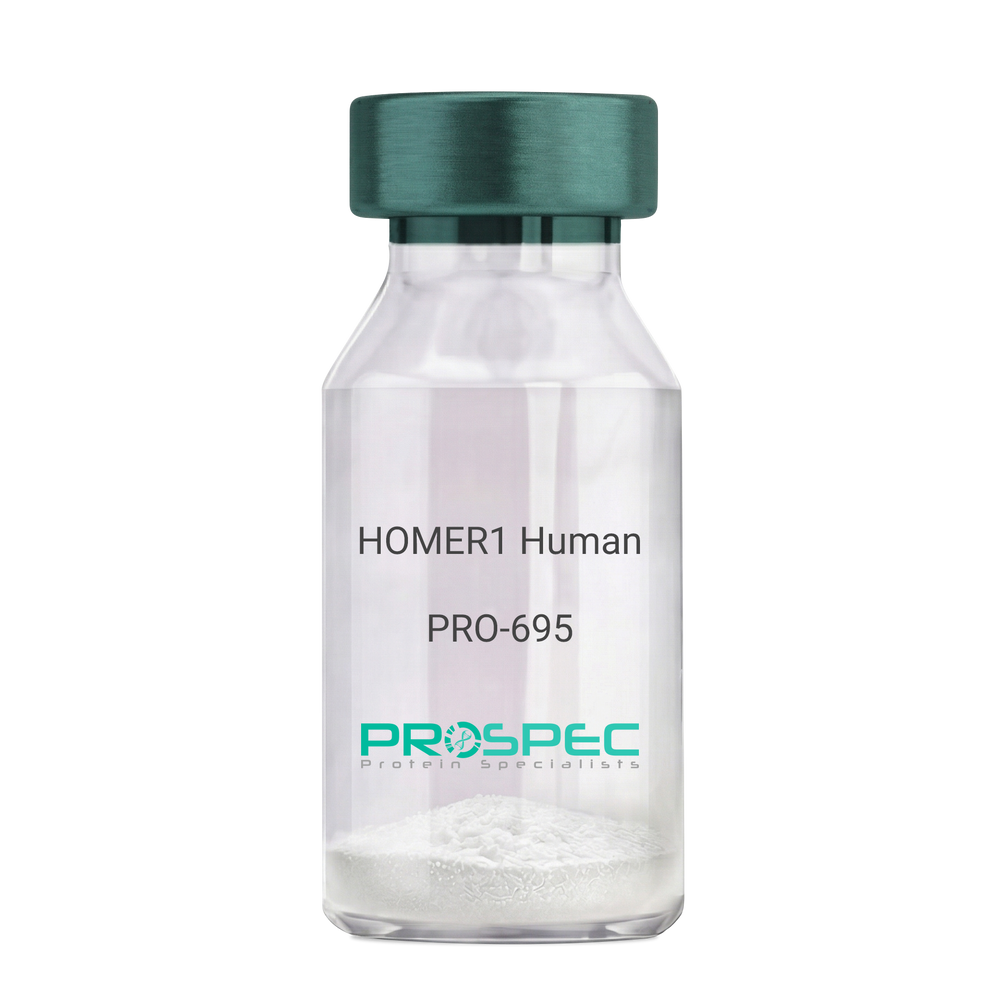
    HOMER1 Human

    Description:

    Homer Homolog-1 Human Recombinant

    HOMER, SYN47, Ves-1, HOMER1A, HOMER1B, HOMER1C, HOMER1, Homer protein homolog 1.

    Product # :

    PRO-695

    Price :

    Quantity :

    Shipping Method :

    Ice Icon

    Shipped with Ice Packs

    Add To Cart

    More Info

    • description
    • source
    • formulation
    • purity
    • More Info

    Description

    Recombinant Human HOMER1 produced in E.Coli is a single, non-glycosylated polypeptide chain containing 391 amino acids (1-354 a.a) and having a molecular mass of 44.5 kDa. HOMER1 is fused to a 37 amino acid His Tag at N-terminus and purified by proprietary chromatographic techniques.

    Source

    Escherichia Coli.

    Formulation

    The HOMER1 protein (1mg/ml) contains 20mM Tris-HCl buffer pH-8, 1mM DTT, 0.1M NaCl and 20% glycerol.

    Purity

    Greater than 90% as determined by Analysis by SDS-PAGE.

    More Info

    • Introduction

      HOMER1 takes part in determining the apoptotic susceptibility to TRAIL.
      HOMER1 is a member of the Homer family of proteins that regulate signal transduction through, and the trafficking of, glutamate receptors, plus maintain and regulate extracellular glutamate levels in corticolimbic brain regions. The HOMER1 is enriched at excitatory synapses and binds group 1 metabotropic glutamate receptors (mGluRs).

    • Synonyms

      HOMER, SYN47, Ves-1, HOMER1A, HOMER1B, HOMER1C, HOMER1, Homer protein homolog 1.

    • Physical Appearance

      Sterile filtered colorless solution.

    • Stability

      Store at 4°C if entire vial will be used within 2-4 weeks. Store, frozen at -20°C for longer periods of time. For long term storage it is recommended to add a carrier protein (0.1% HSA or BSA). Avoid multiple freeze-thaw cycles.

    • Amino Acid Sequence

      MRGSHHHHHH GMASMTGGQQ MGRDLYDDDD KDRWGSHMGE QPIFSTRAHV FQIDPNTKKN WVPTSKHAVT VSYFYDSTRN VYRIISLDGS KAIINSTITPNMTFTKTSQK FGQWADSRAN TVYGLGFSSE HHLSKFAEKF QEFKEAARLA KEKSQEKMEL TSTPSQESAG GDLQSPLTPE SINGTDDERT PDVTQNSEPR AEPTQNALPF SHSSAISKHW EAELATLKGN NAKLTAALLE STANVKQWKQ QLAAYQEEAE RLHKRVTELE CVSSQANAVH THKTELNQTI QELEETLKLK EEEIERLKQE IDNARELQEQ RDSLTQKLQE VEIRNKDLEG QLSDLEQRLE KSQNEQEAFR NNLKTLLEIL DGKIFELTEL RDNLAKLLEC S.

    ProSpec's products are furnished for LABORATORY RESEARCH USE ONLY. The product may not be used as drugs, agricultural or pesticidal products, food additives or household chemicals.

    Homer1 Human
  • View Data Sheet

    Name :

    DNALI1 Human

    Description:

    Dynein Axonemal Light Intermediate Chain 1 Human Recombinant

    Dynein, Axonemal, Light Intermediate Chain 1, DJ423B22.5 (Axonemal Dynein Light Chain (Hp28)), Inner Dynein Arm Light Chain Axonemal, hp28, P28, Homolog Of Clamydomonas, Axonemal Dynein Light Intermediate Polypeptide 1, dJ423B22.5, Inner Dynein Arm, Homolog Of Clamydomonas, Dynein, Axonemal, Light Intermediate Polypeptide 1.

    Product # :

    PRO-1756

    Price :

    Quantity :

    Shipping Method :

    Ice Icon

    Shipped with Ice Packs

    Add To Cart

    More Info

    • description
    • source
    • formulation
    • purity
    • More Info

    Description

    DNALI1 Human Recombinant produced in E.Coli is a single, non-glycosylated polypeptide chain containing 303 amino acids (1-280 a.a) and having a molecular mass of 34.2kDa. DNALI1 is fused to a 23 amino acid His-tag at N-terminus & purified by proprietary chromatographic techniques.

    Source

    Escherichia Coli.

    Formulation

    DNALI1 protein solution (1mg/ml) containing 20mM Tris-HCl buffer (pH 8.0), 0.15M NaCl, 10% glycerol, 1mM DTT and 0.1mM PMSF.

    Purity

    Greater than 90.0% as determined by SDS-PAGE.

    More Info

    • Introduction

      Dynein Axonemal Light Intermediate Chain1 also known as DNALI1 belongs to the inner dynein arm light chain family. DNALI1 take a dynamic role in flagellar motility. DNALI1 is the human homolog of the Chlamydomonas inner dynein arm gene, p28. The exactfunction of DNALI1 is not known yet, on the other hand, it is a potential candidate for immotile cilia syndrome. In addition it has been found that the following diseases: primary ciliary dyskinesia, and huntington's disease have been associated with DNALI1. Ultrastructural defects of the inner dynein arms are seen in patients with ICS. Immotile mutant strains ofChlamydomonas, biflagellated algae, show similar defects.

    • Synonyms

      Dynein, Axonemal, Light Intermediate Chain 1, DJ423B22.5 (Axonemal Dynein Light Chain (Hp28)), Inner Dynein Arm Light Chain Axonemal, hp28, P28, Homolog Of Clamydomonas, Axonemal Dynein Light Intermediate Polypeptide 1, dJ423B22.5, Inner Dynein Arm, Homolog Of Clamydomonas, Dynein, Axonemal, Light Intermediate Polypeptide 1.

    • Physical Appearance

      Sterile Filtered clear solution.

    • Stability

      Store at 4°C if entire vial will be used within 2-4 weeks. Store, frozen at -20°C for longer periods of time.For long term storage it is recommended to add a carrier protein (0.1% HSA or BSA).Please avoid freeze thaw cycles.

    • Amino Acid Sequence

      MGSSHHHHHH SSGLVPRGSH MGSMVTANKA HTGQGSCWVA TLASAMIPPA DSLLKYDTPV LVSRNTEKRS PKARLLKVSP QQPGPSGSAP QPPKTKLPST PCVPDPTKQA EEILNAILPP REWVEDTQLW IQQVSSTPST RMDVVHLQEQ LDLKLQQRQA RETGICPVRR ELYSQCFDEL IREVTINCAE RGLLLLRVRD EIRMTIAAYQ TLYESSVAFG MRKALQAEQG KSDMERKIAE LETEKRDLER QVNEQKAKCE ATEKRESERR QVEEKKHNEE IQFLKRTNQQ LKAQLEGIIA PKK

    ProSpec's products are furnished for LABORATORY RESEARCH USE ONLY. The product may not be used as drugs, agricultural or pesticidal products, food additives or household chemicals.

    Dnali1 Human
  • View Data Sheet

    Name :

    SLA2 Human

    Description:

    Src-Like-Adaptor 2 Human Recombinant

    Src-like-adapter 2, Modulator of antigen receptor signaling, MARS, Src-like adapter protein 2, SLAP-2, SLA2, C20orf156, SLAP2, Src-like-adapter 2 isoform a, Src-like-adaptor 2, C20orf156, MARS, SLAP-2, SLAP2.

    Product # :

    PRO-1810

    Price :

    Quantity :

    Shipping Method :

    Ice Icon

    Shipped with Ice Packs

    Add To Cart

    More Info

    • description
    • source
    • formulation
    • purity
    • More Info

    Description

    SLA2 Human Recombinant produced in E.Coli is a single, non-glycosylated polypeptide chain containing 284 amino acids (1-261 a.a.) and having a molecular mass of 31kDa.SLA2 is fused to a 23 amino acid His-tag at N-terminus & purified by proprietary chromatographic techniques.

    Source

    Escherichia Coli.

    Formulation

    SLA2 protein solution (0.5mg/ml) contains 20mM Tris-HCl buffer, (pH 8.0), 10% glycerol and 0.4M Urea.

    Purity

    Greater than 80.0% as determined by SDS-PAGE.

    More Info

    • Introduction

      Src-Like-Adaptor 2, also known as SLA2, is a part of the SLAP family of adapter proteins. SLA2 acts as a significant receptor-proximal in downregulating T and B cell-mediated responses and inhibits antigen receptor-induced calcium mobilization. SLA2 interacts with Cas-Br-M (murine) ecotropic retroviral transforming sequence c.

    • Synonyms

      Src-like-adapter 2, Modulator of antigen receptor signaling, MARS, Src-like adapter protein 2, SLAP-2, SLA2, C20orf156, SLAP2, Src-like-adapter 2 isoform a, Src-like-adaptor 2, C20orf156, MARS, SLAP-2, SLAP2.

    • Physical Appearance

      Sterile Filtered colorless solution.

    • Stability

      Store at 4°C if entire vial will be used within 2-4 weeks. Store, frozen at -20°C for longer periods of time. For long term storage it is recommended to add a carrier protein (0.1% HSA or BSA).Avoid multiple freeze-thaw cycles.

    • Amino Acid Sequence

      MGSSHHHHHH SSGLVPRGSH MGSMGSLPSR RKSLPSPSLS SSVQGQGPVT MEAERSKATA VALGSFPAGG PAELSLRLGE PLTIVSEDGD WWTVLSEVSG REYNIPSVHV AKVSHGWLYE GLSREKAEEL LLLPGNPGGA FLIRESQTRR GSYSLSVRLS RPASWDRIRH YRIHCLDNGW LYISPRLTFP SLQALVDHYS ELADDICCLL KEPCVLQRAG PLPGKDIPLP VTVQRTPLNW KELDSSLLFS EAATGEESLL SEGLRESLSF YISLNDEAVS LDDA.

    ProSpec's products are furnished for LABORATORY RESEARCH USE ONLY. The product may not be used as drugs, agricultural or pesticidal products, food additives or household chemicals.

    Sla2 Human
  • View Data Sheet

    Name :

    OCIAD2 Human

    Description:

    OCIA Domain Containing 2 Human Recombinant

    OCIA domain-containing protein 2, Ovarian carcinoma immunoreactive antigen-like protein, OCIAD2.

    Product # :

    PRO-1456

    Price :

    Quantity :

    Shipping Method :

    Ice Icon

    Shipped with Ice Packs

    Add To Cart

    More Info

    • description
    • source
    • formulation
    • purity
    • More Info

    Description

    OCIAD2 Human Recombinant produced in E.Coli is a single, non-glycosylated polypeptide chain containing 177 amino acids (1-154 a.a) and having a molecular mass of 19.3kDa.OCIAD2 is fused to a 23 amino acid His-tag at N-terminus & purified by proprietary chromatographic techniques.

    Source

    Escherichia Coli.

    Formulation

    OCIAD2 protein solution (0.5mg/ml) containing 20mM Tris-HCl buffer (pH 8.0), 0.4M UREA and 10% glycerol.

    Purity

    Greater than 85.0% as determined by SDS-PAGE.

    More Info

    • Introduction

      OCIA domain-containing protein 2 (OCIAD2) is a protein-coding gene which localizes to endosomes and contains one Ovarian carcinoma immunoreactive antigen (OCIA) domain. Among the associated diseases with OCIAD2 are bronchiolo-alveolar adenocarcinoma, and ovarian mucinous neoplasm. OCIAD1 is an important paralog of this gene.

    • Synonyms

      OCIA domain-containing protein 2, Ovarian carcinoma immunoreactive antigen-like protein, OCIAD2.

    • Physical Appearance

      Sterile Filtered colorless solution.

    • Stability

      Store at 4°C if entire vial will be used within 2-4 weeks. Store, frozen at -20°C for longer periods of time. For long term storage it is recommended to add a carrier protein (0.1% HSA or BSA).Avoid multiple freeze-thaw cycles.

    • Amino Acid Sequence

      MGSSHHHHHH SSGLVPRGSH MGSMASASAR GNQDKDAHFP PPSKQSLLFC PKSKLHIHRA EISKIMRECQ EESFWKRALP FSLVSMLVTQ GLVYQGYLAA NSRFGSLPKV ALAGLLGFGL GKVSYIGVCQ SKFHFFEDQL RGAGFGPQHN RHCLLTCEEC KIKHGLSEKG DSQPSAS

    ProSpec's products are furnished for LABORATORY RESEARCH USE ONLY. The product may not be used as drugs, agricultural or pesticidal products, food additives or household chemicals.

    Ociad2 Human
  • View Data Sheet

    Name :

    OPTC Human

    Description:

    Opticin Human Recombinant

    Opticin, Oculoglycan, OPT.

    Product # :

    PRO-2151

    Price :

    Quantity :

    Shipping Method :

    Ice Icon

    Shipped with Ice Packs

    Add To Cart

    More Info

    • description
    • source
    • formulation
    • purity
    • More Info

    Description

    OPTC Human Recombinant produced in E.Coli is a single, non-glycosylated polypeptide chain containing 336 amino acids (20-332 a.a) and having a molecular mass of 37.6kDa. OPTC is fused to a 23 amino acid His-tag at N-terminus & purified by proprietary chromatographic techniques.

    Source

    Escherichia Coli.

    Formulation

    OPTC protein solution (0.5mg/ml) containing 20mM Tris-HCl (pH8.0) and 10% glycerol.

    Purity

    Greater than 85% as determined by SDS-PAGE.

    More Info

    • Introduction

      Opticin also known as OPTC is a member of the class III of the small leucine-rich repeat protein (SLRP) family. Members of this family are usually linked with the extracellular matrix. OPTC is attended in significant quantities in the vitreous of the eye and also localizes to the cornea, iris, ciliary body, optic nerve, choroid, retina, and fetal liver. OPTC might noncovalently bind collagen fibrils and regulate fibril morphology, spacing and organization. OPTC is mapped to a an area of chromosome 1 which is linked with the inherited eye diseases age-related macular degeneration (AMD) and posterior column ataxia with retinosa pigmentosa (AXPC1).

    • Synonyms

      Opticin, Oculoglycan, OPT.

    • Physical Appearance

      Sterile filtered colorless solution.

    • Stability

      Store at 4°C if entire vial will be used within 2-4 weeks. Store, frozen at -20°C for longer periods of time. For long term storage it is recommended to add a carrier protein (0.1% HSA or BSA).Avoid multiple freeze-thaw cycles.

    • Amino Acid Sequence

      MGSSHHHHHH SSGLVPRGSH MGSASLPRKE RKRREEQMPR EGDSFEVLPL RNDVLNPDNY GEVIDLSNYE ELTDYGDQLP EVKVTSLAPA TSISPAKSTT APGTPSSNPT MTRPTTAGLL LSSQPNHGLP TCLVCVCLGS SVYCDDIDLE DIPPLPRRTA YLYARFNRIS RIRAEDFKGL TKLKRIDLSN NLISSIDNDA FRLLHALQDL ILPENQLEAL PVLPSGIEFL DVRLNRLQSS GIQPAAFRAM EKLQFLYLSD NLLDSIPGPL PLSLRSVHLQ NNLIETMQRD VFCDPEEHKH TRRQLEDIRL DGNPINLSLF PSAYFCLPRL PIGRFT.

    ProSpec's products are furnished for LABORATORY RESEARCH USE ONLY. The product may not be used as drugs, agricultural or pesticidal products, food additives or household chemicals.

    Optc Human
  • View Data Sheet

    Name :

    STIP1 Human

    Description:

    Stress-Induced-Phosphoprotein 1 Human Recombinant

    Stress Induced Phosphoprotein 1, Transformation-Sensitive Protein IEF SSP 3521, Renal Carcinoma Antigen NY-REN-11, Stress-Induced-Phosphoprotein 1, Hsp70/Hsp90-Organizing Protein, Hsc70/Hsp90-Organizing Protein, STI1, HOP, Epididymis Secretory Sperm Binding Protein Li 94n, NY-REN-11 Antigen, IEF-SSP-3521, HEL-S-94n, STI1L, P60.

    Product # :

    PRO-2334

    Price :

    Quantity :

    Shipping Method :

    Ice Icon

    Shipped with Ice Packs

    Add To Cart

    More Info

    • description
    • source
    • formulation
    • purity
    • More Info

    Description

    STIP1 Human Recombinant produced in E.Coli is a single, non-glycosylated polypeptide chain containing 543 amino acids (1-543 a.a) and having a molecular mass of 62.6kDa. STIP1 is purified by proprietary chromatographic techniques.

    Source

    Escherichia Coli.

    Formulation

    STIP1 protein solution (0.5mg/ml) containing 20mM Tris-HCl (pH 8.0), 10% glycerol, 1mM DTT and 0.1M NaCl.

    Purity

    Greater than 95.0% as determined by SDS-PAGE.

    More Info

    • Introduction

      STIP1 is an adaptor protein that mediates the functions of HSP70 & HSP90 in protein folding. STIP1 supports the transfer of proteins from HSP70 to HSP90 by binding together HSP90 and substrate-bound HSP70. STIP1 stimulates the ATPase activity of HSP70 and inhibits the ATPase activity of HSP90, suggesting that it regulates both the conformations and ATPase cycles of these chaperones. STIP1 genetic variations are involved in regulating corticosteroid response in asthmatic subjects with reduced lung function.

    • Synonyms

      Stress Induced Phosphoprotein 1, Transformation-Sensitive Protein IEF SSP 3521, Renal Carcinoma Antigen NY-REN-11, Stress-Induced-Phosphoprotein 1, Hsp70/Hsp90-Organizing Protein, Hsc70/Hsp90-Organizing Protein, STI1, HOP, Epididymis Secretory Sperm Binding Protein Li 94n, NY-REN-11 Antigen, IEF-SSP-3521, HEL-S-94n, STI1L, P60.

    • Physical Appearance

      Sterile Filtered colorless solution.

    • Stability

      Store at 4°C if entire vial will be used within 2-4 weeks. Store, frozen at -20°C for longer periods of time. For long term storage it is recommended to add a carrier protein (0.1% HSA or BSA). Avoid multiple freeze-thaw cycles.

    • Amino Acid Sequence

      MEQVNELKEK GNKALSVGNI DDALQCYSEA IKLDPHNHVL YSNRSAAYAK KGDYQKAYED GCKTVDLKPD WGKGYSRKAA ALEFLNRFEE AKRTYEEGLK HEANNPQLKE GLQNMEARLA ERKFMNPFNM PNLYQKLESD PRTRTLLSDP TYRELIEQLR NKPSDLGTKL QDPRIMTTLS VLLGVDLGSM DEEEEIATPP PPPPPKKETK PEPMEEDLPE NKKQALKEKE LGNDAYKKKD FDTALKHYDK AKELDPTNMT YITNQAAVYF EKGDYNKCRE LCEKAIEVGR ENREDYRQIA KAYARIGNSY FKEEKYKDAI HFYNKSLAEH RTPDVLKKCQ QAEKILKEQE RLAYINPDLA LEEKNKGNEC FQKGDYPQAM KHYTEAIKRN PKDAKLYSNR AACYTKLLEF QLALKDCEEC IQLEPTFIKG YTRKAAALEA MKDYTKAMDV YQKALDLDSS CKEAADGYQR CMMAQYNRHD SPEDVKRRAM ADPEVQQIMS DPAMRLILEQ MQKDPQALSE HLKNPVIAQK IQKLMDVGLI AIR.

    ProSpec's products are furnished for LABORATORY RESEARCH USE ONLY. The product may not be used as drugs, agricultural or pesticidal products, food additives or household chemicals.

    Human Stip1
  • View Data Sheet

    Name :

    ERO1L Human

    Description:

    ERO1-Like Human Recombinant

    ERO1-Like (S. Cerevisiae), Endoplasmic Oxidoreductin-1-Like Protein, Oxidoreductin-1-L-Alpha, ERO1-L-Alpha, ERO1LA, ERO1-L, ERO1 (S. Cerevisiae)-Like, ERO1-Like Protein Alpha, ERO1-Alpha, EC 1.8.4.-, EC 1.8.4, ERO1A, ERO1L.

    Product # :

    PRO-1957

    Price :

    Quantity :

    Shipping Method :

    Ice Icon

    Shipped with Ice Packs

    Add To Cart

    More Info

    • description
    • source
    • formulation
    • purity
    • More Info

    Description

    ERO1L Human Recombinant produced in E.coli is a single, non-glycosylated polypeptide chain containing 468 amino acids (24-468) and having a molecular mass of 54.4 kDa.ERO1L is fused to a 23 amino acid His-tag at N-terminus & purified by proprietary chromatographic techniques.

    Source

    Escherichia Coli.

    Formulation

    The ERO1L solution (1mg/ml) contains 20mM Tris-HCl buffer (pH 8.0) and 10% glycerol.

    Purity

    Greater than 90.0% as determined by SDS-PAGE.

    More Info

    • Introduction

      ERO1-like protein alpha (ERO1L) is an essential oxidoreductase, which oxidizes proteins and is necessary for the folding of immunoglobulins. ERO1L covalently binds with PDI (protein disulfide-isomerase) and jointly they generate disulfide bonds between proteins in the endoplasmic reticulum. ERO1L is stimulated by hypoxia, proposing that ERO1L is regulated through the HIF (hypoxia inducible transcrip-tion factor) pathway. At low levels ERO1L is ubiquitously expressed, however at high levels it is expressed in the upper digestive tract and esophagus. In addition, ERO1L is involved in the release of the unfolded cholera toxin from reduced P4HB/PDI in case of infection by V.cholerae, thus having a role in retrotranslocation of the toxin. Furthermore, ERO1L plays an important role in ER stress-induced, CHOP-dependent apoptosis by activating the inositol 1,4,5-trisphosphate receptor IP3R1.

    • Synonyms

      ERO1-Like (S. Cerevisiae), Endoplasmic Oxidoreductin-1-Like Protein, Oxidoreductin-1-L-Alpha, ERO1-L-Alpha, ERO1LA, ERO1-L, ERO1 (S. Cerevisiae)-Like, ERO1-Like Protein Alpha, ERO1-Alpha, EC 1.8.4.-, EC 1.8.4, ERO1A, ERO1L.

    • Physical Appearance

      Sterile Filtered colorless solution.

    • Stability

      Store at 4°C if entire vial will be used within 2-4 weeks. Store, frozen at -20°C for longer periods of time. For long term storage it is recommended to add a carrier protein (0.1% HSA or BSA).Avoid multiple freeze-thaw cycles.

    • Amino Acid Sequence

      MGSSHHHHHH SSGLVPRGSH MGSEEQPPET AAQRCFCQVS GYLDDCTCDV ETIDRFNNYR LFPRLQKLLE SDYFRYYKVN LKRPCPFWND ISQCGRRDCA VKPCQSDEVP DGIKSASYKY SEEANNLIEE CEQAERLGAV DESLSEETQK AVLQWTKHDD SSDNFCEADD IQSPEAEYVD LLLNPERYTG YKGPDAWKIW NVIYEENCFK PQTIKRPLNP LASGQGTSEE NTFYSWLEGL CVEKRAFYRL ISGLHASINV HLSARYLLQE TWLEKKWGHN ITEFQQRFDG ILTEGEGPRR LKNLYFLYLI ELRALSKVLP FFERPDFQLF TGNKIQDEEN KMLLLEILHE IKSFPLHFDE NSFFAGDKKE AHKLKEDFRL HFRNISRIMD CVGCFKCRLW GKLQTQGLGT ALKILFSEKL IANMPESGPS YEFHLTRQEI VSLFNAFGRI STSVKELENF RNLLQNIH.

    ProSpec's products are furnished for LABORATORY RESEARCH USE ONLY. The product may not be used as drugs, agricultural or pesticidal products, food additives or household chemicals.

    Ero1L Human
  • View Data Sheet

    Name :

    FIMC E.Coli

    Description:

    Chaperone Protein fimC E.Coli Recombinant

    Chaperone protein fimC, fimC, b4316, JW4279.

    Product # :

    PRO-120

    Price :

    Quantity :

    Shipping Method :

    Ice Icon

    Shipped with Ice Packs

    Add To Cart

    More Info

    • description
    • source
    • formulation
    • purity
    • More Info

    Description

    FIMC E.Coli Recombinant fused with a 21 amino acid His tag at N-terminus produced in E.Coli is a single, non-glycosylated, polypeptide chain containing 226 amino acids (37-241 a.a.) and having a molecular mass of 25kDa. The FIMC is purified by proprietary chromatographic techniques.

    Source

    Escherichia Coli.

    Formulation

    The FIMC solution (1 mg/ml) contains 20mM Tris-HCl buffer (pH 8.0), 10% glycerol and 1mM DTT.

    Purity

    Greater than 95.0% as determined by SDS-PAGE.

    More Info

    • Introduction

      The 23kDa two-domain periplasmic chaperone FIMC from E.coli is vital for the assembly of type-1 pili, which are filamentous, very oligomeric protein complexes anchored to the outer bacterial membrane that mediate adhesion of pathogenic E. coli strains to host cell surfaces and persist in macrophages.

    • Synonyms

      Chaperone protein fimC, fimC, b4316, JW4279.

    • Physical Appearance

      Sterile Filtered colorless solution.

    • Stability

      Store at 4°C if entire vial will be used within 2-4 weeks. Store, frozen at -20°C for longer periods of time. For long term storage it is recommended to add a carrier protein (0.1% HSA or BSA).Avoid multiple freeze-thaw cycles.

    • Amino Acid Sequence

      MGSSHHHHHH SSGLVPRGSH MGVALGATRV IYPAGQKQEQ LAVTNNDENS TYLIQSWVEN ADGVKDGRFI VTPPLFAMKG KKENTLRILD ATNNQLPQDR ESLFWMNVKA IPSMDKSKLT ENTLQLAIIS RIKLYYRPAK LALPPDQAAE KLRFRRSANS LTLINPTPYY LTVTELNAGT RVLENALVPP MGESTVKLPS DAGSNITYRT INDYGALTPK MTGVME.

    ProSpec's products are furnished for LABORATORY RESEARCH USE ONLY. The product may not be used as drugs, agricultural or pesticidal products, food additives or household chemicals.

    Fimc Ecoli
  • View Data Sheet

    Name :

    TGM2 Mouse

    Description:

    Tissue Transglutaminase Mouse Recombinant

    Protein-glutamine gamma-glutamyltransferase 2, G[a]h, TG2, TGase2, tTG, tTGas, Protein-glutamine gamma-glutamyltransferase 2, Tissue transglutaminase, Transglutaminase C.

    Product # :

    ENZ-897

    Price :

    Quantity :

    Shipping Method :

    Ice Icon

    Shipped with Ice Packs

    Add To Cart

    More Info

    • description
    • source
    • formulation
    • purity
    • More Info

    Description

    TGM2 Mouse Recombinant produced in E.Coli is a single, non-glycosylated polypeptide chain containing 709 amino acids (1-686 a.a) and having a molecular mass of 79.4kDa.TGM2 is fused to a 23 amino acid His-tag at N-terminus & purified by proprietary chromatographic techniques.

    Source

    E.coli.

    Formulation

    TGM2 protein solution (0.5mg/ml) in Phosphate buffered saline (pH7.4), 10% glycerol and 1mM DTT.

    Purity

    Greater than 85% as determined by SDS-PAGE.

    More Info

    • Introduction

      Celiac disease is an enteropathy that is characterized by intestinal lesions of variable severity. Tissue-type transglutaminase (tTG) is believed to be the predominant autoantigen for celiac disease and the corresponding autoantibodies show higher sensitivity and specificity than anti-gliadin antibodies. Highly pure recombinant human tTG is now available to replace the traditionally used tTG fraction from guinea pig.
      Tissue-type transglutaminase antigens have been specifically modified for improved handling: exchange of an active site amino acid eliminates the protein cross-linking activity of the enzyme, while maintaining the native three-dimensional structure and the enzyme's secondary GTPase activity. This engineering assures reproducible properties of the antigen preparations through the absence of variable and ill-defined covalent aggregates of tTG antigen and host cell proteins.

    • Synonyms

      Protein-glutamine gamma-glutamyltransferase 2, G[a]h, TG2, TGase2, tTG, tTGas, Protein-glutamine gamma-glutamyltransferase 2, Tissue transglutaminase, Transglutaminase C.

    • Physical Appearance

      Sterile Filtered colorless solution.

    • Stability

      Store at 4°C if entire vial will be used within 2-4 weeks.Store, frozen at -20°C for longer periods of time. For long term storage it is recommended to add a carrier protein (0.1% HSA or BSA).Avoid multiple freeze-thaw cycles.

    • Amino Acid Sequence

      MGSSHHHHHH SSGLVPRGSH MGSMAEELLL ERCDLEIQAN GRDHHTADLC QEKLVLRRGQ RFRLTLYFEG RGYEASVDSL TFGAVTGPDPSEEAGTKARF SLSDNVEEGS WSASVLDQQD NVLSLQLCTP ANAPIGLYRL SLEASTGYQG SSFVLGHFIL LYNAWCPADD VYLDSEEERR EYVLTQQGFI YQGSVKFIKS VPWNFGQFED GILDTCLMLL DMNPKFLKNR SRDCSRRSSP IYVGRVVSAM VNCNDDQGVL LGRWDNNYGD GISPMAWIGS VDILRRWKEH GCQQVKYGQC WVFAAVACTV LRCLGIPTRV VTNYNSAHDQ NSNLLIEYFR NEFGELESNK SEMIWNFHCW VESWMTRPDL QPGYEGWQAI DPTPQEKSEG TYCCGPVSVR AIKEGDLSTK YDAPFVFAEV NADVVDWIRQ EDGSVLKSIN RSLVVGQKIS TKSVGRDDRE DITHTYKYPE GSPEEREVFT KANHLNKLAE KEETGVAMRI RVGDSMSMGN DFDVFAHIGN DTSETRECRL LLCARTVSYN GVLGPECGTE DINLTLDPYS ENSIPLRILY EKYSGCLTES NLIKVRGLLI EPAANSYLLA ERDLYLENPE IKIRVLGEPK QNRKLVAEVS LKNPLSDPLY DCIFTVEGAG LTKEQKSVEV SDPVPAGDLV KARVDLFPTD IGLHKLVVNF QCDKLKSVKG YRNVIIGPA.

    ProSpec's products are furnished for LABORATORY RESEARCH USE ONLY. The product may not be used as drugs, agricultural or pesticidal products, food additives or household chemicals.

    Tgm2 Mouse
  • View Data Sheet

    Name :

    ITGB1 Human

    Description:

    Integrin Beta 1 Human Recombinant

    Integrin beta-1, Fibronectin receptor subunit beta, Glycoprotein IIa, GPIIA, VLA-4 subunit beta, CD29, ITGB1, FNRB, MDF2, MSK12, Integrin beta 1, CD29, VLAB.

    Product # :

    PRO-1817

    Price :

    Quantity :

    Shipping Method :

    Ice Icon

    Shipped with Ice Packs

    Add To Cart

    More Info

    • description
    • source
    • formulation
    • purity
    • More Info

    Description

    ITGB1 Human Recombinant produced in E. coli is a single polypeptide chain containing 462 amino acids (21-461) and having a molecular mass of 51.2 kDa.ITGB1 is fused to a 20 amino acid His-tag at N-terminus & purified by proprietary chromatographic techniques.

    Source

    Escherichia Coli.

    Formulation

    The ITGB1 solution (1mg/1ml) contains 20mM Tris-HCl buffer (pH 8.0), 0.4M Urea and 10% glycerol.

    Purity

    Greater than 80% as determined by SDS-PAGE.

    More Info

    • Introduction

      Integrins are heterodimeric proteins consist of alpha and beta subunits. There are more than 18 alpha and 8 beta subunits discovered in mammals. Integrin family members are membrane receptors that participates in cell adhesion and recognition in a variety of processes including embryogenesis, hemostasis, tissue repair, immune response and metastatic diffusion of tumor cells. ITGB1 encodes a beta subunit.

    • Synonyms

      Integrin beta-1, Fibronectin receptor subunit beta, Glycoprotein IIa, GPIIA, VLA-4 subunit beta, CD29, ITGB1, FNRB, MDF2, MSK12, Integrin beta 1, CD29, VLAB.

    • Physical Appearance

      Sterile filtered colorless solution.

    • Stability

      Store at 4°C if entire vial will be used within 2-4 weeks. Store, frozen at -20°C for longer periods of time. For long term storage it is recommended to add a carrier protein (0.1% HSA or BSA).Avoid multiple freeze-thaw cycles.

    • Amino Acid Sequence

      MGSSHHHHHH SSGLVPRGSH MQTDENRCLK ANAKSCGECI QAGPNCGWCT NSTFLQEGMP TSARCDDLEA LKKKGCPPDD IENPRGSKDI KKNKNVTNRS KGTAEKLKPE DITQIQPQQL VLRLRSGEPQ TFTLKFKRAE DYPIDLYYLM DLSYSMKDDL ENVKSLGTDL MNEMRRITSD
      FRIGFGSFVE KTVMPYISTT PAKLRNPCTS EQNCTSPFSY KNVLSLTNKG EVFNELVGKQ RISGNLDSPE GGFDAIMQVA VCGSLIGWRN VTRLLVFSTD AGFHFAGDGK LGGIVLPNDG QCHLENNMYT MSHYYDYPSI AHLVQKLSEN NIQTIFAVTE EFQPVYKELK NLIPKSAVGT LSANSSNVIQ LIIDAYNSLS SEVILENGKL SEGVTISYKS YCKNGVNGTG ENGRKCSNIS IGDEVQFEIS ITSNKCPKKD SDSFKIRPLG FTEEVEVILQ YI.

    ProSpec's products are furnished for LABORATORY RESEARCH USE ONLY. The product may not be used as drugs, agricultural or pesticidal products, food additives or household chemicals.

    Itgb1 Human
  • View Data Sheet

    Name :

    GABARAPL1 Human

    Description:

    GABA(A) Receptor-Associated Protein Like 1 Human Recombinant

    Gamma-aminobutyric acid receptor-associated protein-like 1, Early estrogen-regulated protein, GABA(A) receptor-associated protein-like 1, Glandular epithelial cell protein 1, GEC-1, GABARAPL1, GEC1, ATG8, APG8L, ATG8B, ATG8L, APG8-LIKE.

    Product # :

    PRO-048

    Price :

    Quantity :

    Shipping Method :

    Ice Icon

    Shipped with Ice Packs

    Add To Cart

    More Info

    • description
    • source
    • formulation
    • purity
    • More Info

    Description

    GABARAPL1 Human Recombinant fused with a 20 amino acid His tag at N-terminus produced in E.Coli is a single, non-glycosylated, polypeptide chain containing 137 amino acids (1-117 a.a.) and having a molecular mass of 16.2kDa (Molecular size on SDS-PAGE will appear higher). The GABARAPL1 is purified by proprietary chromatographic techniques.

    Source

    Escherichia Coli.

    Formulation

    The GABARAPL1 solution (1 mg/ml) contains 20mM Tris buffer (pH 8.0), 10% glycerol, 1mM DTT and 0.1M NaCl.

    Purity

    Greater than 85.0% as determined by SDS-PAGE.

    More Info

    • Introduction

      GABARAPL1 [Gamma-aminobutyric acid (GABA) receptor-associated protein-like 1] is a member of the MAP1 LC3 family. GABARAPL1 increases cell surface expression of kappa type opioid receptor through facilitating anterograde intracellular trafficking of the receptor.

    • Synonyms

      Gamma-aminobutyric acid receptor-associated protein-like 1, Early estrogen-regulated protein, GABA(A) receptor-associated protein-like 1, Glandular epithelial cell protein 1, GEC-1, GABARAPL1, GEC1, ATG8, APG8L, ATG8B, ATG8L, APG8-LIKE.

    • Physical Appearance

      Sterile Filtered colorless solution.

    • Stability

      Store at 4°C if entire vial will be used within 2-4 weeks. Store, frozen at -20°C for longer periods of time. For long term storage it is recommended to add a carrier protein (0.1% HSA or BSA).Avoid multiple freeze-thaw cycles.

    • Amino Acid Sequence

      MGSSHHHHHH SSGLVPRGSH MKFQYKEDHP FEYRKKEGEK IRKKYPDRVP VIVEKAPKAR VPDLDKRKYL VPSDLTVGQF YFLIRKRIHL RPEDALFFFV NNTIPPTSAT MGQLYEDNHE EDYFLYVAYS DESVYGK.

    ProSpec's products are furnished for LABORATORY RESEARCH USE ONLY. The product may not be used as drugs, agricultural or pesticidal products, food additives or household chemicals.

    Gabarapl1 Human
  • View Data Sheet

    Name :

    CHMP6 Human

    Description:

    Charged Multivesicular Body Protein 6 Human Recombinant

    Charged multivesicular body protein 6, Chromatin-modifying protein 6, Vacuolar protein sorting-associated protein 20, Vps20, hVps20, CHMP6.

    Product # :

    PRO-1085

    Price :

    Quantity :

    Shipping Method :

    Ice Icon

    Shipped with Ice Packs

    Add To Cart

    More Info

    • description
    • source
    • formulation
    • purity
    • More Info

    Description

    CHMP6 Human Recombinant produced in E.Coli is a single, non-glycosylated polypeptide chain containing 225 amino acids (1-201 a.a) and having a molecular mass of 26.1kDa (Molecular size on SDS-PAGE will appear higher).CHMP6 is fused to a 24 amino acid His-tag at N-terminus & purified by proprietary chromatographic techniques.

    Source

    Escherichia Coli.

    Formulation

    CHMP6 protein solution (1mg/ml) containing 20mM Tris-HCl buffer (pH 8.0), 2mM DTT, 10% glycerol and 100mM NaCl.

    Purity

    Greater than 95.0% as determined by SDS-PAGE.

    More Info

    • Introduction

      Charged multivesicular body protein 6 (CHMP6) is a member of the SNF7 family. The CHMP6 protein is a core component of the endosomal sorting necessary for transport complex III (ESCRT-III) that is involved in multivesicular bodies (MVBs) formation and sorting of endosomal cargo proteins into MVBs. MVBs contain intraluminal vesicles (ILVs) which are produced by invagination and scission from the limiting membrane of the endosome and generally are transported to lysosomes facilitating degradation of membrane proteins, such as stimulated growth factor receptors, lysosomal enzymes and lipids.

    • Synonyms

      Charged multivesicular body protein 6, Chromatin-modifying protein 6, Vacuolar protein sorting-associated protein 20, Vps20, hVps20, CHMP6.

    • Physical Appearance

      Sterile Filtered colorless solution.

    • Stability

      Store at 4°C if entire vial will be used within 2-4 weeks. Store, frozen at -20°C for longer periods of time. For long term storage it is recommended to add a carrier protein (0.1% HSA or BSA).Avoid multiple freeze-thaw cycles.

    • Amino Acid Sequence

      MGSSHHHHHH SSGLVPRGSH MGSHMGNLFG RKKQSRVTEQ DKAILQLKQQ RDKLRQYQKR IAQQLERERA LARQLLRDGR KERAKLLLKK KRYQEQLLDR TENQISSLEA MVQSIEFTQI EMKVMEGLQF GNECLNKMHQ VMSIEEVERI LDETQEAVEY QRQIDELLAG SFTQEDEDAI LEELSAITQE QIELPEVPSE PLPEKIPENV PVKARPRQAE LVAAS.

    ProSpec's products are furnished for LABORATORY RESEARCH USE ONLY. The product may not be used as drugs, agricultural or pesticidal products, food additives or household chemicals.

    Chmp6 Human
  • View Data Sheet

    Name :

    MAGEA4 Human

    Description:

    Melanoma Antigen Family A, 4 Human Recombinant

    CT1.4, MAGE4, MAGE-4 antigen, MAGE-X2 antigen, MAGE-41 antigen, MAGE4B, MGC21336, Cancer/testis antigen 1.4, MAGEA4.

    Product # :

    PRO-843

    Price :

    Quantity :

    Shipping Method :

    Ice Icon

    Shipped with Ice Packs

    Add To Cart

    More Info

    • description
    • source
    • formulation
    • purity
    • More Info

    Description

    MAGEA4 Recombinant Human produced in E.Coli is a single, non-glycosylated polypeptide chain containing 337 amino acids (1-317 a.a.) and having a molecular mass of 37 kDa. The MAGEA4 is fused to a 20 amino acid His-Tag at N-terminus and purified by proprietary chromatographic techniques.

    Source

    Escherichia Coli.

    Formulation

    MAGEA4 Human solution containing 20mM Tris-HCl pH-8 & 20% glycerol.

    Purity

    Greater than 90.0% as determined by SDS-PAGE.

    More Info

    • Introduction

      MAGEA4 is part of the MAGEA family, which directs the expression of tumor antigens that are identified on a human melanoma by autologous cytolytic T lymphocytes (CTL). MAGEA4 participates in embryonal development and tumor transformation or aspects of tumor progression. MAGEA4 is expressed in many tumors of several types, such as melanoma, head and neck squamous cell carcinoma, lung carcinoma and breast carcinoma, but not in normal tissues except for testes and placenta.

    • Synonyms

      CT1.4, MAGE4, MAGE-4 antigen, MAGE-X2 antigen, MAGE-41 antigen, MAGE4B, MGC21336, Cancer/testis antigen 1.4, MAGEA4.

    • Physical Appearance

      Sterile filtered colorless solution.

    • Stability

      Store at 4°C if entire vial will be used within 2-4 weeks. Store, frozen at -20°C for longer periods of time. For long term storage it is recommended to add a carrier protein (0.1% HSA or BSA).Avoid multiple freeze-thaw cycles.

    • Amino Acid Sequence

      MGSSHHHHHH SSGLVPRGSH MSSEQKSQHC KPEEGVEAQE EALGLVGAQA PTTEEQEAAV SSSSPLVPGT LEEVPAAESA GPPQSPQGAS ALPTTISFTC WRQPNEGSSS QEEEGPSTSP DAESLFREAL SNKVDELAHF LLRKYRAKEL VTKAEMLERV IKNYKRCFPV IFGKASESLK MIFGIDVKEV DPTSNTYTLV TCLGLSYDGL LGNNQIFPKT GLLIIVLGTI AMEGDSASEE EIWEELGVMG VYDGREHTVY GEPRKLLTQD WVQENYLEYR QVPGSNPARY EFLWGPRALA ETSYVKVLEH VVRVNARVRI AYPSLREAAL LEEEEGV.

    ProSpec's products are furnished for LABORATORY RESEARCH USE ONLY. The product may not be used as drugs, agricultural or pesticidal products, food additives or household chemicals.

    Magea4 Human
  • View Data Sheet

    Name :

    PVALB Human

    Description:

    Parvalbumin Human Recombinant

    Parvalbumin alpha, PVALB, D22S749, MGC116759.

    Product # :

    PRO-004

    Price :

    Quantity :

    Shipping Method :

    Ice Icon

    Shipped with Ice Packs

    Add To Cart

    More Info

    • description
    • source
    • formulation
    • purity
    • More Info

    Description

    PVALB Human Recombinant fused with a 24 amino acid His tag at N-terminus produced in E.Coli is a single, non-glycosylated, polypeptide chain containing 134 amino acids (1-110 a.a.) and having a molecular mass of 14.6kDa. The PVALB is purified by proprietary chromatographic techniques.

    Source

    Escherichia Coli.

    Formulation

    The PVALB solution (1 mg/ml) contains 20mM Tris-HCl buffer (pH 8.0), 1mM DTT, 10% glycerol and 50mM NaCl.

    Purity

    Greater than 95.0% as determined by SDS-PAGE.

    More Info

    • Introduction

      Parvalbumin alpha (PVALB) is a member of a larger group of EF hand proteins. PVALB is a high affinity calcium ion-binding protein which is structurally and functionally similar to calmodulin and troponin C. Parvalbumin is expressed in a specific population of GABAergic interneurones which are believed to have a role in maintaining the balance between excitation and inhibition in the cortex as well as the hippocampus.

    • Synonyms

      Parvalbumin alpha, PVALB, D22S749, MGC116759.

    • Physical Appearance

      Sterile Filtered colorless solution.

    • Stability

      Store at 4°C if entire vial will be used within 2-4 weeks.Store, frozen at -20°C for longer periods of time. For long term storage it is recommended to add a carrier protein (0.1% HSA or BSA).Avoid multiple freeze-thaw cycles.

    • Amino Acid Sequence

      MGSSHHHHHH SSGLVPRGSH MGSHMSMTDL LNAEDIKKAV GAFSATDSFD HKKFFQMVGLKKKSADDVKK VFHMLDKDKS GFIEEDELGF ILKGFSPDAR DLSAKETKML MAAGDKDGDG KIGVDEFSTL VAES.

    ProSpec's products are furnished for LABORATORY RESEARCH USE ONLY. The product may not be used as drugs, agricultural or pesticidal products, food additives or household chemicals.

    Pvalb Human
  • View Data Sheet

    Name :

    MAP1LC3B2 Human

    Description:

    Microtubule-Associated Protein 1 Light Chain 3 Beta 2 Human Recombinant

    Microtubule-associated proteins 1A/1B light chain 3 beta 2, Microtubule-associated proteins 1A/1B light chain 3B-like, MAP1LC3B2, ATG8G.

    Product # :

    PRO-215

    Price :

    Quantity :

    Shipping Method :

    Ice Icon

    Shipped with Ice Packs

    Add To Cart

    More Info

    • description
    • source
    • formulation
    • purity
    • More Info

    Description

    MAP1LC3B2 produced in E.Coli is a single, non-glycosylated polypeptide chain containing 140 amino acids (1-120 a.a.) and having a molecular mass of 16.2kDa.MAP1LC3B2 is fused to a 20 amino acid His-tag at N-terminus & purified by proprietary chromatographic techniques.

    Source

    Escherichia Coli.

    Formulation

    MAP1LC3B2 protein solution (1mg/ml) containing 20mM Tris-HCl buffer (pH 8.0), 1mM DTT, 10% glycerol and 0.1M NaCl.

    Purity

    Greater than 95.0% as determined by SDS-PAGE.

    More Info

    • Introduction

      Microtubule-associated proteins 1A/1B light chain 3 beta 2 (MAP1LC3B2) is a member of the MAP1LC3 family. MAP1LC3B2 is a subunit of neuronal microtubule-associated MAP1A and MAP1B proteins, which are involved in microtubule assembly and essential for neurogenesis. The MAP1LC3B2 protein is possibly involved in formation of autophagosomal vacuoles (autophagosomes). MAP1LC3B2 is expressed primarily in the heart, testis, brain and skeletal muscle.

    • Synonyms

      Microtubule-associated proteins 1A/1B light chain 3 beta 2, Microtubule-associated proteins 1A/1B light chain 3B-like, MAP1LC3B2, ATG8G.

    • Physical Appearance

      Sterile filtered colorless solution.

    • Stability

      Store at 4°C if entire vial will be used within 2-4 weeks. Store, frozen at -20°C for longer periods of time. For long term storage it is recommended to add a carrier protein (0.1% HSA or BSA).Avoid multiple freeze-thaw cycles.

    • Amino Acid Sequence

      MGSSHHHHHH SSGLVPRGSH MPSEKTFKQR RTFEQRVEDV RLIREQHPTK IPVIIERYKG EKQLPVLDKT KFLVPDHVNM SELIKIIRRR LQLNANQAFF LLVNGHSMVS VSTPISEVYE SEKDEDGFLY MVCASQETFG.

    ProSpec's products are furnished for LABORATORY RESEARCH USE ONLY. The product may not be used as drugs, agricultural or pesticidal products, food additives or household chemicals.

    Map1Lc3B2 Human
  • 1
  • …
  • 37
  • 38
  • 39
  • 40
  • 41
  • 42
Your browser does not support the video tag.

Products

  • Cytokines
  • Growth Factors
  • Chemokines
  • CD Antigens
  • Neurotrophins
  • Hormones
  • Enzymes
  • Viral Antigens
  • Recombinant Proteins
  • Natural Proteins
  • Monoclonal Antibodies
  • Polyclonal Antibodies
  • Thermal Packaging

About

  • Company
  • Founder
  • Contribution
  • Contact Us
  • My Account

Ordering

  • Ordering Method
  • Ordering - Credit Card
  • Ordering PO
  • Shipping Fees
  • FAQ's

Legal

  • Terms & Conditions
  • Privacy
  • Site Map
  • info@prospecbio.com
  • Facebook
  • Instagram
  • Linkedin Profile

© 2026 ProSpec-Tany TechnoGene Ltd. All Rights Reserved.

  • Choosing a selection results in a full page refresh.
  • Opens in a new window.