Search results
1000 results found for “transferrin”
Name
Description
Product #
Price
Quantity
Shipping Method
- View Data Sheet
Name :
APOHDescription:
Apolipoprotein-H Human Recombinant
Beta-2-glycoprotein 1, APC inhibitor, Activated protein C-binding protein, Anticardiolipin cofactor, Apolipoprotein H, Apo-H, Beta-2-glycoprotein I, B2GPI, Beta(2)GPI, APOH, B2G1, BG, B2GP1.
Product # :
CYT-189Price :
Quantity :
Shipping Method :
Shipped with Ice Packs
More Info
- description
- source
- formulation
- purity
- More Info
- sds-page
- Citations
Description
APOH Human Recombinant produced in E.Coli is a single, non-glycosylated polypeptide chain containing 349 amino acids (20-345 a.a.) and having a molecular mass of 38.6kDa.APOH is fused to a 23 amino acid His-tag at N-terminus & purified by proprietary chromatographic techniques.
Source
Escherichia Coli.
Formulation
APOH protein solution (0.5mg/ml) contains 20mM Tris-HCl buffer (pH 8.0), 2M urea and 10% glycerol.
Purity
Greater than 85.0% as determined by SDS-PAGE.
sds-page
Citations
More Info
-
Synonyms
Beta-2-glycoprotein 1, APC inhibitor, Activated protein C-binding protein, Anticardiolipin cofactor, Apolipoprotein H, Apo-H, Beta-2-glycoprotein I, B2GPI, Beta(2)GPI, APOH, B2G1, BG, B2GP1.
-
Physical Appearance
Sterile filtered colorless solution.
-
Stability
Store at 4°C if entire vial will be used within 2-4 weeks. Store, frozen at -20°C for longer periods of time. For long term storage it is recommended to add a carrier protein (0.1% HSA or BSA).Avoid multiple freeze-thaw cycles.
-
Amino Acid Sequence
MGSSHHHHHH SSGLVPRGSH MGSGRTCPKP DDLPFSTVVP LKTFYEPGEE ITYSCKPGYV SRGGMRKFIC PLTGLWPINT LKCTPRVCPF AGILENGAVR YTTFEYPNTI SFSCNTGFYL NGADSAKCTE EGKWSPELPV CAPIICPPPS IPTFATLRVY KPSAGNNSLY RDTAVFECLP QHAMFGNDTI TCTTHGNWTK LPECREVKCP FPSRPDNGFV NYPAKPTLYY KDKATFGCHD GYSLDGPEEI ECTKLGNWSA MPSCKASCKV PVKKATVVYQ GERVKIQEKF KNGMLHGDKV SFFCKNKEKK CSYTEDAQCI DGTIEVPKCF KEHSSLAFWK TDASDVKPC.
-
Background
Apolipoprotein-H Human Recombinant: Unleashing the Potential for Cardiovascular Health
Abstract:
Apolipoprotein-H (Apo-H) is a remarkable protein with diverse functions in lipid metabolism and thrombotic regulation. This research paper provides an in-depth analysis of Apo-H human recombinant, exploring its physiological roles, genetic implications, and potential therapeutic applications. Understanding the intricacies of Apo-H sheds light on its significance in cardiovascular health and highlights its potential as a therapeutic target. This article offers a concise yet comprehensive examination of Apo-H, emphasizing its impact on human well-being.
Introduction:
Cardiovascular health is of utmost importance in preventing and managing cardiovascular diseases. Apo-H, a multifunctional protein involved in lipid metabolism and thrombotic regulation, offers a unique perspective in understanding these processes. This paper explores the multifaceted nature of Apo-H, elucidating its genetic implications and its role as a potential guardian of cardiovascular well-being.
Structure and Function of Apolipoprotein-H:
Apo-H possesses a complex molecular structure, consisting of distinct domains that facilitate interactions with lipoproteins and coagulation factors. It plays a critical role in lipid transport, regulating triglyceride-rich lipoproteins. Additionally, Apo-H contributes to the delicate balance of thrombotic processes through its anticoagulant and fibrinolytic activities.
Genetic Implications of Apolipoprotein-H:
The APOH gene, responsible for encoding Apo-H, exhibits genetic variations that can influence an individual's susceptibility to cardiovascular diseases. Understanding these genetic variations helps identify potential risk factors and therapeutic targets for cardiovascular disorders.
Apolipoprotein-H and Cardiovascular Diseases:
Apo-H has garnered significant attention in the field of cardiovascular diseases, particularly in relation to atherosclerosis and thrombotic events. Its versatility allows modulation of inflammatory responses, maintenance of endothelial function, and regulation of coagulation pathways. Investigating the intricate interplay between Apo-H and cardiovascular processes may yield innovative therapeutic strategies.
Production of Apolipoprotein-H Human Recombinant:
Cutting-edge biotechnological techniques, such as recombinant DNA technology and protein expression systems, enable the production of Apo-H human recombinant. These methods facilitate large-scale production, purification, and characterization of Apo-H, providing opportunities for potential therapeutic applications.
Therapeutic Potential of Apolipoprotein-H Human Recombinant:
Leveraging the therapeutic potential of Apo-H holds promise in cardiovascular interventions. Strategies aimed at enhancing Apo-H expression or function may contribute to lipid homeostasis, prevent thrombotic events, and reduce the risk of cardiovascular diseases.
Conclusion:
Apolipoprotein-H human recombinant represents a fascinating area of research, bridging the realms of lipid metabolism and cardiovascular health. Understanding the genetic implications and cardiovascular protective properties of Apo-H is pivotal in advancing our knowledge and developing novel therapeutic approaches for cardiovascular diseases. Continued investigation into the functions and mechanisms of Apo-H will likely unveil innovative strategies for promoting cardiovascular well-being.
What is the molecular weight/Mw of APOH Protein?
APOH Protein has a total Mw of 38.6kDa.
What is the source or expression system of APOH Protein?
Escherichia Coli.
What is the Purity of APOH Protein?
APOH Protein is >85% pure as determined by SDS-PAGE.
What is the Biological Activity of APOH Protein?
The biological functionality of APOH Protein will be determined in the future.
What is the amino acid sequence of APOH Protein?
MGSSHHHHHH SSGLVPRGSH MGSGRTCPKP DDLPFSTVVP LKTFYEPGEE ITYSCKPGYV SRGGMRKFIC PLTGLWPINT LKCTPRVCPF AGILENGAVR YTTFEYPNTI SFSCNTGFYL NGADSAKCTE EGKWSPELPV CAPIICPPPS IPTFATLRVY KPSAGNNSLY RDTAVFECLP QHAMFGNDTI TCTTHGNWTK LPECREVKCP FPSRPDNGFV NYPAKPTLYY KDKATFGCHD GYSLDGPEEI ECTKLGNWSA MPSCKASCKV PVKKATVVYQ GERVKIQEKF KNGMLHGDKV SFFCKNKEKK CSYTEDAQCI DGTIEVPKCF KEHSSLAFWK TDASDVKPC.
What applications can APOH Protein be used in?
APOH Protein can probably be used in western blot, ELISA and Lateral Flow.
What is the endotoxin level for APOH Protein?
The endotoxin level is minimal, APOH Protein was purified using conventional chromatography techniques.
ProSpec's products are furnished for LABORATORY RESEARCH USE ONLY. The product may not be used as drugs, agricultural or pesticidal products, food additives or household chemicals.
- View Data Sheet
Name :
CXCL4 HumanDescription:
Platelet Factor-4 Human Recombinant (CXCL4)
CXCL4, PF-4, PF4, Iroplact, Oncostatin-A, SCYB4, MGC138298.
Product # :
CHM-350Price :
Quantity :
Shipping Method :
Shipped at Room temp
More Info
- description
- source
- formulation
- purity
- biological activity
- More Info
- Citations
Description
CXCL4 Human Recombinant produced in E.Coli is a single, non-glycosylated polypeptide chain containing 70 amino acids and having a molecular mass of 7.8 kDa.
Source
Escherichia Coli.
Formulation
The CXCL4 protein was filtered (0.2µm) and lyophilized from a concentrated solution containing 20mM PB and 1.5M NaCl, pH 7.4.
Purity
Greater than 97.0% as determined by:
(a) Analysis by RP-HPLC.
(b) Analysis by SDS-PAGE.Biological Activity
The biological activity determined by a chemotaxis bioassay using human fibroblasts is in a concentration of 1.0-10 ng/ml.
Citations
More Info
-
Introduction
Platelet factor-4 is a 70-amino acid protein that is released from the alpha-granules of activated platelets. Its major physiologic role appears to be neutralization of molecules on the endothelial surface of blood vessels, thereby inhibiting local antithrombin III activity and promoting coagulation. As a strong chemoattractant for neutrophils and fibroblasts, PF4 probably has a role in inflammation and wound repair. Oncostatin-A is a member of the CXC chemokine family. Furthermore it is used as an inhibitor in the angiogenesis during tumor therapy.
-
Synonyms
CXCL4, PF-4, PF4, Iroplact, Oncostatin-A, SCYB4, MGC138298.
-
Physical Appearance
Sterile Filtered white lyophilized powder.
-
Stability
Lyophilized CXCL4 although stable at room temperature for 3 weeks, should be stored desiccated below -18°C. Upon reconstitution CXCL4 should be stored at 4°C between 2-7 days and for future use below -18°C.For long term storage it is recommended to add a carrier protein (0.1% HSA or BSA).Please prevent freeze-thaw cycles.
-
Solubility
It is recommended to reconstitute the lyophilized CXCL4 in sterile 18MΩ-cm H2O not less than 100µg/ml, which can then be further diluted to other aqueous solutions.
-
Amino Acid Sequence
EAEEDGDLQC LCVKTTSQVR PRHITSLEVI KAGPHCPTAQ LIATLKNGRK ICLDLQAPLY KKIIKKLLES.
-
Background
What is the molecular weight/Mw of CXCL4 HUMAN Protein?
CXCL4 HUMAN Protein has a total Mw of 7.8kDa.
What is the source or expression system of CXCL4 HUMAN Protein?
Escherichia Coli.
What is the Purity of CXCL4 HUMAN Protein?
CXCL4 HUMAN Protein is > 97% pure as determined by SDS-PAGE.
What is the Biological Activity of CXCL4 HUMAN Protein?
The biological activity determined by a chemotaxis bioassay using human fibroblasts is in a concentration of 1.0-10 ng/ml.
What is the amino acid sequence of CXCL4 HUMAN Protein?
EAEEDGDLQC LCVKTTSQVR PRHITSLEVI KAGPHCPTAQ LIATLKNGRK ICLDLQAPLY KKIIKKLLES.
What applications can CXCL4 HUMAN Protein be used in?
CXCL4 HUMAN Protein can probably be used in western blot, ELISA and Lateral Flow.
What is the endotoxin level for CXCL4 HUMAN Protein?
The endotoxin level is minimal, CXCL4 HUMAN Protein was purified using conventional chromatography techniques.
Who supplies recombinant CXCL4 HUMAN that is in stock and available to order?
ProSpec has the protein in stock and available for immediate delivery.
Where can I order bulk mg quantities of CXCL4 HUMAN?
ProSpec supplies bulk mg quantities at affordable prices that meets research and academic budgets.
ProSpec's products are furnished for LABORATORY RESEARCH USE ONLY. The product may not be used as drugs, agricultural or pesticidal products, food additives or household chemicals.
- View Data Sheet
Name :
TIMP1 Human, Sf9Description:
Tissue Inhibitor of Metalloprotease 1 Human Recombinant, Sf9
TIMP Metallopeptidase Inhibitor 1, TIMP, EPA, Tissue Inhibitor Of Metalloproteinases 1, Fibroblast Collagenase Inhibitor, Erythroid-Potentiating Activity, Collagenase Inhibitor, TIMP-1, CLGI, Tissue Inhibitor Of Metalloproteinase 1 (Erythroid Potentiating Activity, Collagenase Inhibitor), Erythroid Potentiating Activity, Metalloproteinase Inhibitor 1, EPO, HCI, Metalloproteinase inhibitor 1.
Product # :
ENZ-876Price :
Quantity :
Shipping Method :
Shipped with Ice Packs
More Info
- description
- source
- formulation
- purity
- More Info
- Citations
Description
TIMP1 produced in Sf9 Baculovirus cells is a single, glycosylated polypeptide chain containing 190 amino acids (24-207a.a.) and having a molecular mass of 21.5kDa. TIMP1 is expressed with a 6 amino acid His tag at C-Terminus and purified by proprietary chromatographic techniques.
Source
Sf9, Baculovirus cells.
Formulation
TIMP1 protein solution (0.2mg/ml) contains phosphate buffered saline (pH7.4).
Purity
Greater than 90.0% as determined by SDS-PAGE.
Citations
More Info
-
Introduction
TIMP1 is a member of the TIMP family. TIMP1 is an inducible glycoprotein produced by various cell types. The TIMP1 glycoprotein is a natural inhibitor of the matrix metalloproteinases, which a group of peptidases involved in degradation of the extracellular matrix. TIMP1 binds in a reversible mode to MMPs, with regions in the N-terminal domain binding to the MMP substrate-binding site. On top of its inhibitory function against most of the known MMPs, TIMP1 is able to promote cell proliferation in a broad range of cell types, and may also have an anti-apoptotic role. Furthermore, TIMP1 has erthyroid-potentiating activity via translocation to the nucleus and also inhibits apoptosis in B-cells. The TIMP1 gene is situated within intron 6 of the synapsin I gene and is transcribed in the opposite direction. TIMP1 activity is dependent on the existence of disulfide bonds. TIMP1 transcription is extremely inducible in reaction to many cytokines and hormones.
Increased TIMP1 levels are connected with squamous cell laryngeal carcinoma. TIMP1 overexpression is linked to gastric cancer. -
Synonyms
TIMP Metallopeptidase Inhibitor 1, TIMP, EPA, Tissue Inhibitor Of Metalloproteinases 1, Fibroblast Collagenase Inhibitor, Erythroid-Potentiating Activity, Collagenase Inhibitor, TIMP-1, CLGI, Tissue Inhibitor Of Metalloproteinase 1 (Erythroid Potentiating Activity, Collagenase Inhibitor), Erythroid Potentiating Activity, Metalloproteinase Inhibitor 1, EPO, HCI, Metalloproteinase inhibitor 1.
-
Physical Appearance
Sterile Filtered clear solution.
-
Stability
Store at 4°C if entire vial will be used within 2-4 weeks. Store, frozen at -20°C for longer periods of time. Please avoid freeze thaw cycles.
ProSpec's products are furnished for LABORATORY RESEARCH USE ONLY. The product may not be used as drugs, agricultural or pesticidal products, food additives or household chemicals.
- View Data Sheet
Name :
Follistatin MouseDescription:
Follistatin Mouse Recombinant
Follistatin, FST, FS, Activin-binding protein, AL033346.
Product # :
CYT-124Price :
Quantity :
Shipping Method :
Shipped at Room temp
More Info
- description
- source
- formulation
- purity
- biological activity
- More Info
- Citations
Description
Follistatin Mouse Recombinant produced in E.Coli is a single, non-glycosylated polypeptide chain containing 289 amino acids and having a total molecular mass of 31.6kDa.The FST is purified by proprietary chromatographic techniques.
Source
Escherichia Coli.
Formulation
The Mouse Follistatin is lyophilized from 10mM Na2PO4 and 50mM NaCl, pH 7.5.
Purity
Greater than 90.0% as determined by SDS-PAGE.
Biological Activity
The ED50, determined by the dose-dependent neutralization of 7.5ng/ml human Activin-A on MCP-11 cells, is 0.13-0.19µg/ml.Citations
More Info
-
Introduction
Follistatin is a single-chain gonadal protein that specifically inhibits follicle-stimulating hormone release. The single FST gene encodes two isoforms, FST317 and FST344 containing 317 and 344 amino acids respectively, resulting from alternative splicing of the precursor mRNA. In a study in which 37 candidate genes were tested for linkage and association with polycystic ovary syndrome (PCOS) or hyperandrogenemia in 150 families, evidence was found for linkage between PCOS and follistatin. Follistatin binds directly to activin and functions as an activin antagonist. specific inhibitor of the biosynthesis and secretion of pituitary follicle stimulating hormone (fsh).
-
Synonyms
Follistatin, FST, FS, Activin-binding protein, AL033346.
-
Physical Appearance
Sterile Filtered White lyophilized (freeze-dried) powder.
-
Stability
Lyophilized Follistatin although stable at room temperature for 3 weeks, should be stored desiccated below -18°C. Upon reconstitution FST should be stored at 4°C between 2-7 days and for future use below -18°C.For long term storage it is recommended to add a carrier protein (0.1% HSA or BSA).Please prevent freeze-thaw cycles.
-
Solubility
It is recommended to reconstitute the lyophilized Follistatin in sterile 18MΩ-cm H2O not less than 100µg/ml, which can then be further diluted to other aqueous solutions.
-
Amino Acid Sequence
MGNCWLRQAK NGRCQVLTKT ELSKEECCST GRLSTSWTEE DVNDNTLFKW MIFNGGAPNC IPCKETCENV DCGPGKKCRM NKKNKPRCVC APDCSNITWK GPVCGLDGKT YRNECALLKA RCKEQPELEV QYQGRCKKTC RDVFCPGSST CVVDQTNNAY CVTCNRICPE PASSEQYLCG NDGVTYSSAC HLRKATCLLG RSIGLAYEGK CIKAKSCEDI QCTGGKKCLW DS.
-
Background
What is the molecular weight/Mw of FOLLISTATIN MOUSE Protein?
FOLLISTATIN MOUSE Protein has a total Mw of 31.6kDa.
What is the source or expression system of FOLLISTATIN MOUSE Protein?
Escherichia Coli.
What is the Purity of FOLLISTATIN MOUSE Protein?
FOLLISTATIN MOUSE Protein is >90% pure as determined by SDS-PAGE.
What is the Biological Activity of FOLLISTATIN MOUSE Protein?
The ED50, determined by the dose-dependent neutralization of 7.5ng/ml human Activin-A on MCP-11 cells, is 0.13-0.19µg/ml.
What is the amino acid sequence of FOLLISTATIN MOUSE Protein?
MGNCWLRQAK NGRCQVLTKT ELSKEECCST GRLSTSWTEE DVNDNTLFKW MIFNGGAPNC IPCKETCENV DCGPGKKCRM NKKNKPRCVC APDCSNITWK GPVCGLDGKT YRNECALLKA RCKEQPELEV QYQGRCKKTC RDVFCPGSST CVVDQTNNAY CVTCNRICPE PASSEQYLCG NDGVTYSSAC HLRKATCLLG RSIGLAYEGK CIKAKSCEDI QCTGGKKCLW DS.
What applications can FOLLISTATIN MOUSE Protein be used in?
FOLLISTATIN MOUSE Protein can probably be used in western blot, ELISA and Lateral Flow.
What is the endotoxin level for FOLLISTATIN MOUSE Protein?
The endotoxin level is minimal, FOLLISTATIN MOUSE Protein was purified using conventional chromatography techniques.
ProSpec's products are furnished for LABORATORY RESEARCH USE ONLY. The product may not be used as drugs, agricultural or pesticidal products, food additives or household chemicals.
- View Data Sheet
Name :
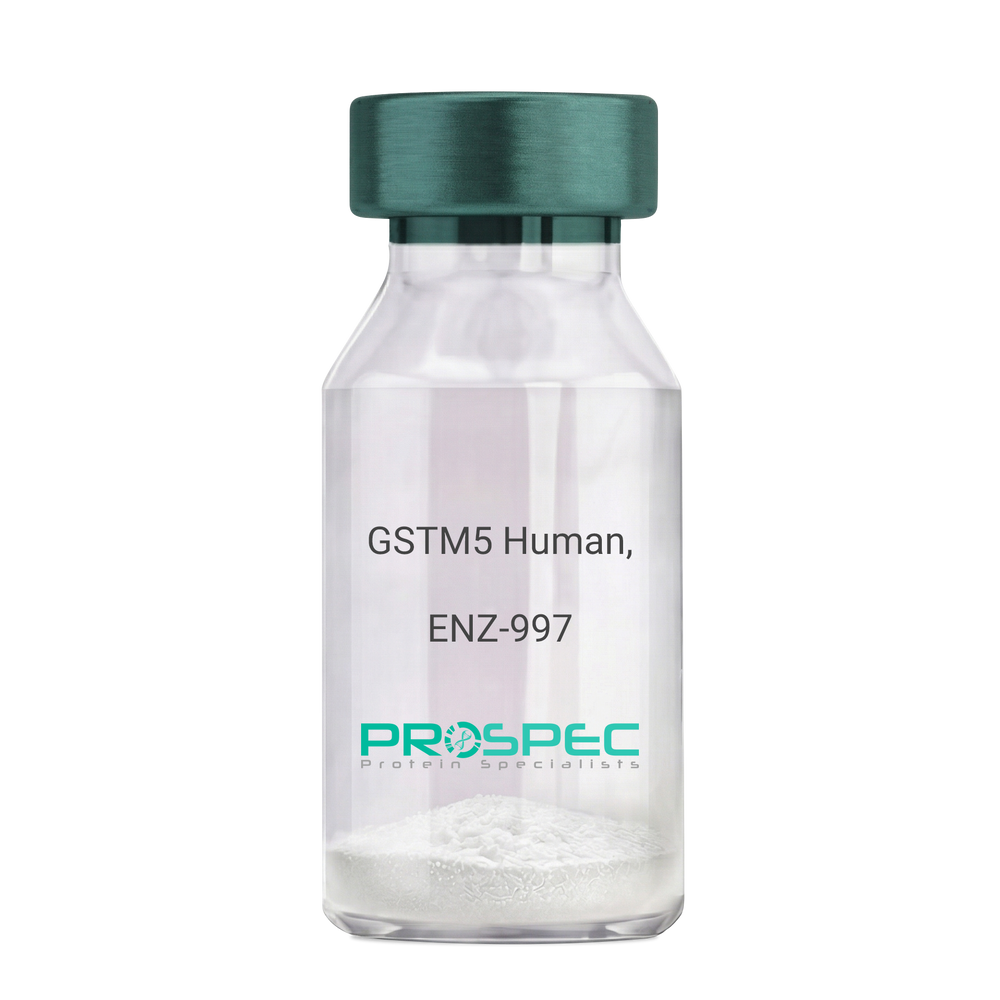
GSTM5 Human, ActiveDescription:
Glutathione S-Transferase MU 5 Human Recombinant, Active
Glutathione S-transferase mu 5, GSTM5-5, GST class-mu 5, GTM5, glutathione S-alkyltransferase M5, S-(hydroxyalkyl) glutathione lyase M5, EC 2.5.1.18.
Product # :
ENZ-997Price :
Quantity :
Shipping Method :
Shipped with Ice Packs
More Info
- description
- source
- formulation
- purity
- biological activity
- More Info
- Citations
Description
GSTM5 Human Recombinant produced in E. coli is a single polypeptide chain containing 242 amino acids (1-218) and having a molecular mass of 28.2 kDa.GSTM5 is fused to a 24 amino acid His-tag at N-terminus & purified by proprietary chromatographic techniques.
Source
E.coli.
Formulation
The GSTM5 solution (1mg/ml) contains 20mM Tris-HCl buffer (pH 8.0), 0.1M NaCl, 1mM DTT and 10% glycerol.
Purity
Greater than 95% as determined by SDS-PAGE.
Biological Activity
Specific activity is > 90,000 pmol/min/ug, and is defined as the amount of enzyme that conjugate 1.0 u mole of 1-chloro-2,4- dinitrobenzene (CDNB) with reduced glutathione per minute at pH 6.5 at 25C.Citations
More Info
-
Introduction
Glutathione S-transferase mu 5 (GSTM5) belongs to the glutathione s-transferase (GST) family of proteins. There are 8 families of GST proteins, specifically alpha, kappa, mu, omega, pi, sigma, theta and zeta, each of which is comprised of proteins which have various functions throughout the cell. GSTM5 belongs to the mu class of enzymes which function in the detoxification of electrophilic compounds, including carcinogens, therapeutic drugs, environmental toxins and products of oxidative stress, by conjugation with glutathione. GSTM5 has an imperative role in detoxification. GSTM5 conjugates reduced glutathione to a large number of exogenous and endogenous hydrophobic electrophiles.
-
Synonyms
Glutathione S-transferase mu 5, GSTM5-5, GST class-mu 5, GTM5, glutathione S-alkyltransferase M5, S-(hydroxyalkyl) glutathione lyase M5, EC 2.5.1.18.
-
Physical Appearance
Sterile Filtered colorless solution.
-
Stability
Store at 4°C if entire vial will be used within 2-4 weeks. Store, frozen at -20°C for longer periods of time. For long term storage it is recommended to add a carrier protein (0.1% HSA or BSA).Avoid multiple freeze-thaw cycles.
-
Amino Acid Sequence
MGSSHHHHHH SSGLVPRGSH MGSHMPMTLG YWDIRGLAHA IRLLLEYTDS SYVEKKYTLG DAPDYDRSQW LNEKFKLGLD FPNLPYLIDG AHKITQSNAI LRYIARKHNL CGETEEEKIR VDILENQVMD NHMELVRLCY DPDFEKLKPK YLEELPEKLK LYSEFLGKRP WFAGDKITFV DFLAYDVLDM KRIFEPKCLD AFLNLKDFIS RFEGLKKISA YMKSSQFLRG LLFGKSATWN SK.
ProSpec's products are furnished for LABORATORY RESEARCH USE ONLY. The product may not be used as drugs, agricultural or pesticidal products, food additives or household chemicals.
- View Data Sheet
Name :
PTRH2 HumanDescription:
Peptidyl-tRNA Hydrolase 2 Human Recombinant
Peptidyl-tRNA hydrolase 2, mitochondrial, PTH 2, Bcl-2 inhibitor of transcription 1, PTRH2, BIT1, PTH2, CGI-147, FLJ32471, PTRH2.
Product # :
ENZ-045Price :
Quantity :
Shipping Method :
Shipped with Ice Packs
More Info
- description
- source
- formulation
- purity
- More Info
- Citations
Description
PTRH2 Human Recombinant fused with a 21 amino acid His tag at N-terminus produced in E.Coli is a single, non-glycosylated, polypeptide chain containing 137 amino acids (64-179 a.a.) and having a molecular mass of 14.9kDa. The PTRH2 is purified by proprietary chromatographic techniques.
Source
Escherichia Coli.
Formulation
The PTRH2 solution (1 mg/ml) contains 20mM Tris-HCl buffer (pH 8.0), 10% glycerol and 1mM DTT.
Purity
Greater than 95.0% as determined by SDS-PAGE.
Citations
More Info
-
Introduction
Peptidyl-tRNA hydrolase 2 (PTRH2) is a mitochondrial protein. PTRH2 is released during apoptosis from the mitochondria to the cytoplasm. When in the cytoplasm, PTRH2 regulates the function of 2 transcriptional regulators, TLE5 and TLE1, thus promoting caspase-independent cell death. Natural substrates for PTRH2 may be petidyl-tRNAs which drop off the ribosome during protein synthesis.
-
Synonyms
Peptidyl-tRNA hydrolase 2, mitochondrial, PTH 2, Bcl-2 inhibitor of transcription 1, PTRH2, BIT1, PTH2, CGI-147, FLJ32471, PTRH2.
-
Physical Appearance
Sterile Filtered colorless solution.
-
Stability
Store at 4°C if entire vial will be used within 2-4 weeks. Store, frozen at -20°C for longer periods of time. For long term storage it is recommended to add a carrier protein (0.1% HSA or BSA).Avoid multiple freeze-thaw cycles.
-
Amino Acid Sequence
MGSSHHHHHH SSGLVPRGSH MEYKMILVVR NDLKMGKGKV AAQCSHAAVS AYKQIQRRNP EMLKQWEYCG QPKVVVKAPD EETLIALLAH AKMLGLTVSL IQDAGRTQIA PGSQTVLGIG PGPADLIDKV TGHLKLY.
ProSpec's products are furnished for LABORATORY RESEARCH USE ONLY. The product may not be used as drugs, agricultural or pesticidal products, food additives or household chemicals.
- View Data Sheet
Name :
MANF Human, HisDescription:
Mesencephalic Astrocyte-Derived Neurotrophic Factor Human Recombinant, His Tag
Mesencephalic astrocyte-derived neurotrophic factor, Protein ARMET, ARP, arginine-rich mutated in early stage tumors, Arginine-rich protein.
Product # :
CYT-133Price :
Quantity :
Shipping Method :
Shipped with Ice Packs
More Info
- description
- source
- formulation
- purity
- More Info
- Citations
Description
MANF Human Recombinant produced in E. coli is a single polypeptide chain containing 183 amino acids (25-182) and having a molecular mass of 20.8kDa.MANF is fused to a 25 amino acid His-tag at N-terminus & purified by proprietary chromatographic techniques.
Source
E.coli.
Formulation
The MANF solution (0.5mg/ml) contains 20mM Tris-HCl buffer (pH 8.0), 100mM NaCl, 1mM DTT and 10% glycerol.
Purity
Greater than 90% as determined by SDS-PAGE.
Citations
More Info
-
Introduction
MANF is a 20kDa protein which belongs to the ARMET family. MANF was originally known as an arginine-rich region protein which was extremely mutated in a large number of tumors. MANF Expression is induced during ER stress, signifying that MANF takes part in protein quality control during ER stress.
-
Synonyms
Mesencephalic astrocyte-derived neurotrophic factor, Protein ARMET, ARP, arginine-rich mutated in early stage tumors, Arginine-rich protein.
-
Physical Appearance
Sterile Filtered colorless solution.
-
Stability
Store at 4°C if entire vial will be used within 2-4 weeks. Store, frozen at -20°C for longer periods of time. For long term storage it is recommended to add a carrier protein (0.1% HSA or BSA).Avoid multiple freeze-thaw cycles.
-
Amino Acid Sequence
MGSSHHHHHH SSGLVPRGSH MGSHMLRPGD CEVCISYLGR FYQDLKDRDV TFSPATIENE LIKFCREARG KENRLCYYIG ATDDAATKII NEVSKPLAHH IPVEKICEKL KKKDSQICEL KYDKQIDLST VDLKKLRVKE LKKILDDWGE TCKGCAEKSD YIRKINELMP KYAPKAASAR TDL
ProSpec's products are furnished for LABORATORY RESEARCH USE ONLY. The product may not be used as drugs, agricultural or pesticidal products, food additives or household chemicals.
- View Data Sheet
Name :
CPOX HumanDescription:
Coproporphyrinogen Oxidase Human Recombinant
CPO, CPX, HCP, Coproporphyrinogen-III oxidase, mitochondrial, COX, Coprogen oxidase, Coproporphyrinogenase, CPOX.
Product # :
ENZ-701Price :
Quantity :
Shipping Method :
Shipped with Ice Packs
More Info
- description
- source
- formulation
- purity
- More Info
- Citations
Description
CPOX Human Recombinant produced in E.coli is a single, non-glycosylated polypeptide chain containing 367 amino acids (111-454) and having a molecular mass of 41.6kDa. CPOX is fused to a 23 amino acid His-tag at N-terminus & purified by proprietary chromatographic techniques.
Source
E.coli.
Formulation
The CPOX solution (1mg/ml) contains 20mM Tris-HCl buffer (pH 8.0), 0.15M NaCl, 10% glycerol and 1mM DTT.
Purity
Greater than 95% as determined by SDS-PAGE.
Citations
More Info
-
Introduction
Coproporphyrinogen Oxidase (CPOX) which is localized to the internal membrane space of erythrocytes takes part in the 6th phase of heme biosynthesis. CPOX catalyzes the oxidative decarboxylation of propionic acid side chains of rings A and B of coproporphyrinogen III. Mutations in human CPOX gene forecast the clinical result of the disease, with either hepatic hereditary coproporphyria or hematological manifestations of erythropoietic harderoporphyria.
-
Synonyms
CPO, CPX, HCP, Coproporphyrinogen-III oxidase, mitochondrial, COX, Coprogen oxidase, Coproporphyrinogenase, CPOX.
-
Physical Appearance
Sterile Filtered colorless solution.
-
Stability
Store at 4°C if entire vial will be used within 2-4 weeks. Store, frozen at -20°C for longer periods of time. For long term storage it is recommended to add a carrier protein (0.1% HSA or BSA).Avoid multiple freeze-thaw cycles.
-
Amino Acid Sequence
MGSSHHHHHH SSGLVPRGSH MGSTSLGRPE EEEDELAHRC SSFMAPPVTD LGELRRRPGD MKTKMELLIL ETQAQVCQAL AQVDGGANFS VDRWERKEGG GGISCVLQDG CVFEKAGVSI SVVHGNLSEE AAKQMRSRGK VLKTKDGKLP FCAMGVSSVI HPKNPHAPTI HFNYRYFEVE EADGNKQWWF GGGCDLTPTY LNQEDAVHFH RTLKEACDQH GPDLYPKFKK WCDDYFFIAH RGERRGIGGI FFDDLDSPSK EEVFRFVQSC ARAVVPSYIP LVKKHCDDSF TPQEKLWQQL RRGRYVEFNL LYDRGTKFGL FTPGSRIESI LMSLPLTARW EYMHSPSENS KEAEILEVLR HPRDWVR.
ProSpec's products are furnished for LABORATORY RESEARCH USE ONLY. The product may not be used as drugs, agricultural or pesticidal products, food additives or household chemicals.
- View Data Sheet
Name :
TPO Mouse, HEKDescription:
Thrombopoietin Mouse Recombinant, HEK
Thpo, C-mpl ligand,ML, Megakaryocyte colony-stimulating factor, Megakaryocyte growth and development factor, MGDF, Myeloproliferative leukemia virus oncogene ligand, Mgdf, Ml, Mpllg, Tpo, thrombopoietin isoform 1.
Product # :
CYT-1157Price :
Quantity :
Shipping Method :
Shipped with Ice Packs
More Info
- description
- source
- formulation
- purity
- biological activity
- More Info
- Citations
Description
TPO Mouse Recombinant produced in HEK293 cells is a single, non-glycosylated polypeptide chain containing 341 amino acids ( 22-356 a.a) and having a molecular mass of 36.4kDa. TPO is fused to a 6 amino acid His-tag at C-terminus & purified by proprietary chromatographic techniques.
Source
HEK293.
Formulation
TPO protein (0.5mg/ml) contains Phosphate-Buffered Saline (pH 7.4) and 10% glycerol.
Purity
Measured in a cell proliferation assay using MO7e human megakaryocytic leukemic cells. The ED50 range ≤4ng/ml.
Biological Activity
Measured by its ability to agglutinate human red blood cells. The ED50 for this effect is ≥ 25ug/ml.
Citations
More Info
-
Introduction
Thrombopoietin or TPO or MGDF, is a protein (glycoprotein hormone) that can be found in the liver and kidney tissues. TPO regulates the creation of platelets. The protein enhances the production & differentiation of cells such as megakaryocytes that are part of the bone marrow cells that secretes a wide number of platelets. The cellular development process that ends up in the production of platelet calls (Megakaryocytopoiesis). Humoral growth factor is needed for the megakaryocyte proliferation & maturation of megakaryocyte, not apart from thrombopoiesis.
-
Synonyms
Thpo, C-mpl ligand,ML, Megakaryocyte colony-stimulating factor, Megakaryocyte growth and development factor, MGDF, Myeloproliferative leukemia virus oncogene ligand, Mgdf, Ml, Mpllg, Tpo, thrombopoietin isoform 1.
-
Physical Appearance
Sterile Filtered colorless solution.
-
Stability
Store at 4°C if entire vial will be used within 2-4 weeks. Store, frozen at -20°C for longer periods of time. For long term storage it is recommended to add a carrier protein (0.1% HSA or BSA).Avoid multiple freeze-thaw cycles.
-
Amino Acid Sequence
SPVAPACDPR LLNKLLRDSH LLHSRLSQCP DVDPLSIPVL LPAVDFSLGE WKTQTEQSKA QDILGAVSLL LEGVMAARGQ LEPSCLSSLL GQLSGQVRLL LGALQGLLGT QLPLQGRTTA HKDPNALFLS LQQLLRGKVR FLLLVEGPTL CVRRTLPTTA VPSSTSQLLT LNKFPNRTSG LLETNFSVTA RTAGPGLLSR LQGFRVKITP GQLNQTSRSP VQISGYLNRT HGPVNGTHGL FAGTSLQTLE ASDISPGAFN KGSLAFNLQG GLPPSPSLAP DGHTPFPPSP ALPTTHGSPP QLHPLFPDPS TTMPNSTAPH PVTMYPHPRN LSQETHHHHH H.
ProSpec's products are furnished for LABORATORY RESEARCH USE ONLY. The product may not be used as drugs, agricultural or pesticidal products, food additives or household chemicals.
- View Data Sheet
Name :
Apo D HumanDescription:
Apolipoprotein-D Human Recombinant
Apolipoprotein D, Apo-D, ApoD.
Product # :
CYT-547Price :
Quantity :
Shipping Method :
Shipped at Room temp
More Info
- description
- source
- formulation
- purity
- More Info
- Citations
Description
Apolipoprotein-D Human Recombinant His Tag fusion protein at C-terminus (7 highlighted a.a.) produced in E.Coli is a single, non-glycosylated, Polypeptide chain containing 174 amino acids and having a molecular mass of 19.82kDa. The protein a.a sequence corresponds to the UniProtKB/Swiss-Prot entry P05090.The Following gene modifications were made:Trp99His, Cys116Ser, Ile118Ser, Leu120Ser amino acids exchanges were introduced at the surface of Apolipoprotein-D to enhance the protein’s solubility and another three Leu23Pro, Pro133Val, Asn134Ala amino acids exchanges which facilitate its genetic manipulation. The Apolipoprotein-D is purified by proprietary chromatographic techniques.
Source
Escherichia Coli.
Formulation
Filtered (0.4µm) and lyophilized from 1mg/ml in 4mM KH2PO4, 16mM Na2HPO4 and 115mM NaCl pH 7.5.
Purity
Greater than 90% as determined by SDS-PAGE.
Citations
More Info
-
Introduction
Apolipoprotein-D is mainly associated with high density lipoproteins in human plasma. Apolipoprotein-D is an atypical apolipoprotein and, based on its primary structure, Apolipoprotein-D is a member of the lipocalin family. Lipocalins adopt a beta-barrel tertiary structure and transport small hydrophobic ligands. Apolipoprotein-D binds cholesterol, progesterone, pregnenolone, bilirubin and arachidonic acid.
Apolipoprotein-D is expressed in numerous tissues having high levels of expression in spleen, testes and brain. Apolipoprotein-D is present at high concentrations in the cyst fluid of women with gross cystic disease of the breast, a condition associated with increased risk of breast cancer. Apolipoprotein-D accumulates in regenerating peripheral nerves and in the cerebrospinal fluid of patients with neurodegenerative conditions, such as Alzheimer's disease. Apolipoprotein-D participates in maintenance and repair within the central and peripheral nervous systems. Apolipoprotein-D is a multi-ligand, multi-functional transporter and transports a ligand from 1 cell to another within an organ, scavenge a ligand within an organ for transport to the blood or could transport a ligand from the circulation to specific cells within a tissue. -
Synonyms
Apolipoprotein D, Apo-D, ApoD.
-
Physical Appearance
Filtered White lyophilized (freeze-dried) powder.
-
Stability
Store lyophilized protein at -20°C. Aliquot the product after reconstitution to avoid repeated freezing/thawing cycles. Reconstituted protein can be stored at 4°C for a limited period of time; it does not show any change after two weeks at 4°C.
-
Solubility
It is recommended to add deionized H2O to a working volume of 0.5mg/ml and let the lyophilized pellet dissolve completely. Product is not sterile! Please filter this product by an appropriate sterile filter before using it in the cell culture.
-
Amino Acid Sequence
FHLGKCPNPP VQENFDVNKY PGRWYEIEKI PTTFENGRCI QANYSLMENG KIKVLNQELR ADGTVNQIEG EATPVNLTEP AKLEVKFSWF MPSAPYHILA TDYENYALVY SCTSISQSFH VDFAWILARN VALPPETVDS LKNILTSNNI DVKKMTVTDQ VNCPKLSAHHHHHH.
-
Background
Apolipoprotein-D Human Recombinant: Illuminating the Role of a Multifaceted Lipid-Binding Protein
Abstract:
Apolipoprotein-D (ApoD), a multifunctional lipid-binding protein, has emerged as a fascinating player in lipid metabolism and neuroprotection. This research paper aims to provide an insightful overview of ApoD human recombinant, exploring its physiological functions, production methods, and potential therapeutic applications. By unraveling the complexities of ApoD, we gain valuable insights into its role in lipid homeostasis and its potential as a therapeutic target for neurodegenerative diseases. This article presents a concise yet comprehensive analysis of ApoD, humanizing its significance in the context of human health.Introduction:
Understanding the intricate mechanisms underlying lipid metabolism and neuroprotection is crucial for the development of novel therapeutic strategies. ApoD, a versatile protein expressed in various tissues, offers unique insights into these areas. This paper delves into the multifaceted nature of ApoD, shedding light on its significance in lipid homeostasis and neuronal health.Structure and Function of Apolipoprotein-D:
ApoD exhibits a complex molecular structure, comprising distinct domains that facilitate its binding to lipids and other biomolecules. It engages in diverse functions, including lipid transport, antioxidant defense, and modulation of neuroinflammatory responses. The versatility of ApoD underscores its pivotal role in maintaining cellular and tissue integrity.Regulation of Apolipoprotein-D Expression:
The expression of ApoD is subject to intricate regulatory mechanisms influenced by hormonal and environmental cues. Understanding the factors governing ApoD expression provides valuable insights into its physiological roles and potential therapeutic applications.Apolipoprotein-D and Neurodegenerative Diseases:
Growing evidence implicates ApoD in neuroprotection, particularly in the context of neurodegenerative diseases. ApoD exhibits neuroprotective properties by modulating oxidative stress, lipid peroxidation, and inflammatory responses, making it an intriguing target for therapeutic interventions.Production of Apolipoprotein-D Human Recombinant:
Advanced biotechnological approaches, including recombinant DNA technology and protein expression systems, enable the production of ApoD human recombinant. These methods facilitate large-scale production, purification, and characterization of ApoD, paving the way for potential therapeutic applications.Therapeutic Potential of Apolipoprotein-D Human Recombinant:
Targeting ApoD holds promise for the development of therapeutics aimed at neurodegenerative diseases. Modulating ApoD expression or function may provide neuroprotection, enhance neuronal survival, and mitigate the progression of neurodegenerative disorders.Conclusion:
Apolipoprotein-D human recombinant represents a captivating area of research, bridging the fields of lipid metabolism and neurodegeneration. Understanding the intricate interplay between ApoD, lipid homeostasis, and neuroprotection is crucial for unraveling its full therapeutic potential. Continued investigation into the functions and mechanisms of ApoD will likely lead to novel therapeutic strategies for neurodegenerative diseases.What is the molecular weight/Mw of APO D Protein?
APO D Protein has a total Mw of 19.82kDa.
What is the source or expression system of APO D Protein?
Escherichia Coli.
What is the Purity of APO D Protein?
APO D Protein is >90% pure as determined by SDS-PAGE.
What is the Biological Activity of APO D Protein?
The biological functionality of APO D Protein will be determined in the future.
What is the amino acid sequence of APO D Protein?
FHLGKCPNPP VQENFDVNKY PGRWYEIEKI PTTFENGRCI QANYSLMENG KIKVLNQELR ADGTVNQIEG EATPVNLTEP AKLEVKFSWF MPSAPYHILA TDYENYALVY SCTSISQSFH VDFAWILARN VALPPETVDS LKNILTSNNI DVKKMTVTDQ VNCPKLSAHHHHHH.
What applications can APO D Protein be used in?
APO D Protein can probably be used in western blot, ELISA and Lateral Flow.
What is the endotoxin level for APO D Protein?
The endotoxin level is minimal, APO D Protein was purified using conventional chromatography techniques.
ProSpec's products are furnished for LABORATORY RESEARCH USE ONLY. The product may not be used as drugs, agricultural or pesticidal products, food additives or household chemicals.
- View Data Sheet
Name :
ATF1 HumanDescription:
Activating Transcription Factor-1 Human Recombinant
Activating transcription factor 1, cyclic AMP-dependent transcription factor ATF-1, Protein TREB36, EWS-ATF1, FUS/ATF-1.
Product # :
PKA-019Price :
Quantity :
Shipping Method :
Shipped with Ice Packs
More Info
- description
- source
- formulation
- purity
- More Info
- Citations
Description
ATF1 Human Recombinant produced in E.coli is a single, non-glycosylated polypeptide chain containing 295 amino acids (1-271 and having a molecular mass of 31.8kDa.ATF1 is fused to a 24 amino acid His-tag at N-terminus & purified by proprietary chromatographic techniques.
Source
E.coli.
Formulation
The ATF1 solution (0.25mg/ml) contains 20mM Tris-HCl buffer (pH 8.0), 200mM NaCl, 5mM DTT, 2mM EDTA and 50% glycerol.
Purity
Greater than 85% as determined by SDS-PAGE.
Citations
More Info
-
Introduction
ATF1, a cyclic-AMP dependent transcription factor, is expressed in a large selection of cell types and can dimerize with CREB. MSK1 and MSK2 protein kinases are essential for the stress-induced phosphorylation of transcription factors CREB and ATF1 in primary embryonic fibroblasts. Epidermal growth factor induction of c-jun expression needs ATF1 and MEF2 sites in the c-jun promoter.
-
Synonyms
Activating transcription factor 1, cyclic AMP-dependent transcription factor ATF-1, Protein TREB36, EWS-ATF1, FUS/ATF-1.
-
Physical Appearance
Sterile Filtered colorless solution.
-
Stability
Store at 4°C if entire vial will be used within 2-4 weeks. Store, frozen at -20°C for longer periods of time. For long term storage it is recommended to add a carrier protein (0.1% HSA or BSA).Avoid multiple freeze-thaw cycles.
-
Amino Acid Sequence
MGSSHHHHHH SSGLVPRGSH MGSHMEDSHK STTSETAPQP GSAVQGAHIS HIAQQVSSLS ESEESQDSSD SIGSSQKAHG ILARRPSYRK ILKDLSSEDT RGRKGDGENS GVSAAVTSMS VPTPIYQTSS GQYIAIAPNG ALQLASPGTD GVQGLQTLTM TNSGSTQQGT TILQYAQTSD GQQILVPSNQ VVVQTASGDM QTYQIRTTPS ATSLPQTVVM TSPVTLTSQT TKTDDPQLKR EIRLMKNREA ARECRRKKKE YVKCLENRVA VLENQNKTLI EELKTLKDLY SNKSV
ProSpec's products are furnished for LABORATORY RESEARCH USE ONLY. The product may not be used as drugs, agricultural or pesticidal products, food additives or household chemicals.
- View Data Sheet
Name :
IL13 Human, HisDescription:
Interleukin-13 Human Recombinant, His Tag
NC30, ALRH, BHR1, P600, IL-13, MGC116786, MGC116788, MGC116789.
Product # :
CYT-489Price :
Quantity :
Shipping Method :
Shipped with Ice Packs
More Info
- description
- source
- formulation
- purity
- More Info
- Citations
Description
Interleukin-13 His Human Recombinant produced in E.Coli is a single, non-glycosylated, Polypeptide chain containing 112 amino acids fragment (21-132) having a molecular weight of 12.84kDa with a 4kDa amino-terminal hexahistidine tag (total weight of 16.84kDa). The IL-13 His is purified by proprietary chromatographic techniques.
Source
Escherichia Coli.
Formulation
Interleukin -13 His-Tag protein is supplied in 25mM Na-Acetate (pH 4.8) and 50% glycerol.
Purity
Greater than 95.0% as determined by SDS-PAGE.
Citations
More Info
-
Introduction
Interleukin-13 is a pleiotropic regulatory cytokine, which shares many of the properties of Interleukin-4. IL-13 is produced primarily by activated T lymphocytes and acts via specific cell surface receptor complexes. Its biological activities include the stimulation of B-cell proliferation and differentiation and the regulation of inflammatory and immune responses.
-
Synonyms
NC30, ALRH, BHR1, P600, IL-13, MGC116786, MGC116788, MGC116789.
-
Physical Appearance
Sterile Filtered clear solution.
-
Stability
Store at 4°C if entire vial will be used within 2-4 weeks. Store, frozen at -20°C for longer periods of time. Please avoid freeze thaw cycles.
-
Background
What is the molecular weight/Mw of IL13 HUMAN, HIS Protein?
IL13 HUMAN, HIS Protein has a total Mw of 12.8kDa.
What is the source or expression system of IL13 HUMAN, HIS Protein?
Escherichia Coli.
What is the Purity of IL13 HUMAN, HIS Protein?
IL13 HUMAN, HIS Protein is >95% pure as determined by SDS-PAGE.
What is the Biological Activity of IL13 HUMAN, HIS Protein?
The biological functionality of IL13 HUMAN, HIS Protein will be determined in the future.
What is the amino acid sequence of IL13 HUMAN, HIS Protein?
IL13 HUMAN, HIS Protein is composed from 112 amino acids.
What applications can IL13 HUMAN, HIS Protein be used in?
IL13 HUMAN, HIS Protein can probably be used in western blot, ELISA and Lateral Flow.
What is the endotoxin level for IL13 HUMAN, HIS Protein?
The endotoxin level is minimal, IL13 HUMAN, HIS Protein was purified using conventional chromatography techniques.
Who supplies recombinant IL13 HUMAN, HIS that is in stock and available to order?
ProSpec has the protein in stock and available for immediate delivery.
Where can I order bulk mg quantities of IL13 HUMAN, HIS?
ProSpec supplies bulk mg quantities at affordable prices that meets research and academic budgets.
ProSpec's products are furnished for LABORATORY RESEARCH USE ONLY. The product may not be used as drugs, agricultural or pesticidal products, food additives or household chemicals.
- View Data Sheet
Name :
IL1F10 Human HisDescription:
Interleukin 1 Family, Member 10 Human Recombinant, His Tag
Interleukin-1 family member 10, IL-1F10, FIL1 theta, Interleukin-1 HY2, IL-1HY2, Interleukin-1 theta, IL-1 theta, IL1F10, FIL1T, IL1HY2, FKSG75, MGC119831, MGC119832, MGC119833, FIL1-theta.
Product # :
CYT-783Price :
Quantity :
Shipping Method :
Shipped with Ice Packs
More Info
- description
- source
- formulation
- purity
- More Info
- Citations
Description
IL1F10 Human Recombinant produced in E.coli is a single, non-glycosylated polypeptide chain containing 172 amino acids (1-152) and having a molecular mass of 19.1kDa.IL1F10 is fused to a 20 amino acid His-tag at N-terminus & purified by proprietary chromatographic techniques.
Source
Escherichia Coli.
Formulation
The IL1F10 solution contains 20mM Tris-HCl buffer (pH 8.0), 0.15M NaCl, 1mM DTT and 20% glycerol.
Purity
Greater than 85% as determined by SDS-PAGE.
Citations
More Info
-
Introduction
Human interleukin family 1, member 10 (IL1F10) belongs to the interleukin 1 cytokine family. IL1F10 is expressed in the fetal skin, spleen and tonsil, generally in the basal epithelia of skin and in proliferating B-cells of the tonsil. IL1F10 binds soluble IL1 receptor type 1 and may be implicated in the regulation of adapted and innate immune responses.
-
Synonyms
Interleukin-1 family member 10, IL-1F10, FIL1 theta, Interleukin-1 HY2, IL-1HY2, Interleukin-1 theta, IL-1 theta, IL1F10, FIL1T, IL1HY2, FKSG75, MGC119831, MGC119832, MGC119833, FIL1-theta.
-
Physical Appearance
Sterile filtered colorless solution.
-
Stability
Store at 4°C if entire vial will be used within 2-4 weeks. Store, frozen at -20°C for longer periods of time. For long term storage it is recommended to add a carrier protein (0.1% HSA or BSA).Avoid multiple freeze-thaw cycles.
-
Amino Acid Sequence
MGSSHHHHHH SSGLVPRGSH MCSLPMARYY IIKYADQKAL YTRDGQLLVG DPVADNCCAE KICTLPNRGL DRTKVPIFLG IQGGSRCLAC VETEEGPSLQ LEDVNIEELY KGGEEATRFT FFQSSSGSAF RLEAAAWPGW FLCGPAEPQQ PVQLTKESEP SARTKFYFEQ SW
ProSpec's products are furnished for LABORATORY RESEARCH USE ONLY. The product may not be used as drugs, agricultural or pesticidal products, food additives or household chemicals.
- View Data Sheet
Name :
STX1A (1-265) HumanDescription:
Syntaxin-1A (1-265 a.a) Human Recombinant
Syntaxin 1A, Neuron-Specific Antigen HPC-1, Syntaxin 1A (Brain), STX1, Syntaxin-1A, HPC-1, P35-1, SYN1A.
Product # :
PRO-2335Price :
Quantity :
Shipping Method :
Shipped with Ice Packs
More Info
- description
- source
- formulation
- purity
- More Info
- Citations
Description
STX1A Human Recombinant produced in E.Coli is a single, non-glycosylated polypeptide chain containing 265 amino acids (1-265 a.a) and having a molecular mass of 30.7kDa. STX1A is purified by proprietary chromatographic techniques.
Source
Escherichia Coli.
Formulation
STX1A protein solution (1mg/ml) containing phosphate buffered saline (pH 7.4), 10% glycerol and 1mM DTT.
Purity
Greater than 95.0% as determined by SDS-PAGE.
Citations
More Info
-
Introduction
Syntaxin is membrane integrated Q-SNARE protein participating in exocytosis. Syntaxin is composed of an N-terminal regulatory domain (Habc), a SNARE domain (known as H3), and a single C-terminal transmembrane domain. The SNARE (H3) domain binds to both synaptobrevin and SNAP-25 forming the core SNARE complex. Synaptic vesicles store neurotransmitters that are released during calcium-regulated exocytosis. The specificity of neurotransmitter release requires the localization of both synaptic vesicles and calcium channels to the presynaptic active zone. Syntaxins function in this vesicle fusion process. Syntaxins also serve as a substrate for botulinum neurotoxin type C, a metalloprotease that blocks exocytosis and has high affinity for a molecular complex that includes the alpha-latrotoxin receptor which produces exocytosis.
-
Synonyms
Syntaxin 1A, Neuron-Specific Antigen HPC-1, Syntaxin 1A (Brain), STX1, Syntaxin-1A, HPC-1, P35-1, SYN1A.
-
Physical Appearance
Sterile Filtered colorless solution.
-
Stability
Store at 4°C if entire vial will be used within 2-4 weeks. Store, frozen at -20°C for longer periods of time. For long term storage it is recommended to add a carrier protein (0.1% HSA or BSA). Avoid multiple freeze-thaw cycles.
-
Amino Acid Sequence
MKDRTQELRT AKDSDDDDDV AVTVDRDRFM DEFFEQVEEI RGFIDKIAEN VEEVKRKHSA ILASPNPDEK TKEELEELMS DIKKTANKVR SKLKSIEQSI EQEEGLNRSS ADLRIRKTQH STLSRKFVEV MSEYNATQSD YRERCKGRIQ RQLEITGRTT TSEELEDMLE SGNPAIFASG IIMDSSISKQ ALSEIETRHS EIIKLENSIR ELHDMFMDMA MLVESQGEMI DRIEYNVEHA VDYVERAVSD TKKAVKYQSK ARRKK.
ProSpec's products are furnished for LABORATORY RESEARCH USE ONLY. The product may not be used as drugs, agricultural or pesticidal products, food additives or household chemicals.
- View Data Sheet
Name :
RARRES2 Human, Sf9Description:
Retinoic Acid Receptor Responder 2 Human Recombinant, Sf9
Retinoic Acid Receptor Responder 2, Chemerin, Retinoic Acid Receptor Responder (Tazarotene Induced) 2, Tazarotene-Induced Gene 2 Protein, RAR-Responsive Protein TIG2, TIG2, Retinoic Acid Receptor Responder Protein 2, HP10433, Retinoic acid receptor responder protein 2, Chemerin, RAR-responsive protein TIG2, Tazarotene-induced gene 2 protein.
Product # :
PRO-2382Price :
Quantity :
Shipping Method :
Shipped with Ice Packs
More Info
- description
- source
- formulation
- purity
- More Info
- Citations
Description
RARRES2 produced in Sf9 Baculovirus cells is a single, glycosylated polypeptide chain containing 146 amino acids (21-157a.a.) and having a molecular mass of 16.9kDa. (Molecular size on SDS-PAGE will appear at approximately 18-28kDa). RARRES2 is expressed with a 6 amino acid His tag at C-Terminus and purified by proprietary chromatographic techniques.
Source
Sf9, Baculovirus cells.
Formulation
RARRES2 protein solution (0.5mg/ml) contains Phosphate Buffered Saline (pH 7.4) and 10% glycerol.
Purity
Greater than 90.0% as determined by SDS-PAGE.
Citations
More Info
-
Introduction
RARRES2 is a secreted chemotactic protein that initiates chemotaxis through the ChemR23 G protein-coupled seven-transmembrane domain ligand. RARRES2 is upregulated by the synthetic retinoid tazarotene and found in a vast variety of tissues. RARRES2 acts as an adipokine, and is truncated on both termini from the proprotein. RARRES2 is structurally related to the cathelicidin precursors, cystatin C and kininogens. RARRES2 promotes calcium mobilization and chemotaxis of immature dendritic cells and macrophages. RARRES2 is secreted as a precursor of little biological activity, which requires proteolytic cleavage of its COOH-terminal domain to be exchangeed into a potent and highly specific agonist of ChemR23. RARRES2 signals via its receptor, ChemR23 (CMKLR1), as a positive regulator of adipocyte differentiation and metabolic function. The Chemerin receptor acts as a coreceptor for SIV and some primary HIV-1 strains. The Chemerin receptor has another ligand, called tazarotene-induced gene.
-
Synonyms
Retinoic Acid Receptor Responder 2, Chemerin, Retinoic Acid Receptor Responder (Tazarotene Induced) 2, Tazarotene-Induced Gene 2 Protein, RAR-Responsive Protein TIG2, TIG2, Retinoic Acid Receptor Responder Protein 2, HP10433, Retinoic acid receptor responder protein 2, Chemerin, RAR-responsive protein TIG2, Tazarotene-induced gene 2 protein.
-
Physical Appearance
Sterile Filtered colorless solution.
-
Stability
Store at 4°C if entire vial will be used within 2-4 weeks. Store, frozen at -20°C for longer periods of time. For long term storage it is recommended to add a carrier protein (0.1% HSA or BSA).Avoid multiple freeze-thaw cycles.
-
Amino Acid Sequence
ADPELTEAQR RGLQVALEEF HKHPPVQWAF QETSVESAVD TPFPAGIFVR LEFKLQQTSC RKRDWKKPEC KVRPNGRKRK CLACIKLGSE DKVLGRLVHC PIETQVLREA EEHQETQCLR VQRAGEDPHS FYFPGQFAFS HHHHHH.
ProSpec's products are furnished for LABORATORY RESEARCH USE ONLY. The product may not be used as drugs, agricultural or pesticidal products, food additives or household chemicals.
- View Data Sheet
Name :
IL 32A HumanDescription:
Interleukin-32 alpha Human Recombinant
NK4, TAIF, TAIFa, TAIFb, TAIFc, TAIFd, IL-32beta, IL-32alpha, IL-32delta, IL-32gamma, Interleukin-32, IL-32, Natural killer cells protein 4, Tumor necrosis factor alpha-inducing factor, IL-32a, IL32a, IL32, Interleukin-32 alpha.
Product # :
CYT-584Price :
Quantity :
Shipping Method :
Shipped at Room temp
More Info
- description
- source
- formulation
- purity
- biological activity
- More Info
- Citations
Description
Interleukin-32 human recombinant produced in E.Coli is a single, non-glycosylated, polypeptide chain containing 131 amino acids and having a molecular mass of 14.9 kDa.
Source
Escherichia Coli.
Formulation
IL-32 was lyophilized from a concentrated (1mg/ml) solution in water containing 50mM sodium Phosphate buffer pH=7.5.
Purity
Greater than 97.0% as determined by(a) Analysis by RP-HPLC.
(b) Analysis by SDS-PAGE.Biological Activity
Human IL-32 alpha activity is measured via the dose-dependent induction of TNF-alpha in the human THP-1 monocytic cell line.Citations
More Info
-
Introduction
IL-32 is part of the cytokine family and contains a tyrosine sulfation site, 3 potential N-myristoylation sites, multiple putative phosphorylation sites, and an RGD cell-attachment sequence. IL-32 expression is elevated after the activation of T-cells by mitogens or the activation of NK cells by IL-2. IL-32 induces the production of TNF-a from macrophage cells. IL-32 pro-inflammatory pathway is activated in response to influenza A virus infection. Dysregulation of IL-32 in myelodysplastic syndrome and chronic myelomonocytic leukemia modulates apoptosis and impairs NK function.
Induction of TNF, IL-1beta, and IL-6 by IL-32 is intervened by p38-MAPK. IL-32 induced monocyte-to-macrophage differentiation is mediated through nonapoptotic, caspase-3-dependent mechanisms. IL32 plays an important role in the pathogenesis of rheumatoid arthritis. IL-32 is involved in activation-induced cell death in T cells, through its intracellular actions. IL-32 is a cell-associated proinflammatory cytokine, which is particularly stimulated by mycobacteria through a caspase-1- and IL-18-dependent production of IFNgamma.
IL-32 is associated with TNF-a, IL-1beta, and IL-18. IL32 is involved in human rheumatoid arthritis and is a novel target in autoimmune diseases. -
Synonyms
NK4, TAIF, TAIFa, TAIFb, TAIFc, TAIFd, IL-32beta, IL-32alpha, IL-32delta, IL-32gamma, Interleukin-32, IL-32, Natural killer cells protein 4, Tumor necrosis factor alpha-inducing factor, IL-32a, IL32a, IL32, Interleukin-32 alpha.
-
Physical Appearance
Sterile Filtered White lyophilized (freeze-dried) powder.
-
Stability
Lyophilized IL32 although stable at room temperature for 3 weeks, should be stored desiccated below -18°C. Upon reconstitution IL32 should be stored at 4°C between 2-7 days and for future use below -18°C.Please prevent freeze-thaw cycles.
-
Solubility
It is recommended to reconstitute the lyophilized IL-32 in sterile 18MΩ-cm H2O not less than 100µg/ml, which can then be further diluted to other aqueous solutions.
-
Amino Acid Sequence
MCFPKVLSDD MKKLKARMHQ AIERFYDKMQ NAESGRGQVM SSLAELEDDF KEGYLETVAA YYEEQHPELT PLLEKERDGL RCRGNRSPVP DVEDPATEEP GESFCDKSYG APRGDKEELT PQKCSEPQSS K.
ProSpec's products are furnished for LABORATORY RESEARCH USE ONLY. The product may not be used as drugs, agricultural or pesticidal products, food additives or household chemicals.
- View Data Sheet
Name :
ACAT2 AntibodyDescription:
Acetyl-Coenzyme A acetyltransferase 2, Mouse Anti Human
Acetyl-CoA acetyltransferase cytosolic, Cytosolic acetoacetyl-CoA thiolase, ACAT2, Acetyl CoA transferase-like protein, ACAT-2.
Product # :
ANT-561Price :
Quantity :
Shipping Method :
Shipped with Ice Packs
More Info
- formulation
- More Info
- Citations
Formulation
1mg/ml containing PBS, pH-7.4, 10% Glycerol and 0.02% Sodium Azide.
Citations
More Info
-
Introduction
ACAT2 enzyme participates in lipid metabolism. ACAT2 takes part in lipoprotein assembly, catalyzing cholesterol esterification in mammalian cells. ACAT2 is an integral membrane protein that localizes to the endoplasmic reticulum of human intestinal cells. ACAT2 deficiency contributes to severe mental retardation and hypotonus.
-
Synonyms
Acetyl-CoA acetyltransferase cytosolic, Cytosolic acetoacetyl-CoA thiolase, ACAT2, Acetyl CoA transferase-like protein, ACAT-2.
-
Physical Appearance
Sterile filtered colorless solution.
-
Immunogen
Anti-human ACAT2 mAb, clone PAT55D5AT, is derived from hybridization of mouse F0 myeloma cells with spleen cells from BALB/c mice immunized with a recombinant human ACAT2 protein 1-397 amino acids purified from E. coli.
-
Ig Subclass
Mouse IgG2b heavy chain and k light chain.
-
Clone
PAT55D5AT.
-
Applications
The antibody has been tested by ELISA, Western blot analysis to assure specificity and reactivity. Since application varies, however, each investigation should be titrated by the reagent to obtain optimal results. Recommended starting dilution is 1:1000.
-
Type
Mouse Anti Human Monoclonal.
-
Storage Procedures
For periods up to 1 month store at 4°C, for longer periods of time, store at -20°C. Prevent freeze thaw cycles.
-
Purification Method
ACAT2 antibody was purified from mouse ascitic fluids by protein-A affinity chromatography.
ProSpec's products are furnished for LABORATORY RESEARCH USE ONLY. The product may not be used as drugs, agricultural or pesticidal products, food additives or household chemicals.
- View Data Sheet
Name :
FCGR3B HumanDescription:
CD16b Human Recombinant
Fc Fragment Of IgG Receptor IIIb, Fc Fragment Of IgG, Low Affinity IIIb, Receptor (CD16b), Fc Gamma Receptor IIIb, IgG Fc Receptor III-1, Fc-Gamma RIII-Beta, Fc-Gamma RIIIb, FCRIIIb, FCR-10, FCRIII, FCGR3, CD16b, FCG3, Fc Fragment Of IgG, Low Affinity IIIb, Receptor For (CD16), Low Affinity Immunoglobulin Gamma Fc Region Receptor III-B, Fc-Gamma Receptor IIIb (CD 16), Fc-Gamma RIII, CD16b Antigen, IGFR3, CD16.
Product # :
PRO-2486Price :
Quantity :
Shipping Method :
Shipped with Ice Packs
More Info
- description
- source
- formulation
- purity
- More Info
- Citations
Description
FCGR3B produced in Sf9 Baculovirus cells is a single, glycosylated polypeptide chain containing 188 amino acids (21-200a.a.) and having a molecular mass of 21.4kDa. (Molecular size on SDS-PAGE will appear at approximately 28-40kDa).FCGR3B is expressed with an 8 amino acid His tag at C-Terminus and purified by proprietary chromatographic techniques.
Source
Sf9, Baculovirus cells.
Formulation
FCGR3B protein solution (0.25mg/ml) contains Phosphate Buffered Saline (pH 7.4) and 10% glycerol.
Purity
Greater than 90.0% as determined by SDS-PAGE.
Citations
More Info
-
Introduction
FCGR3B, also known as CD16b belongs to the Ig super family. FCGR3B encodes a glycosylphosphatidylinositol (GPI)-anchored protein which is expressed constitutively by neutrophils. FCGR3B binds to complex or aggregated IgG and monomeric IgG. Different from III-A, FCGR3B cannot arbitrate antibody-dependent cytotoxicity and phagocytosis. FCGR3B operate to capture immune complexes in peripheral blood circulation that does not activate neutrophils.
-
Synonyms
Fc Fragment Of IgG Receptor IIIb, Fc Fragment Of IgG, Low Affinity IIIb, Receptor (CD16b), Fc Gamma Receptor IIIb, IgG Fc Receptor III-1, Fc-Gamma RIII-Beta, Fc-Gamma RIIIb, FCRIIIb, FCR-10, FCRIII, FCGR3, CD16b, FCG3, Fc Fragment Of IgG, Low Affinity IIIb, Receptor For (CD16), Low Affinity Immunoglobulin Gamma Fc Region Receptor III-B, Fc-Gamma Receptor IIIb (CD 16), Fc-Gamma RIII, CD16b Antigen, IGFR3, CD16.
-
Physical Appearance
Sterile filtered colorless solution.
-
Stability
Store at 4°C if entire vial will be used within 2-4 weeks. Store, frozen at -20°C for longer periods of time. For long term storage it is recommended to add a carrier protein (0.1% HSA or BSA).Avoid multiple freeze-thaw cycles.
-
Amino Acid Sequence
EDLPKAVVFL EPQWYSVLEK DSVTLKCQGA YSPEDNSTQW FHNENLISSQ ASSYFIDAAT VNDSGEYRCQ TNLSTLSDPV QLEVHIGWLL LQAPRWVFKE EDPIHLRCHS WKNTALHKVT YLQNGKDRKY FHHNSDFHIP KATLKDSGSY FCRGLVGSKN VSSETVNITI TQGLAVSTIS VEHHHHHH.
ProSpec's products are furnished for LABORATORY RESEARCH USE ONLY. The product may not be used as drugs, agricultural or pesticidal products, food additives or household chemicals.
- View Data Sheet
Name :
IL13RA2 Human, Sf9Description:
Interleukin 13 Receptor Alpha 2, Recombinant Human Sf9
CD213A2, CT19, IL-13R, IL13BP, IL-13 receptor subunit alpha-2, IL-13R subunit alpha-2, CD_antigen=CD213a2, Interleukin-13-binding protein.
Product # :
CYT-1024Price :
Quantity :
Shipping Method :
Shipped with Ice Packs
More Info
- description
- source
- formulation
- purity
- More Info
- Citations
Description
IL13RA2 Human Recombinant produced in Sf9 Insect cells is a single, glycosylated polypeptide chain containing 559 amino acids (27-343 a.a.) and having a molecular mass of 64.3kDa (Molecular size on SDS-PAGE will appear at approximately 70-100kDa). IL13RA2 is expressed with a 239 amino acid hIgG-His tag at C-Terminus and purified by proprietary chromatographic techniques.
Source
Sf9, Baculovirus cells.
Formulation
IL 13RA2 protein solution (0.5mg/ml) contains Phosphate buffered saline (pH7.4) and 10% glycerol.
Purity
Greater than 85.0% as determined by SDS-PAGE.
Citations
More Info
-
Introduction
Interleukin 13 Receptor, Alpha 2 (IL13RA2) is a member of the type I cytokine receptor family, Type 5 subfamily. IL13RA2 is related to l13RA1, a subunit of the interleukin 13 receptor complex. IL13RA2 binds IL13 with high affinity, though lacking the cytoplasmic domain, and does not appear to function as a signal mediator. IL13RA2 plays a role in the internalization of IL13.
-
Synonyms
CD213A2, CT19, IL-13R, IL13BP, IL-13 receptor subunit alpha-2, IL-13R subunit alpha-2, CD_antigen=CD213a2, Interleukin-13-binding protein.
-
Physical Appearance
Sterile filtered colorless solution.
-
Stability
Store at 4°C if entire vial will be used within 2-4 weeks. Store, frozen at -20°C for longer periods of time. For long term storage it is recommended to add a carrier protein (0.1% HSA or BSA).Avoid multiple freeze-thaw cycles.
-
Amino Acid Sequence
ADLDTEIKVN PPQDFEIVDP GYLGYLYLQW QPPLSLDHFK ECTVEYELKY RNIGSETWKT IITKNLHYKD GFDLNKGIEA KIHTLLPWQC TNGSEVQSSW AETTYWISPQ GIPETKVQDM DCVYYNWQYL LCSWKPGIGV LLDTNYNLFY WYEGLDHALQ CVDYIKADGQ NIGCRFPYLE ASDYKDFYIC VNGSSENKPI RSSYFTFQLQ NIVKPLPPVY LTFTRESSCE IKLKWSIPLG PIPARCFDYE IEIREDDTTL VTATVENETY TLKTTNETRQ LCFVVRSKVN IYCSDDGIWS EWSDKQCWEG EDLSKKTLLR LEPKSCDKTH TCPPCPAPEL LGGPSVFLFP PKPKDTLMIS RTPEVTCVVV DVSHEDPEVK FNWYVDGVEV HNAKTKPREE QYNSTYRVVS VLTVLHQDWL NGKEYKCKVS NKALPAPIEK TISKAKGQPR EPQVYTLPPS RDELTKNQVS LTCLVKGFYP SDIAVEWESN GQPENNYKTT PPVLDSDGSF FLYSKLTVDK SRWQQGNVFS CSVMHEALHN
HYTQKSLSLS PGKHHHHHH -
Background
What is the molecular weight/Mw of IL13RA2 HUMAN, SF9 Protein?
IL13RA2 HUMAN, SF9 Protein has a total Mw of 64.3kDa.
What is the source or expression system of IL13RA2 HUMAN, SF9 Protein?
Sf9, Baculovirus cells.
What is the Purity of IL13RA2 HUMAN, SF9 Protein?
IL13RA2 HUMAN, SF9 Protein is >85% pure as determined by SDS-PAGE.
What is the Biological Activity of IL13RA2 HUMAN, SF9 Protein?
The biological functionality of IL13RA2 HUMAN, SF9 Protein will be determined in the future.
What is the amino acid sequence of IL13RA2 HUMAN, SF9 Protein?
ADLDTEIKVN PPQDFEIVDP GYLGYLYLQW QPPLSLDHFK ECTVEYELKY RNIGSETWKT IITKNLHYKD GFDLNKGIEA KIHTLLPWQC TNGSEVQSSW AETTYWISPQ GIPETKVQDM DCVYYNWQYL LCSWKPGIGV LLDTNYNLFY WYEGLDHALQ CVDYIKADGQ NIGCRFPYLE ASDYKDFYIC VNGSSENKPI RSSYFTFQLQ NIVKPLPPVY LTFTRESSCE IKLKWSIPLG PIPARCFDYE IEIREDDTTL VTATVENETY TLKTTNETRQ LCFVVRSKVN IYCSDDGIWS EWSDKQCWEG EDLSKKTLLR LEPKSCDKTH TCPPCPAPEL LGGPSVFLFP PKPKDTLMIS RTPEVTCVVV DVSHEDPEVK FNWYVDGVEV HNAKTKPREE QYNSTYRVVS VLTVLHQDWL NGKEYKCKVS NKALPAPIEK TISKAKGQPR EPQVYTLPPS RDELTKNQVS LTCLVKGFYP SDIAVEWESN GQPENNYKTT PPVLDSDGSF FLYSKLTVDK SRWQQGNVFS CSVMHEALHN
HYTQKSLSLS PGKHHHHHH.
What applications can IL13RA2 HUMAN, SF9 Protein be used in?
IL13RA2 HUMAN, SF9 Protein can probably be used in western blot, ELISA and Lateral Flow.
What is the endotoxin level for IL13RA2 HUMAN, SF9 Protein?
The endotoxin level is minimal, IL13RA2 HUMAN, SF9 Protein was purified using conventional chromatography techniques.
Who supplies recombinant IL13RA2 HUMAN, SF9 that is in stock and available to order?
ProSpec has the protein in stock and available for immediate delivery.
Where can I order bulk mg quantities of IL13RA2 HUMAN, SF9?
ProSpec supplies bulk mg quantities at affordable prices that meets research and academic budgets
ProSpec's products are furnished for LABORATORY RESEARCH USE ONLY. The product may not be used as drugs, agricultural or pesticidal products, food additives or household chemicals.
- View Data Sheet
Name :
ANXA8 HumanDescription:
Annexin A8 Human Recombinant
ANX8, Annexin-8, Annexin VII, Vascular anticoagulant-beta, VAC-beta.
Product # :
PRO-548Price :
Quantity :
Shipping Method :
Shipped with Ice Packs
More Info
- description
- source
- formulation
- purity
- More Info
- Citations
Description
ANXA8 Human Recombinant produced in E.Coli is a signle, non-glycosylated, polypeptide chain containing 347 amino acids (1-327 a.a.)and having a total molecular mass of 39 kDa. ANXA8 is fused to a 20 amino acid His Tag at N-terminus and is purified by proprietary chromatographic techniques.
Source
Escherichia Coli.
Formulation
The ANXA8 1mg/ml protein solution contains 20mM Tris-HCL pH-8, 1mM DTT,1mM EDTA, 0.1M NaCl and 10% Glycerol.
Purity
Greater than 90.0% as determined by SDS-PAGE.
Citations
More Info
-
Introduction
ANXA8 is part of the annexin family of evolutionarily conserved Ca2+ and phospholipid binding proteins. ANXA8 is an anticoagulant protein that functions as an indirect inhibitor of the thromboplastin-specific complex, which takes part in the blood coagulation cascade. Where co-expressed in the same tissues, ANXA8 is expressed at a 100-fold lower level than Annexin A5. Though, ANXA8 is preferentially expressed in acute promyelocytic leukemia (APL) cells which suggests its involvement in hematopoietic cell differentiation.
-
Synonyms
ANX8, Annexin-8, Annexin VII, Vascular anticoagulant-beta, VAC-beta.
-
Physical Appearance
Sterile Filtered colorless clear solution.
-
Stability
Store at 4°C if entire vial will be used within 2-4 weeks. Store, frozen at -20°C for longer periods of time. Please avoid freeze thaw cycles.
-
Amino Acid Sequence
MGSSHHHHHH SSGLVPRGSH MAWWKSWIEQ EGVTVKSSSH FNPDPDAETL YKAMKGIGTN EQAIIDVLTK RSNTQRQQIA KSFKAQFGKD
LTETLKSELS GKFERLIVAL MYPPYRYEAK ELHDAMKGLG TKEGVIIEIL ASRTKNQLRE IMKAYEEDYG SSLEEDIQAD TSGYLERILV
CLLQGSRDDV SSFVDPGLAL QDAQDLYAAG EKIRGTDEMK FITILCTRSA THLLRVFEEY EKIANKSIED SIKSETHGSL EEAMLTVVKC
TQNLHSYFAE RLYYAMKGAG TRDGTLIRNI VSRSEIDLNL IKCHFKKMYG KTLSSMIMED TSGDYKNALL SLVGSDP.
ProSpec's products are furnished for LABORATORY RESEARCH USE ONLY. The product may not be used as drugs, agricultural or pesticidal products, food additives or household chemicals.
- View Data Sheet
Name :
CXCL11 Human (63-87 a.a.)Description:
ITAC (63-87 a.a.) Human Recombinant
ITAC, I-TAC, CXCL-11, CXCL11.
Product # :
CHM-049Price :
Quantity :
Shipping Method :
Shipped at Room temp
More Info
- description
- source
- formulation
- purity
- More Info
- Citations
Description
The I-TAC Human is created as a recombinant protein with a 4kda N-terminal fusion of His Tag. The I-TAC His-Tagged Fusion Protein, produced in E. coli, is a 9kDa protein containing 25 amino acid residues of the I-TACHuman, 63-87 amino acids.
Source
Escherichia Coli.
Formulation
Each mg was lyophilized with 1xPBS, 0.4% SDS and 4mM DTT.
Purity
Greater than 90% as determined by SDS-PAGE.
Citations
More Info
-
Synonyms
ITAC, I-TAC, CXCL-11, CXCL11.
-
Physical Appearance
Filtered White lyophilized (freeze-dried) powder.
-
Stability
Store lyophilized I-TAC at -20°C. Aliquot the product after reconstitution to avoid repeated freezing/thawing cycles. Reconstituted protein can be stored at 4°C for a limited period of time; it does not show any change after two weeks at 4°C.
-
Solubility
It is recommended to add deionized water to prepare a working stock solution of approximately 0.5mg/ml and let the lyophilized pellet dissolve completely. Product is not sterile! Please filter the product by an appropriate sterile filter before using it on cell culture.
-
Background
I-TAC is a small cytokine belongs to the CXC chemokinen family which also called inducible T-cell alpha chemoattractant and IP-9. I-TAC is expressed mainly in peripheral blood leukocytes, liver and pancreas with moderate levels in spleen, thymus and lung and low levels in small intestine, placenta and prostate. IFN-g and IFN-b induces strongly gene expression of I-TAC. The I-TAC chemokine elicits its effects on its target cells by interacting with the cell surface chemokine receptor CXCR3, with a higher affinity than do the other ligands for this receptor, CXCL9 and CXCL10.
What is the molecular weight/Mw of CXCL11 HUMAN (63-87 A.A.) Protein?
CXCL11 HUMAN (63-87 A.A.) Protein has a total Mw of 9kDa.
What is the source or expression system of CXCL11 HUMAN (63-87 A.A.) Protein?
Escherichia Coli.
What is the Purity of CXCL11 HUMAN (63-87 A.A.) Protein?
CXCL11 HUMAN (63-87 A.A.) Protein is >90% pure as determined by SDS-PAGE.
What is the Biological Activity of CXCL11 HUMAN (63-87 A.A.) Protein?
The biological functionality of CXCL11 HUMAN (63-87 A.A.) Protein will be determined in the future.
What is the amino acid sequence of CXCL11 HUMAN (63-87 A.A.) Protein?
CXCL11 HUMAN (63-87 A.A.) Protein is composed from 25 amino acids.
What applications can CXCL11 HUMAN (63-87 A.A.) Protein be used in?
CXCL11 HUMAN (63-87 A.A.) Protein can probably be used in western blot, ELISA and Lateral Flow.
What is the endotoxin level for CXCL11 HUMAN (63-87 A.A.) Protein?
The endotoxin level is minimal, CXCL11 HUMAN (63-87 A.A.) Protein was purified using conventional chromatography techniques.
Who supplies recombinant CXCL11 HUMAN (63-87 A.A.) that is in stock and available to order?
ProSpec has the protein in stock and available for immediate delivery.
Where can I order bulk mg quantities of CXCL11 HUMAN (63-87 A.A.)?
ProSpec supplies bulk mg quantities at affordable prices that meets research and academic budgets.
ProSpec's products are furnished for LABORATORY RESEARCH USE ONLY. The product may not be used as drugs, agricultural or pesticidal products, food additives or household chemicals.
- View Data Sheet
Name :
TACI HumanDescription:
Tumor Necrosis Factor Receptor 13B Human Recombinant
CD267, CVID, CVID2, TACI, TNFRSF14B, Tumor necrosis factor receptor superfamily, member 13B, Tumor necrosis factor receptor superfamily, member 13B, isoform CRA_a, TNFRSF13B.
Product # :
CYT-819Price :
Quantity :
Shipping Method :
Shipped at Room temp
More Info
- description
- source
- formulation
- purity
- biological activity
- More Info
- Citations
Description
TACI Human Recombinant produced in E.Coli is a single, non-glycosylated, polypeptide chain containing 160 amino acids and having a molecular mass of 18.0kDa.
Source
Escherichia Coli.
Formulation
TACI protein was lyophilized from a 0.2 µm filtered concentrated solution in PBS, pH 7.4.
Purity
Greater than 95.0% as determined by: (a) Analysis by RP-HPLC.(b) Analysis by SDS-PAGE.
Biological Activity
Fully biologically active when compared to standard. The biological activity is determined by its ability to block human BAFF induced T2B cell survival using a concentration range of 1.0-3.0 µg/ml corresponding to a specific activity of 334-1000 IU/mg.Citations
More Info
-
Introduction
TNFRSF13B (TACI) is a transmembrane receptor protein found predominantly on the surface of B cells (a significant part of the immune system). TACI was at first discovered owing to its ability to interact with calcium-modulator and cyclophilin ligand (CAML). Later on, it was found that TACI plays a key role in humoral immunity by interacting with two members of the TNF family. Also, TACI controls T cell-independent B cell antibody responses, isotype switching, and B cell homeostasis.
-
Synonyms
CD267, CVID, CVID2, TACI, TNFRSF14B, Tumor necrosis factor receptor superfamily, member 13B, Tumor necrosis factor receptor superfamily, member 13B, isoform CRA_a, TNFRSF13B.
-
Physical Appearance
Sterile Filtered White lyophilized (freeze-dried) powder.
-
Stability
Lyophilized TACI although stable at room temperature for 3 weeks, should be stored desiccated below -18°C. Upon reconstitution TACI should be stored at 4°C between 2-7 days and for future use below -18°C. For long term storage it is recommended to add a carrier protein (0.1% HSA or BSA). Please prevent freeze-thaw cycles.
-
Solubility
It is recommended to reconstitute the lyophilized TACI in sterile 18MΩ-cm H2O not less than 100µg/ml, which can then be further diluted to other aqueous solutions.
-
Amino Acid Sequence
MSGLGRSRRG GRSRVDQEER FPQGLWTGVA MRSCPEEQYW DPLLGTCMSC KTICNHQSQR TCAAFCRSLS CRKEQGKFYD HLLRDCISCA SICGQHPKQC AYFCENKLRS PVNLPPELRR QRSGEVENNS DNSGRYQGLE HRGSEASPAL PGLKLSADQV
ProSpec's products are furnished for LABORATORY RESEARCH USE ONLY. The product may not be used as drugs, agricultural or pesticidal products, food additives or household chemicals.
- View Data Sheet
Name :
IL36RN Human, HisDescription:
Interleukin-36 Receptor Antagonist Human Recombinant, His Tag
Interleukin 36 receptor antagonist, FIL1, FIL1(DELTA), FIL1D, IL1F5, IL1HY1, IL1L1, IL1RP3, IL36RA, PSORP, FIL1 delta, Interleukin-1 HY1, IL-1 delta, Interleukin-1 receptor antagonist homolog 1, Interleukin-1-like protein 1, UNQ1896/PRO4342.
Product # :
CYT-844Price :
Quantity :
Shipping Method :
Shipped with Ice Packs
More Info
- description
- source
- formulation
- purity
- More Info
- Citations
Description
IL36RN Human Recombinant produced in E.Coli is a single, non-glycosylated polypeptide chain containing 175 amino acids (1-155 a.a) and having a molecular mass of 19.1kDa.IL36RN is fused to a 20 amino acid His-tag at N-terminus & purified by proprietary chromatographic techniques.
Source
Escherichia Coli.
Formulation
IL36RN protein solution (0.5mg/ml) containing Phosphate buffered saline (pH7.4) and 10% glycerol.
Purity
Greater than 95% as determined by SDS-PAGE.
Citations
More Info
-
Introduction
Human interleukin family 1, member 5 (IL-1F5 / FIL1-delta) belongs to the interleukin 1 cytokine family. IL1F5 is expressed by a variety of cells including monocytes, Bcells, dendritic cells/Langerhans cells, keratinocytes,and gastric fundus Parietal and Chief cells. IL1F5 is an antagonist of IL1F9; however IL1F5 activity related to receptor binding remains unclear. Human and mouse IL1F5 share 90% amino acid sequence identity.
-
Synonyms
Interleukin 36 receptor antagonist, FIL1, FIL1(DELTA), FIL1D, IL1F5, IL1HY1, IL1L1, IL1RP3, IL36RA, PSORP, FIL1 delta, Interleukin-1 HY1, IL-1 delta, Interleukin-1 receptor antagonist homolog 1, Interleukin-1-like protein 1, UNQ1896/PRO4342.
-
Physical Appearance
Sterile filtered colorless solution.
-
Stability
Store at 4°C if entire vial will be used within 2-4 weeks. Store, frozen at -20°C for longer periods of time. For long term storage it is recommended to add a carrier protein (0.1% HSA or BSA).Avoid multiple freeze-thaw cycles.
-
Amino Acid Sequence
MGSSHHHHHH SSGLVPRGSH MVLSGALCFR MKDSALKVLY LHNNQLLAGG LHAGKVIKGE EISVVPNRWL DASLSPVILG VQGGSQCLSC GVGQEPTLTL EPVNIMELYL GAKESKSFTF YRRDMGLTSS FESAAYPGWF LCTVPEADQP VRLTQLPENG GWNAPITDFY FQQCD.
ProSpec's products are furnished for LABORATORY RESEARCH USE ONLY. The product may not be used as drugs, agricultural or pesticidal products, food additives or household chemicals.
- View Data Sheet
Name :
GDF6 HumanDescription:
Bone Morphogenetic protein-13 Human Recombinant
Growth Differentiation Factor 6, Growth/Differentiation Factor 16, Bone Morphogenetic Protein 13, BMP-13, BMP13, GDF-6, Klippel-Feil Malformation, Segmentation Syndrome 1, Klip-Feil Malformation, Klippel-Feil Syndrome, MCOPCB6, SCDO4, CDMP2, LCA17, MCOP4, GDF16, KFS1, KFSL, SGM1, KFM, KFS, GDF6.
Product # :
CYT-938Price :
Quantity :
Shipping Method :
Shipped at Room temp
More Info
- description
- source
- formulation
- purity
- biological activity
- More Info
- Citations
Description
BMP13 Human Recombinant produced in E.coli is a non-glycosylated disulfide linked homodimer containing 2 chains of 120 amino acids and having a molecular mass of 27.1kDa.The BMP-13 is purified by proprietary chromatographic techniques.
Source
Escherichia Coli.
Formulation
BMP-13 protein was lyophilized from a 0.2µm filtered concentrated solution in 30% Acetonitrile and 0.1% TFA.
Purity
Greater than 95.0% as determined by: (a) Analysis by HPLC. (b) Analysis by SDS-PAGE.
Biological Activity
The ED50 as determined by inducing alkaline phosphatase production of murine ATDC5 cells is less than 2.0µg/ml, corresponding to a specific activity of > 500IU/mg.Citations
More Info
-
Introduction
Growth/differentiation factors (GDF1-GDF15) belong to the BMP family of TGF-beta superfamily proteins. These factors are produced as inactive preproproteins which are subsequently cleaved and assembled into active secreted homodimers. BMP13 is a growth factor which controls proliferation and cellular differentiation in the retina and bone formation. BMP13 has a central role in regulating apoptosis during retinal development. GDF proteins are vital during embryonic development, particularly in the skeletal, nervous, and muscular systems. BMP13 gene mutations result in colobomata, which are congenital abnormalities in ocular development, and in Klippel-Feil syndrome (KFS), which is a congenital disorder of spinal segmentation.
-
Synonyms
Growth Differentiation Factor 6, Growth/Differentiation Factor 16, Bone Morphogenetic Protein 13, BMP-13, BMP13, GDF-6, Klippel-Feil Malformation, Segmentation Syndrome 1, Klip-Feil Malformation, Klippel-Feil Syndrome, MCOPCB6, SCDO4, CDMP2, LCA17, MCOP4, GDF16, KFS1, KFSL, SGM1, KFM, KFS, GDF6.
-
Physical Appearance
Sterile Filtered White lyophilized (freeze-dried) powder.
-
Stability
Lyophilized BMP13 although stable at room temperature for 3 weeks, should be stored desiccated below -18°C. Upon reconstitution BMP-13 should be stored at 4°C between 2-7 days and for future use below -18°C. For long term storage it is recommended to add a carrier protein (0.1% HSA or BSA). Please prevent freeze-thaw cycles.
-
Solubility
It is recommended to reconstitute the lyophilized BMP13 in sterile 18M-cm H2O not less than 100µg/ml, which can then be further diluted to other aqueous solutions.
-
Amino Acid Sequence
TAFASRHGKR HGKKSRLRCS KKPLHVNFKE LGWDDWIIAP LEYEAYHCEG VCDFPLRSHL EPTNHAIIQT LMNSMDPGST PPSCCVPTKL TPISILYIDA GNNVVYKQYE DMVVESCGCR.
-
Background
Bone Morphogenetic Protein-13 Human Recombinant: Unraveling its Potential in Tissue Engineering and Regenerative Medicine
Abstract:
Bone Morphogenetic Protein-13 (BMP-13) human recombinant is a pivotal member of the bone morphogenetic protein family, known for its crucial role in tissue development, regeneration, and repair. This research paper aims to provide a comprehensive analysis of BMP-13, including its characteristics, signaling pathways, and potential therapeutic applications. Furthermore, innovative methodologies for the production and optimization of BMP-13 human recombinant are proposed, shedding light on its future implications in the field of tissue engineering and regenerative medicine.
Introduction:
Tissue engineering and regenerative medicine hold great promise in addressing tissue repair and regeneration challenges. BMP-13, a prominent member of the BMP family, plays a vital role in orchestrating cellular responses during tissue development and healing. This paper explores the distinctive features of BMP-13 and presents novel approaches for the production and optimization of BMP-13 human recombinant, aiming to unlock its therapeutic potential in various regenerative contexts.
Characteristics and Signaling Pathways:
BMP-13 is a secreted growth factor belonging to the transforming growth factor-beta (TGF-β) superfamily. It exerts its biological effects by binding to specific cell surface receptors, initiating intricate intracellular signaling cascades. BMP-13 signaling pathways, including Smad-dependent and Smad-independent pathways, regulate critical processes such as cell differentiation, proliferation, and extracellular matrix synthesis, influencing tissue development and repair.
Production of BMP-13 Human Recombinant:
Efficient production methodologies are crucial for harnessing the therapeutic potential of BMP-13 human recombinant. Various recombinant protein expression systems, such as mammalian cells or baculovirus-insect cell systems, have been utilized for the production of functional BMP-13. Optimization strategies, including codon optimization, signal peptide engineering, and protein folding enhancement, have been employed to improve the yield and bioactivity of BMP-13 recombinant protein.
Potential Therapeutic Applications:
BMP-13 human recombinant holds immense promise in the field of tissue engineering and regenerative medicine. Its involvement in cartilage formation, osteogenesis, and tissue repair makes it a potential candidate for the treatment of musculoskeletal disorders, joint injuries, and cartilage defects. Furthermore, the ability of BMP-13 to modulate cell behavior and tissue remodeling indicates its wider therapeutic applications in diverse regenerative processes.
Conclusion:
BMP-13 human recombinant emerges as a crucial regulator in tissue engineering and regenerative medicine, offering significant potential for tissue repair and regeneration. Optimizing production methodologies and further unraveling its signaling mechanisms will undoubtedly enhance its therapeutic applications. Given its involvement in cartilage and bone formation, as well as tissue repair, BMP-13 human recombinant represents a valuable tool for promoting tissue regeneration and addressing the unmet clinical needs in regenerative medicine.
What is the molecular weight/Mw of GDF6 Protein?
GDF6 Protein has a total Mw of 27.1kDa.
What is the source or expression system of GDF6 Protein?
Escherichia Coli.
What is the Purity of GDF6 Protein?
GDF6 Protein is >95% pure as determined by SDS-PAGE.
What is the Biological Activity of GDF6 Protein?
The ED50 as determined by inducing alkaline phosphatase production of murine ATDC5 cells is less than 2.0µg/ml, corresponding to a specific activity of > 500IU/mg.
What is the amino acid sequence of GDF6 Protein?
TAFASRHGKR HGKKSRLRCS KKPLHVNFKE LGWDDWIIAP LEYEAYHCEG VCDFPLRSHL EPTNHAIIQT LMNSMDPGST PPSCCVPTKL TPISILYIDA GNNVVYKQYE DMVVESCGCR.
What applications can GDF6 Protein be used in?
GDF6 Protein can probably be used in western blot, ELISA and Lateral Flow.
What is the endotoxin level for GDF6 Protein?
The endotoxin level is minimal, GDF6 Protein was purified using conventional chromatography techniques.
ProSpec's products are furnished for LABORATORY RESEARCH USE ONLY. The product may not be used as drugs, agricultural or pesticidal products, food additives or household chemicals.