Skip to content

High-quality research proteins.

  • 1-800-805-6531

  • Mon - Sat 8.00-18.00, Sun - Closed

  • info@prospecbio.com

  • PO Box 6591 East Brunswick NJ 08816

  • Products
    • Cytokines
    • Growth factors
    • Chemokines
    • Cd antigens
    • Neurotrophins
    • Hormones
    • Enzymes
    • Viral antigens
    • Recombinant proteins
    • Natural proteins
    • Monoclonal antibodies
    • Polyclonal antibodies
    • Thermal Packaging
  • About
    • Company
    • Founder
    • Contribution
  • Customers
    • Eastern Asia
    • Eastern Europe
    • North America
    • South America
    • South East Asia
    • Southern Asia
    • Western Europe
  • Ordering
    • Ordering Method
    • Ordering - Credit Card
    • Ordering - PO
    • Shipping Fees
    • FAQs
  • Services
    • DNA Cloning
    • Protein Expression
    • Monoclonal Antibody
    • Fermentation
    • Technology License
  • Contact us
Log in

Country/region

  • USD $ | Albania
  • USD $ | Andorra
  • USD $ | Argentina
  • USD $ | Armenia
  • USD $ | Australia
  • USD $ | Austria
  • USD $ | Azerbaijan
  • USD $ | Belarus
  • USD $ | Belgium
  • USD $ | Bolivia
  • USD $ | Brazil
  • USD $ | Bulgaria
  • USD $ | Cambodia
  • USD $ | Canada
  • USD $ | Chile
  • USD $ | China
  • USD $ | Colombia
  • USD $ | Costa Rica
  • USD $ | Croatia
  • USD $ | Cyprus
  • USD $ | Czechia
  • USD $ | Denmark
  • USD $ | Estonia
  • USD $ | Finland
  • USD $ | France
  • USD $ | Georgia
  • USD $ | Germany
  • USD $ | Greece
  • USD $ | Hong Kong SAR
  • USD $ | Hungary
  • USD $ | Iceland
  • USD $ | India
  • USD $ | Ireland
  • USD $ | Israel
  • USD $ | Italy
  • USD $ | Japan
  • USD $ | Kazakhstan
  • USD $ | Latvia
  • USD $ | Liechtenstein
  • USD $ | Lithuania
  • USD $ | Madagascar
  • USD $ | Malta
  • USD $ | Mexico
  • USD $ | Moldova
  • USD $ | Monaco
  • USD $ | Netherlands
  • USD $ | New Zealand
  • USD $ | North Macedonia
  • USD $ | Norway
  • USD $ | Panama
  • USD $ | Paraguay
  • USD $ | Peru
  • USD $ | Philippines
  • USD $ | Poland
  • USD $ | Portugal
  • USD $ | Romania
  • USD $ | Singapore
  • USD $ | Slovakia
  • USD $ | Slovenia
  • USD $ | South Africa
  • USD $ | South Korea
  • USD $ | Spain
  • USD $ | Sri Lanka
  • USD $ | Sweden
  • USD $ | Switzerland
  • USD $ | Taiwan
  • USD $ | Thailand
  • USD $ | Türkiye
  • USD $ | Ukraine
  • USD $ | United Kingdom
  • USD $ | United States
  • USD $ | Uruguay
  • USD $ | Vatican City
  • USD $ | Venezuela
  • USD $ | Vietnam
  • Facebook
  • Instagram
logoProSpec - Recombinant Protein Manufacturer for academic and R&D industry
Become a distributor
Account Log in
Wishlist
Cart Cart(0)
  • Products
    +
    • Cytokines
    • Growth factors
    • Chemokines
    • Cd antigens
    • Neurotrophins
    • Hormones
    • Enzymes
    • Viral antigens
    • Recombinant proteins
    • Natural proteins
    • Monoclonal antibodies
    • Polyclonal antibodies
    • Thermal Packaging
  • About
    +
    • Company
    • Founder
    • Contribution
  • Customers
    +
    • Eastern Asia
    • Eastern Europe
    • North America
    • South America
    • South East Asia
    • Southern Asia
    • Western Europe
  • Ordering
    +
    • Ordering Method
    • Ordering - Credit Card
    • Ordering - PO
    • Shipping Fees
    • FAQs
  • Services
    +
    • DNA Cloning
    • Protein Expression
    • Monoclonal Antibody
    • Fermentation
    • Technology License
  • Contact us

Item added to your cart

View cart
View All
  • Cytokines
  • Growth factors
  • Chemokines
  • Cd antigens
  • Neurotrophins
  • Hormones
  • Enzymes
  • Viral antigens
  • Recombinant proteins
  • Natural proteins
  • Monoclonal antibodies
  • Polyclonal antibodies
  • Thermal Packaging
  • Tumor Necrosis Factor

    Tumor Necrosis Factor

    View All
  • 4-1BB

    4-1BB

    View All
  • Adiponectin

    Adiponectin

    View All
  • AIF1

    AIF1

    View All
  • Other Cytokines

    Other Cytokines

    View All
  • AITRL

    AITRL

    View All
  • Angiopoietin

    Angiopoietin

    View All
  • Apolipoprotein

    Apolipoprotein

    View All
  • B-Cell Activating Factor

    B-Cell Activating Factor

    View All
  • Beta Defensin

    Beta Defensin

    View All
  • Bone Morphogenetic Protein

    Bone Morphogenetic Protein

    View All
  • B type Natriuretic Peptide

    B type Natriuretic Peptide

    View All
  • BST

    BST

    View All
  • Betacellulin

    Betacellulin

    View All
  • Cardiotrophin

    Cardiotrophin

    View All
  • Activin

    Activin

    View All
  • Fibroblast Growth Factor

    Fibroblast Growth Factor

    View All
  • Other Growth Factors

    Other Growth Factors

    View All
  • CSF

    CSF

    View All
  • CTGF

    CTGF

    View All
  • IGFBP

    IGFBP

    View All
  • VEGF Protein

    VEGF Protein

    View All
  • EGF

    EGF

    View All
  • Epigen

    Epigen

    View All
  • Erythropoietin

    Erythropoietin

    View All
  • Insulin-Like Growth Factor

    Insulin-Like Growth Factor

    View All
  • Growth Hormone

    Growth Hormone

    View All
  • HDGF

    HDGF

    View All
  • Hepatocyte Growth Factor

    Hepatocyte Growth Factor

    View All
  • Insulin

    Insulin

    View All
  • BCA-1/ BLC (CXCL13)

    BCA-1/ BLC (CXCL13)

    View All
  • BRAK (CXCL14)

    BRAK (CXCL14)

    View All
  • C-10 (CCL6)

    C-10 (CCL6)

    View All
  • Other Chemokines

    Other Chemokines

    View All
  • MEC (CCL28)

    MEC (CCL28)

    View All
  • LD78-beta (CCL3L1)

    LD78-beta (CCL3L1)

    View All
  • CTACK (CCL27)

    CTACK (CCL27)

    View All
  • CXCL16

    CXCL16

    View All
  • CXCL17

    CXCL17

    View All
  • Platelet Factor-4 (CXCL4)

    Platelet Factor-4 (CXCL4)

    View All
  • ENA-78 (CXCL5)

    ENA-78 (CXCL5)

    View All
  • Eotaxin (CCL11,24,26)

    Eotaxin (CCL11,24,26)

    View All
  • Exodus-2 (CCL21)

    Exodus-2 (CCL21)

    View All
  • Fractalkine (CX3CL1)

    Fractalkine (CX3CL1)

    View All
  • CXCL6

    CXCL6

    View All
  • Other CD Antigens

    Other CD Antigens

    View All
  • CD14

    CD14

    View All
  • CD164

    CD164

    View All
  • CD1

    CD1

    View All
  • CD2

    CD2

    View All
  • CD200

    CD200

    View All
  • CD207

    CD207

    View All
  • CD226

    CD226

    View All
  • CD23

    CD23

    View All
  • CD244

    CD244

    View All
  • CD247

    CD247

    View All
  • CD27

    CD27

    View All
  • CD274

    CD274

    View All
  • CD300

    CD300

    View All
  • CD33

    CD33

    View All
  • Other Neurotrophins

    Other Neurotrophins

    View All
  • Beta-NGF

    Beta-NGF

    View All
  • BDNF

    BDNF

    View All
  • CDNF

    CDNF

    View All
  • CNTF

    CNTF

    View All
  • GDNF

    GDNF

    View All
  • Glia Maturation Factor

    Glia Maturation Factor

    View All
  • MANF

    MANF

    View All
  • Midkine

    Midkine

    View All
  • Neuroglobin

    Neuroglobin

    View All
  • Neurotrophic factors

    Neurotrophic factors

    View All
  • Neuregulin

    Neuregulin

    View All
  • Neuropilin

    Neuropilin

    View All
  • Pigment Epithelium-Derived Factor

    Pigment Epithelium-Derived Factor

    View All
  • Pleiotrophin

    Pleiotrophin

    View All
  • Peptide Hormones

    Peptide Hormones

    View All
  • Other Hormones

    Other Hormones

    View All
  • HCG

    HCG

    View All
  • Endothelin

    Endothelin

    View All
  • Exendin

    Exendin

    View All
  • FSH

    FSH

    View All
  • Glucagon

    Glucagon

    View All
  • GHRP

    GHRP

    View All
  • GLP

    GLP

    View All
  • Thyrostimulin

    Thyrostimulin

    View All
  • Inhibin A

    Inhibin A

    View All
  • LHRH

    LHRH

    View All
  • Melanotan

    Melanotan

    View All
  • Procalcitonin

    Procalcitonin

    View All
  • PTH

    PTH

    View All
  • Peroxiredoxin

    Peroxiredoxin

    View All
  • Peptidase

    Peptidase

    View All
  • Synthetase

    Synthetase

    View All
  • Transferase

    Transferase

    View All
  • Hydrolase

    Hydrolase

    View All
  • Dehydrogenase

    Dehydrogenase

    View All
  • ACE2

    ACE2

    View All
  • Esterase

    Esterase

    View All
  • Protein Kinases

    Protein Kinases

    View All
  • Other Enzymes

    Other Enzymes

    View All
  • Phosphatase

    Phosphatase

    View All
  • Deaminase

    Deaminase

    View All
  • Oxygenase

    Oxygenase

    View All
  • Adenylate Kinase

    Adenylate Kinase

    View All
  • Lyase

    Lyase

    View All
  • Chagas

    Chagas

    View All
  • SARS

    SARS

    View All
  • Influenza

    Influenza

    View All
  • ASFV

    ASFV

    View All
  • Astrovirus

    Astrovirus

    View All
  • Borrelia

    Borrelia

    View All
  • Helicobacter Pylori

    Helicobacter Pylori

    View All
  • Chikungunya

    Chikungunya

    View All
  • Chlamydia

    Chlamydia

    View All
  • Cytomegalo

    Cytomegalo

    View All
  • Dengue

    Dengue

    View All
  • EBV

    EBV

    View All
  • Ebola

    Ebola

    View All
  • Feline Leukemia Virus

    Feline Leukemia Virus

    View All
  • Hepatitis A

    Hepatitis A

    View All
  • Other

    Other

    View All
  • Actin

    Actin

    View All
  • ADAM

    ADAM

    View All
  • Complement Component

    Complement Component

    View All
  • Ag85

    Ag85

    View All
  • Eukaryotic Translation Initiation Factor

    Eukaryotic Translation Initiation Factor

    View All
  • Anterior Gradient Protein

    Anterior Gradient Protein

    View All
  • Heat Shock Protein

    Heat Shock Protein

    View All
  • Alpha-2-HS-Glycoprotein

    Alpha-2-HS-Glycoprotein

    View All
  • Hemoglobin

    Hemoglobin

    View All
  • Allergy

    Allergy

    View All
  • Anaplasma

    Anaplasma

    View All
  • Angiogenin

    Angiogenin

    View All
  • Ankyrin Repeat Domain

    Ankyrin Repeat Domain

    View All
  • Annexin

    Annexin

    View All
  • Other Natural Proteins

    Other Natural Proteins

    View All
  • Aprotinin

    Aprotinin

    View All
  • Transferrin

    Transferrin

    View All
  • Avidin

    Avidin

    View All
  • Anti Coagulation Factors

    Anti Coagulation Factors

    View All
  • Natural Albumin

    Natural Albumin

    View All
  • Natural Coagulation Factors

    Natural Coagulation Factors

    View All
  • Fibronectin

    Fibronectin

    View All
  • Thrombin

    Thrombin

    View All
  • Anti Human Enzyme

    Anti Human Enzyme

    View All
  • Other Monoclonal Antibodies

    Other Monoclonal Antibodies

    View All
  • Anti Human Cytokine

    Anti Human Cytokine

    View All
  • Anti Human Heat Shock Protein

    Anti Human Heat Shock Protein

    View All
  • Anti Mouse Lymphocyte

    Anti Mouse Lymphocyte

    View All
  • Anti Human Chemokine

    Anti Human Chemokine

    View All
  • Anti Human Lymphocyte

    Anti Human Lymphocyte

    View All
  • Anti Viral Monoclonal

    Anti Viral Monoclonal

    View All
  • Anti Mouse Cytokine

    Anti Mouse Cytokine

    View All
  • Anti-GST Monoclonal

    Anti-GST Monoclonal

    View All
  • Other Polyclonal Antibodies

    Other Polyclonal Antibodies

    View All
  • Anti Viral

    Anti Viral

    View All
  • Anti-GST Monoclonal

    Anti-GST Monoclonal

    View All
Back

Search results

1000 results found for “synthase”

Name

Description

Product #

Price

Quantity

Shipping Method

  • View Data Sheet

    Name :

    ACOT13 Human

    Description:

    Acyl-CoA Thioesterase 13 Human Recombinant

    Acyl-coenzyme A thioesterase 13, Acyl-CoA thioesterase 13, Thioesterase superfamily member 2, ACOT13, THEM2, HT012, MGC4961, PNAS-27, ACOT13.

    Product # :

    ENZ-004

    Price :

    Quantity :

    Shipping Method :

    Ice Icon

    Shipped with Ice Packs

    Add To Cart

    More Info

    • description
    • source
    • formulation
    • purity
    • More Info

    Description

    ACOT13 Human Recombinant fused with a 20 amino acid His tag at N-terminus produced in E.Coli is a single, non-glycosylated, polypeptide chain containing 160 amino acids (1-140 a.a.) and having a molecular mass of 17.1kDa. The ACOT13 is purified by proprietary chromatographic techniques.

    Source

    Escherichia Coli.

    Formulation

    The ACOT13 solution (1mg/ml) contains 20mM Tris-HCl buffer (pH 8.0), 1mM DTT and 10% glycerol.

    Purity

    Greater than 95.0% as determined by SDS-PAGE.

    More Info

    • Introduction

      Acyl-coenzyme A thioesterase 13 (ACOT13) belongs to the thioesterase subfamily of esterase family. ACOT13 is highly expressed in the kidney with moderate expression in the brain, liver and intestines. ACOT13 contains a hotdog-fold and is thought to co-localize with microtubules, possibly having a role in cellular proliferation events. Deletion of a segment of the q arm of chromosome 6 is linked to early onset intestinal cancer, suggesting the presence of a cancer susceptibility locus.

    • Synonyms

      Acyl-coenzyme A thioesterase 13, Acyl-CoA thioesterase 13, Thioesterase superfamily member 2, ACOT13, THEM2, HT012, MGC4961, PNAS-27, ACOT13.

    • Physical Appearance

      Sterile Filtered colorless solution.

    • Stability

      Store at 4°C if entire vial will be used within 2-4 weeks. Store, frozen at -20°C for longer periods of time. For long term storage it is recommended to add a carrier protein (0.1% HSA or BSA).Avoid multiple freeze-thaw cycles.

    • Amino Acid Sequence

      MGSSHHHHHH SSGLVPRGSH MTSMTQSLRE VIKAMTKARN FERVLGKITL VSAAPGKVIC EMKVEEEHTN AIGTLHGGLT ATLVDNISTM ALLCTERGAP GVSVDMNITY MSPAKLGEDI VITAHVLKQG KTLAFTSVDL TNKATGKLIA QGRHTKHLGN.

    ProSpec's products are furnished for LABORATORY RESEARCH USE ONLY. The product may not be used as drugs, agricultural or pesticidal products, food additives or household chemicals.

    Acot13 Human
  • View Data Sheet

    Name :

    LPL Human

    Description:

    Lipoprotein Lipase Human Recombinant

    Lipoprotein lipase, LPL, LIPD, HDLCQ11.

    Product # :

    ENZ-086

    Price :

    Quantity :

    Shipping Method :

    Room Temp Icon

    Shipped at Room temp

    Add To Cart

    More Info

    • description
    • source
    • formulation
    • More Info

    Description

    The Recombinant Human LPL produced in E.coli has a molecular mass of 51.61kDa containing 458 amino acid residues of the human LPL and fused to a 10 a.a. His tag at N-terminus.

    Source

    Escherichia Coli.

    Formulation

    LPL was filtered (0.4 µm) and lyophilized from 0.5 mg/ml in 50mM Acetate buffer, pH=4.

    More Info

    • Introduction

      LPL is a lipoprotein lipase, which is expressed in the heart, muscle, and adipose tissue. LPL acts as a homodimer, and has the dual functions of triglyceride hydrolase and ligand/bridging factor for receptor-mediated lipoprotein uptake. Type I hyperlipoproteinemia is a result of severe mutations which cause LPL deficiency, whereas less extreme mutations in LPL are linked to many disorders of lipoprotein metabolism. Lipoprotein lipase (LPL) is a fundamental enzyme in plasma triglyceride hydrolysis and is secreted by macrophages in the subendothelial space. LPL also promotes the development of atherosclerosis through facilitation of monocyte adhesion to endothelial cells, stimulation of tumor necrosis factor alpha (TNF) secretion and induction of vascular smooth muscle cell proliferation.

    • Synonyms

      Lipoprotein lipase, LPL, LIPD, HDLCQ11.

    • Stability

      Store lyophilized protein at -20°C. Aliquot the product after reconstitution to avoid repeated freezing/thawing cycles. Reconstituted protein can be stored at 4°C for a limited period of time; it does not show any change after two weeks at 4°C.

    • Solubility

      It is recommended to add 0.1M Acetate buffer pH4 to prepare a working stock solution of approximately 0.5 mg/ml and let the lyophilized pellet dissolve completely. For conversion into higher pH value, we recommend intensive dilution by relevant buffer to a concentration of 10µg/ml. In higher concentrations the solubility of this antigen is limited. Product is not sterile! Please filter the product by an appropriate sterile filter before using it in the cell culture.

    • Amino Acid Sequence

      MKHHHHHHAS ADQRRDFIDI ESKFALRTPE DTAEDTCHLI PGVAESVATC HFNHSSKTFM VIHGWTVTGM YESWVPKLVA ADQRRDFIDI ESKFALRTPE DTAEDTCHLI PGVAESVATC HFNHSSKTFM VIHGWTVTGM YESWVPKLVA ALYKREPDSN VIVVDWLSRA QEHYPVSAGY TKLVGQDVAR FINWMEEEFN YPLDNVHLLG YSLGAHAAGI AGSLTNKKVN RITGLDPAGP NFEYAEAPSR LSPDDADFVD VLHTFTRGSP GRSIGIQKPV GHVDIYPNGG TFQPGCNIGE AIRVIAERGL GDVDQLVKCS HERSIHLFID SLLNEENPSK AYRCSSKEAF EKGLCLSCRK NRCNNLGYEI SKVRAKRSSK MYLKTRSQMP YKVFHYQVKI HFSGTESETH TNQAFEISLY GTVAESENIP FTLPEVSTNK TYSFLIYTEV DIGELLMLKL KWKSDSYFSW SDWWSSPGFA IQKIRVKAGE TQKKVIFCSR EKVSHLQKGK APAVFVKCHD KSLNKKSG.

    ProSpec's products are furnished for LABORATORY RESEARCH USE ONLY. The product may not be used as drugs, agricultural or pesticidal products, food additives or household chemicals.

    Lpl Human
  • View Data Sheet

    Name :

    AURKA Human

    Description:

    Aurora Kinase A Human Recombinant

    Serine/threonine-protein kinase 6, Aurora kinase A, Serine/threonine kinase 15, Aurora/IPL1-related kinase 1, Breast tumor-amplified kinase, Aurora-A, Aurora-related kinase 1, hARK1, AURKA, AIK, ARK1, AURA, BTAK, STK15, STK6, STK7, STK15, AURORA2, MGC34538.

    Product # :

    PKA-350

    Price :

    Quantity :

    Shipping Method :

    Ice Icon

    Shipped with Ice Packs

    Add To Cart

    More Info

    • description
    • source
    • formulation
    • purity
    • More Info

    Description

    AURKA Human Recombinant produced in E.Coli is a single, non-glycosylated, polypeptide chain containing 423 amino acids (1-403) and having a molecular mass of 47.9kDa. AURKA is fused to 20 a.a. His-Tag at N-terminus and purified by proprietary chromatographic techniques.

    Source

    Escherichia Coli.

    Formulation

    The AURKA solution containing 20mM Tris-HCl buffer (pH 8.0), 0.5mM DTT, 100mM NaCl, 0.1mM EDTA, 0.1mM EGTA, 0.1mM PMSF and 20% glycerol.

    Purity

    Greater than 95.0% as determined by SDS-PAGE.

    More Info

    • Introduction

      AURKA (Aurora Kinase A) belongs to the mitotic serine/threonine kinases family. AURKA is a cell cycle-regulated kinase which may be involved in microtubule formation and/or stabilization at the spindle pole during chromosome segregation. AURKA is found at the centrosome in interphase cells and at the spindle poles in mitosis. Since the AURKA expression is cell-cycle regulated, it is low in G1/S, it accumulates during G2/M, and it decreases rapidly after. AURKA is involved in important processes during mitosis and meiosis whose proper function is essential for healthy cell proliferation. In addition, AURKA plays an essential role in tumourigenesis and is overexpressed in various types of cancers. AURKA is strongly expressed in the testis, colon, ovarian, prostate, neuroblastoma, breast and cervical cancer cell lines and weakly in skeletal muscle, thymus and spleen. AURKA interacts with its substrates BORA and ARHGEF2, as well as with TACC1 and CPEB1.
      Defects in the AURKA gene cause numerical centrosome aberrations including aneuploidy. AURKA overexpression has been linked to chromosomal instability in colorectal cancer. AURKA expression may have a prognostic significance in ovarian carcinoma.

    • Synonyms

      Serine/threonine-protein kinase 6, Aurora kinase A, Serine/threonine kinase 15, Aurora/IPL1-related kinase 1, Breast tumor-amplified kinase, Aurora-A, Aurora-related kinase 1, hARK1, AURKA, AIK, ARK1, AURA, BTAK, STK15, STK6, STK7, STK15, AURORA2, MGC34538.

    • Physical Appearance

      Sterile filtered colorless solution.

    • Stability

      AURKA although stable at 4°C for 1 week, should be stored below -18°C. For long term storage it is recommended to add a carrier protein (0.1% HSA or BSA).Please prevent freeze thaw cycles.

    • Amino Acid Sequence

      MGSSHHHHHH SSGLVPRGSH MDRSKENCIS GPVKATAPVG GPKRVLVTQQ FPCQNPLPVN SGQAQRVLCP SNSSQRIPLQ AQKLVSSHKP VQNQKQKQLQ ATSVPHPVSR PLNNTQKSKQ PLPSAPENNP EEELASKQKN EESKKRQWAL EDFEIGRPLG KGKFGNVYLA REKQSKFILALKVLFKAQLE KAGVEHQLRR EVEIQSHLRH PNILRLYGYF HDATRVYLIL EYAPLGTVYR ELQKLSKFDE QRTATYITEL ANALSYCHSK RVIHRDIKPE NLLLGSAGEL KIADFGWSVH APSSRRTTLC GTLDYLPPEM IEGRMHDEKV DLWSLGVLCY EFLVGKPPFE ANTYQETYKRISRVEFTFPD FVTEGARDLI SRLLKHNPSQ RPMLREVLEH PWITANSSKP SNCQNKESAS KQS.

    ProSpec's products are furnished for LABORATORY RESEARCH USE ONLY. The product may not be used as drugs, agricultural or pesticidal products, food additives or household chemicals.

    Aurka Human
  • View Data Sheet

    Name :

    SUMF1 Human

    Description:

    Sulfatase Modifying Factor 1 Human Recombinant

    Sulfatase modifying factor 1, FGE, C-alpha-formylglycine-generating enzyme 1, FGly-generating enzyme, UNQ3037, AAPA3037, EC 1.8.99.

    Product # :

    PRO-986

    Price :

    Quantity :

    Shipping Method :

    Ice Icon

    Shipped with Ice Packs

    Add To Cart

    More Info

    • description
    • source
    • formulation
    • purity
    • More Info

    Description

    SUMF1 Human Recombinant produced in E.Coli is a single, non-glycosylated polypeptide chain containing 304 amino acids (91-374 a.a.) and having a molecular mass of 34.1kDa.SUMF1 is fused to a 20 amino acid His-tag at N-terminus & purified by proprietary chromatographic techniques.

    Source

    E.coli.

    Formulation

    SUMF1 protein solution (0.5mg/ml) containing 20mM Tris-HCl buffer (pH8.0), 2M UREA, 2mM DTT and 20% glycerol.

    Purity

    Greater than 85% as determined by SDS-PAGE.

    More Info

    • Introduction

      SUMF1 is a member of the SUMF family. SUMF1 catalyzes the hydrolysis of sulfate esters by oxidizing a cysteine residue in the substrate sulfatase to an active site 3-oxoalanine residue called C-alpha-formylglycine. Alterations in this gene result in multiple sulfatase deficiency which is a lysosomal storage disorder.

    • Synonyms

      Sulfatase modifying factor 1, FGE, C-alpha-formylglycine-generating enzyme 1, FGly-generating enzyme, UNQ3037, AAPA3037, EC 1.8.99.

    • Physical Appearance

      Sterile Filtered colorless solution.

    • Stability

      Store at 4°C if entire vial will be used within 2-4 weeks. Store, frozen at -20°C for longer periods of time. For long term storage it is recommended to add a carrier protein (0.1% HSA or BSA).Avoid multiple freeze-thaw cycles.

    • Amino Acid Sequence

      MGSSHHHHHH SSGLVPRGSH MVPIPAGVFT MGTDDPQIKQ DGEAPARRVT IDAFYMDAYE VSNTEFEKFV NSTGYLTEAE KFGDSFVFEG MLSEQVKTNI QQAVAAAPWW LPVKGANWRH PEGPDSTILH RPDHPVLHVS WNDAVAYCTW AGKRLPTEAE WEYSCRGGLH NRLFPWGNKL QPKGQHYANI WQGEFPVTNT GEDGFQGTAP VDAFPPNGYG LYNIVGNAWE TSDWWTVHH SVEETLNPKG PPSGKDRVKK GGSYMCHRSY CYRYRCAARS QNTPDSSASN LGFRCAADRL PTMD

    ProSpec's products are furnished for LABORATORY RESEARCH USE ONLY. The product may not be used as drugs, agricultural or pesticidal products, food additives or household chemicals.

    Sumf1 Human
  • View Data Sheet

    Name :

    TPSAB1 Human

    Description:

    Tryptase Alpha/Beta 1 Human Recombinant

    Tryptase Alpha/Beta 1, Tryptase Alpha II, Tryptase Beta-1, Tryptase Alpha-1, Tryptase Alpha/Beta-1, Tryptase-I, TPS1, TPS2, TPSB1, Tryptase-III, Mast Cell Alpha II Tryptase, Mast Cell Beta I Tryptase, EC 3.4.21.59.

    Product # :

    ENZ-652

    Price :

    Quantity :

    Shipping Method :

    Ice Icon

    Shipped with Ice Packs

    Add To Cart

    More Info

    • description
    • source
    • formulation
    • purity
    • More Info

    Description

    TPSAB1 Human Recombinant produced in E. coli is a single polypeptide chain containing 270 amino acids (31-275) and having a molecular mass of 30.1 kDa.TPSAB1 is fused to a 25 amino acid His-tag at N-terminus & purified by proprietary chromatographic techniques.

    Source

    E.coli.

    Formulation

    The TPSAB1 solution (1mg/1ml) contains 20mM Tris-HCl buffer (pH 8.0), 0.4M Urea and 10% glycerol.

    Purity

    Greater than 85% as determined by SDS-PAGE.

    More Info

    • Introduction

      Tryptase alpha/beta-1 (TPSAB1) is a tryptase which is the key neutral protease present in mast cells and is discharged upon the coupled activation-degranulation response of this cell type. TPSAB1 is enzymatically active only as a heparin-stabilized tetramer, and is resistant to all known endogenous proteinase inhibitors. TPSAB1 is implicated as a mediator in the pathogenesis of asthma and other allergic and inflammatory disorders.

    • Synonyms

      Tryptase Alpha/Beta 1, Tryptase Alpha II, Tryptase Beta-1, Tryptase Alpha-1, Tryptase Alpha/Beta-1, Tryptase-I, TPS1, TPS2, TPSB1, Tryptase-III, Mast Cell Alpha II Tryptase, Mast Cell Beta I Tryptase, EC 3.4.21.59.

    • Physical Appearance

      Sterile Filtered colorless solution.

    • Stability

      Store at 4°C if entire vial will be used within 2-4 weeks. Store, frozen at -20°C for longer periods of time. For long term storage it is recommended to add a carrier protein (0.1% HSA or BSA).Avoid multiple freeze-thaw cycles.

    • Amino Acid Sequence

      MGSSHHHHHH SSGLVPRGSH MGSHMIVGGQ EAPRSKWPWQ VSLRVHGPYW MHFCGGSLIH PQWVLTAAHC VGPDVKDLAA LRVQLREQHL YYQDQLLPVS RIIVHPQFYT AQIGADIALL ELEEPVNVSS HVHTVTLPPA SETFPPGMPC WVTGWGDVDN DERLPPPFPL KQVKVPIMEN HICDAKYHLG AYTGDDVRIV RDDMLCAGNT RRDSCQGDSG GPLVCKVNGT WLQAGVVSWG EGCAQPNRPG IYTRVTYYLD WIHHYVPKKP.

    ProSpec's products are furnished for LABORATORY RESEARCH USE ONLY. The product may not be used as drugs, agricultural or pesticidal products, food additives or household chemicals.

    Tpsab1 Human
  • View Data Sheet

    Name :

    SSU72 Human

    Description:

    SSU72 RNA Polymerase II CTD Phosphatase Human Recombinant

    SSU72 RNA polymerase II CTD phosphatase homolog (S. cerevisiae), HSPC182, CTD phosphatase SSU72, Ssu72 RNA polymerase II CTD phosphatase homolog (yeast), PNAS-120, RNA polymerase II subunit A C-terminal domain phosphatase SSU72, EC 3.1.3.16.

    Product # :

    ENZ-243

    Price :

    Quantity :

    Shipping Method :

    Ice Icon

    Shipped with Ice Packs

    Add To Cart

    More Info

    • description
    • source
    • formulation
    • purity
    • More Info

    Description

    SSU72 Human Recombinant produced in E.coli is a single, non-glycosylated polypeptide chain containing 217 amino acids (1-194) and having a molecular mass of 25.0kDa.SSU72 is fused to a 23 amino acid His-tag at N-terminus & purified by proprietary chromatographic techniques.

    Source

    E.coli.

    Formulation

    The SSU72 solution (1mg/ml) contains 20mM Tris-HCl buffer (pH 8.0), 100mM NaCl, 1mM DTT and 10% glycerol.

    Purity

    Greater than 95% as determined by SDS-PAGE.

    More Info

    • Introduction

      SSU72 is an extremely conserved homologue of yeast Ssu72, a CTD phosphatase and a component of the polyadenylation/termination machinery. SSU72 interacts with TFIIB, Rb and DNAM-1 and operates to catalyze the dephosphorylation of target proteins, and taking part in RNA processing and termination via dephosphorylation of Pol II. SSU72 is found in multiple alternatively spliced isoforms.

    • Synonyms

      SSU72 RNA polymerase II CTD phosphatase homolog (S. cerevisiae), HSPC182, CTD phosphatase SSU72, Ssu72 RNA polymerase II CTD phosphatase homolog (yeast), PNAS-120, RNA polymerase II subunit A C-terminal domain phosphatase SSU72, EC 3.1.3.16.

    • Physical Appearance

      Sterile Filtered colorless solution.

    • Stability

      Store at 4°C if entire vial will be used within 2-4 weeks. Store, frozen at -20°C for longer periods of time. For long term storage it is recommended to add a carrier protein (0.1% HSA or BSA).Avoid multiple freeze-thaw cycles.

    • Amino Acid Sequence

      MGSSHHHHHH SSGLVPRGSH MGSMPSSPLR VAVVCSSNQN RSMEAHNILS KRGFSVRSFG TGTHVKLPGP APDKPNVYDF KTTYDQMYND LLRKDKELYT QNGILHMLDR NKRIKPRPER FQNCKDLFDL ILTCEERVYD QVVEDLNSRE QETCQPVHVV NVDIQDNHEE ATLGAFLICE LCQCIQHTED MENEIDELLQ EFEEKSGRTF LHTVCFY

    ProSpec's products are furnished for LABORATORY RESEARCH USE ONLY. The product may not be used as drugs, agricultural or pesticidal products, food additives or household chemicals.

    Ssu72 Human
  • View Data Sheet

    Name :

    AKR7A3, Human

    Description:

    Aldo-Keto Reductase Family 7 Member A3 Human Recombinant

    AFAR2, Aflatoxin B1 aldehyde reductase member 3, AFB1 aldehyde reductase 2, AFB1-AR 2, AKR7A3.

    Product # :

    ENZ-1129

    Price :

    Quantity :

    Shipping Method :

    Ice Icon

    Shipped with Ice Packs

    Add To Cart

    More Info

    • description
    • source
    • formulation
    • purity
    • biological activity
    • More Info

    Description

    AKR7A3 Human Recombinant produced in E.Coli is a single, non-glycosylated polypeptide chain containing 331 amino acids (1-331) and having a molecular mass of 37.7 kDa.AKR7A3 is purified by proprietary chromatographic techniques.

    Source

    Escherichia Coli.

    Formulation

    The AKR7A3 solution (1mg/ml) contains 10% Glycerol and 20mM Tris-HCl buffer (pH 8.5).

    Purity

    Greater than 90.0% as determined by SDS-PAGE.

    Biological Activity

    Specific activity is > 800pmol/min/ug. It is defined by the amount of enzyme that catalyzes the reduction 1.0pmole of 1,2-Naphthoquinone presence of NADPH per minute at pH 7.0 at 25˚C.

    More Info

    • Introduction

      Aldo-Keto Reductase Family 7 Member A3 or AKR7A3, is an enzyme, it is part of the detoxification of aldehydes and ketones process. AKR7A3 diminishes the dialdehyde protein-binding form of aflatoxin B1 to the non-binding AFB1 dialcohol. The enzyme takes partin protection of liver from toxic and carcinogenic effects of AFB1, a potent hepatocarcinogen.

    • Synonyms

      AFAR2, Aflatoxin B1 aldehyde reductase member 3, AFB1 aldehyde reductase 2, AFB1-AR 2, AKR7A3.

    • Physical Appearance

      Sterile Filtered colorless solution.

    • Stability

      Store at 4°C if entire vial will be used within 2-4 weeks. Store, frozen at -20°C for longer periods of time. For long term storage it is recommended to add a carrier protein (0.1% HSA or BSA).Avoid multiple freeze-thaw cycles.

    • Amino Acid Sequence

      MSRQLSRARP ATVLGAMEMG RRMDAPTSAA VTRAFLERGH TEIDTAFVYS EGQSETILGG LGLRLGGSDC RVKIDTKAIP LFGNSLKPDS LRFQLETSLK RLQCPRVDLF YLHMPDHSTP VEETLRACHQ LHQEGKFVEL GLSNYAAWEV AEICTLCKSN GWILPTVYQG MYNAITRQVE TELFPCLRHF GLRFYAFNPL AGGLLTGKYK YEDKDGKQPV GRFFGNTWAE MYRNRYWKEH HFEGIALVEK ALQAAYGASA PSMTSATLRW MYHHSQLQGA HGDAVILGMS SLEQLEQNLA AAEEGPLEPA VVDAFNQAWH LVAHECPNYF R

    ProSpec's products are furnished for LABORATORY RESEARCH USE ONLY. The product may not be used as drugs, agricultural or pesticidal products, food additives or household chemicals.

    Akr7A3 Enzyme
  • View Data Sheet

    Name :

    PSMA2 Human

    Description:

    Proteasome Subunit Alpha Type 2 Human Recombinant

    Proteasome subunit alpha type-2, Macropain subunit C3, Multicatalytic endopeptidase complex subunit C3, Proteasome component C3, PSMA2, HC3, PSC3, MU, PSC2.

    Product # :

    ENZ-175

    Price :

    Quantity :

    Shipping Method :

    Ice Icon

    Shipped with Ice Packs

    Add To Cart

    More Info

    • description
    • source
    • formulation
    • purity
    • More Info

    Description

    PSMA2 Human Recombinant produced in E.Coli is a single, non-glycosylated polypeptide chain containing 254 amino acids (1-234 a.a.) and having a molecular mass of 28kDa.PSMA2 is fused to a 20 amino acid His-tag at N-terminus & purified by proprietary chromatographic techniques.

    Source

    Escherichia Coli.

    Formulation

    PSMA2 protein solution (1mg/ml) containing 20mM Tris-HCl buffer (pH8.0), 30% glycerol, 0.1M NaCl, 1mM DTT and 0.1mM PMSF.

    Purity

    Greater than 95.0% as determined by SDS-PAGE.

    More Info

    • Introduction

      Proteasome subunit alpha type-2 (PSMA2) is a multicatalytic proteinase complex which is characterized by its ability to cleave peptides with Arg, Phe, Tyr, Leu, and Glu adjacent to the leaving group at neutral or slightly basic pH. PSMA2 is a 20S core alpha subunit of proteasome belonging to the peptidase T1A family. PSMA2 functions as a docking domain for the regulatory particles and exterior gates blocking unregulated access to the inner cavity.

    • Synonyms

      Proteasome subunit alpha type-2, Macropain subunit C3, Multicatalytic endopeptidase complex subunit C3, Proteasome component C3, PSMA2, HC3, PSC3, MU, PSC2.

    • Physical Appearance

      Sterile Filtered colorless solution.

    • Stability

      Store at 4°C if entire vial will be used within 2-4 weeks. Store, frozen at -20°C for longer periods of time. For long term storage it is recommended to add a carrier protein (0.1% HSA or BSA).Avoid multiple freeze-thaw cycles.

    • Amino Acid Sequence

      MGSSHHHHHH SSGLVPRGSH MAERGYSFSL TTFSPSGKLV QIEYALAAVA GGAPSVGIKA ANGVVLATEK KQKSILYDER SVHKVEPITK HIGLVYSGMG PDYRVLVHRA RKLAQQYYLV YQEPIPTAQL VQRVASVMQE YTQSGGVRPF GVSLLICGWN EGRPYLFQSD PSGAYFAWKA TAMGKNYVNG KTFLEKRYNE DLELEDAIHT AILTLKESFE GQMTEDNIEV GICNEAGFRR LTPTEVKDYL AAIA.

    ProSpec's products are furnished for LABORATORY RESEARCH USE ONLY. The product may not be used as drugs, agricultural or pesticidal products, food additives or household chemicals.

    Psma2 Human
  • View Data Sheet

    Name :

    CTRB1 Human

    Description:

    Chymotrypsinogen-B1, Human Recombinant

    Product # :

    ENZ-1016

    Price :

    Quantity :

    Shipping Method :

    Room Temp Icon

    Shipped at Room temp

    Add To Cart

    More Info

    • description
    • source
    • formulation
    • purity
    • biological activity
    • More Info

    Description

    Recombinant Human CTRB1 expressed in E.coli containing 245 amino acids having a Mw of 27kDa is purified by standard chromatography techniques.

    Source

    E.coli

    Formulation

    The Human CTRB1 was lyophilized without any additives.

    Purity

    Greater than 95% as determined by HPLC.

    Biological Activity

    1100 units/mg protein.
    One unit is defined as the amount of enzyme that will hydrolyze 1.0 μmole of N-alpha-acetyl-L-tyrosine ethyl ester (ATEE) per min at pH 7.0 at 25°C.

    More Info

    • Introduction

      Chymotrypsinogen-B1 (CTRB1) belongs to the serine protease family of enzymes and forms a main precursor of the pancreatic proteolytic enzymes. CTRB1 is located next to a related chymotrypsinogen gene. CTRB1 is a protein coding gene which encodes different isoforms which may undergo similar processing to generate the mature protein.

    • Physical Appearance

      Sterile Filtered lyophilized powder.

    • Stability

      Recombinant Human CTRB1 although stable at room temp for 1 week, should be stored desiccated below -18°C. For long term storage it is recommended to add a carrier protein (0.1% HSA or BSA).Please prevent freeze-thaw cycles.

    • Solubility

      It is recommended to reconstitute the lyophilized Human CTRB1 in 1ml 50mM HAc which can then be further diluted to other aqueous solutions.

    • Amino Acid Sequence

      CG VPAIHPVLSG LSRIVNGEDA VPGSWPWQVS LQDKTGFHFC GGSLISEDWV VTAAHCGVRT SDVVVAGEFD QGSDEENIQV LKIAKVFKNP KFSILTVNND ITLLKLATPA RFSQTVSAVC LPSADDDFPAGTLCATTGWG KTKYNANKTP DKLQQAALPL LSNAECKKSW GRRITDVMIC AGASGVSSCM GDSGGPLVCQ KDGAWTLVGI VSWGSDTCST SSPGVYARVTKLIPWVQKIL AAN.

    ProSpec's products are furnished for LABORATORY RESEARCH USE ONLY. The product may not be used as drugs, agricultural or pesticidal products, food additives or household chemicals.

    Ctrb1 Human
  • View Data Sheet

    Name :

    MDP1 Human

    Description:

    Magnesium-Dependent Phosphatase 1 Human Recombinant

    Magnesium-dependent phosphatase 1, MGC5987, MDP-1, FN6Pase, fructosamine-6-phosphatase, SFTB3, SFTPB, MDP1.

    Product # :

    ENZ-044

    Price :

    Quantity :

    Shipping Method :

    Ice Icon

    Shipped with Ice Packs

    Add To Cart

    More Info

    • description
    • source
    • formulation
    • purity
    • More Info

    Description

    MDP1 Human Recombinant fused with a 24 amino acid His tag at N-terminus produced in E.Coli is a single, non-glycosylated, polypeptide chain containing 200 amino acids (1-176 a.a.) and having a molecular mass of 22.6kDa. The MDP1 is purified by proprietary chromatographic techniques.

    Source

    Escherichia Coli.

    Formulation

    The MDP1 solution (0.5 mg/ml) contains 20mM Tris-HCl buffer (pH8.0), 10% glycerol, 2mM DTT and 100mM NaCl.

    Purity

    Greater than 95.0% as determined by SDS-PAGE.

    More Info

    • Introduction

      Magnesium-dependent phosphatase 1 (MDP1) is a memeber of the HAD-like hydrolase superfamily. MDP1 is a magnesium-dependent phosphatase which may act as a tyrosine phosphatase. MDP1 is inhibited by vanadate and zinc, and slightly by calcium.

    • Synonyms

      Magnesium-dependent phosphatase 1, MGC5987, MDP-1, FN6Pase, fructosamine-6-phosphatase, SFTB3, SFTPB, MDP1.

    • Physical Appearance

      Sterile Filtered colorless solution.

    • Stability

      Store at 4°C if entire vial will be used within 2-4 weeks. Store, frozen at -20°C for longer periods of time. For long term storage it is recommended to add a carrier protein (0.1% HSA or BSA).Avoid multiple freeze-thaw cycles.

    • Amino Acid Sequence

      MGSSHHHHHH SSGLVPRGSH MGSHMARLPK LAVFDLDYTL WPFWVDTHVD PPFHKSSDGT VRDRRGQDVR LYPEVPEVLK RLQSLGVPGA AASRTSEIEG ANQLLELFDL FRYFVHREIY PGSKITHFER LQQKTGIPFS QMIFFDDERR NIVDVSKLGV TCIHIQNGMN LQTLSQGLET FAKAQTGPLR SSLEESPFEA.

    ProSpec's products are furnished for LABORATORY RESEARCH USE ONLY. The product may not be used as drugs, agricultural or pesticidal products, food additives or household chemicals.

    Mdp1 Human
  • View Data Sheet

    Name :

    C.Albicans Enolase

    Description:

    Candida Albicans Enolase Recombinant

    Product # :

    PRO-2297

    Price :

    Quantity :

    Shipping Method :

    Ice Icon

    Shipped with Ice Packs

    Add To Cart

    More Info

    • description
    • source
    • formulation
    • purity
    • More Info

    Description

    Recombinant Candida Albicans Enolase produced in SF9 is a glycosylated, polypeptide chain having a calculated molecular mass of 46kDa. C.Albicans Enolase is expressed with a 10xHis tag at N-terminus and purified by proprietary chromatographic techniques.

    Source

    Sf9 insect cells.

    Formulation

    C.Albicans Enolase is supplied in 20mM HEPES buffer pH-8, 200mM NaCl and 20% glycerol.

    Purity

    Greater than 95.0% as determined by SDS-PAGE.

    More Info

    • Introduction

      Candida albicans is a diploid fungus, which grows both as yeast and filamentous cells and a contributory agent of opportunistic oral and genital infections in humans, and candidal onychomycosis (an infection of the nail plate). Systemic fungal infections (fungemias) including those by C. albicans are regarded as key causes of morbidity and mortality in immunocompromised patients (e.g., AIDS, cancer chemotherapy, organ or bone marrow transplantation). C. albicans biofilms may develop on the surface of implantable medical devices. C. albicans is commensal and a constituent of the normal gut flora containing microorganisms which live in the human mouth and gastrointestinal tract. Overgrowth of the fungus leads to in candidiasis (candidosis). Candidiasis is frequently detected in immunocompromised persons, including HIV-infected patients. To infect host tissue, the habitual unicellular yeast-like form of C. albicans reacts to environmental signals and changes into an invasive, multicellular filamentous form, a phenomenon which is known as dimorphism.

    • Physical Appearance

      Sterile Filtered clear solution.

    • Stability

      Store at 4°C if entire vial will be used within 2-4 weeks. Store, frozen at -20°C for longer periods of time. Avoid multiple freeze-thaw cycles.

    ProSpec's products are furnished for LABORATORY RESEARCH USE ONLY. The product may not be used as drugs, agricultural or pesticidal products, food additives or household chemicals.

    Calbicans Enolase
  • View Data Sheet

    Name :

    PSMA6 Human

    Description:

    Proteasome Subunit Alpha Type 6 Human Recombinant

    Proteasome (prosome, macropain) subunit alpha type 6, PROS27, p27K, IOTA, Macropain iota chain, Multicatalytic endopeptidase complex iota chain, Proteasome iota chain, 27 kDa prosomal protein.

    Product # :

    ENZ-198

    Price :

    Quantity :

    Shipping Method :

    Ice Icon

    Shipped with Ice Packs

    Add To Cart

    More Info

    • description
    • source
    • formulation
    • purity
    • More Info

    Description

    PSMA6 Human Recombinant produced in E.Coli is a single, non-glycosylated polypeptide chain containing 270 amino acids (1-246 a.a.) and having a molecular mass of 29.9kDa.PSMA6 is fused to a 24 amino acid His-tag at N-terminus & purified by proprietary chromatographic techniques.

    Source

    Escherichia Coli.

    Formulation

    PSMA6 protein solution (0.25mg/ml) containing 20mM Tris-HCl buffer (pH8.0), 100mM NaCl, 1mM DTT and 40% glycerol.

    Purity

    Greater than 90.0% as determined by SDS-PAGE.

    More Info

    • Introduction

      PSMA6 belongs to the peptidase T1A family, which is a 20S core alpha subunit. The proteasome is a multicatalytic proteinase complex with an extremely organized ring-shaped 20S core structure. The core structure consists of 4 rings of 28 non-identical subunits; 2 rings consist of 7 alpha subunits and 2 rings consist of 7 beta subunits. PSMA6 is spread all over eukaryotic cells in large quantities and cleave peptides in an ATP/ubiquitin-dependent procedure in a non-lysosomal pathway.

    • Synonyms

      Proteasome (prosome, macropain) subunit alpha type 6, PROS27, p27K, IOTA, Macropain iota chain, Multicatalytic endopeptidase complex iota chain, Proteasome iota chain, 27 kDa prosomal protein.

    • Physical Appearance

      Sterile Filtered colorless solution.

    • Stability

      Store at 4°C if entire vial will be used within 2-4 weeks. Store, frozen at -20°C for longer periods of time. For long term storage it is recommended to add a carrier protein (0.1% HSA or BSA).Avoid multiple freeze-thaw cycles.

    • Amino Acid Sequence

      MGSSHHHHHH SSGLVPRGSH MGSHMSRGSS AGFDRHITIF SPEGRLYQVE YAFKAINQGG LTSVAVRGKD CAVIVTQKKV PDKLLDSSTVTHLFKITENI GCVMTGMTAD SRSQVQRARY EAANWKYKYG YEIPVDMLCK RIADISQVYT QNAEMRPLGC CMILIGIDEE QGPQVYKCDP AGYYCGFKAT AAGVKQTEST SFLEKKVKKK FDWTFEQTVE TAITCLSTVL SIDFKPSEIE VGVVTVENPK FRILTEAEID AHLVALAERD

    ProSpec's products are furnished for LABORATORY RESEARCH USE ONLY. The product may not be used as drugs, agricultural or pesticidal products, food additives or household chemicals.

    Psma6 Human
  • View Data Sheet

    Name :

    GSTA4 Human

    Description:

    Glutathione S-Transferase Alpha 4 Human Recombinant

    Glutathione S-transferase A4, GST class-alpha member 4, Glutathione S-transferase A4-4, GSTA4, GSTA4-4.

    Product # :

    ENZ-600

    Price :

    Quantity :

    Shipping Method :

    Ice Icon

    Shipped with Ice Packs

    Add To Cart

    More Info

    • description
    • source
    • formulation
    • purity
    • More Info

    Description

    GSTA4 Human Recombinant produced in E.coli is a single, non-glycosylated polypeptide chain containing 246 amino acids (1-222) and having a molecular mass of 28.3kDa.GSTA4 is fused to a 24 amino acid His-tag at N-terminus & purified by proprietary chromatographic techniques.

    Source

    Escherichia Coli.

    Formulation

    The GSTA4 solution (1mg/ml) contains 20mM Tris-HCl buffer, pH8.0, 20% glycerol, 2mM DTT and 100mM NaCl.

    Purity

    Greater than 95.0% as determined by SDS-PAGE.

    More Info

    • Introduction

      Glutathione S-transferase A4 (GSTA4) is a member of the GST superfamily. The GSTA4 enzyme is involved in cellular defense against toxic, carcinogenic, and pharmacologically active electrophilic compounds. GSTA4 shows an especially high activity with reactive carbonyl compounds such as alk-2-enals. GSTA4 is extremely effective in catalyzing the conjugate addition of reduced glutathione to 4-hydroxynonenal, which is an important product of peroxidative degradation of arachidonic acid and a frequently used biomarker for oxidative damage in tissue. The GSTA4 enzyme is expressed at a high level in the brain, placenta, and skeletal muscle and much lower in the lung and liver.

    • Synonyms

      Glutathione S-transferase A4, GST class-alpha member 4, Glutathione S-transferase A4-4, GSTA4, GSTA4-4.

    • Physical Appearance

      Sterile Filtered clear solution.

    • Stability

      Store at 4°C if entire vial will be used within 2-4 weeks. Store, frozen at -20°C for longer periods of time. For long term storage it is recommended to add a carrier protein (0.1% HSA or BSA).Avoid multiple freeze-thaw cycles.

    • Amino Acid Sequence

      MGSSHHHHHH SSGLVPRGSH MGSHMAARPK LHYPNGRGRM ESVRWVLAAA GVEFDEEFLE TKEQLYKLQD GNHLLFQQVP MVEIDGMKLV QTRSILHYIA DKHNLFGKNL KERTLIDMYV EGTLDLLELL IMHPFLKPDD QQKEVVNMAQ KAIIRYFPVF EKILRGHGQS FLVGNQLSLA
      DVILLQTILA LEEKIPNILS AFPFLQEYTV KLSNIPTIKR FLEPGSKKKP PPDEIYVRTV YNIFRP.

    ProSpec's products are furnished for LABORATORY RESEARCH USE ONLY. The product may not be used as drugs, agricultural or pesticidal products, food additives or household chemicals.

    Gsta4 Human
  • View Data Sheet

    Name :

    PTRHD1 Human

    Description:

    Peptidyl-TRNA Hydrolase Domain Containing 1 Human Recombinant

    C2orf79, Putative peptidyl-tRNA hydrolase PTRHD1, Peptidyl-tRNA hydrolase domain-containing protein 1, PTRHD1.

    Product # :

    ENZ-826

    Price :

    Quantity :

    Shipping Method :

    Ice Icon

    Shipped with Ice Packs

    Add To Cart

    More Info

    • description
    • source
    • formulation
    • purity
    • More Info

    Description

    PTRHD1 Human Recombinant produced in E.Coli is a single, non-glycosylated polypeptide chain containing 163 amino acids (1-140 a.a) and having a molecular mass of 18.2kDa.PTRHD1 is fused to a 23 amino acid His-tag at N-terminus & purified by proprietary chromatographic techniques.

    Source

    Escherichia Coli.

    Formulation

    PTRHD1 protein solution (1mg/ml) containing Phosphate buffer saline (pH 7.4), 30% glycerol and 1mM DTT.

    Purity

    Greater than 85.0% as determined by SDS-PAGE.

    More Info

    • Introduction

      Putative peptidyl-tRNA hydrolase PTRHD1 (PTRHD1) is a 140 amino acid protein, which is encoded by a gene located on human chromosome 2p23.3. Chromosome 2 is the second largest human chromosome; it consists of 237 million bases, encodes over 1,400 genes and makes up approximately 8% of the human genome. Several genetic diseases are linked to genes on chromosome 2.

    • Synonyms

      C2orf79, Putative peptidyl-tRNA hydrolase PTRHD1, Peptidyl-tRNA hydrolase domain-containing protein 1, PTRHD1.

    • Physical Appearance

      Sterile Filtered colorless solution.

    • Stability

      Store at 4°C if entire vial will be used within 2-4 weeks. Store, frozen at -20°C for longer periods of time. For long term storage it is recommended to add a carrier protein (0.1% HSA or BSA).Avoid multiple freeze-thaw cycles.

    • Amino Acid Sequence

      MGSSHHHHHH SSGLVPRGSH MGSMHRGVGP AFRVVRKMAA SGAEPQVLVQ YLVLRKDLSQ APFSWPAGAL VAQACHAATA ALHTHRDHPH TAAYLQELGR MRKVVLEAPD ETTLKELAET LQQKNIDHML WLEQPENIAT CIALRPYPKE EVGQYLKKFR LFK.

    ProSpec's products are furnished for LABORATORY RESEARCH USE ONLY. The product may not be used as drugs, agricultural or pesticidal products, food additives or household chemicals.

    Ptrhd1 Human
  • View Data Sheet

    Name :

    PI3Ka Bovine

    Description:

    Phosphoinositide 3-kinase alpha p110a/p85a Bovine Recombinant

    Phosphoinositide 3-kinase alpha p110a/p85a, PI3Ka, 2.7.1.137, Phosphatidylinositol 3-kinase, 1-phosphatidylinositol 3-kinase, PI3-kinase, PtdIns-3-kinase, Type I phosphatidylinositol kinase, Type III phosphoinositide 3-kinase.

    Product # :

    PKA-327

    Price :

    Quantity :

    Shipping Method :

    Ice Icon

    Shipped with Ice Packs

    Add To Cart

    More Info

    • description
    • source
    • formulation
    • purity
    • More Info

    Description

    The PI3Ka catalytic and regulatory subunits are coexpressed in Sf9 insect cells. Phosphoinositide 3-kinase alpha Bovine Recombinant is a glycosilated protein having a molecular weight as follows: p85a chain 83.5 kDa, p110 chain 124.3 kDa.

    Source

    Sf9 insect cells.

    Formulation

    PI3Ka solution in 25mM HEPES, pH 8.0, 25mM NaCl, 2.5mM MgCl2 and 50% glycerol.

    Purity

    Greater than 90.0% as determined by SDS-PAGE.

    More Info

    • Introduction

      PI3Ka plays a specific role in apoptosis in human colon cancer cells. Injection of neutralizing antibodies specific to PI3Ka into adenocarcinoma cells induced apoptosis, a response that was reverted by treating cells with caspase inhibitor. It was also shown that PI3Ka mediated phosphorylation of the p85a adapter reduces the lipid kinase activity of the heterodimer and this gives hints for PI3K-dependent signaling events not requiring production of 3’-phosphorylated phosphoinositides.
      PI3Ka is a key regulator of the initiation of keratinocyte differentiation. A decrease in PI3Ka activity results in a loss of keratinocyte adhesion to the extracellular membrane and the initiation of early phase differentiation.

    • Synonyms

      Phosphoinositide 3-kinase alpha p110a/p85a, PI3Ka, 2.7.1.137, Phosphatidylinositol 3-kinase, 1-phosphatidylinositol 3-kinase, PI3-kinase, PtdIns-3-kinase, Type I phosphatidylinositol kinase, Type III phosphoinositide 3-kinase.

    • Physical Appearance

      Sterile filtered liquid formualtion.

    • Stability

      Store at 4°C if entire vial will be used within 2-4 weeks. Store, frozen at -20°C for longer periods of time. For long term storage it is recommended to add a carrier protein (0.1% HSA or BSA).Avoid multiple freeze-thaw cycles.

    • Unit Definition

      1 unit is defined as 1 picomole phosphate transferred to PIP2 per minute.

    • Specific Activity

      1,000 U/mg.

    ProSpec's products are furnished for LABORATORY RESEARCH USE ONLY. The product may not be used as drugs, agricultural or pesticidal products, food additives or household chemicals.

    Pi3Ka Bovine
  • View Data Sheet

    Name :

    MMP1 Human, sf9

    Description:

    Matrix Metalloproteinase-1 Human Recombinant, sf9

    Matrix Metallopeptidase 1, Interstitial Collagenase, Fibroblast Collagenase, EC 3.4.24.7, CLG, Matrix Metalloproteinase 1 (Interstitial Collagenase), Matrix Metallopeptidase 1 (Interstitial Collagenase), Matrix Metalloproteinase 1, Matrix Metalloproteinase-1, Matrix Metalloprotease 1, EC 3.4.24, MMP-1, CLGN, Fibroblast collagenase, Matrix metalloproteinase-1, MMP-1.

    Product # :

    ENZ-989

    Price :

    Quantity :

    Shipping Method :

    Ice Icon

    Shipped with Ice Packs

    Add To Cart

    More Info

    • description
    • source
    • formulation
    • purity
    • More Info

    Description

    MMP1 Human Recombinant produced in Sf9 Baculovirus cells is a single, non-glycosylated polypeptide chain containing 460 amino acids (18-469a.a) and having a molecular mass of 53.1kDa (Molecular size on SDS-PAGE will appear at approximately 50-70kDa). MMP1 is fused to an 8 amino acid His-tag at C-terminus & purified by proprietary chromatographic techniques.

    Source

    Sf9, Baculovirus cells.

    Formulation

    MMP1 protein solution (0.25mg/ml) containing 20mM MES buffer (pH 5.5), 10mM CaCl2, 100 mM NaCl, 0.05% Brij35 and 30% glycerol.

    Purity

    Greater than 95% as determined by SDS-PAGE.

    More Info

    • Introduction

      MMP-1 (interstitial collagenase) can break down a wide range of substrates including types I, II, III, VII, VIII, and X collagens as well as L-Selectin, pro-TNF, IL-1?, IGFBP-3, IGFBP-5, casein, gelatin, ?1 antitrypsin, myelin basic protein, pro-MMP2 and pro-MMP9. A significant function of MMP-1 is the degradation of fibrillar collagens in extracellular matrix remodeling. MMP-1 is expressed in fibroblasts, keratinocytes, endothelial cells, monocytes and macrophages. MMP1 can be divided into a number of distinct domains: a prodomain which is cleaved on activation, a catalytic domain containing the zinc binding site and a short hinge region with a carboxyl terminal domain. MMP1 is part of a cluster of MMP genes which localize to chromosome 11q22.3.

    • Synonyms

      Matrix Metallopeptidase 1, Interstitial Collagenase, Fibroblast Collagenase, EC 3.4.24.7, CLG, Matrix Metalloproteinase 1 (Interstitial Collagenase), Matrix Metallopeptidase 1 (Interstitial Collagenase), Matrix Metalloproteinase 1, Matrix Metalloproteinase-1, Matrix Metalloprotease 1, EC 3.4.24, MMP-1, CLGN, Fibroblast collagenase, Matrix metalloproteinase-1, MMP-1.

    • Physical Appearance

      Sterile Filtered colorless solution.

    • Stability

      Store at 4°C if entire vial will be used within 2-4 weeks. Store, frozen at -20°C for longer periods of time. For long term storage it is recommended to add a carrier protein (0.1% HSA or BSA). Avoid multiple freeze-thaw cycles.

    • Amino Acid Sequence

      HSFPATLETQ EQDVDLVQKY LEKYYNLKND GRQVEKRRNS GPVVEKLKQM QEFFGLKVTG KPDAETLKVM KQPRCGVPDV AQFVLTEGNP RWEQTHLTYR IENYTPDLPR ADVDHAIEKA FQLWSNVTPL TFTKVSEGQA DIMISFVRGD HRDNSPFDGP GGNLAHAFQP GPGIGGDAHF DEDERWTNNF REYNLHRVAA HELGHSLGLS HSTDIGALMY PSYTFSGDVQ LAQDDIDGIQ AIYGRSQNPV QPIGPQTPKA CDSKLTFDAI TTIRGEVMFF KDRFYMRTNP FYPEVELNFI SVFWPQLPNG LEAAYEFADR DEVRFFKGNK YWAVQGQNVL HGYPKDIYSS FGFPRTVKHI DAALSEENTG KTYFFVANKY WRYDEYKRSM DPGYPKMIAH DFPGIGHKVD AVFMKDGFFY FFHGTRQYKF DPKTKRILTL QKANSWFNCR KNLEHHHHHH.

    ProSpec's products are furnished for LABORATORY RESEARCH USE ONLY. The product may not be used as drugs, agricultural or pesticidal products, food additives or household chemicals.

    Mmp1 Human Sf9
  • View Data Sheet

    Name :

    FBP1 Human

    Description:

    Fructose-1,6-Bisphosphatase 1 Human Recombinant

    FBP1, FBP, D-fructose-1,6-bisphosphate 1-phosphohydrolase 1, FBPase 1, Fructose-1,6-bisphosphatase 1.

    Product # :

    ENZ-454

    Price :

    Quantity :

    Shipping Method :

    Ice Icon

    Shipped with Ice Packs

    Add To Cart

    More Info

    • description
    • source
    • formulation
    • purity
    • More Info

    Description

    The FBP1 Human recombinant protein is a single, non-glycosilated polypeptide chain produced in E. coli, having a molecular weight of 39kDa and containing 358 amino acids (1-338 a.a.). The FBP1 enzyme is fused to a 20 amino acid His-Tag at N-terminus and purified by proprietary chromatography techniques.

    Source

    Escherichia Coli.

    Formulation

    The FBP1 protein solution is formulated in 20mM Tris-HCl pH-8, 1mM DTT and 10% glycerol.

    Purity

    Greater than 90% as determined by SDS-PAGE.

    More Info

    • Introduction

      FBP1 is a gluconeogenesis regulatory protein which catalyzes the hydrolysis of fructose 1,6-bisphosphate to fructose 6-phosphate and inorganic phosphate. FBP1 deficiency is associated with hypoglycemia and metabolic acidosis. FBP1 regulates mouse endogenous glucose production. FBP1 coupled with phosphofructokinase (PFK) takes part in the metabolism of pancreatic islet cells.

    • Synonyms

      FBP1, FBP, D-fructose-1,6-bisphosphate 1-phosphohydrolase 1, FBPase 1, Fructose-1,6-bisphosphatase 1.

    • Physical Appearance

      Sterile Filtered clear solution.

    • Stability

      Store at 4°C if entire vial will be used within 2-4 weeks. Store, frozen at -20°C for longer periods of time. For long term storage it is recommended to add a carrier protein (0.1% HSA or BSA).Avoid multiple freeze-thaw cycles.

    • Amino Acid Sequence

      MGSSHHHHHH SSGLVPRGSH MADQAPFDTD VNTLTRFVME EGRKARGTGE LTQLLNSLCT AVKAISSAVR KAGIAHLYGI AGSTNVTGDQ VKKLDVLSND LVMNMLKSSF ATCVLVSEED KHAIIVEPEK RGKYVVCFDP LDGSSNIDCL VSVGTIFGIY RKKSTDEPSE KDALQPGRNL VAAGYALYGS ATMLVLAMDC GVNCFMLDPA IGEFILVDKD VKIKKKGKIY SLNEGYARDF DPAVTEYIQR KKFPPDNSAP YGARYVGSMV ADVHRTLVYG GIFLYPANKK SPNGKLRLLY ECNPMAYVME KAGGMATTGK EAVLDVIPTD IHQRAPVILG SPDDVLEFLK VYEKHSAQ.

    ProSpec's products are furnished for LABORATORY RESEARCH USE ONLY. The product may not be used as drugs, agricultural or pesticidal products, food additives or household chemicals.

    Fbp1 Human
  • View Data Sheet

    Name :

    ADAT2 Human

    Description:

    Adenosine Deaminase, tRNA-specific 2 Human Recombinant

    DEADC1, TAD2.

    Product # :

    ENZ-561

    Price :

    Quantity :

    Shipping Method :

    Ice Icon

    Shipped with Ice Packs

    Add To Cart

    More Info

    • description
    • source
    • formulation
    • purity
    • More Info

    Description

    Recombinant Human ADAT2 produced in E.Coli is a single, non-glycosylated polypeptide chain containing 211 amino acids (1-191 a.a) and having a molecular mass of 23.2 kDa. ADAT2 is fused to a 20 amino acid His Tag at N-terminus and purified by proprietary chromatographic techniques.

    Source

    Escherichia Coli.

    Formulation

    The ADAT2 (0.5mg/ml) protein contains 20mM Tris-HCl buffer pH-8, 2mM DTT, 50mM NaCl and 10% glycerol.

    Purity

    Greater than 90% as determined by Analysis by SDS-PAGE.

    More Info

    • Introduction

      Adenosine Deaminase (ADA), also recognized as ADAT2 is an enzyme that takes part in purine metabolism. ADAT2 is necessary for the breakdown of adenosine from food and for the turnover of nucleic acids in tissues. ADAT2 is involved in the deamination of adenosine-34 to inosine in numerous tRNAs. ADAT2 is part of the cytidine and deoxycytidylate deaminase protein family, ADAT2 employs zinc as a cofactor. ADAT2 is a 191 amino acid enzyme that exists as two isoforms formed by alternative splicing events.

    • Synonyms

      DEADC1, TAD2.

    • Physical Appearance

      Sterile filtered colorless solution.

    • Stability

      Store at 4°C if entire vial will be used within 2-4 weeks. Store, frozen at -20°C for longer periods of time. For long term storage it is recommended to add a carrier protein (0.1% HSA or BSA). Avoid multiple freeze-thaw cycles.

    • Amino Acid Sequence

      MGSSHHHHHH SSGLVPRGSH MEAKAAPKPA ASGACSVSAE ETEKWMEEAM HMAKEALENT EVPVGCLMVY NNEVVGKGRN EVNQTKNATR HAEMVAIDQV LDWCRQSGKS PSEVFEHTVL YVTVEPCIMC AAALRLMKIP LVVYGCQNER FGGCGSVLNI ASADLPNTGR PFQCIPGYRA EEAVEMLKTF YKQENPNAPK SKVRKKECQK S.

    ProSpec's products are furnished for LABORATORY RESEARCH USE ONLY. The product may not be used as drugs, agricultural or pesticidal products, food additives or household chemicals.

    Adat2 Human
  • View Data Sheet

    Name :

    Urokinase Human

    Description:

    Urokinase Human

    Urokinase, Abbokinase, Urokinase-type Plasminogen Activator,uPA, EC 3.4.21.73, UK.

    Product # :

    ENZ-264

    Price :

    Quantity :

    Shipping Method :

    Room Temp Icon

    Shipped at Room temp

    Add To Cart

    More Info

    • description
    • source
    • formulation
    • purity
    • More Info

    Description

    Urokinase is a two-chain glycoprotein containing 411 amino acids with 12 disulfide bonds. Its molecular weight is 54,000 Dalton.

    Source

    Human urine.

    Formulation

    The Urokinase was lyophilized from a concentrated (1mg/ml) solution containing phosphate buffer.

    Purity

    Greater than 90.0%.

    More Info

    • Introduction

      Urokinase (UK) is a serine protease, which is one of biological plasminogen activators.
      It is involved in a number of biological functions including fibrinolysis, embryogenesis, cell migration, tissue remodeling, ovulation, and wound healing.
      It can be obtained from human urine or kidney cell culture.

    • Synonyms

      Urokinase, Abbokinase, Urokinase-type Plasminogen Activator,uPA, EC 3.4.21.73, UK.

    • Physical Appearance

      Sterile Filtered White lyophilized (freeze-dried) powder.

    • Stability

      Lyophilized Urokinase although stable at room temperature for 3 weeks, should be stored desiccated below -18°C. Upon reconstitution Urokinase should be stored at 4°C between 2-7 days and for future use below -18°C.Please prevent freeze-thaw cycles.

    • Solubility

      It is recommended to reconstitute the lyophilized Urokinase in sterile 18MΩ-cm H2O not less than 100µg/ml, which can then be further diluted to other aqueous solutions.

    • Contaminants

      Free of: Hepatitis B surface antigen, Hepatitis C antibody and HIV I and II.

    • Specific Activity

      187,973IU/mg.

    ProSpec's products are furnished for LABORATORY RESEARCH USE ONLY. The product may not be used as drugs, agricultural or pesticidal products, food additives or household chemicals.

    Urokinase Human
  • View Data Sheet

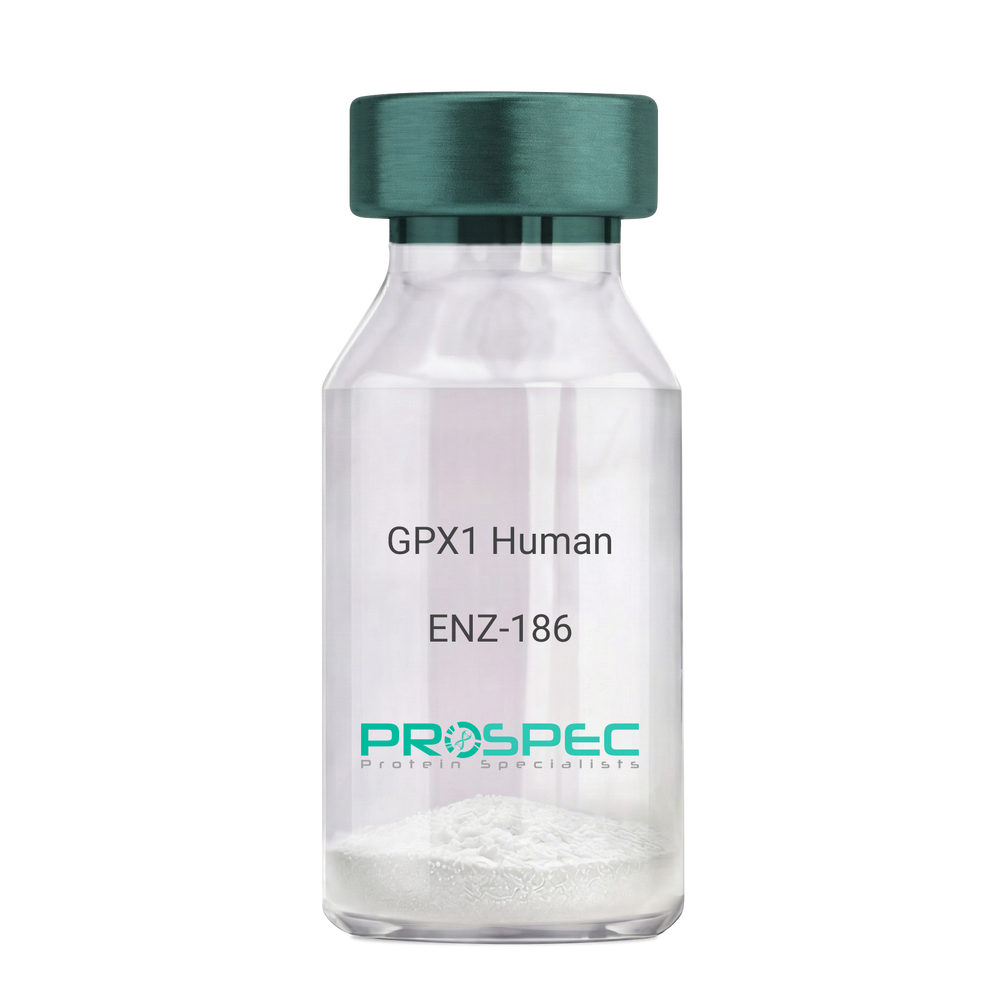
    Name :

    GPX1 Human

    Description:

    Glutathione Peroxidase 1 Human Recombinant

    Glutathione peroxidase 1, GPx-1, GSHPx-1, Cellular glutathione peroxidase, GPX1, GPXD, GSHPX1.

    Product # :

    ENZ-186

    Price :

    Quantity :

    Shipping Method :

    Ice Icon

    Shipped with Ice Packs

    Add To Cart

    More Info

    • description
    • source
    • formulation
    • purity
    • More Info

    Description

    GPX1 Human Recombinant produced in E.coli is a single, non-glycosylated polypeptide chain containing 223 amino acids (1-203) and having a molecular mass of 24.2kDa.GPX1 is fused to a 20 amino acid His-tag at N-terminus & purified by proprietary chromatographic techniques.

    Source

    Escherichia Coli.

    Formulation

    The GPX1 solution (0.5mg/ml) contains 20mM Tris-HCl buffer (pH 8.0), 2mM DTT, 30% glycerol and 100mM NaCl.

    Purity

    Greater than 90% as determined by SDS-PAGE.

    More Info

    • Introduction

      Glutathione peroxidase 1 (GPX1) is a member of the glutathione peroxidase family, consisting of 8 identified glutathione peroxidases (Gpx1-8) in humans. Glutathione peroxidase serves in the detoxification of hydrogen peroxide, and is one of the most vital antioxidant enzymes in humans. The GPX1 is a component of the enzymatic antioxidant defense, preventing oxidative damage to DNA, proteins and lipids by detoxifying hydrogen and lipid peroxides which may contribute to prostate cancer development. GPX1 is one of only a small number of proteins known in higher vertebrates to contain selenocysteine, which occurs at the active site of glutathione peroxidase and is coded by the nonsense (stop) codon TGA. Furthermore, the GPX1 protein is characterized in a polyalanine sequence polymorphism in the N-terminal region, which includes 3 alleles with 5, 6 or 7 alanine (ALA) repeats in this sequence. The allele with 5 ALA repeats is significantly linked to breast cancer risk.

    • Synonyms

      Glutathione peroxidase 1, GPx-1, GSHPx-1, Cellular glutathione peroxidase, GPX1, GPXD, GSHPX1.

    • Physical Appearance

      Sterile filtered colorless solution.

    • Stability

      Store at 4°C if entire vial will be used within 2-4 weeks. Store, frozen at -20°C for longer periods of time. For long term storage it is recommended to add a carrier protein (0.1% HSA or BSA).Avoid multiple freeze-thaw cycles.

    • Amino Acid Sequence

      MGSSHHHHHH SSGLVPRGSH MCAARLAAAA AAAQSVYAFS ARPLAGGEPV SLGSLRGKVL LIENVASLCG TTVRDYTQMN ELQRRLGPRG LVVLGFPCNQ FGHQENAKNE EILNSLKYVR PGGGFEPNFM LFEKCEVNGA GAHPLFAFLR EALPAPSDDA TALMTDPKLI TWSPVCRNDV AWNFEKFLVG PDGVPLRRYS RRFQTIDIEP DIEALLSQGP SCA.

    ProSpec's products are furnished for LABORATORY RESEARCH USE ONLY. The product may not be used as drugs, agricultural or pesticidal products, food additives or household chemicals.

    Gpx1 Human
  • View Data Sheet

    Name :

    THG1L Human

    Description:

    tRNA-Histidine Guanylyltransferase 1-Like Human Recombinant

    tRNA-histidine guanylyltransferase 1-like (S. cerevisiae), Interphase cytoplasmic foci protein 45, probable tRNA(His) guanylyltransferase, induced by high glucose-1, FLJ11601, FLJ20546, ICF45, IHG-1, EC 2.7.7.79, EC 2.7.7.6.

    Product # :

    ENZ-639

    Price :

    Quantity :

    Shipping Method :

    Ice Icon

    Shipped with Ice Packs

    Add To Cart

    More Info

    • description
    • source
    • formulation
    • purity
    • More Info

    Description

    THG1L Human Recombinant produced in E. coli is a single polypeptide chain containing 292 amino acids (30-298) and having a molecular mass of 34.0 kDa.THG1L is fused to a 23 amino acid His-tag at N-terminus & purified by proprietary chromatographic techniques.

    Source

    E.coli.

    Formulation

    The THG1L solution (0.5mg/1ml) contains 20mM Tris-HCl buffer (pH 8.0), 100mM NaCl, 1mM DTT and 20% glycerol.

    Purity

    Greater than 90% as determined by SDS-PAGE.

    More Info

    • Introduction

      Probable tRNA (His) guanylyltransferase (THG1L) is a member of the tRNA (His) gyanylytransferase family. THG1L which is localized to the cytoplasm also found adjacent to the nuclear membrane and expressed in various tissues, including liver and lung. THG1L is expressed in a cell cycle-dependent manner and may be involved in cell cycle progression and cell proliferation. THG1L adds a GMP to the 5'-end of tRNA(His) after transcription and RNase P cleavage. This step is vital for accurate recognition of the tRNA and for the fidelity of protein synthesis. Upon DNA damage, THG1L is phosphorylated, presumably by ATM or ATR.

    • Synonyms

      tRNA-histidine guanylyltransferase 1-like (S. cerevisiae), Interphase cytoplasmic foci protein 45, probable tRNA(His) guanylyltransferase, induced by high glucose-1, FLJ11601, FLJ20546, ICF45, IHG-1, EC 2.7.7.79, EC 2.7.7.6.

    • Physical Appearance

      Sterile Filtered colorless solution.

    • Stability

      Store at 4°C if entire vial will be used within 2-4 weeks. Store, frozen at -20°C for longer periods of time. For long term storage it is recommended to add a carrier protein (0.1% HSA or BSA).Avoid multiple freeze-thaw cycles.

    • Amino Acid Sequence

      MGSSHHHHHH SSGLVPRGSH MGSMAKSKFE YVRDFEADDT CLAHCWVVVR LDGRNFHRFA EKHNFAKPND SRALQLMTKC AQTVMEELED IVIAYGQSDE YSFVFKRKTN WFKRRASKFM THVASQFASS YVFYWRDYFE DQPLLYPPGF DGRVVVYPSN QTLKDYLSWR QADCHINNLY NTVFWALIQQ SGLTPVQAQG RLQGTLAADK NEILFSEFNI NYNNELPMYR KGTVLIWQKV DEVMTKEIKL PTEMEGKKMA VTRTRTKPVP LHCDIIGDAF WKEHPEILDE DS.

    ProSpec's products are furnished for LABORATORY RESEARCH USE ONLY. The product may not be used as drugs, agricultural or pesticidal products, food additives or household chemicals.

    Thg1L Human
  • View Data Sheet

    Name :

    RNPA E.Coli

    Description:

    Ribonuclease P protein component E.Coli Recombinant

    ECK3696, Rnase P protein, RnaseP protein, b3704, JW3681, Ribonuclease P protein component, EC 3.1.26.5, Protein C5.

    Product # :

    ENZ-1169

    Price :

    Quantity :

    Shipping Method :

    Ice Icon

    Shipped with Ice Packs

    Add To Cart

    More Info

    • description
    • source
    • formulation
    • purity
    • More Info

    Description

    RNPA E.Coli Recombinant produced in E.Coli is a single, non-glycosylated polypeptide chain containing 119 amino acids (1-119a.a) and having a molecular mass of 13.7kDa.RNPA is purified by proprietary chromatographic techniques.

    Source

    Escherichia Coli.

    Formulation

    RNPA protein solution (0.25mg/ml) in Phosphate-Buffered Saline (pH 7.4) and 10% Glycerol.

    Purity

    Greater than 90.0% as determined by SDS-PAGE.

    More Info

    • Introduction

      Rnase P protein, AKA rnpA, is an important enzyme consisting of the C5 protein (which encoded by rnpA) and the catalytic M1 RNA (encoded by rnpB) subunits. rnpA is ribonucleoprotein that catalyzes the removal of the 50- leader elements of precursor tRNAs and generates the mature 50-end of tRNAs. This step is critical for theformation of functional tRNA molecules in bacteria, archaea and eukarya. More importantly, it has lately been established that RNase P is essential for the endonucleolytic separation of certain polycistronic tRNA transcripts such as valV valW, leuQ leuP leuV and secG leuU. Therefore, it was hypothesized that the essential function of RNase P might be related to the complete absence of a particular tRNAthat was dependent on the enzyme for initial separation from polycistronic transcripts.

    • Synonyms

      ECK3696, Rnase P protein, RnaseP protein, b3704, JW3681, Ribonuclease P protein component, EC 3.1.26.5, Protein C5.

    • Physical Appearance

      Sterile Filtered colorless solution.

    • Stability

      Store at 4°C if entire vial will be used within 2-4 weeks.Store, frozen at -20°C for longer periods of time.For long term storage it is recommended to add a carrier protein (0.1% HSA or BSA).Avoid multiple freeze-thaw cycles.

    • Amino Acid Sequence

      MVKLAFPREL RLLTPSQFTF VFQQPQRAGT PQITILGRLN SLGHPRIGLT VAKKNVRRAH ERNRIKRLTR ESFRLRQHEL PAMDFVVVAK KGVADLDNRA LSEALEKLWR RHCRLARGS

    ProSpec's products are furnished for LABORATORY RESEARCH USE ONLY. The product may not be used as drugs, agricultural or pesticidal products, food additives or household chemicals.

    Rnpa Ribonuclease P 2
  • View Data Sheet

    Name :

    CK2a Zea Mays

    Description:

    Casein Kinase 2 alpha Zea Mays Recombinant

    Casein kinase II subunit alpha, EC 2.7.11.1, CK II, CK2-alpha, CK2?.

    Product # :

    PKA-210

    Price :

    Quantity :

    Shipping Method :

    Ice Icon

    Shipped with Ice Packs

    Add To Cart

    More Info

    • description
    • source
    • formulation
    • purity
    • More Info

    Description

    Casein Kinase 2 alpha Zea Mays Recombinant is a non-glycosylated polypeptide having a molecular mass of 39.2 kDa. Casein Kinase 2 is purified by proprietary chromatographic techniques.

    Source

    Escherichia Coli.

    Formulation

    CK2a is supplied in 50% glycerol.

    Purity

    Greater than 99% as determined by SDS-PAGE.

    More Info

    • Introduction

      The Casein kinase 2 (EC2.7.11.1) is a serine/threonine-selective protein kinasethat is a tetramer of two alpha subunits and two beta subunits. The alpha subunits have the catalytic kinase domain. Casein kinase 2 has been implicated in cell cyclecontrol, DNA repair, regulation of the circadian rhythmand other cellular processes.
      Casein kinase 2 activity has been reported to be activated following Wnt signaling pathwayactivation. A Pertussis toxin-sensitive G proteinand Disheveled appear to be an intermediary between Wnt-mediated activation of the Frizzled receptor and activation of casein kinase 2.

    • Synonyms

      Casein kinase II subunit alpha, EC 2.7.11.1, CK II, CK2-alpha, CK2?.

    • Stability

      Store at 4°C if entire vial will be used within 2-4 weeks. Store, frozen at -20°C for longer periods of time. Avoid multiple freeze-thaw cycles.

    • Unit Definition

      No protease activity detectable, specific activity > 1U/mg (1U = 1µmol/min at 37 degree C) using the synthetic peptide RRRDDDSDDD.

    ProSpec's products are furnished for LABORATORY RESEARCH USE ONLY. The product may not be used as drugs, agricultural or pesticidal products, food additives or household chemicals.

    Ck2A Zea Mays
  • View Data Sheet

    Name :

    PPIL3 Human

    Description:

    Cyclophilin-J Human Recombinant

    Peptidyl-prolyl cis-trans isomerase-like 3, PPIase, Cyclophilin J, CyPJ, Cyclophilin-like protein PPIL3, Rotamase PPIL3, PPIL3.

    Product # :

    ENZ-174

    Price :

    Quantity :

    Shipping Method :

    Ice Icon

    Shipped with Ice Packs

    Add To Cart

    More Info

    • description
    • source
    • formulation
    • purity
    • biological activity
    • More Info

    Description

    PPIL3 Human Recombinant produced in E.Coli is a single, non-glycosylated polypeptide chain containing 181 amino acids (1-161 a.a.) and having a molecular mass of 20.3kDa.PPIL3 is fused to a 20 amino acid His-tag at N-terminus & purified by proprietary chromatographic techniques.

    Source

    Escherichia Coli.

    Formulation

    PPIL3 protein solution (1mg/ml) containing 20mM Tris-HCl buffer (pH8.0), 20% glycerol, 0.1M NaCl and 1mM DTT.

    Purity

    Greater than 90.0% as determined by SDS-PAGE.

    Biological Activity

    Specific activity is > 280 nmoles/min/mg, and is defined as the amount of enzyme that cleaves 1umole of suc-AAFP-pNA per minute at 25C in Tris-Hcl pH8.0 using chymotrypsin.

    More Info

    • Introduction

      Peptidyl-prolyl cis-trans isomerase-like 3 (PPIL3) belongs to the cyclophilin family which catalyzes the cis-trans isomerization of peptidylprolyl imide bonds in oligopeptides. PPIL3 acts either as catalyst or as molecular chaperone in protein-folding events.

    • Synonyms

      Peptidyl-prolyl cis-trans isomerase-like 3, PPIase, Cyclophilin J, CyPJ, Cyclophilin-like protein PPIL3, Rotamase PPIL3, PPIL3.

    • Physical Appearance

      Sterile Filtered colorless solution.

    • Stability

      Store at 4°C if entire vial will be used within 2-4 weeks.Store, frozen at -20°C for longer periods of time. For long term storage it is recommended to add a carrier protein (0.1% HSA or BSA).Avoid multiple freeze-thaw cycles.

    • Amino Acid Sequence

      MGSSHHHHHH SSGLVPRGSH MSVTLHTDVG DIKIEVFCER TPKTCENFLA LCASNYYNGC IFHRNIKGFM VQTGDPTGTG RGGNSIWGKK FEDEYSEYLK HNVRGVVSMA NNGPNTNGSQ FFITYGKQPH LDMKYTVFGK VIDGLETLDE LEKLPVNEKT YRPLNDVHIK DITIHANPFA Q.

    ProSpec's products are furnished for LABORATORY RESEARCH USE ONLY. The product may not be used as drugs, agricultural or pesticidal products, food additives or household chemicals.

    Ppil3 Human
  • 1
  • …
  • 36
  • 37
  • 38
  • 39
  • 40
  • …
  • 42
Your browser does not support the video tag.

Products

  • Cytokines
  • Growth Factors
  • Chemokines
  • CD Antigens
  • Neurotrophins
  • Hormones
  • Enzymes
  • Viral Antigens
  • Recombinant Proteins
  • Natural Proteins
  • Monoclonal Antibodies
  • Polyclonal Antibodies
  • Thermal Packaging

About

  • Company
  • Founder
  • Contribution
  • Contact Us
  • My Account

Ordering

  • Ordering Method
  • Ordering - Credit Card
  • Ordering PO
  • Shipping Fees
  • FAQ's

Legal

  • Terms & Conditions
  • Privacy
  • Site Map
  • info@prospecbio.com
  • Facebook
  • Instagram
  • Linkedin Profile

© 2026 ProSpec-Tany TechnoGene Ltd. All Rights Reserved.

  • Choosing a selection results in a full page refresh.
  • Opens in a new window.