Skip to content

High-quality research proteins.

  • 1-800-805-6531

  • Mon - Sat 8.00-18.00, Sun - Closed

  • info@prospecbio.com

  • PO Box 6591 East Brunswick NJ 08816

  • Products
    • Cytokines
    • Growth factors
    • Chemokines
    • Cd antigens
    • Neurotrophins
    • Hormones
    • Enzymes
    • Viral antigens
    • Recombinant proteins
    • Natural proteins
    • Monoclonal antibodies
    • Polyclonal antibodies
    • Thermal Packaging
  • About
    • Company
    • Founder
    • Contribution
  • Customers
    • Eastern Asia
    • Eastern Europe
    • North America
    • South America
    • South East Asia
    • Southern Asia
    • Western Europe
  • Ordering
    • Ordering Method
    • Ordering - Credit Card
    • Ordering - PO
    • Shipping Fees
    • FAQs
  • Services
    • DNA Cloning
    • Protein Expression
    • Monoclonal Antibody
    • Fermentation
    • Technology License
  • Contact us
Log in

Country/region

  • USD $ | Albania
  • USD $ | Andorra
  • USD $ | Argentina
  • USD $ | Armenia
  • USD $ | Australia
  • USD $ | Austria
  • USD $ | Azerbaijan
  • USD $ | Belarus
  • USD $ | Belgium
  • USD $ | Bolivia
  • USD $ | Brazil
  • USD $ | Bulgaria
  • USD $ | Cambodia
  • USD $ | Canada
  • USD $ | Chile
  • USD $ | China
  • USD $ | Colombia
  • USD $ | Costa Rica
  • USD $ | Croatia
  • USD $ | Cyprus
  • USD $ | Czechia
  • USD $ | Denmark
  • USD $ | Estonia
  • USD $ | Finland
  • USD $ | France
  • USD $ | Georgia
  • USD $ | Germany
  • USD $ | Greece
  • USD $ | Hong Kong SAR
  • USD $ | Hungary
  • USD $ | Iceland
  • USD $ | India
  • USD $ | Ireland
  • USD $ | Israel
  • USD $ | Italy
  • USD $ | Japan
  • USD $ | Kazakhstan
  • USD $ | Latvia
  • USD $ | Liechtenstein
  • USD $ | Lithuania
  • USD $ | Madagascar
  • USD $ | Malta
  • USD $ | Mexico
  • USD $ | Moldova
  • USD $ | Monaco
  • USD $ | Netherlands
  • USD $ | New Zealand
  • USD $ | North Macedonia
  • USD $ | Norway
  • USD $ | Panama
  • USD $ | Paraguay
  • USD $ | Peru
  • USD $ | Philippines
  • USD $ | Poland
  • USD $ | Portugal
  • USD $ | Romania
  • USD $ | Singapore
  • USD $ | Slovakia
  • USD $ | Slovenia
  • USD $ | South Africa
  • USD $ | South Korea
  • USD $ | Spain
  • USD $ | Sri Lanka
  • USD $ | Sweden
  • USD $ | Switzerland
  • USD $ | Taiwan
  • USD $ | Thailand
  • USD $ | Türkiye
  • USD $ | Ukraine
  • USD $ | United Kingdom
  • USD $ | United States
  • USD $ | Uruguay
  • USD $ | Vatican City
  • USD $ | Venezuela
  • USD $ | Vietnam
  • Facebook
  • Instagram
logoProSpec - Recombinant Protein Manufacturer for academic and R&D industry
Become a distributor
Account Log in
Wishlist
Cart Cart(0)
  • Products
    +
    • Cytokines
    • Growth factors
    • Chemokines
    • Cd antigens
    • Neurotrophins
    • Hormones
    • Enzymes
    • Viral antigens
    • Recombinant proteins
    • Natural proteins
    • Monoclonal antibodies
    • Polyclonal antibodies
    • Thermal Packaging
  • About
    +
    • Company
    • Founder
    • Contribution
  • Customers
    +
    • Eastern Asia
    • Eastern Europe
    • North America
    • South America
    • South East Asia
    • Southern Asia
    • Western Europe
  • Ordering
    +
    • Ordering Method
    • Ordering - Credit Card
    • Ordering - PO
    • Shipping Fees
    • FAQs
  • Services
    +
    • DNA Cloning
    • Protein Expression
    • Monoclonal Antibody
    • Fermentation
    • Technology License
  • Contact us

Item added to your cart

View cart
View All
  • Cytokines
  • Growth factors
  • Chemokines
  • Cd antigens
  • Neurotrophins
  • Hormones
  • Enzymes
  • Viral antigens
  • Recombinant proteins
  • Natural proteins
  • Monoclonal antibodies
  • Polyclonal antibodies
  • Thermal Packaging
  • Tumor Necrosis Factor

    Tumor Necrosis Factor

    View All
  • 4-1BB

    4-1BB

    View All
  • Adiponectin

    Adiponectin

    View All
  • AIF1

    AIF1

    View All
  • Other Cytokines

    Other Cytokines

    View All
  • AITRL

    AITRL

    View All
  • Angiopoietin

    Angiopoietin

    View All
  • Apolipoprotein

    Apolipoprotein

    View All
  • B-Cell Activating Factor

    B-Cell Activating Factor

    View All
  • Beta Defensin

    Beta Defensin

    View All
  • Bone Morphogenetic Protein

    Bone Morphogenetic Protein

    View All
  • B type Natriuretic Peptide

    B type Natriuretic Peptide

    View All
  • BST

    BST

    View All
  • Betacellulin

    Betacellulin

    View All
  • Cardiotrophin

    Cardiotrophin

    View All
  • Activin

    Activin

    View All
  • Fibroblast Growth Factor

    Fibroblast Growth Factor

    View All
  • Other Growth Factors

    Other Growth Factors

    View All
  • CSF

    CSF

    View All
  • CTGF

    CTGF

    View All
  • IGFBP

    IGFBP

    View All
  • VEGF Protein

    VEGF Protein

    View All
  • EGF

    EGF

    View All
  • Epigen

    Epigen

    View All
  • Erythropoietin

    Erythropoietin

    View All
  • Insulin-Like Growth Factor

    Insulin-Like Growth Factor

    View All
  • Growth Hormone

    Growth Hormone

    View All
  • HDGF

    HDGF

    View All
  • Hepatocyte Growth Factor

    Hepatocyte Growth Factor

    View All
  • Insulin

    Insulin

    View All
  • BCA-1/ BLC (CXCL13)

    BCA-1/ BLC (CXCL13)

    View All
  • BRAK (CXCL14)

    BRAK (CXCL14)

    View All
  • C-10 (CCL6)

    C-10 (CCL6)

    View All
  • Other Chemokines

    Other Chemokines

    View All
  • MEC (CCL28)

    MEC (CCL28)

    View All
  • LD78-beta (CCL3L1)

    LD78-beta (CCL3L1)

    View All
  • CTACK (CCL27)

    CTACK (CCL27)

    View All
  • CXCL16

    CXCL16

    View All
  • CXCL17

    CXCL17

    View All
  • Platelet Factor-4 (CXCL4)

    Platelet Factor-4 (CXCL4)

    View All
  • ENA-78 (CXCL5)

    ENA-78 (CXCL5)

    View All
  • Eotaxin (CCL11,24,26)

    Eotaxin (CCL11,24,26)

    View All
  • Exodus-2 (CCL21)

    Exodus-2 (CCL21)

    View All
  • Fractalkine (CX3CL1)

    Fractalkine (CX3CL1)

    View All
  • CXCL6

    CXCL6

    View All
  • Other CD Antigens

    Other CD Antigens

    View All
  • CD14

    CD14

    View All
  • CD164

    CD164

    View All
  • CD1

    CD1

    View All
  • CD2

    CD2

    View All
  • CD200

    CD200

    View All
  • CD207

    CD207

    View All
  • CD226

    CD226

    View All
  • CD23

    CD23

    View All
  • CD244

    CD244

    View All
  • CD247

    CD247

    View All
  • CD27

    CD27

    View All
  • CD274

    CD274

    View All
  • CD300

    CD300

    View All
  • CD33

    CD33

    View All
  • Other Neurotrophins

    Other Neurotrophins

    View All
  • Beta-NGF

    Beta-NGF

    View All
  • BDNF

    BDNF

    View All
  • CDNF

    CDNF

    View All
  • CNTF

    CNTF

    View All
  • GDNF

    GDNF

    View All
  • Glia Maturation Factor

    Glia Maturation Factor

    View All
  • MANF

    MANF

    View All
  • Midkine

    Midkine

    View All
  • Neuroglobin

    Neuroglobin

    View All
  • Neurotrophic factors

    Neurotrophic factors

    View All
  • Neuregulin

    Neuregulin

    View All
  • Neuropilin

    Neuropilin

    View All
  • Pigment Epithelium-Derived Factor

    Pigment Epithelium-Derived Factor

    View All
  • Pleiotrophin

    Pleiotrophin

    View All
  • Peptide Hormones

    Peptide Hormones

    View All
  • Other Hormones

    Other Hormones

    View All
  • HCG

    HCG

    View All
  • Endothelin

    Endothelin

    View All
  • Exendin

    Exendin

    View All
  • FSH

    FSH

    View All
  • Glucagon

    Glucagon

    View All
  • GHRP

    GHRP

    View All
  • GLP

    GLP

    View All
  • Thyrostimulin

    Thyrostimulin

    View All
  • Inhibin A

    Inhibin A

    View All
  • LHRH

    LHRH

    View All
  • Melanotan

    Melanotan

    View All
  • Procalcitonin

    Procalcitonin

    View All
  • PTH

    PTH

    View All
  • Peroxiredoxin

    Peroxiredoxin

    View All
  • Peptidase

    Peptidase

    View All
  • Synthetase

    Synthetase

    View All
  • Transferase

    Transferase

    View All
  • Hydrolase

    Hydrolase

    View All
  • Dehydrogenase

    Dehydrogenase

    View All
  • ACE2

    ACE2

    View All
  • Esterase

    Esterase

    View All
  • Protein Kinases

    Protein Kinases

    View All
  • Other Enzymes

    Other Enzymes

    View All
  • Phosphatase

    Phosphatase

    View All
  • Deaminase

    Deaminase

    View All
  • Oxygenase

    Oxygenase

    View All
  • Adenylate Kinase

    Adenylate Kinase

    View All
  • Lyase

    Lyase

    View All
  • Chagas

    Chagas

    View All
  • SARS

    SARS

    View All
  • Influenza

    Influenza

    View All
  • ASFV

    ASFV

    View All
  • Astrovirus

    Astrovirus

    View All
  • Borrelia

    Borrelia

    View All
  • Helicobacter Pylori

    Helicobacter Pylori

    View All
  • Chikungunya

    Chikungunya

    View All
  • Chlamydia

    Chlamydia

    View All
  • Cytomegalo

    Cytomegalo

    View All
  • Dengue

    Dengue

    View All
  • EBV

    EBV

    View All
  • Ebola

    Ebola

    View All
  • Feline Leukemia Virus

    Feline Leukemia Virus

    View All
  • Hepatitis A

    Hepatitis A

    View All
  • Other

    Other

    View All
  • Actin

    Actin

    View All
  • ADAM

    ADAM

    View All
  • Complement Component

    Complement Component

    View All
  • Ag85

    Ag85

    View All
  • Eukaryotic Translation Initiation Factor

    Eukaryotic Translation Initiation Factor

    View All
  • Anterior Gradient Protein

    Anterior Gradient Protein

    View All
  • Heat Shock Protein

    Heat Shock Protein

    View All
  • Alpha-2-HS-Glycoprotein

    Alpha-2-HS-Glycoprotein

    View All
  • Hemoglobin

    Hemoglobin

    View All
  • Allergy

    Allergy

    View All
  • Anaplasma

    Anaplasma

    View All
  • Angiogenin

    Angiogenin

    View All
  • Ankyrin Repeat Domain

    Ankyrin Repeat Domain

    View All
  • Annexin

    Annexin

    View All
  • Other Natural Proteins

    Other Natural Proteins

    View All
  • Aprotinin

    Aprotinin

    View All
  • Transferrin

    Transferrin

    View All
  • Avidin

    Avidin

    View All
  • Anti Coagulation Factors

    Anti Coagulation Factors

    View All
  • Natural Albumin

    Natural Albumin

    View All
  • Natural Coagulation Factors

    Natural Coagulation Factors

    View All
  • Fibronectin

    Fibronectin

    View All
  • Thrombin

    Thrombin

    View All
  • Anti Human Enzyme

    Anti Human Enzyme

    View All
  • Other Monoclonal Antibodies

    Other Monoclonal Antibodies

    View All
  • Anti Human Cytokine

    Anti Human Cytokine

    View All
  • Anti Human Heat Shock Protein

    Anti Human Heat Shock Protein

    View All
  • Anti Mouse Lymphocyte

    Anti Mouse Lymphocyte

    View All
  • Anti Human Chemokine

    Anti Human Chemokine

    View All
  • Anti Human Lymphocyte

    Anti Human Lymphocyte

    View All
  • Anti Viral Monoclonal

    Anti Viral Monoclonal

    View All
  • Anti Mouse Cytokine

    Anti Mouse Cytokine

    View All
  • Anti-GST Monoclonal

    Anti-GST Monoclonal

    View All
  • Other Polyclonal Antibodies

    Other Polyclonal Antibodies

    View All
  • Anti Viral

    Anti Viral

    View All
  • Anti-GST Monoclonal

    Anti-GST Monoclonal

    View All
Back

Search results

1000 results found for “synaptosomal associated protein”

Name

Description

Product #

Price

Quantity

Shipping Method

  • View Data Sheet

    Name :

    SHH Mouse

    Description:

    Sonic Hedgehog Mouse Recombinant

    SHH, HHG-1, HHG1, Sonic hedgehog protein.

    Product # :

    CYT-597

    Price :

    Quantity :

    Shipping Method :

    Room Temp Icon

    Shipped at Room temp

    Add To Cart

    More Info

    • description
    • source
    • formulation
    • purity
    • biological activity
    • More Info

    Description

    Sonic Hedgehog Recombinant Mouse produced in E.Coli is a single, non-glycosylated polypeptide chain containing 176 amino acids and having a molecular mass of 19.8 kDa. The Mouse Sonic Hedgehog is 99% homologous to the human gene.Cysteine at position 25 has been substituted with Ile.The Sonic HedgeHog is purified by proprietary chromatographic techniques.

    Source

    Escherichia Coli.

    Formulation

    Lyophilized from a concentrated (1mg/ml) solution in water containing 10mM Na2PO4 pH-7.5.

    Purity

    Greater than 97.0% as determined by SDS-PAGE.

    Biological Activity

    Determined by the dose-dependent induction of alkaline phosphatase production by C3H/10T1/2 (CCL-226) fibroblasts and is typically 0.48-0.72 µg/ml.

    More Info

    • Introduction

      Recombinant Mouse Sonic Hedgehog is part of a small group of secreted proteins that are vital for development in both vertebrates and invertebrates. 3 mammalian hedgehog genes (sonic, desert, Indian) share about 60% homology. The Mouse Sonic Hedgehog is 99% homologous to the human gene. Sonic HedgeHog is a protein that is vital in guding the early embryo. It has been associated as the major inductive signal in patterning of the ventral neural tube, the anterior-posterior limb axis, and the ventral somites. Sonic HedgeHog binds to the patched receptor, which functions in association with smoothened, to activate the transcription of target genes. In the absence of sonic HedgeHog, patched receptor represses the constitutive signaling activity of smoothened. Sonic HedgeHog also regulates another factor, the gli oncogene. Sonic HedgeHog intercellular signal is essential for a various patterning events during development: signal produced by the notochord that induces ventral cell fate in the neural tube and somites, and the polarizing signal for patterning of the anterior-posterior axis of the developing limb bud. Sonic HedgeHog exhibits both floor plate- and motor neuron-inducing activity. Mutations in a long-range Sonic HedgeHog enhancer located in an intron of the limb region 1 gene result in preaxial polydactyly.

    • Synonyms

      SHH, HHG-1, HHG1, Sonic hedgehog protein.

    • Physical Appearance

      Sterile Filtered White lyophilized (freeze-dried) powder.

    • Stability

      Lyophilized Mouse Sonic HedgeHog although stable at room temperature for 3 weeks, should be stored desiccated below -18°C. Upon reconstitution Sonic HedgeHog should be stored at 4°C between 2-7 days and for future use below -18°C.Please prevent freeze-thaw cycles.

    • Solubility

      It is recommended to reconstitute the lyophilized Sonic Hedgehog in sterile 18MΩ-cm H2O not less than 100µg/ml, which can then be further diluted to other aqueous solutions.

    • Amino Acid Sequence

      MIIGPGRGFG KRRHPKKLTP LAYKQFIPNV AEKTLGASGR YEGKITRNSE RFKELTPNYN PDIIFKDEEN TGADRLMTQR CKDKLNALAI SVMNQWPGVK LRVTEGWDED GHHSEESLHY EGRAVDITTS DRDRSKYGML ARLAVEAGFD WVYYESKAHI HCSVKAENSV AAKSGG.

    ProSpec's products are furnished for LABORATORY RESEARCH USE ONLY. The product may not be used as drugs, agricultural or pesticidal products, food additives or household chemicals.

    Sonic Hedgehog Mouse
  • View Data Sheet

    Name :

    PIP Protein

    Description:

    Prolactin-Induced Protein Human Recombinant

    Prolactin-inducible protein, Gross cystic disease fluid protein 15, GCDFP-15, Prolactin-induced protein, Secretory actin-binding protein, SABP, gp17, GCDFP15, GPIP4, PIP.

    Product # :

    CYT-793

    Price :

    Quantity :

    Shipping Method :

    Ice Icon

    Shipped with Ice Packs

    Add To Cart

    More Info

    • description
    • source
    • formulation
    • purity
    • More Info

    Description

    PIP Human Recombinant produced in E.Coli is a single, non-glycosylated polypeptide chain containing 141 amino acids (29-146 a.a.) and having a molecular mass of 15.9kDa.PIP is fused to a 23 amino acid His-tag at N-terminus & purified by proprietary chromatographic techniques.

    Source

    Escherichia Coli.

    Formulation

    PIP protein solution (1mg/ml) contains 20mM Tris-HCl buffer, (pH 8.0), 10% glycerol and 0.4M Urea.

    Purity

    Greater than 90% as determined by SDS-PAGE.

    More Info

    • Introduction

      Prolactin-inducible protein (PIP) is a main protein component of benign breast gross cysts. PIP is a famous indicator of breast cancer, since it is found in around 50% of all breast cancer specimens. PIP is expressed in exocrine glands, in pathologic conditions, in breast cysts and breast cancers exhibiting apocrine features. PIP and prostate specific antigen are co-expressed in androgen receptor-positive breast tumours.

    • Synonyms

      Prolactin-inducible protein, Gross cystic disease fluid protein 15, GCDFP-15, Prolactin-induced protein, Secretory actin-binding protein, SABP, gp17, GCDFP15, GPIP4, PIP.

    • Physical Appearance

      Sterile Filtered clear solution.

    • Stability

      Store at 4°C if entire vial will be used within 2-4 weeks. Store, frozen at -20°C for longer periods of time. For long term storage it is recommended to add a carrier protein (0.1% HSA or BSA).Avoid multiple freeze-thaw cycles.

    • Amino Acid Sequence

      MGSSHHHHHH SSGLVPRGSH MGSQDNTRKI IIKNFDIPKS VRPNDEVTAV LAVQTELKEC MVVKTYLISS IPLQGAFNYK YTACLCDDNP KTFYWDFYTN RTVQIAAVVD VIRELGICPD DAAVIPIKNN RFYTIEILKV E.

    ProSpec's products are furnished for LABORATORY RESEARCH USE ONLY. The product may not be used as drugs, agricultural or pesticidal products, food additives or household chemicals.

    Human Pip
  • View Data Sheet

    Name :

    CHGA Human, His

    Description:

    Chromogranin-A Human Recombinant, His Tag

    CGA, CHGA, Vasostatin-2, Pituitary secretory protein I, SP-I.

    Product # :

    PRO-699

    Price :

    Quantity :

    Shipping Method :

    Ice Icon

    Shipped with Ice Packs

    Add To Cart

    More Info

    • description
    • source
    • formulation
    • purity
    • More Info

    Description

    Recombinant Human CHGA produced in E.Coli is a single, non-glycosylated polypeptide chain containing 460 amino acids (19-457 a.a) and having a molecular mass of 51.2kDa (Molecular weight on SDS-PAGE will appear higher). Chromgranin-A is fused to 21 amino acid His Tag at N-terminus and purified by proprietary chromatographic techniques.

    Source

    Escherichia Coli.

    Formulation

    The CHGA protein (0.5mg/ml) contains 20mM Tris-HCl buffer pH-7.5, 2mM EDTA, 0.1mM PMSF and 10% glycerol.

    Purity

    Greater than 80.0% as determined by Analysis by SDS-PAGE.

    More Info

    • Introduction

      Chromgranin-A is part of the neuroendocrine secretory protein family. CHGA is located in secretory vesicles of neurons and endocrine cells. Chromgranin-A is a precursor to three biologically active peptides; vasostatin, pancreastatin, and parastatin. These peptides act as autocrine or paracrine negative modulators of the neuroendocrine system. Other peptides, including chromostatin, beta-granin, WE-14 and GE-25, are also derived from the full-length protein. Chromgranin-A has numerous biological activities on some tissues and organs and exerts a large spectrum of homeostatic actions, including antifungal and antimicrobial effect, modulation of cell adhesion, and inhibition of parathyroid hormone secretion.

    • Synonyms

      CGA, CHGA, Vasostatin-2, Pituitary secretory protein I, SP-I.

    • Physical Appearance

      Sterile filtered colorless solution.

    • Stability

      Store at 4°C if entire vial will be used within 2-4 weeks. Store, frozen at -20°C for longer periods of time. For long term storage it is recommended to add a carrier protein (0.1% HSA or BSA). Avoid multiple freeze-thaw cycles.

    • Amino Acid Sequence

      MGSSHHHHHH SSGLVPRGSH MLPVNSPMNK GDTEVMKCIV EVISDTLSKP SPMPVSQECF ETLRGDERIL SILRHQNLLK ELQDLALQGA KERAHQQKKH SGFEDELSEV LENQSSQAEL KEAVEEPSSK DVMEKREDSK EAEKSGEATD GARPQALPEP MQESKAEGNN QAPGEEEEEE EEATNTHPPA SLPSQKYPGP QAEGDSEGLS QGLVDREKGL SAEPGWQAKR EEEEEEEEEA EAGEEAVPEE EGPTVVLNPH PSLGYKEIRK GESRSEALAV DGAGKPGAEE AQDPEGKGEQ EHSQQKEEEE EMAVVPQGLF RGGKSGELEQ EEERLSKEWE DSKRWSKMDQ LAKELTAEKR LEGQEEEEDN RDSSMKLSFR ARAYGFRGPG PQLRRGWRPS SREDSLEAGL PLQVRGYPEE KKEEEGSANR RPEDQELESL SAIEAELEKV AHQLQALRRG.

    ProSpec's products are furnished for LABORATORY RESEARCH USE ONLY. The product may not be used as drugs, agricultural or pesticidal products, food additives or household chemicals.

    Chromogranin A Human His
  • View Data Sheet

    Name :

    CUEDC1 Human

    Description:

    CUE Domain Containing 1 Human Recombinant

    CUE Domain Containing 1, CUE Domain-Containing Protein 1.

    Product # :

    PRO-1822

    Price :

    Quantity :

    Shipping Method :

    Ice Icon

    Shipped with Ice Packs

    Add To Cart

    More Info

    • description
    • source
    • formulation
    • purity
    • More Info

    Description

    CUEDC1 Human Recombinant produced in E.Coli is a single, non-glycosylated polypeptide chain containing 409 amino acids (1-386 a.a) and having a molecular mass of 44.6kDa.CUEDC1 is fused to a 23 amino acid His-tag at N-terminus & purified by proprietary chromatographic techniques.

    Source

    Escherichia Coli.

    Formulation

    CUEDC1 protein solution (0.25mg/ml) containing 20mM Tris-HCl buffer (pH 8.0), 0.15M NaCl, 20% glycerol and 1mM DTT.

    Purity

    Greater than 85% as determined by SDS-PAGE.

    More Info

    • Introduction

      CUE Domain Containing 1, also know as CUEDC1 contains 1 CUE domain. The CUE domain is structurally associated to the ubiquitin-binding UBA domain and exists as a domain-swapped dimer which makes additional contacts with ubiquitin, and as a result, binds ubiquitin with higher affinity. The CUE domain is discovered in proteins with diverse functions including protein sorting and degradation of misfolded proteins in the endoplasmic reticulum.

    • Synonyms

      CUE Domain Containing 1, CUE Domain-Containing Protein 1.

    • Physical Appearance

      Sterile Filtered clear solution.

    • Stability

      Store at 4°C if entire vial will be used within 2-4 weeks. Store, frozen at -20°C for longer periods of time.For long term storage it is recommended to add a carrier protein (0.1% HSA or BSA).Please avoid freeze thaw cycles.

    • Amino Acid Sequence

      MGSSHHHHHH SSGLVPRGSH MGSMTSLFRR SSSGSGGGGT AGARGGGGGT AAPQELNNSR PARQVRRLEF NQAMDDFKTM FPNMDYDIIE CVLRANSGAV DATIDQLLQM NLEGGGSSGG VYEDSSDSED SIPPEILERT LEPDSSDEEP PPVYSPPAYH MHVFDRPYPL APPTPPPRID ALGSGAPTSQ RRYRNWNPPL LGNLPDDFLR ILPQQLDSIQ GNAGGPKPGS GEGCPPAMAG PGPGDQESRW KQYLEDERIA LFLQNEEFMK ELQRNRDFLL ALERDRLKYE SQKSKSSSVA VGNDFGFSSP VPGTGDANPA VSEDALFRDK LKHMGKSTRR KLFELARAFS EKTKMRKSKR KHLLKHQSLG AAASTANLLD DVEGHACDED FRGRRQEAPK VEEGLREGQ

    ProSpec's products are furnished for LABORATORY RESEARCH USE ONLY. The product may not be used as drugs, agricultural or pesticidal products, food additives or household chemicals.

    Cuedc1 Human
  • View Data Sheet

    Name :

    ProNGF Human

    Description:

    Pro-Nerve Growth Factor Human Recombinant

    Human Pro-NGF, ProNGF, NGFB.

    Product # :

    CYT-426

    Price :

    Quantity :

    Shipping Method :

    Room Temp Icon

    Shipped at Room temp

    Add To Cart

    More Info

    • description
    • source
    • formulation
    • purity
    • More Info

    Description

    Pro-NGF Human Recombinant produced in E.Coli is a single, non-glycosylated, polypeptide chain containing 224 amino acids and having a molecular mass of 25 kDa.ProNGF Human Recombinant is purified by proprietary chromatographic techniques.

    Source

    Escherichia Coli.

    Formulation

    ProNGF was lyophilized from a 0.2 μM filtered solution of 20m Tris-HCL, 0.5M NaCl, 5% Trehalose, 5% Mannitol. 0.01% Tween-80 and 1mM EDTA pH-8.

    Purity

    Greater than 95.0% as determined by SDS-PAGE.

    More Info

    • Synonyms

      Human Pro-NGF, ProNGF, NGFB.

    • Physical Appearance

      Sterile Filtered White lyophilized (freeze-dried) powder.

    • Stability

      Lyophilized ProNGF although stable at room temperature for 3 weeks, should be stored desiccated below -18°C. Upon reconstitution ProNGF should be stored at 4°C between 2-7 days and for future use below -18°C. Please prevent freeze-thaw cycles.

    • Solubility

      It is recommended to reconstitute the lyophilized ProNGF in distilled water to a concentration no less than 100 µg/ml, which can then be further diluted to other aqueous solutions.

    • Amino Acid Sequence

      MEPHSESNVPAGHTIPQAHWTKLQHSLDTALRRARSAPAAAIAARVAGQTRNI
      TVDPRLFKKRRLRSPRVLFSTQPPREAADTQDLDFEVGGAAPFNRTHRSKRS
      SSHPIFHRGEFSVCDSVSVWVGDKTTATDIKGKEVMVLGEVNINNSVFKQYFFET
      KCRDPNPVDSGCRGIDSKHWNSYCTTTHTFVKALTMDGKQAAWRFIRIDTAC
      VCVLSRKAVRRA.

    • Background

      Pro-Nerve Growth Factor Human Recombinant: Unveiling its Potential in Neuroregulation and Disease Pathogenesis

      Abstract:

      Pro-Nerve Growth Factor (Pro-NGF) human recombinant is a crucial precursor protein involved in neuronal development, survival, and degenerative processes. This research paper aims to provide a comprehensive analysis of Pro-NGF, including its characteristics, processing mechanisms, and implications in neuroregulation and disease pathogenesis. Additionally, innovative methodologies for the production and manipulation of Pro-NGF human recombinant are proposed, highlighting its potential as a therapeutic target for neurological disorders and neurodegenerative diseases.

      Introduction:

      Neuroregulation and maintenance of neuronal health are intricate processes governed by a network of signaling molecules. Pro-NGF, the precursor form of Nerve Growth Factor (NGF), acts as a key player in neuronal development, synaptic plasticity, and cell survival. This paper delves into the distinctive features of Pro-NGF and presents novel approaches for the production and manipulation of Pro-NGF human recombinant, aiming to unravel its role in neuroregulation and disease pathogenesis.

      Characteristics and Processing Mechanisms:

      Pro-NGF is initially synthesized as an inactive precursor, requiring proteolytic cleavage for conversion into mature NGF. The processing of Pro-NGF involves the action of proteases, such as furin, and the formation of distinct protein complexes. The balance between Pro-NGF and mature NGF levels plays a critical role in modulating neuronal function and fate, influencing processes such as neuronal survival, axonal growth, and synaptic plasticity.

      Production and Manipulation of Pro-NGF Human Recombinant:

      Efficient production methodologies and manipulation strategies are crucial for studying the role of Pro-NGF in neuroregulation and disease pathogenesis. Recombinant protein expression systems, including mammalian cell culture and bacterial expression systems, have been employed to produce functional Pro-NGF human recombinant. Techniques such as mutagenesis, protein purification, and specific inhibitors targeting Pro-NGF processing pathways enable the manipulation of Pro-NGF levels and investigation of its downstream effects.

      Implications in Neuroregulation and Disease Pathogenesis:

      Pro-NGF human recombinant holds significant potential in understanding the intricate mechanisms underlying neuroregulation and disease pathogenesis. Dysregulation of Pro-NGF processing and altered Pro-NGF/mature NGF ratios have been implicated in various neurological disorders, including Alzheimer's disease, Parkinson's disease, and ischemic stroke. Manipulating Pro-NGF levels and the balance between its mature form may offer therapeutic strategies for modulating neurotrophic signaling and promoting neuronal health in these conditions.

      Conclusion:

      Pro-NGF human recombinant emerges as a key regulator in neuroregulation and disease pathogenesis, offering promising avenues for therapeutic intervention. Enhancing our understanding of Pro-NGF processing mechanisms and its downstream signaling cascades will provide valuable insights into neurodevelopment, neurodegeneration, and potential therapeutic strategies. Targeting Pro-NGF as a therapeutic intervention may hold immense promise in treating neurological disorders and promoting neuronal health.

      What is the molecular weight / Mw of ProNGF Protein?
      ProNGF Protein has a total Mw of 25kDa.

      What is the source or expression system of ProNGF Protein?
      Escherichia Coli.

      What is the Purity of ProNGF Protein?
      ProNGF Protein is >95% pure as determined by SDS-PAGE.


      What is the Biological Activity of ProNGF Protein?
      The biological functionality of ProNGF Protein will be determined in the future.

      What is the amino acid sequence of ProNGF Protein?
      MEPHSESNVPAGHTIPQAHWTKLQHSLDTALRRARSAPAAAIAARVAGQTRNI
      TVDPRLFKKRRLRSPRVLFSTQPPREAADTQDLDFEVGGAAPFNRTHRSKRS
      SSHPIFHRGEFSVCDSVSVWVGDKTTATDIKGKEVMVLGEVNINNSVFKQYFFET
      KCRDPNPVDSGCRGIDSKHWNSYCTTTHTFVKALTMDGKQAAWRFIRIDTAC
      VCVLSRKAVRRA

      What applications can ProNGF Protein be used in?
      Tissue Factor Protein can probably be used in western blot, ELISA and Lateral Flow.

      What is the endotoxin level for ProNGF Protein?
      The endotoxin level is minimal, ProNGF Protein was purified using conventional chromatography techniques

    ProSpec's products are furnished for LABORATORY RESEARCH USE ONLY. The product may not be used as drugs, agricultural or pesticidal products, food additives or household chemicals.

    Pro Ngf Human
  • View Data Sheet

    Name :

    PMP2 Human, His

    Description:

    Peripheral Myelin Protein-2 Human Recombinant, His Tag

    P2, MP2, FABP8, M-FABP, Myelin P2 protein, PMP2, Peripheral Myelin Protein-2.

    Product # :

    PRO-671

    Price :

    Quantity :

    Shipping Method :

    Ice Icon

    Shipped with Ice Packs

    Add To Cart

    More Info

    • description
    • source
    • formulation
    • purity
    • More Info

    Description

    PMP2 Human Recombinant produced in E.Coli is a single, non-glycosylated polypeptide chain containing 132 amino acids and having a molecular mass of 19.41kDa. PMP2 is fused to His tag at N-terminus and purified by standard chromatography techniques.

    Source

    Escherichia Coli.

    Formulation

    PMP2 His-Tag is supplied in 20mM Tris HCl pH-8 and 50% glycerol.

    Purity

    Greater than 95% as determined by SDS-PAGE.

    More Info

    • Introduction

      PMP2 is a small protein found in peripheral nerve myelin and spinal cord myelin, belongs to a family of fatty acid binding proteins. PMP2 partly decreases the inhibitory effect of T suppressors in the culture of immune lymph node cells. PMP2 protein is a lipid transport protein in schwann cells.

    • Synonyms

      P2, MP2, FABP8, M-FABP, Myelin P2 protein, PMP2, Peripheral Myelin Protein-2.

    • Physical Appearance

      Sterile Filtered colorless liquid formulation.

    • Stability

      Store at 4°C if entire vial will be used within 2-4 weeks. Store, frozen at -20°C for longer periods of time.Please avoid freeze thaw cycles.

    ProSpec's products are furnished for LABORATORY RESEARCH USE ONLY. The product may not be used as drugs, agricultural or pesticidal products, food additives or household chemicals.

    Pmp2 Human His
  • View Data Sheet

    Name :

    MTHSFD Human

    Description:

    Methenyltetrahydrofolate Synthetase Domain Containing Human Recombinant

    Methenyltetrahydrofolate synthase domain-containing protein, Methenyltetrahydrofolate synthase domaincontaining protein, Methenyltetrahydrofolate synthase

    Product # :

    PRO-2646

    Price :

    Quantity :

    Shipping Method :

    Ice Icon

    Shipped with Ice Packs

    Add To Cart

    More Info

    • description
    • source
    • formulation
    • purity
    • More Info

    Description

    MTHSFD Human Recombinant produced in E.Coli is a single, non-glycosylated polypeptide chain containing 406 amino acids (1-383 a.a.) and having a molecular mass of 44.5kDa. MTHSFD is fused to a 23 amino acid His tag at N-Terminus and purified by proprietary chromatographic techniques.

    Source

    Escherichia Coli.

    Formulation

    The MTHSFD solution (0.25mg/ml) contains 30% glycerol, 1mM DTT and Phosphate-Buffered Saline (pH 7.4).

    Purity

    Greater than 90.0% as determined by SDS-PAGE.

    More Info

    • Introduction

      MTHSFD, also known as Methenyltetrahydrofolate Synthetase Domain Containing protein, is linked to Pancreas, Annular and Gastrointestinal Defects. It has also been associated with Immunodeficiency Syndrome. Some of the Gene Ontology annotations that are related to the MTHSFD gene are nucleic acid binding and nucleotide binding.

    • Synonyms

      Methenyltetrahydrofolate synthase domain-containing protein, Methenyltetrahydrofolate synthase domaincontaining protein, Methenyltetrahydrofolate synthase

    • Physical Appearance

      Sterile Filtered colorless solution.

    • Stability

      Store at 4°C if entire vial will be used within 2-4 weeks. Store, frozen at -20°C for longer periods of time. For long term storage it is recommended to add a carrier protein (0.1% HSA or BSA).Avoid multiple freeze-thaw cycles.

    • Amino Acid Sequence

      MGSSHHHHHH SSGLVPRGSH MGSMEPRAVG VSKQDIREQI WGYMESQNLA DFPRPVHHRI PNFKGASHAA EQLPRLQAFK TARTIKVNPD APQKSARFFV LESKKTLLVP TPRLRTGLFN KITPPPGATK DILRKCATSQ GVRNYSVPIG LDSRVLVDLV VVGSVAVSEK GWRIGKGEGY ADLEYAMMVS MGAVSKETPV VTIVHDCQVV DIPEELVEEH DITVDYILTP TRVIATGCKR PKPMGITWFK ISLEMMEKIP ILRSLRAREQ QAGKDVTLQG EHQHLPEPGC QQTVPLSVGR RPPDTPGPET NSMEAAPGSP PGEGAPLAAD VYVGNLPGDA RVSDLKRALR ELGSVPLRLT WQGPRRRAFL HYPDSAAAQQ AVSCLQGLRL GTDTLRVALA RQQRDK

    ProSpec's products are furnished for LABORATORY RESEARCH USE ONLY. The product may not be used as drugs, agricultural or pesticidal products, food additives or household chemicals.

    Mthsfd Human
  • View Data Sheet

    Name :

    OTUB1 Human

    Description:

    Ubiquitin Aldehyde Binding 1 Human Recombinant

    Ubiquitin thioesterase OTUB1, Otubain-1, OTU domain-containing ubiquitin aldehyde-binding protein 1, Ubiquitin-specific-processing protease OTUB1, Deubiquitinating enzyme OTUB1, OTUB1, OTB1, OTU1, HSPC263, MGC4584, FLJ20113, FLJ40710, MGC111158.

    Product # :

    PRO-711

    Price :

    Quantity :

    Shipping Method :

    Ice Icon

    Shipped with Ice Packs

    Add To Cart

    More Info

    • description
    • source
    • formulation
    • purity
    • More Info

    Description

    OTUB1 Human Recombinant fused with a 20 amino acid His tag at N-terminus produced in E.Coli is a single, non-glycosylated, polypeptide chain containing 291 amino acids (1- 271 a.a.) and having a molecular mass of 33.4kDa.The OTUB1 is purified by proprietary chromatographic techniques.

    Source

    Escherichia Coli.

    Formulation

    The OTUB1 solution contains 20mM Tris buffer (pH 8.0) and 10% glycerol.

    Purity

    Greater than 95.0% as determined by SDS-PAGE.

    More Info

    • Introduction

      Otubain 1 (OTUB1) belongs to the ovarian tumor (OUT) superfamily of predicted cysteine proteases and inhibits cytokine gene transcription in the immune system through its interaction with a ubiquitin protease and E3 ubiquitin ligase. OTUB1 is a highly specific ubiquitin iso-peptidase, it cleaves ubiquitin from branched poly-ubiquitin chains but not from ubiquitinated substrates. OTUB1 is believed to work in specific ubiquitin-dependent pathways, possibly by providing an editing function of polyubiquitin chain growth. OTUB1 is a hydrolase that removes conjugated ubiquitin from proteins in vitro and may therefore have a significant regulatory role in the level of protein turnover by preventing degradation. Additionally, OTUB1 is a regulator of T-cell anergy, a phenomenon that occurs when T-cells are rendered impassive to antigen re-challenge and no longer respond to their cognate antigen. OTUB1 acts via its interaction with RNF128/GRAIL, which is an essential inductor of CD4 T-cell anergy.

    • Synonyms

      Ubiquitin thioesterase OTUB1, Otubain-1, OTU domain-containing ubiquitin aldehyde-binding protein 1, Ubiquitin-specific-processing protease OTUB1, Deubiquitinating enzyme OTUB1, OTUB1, OTB1, OTU1, HSPC263, MGC4584, FLJ20113, FLJ40710, MGC111158.

    • Physical Appearance

      Sterile Filtered colorless solution.

    • Stability

      Store at 4°C if entire vial will be used within 2-4 weeks. Store, frozen at -20°C for longer periods of time. For long term storage it is recommended to add a carrier protein (0.1% HSA or BSA).Avoid multiple freeze-thaw cycles.

    • Amino Acid Sequence

      MGSSHHHHHH SSGLVPRGSH MAAEEPQQQK QEPLGSDSEG VNCLAYDEAI MAQQDRIQQE IAVQNPLVSE RLELSVLYKE YAEDDNIYQQ KIKDLHKKYS YIRKTRPDGN CFYRAFGFSH LEALLDDSKE LQRFKAVSAK SKEDLVSQGF TEFTIEDFHN TFMDLIEQVE KQTSVADLLA SFNDQSTSDY LVVYLRLLTS GYLQRESKFF EHFIEGGRTV KEFCQQEVEP MCKESDHIHI IALAQALSVS IQVEYMDRGE GGTTNPHIFP EGSEPKVYLL YRPGHYDILY K.

    ProSpec's products are furnished for LABORATORY RESEARCH USE ONLY. The product may not be used as drugs, agricultural or pesticidal products, food additives or household chemicals.

    Otub1 Human
  • View Data Sheet

    Name :

    RAB7A Human

    Description:

    RAB7A, Member RAS Oncogene Family Human Recombinant

    RAB7A member RAS oncogene family, RAB7, ras-related protein Rab-7a, FLJ20819, PSN, CMT2B, PRO2706.

    Product # :

    PRO-077

    Price :

    Quantity :

    Shipping Method :

    Ice Icon

    Shipped with Ice Packs

    Add To Cart

    More Info

    • description
    • source
    • formulation
    • purity
    • More Info

    Description

    RAB7A produced in E.Coli is a single, non-glycosylated polypeptide chain containing 227 amino acids (1-207a.a.) and having a molecular mass of 25.6kDa.RAB7A is fused to a 20 amino acid His-tag at N-terminus & purified by proprietary chromatographic techniques.

    Source

    Escherichia Coli.

    Formulation

    The RAB7A protein solution (0.5mg/ml) is formulated in 20mM Tris-HCl buffer (pH8.0), 1mM DTT, 100mM NaCl and 30% glycerol.

    Purity

    Greater than 90% as determined by SDS-PAGE.

    More Info

    • Introduction

      RAB7A belongs to the Ras superfamily of small Rab GTPases. RAB7A connects with the RIPL effector protein to regulator membrane trafficking from early to late endosome and to lysosomes. RAB7A can also regulate growth receptor endocytic trafficking, degradation, maturation of phagosome and autophagic vacuoles.

    • Synonyms

      RAB7A member RAS oncogene family, RAB7, ras-related protein Rab-7a, FLJ20819, PSN, CMT2B, PRO2706.

    • Physical Appearance

      Sterile Filtered clear solution.

    • Stability

      Store at 4°C if entire vial will be used within 2-4 weeks. Store, frozen at -20°C for longer periods of time. For long term storage it is recommended to add a carrier protein (0.1% HSA or BSA).Avoid multiple freeze-thaw cycles.

    • Amino Acid Sequence

      MGSSHHHHHH SSGLVPRGSH MTSRKKVLLK VIILGDSGVG KTSLMNQYVN KKFSNQYKAT IGADFLTKEV MVDDRLVTMQ IWDTAGQERF QSLGVAFYRG ADCCVLVFDV TAPNTFKTLD SWRDEFLIQA SPRDPENFPF VVLGNKIDLE NRQVATKRAQ AWCYSKNNIP YFETSAKEAI
      NVEQAFQTIA RNALKQETEV ELYNEFPEPI KLDKNDRAKA SAESCSC.

    ProSpec's products are furnished for LABORATORY RESEARCH USE ONLY. The product may not be used as drugs, agricultural or pesticidal products, food additives or household chemicals.

    Rab7A Human
  • View Data Sheet

    Name :

    CXCL3 Mouse

    Description:

    GRO-Gamma Mouse Recombinant (CXCL3)

    C-X-C motif chemokine 3, Dendritic cell inflammatory protein 1, Cxcl3, Dcip1, Gm1960.

    Product # :

    CHM-255

    Price :

    Quantity :

    Shipping Method :

    Room Temp Icon

    Shipped at Room temp

    Add To Cart

    More Info

    • description
    • source
    • formulation
    • purity
    • biological activity
    • More Info

    Description

    GRO-g Mouse Recombinant produced in E.Coli is a single,non-glycosylated, polypeptide chain containing 69 amino acids and having a molecular mass of 7.7kDa. The CXCL3 is purified by proprietary chromatographic techniques.

    Source

    Escherichia Coli.

    Formulation

    The Mouse CXCL3 lyophilized from a 0.2µm filtered concentrated solution in 1×PBS, pH 7.4.

    Purity

    Greater than 97.0% as determined by:
    (a) Analysis by RP-HPLC.
    (b) Analysis by SDS-PAGE.

    Biological Activity

    Determined by its ability to chemoattract 293 transfected CXCR2 cells using a concentration range of 10-100 ng/ml, corresponding to a specific activity of 10,000-100,000 units/mg.

    More Info

    • Introduction

      Chemokine (C-X-C motif) ligand 3 (CXCL3) is a small cytokine belonging to the CXC chemokine family that is also known as GRO3 oncogene (GRO3), GRO protein gamma (GROg) and macrophage inflammatory protein-2-beta (MIP2b). CXCL3 controls migration and adhesion of monocytes and mediates it effects on its target cell by interacting with a cell surface chemokine receptor called CXCR2. The gene for CXCL3 is located on chromosome 4 in a cluster of other CXC chemokines.

    • Synonyms

      C-X-C motif chemokine 3, Dendritic cell inflammatory protein 1, Cxcl3, Dcip1, Gm1960.

    • Physical Appearance

      Sterile Filtered White lyophilized (freeze-dried) powder.

    • Stability

      Lyophilized GRO-gamma although stable at room temperature for 3 weeks, should be stored desiccated below -18°C. Upon reconstitution CXCL3 should be stored at 4°C between 2-7 days and for future use below -18°C.For long term storage it is recommended to add a carrier protein (0.1% HSA or BSA).Please prevent freeze-thaw cycles.

    • Solubility

      It is recommended to reconstitute the lyophilized GRO-gamma in sterile 18M-cm H2O not less than 100µg/ml, which can then be further diluted to other aqueous solutions.

    • Amino Acid Sequence

      SELRCQCLNT LPRVDFETIQ SLTVTPPGPH CTQTEVIATL KDGQEVCLNP QGPRLQIIIK KILKSGKSS.

    • Background

      What is the molecular weight/Mw of CXCL3 MOUSE Protein?
      CXCL3 MOUSE Protein has a total Mw of 7.7kDa.

      What is the source or expression system of CXCL3 MOUSE Protein?
      Escherichia Coli.

      What is the Purity of CXCL3 MOUSE Protein?
      CXCL3 MOUSE Protein is >97% pure as determined by SDS-PAGE.

      What is the Biological Activity of CXCL3 MOUSE Protein?
      Determined by its ability to chemoattract 293 transfected CXCR2 cells using a concentration range of 10-100 ng/ml, corresponding to a specific activity of 10,000-100,000 units/mg.

      What is the amino acid sequence of CXCL3 MOUSE Protein?
      SELRCQCLNT LPRVDFETIQ SLTVTPPGPH CTQTEVIATL KDGQEVCLNP QGPRLQIIIK KILKSGKSS.

      What applications can CXCL3 MOUSE Protein be used in?
      CXCL3 MOUSE Protein can probably be used in western blot, ELISA and Lateral Flow.

      What is the endotoxin level for CXCL3 MOUSE Protein?
      The endotoxin level is minimal, CXCL3 MOUSE Protein was purified using conventional chromatography techniques.


    ProSpec's products are furnished for LABORATORY RESEARCH USE ONLY. The product may not be used as drugs, agricultural or pesticidal products, food additives or household chemicals.

    Gro G Mouse
  • View Data Sheet

    Name :

    F8 Protein

    Description:

    Coagulation Factor-VIII Human Recombinant

    Coagulation factor VIII, Procoagulant component, Antihemophilic factor, AHF, F8, F8C, F8B, HEMA, FVIII, DXS1253E, F8 protein.

    Product # :

    PRO-318

    Price :

    Quantity :

    Shipping Method :

    Room Temp Icon

    Shipped at Room temp

    Add To Cart

    More Info

    • description
    • source
    • formulation
    • purity
    • biological activity
    • More Info

    Description

    Antihemophilic Facor Human Recombinant produced in CHO is a glycosylated polypeptide chain having 2332 amino acids. The Factor-VIII is purified by proprietary chromatographic techniques.

    Source

    CHO cells (Chinese Hamster Ovarian Cells).

    Formulation

    Each 250IU vial was lyophilized from a solution containing 8mg Tween-80, 112mM NaCl, 40mg Mannitol, 10mg Trehalose, 1ng VWF and 4.2mM CaCl2.

    Purity

    Greater than 97.0% as determined by SDS-PAGE.

    Biological Activity

    The specific activity was found to be 7,058 IU/mg.

    More Info

    • Introduction

      Coagulation factor VIII participates in the intrinsic pathway of blood coagulation; factor VIII is a cofactor for factor IXa which, in the presence of Ca+2 and phospholipids, converts factor X to the activated form Xa. This gene produces two alternatively spliced transcripts. Transcript variant 1 encodes a large glycoprotein, isoform a, which circulates in plasma and associates with von Willebrand factor in a noncovalent complex. This protein undergoes multiple cleavage events. Transcript variant 2 encodes a putative small protein, isoform b, which consists primarily of the phospholipid binding domain of factor VIIIc. This binding domain is essential for coagulant activity. Defects in this gene results in hemophilia A, a common recessive X-linked coagulation disorder.

    • Synonyms

      Coagulation factor VIII, Procoagulant component, Antihemophilic factor, AHF, F8, F8C, F8B, HEMA, FVIII, DXS1253E, F8 protein.

    • Physical Appearance

      Sterile Filtered White lyophilized (freeze-dried) powder.

    • Stability

      Lyophilized Factor-VIII although stable at room temperature for 3 weeks, should be stored desiccated below -18°C. Upon reconstitution Factor-VIII should be stored at 4°C between 2-7 days and for future use below -18°C.Please prevent freeze-thaw cycles.

    • Solubility

      It is recommended to reconstitute 250IU lyophilized Factor-VIII in 5ml sterile 18M-cm H2O, which can then be further diluted to other aqueous solutions.

    ProSpec's products are furnished for LABORATORY RESEARCH USE ONLY. The product may not be used as drugs, agricultural or pesticidal products, food additives or household chemicals.

    Factor Viii Human Recombinant
  • View Data Sheet

    Name :

    RBP4 Mouse

    Description:

    Retinol Binding Protein-4 Mouse Recombinant, BioActive

    Retinol Binding Protein 4, RBP-4, RBP4, Plasma retinol-binding protein, PRBP, RBP.

    Product # :

    CYT-1158

    Price :

    Quantity :

    Shipping Method :

    Ice Icon

    Shipped with Ice Packs

    Add To Cart

    More Info

    • description
    • source
    • formulation
    • purity
    • More Info

    Description

    RBP4 Mouse produced in Sf9 Baculovirus cells is a single, glycosylated polypeptide chain containing 191 amino acids (19-201 a.a) and having a molecular mass of 22.4kDa. RBP4 is fused to an 8 amino acid His tag at C-terminus and purified by proprietary chromatographic techniques.

    Source

    Sf9, Baculovirus cells.

    Formulation

    The RBP4 solution (0.5mg/ml) contains 10% Glycerol and Phosphate-Buffered Saline (pH 7.4).

    Purity

    Greater than 95% as determined by SDS-PAGE.

    More Info

    • Introduction

      Retinol Binding Protein-4 or RBP4, is the retinol currier protein in the plasma. RBP4 takes part on the conversion of retinol to the stable and soluble retinol complex in the plasma. RBP4 carries retinol from the liver tissue where its store to peripheral tissues. RBP-retinol complex has interactions with transthyretin in the plasma, thus prevents its loss by filtration in the kidney.

    • Synonyms

      Retinol Binding Protein 4, RBP-4, RBP4, Plasma retinol-binding protein, PRBP, RBP.

    • Physical Appearance

      Sterile Filtered colorless solution.

    • Stability

      Store at 4°C if entire vial will be used within 2-4 weeks. Store, frozen at -20°C for longer periods of time. For long term storage it is recommended to add a carrier protein (0.1% HSA or BSA).Avoid multiple freeze-thaw cycles.

    • Amino Acid Sequence

      ERDCRVSSFR VKENFDKARF SGLWYAIAKK DPEGLFLQDN IIAEFSVDEK GHMSATAKGR VRLLSNWEVC ADMVGTFTDT EDPAKFKMKY WGVASFLQRG NDDHWIIDTD YDTFALQYSC RLQNLDGTCA DSYSFVFSRD PNGLSPETRR LVRQRQEELC LERQYRWIEH NGYCQSRPSR NSLLEHHHHH H.

    ProSpec's products are furnished for LABORATORY RESEARCH USE ONLY. The product may not be used as drugs, agricultural or pesticidal products, food additives or household chemicals.

    Rbp4 Mouse
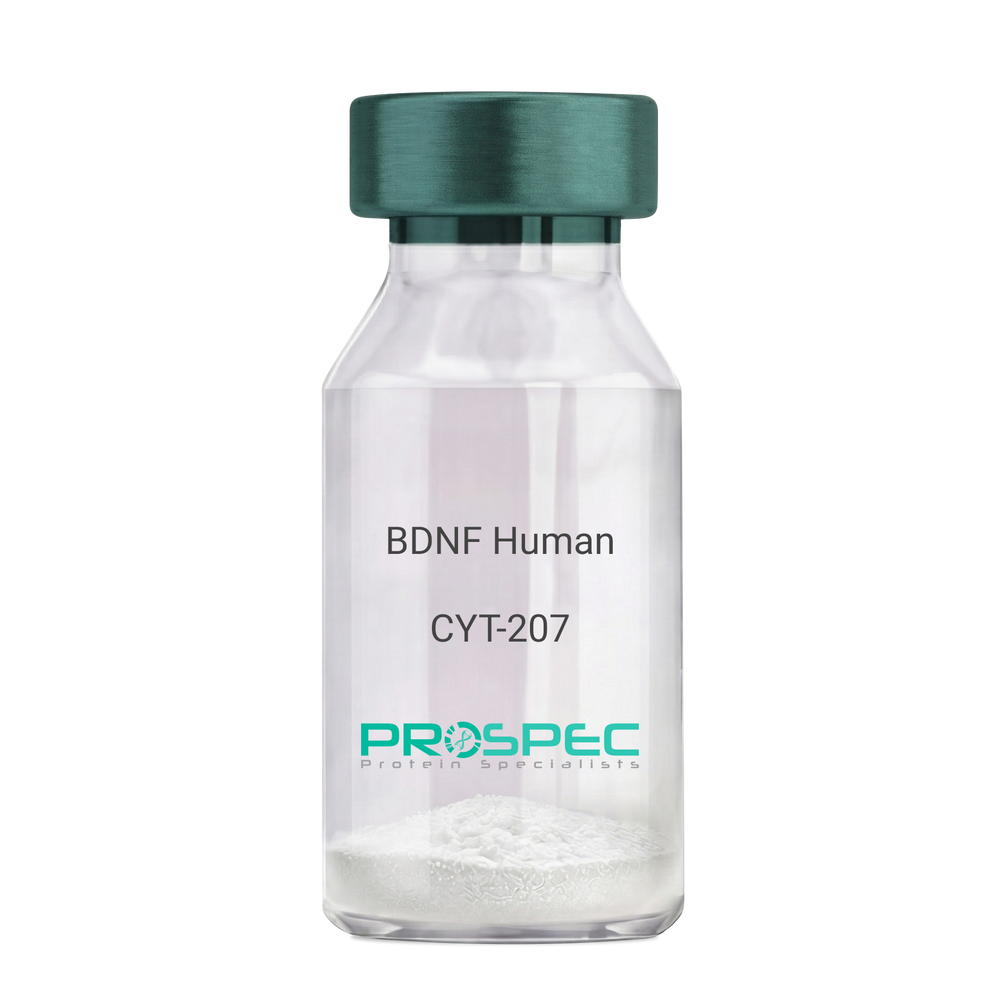
  • View Data Sheet

    Name :

    BDNF Human

    Description:

    Brain-Derived Neurotrophic Factor Human Recombinant

    Brain-Derived Neurotrophic Factor, BDNF, MGC34632.

    Product # :

    CYT-207

    Price :

    Quantity :

    Shipping Method :

    Room Temp Icon

    Shipped at Room temp

    Add To Cart

    More Info

    • description
    • source
    • formulation
    • purity
    • biological activity
    • More Info
    • Activity

    Description

    BDNF Human Recombinant produced in E.Coli is a homodimer, non-glycosylated, polypeptide chain containing 2 x 119 amino acids (and an N-terminal Met) and having a total molecular mass of 28kDa. BDNF Human Recombinant is purified by proprietary chromatographic techniques.

    Source

    Escherichia Coli.

    Formulation

    The protein was lyophilized with 20mM PB and 400mM NaCl, pH 7.2.

    Purity

    BDNF is greater than 950% as determined SDS-PAGE.

    Biological Activity

    The activity was determined using Immobilized Human TrkB-His tag protein 2ug/ml (100 μl/well) for its binding to NHS-Biotin BDNF. The ED50 of was found to be ≤20ng/mL

    Activity

    bdnf activity - Product image 1

    More Info

    • Introduction

      BDNF promotes the survival of neuronal populations that are all located either in the central nervous system or directly connected to it. BDNF is a major regulator of synaptic transmission and plasticity at adult synapses in many regions of the cns. The versatility of BDNF is emphasized by its contribution to a range of adaptive neuronal responses including long-term potentiation (ltp), long-term depression (ltd), certain forms of short-term synaptic plasticity, as well as homeostatic regulation of intrinsic neuronal excitability.

    • Synonyms

      Brain-Derived Neurotrophic Factor, BDNF, MGC34632.

    • Physical Appearance

      Sterile Filtered White lyophilized (freeze-dried) powder.

    • Stability

      Lyophilized BDNF although stable at room temperature for 3 weeks, should be stored desiccated below -18°C. Upon reconstitution BDNF should be stored at 4°C between 2-7 days and for future use below -18°C.For long term storage it is recommended to add a carrier protein (0.1% HSA or BSA).Please prevent freeze-thaw cycles.

    • Solubility

      It is recommended to reconstitute the lyophilized BDNF in sterile 18M-cm H2O not less than 100µg/ml, which can then be further diluted to other aqueous solutions.

    • Amino Acid Sequence

      HSDPARRGE LSVCDSISEW VTAADKKTAV DMSGGTVTVL EKVPVSKGQL KQYFYETKCN PMGYTKEGCR GIDKRHWNSQ CRTTQSYVRA LTMDSKKRIG WRFIRIDTSC VCTLTIKRGR.

    • Background

      Final Thoughts

      Although more research is needed on the safety and effectiveness of BDNF human recombinant, trials suggest that this laboratory-produced protein may be effective in managing and treating several neurological and psychiatric disorders. It's important for experts to stay up to date on the latest developments and research to learn more about potential risks and benefits.

      What is the molecular weight/Mw of BDNF Protein?
      BDNF Protein has a total Mw of 27kDa.

      What is the source or expression system of BDNF Protein?
      Escherichia Coli.

      What is the Purity of BDNF Protein?
      BDNF Protein is >97% pure as determined by SDS-PAGE.

      What is the Biological Activity of BDNF Protein?
      The ED50, as determined by the dose-dependent induction of C6 cells proliferation, is 1.3-2µg/ml.

      What is the amino acid sequence of BDNF Protein?
      MHSDPARRGE LSVCDSISEW VTAADKKTAV DMSGGTVTVL EKVPVSKGQL KQYFYETKCN PMGYTKEGCR GIDKRHWNSQ CRTTQSYVRA LTMDSKKRIG WRFIRIDTSC VCTLTIKRGR.

      What applications can BDNF Protein be used in?
      BDNF Protein can probably be used in western blot, ELISA and Lateral Flow.

      What is the endotoxin level for BDNF Protein?
      The endotoxin level is minimal, BDNF Protein was purified using conventional chromatography techniques.

    • Protein content

      BDNF quantitation was carried out by two independent methods:1. UV spectroscopy at 280 nm using the absorbency value of 1.6 as the extinction coefficient for a 0.1% (1mg/ml) solution. This value is calculated by the PC GENE computer analysis program of protein sequences (IntelliGenetics). 2. Analysis by RP-HPLC, using a standard solution of Brain-derived Neurotrophic Factor as a Reference Standard.

    ProSpec's products are furnished for LABORATORY RESEARCH USE ONLY. The product may not be used as drugs, agricultural or pesticidal products, food additives or household chemicals.

    Bdnf Human
  • View Data Sheet

    Name :

    SEPSECS Mouse

    Description:

    Selenocysteinyl-tRNA(Sec) synthase Mouse Recombinant

    AA986712, D5Ertd135e, SecS, SLA, SLA/LP autoantigen, SLA-p35, Selenocysteinyl-tRNA(Sec) synthase, Selenocysteine synthase, Liver-pancreas antigen, Soluble liver antigen, Sec synthase, UGA suppressor tRNA-associated protein, SepSecS. 

    Product # :

    ENZ-1081

    Price :

    Quantity :

    Shipping Method :

    Ice Icon

    Shipped with Ice Packs

    Add To Cart

    More Info

    • description
    • source
    • formulation
    • purity
    • More Info

    Description

    SEPSECS produced in E.Coli is a single, non-glycosylated polypeptide chain containing 527 amino acids (1-504 a.a.) and having a molecular mass of 57.7kDa.SEPSECS is fused to a 23 amino acid His-tag at N-terminus & purified by proprietary chromatographic techniques.

    Source

    Escherichia Coli.

    Formulation

    The SEPSECS protein solution (0.25 mg/ml) is formulated in 20mM Tris-HCl buffer (pH7.5) 1mM DTT, 0.2M NaCl and 50% glycerol.

    Purity

    Greater than 90% as determined by SDS-PAGE.

    More Info

    • Introduction

      SEPSECS catalyzes the last step of sec synthesis by converting O-phosphoseryl-tRNA(sec) to selenocysteinyl-tRNA(sec) using selenophosphate as the selenium donor. Furthermore, SEPSECS protein is considered a specific marker of autoimmune hepatitis.

    • Synonyms

      AA986712, D5Ertd135e, SecS, SLA, SLA/LP autoantigen, SLA-p35, Selenocysteinyl-tRNA(Sec) synthase, Selenocysteine synthase, Liver-pancreas antigen, Soluble liver antigen, Sec synthase, UGA suppressor tRNA-associated protein, SepSecS.

    • Physical Appearance

      Sterile Filtered clear solution.

    • Stability

      Store at 4°C if entire vial will be used within 2-4 weeks. Store, frozen at -20°C for longer periods of time. For long term storage it is recommended to add a carrier protein (0.1% HSA or BSA).Avoid multiple freeze-thaw cycles

    • Amino Acid Sequence

      MGSSHHHHHH SSGLVPRGSH MGSMNPESFA AGERRVSPAY VRQGCEARRA HEHLIRLLLE QGKCPEDGWD ESTLELFLHE LAVMDSNNFL GNCGVGEREG RVASALVARR HYRFIHGIGR SGDISAVQPK AAGSSLLNKI TNSLVLNVIK LAGVHSVASC FVVPMATGMS LTLCFLTLRH

      KRPKAKYIIW PRIDQKSCFK SMVTAGFEPV VIENVLEGDE LRTDLKAVEA KIQELGPEHI LCLHSTTACF APRVPDRLEE LAVICANYDI PHVVNNAYGL QSSKCMHLIQ QGARVGRIDA FVQSLDKNFM VPVGGAIIAG FNEPFIQDIS KMYPGRASAS PSLDVLITLL SLGCSGYRKL

      LKERKEMFVY LSTQLKKLAE AHNERLLQTP HNPISLAMTL KTIDGHHDKA VTQLGSMLFT RQVSGARAVP LGNVQTVSGH TFRGFMSHAD NYPCAYLNAA AAIGMKMQDV DLFIKRLDKC LNIVRKEQTR ASVVSGADRN KAEDADIEEM ALKLDDVLGD VGQGPAL.

    ProSpec's products are furnished for LABORATORY RESEARCH USE ONLY. The product may not be used as drugs, agricultural or pesticidal products, food additives or household chemicals.

    Sepsecs Mouse
  • View Data Sheet

    Name :

    CAPG Human

    Description:

    Capping Protein Gelsolin-Like Human Recombinant

    AFCP, CAPG, Macrophage-capping protein, Actin regulatory protein CAP-G, MCP.

    Product # :

    PRO-759

    Price :

    Quantity :

    Shipping Method :

    Ice Icon

    Shipped with Ice Packs

    Add To Cart

    More Info

    • description
    • source
    • formulation
    • purity
    • More Info

    Description

    CAPG Human Recombinant produced in E.Coli is a single, non-glycosylated polypeptide chain containing 348 amino acids (1-348 a.a.) and having a molecular mass of 38.5 kDa. The CAPG protein is purified by standard chromatography techniques.

    Source

    Escherichia Coli.

    Formulation

    The protein solution (1mg/ml) contains 20mM Tris buffer pH-8, 1mM DTT and 10% glycerol.

    Purity

    Greater than 95.0% as determined by SDS-PAGE.

    More Info

    • Introduction

      CAPG is part of the gelsolin/villin family of actin-regulatory proteins. CAPG reversibly blocks the barbed ends of F-actin filaments in a Ca2+ and phosphoinositide-regulated method, though it does not separate preformed actin filaments. By capping the barbed ends of actin filaments, CAPG contributes to the control of actin-based motility in non-muscle cells. CAPG is involved in macrophage function. CAPG is involved in regulating cytoplasmic and/or nuclear structures via possible interactions with actin. CAPG binds DNA. CAPG lacks a nuclear export sequence present in structurally related proteins. CAPG is a tumor suppressor protein that plays a role in the tumorigenic progression of certain cancers. Dysregulated expression of CAPG was found in premalignant and malignant oral carcinogenesis.

    • Synonyms

      AFCP, CAPG, Macrophage-capping protein, Actin regulatory protein CAP-G, MCP.

    • Physical Appearance

      Sterile filtered colorless solution.

    • Stability

      Store at 4°C if entire vial will be used within 2-4 weeks. Store, frozen at -20°C for longer periods of time. For long term storage it is recommended to add a carrier protein (0.1% HSA or BSA). Avoid multiple freeze-thaw cycles.

    • Amino Acid Sequence

      MYTAIPQSGS PFPGSVQDPG LHVWRVEKLK PVPVAQENQG VFFSGDSYLV LHNGPEEVSH LHLWIGQQSS RDEQGACAVL AVHLNTLLGE RPVQHREVQG NESDLFMSYF PRGLKYQEGG VESAFHKTST GAPAAIKKLY QVKGKKNIRA TERALNWDSF NTGDCFILDL GQNIFAWCGG KSNILERNKA RDLALAIRDS ERQGKAQVEI VTDGEEPAEM IQVLGPKPAL KEGNPEEDLT ADKANAQAAA LYKVSDATGQ MNLTKVADSS PFALELLISD DCFVLDNGLC GKIYIWKGRK ANEKERQAAL QVAEGFISRM QYAPNTQVEI LPQGRESPIF KQFFKDWK.

    ProSpec's products are furnished for LABORATORY RESEARCH USE ONLY. The product may not be used as drugs, agricultural or pesticidal products, food additives or household chemicals.

    Capg Human
  • View Data Sheet

    Name :

    CREG1 Mouse

    Description:

    Cellular Repressor of E1A-Stimulated Genes 1 Mouse Recombinant

    Protein CREG1, Cellular repressor of E1A-stimulated genes 1, Creg1, Creg.

    Product # :

    PRO-2387

    Price :

    Quantity :

    Shipping Method :

    Ice Icon

    Shipped with Ice Packs

    Add To Cart

    More Info

    • description
    • source
    • formulation
    • purity
    • More Info

    Description

    CREG1 Mouse Recombinant produced in E. coli is a single polypeptide chain containing 213 amino acids (32-220) and having a molecular mass of 24kDa. CREG1 is fused to a 24 amino acid His-tag at N-terminus & purified by proprietary chromatographic techniques.

    Source

    E.coli.

    Formulation

    The CREG1 solution (1mg/ml) contains 20mM Tris-HCl buffer (pH8.0), 10% glycerol and 0.15M NaCl.

    Purity

    Greater than 95% as determined by SDS-PAGE.

    More Info

    • Introduction

      Cellular Repressor of E1A-Stimulated Genes 1 (CREG1) both activates and inhibits gene expression to stimulate cellular proliferation and hinder differentiation. CREG1 antagonizes transcriptional activation and cellular transformation by E1A. CREG1 shares partial sequence similarity with E1A and binds both the general transcription factor TBP and the tumor suppressor pRb in vitro. CREG1 contributes to the transcriptional control of cell growth and differentiation.

    • Synonyms

      Protein CREG1, Cellular repressor of E1A-stimulated genes 1, Creg1, Creg.

    • Physical Appearance

      Sterile Filtered colorless solution.

    • Stability

      Store at 4°C if entire vial will be used within 2-4 weeks. Store, frozen at -20°C for longer periods of time. For long term storage it is recommended to add a carrier protein (0.1% HSA or BSA).Avoid multiple freeze-thaw cycles.

    • Amino Acid Sequence

      MGSSHHHHHH SSGLVPRGSH MGSMRGGRDH GDWDVDRRLP PLPPREDGPR VARFVTHVSD WGSLATISTI KEVRGWPFAD IISISDGPPG EGTGEPYMYL SPLQQAVSDL QENPEATLTM SLAQTVYCRN HGFDPQSPLC VHIMMSGTVT KVNKTEEDYA RDSLFVRHPE MKHWPSSHNW FFAKLKISRI WVLDYFGGPK VVTPEEYFNV TLQ.

    ProSpec's products are furnished for LABORATORY RESEARCH USE ONLY. The product may not be used as drugs, agricultural or pesticidal products, food additives or household chemicals.

    Creg1 Mouse
  • View Data Sheet

    Name :

    SNRPF Human

    Description:

    Small Nuclear Ribonucleoprotein Polypeptide F Human Recombinant

    Sm-F, Sm protein F, snRNP-F, SMF, PBSCF, Small Nuclear Ribonucleoprotein Polypeptide F.

    Product # :

    PRO-041

    Price :

    Quantity :

    Shipping Method :

    Ice Icon

    Shipped with Ice Packs

    Add To Cart

    More Info

    • description
    • source
    • formulation
    • purity
    • More Info

    Description

    SNRPF produced in E.Coli is a single, non-glycosylated polypeptide chain containing 106 amino acids (1-86a.a.) and having a molecular mass of 11.8kDa.SNRPF is fused to a 20 amino acid His-tag at N-terminus & purified by proprietary chromatographic techniques.

    Source

    Escherichia Coli.

    Formulation

    The SNRPF protein solution (1mg/1ml) is formulated in 20mM Tris-HCl buffer (pH 8.0), 1mM DTT, 1mM EDTA , and 10% glycerol.

    Purity

    Greater than 95% as determined by SDS-PAGE.

    More Info

    • Introduction

      SNRPF is a member of the snRNP Sm proteins family. There are at least seven isoforms, E, F, G, D1, D2, D3 and B/B. This type of common proteins have a crucial part in the biogenesis of the snRNPs. Moreover, they represent the major targets for the so-called anti-Sm auto-antibodies that are diagnostic for systemic lupus erythematosus (SLE). SNRPF assist in the cytoplasmic construction of the UsnRNPs by binding to aconserved Sm site on UsnRNA and forming a stable snRNP core complex.

    • Synonyms

      Sm-F, Sm protein F, snRNP-F, SMF, PBSCF, Small Nuclear Ribonucleoprotein Polypeptide F.

    • Physical Appearance

      Sterile Filtered clear solution.

    • Stability

      Store at 4°C if entire vial will be used within 2-4 weeks. Store, frozen at -20°C for longer periods of time.For long term storage it is recommended to add a carrier protein (0.1% HSA or BSA).Please avoid freeze thaw cycles.

    • Amino Acid Sequence

      MGSSHHHHHH SSGLVPRGSH MSLPLNPKPF LNGLTGKPVM VKLKWGMEYK GYLVSVDGYM NMQLANTEEY IDGALSGHLG EVLIRCNNVL YIRGVEEEEE DGEMRE

    ProSpec's products are furnished for LABORATORY RESEARCH USE ONLY. The product may not be used as drugs, agricultural or pesticidal products, food additives or household chemicals.

    Snrpf Human
  • View Data Sheet

    Name :

    ICAM1 Human, Sf9

    Description:

    Intercellular Adhesion Molecule-1 Human Recombinant, SF9

    Intercellular Adhesion Molecule 1, Major Group Rhinovirus Receptor, ICAM-1, Intercellular Adhesion Molecule 1 (CD54), Human Rhinovirus Receptor, Cell Surface Glycoprotein P3.58, Human Rhinovirus Receptor, CD54 Antigen, P3.58, CD54, BB2, Intercellular adhesion molecule 1.

    Product # :

    PRO-2200

    Price :

    Quantity :

    Shipping Method :

    Ice Icon

    Shipped with Ice Packs

    Add To Cart

    More Info

    • description
    • source
    • formulation
    • purity
    • biological activity
    • More Info

    Description

    ICAM1 produced in Sf9 Baculovirus cells is a single, glycosylated polypeptide chain containing 692 amino acids (28-480a.a.) and having a molecular mass of 76.5kDa. (Molecular size on SDS-PAGE will appear at approximately 70-100kDa). ICAM1 is expressed with a 239 amino acid His tag at C-Terminus and purified by proprietary chromatographic techniques.

    Source

    Sf9, Baculovirus cells.

    Formulation

    ICAM1 protein solution (0.25mg/ml) contains phosphate buffered saline (pH7.4) and 10% glycerol.

    Purity

    Greater than 90.0% as determined by SDS-PAGE.

    Biological Activity

    The ED50 range ≤ 2 ug/ml is measured by the ability of the immobilized protein to support the adhesion of HL-60 human promyelocytic cells. When cells are added to Human ICAM-1/CD54 coated plates.

    More Info

    • Introduction

      ICAM-1 also called CD54 is a single chain membrane glycoprotein expressed on the surface of a variety of non-haematopoietic and haematopoietic cell types and has roles in signal transduction, cell signaling and lymphocyte adhesion. ICAM1 binds to integrins such as CD11a / CD18, or CD11b / CD18. ICAM1 is also used by Rhinovirus as a receptor. ICAM-1 is an intercellular adhesion molecule constantly present in low concentrations in the membranes of leukocytes and endothelial cells. When stimulated by cytokine the concentrations significantly increase. ICAM-1 can be stimulated by interleukin-1 (IL-1) and tumor necrosis factor alpha (TNFA) and is expressed by the vascular endothelium, macrophages and lymphocytes. ICAM-1 is a ligand for LFA-1 which is a receptor found on leukocytes. Upon activation, leukocytes bind to endothelial cells via ICAM-1/LFA-1 and then transmigrate into tissues. ICAM-1 is implicated in subarachnoid hemorrhage (SAH). Levels of ICAM-1 are shown to be notably elevated in patients with SAH. Soluble ICAM-1 is detectable in the plasma and is elevated in patients with various inflammatory conditions.

    • Synonyms

      Intercellular Adhesion Molecule 1, Major Group Rhinovirus Receptor, ICAM-1, Intercellular Adhesion Molecule 1 (CD54), Human Rhinovirus Receptor, Cell Surface Glycoprotein P3.58, Human Rhinovirus Receptor, CD54 Antigen, P3.58, CD54, BB2, Intercellular adhesion molecule 1.

    • Physical Appearance

      Sterile Filtered colorless solution.

    • Stability

      Store at 4°C if entire vial will be used within 2-4 weeks. Store, frozen at -20°C for longer periods of time. For long term storage it is recommended to add a carrier protein (0.1% HSA or BSA).Avoid multiple freeze-thaw cycles.

    • Amino Acid Sequence

      QTSVSPSKVI LPRGGSVLVT CSTSCDQPKL LGIETPLPKK ELLLPGNNRK VYELSNVQED SQPMCYSNCP DGQSTAKTFL TVYWTPERVE LAPLPSWQPV GKNLTLRCQV EGGAPRANLT VVLLRGEKEL KREPAVGEPA EVTTTVLVRR DHHGANFSCR TELDLRPQGL ELFENTSAPY QLQTFVLPAT PPQLVSPRVL EVDTQGTVVC SLDGLFPVSE AQVHLALGDQ RLNPTVTYGN DSFSAKASVS VTAEDEGTQR LTCAVILGNQ SQETLQTVTI YSFPAPNVIL TKPEVSEGTE VTVKCEAHPR AKVTLNGVPA QPLGPRAQLL LKATPEDNGR SFSCSATLEV AGQLIHKNQT RELRVLYGPR LDERDCPGNW TWPENSQQTP MCQAWGNPLP ELKCLKDGTF PLPIGESVTV TRDLEGTYLC RARSTQGEVT REVTVNVLSP RYEVEPKSCD KTHTCPPCPA PELLGGPSVF LFPPKPKDTL MISRTPEVTC VVVDVSHEDP EVKFNWYVDG VEVHNAKTKP REEQYNSTYR VVSVLTVLHQ DWLNGKEYKC KVSNKALPAP IEKTISKAKG QPREPQVYTL PPSRDELTKN QVSLTCLVKG FYPSDIAVEW ESNGQPENNY KTTPPVLDSD GSFFLYSKLT VDKSRWQQGN VFSCSVMHEA LHNHYRQKSL SLSPGKHHHH HH.

    • Background

      Intercellular adhesion molecule-1 (ICAM-1) is a cell surface glycoprotein that plays a pivotal role in immune responses and inflammatory processes. This research aims to investigate the function and significance of ICAM-1 protein in various physiological and pathological conditions. Understanding the molecular mechanisms and regulatory roles of ICAM-1 can provide valuable insights into its potential as a therapeutic target for immune-related disorders.

      Structure and Expression of ICAM-1 Protein:

      ICAM-1 belongs to the immunoglobulin superfamily and is composed of five immunoglobulin-like domains. It is primarily expressed on the surfaces of endothelial cells, leukocytes, and other immune cells. ICAM-1 expression can be induced by pro-inflammatory cytokines, such as tumor necrosis factor-alpha (TNF-α) and interleukin-1 (IL-1), during immune responses and inflammatory conditions.

      ICAM-1 and Leukocyte Adhesion:

      One of the critical functions of ICAM-1 is its involvement in leukocyte adhesion and migration. ICAM-1 interacts with its primary receptor, lymphocyte function-associated antigen-1 (LFA-1), expressed on leukocytes. This interaction facilitates the firm adhesion of leukocytes to endothelial cells, leading to their transmigration into inflamed tissues. The ICAM-1/LFA-1 axis plays a crucial role in immune surveillance, inflammation, and host defense against pathogens.

      Implications of ICAM-1 in Inflammatory Disorders:

      ICAM-1 has been implicated in various inflammatory diseases, including rheumatoid arthritis, inflammatory bowel disease, and multiple sclerosis. Enhanced expression of ICAM-1 on endothelial cells promotes leukocyte recruitment and contributes to the perpetuation of chronic inflammation. Therefore, targeting ICAM-1-mediated leukocyte adhesion has emerged as a potential therapeutic strategy to alleviate inflammation and attenuate disease progression.

      ICAM-1 in Viral Infections:

      ICAM-1 also plays a role in viral infections, as several viruses exploit ICAM-1 to facilitate their entry into host cells. For instance, rhinoviruses, which cause the common cold, utilize ICAM-1 as a receptor for attachment and entry into respiratory epithelial cells. The interaction between ICAM-1 and viral proteins promotes viral internalization and subsequent infection. Understanding the mechanisms of ICAM-1-mediated viral entry can aid in the development of antiviral strategies.

      Therapeutic Targeting of ICAM-1:

      Given its crucial involvement in immune responses and disease pathogenesis, ICAM-1 has emerged as a potential therapeutic target. Strategies aimed at blocking ICAM-1/LFA-1 interactions have shown promise in preclinical and clinical studies. Monoclonal antibodies targeting ICAM-1 or LFA-1 have been developed to prevent leukocyte adhesion and reduce inflammation. Additionally, small molecule inhibitors and gene therapies targeting ICAM-1 expression are being explored as potential therapeutic interventions.

      Challenges and Future Directions:

      Although therapeutic targeting of ICAM-1 shows promise, several challenges need to be addressed. Specific targeting of ICAM-1 without affecting its physiological functions and potential off-target effects are important considerations. Additionally, the complex and dynamic nature of ICAM-1 expression and regulation require further investigation to optimize therapeutic strategies.

      Conclusion:

      The investigation of ICAM-1 protein provides insights into its pivotal role in immune responses, leukocyte adhesion, and inflammatory processes. Understanding the molecular mechanisms and functional implications of ICAM-1 opens avenues for the development of targeted therapies for inflammatory disorders and viral infections. Further research on ICAM-1 protein

    ProSpec's products are furnished for LABORATORY RESEARCH USE ONLY. The product may not be used as drugs, agricultural or pesticidal products, food additives or household chemicals.

    Icam1 Human Sf9
  • View Data Sheet

    Name :

    PF 4 Protein

    Description:

    Platelet Factor-4 Human (CXCL4)

    CXCL4, PF-4, PF4, Iroplact, Oncostatin-A, SCYB4, MGC138298.

    Product # :

    CHM-234

    Price :

    Quantity :

    Shipping Method :

    Room Temp Icon

    Shipped at Room temp

    Add To Cart

    More Info

    • description
    • source
    • formulation
    • purity
    • More Info

    Description

    Human PF-4 a 7.8 kDa protein consisting of 70 amino acid residues.

    Source

    Human Platelets.

    Formulation

    The CXCL4 protein was lyophilized in PBS buffer pH-7.4.

    Purity

    Greater than 95.0% as determined by:
    (a) Analysis by RP-HPLC.
    (b) Analysis by SDS-PAGE.

    More Info

    • Introduction

      Platelet factor-4 is a 70-amino acid protein that is released from the alpha-granules of activated platelets and binds with high affinity to heparin. Its major physiologic role appears to be neutralization of heparin-like molecules on the endothelial surface of blood vessels, thereby inhibiting local antithrombin III activity and promoting coagulation. As a strong chemoattractant for neutrophils and fibroblasts, PF4 probably has a role in inflammation and wound repair. Oncostatin-A is a member of the CXC chemokine family. Human PF4 is used for the proof of heparin-induced thrombocytopenia. Furthermore it is used as an inhibitor in the angiogenesis during tumor therapy.

    • Synonyms

      CXCL4, PF-4, PF4, Iroplact, Oncostatin-A, SCYB4, MGC138298.

    • Physical Appearance

      Sterile Filtered white lyophilized powder.

    • Stability

      Human CXCL4 although stable at 25°C 1 week, should be stored desiccated below -18°C. Please prevent freeze-thaw cycles.

    • Solubility

      It is recommended to reconstitute the lyophilized CXCL4 in sterile 18MΩ-cm H2O not less than 100µg/ml, which can then be further diluted to other aqueous solutions.

    • Amino Acid Sequence

      The sequence of the first four N-terminal amino acids was determined and was found to be Glu-Ala-Glu-Glu.

    ProSpec's products are furnished for LABORATORY RESEARCH USE ONLY. The product may not be used as drugs, agricultural or pesticidal products, food additives or household chemicals.

    Pf 4 Human
  • View Data Sheet

    Name :

    GIPC2 Antibody

    Description:

    GIPC PDZ Domain Member 2, Mouse Anti Human

    GIPC PDZ domain containing family member 2, SEMCAP-2, PDZ domain-containing protein GIPC2, semaphorin cytoplasmic domain associated protein 2, semaF cytoplasmic domain associated protein 2, SEMCAP2, FLJ20075.

    Product # :

    ANT-079

    Price :

    Quantity :

    Shipping Method :

    Ice Icon

    Shipped with Ice Packs

    Add To Cart

    More Info

    • formulation
    • More Info

    Formulation

    1mg/ml containing PBS, pH-7.4, & 0.1% Sodium Azide.

    More Info

    • Introduction

      GIPC2 is a 315 aa protein which is restricted to the cytoplasm and holds one PDZ domain. GIPC2 is expressed in large quantities in colon and kidney and in small quantities in adult liver. GIPC2 has a vital part in human gastric cancer by control of growth factor signaling or cell adhesion.

    • Synonyms

      GIPC PDZ domain containing family member 2, SEMCAP-2, PDZ domain-containing protein GIPC2, semaphorin cytoplasmic domain associated protein 2, semaF cytoplasmic domain associated protein 2, SEMCAP2, FLJ20075.

    • Immunogen

      Anti-human GIPC2 mAb, is derived from hybridization of mouse FO myeloma cells with spleen cells from BALB/c mice immunized with recombinant human GIPC2 amino acids 1-315 purified from E. coli.

    • Ig Subclass

      Mouse IgG1 heavy chain and κ light chain.

    • Clone

      PAT1G10AT.

    • Applications

      GIPC2 antibody has been tested by ELISA, Western blot analysis to assure specificity and reactivity. Since application varies, however, each investigation should be titrated by the reagent to obtain optimal results. Recommended dilution range for Western blot analysis is 1:1000.

    • Type

      Mouse Anti Human Monoclonal.

    • Storage Procedures

      For periods up to 1 month store at 4°C, for longer periods of time, store at -20°C. Prevent freeze thaw cycles.

    • Purification Method

      GIPC2 antibody was purified from mouse ascitic fluids by protein-G affinity chromatography.

    ProSpec's products are furnished for LABORATORY RESEARCH USE ONLY. The product may not be used as drugs, agricultural or pesticidal products, food additives or household chemicals.

    Gipc2 Antibody
  • View Data Sheet

    Name :

    DNAJC12 Human

    Description:

    DnaJ (Hsp40) Homolog, Subfamily C, Member 12 Human Recombinant

    DnaJ homolog subfamily C member 12, J domain-containing protein 1, DNAJC12, JDP1, RP11-57G10.2.

    Product # :

    HSP-053

    Price :

    Quantity :

    Shipping Method :

    Ice Icon

    Shipped with Ice Packs

    Add To Cart

    More Info

    • description
    • source
    • formulation
    • purity
    • More Info

    Description

    DNAJC12 Human Recombinant produced in E. coli is a single polypeptide chain containing 222 amino acids (1-198) and having a molecular mass of 26kDa (Molecular weight on SDS-PAGE will appear higher).DNAJC12 is fused to a 24 amino acid His-tag at N-terminus & purified by proprietary chromatographic techniques.

    Source

    E.coli.

    Formulation

    The DNAJC12 solution (0.5mg/ml) contains 20mM Tris-HCl buffer, pH8.0, 10% glycerol, 2mM DTT and 100mM NaCl.

    Purity

    Greater than 90% as determined by SDS-PAGE.

    More Info

    • Introduction

      DnaJ (Hsp40) Homolog, Subfamily C, Member 12 (DNAJC12) belongs to the DnaJ/Hsp40 family. DnaJ/Hsp40 family members are linked with complex assembly, protein folding, and export. DnaJ/Hsp40 proteins are extremely conserved throughout evolution and function as co-chaperones regulating protein folding, transport, translational initiation and gene expression. DnaJC12 has a role in protein folding and export and is believed to be involved in estrogen control and the development of breast cancer. DNAJC12 is expressed at high levels in the brain, heart, and testis, and at reduced levels in the kidney and stomach.

    • Synonyms

      DnaJ homolog subfamily C member 12, J domain-containing protein 1, DNAJC12, JDP1, RP11-57G10.2.

    • Physical Appearance

      Sterile Filtered colorless solution.

    • Stability

      Store at 4°C if entire vial will be used within 2-4 weeks. Store, frozen at -20°C for longer periods of time. For long term storage it is recommended to add a carrier protein (0.1% HSA or BSA).Avoid multiple freeze-thaw cycles.

    • Amino Acid Sequence

      MGSSHHHHHH SSGLVPRGSH MGSHMDAILN YRSEDTEDYY TLLGCDELSS VEQILAEFKV RALECHPDKH PENPKAVETF QKLQKAKEIL TNEESRARYD HWRRSQMSMP FQQWEALNDS VKTSMHWVVR GKKDLMLEES DKTHTTKMEN EECNEQRERK KEELASTAEK TEQKEPKPLE KSVSPQNSDS SGFADVNGWH LRFRWSKDAP SELLRKFRNY EI.

    ProSpec's products are furnished for LABORATORY RESEARCH USE ONLY. The product may not be used as drugs, agricultural or pesticidal products, food additives or household chemicals.

    Dnajc12 Human
  • View Data Sheet

    Name :

    RBM11 Human

    Description:

    RNA Binding Motif Protein 11 Human Recombinant

    Splicing regulator RBM11, RNA-binding motif protein 11, RBM11.

    Product # :

    PRO-1802

    Price :

    Quantity :

    Shipping Method :

    Ice Icon

    Shipped with Ice Packs

    Add To Cart

    More Info

    • description
    • source
    • formulation
    • purity
    • More Info

    Description

    RBM11 Human Recombinant produced in E. coli is a single polypeptide chain containing 304 amino acids (1-281) and having a molecular mass of 34.6kDa. RBM11 is fused to a 23 amino acid His-tag at N-terminus & purified by proprietary chromatographic techniques.

    Source

    Escherichia Coli.

    Formulation

    The RBM11 solution (1mg/ml) contains 20mM Tris-HCl buffer (pH 8.0), 0.4M Urea and 10% glycerol.

    Purity

    Greater than 85% as determined by SDS-PAGE.

    More Info

    • Introduction

      RNA Binding Motif Protein 11 (RBM11) which contains 1 RNA recognition motif is a part of the RBM family. The RBM gene family encodes proteins with an RNA binding motif which participate in the modulation of apoptosis. RBM11 is expressed in testis, kidney, spleen, brain, spinal cord and mammary gland and can be found as 2 isoforms produced by alternative splicing.

    • Synonyms

      Splicing regulator RBM11, RNA-binding motif protein 11, RBM11.

    • Physical Appearance

      Sterile Filtered clear solution.

    • Stability

      Store at 4°C if entire vial will be used within 2-4 weeks. Store frozen at -20°C for longer periods of time. For long term storage it is recommended to add a carrier protein (0.1% HSA or BSA).Avoid multiple freeze-thaw cycles.

    • Amino Acid Sequence

      MGSSHHHHHH SSGLVPRGSH MGSMFPAQEE ADRTVFVGNL EARVREEILY ELFLQAGPLT KVTICKDREG KPKSFGFVCF KHPESVSYAI ALLNGIRLYG RPINVQYRFG SSRSSEPANQ SFESCVKINS HNYRNEEMLV GRSSFPMQYF PINNTSLPQE YFLFQKMQWH VYNPVLQLPY YEMTAPLPNS ASVSSSLNHV PDLEAGPSSY KWTHQQPSDS DLYQMTAPLP NSASVSSSLN HVPDLEAGPS SYKWTHQQPS DSDLYQMNKR KRQKQTSDSD SSTDNNRGNE CSQKFRKSKK KKRY.

    ProSpec's products are furnished for LABORATORY RESEARCH USE ONLY. The product may not be used as drugs, agricultural or pesticidal products, food additives or household chemicals.

    Rbm11 Human
  • View Data Sheet

    Name :

    NECAP2 Human

    Description:

    NECAP Endocytosis Associated 2 Human Recombinant

    NECAP endocytosis-associated protein 2, NECAP-2, FLJ10420, Adaptin ear-binding coat-associated protein 2.

    Product # :

    PRO-180

    Price :

    Quantity :

    Shipping Method :

    Ice Icon

    Shipped with Ice Packs

    Add To Cart

    More Info

    • description
    • source
    • formulation
    • purity
    • More Info

    Description

    NECAP2 produced in E.Coli is a single, non-glycosylated polypeptide chain containing 283 amino acids (1-263a.a.) and having a molecular mass of 30.5 kDa. NECAP2 is fused to a 20 amino acid His-tag at N-terminus & purified by proprietary chromatographic techniques.

    Source

    Escherichia Coli.

    Formulation

    The NECAP2 protein solution (1mg/1ml) is formulated in 20mM Tris-HCl buffer (pH8.0), 100mM NaCl, 2mM DTT and 10% glycerol.

    Purity

    Greater than 85% as determined by SDS-PAGE.

    More Info

    • Introduction

      NECAP2 which is involved in endocytosis, is a vital protein paralogues for clathrin-mediated membrane trafficking which are enhanced in CCV layers. NECAP2 protein colocalizes with AP-2 at the plasma membrane by binding AP-2s ?-ear domain, and interacts with AP-1, AP-2 and several GAE domain proteins termed GGA1, GGA2 and GGA3.

    • Synonyms

      NECAP endocytosis-associated protein 2, NECAP-2, FLJ10420, Adaptin ear-binding coat-associated protein 2.

    • Physical Appearance

      Sterile Filtered clear solution.

    • Stability

      Store at 4°C if entire vial will be used within 2-4 weeks. Store, frozen at -20°C for longer periods of time. For long term storage it is recommended to add a carrier protein (0.1% HSA or BSA).Avoid multiple freeze-thaw cycles.

    • Amino Acid Sequence

      MGSSHHHHHH SSGLVPRGSH MEESGYESVL CVKPDVHVYR IPPRATNRGY RAAEWQLDQP SWSGRLRITA KGQMAYIKLE DRTSGELFAQ APVDQFPGTA VESVTDSSRY FVIRIEDGNG RRAFIGIGFG DRGDAFDFNV ALQDHFKWVK QQCEFAKQAQ NPDQGPKLDL GFKEGQTIKL NIANMKKKEG AAGNPRVRPA STGGLSLLPP PPGGKTSTLI PPPGEQLAVG GSLVQPAVAP SSGGAPVPWP QPNPATADIW GDFTKSTGST SSQTQPGTGW VQF

    ProSpec's products are furnished for LABORATORY RESEARCH USE ONLY. The product may not be used as drugs, agricultural or pesticidal products, food additives or household chemicals.

    Necap2 Human
  • View Data Sheet

    Name :

    NIP7 Human

    Description:

    Nuclear Import 7 Homolog Human Recombinant

    Nuclear Import 7 Homolog, 60S ribosome subunit biogenesis protein NIP7 homolog KD93, CGI-37, HSPC031, FLJ10296, NIP7.

    Product # :

    PRO-780

    Price :

    Quantity :

    Shipping Method :

    Ice Icon

    Shipped with Ice Packs

    Add To Cart

    More Info

    • description
    • source
    • formulation
    • purity
    • More Info

    Description

    NIP7 produced in E.Coli is a single, non-glycosylated polypeptide chain containing 188 amino acids (1-180 a.a.) and having a molecular mass of 21.5kDa. NIP7 is fused to 8 amino acids His Tag at C-terminus and purified by proprietary chromatographic techniques.

    Source

    Escherichia Coli.

    Formulation

    The NIP7 protein solution contains 20mM Tris-HCl buffer (pH8.0), 20% glycerol and 0.1M NaCl.

    Purity

    Greater than 90.0% as determined by SDS-PAGE.

    More Info

    • Introduction

      60S ribosome subunit biogenesis protein NIP7 homolog (NIP7) belongs to NIP7 family and contains 1 PUA domain. NIP7 interacts with pre-ribosome complex and may bind to RNA. NIP7 is vital for proper 27S pre-rRNA processing and 60S ribosome subunit assembly.

    • Synonyms

      Nuclear Import 7 Homolog, 60S ribosome subunit biogenesis protein NIP7 homolog KD93, CGI-37, HSPC031, FLJ10296, NIP7.

    • Physical Appearance

      Sterile filtered colorless solution.

    • Stability

      Store at 4°C if entire vial will be used within 2-4 weeks. Store, frozen at -20°C for longer periods of time. For long term storage it is recommended to add a carrier protein (0.1% HSA or BSA). Avoid multiple freeze-thaw cycles.

    • Amino Acid Sequence

      MRPLTEEETR VMFEKIAKYI GENLQLLVDR PDGTYCFRLH NDRVYYVSEK IMKLAANISG DKLVSLGTCFGKFTKTHKFR LHVTALDYLA PYAKYKVWIK PGAEQSFLYG NHVLKSGLGR ITENTSQYQG VVVYSMADIPLGFGVAAKST QDCRKVDPMA IVVFHQADIG EYVRHEETLT LEHHHHHH.

    ProSpec's products are furnished for LABORATORY RESEARCH USE ONLY. The product may not be used as drugs, agricultural or pesticidal products, food additives or household chemicals.

    Nip7 Human
  • 1
  • …
  • 36
  • 37
  • 38
  • 39
  • 40
  • …
  • 42
Your browser does not support the video tag.

Products

  • Cytokines
  • Growth Factors
  • Chemokines
  • CD Antigens
  • Neurotrophins
  • Hormones
  • Enzymes
  • Viral Antigens
  • Recombinant Proteins
  • Natural Proteins
  • Monoclonal Antibodies
  • Polyclonal Antibodies
  • Thermal Packaging

About

  • Company
  • Founder
  • Contribution
  • Contact Us
  • My Account

Ordering

  • Ordering Method
  • Ordering - Credit Card
  • Ordering PO
  • Shipping Fees
  • FAQ's

Legal

  • Terms & Conditions
  • Privacy
  • Site Map
  • info@prospecbio.com
  • Facebook
  • Instagram
  • Linkedin Profile

© 2026 ProSpec-Tany TechnoGene Ltd. All Rights Reserved.

  • Choosing a selection results in a full page refresh.
  • Opens in a new window.