Skip to content

High-quality research proteins.

  • 1-800-805-6531

  • Mon - Sat 8.00-18.00, Sun - Closed

  • info@prospecbio.com

  • PO Box 6591 East Brunswick NJ 08816

  • Products
    • Cytokines
    • Growth factors
    • Chemokines
    • Cd antigens
    • Neurotrophins
    • Hormones
    • Enzymes
    • Viral antigens
    • Recombinant proteins
    • Natural proteins
    • Monoclonal antibodies
    • Polyclonal antibodies
    • Thermal Packaging
  • About
    • Company
    • Founder
    • Contribution
  • Customers
    • Eastern Asia
    • Eastern Europe
    • North America
    • South America
    • South East Asia
    • Southern Asia
    • Western Europe
  • Ordering
    • Ordering Method
    • Ordering - Credit Card
    • Ordering - PO
    • Shipping Fees
    • FAQs
  • Services
    • DNA Cloning
    • Protein Expression
    • Monoclonal Antibody
    • Fermentation
    • Technology License
  • Contact us
Log in

Country/region

  • USD $ | Albania
  • USD $ | Andorra
  • USD $ | Argentina
  • USD $ | Armenia
  • USD $ | Australia
  • USD $ | Austria
  • USD $ | Azerbaijan
  • USD $ | Belarus
  • USD $ | Belgium
  • USD $ | Bolivia
  • USD $ | Brazil
  • USD $ | Bulgaria
  • USD $ | Cambodia
  • USD $ | Canada
  • USD $ | Chile
  • USD $ | China
  • USD $ | Colombia
  • USD $ | Costa Rica
  • USD $ | Croatia
  • USD $ | Cyprus
  • USD $ | Czechia
  • USD $ | Denmark
  • USD $ | Estonia
  • USD $ | Finland
  • USD $ | France
  • USD $ | Georgia
  • USD $ | Germany
  • USD $ | Greece
  • USD $ | Hong Kong SAR
  • USD $ | Hungary
  • USD $ | Iceland
  • USD $ | India
  • USD $ | Ireland
  • USD $ | Israel
  • USD $ | Italy
  • USD $ | Japan
  • USD $ | Kazakhstan
  • USD $ | Latvia
  • USD $ | Liechtenstein
  • USD $ | Lithuania
  • USD $ | Madagascar
  • USD $ | Malta
  • USD $ | Mexico
  • USD $ | Moldova
  • USD $ | Monaco
  • USD $ | Netherlands
  • USD $ | New Zealand
  • USD $ | North Macedonia
  • USD $ | Norway
  • USD $ | Panama
  • USD $ | Paraguay
  • USD $ | Peru
  • USD $ | Philippines
  • USD $ | Poland
  • USD $ | Portugal
  • USD $ | Romania
  • USD $ | Singapore
  • USD $ | Slovakia
  • USD $ | Slovenia
  • USD $ | South Africa
  • USD $ | South Korea
  • USD $ | Spain
  • USD $ | Sri Lanka
  • USD $ | Sweden
  • USD $ | Switzerland
  • USD $ | Taiwan
  • USD $ | Thailand
  • USD $ | Türkiye
  • USD $ | Ukraine
  • USD $ | United Kingdom
  • USD $ | United States
  • USD $ | Uruguay
  • USD $ | Vatican City
  • USD $ | Venezuela
  • USD $ | Vietnam
  • Facebook
  • Instagram
logoProSpec - Recombinant Protein Manufacturer for academic and R&D industry
Become a distributor
Account Log in
Wishlist
Cart Cart(0)
  • Products
    +
    • Cytokines
    • Growth factors
    • Chemokines
    • Cd antigens
    • Neurotrophins
    • Hormones
    • Enzymes
    • Viral antigens
    • Recombinant proteins
    • Natural proteins
    • Monoclonal antibodies
    • Polyclonal antibodies
    • Thermal Packaging
  • About
    +
    • Company
    • Founder
    • Contribution
  • Customers
    +
    • Eastern Asia
    • Eastern Europe
    • North America
    • South America
    • South East Asia
    • Southern Asia
    • Western Europe
  • Ordering
    +
    • Ordering Method
    • Ordering - Credit Card
    • Ordering - PO
    • Shipping Fees
    • FAQs
  • Services
    +
    • DNA Cloning
    • Protein Expression
    • Monoclonal Antibody
    • Fermentation
    • Technology License
  • Contact us

Item added to your cart

View cart
View All
  • Cytokines
  • Growth factors
  • Chemokines
  • Cd antigens
  • Neurotrophins
  • Hormones
  • Enzymes
  • Viral antigens
  • Recombinant proteins
  • Natural proteins
  • Monoclonal antibodies
  • Polyclonal antibodies
  • Thermal Packaging
  • Tumor Necrosis Factor

    Tumor Necrosis Factor

    View All
  • 4-1BB

    4-1BB

    View All
  • Adiponectin

    Adiponectin

    View All
  • AIF1

    AIF1

    View All
  • Other Cytokines

    Other Cytokines

    View All
  • AITRL

    AITRL

    View All
  • Angiopoietin

    Angiopoietin

    View All
  • Apolipoprotein

    Apolipoprotein

    View All
  • B-Cell Activating Factor

    B-Cell Activating Factor

    View All
  • Beta Defensin

    Beta Defensin

    View All
  • Bone Morphogenetic Protein

    Bone Morphogenetic Protein

    View All
  • B type Natriuretic Peptide

    B type Natriuretic Peptide

    View All
  • BST

    BST

    View All
  • Betacellulin

    Betacellulin

    View All
  • Cardiotrophin

    Cardiotrophin

    View All
  • Activin

    Activin

    View All
  • Fibroblast Growth Factor

    Fibroblast Growth Factor

    View All
  • Other Growth Factors

    Other Growth Factors

    View All
  • CSF

    CSF

    View All
  • CTGF

    CTGF

    View All
  • IGFBP

    IGFBP

    View All
  • VEGF Protein

    VEGF Protein

    View All
  • EGF

    EGF

    View All
  • Epigen

    Epigen

    View All
  • Erythropoietin

    Erythropoietin

    View All
  • Insulin-Like Growth Factor

    Insulin-Like Growth Factor

    View All
  • Growth Hormone

    Growth Hormone

    View All
  • HDGF

    HDGF

    View All
  • Hepatocyte Growth Factor

    Hepatocyte Growth Factor

    View All
  • Insulin

    Insulin

    View All
  • BCA-1/ BLC (CXCL13)

    BCA-1/ BLC (CXCL13)

    View All
  • BRAK (CXCL14)

    BRAK (CXCL14)

    View All
  • C-10 (CCL6)

    C-10 (CCL6)

    View All
  • Other Chemokines

    Other Chemokines

    View All
  • MEC (CCL28)

    MEC (CCL28)

    View All
  • LD78-beta (CCL3L1)

    LD78-beta (CCL3L1)

    View All
  • CTACK (CCL27)

    CTACK (CCL27)

    View All
  • CXCL16

    CXCL16

    View All
  • CXCL17

    CXCL17

    View All
  • Platelet Factor-4 (CXCL4)

    Platelet Factor-4 (CXCL4)

    View All
  • ENA-78 (CXCL5)

    ENA-78 (CXCL5)

    View All
  • Eotaxin (CCL11,24,26)

    Eotaxin (CCL11,24,26)

    View All
  • Exodus-2 (CCL21)

    Exodus-2 (CCL21)

    View All
  • Fractalkine (CX3CL1)

    Fractalkine (CX3CL1)

    View All
  • CXCL6

    CXCL6

    View All
  • Other CD Antigens

    Other CD Antigens

    View All
  • CD14

    CD14

    View All
  • CD164

    CD164

    View All
  • CD1

    CD1

    View All
  • CD2

    CD2

    View All
  • CD200

    CD200

    View All
  • CD207

    CD207

    View All
  • CD226

    CD226

    View All
  • CD23

    CD23

    View All
  • CD244

    CD244

    View All
  • CD247

    CD247

    View All
  • CD27

    CD27

    View All
  • CD274

    CD274

    View All
  • CD300

    CD300

    View All
  • CD33

    CD33

    View All
  • Other Neurotrophins

    Other Neurotrophins

    View All
  • Beta-NGF

    Beta-NGF

    View All
  • BDNF

    BDNF

    View All
  • CDNF

    CDNF

    View All
  • CNTF

    CNTF

    View All
  • GDNF

    GDNF

    View All
  • Glia Maturation Factor

    Glia Maturation Factor

    View All
  • MANF

    MANF

    View All
  • Midkine

    Midkine

    View All
  • Neuroglobin

    Neuroglobin

    View All
  • Neurotrophic factors

    Neurotrophic factors

    View All
  • Neuregulin

    Neuregulin

    View All
  • Neuropilin

    Neuropilin

    View All
  • Pigment Epithelium-Derived Factor

    Pigment Epithelium-Derived Factor

    View All
  • Pleiotrophin

    Pleiotrophin

    View All
  • Peptide Hormones

    Peptide Hormones

    View All
  • Other Hormones

    Other Hormones

    View All
  • HCG

    HCG

    View All
  • Endothelin

    Endothelin

    View All
  • Exendin

    Exendin

    View All
  • FSH

    FSH

    View All
  • Glucagon

    Glucagon

    View All
  • GHRP

    GHRP

    View All
  • GLP

    GLP

    View All
  • Thyrostimulin

    Thyrostimulin

    View All
  • Inhibin A

    Inhibin A

    View All
  • LHRH

    LHRH

    View All
  • Melanotan

    Melanotan

    View All
  • Procalcitonin

    Procalcitonin

    View All
  • PTH

    PTH

    View All
  • Peroxiredoxin

    Peroxiredoxin

    View All
  • Peptidase

    Peptidase

    View All
  • Synthetase

    Synthetase

    View All
  • Transferase

    Transferase

    View All
  • Hydrolase

    Hydrolase

    View All
  • Dehydrogenase

    Dehydrogenase

    View All
  • ACE2

    ACE2

    View All
  • Esterase

    Esterase

    View All
  • Protein Kinases

    Protein Kinases

    View All
  • Other Enzymes

    Other Enzymes

    View All
  • Phosphatase

    Phosphatase

    View All
  • Deaminase

    Deaminase

    View All
  • Oxygenase

    Oxygenase

    View All
  • Adenylate Kinase

    Adenylate Kinase

    View All
  • Lyase

    Lyase

    View All
  • Chagas

    Chagas

    View All
  • SARS

    SARS

    View All
  • Influenza

    Influenza

    View All
  • ASFV

    ASFV

    View All
  • Astrovirus

    Astrovirus

    View All
  • Borrelia

    Borrelia

    View All
  • Helicobacter Pylori

    Helicobacter Pylori

    View All
  • Chikungunya

    Chikungunya

    View All
  • Chlamydia

    Chlamydia

    View All
  • Cytomegalo

    Cytomegalo

    View All
  • Dengue

    Dengue

    View All
  • EBV

    EBV

    View All
  • Ebola

    Ebola

    View All
  • Feline Leukemia Virus

    Feline Leukemia Virus

    View All
  • Hepatitis A

    Hepatitis A

    View All
  • Other

    Other

    View All
  • Actin

    Actin

    View All
  • ADAM

    ADAM

    View All
  • Complement Component

    Complement Component

    View All
  • Ag85

    Ag85

    View All
  • Eukaryotic Translation Initiation Factor

    Eukaryotic Translation Initiation Factor

    View All
  • Anterior Gradient Protein

    Anterior Gradient Protein

    View All
  • Heat Shock Protein

    Heat Shock Protein

    View All
  • Alpha-2-HS-Glycoprotein

    Alpha-2-HS-Glycoprotein

    View All
  • Hemoglobin

    Hemoglobin

    View All
  • Allergy

    Allergy

    View All
  • Anaplasma

    Anaplasma

    View All
  • Angiogenin

    Angiogenin

    View All
  • Ankyrin Repeat Domain

    Ankyrin Repeat Domain

    View All
  • Annexin

    Annexin

    View All
  • Other Natural Proteins

    Other Natural Proteins

    View All
  • Aprotinin

    Aprotinin

    View All
  • Transferrin

    Transferrin

    View All
  • Avidin

    Avidin

    View All
  • Anti Coagulation Factors

    Anti Coagulation Factors

    View All
  • Natural Albumin

    Natural Albumin

    View All
  • Natural Coagulation Factors

    Natural Coagulation Factors

    View All
  • Fibronectin

    Fibronectin

    View All
  • Thrombin

    Thrombin

    View All
  • Anti Human Enzyme

    Anti Human Enzyme

    View All
  • Other Monoclonal Antibodies

    Other Monoclonal Antibodies

    View All
  • Anti Human Cytokine

    Anti Human Cytokine

    View All
  • Anti Human Heat Shock Protein

    Anti Human Heat Shock Protein

    View All
  • Anti Mouse Lymphocyte

    Anti Mouse Lymphocyte

    View All
  • Anti Human Chemokine

    Anti Human Chemokine

    View All
  • Anti Human Lymphocyte

    Anti Human Lymphocyte

    View All
  • Anti Viral Monoclonal

    Anti Viral Monoclonal

    View All
  • Anti Mouse Cytokine

    Anti Mouse Cytokine

    View All
  • Anti-GST Monoclonal

    Anti-GST Monoclonal

    View All
  • Other Polyclonal Antibodies

    Other Polyclonal Antibodies

    View All
  • Anti Viral

    Anti Viral

    View All
  • Anti-GST Monoclonal

    Anti-GST Monoclonal

    View All
Back

Search results

1000 results found for “receptor activity-modifying protein”

Name

Description

Product #

Price

Quantity

Shipping Method

  • View Data Sheet

    Name :

    FZD10 Human

    Description:

    Frizzled Class Receptor 10 Human Recombinant

    FZ-10, CD350, Fz10, FzE7, frizzled-10, hFz10, FZD10, frizzled class receptor 10.

    Product # :

    PRO-2819

    Price :

    Quantity :

    Shipping Method :

    Ice Icon

    Shipped with Ice Packs

    Add To Cart

    More Info

    • description
    • source
    • formulation
    • purity
    • More Info

    Description

    FZD10 Human Recombinant is a single, glycosylated, polypeptide chain (21-225 a.a) containing a total of 444 amino acids and having a molecular mass of 50.0 kDa. FZD10is fused to a 239 a.a hIgG-His-Tag at C-terminus and is purified by proprietary chromatographic techniques.

    Source

    HEK293 Cells.

    Formulation

    The FZD10 solution (0.5mg/ml) contains 10% Glycerol and Phosphate-Buffered Saline (pH 7.4).

    Purity

    Greater than 90.0% as determined by SDS-PAGE.

    More Info

    • Synonyms

      FZ-10, CD350, Fz10, FzE7, frizzled-10, hFz10, FZD10, frizzled class receptor 10.

    • Physical Appearance

      Sterile Filtered colorless solution.

    • Stability

      Store at 4°C if entire vial will be used within 2-4 weeks. Store, frozen at -20°C for longer periods of time. For long term storage it is recommended to add a carrier protein (0.1% HSA or BSA). Avoid multiple freeze-thaw cycles.

    • Amino Acid Sequence

      ISSMDMERPG DGKCQPIEIP MCKDIGYNMT RMPNLMGHEN QREAAIQLHE FAPLVEYGCH GHLRFFLCSL YAPMCTEQVS TPIPACRVMC EQARLKCSPI MEQFNFKWPD SLDCRKLPNK NDPNYLCMEA PNNGSDEPTR GSGLFPPLFR PQRPHSAQEH PLKDGGPGRG GCDNPGKFHH VEKSASCAPL CTPGVDVYWS REDKRLEPKS CDKTHTCPPC PAPELLGGPS VFLFPPKPKD TLMISRTPEV TCVVVDVSHE DPEVKFNWYV DGVEVHNAKT KPREEQYNST YRVVSVLTVL HQDWLNGKEY KCKVSNKALPAPIEKTISKA KGQPREPQVY TLPPSRDELT KNQVSLTCLV KGFYPSDIAV EWESNGQPEN NYKTTPPVLD SDGSFFLYSK LTVDKSRWQQ GNVFSCSVMH EALHNHYTQK SLSLSPGKHH HHHH.

    • Background

      Frizzled-10 (FZD10) is a member of the Frizzled family of G protein-coupled receptors (GPCRs) that play critical roles in the Wnt signaling pathway, which is essential for various developmental processes, cell proliferation, and differentiation. Recombinant human FZD10 (rhFZD10) has been developed to facilitate research into its biological functions and potential therapeutic applications, particularly in the context of cancer and regenerative medicine. This paper provides a comprehensive overview of the scientific research on recombinant human FZD10, focusing on its biological functionality, detailed description, and physical properties.

      Recombinant human FZD10 is primarily used to investigate the role of FZD10 in Wnt signaling and its implications in health and disease.

    ProSpec's products are furnished for LABORATORY RESEARCH USE ONLY. The product may not be used as drugs, agricultural or pesticidal products, food additives or household chemicals.

    Fzd10 Human
  • View Data Sheet

    Name :

    ARL3 Human

    Description:

    ADP-Ribosylation Factor-Like 3 Human Recombinant

    ADP-ribosylation factor-like protein 3, ARL3, ARFL3.

    Product # :

    PRO-939

    Price :

    Quantity :

    Shipping Method :

    Ice Icon

    Shipped with Ice Packs

    Add To Cart

    More Info

    • description
    • source
    • formulation
    • purity
    • More Info

    Description

    ARL3 Human Recombinant produced in E.Coli is a single, non-glycosylated polypeptide chain containing 206 amino acids (1-182 a.a.) and having a molecular mass of 23kDa.ARL3 is fused to a 24 amino acid His-tag at N-terminus & purified by proprietary chromatographic techniques.

    Source

    Escherichia Coli.

    Formulation

    ARL3 protein solution (1mg/ml) containing 20mM Tris-HCl buffer (pH8.0), 30% glycerol, 0.1M NaCl, 1mM DTT and 0.1mM PMSF.

    Purity

    Greater than 95.0% as determined by SDS-PAGE.

    More Info

    • Introduction

      ARL3 (ARFL3) belongs to the ARF-like protein (ARL) subfamily of small GTPases. ARL3 does not activate the cholera toxin ADP-ribosyltranferase contrasting from ARFs. ARL3 is ubiquitously expressed. ARL3 may have a role in maintaining rod photoreceptor cells and regulating microtubule-dependent processes. ARL3 knockdown leads to altered cell morphology, failure of cytokinesis, acetylation of alpha tubulin and an increase in binucleated cells.

    • Synonyms

      ADP-ribosylation factor-like protein 3, ARL3, ARFL3.

    • Physical Appearance

      Sterile Filtered colorless solution.

    • Stability

      Store at 4°C if entire vial will be used within 2-4 weeks. Store, frozen at -20°C for longer periods of time. For long term storage it is recommended to add a carrier protein (0.1% HSA or BSA).Avoid multiple freeze-thaw cycles.

    • Amino Acid Sequence

      MGSSHHHHHH SSGLVPRGSH MGSHMGLLSI LRKLKSAPDQ EVRILLLGLD NAGKTTLLKQ LASEDISHIT PTQGFNIKSV QSQGFKLNVW DIGGQRKIRP YWKNYFENTD ILIYVIDSAD RKRFEETGQE LAELLEEEKL SCVPVLIFAN KQDLLTAAPA SEIAEGLNLH TIRDRVWQIQ SCSALTGEGV QDGMNWVCKN VNAKKK.

    ProSpec's products are furnished for LABORATORY RESEARCH USE ONLY. The product may not be used as drugs, agricultural or pesticidal products, food additives or household chemicals.

    Arl3 Human
  • View Data Sheet

    Name :

    PMF1-BGLAP Human

    Description:

    PMF1-BGLAP Human Recombinant

    PMF1-BGLAP Readthrough, PMF1-BGLAP Protein, Polyamine-Modulated Factor 1, PMF1.

    Product # :

    PRO-1760

    Price :

    Quantity :

    Shipping Method :

    Ice Icon

    Shipped with Ice Packs

    Add To Cart

    More Info

    • description
    • source
    • formulation
    • purity
    • More Info

    Description

    PMF1-BGLAP Human Recombinant produced in E.Coli is a single, non-glycosylated polypeptide chain containing 234 amino acids (1-211aa) and having a molecular mass of 26.2kDa.PMF1-BGLAP is fused to a 23 amino acid His-tag at N-terminus & purified by proprietary chromatographic techniques.

    Source

    Escherichia Coli.

    Formulation

    PMF1-BGLAP protein solution (1mg/ml) containing 20mM Tris-HCl buffer (pH 8.0), 0.4M Urea and 10% glycerol.

    Purity

    Greater than 85.0% as determined by SDS-PAGE.

    More Info

    • Introduction

      PMF1-BGLAP is a locus which represents naturally occurring read-through transcription between the neighboring polyamine-modulated factor 1 (PMF1) and bone gamma-carboxyglutamate Gla protein (BGLAP) genes on chromosome 1. There are multiple transcript variants encoding isoforms as a results of alternative splicing which share sequence identity with the upstream gene product, but they have a different C-termini because of frameshifts as opposed to the downstream gene coding sequence.

    • Synonyms

      PMF1-BGLAP Readthrough, PMF1-BGLAP Protein, Polyamine-Modulated Factor 1, PMF1.

    • Physical Appearance

      Sterile Filtered clear solution.

    • Stability

      Store at 4°C if entire vial will be used within 2-4 weeks. Store, frozen at -20°C for longer periods of time. For long term storage it is recommended to add a carrier protein (0.1% HSA or BSA).Avoid multiple freeze-thaw cycles.

    • Amino Acid Sequence

      MGSSHHHHHH SSGLVPRGSH MGSMAEASSA NLGSGCEEKR HEGSSSESVP PGTTISRVKL LDTMVDTFLQ KLVAAGSYQR FTDCYKCFYQ LQPAMTQQIY DKFIAQLQTS IREEISDIKE EGNLEAVLNA LDKIVEEGKV RKEPAWRPSG IPEKDLHSVM APYFLQQRDT LRRHVQKQEA ENQQLADAVL AGRRQVEELQ LQVQAQQQAW QVRSPAVQSP AKVQPLCPSR RAAR

    ProSpec's products are furnished for LABORATORY RESEARCH USE ONLY. The product may not be used as drugs, agricultural or pesticidal products, food additives or household chemicals.

    Pmf1 Bglap Human
  • View Data Sheet

    Name :

    ISG15 Human

    Description:

    ISG15 Human Recombinant

    ISG15, G1P2, IFI15, UCRP, ISG15 Ubiquitin-like modifier.

    Product # :

    PRO-611

    Price :

    Quantity :

    Shipping Method :

    Ice Icon

    Shipped with Ice Packs

    Add To Cart

    More Info

    • description
    • source
    • formulation
    • purity
    • More Info

    Description

    ISG15 Human Recombinant fused to N-terminal Calmudulin Tag (151 a.a.) produced in E.Coli is a single, non-glycosylated polypeptide chain containing a total of 308 amino acids (157 a.a. without tag) and having a molecular mass of 34 kDa.

    Source

    Escherichia Coli.

    Formulation

    The ISG15 solution contains 20mM Tris-HCl pH-8, 100mM NaCl and 1mM DTT.

    Purity

    Greater than 98.0% as determined by SDS-PAGE.

    More Info

    • Introduction

      ISG15 ubiquitin-like Modifier is conjugated to the intracellular target proteins after IFN-alpha or IFN-beta stimulation. ISG15 enzymatic pathway is partially distinct from that of ubiquitin, differing in substrate specificity and interaction with ligating enzymes. ISG15 conjugation pathway uses a dedicated E1 enzyme, but seems to converge with the ub conjugation pathway at the level of a specific E2 enzyme. ISG15 protein targets include STAT1, SERPINA 3G/SPI2A, JAK1, MAPK3/ERK1, PLCG1, EIF2AK2/PKR, MX1/MXA, and RIG-1. Deconjugated by USP18/UBP43 shows specific chemotactic activity towards neutrophils and activates them to induce release of eosinophil chemotactic factors. ISG15 serves as a trans-acting binding factor directing the association of ligated target proteins to intermediate filaments. ISG15 plays a role in autocrine, paracrine and endocrine mechanisms, as in cell-to-cell signaling, possibly partly by inducing ifn-gamma secretion by monocytes and macrophages. ISG15 displays antiviral activity during viral infections. ISG15 in response to IFN-TAU secreted by the conceptus, ligates to and regulate proteins involved in the release of prostaglandin F2-alpha and thus prevent lysis of the corpus luteum and maintain the pregnancy. ISG15 shares several common properties with other ubiquitin-like molecules, but its activity is strongly regulated by precise signaling pathways that have a role in innate immunity.

    • Synonyms

      ISG15, G1P2, IFI15, UCRP, ISG15 Ubiquitin-like modifier.

    • Physical Appearance

      Sterile Filtered colorless solution.

    • Stability

      Store at 4°C if entire vial will be used within 2-4 weeks. Store, frozen at -20°C for longer periods of time. For long term storage it is recommended to add a carrier protein (0.1% HSA or BSA).Avoid multiple freeze-thaw cycles.

    • Amino Acid Sequence

      MADQLTEEQI AEFKEAFSLF DKDGDGTITT KELGTVMRSL GQNPTEAELQ DMINEVDADG NGTIDFPEFL TMMARKMKDT DSEEEIREAF RVFDKDGNGY ISAAELRHVM TNLGEKLTDE EVDEMIREAD IDGDGQVNYE EFVQMMTAKG SMGWDLTVKM LAGNEFQVSL SSSMSVSELK AQITQKIGVH AFQQRLAVHP SGVALQDRVP LASQGLGPGS TVLLVVDKCD EPLNILVRNN KGRSSTYEVR LTQTVAHLKQ QVSGLEGVQD DLFWLTFEGK PLEDQLPLGE YGLKPLSTVF MNLRLRGG.

    ProSpec's products are furnished for LABORATORY RESEARCH USE ONLY. The product may not be used as drugs, agricultural or pesticidal products, food additives or household chemicals.

    Isg15 Human
  • View Data Sheet

    Name :

    C-JUN Human (241 a.a.)

    Description:

    Jun Proto-Oncogene (1-241 a.a.) Human Recombinant

    Transcription factor AP-1, Activator protein 1, AP1, Proto-oncogene c-jun, V-jun avian sarcoma virus 17 oncogene homolog, p39, c-Jun.

    Product # :

    PKA-001

    Price :

    Quantity :

    Shipping Method :

    Ice Icon

    Shipped with Ice Packs

    Add To Cart

    More Info

    • description
    • source
    • formulation
    • purity
    • More Info

    Description

    C-JUN Human Recombinant fused with a 20 amino acid His tag at N-terminus produced in E.Coli is a single, non-glycosylated, polypeptide chain containing 261 amino acids (1-241 a.a.) and having a molecular mass of 27.3kDa. The C-JUN is purified by proprietary chromatographic techniques.

    Source

    Escherichia Coli.

    Formulation

    The C-JUN solution (0.25mg/ml) contains 20mM Tris-HCl buffer (pH 8.0), 10% glycerol, 2mM DTT and 0.1M NaCl.

    Purity

    Greater than 90.0% as determined by SDS-PAGE.

    More Info

    • Introduction

      C-JUN is a gene which, in combination with c-Fos, forms the AP-1early response transcription factor. C-JUN is activated by the JNKpathway. C-JUN is the putative transforming gene of avian sarcoma virus 17. C-JUN is a protein which is highly similar to the viral protein, and which interacts directly with specific target DNA sequences to regulate gene expression. The C-JUN gene is intronless and is mapped to 1p32-p31, a chromosomal region involved in both translocations and deletions in human malignancies.

    • Synonyms

      Transcription factor AP-1, Activator protein 1, AP1, Proto-oncogene c-jun, V-jun avian sarcoma virus 17 oncogene homolog, p39, c-Jun.

    • Physical Appearance

      Sterile Filtered colorless solution.

    • Stability

      Store at 4°C if entire vial will be used within 2-4 weeks. Store, frozen at -20°C for longer periods of time. For long term storage it is recommended to add a carrier protein (0.1% HSA or BSA).Avoid multiple freeze-thaw cycles.

    • Amino Acid Sequence

      MGSSHHHHHH SSGLVPRGSH MTAKMETTFY DDALNASFLP SESGPYGYSN PKILKQSMTL NLADPVGSLK PHLRAKNSDL LTSPDVGLLK LASPELERLI IQSSNGHITT TPTPTQFLCP KNVTDEQEGF AEGFVRALAE LHSQNTLPSV TSAAQPVNGA GMVAPAVASV AGGSGSGGFS ASLHSEPPVY ANLSNFNPGA LSSGGGAPSY GAAGLAFPAQ PQQQQQPPHH LPQQMPVQHP RLQALKEEPQ TVPEMPGETP P.

    ProSpec's products are furnished for LABORATORY RESEARCH USE ONLY. The product may not be used as drugs, agricultural or pesticidal products, food additives or household chemicals.

    Cjun Human
  • View Data Sheet

    Name :

    Activin-A, CHO Human

    Description:

    Activin-A Human Recombinant, CHO

    Inhba, Inhibin beta A, FSH releasing protein.

    Product # :

    CYT-1258

    Price :

    Quantity :

    Shipping Method :

    Room Temp Icon

    Shipped at Room temp

    Add To Cart

    More Info

    • description
    • source
    • formulation
    • purity
    • biological activity
    • More Info

    Description

    Activin-A Human Recombinant is a homodimeric, glycosylated, polypeptide chain containing 2 x 116 amino acids and having a molecular weight of 26.0kDa. The Active form Activin-A is purified by standard chromatographic techniques.

    Source

    CHO cells.

    Formulation

    Human Activin-A was lyophilized from a concentrated filtered solution in 35% (v/v) Acetonitrile and 0.1% (v/v) TFA.

    Purity

    Greater than 97.0% as determined by SDS-PAGE and SEC-HPLC analyses.

    Biological Activity

    Assessed by the ability to inhibit the proliferation of mouse MPC-11 cells. The expected ED50 for this effect is < 2.0 ng/ml, corresponding to a specific activity of ≥5.0 × 10⁵ units/mg.

    More Info

    • Synonyms

      Inhba, Inhibin beta A, FSH releasing protein.

    • Physical Appearance

      Lyophilized freeze dried powder.

    • Stability

      Lyophilized Activin-A although stable at room temperature for 3 weeks, should be stored desiccated below -18°C. Upon reconstitution Activin-A should be stored at 4°C between 2-7 days and for future use below -18°C.For long term storage it is recommended to add a carrier protein (0.1% HSA or BSA).Please prevent freeze-thaw cycles.

    • Solubility

      Human INHBA protein should be reconstituted in sterile 4mM HCl to a concentration of 0.1-1.0 mg/mL. Stock solutions should be apportioned into working aliquots and stored at ≤-20°C. Further dilutions should be made in appropriate buffered solutions.

    • Amino Acid Sequence

      GLECDGKVNI CCKKQFFVSF KDIGWNDWII APSGYHANYC EGECPSHIAG TSGSSLSFHS TVINHYRMRG HSPFANLKSC CVPTKLRPMS MLYYDDGQNI IKKDIQNMIV EECGCS.

    • Background

      What is the molecular weight / Mw of Activin A Protein?
      Activin A Protein has a total Mw of 26 kDa.
      What is the source or expression system of Activin A Protein?
      CHO Cells.

      What is the Purity of Activin A Protein?
      Activin A Protein is >97% pure as determined by SDS-PAGE.

      What is the Biological Activity of Activin A Protein?
      Assessed by the ability to inhibit the proliferation of mouse MPC-11 cells. The expected ED50 for this effect is < 2.0 ng/ml, corresponding to a specific activity of ≥5.0 × 10⁵ units/mg.

      What is the endotoxin level for Activin A Protein?
      The endotoxin level is minimal, ACTIVIN A Protein was purified using conventional chromatography techniques.

      What is the amino acid sequence of ACTIVIN A Protein?
      GLECDGKVNI CCKKQFFVSF KDIGWNDWII APSGYHANYC EGECPSHIAG TSGSSLSFHS TVINHYRMRG HSPFANLKSC CVPTKLRPMS MLYYDDGQNI IKKDIQNMIV EECGCS

      What applications can ACTIVIN A Protein be used in?
      ACTIVIN A Protein can probably be used in western blot, ELISA and Lateral Flow.


    ProSpec's products are furnished for LABORATORY RESEARCH USE ONLY. The product may not be used as drugs, agricultural or pesticidal products, food additives or household chemicals.

    Activin A Protein
  • View Data Sheet

    Name :

    FLRT3 Human, HEK

    Description:

    Fibronectin Leucine Rich Transmembrane Protein 3 Human Recombinant, HEK

    Fibronectin Leucine Rich Transmembrane Protein 3, Fibronectin-Like Domain, Containing Leucine-Rich Transmembrane Protein 3, HH21, Leucine-Rich Repeat, Transmembrane Protein FLRT3, KIAA1469.

    Product # :

    PRO-2805

    Price :

    Quantity :

    Shipping Method :

    Ice Icon

    Shipped with Ice Packs

    Add To Cart

    More Info

    • description
    • source
    • formulation
    • purity
    • biological activity
    • More Info

    Description

    FLRT3 Human Recombinant is a single, glycosylated, polypeptide chain (29-528 a.a) containing a total of 506 amino acids and having a molecular mass of 57.3 kDa. FLRT3 is fused to a 6 a.a his-Tag at C-terminus and is purified by proprietary chromatographic techniques.

    Source

    HEK293 Cells.

    Formulation

    FLRT3 protein solution (0.25mg/ml) contains Phosphate Buffered Saline (pH 7.4) and 10% glycerol.

    Purity

    Greater than 95.0% as determined by SDS-PAGE.

    Biological Activity

    >40%.  Measured by the ability of the immobilized protein to support the adhesion of Neuro-2a neuroblast cells. When cells are added to human FLRT3 coated plates 5 ug/ml.

    More Info

    • Synonyms

      Fibronectin Leucine Rich Transmembrane Protein 3, Fibronectin-Like Domain, Containing Leucine-Rich Transmembrane Protein 3, HH21, Leucine-Rich Repeat, Transmembrane Protein FLRT3, KIAA1469.

    • Physical Appearance

      Sterile filtered colorless solution.

    • Stability

      Store at 4°C if entire vial will be used within 2-4 weeks.Store, frozen at -20°C for longer periods of time. For long term storage it is recommended to add a carrier protein (0.1% HSA or BSA).Avoid multiple freeze-thaw cycles.

    • Amino Acid Sequence

      KSCPSVCRCD AGFIYCNDRF LTSIPTGIPE DATTLYLQNN QINNAGIPSD LKNLLKVERI YLYHNSLDEF PTNLPKYVKE LHLQENNIRT ITYDSLSKIP YLEELHLDDN SVSAVSIEEG AFRDSNYLRL LFLSRNHLST IPWGLPRTIE ELRLDDNRIS TISSPSLQGL TSLKRLVLDG NLLNNHGLGD KVFFNLVNLT ELSLVRNSLT AAPVNLPGTN LRKLYLQDNH INRVPPNAFS
      YLRQLYRLDM SNNNLSNLPQ GIFDDLDNIT QLILRNNPWY CGCKMKWVRD WLQSLPVKVN VRGLMCQAPE KVRGMAIKDL NAELFDCKDS GIVSTIQITT AIPNTVYPAQ GQWPAPVTKQ PDIKNPKLTK DHQTTGSPSR KTITITVKSV TSDTIHISWK LALPMTALRL SWLKLGHSPA FGSITETIVT GERSEYLVTA LEPDSPYKVC MVPMETSNLY LFDETPVCIE TETAPLRMYN
      PTTTLNREQE KEPYKNPNLP HHHHHH.

    • Background

      Fibronectin leucine-rich transmembrane protein 3, commonly known as FLRT3, stands as a molecular architect in the intricate landscape of neural development. Its roles, initially discovered in the embryonic nervous system, have expanded to encompass various physiological and pathological processes in both the brain and beyond. This research endeavors to unravel the enigma of FLRT3 protein, exploring its structural intricacies, physiological functions, and its far-reaching implications in neurobiology, embryogenesis, and disease. By delving into FLRT3's multifaceted roles, scientists aim to decipher the underlying mechanisms that govern its diverse functions and explore potential therapeutic avenues in the realms of neuroscience and beyond.

      Structural Complexities of FLRT3:

      FLRT3 belongs to the FLRT family, characterized by extracellular leucine-rich repeats (LRRs) and a transmembrane domain. These structural motifs enable FLRT3 to participate in a myriad of interactions, including binding with cell adhesion molecules and guidance cues. Understanding the three-dimensional architecture of FLRT3 is fundamental for unraveling its molecular partnerships, biological activities, and its contributions to cell adhesion and signaling.

      Physiological Functions in Neural Development:

      In the developing nervous system, FLRT3 acts as a guidance molecule, steering growing axons and dendrites to their precise destinations. Through interactions with other cell surface receptors and ligands, FLRT3 modulates axon pathfinding, synapse formation, and neuronal migration. Its presence in growth cones and developing neural circuits underscores its significance in sculpting the intricate neural networks essential for proper brain function.

      Beyond Neural Development:

      Beyond its canonical roles in neurodevelopment, FLRT3 has emerged as a versatile player in various physiological processes. It participates in tissue morphogenesis, modulates cell adhesion, and influences immune responses. Recent studies have also implicated FLRT3 in cancer progression, highlighting its involvement in pathological conditions and making it a potential target for therapeutic interventions in cancer therapy.

      FLRT3 as a Therapeutic Target:

      The diverse roles of FLRT3 in neural development and diseases position it as an attractive target for therapeutic interventions. Modulating FLRT3 interactions offers novel avenues for neurological disorder treatments, including neurodevelopmental disorders and neurodegenerative diseases. Moreover, understanding FLRT3's involvement in cancer biology opens doors for innovative cancer therapies, making it a promising target for precision medicine approaches.

      FLRT3, with its intricate structural features and diverse functional roles, stands as a linchpin in the realms of neuroscience, embryogenesis, and disease. Its multifaceted contributions to neural development, tissue morphogenesis, and disease pathogenesis underscore its significance in both health and pathology. As researchers continue to unravel FLRT3’s complexities, they not only deepen our understanding of fundamental biological processes but also pave the way for groundbreaking discoveries in neuroscience and therapeutic interventions, ultimately shaping the future landscape of medicine and scientific inquiry.

    ProSpec's products are furnished for LABORATORY RESEARCH USE ONLY. The product may not be used as drugs, agricultural or pesticidal products, food additives or household chemicals.

    Flrt3 Protein
  • View Data Sheet

    Name :

    TRAPPC2 Human

    Description:

    Trafficking Protein Particle Complex 2 Human Recombinant

    Trafficking Protein Particle Complex 2, Sedlin, SEDL, Trafficking Protein Particle Complex Subunit 2, Spondyloepiphyseal Dysplasia Late, TRAPPC2P1, HYP38334, ZNF547L, MIP2A, TRS20, SEDT, TRAPPC2.

    Product # :

    PRO-1272

    Price :

    Quantity :

    Shipping Method :

    Ice Icon

    Shipped with Ice Packs

    Add To Cart

    More Info

    • description
    • source
    • formulation
    • purity
    • More Info

    Description

    TRAPPC2 Human Recombinant produced in E.Coli is a single, non-glycosylated polypeptide chain containing 163 amino acids (1-140 a.a.) and having a molecular mass of 18.8kDa.TRAPPC2 is fused to a 23 amino acid His-tag at N-terminus & purified by proprietary chromatographic techniques.

    Source

    Escherichia Coli.

    Formulation

    TRAPPC2 protein solution (0.25mg/ml) contains 20mM Tris-HCl buffer (pH 8.0), 0.2M NaCl, 40% glycerol and 1mM DTT.

    Purity

    Greater than 90% as determined by SDS-PAGE.

    More Info

    • Introduction

      Trafficking Protein Particle Complex 2 (TRAPPC2) is assumed to be part of a large multi-subunit complex involved in the targeting and fusion of endoplasmic reticulum-to-Golgi transport vesicles with their acceptor compartment. Moreover, the TRAPPC2 protein can bind c-myc promoter-binding protein 1 and block its transcriptional repression capability. TRAPPC2 gene mutations are a cause of spondyloepiphyseal dysplasia tarda (SEDT).

    • Synonyms

      Trafficking Protein Particle Complex 2, Sedlin, SEDL, Trafficking Protein Particle Complex Subunit 2, Spondyloepiphyseal Dysplasia Late, TRAPPC2P1, HYP38334, ZNF547L, MIP2A, TRS20, SEDT, TRAPPC2.

    • Physical Appearance

      Sterile Filtered clear solution.

    • Stability

      Store at 4°C if entire vial will be used within 2-4 weeks. Store frozen at -20°C for longer periods of time. For long term storage it is recommended to add a carrier protein (0.1% HSA or BSA).Avoid multiple freeze-thaw cycles.

    • Amino Acid Sequence

      MGSSHHHHHH SSGLVPRGSH MGSMSGSFYF VIVGHHDNPV FEMEFLPAGK AESKDDHRHL NQFIAHAALD LVDENMWLSN NMYLKTVDKF NEWFVSAFVT AGHMRFIMLH DIRQEDGIKN FFTDVYDLYI KFSMNPFYEP NSPIRSSAFD RKVQFLGKKH LLS.

    ProSpec's products are furnished for LABORATORY RESEARCH USE ONLY. The product may not be used as drugs, agricultural or pesticidal products, food additives or household chemicals.

    Trappc2 Human
  • View Data Sheet

    Name :

    FCGR2B Human

    Description:

    CD32 Human Recombinant

    CD32, CD32B, FCG2, FCGR2, IGFR2, Low affinity immunoglobulin gamma Fc region receptor II-b, CDw32, Fc-gamma-RIIb, FcRII-b.

    Product # :

    PRO-1295

    Price :

    Quantity :

    Shipping Method :

    Ice Icon

    Shipped with Ice Packs

    Add To Cart

    More Info

    • description
    • source
    • formulation
    • purity
    • More Info

    Description

    FCGR2B Human Recombinant produced in E.Coli is a single, non-glycosylated polypeptide chain containing 197 amino acids (46-217a.a.) and having a molecular mass of 22.0kDa. FCGR2Bis fused to a 25 amino acid His-tag at N-terminus & purified by proprietary chromatographic techniques.

    Source

    Escherichia Coli.

    Formulation

    FCGR2B protein solution (0.5mg/ml) contains 20mM Tris-HCl buffer (pH 8.0), 0.15M NaCl, 30% glycerol and 1mM DTT.

    Purity

    Greater than 95.0% as determined by SDS-PAGE.

    More Info

    • Introduction

      FCGR2B is a low affinity receptor for the Fc region of immunoglobulin gamma complexes. FCGR2B participates in the phagocytosis of immune complexes and in the regulation of antibody production by B-cells. FCGR2B Expressed in monocyte, neutrophils, macrophages, basophils, eosinophils, Langerhans cells, B-cells, platelets cells and placenta (endothelial cells). Variants in FCGR2B may increase susceptibilty to systemic lupus erythematosus (SLE).

    • Synonyms

      CD32, CD32B, FCG2, FCGR2, IGFR2, Low affinity immunoglobulin gamma Fc region receptor II-b, CDw32, Fc-gamma-RIIb, FcRII-b.

    • Physical Appearance

      Sterile Filtered clear solution.

    • Stability

      Store at 4°C if entire vial will be used within 2-4 weeks. Store, frozen at -20°C for longer periods of time. For long term storage it is recommended to add a carrier protein (0.1% HSA or BSA).Avoid multiple freeze-thaw cycles.

    • Amino Acid Sequence

      MGSSHHHHHH SSGLVPRGSH MGSHMAPPKA VLKLEPQWIN VLQEDSVTLT CRGTHSPESD SIQWFHNGNL IPTHTQPSYR FKANNNDSGE YTCQTGQTSL SDPVHLTVLS EWLVLQTPHL EFQEGETIVL RCHSWKDKPL VKVTFFQNGK SKKFSRSDPN FSIPQANHSH SGDYHCTGNI GYTLYSSKPV TITVQAP.

    ProSpec's products are furnished for LABORATORY RESEARCH USE ONLY. The product may not be used as drugs, agricultural or pesticidal products, food additives or household chemicals.

    Fcgr2B Human
  • View Data Sheet

    Name :

    MCP 1 Rat

    Description:

    Monocyte Chemotactic Protein-1 Rat Recombinant (CCL2)

    Small inducible cytokine A2, CCL2, Monocyte chemotactic protein 1, MCP-1, Monocyte chemoattractant protein 1, Monocyte chemotactic and activating factor, MCAF, Monocyte secretory protein JE, HC11, chemokine (C-C motif) ligand 2, MCP1, SCYA2, GDCF-2, SMC-CF, HSMCR30, MGC9434, GDCF-2 HC11, Immediate-early serum-responsive JE protein.

    Product # :

    CHM-315

    Price :

    Quantity :

    Shipping Method :

    Room Temp Icon

    Shipped at Room temp

    Add To Cart

    More Info

    • description
    • source
    • formulation
    • purity
    • biological activity
    • More Info

    Description

    Monocyte Chemotactic Protein-1 Rat Recombinant produced in E.Coli is a non-glycosylated, Polypeptide chain containing 125 amino acids and having a molecular mass of 14.1 kDa. The MCP-1 is purified by proprietary chromatographic techniques.

    Source

    Escherichia Coli.

    Formulation

    The protein was lyophilized from a concentrated (1mg/ml) sterile solution containing no additives.

    Purity

    Greater than 98.0% as determined by SDS-PAGE.

    Biological Activity

    ED50 =1-10ng/ml corresponding to a Specific Activity of 100,000-1,000,000IU/mg. The biological activity was determined by measuring the dose dependent chemotaxis with human THP-1 cells. The optimal concentration should be determined for each specific application by an initial dose-response assay.

    More Info

    • Introduction

      Chemokine (C-C motif) ligand 2 (CCL2) is a small cytokine belonging to the CC chemokine family that is also known as monocyte chemotactic protein-1 (MCP-1). It is found at the site of tooth eruption and bone degradation. In the bone, CCL2 is expressed by mature osteoclasts and osteoblasts and is under the control of nuclear factor ?B (NF?B). CCL2 recruits immune cells, such as monocytes, to sites of tissue injury and infection. This chemokine is produced as a protein precursor containing signal peptide of 23 amino acids and a mature peptide of 76 amino acids. It is a monomeric polypeptide, with a molecular weightof approximately 13kDa. As with many other CC chemokines, CCL2 is located on chromosome 17 in humans. The cell surface receptors that bind CCL2 are CCR2 and CCR5.

    • Synonyms

      Small inducible cytokine A2, CCL2, Monocyte chemotactic protein 1, MCP-1, Monocyte chemoattractant protein 1, Monocyte chemotactic and activating factor, MCAF, Monocyte secretory protein JE, HC11, chemokine (C-C motif) ligand 2, MCP1, SCYA2, GDCF-2, SMC-CF, HSMCR30, MGC9434, GDCF-2 HC11, Immediate-early serum-responsive JE protein.

    • Physical Appearance

      Sterile Filtered White lyophilized (freeze-dried) powder.

    • Stability

      Lyophilized MCP-1 although stable at room temperature for 3 weeks, should be stored desiccated below -18°C. Upon reconstitution CCL2 should be stored at 4°C between 2-7 days and for future use below -18°C.For long term storage it is recommended to add a carrier protein (0.1% HSA or BSA).Please prevent freeze-thaw cycles.

    • Solubility

      It is recommended to reconstitute the lyophilized Monocyte Chemotactic Protein-1 in sterile 18MΩ-cm H2O not less than 100µg/ml, which can then be further diluted to other aqueous solutions.

    • Amino Acid Sequence

      QPDAVNAPLT CCYSFTGKMI PMSRLENYKR ITSSRCPKEA VVFVTKLKRE ICADPNKEWV QKYIRKLDQN QVRSETTVFY KIASTLRTSA PLNVNLTHKS EANASTLFST TTSSTSVEVT SMTEN.

    ProSpec's products are furnished for LABORATORY RESEARCH USE ONLY. The product may not be used as drugs, agricultural or pesticidal products, food additives or household chemicals.

    Mcp 1 Rat
  • View Data Sheet

    Name :

    CALN1 Human

    Description:

    Calnueron-1 Human Recombinant

    Calcium-binding protein 8, CaBP8, Calneuron I, Calneuron-1, CALN1, CABP8.

    Product # :

    PRO-279

    Price :

    Quantity :

    Shipping Method :

    Ice Icon

    Shipped with Ice Packs

    Add To Cart

    More Info

    • description
    • source
    • formulation
    • purity
    • More Info

    Description

    CALN1 Human Recombinant fused with a 20 amino acid His tag at N-terminus produced in E.Coli is a single, non-glycosylated, polypeptide chain containing 212 amino acids (1-192 a.a.) and having a molecular mass of 24kDa. The CALN1 is purified by proprietary chromatographic techniques.

    Source

    Escherichia Coli.

    Formulation

    The CALN1 solution (0.5 mg/ml) contains 20mM Tris-HCl buffer (pH8.0), 10% glycerol, 2mM DTT, 50mM NaCl and 0.1mM PMSF.

    Purity

    Greater than 90.0% as determined by SDS-PAGE.

    More Info

    • Introduction

      CALN1 is highly similar to the calcium-binding proteins of the calmodulin family. The CALN1 protein contains two EF-hand domains and potential calcium-binding sites. Also, CALN1 negatively regulates Golgi-to-plasma membrane trafficking by interacting with PI4KB and inhibiting its activity. CALN1 has a role in the physiology of neurons and is potentially significant in memory and learning.

    • Synonyms

      Calcium-binding protein 8, CaBP8, Calneuron I, Calneuron-1, CALN1, CABP8.

    • Physical Appearance

      Sterile Filtered colorless solution.

    • Stability

      Store at 4°C if entire vial will be used within 2-4 weeks. Store, frozen at -20°C for longer periods of time. For long term storage it is recommended to add a carrier protein (0.1% HSA or BSA).Avoid multiple freeze-thaw cycles.

    • Amino Acid Sequence

      MGSSHHHHHH SSGLVPRGSH MPFHHVTAGL LYKGNYLNRS LSAGSDSEQL ANISVEELDE IREAFRVLDR DGNGFISKQE LGMAMRSLGY MPSEVELAII MQRLDMDGDG QVDFDEFMTI LGPKLVSSEG RDGFLGNTID SIFWQFDMQR ITLEELKHIL YHAFRDHLTM KDIENIIINE EESLNETSGN CQTEFEGVHS QKQNRQTCVR KS.

    ProSpec's products are furnished for LABORATORY RESEARCH USE ONLY. The product may not be used as drugs, agricultural or pesticidal products, food additives or household chemicals.

    Caln1 Human
  • View Data Sheet

    Name :

    MEK1 Human

    Description:

    Mitogen Activated Kinase Kinase 1 Human Recombinant

    Product # :

    PKA-256

    Price :

    Quantity :

    Shipping Method :

    Ice Icon

    Shipped with Ice Packs

    Add To Cart

    More Info

    • description
    • source
    • formulation
    • purity
    • biological activity
    • More Info

    Description

    MAP2K1 active Human Recombinant produced in Sf9 cells is a glycosylated, polypeptide chain containing amino acids 2-393 having a molecular mass of 47 kDa. MAP2K1 is fused to a polyhistidine tag and is purified by proprietary chromatographic techniques.

    Source

    Sf9 Insect Cells.

    Formulation

    MEK1 is supplied at a concentration of in 40mM Tris, pH-8, 0.15M NaCl, 0.27M sucrose, 1mM DTT, 0.2mM PMSF, 1mM benzamidine, 0.1mM sodium vanadate and 0.03% Brij-35.

    Purity

    Greater than 90% as determined by SDS-PAGE.

    Biological Activity

    ~125-175 units/mg. One unit of MEK1 activity transfers 1 nmol of phosphate to ERK1/2 peptide per minute at 30°C in a reaction containing 100µM ATP.
    Recombinant active MEK1 also phosphorylates ERK1, ERK2, and GSK-3?. Kinase activity may vary depending on the substrate and reaction conditions.
    The optimal concentration should be determined for each specific application.

    More Info

    • Introduction

      MAP2K1 is a member of the dual specificity protein kinase family, which plays a role as a mitogen-activated protein (MAP) kinase kinase. MAP kinases, are recognized as extracellular signal-regulated kinases (ERKs), that act as an integration position for multiple biochemical signals. MEK1 is located upstream of MAP kinases and stimulates the enzymatic activity of MAP kinases upon wide variety of extra- and intracellular signals. As a key player of MAP kinase signal transduction pathway, MEK1 is involved in many cellular processes such as proliferation, differentiation, transcription regulation and development. MAP2K1 catalyzes the concomitant phosphorylation of a threonine and a tyrosine residue in a thr-glu-tyr sequence located in map kinases. MEK1 activates erk1 and erk2 map kinases.

    • Physical Appearance

      Sterile Filtered clear solution.

    • Stability

      Store at 4°C if entire vial will be used within 1-2 weeks. Store frozen at -20°C for longer periods of time. Avoid multiple freeze-thaw cycles.

    ProSpec's products are furnished for LABORATORY RESEARCH USE ONLY. The product may not be used as drugs, agricultural or pesticidal products, food additives or household chemicals.

    Mek1 Human
  • View Data Sheet

    Name :

    CCL7 Rat

    Description:

    Monocyte Chemotactic Protein-3 Rat Recombinant (CCL7)

    C-C motif chemokine 7, Monocyte chemoattractant protein 3, Monocyte chemotactic protein 3, MCP-3, Small-inducible cytokine A7, Ccl7, Mcp3, Scya7.

    Product # :

    CHM-280

    Price :

    Quantity :

    Shipping Method :

    Room Temp Icon

    Shipped at Room temp

    Add To Cart

    More Info

    • description
    • source
    • formulation
    • purity
    • biological activity
    • More Info

    Description

    MCP-3 Rat Recombinant produced in E.coli is a single, non-glycosylated polypeptide chain containing 74 amino acids and having a molecular mass of 8.5kDa.The MCP-3 is purified by proprietary chromatographic techniques.

    Source

    Escherichia Coli.

    Formulation

    MCP-3 protein was lyophilized from a 0.2µm filtered concentrated solution in 20mM PB, 300mM NaCl, pH 7.4.

    Purity

    Greater than 97.0% as determined by:
    (a) Analysis by RP-HPLC.
    (b) Analysis by SDS-PAGE.

    Biological Activity

    Determined by its ability to chemoattract human peripheral blood monocytes using a concentration range of 50.0-300.0 ng/ml.

    More Info

    • Introduction

      Chemokine (C-C motif) ligand 7 (CCL7) is a small cytokine known as a chemokine that was previously called monocyte-specific chemokine 3 (MCP3). Due to CCL7 possessing two adjacent N-terminal cysteine residues in its mature protein, it is classified among the subfamily of chemokines known as CC chemokines. CCL7 specifically attracts monocytes, and regulates macrophage function. It is produced by certain tumor cell lines and by macrophages. This chemokine is located on chromosome 17 in humans, in a large cluster containing many other CC chemokines and is most closely related to CCL2(previously called MCP1).

    • Synonyms

      C-C motif chemokine 7, Monocyte chemoattractant protein 3, Monocyte chemotactic protein 3, MCP-3, Small-inducible cytokine A7, Ccl7, Mcp3, Scya7.

    • Physical Appearance

      Sterile Filtered White lyophilized (freeze-dried) powder.

    • Stability

      Lyophilized MCP-3 although stable at room temperature for 3 weeks, should be stored desiccated below -18°C. Upon reconstitution MCP3 should be stored at 4°C between 2-7 days and for future use below -18°C. For long term storage it is recommended to add a carrier protein (0.1% HSA or BSA).Please prevent freeze-thaw cycles.

    • Solubility

      It is recommended to reconstitute the lyophilized MCP-3 in sterile 18M-cm H2O not less than 100µg/ml, which can then be further diluted to other aqueous solutions.

    • Amino Acid Sequence

      QPDGTNSSTC CYVKKQKIPK RNLKSYRKIT SSRCPWEAVI FKTKKGMEVC AEAHQKWVEE AIAYLDMKTS TPKP.

    • Background

      What is the molecular weight/Mw of CCL7 RAT Protein?
      CCL7 RAT Protein has a total Mw of 8.5kDa.

      What is the source or expression system of CCL7 RAT Protein?
      Escherichia Coli.

      What is the Purity of CCL7 RAT Protein?
      CCL7 RAT Protein is >97% pure as determined by SDS-PAGE.

      What is the Biological Activity of CCL7 RAT Protein?
      Determined by its ability to chemoattract human peripheral blood monocytes using a concentration range of 50.0-300.0 ng/ml.

      What is the amino acid sequence of CCL7 RAT Protein?
      QPDGTNSSTC CYVKKQKIPK RNLKSYRKIT SSRCPWEAVI FKTKKGMEVC AEAHQKWVEE AIAYLDMKTS TPKP.

      What applications can CCL7 RAT Protein be used in?
      CCL7 RAT Protein can probably be used in western blot, ELISA and Lateral Flow.

      What is the endotoxin level for CCL7 RAT Protein?
      The endotoxin level is minimal, CCL7 RAT Protein was purified using conventional chromatography techniques.

    ProSpec's products are furnished for LABORATORY RESEARCH USE ONLY. The product may not be used as drugs, agricultural or pesticidal products, food additives or household chemicals.

    Mcp 3 Rat
  • View Data Sheet

    Name :

    CXCL1 Human

    Description:

    GRO-Alpha Human Recombinant (CXCL1)

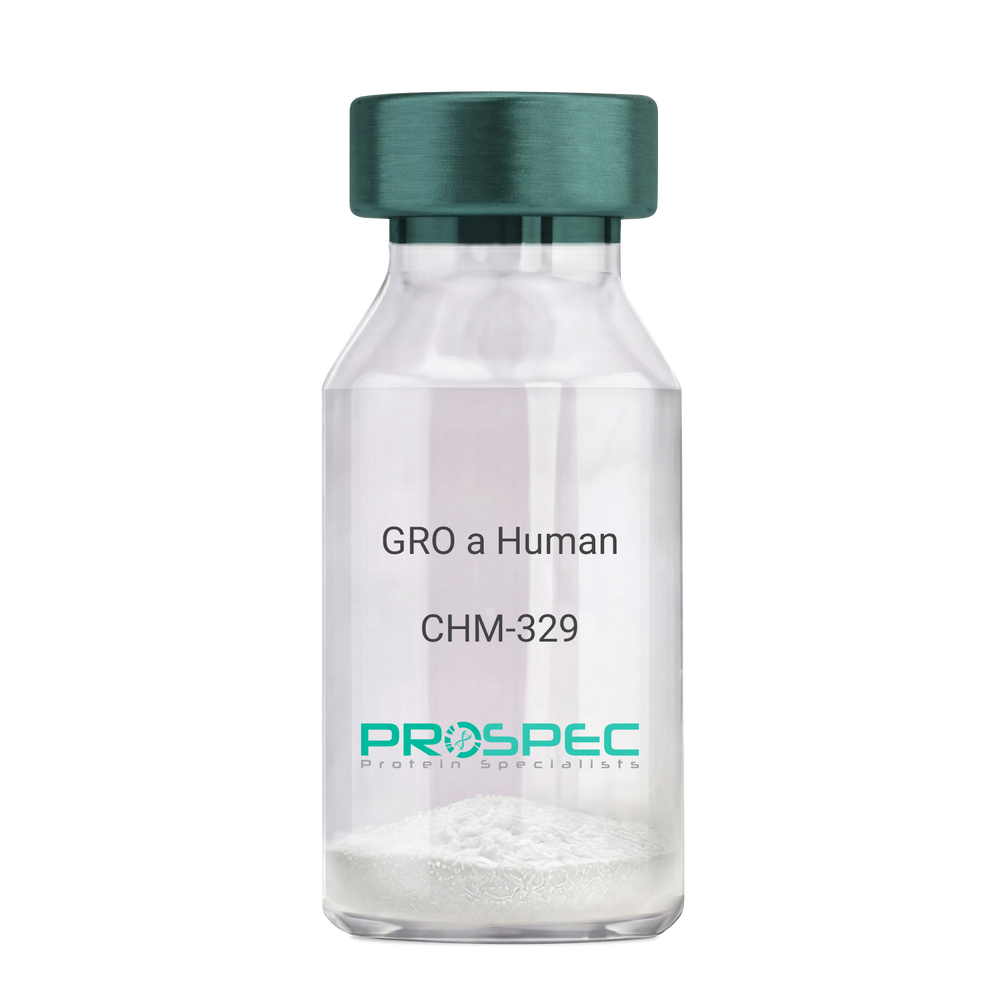
    Growth-regulated protein alpha, CXCL1, Melanoma growth stimulatory activity, MGSA, Neutrophil-activating protein 3, NAP-3, GRO-alpha (1-73), chemokine (C-X-C motif) ligand 1, GRO1, GROa, SCYB1, MGSA-a, MGSA alpha.

    Product # :

    CHM-329

    Price :

    Quantity :

    Shipping Method :

    Room Temp Icon

    Shipped at Room temp

    Add To Cart

    More Info

    • description
    • source
    • formulation
    • purity
    • biological activity
    • More Info

    Description

    GRO Alpha Human Recombinant produced in E.Coli is a single,non-glycosylated, polypeptide chain containing 73 amino acids and having a molecular mass of 7811 Dalton. The GRO-alpha is purified by proprietary chromatographic techniques.

    Source

    Escherichia Coli.

    Formulation

    Lyophilized from a 0.2µm filtered concentrated (1mg/ml) solution in 20mM PB, pH 7.4, 50mM NaCl.

    Purity

    Greater than 97.0% as determined by:
    (a) Analysis by RP-HPLC.
    (b) Analysis by SDS-PAGE.

    Biological Activity

    Determined by its ability to chemoattract human peripheral blood neutrophils using a concentration range of 10.0-100.0 ng/ml.

    More Info

    • Introduction

      Chemokine (C-X-C motif) ligand 1 (CXCL1) is a small cytokine belonging to the CXC chemokine family that was previously called GRO1 oncogene, Neutrophil-activating protein 3 (NAP-3) and melanoma growth stimulating activity, alpha (MSGA-a). It is secreted by human melanoma cells, has mitogenic properties and is implicated in melanoma pathogenesis. CXCL1 is expressed by macrophages, neutrophilsand epithelial cells, and has neutrophil chemoattractant activity. CXCL1 plays a role in spinal cord development by inhibiting the migration of oligodendrocyte precursors and is involved in the processes of angiogenesis, inflammation, wound healing, and tumorigenesis. This chemokine elicits its effects by signaling through the chemokine receptor CXCR2. The gene for CXCL1 is located on human chromosome 4 amongst genes for other CXC chemokines.

    • Synonyms

      Growth-regulated protein alpha, CXCL1, Melanoma growth stimulatory activity, MGSA, Neutrophil-activating protein 3, NAP-3, GRO-alpha (1-73), chemokine (C-X-C motif) ligand 1, GRO1, GROa, SCYB1, MGSA-a, MGSA alpha.

    • Physical Appearance

      Sterile Filtered White lyophilized (freeze-dried) powder.

    • Stability

      Lyophilized GRO-alpha although stable at room temperature for 3 weeks, should be stored desiccated below -18°C. Upon reconstitution CXCL1 should be stored at 4°C between 2-7 days and for future use below -18°C. For long term storage it is recommended to add a carrier protein (0.1% HSA or BSA).Please prevent freeze-thaw cycles.

    • Solubility

      It is recommended to reconstitute the lyophilized CXCL1 in sterile 18MΩ-cm H2O not less than 100µg/ml, which can then be further diluted to other aqueous solutions.

    • Amino Acid Sequence

      The sequence of the first five N-terminal amino acids was determined and was found to be Ala-Ser-Val-Ala-Thr.

    • Background

      What is the molecular weight/Mw of CXCL1 HUMAN Protein?
      CXCL1 HUMAN Protein has a total Mw of 7.81kDa.

      What is the source or expression system of CXCL1 HUMAN Protein?
      Escherichia Coli.

      What is the Purity of CXCL1 HUMAN Protein?
      CXCL1 HUMAN Protein is >97% pure as determined by SDS-PAGE.

      What is the Biological Activity of CXCL1 HUMAN Protein?
      Determined by its ability to chemoattract human peripheral blood neutrophils using a concentration range of 10.0-100.0 ng/ml.

      What is the amino acid sequence of CXCL1 HUMAN Protein?
      The sequence of the first five N-terminal amino acids was determined and was found to be Ala-Ser-Val-Ala-Thr.

      What applications can CXCL1 HUMAN Protein be used in?
      CXCL1 HUMAN Protein can probably be used in western blot, ELISA and Lateral Flow.

      What is the endotoxin level for CXCL1 HUMAN Protein?
      The endotoxin level is minimal, CXCL1 HUMAN Protein was purified using conventional chromatography techniques.


    ProSpec's products are furnished for LABORATORY RESEARCH USE ONLY. The product may not be used as drugs, agricultural or pesticidal products, food additives or household chemicals.

    Gro A Human
  • View Data Sheet

    Name :

    Leptin Protein

    Description:

    Leptin Human Recombinant

    OB Protein, Obesity Protein, OBS, Obesity factor.

    Product # :

    CYT-228

    Price :

    Quantity :

    Shipping Method :

    Room Temp Icon

    Shipped at Room temp

    Add To Cart

    More Info

    • description
    • source
    • formulation
    • purity
    • biological activity
    • More Info

    Description

    Leptin Human Recombinant produced in E.Coli is a single, non-glycosylated, polypeptide chain containing 146 amino acids and having a molecular mass of 16 kDa.The Leptin is purified by proprietary chromatographic techniques.

    Source

    Escherichia Coli.

    Formulation

    The protein was lyophilized from a concentrated (1mg/ml) solution with 0.0045mM NaHCO3.

    Purity

    Greater than 95.0% as determined by:
    (a) Analysis by Gel filtration.
    (b) Analysis by SDS-PAGE.

    Biological Activity

    Biological Activity is evidenced by inducing proliferation of BAF/3 cells stably transfected with the long form of human leptin receptor.

    More Info

    • Introduction

      A 16-kDa peptide hormone secreted from white adipocytes and implicated in the regulation of food intake and energy balance. Leptin provides the key afferent signal from fat cells in the feedback system that controls body fat stores.

    • Synonyms

      OB Protein, Obesity Protein, OBS, Obesity factor.

    • Physical Appearance

      Sterile Filtered White lyophilized (freeze-dried) powder.

    • Stability

      Lyophilized Leptin although stable at room temperature for 3 weeks, should be stored desiccated below -18°C. Upon reconstitution Leptin should be stored at 4°C between 2-7 days and for future use below -18°C. For long term storage it is recommended to add a carrier protein (0.1% HSA or BSA). Please prevent freeze-thaw cycles.

    • Solubility

      It is recommended to reconstitute the lyophilized Leptin in sterile water or 0.4% NaHCO3 pH-8-9, not less than 100µg/ml, which can then be further diluted to other aqueous solutions.

    • Amino Acid Sequence

      The sequence of the first five N-terminal amino acids was determined and was found to be Ala-Val-Pro-Ile-Gln.

    • Protein content

      Protein quantitation was carried out by UV spectroscopy at 280 nm using the absorbency value of 0.87 as the extinction coefficient for a 0.1% (1mg/ml) solution. This value is calculated by the PC GENE computer analysis program of protein sequences (IntelliGenetics).

    ProSpec's products are furnished for LABORATORY RESEARCH USE ONLY. The product may not be used as drugs, agricultural or pesticidal products, food additives or household chemicals.

    Leptin Human
  • View Data Sheet

    Name :

    HMGB3 Human

    Description:

    High-Mobility Group Box 3 Human Recombinant

    High Mobility Group Box 3, High-Mobility Group (Nonhistone Chromosomal) Protein 4, Non-Histone Chromosomal Protein, High Mobility Group Protein B3, High Mobility Group Protein 4, HMG-2a, HMG-4.

    Product # :

    PRO-1623

    Price :

    Quantity :

    Shipping Method :

    Ice Icon

    Shipped with Ice Packs

    Add To Cart

    More Info

    • description
    • source
    • formulation
    • purity
    • More Info

    Description

    HMGB3 Human Recombinant produced in E.coli is a single, non-glycosylated polypeptide chain containing 203 amino acids (1-180) and having a molecular mass of 22.8kDa.HMGB3 is fused to a 23 amino acid His-tag at N-terminus & purified by proprietary chromatographic techniques.

    Source

    Escherichia Coli.

    Formulation

    The HMGB3 solution (0.5mg/ml) contains 20mM Tris-HCl buffer (pH 8.0), 0.15M NaCl, 1mM DTT and 10% glycerol.

    Purity

    Greater than 85% as determined by SDS-PAGE.

    More Info

    • Introduction

      HMGB3 is a member of the high mobility group (HMG) protein superfamily. HMGB3 holds DNA-binding HMG box domains, as do HMG1 and HMG2, and like the rest of the HMG protein superfamily members has a vital part in DNA replication, transcription and nucleosome assembly.

    • Synonyms

      High Mobility Group Box 3, High-Mobility Group (Nonhistone Chromosomal) Protein 4, Non-Histone Chromosomal Protein, High Mobility Group Protein B3, High Mobility Group Protein 4, HMG-2a, HMG-4.

    • Physical Appearance

      Sterile filtered colorless solution.

    • Stability

      Store at 4°C if entire vial will be used within 2-4 weeks. Store, frozen at -20°C for longer periods of time. For long term storage it is recommended to add a carrier protein (0.1% HSA or BSA).Avoid multiple freeze-thaw cycles.

    • Amino Acid Sequence

      MGSSHHHHHH SSGLVPRGSH MGSMAKGDPK KPKGKMSAYA FFVQTCREEH KKKNPEVPVN FAEFSKKCSE RWKTMSGKEK SKFDEMAKAD KVRYDREMKD YGPAKGGKKK KDPNAPKRPP SGFFLFCSEF RPKIKSTNPG ISIGDVAKKL GEMWNNLNDS EKQPYITKAA KLKEKYEKDV ADYKSKGKFD GAKGPAKVAR KKV.

    ProSpec's products are furnished for LABORATORY RESEARCH USE ONLY. The product may not be used as drugs, agricultural or pesticidal products, food additives or household chemicals.

    Hmgb3 Human
  • View Data Sheet

    Name :

    F8 Protein

    Description:

    Coagulation Factor-VIII Human Recombinant

    Coagulation factor VIII, Procoagulant component, Antihemophilic factor, AHF, F8, F8C, F8B, HEMA, FVIII, DXS1253E, F8 protein.

    Product # :

    PRO-318

    Price :

    Quantity :

    Shipping Method :

    Room Temp Icon

    Shipped at Room temp

    Add To Cart

    More Info

    • description
    • source
    • formulation
    • purity
    • biological activity
    • More Info

    Description

    Antihemophilic Facor Human Recombinant produced in CHO is a glycosylated polypeptide chain having 2332 amino acids. The Factor-VIII is purified by proprietary chromatographic techniques.

    Source

    CHO cells (Chinese Hamster Ovarian Cells).

    Formulation

    Each 250IU vial was lyophilized from a solution containing 8mg Tween-80, 112mM NaCl, 40mg Mannitol, 10mg Trehalose, 1ng VWF and 4.2mM CaCl2.

    Purity

    Greater than 97.0% as determined by SDS-PAGE.

    Biological Activity

    The specific activity was found to be 7,058 IU/mg.

    More Info

    • Introduction

      Coagulation factor VIII participates in the intrinsic pathway of blood coagulation; factor VIII is a cofactor for factor IXa which, in the presence of Ca+2 and phospholipids, converts factor X to the activated form Xa. This gene produces two alternatively spliced transcripts. Transcript variant 1 encodes a large glycoprotein, isoform a, which circulates in plasma and associates with von Willebrand factor in a noncovalent complex. This protein undergoes multiple cleavage events. Transcript variant 2 encodes a putative small protein, isoform b, which consists primarily of the phospholipid binding domain of factor VIIIc. This binding domain is essential for coagulant activity. Defects in this gene results in hemophilia A, a common recessive X-linked coagulation disorder.

    • Synonyms

      Coagulation factor VIII, Procoagulant component, Antihemophilic factor, AHF, F8, F8C, F8B, HEMA, FVIII, DXS1253E, F8 protein.

    • Physical Appearance

      Sterile Filtered White lyophilized (freeze-dried) powder.

    • Stability

      Lyophilized Factor-VIII although stable at room temperature for 3 weeks, should be stored desiccated below -18°C. Upon reconstitution Factor-VIII should be stored at 4°C between 2-7 days and for future use below -18°C.Please prevent freeze-thaw cycles.

    • Solubility

      It is recommended to reconstitute 250IU lyophilized Factor-VIII in 5ml sterile 18M-cm H2O, which can then be further diluted to other aqueous solutions.

    ProSpec's products are furnished for LABORATORY RESEARCH USE ONLY. The product may not be used as drugs, agricultural or pesticidal products, food additives or household chemicals.

    Factor Viii Human Recombinant
  • View Data Sheet

    Name :

    IL4R Human

    Description:

    Interleukin-4 Receptor Human Recombinant

    Interleukin 4 Receptor, IL-4 Receptor Subunit Alpha, Interleukin 13 Receptor, IL-4RA, IL4RA, Interleukin-4 Receptor Subunit Alpha, Interleukin-4 Receptor Alpha Chain, IL4R Nirs Variant 1, IL-4R Subunit Alpha, CD124 Antigen, IL-4R-Alpha, CD124, IL4R.

    Product # :

    CYT-1047

    Price :

    Quantity :

    Shipping Method :

    Ice Icon

    Shipped with Ice Packs

    Add To Cart

    More Info

    • description
    • source
    • formulation
    • purity
    • More Info

    Description

    IL4R produced in Sf9 Baculovirus cells is a single, glycosylated polypeptide chain (26-232 a.a.) and fused to an 8 aa His Tag at C-terminus containing a total of 215 amino acids and having a molecular mass of 24.7kDa.IL4R shows multiple bands between 28-40kDa on SDS-PAGE, reducing conditions and purified by proprietary chromatographic techniques.

    Source

    Sf9, Baculovirus cells.

    Formulation

    IL4R protein solution (0.25mg/ml) contains Phosphate buffered saline (pH7.4).

    Purity

    Greater than 95.0% as determined by SDS-PAGE.

    More Info

    • Introduction

      IL4 is a pleiotropic cytokine produced by activated T cells. IL4 is a ligand for interleukin 4 receptor. The interleukin 4 receptor also binds to IL13, which may contribute to many overlapping functions of this cytokine and IL13. STAT6, a signal transducer and activator of transcription, has been shown to play a central role in mediating the immune regulatory signal of this cytokine. This gene, IL3, IL5, IL13, and CSF2 form a cytokine gene cluster on chromosome 5q, with this gene particularly close to IL13. IL4, IL13 and IL5 are found to be regulated coordinately by several long-range regulatory elements in an over 120 kilobase range on the chromosome. Two alternatively spliced transcript variants of this gene encoding distinct isoforms have been reported.

    • Synonyms

      Interleukin 4 Receptor, IL-4 Receptor Subunit Alpha, Interleukin 13 Receptor, IL-4RA, IL4RA, Interleukin-4 Receptor Subunit Alpha, Interleukin-4 Receptor Alpha Chain, IL4R Nirs Variant 1, IL-4R Subunit Alpha, CD124 Antigen, IL-4R-Alpha, CD124, IL4R.

    • Physical Appearance

      Sterile filtered colorless solution.

    • Stability

      Store at 4°C if entire vial will be used within 2-4 weeks. Store, frozen at -20°C for longer periods of time. For long term storage it is recommended to add a carrier protein (0.1% HSA or BSA).Avoid multiple freeze-thaw cycles.

    • Amino Acid Sequence

      MKVLQEPTCV SDYMSISTCE WKMNGPTNCS TELRLLYQLV FLLSEAHTCI PENNGGAGCV CHLLMDDVVS ADNYTLDLWA GQQLLWKGSF KPSEHVKPRA PGNLTVHTNV SDTLLLTWSN PYPPDNYLYN HLTYAVNIWS ENDPADFRIY NVTYLEPSLR IAASTLKSGI SYRARVRAWA
      QCYNTTWSEW SPSTKWHNSY REPFEQHLEH HHHHH

    ProSpec's products are furnished for LABORATORY RESEARCH USE ONLY. The product may not be used as drugs, agricultural or pesticidal products, food additives or household chemicals.

    Il4R Human
  • View Data Sheet

    Name :

    RBM18 Human

    Description:

    RNA Binding Motif Protein 18 Human Recombinant

    RNA Binding Motif Protein 18, RNA-Binding Motif Protein 18, RBM18.

    Product # :

    PRO-2109

    Price :

    Quantity :

    Shipping Method :

    Ice Icon

    Shipped with Ice Packs

    Add To Cart

    More Info

    • description
    • source
    • formulation
    • purity
    • More Info

    Description

    RBM18 Human Recombinant produced in E.Coli is a single, non-glycosylated polypeptide chain containing 213 amino acids (1-190 a.a) and having a molecular mass of 24kDa.RBM18 is fused to a 23 amino acid His-tag at N-terminus & purified by proprietary chromatographic techniques.

    Source

    Escherichia Coli.

    Formulation

    RBM18 protein solution (1mg/ml) containing Phosphate Buffered Saline (pH7.4) and 10% glycerol.

    Purity

    Greater than 85.0% as determined by SDS-PAGE.

    More Info

    • Introduction

      RNA Binding Motif Protein 18 (RBM18) is comprised of one RNA recognition motif (RRM) domain.

    • Synonyms

      RNA Binding Motif Protein 18, RNA-Binding Motif Protein 18, RBM18.

    • Physical Appearance

      Sterile Filtered clear solution.

    • Stability

      Store at 4°C if entire vial will be used within 2-4 weeks. Store, frozen at -20°C for longer periods of time. For long term storage it is recommended to add a carrier protein (0.1% HSA or BSA).Avoid multiple freeze-thaw cycles.

    • Amino Acid Sequence

      MGSSHHHHHH SSGLVPRGSH MGSMEAETKT LPLENASILS EGSLQEGHRL WIGNLDPKIT EYHLLKLLQK FGKVKQFDFL FHKSGALEGQ PRGYCFVNFE TKQEAEQAIQ CLNGKLALSK KLVVRWAHAQ VKRYDHNKND KILPISLEPS SSTEPTQSNL SVTAKIKAIE AKLKMMAENP DAEYPAAPVY SYFKPPDKKR TTPYSRTAWK SRR.

    ProSpec's products are furnished for LABORATORY RESEARCH USE ONLY. The product may not be used as drugs, agricultural or pesticidal products, food additives or household chemicals.

    Rbm18 Human
  • View Data Sheet

    Name :

    SNRPB2 Human

    Description:

    Small Nuclear Ribonucleoprotein Polypeptide B Human Recombinant

    Small nuclear ribonucleoprotein polypeptide B2, Msl1, U2 snRNP B'', U2 small nuclear ribonucleoprotein B'', MGC24807, MGC45309.

    Product # :

    PRO-217

    Price :

    Quantity :

    Shipping Method :

    Ice Icon

    Shipped with Ice Packs

    Add To Cart

    More Info

    • description
    • source
    • formulation
    • purity
    • More Info

    Description

    SNRPB2 Human Recombinant fused with a 20 amino acid His tag at N-terminus produced in E.Coli is a single, non-glycosylated, polypeptide chain containing 245 amino acids (1-225a.a.) and having a molecular mass of 27.6kDa. The SNRPB2 is purified by proprietary chromatographic techniques.

    Source

    Escherichia Coli.

    Formulation

    The SNRPB2 solution (0.25mg/ml) contains 20mM Tris-HCl buffer (pH 8.0), 40% glycerol and 0.1M NaCl.

    Purity

    Greater than 90.0% as determined by SDS-PAGE.

    More Info

    • Introduction

      SNRPB2 is a member of the RRM U1 A/B family. SNRPB2 links with stem loop IV of U2 small nuclear ribonucleoprotein (U2 snRNP) in the presence of snRNP-A. SNRPB2 has a part in pre-mRNA splicing. Autoantibodies from patients with systemic lupus erythematosus often identify epitopes on the encoded protein. A pair of transcript variants encoding the same protein were identified for this gene.

    • Synonyms

      Small nuclear ribonucleoprotein polypeptide B2, Msl1, U2 snRNP B'', U2 small nuclear ribonucleoprotein B'', MGC24807, MGC45309.

    • Physical Appearance

      Sterile Filtered colorless solution.

    • Stability

      Store at 4°C if entire vial will be used within 2-4 weeks. Store, frozen at -20°C for longer periods of time. For long term storage it is recommended to add a carrier protein (0.1% HSA or BSA). Avoid multiple freeze-thaw cycles.

    • Amino Acid Sequence

      MGSSHHHHHH SSGLVPRGSH MDIRPNHTIY INNMNDKIKK EELKRSLYAL FSQFGHVVDI VALKTMKMRG QAFVIFKELG SSTNALRQLQ GFPFYGKPMR IQYAKTDSDI ISKMRGTFAD KEKKKEKKKA KTVEQTATTT NKKPGQGTPN SANTQGNSTP NPQVPDYPPN YILFLNNLPE ETNEMMLSML FNQFPGFKEV RLVPGRHDIA FVEFENDGQA GAARDALQGF KITPSHAMKI TYAKK

    ProSpec's products are furnished for LABORATORY RESEARCH USE ONLY. The product may not be used as drugs, agricultural or pesticidal products, food additives or household chemicals.

    Snrpb2 Human
  • View Data Sheet

    Name :

    SOST Mouse

    Description:

    Sclerostin Mouse Recombinant

    SOST, Sclerostin, 5430411E23Rik.

    Product # :

    PRO-2670

    Price :

    Quantity :

    Shipping Method :

    Ice Icon

    Shipped with Ice Packs

    Add To Cart

    More Info

    • description
    • source
    • formulation
    • purity
    • More Info

    Description

    SOST Mouse Recombinant produced in HEK293 cells is a single, glycosylated polypeptide chain (24-211 a.a) containing 194 amino acids and having a molecular mass of 21.9 kDa.SOST is fused to a 6 amino acid His-tag at C-terminus & purified by proprietary chromatographic techniques.

    Source

    HEK293 cells.

    Formulation

    SOST protein (0.25mg/ml) contains 10% glycerol and Phosphate-Buffered Saline (pH 7.4).

    Purity

    Greater than 90.0% as determined by SDS-PAGE.

    More Info

    • Introduction

      Sclerostin (SOST) is a secreted glycoprotein with a C-terminal cysteine knot-like (CTCK) domain and sequence similarity to the DAN (differential screening-selected gene aberrative in neuroblastoma) family of bone morphogenetic protein antagonists. Sclerostin functions as a negative regulator of bone growth, by inhibiting bone formation. SOST is expressed mainly in the bone, cartilage, kidney, liver, bone marrow and primary osteoblasts differentiated for 21 days. SOST gene defects cause sclerosteosis and bone dysplasia.

    • Synonyms

      SOST, Sclerostin, 5430411E23Rik.

    • Physical Appearance

      Sterile Filtered colorless solution.

    • Stability

      Store at 4°C if entire vial will be used within 2-4 weeks. Store, frozen at -20°C for longer periods of time. For long term storage it is recommended to add a carrier protein (0.1% HSA or BSA).Avoid multiple freeze-thaw cycles.

    • Amino Acid Sequence

      QGWQAFRNDA TEVIPGLGEY PEPPPENNQT MNRAENGGRP PHHPYDAKDV SEYSCRELHY TRFLTDGPCR SAKPVTELVC SGQCGPARLL PNAIGRVKWW RPNGPDFRCI PDRYRAQRVQ LLCPGGAAPR SRKVRLVASC KCKRLTRFHN QSELKDFGPE TARPQKGRKP RPGARGAKAN QAELENAYHH HHHH

    ProSpec's products are furnished for LABORATORY RESEARCH USE ONLY. The product may not be used as drugs, agricultural or pesticidal products, food additives or household chemicals.

    Sclerostin Mouse
  • View Data Sheet

    Name :

    CEACAM6 Human

    Description:

    Carcinoembryonic Antigen-Related Cell Adhesion Molecule 6 Recombinant Human

    Carcinoembryonic antigen-related cell adhesion molecule 6, CEACAM6, CEACAM6, CD66c, CEAL, NCA, Non-specific crossreacting antigen, Normal cross-reacting antigen, CD_antigen: CD66c, NCA.

    Product # :

    PRO-2331

    Price :

    Quantity :

    Shipping Method :

    Ice Icon

    Shipped with Ice Packs

    Add To Cart

    More Info

    • description
    • source
    • formulation
    • purity
    • More Info

    Description

    CEACAM6 Human Recombinant produced in Sf9 Baculovirus cells is a single, glycosylated polypeptide chain containing 297 amino acids (35-320) and having a molecular mass of 32.6kDa (Molecular size on SDS-PAGE will appear at approximately 40-57kDa).CEACAM6 is fused to 6 amino acid His-Tag at C-terminus and purified by proprietary chromatographic techniques.

    Source

    Sf9, Baculovirus cells.

    Formulation

    CEACAM6 protein solution (1mg/ml) containing Phosphate Buffered Saline (pH 7.4) and 10% glycerol.

    Purity

    Greater than 95.0% as determined by analysis by SDS-PAGE.

    More Info

    • Introduction

      Carcinoembryonic Antigen-Related Cell Adhesion Molecule 6 (CEACAM6) is a part of the human carcino-embryonic antigen (CEA) family. CEACAM6 belongs to the glycosylphosphatidylinositol-linked immunoglobulin superfamily which is involved in various human cancers. CEACAM6 is linked to the progression of pancreatic cancer.

    • Synonyms

      Carcinoembryonic antigen-related cell adhesion molecule 6, CEACAM6, CEACAM6, CD66c, CEAL, NCA, Non-specific crossreacting antigen, Normal cross-reacting antigen, CD_antigen: CD66c, NCA.

    • Physical Appearance

      Sterile Filtered clear solution.

    • Stability

      Store at 4°C if entire vial will be used within 2-4 weeks. Store, frozen at -20°C for longer periods of time. For long term storage it is recommended to add a carrier protein (0.1% HSA or BSA).Avoid multiple freeze-thaw cycles.

    • Amino Acid Sequence

      ADPEFKLTIE STPFNVAEGK EVLLLAHNLP QNRIGYSWYK GERVDGNSLI VGYVIGTQQA TPGPAYSGRE TIYPNASLLI QNVTQNDTGF YTLQVIKSDL VNEEATGQFH VYPELPKPSI SSNNSNPVED KDAVAFTCEP EVQNTTYLWW VNGQSLPVSP RLQLSNGNMT LTLLSVKRND AGSYECEIQN PASANRSDPV TLNVLYGPDV PTISPSKANY RPGENLNLSC HAASNPPAQY SWFINGTFQQ STQELFIPNI TVNNSGSYMC QAHNSATGLN RTTVTMITVS GHHHHHH.

    ProSpec's products are furnished for LABORATORY RESEARCH USE ONLY. The product may not be used as drugs, agricultural or pesticidal products, food additives or household chemicals.

    Ceacam6 Human
  • View Data Sheet

    Name :

    COMMD1 Human

    Description:

    Copper Metabolism Domain Containing 1 Human Recombinant

    MURR1, C2orf5, COMMD1, Copper Metabolism Domain Containing 1, MGC27155.

    Product # :

    PRO-862

    Price :

    Quantity :

    Shipping Method :

    Ice Icon

    Shipped with Ice Packs

    Add To Cart

    More Info

    • description
    • source
    • formulation
    • purity
    • More Info

    Description

    COMMD1 Recombinant Human produced in E.Coli is a single, non-glycosylated polypeptide chain containing 210 amino acids (1-190 a.a.) and having a molecular mass of 23.3 kDa. The COMMD1 is fused to 20 amino acid His-Tag at N-terminus and purified by proprietary chromatographic techniques.

    Source

    Escherichia Coli.

    Formulation

    COMMD1 Human solution containing 20mM Tris pH-8, 0.1M NaCl & 20% glycerol.

    Purity

    Greater than 90.0% as determined by SDS-PAGE.

    More Info

    • Introduction

      COMMD1 is accountable for inhibition of TNF-induced NFκB p50 and n facilitats of biliary copper excretion within hepatocytes. High expression of COMMD1 is localized in liver tissue, with lower expressions in lung, heart, kidney and brain tissue. COMMD1 interacts directly with COMMD6 and ATP7B, and indirectly with IκB-β and COMMD7.

    • Synonyms

      MURR1, C2orf5, COMMD1, Copper Metabolism Domain Containing 1, MGC27155.

    • Physical Appearance

      Sterile filtered colorless solution.

    • Stability

      Store at 4°C if entire vial will be used within 2-4 weeks. Store, frozen at -20°C for longer periods of time. For long term storage it is recommended to add a carrier protein (0.1% HSA or BSA).Avoid multiple freeze-thaw cycles.

    • Amino Acid Sequence

      MGSSHHHHHH SSGLVPRGSH MAAGELEGGK PLSGLLNALA QDTFHGYPGI TEELLRSQLY PEVPPEEFRP FLAKMRGILK SIASADMDFN QLEAFLTAQT KKQGGITSDQ AAVISKFWKS HKTKIRESLM NQSRWNSGLR GLSWRVDGKS QSRHSAQIHT PVAIIELELG KYGQESEFLC LEFDEVKVNQ ILKTLSEVEE SISTLISQPN.

    ProSpec's products are furnished for LABORATORY RESEARCH USE ONLY. The product may not be used as drugs, agricultural or pesticidal products, food additives or household chemicals.

    Commd1 Human
  • View Data Sheet

    Name :

    WWTR1 Human

    Description:

    WW Domain Containing Transcription Regulator 1 Human Recombinant

    WW domain-containing transcription regulator protein 1, Transcriptional coactivator with PDZ-binding motif, WWTR1, WW Domain Containing Transcription Regulator 1, TAZ.

    Product # :

    PRO-1814

    Price :

    Quantity :

    Shipping Method :

    Ice Icon

    Shipped with Ice Packs

    Add To Cart

    More Info

    • description
    • source
    • formulation
    • purity
    • More Info

    Description

    WWTR1 Human Recombinant produced in E.coli is a single, non-glycosylated polypeptide chain containing 423 amino acids (1-400) and having a molecular mass of 46.5 kDa.WWTR1 is fused to a 23 amino acid His-Tag at N-terminus and purified by proprietary chromatographic techniques.

    Source

    Escherichia Coli.

    Formulation

    The WWTR1 solution (0.5mg/ml) contains 20mM Tris-HCl buffer (pH 8.0), 0.4M UREA and 10% glycerol.

    Purity

    Greater than 85.0% as determined by SDS-PAGE.

    More Info

    • Introduction

      WW Domain Containing Transcription Regulator 1 (WWTR1) is a transcriptional coactivator that plays a role as a downstream regulatory target in the Hippo signaling pathway which participates in organ size control and tumor suppression by restricting proliferation and promoting apoptosis. WWTR1 regulates the nuclear accumulation of SMADS and has a main part in coupling them to the transcriptional machinery like the mediator complex. WWTR1 is also regulates embryonic stem-cell self-renewal.

    • Synonyms

      WW domain-containing transcription regulator protein 1, Transcriptional coactivator with PDZ-binding motif, WWTR1, WW Domain Containing Transcription Regulator 1, TAZ.

    • Physical Appearance

      Sterile Filtered colorless solution.

    • Stability

      Store at 4°C if entire vial will be used within 2-4 weeks. Store, frozen at -20°C for longer periods of time. For long term storage it is recommended to add a carrier protein (0.1% HSA or BSA).Avoid multiple freeze-thaw cycles.

    • Amino Acid Sequence

      MGSSHHHHHH SSGLVPRGSH MGSMNPASAP PPLPPPGQQV IHVTQDLDTD LEALFNSVMN PKPSSWRKKI LPESFFKEPD SGSHSRQSST DSSGGHPGPR LAGGAQHVRS HSSPASLQLG TGAGAAGSPA QQHAHLRQQS YDVTDELPLP PGWEMTFTAT GQRYFLNHIE KITTWQDPRK AMNQPLNHMN LHPAVSSTPV PQRSMAVSQP NLVMNHQHQQ QMAPSTLSQQ NHPTQNPPAG LMSMPNALTT QQQQQQKLRL QRIQMERERI RMRQEELMRQ EAALCRQLPM EAETLAPVQA AVNPPTMTPD MRSITNNSSD PFLNGGPYHS REQSTDSGLG LGCYSVPTTP EDFLSNVDEM DTGENAGQTP MNINPQQTRF PDFLDCLPGT NVDLGTLESE DLIPLFNDVE SALNKSEPFL TWL.

    ProSpec's products are furnished for LABORATORY RESEARCH USE ONLY. The product may not be used as drugs, agricultural or pesticidal products, food additives or household chemicals.

    Wwtr1 Human
  • 1
  • …
  • 36
  • 37
  • 38
  • 39
  • 40
  • …
  • 42
Your browser does not support the video tag.

Products

  • Cytokines
  • Growth Factors
  • Chemokines
  • CD Antigens
  • Neurotrophins
  • Hormones
  • Enzymes
  • Viral Antigens
  • Recombinant Proteins
  • Natural Proteins
  • Monoclonal Antibodies
  • Polyclonal Antibodies
  • Thermal Packaging

About

  • Company
  • Founder
  • Contribution
  • Contact Us
  • My Account

Ordering

  • Ordering Method
  • Ordering - Credit Card
  • Ordering PO
  • Shipping Fees
  • FAQ's

Legal

  • Terms & Conditions
  • Privacy
  • Site Map
  • info@prospecbio.com
  • Facebook
  • Instagram
  • Linkedin Profile

© 2026 ProSpec-Tany TechnoGene Ltd. All Rights Reserved.

  • Choosing a selection results in a full page refresh.
  • Opens in a new window.