Skip to content

High-quality research proteins.

  • 1-800-805-6531

  • Mon - Sat 8.00-18.00, Sun - Closed

  • info@prospecbio.com

  • PO Box 6591 East Brunswick NJ 08816

  • Products
    • Cytokines
    • Growth factors
    • Chemokines
    • Cd antigens
    • Neurotrophins
    • Hormones
    • Enzymes
    • Viral antigens
    • Recombinant proteins
    • Natural proteins
    • Monoclonal antibodies
    • Polyclonal antibodies
    • Thermal Packaging
  • About
    • Company
    • Founder
    • Contribution
  • Customers
    • Eastern Asia
    • Eastern Europe
    • North America
    • South America
    • South East Asia
    • Southern Asia
    • Western Europe
  • Ordering
    • Ordering Method
    • Ordering - Credit Card
    • Ordering - PO
    • Shipping Fees
    • FAQs
  • Services
    • DNA Cloning
    • Protein Expression
    • Monoclonal Antibody
    • Fermentation
    • Technology License
  • Contact us
Log in

Country/region

  • USD $ | Albania
  • USD $ | Andorra
  • USD $ | Argentina
  • USD $ | Armenia
  • USD $ | Australia
  • USD $ | Austria
  • USD $ | Azerbaijan
  • USD $ | Belarus
  • USD $ | Belgium
  • USD $ | Bolivia
  • USD $ | Brazil
  • USD $ | Bulgaria
  • USD $ | Cambodia
  • USD $ | Canada
  • USD $ | Chile
  • USD $ | China
  • USD $ | Colombia
  • USD $ | Costa Rica
  • USD $ | Croatia
  • USD $ | Cyprus
  • USD $ | Czechia
  • USD $ | Denmark
  • USD $ | Estonia
  • USD $ | Finland
  • USD $ | France
  • USD $ | Georgia
  • USD $ | Germany
  • USD $ | Greece
  • USD $ | Hong Kong SAR
  • USD $ | Hungary
  • USD $ | Iceland
  • USD $ | India
  • USD $ | Ireland
  • USD $ | Israel
  • USD $ | Italy
  • USD $ | Japan
  • USD $ | Kazakhstan
  • USD $ | Latvia
  • USD $ | Liechtenstein
  • USD $ | Lithuania
  • USD $ | Madagascar
  • USD $ | Malta
  • USD $ | Mexico
  • USD $ | Moldova
  • USD $ | Monaco
  • USD $ | Netherlands
  • USD $ | New Zealand
  • USD $ | North Macedonia
  • USD $ | Norway
  • USD $ | Panama
  • USD $ | Paraguay
  • USD $ | Peru
  • USD $ | Philippines
  • USD $ | Poland
  • USD $ | Portugal
  • USD $ | Romania
  • USD $ | Singapore
  • USD $ | Slovakia
  • USD $ | Slovenia
  • USD $ | South Africa
  • USD $ | South Korea
  • USD $ | Spain
  • USD $ | Sri Lanka
  • USD $ | Sweden
  • USD $ | Switzerland
  • USD $ | Taiwan
  • USD $ | Thailand
  • USD $ | Türkiye
  • USD $ | Ukraine
  • USD $ | United Kingdom
  • USD $ | United States
  • USD $ | Uruguay
  • USD $ | Vatican City
  • USD $ | Venezuela
  • USD $ | Vietnam
  • Facebook
  • Instagram
logoProSpec - Recombinant Protein Manufacturer for academic and R&D industry
Become a distributor
Account Log in
Wishlist
Cart Cart(0)
  • Products
    +
    • Cytokines
    • Growth factors
    • Chemokines
    • Cd antigens
    • Neurotrophins
    • Hormones
    • Enzymes
    • Viral antigens
    • Recombinant proteins
    • Natural proteins
    • Monoclonal antibodies
    • Polyclonal antibodies
    • Thermal Packaging
  • About
    +
    • Company
    • Founder
    • Contribution
  • Customers
    +
    • Eastern Asia
    • Eastern Europe
    • North America
    • South America
    • South East Asia
    • Southern Asia
    • Western Europe
  • Ordering
    +
    • Ordering Method
    • Ordering - Credit Card
    • Ordering - PO
    • Shipping Fees
    • FAQs
  • Services
    +
    • DNA Cloning
    • Protein Expression
    • Monoclonal Antibody
    • Fermentation
    • Technology License
  • Contact us

Item added to your cart

View cart
View All
  • Cytokines
  • Growth factors
  • Chemokines
  • Cd antigens
  • Neurotrophins
  • Hormones
  • Enzymes
  • Viral antigens
  • Recombinant proteins
  • Natural proteins
  • Monoclonal antibodies
  • Polyclonal antibodies
  • Thermal Packaging
  • Tumor Necrosis Factor

    Tumor Necrosis Factor

    View All
  • 4-1BB

    4-1BB

    View All
  • Adiponectin

    Adiponectin

    View All
  • AIF1

    AIF1

    View All
  • Other Cytokines

    Other Cytokines

    View All
  • AITRL

    AITRL

    View All
  • Angiopoietin

    Angiopoietin

    View All
  • Apolipoprotein

    Apolipoprotein

    View All
  • B-Cell Activating Factor

    B-Cell Activating Factor

    View All
  • Beta Defensin

    Beta Defensin

    View All
  • Bone Morphogenetic Protein

    Bone Morphogenetic Protein

    View All
  • B type Natriuretic Peptide

    B type Natriuretic Peptide

    View All
  • BST

    BST

    View All
  • Betacellulin

    Betacellulin

    View All
  • Cardiotrophin

    Cardiotrophin

    View All
  • Activin

    Activin

    View All
  • Fibroblast Growth Factor

    Fibroblast Growth Factor

    View All
  • Other Growth Factors

    Other Growth Factors

    View All
  • CSF

    CSF

    View All
  • CTGF

    CTGF

    View All
  • IGFBP

    IGFBP

    View All
  • VEGF Protein

    VEGF Protein

    View All
  • EGF

    EGF

    View All
  • Epigen

    Epigen

    View All
  • Erythropoietin

    Erythropoietin

    View All
  • Insulin-Like Growth Factor

    Insulin-Like Growth Factor

    View All
  • Growth Hormone

    Growth Hormone

    View All
  • HDGF

    HDGF

    View All
  • Hepatocyte Growth Factor

    Hepatocyte Growth Factor

    View All
  • Insulin

    Insulin

    View All
  • BCA-1/ BLC (CXCL13)

    BCA-1/ BLC (CXCL13)

    View All
  • BRAK (CXCL14)

    BRAK (CXCL14)

    View All
  • C-10 (CCL6)

    C-10 (CCL6)

    View All
  • Other Chemokines

    Other Chemokines

    View All
  • MEC (CCL28)

    MEC (CCL28)

    View All
  • LD78-beta (CCL3L1)

    LD78-beta (CCL3L1)

    View All
  • CTACK (CCL27)

    CTACK (CCL27)

    View All
  • CXCL16

    CXCL16

    View All
  • CXCL17

    CXCL17

    View All
  • Platelet Factor-4 (CXCL4)

    Platelet Factor-4 (CXCL4)

    View All
  • ENA-78 (CXCL5)

    ENA-78 (CXCL5)

    View All
  • Eotaxin (CCL11,24,26)

    Eotaxin (CCL11,24,26)

    View All
  • Exodus-2 (CCL21)

    Exodus-2 (CCL21)

    View All
  • Fractalkine (CX3CL1)

    Fractalkine (CX3CL1)

    View All
  • CXCL6

    CXCL6

    View All
  • Other CD Antigens

    Other CD Antigens

    View All
  • CD14

    CD14

    View All
  • CD164

    CD164

    View All
  • CD1

    CD1

    View All
  • CD2

    CD2

    View All
  • CD200

    CD200

    View All
  • CD207

    CD207

    View All
  • CD226

    CD226

    View All
  • CD23

    CD23

    View All
  • CD244

    CD244

    View All
  • CD247

    CD247

    View All
  • CD27

    CD27

    View All
  • CD274

    CD274

    View All
  • CD300

    CD300

    View All
  • CD33

    CD33

    View All
  • Other Neurotrophins

    Other Neurotrophins

    View All
  • Beta-NGF

    Beta-NGF

    View All
  • BDNF

    BDNF

    View All
  • CDNF

    CDNF

    View All
  • CNTF

    CNTF

    View All
  • GDNF

    GDNF

    View All
  • Glia Maturation Factor

    Glia Maturation Factor

    View All
  • MANF

    MANF

    View All
  • Midkine

    Midkine

    View All
  • Neuroglobin

    Neuroglobin

    View All
  • Neurotrophic factors

    Neurotrophic factors

    View All
  • Neuregulin

    Neuregulin

    View All
  • Neuropilin

    Neuropilin

    View All
  • Pigment Epithelium-Derived Factor

    Pigment Epithelium-Derived Factor

    View All
  • Pleiotrophin

    Pleiotrophin

    View All
  • Peptide Hormones

    Peptide Hormones

    View All
  • Other Hormones

    Other Hormones

    View All
  • HCG

    HCG

    View All
  • Endothelin

    Endothelin

    View All
  • Exendin

    Exendin

    View All
  • FSH

    FSH

    View All
  • Glucagon

    Glucagon

    View All
  • GHRP

    GHRP

    View All
  • GLP

    GLP

    View All
  • Thyrostimulin

    Thyrostimulin

    View All
  • Inhibin A

    Inhibin A

    View All
  • LHRH

    LHRH

    View All
  • Melanotan

    Melanotan

    View All
  • Procalcitonin

    Procalcitonin

    View All
  • PTH

    PTH

    View All
  • Peroxiredoxin

    Peroxiredoxin

    View All
  • Peptidase

    Peptidase

    View All
  • Synthetase

    Synthetase

    View All
  • Transferase

    Transferase

    View All
  • Hydrolase

    Hydrolase

    View All
  • Dehydrogenase

    Dehydrogenase

    View All
  • ACE2

    ACE2

    View All
  • Esterase

    Esterase

    View All
  • Protein Kinases

    Protein Kinases

    View All
  • Other Enzymes

    Other Enzymes

    View All
  • Phosphatase

    Phosphatase

    View All
  • Deaminase

    Deaminase

    View All
  • Oxygenase

    Oxygenase

    View All
  • Adenylate Kinase

    Adenylate Kinase

    View All
  • Lyase

    Lyase

    View All
  • Chagas

    Chagas

    View All
  • SARS

    SARS

    View All
  • Influenza

    Influenza

    View All
  • ASFV

    ASFV

    View All
  • Astrovirus

    Astrovirus

    View All
  • Borrelia

    Borrelia

    View All
  • Helicobacter Pylori

    Helicobacter Pylori

    View All
  • Chikungunya

    Chikungunya

    View All
  • Chlamydia

    Chlamydia

    View All
  • Cytomegalo

    Cytomegalo

    View All
  • Dengue

    Dengue

    View All
  • EBV

    EBV

    View All
  • Ebola

    Ebola

    View All
  • Feline Leukemia Virus

    Feline Leukemia Virus

    View All
  • Hepatitis A

    Hepatitis A

    View All
  • Other

    Other

    View All
  • Actin

    Actin

    View All
  • ADAM

    ADAM

    View All
  • Complement Component

    Complement Component

    View All
  • Ag85

    Ag85

    View All
  • Eukaryotic Translation Initiation Factor

    Eukaryotic Translation Initiation Factor

    View All
  • Anterior Gradient Protein

    Anterior Gradient Protein

    View All
  • Heat Shock Protein

    Heat Shock Protein

    View All
  • Alpha-2-HS-Glycoprotein

    Alpha-2-HS-Glycoprotein

    View All
  • Hemoglobin

    Hemoglobin

    View All
  • Allergy

    Allergy

    View All
  • Anaplasma

    Anaplasma

    View All
  • Angiogenin

    Angiogenin

    View All
  • Ankyrin Repeat Domain

    Ankyrin Repeat Domain

    View All
  • Annexin

    Annexin

    View All
  • Other Natural Proteins

    Other Natural Proteins

    View All
  • Aprotinin

    Aprotinin

    View All
  • Transferrin

    Transferrin

    View All
  • Avidin

    Avidin

    View All
  • Anti Coagulation Factors

    Anti Coagulation Factors

    View All
  • Natural Albumin

    Natural Albumin

    View All
  • Natural Coagulation Factors

    Natural Coagulation Factors

    View All
  • Fibronectin

    Fibronectin

    View All
  • Thrombin

    Thrombin

    View All
  • Anti Human Enzyme

    Anti Human Enzyme

    View All
  • Other Monoclonal Antibodies

    Other Monoclonal Antibodies

    View All
  • Anti Human Cytokine

    Anti Human Cytokine

    View All
  • Anti Human Heat Shock Protein

    Anti Human Heat Shock Protein

    View All
  • Anti Mouse Lymphocyte

    Anti Mouse Lymphocyte

    View All
  • Anti Human Chemokine

    Anti Human Chemokine

    View All
  • Anti Human Lymphocyte

    Anti Human Lymphocyte

    View All
  • Anti Viral Monoclonal

    Anti Viral Monoclonal

    View All
  • Anti Mouse Cytokine

    Anti Mouse Cytokine

    View All
  • Anti-GST Monoclonal

    Anti-GST Monoclonal

    View All
  • Other Polyclonal Antibodies

    Other Polyclonal Antibodies

    View All
  • Anti Viral

    Anti Viral

    View All
  • Anti-GST Monoclonal

    Anti-GST Monoclonal

    View All
Back

Search results

1000 results found for “hepatitis c”

Name

Description

Product #

Price

Quantity

Shipping Method

  • View Data Sheet

    Name :

    CCL24 Rat

    Description:

    Eotaxin-2 Rat Recombinant (CCL24)

    C-C motif chemokine 24, Small-inducible cytokine A24, Myeloid progenitor inhibitory factor 2, CK-beta-6, Eosinophil chemotactic protein 2, Eotaxin-2, CCL24, Ckb-6, MPIF2, MPIF-2, SCYA24, Eotaxin2, CCL-24.

    Product # :

    CHM-282

    Price :

    Quantity :

    Shipping Method :

    Room Temp Icon

    Shipped at Room temp

    Add To Cart

    More Info

    • description
    • source
    • formulation
    • purity
    • biological activity
    • More Info
    • Citations

    Description

    CCL24 Rat Recombinant produced in E.Coli is a single, non-glycosylated polypeptide chain containing 93 amino acids and having a molecular mass of 10.2kDa. The CCL24 is purified by proprietary chromatographic techniques.

    Source

    Escherichia Coli.

    Formulation

    Lyophilized from a 0.2µm filtered concentrated solution in 1×PBS, pH 7.4.

    Purity

    Greater than 97.0% as determined by:
    (a) Analysis by RP-HPLC.
    (b) Analysis by SDS-PAGE.

    Biological Activity

    Determined by its ability to chemoattract murine lymphocytes using a concentration range of 10-100ng/ml corresponding to a Specific Activity of 10,000-100,000IU/mg.

    Citations

    More Info

    • Introduction

      Eotaxin-2, also called MPIF2 & Ckb6, is a novel CC chemokine produced by activated monocytes and T lymphocytes. Eotaxin-2 selectively chemoattracts cells expressing CCR3 including eosinophils, basophils, Th2 T cells, mast cells, and certain subsets of dendritic cells. Furthermore, Eotaxin-2 inhibits the proliferation of multipotential hematopoietic progenitor cells. The mature protein, which includes C-terminal truncation, contains 78 amino acids (92 amino acids for the mouse homolog, without C-terminal truncation).
      CCL24 functions as a chemotactic chemokine for resting t-lymphocytes, and eosinophils. CCL24 has lower chemotactic activity for neutrophils but none for monocytes and activated lymphocytes. CCL24 is a strong suppressor of colony formation by a multipotential hematopoietic progenitor cell line and binds to CCR3.

    • Synonyms

      C-C motif chemokine 24, Small-inducible cytokine A24, Myeloid progenitor inhibitory factor 2, CK-beta-6, Eosinophil chemotactic protein 2, Eotaxin-2, CCL24, Ckb-6, MPIF2, MPIF-2, SCYA24, Eotaxin2, CCL-24.

    • Physical Appearance

      Sterile Filtered White lyophilized (freeze-dried) powder.

    • Stability

      Lyophilized Eotaxin-2 although stable at room temperature for 3 weeks, should be stored desiccated below -18°C. Upon reconstitution CCL24 should be stored at 4°C between 2-7 days and for future use below -18°C. For long term storage it is recommended to add a carrier protein (0.1% HSA or BSA).Please prevent freeze-thaw cycles.

    • Solubility

      It is recommended to reconstitute the lyophilized CCL24 Rat Recombinant in sterile 18M-cm H2O not less than 100µg/ml, which can then be further diluted to other aqueous solutions.

    • Amino Acid Sequence

      VTIPSSCCVT FISKKIPVNR VISYQLANGS ICPKAGVIFI TKKGHKICTD PKLPWVQKHI KNLDAKRNQP SEGAKALGPK FVIQKLRGNS TKV.

    • Background

      What is the molecular weight/Mw of CCL24 RAT Protein?
      CCL24 RAT Protein has a total Mw of 10.2kDa.

      What is the source or expression system of CCL24 RAT Protein?
      Escherichia Coli.

      What is the Purity of CCL24 RAT Protein?
      CCL24 RAT Protein is >97% pure as determined by SDS-PAGE.

      What is the Biological Activity of CCL24 RAT Protein?
      Determined by its ability to chemoattract murine lymphocytes using a concentration range of 10-100ng/ml corresponding to a Specific Activity of 10,000-100,000IU/mg.

      What is the amino acid sequence of CCL24 RAT Protein?
      VTIPSSCCVT FISKKIPVNR VISYQLANGS ICPKAGVIFI TKKGHKICTD PKLPWVQKHI KNLDAKRNQP SEGAKALGPK FVIQKLRGNS TKV.

      What applications can CCL24 RAT Protein be used in?
      CCL24 RAT Protein can probably be used in western blot, ELISA and Lateral Flow.

      What is the endotoxin level for CCL24 RAT Protein?
      The endotoxin level is minimal, CCL24 RAT Protein was purified using conventional chromatography techniques.

      Who supplies recombinant CCL24 RAT that is in stock and available to order?
      ProSpec has the protein in stock and available for immediate delivery.

      Where can I order bulk mg quantities of CCL24 RAT?
      ProSpec supplies bulk mg quantities at affordable prices that meets research and academic budgets.

    ProSpec's products are furnished for LABORATORY RESEARCH USE ONLY. The product may not be used as drugs, agricultural or pesticidal products, food additives or household chemicals.

    Eotaxin 2 Rat
  • View Data Sheet

    Name :

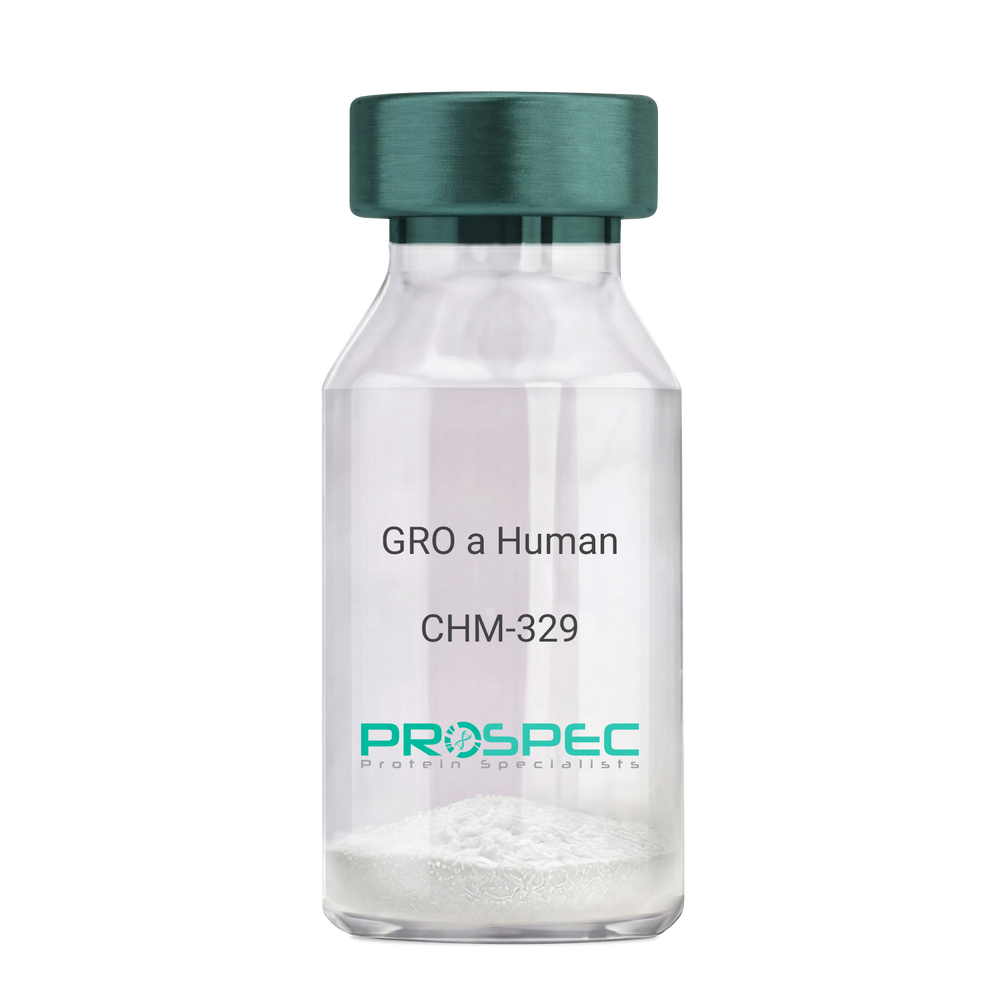
    CXCL1 Human

    Description:

    GRO-Alpha Human Recombinant (CXCL1)

    Growth-regulated protein alpha, CXCL1, Melanoma growth stimulatory activity, MGSA, Neutrophil-activating protein 3, NAP-3, GRO-alpha (1-73), chemokine (C-X-C motif) ligand 1, GRO1, GROa, SCYB1, MGSA-a, MGSA alpha.

    Product # :

    CHM-329

    Price :

    Quantity :

    Shipping Method :

    Room Temp Icon

    Shipped at Room temp

    Add To Cart

    More Info

    • description
    • source
    • formulation
    • purity
    • biological activity
    • More Info
    • sds-page
    • Citations

    Description

    GRO Alpha Human Recombinant produced in E.Coli is a single,non-glycosylated, polypeptide chain containing 73 amino acids and having a molecular mass of 7811 Dalton. The GRO-alpha is purified by proprietary chromatographic techniques.

    Source

    Escherichia Coli.

    Formulation

    Lyophilized from a 0.2µm filtered concentrated (1mg/ml) solution in 20mM PB, pH 7.4, 50mM NaCl.

    Purity

    Greater than 97.0% as determined by:
    (a) Analysis by RP-HPLC.
    (b) Analysis by SDS-PAGE.

    Biological Activity

    Determined by its ability to chemoattract human peripheral blood neutrophils using a concentration range of 10.0-100.0 ng/ml.

    sds-page

    CXCL1 Human SDS-PAGE - Product image 1

    Citations

    More Info

    • Introduction

      Chemokine (C-X-C motif) ligand 1 (CXCL1) is a small cytokine belonging to the CXC chemokine family that was previously called GRO1 oncogene, Neutrophil-activating protein 3 (NAP-3) and melanoma growth stimulating activity, alpha (MSGA-a). It is secreted by human melanoma cells, has mitogenic properties and is implicated in melanoma pathogenesis. CXCL1 is expressed by macrophages, neutrophilsand epithelial cells, and has neutrophil chemoattractant activity. CXCL1 plays a role in spinal cord development by inhibiting the migration of oligodendrocyte precursors and is involved in the processes of angiogenesis, inflammation, wound healing, and tumorigenesis. This chemokine elicits its effects by signaling through the chemokine receptor CXCR2. The gene for CXCL1 is located on human chromosome 4 amongst genes for other CXC chemokines.

    • Synonyms

      Growth-regulated protein alpha, CXCL1, Melanoma growth stimulatory activity, MGSA, Neutrophil-activating protein 3, NAP-3, GRO-alpha (1-73), chemokine (C-X-C motif) ligand 1, GRO1, GROa, SCYB1, MGSA-a, MGSA alpha.

    • Physical Appearance

      Sterile Filtered White lyophilized (freeze-dried) powder.

    • Stability

      Lyophilized GRO-alpha although stable at room temperature for 3 weeks, should be stored desiccated below -18°C. Upon reconstitution CXCL1 should be stored at 4°C between 2-7 days and for future use below -18°C. For long term storage it is recommended to add a carrier protein (0.1% HSA or BSA).Please prevent freeze-thaw cycles.

    • Solubility

      It is recommended to reconstitute the lyophilized CXCL1 in sterile 18MΩ-cm H2O not less than 100µg/ml, which can then be further diluted to other aqueous solutions.

    • Amino Acid Sequence

      The sequence of the first five N-terminal amino acids was determined and was found to be Ala-Ser-Val-Ala-Thr.

    • Background

      What is the molecular weight/Mw of CXCL1 HUMAN Protein?
      CXCL1 HUMAN Protein has a total Mw of 7.81kDa.

      What is the source or expression system of CXCL1 HUMAN Protein?
      Escherichia Coli.

      What is the Purity of CXCL1 HUMAN Protein?
      CXCL1 HUMAN Protein is >97% pure as determined by SDS-PAGE.

      What is the Biological Activity of CXCL1 HUMAN Protein?
      Determined by its ability to chemoattract human peripheral blood neutrophils using a concentration range of 10.0-100.0 ng/ml.

      What is the amino acid sequence of CXCL1 HUMAN Protein?
      The sequence of the first five N-terminal amino acids was determined and was found to be Ala-Ser-Val-Ala-Thr.

      What applications can CXCL1 HUMAN Protein be used in?
      CXCL1 HUMAN Protein can probably be used in western blot, ELISA and Lateral Flow.

      What is the endotoxin level for CXCL1 HUMAN Protein?
      The endotoxin level is minimal, CXCL1 HUMAN Protein was purified using conventional chromatography techniques.

      Who supplies recombinant CXCL1 HUMAN that is in stock and available to order?
      ProSpec has the protein in stock and available for immediate delivery.

      Where can I order bulk mg quantities of CXCL1 HUMAN?
      ProSpec supplies bulk mg quantities at affordable prices that meets research and academic budgets.

    ProSpec's products are furnished for LABORATORY RESEARCH USE ONLY. The product may not be used as drugs, agricultural or pesticidal products, food additives or household chemicals.

    Gro A Human
  • View Data Sheet

    Name :

    ProInsulin Human

    Description:

    ProInsulin C-Peptide Analogue Human Recombinant

    Insulin, Insulin-Dependent Diabetes Mellitus 2, Preproinsulin, Proinsulin, MODY10, IDDM1, IDDM2, IDDM, ILPR, IRDN. 

    Product # :

    CYT-1120

    Price :

    Quantity :

    Shipping Method :

    Room Temp Icon

    Shipped at Room temp

    Add To Cart

    More Info

    • description
    • source
    • formulation
    • purity
    • More Info
    • Citations

    Description

    ProInsulin C-Peptide Analogue Human Recombinant produced in E.Coli is a non-glycosylated polypeptide chain containing 35 amino acid and having a molecular mass of approximately 3.6kDa.ProInsulin is purified by proprietary chromatographic techniques.

    Source

    Escherichia Coli.

    Formulation

    Lyophilized from a 0.2μm filtered concentrated solution in PBS, pH 7.4.

    Purity

    Greater than 95.0% as determined by:
    (a) Analysis by RP-HPLC.
    (b) Analysis by SDS-PAGE.

    Citations

    More Info

    • Introduction

      Insulin decreases blood glucose concentration. Insulin increases cell permeability to monosaccharides, amino acids and fatty acids. Insulin accelerates glycolysis, the pentose phosphate cycle, and glycogen synthesis in liver.

    • Synonyms

      Insulin, Insulin-Dependent Diabetes Mellitus 2, Preproinsulin, Proinsulin, MODY10, IDDM1, IDDM2, IDDM, ILPR, IRDN.

    • Physical Appearance

      Sterile Filtered White lyophilized (freeze-dried) powder.

    • Stability

      Lyophilized ProInsulin although stable at room temperature for 3 weeks, should be stored desiccated below -18°C. Upon reconstitution ProInsulin C-Peptide Analogue should be stored at 4°C between 2-7 days and for future use below -18°C.Please prevent freeze-thaw cycles.

    • Solubility

      It is recommended to reconstitute the lyophilized ProInsulin C-Peptide Analogue in sterile 18MΩ-cm H2O not less than 100µg/ml, which can then be further diluted to other aqueous solutions.

    • Amino Acid Sequence

      RREAEDLQVG QVELGGGPGA GSLQPLALEG SLQKR.

    ProSpec's products are furnished for LABORATORY RESEARCH USE ONLY. The product may not be used as drugs, agricultural or pesticidal products, food additives or household chemicals.

    Proinsulin C Peptide
  • View Data Sheet

    Name :

    Carbonic Anhydrase 2 Human

    Description:

    Carbonic Anhydrase 2 Human Recombinant

    Carbonic anhydrase 2, Carbonate dehydratase 2, Carbonic Anhydrase II, CA-II, Carbonic anhydrase C, CAC, CA2, CAII, Car2.

    Product # :

    ENZ-420

    Price :

    Quantity :

    Shipping Method :

    Ice Icon

    Shipped with Ice Packs

    Add To Cart

    More Info

    • description
    • source
    • formulation
    • purity
    • biological activity
    • More Info
    • Citations

    Description

    Carbonic anhydrase 2 Human Recombinant protein produced in E.Coli containing 260 amino acids (1-260) and having a molecular mass of 29.2 kDa. The Carbonic anhydrase 2 is purified by proprietary chromatographic techniques.

    Source

    Escherichia Coli.

    Formulation

    Carbonic Anhydrase 2 protein solution (1mg/ml) containing 20mM Tris-HCl buffer (pH 8.0), 1mM DTT, 50mM NaCl and 10% glycerol.

    Purity

    Greater than 95.0% as determined by SDS-PAGE.

    Biological Activity

    Specific activity is 50-70 nmoles/min/µg and was obtained by measuring the increase in the amount of p-nitrophenol by its esterase activity. Specific activity is defined as the amount of 
    p-nitrophenol that 1ug of enzyme can reduce at 25C for 1 minute.

    Citations

    More Info

    • Introduction

      The enzyme Carbonic anhydrase II having an accession number of NP_414668 is also called carbonate dehydratase which is part of the enzyme family that catalyses rapid inter-conversion of carbon dioxide & water to bicarbonate, carbonic acid and protons (CO2 + H2O ? HCO3? + H+), a reaction that occurs rather slowly in the absence of a catalyst. The majority of carbonic anhydrases enclose a zinc ion in their active site and therefore is classified as metalloenzymes.
      The most important function of Carbonic anhydrase is known to preserve acid-base balance in blood and other tissues, and to help transport carbon dioxide of tissues. Carbonic anhydrases have been found in all kingdoms of life. Carbonic anhydrase has 3 different classes: alpha, beta and gamma which share very little sequence or structural similarity, thus far they all perform the same function and require a zinc ion at the active site. Mammalian carbonic anhydrase is monomeric and belongs to the alpha class. Plant carbonic anhydrase is dimeric and belongs to the beta class.
      Methane-producing bacteria carbonic anhydrase is trimeric and grows in hot springs which forms the gamma class.

    • Synonyms

      Carbonic anhydrase 2, Carbonate dehydratase 2, Carbonic Anhydrase II, CA-II, Carbonic anhydrase C, CAC, CA2, CAII, Car2.

    • Physical Appearance

      Sterile Filtered colorless solution.

    • Stability

      Store at 4°C if entire vial will be used within 2-4 weeks. Store, frozen at -20°C for longer periods of time. For long term storage it is recommended to add a carrier protein (0.1% HSA or BSA).Avoid multiple freeze-thaw cycles.

    • Amino Acid Sequence

      MSHHWGYGKH NGPEHWHKDF PIAKGERQSP VDIDTHTAKY DPSLKPLSVS YDQATSLRIL NNGHAFNVEF DDSQDKAVLK GGPLDGTYRL IQFHFHWGSL DGQGSEHTVD KKKYAAELHL VHWNTKYGDF GKAVQQPDGL AVLGIFLKVG SAKPGLQKVV DVLDSIKTKG KSADFTNFDP RGLLPESLDY WTYPGSLTTP PLLECVTWIV LKEPISVSSE QVLKFRKLNF NGEGEPEELM VDNWRPAQPL KNRQIKASFK

    ProSpec's products are furnished for LABORATORY RESEARCH USE ONLY. The product may not be used as drugs, agricultural or pesticidal products, food additives or household chemicals.

    Carbonic Anhydrase 2 Human
  • View Data Sheet

    Name :

    CBX5 Human

    Description:

    Chromobox Homolog 5 Human Recombinant

    Chromobox homolog 5 (HP1 alpha homolog, Drosophila), Heterochromatin protein 1 homolog alpha, HP1Hs alpha, HP1 alpha homolog.

    Product # :

    PRO-1062

    Price :

    Quantity :

    Shipping Method :

    Ice Icon

    Shipped with Ice Packs

    Add To Cart

    More Info

    • description
    • source
    • formulation
    • purity
    • More Info
    • Citations

    Description

    CBX5 Human Recombinant produced in E. coli is a single polypeptide chain containing 215 amino acids (1-191) and having a molecular mass of 24.8kDa.CBX5 is fused to a 24 amino acid His-tag at N-terminus & purified by proprietary chromatographic techniques.

    Source

    E.coli.

    Formulation

    The CBX5 solution (1mg/1ml) contains 20mM Tris-HCl buffer (pH 8.0), 100mM Nacl, 1mM DTT and 30% glycerol.

    Purity

    Greater than 90% as determined by SDS-PAGE.

    Citations

    More Info

    • Introduction

      CBX5 belongs to the heterochromatin protein family. CBX5 is enriched in the heterochromatin and linked with centromeres. CBX5 takes part in the creation of functional kinetochore by interaction with important kinetochore proteins. CBX5 has a pseudogene situated on chromosome 3. Additionaly, The CBX5 proteins reconnect with chromatin at the end of mitosis, as Histone H3 is dephosphorylated.

    • Synonyms

      Chromobox homolog 5 (HP1 alpha homolog, Drosophila), Heterochromatin protein 1 homolog alpha, HP1Hs alpha, HP1 alpha homolog.

    • Physical Appearance

      Sterile Filtered colorless solution.

    • Stability

      Store at 4°C if entire vial will be used within 2-4 weeks. Store, frozen at -20°C for longer periods of time. For long term storage it is recommended to add a carrier protein (0.1% HSA or BSA).Avoid multiple freeze-thaw cycles.

    • Amino Acid Sequence

      MGSSHHHHHH SSGLVPRGSH MGSHMGKKTK RTADSSSSED EEEYVVEKVL DRRVVKGQVE YLLKWKGFSE EHNTWEPEKN LDCPELISEF MKKYKKMKEG ENNKPREKSE SNKRKSNFSN SADDIKSKKK REQSNDIARG FERGLEPEKI IGATDSCGDL MFLMKWKDTD EADLVLAKEA NVKCPQIVIA FYEERLTWHA YPEDAENKEK ETAKS.

    ProSpec's products are furnished for LABORATORY RESEARCH USE ONLY. The product may not be used as drugs, agricultural or pesticidal products, food additives or household chemicals.

    Cbx5 Human
  • View Data Sheet

    Name :

    TNF b Human

    Description:

    Tumor Necrosis Factor-Beta Human Recombinant

    Lymphotoxin-alpha, LT-alpha, TNF-beta, Tumor necrosis factor ligand superfamily member 1, LTA, LT, TNFB, TNFSF1.

    Product # :

    CYT-224

    Price :

    Quantity :

    Shipping Method :

    Room Temp Icon

    Shipped at Room temp

    Add To Cart

    More Info

    • description
    • source
    • formulation
    • purity
    • biological activity
    • More Info
    • Citations

    Description

    Tumor Necrosis Factor-b Human Recombinant (Lymphotoxin) produced in E.Coli is a single, non-glycosylated, polypeptide chain containing 172 amino acids and having a molecular mass of 18645 Dalton. The TNF-b is purified by standard chromatographic techniques.

    Source

    Escherichia Coli.

    Formulation

    Lyophilized protein with no additives.

    Purity

    Greater than 98.0% as determined by:
    (a) Analysis by RP-HPLC.
    (b) Analysis by SDS-PAG.

    Biological Activity

    The ED50 as determined by the cytolysis of murine L929 cells in the presence of Actinomycin D is < 0.05ng/ml, corresponding to a Specific Activity of 20,000,000IU/mg.

    Citations

    More Info

    • Introduction

      Lymphotoxin alpha, a member of the tumor necrosis factor family, is a cytokine produced by lymphocytes. LTA is highly inducible, secreted, and exists as homotrimeric molecule. LTA forms heterotrimers with lymphotoxin-beta which anchors lymphotoxin-alpha to the cell surface. LTA mediates a large variety of inflammatory, immunostimulatory, and antiviral responses. LTA is also involved in the formation of secondary lymphoid organs during development and plays a role in apoptosis.

    • Synonyms

      Lymphotoxin-alpha, LT-alpha, TNF-beta, Tumor necrosis factor ligand superfamily member 1, LTA, LT, TNFB, TNFSF1.

    • Physical Appearance

      Sterile Filtered White lyophilized (freeze-dried) powder.

    • Stability

      Lyophilized Tumor Necrosis Factor-b although stable at room temperature for 3 weeks, should be stored desiccated below -18°C. Upon reconstitution TNF-b should be stored at 4°C between 2-7 days and for future use below -18°C.For long term storage it is recommended to add a carrier protein (0.1% HSA or BSA).Please prevent freeze-thaw cycles.

    • Solubility

      It is recommended to reconstitute the lyophilized Tumor Necrosis Factor-beta in sterile 18MΩ-cm H2O not less than 100µg/ml, which can then be further diluted to other aqueous solutions.

    • Amino Acid Sequence

      MLPGVGLTPS AAQTARQHPK MHLAHSTLKP AAHLIGDPSK QNSLLWRANT DRAFLQDGFS LSNNSLLVPT SGIYFVYSQV VFSGKAYSPK ATSSPLYLAH EVQLFSSQYP FHVPLLSSQK MVYPGLQEPW LHSMYHGAAF QLTQGDQLST HTDGIPHLVL SPSTVFFGAF AL.

    • Protein content

      Protein quantitation was carried out by two independent methods:1. UV spectroscopy at 280 nm using the absorbency value of 1.082 as the extinction coefficient for a 0.1% (1mg/ml) solution. This value is calculated by the PC GENE computer analysis program of protein sequences (IntelliGenetics). 2. Analysis by RP-HPLC, using a calibrated solution of TNF-b as a Reference Standard.

    ProSpec's products are furnished for LABORATORY RESEARCH USE ONLY. The product may not be used as drugs, agricultural or pesticidal products, food additives or household chemicals.

    Tnf Beta Human
  • View Data Sheet

    Name :

    CXCL5 Mouse

    Description:

    Epithelial Neutrophil-Activating Protein 78 Mouse Recombinant (CXCL5)

    C-X-C motif chemokine 5, Small-inducible cytokine B5, Cytokine LIX, Cxcl5, Scyb5, LIX, GCP-2, Scyb6, ENA-78, AMCF-II.

    Product # :

    CHM-365

    Price :

    Quantity :

    Shipping Method :

    Room Temp Icon

    Shipped at Room temp

    Add To Cart

    More Info

    • description
    • source
    • formulation
    • purity
    • biological activity
    • More Info
    • Citations

    Description

    Epithelial Neutrophil-Activating Protein 78 Mouse Recombinant produced in E.Coli is a single, non-glycosylated, polypeptide chain containing 93 amino acids and having a molecular mass of 9.8kDa. The CXCL5 is purified by proprietary chromatographic techniques.

    Source

    Escherichia Coli.

    Formulation

    Lyophilized from a 0.2µm filtered concentrated (1.0mg/ml) solution in 20mM sodium phosphate buffer, pH 7.4 & 150mM NaCl.

    Purity

    Greater than 97.0% as determined by:
    (a) Analysis by RP-HPLC.
    (b) Analysis by SDS-PAGE.

    Biological Activity

    Determined by its ability to chemoattract human peripheral blood neutrophils using a concentration range of 10-100ng/ml corresponding to a Specific Activity of 10,000-100,000IU/mg.

    Citations

    More Info

    • Introduction

      Chemokine (C-X-C motif) ligand 5 (CXCL5) is a small cytokine belonging to the CXC chemokine family that is also known as epithelial-derived neutrophil-activating peptide 78 (ENA-78). It is produced following stimulation of cells with the inflammatory cytokines interleukin-1 or tumor necrosis factor-alpha. Expression of CXCL5 has also been observed in eosinophils. This chemokine stimulates the chemotaxis of neutrophils possesses angiogenic properties. It elicits these effects by interacting with the cell surface chemokine receptor CXCR2. The gene for CXCL5 is encoded on four exons and is located on human chromosome 4 amongst several other CXC chemokine genes. CXCL5 has been implicated in connective tissue remodelling.

    • Synonyms

      C-X-C motif chemokine 5, Small-inducible cytokine B5, Cytokine LIX, Cxcl5, Scyb5, LIX, GCP-2, Scyb6, ENA-78, AMCF-II.

    • Physical Appearance

      Sterile Filtered White lyophilized (freeze-dried) powder.

    • Stability

      Lyophilized ENA-78 although stable at room temperature for 3 weeks, should be stored desiccated below -18°C. Upon reconstitution CXCL5 should be stored at 4°C between 2-7 days and for future use below -18°C.For long term storage it is recommended to add a carrier protein (0.1% HSA or BSA).Please prevent freeze-thaw cycles.

    • Solubility

      It is recommended to reconstitute the lyophilized ENA-78 in sterile 18MΩ-cm H2O not less than 100µg/ml, which can then be further diluted to other aqueous solutions.

    • Amino Acid Sequence

      APSSVIAATE LRCVCLTVTP KINPKLIANL EVIPAGPQCP TVEVIAKLKN QKEVCLDPEA PVIKKIIIQK ILGSDKKKAK RNALAVERTA SVQ.

    • Background

      What is the molecular weight/Mw of CXCL5 MOUSE Protein?
      CXCL5 MOUSE Protein has a total Mw of 9.8kDa.

      What is the source or expression system of CXCL5 MOUSE Protein?
      Escherichia Coli.

      What is the Purity of CXCL5 MOUSE Protein?
      CXCL5 MOUSE Protein is >97% pure as determined by SDS-PAGE.

      What is the Biological Activity of CXCL5 MOUSE Protein?
      Determined by its ability to chemoattract human peripheral blood neutrophils using a concentration range of 10-100ng/ml corresponding to a Specific Activity of 10,000-100,000IU/mg.

      What is the amino acid sequence of CXCL5 MOUSE Protein?
      APSSVIAATE LRCVCLTVTP KINPKLIANL EVIPAGPQCP TVEVIAKLKN QKEVCLDPEA PVIKKIIIQK ILGSDKKKAK RNALAVERTA SVQ.

      What applications can CXCL5 MOUSE Protein be used in?
      CXCL5 MOUSE Protein can probably be used in western blot, ELISA and Lateral Flow.

      What is the endotoxin level for CXCL5 MOUSE Protein?
      The endotoxin level is minimal, CXCL5 MOUSE Protein was purified using conventional chromatography techniques.

      Who supplies recombinant CXCL5 MOUSE that is in stock and available to order?
      ProSpec has the protein in stock and available for immediate delivery.

      Where can I order bulk mg quantities of CXCL5 MOUSE?
      ProSpec supplies bulk mg quantities at affordable prices that meets research and academic budgets.

    ProSpec's products are furnished for LABORATORY RESEARCH USE ONLY. The product may not be used as drugs, agricultural or pesticidal products, food additives or household chemicals.

    Ena 78 Mouse
  • View Data Sheet

    Name :

    CX3CL1 Mouse

    Description:

    Fractalkine Mouse Recombinant (CX3CL1)

    Fractalkine, C-X3-C motif chemokine 1, CX3C membrane-anchored chemokine, Neurotactin, Small-inducible cytokine D1, Cx3cl1, Cx3c, Fkn, Scyd1, CX3C, ABCD-3, AB030188, AI848747, D8Bwg0439e.

    Product # :

    CHM-017

    Price :

    Quantity :

    Shipping Method :

    Room Temp Icon

    Shipped at Room temp

    Add To Cart

    More Info

    • description
    • source
    • formulation
    • purity
    • biological activity
    • More Info
    • Citations

    Description

    Fractalkine Mouse Recombinant produced in E.Coli is a single, non-glycosylated, polypeptide chain containing 76 amino acids and having a molecular mass of 8.7kDa. The CX3CL1 is purified by proprietary chromatographic techniques.

    Source

    Escherichia Coli.

    Formulation

    Lyophilized from a 0.2µm filtered concentrated solution in PBS, pH 7.4.

    Purity

    Greater than 97.0% as determined by:
    (a) Analysis by RP-HPLC.
    (b) Analysis by SDS-PAGE.

    Biological Activity

    The ED50as determined by a cell proliferation assay using human peripheral blood lymphocytes (PBL) is less than 0.5 µg/ml, corresponding to a specific activity of > 2000IU/mg.

    Citations

    More Info

    • Introduction

      Fractalkine soluble form is chemotactic for t-cells and monocytes, but not for neutrophils. Fractalkine membrane-bound form promotes adhesion of those leukocytes to endothelial cells. Fractalkine regulates leukocyte adhesion and migration processes at the endothelium and binds to CX3CR1. Natural Human Fractalkine is produced as a long protein (373-amino acid) with an extended mucin-like stalk and a chemokine domain on top. The mucin-like stalk permits it to bind to the cell surface. Fractalkine gene is located on human chromosome 16 along with some CC chemokines known as CCL17 and CCL22.

    • Synonyms

      Fractalkine, C-X3-C motif chemokine 1, CX3C membrane-anchored chemokine, Neurotactin, Small-inducible cytokine D1, Cx3cl1, Cx3c, Fkn, Scyd1, CX3C, ABCD-3, AB030188, AI848747, D8Bwg0439e.

    • Physical Appearance

      Sterile Filtered White lyophilized (freeze-dried) powder.

    • Stability

      Lyophilized CX3CL1 although stable at room temperature for 3 weeks, should be stored desiccated below -18°C. Upon reconstitution CX3CL1 should be stored at 4°C between 2-7 days and for future use below -18°C.For long term storage it is recommended to add a carrier protein (0.1% HSA or BSA).Please prevent freeze-thaw cycles.

    • Solubility

      It is recommended to reconstitute the lyophilized CX3CL1 in sterile 18MΩ-cm H2O not less than 100µg/ml, which can then be further diluted to other aqueous solutions.

    • Amino Acid Sequence

      QHLGMTKCEI MCGKMTSRIP VALLIRYQLN QESCGKRAIV LETTQHRRFC ADPKEKWVQD AMKHLDHQAA ALTKNG.

    • Background

      What is the molecular weight/Mw of CX3CL1 MOUSE Protein?
      CX3CL1 MOUSE Protein has a total Mw of 8.7kDa.

      What is the source or expression system of CX3CL1 MOUSE Protein?
      Escherichia Coli.

      What is the Purity of CX3CL1 MOUSE Protein?
      CX3CL1 MOUSE Protein is >97% pure as determined by SDS-PAGE.

      What is the Biological Activity of CX3CL1 MOUSE Protein?
      The ED50as determined by a cell proliferation assay using human peripheral blood lymphocytes (PBL) is less than 0.5 µg/ml, corresponding to a specific activity of > 2000IU/mg.

      What is the amino acid sequence of CX3CL1 MOUSE Protein?
      QHLGMTKCEI MCGKMTSRIP VALLIRYQLN QESCGKRAIV LETTQHRRFC ADPKEKWVQD AMKHLDHQAA ALTKNG.

      What applications can CX3CL1 MOUSE Protein be used in?
      CX3CL1 MOUSE Protein can probably be used in western blot, ELISA and Lateral Flow.

      What is the endotoxin level for CX3CL1 MOUSE Protein?
      The endotoxin level is minimal, CX3CL1 MOUSE Protein was purified using conventional chromatography techniques.

      Who supplies recombinant CX3CL1 MOUSE that is in stock and available to order?
      ProSpec has the protein in stock and available for immediate delivery.

      Where can I order bulk mg quantities of CX3CL1 MOUSE?
      ProSpec supplies bulk mg quantities at affordable prices that meets research and academic budgets.

    ProSpec's products are furnished for LABORATORY RESEARCH USE ONLY. The product may not be used as drugs, agricultural or pesticidal products, food additives or household chemicals.

    Fractalkine Mouse
  • View Data Sheet

    Name :

    CD320 Human

    Description:

    CD320 Human Recombinant

    CD320 antigen isoform 1, CD320, 8D6, 8D6A, TCBLR, FDC-SM-8D6, FDC-signaling molecule 8D6.

    Product # :

    PRO-2428

    Price :

    Quantity :

    Shipping Method :

    Ice Icon

    Shipped with Ice Packs

    Add To Cart

    More Info

    • description
    • source
    • formulation
    • purity
    • More Info
    • Citations

    Description

    CD320 produced in Sf9 Baculovirus cells is a single, glycosylated polypeptide chain containing 438 amino acids (31-229a.a.) and having a molecular mass of 47.4kDa. (Molecular size on SDS-PAGE will appear at approximately 57-70kDa). CD320 is expressed with a 239 amino acid hIgG-His tag at C-Terminus and purified by proprietary chromatographic techniques.

    Source

    Sf9, Baculovirus cells.

    Formulation

    CD320 protein solution (0.5mg/ml) containing Phosphate Buffered Saline (pH 7.4), and 10% glycerol.

    Purity

    Greater than 90% as determined by SDS-PAGE.

    Citations

    More Info

    • Introduction

      CD320 is a part of the low-density lipoprotein receptor family, having 2 low-density lipoprotein receptor type A domains divided by a complement-like cysteine-rich region. CD320 participates in cobalamin uptake and internalizes the complex by endocytosis. CD320 is also plays a role as costimulator to promote B cell and follicular dendritic cells responses. CD320 is also known to augment the proliferation of PC precursors generated by IL-10.

    • Synonyms

      CD320 antigen isoform 1, CD320, 8D6, 8D6A, TCBLR, FDC-SM-8D6, FDC-signaling molecule 8D6.

    • Physical Appearance

      Sterile Filtered colorless solution.

    • Stability

      Store at 4°C if entire vial will be used within 2-4 weeks. Store, frozen at -20°C for longer periods of time. For long term storage it is recommended to add a carrier protein (0.1% HSA or BSA).Avoid multiple freeze-thaw cycles.

    • Amino Acid Sequence

      LEAAASPLST PTSAQAAGPS SGSCPPTKFQ CRTSGLCVPL TWRCDRDLDC SDGSDEEECR IEPCTQKGQC PPPPGLPCPC TGVSDCSGGT DKKLRNCSRL ACLAGELRCT LSDDCIPLTW RCDGHPDCPD SSDELGCGTN EILPEGDATT MGPPVTLESV TSLRNATTMG PPVTLESVPS VGNATSSSAG DQSGSPTAYL EPKSCDKTHT CPPCPAPELL GGPSVFLFPP KPKDTLMISR TPEVTCVVVD VSHEDPEVKF NWYVDGVEVH NAKTKPREEQ YNSTYRVVSV LTVLHQDWLN GKEYKCKVSN KALPAPIEKT ISKAKGQPRE PQVYTLPPSR DELTKNQVSL TCLVKGFYPS DIAVEWESNG QPENNYKTTP PVLDSDGSFF LYSKLTVDKS RWQQGNVFSC SVMHEALHNH YTQKSLSLSP GKHHHHHH.

    ProSpec's products are furnished for LABORATORY RESEARCH USE ONLY. The product may not be used as drugs, agricultural or pesticidal products, food additives or household chemicals.

    Cd320 Human
  • View Data Sheet

    Name :

    TBEV preM

    Description:

    Tick-Borne Encephalitis Virus preM Recombinant

    Product # :

    TBE-287

    Price :

    Quantity :

    Shipping Method :

    Ice Icon

    Shipped with Ice Packs

    Add To Cart

    More Info

    • description
    • source
    • formulation
    • purity
    • More Info
    • Citations

    Description

    The E.coli derived recombinant protein contains the Tick-borne Encephalitis Virus preM protein epitopes.

    Source

    Escherichia Coli.

    Formulation

    20mM MES pH 6.5, 8M urea, 200mM NaCl and 0.05% Tween-20.

    Purity

    Encephalitis protein is >95% pure as determined by 10% PAGE (coomassie staining).

    Citations

    More Info

    • Introduction

      TBE is caused by tick-borne encephalitis virus (TBEV), a member of the family Flaviviridae.
      A closely related virus in Far Eastern Eurasia, Russian spring-summer encephalitis virus (RSSEV).
      The family Flaviviridae includes other tick-borne viruses are closely related to TBEV and RSSEV, such as Omsk hemorrhagic fever virus & Kyasanur Forest virus.
      Louping ill virus is also a member of this family.

    • Stability

      Encephalitis protein although stable at 4°C for 1 week, should be stored below -18°C. Please prevent freeze thaw cycles.

    • Applications

      Encephalitis antigen is suitable for ELISA and Western blots, excellent antigen for detection of Tick-borne encephalitis virus with minimal specificity problems.

    • Specificity

      Immunoreactive with sera of encephalitis virus infected individuals.

    • Purification Method

      Encephalitis protein was purified by proprietary chromatographic technique.

    ProSpec's products are furnished for LABORATORY RESEARCH USE ONLY. The product may not be used as drugs, agricultural or pesticidal products, food additives or household chemicals.

    Tbev Prem
  • View Data Sheet

    Name :

    CST3 Human

    Description:

    Cystatin-C Human

    Cystatin-C, Cystatin-3, Neuroendocrine basic polypeptide, Gamma-trace, Post-gamma-globulin, CST3, MGC117328.

    Product # :

    PRO-413

    Price :

    Quantity :

    Shipping Method :

    Room Temp Icon

    Shipped at Room temp

    Add To Cart

    More Info

    • source
    • formulation
    • purity
    • More Info
    • Citations

    Source

    Human urine.

    Formulation

    Lyophilized from 0.02M NH4HCO3. May contain traces of buffer salts.

    Purity

    Greater than 96% as determined by SDS PAGE.

    Citations

    More Info

    • Introduction

      Cystatins are a superfamily of cysteine proteinase inhibitors found in both plants and animals. They comprise a group of proteinase inhibitors, widely distributed in tissues and body fluids, and form tight complexes with cysteine proteases such as cathepsin B, H, L and S. Cystatin C, a secreted molecule of this family, is of interest from biochemical, medicine and evolutionary points of view. Cystatin C, with molecular weight of 13260 Da, is composed of 120 amino acids, lacks carbohydrate and has two disulfide bridges located near the carboxyl terminus. Cystatin C is increased in patients with malignant diseases, and is related to the insufficiency of renal function and appears to be a better marker than creatinine. On the other hand, low levels of cystatin C involve cause the breakdown of the elastic laminae and, subsequently, the atherosclerosis and abdominal aortic aneurysm.

    • Synonyms

      Cystatin-C, Cystatin-3, Neuroendocrine basic polypeptide, Gamma-trace, Post-gamma-globulin, CST3, MGC117328.

    • Physical Appearance

      Sterile Filtered White lyophilized (freeze-dried) powder.

    • Stability

      Human Cystatin-C although stable at 4°C for 1 week, should be stored at -15°C.Please avoid freeze-thaw cycles.

    • Solubility

      Use of a 0.02M NH4HCO3 buffer is recommended.

    • Human Virus Test

      Starting material tested and certified negative for HIV I & II antibodies, Hepatitis B surface antigen, and Hepatitis C antibodies.

    ProSpec's products are furnished for LABORATORY RESEARCH USE ONLY. The product may not be used as drugs, agricultural or pesticidal products, food additives or household chemicals.

    Cystatin C Protein
  • View Data Sheet

    Name :

    VTCN1 Human

    Description:

    V-Set Domain Containing T Cell Activation Inhibitor 1 Human Recombinant

    V-set domain-containing T-cell activation inhibitor 1, B7 homolog 4, B7-H4, B7h.5, Immune costimulatory protein B7-H4, Protein B7S1, T-cell costimulatory molecule B7x, B7H4, VTCN1, B7S1, B7X, PRO1291, RP11-229A19.4.

    Product # :

    PRO-1812

    Price :

    Quantity :

    Shipping Method :

    Ice Icon

    Shipped with Ice Packs

    Add To Cart

    More Info

    • description
    • source
    • formulation
    • purity
    • More Info
    • Citations

    Description

    VTCN1 Human Recombinant produced in E.coli is a single, non-glycosylated polypeptide chain containing 258 amino acids (25-259) and having a molecular mass of 28.2 kDa.VTCN1 is fused to a 23 amino acid His-tag at N-terminus & purified by proprietary chromatographic techniques.

    Source

    Escherichia Coli.

    Formulation

    The VTCN1 solution (1mg/ml) contains 20mM Tris-HCl buffer (pH 8.0), 0.4M UREA and 10% glycerol.

    Purity

    Greater than 90.0% as determined by SDS-PAGE.

    Citations

    More Info

    • Introduction

      V-Set Domain Containing T Cell Activation Inhibitor 1, also known as VCTN1, is part of the B7 costimulatory protein family. Proteins in this family are located on the surface of antigen-presenting cells and interact with ligand bound to receptors on the surface of T cells. High level of the encoded protein has been associated with tumor progression. VCTN1 also takes part in promoting epithelial cell transformation.

    • Synonyms

      V-set domain-containing T-cell activation inhibitor 1, B7 homolog 4, B7-H4, B7h.5, Immune costimulatory protein B7-H4, Protein B7S1, T-cell costimulatory molecule B7x, B7H4, VTCN1, B7S1, B7X, PRO1291, RP11-229A19.4.

    • Physical Appearance

      Sterile Filtered colorless solution.

    • Stability

      Store at 4°C if entire vial will be used within 2-4 weeks. Store, frozen at -20°C for longer periods of time. For long term storage it is recommended to add a carrier protein (0.1% HSA or BSA).Avoid multiple freeze-thaw cycles.

    • Amino Acid Sequence

      MGSSHHHHHH SSGLVPRGSH MGSLIIGFGI SGRHSITVTT VASAGNIGED GILSCTFEPD IKLSDIVIQW LKEGVLGLVH EFKEGKDELS EQDEMFRGRT AVFADQVIVG NASLRLKNVQ LTDAGTYKCY IITSKGKGNA NLEYKTGAFS MPEVNVDYNA SSETLRCEAP RWFPQPTVVW
      ASQVDQGANF SEVSNTSFEL NSENVTMKVV SVLYNVTINN TYSCMIENDI AKATGDIKVT ESEIKRRSHL QLLNSKAS.

    ProSpec's products are furnished for LABORATORY RESEARCH USE ONLY. The product may not be used as drugs, agricultural or pesticidal products, food additives or household chemicals.

    Vtcn1 Human
  • View Data Sheet

    Name :

    IL4 Human, HEK

    Description:

    Interleukin-4 Human Recombinant, HEK

    BCGF, BCDF, B cell stimulating factor, BSF-1, Lymphocyte stimulatory factor 1, IL-4, MGC79402, Binetrakin, Pitrakinra.

    Product # :

    CYT-097

    Price :

    Quantity :

    Shipping Method :

    Room Temp Icon

    Shipped at Room temp

    Add To Cart

    More Info

    • description
    • source
    • formulation
    • purity
    • biological activity
    • More Info
    • Citations

    Description

    IL-4 Human Recombinant produced in HEK cells is a glycosylated monomer, having a molecular weight range of 14-19kDa due to glycosylation.The IL-4 is purified by proprietary chromatographic techniques.

    Source

    HEK.

    Formulation

    The IL-4 was lyophilized from a 0.2µm filtered protein solution (0.68mg/ml) in 1xPBS.

    Purity

    Greater than 95% as obsereved by SDS-PAGE.

    Biological Activity

    The activity was determined by the dose dependent stimulation of the proliferation of human TF-1 cells (human erythroleukemic indicator cell line) and was found to be 0.17ng/ml.

    Citations

    More Info

    • Introduction

      IL4 is a pleiotropic cytokine produced by activated T cells. IL4 is a ligand for interleukin 4 receptor. The interleukin 4 receptor also binds to IL13, which may contribute to many overlapping functions of this cytokine and IL13. STAT6, a signal transducer and activator of transcription, has been shown to play a central role in mediating the immune regulatory signal of this cytokine. This gene, IL3, IL5, IL13, and CSF2 form a cytokine gene cluster on chromosome 5q, with this gene particularly close to IL13. IL4, IL13 and IL5 are found to be regulated coordinately by several long-range regulatory elements in an over 120 kilobase range on the chromosome. Two alternatively spliced transcript variants of this gene encoding distinct isoforms have been reported.

    • Synonyms

      BCGF, BCDF, B cell stimulating factor, BSF-1, Lymphocyte stimulatory factor 1, IL-4, MGC79402, Binetrakin, Pitrakinra.

    • Physical Appearance

      Sterile Filtered White lyophilized (freeze-dried) powder.

    • Stability

      Lyophilized IL-4 although stable at room temperature for 3 weeks, should be stored desiccated below -18°C. Upon reconstitution IL4 should be stored at 4°C between 2-7 days and for future use below -18°C.For long term storage it is recommended to add a carrier protein (0.1% HSA or BSA).Please prevent freeze-thaw cycles.

    • Solubility

      It is recommended to reconstitute the lyophilized IL-4 in sterile 1xPBS containing 0.1% endotoxin-free recombinant HSA.

    • Background

      What is the molecular weight/Mw of IL 4 HUMAN, HEK Protein?
      IL 4 HUMAN, HEK Protein has a total Mw of 16.5kDa.

      What is the source or expression system of IL 4 HUMAN, HEK Protein?
      HEK.

      What is the Purity of IL 4 HUMAN, HEK Protein?
      IL 4 HUMAN, HEK Protein is >95% pure as determined by SDS-PAGE.

      What is the Biological Activity of IL 4 HUMAN, HEK Protein?
      The activity was determined by the dose dependent stimulation of the proliferation of human TF-1 cells (human erythroleukemic indicator cell line) and was found to be 0.17ng/ml.

      What applications can IL 4 HUMAN, HEK Protein be used in?
      IL 4 HUMAN, HEK Protein can probably be used in western blot, ELISA and Lateral Flow.

      What is the endotoxin level for IL 4 HUMAN, HEK Protein?
      The endotoxin level is minimal, IL 4 HUMAN, HEK Protein was purified using conventional chromatography techniques.

      Who supplies recombinant IL 4 HUMAN, HEK that is in stock and available to order?
      ProSpec has the protein in stock and available for immediate delivery.

      Where can I order bulk mg quantities of IL 4 HUMAN, HEK?
      ProSpec supplies bulk mg quantities at affordable prices that meets research and academic budgets.

    ProSpec's products are furnished for LABORATORY RESEARCH USE ONLY. The product may not be used as drugs, agricultural or pesticidal products, food additives or household chemicals.

    Il 4 Human Hek
  • View Data Sheet

    Name :

    CXCL6 Human

    Description:

    Granulocyte Chemotactic Protein 2 (CXCL6) Human Recombinant

    C-X-C motif chemokine 6, Chemokine alpha 3, CKA-3, Granulocyte chemotactic protein 2, GCP-2, Small-inducible cytokine B6.

    Product # :

    CHM-025

    Price :

    Quantity :

    Shipping Method :

    Room Temp Icon

    Shipped at Room temp

    Add To Cart

    More Info

    • description
    • source
    • formulation
    • purity
    • biological activity
    • More Info
    • Citations

    Description

    GCP-2 Human Recombinant produced in E.Coli is a single, non-glycosylated, polypeptide chain containing 72 amino acids and having a molecular mass of 7.9kDa.

    Source

    Escherichia Coli.

    Formulation

    GCP-2 protein was lyophilized from a 0.2 µm filtered concentrated solution in PBS, pH 7.4.

    Purity

    Greater than 98.0% as determined by:
    (a) Analysis by RP-HPLC.
    (b) Analysis by SDS-PAGE.

    Biological Activity

    Fully biologically active when compared to standard. The biological activity determined by a chemotaxis bioassay using human neutrophils is in a concentration range of 10-50 ng/ml corresponding to a specific activity of 20,000-100,000 IU/mg.

    Citations

    More Info

    • Introduction

      Granulocyte Chemotactic Protein 2 (CXCL6), also known as GCP-2, is a Chemotactic for neutrophil granulocytes. GCP-2 signals through binding and activation of its receptors (CXCR1 and CXCR2). GCP-2 has strong antibacterial activity against Gram-positive and Gram-negative bacteria In addition to its chemotactic and angiogenic property.

    • Synonyms

      C-X-C motif chemokine 6, Chemokine alpha 3, CKA-3, Granulocyte chemotactic protein 2, GCP-2, Small-inducible cytokine B6.

    • Physical Appearance

      Sterile Filtered White lyophilized (freeze-dried) powder.

    • Stability

      Lyophilized GCP-2 although stable at room temperature for 3 weeks, should be stored desiccated below -18°C. Upon reconstitution GCP-2 should be stored at 4°C between 2-7 days and for future use below -18°C. For long term storage it is recommended to add a carrier protein (0.1% HSA or BSA). Please prevent freeze-thaw cycles.

    • Solubility

      It is recommended to reconstitute the lyophilized GCP-2 in sterile 18M-cm H2O not less than 100µg/ml, which can then be further diluted to other aqueous solutions.

    • Amino Acid Sequence

      VLTELRCTCL RVTLRVNPKT IGKLQVFPAG PQCSKVEVVA SLKNGKQVCL DPEAPFLKKV IQKILDSGNK KN.

    • Background

      What is the molecular weight/Mw of CXCL6 HUMAN Protein?
      CXCL6 HUMAN Protein has a total Mw of 7.9kDa.

      What is the source or expression system of CXCL6 HUMAN Protein?
      Escherichia Coli.

      What is the Purity of CXCL6 HUMAN Protein?
      CXCL6 HUMAN Protein is >98% pure as determined by SDS-PAGE.

      What is the Biological Activity of CXCL6 HUMAN Protein?
      Fully biologically active when compared to standard. The biological activity determined by a chemotaxis bioassay using human neutrophils is in a concentration range of 10-50 ng/ml corresponding to a specific activity of 20,000-100,000 IU/mg.

      What is the amino acid sequence of CXCL6 HUMAN Protein?
      VLTELRCTCL RVTLRVNPKT IGKLQVFPAG PQCSKVEVVA SLKNGKQVCL DPEAPFLKKV IQKILDSGNK KN.

      What applications can CXCL6 HUMAN Protein be used in?
      CXCL6 HUMAN Protein can probably be used in western blot, ELISA and Lateral Flow.

      What is the endotoxin level for CXCL6 HUMAN Protein?
      The endotoxin level is minimal, CXCL6 HUMAN Protein was purified using conventional chromatography techniques.

      Who supplies recombinant CXCL6 HUMAN that is in stock and available to order?
      ProSpec has the protein in stock and available for immediate delivery.

      Where can I order bulk mg quantities of CXCL6 HUMAN?
      ProSpec supplies bulk mg quantities at affordable prices that meets research and academic budgets.

    ProSpec's products are furnished for LABORATORY RESEARCH USE ONLY. The product may not be used as drugs, agricultural or pesticidal products, food additives or household chemicals.

    Gcp 2 Human
  • View Data Sheet

    Name :

    GDNF Human

    Description:

    Glial-Derived Neurotrophic Factor Human Recombinant

    ATF1, ATF2, HFB1-GDNF, GDNF.

    Product # :

    CYT-305

    Price :

    Quantity :

    Shipping Method :

    Room Temp Icon

    Shipped at Room temp

    Add To Cart

    More Info

    • description
    • source
    • formulation
    • purity
    • biological activity
    • More Info
    • sds-page
    • Citations

    Description

    Glial derived Neurotrophic Factor Human Recombinant produced in E.Coli is a non-glycosylated disulfide-linked homodimer containing 2 x 135 amino acids and having a total molecular mass of approximately 30kDa. GDNF is purified by proprietary chromatographic techniques.

    Source

    Escherichia Coli.

    Formulation

    GDNF was lyophilized from a 0.2µm filtered concentrated solution in 1×PBS, pH 7.4 and 5% Trehalose.

    Purity

    Greater than 95.0% as determined by analysis by SDS-PAGE.

    Biological Activity

    The ED50 was determined by the proliferation of rat C6 cells is < 0.1 ng/ml, corresponding to a specific activity of > 1.0x10⁷ units/mg.

    sds-page

    GDNF sds-page - Product image 1

    Citations

    More Info

    • Introduction

      GDNF promotes the survival and differentiation of minergic neurons in culture, and is able to prevent apoptosis of motor neurons induced by axotomy. The encoded protein is processed to a mature secreted form that exists as a homodimer. The mature form of the protein is a ligand for the product of the RET (rearranged during transfection) protooncogene. In addition to the transcript encoding GDNF, two additional alternative transcripts encoding distinct proteins, referred to as astrocyte-derived trophic factors, have also been described. Mutations in this gene may be associated with Hirschsprung disease.
      GDNF enhances survival and morphological differentiation of minergic neurons and increases their high-affinity uptake.

    • Synonyms

      ATF1, ATF2, HFB1-GDNF, GDNF.

    • Physical Appearance

      Sterile Filtered White lyophilized (freeze-dried) powder.

    • Stability

      Lyophilized Glial-derived Neurotrophic Factor although stable at room temperature for 3 weeks, should be stored desiccated below -18°C. Upon reconstitution GDNF should be stored at 4°C between 2-7 days and for future use below -18°C.For long term storage it is recommended to add a carrier protein (0.1% HSA or BSA).Please prevent freeze-thaw cycles.

    • Solubility

      It is recommended to reconstitute the lyophilized Glial Derived Neurotrophic Factor in sterile 18MΩ-cm H2O not less than 100µg/ml, which can then be further diluted to other aqueous solutions.

    • Amino Acid Sequence

      SPDKQMAVLP RRERNRQAAA ANPENSRGKG RRGQRGKNRG CVLTAIHLNV TDLGLGYETK EELIFRYCSG SCDAAETTYD KILKNLSRNR RLVSDKVGQA CCRPIAFDDD LSFLDDNLVY HILRKHSAKR CGCI.

    • Background

      What is the molecular weight/Mw of GDNF HUMAN Protein?
      GDNF HUMAN Protein has a total Mw of 30kDa.

      What is the source or expression system of GDNF HUMAN Protein?
      Escherichia Coli.

      What is the Purity of GDNF HUMAN Protein?
      GDNF HUMAN Protein is >95% pure as determined by SDS-PAGE.

      What is the Biological Activity of GDNF HUMAN Protein?
      The ED50 was determined by the proliferation of rat C6 cells is < 0.1 ng/ml, corresponding to a specific activity of > 1.0x10⁷ units/mg.

      What is the amino acid sequence of GDNF HUMAN Protein?
      SPDKQMAVLP RRERNRQAAA ANPENSRGKG RRGQRGKNRG CVLTAIHLNV TDLGLGYETK EELIFRYCSG SCDAAETTYD KILKNLSRNR RLVSDKVGQA CCRPIAFDDD LSFLDDNLVY HILRKHSAKR CGCI.
      What applications can GDNF HUMAN Protein be used in?
      GDNF HUMAN Protein can probably be used in western blot, ELISA and Lateral Flow.

      What is the endotoxin level for GDNF HUMAN Protein?
      The endotoxin level is minimal, GDNF HUMAN Protein was purified using conventional chromatography techniques.


    ProSpec's products are furnished for LABORATORY RESEARCH USE ONLY. The product may not be used as drugs, agricultural or pesticidal products, food additives or household chemicals.

    Gdnf Human
  • View Data Sheet

    Name :

    HTLV-1 mosaic

    Description:

    HTLV-1 Mosaic Recombinant

    Product # :

    HIV-144

    Price :

    Quantity :

    Shipping Method :

    Ice Icon

    Shipped with Ice Packs

    Add To Cart

    More Info

    • description
    • formulation
    • purity
    • More Info
    • Citations

    Description

    The E.Coli derived recombinant mosiac protein contains the gp21 and gp46 immunodominant regions, 374-400 amino acids and 190-201 amino acids. The protein is fused with GST at N-terminus.

    Formulation

    20mM Phosphate buffer PH 7.5.

    Purity

    Protein is >95% pure as determined by SDS-PAGE.

    Citations

    More Info

    • Introduction

      Human T-lymphotropic virus (HTLV) is a human, single-stranded RNA retrovirus that causes T-cell leukemia and T-cell lymphoma. The virus activates a subset of T-helper cellscalled Th1cells. The result is a proliferation of Th1 cells and overproduction of Th1 related cytokines (mainly IFN-gamma and TNF-alpha). Feedback mechanisms of these cytokines cause a suppression of the Th2 lymphocytes and a reduction of Th2 cytokine production (mainly IL-4, IL-5, IL-10 and IL-13). The end result is a reduction in the ability of the infected host to mount an adequate immune response to invading organisms that require a predominantly Th2 dependant response (these include parasitic infections and production of mucosal and humoral antibodies).

    • Stability

      HTLV-1 Mosaic although stable at 4°C for 1 week, should be stored below -18°C. Please prevent freeze thaw cycles.

    • Applications

      HTLV-1 Mosaic can be used as an antigen in ELISA and Western Blots. Excellent reagent for correct detection of HTLV infections, with minimal specificity problems.

    • Specificity

      Immunoreactive with sera of HTLV-I infected individuals

    • Purification Method

      HTLV-1 Mosaic was purified by proprietary chromatographic technique.

    ProSpec's products are furnished for LABORATORY RESEARCH USE ONLY. The product may not be used as drugs, agricultural or pesticidal products, food additives or household chemicals.

    Htlv 1 Mosaic
  • View Data Sheet

    Name :

    C.Albicans PLB1

    Description:

    Candida Albicans Phospholipase B1 Recombinant

    Product # :

    PRO-2809

    Price :

    Quantity :

    Shipping Method :

    Ice Icon

    Shipped with Ice Packs

    Add To Cart

    More Info

    • description
    • source
    • formulation
    • purity
    • More Info
    • Citations

    Description

    Recombinant Candida Albicans Phospholipase B1 (24-526 a.a) produced in E. coli having a Mw of 52kDa. C.Albicans PLB1 is fused to a 6xHis tag at its C terminal is and purified by proprietary chromatographic technique.

    Source

    Escherichia Coli.

    Formulation

    Phosphate buffer and 25mM K2CO3.

    Purity

    Protein is >90% pure as determined by 10% PAGE (coomassie staining).

    Citations

    More Info

    • Physical Appearance

      Sterile Filtered colorless solution.

    • Stability

      Store at 4°C if entire vial will be used within 2-4 weeks. Store, frozen at -20°C for longer periods of time. For long term storage it is recommended to add a carrier protein (0.1% HSA or BSA). Avoid multiple freeze-thaw cycles.

    • Background

      Potential as a Therapeutic Target:

      Understanding the role of PLB1 in fungal pathogenesis opens avenues for developing novel antifungal strategies. Inhibiting PLB1 activity could potentially render C. albicans less virulent and susceptible to host immune defenses. Recombinant Candida Albicans Phospholipase B1 studies play a critical role in identifying and characterizing potential inhibitors that could form the basis for antifungal drug development.

      Challenges and Future Directions:

      While the potential of Recombinant Candida Albicans Phospholipase B1 in antifungal research is promising, challenges persist. Fine-tuning its applications, deciphering its role in different infection scenarios, and optimizing strategies for therapeutic use are critical considerations for translational success. Additionally, understanding the interplay between PLB1 and other virulence factors in C. albicans pathogenesis remains an active area of investigation.

      Recombinant Candida Albicans Phospholipase B1 emerges as a key player in the intricate dance between the fungus and its human host. Its structural insights, enzymatic activities, and implications in host-pathogen interactions position it as a central focus in the exploration of C. albicans virulence. As researchers continue to unravel the molecular intricacies of PLB1, they not only deepen our understanding of fungal pathogenesis but also pave the way for transformative advancements in antifungal drug development, shaping the future of precision medicine in the realm of fungal infections.

    ProSpec's products are furnished for LABORATORY RESEARCH USE ONLY. The product may not be used as drugs, agricultural or pesticidal products, food additives or household chemicals.

    Candida Albicans Plb1
  • View Data Sheet

    Name :

    APOH

    Description:

    Apolipoprotein-H Human Recombinant

    Beta-2-glycoprotein 1, APC inhibitor, Activated protein C-binding protein, Anticardiolipin cofactor, Apolipoprotein H, Apo-H, Beta-2-glycoprotein I, B2GPI, Beta(2)GPI, APOH, B2G1, BG, B2GP1.

    Product # :

    CYT-189

    Price :

    Quantity :

    Shipping Method :

    Ice Icon

    Shipped with Ice Packs

    Add To Cart

    More Info

    • description
    • source
    • formulation
    • purity
    • More Info
    • sds-page
    • Citations

    Description

    APOH Human Recombinant produced in E.Coli is a single, non-glycosylated polypeptide chain containing 349 amino acids (20-345 a.a.) and having a molecular mass of 38.6kDa.APOH is fused to a 23 amino acid His-tag at N-terminus & purified by proprietary chromatographic techniques.

    Source

    Escherichia Coli.

    Formulation

    APOH protein solution (0.5mg/ml) contains 20mM Tris-HCl buffer (pH 8.0), 2M urea and 10% glycerol.

    Purity

    Greater than 85.0% as determined by SDS-PAGE.

    sds-page

    APOH-sds-page - Product image 1

    Citations

    More Info

    • Synonyms

      Beta-2-glycoprotein 1, APC inhibitor, Activated protein C-binding protein, Anticardiolipin cofactor, Apolipoprotein H, Apo-H, Beta-2-glycoprotein I, B2GPI, Beta(2)GPI, APOH, B2G1, BG, B2GP1.

    • Physical Appearance

      Sterile filtered colorless solution.

    • Stability

      Store at 4°C if entire vial will be used within 2-4 weeks. Store, frozen at -20°C for longer periods of time. For long term storage it is recommended to add a carrier protein (0.1% HSA or BSA).Avoid multiple freeze-thaw cycles.

    • Amino Acid Sequence

      MGSSHHHHHH SSGLVPRGSH MGSGRTCPKP DDLPFSTVVP LKTFYEPGEE ITYSCKPGYV SRGGMRKFIC PLTGLWPINT LKCTPRVCPF AGILENGAVR YTTFEYPNTI SFSCNTGFYL NGADSAKCTE EGKWSPELPV CAPIICPPPS IPTFATLRVY KPSAGNNSLY RDTAVFECLP QHAMFGNDTI TCTTHGNWTK LPECREVKCP FPSRPDNGFV NYPAKPTLYY KDKATFGCHD GYSLDGPEEI ECTKLGNWSA MPSCKASCKV PVKKATVVYQ GERVKIQEKF KNGMLHGDKV SFFCKNKEKK CSYTEDAQCI DGTIEVPKCF KEHSSLAFWK TDASDVKPC.

    • Background

      Apolipoprotein-H Human Recombinant: Unleashing the Potential for Cardiovascular Health

      Abstract:

      Apolipoprotein-H (Apo-H) is a remarkable protein with diverse functions in lipid metabolism and thrombotic regulation. This research paper provides an in-depth analysis of Apo-H human recombinant, exploring its physiological roles, genetic implications, and potential therapeutic applications. Understanding the intricacies of Apo-H sheds light on its significance in cardiovascular health and highlights its potential as a therapeutic target. This article offers a concise yet comprehensive examination of Apo-H, emphasizing its impact on human well-being.

      Introduction:

      Cardiovascular health is of utmost importance in preventing and managing cardiovascular diseases. Apo-H, a multifunctional protein involved in lipid metabolism and thrombotic regulation, offers a unique perspective in understanding these processes. This paper explores the multifaceted nature of Apo-H, elucidating its genetic implications and its role as a potential guardian of cardiovascular well-being.

      Structure and Function of Apolipoprotein-H:

      Apo-H possesses a complex molecular structure, consisting of distinct domains that facilitate interactions with lipoproteins and coagulation factors. It plays a critical role in lipid transport, regulating triglyceride-rich lipoproteins. Additionally, Apo-H contributes to the delicate balance of thrombotic processes through its anticoagulant and fibrinolytic activities.

      Genetic Implications of Apolipoprotein-H:

      The APOH gene, responsible for encoding Apo-H, exhibits genetic variations that can influence an individual's susceptibility to cardiovascular diseases. Understanding these genetic variations helps identify potential risk factors and therapeutic targets for cardiovascular disorders.

      Apolipoprotein-H and Cardiovascular Diseases:

      Apo-H has garnered significant attention in the field of cardiovascular diseases, particularly in relation to atherosclerosis and thrombotic events. Its versatility allows modulation of inflammatory responses, maintenance of endothelial function, and regulation of coagulation pathways. Investigating the intricate interplay between Apo-H and cardiovascular processes may yield innovative therapeutic strategies.

      Production of Apolipoprotein-H Human Recombinant:

      Cutting-edge biotechnological techniques, such as recombinant DNA technology and protein expression systems, enable the production of Apo-H human recombinant. These methods facilitate large-scale production, purification, and characterization of Apo-H, providing opportunities for potential therapeutic applications.

      Therapeutic Potential of Apolipoprotein-H Human Recombinant:

      Leveraging the therapeutic potential of Apo-H holds promise in cardiovascular interventions. Strategies aimed at enhancing Apo-H expression or function may contribute to lipid homeostasis, prevent thrombotic events, and reduce the risk of cardiovascular diseases.

      Conclusion:

      Apolipoprotein-H human recombinant represents a fascinating area of research, bridging the realms of lipid metabolism and cardiovascular health. Understanding the genetic implications and cardiovascular protective properties of Apo-H is pivotal in advancing our knowledge and developing novel therapeutic approaches for cardiovascular diseases. Continued investigation into the functions and mechanisms of Apo-H will likely unveil innovative strategies for promoting cardiovascular well-being.

      What is the molecular weight/Mw of APOH Protein?
      APOH Protein has a total Mw of 38.6kDa.

      What is the source or expression system of APOH Protein?
      Escherichia Coli.

      What is the Purity of APOH Protein?
      APOH Protein is >85% pure as determined by SDS-PAGE.

      What is the Biological Activity of APOH Protein?
      The biological functionality of APOH Protein will be determined in the future.

      What is the amino acid sequence of APOH Protein?
      MGSSHHHHHH SSGLVPRGSH MGSGRTCPKP DDLPFSTVVP LKTFYEPGEE ITYSCKPGYV SRGGMRKFIC PLTGLWPINT LKCTPRVCPF AGILENGAVR YTTFEYPNTI SFSCNTGFYL NGADSAKCTE EGKWSPELPV CAPIICPPPS IPTFATLRVY KPSAGNNSLY RDTAVFECLP QHAMFGNDTI TCTTHGNWTK LPECREVKCP FPSRPDNGFV NYPAKPTLYY KDKATFGCHD GYSLDGPEEI ECTKLGNWSA MPSCKASCKV PVKKATVVYQ GERVKIQEKF KNGMLHGDKV SFFCKNKEKK CSYTEDAQCI DGTIEVPKCF KEHSSLAFWK TDASDVKPC.

      What applications can APOH Protein be used in?
      APOH Protein can probably be used in western blot, ELISA and Lateral Flow.

      What is the endotoxin level for APOH Protein?
      The endotoxin level is minimal, APOH Protein was purified using conventional chromatography techniques.

    ProSpec's products are furnished for LABORATORY RESEARCH USE ONLY. The product may not be used as drugs, agricultural or pesticidal products, food additives or household chemicals.

    Apoh Human Recombinant
  • View Data Sheet

    Name :

    SUMF1 Human

    Description:

    Sulfatase Modifying Factor 1 Human Recombinant

    Sulfatase modifying factor 1, FGE, C-alpha-formylglycine-generating enzyme 1, FGly-generating enzyme, UNQ3037, AAPA3037, EC 1.8.99.

    Product # :

    PRO-986

    Price :

    Quantity :

    Shipping Method :

    Ice Icon

    Shipped with Ice Packs

    Add To Cart

    More Info

    • description
    • source
    • formulation
    • purity
    • More Info
    • Citations

    Description

    SUMF1 Human Recombinant produced in E.Coli is a single, non-glycosylated polypeptide chain containing 304 amino acids (91-374 a.a.) and having a molecular mass of 34.1kDa.SUMF1 is fused to a 20 amino acid His-tag at N-terminus & purified by proprietary chromatographic techniques.

    Source

    E.coli.

    Formulation

    SUMF1 protein solution (0.5mg/ml) containing 20mM Tris-HCl buffer (pH8.0), 2M UREA, 2mM DTT and 20% glycerol.

    Purity

    Greater than 85% as determined by SDS-PAGE.

    Citations

    More Info

    • Introduction

      SUMF1 is a member of the SUMF family. SUMF1 catalyzes the hydrolysis of sulfate esters by oxidizing a cysteine residue in the substrate sulfatase to an active site 3-oxoalanine residue called C-alpha-formylglycine. Alterations in this gene result in multiple sulfatase deficiency which is a lysosomal storage disorder.

    • Synonyms

      Sulfatase modifying factor 1, FGE, C-alpha-formylglycine-generating enzyme 1, FGly-generating enzyme, UNQ3037, AAPA3037, EC 1.8.99.

    • Physical Appearance

      Sterile Filtered colorless solution.

    • Stability

      Store at 4°C if entire vial will be used within 2-4 weeks. Store, frozen at -20°C for longer periods of time. For long term storage it is recommended to add a carrier protein (0.1% HSA or BSA).Avoid multiple freeze-thaw cycles.

    • Amino Acid Sequence

      MGSSHHHHHH SSGLVPRGSH MVPIPAGVFT MGTDDPQIKQ DGEAPARRVT IDAFYMDAYE VSNTEFEKFV NSTGYLTEAE KFGDSFVFEG MLSEQVKTNI QQAVAAAPWW LPVKGANWRH PEGPDSTILH RPDHPVLHVS WNDAVAYCTW AGKRLPTEAE WEYSCRGGLH NRLFPWGNKL QPKGQHYANI WQGEFPVTNT GEDGFQGTAP VDAFPPNGYG LYNIVGNAWE TSDWWTVHH SVEETLNPKG PPSGKDRVKK GGSYMCHRSY CYRYRCAARS QNTPDSSASN LGFRCAADRL PTMD

    ProSpec's products are furnished for LABORATORY RESEARCH USE ONLY. The product may not be used as drugs, agricultural or pesticidal products, food additives or household chemicals.

    Sumf1 Human
  • View Data Sheet

    Name :

    CK2a Zea Mays

    Description:

    Casein Kinase 2 alpha Zea Mays Recombinant

    Casein kinase II subunit alpha, EC 2.7.11.1, CK II, CK2-alpha, CK2?.

    Product # :

    PKA-210

    Price :

    Quantity :

    Shipping Method :

    Ice Icon

    Shipped with Ice Packs

    Add To Cart

    More Info

    • description
    • source
    • formulation
    • purity
    • More Info
    • Citations

    Description

    Casein Kinase 2 alpha Zea Mays Recombinant is a non-glycosylated polypeptide having a molecular mass of 39.2 kDa. Casein Kinase 2 is purified by proprietary chromatographic techniques.

    Source

    Escherichia Coli.

    Formulation

    CK2a is supplied in 50% glycerol.

    Purity

    Greater than 99% as determined by SDS-PAGE.

    Citations

    More Info

    • Introduction

      The Casein kinase 2 (EC2.7.11.1) is a serine/threonine-selective protein kinasethat is a tetramer of two alpha subunits and two beta subunits. The alpha subunits have the catalytic kinase domain. Casein kinase 2 has been implicated in cell cyclecontrol, DNA repair, regulation of the circadian rhythmand other cellular processes.
      Casein kinase 2 activity has been reported to be activated following Wnt signaling pathwayactivation. A Pertussis toxin-sensitive G proteinand Disheveled appear to be an intermediary between Wnt-mediated activation of the Frizzled receptor and activation of casein kinase 2.

    • Synonyms

      Casein kinase II subunit alpha, EC 2.7.11.1, CK II, CK2-alpha, CK2?.

    • Stability

      Store at 4°C if entire vial will be used within 2-4 weeks. Store, frozen at -20°C for longer periods of time. Avoid multiple freeze-thaw cycles.

    • Unit Definition

      No protease activity detectable, specific activity > 1U/mg (1U = 1µmol/min at 37 degree C) using the synthetic peptide RRRDDDSDDD.

    ProSpec's products are furnished for LABORATORY RESEARCH USE ONLY. The product may not be used as drugs, agricultural or pesticidal products, food additives or household chemicals.

    Ck2A Zea Mays
  • View Data Sheet

    Name :

    TXNRD1 Human

    Description:

    Thioredoxin Reductase 1 Human Recombinant

    Thioredoxin reductase 1 cytoplasmic, TR, GRIM-12, Gene associated with retinoic and IFN-induced mortality 12 protein, KM-102-derived reductase-like factor, Thioredoxin reductase TR1, TXNRD1, GRIM12, KDRF, TR1, TXNR, TRXR1, MGC9145.

    Product # :

    ENZ-518

    Price :

    Quantity :

    Shipping Method :

    Ice Icon

    Shipped with Ice Packs

    Add To Cart

    More Info

    • description
    • source
    • formulation
    • purity
    • biological activity
    • More Info
    • Citations

    Description

    TXNRD1 Human Recombinant produced in E.Coli is a single, non-glycosylated,polypeptide chain containing 508 amino acids (161-647 a.a.) and having a molecular mass of 55.7 kDa. TXNRD1 protein is fused to a 21 amino acid His tag at N-terminus and is purified by standard chromatography.

    Source

    Escherichia Coli.

    Formulation

    TXNRD1 Human solution (0.5mg/ml) containing 1x PBS pH-7.4 & 20% glycerol.

    Purity

    Greater than 90% as determined by SDS-PAGE.

    Biological Activity

    Specific activity is > 15 units/mg, and was measured in a coupled assay with 5,5'-Dithiobis(2-nitrobenzoic acid)(DTNB)and NADPH. The amount of TNB generated by NADPH was measured in absorbance at 412 nm.

    Citations

    More Info

    • Introduction

      TXNRD1 belongs to the selenium-containing pyridine nucleotide-disulphide oxidoreductase family, which has a conserved catalytic site of Cys-Val-Asn-Val-Gly-Cys. TXNRD1 decreases thioredoxins as well as other substrates, and participates in selenium metabolism and protection against oxidative stress. Inhibition of TXNRD1 activity serves as a potential treatment for cancer, AIDS and other autoimmune diseases as well as bacterial infections and parasitic diseases.

    • Synonyms

      Thioredoxin reductase 1 cytoplasmic, TR, GRIM-12, Gene associated with retinoic and IFN-induced mortality 12 protein, KM-102-derived reductase-like factor, Thioredoxin reductase TR1, TXNRD1, GRIM12, KDRF, TR1, TXNR, TRXR1, MGC9145.

    • Physical Appearance

      Sterile filtered colorless solution.

    • Stability

      Store at 4°C if entire vial will be used within 2-4 weeks. Store, frozen at -20°C for longer periods of time. For long term storage it is recommended to add a carrier protein (0.1% HSA or BSA).Avoid multiple freeze-thaw cycles.

    • Amino Acid Sequence

      MGSSHHHHHH SSGLVPRGSH MYDYDLIIIG GGSGGLAAAK EAAQYGKKVM VLDFVTPTPL GTRWGLGGTC VNVGCIPKKL MHQAALLGQALQDSRNYGWK VEETVKHDWD RMIEAVQNHI GSLNWGYRVA LREKKVVYEN AYGQFIGPHR IKATNNKGKE KIYSAERFLI ATGERPRYLGIPGDKEYCIS SDDLFSLPYC PGKTLVVGAS YVALECAGFL AGIGLDVTVM VRSILLRGFD QDMANKIGEH MEEHGIKFIR QFVPIKVEQIEAGTPGRLRV VAQSTNSEEI IEGEYNTVML AIGRDACTRK IGLETVGVKI NEKTGKIPVT DEEQTNVPYI YAIGDILEDK VELTPVAIQAGRLLAQRLYA GSTVKCDYEN VPTTVFTPLE YGACGLSEEK AVEKFGEENI EVYHSYFWPL EWTIPSRDNN KCYAKIICNT KDNERVVGFH VLGPNAGEVT QGFAAALKCG LTKKQLDSTI GIHPVCAEVF TTLSVTKRSG ASILQAGC.

    ProSpec's products are furnished for LABORATORY RESEARCH USE ONLY. The product may not be used as drugs, agricultural or pesticidal products, food additives or household chemicals.

    Txnrd1 Human
  • View Data Sheet

    Name :

    IFN tau Ovine

    Description:

    IFN-Tau Ovine Recombinant

    IFN-tau1, Trophoblast protein 1, TP-1, Trophoblastin, Antiluteolysin, Trophoblast antiluteolytic protein, IFN-tau, IFN tau-1.

    Product # :

    CYT-377

    Price :

    Quantity :

    Shipping Method :

    Room Temp Icon

    Shipped at Room temp

    Add To Cart

    More Info

    • description
    • source
    • formulation
    • purity
    • biological activity
    • More Info
    • Citations

    Description

    IFN-Tau Ovine Recombinant produced in E.Coli is a single, non-glycosylated, polypeptide chain containing 172 amino acids and having a molecular mass of 19914.7 Dalton.The IFN-Tau is purified by proprietary chromatographic techniques.

    Source

    Escherichia Coli.

    Formulation

    Lyophilized from (1mg/ml) solution containing PBS pH-7.4.

    Purity

    Greater than 95.0% as determined by both:
    (a) Analysis by RP-HPLC.
    (b) Analysis by SDS-PAGE.

    Biological Activity

    The specific activity as determined in a viral resistance assay using bovine kidney MDBK cells was found to be 10,000,000IU/mg.

    Citations

    More Info

    • Introduction

      IFN-tau is also known as TP-1 (trophoblast protein-1) is a new class of type I IFN that is secreted by the trophoblast and is the signal for maternal recognition of pregnancy in sheep. IFN- tau has potent immunosuppressive and antiviral activities similar to other type I IFN but is less cytotoxic than IFN-alpha and IFN-beta. The current investigation concerns the effect of recombinant ovine IFN- tau (rOIFN- tau) on the modulation of MHC class I and II expression on cloned mouse cerebrovascular endothelial (CVE) cells.
      IFN-tau induced tyrosine phosphorylation of Stat1 and upregulated the expression of MHC class I on CVE. One proposed action by which type I IFN reduces the relapse rate in MS is via interference with IFN-?-induced MHC class II expression. IFN- tau was shown to downregulate IFN-?-induced MHC class II expression on CVE and, hence, may be of potential therapeutic value in downregulating inflammation in the central nervous system (CNS). IFN- tau did not upregulate the expression of MHC class II on CVE. IFN- tau also inhibited the replication of Theiler's virus in CVE.

    • Synonyms

      IFN-tau1, Trophoblast protein 1, TP-1, Trophoblastin, Antiluteolysin, Trophoblast antiluteolytic protein, IFN-tau, IFN tau-1.

    • Physical Appearance

      Sterile Filtered White lyophilized (freeze-dried) powder.

    • Stability

      Lyophilized IFN-Tau although stable at room temperature for 3 weeks, should be stored desiccated below -18°C. Upon reconstitution IFN-Tau should be stored at 4°C between 2-7 days and for future use below -18°C.For long term storage it is recommended to add a carrier protein (0.1% HSA or BSA).Please prevent freeze-thaw cycles.

    • Solubility

      It is recommended to reconstitute the lyophilized IFN Tau in sterile 18MΩ-cm H2O not less than 100µg/ml, which can then be further diluted to other aqueous solutions.

    • Amino Acid Sequence

      The sequence of the first five N-terminal amino acids was determined and was found to be Cys-Tyr-Leu-Ser-Arg.

    • Background

      What is the molecular weight/Mw of IFN TAU OVINE Protein?
      IFN TAU OVINE Protein has a total Mw of 19.9kDa.

      What is the source or expression system of IFN TAU OVINE Protein?
      Escherichia Coli.

      What is the Purity of IFN TAU OVINE Protein?
      IFN TAU OVINE Protein is >95% pure as determined by SDS-PAGE.

      What is the Biological Activity of IFN TAU OVINE Protein?
      The specific activity as determined in a viral resistance assay using bovine kidney MDBK cells was found to be 10,000,000IU/mg.

      What is the amino acid sequence of IFN TAU OVINE Protein?
      The sequence of the first five N-terminal amino acids was determined and was found to be Cys-Tyr-Leu-Ser-Arg.

      What applications can IFN TAU OVINE Protein be used in?
      IFN TAU OVINE Protein can probably be used in western blot, ELISA and Lateral Flow.

      What is the endotoxin level for IFN TAU OVINE Protein?
      The endotoxin level is minimal, IFN TAU OVINE Protein was purified using conventional chromatography techniques.


    ProSpec's products are furnished for LABORATORY RESEARCH USE ONLY. The product may not be used as drugs, agricultural or pesticidal products, food additives or household chemicals.

    Interferon Tau Ovine
  • View Data Sheet

    Name :

    CDK5 Human, Sf9

    Description:

    Cyclin-Dependent Kinase 5 Human Recombinant,Sf9

    CDK5, Cyclin Dependent Kinase 5, Serine/Threonine-Protein Kinase PSSALRE, Tau Protein Kinase II Catalytic Subunit, Cell Division Protein Kinase 5, TPKII Catalytic Subunit, Cyclin-Dependent-Like Kinase 5, Protein Kinase CDK5 Splicing, EC 2.7.11.22, EC 2.7.11.1, EC 2.7.11,  PSSALRE, CDKN5, LIS7.     

    Product # :

    PKA-104

    Price :

    Quantity :

    Shipping Method :

    Ice Icon

    Shipped with Ice Packs

    Add To Cart

    More Info

    • description
    • source
    • formulation
    • purity
    • More Info
    • Citations

    Description

    CDK5 produced in Sf9 Baculovirus cells is a single, glycosylated polypeptide chain containing 298 amino acids (1-292a.a.) and having a molecular mass of 34.1kDa. (Molecular size on SDS-PAGE will appear at approximately 28-40kDa).CDK5 is expressed with a 6 amino acid His tag at C-Terminus and purified by proprietary chromatographic techniques.

    Source

    Sf9, Baculovirus cells.

    Formulation

    CDK5 protein solution (0.25mg/ml) Phosphate Buffered Saline (pH 7.4) containing 40% glycerol and 1mM DTT.

    Purity

    Greater than 90.0% as determined by SDS-PAGE.

    Citations

    More Info

    • Introduction

      Cell division protein kinase 5 (CDK5) belongs to the cyclin-dependent kinase family. CDK5 is essential for appropriate development of the brain and in order to be activated CDK5 must link to CDK5R1 or CDK5R2. CDK5 doesn't need phosphorylation on the T loop so that binding with the activator is enough to activate the kinase. CDK5 is engaged in the processes of neuronal maturation and migration, phosphorylating the central intracellular adaptor of the reeling signaling chain.

    • Synonyms

      CDK5, Cyclin Dependent Kinase 5, Serine/Threonine-Protein Kinase PSSALRE, Tau Protein Kinase II Catalytic Subunit, Cell Division Protein Kinase 5, TPKII Catalytic Subunit, Cyclin-Dependent-Like Kinase 5, Protein Kinase CDK5 Splicing, EC 2.7.11.22, EC 2.7.11.1, EC 2.7.11, PSSALRE, CDKN5, LIS7.

    • Physical Appearance

      Sterile Filtered colorless solution.

    • Stability

      Store at 4°C if entire vial will be used within 2-4 weeks. Store, frozen at -20°C for longer periods of time. For long term storage it is recommended to add a carrier protein (0.1% HSA or BSA). Avoid multiple freeze-thaw cycles.

    • Amino Acid Sequence

      MQKYEKLEKI GEGTYGTVFK AKNRETHEIV ALKRVRLDDD DEGVPSSALR EICLLKELKH KNIVRLHDVL HSDKKLTLVF EFCDQDLKKY FDSCNGDLDP EIVKSFLFQL LKGLGFCHSR NVLHRDLKPQ NLLINRNGEL KLADFGLARA FGIPVRCYSA EVVTLWYRPP DVLFGAKLYS TSIDMWSAGC IFAELANAGR PLFPGNDVDD QLKRIFRLLG TPTEEQWPSM TKLPDYKPYP MYPATTSLVN VVPKLNATGR DLLQNLLKCN PVQRISAEEA LQHPYFSDFC PPHHHHHH

    ProSpec's products are furnished for LABORATORY RESEARCH USE ONLY. The product may not be used as drugs, agricultural or pesticidal products, food additives or household chemicals.

    Cdk5 Protein
  • View Data Sheet

    Name :

    IL-6 PAT1H6AT Antibody

    Description:

    Interleukin-6 Clone PAT1H6AT, Mouse Anti Human

    IFN-b2, B cell differentiation factor, BCDF, BSF-2, HPGF, HSF, MGI-2, B-cell stimulatory factor 2, Interferon beta-2, Hybridoma growth factor, CTL differentiation factor, CDF, IL-6, HGF.

    Product # :

    ANT-681

    Price :

    Quantity :

    Shipping Method :

    Ice Icon

    Shipped with Ice Packs

    Add To Cart

    More Info

    • formulation
    • More Info
    • Citations

    Formulation

    1mg/ml containing PBS, pH-7.4, 10% Glycerol and 0.02% Sodium Azide.

    Citations

    More Info

    • Introduction

      Il-6 is a cytokine with a wide variety of biological functions: it plays an essential role in the final differentiation of b-cells into ig-secreting cells, it induces myeloma and plasmacytoma growth, it induces nerve cells differentiation, in hepatocytes it induces acute phase reactants.

    • Synonyms

      IFN-b2, B cell differentiation factor, BCDF, BSF-2, HPGF, HSF, MGI-2, B-cell stimulatory factor 2, Interferon beta-2, Hybridoma growth factor, CTL differentiation factor, CDF, IL-6, HGF.

    • Physical Appearance

      Sterile filtered colorless solution.

    • Immunogen

      Anti-human IL-6, clone PAT1H6AT mAb, is derived from hybridization of mouse F0 myeloma cells with spleen cells from BALB/c mice immunized with a recombinant human IL-6 protein 30-212 amino acids purified from E. coli.

    • Ig Subclass

      Mouse IgG2a heavy chain and k light chain.

    • Clone

      PAT1H6AT.

    • Applications

      IL-6 antibody has been tested by ELISA, Western blot analysis, Flow cytometry and ICC/IF to assure specificity and reactivity. Since application varies, however, each investigation should be titrated by the reagent to obtain optimal results.

    • Background

      Research Paper on Interleukin-6 Clone PAT1H6AT, Mouse Anti Human

      Abstract:

      Unlock the potential of Interleukin-6 Clone PAT1H6AT, a Mouse Anti-Human antibody! This research paper presents an extensive description of the antibody's critical role in detecting Interleukin-6 (IL-6) in human samples. Join us as we explore the significance of IL-6 detection in various physiological and pathological contexts, and its potential applications in biomedical research.

      Introduction:

      Enter the realm of Interleukin-6 Clone PAT1H6AT. This Mouse Anti-Human antibody specifically targets IL-6, a multifunctional cytokine with diverse roles in immune responses and inflammation.

      An Extensive Description of Interleukin-6 Clone PAT1H6AT:

      We present a comprehensive overview of Interleukin-6 Clone PAT1H6AT, highlighting its molecular characteristics and binding specificity. This antibody plays a crucial role in elucidating IL-6's involvement in various cellular processes. It provides valuable insights into the intricate mechanisms governing immune responses and inflammatory signaling.

      Significance of IL-6 Detection:

      Uncover the importance of IL-6 detection in understanding immune responses and disease mechanisms. IL-6 is a key player in orchestrating inflammation and immune regulation, making its detection vital in studying various health conditions. Accurate IL-6 detection aids in early disease diagnosis and monitoring, enhancing patient outcomes.

      Potential Applications in Biomedical Research:

      Explore the wide range of applications of Interleukin-6 Clone PAT1H6AT in biomedical research. From basic research to diagnostic assays, this antibody serves as an indispensable tool for investigating IL-6-related pathways and diseases. Researchers can harness its specificity to develop novel therapeutic interventions.

      Synonyms and Interactions:

      Learn about the synonyms associated with IL-6, such as DIF, TNFA, and TNFSF2. Understanding these synonyms helps establish the interconnectedness of cytokine signaling in immune and inflammatory responses. Moreover, exploring the interactions between IL-6 and other cytokines provides valuable insights into complex cellular networks.

      Therapeutic Implications and Future Prospects:

      Examine the potential therapeutic implications of Interleukin-6 Clone PAT1H6AT in developing targeted therapies for IL-6-related diseases. Harnessing the specificity of this antibody may pave the way for novel treatment approaches. Targeting IL-6 in diseases like rheumatoid arthritis and certain cancers offers promising avenues for precision medicine.

      Conclusion:

      As we conclude our exploration of Interleukin-6 Clone PAT1H6AT, we recognize its pivotal role as a Mouse Anti-Human antibody in detecting IL-6. Its extensive description and potential applications offer exciting possibilities for advancing our understanding of IL-6 biology and its clinical implications. As researchers, we look forward to leveraging this antibody to make significant strides in both basic and translational research, ultimately improving human health.

    • Type

      Mouse Anti Human Monoclonal.

    • Storage Procedures

      For periods up to 1 month store at 4°C, for longer periods of time, store at -20°C. Prevent freeze thaw cycles.

    • Purification Method

      IL-6 antibody was purified from mouse ascitic fluids by protein-G affinity chromatography.

    ProSpec's products are furnished for LABORATORY RESEARCH USE ONLY. The product may not be used as drugs, agricultural or pesticidal products, food additives or household chemicals.

    Il 6 Pat1H6At Antibody
  • 1
  • …
  • 36
  • 37
  • 38
  • 39
  • 40
  • …
  • 42
Your browser does not support the video tag.

Products

  • Cytokines
  • Growth Factors
  • Chemokines
  • CD Antigens
  • Neurotrophins
  • Hormones
  • Enzymes
  • Viral Antigens
  • Recombinant Proteins
  • Natural Proteins
  • Monoclonal Antibodies
  • Polyclonal Antibodies
  • Thermal Packaging

About

  • Company
  • Founder
  • Contribution
  • Contact Us
  • My Account

Ordering

  • Ordering Method
  • Ordering - Credit Card
  • Ordering PO
  • Shipping Fees
  • FAQ's

Legal

  • Terms & Conditions
  • Privacy
  • Site Map
  • info@prospecbio.com
  • Facebook
  • Instagram
  • Linkedin Profile

© 2026 ProSpec-Tany TechnoGene Ltd. All Rights Reserved.

  • Choosing a selection results in a full page refresh.
  • Opens in a new window.