Skip to content

High-quality research proteins.

  • 1-800-805-6531

  • Mon - Sat 8.00-18.00, Sun - Closed

  • info@prospecbio.com

  • PO Box 6591 East Brunswick NJ 08816

  • Products
    • Cytokines
    • Growth factors
    • Chemokines
    • Cd antigens
    • Neurotrophins
    • Hormones
    • Enzymes
    • Viral antigens
    • Recombinant proteins
    • Natural proteins
    • Monoclonal antibodies
    • Polyclonal antibodies
    • Thermal Packaging
  • About
    • Company
    • Founder
    • Contribution
  • Customers
    • Eastern Asia
    • Eastern Europe
    • North America
    • South America
    • South East Asia
    • Southern Asia
    • Western Europe
  • Ordering
    • Ordering Method
    • Ordering - Credit Card
    • Ordering - PO
    • Shipping Fees
    • FAQs
  • Services
    • DNA Cloning
    • Protein Expression
    • Monoclonal Antibody
    • Fermentation
    • Technology License
  • Contact us
Log in

Country/region

  • USD $ | Albania
  • USD $ | Andorra
  • USD $ | Argentina
  • USD $ | Armenia
  • USD $ | Australia
  • USD $ | Austria
  • USD $ | Azerbaijan
  • USD $ | Belarus
  • USD $ | Belgium
  • USD $ | Bolivia
  • USD $ | Brazil
  • USD $ | Bulgaria
  • USD $ | Cambodia
  • USD $ | Canada
  • USD $ | Chile
  • USD $ | China
  • USD $ | Colombia
  • USD $ | Costa Rica
  • USD $ | Croatia
  • USD $ | Cyprus
  • USD $ | Czechia
  • USD $ | Denmark
  • USD $ | Estonia
  • USD $ | Finland
  • USD $ | France
  • USD $ | Georgia
  • USD $ | Germany
  • USD $ | Greece
  • USD $ | Hong Kong SAR
  • USD $ | Hungary
  • USD $ | Iceland
  • USD $ | India
  • USD $ | Ireland
  • USD $ | Israel
  • USD $ | Italy
  • USD $ | Japan
  • USD $ | Kazakhstan
  • USD $ | Latvia
  • USD $ | Liechtenstein
  • USD $ | Lithuania
  • USD $ | Madagascar
  • USD $ | Malta
  • USD $ | Mexico
  • USD $ | Moldova
  • USD $ | Monaco
  • USD $ | Netherlands
  • USD $ | New Zealand
  • USD $ | North Macedonia
  • USD $ | Norway
  • USD $ | Panama
  • USD $ | Paraguay
  • USD $ | Peru
  • USD $ | Philippines
  • USD $ | Poland
  • USD $ | Portugal
  • USD $ | Romania
  • USD $ | Singapore
  • USD $ | Slovakia
  • USD $ | Slovenia
  • USD $ | South Africa
  • USD $ | South Korea
  • USD $ | Spain
  • USD $ | Sri Lanka
  • USD $ | Sweden
  • USD $ | Switzerland
  • USD $ | Taiwan
  • USD $ | Thailand
  • USD $ | Türkiye
  • USD $ | Ukraine
  • USD $ | United Kingdom
  • USD $ | United States
  • USD $ | Uruguay
  • USD $ | Vatican City
  • USD $ | Venezuela
  • USD $ | Vietnam
  • Facebook
  • Instagram
logoProSpec - Recombinant Protein Manufacturer for academic and R&D industry
Become a distributor
Account Log in
Wishlist
Cart Cart(0)
  • Products
    +
    • Cytokines
    • Growth factors
    • Chemokines
    • Cd antigens
    • Neurotrophins
    • Hormones
    • Enzymes
    • Viral antigens
    • Recombinant proteins
    • Natural proteins
    • Monoclonal antibodies
    • Polyclonal antibodies
    • Thermal Packaging
  • About
    +
    • Company
    • Founder
    • Contribution
  • Customers
    +
    • Eastern Asia
    • Eastern Europe
    • North America
    • South America
    • South East Asia
    • Southern Asia
    • Western Europe
  • Ordering
    +
    • Ordering Method
    • Ordering - Credit Card
    • Ordering - PO
    • Shipping Fees
    • FAQs
  • Services
    +
    • DNA Cloning
    • Protein Expression
    • Monoclonal Antibody
    • Fermentation
    • Technology License
  • Contact us

Item added to your cart

View cart
View All
  • Cytokines
  • Growth factors
  • Chemokines
  • Cd antigens
  • Neurotrophins
  • Hormones
  • Enzymes
  • Viral antigens
  • Recombinant proteins
  • Natural proteins
  • Monoclonal antibodies
  • Polyclonal antibodies
  • Thermal Packaging
  • Tumor Necrosis Factor

    Tumor Necrosis Factor

    View All
  • 4-1BB

    4-1BB

    View All
  • Adiponectin

    Adiponectin

    View All
  • AIF1

    AIF1

    View All
  • Other Cytokines

    Other Cytokines

    View All
  • AITRL

    AITRL

    View All
  • Angiopoietin

    Angiopoietin

    View All
  • Apolipoprotein

    Apolipoprotein

    View All
  • B-Cell Activating Factor

    B-Cell Activating Factor

    View All
  • Beta Defensin

    Beta Defensin

    View All
  • Bone Morphogenetic Protein

    Bone Morphogenetic Protein

    View All
  • B type Natriuretic Peptide

    B type Natriuretic Peptide

    View All
  • BST

    BST

    View All
  • Betacellulin

    Betacellulin

    View All
  • Cardiotrophin

    Cardiotrophin

    View All
  • Activin

    Activin

    View All
  • Fibroblast Growth Factor

    Fibroblast Growth Factor

    View All
  • Other Growth Factors

    Other Growth Factors

    View All
  • CSF

    CSF

    View All
  • CTGF

    CTGF

    View All
  • IGFBP

    IGFBP

    View All
  • VEGF Protein

    VEGF Protein

    View All
  • EGF

    EGF

    View All
  • Epigen

    Epigen

    View All
  • Erythropoietin

    Erythropoietin

    View All
  • Insulin-Like Growth Factor

    Insulin-Like Growth Factor

    View All
  • Growth Hormone

    Growth Hormone

    View All
  • HDGF

    HDGF

    View All
  • Hepatocyte Growth Factor

    Hepatocyte Growth Factor

    View All
  • Insulin

    Insulin

    View All
  • BCA-1/ BLC (CXCL13)

    BCA-1/ BLC (CXCL13)

    View All
  • BRAK (CXCL14)

    BRAK (CXCL14)

    View All
  • C-10 (CCL6)

    C-10 (CCL6)

    View All
  • Other Chemokines

    Other Chemokines

    View All
  • MEC (CCL28)

    MEC (CCL28)

    View All
  • LD78-beta (CCL3L1)

    LD78-beta (CCL3L1)

    View All
  • CTACK (CCL27)

    CTACK (CCL27)

    View All
  • CXCL16

    CXCL16

    View All
  • CXCL17

    CXCL17

    View All
  • Platelet Factor-4 (CXCL4)

    Platelet Factor-4 (CXCL4)

    View All
  • ENA-78 (CXCL5)

    ENA-78 (CXCL5)

    View All
  • Eotaxin (CCL11,24,26)

    Eotaxin (CCL11,24,26)

    View All
  • Exodus-2 (CCL21)

    Exodus-2 (CCL21)

    View All
  • Fractalkine (CX3CL1)

    Fractalkine (CX3CL1)

    View All
  • CXCL6

    CXCL6

    View All
  • Other CD Antigens

    Other CD Antigens

    View All
  • CD14

    CD14

    View All
  • CD164

    CD164

    View All
  • CD1

    CD1

    View All
  • CD2

    CD2

    View All
  • CD200

    CD200

    View All
  • CD207

    CD207

    View All
  • CD226

    CD226

    View All
  • CD23

    CD23

    View All
  • CD244

    CD244

    View All
  • CD247

    CD247

    View All
  • CD27

    CD27

    View All
  • CD274

    CD274

    View All
  • CD300

    CD300

    View All
  • CD33

    CD33

    View All
  • Other Neurotrophins

    Other Neurotrophins

    View All
  • Beta-NGF

    Beta-NGF

    View All
  • BDNF

    BDNF

    View All
  • CDNF

    CDNF

    View All
  • CNTF

    CNTF

    View All
  • GDNF

    GDNF

    View All
  • Glia Maturation Factor

    Glia Maturation Factor

    View All
  • MANF

    MANF

    View All
  • Midkine

    Midkine

    View All
  • Neuroglobin

    Neuroglobin

    View All
  • Neurotrophic factors

    Neurotrophic factors

    View All
  • Neuregulin

    Neuregulin

    View All
  • Neuropilin

    Neuropilin

    View All
  • Pigment Epithelium-Derived Factor

    Pigment Epithelium-Derived Factor

    View All
  • Pleiotrophin

    Pleiotrophin

    View All
  • Peptide Hormones

    Peptide Hormones

    View All
  • Other Hormones

    Other Hormones

    View All
  • HCG

    HCG

    View All
  • Endothelin

    Endothelin

    View All
  • Exendin

    Exendin

    View All
  • FSH

    FSH

    View All
  • Glucagon

    Glucagon

    View All
  • GHRP

    GHRP

    View All
  • GLP

    GLP

    View All
  • Thyrostimulin

    Thyrostimulin

    View All
  • Inhibin A

    Inhibin A

    View All
  • LHRH

    LHRH

    View All
  • Melanotan

    Melanotan

    View All
  • Procalcitonin

    Procalcitonin

    View All
  • PTH

    PTH

    View All
  • Peroxiredoxin

    Peroxiredoxin

    View All
  • Peptidase

    Peptidase

    View All
  • Synthetase

    Synthetase

    View All
  • Transferase

    Transferase

    View All
  • Hydrolase

    Hydrolase

    View All
  • Dehydrogenase

    Dehydrogenase

    View All
  • ACE2

    ACE2

    View All
  • Esterase

    Esterase

    View All
  • Protein Kinases

    Protein Kinases

    View All
  • Other Enzymes

    Other Enzymes

    View All
  • Phosphatase

    Phosphatase

    View All
  • Deaminase

    Deaminase

    View All
  • Oxygenase

    Oxygenase

    View All
  • Adenylate Kinase

    Adenylate Kinase

    View All
  • Lyase

    Lyase

    View All
  • Chagas

    Chagas

    View All
  • SARS

    SARS

    View All
  • Influenza

    Influenza

    View All
  • ASFV

    ASFV

    View All
  • Astrovirus

    Astrovirus

    View All
  • Borrelia

    Borrelia

    View All
  • Helicobacter Pylori

    Helicobacter Pylori

    View All
  • Chikungunya

    Chikungunya

    View All
  • Chlamydia

    Chlamydia

    View All
  • Cytomegalo

    Cytomegalo

    View All
  • Dengue

    Dengue

    View All
  • EBV

    EBV

    View All
  • Ebola

    Ebola

    View All
  • Feline Leukemia Virus

    Feline Leukemia Virus

    View All
  • Hepatitis A

    Hepatitis A

    View All
  • Other

    Other

    View All
  • Actin

    Actin

    View All
  • ADAM

    ADAM

    View All
  • Complement Component

    Complement Component

    View All
  • Ag85

    Ag85

    View All
  • Eukaryotic Translation Initiation Factor

    Eukaryotic Translation Initiation Factor

    View All
  • Anterior Gradient Protein

    Anterior Gradient Protein

    View All
  • Heat Shock Protein

    Heat Shock Protein

    View All
  • Alpha-2-HS-Glycoprotein

    Alpha-2-HS-Glycoprotein

    View All
  • Hemoglobin

    Hemoglobin

    View All
  • Allergy

    Allergy

    View All
  • Anaplasma

    Anaplasma

    View All
  • Angiogenin

    Angiogenin

    View All
  • Ankyrin Repeat Domain

    Ankyrin Repeat Domain

    View All
  • Annexin

    Annexin

    View All
  • Other Natural Proteins

    Other Natural Proteins

    View All
  • Aprotinin

    Aprotinin

    View All
  • Transferrin

    Transferrin

    View All
  • Avidin

    Avidin

    View All
  • Anti Coagulation Factors

    Anti Coagulation Factors

    View All
  • Natural Albumin

    Natural Albumin

    View All
  • Natural Coagulation Factors

    Natural Coagulation Factors

    View All
  • Fibronectin

    Fibronectin

    View All
  • Thrombin

    Thrombin

    View All
  • Anti Human Enzyme

    Anti Human Enzyme

    View All
  • Other Monoclonal Antibodies

    Other Monoclonal Antibodies

    View All
  • Anti Human Cytokine

    Anti Human Cytokine

    View All
  • Anti Human Heat Shock Protein

    Anti Human Heat Shock Protein

    View All
  • Anti Mouse Lymphocyte

    Anti Mouse Lymphocyte

    View All
  • Anti Human Chemokine

    Anti Human Chemokine

    View All
  • Anti Human Lymphocyte

    Anti Human Lymphocyte

    View All
  • Anti Viral Monoclonal

    Anti Viral Monoclonal

    View All
  • Anti Mouse Cytokine

    Anti Mouse Cytokine

    View All
  • Anti-GST Monoclonal

    Anti-GST Monoclonal

    View All
  • Other Polyclonal Antibodies

    Other Polyclonal Antibodies

    View All
  • Anti Viral

    Anti Viral

    View All
  • Anti-GST Monoclonal

    Anti-GST Monoclonal

    View All
Back

Search results

1000 results found for “fibroblast growth factor”

Name

Description

Product #

Price

Quantity

Shipping Method

  • View Data Sheet

    Name :

    ASF1A Human

    Description:

    ASF1 Anti-Silencing Function 1 Homolog A Human Recombinant

    CGI-98, HSPC146, DKFZp547E2110, ASF1A, Histone chaperone ASF1A, Anti-silencing function protein 1 homolog A, hAsf1, hAsf1a, CCG1-interacting factor A, CIA, hCIA.

    Product # :

    PRO-682

    Price :

    Quantity :

    Shipping Method :

    Ice Icon

    Shipped with Ice Packs

    Add To Cart

    More Info

    • description
    • source
    • formulation
    • purity
    • More Info

    Description

    ASF1A Human Recombinant produced in E.Coli is a single, non-glycosylated polypeptide chain containing 240 amino acids (1-204 a.a.) and having a molecular mass of 27kDa.ASF1A is fused to a 36 amino acid His Tag and purified by proprietary chromatographic techniques.

    Source

    Escherichia Coli.

    Formulation

    The ASF1A protein solution contains 20mM Tris-HCl, pH-8, 1mM DTT and 10% glycerol.

    Purity

    Greater than 90.0% as determined by SDS-PAGE.

    More Info

    • Introduction

      ASF1A is part of the H3/H4 family of histone chaperone proteins corresponding to the anti-silencing function-1 gene in yeast. ASF1A is an important element of the histone donor complex that functions in nucleosome assembly. ASF1A interacts with histones H3 and H4, and functions together with a chromatin assembly factor during DNA replication and repair. Deletion of ASF1A in yeast and Drosophila confers sensitivity to various DNA damaging agents and inhibitors of DNA replication, increases genomic instability and sister chromatid exchange, and activates the DNA damage checkpoint.

    • Synonyms

      CGI-98, HSPC146, DKFZp547E2110, ASF1A, Histone chaperone ASF1A, Anti-silencing function protein 1 homolog A, hAsf1, hAsf1a, CCG1-interacting factor A, CIA, hCIA.

    • Physical Appearance

      Sterile filtered colorless solution.

    • Stability

      Store at 4°C if entire vial will be used within 2-4 weeks. Store, frozen at -20°C for longer periods of time. For long term storage it is recommended to add a carrier protein (0.1% HSA or BSA).Avoid multiple freeze-thaw cycles.

    • Amino Acid Sequence

      MRGSHHHHHH GMASMTGGQQ MGRDLYDDDD KDRWGSMAKV QVNNVVVLDN PSPFYNPFQF EITFECIEDL SEDLEWKIIY VGSAESEEYD QVLDSVLVGP VPAGRHMFVF QADAPNPGLI PDADAVGVTV VLITCTYRGQ EFIRVGYYVN NEYTETELRE NPPVKPDFSK LQRNILASNPRVTRFHINWE DNTEKLEDAE SSNPNLQSLL STDALPSASK GWSTSENSLN VMLESHMDCM.

    ProSpec's products are furnished for LABORATORY RESEARCH USE ONLY. The product may not be used as drugs, agricultural or pesticidal products, food additives or household chemicals.

    Asf1A Human
  • View Data Sheet

    Name :

    TNF a Antibody

    Description:

    Tumor Necrosis Factor-alpha, Mouse-Anti Human

    TNF-alpha, Tumor necrosis factor ligand superfamily member 2, TNF-a, Cachectin, DIF, TNFA, TNFSF2.

    Product # :

    ANT-124

    Price :

    Quantity :

    Shipping Method :

    Room Temp Icon

    Shipped at Room temp

    Add To Cart

    More Info

    • formulation
    • More Info

    Formulation

    1mg/ml in PBS (after reconstitution).

    More Info

    • Introduction

      Tumor necrosis factor is a cytokine involved in systemic inflammation and is a member of a group of cytokines that all stimulate the acute phase reaction. TNF is mainly secreted by macrophages.
      TNF causes apoptotic cell death, cellular proliferation, differentiation, inflammation, tumorigenesisand viral replication, TNF is also involved in lipid metabolism, and coagulation. TNF's primary role is in the regulation of immune cells.
      Dysregulation and, in particular, overproduction of TNF have been implicated in a variety of human diseases- autoimmune diseases, insulin resistance, and cancer.

    • Synonyms

      TNF-alpha, Tumor necrosis factor ligand superfamily member 2, TNF-a, Cachectin, DIF, TNFA, TNFSF2.

    • Solubility

      Reconstitute with sterile H20. Mix gently, wash the sides of the vial and wait 30-60 seconds before use.

    • Immunogen

      r.Human TNF-a.

    • Ig Subclass

      Mouse IgG1.

    • Clone

      NYRhTNFa-E2.

    • Applications

      Direct ELISA, Western Blot, Immuneprecipitation, Intracellular staining.

    • Note

      This antibody will bind very well to protein A in a buffer (PBS) containing high salt concentration (3M Nacl).

    • Titer

      In direct ELISA, using alkaline phosphatase goat anti-mouse Ig (Jackson Laboratories) 1:10,000 dilution will yield 0.7 O.D within 10 minutes.

    • Shipping Conditions

      Antibody is shipped lyophilized at ambient temperature.

    • Type

      Mouse Anti Human Monoclonal.

    • Storage Procedures

      In lyophilized form, for long periods, store at 4oC in a dry environment. After reconstitution, if not intended for use within a month, aliquot and store at -20oC.

    • Purification Method

      ion exchange.

    ProSpec's products are furnished for LABORATORY RESEARCH USE ONLY. The product may not be used as drugs, agricultural or pesticidal products, food additives or household chemicals.

    Tnf Alpha Antibody
  • View Data Sheet

    Name :

    IL 2 Rat

    Description:

    Interleukin-2 Rat Recombinant

    T-cell growth factor (TCGF), Interleukin-2, Lymphokine, IL-2.

    Product # :

    CYT-382

    Price :

    Quantity :

    Shipping Method :

    Ice Icon

    Shipped with Ice Packs

    Add To Cart

    More Info

    • description
    • source
    • formulation
    • purity
    • biological activity
    • More Info

    Description

    Interleukin-2 Rat Recombinant produced in E.Coli is a single, non-glycosylated polypeptide chain containing 135 amino acids and having a molecular mass of 16kDa. The IL-2 is purified by proprietary chromatographic techniques.

    Source

    Escherichia Coli.

    Formulation

    The IL-2 solution contains 0.2µm filtered solution in 20mM PB pH3.5 and 30% Glycerol.

    Purity

    Greater than 97.0% as determined by SDS-PAGE and HPLC.

    Biological Activity

    The ED50 as determined by the dose-dependant stimulation of murine CTLL-2 cells is less than 0.2ng/ml, corresponding to a Specific Activity of 5,000,000IU/mg.

    More Info

    • Introduction

      IL2 is a secreted cytokine that is important for the proliferation of T and B lymphocytes. The receptor of this cytokine is a heterotrimeric protein complex whose gamma chain is also shared by interleukin 4 (IL4) and interleukin 7 (IL7). The expression of this gene in mature thymocytes is monoallelic, which represents an unusual regulatory mode for controlling the precise expression of a single gene. The targeted disruption of a similar gene in mice leads to ulcerative colitis-like disease, which suggests an essential role of this gene in the immune response to antigenic stimuli.

    • Synonyms

      T-cell growth factor (TCGF), Interleukin-2, Lymphokine, IL-2.

    • Physical Appearance

      Sterile filtered colorless solution.

    • Stability

      Store at 4°C if entire vial will be used within 2-4 weeks. Store, frozen at -20°C for longer periods of time. For long term storage it is recommended to add a carrier protein (0.1% HSA or BSA). Avoid multiple freeze-thaw cycles.

    • Amino Acid Sequence

      APTSSPAKET QQHLEQLLLD LQVLLRGIDN YKNLKLPMML TFKFYLPKQA TELKHLQCLE NELGALQRVL DLTQSKSFHL EDAGNFISNI RVTVVKLKGS ENKFECQFDD EPATVVEFLR RWIAICQSII STMTQ.

    ProSpec's products are furnished for LABORATORY RESEARCH USE ONLY. The product may not be used as drugs, agricultural or pesticidal products, food additives or household chemicals.

    Il 2 Rat
  • View Data Sheet

    Name :

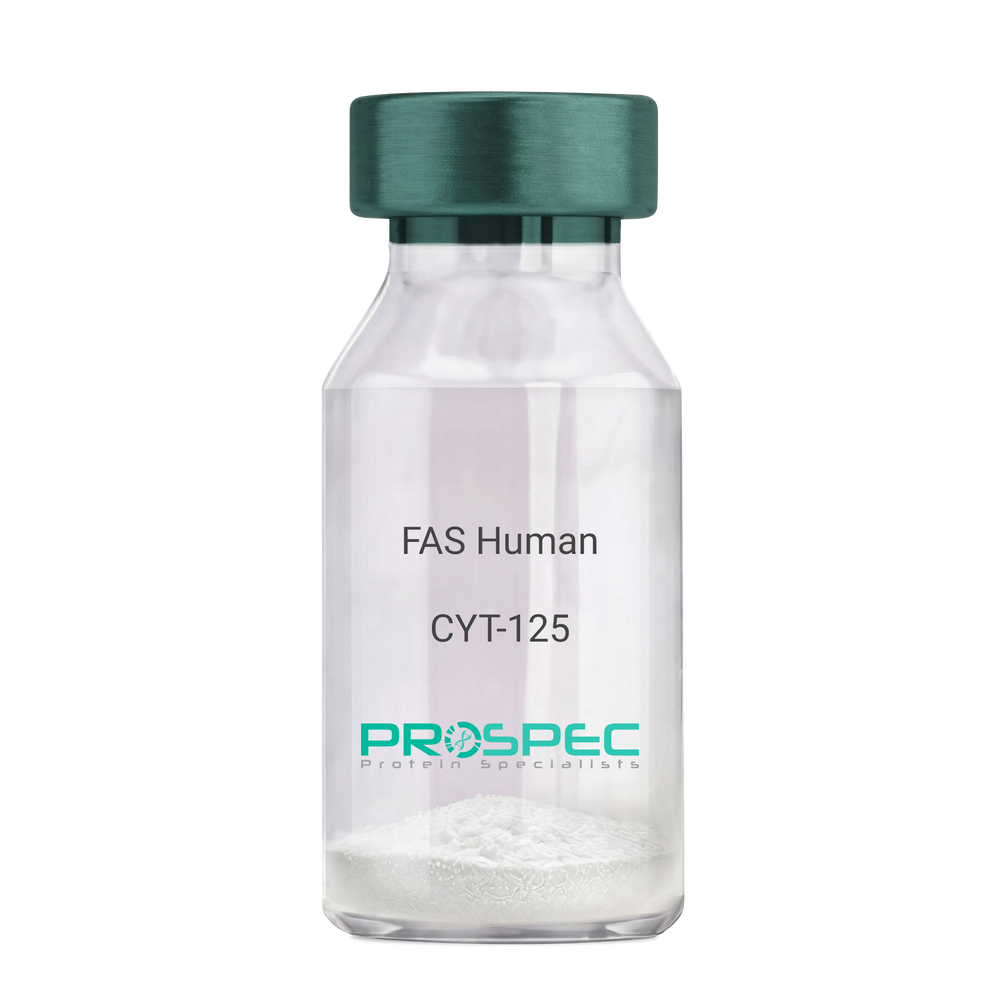
    FAS Human

    Description:

    sFas Receptor Human Recombinant

    Tumor necrosis factor receptor superfamily member 6, Apo-1 antigen, Apoptosis-mediating surface antigen FAS, FASLG receptor, CD95, FAS, APT1, FAS1, APO-1, FASTM, ALPS1A, TNFRSF6.

    Product # :

    CYT-125

    Price :

    Quantity :

    Shipping Method :

    Room Temp Icon

    Shipped at Room temp

    Add To Cart

    More Info

    • description
    • source
    • formulation
    • purity
    • biological activity
    • More Info

    Description

    sFas Receptor Human Recombinant produced in E.coli is a single, non-glycosylated polypeptide chain containing 157 amino acids and having a molecular mass of 17.6kDa.The FAS is purified by proprietary chromatographic techniques.

    Source

    Escherichia Coli.

    Formulation

    FAS protein was lyophilized from a 0.2µm filtered concentrated solution in 1×PBS, pH 7.4.

    Purity

    Greater than 95.0% as determined by:
    (a) Analysis by RP-HPLC.
    (b) Analysis by SDS-PAGE.

    Biological Activity

    The ED50 was determined by its ability to inhibit the cytotoxicity of Jurkat cells is between 10-15 µg/ml in the presence of 2ng/ml of hFasL.

    More Info

    • Introduction

      Fas and Fas Ligand (FasL) are members of the TNF superfamily and are type I and type II transmembrane proteins, respectively. Binding of FasL to Fas initiates apoptosis in Fas-bearing cells. The apoptosis mechanism involves the recruitment of pro-caspase 8 through an adaptor molecule named FADD followed by processing of the pro-enzyme to active forms. These active caspases subsequently cleave a variety of cellular substrates leading to the eventual cell death. sFasR is able to inhibit FasL-induced apoptosis by acting as a decoy receptor whicht serves as a sink for FasL. The full length Fas Receptor is a 319 a.a type I transmembrane protein, which contains a 157 a.a extracellular domain, a 17 a.a transmembrane domain, and 145 a.a cytoplasmic domain. The mature human Fas ECD shares 55%, 58%, a.a sequence identity with the mouse, rat, Fas, respectively.

    • Synonyms

      Tumor necrosis factor receptor superfamily member 6, Apo-1 antigen, Apoptosis-mediating surface antigen FAS, FASLG receptor, CD95, FAS, APT1, FAS1, APO-1, FASTM, ALPS1A, TNFRSF6.

    • Physical Appearance

      Sterile Filtered White lyophilized (freeze-dried) powder.

    • Stability

      Lyophilized FAS although stable at room temperature for 3 weeks, should be stored desiccated below -18°C. Upon reconstitution FAS should be stored at 4°C between 2-7 days and for future use below -18°C. For long term storage it is recommended to add a carrier protein (0.1% HSA or BSA). Please prevent freeze-thaw cycles.

    • Solubility

      It is recommended to reconstitute the lyophilized FAS in sterile 18M-cm H2O not less than 100µg/ml, which can then be further diluted to other aqueous solutions.

    • Amino Acid Sequence

      MRLSSKSVNA QVTDINSKGL ELRKTVTTVE TQNLEGLHHD GQFCHKPCPP GERKARDCTV NGDEPDCVPC QEGKEYTDKA HFSSKCRRCR LCDEGHGLEV EINCTRTQNT KCRCKPNFFC NSTVCEHCDP CTKCEHGIIK ECTLTSNTKC KEEGSRS.

    • Background

      What is the molecular weight/Mw of FAS Protein?
      FAS Protein has a total Mw of 17.6kDa.

      What is the source or expression system of FAS Protein?
      Escherichia Coli.

      What is the Purity of FAS Protein?
      FAS Protein is >95% pure as determined by SDS-PAGE.

      What is the Biological Activity of FAS Protein?
      The ED50 was determined by its ability to inhibit the cytotoxicity of Jurkat cells is between 10-15 µg/ml in the presence of 2ng/ml of hFasL.

      What is the amino acid sequence of FAS Protein?
      MRLSSKSVNA QVTDINSKGL ELRKTVTTVE TQNLEGLHHD GQFCHKPCPP GERKARDCTV NGDEPDCVPC QEGKEYTDKA HFSSKCRRCR LCDEGHGLEV EINCTRTQNT KCRCKPNFFC NSTVCEHCDP CTKCEHGIIK ECTLTSNTKC KEEGSRS.

      What applications can FAS Protein be used in?
      FAS Protein can probably be used in western blot, ELISA and Lateral Flow.

      What is the endotoxin level for FAS Protein?
      The endotoxin level is minimal, FAS Protein was purified using conventional chromatography techniques..

    ProSpec's products are furnished for LABORATORY RESEARCH USE ONLY. The product may not be used as drugs, agricultural or pesticidal products, food additives or household chemicals.

    Fas Human
  • View Data Sheet

    Name :

    CLCF1 Human, His

    Description:

    Neurotrophin-1 Human Recombinant, His Tag

    Cardiotrophin-like cytokine factor 1, B-cell-stimulating factor 3, BSF-3, Novel neurotrophin-1, NNT-1, CLCF1, BSF3, CLC, NNT1, NR6, CISS2.

    Product # :

    CYT-071

    Price :

    Quantity :

    Shipping Method :

    Ice Icon

    Shipped with Ice Packs

    Add To Cart

    More Info

    • description
    • source
    • formulation
    • purity
    • More Info
    • sds-page

    Description

    CLCF1 Human Recombinant produced in E.Coli is a single, non-glycosylated polypeptide chain containing 219 amino acids (28-225 a.a) and having a molecular mass of 24.6kDa.CLCF1 is fused to a 21 amino acid His-tag at N-terminus & purified by proprietary chromatographic techniques.

    Source

    Escherichia Coli.

    Formulation

    CLCF1 protein solution (1mg/ml) containing 20mM sodium citrate (pH 3.5), 0.4M Urea and 10% glycerol.

    Purity

    Greater than 90% as determined by SDS-PAGE.

    sds-page

    CLCF-sds-page - Product image 1

    More Info

    • Introduction

      Cardiotrophin-like cytokine factor 1 (CLCF1) is a member of the interleukin 6 family of cytokines, which are involved in cell signaling via phosphorylation of gp130. CLCF1 has a sequence of 225 amino acids with a 27 aa signal peptide, having a molecular mass of 22kDa in the mature form, and the maximum homology to cardiotrophin-1 and ciliary neurotrophic factor. CLCF1 is actively secreted from cells by forming a complex with soluble type I CRLF1 or soluble CNTFR. Defects in the CLCF1 gene cause cold-induced sweating syndrome 2 (CISS2). The CISS2 syndrome is typified by profuse sweating after exposure to cold as well as congenital physical abnormalities of the head and spine.

    • Synonyms

      Cardiotrophin-like cytokine factor 1, B-cell-stimulating factor 3, BSF-3, Novel neurotrophin-1, NNT-1, CLCF1, BSF3, CLC, NNT1, NR6, CISS2.

    • Physical Appearance

      Sterile Filtered clear solution.

    • Stability

      Store at 4°C if entire vial will be used within 2-4 weeks. Store, frozen at -20°C for longer periods of time. For long term storage it is recommended to add a carrier protein (0.1% HSA or BSA).Avoid multiple freeze-thaw cycles.

    • Amino Acid Sequence

      MGSSHHHHHH SSGLVPRGSH MLNRTGDPGP GPSIQKTYDL TRYLEHQLRS LAGTYLNYLG PPFNEPDFNP PRLGAETLPR ATVDLEVWRS LNDKLRLTQN YEAYSHLLCY LRGLNRQAAT AELRRSLAHF CTSLQGLLGS IAGVMAALGY PLPQPLPGTE PTWTPGPAHS DFLQKMDDFW LLKELQTWLW RSAKDFNRLK KKMQPPAAAV TLHLGAHGF.

    • Background

      Cardiotrophin-Like Cytokine Factor 1 Human Recombinant: A Significant Player in Neuronal Development and Immune Regulation

      Cardiotrophin-like cytokine factor 1 (CLCF1) has emerged as a crucial player in neuronal development and immune regulation. As a heterodimeric neurotropic cytokine, CLCF1 in complex with cytokine-like factor-1 (CLF-1) has demonstrated vital roles in neuronal development. Studies show that mice lacking this heterodimer exhibit reduced motor neurons and die shortly after birth due to suckling defects. In humans, mutations in the genes encoding for CLCF1 and CLF-1 manifest as Sohar-Crisponi or cold-induced sweating syndrome, with individuals at high risk of early death​1​.

      CLCF1 also exhibits a significant role in the regulation of hematopoiesis, particularly skewing towards myeloid cell differentiation. It has been demonstrated that in mice, CLCF1 promotes B-cell expansion, enhances humoral responses, and triggers autoimmunity. Further, CLCF1 administration resulted in an increase in circulating myeloid cells, along with augmented hematopoietic progenitor cells in the bone marrow. These findings underscore CLCF1's crucial role in modulating the immune system, particularly in the context of bonemarrow transplants and recovery following sub-lethal irradiation​2​.

      Interestingly, CLCF1 is a member of the IL-6 family of cytokines, known for their significant roles in immune regulation and stem cell biology. Like other family members, CLCF1 is secreted as a composite cytokine with CRLF1 and signals through the heterodimerization of the signaling chains LIFRβ and gp130. This suggests overlapping functions with leukemia inhibitor factor (LIF), another IL-6 family member. Expression of CLCF1 is documented in lymph nodes, spleen, and circulating lymphocytes, further establishing its role in immune modulation. However, the comprehensive implications of CLCF1 in immune regulation and hematopoiesis remain an active area of investigation​3​.

      In summary, Cardiotrophin-like cytokine factor 1 human recombinant represents a promising area of research with potential therapeutic implications in neurodevelopmental disorders and immune regulation.

      What is the molecular weight/Mw of CLCF Protein?
      CLCF Protein has a total Mw of 24.6kDa.

      What is the source or expression system of CLCF Protein?
      Escherichia Coli.

      What is the Purity of CLCF Protein?
      CLCF Protein is >90% pure as determined by SDS-PAGE.

      What is the Biological Activity of CLCF Protein?
      The biological functionality of CLCF Protein will be determined in the future.

      What is the amino acid sequence of CLCF Protein?
      MGSSHHHHHH SSGLVPRGSH MLNRTGDPGP GPSIQKTYDL TRYLEHQLRS LAGTYLNYLG PPFNEPDFNP PRLGAETLPR ATVDLEVWRS LNDKLRLTQN YEAYSHLLCY LRGLNRQAAT AELRRSLAHF CTSLQGLLGS IAGVMAALGY PLPQPLPGTE PTWTPGPAHS DFLQKMDDFW LLKELQTWLW RSAKDFNRLK KKMQPPAAAV TLHLGAHGF.

      What applications can CLCF Protein be used in?
      CLCF Protein can probably be used in western blot, ELISA and Lateral Flow.

      What is the endotoxin level for CLCF Protein?
      The endotoxin level is minimal, CLCF Protein was purified using conventional chromatography techniqu

    ProSpec's products are furnished for LABORATORY RESEARCH USE ONLY. The product may not be used as drugs, agricultural or pesticidal products, food additives or household chemicals.

    Clcf1 Human
  • View Data Sheet

    Name :

    Placental Lactogen Bovine

    Description:

    Placental Lactogen Bovine Recombinant

    Chorionic Somatomammotropin Hormone 1, CSH1, CSB, CS-1, hCS-B, BPL, BPLP-I.

    Product # :

    CYT-511

    Price :

    Quantity :

    Shipping Method :

    Room Temp Icon

    Shipped at Room temp

    Add To Cart

    More Info

    • description
    • source
    • formulation
    • purity
    • biological activity
    • More Info

    Description

    Placental Lactogen Bovine Recombinant, is a single polypeptide chain containing 199 amino acids and an additional Ala at the N-terminus having a molecular mass of 23 kDa. Placental Lactogen Recombinant is purified by proprietary chromatographic techniques.

    Source

    Escherichia Coli.

    Formulation

    The protein was lyophilized from a concentrated (1mg/ml) solution with 0.02-0.03% NaHCO3.

    Purity

    Greater than 99.0% as determined by:
    (a) Analysis by SEC-HPLC.
    (b) Analysis by SDS-PAGE.

    Biological Activity

    Placental Lactogen Bovine is biologically active as evidenced by inducing proliferation of Nb2 cells.

    More Info

    • Introduction

      Placental Lactogen is a polypeptide hormone that is produced by the Syncytiotrophoblasts of the Placenta, also known as chorionic somatomammotropin. It has both Growth Hormone and Prolactin activities on growth, lactation, and luteal steroid production. In women, placental lactogen secretion begins soon after implantation and increases to 1 g or more a day in late pregnancy. Placental lactogen is also an insulin antagonist.
      Placental Lactogen Bovine is also capable of activating human and other heterologous GH receptors but not ruminat GH receptors.

    • Synonyms

      Chorionic Somatomammotropin Hormone 1, CSH1, CSB, CS-1, hCS-B, BPL, BPLP-I.

    • Physical Appearance

      Sterile Filtered White lyophilized (freeze-dried) powder.

    • Stability

      Lyophilized Placental Lactogen Bovine Recombinant although stable at room temperature for 3 weeks, should be stored desiccated below -18°C. Upon reconstitution Placental Lactogen should be stored at 4°C between 2-7 days and for future use below -18°C. For long term storage it is recommended to add a carrier protein (0.1% HSA or BSA).Please prevent freeze-thaw cycles.

    • Solubility

      It is recommended to reconstitute the lyophilized Placental Lactogen in sterile 18MΩ-cm H2O not less than 100µg/ml, which can then be further diluted to other aqueous solutions.

    • Amino Acid Sequence

      The sequence of the first six N-terminal amino acids was determined and was found to be Ala-Glu-Asp-Tyr-Ala-Pro.

    • Protein content

      UV spectroscopy at 280 nm using the absorbency value of 0.86 as the extinction coefficient for a 0.1% (1mg/ml) solution at pH 8. This value is calculated by the DNAman computer analysis program of protein sequences.

    ProSpec's products are furnished for LABORATORY RESEARCH USE ONLY. The product may not be used as drugs, agricultural or pesticidal products, food additives or household chemicals.

    Placental Lactogen Bovine
  • View Data Sheet

    Name :

    PF4V1 Human

    Description:

    Platelet Factor 4 Variant 1 Human Recombinant

    PF4V1, Platelet Factor 4 Variant 1, CXCL4L1, CXCL4V1, PF4alt, PF4var1, SCYB4V1, PF4-ALT, PF4A, C-X-C Motif Chemokine 4, Platelet Factor 4 Variant, Platelet Factor 4, Variant 1 (PF4-Like) , C-X-C Motif Chemokine 4 Variant.

    Product # :

    CHM-027

    Price :

    Quantity :

    Shipping Method :

    Ice Icon

    Shipped with Ice Packs

    Add To Cart

    More Info

    • description
    • source
    • formulation
    • purity
    • More Info

    Description

    PF4V1 Human Recombinant produced in E.Coli is a single, non-glycosylated polypeptide chain containing 97 amino acids (31-104 a.a.) and having a molecular mass of 10.6kDa.PF4V1 is fused to a 23 amino acid His-tag at N-terminus & purified by proprietary chromatographic techniques.

    Source

    Escherichia Coli.

    Formulation

    PF4V1 protein solution (0.25mg/ml) contains 20mM Tris-HCl buffer (pH 8.0), 0.2M NaCl, 50% glycerol and 1mM DTT.

    Purity

    Greater than 85.0% as determined by SDS-PAGE.

    More Info

    • Introduction

      Platelet Factor 4 Variant 1 (PF4V1) is a member of the intercrine alpha (chemokine CxC) family. PF4V1 is an inhibitor of angiogenesis and inhibitor of endothelial cell chemotaxis (in vitro).

    • Synonyms

      PF4V1, Platelet Factor 4 Variant 1, CXCL4L1, CXCL4V1, PF4alt, PF4var1, SCYB4V1, PF4-ALT, PF4A, C-X-C Motif Chemokine 4, Platelet Factor 4 Variant, Platelet Factor 4, Variant 1 (PF4-Like) , C-X-C Motif Chemokine 4 Variant.

    • Physical Appearance

      Sterile Filtered colorless clear solution.

    • Stability

      Store at 4°C if entire vial will be used within 2-4 weeks. Store, frozen at -20°C for longer periods of time. For long term storage it is recommended to add a carrier protein (0.1% HSA or BSA).Please avoid freeze thaw cycles.

    • Amino Acid Sequence

      MGSSHHHHHH SSGLVPRGSH MGSFARAEAE EDGDLQCLCV KTTSQVRPRH ITSLEVIKAG PHCPTAQLIA TLKNGRKICL DLQALLYKKI IKEHLES.

    ProSpec's products are furnished for LABORATORY RESEARCH USE ONLY. The product may not be used as drugs, agricultural or pesticidal products, food additives or household chemicals.

    Pf4V1 Human
  • View Data Sheet

    Name :

    GTF3C6 Human

    Description:

    General Transcription Factor IIIC Polypeptide 6 Human Recombinant

    bA397G5.3, C6orf51, TFIIIC35, General transcription factor 3C polypeptide 6, Transcription factor IIIC 35 kDa subunit, TFIIIC 35 kDa subunit, TFIIIC35, Transcription factor IIIC subunit 6, CDA020, NPD020.

    Product # :

    PRO-2127

    Price :

    Quantity :

    Shipping Method :

    Ice Icon

    Shipped with Ice Packs

    Add To Cart

    More Info

    • description
    • source
    • formulation
    • purity
    • More Info

    Description

    GTF3C6 Human Recombinant produced in E.Coli is a single, non-glycosylated polypeptide chain containing 236 amino acids (1-213 a.a) and having a molecular mass of 26.4kDa.GTF3C6 is fused to a 23 amino acid His-tag at N-terminus & purified by proprietary chromatographic techniques.

    Source

    Escherichia Coli.

    Formulation

    GTF3C6 protein solution (0.5mg/ml) containing PBS buffer (pH 7.4), 10% glycerol and 1mM DTT.

    Purity

    Greater than 85.0% as determined by SDS-PAGE.

    More Info

    • Introduction

      In the absence of additional proteins - the general transcription factors (GTFs) RNA polymerases are unable to initiate RNA synthesis. GTFs accumulate in a complex on the DNA promoter and recruit the RNA polymerase. GTF3C family proteins are vital for RNA polymerase III to produce several small nuclear and cytoplasmic RNAs, including 5S RNA, tRNA, and adenovirus-associated (VA) RNA of both cellular and viral origin.

    • Synonyms

      bA397G5.3, C6orf51, TFIIIC35, General transcription factor 3C polypeptide 6, Transcription factor IIIC 35 kDa subunit, TFIIIC 35 kDa subunit, TFIIIC35, Transcription factor IIIC subunit 6, CDA020, NPD020.

    • Physical Appearance

      Sterile Filtered clear solution.

    • Stability

      Store at 4°C if entire vial will be used within 2-4 weeks. Store, frozen at -20°C for longer periods of time. For long term storage it is recommended to add a carrier protein (0.1% HSA or BSA).Avoid multiple freeze-thaw cycles.

    • Amino Acid Sequence

      MGSSHHHHHH SSGLVPRGSH MGSMAAAADE RSPEDGEDEE EEEQLVLVEL SGIIDSDFLS KCENKCKVLG IDTERPILQV DSCVFAGEYE DTLGTCVIFE ENVEHADTEG NNKTVLKYKC HTMKKLSMTR TLLTEKKEGE ENIGGVEWLQ IKDNDFSYRP NMICNFLHEN EDEEVVASAP DKSLELEEEE IQMNDSSNLS CEQEKPMHLE IEDSGPLIDI PSETEGSVFM ETQMLP.

    ProSpec's products are furnished for LABORATORY RESEARCH USE ONLY. The product may not be used as drugs, agricultural or pesticidal products, food additives or household chemicals.

    Gtf3C6 Human
  • View Data Sheet

    Name :

    Leptin qA Human, PEG

    Description:

    Leptin Quadruple Antagonist Pegylated Human Recombinant

    Product # :

    CYT-1251

    Price :

    Quantity :

    Shipping Method :

    Room Temp Icon

    Shipped at Room temp

    Add To Cart

    More Info

    • description
    • source
    • formulation
    • purity
    • biological activity
    • More Info

    Description

    Leptin Pegylated Quadruple Antagonist Human Recombinant is a single non-glycosilated polypeptide chain containing 146 amino and an additional Ala at N-terminus acids. The Human Leptin antagonist is bound to 20 kDa mono-PEG at N-terminus, resulting in 35.6 kDa. The Human Leptin Pegylated Quadruple Antagonist was mutated, resulting in D23L/L39A/D40A/F41A that was purified by proprietary chromatographic techniques.

    Source

    Escherichia coli.

    Formulation

    The Human Leptin Pegylated Quadruple Antagonist was lyophilized from a concentrated (0.65mg/ml) solution with 0.003mM NaHCO3.

    Purity

    Greater than 98.0% as determined by:

    (a) Gel filtration analysis.

    (b) Analysis by SDS-PAGE.

    Biological Activity

    Human Leptin Pegylated Quadruple Antagonist inhibits leptin-induced proliferation of BAF/3 cells stably transfected with the long form of human leptin receptor. Its in vitro activity is 6-8 fold lower than the non-pegylated human leptin antagonist but in vivo it has profound weight gain effect (as compared to the non-pegylated human leptin antagonist), resulting mainly from increased food intake. The in vivo activity of human pegylated super leptin antagonist was compared to that of human pegylated leptin antagonist is 9-27 fold higher.

    More Info

    • Physical Appearance

      White lyophilized (freeze-dried) powder.

    • Stability

      Lyophilized Human Leptin Pegylated Quadruple Antagonist although stable at room temperature for several weeks, should be stored desiccated below -18°C. Upon reconstitution at > 0.1 and up to 2mM of Human pegylated leptin antagonist and filter sterilization Human pegylated leptin antagonist can be stored at 4°C or even room temperature for several weeks making it suitable for long term infusion studies using osmotic pumps. At lower concentration addition of a carrier protein (0.1% HSA or BSA) is suggested. Please prevent freeze-thaw cycles.

    • Solubility

      It is recommended to reconstitute the lyophilized Human Leptin Pegylated Quadruple Antagonist in sterile water or sterile 0.4% NaHCO3 adjusted to pH 8-9, not less than 100µg/ml, which can then be further diluted with other aqueous solutions.

    • Background

      Leptin is a~16 kDa protein which is encoded by the obese gene. Leptin is a hormone which participates in regulating body weight, reproductive function and metabolism. leptin is expressed predominantly by adipocytes, which supports the idea that body weight is sensed as the total mass of fat in the body. Smaller amounts of leptin are also secreted by cellsin the epithelium of the stomach and in the placenta. Leptin receptors are highly expressed in areas of the hypothalamus which regulates body weight, as well as in T lymphocytes and vascular endothelial cells.

    • Protein content

      Protein quantization was carried out by UV spectroscopy at 280 nm using the absorbency value of 0.88 as the extinction coefficient for a 0.1% (1mg/ml) solution at pH 8.0. This value is calculated by the PC GENE computer analysis program of protein sequences (IntelliGenetics).

    ProSpec's products are furnished for LABORATORY RESEARCH USE ONLY. The product may not be used as drugs, agricultural or pesticidal products, food additives or household chemicals.

    Leptin Human Qa Peg
  • View Data Sheet

    Name :

    YY1 Human

    Description:

    YY1 Transcription Factor Human Recombinant

    YY1 transcription factor, YY1, DELTA, INO80S, NF-E1, UCRBP, YIN-YANG-1, Transcriptional repressor protein YY1, Delta transcription factor, Yin and yang 1, INO80 complex subunit S, YY-1.

    Product # :

    PRO-2108

    Price :

    Quantity :

    Shipping Method :

    Ice Icon

    Shipped with Ice Packs

    Add To Cart

    More Info

    • description
    • source
    • formulation
    • purity
    • More Info

    Description

    YY1 Human Recombinant produced in E. coli is a single polypeptide chain containing 437 amino acids (1-414) and having a molecular mass of 47.1kDa.YY1 is fused to a 23 amino acid His-tag at N-terminus & purified by proprietary chromatographic techniques.

    Source

    Escherichia Coli.

    Formulation

    The YY1 solution (0.25mg/1ml) contains PBS, 20% glycerol and 1mM DTT.

    Purity

    Greater than 80.0% as determined by SDS-PAGE.

    More Info

    • Introduction

      YY1 Transcription Factor, also known as YY1, is a part of the GLI-Kruppel class of zinc finger proteins. YY1 has a positive and negative effect on a various cellular and viral genes by binding to sites overlapping the transcription start site. YY1 leads histone deacetylases and histone acetyltransferases to a promoter in order to activate or repress the promoter.

    • Synonyms

      YY1 transcription factor, YY1, DELTA, INO80S, NF-E1, UCRBP, YIN-YANG-1, Transcriptional repressor protein YY1, Delta transcription factor, Yin and yang 1, INO80 complex subunit S, YY-1.

    • Physical Appearance

      Sterile Filtered clear solution.

    • Stability

      Store at 4°C if entire vial will be used within 2-4 weeks. Store, frozen at -20°C for longer periods of time. For long term storage it is recommended to add a carrier protein (0.1% HSA or BSA).Avoid multiple freeze-thaw cycles.

    • Amino Acid Sequence

      MGSSHHHHHH SSGLVPRGSH MGSMASGDTL YIATDGSEMP AEIVELHEIE VETIPVETIE TTVVGEEEEE DDDDEDGGGG DHGGGGGHGH AGHHHHHHHH HHHPPMIALQ PLVTDDPTQV HHHQEVILVQ TREEVVGGDD SDGLRAEDGF EDQILIPVPA PAGGDDDYIE QTLVTVAAAG KSGGGGSSSS GGGRVKKGGG KKSGKKSYLS GGAGAAGGGG ADPGNKKWEQ KQVQIKTLEG EFSVTMWSSD EKKDIDHETV VEEQIIGENS PPDYSEYMTG KKLPPGGIPG IDLSDPKQLA EFARMKPRKI KEDDAPRTIA CPHKGCTKMF RDNSAMRKHL HTHGPRVHVC AECGKAFVES SKLKRHQLVH TGEKPFQCTF EGCGKRFSLD FNLRTHVRIH TGDRPYVCPF DGCNKKFAQS TNLKSHILTH AKAKNNQ.

    ProSpec's products are furnished for LABORATORY RESEARCH USE ONLY. The product may not be used as drugs, agricultural or pesticidal products, food additives or household chemicals.

    Yy1 Human
  • View Data Sheet

    Name :

    GFRA1 Human

    Description:

    GDNF Family Receptor Alpha 1 Human Recombinant

    GDNF receptor alpha-1, GDNFR-alpha-1, GFRalpha-1, RET ligand 1, TGF-beta-related neurotrophic factor receptor 1, GDNFRA1, RET1L2, RETL1, Glial Cell LineDerived Neurotrophic Factor Receptor Alpha, TRNR1, GPILinked Anchor Protein, PI-Linked Cell-Surface.

    Product # :

    CYT-1026

    Price :

    Quantity :

    Shipping Method :

    Room Temp Icon

    Shipped at Room temp

    Add To Cart

    More Info

    • description
    • source
    • formulation
    • purity
    • More Info

    Description

    GFRA1 Human Recombinant produced in HEK293 cells is a single, glycosylated polypeptide chain (a.a 25-423) containing 409 amino acids including a 10 a.a C-terminal His tag. The total molecular mass is 46.0kDa (calculated).

    Source

    HEK293 cells.

    Formulation

    GFRA1 filtered (0.4 µm) and lyophilized from 0.5mg/ml in phosphate buffered saline pH 7.5 containing 5 % (w/v) trehalose.

    Purity

    Greater than 95.0% as determined by SDS-PAGE.

    More Info

    • Introduction

      GDNF family receptor alpha-1 (GFRA1) belongs to the GDNF receptor family. GFRA1 is a glycosyl-phosphatidylinositol(GPI)-linked cell surface receptor for both Glial cell line-derived growth factor (GDNF), neurturin (NTN), and mediates activation of the RET tyrosine kinase receptor. The GFRA1 protein is a potent survival factor for central and peripheral neurons, and is vital for the development of kidneys and the enteric nervous system.

    • Synonyms

      GDNF receptor alpha-1, GDNFR-alpha-1, GFRalpha-1, RET ligand 1, TGF-beta-related neurotrophic factor receptor 1, GDNFRA1, RET1L2, RETL1, Glial Cell LineDerived Neurotrophic Factor Receptor Alpha, TRNR1, GPILinked Anchor Protein, PI-Linked Cell-Surface.

    • Physical Appearance

      Filtered White lyophilized (freeze-dried) powder.

    • Stability

      Store lyophilized protein at -20°C. Aliquot the product after reconstitution to avoid repeated freezing/thawing cycles. Reconstituted protein can be stored at 4°C for a limited period of time; it does not show any change after two weeks at 4°C.

    • Solubility

      It is recommended to add deionized water to prepare a working stock solution of approximately 0.5mg/ml and let the lyophilized pellet dissolve completely. GFRA1 is not sterile! Please filter the product by an appropriate sterile filter before using it in the cell culture.

    • Amino Acid Sequence

      DRLDCVKASD QCLKEQSCST KYRTLRQCVA GKETNFSLAS GLEAKDECRS AMEALKQKSL YNCRCKRGMK KEKNCLRIYW SMYQSLQGND LLEDSPYEPV NSRLSDIFRV VPFISVEHIP KGNNCLDAAK ACNLDDICKK YRSAYITPCT TSVSNDVCNR RKCHKALRQF FDKVPAKHSY GMLFCSCRDI ACTERRRQTI VPVCSYEERE KPNCLNLQDS CKTNYICRSR LADFFTNCQP ESRSVSSCLK ENYADCLLAY SGLIGTVMTP NYIDSSSLSV APWCDCSNSG NDLEECLKFL NFFKDNTCLK NAIQAFGNGS DVTVWQPAFP VQTTTATTTT ALRVKNKPLG PAGSENEIPT HVLPPCANLQ AQKLKSNVSG NTHLCISNGN YEKEGLGAS H HHHHHHHHH.

    • Background

      What is the molecular weight/Mw of GFRA1 Protein?
      GFRA1 Protein has a total Mw of 46kDa.

      What is the source or expression system of GFRA1 Protein?
      HEK293 cells.
      What is the Purity of GFRA1 Protein?
      GFRA1 Protein is >95% pure as determined by SDS-PAGE.

      What is the Biological Activity of GFRA1 Protein?
      The biological functionality of GFRA1 Protein will be determined in the future.

      What is the amino acid sequence of GFRA1 Protein?
      DRLDCVKASD QCLKEQSCST KYRTLRQCVA GKETNFSLAS GLEAKDECRS AMEALKQKSL YNCRCKRGMK KEKNCLRIYW SMYQSLQGND LLEDSPYEPV NSRLSDIFRV VPFISVEHIP KGNNCLDAAK ACNLDDICKK YRSAYITPCT TSVSNDVCNR RKCHKALRQF FDKVPAKHSY GMLFCSCRDI ACTERRRQTI VPVCSYEERE KPNCLNLQDS CKTNYICRSR LADFFTNCQP ESRSVSSCLK ENYADCLLAY SGLIGTVMTP NYIDSSSLSV APWCDCSNSG NDLEECLKFL NFFKDNTCLK NAIQAFGNGS DVTVWQPAFP VQTTTATTTT ALRVKNKPLG PAGSENEIPT HVLPPCANLQ AQKLKSNVSG NTHLCISNGN YEKEGLGAS H HHHHHHHHH.

      What applications can GFRA1 Protein be used in?
      GFRA1 Protein can probably be used in western blot, ELISA and Lateral Flow.

      What is the endotoxin level for GFRA1 Protein?
      The endotoxin level is minimal, GFRA1 Protein was purified using conventional chromatography techniques.


    ProSpec's products are furnished for LABORATORY RESEARCH USE ONLY. The product may not be used as drugs, agricultural or pesticidal products, food additives or household chemicals.

    Gfra1 Human
  • View Data Sheet

    Name :

    TNFR (22-211) Human

    Description:

    Tumor Necrosis Factor Receptor (22-211 a.a.) Human Recombinant

    CD120a, FPF, MS5, p55, p55-R, p60, TBP1, TNF-R, TNF-R-I, TNF-R55, TNFAR, TNFR1, TNFR1-d2,TNFR55, TNFR60, Tumor necrosis factor receptor superfamily member 1A, Tumor necrosis factor receptor superfamily member 1A.

    Product # :

    CYT-851

    Price :

    Quantity :

    Shipping Method :

    Ice Icon

    Shipped with Ice Packs

    Add To Cart

    More Info

    • description
    • source
    • formulation
    • purity
    • More Info

    Description

    TNFR Human Recombinant produced in E.Coli is a single, non-glycosylated polypeptide chain containing 213 amino acids (22-211 a.a) and having a molecular mass of 23.6kDa.TNFR is fused to a 23 amino acid His-tag at N-terminus & purified by proprietary chromatographic techniques.

    Source

    Escherichia Coli.

    Formulation

    TNFR protein solution (1mg/ml) containing 20mM Tirs-HCl (pH8.0) and 10% glycerol.

    Purity

    Greater than 85% as determined by SDS-PAGE.

    More Info

    • Introduction

      TNFR1 belongs to the TNF-receptor superfamily. TNFR1 is a receptor for TNFSF2/TNF-alpha and homotrimeric TNFSF1/lymphotoxin-alpha.
      There are 2 types of soluble TNF receptors: sTNFR-I and sTNFR-II, which act to neutralize the biological activities of TNF alpha and TNF beta. The levels of these soluble receptors seem to increase as a result of shedding of the extracellular domains of the membrane bound receptors. TNF-a, TNFR1 and TNFR2 have roles in cellular differentiation. TNFR1 and TNFR2 function in cell type-specific renal injury.
      TNFR1 is capable of signaling both cell survival and apoptosis. TNFR1-induced apoptosis requires 2 sequential signaling complexes. TNFR1 is capable of activating NF-kappaB, mediate apoptosis, and function as a regulator of inflammation. Oxidative stress promotes TNFR1 and TNFR2 self-interaction, ligand-independent and enhanced ligand-dependent TNF signaling. TNFR1 contributes to the induction of non-cytocidal TNF effects including anti-viral state and activation of the acid sphingomyelinase. Human TNFR1 has a major region which controls cell surface expression. High levels of soluble TNF receptors are found in the amniotic fluid of pregnant women.
      Germline mutations of the extracellular domains of TNFR1 are linked to the autosomal dominant periodic fever syndrome. The impaired receptor clearance is believed to be a mechanism of the disease. Familial hibernian fever (FHF) is caused by defects in TNFRSF1A gene.

    • Synonyms

      CD120a, FPF, MS5, p55, p55-R, p60, TBP1, TNF-R, TNF-R-I, TNF-R55, TNFAR, TNFR1, TNFR1-d2,TNFR55, TNFR60, Tumor necrosis factor receptor superfamily member 1A, Tumor necrosis factor receptor superfamily member 1A.

    • Physical Appearance

      Sterile filtered colorless solution.

    • Stability

      Store at 4°C if entire vial will be used within 2-4 weeks. Store, frozen at -20°C for longer periods of time. For long term storage it is recommended to add a carrier protein (0.1% HSA or BSA).Avoid multiple freeze-thaw cycles.

    • Amino Acid Sequence

      MGSSHHHHHH SSGLVPRGSH MGSIYPSGVI GLVPHLGDRE KRDSVCPQGK YIHPQNNSIC CTKCHKGTYL YNDCPGPGQD TDCRECESGS FTASENHLRH CLSCSKCRKE MGQVEISSCT VDRDTVCGCR KNQYRHYWSE NLFQCFNCSL CLNGTVHLSC QEKQNTVCTC HAGFFLRENE CVSCSNCKKS LECTKLCLPQ IENVKGTEDS GTT.

    ProSpec's products are furnished for LABORATORY RESEARCH USE ONLY. The product may not be used as drugs, agricultural or pesticidal products, food additives or household chemicals.

    Tnfr 22 211 Human
  • View Data Sheet

    Name :

    NXT2 Human

    Description:

    NTF2-like Export Factor 2 Human Recombinant

    NTF2-related export protein 2, Protein p15-2, NXT2, BM-025, DC9, P15-2.

    Product # :

    PRO-1051

    Price :

    Quantity :

    Shipping Method :

    Ice Icon

    Shipped with Ice Packs

    Add To Cart

    More Info

    • description
    • source
    • formulation
    • purity
    • More Info

    Description

    NXT2 Human Recombinant produced in E.Coli is a single, non-glycosylated polypeptide chain containing 221 amino acids (1-197 a.a) and having a molecular mass of 25.3kDa.NXT2 is fused to a 24 amino acid His-tag at N-terminus & purified by proprietary chromatographic techniques.

    Source

    Escherichia Coli.

    Formulation

    NXT2 protein solution (1mg/ml) containing 20mM Tris-HCl buffer (pH 8.0), 2mM DTT, 40% glycerol and 200mM NaCl.

    Purity

    Greater than 95.0% as determined by SDS-PAGE.

    More Info

    • Introduction

      Nuclear transport factor 2-like export factor 2 (NXT2) belongs to the NXT family proteins which are commonly involved in exporting nuclear RNA in eukaryotic cells. The NXT2 protein is a regulator of protein export for NES-containing proteins. In addition, NXT2 associates with NXF1, NXF2, NXF3 and NXF5 and has a role in mRNA nuclear export. NXT2 has a critical role in upholding morphogenetic integrity of embryonic heart in vertebrate species. The NXT2 protein contains a nuclear transport factor 2 (NTF2) domain, which has a vital role in the trafficking of macromolecules, ions, and small molecules between the cytoplasm and nucleus, it may also have a role in mRNA nuclear export.

    • Synonyms

      NTF2-related export protein 2, Protein p15-2, NXT2, BM-025, DC9, P15-2.

    • Physical Appearance

      Sterile Filtered clear solution.

    • Stability

      Store at 4°C if entire vial will be used within 2-4 weeks. Store, frozen at -20°C for longer periods of time. For long term storage it is recommended to add a carrier protein (0.1% HSA or BSA).Avoid multiple freeze-thaw cycles.

    • Amino Acid Sequence

      MGSSHHHHHH SSGLVPRGSH MGSHMRKYRS HWSQGDREGY QRRSNYYEGP HTSHSSPADR TREEVVTPTL PEHTATRSQM ATSLDFKTYV DQACRAAEEF VNIYYETMDK RRRALTRLYL DKATLIWNGN AVSGLDALNN FFDTLPSSEF QVNMLDCQPV HEQATQSQTT VLVVTSGTVK
      FDGNKQHFFN QNFLLTAQST PNNTVWKIAS DCFRFQDWSS S.

    ProSpec's products are furnished for LABORATORY RESEARCH USE ONLY. The product may not be used as drugs, agricultural or pesticidal products, food additives or household chemicals.

    Nxt2 Human
  • View Data Sheet

    Name :

    PEDF PAT13D9AT Antibody

    Description:

    Mouse Anti Human Pigment Epithelium-Derived Factor Clone PAT13D9AT

    Pigment epithelium-derived factor,PEDF, Serpin-F1, SerpinF1, EPC-1, EPC1, PIG35.

    Product # :

    ANT-714

    Price :

    Quantity :

    Shipping Method :

    Ice Icon

    Shipped with Ice Packs

    Add To Cart

    More Info

    • formulation
    • More Info

    Formulation

    1mg/ml containing PBS, pH-7.4, 10% Glycerol and 0.02% Sodium Azide.

    More Info

    • Introduction

      PEDF is a noninhibitory serpin with neurotrophic, anti-angiogenic, and anti-tumorigenic properties. PEDF is a 50,000 dalton glycoprotein created and secreted in many tissues all the way through the body. A key component of the anti-angiogenic action of PEDF is the induction of apoptosis in proliferating endothelial cells. Additionally, PEDF is capable to inhibit the activity of angiogenic factors such as VEGF and FGF-2. The neuro-protective effects of PEDF are achieved through suppression of neuronal apoptosis induced by peroxide, glutamate, or other neurotoxins. The recognition of a lipase-linked cell membrane receptor for PEDF (PEDF-R) that binds to PEDF with high affinity should facilitate further elucidation of the underlying mechanisms of this pluripotent serpin. To date, PEDF-R is the only signaling receptor known to be used by a serpin family member. The unique range of PEDF activities associate it as a potential therapeutic agent for the treatment of vasculature related neurodegenerative diseases such as age-related macular degeneration (AMD) and proliferative diabetic retinopathy (PDR). PEDF in addition has the potential to be functional in the treatment of various angiogenesis-related diseases including a number of cancers.

    • Synonyms

      Pigment epithelium-derived factor,PEDF, Serpin-F1, SerpinF1, EPC-1, EPC1, PIG35.

    • Physical Appearance

      Sterile filtered colorless solution.

    • Immunogen

      Anti-human PEDF mAb, is derived from hybridization of mouse F0 myeloma cells with spleen cells from BALB/c mice immunized with a recombinant human PEDF protein 20-418 amino acids purified from E. coli.

    • Ig Subclass

      Mouse IgG1 heavy chain and κ light chain.

    • Clone

      PAT13D9AT.

    • Applications

      PEDF antibody has been tested by ELISA, Western blot analysis and ICC/IF to assure specificity and reactivity. Since application varies, however, each investigation should be titrated by the reagent to obtain optimal results.

    • Type

      Mouse Anti Human Monoclonal.

    • Storage Procedures

      For periods up to 1 month store at 4°C, for longer periods of time, store at -20°C. Prevent freeze thaw cycles.

    • Purification Method

      PEDF antibody was purified by protein-A affinity chromatography.

    ProSpec's products are furnished for LABORATORY RESEARCH USE ONLY. The product may not be used as drugs, agricultural or pesticidal products, food additives or household chemicals.

    Pedf Pat13D9At Antibody
  • View Data Sheet

    Name :

    Noggin Human

    Description:

    Noggin Human Recombinant

    SYM1, SYNS1, NOG.

    Product # :

    CYT-475

    Price :

    Quantity :

    Shipping Method :

    Room Temp Icon

    Shipped at Room temp

    Add To Cart

    More Info

    • description
    • source
    • formulation
    • purity
    • biological activity
    • More Info

    Description

    Noggin Human Recombinant produced in E.Coli is a non-glycosylated, non-disulfide-linked homodimer consisting of two 206 amino acid polypeptide chains, having a total molecular mass of approximately 46.3kDa. Noggin is purified by proprietary chromatographic techniques.

    Source

    Escherichia Coli.

    Formulation

    Lyophilized from a 0.2μm filtered solution in 30% CH3CN, 0.1% TFA.

    Purity

    Greater than 95.0% as determined by SDS-PAGE.

    Biological Activity

    The ED50 was determined by its ability to inhibit 5.0ng/ml of BMP-4 induced alkaline phosphatase production by murine ATDC-5 cells. The expected ED50 for this effect  is < 3ng/ml of Noggin, corresponding to a Specific Activity of 3.3x10⁵units/mg.

    More Info

    • Introduction

      The secreted polypeptide noggin, encoded by the NOG gene, binds and inactivates members of the transforming growth factor-beta (TGF-beta) superfamily signaling proteins, such as bone morphogenetic protein-4 (BMP4). By diffusing through extracellular matrices more efficiently than members of the TGF-beta superfamily, noggin may have a principal role in creating morphogenic gradients. Noggin appears to have pleiotropic effect, both early in development as well as in later stages. It was originally isolated from Xenopus based on its ability to restore normal dorsal-ventral body axis in embryos that had been artificially ventralized by UV treatment. The results of the mouse knockout of noggin suggest that it is involved in numerous developmental processes, such as neural tube fusion and joint formation. Recently, several dominant human NOG mutations in unrelated families with proximal symphalangism (SYM1) and multiple synostoses syndrome (SYNS1) were identified; both SYM1 and SYNS1 have multiple joint fusion as their principal feature, and map to the same region (17q22) as NOG. All NOG mutations altered evolutionarily conserved amino acid residues. The amino acid sequence of human noggin is highly homologous to that of Xenopus, rat and mouse.

    • Synonyms

      SYM1, SYNS1, NOG.

    • Physical Appearance

      Sterile Filtered White lyophilized (freeze-dried) powder.

    • Stability

      Lyophilized Noggin although stable at room temperature for 3 weeks, should be stored desiccated below -18°C. Upon reconstitution Noggin should be stored at 4°C between 2-7 days and for future use below -18°C.For long term storage it is recommended to add a carrier protein (0.1% HSA or BSA).Please prevent freeze-thaw cycles.

    • Solubility

      It is recommended to be briefly centrifuged prior to opening to bring the contents to the bottom. Reconstitute in 10mM HCl to a concentration of 0.1-1.0 mg/ml. Further dilutions should be made in appropriate buffered solutions.

    • Amino Acid Sequence

      MQHYLHIRPAPSDNLPLVDLIEHPDPIFDPKEKDLNETLLRSLLGGHYDPGFMATSPP
      EDRPGGGGGAAGGAEDLAELDQLLRQRPSGAMPSEIKGLEFSEGLAQGKKQRLSKKLR
      RKLQMWLWSQTFCPVLYAWNDLGSRFWPRYVKVGSCFSKRSCSVPEGMVCKPSKSVHL
      TVLRWRCQRRGGQRCGWIPIQYPIISECKCSC.

    • Background

      Recombinant Human Noggin Growth Beta Factor: A Potent Inhibitor of Bone Morphogenetic Protein Signaling.

      Abstract:

      Recombinant human Noggin Growth Beta Factor (Noggin) is a highly conserved protein that acts as a potent antagonist of the Bone Morphogenetic Protein (BMP) signaling pathway.

      Noggin plays a critical role in embryonic development, tissue homeostasis, and disease processes.

      This research paper provides a comprehensive analysis of the molecular characteristics, signaling mechanisms, and diverse physiological functions of recombinant human Noggin.

      Additionally, it explores the therapeutic implications of Noggin in various disorders. Synonyms such as SYM1, SYNS1, and NOG associated with Noggin are discussed throughout the paper to highlight their relevance in scientific literature.

      Introduction:

      1. Recombinant human Noggin Growth Beta Factor (Noggin) is a protein with multifaceted roles in development, tissue homeostasis, and disease. This section introduces Noggin and its synonyms, including SYM1, SYNS1, and NOG, emphasizing their significance and relevance in scientific research.

      Molecular Characteristics of Noggin :

      1. This section explores the molecular characteristics of Noggin, including its primary amino acid sequence, protein structure, and post-translational modifications. The interactions of Noggin with BMPs and other regulatory molecules are also discussed, highlighting the importance of these interactions in modulating BMP signaling.

      Inhibition of BMP Signaling by Noggin:

      1. Noggin acts as a potent inhibitor of BMP signaling by binding to BMP ligands and preventing their interaction with BMP receptors. This section delves into the mechanisms through which Noggin interferes with BMP signaling, including competition for receptor binding and sequestration of BMPs in extracellular spaces. The implications of Noggin-mediated inhibition of BMP signaling in development and tissue homeostasis are also discussed.

      Physiological Functions of Noggin:

      1. Noggin plays critical roles in various physiological processes, including embryonic development, neurogenesis, skeletal development, and joint formation. This section provides an in-depth analysis of Noggin's contributions to these processes, highlighting its role in maintaining proper tissue patterning, cell fate determination, and morphogenesis.

      Therapeutic Implications of Noggin:

      1. The unique inhibitory properties of Noggin make it an attractive therapeutic candidate for various disorders. This section discusses the potential applications of Noggin in bone and joint diseases, neurological disorders, and cancer. Additionally, it explores the challenges and future prospects of utilizing Noggin as a therapeutic agent.

      Clinical Studies and Translational Research:

      1. This section reviews clinical studies and translational research involving Noggin, emphasizing its potential in regenerative medicine and tissue engineering. It highlights ongoing efforts to develop Noggin-based therapeutics and discusses the promising results observed in preclinical and clinical studies.

    ProSpec's products are furnished for LABORATORY RESEARCH USE ONLY. The product may not be used as drugs, agricultural or pesticidal products, food additives or household chemicals.

    Noggin Human
  • View Data Sheet

    Name :

    BMPR1B Human

    Description:

    Bone Morphogenetic protein Receptor-1B Human Recombinant

    Bone Morphogenetic Protein Receptor, Type IB, BMP Type-1B Receptor, EC 2.7.11.30, BMPR-1B, ALK6, Bone Morphogenetic Protein Receptor Type-1B, Serine/Threonine Receptor Kinase, CDw293 Antigen, EC 2.7.11, CDw293, ALK-6, Bone morphogenetic protein receptor type-1B.

    Product # :

    CYT-897

    Price :

    Quantity :

    Shipping Method :

    Ice Icon

    Shipped with Ice Packs

    Add To Cart

    More Info

    • description
    • source
    • formulation
    • purity
    • More Info

    Description

    BMPR1B Human Recombinant produced in E.Coli is a single, non-glycosylated polypeptide chain containing 136 amino acids (14-126 a.a) and having a molecular mass of 15.1kDa. BMPR1B is fused to a 23 amino acid His-tag at N-terminus & purified by proprietary chromatographic techniques.

    Source

    Escherichia Coli.

    Formulation

    BMPR1B protein solution (0.5mg/ml) containing Phosphate buffered saline (pH7.4), 20% glycerol, 1mM DTT and 0.1mM PMSF.

    Purity

    Greater than 80.0% as determined by SDS-PAGE.

    More Info

    • Introduction

      Bone Morphogenetic protein Receptor-1B, also known as BMPR1B belongs to the TKL Ser/Thr protein kinase family. BMPR1Bis on ligand binding, forms a receptor complex consisting of two type II and two type I transmembrane serine/threonine kinases. Type II receptors phosphorylate as well as activate type I receptors which autophosphorylate, afterward bind and activate SMAD transcriptional regulators. BMPR1B is receptor for BMP7/OP-1 as well as GDF5.

    • Synonyms

      Bone Morphogenetic Protein Receptor, Type IB, BMP Type-1B Receptor, EC 2.7.11.30, BMPR-1B, ALK6, Bone Morphogenetic Protein Receptor Type-1B, Serine/Threonine Receptor Kinase, CDw293 Antigen, EC 2.7.11, CDw293, ALK-6, Bone morphogenetic protein receptor type-1B.

    • Physical Appearance

      Sterile Filtered colorless solution.

    • Stability

      Store at 4°C if entire vial will be used within 2-4 weeks. Store, frozen at -20°C for longer periods of time. For long term storage it is recommended to add a carrier protein (0.1% HSA or BSA).Avoid multiple freeze-thaw cycles.

    • Amino Acid Sequence

      MGSSHHHHHH SSGLVPRGSH MGSKKEDGES TAPTPRPKVL RCKCHHHCPE DSVNNICSTD GYCFTMIEED DSGLPVVTSG CLGLEGSDFQ CRDTPIPHQR RSIECCTERN ECNKDLHPTL PPLKNRDFVD GPIHHR.

    • Background

      Bone Morphogenetic Protein Receptor-1B Human Recombinant: A Key Regulator of Cellular Signaling in Development and Disease

      Abstract:

      Bone Morphogenetic Protein Receptor-1B (BMPR1B) human recombinant is a critical component of the bone morphogenetic protein (BMP) signaling pathway, governing cellular processes such as embryogenesis, tissue homeostasis, and disease progression. This research paper provides a comprehensive analysis of BMPR1B, including its characteristics, signaling mechanisms, and potential therapeutic applications. Additionally, innovative methodologies for the production and optimization of BMPR1B human recombinant are proposed, shedding light on its future implications in the field of regenerative medicine.

      Introduction:

      The precise regulation of cellular signaling pathways is essential for proper development and tissue maintenance. BMPR1B, a key receptor in the BMP pathway, plays a crucial role in various biological processes. This paper explores the unique features of BMPR1B and presents novel approaches for its production and optimization, aiming to unravel its therapeutic potential in a wide range of developmental and disease contexts.

      Characteristics and Signaling Mechanisms:

      BMPR1B belongs to the serine/threonine kinase receptor family and is predominantly expressed in embryonic tissues, skeletal structures, and reproductive organs. Upon binding to BMP ligands, BMPR1B initiates downstream signaling cascades, including Smad-dependent and Smad-independent pathways. These pathways regulate gene expression, cellular proliferation, differentiation, and apoptosis, ultimately influencing tissue development and homeostasis.

      Production of BMPR1B Human Recombinant:

      Efficient production methodologies are pivotal for harnessing the therapeutic potential of BMPR1B human recombinant. Mammalian expression systems, such as Chinese hamster ovary (CHO) cells, have been widely employed to ensure proper folding and post-translational modifications of the receptor. Optimization strategies, including codon optimization and vector engineering, have been utilized to enhance production efficiency. Purification techniques, such as affinity chromatography and size exclusion chromatography, have been optimized to obtain high-quality BMPR1B recombinant protein.

      Potential Therapeutic Applications:

      BMPR1B human recombinant holds tremendous promise in the field of regenerative medicine and disease therapy. Dysregulation of the BMP signaling pathway has been implicated in various developmental disorders, including skeletal abnormalities and congenital malformations. Modulating BMPR1B activity using BMPR1B human recombinant may offer a targeted approach for promoting tissue regeneration and repair in these conditions. Furthermore, BMPR1B signaling is involved in several diseases, such as cancer and cardiovascular disorders, highlighting its potential as a therapeutic target for intervention.

      Conclusion:

      BMPR1B human recombinant represents a vital regulator in cellular signaling, with significant implications in development and disease. Optimizing production methodologies and expanding our understanding of its signaling mechanisms will further enhance its therapeutic potential. With its involvement in various biological processes and disease contexts, BMPR1B human recombinant emerges as a promising tool for regenerative medicine and targeted therapeutics.

      What is the molecular weight/Mw of BMPR1B Protein?
      BMPR1B Protein has a total Mw of 15.1kDa.

      What is the source or expression system of BMPR1B Protein?
      Escherichia Coli.

      What is the Purity of BMPR1B Protein?
      BMPR1B Protein is >80% pure as determined by SDS-PAGE.

      What is the Biological Activity of BMPR1B Protein?
      The biological functionality of BMPR1B Protein will be determined in the future.

      What is the amino acid sequence of BMPR1B Protein?
      MGSSHHHHHH SSGLVPRGSH MGSKKEDGES TAPTPRPKVL RCKCHHHCPE DSVNNICSTD GYCFTMIEED DSGLPVVTSG CLGLEGSDFQ CRDTPIPHQR RSIECCTERN ECNKDLHPTL PPLKNRDFVD GPIHHR.

      What applications can BMPR1B Protein be used in?
      BMPR1B Protein can probably be used in western blot, ELISA and Lateral Flow.

      What is the endotoxin level for BMPR1B Protein?
      The endotoxin level is minimal, BMPR1B Protein was purified using conventional chromatography techniques.

    ProSpec's products are furnished for LABORATORY RESEARCH USE ONLY. The product may not be used as drugs, agricultural or pesticidal products, food additives or household chemicals.

    Bmpr1B Human
  • View Data Sheet

    Name :

    ATPIF1 Human

    Description:

    ATPase Inhibitory Factor 1 Human Recombinant

    ATPase inhibitor mitochondrial, Inhibitor of F(1)F(o)-ATPase, IF(1), IF1, ATPIF1, ATPI, IP, ATPIP.

    Product # :

    PRO-1154

    Price :

    Quantity :

    Shipping Method :

    Ice Icon

    Shipped with Ice Packs

    Add To Cart

    More Info

    • description
    • source
    • formulation
    • purity
    • More Info

    Description

    ATPIF1 Human Recombinant produced in E.Coli is a single, non-glycosylated polypeptide chain containing 106 amino acids (26-106 a.a) and having a molecular mass of 12.2kDa.ATPIF1 is fused to a 25 amino acid His-tag at N-terminus & purified by proprietary chromatographic techniques.

    Source

    Escherichia Coli.

    Formulation

    ATPIF1 protein solution (1mg/ml) containing 20mM Tris-HCl buffer (pH 8.0), 0.2M NaCl and 50% glycerol.

    Purity

    Greater than 95.0% as determined by SDS-PAGE.

    More Info

    • Introduction

      ATPase inhibitory factor 1 (ATPIF1) attaches to the C-terminal region of a beta subunit of the F1-ATPase at low pH values and, through interference of the beta and gamma subunit interaction, ATPIF1 controls the activity of the F1 (the hydrophilic catalytic core), F0 (the membrane embedded protein channel) ATPase. ATPIF1 overexpression in a number of human carcinomas additionally reinforces its participation in oncogenesis and offers insight into the transformed metabolism of cancer cells, including the reprogramming of energy metabolism in relation to glycolysis. Endogenous F1F(o)-ATPase inhibitor curbing ATP depletion when the mitochondrial membrane potential drops below a threshold and the F1F(o)-ATP synthase begins hydrolyzing ATP to pump protons out of the mitochondrial matrix.

    • Synonyms

      ATPase inhibitor mitochondrial, Inhibitor of F(1)F(o)-ATPase, IF(1), IF1, ATPIF1, ATPI, IP, ATPIP.

    • Physical Appearance

      Sterile Filtered colorless solution.

    • Stability

      Store at 4°C if entire vial will be used within 2-4 weeks. Store, frozen at -20°C for longer periods of time. For long term storage it is recommended to add a carrier protein (0.1% HSA or BSA).Avoid multiple freeze-thaw cycles.

    • Amino Acid Sequence

      MGSSHHHHHH SSGLVPRGSH MGSHMGSDQS ENVDRGAGSI REAGGAFGKR EQAEEERYFR AQSREQLAAL KKHHEEEIVH HKKEIERLQK EIERHKQKIK MLKHDD.

    ProSpec's products are furnished for LABORATORY RESEARCH USE ONLY. The product may not be used as drugs, agricultural or pesticidal products, food additives or household chemicals.

    Atpif1 Human
  • View Data Sheet

    Name :

    IL 12 p35 Human

    Description:

    Interleukin-12 p35 Human Recombinant

    NKSF1, CTL maturation factor (TCMF), Cytotoxic lymphocyte maturation factor 35 kDa subunit (CLMF p35), TSF, Edodekin-alpha, IL-12 p35, IL-12A, IL-12 subunit p35, NK cell stimulatory factor chain 1, SGT2, FLJ39002.

    Product # :

    CYT-487

    Price :

    Quantity :

    Shipping Method :

    Ice Icon

    Shipped with Ice Packs

    Add To Cart

    More Info

    • description
    • source
    • formulation
    • purity
    • More Info

    Description

    Interleukin-12 p35 His Human Recombinant produced in E.Coli is single, a non-glycosylated, polypeptide chain containing 197 amino acids fragment (57-253) with an amino-terminal hexahistidine tag. The IL-12 p35 His is purified by proprietary chromatographic techniques.

    Source

    Escherichia Coli.

    Formulation

    Interleukin-12 p35 His-Tag is supplied in 1xPBS and 50% glycerol.

    Purity

    Greater than 95.0% as determined by SDS-PAGE.

    More Info

    • Introduction

      Active IL-12 is a p70 disulphide-linked dimer composed of p35 and p40 subunits. The protein is a pleiotropic cytokine produced primarily by antigen presenting cells and has multiple effects on T lymphocytes and natural killer cells in terms of stimulating cytotoxicity, proliferation, production of other cytokines and Th1 subset differentiation.

    • Synonyms

      NKSF1, CTL maturation factor (TCMF), Cytotoxic lymphocyte maturation factor 35 kDa subunit (CLMF p35), TSF, Edodekin-alpha, IL-12 p35, IL-12A, IL-12 subunit p35, NK cell stimulatory factor chain 1, SGT2, FLJ39002.

    • Physical Appearance

      Sterile Filtered clear solution.

    • Stability

      Store at 4°C if entire vial will be used within 2-4 weeks. Store, frozen at -20°C for longer periods of time. Please avoid freeze thaw cycles.

    ProSpec's products are furnished for LABORATORY RESEARCH USE ONLY. The product may not be used as drugs, agricultural or pesticidal products, food additives or household chemicals.

    Il 12 P35 Human His
  • View Data Sheet

    Name :

    NDUFAF2 Human

    Description:

    NADH Dehydrogenase 1 Alpha Subcomplex, Assembly Factor 2 Human Recombinant

    Mimitin mitochondrial, B17.2-like, B17.2L, Myc-induced mitochondrial protein, MMTN, NADH dehydrogenase [ubiquinone] 1 alpha subcomplex assembly factor 2, NDUFA12-like protein, NDUFAF2, NDUFA12L, mimitin.

    Product # :

    ENZ-150

    Price :

    Quantity :

    Shipping Method :

    Ice Icon

    Shipped with Ice Packs

    Add To Cart

    More Info

    • description
    • source
    • formulation
    • purity
    • More Info

    Description

    NDUFAF2 Human Recombinant produced in E.Coli is a single, non-glycosylated polypeptide chain containing 189 amino acids (1-169 a.a.) and having a molecular mass of 22kDa.NDUFAF2 is fused to a 20 amino acid His-tag at N-terminus & purified by proprietary chromatographic techniques.

    Source

    Escherichia Coli.

    Formulation

    NDUFAF2 protein solution (0.5mg/ml) containing 20mM Tris-HCl buffer (pH 8.0), 1mM DTT, 20% glycerol and 200mM NaCl.

    Purity

    Greater than 85.0% as determined by SDS-PAGE.

    More Info

    • Introduction

      Mimitin (NDUFAF2) is a member of the complex I NDUFA12 subunit family.NADH dehydrogenase is an enzyme located in the inner mitochondrial membrane, which catalyzes the transfer of electrons from NADH to coenzyme Q (CoQ). NDUFAF2 is the "entry enzyme" of oxidative phosphorylation in the mitochondria. Mimitin protein functions as a molecular chaperone for mitochondrial complex I assembly.

    • Synonyms

      Mimitin mitochondrial, B17.2-like, B17.2L, Myc-induced mitochondrial protein, MMTN, NADH dehydrogenase [ubiquinone] 1 alpha subcomplex assembly factor 2, NDUFA12-like protein, NDUFAF2, NDUFA12L, mimitin.

    • Physical Appearance

      Sterile Filtered colorless solution.

    • Stability

      Store at 4°C if entire vial will be used within 2-4 weeks.Store, frozen at -20°C for longer periods of time. For long term storage it is recommended to add a carrier protein (0.1% HSA or BSA).Avoid multiple freeze-thaw cycles.

    • Amino Acid Sequence

      MGSSHHHHHH SSGLVPRGSH MGWSQDLFRA LWRSLSREVK EHVGTDQFGN KYYYIPQYKN WRGQTIREKR IVEAANKKEV DYEAGDIPTE WEAWIRRTRK TPPTMEEILK NEKHREEIKI KSQDFYEKEK LLSKETSEEL LPPPVQTQIK GHASAPYFGK EEPSVAPSST GKTFQPGSWM PRDGKSHNQ.

    ProSpec's products are furnished for LABORATORY RESEARCH USE ONLY. The product may not be used as drugs, agricultural or pesticidal products, food additives or household chemicals.

    Ndufaf2 Human
  • View Data Sheet

    Name :

    CFI Human

    Description:

    Complement Factor I Human

    Complement factor I, C3B/C4B inactivator, CFI, IF.

    Product # :

    PRO-2701

    Price :

    Quantity :

    Shipping Method :

    Ice Icon

    Shipped with Ice Packs

    Add To Cart

    More Info

    • description
    • source
    • formulation
    • purity
    • More Info

    Description

    Human Complement Factor I produced in Human plasma is glycosylated polypeptide composed of 2 disulfide-linked chains having a total molecular mass of 88kDa.

    Source

    Human Plasma.

    Formulation

    CFI protein solution contains Sodium phosphate, pH 7.2.

    Purity

    Greater than 93.0% as determined by SDS-PAGE.

    More Info

    • Introduction

      CFI cleaves and inactivates C3b and C4b. CFI is inactive without a cofactor such as the soluble factor H and C4b binding protein. CFI cleaves the alpha-peptide chain of C3b and C4b when these binds1 of the cofactors. This cleavage inactivates all of the complement activating functions of these proteins producing iC3b and iC4b.CFI cleaves the alpha chain of C3b twice and this releases a small fragment called C3f. CFI can cleave iC3b releasing C3c from C3dg in the presence of CR1.C4b is cleaved rapidly at 2 sites separating C4c from C4d.

    • Synonyms

      Complement factor I, C3B/C4B inactivator, CFI, IF.

    • Physical Appearance

      Sterile filtered solution.

    • Stability

      CFI Human is stable at 4°C if entire vial will be used within 2-4 weeks.Store, frozen below -20°C for longer periods of time.For long term storage it is recommended to add a carrier protein (0.1% HSA or BSA).Avoid multiple freeze-thaw cycles.

    • Human Virus Test

      Plasma from each donor has been tested and found negative for antibody to HIV-1, HIV-2, HCV and HBSAG.

    ProSpec's products are furnished for LABORATORY RESEARCH USE ONLY. The product may not be used as drugs, agricultural or pesticidal products, food additives or household chemicals.

    Cfi Human
  • View Data Sheet

    Name :

    Prolactin Ovine

    Description:

    Prolactin Ovine Recombinant

    Mammotropin, Luteotropic hormone, Luteotropin, PRL.

    Product # :

    CYT-240

    Price :

    Quantity :

    Shipping Method :

    Room Temp Icon

    Shipped at Room temp

    Add To Cart

    More Info

    • description
    • source
    • formulation
    • purity
    • biological activity
    • More Info

    Description

    Prolactin Ovine Recombinant produced in E.Coli is a single, non-glycosylated polypeptide chain containing 199 amino acids and having a molecular mass of 23 kDa. The Prolactin n is purified by proprietary chromatographic techniques.

    Source

    Escherichia Coli.

    Formulation

    The protein was lyophilized from a concentrated (1mg/ml) solution with 0.02-0.03% NaHCO3.

    Purity

    Greater than 99.0% as determined by:
    (a) Gel filtration analysis.
    (b) Analysis by SDS-PAGE.

    Biological Activity

    Is fully biologically active as evidenced by inducing proliferation of Nb2 cells.

    More Info

    • Introduction

      Prolactin is a neuroendocrine hormone synthesized primarily by the pituitary gland but also a variety of other cell types including the placenta, brain and uterus. Its primary function is to promote and maintain lactation but has also been shown to have a role in breast cancer development, regulation of reproductive function and immunoregulation.

    • Synonyms

      Mammotropin, Luteotropic hormone, Luteotropin, PRL.

    • Physical Appearance

      Sterile Filtered White lyophilized (freeze-dried) powder.

    • Stability

      Lyophilized Prolactin although stable at room temperature for 3 weeks, should be stored desiccated below -18°C. Upon reconstitution Prl should be stored at 4°C between 2-7 days and for future use below -18°C.For long term storage it is recommended to add a carrier protein (0.1% HSA or BSA).Please prevent freeze-thaw cycles.

    • Solubility

      It is recommended to reconstitute the lyophilized Prolactin in sterile 18MΩ-cm H2O or 0.4% NaHCO3 adjusted to pH 8-9, not less than 100µg/ml, which can then be further diluted to other aqueous solutions.

    • Amino Acid Sequence

      The sequence of the first six N-terminal amino acids was determined and was found to be Ala-Thr-Pro-Val-Cys-Pro.

    • Protein content

      Protein quantitation was carried out by UV spectroscopy at 280 nm using the absorbency value of 0.93 as the extinction coefficient for a 0.1% (1mg/ml) solution. This value is calculated by the PC DNAman computer analysis program of protein sequences.

    ProSpec's products are furnished for LABORATORY RESEARCH USE ONLY. The product may not be used as drugs, agricultural or pesticidal products, food additives or household chemicals.

    Prolactin Ovine
  • View Data Sheet

    Name :

    LITAF Human

    Description:

    Lipopolysaccharide-Induced TNF Factor Human Recombinant

    Lipopolysaccharide-induced TNF-alpha factor, PIG7, SIMPLE, Lipopolysaccharide-induced tumor necrosis factor-alpha factor, LPS-induced TNF-alpha factor, p53-induced gene 7 protein, Small integral membrane protein of lysosome/late endosome, LITAF.

    Product # :

    PRO-1350

    Price :

    Quantity :

    Shipping Method :

    Ice Icon

    Shipped with Ice Packs

    Add To Cart

    More Info

    • description
    • source
    • formulation
    • purity
    • More Info

    Description

    LITAF Human Recombinant produced in E.coli is a single, non-glycosylated polypeptide chain containing 181 amino acids (1-161) and having a molecular mass of 19.2 kDa. LITAF is fused to a 20 amino acid His-tag at N-terminus & purified by proprietary chromatographic techniques.

    Source

    Escherichia Coli.

    Formulation

    The LITAF solution (0.25mg/ml) contains 20mM Tris-HCl buffer (pH 8.0), 0.4M Urea and 10% glycerol.

    Purity

    Greater than 85% as determined by SDS-PAGE.

    More Info

    • Introduction

      Lipopolysaccharide-induced TNF-alpha factor (LITAF) is a small integral membrane protein of lysosome/late endosome. The expression of inflammatory cytokines such as TNF-alpha in Lipopolysaccharide-induced processes is mediated by LITAF. LITAF connects to STAT6B, which belongs to the STAT6 family forming a complex on the TNF-alpha promoter that modifies TNF activity. High levels of expression of LITAF mRNA are observed mostly in the placenta, peripheral blood leukocytes, lymph nodes and spleen.

    • Synonyms

      Lipopolysaccharide-induced TNF-alpha factor, PIG7, SIMPLE, Lipopolysaccharide-induced tumor necrosis factor-alpha factor, LPS-induced TNF-alpha factor, p53-induced gene 7 protein, Small integral membrane protein of lysosome/late endosome, LITAF.

    • Physical Appearance

      Sterile Filtered colorless solution.

    • Stability

      Store at 4°C if entire vial will be used within 2-4 weeks. Store, frozen at -20°C for longer periods of time. For long term storage it is recommended to add a carrier protein (0.1% HSA or BSA).Avoid multiple freeze-thaw cycles.

    • Amino Acid Sequence

      MGSSHHHHHH SSGLVPRGSH MSVPGPYQAA TGPSSAPSAP PSYEETVAVN SYYPTPPAPM PGPTTGLVTG PDGKGMNPPS YYTQPAPIPN NNPITVQTVY VQHPITFLDR PIQMCCPSCN KMIVSQLSYN AGALTWLSCG SLCLLGCIAG CCFIPFCVDA LQDVDHYCPN CRALLGTYKR L.

    ProSpec's products are furnished for LABORATORY RESEARCH USE ONLY. The product may not be used as drugs, agricultural or pesticidal products, food additives or household chemicals.

    Litaf Human
  • View Data Sheet

    Name :

    BTF3L4 Human

    Description:

    Basic Transcription Factor 3-Like 4 Human Recombinant

    Basic transcription factor 3-like 4, BTF3L4.

    Product # :

    PRO-1870

    Price :

    Quantity :

    Shipping Method :

    Ice Icon

    Shipped with Ice Packs

    Add To Cart

    More Info

    • description
    • source
    • formulation
    • purity
    • More Info

    Description

    BTF3L4 Human Recombinant produced in E.Coli is a single, non-glycosylated polypeptide chain containing 101 amino acids (1-78 a.a) and having a molecular mass of 11.3kDa. BTF3L4 is fused to a 23 amino acid His-tag at N-terminus & purified by proprietary chromatographic techniques.

    Source

    Escherichia Coli.

    Formulation

    BTF3L4 protein solution (1mg/ml) containing 20mM Tris-HCl buffer (pH 8.0), 10% glycerol and 0.4M Urea.

    Purity

    Greater than 85.0% as determined by SDS-PAGE.

    More Info

    • Introduction

      BTF3L4 is a part of the NAC-beta family which contains 1 NAC-A/B (NAC-alpha/beta) domain and required for the initiation of transcription. BTF3L4 binds to polypeptide chains as they emerge from the ribosome and prevents their interaction with the SRP, which usually targets nascent secretory peptides to the ER. BTF3 is also a general transcription factor which forms a stable complex with RNA polymerase II.

    • Synonyms

      Basic transcription factor 3-like 4, BTF3L4.

    • Physical Appearance

      Sterile Filtered colorless solution.

    • Stability

      Store at 4°C if entire vial will be used within 2-4 weeks. Store, frozen at -20°C for longer periods of time. For long term storage it is recommended to add a carrier protein (0.1% HSA or BSA).Avoid multiple freeze-thaw cycles.

    • Amino Acid Sequence

      MGSSHHHHHH SSGLVPRGSH MGSMNQEKLA KLQAQVRIGG KGTARRKKKV VHRTATADDK KLQSSLKKLA VNNIAGIEES WTVKHQNQKT LMRKMMMFQI L.

    ProSpec's products are furnished for LABORATORY RESEARCH USE ONLY. The product may not be used as drugs, agricultural or pesticidal products, food additives or household chemicals.

    Btf3L4 Human
  • View Data Sheet

    Name :

    SFRP2 Human

    Description:

    Secreted Frizzled-Related Protein 2 Human Recombinant

    FRP-2, SARP1, SDF-5, Secreted frizzled-related protein 2, UNQ361/PRO697, FKSG12, FKSG12.

    Product # :

    PRO-1905

    Price :

    Quantity :

    Shipping Method :

    Ice Icon

    Shipped with Ice Packs

    Add To Cart

    More Info

    • description
    • source
    • formulation
    • purity
    • More Info

    Description

    SFRP2 Human Recombinant produced in E.Coli is a single, non-glycosylated polypeptide chain containing 297 amino acids (20-295 a.a) and having a molecular mass of 33.8kDa.SFRP2 is fused to a 21 amino acid His-tag at N-terminus & purified by proprietary chromatographic techniques.

    Source

    Escherichia Coli.

    Formulation

    SFRP2 protein solution (1mg/ml) contains 20mM Tris-HCl buffer (pH8.0), 10% glycerol and 0.4M Urea.

    Purity

    Greater than 85.0% as determined by SDS-PAGE.

    More Info

    • Introduction

      Secreted frizzled-related protein 2 (SFRP2) belongs to the SFRP family which contains a cysteine-rich domain homologous to the putative Wnt-binding site of Frizzled proteins. SFRP2 function as soluble modulators of Wnt signaling. Methylation of SFRP2 is a possible marker for the existence of colorectal cancer.

    • Synonyms

      FRP-2, SARP1, SDF-5, Secreted frizzled-related protein 2, UNQ361/PRO697, FKSG12, FKSG12.

    • Physical Appearance

      Sterile Filtered clear solution.

    • Stability

      Store at 4°C if entire vial will be used within 2-4 weeks. Store, frozen at -20°C for longer periods of time. For long term storage it is recommended to add a carrier protein (0.1% HSA or BSA).Avoid multiple freeze-thaw cycles.

    • Amino Acid Sequence

      MGSSHHHHHH SSGLVPRGSH MGSARGLFLF GQPDFSYKRS NCKPIPVNLQ LCHGIEYQNM RLPNLLGHET MKEVLEQAGA WIPLVMKQCH PDTKKFLCSL FAPVCLDDLD ETIQPCHSLC VQVKDRCAPV MSAFGFPWPD MLECDRFPQD NDLCIPLASS DHLLPATEEA PKVCEACKNK NDDDNDIMET LCKNDFALKI KVKEITYINR DTKIILETKS KTIYKLNGVS ERDLKKSVLW LKDSLQCTCE EMNDINAPYL VMGQKQGGEL VITSVKRWQK GQREFKRISR SIRKLQC.

    ProSpec's products are furnished for LABORATORY RESEARCH USE ONLY. The product may not be used as drugs, agricultural or pesticidal products, food additives or household chemicals.

    Sfrp2 Human
  • 1
  • …
  • 36
  • 37
  • 38
  • 39
  • 40
  • …
  • 42
Your browser does not support the video tag.

Products

  • Cytokines
  • Growth Factors
  • Chemokines
  • CD Antigens
  • Neurotrophins
  • Hormones
  • Enzymes
  • Viral Antigens
  • Recombinant Proteins
  • Natural Proteins
  • Monoclonal Antibodies
  • Polyclonal Antibodies
  • Thermal Packaging

About

  • Company
  • Founder
  • Contribution
  • Contact Us
  • My Account

Ordering

  • Ordering Method
  • Ordering - Credit Card
  • Ordering PO
  • Shipping Fees
  • FAQ's

Legal

  • Terms & Conditions
  • Privacy
  • Site Map
  • info@prospecbio.com
  • Facebook
  • Instagram
  • Linkedin Profile

© 2026 ProSpec-Tany TechnoGene Ltd. All Rights Reserved.

  • Choosing a selection results in a full page refresh.
  • Opens in a new window.