Skip to content

High-quality research proteins.

  • 1-800-805-6531

  • Mon - Sat 8.00-18.00, Sun - Closed

  • info@prospecbio.com

  • PO Box 6591 East Brunswick NJ 08816

  • Products
    • Cytokines
    • Growth factors
    • Chemokines
    • Cd antigens
    • Neurotrophins
    • Hormones
    • Enzymes
    • Viral antigens
    • Recombinant proteins
    • Natural proteins
    • Monoclonal antibodies
    • Polyclonal antibodies
    • Thermal Packaging
  • About
    • Company
    • Founder
    • Contribution
  • Customers
    • Eastern Asia
    • Eastern Europe
    • North America
    • South America
    • South East Asia
    • Southern Asia
    • Western Europe
  • Ordering
    • Ordering Method
    • Ordering - Credit Card
    • Ordering - PO
    • Shipping Fees
    • FAQs
  • Services
    • DNA Cloning
    • Protein Expression
    • Monoclonal Antibody
    • Fermentation
    • Technology License
  • Contact us
Log in

Country/region

  • USD $ | Albania
  • USD $ | Andorra
  • USD $ | Argentina
  • USD $ | Armenia
  • USD $ | Australia
  • USD $ | Austria
  • USD $ | Azerbaijan
  • USD $ | Belarus
  • USD $ | Belgium
  • USD $ | Bolivia
  • USD $ | Brazil
  • USD $ | Bulgaria
  • USD $ | Cambodia
  • USD $ | Canada
  • USD $ | Chile
  • USD $ | China
  • USD $ | Colombia
  • USD $ | Costa Rica
  • USD $ | Croatia
  • USD $ | Cyprus
  • USD $ | Czechia
  • USD $ | Denmark
  • USD $ | Estonia
  • USD $ | Finland
  • USD $ | France
  • USD $ | Georgia
  • USD $ | Germany
  • USD $ | Greece
  • USD $ | Hong Kong SAR
  • USD $ | Hungary
  • USD $ | Iceland
  • USD $ | India
  • USD $ | Ireland
  • USD $ | Israel
  • USD $ | Italy
  • USD $ | Japan
  • USD $ | Kazakhstan
  • USD $ | Latvia
  • USD $ | Liechtenstein
  • USD $ | Lithuania
  • USD $ | Madagascar
  • USD $ | Malta
  • USD $ | Mexico
  • USD $ | Moldova
  • USD $ | Monaco
  • USD $ | Netherlands
  • USD $ | New Zealand
  • USD $ | North Macedonia
  • USD $ | Norway
  • USD $ | Panama
  • USD $ | Paraguay
  • USD $ | Peru
  • USD $ | Philippines
  • USD $ | Poland
  • USD $ | Portugal
  • USD $ | Romania
  • USD $ | Singapore
  • USD $ | Slovakia
  • USD $ | Slovenia
  • USD $ | South Africa
  • USD $ | South Korea
  • USD $ | Spain
  • USD $ | Sri Lanka
  • USD $ | Sweden
  • USD $ | Switzerland
  • USD $ | Taiwan
  • USD $ | Thailand
  • USD $ | Türkiye
  • USD $ | Ukraine
  • USD $ | United Kingdom
  • USD $ | United States
  • USD $ | Uruguay
  • USD $ | Vatican City
  • USD $ | Venezuela
  • USD $ | Vietnam
  • Facebook
  • Instagram
logoProSpec - Recombinant Protein Manufacturer for academic and R&D industry
Become a distributor
Account Log in
Wishlist
Cart Cart(0)
  • Products
    +
    • Cytokines
    • Growth factors
    • Chemokines
    • Cd antigens
    • Neurotrophins
    • Hormones
    • Enzymes
    • Viral antigens
    • Recombinant proteins
    • Natural proteins
    • Monoclonal antibodies
    • Polyclonal antibodies
    • Thermal Packaging
  • About
    +
    • Company
    • Founder
    • Contribution
  • Customers
    +
    • Eastern Asia
    • Eastern Europe
    • North America
    • South America
    • South East Asia
    • Southern Asia
    • Western Europe
  • Ordering
    +
    • Ordering Method
    • Ordering - Credit Card
    • Ordering - PO
    • Shipping Fees
    • FAQs
  • Services
    +
    • DNA Cloning
    • Protein Expression
    • Monoclonal Antibody
    • Fermentation
    • Technology License
  • Contact us

Item added to your cart

View cart
View All
  • Cytokines
  • Growth factors
  • Chemokines
  • Cd antigens
  • Neurotrophins
  • Hormones
  • Enzymes
  • Viral antigens
  • Recombinant proteins
  • Natural proteins
  • Monoclonal antibodies
  • Polyclonal antibodies
  • Thermal Packaging
  • Tumor Necrosis Factor

    Tumor Necrosis Factor

    View All
  • 4-1BB

    4-1BB

    View All
  • Adiponectin

    Adiponectin

    View All
  • AIF1

    AIF1

    View All
  • Other Cytokines

    Other Cytokines

    View All
  • AITRL

    AITRL

    View All
  • Angiopoietin

    Angiopoietin

    View All
  • Apolipoprotein

    Apolipoprotein

    View All
  • B-Cell Activating Factor

    B-Cell Activating Factor

    View All
  • Beta Defensin

    Beta Defensin

    View All
  • Bone Morphogenetic Protein

    Bone Morphogenetic Protein

    View All
  • B type Natriuretic Peptide

    B type Natriuretic Peptide

    View All
  • BST

    BST

    View All
  • Betacellulin

    Betacellulin

    View All
  • Cardiotrophin

    Cardiotrophin

    View All
  • Activin

    Activin

    View All
  • Fibroblast Growth Factor

    Fibroblast Growth Factor

    View All
  • Other Growth Factors

    Other Growth Factors

    View All
  • CSF

    CSF

    View All
  • CTGF

    CTGF

    View All
  • IGFBP

    IGFBP

    View All
  • VEGF Protein

    VEGF Protein

    View All
  • EGF

    EGF

    View All
  • Epigen

    Epigen

    View All
  • Erythropoietin

    Erythropoietin

    View All
  • Insulin-Like Growth Factor

    Insulin-Like Growth Factor

    View All
  • Growth Hormone

    Growth Hormone

    View All
  • HDGF

    HDGF

    View All
  • Hepatocyte Growth Factor

    Hepatocyte Growth Factor

    View All
  • Insulin

    Insulin

    View All
  • BCA-1/ BLC (CXCL13)

    BCA-1/ BLC (CXCL13)

    View All
  • BRAK (CXCL14)

    BRAK (CXCL14)

    View All
  • C-10 (CCL6)

    C-10 (CCL6)

    View All
  • Other Chemokines

    Other Chemokines

    View All
  • MEC (CCL28)

    MEC (CCL28)

    View All
  • LD78-beta (CCL3L1)

    LD78-beta (CCL3L1)

    View All
  • CTACK (CCL27)

    CTACK (CCL27)

    View All
  • CXCL16

    CXCL16

    View All
  • CXCL17

    CXCL17

    View All
  • Platelet Factor-4 (CXCL4)

    Platelet Factor-4 (CXCL4)

    View All
  • ENA-78 (CXCL5)

    ENA-78 (CXCL5)

    View All
  • Eotaxin (CCL11,24,26)

    Eotaxin (CCL11,24,26)

    View All
  • Exodus-2 (CCL21)

    Exodus-2 (CCL21)

    View All
  • Fractalkine (CX3CL1)

    Fractalkine (CX3CL1)

    View All
  • CXCL6

    CXCL6

    View All
  • Other CD Antigens

    Other CD Antigens

    View All
  • CD14

    CD14

    View All
  • CD164

    CD164

    View All
  • CD1

    CD1

    View All
  • CD2

    CD2

    View All
  • CD200

    CD200

    View All
  • CD207

    CD207

    View All
  • CD226

    CD226

    View All
  • CD23

    CD23

    View All
  • CD244

    CD244

    View All
  • CD247

    CD247

    View All
  • CD27

    CD27

    View All
  • CD274

    CD274

    View All
  • CD300

    CD300

    View All
  • CD33

    CD33

    View All
  • Other Neurotrophins

    Other Neurotrophins

    View All
  • Beta-NGF

    Beta-NGF

    View All
  • BDNF

    BDNF

    View All
  • CDNF

    CDNF

    View All
  • CNTF

    CNTF

    View All
  • GDNF

    GDNF

    View All
  • Glia Maturation Factor

    Glia Maturation Factor

    View All
  • MANF

    MANF

    View All
  • Midkine

    Midkine

    View All
  • Neuroglobin

    Neuroglobin

    View All
  • Neurotrophic factors

    Neurotrophic factors

    View All
  • Neuregulin

    Neuregulin

    View All
  • Neuropilin

    Neuropilin

    View All
  • Pigment Epithelium-Derived Factor

    Pigment Epithelium-Derived Factor

    View All
  • Pleiotrophin

    Pleiotrophin

    View All
  • Peptide Hormones

    Peptide Hormones

    View All
  • Other Hormones

    Other Hormones

    View All
  • HCG

    HCG

    View All
  • Endothelin

    Endothelin

    View All
  • Exendin

    Exendin

    View All
  • FSH

    FSH

    View All
  • Glucagon

    Glucagon

    View All
  • GHRP

    GHRP

    View All
  • GLP

    GLP

    View All
  • Thyrostimulin

    Thyrostimulin

    View All
  • Inhibin A

    Inhibin A

    View All
  • LHRH

    LHRH

    View All
  • Melanotan

    Melanotan

    View All
  • Procalcitonin

    Procalcitonin

    View All
  • PTH

    PTH

    View All
  • Peroxiredoxin

    Peroxiredoxin

    View All
  • Peptidase

    Peptidase

    View All
  • Synthetase

    Synthetase

    View All
  • Transferase

    Transferase

    View All
  • Hydrolase

    Hydrolase

    View All
  • Dehydrogenase

    Dehydrogenase

    View All
  • ACE2

    ACE2

    View All
  • Esterase

    Esterase

    View All
  • Protein Kinases

    Protein Kinases

    View All
  • Other Enzymes

    Other Enzymes

    View All
  • Phosphatase

    Phosphatase

    View All
  • Deaminase

    Deaminase

    View All
  • Oxygenase

    Oxygenase

    View All
  • Adenylate Kinase

    Adenylate Kinase

    View All
  • Lyase

    Lyase

    View All
  • Chagas

    Chagas

    View All
  • SARS

    SARS

    View All
  • Influenza

    Influenza

    View All
  • ASFV

    ASFV

    View All
  • Astrovirus

    Astrovirus

    View All
  • Borrelia

    Borrelia

    View All
  • Helicobacter Pylori

    Helicobacter Pylori

    View All
  • Chikungunya

    Chikungunya

    View All
  • Chlamydia

    Chlamydia

    View All
  • Cytomegalo

    Cytomegalo

    View All
  • Dengue

    Dengue

    View All
  • EBV

    EBV

    View All
  • Ebola

    Ebola

    View All
  • Feline Leukemia Virus

    Feline Leukemia Virus

    View All
  • Hepatitis A

    Hepatitis A

    View All
  • Other

    Other

    View All
  • Actin

    Actin

    View All
  • ADAM

    ADAM

    View All
  • Complement Component

    Complement Component

    View All
  • Ag85

    Ag85

    View All
  • Eukaryotic Translation Initiation Factor

    Eukaryotic Translation Initiation Factor

    View All
  • Anterior Gradient Protein

    Anterior Gradient Protein

    View All
  • Heat Shock Protein

    Heat Shock Protein

    View All
  • Alpha-2-HS-Glycoprotein

    Alpha-2-HS-Glycoprotein

    View All
  • Hemoglobin

    Hemoglobin

    View All
  • Allergy

    Allergy

    View All
  • Anaplasma

    Anaplasma

    View All
  • Angiogenin

    Angiogenin

    View All
  • Ankyrin Repeat Domain

    Ankyrin Repeat Domain

    View All
  • Annexin

    Annexin

    View All
  • Other Natural Proteins

    Other Natural Proteins

    View All
  • Aprotinin

    Aprotinin

    View All
  • Transferrin

    Transferrin

    View All
  • Avidin

    Avidin

    View All
  • Anti Coagulation Factors

    Anti Coagulation Factors

    View All
  • Natural Albumin

    Natural Albumin

    View All
  • Natural Coagulation Factors

    Natural Coagulation Factors

    View All
  • Fibronectin

    Fibronectin

    View All
  • Thrombin

    Thrombin

    View All
  • Anti Human Enzyme

    Anti Human Enzyme

    View All
  • Other Monoclonal Antibodies

    Other Monoclonal Antibodies

    View All
  • Anti Human Cytokine

    Anti Human Cytokine

    View All
  • Anti Human Heat Shock Protein

    Anti Human Heat Shock Protein

    View All
  • Anti Mouse Lymphocyte

    Anti Mouse Lymphocyte

    View All
  • Anti Human Chemokine

    Anti Human Chemokine

    View All
  • Anti Human Lymphocyte

    Anti Human Lymphocyte

    View All
  • Anti Viral Monoclonal

    Anti Viral Monoclonal

    View All
  • Anti Mouse Cytokine

    Anti Mouse Cytokine

    View All
  • Anti-GST Monoclonal

    Anti-GST Monoclonal

    View All
  • Other Polyclonal Antibodies

    Other Polyclonal Antibodies

    View All
  • Anti Viral

    Anti Viral

    View All
  • Anti-GST Monoclonal

    Anti-GST Monoclonal

    View All
Back

Search results

1000 results found for “Killer Cell”

Name

Description

Product #

Price

Quantity

Shipping Method

  • View Data Sheet

    Name :

    p53 scFv antibody

    Description:

    p53 scFv Recombinant Antibody

    LFS1, TRP53, TP53, p53.

    Product # :

    ANT-192

    Price :

    Quantity :

    Shipping Method :

    Ice Icon

    Shipped with Ice Packs

    Add To Cart

    More Info

    • description
    • source
    • formulation
    • purity
    • More Info

    Description

    p53 or TP53 is a cell cycle related transcription factor that promotes transcription of genes that induce cell cycle arrest or apoptosis in response to DNA damage or other cell stresses.This tumour suppressor gene is mutated in about half of all human cancers.Recombinant Anti p53 produced in E.Coli is a non-glycosylated, polypeptide chain containing a hexahistidine tag and having a molecular weight of 37 kDa.The rAp53 is purified by proprietary chromatographic techniques.

    Source

    Escherichia Coli.

    Formulation

    p53 is supplied in 10mM Tris HCl, pH 8, 100mM NaCl and 50% glycerol.

    Purity

    Greater than 95.0% as determined by SDS-PAGE.

    More Info

    • Introduction

      Tumor protein p53, a nuclear protein, plays an essential role in the regulation of cell cycle, specifically in the transition from G0 to G1. It is found in very low levels in normal cells, however, in a variety of transformed cell lines, it is expressed in high amounts, and believed to contribute to transformation and malignancy. p53 is a DNA-binding protein containing DNA-binding, oligomerization and transcription activation domains. It is postulated to bind as a tetramer to a p53-binding site and activate expression of downstream genes that inhibit growth and/or invasion, and thus function as a tumor suppressor. Mutants of p53 that frequently occur in a number of different human cancers fail to bind the consensus DNA binding site, and hence cause the loss of tumor suppressor activity. Alterations of the TP53 gene occur not only as somatic mutations in human malignancies, but also as germline mutations in some cancer-prone families with Li-Fraumeni syndrome.

    • Synonyms

      LFS1, TRP53, TP53, p53.

    • Physical Appearance

      Sterile Filtered clear solution.

    • Stability

      Store at 4°C if entire vial will be used within 2-4 weeks. Store, frozen at -20°C for longer periods of time. Please avoid freeze thaw cycles.

    • Type

      Antibody Recombinant.

    ProSpec's products are furnished for LABORATORY RESEARCH USE ONLY. The product may not be used as drugs, agricultural or pesticidal products, food additives or household chemicals.

    P53 Recombinant Antibody
  • View Data Sheet

    Name :

    PODXL Mouse

    Description:

    Podocalyxin-Like Mouse Recombinant

    Podocalyxin, Podocalyxin-like protein 1, PC, PCLP-1.

    Product # :

    PRO-2310

    Price :

    Quantity :

    Shipping Method :

    Ice Icon

    Shipped with Ice Packs

    Add To Cart

    More Info

    • description
    • source
    • formulation
    • purity
    • More Info

    Description

    PODXL Mouse Recombinant produced in Sf9 Baculovirus cells is a single, glycosylated polypeptide chain containing 391 amino acids (22-404a.a.) and having a molecular mass of 41.0kDa (Molecular size on SDS-PAGE will appear at approximately 70-100kDa). PODXL is expressed with an 8 amino acid His tag at C-Terminus and purified by proprietary chromatographic techniques.

    Source

    Sf9, Baculovirus cells.

    Formulation

    PODXL protein solution (0.5mg/ml) containing Phosphate Buffered Saline (pH 7.4) and 10% glycerol.

    Purity

    Greater than 95% as determined by SDS-PAGE.

    More Info

    • Introduction

      Podocalyxin (PODXL) is a greatly glycosylated transmembrane sialoprotein in the CD34 and endoglycan family. The PODXL protein is involved in the regulation of both adhesion and cell morphology and cancer progression. PODXL functions as an anti-adhesive molecule, which retains an open filtration pathway between neighboring foot processes in the podocyte by charge repulsion. Moreover, PODXL serves as a pro-adhesive molecule, enhancing the adherence of cells to immobilized ligands, increasing the rate of migration and cell-cell contacts in an integrin-dependent manner.

    • Synonyms

      Podocalyxin, Podocalyxin-like protein 1, PC, PCLP-1.

    • Physical Appearance

      Sterile Filtered clear solution.

    • Stability

      Store at 4°C if entire vial will be used within 2-4 weeks. Store, frozen at -20°C for longer periods of time.For long term storage it is recommended to add a carrier protein (0.1% HSA or BSA).Please avoid freeze thaw cycles.

    • Amino Acid Sequence

      HNGNETSTSA IKSSTVQSHQ SATTSTEVTT GHPVASTLAS TQPSNPTPFT TSTQSPSMPT STPNPTSNQS GGNLTSSVSE VDKTKTSSPS STAFTSSSGQ TASSGGKSGD SFTTAPTTTL GLINVSSQPT DLNTTSKLLS TPTTDNTTSP QQPVDSSPST ASHPVGQHTP AAVPSSSGST PSTDNSTLTW KPTTHKPLGT SEATQPLTSQ TPGITTLPVS TLQQSMASTV GTTTEEFTHL ISNGTPVAPP GPSTPSPIWA FGNYQLNCEP PIRPDEELLI LNLTRASLCE RSPLDEKEKL VELLCHSVKA SFKPAEDLCT LHVAPILDNQ AVAVKRIIIE TKLSPKAVYE LLKDRWDDLT EAGVSDMKLG KEGPPEVNED RFSLEHHHHH H.

    ProSpec's products are furnished for LABORATORY RESEARCH USE ONLY. The product may not be used as drugs, agricultural or pesticidal products, food additives or household chemicals.

    Podxl Mouse
  • View Data Sheet

    Name :

    KPNB1 Human

    Description:

    Karyopherin Beta 1 Human Recombinant

    Importin subunit beta-1, Importin-90, Karyopherin subunit beta-1, Nuclear factor p97, Pore targeting complex 97kDa subunit, PTAC97, KPNB1, NTF97.

    Product # :

    PRO-1001

    Price :

    Quantity :

    Shipping Method :

    Ice Icon

    Shipped with Ice Packs

    Add To Cart

    More Info

    • description
    • source
    • formulation
    • purity
    • More Info

    Description

    KPNB1 Human Recombinant produced in E.Coli is a single, non-glycosylated polypeptide chain containing 899 amino acids (1-876 a.a.) and having a molecular mass of 99.6kDa. KPNB1 is fused to a 23 amino acid His-tag at N-terminus & purified by proprietary chromatographic techniques.

    Source

    E.coli.

    Formulation

    KPNB1 protein solution (0.25mg/ml) containing 20mM Tris-HCl buffer (pH 8.0), 1mM DTT, 30% glycerol and 0.1M NaCl.

    Purity

    Greater than 85% as determined by SDS-PAGE.

    More Info

    • Introduction

      KPNB1 is a member of the importin beta family. The KPNB1 protein is engaged in nuclear protein import, either by coupling itself with an adapter protein (e.g., importin-alpha subunit which binds to nuclear localization signals (NLS) in cargo substrates), or by functioning autonomously as a nuclear transport receptor (acts as NLS receptor, docking of the importin/substrate complex to the nuclear pore complex).

    • Synonyms

      Importin subunit beta-1, Importin-90, Karyopherin subunit beta-1, Nuclear factor p97, Pore targeting complex 97kDa subunit, PTAC97, KPNB1, NTF97.

    • Physical Appearance

      Sterile Filtered colorless solution.

    • Stability

      Store at 4°C if entire vial will be used within 2-4 weeks. Store, frozen at -20°C for longer periods of time. For long term storage it is recommended to add a carrier protein (0.1% HSA or BSA).Avoid multiple freeze-thaw cycles.

    • Amino Acid Sequence

      MGSSHHHHHH SSGLVPRGSH MGSMELITIL EKTVSPDRLE LEAAQKFLER AAVENLPTFL VELSRVLANP GNSQVARVAA GLQIKNSLTS KDPDIKAQYQ QRWLAIDANA RREVKNYVLQ TLGTETYRPS SASQCVAGIA CAEIPVNQWP ELIPQLVANV TNPNSTEHMK ESTLEAIGYI CQDIDPEQLQ DKSNEILTAI IQGMRKEEPS NNVKLAATNA LLNSLEFTKA NFDKESERHF IMQVVCEATQ CPDTRVRVAA LQNLVKIMSL YYQYMETYMG PALFAITIEA MKSDIDEVAL QGIEFWSNVC DEEMDLAIEA SEAAEQGRPP EHTSKFYAKG ALQYLVPILT QTLTKQDEND DDDDWNPCKA AGVCLMLLAT CCEDDIVPHV LPFIKEHIKN PDWRYRDAAV MAFGCILEGP EPSQLKPLVI QAMPTLIELM KDPSVVVRDT AAWTVGRICE LLPEAAINDV YLAPLLQCLI EGLSAEPRVA SNVCWAFSSL AEAAYEAADV ADDQEEPATY CLSSSFELIV QKLLETTDRP DGHQNNLRSS AYESLMEIVK NSAKDCYPAV QKTTLVIMER LQQVLQMESH IQSTSDRIQF NDLQSLLCAT LQNVLRKVQH QDALQISDVV MASLLRMFQS TAGSGGVQED ALMAVSTLVE VLGGEFLKYM EAFKPFLGIG LKNYAEYQVC LAAVGLVGDL CRALQSNIIP FCDEVMQLLL ENLGNENVHR SVKPQILSVF GDIALAIGGE FKKYLEVVLN TLQQASQAQV DKSDYDMVDY LNELRESCLE AYTGIVQGLK GDQENVHPDV MLVQPRVEFI LSFIDHIAGD EDHTDGVVAC AAGLIGDLCT AFGKDVLKLV EARPMIHELL TEGRRSKTNK AKTLATWATK ELRKLKNQA.

    ProSpec's products are furnished for LABORATORY RESEARCH USE ONLY. The product may not be used as drugs, agricultural or pesticidal products, food additives or household chemicals.

    Kpnb1 Human
  • View Data Sheet

    Name :

    RAB3IL1 Human

    Description:

    RAB3A Interacting Protein Like 1 Human Recombinant

    GRAB, Rab-3A-interacting-like protein 1, Guanine nucleotide exchange factor for Rab-3A, Rab3A-interacting-like protein 1, Rabin3-like 1.

    Product # :

    PRO-2141

    Price :

    Quantity :

    Shipping Method :

    Ice Icon

    Shipped with Ice Packs

    Add To Cart

    More Info

    • description
    • source
    • formulation
    • purity
    • More Info

    Description

    RAB3IL1 Human Recombinant produced in E.Coli is a single, non-glycosylated polypeptide chain containing 405 amino acids (1-382a.a) and having a molecular mass of 45kDa.RAB3IL1 is fused to a 23 amino acid His-tag at N-terminus & purified by proprietary chromatographic techniques.

    Source

    Escherichia Coli.

    Formulation

    RAB3IL1 protein solution (0.25mg/ml) containing Phosphate buffer saline (pH 7.4) and 50% glycerol.

    Purity

    Greater than 90.0% as determined by SDS-PAGE.

    More Info

    • Introduction

      RAB3A Interacting Protein Like 1 (RAB3IL1) is a 382 amino acid protein which is a member of the SEC2 family. RAB3IL1 is a guanine nucleotide exchange factor (GEF) for Rab3A. RAB3IL1 competes for interaction with Rab3A and IHPK1 via its coiled coil domain, which doesn’t involve IHPK1 kinase activity.

    • Synonyms

      GRAB, Rab-3A-interacting-like protein 1, Guanine nucleotide exchange factor for Rab-3A, Rab3A-interacting-like protein 1, Rabin3-like 1.

    • Physical Appearance

      Sterile Filtered clear solution.

    • Stability

      Store at 4°C if entire vial will be used within 2-4 weeks. Store, frozen at -20°C for longer periods of time. For long term storage it is recommended to add a carrier protein (0.1% HSA or BSA).Avoid multiple freeze-thaw cycles.

    • Amino Acid Sequence

      MGSSHHHHHH SSGLVPRGSH MGSMWSGPPQ PDQGLPPPLA AVPVPWKSTD PCQGHRESPG ALVETSAGEE AQGQEGPAAA QLDVLRLRSS SMEIREKGSE FLKEELHRAQ KELKLKDEEC ERLSKVREQL EQELEELTAS LFEEAHKMVR EANMKQAASE KQLKEARGKI DMLQAEVTAL KTLVITSTPA SPNRELHPQL LSPTKAGPRK GHSRHKSTSS TLCPAVCPAA GHTLTPDREG KEVDTILFAE FQAWRESPTL DKTCPFLERV YREDVGPCLD FTMQELSVLV RAAVEDNTLT IEPVASQTLP TVKVAEVDCS STNTCALSGL TRTCRHRIRL GDSKSHYYIS PSSRARITAV CNFFTYIRYI QQGLVRQDAE PMFWEIMRLR KEMSLAKLGF FPQEA.

    ProSpec's products are furnished for LABORATORY RESEARCH USE ONLY. The product may not be used as drugs, agricultural or pesticidal products, food additives or household chemicals.

    Rab3Il1 Human
  • View Data Sheet

    Name :

    BMPR1A Human, CHO

    Description:

    Bone Morphogenetic Protein Receptor-1A Human Recombinant, CHO

    BMPR-1A, BMP-R1A, BMPR1A, BMR1A, CD292, CD-292, Serine/threonine-protein kinase receptor R5, SKR5, ALK-3, ACVRLK3, EC 2.7.11.30, CD292 antigen.

    Product # :

    CYT-1094

    Price :

    Quantity :

    Shipping Method :

    Room Temp Icon

    Shipped at Room temp

    Add To Cart

    More Info

    • description
    • source
    • formulation
    • purity
    • biological activity
    • More Info

    Description

    Bone Morphogenetic Protein Receptor-1A Human Recombinant produced in CHO cells is a glycosylated homodimer chain containing 2x362 amino acids and having a total molecular mass of 80.8kDa. BMPR1A is purified by proprietary chromatographic techniques.

    Source

    CHO cells.

    Formulation

    The protein was lyophilized from a sterile (0.2µm) filtered solution containing PBS.

    Purity

    Greater than 95.0% as determined by SDS-PAGE.

    Biological Activity

    The ED50, as calculated by the Inhibition of human BMP-4-induced alkaline phosphatase production caused by ATDC5 cells is 120ng/ml corresponding to a specific activity of 8.3x10^3 units/mg.

    More Info

    • Introduction

      The bone morphogenetic protein (BMP) receptors are a family of transmembrane serine/threonine kinases that include the type I receptors BMPR1A and BMPR1B and the type II receptor BMPR2. These receptors are also closely related to the receptors, ACVR1 and ACVR2. The ligands of these receptors are members of the TGF-beta superfamily. TGF-betas transduce their signals through the formation of heteromeric complexes with 2 different types of serine (threonine) kinase receptors: type I receptors of about 50-55 kD and type II receptors of about 70-80 kD. Type II receptors bind ligands in the absence of type I receptors, but they require their respective type I receptors for signaling, whereas type I receptors require their respective type II receptors for ligand binding.

    • Synonyms

      BMPR-1A, BMP-R1A, BMPR1A, BMR1A, CD292, CD-292, Serine/threonine-protein kinase receptor R5, SKR5, ALK-3, ACVRLK3, EC 2.7.11.30, CD292 antigen.

    • Physical Appearance

      Sterile Filtered White lyophilized (freeze-dried) powder.

    • Stability

      Lyophilized BMPR1A although stable at room temperature for 3 weeks, should be stored desiccated below -18°C. Upon reconstitution BMPR1A should be stored at 4°C between 2-7 days and for future use below -18°C. Please prevent freeze-thaw cycles.

    • Solubility

      It is recommended to reconstitute the lyophilized BMPR1A in sterile 18MΩ-cm H2O not less than 100µg/ml, which can then be further diluted to other aqueous solutions.

    • Amino Acid Sequence

      QNLDSMLHGT GMKSDSDQKK SENGVTLAPE DTLPFLKCYC SGHCPDDAIN NTCITNGHCF AIIEEDDQGE TTLASGCMKY EGSDFQCKDS PKAQLRRTIE CCRTNLCNQY LQPTLPPVVI GPFFDGSIRI EGRMDDKTHT CPPCPAPELL GGPSVFLFPP KPKDTLMISR TPEVTCVVVD VSHEDPEVKF NWYVDGVEVH NAKTKPREEQ YNSTYRVVSV LTVLHQDWLN GKEYKCKVSN KALPAPIEKT ISKAKGQPRE PQVYTLPPSR DELTKNQVSL TCLVKGFYPS DIAVEWESNG QPENNYKTTP PVLDSDGSFF LYSKLTVDKS RWQQGNVFSC SVMHEALHNH YTQKSLSLSP GK.

    • Background

      Research Paper on Bone Morphogenetic Protein Receptor-1A Human Recombinant, CHO, Monomer, HEK

      Abstract:

      Welcome to the captivating world of Bone Morphogenetic Protein Receptor-1A Human Recombinant, CHO, Monomer (BMPR-1A HR) in Human Embryonic Kidney Cells (HEK). This research paper explores the vital role of BMPR-1A HR in cellular responses. As a key receptor in the transforming growth factor-beta (TGF-β) superfamily, BMPR-1A HR plays a significant part in guiding cellular differentiation and tissue development. Join us as we unravel the molecular mechanisms behind BMPR-1A HR signaling in HEK cells and delve into its interactions with key cytokines, including Tumor Necrosis Factor-alpha (TNF-α) and Tumor Necrosis Factor-alpha Superfamily Member 2 (TNFα SF2 or TNFSF2).

      Introduction:

      Welcome to the intriguing world of BMPR-1A HR! In this section, we introduce the remarkable BMPR-1A HR and its crucial role in shaping cellular responses. Together, let's explore how this receptor influences cellular behavior and contributes to tissue growth, fostering our understanding of its importance in biological processes.

      BMPR-1A HR Signaling in HEK Cells:

      Be amazed by the intricate dance of BMPR-1A HR signaling within HEK cells! Uncover the complex process of ligand-receptor binding, initiating both the canonical SMAD-dependent and non-canonical SMAD-independent pathways. This harmonious interplay regulates a wide range of cellular processes, including gene transcription, cell proliferation, and differentiation, forming the foundation of cellular communication.

      Influential Role in Cellular Responses:

      Marvel at the influential role of BMPR-1A HR as a critical mediator of cellular responses within HEK cells. Witness its ability to modulate cellular differentiation, driving the expression of key differentiation markers such as DIF. Our exploration will highlight the multifaceted nature of BMPR-1A HR, impacting diverse cellular pathways, including those involving TNF-α and TNFSF2, shaping a dynamic and interconnected cellular network.

      Interplay with Key Cytokines:

      Discover the intriguing interactions between BMPR-1A HR and key cytokines like TNF-α and TNFSF2. Explore how BMPR-1A HR influences their expression and activity, hinting at potential cross-talk between BMPR-1A HR and inflammatory pathways. This delicate balance fosters a harmonious cellular environment, where multiple players contribute to overall cellular responses.

      Therapeutic Implications and Tissue Development:

      Witness the potential therapeutic implications of BMPR-1A HR in tissue development. Together, we explore the exciting possibilities of utilizing BMPR-1A HR in regenerative medicine, offering hope for enhanced tissue development and repair. As we venture forth, we also address challenges, such as optimal dosage, innovative delivery methods, and safety considerations, ensuring a responsible and effective approach.

      Conclusion:

      As we conclude our exploration of BMPR-1A HR in HEK cells, we stand in awe of its role in mediating cellular responses and tissue development. Equipped with this knowledge, we look forward to a promising future, where BMPR-1A HR from CHO cells opens doors to innovative applications in regenerative medicine, contributing to improved human health and well-being.

      What is the molecular weight/Mw of BMPR1A Protein?
      BMPR1A Protein has a total Mw of 80.8kDa.

      What is the source or expression system of BMPR1A Protein?
      CHO cells.

      What is the Purity of BMPR1A Protein?
      BMPR1A Protein is >95% pure as determined by SDS-PAGE.

      What is the Biological Activity of BMPR1A Protein?
      The ED50, as calculated by the Inhibition of human BMP-4-induced alkaline phosphatase production caused by ATDC5 cells is 120ng/ml corresponding to a specific activity of 8.3x10^3 units/mg.

      What is the amino acid sequence of BMPR1A Protein?
      QNLDSMLHGT GMKSDSDQKK SENGVTLAPE DTLPFLKCYC SGHCPDDAIN NTCITNGHCF AIIEEDDQGE TTLASGCMKY EGSDFQCKDS PKAQLRRTIE CCRTNLCNQY LQPTLPPVVI GPFFDGSIRI EGRMDDKTHT CPPCPAPELL GGPSVFLFPP KPKDTLMISR TPEVTCVVVD VSHEDPEVKF NWYVDGVEVH NAKTKPREEQ YNSTYRVVSV LTVLHQDWLN GKEYKCKVSN KALPAPIEKT ISKAKGQPRE PQVYTLPPSR DELTKNQVSL TCLVKGFYPS DIAVEWESNG QPENNYKTTP PVLDSDGSFF LYSKLTVDKS RWQQGNVFSC SVMHEALHNH YTQKSLSLSP GK.

      What applications can BMPR1A Protein be used in?
      BMPR1A Protein can probably be used in western blot, ELISA and Lateral Flow.

      What is the endotoxin level for BMPR1A Protein?
      The endotoxin level is minimal, BMPR1A Protein was purified using conventional chromatography techniques.

    ProSpec's products are furnished for LABORATORY RESEARCH USE ONLY. The product may not be used as drugs, agricultural or pesticidal products, food additives or household chemicals.

    Bmpr1A Protein
  • View Data Sheet

    Name :

    IL1RL1 Human, Sf9

    Description:

    Interleukin-1 Receptor Like-1 Human Recombinant, Sf9

    IL33R, Interleukin-1 receptor-like 1, Protein ST2, IL1RL1, DER4, ST2, T1, ST2L, ST2V, FIT-1, MGC32623.

    Product # :

    CYT-984

    Price :

    Quantity :

    Shipping Method :

    Ice Icon

    Shipped with Ice Packs

    Add To Cart

    More Info

    • description
    • source
    • formulation
    • purity
    • More Info

    Description

    IL 1RL1 produced in Sf9 Baculovirus cells is a single, glycosylated polypeptide chain (19-328 a.a.) and fused to an 8 aa His Tag at C-terminus containing a total of 318 amino acids and having a molecular mass of 36.0kDa.IL 1RL1 shows multiple bands between 40-57kDa on SDS-PAGE, reducing conditions and purified by proprietary chromatographic techniques.

    Source

    Sf9, Baculovirus cells.

    Formulation

    IL1RL1 protein solution (0.5mg/ml) contains Phosphate buffered saline (pH7.4) and 10% glycerol.

    Purity

    Greater than 95.0% as determined by SDS-PAGE.

    More Info

    • Introduction

      The IL1RL1 gene is a member of the IL-1 receptor family, encoding a transmembrane protein with a structure similar to IL-1R1. IL1RL1 is a receptor for interleukin-33, its stimulation recruits MYD88, IRAK1, IRAK4, and TRAF6, followed by phosphorylation of MAPK3/ERK1 and/or MAPK1/ERK2, MAPK14, and MAPK8. IL1RL1 may possibly be involved in helper T-cell function. IL1RL1 is highly expressed in kidney, lung, placenta, stomach, skeletal muscle, colon and small intestine.A soluble form of the IL1RL1 is produced from the same gene by alternative splicing and was shown to be expressed in several cell types including fibroblasts and mast cells. Soluble IL1RL1 also acts as a negative regulator of Th2 cytokine production and high levels have been reported in several disease states and conditions including asthma, sepsis and myocardial infarction.Analysis of the similar gene in mouse suggested that the IL1RL1 receptor can be induced by proinflammatory stimuli, and may be involved in the function of helper T cells.

    • Synonyms

      IL33R, Interleukin-1 receptor-like 1, Protein ST2, IL1RL1, DER4, ST2, T1, ST2L, ST2V, FIT-1, MGC32623.

    • Physical Appearance

      Sterile filtered colorless solution.

    • Stability

      Store at 4°C if entire vial will be used within 2-4 weeks. Store, frozen at -20°C for longer periods of time. For long term storage it is recommended to add a carrier protein (0.1% HSA or BSA).Avoid multiple freeze-thaw cycles.

    • Amino Acid Sequence

      KFSKQSWGLE NEALIVRCPR QGKPSYTVDW YYSQTNKSIP TQERNRVFAS GQLLKFLPAA VADSGIYTCI VRSPTFNRTG YANVTIYKKQ SDCNVPDYLM YSTVSGSEKN SKIYCPTIDL YNWTAPLEWF KNCQALQGSR YRAHKSFLVI DNVMTEDAGD YTCKFIHNEN GANYSVTATR SFTVKDEQGF SLFPVIGAPA QNEIKEVEIG KNANLTCSAC FGKGTQFLAA VLWQLNGTKI TDFGEPRIQQ EEGQNQSFSN GLACLDMVLR IADVKEEDLL LQYDCLALNL HGLRRHTVRL SRKNPIDHHS LEHHHHHH.

    ProSpec's products are furnished for LABORATORY RESEARCH USE ONLY. The product may not be used as drugs, agricultural or pesticidal products, food additives or household chemicals.

    Il1Rl1 Human Sf9
  • View Data Sheet

    Name :

    MEMO1 Human

    Description:

    Mediator of Cell Motility 1 Human Recombinant

    Protein MEMO1, C21orf19-like protein, Hepatitis C virus NS5A-transactivated protein 7, HCV NS5A-transactivated protein 7, Mediator of ErbB2-driven cell motility 1, Mediator of cell motility 1, Memo-1, MEMO1, C2orf4, MEMO, NS5ATP7, CGI-27.

    Product # :

    PRO-1148

    Price :

    Quantity :

    Shipping Method :

    Ice Icon

    Shipped with Ice Packs

    Add To Cart

    More Info

    • description
    • source
    • formulation
    • purity
    • More Info

    Description

    MEMO1 Human Recombinant produced in E.Coli is a single, non-glycosylated polypeptide chain containing 322 amino acids (1-297 a.a) and having a molecular mass of 36.4kDa.MEMO1 is fused to a 25 amino acid His-tag at N-terminus & purified by proprietary chromatographic techniques.

    Source

    Escherichia Coli.

    Formulation

    MEMO1 protein solution (0.5mg/ml) containing 20mM Tris-HCl buffer, pH8.0, 50% glycerol, 5mM DTT, 300mM NaCl and 2mM EDTA.

    Purity

    Greater than 95.0% as determined by SDS-PAGE.

    More Info

    • Introduction

      Mediator of ErbB2-driven cell motility 1 (MEMO1) is a member of the UPF0103 family. MEMO1 regulates cell migration by transmitting extracellular chemotactic signals to the microtubule cytoskeleton. Furthermore, MEMO1 controls the localization of APC and CLASP2 to the cell membrane, using the regulation of GSK3B activity. MEMO1 is essential for breast carcinoma cell migration, suggesting a key role in tumorigenesis. MEMO1 is also a mediator of ERBB2 signaling.

    • Synonyms

      Protein MEMO1, C21orf19-like protein, Hepatitis C virus NS5A-transactivated protein 7, HCV NS5A-transactivated protein 7, Mediator of ErbB2-driven cell motility 1, Mediator of cell motility 1, Memo-1, MEMO1, C2orf4, MEMO, NS5ATP7, CGI-27.

    • Physical Appearance

      Sterile Filtered colorless solution.

    • Stability

      Store at 4°C if entire vial will be used within 2-4 weeks. Store, frozen at -20°C for longer periods of time. For long term storage it is recommended to add a carrier protein (0.1% HSA or BSA).Avoid multiple freeze-thaw cycles.

    • Amino Acid Sequence

      MGSSHHHHHH SSGLVPRGSH MGSHMMSNRV VCREASHAGS WYTASGPQLN AQLEGWLSQV QSTKRPARAI IAPHAGYTYC GSCAAHAYKQ VDPSITRRIF ILGPSHHVPL SRCALSSVDI YRTPLYDLRI DQKIYGELWK TGMFERMSLQ TDEDEHSIEM HLPYTAKAME SHKDEFTIIP VLVGALSESK EQEFGKLFSK YLADPSNLFV VSSDFCHWGQ RFRYSYYDES QGEIYRSIEH LDKMGMSIIE QLDPVSFSNY LKKYHNTICG RHPIGVLLNA ITELQKNGMN MSFSFLNYAQ SSQCRNWQDS SVSYAAGALT VH.

    ProSpec's products are furnished for LABORATORY RESEARCH USE ONLY. The product may not be used as drugs, agricultural or pesticidal products, food additives or household chemicals.

    MEMO1 Human
  • View Data Sheet

    Name :

    APRIL Mouse

    Description:

    APRIL Mouse Recombinant

    Tumor necrosis factor ligand superfamily member 13, A proliferation-inducing ligand, APRIL, CD256, Tnfsf13, April.

    Product # :

    CYT-803

    Price :

    Quantity :

    Shipping Method :

    Room Temp Icon

    Shipped at Room temp

    Add To Cart

    More Info

    • description
    • source
    • formulation
    • purity
    • biological activity
    • More Info

    Description

    APRIL Mouse Recombinant produced in E.Coli is a single, non-glycosylated, polypeptide chain containing 146 amino acids and having a molecular mass of 16.4 kDa. The APRIL is purified by proprietary chromatographic techniques.

    Source

    Escherichia Coli.

    Formulation

    Lyophilized from a 0.2µm filtered concentrated solution in PBS, pH 7.4, with 0.02 % Tween-20.

    Purity

    Greater than 97.0% as determined by Analysis by SDS-PAGE.

    Biological Activity

    Determined by a cell proliferation assay using activated T cells.

    More Info

    • Introduction

      APRIL which is a part of the TNF ligand superfamily (TNFSF13) is a type II transmembrane protein. Normally, APRIL expression is low in tissues, but is elevated in numerous types of tumors and transformed cell lines. APRIL stimulates proliferation of tumor cell lines and intensifies tumorigenicity in nude mice.

    • Synonyms

      Tumor necrosis factor ligand superfamily member 13, A proliferation-inducing ligand, APRIL, CD256, Tnfsf13, April.

    • Physical Appearance

      Sterile Filtered White lyophilized (freeze-dried) powder.

    • Stability

      Lyophilized APRIL although stable at room temperature for 3 weeks, should be stored desiccated below -18°C. Upon reconstitution APRIL should be stored at 4°C between 2-7 days and for future use below -18°C. For long term storage it is recommended to add a carrier protein (0.1% HSA or BSA). Please prevent freeze-thaw cycles.

    • Solubility

      It is recommended to reconstitute the lyophilized APRIL in sterile 18M-cm H2O not less than 100µg/ml, which can then be further diluted to other aqueous solutions.

    • Amino Acid Sequence

      AVLTQKHKKK HSVLHLVPVN ITSKADSDVT EVMWQPVLRR GRGLEAQGDI VRVWDTGIYL LYSQVLFHDV TFTMGQVVSR EGQGRRETLF RCIRSMPSDP DRAYNSCYSA GVFHLHQGDI ITVKIPRANA KLSLSPHGTF LGFVKL.

    • Background

      What is the molecular weight/Mw of APRIL Protein?
      APRIL Protein has a total Mw of 16.4kDa.

      What is the source or expression system of APRIL Protein?
      Escherichia Coli.

      What is the Purity of APRIL Protein?
      APRIL Protein is >97% pure as determined by SDS-PAGE.

      What is the Biological Activity of APRIL Protein?
      Determined by a cell proliferation assay using activated T cells.

      What is the amino acid sequence of APRIL Protein?
      AVLTQKHKKK HSVLHLVPVN ITSKADSDVT EVMWQPVLRR GRGLEAQGDI VRVWDTGIYL LYSQVLFHDV TFTMGQVVSR EGQGRRETLF RCIRSMPSDP DRAYNSCYSA GVFHLHQGDI ITVKIPRANA KLSLSPHGTF LGFVKL.

      What applications can APRIL Protein be used in?
      APRIL Protein can probably be used in western blot, ELISA and Lateral Flow.

      What is the endotoxin level for APRIL Protein?
      The endotoxin level is minimal, APRIL Protein was purified using conventional chromatography techniques.

    ProSpec's products are furnished for LABORATORY RESEARCH USE ONLY. The product may not be used as drugs, agricultural or pesticidal products, food additives or household chemicals.

    April Mouse
  • View Data Sheet

    Name :

    NSL1 Human

    Description:

    NSL1 Human Recombinant

    NSL1 MIS12 Kinetochore Complex Component, NSL1 MIND Kinetochore Complex Component Homolog (S. Cerevisiae), Kinetochore-Associated ProteinNSL1 Homolog, Chromosome 1 Open Reading Frame 48, C1orf48, MIS14.

    Product # :

    PRO-1557

    Price :

    Quantity :

    Shipping Method :

    Ice Icon

    Shipped with Ice Packs

    Add To Cart

    More Info

    • description
    • source
    • formulation
    • purity
    • More Info

    Description

    NSL1 Human Recombinant produced in E.coli is a single, non-glycosylated polypeptide chain containing 304 amino acids (1-281) and having a molecular mass of 34.6kDa.NSL1 is fused to a 23 amino acid His-tag at N-terminus & purified by proprietary chromatographic techniques.

    Source

    Escherichia Coli.

    Formulation

    The NSL1 solution (1mg/ml) contains 20mM Tris-HCl buffer (pH 8.0), 0.4M Urea and 10% glycerol.

    Purity

    Greater than 85% as determined by SDS-PAGE.

    More Info

    • Introduction

      NSL1 holds two coiled-coil domains.NSL1 proteins, localized to kinetochores - chromosome associated structures which attach to microtubules and mediate chromosome movements throughout cell division. NSL1 is a fragment of a conserved protein complex that hold two chromodomain-containing proteins and a component of the outer plate of the kinetochore. NSL1 connect centromeric heterochromatin with the outer kinetochore structure. Several transcript variants are known to encod different isoforms for this gene.

    • Synonyms

      NSL1 MIS12 Kinetochore Complex Component, NSL1 MIND Kinetochore Complex Component Homolog (S. Cerevisiae), Kinetochore-Associated ProteinNSL1 Homolog, Chromosome 1 Open Reading Frame 48, C1orf48, MIS14.

    • Physical Appearance

      Sterile Filtered clear solution.

    • Stability

      Store at 4°C if entire vial will be used within 2-4 weeks. Store, frozen at -20°C for longer periods of time. For long term storage it is recommended to add a carrier protein (0.1% HSA or BSA).Avoid multiple freeze-thaw cycles.

    • Amino Acid Sequence

      MGSSHHHHHH SSGLVPRGSH MGSMAGSPEL VVLDPPWDKE LAAGTESQAL VSATPREDFR VRCTSKRAVT EMLQLCGRFV QKLGDALPEE IREPALRDAQ WTFESAVQEN ISINGQAWQE ASDNCFMDSD IKVLEDQFDE IIVDIATKRK QYPRKILECV IKTIKAKQEI LKQYHPVVHP LDLKYDPDPA PHMENLKCRG ETVAKEISEA MKSLPALIEQ GEGFSQVLRM QPVIHLQRIH QEVFSSCHRK PDAKPENFIT QIETTPTETA SRKTSDMVLK RKQTKDCPQR KWYPLRPKKI NLDT

    ProSpec's products are furnished for LABORATORY RESEARCH USE ONLY. The product may not be used as drugs, agricultural or pesticidal products, food additives or household chemicals.

    Nsl1 Human
  • View Data Sheet

    Name :

    OTOR Human

    Description:

    Otoraplin Human Recombinant

    Otoraplin, Fibrocyte-derived protein, Melanoma inhibitory activity-like protein, OTOR, MIAL, FDP, MIAL1, MGC126737, MGC126739.

    Product # :

    CYT-582

    Price :

    Quantity :

    Shipping Method :

    Room Temp Icon

    Shipped at Room temp

    Add To Cart

    More Info

    • description
    • source
    • formulation
    • purity
    • More Info

    Description

    Otoraplin Human Recombinant produced in E.Coli is a single, non-glycosylated, polypeptide chain containing 111 amino acids and having a molecular mass of 12.7 kDa.The OTOR is purified by proprietary chromatographic techniques.

    Source

    Escherichia Coli.

    Formulation

    The OTOR protein was lyophilized from a concentrated (1mg/ml) solution containing 20mM PBS pH-7.4 and 130mM NaCl.

    Purity

    Greater than 98.0% as determined by(a) Analysis by RP-HPLC.
    (b) Analysis by SDS-PAGE.

    More Info

    • Introduction

      OTOR proteins is also known as fibrocyte-derived protein (Fdp) and Melanoma inhibitory activity-like (MIAL). Otoraplin is a member of the melanoma-inhibiting activity gene family. Otoraplin is a secreted 16 kDa globular protein that is expressed in the inner ear by periotic mesenchyme and developing and mature fibrocytes. OTOR is highly homologous to MIA/cartilage-derived retinoic acid-sensitive protein (CD-RAP), which is a cartilage-specific protein that is also expressed in malignant melanoma cells. The 111 amino acid mature human otoraplin contains 1 SH3 domain (46 – 107 amino acids) and a Tyr at position 50 that is reportedly sulfated. Otoraplin takes pasrt in the initiation of periotic mesenchyme chondrogenesis.
      Otoraplin is secreted through the Golgi apparatus and plays a role in cartilage development and maintenance. A frequent polymorphism in the translation start codon of OTOR can abolish translation and may be associated with forms of deafness.

    • Synonyms

      Otoraplin, Fibrocyte-derived protein, Melanoma inhibitory activity-like protein, OTOR, MIAL, FDP, MIAL1, MGC126737, MGC126739.

    • Physical Appearance

      Sterile Filtered White lyophilized (freeze-dried) powder.

    • Stability

      Lyophilized OTOR Recombinant although stable at room temperature for 3 weeks, should be stored desiccated below -18°C. Upon reconstitution OTOR should be stored at 4°C between 2-7 days and for future use below -18°C.For long term storage it is recommended to add a carrier protein (0.1% HSA or BSA).Please prevent freeze-thaw cycles.

    • Solubility

      It is recommended to reconstitute the lyophilized Otoraplin in sterile 18MΩ-cm H2O not less than 100µg/ml, which can then be further diluted to other aqueous solutions.

    • Amino Acid Sequence

      VHGIFMDRLASKKLCADDECVYTISLASAQEDYNAPDCRFINVKKGQQIYVYS
      KLVKENGAGEFWAGSVYGDGQDEMGVVGYFPRNLVKEQRVYQEATKEVPTT
      DIDFFCE.

    ProSpec's products are furnished for LABORATORY RESEARCH USE ONLY. The product may not be used as drugs, agricultural or pesticidal products, food additives or household chemicals.

    Otoraplin Human
  • View Data Sheet

    Name :

    EREG Human, His

    Description:

    Epiregulin Human Recombinant, His Tag

    Epiregulin, Proepiregulin, ER, ERP.

    Product # :

    CYT-859

    Price :

    Quantity :

    Shipping Method :

    Ice Icon

    Shipped with Ice Packs

    Add To Cart

    More Info

    • description
    • source
    • formulation
    • purity
    • More Info
    • sds-page

    Description

    EREG Human Recombinant produced in E.Coli is a single, non-glycosylated polypeptide chain containing 69 amino acids (63-108 a.a) and having a molecular mass of 7.7kDa. EREG is fused to a 23 amino acid His-tag at N-terminus & purified by proprietary chromatographic techniques.

    Source

    Escherichia Coli.

    Formulation

    EREG protein solution (0.5mg/ml) containing 20mM Tris-HCl buffer (pH8.0) and 10% glycerol.

    Purity

    Greater than 80.0% as determined by SDS-PAGE

    sds-page

    EREG-sds-page - Product image 1

    More Info

    • Introduction

      Epiregulin is part of the EGF family. Epiregulin functions as a ligand of EGFR, as well as a ligand of most members of the ERBB (v-erb-b2 oncogene homolog) family of tyrosine-kinase receptors.Epiregulin is expressed mostly in the placenta and peripheral blood leukocytes and in specific carcinomas of the bladder, lung, kidney and colon. Epiregulin stimulates the proliferation of keratinocytes, hepatocytes, fibroblasts and vascular smooth muscle cells. Epiregulin inhibits the growth of several tumor-derived epithelial cell lines. Human Epiregulin is initially synthesized as a glycosylated 19.0 kDa transmembrane precursor protein, which is processed by proteolytic cleavage to produce a 6.0 kDa mature secreted sequence.

    • Synonyms

      Epiregulin, Proepiregulin, ER, ERP.

    • Physical Appearance

      Sterile Filtered colorless solution.

    • Stability

      Store at 4°C if entire vial will be used within 2-4 weeks. Store, frozen at -20°C for longer periods of time. For long term storage it is recommended to add a carrier protein (0.1% HSA or BSA).Avoid multiple freeze-thaw cycles.

    • Amino Acid Sequence

      MGSSHHHHHH SSGLVPRGSH MGSVSITKCS SDMNGYCLHG QCIYLVDMSQ NYCRCEVGYT GVRCEHFFL.

    • Background

      What is the molecular weight/Mw of EREG Protein?
      EREG Protein has a total Mw of 7.7kDa.

      What is the source or expression system of EREG Protein?
      Escherichia Coli.

      What is the Purity of EREG Protein?
      EREG Protein is >80% pure as determined by SDS-PAGE.

      What is the Biological Activity of EREG Protein?
      The biological functionality of EREG Protein will be determined in the future.

      What is the amino acid sequence of EREG Protein?
      MGSSHHHHHH SSGLVPRGSH MGSVSITKCS SDMNGYCLHG QCIYLVDMSQ NYCRCEVGYT GVRCEHFFL.

      What applications can EREG Protein be used in?
      EREG Protein can probably be used in western blot, ELISA and Lateral Flow.

      What is the endotoxin level for EREG Protein?
      The endotoxin level is minimal, EREG Protein was purified using conventional chromatography techniques.

    ProSpec's products are furnished for LABORATORY RESEARCH USE ONLY. The product may not be used as drugs, agricultural or pesticidal products, food additives or household chemicals.

    Ereg Human His
  • View Data Sheet

    Name :

    C12ORF5 Human

    Description:

    Chromosome 12 Open Reading Frame 5 Human

    Fructose-2,6-bisphosphatase TIGAR, TP53-induced glycolysis and apoptosis regulator, TIGAR, C12orf5.

    Product # :

    PRO-1791

    Price :

    Quantity :

    Shipping Method :

    Room Temp Icon

    Shipped at Room temp

    Add To Cart

    More Info

    • description
    • source
    • formulation
    • purity
    • More Info

    Description

    TIGAR Human Recombinant produced in E.Coli is a single, non-glycosylated polypeptide chain containing 270 amino acids and having a molecular mass of 30.1kDa. The TIGAR is purified by proprietary chromatographic techniques.

    Source

    Escherichia Coli.

    Formulation

    TIGAR was Lyophilized from a 0.2 µm filtered concentrated solution in 20mM Tris-HCl, pH8.5, 150mM NaCl.

    Purity

    Greater than 95.0% as determined by:
    (a) Analysis by RP-HPLC.
    (b) Analysis by SDS-PAGE.

    More Info

    • Introduction

      TIGAR is a p53-inducible enzyme which catalyzes the hydrolysis of fructose-2-6 bisphosphate (F-2-6-BP) to fructose-6-phosphate and inorganic phosphate. F-2-6-BP is an influential activator of 6-phosphofructose-1 kinase (the rate limiting enzyme of glycolysis). By lowering the intracellular level of F-2-6-BP, TIGAR expression leads to increased glucose processing through the pentose phosphate pathway, the main cellular source for NADPH.

    • Synonyms

      Fructose-2,6-bisphosphatase TIGAR, TP53-induced glycolysis and apoptosis regulator, TIGAR, C12orf5.

    • Physical Appearance

      Sterile Filtered White lyophilized (freeze-dried) powder.

    • Stability

      Lyophilized TIGAR stable at room temperature for 3 weeks, should be stored desiccated below -18C. Upon reconstitution TIGAR should be stored at 4C between 2-7 days and for future use below -18C. For long term storage it is recommended to add a carrier protein (0.1% HSA or BSA). Please prevent freeze-thaw cycles.

    • Solubility

      It is recommended to reconstitute the lyophilized TIGAR in sterile 18M-cm H2O not less than 100µg/ml, which can then be further diluted to other aqueous solutions.

    • Amino Acid Sequence

      MARFALTVVR HGETRFNKEK IIQGQGVDEP LSETGFKQAA AAGIFLNNVK FTHAFSSDLM RTKQTMHGIL ERSKFCKDMT VKYDSRLRER KYGVVEGKAL SELRAMAKAA REECPVFTPP GGETLDQVKM RGIDFFEFLC QLILKEADQK EQFSQGSPSN CLETSLAEIF PLGKNHSSKV NSDSGIPGLA ASVLVVSHGA YMRSLFDYFL TDLKCSLPAT LSRSELMSVT PNTGMSLFII NFEEGREVKP TVQCICMNLQ DHLNGLTETR

    ProSpec's products are furnished for LABORATORY RESEARCH USE ONLY. The product may not be used as drugs, agricultural or pesticidal products, food additives or household chemicals.

    Tigar Human
  • View Data Sheet

    Name :

    TPT1 Mouse

    Description:

    Tumor Protein Translationally-Controlled 1 Mouse Recombinant

    Translationally-controlled tumor protein, TCTP, 21 kDa polypeptide, p21, p23.

    Product # :

    PRO-2196

    Price :

    Quantity :

    Shipping Method :

    Ice Icon

    Shipped with Ice Packs

    Add To Cart

    More Info

    • description
    • source
    • formulation
    • purity
    • More Info

    Description

    TPT1 Mouse Recombinant produced in E.Coli is a single, non-glycosylated polypeptide chain containing 197 amino acids (1-172 a.a) and having a molecular mass of 22.1kDa.TPT1 is fused to a 25 amino acid His-tag at N-terminus & purified by proprietary chromatographic techniques.

    Source

    Escherichia Coli.

    Formulation

    TPT1 protein solution (1mg/ml) containing Phosphate Buffered Saline, 10% glycerol And 1mM DTT.

    Purity

    Greater than 90.0% as determined by SDS-PAGE.

    More Info

    • Introduction

      TPT1 takes part in calcium binding and microtubule stabilization. TPT1 is an immunoglobulin E dependent histamine-releasing factor produced by lymphocytes of atopic children and present in biologic fluids of allergic patients. TPT1 protein is similar to p23, a protein of Ehrlich ascites tumor cells, synthesized in the exponentially growing tumor. TPT1 is similar with IgE-dependent histamine releasing factor. TPT1 has a cell housekeeping function. TPT1 is involved in spermatogenesis and acts as a calcium binding protein of the human placenta that regulates calcium handling in trophoblast cells.

    • Synonyms

      Translationally-controlled tumor protein, TCTP, 21 kDa polypeptide, p21, p23.

    • Physical Appearance

      Sterile Filtered colorless solution.

    • Stability

      Store at 4°C if entire vial will be used within 2-4 weeks. Store, frozen at -20°C for longer periods of time.For long term storage it is recommended to add a carrier protein (0.1% HSA or BSA). Avoid multiple freeze-thaw cycles.

    • Amino Acid Sequence

      MGSSHHHHHH SSGLVPRGSH MGSHMMIIYR DLISHDELFS DIYKIREIAD GLCLEVEGKM VSRTEGAIDD SLIGGNASAE GPEGEGTEST VVTGVDIVMN HHLQETSFTK EAYKKYIKDY MKSLKGKLEE QKPERVKPFM TGAAEQIKHI LANFNNYQFF IGENMNPDGM VALLDYREDG VTPFMIFFKD GLEMEKC.

    ProSpec's products are furnished for LABORATORY RESEARCH USE ONLY. The product may not be used as drugs, agricultural or pesticidal products, food additives or household chemicals.

    Tpt1 Mouse
  • View Data Sheet

    Name :

    CIAPIN1 Human

    Description:

    Cytokine Induced Apoptosis Inhibitor 1 Human Recombinant

    DRE2, PRO0915, Anamorsin, Cytokine-induced apoptosis inhibitor 1, Fe-S cluster assembly protein DRE2 homolog, CIAPIN1.

    Product # :

    PRO-024

    Price :

    Quantity :

    Shipping Method :

    Ice Icon

    Shipped with Ice Packs

    Add To Cart

    More Info

    • description
    • source
    • formulation
    • purity
    • More Info

    Description

    CIAPIN1 Human Recombinant produced in E.Coli is a single, non-glycosylated polypeptide chain containing 335 amino acids (1-312 a.a.) and having a molecular mass of 36kDa.CIAPIN1 is fused to a 23 amino acid His-tag at N-terminus & purified by proprietary chromatographic techniques.

    Source

    Escherichia Coli.

    Formulation

    CIAPIN1 protein solution (1mg/ml) contains 20mM Tris-HCl buffer (pH 8.0), 0.4M Urea and 10% glycerol.

    Purity

    Greater than 90.0% as determined by SDS-PAGE.

    More Info

    • Introduction

      Anamorsin, ( CIAPIN) is a member of anamorsin family. CIAPIN mainly expressed in the cytoplasm of liver, pancreas and heart tissue cells and does not show any homology to known apoptosis regulatory molecules of the Bcl-2 or CASP families, or to signal transduction molecules. CIAPIN1 Expression is reliant on growth factor stimulation. It is a ubiquitously expressed protein, and when it is overexpressed, it grants apoptotic resistance.

    • Synonyms

      DRE2, PRO0915, Anamorsin, Cytokine-induced apoptosis inhibitor 1, Fe-S cluster assembly protein DRE2 homolog, CIAPIN1.

    • Physical Appearance

      Sterile Filtered clear solution.

    • Stability

      Store at 4°C if entire vial will be used within 2-4 weeks. Store, frozen at -20°C for longer periods of time. For long term storage it is recommended to add a carrier protein (0.1% HSA or BSA).Avoid multiple freeze-thaw cycles.

    • Amino Acid Sequence

      MGSSHHHHHH SSGLVPRGSH MGSMADFGIS AGQFVAVVWD KSSPVEALKG LVDKLQALTG NEGRVSVENI KQLLQSAHKE SSFDIILSGL VPGSTTLHSA EILAEIARIL RPGGCLFLKE PVETAVDNNS KVKTASKLCS ALTLSGLVEV KELQREPLTP EEVQSVREHL GHESDNLLFV QITGKKPNFE VGSSRQLKLS ITKKSSPSVK PAVDPAAAKL WTLSANDMED DSMDLIDSDE LLDPEDLKKP DPASLRAASC GEGKKRKACK NCTCGLAEEL EKEKSREQMS SQPKSACGNC YLGDAFRCAS CPYLGMPAFK PGEKVLLSDS NLHDA.

    ProSpec's products are furnished for LABORATORY RESEARCH USE ONLY. The product may not be used as drugs, agricultural or pesticidal products, food additives or household chemicals.

    Ciapin1 Human
  • View Data Sheet

    Name :

    CXCL1 Human

    Description:

    GRO-Alpha Human Recombinant (CXCL1)

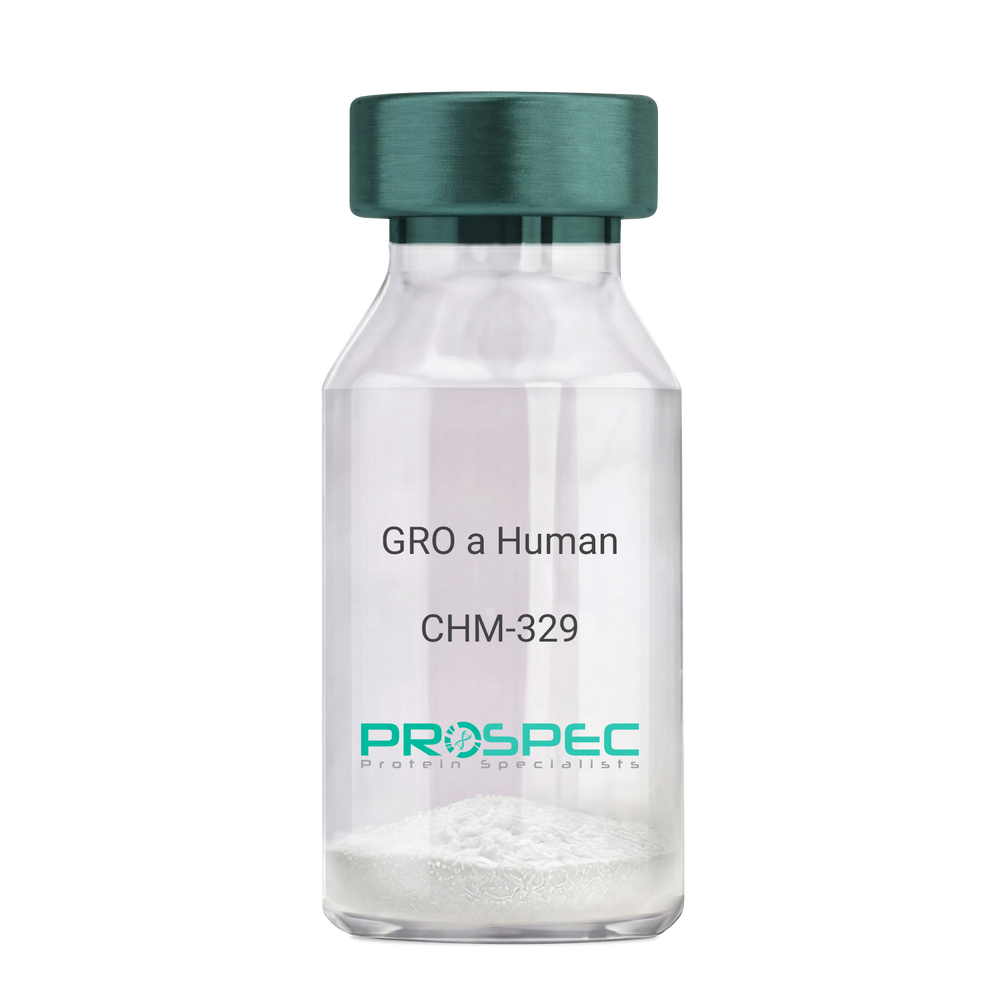
    Growth-regulated protein alpha, CXCL1, Melanoma growth stimulatory activity, MGSA, Neutrophil-activating protein 3, NAP-3, GRO-alpha (1-73), chemokine (C-X-C motif) ligand 1, GRO1, GROa, SCYB1, MGSA-a, MGSA alpha.

    Product # :

    CHM-329

    Price :

    Quantity :

    Shipping Method :

    Room Temp Icon

    Shipped at Room temp

    Add To Cart

    More Info

    • description
    • source
    • formulation
    • purity
    • biological activity
    • More Info

    Description

    GRO Alpha Human Recombinant produced in E.Coli is a single,non-glycosylated, polypeptide chain containing 73 amino acids and having a molecular mass of 7811 Dalton. The GRO-alpha is purified by proprietary chromatographic techniques.

    Source

    Escherichia Coli.

    Formulation

    Lyophilized from a 0.2µm filtered concentrated (1mg/ml) solution in 20mM PB, pH 7.4, 50mM NaCl.

    Purity

    Greater than 97.0% as determined by:
    (a) Analysis by RP-HPLC.
    (b) Analysis by SDS-PAGE.

    Biological Activity

    Determined by its ability to chemoattract human peripheral blood neutrophils using a concentration range of 10.0-100.0 ng/ml.

    More Info

    • Introduction

      Chemokine (C-X-C motif) ligand 1 (CXCL1) is a small cytokine belonging to the CXC chemokine family that was previously called GRO1 oncogene, Neutrophil-activating protein 3 (NAP-3) and melanoma growth stimulating activity, alpha (MSGA-a). It is secreted by human melanoma cells, has mitogenic properties and is implicated in melanoma pathogenesis. CXCL1 is expressed by macrophages, neutrophilsand epithelial cells, and has neutrophil chemoattractant activity. CXCL1 plays a role in spinal cord development by inhibiting the migration of oligodendrocyte precursors and is involved in the processes of angiogenesis, inflammation, wound healing, and tumorigenesis. This chemokine elicits its effects by signaling through the chemokine receptor CXCR2. The gene for CXCL1 is located on human chromosome 4 amongst genes for other CXC chemokines.

    • Synonyms

      Growth-regulated protein alpha, CXCL1, Melanoma growth stimulatory activity, MGSA, Neutrophil-activating protein 3, NAP-3, GRO-alpha (1-73), chemokine (C-X-C motif) ligand 1, GRO1, GROa, SCYB1, MGSA-a, MGSA alpha.

    • Physical Appearance

      Sterile Filtered White lyophilized (freeze-dried) powder.

    • Stability

      Lyophilized GRO-alpha although stable at room temperature for 3 weeks, should be stored desiccated below -18°C. Upon reconstitution CXCL1 should be stored at 4°C between 2-7 days and for future use below -18°C. For long term storage it is recommended to add a carrier protein (0.1% HSA or BSA).Please prevent freeze-thaw cycles.

    • Solubility

      It is recommended to reconstitute the lyophilized CXCL1 in sterile 18MΩ-cm H2O not less than 100µg/ml, which can then be further diluted to other aqueous solutions.

    • Amino Acid Sequence

      The sequence of the first five N-terminal amino acids was determined and was found to be Ala-Ser-Val-Ala-Thr.

    • Background

      What is the molecular weight/Mw of CXCL1 HUMAN Protein?
      CXCL1 HUMAN Protein has a total Mw of 7.81kDa.

      What is the source or expression system of CXCL1 HUMAN Protein?
      Escherichia Coli.

      What is the Purity of CXCL1 HUMAN Protein?
      CXCL1 HUMAN Protein is >97% pure as determined by SDS-PAGE.

      What is the Biological Activity of CXCL1 HUMAN Protein?
      Determined by its ability to chemoattract human peripheral blood neutrophils using a concentration range of 10.0-100.0 ng/ml.

      What is the amino acid sequence of CXCL1 HUMAN Protein?
      The sequence of the first five N-terminal amino acids was determined and was found to be Ala-Ser-Val-Ala-Thr.

      What applications can CXCL1 HUMAN Protein be used in?
      CXCL1 HUMAN Protein can probably be used in western blot, ELISA and Lateral Flow.

      What is the endotoxin level for CXCL1 HUMAN Protein?
      The endotoxin level is minimal, CXCL1 HUMAN Protein was purified using conventional chromatography techniques.


    ProSpec's products are furnished for LABORATORY RESEARCH USE ONLY. The product may not be used as drugs, agricultural or pesticidal products, food additives or household chemicals.

    Gro A Human
  • View Data Sheet

    Name :

    RALA Mouse

    Description:

    V-ral Simian Leukemia Viral Oncogene Homolog A Mouse Recombinant

    Ras-related protein Ral-A, Rala, Ral, Ral-a, RALA. 

    Product # :

    PRO-2497

    Price :

    Quantity :

    Shipping Method :

    Ice Icon

    Shipped with Ice Packs

    Add To Cart

    More Info

    • description
    • source
    • formulation
    • purity
    • More Info

    Description

    RALA Mouse Recombinant produced in E.Coli is a single, non-glycosylated polypeptide chain containing 227 amino acids (1-203 a.a) and having a molecular mass of 25.7kDa. RALA is fused to a 24 amino acid His-tag at N-terminus & purified by proprietary chromatographic techniques.

    Source

    Escherichia Coli.

    Formulation

    RALA protein solution (0.5mg/ml) 20mM Tris-Hcl buffer (pH8.5) containing 30% glycerol, 0.1M NaCl and 0.1mM PMSF.

    Purity

    Greater than 90.0% as determined by SDS-PAGE.

    More Info

    • Introduction

      Ras-related protein Ral-A (RALA) is a member of the small GTPase superfamily, Ras family of proteins. RALA mediates a distinct downstream signaling pathway from Ras which facilitates cellular transformation. Furthermore, RALA is thought to be involved in various signaling cascades, including regulation of the cytoskeleton, vesicle trafficking, and endocytosis.

    • Synonyms

      Ras-related protein Ral-A, Rala, Ral, Ral-a, RALA.

    • Physical Appearance

      Sterile Filtered clear solution.

    • Stability

      Store at 4°C if entire vial will be used within 2-4 weeks. Store, frozen at -20°C for longer periods of time. For long term storage it is recommended to add a carrier protein (0.1% HSA or BSA).Avoid multiple freeze-thaw cycles.

    • Amino Acid Sequence

      MGSSHHHHHH SSGLVPRGSH MGSHMAANKP KGQNSLALHK VIMVGSGGVG KSALTLQFMY DEFVEDYEPT KADSYRKKVV LDGEEVQIDI LDTAGQEDYA AIRDNYFRSG EGFLCVFSIT EMESFAATAD FREQILRVKE DENVPFLLVG NKSDLEDKRQ VSVEEAKNRA DQWNVNYVET SAKTRANVDK VFFDLMREIR ARKMEDSKEK NGKKKRKSLA KRIRERC

    ProSpec's products are furnished for LABORATORY RESEARCH USE ONLY. The product may not be used as drugs, agricultural or pesticidal products, food additives or household chemicals.

    Rala Mouse
  • View Data Sheet

    Name :

    NFATC2 Human

    Description:

    Nuclear Factor Of Activated T Cells 2 Human Recombinant

    Nuclear Factor Of Activated T Cells 2, Nuclear Factor Of Activated T-Cells, Cytoplasmic, Calcineurin-Dependent 2, Nuclear Factor Of Activated T-Cells 2, NFAT Pre-Existing Subunit, NF-ATc2, NFAT1, NFATP, Nuclear Factor Of Activated T-Cells, Preexisting Component , Nuclear Factor Of Activated T-Cells, Cytoplasmic 2, NFAT Transcription Complex, Preexisting Component, Preexisting Nuclear Factor Of Activated T-Cells 2, T Cell Transcription Factor NFAT1, T-Cell Transcription Factor NFAT1,  NF-ATp, NFATc2.       

    Product # :

    PRO-2535

    Price :

    Quantity :

    Shipping Method :

    Ice Icon

    Shipped with Ice Packs

    Add To Cart

    More Info

    • description
    • source
    • formulation
    • purity
    • More Info

    Description

    NFATC2 produced in Sf9 Baculovirus cells is a single, glycosylated polypeptide chain containing 290 amino acids (396-678a.a.) and having a molecular mass of 33.1kDa. (Molecular size on SDS-PAGE will appear at approximately 28-40kDa). NFATC2 is expressed with a 7 amino acid His tag at C-Terminus and purified by proprietary chromatographic techniques.

    Source

    Sf9, Baculovirus cells.

    Formulation

    NFATC2 protein solution (0.25mg/ml) contains Phosphate Buffered Saline (pH 7.4) 40% glycerol and 1mM DTT.

    Purity

    Greater than 90.0% as determined by SDS-PAGE.

    More Info

    • Introduction

      NFATC2, also known as nuclear factor of activated T-cells 2, belongs to the nuclear factor of activated T cells family. NFATC2 takes a significant part in the course of T helper cell differentiation, activation, and effector function. Even though KO of an individual NFAT isoform in T cells directs to rather minor effects, T cells lacking for NFATC1 and 2 totally fail to produce T helper cell effector cytokines, for instance the interleukins IL-4 and IL-2. Moreover, NFATC2 is highly phosphorylated and kept in the cytoplasm. Next T cell receptor stimulation, dephosphorylation via calcium-activated calcineurin induces a conformational modification of NFATC2 which reveals a few nuclear localization sequences.

    • Synonyms

      Nuclear Factor Of Activated T Cells 2, Nuclear Factor Of Activated T-Cells, Cytoplasmic, Calcineurin-Dependent 2, Nuclear Factor Of Activated T-Cells 2, NFAT Pre-Existing Subunit, NF-ATc2, NFAT1, NFATP, Nuclear Factor Of Activated T-Cells, Preexisting Component , Nuclear Factor Of Activated T-Cells, Cytoplasmic 2, NFAT Transcription Complex, Preexisting Component, Preexisting Nuclear Factor Of Activated T-Cells 2, T Cell Transcription Factor NFAT1, T-Cell Transcription Factor NFAT1, NF-ATp, NFATc2.

    • Physical Appearance

      Sterile Filtered colorless solution.

    • Stability

      Store at 4°C if entire vial will be used within 2-4 weeks. Store, frozen at -20°C for longer periods of time. For long term storage it is recommended to add a carrier protein (0.1% HSA or BSA). Avoid multiple freeze-thaw cycles.

    • Amino Acid Sequence

      MPLEWPLSSQ SGSYELRIEV QPKPHHRAHY ETEGSRGAVK APTGGHPVVQ LHGYMENKPL GLQIFIGTAD ERILKPHAFY QVHRITGKTV TTTSYEKIVG NTKVLEIPLE PKNNMRATID CAGILKLRNA DIELRKGETD IGRKNTRVRL VFRVHIPESS GRIVSLQTAS NPIECSQRSA HELPMVERQD TDSCLVYGGQ QMILTGQNFT SESKVVFTEK TTDGQQIWEM EATVDKDKSQ PNMLFVEIPE YRNKHIRTPV KVNFYVINGK RKRSQPQHFT YHPVHHHHHH

    ProSpec's products are furnished for LABORATORY RESEARCH USE ONLY. The product may not be used as drugs, agricultural or pesticidal products, food additives or household chemicals.

    Nfatc2 Human
  • View Data Sheet

    Name :

    ACP1 Antibody

    Description:

    Acid Phosphatase-1, Mouse Anti Human

    HAAP, MGC3499, MGC111030, ACP1, Low molecular weight phosphotyrosine protein phosphatase, LMW-PTPase, LMW-PTP, Low molecular weight cytosolic acid phosphatase, Red cell acid phosphatase 1, Adipocyte acid phosphatase, Acid Phosphatase-1.

    Product # :

    ANT-610

    Price :

    Quantity :

    Shipping Method :

    Ice Icon

    Shipped with Ice Packs

    Add To Cart

    More Info

    • formulation
    • More Info

    Formulation

    1mg/ml containing PBS, pH-7.4, 10% Glycerol and 0.02% Sodium Azide.

    More Info

    • Introduction

      ACP1 is part of the phosphotyrosine protein. ACP1 functions as an acid phosphatase and a protein tyrosine phosphatase (PTPase) existing in all human tissues, including adipocytes. ACP1 enzyme hydrolyzes protein tyrosine phosphate to protein tyrosine and orthophosphate, and also orthophosphoric monoesters to alcohol and orthophosphate. ACP1 is present in adipocytes, thus playing a specific role in the regulation of adipose tissue. High levels of the ACP1 negatively regulate cell proliferation and growth of leiomyomas during dephosphorylation of the PDGF receptor. High significant differences in birth weight-placental weight relationships were observed among acid phosphatase locus 1 phenotypes.

    • Synonyms

      HAAP, MGC3499, MGC111030, ACP1, Low molecular weight phosphotyrosine protein phosphatase, LMW-PTPase, LMW-PTP, Low molecular weight cytosolic acid phosphatase, Red cell acid phosphatase 1, Adipocyte acid phosphatase, Acid Phosphatase-1.

    • Physical Appearance

      Sterile filtered colorless solution.

    • Immunogen

      Anti-human ACP1 mAb, is derived from hybridization of mouse F0 myeloma cells with spleen cells from BALB/c mice immunized with a recombinant human ACP1 protein 1-158 amino acids purified from E. coli.

    • Ig Subclass

      Mouse IgG1 heavy chain and k light chain.

    • Clone

      PAT5C11AT.

    • Applications

      ACP1 antibody has been tested by ELISA, Western blot analysis, Flow cytometry and ICC/IF to assure specificity and reactivity. Since application varies, however, each investigation should be titrated by the reagent to obtain optimal results.

    • Type

      Mouse Anti Human Monoclonal.

    • Storage Procedures

      For periods up to 1 month store at 4°C, for longer periods of time, store at -20°C. Prevent freeze thaw cycles.

    • Purification Method

      ACP1 antibody was purified from mouse ascitic fluids by protein-A affinity chromatography.

    ProSpec's products are furnished for LABORATORY RESEARCH USE ONLY. The product may not be used as drugs, agricultural or pesticidal products, food additives or household chemicals.

    Acp1 Antibody
  • View Data Sheet

    Name :

    CD27 Human

    Description:

    CD27 Human Recombinant

    Tumor Necrosis Factor Receptor Superfamily Member 7,T-Cell Activation Antigen CD27, CD27 Molecule, CD27 Antigen,T Cell Activation Antigen S152, CD27L Receptor, TNFRSF7, S152, Tp55, T14.

    Product # :

    PRO-1213

    Price :

    Quantity :

    Shipping Method :

    Ice Icon

    Shipped with Ice Packs

    Add To Cart

    More Info

    • description
    • source
    • formulation
    • purity
    • More Info

    Description

    CD27 Human Recombinant produced in E. coli is a single polypeptide chain containing 196 amino acids (21-191) and having a molecular mass of 21.8 kDa.CD27 is fused to a 25 amino acid His-tag at N-terminus & purified by proprietary chromatographic techniques.

    Source

    E.coli.

    Formulation

    The CD27 solution (1mg/1ml) contains 20mM Tris-HCl buffer (pH 8.0), 0.4M Urea and 10% glycerol.

    Purity

    Greater than 90% as determined by SDS-PAGE.

    More Info

    • Introduction

      CD27 belongs to the TNF-receptor superfamily. CD27 is necessary for initiation and long-term maintenance of T cell immunity. CD27 binds to ligand CD70, and has a crucial role in regulating B-cell activation and immunoglobulin synthesis. The CD27 receptor transduces signals which result in the activation of NF-kappaB and MAPK8/JNK. Adaptor proteins TRAF2 and TRAF5 mediate the signaling process of CD27. CD27-binding protein (SIVA), which is a proapoptotic protein, can bind to the CD27 receptor and is believed to have a significant role in the apoptosis induced by CD27.

    • Synonyms

      Tumor Necrosis Factor Receptor Superfamily Member 7,T-Cell Activation Antigen CD27, CD27 Molecule, CD27 Antigen,T Cell Activation Antigen S152, CD27L Receptor, TNFRSF7, S152, Tp55, T14.

    • Physical Appearance

      Sterile Filtered colorless solution.

    • Stability

      Store at 4°C if entire vial will be used within 2-4 weeks. Store, frozen at -20°C for longer periods of time. For long term storage it is recommended to add a carrier protein (0.1% HSA or BSA).Avoid multiple freeze-thaw cycles.

    • Amino Acid Sequence

      MGSSHHHHHH SSGLVPRGSH MGSHMTPAPK SCPERHYWAQ GKLCCQMCEP GTFLVKDCDQ HRKAAQCDPC IPGVSFSPDH HTRPHCESCR HCNSGLLVRN CTITANAECA CRNGWQCRDK ECTECDPLPN PSLTARSSQA LSPHPQPTHL PYVSEMLEAR TAGHMQTLAD FRQLPARTLS THWPPQRSLC SSDFIR.

    ProSpec's products are furnished for LABORATORY RESEARCH USE ONLY. The product may not be used as drugs, agricultural or pesticidal products, food additives or household chemicals.

    Cd27 Human
  • View Data Sheet

    Name :

    CoV-2-Spike (1-1211)

    Description:

    Coronavirus 2019 Spike (1-1211 a.a.), Recombinant

    Product # :

    SARS-041

    Price :

    Quantity :

    Shipping Method :

    Ice Icon

    Shipped with Ice Packs

    Add To Cart

    More Info

    • description
    • source
    • formulation
    • purity
    • More Info

    Description

    The CHO derived recombinant protein contains the Coronavirus 2019-Spike Full-Length protein, Wuhan-Hu-1 strain, amino acids 1-1211 having a Mw of 134 kDa fused to His tag at C-terminal. The furin cleavage site (682- 685 a.a.) has been mutated from RRAR to SRAS and the transmembrane domain & intravirion part was replaced with a glycine-serine linker + His-tag

    Source

    CHO

    Formulation

    CoV-2 spike full length protein solution is supplied in DPBS.

    Purity

    Protein is >95% pure as determined SDS-PAGE.

    More Info

    • Introduction

      A human infecting coronavirus (viral pneumonia) called 2019 novel coronavirus, 2019-nCoV was found in the fish market at the city of Wuhan, Hubei province of China on December 2019.

      The 2019-nCoV shares an 87% identity to the 2 bat-derived severe acute respiratory syndrome 2018 SARS-CoV-2 located in Zhoushan of eastern China. 2019-nCoV has an analogous receptor-BD-structure to that of 2018 SARS-CoV, even though there is a.a. diversity so thus the 2019-nCoV might bind to ACE2 receptor protein (angiotensin-converting enzyme 2) in humans.

      While bats are possibly the host of 2019-nCoV, researchers suspect that animal from the ocean sold at the seafood market was an intermediate host. RSCU analysis proposes that the 2019-nCoV is a recombinant within the viral spike glycoprotein between the bat coronavirus and an unknown coronavirus.

    • Physical Appearance

      Sterile Filtered clear solution.

    • Stability

      CoV-2 Spike Protein is shipped on ice packs. Upon arrival, Store at -20°C.

    • Purification Method

      Purified by Metal affinity chromatographic technique.

    ProSpec's products are furnished for LABORATORY RESEARCH USE ONLY. The product may not be used as drugs, agricultural or pesticidal products, food additives or household chemicals.

    product_image.jpg
  • View Data Sheet

    Name :

    CD2 Human, Sf9

    Description:

    CD2 Human Recombinant, sf9

    T-cell surface antigen CD2, T-cell surface antigen T11/Leu-5, LFA-2, LFA-3 receptor, Erythrocyte receptor, Rosette receptor, CD2 antigen, CD2, T11, SRBC.

    Product # :

    PRO-2390

    Price :

    Quantity :

    Shipping Method :

    Ice Icon

    Shipped with Ice Packs

    Add To Cart

    More Info

    • description
    • source
    • formulation
    • purity
    • More Info

    Description

    CD2 Human Recombinant produced in Sf9 Baculovirus cells is a single, glycosylated polypeptide chain containing 194 amino acids (25-209a.a.) and having a molecular mass of 22.3kDa (Molecular size on SDS-PAGE will appear at approximately 28-40 kDa).CD2 is expressed with a 6 amino acid His tag at C-Terminus and purified by proprietary chromatographic techniques.

    Source

    Sf9, Baculovirus cells.

    Formulation

    CD2 protein solution (0.5mg/ml) contains Phosphate Buffered Saline (pH 7.4) and 10% glycerol.

    Purity

    Greater than 95.0% as determined by SDS-PAGE.

    More Info

    • Introduction

      CD2 which is also known as E-rosette receptor, T11 and lymphocytefunction antigen-2 (LFA-2) is expressed on T cells, thymocytes, and subset of natural killer cells. Human CD2 functions as the receptor for sheep erythrocytes, human CD58 (LFA-3), and CD15s (Sialyl Lewis X). p56lck, p59fyn, CD3eta and CD3epsilon are tyrosine-phosphorylated after CD2 stimulation. CD2 plays a role in T cell activation, T- or NK-cell-mediated cytolysis, apoptosis in activated peripheral T cells, and regulation of T cell anergy.

    • Synonyms

      T-cell surface antigen CD2, T-cell surface antigen T11/Leu-5, LFA-2, LFA-3 receptor, Erythrocyte receptor, Rosette receptor, CD2 antigen, CD2, T11, SRBC.

    • Physical Appearance

      Sterile Filtered colorless solution.

    • Stability

      Store at 4°C if entire vial will be used within 2-4 weeks. Store, frozen at -20°C for longer periods of time. For long term storage it is recommended to add a carrier protein (0.1% HSA or BSA). Avoid multiple freeze-thaw cycles.

    • Amino Acid Sequence

      ADPKEITNAL ETWGALGQDI NLDIPSFQMS DDIDDIKWEK TSDKKKIAQF RKEKETFKEK DTYKLFKNGT LKIKHLKTDD QDIYKVSIYD TKGKNVLEKI FDLKIQERVS KPKISWTCIN TTLTCEVMNG TDPELNLYQD GKHLKLSQRV ITHKWTTSLS AKFKCTAGNK VSKESSVEPV
      SCPEKGLDHH HHHH.

    ProSpec's products are furnished for LABORATORY RESEARCH USE ONLY. The product may not be used as drugs, agricultural or pesticidal products, food additives or household chemicals.

    Cd2 Human Sf9
  • View Data Sheet

    Name :

    IL 28B Mouse

    Description:

    Interleukin-28B Mouse Recombinant

    Interferon lambda-3, IFN-lambda-3, Interleukin-28B, IL-28B, Ifnl3, Il28, Il28b.

    Product # :

    CYT-732

    Price :

    Quantity :

    Shipping Method :

    Room Temp Icon

    Shipped at Room temp

    Add To Cart

    More Info

    • description
    • source
    • formulation
    • purity
    • biological activity
    • More Info

    Description

    IL-28B Mouse Recombinant produced in E.coli is a single, non-glycosylated polypeptide chain containing 174 amino acids and having a molecular mass of 19.6kDa.The IL28B is purified by proprietary chromatographic techniques.

    Source

    Escherichia Coli.

    Formulation

    IL28B protein was lyophilized from a 0.2µm filtered concentrated solution in 1xPBS, pH 7.4.

    Purity

    Greater than 97.0% as determined by:
    (a) Analysis by RP-HPLC.
    (b) Analysis by SDS-PAGE.

    Biological Activity

    The ED50 as determined by an anti-viral assay using human HepG2 cells infected with encephalomyocarditis is less than 30 ng/ml, corresponding to a specific activity of > 3.3 × 10⁴ IU/mg.

    More Info

    • Introduction

      IL-28B is a cytokine remotely related to type I interferons and the IL-10 family. Interleukin-28B, interleukin 28A (IL28A), and interleukin 29 (IL29) are 3 closely related cytokine genes which form a cytokine gene cluster on a chromosomal region mapped to 19q13. Expression of the cytokines encoded by these 3 genes can be induced by viral infection. All 3 cytokines interact with a heterodimeric class II cytokine receptor which consists of interleukin 10 receptor, beta (IL10RB) and interleukin 28 receptor, alpha (IL28RA).

    • Synonyms

      Interferon lambda-3, IFN-lambda-3, Interleukin-28B, IL-28B, Ifnl3, Il28, Il28b.

    • Physical Appearance

      Sterile Filtered White lyophilized (freeze-dried) powder.

    • Stability

      Lyophilized IL-28B although stable at room temperature for 3 weeks, should be stored desiccated below -18°C. Upon reconstitution IL28B should be stored at 4°C between 2-7 days and for future use below -18°C.For long term storage it is recommended to add a carrier protein (0.1% HSA or BSA).Please prevent freeze-thaw cycles.

    • Solubility

      It is recommended to reconstitute the lyophilized IL-28B in sterile 18M-cm H2O not less than 100µg/ml, which can then be further diluted to other aqueous solutions.

    • Amino Acid Sequence

      DPVPRATRLP VEAKDCHIAQ FKSLSPKELQ AFKKAKGAIE KRLLEKDMRC SSHLISRAWD LKQLQVQERP KALQAEVALT LKVWENINDS ALTTILGQPL HTLSHIHSQL QTCTQLQATA EPKPPSRRLS RWLHRLQEAQ SKETPGCLED SVTSNLFQLL LRDLKCVASG DQCV.

    ProSpec's products are furnished for LABORATORY RESEARCH USE ONLY. The product may not be used as drugs, agricultural or pesticidal products, food additives or household chemicals.

    Il 28B Mouse
  • View Data Sheet

    Name :

    BMP 7 Human, HEK

    Description:

    Bone Morphogenetic protein-7 Human Recombinant, HEK

    Osteogenic Protein 1, BMP-7.

    Product # :

    CYT-082

    Price :

    Quantity :

    Shipping Method :

    Room Temp Icon

    Shipped at Room temp

    Add To Cart

    More Info

    • description
    • source
    • formulation
    • purity
    • biological activity
    • More Info

    Description

    BMP-7 Human Recombinant produced in HEK cells is a glycosylated disulfide-linked homodimer, having a molecular weight range of 30-38kDa due to glycosylation.The BMP7 corresponds to amino acid residues 315 to 431 of the full-length BMP-7 precursor and is purified by proprietary chromatographic techniques.

    Source

    HEK.

    Formulation

    The BMP7 was lyophilized from 1mg/ml in 1xPBS.

    Purity

    Greater than 95% as obsereved by SDS-PAGE.

    Biological Activity

    The specific activity was determined by the dose dependent induction of alkaline phosphatase production in the ATDC-5 cell line (Mouse chondrogenic cell line) and is typically 50-250ng/ml.

    More Info

    • Introduction

      The bone morphogenetic proteins (BMPs) are a family of secreted signaling molecules that can induce ectopic bone growth. Many BMPs are part of the transforming growth factor-beta (TGFB) superfamily. BMPs were originally identified by an ability of demineralized bone extract to induce endochondral osteogenesis in vivo in an extraskeletal site. Based on its expression early in embryogenesis, the BMP encoded by this gene has a proposed role in early development. In addition, the fact that this BMP is closely related to BMP5 and BMP7 has lead to speculation of possible bone inductive activity.

    • Synonyms

      Osteogenic Protein 1, BMP-7.

    • Physical Appearance

      Sterile Filtered White lyophilized (freeze-dried) powder.

    • Stability

      Lyophilized BMP7 although stable at room temperature for 3 weeks, should be stored desiccated below -18°C. Upon reconstitution BMP-7 should be stored at 4°C between 2-7 days and for future use below -18°C.For long term storage it is recommended to add a carrier protein (0.1% HSA or BSA).Please prevent freeze-thaw cycles.

    • Solubility

      It is recommended to reconstitute the lyophilized BMP-7 in sterile water not less than 100µg/ml, which can then be further diluted to other aqueous solutions.

    • Amino Acid Sequence

      DFSLDNEVHSSFIHRRLRSQERREMQREILSILGLPHRPRPHLQGKHNSAPMFMLDLYNAM AVEEGGGPGGQGFSYPYKAVFSTQGPPLASLQDSHFLTDADMVMSFVNLVEHDKEFFHPR YHHREFRFDLSKIPEGEAVTAAEFRIYKDYIRERFDNETFRISVYQVLQEHLGRESDLFLDSRTLWASE EGWLVFDITATSNHWVVNPRHNLGLQLSVETLDGQSINPKLAGLIGRHGPQNKQPFMVAFFKAT.

    • Background

      BMP-7 Bone Morphogenetic Protein-7 Human Recombinant: A Key Regulator of Osteogenesis and Beyond

      Abstract:

      BMP-7 (Bone Morphogenetic Protein-7), also known as Osteogenic Protein 1 or BMP-7, is a potent growth factor that plays a crucial role in various biological processes, particularly in osteogenesis and tissue regeneration.

      This research paper aims to comprehensively explore the molecular characteristics, signaling pathways, and diverse physiological functions of BMP-7.

      Additionally, it investigates the therapeutic implications of BMP-7 in different disorders. Synonyms such as Osteogenic Protein 1 and BMP-7 associated with the protein are discussed throughout the paper to highlight their relevance in scientific literature.

      Introduction:

      BMP-7, also known as Osteogenic Protein 1 or BMP-7, is a growth factor with multifaceted roles in osteogenesis, tissue regeneration, and disease. This section introduces BMP-7 and its synonyms, highlighting their significance and relevance in scientific research.

      Molecular Characteristics of BMP-7:

      This section explores the molecular characteristics of BMP-7, including its primary amino acid sequence, protein structure, post-translational modifications, and binding partners. The importance of these factors in determining BMP-7's biological activity and receptor specificity is discussed.

      Signaling Pathways Activated by BMP-7 :

      BMP-7 activates specific signaling pathways upon binding to its receptors, leading to diverse cellular responses. This section focuses on the canonical BMP signaling pathway, highlighting the activation of Smad-dependent and Smad-independent pathways. The downstream effectors and transcriptional regulators involved in mediating BMP-7's cellular responses are also discussed.

      Physiological Functions of BMP-7 :

      BMP-7 plays critical roles in various physiological processes, particularly in osteogenesis and tissue regeneration. This section provides an in-depth analysis of BMP-7's contributions to these processes, emphasizing its role in promoting bone formation, cartilage development, renal function, and wound healing.

      Therapeutic Implications of BMP-7 :

      The unique properties of BMP-7 make it a promising therapeutic candidate for various disorders. This section discusses the potential applications of BMP-7 in bone regeneration, cartilage repair, kidney disease, and tissue engineering. The challenges and future directions in utilizing BMP-7 as a therapeutic agent are also explored.

      BMP-7 in Disease Progression:

      BMP-7 is implicated in the progression of certain diseases, including fibrosis, cancer, and cardiovascular disorders. This section examines the role of BMP-7 in tissue fibrosis, tumor progression, angiogenesis, and cardiac remodeling. The therapeutic implications and targeting of BMP-7 in disease management are also discussed.

      Conclusion:

      BMP-7, also known as Osteogenic Protein 1 or BMP-7, is a critical growth factor involved in osteogenesis, tissue regeneration, and disease progression. Understanding the molecular characteristics, signaling pathways, and physiological functions of BMP-7 contributes to the exploration of its therapeutic potential in various disorders.

      What is the molecular weight/Mw of BMP7 Protein?
      BMP7 Protein has a total Mw of 38kDa.

      What is the source or expression system of BMP7 Protein?
      HEK.

      What is the Purity of BMP7 Protein?
      BMP7 Protein is >95% pure as determined by SDS-PAGE.

      What is the Biological Activity of BMP7 Protein?
      The specific activity was determined by the dose dependent induction of alkaline phosphatase production in the ATDC-5 cell line (Mouse chondrogenic cell line) and is typically 50-250ng/ml.

      What is the amino acid sequence of BMP7 Protein?
      DFSLDNEVHSSFIHRRLRSQERREMQREILSILGLPHRPRPHLQGKHNSAPMFMLDLYNAM AVEEGGGPGGQGFSYPYKAVFSTQGPPLASLQDSHFLTDADMVMSFVNLVEHDKEFFHPR YHHREFRFDLSKIPEGEAVTAAEFRIYKDYIRERFDNETFRISVYQVLQEHLGRESDLFLDSRTLWASE EGWLVFDITATSNHWVVNPRHNLGLQLSVETLDGQSINPKLAGLIGRHGPQNKQPFMVAFFKAT.


      What applications can BMP7 Protein be used in?
      BMP7 Protein can probably be used in western blot, ELISA and Lateral Flow.

      What is the endotoxin level for BMP7 Protein?
      The endotoxin level is minimal, BMP7 Protein was purified using conventional chromatography techniques.

    ProSpec's products are furnished for LABORATORY RESEARCH USE ONLY. The product may not be used as drugs, agricultural or pesticidal products, food additives or household chemicals.

    Bmp 7 Human Hek
  • View Data Sheet

    Name :

    CXCL8 Macaque

    Description:

    Interleukin-8 Rhesus Macaque Recombinant

    IL-8, CXCL8, Monocyte-derived neutrophil chemotactic factor, MDNCF, T-cell chemotactic factor, Neutrophil-activating protein 1, NAP-1, Protein 3-10C, Granulocyte chemotactic protein 1, GCP-1, Monocyte-derived neutrophil-activating peptide, MONAP, Emoctakin, K60, NAF, LECT, LUCT, 3-10C, LYNAP, SCYB8, TSG-1, AMCF-I, b-ENAP

    Product # :

    CHM-004

    Price :

    Quantity :

    Shipping Method :

    Room Temp Icon

    Shipped at Room temp

    Add To Cart

    More Info

    • description
    • source
    • formulation
    • purity
    • biological activity
    • More Info

    Description

    IL 8 Rhesus Macaque Recombinant produced in E.Coli is a single, non-glycosylated, polypeptide chain containing 79 amino acids and having a molecular mass of 9.1kDa.The IL 8 Rhesus Macaque is purified by proprietary chromatographic techniques.

    Source

    Escherichia Coli.

    Formulation

    Lyophilized from a 0.2µm filtered concentrated solution in PBS, pH 7.4.

    Purity

    Greater than 97.0% as determined by SDS-PAGE.

    Biological Activity

    Determined by its ability to chemoattract human peripheral blood neutrophils using a concentration range of 50-150ng/ml, corresponding to a Specific Activity of 6,667-20,000IU/mg.

    More Info

    • Introduction

      Interleukin-8 (IL-8) is a chemokine produced by macrophages and other cell types such as epithelial cells. It is also synthesized by endothelial cells, which store IL-8 in their storage vesicles, the Weibel-Palade bodies.When first encountering an antigen, the primary cells to encounter it are the macrophages who phagocytose the particle. Upon processing, they release chemokines to signal other immune cells to come in to the site of inflammation. IL-8 is one such chemokine. It serves as a chemical signal that attracts neutrophils at the site of inflammation, and therefore is also known as Neutrophil Chemotactic Factor.

    • Synonyms

      IL-8, CXCL8, Monocyte-derived neutrophil chemotactic factor, MDNCF, T-cell chemotactic factor, Neutrophil-activating protein 1, NAP-1, Protein 3-10C, Granulocyte chemotactic protein 1, GCP-1, Monocyte-derived neutrophil-activating peptide, MONAP, Emoctakin, K60, NAF, LECT, LUCT, 3-10C, LYNAP, SCYB8, TSG-1, AMCF-I, b-ENAP

    • Physical Appearance

      Sterile Filtered White lyophilized (freeze-dried) powder.

    • Stability

      Lyophilized IL-8 although stable at room temperature for 3 weeks, should be stored desiccated below -18°C. Upon reconstitution IL-8 should be stored at 4°C between 2-7 days and for future use below -18°C.Please prevent freeze-thaw cycles.

    • Solubility

      It is recommended to reconstitute the lyophilized IL-8 in sterile 18M-cm H2O not less than 100µg/ml, which can then be further diluted to other aqueous solutions.

    • Amino Acid Sequence

      AVLPRSAKEL RCECIKTYSK PFHPKFIKEL RVIESGPHCA NTEIIVKLSD GRELCLDPKE PWVQRVVEKF VKRAENQNP

    • Background

      What is the molecular weight/Mw of CXCL8 MACAQUE Protein?
      CXCL8 MACAQUE Protein has a total Mw of 9.1kDa.

      What is the source or expression system of CXCL8 MACAQUE Protein?
      Escherichia Coli.

      What is the Purity of CXCL8 MACAQUE Protein?
      CXCL8 MACAQUE Protein is >97% pure as determined by SDS-PAGE.

      What is the Biological Activity of CXCL8 MACAQUE Protein?
      Determined by its ability to chemoattract human peripheral blood neutrophils using a concentration range of 50-150ng/ml, corresponding to a Specific Activity of 6,667-20,000IU/mg.

      What is the amino acid sequence of CXCL8 MACAQUE Protein?
      AVLPRSAKEL RCECIKTYSK PFHPKFIKEL RVIESGPHCA NTEIIVKLSD GRELCLDPKE PWVQRVVEKF VKRAENQNP

      What applications can CXCL8 MACAQUE Protein be used in?
      CXCL8 MACAQUE Protein can probably be used in western blot, ELISA and Lateral Flow.

      What is the endotoxin level for CXCL8 MACAQUE Protein?
      The endotoxin level is minimal, CXCL8 MACAQUE Protein was purified using conventional chromatography techniques.

    ProSpec's products are furnished for LABORATORY RESEARCH USE ONLY. The product may not be used as drugs, agricultural or pesticidal products, food additives or household chemicals.

    Il 8 Rhesus Macaque
  • 1
  • …
  • 36
  • 37
  • 38
  • 39
  • 40
  • …
  • 42
Your browser does not support the video tag.

Products

  • Cytokines
  • Growth Factors
  • Chemokines
  • CD Antigens
  • Neurotrophins
  • Hormones
  • Enzymes
  • Viral Antigens
  • Recombinant Proteins
  • Natural Proteins
  • Monoclonal Antibodies
  • Polyclonal Antibodies
  • Thermal Packaging

About

  • Company
  • Founder
  • Contribution
  • Contact Us
  • My Account

Ordering

  • Ordering Method
  • Ordering - Credit Card
  • Ordering PO
  • Shipping Fees
  • FAQ's

Legal

  • Terms & Conditions
  • Privacy
  • Site Map
  • info@prospecbio.com
  • Facebook
  • Instagram
  • Linkedin Profile

© 2026 ProSpec-Tany TechnoGene Ltd. All Rights Reserved.

  • Choosing a selection results in a full page refresh.
  • Opens in a new window.