Skip to content

High-quality research proteins.

  • 1-800-805-6531

  • Mon - Sat 8.00-18.00, Sun - Closed

  • info@prospecbio.com

  • PO Box 6591 East Brunswick NJ 08816

  • Products
    • Cytokines
    • Growth factors
    • Chemokines
    • Cd antigens
    • Neurotrophins
    • Hormones
    • Enzymes
    • Viral antigens
    • Recombinant proteins
    • Natural proteins
    • Monoclonal antibodies
    • Polyclonal antibodies
    • Thermal Packaging
  • About
    • Company
    • Founder
    • Contribution
  • Customers
    • Eastern Asia
    • Eastern Europe
    • North America
    • South America
    • South East Asia
    • Southern Asia
    • Western Europe
  • Ordering
    • Ordering Method
    • Ordering - Credit Card
    • Ordering - PO
    • Shipping Fees
    • FAQs
  • Services
    • DNA Cloning
    • Protein Expression
    • Monoclonal Antibody
    • Fermentation
    • Technology License
  • Contact us
Log in

Country/region

  • USD $ | Albania
  • USD $ | Andorra
  • USD $ | Argentina
  • USD $ | Armenia
  • USD $ | Australia
  • USD $ | Austria
  • USD $ | Azerbaijan
  • USD $ | Belarus
  • USD $ | Belgium
  • USD $ | Bolivia
  • USD $ | Brazil
  • USD $ | Bulgaria
  • USD $ | Cambodia
  • USD $ | Canada
  • USD $ | Chile
  • USD $ | China
  • USD $ | Colombia
  • USD $ | Costa Rica
  • USD $ | Croatia
  • USD $ | Cyprus
  • USD $ | Czechia
  • USD $ | Denmark
  • USD $ | Estonia
  • USD $ | Finland
  • USD $ | France
  • USD $ | Georgia
  • USD $ | Germany
  • USD $ | Greece
  • USD $ | Hong Kong SAR
  • USD $ | Hungary
  • USD $ | Iceland
  • USD $ | India
  • USD $ | Ireland
  • USD $ | Israel
  • USD $ | Italy
  • USD $ | Japan
  • USD $ | Kazakhstan
  • USD $ | Latvia
  • USD $ | Liechtenstein
  • USD $ | Lithuania
  • USD $ | Madagascar
  • USD $ | Malta
  • USD $ | Mexico
  • USD $ | Moldova
  • USD $ | Monaco
  • USD $ | Netherlands
  • USD $ | New Zealand
  • USD $ | North Macedonia
  • USD $ | Norway
  • USD $ | Panama
  • USD $ | Paraguay
  • USD $ | Peru
  • USD $ | Philippines
  • USD $ | Poland
  • USD $ | Portugal
  • USD $ | Romania
  • USD $ | Singapore
  • USD $ | Slovakia
  • USD $ | Slovenia
  • USD $ | South Africa
  • USD $ | South Korea
  • USD $ | Spain
  • USD $ | Sri Lanka
  • USD $ | Sweden
  • USD $ | Switzerland
  • USD $ | Taiwan
  • USD $ | Thailand
  • USD $ | Türkiye
  • USD $ | Ukraine
  • USD $ | United Kingdom
  • USD $ | United States
  • USD $ | Uruguay
  • USD $ | Vatican City
  • USD $ | Venezuela
  • USD $ | Vietnam
  • Facebook
  • Instagram
logoProSpec - Recombinant Protein Manufacturer for academic and R&D industry
Become a distributor
Account Log in
Wishlist
Cart Cart(0)
  • Products
    +
    • Cytokines
    • Growth factors
    • Chemokines
    • Cd antigens
    • Neurotrophins
    • Hormones
    • Enzymes
    • Viral antigens
    • Recombinant proteins
    • Natural proteins
    • Monoclonal antibodies
    • Polyclonal antibodies
    • Thermal Packaging
  • About
    +
    • Company
    • Founder
    • Contribution
  • Customers
    +
    • Eastern Asia
    • Eastern Europe
    • North America
    • South America
    • South East Asia
    • Southern Asia
    • Western Europe
  • Ordering
    +
    • Ordering Method
    • Ordering - Credit Card
    • Ordering - PO
    • Shipping Fees
    • FAQs
  • Services
    +
    • DNA Cloning
    • Protein Expression
    • Monoclonal Antibody
    • Fermentation
    • Technology License
  • Contact us

Item added to your cart

View cart
View All
  • Cytokines
  • Growth factors
  • Chemokines
  • Cd antigens
  • Neurotrophins
  • Hormones
  • Enzymes
  • Viral antigens
  • Recombinant proteins
  • Natural proteins
  • Monoclonal antibodies
  • Polyclonal antibodies
  • Thermal Packaging
  • Tumor Necrosis Factor

    Tumor Necrosis Factor

    View All
  • 4-1BB

    4-1BB

    View All
  • Adiponectin

    Adiponectin

    View All
  • AIF1

    AIF1

    View All
  • Other Cytokines

    Other Cytokines

    View All
  • AITRL

    AITRL

    View All
  • Angiopoietin

    Angiopoietin

    View All
  • Apolipoprotein

    Apolipoprotein

    View All
  • B-Cell Activating Factor

    B-Cell Activating Factor

    View All
  • Beta Defensin

    Beta Defensin

    View All
  • Bone Morphogenetic Protein

    Bone Morphogenetic Protein

    View All
  • B type Natriuretic Peptide

    B type Natriuretic Peptide

    View All
  • BST

    BST

    View All
  • Betacellulin

    Betacellulin

    View All
  • Cardiotrophin

    Cardiotrophin

    View All
  • Activin

    Activin

    View All
  • Fibroblast Growth Factor

    Fibroblast Growth Factor

    View All
  • Other Growth Factors

    Other Growth Factors

    View All
  • CSF

    CSF

    View All
  • CTGF

    CTGF

    View All
  • IGFBP

    IGFBP

    View All
  • VEGF Protein

    VEGF Protein

    View All
  • EGF

    EGF

    View All
  • Epigen

    Epigen

    View All
  • Erythropoietin

    Erythropoietin

    View All
  • Insulin-Like Growth Factor

    Insulin-Like Growth Factor

    View All
  • Growth Hormone

    Growth Hormone

    View All
  • HDGF

    HDGF

    View All
  • Hepatocyte Growth Factor

    Hepatocyte Growth Factor

    View All
  • Insulin

    Insulin

    View All
  • BCA-1/ BLC (CXCL13)

    BCA-1/ BLC (CXCL13)

    View All
  • BRAK (CXCL14)

    BRAK (CXCL14)

    View All
  • C-10 (CCL6)

    C-10 (CCL6)

    View All
  • Other Chemokines

    Other Chemokines

    View All
  • MEC (CCL28)

    MEC (CCL28)

    View All
  • LD78-beta (CCL3L1)

    LD78-beta (CCL3L1)

    View All
  • CTACK (CCL27)

    CTACK (CCL27)

    View All
  • CXCL16

    CXCL16

    View All
  • CXCL17

    CXCL17

    View All
  • Platelet Factor-4 (CXCL4)

    Platelet Factor-4 (CXCL4)

    View All
  • ENA-78 (CXCL5)

    ENA-78 (CXCL5)

    View All
  • Eotaxin (CCL11,24,26)

    Eotaxin (CCL11,24,26)

    View All
  • Exodus-2 (CCL21)

    Exodus-2 (CCL21)

    View All
  • Fractalkine (CX3CL1)

    Fractalkine (CX3CL1)

    View All
  • CXCL6

    CXCL6

    View All
  • Other CD Antigens

    Other CD Antigens

    View All
  • CD14

    CD14

    View All
  • CD164

    CD164

    View All
  • CD1

    CD1

    View All
  • CD2

    CD2

    View All
  • CD200

    CD200

    View All
  • CD207

    CD207

    View All
  • CD226

    CD226

    View All
  • CD23

    CD23

    View All
  • CD244

    CD244

    View All
  • CD247

    CD247

    View All
  • CD27

    CD27

    View All
  • CD274

    CD274

    View All
  • CD300

    CD300

    View All
  • CD33

    CD33

    View All
  • Other Neurotrophins

    Other Neurotrophins

    View All
  • Beta-NGF

    Beta-NGF

    View All
  • BDNF

    BDNF

    View All
  • CDNF

    CDNF

    View All
  • CNTF

    CNTF

    View All
  • GDNF

    GDNF

    View All
  • Glia Maturation Factor

    Glia Maturation Factor

    View All
  • MANF

    MANF

    View All
  • Midkine

    Midkine

    View All
  • Neuroglobin

    Neuroglobin

    View All
  • Neurotrophic factors

    Neurotrophic factors

    View All
  • Neuregulin

    Neuregulin

    View All
  • Neuropilin

    Neuropilin

    View All
  • Pigment Epithelium-Derived Factor

    Pigment Epithelium-Derived Factor

    View All
  • Pleiotrophin

    Pleiotrophin

    View All
  • Peptide Hormones

    Peptide Hormones

    View All
  • Other Hormones

    Other Hormones

    View All
  • HCG

    HCG

    View All
  • Endothelin

    Endothelin

    View All
  • Exendin

    Exendin

    View All
  • FSH

    FSH

    View All
  • Glucagon

    Glucagon

    View All
  • GHRP

    GHRP

    View All
  • GLP

    GLP

    View All
  • Thyrostimulin

    Thyrostimulin

    View All
  • Inhibin A

    Inhibin A

    View All
  • LHRH

    LHRH

    View All
  • Melanotan

    Melanotan

    View All
  • Procalcitonin

    Procalcitonin

    View All
  • PTH

    PTH

    View All
  • Peroxiredoxin

    Peroxiredoxin

    View All
  • Peptidase

    Peptidase

    View All
  • Synthetase

    Synthetase

    View All
  • Transferase

    Transferase

    View All
  • Hydrolase

    Hydrolase

    View All
  • Dehydrogenase

    Dehydrogenase

    View All
  • ACE2

    ACE2

    View All
  • Esterase

    Esterase

    View All
  • Protein Kinases

    Protein Kinases

    View All
  • Other Enzymes

    Other Enzymes

    View All
  • Phosphatase

    Phosphatase

    View All
  • Deaminase

    Deaminase

    View All
  • Oxygenase

    Oxygenase

    View All
  • Adenylate Kinase

    Adenylate Kinase

    View All
  • Lyase

    Lyase

    View All
  • Chagas

    Chagas

    View All
  • SARS

    SARS

    View All
  • Influenza

    Influenza

    View All
  • ASFV

    ASFV

    View All
  • Astrovirus

    Astrovirus

    View All
  • Borrelia

    Borrelia

    View All
  • Helicobacter Pylori

    Helicobacter Pylori

    View All
  • Chikungunya

    Chikungunya

    View All
  • Chlamydia

    Chlamydia

    View All
  • Cytomegalo

    Cytomegalo

    View All
  • Dengue

    Dengue

    View All
  • EBV

    EBV

    View All
  • Ebola

    Ebola

    View All
  • Feline Leukemia Virus

    Feline Leukemia Virus

    View All
  • Hepatitis A

    Hepatitis A

    View All
  • Other

    Other

    View All
  • Actin

    Actin

    View All
  • ADAM

    ADAM

    View All
  • Complement Component

    Complement Component

    View All
  • Ag85

    Ag85

    View All
  • Eukaryotic Translation Initiation Factor

    Eukaryotic Translation Initiation Factor

    View All
  • Anterior Gradient Protein

    Anterior Gradient Protein

    View All
  • Heat Shock Protein

    Heat Shock Protein

    View All
  • Alpha-2-HS-Glycoprotein

    Alpha-2-HS-Glycoprotein

    View All
  • Hemoglobin

    Hemoglobin

    View All
  • Allergy

    Allergy

    View All
  • Anaplasma

    Anaplasma

    View All
  • Angiogenin

    Angiogenin

    View All
  • Ankyrin Repeat Domain

    Ankyrin Repeat Domain

    View All
  • Annexin

    Annexin

    View All
  • Other Natural Proteins

    Other Natural Proteins

    View All
  • Aprotinin

    Aprotinin

    View All
  • Transferrin

    Transferrin

    View All
  • Avidin

    Avidin

    View All
  • Anti Coagulation Factors

    Anti Coagulation Factors

    View All
  • Natural Albumin

    Natural Albumin

    View All
  • Natural Coagulation Factors

    Natural Coagulation Factors

    View All
  • Fibronectin

    Fibronectin

    View All
  • Thrombin

    Thrombin

    View All
  • Anti Human Enzyme

    Anti Human Enzyme

    View All
  • Other Monoclonal Antibodies

    Other Monoclonal Antibodies

    View All
  • Anti Human Cytokine

    Anti Human Cytokine

    View All
  • Anti Human Heat Shock Protein

    Anti Human Heat Shock Protein

    View All
  • Anti Mouse Lymphocyte

    Anti Mouse Lymphocyte

    View All
  • Anti Human Chemokine

    Anti Human Chemokine

    View All
  • Anti Human Lymphocyte

    Anti Human Lymphocyte

    View All
  • Anti Viral Monoclonal

    Anti Viral Monoclonal

    View All
  • Anti Mouse Cytokine

    Anti Mouse Cytokine

    View All
  • Anti-GST Monoclonal

    Anti-GST Monoclonal

    View All
  • Other Polyclonal Antibodies

    Other Polyclonal Antibodies

    View All
  • Anti Viral

    Anti Viral

    View All
  • Anti-GST Monoclonal

    Anti-GST Monoclonal

    View All
Back

Search results

1000 results found for “Cathepsin”

Name

Description

Product #

Price

Quantity

Shipping Method

  • View Data Sheet

    Name :

    BLMH Mouse

    Description:

    Bleomycin Hydrolase Mouse Recombinant

    BMH, BH, BLM hydrolase, Bleomycin Hydrolase.

    Product # :

    ENZ-1109

    Price :

    Quantity :

    Shipping Method :

    Ice Icon

    Shipped with Ice Packs

    Add To Cart

    More Info

    • description
    • source
    • formulation
    • purity
    • biological activity
    • More Info

    Description

    BLMH Mouse Recombinant produced in E.Coli is a single, non-glycosylated polypeptide chain containing 478 amino acids (1-455 aa) and having a molecular mass of 54.9 kDa.BLMH is fused to a 23 amino acid His tag at N-terminus and purified by proprietary chromatographic techniques.

    Source

    Escherichia Coli.

    Formulation

    The BLMH solution (0.25 mg/ml) contains 1mM DTT, 30% Glycerol, 20mM Tris-HCl(pH8.0) and 0.1M NaCl.

    Purity

    Greater than 90.0% as determined by SDS-PAGE.

    Biological Activity

    Specific activity is > 1,500 pmole/min/ug. Measured by hydrolysis of 1pmole of Met-AMC to Methionine and AMC per minute at pH7.5 at 37C˚.

    More Info

    • Introduction

      BLMH is affiliate to the papain superfamily of the cysteine protease and the peptidase C1 family. BLMH is a cytoplasmic cysteinepeptidase usually found as a homohexamer. BLMH shields normal and malignant cells from the glycopeptide antitumor drug BLM. BLMH catalyzes the inactivation of the antitumor drug BLM (a glycopeptide) by hydrolyzing the carboxyamide bond of its B-aminoalaninamide moiety and in addition demonstrates general aminopeptidase activity.

    • Synonyms

      BMH, BH, BLM hydrolase, Bleomycin Hydrolase.

    • Physical Appearance

      Sterile Filtered colorless solution.

    • Stability

      Store at 4°C if entire vial will be used within 2-4 weeks. Store, frozen at -20°C for longer periods of time. For long term storage it is recommended to add a carrier protein (0.1% HSA or BSA).Avoid multiple freeze-thaw cycles.

    • Amino Acid Sequence

      MGSSHHHHHH SSGLVPRGSH MGSMNNAGLN SEKVSALIQK LNSDPQFVLA QNVGTTHDLL
      DICLRRATVQ GAQHVFQHVV PQEGKPVTNQ KSSGRCWIFS CLNVMRLPFM KKFNIEEFEF
      SQSYLFFWDK VERCYFFLNA FVDTAQKKEP EDGRLVQYLL MNPTNDGGQW DMLVNIVEKY
      GVVPKKCFPE SHTTEATRRM NDILNHKMRE FCIRLRNLVH SGATKGEISS TQDAMMEEIF
      RVVCICLGNP PETFTWEYRD KDKNYHKIGP ITPLQFYKEH VKPLFNMEDK ICFVNDPRPQ
      HKYNKLYTVD YLSNMVGGRK TLYNNQPIDF LKKMVAASIK DGEAVWFGCD VGKHFNGKLG
      LSDMNVYDHE LVFGVSLKNM NKAERLAFGE SLMTHAMTFT AVSEKDNQEG TFVKWRVENS
      WGEDHGHKGY LCMTDEWFSE YVYEVVVDKK HVPEEVLAVL EQEPIVLPAW DPMGALAE

    ProSpec's products are furnished for LABORATORY RESEARCH USE ONLY. The product may not be used as drugs, agricultural or pesticidal products, food additives or household chemicals.

    Blmh Mouse
  • View Data Sheet

    Name :

    ALDH1A1 Human

    Description:

    Aldehyde Dehydrogenase 1A1 Human Recombinant

    ALDC, Aldehyde dehydrogenase cytosolic, Aldehyde dehydrogenase family 1 member A1, ALDH1, ALDH11, ALDH-E1, ALHDII, MGC2318, PUMB1, RalDH1, RALDH1, RALDH 1, Retinal dehydrogenase 1, ALDH1A1.

    Product # :

    ENZ-453

    Price :

    Quantity :

    Shipping Method :

    Ice Icon

    Shipped with Ice Packs

    Add To Cart

    More Info

    • description
    • source
    • formulation
    • purity
    • More Info

    Description

    The ALDH1A1 Human recombinant protein is a single, non-glycosilated polypeptide chain produced in E. coli, having a molecular weight of 54.8kDa and containing 501 amino acids (1-501 a.a.).

    Source

    Escherichia Coli.

    Formulation

    The ALDH1A1 protein solution is formulated in 50mM Tris-HCl pH-7.5 and 10% glycerol.

    Purity

    Greater than 90% as determined by SDS-PAGE.

    More Info

    • Introduction

      ALDH1A1 is part of the aldehyde dehydrogenases family.
      Aldehyde dehydrogenase is the 2nd protein of the main oxidative pathway of alcohol metabolism. Cytosolic and mitochondrial are 2 main liver isoforms of ALDH that are differentiateed by their electrophoretic mobility, kinetic property, & subcellular localization. The majority of Caucasians have two main isozymes, whereas just about 50% of Orientals have only the cytosolic form, excluding the mitochondrial form. ALDH1A1 is also a member of the group of corneal crystallins that assist the transparency of the cornea.
      (Retinal + NAD+ + H2O = retinoate + NADH).

    • Synonyms

      ALDC, Aldehyde dehydrogenase cytosolic, Aldehyde dehydrogenase family 1 member A1, ALDH1, ALDH11, ALDH-E1, ALHDII, MGC2318, PUMB1, RalDH1, RALDH1, RALDH 1, Retinal dehydrogenase 1, ALDH1A1.

    • Physical Appearance

      Sterile Filtered clear solution.

    • Stability

      Store at 4°C if entire vial will be used within 2-4 weeks. Store, frozen at -20°C for longer periods of time.Please avoid freeze thaw cycles.

    • Amino Acid Sequence

      MSSSGTPDLP VLLTDLKIQY TKIFINNEWH DSVSGKKFPV FNPATEEELC QVEEGDKEDV DKAVKAARQA FQIGSPWRTM DASERGRLLYKLADLIERDR LLLATMESMN GGKLYSNAYL NDLAGCIKTL RYCAGWADKI QGRTIPIDGN FFTYTRHEPI GVCGQIIPWN FPLVMLIWKIGPALSCGNTV VVKPAEQTPL TALHVASLIK EAGFPPGVVN IVPGYGPTAG AAISSHMDID KVAFTGSTEV GKLIKEAAGK SNLKRVTLEL GGKSPCIVLA DADLDNAVEF AHHGVFYHQG QCCIAASRIF VEESIYDEFV RRSVERAKKY ILGNPLTPGV TQGPQIDKEQ YDKILDLIES GKKEGAKLEC GGGPWGNKGY FVQPTVFSNV TDEMRIAKEE IFGPVQQIMK FKSLDDVIKR ANNTFYGLSA GVFTKDIDKA ITISSALQAG TVWVNCYGVV SAQCPFGGFK MSGNGRELGE YGFHEYTEVK TVTVKISQKN S.

    ProSpec's products are furnished for LABORATORY RESEARCH USE ONLY. The product may not be used as drugs, agricultural or pesticidal products, food additives or household chemicals.

    Aldh1A1 Human
  • View Data Sheet

    Name :

    POFUT1 Human

    Description:

    Protein O-Fucosyltransferase 1 Human Recombinant

    FUT12, O-Fuc-T, O-FucT-1, O-FUT, GDP-fucose protein O-fucosyltransferase 1, Peptide-O-fucosyltraferase 1,KIAA0180.

    Product # :

    ENZ-679

    Price :

    Quantity :

    Shipping Method :

    Ice Icon

    Shipped with Ice Packs

    Add To Cart

    More Info

    • description
    • source
    • formulation
    • purity
    • More Info

    Description

    POFUT1 Human Recombinant produced in E. coli is a single polypeptide chain containing 385 amino acids (27-388) and having a molecular mass of 43.7 kDa. POFUT1 is fused to a 23 amino acid His-tag at N-terminus & purified by proprietary chromatographic techniques.

    Source

    Escherichia Coli.

    Formulation

    The POFUT1 solution (1mg/1ml) contains 20mM Tris-HCl buffer (pH 8.0), 2M Urea and 10% glycerol.

    Purity

    Greater than 85.0% as determined by SDS-PAGE.

    More Info

    • Introduction

      GDP-fucose protein O-fucosyltransferase 1 (POUFUT1), belongs to the glycosyltransferase O-Fuc family. POUFUT1 encodes a member of the glycosyltransferase O-Fuc family and Expressed mainly in pancreas, kidney, lung, heart, brain, liver, placenta and skeletal muscle.POUFUT1 adds O-fucose through an O-glycosidic linkage to Preserve serine or threonine residues in the epidermal growth factor-like repeats of a number of cell surface and emitted proteins. POUFUT1 is involved in ligand-induced receptor signaling. Alternative splicing of this gene results in 2 transcript variants encoding different isoforms.POFUT1 participates in Notch signaling, as Notch ligands can use as POFUT1 substrates.

    • Synonyms

      FUT12, O-Fuc-T, O-FucT-1, O-FUT, GDP-fucose protein O-fucosyltransferase 1, Peptide-O-fucosyltraferase 1,KIAA0180.

    • Physical Appearance

      Sterile Filtered colorless solution.

    • Stability

      Store at 4°C if entire vial will be used within 2-4 weeks. Store, frozen at -20°C for longer periods of time. For long term storage it is recommended to add a carrier protein (0.1% HSA or BSA).Avoid multiple freeze-thaw cycles.

    • Amino Acid Sequence

      MGSSHHHHHH SSGLVPRGSH MGSGSWDPAG YLLYCPCMGR FGNQADHFLG SLAFAKLLNR TLAVPPWIEY QHHKPPFTNL HVSYQKYFKL EPLQAYHRVI SLEDFMEKLA PTHWPPEKRV AYCFEVAAQR SPDKKTCPMK EGNPFGPFWD QFHVSFNKSE LFTGISFSAS YREQWSQRFS PKEHPVLALP GAPAQFPVLE EHRPLQKYMV WSDEMVKTGE AQIHAHLVRP YVGIHLRIGS DWKNACAMLK DGTAGSHFMA SPQCVGYSRS TAAPLTMTMC LPDLKEIQRA VKLWVRSLDA QSVYVATDSE SYVPELQQLF KGKVKVVSLK PEVAQVDLYI LGQADHFIGN CVSSFTAFVK RERDLQGRPS SFFGMDRPPK LRDEF.

    ProSpec's products are furnished for LABORATORY RESEARCH USE ONLY. The product may not be used as drugs, agricultural or pesticidal products, food additives or household chemicals.

    Pofut1 Human
  • View Data Sheet

    Name :

    PSPH Human

    Description:

    Phosphoserine Phosphatase Human Recombinant

    Phosphoserine phosphatase, EC 3.1.3.3, PSP, O-phosphoserine phosphohydrolase, PSPase, L-3-phosphoserine phosphatase, PSPH.

    Product # :

    PKA-224

    Price :

    Quantity :

    Shipping Method :

    Ice Icon

    Shipped with Ice Packs

    Add To Cart

    More Info

    • description
    • source
    • formulation
    • purity
    • More Info

    Description

    Phosphoserine Phosphatase Human Recombinant produced in E.Coli is a single, non-glycosylated polypeptide chain containing 225 amino acids and having a molecular mass of 25 kDa. PSP was overexpressed in E. coli and purified by conventional chromatography.

    Source

    Escherichia Coli.

    Formulation

    The protein contains 20mM Hepes pH 7.5, 1mM DTT &100mM KCl2.

    Purity

    Greater than 95.0% as determined by:
    (a) Analysis by RP-HPLC.
    (b) Analysis by SDS-PAGE.

    More Info

    • Introduction

      Human Phosphoserine phosphatase (hPSP) is an important enzyme in the phosphorylated pathway of serine biosynthesis, which contributes a major portion of the endogenous L-serine. Similar to known L-3-phosphoserine phosphatases, it catalyzed the Mg2+-dependent hydrolysis of L-phosphoserine and an exchange reaction between L-serine and L-phosphoserine. Recently, its complex structures reveal that the open-closed environmental change of the active site, generated -helical bundle domain, is important to substrate by local rearrangement of the recognition and hydrolysis.

    • Synonyms

      Phosphoserine phosphatase, EC 3.1.3.3, PSP, O-phosphoserine phosphohydrolase, PSPase, L-3-phosphoserine phosphatase, PSPH.

    • Physical Appearance

      Sterile filtered colorless solution.

    • Stability

      Store at 4°C if entire vial will be used within 2-4 weeks. Store, frozen at -20°C for longer periods of time. For long term storage it is recommended to add a carrier protein (0.1% HSA or BSA). Avoid multiple freeze-thaw cycles.

    • Amino Acid Sequence

      MVSHSELRKL FYSADAVCFD VDSTVIREEG IDELAKICGV EDAVSEMTRR AMGGAVPFKA ALTERLALIQ PSREQVQRLI AEQPPHLTPG IRELVSRLQE RNVQVFLISG GFRSIVEHVA SKLNIPATNV FANRLKFYFN GEYAGFDETQ PTAESGGKGK VIKLLKEKFH FKKIIMIGDG ATDMEACPPA DAFIGFGGNV IRQQVKDNAK WYITDFVELL GELEE.

    ProSpec's products are furnished for LABORATORY RESEARCH USE ONLY. The product may not be used as drugs, agricultural or pesticidal products, food additives or household chemicals.

    Psph Human
  • View Data Sheet

    Name :

    DUSP26 Human

    Description:

    Dual Specificity Phosphatase 26 Human Recombinant

    Dual specificity protein phosphatase 26, Dual specificity phosphatase SKRP3, Low-molecular-mass dual-specificity phosphatase 4, DSP-4, LDP-4, Mitogen-activated protein kinase phosphatase 8, MAP kinase phosphatase 8, MKP-8, Novel amplified gene in thyroid anaplastic cancer, DUSP26, DUSP24, LDP4, MKP8, NATA1, SKRP3, Dual specificity phosphatase 26 (putative).

    Product # :

    ENZ-747

    Price :

    Quantity :

    Shipping Method :

    Ice Icon

    Shipped with Ice Packs

    Add To Cart

    More Info

    • description
    • source
    • formulation
    • purity
    • More Info

    Description

    DUSP26 Human Recombinant produced in E.coli is a single, non-glycosylated polypeptide chain containing 234 amino acids (1-211a.a) and having a molecular mass of 26.3kDa.DUSP26 is fused to a 23 amino acid His-tag at N-terminus & purified by proprietary chromatographic techniques.

    Source

    Escherichia Coli.

    Formulation

    The DUSP26 solution (0.25mg/ml) contains 20mM Tris-HCl buffer (pH 8.0), 10% glycerol and 0.4M Urea.

    Purity

    Greater than 85% as determined by SDS-PAGE.

    More Info

    • Introduction

      Dual Specificity Phosphatase 26 (DUSP26) inhibits MAP kinase p38 by dephosphorylating it and inhibits p38-mediated apoptosis in anaplastic thyroid cancer cells. DUSP26 also induces activation of MAP kinase p38 and c-Jun N-terminal kinase. DUSP26 inactivates MAPK1 and MAPK3 which leads to dephosphorylation of heat shock factor protein 4 and a decrease in its DNA-binding activity.

    • Synonyms

      Dual specificity protein phosphatase 26, Dual specificity phosphatase SKRP3, Low-molecular-mass dual-specificity phosphatase 4, DSP-4, LDP-4, Mitogen-activated protein kinase phosphatase 8, MAP kinase phosphatase 8, MKP-8, Novel amplified gene in thyroid anaplastic cancer, DUSP26, DUSP24, LDP4, MKP8, NATA1, SKRP3, Dual specificity phosphatase 26 (putative).

    • Physical Appearance

      Sterile Filtered clear solution.

    • Stability

      Store at 4°C if entire vial will be used within 2-4 weeks. Store, frozen at -20°C for longer periods of time. For long term storage it is recommended to add a carrier protein (0.1% HSA or BSA).Avoid multiple freeze-thaw cycles.

    • Amino Acid Sequence

      MGSSHHHHHH SSGLVPRGSH MGSMCPGNWL WASMTFMARF SRSSSRSPVR TRGTLEEMPT VQHPFLNVFE LERLLYTGKT ACNHADEVWP GLYLGDQDMA NNRRELRRLG ITHVLNASHS RWRGTPEAYE GLGIRYLGVE AHDSPAFDMS IHFQTAADFI HRALSQPGGK ILVHCAVGVS RSATLVLAYL MLYHHLTLVE AIKKVKDHRG IIPNRGFLRQ LLALDRRLRQ GLEA.

    ProSpec's products are furnished for LABORATORY RESEARCH USE ONLY. The product may not be used as drugs, agricultural or pesticidal products, food additives or household chemicals.

    Dusp26 Human
  • View Data Sheet

    Name :

    HDAC8 Human

    Description:

    Histone Deacetylase 8 Human Recombinant

    Histone deacetylase 8, HD8, HDAC8, HDACL1, CDA07, RPD3.

    Product # :

    ENZ-210

    Price :

    Quantity :

    Shipping Method :

    Ice Icon

    Shipped with Ice Packs

    Add To Cart

    More Info

    • description
    • source
    • formulation
    • purity
    • More Info

    Description

    HDAC8 Human Recombinant produced in Sf9 Baculovirus cells, glycosylated polypeptide chain containing 383 amino acids (1-377) and having a molecular mass of 42.6kDa. HDAC8 is fused to a 6 amino acid His-tag at C-terminus & purified by proprietary chromatographic techniques.

    Source

    Sf9, Baculovirus cells.

    Formulation

    The HDAC8 solution (0.25mg/ml) contains 20mM Tris-HCl buffer (pH8.0), 20% glycerol, 0.1M NaCl and 1mM DTT.

    Purity

    Greater than 80% as determined by SDS-PAGE.

    More Info

    • Introduction

      Histone deacetylase 8 (HDAC8) is a member of the class 1 of the histone deacetylase/acuc/apha family. HDAC8 is biologically involved in skull morphogenesis and metabolic control of the ERR-alpha/PGC1-alpha transcriptional complex. Histones play a key role in transcriptional regulation, cell cycle progression, and developmental events. Histone acetylation/deacetylation modifies chromosome structure and affects transcription factor access to DNA.

    • Synonyms

      Histone deacetylase 8, HD8, HDAC8, HDACL1, CDA07, RPD3.

    • Physical Appearance

      Sterile Filtered clear solution.

    • Stability

      Store at 4°C if entire vial will be used within 2-4 weeks. Store, frozen at -20°C for longer periods of time. For long term storage it is recommended to add a carrier protein (0.1% HSA or BSA).Avoid multiple freeze-thaw cycles.

    • Amino Acid Sequence

      MEEPEEPADS GQSLVPVYIY SPEYVSMCDS LAKIPKRASM VHSLIEAYAL HKQMRIVKPK VASMEEMATF HTDAYLQHLQ KVSQEGDDDH PDSIEYGLGY DCPATEGIFD YAAAIGGATI TAAQCLIDGM CKVAINWSGG WHHAKKDEAS GFCYLNDAVL GILRLRRKFE RILYVDLDLH HGDGVEDAFS FTSKVMTVSL HKFSPGFFPG TGDVSDVGLG KGRYYSVNVP IQDGIQDEKY YQICESVLKE VYQAFNPKAV VLQLGADTIA GDPMCSFNMT PVGIGKCLKY ILQWQLATLI LGGGGYNLAN TARCWTYLTG VILGKTLSSE IPDHEFFTAY GPDYVLEITP SCRPDRNEPH RIQQILNYIK GNLKHVVHHH HHH.

    ProSpec's products are furnished for LABORATORY RESEARCH USE ONLY. The product may not be used as drugs, agricultural or pesticidal products, food additives or household chemicals.

    Hdac8 Human
  • View Data Sheet

    Name :

    CCL19 Human

    Description:

    Macrophage Inflammatory Protein-3 Beta Human Recombinant (CCL19)

    Small inducible cytokine A19, CCL19, Macrophage inflammatory protein 3 beta, MIP-3- beta, EBI1-ligand chemokine, ELC, Beta chemokine exodus-3, CK beta-11, chemokine (C-C motif) ligand 19, CKb11, MIP3B, MIP-3b, SCYA19, MGC34433.

    Product # :

    CHM-287

    Price :

    Quantity :

    Shipping Method :

    Room Temp Icon

    Shipped at Room temp

    Add To Cart

    More Info

    • description
    • source
    • formulation
    • purity
    • biological activity
    • More Info

    Description

    Macrophage Inflammatory Protein-3 beta Human Recombinant produced in E.Coli is a single, non-glycosylated, polypeptide chain containing 77 amino acids and having a molecular mass of 8.8kDa. The MIP-3b is purified by proprietary chromatographic techniques.

    Source

    Escherichia Coli.

    Formulation

    Lyophilized without any additives.

    Purity

    Greater than 98.0% as determined by
    (a) Analysis by RP-HPLC.
    (b) Analysis by SDS-PAGE.

    Biological Activity

    The Activity of CCL19 is calculated by the ability to chemoattract Human T cells using a concentration of 7-40ng/ml corresponding to a Specific Activity of 25,000-143,000IU/mg.

    More Info

    • Introduction

      Chemokine (C-C motif) ligand 19 (CCL19) is a small cytokine belonging to the CC chemokine family that is also known as EBI1 ligand chemokine (ELC) and macrophage inflammatory protein-3-beta (MIP-3-beta). CCL19 is expressed abundantly in thymus and lymph nodes, with moderate levels in trachea and colon and low levels in stomach, small intestine, lung, kidney and spleen. The gene for CCL19 is located on human chromosome 9. This chemokine elicits its effects on its target cells by binding to the chemokine receptor chemokine receptor CCR7. It attracts certain cells of the immune system, including dendritic cells and antigen-engaged B cells.

    • Synonyms

      Small inducible cytokine A19, CCL19, Macrophage inflammatory protein 3 beta, MIP-3- beta, EBI1-ligand chemokine, ELC, Beta chemokine exodus-3, CK beta-11, chemokine (C-C motif) ligand 19, CKb11, MIP3B, MIP-3b, SCYA19, MGC34433.

    • Physical Appearance

      Sterile Filtered White lyophilized (freeze-dried) powder.

    • Stability

      Lyophilized MIP-3b although stable at room temperature for 3 weeks, should be stored desiccated below -18°C. Upon reconstitution CCL19 should be stored at 4°C between 2-7 days and for future use below -18°C. For long term storage it is recommended to add a carrier protein (0.1% HSA or BSA).Please prevent freeze-thaw cycles.

    • Solubility

      It is recommended to reconstitute the lyophilized Macrophage Inflammatory Protein-3b in sterile 18MΩ-cm H2O not less than 100µg/ml, which can then be further diluted to other aqueous solutions.

    • Amino Acid Sequence

      GTNDAEDCCL SVTQKPIPGY IVRNFHYLLI KDGCRVPAVV FTTLRGRQLC APPDQPWVER IIQRLQRTSA KMKRRSS.

    • Background

      What is the molecular weight/Mw of CCL19 HUMAN Protein?
      CCL19 HUMAN Protein has a total Mw of 8.8kDa.

      What is the source or expression system of CCL19 HUMAN Protein?
      Escherichia Coli.

      What is the Purity of CCL19 HUMAN Protein?
      CCL19 HUMAN Protein is > 98% pure as determined by SDS-PAGE.

      What is the Biological Activity of CCL19 HUMAN Protein?
      The Activity of CCL19 is calculated by the ability to chemoattract Human T cells using a concentration of 7-40ng/ml corresponding to a Specific Activity of 25,000-143,000IU/mg.

      What is the amino acid sequence of CCL19 HUMAN Protein?
      GTNDAEDCCL SVTQKPIPGY IVRNFHYLLI KDGCRVPAVV FTTLRGRQLC APPDQPWVER IIQRLQRTSA KMKRRSS.

      What applications can CCL19 HUMAN Protein be used in?
      CCL19 HUMAN Protein can probably be used in western blot, ELISA and Lateral Flow.

      What is the endotoxin level for CCL19 HUMAN Protein?
      The endotoxin level is minimal, CCL19 HUMAN Protein was purified using conventional chromatography techniques.


    ProSpec's products are furnished for LABORATORY RESEARCH USE ONLY. The product may not be used as drugs, agricultural or pesticidal products, food additives or household chemicals.

    Mip 3B Human
  • View Data Sheet

    Name :

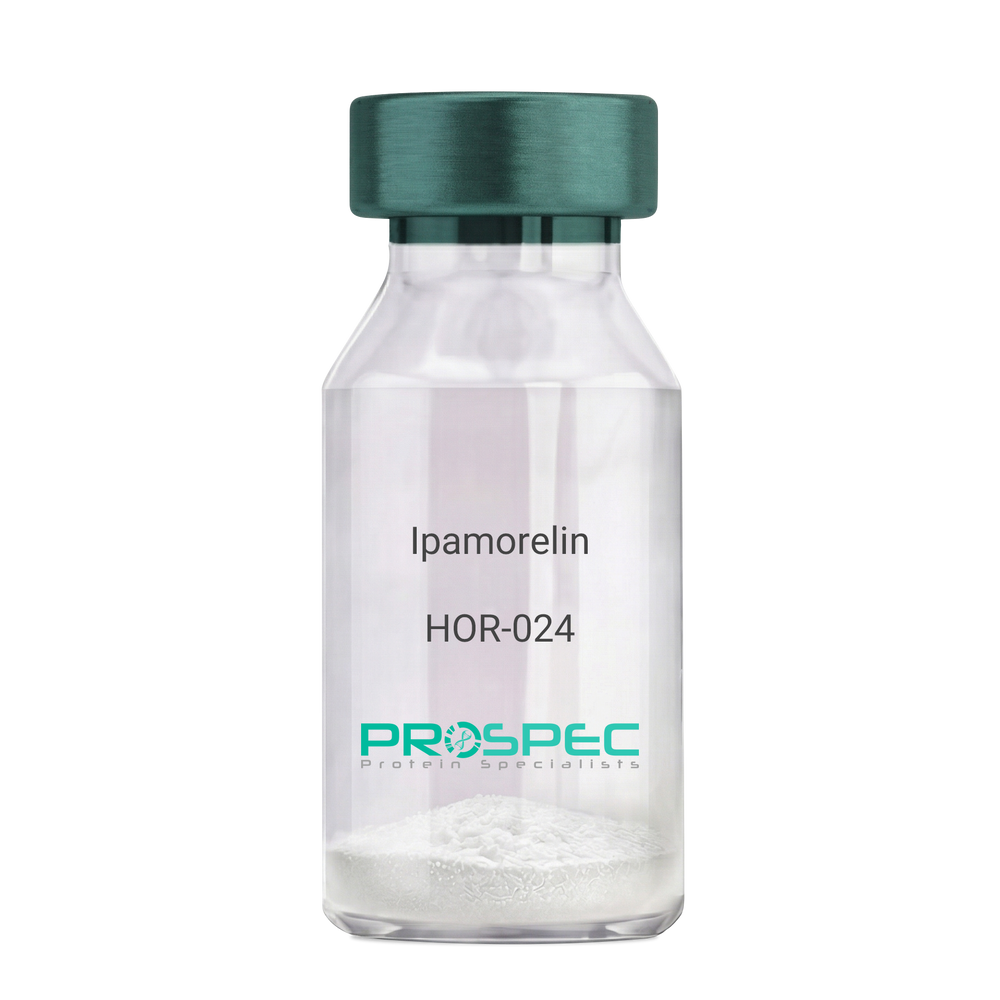
    Ipamorelin

    Description:

    Ipamorelin

    Ipamorelin

    Product # :

    HOR-024

    Price :

    Quantity :

    Shipping Method :

    Room Temp Icon

    Shipped at Room temp

    Add To Cart

    More Info

    • description
    • formulation
    • purity
    • More Info

    Description

    Ipamorelin Synthetic is a single, non-glycosylated polypeptide chain containing 4 amino acids, having a molecular mass of 711.85 Dalton and a Molecular formula of C38H49N9O5.

    Formulation

    The protein was lyophilized with no additives.

    Purity

    Greater than 97.0% as determined by analysis by RP-HPLC.

    More Info

    • Introduction

      Ipamorelin is a peptide selective agonist of the ghrelin/growth hormone secretagogue receptor and a growth hormone secretagogue. Ipamorelin is a pentapeptide that was derived from GHRP1. Ipamorelin significantly increases plasma growth hormone levels in both animals and humans. Like pralmorelin and GHRP-6, ipamorelin does not affect prolactin, FSH, LH or TSH levels. However, unlike GHRP2 and GHRP6, but as growth hormone-releasing hormone (GHRH), ipamorelin does not stimulate the secretion of adrenocorticotropic hormone (ACTH) or cortisol, and is highly selective for inducing the secretion only of GH.

    • Synonyms

      Ipamorelin

    • Physical Appearance

      Sterile Filtered White lyophilized (freeze-dried) powder.

    • Stability

      Lyophilized Ipamorelin although stable at room temperature for 3 weeks, should be stored desiccated below -18°C. Upon reconstitution Ipamorelin should be stored at 4°C between 2-7 days and for future use below -18°C. For long term storage it is recommended to add a carrier protein (0.1% HSA or BSA). Please prevent freeze-thaw cycles.

    • Solubility

      It is recommended to reconstitute the lyophilized Ipamorelin in sterile 18MΩ-cm H2O not less than 100 µg/ml, which can then be further diluted to other aqueous solutions.

    • Amino Acid Sequence

      Aib-His-D-2-Nal-D-Phe-Lys-NH2.

    ProSpec's products are furnished for LABORATORY RESEARCH USE ONLY. The product may not be used as drugs, agricultural or pesticidal products, food additives or household chemicals.

    Ipamorelin
  • View Data Sheet

    Name :

    HSA, Pichia Pastoris

    Description:

    Human Serum Albumin Recombinant, Pichia

    Serum albumin, ALB, PRO0883, PRO0903, PRO1341, DKFZp779N1935, GIG20, GIG42, PRO1708, PRO2044, PRO2619, PRO2675, UNQ696, SA, HSA.

    Product # :

    PRO-2149

    Price :

    Quantity :

    Shipping Method :

    Ice Icon

    Shipped with Ice Packs

    Add To Cart

    More Info

    • description
    • source
    • formulation
    • purity
    • More Info

    Description

    HSA Human Recombinant produced in Pichia Pastoris is a polypeptide chain containing 585 amino acids and having a molecular mass of 67 kDa.The recombinant Albumin is purified by proprietary chromatographic techniques.

    Source

    Pichia Pastoris.

    Formulation

    The Recombinant Albumin having a concentration of 200mg/ml contains 140mM sodium chloride and 0.16mM octanoate.

    Purity

    Greater than 97% as determined by HPLC.

    More Info

    • Introduction

      Albumin is synthesized in the liver as preproalbumin which has an N-terminal peptide that is removed before the nascent protein is released from the rough endoplasmic reticulum. The product, proalbumin, is in turn cleaved in the Golgi vesicles to produce the secreted albumin. Albumin is a soluble, monomeric protein which comprises about one-half of the blood serum protein. Albumin functions primarily as a carrier protein for steroids, fatty acids, and thyroid hormones and plays a role in stabilizing extracellular fluid volume. Mutations in this gene on chromosome 4 result in various anomalous proteins. Albumin is a globular unglycosylated serum protein of molecular weight 65,000. The human albumin gene is 16,961 nucleotides long from the putative 'cap' site to the first poly (A) addition site. It is split into 15 exons which are symmetrically placed within the 3 domains that are thought to have arisen by triplication of a single primordial domain.
      HSA is widely used to stabilize blood volume generally from donors but the fear of contamination such as HIV & Hepatitis has enticed great interest in the recombinant form which is identical to the natural blood.

    • Synonyms

      Serum albumin, ALB, PRO0883, PRO0903, PRO1341, DKFZp779N1935, GIG20, GIG42, PRO1708, PRO2044, PRO2619, PRO2675, UNQ696, SA, HSA.

    • Physical Appearance

      Yellowish gel like solution.

    • Stability

      Recombinant Albumin although stable at 15°C for 1 week, should be stored at 4°C for longer periods of time.Please prevent freeze-thaw cycles.

    • Applications

      Recombinant Albumin can be used as a media culture supplement at concentrations up to 5 grams per liter. Gradual adaptation of cell lines over several passages to a concentration of 0.5gr to 2gr per liter.

    ProSpec's products are furnished for LABORATORY RESEARCH USE ONLY. The product may not be used as drugs, agricultural or pesticidal products, food additives or household chemicals.

    Hsa Pichia Pastoris
  • View Data Sheet

    Name :

    SNCA NACP112 Human

    Description:

    Alpha Synuclein NACP112 Human Recombinant

    Alpha-synuclein, Non-A beta component of AD amyloid, Non-A4 component of amyloid precursor, NACP, PD1, PARK1, PARK4, MGC110988, a-Synuclein, SNCA.

    Product # :

    PRO-162

    Price :

    Quantity :

    Shipping Method :

    Ice Icon

    Shipped with Ice Packs

    Add To Cart

    More Info

    • description
    • source
    • formulation
    • purity
    • More Info

    Description

    A-Synuclein NACP112 Human Recombinant which is an alternatively spliced (103-129) form of a-Synuclein, produced in E.Coli is a single, non-glycosylated polypeptide chain of 112 amino acids having a molecular mass of 11.3kDa. The Recombinant Human a-Synuclein NACP112 is purified by proprietary chromatographic techniques.

    Source

    Escherichia Coli.

    Formulation

    The SNCA NACP112 protein solution (1mg/ml) contains 20mM Tris-HCl buffer pH 7.5 and 100mM NaCl.

    Purity

    Greater than 95.0% as determined by SDS-PAGE.

    More Info

    • Introduction

      a-Synuclein (amino acids 1-140), an acidic neuronal protein of 140 amino acids, is extremely heat-resistant and is natively unfolded with an extended structure primarily composed of random coils. a-synuclein has been suggested to be implicated in the pathogenesis of Parkinson’s disease and related neurodegenerative disorders, and more recently, to be an important regulatory component of vesicular transport in neuronal cells. Moreover, recent studies have shown that a-synuclein has chaperone activity and that this activity is lost upon removing its C-terminal acidic tail (amino acids 96-140).

    • Synonyms

      Alpha-synuclein, Non-A beta component of AD amyloid, Non-A4 component of amyloid precursor, NACP, PD1, PARK1, PARK4, MGC110988, a-Synuclein, SNCA.

    • Physical Appearance

      Sterile filtered colorless solution.

    • Stability

      Store at 4°C if entire vial will be used within 2-4 weeks. Store, frozen at -20°C for longer periods of time. For long term storage it is recommended to add a carrier protein (0.1% HSA or BSA). Avoid multiple freeze-thaw cycles.

    • Amino Acid Sequence

      MDVFMKGLSK AKEGVVAAAE KTKQGVAEAA GKTKEGVLYV GSKTKEGVVH GVATVAEKTK EQVTNVGGAV VTGVTAVAQK TVEGAGSIAA ATGFVKKDQL GKEGYQDYEP EA.

    ProSpec's products are furnished for LABORATORY RESEARCH USE ONLY. The product may not be used as drugs, agricultural or pesticidal products, food additives or household chemicals.

    Snca Nacp112 Human
  • View Data Sheet

    Name :

    COPZ1 Human

    Description:

    Coatomer Protein Complex, Subunit Zeta 1 Human Recombinant

    Coatomer protein complex subunit zeta 1, Zeta-1 COP, CGI-120, COPZ.

    Product # :

    PRO-221

    Price :

    Quantity :

    Shipping Method :

    Ice Icon

    Shipped with Ice Packs

    Add To Cart

    More Info

    • description
    • source
    • formulation
    • purity
    • More Info

    Description

    COPZ1 Human Recombinant fused with a 20 amino acid His tag at N-terminus produced in E.Coli is a single, non-glycosylated, polypeptide chain containing 197 amino acids (1-177a.a.) and having a molecular mass of 22.3kDa. The COPZ1 is purified by proprietary chromatographic techniques.

    Source

    Escherichia Coli.

    Formulation

    The COPZ1 solution (1mg/1ml) contains 20mM Tris-HCl buffer (pH 8.0), 10% glycerol, 1mM DTT and 0.1M NaCl.

    Purity

    Greater than 95.0% as determined by SDS-PAGE.

    More Info

    • Introduction

      COPZ1 is a member of the adaptor complexes small subunit family. Coatomer is an oligomeric complex which contains as a minimum the alpha, beta, beta', gamma, delta, epsilon and zeta subunits. The zeta subunit has a part in regulating the coat assembly and, therefore, the rate of biosynthetic protein transport due to its association-dissociation properties with the coatomer complex.

    • Synonyms

      Coatomer protein complex subunit zeta 1, Zeta-1 COP, CGI-120, COPZ.

    • Physical Appearance

      Sterile Filtered colorless solution.

    • Stability

      Store at 4°C if entire vial will be used within 2-4 weeks. Store, frozen at -20°C for longer periods of time. For long term storage it is recommended to add a carrier protein (0.1% HSA or BSA).Avoid multiple freeze-thaw cycles.

    • Amino Acid Sequence

      MGSSHHHHHH SSGLVPRGSH MEALILEPSL YTVKAILILD NDGDRLFAKY YDDTYPSVKE QKAFEKNIFN KTHRTDSEIA LLEGLTVVYK SSIDLYFYVI GSSYENELML MAVLNCLFDS LSQMLRKNVE KRALLENMEG LFLAVDEIVD GGVILESDPQ QVVHRVALRG EDVPLTEQTV SQVLQSAKEQ IKWSLLR.

    ProSpec's products are furnished for LABORATORY RESEARCH USE ONLY. The product may not be used as drugs, agricultural or pesticidal products, food additives or household chemicals.

    Copz1 Human
  • View Data Sheet

    Name :

    SERPINA7 Human

    Description:

    Serpin Peptidase Inhibitor, Clade A Member 7 Human

    Product # :

    PRO-2739

    Price :

    Quantity :

    Shipping Method :

    Room Temp Icon

    Shipped at Room temp

    Add To Cart

    More Info

    • description
    • source
    • formulation
    • purity
    • More Info

    Description

    Human Serpin Peptidase Inhibitor, Clade A Member 7 Protein produced in Human plasma having a molecular mass of approximately 55kD.

    Source

    Human serum.

    Formulation

    The protein was lyophilized (0.2 µm filtered) from 20mM NH4HCO3.

    Purity

    Greater than 98.0%.

    More Info

    • Introduction

      Thyroxine binding globulin, also known as SERPINA7, is synthesized in the liver and carried in the blood.
      SERPINA7 may be decreased or increased in a number of diseases. Its main value in diagnosis is to assess thyroid function by determining the amount of free T3/T4.
      Thyroxine binding globulin, binds and transports thyroid hormones in the circulation. SERPINA7 carries the majority of the T3/T4 in the blood. SERPINA7 has only one binding site for T3/T4 and about 25% of Thyroxine binding globulin is usually saturated.

    • Physical Appearance

      Sterile Filtered White lyophilized (freeze-dried) powder.

    • Stability

      SERPINA7 Human although stable at room temperature for 3 weeks, should be stored between 2-8°C.

    • Solubility

      It is recommended to reconstitute the lyophilized SERPINA7 Human in phosphate buffer containing 0.15M NaCl.

    • Human Virus Test

      Starting material donor has been tested and certified negative for antibodies to HIV-1, HIV-2, HCV, HBSAG, Parvovirus B19, Syphilis and HIV/HBV/HCV (PCR).

    ProSpec's products are furnished for LABORATORY RESEARCH USE ONLY. The product may not be used as drugs, agricultural or pesticidal products, food additives or household chemicals.

    Serpina7 Human
  • View Data Sheet

    Name :

    ACE2 (18-740) Human

    Description:

    Angiotensin Converting Enzyme 2 (18-740 a.a.), Human Recombinant

    Product # :

    ENZ-1125

    Price :

    Quantity :

    Shipping Method :

    Ice Icon

    Shipped with Ice Packs

    Add To Cart

    More Info

    • description
    • source
    • formulation
    • purity
    • biological activity
    • More Info

    Description

    The HEK293 derived ACE2 Human recombinant protein contains the amino acids 18-740 fused to IgG-His tag ( 242 a.a. ) at N-terminal having a total Mw of 110.8 kDa. ACE2 Protein binds to SARS Coronavirus-2 [ CoV-2019 ] Spike receptor binding domain.

    Source

    HEK293 Cells

    Formulation

    ACE2 Human protein 0.5mg/ml solution is supplied in PBS, pH7.4, and 10% glycerol.

    Purity

    Protein is >90% pure as determined SDS-PAGE.

    Biological Activity

    Determined by its binding ability in a functional ELISA using SARS-CoV-2 Spike RBD. The ED50 range ≤ 100ng/ml. Specific activity is > 250 pmol/min/ug, and is defined as the amount of enzyme that hydrolysis 1.0 pmole of Mca-YVADAPK(Dnp)-OH / min. at pH-7.5, at 25C

    More Info

    • Introduction

      ACE-2 (Angiotensin converting enzyme 2) an enzyme bound to cell membranes in various organs such as intestines arteries , lungs, heart & kidney. ACE2 an entry receptor of SARS coronaviruses as well as SARS-CoV-2,.The coronavirus spike (S) glycoprotein is a class I viral fusion antigen located on the external envelope of the virion that takes part in a critical part in viral infection by identifying host cell receptors and facilitating fusion of the viral and cellular membranes. 2 main domains in coronavirus S1 have been recognized, the N-terminal domain and C-terminal domain. One or the other and/or both S1 domains function as a receptor-binding domain. SARS-CoV + MERS-CoV equally use C-domain to attach their receptors.ACE2 is a type I transmembrane antigen with an extracellular N-terminal domain having the catalytic site and an intracellular C-terminal tail. ACE2 obtains a signal peptide, a transmembrane domain, and a single metalloproteinase active site containing an HEXXH zinc-binding domain. ACE-2 plays a role as a mono-carboxypeptidase which degrades Ang I to produce the nonapeptide Ang 1–9 and Ang II to create the heptapeptide Ang 1–7.

    • Physical Appearance

      Sterile Filtered clear solution.

    • Stability

      ACE-2 Human Recombinant Protein is shipped on ice packs. Upon arrival, Store at -20°C.

    • Amino Acid Sequence

      DGS QSTIEEQ AKTFLDKFNH EAEDLFYQSS LASWNYNTNI TEENVQNMNN AGDKWSAFLK EQSTLAQMYP LQEIQNLTVK LQLQALQQNG SSVLSEDKSK RLNTILNTMS TIYSTGKVCN PDNPQECLLL EPGLNEIMAN SLDYNERLWA WESWRSEVGK QLRPLYEEYV VLKNEMARAN HYEDYGDYWR GDYEVNGVDG YDYSRGQLIE DVEHTFEEIK PLYEHLHAYV RAKLMNAYPS YISPIGCLPA HLLGDMWGRF WTNLYSLTVP FGQKPNIDVT DAMVDQAWDA QRIFKEAEKF FVSVGLPNMT QGFWENSMLT DPGNVQKAVC HPTAWDLGKG DFRILMCTKV TMDDFLTAHH EMGHIQYDMA YAAQPFLLRN GANEGFHEAV GEIMSLSAAT PKHLKSIGLL SPDFQEDNET EINFLLKQAL TIVGTLPFTY MLEKWRWMVF KGEIPKDQWM KKWWEMKREI VGVVEPVPHD ETYCDPASLF HVSNDYSFIR YYTRTLYQFQ FQEALCQAAK HEGPLHKCDI SNSTEAGQKL FNMLRLGKSE PWTLALENVV GAKNMNVRPL LNYFEPLFTW LKDQNKNSFV GWSTDWSPYA DQSIKVRISL KSALGDKAYE WNDNEMYLFR SSVAYAMRQY FLKVKNQMIL FGEEDVRVAN LKPRISFNFF VTAPKNVSDI IPRTEVEKAI RMSRSRINDA FRLNDNSLEF LGIQPTLGPP NQPPVSLEPK SCDKTHTCPP CPAPELLGGP SVFLFPPKPK DTLMISRTPE VTCVVVDVSHEDPEVKFNWY VDGVEVHNAK TKPREEQYNS TYRVVSVLTV LHQDWLNGKE YKCKVSNKAL PAPIEKTISK AKGQPREPQVYTLPPSRDEL TKNQVSLTCL VKGFYPSDIA VEWESNGQPE NNYKTTPPVL DSDGSFFLYS KLTVDKSRWQ QGNVFSCSVMHEALHNHYTQ KSLSLSPGKH HHHHH

    ProSpec's products are furnished for LABORATORY RESEARCH USE ONLY. The product may not be used as drugs, agricultural or pesticidal products, food additives or household chemicals.

    Angiotensin Converting Enzyme 2
  • View Data Sheet

    Name :

    Histrelin

    Description:

    Histrelin

    Product # :

    HOR-244

    Price :

    Quantity :

    Shipping Method :

    Room Temp Icon

    Shipped at Room temp

    Add To Cart

    More Info

    • description
    • formulation
    • purity
    • More Info

    Description

    Histrelin has a molecular formula of C66H86N18O12, a.a. sequence of Pyr-His-Trp-Ser-Tyr-D-His(Bzl)-Leu-Arg-Pro-NHEt and having a Mw of 1323.32 Dalton.

    Formulation

    The Histrelin peptide was lyophilized with no additives.

    Purity

    Greater than 99.0% as determined by(a) Analysis by RP-HPLC.
    (b) Analysis by SDS-PAGE.

    More Info

    • Introduction

      Histrelin is a hormone similar to one normally released from the hypothalamus gland in the brain. Histrelin works by decreasing the amount of estrogen and testosterone in the blood. Suppressing estrogen can cause thinning of the bones or slowing of their growth. Histrelin acetate is a potent LHRH agonist which stimulates LH and FSH release and inhibits the actions of sex steroids on the male and female reproductive tracts. After a transient increase, continuous administration results in down regulation of LH and FSH levels followed by a suppression of ovarian and testicular steroid biosynthesis. Histrelin potency in vivo and in vitro is similar to that of the D-Trp6-containing analog. Especially because of its high water solubility and greater lipophilic character, it appears promising for clinical application.

    • Physical Appearance

      Sterile Filtered White lyophilized (freeze-dried) powder.

    • Stability

      Lyophilized Histrelin although stable at room temperature for 3 weeks, should be stored desiccated below -18°C. Upon reconstitution Histrelin should be stored at 4°C between 2-7 days and for future use below -18°C. For long term storage it is recommended to add a carrier protein (0.1% HSA or BSA).Please prevent freeze-thaw cycles.

    • Solubility

      It is recommended to reconstitute the lyophilized Histrelin in sterile 18MΩ-cm H2O not less than 100 µg/ml, which can then be further diluted to other aqueous solutions.

    ProSpec's products are furnished for LABORATORY RESEARCH USE ONLY. The product may not be used as drugs, agricultural or pesticidal products, food additives or household chemicals.

    Histrelin
  • View Data Sheet

    Name :

    DBH Human

    Description:

    DBH Human Recombinant

    EC 1.14.17.1, DBM, DBH.

    Product # :

    ENZ-891

    Price :

    Quantity :

    Shipping Method :

    Ice Icon

    Shipped with Ice Packs

    Add To Cart

    More Info

    • description
    • source
    • formulation
    • purity
    • More Info

    Description

    DBH Human Recombinant produced in E.Coli is a single, non-glycosylated polypeptide chain containing 599 amino acids (40-617 a.a) and having a molecular mass of 67.2kDa.DBH is fused to a 21 amino acid His-tag at N-terminus & purified by proprietary chromatographic techniques.

    Source

    Escherichia Coli.

    Formulation

    DBH protein solution (0.25mg/ml) containing Phosphate buffered saline (pH7.4), 10% glycerol and 1mM DTT.

    Purity

    Greater than 85.0% as determined by SDS-PAGE.

    More Info

    • Introduction

      DBH catalyzes the chemical reaction. DBH is an oxidoreductase which belongs to the copper type II, ascorbate-dependent monooxygenase family, in particular those performing on paired donors, with O2 as oxidant and incorporation or reduction of oxygen. The oxygen incorporated can not be derived from O2 with reduced ascorbate as one donor, as well as incorporation of one ato of oxygen into the other donor.

    • Synonyms

      EC 1.14.17.1, DBM, DBH.

    • Physical Appearance

      Sterile Filtered colorless solution.

    • Stability

      Store at 4°C if entire vial will be used within 2-4 weeks. Store, frozen at -20°C for longer periods of time. For long term storage it is recommended to add a carrier protein (0.1% HSA or BSA).Avoid multiple freeze-thaw cycles.

    • Amino Acid Sequence

      MGSSHHHHHH SSGLVPRGSH MSAPRESPLP YHIPLDPEGS LELSWNVSYT QEAIHFQLLV RRLKAGVLFG MSDRGELENA DLVVLWTDGD TAYFADAWSD QKGQIHLDPQ QDYQLLQVQR TPEGLTLLFK RPFGTCDPKD YLIEDGTVHL VYGILEEPFR SLEAINGSGL QMGLQRVQLL KPNIPEPELP SDACTMEVQA PNIQIPSQET TYWCYIKELP KGFSRHHIIK YEPIVTKGNE ALVHHMEVFQ CAPEMDSVPH FSGPCDSKMK PDRLNYCRHV LAAWALGAKA FYYPEEAGLA FGGPGSSRYL RLEVHYHNPL VIEGRNDSSG IRLYYTAKLR RFNAGIMELG LVYTPVMAIP PRETAFILTG YCTDKCTQLA LPPSGIHIFA SQLHTHLTGR KVVTVLVRDG REWEIVNQDN HYSPHFQEIR MLKKVVSVHP GDVLITSCTY NTEDRELATV GGFGILEEMC VNYVHYYPQT QLELCKSAVD AGFLQKYFHL INRFNNEDVC TCPQASVSQQ FTSVPWNSFN RDVLKALYSF APISMHCNKS SAVRFQGEWN LQPLPKVIST LEEPTPQCPT SQGRSPAGPT VVSIGGGKG

    ProSpec's products are furnished for LABORATORY RESEARCH USE ONLY. The product may not be used as drugs, agricultural or pesticidal products, food additives or household chemicals.

    Dbh Human
  • View Data Sheet

    Name :

    PHOSPHO1 Human

    Description:

    Phosphatase Orphan-1 Human Recombinant

    Phosphoethanolamine/phosphocholine phosphatase, Phosphatase, Orphan 1, EC 3.1.3.75, Phospho1.

    Product # :

    ENZ-363

    Price :

    Quantity :

    Shipping Method :

    Room Temp Icon

    Shipped at Room temp

    Add To Cart

    More Info

    • description
    • source
    • formulation
    • purity
    • More Info

    Description

    Human Phospho1 Recombinant produced in E.Coli is a single, non-glycosylated, polypeptide chain containing 295 amino acids and having a molecular mass of 31.3 kDa. The Human Phospho1 is fused to a 14 aa His tag at N-Terminus. Human Phosphocholine Phosphatase is purified by proprietary chromatographic techniques.

    Source

    Escherichia Coli.

    Formulation

    Filtered (0.4µm) and lyophilized from 0.5mg/ml in 30mM acetate buffer pH-4.

    Purity

    Greater than 95% as determined by SDS-PAGE.

    More Info

    • Introduction

      PHOSPHO1 is involved in mineralization process & plays a role in bone and cartilage matrix mineralization.
      PHOSPHO1 is expressed at sites of mineralization in bone and cartilage. Highly expressed in osteoblast cell line SaOS-2 which produces a mineralized matrix.
      Orphan-1 is collagen type -2 is specific for cartilaginous tissues. Orphan1 is essential for the normal embryonic development of the skeleton, for linear growth and for the ability of cartilage to resist compressive forces.
      Phosphoethanolamine (2-O3POCH2CH2NH3) is a key intermediate in the formation of cephalins, it is formed in liver and brain by phosphorylation of ethanolamine.
      PHOSPHO2 and PHOSPHO1 suggest subtle differences in the charge distributions around the putative substrate entry site and in the location of potential H-bond donors.
      PHOSPHO1 exhibits high specific phosphoethanolamine and phosphocholine phosphatase activities PHOSPHO1 is a phosphatase enzyme for which expression is upregulated in mineralizing cells. PHOSPHO1 has been implicated in the generation of Pi for matrix mineralization, a process central to skeletal development. PHOSPHO1 is a member of the haloacid dehalogenase (HAD) superfamily of Mg2+-dependent hydrolases. PHOSPHO1 exhibits high specific activities toward phosphoethanolamine (PEA) and phosphocholine (PCho).

    • Synonyms

      Phosphoethanolamine/phosphocholine phosphatase, Phosphatase, Orphan 1, EC 3.1.3.75, Phospho1.

    • Physical Appearance

      Filtered lyophilized (freeze-dried) powder.

    • Stability

      Store lyophilized protein at -20°C. Aliquot the product after reconstitution to avoid repeated freezing/thawing cycles. Reconstituted protein can be stored at 4°C for a limited period of time.

    • Solubility

      It is recommended to add 0.1M Acetate buffer pH4 to prepare a working stock solution of approximately 0.5mg/ml and let the lyophilized pellet dissolve completely. For conversion into higher pH value, we recommend intensive dilution by relevant buffer to a concentration of 10µg/ml. In higher concentrations the solubility of this protein is limited. Product is not sterile! Please filter the product by an appropriate sterile filter before using it in the cell culture.

    • Amino Acid Sequence

      MRGSHHHHHH GMASMSGCFP VSGLRCLSRD GRMAAQGAPR FLLTFDFDET IVDENSDDSI VRAAPGQRLP ESLRATYREG FYNEYMQRVF KYLGEQGVRP RDLSAIYEAI PLSPGMSDLL QFVAKQGACF EVILISDANT FGVESSLRAA GHHSLFRRIL SNPSGPDARG LLALRPFHTH SCARCPANMC KHKVLSDYLR ERAHDGVHFE RLFYVGDGAN DFCPMGLLAG GDVAFPRRGY PMHRLIQEAQ KAEPSSFRAS VVPWETAADV RLHLQQVLKSC.

    ProSpec's products are furnished for LABORATORY RESEARCH USE ONLY. The product may not be used as drugs, agricultural or pesticidal products, food additives or household chemicals.

    Phospho1 Human
  • View Data Sheet

    Name :

    PTEN Human, His

    Description:

    Phosphatase and Tensin homolog Human Recombinant, His Tag

    Phosphatidylinositol-3,4,5-trisphosphate 3-phosphatase and dual-specificity protein phosphatase PTEN, EC 3.1.3.67, EC 3.1.3.16, EC 3.1.3.48, Phosphatase and tensin homolog, Mutated in multiple advanced cancers 1, PTEN, MMAC1, TEP1, BZS, MHAM, PTEN1, 10q23del, MGC11227.

    Product # :

    PRO-712

    Price :

    Quantity :

    Shipping Method :

    Ice Icon

    Shipped with Ice Packs

    Add To Cart

    More Info

    • description
    • source
    • formulation
    • purity
    • More Info

    Description

    PTEN Human Recombinant fused with a 20 amino acid His tag at N-terminus produced in E.Coli is a single, non-glycosylated, polypeptide chain containing 423 amino acids (1- 403 a.a.) and having a molecular mass of 49.3kDa.The PTEN is purified by proprietary chromatographic techniques.

    Source

    Escherichia Coli.

    Formulation

    The PTEN solution contains 20mM Tris-HCl buffer (pH 8.0), 1mM EDTA, 2mM DTT, 100mM NaCl, and 20% glycerol.

    Purity

    Greater than 85.0% as determined by SDS-PAGE.

    More Info

    • Introduction

      PTEN, a tumor suppressor, has been implicated in a large number of human tumors and is conserved from humans to worms. PTEN has a tensin like domain and a catalytic domain similar to that of the dual specificity protein tyrosine phosphatases. Characterization of PTEN protein showed that it is a phosphatase that acts on proteins and on 3-phosphorylated phosphoinositides, and can therefore modulate signal transduction pathways that involve lipid second messengers. In contrast to most of the protein tyrosine phosphatases, PTEN preferentially dephosphorylates phosphoinositide substrates. PTEN negatively regulates intracellular levels of phosphatidylinositol-3,4,5-trisphosphate in cells and acts as a tumor suppressor by negative regulation of AKT/PKB signaling pathway. Recent results indicate that at least part of its role is to regulate the activity of the serine/threonine kinase AKT/PKB, and thus influence cell survival signaling.

    • Synonyms

      Phosphatidylinositol-3,4,5-trisphosphate 3-phosphatase and dual-specificity protein phosphatase PTEN, EC 3.1.3.67, EC 3.1.3.16, EC 3.1.3.48, Phosphatase and tensin homolog, Mutated in multiple advanced cancers 1, PTEN, MMAC1, TEP1, BZS, MHAM, PTEN1, 10q23del, MGC11227.

    • Physical Appearance

      Sterile Filtered colorless solution.

    • Stability

      Store at 4°C if entire vial will be used within 2-4 weeks. Store, frozen at -20°C for longer periods of time. For long term storage it is recommended to add a carrier protein (0.1% HSA or BSA).Please prevent freeze-thaw cycles.

    • Amino Acid Sequence

      MGSSHHHHHH SSGLVPRGSH MTAIIKEIVS RNKRRYQEDG FDLDLTYIYP NIIAMGFPAE RLEGVYRNNI DDVVRFLDSK HKNHYKIYNL CAERHYDTAK FNCRVAQYPF EDHNPPQLEL IKPFCEDLDQ WLSEDDNHVA AIHCKAGKGR TGVMICAYLL HRGKFLKAQE ALDFYGEVRT RDKKGVTIPS QRRYVYYYSY LLKNHLDYRP VALLFHKMMF ETIPMFSGGT CNPQFVVCQL KVKIYSSNSG PTRREDKFMY FEFPQPLPVC GDIKVEFFHK QNKMLKKDKM FHFWVNTFFI PGPEETSEKV ENGSLCDQEI DSICSIERAD NDKEYLVLTL TKNDLDKANK DKANRYFSPN FKVKLYFTKT VEEPSNPEAS SSTSVTPDVS DNEPDHYRYS DTTDSDPENE PFDEDQHTQI TKV.

    • Patent Protected Countries

      The Sale of recombinant Human PTEN by ProSpec is prohibited in the following countries: United States, Japan, Australia, Canada, Austria, Belgium, Denmark, Finland, France, Germany, Ireland, Italy, Liechtenstein, Luxembourg, Netherlands, Portugal, Spain, Sweden, Switzerland and UK.

    ProSpec's products are furnished for LABORATORY RESEARCH USE ONLY. The product may not be used as drugs, agricultural or pesticidal products, food additives or household chemicals.

    Pten Human His
  • View Data Sheet

    Name :

    ACOT8 Human

    Description:

    Acyl-CoA Thioesterase 8 Human Recombinant

    Acyl-coenzyme A thioesterase 8, hACTE-III, HNAACTE, the, PTE-1, PTE-2, PTE1, PTE2, Acyl-CoA thioesterase 8, Choloyl-coenzyme A thioesterase, HIV-Nef-associated acyl-CoA thioesterase, PTE-2, Peroxisomal acyl-coenzyme A thioester hydrolase 1, Peroxisomal long-chain acyl-CoA thioesterase 1 Thioesterase II, ACTEIII, hACTEIII, the, ACOT8.

    Product # :

    ENZ-712

    Price :

    Quantity :

    Shipping Method :

    Ice Icon

    Shipped with Ice Packs

    Add To Cart

    More Info

    • description
    • source
    • formulation
    • purity
    • More Info

    Description

    ACOT8 Human Recombinant produced in E.coli is a single, non-glycosylated polypeptide chain containing 342 amino acids (1-319) and having a molecular mass of 38.3kDa. ACOT8 is fused to a 23 amino acid His-tag at N-terminus & purified by proprietary chromatographic techniques.

    Source

    Escherichia Coli.

    Formulation

    The ACOT8 solution (0.5mg/ml) contains 20mM Tris-HCl buffer (pH 8.0), 0.2M NaCl, 40% glycerol and 2mM DTT.

    Purity

    Greater than 95.0% as determined by SDS-PAGE.

    More Info

    • Introduction

      Acyl-CoA Thioesterase 8 (ACOT8) is a group of enzymes which catalyze the hydrolysis of acyl-CoAs to the free fatty acid and coenzyme A (CoASH), granting the potential to regulate intracellular levels of acyl-CoAs, free fatty acids and CoASH. ACOT8 mediate Nef-induced down-regulation of CD4. ACOT8 contends with BAAT (Bile acid CoA: amino acid N-acyltransferase) for bile acid-CoA substrate (such as chenodeoxycholoyl-CoA). ACOT8 prefers medium-length fatty acyl-CoAs.

    • Synonyms

      Acyl-coenzyme A thioesterase 8, hACTE-III, HNAACTE, the, PTE-1, PTE-2, PTE1, PTE2, Acyl-CoA thioesterase 8, Choloyl-coenzyme A thioesterase, HIV-Nef-associated acyl-CoA thioesterase, PTE-2, Peroxisomal acyl-coenzyme A thioester hydrolase 1, Peroxisomal long-chain acyl-CoA thioesterase 1 Thioesterase II, ACTEIII, hACTEIII, the, ACOT8.

    • Physical Appearance

      Sterile Filtered colorless solution.

    • Stability

      Store at 4°C if entire vial will be used within 2-4 weeks. Store, frozen at -20°C for longer periods of time. For long term storage it is recommended to add a carrier protein (0.1% HSA or BSA).Avoid multiple freeze-thaw cycles.

    • Amino Acid Sequence

      MGSSHHHHHH SSGLVPRGSH MGSMSSPQAP EDGQGCGDRG DPPGDLRSVL VTTVLNLEPL DEDLFRGRHY WVPAKRLFGG QIVGQALVAA AKSVSEDVHV HSLHCYFVRA GDPKLPVLYQ VERTRTGSSF SVRSVKAVQH GKPIFICQAS FQQAQPSPMQ HQFSMPTVPP PEELLDCETL IDQYLRDPNL QKRYPLALNR IAAQEVPIEI KPVNPSPLSQ LQRMEPKQMF WVRARGYIGE GDMKMHCCVA AYISDYAFLG TALLPHQWQH KVHFMVSLDH SMWFHAPFRA DHWMLYECES PWAGGSRGLV HGRLWRQDGV LAVTCAQEGV IRVKPQVSES KL.

    ProSpec's products are furnished for LABORATORY RESEARCH USE ONLY. The product may not be used as drugs, agricultural or pesticidal products, food additives or household chemicals.

    Acot8 Human
  • View Data Sheet

    Name :

    SPR Mouse

    Description:

    Sepiapterin Reductase Mouse Recombinant

    SDR38C1, SPR, Dystonia, Sepiapterin reductase, mCG_128676.

    Product # :

    ENZ-1055

    Price :

    Quantity :

    Shipping Method :

    Ice Icon

    Shipped with Ice Packs

    Add To Cart

    More Info

    • description
    • source
    • formulation
    • purity
    • More Info

    Description

    SPR Mouse Recombinant produced in E.Coli is a single, non-glycosylated polypeptide chain containing 285 amino acids (1-262 a.a) and having a molecular mass of 30.3kDa.SPR is fused to a 23 amino acid His-tag at N-terminus & purified by proprietary chromatographic techniques.

    Source

    Escherichia Coli.

    Formulation

    SPR protein solution (1mg/ml) containing 20mM Tris-HCl buffer (pH8.5), 1mM DTT and 10% glycerol.

    Purity

    Greater than 95.0% as determined by SDS-PAGE.

    More Info

    • Introduction

      Sepiapterin Reductase is an aldo-keto reductase that catalyzes the NADPH-dependent reduction of pteridine derivatives and is essential in the biosynthesis of BH4. Mutations in Sepiapterin Reductase gene result in DOPA-responsive dystonia due to sepiaterin reductase deficiency defined by the presence of sustained involuntary muscle contractions, often leading to abnormal postures. Sepiapterin reductase is part of the short-chain dehydrogenase/reductase family which reduces exogenous carbonyl compounds as well as phenylpropanedione. Sepiapterin reductase is an important enzyme for the biosynthesis of tetrahydrobiopterin, an necessary cofactor for aromatic amino acid hydrolases together with tyrosine hydroxylase, the rate-limiting enzyme in dopamine synthesis.

    • Synonyms

      SDR38C1, SPR, Dystonia, Sepiapterin reductase, mCG_128676.

    • Physical Appearance

      Sterile filtered colourless solution.

    • Stability

      Store at 4°C if entire vial will be used within 2-4 weeks.Store, frozen at -20°C for longer periods of time. For long term storage it is recommended to add a carrier protein (0.1% HSA or BSA).Avoid multiple freeze-thaw cycles.

    • Amino Acid Sequence

      MGSSHHHHHH SSGLVPRGSH MGSMEAGGLG CAVCVLTGAS RGFGRALAPQ LARLLSPGSV MLVSARSESM LRQLKEELGA QQPDLKVVLA AADLGTEAGV QRLLSAVREL PRPEGLQRLL LINNAATLGD VSKGFLNVND LAEVNNYWAL NLTSMLCLTS GTLNAFQDSP GLSKTVVNIS SLCALQPYKG WGLYCAGKAA RDMLYQVLAA EEPSVRVLSY APGPLDNDMQ QLARETSKDP ELRSKLQKLK SDGALVDCGT SAQKLLGLLQ KDTFQSGAHV DFYDC.

    ProSpec's products are furnished for LABORATORY RESEARCH USE ONLY. The product may not be used as drugs, agricultural or pesticidal products, food additives or household chemicals.

    Spr Mouse
  • View Data Sheet

    Name :

    PAICS Human

    Description:

    Phosphoribosylaminoimidazole Carboxylase Human Recombinant

    PAICS, Phosphoribosylaminoimidazole Carboxylase Phosphoribosylaminoimidazole, Succinocarboxamide Synthetase, PAIS, AIRC, ADE2, ADE2H1, AIR Carboxylase, Multifunctional Protein ADE2, Multifunctional Protein ADE2H1, SAICAR Synthetase.

    Product # :

    ENZ-786

    Price :

    Quantity :

    Shipping Method :

    Ice Icon

    Shipped with Ice Packs

    Add To Cart

    More Info

    • description
    • source
    • formulation
    • purity
    • More Info

    Description

    PAICS Human Recombinant produced in E.coli is a single, non-glycosylated polypeptide chain containing 448 amino acids (1-425) and having a molecular mass of 49.5kDa.PAICS is fused to a 23 amino acid His-tag at N-terminus & purified by proprietary chromatographic techniques.

    Source

    E.coli.

    Formulation

    The PAICS solution (0.25mg/ml) contains 20mM Tris-HCl buffer (pH8.0), 20% glycerol, 0.1M NaCl and 1mM DTT.

    Purity

    Greater than 90% as determined by SDS-PAGE.

    More Info

    • Introduction

      Phosphoribosylaminoimidazole Carboxylase (PAICS) is an enzyme involved in nucleotide biosynthesis and particularly in purine biosynthesis. PAICS is a bifunctional enzyme containing phosphoribosylaminoimidazole carboxylase activity at its N-terminal region and phosphoribosylaminoimidazole succinocarboxamide synthetase at its C-terminal region. PAICS catalyzes the conversion of 5'-phosphoribosyl-5-aminoimidazole(AIR) into 5'-phosphoribosyl-4-carboxy-5-aminoimidazole (CAIR) as described in the reaction. PAICS catalyzes steps six and seven of purine biosynthesis.

    • Synonyms

      PAICS, Phosphoribosylaminoimidazole Carboxylase Phosphoribosylaminoimidazole, Succinocarboxamide Synthetase, PAIS, AIRC, ADE2, ADE2H1, AIR Carboxylase, Multifunctional Protein ADE2, Multifunctional Protein ADE2H1, SAICAR Synthetase.

    • Physical Appearance

      Sterile Filtered colorless solution.

    • Stability

      Store at 4°C if entire vial will be used within 2-4 weeks. Store, frozen at -20°C for longer periods of time. For long term storage it is recommended to add a carrier protein (0.1% HSA or BSA).Avoid multiple freeze-thaw cycles.

    • Amino Acid Sequence

      MGSSHHHHHH SSGLVPRGSH MGSMATAEVL NIGKKLYEGK TKEVYELLDS PGKVLLQSKD QITAGNAARK NHLEGKAAIS NKITSCIFQL LQEAGIKTAF TRKCGETAFI APQCEMIPIE WVCRRIATGS FLKRNPGVKE GYKFYPPKVE LFFKDDANND PQWSEEQLIA AKFCFAGLLI GQTEVDIMSH ATQAIFEILE KSWLPQNCTL VDMKIEFGVD VTTKEIVLAD VIDNDSWRLW PSGDRSQQKD KQSYRDLKEV TPEGLQMVKK NFEWVAERVE LLLKSESQCR VVVLMGSTSD LGHCEKIKKA CGNFGIPCEL RVTSAHKGPD ETLRIKAEYE GDGIPTVFVA VAGRSNGLGP VMSGNTAYPV ISCPPLTPDW GVQDVWSSLR LPSGLGCSTV LSPEGSAQFA AQIFGLSNHL VWSKLRASIL NTWISLKQAD KKIRECNL.

    ProSpec's products are furnished for LABORATORY RESEARCH USE ONLY. The product may not be used as drugs, agricultural or pesticidal products, food additives or household chemicals.

    Paics Human
  • View Data Sheet

    Name :

    PGAM1 Mouse

    Description:

    Phosphoglycerate Mutase 1 Mouse Recombinant

    Phosphoglycerate mutase 1, BPG-dependent PGAM 1, Phosphoglycerate mutase isozyme B, PGAM-B, Pgam1, Pgam-1, 2310050F24Rik.

    Product # :

    ENZ-627

    Price :

    Quantity :

    Shipping Method :

    Ice Icon

    Shipped with Ice Packs

    Add To Cart

    More Info

    • description
    • source
    • formulation
    • purity
    • More Info

    Description

    PGAM1 Mouse Recombinant produced in E.coli is a single, non-glycosylated polypeptide chain containing 278 amino acids (1-254) and having a molecular mass of 31.4kDa.PGAM1 is fused to a 24 amino acid His-tag at N-terminus & purified by proprietary chromatographic techniques.

    Source

    Escherichia Coli.

    Formulation

    The PGAM1 solution (1mg/ml) contains 20mM Tris-HCl buffer (pH8.0), 20% glycerol, 0.1M NaCl and 1mM DTT.

    Purity

    Greater than 95% as determined by SDS-PAGE.

    More Info

    • Introduction

      PGAM1 is part of the phosphoglycerate mutase family. PGAM1 is an essential component of glucose and 2,3-BPGA (2,3-bisphosphoglycerate) metabolism and catalyzes the reversible reaction of 3-phosphoglycerate (3-PGA) to 2-phosphoglycerate (2-PGA) in the glycolytic pathway. PGAM1 is a dimeric enzyme containing, in different tissues, different proportions of a slow-migrating muscle (MM) isozyme, a fast-migrating brain (BB) isozyme, and a hybrid form (MB). PGAM1 mutations lead to muscle phosphoglycerate mutase deficiency, a.k.a. glycogen storage disease X.

    • Synonyms

      Phosphoglycerate mutase 1, BPG-dependent PGAM 1, Phosphoglycerate mutase isozyme B, PGAM-B, Pgam1, Pgam-1, 2310050F24Rik.

    • Physical Appearance

      Sterile Filtered clear colorless solution.

    • Stability

      Store at 4°C if entire vial will be used within 2-4 weeks. Store, frozen at -20°C for longer periods of time. For long term storage it is recommended to add a carrier protein (0.1% HSA or BSA).Avoid multiple freeze-thaw cycles.

    • Amino Acid Sequence

      MGSSHHHHHH SSGLVPRGSH MGSHMAAYKL VLIRHGESAW NLENRFSGWY DADLSPAGHE EAKRGGQALR DAGYEFDICF TSVQKRAIRT LWTVLDAIDQ MWLPVVRTWR LNERHYGGLT GLNKAETAAK HGEAQVKIWR RSYDVPPPPM EPDHPFYSNI SKDRRYADLT EDQLPSCESL KDTIARALPF WNEEIVPQIK EGKRVLIAAH GNSLRGIVKH LEGLSEEAIM ELNLPTGIPI VYELDKNLKP IKPMQFLGDE ETVRKAMEAV AAQGKVKK.

    ProSpec's products are furnished for LABORATORY RESEARCH USE ONLY. The product may not be used as drugs, agricultural or pesticidal products, food additives or household chemicals.

    Pgam1 Mouse
  • View Data Sheet

    Name :

    PLA2G12 Human

    Description:

    Secreted Phospholipase A2-XII Human Recombinant

    Group XIIA secretory phospholipase A2, EC 3.1.1.4, Phosphatidylcholine 2-acylhydrolase GXII, GXII sPLA2, PLA2G12, sPLA2-XII, PLA2G12A.

    Product # :

    ENZ-330

    Price :

    Quantity :

    Shipping Method :

    Room Temp Icon

    Shipped at Room temp

    Add To Cart

    More Info

    • description
    • source
    • formulation
    • purity
    • More Info

    Description

    Secreted Phospholipase A2-XII Human Recombiannt was produced with N-terminal His-Tag. PLA2G12 His-Tagged Fusion Protein is 20.6 kDa containing 167 amino acid residues of the human secreted phospholipase A2-XII and 16 additional amino acid residues – His-Tag (underlined).

    Source

    Escherichia Coli.

    Formulation

    Filtered (0.4µm) and lyophilized from 0.5 mg/ml in 0.01M Tris buffer pH 8.6.

    Purity

    Greater than 95% as determined by SDS PAGE.

    More Info

    • Introduction

      Phospholipase A2 (PLA2) catalyzes the hydrolysis of the sn-2 position of membrane glycerophospholipids to liberate arachidonic acid (AA), a precursor of eicosanoids including prostaglandins and leukotrienes. The same reaction also produces lysophosholipids, which represent another class of lipid mediators.
      The secretory PLA2 (sPLA2) family, in which 10 isozymes have been identified, consists of low molecular weight, Ca2+-requiring secretory enzymes that have been implicated in a number of biological processes, such as modification of eicosanoid generation, inflammation, and host defense.
      This enzyme has been proposed to hydrolyze phosphatidylcholine (PC) in lipoproteins to liberate lyso- PC and free fatty acids in the arterial wall, thereby facilitating the accumulation of bioactive lipids and modified lipoproteins in atherosclerotic foci.
      In mice, sPLA2 expression significantly influences HDL particle size and composition and demonstrate that an induction of sPLA2 is required for the decrease in plasma HDL cholesterol in response to inflammatory stimuli. Instillation of bacteria into the bronchi was associated with surfactant degradation and a decrease in large:small ratio of surfactant aggregates in rats.

    • Synonyms

      Group XIIA secretory phospholipase A2, EC 3.1.1.4, Phosphatidylcholine 2-acylhydrolase GXII, GXII sPLA2, PLA2G12, sPLA2-XII, PLA2G12A.

    • Physical Appearance

      Filtered White lyophilized (freeze-dried) powder.

    • Stability

      Store lyophilized protein at -20°C. Aliquot the product after reconstitution to avoid repeated freezing/thawing cycles. Reconstituted protein can be stored at 4°C for a limited period of time; it does not show any change after two weeks at 4°C.

    • Solubility

      It is recommended to add deionized water to prepare a working stock solution of approximately 0.5mg/ml and let the lyophilized pellet dissolve completely. Product is not sterile! Please filter the product by an appropriate sterile filter before using it on cell culture.

    • Amino Acid Sequence

      MRGSHHHHHH GMASHMQEQA QTTDWRATLK TIRNGVHKID TYLNAALDLL GGEDGLCQYK CSDGSKPFPR YGYKPSPPNG CGSPLFGVHL NIGIPSLTKC CNQHDRCYET CGKSKNDCDE EFQYCLSKIC RDVQKTLGLTQ HVQACETTVE LLFDSVIHLG CKPYLDSQRA ACRCHYEEKT DL

    • Applications

      Western blotting.

    ProSpec's products are furnished for LABORATORY RESEARCH USE ONLY. The product may not be used as drugs, agricultural or pesticidal products, food additives or household chemicals.

    Pla2G12 Human
  • View Data Sheet

    Name :

    Resistin Human

    Description:

    Resistin Human Recombinant

    Cysteine-rich secreted protein FIZZ3, Adipose tissue-specific secretory factor, ADSF, C/EBP-epsilon-regulated myeloid-specific secreted cysteine-rich protein, Cysteine-rich secreted protein A12-alpha-like 2, RSTN, XCP1, RETN1, MGC126603, MGC126609.

    Product # :

    CYT-456

    Price :

    Quantity :

    Shipping Method :

    Room Temp Icon

    Shipped at Room temp

    Add To Cart

    More Info

    • description
    • source
    • formulation
    • purity
    • More Info

    Description

    Resistin Human Recombinant produced in e.coli is a homodimeric, non-glycosylated, polypeptide chain containing 2 x 93 amino acids and having a total molecular weight of 19.7kDa.The Resistin Human Recombinant protein is purified by standard chromatographic techniques.

    Source

    Escherichia Coli.

    Formulation

    Sterile filtered and lyophilized from 0.1% Trifluoroacetic Acis (TFA).

    Purity

    Greater than 95% as determined by SDS-PAGE.

    More Info

    • Introduction

      Resistin, a product of the RSTN gene, is a peptide hormone belonging to the class of cysteine-rich secreted proteins which is termed the RELM family, and is also described as ADSF (Adipose Tissue- Specific Secretory Factor) and FIZZ3 (Found in Inflammatory Zone). Human resistin contains 108 amino acids as a prepeptide, and its hydrofobic signal peptide is cleaved before its secretion. Resistin circulates in human blood as a dimeric protein consisting of two 92 amino acid polypeptides, which are disulfide-linked via Cys26.
      Mouse resistin, specifically produced and secreted by adipocyte, acts on skeletal muscle myocytes, hepatocytes and adipocytes themselves so that it reduces their sensitivity. Steppan et al. have suggested that resistin suppresses the ability to stimulate glucose uptake. They have also suggested that resistin is present at elevated levels in blood of obese mice, and is down regulated by fasting and antidiabetic drugs. Way et al., on the other hand, have found that resistin expression is severly suppressed in obesity and is stimulated by several antidiabetic drugs.
      Other studies have shown that mouse resistin increases during the differentiation of adipocytes, but it also seems to inhibit adipogenesis. In contrast, the human adipogenic differentiation is likely to be associated with a down regulation of resistin gene expression.

    • Synonyms

      Cysteine-rich secreted protein FIZZ3, Adipose tissue-specific secretory factor, ADSF, C/EBP-epsilon-regulated myeloid-specific secreted cysteine-rich protein, Cysteine-rich secreted protein A12-alpha-like 2, RSTN, XCP1, RETN1, MGC126603, MGC126609.

    • Physical Appearance

      Filtered White lyophilized (freeze-dried) powder.

    • Stability

      Store lyophilized protein at -20°C. Aliquot the product after reconstitution to avoid repeated freezing/thawing cycles. Reconstituted protein can be stored at 4°C for a limited period of time; it does not show any change after two weeks at 4°C.

    • Solubility

      It is recommended to reconstitute the lyophilized Resistin in sterile 18MΩ-cm H2O at a concentration of 100µg/ml, which can then be further diluted to other aqueous solutions.

    • Amino Acid Sequence

      MSSKTLCSME EAINERIQEV AGSLIFRAIS SIGLECQSVT SRGDLATCPR GFAVTGCTCG SACGSWDVRA ETTCHCQCAG MDWTGARCCR VQP

    ProSpec's products are furnished for LABORATORY RESEARCH USE ONLY. The product may not be used as drugs, agricultural or pesticidal products, food additives or household chemicals.

    Resistin Human
  • View Data Sheet

    Name :

    CDCP1 Human

    Description:

    CUB Domain Containing Protein 1 Human Recombinant

    CUB Domain Containing Protein 1, Subtractive Immunization M Plus HEp3-Associated 135 KDa Protein, Transmembrane And Associated With Src Kinases, Membrane Glycoprotein Gp140, SIMA135, TRASK, CD318 Antigen, CD318, CUB domain-containing protein 1, Membrane glycoprotein gp140, Subtractive immunization M plus HEp3-associated 135 kDa protein, Transmembrane and associated with src kinases.

    Product # :

    PRO-2264

    Price :

    Quantity :

    Shipping Method :

    Ice Icon

    Shipped with Ice Packs

    Add To Cart

    More Info

    • description
    • source
    • formulation
    • purity
    • More Info

    Description

    CDCP1 produced in Sf9 Baculovirus cells is a single, glycosylated polypeptide chain containing 646 amino acids (30-667a.a.) and having a molecular mass of 72.8kDa (Molecular size on SDS-PAGE will appear at approximately 70-100kDa). CDCP1 is expressed with an 8 amino acid His tag at C-Terminus and purified by proprietary chromatographic techniques.

    Source

    Sf9, Baculovirus cells.

    Formulation

    CDCP1 protein solution (0.25mg/ml) contains Phosphate Buffered Saline (pH 7.4) and 10% glycerol.

    Purity

    Greater than 90.0% as determined by SDS-PAGE.

    More Info

    • Introduction

      CUB Domain Containing Protein 1, also known as CDCP1 is a transmembrane protein which contains three extracellular CUB domains. CDCP1 is implicated in cell adhesion and cell matrix association. In addition, CDCP1 takes part in the regulation of anchorage versus migration or proliferation versus differentiation through its phosphorylation. CDCP1 is also a novel marker for leukemia diagnosis as well as for immature hematopoietic stem cell subsets. Furthermore, the extracellular region of human CDCP1 shares amino acid identity sequence with the mouse CDCP1.

    • Synonyms

      CUB Domain Containing Protein 1, Subtractive Immunization M Plus HEp3-Associated 135 KDa Protein, Transmembrane And Associated With Src Kinases, Membrane Glycoprotein Gp140, SIMA135, TRASK, CD318 Antigen, CD318, CUB domain-containing protein 1, Membrane glycoprotein gp140, Subtractive immunization M plus HEp3-associated 135 kDa protein, Transmembrane and associated with src kinases.

    • Physical Appearance

      Sterile Filtered colorless solution.

    • Stability

      Store at 4°C if entire vial will be used within 2-4 weeks. Store, frozen at -20°C for longer periods of time. For long term storage it is recommended to add a carrier protein (0.1% HSA or BSA).Avoid multiple freeze-thaw cycles.

    • Amino Acid Sequence

      FEIALPRESN ITVLIKLGTP TLLAKPCYIV ISKRHITMLS IKSGERIVFT FSCQSPENHF VIEIQKNIDC MSGPCPFGEV QLQPSTSLLP TLNRTFIWDV KAHKSIGLEL QFSIPRLRQI GPGESCPDGV THSISGRIDA TVVRIGTFCS NGTVSRIKMQ EGVKMALHLP WFHPRNVSGF SIANRSSIKR LCIIESVFEG EGSATLMSAN YPEGFPEDEL MTWQFVVPAH LRASVSFLNF NLSNCERKEE RVEYYIPGST TNPEVFKLED KQPGNMAGNF NLSLQGCDQD AQSPGILRLQ FQVLVQHPQN ESNKIYVVDL SNERAMSLTI EPRPVKQSRK FVPGCFVCLE SRTCSSNLTL TSGSKHKISF LCDDLTRLWM NVEKTISCTD HRYCQRKSYS LQVPSDILHL PVELHDFSWK LLVPKDRLSL VLVPAQKLQQ HTHEKPCNTS FSYLVASAIP SQDLYFGSFC PGGSIKQIQV KQNISVTLRT FAPSFQQEAS RQGLTVSFIP YFKEEGVFTV TPDTKSKVYL RTPNWDRGLP SLTSVSWNIS VPRDQVACLT FFKERSGVVC QTGRAFMIIQ EQRTRAEEIF SLDEDVLPKP SFHHHSFWVN ISNCSPTSGK QLDLLFSVTL TPRTVDLTLE HHHHHH.

    ProSpec's products are furnished for LABORATORY RESEARCH USE ONLY. The product may not be used as drugs, agricultural or pesticidal products, food additives or household chemicals.

    Cdcp1 Human
  • 1
  • …
  • 36
  • 37
  • 38
  • 39
  • 40
  • …
  • 42
Your browser does not support the video tag.

Products

  • Cytokines
  • Growth Factors
  • Chemokines
  • CD Antigens
  • Neurotrophins
  • Hormones
  • Enzymes
  • Viral Antigens
  • Recombinant Proteins
  • Natural Proteins
  • Monoclonal Antibodies
  • Polyclonal Antibodies
  • Thermal Packaging

About

  • Company
  • Founder
  • Contribution
  • Contact Us
  • My Account

Ordering

  • Ordering Method
  • Ordering - Credit Card
  • Ordering PO
  • Shipping Fees
  • FAQ's

Legal

  • Terms & Conditions
  • Privacy
  • Site Map
  • info@prospecbio.com
  • Facebook
  • Instagram
  • Linkedin Profile

© 2026 ProSpec-Tany TechnoGene Ltd. All Rights Reserved.

  • Choosing a selection results in a full page refresh.
  • Opens in a new window.