Skip to content

High-quality research proteins.

  • 1-800-805-6531

  • Mon - Sat 8.00-18.00, Sun - Closed

  • info@prospecbio.com

  • PO Box 6591 East Brunswick NJ 08816

  • Products
    • Cytokines
    • Growth factors
    • Chemokines
    • Cd antigens
    • Neurotrophins
    • Hormones
    • Enzymes
    • Viral antigens
    • Recombinant proteins
    • Natural proteins
    • Monoclonal antibodies
    • Polyclonal antibodies
    • Thermal Packaging
  • About
    • Company
    • Founder
    • Contribution
  • Customers
    • Eastern Asia
    • Eastern Europe
    • North America
    • South America
    • South East Asia
    • Southern Asia
    • Western Europe
  • Ordering
    • Ordering Method
    • Ordering - Credit Card
    • Ordering - PO
    • Shipping Fees
    • FAQs
  • Services
    • DNA Cloning
    • Protein Expression
    • Monoclonal Antibody
    • Fermentation
    • Technology License
  • Contact us
Log in

Country/region

  • USD $ | Albania
  • USD $ | Andorra
  • USD $ | Argentina
  • USD $ | Armenia
  • USD $ | Australia
  • USD $ | Austria
  • USD $ | Azerbaijan
  • USD $ | Belarus
  • USD $ | Belgium
  • USD $ | Bolivia
  • USD $ | Brazil
  • USD $ | Bulgaria
  • USD $ | Cambodia
  • USD $ | Canada
  • USD $ | Chile
  • USD $ | China
  • USD $ | Colombia
  • USD $ | Costa Rica
  • USD $ | Croatia
  • USD $ | Cyprus
  • USD $ | Czechia
  • USD $ | Denmark
  • USD $ | Estonia
  • USD $ | Finland
  • USD $ | France
  • USD $ | Georgia
  • USD $ | Germany
  • USD $ | Greece
  • USD $ | Hong Kong SAR
  • USD $ | Hungary
  • USD $ | Iceland
  • USD $ | India
  • USD $ | Ireland
  • USD $ | Israel
  • USD $ | Italy
  • USD $ | Japan
  • USD $ | Kazakhstan
  • USD $ | Latvia
  • USD $ | Liechtenstein
  • USD $ | Lithuania
  • USD $ | Madagascar
  • USD $ | Malta
  • USD $ | Mexico
  • USD $ | Moldova
  • USD $ | Monaco
  • USD $ | Netherlands
  • USD $ | New Zealand
  • USD $ | North Macedonia
  • USD $ | Norway
  • USD $ | Panama
  • USD $ | Paraguay
  • USD $ | Peru
  • USD $ | Philippines
  • USD $ | Poland
  • USD $ | Portugal
  • USD $ | Romania
  • USD $ | Singapore
  • USD $ | Slovakia
  • USD $ | Slovenia
  • USD $ | South Africa
  • USD $ | South Korea
  • USD $ | Spain
  • USD $ | Sri Lanka
  • USD $ | Sweden
  • USD $ | Switzerland
  • USD $ | Taiwan
  • USD $ | Thailand
  • USD $ | Türkiye
  • USD $ | Ukraine
  • USD $ | United Kingdom
  • USD $ | United States
  • USD $ | Uruguay
  • USD $ | Vatican City
  • USD $ | Venezuela
  • USD $ | Vietnam
  • Facebook
  • Instagram
logoProSpec - Recombinant Protein Manufacturer for academic and R&D industry
Become a distributor
Account Log in
Wishlist
Cart Cart(0)
  • Products
    +
    • Cytokines
    • Growth factors
    • Chemokines
    • Cd antigens
    • Neurotrophins
    • Hormones
    • Enzymes
    • Viral antigens
    • Recombinant proteins
    • Natural proteins
    • Monoclonal antibodies
    • Polyclonal antibodies
    • Thermal Packaging
  • About
    +
    • Company
    • Founder
    • Contribution
  • Customers
    +
    • Eastern Asia
    • Eastern Europe
    • North America
    • South America
    • South East Asia
    • Southern Asia
    • Western Europe
  • Ordering
    +
    • Ordering Method
    • Ordering - Credit Card
    • Ordering - PO
    • Shipping Fees
    • FAQs
  • Services
    +
    • DNA Cloning
    • Protein Expression
    • Monoclonal Antibody
    • Fermentation
    • Technology License
  • Contact us

Item added to your cart

View cart
View All
  • Cytokines
  • Growth factors
  • Chemokines
  • Cd antigens
  • Neurotrophins
  • Hormones
  • Enzymes
  • Viral antigens
  • Recombinant proteins
  • Natural proteins
  • Monoclonal antibodies
  • Polyclonal antibodies
  • Thermal Packaging
  • Tumor Necrosis Factor

    Tumor Necrosis Factor

    View All
  • 4-1BB

    4-1BB

    View All
  • Adiponectin

    Adiponectin

    View All
  • AIF1

    AIF1

    View All
  • Other Cytokines

    Other Cytokines

    View All
  • AITRL

    AITRL

    View All
  • Angiopoietin

    Angiopoietin

    View All
  • Apolipoprotein

    Apolipoprotein

    View All
  • B-Cell Activating Factor

    B-Cell Activating Factor

    View All
  • Beta Defensin

    Beta Defensin

    View All
  • Bone Morphogenetic Protein

    Bone Morphogenetic Protein

    View All
  • B type Natriuretic Peptide

    B type Natriuretic Peptide

    View All
  • BST

    BST

    View All
  • Betacellulin

    Betacellulin

    View All
  • Cardiotrophin

    Cardiotrophin

    View All
  • Activin

    Activin

    View All
  • Fibroblast Growth Factor

    Fibroblast Growth Factor

    View All
  • Other Growth Factors

    Other Growth Factors

    View All
  • CSF

    CSF

    View All
  • CTGF

    CTGF

    View All
  • IGFBP

    IGFBP

    View All
  • VEGF Protein

    VEGF Protein

    View All
  • EGF

    EGF

    View All
  • Epigen

    Epigen

    View All
  • Erythropoietin

    Erythropoietin

    View All
  • Insulin-Like Growth Factor

    Insulin-Like Growth Factor

    View All
  • Growth Hormone

    Growth Hormone

    View All
  • HDGF

    HDGF

    View All
  • Hepatocyte Growth Factor

    Hepatocyte Growth Factor

    View All
  • Insulin

    Insulin

    View All
  • BCA-1/ BLC (CXCL13)

    BCA-1/ BLC (CXCL13)

    View All
  • BRAK (CXCL14)

    BRAK (CXCL14)

    View All
  • C-10 (CCL6)

    C-10 (CCL6)

    View All
  • Other Chemokines

    Other Chemokines

    View All
  • MEC (CCL28)

    MEC (CCL28)

    View All
  • LD78-beta (CCL3L1)

    LD78-beta (CCL3L1)

    View All
  • CTACK (CCL27)

    CTACK (CCL27)

    View All
  • CXCL16

    CXCL16

    View All
  • CXCL17

    CXCL17

    View All
  • Platelet Factor-4 (CXCL4)

    Platelet Factor-4 (CXCL4)

    View All
  • ENA-78 (CXCL5)

    ENA-78 (CXCL5)

    View All
  • Eotaxin (CCL11,24,26)

    Eotaxin (CCL11,24,26)

    View All
  • Exodus-2 (CCL21)

    Exodus-2 (CCL21)

    View All
  • Fractalkine (CX3CL1)

    Fractalkine (CX3CL1)

    View All
  • CXCL6

    CXCL6

    View All
  • Other CD Antigens

    Other CD Antigens

    View All
  • CD14

    CD14

    View All
  • CD164

    CD164

    View All
  • CD1

    CD1

    View All
  • CD2

    CD2

    View All
  • CD200

    CD200

    View All
  • CD207

    CD207

    View All
  • CD226

    CD226

    View All
  • CD23

    CD23

    View All
  • CD244

    CD244

    View All
  • CD247

    CD247

    View All
  • CD27

    CD27

    View All
  • CD274

    CD274

    View All
  • CD300

    CD300

    View All
  • CD33

    CD33

    View All
  • Other Neurotrophins

    Other Neurotrophins

    View All
  • Beta-NGF

    Beta-NGF

    View All
  • BDNF

    BDNF

    View All
  • CDNF

    CDNF

    View All
  • CNTF

    CNTF

    View All
  • GDNF

    GDNF

    View All
  • Glia Maturation Factor

    Glia Maturation Factor

    View All
  • MANF

    MANF

    View All
  • Midkine

    Midkine

    View All
  • Neuroglobin

    Neuroglobin

    View All
  • Neurotrophic factors

    Neurotrophic factors

    View All
  • Neuregulin

    Neuregulin

    View All
  • Neuropilin

    Neuropilin

    View All
  • Pigment Epithelium-Derived Factor

    Pigment Epithelium-Derived Factor

    View All
  • Pleiotrophin

    Pleiotrophin

    View All
  • Peptide Hormones

    Peptide Hormones

    View All
  • Other Hormones

    Other Hormones

    View All
  • HCG

    HCG

    View All
  • Endothelin

    Endothelin

    View All
  • Exendin

    Exendin

    View All
  • FSH

    FSH

    View All
  • Glucagon

    Glucagon

    View All
  • GHRP

    GHRP

    View All
  • GLP

    GLP

    View All
  • Thyrostimulin

    Thyrostimulin

    View All
  • Inhibin A

    Inhibin A

    View All
  • LHRH

    LHRH

    View All
  • Melanotan

    Melanotan

    View All
  • Procalcitonin

    Procalcitonin

    View All
  • PTH

    PTH

    View All
  • Peroxiredoxin

    Peroxiredoxin

    View All
  • Peptidase

    Peptidase

    View All
  • Synthetase

    Synthetase

    View All
  • Transferase

    Transferase

    View All
  • Hydrolase

    Hydrolase

    View All
  • Dehydrogenase

    Dehydrogenase

    View All
  • ACE2

    ACE2

    View All
  • Esterase

    Esterase

    View All
  • Protein Kinases

    Protein Kinases

    View All
  • Other Enzymes

    Other Enzymes

    View All
  • Phosphatase

    Phosphatase

    View All
  • Deaminase

    Deaminase

    View All
  • Oxygenase

    Oxygenase

    View All
  • Adenylate Kinase

    Adenylate Kinase

    View All
  • Lyase

    Lyase

    View All
  • Chagas

    Chagas

    View All
  • SARS

    SARS

    View All
  • Influenza

    Influenza

    View All
  • ASFV

    ASFV

    View All
  • Astrovirus

    Astrovirus

    View All
  • Borrelia

    Borrelia

    View All
  • Helicobacter Pylori

    Helicobacter Pylori

    View All
  • Chikungunya

    Chikungunya

    View All
  • Chlamydia

    Chlamydia

    View All
  • Cytomegalo

    Cytomegalo

    View All
  • Dengue

    Dengue

    View All
  • EBV

    EBV

    View All
  • Ebola

    Ebola

    View All
  • Feline Leukemia Virus

    Feline Leukemia Virus

    View All
  • Hepatitis A

    Hepatitis A

    View All
  • Other

    Other

    View All
  • Actin

    Actin

    View All
  • ADAM

    ADAM

    View All
  • Complement Component

    Complement Component

    View All
  • Ag85

    Ag85

    View All
  • Eukaryotic Translation Initiation Factor

    Eukaryotic Translation Initiation Factor

    View All
  • Anterior Gradient Protein

    Anterior Gradient Protein

    View All
  • Heat Shock Protein

    Heat Shock Protein

    View All
  • Alpha-2-HS-Glycoprotein

    Alpha-2-HS-Glycoprotein

    View All
  • Hemoglobin

    Hemoglobin

    View All
  • Allergy

    Allergy

    View All
  • Anaplasma

    Anaplasma

    View All
  • Angiogenin

    Angiogenin

    View All
  • Ankyrin Repeat Domain

    Ankyrin Repeat Domain

    View All
  • Annexin

    Annexin

    View All
  • Other Natural Proteins

    Other Natural Proteins

    View All
  • Aprotinin

    Aprotinin

    View All
  • Transferrin

    Transferrin

    View All
  • Avidin

    Avidin

    View All
  • Anti Coagulation Factors

    Anti Coagulation Factors

    View All
  • Natural Albumin

    Natural Albumin

    View All
  • Natural Coagulation Factors

    Natural Coagulation Factors

    View All
  • Fibronectin

    Fibronectin

    View All
  • Thrombin

    Thrombin

    View All
  • Anti Human Enzyme

    Anti Human Enzyme

    View All
  • Other Monoclonal Antibodies

    Other Monoclonal Antibodies

    View All
  • Anti Human Cytokine

    Anti Human Cytokine

    View All
  • Anti Human Heat Shock Protein

    Anti Human Heat Shock Protein

    View All
  • Anti Mouse Lymphocyte

    Anti Mouse Lymphocyte

    View All
  • Anti Human Chemokine

    Anti Human Chemokine

    View All
  • Anti Human Lymphocyte

    Anti Human Lymphocyte

    View All
  • Anti Viral Monoclonal

    Anti Viral Monoclonal

    View All
  • Anti Mouse Cytokine

    Anti Mouse Cytokine

    View All
  • Anti-GST Monoclonal

    Anti-GST Monoclonal

    View All
  • Other Polyclonal Antibodies

    Other Polyclonal Antibodies

    View All
  • Anti Viral

    Anti Viral

    View All
  • Anti-GST Monoclonal

    Anti-GST Monoclonal

    View All
Back

Search results

1000 results found for “Annexin”

Name

Description

Product #

Price

Quantity

Shipping Method

  • View Data Sheet

    Name :

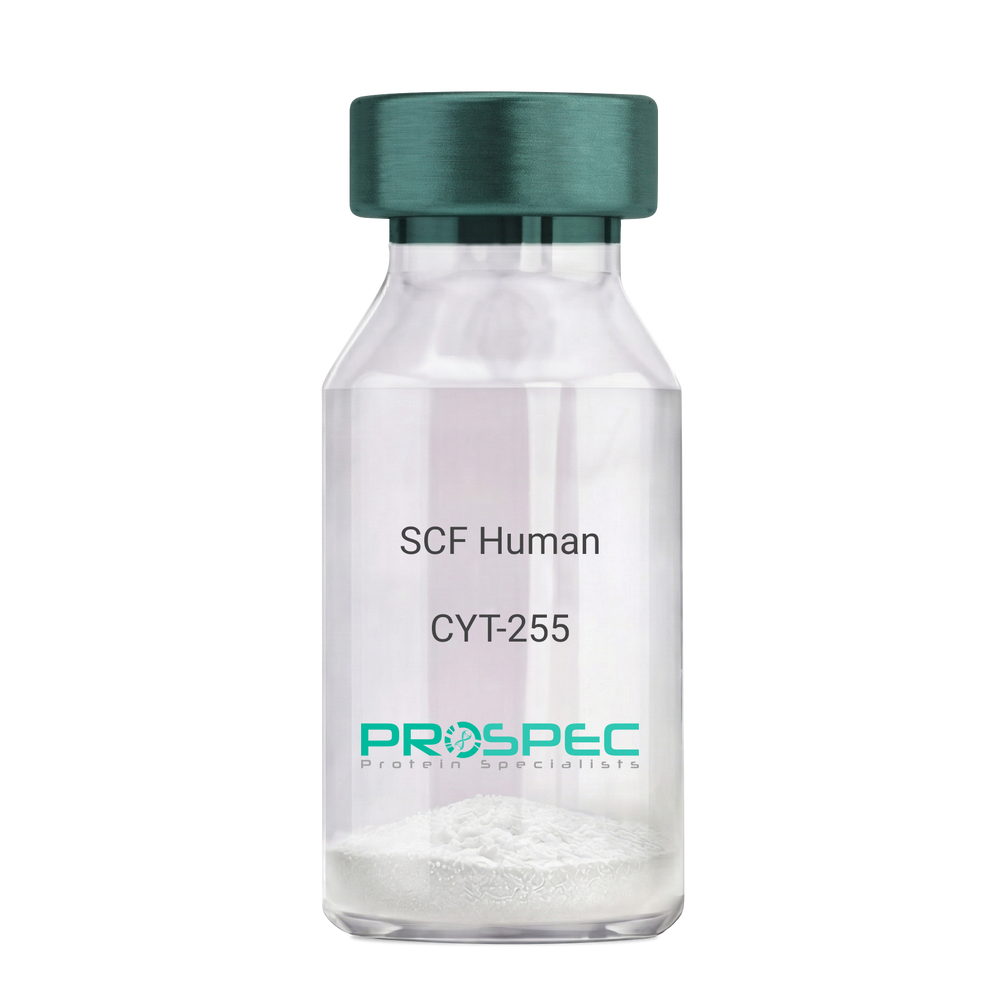
    SCF Human

    Description:

    Stem Cell Factor Human Recombinant

    Kit ligand Precursor, C-kit ligand, SCF, Mast cell growth factor, MGF, SF, KL-1, Kitl, DKFZp686F2250.

    Product # :

    CYT-255

    Price :

    Quantity :

    Shipping Method :

    Room Temp Icon

    Shipped at Room temp

    Add To Cart

    More Info

    • description
    • source
    • formulation
    • purity
    • biological activity
    • More Info
    • Citations

    Description

    Stem Cell Factor Human Recombinant produced in E.Coli is a single, non-glycosylated polypeptide chain containing 165 amino acids and having a molecular mass of 18409 Dalton. The SCF is purified by proprietary chromatographic techniques.

    Source

    Escherichia Coli.

    Formulation

    Lyophilized from a concentrated (1mg/ml) solution in water containing 0.02% NaHCO3.

    Purity

    Greater than 98.0% as determined by:
    (a) Analysis by SEC-HPLC.
    (b) Analysis by SDS-PAGE.

    Biological Activity

    The ED50 as determined by the dose-dependant stimulation of Human TF-1 cells is < 2 ng/ml, corresponding to a Specific Activity of 500,000 IU/mg.

    Citations

    More Info

    • Introduction

      Stem cell factor / KIT ligand (SCF) is a cytokine which binds CD117(c-Kit). SCF is also known as "steel factor" or "c-kit ligand". SCF exists in two forms, cell surface bound SCF and soluble (or free) SCF. Soluble SCF is produced by the cleavage of surface bound SCF by metalloproteases. SCF is a growth factor important for the survival, proliferation, and differentiation of hematopoietic stem cells and other hematopoietic progenitor cells. One of its roles is to change the BFU-E (burst-forming unit-erythroid) cells, which are the earliest erythrocyte precursors in the erythrocytic series, into the CFU-E (colony-forming unit-erythroid).

    • Synonyms

      Kit ligand Precursor, C-kit ligand, SCF, Mast cell growth factor, MGF, SF, KL-1, Kitl, DKFZp686F2250.

    • Physical Appearance

      Sterile Filtered White lyophilized (freeze-dried) powder.

    • Stability

      Lyophilized KIT ligand although stable at room temperature for 3 weeks, should be stored desiccated below -18°C. Upon reconstitution SCF should be stored at 4°C between 2-7 days and for future use below -18°C.For long term storage it is recommended to add a carrier protein (0.1% HSA or BSA).Please prevent freeze-thaw cycles.

    • Solubility

      It is recommended to reconstitute the lyophilized Stem Cell Factor in sterile 18MΩ-cm H2O not less than 100µg/ml, which can then be further diluted to other aqueous solutions.

    • Amino Acid Sequence

      The sequence of the first five N-terminal amino acids was determined and was found to be Met-Glu-Gly-Ile-Cys.

    • Protein content

      Protein quantitation was carried out by two independent methods1. UV spectroscopy at 280 nm using the absorbency value of 0.52 as the extinction coefficient for a 0.1% (1mg/ml) solution. This value is calculated by the PC GENE computer analysis program of protein sequences (IntelliGenetics). 2. Analysis by RP-HPLC, using a standard solution of Stem Cell Factor as a Reference Standard.

    ProSpec's products are furnished for LABORATORY RESEARCH USE ONLY. The product may not be used as drugs, agricultural or pesticidal products, food additives or household chemicals.

    Scf Human
  • View Data Sheet

    Name :

    CYTIP Human

    Description:

    Cytohesin 1 Interacting Protein Human Recombinant

    Cytohesin 1 Interacting Protein, Cytohesin Binder And Regulator, PSCDBP, Pleckstrin Homology, Sec7 And Coiled-Coil Domains, Binding Protein,Pleckstrin Homology Sec7 And Coiled-Coil Domains-Binding Protein, Cytohesin-Associated Scaffolding Protein, Cytohesin Binding Protein HE, Cytohesin-Binding Protein HE, Cbp HE, CASP, CYBR, HE Pleckstrin Homology, Sec7 And Coiled/Coil Domains, Binding Protein, Cytohesin-1 Interacting Protein, Cytohesin-Interacting Protein, CYTHIP, B3-1, CYTIP.

    Product # :

    PRO-2172

    Price :

    Quantity :

    Shipping Method :

    Ice Icon

    Shipped with Ice Packs

    Add To Cart

    More Info

    • description
    • source
    • formulation
    • purity
    • More Info
    • Citations

    Description

    CYTIP Human Recombinant produced in E.Coli is a single, non-glycosylated polypeptide chain containing 384 amino acids (1-359 a.a) and having a molecular mass of 42.6kDa.CYTIP is fused to a 25 amino acid His-tag at N-terminus & purified by proprietary chromatographic techniques.

    Source

    E.coli.

    Formulation

    CYTIP protein solution (1mg/ml) containing 20mM Tris-HCl (pH 8.0) and 10% glycerol.

    Purity

    Greater than 85% as determined by SDS-PAGE.

    Citations

    More Info

    • Introduction

      Cytohesin-interacting protein, also known as CYTIP contains 2 leucine zipper domains as well as a putative C-terminal nuclear targeting signal. However, CYTIP does not contain any hydrophobic regions. In addition, CYTIP is expressed weakly in resting NK and T cells. It also modulates the activation of ARF genes by CYTH1.

    • Synonyms

      Cytohesin 1 Interacting Protein, Cytohesin Binder And Regulator, PSCDBP, Pleckstrin Homology, Sec7 And Coiled-Coil Domains, Binding Protein,Pleckstrin Homology Sec7 And Coiled-Coil Domains-Binding Protein, Cytohesin-Associated Scaffolding Protein, Cytohesin Binding Protein HE, Cytohesin-Binding Protein HE, Cbp HE, CASP, CYBR, HE Pleckstrin Homology, Sec7 And Coiled/Coil Domains, Binding Protein, Cytohesin-1 Interacting Protein, Cytohesin-Interacting Protein, CYTHIP, B3-1, CYTIP.

    • Physical Appearance

      Sterile Filtered colorless solution.

    • Stability

      Store at 4°C if entire vial will be used within 2-4 weeks. Store, frozen at -20°C for longer periods of time. For long term storage it is recommended to add a carrier protein (0.1% HSA or BSA).Avoid multiple freeze-thaw cycles.

    • Amino Acid Sequence

      MGSSHHHHHH SSGLVPPGSH MGSEFMSLQR LLQHSSNGNL ADFCAGPAYS SYSTLTGSLT MDDNRRIQML ADTVATLPRG RKQLALTRSS SLSDFSWSQR KLVTVEKQDN ETFGFEIQSY RPQNQNACSS EMFTLICKIQ EDSPAHCAGL QAGDVLANIN GVSTEGFTYK QVVDLIRSSG NLLTIETLNG TMILKRTELE AKLQVLKQTL KQKWVEYRSL QLQEHRLLHG DAANCPSLEN MDLDELSLFG PLPGPGPALV DRNRLSSESS CKSWLSSMTM DSEDGYQTCV SEDSSRGAFS RQTSTDDECF IPKEGDDFLR RSSSRRNRSI SNTSSGSMSP LWEGNLSSMF GTLPRKSRKG SVRKQLLKFI PGLHRAVEEE ESRF

    ProSpec's products are furnished for LABORATORY RESEARCH USE ONLY. The product may not be used as drugs, agricultural or pesticidal products, food additives or household chemicals.

    Cytip Human
  • View Data Sheet

    Name :

    DCUN1D1 Human

    Description:

    DCN1 Defective in Cullin Neddylation 1 Domain Containing 1 Human Recombinant

    DCN1, defective in cullin neddylation 1-domain containing 1 (S. cerevisiae), RP42, DCUN1L1, SCCRO, SCRO, Tes3, Defective in cullin neddylation protein 1-like protein 1, Squamous cell carcinoma-related oncogene, DCUN1 domain-containing protein 1, DCN1-like protein 1, RP42 homolog.

    Product # :

    PRO-078

    Price :

    Quantity :

    Shipping Method :

    Ice Icon

    Shipped with Ice Packs

    Add To Cart

    More Info

    • description
    • source
    • formulation
    • purity
    • More Info
    • Citations

    Description

    DCUN1D1 produced in E.Coli is a single, non-glycosylated polypeptide chain containing 279 amino acids (1-259a.a.) and having a molecular mass of 32.2kDa. DCUN1D1 is fused to a 20 amino acid His-tag at N-terminus & purified by proprietary chromatographic techniques.

    Source

    Escherichia Coli.

    Formulation

    The DCUN1D1 protein solution (1mg/1ml) is formulated in 20mM Tris-HCl buffer (pH8.0) 0.1M NaCl and 10% glycerol.

    Purity

    Greater than 90% as determined by SDS-PAGE.

    Citations

    More Info

    • Introduction

      DCUN1D1 takes part in the malignant transformation of squamous cell lineage. DCUN1D1 protein regulates Gli1, a main regulator of the hedgehog (HH) pathway which takes a vital role in development, maintenance, and regeneration of practically all adult tissues.

    • Synonyms

      DCN1, defective in cullin neddylation 1-domain containing 1 (S. cerevisiae), RP42, DCUN1L1, SCCRO, SCRO, Tes3, Defective in cullin neddylation protein 1-like protein 1, Squamous cell carcinoma-related oncogene, DCUN1 domain-containing protein 1, DCN1-like protein 1, RP42 homolog.

    • Physical Appearance

      Sterile Filtered clear solution.

    • Stability

      Store at 4°C if entire vial will be used within 2-4 weeks. Store, frozen at -20°C for longer periods of time.Please avoid freeze thaw cycles.

    • Amino Acid Sequence

      MGSSHHHHHH SSGLVPRGSH MNKLKSSQKD KVRQFMIFTQ SSEKTAVSCL SQNDWKLDVA TDNFFQNPEL YIRESVKGSL DRKKLEQLYN RYKDPQDENK IGIDGIQQFC DDLALDPASI SVLIIAWKFR AATQCEFSKQ EFMDGMTELG CDSIEKLKAQ IPKMEQELKE PGRFKDFYQF TFNFAKNPGQ KGLDLEMAIA YWNLVLNGRF KFLDLWNKFL LEHHKRSIPK DTWNLLLDFS TMIADDMSNY DEEGAWPVLI DDFVEFARPQ IAGTKSTTV

    ProSpec's products are furnished for LABORATORY RESEARCH USE ONLY. The product may not be used as drugs, agricultural or pesticidal products, food additives or household chemicals.

    Dcun1D1 Human
  • View Data Sheet

    Name :

    DEFB118 Human

    Description:

    Beta Defensin 118 Human Recombinant

    Beta Defensin 118, Beta-defensin 18, DEFB-18, Defensin, beta 118, Epididymal secretory protein 13.6, ESP13.6, DEFB118, C20orf63, DEFB18, ESC42, Beta-defensin 118 precursor.

    Product # :

    CYT-714

    Price :

    Quantity :

    Shipping Method :

    Ice Icon

    Shipped with Ice Packs

    Add To Cart

    More Info

    • description
    • source
    • formulation
    • purity
    • More Info
    • sds-page
    • Citations

    Description

    DEFB118 Human Recombinant produced in E.Coli is a single, non-glycosylated polypeptide chain containing 126 amino acids (21-123 a.a) and having a molecular mass of 13.8kDa.DEFB118 is fused to a 23 amino acid His-tag at N-terminus & purified by proprietary chromatographic techniques.

    Source

    Escherichia Coli.

    Formulation

    DEFB118 protein solution (0.5mg/ml) containing 20mM Tris-HCl buffer (pH8.0), 0.15M NaCl, 20% glycerol and 1mM DTT.

    Purity

    Greater than 90.0% as determined by SDS-PAGE.

    sds-page

    DEFB118-sds-page - Product image 1

    Citations

    More Info

    • Introduction

      Beta Defensin 118 (DEFB118) which is a member of the beta subfamily of defensins, is found in a cluster with other beta-defensin genes on the long arm of chromosome 20. Beta-defensins are antimicrobial peptides which provide protection for tissues and organs from infection by a diversity of microorganisms. DEFB118 protein’s expression is regulated by androgen, and the encoded protein binds to sperm and exhibits antibacterial activity.

    • Synonyms

      Beta Defensin 118, Beta-defensin 18, DEFB-18, Defensin, beta 118, Epididymal secretory protein 13.6, ESP13.6, DEFB118, C20orf63, DEFB18, ESC42, Beta-defensin 118 precursor.

    • Physical Appearance

      Sterile Filtered clear solution.

    • Stability

      Store at 4°C if entire vial will be used within 2-4 weeks. Store, frozen at -20°C for longer periods of time. For long term storage it is recommended to add a carrier protein (0.1% HSA or BSA).Avoid multiple freeze-thaw cycles.

    • Amino Acid Sequence

      MGSSHHHHHH SSGLVPRGSH MGSYSGEKKC WNRSGHCRKQ CKDGEAVKDT CKNLRACCIP SNEDHRRVPA TSPTPLSDST PGIIDDILTV RFTTDYFEVS SKKDMVEESE AGRGTETSLP NVHHSS.

    • Background

      Title: Beta Defensin 118 Human Recombinant: Exploring its Role in Innate Immunity and Potential Therapeutic Applications

      Abstract:


      Beta defensin 118 (BD118) is a member of the beta defensin family, known for its antimicrobial properties and immune-modulatory functions. This research paper provides a comprehensive analysis of human recombinant BD118, focusing on its production, characterization, and potential applications in immune modulation and therapeutic interventions. The paper highlights the significance of BD118 in innate immunity and its role in host defense against microbial pathogens. Furthermore, it explores ongoing research and clinical trials investigating the therapeutic potential of recombinant BD118 in various inflammatory and infectious diseases. The information presented in this paper aims to enhance our understanding of human recombinant BD118 and its utility as a research tool and a potential immunotherapeutic agent.

      Introduction:


      Beta defensin 118 (BD118) is a small cationic peptide that plays a critical role in the innate immune response against microbial pathogens. Human recombinant BD118, generated through genetic engineering techniques, offers a valuable tool for studying its immune-modulatory properties and exploring its therapeutic potential.

      Production and Characterization:


      Recombinant BD118 is typically produced using expression systems such as bacteria or yeast. The protein is then purified and characterized to ensure its structural integrity and functional activity. Rigorous quality control measures are implemented to confirm the specificity and potency of the recombinant BD118.

      Role in Innate Immunity:


      BD118 exhibits antimicrobial activity against a wide range of pathogens, including bacteria, fungi, and viruses. Additionally, it possesses immune-modulatory functions, such as the regulation of pro-inflammatory responses and the promotion of wound healing. Recombinant BD118 serves as a valuable tool for investigating the mechanisms underlying its immune-modulatory actions and exploring its potential as an immunotherapeutic agent.

      Therapeutic Implications:


      Dysregulation of the immune system is associated with various inflammatory and infectious diseases. Recombinant BD118 holds promise as a potential therapeutic agent due to its antimicrobial properties and immune-modulatory functions. Ongoing research and clinical trials are investigating the therapeutic applications of recombinant BD118 in conditions such as skin infections, respiratory diseases, and inflammatory bowel disease.

      Conclusion:


      Human recombinant BD118 represents a valuable research tool and a potential immunotherapeutic agent. Its production, characterization, and applications in immune modulation contribute to our understanding of innate immunity and the development of targeted therapeutic interventions. Continued research and clinical trials exploring the therapeutic potential of recombinant BD118 offer promising avenues for improving outcomes in inflammatory and infectious diseases.

      What is the molecular weight/Mw of DEFB118 Protein?
      DEFB118 Protein has a total Mw of 13.8kDa.

      What is the source or expression system of DEFB118 Protein?
      Escherichia Coli.

      What is the Purity of DEFB118 Protein?
      DEFB118 Protein is >90% pure as determined by SDS-PAGE.

      What is the Biological Activity of DEFB118 Protein?
      The biological functionality of DEFB118 Protein will be determined in the future.

      What is the amino acid sequence of DEFB118 Protein?
      MGSSHHHHHH SSGLVPRGSH MGSYSGEKKC WNRSGHCRKQ CKDGEAVKDT CKNLRACCIP SNEDHRRVPA TSPTPLSDST PGIIDDILTV RFTTDYFEVS SKKDMVEESE AGRGTETSLP NVHHSS.

      What applications can DEFB118 Protein be used in?
      DEFB118 Protein can probably be used in western blot, ELISA and Lateral Flow.

      What is the endotoxin level for DEFB118 Protein?
      The endotoxin level is minimal, DEFB118 Protein was purified using conventional chromatography techniques.

    ProSpec's products are furnished for LABORATORY RESEARCH USE ONLY. The product may not be used as drugs, agricultural or pesticidal products, food additives or household chemicals.

    Defb118 Human
  • View Data Sheet

    Name :

    SERPINC1 Human

    Description:

    Serpin Peptidase Inhibitor, Clade C Member 1 Human Recombinant

    AT3, AT3D, ATIII, THPH7, Antithrombin-III, Serpin C1, SERPINC1.

    Product # :

    PRO-1877

    Price :

    Quantity :

    Shipping Method :

    Ice Icon

    Shipped with Ice Packs

    Add To Cart

    More Info

    • description
    • source
    • formulation
    • purity
    • More Info
    • Citations

    Description

    SERPINC1 Human Recombinant produced in E.Coli is a single, non-glycosylated polypeptide chain containing 455 amino acids (33-464 a.a) and having a molecular mass of 51.4kDa. SERPINC1 is fused to a 23 amino acid His-tag at N-terminus & purified by proprietary chromatographic techniques.

    Source

    Escherichia Coli.

    Formulation

    SERPINC1 protein solution (0.5mg/ml) containing 20mM Tris-HCl buffer (pH 8.0), 0.4M Urea and 10% glycerol.

    Purity

    Greater than 85.0% as determined by SDS-PAGE.

    Citations

    More Info

    • Introduction

      Serpin Peptidase Inhibitor, Clade C Member 1 (SERPINC1), which is a part of the serpin superfamily, is a plasma protease inhibitor. SERPINC1 inhibits thrombin and other activated serine proteases of the coagulation system, and regulates the blood coagulation cascade. SERPINC1 also inhibits Thrombin and Factors IXa, Xa and XIa. Deficiencies in SERPINC1 can cause ATIII deficiency, an autosomal dominant disease which might lead to a hereditary thrombophilia.

    • Synonyms

      AT3, AT3D, ATIII, THPH7, Antithrombin-III, Serpin C1, SERPINC1.

    • Physical Appearance

      Sterile Filtered colorless solution.

    • Stability

      Store at 4°C if entire vial will be used within 2-4 weeks. Store, frozen at -20°C for longer periods of time. For long term storage it is recommended to add a carrier protein (0.1% HSA or BSA).Avoid multiple freeze-thaw cycles.

    • Amino Acid Sequence

      MGSSHHHHHH SSGLVPRGSH MGSHGSPVDI CTAKPRDIPM NPMCIYRSPE KKATEDEGSE QKIPEATNRR VWELSKANSR FATTFYQHLA DSKNDNDNIF LSPLSISTAF AMTKLGACND TLQQLMEVFK FDTISEKTSD QIHFFFAKLN CRLYRKANKS SKLVSANRLF GDKSLTFNET YQDISELVYG AKLQPLDFKE NAEQSRAAIN KWVSNKTEGR ITDVIPSEAI NELTVLVLVN TIYFKGLWKS KFSPENTRKE LFYKADGESC SASMMYQEGK FRYRRVAEGT QVLELPFKGD DITMVLILPK PEKSLAKVEK ELTPEVLQEW LDELEEMMLV VHMPRFRIED GFSLKEQLQD MGLVDLFSPE KSKLPGIVAE GRDDLYVSDA FHKAFLEVNE EGSEAAASTA VVIAGRSLNP NRVTFKANRP FLVFIREVPL NTIIFMGRVA NPCVK.

    ProSpec's products are furnished for LABORATORY RESEARCH USE ONLY. The product may not be used as drugs, agricultural or pesticidal products, food additives or household chemicals.

    Serpinc1 Human
  • View Data Sheet

    Name :

    SERPING1 Human

    Description:

    Serpin Peptidase Inhibitor, Clade G Member 1 Human Recombinant

    C1IN, C1INH, C1NH, HAE1, HAE2 , Plasma protease C1 inhibitor, C1 esterase inhibitor, C1-inhibiting factor, Serpin G1, Name, SERPING1.

    Product # :

    PRO-1401

    Price :

    Quantity :

    Shipping Method :

    Ice Icon

    Shipped with Ice Packs

    Add To Cart

    More Info

    • description
    • source
    • formulation
    • purity
    • More Info
    • Citations

    Description

    SERPING1 Human Recombinant produced in E.Coli is a single, non-glycosylated polypeptide chain containing 499 amino acids (23-500a.a) and having a molecular mass of 55.1kDa. SERPING1 is fused to a 21 amino acid His-tag at N-terminus & purified by proprietary chromatographic techniques.

    Source

    E.coli.

    Formulation

    SERPING1 protein solution (0.5mg/ml) containing 20mM Tris-HCl buffer (pH 8.0), 0.4M Urea and10% glycerol.

    Purity

    Greater than 90% as determined by SDS-PAGE.

    Citations

    More Info

    • Introduction

      Plasma protease C1 inhibitor (SERPING1) is a part of the serpin superfamily of serine protease inhibitors. SERPING1 plays an important role in regulating activation of both the complement and contact systems. That isdue to the fact that SERPING1 regulates the activation of complement factor C1 in addition to the activity of activated C1 by coupling with the active catalytic site at the light chains of C1r and C1s. SERPING1 insufficiency results in hereditary angioedema, which is characterized by recurrent episodes of localized angioedema of the skin, gastrointestinal mucosa or upper respiratory mucosa.

    • Synonyms

      C1IN, C1INH, C1NH, HAE1, HAE2 , Plasma protease C1 inhibitor, C1 esterase inhibitor, C1-inhibiting factor, Serpin G1, Name, SERPING1.

    • Physical Appearance

      Sterile Filtered colorless solution.

    • Stability

      Store at 4°C if entire vial will be used within 2-4 weeks. Store, frozen at -20°C for longer periods of time. For long term storage it is recommended to add a carrier protein (0.1% HSA or BSA).Avoid multiple freeze-thaw cycles.

    • Amino Acid Sequence

      MGSSHHHHHH SSGLVPRGSH MNPNATSSSS QDPESLQDRG EGKVATTVIS KMLFVEPILE VSSLPTTNST TNSATKITAN TTDEPTTQPT TEPTTQPTIQ PTQPTTQLPT DSPTQPTTGS FCPGPVTLCS DLESHSTEAV LGDALVDFSL KLYHAFSAMK KVETNMAFSP FSIASLLTQV LLGAGENTKT NLESILSYPK DFTCVHQALK GFTTKGVTSV SQIFHSPDLA IRDTFVNASR TLYSSSPRVL SNNSDANLEL INTWVAKNTN NKISRLLDSL PSDTRLVLLN AIYLSAKWKT TFDPKKTRME PFHFKNSVIK VPMMNSKKYP VAHFIDQTLK AKVGQLQLSH NLSLVILVPQ NLKHRLEDME QALSPSVFKA IMEKLEMSKF QPTLLTLPRI KVTTSQDMLS IMEKLEFFDF SYDLNLCGLT EDPDLQVSAM QHQTVLELTE TGVEAAAASA ISVARTLLVF EVQQPFLFVL WDQQHKFPVF MGRVYDPRA.

    ProSpec's products are furnished for LABORATORY RESEARCH USE ONLY. The product may not be used as drugs, agricultural or pesticidal products, food additives or household chemicals.

    Serping1 Human
  • View Data Sheet

    Name :

    APP Human

    Description:

    Amyloid beta (A4) Precursor Protein Human Recombinant

    Amyloid beta A4 protein, ABPP, APPI, APP, Alzheimer disease amyloid protein, Cerebral vascular amyloid peptide, CVAP, PreA4, Protease nexin-II, PN-II, APP, A4, AD1, AAA, PN2, ABETA, CTFgamma.

    Product # :

    PRO-1080

    Price :

    Quantity :

    Shipping Method :

    Ice Icon

    Shipped with Ice Packs

    Add To Cart

    More Info

    • description
    • source
    • formulation
    • purity
    • More Info
    • Citations

    Description

    APP Human Recombinant produced in E.Coli is a single, non-glycosylated polypeptide chain containing 308 amino acids (18-289 a.a) and having a molecular mass of 34.7kDa (Molecular size on SDS-PAGE will appear higher).APP is fused to a 36 amino acid His-tag at N-terminus & purified by proprietary chromatographic techniques.

    Source

    Escherichia Coli.

    Formulation

    APP protein solution (0.5mg/ml) containing 20mM Tris-HCl buffer (pH8.0), 20% glycerol, 0.1M NaCl and 1mM DTT.

    Purity

    Greater than 85.0% as determined by SDS-PAGE.

    Citations

    More Info

    • Introduction

      Amyloid beta A4 protein (APP) functions as a cell surface receptor and transmembrane precursor protein which is cleaved by secretases to form a number of peptides. A number of these peptides are secreted and can bind to the acetyltransferase complex APBB1/TIP60 to stimulate transcriptional activation, whereas others form the protein basis of the amyloid plaques found in the brains of patients with Alzheimer disease. APP gene mutations are implicated in autosomal dominant Alzheimer disease and cerebroarterial amyloidosis (cerebral amyloid angiopathy).

    • Synonyms

      Amyloid beta A4 protein, ABPP, APPI, APP, Alzheimer disease amyloid protein, Cerebral vascular amyloid peptide, CVAP, PreA4, Protease nexin-II, PN-II, APP, A4, AD1, AAA, PN2, ABETA, CTFgamma.

    • Physical Appearance

      Sterile Filtered colorless solution.

    • Stability

      Store at 4°C if entire vial will be used within 2-4 weeks. Store, frozen at -20°C for longer periods of time. For long term storage it is recommended to add a carrier protein (0.1% HSA or BSA).Avoid multiple freeze-thaw cycles.

    • Amino Acid Sequence

      MRGSHHHHHH GMASMTGGQQ MGRDLYDDDD KDRWGSLEVP TDGNAGLLAE PQIAMFCGRL NMHMNVQNGK WDSDPSGTKT CIDTKEGILQ YCQEVYPELQ ITNVVEANQP VTIQNWCKRG RKQCKTHPHF VIPYRCLVGE FVSDALLVPD KCKFLHQERM DVCETHLHWH TVAKETCSEK STNLHDYGML LPCGIDKFRG VEFVCCPLAE ESDNVDSADA EEDDSDVWWG GADTDYADGS EDKVVEVAEE EEVAEVEEEE ADDDEDDEDG DEVEEEAEEP YEEATERTTS IATTTTTTTE SVEEVVRE.

    ProSpec's products are furnished for LABORATORY RESEARCH USE ONLY. The product may not be used as drugs, agricultural or pesticidal products, food additives or household chemicals.

    App Human
  • View Data Sheet

    Name :

    SKP E. Coli

    Description:

    Chaperone Protein SKP E.Coli Recombinant

    hlpA, ompH, Chaperone protein skp, skp.

    Product # :

    HSP-034

    Price :

    Quantity :

    Shipping Method :

    Ice Icon

    Shipped with Ice Packs

    Add To Cart

    More Info

    • description
    • source
    • formulation
    • purity
    • More Info
    • Citations

    Description

    SKP Recombinant E.coli produced in E.Coli is a single, non-glycosylated polypeptide chain containing 162 amino acids (21-161 a.a.) and having a molecular mass of 17.9 kDa. The SKP is fused to a 21 amino acid His-Tag at N-terminus and purified by proprietary chromatographic techniques.

    Source

    Escherichia Coli.

    Formulation

    SKP E.Coli solution containing 20mM Tris-HCl pH-8 & 20% glycerol.

    Purity

    Greater than 95.0% as determined by SDS-PAGE.

    Citations

    More Info

    • Introduction

      SKP is a 17kDa trimeric periplasmic chaperone that supports outer membrane proteins in their folding and insertion into membranes. SKP protein is necessary for the normal release of ompA from the inner membrane, the maintenance of its solubility in the periplasm, and, in association with lipopolysaccharide (LPS), for the efficient folding and insertion of ompA into the outer membrane.

    • Synonyms

      hlpA, ompH, Chaperone protein skp, skp.

    • Physical Appearance

      Sterile filtered colorless solution.

    • Stability

      Store at 4°C if entire vial will be used within 2-4 weeks. Store, frozen at -20°C for longer periods of time. For long term storage it is recommended to add a carrier protein (0.1% HSA or BSA).Avoid multiple freeze-thaw cycles.

    • Amino Acid Sequence

      MGSSHHHHHH SSGLVPRGSH MADKIAIVNM GSLFQQVAQK TGVSNTLENE FKGRASELQR METDLQAKMK KLQSMKAGSD RTKLEKDVMA QRQTFAQKAQ AFEQDRARRS NEERGKLVTR IQTAVKSVAN SQDIDLVVDA NAVAYNSSDV KDITADVLKQ VK.

    ProSpec's products are furnished for LABORATORY RESEARCH USE ONLY. The product may not be used as drugs, agricultural or pesticidal products, food additives or household chemicals.

    Skp E Coli
  • View Data Sheet

    Name :

    CXCL11 Human

    Description:

    I-TAC Human Recombinant (CXCL11)

    Small inducible cytokine B11, CXCL11, I-TAC, IP-9, H174, Beta-R1, chemokine (C-X-C motif) ligand 11, IP9, b-R1, SCYB11, SCYB9B, MGC102770.

    Product # :

    CHM-334

    Price :

    Quantity :

    Shipping Method :

    Room Temp Icon

    Shipped at Room temp

    Add To Cart

    More Info

    • description
    • source
    • formulation
    • purity
    • biological activity
    • More Info
    • Citations

    Description

    I-TAC Human Recombinant produced in E.Coli is a single, non-glycosylated, polypeptide chain containing 73 amino acids and having a molecular mass of 8300 Dalton. The I-TAC is purified by proprietary chromatographic techniques.

    Source

    Escherichia Coli.

    Formulation

    Lyophilized from a 0.2?m filtered concentrated (0.5mg/ml) solution in 20mM PB, pH 7.4, 100mM NaCl.

    Purity

    Greater than 97.0% as determined by:
    (a) Analysis by RP-HPLC.
    (b) Analysis by SDS-PAGE.

    Biological Activity

    Determined by its ability to chemoattract human IL-2 activated T-Lymphocytes using a concentration range of 0.1-10.0 ng/ml.

    Citations

    More Info

    • Introduction

      Chemokine (C-X-C motif) ligand 11 (CXCL11) is a small cytokine belonging to the CXC chemokinen family that is also called inducible T-cell alpha chemoattractant (I-TAC) and (IP-9). I-TAC is highly expressed in peripheral blood leukocytes, pancreas and liver, with moderate levels in thymus, spleen and lung and low expression levels were in small intestine, placenta and prostate. Gene expression of CXCL11 is strongly induced by IFN-g and IFN-b, and weakly induced by IFN-a. The I-TAC chemokine elicits its effects on its target cells by interacting with the cell surface chemokine receptor CXCR3, with a higher affinity than do the other ligands for this receptor, CXCL9 and CXCL10. I-TAC is chemotactic for activated T cells. The CXCL11 gene is located on human chromosome 4 along with many other members of the CXC chemokine family.

    • Synonyms

      Small inducible cytokine B11, CXCL11, I-TAC, IP-9, H174, Beta-R1, chemokine (C-X-C motif) ligand 11, IP9, b-R1, SCYB11, SCYB9B, MGC102770.

    • Physical Appearance

      Sterile Filtered White lyophilized (freeze-dried) powder.

    • Stability

      Lyophilized I-TAC although stable at room temperature for 3 weeks, should be stored desiccated below -18°C. Upon reconstitution I-TAC should be stored at 4°C between 2-7 days and for future use below -18°C. For long term storage it is recommended to add a carrier protein (0.1% HSA or BSA).Please prevent freeze-thaw cycles.

    • Solubility

      It is recommended to reconstitute the lyophilized I-TAC in sterile 18MΩ-cm H2O not less than 100µg/ml, which can then be further diluted to other aqueous solutions.

    • Amino Acid Sequence

      FPMFKRGRCLCIGPGVKAVKVADIEKASIMYPSNNCDKIEVIITLKENKGQRCLNPKSKQARLIIKKVERKNF.

    • Background

      What is the molecular weight/Mw of CXCL11 HUMAN Protein?
      CXCL11 HUMAN Protein has a total Mw of 8.3kDa.

      What is the source or expression system of CXCL11 HUMAN Protein?
      Escherichia Coli.

      What is the Purity of CXCL11 HUMAN Protein?
      CXCL11 HUMAN Protein is >97% pure as determined by SDS-PAGE.

      What is the Biological Activity of CXCL11 HUMAN Protein?
      Determined by its ability to chemoattract human IL-2 activated T-Lymphocytes using a concentration range of 0.1-10.0 ng/ml.

      What is the amino acid sequence of CXCL11 HUMAN Protein?
      FPMFKRGRCLCIGPGVKAVKVADIEKASIMYPSNNCDKIEVIITLKENKGQRCLNPKSKQARLIIKKVERKNF.

      What applications can CXCL11 HUMAN Protein be used in?
      CXCL11 HUMAN Protein can probably be used in western blot, ELISA and Lateral Flow.

      What is the endotoxin level for CXCL11 HUMAN Protein?
      The endotoxin level is minimal, CXCL11 HUMAN Protein was purified using conventional chromatography techniques.

      Who supplies recombinant CXCL11 HUMAN that is in stock and available to order?
      ProSpec has the protein in stock and available for immediate delivery.

      Where can I order bulk mg quantities of CXCL11 HUMAN?
      ProSpec supplies bulk mg quantities at affordable prices that meets research and academic budgets.

    ProSpec's products are furnished for LABORATORY RESEARCH USE ONLY. The product may not be used as drugs, agricultural or pesticidal products, food additives or household chemicals.

    I Tac Human
  • View Data Sheet

    Name :

    NFNB E.Coli

    Description:

    Dihydropteridine Reductase E.Coli Recombinant

    DPRA, NFSB, NFSI, NTR.

    Product # :

    ENZ-423

    Price :

    Quantity :

    Shipping Method :

    Ice Icon

    Shipped with Ice Packs

    Add To Cart

    More Info

    • description
    • source
    • formulation
    • purity
    • More Info
    • Citations

    Description

    NFNB Recombinant produced in E.Coli is a single, non-glycosylated polypeptide chain containing 237 amino acids (1-217 a.a.) and having a molecular mass of 26 kDa. The NFNB is fused to a 20 amino acid His-Tag at N-terminus and purified by proprietary chromatographic techniques.

    Source

    Escherichia Coli.

    Formulation

    1mg/ml solution containing 20mM Tris pH-8, 1mM DTT, 0.05M NaCl & 10% glycerol.

    Purity

    Greater than 95.0% as determined by SDS-PAGE.

    Citations

    More Info

    • Introduction

      NFNB demonstrates the capability to reduce quinines. NFNB enzyme activates prodrugs in antibody directed enzyme prodrug therapy. NFNB reduces nitrofurazone, quinones and anti-tumor agent CB1954 (5-(aziridin-1-yl)-2,4-dinitrobenzamide). The reduction of CB1954 results in the generation of cytotoxic species.

    • Synonyms

      DPRA, NFSB, NFSI, NTR.

    • Physical Appearance

      Sterile filtered colorless solution.

    • Stability

      Store at 4°C if entire vial will be used within 2-4 weeks. Store, frozen at -20°C for longer periods of time. For long term storage it is recommended to add a carrier protein (0.1% HSA or BSA). Avoid multiple freeze-thaw cycles.

    • Amino Acid Sequence

      MGSSHHHHHH SSGLVPRGSH MDIISVALKR HSTKAFDASK KLTPEQAEQI KTLLQYSPSS TNSQPWHFIV ASTEEGKARV AKSAAGNYVF NERKMLDASH VVVFCAKTAM DDVWLKLVVD QEDADGRFAT PEAKAANDKG RKFFADMHRK DLHDDAEWMA KQVYLNVGNF LLGVAALGLD AVPIEGFDAA ILDAEFGLKE KGYTSLVVVP VGHHSVEDFN ATLPKSRLPQ NITLTEV.

    ProSpec's products are furnished for LABORATORY RESEARCH USE ONLY. The product may not be used as drugs, agricultural or pesticidal products, food additives or household chemicals.

    Nfnb Ecoli
  • View Data Sheet

    Name :

    ASMT Human

    Description:

    Acetylserotonin O-Methyltransferase Human Recombinant

    HIOMT, HIOMTY, Acetylserotonin O-methyltransferase , Hydroxyindole O-methyltransferase , ASMT.

    Product # :

    ENZ-664

    Price :

    Quantity :

    Shipping Method :

    Ice Icon

    Shipped with Ice Packs

    Add To Cart

    More Info

    • description
    • source
    • formulation
    • purity
    • More Info
    • Citations

    Description

    ASMT Human Recombinant produced in E.coli is a single, non-glycosylated polypeptide chain containing 318 amino acids (1-298 a.a) and having a molecular mass of 35.3kDa.ASMT is fused to a 20 amino acid His-tag at N-terminus & purified by proprietary chromatographic techniques.

    Source

    Escherichia Coli.

    Formulation

    The ASMT solution (1mg/ml) contains 20mM Tris-HCl buffer (pH 8.0) , 1M Urea and 10% glycerol.

    Purity

    Greater than 90.0% as determined by SDS-PAGE.

    Citations

    More Info

    • Introduction

      ASMT is a member of the methyltransferase superfamily. ASMT participates in melatonin biosynthesis. ASMT Expressed in brain, retina and pineal gland, ASMT utilities to catalyze the final reaction in the synthesis of melatonin, particularly the conversion of S-adenosyl-L-methionine and N-acetylserotonin to S-adenosyl-Lhomocysteine and melatonin.

    • Synonyms

      HIOMT, HIOMTY, Acetylserotonin O-methyltransferase , Hydroxyindole O-methyltransferase , ASMT.

    • Physical Appearance

      Sterile Filtered clear solution.

    • Stability

      Store at 4°C if entire vial will be used within 2-4 weeks. Store, frozen at -20°C for longer periods of time. For long term storage it is recommended to add a carrier protein (0.1% HSA or BSA).Avoid multiple freeze-thaw cycles.

    • Amino Acid Sequence

      MGSSHHHHHH SSGLVPRGSH MGSSEDQAYR LLNDYANGFM VSQVLFAACE LGVFDLLAEA PGPLDVAAVA AGVRASAHGT ELLLDICVSL KLLKVETRGG KAFYRNTELS SDYLTTVSPT SQCSMLKYMG RTSYRCWGHL ADAVREGRNQ YLETFGVPAE ELFTAIYRSE GERLQFMQAL QEVWSVNGRS VLTAFDLSVF PLMCDLGGDF FKDPLPEADL YILARVLHDW ADGKCSHLLE RIYHTCKPGG GILVIESLLD EDRRGPLLTQ LYSLNMLVQT EGQERTPTHY HMLLSSAGFR DFQFKKTGAI YDAILARK

    ProSpec's products are furnished for LABORATORY RESEARCH USE ONLY. The product may not be used as drugs, agricultural or pesticidal products, food additives or household chemicals.

    Asmt Human
  • View Data Sheet

    Name :

    SNAP25 C.elegans

    Description:

    Synaptosomal-associated protein 25kDa C.elegans Recombinant

    Super-Protein, SUP, RIC4, SEC9, SNAP, RIC-4, SNAP25, SNAP-25, Synaptosomal-associated protein 25, Synaptosomal-associated 25 kDa protein, FLJ23079, bA416N4.2, dJ1068F16.2.

    Product # :

    PRO-396

    Price :

    Quantity :

    Shipping Method :

    Ice Icon

    Shipped with Ice Packs

    Add To Cart

    More Info

    • description
    • source
    • formulation
    • purity
    • More Info
    • Citations

    Description

    Recombinant C.elegans SNAP-25 produced in E.Coli is a single, non-glycosylated polypeptide chain containing 207 amino acids and having a molecular mass of 23kDa. SNAP-25 gene was amplified by PCR from C.elegans and cloned into an E. coli expression vector. SNAP-25 was purified by using conventional chromatography techniques.

    Source

    Escherichia Coli.

    Formulation

    The protein contains 20mM Tris-HCl pH7.5, 50mM NaCl, 5mM DTT, 1mM EDTA and 10% Glycerol.

    Purity

    Greater than 95.0% as determined by SDS-PAGE.

    Citations

    More Info

    • Introduction

      Synaptic vesicle membrane docking and fusion is mediated by SNAREs (soluble N-ethylmaleimide-sensitive factor attachment protein receptors) located on the vesicle membrane (v-SNAREs) and the target membrane (t-SNAREs). The assembled v-SNARE/t-SNARE complex consists of a bundle of four helices, one of which is supplied by v-SNARE and the other three by t-SNARE. For t-SNAREs on the plasma membrane, the protein syntaxin supplies one helix and the protein encoded by this gene contributes the other two. Therefore, SNAP25 product is a presynaptic plasma membrane protein involved in the regulation of neurotransmitter release. The synaptosomal-associated protein (SNAP-25) is an essential component of the core complex that mediates presynaptic vesicle trafficking. Thus, SNAP-25 is directly involved in the release of neurotransmitters.

    • Synonyms

      Super-Protein, SUP, RIC4, SEC9, SNAP, RIC-4, SNAP25, SNAP-25, Synaptosomal-associated protein 25, Synaptosomal-associated 25 kDa protein, FLJ23079, bA416N4.2, dJ1068F16.2.

    • Physical Appearance

      Sterile filtered colorless solution.

    • Stability

      Store at 4°C if entire vial will be used within 2-4 weeks. Store, frozen at -20°C for longer periods of time. For long term storage it is recommended to add a carrier protein (0.1% HSA or BSA). Avoid multiple freeze-thaw cycles.

    • Amino Acid Sequence

      MSGDDDIPEG LEAINLKMNA TTDDSLESTR RMLALCEESK EAGIKTLVML DDQGEQLERCEGALDTINQD MKEAEDHLKG MEKCCGLCVL PWNKTDDFEK TEFAKAWKKD DDGGVISDQPRITVGDSSMG PQGGYITKIT NDAREDEMDE NVQQVSTMVG NLRNMAIDMS TEVSNQNRQL DRIHDKAQSN EVRVESANKR AKNLITK.

    ProSpec's products are furnished for LABORATORY RESEARCH USE ONLY. The product may not be used as drugs, agricultural or pesticidal products, food additives or household chemicals.

    Snap25 Celegans
  • View Data Sheet

    Name :

    ATG10 Human

    Description:

    Autophagy Related 10 Human Recombinant

    Autophagy Related Protein 10, ATG10 Autophagy Related 10 Homolog (S. Cerevisiae), Ubiquitin-Like-Conjugating Enzyme ATG10, APG10 Autophagy 10-Like (S. Cerevisiae), APG10-Like, APG10L, Pp12616, DKFZP586I0418, FLJ13954, EC 6.3.2.-.

    Product # :

    PRO-1234

    Price :

    Quantity :

    Shipping Method :

    Ice Icon

    Shipped with Ice Packs

    Add To Cart

    More Info

    • description
    • source
    • formulation
    • purity
    • More Info
    • Citations

    Description

    ATG10 Human Recombinant produced in E. coli is a single polypeptide chain containing 243 amino acids (1-220) and having a molecular mass of 27.7 kDa.ATG10 is fused to a 23 amino acid His-tag at N-terminus & purified by proprietary chromatographic techniques.

    Source

    E.coli.

    Formulation

    The ATG10 solution (1mg/1ml) contains 20mM Tris-HCl buffer (pH 8.0), 0.1M NaCl, 1mM DTT and 10% glycerol.

    Purity

    Greater than 95% as determined by SDS-PAGE.

    Citations

    More Info

    • Introduction

      Ubiquitin-like-conjugating enzyme ATG10 (ATG10) is a 220 amino acid protein which localizes to the cytoplasm and has a role in autophagy, specifically acting as an E2-like enzyme providing Atg recognition sites during autophagosome synthesis. ATG10 functions as an E2-like enzyme which catalyzes the conjugation of ATG12 to ATG5, which is required for autophagy. In addition, ATG10 interacts with ATG12 in human embryonic kidney cells in the presence of ATG7. ATG10 probably serves as an ATG5-recognition molecule. Furthermore, ATG10 has a role in adenovirus-mediated cell lysis.

    • Synonyms

      Autophagy Related Protein 10, ATG10 Autophagy Related 10 Homolog (S. Cerevisiae), Ubiquitin-Like-Conjugating Enzyme ATG10, APG10 Autophagy 10-Like (S. Cerevisiae), APG10-Like, APG10L, Pp12616, DKFZP586I0418, FLJ13954, EC 6.3.2.-.

    • Physical Appearance

      Sterile Filtered colorless solution.

    • Stability

      Store at 4°C if entire vial will be used within 2-4 weeks. Store, frozen at -20°C for longer periods of time. For long term storage it is recommended to add a carrier protein (0.1% HSA or BSA).Avoid multiple freeze-thaw cycles.

    • Amino Acid Sequence

      MGSSHHHHHH SSGLVPRGSH MGSMEEDEFI GEKTFQRYCA EFIKHSQQIG DSWEWRPSKD CSDGYMCKIH FQIKNGSVMS HLGASTHGQT CLPMEEAFEL PLDDCEVIET AAASEVIKYE YHVLYSCSYQ VPVLYFRASF LDGRPLTLKD IWEGVHECYK MRLLQGPWDT ITQQEHPILG QPFFVLHPCK TNEFMTPVLK NSQKINKNVN YITSWLSIVG PVVGLNLPLS YAKATSQDER NVP

    ProSpec's products are furnished for LABORATORY RESEARCH USE ONLY. The product may not be used as drugs, agricultural or pesticidal products, food additives or household chemicals.

    Atg10 Human
  • View Data Sheet

    Name :

    ATG3 Human

    Description:

    Autophagy Related 3 Human Recombinant

    APG3, APG3-LIKE, APG3L, PC3-96, Ubiquitin-like-conjugating enzyme ATG3, Autophagy-related protein 3, hApg3, PC3-96, ATG3.

    Product # :

    PRO-1987

    Price :

    Quantity :

    Shipping Method :

    Ice Icon

    Shipped with Ice Packs

    Add To Cart

    More Info

    • description
    • source
    • formulation
    • purity
    • More Info
    • Citations

    Description

    ATG3 Human Recombinant produced in E.Coli is a single, non-glycosylated polypeptide chain containing 337 amino acids (1-314 a.a) and having a molecular mass of 38.3kDa. ATG3 is fused to a 23 amino acid His-tag at N-terminus & purified by proprietary chromatographic techniques.

    Source

    Escherichia Coli.

    Formulation

    ATG3 protein solution (0.5mg/ml) containing 20mM Tris-HCl buffer (pH 8.0), 0.1M NaCl and 10% glycerol.

    Purity

    Greater than 85.0% as determined by SDS-PAGE.

    Citations

    More Info

    • Introduction

      Autophagy Related 3 (ATG3) is a conjugating enzyme essential for the cytoplasm to vacuole transport (Cvt), autophagy, and mitochondrial homeostasis. ATG3 is localizes to the cytoplasm and is expressed in tissues with predominant levels found in kidney, placenta, liver, heart and skeletal muscle. ATG3 catalyzes a reaction which is necessary for autophagy. That reaction is the formation of the Atg8-phosphatidylethanolamine (ATG-PE) conjugate.

    • Synonyms

      APG3, APG3-LIKE, APG3L, PC3-96, Ubiquitin-like-conjugating enzyme ATG3, Autophagy-related protein 3, hApg3, PC3-96, ATG3.

    • Physical Appearance

      Sterile Filtered colorless solution.

    • Stability

      Store at 4°C if entire vial will be used within 2-4 weeks. Store, frozen at -20°C for longer periods of time. For long term storage it is recommended to add a carrier protein (0.1% HSA or BSA).Avoid multiple freeze-thaw cycles.

    • Amino Acid Sequence

      MGSSHHHHHH SSGLVPRGSH MGSMQNVINT VKGKALEVAE YLTPVLKESK FKETGVITPE EFVAAGDHLV HHCPTWQWAT GEELKVKAYL PTGKQFLVTK NVPCYKRCKQ MEYSDELEAI IEEDDGDGGW VDTYHNTGIT GITEAVKEIT LENKDNIRLQ DCSALCEEEE DEDEGEAADM EEYEESGLLE TDEATLDTRK IVEACKAKTD AGGEDAILQT RTYDLYITYD KYYQTPRLWL FGYDEQRQPL TVEHMYEDIS QDHVKKTVTI ENHPHLPPPP MCSVHPCRHA EVMKKIIETV AEGGGELGVH MYLLIFLKFV QAVIPTIEYD YTRHFTM.

    ProSpec's products are furnished for LABORATORY RESEARCH USE ONLY. The product may not be used as drugs, agricultural or pesticidal products, food additives or household chemicals.

    Atg3 Human
  • View Data Sheet

    Name :

    EEF2 Human

    Description:

    Eukaryotic Translation Elongation Factor 2 Human Recombinant

    Elongation factor 2, EF-2, EEF2, EF2, Eukaryotic Translation Elongation Factor 2, EEF-2.

    Product # :

    PRO-2076

    Price :

    Quantity :

    Shipping Method :

    Ice Icon

    Shipped with Ice Packs

    Add To Cart

    More Info

    • description
    • source
    • formulation
    • purity
    • More Info
    • Citations

    Description

    EEF2 Human Recombinant produced in E.coli is a single, non-glycosylated polypeptide chain containing 308 amino acids (574-858) and having a molecular mass of 34.3kDa.EEF2 is fused to a 23 amino acid His-Tag at N-terminus and purified by proprietary chromatographic techniques.

    Source

    E.coli.

    Formulation

    The EEF2 solution (1mg/ml) contains 20mM Tris-HCl buffer (pH 8.0), 10% glycerol and 0.4M Urea.

    Purity

    Greater than 90% as determined by SDS-PAGE.

    Citations

    More Info

    • Introduction

      Eukaryotic Translation Elongation Factor 2 (EEF2) which is necessary factor for protein synthesis is a part of the GTP-binding translation elongation factor family. EEF2 catalyzes the GTP-dependent ribosomal translocation step during translation elongation. EEF2 is also catalyzes the coordinated movement of the mRNA as well as the 2 tRNA molecules and conformational changes in the ribosome. EF-2 kinase phosporylation inactivates the EEF2 protein.

    • Synonyms

      Elongation factor 2, EF-2, EEF2, EF2, Eukaryotic Translation Elongation Factor 2, EEF-2.

    • Physical Appearance

      Sterile Filtered colorless solution.

    • Stability

      Store at 4°C if entire vial will be used within 2-4 weeks. Store, frozen at -20°C for longer periods of time. For long term storage it is recommended to add a carrier protein (0.1% HSA or BSA).Avoid multiple freeze-thaw cycles.

    • Amino Acid Sequence

      MGSSHHHHHH SSGLVPRGSH MGSDPVVSYR ETVSEESNVL CLSKSPNKHN RLYMKARPFP DGLAEDIDKG EVSARQELKQ RARYLAEKYE WDVAEARKIW CFGPDGTGPN ILTDITKGVQ YLNEIKDSVV AGFQWATKEG ALCEENMRGV RFDVHDVTLH ADAIHRGGGQ IIPTARRCLY ASVLTAQPRL MEPIYLVEIQ CPEQVVGGIY GVLNRKRGHV FEESQVAGTP MFVVKAYLPV NESFGFTADL RSNTGGQAFP QCVFDHWQIL PGDPFDNSSR PSQVVAETRK RKGLKEGIPA LDNFLDKL.

    ProSpec's products are furnished for LABORATORY RESEARCH USE ONLY. The product may not be used as drugs, agricultural or pesticidal products, food additives or household chemicals.

    Eef2 Human
  • View Data Sheet

    Name :

    AUH Human

    Description:

    AU RNA Binding Protein/Enoyl-CoA Hydratase Human Recombinant

    Methylglutaconyl-CoA hydratase, mitochondrial, AU-specific RNA-binding enoyl-CoA hydratase, AU-binding protein/enoyl-CoA hydratase, AUH.

    Product # :

    ENZ-046

    Price :

    Quantity :

    Shipping Method :

    Ice Icon

    Shipped with Ice Packs

    Add To Cart

    More Info

    • description
    • source
    • formulation
    • purity
    • More Info
    • Citations

    Description

    AUH Human Recombinant fused with a 21 amino acid His tag at N-terminus produced in E.Coli is a single, non-glycosylated, polypeptide chain containing 293 amino acids (68-339 a.a.) and having a molecular mass of 31.4kDa. The AUH is purified by proprietary chromatographic techniques.

    Source

    Escherichia Coli.

    Formulation

    The AUH solution (1 mg/ml) contains 20mM Tris-HCl buffer (pH8.0), 20% glycerol, 0.1M NaCl and 1mM DTT.

    Purity

    Greater than 95.0% as determined by SDS-PAGE.

    Citations

    More Info

    • Introduction

      Mitochondrial methylglutaconyl-CoA hydratase (AUH) is involved in the amino acid degradation pathway by catalyzing the conversion of 3-methylglutaconyl-CoA to 3-hydroxy-3-methylglutaryl-CoA and water. AUH Human is expressed as a single mRNA species of 1.8 kb, and translated as a 40kDa precursor protein which is consequently processed to a 32kDa mature form. AUH has a very low enoyl-CoA hydratase activity. The AUH protein binds to the AU-rich element (ARE), which is a common element found in the 3' UTR of rapidly decaying mRNA such as c-fos, c-myc and granulocyte/ macrophage colony stimulating factor. AU-rich elements are involved in directing RNA to rapid degradation and deadenylation. In addition, AUH is homologous to enol-CoA hydratase, which is an enzyme involved in fatty acid degradation, and has been shown to have intrinsic hydratase enzymatic activity. AUH is therefore a bifunctional chimera between RNA binding and metabolic enzyme activity.

    • Synonyms

      Methylglutaconyl-CoA hydratase, mitochondrial, AU-specific RNA-binding enoyl-CoA hydratase, AU-binding protein/enoyl-CoA hydratase, AUH.

    • Physical Appearance

      Sterile Filtered colorless solution.

    • Stability

      Store at 4°C if entire vial will be used within 2-4 weeks. Store, frozen at -20°C for longer periods of time. For long term storage it is recommended to add a carrier protein (0.1% HSA or BSA).Avoid multiple freeze-thaw cycles.

    • Amino Acid Sequence

      MGSSHHHHHH SSGLVPRGSH MSSEMKTEDE LRVRHLEEEN RGIVVLGINR AYGKNSLSKN LIKMLSKAVD ALKSDKKVRT IIIRSEVPGI FCAGADLKER AKMSSSEVGP FVSKIRAVIN DIANLPVPTI AAIDGLALGG GLELALACDI RVAASSAKMG LVETKLAIIP GGGGTQRLPR AIGMSLAKEL IFSARVLDGK EAKAVGLISH VLEQNQEGDA AYRKALDLAR EFLPQGPVAM RVAKLAINQG MEVDLVTGLA IEEACYAQTI PTKDRLEGLL AFKEKRPPRY KGE.

    ProSpec's products are furnished for LABORATORY RESEARCH USE ONLY. The product may not be used as drugs, agricultural or pesticidal products, food additives or household chemicals.

    Auh Human
  • View Data Sheet

    Name :

    EFNA1 Human

    Description:

    Ephrin A1 Human Recombinant

    Ephrin-A1, EPLG1, TNFAIP4, LERK1, EFL1, ECKLG, EPH-related receptor tyrosine kinase ligand 1, Immediate early response protein B61, Tumor necrosis factor alpha-induced protein 4, TNF alpha-induced protein 4, ligand of eph-related kinase 1, tumor necrosis factor, alpha-induced protein 4.

    Product # :

    PRO-971

    Price :

    Quantity :

    Shipping Method :

    Ice Icon

    Shipped with Ice Packs

    Add To Cart

    More Info

    • description
    • source
    • formulation
    • purity
    • More Info
    • Citations

    Description

    EFNA1 Human Recombinant produced in E.coli is a single, non-glycosylated polypeptide chain containing 185 amino acids (19-182) and having a molecular mass of 21.6 kDa.EFNA1 is fused to a 21 amino acid His-tag at N-terminus & purified by proprietary chromatographic techniques.

    Source

    E.coli.

    Formulation

    The EFNA1 solution (1mg/ml) contains 20mM Tris-HCl buffer (pH 8.0), 0.4M Urea and 10% glycerol.

    Purity

    Greater than 90% as determined by SDS-PAGE.

    Citations

    More Info

    • Introduction

      EFNA1 belongs to the ephrin (EPH) family. The EPH subfamily is the biggest group of receptor protein kinases and they take part in vital nervous system function and development.

    • Synonyms

      Ephrin-A1, EPLG1, TNFAIP4, LERK1, EFL1, ECKLG, EPH-related receptor tyrosine kinase ligand 1, Immediate early response protein B61, Tumor necrosis factor alpha-induced protein 4, TNF alpha-induced protein 4, ligand of eph-related kinase 1, tumor necrosis factor, alpha-induced protein 4.

    • Physical Appearance

      Sterile Filtered colorless solution.

    • Stability

      Store at 4°C if entire vial will be used within 2-4 weeks. Store, frozen at -20°C for longer periods of time. For long term storage it is recommended to add a carrier protein (0.1% HSA or BSA).Avoid multiple freeze-thaw cycles.

    • Amino Acid Sequence

      MGSSHHHHHH SSGLVPRGSH MDRHTVFWNS SNPKFRNEDY TIHVQLNDYV DIICPHYEDH SVADAAMEQY ILYLVEHEEY QLCQPQSKDQ VRWQCNRPSA KHGPEKLSEK FQRFTPFTLG KEFKEGHSYY YISKPIHQHE DRCLRLKVTV SGKITHSPQA HVNPQEKRLA ADDPEVRVLH SIGHS

    ProSpec's products are furnished for LABORATORY RESEARCH USE ONLY. The product may not be used as drugs, agricultural or pesticidal products, food additives or household chemicals.

    Efna1 Human
  • View Data Sheet

    Name :

    SRGN Human

    Description:

    Serglycin Human Recombinant

    Serglycin, PRG, PRG1, PPG, Proteoglycan 1 secretory granule, Hematopoetic proteoglycan core protein, Platelet proteoglycan core protein, proteoglycan protein core for mast cell secretory granule.

    Product # :

    PRO-965

    Price :

    Quantity :

    Shipping Method :

    Ice Icon

    Shipped with Ice Packs

    Add To Cart

    More Info

    • description
    • source
    • formulation
    • purity
    • More Info
    • Citations

    Description

    SRGN Human Recombinant produced in E.coli is a single, non-glycosylated polypeptide chain containing 156 amino acids (28-158) and having a molecular mass of 17.4 kDa (Molecular weight on SDS-PAGE will appear higher).SRGN is fused to a 25 amino acid His-tag at N-terminus & purified by proprietary chromatographic techniques.

    Source

    E.coli.

    Formulation

    The SRGN solution (1mg/ml) contains 20mM Tris-HCl buffer (pH 8.0), 2mM DTT, 0.15M NaCl and 10% glycerol.

    Purity

    Greater than 90% as determined by SDS-PAGE.

    Citations

    More Info

    • Introduction

      SRGN is identified as a hematopoietic cell granule proteoglycan. Proteoglycans stored in the secretory granules of various hematopoietic cells also hold a protease-resistant peptide core, and is vital for neutralizing hydrolytic enzymes. SRGN is related to the macromolecular complex of granzymes and perforin that acts as a intermediary of granule-mediated apoptosis.

    • Synonyms

      Serglycin, PRG, PRG1, PPG, Proteoglycan 1 secretory granule, Hematopoetic proteoglycan core protein, Platelet proteoglycan core protein, proteoglycan protein core for mast cell secretory granule.

    • Physical Appearance

      Sterile Filtered colorless solution.

    • Stability

      Store at 4°C if entire vial will be used within 2-4 weeks. Store, frozen at -20°C for longer periods of time. For long term storage it is recommended to add a carrier protein (0.1% HSA or BSA).Avoid multiple freeze-thaw cycles.

    • Amino Acid Sequence

      MGSSHHHHHH SSGLVPRGSH MGSHMYPTRR ARYQWVRCNP DSNSANCLEE KGPMFELLPG ESNKIPRLRT DLFPKTRIQD LNRIFPLSED YSGSGFGSGS GSGSGSGSGF LTEMEQDYQL VDESDAFHDN LRSLDRNLPS DSQDLGQHGL EEDFML.

    ProSpec's products are furnished for LABORATORY RESEARCH USE ONLY. The product may not be used as drugs, agricultural or pesticidal products, food additives or household chemicals.

    Srgn Human
  • View Data Sheet

    Name :

    ENSA Human

    Description:

    Endosulfine Alpha Human Recombinant

    ARPP-19e, Alpha endosulfine isoform 3, Alpha-endosulfine, ENSA, MGC4319, MGC8394, MGC78563.

    Product # :

    PRO-772

    Price :

    Quantity :

    Shipping Method :

    Ice Icon

    Shipped with Ice Packs

    Add To Cart

    More Info

    • description
    • source
    • formulation
    • purity
    • More Info
    • Citations

    Description

    ENSA Human Recombinant produced in E.Coli is a single, non-glycosylated polypeptide chain containing 141 amino acids (1-121 a.a.) and having a molecular weight of 15.5kDa. The ENSA is fused to a 20 amino acid His-Tag at N-terminus and purified by proprietary chromatographic techniques.

    Source

    Escherichia Coli.

    Formulation

    The Endosulfine Alpha protein solution contains 20mM Tris, pH-8, 1mM DTT and 10% glycerol.

    Purity

    Greater than 90.0% as determined by SDS-PAGE.

    Citations

    More Info

    • Introduction

      ENSA is an endogenous ligand for sulfonylurea receptor. ENSA reduces K(ATP) channel currents by inhibiting sulfonylurea from binding to the receptor and thus stimulates insulin secretion. Endosulfine Alpha is part of a conserved cAMP-regulated phosphoprotein (ARPP) family. Endosulfine Alpha is an endogenous ligand for the sulfonylurea receptor, ABCC8/SUR1. Endosulfine Alpha is an endogenous regulator of KATP channels. ENSA modulates insulin secretion through the interaction with KATP channel. ENSA is a candidate gene for type 2 diabetes. ENSA is expressed in a wide range of tissues including muscle, brain, and endocrine tissues.

    • Synonyms

      ARPP-19e, Alpha endosulfine isoform 3, Alpha-endosulfine, ENSA, MGC4319, MGC8394, MGC78563.

    • Physical Appearance

      Sterile filtered colorless solution.

    • Stability

      Store at 4°C if entire vial will be used within 2-4 weeks. Store, frozen at -20°C for longer periods of time. For long term storage it is recommended to add a carrier protein (0.1% HSA or BSA). Avoid multiple freeze-thaw cycles.

    • Amino Acid Sequence

      MGSSHHHHHH SSGLVPRGSH MSQKQEEENP AEETGEEKQD TQEKEGILPE RAEEAKLKAK YPSLGQKPGG SDFLMKRLQK GQKYFDSGDY NMAKAKMKNK QLPSAGPDKN LVTGDHIPTP QDLPQRKSSL VTSKLAGGQV E.

    ProSpec's products are furnished for LABORATORY RESEARCH USE ONLY. The product may not be used as drugs, agricultural or pesticidal products, food additives or household chemicals.

    Ensa Human
  • View Data Sheet

    Name :

    BIRC5 Human

    Description:

    Baculoviral IAP Repeat-Containing 5 Human Recombinant

    BIRC-5, Baculoviral IAP repeat-containing protein 5, API4, EPR-1, Apoptosis inhibitor survivin, Apoptosis inhibitor 4, BIRC5, IAP4, Survivin.

    Product # :

    PRO-613

    Price :

    Quantity :

    Shipping Method :

    Ice Icon

    Shipped with Ice Packs

    Add To Cart

    More Info

    • description
    • source
    • formulation
    • purity
    • More Info
    • Citations

    Description

    Survivin Human Recombinant fused to a 152 a.a. N-terminal CaM-Tag produced in E.Coli is a single, non-glycosylated polypeptide chain containing 294 amino acids (1-142 a.a.) and having a molecular mass of 33 kDa.

    Source

    Escherichia Coli.

    Formulation

    The BIRC5 solution contains 20mM Tris-HCl pH-7.5 & 0.1M NaCl.

    Purity

    Greater than 90.0% as determined by SDS-PAGE.

    Citations

    More Info

    • Introduction

      Survivin is part of the of the inhibitor of apoptosis (IAP) family, which encodes negative regulatory proteins that prevent apoptotic cell death. Members of the IAP family include multiple baculovirus IAP repeat (BIR) domains, but Survivin has only a single BIR domain.
      Survivin is an inhibitor of caspase activation therefore leading to negative regulation of apoptosis. BIRC5 is expressed in Merkel cell carcinoma.
      BIRC5 polymorphism causes survivin expression, thus contributing to the genetic susceptibility to lung cancer. BIRC5 expression in large cell lung cancer is substantially higher than in normal tissue cells. Survivin mRNA is up-regulated in tumors. Apoptotic response of infected intestinal epithelial cells is suppressed by C. parvum via upregulation of BIRC5, favoring parasite infection. Up-regulation of of Survivin is associated with breast carcinomas.
      BIRC5 increases the activity of an oncolytic adenovirus in the presence of low-dose radiotherapy. ER- breast cancer cells become dependent on Notch-survivin signaling for their maintenance, in vivo. Survivin mRNA positive cases are related with bladder tumour recurrence elevated expression of survivin might play an important role of development in nasal polyps.

    • Synonyms

      BIRC-5, Baculoviral IAP repeat-containing protein 5, API4, EPR-1, Apoptosis inhibitor survivin, Apoptosis inhibitor 4, BIRC5, IAP4, Survivin.

    • Physical Appearance

      Sterile Filtered colorless solution.

    • Stability

      Store at 4°C if entire vial will be used within 2-4 weeks. Store, frozen at -20°C for longer periods of time. For long term storage it is recommended to add a carrier protein (0.1% HSA or BSA).Avoid multiple freeze-thaw cycles.

    • Amino Acid Sequence

      MADQLTEEQI AEFKEAFSLF DKDGDGTITT KELGTVMRSL GQNPTEAELQ DMINEVDADG NGTIDFPEFL TMMARKMKDT DSEEEIREAF RVFDKDGNGY ISAAELRHVM TNLGEKLTDE EVDEMIREAD IDGDGQVNYE EFVQMMTAKG SHMGAPTLPP AWQPFLKDHR ISTFKNWPFL EGCACTPERM AEAGFIHCPT ENEPDLAQCF FCFKELEGWE PDDDPIEEHK KHSSGCAFLS VKKQFEELTL GEFLKLDRER AKNKIAKETN NKKKEFEETA KKVRRAIEQL AAMD.

    ProSpec's products are furnished for LABORATORY RESEARCH USE ONLY. The product may not be used as drugs, agricultural or pesticidal products, food additives or household chemicals.

    Birc5 Human
  • View Data Sheet

    Name :

    STC 2 Human, His

    Description:

    Stanniocalcin-2 Human Recombinant, His Tag

    Stanniocalcin-2, STC, STC2, STCRP, STC-2, Stanniocalcin-related protein, STC-related protein.

    Product # :

    HOR-008

    Price :

    Quantity :

    Shipping Method :

    Ice Icon

    Shipped with Ice Packs

    Add To Cart

    More Info

    • description
    • source
    • formulation
    • purity
    • More Info
    • Citations

    Description

    STC 2 Human Recombinant produced in E.Coli is a single, non-glycosylated polypeptide chain containing 301 amino acids (25-302 a.a.) and having a molecular mass of 33kDa. STC 2 is fused to a 23 amino acid His-tag at N-terminus & purified by proprietary chromatographic techniques.

    Source

    Escherichia Coli.

    Formulation

    STC 2 protein solution (0.25mg/ml) containing 20mM Tris-HCl buffer (pH 8.0), 0.25M NaCl, 30% glycerol and 1mM DTT.

    Purity

    Greater than 90% as determined by SDS-PAGE.

    Citations

    More Info

    • Introduction

      STC2 is a homodimeric glycoprotein that is expressed in a wide variety of tissues and may have autocrine or paracrine functions. The encoded protein has 10 of its 15 cysteine residues conserved among stanniocalcin family members and is phosphorylated by casein kinase 2 exclusively on its serine residues. Its C-terminus contains a cluster of histidine residues which may interact with metal ions. The protein may play a role in the regulation of renal and intestinal calcium and phosphate transport, cell metabolism, or cellular calcium/phosphate homeostasis. Constitutive over expression of human stanniocalcin 2 in mice resulted in pre- and postnatal growth restriction, reduced bone and skeletal muscle growth, and organomegaly. Expression of this gene is induced by estrogen and altered in some breast cancers.

    • Synonyms

      Stanniocalcin-2, STC, STC2, STCRP, STC-2, Stanniocalcin-related protein, STC-related protein.

    • Physical Appearance

      Sterile filtered colorless solution.

    • Stability

      Store at 4°C if entire vial will be used within 2-4 weeks. Store, frozen at -20°C for longer periods of time. For long term storage it is recommended to add a carrier protein (0.1% HSA or BSA).Avoid multiple freeze-thaw cycles.

    • Amino Acid Sequence

      MGSSHHHHHH SSGLVPRGSH MGSTDATNPP EGPQDRSSQQ KGRLSLQNTA EIQHCLVNAG DVGCGVFECF ENNSCEIRGL HGICMTFLHN AGKFDAQGKS FIKDALKCKA HALRHRFGCI SRKCPAIREM VSQLQRECYL KHDLCAAAQE NTRVIVEMIH FKDLLLHEPY VDLVNLLLTC GEEVKEAITH SVQVQCEQNW GSLCSILSFC TSAIQKPPTA PPERQPQVDR TKLSRAHHGE AGHHLPEPSS RETGRGAKGE RGSKSHPNAH ARGRVGGLGA QGPSGSSEWE DEQSEYSDIR R.

    ProSpec's products are furnished for LABORATORY RESEARCH USE ONLY. The product may not be used as drugs, agricultural or pesticidal products, food additives or household chemicals.

    Stc 2 Human His
  • View Data Sheet

    Name :

    IL1RA Mouse

    Description:

    Interleukin-1 Receptor Antagonist Mouse Recombinant

    IRAP, IL1F3, IL1RA, IL-1ra3, ICIL-1RA, IL1RN, IL1 inhibitor, IL-1ra, F630041P17Rik.

    Product # :

    CYT-658

    Price :

    Quantity :

    Shipping Method :

    Room Temp Icon

    Shipped at Room temp

    Add To Cart

    More Info

    • description
    • source
    • formulation
    • purity
    • biological activity
    • More Info
    • Citations

    Description

    IL1 ra Mouse Recombinant produced in E.Coli is a single, non-glycosylated polypeptide chain containing 153 amino acids and having a molecular mass of 17.4kDa. The IL1ra is purified by proprietary chromatographic techniques.

    Source

    Escherichia Coli.

    Formulation

    The protein was lyophilized from a concentrated (1mg/ml) solution in water containing NaHCO3.

    Purity

    Greater than 98.0% as determined by:
    (a) Analysis by Gel Filtration.
    (b) Analysis by SDS-PAGE.

    Biological Activity

    The mouse IL-1Ra is capable of inhibiting IL-1-alpha activity in helper T cell line D10.G4.1.

    Citations

    More Info

    • Introduction

      Interleukin-1 ra is a member of the interleukin 1 cytokine family. This protein inhibits the activities of interleukin 1, alpha (IL1A) and interleukin 1, beta (IL1B), and modulates a variety of interleukin 1 related immune and inflammatory responses. This gene and five other closely related cytokine genes form a gene cluster spanning approximately 400 kb on chromosome 2. A polymorphism of this gene is reported to be associated with increased risk of osteoporotic fractures and gastric cancer. Four alternatively spliced transcript variants encoding distinct isoforms have been reported.

    • Synonyms

      IRAP, IL1F3, IL1RA, IL-1ra3, ICIL-1RA, IL1RN, IL1 inhibitor, IL-1ra, F630041P17Rik.

    • Physical Appearance

      Sterile Filtered White lyophilized (freeze-dried) powder.

    • Stability

      Lyophilized Interleukin 1ra although stable at room temperature for 3 weeks, should be stored desiccated below -18°C. Upon reconstitution IL-1ra should be stored at 4°C between 2-7 days and for future use below -18°C.For long term storage it is recommended to add a carrier protein (0.1% HSA or BSA).Please prevent freeze-thaw cycles.

    • Solubility

      It is recommended to reconstitute the lyophilized Interleukin-1ra in sterile 18MΩ-cm H2O not less than 100µg/ml, which can then be further diluted to other aqueous solutions.

    • Amino Acid Sequence

      The sequence of the first six N-terminal amino acids was determined and was found to be Ala-Cys-Arg-Pro-Ser-Gly.

    • Background

      What is the molecular weight/Mw of IL1RA MOUSE Protein?
      IL1RA MOUSE Protein has a total Mw of 17.4kDa.

      What is the source or expression system of IL1RA MOUSE Protein?
      Escherichia Coli.

      What is the Purity of IL1RA MOUSE Protein?
      IL1RA MOUSE Protein is >98% pure as determined by SDS-PAGE.

      What is the Biological Activity of IL1RA MOUSE Protein?
      The mouse IL-1Ra is capable of inhibiting IL-1-alpha activity in helper T cell line D10.G4.1.

      What is the amino acid sequence of IL1RA MOUSE Protein?
      The sequence of the first six N-terminal amino acids was determined and was found to be Ala-Cys-Arg-Pro-Ser-Gly.

      What applications can IL1RA MOUSE Protein be used in?
      IL1RA MOUSE Protein can probably be used in western blot, ELISA and Lateral Flow.

      What is the endotoxin level for IL1RA MOUSE Protein?
      The endotoxin level is minimal, IL1RA MOUSE Protein was purified using conventional chromatography techniques.

      Who supplies recombinant IL1RA MOUSE that is in stock and available to order?
      ProSpec has the protein in stock and available for immediate delivery.

      Where can I order bulk mg quantities of IL1RA MOUSE?
      ProSpec supplies bulk mg quantities at affordable prices that meets research and academic budgets.

    • Protein content

      Protein quantitation was carried out by UV spectroscopy at 280 nm using the absorbency value of 0.91 as the extinction coefficient for a 0.1% (1mg/ml) solution. This value is calculated by the PC GENE computer analysis program of protein sequences (IntelliGenetics).

    ProSpec's products are furnished for LABORATORY RESEARCH USE ONLY. The product may not be used as drugs, agricultural or pesticidal products, food additives or household chemicals.

    Il 1Ra Mouse
  • View Data Sheet

    Name :

    OTOR Human

    Description:

    Otoraplin Human Recombinant

    Otoraplin, Fibrocyte-derived protein, Melanoma inhibitory activity-like protein, OTOR, MIAL, FDP, MIAL1, MGC126737, MGC126739.

    Product # :

    CYT-582

    Price :

    Quantity :

    Shipping Method :

    Room Temp Icon

    Shipped at Room temp

    Add To Cart

    More Info

    • description
    • source
    • formulation
    • purity
    • More Info
    • Citations

    Description

    Otoraplin Human Recombinant produced in E.Coli is a single, non-glycosylated, polypeptide chain containing 111 amino acids and having a molecular mass of 12.7 kDa.The OTOR is purified by proprietary chromatographic techniques.

    Source

    Escherichia Coli.

    Formulation

    The OTOR protein was lyophilized from a concentrated (1mg/ml) solution containing 20mM PBS pH-7.4 and 130mM NaCl.

    Purity

    Greater than 98.0% as determined by(a) Analysis by RP-HPLC.
    (b) Analysis by SDS-PAGE.

    Citations

    More Info

    • Introduction

      OTOR proteins is also known as fibrocyte-derived protein (Fdp) and Melanoma inhibitory activity-like (MIAL). Otoraplin is a member of the melanoma-inhibiting activity gene family. Otoraplin is a secreted 16 kDa globular protein that is expressed in the inner ear by periotic mesenchyme and developing and mature fibrocytes. OTOR is highly homologous to MIA/cartilage-derived retinoic acid-sensitive protein (CD-RAP), which is a cartilage-specific protein that is also expressed in malignant melanoma cells. The 111 amino acid mature human otoraplin contains 1 SH3 domain (46 – 107 amino acids) and a Tyr at position 50 that is reportedly sulfated. Otoraplin takes pasrt in the initiation of periotic mesenchyme chondrogenesis.
      Otoraplin is secreted through the Golgi apparatus and plays a role in cartilage development and maintenance. A frequent polymorphism in the translation start codon of OTOR can abolish translation and may be associated with forms of deafness.

    • Synonyms

      Otoraplin, Fibrocyte-derived protein, Melanoma inhibitory activity-like protein, OTOR, MIAL, FDP, MIAL1, MGC126737, MGC126739.

    • Physical Appearance

      Sterile Filtered White lyophilized (freeze-dried) powder.

    • Stability

      Lyophilized OTOR Recombinant although stable at room temperature for 3 weeks, should be stored desiccated below -18°C. Upon reconstitution OTOR should be stored at 4°C between 2-7 days and for future use below -18°C.For long term storage it is recommended to add a carrier protein (0.1% HSA or BSA).Please prevent freeze-thaw cycles.

    • Solubility

      It is recommended to reconstitute the lyophilized Otoraplin in sterile 18MΩ-cm H2O not less than 100µg/ml, which can then be further diluted to other aqueous solutions.

    • Amino Acid Sequence

      VHGIFMDRLASKKLCADDECVYTISLASAQEDYNAPDCRFINVKKGQQIYVYS
      KLVKENGAGEFWAGSVYGDGQDEMGVVGYFPRNLVKEQRVYQEATKEVPTT
      DIDFFCE.

    ProSpec's products are furnished for LABORATORY RESEARCH USE ONLY. The product may not be used as drugs, agricultural or pesticidal products, food additives or household chemicals.

    Otoraplin Human
  • View Data Sheet

    Name :

    CCL6 Rat

    Description:

    C-10 Rat Recombinant (CCL6)

    Small inducible cytokine A6, CCL6, C10 protein, c10, MRP-1, Scya6, chemokine (C-C motif) ligand 6.

    Product # :

    CHM-268

    Price :

    Quantity :

    Shipping Method :

    Room Temp Icon

    Shipped at Room temp

    Add To Cart

    More Info

    • description
    • source
    • formulation
    • purity
    • biological activity
    • More Info
    • Citations

    Description

    C-10 Rat Recombinant produced in E.Coli is a signle, non-glycosylated, polypeptide chain containing 94 amino acids and having a total molecular mass of 10.4kDa. C-10 is purified by proprietary chromatographic techniques.

    Source

    Escherichia Coli.

    Formulation

    Lyophilized from a 0.2µm filtered concentrated (1.0mg/ml) solution in 1×PBS, pH 7.4.

    Purity

    Greater than 95.0% as determined by
    (a) Analysis by RP-HPLC.
    (b) Analysis by SDS-PAGE.

    Biological Activity

    Determined by its ability to chemoattract human CCR1 transfected BaF3 mouse proB cells using a concentration range of 0.05-0.25 ug/ml.

    Citations

    More Info

    • Introduction

      Chemokine (C-C motif) ligand 6 (CCL6) is a small cytokine belonging to the CC chemokine family that has only been identified in rodents.
      In mice, CCL6 is expressed in cells from neutrophil and macrophage lineages, and can be greatly induced under conditions suitable for myeloid cell differentiation. It is highly expressed in bone marrow cultures that have been stimulated with the cytokine GM-CSF. Some low levels of gene expression also occur in certain cell lines of myeloid origin (e.g. the immature myeloid cell lines DA3 and 32D cl3, and the macrophage cell line P388D) that can also be greatly induced in culture with GM-CSF. However, in activated T cell lines, expression of CCL6 is greatly reduced. CCL6 can also be induced in the mouse lung by the cytokine interleukin 13. Mouse CCL6 is located on chromosome 11. The cell surface receptor for CCL6 is believed to be the chemokine receptor CCR1.

    • Synonyms

      Small inducible cytokine A6, CCL6, C10 protein, c10, MRP-1, Scya6, chemokine (C-C motif) ligand 6.

    • Physical Appearance

      Sterile Filtered White lyophilized (freeze-dried) powder.

    • Stability

      Lyophilized C-10 although stable at room temperature for 3 weeks, should be stored desiccated below -18C. Upon reconstitution C-10 should be stored at 4C between 2-7 days and for future use below -18C.For long term storage it is recommended to add a carrier protein (0.1% HSA or BSA).Please prevent freeze-thaw cycles.

    • Solubility

      It is recommended to reconstitute the lyophilized C-10 in sterile 18M-cm H2O not less than 100µg/ml, which can then be further diluted to other aqueous solutions.

    • Amino Acid Sequence

      GLIQDTVKED RPFNPTIIHQ GFQDSSDCCF SYASQIPCSR FIYYFPTSGG CTKPGIIFVT RKRKRVCANP SDQRVQTCIS TLKLGPRSGN SAIA.

    • Background

      What is the molecular weight/Mw of CCL6 RAT Protein?
      CCL6 RAT Protein has a total Mw of 10.4kDa.

      What is the source or expression system of CCL6 RAT Protein?
      Escherichia Coli.

      What is the Purity of CCL6 RAT Protein?
      CCL6 RAT Protein is >95% pure as determined by SDS-PAGE.

      What is the Biological Activity of CCL6 RAT Protein?
      Determined by its ability to chemoattract human CCR1 transfected BaF3 mouse proB cells using a concentration range of 0.05-0.25 ug/ml.

      What is the amino acid sequence of CCL6 RAT Protein?
      GLIQDTVKED RPFNPTIIHQ GFQDSSDCCF SYASQIPCSR FIYYFPTSGG CTKPGIIFVT RKRKRVCANP SDQRVQTCIS TLKLGPRSGN SAIA.

      What applications can CCL6 RAT Protein be used in?
      CCL6 RAT Protein can probably be used in western blot, ELISA and Lateral Flow.

      What is the endotoxin level for CCL6 RAT Protein?
      The endotoxin level is minimal, CCL6 RAT Protein was purified using conventional chromatography techniques.

      Who supplies recombinant CCL6 RAT that is in stock and available to order?
      ProSpec has the protein in stock and available for immediate delivery.

      Where can I order bulk mg quantities of CCL6 RAT?
      ProSpec supplies bulk mg quantities at affordable prices that meets research and academic budgets.

    ProSpec's products are furnished for LABORATORY RESEARCH USE ONLY. The product may not be used as drugs, agricultural or pesticidal products, food additives or household chemicals.

    C 10 Rat
  • 1
  • …
  • 36
  • 37
  • 38
  • 39
  • 40
  • …
  • 42
Your browser does not support the video tag.

Products

  • Cytokines
  • Growth Factors
  • Chemokines
  • CD Antigens
  • Neurotrophins
  • Hormones
  • Enzymes
  • Viral Antigens
  • Recombinant Proteins
  • Natural Proteins
  • Monoclonal Antibodies
  • Polyclonal Antibodies
  • Thermal Packaging

About

  • Company
  • Founder
  • Contribution
  • Contact Us
  • My Account

Ordering

  • Ordering Method
  • Ordering - Credit Card
  • Ordering PO
  • Shipping Fees
  • FAQ's

Legal

  • Terms & Conditions
  • Privacy
  • Site Map
  • info@prospecbio.com
  • Facebook
  • Instagram
  • Linkedin Profile

© 2026 ProSpec-Tany TechnoGene Ltd. All Rights Reserved.

  • Choosing a selection results in a full page refresh.
  • Opens in a new window.