Skip to content

High-quality research proteins.

  • 1-800-805-6531

  • Mon - Sat 8.00-18.00, Sun - Closed

  • info@prospecbio.com

  • PO Box 6591 East Brunswick NJ 08816

  • Products
    • Cytokines
    • Growth factors
    • Chemokines
    • Cd antigens
    • Neurotrophins
    • Hormones
    • Enzymes
    • Viral antigens
    • Recombinant proteins
    • Natural proteins
    • Monoclonal antibodies
    • Polyclonal antibodies
    • Thermal Packaging
  • About
    • Company
    • Founder
    • Contribution
  • Customers
    • Eastern Asia
    • Eastern Europe
    • North America
    • South America
    • South East Asia
    • Southern Asia
    • Western Europe
  • Ordering
    • Ordering Method
    • Ordering - Credit Card
    • Ordering - PO
    • Shipping Fees
    • FAQs
  • Services
    • DNA Cloning
    • Protein Expression
    • Monoclonal Antibody
    • Fermentation
    • Technology License
  • Contact us
Log in

Country/region

  • USD $ | Albania
  • USD $ | Andorra
  • USD $ | Argentina
  • USD $ | Armenia
  • USD $ | Australia
  • USD $ | Austria
  • USD $ | Azerbaijan
  • USD $ | Belarus
  • USD $ | Belgium
  • USD $ | Bolivia
  • USD $ | Brazil
  • USD $ | Bulgaria
  • USD $ | Cambodia
  • USD $ | Canada
  • USD $ | Chile
  • USD $ | China
  • USD $ | Colombia
  • USD $ | Costa Rica
  • USD $ | Croatia
  • USD $ | Cyprus
  • USD $ | Czechia
  • USD $ | Denmark
  • USD $ | Estonia
  • USD $ | Finland
  • USD $ | France
  • USD $ | Georgia
  • USD $ | Germany
  • USD $ | Greece
  • USD $ | Hong Kong SAR
  • USD $ | Hungary
  • USD $ | Iceland
  • USD $ | India
  • USD $ | Ireland
  • USD $ | Israel
  • USD $ | Italy
  • USD $ | Japan
  • USD $ | Kazakhstan
  • USD $ | Latvia
  • USD $ | Liechtenstein
  • USD $ | Lithuania
  • USD $ | Madagascar
  • USD $ | Malta
  • USD $ | Mexico
  • USD $ | Moldova
  • USD $ | Monaco
  • USD $ | Netherlands
  • USD $ | New Zealand
  • USD $ | North Macedonia
  • USD $ | Norway
  • USD $ | Panama
  • USD $ | Paraguay
  • USD $ | Peru
  • USD $ | Philippines
  • USD $ | Poland
  • USD $ | Portugal
  • USD $ | Romania
  • USD $ | Singapore
  • USD $ | Slovakia
  • USD $ | Slovenia
  • USD $ | South Africa
  • USD $ | South Korea
  • USD $ | Spain
  • USD $ | Sri Lanka
  • USD $ | Sweden
  • USD $ | Switzerland
  • USD $ | Taiwan
  • USD $ | Thailand
  • USD $ | Türkiye
  • USD $ | Ukraine
  • USD $ | United Kingdom
  • USD $ | United States
  • USD $ | Uruguay
  • USD $ | Vatican City
  • USD $ | Venezuela
  • USD $ | Vietnam
  • Facebook
  • Instagram
logoProSpec - Recombinant Protein Manufacturer for academic and R&D industry
Become a distributor
Account Log in
Wishlist
Cart Cart(0)
  • Products
    +
    • Cytokines
    • Growth factors
    • Chemokines
    • Cd antigens
    • Neurotrophins
    • Hormones
    • Enzymes
    • Viral antigens
    • Recombinant proteins
    • Natural proteins
    • Monoclonal antibodies
    • Polyclonal antibodies
    • Thermal Packaging
  • About
    +
    • Company
    • Founder
    • Contribution
  • Customers
    +
    • Eastern Asia
    • Eastern Europe
    • North America
    • South America
    • South East Asia
    • Southern Asia
    • Western Europe
  • Ordering
    +
    • Ordering Method
    • Ordering - Credit Card
    • Ordering - PO
    • Shipping Fees
    • FAQs
  • Services
    +
    • DNA Cloning
    • Protein Expression
    • Monoclonal Antibody
    • Fermentation
    • Technology License
  • Contact us

Item added to your cart

View cart
View All
  • Cytokines
  • Growth factors
  • Chemokines
  • Cd antigens
  • Neurotrophins
  • Hormones
  • Enzymes
  • Viral antigens
  • Recombinant proteins
  • Natural proteins
  • Monoclonal antibodies
  • Polyclonal antibodies
  • Thermal Packaging
  • Tumor Necrosis Factor

    Tumor Necrosis Factor

    View All
  • 4-1BB

    4-1BB

    View All
  • Adiponectin

    Adiponectin

    View All
  • AIF1

    AIF1

    View All
  • Other Cytokines

    Other Cytokines

    View All
  • AITRL

    AITRL

    View All
  • Angiopoietin

    Angiopoietin

    View All
  • Apolipoprotein

    Apolipoprotein

    View All
  • B-Cell Activating Factor

    B-Cell Activating Factor

    View All
  • Beta Defensin

    Beta Defensin

    View All
  • Bone Morphogenetic Protein

    Bone Morphogenetic Protein

    View All
  • B type Natriuretic Peptide

    B type Natriuretic Peptide

    View All
  • BST

    BST

    View All
  • Betacellulin

    Betacellulin

    View All
  • Cardiotrophin

    Cardiotrophin

    View All
  • Activin

    Activin

    View All
  • Fibroblast Growth Factor

    Fibroblast Growth Factor

    View All
  • Other Growth Factors

    Other Growth Factors

    View All
  • CSF

    CSF

    View All
  • CTGF

    CTGF

    View All
  • IGFBP

    IGFBP

    View All
  • VEGF Protein

    VEGF Protein

    View All
  • EGF

    EGF

    View All
  • Epigen

    Epigen

    View All
  • Erythropoietin

    Erythropoietin

    View All
  • Insulin-Like Growth Factor

    Insulin-Like Growth Factor

    View All
  • Growth Hormone

    Growth Hormone

    View All
  • HDGF

    HDGF

    View All
  • Hepatocyte Growth Factor

    Hepatocyte Growth Factor

    View All
  • Insulin

    Insulin

    View All
  • BCA-1/ BLC (CXCL13)

    BCA-1/ BLC (CXCL13)

    View All
  • BRAK (CXCL14)

    BRAK (CXCL14)

    View All
  • C-10 (CCL6)

    C-10 (CCL6)

    View All
  • Other Chemokines

    Other Chemokines

    View All
  • MEC (CCL28)

    MEC (CCL28)

    View All
  • LD78-beta (CCL3L1)

    LD78-beta (CCL3L1)

    View All
  • CTACK (CCL27)

    CTACK (CCL27)

    View All
  • CXCL16

    CXCL16

    View All
  • CXCL17

    CXCL17

    View All
  • Platelet Factor-4 (CXCL4)

    Platelet Factor-4 (CXCL4)

    View All
  • ENA-78 (CXCL5)

    ENA-78 (CXCL5)

    View All
  • Eotaxin (CCL11,24,26)

    Eotaxin (CCL11,24,26)

    View All
  • Exodus-2 (CCL21)

    Exodus-2 (CCL21)

    View All
  • Fractalkine (CX3CL1)

    Fractalkine (CX3CL1)

    View All
  • CXCL6

    CXCL6

    View All
  • Other CD Antigens

    Other CD Antigens

    View All
  • CD14

    CD14

    View All
  • CD164

    CD164

    View All
  • CD1

    CD1

    View All
  • CD2

    CD2

    View All
  • CD200

    CD200

    View All
  • CD207

    CD207

    View All
  • CD226

    CD226

    View All
  • CD23

    CD23

    View All
  • CD244

    CD244

    View All
  • CD247

    CD247

    View All
  • CD27

    CD27

    View All
  • CD274

    CD274

    View All
  • CD300

    CD300

    View All
  • CD33

    CD33

    View All
  • Other Neurotrophins

    Other Neurotrophins

    View All
  • Beta-NGF

    Beta-NGF

    View All
  • BDNF

    BDNF

    View All
  • CDNF

    CDNF

    View All
  • CNTF

    CNTF

    View All
  • GDNF

    GDNF

    View All
  • Glia Maturation Factor

    Glia Maturation Factor

    View All
  • MANF

    MANF

    View All
  • Midkine

    Midkine

    View All
  • Neuroglobin

    Neuroglobin

    View All
  • Neurotrophic factors

    Neurotrophic factors

    View All
  • Neuregulin

    Neuregulin

    View All
  • Neuropilin

    Neuropilin

    View All
  • Pigment Epithelium-Derived Factor

    Pigment Epithelium-Derived Factor

    View All
  • Pleiotrophin

    Pleiotrophin

    View All
  • Peptide Hormones

    Peptide Hormones

    View All
  • Other Hormones

    Other Hormones

    View All
  • HCG

    HCG

    View All
  • Endothelin

    Endothelin

    View All
  • Exendin

    Exendin

    View All
  • FSH

    FSH

    View All
  • Glucagon

    Glucagon

    View All
  • GHRP

    GHRP

    View All
  • GLP

    GLP

    View All
  • Thyrostimulin

    Thyrostimulin

    View All
  • Inhibin A

    Inhibin A

    View All
  • LHRH

    LHRH

    View All
  • Melanotan

    Melanotan

    View All
  • Procalcitonin

    Procalcitonin

    View All
  • PTH

    PTH

    View All
  • Peroxiredoxin

    Peroxiredoxin

    View All
  • Peptidase

    Peptidase

    View All
  • Synthetase

    Synthetase

    View All
  • Transferase

    Transferase

    View All
  • Hydrolase

    Hydrolase

    View All
  • Dehydrogenase

    Dehydrogenase

    View All
  • ACE2

    ACE2

    View All
  • Esterase

    Esterase

    View All
  • Protein Kinases

    Protein Kinases

    View All
  • Other Enzymes

    Other Enzymes

    View All
  • Phosphatase

    Phosphatase

    View All
  • Deaminase

    Deaminase

    View All
  • Oxygenase

    Oxygenase

    View All
  • Adenylate Kinase

    Adenylate Kinase

    View All
  • Lyase

    Lyase

    View All
  • Chagas

    Chagas

    View All
  • SARS

    SARS

    View All
  • Influenza

    Influenza

    View All
  • ASFV

    ASFV

    View All
  • Astrovirus

    Astrovirus

    View All
  • Borrelia

    Borrelia

    View All
  • Helicobacter Pylori

    Helicobacter Pylori

    View All
  • Chikungunya

    Chikungunya

    View All
  • Chlamydia

    Chlamydia

    View All
  • Cytomegalo

    Cytomegalo

    View All
  • Dengue

    Dengue

    View All
  • EBV

    EBV

    View All
  • Ebola

    Ebola

    View All
  • Feline Leukemia Virus

    Feline Leukemia Virus

    View All
  • Hepatitis A

    Hepatitis A

    View All
  • Other

    Other

    View All
  • Actin

    Actin

    View All
  • ADAM

    ADAM

    View All
  • Complement Component

    Complement Component

    View All
  • Ag85

    Ag85

    View All
  • Eukaryotic Translation Initiation Factor

    Eukaryotic Translation Initiation Factor

    View All
  • Anterior Gradient Protein

    Anterior Gradient Protein

    View All
  • Heat Shock Protein

    Heat Shock Protein

    View All
  • Alpha-2-HS-Glycoprotein

    Alpha-2-HS-Glycoprotein

    View All
  • Hemoglobin

    Hemoglobin

    View All
  • Allergy

    Allergy

    View All
  • Anaplasma

    Anaplasma

    View All
  • Angiogenin

    Angiogenin

    View All
  • Ankyrin Repeat Domain

    Ankyrin Repeat Domain

    View All
  • Annexin

    Annexin

    View All
  • Other Natural Proteins

    Other Natural Proteins

    View All
  • Aprotinin

    Aprotinin

    View All
  • Transferrin

    Transferrin

    View All
  • Avidin

    Avidin

    View All
  • Anti Coagulation Factors

    Anti Coagulation Factors

    View All
  • Natural Albumin

    Natural Albumin

    View All
  • Natural Coagulation Factors

    Natural Coagulation Factors

    View All
  • Fibronectin

    Fibronectin

    View All
  • Thrombin

    Thrombin

    View All
  • Anti Human Enzyme

    Anti Human Enzyme

    View All
  • Other Monoclonal Antibodies

    Other Monoclonal Antibodies

    View All
  • Anti Human Cytokine

    Anti Human Cytokine

    View All
  • Anti Human Heat Shock Protein

    Anti Human Heat Shock Protein

    View All
  • Anti Mouse Lymphocyte

    Anti Mouse Lymphocyte

    View All
  • Anti Human Chemokine

    Anti Human Chemokine

    View All
  • Anti Human Lymphocyte

    Anti Human Lymphocyte

    View All
  • Anti Viral Monoclonal

    Anti Viral Monoclonal

    View All
  • Anti Mouse Cytokine

    Anti Mouse Cytokine

    View All
  • Anti-GST Monoclonal

    Anti-GST Monoclonal

    View All
  • Other Polyclonal Antibodies

    Other Polyclonal Antibodies

    View All
  • Anti Viral

    Anti Viral

    View All
  • Anti-GST Monoclonal

    Anti-GST Monoclonal

    View All
Back

Search results

1000 results found for “Adenylate Kinase”

Name

Description

Product #

Price

Quantity

Shipping Method

  • View Data Sheet

    Name :

    KPNA2 Human

    Description:

    Karyopherin Alpha 2 Human Recombinant

    Karyopherin subunit alpha 2 (RAG cohort 1 importin alpha 1), RCH1, QIP2, IPOA1, SRP1 alpha, RAG cohort protein 1, importin alpha 1, importin subunit alpha-2, importin-alpha-P1, pendulin.

    Product # :

    PRO-1032

    Price :

    Quantity :

    Shipping Method :

    Ice Icon

    Shipped with Ice Packs

    Add To Cart

    More Info

    • description
    • source
    • formulation
    • purity
    • More Info
    • Citations

    Description

    KPNA2 Human Recombinant produced in E.coli is a single, non-glycosylated polypeptide chain containing 553 amino acids (1-529) and having a molecular mass of 60.5kDa.KPNA2 is fused to a 24 amino acid His-tag at N-terminus & purified by proprietary chromatographic techniques.

    Source

    E.coli.

    Formulation

    The KPNA2 solution (1mg/ml) contains 20mM Tris-HCl buffer (pH 8.0), 1mM DTT and 20% glycerol.

    Purity

    Greater than 90% as determined by SDS-PAGE.

    Citations

    More Info

    • Introduction

      KPNA2 belongs to the karyopherin alpha family. KPNA2 has a vital part in the nuclear import of proteins with a conventional nuclear localization signal (NLS).
      In vitro, KPNA2 bound specifically and directly to substrates having a simple or bipartite NLS motif. KPNA2 stimulated docking of import substrates to the nuclear envelope and together with Ran reconstituted complete nuclear protein import.

    • Synonyms

      Karyopherin subunit alpha 2 (RAG cohort 1 importin alpha 1), RCH1, QIP2, IPOA1, SRP1 alpha, RAG cohort protein 1, importin alpha 1, importin subunit alpha-2, importin-alpha-P1, pendulin.

    • Physical Appearance

      Sterile Filtered colorless solution.

    • Stability

      Store at 4°C if entire vial will be used within 2-4 weeks. Store, frozen at -20°C for longer periods of time. For long term storage it is recommended to add a carrier protein (0.1% HSA or BSA).Avoid multiple freeze-thaw cycles.

    • Amino Acid Sequence

      MGSSHHHHHH SSGLVPRGSH MGSHMSTNEN ANTPAARLHR FKNKGKDSTE MRRRRIEVNV ELRKAKKDDQ MLKRRNVSSF PDDATSPLQE NRNNQGTVNW SVDDIVKGIN SSNVENQLQA TQAARKLLSR EKQPPIDNII RAGLIPKFVS FLGRTDCSPI QFESAWALTN IASGTSEQTK VVVDGGAIPA FISLLASPHA HISEQAVWAL GNIAGDGSVF RDLVIKYGAV DPLLALLAVP DMSSLACGYL RNLTWTLSNL CRNKNPAPPI DAVEQILPTL VRLLHHDDPE VLADTCWAIS YLTDGPNERI GMVVKTGVVP QLVKLLGASE LPIVTPALRA IGNIVTGTDE QTQVVIDAGA LAVFPSLLTN PKTNIQKEAT WTMSNITAGR QDQIQQVVNH GLVPFLVSVL SKADFKTQKE AVWAVTNYTS GGTVEQIVYL VHCGIIEPLM NLLTAKDTKI ILVILDAISN IFQAAENLGE TEKLSIMIEE CGGLDKIEAL QNHENESVYK ASLSLIEKYF SVEEEEDQNV VPETTSEGYT FQVQDGAPGT FNF.

    ProSpec's products are furnished for LABORATORY RESEARCH USE ONLY. The product may not be used as drugs, agricultural or pesticidal products, food additives or household chemicals.

    Kpna2 Human
  • View Data Sheet

    Name :

    TOP1 Human

    Description:

    DNA Topoisomerase-I Human Recombinant

    DNA topoisomerase 1, EC 5.99.1.2, DNA topoisomerase I, TOP1, Scl-70.

    Product # :

    ENZ-306

    Price :

    Quantity :

    Shipping Method :

    Ice Icon

    Shipped with Ice Packs

    Add To Cart

    More Info

    • description
    • source
    • formulation
    • purity
    • More Info
    • Citations

    Description

    DNA Topoisomerase-I Human Recombinant produced in SF9 is a glycosylated, polypeptide chain having a molecular mass of 102 kDa. The TOP1 is expressed with a -6xHis tag and purified by proprietary chromatographic techniques.

    Source

    Sf9 insect cells.

    Formulation

    TOP1 is supplied in 16mM HEPES buffer pH-7.5, 400mM sodium chloride, and 20% glycerol.

    Purity

    Greater than 95% as determined by SDS-PAGE.

    Citations

    More Info

    • Introduction

      DNA toposisomerase I is a key nuclear enzyme that interconverts supercoiled DNA to the required topological conformations for normal DNA replication and transcription. This enzyme is the target antigen for the so-called Scl-70 autoantibodies. Scl-70 antibodies are a specific marker in Scleroderma patients (specificity 98-100%) and are associated with the presence of diffuse skin involvement and pulmonary fibrosis.
      In human tissues the DNA topoisomerase I is initially synthesized as a protein with 100 kDa molecular weight. Most of this precursor is then proteolytically processed to a species with 70 kDa molecular weight from which the Scl-70 antigen has derived its name.

    • Synonyms

      DNA topoisomerase 1, EC 5.99.1.2, DNA topoisomerase I, TOP1, Scl-70.

    • Physical Appearance

      Sterile Filtered clear solution.

    • Stability

      Store at 4°C if entire vial will be used within 2-4 weeks. Store, frozen at -20°C for longer periods of time. Avoid multiple freeze-thaw cycles.

    ProSpec's products are furnished for LABORATORY RESEARCH USE ONLY. The product may not be used as drugs, agricultural or pesticidal products, food additives or household chemicals.

    Top1 Human
  • View Data Sheet

    Name :

    TSEN15 Human

    Description:

    tRNA Splicing Endonuclease 15 Human Recombinant

    tRNA-splicing endonuclease subunit Sen15, SEN15 homolog, HsSEN15, tRNA-intron endonuclease Sen15, TSEN15, C1orf19, SEN15.

    Product # :

    PRO-144

    Price :

    Quantity :

    Shipping Method :

    Ice Icon

    Shipped with Ice Packs

    Add To Cart

    More Info

    • description
    • source
    • formulation
    • purity
    • More Info
    • Citations

    Description

    TSEN15 Human Recombinant fused with a 20 amino acid His tag at N-terminus produced in E.Coli is a single, non-glycosylated, polypeptide chain containing 191 amino acids (1-171 a.a.) and having a molecular mass of 20.9kDa. The TSEN15 is purified by proprietary chromatographic techniques.

    Source

    Escherichia Coli.

    Formulation

    The TSEN15 solution (0.5mg/ml) contains 20mM Tris-HCl buffer (pH 8.0), 2mM DTT, 20% glycerol and 200mM NaCl.

    Purity

    Greater than 90.0% as determined by SDS-PAGE.

    Citations

    More Info

    • Introduction

      tRNA-splicing endonuclease subunit Sen15 (TSEN15) is a member of the SEN15 family. tRNA splicing is an essential process required for cell growth and division. TSEN15 is a subunit of the tRNA splicing endonuclease. TSEN15 cleaves pre-tRNA at the 5' and 3' splice sites to release the intron.

    • Synonyms

      tRNA-splicing endonuclease subunit Sen15, SEN15 homolog, HsSEN15, tRNA-intron endonuclease Sen15, TSEN15, C1orf19, SEN15.

    • Physical Appearance

      Sterile Filtered colorless solution.

    • Stability

      Store at 4°C if entire vial will be used within 2-4 weeks. Store, frozen at -20°C for longer periods of time. For long term storage it is recommended to add a carrier protein (0.1% HSA or BSA).Avoid multiple freeze-thaw cycles.

    • Amino Acid Sequence

      MGSSHHHHHH SSGLVPRGSH MEERGDSEPT PGCSGLGPDG VRGFGDGGGA PSWAPEDAWM GTHPKYLEMM ELDIGDATHV YVAFLVYLDL MESKSWHEVN CVGLPELQLI CLVGTEIEGE GLQTVVPTPI TASLSHNRIR EILKASRKLQ GDPDLPMSFT LAIVESDSTI VYYKLTDGFM LPDPQNISLR R.

    ProSpec's products are furnished for LABORATORY RESEARCH USE ONLY. The product may not be used as drugs, agricultural or pesticidal products, food additives or household chemicals.

    Tsen15 Human
  • View Data Sheet

    Name :

    GPI Human, Active

    Description:

    Glucose-6-Phosphate Isomerase Human Recombinant, BioActive

    Glucose-6-phosphate isomerase, Autocrine motility factor, Neuroleukin, Phosphoglucose isomerase, Phosphohexose isomerase, Sperm antigen 36, GPI, AMF, GNPI, NLK, PGI, PHI, SA36, SA-36.

    Product # :

    ENZ-1148

    Price :

    Quantity :

    Shipping Method :

    Ice Icon

    Shipped with Ice Packs

    Add To Cart

    More Info

    • description
    • source
    • formulation
    • purity
    • biological activity
    • More Info
    • Citations

    Description

    GPIHuman Recombinant produced in E.Coli is a single, non-glycosylated polypeptide chain containing 578 amino acids (1-558) and having a molecular mass of 65.3 kDa.GPI is fused to a 20 amino acid His-Tag at N-terminus and purified by proprietary chromatographic techniques.

    Source

    Escherichia Coli.

    Formulation

    The GPI solution (1 mg/ml) contains 10% Glycerol, 1mM DTT and 20mM Tris-HCl buffer (pH 8.0).

    Purity

    Greater than 95.0% as determined by SDS-PAGE.

    Biological Activity

    Specific activity is > 400unit/mg.It is defined by the increase of NADPH in absorbance at 340 nm, resulting from the reduction of NADP. 1 unit will convert 1.0 umole of D-Fructose 6-phosphate to D-glucose 6- phosphate per minute at pH 7.4 at 37˚C.

    Citations

    More Info

    • Introduction

      GPI or Glucose-6-phosphate isomerase, is a protein, part of the multifunctional phosphoglucose isomerase family, which its members take part in energy pathways. GPI is a dimeric enzyme that enhances the isomerization of glucose-6-phosphate and fructose-6- phosphate (both reversible). In mammals, GPI acts as an angiogenic factor & tumor-secreted cytokine. The enzyme also acts as a neurotrophic factor for spinal & sensory neurons.

    • Synonyms

      Glucose-6-phosphate isomerase, Autocrine motility factor, Neuroleukin, Phosphoglucose isomerase, Phosphohexose isomerase, Sperm antigen 36, GPI, AMF, GNPI, NLK, PGI, PHI, SA36, SA-36.

    • Physical Appearance

      Sterile Filtered colorless solution.

    • Stability

      Store at 4°C if entire vial will be used within 2-4 weeks. Store, frozen at -20°C for longer periods of time. For long term storage it is recommended to add a carrier protein (0.1% HSA or BSA).Avoid multiple freeze-thaw cycles.

    • Amino Acid Sequence

      MGSSHHHHHH SSGLVPRGSH MAALTRDPQF QKLQQWYREH RSELNLRRLF DANKDRFNHF SLTLNTNHGH ILVDYSKNLV TEDVMRMLVD LAKSRGVEAA RERMFNGEKI NYTEGRAVLH VALRNRSNTP ILVDGKDVMP EVNKVLDKMK SFCQRVRSGD WKGYTGKTIT DVINIGIGGS DLGPLMVTEA LKPYSSGGPR VWYVSNIDGT HIAKTLAQLN PESSLFIIAS KTFTTQETIT NAETAKEWFL QAAKDPSAVA KHFVALSTNT TKVKEFGIDP QNMFEFWDWV GGRYSLWSAI GLSIALHVGF DNFEQLLSGA HWMDQHFRTT PLEKNAPVLL ALLGIWYINC FGCETHAMLP YDQYLHRFAA YFQQGDMESN GKYITKSGTR VDHQTGPIVW GEPGTNGQHA FYQLIHQGTK MIPCDFLIPV QTQHPIRKGL HHKILLANFL AQTEALMRGK STEEARKELQ AAGKSPEDLE RLLPHKVFEG NRPTNSIVFT KLTPFMLGAL VAMYEHKIFV QGIIWDINSF DQWGVELGKQ LAKKIEPELD GSAQVTSHDA STNGLINFIK QQREARVQ

    ProSpec's products are furnished for LABORATORY RESEARCH USE ONLY. The product may not be used as drugs, agricultural or pesticidal products, food additives or household chemicals.

    Gpi Enzyme
  • View Data Sheet

    Name :

    UMPS Human, Sf9

    Description:

    Uridine Monophosphate Synthetase Human Recombinant, Sf9

    Uridine Monophosphate Synthetase, UMP Synthase, Orotate Phosphoribosyl Transferase And Orotidine-5-Decarboxylase, Orotidine 5-Phosphate Decarboxylase, Orotate Phosphoribosyltransferase, Uridine 5-Monophosphate Synthase, OMPdecase, OPRTase, OPRT, Uridine 5'-monophosphate synthase, UMP synthase, Orotate phosphoribosyltransferase, Orotidine 5'-phosphate decarboxylase, ODC.

    Product # :

    ENZ-1057

    Price :

    Quantity :

    Shipping Method :

    Ice Icon

    Shipped with Ice Packs

    Add To Cart

    More Info

    • description
    • source
    • formulation
    • purity
    • More Info
    • Citations

    Description

    UMPS Human Recombinant produced in Sf9 Baculovirus cells is a single, glycosylated polypeptide chain containing 486 amino acids (1-480 a.a.) and having a molecular mass of 53kDa (Molecular size on SDS-PAGE will appear at approximately 50-70kDa). UMPS is expressed with a 6 amino acid His tag at C-Terminus and purified by proprietary chromatographic techniques.

    Source

    Sf9, Baculovirus cells.

    Formulation

    UMPS protein solution (0.25mg/ml) contains Phosphate Buffered Saline (pH 7.4) and 30% glycerol.

    Purity

    Greater than 95.0% as determined by SDS-PAGE.

    Citations

    More Info

    • Introduction

      Uridine 5'-monophosphate synthase (UMPS), is a bifunctional enzyme that catalyzes the ultimate two steps of the de novo pyrimidine biosynthetic pathway. UMPS in eukaryotes links the orotate phosphoribosyltransferase and the orotidine-5’-monophosphate (OMP) decarboxylase activities into a single protein. The harmony of these 2 enzymes is assumed to be stabilized the catalytic centers as a result of the low molar concentration of the protein in mammalian cells. Mutations in UMPS are the reason of inherited orotic aciduria disease.

    • Synonyms

      Uridine Monophosphate Synthetase, UMP Synthase, Orotate Phosphoribosyl Transferase And Orotidine-5-Decarboxylase, Orotidine 5-Phosphate Decarboxylase, Orotate Phosphoribosyltransferase, Uridine 5-Monophosphate Synthase, OMPdecase, OPRTase, OPRT, Uridine 5'-monophosphate synthase, UMP synthase, Orotate phosphoribosyltransferase, Orotidine 5'-phosphate decarboxylase, ODC.

    • Physical Appearance

      Sterile Filtered clear solution.

    • Stability

      Store at 4°C if entire vial will be used within 2-4 weeks. Store, frozen at -20°C for longer periods of time. For long term storage it is recommended to add a carrier protein (0.1% HSA or BSA).Avoid multiple freeze-thaw cycles.

    • Amino Acid Sequence

      MAVARAALGP LVTGLYDVQA FKFGDFVLKS GLSSPIYIDL RGIVSRPRLL SQVADILFQT AQNAGISFDT VCGVPYTALP LATVICSTNQ IPMLIRRKET KDYGTKRLVE GTINPGETCL IIEDVVTSGS SVLETVEVLQ KEGLKVTDAI VLLDREQGGK DKLQAHGIRL HSVCTLSKML EILEQQKKVD AETVGRVKRF IQENVFVAAN HNGSPLSIKE APKELSFGAR AELPRIHPVA SKLLRLMQKK ETNLCLSADV SLARELLQLA DALGPSICML KTHVDILNDF TLDVMKELIT LAKCHEFLIF EDRKFADIGN TVKKQYEGGI FKIASWADLV NAHVVPGSGV VKGLQEVGLP LHRGCLLIAE MSSTGSLATG DYTRAAVRMA EEHSEFVVGF ISGSRVSMKP EFLHLTPGVQ LEAGGDNLGQ QYNSPQEVIG KRGSDIIIVG RGIISAADRL EAAEMYRKAA WEAYLSRLGV HHHHHH.

    ProSpec's products are furnished for LABORATORY RESEARCH USE ONLY. The product may not be used as drugs, agricultural or pesticidal products, food additives or household chemicals.

    Umps Enzyme
  • View Data Sheet

    Name :

    MAK16 Human

    Description:

    MAK16 Human Recombinant

    Protein MAK16 homolog, NNP78, Protein RBM13, RBM13, MAK16L, RBM13.

    Product # :

    PRO-2086

    Price :

    Quantity :

    Shipping Method :

    Ice Icon

    Shipped with Ice Packs

    Add To Cart

    More Info

    • description
    • source
    • formulation
    • purity
    • More Info
    • Citations

    Description

    MAK16 Human Recombinant produced in E.Coli is a single, non-glycosylated polypeptide chain containing 323 amino acids (1-300 a.a) and having a molecular mass of 37.8kDa (Molecular size on SDS-PAGE will appear higher).MAK16 is fused to a 23 amino acid His-tag at N-terminus & purified by proprietary chromatographic techniques.

    Source

    Escherichia Coli.

    Formulation

    MAK16 protein solution (0.25mg/ml) contains Phosphate buffered saline (pH7.4), 30% glycerol and 1mM DTT.

    Purity

    Greater than 90.0% as determined by SDS-PAGE.

    Citations

    More Info

    • Introduction

      MAK16 is a member of the MAK16 family.

    • Synonyms

      Protein MAK16 homolog, NNP78, Protein RBM13, RBM13, MAK16L, RBM13.

    • Physical Appearance

      Sterile Filtered clear solution.

    • Stability

      Store at 4°C if entire vial will be used within 2-4 weeks. Store, frozen at -20°C for longer periods of time. For long term storage it is recommended to add a carrier protein (0.1% HSA or BSA).Avoid multiple freeze-thaw cycles.

    • Amino Acid Sequence

      MGSSHHHHHH SSGLVPRGSH MGSMQSDDVI WDTLGNKQFC SFKIRTKTQS FCRNEYSLTG LCNRSSCPLA NSQYATIKEE KGQCYLYMKV IERAAFPRRL WERVRLSKNY EKALEQIDEN LIYWPRFIRH KCKQRFTKIT QYLIRIRKLT LKRQRKLVPL SKKVERREKR REEKALIAAQ LDNAIEKELL ERLKQDTYGD IYNFPIHAFD KALEQQEAES DSSDTEEKDD DDDDEEDVGK REFVEDGEVD ESDISDFEDM DKLDASSDED QDGKSSSEEE EEKALSAKHK GKMPLRGPLQ RKRAYVEIEY EQETEPVAKA KTT.

    ProSpec's products are furnished for LABORATORY RESEARCH USE ONLY. The product may not be used as drugs, agricultural or pesticidal products, food additives or household chemicals.

    Mak16 Human
  • View Data Sheet

    Name :

    WWOX Human

    Description:

    WW Domain Containing Oxidoreductase Human Recombinant

    FOR, WOX1, FRA16D, HHCMA56, PRO0128, SDR41C1, D16S432E, WWOX, WW domain-containing oxidoreductase, Fragile site FRA16D oxidoreductase.

    Product # :

    ENZ-422

    Price :

    Quantity :

    Shipping Method :

    Ice Icon

    Shipped with Ice Packs

    Add To Cart

    More Info

    • description
    • source
    • formulation
    • purity
    • More Info
    • Citations

    Description

    WWOX Human Recombinant fused with 20 amino acid His tag at N-terminus produced in E.Coli is a single, non-glycosylated, polypeptide chain containing 254 amino acids (1-234 a.a.) and having a molecular mass of 28.3 kDa.The WWOX is purified by proprietary chromatographic techniques.

    Source

    Escherichia Coli.

    Formulation

    The WWOX solution (1mg/ml) contains 20mM Tris pH-8, & 10% glycerol.

    Purity

    Greater than 85.0% as determined by SDS-PAGE.

    Citations

    More Info

    • Introduction

      WWOX is a proapoptotic protein and a tumor suppressor protein. WWOX is found in all eukaryotes and involved in the regulation of a broad range of cellular functions such as protein degradation, transcription, and RNA splicing. WWOX functions synergistically with TP53/p53 to control genotoxic stress-induced cell death. WWOX takes part in tumor necrosis factor (TNF)-mediated cell death. Loss of WWOX expression is associated with pancreatobiliary cancers. Reduced expression levels of WWOX protein is associated with the pathogenesis of basal-like differentiation in breast cancer. Loss of WWOX expression is associated with extrahepatic cholangiocarcinoma. WWOX gene alteration is an early genetic alteration contributes to oral carcinogenesis. WWOX induces apoptosis and inhibits human hepatocellular carcinoma cell growth through a mechanism enhanced by JNK inhibition.

    • Synonyms

      FOR, WOX1, FRA16D, HHCMA56, PRO0128, SDR41C1, D16S432E, WWOX, WW domain-containing oxidoreductase, Fragile site FRA16D oxidoreductase.

    • Physical Appearance

      Sterile Filtered colorless solution.

    • Stability

      Store at 4°C if entire vial will be used within 2-4 weeks. Store, frozen at -20°C for longer periods of time. For long term storage it is recommended to add a carrier protein (0.1% HSA or BSA).Avoid multiple freeze-thaw cycles.

    • Amino Acid Sequence

      MGSSHHHHHH SSGLVPRGSH MAALRYAGLD DTDSEDELPP GWEERTTKDG WVYYANHTEE KTQWEHPKTG KRKRVAGDLP YGWEQETDEN GQVFFVDHIN KRTTYLDPRL AFTVDDNPTK PTTRQRYDGS TTAMEILQGR DFTGKVVVVT GANSGIGFET AKSFALHGAH VILACRNMAR ASEAVSRILE EWQQGAATTV YCAAVPELEG LGGMYFNNCC RCMPSPEAQS EETARTLWAL SERLIQERLG SQSG.

    ProSpec's products are furnished for LABORATORY RESEARCH USE ONLY. The product may not be used as drugs, agricultural or pesticidal products, food additives or household chemicals.

    Wwox Human
  • View Data Sheet

    Name :

    RPIA Human

    Description:

    Ribose 5-Phosphate Isomerase A Human Recombinant

    Ribose-5-phosphate isomerase, Phosphoriboisomerase, RPIA, RPI.

    Product # :

    ENZ-228

    Price :

    Quantity :

    Shipping Method :

    Ice Icon

    Shipped with Ice Packs

    Add To Cart

    More Info

    • description
    • source
    • formulation
    • purity
    • More Info
    • Citations

    Description

    RPIA Human Recombinant produced in E.coli is a single, non-glycosylated polypeptide chain containing 331 amino acids (1-311) and having a molecular mass of 35.4kDa.RPIA is fused to a 20 amino acid His-tag at N-terminus & purified by proprietary chromatographic techniques.

    Source

    Escherichia Coli.

    Formulation

    The RPIA solution (0.25mg/ml) contains 20mM Tris-HCl buffer (pH 8.0), 2mM DTT,40% glycerol, 200mM NaCl, 2mM EDTA and 0.2mM PMSF.

    Purity

    Greater than 90% as determined by SDS-PAGE.

    Citations

    More Info

    • Introduction

      Ribose-5-phosphate isomerase (RPIA) is a member of the ribose 5-phosphate isomerase family. RPIA is an enzyme which catalyzes the conversion between ribose-5-phosphate (R5P) and ribulose-5-phosphate (Ru5P). RPI occurs as 2 separate proteins forms, termed RPIA and RPIB. RPIA has a vital role in the metabolism of plants and animals, as it is involved in the Calvin cycle which takes place in plants, and the pentose phosphate pathway which occurs in plants as well as animals.

    • Synonyms

      Ribose-5-phosphate isomerase, Phosphoriboisomerase, RPIA, RPI.

    • Physical Appearance

      Sterile Filtered clear solution.

    • Stability

      Store at 4°C if entire vial will be used within 2-4 weeks. Store, frozen at -20°C for longer periods of time. For long term storage it is recommended to add a carrier protein (0.1% HSA or BSA).Avoid multiple freeze-thaw cycles.

    • Amino Acid Sequence

      MGSSHHHHHH SSGLVPRGSH MQRPGPFSTL YGRVLAPLPG RAGGAASGGG GNSWDLPGSH VRLPGRAQSG TRGGAGNTST SCGDSNSICP APSTMSKAEE AKKLAGRAAV ENHVRNNQVL GIGSGSTIVH AVQRIAERVK QENLNLVCIP TSFQARQLIL QYGLTLSDLD RHPEIDLAID GADEVDADLN LIKGGGGCLT QEKIVAGYAS RFIVIADFRK DSKNLGDQWH KGIPIEVIPM AYVPVSRAVS QKFGGVVELR MAVNKAGPVV TDNGNFILDW KFDRVHKWSE VNTAIKMIPG VVDTGLFINM AERVYFGMQD GSVNMREKPF C.

    ProSpec's products are furnished for LABORATORY RESEARCH USE ONLY. The product may not be used as drugs, agricultural or pesticidal products, food additives or household chemicals.

    Rpia Human
  • View Data Sheet

    Name :

    NME1 Human, Active

    Description:

    Non-Metastatic Cells 1 Human Recombinant, BioActive

    Non-metastatic cells 1, Nucleoside diphosphate kinase A, NDP kinase A, AWD, GAAD, NB, NBS, NDPK-A, NM23, NM23-H1.

    Product # :

    PRO-2639

    Price :

    Quantity :

    Shipping Method :

    Ice Icon

    Shipped with Ice Packs

    Add To Cart

    More Info

    • description
    • source
    • formulation
    • purity
    • biological activity
    • More Info
    • Citations

    Description

    NME1 Human Recombinant produced in E.Coli is a single, non-glycosylated polypeptide chain containing 152 amino acids (1-152 a.a.) and having a molecular mass of 17.1kDa.

    Source

    E.coli.

    Formulation

    The NME1 solution (1mg/ml) contains 10% glycerol, 20mM Tris-HCl buffer (pH 7.5) and 1mM DTT.

    Purity

    Greater than 90.0% as determined by SDS-PAGE.

    Biological Activity

    Specific activity is > 1,200unit/mg, and is defined as the amount of enzyme that convert 1.0 umole each of ATP and TDP to ADP and TTP per minute at pH 7.5 at 25C in a couple system with PK/LDH.

    Citations

    More Info

    • Introduction

      Non-metastatic cells 1 or NME1 is a protein, found at first as a suppressor gene for candidate metastasis. The protein can be found in various types of tumor, potential of metastatic may increase or decrease as the protein’s levels changes. When the protein’s concentration is low, an aggressive carcinoma (colon, breast, gastric and melanoma) appears. High levels of NME1 have been linked to advanced thyroid cancer.

    • Synonyms

      Non-metastatic cells 1, Nucleoside diphosphate kinase A, NDP kinase A, AWD, GAAD, NB, NBS, NDPK-A, NM23, NM23-H1.

    • Physical Appearance

      Sterile Filtered colorless solution.

    • Stability

      Store at 4°C if entire vial will be used within 2-4 weeks. Store, frozen at -20°C for longer periods of time. For long term storage it is recommended to add a carrier protein (0.1% HSA or BSA).Avoid multiple freeze-thaw cycles.

    • Amino Acid Sequence

      MANCERTFIA IKPDGVQRGL VGEIIKRFEQ KGFRLVGLKF MQASEDLLKE HYVDLKDRPF FAGLVKYMHS GPVVAMVWEG LNVVKTGRVM LGETNPADSK PGTIRGDFCI QVGRNIIHGS DSVESAEKEI GLWFHPEELV DYTSCAQNWI YE

    ProSpec's products are furnished for LABORATORY RESEARCH USE ONLY. The product may not be used as drugs, agricultural or pesticidal products, food additives or household chemicals.

    Nme1 Protein
  • View Data Sheet

    Name :

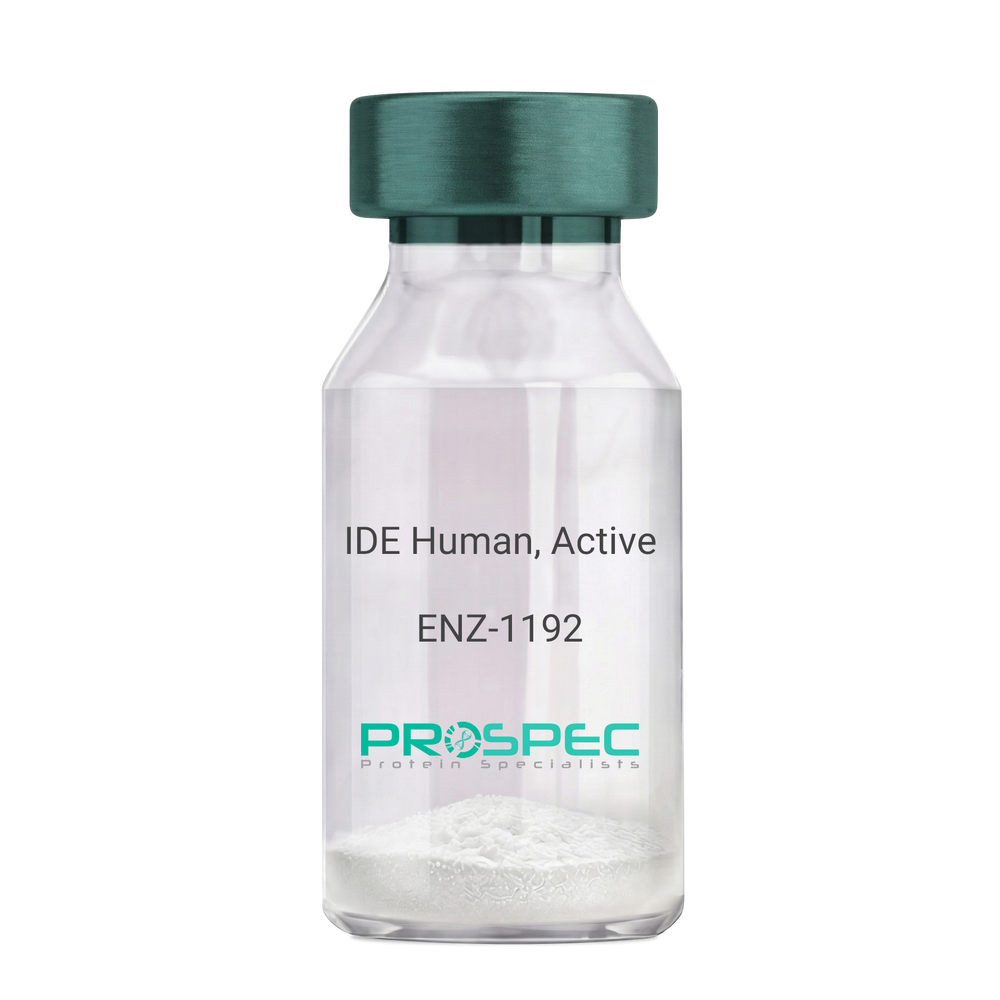
    IDE Human, Active

    Description:

    Insulin-Degrading Enzyme Human Recombinant

    Insulin-Degrading Enzyme, Abeta-Degrading Protease, Insulysin, EC 3.4.24.56, Insulinase, Insulin Protease, INSULYSIN, EC 3.4.24, IDE, insulin-degrading enzyme isoform 1. 

    Product # :

    ENZ-1192

    Price :

    Quantity :

    Shipping Method :

    Ice Icon

    Shipped with Ice Packs

    Add To Cart

    More Info

    • description
    • source
    • formulation
    • purity
    • biological activity
    • More Info
    • Citations

    Description

    IDE Human, Active Human Recombinant produced in E.Coli is a single, non-glycosylated, polypeptide chain (42-1019 a.a) containing a total of 984 amino acids, having a molecular mass of 114 kDa. IDE is fused to a 6 amino acid His-tag at C-terminus and is purified by proprietary chromatographic techniques.

    Source

    Escherichia Coli.

    Formulation

    The IDE solution (0.5mg/ml) contains 10% Glycerol, 100mM NaCl, 0.05% Brij35 and 20mM Tris-HCl buffer (pH 7.5).

    Purity

    Greater than 90.0% as determined by SDS-PAGE.

    Biological Activity

    Specific activity is greater than 3,000 pmol/min/ug in which 1 unit will convert 1.0 pmole of Mca-RPPGFSAFK(Dnp)-OH to MCA-Pro-Leu-OH per minute at pH 7.5 at 25°C.

    Citations

    More Info

    • Synonyms

      Insulin-Degrading Enzyme, Abeta-Degrading Protease, Insulysin, EC 3.4.24.56, Insulinase, Insulin Protease, INSULYSIN, EC 3.4.24, IDE, insulin-degrading enzyme isoform 1.

    • Physical Appearance

      Filtered colorless solution.

    • Stability

      Store at 4°C if entire vial will be used within 2-4 weeks. Store, frozen at -20°C for longer periods of time. For long term storage it is recommended to add a carrier protein (0.1% HSA or BSA). Avoid multiple freeze-thaw cycles.

    • Amino Acid Sequence

      MNNPAIKRIG NHITKSPEDK REYRGLELAN GIKVLLISDP TTDKSSAALD VHIGSLSDPP NIAGLSHFCE HMLFLGTKKY PKENEYSQFL SEHAGSSNAF TSGEHTNYYF DVSHEHLEGA LDRFAQFFLC PLFDESCKDR EVNAVDSEHE KNVMNDAWRL FQLEKATGNP KHPFSKFGTG NKYTLETRPN QEGIDVRQEL LKFHSAYYSS NLMAVCVLGR ESLDDLTNLV VKLFSEVENK NVPLPEFPEH PFQEEHLKQL YKIVPIKDIR NLYVTFPIPD LQKYYKSNPG HYLGHLIGHE GPGSLLSELK SKGWVNTLVG GQKEGARGFM FFIINVDLTE EGLLHVEDII LHMFQYIQKL RAEGPQEWVF QECKDLNAVA FRFKDKERPR GYTSKIAGIL HYYPLEEVLT AEYLLEEFRP DLIEMVLDKL RPENVRVAIV SKSFEGKTDR TEEWYGTQYK QEAIPDEVIK KWQNADLNGK FKLPTKNEFI PTNFEILPLE KEATPYPALI KDTAMSKLWF KQDDKFFLPK ACLNFEFFSP FAYVDPLHCN MAYLYLELLK DSLNEYAYAA ELAGLSYDLQ NTIYGMYLSV KGYNDKQPIL LKKIIEKMAT FEIDEKRFEI IKEAYMRSLN NFRAEQPHQH AMYYLRLLMT EVAWTKDELK EALDDVTLPR LKAFIPQLLS RLHIEALLHG NITKQAALGI MQMVEDTLIE HAHTKPLLPS
      QLVRYREVQL PDRGWFVYQQ RNEVHNNCGI EIYYQTDMQS TSENMFLELF CQIISEPCFN TLRTKEQLGY IVFSGPRRAN GIQGLRFIIQ SEKPPHYLES RVEAFLITME KSIEDMTEEA FQKHIQALAI RRLDKPKKLS AECAKYWGEI ISQQYNFDRD NTEVAYLKTL TKEDIIKFYK EMLAVDAPRR HKVSVHVLAR EMDSCPVVGE FPCQNDINLS QAPALPQPEV IQNMTEFKRG LPLFPLVKPH INFMAAKLHH HHHH.

    • Background

      Insulin-degrading enzyme (IDE) is a crucial protease that plays a significant role in maintaining glucose homeostasis by degrading insulin and other bioactive peptides. Dysregulation of IDE has been implicated in various metabolic disorders, particularly type 2 diabetes mellitus. IDE is also associated with the clearance of amyloid-beta peptides in the brain, making it relevant to Alzheimer's disease pathology. Studying the recombinant form of IDE is fundamental to understanding its functional mechanisms and exploring potential avenues for therapeutic interventions.

      The primary goal of this research is to express and purify recombinant IDE using diverse expression systems. Recombinant DNA techniques will be employed to construct expression vectors containing the IDE gene, followed by expression in bacterial, yeast, or mammalian cell-based systems. The recombinant IDE will be purified using affinity chromatography or other appropriate methods, facilitating subsequent biochemical and biophysical characterization.

      The second objective is to investigate the substrate specificity and catalytic activity of the purified IDE. In vitro enzymatic assays will be conducted to analyse the ability of the recombinant IDE to degrade insulin and other potential substrates. The effects of various factors, such as pH, temperature, and potential modulators, on IDE activity will be evaluated. Additionally, the interactions between IDE and its substrates will be explored using binding assays.

      The third objective is to elucidate the three-dimensional structure of the IDE recombinant using techniques like X-ray crystallography or nuclear magnetic resonance (NMR) spectroscopy. Structural insights into the active site and binding pockets of IDE will provide valuable information for understanding its substrate recognition and catalytic mechanisms. This knowledge could be instrumental in designing targeted therapeutic compounds.

      By characterizing the IDE recombinant, this research aims to contribute to our understanding of its role in insulin metabolism, glucose regulation, and potential therapeutic applications. The findings from this study may have implications for the development of novel treatments for diabetes and other related disorders.

    ProSpec's products are furnished for LABORATORY RESEARCH USE ONLY. The product may not be used as drugs, agricultural or pesticidal products, food additives or household chemicals.

    Ide Human Active
  • View Data Sheet

    Name :

    MGAT2 Human

    Description:

    Mannoside Acetylglucosaminyltransferase 2 Human Recombinant

    Mannosyl (Alpha-1,6-)-Glycoprotein Beta-1,2-N-Acetylglucosaminyltransferase, GlcNAc-T II, Mannoside Acetylglucosaminyltransferase 2, GNT-II, Beta-1,2-N-Acetylglucosaminyltransferase II, N-Glycosyl-Oligosaccharide-Glycoprotein N-Acetylglucosaminyltransferase II, EC 2.4.1.143, CDG2A, CDGS2, GLCNACTI, NT2, Alpha-1,6-Mannosyl-Glycoprotein 2-Beta-N-Acetylglucosaminyltransferase, UDP-N-Acetylglucosamine:Alpha-6-D-Mannoside, Beta-1,2-N-Acetylglucosaminyltransferase II.

    Product # :

    ENZ-781

    Price :

    Quantity :

    Shipping Method :

    Ice Icon

    Shipped with Ice Packs

    Add To Cart

    More Info

    • description
    • source
    • formulation
    • purity
    • More Info
    • Citations

    Description

    MGAT2 Human Recombinant produced in E.Coli is a single, non-glycosylated polypeptide chain containing 439 amino acids (30-447a.a) and having a molecular mass of 50kDa. MGAT2 is fused to a 21 amino acid His-tag at N-terminus & purified by proprietary chromatographic techniques.

    Source

    Escherichia Coli.

    Formulation

    MGAT2 protein solution (1mg/ml) containing 20mM Tris-HCl buffer (pH 8.0), 10% glycerol and 0.4M urea.

    Purity

    Greater than 85.0% as determined by SDS-PAGE.

    Citations

    More Info

    • Introduction

      Mannoside Acetylglucosaminyltransferase 2 (MGAT2) is a golgi enzyme catalyzing an vital step in the conversion of oligomannose to complex N-glycans. MGAT2 enzyme has the characteristic glycosyltransferase domains: a short N-terminal cytoplasmic domain, a hydrophobic non-cleavable signal-anchor domain, and a C-terminal catalytic domain. MGAT2 gene mutations may lead to carbohydrate-deficient glycoprotein syndrome, type II.

    • Synonyms

      Mannosyl (Alpha-1,6-)-Glycoprotein Beta-1,2-N-Acetylglucosaminyltransferase, GlcNAc-T II, Mannoside Acetylglucosaminyltransferase 2, GNT-II, Beta-1,2-N-Acetylglucosaminyltransferase II, N-Glycosyl-Oligosaccharide-Glycoprotein N-Acetylglucosaminyltransferase II, EC 2.4.1.143, CDG2A, CDGS2, GLCNACTI, NT2, Alpha-1,6-Mannosyl-Glycoprotein 2-Beta-N-Acetylglucosaminyltransferase, UDP-N-Acetylglucosamine:Alpha-6-D-Mannoside, Beta-1,2-N-Acetylglucosaminyltransferase II.

    • Physical Appearance

      Sterile Filtered clear solution.

    • Stability

      Store at 4°C if entire vial will be used within 2-4 weeks. Store, frozen at -20°C for longer periods of time.For long term storage it is recommended to add a carrier protein (0.1% HSA or BSA).Please avoid freeze thaw cycles.

    • Amino Acid Sequence

      MGSSHHHHHH SSGLVPRGSH MRQRKNEALA PPLLDAEPAR GAGGRGGDHP SVAVGIRRVS NVSAASLVPA VPQPEADNLT LRYRSLVYQL NFDQTLRNVD KAGTWAPREL VLVVQVHNRP EYLRLLLDSL RKAQGIDNVL VIFSHDFWST EINQLIAGVN FCPVLQVFFP FSIQLYPNEF PGSDPRDCPR DLPKNAALKL GCINAEYPDS FGHYREAKFS QTKHHWWWKL HFVWERVKIL RDYAGLILFL EEDHYLAPDF YHVFKKMWKL KQQECPECDV LSLGTYSASR SFYGMADKVD VKTWKSTEHN MGLALTRNAY QKLIECTDTF CTYDDYNWDW TLQYLTVSCL PKFWKVLVPQ IPRIFHAGDC GMHHKKTCRP STQSAQIESL LNNNKQYMFP ETLTISEKFT VVAISPPRKN GGWGDIRDHE LCKSYRRLQ.

    ProSpec's products are furnished for LABORATORY RESEARCH USE ONLY. The product may not be used as drugs, agricultural or pesticidal products, food additives or household chemicals.

    Mgat2 Human
  • View Data Sheet

    Name :

    DDT Human

    Description:

    D-Dopachrome Tautomerase Human Recombinant

    EC 4.1.1.84, DDCT, D-dopachtome decarboxylase, D-Dopachrome Tautomerase.

    Product # :

    ENZ-527

    Price :

    Quantity :

    Shipping Method :

    Ice Icon

    Shipped with Ice Packs

    Add To Cart

    More Info

    • description
    • source
    • formulation
    • purity
    • More Info
    • Citations

    Description

    DDT Recombinant E.coli produced in E.Coli is a single, non-glycosylated polypeptide chain containing 138 amino acids (1-118 a.a.) and having a molecular mass of 14.8 kDa. The DDT is fused to a 20 amino acids His-Tag at N-terminus and purified by proprietary chromatographic techniques.

    Source

    Escherichia Coli.

    Formulation

    DDT Human solution containing 20mM Tris-HCl pH-8, & 10% glycerol.

    Purity

    Greater than 95.0% as determined by SDS-PAGE.

    Citations

    More Info

    • Introduction

      DDT is an enzyme that catayzes the tautomerization of D-dopachrome to give 5,6-dihydroxyindole (DHI). DDT is part of the family of lyases, specifically the carboxy-lyases, which cleave carbon-carbon bonds. DDT shares a homologous amino acid sequence (33% identical) with MIF and has similar tautomerase activity. DDT functions a proinflammatory cytokine.

    • Synonyms

      EC 4.1.1.84, DDCT, D-dopachtome decarboxylase, D-Dopachrome Tautomerase.

    • Physical Appearance

      Sterile filtered colorless solution.

    • Stability

      Store at 4°C if entire vial will be used within 2-4 weeks. Store, frozen at -20°C for longer periods of time. For long term storage it is recommended to add a carrier protein (0.1% HSA or BSA).Avoid multiple freeze-thaw cycles.

    • Amino Acid Sequence

      MGSSHHHHHH SSGLVPRGSH MPFLELDTNL PANRVPAGLE KRLCAAAASI LGKPADRVNV TVRPGLAMAL SGSTEPCAQL SISSIGVVGT AEDNRSHSAH FFEFLTKELA LGQDRILIRF FPLESWQIGK IGTVMTFL.

    ProSpec's products are furnished for LABORATORY RESEARCH USE ONLY. The product may not be used as drugs, agricultural or pesticidal products, food additives or household chemicals.

    Ddt Human
  • View Data Sheet

    Name :

    ALKBH2 Human

    Description:

    ALKB Alkylation Repair Homolog 2 Human Recombinant

    Alpha-ketoglutarate-dependent dioxygenase alkB homolog 2, Alkylated DNA repair protein alkB homolog 2, Oxy DC1, ALKBH2, ABH2, FLJ99103, MGC90512.

    Product # :

    ENZ-112

    Price :

    Quantity :

    Shipping Method :

    Ice Icon

    Shipped with Ice Packs

    Add To Cart

    More Info

    • description
    • source
    • formulation
    • purity
    • More Info
    • Citations

    Description

    ALKBH2 produced in E.Coli is a single, non-glycosylated polypeptide chain containing 281 amino acids (1-261 a.a.) and having a molecular mass of 31.4kDa.ALKBH2 is fused to a 20 amino acid His-tag at N-terminus & purified by proprietary chromatographic techniques.

    Source

    Escherichia Coli.

    Formulation

    ALKBH2 solution (0.5mg/ml) containing 20mM Tris-HCl buffer (pH 8.0), 1mM DTT and 30% glycerol.

    Purity

    Greater than 90.0% as determined by SDS-PAGE.

    Citations

    More Info

    • Introduction

      ALKBH2 is a member of the ALKB family.ALKBH2 is expressed in the heart, colon, liver, testis, ovary, prostate and the small intestine. ALKBH2 uses iron as a cofactor and acts as a dioxygenase which catalyzes the repair of alkylated DNA and RNA containing 1-methyladenine and 3-meth-ylcytosine. ALKBH2 is functionally activated by ascorbate and requires oxygen and ?-ketoglutarate for enzymatic activity.

    • Synonyms

      Alpha-ketoglutarate-dependent dioxygenase alkB homolog 2, Alkylated DNA repair protein alkB homolog 2, Oxy DC1, ALKBH2, ABH2, FLJ99103, MGC90512.

    • Physical Appearance

      Sterile filtered colorless solution.

    • Stability

      Store at 4°C if entire vial will be used within 2-4 weeks. Store, frozen at -20°C for longer periods of time. For long term storage it is recommended to add a carrier protein (0.1% HSA or BSA).Avoid multiple freeze-thaw cycles.

    • Amino Acid Sequence

      MGSSHHHHHH SSGLVPRGSH MDRFLVKGAQ GGLLRKQEEQ EPTGEEPAVL GGDKESTRKR PRREAPGNGG HSAGPSWRHI RAEGLDCSYT VLFGKAEADE IFQELEKEVE YFTGALARVQ VFGKWHSVPR KQATYGDAGL TYTFSGLTLS PKPWIPVLER IRDHVSGVTG QTFNFVLINR YKDGCDHIGE HRDDERELAP GSPIASVSFG ACRDFVFRHK DSRGKSPSRR VAVVRLPLAH GSLLMMNHPT NTHWYHSLPV RKKVLAPRVN LTFRKILLTK K.

    ProSpec's products are furnished for LABORATORY RESEARCH USE ONLY. The product may not be used as drugs, agricultural or pesticidal products, food additives or household chemicals.

    Alkbh2 Human
  • View Data Sheet

    Name :

    DHFR Mouse

    Description:

    Dihydrofolate Reductase Mouse Recombinant

    Dihydrofolate reductase, DHFR, DHFRP1, AA607882, AI662710, AW555094, 8430436I03Rik.

    Product # :

    ENZ-069

    Price :

    Quantity :

    Shipping Method :

    Ice Icon

    Shipped with Ice Packs

    Add To Cart

    More Info

    • description
    • source
    • formulation
    • purity
    • biological activity
    • More Info
    • Citations

    Description

    DHFR Mouse Recombinant fused with a 20 amino acid His tag at N-terminus produced in E.Coli is a single, non-glycosylated, polypeptide chain containing 207 amino acids (1-187 a.a.) and having a molecular mass of 23.8kDa. The DHFR is purified by proprietary chromatographic techniques.

    Source

    Escherichia Coli.

    Formulation

    The DHFR solution (1 mg/ml) contains 20mM Tris-HCl buffer(pH 8.0), 10% glycerol, 2mM DTT and 0.1M NaCl.

    Purity

    Greater than 95.0% as determined by SDS-PAGE.

    Biological Activity

    Specific activity is > 0.2 units/mg, in which one unit will convert 1.0 umole of 7,8 –dihydrofloate and beta-NADPH to 5,6,7,8-tetrahydrofloate and beta-NADP per min at pH 6.5 at 25C.

    Citations

    More Info

    • Introduction

      Dihydrofolate reductase (DHFR) is an enzyme that reduces dihydrofolic acid to tetrahydrofolic acid, with NADPH as electron donor that can be converted to the kinds of tetrahydrofolate cofactors applied in 1-carbon transfer chemistry. DHFR converts dihydrofolate into tetrahydrofolate, which is a methyl group shuttle required for the de novo synthesis of purines, thymidylic acid, and specific amino acids. Even though the functional DHFR gene is mapped to chromosome 5, numerous intronless processed pseudogenes or dihydrofolate reductase-like genes are identified on separate chromosomes. DHFR deficiency is associated with megaloblastic anemia. DHFR knockdown plays a role in the anticancer activity of 2-hydroxyoleic acid. DHFR gene insertion/deletion polymorphism is linked to variation in serum and red blood cell folate concentrations in women.

    • Synonyms

      Dihydrofolate reductase, DHFR, DHFRP1, AA607882, AI662710, AW555094, 8430436I03Rik.

    • Physical Appearance

      Sterile Filtered colorless solution.

    • Stability

      Store at 4°C if entire vial will be used within 2-4 weeks. Store, frozen at -20°C for longer periods of time. For long term storage it is recommended to add a carrier protein (0.1% HSA or BSA).Avoid multiple freeze-thaw cycles.

    • Amino Acid Sequence

      MGSSHHHHHH SSGLVPRGSH MVRPLNCIVA VSQNMGIGKN GDLPWPPLRN EFKYFQRMTT TSSVEGKQNL VIMGRKTWFS IPEKNRPLKD RINIVLSREL KEPPRGAHFL AKSLDDALRL IEQPELASKV DMVWIVGGSS VYQEAMNQPG HLRLFVTRIM QEFESDTFFP EIDLGKYKLL PEYPGVLSEV QEEKGIKYKF EVYEKKD.

    ProSpec's products are furnished for LABORATORY RESEARCH USE ONLY. The product may not be used as drugs, agricultural or pesticidal products, food additives or household chemicals.

    Dhfr Mouse
  • View Data Sheet

    Name :

    SETD7 Human

    Description:

    Set7/9 Histone Methyltransferase Human Recombinant

    Histone-lysine N-methyltransferase, H3 lysine-4 specific SET7, EC 2.1.1.43, Histone H3-K4 methyltransferase, H3-K4-HMTase, SET domain-containing protein 7, Set9, SET7/9, SETD7.

    Product # :

    ENZ-314

    Price :

    Quantity :

    Shipping Method :

    Ice Icon

    Shipped with Ice Packs

    Add To Cart

    More Info

    • description
    • source
    • formulation
    • purity
    • More Info
    • Citations

    Description

    SETD7 Human Recombinant produced in E.Coli is a single, non-glycosylated polypeptide chain containing 366 amino acids & having a molecular mass of 40.7 kDa. The SETD7 purified by proprietary chromatographic techniques.

    Source

    Escherichia Coli.

    Formulation

    The protein containing 50mM Tris-HCl buffer (pH7.5), 0.2M NaCl, 5mM DTT and 20% glycerol.

    Purity

    Greater than 95.0% as determined by SDS-PAGE.

    Citations

    More Info

    • Introduction

      Set 7/9 is a histone methyltransferase (HMTase) that transfers methyl groups to Lys4 of histone H3, in complex with S-adenosyl-L-methionine (AdoMet). The methylation of lysine residues of histones plays a critical role in the regulation of chromatin structure and gene expression.
      Acetylation, phosphorylation and methylation of the amino-terminal tails of histone are thought to be involved in the regulation of chromatin structure and function. The enzymes identified in the methylation of specific lysine residue on histones belong to the SET family with just one exception. Set7/9, unlike most other SET proteins, is exclusively a mono-methylase.

    • Synonyms

      Histone-lysine N-methyltransferase, H3 lysine-4 specific SET7, EC 2.1.1.43, Histone H3-K4 methyltransferase, H3-K4-HMTase, SET domain-containing protein 7, Set9, SET7/9, SETD7.

    • Physical Appearance

      Sterile Filtered clear solution.

    • Stability

      Store at 4°C if entire vial will be used within 1-2 weeks. Store, frozen at -20°C for longer periods of time.Please prevent freeze-thaw cycles.

    • Amino Acid Sequence

      MDSDDEMVEE AVEGHLDDDG LPHGFCTVTY SSTDRFEGNF VHGEKNGRGK FFFFDGSTLE GYYVDDALQG QGVYTYEDGG VLQGTYVDGE LNGPAQEYDT DGRLIFKGQY KDNIRHGVCW IYYPDGGSLV GEVNEDGEMT GEKIAYVYPD ERTALYGKFI DGEMIEGKLA TLMSTEEGRP HFELMPGNSV YHFDKSTSSC ISTNALLPDP YESERVYVAE SLISSAGEGL FSKVAVGPNT VMSFYNGVRI THQEVDSRDW ALNGNTLSLD EETVIDVPEP YNHVSKYCAS LGHKANHSFT PNCIYDMFVH PRFGPIKCIR TLRAVEADEE LTVAYGYDHS PPGKSGPEAP EWYQVELKAF QATQQK

    ProSpec's products are furnished for LABORATORY RESEARCH USE ONLY. The product may not be used as drugs, agricultural or pesticidal products, food additives or household chemicals.

    Setd7 Human
  • View Data Sheet

    Name :

    HSD17B11 Human

    Description:

    Hydroxysteroid (17-beta) Dehydrogenase 11 Human Recombinant

    17-beta-hydroxysteroid dehydrogenase 11, 17-beta-HSD 11, 17bHSD11, 17betaHSD11, 17-beta-hydroxysteroid dehydrogenase XI, 17-beta-HSD XI, 17betaHSDXI, Cutaneous T-cell lymphoma-associated antigen HD-CL-03, CTCL-associated antigen HD-CL-03, Dehydrogenase/reductase SDR family member 8, Retinal short-chain dehydrogenase/reductase 2, retSDR2, HSD17B11, DHRS8, PAN1B, SDR16C2, 17BHSD11.

    Product # :

    ENZ-049

    Price :

    Quantity :

    Shipping Method :

    Ice Icon

    Shipped with Ice Packs

    Add To Cart

    More Info

    • description
    • source
    • formulation
    • purity
    • More Info
    • Citations

    Description

    HSD17B11 Human Recombinant fused with a 21 amino acid His tag at N-terminus produced in E.Coli is a single, non-glycosylated, polypeptide chain containing 287 amino acids (20-285 a.a.) and having a molecular mass of 31.4kDa. The HSD17B11 is purified by proprietary chromatographic techniques.

    Source

    Escherichia Coli.

    Formulation

    The HSD17B11 solution (0.5 mg/ml) contains 20mM Tris-HCl buffer (pH8.0), 0.2M NaCl, 5mM DTT and 20% glycerol.

    Purity

    Greater than 95.0% as determined by SDS-PAGE.

    Citations

    More Info

    • Introduction

      Dehydrogenase/reductase SDR family member 8 (HSD17B11) is a member of the HSD17B family of proteins, which regulate the availability of steroids within various tissues throughout the body. HSD17B11 is widely expressed with the highest levels found in the retina, pancreas, kidney, liver, lung, adrenal, small intestine, ovary and heart as well as in steroidogenic cells. HSD17B11 converts androstan-3-?,17-?-diol (3-?-diol) to androsterone, suggesting it may participate in androgen metabolism during steroidogenesis.

    • Synonyms

      17-beta-hydroxysteroid dehydrogenase 11, 17-beta-HSD 11, 17bHSD11, 17betaHSD11, 17-beta-hydroxysteroid dehydrogenase XI, 17-beta-HSD XI, 17betaHSDXI, Cutaneous T-cell lymphoma-associated antigen HD-CL-03, CTCL-associated antigen HD-CL-03, Dehydrogenase/reductase SDR family member 8, Retinal short-chain dehydrogenase/reductase 2, retSDR2, HSD17B11, DHRS8, PAN1B, SDR16C2, 17BHSD11.

    • Physical Appearance

      Sterile Filtered colorless solution.

    • Stability

      Store at 4°C if entire vial will be used within 2-4 weeks. Store, frozen at -20°C for longer periods of time. For long term storage it is recommended to add a carrier protein (0.1% HSA or BSA).Avoid multiple freeze-thaw cycles.

    • Amino Acid Sequence

      MGSSHHHHHH SSGLVPRGSH MESFVKLFIP KRRKSVTGEI VLITGAGHGI GRLTAYEFAK LKSKLVLWDI NKHGLEETAA KCKGLGAKVH TFVVDCSNRE DIYSSAKKVK AEIGDVSILV NNAGVVYTSD LFATQDPQIE KTFEVNVLAH FWTTKAFLPA MTKNNHGHIV TVASAAGHVS VPFLLAYCSS KFAAVGFHKT LTDELAALQI TGVKTTCLCP NFVNTGFIKN PSTSLGPTLE PEEVVNRLMH GILTEQKMIF IPSSIAFLTT LERILPERFL AVLKQKI.

    ProSpec's products are furnished for LABORATORY RESEARCH USE ONLY. The product may not be used as drugs, agricultural or pesticidal products, food additives or household chemicals.

    Hsd17B11 Human
  • View Data Sheet

    Name :

    SNCA 1-60 Human

    Description:

    Alpha Synuclein 1-60 Human Recombinant

    Alpha-synuclein, Non-A beta component of AD amyloid, Non-A4 component of amyloid precursor, NACP, PD1, PARK1, PARK4, MGC110988, a-Synuclein, SNCA.

    Product # :

    PRO-165

    Price :

    Quantity :

    Shipping Method :

    Ice Icon

    Shipped with Ice Packs

    Add To Cart

    More Info

    • description
    • source
    • formulation
    • purity
    • More Info
    • Citations

    Description

    A-Synuclein 1-60 Human Recombinant which is a deletion mutant of the a-synuclein amino acids 1-60 and contains the N-terminal amphipathic domain, produced in E.Coli is a single, non-glycosylated polypeptide chain of 60 amino acids having a molecular mass of 6.1kDa. The Recombinant Human a-Synuclein 1-60 is purified by proprietary chromatographic techniques.

    Source

    Escherichia Coli.

    Formulation

    The SNCA 1-60 protein solution (1mg/ml) contains 20mM Tris-HCl buffer pH 7.5 and 100mM NaCl.

    Purity

    Greater than 95.0% as determined by SDS-PAGE.

    Citations

    More Info

    • Introduction

      a-Synuclein (amino acids 1-140), an acidic neuronal protein of 140 amino acids, is extremely heat-resistant and is natively unfolded with an extended structure primarily composed of random coils. a-synuclein has been suggested to be implicated in the pathogenesis of Parkinson’s disease and related neurodegenerative disorders, and more recently, to be an important regulatory component of vesicular transport in neuronal cells. Moreover, recent studies have shown that a-synuclein has chaperone activity and that this activity is lost upon removing its C-terminal acidic tail (amino acids 96-140).

    • Synonyms

      Alpha-synuclein, Non-A beta component of AD amyloid, Non-A4 component of amyloid precursor, NACP, PD1, PARK1, PARK4, MGC110988, a-Synuclein, SNCA.

    • Physical Appearance

      Sterile filtered colorless solution.

    • Stability

      Store at 4°C if entire vial will be used within 2-4 weeks. Store, frozen at -20°C for longer periods of time. For long term storage it is recommended to add a carrier protein (0.1% HSA or BSA). Avoid multiple freeze-thaw cycles.

    • Amino Acid Sequence

      MDVFMKGLSK AKEGVVAAAE KTKQGVAEAA GKTKEGVLYV GSKTKEGVVH GVATVAEKTK.

    ProSpec's products are furnished for LABORATORY RESEARCH USE ONLY. The product may not be used as drugs, agricultural or pesticidal products, food additives or household chemicals.

    Snca 1 60 Human
  • View Data Sheet

    Name :

    SNCA A30P Human

    Description:

    Alpha Synuclein A30P Human Recombinant

    Alpha-synuclein, Non-A beta component of AD amyloid, Non-A4 component of amyloid precursor, NACP, PD1, PARK1, PARK4, MGC110988, a-Synuclein, SNCA.

    Product # :

    PRO-158

    Price :

    Quantity :

    Shipping Method :

    Ice Icon

    Shipped with Ice Packs

    Add To Cart

    More Info

    • description
    • source
    • formulation
    • purity
    • More Info
    • Citations

    Description

    A-Synuclein A30P Human Recombinant which is a Parkinson’s disease-related point mutant, produced in E.Coli is a single, non-glycosylated polypeptide chain of 140 amino acids having a molecular mass of 14.4kDa (molecular size on SDS-PAGE will appear higher). The Recombinant Human a-Synuclein A30P is purified by proprietary chromatographic techniques.

    Source

    Escherichia Coli.

    Formulation

    The SNCA A30P protein solution (1mg/ml) contains 20mM Tris-HCl buffer pH 7.5 and 100mM NaCl.

    Purity

    Greater than 95.0% as determined by SDS-PAGE.

    Citations

    More Info

    • Introduction

      a-Synuclein (amino acids 1-140), an acidic neuronal protein of 140 amino acids, is extremely heat-resistant and is natively unfolded with an extended structure primarily composed of random coils. a-synuclein has been suggested to be implicated in the pathogenesis of Parkinson’s disease and related neurodegenerative disorders, and more recently, to be an important regulatory component of vesicular transport in neuronal cells. Moreover, recent studies have shown that a-synuclein has chaperone activity and that this activity is lost upon removing its C-terminal acidic tail (amino acids 96-140).

    • Synonyms

      Alpha-synuclein, Non-A beta component of AD amyloid, Non-A4 component of amyloid precursor, NACP, PD1, PARK1, PARK4, MGC110988, a-Synuclein, SNCA.

    • Physical Appearance

      Sterile filtered colorless solution.

    • Stability

      Store at 4°C if entire vial will be used within 2-4 weeks. Store, frozen at -20°C for longer periods of time. For long term storage it is recommended to add a carrier protein (0.1% HSA or BSA). Avoid multiple freeze-thaw cycles.

    • Amino Acid Sequence

      MDVFMKGLSK AKEGVVAAAE KTKQGVAEAP GKTKEGVLYV GSKTKEGVVH GVATVAEKTK EQVTNVGGAV VTGVTAVAQK TVEGAGSIAA ATGFVKKDQL GKNEEGAPQE GILEDMPVDP DNEAYEMPSE EGYQDYEPEA.

    ProSpec's products are furnished for LABORATORY RESEARCH USE ONLY. The product may not be used as drugs, agricultural or pesticidal products, food additives or household chemicals.

    Snca A30P Human
  • View Data Sheet

    Name :

    ATP5C1 Human

    Description:

    ATP Synthase Gamma Chain, Mitochondria Human Recombinant

    ESE3, ESE3B, ESEJ, F-ATPase gamma subunit, ATP5C1, ATP5CL1, ATP5C, ATP synthase subunit gamma, mitochondrial.

    Product # :

    PRO-1494

    Price :

    Quantity :

    Shipping Method :

    Ice Icon

    Shipped with Ice Packs

    Add To Cart

    More Info

    • description
    • source
    • formulation
    • purity
    • More Info
    • Citations

    Description

    ATP5C1 Human Recombinant produced in E.Coli is a single, non-glycosylated polypeptide chain containing 296 amino acids (26-298 a.a.) and having a molecular mass of 32.6kDa.ATP5C1 is fused to a 23 amino acid His-tag at N-terminus & purified by proprietary chromatographic techniques.

    Source

    Escherichia Coli.

    Formulation

    ATP5C1 protein solution (0.5mg/ml) contains 20mM Tris-HCl buffer, (pH 8.0), 0.4M Urea and 10% glycerol.

    Purity

    Greater than 90.0% as determined by SDS-PAGE.

    Citations

    More Info

    • Introduction

      ATP synthase subunit gamma, mitochondrial isoform L (liver) (ATP5C1) is a member of the ATPase gamma chain family. ATP5C1 catalyzes ATP synthesis by using an electrochemical gradient of protons across the inner membrane throughout oxidative phosphorylation. The catalytic portion of mitochondrial ATP synthase is comprised of 5 different subunits (alpha, beta, gamma, delta, and epsilon) gathered with a stoichiometry of 3 alpha, 3 beta, and a single representative of the other 3.

    • Synonyms

      ESE3, ESE3B, ESEJ, F-ATPase gamma subunit, ATP5C1, ATP5CL1, ATP5C, ATP synthase subunit gamma, mitochondrial.

    • Physical Appearance

      Sterile Filtered clear solution.

    • Stability

      Store at 4°C if entire vial will be used within 2-4 weeks. Store, frozen at -20°C for longer periods of time. For long term storage it is recommended to add a carrier protein (0.1% HSA or BSA).Avoid multiple freeze-thaw cycles.

    • Amino Acid Sequence

      MGSSHHHHHH SSGLVPRGSH MGSATLKDIT RRLKSIKNIQ KITKSMKMVA AAKYARAERE LKPARIYGLG SLALYEKADI KGPEDKKKHL LIGVSSDRGL CGAIHSSIAK QMKSEVATLT AAGKEVMLVG IGDKIRGILY RTHSDQFLVA FKEVGRKPPT FGDASVIALE LLNSGYEFDE GSIIFNKFRS VISYKTEEKP IFSLNTVASA DSMSIYDDID ADVLQNYQEY NLANIIYYSL KESTTSEQSA RMTAMDNASK NASEMIDKLT LTFNRTRQAV ITKELIEIIS GAAALD.

    ProSpec's products are furnished for LABORATORY RESEARCH USE ONLY. The product may not be used as drugs, agricultural or pesticidal products, food additives or household chemicals.

    Atp5C1 Human
  • View Data Sheet

    Name :

    ATP6V1F Human

    Description:

    ATPase Transporting, Lysosomal V1 Subunit F Human Recombinant

    ATP6S14, VATF, Vma7, V-type proton ATPase subunit F, V-ATPase 14 kDa subunit.

    Product # :

    PRO-2166

    Price :

    Quantity :

    Shipping Method :

    Ice Icon

    Shipped with Ice Packs

    Add To Cart

    More Info

    • description
    • source
    • formulation
    • purity
    • More Info
    • Citations

    Description

    ATP6V1F Human Recombinant produced in E.Coli is a single, non-glycosylated polypeptide chain containing 142 amino acids (1-119 a.a) and having a molecular mass of 15.8kDa.ATP6V1F is fused to a 23 amino acid His-tag at N-terminus & purified by proprietary chromatographic techniques.

    Source

    Escherichia Coli.

    Formulation

    ATP6V1F protein solution (0.5mg/ml) containing Phosphate buffered saline (pH7.4), 50% glycerol and 1mM DTT.

    Purity

    Greater than 90.0% as determined by SDS-PAGE.

    Citations

    More Info

    • Introduction

      ATPase Transporting, Lysosomal V1 Subunit F (ATP6V1F) is a component of vacuolar ATPase (V-ATPase); it is a multi-subunit enzyme, which mediates acidification of eukaryotic intracellular organelles. V-ATPase dependent organelle acidification is required for such intracellular processes as protein sorting, zymogen activation, receptor-mediated endocytosis, and synaptic vesicle proton gradient generation. V-ATPase is comprised of a cytosolic V1 domain and a transmembrane V0 domain. The V1 domain contains 3 A and 3 B subunits, 2 G subunits as well as the C, D, E, F, and H subunits. The V1 domain has the ATP catalytic site. The V0 domain consists of 5 different subunits: a, c, c', c', and d.

    • Synonyms

      ATP6S14, VATF, Vma7, V-type proton ATPase subunit F, V-ATPase 14 kDa subunit.

    • Physical Appearance

      Sterile Filtered clear solution.

    • Stability

      Store at 4°C if entire vial will be used within 2-4 weeks. Store, frozen at -20°C for longer periods of time. For long term storage it is recommended to add a carrier protein (0.1% HSA or BSA).Avoid multiple freeze-thaw cycles.

    • Amino Acid Sequence

      MGSSHHHHHH SSGLVPRGSH MGSMAGRGKL IAVIGDEDTV TGFLLGGIGE LNKNRHPNFL VVEKDTTINE IEDTFRQFLN RDDIGIILIN QYIAEMVRHA LDAHQQSIPA VLEIPSKEHP YDAAKDSILR RARGMFTAED LR.

    ProSpec's products are furnished for LABORATORY RESEARCH USE ONLY. The product may not be used as drugs, agricultural or pesticidal products, food additives or household chemicals.

    Atp6V1F Human
  • View Data Sheet

    Name :

    BCAT1 Human

    Description:

    Branched Chain Amino-Acid Transaminase 1 Human Recombinant

    Branched chain amino-acid transaminase 1 cytosolic, BCT1, BCATC, Protein ECA39, placental protein 18, PP18, PNAS121, MECA39, EC 2.6.1.42.

    Product # :

    ENZ-597

    Price :

    Quantity :

    Shipping Method :

    Ice Icon

    Shipped with Ice Packs

    Add To Cart

    More Info

    • description
    • source
    • formulation
    • purity
    • More Info
    • Citations

    Description

    BCAT1 Recombinant produced in E. coli is a single polypeptide chain containing 409 amino acids (1-386) and having a molecular mass of 45.4kDa.BCAT1 is fused to a 23 amino acid His-tag at N-terminus & purified by proprietary chromatographic techniques.

    Source

    E.coli.

    Formulation

    The BCAT1 solution (1mg/ml) contains 20mM Tris-HCl buffer (pH 8.0), 100mM Nacl, 1mM DTT and 20% glycerol.

    Purity

    Greater than 90% as determined by SDS-PAGE.

    Citations

    More Info

    • Introduction

      BCAT1 catalyzes the leading reaction in the catabolism of the indispensable branched chain amino acids isoleucine, leucine and valine.

    • Synonyms

      Branched chain amino-acid transaminase 1 cytosolic, BCT1, BCATC, Protein ECA39, placental protein 18, PP18, PNAS121, MECA39, EC 2.6.1.42.

    • Physical Appearance

      Sterile Filtered colorless solution.

    • Stability

      Store at 4°C if entire vial will be used within 2-4 weeks. Store, frozen at -20°C for longer periods of time. For long term storage it is recommended to add a carrier protein (0.1% HSA or BSA).Avoid multiple freeze-thaw cycles.

    • Amino Acid Sequence

      MGSSHHHHHH SSGLVPRGSH MGSMKDCSNG CSAECTGEGG SKEVVGTFKA KDLIVTPATI LKEKPDPNNL VFGTVFTDHM LTVEWSSEFG WEKPHIKPLQ NLSLHPGSSA LHYAVELFEG LKAFRGVDNK IRLFQPNLNM DRMYRSAVRA TLPVFDKEEL LECIQQLVKL DQEWVPYSTS ASLYIRPTFI GTEPSLGVKK PTKALLFVLL SPVGPYFSSG TFNPVSLWAN PKYVRAWKGG TGDCKMGGNY GSSLFAQCEA VDNGCQQVLW LYGEDHQITE VGTMNLFLYW INEDGEEELA TPPLDGIILP GVTRRCILDL AHQWGEFKVS ERYLTMDDLT TALEGNRVRE MFGSGTACVV CPVSDILYKG ETIHIPTMEN GPKLASRILS KLTDIQYGRE ESDWTIVLS.

    ProSpec's products are furnished for LABORATORY RESEARCH USE ONLY. The product may not be used as drugs, agricultural or pesticidal products, food additives or household chemicals.

    Bcat1 Human
  • View Data Sheet

    Name :

    ST6GAL1 Human

    Description:

    ST6 Beta-Galactosamide Alpha-2,6-Sialyltranferase 1 Human Recombinant

    ST6 Beta-Galactosamide Alpha-2,6-Sialyltranferase 1, ST6Gal I, SIAT1, CMP-N-Acetylneuraminate-Beta-Galactosamide-Alpha-2,6-Sialyltransferase 1, B-Cell Antigen CD75, Alpha 2,6-ST 1, EC 2.4.99.1, ST6GalI, CMP-N-Acetylneuraminate Beta-Galactosamide Alpha-2,6-Sialyltransferase, Sialyltransferase 1 (Beta-Galactoside Alpha-2,6-Sialyltransferase), Sialyltransferase 1 (Beta-Galactoside Alpha-2,6-Sialytransferase),Beta-Galactoside Alpha-2,6-Sialyltransferase 1, Sialyltransferase 1, ST6N, ST6GAL1.

    Product # :

    ENZ-893

    Price :

    Quantity :

    Shipping Method :

    Ice Icon

    Shipped with Ice Packs

    Add To Cart

    More Info

    • description
    • source
    • formulation
    • purity
    • More Info
    • Citations

    Description

    ST6GAL1 Human Recombinant produced in E.Coli is a single, non-glycosylated polypeptide chain containing 403 amino acids (27-406 a.a) and having a molecular mass of 46kDa.ST6GAL1 is fused to a 23 amino acid His-tag at N-terminus & purified by proprietary chromatographic techniques.

    Source

    Escherichia Coli.

    Formulation

    ST6GAL1 protein solution (1mg/ml) containing 20mM Tris-HCl (pH 8.0) and 10% glycerol.

    Purity

    Greater than 90.0% as determined by SDS-PAGE.

    Citations

    More Info

    • Introduction

      ST6GAL1 also known as ST6 Beta-Galactosamide Alpha-2,6-Sialyltranferase 1, is part of the glycosyltransferase family 29. ST6GAL1 is a type II membrane protein which catalyzes the transfer of sialic acid from CMP-sialic acid to galactose-containing substrates. Furthermore, ST6GAL1 is normally found in the Golgi however it can be proteolytically processed to a soluble form, ST6GAL1 is also involved in the generation of the cell-surface carbohydrate determinants as well differentiation antigens HB-6, CD75, and CD76.

    • Synonyms

      ST6 Beta-Galactosamide Alpha-2,6-Sialyltranferase 1, ST6Gal I, SIAT1, CMP-N-Acetylneuraminate-Beta-Galactosamide-Alpha-2,6-Sialyltransferase 1, B-Cell Antigen CD75, Alpha 2,6-ST 1, EC 2.4.99.1, ST6GalI, CMP-N-Acetylneuraminate Beta-Galactosamide Alpha-2,6-Sialyltransferase, Sialyltransferase 1 (Beta-Galactoside Alpha-2,6-Sialyltransferase), Sialyltransferase 1 (Beta-Galactoside Alpha-2,6-Sialytransferase),Beta-Galactoside Alpha-2,6-Sialyltransferase 1, Sialyltransferase 1, ST6N, ST6GAL1.

    • Physical Appearance

      Sterile Filtered colorless solution.

    • Stability

      Store at 4°C if entire vial will be used within 2-4 weeks. Store, frozen at -20°C for longer periods of time. For long term storage it is recommended to add a carrier protein (0.1% HSA or BSA).Avoid multiple freeze-thaw cycles.

    • Amino Acid Sequence

      MGSSHHHHHH SSGLVPRGSH MGSKEKKKGS YYDSFKLQTK EFQVLKSLGK LAMGSDSQSV SSSSTQDPHR GRQTLGSLRG LAKAKPEASF QVWNKDSSSK NLIPRLQKIW KNYLSMNKYK VSYKGPGPGI KFSAEALRCH LRDHVNVSMV EVTDFPFNTS EWEGYLPKES IRTKAGPWGR CAVVSSAGSL KSSQLGREID DHDAVLRFNG APTANFQQDV GTKTTIRLMN SQLVTTEKRF LKDSLYNEGI LIVWDPSVYH SDIPKWYQNP DYNFFNNYKT YRKLHPNQPF YILKPQMPWE LWDILQEISP EEIQPNPPSS GMLGIIIMMT LCDQVDIYEF LPSKRKTDVC YYYQKFFDSA CTMGAYHPLL YEKNLVKHLN QGTDEDIYLL GKATLPGFRT IHC

    ProSpec's products are furnished for LABORATORY RESEARCH USE ONLY. The product may not be used as drugs, agricultural or pesticidal products, food additives or household chemicals.

    St6Gal1 Human
  • View Data Sheet

    Name :

    BPGM Human

    Description:

    2,3-Bisphosphoglycerate Mutase Human Recombinant

    Bisphosphoglycerate mutase, EC 5.4.2.4, BPGM, 2,3-bisphosphoglycerate mutase erythrocyte, 2,3-bisphosphoglycerate synthase, BPG-dependent PGAM.

    Product # :

    ENZ-505

    Price :

    Quantity :

    Shipping Method :

    Ice Icon

    Shipped with Ice Packs

    Add To Cart

    More Info

    • description
    • source
    • formulation
    • purity
    • More Info
    • Citations

    Description

    BPGM Human Recombinant produced in E.Coli is a single, non-glycosylated, polypeptide chain containing 267 amino acids (1-259 a.a.) and having a molecular mass of 31 kDa. The BPGM is fused to an 8 amino acid His Tag at C-Terminus and purified by proprietary chromatographic techniques.

    Source

    Escherichia Coli.

    Formulation

    The BPGM solution (0.5mg/ml) contains 20mM Tris-HCl (pH 8.0), 1mM DTT and 10% glycerol.

    Purity

    Greater than 95% as determined by SDS-PAGE.

    Citations

    More Info

    • Introduction

      BPGM is found at high concentrations in red blood cells where it binds to and decreases the oxygen affinity of hemoglobin. PGM deficiency increases the oxygen affinity of cells. BPGM is a multifunctional enzyme that catalyzes 2,3-DPG synthesis through its synthetase activity, and 2,3-DPG degradation using its phosphatase activity. BPGM has phosphoglycerate phosphomutase activity. Mutations in BPGM cause hemolytic anemia. BPGM catalyzes the reaction of EC 5.4.2.1 (mutase) and EC 3.1.3.13 (phosphatase), but with a reduced activity.

    • Synonyms

      Bisphosphoglycerate mutase, EC 5.4.2.4, BPGM, 2,3-bisphosphoglycerate mutase erythrocyte, 2,3-bisphosphoglycerate synthase, BPG-dependent PGAM.

    • Physical Appearance

      Sterile Filtered clear colorless solution.

    • Stability

      Store at 4°C if entire vial will be used within 2-4 weeks. Store, frozen at -20°C for longer periods of time. For long term storage it is recommended to add a carrier protein (0.1% HSA or BSA).Avoid multiple freeze-thaw cycles.

    • Amino Acid Sequence

      MSKYKLIMLR HGEGAWNKEN RFCSWVDQKL NSEGMEEARN CGKQLKALNF EFDLVFTSVL NRSIHTAWLI LEELGQEWVP VESSWRLNERHYGALIGLNR EQMALNHGEE QVRLWRRSYN VTPPPIEESH PYYQEIYNDR RYKVCDVPLD QLPRSESLKD VLERLLPYWN ERIAPEVLRG KTILISAHGN SSRALLKHLE GISDEDIINI TLPTGVPILL ELDENLRAVG PHQFLGDQEA IQAAIKKVED QGKVKQAKKL EHHHHHH.

    ProSpec's products are furnished for LABORATORY RESEARCH USE ONLY. The product may not be used as drugs, agricultural or pesticidal products, food additives or household chemicals.

    Bpgm Human
  • View Data Sheet

    Name :

    TANK Human (1-119)

    Description:

    TRAF Family Member-Associated NFKB Activator Human Recombinant (1-119 a.a.)

    TRAF2, I-TRAF, TANK, TRAF family member-associated NF-kappa-B activator, TRAF-interacting protein, ITRAF.

    Product # :

    PRO-685

    Price :

    Quantity :

    Shipping Method :

    Ice Icon

    Shipped with Ice Packs

    Add To Cart

    More Info

    • description
    • source
    • formulation
    • purity
    • More Info
    • Citations

    Description

    TANK produced in E.Coli is a single, non-glycosylated polypeptide chain containing 119 amino acids (1-119 a.a.) and having a molecular mass of 13.6 kDa.TANK is purified by proprietary chromatographic techniques.

    Source

    Escherichia Coli.

    Formulation

    The TANK protein solution contains 20mM Tris, pH-8.

    Purity

    Greater than 90.0% as determined by SDS-PAGE.

    Citations

    More Info

    • Introduction

      TRAF2 protein is related with transduce signals from members of the TNFR superfamily. TRAF2 is located in the cytoplasm binds to TRAF1, TRAF2, or TRAF3, thus inhibiting TRAF function by sequestering the TRAFs in a suppressed state in the cytoplasm. Overexpression of TANK inhibits TRAF2-mediated NF-Kappa-B activation signaled by CD40 and both TNF receptors and inhibits LMP1-mediated NF-kappa-B activation by blocking the association of TRAF2 with LMP1. TRAF2 is necessary for the cellular response to TNF-alpha by connecting upstream signalling molecules to the IKKs and p65.

    • Synonyms

      TRAF2, I-TRAF, TANK, TRAF family member-associated NF-kappa-B activator, TRAF-interacting protein, ITRAF.

    • Physical Appearance

      Sterile filtered colorless solution.

    • Stability

      Store at 4°C if entire vial will be used within 2-4 weeks. Store, frozen at -20°C for longer periods of time. For long term storage it is recommended to add a carrier protein (0.1% HSA or BSA).Avoid multiple freeze-thaw cycles.

    • Amino Acid Sequence

      MDKNIGEQLN KAYEAFRQAC MDRDSAVKEL QQKTENYEQR IREQQEQLSL QQTIIDKLKS QLLLVNSTQD NNYGCVPLLE DSETRKNNLT LDQPQDKVIS GIAREKLPKV DIASAESSI.

    ProSpec's products are furnished for LABORATORY RESEARCH USE ONLY. The product may not be used as drugs, agricultural or pesticidal products, food additives or household chemicals.

    Traf2 Human
  • 1
  • …
  • 36
  • 37
  • 38
  • 39
  • 40
  • …
  • 42
Your browser does not support the video tag.

Products

  • Cytokines
  • Growth Factors
  • Chemokines
  • CD Antigens
  • Neurotrophins
  • Hormones
  • Enzymes
  • Viral Antigens
  • Recombinant Proteins
  • Natural Proteins
  • Monoclonal Antibodies
  • Polyclonal Antibodies
  • Thermal Packaging

About

  • Company
  • Founder
  • Contribution
  • Contact Us
  • My Account

Ordering

  • Ordering Method
  • Ordering - Credit Card
  • Ordering PO
  • Shipping Fees
  • FAQ's

Legal

  • Terms & Conditions
  • Privacy
  • Site Map
  • info@prospecbio.com
  • Facebook
  • Instagram
  • Linkedin Profile

© 2026 ProSpec-Tany TechnoGene Ltd. All Rights Reserved.

  • Choosing a selection results in a full page refresh.
  • Opens in a new window.