Skip to content

High-quality research proteins.

  • 1-800-805-6531

  • Mon - Sat 8.00-18.00, Sun - Closed

  • info@prospecbio.com

  • PO Box 6591 East Brunswick NJ 08816

  • Products
    • Cytokines
    • Growth factors
    • Chemokines
    • Cd antigens
    • Neurotrophins
    • Hormones
    • Enzymes
    • Viral antigens
    • Recombinant proteins
    • Natural proteins
    • Monoclonal antibodies
    • Polyclonal antibodies
    • Thermal Packaging
  • About
    • Company
    • Founder
    • Contribution
  • Customers
    • Eastern Asia
    • Eastern Europe
    • North America
    • South America
    • South East Asia
    • Southern Asia
    • Western Europe
  • Ordering
    • Ordering Method
    • Ordering - Credit Card
    • Ordering - PO
    • Shipping Fees
    • FAQs
  • Services
    • DNA Cloning
    • Protein Expression
    • Monoclonal Antibody
    • Fermentation
    • Technology License
  • Contact us
Log in

Country/region

  • USD $ | Albania
  • USD $ | Andorra
  • USD $ | Argentina
  • USD $ | Armenia
  • USD $ | Australia
  • USD $ | Austria
  • USD $ | Azerbaijan
  • USD $ | Belarus
  • USD $ | Belgium
  • USD $ | Bolivia
  • USD $ | Brazil
  • USD $ | Bulgaria
  • USD $ | Cambodia
  • USD $ | Canada
  • USD $ | Chile
  • USD $ | China
  • USD $ | Colombia
  • USD $ | Costa Rica
  • USD $ | Croatia
  • USD $ | Cyprus
  • USD $ | Czechia
  • USD $ | Denmark
  • USD $ | Estonia
  • USD $ | Finland
  • USD $ | France
  • USD $ | Georgia
  • USD $ | Germany
  • USD $ | Greece
  • USD $ | Hong Kong SAR
  • USD $ | Hungary
  • USD $ | Iceland
  • USD $ | India
  • USD $ | Ireland
  • USD $ | Israel
  • USD $ | Italy
  • USD $ | Japan
  • USD $ | Kazakhstan
  • USD $ | Latvia
  • USD $ | Liechtenstein
  • USD $ | Lithuania
  • USD $ | Madagascar
  • USD $ | Malta
  • USD $ | Mexico
  • USD $ | Moldova
  • USD $ | Monaco
  • USD $ | Netherlands
  • USD $ | New Zealand
  • USD $ | North Macedonia
  • USD $ | Norway
  • USD $ | Panama
  • USD $ | Paraguay
  • USD $ | Peru
  • USD $ | Philippines
  • USD $ | Poland
  • USD $ | Portugal
  • USD $ | Romania
  • USD $ | Singapore
  • USD $ | Slovakia
  • USD $ | Slovenia
  • USD $ | South Africa
  • USD $ | South Korea
  • USD $ | Spain
  • USD $ | Sri Lanka
  • USD $ | Sweden
  • USD $ | Switzerland
  • USD $ | Taiwan
  • USD $ | Thailand
  • USD $ | Türkiye
  • USD $ | Ukraine
  • USD $ | United Kingdom
  • USD $ | United States
  • USD $ | Uruguay
  • USD $ | Vatican City
  • USD $ | Venezuela
  • USD $ | Vietnam
  • Facebook
  • Instagram
logoProSpec - Recombinant Protein Manufacturer for academic and R&D industry
Become a distributor
Account Log in
Wishlist
Cart Cart(0)
  • Products
    +
    • Cytokines
    • Growth factors
    • Chemokines
    • Cd antigens
    • Neurotrophins
    • Hormones
    • Enzymes
    • Viral antigens
    • Recombinant proteins
    • Natural proteins
    • Monoclonal antibodies
    • Polyclonal antibodies
    • Thermal Packaging
  • About
    +
    • Company
    • Founder
    • Contribution
  • Customers
    +
    • Eastern Asia
    • Eastern Europe
    • North America
    • South America
    • South East Asia
    • Southern Asia
    • Western Europe
  • Ordering
    +
    • Ordering Method
    • Ordering - Credit Card
    • Ordering - PO
    • Shipping Fees
    • FAQs
  • Services
    +
    • DNA Cloning
    • Protein Expression
    • Monoclonal Antibody
    • Fermentation
    • Technology License
  • Contact us

Item added to your cart

View cart
View All
  • Cytokines
  • Growth factors
  • Chemokines
  • Cd antigens
  • Neurotrophins
  • Hormones
  • Enzymes
  • Viral antigens
  • Recombinant proteins
  • Natural proteins
  • Monoclonal antibodies
  • Polyclonal antibodies
  • Thermal Packaging
  • Tumor Necrosis Factor

    Tumor Necrosis Factor

    View All
  • 4-1BB

    4-1BB

    View All
  • Adiponectin

    Adiponectin

    View All
  • AIF1

    AIF1

    View All
  • Other Cytokines

    Other Cytokines

    View All
  • AITRL

    AITRL

    View All
  • Angiopoietin

    Angiopoietin

    View All
  • Apolipoprotein

    Apolipoprotein

    View All
  • B-Cell Activating Factor

    B-Cell Activating Factor

    View All
  • Beta Defensin

    Beta Defensin

    View All
  • Bone Morphogenetic Protein

    Bone Morphogenetic Protein

    View All
  • B type Natriuretic Peptide

    B type Natriuretic Peptide

    View All
  • BST

    BST

    View All
  • Betacellulin

    Betacellulin

    View All
  • Cardiotrophin

    Cardiotrophin

    View All
  • Activin

    Activin

    View All
  • Fibroblast Growth Factor

    Fibroblast Growth Factor

    View All
  • Other Growth Factors

    Other Growth Factors

    View All
  • CSF

    CSF

    View All
  • CTGF

    CTGF

    View All
  • IGFBP

    IGFBP

    View All
  • VEGF Protein

    VEGF Protein

    View All
  • EGF

    EGF

    View All
  • Epigen

    Epigen

    View All
  • Erythropoietin

    Erythropoietin

    View All
  • Insulin-Like Growth Factor

    Insulin-Like Growth Factor

    View All
  • Growth Hormone

    Growth Hormone

    View All
  • HDGF

    HDGF

    View All
  • Hepatocyte Growth Factor

    Hepatocyte Growth Factor

    View All
  • Insulin

    Insulin

    View All
  • BCA-1/ BLC (CXCL13)

    BCA-1/ BLC (CXCL13)

    View All
  • BRAK (CXCL14)

    BRAK (CXCL14)

    View All
  • C-10 (CCL6)

    C-10 (CCL6)

    View All
  • Other Chemokines

    Other Chemokines

    View All
  • MEC (CCL28)

    MEC (CCL28)

    View All
  • LD78-beta (CCL3L1)

    LD78-beta (CCL3L1)

    View All
  • CTACK (CCL27)

    CTACK (CCL27)

    View All
  • CXCL16

    CXCL16

    View All
  • CXCL17

    CXCL17

    View All
  • Platelet Factor-4 (CXCL4)

    Platelet Factor-4 (CXCL4)

    View All
  • ENA-78 (CXCL5)

    ENA-78 (CXCL5)

    View All
  • Eotaxin (CCL11,24,26)

    Eotaxin (CCL11,24,26)

    View All
  • Exodus-2 (CCL21)

    Exodus-2 (CCL21)

    View All
  • Fractalkine (CX3CL1)

    Fractalkine (CX3CL1)

    View All
  • CXCL6

    CXCL6

    View All
  • Other CD Antigens

    Other CD Antigens

    View All
  • CD14

    CD14

    View All
  • CD164

    CD164

    View All
  • CD1

    CD1

    View All
  • CD2

    CD2

    View All
  • CD200

    CD200

    View All
  • CD207

    CD207

    View All
  • CD226

    CD226

    View All
  • CD23

    CD23

    View All
  • CD244

    CD244

    View All
  • CD247

    CD247

    View All
  • CD27

    CD27

    View All
  • CD274

    CD274

    View All
  • CD300

    CD300

    View All
  • CD33

    CD33

    View All
  • Other Neurotrophins

    Other Neurotrophins

    View All
  • Beta-NGF

    Beta-NGF

    View All
  • BDNF

    BDNF

    View All
  • CDNF

    CDNF

    View All
  • CNTF

    CNTF

    View All
  • GDNF

    GDNF

    View All
  • Glia Maturation Factor

    Glia Maturation Factor

    View All
  • MANF

    MANF

    View All
  • Midkine

    Midkine

    View All
  • Neuroglobin

    Neuroglobin

    View All
  • Neurotrophic factors

    Neurotrophic factors

    View All
  • Neuregulin

    Neuregulin

    View All
  • Neuropilin

    Neuropilin

    View All
  • Pigment Epithelium-Derived Factor

    Pigment Epithelium-Derived Factor

    View All
  • Pleiotrophin

    Pleiotrophin

    View All
  • Peptide Hormones

    Peptide Hormones

    View All
  • Other Hormones

    Other Hormones

    View All
  • HCG

    HCG

    View All
  • Endothelin

    Endothelin

    View All
  • Exendin

    Exendin

    View All
  • FSH

    FSH

    View All
  • Glucagon

    Glucagon

    View All
  • GHRP

    GHRP

    View All
  • GLP

    GLP

    View All
  • Thyrostimulin

    Thyrostimulin

    View All
  • Inhibin A

    Inhibin A

    View All
  • LHRH

    LHRH

    View All
  • Melanotan

    Melanotan

    View All
  • Procalcitonin

    Procalcitonin

    View All
  • PTH

    PTH

    View All
  • Peroxiredoxin

    Peroxiredoxin

    View All
  • Peptidase

    Peptidase

    View All
  • Synthetase

    Synthetase

    View All
  • Transferase

    Transferase

    View All
  • Hydrolase

    Hydrolase

    View All
  • Dehydrogenase

    Dehydrogenase

    View All
  • ACE2

    ACE2

    View All
  • Esterase

    Esterase

    View All
  • Protein Kinases

    Protein Kinases

    View All
  • Other Enzymes

    Other Enzymes

    View All
  • Phosphatase

    Phosphatase

    View All
  • Deaminase

    Deaminase

    View All
  • Oxygenase

    Oxygenase

    View All
  • Adenylate Kinase

    Adenylate Kinase

    View All
  • Lyase

    Lyase

    View All
  • Chagas

    Chagas

    View All
  • SARS

    SARS

    View All
  • Influenza

    Influenza

    View All
  • ASFV

    ASFV

    View All
  • Astrovirus

    Astrovirus

    View All
  • Borrelia

    Borrelia

    View All
  • Helicobacter Pylori

    Helicobacter Pylori

    View All
  • Chikungunya

    Chikungunya

    View All
  • Chlamydia

    Chlamydia

    View All
  • Cytomegalo

    Cytomegalo

    View All
  • Dengue

    Dengue

    View All
  • EBV

    EBV

    View All
  • Ebola

    Ebola

    View All
  • Feline Leukemia Virus

    Feline Leukemia Virus

    View All
  • Hepatitis A

    Hepatitis A

    View All
  • Other

    Other

    View All
  • Actin

    Actin

    View All
  • ADAM

    ADAM

    View All
  • Complement Component

    Complement Component

    View All
  • Ag85

    Ag85

    View All
  • Eukaryotic Translation Initiation Factor

    Eukaryotic Translation Initiation Factor

    View All
  • Anterior Gradient Protein

    Anterior Gradient Protein

    View All
  • Heat Shock Protein

    Heat Shock Protein

    View All
  • Alpha-2-HS-Glycoprotein

    Alpha-2-HS-Glycoprotein

    View All
  • Hemoglobin

    Hemoglobin

    View All
  • Allergy

    Allergy

    View All
  • Anaplasma

    Anaplasma

    View All
  • Angiogenin

    Angiogenin

    View All
  • Ankyrin Repeat Domain

    Ankyrin Repeat Domain

    View All
  • Annexin

    Annexin

    View All
  • Other Natural Proteins

    Other Natural Proteins

    View All
  • Aprotinin

    Aprotinin

    View All
  • Transferrin

    Transferrin

    View All
  • Avidin

    Avidin

    View All
  • Anti Coagulation Factors

    Anti Coagulation Factors

    View All
  • Natural Albumin

    Natural Albumin

    View All
  • Natural Coagulation Factors

    Natural Coagulation Factors

    View All
  • Fibronectin

    Fibronectin

    View All
  • Thrombin

    Thrombin

    View All
  • Anti Human Enzyme

    Anti Human Enzyme

    View All
  • Other Monoclonal Antibodies

    Other Monoclonal Antibodies

    View All
  • Anti Human Cytokine

    Anti Human Cytokine

    View All
  • Anti Human Heat Shock Protein

    Anti Human Heat Shock Protein

    View All
  • Anti Mouse Lymphocyte

    Anti Mouse Lymphocyte

    View All
  • Anti Human Chemokine

    Anti Human Chemokine

    View All
  • Anti Human Lymphocyte

    Anti Human Lymphocyte

    View All
  • Anti Viral Monoclonal

    Anti Viral Monoclonal

    View All
  • Anti Mouse Cytokine

    Anti Mouse Cytokine

    View All
  • Anti-GST Monoclonal

    Anti-GST Monoclonal

    View All
  • Other Polyclonal Antibodies

    Other Polyclonal Antibodies

    View All
  • Anti Viral

    Anti Viral

    View All
  • Anti-GST Monoclonal

    Anti-GST Monoclonal

    View All
Back

Search results

1000 results found for “reductase”

Name

Description

Product #

Price

Quantity

Shipping Method

  • View Data Sheet

    Name :

    CASP3 Human, Sf9

    Description:

    Caspase 3 Apoptosis-Related Cysteine Peptidase Human Recombinant, Sf9

    CASP3, CPP32, CPP32B, SCA-1, CASP-3, Apopain, Cysteine protease CPP32, CPP-32, Protein Yama, SREBP cleavage activity 1.

    Product # :

    ENZ-1106

    Price :

    Quantity :

    Shipping Method :

    Ice Icon

    Shipped with Ice Packs

    Add To Cart

    More Info

    • description
    • source
    • formulation
    • purity
    • biological activity
    • More Info

    Description

    CASP3 Human produced in Sf9 Baculovirus cells is a single, glycosylated polypeptide chain containing 256 amino acids (29-277 a.a.) and having a molecular mass of 29.4kDa (Migrates at 13.5-18kDa on SDS-PAGE under reducing conditions). CASP3 is expressed with a 6 amino acid His tag at C-Terminus and purified by proprietary chromatographic techniques.

    Source

    Sf9, Baculovirus cells.

    Formulation

    CASP3 protein solution (0.5mg/ml) containing 20mM HEPES buffer (pH 7.5), 0.1M NaCl, 1mM EDTA, 20% Glycerol and 1mM DTT.

    Purity

    Greater than 90.0% as determined by SDS-PAGE.

    Biological Activity

    Specific activity is  greater than 5,000 pmol/min/ug. One unit will liberate 1 pmoles of Ac-DEVD-AFC to Ac-DEVD and AFC per minute at pH7.5 at 25C.

    More Info

    • Introduction

      Caspase 3 Apoptosis-Related Cysteine Peptidase (CASP3) belongs to the cysteine-aspartic acid protease (caspase) family. Sequential activation of caspases plays a key role in the execution-phase of cell apoptosis. Caspases exist as inactive proenzymes which undergo proteolytic processing at conserved aspartic residues to generate 2 subunits, large and small, that dimerize to create the active enzyme. CASP3 protein cleaves and activates caspases 6, 7 and 9, and the protein itself is processed by caspases 8, 9 and 10. CASP3 is the leading caspase involved in the cleavage of amyloid-beta 4A precursor protein, which is linked with neuronal death in Alzheimer's disease. In addition, CASP3 is involved in the cleavage of huntingtin. CASP3 also cleaves and activates sterol regulatory element binding proteins (SREBPs) between the basic helix-loop-helix leucine zipper domain and the membrane attachment domain. CASP3 initiates cell adhesion in sympathetic neurons through RET cleavage.

    • Synonyms

      CASP3, CPP32, CPP32B, SCA-1, CASP-3, Apopain, Cysteine protease CPP32, CPP-32, Protein Yama, SREBP cleavage activity 1.

    • Physical Appearance

      Sterile Filtered colorless solution.

    • Stability

      Store at 4°C if entire vial will be used within 2-4 weeks. Store, frozen at -20°C for longer periods of time. For long term storage it is recommended to add a carrier protein (0.1% HSA or BSA).Avoid multiple freeze-thaw cycles.

    • Amino Acid Sequence

      MSGISLDNSY KMDYPEMGLC IIINNKNFHK STGMTSRSGT DVDAANLRET FRNLKYEVRN
      KNDLTREEIV ELMRDVSKED HSKRSSFVCV LLSHGEEGII FGTNGPVDLK KITNFFRGDR
      CRSLTGKPKL FIIQACRGTE LDCGIETDSG VDDDMACHKI PVEADFLYAY STAPGYYSWR
      NSKDGSWFIQ SLCAMLKQYA DKLEFMHILT RVNRKVATEF ESFSFDATFH AKKQIPCIVS MLTKELYFYH HHHHHH

    ProSpec's products are furnished for LABORATORY RESEARCH USE ONLY. The product may not be used as drugs, agricultural or pesticidal products, food additives or household chemicals.

    Caspase 3 Protein
  • View Data Sheet

    Name :

    NEDD8 Human

    Description:

    Neural Precursor Cell Expressed Developmentally Down-Regulated 8 Human Recombinant

    Nedd-8, FLJ43224, MGC104393, MGC125896, MGC125897, NEDD8, Ubiquitin-like protein Nedd8, Neddylin, Neural precursor cell expressed developmentally down-regulated protein 8.

    Product # :

    ENZ-396

    Price :

    Quantity :

    Shipping Method :

    Ice Icon

    Shipped with Ice Packs

    Add To Cart

    More Info

    • description
    • source
    • formulation
    • purity
    • More Info

    Description

    NEDD8 Human Recombinant fused with 37 amino acid His tag at N-terminus produced in E.Coli is a single, non-glycosylated, polypeptide chain containing 113 amino acids (1-76 a.a.) and having a molecular mass of 12.8 kDa.The NEDD8 is purified by proprietary chromatographic techniques.

    Source

    Escherichia Coli.

    Formulation

    The NEDD8 solution contains 20mM Tris pH 8.0, 50mM NaCl, 0.5mM DTT & 10% glycerol.

    Purity

    Greater than 95.0% as determined by SDS-PAGE.

    More Info

    • Introduction

      NEDD8 is part of the ubiquitin family. Human NEDD8 shares 60% amino acid sequence homology to ubiquitin. The NEDD8 system is essential for the regulation of protein degradation pathways involved in cell cycle progression, morphogenesis and tumorigenesis. NEDD8 is involved in cell cycle control and embryogenesis. Covalent attachment to its substrates requires prior activation by the E-1 complex UbE1c- appbp1 and linkage to the E-2 enzyme UbE2m. Attachment of NEDD8 to cullins activates their associated E-3 ubiquitin ligase activity, and thus promotes polyubiquitination and proteasomal degradation of cyclins and other regulatory proteins.

    • Synonyms

      Nedd-8, FLJ43224, MGC104393, MGC125896, MGC125897, NEDD8, Ubiquitin-like protein Nedd8, Neddylin, Neural precursor cell expressed developmentally down-regulated protein 8.

    • Physical Appearance

      Sterile Filtered colorless solution.

    • Stability

      Store at 4°C if entire vial will be used within 2-4 weeks. Store, frozen at -20°C for longer periods of time. For long term storage it is recommended to add a carrier protein (0.1% HSA or BSA).Avoid multiple freeze-thaw cycles.

    • Amino Acid Sequence

      MHHHHHHMKI EEGKLVIWIN GDKGYNGLAE VGKKFEKDTG IKVTVEHPDK LEEKFPQVAA TGDGPDIIFW AHDRFGGYAQ SGLLAEITPD KAFQDKLYPF TWDAVRYNGK LIAYPIAVEA LSLIYNKDLL PNPPKTWEEI PALDKELKAK GKSALMFNLQ EPYFTWPLIA ADGGYAFKYE NGKYDIKDVG VDNAGAKAGL TFLVDLIKNK HMNADTDYSI AEAAFNKGET AMTINGPWAW SNIDTSKVNY GVTVLPTFKG QPSKPFVGVL SAGINAASPN KELAKEFLEN YLLTDEGLEA
      VNKDKPLGAV ALKSYEEELA KDPRIAATME NAQKGEIMPN IPQMSAFWYA VRTAVINAAS GRQTVDEALK DAQTNSSSNN NNNNNNNNLG IEGRGSHMAA AEAANCIMEV SCGQAESSEK PNAEDMTSKD YYFDSYAHFG IHEEMLKDEV RTLTYRNSMF HNRHLFKDKV VLDVGSGTGILCMFAAKAGA RKVIGIECSS ISDYAVKIVK ANKLDHVVTI IKGKVEEVEL PVEKVDIIIS EWMGYCLFYE SMLNTVLHAR DKWLAPDGLI FPDRATLYVT AIEDRQYKDY KIHWWENVYG
      FDMSCIKDVA IKEPLVDVVD PKQLVTNACL IKEVDIYTVK VEDLTFTSPF CLQVKRNDYVHALVAYFNIE FTRCHKRTGF STSPESPYTH WKQTVFYMED YLTVKTGEEI FGTIGMRPNA KNNRDLDFTI DLDFKGQLCE LSCSTDYRMR.

    ProSpec's products are furnished for LABORATORY RESEARCH USE ONLY. The product may not be used as drugs, agricultural or pesticidal products, food additives or household chemicals.

    Nedd8 Human
  • View Data Sheet

    Name :

    PSMF1 Human

    Description:

    Proteasome Inhibitor Subunit 1 Human Recombinant

    Proteasome inhibitor PI31 subunit, hPI31, PSMF1, PI31.

    Product # :

    ENZ-224

    Price :

    Quantity :

    Shipping Method :

    Ice Icon

    Shipped with Ice Packs

    Add To Cart

    More Info

    • description
    • source
    • formulation
    • purity
    • More Info

    Description

    PSMF1 Human Recombinant produced in E.coli is a single, non-glycosylated polypeptide chain containing 291 amino acids (1-271) and having a molecular mass of 31.9kDa.PSMF1 is fused to a 20 amino acid His-tag at N-terminus & purified by proprietary chromatographic techniques.

    Source

    Escherichia Coli.

    Formulation

    The PSMF1 solution (0.5mg/ml) contains 20mM Tris-HCl buffer (pH8.0), 20% glycerol, 1mM DTT and 0.1mM PMSF.

    Purity

    Greater than 85.0% as determined by SDS-PAGE.

    More Info

    • Introduction

      PSMF1 is a protein which hinders the activation of the proteasome by the 11S and 19S regulators. The 26S proteasome is a multicatalytic proteinase complex with an extremely ordered structure composed of 2 complexes, a 20S core and a 19S regulator. The 20S core is comprised of 4 rings of 28 non-identical subunits; 2 rings are composed of 7 alpha subunits and 2 rings are composed of 7 beta subunits.

    • Synonyms

      Proteasome inhibitor PI31 subunit, hPI31, PSMF1, PI31.

    • Physical Appearance

      Sterile Filtered colorless solution.

    • Stability

      Store at 4°C if entire vial will be used within 2-4 weeks. Store, frozen at -20°C for longer periods of time. For long term storage it is recommended to add a carrier protein (0.1% HSA or BSA).Avoid multiple freeze-thaw cycles.

    • Amino Acid Sequence

      MGSSHHHHHH SSGLVPRGSH MAGLEVLFAS AAPAITCRQD ALVCFLHWEV VTHGYCGLGV GDQPGPNDKK SELLPAGWNN NKDLYVLRYE YKDGSRKLLV KAITVESSMI LNVLEYGSQQ VADLTLNLDD YIDAEHLGDF HRTYKNSEEL RSRIVSGIIT PIHEQWEKAN VSSPHREFPP ATAREVDPLR IPPHHPHTSR QPPWCDPLGP FVVGGEDLDP FGPRRGGMIV DPLRSGFPRA LIDPSSGLPN RLPPGAVPPG ARFDPFGPIG TSPPGPNPDH LPPPGYDDMY L.

    ProSpec's products are furnished for LABORATORY RESEARCH USE ONLY. The product may not be used as drugs, agricultural or pesticidal products, food additives or household chemicals.

    Psmf1 Human
  • View Data Sheet

    Name :

    MUG E.Coli

    Description:

    G/U Mismatch-Specific DNA Glycosylase E.Coli Recombinant

    xanthine DNA glycosylase, dug, ECK3058, JW3040, ygjF, G/U mismatch-specific DNA glycosylase, Double-strand-specific uracil glycosylase, Mismatch-specific uracil DNA-glycosylase, mug.

    Product # :

    ENZ-703

    Price :

    Quantity :

    Shipping Method :

    Ice Icon

    Shipped with Ice Packs

    Add To Cart

    More Info

    • description
    • source
    • formulation
    • purity
    • More Info

    Description

    MUG Recombinant produced in E.coli is a single, non-glycosylated polypeptide chain containing 191 amino acids (1-168) and having a molecular mass of 21.1kDa. MUG is fused to a 23 amino acid His-tag at N-terminus & purified by proprietary chromatographic techniques.

    Source

    E.coli.

    Formulation

    The MUG solution (0.5mg/ml) contains 20mM Tris-HCl buffer (pH 8.0), 0.1M NaCl and 20% glycerol.

    Purity

    Greater than 90% as determined by SDS-PAGE.

    More Info

    • Introduction

      G/U mismatch-specific DNA glycosylase (mug) is a part of the TDG/mug DNA glycosylase family. Mug is necessary for DNA damage lesion repair in stationary-phase cells. Mug protein removes three N4-ethenocytosine and takes away s the uracil base from mismatches in the order of U:G>U:A. The enzyme Uracil-N-Glycosylase removes uracil from the DNA leaving an AP position. Mug is also able to hydrolyzing the carbon-nitrogen bond among the sugar-phosphate backbone of the DNA and the mispaired base. The complementary strand guanine plays a role in substrate recognition.

    • Synonyms

      xanthine DNA glycosylase, dug, ECK3058, JW3040, ygjF, G/U mismatch-specific DNA glycosylase, Double-strand-specific uracil glycosylase, Mismatch-specific uracil DNA-glycosylase, mug.

    • Physical Appearance

      Sterile Filtered colorless solution.

    • Stability

      Store at 4°C if entire vial will be used within 2-4 weeks. Store, frozen at -20°C for longer periods of time. For long term storage it is recommended to add a carrier protein (0.1% HSA or BSA).Avoid multiple freeze-thaw cycles.

    • Amino Acid Sequence

      MGSSHHHHHH SSGLVPRGSH MGSMVEDILA PGLRVVFCGI NPGLSSAGTG FPFAHPANRF WKVIYQAGFT DRQLKPQEAQ HLLDYRCGVT KLVDRPTVQA NEVSKQELHA GGRKLIEKIE DYQPQALAIL GKQAYEQGFS QRGAQWGKQT LTIGSTQIWV LPNPSGLSRV SLEKLVEAYR ELDQALVVRG R.

    ProSpec's products are furnished for LABORATORY RESEARCH USE ONLY. The product may not be used as drugs, agricultural or pesticidal products, food additives or household chemicals.

    Mug Ecoli
  • View Data Sheet

    Name :

    TK1 Human

    Description:

    Thymidine Kinase 1 Human Recombinant

    Thymidine kinase 1 soluble, thymidine kinase cytosolic, TK2, EC 2.7.1.21.

    Product # :

    PKA-036

    Price :

    Quantity :

    Shipping Method :

    Ice Icon

    Shipped with Ice Packs

    Add To Cart

    More Info

    • description
    • source
    • formulation
    • purity
    • More Info

    Description

    TK1 Human Recombinant produced in E. coli is a single polypeptide chain containing 258 amino acids (1-234) and having a molecular mass of 28.0 kDa.TK1 is fused to a 24 amino acid His-tag at N-terminus & purified by proprietary chromatographic techniques.

    Source

    E.coli.

    Formulation

    The TK1 solution (1mg/1ml) contains 20mM Tris-HCl buffer (pH 8.0), 100mM NaCl, 1mM DTT and 20% glycerol.

    Purity

    Greater than 90% as determined by SDS-PAGE.

    More Info

    • Introduction

      Thymidine Kinase 1 (TK1) is a phosphotransferase (a kinase): 2'-deoxythymidine kinase, ATP-thymidine 5'-phosphotransferase. TK1 is present in 2 forms in mammalian cells, TK1 and TK2. Thymidine kinases hold a main function in the synthesis of DNA and thus in cell division, as they are part of the distinctive reaction chain to introduce deoxythymidine (present in the body fluids as a result of degradation of DNA from food and from dead cells) into the DNA. Thymidine kinase is necessary for the action of many antiviral drugs. Thymidine kinase is used to select hybridoma cell lines in production of monoclonal antibodies.

    • Synonyms

      Thymidine kinase 1 soluble, thymidine kinase cytosolic, TK2, EC 2.7.1.21.

    • Physical Appearance

      Sterile Filtered colorless solution.

    • Stability

      Store at 4°C if entire vial will be used within 2-4 weeks. Store, frozen at -20°C for longer periods of time. For long term storage it is recommended to add a carrier protein (0.1% HSA or BSA).Avoid multiple freeze-thaw cycles.

    • Amino Acid Sequence

      MGSSHHHHHH SSGLVPRGSH MGSHMSCINL PTVLPGSPSK TRGQIQVILG PMFSGKSTEL MRRVRRFQIA QYKCLVIKYA KDTRYSSSFC THDRNTMEAL PACLLRDVAQ EALGVAVIGI DEGQFFPDIV EFCEAMANAG KTVIVAALDG TFQRKPFGAI LNLVPLAESV VKLTAVCMEC FREAAYTKRL GTEKEVEVIG GADKYHSVCR LCYFKKASGQ PAGPDNKENC PVPGKPGEAV AARKLFAPQQ ILQCSPAN.

    ProSpec's products are furnished for LABORATORY RESEARCH USE ONLY. The product may not be used as drugs, agricultural or pesticidal products, food additives or household chemicals.

    Tk1 Human
  • View Data Sheet

    Name :

    UCK2 Human

    Description:

    Uridine-Cytidine Kinase 2 Human Recombinant

    UK, UCK 2, Uridine-Cytidine Kinase 2, Uridine Monophosphate Kinase, Cytidine Monophosphokinase 2.

    Product # :

    PKA-332

    Price :

    Quantity :

    Shipping Method :

    Ice Icon

    Shipped with Ice Packs

    Add To Cart

    More Info

    • description
    • source
    • formulation
    • purity
    • More Info

    Description

    UCK2 produced in E.Coli is a single, non-glycosylated polypeptide chain containing 269 amino acids (1-261a.a.) and having a molecular mass of 30.3kDa.UCK2 is fused to an 8 amino acid His-tag at C-terminus & purified by proprietary chromatographic techniques.

    Source

    Escherichia Coli.

    Formulation

    The UCK2 protein solution (1mg/1ml) is formulated in 20mM Tris-HCl buffer (pH8.0), 2mM DTT, 100mM NaCl, 0.1mM PMSF, 1mM EDTA and 20% glycerol .

    Purity

    Greater than 90% as determined by SDS-PAGE.

    More Info

    • Introduction

      UCK2 is a member of the uridinekinase family. UCK2 catalyzes the phosphorylation of uridine monophosphate to uridine diphosphate and cytidine monophosphate. UCK2 has a part in the production of pyrimidine nucleoside triphosphates essential for RNA and DNA synthesis. Furthermore, an allele of this gene is an important player in mediating nonhumoral immunity to Hemophilus influenzae type B.

    • Synonyms

      UK, UCK 2, Uridine-Cytidine Kinase 2, Uridine Monophosphate Kinase, Cytidine Monophosphokinase 2.

    • Physical Appearance

      Sterile Filtered clear solution.

    • Stability

      Store at 4°C if entire vial will be used within 2-4 weeks. Store, frozen at -20°C for longer periods of time.Please avoid freeze thaw cycles.

    • Amino Acid Sequence

      MAGDSEQTLQ NHQQPNGGEP FLIGVSGGTA SGKSSVCAKI VQLLGQNEVD YRQKQVVILS QDSFYRVLTS EQKAKALKGQ FNFDHPDAFD NELILKTLKE ITEGKTVQIP VYDFVSHSRK EETVTVYPAD VVLFEGILAF YSQEVRDLFQ MKLFVDTDAD TRLSRRVLRD ISERGRDLEQ ILSQYITFVK PAFEEFCLPT KKYADVIIPR GADNLVAINL IVQHIQDILN GGPSKRQTNG CLNGYTPSRK RQASESSSRP HLEHHHHHH

    ProSpec's products are furnished for LABORATORY RESEARCH USE ONLY. The product may not be used as drugs, agricultural or pesticidal products, food additives or household chemicals.

    Uck2 Human
  • View Data Sheet

    Name :

    ABHD14B Human

    Description:

    Abhydrolase Domain Containing 14B Human Recombinant

    Abhydrolase domain containing protein 14B, CIB, CCG1-interacting factor B, cell cycle gene 1-interacting factor B, EC 3.1.11.6, EC 3.1.21.4.

    Product # :

    ENZ-240

    Price :

    Quantity :

    Shipping Method :

    Ice Icon

    Shipped with Ice Packs

    Add To Cart

    More Info

    • description
    • source
    • formulation
    • purity
    • More Info

    Description

    ABHD14B Human Recombinant produced in E.coli is a single, non-glycosylated polypeptide chain containing 234 amino acids (1-210) and having a molecular mass of 25.0kDa.ABHD14B is fused to a 24 amino acid His-tag at N-terminus & purified by proprietary chromatographic techniques.

    Source

    E.coli.

    Formulation

    The ABHD14B solution (0.5mg/ml) contains 20mM Tris-HCl buffer (pH 8.0), 100mM NaCl, 1mM DTT and 10% glycerol.

    Purity

    Greater than 95% as determined by SDS-PAGE.

    More Info

    • Introduction

      ABHD14B is a member of the AB hydrolase superfamily. ABHD14B has an alpha/beta hydrolase fold - a catalytic domain found in a large number of enzymes. In molecular biology, the alpha/beta hydrolase fold is common to a number of hydrolytic enzymes of broad differing phylogenetic source and catalytic function. The Ab hydrolase domain containing gene subfamily includes 15 mostly uncharacterized members. ABHD14B has hydrolase activity with p-nitrophenyl butyrate (in vitro) and is able to activate transcription.

    • Synonyms

      Abhydrolase domain containing protein 14B, CIB, CCG1-interacting factor B, cell cycle gene 1-interacting factor B, EC 3.1.11.6, EC 3.1.21.4.

    • Physical Appearance

      Sterile Filtered colorless solution.

    • Stability

      Store at 4°C if entire vial will be used within 2-4 weeks. Store, frozen at -20°C for longer periods of time. For long term storage it is recommended to add a carrier protein (0.1% HSA or BSA).Avoid multiple freeze-thaw cycles.

    • Amino Acid Sequence

      MGSSHHHHHH SSGLVPRGSH MGSHMAASVE QREGTIQVQG QALFFREALP GSGQARFSVL LLHGIRFSSE TWQNLGTLHR LAQAGYRAVA IDLPGLGHSK EAAAPAPIGE LAPGSFLAAV VDALELGPPV VISPSLSGMY SLPFLTAPGS QLPGFVPVAP ICTDKINAAN YASVKTPALI VYGDQDPMGQ TSFEHLKQLP NHRVLIMKGA GHPCYLDKPE EWHTGLLDFL QGLQ

    ProSpec's products are furnished for LABORATORY RESEARCH USE ONLY. The product may not be used as drugs, agricultural or pesticidal products, food additives or household chemicals.

    Abhd14B Human
  • View Data Sheet

    Name :

    SULT2B1 Human

    Description:

    Sulfotransferase Family, Cytosolic, 2B, Member 1 Human Recombinant

    SULT2B1, HSST2, EC 2.8.2.2, Sulfotransferase 2B1, Hydroxysteroid sulfotransferase 2, ST2B1, Sulfotransferase family cytosolic 2B member 1.

    Product # :

    ENZ-512

    Price :

    Quantity :

    Shipping Method :

    Ice Icon

    Shipped with Ice Packs

    Add To Cart

    More Info

    • description
    • source
    • formulation
    • purity
    • More Info

    Description

    SULT2B1 Human Recombinant produced in E.Coli is a single, non-glycosylated, polypeptide chain containing 365 amino acids (1-365 a.a.) and having a molecular mass of 41.3 kDa. SULT2B1 protein is purified by standard chromatography.

    Source

    Escherichia Coli.

    Formulation

    SULT2B1 Human solution containing 20mM Tris-HCl pH-7.5, & 10% glycerol.

    Purity

    Greater than 85% as determined by SDS-PAGE.

    More Info

    • Introduction

      SULT2B1 catalyzes the sulfate conjugation of numerous hormones, neurotransmitters, drugs and xenobiotic compounds. Sulfonation enhances the water solubility of molecules, and therefore their renal excretion, however it can also result in bioactivation to form active metabolites. SULT2B1b is localized in the cytosol and nuclei of human cells. SULT2B1b is selective for the sulfation of 3beta-hydroxysteroids such as dehydroepiandrosterone and pregnenolone, and participates in cholesterol sulfation in human skin.

    • Synonyms

      SULT2B1, HSST2, EC 2.8.2.2, Sulfotransferase 2B1, Hydroxysteroid sulfotransferase 2, ST2B1, Sulfotransferase family cytosolic 2B member 1.

    • Physical Appearance

      Sterile filtered colorless solution.

    • Stability

      Store at 4°C if entire vial will be used within 2-4 weeks. Store, frozen at -20°C for longer periods of time. For long term storage it is recommended to add a carrier protein (0.1% HSA or BSA). Avoid multiple freeze-thaw cycles.

    • Amino Acid Sequence

      MDGPAEPQIP GLWDTYEDDI SEISQKLPGE YFRYKGVPFP VGLYSLESIS LAENTQDVRD DDIFIITYPK SGTTWMIEII CLILKEGDPS WIRSVPIWER APWCETIVGA FSLPDQYSPR LMSSHLPIQI FTKAFFSSKA KVIYMGRNPR DVVVSLYHYS KIAGQLKDPG TPDQFLRDFL KGEVQFGSWF DHIKGWLRMK GKDNFLFITY EELQQDLQGS VERICGFLGR PLGKEALGSV VAHSTFSAMK ANTMSNYTLL PPSLLDHRRG AFLRKGVCGD WKNHFTVAQS EAFDRAYRKQ MRGMPTFPWD EDPEEDGSPD PEPSPEPEPK PSLEPNTSLE REPRPNSSPS PSPGQASETP HPRPS.

    ProSpec's products are furnished for LABORATORY RESEARCH USE ONLY. The product may not be used as drugs, agricultural or pesticidal products, food additives or household chemicals.

    Sult2B1 Human
  • View Data Sheet

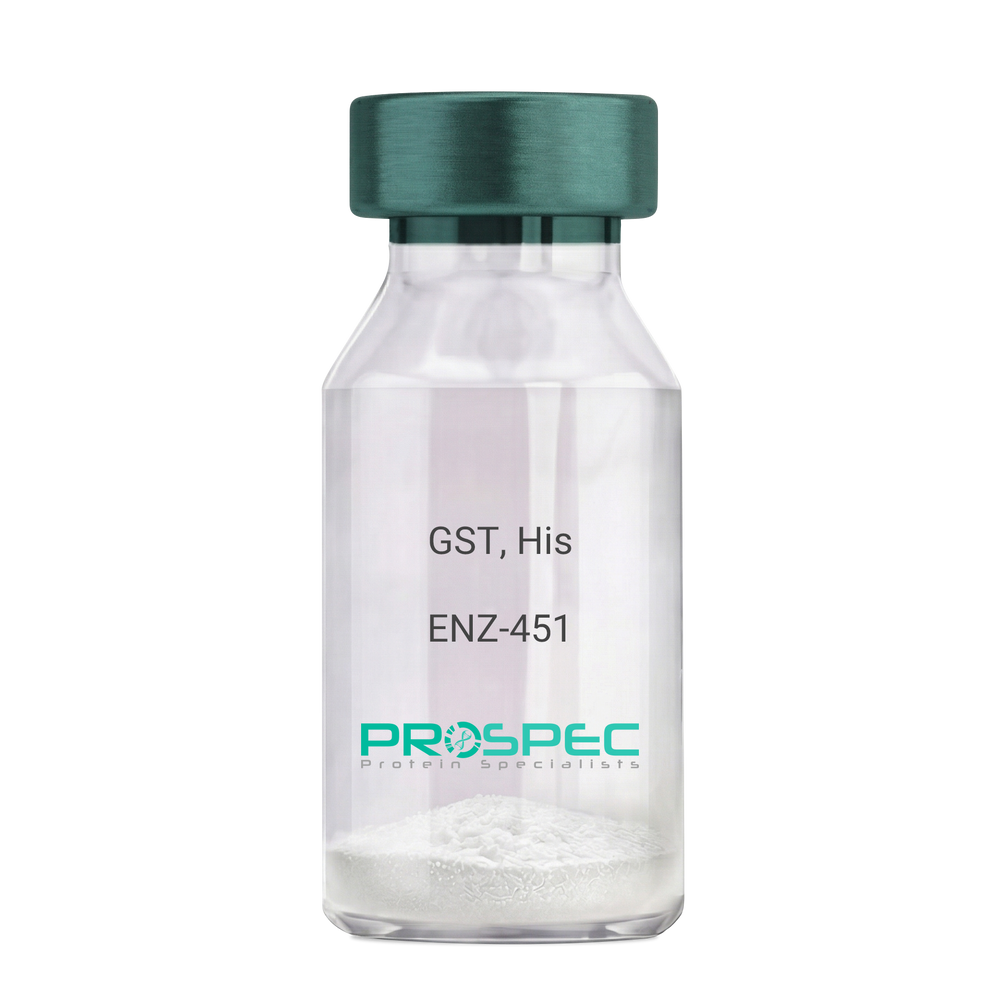
    Name :

    GST, His

    Description:

    Glutathione S-Transferase Recombinant, His Tag

    Glutathione S-Transferase, GST, Glutathione S-transferase class-mu 28 kDa isozyme, GST 28, EC 2.5.1.18, Sj28GST, Sj28 antigen.

    Product # :

    ENZ-451

    Price :

    Quantity :

    Shipping Method :

    Ice Icon

    Shipped with Ice Packs

    Add To Cart

    More Info

    • description
    • source
    • formulation
    • purity
    • biological activity
    • More Info

    Description

    Recombinant Schistosoma japonicum GST full length protein contains a total of 244 amino acids (1-218 a.a.) expressed in E.coli, having a molecular mass of 28.3kDa. The GST protein is fused to a 20 amino acids His-Tag at N-terminus. The GST protein is purified by proprietary chromatographic techniques.

    Source

    Escherichia Coli.

    Formulation

    GST is supplied in PBS pH 7.4 & 10% glycerol.

    Purity

    Greater than 90% as determined by SDS-PAGE.

    Biological Activity

    >10 units/mg, & is defined as the amount of enzyme that conjugate 1.0 u mole of 1-chloro-2,4-dinitrobenzene (CDNB) with reduced glutathione per minute at pH-6.5 at 25C.

    More Info

    • Introduction

      Antioxidant enzyme Glutathione S- Transferase (GST) is thought to do the primary cellular defense mechanism against reactive oxygen species. GST reduces lipid hydroperoxides through its Se-independent glutathione peroxidase activity. The enzyme also detoxifies lipid peroxidation end products such as 4-hydroxynonenal (4-HNE).
      The soluble GST is a 26 kDa protein which occurs as a dimer in all aerobic organisms. Each monomer has two domains, one that binds GSH and is an /-structure similar to thioredoxin and the other, all helical, that binds the hydrophobic substrate. The GST -fusion protein expression system is a widely used recombinant protein expression system that allows a peptide or a regulatory protein domain to be expressed as a fusion to the C-terminus of Schistosoma japonicum GST. Fusion proteins also possess GST -enzymatic activity and can undergo dimerization similar to in vivo. The fusion protein can be purified via GST -affinity column chromatography. In most cases, the desired peptides or domains are removed from GST by applying a specific protease that recognizes and cleaves the linker between the protein domain and GST. The technique has been widely used to generate different kinds of proteins for crystallization, molecular immunology studies, the production of vaccines and studies involving protein-protein and protein-DNA interactions.

    • Synonyms

      Glutathione S-Transferase, GST, Glutathione S-transferase class-mu 28 kDa isozyme, GST 28, EC 2.5.1.18, Sj28GST, Sj28 antigen.

    • Physical Appearance

      Sterile Filtered clear solution.

    • Stability

      Store at 4°C if entire vial will be used within 2-4 weeks. Store, frozen at -20°C for longer periods of time. For long term storage it is recommended to add a carrier protein (0.1% HSA or BSA).Avoid multiple freeze-thaw cycles.

    • Amino Acid Sequence

      MGSSHHHHHH SSGLVPRGSH MSPILGYWKI KGLVQPTRLL LEYLEEKYEE HLYERDEGDK WRNKKFELGL EFPNLPYYID GDVKLTQSMAIIRYIADKHN MLGGCPKERA EISMLEGAVL DIRYGVSRIA YSKDFETLKV DFLSKLPEML KMFEDRLCHK TYLNGDHVTH PDFMLYDALDVVLYMDPMCL DAFPKLVCFK KRIEAIPQID KYLKSSKYIA WPLQGWQATF GGGDHPPKSD LVPR.

    ProSpec's products are furnished for LABORATORY RESEARCH USE ONLY. The product may not be used as drugs, agricultural or pesticidal products, food additives or household chemicals.

    Glutathione S Transferase His
  • View Data Sheet

    Name :

    COAA E.Coli

    Description:

    Pantothenate Kinase E.Coli Recombinant

    PanK, ts-9, rts.

    Product # :

    PKA-022

    Price :

    Quantity :

    Shipping Method :

    Ice Icon

    Shipped with Ice Packs

    Add To Cart

    More Info

    • description
    • source
    • formulation
    • purity
    • More Info

    Description

    COAA E.Coli Recombinant produced in E.coli is a single, non-glycosylated polypeptide chain containing 340 amino acids (1-316) and having a molecular mass of 38.9kDa.COAA is fused to a 24 amino acid His-tag at N-terminus & purified by proprietary chromatographic techniques.

    Source

    E.coli.

    Formulation

    The COAA solution (1mg/ml) contains 20mM Tris-HCl buffer (pH 8.0), 200mM NaCl, 2mM DTT and 10% glycerol.

    Purity

    Greater than 95% as determined by SDS-PAGE.

    More Info

    • Introduction

      COAA is a member of the prokaryotic pantothenate kinase family and it is the first enzyme in the Coenzyme A biosynthetic pathway. COAA phosphorylates pantothenate (vitamin B5) to form 4'-phosphopantothenate. The key factor controlling the intracellular CoA concentration is the regulation of COAA activity by feedback inhibition.

    • Synonyms

      PanK, ts-9, rts.

    • Physical Appearance

      Sterile Filtered colorless solution.

    • Stability

      Store at 4°C if entire vial will be used within 2-4 weeks. Store, frozen at -20°C for longer periods of time. For long term storage it is recommended to add a carrier protein (0.1% HSA or BSA).Avoid multiple freeze-thaw cycles.

    • Amino Acid Sequence

      MGSSHHHHHH SSGLVPRGSH MGSHMSIKEQ TLMTPYLQFD RNQWAALRDS VPMTLSEDEI ARLKGINEDL SLEEVAEIYL PLSRLLNFYI SSNLRRQAVL EQFLGTNGQR IPYIISIAGS VAVGKSTTAR VLQALLSRWP EHRRVELITT DGFLHPNQVL KERGLMKKKG FPESYDMHRL VKFVSDLKSG VPNVTAPVYS HLIYDVIPDG DKTVVQPDIL ILEGLNVLQS GMDYPHDPHH VFVSDFVDFS IYVDAPEDLL QTWYINRFLK FREGAFTDPD SYFHNYAKLT KEEAIKTAMT LWKEINWLNL KQNILPTRER ASLILTKSAN HAVEEVRLRK.

    ProSpec's products are furnished for LABORATORY RESEARCH USE ONLY. The product may not be used as drugs, agricultural or pesticidal products, food additives or household chemicals.

    Coaa
  • View Data Sheet

    Name :

    GSTM1 Human

    Description:

    Glutathione S-Transferase M1 Human Recombinant

    GST1, GSTM1-1, GSTM1a-1a, GSTM1b-1b, GTH4, GTM1, H-B, MU, MU-1, GST HB subunit 4, GST class-mu 1.

    Product # :

    ENZ-780

    Price :

    Quantity :

    Shipping Method :

    Ice Icon

    Shipped with Ice Packs

    Add To Cart

    More Info

    • description
    • source
    • formulation
    • purity
    • More Info

    Description

    GSTM1 Human Recombinant produced in E.Coli is a single, non-glycosylated polypeptide chain containing 203 amino acids (1-181 a.a) and having a molecular mass of 23.6kDa.GSTM1 is fused to a 22 amino acid His-tag at N-terminus & purified by proprietary chromatographic techniques.

    Source

    Escherichia Coli.

    Formulation

    GSTM1 protein solution (0.25mg/ml) contains 20mM Tris-HCl buffer (pH 8.0), 0.4M Urea and 10% glycerol.

    Purity

    Greater than 85.0% as determined by SDS-PAGE.

    More Info

    • Introduction

      Cytosolic and membrane-bound types of GST are encoded by 2 different supergene families. There are 8 classes of the soluble cytoplasmic mammalian GST: alpha, kappa, mu, omega, pi, sigma, theta and zeta. The mu class of enzymes functions in the detoxification of electrophilic compounds, including carcinogens, therapeutic drugs, environmental toxins and products of oxidative stress, by conjugation with glutathione. The genes encoding the mu class of enzymes are arranged in a gene cluster on chromosome 1p13.3 and aare highly polymorphic. These genetic differences can change an individual's resistance to carcinogens and toxins as well as affect the toxicity and efficacy of certain drugs. Null mutations of this class mu gene have been linked with the rise in a number of cancers.

    • Synonyms

      GST1, GSTM1-1, GSTM1a-1a, GSTM1b-1b, GTH4, GTM1, H-B, MU, MU-1, GST HB subunit 4, GST class-mu 1.

    • Physical Appearance

      Sterile Filtered clear solution.

    • Stability

      Store at 4°C if entire vial will be used within 2-4 weeks. Store, frozen at -20°C for longer periods of time. For long term storage it is recommended to add a carrier protein (0.1% HSA or BSA).Avoid multiple freeze-thaw cycles.

    • Amino Acid Sequence

      MGSSHHHHHH SSGLVPRGSH RSMPMILGYW DIRGLAHAIR LLLEYTDSSY EEKKYTMGDA PDYDRSQWLN EKFKLGLDFP NLPYLIDGAH KITQSNAILC YIARKHNLCG ETEEEKIRVD ILENQTMDNH MQLGMICYNP EFEKLKPKYL EELPEKLKLY SEFLGKRPWF AGNKGLEKIS AYMKSSRFLP RPVFSKMAVW GNK.

    ProSpec's products are furnished for LABORATORY RESEARCH USE ONLY. The product may not be used as drugs, agricultural or pesticidal products, food additives or household chemicals.

    Gstm1 Human
  • View Data Sheet

    Name :

    PHPT1 Human

    Description:

    Phosphohistidine Phosphatase 1 Human Recombinant

    PHP14, CGI-202, HSPC141, Phosphohistidine Phosphatase 1, Phosphohistidine Phosphatase 14kDa, Protein janus-A homolog, Sex-regulated protein Janus-a.

    Product # :

    ENZ-012

    Price :

    Quantity :

    Shipping Method :

    Ice Icon

    Shipped with Ice Packs

    Add To Cart

    More Info

    • description
    • source
    • formulation
    • purity
    • More Info

    Description

    PHPT1 produced in E.Coli is a single, non-glycosylated polypeptide chain containing 145 amino acids (1-125a.a.) and having a molecular mass of 15.9kDa.PHPT1 is fused to a 20 amino acid His-tag at N-terminus & purified by proprietary chromatographic techniques.

    Source

    Escherichia Coli.

    Formulation

    The PHPT1 protein solution (0.5mg/1ml) is formulated in 20 mM Tris-HCl buffer (pH8.0) 0.2M NaCl, 2mM DTT and 10% glycerol.

    Purity

    Greater than 95% as determined by SDS-PAGE.

    More Info

    • Introduction

      PHPT1 is a member of the Janus protein familyand is 125 amino acid long. PHPT1 appears as a monomer in the cytoplasm and is an EDTA-insensitive phosphohistidine phosphatase. Overexpression of PHPT1 resolts in specific phosphohistidine phosphatase activity towards phosphopeptide I, with no activity detected towards phosphotyrosine, phosphothreonine and phosphoserine peptides.

    • Synonyms

      PHP14, CGI-202, HSPC141, Phosphohistidine Phosphatase 1, Phosphohistidine Phosphatase 14kDa, Protein janus-A homolog, Sex-regulated protein Janus-a.

    • Physical Appearance

      Sterile Filtered clear solution.

    • Stability

      Store at 4°C if entire vial will be used within 2-4 weeks. Store, frozen at -20°C for longer periods of time. For long term storage it is recommended to add a carrier protein (0.1% HSA or BSA).Avoid multiple freeze-thaw cycles.

    • Amino Acid Sequence

      MGSSHHHHHH SSGLVPRGSH MAVADLALIP DVDIDSDGVF KYVLIRVHSA PRSGAPAAES KEIVRGYKWA EYHADIYDKV SGDMQKQGCD CECLGGGRIS HQSQDKKIHV YGYSMAYGPA QHAISTEKIK AKYPDYEVTW ANDGY

    ProSpec's products are furnished for LABORATORY RESEARCH USE ONLY. The product may not be used as drugs, agricultural or pesticidal products, food additives or household chemicals.

    Phpt1 Human
  • View Data Sheet

    Name :

    CDK5 Human

    Description:

    Cyclin-dependent Kinase 5 Human Recombinant

    Cyclin-dependent kinase 5, Cell division protein kinase 5, Serine/threonine-protein kinase PSSALRE, Tau protein kinase II catalytic subunit, CDK5, CDKN5, TPKII catalytic subunit, cyclin dependent kinase 5.

    Product # :

    PKA-047

    Price :

    Quantity :

    Shipping Method :

    Ice Icon

    Shipped with Ice Packs

    Add To Cart

    More Info

    • description
    • source
    • formulation
    • purity
    • More Info

    Description

    CDK5 Human Recombinant produced in E.coli is a single, non-glycosylated polypeptide chain containing 316 amino acids (1-292) and having a molecular mass of 35.8kDa. CDK5 is fused to a 24 amino acid His-tag at N-terminus & purified by proprietary chromatographic techniques.

    Source

    Escherichia Coli.

    Formulation

    The CDK5 solution (0.5 mg/ml) contains 20mM Tris-HCl buffer (pH 8.0), 10% glycerol 0.4M Urea.

    Purity

    Greater than 85% as determined by SDS-PAGE.

    More Info

    • Introduction

      Cell division protein kinase 5 (CDK5) belongs to the cyclin-dependent kinase family. CDK5 is essential for appropriate development of the brain and in order to be activated CDK5 must link to CDK5R1 or CDK5R2. CDK5 doesn't need phosphorylation on the T loop so that binding with the activator is enough to activate the kinase. CDK5 is engaged in the processes of neuronal maturation and migration, phosphorylating the central intracellular adaptor of the reeling signaling chain.

    • Synonyms

      Cyclin-dependent kinase 5, Cell division protein kinase 5, Serine/threonine-protein kinase PSSALRE, Tau protein kinase II catalytic subunit, CDK5, CDKN5, TPKII catalytic subunit, cyclin dependent kinase 5.

    • Physical Appearance

      Sterile filtered colorless solution.

    • Stability

      Store at 4°C if entire vial will be used within 2-4 weeks. Store, frozen at -20°C for longer periods of time. For long term storage it is recommended to add a carrier protein (0.1% HSA or BSA).Avoid multiple freeze-thaw cycles.

    • Amino Acid Sequence

      MGSSHHHHHH SSGLVPRGSH MGSHMQKYEK LEKIGEGTYG TVFKAKNRET HEIVALKRVR LDDDDEGVPS SALREICLLK ELKHKNIVRL HDVLHSDKKL TLVFEFCDQD LKKYFDSCNG DLDPEIVKSF LFQLLKGLGF CHSRNVLHRD LKPQNLLINR NGELKLADFG LARAFGIPVR CYSAEVVTLW YRPPDVLFGA KLYSTSIDMW SAGCIFAELA NAGRPLFPGN DVDDQLKRIF RLLGTPTEEQ WPSMTKLPDY KPYPMYPATT SLVNVVPKLN ATGRDLLQNL LKCNPVQRIS AEEALQHPYF SDFCPP.

    ProSpec's products are furnished for LABORATORY RESEARCH USE ONLY. The product may not be used as drugs, agricultural or pesticidal products, food additives or household chemicals.

    Cdk5 Human
  • View Data Sheet

    Name :

    TPMT Human

    Description:

    Thiopurine S-methyltransferase Human Recombinant

    TPMT, Thiopurine S-methyltransferase, EC 2.1.1.67, Thiopurine methyltransferase.

    Product # :

    PKA-255

    Price :

    Quantity :

    Shipping Method :

    Ice Icon

    Shipped with Ice Packs

    Add To Cart

    More Info

    • description
    • source
    • formulation
    • purity
    • More Info

    Description

    TPMT Human Recombinant produced in E.Coli is a single, non-glycosylated, polypeptide chain containing 245 amino acids (1-245) and having a molecular mass of 28 kDa. Thiopurine S-methyltransferase is purified by proprietary chromatographic techniques.

    Source

    Escherichia Coli.

    Formulation

    1 mg/ml solution containing 20mM Tris 8.0, 0.2mM PMSF and 2mM EDTA.

    Purity

    Greater than 95.0% as determined by SDS-PAGE.

    More Info

    • Introduction

      TPMT, thiopurine S-methyltransferase, is a cytosolic enzyme that metabolizes thiopurine drugs via S-adenosyl-L-methionine as the S-methyl donor and S-adenosyl-L-homocysteine as a byproduct. TPMT activity exhibits autosomal codominant genetic polymorphism, and patients inheriting TPMT-deficiency are at high risk of potentially fatal hematopoietic toxicity.

    • Synonyms

      TPMT, Thiopurine S-methyltransferase, EC 2.1.1.67, Thiopurine methyltransferase.

    • Physical Appearance

      Sterile filtered colorless solution.

    • Stability

      Store at 4°C if entire vial will be used within 2-4 weeks. Store, frozen at -20°C for longer periods of time. For long term storage it is recommended to add a carrier protein (0.1% HSA or BSA).Avoid multiple freeze-thaw cycles.

    • Amino Acid Sequence

      MDGTRTSLDI EEYSDTEVQK NQVLTLEEWQ DKWVNGKTAF HQEQGHQLLK KHLDTFLKGKSGLRVFFPLC GKAVEMKWFA DRGHSVVGVE ISELGIQEFF TEQNLSYSEE PITEIPGTKVFKSSSGNISL YCCSIFDLPR TNIGKFDMIW DRGALVAINP GDRKCYADTM FSLLGKKFQY LLCVLSYDPT KHPGPPFYVP HAEIERLFGK ICNIRRLEKV DAFEERHKSW GIDCLFEKLYLLTEK.

    ProSpec's products are furnished for LABORATORY RESEARCH USE ONLY. The product may not be used as drugs, agricultural or pesticidal products, food additives or household chemicals.

    Tpmt Human
  • View Data Sheet

    Name :

    Avidin Recombinant

    Description:

    Avidin Recombinant

    Avidin, AVD, AVID.

    Product # :

    PRO-2597

    Price :

    Quantity :

    Shipping Method :

    Room Temp Icon

    Shipped at Room temp

    Add To Cart

    More Info

    • description
    • source
    • purity
    • biological activity
    • More Info

    Description

    Recombinant Avidin produced in Plants is a polypeptide chain having a molecular mass of 66kDa and 16kda per subunit. The Recombinant Avidin is purified by affinity chromatographic techniques.

    Source

    Corn (Zea Mays).

    Purity

    Greater than 90% as visualized by SDS-PAGE.

    Biological Activity

    13.5 units/mg protein, 1 unit binds 1µg biotin.

    More Info

    • Introduction

      Avidin is a tetrameric protein of 4 identical subunits (homotetramer) which can bind to biotin with a high degree of affinity and specificity. The estimated molecular weight of Avidin in its tetrameric form is between 66-69 kDa. Avidin is produced in the oviducts of birds, reptiles and amphibians and is subsequently deposited in the whites of their eggs. In the chicken egg white, avidin makes up roughly 0.05% of total protein (approximately 1.8 mg per egg). 10% of Avidin’s molecular weight is ascribed to carbohydrate content which is composed of 4-5 mannose and 3 N-acetylglucosamine residues. Avidin has at least three distinctive oligosaccharide structural type which are similar in structure and composition. The dissociation constant (KD) of avidin is approximately 10-15M, making it one of the strongest known non-covalent bonds.

    • Synonyms

      Avidin, AVD, AVID.

    • Physical Appearance

      Sterile Filtered white lyophilized powder.

    • Stability

      Lyophilized Recombinant Avidin although stable at room temperature for 3 weeks, should be stored desiccated below -18°C. Upon reconstitution Recombinant Avidin should be stored at 4°C between 2-7 days and for future use below -18°C. For long term storage it is recommended to add a carrier protein (0.1% HSA or BSA). Please prevent freeze-thaw cycles.

    • Solubility

      It is recommended to reconstitute the lyophilized Recombinant Avidin in sterile 18MΩ-cm H2O not less than 100µg/ml or more than 10mg/ml solutions.

    ProSpec's products are furnished for LABORATORY RESEARCH USE ONLY. The product may not be used as drugs, agricultural or pesticidal products, food additives or household chemicals.

    Avidin Recombinant
  • View Data Sheet

    Name :

    HDAC8 Human

    Description:

    Histone Deacetylase 8 Human Recombinant

    Histone deacetylase 8, HD8, HDAC8, HDACL1, CDA07, RPD3.

    Product # :

    ENZ-210

    Price :

    Quantity :

    Shipping Method :

    Ice Icon

    Shipped with Ice Packs

    Add To Cart

    More Info

    • description
    • source
    • formulation
    • purity
    • More Info

    Description

    HDAC8 Human Recombinant produced in Sf9 Baculovirus cells, glycosylated polypeptide chain containing 383 amino acids (1-377) and having a molecular mass of 42.6kDa. HDAC8 is fused to a 6 amino acid His-tag at C-terminus & purified by proprietary chromatographic techniques.

    Source

    Sf9, Baculovirus cells.

    Formulation

    The HDAC8 solution (0.25mg/ml) contains 20mM Tris-HCl buffer (pH8.0), 20% glycerol, 0.1M NaCl and 1mM DTT.

    Purity

    Greater than 80% as determined by SDS-PAGE.

    More Info

    • Introduction

      Histone deacetylase 8 (HDAC8) is a member of the class 1 of the histone deacetylase/acuc/apha family. HDAC8 is biologically involved in skull morphogenesis and metabolic control of the ERR-alpha/PGC1-alpha transcriptional complex. Histones play a key role in transcriptional regulation, cell cycle progression, and developmental events. Histone acetylation/deacetylation modifies chromosome structure and affects transcription factor access to DNA.

    • Synonyms

      Histone deacetylase 8, HD8, HDAC8, HDACL1, CDA07, RPD3.

    • Physical Appearance

      Sterile Filtered clear solution.

    • Stability

      Store at 4°C if entire vial will be used within 2-4 weeks. Store, frozen at -20°C for longer periods of time. For long term storage it is recommended to add a carrier protein (0.1% HSA or BSA).Avoid multiple freeze-thaw cycles.

    • Amino Acid Sequence

      MEEPEEPADS GQSLVPVYIY SPEYVSMCDS LAKIPKRASM VHSLIEAYAL HKQMRIVKPK VASMEEMATF HTDAYLQHLQ KVSQEGDDDH PDSIEYGLGY DCPATEGIFD YAAAIGGATI TAAQCLIDGM CKVAINWSGG WHHAKKDEAS GFCYLNDAVL GILRLRRKFE RILYVDLDLH HGDGVEDAFS FTSKVMTVSL HKFSPGFFPG TGDVSDVGLG KGRYYSVNVP IQDGIQDEKY YQICESVLKE VYQAFNPKAV VLQLGADTIA GDPMCSFNMT PVGIGKCLKY ILQWQLATLI LGGGGYNLAN TARCWTYLTG VILGKTLSSE IPDHEFFTAY GPDYVLEITP SCRPDRNEPH RIQQILNYIK GNLKHVVHHH HHH.

    ProSpec's products are furnished for LABORATORY RESEARCH USE ONLY. The product may not be used as drugs, agricultural or pesticidal products, food additives or household chemicals.

    Hdac8 Human
  • View Data Sheet

    Name :

    ProMMP 9 Human

    Description:

    Pro-Matrix Metalloproteinase-9 Human Recombinant

    Matrix metalloproteinase-9, MMP-9, 92 kDa gelatinase, Gelatinase B, GELB, MMP9, CLG4B.

    Product # :

    ENZ-439

    Price :

    Quantity :

    Shipping Method :

    Ice Icon

    Shipped with Ice Packs

    Add To Cart

    More Info

    • description
    • source
    • formulation
    • purity
    • More Info

    Description

    Pro-MMP-9 Human Recombinant produced in E.Coli is single, a non-glycosylated, Polypeptide chain containing 688 amino acids fragment (20-707) corresponding to the pro form of the protein minus the signal peptide, having a total molecular mass of 78.59kDa and fused with a 4.5kDa amino-terminal hexahistidine tag. The Pro-MMP-9 is purified by proprietary chromatographic techniques.

    Source

    Escherichia Coli.

    Formulation

    Pro-MMP-9 protein is supplied in 1x PBS and 50% glycerol.

    Purity

    Greater than 95.0% as determined by SDS-PAGE.

    More Info

    • Introduction

      Matrix metalloproteinases are a family of zinc and calcium-dependent endopeptidases that break down extracellular matrix proteins. The MMP9 is secreted as a 92kDa zymogen. Cleavage of ProMMP-9 results in the active enzyme, having a molecular weight of approximately 82kDa. MMP9 is composed of the following domains: a gelatin-binding domain consisting of three fibronectin type II units, a catalytic domain containing the zinc-binding site, a proline-rich type V collagen-homologous domain and a hemopexin-like domain. MMP9 is produced by the several cell types: monocytes, macrophages, neutrophils, keratinocytes, fibroblasts, osteoclasts and endothelial cells. MMP9 is involved in inflammatory responses, tissue remodeling, wound healing, tumor growth and metastasis. MMP9 may also play an important part in local proteolysis of the extracellular matrix and in leukocyte migration, as well as in bone osteoclastic resorption. MMP9 cleaves type IV and type V collagens into large C-terminal three quarter fragments and shorter N-terminal one quarter fragments. MMP9 can also degrade fibronectin but not laminin or Pz-peptide.
      MMP9 defects may be a cause of susceptibility to intervertebral disc disease (IDD), also known as lumbar disk herniation (LDH).

    • Synonyms

      Matrix metalloproteinase-9, MMP-9, 92 kDa gelatinase, Gelatinase B, GELB, MMP9, CLG4B.

    • Physical Appearance

      Sterile Filtered clear solution.

    • Stability

      Store at 4°C if entire vial will be used within 2-4 weeks. Store, frozen at -20°C for longer periods of time. Please avoid freeze thaw cycles.

    ProSpec's products are furnished for LABORATORY RESEARCH USE ONLY. The product may not be used as drugs, agricultural or pesticidal products, food additives or household chemicals.

    Prommp 9 Human
  • View Data Sheet

    Name :

    CHST5 Human

    Description:

    Carbohydrate Sulfotransferase 5 Human Recombinant

    Carbohydrate sulfotransferase 5, Galactose/N-acetylglucosamine/N-acetylglucosamine 6-O-sulfotransferase 4, GST4, Intestinal N-acetylglucosamine-6-O-sulfotransferase, I-GlcNAc6ST, Intestinal GlcNAc-6-sulfotransferase, mIGn6ST, N-acetylglucosamine 6-O-sulfotransferase 3, GlcNAc6ST-3, Gn6st-3, Chst5, Gst4.

    Product # :

    ENZ-1165

    Price :

    Quantity :

    Shipping Method :

    Ice Icon

    Shipped with Ice Packs

    Add To Cart

    More Info

    • description
    • source
    • formulation
    • purity
    • biological activity
    • More Info

    Description

    CHST5 Human produced in Sf9 Baculovirus cells is a single, glycosylated polypeptide chain containing 380 amino acids (27-395 a.a.) and having a molecular mass of 42.9kDa.CHST5 is expressed with a 6 amino acid His tag at C-Terminus and purified by proprietary chromatographic techniques.

    Source

    Sf9, Baculovirus cells.

    Formulation

    CHST5 protein solution (0.25mg/ml) containing 20% glycerol and Phosphate-Buffered Saline (pH 7.4).

    Purity

    Greater than 90.0% as determined by SDS-PAGE.

    Biological Activity

    Specific activity is greater than 10,000 pmol/min/ug, and is defined as the amount of enzyme that sulfate from PAPS to Nacetyl-D-glucosamine per minute at pH 7.5, at 37˚C.

    More Info

    • Introduction

      Carbohydrate Sulfotransferase 5 (CHST5) is a Golgi-embedded enzyme that is found in B cells, T cells and intestinal epithelium and is also mediates sulfation of keratan in cornea. CHST5 is a sulfotransferase that utilizes 3'-phospho-5'-adenylyl sulfate (PAPS) as sulfonate donor to catalyze the transfer of sulfate to position 6 of non-reducing N-acetylglucosamine residues of keratan. CHST5 works on the non-reducing terminal GlcNAc of short andlong carbohydrate substrates that have poly-N-acetyllactosamine structures.

    • Synonyms

      Carbohydrate sulfotransferase 5, Galactose/N-acetylglucosamine/N-acetylglucosamine 6-O-sulfotransferase 4, GST4, Intestinal N-acetylglucosamine-6-O-sulfotransferase, I-GlcNAc6ST, Intestinal GlcNAc-6-sulfotransferase, mIGn6ST, N-acetylglucosamine 6-O-sulfotransferase 3, GlcNAc6ST-3, Gn6st-3, Chst5, Gst4.

    • Physical Appearance

      Sterile filtered colorless solution.

    • Stability

      Store at 4°C if entire vial will be used within 2-4 weeks.Store, frozen at -20°C for longer periods of time.For long term storage it is recommended to add a carrier protein (0.1% HSA or BSA).Avoid multiple freeze-thaw cycles.

    • Amino Acid Sequence

      ADPEFSRQVP SSPAGLGERV HVLVLSSWRS GSSFVGQLFS QHPDVFYLME PAWHVWDTLS QGSAPALHMA VRDLIRSVFL CDMDVFDAYL PWRRNISDLF QWAVSRALCS PPVCEAFARG NISSEEVCKP LCATRPFGLA QEACSSYSHV VLKEVRFFNL QVLYPLLSDP ALNLRIVHLV RDPRAVLRSR EQTAKALARD NGIVLGTNGT WVEADPRLRV VNEVCRSHVR IAEAALHKPP PFLQDRYRLV RYEDLARDPL TVIRELYAFT GLGLTPQLQT WIHNITHGSG PGARREAFKT TSRDALSVSQ AWRHTLPFAK IRRVQELCGG ALQLLGYRSV HSELEQRDLS LDLLLPRGMD SFKWASSTEK QPESHHHHHH

    ProSpec's products are furnished for LABORATORY RESEARCH USE ONLY. The product may not be used as drugs, agricultural or pesticidal products, food additives or household chemicals.

    Chst5 Human
  • View Data Sheet

    Name :

    UNG

    Description:

    Uracil DNA Glycosilase

    Uracil DNA Glycosilase, Uracil DNA Glycosylase, UNG.

    Product # :

    ENZ-352

    Price :

    Quantity :

    Shipping Method :

    Ice Icon

    Shipped with Ice Packs

    Add To Cart

    More Info

    • description
    • source
    • formulation
    • More Info

    Description

    E.Coli Uracil DNA Glycosilase (UNG) catalyses the release of free Uracil from Uracil-containing DNA. UNG efficiently hydrolyzes uracil from signle-stranded or double-stranded DNA, but not from oligomers (6 fewer bases).

    Source

    Escherichia Coli strain that carries the UNG gene from E.coli.

    Formulation

    UNG solution in 10mM Tris-HCl (pH-7.4 at 25°C), 50mM KCl, 1mM DTT, 0.1mM EDTA, 0.1 mg/ml BSA and 50% glycerol.

    More Info

    • Synonyms

      Uracil DNA Glycosilase, Uracil DNA Glycosylase, UNG.

    • Physical Appearance

      Sterile Filtered colorless solution.

    • Stability

      Uracil DNA Glycosilase although stable at 15°C for 1 week, should be stored below -18°C. Please prevent freeze-thaw cycles.

    • Reaction Conditions

      1X UNG Reaction Buffer, incubate at 37°C.UNG is active over a broad pH rabge with an optimum at pH-8.0, doesn't require divalent cation, and is inhibited by high ionic strength (>200mM). The abasic sites formed in DNA by UNG may be cleaved by heat, alkali-treatment or endonucleases that cleave specifically at abasic sites.

    • Inactivation

      Inactivated by heating at 95°C for 10min. Enzyme activity is partially restored at temperatures lower than 55°C.

    • Unit Definition

      1 Unit of the enzyme catalyzes the release of 1 nanomole of uracil-containing DNA template in 60 min at 37°C.

    • Specific Activity

      The Specific Activity was found to be 5U/µl.

    ProSpec's products are furnished for LABORATORY RESEARCH USE ONLY. The product may not be used as drugs, agricultural or pesticidal products, food additives or household chemicals.

    Uracil Dna Glycosylase Enzyme
  • View Data Sheet

    Name :

    CTH Human

    Description:

    Cystathionase Human Recombinant

    Cystathionine gamma-lyase, Cysteine-protein sulfhydrase, Gamma-cystathionase, CTH.

    Product # :

    ENZ-212

    Price :

    Quantity :

    Shipping Method :

    Ice Icon

    Shipped with Ice Packs

    Add To Cart

    More Info

    • description
    • source
    • formulation
    • purity
    • More Info

    Description

    CTH Human Recombinant produced in E.coli is a single, non-glycosylated polypeptide chain containing 425 amino acids (1-405) and having a molecular mass of 46.7kDa.CTH is fused to a 20 amino acid His-tag at N-terminus & purified by proprietary chromatographic techniques.

    Source

    Escherichia Coli.

    Formulation

    The CTH solution (1mg/ml) contains 20mM Tris-HCl buffer (pH 8.0), 2mM DTT, 10% glycerol and 100mM NaCl.

    Purity

    Greater than 95.0% as determined by SDS-PAGE.

    More Info

    • Introduction

      Cystathionine gamma-lyase or cystathionase (CTH) is a member of the trans-sulfuration enzymes family. CTH is an enzyme which breaks down cystathionine into cysteine and alpha-ketobutyrate. The CTH catalyzes the last step in the transsulfuration pathway from methionine to cysteine. Glutathione synthesis in the liver is dependent upon the availability of cysteine. Mutations in the CTH gene cause cystathioninuria.

    • Synonyms

      Cystathionine gamma-lyase, Cysteine-protein sulfhydrase, Gamma-cystathionase, CTH.

    • Physical Appearance

      Sterile Filtered colorless solution.

    • Stability

      Store at 4°C if entire vial will be used within 2-4 weeks. Store, frozen at -20°C for longer periods of time. For long term storage it is recommended to add a carrier protein (0.1% HSA or BSA).Avoid multiple freeze-thaw cycles.

    • Amino Acid Sequence

      MGSSHHHHHH SSGLVPRGSH MQEKDASSQG FLPHFQHFAT QAIHVGQDPE QWTSRAVVPP ISLSTTFKQG APGQHSGFEY SRSGNPTRNC LEKAVAALDG AKYCLAFASG LAATVTITHL LKAGDQIICM DDVYGGTNRY FRQVASEFGL KISFVDCSKI KLLEAAITPE TKLVWIETPT NPTQKVIDIE GCAHIVHKHG DIILVVDNTF MSPYFQRPLA LGADISMYSA TKYMNGHSDV VMGLVSVNCE SLHNRLRFLQ NSLGAVPSPI DCYLCNRGLK TLHVRMEKHF KNGMAVAQFL ESNPWVEKVI YPGLPSHPQH ELVKRQCTGC TGMVTFYIKG TLQHAEIFLK NLKLFTLAES LGGFESLAEL PAIMTHASVL KNDRDVLGIS DTLIRLSVGL EDEEDLLEDL DQALKAAHPP SGSHS.

    ProSpec's products are furnished for LABORATORY RESEARCH USE ONLY. The product may not be used as drugs, agricultural or pesticidal products, food additives or household chemicals.

    Cth Human
  • View Data Sheet

    Name :

    KARS Human

    Description:

    Lysyl-tRNA Synthetase Human Recombinant

    Lysine--tRNA ligase, Lysyl-tRNA synthetase, LysRS, KARS, KIAA0070, KRS, KARS2, CMTRIB.

    Product # :

    ENZ-161

    Price :

    Quantity :

    Shipping Method :

    Ice Icon

    Shipped with Ice Packs

    Add To Cart

    More Info

    • description
    • source
    • formulation
    • purity
    • More Info

    Description

    KARS Human Recombinant produced in E.Coli is a single, non-glycosylated polypeptide chain containing 558 amino acids (63-597 a.a.) and having a molecular mass of 63.7kDa.KARS is fused to a 23 amino acid His-tag at N-terminus & purified by proprietary chromatographic techniques.

    Source

    Escherichia Coli.

    Formulation

    KARS protein solution (1mg/ml) containing 20mM Tris-HCl buffer (pH8.0), 20% glycerol, 0.1M NaCl and 1mM DTT.

    Purity

    Greater than 95.0% as determined by SDS-PAGE.

    More Info

    • Introduction

      Lysyl-tRNA synthetase (KARS) is a member of the class-II aminoacyl-tRNA synthetase family. KARS exists as both mitochondrial and cytoplasmic isoforms produced by alternative splicing, and believed to have a role in autoimmune diseases, such as polymyositis or dermatomyositis. The KARS protein functions to catalyze the aminoacylation of tRNAs by their corresponding amino acids, so linking amino acids with tRNA-contained nucleotide triplets.

    • Synonyms

      Lysine--tRNA ligase, Lysyl-tRNA synthetase, LysRS, KARS, KIAA0070, KRS, KARS2, CMTRIB.

    • Physical Appearance

      Sterile Filtered colorless solution.

    • Stability

      Store at 4°C if entire vial will be used within 2-4 weeks. Store, frozen at -20°C for longer periods of time. For long term storage it is recommended to add a carrier protein (0.1% HSA or BSA).Avoid multiple freeze-thaw cycles.

    • Amino Acid Sequence

      MGSSHHHHHH SSGLVPRGSH MGSGVGPEEE SVDPNQYYKI RSQAIHQLKV NGEDPYPHKF HVDISLTDFI QKYSHLQPGD HLTDITLKVA GRIHAKRASG GKLIFYDLRG EGVKLQVMAN SRNYKSEEEF IHINNKLRRG DIIGVQGNPG KTKKGELSII PYEITLLSPC LHMLPHLHFG LKDKETRYRQ RYLDLILNDF VRQKFIIRSK IITYIRSFLD ELGFLEIETP MMNIIPGGAV AKPFITYHNE LDMNLYMRIA PELYHKMLVV GGIDRVYEIG RQFRNEGIDL THNPEFTTCE FYMAYADYHD LMEITEKMVS GMVKHITGSY KVTYHPDGPE GQAYDVDFTP PFRRINMVEE LEKALGMKLP ETNLFETEET RKILDDICVA KAVECPPPRT TARLLDKLVG EFLEVTCINP TFICDHPQIM SPLAKWHRSK EGLTERFELF VMKKEICNAY TELNDPMRQR QLFEEQAKAK AAGDDEAMFI DENFCTALEY GLPPTAGWGM GIDRVAMFLT DSNNIKEVLL FPAMKPEDKK ENVATTDTLE STTVGTSV.

    ProSpec's products are furnished for LABORATORY RESEARCH USE ONLY. The product may not be used as drugs, agricultural or pesticidal products, food additives or household chemicals.

    Kars Human
  • View Data Sheet

    Name :

    PLA2G7 Human, HEK

    Description:

    Secreted Phospholipase A2-VII Human Recombinant, HEK

    Platelet-activating factor acetylhydrolase, PAF acetylhydrolase, PAF 2-acylhydrolase, LDL-associated phospholipase A2, LDL-PLA(2), 2-acetyl-1-alkylglycerophosphocholine esterase, 1-alkyl-2-acetylglycerophosphocholine esterase, PLA2G7, PAFAH, LP-PLA2, LDL-PLA2.

    Product # :

    ENZ-736

    Price :

    Quantity :

    Shipping Method :

    Ice Icon

    Shipped with Ice Packs

    Add To Cart

    More Info

    • description
    • source
    • formulation
    • purity
    • More Info

    Description

    Recombinant Human PLA2G7 produced in HEK293 cells is a polypeptide chain (22-441 a.a), fused to an 8 amino acid His-tag at C-terminus, containing a total of 428 amino acids. PLA2G7 is purified by proprietary chromatographic techniques.

    Source

    HEK293 cells.

    Formulation

    The PLA2G7 is supplied as a 0.2µm filtered solution in 20mM HAc-NaCl, 150mM NaCl and 10% Glycerol, pH 4.5.

    Purity

    Greater than 95% as determined by SEC-HPLC and SDS-PAGE.

    More Info

    • Introduction

      PLA2G7 is a secreted enzyme which catalyzes the degradation of platelet-activating factor to biologically inactive products. The PLA2G7 enzyme is produced by inflammatory cells and hydrolyzes oxidised phospholipids in LDL. In the blood, PLA2G7 goes mainly with LDL and less than 20% is coupled with HDL.
      PLA2G7 is implicated in the development of atherosclerosis and is also a marker for cardiac disease. PLA2G7 might have a major physiologic effect in the presence of inflammatory bodily responses.
      PLA2G7 alters the action of PAF (platelet-activating factor) by hydrolyzing the sn-2 ester bond to yield the biologically inactive lyso-PAF. PLA2G7 has specificity for substrates with a short residue at the sn-2 position. PLA2G7 is inactive against long-chain phospholipids.
      PLA2G7 gene defects are the source of platelet-activating factor acetylhydrolase deficiency, which is a trait that is present in 27% of the Japanese population.

    • Synonyms

      Platelet-activating factor acetylhydrolase, PAF acetylhydrolase, PAF 2-acylhydrolase, LDL-associated phospholipase A2, LDL-PLA(2), 2-acetyl-1-alkylglycerophosphocholine esterase, 1-alkyl-2-acetylglycerophosphocholine esterase, PLA2G7, PAFAH, LP-PLA2, LDL-PLA2.

    • Physical Appearance

      Sterile Filtered colorless solution.

    • Stability

      Store at 4°C if entire vial will be used within 2-4 weeks. Store, frozen at -20°C for longer periods of time.Avoid multiple freeze-thaw cycles.

    • Amino Acid Sequence

      FDWQYINPVAHMKSSAWVNKIQVLMAAASFGQTKIPRGNGPYSVGCTDLMFDHTNKGTFLRLYYPS
      QDNDRLDTLWIPNKEYFWGLSKFLGTHWLMGNILRLLFGSMTTPANWNSPLRPGEKYPLVVFSHGL
      GAFRTLYSAIGIDLASHGFIVAAVEHRDRSASATYYFKDQSAAEIGDKSWLYLRTLKQEEETHIRN
      EQVRQRAKECSQALSLILDIDHGKPVKNALDLKFDMEQLKDSIDREKIAVIGHSFGGATVIQTLSE
      DQRFRCGIALDAWMFPLGDEVYSRIPQPLFFINSEYFQYPANIIKMKKCYSPDKERKMITIRGSVH
      QNFADFTFATGKIIGHMLKLKGDIDSNAAIDLSNKASLAFLQKHLGLHKDFDQWDCLIEGDDENLI
      PGTNINTTNQHIMLQNSSGIEKYNVDHHHHHH.

    ProSpec's products are furnished for LABORATORY RESEARCH USE ONLY. The product may not be used as drugs, agricultural or pesticidal products, food additives or household chemicals.

    Pla2G7 Human Hek
  • View Data Sheet

    Name :

    PPCDC Human

    Description:

    Phosphopantothenoylcysteine Decarboxylase Human Recombinant

    FLJ14585, PPC-DC, MDS018, COAC, CoaC, Phosphopantothenoylcysteine Decarboxylase.

    Product # :

    ENZ-011

    Price :

    Quantity :

    Shipping Method :

    Ice Icon

    Shipped with Ice Packs

    Add To Cart

    More Info

    • description
    • source
    • formulation
    • purity
    • More Info

    Description

    PPCDC produced in E.Coli is a single, non-glycosylated polypeptide chain containing 224 amino acids (1-204a.a.) and having a molecular mass of 24.6kDa.PPCDC is fused to a 20 amino acid His-tag at N-terminus & purified by proprietary chromatographic techniques.

    Source

    Escherichia Coli.

    Formulation

    The PPCDC protein solution (1mg/1ml) is formulated in 20mM Tris-HCl buffer(pH 8.0), 1mM DTT, 0.1M NaCl and 10% glycerol.

    Purity

    Greater than 95% as determined by SDS-PAGE.

    More Info

    • Introduction

      PPCDC is a member of the HFCD (homo oligomeric flavin containing Cys decarboxylase) superfamily which takes a part in the biosynthesis of coenzyme A (CoA) from pantothenate (Vitamin B). The biosynthesis of CoA from pantothenate needs several steps: the phosphorylation of pantothenate, the conversion of 4’-hosphopantothenate to 4''-phosphopantetheine, the adenylation by phosphopantetheine adenylyltransferase to form dephospho-CoA and the phosphorylation by dephospho-CoA kinase to form CoA. PPCDC is a key player in this pathway. PPCDC converts 4''-phosphopantothenate into 4''-phosphopantetheine.

    • Synonyms

      FLJ14585, PPC-DC, MDS018, COAC, CoaC, Phosphopantothenoylcysteine Decarboxylase.

    • Physical Appearance

      Sterile Filtered clear solution.

    • Stability

      Store at 4°C if entire vial will be used within 2-4 weeks. Store, frozen at -20°C for longer periods of time.Please avoid freeze thaw cycles.

    • Amino Acid Sequence

      MGSSHHHHHH SSGLVPRGSH MEPKASCPAA APLMERKFHV LVGVTGSVAA LKLPLLVSKL LDIPGLEVAV VTTERAKHFY SPQDIPVTLY SDADEWEMWK SRSDPVLHID LRRWADLLLV APLDANTLGK VASGICDNLL TCVMRAWDRS KPLLFCPAMN TAMWEHPITA QQVDQLKAFG YVEIPCVAKK LVCGDEGLGA MAEVGTIVDK VKEVLFQHSG FQQS

    ProSpec's products are furnished for LABORATORY RESEARCH USE ONLY. The product may not be used as drugs, agricultural or pesticidal products, food additives or household chemicals.

    Ppcdc Human
  • View Data Sheet

    Name :

    METAP1D Human

    Description:

    Methionyl Aminopeptidase 1D Human Recombinant

    MAP1D, Metap1l, Methionine aminopeptidase 1D, mitochondrial, MAP 1D, MetAP 1D, Methionyl aminopeptidase type 1D, mitochondrial, Peptidase M 1D, METAP1D.

    Product # :

    ENZ-759

    Price :

    Quantity :

    Shipping Method :

    Ice Icon

    Shipped with Ice Packs

    Add To Cart

    More Info

    • description
    • source
    • formulation
    • purity
    • More Info

    Description

    METAP1D Human Recombinant produced in E.coli is a single, non-glycosylated polypeptide chain containing 339 amino acids (20-335a.a) and having a molecular mass of 37.4kDa. METAP1D is fused to a 23 amino acid His-tag at N-terminus & purified by proprietary chromatographic techniques.

    Source

    Escherichia Coli.

    Formulation

    The METAP1D solution (0.25mg/ml) contains 20mM Tris-HCl buffer (pH 8.0), 0.1M NaCl, 20% glycerol and 1mM DTT.

    Purity

    Greater than 85% as determined by SDS-PAGE.

    More Info

    • Introduction

      Methionyl Aminopeptidase 1D (METAP1D) is a part of the peptidase M24A family. METAP1D which is overexpressed in colon cancer cell lines participates in tumorigenesis. METAP1D eliminates methionine from the N-terminus of nascent proteins.

    • Synonyms

      MAP1D, Metap1l, Methionine aminopeptidase 1D, mitochondrial, MAP 1D, MetAP 1D, Methionyl aminopeptidase type 1D, mitochondrial, Peptidase M 1D, METAP1D.

    • Physical Appearance

      Sterile Filtered clear solution.

    • Stability

      Store at 4°C if entire vial will be used within 2-4 weeks. Store, frozen at -20°C for longer periods of time. For long term storage it is recommended to add a carrier protein (0.1% HSA or BSA).Avoid multiple freeze-thaw cycles.

    • Amino Acid Sequence

      MGSSHHHHHH SSGLVPRGSH MGSSSPLNHI YLHKQSSSQQ RRNFFFRRQR DISHSIVLPA AVSSAHPVPK HIKKPDYVTT GIVPDWGDSI EVKNEDQIQG LHQACQLARH VLLLAGKSLK VDMTTEEIDA LVHREIISHN AYPSPLGYGG FPKSVCTSVN NVLCHGIPDS RPLQDGDIIN IDVTVYYNGY HGDTSETFLV GNVDECGKKL VEVARRCRDE AIAACRAGAP FSVIGNTISH ITHQNGFQVC PHFVGHGIGS YFHGHPEIWH HANDSDLPME EGMAFTIEPI ITEGSPEFKV LEDAWTVVSL DNQRSAQFEH TVLITSRGAQ ILTKLPHEA.

    ProSpec's products are furnished for LABORATORY RESEARCH USE ONLY. The product may not be used as drugs, agricultural or pesticidal products, food additives or household chemicals.

    Metap1D Human
  • 1
  • …
  • 35
  • 36
  • 37
  • 38
  • 39
  • …
  • 42
Your browser does not support the video tag.

Products

  • Cytokines
  • Growth Factors
  • Chemokines
  • CD Antigens
  • Neurotrophins
  • Hormones
  • Enzymes
  • Viral Antigens
  • Recombinant Proteins
  • Natural Proteins
  • Monoclonal Antibodies
  • Polyclonal Antibodies
  • Thermal Packaging

About

  • Company
  • Founder
  • Contribution
  • Contact Us
  • My Account

Ordering

  • Ordering Method
  • Ordering - Credit Card
  • Ordering PO
  • Shipping Fees
  • FAQ's

Legal

  • Terms & Conditions
  • Privacy
  • Site Map
  • info@prospecbio.com
  • Facebook
  • Instagram
  • Linkedin Profile

© 2026 ProSpec-Tany TechnoGene Ltd. All Rights Reserved.

  • Choosing a selection results in a full page refresh.
  • Opens in a new window.