Search results
894 results found for “cysteine-rich secretory protein”
Name
Description
Product #
Price
Quantity
Shipping Method
- View Data Sheet
Name :
CCDC43 HumanDescription:
Coiled-Coil Domain Containing 43 Human Recombinant
Coiled-coil domain containing 43, CCDC43.
Product # :
PRO-1419Price :
Quantity :
Shipping Method :
Shipped with Ice Packs
More Info
- description
- source
- formulation
- purity
- More Info
Description
CCDC43 Human Recombinant produced in E. coli is a single polypeptide chain containing 247 amino acids (1-224) and having a molecular mass of 27kDa. CCDC43 is fused to a 23 amino acid His-tag at N-terminus & purified by proprietary chromatographic techniques.
Source
E.coli.
Formulation
The CCDC43 solution (0.25mg/ml) contains 20mM Tris-HCl buffer (pH 8.0), 0.15M NaCl, 20% glycerol and 1mM DTT.
Purity
Greater than 85% as determined by SDS-PAGE.
More Info
-
Introduction
Coiled-Coil Domain Containing 43 (CCDC43) which is a member of the CCDC43 family is a human protein whose function is currently not understood. Coding sequence diversity are two isoforms produced by alternative splicing. Isoform 1 has been chosen as the 'canonical' sequence.
-
Synonyms
Coiled-coil domain containing 43, CCDC43.
-
Physical Appearance
Sterile Filtered colorless solution.
-
Stability
Store at 4°C if entire vial will be used within 2-4 weeks. Store, frozen at -20°C for longer periods of time. For long term storage it is recommended to add a carrier protein (0.1% HSA or BSA).Avoid multiple freeze-thaw cycles.
-
Amino Acid Sequence
MGSSHHHHHH SSGLVPRGSH MGSMAAPSEV AAIAPGEGDG GGGGFGSWLD GRLEALGVDR AVYGAYILGI LQEEEEEEKL DALQGILSAF LEEDSLLNIC KEIVERWSET QNVVTKVKKE DEVQAIATLI EKQAQIVVKP RMVSEEEKQR KAALLAQYAD VTDEEDEADE KDDSGATTMN IGSDKLLFRN TNVEDVLNAR KLERDSLRDE SQRKKEQDKL QRERDKLAKQ ERKEKEKKRT QRGERKR.
ProSpec's products are furnished for LABORATORY RESEARCH USE ONLY. The product may not be used as drugs, agricultural or pesticidal products, food additives or household chemicals.
- View Data Sheet
Name :
TACI Human, HisDescription:
Tumor Necrosis Factor Receptor 13B Human Recombinant, His Tag
CD267, CVID, CVID2, TACI, TNFRSF14B, Tumor necrosis factor receptor superfamily, member 13B, Tumor necrosis factor receptor superfamily, member 13B, isoform CRA_a, TNFRSF13B.
Product # :
CYT-032Price :
Quantity :
Shipping Method :
Shipped with Ice Packs
More Info
- description
- source
- formulation
- purity
- More Info
Description
TACI Human Recombinant fused with a 23 amino acid His tag at N-terminus produced in E.Coli is a single, non-glycosylated, polypeptide chain containing 188 amino acids (1- 165a.a.) and having a molecular mass of 20.9kDa. The TACI is purified by proprietary chromatographic techniques.
Source
E.coli.
Formulation
The TACI solution (1mg/1ml) contains 20mM Tris-HCl buffer (pH8.0), 10% glycerol and 0.4M Urea.
Purity
Greater than 90% as determined by SDS-PAGE.
More Info
-
Introduction
TNFRSF13B (TACI) is a transmembrane receptor protein found predominantly on the surface of B cells (a significant part of the immune system). TACI was at first discovered owing to its ability to interact with calcium-modulator and cyclophilin ligand (CAML). Later on, it was found that TACI plays a key role in humoral immunity by interacting with two members of the TNF family. Also, TACI controls T cell-independent B cell antibody responses, isotype switching, and B cell homeostasis.
-
Synonyms
CD267, CVID, CVID2, TACI, TNFRSF14B, Tumor necrosis factor receptor superfamily, member 13B, Tumor necrosis factor receptor superfamily, member 13B, isoform CRA_a, TNFRSF13B.
-
Physical Appearance
Sterile Filtered colorless solution.
-
Stability
Store at 4°C if entire vial will be used within 2-4 weeks. Store, frozen at -20°C for longer periods of time. For long term storage it is recommended to add a carrier protein (0.1% HSA or BSA).Avoid multiple freeze-thaw cycles.
-
Amino Acid Sequence
MGSSHHHHHH SSGLVPRGSH MGSMSGLGRS RRGGRSRVDQ EERFPQGLWT GVAMRSCPEE QYWDPLLGTC MSCKTICNHQ SQRTCAAFCR SLSCRKEQGK FYDHLLRDCI SCASICGQHP KQCAYFCENK LRSPVNLPPE LRRQRSGEVE NNSDNSGRYQ GLEHRGSEAS PALPGLKLSA DQVALVYS.
ProSpec's products are furnished for LABORATORY RESEARCH USE ONLY. The product may not be used as drugs, agricultural or pesticidal products, food additives or household chemicals.
- View Data Sheet
Name :
GMFG HumanDescription:
Glia Maturation Factor Gamma Human Recombinant
Glia maturation factor gamma, GMF-gamma, GMFG, MGC126867.
Product # :
CYT-632Price :
Quantity :
Shipping Method :
Shipped with Ice Packs
More Info
- description
- source
- formulation
- purity
- More Info
- SDS-PAGE
Description
Glia Maturation Factor-Gamma (GMF-Gamma) Human Recombinant produced in E.Coli is a signle, non-glycosylated, polypeptide chain containing 142 amino acids and having a total molecular mass of 16.8 kDa. Glia Maturation Factor-Gamma, GMF-Gamma, Human Recombinant is purified by proprietary chromatographic techniques.
Source
Escherichia Coli.
Formulation
The GMF-gamma protein contains 20mM Tris-HCl pH-8, 1mM DTT, 1mM EDTA and 10% Glycerol.
Purity
Greater than 90.0% as determined by SDS-PAGE.
SDS-PAGE
More Info
-
Introduction
GMFG is a hematopoietic-specific protein that mediates the pluripotentiality and lineage commitment of human hematopoietic stem cells. Glia maturation factor gamma is a cytokine-responsive protein in EPO-induced and G-CSF-induced hematopoietic lineage development. Glia maturation factor also acts as a Nerve Growth Factor in nervous system development, angiogenesis and immune function. GMFG possesses hematopoietic tissue-specific gene expression, a promoter concentrated with high-score hematopoiesis-specific transcription factors, and molecular coevolution with a rudimentary blood/immune system.
-
Synonyms
Glia maturation factor gamma, GMF-gamma, GMFG, MGC126867.
-
Physical Appearance
Sterile Filtered colorless clear solution.
-
Stability
Store at 4°C if entire vial will be used within 2-4 weeks. Store, frozen at -20°C for longer periods of time. Please avoid freeze thaw cycles.
-
Amino Acid Sequence
MSDSLVVCEV DPELTEKLRK FRFRKETDNA AIIMKVDKDR QMVVLEEEFQ NISPEELKME LPERQPRFVV YSYKYVHDDG RVSYPLCFIF SSPVGCKPEQ
QMMYAGSKNR LVQTAELTKV FEIRTTDDLT EAWLQEKLSF FR. -
Background
What is the molecular weight/Mw of GMFG HUMAN Protein?
GMFG HUMAN Protein has a total Mw of 16.8kDa.
What is the source or expression system of GMFG HUMAN Protein?
Escherichia Coli.
What is the Purity of GMFG HUMAN Protein?
GMFG HUMAN Protein is >90% pure as determined by SDS-PAGE.
What is the Biological Activity of GMFG HUMAN Protein?
The biological functionality of GMFG HUMAN Protein will be determined in the future.
What is the amino acid sequence of GMFG HUMAN Protein?
MSDSLVVCEV DPELTEKLRK FRFRKETDNA AIIMKVDKDR QMVVLEEEFQ NISPEELKME LPERQPRFVV YSYKYVHDDG RVSYPLCFIF SSPVGCKPEQ
QMMYAGSKNR LVQTAELTKV FEIRTTDDLT EAWLQEKLSF FR.
What applications can GMFG HUMAN Protein be used in?
GMFG HUMAN Protein can probably be used in western blot, ELISA and Lateral Flow.
What is the endotoxin level for GMFG HUMAN Protein?
The endotoxin level is minimal, GMFG HUMAN Protein was purified using conventional chromatography techniques.
ProSpec's products are furnished for LABORATORY RESEARCH USE ONLY. The product may not be used as drugs, agricultural or pesticidal products, food additives or household chemicals.
- View Data Sheet
Name :
ANXA5 MouseDescription:
Annexin A5 Mouse Recombinant
Annexin A5, ENX2, Placental Anticoagulant Protein 4, Placental Anticoagulant Protein I, Vascular Anticoagulant-Alpha, Thromboplastin Inhibitor, Calphobindin I, Anchorin CII, Endonexin II, Lipocortin V, Annexin V, Annexin-5, VAC-Alpha, RPRGL3, CBP-I, PAP-I, ANX5, PP4, Epididymis Secretory Protein Li 7, HEL-S-7.
Product # :
PRO-2209Price :
Quantity :
Shipping Method :
Shipped with Ice Packs
More Info
- description
- source
- formulation
- purity
- More Info
Description
ANXA5 Mouse Recombinant produced in E. coli is a single, non-glycosylated polypeptide chain containing 342 amino acids (1-319 a.a) and having a molecular mass of 38.1kDa.ANXA5 is fused to a 23 amino acid His-tag at N-terminus & purified by proprietary chromatographic techniques.
Source
Escherichia Coli.
Formulation
ANXA5 protein solution (1mg/ml) containing Phosphate Buffered Saline, 10% glycerol and 1mM DTT.
Purity
Greater than 95.0% as determined by SDS-PAGE.
More Info
-
Introduction
ANXA5 is a member of the annexin family of calcium-dependent phospholipid binding proteins which are involved in membrane-related activity along exocytotic and endocytotic pathways. ANXA5 is a phospholipase A2 and protein kinase C inhibitory protein with calcium channel properties and takes part in cellular signal transduction, inflammation, growth and differentiation. ANXA5 is an anticoagulant protein that acts as an indirect inhibitor of the thromboplastin-specific complex, which is involved in the blood coagulation cascade. ANXA5 regulates coagulability in the blood stream by binding to phosphatidylserine and sulfatide. ANXA5 protects sinsuoidal endothelial cells from ischemia reperfusion damage. ANXA5 is necessary for normal CFTR chloride channel activity.
-
Synonyms
Annexin A5, ENX2, Placental Anticoagulant Protein 4, Placental Anticoagulant Protein I, Vascular Anticoagulant-Alpha, Thromboplastin Inhibitor, Calphobindin I, Anchorin CII, Endonexin II, Lipocortin V, Annexin V, Annexin-5, VAC-Alpha, RPRGL3, CBP-I, PAP-I, ANX5, PP4, Epididymis Secretory Protein Li 7, HEL-S-7.
-
Physical Appearance
Sterile Filtered clear solution.
-
Stability
Store at 4°C if entire vial will be used within 2-4 weeks.Store, frozen at -20°C for longer periods of time. For long term storage it is recommended to add a carrier protein (0.1% HSA or BSA).Avoid multiple freeze-thaw cycles.
-
Amino Acid Sequence
MGSSHHHHHH SSGLVPRGSP MGSMATRGTV TDFPGFDGRA DAEVLRKAMK GLGTDEDSIL NLLTSRSNAQ RQEIAQEFKT LFGRDLVDDL KSELTGKFEK LIVAMMKPSR LYDAYELKHA LKGAGTDEKV LTEIIASRTP EELSAIKQVY EEEYGSNLED DVVGDTSGYY QRMLVVLLQA NRDPDTAIDD AQVELDAQAL FQAGELKWGT DEEKFITIFG TRSVSHLRRV FDKYMTISGF QIEETIDRET SGNLEQLLLA VVKSIRSIPA YLAETLYYAM KGAGTDDHTL IRVVVSRSEI DLFNIRKEFR KNFATSLYSM IKGDTSGDYK KALLLLCGGE DD.
ProSpec's products are furnished for LABORATORY RESEARCH USE ONLY. The product may not be used as drugs, agricultural or pesticidal products, food additives or household chemicals.
- View Data Sheet
Name :
TPM4 HumanDescription:
Tropomyosin-4 Human Recombinant
Tropomyosin alpha-4 chain, TM30p1, Tropomyosin-4, TPM4.
Product # :
PRO-187Price :
Quantity :
Shipping Method :
Shipped with Ice Packs
More Info
- description
- source
- formulation
- purity
- More Info
Description
TPM4 produced in E.Coli is a single, non-glycosylated polypeptide chain containing 268 amino acids (1-248 a.a.) and having a molecular mass of 30.7kDa.TPM4 is fused to a 20 amino acid His-tag at N-terminus & purified by proprietary chromatographic techniques.
Source
Escherichia Coli.
Formulation
The TPM4 solution (1 mg/ml) contains 20mM Tris-HCl buffer (pH 8.0), 10% glycerol, 2mM DTT and 0.1M NaCl.
Purity
Greater than 85.0% as determined by SDS-PAGE.
More Info
-
Introduction
TPM4 is a member of the tropomyosin family. Tropomyosins exist in practically all eukaryotic cells (both muscle and nonmuscle), where they bind actin filaments and function to modulate actin-myosin interaction and stabilize actin filament structure. TPM4 binds to actin filaments in muscle and nonmuscle cells and plays a central role, in connection with the troponin complex, in the calcium dependent regulation of vertebrate striated muscle contraction.
-
Synonyms
Tropomyosin alpha-4 chain, TM30p1, Tropomyosin-4, TPM4.
-
Physical Appearance
Sterile Filtered colorless solution.
-
Stability
Store at 4°C if entire vial will be used within 2-4 weeks. Store, frozen at -20°C for longer periods of time. For long term storage it is recommended to add a carrier protein (0.1% HSA or BSA).Avoid multiple freeze-thaw cycles.
-
Amino Acid Sequence
MGSSHHHHHH SSGLVPRGSH MAGLNSLEAV KRKIQALQQQ ADEAEDRAQG LQRELDGERE RREKAEGDVA ALNRRIQLVE EELDRAQERL ATALQKLEEA EKAADESERG MKVIENRAMK DEEKMEIQEM QLKEAKHIAE EADRKYEEVA RKLVILEGEL ERAEERAEVS ELKCGDLEEE LKNVTNNLKS LEAASEKYSE KEDKYEEEIK LLSDKLKEAE TRAEFAERTV AKLEKTIDDL EEKLAQAKEE NVGLHQTLDQ TLNELNCI.
ProSpec's products are furnished for LABORATORY RESEARCH USE ONLY. The product may not be used as drugs, agricultural or pesticidal products, food additives or household chemicals.
- View Data Sheet
Name :
IpamorelinDescription:
Ipamorelin
Ipamorelin
Product # :
HOR-024Price :
Quantity :
Shipping Method :
Shipped at Room temp
More Info
- description
- formulation
- purity
- More Info
Description
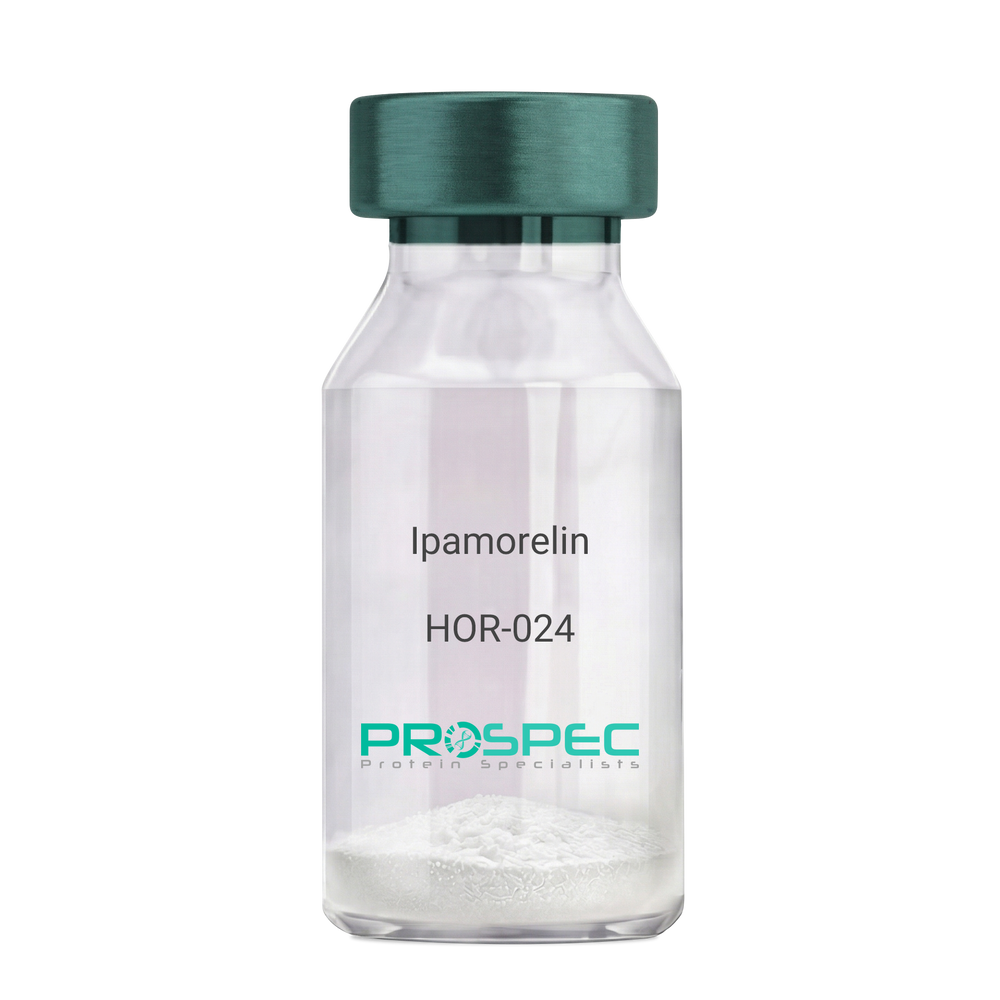
Ipamorelin Synthetic is a single, non-glycosylated polypeptide chain containing 4 amino acids, having a molecular mass of 711.85 Dalton and a Molecular formula of C38H49N9O5.
Formulation
The protein was lyophilized with no additives.
Purity
Greater than 97.0% as determined by analysis by RP-HPLC.
More Info
-
Introduction
Ipamorelin is a peptide selective agonist of the ghrelin/growth hormone secretagogue receptor and a growth hormone secretagogue. Ipamorelin is a pentapeptide that was derived from GHRP1. Ipamorelin significantly increases plasma growth hormone levels in both animals and humans. Like pralmorelin and GHRP-6, ipamorelin does not affect prolactin, FSH, LH or TSH levels. However, unlike GHRP2 and GHRP6, but as growth hormone-releasing hormone (GHRH), ipamorelin does not stimulate the secretion of adrenocorticotropic hormone (ACTH) or cortisol, and is highly selective for inducing the secretion only of GH.
-
Synonyms
Ipamorelin
-
Physical Appearance
Sterile Filtered White lyophilized (freeze-dried) powder.
-
Stability
Lyophilized Ipamorelin although stable at room temperature for 3 weeks, should be stored desiccated below -18°C. Upon reconstitution Ipamorelin should be stored at 4°C between 2-7 days and for future use below -18°C. For long term storage it is recommended to add a carrier protein (0.1% HSA or BSA). Please prevent freeze-thaw cycles.
-
Solubility
It is recommended to reconstitute the lyophilized Ipamorelin in sterile 18MΩ-cm H2O not less than 100 µg/ml, which can then be further diluted to other aqueous solutions.
-
Amino Acid Sequence
Aib-His-D-2-Nal-D-Phe-Lys-NH2.
ProSpec's products are furnished for LABORATORY RESEARCH USE ONLY. The product may not be used as drugs, agricultural or pesticidal products, food additives or household chemicals.
- View Data Sheet
Name :
CIB1 AntibodyDescription:
Calcium and Integrin Binding 1, Mouse Anti Human
Calcium and integrin-binding protein 1, Calmyrin, DNA-PKcs-interacting protein, Kinase-interacting protein, SNK-interacting protein 2-28, SIP2-28, CIB1, CIB, KIP, PRKDCIP.
Product # :
ANT-377Price :
Quantity :
Shipping Method :
Shipped with Ice Packs
More Info
- formulation
- More Info
Formulation
1mg/ml containing PBS, pH-7.4, & 0.1% Sodium Azide.
More Info
-
Introduction
CIB1 (Calcium and integrin binding 1) is regulatory protein with 50% homology to calmodulin and calcineurin B, that encodes a member of the calcium-binding protein family. CIB1 interacts with DNA-dependent protein kinase and may play a role in kinase-phosphatase regulation of DNA end joining. Also CIB1 is widely expressed and binds to a number of effectors, such as integrin αIIb, PAK1, and polo-like kinases, in different tissues.
-
Synonyms
Calcium and integrin-binding protein 1, Calmyrin, DNA-PKcs-interacting protein, Kinase-interacting protein, SNK-interacting protein 2-28, SIP2-28, CIB1, CIB, KIP, PRKDCIP.
-
Immunogen
Anti-human CIB1 mAb is derived from hybridization of mouse F0 myeloma cells with spleen cells from BALB/c mice immunized with recombinant human CIB1 amino acids 1-191 purified from E. coli.
-
Ig Subclass
Mouse IgG2b heavy chain and κ light chain.
-
Clone
P1D1AT.
-
Applications
CIB1 antibody has been tested by ELISA and Western blot analysis to assure specificity and reactivity. Since application varies, however, each investigation should be titrated by the reagent to obtain optimal results. Recommended dilution range for Western blot analysis is 1:1,000 ~ 2,000. Recommended starting dilution is 1:1,000.
-
Type
Mouse Anti Human Monoclonal.
-
Storage Procedures
For periods up to 1 month store at 4°C, for longer periods of time, store at -20°C. Prevent freeze thaw cycles.
-
Purification Method
CIB1 antibody was purified from mouse ascitic fluids by protein-G affinity chromatography.
ProSpec's products are furnished for LABORATORY RESEARCH USE ONLY. The product may not be used as drugs, agricultural or pesticidal products, food additives or household chemicals.
- View Data Sheet
Name :
VEGF Human, BaculovirusDescription:
Vascular Endothelial Growth Factor Human Recombinant, Baculovirus
Vascular Endothelial Growth Factor A, VEGF, Vascular Permeability Factor, MVCD1, VPF, Vascular Endothelial Growth Factor, VEGF-A, Vascular endothelial growth factor A.
Product # :
CYT-849Price :
Quantity :
Shipping Method :
Shipped with Ice Packs
More Info
- description
- source
- formulation
- purity
- More Info
Description
VEGF produced in Sf9 Baculovirus cells is a single, glycosylated polypeptide chain containing 171 amino acids (27-191 a.a.) and having a molecular mass of 19.9 kDa. VEGF is expressed with a 6 amino acid His tag at C-Terminus and purified by proprietary chromatographic techniques.
Source
Sf9, Baculovirus cells.
Formulation
VEGF protein solution (0.25mg/ml) contains Phosphate buffered saline (pH7.4), 30% glycerol, 1mM DTT and 0.1mM PMSF.
Purity
Greater than 85.0% as determined by SDS-PAGE.
More Info
-
Introduction
Vascular endothelial growth factor is an important signaling protein involved in both vasculogenesis and angiogenesis. As its name implies, VEGF activity has been mostly studied on cells of the vascular endothelium, although it does have effects on a number of other cell types (e.g. stimulation monocyte/ macrophagemigration, neurons, cancer cells, kidney epithelial cells ).VEGF mediates increased vascular permeability, induces angiogenesis, vasculogenesis and endothelial cell growth, promotes cell migration, and inhibits apoptosis. In vitro, VEGF has been shown to stimulate endothelial cell mitogenesisand cell migration. VEGF is also a vasodilator and increases microvascular permeability and was originally referred to as vascular permeability factor. Elevated levels of this protein are linked to POEMS syndrome, also known as Crow-Fukase syndrome. Mutations in this gene have been associated with proliferative and nonproliferative diabetic retinopathy.
-
Synonyms
Vascular Endothelial Growth Factor A, VEGF, Vascular Permeability Factor, MVCD1, VPF, Vascular Endothelial Growth Factor, VEGF-A, Vascular endothelial growth factor A.
-
Physical Appearance
Sterile filtered colorless solution.
-
Stability
Store at 4°C if entire vial will be used within 2-4 weeks. Store, frozen at -20°C for longer periods of time. For long term storage it is recommended to add a carrier protein (0.1% HSA or BSA). Avoid multiple freeze-thaw cycles.
-
Amino Acid Sequence
APMAEGGGQN HHEVVKFMDV YQRSYCHPIE TLVDIFQEYP DEIEYIFKPS CVPLMRCGGC CNDEGLECVP TEESNITMQI MRIKPHQGQH IGEMSFLQHN KCECRPKKDR ARQENPCGPC SERRKHLFVQ DPQTCKCSCK NTDSRCKARQ LELNERTCRC DKPRRHHHHH H.
ProSpec's products are furnished for LABORATORY RESEARCH USE ONLY. The product may not be used as drugs, agricultural or pesticidal products, food additives or household chemicals.
- View Data Sheet
Name :
CASP3 Human, Sf9Description:
Caspase 3 Apoptosis-Related Cysteine Peptidase Human Recombinant, Sf9
CASP3, CPP32, CPP32B, SCA-1, CASP-3, Apopain, Cysteine protease CPP32, CPP-32, Protein Yama, SREBP cleavage activity 1.
Product # :
ENZ-1106Price :
Quantity :
Shipping Method :
Shipped with Ice Packs
More Info
- description
- source
- formulation
- purity
- biological activity
- More Info
Description
CASP3 Human produced in Sf9 Baculovirus cells is a single, glycosylated polypeptide chain containing 256 amino acids (29-277 a.a.) and having a molecular mass of 29.4kDa (Migrates at 13.5-18kDa on SDS-PAGE under reducing conditions). CASP3 is expressed with a 6 amino acid His tag at C-Terminus and purified by proprietary chromatographic techniques.
Source
Sf9, Baculovirus cells.
Formulation
CASP3 protein solution (0.5mg/ml) containing 20mM HEPES buffer (pH 7.5), 0.1M NaCl, 1mM EDTA, 20% Glycerol and 1mM DTT.
Purity
Greater than 90.0% as determined by SDS-PAGE.
Biological Activity
Specific activity is greater than 5,000 pmol/min/ug. One unit will liberate 1 pmoles of Ac-DEVD-AFC to Ac-DEVD and AFC per minute at pH7.5 at 25C.
More Info
-
Introduction
Caspase 3 Apoptosis-Related Cysteine Peptidase (CASP3) belongs to the cysteine-aspartic acid protease (caspase) family. Sequential activation of caspases plays a key role in the execution-phase of cell apoptosis. Caspases exist as inactive proenzymes which undergo proteolytic processing at conserved aspartic residues to generate 2 subunits, large and small, that dimerize to create the active enzyme. CASP3 protein cleaves and activates caspases 6, 7 and 9, and the protein itself is processed by caspases 8, 9 and 10. CASP3 is the leading caspase involved in the cleavage of amyloid-beta 4A precursor protein, which is linked with neuronal death in Alzheimer's disease. In addition, CASP3 is involved in the cleavage of huntingtin. CASP3 also cleaves and activates sterol regulatory element binding proteins (SREBPs) between the basic helix-loop-helix leucine zipper domain and the membrane attachment domain. CASP3 initiates cell adhesion in sympathetic neurons through RET cleavage.
-
Synonyms
CASP3, CPP32, CPP32B, SCA-1, CASP-3, Apopain, Cysteine protease CPP32, CPP-32, Protein Yama, SREBP cleavage activity 1.
-
Physical Appearance
Sterile Filtered colorless solution.
-
Stability
Store at 4°C if entire vial will be used within 2-4 weeks. Store, frozen at -20°C for longer periods of time. For long term storage it is recommended to add a carrier protein (0.1% HSA or BSA).Avoid multiple freeze-thaw cycles.
-
Amino Acid Sequence
MSGISLDNSY KMDYPEMGLC IIINNKNFHK STGMTSRSGT DVDAANLRET FRNLKYEVRN
KNDLTREEIV ELMRDVSKED HSKRSSFVCV LLSHGEEGII FGTNGPVDLK KITNFFRGDR
CRSLTGKPKL FIIQACRGTE LDCGIETDSG VDDDMACHKI PVEADFLYAY STAPGYYSWR
NSKDGSWFIQ SLCAMLKQYA DKLEFMHILT RVNRKVATEF ESFSFDATFH AKKQIPCIVS MLTKELYFYH HHHHHH
ProSpec's products are furnished for LABORATORY RESEARCH USE ONLY. The product may not be used as drugs, agricultural or pesticidal products, food additives or household chemicals.
- View Data Sheet
Name :
EFNB1 HumanDescription:
Ephrin-B1 Human Recombinant
ephrin-B1, LERK2, EPLG2, Elk-L, EPH-related receptor tyrosine kinase ligand 2, EFL-3, ELK ligand, CFND, CFNS, Craniofrontonasal Syndrome (craniofrontonasal dysplasia), MGC8782.
Product # :
PRO-918Price :
Quantity :
Shipping Method :
Shipped with Ice Packs
More Info
- description
- source
- formulation
- purity
- More Info
Description
EFNB1 Human Recombinant produced in E.coli is a single, non-glycosylated polypeptide chain containing 231 amino acids (28-237) and having a molecular mass of 25.3 kDa.The EFNB1 is fused to a 21 amino acid His-Tag at N-terminus and purified by proprietary chromatographic techniques.
Source
E.coli.
Formulation
The EFNB1 solution (1mg/ml) contains 20mM Tris-HCl buffer (pH 8.0), 0.4M Urea and 5% glycerol.
Purity
Greater than 95% as determined by SDS-PAGE.
More Info
-
Introduction
EFNB1 is a member of the Eph family. The cell-surface proteins Ephrins split into two groups, ephrin-A and ephrin-B, based on their structure and function and perform as ligands for Eph receptors. The transmembrane EFNB1 proteins have conserved cytoplasmic tyrosine residues that are phosphorylated upon interaction with an EphB receptor. In addition, EFNB1 transduces outside-in signals by C-terminal protein interfaces which influence integrin-mediated cell attachment and migration.
-
Synonyms
ephrin-B1, LERK2, EPLG2, Elk-L, EPH-related receptor tyrosine kinase ligand 2, EFL-3, ELK ligand, CFND, CFNS, Craniofrontonasal Syndrome (craniofrontonasal dysplasia), MGC8782.
-
Physical Appearance
Sterile Filtered colorless solution.
-
Stability
Store at 4°C if entire vial will be used within 2-4 weeks. Store, frozen at -20°C for longer periods of time. For long term storage it is recommended to add a carrier protein (0.1% HSA or BSA).Avoid multiple freeze-thaw cycles.
-
Amino Acid Sequence
MGSSHHHHHH SSGLVPRGSH MLAKNLEPVS WSSLNPKFLS GKGLVIYPKI GDKLDIICPR AEAGRPYEYY KLYLVRPEQA AACSTVLDPN VLVTCNRPEQ EIRFTIKFQE FSPNYMGLEF KKHHDYYITS TSNGSLEGLE NREGGVCRTR TMKIIMKVGQ DPNAVTPEQL TTSRPSKEAD NTVKMATQAP GSRGSLGDSD GKHETVNQEE KSGPGASGGS SGDPDGFFNS K
ProSpec's products are furnished for LABORATORY RESEARCH USE ONLY. The product may not be used as drugs, agricultural or pesticidal products, food additives or household chemicals.
- View Data Sheet
Name :
VEGF MouseDescription:
Vascular Endothelial Growth Factor Mouse Recombinant
Vascular endothelial growth factor A, VEGF-A, Vascular permeability factor, VPF, VEGF, MGC70609.
Product # :
CYT-336Price :
Quantity :
Shipping Method :
Shipped at Room temp
More Info
- description
- source
- formulation
- purity
- biological activity
- More Info
Description
Vascular Endothelial Growth Factor Mouse Recombinant produced in E.Coli is a disulfide-linked homodimeric, double polypeptide chains containing 165 amino acids and having a molecular mass of 38.8kDa.
Source
Escherichia Coli.
Formulation
The protein was lyophilized from a 0.2µm filtered solution with PBS, pH 7.4.
Purity
Greater than 95.0% as determined by:
(a) Analysis by RP-HPLC.
(b) Analysis by SDS-PAGE.Biological Activity
The biological activity is determined by the dose-dependent stimulation of the proliferation of human umbilical vein endothelial cells (HUVEC) using a concentration range of 5.0 ng/ml corresponding to a specific activity of 200,000IU/mg.
More Info
-
Introduction
Vascular endothelial growth factor is an important signaling protein involved in both vasculogenesis and angiogenesis. As its name implies, VEGF activity has been mostly studied on cells of the vascular endothelium, although it does have effects on a number of other cell types (e.g. stimulation monocyte/ macrophagemigration, neurons, cancer cells, kidney epithelial cells ). VEGF mediates increased vascular permeability, induces angiogenesis, vasculogenesis and endothelial cell growth, promotes cell migration, and inhibits apoptosis. In vitro, VEGF has been shown to stimulate endothelial cell mitogenesisand cell migration. VEGF is also a vasodilator and increases microvascular permeability and was originally referred to as vascular permeability factor.
Elevated levels of this protein are linked to POEMS syndrome, also known as Crow-Fukase syndrome. Mutations in this gene have been associated with proliferative and nonproliferative diabetic retinopathy. -
Synonyms
Vascular endothelial growth factor A, VEGF-A, Vascular permeability factor, VPF, VEGF, MGC70609.
-
Physical Appearance
Sterile Filtered White lyophilized (freeze-dried) powder.
-
Stability
Lyophilized Vascular Endothelial Growth Factor although stable at room temperature for 3 weeks, should be stored desiccated below -18°C. Upon reconstitution VEGF should be stored at 4°C between 2-7 days and for future use below -18°C.For long term storage it is recommended to add a carrier protein (0.1% HSA or BSA).Please prevent freeze-thaw cycles.
-
Solubility
It is recommended to reconstitute the lyophilized Vascular Endothelial Growth Factor in sterile 18MΩ-cm H2O not less than 100µg/ml, which can then be further diluted to other aqueous solutions.
-
Amino Acid Sequence
MAPTTEGEQK SHEVIKFMDV YQRSYCRPIE TLVDIFQEYP DEIEYIFKPS CVPLMRCAGC CNDEALECVP TSESNITMQI MRIKPHQSQH IGEMSFLQHS RCECRPKKDR TKPEKHCEPC SERRKHLFVQ DPQTCKCSCK NTDSRCKARQ LELNERTCRC DKPRR.
ProSpec's products are furnished for LABORATORY RESEARCH USE ONLY. The product may not be used as drugs, agricultural or pesticidal products, food additives or household chemicals.
- View Data Sheet
Name :
CTSD AntibodyDescription:
Cathepsin D, Mouse Anti Human
Cathepsin D, EC 3.4.23.5, CTSD, CPSD, CLN10, MGC2311.
Product # :
ANT-324Price :
Quantity :
Shipping Method :
Shipped with Ice Packs
More Info
- formulation
- More Info
Formulation
1mg/ml containing PBS, pH-7.4, & 0.1% Sodium Azide.
More Info
-
Introduction
Cathepsin D is synthesized as a 54kDa precursor, which is proteolytically processed to an intermediate 48kDa single chain, which matures into more stable 34kDa and 14kDa two chain form. It is an estrogen-regulated lysosomal protease that has been suggested to facilitate cancer cell migration and invasion by digesting the basement membrane, extracellular matrix, and xonnective tissue. Because of its mitogenic and proteolytic activities, it has been implicated as a prognostic marker in many tumor types. Cathepsin D is expressed in epithelial cells as well as in macrophages.
-
Synonyms
Cathepsin D, EC 3.4.23.5, CTSD, CPSD, CLN10, MGC2311.
-
Physical Appearance
Sterile Filtered colorless solution.
-
Immunogen
Anti-human CTSD mAb is derived from hybridization of mouse SP2/O myeloma cells with spleen cells from BALB/c mice immunized with recombinant human CTSD amino acids 21-412 purified from E. coli.
-
Ig Subclass
Mouse IgG2b heavy chain and κ light chain.
-
Clone
P4G2AT.
-
Applications
CTSD antibody has been tested by ELISA and Western blot analysis to assure specificity and reactivity. Since application varies, however, each investigation should be titrated by the reagent to obtain optimal results. Recommended dilution range for Western blot analysis is 1:500 ~ 2,000. Recommended starting dilution is 1:1,000.
-
Type
Mouse Anti Human Monoclonal.
-
Storage Procedures
For periods up to 1 month store at 4°C, for longer periods of time, store at -20°C. Prevent freeze thaw cycles.
-
Purification Method
CTSD antibody was purified from mouse ascitic fluids by protein-G affinity chromatography.
ProSpec's products are furnished for LABORATORY RESEARCH USE ONLY. The product may not be used as drugs, agricultural or pesticidal products, food additives or household chemicals.
- View Data Sheet
Name :
LAIR2 HumanDescription:
Leukocyte-Associated Ig-Like Receptor 2 Human Recombinant
Leukocyte-associated immunoglobulin-like receptor 2, LAIR-2, CD306, LAIR2.
Product # :
PRO-1081Price :
Quantity :
Shipping Method :
Shipped with Ice Packs
More Info
- description
- source
- formulation
- purity
- More Info
Description
LAIR2 Human Recombinant produced in E.Coli is a single, non-glycosylated polypeptide chain containing 139 amino acids (22-135 a.a) and having a molecular mass of 15.2kDa.LAIR2 is fused to a 25 amino acid His-tag at N-terminus & purified by proprietary chromatographic techniques.
Source
Escherichia Coli.
Formulation
LAIR2 protein solution (1mg/ml) containing 20mM Tris-HCl buffer (pH8.0), 20% glycerol, 0.1M NaCl and 1mM DTT.
Purity
Greater than 90.0% as determined by SDS-PAGE.
More Info
-
Introduction
Leukocyte-associated immunoglobulin-like receptor 2 (LAIR2) is a secreted, 131 amino acids protein which contains one IglikeC2 type domain, rendering it a member of the Ig superfamily. Even though one is secreted and one is membrane bound, the 2 LAIR proteins are assumed to have evolved from a common gene ancestor and seem to share similar adhesion profiles, suggesting that LAIR2 may compete with LAIR1 for ligand binding. LAIR2 was discovered by its similarity to LAIR1, which is an inhibitory receptor present on mononuclear leukocytes. The LAIR2 gene maps to a region of 19q13.4, dubbed the leukocyte receptor cluster, which contains 29 genes in the immunoglobulin superfamily, including LAIR1. The function of the LAIR2 protein is unknown, though it is assumed to be secreted and may help modulate mucosal tolerance.
-
Synonyms
Leukocyte-associated immunoglobulin-like receptor 2, LAIR-2, CD306, LAIR2.
-
Physical Appearance
Sterile Filtered colorless solution.
-
Stability
Store at 4°C if entire vial will be used within 2-4 weeks. Store, frozen at -20°C for longer periods of time. For long term storage it is recommended to add a carrier protein (0.1% HSA or BSA).Avoid multiple freeze-thaw cycles.
-
Amino Acid Sequence
MGSSHHHHHH SSGLVPRGSH MGSHMQEGAL PRPSISAEPG TVISPGSHVT FMCRGPVGVQ TFRLEREDRA KYKDSYNVFR LGPSESEARF HIDSVSEGNA GLYRCLYYKP PGWSEHSDFL ELLVKGTVPG TEASGFDAP.
ProSpec's products are furnished for LABORATORY RESEARCH USE ONLY. The product may not be used as drugs, agricultural or pesticidal products, food additives or household chemicals.
- View Data Sheet
Name :
SPP1 MouseDescription:
Osteopontin 1 Mouse Recombinant
Secreted Phosphoprotein-1, OPN, BNSP, BSPI, ETA-1, MGC110940, SPP-1, Osteopontin, Bone sialoprotein 1, Urinary stone protein, Nephropontin, Uropontin, SPP1
Product # :
CYT-1201Price :
Quantity :
Shipping Method :
Shipped with Ice Packs
More Info
- description
- source
- formulation
- purity
- biological activity
- More Info
Description
SPP1 Mouse Recombinant produced in HEK293 Cells is a single, glycosylated polypeptide chain containing 287 amino acids (17-294 a.a) and having a molecular mass of 31.8kDa.SPP1 is expressed with a 6 amino acid His tag at C-Terminus and purified by proprietary chromatographic techniques.
Source
HEK293 Cells.
Formulation
The SPP1 solution (0.25mg/1ml) contains phosphate buffered saline (pH7.4) and 10% glycerol.
Purity
Greater than 90.0% as determined by SDS-PAGE.
Biological Activity
Measured by the ability of the immobilized protein to support the adhesion of HEK293 HEK cells when the cells are added to mouse SPP1 coated plates. The ED50 range is ≤ 1.5 ug/ml.
More Info
-
Introduction
Osteopontin is a glycoprotein that was first identified in osteoblasts and is involved in bone remodeling, immune functions in fibroblasts, macrophages, and lymphocytes during inflammation and wound healing. SPP1 binds tightly to hydroxyapatite. SPP1 forms an integral part of the mineralized matrix. SPP1 is vital to cell-matrix interaction. Secreted Phosphoprotein-1 protects against cardiac ischemia-reperfusion injury via late preconditioning. Expression of both Ostepontin and CD44 in hepatocellular carcinoma is linked with advanced tumor stage and contributes to prognosis information. SPP1 is the most over-expressed gene in intrahepatic cholangiocarcinoma. Secreted Phosphoprotein-1 overexpression is related with interstitial lung diseases.
-
Synonyms
Secreted Phosphoprotein-1, OPN, BNSP, BSPI, ETA-1, MGC110940, SPP-1, Osteopontin, Bone sialoprotein 1, Urinary stone protein, Nephropontin, Uropontin, SPP1
-
Physical Appearance
Sterile Filtered colorless solution.
-
Stability
Store at 4°C if entire vial will be used within 2-4 weeks.Store, frozen at -20°C for longer periods of time.For long term storage it is recommended to add a carrier protein (0.1% HSA or BSA).Avoid multiple freeze-thaw cycles.
-
Amino Acid Sequence
DGSLPVKVTD SGSSEEKLYS LHPDPIATWL VPDPSQKQNL LAPQNAVSSE EKDDFKQETL PSNSNESHDH MDDDDDDDDD DGDHAESEDS VDSDESDESH HSDESDETVT ASTQADTFTP IVPTVDVPNG RGDSLAYGLR SKSRSFQVSD EQYPDATDED LTSHMKSGES KESLDVIPVA QLLSMPSDQD NNGKGSHESS QLDEPSLETH RLEHSKESQE SADQSDVIDS QASSKASLEH QSHKFHSHKD KLVLDPKSKE DDRYLKFRIS HELESSSSEV NHHHHHH
ProSpec's products are furnished for LABORATORY RESEARCH USE ONLY. The product may not be used as drugs, agricultural or pesticidal products, food additives or household chemicals.
- View Data Sheet
Name :
BCL2L2 Human, HisDescription:
BCL2 Like 2 Human Recombinant, His Tag
B-Cell Lymphoma Protein 2, BCL2 Like 2, BCL2 Like protein 2, BCLW, Bcl2-L-2, Apoptosis regulator Bcl-W, BCL2L2, BCL-W, KIAA0271.
Product # :
PRO-768Price :
Quantity :
Shipping Method :
Shipped with Ice Packs
More Info
- description
- source
- formulation
- purity
- More Info
Description
BCL2L2 Human Recombinant produced in E.Coli is a single, non-glycosylated polypeptide chain containing 192 amino acids (1-172 a.a.) and having a molecular weight of 20.9kDa.The BCL2L2 is fused to a 20 a.a His-Tag at N-terminus and purified by proprietary chromatographic techniques.
Source
Escherichia Coli.
Formulation
The BCL2L2 protein solution contains 20mM Tris-HCl, pH-8, 100mM NaCl and 10% glycerol.
Purity
Greater than 95.0% as determined by SDS-PAGE.
More Info
-
Introduction
BCL2L2 promotes cell survival and blocks dexamethasone-induced apoptosis. BCL2L2 mediates survival of postmitotic Sertoli cells by suppressing death-promoting activity of BAX. BCL2L2 is part of the BCL-2 protein family which form hetero- or homodimers and play an important role as anti and proapoptotic regulators. BCL2L2 causes reduced cell apoptosis under cytotoxic conditions. BCL2L2 is involved in the survival of NGF- and BDNF-dependent neurons. BCL2L2 plays an important role in adult spermatogenesis.
-
Synonyms
B-Cell Lymphoma Protein 2, BCL2 Like 2, BCL2 Like protein 2, BCLW, Bcl2-L-2, Apoptosis regulator Bcl-W, BCL2L2, BCL-W, KIAA0271.
-
Physical Appearance
Sterile filtered colorless solution.
-
Stability
Store at 4°C if entire vial will be used within 2-4 weeks. Store, frozen at -20°C for longer periods of time. For long term storage it is recommended to add a carrier protein (0.1% HSA or BSA). Avoid multiple freeze-thaw cycles.
-
Amino Acid Sequence
MGSSHHHHHH SSGLVPRGSH MATPASAPDT RALVADFVGY KLRQKGYVCG AGPGEGPAAD PLHQAMRAAG DEFETRFRRT FSDLAAQLHV TPGSAQQRFT QVSDELFQGG PNWGRLVAFF VFGAALCAES VNKEMEPLVG QVQEWMVAYL ETRLADWIHS SGGWAEFTAL YGDGALEEAR RLREGNWASV RT.
ProSpec's products are furnished for LABORATORY RESEARCH USE ONLY. The product may not be used as drugs, agricultural or pesticidal products, food additives or household chemicals.
- View Data Sheet
Name :
Noggin Human, HEKDescription:
Noggin Human Recombinant, HEK
Noggin, Symphalangism 1 (Proximal), Synostoses (Multiple) Syndrome 1, SYNS1A, SYNS1, SYM1.
Product # :
CYT-977Price :
Quantity :
Shipping Method :
Shipped with Ice Packs
More Info
- description
- source
- formulation
- purity
- More Info
Description
Noggin produced in HEK293 cells is a polypeptide chain containing 211 amino acids (28-232a.a.) and having a molecular mass of 23.8kDa. (Molecular size on SDS-PAGE will appear at approximately 28-40kDa).Noggin is expressed with a 6 amino acid His tag at C-Terminus and purified by proprietary chromatographic techniques.
Source
HEK293 Cells.
Formulation
Recombinant Human Noggin hek293 derived protein is provided as a solution (0.25mg/ml) containing 50mM MES (pH 6.5) and 30% glycerol.
Purity
Greater than 90.0% as determined by SDS-PAGE.
More Info
-
Introduction
The secreted polypeptide noggin, encoded by the NOG gene, binds and inactivates members of the transforming growth factor-beta (TGF-beta) superfamily signaling proteins, such as bone morphogenetic protein-4 (BMP4). By diffusing through extracellular matrices more efficiently than members of the TGF-beta superfamily, noggin may have a principal role in creating morphogenic gradients. Noggin appears to have pleiotropic effect, both early in development as well as in later stages. It was originally isolated from Xenopus based on its ability to restore normal dorsal-ventral body axis in embryos that had been artificially ventralized by UV treatment. The results of the mouse knockout of noggin suggest that it is involved in numerous developmental processes, such as neural tube fusion and joint formation. Recently, several dominant human NOG mutations in unrelated families with proximal symphalangism (SYM1) and multiple synostoses syndrome (SYNS1) were identified; both SYM1 and SYNS1 have multiple joint fusion as their principal feature, and map to the same region (17q22) as NOG. All NOG mutations altered evolutionarily conserved amino acid residues. The amino acid sequence of human noggin is highly homologous to that of Xenopus, rat and mouse.
-
Synonyms
Noggin, Symphalangism 1 (Proximal), Synostoses (Multiple) Syndrome 1, SYNS1A, SYNS1, SYM1.
-
Physical Appearance
Sterile filtered colorless solution.
-
Stability
Store at 4°C if entire vial will be used within 2-4 weeks.Store, frozen at -20°C for longer periods of time. For long term storage it is recommended to add a carrier protein (0.1% HSA or BSA).Avoid multiple freeze-thaw cycles.
-
Amino Acid Sequence
QHYLHIRPAP SDNLPLVDLI EHPDPIFDPK EKDLNETLLR SLLGGHYDPG FMATSPPEDR PGGGGGAAGG AEDLAELDQL LRQRPSGAMP SEIKGLEFSE GLAQGKKQRL SKKLRRKLQM WLWSQTFCPV LYAWNDLGSR FWPRYVKVGS CFSKRSCSVP EGMVCKPSKS VHLTVLRWRC QRRGGQRCGW IPIQYPIISE CKCSCHHHHH H.
ProSpec's products are furnished for LABORATORY RESEARCH USE ONLY. The product may not be used as drugs, agricultural or pesticidal products, food additives or household chemicals.
- View Data Sheet
Name :
NFATC2 HumanDescription:
Nuclear Factor Of Activated T Cells 2 Human Recombinant
Nuclear Factor Of Activated T Cells 2, Nuclear Factor Of Activated T-Cells, Cytoplasmic, Calcineurin-Dependent 2, Nuclear Factor Of Activated T-Cells 2, NFAT Pre-Existing Subunit, NF-ATc2, NFAT1, NFATP, Nuclear Factor Of Activated T-Cells, Preexisting Component , Nuclear Factor Of Activated T-Cells, Cytoplasmic 2, NFAT Transcription Complex, Preexisting Component, Preexisting Nuclear Factor Of Activated T-Cells 2, T Cell Transcription Factor NFAT1, T-Cell Transcription Factor NFAT1, NF-ATp, NFATc2.
Product # :
PRO-2535Price :
Quantity :
Shipping Method :
Shipped with Ice Packs
More Info
- description
- source
- formulation
- purity
- More Info
Description
NFATC2 produced in Sf9 Baculovirus cells is a single, glycosylated polypeptide chain containing 290 amino acids (396-678a.a.) and having a molecular mass of 33.1kDa. (Molecular size on SDS-PAGE will appear at approximately 28-40kDa). NFATC2 is expressed with a 7 amino acid His tag at C-Terminus and purified by proprietary chromatographic techniques.
Source
Sf9, Baculovirus cells.
Formulation
NFATC2 protein solution (0.25mg/ml) contains Phosphate Buffered Saline (pH 7.4) 40% glycerol and 1mM DTT.
Purity
Greater than 90.0% as determined by SDS-PAGE.
More Info
-
Introduction
NFATC2, also known as nuclear factor of activated T-cells 2, belongs to the nuclear factor of activated T cells family. NFATC2 takes a significant part in the course of T helper cell differentiation, activation, and effector function. Even though KO of an individual NFAT isoform in T cells directs to rather minor effects, T cells lacking for NFATC1 and 2 totally fail to produce T helper cell effector cytokines, for instance the interleukins IL-4 and IL-2. Moreover, NFATC2 is highly phosphorylated and kept in the cytoplasm. Next T cell receptor stimulation, dephosphorylation via calcium-activated calcineurin induces a conformational modification of NFATC2 which reveals a few nuclear localization sequences.
-
Synonyms
Nuclear Factor Of Activated T Cells 2, Nuclear Factor Of Activated T-Cells, Cytoplasmic, Calcineurin-Dependent 2, Nuclear Factor Of Activated T-Cells 2, NFAT Pre-Existing Subunit, NF-ATc2, NFAT1, NFATP, Nuclear Factor Of Activated T-Cells, Preexisting Component , Nuclear Factor Of Activated T-Cells, Cytoplasmic 2, NFAT Transcription Complex, Preexisting Component, Preexisting Nuclear Factor Of Activated T-Cells 2, T Cell Transcription Factor NFAT1, T-Cell Transcription Factor NFAT1, NF-ATp, NFATc2.
-
Physical Appearance
Sterile Filtered colorless solution.
-
Stability
Store at 4°C if entire vial will be used within 2-4 weeks. Store, frozen at -20°C for longer periods of time. For long term storage it is recommended to add a carrier protein (0.1% HSA or BSA). Avoid multiple freeze-thaw cycles.
-
Amino Acid Sequence
MPLEWPLSSQ SGSYELRIEV QPKPHHRAHY ETEGSRGAVK APTGGHPVVQ LHGYMENKPL GLQIFIGTAD ERILKPHAFY QVHRITGKTV TTTSYEKIVG NTKVLEIPLE PKNNMRATID CAGILKLRNA DIELRKGETD IGRKNTRVRL VFRVHIPESS GRIVSLQTAS NPIECSQRSA HELPMVERQD TDSCLVYGGQ QMILTGQNFT SESKVVFTEK TTDGQQIWEM EATVDKDKSQ PNMLFVEIPE YRNKHIRTPV KVNFYVINGK RKRSQPQHFT YHPVHHHHHH
ProSpec's products are furnished for LABORATORY RESEARCH USE ONLY. The product may not be used as drugs, agricultural or pesticidal products, food additives or household chemicals.
- View Data Sheet
Name :
VEGF Human, HisDescription:
Vascular Endothelial Growth Factor Human Recombinant, His
Vascular endothelial growth factor A, VEGF-A, Vascular permeability factor, VPF, VEGF, MGC70609.
Product # :
CYT-496Price :
Quantity :
Shipping Method :
Shipped with Ice Packs
More Info
- description
- source
- formulation
- purity
- More Info
Description
Vascular Endothelial Growth Factor Human Recombinant produced in E.Coli is a non-glycosylated, polypeptide chain (aa 207-371) containing a total of 185 amino acids and having a molecular mass of 21.3 kDa (corresponding to Isoform L-VEGF165 UniProt acc#P15692-11). The VEGF is fused to a 20 a.a His-tag at N-terminus and is purified by proprietary chromatographic techniques.
Source
Escherichia Coli.
Formulation
VEGF His (0.5mg/ml) is supplied in 20mM Tris-HCl pH-8.5, 50% glycerol, 5mM DTT, 200mM NaCl & 2mM EDTA.
Purity
Greater than 90% as determined by SDS-PAGE.
More Info
-
Introduction
Vascular endothelial growth factor is an important signaling protein involved in both vasculogenesis and angiogenesis. As its name implies, VEGF activity has been mostly studied on cells of the vascular endothelium, although it does have effects on a number of other cell types (e.g. stimulation monocyte/ macrophagemigration, neurons, cancer cells, kidney epithelial cells ).VEGF mediates increased vascular permeability, induces angiogenesis, vasculogenesis and endothelial cell growth, promotes cell migration, and inhibits apoptosis. In vitro, VEGF has been shown to stimulate endothelial cell mitogenesisand cell migration. VEGF is also a vasodilator and increases microvascular permeability and was originally referred to as vascular permeability factor.
Elevated levels of this protein are linked to POEMS syndrome, also known as Crow-Fukase syndrome. Mutations in this gene have been associated with proliferative and nonproliferative diabetic retinopathy. -
Synonyms
Vascular endothelial growth factor A, VEGF-A, Vascular permeability factor, VPF, VEGF, MGC70609.
-
Physical Appearance
Sterile Filtered clear solution.
-
Stability
Store at 4°C if entire vial will be used within 2-4 weeks.Store, frozen at -20°C for longer periods of time. For long term storage it is recommended to add a carrier protein (0.1% HSA or BSA).Avoid multiple freeze-thaw cycles.
-
Amino Acid Sequence
MGSSHHHHHH SSGLVPRGSH APMAEGGGQN HHEVVKFMDV YQRSYCHPIE TLVDIFQEYP DEIEYIFKPS CVPLMRCGGC CNDEGLECVP TEESNITMQI MRIKPHQGQH IGEMSFLQHN KCECRPKKDR ARQENPCGPC SERRKHLFVQ DPQTCKCSCK NTDSRCKARQ LELNERTCRC DKPRR.
ProSpec's products are furnished for LABORATORY RESEARCH USE ONLY. The product may not be used as drugs, agricultural or pesticidal products, food additives or household chemicals.
- View Data Sheet
Name :
Apolipoprotein A1 HumanDescription:
Apolipoprotein A-I Human Recombinant
Apolipoprotein A-I, Apo-AI, ApoA-I, APOA1, MGC117399.
Product # :
CYT-750Price :
Quantity :
Shipping Method :
Shipped at Room temp
More Info
- description
- source
- formulation
- purity
- More Info
Description
Apolipoprotein A-I Human Recombinant produced in E.coli is a single, non-glycosylated polypeptide chain containing 243 amino acids and having a molecular mass of 28.1kDa.The APOA1 is purified by proprietary chromatographic techniques.
Source
Escherichia Coli.
Formulation
The APOA1 protein was lyophilized from a 0.2µm filtered concentrated solution in PBS, pH 7.4.
Purity
Greater than 98.0% as determined by:
(a) Analysis by RP-HPLC.
(b) Analysis by SDS-PAGE.More Info
-
Introduction
APOA1 (Apolipoprotein A-1) is a human protein with a specific role in lipid metabolism being the main protein component of HDL in the plasma. APOA1 promotes cholesterol efflux from tissues to the liver for excretion. Furthermore, APOA1 is a cofactor for LCAT, which is responsible for the formation of most plasma cholesteryl esters. In addition, APOA1 activates spermatozoa motility as part of the SPAP complex. The APOA1 gene is strongly linked with two other apolipoprotein genes on chromosome 11. Defects in the APOA1 gene are linked to HDL deficiency including Tangier disease, and with systemic non-neuropathic amyloidosis. High levels of APOA1 are linked to the manifestation of asthma and atopy.
-
Synonyms
Apolipoprotein A-I, Apo-AI, ApoA-I, APOA1, MGC117399.
-
Physical Appearance
Sterile Filtered White lyophilized (freeze-dried) powder.
-
Stability
Lyophilized Apolipoprotein A-I although stable at room temperature for 3 weeks, should be stored desiccated below -18°C. Upon reconstitution APOA1 should be stored at 4°C between 2-7 days and for future use below -18°C. For long term storage it is recommended to add a carrier protein (0.1% HSA or BSA). Please prevent freeze-thaw cycles.
-
Solubility
It is recommended to reconstitute the lyophilized APOA1 in sterile 18MΩ-cm H2O not less than 100µg/ml, which can then be further diluted to other aqueous solutions.
-
Amino Acid Sequence
DEPPQSPWD RVKDLATVYV DVLKDSGRDY VSQFEGSALG KQLNLKLLDN WDSVTSTFSK LREQLGPVTQ EFWDNLEKET EGLRQEMSKD LEEVKAKVQP YLDDFQKKWQ EEMELYRQKV EPLRAELQEG ARQKLHELQE KLSPLGEEMR DRARAHVDAL RTHLAPYSDE LRQRLAARLE ALKENGGARL AEYHAKATEH LSTLSEKAKP ALEDLRQGLL PVLESFKVSF LSALEEYTKK LNTQ.
-
Background
Apolipoprotein A-I Human Recombinant: A Promising Therapeutic Agent for Cardiovascular Diseases
Abstract:
Cardiovascular diseases (CVDs) remain a leading cause of mortality worldwide. Dyslipidemia, characterized by abnormal lipid profiles, is a significant risk factor for the development of CVDs. Apolipoprotein A-I (ApoA-I) is the primary protein component of high-density lipoprotein (HDL), known as the "good cholesterol." ApoA-I plays a crucial role in reverse cholesterol transport, promoting the efflux of cholesterol from peripheral tissues to the liver for elimination. Recombinant ApoA-I offers a potential therapeutic strategy for enhancing HDL functionality and reducing CVD risk. This research paper aims to provide an overview of ApoA-I human recombinant, its production methods, and its therapeutic applications in cardiovascular medicine.Introduction
Cardiovascular diseases and dyslipidemia
Role of apolipoprotein A-I in reverse cholesterol transport
Potential of ApoA-I human recombinant as a therapeutic agentStructure and Function of Apolipoprotein A-I
Primary structure and domains of ApoA-I
Functional properties of ApoA-I in reverse cholesterol transport
Interaction with other lipoproteins and cellular receptorsProduction of Apolipoprotein A-I Human Recombinant
Expression systems for recombinant ApoA-I
Biotechnological methods for large-scale production
Purification and characterization of recombinant ApoA-ITherapeutic Applications of Apolipoprotein A-I Human Recombinant
Promotion of reverse cholesterol transport
Anti-inflammatory and antioxidant effects
Enhancement of endothelial function
Cardioprotective effects in animal modelsClinical Trials and Future Perspectives
Phase I and II clinical trials
Challenges and limitations
Future directions and potential therapeutic combinationsConclusion
Summary of the potential of ApoA-I human recombinant as a therapeutic agent for CVDs
Importance of ongoing research and clinical trialsWhat is the molecular weight/Mw of APOLIPOPROTEIN A1 Protein?
APOLIPOPROTEIN A1 Protein has a total Mw of 28.1kDa.
What is the source or expression system of APOLIPOPROTEIN A1 Protein?
Escherichia Coli.
What is the Purity of APOLIPOPROTEIN A1 Protein?
APOLIPOPROTEIN A1 Protein is >98% pure as determined by SDS-PAGE.
What is the Biological Activity of APOLIPOPROTEIN A1 Protein?
The biological functionality of APOLIPOPROTEIN A1 Protein will be determined in the future.
What is the amino acid sequence of APOLIPOPROTEIN A1 Protein?
DEPPQSPWD RVKDLATVYV DVLKDSGRDY VSQFEGSALG KQLNLKLLDN WDSVTSTFSK LREQLGPVTQ EFWDNLEKET EGLRQEMSKD LEEVKAKVQP YLDDFQKKWQ EEMELYRQKV EPLRAELQEG ARQKLHELQE KLSPLGEEMR DRARAHVDAL RTHLAPYSDE LRQRLAARLE ALKENGGARL AEYHAKATEH LSTLSEKAKP ALEDLRQGLL PVLESFKVSF LSALEEYTKK LNTQ.
What applications can APOLIPOPROTEIN A1 Protein be used in?
APOLIPOPROTEIN A1 Protein can probably be used in western blot, ELISA and Lateral Flow.
What is the endotoxin level for APOLIPOPROTEIN A1 Protein?
The endotoxin level is minimal, APOLIPOPROTEIN A1 Protein was purified using conventional chromatography techniques.
ProSpec's products are furnished for LABORATORY RESEARCH USE ONLY. The product may not be used as drugs, agricultural or pesticidal products, food additives or household chemicals.
- View Data Sheet
Name :
RNASE2 HumanDescription:
Ribonuclease 2 Human Recombinant
EDN, RNS2, ribonuclease A family member 2, RAF3, non-secretory ribonuclease, Eosinophil-derived neurotoxin, RNase UpI-2, Ribonuclease 2, RNase 2, Ribonuclease US.
Product # :
ENZ-1175Price :
Quantity :
Shipping Method :
Shipped with Ice Packs
More Info
- description
- source
- formulation
- purity
- More Info
Description
RNASE2 Human produced in Sf9 Baculovirus cells is a single, glycosylated polypeptide chain containing 143 amino acids (28-161 a.a.) and having a molecular mass of 16.5kDa.RNASE2 is fused to a 6 amino acid His tag at C-Terminus and purified by proprietary chromatographic techniques.
Source
Sf9, Baculovirus cells.
Formulation
RNASE2 Human protein (1mg/ml) is formulated in 20% glycerol and Phosphate-Buffered Saline (pH 7.4).
Purity
Greater than 90.0% as determined by SDS-PAGE.
More Info
-
Introduction
RNASE2, also known as EDN, is best-known as one of the 4 major proteins found in the large specific granules of human eosinophilic leukocytes. This protein is also expressed constitutively in human liver tissue and its expression can be induced in macrophages by proinflammatory stimuli. RNASE2 is a non-secretory ribonuclease which belongs to the pancreatic ribonuclease family, a subset of the ribonuclease A superfamily. Diseases associated with EDN include Dermatitis, Atopic, 8 and Pulmonary Eosinophilia.
-
Synonyms
EDN, RNS2, ribonuclease A family member 2, RAF3, non-secretory ribonuclease, Eosinophil-derived neurotoxin, RNase UpI-2, Ribonuclease 2, RNase 2, Ribonuclease US.
-
Physical Appearance
Sterile Filtered colorless solution.
-
Stability
Store at 4°C if entire vial will be used within 2-4 weeks. Store, frozen at -20°C for longer periods of time. For long term storage it is recommended to add a carrier protein (0.1% HSA or BSA).Avoid multiple freeze-thaw cycles.
-
Amino Acid Sequence
ADPKPPQFTW AQWFETQHIN MTSQQCTNAM QVINNYQRRC KNQNTFLLTT FANVVNVCGN PNMTCPSNKT RKNCHHSGSQ VPLIHCNLTT PSPQNISNCR YAQTPANMFY IVACDNRDQR RDPPQYPVVP VHLDRIIHHH HHH
ProSpec's products are furnished for LABORATORY RESEARCH USE ONLY. The product may not be used as drugs, agricultural or pesticidal products, food additives or household chemicals.
- View Data Sheet
Name :
MCP 1 Mouse, HisDescription:
Monocyte Chemotactic Protein-1 Mouse Recombinant (CCL2), His Tag
Small inducible cytokine A2, CCL2, Monocyte chemotactic protein 1, MCP-1, Monocyte chemoattractant protein 1, Monocyte chemotactic and activating factor, MCAF, Monocyte secretory protein JE, HC11, chemokine (C-C motif) ligand 2, MCP1, SCYA2, GDCF-2, SMC-CF, HSMCR30, MGC9434, GDCF-2 HC11.
Product # :
CHM-014Price :
Quantity :
Shipping Method :
Shipped with Ice Packs
More Info
- description
- source
- formulation
- purity
- More Info
Description
MCP-1 Mouse Recombinant produced in E.Coli is a single, non-glycosylated polypeptide chain containing 146 amino acids (24-148 a.a) and having a molecular mass of 16kDa.MCP-1 is fused to a 21 amino acid His-tag at N-terminus & purified by proprietary chromatographic techniques.
Source
Escherichia Coli.
Formulation
MCP-1 protein solution (0.25mg/ml) containing PBS (pH 7.4) and 10% glycerol.
Purity
Greater than 90.0% as determined by SDS-PAGE.
More Info
-
Introduction
Chemokine (C-C motif) ligand 2 (CCL2) is a small cytokine belonging to the CC chemokine family that is also known as monocyte chemotactic protein-1 (MCP-1). It is found at the site of tooth eruption and bone degradation. In the bone, CCL2 is expressed by mature osteoclasts and osteoblasts and is under the control of nuclear factor ?B (NF?B). CCL2 recruits immune cells, such as monocytes, to sites of tissue injury and infection. This chemokine is produced as a protein precursor containing signal peptide of 23 amino acids and a mature peptide of 76 amino acids. It is a monomeric polypeptide, with a molecular weight of approximately 13kDa. As with many other CC chemokines, CCL2 is located on chromosome 17 in humans. The cell surface receptors that bind CCL2 are CCR2 and CCR5.
-
Synonyms
Small inducible cytokine A2, CCL2, Monocyte chemotactic protein 1, MCP-1, Monocyte chemoattractant protein 1, Monocyte chemotactic and activating factor, MCAF, Monocyte secretory protein JE, HC11, chemokine (C-C motif) ligand 2, MCP1, SCYA2, GDCF-2, SMC-CF, HSMCR30, MGC9434, GDCF-2 HC11.
-
Physical Appearance
Sterile Filtered colorless clear solution.
-
Stability
Store at 4°C if entire vial will be used within 2-4 weeks. Store, frozen at -20°C for longer periods of time. For long term storage it is recommended to add a carrier protein (0.1% HSA or BSA).Please avoid freeze thaw cycles.
-
Amino Acid Sequence
MGSSHHHHHH SSGLVPRGSH MQPDAVNAPL TCCYSFTSKM IPMSRLESYK RITSSRCPKE AVVFVTKLKR EVCADPKKEW VQTYIKNLDR NQMRSEPTTL FKTASALRSS APLNVKLTRK SEANASTTFS TTTSSTSVGV TSVTVN.
ProSpec's products are furnished for LABORATORY RESEARCH USE ONLY. The product may not be used as drugs, agricultural or pesticidal products, food additives or household chemicals.
- View Data Sheet
Name :
Clusterin CanineDescription:
Clusterin Canine Recombinant
CLI, AAG4, KUB1, SGP2, SGP-2, SP-40, TRPM2, MGC24903, Glycoprotein 80, Gp80, CLU, Clusterin, Apolipoprotein J, Apo-J.
Product # :
CYT-549Price :
Quantity :
Shipping Method :
Shipped at Room temp
More Info
- description
- source
- formulation
- purity
- More Info
- sds-page
Description
Apolipoprotein-J canine Recombinant produced in E.Coli is a single, non-glycosylated, Polypeptide chain (Asn227~Glu445) and having a molecular mass of 30 kDa.
The protein is fused to His tag at N-Terminus.
The Apolipoprotein-J canine is purified by proprietary chromatographic techniques.Source
Escherichia Coli.
Formulation
Canine Clusterin was lyophilized from 20mM Tris, 150mM NaCl, pH8.0, 0.01% skl and 5%Trehalose.
Purity
Greater than 90% as determined by SDS PAGE.
sds-page
More Info
-
Introduction
Clusterin also named Apolipoprotein J (APO-J) is a 75-80 kD disulfide-linked heterodimeric protein containing about 30% of N-linked carbohydrate rich in sialic acid but truncated forms targeted to the nucleus have also been identified.
The precursor polypeptide chain is cleaved proteolytically to remove the 22-mer secretory signal peptide and subsequently between residues 227/228 to generate the a and b chains. These are assembled in anti-parallel to give a heterodimeric molecule in which the cysteine-rich centers are linked by five disulfide bridges and are flanked by two predicted coiled-coil a-helices and three predicted amphipathic a-helices.
Across a broad range of species clusterin shows a high degree of sequence homology ranging from 70% to 80%. It is nearly ubiquitously expressed in most mammalian tissues and can be found in plasma, milk, urine, cerebrospinal fluid and semen.
It is able to bind and form complexes with numerous partners such as immunoglobulins, lipids, heparin, bacteria, complement components, paraoxonase, beta amyloid, leptin and others. Clusterin has been ascribed a plethora of functions such as phagocyte recruitment, aggregation induction, complement attack prevention, apoptosis inhibition, membrane remodeling, lipid transport, hormone transport and/or scavenging, matrix metalloproteinase inhibition.
A genuine function of clusterin has not been defined. One tempting hypothesis says that clusterin is an extracellular chaperone protecting cells from stress induced insults caused by degraded and misfolded protein precipitates.
Clusterin is up- or down regulated on the mRNA or protein level in many pathological and clinically relevant situations including cancer, organ regeneration, infection, Alzheimer disease, retinitis pigmentosa, myocardial infarction, renal tubular damage, autoimmunity and others. -
Synonyms
CLI, AAG4, KUB1, SGP2, SGP-2, SP-40, TRPM2, MGC24903, Glycoprotein 80, Gp80, CLU, Clusterin, Apolipoprotein J, Apo-J.
-
Physical Appearance
Sterile Filtered White lyophilized (freeze-dried) powder.
-
Stability
Store lyophilized protein at -20°C. Aliquot the product after reconstitution to avoid repeated freezing/thawing cycles. Reconstituted protein can be stored at 4°C for a limited period of time; it does not show any change after two weeks at 4°C.
-
Solubility
Reconstitute in 20mM Tris and 150mM NaCl (pH8.0) to a concentration of 0.1-1.0 mg/mL and let the lyophilized pellet dissolve completely.
-
Amino Acid Sequence
NIIPFP RFQPLNFHDM FQPFFDMIHQ AQQAMDVNLH RIPYHFPIEF PEEDNRTVCK EIRHNSTGCL KMKDQCEKCQ EILSVDCSSN NPAQVQLRQE LSNSLQIAEK FTKLYDELLQ SYQEKMFNTS SLLKQLNEQF SWVSQLANLT QSEDPFYLQV TTVGSQTSDS NVPVGFTKVV VKLFDSDPIT VMIPEAVSRN NPKFMETVAE KALQEYRQKHREE.
-
Background
What is the molecular weight/Mw of CLUSTERIN Protein?
CLUSTERIN Protein has a total Mw of 30kDa.
What is the source or expression system of CLUSTERIN Protein?
Escherichia Coli.
What is the Purity of CLUSTERIN Protein?
CLUSTERIN Protein is >90% pure as determined by SDS-PAGE.
What is the Biological Activity of CLUSTERIN Protein?
The biological functionality of CLUSTERIN Protein will be determined in the future.
What is the amino acid sequence of CLUSTERIN Protein?
NIIPFP RFQPLNFHDM FQPFFDMIHQ AQQAMDVNLH RIPYHFPIEF PEEDNRTVCK EIRHNSTGCL KMKDQCEKCQ EILSVDCSSN NPAQVQLRQE LSNSLQIAEK FTKLYDELLQ SYQEKMFNTS SLLKQLNEQF SWVSQLANLT QSEDPFYLQV TTVGSQTSDS NVPVGFTKVV VKLFDSDPIT VMIPEAVSRN NPKFMETVAE KALQEYRQKHREE.
What applications can CLUSTERIN Protein be used in?
CLUSTERIN Protein can probably be used in western blot, ELISA and Lateral Flow.
What is the endotoxin level for CLUSTERIN Protein?
The endotoxin level is minimal, CLUSTERIN Protein was purified using conventional chromatography techniques
ProSpec's products are furnished for LABORATORY RESEARCH USE ONLY. The product may not be used as drugs, agricultural or pesticidal products, food additives or household chemicals.
- View Data Sheet
Name :
LY6D HumanDescription:
Lymphocyte Antigen 6 Complex, Locus D Human Recombinant
Lymphocyte Antigen 6 Complex Locus D, E48 Antigen, Ly-6D, Lymphocyte Antigen 6D.
Product # :
PRO-1838Price :
Quantity :
Shipping Method :
Shipped with Ice Packs
More Info
- description
- source
- formulation
- purity
- More Info
Description
LY6D Human Recombinant produced in E.coli is a single, non-glycosylated polypeptide chain containing 101 amino acids (21-98) and having a molecular mass of 10.8 kDa. LY6D is fused to a 23 amino acid His-tag at N-terminus.
Source
Escherichia Coli.
Formulation
The LY6D solution (0.5mg/ml) contains 20mM Tris-HCl buffer (pH 8.0), 0.15M NaCl and 50% glycerol.
Purity
Greater than 90% as determined by SDS-PAGE.
More Info
-
Introduction
LY6D encloses 1 UPAR/Ly6 domain and is only expressed at the keratinocyte of stratified squamous epithelia and the outer cell surface of transitional epithelia. LY6D performs as a specification marker at earliest stage specification of lymphocytes between B- and T-cell developments.
-
Synonyms
Lymphocyte Antigen 6 Complex Locus D, E48 Antigen, Ly-6D, Lymphocyte Antigen 6D.
-
Physical Appearance
Sterile Filtered clear solution.
-
Stability
Store at 4°C if entire vial will be used within 2-4 weeks. Store, frozen at -20°C for longer periods of time. For long term storage it is recommended to add a carrier protein (0.1% HSA or BSA).Avoid multiple freeze-thaw cycles.
-
Amino Acid Sequence
MGSSHHHHHH SSGLVPRGSH MGSLRCHVCT SSSNCKHSVV CPASSRFCKT TNTVEPLRGN LVKKDCAESC TPSYTLQGQV SSGTSSTQCC QEDLCNEKLH N
ProSpec's products are furnished for LABORATORY RESEARCH USE ONLY. The product may not be used as drugs, agricultural or pesticidal products, food additives or household chemicals.
- View Data Sheet
Name :
CTSB Mouse, ActiveDescription:
Cathepsin-B Mouse Recombinant, Active
Cathepsin B, Cathepsin B1, CTSB.
Product # :
PRO-2377Price :
Quantity :
Shipping Method :
Shipped with Ice Packs
More Info
- description
- source
- formulation
- purity
- biological activity
- More Info
Description
CTSB Mouse Recombinant produced in Sf9 Baculovirus cells is a single, glycosylated polypeptide chain containing 330 amino acids (18-339a.a.) and having a molecular mass of 36.4kDa (Molecular size on SDS-PAGE will appear at approximately 28-40kDa). CTSB is expressed with an 8 amino acid His tag at C-Terminus and purified by proprietary chromatographic techniques.
Source
Sf9, Baculovirus cells.
Formulation
CTSB protein solution (0.5mg/ml) containing Phosphate Buffered Saline (pH 7.4) and 10% glycerol.
Purity
Greater than 90% as determined by SDS-PAGE.
Biological Activity
Specific activity is > 2,000 pmol/min/ug and is defined as the amount of enzyme that hydrolyze 1pmole of Z-Arg-Arg-AMC to Z-Arg-Arg and AMC per minute at pH 6.0 at 37C.More Info
-
Introduction
Cathepsin B preproprotein (CTSB) is a papain-family cysteine protease which is normally located in lysosomes. CTSB is able to degrade several extracellular matrix components at both neutral and acidic pH and has been implicated in the progression of some human and rodent tumors progression and arthritis.
-
Synonyms
Cathepsin B, Cathepsin B1, CTSB.
-
Physical Appearance
Sterile Filtered clear solution.
-
Stability
Store at 4°C if entire vial will be used within 2-4 weeks. Store, frozen at -20°C for longer periods of time.For long term storage it is recommended to add a carrier protein (0.1% HSA or BSA).Please avoid freeze thaw cycles.
-
Amino Acid Sequence
HDKPSFHPLS DDLINYINKQ NTTWQAGRNF YNVDISYLKK LCGTVLGGPK LPGRVAFGED IDLPETFDAR EQWSNCPTIG QIRDQGSCGS CWAFGAVEAI SDRTCIHTNG RVNVEVSAED LLTCCGIQCG DGCNGGYPSG AWSFWTKKGL VSGGVYNSHV GCLPYTIPPC EHHVNGSRPP CTGEGDTPRC NKSCEAGYSP SYKEDKHFGY TSYSVSNSVK EIMAEIYKNG PVEGAFTVFS DFLTYKSGVY KHEAGDMMGG HAIRILGWGV ENGVPYWLAA NSWNLDWGDN GFFKILRGEN HCGIESEIVA GIPRTDQYWG RFLEHHHHHH.
ProSpec's products are furnished for LABORATORY RESEARCH USE ONLY. The product may not be used as drugs, agricultural or pesticidal products, food additives or household chemicals.