Search results
1000 results found for “cyclophilin”
Name
Description
Product #
Price
Quantity
Shipping Method
- View Data Sheet
Name :
RSU1 HumanDescription:
Ras Suppressor Protein 1 Human Recombinant
Ras Suppressor Protein 1, Rsu-1, RSP-1, Ras Suppressor Protein 1 Variant 1, Ras Suppressor Protein 1 Variant 2, Ras Suppressor Protein 1 Variant 3, RSP1, RSU1.
Product # :
PRO-1953Price :
Quantity :
Shipping Method :
Shipped with Ice Packs
More Info
- description
- source
- formulation
- purity
- More Info
Description
RSU1 Human Recombinant produced in E.coli is a single, non-glycosylated polypeptide chain containing 300 amino acids (1-277) and having a molecular mass of 33.9 kDa.RSU1 is fused to a 23 amino acid His-tag at N-terminus & purified by proprietary chromatographic techniques.
Source
Escherichia Coli.
Formulation
The RSU1 solution (1mg/ml) contains 20mM Tris-HCl buffer (pH 8.0), 0.4M Urea and 10% glycerol.
Purity
Greater than 90.0% as determined by SDS-PAGE.
More Info
-
Introduction
RSU1 is a protein which is involved in the ras signal transduction pathway, growth inhibition, and nerve-growth factor induced differentiation processes, as has been established in mouse and human cell line studies. In mouse, RSU1 was originally isolated based on its ability to inhibit v-Ras transformation. RSU1 oossibly has a role in the Ras signal transduction pathway. RSU1 is also capable of suppressing v-Ras transformation in vitro.
-
Synonyms
Ras Suppressor Protein 1, Rsu-1, RSP-1, Ras Suppressor Protein 1 Variant 1, Ras Suppressor Protein 1 Variant 2, Ras Suppressor Protein 1 Variant 3, RSP1, RSU1.
-
Physical Appearance
Sterile Filtered colorless solution.
-
Stability
Store at 4°C if entire vial will be used within 2-4 weeks. Store, frozen at -20°C for longer periods of time. For long term storage it is recommended to add a carrier protein (0.1% HSA or BSA).Avoid multiple freeze-thaw cycles.
-
Amino Acid Sequence
MGSSHHHHHH SSGLVPRGSH MGSMSKSLKK LVEESREKNQ PEVDMSDRGI SNMLDVNGLF TLSHITQLVL SHNKLTMVPP NIAELKNLEV LNFFNNQIEE LPTQISSLQK LKHLNLGMNR LNTLPRGFGS LPALEVLDLT YNNLSENSLP GNFFYLTTLR ALYLSDNDFE ILPPDIGKLT KLQILSLRDN DLISLPKEIG ELTQLKELHI QGNRLTVLPP ELGNLDLTGQ KQVFKAENNP WVTPIADQFQ LGVSHVFEYI RSETYKYLYG RHMQANPEPP KKNNDKSKKI SRKPLAAKNR.
ProSpec's products are furnished for LABORATORY RESEARCH USE ONLY. The product may not be used as drugs, agricultural or pesticidal products, food additives or household chemicals.
- View Data Sheet
Name :
WIBG HumanDescription:
within BCGN Homolog Human Recombinant
PYM, Partner of Y14 and mago, MGC13064, WIBG, BCGN Homolog, Protein wibg homolog.
Product # :
PRO-864Price :
Quantity :
Shipping Method :
Shipped with Ice Packs
More Info
- description
- source
- formulation
- purity
- More Info
Description
WIBG Recombinant Human produced in E.Coli is a single, non-glycosylated polypeptide chain containing 212 amino acids (1-204 a.a.) and having a molecular mass of 23.7 kDa. The WIBG is fused to 8 amino acid His-Tag at C-terminus and purified by proprietary chromatographic techniques.
Source
Escherichia Coli.
Formulation
WIBG Human solution containing 20mM Tris pH-8, 0.1M NaCl & 10% glycerol.
Purity
Greater than 85.0% as determined by SDS-PAGE.
More Info
-
Introduction
WIBG is a cooperateing partner of Mago-Y14. The Mago-Y14 heterodimer is a key protein of the EJC(exon junction complex) that is deposited on mRNAs as a consequence of splicing and influences postsplicing mRNA metabolism. WIBG is a cytoplasmic RNA-binding protein that is excluded from the nucleus by Crm1. WIBG relates directly with Mago-Y14 by means of its N-terminal domain.
-
Synonyms
PYM, Partner of Y14 and mago, MGC13064, WIBG, BCGN Homolog, Protein wibg homolog.
-
Physical Appearance
Sterile filtered colorless solution.
-
Stability
Store at 4°C if entire vial will be used within 2-4 weeks. Store, frozen at -20°C for longer periods of time. For long term storage it is recommended to add a carrier protein (0.1% HSA or BSA).Avoid multiple freeze-thaw cycles.
-
Amino Acid Sequence
MEAAGSPAAT ETGKYIASTQ RPDGTWRKQR RVKEGYVPQE EVPVYENKYV KFFKSKPELP PGLSPEATAP VTPSRPEGGE PGLSKTAKRN LKRKEKRRQQ QEKGEAEALS RTLDKVSLEE TAQLPSAPQG SRAAPTAASD QPDSAATTEK AKKIKNLKKK LRQVEELQQR IQAGEVSQPS KEQLEKLARR RALEEELEDL ELGLLEHHHH HH.
ProSpec's products are furnished for LABORATORY RESEARCH USE ONLY. The product may not be used as drugs, agricultural or pesticidal products, food additives or household chemicals.
- View Data Sheet
Name :
NUBP1 HumanDescription:
Nucleotide Binding Protein 1 Human Recombinant
Cytosolic Fe-S cluster assembly factor NUBP1 isoform 1 , NBP, NBP1, NBP35, Nucleotide-binding protein 1.
Product # :
PRO-2203Price :
Quantity :
Shipping Method :
Shipped with Ice Packs
More Info
- description
- source
- formulation
- purity
- More Info
Description
NUBP1 Human Recombinant produced in E.Coli is a single, non-glycosylated polypeptide chain containing 343 amino acids (1-320 a.a) and having a molecular mass of 36.9kDa.NUBP1 is fused to a 23 amino acid His-tag at N-terminus & purified by proprietary chromatographic techniques
Source
Escherichia Coli.
Formulation
NUBP1protein solution (1mg/ml) in Phosphate buffered saline (pH7.4),10% glycerol and 1mM DTT.
Purity
Greater than 90.0% as determined by SDS-PAGE.
More Info
-
Introduction
Cytosolic Fe-S cluster assembly factor NUBP1 isoform 1 (NUBP1) is Involved in the regulation of centrosome duplication similarity. NUBP1 is a component of the cytosolic iron-sulfur (Fe/S) protein assembly (CIA) machinery. NUBP1 is necessary for maturation of extra mitochondrial Fe-S proteins. The NUBP1-NUBP2 heterotetramer constructs a Fe-S scaffold complex, mediating the de novo compilation of a Fe-S cluster and its transfer to target apoproteins.
-
Synonyms
Cytosolic Fe-S cluster assembly factor NUBP1 isoform 1 , NBP, NBP1, NBP35, Nucleotide-binding protein 1.
-
Physical Appearance
Sterile Filtered clear solution.
-
Stability
Store at 4°C if entire vial will be used within 2-4 weeks. Store, frozen at -20°C for longer periods of time. For long term storage it is recommended to add a carrier protein (0.1% HSA or BSA).Avoid multiple freeze-thaw cycles.
-
Amino Acid Sequence
MGSSHHHHHH SSGLVPRGSH MGSMEEVPHD CPGADSAQAG RGASCQGCPN QRLCASGAGA TPDTAIEEIK EKMKTVKHKI LVLSGKGGVG KSTFSAHLAH GLAEDENTQI ALLDIDICGP SIPKIMGLEG EQVHQSGSGW SPVYVEDNLG VMSVGFLLSS PDDAVIWRGP KKNGMIKQFL RDVDWGEVDY LIVDTPPGTS DEHLSVVRYL ATAHIDGAVI ITTPQEVSLQ DVRKEINFCR KVKLPIIGVV ENMSGFICPK CKKESQIFPP TTGGAELMCQ DLEVPLLGRV PLDPLIGKNC DKGQSFFIDA PDSPATLAYR SIIQRIQEFC NLHQSKEENL ISS.
ProSpec's products are furnished for LABORATORY RESEARCH USE ONLY. The product may not be used as drugs, agricultural or pesticidal products, food additives or household chemicals.
- View Data Sheet
Name :
CLMP HumanDescription:
CXADR-Like Membrane Protein Human Recombinant
CXADR-Like Membrane Protein, CLMP, Adipocyte Adhesion Molecule, Coxsackie- And Adenovirus Receptor-Like Membrane Protein, ACAM, ASAM, Adipocyte-Specific Adhesion Molecule, CAR-Like Membrane Protein, CSBS, CSBM.
Product # :
PRO-1941Price :
Quantity :
Shipping Method :
Shipped with Ice Packs
More Info
- description
- source
- formulation
- purity
- More Info
Description
CLMP Human Recombinant produced in E.coli is a single, non-glycosylated polypeptide chain containing 233 amino acids (19-235) and having a molecular mass of 26.1 kDa.CLMP is fused to a 16 amino acid His-tag at N-terminus & purified by proprietary chromatographic techniques.
Source
Escherichia Coli.
Formulation
The CLMP solution (0.5mg/ml) contains 20mM Tris-HCl buffer (pH 8.0), 0.4M UREA and 10% glycerol.
Purity
Greater than 90.0% as determined by SDS-PAGE.
More Info
-
Introduction
The CTX family of proteins (including ASAM) are type I transmembrane proteins within the Ig superfamily, which localize to junctional complexes between endothelial and epithelial cells and may play a role in cell-cell adhesion. CLMP has a role in adipocyte differentiation and development of obesity. CLMP is required for normal small intestine development.
-
Synonyms
CXADR-Like Membrane Protein, CLMP, Adipocyte Adhesion Molecule, Coxsackie- And Adenovirus Receptor-Like Membrane Protein, ACAM, ASAM, Adipocyte-Specific Adhesion Molecule, CAR-Like Membrane Protein, CSBS, CSBM.
-
Physical Appearance
Sterile Filtered clear solution.
-
Stability
Store at 4°C if entire vial will be used within 2-4 weeks. Store, frozen at -20°C for longer periods of time. For long term storage it is recommended to add a carrier protein (0.1% HSA or BSA).Avoid multiple freeze-thaw cycles.
-
Amino Acid Sequence
MASMTGGQQM GRGSHMTHTE IKRVAEEKVT LPCHHQLGLP EKDTLDIEWL LTDNEGNQKV VITYSSRHVY NNLTEEQKGR VAFASNFLAG DASLQIEPLK PSDEGRYTCK VKNSGRYVWS HVILKVLVRP SKPKCELEGE LTEGSDLTLQ CESSSGTEPI VYYWQRIREK EGEDERLPPK SRIDYNHPGR VLLQNLTMSY SGLYQCTAGN EAGKESCVVR VTVQYVQSIG MVA.
ProSpec's products are furnished for LABORATORY RESEARCH USE ONLY. The product may not be used as drugs, agricultural or pesticidal products, food additives or household chemicals.
- View Data Sheet
Name :
SERPINA1 HumanDescription:
Alpha 1 Antitrypsin Human Recombinant
Alpha-1-antitrypsin, Alpha-1 protease inhibitor, Alpha-1-antiproteinase, SERPINA1, A1AT, PI, A1A, AAT, PI1, MGC9222, PRO2275, MGC23330.
Product # :
PRO-529Price :
Quantity :
Shipping Method :
Shipped with Ice Packs
More Info
- description
- source
- formulation
- purity
- More Info
Description
SERPINA1 Human Recombinant produced in E.Coli is a single, non-glycosylated polypeptide chain containing 395 amino acids (25-418) and having a molecular mass of 44.4 kDa. The SERPINA1 protein is purified by proprietary chromatographic techniques.
Source
Escherichia Coli.
Formulation
The protein solution contains 20mM Tris-HCl pH-7.5, 1mM DTT, 10% glycerol, and 2mM EDTA.
Purity
Greater than 90% as determined by SDS-PAGE.
More Info
-
Introduction
SERPINA1 is secreted and is a serine protease inhibitor which its targets include elastase, plasmin, collagenase, thrombin, leucocytic proteases, trypsin, chymotrypsin, and plasminogen activator. Defects in SERPINA1 gene can cause emphysema or liver disease. Antral SERPINA1 expression is particularly induced by H. pylori infection. lung and prostate cancers have shown a significant increase in SERPINA1 serum levels compared with healthy controls though breast cancers did not show a significant change. SERPINA1 is an endogenous inhibitor of serine proteases and inhibits the catalytic domain of human recombinant matriptase in vitro. Rise in SERPINA1 occurs as an acute phase response to tissue necrosis and inflammation. mutations in SERPINA1 and SLC11A1 genes change the balance between elastase produced by leukocytes during phagocytosis.
-
Synonyms
Alpha-1-antitrypsin, Alpha-1 protease inhibitor, Alpha-1-antiproteinase, SERPINA1, A1AT, PI, A1A, AAT, PI1, MGC9222, PRO2275, MGC23330.
-
Physical Appearance
Sterile Filtered colorless solution.
-
Stability
Store at 4°C if entire vial will be used within 2-4 weeks. Store, frozen at -20°C for longer periods of time. For long term storage it is recommended to add a carrier protein (0.1% HSA or BSA).Avoid multiple freeze-thaw cycles.
-
Amino Acid Sequence
MEDPQGDAAQ KTDTSHHDQD HPTFNKITPN LAEFAFSLYR QLAHQSNSTN IFFSPVSIAT AFAMLSLGTK ADTHDEILEG LNFNLTEIPE AQIHEGFQEL LRTLNQPDSQ LQLTTGNGLF LSEGLKLVDK FLEDVKKLYH SEAFTVNFGD TEEAKKQIND YVEKGTQGKI VDLVKELDRD TVFALVNYIF FKGKWERPFE VKDTEEEDFH VDQVTTVKVP MMKRLGMFNI QHCKKLSSWV LLMKYLGNAT AIFFLPDEGK LQHLENELTH DIITKFLENE DRRSASLHLP KLSITGTYDL KSVLGQLGIT KVFSNGADLS GVTEEAPLKL SKAVHKAVLT IDEKGTEAAG AMFLEAIPMS IPPEVKFNKP FVFLMIDQNT KSPLFMGKVV NPTQK.
ProSpec's products are furnished for LABORATORY RESEARCH USE ONLY. The product may not be used as drugs, agricultural or pesticidal products, food additives or household chemicals.
- View Data Sheet
Name :
SSBP1Description:
Single-Stranded DNA Binding Protein 1 Sulfolobus solfataricus Recombinant
Mt-SSB, mtSSB, SOSS-B1, SSBP, PWP1-interacting protein 17, Single-stranded DNA-binding protein, mitochondrial.
Product # :
PRO-359Price :
Quantity :
Shipping Method :
Shipped with Ice Packs
More Info
- description
- source
- formulation
- purity
- More Info
Description
Recombinant Sulfolobus solfataricus Single-Stranded DNA Binding Protein 1 produced in E.coli cells is a non-glycosylated, homodimeric protein containing 148 amino acids and having a molecular mass of 16.1kDa. The SSBP1 is purified by proprietary chromatographic techniques.
Source
Escherichia Coli.
Formulation
SSBP1 is a 0.2µm filtered concentrated solution which contains 20mM Tris, pH 7.4, 200mM NaCl, 1mM EDTA, 0.5mM DTT, and 50% Glycerol.
Purity
Greater than 95.0% as determined by:
(a) Analysis by RP-HPLC.
(b) Analysis by SDS-PAGE.More Info
-
Introduction
Single-Stranded DNA Binding Protein 1 (SSBP) participates in mitochondrial biogenesis. SSBP binds preferentially and cooperatively to ss-DNA. The SSBP protein is involved in mitochondrial DNA replication and associates with mitochondrial DNA.
-
Synonyms
Mt-SSB, mtSSB, SOSS-B1, SSBP, PWP1-interacting protein 17, Single-stranded DNA-binding protein, mitochondrial.
-
Physical Appearance
Sterile Filtered clear solution.
-
Stability
Store at 4°C if entire vial will be used within 2-4 weeks.Store, frozen at -20°C for longer periods of time.For long term storage it is recommended to add a carrier protein (0.1% HSA or BSA).Avoid multiple freeze-thaw cycles.
-
Amino Acid Sequence
MEEKVGNLKP NMESVNVTVR VLEASEARQI QTKNGVRTIS EAIVGDETGR VKLTLWGKHA GSIKEGQVVK IENAWTTAFK GQVQLNAGSK TKIAEASEDG FPESSQIPEN TPTAPQQMRG GGRGFRGGGR RYGRRGGRRQ ENEEGEEE
ProSpec's products are furnished for LABORATORY RESEARCH USE ONLY. The product may not be used as drugs, agricultural or pesticidal products, food additives or household chemicals.
- View Data Sheet
Name :
KLK2 HumanDescription:
Kallikrein-2 Human Recombinant
hK2, KLK2A2, Kallikrein-2, Glandular kallikrein-1, hGK-1, issue kallikrein-2, KLK2.
Product # :
ENZ-719Price :
Quantity :
Shipping Method :
Shipped with Ice Packs
More Info
- description
- source
- formulation
- purity
- More Info
Description
KLK2 Human Recombinant produced in E. coli is a single polypeptide chain containing 260 amino acids (25-261) and having a molecular mass of 28.5kDa. KLK2 is fused to a 23 amino acid His-tag at N-terminus & purified by proprietary chromatographic techniques.
Source
Escherichia Coli.
Formulation
The KLK2 solution (1mg/ml) contains 20mM Tris-HCl buffer (pH 8.0), 0.4M urea and 10% glycerol.
Purity
Greater than 90% as determined by SDS-PAGE.
More Info
-
Introduction
KLK2 is a part of the grandular kallikrein protein family whose Members are engaged in a diverse array of biological functions. Kallikreins are a subgroup of serine proteases which are clustered on chromosome 19. KLK2 is a highly active trypsin-like serine protease which selectively cleaves at arginine remains. KLK2 is mostly expressed in prostatic tissue and is accountable for cleaving pro-prostate-specific antigen into its enzymatically active form. KLK2 is greatly expressed in prostate tumor cells and may possibly be a prognostic maker for prostate cancer risk.
-
Synonyms
hK2, KLK2A2, Kallikrein-2, Glandular kallikrein-1, hGK-1, issue kallikrein-2, KLK2.
-
Physical Appearance
Sterile Filtered colorless solution.
-
Stability
Store at 4°C if entire vial will be used within 2-4 weeks. Store, frozen at -20°C for longer periods of time. For long term storage it is recommended to add a carrier protein (0.1% HSA or BSA).Avoid multiple freeze-thaw cycles.
-
Amino Acid Sequence
MGSSHHHHHH SSGLVPRGSH MGSIVGGWEC EKHSQPWQVA VYSHGWAHCG GVLVHPQWVL TAAHCLKKNS QVWLGRHNLF EPEDTGQRVP VSHSFPHPLY NMSLLKHQSL RPDEDSSHDL MLLRLSEPAK ITDVVKVLGL PTQEPALGTT CYASGWGSIE PEEFLRPRSL QCVSLHLLSN DMCARAYSEK VTEFMLCAGL WTGGKDTCGG DSGGPLVCNG VLQGITSWGP EPCALPEKPA VYTKVVHYRK WIKDTIAANP.
ProSpec's products are furnished for LABORATORY RESEARCH USE ONLY. The product may not be used as drugs, agricultural or pesticidal products, food additives or household chemicals.
- View Data Sheet
Name :
SDCBP2 HumanDescription:
Syndecan Binding Protein 2 Human Recombinant
SITAC, SITAC18, ST-2, Syntenin-2, Syndecan-binding protein 2.
Product # :
PRO-1297Price :
Quantity :
Shipping Method :
Shipped with Ice Packs
More Info
- description
- source
- formulation
- purity
- More Info
Description
SDCBP2 Human Recombinant produced in E.Coli is a single, non-glycosylated polypeptide chain containing 315 amino acids (1-292 a.a.) and having a molecular mass of 34.0kDa. SDCBP2 is fused to a 23 amino acid His-tag at N-terminus & purified by proprietary chromatographic techniques.
Source
Escherichia Coli.
Formulation
SDCBP2 protein solution (0.5mg/ml) contains 20mM Tris-HCl buffer (pH 8.0), 0.15M NaCl, 10% glycerol and 1mM DTT.
Purity
Greater than 95.0% as determined by SDS-PAGE.
More Info
-
Introduction
SDCBP2 has two class II PDZ domains. PDZ domains assist protein-protein interactions by attaching to the cytoplasmic C-terminus of transmembrane proteins, and PDZ-containing proteins mediate cell signaling and the organization of protein complexes. SDCBP2 attaches to phosphatidylinositol 4, 5-bisphosphate (PIP2) and take part in nuclear PIP2 arrangement and cell division.
-
Synonyms
SITAC, SITAC18, ST-2, Syntenin-2, Syndecan-binding protein 2.
-
Physical Appearance
Sterile Filtered clear solution.
-
Stability
Store at 4°C if entire vial will be used within 2-4 weeks. Store, frozen at -20°C for longer periods of time. For long term storage it is recommended to add a carrier protein (0.1% HSA or BSA).Avoid multiple freeze-thaw cycles.
-
Amino Acid Sequence
MGSSHHHHHH SSGLVPRGSH MGSMSSLYPS LEDLKVDQAI QAQVRASPKM PALPVQATAI SPPPVLYPNL AELENYMGLS LSSQEVQESL LQIPEGDSTA VSGPGPGQMV APVTGYSLGV RRAEIKPGVR EIHLCKDERG KTGLRLRKVD QGLFVQLVQA NTPASLVGLR FGDQLLQIDG RDCAGWSSHK AHQVVKKASG DKIVVVVRDR PFQRTVTMHK DSMGHVGFVI KKGKIVSLVK GSSAARNGLL TNHYVCEVDG QNVIGLKDKK IMEILATAGN VVTLTIIPSV IYEHMVKKLP PVLLHHTMDH SIPDA.
ProSpec's products are furnished for LABORATORY RESEARCH USE ONLY. The product may not be used as drugs, agricultural or pesticidal products, food additives or household chemicals.
- View Data Sheet
Name :
VEGFC Human HEKDescription:
Vascular Endothelial Growth Factor C Human Recombinant HEK
VEGF-C, Vascular endothelial growth factor C, VRP, Flt4 ligand, Flt4-L, Vascular endothelial growth factor-related protein, VEGFC.
Product # :
CYT-784Price :
Quantity :
Shipping Method :
Shipped at Room temp
More Info
- description
- source
- formulation
- purity
- More Info
Description
VEGFC Human Recombinant produced by transfected human cells is a single polypeptide chain containing 204 amino acids (32-227). VEGFC is fused to an 8 amino acid His-tag at C-terminus & purified by proprietary chromatographic techniques.
Source
HEK293 cells.
Formulation
VEGFC was lyophilized from a 0.2 µM filtered solution of 20mM Tris-HCl and 150mM NaCl, pH 7.2.
Purity
Greater than 95% as determined by SDS-PAGE.
More Info
-
Introduction
VEGF-C, also known as Vascular Endothelial Growth Factor Related Protein (VRP), is a recently discovered VEGF growth factor family member that is most closely related to VEGF-D. Human VEGF-C cDNA encodes a pre-pro-protein of 416 amino acids residues. It is almost identical to the mouse VEGF-C protein. Similar to VEGF-D, VEGF-C has a VEGF homology domain spanning the middle third of the precursor molecule and long N- and C-terminal extensions. In adults, VEGF-C is highly expressed in heart, placenta, ovary and small intestine. Recombinant human VEGF-C, lacking the N- and C-terminal extensions and containing only the middle VEGF homology domain, forms primarily non-covalently linked dimers. This protein is a ligand for both VEGFR-2/KDR and VEGFR-3/FLT-4. Since VEGFR-3 is strongly expressed in lymphatic endothelial cells, it has been postulated that VEGF-C is involved in the regulation of the growth and/or differentiation of lymphatic endothelium. Although recombinant human VEGF-C is also a mitogen for vascular endothelial cells, it is much less potent than VEGF-A.
-
Synonyms
VEGF-C, Vascular endothelial growth factor C, VRP, Flt4 ligand, Flt4-L, Vascular endothelial growth factor-related protein, VEGFC.
-
Physical Appearance
Sterile Filtered White lyophilized (freeze-dried) powder.
-
Stability
Lyophilized VEGFC although stable at room temperature for 3 weeks, should be stored desiccated below -18°C. Upon reconstitution VEGFC should be stored at 4°C between 2-7 days and for future use below -18°C. Please prevent freeze-thaw cycles.
-
Solubility
It is recommended to reconstitute the lyophilized VEGFC in 1xPBS to a concentration no less than 100 µg/ml, which can then be further diluted to other aqueous solutions.
-
Amino Acid Sequence
FESGLDLSDAEPDAGEATAYASKDLEEQLRSVSSVDELMTVLYPEYWKMYK
CQLRKGGWQHNREQANLNSRTEETIKFAAAHYNTEILKSIDNEWRKTQCMP
REVCIDVGKEFGVATNTFFKPPCVSVYRCGGCCNSEGQCMNTSTSYLSKTLF
EITVPLSQGPKPVTISFANHTSCRCMSKLDVYRQVHSIIRRVDHHHHHH.
ProSpec's products are furnished for LABORATORY RESEARCH USE ONLY. The product may not be used as drugs, agricultural or pesticidal products, food additives or household chemicals.
- View Data Sheet
Name :
Gliadin NativeDescription:
Gliadin Triticum Aestivum Grain Native
Product # :
PRO-2675Price :
Quantity :
Shipping Method :
Shipped with Ice Packs
More Info
- description
- formulation
- purity
- More Info
Description
The native Gliadin Triticum Aestivum Grain is purified from wheat by protein chemical methods.
Formulation
Gliadin is supplied in 20mM HEPES buffer pH-7.4 and 6M Urea.
Purity
Greater than 95.0% as determined by SDS-PAGE.
More Info
-
Introduction
Gliadin is a common substrate of transglutaminase, which generates neo-epitopes by deamidation of glutamine side chains. In the past, serologic tests for gliadin antibodies usually were not very precise and were not enough for accurate diagnosis due to missing deamidated epitopes within the authentic gliadin fraction traditionally used in diagnostic test kits. ProSpec's deamidated Gliadin isoform matches to the deamidated neo-epitopes, which in the natural antigen are formed by transglutaminase-mediated glutamine side chain deamidation.
-
Physical Appearance
Sterile Filtered clear solution.
-
Stability
Store at 4°C if entire vial will be used within 2-4 weeks. Store, frozen at -20°C for longer periods of time. Avoid multiple freeze-thaw cycles.
-
Immunological Functions
1. Binds IgG and IgA-type human auto antibodies in sera of patients diagnosed with celiac disease.2. Immunodot analysis with positive/negative samples.
-
Applications
Western blot with patient sample.
ProSpec's products are furnished for LABORATORY RESEARCH USE ONLY. The product may not be used as drugs, agricultural or pesticidal products, food additives or household chemicals.
- View Data Sheet
Name :
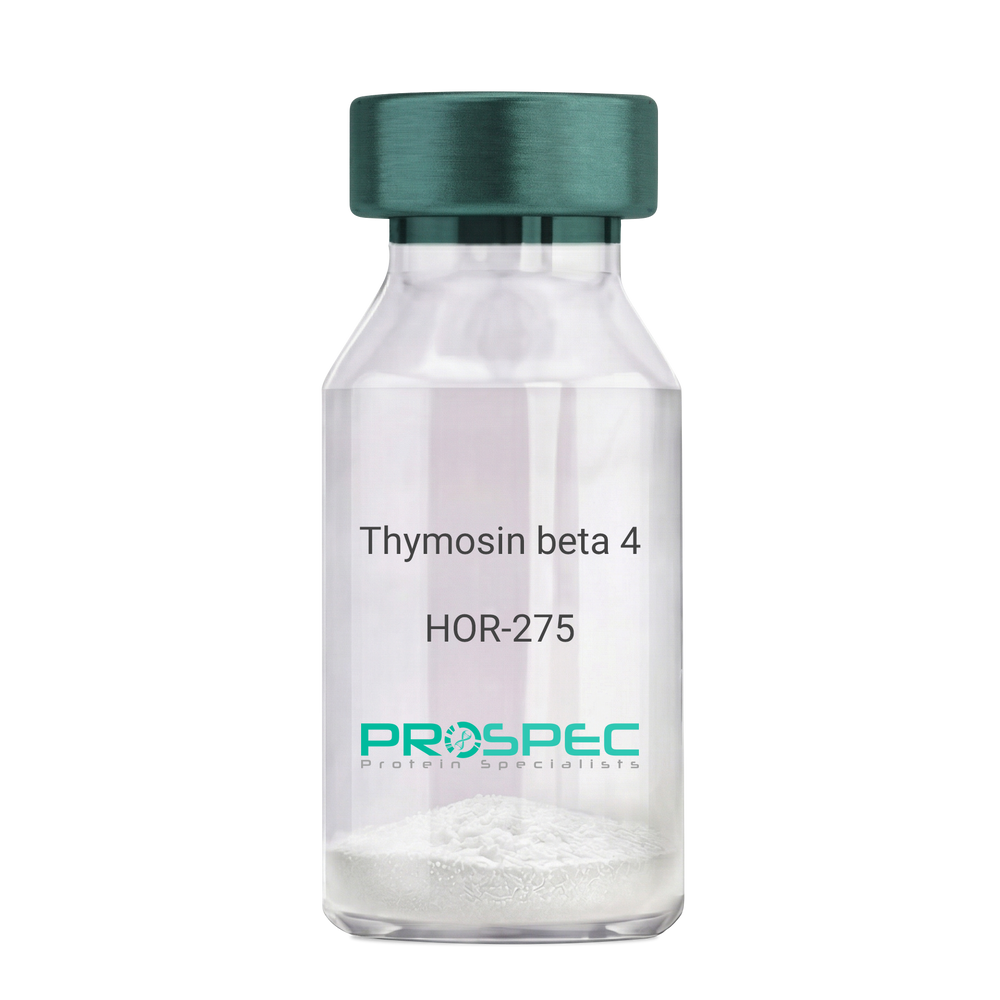
Thymosin beta 4Description:
Thymosin β4
Thymosin beta-4. TB500, TB-500
Product # :
HOR-275Price :
Quantity :
Shipping Method :
Shipped at Room temp
More Info
- description
- formulation
- purity
- More Info
Description
Thymosin b4 is a 43 amino acid peptide which is regarded as the main intracellular G-actin sequestering peptide. It has a molecular weight of 4963.55 Da, and its molecular formula is: C212H350N56O78S1. Extracellular Thymosin b4 may contribute to physiological processes such as angiogenesis, wound healing, and regulation of inflammation.
Formulation
The protein (1mg/ml) was lyophilized with no additives.
Purity
Greater than 98.0% as determined by RP-HPLC.
More Info
-
Introduction
Thymosin is a hormone secreted from the thymus. Its primary function is to stimulate the production of T cells, which are an important part of the immune system. Thymosin also assists in the development of B cells to plasma cells to produce antibodies. The predominant form of thymosin, thymosin b4, is a member of a highly conserved family of actin monomer-sequestering proteins. b-thymosins are the primary regulators of unpolymerized actin, and are essential for maintaining the small cytoplasmic pool of free G-actin monomers required for rapid filament elongation and allowing for the flux of monomers between the thymosin-bound pool and F-actin.
-
Synonyms
Thymosin beta-4. TB500, TB-500
-
Physical Appearance
Sterile Filtered White lyophilized (freeze-dried) powder.
-
Stability
Lyophilized Thymosin b4 although stable at room temperature for 3 weeks, should be stored desiccated below -18°C. Upon reconstitution T beta 4 should be stored at 4°C between 2-7 days and for future use below -18°C.For long term storage it is recommended to add a carrier protein (0.1% HSA or BSA).Please prevent freeze-thaw cycles.
-
Solubility
It is recommended to reconstitute the lyophilized Thymosin beta-4 in sterile 18MΩ-cm H2O not less than 100 µg/ml, which can then be further diluted to other aqueous solutions.
-
Amino Acid Sequence
Thymosin b4 has an a.a. sequence of Ac-Ser-Asp-Lys-Pro-Asp-Met-Ala-Glu-Ile-Glu-Lys-Phe-Asp-Lys-Ser-Lys-Leu-Lys-Lys-Thr-Glu-Thr-Gln-Glu-Lys-Asn-Pro-Leu-Pro-Ser-Lys-Glu-Thr-Ile-Glu-Gln-Glu-Lys-Gln-Ala-Gly-Glu-Ser-OH.
ProSpec's products are furnished for LABORATORY RESEARCH USE ONLY. The product may not be used as drugs, agricultural or pesticidal products, food additives or household chemicals.
- View Data Sheet
Name :
SDF 1a RatDescription:
Stromal Cell-Derived Factor-1 alpha Rat Recombinant (CXCL12)
SDF-1, CXCL12, Pre-B cell growth-stimulating factor, PBSF, hIRH, chemokine (C-X-C motif) ligand 12, SDF1, SDF1A, TPAR1, SCYB12, SDF-1a, TLSF-a, 12-O-tetradecanoylphorbol 13-acetate repressed protein 1, Thymic lymphoma cell-stimulating factor, TLSF.
Product # :
CHM-354Price :
Quantity :
Shipping Method :
Shipped at Room temp
More Info
- description
- source
- formulation
- purity
- biological activity
- More Info
Description
Stromal Cell-Derived Factor-1 alpha Rat Recombinant produced in E.Coli is a non-glycosylated, Polypeptide chain containing 68 amino acids and having a molecular mass of 7.9 kDa. The SDF-1a is purified by proprietary chromatographic techniques.
Source
Escherichia Coli.
Formulation
The CXCL12 protein was lyophilized from a concentrated (1 mg/ml) sterile solution containing 20mM Phosphate buffer pH-7.4 and 150mM NaCl.
Purity
Greater than 97.0% as determined by:
(a) Analysis by RP-HPLC.
(b) Analysis by SDS-PAGE.Biological Activity
The specific activity as determined by its ability to chemoattract human peripheral blood monocytes at 50-100ng/ml corresponding to a Specific Activity of 10,000-20,000IU/mg.More Info
-
Introduction
SDF-1 (stromal cell-derived factor-1) is small cytokine belonging to the chemokine family that is officially designated Chemokine (C-X-C motif) ligand 12 (CXCL12). It is produced in two forms, SDF-1?/CXCL12a and SDF-1?/CXCL12b, by alternate splicing of the same gene. Chemokines are characterized by the presence of four conserved cysteines, which form two disulfide bonds. The CXCL12 proteins belong to the group of CXC chemokines, whose initial pair of cysteines are separated by one intervening amino acid. CXCL12 is strongly chemotactic for lymphocytes and has been implicated as an important cell co-ordinator during development. During embryogenesis it directs the migration of hematopoietic cells from foetal liver to bone marrow. Mice which were knocked-out for CXCL12 gene were lethal before the birth or within just 1 hour of life. As another role, CXCL12a alters also the electrophysiology of neurons. CXCL12 was shown to be expressend in many tissues in mice (including brain, thymus, heart, lung, liver, kidney, spleen and bone marrow).
The receptor for this chemokine is CXCR4, which was previously called fusin. This CXCL12-CXCR4 interaction used to be considered exclusive (unlike for other chemokines and their receptors), but recently it was suggested that CXCL12 is also bound by CXCR7 receptor.
The gene for CXCL12 is located on human chromosome 10. In human and mouse both CXCL12 and CXCR4 show high identity of sequence: 99% and 90%, respectively. -
Synonyms
SDF-1, CXCL12, Pre-B cell growth-stimulating factor, PBSF, hIRH, chemokine (C-X-C motif) ligand 12, SDF1, SDF1A, TPAR1, SCYB12, SDF-1a, TLSF-a, 12-O-tetradecanoylphorbol 13-acetate repressed protein 1, Thymic lymphoma cell-stimulating factor, TLSF.
-
Physical Appearance
Sterile Filtered White lyophilized (freeze-dried) powder.
-
Stability
Lyophilized SDF-1a although stable at room temperature for 3 weeks, should be stored desiccated below -18°C. Upon reconstitution CXCL12 should be stored at 4°C between 2-7 days and for future use below -18°C.For long term storage it is recommended to add a carrier protein (0.1% HSA or BSA).Please prevent freeze-thaw cycles.
-
Solubility
It is recommended to reconstitute the lyophilized SDF-1a in sterile 18MΩ-cm H2O not less than 100µg/ml, which can then be further diluted to other aqueous solutions.
-
Amino Acid Sequence
KPVSLSYRCP CRFFESHVAR ANVKHLKILN TPNCALQIVA RLKSNNRQVC IDPKLKWIQE YLDKALNK.
ProSpec's products are furnished for LABORATORY RESEARCH USE ONLY. The product may not be used as drugs, agricultural or pesticidal products, food additives or household chemicals.
- View Data Sheet
Name :
APRIL HumanDescription:
APRIL Human Recombinant
Tumor necrosis factor ligand superfamily member 13, A proliferation-inducing ligand, APRIL, TNF- and APOL-related leukocyte expressed ligand 2, TALL-2, TNF-related death ligand 1, TRDL-1, CD256, TNFSF13, TALL2, ZTNF2, UNQ383/PRO715.
Product # :
CYT-815Price :
Quantity :
Shipping Method :
Shipped with Ice Packs
More Info
- description
- source
- formulation
- purity
- More Info
- sds-page
Description
APRIL Human Recombinant produced in E.coli is a single, non-glycosylated polypeptide chain containing 159 amino acids (105-247) and having a molecular mass of 17.6kDa.APRIL is fused to a 16 amino acid T7-tag at N-terminus and purified by proprietary chromatographic techniques.
Source
Escherichia Coli.
Formulation
APRIL protein solution (1mg/ml) containing 20mM Tris-HCl buffer (pH 8.0), 0.4M UREA and 10% glycerol.
Purity
Greater than 85.0% as determined by SDS-PAGE.
sds-page
More Info
-
Introduction
APRIL which is a part of the TNF ligand superfamily (TNFSF13) is a type II transmembrane protein. Normally, APRIL expression is low in tissues, but is elevated in numerous types of tumors and transformed cell lines.
-
Synonyms
Tumor necrosis factor ligand superfamily member 13, A proliferation-inducing ligand, APRIL, TNF- and APOL-related leukocyte expressed ligand 2, TALL-2, TNF-related death ligand 1, TRDL-1, CD256, TNFSF13, TALL2, ZTNF2, UNQ383/PRO715.
-
Physical Appearance
Sterile filtered colorless solution.
-
Stability
Store at 4°C if entire vial will be used within 2-4 weeks. Store, frozen at -20°C for longer periods of time. For long term storage it is recommended to add a carrier protein (0.1% HSA or BSA).Avoid multiple freeze-thaw cycles.
-
Amino Acid Sequence
MASMTGGQQM GRGSHMAVLT QKQKKQHSVL HLVPINATSK DDSDVTEVMW QPALRRGRGL QAQGYGVRIQ DAGVYLLYSQ VLFQDVTFTM GQVVSREGQG RQETLFRCIR SMPSHPDRAY NSCYSAGVFH LHQGDILSVI IPRARAKLNL SPHGTFLGL.
-
Background
APRIL Human Recombinant: Expanding the Horizons of Immunotherapy
Abstract:
APRIL (A Proliferation-Inducing Ligand) is a promising molecule within the tumor necrosis factor (TNF) superfamily that plays a pivotal role in immune regulation. This research paper provides an overview of APRIL human recombinant, exploring its potential applications in immunotherapy. Understanding the mechanisms and therapeutic implications of APRIL holds promise in the field of immune-related disorders. This article presents a concise analysis of APRIL, highlighting its potential as a therapeutic target.Introduction:
Immunotherapy has revolutionized the treatment of various diseases by harnessing the power of the immune system. APRIL, a member of the TNF superfamily, has emerged as a potential candidate for immunotherapeutic interventions. This paper provides an overview of APRIL, shedding light on its structure, function, and potential applications in immunotherapy.APRIL Structure and Function:
APRIL is a transmembrane protein that can be proteolytically cleaved, leading to the generation of soluble forms. It interacts with its receptors, such as BCMA and TACI, to regulate immune responses. APRIL influences B-cell activation, proliferation, and antibody production, making it a compelling target for immunotherapeutic strategies.Immunotherapeutic Applications of APRIL Human Recombinant:
APRIL human recombinant holds great potential in immunotherapy. By modulating APRIL activity, it may be possible to enhance immune responses against cancer cells or dampen immune dysregulation in autoimmune disorders. Additionally, APRIL-based therapeutics could be developed to target specific immune cell populations or enhance the efficacy of existing immunotherapies.Challenges and Future Directions:
Although APRIL shows promise, there are challenges to overcome. Further research is needed to elucidate the precise mechanisms of APRIL-mediated immune regulation and identify optimal therapeutic approaches. Additionally, safety considerations and potential side effects must be thoroughly evaluated.Conclusion:
APRIL human recombinant represents a valuable tool for advancing immunotherapy. Understanding the structure, function, and therapeutic potential of APRIL opens up new avenues for treating immune-related disorders. Continued research and development in this field have the potential to revolutionize the landscape of immunotherapy, improving patient outcomes and expanding the possibilities for personalized medicine.What is the molecular weight/Mw of APRIL Protein?
APRIL Protein has a total Mw of 17.6kDa.
What is the source or expression system of APRIL Protein?
Escherichia Coli.
What is the Purity of APRIL Protein?
APRIL Protein is >85% pure as determined by SDS-PAGE.
What is the Biological Activity of APRIL Protein?
The biological functionality of APRIL Protein will be determined in the future.
What is the amino acid sequence of APRIL Protein?
MASMTGGQQM GRGSHMAVLT QKQKKQHSVL HLVPINATSK DDSDVTEVMW QPALRRGRGL QAQGYGVRIQ DAGVYLLYSQ VLFQDVTFTM GQVVSREGQG RQETLFRCIR SMPSHPDRAY NSCYSAGVFH LHQGDILSVI IPRARAKLNL SPHGTFLGL.
What applications can APRIL Protein be used in?
APRIL Protein can probably be used in western blot, ELISA and Lateral Flow.
What is the endotoxin level for APRIL Protein?
The endotoxin level is minimal, APRIL Protein was purified using conventional chromatography techniques.
ProSpec's products are furnished for LABORATORY RESEARCH USE ONLY. The product may not be used as drugs, agricultural or pesticidal products, food additives or household chemicals.
- View Data Sheet
Name :
Resistin HumanDescription:
Resistin Human Recombinant
Cysteine-rich secreted protein FIZZ3, Adipose tissue-specific secretory factor, ADSF, C/EBP-epsilon-regulated myeloid-specific secreted cysteine-rich protein, Cysteine-rich secreted protein A12-alpha-like 2, RSTN, XCP1, RETN1, MGC126603, MGC126609.
Product # :
CYT-456Price :
Quantity :
Shipping Method :
Shipped at Room temp
More Info
- description
- source
- formulation
- purity
- More Info
Description
Resistin Human Recombinant produced in e.coli is a homodimeric, non-glycosylated, polypeptide chain containing 2 x 93 amino acids and having a total molecular weight of 19.7kDa.The Resistin Human Recombinant protein is purified by standard chromatographic techniques.
Source
Escherichia Coli.
Formulation
Sterile filtered and lyophilized from 0.1% Trifluoroacetic Acis (TFA).
Purity
Greater than 95% as determined by SDS-PAGE.
More Info
-
Introduction
Resistin, a product of the RSTN gene, is a peptide hormone belonging to the class of cysteine-rich secreted proteins which is termed the RELM family, and is also described as ADSF (Adipose Tissue- Specific Secretory Factor) and FIZZ3 (Found in Inflammatory Zone). Human resistin contains 108 amino acids as a prepeptide, and its hydrofobic signal peptide is cleaved before its secretion. Resistin circulates in human blood as a dimeric protein consisting of two 92 amino acid polypeptides, which are disulfide-linked via Cys26.
Mouse resistin, specifically produced and secreted by adipocyte, acts on skeletal muscle myocytes, hepatocytes and adipocytes themselves so that it reduces their sensitivity. Steppan et al. have suggested that resistin suppresses the ability to stimulate glucose uptake. They have also suggested that resistin is present at elevated levels in blood of obese mice, and is down regulated by fasting and antidiabetic drugs. Way et al., on the other hand, have found that resistin expression is severly suppressed in obesity and is stimulated by several antidiabetic drugs.
Other studies have shown that mouse resistin increases during the differentiation of adipocytes, but it also seems to inhibit adipogenesis. In contrast, the human adipogenic differentiation is likely to be associated with a down regulation of resistin gene expression. -
Synonyms
Cysteine-rich secreted protein FIZZ3, Adipose tissue-specific secretory factor, ADSF, C/EBP-epsilon-regulated myeloid-specific secreted cysteine-rich protein, Cysteine-rich secreted protein A12-alpha-like 2, RSTN, XCP1, RETN1, MGC126603, MGC126609.
-
Physical Appearance
Filtered White lyophilized (freeze-dried) powder.
-
Stability
Store lyophilized protein at -20°C. Aliquot the product after reconstitution to avoid repeated freezing/thawing cycles. Reconstituted protein can be stored at 4°C for a limited period of time; it does not show any change after two weeks at 4°C.
-
Solubility
It is recommended to reconstitute the lyophilized Resistin in sterile 18MΩ-cm H2O at a concentration of 100µg/ml, which can then be further diluted to other aqueous solutions.
-
Amino Acid Sequence
MSSKTLCSME EAINERIQEV AGSLIFRAIS SIGLECQSVT SRGDLATCPR GFAVTGCTCG SACGSWDVRA ETTCHCQCAG MDWTGARCCR VQP
ProSpec's products are furnished for LABORATORY RESEARCH USE ONLY. The product may not be used as drugs, agricultural or pesticidal products, food additives or household chemicals.
- View Data Sheet
Name :
T.pallidum p41 MosaicDescription:
Treponema pallidum p41 Mosaic Recombinant
Product # :
TRP-244Price :
Quantity :
Shipping Method :
Shipped with Ice Packs
More Info
- description
- source
- formulation
- purity
- More Info
Description
The E.coli derived recombinant protein contains the outer membrane T.Pallidum p41 immunodominant regions. The protein is fused with a GST tag.
Source
Escherichia Coli.
Formulation
25mM Tris-HCl pH-8, 60mM NaCl & 50% glycerol.
Purity
Treponema Pallidum protein is >90% pure as determined by 10% PAGE (coomassie staining).
More Info
-
Introduction
Treponema pallidum is a gram-negative spirochaete bacterium and is considered to be metabolically crippled. There are at least four known subspecies: T. pallidum pallidum, T. pallidum pertenue, T. pallidum carateum and T. pallidum endemicum. The helical structure of T. pallidum pallidum allows it to move in a corkscrew motion through viscous mediums such as mucus. Treponema pallidum sub sp. pallidum has one of the smallest bacterial genomes at 1.14 million base pairs (Mb) and has limited metabolic capabilities, reflecting its adaptation through genome reduction to the rich environment of mammalian tissue.
-
Stability
Treponema Pallidum protein although stable at 4°C for 1 week, should be stored below -18°C. Please prevent freeze thaw cycles.
-
Applications
Treponema Pallidum protein is suitable for ELISA and Western blots, excellent antigen for detection of T. Pallidum with minimal specificity problems.
-
Specificity
Immunoreactive with sera of T.Pallidum infected individuals.
-
Purification Method
Treponema Pallidum protein was purified by proprietary chromatographic technique.
ProSpec's products are furnished for LABORATORY RESEARCH USE ONLY. The product may not be used as drugs, agricultural or pesticidal products, food additives or household chemicals.
- View Data Sheet
Name :
CCBL1 HumanDescription:
Cysteine Conjugate-Beta Lyase Cytoplasmic Human Recombinant
Cysteine Conjugate-Beta Lyase, Cytoplasmic, Glutamine Transaminase K, Cysteine Conjugate-Beta Lyase; Cytoplasmic (Glutamine Transaminase K, Kyneurenine Aminotransferase), Kynurenine--Oxoglutarate Transaminase I, Glutamine--Phenylpyruvate Transaminase, Cysteine-S-Conjugate Beta-Lyase, Kynurenine Aminotransferase I, Kyneurenine Aminotransferase, KATI, GTK, Glutamine-Phenylpyruvate Aminotransferase, Kynurenine--Oxoglutarate Transaminase 1, Beta-Lysase, Kidney, EC 4.4.1.13, EC 2.6.1.64, EC 2.6.1.7, KAT1, Kynurenine--oxoglutarate transaminase 1.
Product # :
ENZ-878Price :
Quantity :
Shipping Method :
Shipped with Ice Packs
More Info
- description
- source
- formulation
- purity
- More Info
Description
CCBL1 Human Recombinant produced in E.Coli is a single, non-glycosylated polypeptide chain containing 445 amino acids (1-422 a.a) and having a molecular mass of 50.3kDa. CCBL1 is fused to a 23 amino acid His-tag at N-terminus & purified by proprietary chromatographic techniques.
Source
Escherichia Coli.
Formulation
CCBL1 protein solution (1mg/ml) containing Phosphate buffered saline (pH7.4), 10% glycerol and 1mM DTT.
Purity
Greater than 90.0% as determined by SDS-PAGE.
More Info
-
Introduction
Cysteine Conjugate-Beta Lyase Cytoplasmic also known as CCBL1 is a member of the class-I pyridoxal-phosphate-dependent aminotransferase family. CCBL1 catalyzes the irreversible transamination of the L-tryptophan metabolite L-kynurenine to form kynurenic acid (KA) it also metabolizes the cysteine conjugates of certain halogenated alkenes and alkanes to form reactive metabolites. Furthermore, CCBL1 catalyzes the beta-elimination of S-conjugates and Se-conjugates of L-(seleno) cysteine, resulting in the cleavage of the C-S or C-Se bond.
-
Synonyms
Cysteine Conjugate-Beta Lyase, Cytoplasmic, Glutamine Transaminase K, Cysteine Conjugate-Beta Lyase; Cytoplasmic (Glutamine Transaminase K, Kyneurenine Aminotransferase), Kynurenine--Oxoglutarate Transaminase I, Glutamine--Phenylpyruvate Transaminase, Cysteine-S-Conjugate Beta-Lyase, Kynurenine Aminotransferase I, Kyneurenine Aminotransferase, KATI, GTK, Glutamine-Phenylpyruvate Aminotransferase, Kynurenine--Oxoglutarate Transaminase 1, Beta-Lysase, Kidney, EC 4.4.1.13, EC 2.6.1.64, EC 2.6.1.7, KAT1, Kynurenine--oxoglutarate transaminase 1.
-
Physical Appearance
Sterile Filtered colorless solution.
-
Stability
Store at 4°C if entire vial will be used within 2-4 weeks. Store, frozen at -20°C for longer periods of time. For long term storage it is recommended to add a carrier protein (0.1% HSA or BSA).Avoid multiple freeze-thaw cycles.
-
Amino Acid Sequence
MGSSHHHHHH SSGLVPRGSH MGSMAKQLQA RRLDGIDYNP WVEFVKLASE HDVVNLGQGF PDFPPPDFAV EAFQHAVSGD FMLNQYTKTF GYPPLTKILA SFFGELLGQE IDPLRNVLVT VGGYGALFTA FQALVDEGDE VIIIEPFFDC YEPMTMMAGG RPVFVSLKPG PIQNGELGSS SNWQLDPMEL AGKFTSRTKA LVLNTPNNPL GKVFSREELE LVASLCQQHD VVCITDEVYQ WMVYDGHQHI SIASLPGMWE RTLTIGSAGK TFSATGWKVG WVLGPDHIMK HLRTVHQNSV FHCPTQSQAA VAESFEREQL LFRQPSSYFV QFPQAMQRCR DHMIRSLQSV GLKPIIPQGS YFLITDISDF KRKMPDLPGA VDEPYDRRFV KWMIKNKGLV AIPVSIFYSV PHQKHFDHYI RFCFVKDEAT LQAMDEKLRK WKVEL.
ProSpec's products are furnished for LABORATORY RESEARCH USE ONLY. The product may not be used as drugs, agricultural or pesticidal products, food additives or household chemicals.
- View Data Sheet
Name :
AtosibanDescription:
Atosiban
Product # :
HOR-239Price :
Quantity :
Shipping Method :
Shipped at Room temp
More Info
- description
- formulation
- purity
- More Info
- HPLC, MS
Description
Atosiban also called ADH (Anti-Diuretic Hormone) has a molecular formula of C43H67N11O12S2, 3-Mercaptopropionyl-D-Tyr(ET)-Ile-Thr-Asn-Cys-Pro-Orn-Gly-NH2 having a Mw of 994.2 Dalton.
Formulation
The Atosiban peptide was lyophilized with no additives.
Purity
Greater than 98.0% as determined by analysis by RP-HPLC.
HPLC, MS
More Info
-
Introduction
Atosiban is the first oxytocin antagonist to be specifically developed for the treatment of preterm labor. Atosiban has a specific mode of action, inhibiting oxytocin-induced uterine contractions by blocking oxytocin receptors in the uterus. Extensive clinical investigations have shown Atosiban to be at least as effective as current tocolytic agents. In addition, due to its novel and specific mode of action, Atosiban has a markedly improved maternal side effects profile compared with conventional therapies.
-
Physical Appearance
Sterile Filtered White lyophilized (freeze-dried) powder.
-
Stability
Lyophilized Atosiban although stable at room temperature for 3 weeks, should be stored desiccated below -18°C. Upon reconstitution Atosiban should be stored at 4°C between 2-7 days and for future use below -18°C. For long term storage it is recommended to add a carrier protein (0.1% HSA or BSA).Please prevent freeze-thaw cycles.
-
Solubility
It is recommended to reconstitute the lyophilized Atosiban in sterile 18MΩ-cm H2O not less than 100µg/ml, which can then be further diluted to other aqueous solutions.
ProSpec's products are furnished for LABORATORY RESEARCH USE ONLY. The product may not be used as drugs, agricultural or pesticidal products, food additives or household chemicals.
- View Data Sheet
Name :
Thromboplastin BovineDescription:
Thromboplastin Bovine
Tissue factor, Coagulation factor III, Thromboplastin, CD142, TF, F3, TFA.
Product # :
PRO-2760Price :
Quantity :
Shipping Method :
Shipped at Room temp
More Info
- description
- source
- formulation
- More Info
Description
Thromboplastin bovine native
Source
Bovine Lung.
Formulation
The bovine thromboplastin was lyophilized with no additives.
More Info
-
Introduction
Tissue factor is well-known as the main cellular initiator of blood coagulation. The Tissue factor gene encodes coagulation factor III which is a cell surface glycoprotein that enables cells to initiate the blood coagulation cascades, and functions as the high-affinity receptor for the coagulation factor VII. Following vessel injury, the Tissue Factor and Factor VIIa complex activates the coagulation protease cascade, which leads to fibrin deposition and activation of platelets. The ensuing complex presents a catalytic event, which is responsible for initiation of the coagulation protease cascades by specific limited proteolysis. Therefore, Tissue factor has a role in normal hemostasis by initiating the cell-surface assembly and propagation of the coagulation protease cascade. Tissue Factor can also be stimulated by the inflammatory mediators interleukin 1 and TNF, as well as by endotoxin, to appear on monocytes and vascular endothelial cells as a component of cellular immune response.
Tissue factor is the only one in the coagulation pathway for which a congenital deficiency has not been described. Certain levels of Tissue Factor are essential for the maintained viability and growth of endothelium and Tissue Factor-expressing tumor cells. Additionally, abnormal Tissue Factor expression inside the vasculature initiates life threatening thrombosis in various diseases, for example sepsis, atherosclerosis, and cancer. Alternative spliced Tissue Factor expression advances tumor growth, and is linked to increased tumor cell proliferation and angiogenesis in pancreatic cancer. -
Synonyms
Tissue factor, Coagulation factor III, Thromboplastin, CD142, TF, F3, TFA.
-
Physical Appearance
Sterile Filtered White lyophilized (freeze-dried) powder.
-
Stability
Lyophilized Bovine Thromboplastin although stable at room temperature for 3 weeks, should be stored desiccated below -18C. Upon reconstitution Prothrombin should be stored at 4C between 2-7 days and for future use below -18C.For long term storage it is recommended to add a carrier protein (0.1% HSA or BSA). Please prevent freeze-thaw cycles
-
Solubility
It is recommended to reconstitute the lyophilized Bovine Thromboplastin in sterile 0.9% NaCl
ProSpec's products are furnished for LABORATORY RESEARCH USE ONLY. The product may not be used as drugs, agricultural or pesticidal products, food additives or household chemicals.
- View Data Sheet
Name :
CMV Pp65, 561 a.a.Description:
Cytomegalo Virus Pp65(UL83), 561 a.a.Recombinant
Product # :
CMV-218Price :
Quantity :
Shipping Method :
Shipped with Ice Packs
More Info
- description
- source
- formulation
- purity
- More Info
Description
The E.Coli derived 62.8 kDa recombinant protein contains the CMV Pp65 (UL83) immunodominant regions, having 561 amino acids.
Source
Escherichia Coli.
Formulation
25mM Tris-Hcl pH 8, 8M Urea, 5mM bMe.
Purity
CMV Pp65 protein is >95% pure as determined by SDS-PAGE.
More Info
-
Introduction
CMV is part of the Betaherpesvirinae subfamily of Herpesviridae; including herpes simplex virustypes 1 and 2, varicella-zoster virus, and Epstein-Barrvirus. The herpesviruses has the common ability to stay latentover long periods of time. CMV has the largest genome of the herpes viruses, ranging from 230-240 kilobase pairs. CMV is a double-stranded linear DNA virus with 162 hexagonal protein capsomeres surrounded by a lipid membrane. Human CMV is composed of unique and inverted repeats that include the existence of 4 genome isomers caused by inversion of L-S genome components (class E). Replication may be divided into immediate early, delayed early, and late gene expression based on time of synthesis after infection. The DNA is replicated by rolling circles. In vitro, CMV replicates in human fibroblasts.
-
Stability
CMV Pp65 protein although stable at 4°C for 1 week, should be stored below -18°C. Please prevent freeze thaw cycles.
-
Applications
CMV Pp65 antigen is suitable for ELISA and Western blots, excellent antigen for detection of CMV with minimal specificity problems.
-
Specificity
Immunoreactive with sera of CMV-infected individuals.
-
Purification Method
CMV Pp65 was purified by proprietary chromatographic technique.
ProSpec's products are furnished for LABORATORY RESEARCH USE ONLY. The product may not be used as drugs, agricultural or pesticidal products, food additives or household chemicals.
- View Data Sheet
Name :
BAFF R HumanDescription:
B-cell Activating Factor Receptor Human Recombinant
TNFRSF13C, CD268, BAFF-R, MGC138235, B cell-activating factor receptor.
Product # :
CYT-429Price :
Quantity :
Shipping Method :
Shipped at Room temp
More Info
- description
- source
- formulation
- purity
- biological activity
- More Info
Description
B Lymphocyte Stimulator Receptor Human Recombinant extracellular produced in E.Coli is a single, non-glycosylated polypeptide chain containing 76 amino acids and having a molecular mass of 7.7 kDa.The BAFF-R is purified by proprietary chromatographic techniques.
Source
Escherichia Coli.
Formulation
Lyophilized from a 0.2μm filtered concentrated (1.0mg/ml) solution in 20mM PB, pH 8.0, 500mM NaCl.
Purity
Greater than 95.0% as determined by:
(a) Analysis by RP-HPLC.
(b) Analysis by SDS-PAGE.Biological Activity
Determined by its ability to block BAFF induced mouse splenocyte survival. The expected ED50 for this effect is 1.0-5.0 µg/ml in the presence of 1.0µg/ml of human soluble BAFF.More Info
-
Introduction
B cell-activating factor (BAFF) enhances B-cell survival in vitro and is a regulator of the peripheral B-cell population. Overexpression of Baff in mice results in mature B-cell hyperplasia and symptoms of systemic lupus erythematosus (SLE). Also, some SLE patients have increased levels of BAFF in serum. Therefore, it has been proposed that abnormally high levels of BAFF may contribute to the pathogenesis of autoimmune diseases by enhancing the survival of autoreactive B cells. The protein encoded by this gene is a receptor for BAFF and is a type III transmembrane protein containing a single extracellular cysteine-rich domain. It is thought that this receptor is the principal receptor required for BAFF-mediated mature B-cell survival.
-
Synonyms
TNFRSF13C, CD268, BAFF-R, MGC138235, B cell-activating factor receptor.
-
Physical Appearance
Sterile Filtered White lyophilized (freeze-dried) powder.
-
Stability
Lyophilized BAFF-R although stable at room temperature for 3 weeks, should be stored desiccated below -18°C. Upon reconstitution B Lymphocyte Stimulator Receptor should be stored at 4°C between 2-7 days and for future use below -18°C.Please prevent freeze-thaw cycles.
-
Solubility
It is recommended to reconstitute the lyophilized B Lymphocyte Stimulator Receptor Recombinant in sterile 18MΩ-cm H2O not less than 100µg/ml, which can then be further diluted to other aqueous solutions.
-
Amino Acid Sequence
MRRGPRSLRGRDAPAPTPCVPAECFDLLVRHCVACGLLRTPRPKPAG
ASSPAPRTALQPQESVGAGAGEAALPLPG. -
Background
B-cell Activating Factor Receptor Human Recombinant: Unlocking the Potential of a Key Immunomodulatory Target
Abstract:
B-cell Activating Factor Receptor (BAFF-R) human recombinant is a critical component of the B-cell immune response, playing a pivotal role in B-cell survival, maturation, and antibody production. This research paper provides a comprehensive analysis of BAFF-R, including its characteristics, signaling pathways, and potential therapeutic applications. Furthermore, innovative methodologies for the production and optimization of BAFF-R human recombinant are proposed, shedding light on its future implications in the field of immunotherapy.
Introduction:
The immune system relies on the precise regulation of B-cell functions, with BAFF-R serving as a key modulator of B-cell development and activation. This paper explores the unique features of BAFF-R and presents novel approaches for its production and optimization, aiming to uncover its therapeutic potential.
Characteristics and Signaling Pathways:
BAFF-R is a type III transmembrane protein expressed primarily on B-cells. It belongs to the tumor necrosis factor receptor superfamily and binds specifically to B-cell activating factor (BAFF). Engagement of BAFF-R by BAFF initiates intracellular signaling cascades, including the activation of nuclear factor-kappa B (NF-κB) and mitogen-activated protein kinase (MAPK) pathways, promoting B-cell survival, proliferation, and differentiation.
Production of BAFF-R Human Recombinant:
Efficient production methodologies are crucial for the therapeutic application of BAFF-R human recombinant. Various expression systems, such as mammalian cell-based platforms, have been explored to ensure proper folding and post-translational modifications of the protein. Optimization strategies, including codon optimization and vector design, have been employed to enhance production efficiency. Purification techniques, such as affinity chromatography and size exclusion chromatography, have been optimized to isolate high-quality BAFF-R recombinant.
Potential Therapeutic Applications:
BAFF-R human recombinant holds great promise in the field of immunotherapy. Dysregulation of the BAFF/BAFF-R signaling axis has been implicated in autoimmune diseases, such as systemic lupus erythematosus and rheumatoid arthritis. Thus, modulating BAFF-R activity using BAFF-R human recombinant may provide a targeted therapeutic approach for these conditions. Additionally, BAFF-R represents a potential target for B-cell malignancies, and BAFF-R human recombinant may serve as an adjuvant therapy in combination with existing treatments.
Conclusion:
BAFF-R human recombinant represents a crucial immunomodulatory target with diverse therapeutic applications in immunotherapy. Optimizing production methodologies and further understanding its signaling pathways will enhance its clinical utility. With its potential implications in autoimmune diseases and B-cell malignancies, BAFF-R human recombinant holds immense promise as an innovative therapeutic tool for immune-related disorders.
What is the molecular weight/Mw of BAFF R Protein?
BAFF R Protein has a total Mw of 7.7kDa.
What is the source or expression system of BAFF R Protein?
Escherichia Coli.
What is the Purity of BAFF R Protein?
BAFF R Protein is >95% pure as determined by SDS-PAGE.
What is the Biological Activity of BAFF R Protein?
Determined by its ability to block BAFF induced mouse splenocyte survival. The expected ED50 for this effect is 1.0-5.0 µg/ml in the presence of 1.0µg/ml of human soluble BAFF.
What is the amino acid sequence of BAFF R Protein?
MRRGPRSLRGRDAPAPTPCVPAECFDLLVRHCVACGLLRTPRPKPAG
ASSPAPRTALQPQESVGAGAGEAALPLPG.
What applications can BAFF R Protein be used in?
BAFF R Protein can probably be used in western blot, ELISA and Lateral Flow.
What is the endotoxin level for BAFF R Protein?
The endotoxin level is minimal, BAFF R Protein was purified using conventional chromatography techniques.
ProSpec's products are furnished for LABORATORY RESEARCH USE ONLY. The product may not be used as drugs, agricultural or pesticidal products, food additives or household chemicals.
- View Data Sheet
Name :
IP10 Guinea PigDescription:
IP-10 (CXCL10) Guinea Pig Recombinant
CXCL10, CRG-2.
Product # :
CHM-046Price :
Quantity :
Shipping Method :
Shipped at Room temp
More Info
- description
- source
- formulation
- purity
- More Info
Description
IP10 Guinea Pig Recombinant produced in E.Coli is a single, non-glycosylated, polypeptide chain containing 76 amino acids and having a total molecular mass of 8.7kDa.The IP10 is purified by proprietary chromatographic techniques.
Source
Escherichia Coli.
Formulation
Lyophilized from a sterile (0.2 micron) filtered aqueous solution containing 10 mM Sodium Phosphate, pH 7.5.
Purity
Greater than 95.0% as determined by SDS-PAGE.
More Info
-
Introduction
Chemokine (C-X-C motif) ligand 10 (CXCL10) is a small cytokine belonging to the CXC chemokine family. CXCL10 is secreted by several cell types. These cell types include monocytes, endothelial cells and fibroblasts. CXCL10 has been attributed to several roles, such as chemoattraction for monocytes and T cells, promotion of T cell adhesion to endothelial cells, antitumor activity, and inhibition of bone marrow colony formation and angiogenesis. The gene for CXCL10 is located on human chromosome 4 in a cluster among several other CXC chemokines. This chemokine elicits its effects by binding to the cell surface chemokine receptor CXCR3. The three-dimensional crystal structure of this chemokine has been determined under 3 different conditions to a resolution of up to 1.92A.
-
Synonyms
CXCL10, CRG-2.
-
Physical Appearance
Sterile Filtered White lyophilized (freeze-dried) powder.
-
Stability
Lyophilized IP10 although stable at room temperature for 3 weeks, should be stored desiccated below -18°C. Upon reconstitution IP10 Human should be stored at 4°C between 2-7 days and for future use below -18°C.For long term storage it is recommended to add a carrier protein (0.1% HSA or BSA).Please prevent freeze-thaw cycles.
-
Solubility
It is recommended to reconstitute the lyophilized IP10 in sterile water at a concentration of 0.1 mg/ml, which can then be further diluted to other aqueous solutions.
-
Amino Acid Sequence
IPHSRTIRCT CIETSTQPVN PKSFKKLEII PASQSCPRVE IIATMKMNGE KRCLDPESKV IKNLLKAVRK ERSKRS
ProSpec's products are furnished for LABORATORY RESEARCH USE ONLY. The product may not be used as drugs, agricultural or pesticidal products, food additives or household chemicals.
- View Data Sheet
Name :
Streptavidin ProteinDescription:
Streptavidin
Product # :
PRO-283Price :
Quantity :
Shipping Method :
Shipped at Room temp
More Info
- description
- source
- formulation
- More Info
Description
Streptavidin is a protein produced by Streptomyces avidinii and isolated by purification from fermentation broth. The pure, homogeneous protein shows predominantly one single band in SDS PAGE. Streptavidin consists of 4 identical subunits, each bearing an active binding site for biotin. Streptavidin has a molecular weight of 55kDa.
Source
Bacterium Streptomyces avidinii.
Formulation
The Streptavidin was lyophilized from a 25mg/ml solution in 10 mM potassium phosphate buffer pH 6.5
More Info
-
Introduction
Streptavidin is a tetrameric protein secreted by Streptomyces avidinii which binds firmly to biotin. Streptavidin is wilyde used in molecular biology through its unique high affinity for the vitamin biotin. The dissociation constant (Kd) of the biotin-streptavidin complex is about ~10-15 mol/L. The strong affinity recognition of biotin and biotinylated molecules has made streptavidin one of the most important components in diagnostics and laboratory kits. The streptavidin/biotin system has one of the biggest free energies of association of yet observed for noncovalent binding of a protein and small ligand in aqueous solution (K_assoc = 10**14). The complexes are also extremely stable over a wide range of temperature and pH.
-
Physical Appearance
Sterile Filtered lyophilized powder.
-
Stability
Streptavidin although stable at 4°C for 3 weeks, should be stored desiccated below -18°C. For longer storage in dissolved form add 1mM EDTA and/or 0.02 % NaN3 or pass the solution through a sterile filter.Please prevent freeze-thaw cycles.
-
Solubility
Gives a clear solution at 10mg/ml in 4.0 mM potassium phosphate pH 6.5
-
Specific Activity
The biological activity is 16.8 U/mg, 1 unit binds 1µg biotin.
ProSpec's products are furnished for LABORATORY RESEARCH USE ONLY. The product may not be used as drugs, agricultural or pesticidal products, food additives or household chemicals.
- View Data Sheet
Name :
PHB2 HumanDescription:
Prohibitin 2 Human Recombinant
BAP, Bap37, BCAP37, p22, PNAS-141, REA, Prohibitin-2, B-cell receptor-associated protein BAP37, D-prohibitin, Repressor of estrogen receptor activity, PHB2.
Product # :
PRO-1533Price :
Quantity :
Shipping Method :
Shipped with Ice Packs
More Info
- description
- source
- formulation
- purity
- More Info
Description
PHB2 Human Recombinant produced in E. coli is a single polypeptide chain containing 322 amino acids (1-299) and having a molecular mass of 35.7kDa. PHB2 is fused to a 23 amino acid His-tag at N-terminus & purified by proprietary chromatographic techniques.
Source
Escherichia Coli.
Formulation
The PHB2 solution (1mg/ml) contains 20mM Tris-HCl buffer (pH 8.0), 0.4M UREA and 10% glycerol.
Purity
Greater than 85% as determined by SDS-PAGE.
More Info
-
Introduction
Prohibitin 2, also known as PHB2, mediates transcriptional repression by nuclear hormone receptors via recruitment of histone deacetylases by similarity. PHB2 functions as an estrogen receptor (ER)-selective coregulator which potentiates the inhibitory activities of antiestrogens and represses the activity of estrogens. PHB2 which is involved in regulating mitochondrial respiration activity and in aging, competes with NCOA1 for modulation of ER transcriptional activity.
-
Synonyms
BAP, Bap37, BCAP37, p22, PNAS-141, REA, Prohibitin-2, B-cell receptor-associated protein BAP37, D-prohibitin, Repressor of estrogen receptor activity, PHB2.
-
Physical Appearance
Sterile Filtered clear solution.
-
Stability
Store at 4°C if entire vial will be used within 2-4 weeks. Store frozen at -20°C for longer periods of time. For long term storage it is recommended to add a carrier protein (0.1% HSA or BSA).Avoid multiple freeze-thaw cycles.
-
Amino Acid Sequence
MGSSHHHHHH SSGLVPRGSH MGSMAQNLKD LAGRLPAGPR GMGTALKLLL GAGAVAYGVR ESVFTVEGGH RAIFFNRIGG VQQDTILAEG LHFRIPWFQY PIIYDIRARP RKISSPTGSK DLQMVNISLR VLSRPNAQEL PSMYQRLGLD YEERVLPSIV NEVLKSVVAK FNASQLITQR AQVSLLIRRE LTERAKDFSL ILDDVAITEL SFSREYTAAV EAKQVAQQEA QRAQFLVEKA KQEQRQKIVQ AEGEAEAAKM LGEALSKNPG YIKLRKIRAA QNISKTIATS QNRIYLTADN LVLNLQDESF TRGSDSLIKG KK.
ProSpec's products are furnished for LABORATORY RESEARCH USE ONLY. The product may not be used as drugs, agricultural or pesticidal products, food additives or household chemicals.
- View Data Sheet
Name :
USP46 HumanDescription:
Ubiquitin Specific Peptidase 46 Human Recombinant
Ubiquitin carboxyl-terminal hydrolase 46, Deubiquitinating enzyme 46, Ubiquitin thioesterase 46, Ubiquitin-specific-processing protease 46, USP46.
Product # :
PRO-1866Price :
Quantity :
Shipping Method :
Shipped with Ice Packs
More Info
- description
- source
- formulation
- purity
- More Info
Description
USP46 Human Recombinant produced in E. coli is. a single polypeptide chain containing 389 amino acids (1-366) and having a molecular mass of 44.8kDa. USP46 is fused to a 23 amino acid His-tag at N-terminus & purified by proprietary chromatographic techniques.
Source
Escherichia Coli.
Formulation
The USP46 solution (0.25mg/ml) contains 20mM Tris-HCl buffer (pH 8.0), 0.15M NaCl, 10% glycerol and 1mM DTT.
Purity
Greater than 90% as determined by SDS-PAGE.
More Info
-
Introduction
USP46 is a part of a large family of cysteine proteases that function as deubiquitinating enzymes which interacts with WDR48 to have a high activity. USP46 operates by mediating the deubiquitination of GAD1/GAD67.
-
Synonyms
Ubiquitin carboxyl-terminal hydrolase 46, Deubiquitinating enzyme 46, Ubiquitin thioesterase 46, Ubiquitin-specific-processing protease 46, USP46.
-
Physical Appearance
Sterile Filtered clear solution.
-
Stability
Store at 4°C if entire vial will be used within 2-4 weeks. Store frozen at -20°C for longer periods of time. For long term storage it is recommended to add a carrier protein (0.1% HSA or BSA).Avoid multiple freeze-thaw cycles.
-
Amino Acid Sequence
MGSSHHHHHH SSGLVPRGSH MGSMTVRNIA SICNMGTNAS ALEKDIGPEQ FPINEHYFGL VNFGNTCYCN SVLQALYFCR PFRENVLAYK AQQKKKENLL TCLADLFHSI ATQKKKVGVI PPKKFISRLR KENDLFDNYM QQDAHEFLNY LLNTIADILQ EEKKQEKQNG KLKNGNMNEP AENNKPELTW VHEIFQGTLT NETRCLNCET VSSKDEDFLD LSVDVEQNTS ITHCLRDFSN TETLCSEQKY YCETCCSKQE AQKRMRVKKL PMILALHLKR FKYMEQLHRY TKLSYRVVFP LELRLFNTSS DAVNLDRMYD LVAVVVHCGS GPNRGHYITI VKSHGFWLLF DDDIVEKIDA QAIEEFYGLT SDISKNSESG YILFYQSRE.
ProSpec's products are furnished for LABORATORY RESEARCH USE ONLY. The product may not be used as drugs, agricultural or pesticidal products, food additives or household chemicals.